

SOUTH BAY WATCH
SOUTH BAY CITIES COUNCIL OF GOVERNMENTS
IN THIS ISSUE
26TH GENERAL ASSEMBLY RECAP
Arts Alive in the South Bay
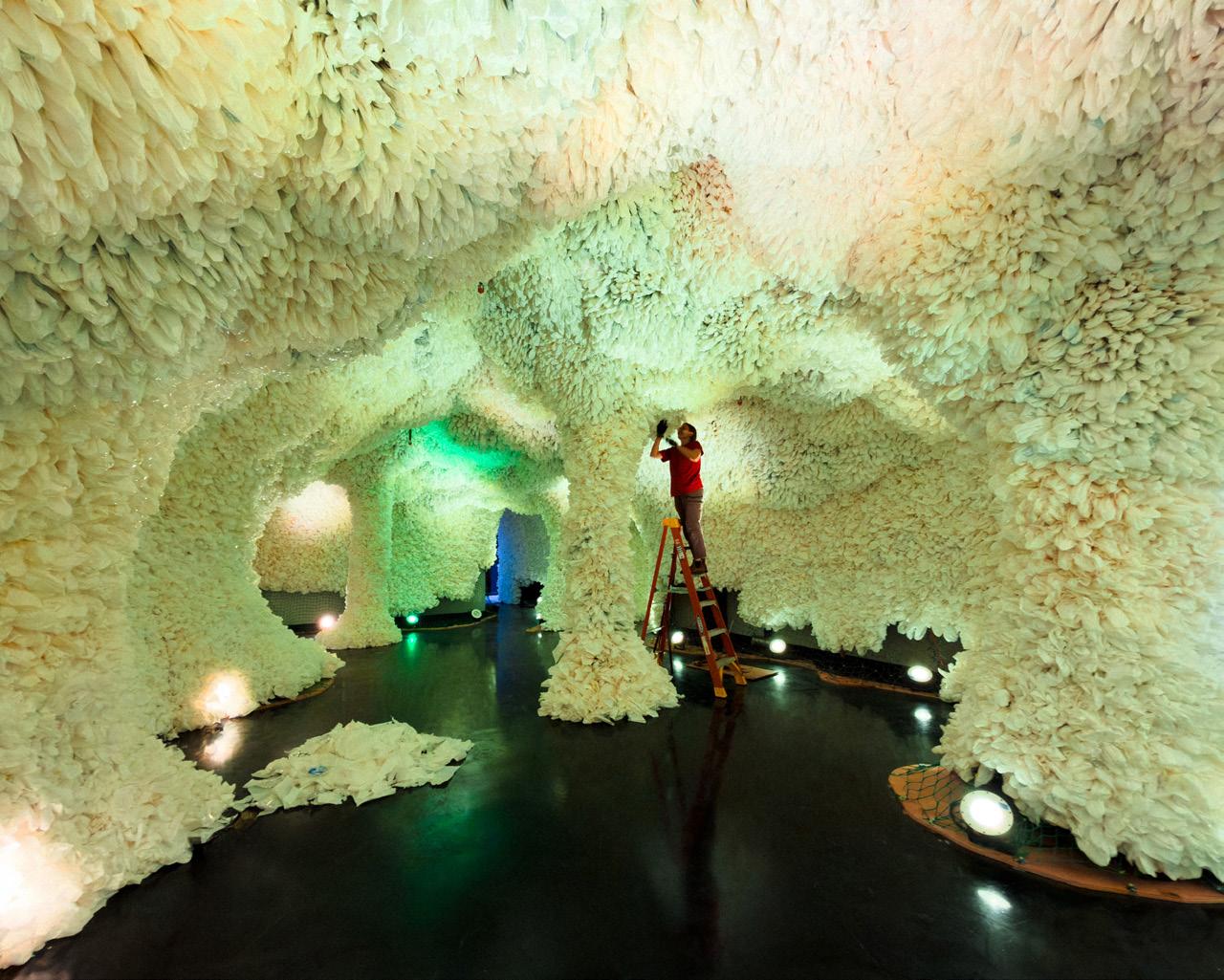
Artist Barbara Syrenka puts the finishing touches on the Rainbow Cave installation at Hopscotch’s West Harbor location in San Pedro at the LA Waterfront.
See Page 2
PAGE 5
PAGE 4
The 26th General Assembly in photos: a visual recap of the event
The newly formed South Bay Regional Housing Trust will boost affordable housing stock
PAGE 6
The Local Travel Network wins a Eureka Award for innovative leadership
PAGE 7
Apprenticeships are the ticket to South Bay jobs across many industry sectors
PAGE 8
West Basin delivers recycled water to recreational areas of the South Bay
26th General Assembly Recap Arts Alive in the South Bay
Communities Unite Through Art, Culture and Entertainment
When it comes to integrating art into real estate development in the South Bay, for Jerico Development president Eric Johnson, it’s all about leveraging what’s already present in the environment.
“One thing that really makes the South Bay special is the bay. It’s all about proximity to the water, baby,” Johnson told the audience of nearly 400 attendees at the South Bay Cities Council of Government’s signature annual event—the 26th General Assembly.
As visitors approach the new San Pedro waterfront development, West Harbor (being developed by Jerico and The Ratkovich Company), they are greeted with a palmtree lined colonade view of what he calls the development’s “two true primary pieces of art.” The twin brigantines, named the Irving Johnson and the Exy Johnson, are traditional wooden sailing ships built in 2003 and operated by the nonprofit Los Angeles Maritime Institute.
The tall ships serve as a classroom for teaching more than 6,000 inner-city youth annually to learn about teamwork and discipline through sailing. Johnson describes this “nautical eye candy” as the “expansive definition of art.”
The 42-acre West Harbor development is a waterfront dining, shopping, recreation and entertainment destination. It reimagines San Pedro’s iconic Ports O’ Call Village, which closed in 2018. Parts of West Harbor’s development are already open and welcoming visitors, including the San Pedro Fish Market Landing, Harbor Breeze Cruises, San Pedro Ocean Sports, Berth 84 Waterfront Park and a waterfront promenade. Future additions will encompass dining, entertainment and recreation, including a highly anticipated 6,200-seat harbor-facing amphitheater and 175-foot observation wheel.
Johnson, a South Bay native whose family business traces its roots more than 100 years, was one of three speakers addressing the topic “Uniting Communities Through Art, Culture and Entertainment”—the first of the
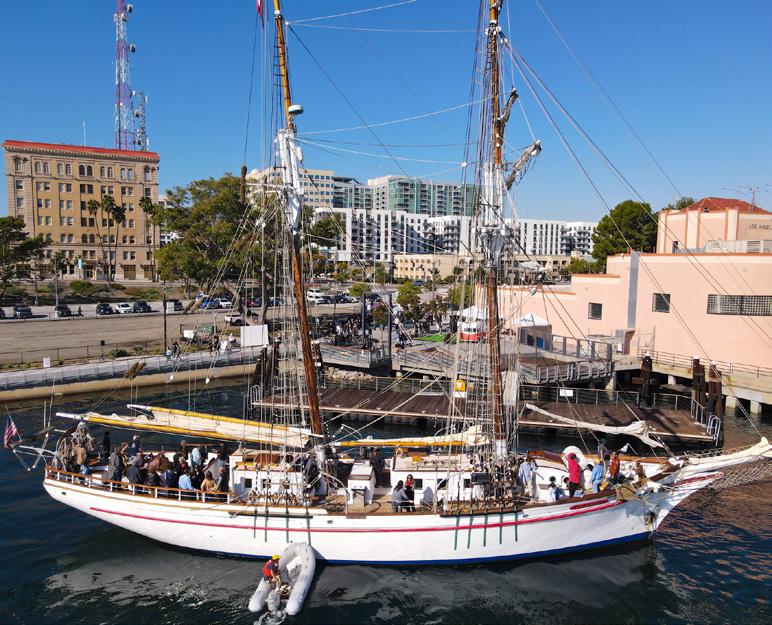
The Exy Johnson is one of two tall ships that will greet West Harbor visitors, as a form of expansive art.
General Assembly’s four panel discussions. The panel dove into how the South Bay is shaping culture through its thriving arts scene.
Art will play a pivotal role in West Harbor’s evolution as it partners with San Pedro’s Angels Gate Cultural Center to roll out a curated public art program. The center serves as a major South Bay and Los Angeles cultural hub, featuring artist studios, gallery exhibitions, community classes and arts education.
The collaboration between West Harbor and Angels Gate will bring permanent murals, large-scale sculptures, sound art and digital projects to the harborside community. The installations are designed to withstand marine environments and focus heavily on themes of harbor history, local industry and diversity.
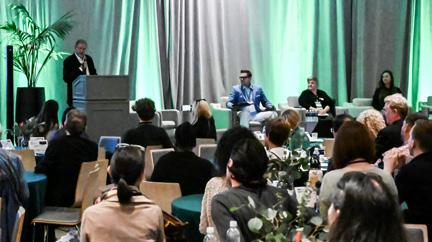
Speaking to the 26th General Assembly audience, Eric Johnson, president, Jerico development (at podium) discusses the role art, culture and entertainment will play at West Harbor in San Pedro. Next from left: Mark Rogondino, local sports anchor and General Assembly emcee; Amy Eriksen, founder and executive director, Angels Gate Cultural Center, and founding partner, Arts United San Pedro; and Elizabeth Hause, community services director, City of Redondo Beach.
West Harbor complements San Pedro’s trajectory in its art, culture and entertainment journey. The seaside community began seeing an influx of artists in ‘70s and ‘80s, leading to the Thursday Art Walk, founded by local artists including Johnson’s brother Alan, an artist and real estate developer. Now nearing its 30th year, the event draws tens of thousands of attendees annually.
“The reason I’m passionate about arts and have been working with all of the collaborators is we have almost 20 different art nonprofits—along with a large gamut of artists—in the middle of what is the largest creative economy in the world right in San Pedro,” said Amy Eriksen, founder and executive director of Angels Gate Cultural Center and founding partner and district supporter of Arts United San Pedro. “I love the arts because I love community and the arts embody community.”
The San Pedro Arts & Cultural District was officially designated by the California Arts Council in July 2017 and is one of only 14 inaugural cultural districts statewide. The district extends from Point Fermin to the Vincent Thomas Bridge and includes the historical downtown core, waterfront, Cabrillo Marine Aquarium and Angels Gate Cultural Center.
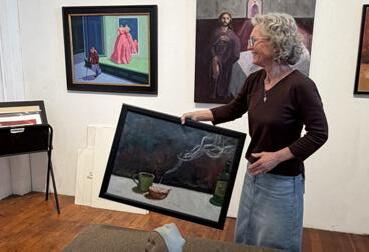
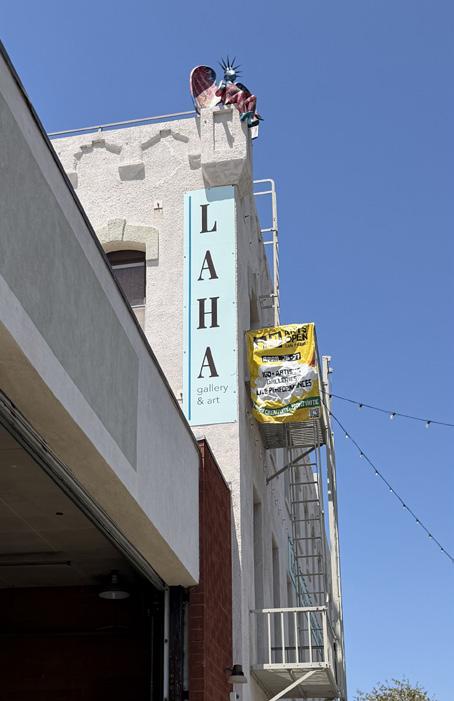
Carol Hungerford, director/ founder of Los Angeles Harbor Arts, discusses one of her latest oil works, “Coping,” on display in her LAHA studio/gallery space.
Los Angeles Harbor Arts (LAHA) is a creative, collaborative art space at 401 Mesa Street in the heart of the San Pedro Arts District. The historic three-story building serves as a home base to more than 20 working artists operating across 21 studios and galleries.
With the designation came an initial grant of $5,000, which the artists collectively decided to use for marketing to bring more people to San Pedro. Arts United San Pedro has since leveraged the designation to win and distribute nearly $300,000 in community arts grants over the last three years.
ART AND CULTURE TAKE SHAPE IN REDONDO BEACH
On a smaller scale, the City of Redondo Beach recently embarked on its own public art enhancement, ARTesia Blvd, implemented through the Artesia and Aviation Corridor Area Plan to increase pedestrian
In-N-Out
presence and cultural vitality on Artesia Boulevard. Phase 1 of the project—expected to be completed in 2027—will include two large median art pieces, two welcome monuments, two crosswalk art paintings and improvements to five existing concrete benches, funded by the city’s John Parsons Public Art Fund.
“We needed to find a creative way to breathe identity into that space, bring color into that space and really activate it, and one of the best ways to do that is with public art,” Elizabeth Hause, community services director of the City of Redondo Beach, explained to the General Assembly audience.
For cities, Hause said, finding artistic opportunities can be more about becoming “creative with the resources you already have.” The key is finding partners who “understand your community, the culture in that community, and can align themselves with what that community can connect with.”
She cited South Bay native Allen Sanford, founder of BeachLife music festival as one such partner. Since 2019, the festival has drawn thousands of spectators to see headliners.
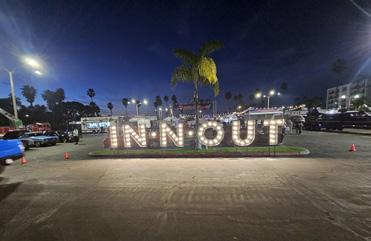
In January, Redondo Beach found another such partner in the In-N-Out burger chain, which hosted its Cruisin’ 2 Freedom benefit festival at Redondo Beach’s Seaside Lagoon. The event featured hundreds of classic cars, a charity auction and live music. It drew thousands of spectators to the city’s waterfront.
“I could not think of a better way to say, ‘This is Redondo Beach,’” Hause said. “If staff, council and community can get creative with what we have, we can create something pretty magical in those spaces.”
The 26th General Assembly focused on the potential impact of the South Bay’s transformation into a hub of state-of-the art sports and entertainment venues such as the FIFA World Cup 2026 and the LA28 Olympic and Paralympic Games. •
To view recorded sessions of the 26th General Assembly visit bit.ly/26thGAPlaylist
Learn more about the San Pedro Waterfront Arts District at sanpedrowaterfrontartsdistrict.com and the district’s artists and organizations at artsunitedsp.org
recently hosted the Cruisin’ 2 Freedom benefit festival featuring hundreds of classic cars at the Seaside Lagoon at the Redondo Beach Waterfront.
Thank you, sponsors and friends, for your generous support
26th Annual SBCCOG General Assembly
Let The Games Begin: How Sports and Entertainment are Shaping the South Bay
Golden Circle
westdrift Autograph Collection Hotels
Benefactors
Metropolitan Water District South Bay Association of REALTORS© Southern California Edison Company 1960 Club by the Los Angeles Chargers Chevron Products Company
Sponsors
California Water Service • Clean Power Alliance • Continental Development Corporation | Mar Ventures, Inc. • So. California News Group: Daily Breeze I The Beach Reporter I Palos Verdes • Peninsula News • Gammill Law Accident Injury Attorneys • GEO SEARCH Inc. • Kaiser Permanente • Kosmont Companies • LA County Supervisor Janice Hahn • Los Angeles County Sanitation Districts • SoCalGas • South Coast Air Quality Management District • Southern California Association of Governments • Transtech Engineers • Water Replenishment District • Watson Land Company • West Basin Municipal Water District
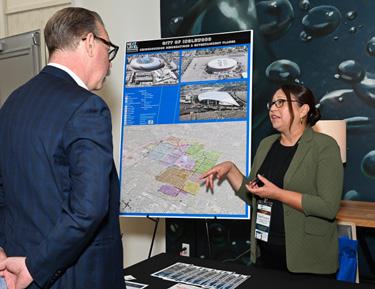
In the General Assembly exhibit hall, Elsa Moreno, geographic information system (GIS) analyst, City of Inglewood, and member of the SBCCOG’s GIS working group (right), discusses what GIS can do for cities.
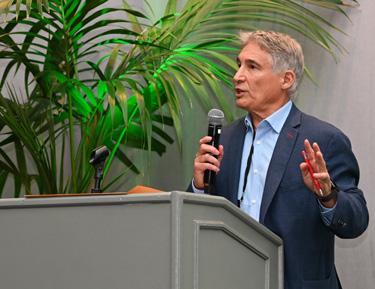
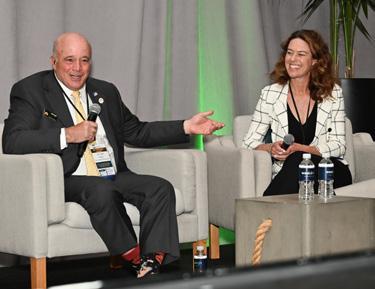
Larry Kosmont, CEO, Kosmont Companies, leads the discussion “Sports, Places and Entertainment:Moving the South Bay Forward.”
Left: Jim Light, mayor, Redondo Beach, discusses challenges and opportunities cities face in leveraging the region’s upcoming global events. Right: Michelle Keldorf, council member, City of El Segundo.
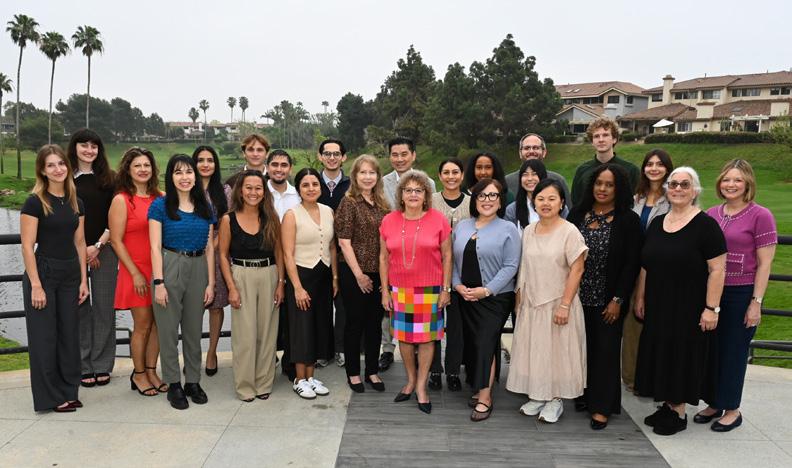
The South Bay Cities Council of Governments staff at the 26th General Assembly.
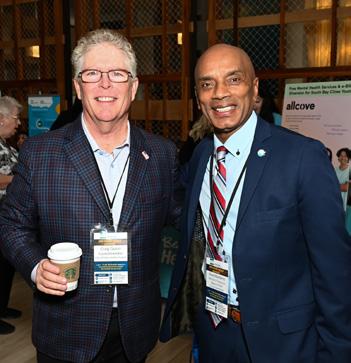
From left: Craig Quinn, council member, Palos Verdes Estates, and SBCCOG board member, and Alex Monteiro, council member, Hawthorne, and SBCCOG board of directors' second vice chair.
In Housing We Trust
South Bay Regional Housing Trust Creates New Tool for Boosting the Region’s Affordable Housing Inventory
It started as a proposed tool to help South Bay cities meet the requirements of the state’s Regional Housing Needs Allocation (RHNA). RHNA mandates that every local jurisdiction ensures there are enough sites appropriately zoned for affordable housing construction to accommodate projected growth calculated by the state every eight years.
Following a year of analyses on how a trust could work, in late April the South Bay Cities Council of Governments (SBCCOG) received council approval from 11 cities—El Segundo, Hawthorne, Hermosa Beach, Inglewood, Lawndale, Lomita, Manhattan Beach, Rancho Palos Verdes, Redondo Beach, Rolling Hills Estates and Torrance—
to form a joint powers authority to create a South Bay Regional Housing Trust (SBRHT). The SBRHT officially launched on April 30 with the installation of a board of directors comprised of council representatives from each member city.
“Our city [Lawndale] is less than 2 square miles. Our RHNA allocation for the current cycle was 2,500 units. We’re densely populated with about 3,200 residents—very park [recreational green space] poor and those requirements are just a burden,” said Bernadette Suarez, Lawndale council member, SBRHT board member and SBCCOG board chair. “By joining the South Bay Regional Housing Trust, our cities, including my city of Lawndale, can benefit from a coordinated, regional approach to housing production and homeless services, while explicitly maintaining full control over local land-use decisions.”
The SBRHT will help fund the development and construction of affordable housing units in cities that are members of the trust, exclusively for projects supported by the city in which they are proposed.
MEASURE A AS FUNDING SOURCE
The SBCCOG will be receiving approximately $7.9 million annually through the Los Angeles County Affordable Solutions Agency’s (LACAHSA) Production, Preservation and Ownership program. The LACAHSA also has agency matching funds that potentially could be available to increase that amount to nearly $14 million. The SBCCOG will be transferring these funds each year to the SBRHT.
ADDITIONAL BENEFITS OF THE SBRHT
The SBRHT will have lending authority and will generate interest revenue to allow for these public dollars to come back to the trust over time and be reprogrammed to maximize their use. •
To learn more visit sbrht.org
South Bay Regional Housing Trust Commits $6 Million Toward First Project in Hawthorne
At its second meeting in May, the South Bay Regional Housing Trust (SBRHT) board of directors voted to provide a $6 million loan toward the Cordary Avenue Apartments project in the City of Hawthorne. It’s the first funding allocation from $7.9 million in Los Angeles County Affordable Housing Solutions Agency (LACAHSA) funds earmarked annually to the South Bay through LACAHSA’s Production, Preservation and Ownership Program funded by Measure A.
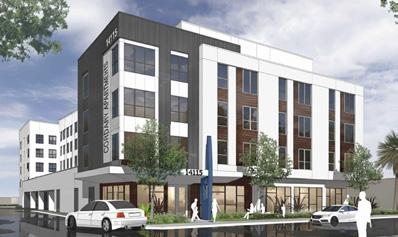
The $75.9 million project is a new construction, 93-unit, 100% affordable housing development located at 14115 Cordary Avenue, proposed by Abode Communities, a nonprofit developer. It would replace an underutilized land parcel owned by the City of Hawthorne.
In addition to the SBRHT loan and a $7 million City of Hawthorne loan, the project will be seeking additional local, state and federal funding to bridge its financing gaps. With funding secured, the project is anticipated to begin construction November 1, 2027, and reach completion by September 1, 2029.
Rendering of the Cordary Avenue Apartments. Courtesy of BSB Design.
Local Travel Network Awarded for Innovative Leadership
The California Association of Councils of Governments (CALCOG) presented the SBCCOG’s Local Travel Network (LTN) with a Eureka Award for Regional Excellence in Innovative Leadership at its Regional Leadership Forum on March 9.
The SBCCOG designed the LTN as a street network to support the growing use of zero-emission, micromobility (i.e., neighborhood electric vehicles, e-bikes, pedal bikes and e-scooters) for local trips around the South Bay. When using the network, these microdevices will share the road with traditional motorized vehicles on existing, low-speed streets that are 35 mph or less. The first leg of the proposed
network launched in the City of El Segundo in 2023. The plan is to expand the network to interconnect the entire South Bay. Streets on the route are marked with branded “rolling turtle” signage that notifies users they have joined the network and provides wayfinding guidance to major city destinations and safe intersections. Supporting the project is SBCCOG research that found that 70% of trips in the South Bay are 3 miles or less, and that 90% are shorter than 10 miles—distances that can be covered without a car.
The network is anticipated to launch in Redondo Beach later this year, followed by Lomita in 2027 and soon after in Carson and Lawndale. •
North Redondo Beach Bikeway Extension Improves Safety for Biking, Walking and More
The SBCCOG recently joined the City of Redondo Beach to celebrate the ribbon cutting of the North Redondo Beach Bikeway extension. The extension improves safety while creating more vibrant community spaces for walking, biking, roller-skating and more.
The SBCCOG supported the project through the allocation of $2.2 million in Measure M Transportation funds to the City of Redondo Beach, which the SBCCOG administers on behalf of all South Bay cities in partnership with LA Metro. The project aligns with the SBCCOG’s Local Travel Network project, which is creating a network of existing low-speed streets, and will facilitate zeroemission micromobility travel throughout the South Bay subregion, also funded through Measure M. •
To learn more, visit redondo.org/departments/public_works
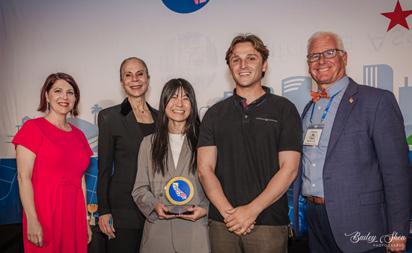
The South Bay Cities Council of Governments is presented with the Eureka Award for its Local Travel Network project at the California Association of Councils of Governments Leadership Forum. From left: Sabrina Bradbury, deputy director, CALCOG; Jan Harnik, president, board of directors, CALCOG; Anne Tsai, transportation project coordinator, SBCCOG; Jake Romoff, transportation project coordinator, SBCCOG; and Tim Hepburn, vice president, board of directors, CALCOG. Photo courtesy of Shen and Associates LLC and CALCOG.
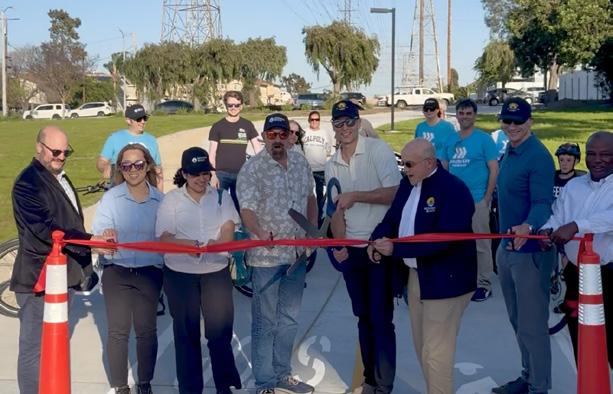
From left: Andrew Sywak, South Bay Area manager, LA Metro; Annie Chou, transportation planner, Los Angeles County Metropolitan Transportation Authority; Bernadette Suarez, council member, Lawndale, and chair, SBCCOG board of directors; Brad Waller, council member, Redondo Beach, and delegate, SBCCOG board of directors; Zein Obaji, council member, Redondo Beach, and alternate delegate, SBCCOG board of directors; Jim Light, mayor, Redondo Beach; Scott Behrendt, mayor pro tem, Redondo Beach, and alternate delegate, SBCCOG board of directors; and Chadwick Castle, council member, Redondo Beach.
Building the South Bay’s Future Workforce Through Apprenticeships
Written by Chris Cagle, deputy director, South Bay Workforce Investment Board
Some of the most important career conversations in the South Bay happen long before a job application is submitted. They take place in classrooms, on employer tours, inside training labs, and during hands-on experiences that help people of all ages and backgrounds see a future for themselves in the industries growing all around them.
As the South Bay continues to lead in aerospace, advanced manufacturing, aviation, technology and other highdemand sectors, our region faces a shared responsibility: ensuring that residents are prepared to access opportunities.
Employers need skilled talent. Young people need clear pathways from education to meaningful careers. Apprenticeships meet both needs.
Apprenticeships are state and federally recognized workforce development programs that allow participants to earn wages while gaining the skills, experience and industryrecognized credentials employers need. While many people associate apprenticeships with the building trades, today’s apprenticeship opportunities extend into aerospace,
advanced manufacturing, health care, information technology, aviation and other high-growth industries.
At the South Bay Workforce Investment Board (SBWIB), apprenticeship and preapprenticeship programs serve as bridges between education, industry and economic opportunities. They allow students and job seekers to learn by doing, connecting directly with professionals and understanding how their interests can develop into lasting careers.
Over the past several years, the SBWIB has helped develop apprenticeship opportunities across a variety of industry sectors throughout the region. These programs provide pathways to quality careers while helping employers build the skilled workforce needed to remain competitive. That work is increasingly taking root in South Bay school districts and communities. Through sector-focused pre-apprenticeship programs, the SBWIB is helping students explore career pathways before they leave high school by combining work readiness instruction, industry exposure and hands-on learning.
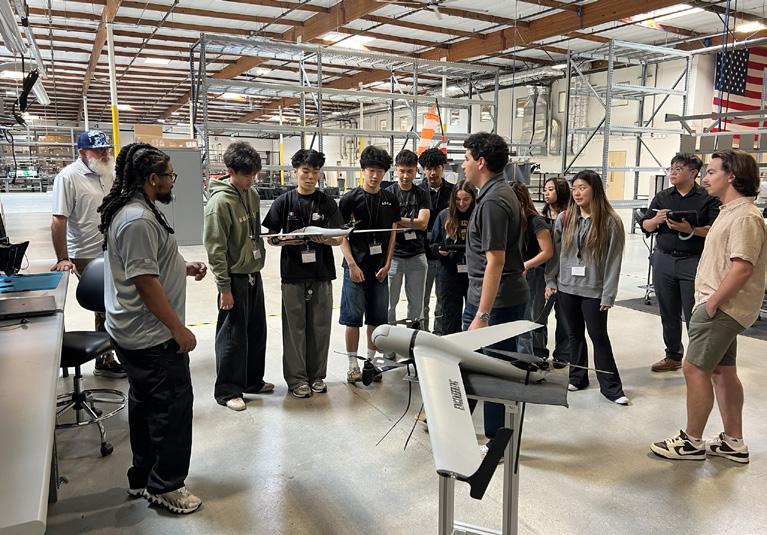
Thirty-two Aero-Flex pre-apprentices from South and Torrance High Schools recently
Torrance Unified School District students visit FlightWave in Torrance as part of the South Bay Workforce Investment Board’s Aero-Flex pre-apprenticeship program.
explored the rapidly growing unmanned aircraft systems industry through a visit to FlightWave Aerospace in Torrance. Students observed prototype assembly, avionics integration and live flight testing while hearing directly from engineers and technical professionals. Additional cohorts of students experienced pre-apprenticeships in sports medicine and arts media and entertainment occupations.
The SBWIB is also connecting students to the space economy. Through partnerships, the SBWIB is leading the development of the StarWorks Aerospace HUB, an initiative aligned with NASA’s workforce development goals that seeks to strengthen pathways into aerospace and space-related careers. By working with schools, colleges, employers and community partners, the initiative aims to inspire the next generation of scientists, technicians, engineers and skilled trades professionals who will help shape the future of space exploration and innovation.
These apprenticeship experiences help students understand that advanced careers are not distant or abstract and are often located in their own communities. They also demonstrate that there are many kinds of opportunities. The aerospace and space exploration industries depend on a broad range of skilled professionals, not limited to astronauts and engineers.
Apprenticeships create opportunities beyond early career exposure. The SBWIB’s Aero-Flex apprenticeship program has connected participants to earn-andlearn pathways and full-time employment opportunities with major aerospace employers such as Northrop Grumman in Redondo Beach.
That is the power of apprenticeship. It can inspire a high school student, support a displaced worker, help an employer develop talent and strengthen the region’s competitiveness at the same time. •
To learn more about the SBWIB’s Aero-Flex pre-apprenticeship/apprenticeship program, visit sbwib.org/aero-flex
CITY SHOWCASE
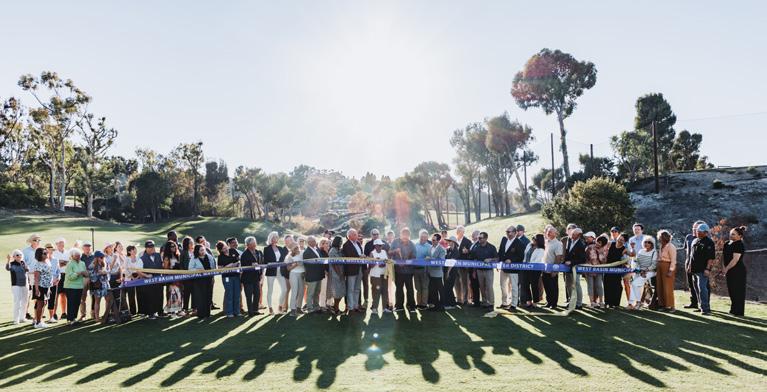
Last fall, community leaders, city representatives and members of the Palos Verdes Golf Club gathered for a ribbon-cutting ceremony to celebrate the completion of the Palos Verdes Recycled Water Pipeline Project.
West Basin Delivers Recycled Water to Palos Verdes Estates Recreational Area
A101-year-old Palos Verdes Estates landmark will continue to serve the community’s recreational needs for years to come, thanks to a historic step forward in regional sustainability.
Approximately 3.5 miles of new pipeline from an existing West Basin Municipal Water District’s water main in Torrance now delivers an annual supply of 210 acre-feet of recycled water to irrigate the fairways and greens of the Palos Verdes Golf Club. Previously, the club relied on potable drinking water. The recently completed Palos Verdes Recycled Water Pipeline Project—made possible through a partnership between West Basin, the Palos Verdes Golf Club, California Water Service, and the cities of Torrance and Palos Verdes Estates—will help conserve millions of gallons of drinking water each year.
“In concert with the residents of Palos Verdes Estates, our city council and staff are so proud of the 25 years of collaboration to complete the Palos Verdes Recycled Water Pipeline Project, aka The Purple Pipe,” said Craig Quinn, Palos Verdes Estates council member and SBCCOG board delegate. “This project will save an estimated 60 million gallons of drinkable water per year. It’s a huge win for our community and the surrounding area.”
The 15 to 30 acre-feet of potable water saved per year will support two parks and a school in the City of Torrance, extending the environmental benefit throughout the community. The project will also have the far-reaching effect of reducing the area’s dependence on imported water from Northern California and the Colorado River. Over time, it is expected to reduce future costs for developing new potable water sources for customers of Cal Water, the drinking water supplier for Palos Verdes Estates.
The pipeline coincided with the installation of a new pump station at Lago Seco Park in Torrance designed to move recycled water to the higher elevations of expanded service areas.
The project was supported by $2 million in grant funding from the California Department of Water Resources, with an additional $2.5 million investment by Cal Water. •
For more information, bit.ly/westbasinpvrecycledwater
South Bay Watch is a quarterly bulletin by the South Bay Cities Council of Governments to inform local leaders of subregional progress and alert them to emerging issues.
Governing Board: Chair
Bernadette Suarez, Lawndale 1st Vice Chair
Bill Uphoff, Lomita 2nd Vice Chair
Alex Monteiro, Hawthorne
Immediate Past Chair
Rodney Tanaka, Gardena
Members:
Carson, Los Angeles County, El Segundo, Gardena, Hawthorne, Hermosa Beach, Inglewood, Lawndale, Lomita, Los Angeles, Manhattan Beach, Palos Verdes Estates, Rancho Palos Verdes, Redondo Beach, Rolling Hills, Rolling Hills Estates, Torrance
SBCCOG Executive Director
Jacki Bacharach
Legal Counsel
Michael Jenkins, Best Best & Krieger LLP
Treasurer
Matthew Robinson
Editor
Colleen Farrell, Senior Project Manager, Communications Contributors
Rosemary Lackow, Administrative Assistant Design
Vincent Rios Creative, Inc.
To subscribe to SBCCOG newsletters or view past editions, visit southbaycities.org/newsletter
To view a schedule of SBCCOG meetings, visit southbaycities.org/calendar
Follow us:


facebook.com/SBCCOG facebook.com/SBESC
@SouthBayCCOG @SBESC
@southbayccog