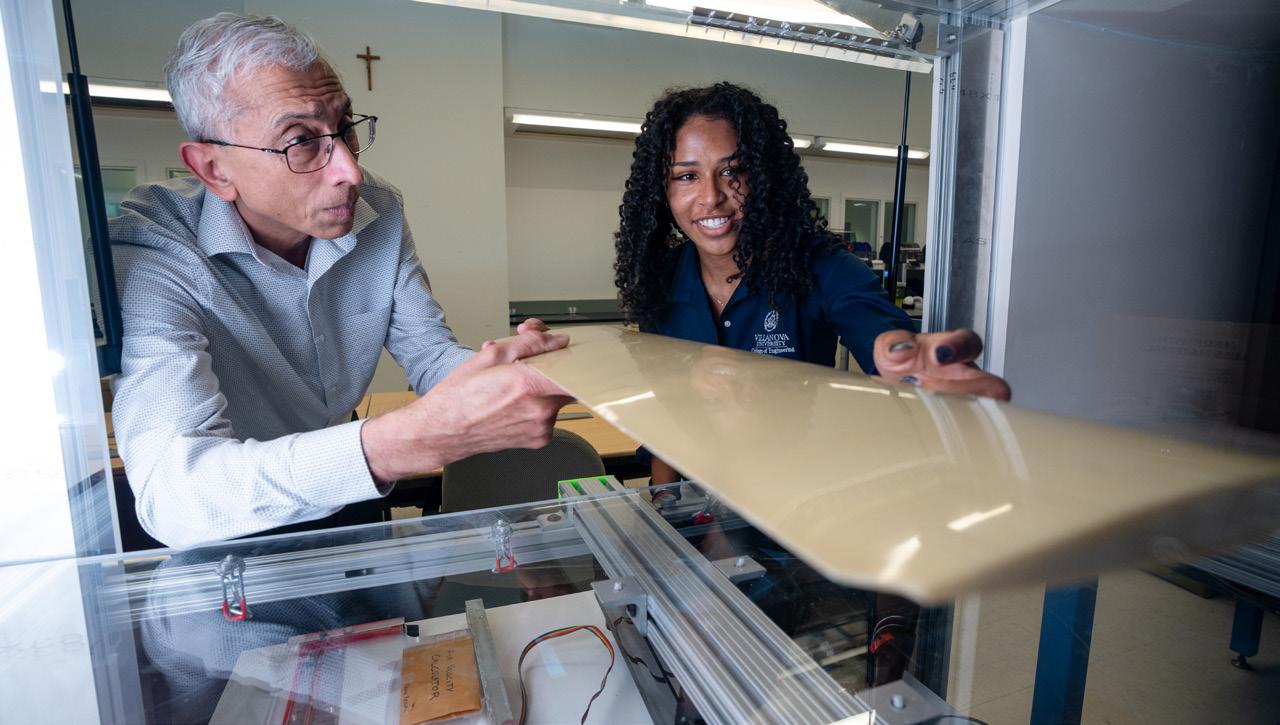
Artificial intelligence is transforming the way we live, work and learn—and engineers are at the center of that transformation. In this issue of Villanova Engineer, we explore how our faculty and students are harnessing AI to tackle some of society’s most pressing challenges while remaining grounded in the Augustinian Catholic values that define Villanova’s College of Engineering.
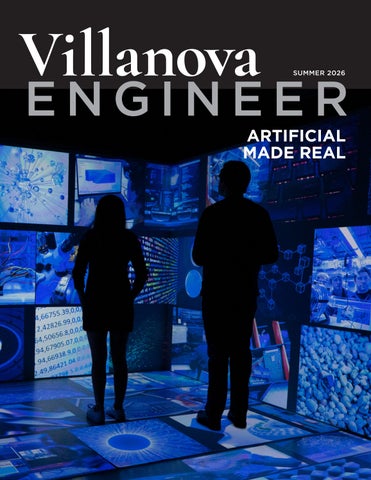
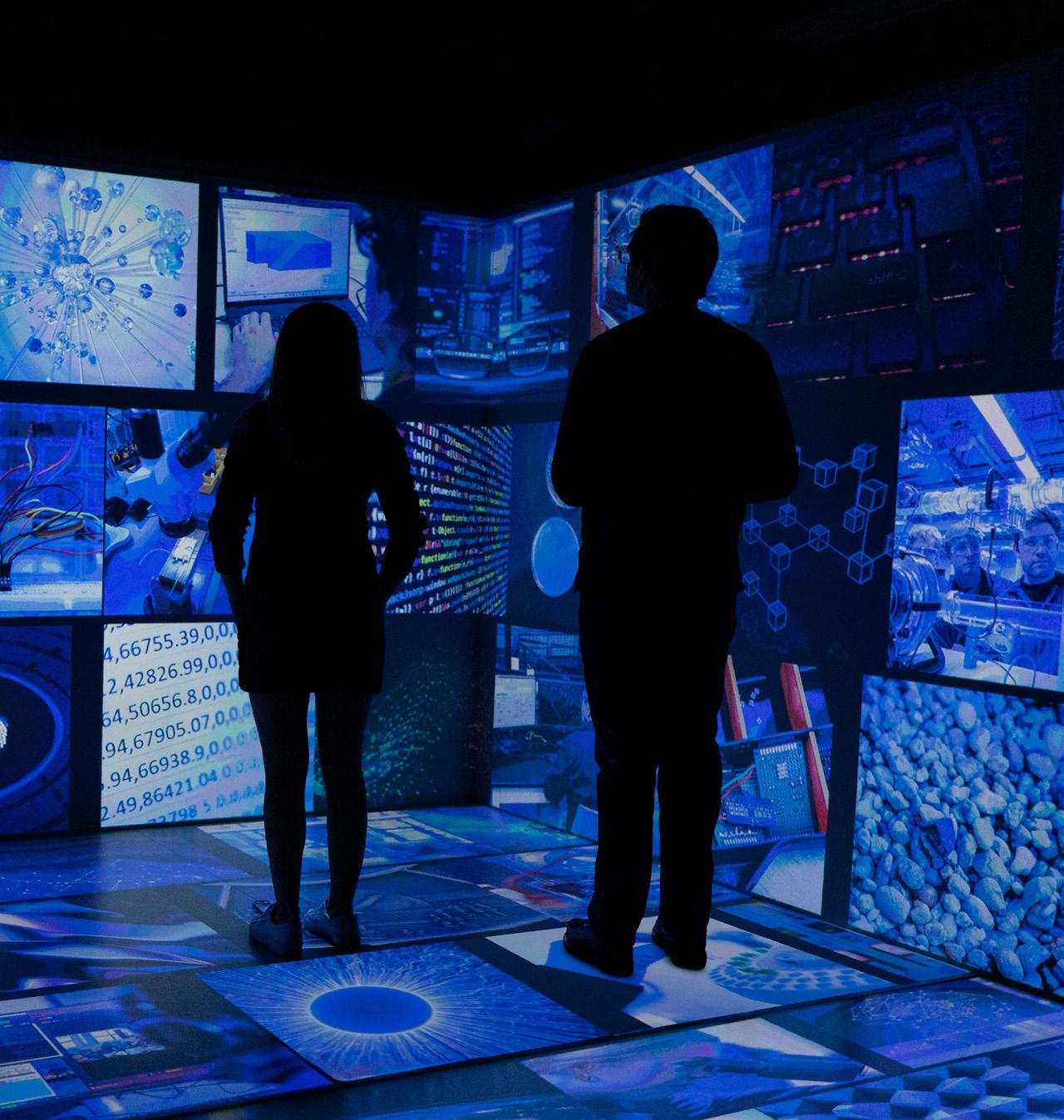
In “Artificial Made Real,” you’ll read how our researchers are using AI to predict urban flooding, improve wireless communications, study the spread of disease and accelerate the search for treatments for Alzheimer’s disease and other neurological conditions. Across disciplines, Villanova Engineers are combining technical innovation with human-centered thinking to create solutions that improve lives.
At the same time, this issue examines the ethical questions surrounding AI and the responsibility we have as educators to prepare students thoughtfully for a rapidly evolving future. In “AI the Villanova Way,” faculty and students reflect on how transparency, collaboration, sustainability and care for others must guide the use of these powerful technologies. As we integrate AI more deeply into our curriculum through new programs, minors and makerspaces, we remain committed to developing engineers who pair technical excellence with ethical leadership.
This spirit of innovation extends well beyond AI. You’ll read about exciting additions to our academic offerings, including the launch of the Master of Science in Sports and Performance Engineering, as well as the groundbreaking research taking place in new Drosdick Hall laboratories. You’ll also meet inspiring students and alumni whose leadership and service embody Villanova’s mission.
Whether by advancing clean energy research, building safer transportation systems or mentoring the next generation of engineers, our community continues to demonstrate that engineering is ultimately about people.
Thank you, as always, for your support of the College and for being part of our shared mission to ignite change through engineering.
Very best,
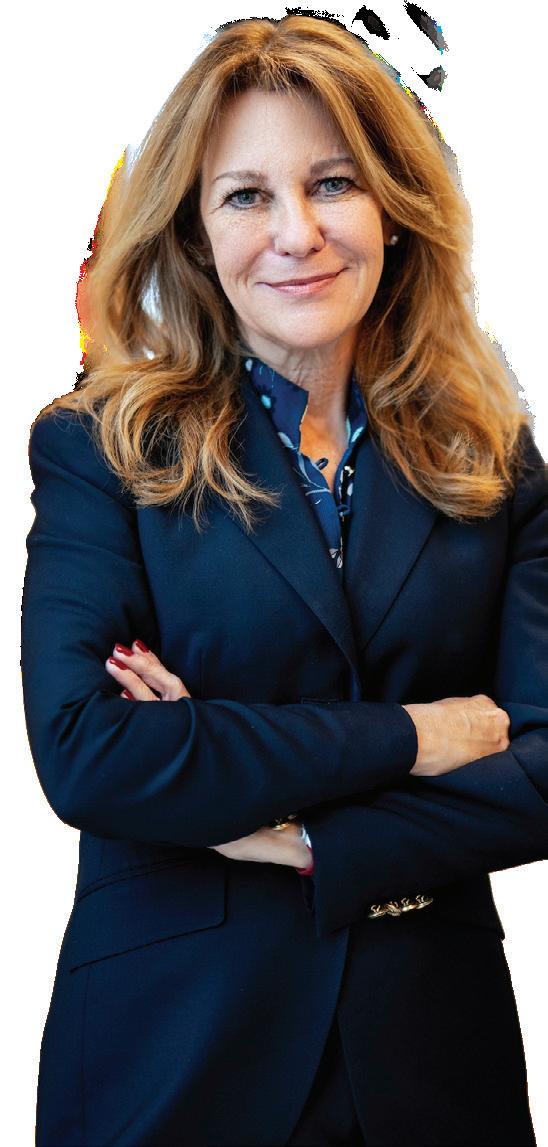
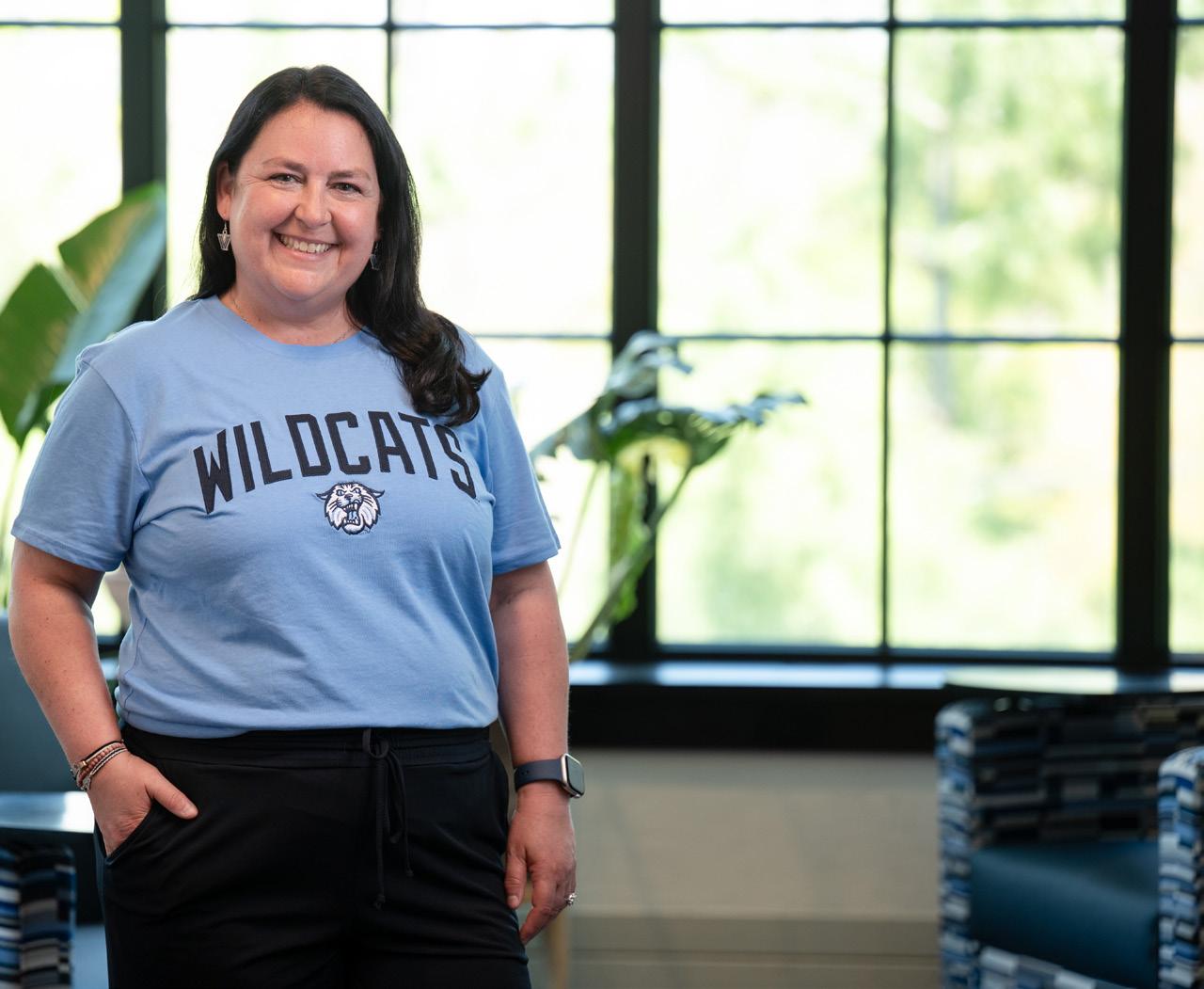
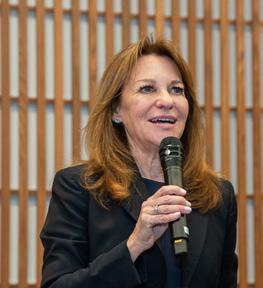
Michele Marcolongo, PhD, PE
Drosdick Endowed Dean of Engineering Professor of Mechanical Engineering
Villanova Launches Master’s in Sports and Performance Engineering
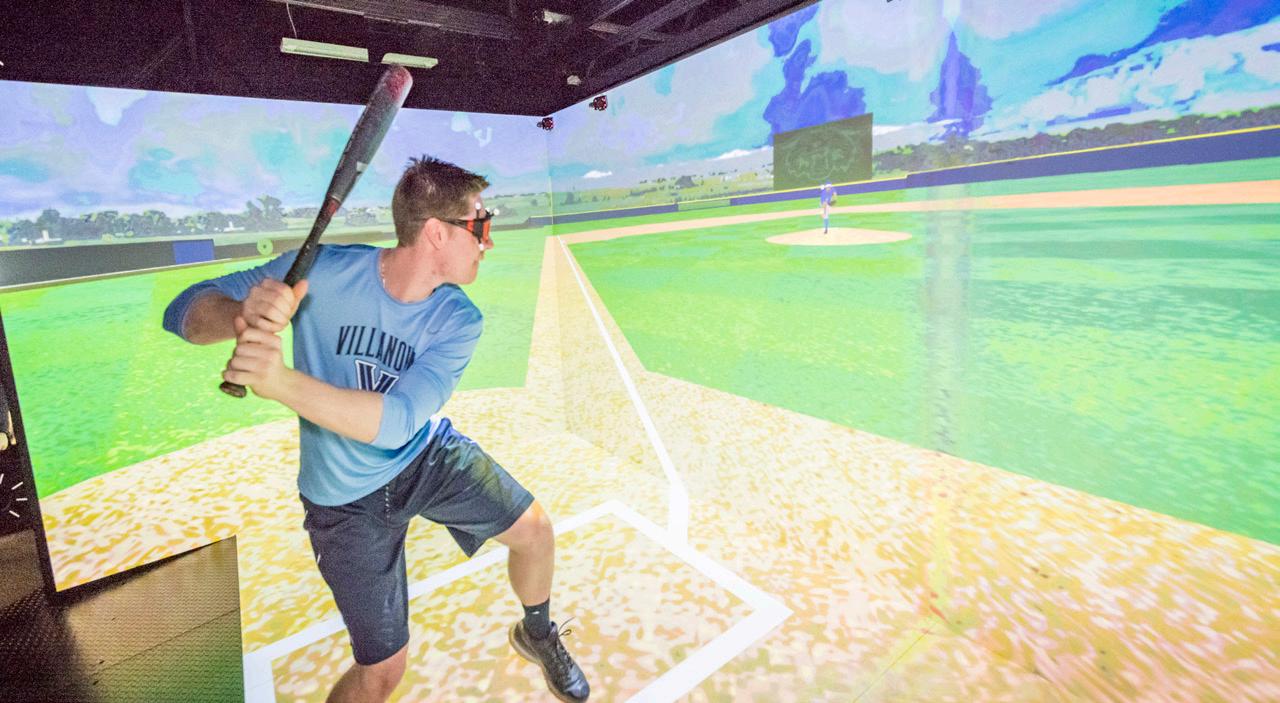
The College of Engineering is expanding its graduate offerings in fall 2026 with the launch of a new Master of Science in Sports and Performance Engineering (MSSPE). One of the first degrees of its kind in the country, the forward-looking MSSPE program is designed to address challenges in human performance through innovative, human-centered engineering.
The program builds on the success of the College’s Sports and Performance Engineering Initiative, established in 2022 to advance interdisciplinary research focused on improving performance both on and off the field. While athletics and sports technology are a natural focus, the initiative—and now the graduate program—embraces a much broader vision: leveraging engineering and technology to help all people live healthier, more capable and more fulfilling lives.
“Villanova’s new MS program fills a critical gap in education in the field of sports and performance engineering,” said Ani Ural, PhD, director of the MSSPE program and a professor of Mechanical Engineering. “Villanova is uniquely positioned to house this program as it brings together cutting-edge engineering with a strong athletics culture. This program offers students an unparalleled opportunity to learn from Villanova’s expert faculty, tackle real-world challenges and lead innovations that help people achieve peak performance.”
Faculty and student projects supported through the initiative have addressed challenges faced not only by athletes, but also by individuals with autism, Alzheimer’s disease, and other neurological or muscular conditions. Through applications ranging from wearable biosensors and biomechanics to analytics, materials and humancentered design, the work seeks to enhance human performance across diverse settings—from the playing field to the classroom to the boardroom and beyond.
Sports and performance engineering is a rapidly emerging field, driven by the growth of the global sports industry and the expanding use of advanced technologies to prevent injury, optimize performance and design next-generation equipment and systems. Despite growing demand for engineers with this expertise, Villanova will be among only a small number of US institutions offering a dedicated graduate degree in sports and performance engineering—and one of the few grounded squarely within an engineering college.
“Consistent with Villanova’s mission, Sports and Performance Engineering advances research that improves the human condition for all individuals, strengthening our commitment to using engineering for the betterment of society,” said Michele Marcolongo, PhD, PE, the Drosdick Endowed Dean of the College of Engineering.
For more information, visit bit.ly/MSSPE.
The new degree leverages engineering and technology to address challenges related to human performance
CAREER-Maker
Tommaso Cappello, PhD, receives prestigious NSF grant for his research on radio frequency engineering
The National Science Foundation named Tommaso
Cappello, PhD, assistant professor of Electrical and Computer Engineering and director of the HighPerformance RF (Radio Frequency) Lab, as a recipient of the prestigious Early Career Development (CAREER) Award. His project, “Mixed-Domain Pre-Distortion of RF Non-Linear Components for High-Efficiency, Wide-Band, and Reconfigurable Transmitters,” received a five-year, $547,357 grant, which will allow Dr. Cappello to conduct research to improve the efficiency and performance of wireless communication systems through innovative transmitter design.
The CAREER Award is the most prestigious grant supporting career development activities for teacherscholars who most effectively integrate research and education within the context of their organization's mission.
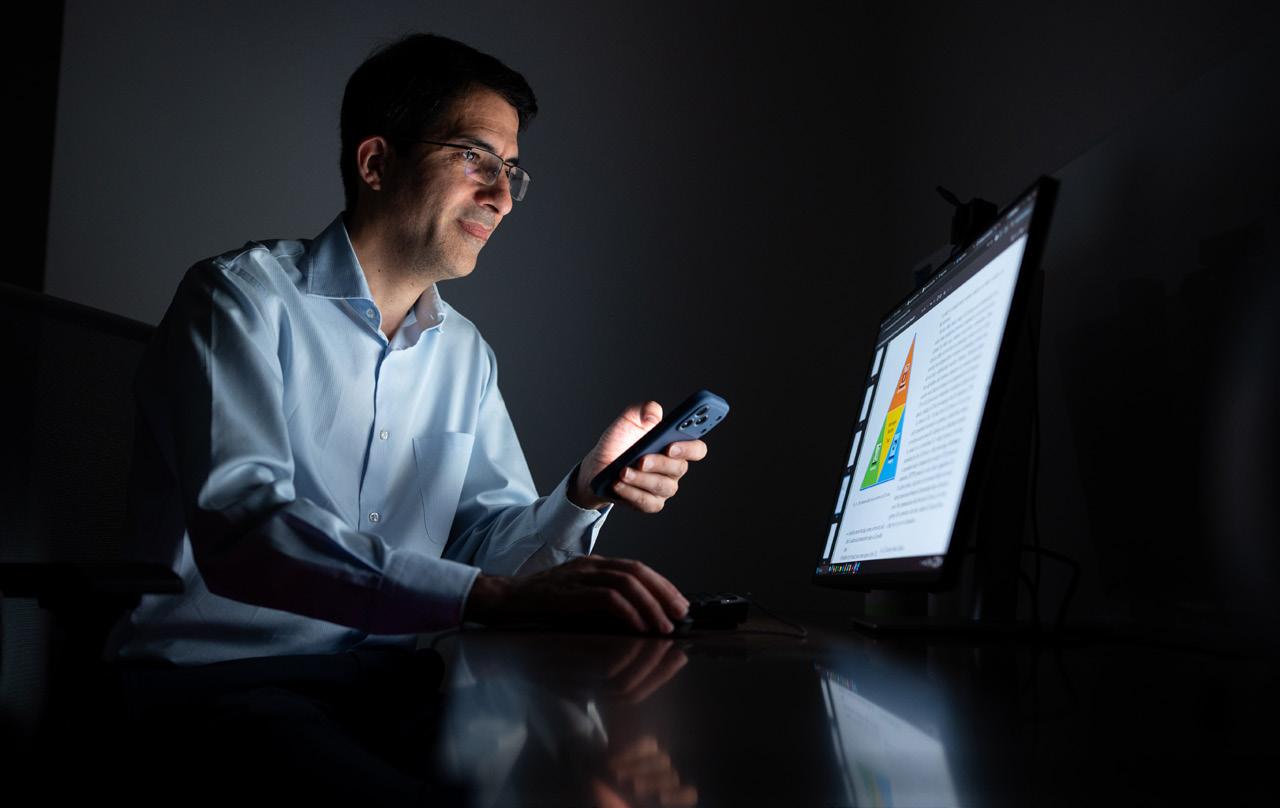
Dr. Cappello’s research focuses on RF engineering, a field within electrical engineering that studies highfrequency signals used in wireless applications such as telecommunications, radar systems and smartphones. (Learn more, pg. 29.) His CAREER project centers on improving the performance of transmitters—the components responsible for sending signals through the
air—by addressing inefficiencies in power amplifiers, which are a major source of distortion, energy consumption and heat generation in communication systems.
Telecommunications infrastructure accounts for an estimated 1-2% of global energy consumption, so improving transmitter efficiency can have a meaningful environmental impact, contributing to reduced greenhouse gas emissions worldwide.
The research backed by the CAREER Award also has the potential to enable smaller, lighter and more costeffective transmitters with improved performance. These systems could operate at lower temperatures, increasing reliability while also offering greater range, bandwidth and overall functionality.
“It is incredible what the integration of digital, analog and RF electronics can achieve together—while historically they have been designed by separate groups, the need for performance now requires an integrated approach,” Dr. Cappello said. “This is exactly the goal of this project: to develop new techniques to improve the relationship between efficiency and linearity by using mixed-domain electronics, ensuring signals are transmitted accurately while using less energy. I’m incredibly thankful for NSF’s support of this endeavor and to receive this distinguished award.”
College Forms MS Partnerships
Agreements will allow students at Bryn Mawr, Haverford and Hampton to begin graduate work at Villanova
The College of Engineering has entered into agreements with three institutions of higher education that will enable students to begin graduate studies at Villanova Engineering while completing their undergraduate degrees at their home school.
Through the new dual-degree program—which will launch this fall at Bryn Mawr College, Haverford College and Hampton University—qualified college seniors will take up to three graduate-level engineering courses (9 credits) through Villanova that will count doubly toward their bachelor’s and master’s degrees. Upon graduation from their undergraduate programs, the students will continue as Villanova graduate students to complete their MS coursework.
The model is similar to the College’s popular BS/MS plan for Villanova undergraduates, which provides students with the opportunity to earn both degrees in five years. The new plan, which is being rolled out at institutions without a graduate-level engineering program, will also be open to undergraduates from related STEM fields, including computer science, biology and chemistry—offering a direct pathway for students to continue their studies in engineering.
“Providing access to a Villanova Engineering master’s degree to students at other universities will not only help to transition those students into careers in engineering but will also add diverse perspectives to our Villanova community,” said Garrett Clayton, PhD, associate dean for Graduate Studies and professor of Mechanical Engineering.
Solving What’s Next
Two signature lectures examine the evolving demands on engineers—from sustaining the digital backbone of AI to confronting complex environmental systems
Villanova Engineering brought global challenges and emerging technologies into focus this year through two signature lectures that highlighted the evolving role of engineers in a complex world.
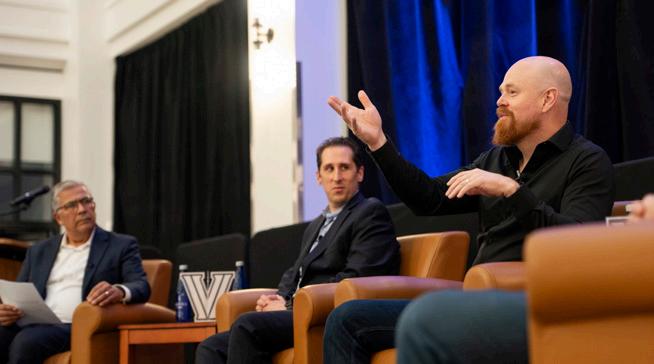
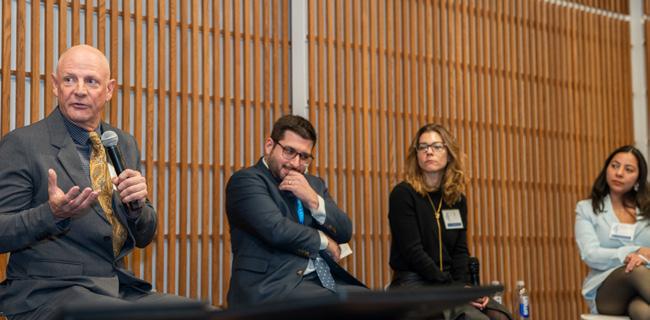
During the annual Patrick J. Cunningham, Jr. and Susan Ward ’80 Endowed Lecture, “The Data Center Revolution,” industry panelists explored how data centers are reshaping the infrastructure of the digital age. Moderated by Alfonso Ortega, PhD, the James R. Birle Professor of Energy Technology at Villanova, the discussion featured David Quirk, president and CEO of DBL Associates; Sean James, senior director of data center research at Microsoft; and Dustin Demetriou, PhD, senior engineer in IBM’s Systems Advanced Thermal Energy Efficiency Lab.
opportunities for students to help share more efficient and sustainable solutions.
Panelists noted that while data centers have existed for decades, the rise of artificial intelligence has thrust them back into the spotlight. James explained how graphics processing units (GPUs), originally designed for video games, are now essential for powering AI and machine learning due to their ability to perform many calculations simultaneously.
The speakers also emphasized the scale of challenges facing the industry, particularly as demand for computing power grows. At the same time, they highlighted
“I don’t think that AI is going to go away,” said Dr. Demetriou. “As AI continues to grow, data centers will play an increasingly critical role in supporting it. … There’s a lot that can be done from a sustainable and responsible perspective.”
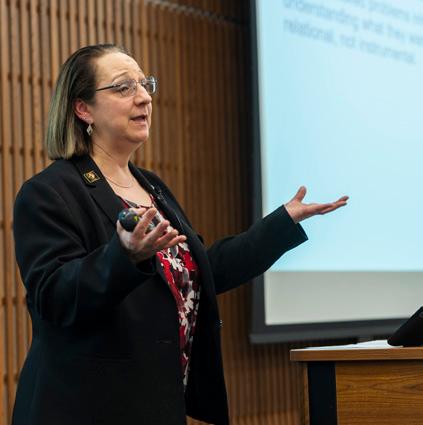
The annual Claire L. and Gerard F. Jones ’72 Distinguished Lecture, meanwhile, addressed the “wicked” challenges of water systems and the urgent need to modernize aging infrastructure. In her talk, “Convergence Research for Solving Wicked Water Problems,” Jeanne M. van Briesen, PhD, PE, dean of the College of Engineering and Information Technology at the University of Maryland, Baltimore County, drew on decades of research in river biochemistry, drinking water safety and energy impacts.
She defined “wicked” problems as complex, interconnected challenges that resist simple solutions. “You can’t study water problems without understanding climate change—there are many interdependencies, and the causes are often multiple,” she said, noting that attempted fixes can sometimes create new issues.
Dr. van Briesen emphasized that addressing these challenges requires more than traditional technical approaches. She highlighted convergence research, which brings together diverse fields to collaborate on real-world problems and develop new solutions.
“It’s really about mindset and how you approach these problems,” she said. “Wicked problems don’t get solved; they get stewarded.”
Exemplary Engineers
Top graduates from Class of 2026 honored for achievement and leadership
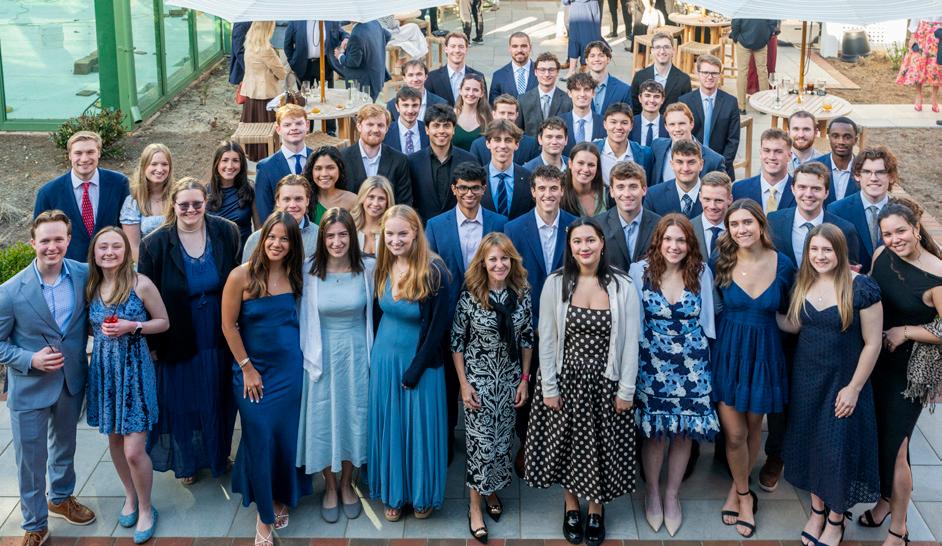
The College of Engineering celebrated remarkable seniors and graduate students from the Class of 2026 at the 51st annual Dean’s Awards Dinner, held April 9 at the Radnor Hotel in St. Davids, Pa. The event recognized academic excellence and student achievement as students prepared to receive their bachelor’s, master’s and doctoral degrees.
“These students exemplify what it means to be a Villanova Engineer—full of passion, dedication and a commitment to creating a positive impact on our society.”
MICHELE MARCOLONGO, PhD, PE
Drosdick Endowed Dean of the College of Engineering
Robert D. Lynch Award
The College’s top undergraduate honor
Kathryn Hamel ’26 ChE
Outstanding Master of Science Student Award
Recognizing the top graduating MS student
David Bates ’25 ME, ’26 MSME
The Barry C. Johnson Award
Honoring a distinctive graduating PhD student
Pamela Samonte ’25 PhD
Department Medallions
Trevor Coates ’26 ChE
Hannah Kalamarides ’26 CE
Dmitrii Kapranov ’26 EE
Mitchell Matella ’26 ME
Gary Szczotka ’26 CpE
Departmental Master of Science Student Awards
Connor Curtin ’26 MSBChE
Abigail Hammar ’26 MSSE
James Magee IV ’26 MSWREE
Daniel Whitman ’26 MSME
Tom Xaviour ’26 MSCpE
Grand Challenges Scholars
Hannah Kalamarides ’26 CE
Maria Saltysiak ’26 CE
Engineering Midshipman Award
Daniel Debartolomeo ’26 ME
Engineering
Entrepreneurship Student
Achievement Award
Ayden Lagalante ’26 ME
Humanitarian Engineering
Student Award
Alejandra Risco Bravo ’26
MSSE
Academic Achievement
Ivan Byju ’26 CpE
Nathan Caruso ’26 EE
Trevor Coates ’26 ChE
Evan Conley ’26 ME
Jacob El-Zahr ’26 CpE
Tyler Faris ’26 ChE
Marie Fitzgibbon ’26 ChE
Christopher Gardner ’26 ME
William Gibbons III ’26 ME
Kathryn Hamel ’26 ChE
Stefano Hammond ’26 ME
Thomas Huard ’26 CE
Dmitrii Kapranov ’26 EE
Joseph Klieman ’26 CE
Connor Koury ’26 CpE
Timothy Kubiak ’26 ChE
Francisco Lorenzo ’26 CpE
Mitchell Matella ’26 ME
Matthew Nawn ’26 EE
Matthew Noone ’26 ME
Zachary Piehl ’26 EE
Brendan Rainforth ’26 CE
Patrick Sams ’26 ME
Peter Sutin ’26 CE
Gary Szczotka ’26 CpE
Patrick Walsh ’26 CE
Morgan White ’26 ME
Taylor Wiseley ’26 CE
Tyler Yang ’26 CE
Molly Znachko ’26 ChE
Meritorious Service
Carter Baumann ’26 CE
Kiel Birthwright ’26 ChE
Emily Curran ’26 CpE
Margaret Douglas ’26 ME
Alexandra Eikenberg ’26 ME
Christopher Fleschner ’26 ME
Jedith Fernández ’26 ME
Kathryn Hamel ’26 ChE
Hannah Kalamarides ’26 CE
Alison Miltenberger ’26 CE
Maria Saltysiak ’26 CE
Kieran Seven ’26 CpE
William Stozenski ’26 ChE
Catherine Wollan ’26 ME
Expanding Clean Water Access
Foxwynd Foundation grant supports Humanitarian Engineering initiatives in Kenya
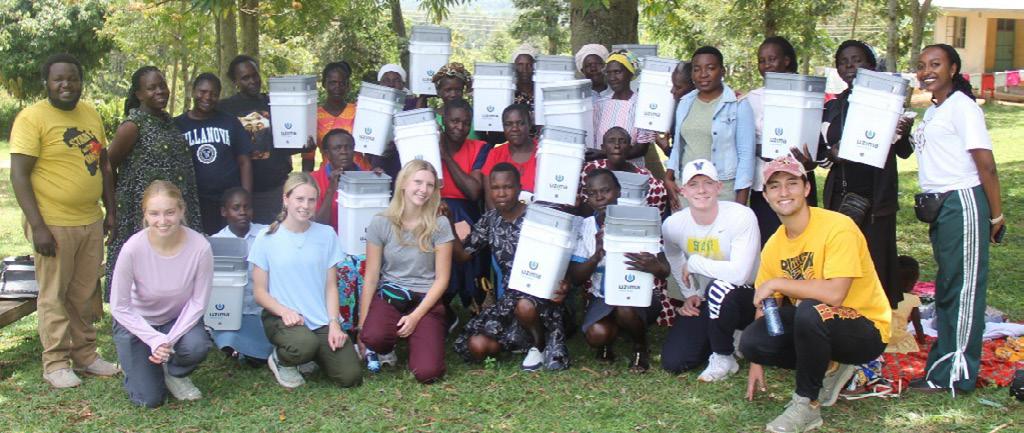
Villanova University’s Center for Humanitarian Engineering and International Development (C4HE) received a three-year grant from the Foxwynd Foundation to accelerate the implementation of water, sanitation and hygiene (WASH) initiatives in Kenya’s Siaya region. Foxwynd Foundation trustee Sherri Clark selected the project in Kenya’s Siaya region for this transformational investment through the Foxwynd Fellowship Program.
Part of the College of Engineering, C4HE is a missionoriented center committed to addressing complex global challenges, such as sustainability, education and health, through the provision of technical support services to nonprofit organizations. C4HE is focused on building partnerships with local organizations in low- and middleincome countries and operates in 10 countries throughout Asia, Africa and the Americas.
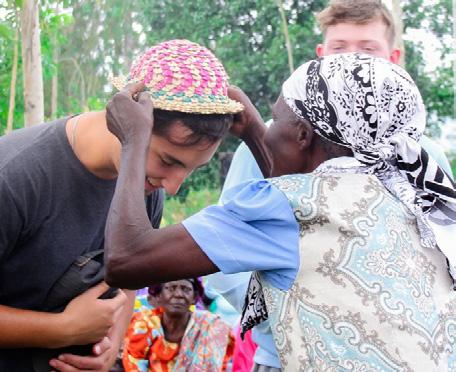
In 2022, C4HE partnered with two nongovernmental organizations—Muungano Rural Empowerment Centre and Start with One—to design and build systems to improve access to water and sanitation facilities throughout Siaya County, Kenya. Through the deployment of domestic water filters and the design of solar-powered pumping systems, teams of students and faculty from Villanova have made significant improvements to the quality of life for children and families throughout the region.
“Supporting Villanova University through the fellowship program allows the foundation to strengthen sustainable projects that improve health and well-being,” Clark said. “Access to safe water and hygiene in Kenya is a critical step toward building resilient communities.”
Over the next three years, Villanova Engineering students and faculty will work side by side with these Siaya-based NGOs to design, implement, optimize and sustain water and sanitation systems in two public schools, Siaya Public and the Nina School for the Deaf.
Collectively, the work seeks to serve the children and families of these schools by increasing access to clean water supply systems, widening the availability of safe sanitation and improved hygiene practices, and building organizational capacity of the NGO partners.
“The Foxwynd Fellowship Program has enabled us to accelerate our efforts in Siaya, while simultaneously providing unique learning opportunities for engineering students at Villanova, and empowering local organizations to scale the impact they are having in their communities,” said Jordan Ermilio, PhD, ’98 ME, ’06 MSWREE, founder and director of C4HE.
Forging Stronger Foundations
Hands-on learning and industry collaboration prepare Civil Engineering students to lead in structural design
By Lauren Barnes
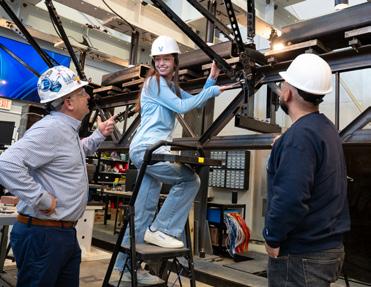
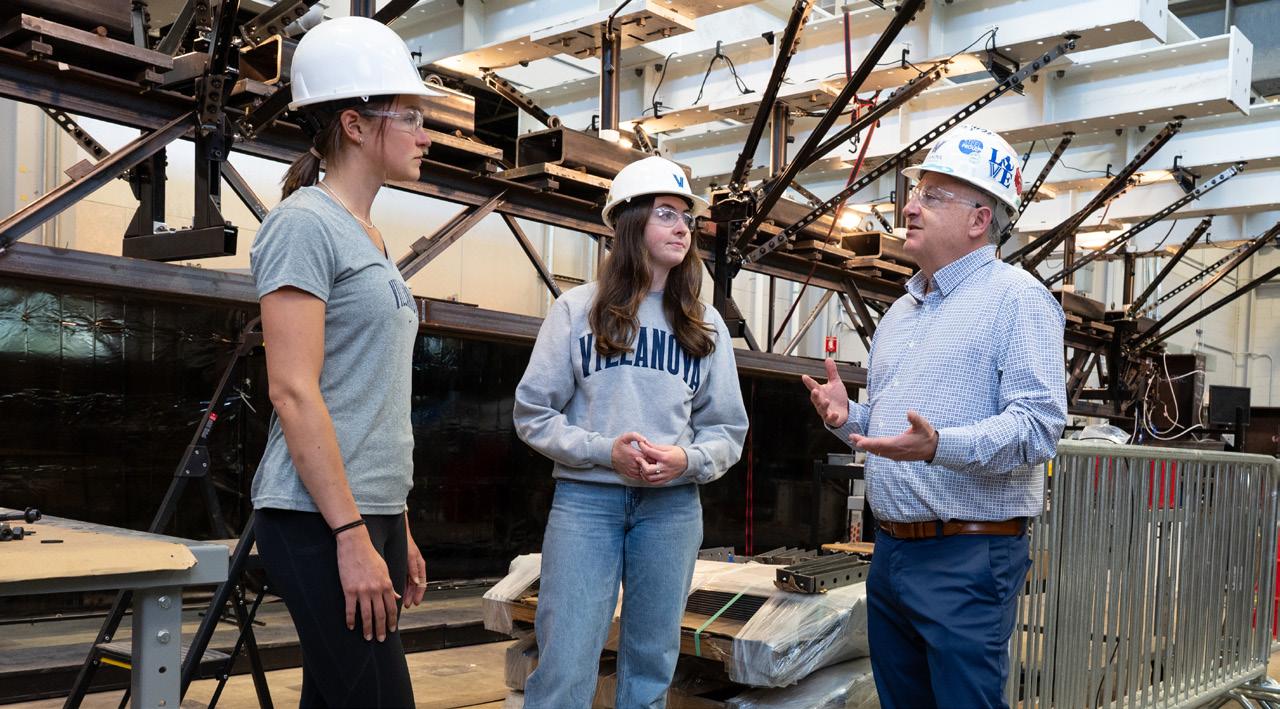
Thanks to a $2 million industry grant, students in Civil Engineering— from undergraduates to PhD candidates—are gaining confidence in professional settings as they work alongside industry engineers, contribute to research, present findings and learn to trust their expertise.
Awarded in 2024, the five-year grant from New Millennium, a Steel Dynamics company, supports a research program focused on advancing the design, behavior and performance of structural steel components used in commercial buildings, with an emphasis on improving efficiency, safety and constructability in modern structural systems. While the research aims to validate and optimize design assumptions used by New Millennium, it also expands hands-on research for students at every level.
Experimental testing is conducted in Villanova’s Richard K. Faris Structural Engineering Teaching and Research Laboratory. Through their involvement, students develop strong laboratory and analytical skills while gaining experience coordinating undergraduate assistants, managing equipment scheduling, and refining professional communication and project management skills.
“The hands-on, interactive nature of this experience has been incredibly valuable,” says Allyson Cottier ’25 CE, ’26 MSCE, who has worked on the project for the past two years. “I’ve built testing setups, troubleshot instrumentation and worked directly with industry professionals, gaining a deeper understanding than coursework alone can provide.”
Teams of approximately 10 students meet monthly with six employees from New Millennium to present research findings, review experimental results and discuss
progress. These regular interactions provide students with meaningful exposure to industry professionals and real-world engineering challenges, strengthening the connection between academic research and professional practice.
The research itself is highly collaborative. “Students participate in all aspects of the research. They assist in designing all components of the experimental testing program, from the support structure to the data acquisition plan and the synthesis of the data,” says Civil and Environmental Engineering Professor David Dinehart, PhD, a co-principal investigator on the project alongside fellow CEE professors Shawn P. Gross, PhD, and Joseph Robert Yost, PhD, PE.
The involvement ensures that students not only contribute to but also graduate with the technical expertise and knowledge needed to lead in structural engineering.
In addition to technical growth, the program fosters mentorship and a strong sense of community among participants. This approach creates a dynamic learning environment where knowledge is actively shared and applied. Ultimately, the initiative exemplifies how academia and industry can work together to prepare the next generation of engineers.
“Working alongside New Millennium has emphasized the importance of adaptability in problem-solving,” Cottier says. “Not everything in my research has gone according to plan, so I’ve had to reassess, adjust and move forward in real time while coordinating with an industry leader. This experience has strengthened my ability to navigate complexities and make thoughtful decisions with the end goal in mind.”
Advancing Our Vision
A progress report on the College of Engineering's 10-year Strategic Plan
By Lauren Barnes
In 2023, the College of Engineering launched its 10-year Strategic Plan, a roadmap designed to guide priorities, capabilities and impact over the next decade. Just three years in, significant progress has already been made.
Centered on four key themes—Teaching and Learning; Research and Innovation; Lifelong Learning and Professional Development; and Culture and Climate—the College’s plan is guided by Villanova’s own Strategic Plan, Rooted. Restless
“I’m proud of how far we’ve come in turning our strategic vision into meaningful progress,” says Ani Ural, PhD, the College’s director of Strategic Initiatives and a professor of Mechanical Engineering. “Our growth reflects the dedication of everyone involved.”
Recognizing the evolving landscape of engineering education and research, the College views the Strategic Plan as a dynamic framework, one that will continue to adapt to emerging opportunities and priorities.
Here’s a sampling of how this work is unfolding across the College, where progress is already making an impact and where it is headed next.
THEME 1: Teaching and Learning
• The College marks a major milestone this fall with the launch of a new Bachelor of Science in Biomedical Engineering, expanding opportunities for undergraduate students.
• Distinctive new Master of Science programs have also been introduced, including an MS in Aerospace Engineering (MSAE) and an MS in Sports and Performance Engineering (MSSPE). One of the first programs of its kind in the nation, the highly specialized MSSPE is designed to position graduates at the forefront of innovation in sports, health and human performance.
• The curriculum for the College’s award-winning Career Compass professional development program has been fully updated, incorporating new in-person components, enhanced alumni-student mentorship opportunities, and a greater emphasis on licensure and career pathways.
• Sustainable Engineering content has been successfully mapped throughout the College curriculum. Additionally, about one-third of Villanova Engineering faculty members have completed a workshop through Engineering for One Planet (EOP), a program launched by the Lemelson Foundation and VentureWell to integrate sustainability and climate literacy in engineering education. Villanova has been a key partner with EOP in developing and hosting national faculty development workshops nationwide.
THEME 2: Research and Innovation
• Newly developed workshops will provide an educational plan in innovation and entrepreneurship for faculty, graduate students and postdoctoral researchers.
• With the opening of Drosdick Hall, new processes have been established within research labs to optimize space allocation, lab management and safety procedures.
• Through seed grants, workshops and other measures, the College is supporting emerging initiatives in areas such as artificial intelligence and Sports and Performance Engineering.
THEME 3: Lifelong Learning and Professional Development
• Efforts are underway to establish new industry partnerships that expand student internship and co-op opportunities.
• The launch of a new PhD Mentorship Program aims to strengthen connections and foster engagement across generations of the Villanova community.
• Recognizing the importance of professional growth among staff members, the College has designated resources specifically to support staff professional development, with processes being developed to guide their allocation.
OVERARCHING THEME: Culture and Climate
• The College has expanded support for NovaEdge, a summer program at Villanova that introduces high school students from diverse backgrounds to engineering through hands-on lab experiences, faculty-led lectures and industry insights. Additionally, the Villanova Engineering, Science and Technology Enrichment and Development (VESTED) program continues to broaden access to STEM education by engaging students from underresourced communities and supporting their academic and professional growth.
• New internal communications channels have elevated the visibility of faculty, staff and student achievements within Drosdick Hall and celebrated excellence in research and education.
• Department-level communications have received a boost, too. Most departments now distribute external newsletters—expanding efforts to highlight achievements across the greater Villanova Engineering community.
Leading and Learning in Engineering
Dr. Eric Musselman shares his enthusiasm for his new role as associate dean for Undergraduate Affairs
By Lauren Barnes
Eric Musselman, PhD, PE, the newly appointed associate dean for Undergraduate Affairs and an associate professor of Civil and Environmental Engineering, is blending his work in the classroom with his new leadership role to enhance the undergraduate experience and strengthen student engagement across the College of Engineering.
A Villanova faculty member since 2012, Dr. Musselman shares insights on his transition from department chair to associate dean, his student-centered approach and what excites him most about supporting the next generation of Villanova Engineers.
Q: What is something you look forward to about this role?
A: I think there are many compelling reasons why Villanova is a great school for engineering, and I look forward to sharing them with prospective students. To do that, I plan to increase our outreach to the surrounding community, including middle and high school students. We already do some of this, but I am excited to expand these efforts.
Q: How do you balance administrative leadership with a student-centered mindset?
A: I am fortunate to lead a group of staff who are all very student-focused. There is a great blend of
experience and new perspectives, and everyone is working to support our students. As associate dean, I believe it’s very important to build and maintain an environment of trust and mutual respect that allows us to focus on the students and their experience here at Villanova.
Q: What lessons from the classroom shape your approach as a leader?
A: As a professor, I strive to be responsive to my students, actively seeking their feedback to understand what resonates and what may need to be explained or approached differently. I bring that same mindset to my leadership role, listening, adapting and ensuring we remain responsive to student needs.
Q: What has been the most rewarding part of your career?
A: Seeing a student understand something they have struggled with. On a small scale, this happens in class or during office hours when something finally clicks, but it also happens on a larger scale with graduate students who develop expertise in their research through months or years of hard work. Seeing that understanding develop is very rewarding.
Faculty Briefs
ASSOCIATE EDITOR OF THE YEAR
Aaron Wemhoff, PhD, professor of Mechanical Engineering, was named 2025 Associate Editor of the Year by the American Society of Mechanical Engineers, for his work on the Journal of Thermal Science and Engineering Applications. An expert in computational analysis of heat and mass transfer in nanoscale and microscale systems, Dr. Wemhoff was recognized for demonstrating exceptional leadership in managing the peer-review process and ensuring timely, thoughtful and accurate decisions.
A NEW LEADER FOR VCRWS
Bridget Wadzuk, PhD, ’00 CE, the Edward A. Daylor Chair Professor in Civil and Environmental Engineering, was named director of the Villanova Center for Resilient Water Systems (VCRWS). She assumed the role from founding director Rob Traver, PhD, PE, ’82 MSCE, who stepped down last summer after more than two decades of visionary leadership on the College of Engineering’s water resources team. Dr. Wadzuk previously served as associate director of VCRWS, during which time she led efforts to strengthen the center’s community, broaden its research portfolio and establish high-impact collaborations—including a global partnership supported by a National Science Foundation planning grant. In her new role, she will focus on interdisciplinary integration, faculty mentorship and student development. Dr. Wadzuk is also director of Villanova’s Sustainable Engineering program.
AAEES 40 UNDER 40
Kelly Good, PhD, PE, assistant professor of Civil and Environmental Engineering, was named to the American Academy of Environmental Engineers and Scientists’ (AAEES) 40 Under 40 list, which recognizes rising leaders advancing environmental engineering and science. Her work bridges engineering, public health and policy, focusing on watershed management, water quality contaminants and resilient infrastructure systems. She is also a dedicated educator and mentor, engaging undergraduate and graduate students in applied, community-focused learning. “I’ve been fortunate to work with incredible students and collaborators who care deeply about water and environmental challenges,” Dr. Good said.
SUPPORTING FACULTY RESEARCHERS
Gabriel Rodriguez Rivera, PhD, assistant professor of Chemical and Biological Engineering, was named the recipient of the 2026 Tenure-Track Faculty Career Development Award in support of an organ-on-a-chip project collaboration with Northeastern University. Presented annually by the College of Engineering since 2022, the award is intended to help tenure-track faculty members facilitate relationships with mentors and collaborators at other institutions who can aid in accelerating research development.
Off Road, On Track
Students move full speed ahead with Nova Baja racing team
By Baily Keeley ’27 CE
It might be surprising that a Civil Engineering student is president of the newest racing team in the College of Engineering, Nova Baja. But between the appealing structure of a Baja car, my interest in project management and my love of monster trucks, Nova Baja has been a great club for me to participate in and lead.
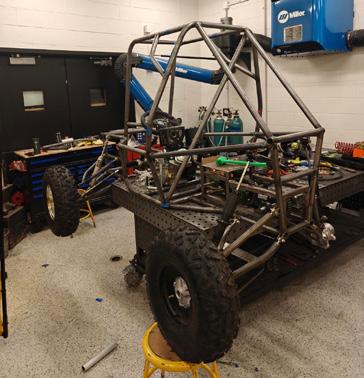
Nova Baja is an Engineering student-run organization where we design and build a Baja-style off-roading racing car. Like NovaRacing, the College’s popular Formula SAE team, Nova Baja competes through a program sponsored by SAE International, formerly the Society of Automotive Engineers. These events bring together college teams from across the country to design, build and race prototype vehicles.
Nova Baja was brought to life after David EscobarHuertas ’25 ME, ’26 MSME completed his senior capstone project on the suspension of a mini Baja vehicle. He decided to start up the Baja SAE team and build the entire car, and the presidency was passed on to me after he completed his undergraduate studies.
What drew me to Nova Baja as a Civil Engineering student was the structural side of a Baja car. These small, off-roading vehicles have components like forces, load transfer and structural stability. In this club, you can use Civil Engineering skills such as steel structure design, weld inspecting, safety management, load distribution and so much more.
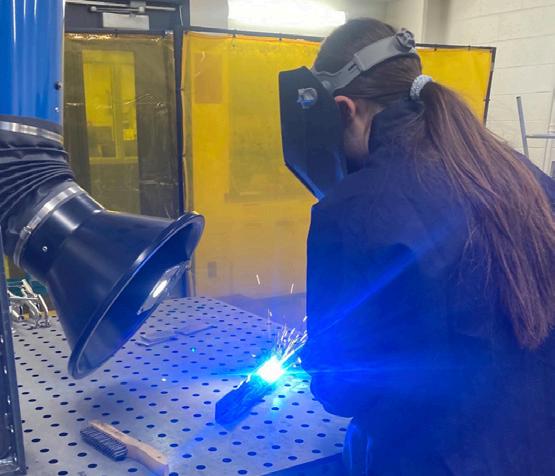
Our team utilizes engineering software including SolidWorks, Ansys and MATLAB to design the Baja car, and we manufacture parts in the Mechanical Engineering Machine Shop in Drosdick Hall. We are even welding our own chassis, led by our vice president, Bradley Berde ’27 CpE. Our biggest goal this year was to develop a fully manufactured car to compete at the Baja SAE 2026 Competition in New York in June.
The experience of starting a club has been exciting. For an engineering club where you are fully designing from scratch and learning as you go, it has taken a lot of research, meetings and redrafting to get to where we are now. We have an awesome team of about 20 active members who make it a lot of fun. We have also received support from the NovaRacing team, for which we are so grateful.
Being the president of Nova Baja has taught me so much, including how to manage people and deadlines and how to get individuals to come together for a common goal. I have learned how to design a vehicle from the ground up. It takes a lot of work and patience, but it is very rewarding to see your designs come to life. I can’t wait to see what the future of Nova Baja holds.
Baily Keeley is a junior from Media, Pa., majoring in Civil Engineering. She is president, front suspension lead and business lead of Nova Baja.
Student Briefs
FROM THE GROUND UP
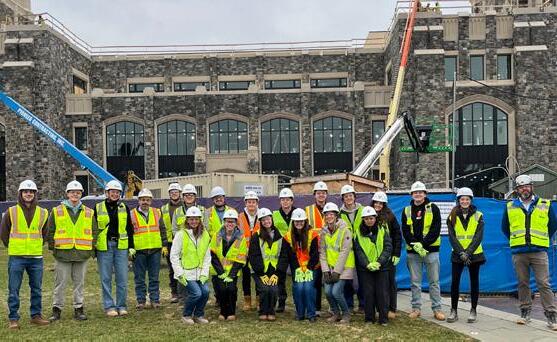
Two Villanova Civil Engineering senior capstone teams toured the Falvey Library at Vic Maggitti Hall construction site in the fall, gaining a firsthand look at key architectural features from floor systems to foundation elements. Led by Turner Construction assistant engineer Gavin O’Donnell ’24 CE and field engineer Ashley Welde ’25 CE, the tour offered the students important insights for the capstone projects: The teams developed their own simulated structural plans for the library and a proposal to solicit prospective firms to furnish the final design through structural and geotechnical analysis. Opening this fall, the new 150,000-square-foot library will expand student study space, house special collections and archives, and feature modern learning and event spaces.
SHPE STRONG
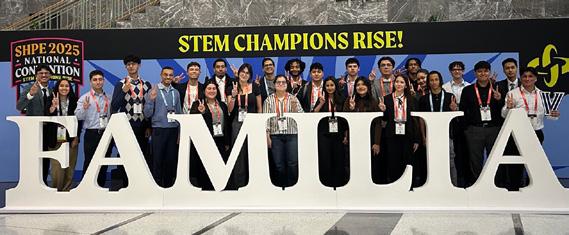
Members of Villanova’s chapter of the Society of Hispanic Professional Engineers (SHPE) showed their school spirit last fall at the SHPE National Convention in Philadelphia. The group participated in workshops, networking events and a career fair featuring more than 300 exhibitors during one of the nation’s largest annual gatherings for STEM students and professionals.
SCHOLARSHIP, SERVICE, SUCCESS
Matthew Nawn ’26 EE was named a recipient of the Institute of Electrical and Electronics Engineers (IEEE) Power and Energy Society (PES) Scholarship Plus Initiative and selected as the John W. Estey Outstanding Scholar, recognizing him as the top PES scholar in IEEE Region 2. As part of these honors, he received a $9,000 award, along with a certificate and commemorative plaque. Following his graduation in December, Nawn began serving as an electrical engineer and commissioned officer in the US Navy’s Naval Nuclear Propulsion Program. “My success in Electrical Engineering has been a cumulative effort made possible by the support of dedicated professors, mentors, classmates and professional colleagues who bring their presence and wisdom to Drosdick Hall each day,” he said.
FROM DROSDICK TO THE FIREHOUSE
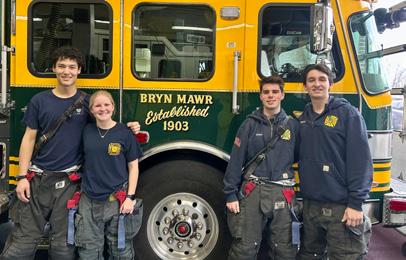
Meet the Villanova University engineers serving with the Bryn Mawr Fire Company (from left): Colton Musselman ’29 ME, Anne Earp ’28 CE, John Burns ’27 CE and Dominic Cipriani ’27 CE, along with alumna Kylee Hall ’24 ChE (not pictured), the first female line officer in the company’s history. The students were featured in the spring in a Fox29 news segment demonstrating Villanova’s Augustinian Catholic values in the classroom and the community.
Alumni Briefs
TEACHING INTENTIONALLY
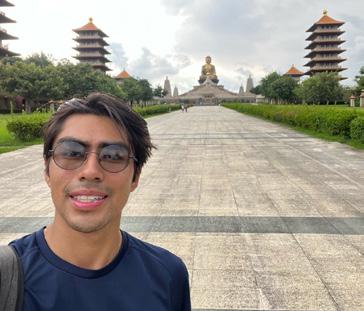
Jafet Beltran ’25 ME is applying lessons learned in engineering toward his role as a Fulbright English Teaching Flagship Fellow in Taiwan. “From a distance, teaching English and engineering are as far apart as two subjects can be,” said Beltran, who minored in Chinese Language at Villanova and studied Chinese in Taipei. “However, what I found to be the common factor is the idea of ‘intentionality.’” By being intentional in his lesson planning and making good use of the tools he’s provided, Beltran says, he can help students overcome the challenges of learning a new language. “I need to choose what images I show them, what words I use, how fast I say things and be intentional about my body language,” he said. “These are all things that students will use to further understand the materials.” Beltran was one of three Villanova graduates to receive the prestigious Fulbright teaching fellowship for 2025-26.
GAME PLAN FOR GROWTH
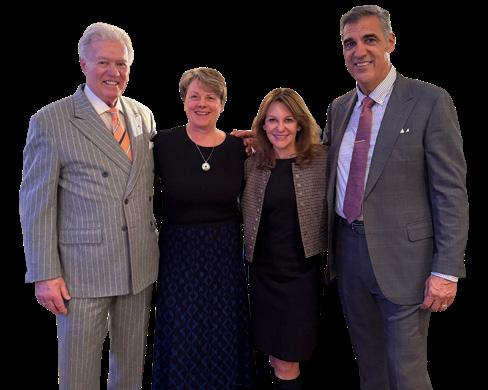
Harry Clark ’64 ME, ’69 MSME (left) was joined by Dean Michele Marcolongo (second from right), PhD, PE, and Cynthia Rutenbar, executive director of major giving for the College of Engineering, at an event in January at the Westin Hotel in Philadelphia. Organized by Clark Capital Management Group, which Clark founded in 1986, the event featured a motivational talk by Jay Wright (right), former Villanova Men’s Basketball head coach and current special assistant to the president.
A LEADER IN ENGINEERING EDUCATION
Mohammad Elahinia, PhD, ’01 MSME was named dean of the University of Toledo College of Engineering, where he has been a faculty member since 2004. An expert on smart material systems and advanced manufacturing, Dr. Elahinia earned his master’s degree from Villanova under the supervision of Professor Hashem Ashrafiuon, PhD, before pursuing his doctorate at Virginia Tech. In 2023, he received Villanova Engineering’s John J. Gallen Memorial Award, which recognizes the achievements of alumni whose technical efforts yield advances in the engineering profession.
“My experience at Villanova was foundational,” Dr. Elahinia said. “The rigorous curriculum, the close-knit academic community and the Augustinian values of truth, unity and love instilled a sense of purpose that has guided me throughout my career. I am excited to carry those principles forward as I work to empower students and faculty at the University of Toledo to solve the great challenges of our time.”
ENGINEER OF THE YEAR
Sarah McInnes, PE, ’03 MSCE was named the 2026 Delaware Valley Engineer of the Year by the Engineers’ Club of Philadelphia. McInnes is a senior assistant construction engineer for District 6 at the Pennsylvania Department of Transportation. With nearly three decades of service, she has played a key role in some of PennDOT’s most complex transportation projects, including reconstruction efforts along Interstate 95 and improvements to Interstate 476. “I am honored my passion has shown through,” McInnes said. “I don’t see this as a reward so much as an acknowledgment of the work I’ve put in and the passion and care I bring to what I do.”
Ready for Takeoff
By Queen Muse
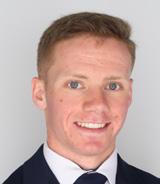
Adam Vanino ’24 ME, ’25 MSAE has always had a passion for aerospace engineering, an industry dedicated to developing aircraft, satellites and other systems designed for space operations. As a Mechanical Engineering major at Villanova, he pursued the department’s minor in Aerospace Engineering. Still, he was eager to learn more, as he felt the world was close to entering a new “space race.”
“I saw there was a lot of competition in this field and a lot of breakthrough technologies that were being pursued,” Vanino says. “It just felt like the perfect time to jump in.”
Vanino got his wish when he became one of the first students enrolled in Villanova’s new Master of Science in Aerospace Engineering (MSAE) program, which launched in fall 2025. Through the College of Engineering’s five-year BS/MS plan, he earned his bachelor’s degree in Mechanical Engineering in May 2024 and completed his master’s degree in Aerospace Engineering a year and a half later, becoming the first graduate of the program.
The MSAE program follows an accelerated format, with classes running in eight-week blocks. Many part-time students benefit from the flexible schedule, completing the degree in as little as 20 months. As a full-time student, Vanino says he also benefited from the program’s blend of recorded lectures and in-person lessons and discussions.
“You would watch the lecture videos and learn the theory for the class,” Vanino explains. “Then, when you came to class, it was all dedicated to real-life examples and working through actual problems.”
In one course, Vanino says he learned for the first time about space mechanics, including orbital dynamics and satellite behavior.
“It was really cool to learn what causes a satellite to orbit a certain way, and then to be able to look up at the
sky at night and know what factors are going into that orbit,” he says.
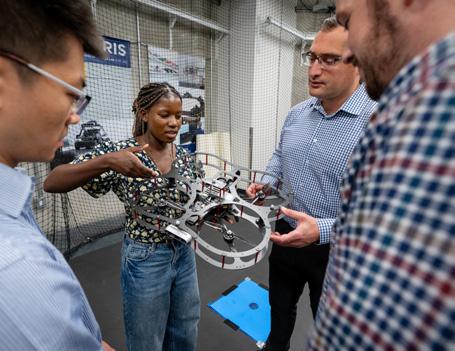
Vanino also gained research experience with hybrid aerial-aquatic vehicles (HAAVs), a unique hybrid of a drone and a submarine. Vanino was part of a team responsible for investigating improvements to launch mechanisms that boost the vehicles out of the water and into the air, led by Assistant Teaching Professor of Mechanical Engineering Stephen McGill, PhD.
As an undergraduate, Vanino balanced his rigorous engineering coursework with Division I athletics as a member of the Villanova Football team. The experience of managing two demanding focuses taught him collaboration and discipline, qualities he says later helped him thrive in MSAE’s accelerated format.
After graduation, Vanino joined the Naval Surface Warfare Center, Philadelphia Division, where he now works as a civilian engineer supporting the US Navy in the research, development, testing and maintenance of naval vessels and ship systems. While his current work focuses on maritime engineering rather than aerospace, he sees it as part of a broader engineering journey. The training he received in the MSAE program, he says, gave him the confidence and technical expertise to tackle complex challenges across the field, whether in aerospace or any other area of engineering that lies ahead.
“We don’t even know the next thing we could be working on,” he says. “It’s a very rapidly advancing field, and that’s exciting.”
Adam Vanino ’24 ME, ’25 MSAE pursues Aerospace Engineering through Villanova’s new accelerated master’s program
Artificial Made Real
Villanova Engineers harness AI to transform research into solutions that shape the future
By Andrew Faught
Artificial intelligence is reimagining the world as we know it. The technology curates online content, pilots self-driving cars, manages supply chains and helps to predict heart attacks.
None of it would happen without an engineer.
At the College of Engineering, faculty and students are helping to reshape industries, economies and everyday life. They’re building systems that could lead to exciting new drug treatments, protect communities from extreme weather and find new clean energy sources.
The next wave of innovation will be the result of thousands of engineering decisions involving hardware, systems design, optimization and reliability—decisions that will transform mathematical ideas into realworld tools.
These Villanova faculty members are showing us the way.
COMBINING
DATA, SCIENCE AND MACHINE LEARNING
In Villanova’s Multiscale Modeling of Materials and Machine Learning Laboratory (M4L Lab), students use AI to create and validate computational models that address diverse challenges, such as identifying next-generation materials for fusion energy applications, predicting stress fractures in athletes and designing advanced dental implants.
As principal investigator of the lab, David Cereceda, PhD, associate professor of Mechanical Engineering, reminds his charges not to lose sight of the bigger picture.
“I combine both the physics-based models developed over the past couple of centuries with modern data-driven approaches,” he says. “I tell my students that we don’t want to treat AI and machine learning as a black box. We want to build on the knowledge we already have and use AI tools to expand our understanding and accelerate discovery.”
It’s an approach that has served Dr. Cereceda well in his own work on materials engineering for nuclear fusion, a potential clean energy source that scientists hope could power cities with minimal carbon emissions.
In 2022, he was Villanova’s first-ever recipient of the US Department of Energy’s prestigious Early Career Award, for his project “Unraveling transmutation effects in tungstenbased plasma facing materials: a computational approach that integrates nuclear transmutation, first-principles, calculations and Machine Learning.”
Fusion reactors must operate under extreme conditions: temperatures reaching thousands of degrees, intense magnetic fields, and bombardment from high-energy neutrons. Such an environment can degrade materials quickly, making durability a persistent challenge in fusion technology. By combining physics-based simulations with machine learning models, Dr. Cereceda can predict which materials are most likely to withstand such extreme environments.
His AI work also has a deeply human dimension. Inspired in part by personal experiences that strengthened his commitment to translational research with real societal impact, he collaborates with clinicians to develop decision support systems that analyze patient data and reveal patterns that might otherwise go unnoticed.
One project uses machine learning to predict spontaneous preterm birth, a major cause of infant health complications worldwide. In another, he works with the Gait Lab at Nemours Children’s Hospital to develop a clinically informed machine learning framework that enhances decision support tools for ambulatory youth with cerebral palsy. The team’s approach integrates patient-specific data and clinical expertise to predict gait kinematics, identify key predictors and characterize treatment responsiveness across different interventions and age groups, from early childhood through early adulthood.
“These systems are tools,” Dr. Cereceda says. “They help clinicians identify risks earlier, but the final decisions always belong to the medical professionals.”
TRACKING THE SPREAD OF DISEASE AND DISRUPTIONS
When COVID-19 emerged in China in December 2019, it took just nine months for the virus to spread to every corner of the globe.
Chenfeng Xiong, PhD, assistant professor of Civil and Environmental Engineering, is using AI to study transportation big data, human mobility research and travel behavior modeling to better prepare communities and governments for future pandemics and disasters.
Dr. Xiong is developing models to re-create the daily movements of nearly 20 million people in Lagos State, Nigeria. He’s attempting to predict how diseases, disasters and disruptions spread through human populations, in an attempt to stop them and save lives in a timely manner. Dr. Xiong is also building models around American air traffic.
“We’re envisioning an increase in situational awareness, especially for those areas that are not as data-rich as the United States,” he says. “They can then provide a more timely response, instead of sitting in the dark and waiting for the rest of the world to take action.”
Beyond air travel data, Dr. Xiong is using railway station and bus hub counts, road traffic measurements and anonymized smartphone location data to build his models.
At the center of the system is AI-driven deep learning, including large neural networks—a machine learning model inspired by the human brain. The technology uses algorithms to predict a person’s likely daily itinerary, including when they leave from home and return, and by what mode they travel.
“Before AI, we could never model all these factors in one step,” Dr. Xiong says. “Now, deep learning allows us to handle extremely complex patterns.”
By combining AI with real-time information sources, the model could detect an emerging disease threat, simulate its spread and identify hotspots before an outbreak, Dr. Xiong adds.
Authorities could then take targeted actions, such as local lockdowns, healthcare deployment or vaccination drives, focused on areas of greatest need.
“I think in five years, this simulation model will work within hours or minutes to make predictions,” Dr. Xiong says. “We’re trying to promote accurate information with AI’s growing power.”
PREDICTING—AND PREVENTING—URBAN FLOODING
As extreme weather becomes more frequent and intense, urban flooding is becoming a growing threat.
But AI algorithms—problem-solving rules fed to a computer—could translate into decreased stormwater damage, increased infrastructure longevity and improved equity in how government agencies protect their communities.
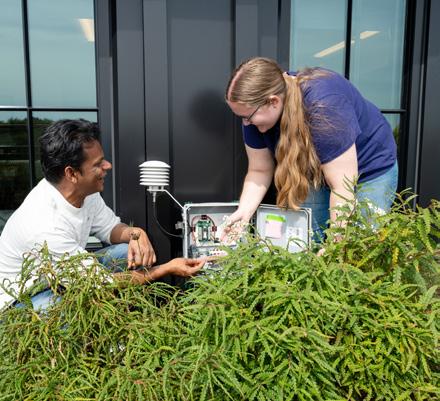
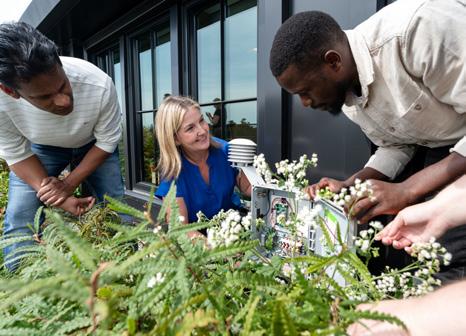
In a multidisciplinary partnership, Virginia Smith, PhD, associate professor of Civil and Environmental Engineering, is working closely with Xun Jiao, PhD, associate professor of Electrical and Computer Engineering, to investigate how green stormwater infrastructure (GSI)—from porous paving to sidewalk planters and “rain gardens,” which filter pollutants and help to replenish groundwater—can be managed to minimize risks before destructive weather hits.
“We’ve been using AI to predict the performance of GSI under various conditions, and we’ve basically asked, ‘Is this GSI functioning well under various conditions, or does it need maintenance soon?’” Dr. Jiao says.
To date the team, with support from a pair of National Science Foundation grants, has collected weather data and geographic features from Philadelphia, Washington, D.C., and Austin, Texas. Dr. Smith is using the data to help answer a foundational question: If a storm hit tomorrow, would a system fail?
“As cities face this increasing burden of how to manage their stormwater effectively and efficiently, we try to take a comprehensive view of the challenge,” Dr. Smith says.
Dr. Jiao’s models, still in their early stages, could be transformative for urban planning because they consider risks alongside income levels on a block-byblock basis. Impoverished communities, for example, could lack plants that slow the movement of floodwaters. Precise data could put planners in a better place to prevent damages with pinpoint interventions.
As with many AI projects, solutions are the result of diverse expert perspectives. “I’m an AI guy, meaning I know the math and I know the algorithms,” Dr. Jiao notes. “But I don’t have insights into socioeconomic factors, and without that we don’t have data to start with.”
That’s where other teammates come in. Besides Dr. Jiao and Dr. Smith, the GSI project’s co-principal investigators include Villanova colleagues Bridget Wadzuk, PhD, of Civil and Environmental Engineering and Peleg Kremer, PhD, of Geography and the Environment in the College of Liberal Arts and Sciences. The quartet meets weekly or biweekly with sociologists, computer scientists and graduate students to develop insights and solutions into GSI system management.
Even before starting the project, Dr. Smith notes, the team interviewed municipal leaders, community members and engineering firms about stormwater interventions to better inform AI algorithms and create plans for communities. “We want to create actionable information that the common person can understand,” she says.
ANALYZING PROTEINS TO TREAT ALZHEIMER’S DISEASE
By the time Alzheimer’s disease begins stealing a person’s memory, the biological damage has often been unfolding silently for more than a decade. Proteins accumulate in the brain, neurons struggle to communicate and the disease disrupts the neural circuits that allow people to think, remember and function.
For Zuyi “Jacky” Huang, PhD, associate professor of Chemical and Biological Engineering, AI could be a gamechanger.
His work uses machine learning, a subset of AI, to analyze enormous biological datasets. The human body contains more than 20,000 genes, thousands of proteins and intricate biochemical pathways that interact inside every cell. Any of them can play a role in Alzheimer’s disease.
“Our job is to use AI to study how those proteins interact with each other and identify the best drug target,” Dr. Huang says. “You want to stop the protein. If you stop the protein, we can stop some diseases.” His work could also aid treatments for other progressive neurodegenerative illnesses, such as Parkinson’s disease. Additionally, Dr. Huang has used
AI in work with Aimee Eggler, PhD, associate professor of Biochemistry in the College of Liberal Arts and Sciences, on an antioxidant response for anti-neuroinflammation.
With the help of machine learning models, Dr. Huang and students in his upper-level Biochemical Data Analysis course screen millions of chemical compounds against a target protein in search of promising drug interventions. Instead of manually testing thousands of possibilities in the lab, AI narrows the field to the most promising candidates.
Once a potential compound is identified, Dr. Huang’s research laboratory conducts experiments to determine whether it is effective.
Dr. Huang has already developed several promising compounds that have attracted attention from other researchers. The ultimate goal is ambitious: He hopes to advance a candidate drug far enough to enter preclinical testing, and eventually human clinical trials.
“I really want to help people, and community service is part of the mission of the University,” he says. “There are 6.9 million Americans living with Alzheimer’s disease, and the number may double by 2060.”
DEVELOPING A TECHNOLOGY BEHIND 6G
Thanks to advances in AI, Mojtaba Vaezi, PhD, is exploring how wireless networks could do more than just transmit data: They could also sense and interpret their surroundings—and potentially keep you safe.
Through a new technology that combines two legacy transmission systems—wireless and radar—your cellphone could one day alert you to a fast-approaching car that you can’t see, while also finding more reliable coverage in areas dense with trees, buildings or people.
“In future networks, the same signals used for communication may also provide information about the surrounding environment,” says Dr. Vaezi, an associate professor of Electrical and Computer Engineering who works on integrated sensing and communications, or ISAC. The emerging technology is expected to play a key role in sixth-generation (6G) wireless systems, though practical use is still several years away.
“It would be as if you have another eye at the back of your head,” he adds. “Right now, when I’m walking or driving, I can see only my front. What if I want to see what’s going on behind me? Those signals are going to provide that information.”
Today’s wireless systems—such as cellular networks and Wi-Fi—are designed primarily for a single job: to transmit information from one place to another. In contrast, radar systems are
used to sense the physical environment by analyzing reflected signals to estimate properties such as distance, speed and location. Radar helps forecast weather, track aircraft and guide self-driving cars.
These two functionalities have traditionally been developed separately, but ISAC aims to unify them within a single framework. In such a setup, a cell tower wouldn’t just communicate with a user’s device; it would also extract useful information from the surrounding environment.
At the same time, this new capability would enhance communication performance: By being more aware of its surroundings, a network can better adapt its transmission to maintain reliable connections, even in challenging conditions like dense urban areas.
“Traditionally, these adaptations have relied on mathematical models and optimization,” Dr. Vaezi says. “With AI, we can learn efficient strategies directly from data and adapt more quickly to changing environments.”
Combining sensing and communication is no easy feat. Researchers are still addressing key challenges, including signal design, hardware constraints and real-time algorithm development. For his part, Dr. Vaezi is working to develop theoretical foundations and practical techniques needed to make ISAC a wireless reality.
PREPARING ENGINEERS FOR A FUTURE WITH AI
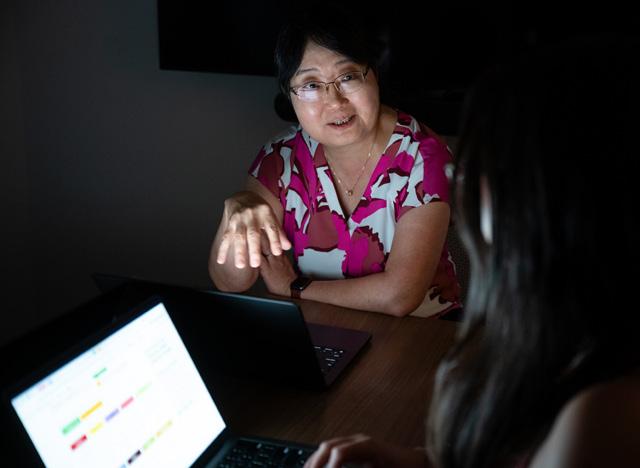
Xiaofang “Maggie” Wang, PhD, knows firsthand the promise of artificial intelligence. The associate professor and chair of Electrical and Computer Engineering researches how the technology can generate hardware circuits tailored to specific applications—a future in which machines design machines.
Thanks to planned curricular additions being shepherded by a College-level AI task force that Dr. Wang is leading, Villanova Engineering students will be at the leading edge of inquiry.
“AI is revolutionizing every engineering discipline at an unprecedented pace and scale,” Dr. Wang says. “Driven by our deep commitment to educating future engineering leaders with technical excellence and Augustinian values, we will lead the integration of AI into our curriculum and research across all engineering majors.”
Formed in spring 2025, the eight-member AI task force is composed of two faculty members apiece from each of the College’s four departments: Electrical and Computer, Civil and Environmental, Chemical and Biological, and Mechanical Engineering. Members have met intermittently in the past year to create multiple initiatives—including an AI Engineering minor, which will debut in the fall.
Other plans in the works include a Master of Science in AI Engineering, a graduate certificate in AI Engineering, an AI Makerspace in Drosdick Hall and professional development for faculty. (A “Teaching With AI” workshop was held in January, providing a glimpse at what could lie ahead.)
The minor is open to students across all engineering disciplines and reflects growing demand from students who recognize AI as a critical career skill. The minor requires five courses, including Fundamentals of AI and Machine Learning, offering a deeper dive into the technology’s concepts and applications.
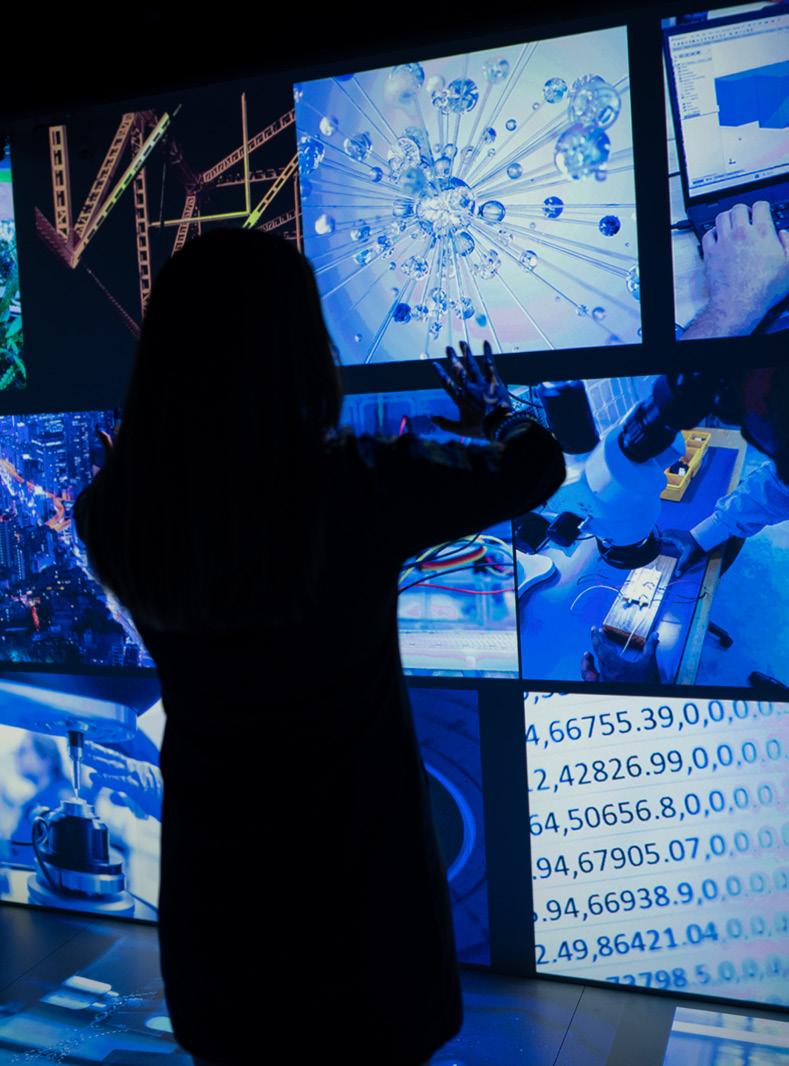
Also in the planning stages is a 1,500-square-foot AI makerspace, a hub where students would be able to experiment with cutting-edge tools and technologies. The space could include high-performance GPU servers, robotics platforms, autonomous vehicle kits, virtual reality systems and advanced sensors.
The College, meantime, is also exploring partnerships with industry leaders such as Nvidia.
“They’re interested in understanding our needs—both for teaching and research,” says Dr. Wang, who joined Villanova in 2006 and specializes in computer hardware and embedded systems. “It could lead to meaningful support.”
The task force isn’t working in isolation. An industrial advisory board—composed of industry experts and alumni—provides ongoing feedback, ensuring that the curriculum aligns with workforce demands.
In Mechanical Engineering, for example, AI is being used to optimize design processes and predict system performance. In Civil Engineering, it can analyze infrastructure data to improve safety and efficiency. In Chemical Engineering, it plays a role in drug discovery and process modeling.
Graduates are entering a job market that expects them to have at least a working knowledge of AI, Dr. Wang says. For some roles, it’s already a requirement.
“That’s why students are so motivated,” she adds. “They see it in job descriptions. They know it matters.”
UPCOMING AI INITIATIVES
• Minor in AI Engineering
• Master of Science in AI Engineering
• Graduate certificate in AI Engineering
• AI Makerspace in Drosdick Hall
• Professional development for faculty
AI the Villanova Way
From environmental impact to student collaboration and transparency, the College tackles the thorny ethical issues surrounding artificial intelligence
By Albert Stumm
D
uring Jonathan Cross’ first year at Villanova, artificial intelligence was more of an abstract eventuality than an active threat to academic integrity.
Cross says that with professors’ guidance, using AI has cut down the time it takes to write one type of technical report from about six hours to only two. He has used the technology to help fill out the safety section in a lab report, and he regularly uses it to speed up the cumbersome task of formatting his work.
Just a couple of years later, the Chemical Engineering major uses ChatGPT so often that he pays for the premium version.
His professors know, and they’re OK with that. In fact, some professors require it.
“The work of five engineers is soon going to become the work of three engineers, and they want to prepare you to be one of those three engineers,” says Cross ’27 ChE.
The message is: AI is coming, like it or not. Just use it responsibly.
Professors require that students divulge what AI platform they used and the prompts that helped them arrive at their conclusions.
Students are responsible for the output and must understand it and verify its correctness. Professors can also limit AI use when it will interfere with student learning.
In the end, Cross says, if you’re using AI for answers instead of as a learning tool, you’re not doing yourself any favors.
“It can definitely do a lot, but if you don’t know the information, there’s no way to verify that you’re not submitting a steaming pile of garbage,” he says.
Leaders from University Technology Services and the Provost’s Office coordinate Villanova’s AI initiatives, under the guidance of faculty, staff and student members of the AI Working Group, to ensure ethical use aligned with Augustinian Catholic values. Randy Weinstein, PhD, a Chemical and Biological Engineering professor and Villanova’s vice provost for Teaching and Learning, co-chairs the group.
Dr. Weinstein says the working group and the College of Engineering are tackling the thorny issue of how to use AI ethically. Central concerns include how to prepare students for a world where AI is ubiquitous while ensuring it doesn’t replace meaningful human interaction; encouraging transparency about when and how it’s used; and grappling with the environmental costs that accompany its rapid growth.
“Everybody can do AI, but not everybody can do AI the Villanova way,” Dr. Weinstein says. “We will lead the charge on doing it right and thoughtfully, making sure that students go out there with that Villanova flair that makes them stand out with their other skills, such as ethical leadership, communication, critical thinking, problem solving and caring for others and the world.”
Dr. Weinstein says that, as in most academic settings, initial concerns about AI involved the possibility of students abusing it to complete schoolwork. That legitimate concern, however, overshadowed several other potential ethical issues. For instance, he says, many people are unaware that AI queries have a large environmental impact, which conflicts with the University value of Caritas
“You’re running a massive amount of computers in a data center, using a lot of electricity, producing a lot of waste heat and using a lot of water,” he says. “With our sustainability goals at Villanova, going all in on AI without considering the environmental impact is not wise.”
Educating people hopefully leads them to use AI only when necessary, rather than for any frivolous task, Dr. Weinstein says. Meanwhile, several researchers in the College—including Alfonso Ortega, PhD, the James R. Birle Professor of Energy Technology—are developing greener solutions for data centers.
Referring to the University tenet of Unitas, Dr. Weinstein notes that many people, not only students, have grown accustomed to interacting with machines and with other people through social media. Research shows that people who disconnect from others and rely more on social media are more likely to feel less empathy for others, he says.
“We have to stay true to who we are as people and as a society, caring for others and our sense of community,” Dr. Weinstein says, “which matched perfectly with Pope Leo’s recent encyclical, Magnifica Humanitas.”
Thomas Sutherland ’27 CE says professors routinely encourage collaboration, but he’s experienced firsthand how overreliance on AI can work against it.
“With AI you don’t have to work together as much,” he says. “Of course, a very large part of the engineering field is being able to talk to people and figure out a problem together.”
Data privacy is also an unexpected area that the University has had to contend with, Dr. Weinstein says. Since AI platforms like ChatGPT and Gemini use queries to train their largelanguage models, students and professors who run a unique idea into the platform are technically sharing it publicly. That would prevent them from seeking a patent or selling the idea.
Dr. Weinstein says the University has contracts with Microsoft and OpenAI to use versions of Copilot and ChatGPT that prohibit data sharing. “Otherwise, if you put in a research idea, you’ve disclosed it and lost all intellectual property rights to it,” he says.
Sutherland notes that even when you do use AI, what it generates is not always correct. He’s found it useful to format lab reports and help create a résumé, but its limits are obvious.
“In engineering, it’s not always correct with its methodologies when performing actual calculations,” he says. “Many times, if you put in an entire question, it won’t get it right on the first try.”
That said, it’s essential that students are equipped with all the tools they need to join the modern workforce, says David Jamison, PhD, a teaching professor of Mechanical Engineering and member of Villanova’s AI working group.
Dr. Jamison says some academics had feared that implementing AI would degrade the education students receive, but he likened it to the invention of the calculator.
“Everyone was up in arms years ago that people using calculators wouldn’t understand arithmetic,” he says. “The calculator is also just a tool. You still need to have a fundamental understanding of what’s going on.”
The College has responded to the evolving technology by adding academic programming dedicated to AI. There is now a minor in AI Engineering as well as an introductory course in developing generative AI models. Students will also regularly be challenged to consider the implications of AI in their coursework and in the College’s professional development programs.
“While AI might be here to stay, professionals in the workforce must understand how to deploy it ethically, while accounting for the potential societal and environmental impacts,” Dr. Jamison says. “But more importantly, the professionals of tomorrow must still be able to think critically and behave humanely with love for all, which is the hallmark of a Villanova Engineering education.”
Innovation Expands
New cutting-edge labs in Drosdick Hall advance research in brain science, human-centered transportation and next-generation communications
By Kiera Daly Soltis
Although Drosdick Hall opened to students nearly two years ago, Villanova Engineering continues to add laboratory spaces to its new home, demonstrating the College’s ongoing commitment to innovative and groundbreaking research. Learn more about three of these state-of-the-art spaces that opened during the 2025-26 academic year.
BRAIN LABORATORY
Meltem Izzetoglu, PhD, is a visionary. A biomedical researcher with expertise in brain signals and systems, Dr. Izzetoglu has many research interests, initiatives and accomplishments, including her hope to someday improve students’ learning with real-time feedback from wearable brain sensors.
“Imagine students wearing small sensors that light up, notifying a teacher that they understand the material being taught,” says Dr. Izzetoglu, an associate professor of Electrical and Computer Engineering and director of the Biomedical Engineering and Cognitive Neurosensing (BEACON) research group. “It may sound futuristic, but it’s my next dream to realize. If we can identify whether a lesson is resonating with students right then and there, we can adjust class accordingly. The same can be done for an elderly person who wants to drive to the grocery store. Are they able to drive safely? My hope is they can quickly and easily test their cognitive ability with an at-home brain sensor before they get behind the wheel.”
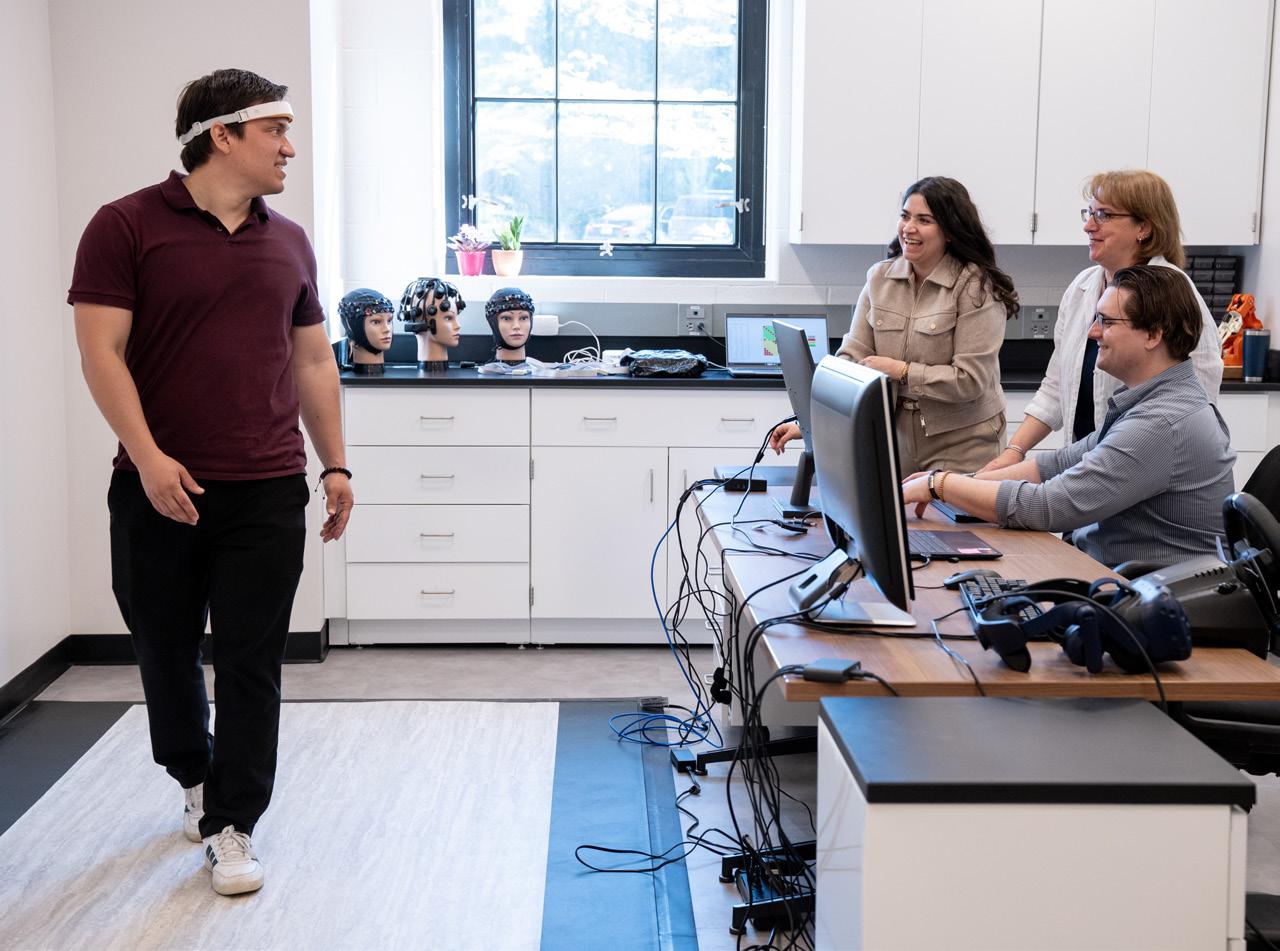
Thanks to Drosdick Hall’s new Brain Laboratory, Dr. Izzetoglu’s vision can become reality. The facility provides faculty and students with a unique space to further study the functioning of the human brain and body in areas including cognitive aging, sports and performance studies, and brain injury detection and monitoring.
Inside the lab space, a new 20-foot-long ZenoMetrics mat equipped with pressure sensors measures movement and mobility in healthy and aging adults, as well as in adults with injuries and mild cognitive impairments, such as Alzheimer’s disease, multiple sclerosis or cerebral palsy. Subjects walk along the mat, which simultaneously records their stride, balance, footfalls and overall cognitive control of their gait.
“The ultimate goal is to run initial mobility tests in the lab, and then send individuals home with small, wireless, light-based wearable sensors that record their movements and cognitive activity in an app while doing rehabilitation exercises specific to their needs,” Dr. Izzetoglu says. “After a few months, we bring them back in to measure improvements in their mobility and brain cognition.”
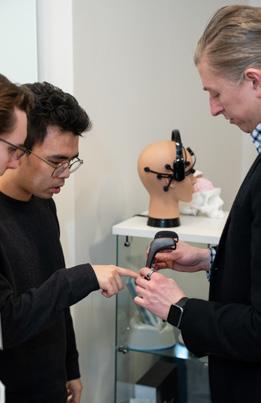
The ZenoMetrics mat inside Drosdick Hall’s Brain Laboratory allows Meltem Izzetoglu, PhD (right), and her research team to analyze a subject’s stride, balance, footfalls and overall cognitive control of their gait.
Dr. Izzetoglu is also working in the lab on the development of a handheld battery-operated brain-bleed detection device for use in a variety of settings, including in the military, at sporting events and in ambulances. In less than five minutes, the device can scan the brain to determine whether there is a bleed, swelling or a concussion, allowing for early detection and eliminating the need for a CT scan or an MRI.
“We hope to make brain imaging an affordable, noninvasive and easy-to-use tool that can be used by people every day to improve their lives,” says Dr. Izzetoglu.
“Years ago, brain monitoring during active, on-theground walking was just a dream, but our pioneering work made that dream come true, which allowed the research community to perform studies previously deemed untenable. What we envision—with science, engineering and the great minds of students and faculty collaborators— we can realize. The possibilities are endless.”
SMART TRANSPORTATION LABORATORY
In the new world-class Smart Transportation Laboratory, human experience is at the heart of faculty and students’ research. Their innovative work on transportation systems focuses on the creation of virtual civil infrastructure prototypes to improve the safety and well-being of pedestrians, cyclists, drivers and other road users within our transportation infrastructure.
“From our phones to the clothes we wear, prototypes exist for everything we use,” says Arash Tavakoli, PhD, assistant professor of Civil and Environmental Engineering and director of the Human-Centered Cities Lab, one of two research groups housed in the new space. (Chenfeng Xiong, PhD, leads the other; see p. 18.) “However, prototypes aren’t typically created for civil infrastructure transportation systems that we all use daily. Now, in the lab, we can study the impact of various modes of transportation on users, and how they interact with one another when traveling in the same environment.”
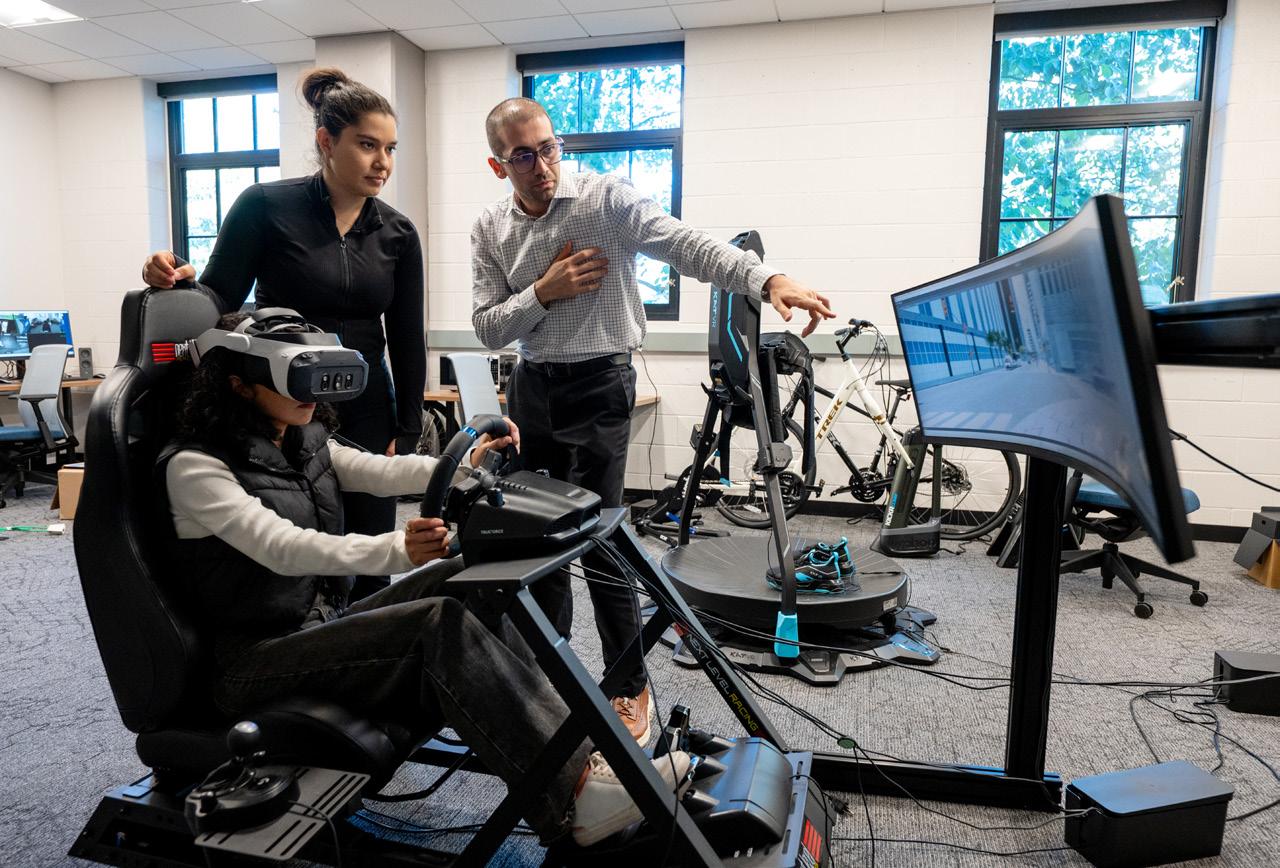
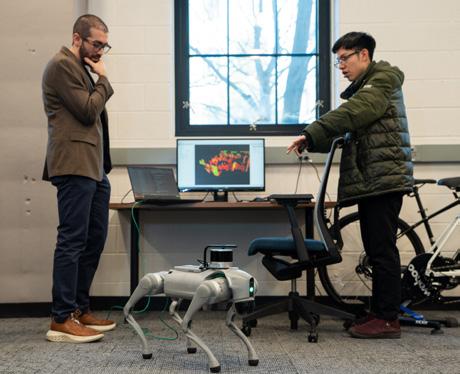
Equipped with an omnidirectional treadmill to mimic the pedestrian experience, a stationary bike simulator for cyclists and a car simulator for drivers, the Smart Transportation Lab enables three users to simultaneously experience and interact with a transportation system. While wearing virtual reality glasses depicting the same immersive environment and sensors to measure their level of stress, users move through the infrastructure, while their heart rate, brain activity and overall physiological stimulation is tracked.
Dr. Tavakoli, together with second-year PhD student Shiva Azimi, built the multimodal transportation simulation from the ground up. “We are one of the first to study the realistic interactions among all road users under controlled and repeatable conditions within one unified environment, and we are sharing it open access so others can replicate the simulator,” Dr. Tavakoli says. “We can now not only better understand the safety and dynamics of diverse traffic scenarios, but we also have a better sense of the human experience, so we can rethink future infrastructure.”
Also in the lab, a separate standalone driving simulator enables the study of how behavioral data can help predict driver performance at different levels of vehicle autonomy. The driver is outfitted with eye-tracking glasses, brain activity sensors and research-grade wristbands to track heart rate and skin responses. Sensors on the vehicle measure behavioral metrics such as acceleration and braking speed. In a recent experiment led by Yasaman Hakiminejad, a third-year PhD student, the vehicle switches to automated mode, and simulated obstacles force the driver to react and take over the vehicle. Driver response, reaction and takeover time is recorded and analyzed.
“For so long technology has been put first,” says Dr. Tavakoli, whose research is partially funded by the National Science Foundation’s Civil Mechanical and Manufacturing Innovation Division. “It’s time to refocus on the human who uses the technology and is affected by it. Our goal is to develop environments that promote human well-being, so we can eventually create healthier and happier communities.”
A multimodal simulation system in the Smart Transportation Lab enables Arash Tavakoli, PhD, and his team to evaluate how a driver, a pedestrian and a cyclist all simultaneously experience a transportation system.
MICROWAVE/COMPUTATIONAL ENGINEERING LABORATORY
“In engineering, radio frequency is called the black magic of electronics,” says Tommaso Cappello, PhD, assistant professor of Electrical and Computer Engineering. “It’s complex and a little mysterious, but key for wireless communication.”
In the College’s new Microwave/Computational Engineering Lab facility, Dr. Cappello and his students are dedicated to researching high-performance radio frequency (RF) and microwave circuits to improve future communication systems. Often taken for granted by everyday users, RF and microwaves are essential for smartphones, Wi-Fi routers, radios, satellites, radar and much more.
“Our current focus is power amplifiers, which are an important component of the transmitter,” says Dr. Cappello, director of the High-Performance RF research group. “The power amplifier takes a small signal and makes it much stronger, boosting the signal to the required power level before it is radiated through the antenna.”
Working with PhD students, Dr. Cappello uses the lab to design, characterize and model radio frequency, microwave and power electronic circuits for efficient and
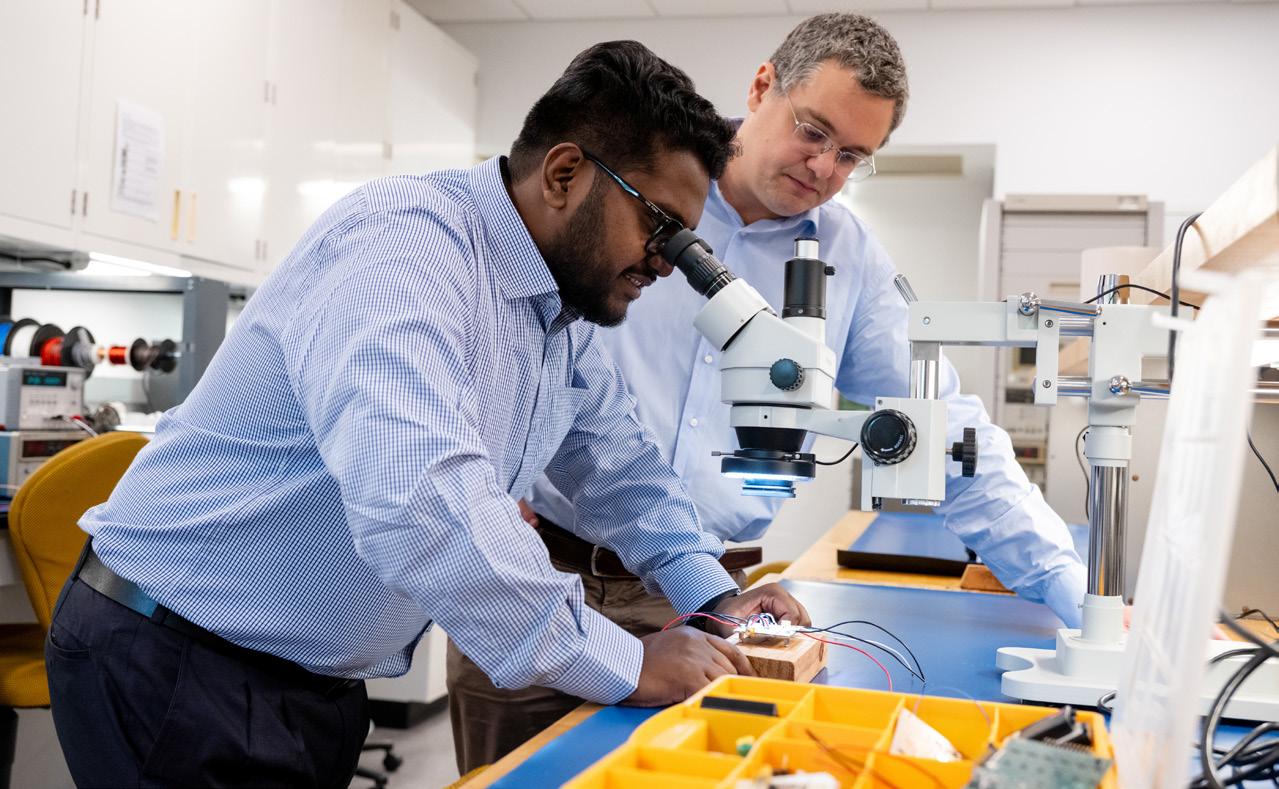
In the Microwave/Computational Engineering Lab, the High-Performance RF group led by Tommaso Cappello, PhD (right), can “do it all,” from theory to prototype.
linear transmitters. “One of the strengths of the lab is that we can do everything under the same roof,” Dr. Cappello says. “From the theory down to the simulations, the fabrication and the prototype, we can do it all. And, we have very quick turnaround time from the design to testing circuits up to 26 GHz. There aren’t many labs that can do that.”
Industry partners have noticed. Dr. Cappello’s cuttingedge and specialized research is highly sought after by instrument, semiconductors and telecommunications corporations that are looking to improve their products. He and his students collaborate with companies to create technology-ready prototypes; in turn, the companies support the lab with state-of-the-art equipment, including test and measurement instruments, in addition to rapid prototyping tools.
“In the lab, students learn industry-relevant skills,” Dr. Cappello adds. “When they graduate, they have a lot of knowledge and experience with the programming and manufacturing of radio frequencies. They are highly qualified and ready to begin in a specialized field that has a steep learning curve.”
A FormulaWinning
Kate Hamel ’26 ChE combines cutting-edge research with a commitment
to real-world impact
By Queen Muse
Kate Hamel ’26 ChE believes engineering isn’t just about what’s possible; it’s about who it serves.
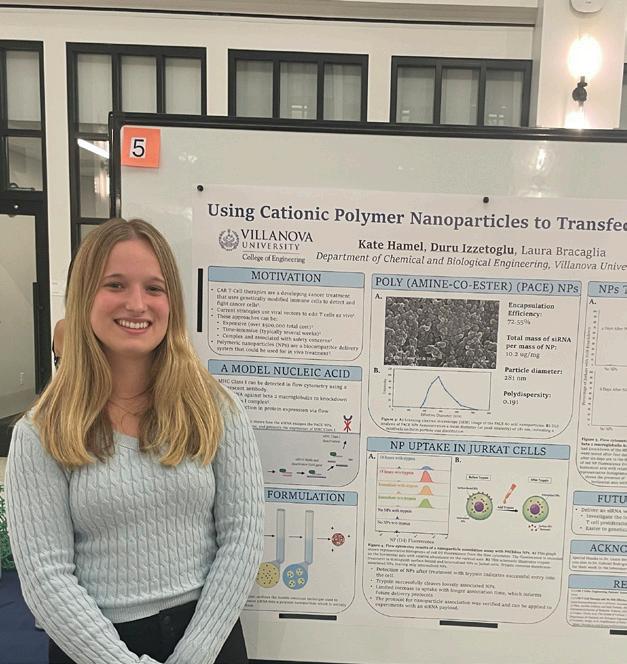
As a Presidential Scholar and an Honors Program student majoring in Chemical Engineering, Hamel has divided her time at Villanova between cutting-edge laboratory research and deep community engagement. Alongside her rigorous coursework, Hamel contributed to research advancing gene therapy while also making time to mentor local high school students.
“Even going into a hard science field, I knew I wanted to use what I was learning to build community and advocate for others,” Hamel says.
Hamel’s passion for applying her engineering knowledge to efforts that deliver real-world impact is evident in her work on and off campus. It also led to her receiving the 2026 Robert D. Lynch Award, the College’s highest honor for an undergraduate student.
In the lab of Laura Bracaglia, PhD, assistant professor of Chemical and Biological Engineering, Hamel spent more than a year contributing to research on localized gene therapy for organ transplant patients, a therapy with the potential to transform post-transplant care. While traditional treatments rely on suppressing the body’s entire immune system to prevent rejection, leaving patients vulnerable to infection and other complications, the approach Hamel worked on targets inflammation at the transplant site using nanoparticles to deliver therapy more precisely.
“It’s a way to decrease the body’s immune response without completely shutting it down,” she says. “That has the potential to revolutionize how we treat transplant patients.”
For Hamel, the project was more than a technical challenge; it was an introduction to the impact that engineering research can have.
“There’s a wide range of technologies we know can help people,” she says. “We just haven’t figured out how to apply
them to enough diseases yet. That’s something I’d love to be part of solving.”
Outside the lab, Hamel has taken on leadership roles across different facets of her discipline. As president of Tau Beta Pi, the engineering honor society, she collaborates with students across fields—from Mechanical to Electrical Engineering— bringing diverse viewpoints to shared challenges.
That same cross-disciplinary mindset carries into her work with the Villanova Engineering, Science and Technology Enrichment and Development (VESTED) program, designed to introduce local high school students to engineering. Over four years with the program, Hamel has helped design and teach hands-on projects—from hydrogels for wound healing to drug-delivery systems—aimed at making engineering both accessible and exciting.
“It’s incredibly rewarding,” she says. “It’s so fun to see these kids who are sacrificing their Saturdays because they care about the topic so much, and they are really excited to learn.”
The experience has also reshaped her own relationship with learning.
“Sometimes when you’re in the day-to-day of going to class and doing research, it can start to feel heavy,” she says. “But seeing the students so excited to interact with these projects kind of reinvigorates you.”
After graduation, Hamel plans to pursue a PhD in Chemical Engineering with a focus on biological applications; long-term, she hopes to land in pharmaceutical research. She is particularly interested in developing new therapies and, eventually, in advocating for broader access to them.
“I want to work on innovative treatments that help people feel better,” she says. “And down the line, I’d love to combine that with advocacy to make sure those treatments are accessible.”
‘Serve Others and Be an Advocate’
Emberle Pearson ’13 ME carries Villanova’s service-driven mission into leadership in the US Department of Defense
By Queen Muse
Emberle Pearson ’13 ME came to Villanova with a plan. She’d been accepted into the Biology program through early action and initially thought she’d pursue a career in physical therapy. But a chance conversation during an Early Action Acceptance Day visit put her on a different path.
Pearson was discussing her interests in science and math with a faculty member when the professor suggested that she might be better suited for engineering. The faculty member walked Pearson across campus to the College of Engineering, where she met Dean Gary A. Gabriele, PhD, who led the College from 2006 until his death in 2018. After a day touring labs and learning about the real-world impact of engineering, Pearson made a decision that would shape the rest of her career.
“That day, I changed my major from Biology to Mechanical Engineering,” Pearson recalls. “Hearing how we could use math and science to solve real-world problems, there was an excitement that I couldn’t even explain. … It felt meaningful; it felt like fulfillment.”
That sense of purpose has continued to guide Pearson’s career. She recently transitioned from director of workforce operations to chief of staff at the Naval Air Warfare Center Aircraft Division (NAWCAD) in Lakehurst, N.J. In this role, Pearson advises senior leaders and helps coordinate strategy, workforce initiatives and organizational priorities that support the US Navy’s aviation missions within the Department of Defense.
Pearson is guided by a people-first approach, a leadership philosophy she attributes to her time at Villanova.
“It wasn’t just about getting a degree at Villanova,” she explains. “They were teaching us how to become individuals who give back to the community.”
Service opportunities, campus ministry and outreach programs reinforced the values that Pearson was raised with and encouraged her and other students to engage with the broader community. The experience inspired her to “serve others and be an advocate,” a mindset that continues to shape her work.
Previously, as a workforce development leader, Pearson aimed to put those values into action. She led an entry-level employee development program at NAWCAD that fostered mentorship,
community and opportunities for young engineers at the beginning of their careers.
The results were powerful. In the four years Pearson led the program, the center’s attrition rate dropped from 25% to less than 1%; employees across the organization saw faster career growth and became more engaged. Pearson has also worked to expand engineering opportunities for underrepresented groups. At NAWCAD, she’s launched recruitment initiatives with historically Black colleges and universities to increase diversity in technical roles and helped launch STEM programming for students in an underserved school district.
Pearson’s efforts have earned her widespread recognition in her field. She has been honored as a Women of Color in STEM awardee, a Rising Star in Technology and a member of the 40 Under 40 list, all from the Career Communications Group. She was also named NAWCAD Lakehurst Supervisor of the Year and, in 2025, received Villanova Engineering’s Gary A. Gabriele Memorial Award, named after the late dean who gave her her first introduction to engineering on that impromptu Early Action Day tour. The award recognizes alumni who promote equity in the field of engineering.
For Pearson, however, those honors are less important than the people she helps along the way.
“It’s not about the accolade, but the fact that a difference has been made and that it was tangible for people to see,” she says. “I’m not aspiring to a certain position or role. I’m asking myself, ‘What positive impact can I make on people?’ That’s my true focus.”
Get to Know… Heather Gill
By Yasmine Iqbal
As the College of Engineering’s assistant director of Undergraduate Recruitment and Involvement, Heather Gill ’95 CE meets with prospective engineers to discuss their interests and educates students about the academic disciplines, research and internship opportunities and organizations that the College offers. Her roots at Villanova run deep: Her father is a Villanova graduate, her grandfather attended before being called to military service, and her husband obtained his master’s degree at Villanova.
Gill worked in the private sector for 28 years before joining Villanova as a department coordinator for Civil and Environmental Engineering in January 2024.
“I welcomed the opportunity to return to Villanova,” she says. “It was a wonderful way to be a positive influence and be a part of the Villanova community again.”
BACK ON CAMPUS
As department coordinator, Gill’s duties included supporting faculty, coordinating school visits, tracking budgets and grant proposals, and assisting with accreditation reports. She enjoyed applying her civil engineering background in academic administration, but when the assistant director position opened last September, she embraced the opportunity to become even more involved with students, “helping future engineers ignite change and pursue their goals,” she says.
MAKING CONNECTIONS
In addition to sharing her own career experiences with students, Gill provides support for campus organizations, including the NovaRacing Formula SAE team, the Society of Women Engineers and Villanova Community Action by New Engineers (NovaCANE).
She is also passionate about helping students bring ideas to life, like the launch of a new organization, the Theme Park Engineering Club. “The club proposes to combine technical innovation with creativity to explore how engineering, design and storytelling intersect to create immersive experiences,” she says.
“The one thing I hope people know about me is that I am excited to provide support for our innovative, collaborative and creative students,” she says. “My door is always open. Go ’Cats!”
A SCHOLARLY ACHIEVEMENT
The College of Engineering’s doctoral program celebrated dual milestones this year: its 150th PhD graduate and 150 students currently enrolled in the program. Alumni, doctoral students, faculty and University leaders gathered in Drosdick Hall in February to recognize the PhD program’s growth and the impact of Villanova scholars since its founding in 2003. Part celebration, part reunion, the event also marked the launch of a new PhD Mentorship Program, strengthening connections across generations of the Villanova community.