A science of measurements – Metrology
"Metrology is the science of measurement, which includes theoretical and experimental conclusions at any level of uncertainty in all fields of science and technology." Metrology is, without a doubt, the foundation of all practical scientific endeavours. Metrology is important in almost every aspect of daily life, including practical science, technology, and engineering. It also includes measurements, such as video measurements, wire loop height measurements, die location measurements, and die shift measurements. Let's take a broad look at some optical metrology features.
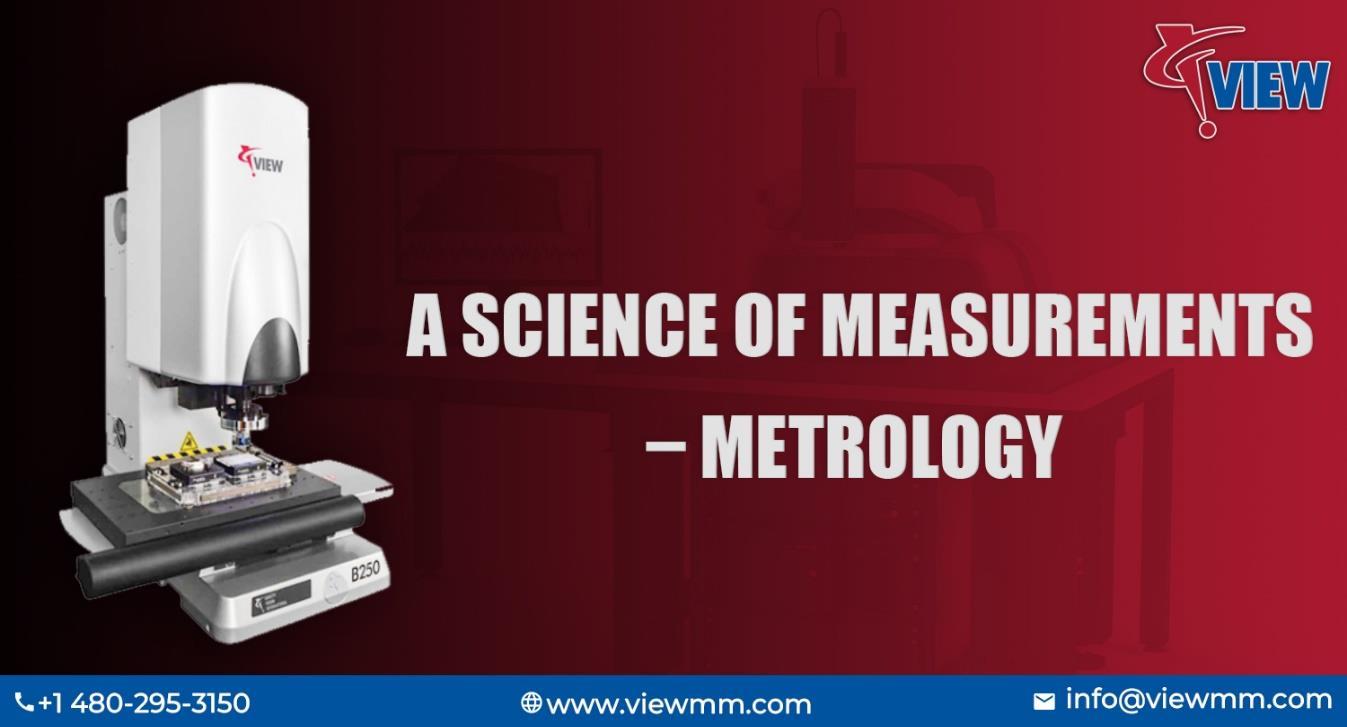
Process metrology – An important metrology
Key metrology requirements for stencil process control include the ability to read in various CAD file formats, the programming flexibility to quickly measure a broad variety of aperture sizes, shapes, and placements, as well as monitoring for clogged/missing apertures. Process Control Metrology's mission states that VIEW will lead the market in customer service, precision alignment training, and field consultation services. We strive to surpass industry standards by offering excellent services at reasonable prices. This is achieved by giving insightful counsel, acting appropriately, communicating clearly and promptly, and providing thorough records to support your operations.
Why is measuring the height of wire loops in metrology important?
The invention provides a method and a tool for wire loop height measurements. The wire loop's measurement point is positioned over a height measuring tool. As electronic equipment becomes more compact, more wires are needed to connect an integrated circuit (IC) chip to a lead frame or packaging board. Currently, a process known as wire bonding is used to connect multiple chips that are stacked in a package. Controlling the height and shape of the wire loops formed during wire bonding is essential to help ensure that IC chips fit into packaging as thin as a few millimetres.
To light up the area, the height gauge device emits incident light. The height gauge device receives the reflected light produced by the incident light, and a processor connected to the height gauge device uses a characteristic of the reflected light to estimate the height of the said point in relation to a reference surface.
An efficient, precise dimensional metrology system
Due to the variety of die types, dimensions, and placements, as well as die shift measurements reflection and texture changes between die and substrate surfaces, a compact, high-accuracy dimensional metrology system with adaptable optics and lighting as well as cutting-edge edge detection and image processing capabilities is required. Additionally, different stage sizes and highly accurate movements may be required to achieve the required balance of accuracy and throughput. Die Shift Measurement can be used to accurately measure a wide range of parts, including moulded plastic components, machined components, electronic assemblies, semiconductor packages, fibre optic components, disc media substrates, recording head dies, and semiconductor wafers up to 150 mm in diameter.
It’s wrapping words!
View measurement machines will continue to enhance the speed, precision, and resolution of optically based systems used for metrology applications in manufacturing automation. View Measurement Machines provides our clients with systems that improve product quality, lower production errors, and reduce manufacturing costs through the use of high-quality, individualised solutions. ViewMM will continue to pioneer and advance the speed, accuracy, and resolution of optically-based systems used in manufacturing automation metrology applications. With high quality, customised solutions, ViewMM provides our customers with systems that improve product quality, eliminate production errors, and reduce manufacturing costs.
https://viewmm.com/
Contact US: https://viewmm.com/en/support/how-to-contact-us/
Email ID: sales@viewmm.com