

This document was developed by Melanoma Institute Australia (MIA) and the VCCC Alliance.
We would like to thank everyone who contributed to the development of the Melanoma Nursing Advanced Practice Pathway through the provision of expertise, direction, content development, feed‐back and strategic alignment. The following groups/individuals provided invaluable oversight and feedback:
KEY AUTHORS:
Dr Sharon De Graves*# – (VCCC Alliance, VIC; Department of Nursing, The University of Melbourne, VIC)
Rebecca Johnson*# – (Melanoma Institute Australia, NSW; The University of Sydney, NSW)
Maria Gonzalez*# – (Melanoma Institute Australia, NSW)
Professor Mei Krishnasamy*# – (Department of Nursing, The University of Melbourne, VIC; VCCC Alliance, VIC)
Michelle Rosano*# – (Melanoma Institute Australia, NSW)
Kathe Holmes*# – (VCCC Alliance, VIC)
Kyleigh Smith*# – (VCCC Alliance, VIC)
Michelle Barrett*# – (VCCC Alliance, VIC)
NATIONAL MELANOMA NURSING EDUCATION PROGRAM WORKING GROUP
*Additional members noted above
Danielle Fisher – (Melanoma Institute Australia, NSW)
Peter Giannoukas – (VCCC Alliance, VIC)
Catie McLean – (VCCC Alliance, VIC)
Julie McNamara# – (person with lived experience, VIC)
Sue Smith# – (person with lived experience, NSW)
Funding acknowledgement:
ADVANCED PRACTICE MELANOMA NURSES:
Rebecca Biviano* – (Melanoma Institute Australia, NSW)
Shahn Coburn – (Melanoma Institute Australia, NSW)
Hong Fu# – (Princess Alexandra Hospital, QLD)
Kristin Linke (The Queen Elizabeth Hospital, SA)
Alethea Lobo – (Peter MacCallum Cancer Centre, VIC)
Dr Donna Milne – (Peter MacCallum Cancer Centre, VIC)
Donna Standring – (Andrew Love Centre, Barwon Health, VIC)
Julie Teraci – (North Metropolitan Health Service, WA)
NATIONAL MELANOMA NURSE EDUCATION FRAMEWORK WORKSHOP CONTRIBUTORS
#Additional attendees noted above
A/Professor Olivia Cooke – (McGrath)
Lucy Gent – (Sir Charles Gairdner Osborne Park Health Care Group, WA)
Melanie Grimmer – (Canberra Health Services, ACT)
Jemma Still – (Cancer Nurses Society Australia)
Professor Kate White – (The University of Sydney, NSW)
This work received funding from the Australian Government through the National Melanoma Nurses Program Grant ID: GO6122.
Australia continues to have the highest melanoma incidence rates globally, with about 16,800 Australians expected to be diagnosed in 2025 — equating to an estimated 70 cases per 100,000 persons (86 for males and 56 for females)1,2. Melanoma of the skin is the third most common cancer in the country, and is the most common cancer among Australians aged 20–392,3 . Recent decades have seen the treatment of melanoma transformed by advances in immunotherapy, targeted therapies (e.g., BRAF/MEK inhibitors), and combination regimens. These therapies have significantly improved survival rates for advanced melanoma, but they bring new complexities such as:
Increased risk of immune-related adverse events (e.g., colitis, hepatitis, pneumonitis) and unique toxicities associated with targeted agents.
Need for vigilant monitoring and rapid response to side effects and complications.
Improved survival with associated ongoing surveillance and long-term health care needs.
Integration of surgical, radiotherapy, and medical oncology modalities within individualised, patient-tailored care plans.
Need for interdisciplinary collaboration across multiple specialities such as cardiology, gastroen‐terology, immunology, dermatology etc, to effectively address acute, chronic, and long-term therapy related toxicities.4, 5, 6, 7
Advanced practice melanoma nurses (MNs) are highly skilled specialist nurses who provide care to patients with complex clinical and social determinant of health needs. As core members of multidisciplinary teams, their role encompasses:
Comprehensive Clinical and Supportive Care Assessment: Conducting and responding to data and insights from personalised physical assessments, psychological and distress screening, standardised patient reported outcome and experience measures.
Expert Management of Complex Treatment Regimens: Supporting patients across the treatment continuum, from surgery and radiotherapy to advanced systemic therapy, including managing acute, chronic, and long-term side effects.
Symptom and Toxicity Management: Proactive and timely identification, intervention and monitor‐ing of side effects/adverse events (e.g., immunotherapy toxicities, surgical complications) to prevent and minimise harm.
Personalised, coordinated care: Facilitating seamless care across diagnostic, surgical, medical, and supportive domains, ensuring equitable and timely access to specialist services.
Therapeutic Education and Advocacy: Delivering tailored education to patients and caregivers about treatment options, side effects, and self-management strategies.
Clinical Leadership and Service Development: Leading nursing education, quality improvement initiatives, and participating in clinical research to advance workforce capacity and capability.7, 8
MNs are critical to the delivery of equitable patient care across Australia’s diverse and geographically spread population. With marked variation in incidence rates and outcomes between urban, regional, rural, and remote communities, MNs act as a central point for care coordination, enabling improved access to best-practice treatment and support regardless of location. As specialist nurses, MNs are well placed to assess social determinants of health needs—such as socioeconomic status, remote‐ness, and cultural background, known to result in access barriers— and contribute to tailored interven‐tions and advocacy for services, bridging gaps faced by disadvantaged groups9. By integrating personcentred care, early identification of unmet needs, and facilitating navigation through complex health systems, MNs contribute to reduced disparities and improved outcomes for all Australians affected by melanoma7, 10, 11 .
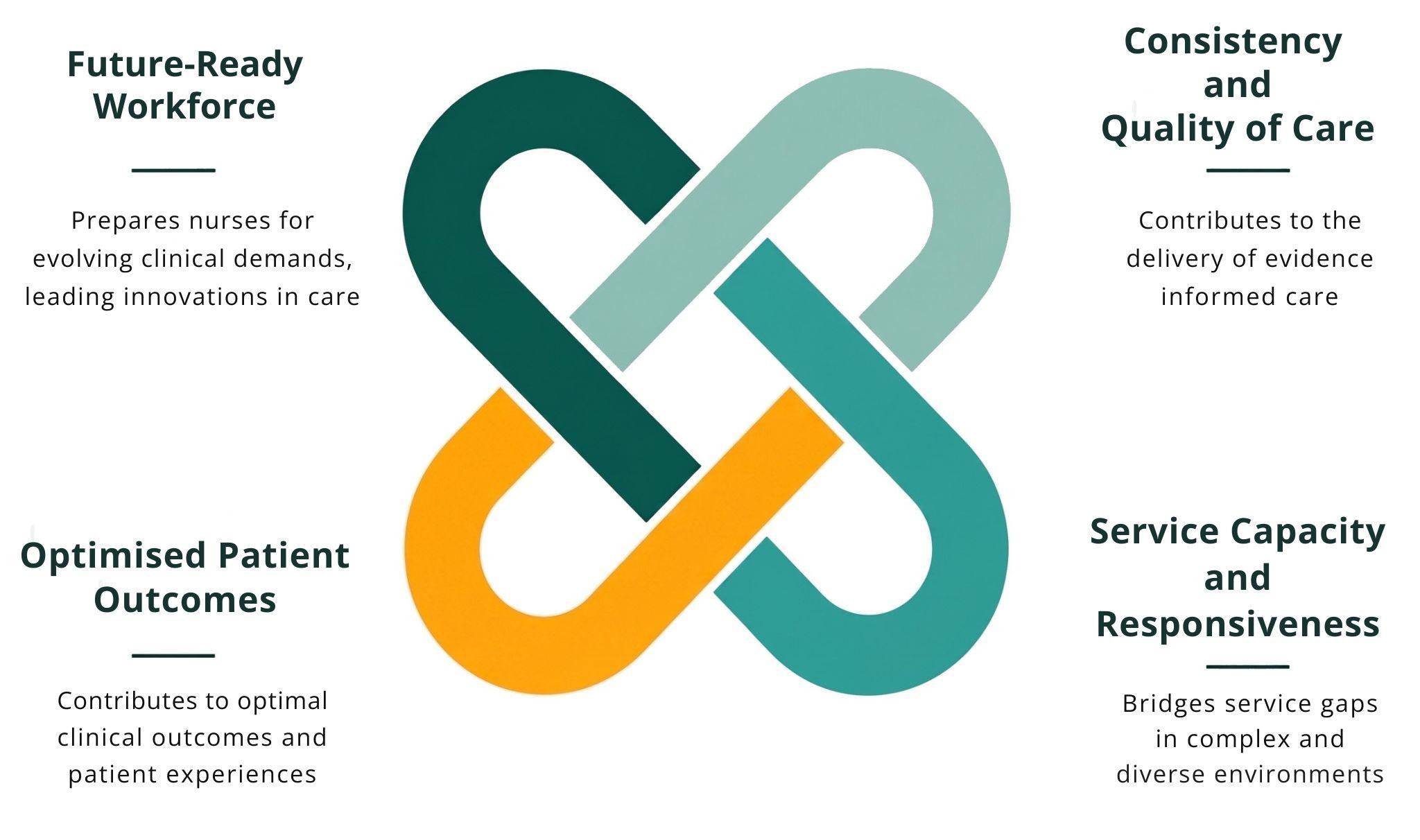
Ensuring growth and sustainability of a specialised MN workforce is integral to:
Consistency and Quality of Care: Supporting access to nurses with standardised capabilities who contribute to consistent delivery of quality care that aligns with national optimal care pathways irrespective of geography.
Service Capacity and Responsiveness: Advanced practice nurses can bridge service gaps, especially in rural, regional, and remote areas where special‐ist access is limited. Their broad scope allows them to independently manage complex care and escalate as appropriate.
Optimised Patient Outcomes: By embedding MNs within multidisciplinary melanoma services, health systems benefit from optimal clinical outcomes and patient experiences, incorporating what matters most to patients.
Future-Ready Workforce: As treatments grow more complex and survivor numbers increase, an advanced practice pathway prepares the nursing workforce to meet evolving clinical demands and lead ongoing innovations in melanoma care.
This document outlines a pathway from entry to speciality to advanced practice for MNs. The pathway complements existing Australian and International guidelines that provide expectations of skills and attributes of advanced practice nursing roles12, 13 and is intended to articulate with the Cancer Nurs‐ing Capability Framework developed by the Cancer Nurses Society of Australia (CNSA)14 (an update of the National Professional Framework for Cancer Nursing [EdCaN]15).
Figure 1 outlines how the Melanoma Nursing Advanced Practice Pathway contributes to workforce development.
PURPOSE
To establish a professional development pathway for MN’s that strengthens workforce expertise, supports the system, and optimises patient outcomes through personalised, evidence-based care.
Using the five domains of advanced nursing practice (clinical care, support of systems, education, research and professional leadership)13, the pathway will provide a practical guide for nurses and health services to support advancement of melanoma nurses, equipping a workforce to deliver specialised care regardless of location.
To:
Define a pathway for the development of advanced practice melanoma nursing capabilities. Map capabilities across five key domains of practice, focusing on clinical expertise related to MNs.
Integrate with national nursing frameworks and pathways.
Embed consumer priorities across the pathway.
Strengthen workforce capacity for evidence-informed, equitable, personalised care.
Our approach
The MN pathway provides nurses with guidance necessary to develop capabilities from a generalist cancer nurse to an advanced practice melanoma nurse. For health services, the pathway offers an understanding of the capabilities required of advanced practice MNs, opportunities to support their professional development and, appreciation of their contribution to the delivery of multidisciplinary care.
Principles and assumptions
The following principles and assumptions have been used to inform the pathway development.
The Nursing and Midwifery Board of Australia (NMBA) registered nurse standards of practice informs all nursing practice16
The CNSA Cancer Nursing Capability Framework14 articulates knowledge, skills and behaviours required for nurses working in cancer care. The CNSA framework provides three levels of capabil‐ity – essential, specialised, and advanced. The essential level of capability provides foundational capabilities in cancer care that should be demonstrated by all cancer nurses. The specialised level provides capabilities for proficient and specialist level cancer nurses, and the advanced level are high-level, advanced capabilities in cancer care.
The MN pathway is designed to be used in combination with the CNSA Framework, adding clinical capabilities at the specialised and advanced level to support the development of capabilities for MN’s entering specialist roles and progressing to advanced practice.
For this pathway the NMBA definition of advanced practice is used13 .
Advanced practice in the MN pathway is defined by level of practice rather than job title13
The scope of the pathway encompasses the full spectrum of melanoma subtypes and presenta‐tions.
Recognition of the importance of the NMBA domains of practice – professional leadership, educa‐tion, research and support of systems – is reflected in international definitions of advanced prac‐tice12 and recommendations for inclusion in professional development pathways for cancer nurses17. These domains of practice are integral to all nursing practice, regardless of place of work or area of specialisation, with expertise building within and across the domains as nurses advance in their practice. The Chief Nurses and Midwifery Officers of Australia have articulated these domains at an advanced practice level13. The MN pathway reflects these domains, adding the contributions of advanced practice MNs to each domain but not replicating the practice activities in each domain.
Melanoma specific practice activities are outlined for the clinical domain in the pathway – adding to, rather than duplicating current frameworks.
The capabilities required of MNs will be dependent on the context of care, the scope of their role and the needs of the patients that they care for.
The Peter MacCallum Cancer Centre’s Nursing Professional Practice Model18 has been used to articulate role expectations for individual nurses and health service enablers for continuous professional development.
“…nurses practising at an advanced practice level incorporate professional leadership, education, research and support of systems into their practice. Their practice includes relevant expertise, critical thinking, complex decision-making, autonomous practice and is effective and safe. They work within a generalist or specialist context, and they are responsible and accountable in managing people who have complex healthcare requirements”13
Professional development expectations at the individual level are to be:
Autonomous and accountable in practice
Invested in and committed to professional development and lifelong learning
Driven by a commitment to quality, evidence-based nursing care that is person-centred, effective, timely, accessible, acceptable and equitable
Committed to innovation, consistency applying critical thinking in a time of unprecedented changes in cancer treatments
Respectful in our interactions with colleagues, patients, carers and the community served
Committed to effective communication and collaboration
Leaders of and advocates for kindness, empathy and support of each other, colleagues and community
Professional development recommendations for health services:
A framework for career advancement and continuous learning
A culture of opportunity, recognition and reward for nurses
A culture where nurses can practice to the full scope of their capability and competence
A culture where nurses can actively participate in, contribute to, lead and manage strategic portfolios of work
A culture where nurses are recognised and promoted internally and externally as clinical experts, as leaders and innovators of cancer care, education and research
A culture where nursing decides what the activities and responsibilities of nursing and nursing roles are, and the education and competencies required to safely perform those roles and activities
*Adapted from the Peter MacCallum Cancer Centre’s Nursing Professional Practice Model 18
Table 1: Professional development recommendations for individuals and health services
Advanced practice MNs contribute, at varying levels relative to the scope of their role, to each of the core domains expressed by the NMBA13 (refer to the below table).
Clinical Care
Provides expert, patient-centred clinical care for people with melanoma. Supports patients through complex systemic therapies and treatment pathways such as immunotherapy, targeted treatments, radiotherapy and surgical intervention. Anticipates and manages treatment and disease related toxicities and side effects, partnering with patients and carers to promote self-management. Tailors care plans as a core member of the multidisciplinary care team, to individual needs and preferences.
Support of Systems
Education (Self and others)
Strengthen melanoma care pathways by coordinating multidisciplinary care, streamlining referral processes, and identifying gaps in service delivery. Work to reduce delays in access to therapy, enhance continuity of care, and contribute to models of care that optimise outcomes and resource efficiency.
Maintains expertise in rapidly evolving melanoma therapies through ongoing education, while also translating complex clinical information into clear, practical guidance for patients and families. Mentor colleagues, deliver professional education, and build health literacy by ensuring patients understand treatment options, potential side effects, and when to seek timely help. Foster workforce sustainability and professional growth by championing mentorship programs, creating skill development opportunities, implementing succession strategies, and advocating for continuous education in melanoma nursing.
Research Actively contributes to advancing knowledge and patient outcomes through promoting access and participation in clinical trials and health service research, ensuring patients have access to novel therapies and evidence-informed care. Lead research activity to improve timely, safe, equitable, timely, efficient, and patient centred quality care across diverse care settings.
Professional Leadership
Through advocacy and leadership, influence health policy and service transformation in melanoma care. Champion consumer voices, build workforce capability, and model collaborative leadership that advances equity and quality in cancer care delivery.
Figure 2 provides an overview of the Melanoma Nursing Advanced Practice Pathway.
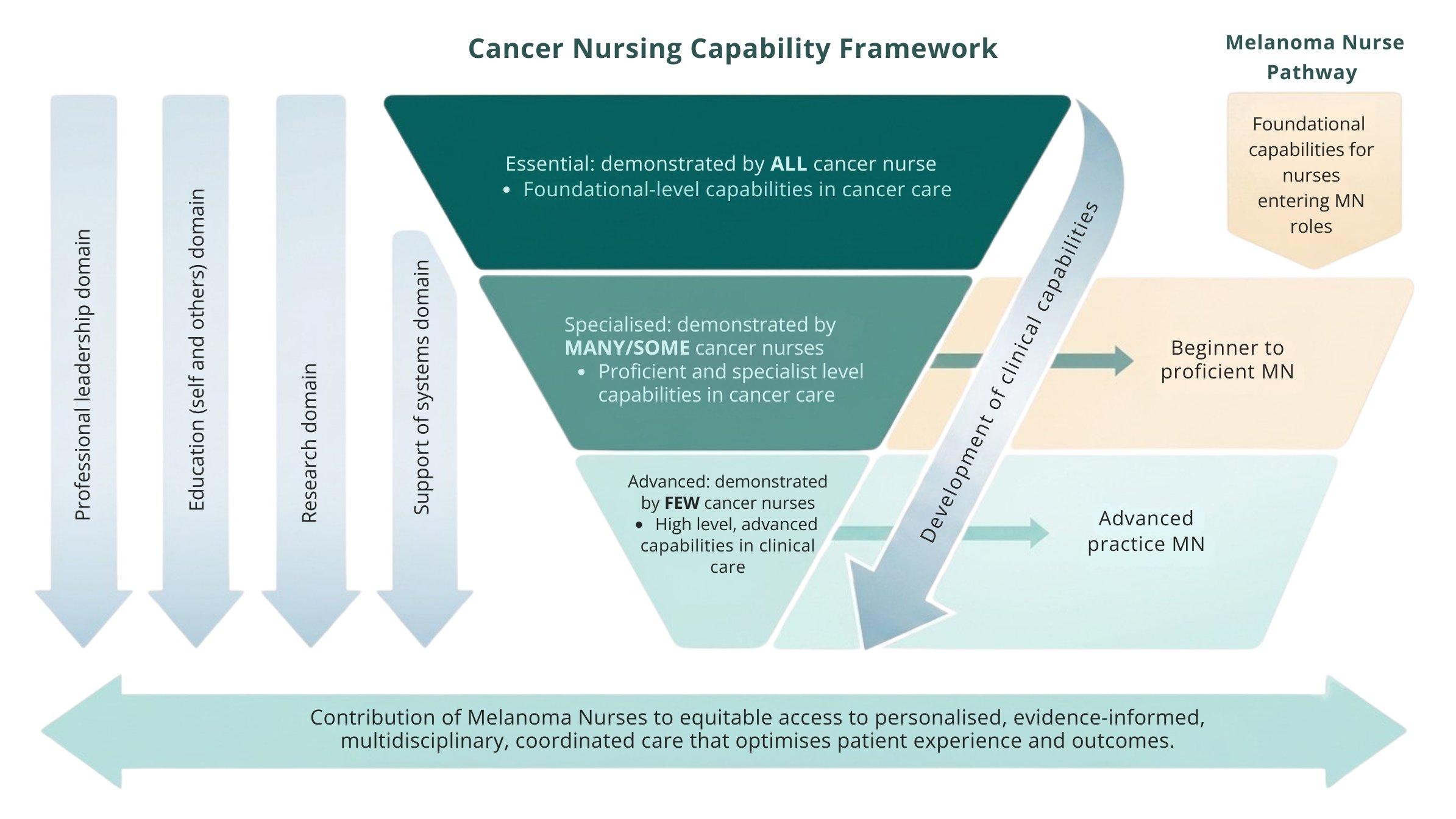
The following capability statements were both evidence and clinician informed. An initial thirty-five statements were generated based on evidence and expert opinion before undergoing a consensus driven approach to gain expert agreement. Advanced practice MNs across Australia engaged in a consultation process to review and refine the categories, capability statements, and level of practice until no additional statements were identified and consensus was reached for each statement. Fortyone statements across the following four key areas of clinical practice were identified – knowledge and understanding of melanoma, advanced clinical knowledge and application, assessment and monitoring, and multidisciplinary coordinated care. The statements provide clinical capabilities at two levels – providing a practice development pathway for Melanoma Nurses:
Beginner to proficient melanoma nurses: these are nurses entering specialist roles as melanoma nurses who demonstrate foundational to proficient level cancer nursing capabilities, (or are concurrently developing these), as articulated in the essential (all) and specialised (many to some) level of the CNSA Cancer Nursing Capability Framework). The statements in this category represent a pathway of practice development from beginner MN to proficient MN.
Advanced practice nurses: the statements at this level build on the beginner to proficient capabilities, articulating a pathway to advancement19 as an expert MN.
The capabilities in this pathway should be considered in addition to the CNSA Cancer Nursing Capability Framework and the NMBA domains of advanced practice13 .
No.
Nurse
1.1 Describe the pathophysiology, staging, and diagnosis of melanoma
1.2 Explain the various treatment modalities (for example, surgery, radiotherapy, immunotherapy, targeted therapy, other systemic treatments) for melanoma
1.3 Identify and explain common melanoma treatment related side effects and adverse events
1.4 Identify rare side effects associated with melanoma treatment and escalate for management
1.5 Explain surgical care management in the context of melanoma, including postoperative wound assessment and care, pain management, infection prevention, and other complications
2. Advanced clinical knowledge and application
2.1 Demonstrate a comprehensive and up-to-date understanding of the genetics of melanoma, the clinical implications (such as treatment modalities and prognosis) of various mutations, and the integration of this knowledge into individualised patient care and education
2.2 Understand and describe the pathophysiology of complex cases of melanoma, including rare presentations and complications
2.3 Utilise current research and guidelines to inform evidence-informed practice in melanoma care
2.4 Implement evidence-informed changes in the management of melanoma in clinical practice
2.5 Draw on clinical knowledge of the pathophysiology of melanoma and treatment pathways (including clinical trials) to provide patient education that supports informed decision making
2.6 Demonstrate applied clinical knowledge in the advanced practice setting tailored to the specific role, scope of practice and/or healthcare setting
2.7 Engage in activities that focus on health promotion, advocacy and prevention of melanoma with patients, carers, health services and the broader community
3. Assessment and monitoring
Holistic assessment principles, address social determinants of health (SDOH), and ensure patientcentred continuity of care in the pre, during and post treatment phases of treatment through multidisciplinary collaboration. Recognising the unpredictable pathways of melanoma treatment and progression and the need to revisit assessments and adapt interventions/referral accordingly. Incorporate personalised health literacy strategies such as teach back when providing patient communication and education around treatment toxicities and self-monitoring. Advanced practice nurses extend these capabilities through clinical leadership, complex decision-making, autonomous management of adverse events and coordinated care.
3.1 — Initial and ongoing assessment
3.1.1 Conduct comprehensive baseline assessments including medical history, diagnostic stage, wound and skin integrity, and psychosocial needs
3.1.2 Conduct psychosocial, social determinants of health, and distress screening assessments using standardised screening tools and communicate outcomes to the broader multidisciplinary team
3.1.3 Embed culturally sensitive approaches in the assessment and care of people with melanoma
3.1.4 Conduct comprehensive, individualised assessments that incorporate comorbidities and consider disease stage, coordinating associated referrals and escalation pathways and performing ongoing evaluation of interventions
3.1.5 Synthesises comprehensive assessment data to inform personalised care planning specific to identified risk factors and patient specific needs with the multidisciplinary team
3.2 — Symptom monitoring and evaluation
3.2.1 Recognise, utilising validated assessment tools and clinical assessment skills, and report changes in patient condition related to melanoma or its treatment, including immediate adverse reactions
3.2.2 Assess and triage (in person and virtually) patient concerns including symptoms related to disease or treatment, accurately recording clinical assessments and escalating for appropriate treatment as needed
3.2.3 Predict, identify and evaluate complex or rare treatment toxicities interpret subtle clinical changes, and initiate or escalate early intervention in collaboration with the multidisciplinary team
3.2.4 Ongoing evaluation of symptom management efficacy and reassessment along the treatment pathway, recommending modifications to care plans as needed
3.2.5 Develop and implement evidence-based protocols for managing challenging melanoma treatment-related symptoms
3.3 — Disease and treatment management and surveillance
3.3.1 Facilitate treatment pathways across multimodal therapies
3.3.2 Facilitate the early integration of palliative and supportive care where appropriate, e.g. for people with advanced or treatment resistant melanoma
3.3.3 Ensure surveillance aligns with national melanoma guidelines and lead care escalation for suspected progression or recurrence
3.3.4 Facilitate adherence to clinical guidelines and/or MDM plan with consideration to access issues, individual SDOH, and individual circumstances
3.3.5 Provide and facilitate equitable access to current treatment protocols, considering access and availability
3.3.6 Coordinate the planning and administration of complex and/or multidisciplinary treatment regimens
3.4 — Psychosocial and supportive care assessment
3.4.1 Conduct distress and social determinants of health screening at key time points and facilitate referrals to psychosocial and allied health teams as indicated
3.4.2 Integrate psychosocial assessment into care at all stages of disease, identify critical person-centred issues, lead multidisciplinary planning to address identified barriers to care
3.5 — Patient education and self-monitoring
3.5.1 Provide tailored education to patients and family/carers on self-management strategies for common symptoms of melanoma treatment
3.5.2 Communicate information about patient specific treatment options using health literacy strategies that enable informed decision making
3.5.3 Develop and deliver tailored, evidence-informed education addressing complex symptom and treatment management, emerging therapies, digital health monitoring, and survivorship management
4. Multidisciplinary, coordinated care
4.1 Work within the multidisciplinary team to ensure that patients are aware of the opportunity for available clinical trials and other new, emerging treatment options
4.2 Promote person centred, efficient and safe care throughout transitions between different care providers and settings, facilitating appropriate handover and communication between patients and health care providers
4.3 Identify appropriate and timely referrals with the MDT for psychosocial, allied health, medical speciality, and support services based on clinical assessment and/ or validated screening assessment tools (reassessing during changes in treatment or disease)
4.4 Lead multidisciplinary team discussions, synthesising complex clinical information to inform care planning
4.5 Develop and implement care pathways to optimise melanoma patient outcomes including quality of life
4.6 Evaluate the effectiveness of multidisciplinary care processes and initiate improvements
4.7 Coordinate and ensure continuity of care between different health care settings of providers across all stages of disease and treatment
4.8 Enable the provision of holistic palliative care that is culturally sensitive, personcentred, and responsive to diverse values and preferences, while supporting individuals with advanced melanoma and their families in informed advanced care planning and facilitating equitable access to optimal supportive and end-of-life care
*Entry to speciality aligning with the Specialised level in the CNSA Cancer Nursing Capability Framework 14
Table 3: Melanoma Nursing Clinical Practice Capability statements
1 Cancer Australia. (2024). Melanoma of the skin statistics.
Australian Institute of Health and Welfare. (2024). Cancer data in Australia. AIHW, Canberra, ACT.
2
3
4
5
6
Melanoma Institute Australia. (2025). Melanoma Facts.
Sherman C. (2025). The benefits of advanced clinical practitioners in skin cancer services. Nursing Times [online]; 121: 4.
Michielon, E., de Gruijl, T. D., & Gibbs, S. (2022). From simplicity to complexity in current melanoma models. Experi‐mental Dermatology, 31(12), 1818-1836. doi.org/10.1111/exd.14675
Fateeva, A., & Chen, S. (2024). Study on the Complex Melanoma. Cancers, 16(5), 843. doi.org/10.3390/cancer‐s16050843
Melanoma Institute Australia. (2024). National Melanoma Nurses Program Recommendations for Specialist Melanoma Nursing Practice.
7 Cancer Council Victoria & Department of Health Victoria. (2021). Optimal care pathway for people with melanoma, 2nd edn. Cancer Council Victoria, Melbourne.
8 Chung, H., Crone, E., Gough, K., Hyatt, A., Milne, D., & Krishnasamy, M. (2024). Equity in cancer care: mixed-methods clinical utility analysis of the Nursing Equity Assessment Tool (NEAT). Supportive Care in Cancer, 33(1), 60. doi.org/ 10.1007/s00520-024-09094-x
10
9 Thompson, J. R., Fu, H., Saw, R. P. M., Sherman, K. A., Beedle, V., Atkinson, V., Boyle, F., O’Sullivan, N. A., Martin, L. K., & Bartula, I. (2023). Supportive care needs in Australian melanoma patients and caregivers. Quality of Life Research, 32(12), 3531-3545. doi.org/10.1007/s11136-023-03492-0
Olver, I., Marine, F., & Grogan, P. (2011). Disparities in cancer care in Australia and the Pacific. The Oncologist, 16(7), 930-934. doi.org/10.1634/theoncologist.2010-0404
Nursing and Midwifery Council. (2025). Principles for Advanced Practice. United Kingdom. Accessed 1 July 2025.
Chief Nursing & Midwifery Officers Australia. (2020). Advanced Nursing Practice: Guidelines for the Australian Context. Department of Health, Canberra, ACT.
Cancer Nurses Society of Australia. (2026). Cancer Nursing Capability Framework. Cancer Nursing Career Pathway.
Aranda, S., & Yates, P. (2009). A national professional development framework for cancer nursing, 2nd edn. The National Cancer Nursing Education Project (EdCaN), Cancer Australia, Canberra.
Nursing and Midwifery Board of Australia. (2016). Registered Nurse Standards for Practice. Accessed 1 August 2025.
Thamm, C., et al. (2024). Cancer nursing frameworks to guide clinical capability, education and careers: a scoping review of the international literature. Journal of Advanced Nursing.
Peter MacCallum Cancer Centre. Nursing Professional Practice Model. Peter MacCallum Cancer Centre, Melbourne.
Benner, P. E. (1984). From novice to expert: Excellence and power in clinical nursing practice. Addison-Wesley.