

VICTORIAN BAR NEWS

VBN 179 Contents
4 Oh, the places you'll go! THE EDITORS
Around Town
14 Portrait unveiling—Professor Arnold Dix, by Murali Surya
JUSTIN TOMLINSON AND ESTHER FAINEVALLANTIN
16 Bar vigil for victims of the Bondi Beach massacre
GABI CRAFTI
17 Vic Bar: A community that thrives at the intersection of hope, justice and leadership in Australia’s pro bono space
GEORGA WOOTTON
18 An insight into the Vic Bar Barrister Shadowing Program
GLENN WORTH
20 Yoga at the Bar
JONATHAN KORMAN
News and Views
42 Internship program fostering diversity at the Bar
JO DOUGHERTY
46 AA, DP and the evolution of tortious liability in historical child abuse cases in Australia
GIDEON BOAS
51 Vale—The Hon Margaret (Peg) Lusink AM
52 Interview with Peg Lusink
JULIETTE BRODSKY AND SIMONE JACOBSON
22 Civil Penalties in Australia book launch
AMANDA STOREY
23 Our new leaders take their bows
24 New Barristers’ Conference 2026
BRYONY SEIGNIOR AND SAM JAYASEKARA
26 The Medico Legal Society of Victoria
28 2026 ICLC Young CommBar Speaking Competition
GANESH JEGATHEESAN
30 2026 Victorian Bar Dinner
JO DOUGHERTY
33 Why are we here?
CHIEF JUSTICE NIALL
58 Vale—The Hon Sir Anthony Mason AC KBE GBM KC
THE HON JUSTICE KRISTEN WALKER
60 The case for kindness
JACK POPOLO
62 Samosas and judicial review: A day at the Calcutta High Court
Editors: Tim Jeffrie, Angelo Germano, Alexander Di Stefano, Jessica Elliott.
Consultant Editor: Maree Norton SC. VBN Committee: Brenton Devanny, Owen Wolahan, Angus Willoughby, Annabelle Ballard, Joshua Forrest, Sebastian Campbell, Ivana Smojver
Bar Council Representative: Moya O’Brien
Contributors: The Hon Justice Kristen Walker, Amanda Storey, Brett Harding, Bryony Seignior, Daniel Crennan KC, David Brown KC, David Martin, Esther FaineVallantin, Felicity Fox, Fiona Ryan SC, Gabi Crafti SC, Ganesh Jegatheesan, Georga Wootton, Dr Gideon Boas, Glenn Worth, Jack Popolo (pseudonym), James Paterson, Jane Healey, Jo Dougherty, John Bowman, Jonathan Korman, Dr Julian Murphy, The Hon Justice King, Justin Tomlinson SC, Kate Beattie SC, Kathleen Crennan, Megan Styles, Moya O’Brien, Nicholas Baum, Nick Wood
SANDIP MUKERJEA
66 Lunch with the Boss: Interview with Justice Croucher
MOYA O’BRIEN
70 Bush courts and city lawyers
JULIAN R MURPHY
72 The art of the advocate
SEBASTIAN CAMPBELL
ISSUE 179 WINTER 2026
Back of the Lift
76 Adjourned Sine Die
77 Silence All Stand
80 Vale
91 Gonged!
Boilerplate
92 Portable gaming review: From here to there, you’ll game everywhere
ANNABELLE BALLARD
94 Music review: Oh the Places You’ll Go by Doechii
ANONYMOUS

SC, Patrick Tehan OAM KC, Peter Bongiorno, The Hon Peter Gray, Ross Gillies KC, Russell Burglund, Ruth Shann SC, Simon Pitt KC, Sally Flynn KC, Sam Jayasekara, Sandip Mukerjea, Sarah Hinch (family member), Sarah Rey Justitia, Sebastian Campell, Shane Kennedy, Siobhan Ryan SC, Sophie Stafford, Stella Gold SC, Stephen Bunce, Her Honour Magistrate Teresa Porritt, The Hon Justice Hay, Vincent Morfuni KC.
Publisher: Victorian Bar Inc., Level 5, Owen Dixon Chambers East, 205 William Street Melbourne VIC 3000
Registration No: A 0034304 S
The publication of Victorian Bar News may be cited as (2026) 179 B.N.
Opinions expressed are not necessarily those of the Bar Council or the Victorian Bar or of any person other than the author
72
Advertising: All enquiries, including requests for advertising rates to be sent to: Jo Dougherty, Victorian Bar Inc., Level 5, Owen Dixon Chambers East, 205 William Street, Melbourne VIC 3000
Tel: (03) 9225 7111
Email: jo.dougherty@vicbar.com.au
Illustrations, design and production: Guy Shieldwww.guyshield.com
Printed by: Southern Impact - www.southernimpact. com.au
Contributions: Victorian Bar News welcomes contributions to vbneditors@vicbar.com.au
Editorial


Oh, the places you'll go!
EDITORS
Us barristers are an interesting lot, aren’t we? Well at least we tell ourselves that!
This edition of the Bar News takes a closer look at the varied and different pathways and interests of members of our college. Moya O’Brien’s fantastic piece on Justice Croucher’s journey from a lumberjack in Myrtleford to Supreme Court judge is a case in point. The article is an incredible insight into how his Honour approaches his task overseeing some of Victoria’s most difficult criminal trials with empathy and kindness. Keeping with this theme, we pay tribute to the first female barrister to be appointed a judge of a superior court: the Hon Margaret ‘Peg’ Lusink. Peg passed away in April this year, just short of her
104th birthday and to celebrate her life we have decided to republish an interview that Peg gave in 2008 as part of a Women’s Barrister’s Association project.
We also have articles from Sandip Mukerjea and Julian Murphy about quite different judicial experiences. Sandip has written about his recent trip to India where he visited the Calcutta High Court and detailed what it was like to see a courtroom try to deal with over 100 matters listed in a day.
On the other end of the spectrum, Julian’s piece addresses the importance of courts sitting in rural and regional settings across Australia, including sitting ‘on country’ in matters concerning native title claims.
This edition outlines the Bar’s continued commitment to serving
“This edition of the Bar News takes a closer look at the varied and different pathways and interests of members of our college.”
its community. This includes an article on the launch of the of the Federal Court’s Pro Bono Referral Scheme, a humorous insight from Glenn Worth about the Bar’s Shadowing Program and an uplifting profile of the Bar’s Diversity Internship Program. The camaraderie of the Bar is also reflected in a piece by Gabi Crafti SC concerning the vigil held by the members of the Bar following the heinous Bondi Beach massacre.
Gideon Boas has written an illuminating piece about the evolution of tortious liability in historical child sex abuse cases. The article explains the High Court’s approach to vicarious liability and the non-delegable duty of care. It is a must read for those who want to understand how the High Court has approached these vexed issues.
The edition includes the regular staple of Bar events: book launches, a portrait unveiling and reviews of all kinds: books, video games and music. We have also documented the glitz and glamour of this year’s Bar Dinner and are delighted to include a copy of Chief Justice Niall’s remarks.
As always, the edition includes a number of heartfelt obituaries for members of the Bar who have passed away. In particular we note the passing of the legal giant, the Hon Sir Anthony Mason KC and thank Justice Walker for her personal reflections on Sir Anthony’s legacy.
We extend our thanks to our contributors and committee members whose efforts are critical in ensuring the publication of this edition. We are especially grateful to Denise Bennett, Soha Fiaz and the broader Bar Office team for their assistance in producing this edition.

Precision and speed for the modern barrister
✓ Trusted by industry leaders, built by legal experts.
✓ Achieve in minutes what used to take hours.
✓ Complete, current and correct.
Turn research hours into strategic minutes with Westlaw Precision Australia
Scan here to learn how.
The Victorian Bar News Editorial Committee
Front Row: Sebastian Campbell, Jessica Elliott, Alexander Di Stefano.
Back Row: Brenton Devanny, Owen Wolahan, Annabelle Ballard, Angelo Germano, Tim Jeffrie.
Absent: Angus Willoughby, Joshua Forrest, Ivana Smojver

Tom Fraser, Michaela Kennedy, Rosie Cham, Harriet Haig, Damien Dao, Tyra O’Neill, Madeleine Mein, Nicholas Munday, Lily Yan, Jack Aquilina MIDDLE ROW (L-R): Hollie Crossan, Sharni Stacey, Erin Richardson, Greta Marks, Eliza Saunders, Pierce
Christopher Lindsay, Alister
Readers’ Digest
Each edition we reach out to the latest cohort of readers to get to know them better
Jack Aquilina
Favourite fictional lawyer (and why)? Lawrence Hammill QC, he stumbled upon the chance to give justice to the little guy and did it, with some brilliance, without hesitation! After all, a man’s home is his castle! If you could argue any historical case, what would it be (and why)? I would have loved to have been involved in arguing the Engineer’s Case, there was some merit to the view that the Constitution should be interpreted having regard to what was in mind of the people and society that created it.
Such a big decision that has shaped the landscape for Commonwealth and State relations in Australia.
Best piece of advice you’ve received about joining the Bar? Embrace the opportunity to be yourself, be humble and serve others.
Who are you reading with?
Angela Lee
What is your guilty pleasure? Wine, so much wine.

Edward Day
Favourite fictional lawyer (and why)? Saul Goodman, partly as a reminder of what not to do, but with an appreciation for his creativity and ability to keep good humour in challenging circumstances. If you could argue any historical case, what would it be (and why)?
Woolmington v DPP. The presumption of innocence feels so settled now, but I would have
liked to have been there when it was still something to be argued.
Best piece of advice you’ve received about joining the Bar?
That the best source of confidence is preparation.
Who are you reading with?
Barnaby Johnston and Peter Matthews SC. What is your guilty pleasure? A winter, postdinner rewatch
FRONT ROW (L-R): Tina Tripp, Rachelle Gorbachinska,
Russell, Alec Deasey, Nisha Patel, James Garrick, Codey Larkin, Benjamin Scaramozzino, Josh Harris, Alex Fildes, Laura Mandikos, Madeleine Lynch, Sitthana Theerathitiwong, Dianne Tran, Mitchell Waters, Hugo Shaw, Houston Ash, Randy Palihakkara, James D’Alessandro, Alice Lloyd
BACK ROW (L-R):
Merry, Shmuel Loebenstein, Jade Birman, Claire Jago, David Osz, Matthew Cramer, Alexander Wolf, Cameron Inglis, Nikolas Goulas, Nikolas Kalcic, Harrison Parker, Francis Killackey, Edward Day, Adrian McMillan, Jack Trainor, Peter Baccanello, Alexandra Theile, Alex McCulloch, Harrison Reed, Alessandra Moussa, Rogan O’Shannessy, Lee Konstantine, Chris Chosich, Emma Della Posta
of a favourite TV show with a bag of Haribo.
Alec Deasey
Favourite fictional lawyer (and why)? I’m a big fan of Matthew Rhys’ Perry Mason Someone who can rise to the occasion when necessary. If you could argue any historical case, what would it be (and why)?
Commonwealth v Introvigne (1982) 150 CLR 258. I’m very interested in nondelegable duties of care and how the law continues to evolve in this space. Best piece of advice you’ve received about joining the Bar? The key to success is following the three A’s: be Affable, Available, and Adequate. Who are you reading with? Gemma-Jane Cooper What is your guilty pleasure? I’m very partial to a little sweet treat at any stage of the day, especially a canelé from Patricia.
unfolded. An opportunity to cross-examine one of Australia’s most notorious criminals would be too enticing to pass up.
Best piece of advice you’ve received

pleasure? Watching heated and intense online political debate.
Josh Harris
Favourite fictional lawyer (and why)?
Bob Loblaw from Arrested Development.
Bob Loblaw’s Law Blog is a must read. And he replaced Barry Zuckerkorn, who was
Nikolas Goulas
Favourite fictional lawyer (and why)? Saul Goodman from Better Call Saul. Notwithstanding his numerous character flaws and questionable legal decisions, he is quite smart and calm under pressure. He is also unashamedly fashionable. If you could argue any historical case, what would it be (and why)?
R v Milat – it is a fascinating case where brilliant crossexamination of the accused
Francis Killackey
Favourite fictional lawyer (and why)? Atticus Finch – a character committed to justice.
If you could argue any historical case, what would it be (and why)?
United States of America v. Krupp et al. (Case 10) held in 1948 in Nuremberg, Germany. Why? To work alongside and learn from the late and great Benjamin Ferencz; leading counsel for the prosecution.
Best piece of advice you’ve received about joining the Bar? Get your cuts and bruises out of the way early.
Who are you reading with? Lynton Hogan and my senior mentor is Dan
authorise, and what is the legal consequence when the authority acts outside it? I’d argue it because under those technical questions is something more important to me — the qualification of administrative discretion. Best piece of advice you’ve received about joining the Bar? Approach people and be approachable. Who are you reading with? Nik Dragojlovic. What is your guilty pleasure? Coffee.
Alice Lloyd
Favourite fictional lawyer (and why)? Cleaver Greene from Rake, not that I’ll be trying to emulate him.
If you could argue any historical case, what would it be (and why)?
Tasmanian Dam case – for its abundance of interesting constitutional questions and its significant outcome (which I was reminded of in a recent trip to south-west Tassie).
If you could argue any historical case, what would it be (and why)?
The trial of Ned Kelly. I’d call him to give evidence and Ned and I could have convinced the jury it was self-defence.
Best piece of advice you’ve received about joining the Bar? Don’t confuse being busy with being good.
Who are you reading with? Sam Tovey
What is your guilty pleasure? Married at First Sight.
the world’s preeminent bird law specialist.
If you could argue any historical case, what would it be (and why)? Project Blue Sky v Australian Broadcasting Authority (1998) 194 CLR 355. The case sits at the intersection of two questions I dealt with as legal counsel: what does the statute actually
Best piece of advice you’ve received about joining the Bar? Do the thing in front of you well. Who are you reading with? Anna Lord.
What is your guilty pleasure? Singing the Hamilton soundtrack at full volume in the car.
Shmuel Loebenstein
Favourite fictional lawyer (and why)? Rumpole. As a teenager, I was certain I could’ve also defended the Penge Bungalow murders alone and without a leader. I’m
more realistic about my abilities nowadays but my love for the irascible scamp remains unchanged. If you could argue any historical case, what would it be (and why)?
The Judgement of Solomon. I think DNA testing would be a better (albeit less dramatic) way to decide the case.
Best piece of advice you’ve received about joining the Bar? You have your own unique style and that is the best style for you. Don’t try to imitate others. Who are you reading with? Geoff Kozminsky What is your guilty pleasure? Every Friday evening, as dusk falls, my wife and I enjoy a quiet whisky together. It’s a great way to farewell the work week and welcome a day of peace.
Harrison Parker
Favourite fictional lawyer (and why)?
Lionel Hutz, he doesn’t let fear or inexperience get in the way of a matter. If you could argue any historical case, what would it be (and why)?
quite a lot easier. Who are you reading with? Tom Storey. What is your guilty pleasure? Trawling Wikipedia or trying to learn how a machine I take for granted works.
Harrison Reed
Favourite fictional lawyer (and why)?
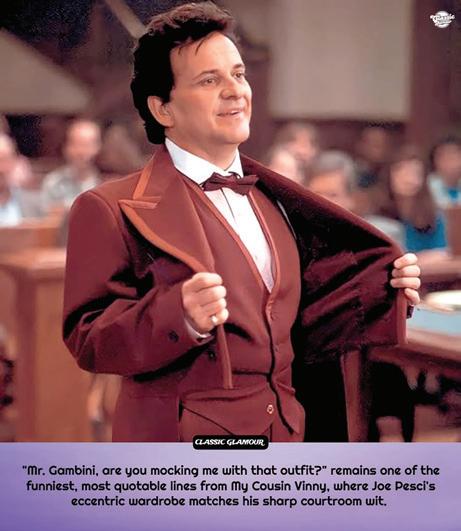
Vinny Gambino. In addition to being the lead in a great comedy, he has humility and selfawareness and never stops fighting. If you could argue any historical case, what would it be (and why)?

The trial of Charles I, where the British state is grappling with the role of the monarch post-civil war. It’s a pivotal moment in the foundation of the modern state.
Best piece of advice you’ve received about joining the Bar? Would you rather have 10 years of experience as a solicitor and 2 as a barrister, or 10 as a barrister and 2 as a solicitor? It made the decision to come
As a litigator, she places significant importance on human nature, love and relationships, over logical legal outcomes. If you could argue any historical case, what would it be (and why)?
NZYQ v Minister for Immigration, Citizenship and Multicultural Affairs. At university I was fascinated with the decision of Al-Kateb v Godwin. The opportunity to argue the point again would have been a dream. Best piece of advice you’ve received about joining the Bar? Remember to try and have fun!
Who are you reading with?
Georgia Douglas. What is your guilty pleasure? Fantasy sports of all kinds.
Eliza Saunders
Favourite fictional lawyer (and why)? I am a bit of a romantic so probably Ally McBeal.
The landmark Australian High Court case of D’Arcy v Myriad Genetics Inc [2015] HCA 35 relating to the patentability of isolated, naturally occurring nucleic acids found in DNA (like the BRCA1 gene). It established that mere isolation of genetic information, which exists in nature, does not create a new invention, invalidating patent claims over BRCA1 testing.
The Court was divided however with French CJ, Kiefel, Bell and Keane JJ forming the majority, Gageler and Nettle JJ propounding a threshold test akin to the US laws of nature test, and Gordon J giving her own straightforward and direct judgment that the fact that mutations in the gene are indicative of breast cancer “existed before Myriad worked it
do good work with absolute precision (Gordon J).
Who are you reading with? I have the privilege of reading with the exceptional Marcus Fleming of Emmerson Chambers (Victoria’s only specialised IP Chambers) and being his first reader.
What is your guilty pleasure? Cheese and wine.
Sharni Stacey
Favourite fictional lawyer (and why)? Jake Brigance – he delivered the best closing address, ever.


Best piece of advice you’ve received about joining the Bar?
Meticulous preparation, no shortcuts and be known to
‘I had a great summation all worked out, full of some sharp lawyering, but I’m not going to read it. I’m here to apologize. I am young, and I am inexperienced. But you cannot hold Carl Lee Hailey responsible for my shortcomings. Do you see, in all this legal maneuvering, something has gotten lost. That something is the truth.’
If you could argue any historical case, what would it be (and why)?
Somersett Case (1772) which dealt with the legality of keeping slaves in England. It was a case that showed how common law reasoning can shape major social questions even where the law is morally and politically contested.
Best piece of advice you’ve received about joining the Bar? Preparation. Preparation. Preparation.
Who are you reading with? Alex Manos, Aickin Chambers. The best! What is your guilty pleasure? Downton Abbey,
a cup of tea and a choccie scotch finger.
Sitthana
Theerathitiwong
Favourite fictional lawyer (and why)?
Alicia Florrick (The Good Wife because she’s clever, firm, passionate, and human. Also, I like ADA Rafael Barba (SVU) for the same reason!
– I think there were a lot of mitigating factors there and she did not deserve to be guillotined!!!

If you could argue any historical case, what would it be (and why)?
The trial (there was never a trial!) of Marie Antoinette
Best piece of advice you’ve received about joining the Bar? Diversify your practice like you are investing in a couple of different types of stores on the main street. Watch them grow. Don’t worry if another store of one type is doing better than you.
Who are you reading with?
Amanda Burnnard (Mentor) and Emrys
Nekvapil SC (Senior Mentor)
What is your guilty pleasure? McDonald’s large fries
Alexander Wolf
Favourite fictional lawyer (and why)? Cleaver Greene from Rake, because no matter how hopeless the situation he seems to find the humour in it. If you could argue any historical case, what would it be (and why)?
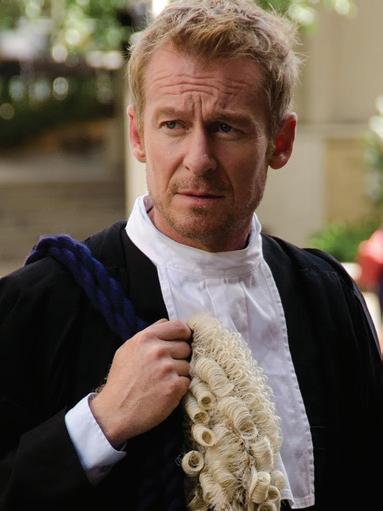
The trial of Joan of Arc, because it
could well have changed the course of history!
Best piece of advice you’ve received about joining the Bar? Make the most of the downtime when you get it and do things that you really enjoy during that time.
Who are you reading with? The one and only Paul Smallwood, and the great Peter Matthews SC as my senior mentor.
What is your guilty pleasure? Escaping onto the golf course for an entire afternoon!
10%
Readings Emporium


President’s message
FIONA RYAN
As President of the Victorian Bar, I have been privileged to witness the outstanding skill and generosity of our members. As a cohort we devote thousands of hours each year to pro bono work. We take care of colleagues in crisis, and we support the families of barristers in need. The instinct to look after each other, and to ensure those who cannot afford representation have access to justice, runs deep.
As we face changes to the way barristers work due to the increasing adoption of AI by the legal profession, it is important that we hold on to and fortify what distinguishes us: frank and fearless advocacy (particularly oral advocacy) and independence.
As I reflect on the many achievements and changes that have occurred since the last Victorian Bar News was published, I am proud to belong to such a fine institution.
Changing face of legal practice
The use of generative AI platforms in legal practice is increasing at a rapid rate, and while there are many opportunities, they are not without risk or limitation. In recognition of this, the Bar established an AI Steering Committee, chaired by Dr Matt Collins KC, which will provide strategic oversight to the Bar in respect of the use of AI in barristers’ legal practice.
The Committee’s work includes considering how barristers can leverage AI technologies to support their practice, as well as navigate the ethical, regulatory and practical issues that may arise when using AI in legal work. The Committee has been hard at work for the benefit of all our members, and I am very grateful to Dr Collins and the rest of the Committee for taking on this critical task.
From 1 July 2026, the Anti-Money Laundering and Counter-Terrorism Financing Act 2006 will expand to include the legal profession. While the Bar’s position is that based on the guidance from AUSTRAC, most independent barristers will fall outside the designated services regime and should not be affected, particularly when instructed by solicitors, however the reforms may apply in some circumstances. This includes where a barrister is directly briefed and undertakes work that could fall within one of the transactional activities described in the legislation.
I would like to thank Lachlan Molesworth, who is a Law Council of Australia Executive Member and a member of the AML/CTF Working Group, and Timothy Goodwin for their work with the LCA on this important issue, on behalf of our members.
In December 2025, the Federal Attorney-General approved an increase in the daily rate for junior and senior counsel undertaking Commonwealth work. This is the first increase in pay rates for barristers in 14 years. I acknowledge previous Bar Councils for their advocacy on this matter including, most recently, Justin Hannebery KC, Georgina Costello KC and Raini Zambelli who were members of the 2025 Executive team.
At its meeting on 23 April 2026, Bar Council established a Fee Recovery Protocol to assist barristers to recover outstanding fees, and to assist all parties to a dispute over outstanding fees to reach a resolution.
The protocol is intended to only be engaged in appropriate cases where all other avenues have been exhausted, and the President of the Bar considers the Bar’s involvement is justified.
Safeguarding the rule of law
Our members continued to provide a strong, authoritative voice on several policy and law reform matters, most notably changes to the youth sentencing laws in Victoria. In a joint statement, the Victorian Bar and the Criminal Bar Association maintained that any criminal justice law reform must follow evidence-based responses to crime, and noted that there has always been a power, currently enshrined in
s 158B of the Youth Justice Act 2024, for the Children’s Court to uplift indictable crimes to the County or Supreme Courts for sentencing under adult laws, if the circumstances call for it.
In December 2025, the Victorian Government advised it would not proceed at this time with the introduction of a mandatory reporting requirement for lawyers to report the suspected misconduct of other lawyers following the Royal Commission into the Management of Police Informants. In welcoming the decision, the Victorian Bar, along with other legal organisations, remains strongly opposed to mandatory reporting by lawyers against other lawyers but is committed to working constructively with the Government if any proposed model for mandatory reporting is to be developed in the future.
Education update
Georgina Schoff KC was appointed as Chair of the new Committee on Pathways to the Victorian Bar, which will review the structure and accessibility of the Bar Exam and Readers’ Course following implementation of recommendations from the five-year review.
In February, I was delighted to welcome the Victorian Bar’s March 2026 Readers. It brought back warm memories of my Readers’ Course, which I undertook with Readers’ Course Committee Chair Ben Ihle KC and fellow Bar Councillor Elizabeth Ruddle KC, both of whom were at the ceremony.
The Readers’ Course Committee and the Bar’s Education team, particularly Nikki Walker and Jen Moody, work tirelessly to facilitate this program twice a year. The course would not be the high-calibre program it is without the many experienced members of our Bar who so willingly take on the role of mentors, instructors and presenters. We are grateful for their investment in the Bar’s future. Thank you also to all members of the judiciary for your ongoing support of the program.
I also acknowledge those involved
in the Victorian Bar Entrance Exam, with the first of two exam sittings this year being held at the Melbourne Convention and Exhibition Centre in May. Preparing the exam is a significant logistical undertaking for the Bar’s Exam Committee, led by Christopher Archibald KC, and the Bar Office’s Education team, in particular Michelle James and Golam (Kib) Kibria.
Pro Bono Scheme expands
The Victorian Bar’s Pro Bono Committee, in partnership with the Federal Court of Australia, launched the Federal Court Pro Bono Counsel Referral Scheme on 11 March 2026.
Modelled on existing Court and Tribunal schemes, the 12-month pilot initiative will establish a streamlined referral pathway for pro bono and amicus curiae assistance under Division 4.2 of the Federal Court Rules 2011. It also aims to broaden pro bono opportunities and enhance access to justice in the federal jurisdiction.
We are grateful to the Hon Chief Justice Mortimer, who co-signed a protocol establishing the pilot scheme, and to the Hon Justice Bennett, both of whom gave addresses at the launch.
Congratulations to the Pro Bono Committee, particularly Chair Geraldine Gray and Deputy CoChair Laura Hilly, for facilitating the scheme’s expansion and to Christopher Brown KC for his insights during the CPD panel discussion.
Other program news
In May, I attended the launch of the 2026 Trial Development Program which, for the first time, includes family law trials. Fifteen junior barristers were selected for the criminal trial program, and four junior counsel for the pilot family law program.
This is a joint initiative with Victoria Legal Aid that aims to develop trial capability in a supportive environment by pairing junior Bar members with experienced lead counsel in legally aided trials. Congratulations to all the participants and thank you to the many experienced Bar members who participate as lead counsel.
The Indigenous Students’ Clerkship Program formally entered a Memorandum of Understanding (MoU) with the Federal Court, Supreme Court and County Court. For many years the program, which enables First Nations law students to engage in a work experience placement with barristers and judges, has been informally run by many dedicated barristers.
The MoU ensures ongoing recognition for this long-standing initiative of the Bar and the Courts, and their strong commitment to practical measures that advance opportunities for Indigenous law students. The program is also a key component of the Bar’s Reconciliation Action Plan.
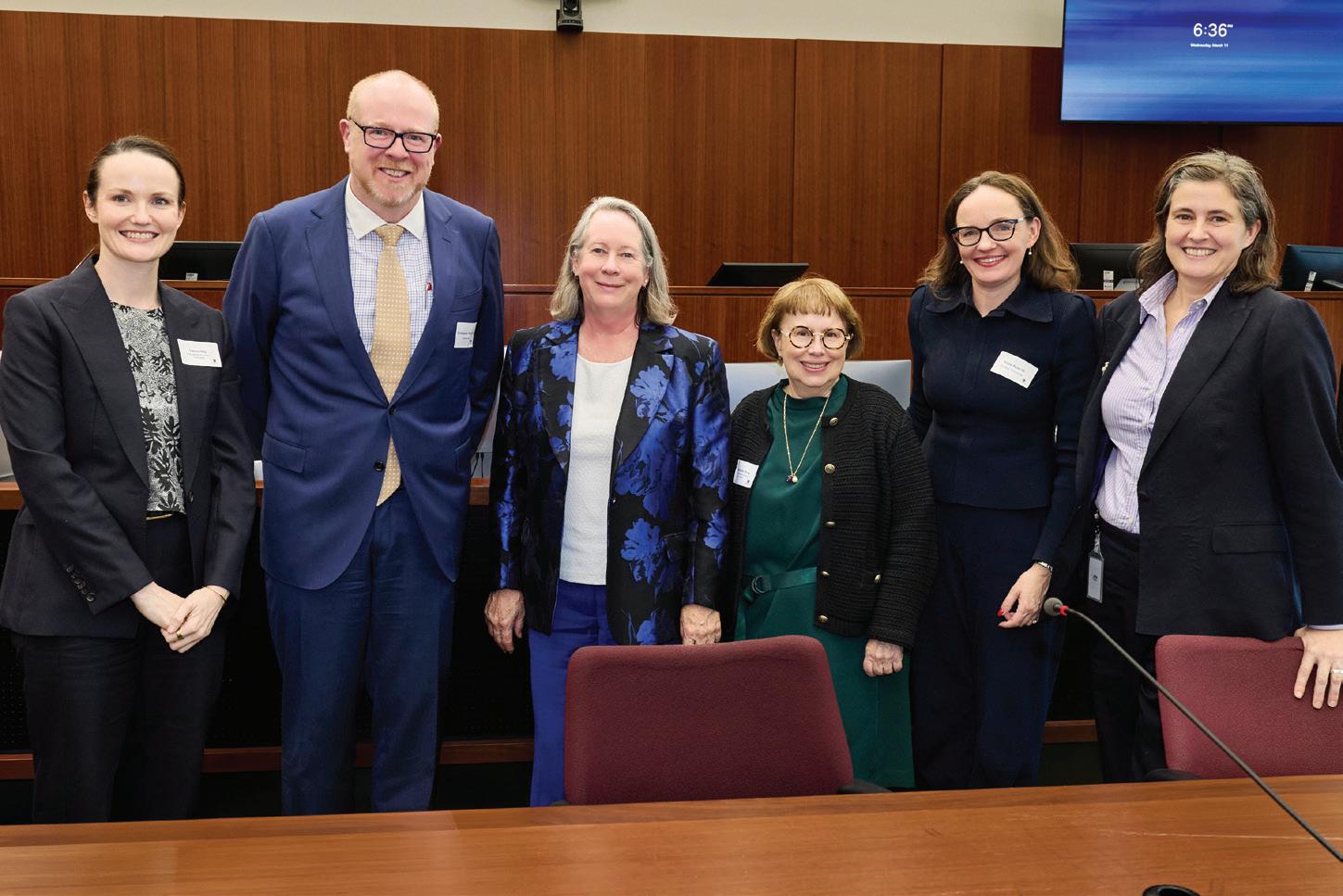
Laura Hilly, Christopher Brown KC, the Hon Chief Justice Debra Mortimer, Geraldine Gray, Fiona Ryan SC and the Hon Justice Elizabeth Bennett at the launch of the Federal Court Pro Bono Counsel Referral Scheme.
Take a bow
One of the most enjoyable aspects of my role is attending the many celebrations that occur throughout the year. It was my great pleasure to present the Victorian Bar’s newly appointed silks at the Supreme Court of Victoria, Federal Court of Australia and Federal Circuit and Family Court of Australia in November 2025. It was a joyous day for the new silks and the many family members, friends and colleagues who attended to celebrate with them. This was followed in February by ceremonial bows at the High Court of Australia alongside other newly appointed Senior Counsel from around Australia. This is a career highlight for all silks, and it was a pleasure to share the occasion with them.
I am pleased to report that the 2026 Victorian Bar Dinner attracted 525 people in the Plaza Ballroom. It was a
night to remember with humorous and heartfelt speeches and a surprise flash mob, organised by Rachel Doyle SC. We were privileged to have numerous Heads of Jurisdiction in attendance, including the Hon Chief Justice Niall of the Supreme Court of Victoria, who gave a thoughtful keynote address that canvassed the significant contribution of the Bar’s Jewish members, particularly in cases in the High Court since Federation. Many weeks of work went into organising this event. Thank you to Amanda Utt, Jo Dougherty, Stephen Porter and Soha Fiaz in the Bar Office, who worked tirelessly behind the scenes to ensure the dinner was a resounding success.
When tragedy strikes
Our members are quick to band together to support our colleagues in times of need and crisis. This was
evident in the wake of the Bondi Beach antisemitic terrorist attack in December 2025. Many members of the Bar and Judiciary attended a vigil for victims in the Essoign Club. Gabi Crafti SC, Daniel Aghion KC and Marc Felman KC gave poignant addresses and Nussen Ainsworth and Sam Tatarka OAM recited traditional prayers and blessings.
The Victorian Bar stands in solidarity with our Jewish members and extends its thoughts and support to all who have been, and continue to be, affected by this atrocity.
I also acknowledge the deep impact that an attempted bombing at a peaceful Perth rally on January 26 had on many members of our Bar, particularly our First Nations members.
I remind all members that if you require help for any reason, the Bar offers free and confidential professional
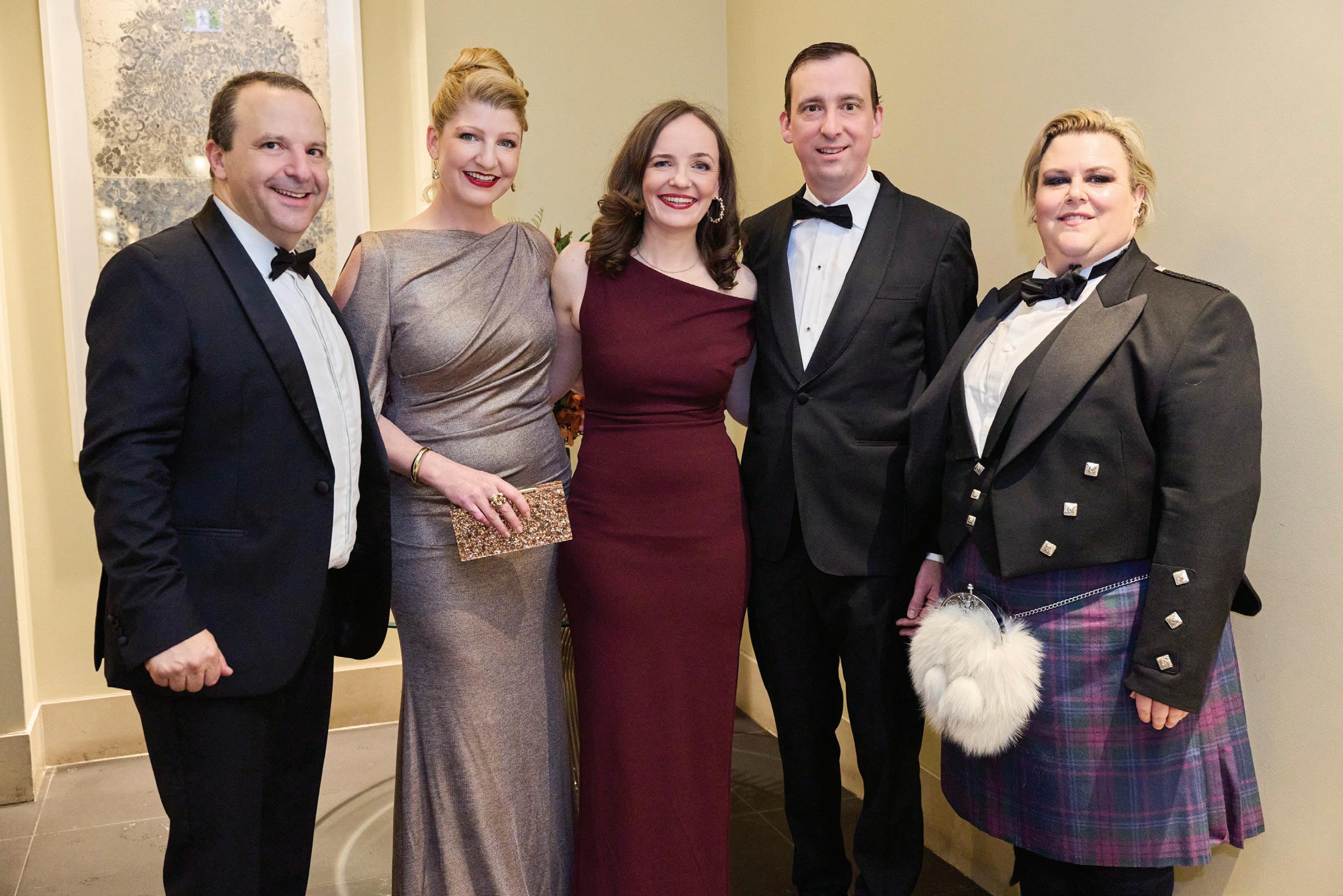
Bar Executive at the 2026 Victorian Bar Dinner: Honorary Treasurer Albert Dinelli KC, Vice President Raini Zambelli, President Fiona Ryan SC, Vice President Mark Costello KC and Honorary Assistant Treasurer Ffyona Livingstone Clark.
support to members and their immediate family through the Member Assistance Program.
Judicial appointments
There were many judicial appointments during the past six months. Among them was the appointment of former Victorian Bar President, the Hon Justice Hay, as a Judge of the Supreme Court of Victoria (Trial Division), effective 21 April 2026.
His Honour was called to the Bar in 2002 and took silk in 2019. He read with the Hon Justice Waller and was a mentor to six Readers. As a barrister, Justice Hay appeared in commercial, corporate and common law matters, and before royal commissions and commissions of inquiry.
At the time of his appointment, his Honour was Chair of the Victorian Legal Services Board, Deputy Chair of Barristers’ Chambers Limited, and
Junior Vice President of the Australian Bar Association. His Honour was President of the Victorian Bar from November 2022 to November 2023.
On behalf of the Bar, I wish his Honour and all those who were appointed long and rewarding careers on the Bench.

Acknowledgements
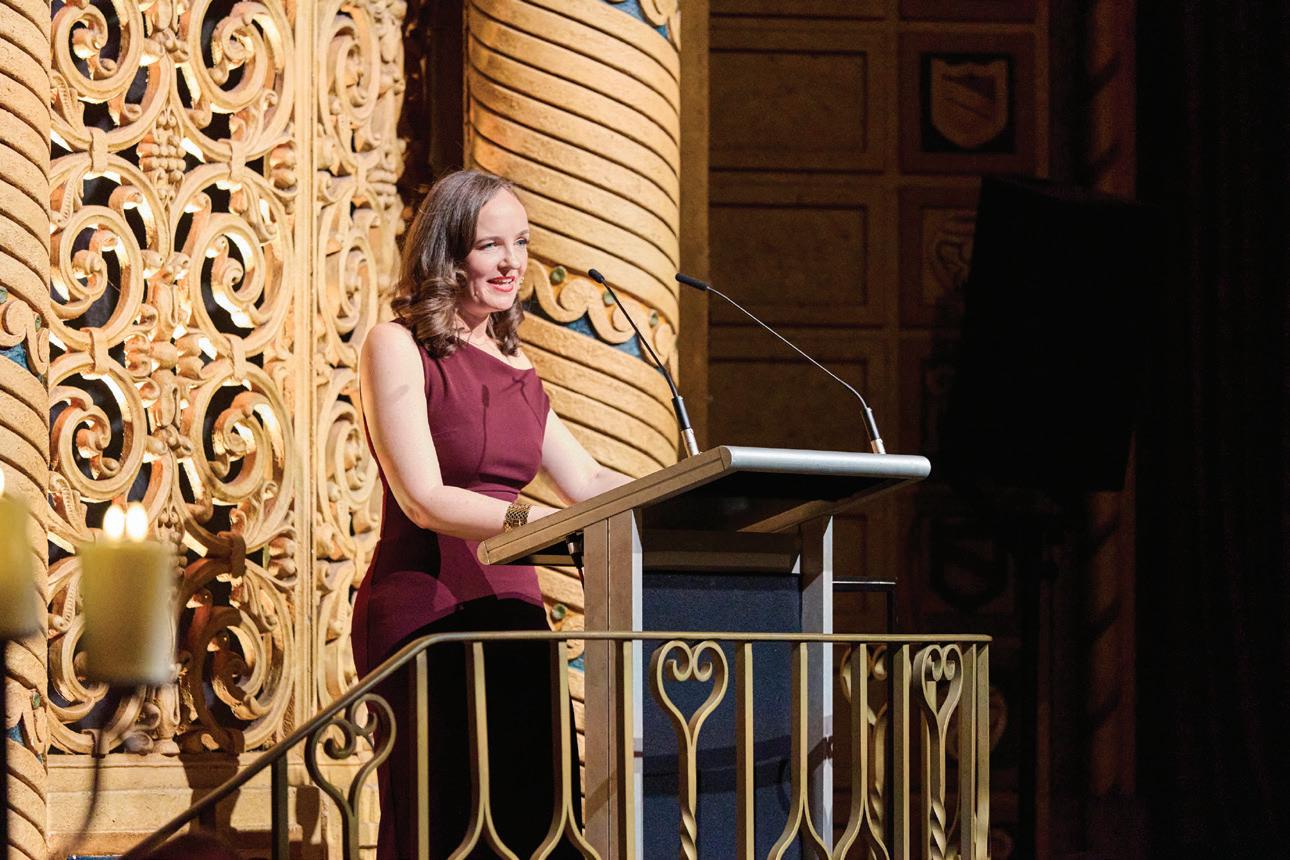
I pay tribute to a collegiate and hardworking Bar Council, particularly the Executive: Vice Presidents Mark Costello KC and Raini Zambelli, Honorary Treasurer Albert Dinelli KC and Honorary Assistant Treasurer Ffyona Livingstone Clark. I am indebted to my colleagues for their dedication and good humour.
I also commend the Victorian Bar Office team, led by Executive Director Amanda Utt. In addition to the administration of the Bar’s membership, education and corporate functions, the many initiatives undertaken by the Bar Council in any given year are supported by the Bar Office’s skill and professionalism. I am grateful for everything they do to keep the wheels turning at the Bar.
Finally, I thank the Victorian Bar News editors, their committee, and the many contributors for producing an exceptional magazine.


Around Town
Professor Arnold Dix, by Murali Surya
JUSTIN TOMLINSON AND ESTHER FAINE-VALLANTIN
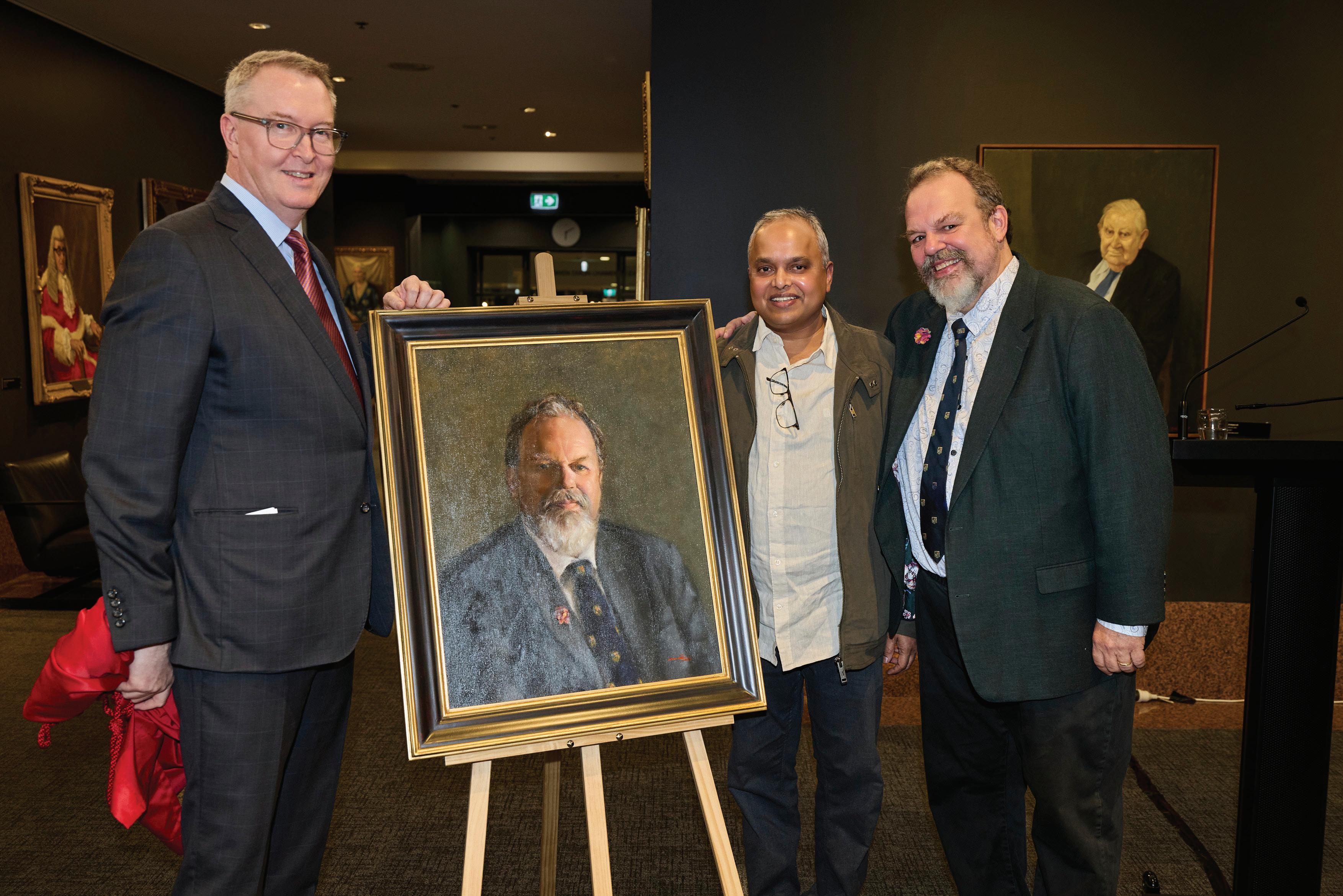
On 28 April 2026, family, friends and colleagues of Professor Arnold Dix attended the formal unveiling of a portrait by Murali Surya at the Peter O’Callaghan QC Gallery, which celebrates the legacy of our Bar at large and the contribution of individual members to the community.
Since being called to the Bar in 1990, Professor Dix has maintained a dual practice as a barrister and engineer. He specialises and is an international expert in tunnelling and other engineered spaces.
Much of Professor Dix’s legal work has been in relation to the environmental risks, fire and life safety issues arising from underground engineering. He has been called upon to assist with a number of significant international evacuations, including following the collapse of the Twin Towers on 9/11, terrorist attacks in London and Madrid, and various
ongoing advice to the operator of the Chunnel under the English channel in dealing with complications arising from the increasing electrification of the vehicles using it.
However, it was in 2023, that Professor Dix became a household name and social media celebrity particularly throughout India and Asia when he took a leading role in the successful 17-day rescue operation for 41 miners trapped in the collapsed Uttarakhand tunnel high in the Himalayan mountains.
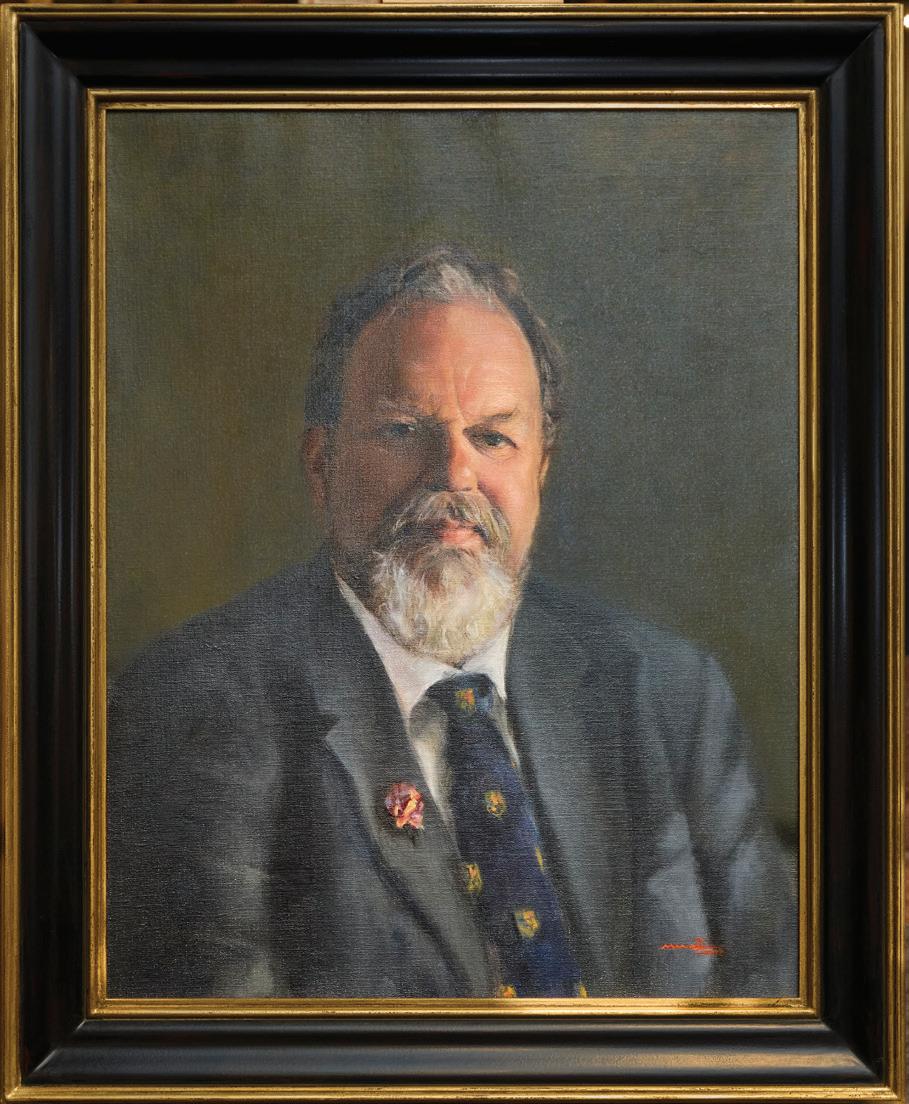
Professor Dix is a former president of the International Tunnelling and Underground Space Association, and in 2025 was appointed the inaugural chair of its nuclear waste disposal working group. In his portrait, Professor Dix is depicted wearing a tie from the International Atomic Energy Agency, as part of his efforts to champion the proper storage of nuclear waste, including as arising from the AUKUS deal.
The portrait was graciously unveiled by Professor Dix’s mentor, the Hon Justice Robert Osborn. His Honour set out all of Arnold’s peripatetic exploits, summarised above, and said that he was proud to have had Professor Dix as his reader at the Bar, “because he combined the scientist’s love of objective truth with the good barrister’s love of justice in a uniquely individual way”. His Honour noted that “One of the strengths of the Bar is its diversity. It is a strength because that diversity produces different perceptions of
Justin Tomlinson SC with artist Murali Surya and Professor Arnold Dix.
and responses to the legal, social and environmental issues of our times. When it comes to diversity of practice Arnold is out there in his own orbit”.
The evening included a special performance by musician Jason Vorherr, who was inspired to write his song Arnold after learning about the Uttarakhand tunnel rescue. He says the song—which includes the lyrics “He’ll be at your side, until the job’s done right”—is about courage under pressure, strength of character and the impact one individual can have on the world.
Professor Dix (an extract of whose speech is reproduced below) was deeply moved and reflected on how being a member of the Victorian Bar has enabled him to do what he does.
The artist, Murali Surya, trained in Drawing and Painting at the Florence Academy of Art in Italy. He specialises in realism, and works with oils and charcoals, as well as with watercolours. He has been awarded, or shortlisted for, numerous awards. Murali was himself an engineer on the first particle accelerator constructed in India, and this is one of the many topics over which Murali and Professor Dix bonded over during the portrait sitting.
something much more important, and that was that I was taught humility. That I was taught sensitivity—whether it’s to the court, the room, the people around you, your adversaries, to the situation. It’s where I was taught that justice isn’t just in the places we might think of here as barristers, as lawyers, as legal practitioners—but justice also has to be sought in the broader parts
And I’m watching [a portrait of Max] Perry look at me over there on the wall. And I can hear him saying all sorts of horrible things to me right now, because he was my dearest friend until he passed recently. And Perry taught me the importance of hiding your sting, hiding your intellect. You don’t want people to see you coming, because you’ve got an objective to achieve.
of the world where often there aren’t the systems of justice that we enjoy so much here in Victoria.
Edited extract from the transcript of Professor Dix’s speech
Thank you. Good evening, everybody. I’m quite lost for words, which is unlike me, for those of you who know me!
I see the contribution that I’ve been able to make to the world, and to the safety of literally billions of people every day, as a direct function of what I learned here at this Bar.
Before I came to this Bar, I had learnt that being a lawyer at a law firm was not for me. But I also felt that I was quite clever, and I’d had quite a good career as a scientist and an engineer.
But it was here that I got taught
And so I set about, particularly after the events of the World Trade Center, to make the world a little bit safer, and better, and more just.
And if I hadn’t had the mentorship, if I hadn’t had the humiliation of losing the unlosable case often—more often than I should have, I submit, Your Honour! If I hadn’t been that barrister who sought leave to appear in London and doesn’t come back with stories of great victory, but of being wiped on the floor by the local establishment and not listened to. If I hadn’t had all those experiences, I couldn’t bring the focus and the energy and the commitment to justice in the broadest sense to the tasks that I get asked to help with.
And as his Honour rightly said, I’ve got a bee in my bonnet right now—and I’ve got a bee in my bonnet for probably the rest of my life, no matter how long I live. And that is, I’m very concerned that we, as this generation, haven’t dealt with high-level nuclear waste for the benefit of our children and our children’s children’s children’s children for what will be tens of thousands of years.
And so in the portrait, the portrait that my dear friend Murali—as Murali and I are now like brothers, because he’s been looking at me worse than any judge could! He’s been staring at me hour upon hour. We’ve been talking about everything from particle accelerators in India’s journey to being one of the world’s nuclear powers, to the psychology of perception, to how you capture someone’s personality in a picture. Murali has been trying to teach me fine art, and I don’t know, I’m just a beginner in that. But when you look at the portrait, the tie that I’m wearing in that portrait is of the International Atomic Energy Agency, and they have asked me to champion the conversion of theory into burying nuclear waste for the world. So that’s my current mission.
I’m so honoured, and I could not do what I do without all of you. You are the Victorian Bar, and you encapsulate the very qualities that are necessary to make the world a better place. And for that, I thank you, and I’m proud to be a part of you.
Justin Tomlinson SC is Chair and Esther Faine-Vallantin is a member of the Art and Collections Committee.
Bar vigil for victims of the Bondi Beach massacre
GABI CRAFTI
In the days following the Bondi Beach massacre of 14 December 2025, members of the Bar gathered for a vigil to acknowledge the loss of innocent life and to stand with those affected. It provided a moment for colleagues to pause together in reflection. In a profession defined by the constant movement of work, the opportunity to stop, even briefly, carried quiet significance.
The massacre shocked the Bar profoundly. The loss of life was made all the more distressing by the fact that it resulted from an act of antisemitic terrorism. The vigil created a space to acknowledge the gravity of what had occurred and the immense sorrow it caused.
Daniel Aghion KC, President of the Executive Council of Australian Jewry, delivered an address that was both deeply moving and characteristically warm. He reflected on the significance of two communities central to his life— the Australian Jewish community and the Victorian Bar—coming together at such a difficult time. He spoke about the impact of the massacre on Jewish

Australians and the toll that more than two years of persistent antisemitism has taken on the community.
Victorian Bar President Fiona Ryan SC gave a powerful and consoling speech. She emphasised the profession’s enduring commitment to the rule of law and the responsibility of the legal community to stand firmly against hatred and discrimination. She also spoke about the everyday experiences of Jewish members of the Bar, recognising that for some colleagues antisemitism is not an abstract concern but part of their lived reality. Her words reassured and comforted: Jewish barristers are valued members of the profession and are entitled to live and work with dignity and safety.
Marc Felman KC also addressed the gathering, speaking about the significance of colleagues and members of the wider community who had
come to stand alongside Jewish Australians at a moment of acute trauma. He described the powerful support expressed simply by showing up, acknowledging the pain felt by Jewish people and making clear that antisemitism has no place in Australia. In gracious remarks, he thanked those present for their solidarity and for the message their presence sent—that the Jewish community does not stand alone.
The vigil concluded with the symbolic lighting of a Chanukah menorah (candelabra) and the singing of a traditional Chanukah song, led by Nussen Ainsworth, followed by a memorial prayer led by Sam Tatarka OAM. These simple rituals carried particular meaning. Chanukah commemorates resilience and the persistence of light in the face of darkness—a theme that felt especially apt in the circumstances.
Barristers from a range of practices and backgrounds stood side by side in silence. The act of gathering conveyed compassion for those whose lives had been shattered by terror and violence in what should have been a place of safety.
As those attending dispersed, the vigil left a clear reminder: the Bar is not only a profession, but also a community capable of pausing collectively to acknowledge profound grief and to mourn great loss.
Vic Bar: A community that thrives at the intersection of hope, justice and leadership in Australia’s pro bono space
Celebrating the Federal Court Pro Bono Counsel Referral Scheme launch.
GEORGA WOOTTON
The Victorian Bar’s Pro Bono Committee, in partnership with the Federal Court, launched the Federal Court Pro Bono Counsel Referral Pilot on 11 March 2026.
The pilot is a 12-month initiative establishing a formal referral pathway for pro bono and amicus curiae assistance under Division 4.2 of the Federal Court Rules 2011 Modelled on existing schemes between the Bar and Victorian courts and tribunals, it aims to broaden pro bono opportunities and enhance access to justice.
A protocol was formally signed by Chief Justice Mortimer and Fiona Ryan SC, with a keynote address by Justice Bennett. The launch included a CPD session presented by Chris Brown KC about counsels’ professional and ethical obligations. Dr Laura Hilly, deputy co-chair of the Pro Bono Committee, guided the audience through the new online referral portal.
Opening the special occasion was the Pro Bono Committee Chair, Geraldine Gray, who acknowledged that the Bar has a proud tradition of providing pro bono legal assistance that gives vulnerable members of the community the opportunity for access to justice and to pursue their legal rights under Australian law.
Ms Gray pointed to Chief Justice Mortimer and Justice Bennett devoting much of their time while at the Bar to pro bono work. So much so that Chief
Justice Mortimer is honoured by a pro bono award in her name: the “Debbie Mortimer SC Award for outstanding achievement in pro bono advocacy in a Tribunal or the Magistrates’ Court”. It is not mandatory to do pro bono work in Victoria. However, the figures of pro bono work undertaken in Victoria shows that we lead our nation in the highest participation of pro bono schemes. This is a fact that has been stated by the judges of the Federal Court. Speaking at the launch Chief Justice Mortimer honoured our membership saying that when it comes to pro bono work the “Vic Bar are head and shoulders above the other states, it is a source of incredible pride.”
Justice Bennett addressed the audience from the perspective of a recent barrister and now a judge of the Federal Court. She reflected on the influence of pro bono work on her career and her drive to be involved in the cases as an opportunity to work with barristers to whom she looked up to. In an enjoyable off script moment Justice Bennett implored that while we had the honour and benefit of Chief Justice Mortimer presence, it offered an opportunity to ask her Honour a few questions. Justice Bennett joked that this was quite the departure in the original format of the event and the request was only socialised in the lift on the way to the event. The audience was glad for her Honour’s generous flexibility, as the discussion was filled with comical interruptions between both their Honours, but also
a poignant insight into the pro bono work undertaken by barristers in years past.
Responding to a request for reflection upon pro bono work Chief Justice Mortimer fondly remembers the pro bono clients whom she represented, all these years on. It is the pro bono clients she reminisces about and those that come to mind when considering her contribution to the Bar. Her Honour highlighted that the clients saw the system as a better and fairer system when a barrister was in their corner. The building of community confidence in the legal system was stressed as one of the most valuable impacts barristers can achieve for our modern society.
Justice Bennett spoke to how her pro bono experience as a new barrister helped her to “get on her feet in a higher court”. Her pro bono cases assisted her to experience crossexamination for the first time, an experience she outlines as being a compelling case to justify why newer barristers ought to look to pro bono cases for professional development. She highlighted other professional development opportunities in pro bono cases such as forensic skills, how to manage an objection and dealing with experts. Additionally, in the Federal Court migration matters and judicial review legal arguments could be tested and adverse actions proceedings offer fact base forensic skill building. There is so much to learn and put in practice, including skills such as examination in chief and how to become confident in asking non-leading questions. She commented that a barrister stepping up and being responsible for all forensic decisions in a pro bono case is a leadership opportunity that should not be devalued.
The culture of pro bono in Victoria is infectious, inspiring, and brings about incredible change for individuals and the community. The Federal Court protocol has kicked off with a bang and the Pro Bono Committee are proud to share the early success of the pilot with our members.
Around Town
An insight into the VicBar Barrister Shadowing Program
A tongue-in-cheek Q&A between a 2025 host-barrister and a shadowing program student.
GLENN WORTH
Being a host-barrister for a university student during the six weeks of the annual Barrister Shadowing Program is one of the most rewarding experiences I have had at the Bar.
I have had the privilege of being involved in the program for the past two years and can honestly state the experience is at least as rewarding as being handed the proverbial unlosable brief!
Run annually by the Student Engagement Committee (SEC), the Barrister Shadowing Program, giving students with limited or no other connections to the legal profession opportunities to explore Bar life through structured and semistructured mentoring, is one of the noblest initiatives in which the Bar engages. It encourages students from diverse backgrounds to find their feet in law, encourages students no more than a year or two out from holding a practising certificate to understand the importance, solemnity, and dignity of the profession, encourages students to explore the joys of Bar and chambers life, and hopefully encourages more than a few of them to aim for a career at the Bar postadmission.
of them to stay on after the program in paid casual research roles. As with all the students I have worked with over the years, two have moved onwards and upwards, but I am lucky enough to still be working with Sivia; a dedicated, talented, and brilliant RMIT Law student!
Glenn: So, Sivia… forget for a moment that I’m your boss, your source of income, your meal-ticket, the best line in your resume, and the source of your glowing reference for the top-tier law firms you’ll no doubt shortly be applying to… What are your honest thoughts on last year’s Barrister Shadowing Program?

This year I am in the fortunate position of being a member of an amazing SEC and dedicated and wonderful Shadowing Program sub-committee. We very much looked forward to commencing this year’s program on 20 April 2026 and held the fond hope of living up to the successes of the brilliant former members of the SEC who pioneered the Shadowing Program and built it into the show-case event that it has become.
Last year I was lucky enough to be host to three amazing students, who impressed me so much so that I asked each
Thanks for reminding me of how much I take advantage of you! Now, if I am completely honest, last year’s Barrister Shadowing Program was the most educational and fun way to legally stalk a Barrister. I learnt so much about advocacy and the amount of skill, time, and dedication barristers put into their work. It was really fun watching a hearing like a Netflix drama.
Sivia: Anyways Glenn, why did you let some random students follow you around for 32 hours?
[Insert professional, noble, and altruistic reasons here…] … my innate sense of responsibility to The Bar… nurturing future generations… promotion of ethics, diversity, opportunity… the good of humankind… etc.
It’s the energy, the enthusiasm, the passion, the naivete, the wide-eyed wonder, Siv!!! Mentoring you three let me see a world less jaded! Reminded me of why I do what I do. Why it’s such a privilege to practise at an independent Bar. I got to step outside the humdrum mechanics of doing what I do (brilliantly) and see through the eyes of the aspiring just how amazing it is to do what we do and reconnect with why we do what we do.
Glenn: So… enough with the soft and easy questions, Siv! What did you dislike about the 2025 Shadowing Program? What can we do to make future iterations better and better?
Sivia: I had a hard time paying attention to one lecture that went through things we had already learned at Uni. But most of the presentations were inspiring and informative! They explained the resources that lawyers use, the life of a lawyer, and the pathway to becoming a barrister. The Shadowing Program was a practical opportunity to learn something that Universities could not provide. Other than providing more free food and drinks, I reckon more presentations that give insight into the life of a barrister or legal practice would be great.
Sivia: You’re the barrister! You tell me what the benefits of the Shadowing
Program are for final and penultimate year students!
Glenn: Dear Top-tier Law Firm, whilst Sivia is brilliant, dedicated, and learns incredibly fast, I cannot, unfortunately, recommend her because she has “a hard time paying attention…”
…
But seriously, I’m glad you say we ought to include more insight into the life of a barrister and legal practice in the Shadowing Program. The sub-committee has strived to deliver precisely that for this year’s Program!
As for what I think students most benefit from during the Program: I think it’s the real-world application of concepts taught over the preceding years; the immersion into the dayto-day practice of the law—under real pressure and with real consequences.
These are things that cannot be replicated in a lecture or tutorial.
“Tell me and I forget. Teach me and I remember. Involve me and I learn.” — Benjamin Franklin (maybe… Google it!).
Glenn: Alright! Time to wrap this up (word-count—speak to the editor!). Last question: Should I tell this year’s students they don’t have to call me “Mr Worth” on the first day? Or wait a couple of weeks like I did with you three?
Sivia: Please make them wait four weeks.
Sivia Thai is an RMIT Law graduate who participated in the 2025 Barrister Shadowing Program in her final year of University.
Glenn Worth is current chair of the SEC, and a member of our Bar with a keen interest in teaching and inspiring future generations.

Yoga at the Bar
JONATHAN KORMAN
There is a natural affinity between the discipline of yoga and the discipline of the Bar. Both demand sustained concentration, composure under pressure, and the ability to remain grounded when everything around you is moving. And an hour on the mat can restore clarity in a way that no amount of coffee ever will.
But barristers are typically time poor: after-work yoga classes come at the expense of valuable family or leisure time, a precious resource for most of us.
The Health and Wellbeing Committee has the answer for you: weekly lunch-time yoga sessions, no more than a few minutes’ walk from most chambers, at a very affordable price.
Whether you are curious about yoga, a seasoned practitioner, or something in between, read on to find out about Yoga at the Bar—the popular Monday lunchtime yoga classes for barristers, friends and the wider VicBar community.
What
Yoga at the Bar’s teacher, Erin Morris, describes her weekly classes as strong and dynamic, inviting students to explore the deep connection between body, mind and breath. She sees yoga as a powerful tool to reduce stress and enhance both mental and physical well-being.
Erin’s classes combine creative sequences with an energising pace. They suit all levels, from beginners to regular practitioners.
Erin has exceptional qualifications and experience. Her yoga journey commenced over 16 years ago, and she now holds an Advanced Diploma of Yoga Teaching from the Australian Yoga Academy and has completed over 450 hours of formal training.
When
Yoga classes are held every Monday, between 1pm and 2pm.
Where
Classes are held in the Wellness Centre in the lobby of 500 Bourke Street, where Ah Ket and Rosanove Chambers are situated. The Wellness Centre is a spacious, purpose-built studio, equipped with adjustable lighting, sound facilities, and a calming ambience. The centre can also be conveniently accessed from Little Bourke Street via the Movida laneway across from the Supreme Court. Mats and props are provided, so just bring yourself.
Prices and bookings
Book and pay for your class at www. bookeo.com/yogabooking
You can also access booking information via the VicBar website. Select “Health and Wellbeing” under the Community menu. Then, click on “Yoga At the Bar” under the Health and Wellbeing heading on the right hand side. That page has a direct link to the booking/payment facility.
If you have any queries, or would like help with booking your class, contact Jonathan Korman via phone (0414 555 531) or email (jkorman@vicbar.com.au).
See you on the mat!


Precision and speed for the modern barrister
Westlaw Precision Australia combines a century-long legacy of comprehensive and authoritative content with AI-Assisted Research for significant time savings and up-to-date, verifiable information to give confidence and drive success in court.
Scan here to find out more or visit www.thomsonreuters.com.au/westlaw-precision


Civil Penalties in Australia book launch
AMANDA STOREY
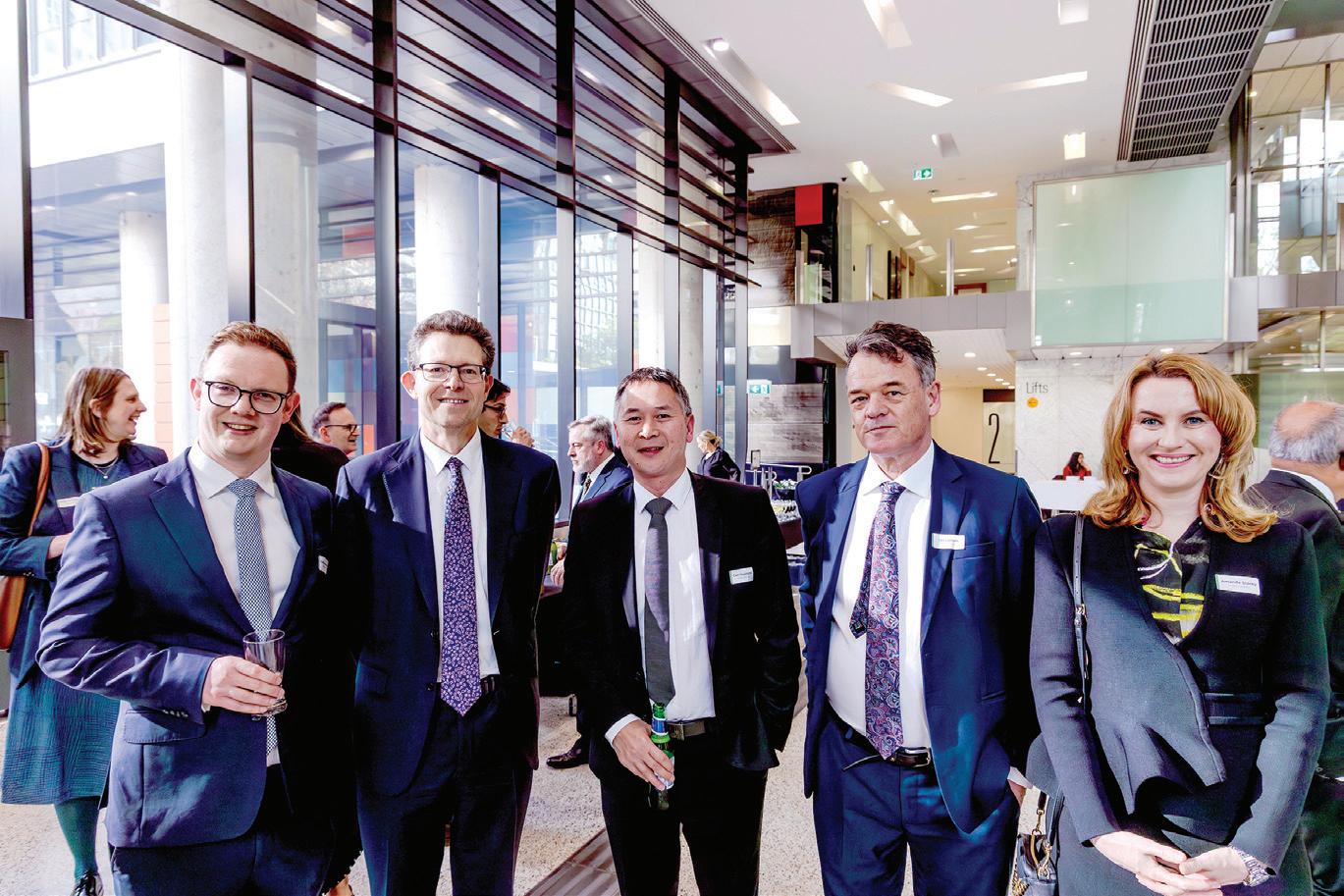
On 20 October 2025, the Federal Court of Australia, Melbourne, hosted the book launch of Civil Penalties in Australia (2025, LexisNexis) coauthored by Matthew Peckham, Cam Truong KC, Ian Latham and Amanda Storey. The venue, usually reserved for solemn legal matters, was instead abuzz with industry chatter and the sound of champagne glasses clinking.
The book launch was impressively attended, drawing a distinguished cross-section of the Victorian Bar and judges of the Federal and County Courts alongside practitioners from across the legal profession with expertise in civil penalties and regulatory investigations. The presence of regulators was equally notable, with representatives from the ACCC, ASIC, the Essential Services Commission, and the Australian Energy Regulator adding to the occasion and depth of the professional insight in the room.
Justice Moshinsky commenced the formal portion of the evening with some opening remarks about Civil
Penalties in Australia. As his Honour astutely observed, the subject of civil penalties has previously been dealt with in a piecemeal fashion in textbooks on civil procedure or on particular subject-matter areas, such as employment law, consumer law, competition law and corporations law, and in a previous collection of learned essays. His Honour congratulated the authors on publishing a comprehensive textbook on the subject of civil penalties, which will undoubtedly be of great utility for lawyers who practise in the area.
Each of the authors then took to the microphone. Cam Truong KC of the Victorian Bar explained the process of writing the book. “It was like running a large case. We had regular strategy and drafting meetings; we had points of disagreement that needed settling; we had allocation and reallocation of tasks that had to fit in with our practices and our familial commitments; we had fun and laughter.”
Then, Matthew Peckham of the Victorian Bar spoke in greater detail about creating a regime-agnostic
of regulators in Australia bringing civil penalty proceedings, a key purpose of writing Civil Penalties in Australia was to emphasise that the skills developed in one regulatory enforcement regime are readily transferable to others.
After that, Ian Latham of the New South Wales Bar and Amanda Storey of the Victorian Bar each offered brief reflections, sharing their perspectives on the development and practical significance of civil penalties in Australia.
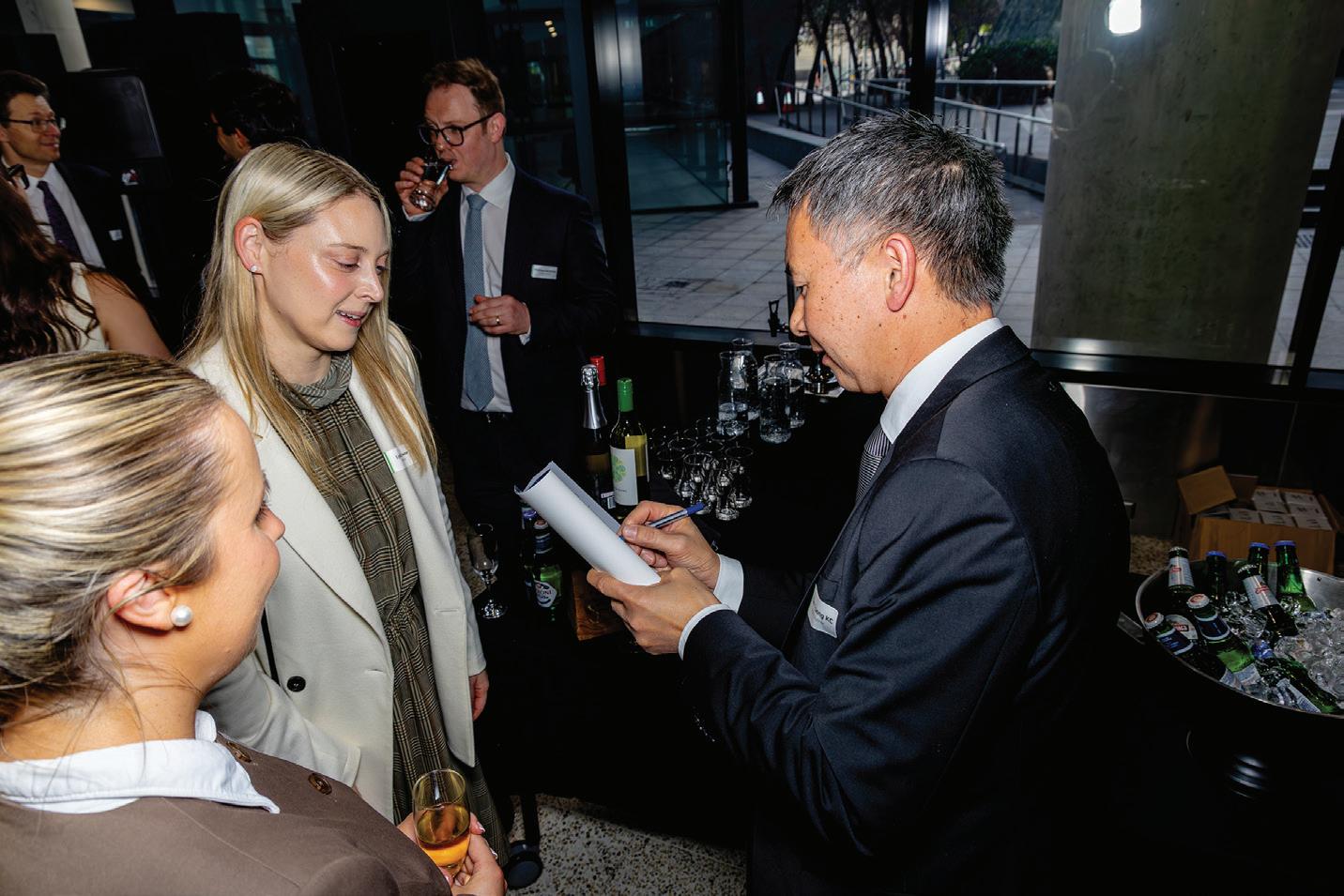
Of course, a book launch would not be complete without the book itself. LexisNexis manned the bookstall, and attendees eagerly sought autographed copies, with the authors more than happy to oblige.
Matthew Peckham, Cam Truong KC, Ian Latham and Amanda Storey extend their sincere thanks to all who attended the evening, to Justice Edelman for his generous foreword to the book, to the Federal Court for hosting the function, and the Melbourne clerks for their support, particularly Andrew Turner of Foley’s List, Jane King of List G, and Anna Svenson of Svenson Barristers. The authors also acknowledge, with deep gratitude, the patience, encouragement and support of their families throughout the drafting process, without which the work would not have been possible.
The Hon Justice MarkMoshinsky
Matthew Peckham, Justice Mark Moshinsky, Cam Truong KC, Ian Latham and Amanda Storey
Cam Truong KC
Around Town
Our new leaders take their bows
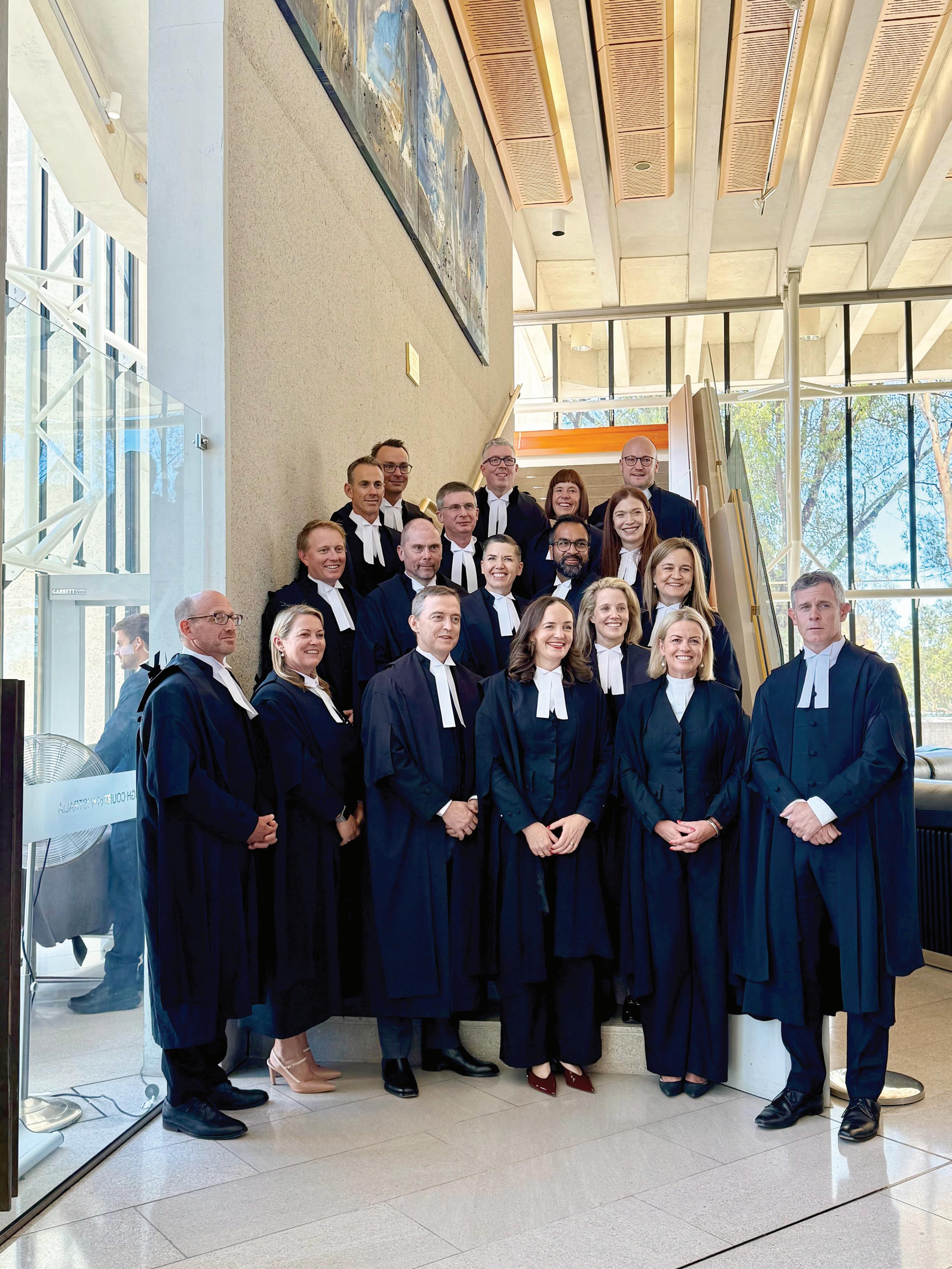
It was a glorious day on Monday 2 Febuary 2026 for our most recent silks when they took their ceremonial bows at the High Court alongside other newly appointed Senior Counsel from around Australia. The Hon Chief Justice Gageler hosted afternoon tea in the Grand Lobby after the ceremony. A gala dinner, hosted by the Australian Bar Association, was held in the Gandel Hall of the National Library of Australia.
FRONT ROW: Shaun Ginsbourg SC, Cathy Dowsett SC, Benjamin Gibson SC, Fiona Ryan SC, Sarah Keating SC, Kristie Churchill SC, Damien McAloon SC
SECOND ROW: Kane Loxley SC, David Glynn SC, Sarala Fitzgerald SC, Romesh Kumar SC, Stella Gold SC, Alexandra Folie SC
THIRD ROW: Michael Clarke SC, Timothy Scotter SC, Sarah Fisken SC
BACK ROW: Peter Creighton-Selvay SC, Andrew Cameron SC, Daniel Bongiorno SC
VICTORIAN BAR NEWS
Around Town
New Barristers’ Conference 2026
BRYONY SEIGNIOR AND SAM JAYASEKARA
“Your reputation arrives on a snail and leaves on a hare.” With that memorable caution, her Honour Chief Judge Chambers opened the 2026 New Barristers’ Conference on 20 February, where 120 junior barristers gathered for a day of learning, candid conversation, and connection.
The program was designed for barristers in their first six years of practice. Two themes emerged: reputation is built not by being perfect, but by owning up when things go wrong and being frank with the court—and when the hard days come, you sit with them, lean on your peers, and know that it happens to all of us.
Colin Mandy SC, Elizabeth Ruddle KC, Gabi Crafti SC, David Cronin and Sophie Stafford opened with a masterclass rich in practical guidance on preparing clear and conscientious witnesses. Patrick Doyle SC and Kateena O’Gorman SC later led an engaging session on a topic that pains us all: voluminous and complex documentary evidence, with a hands-on crossexamination exercise. Both panels offered far more than can be captured here.

The AI literacy session, chaired by Sam Blashki with Kathleen Foley SC, Edward Moore, Tom Middleton and Damian Curran, painted a sobering picture of how profoundly artificial intelligence may reshape legal practice. The overall message from our expert speakers was clear—as barristers, we cannot put our heads in the sand, so educate yourselves.
The wellbeing session, chaired by Aggy Kapitaniak with Justice O’Meara, Emily Latif, Naomi Hodgson and Dr Sarah Fischer, was moving and perceptive. Panellists reminded attendees that mental health is something one works at, like physical health. Losses do not define you—sitting with them and finding your own path forward is part of building a sustainable practice.
The day closed with reflections from the Bench—candid, helpful, and full of salient insight. Their Honours Justice Bennett, Justice Hannon, Associate Justice Gobbo, Associate Justice Fary, Judge Wise and Judge Todd advised: be straight with the court, own your mistakes, and know your brief.
Drinks and canapés at the Essoign Club followed, giving attendees the chance to meet the speakers and forge bonds.
The New Barristers Committee conference working group (Christopher Brown KC, Aggy Kapitaniak, Daniel Briggs, Chong Tsang, D’Arcy Hope, Bryony Seignior, Sam Jayasekara and Kathryn Browne) is especially thankful to Victorian Bar staff Golam Kibria, Jo Dougherty, Michelle James and Stephen Porter for all of their assistance, and to the speakers for their valuable time.
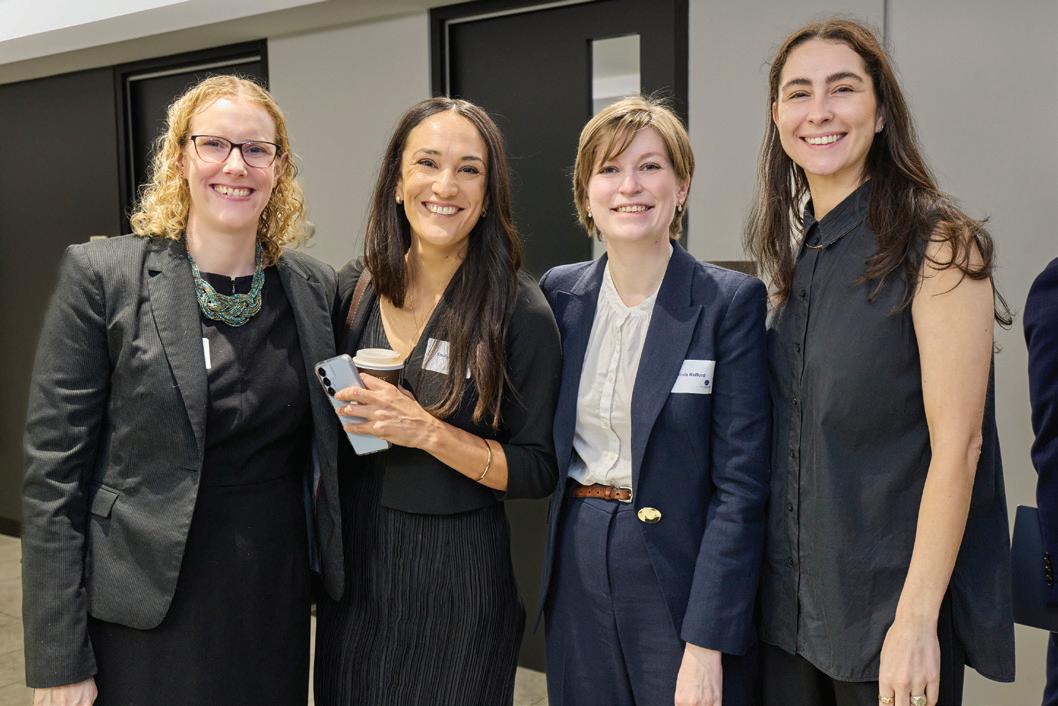
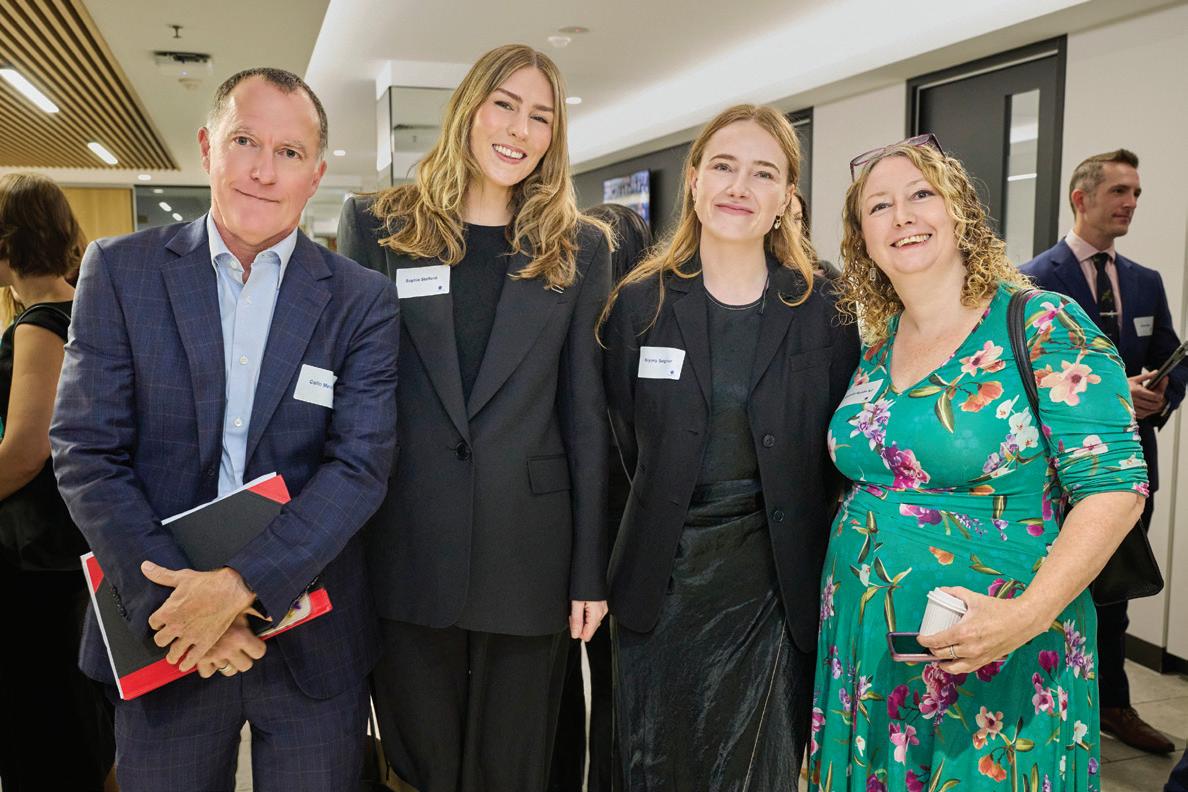


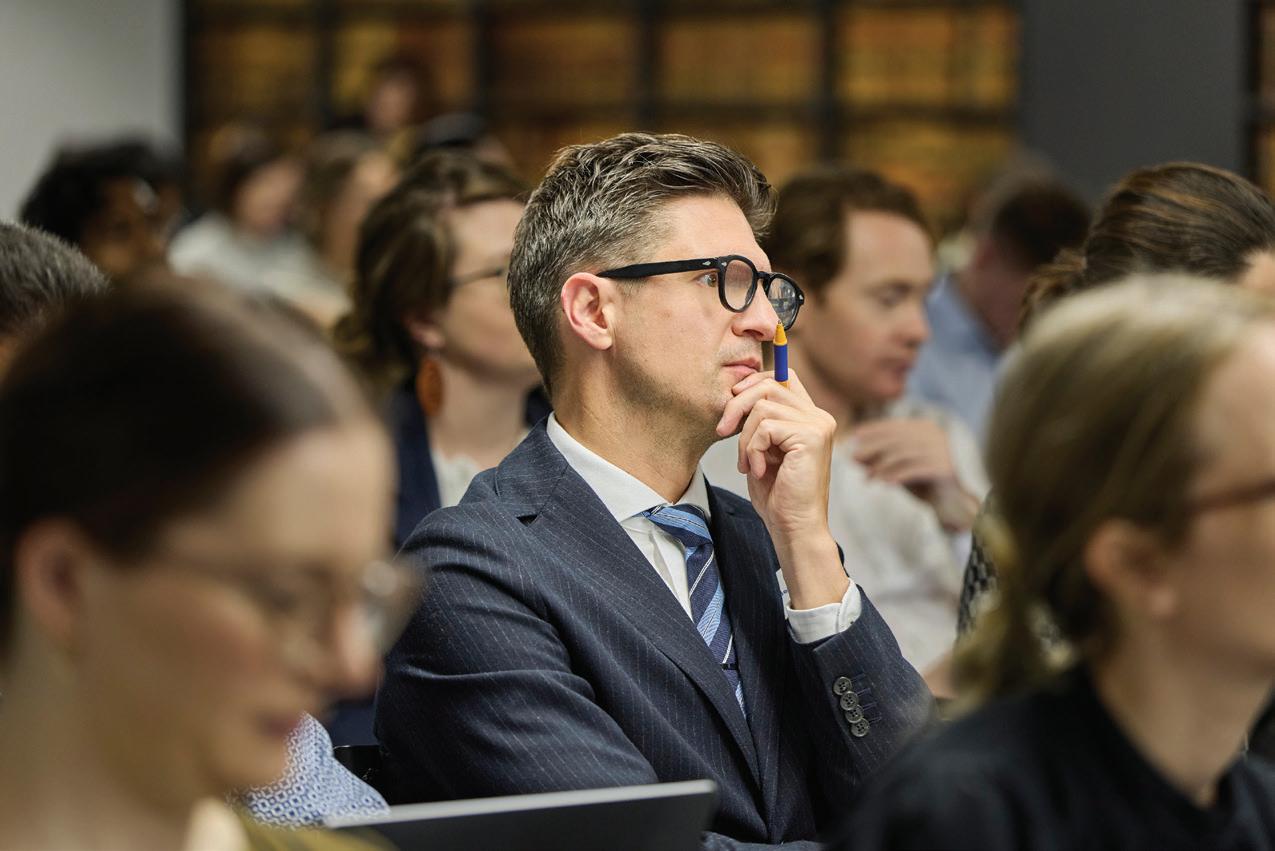
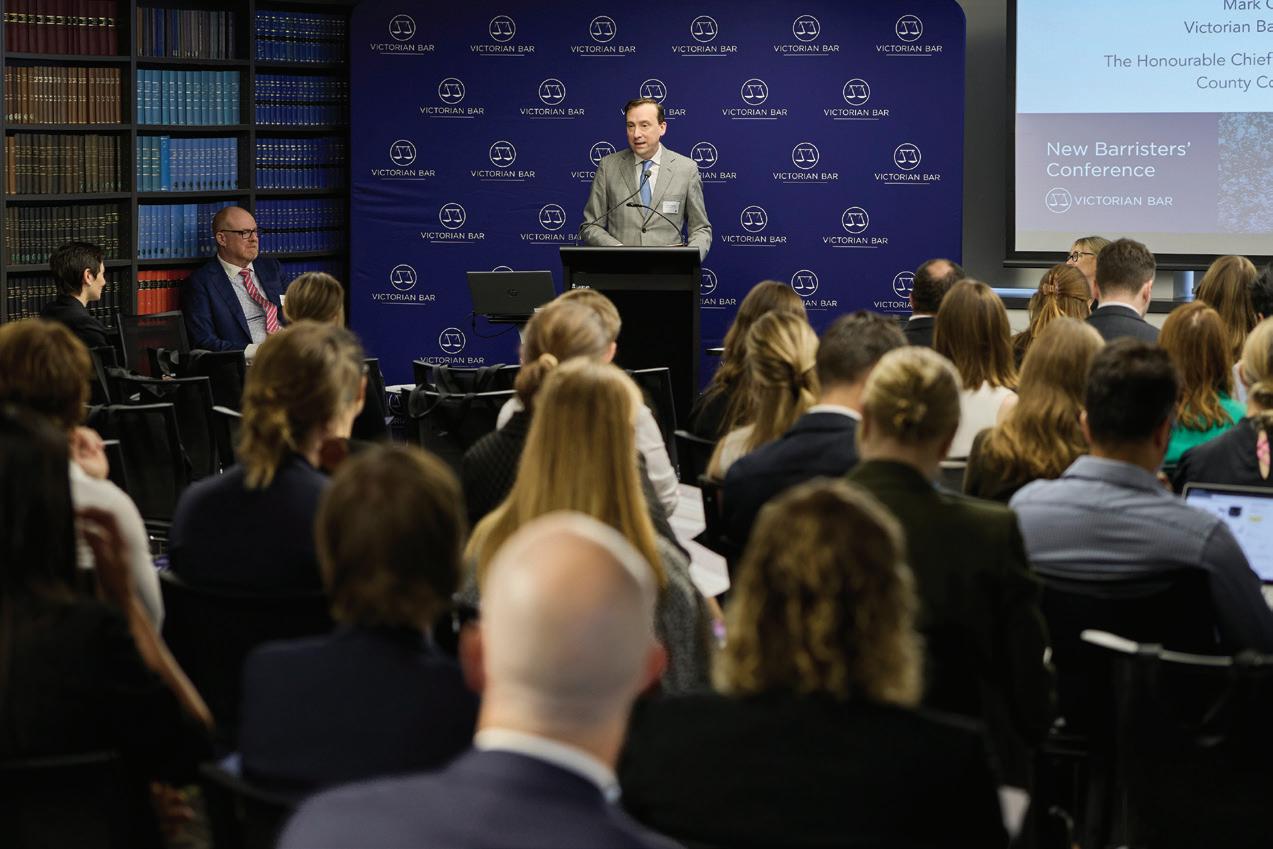
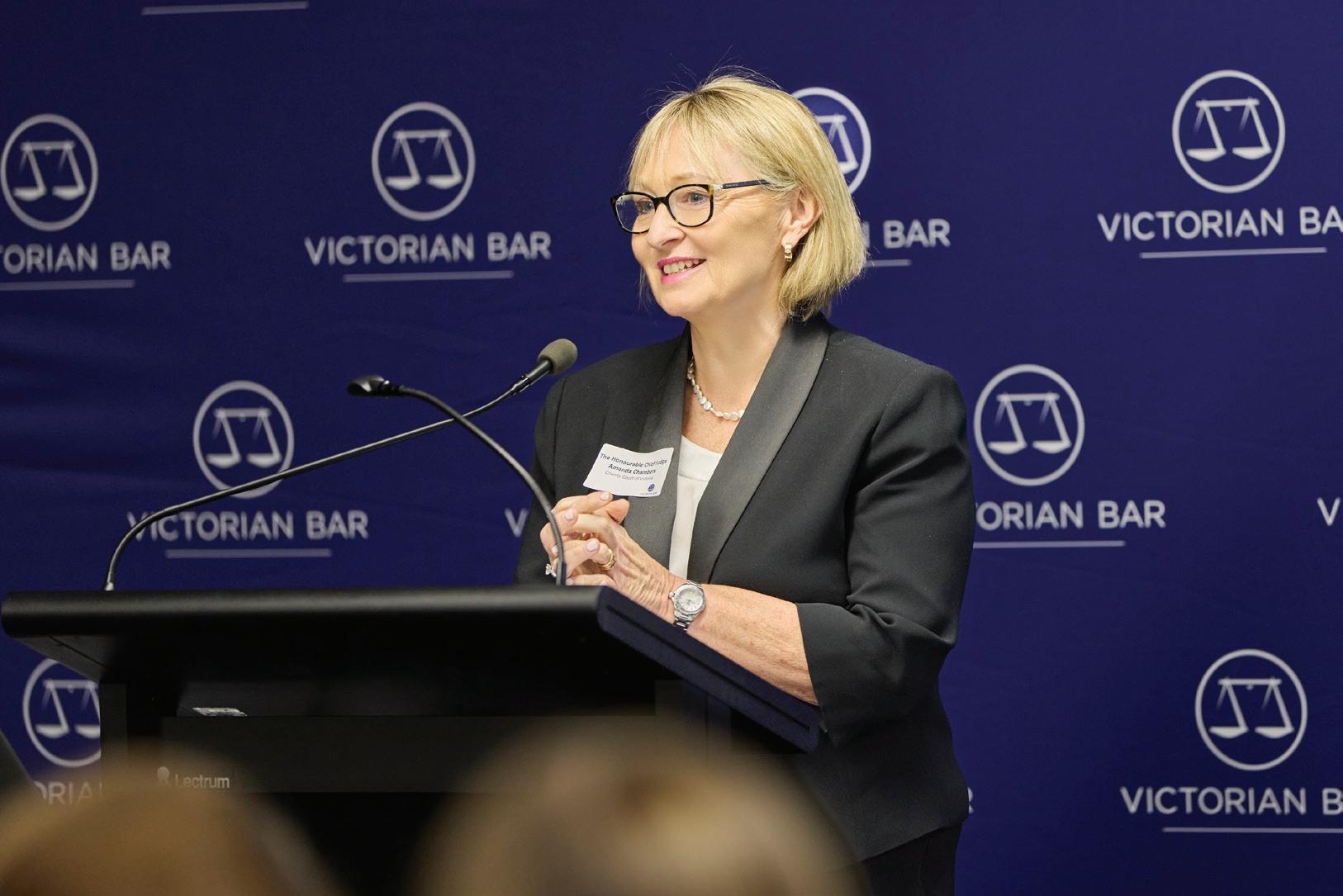
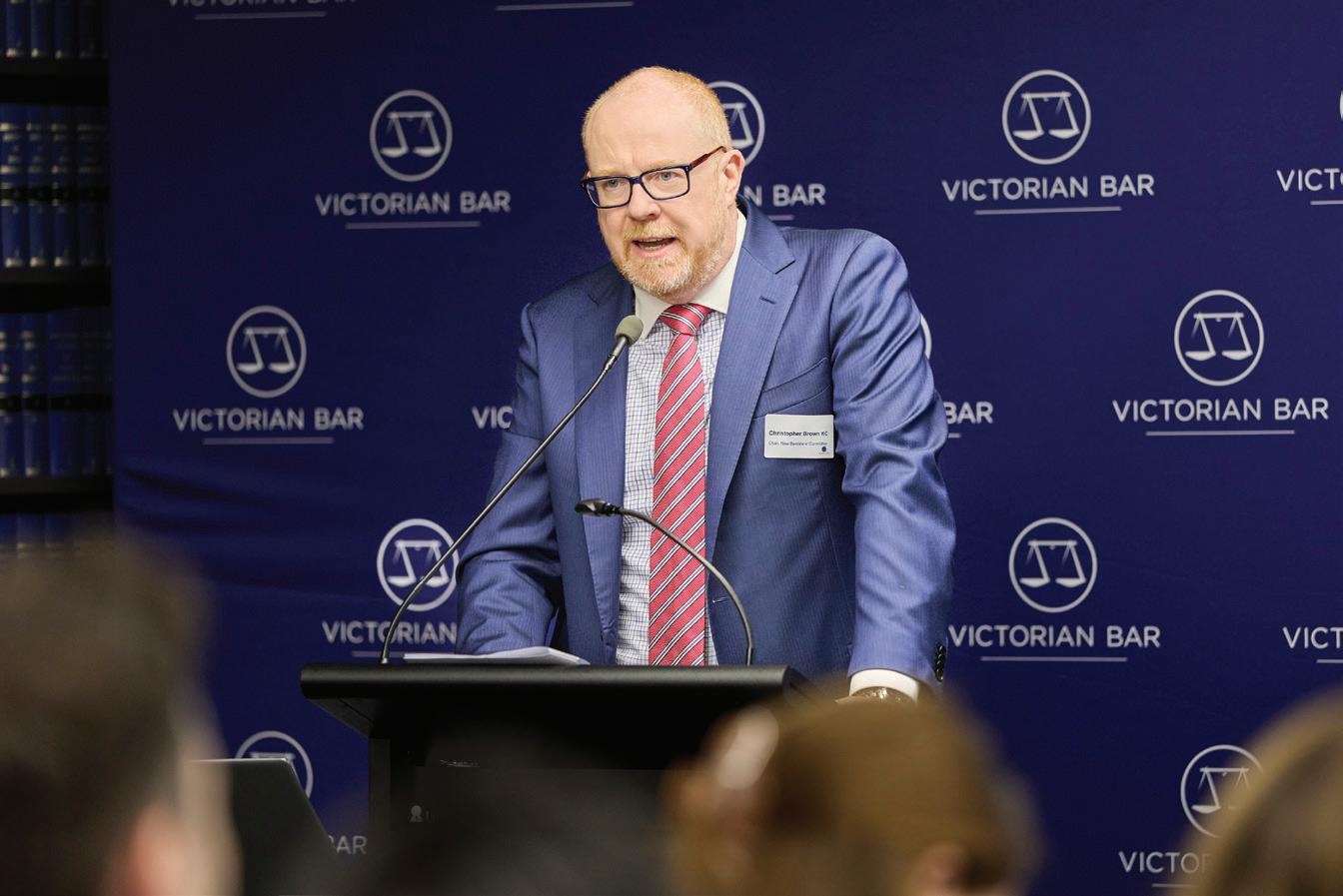

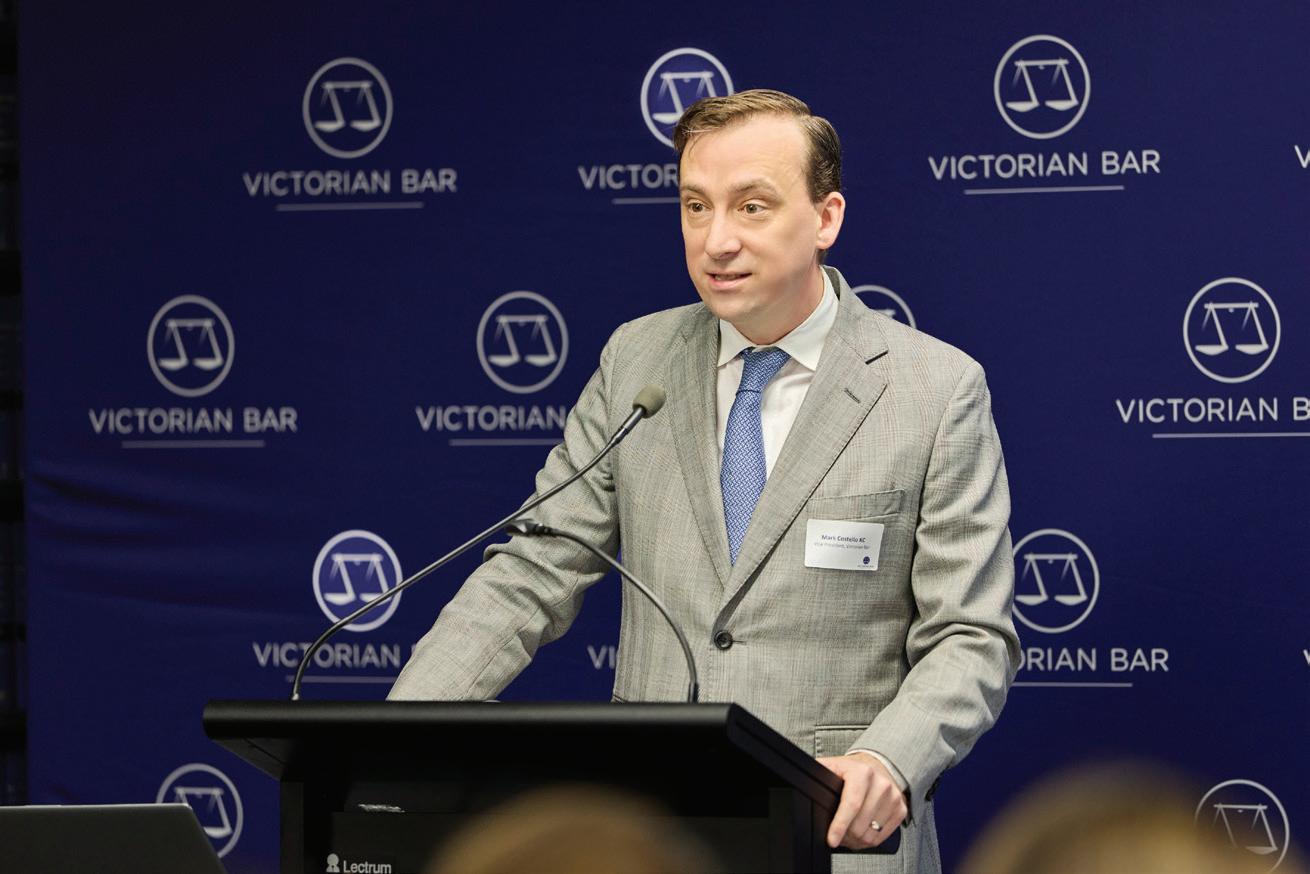
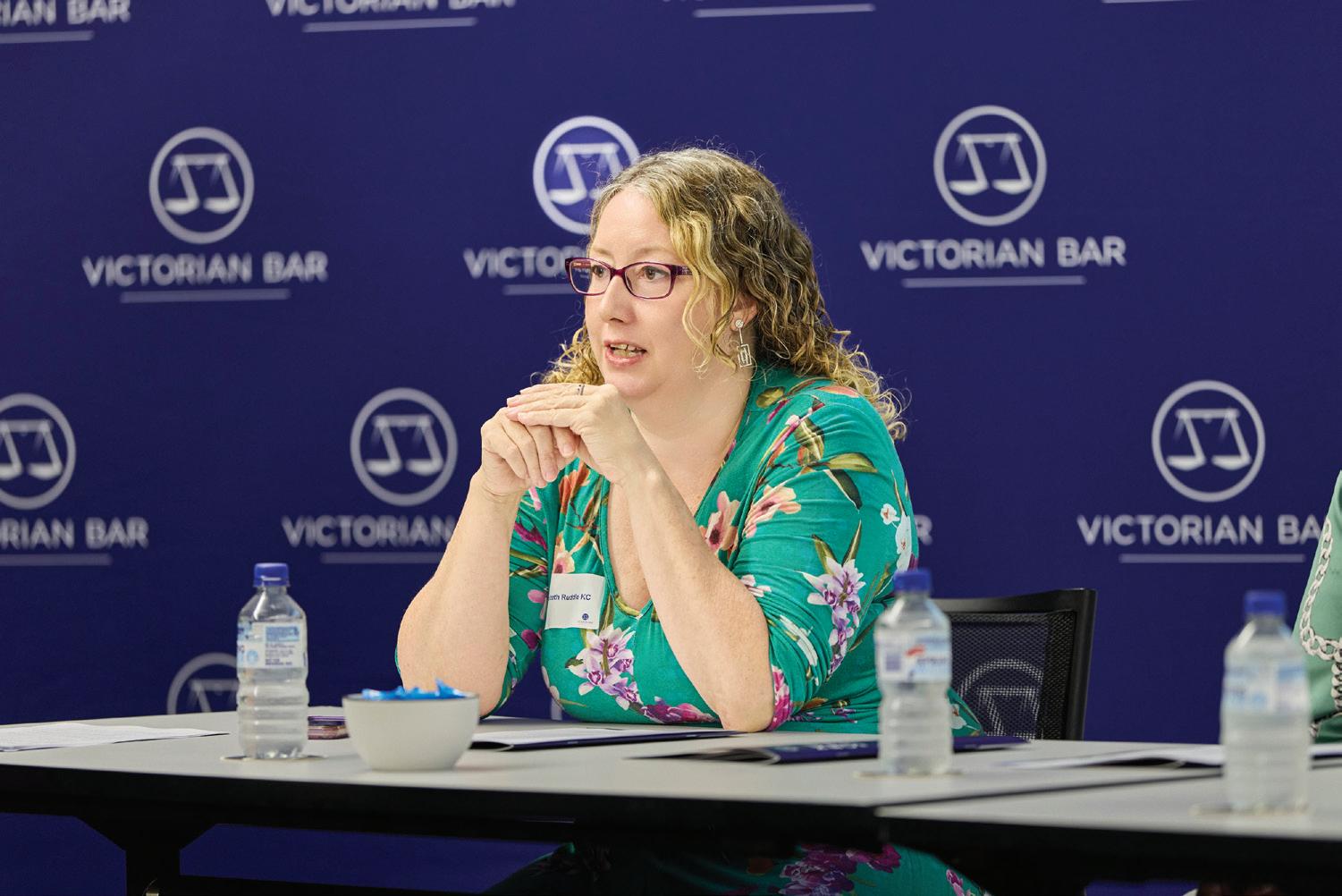
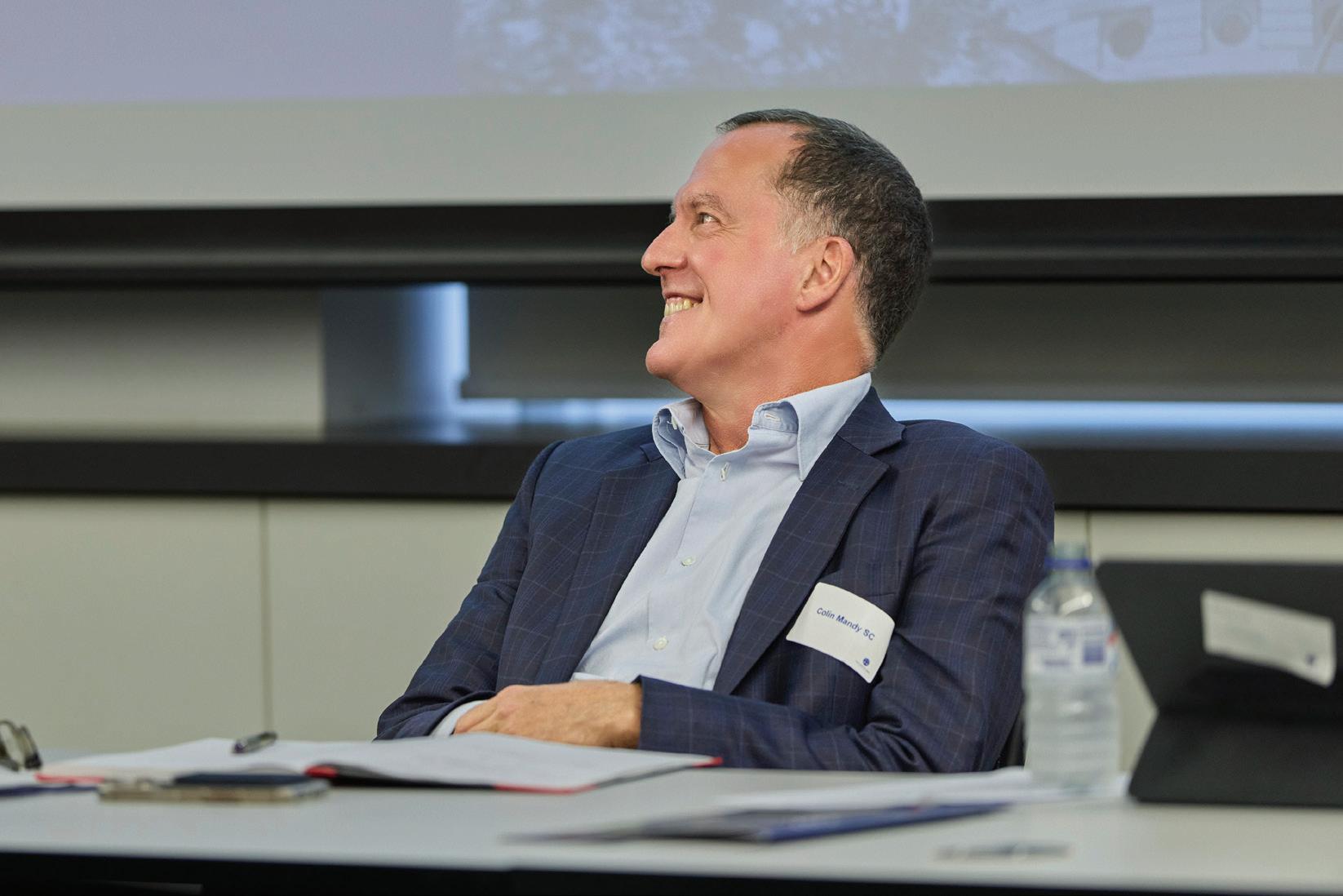
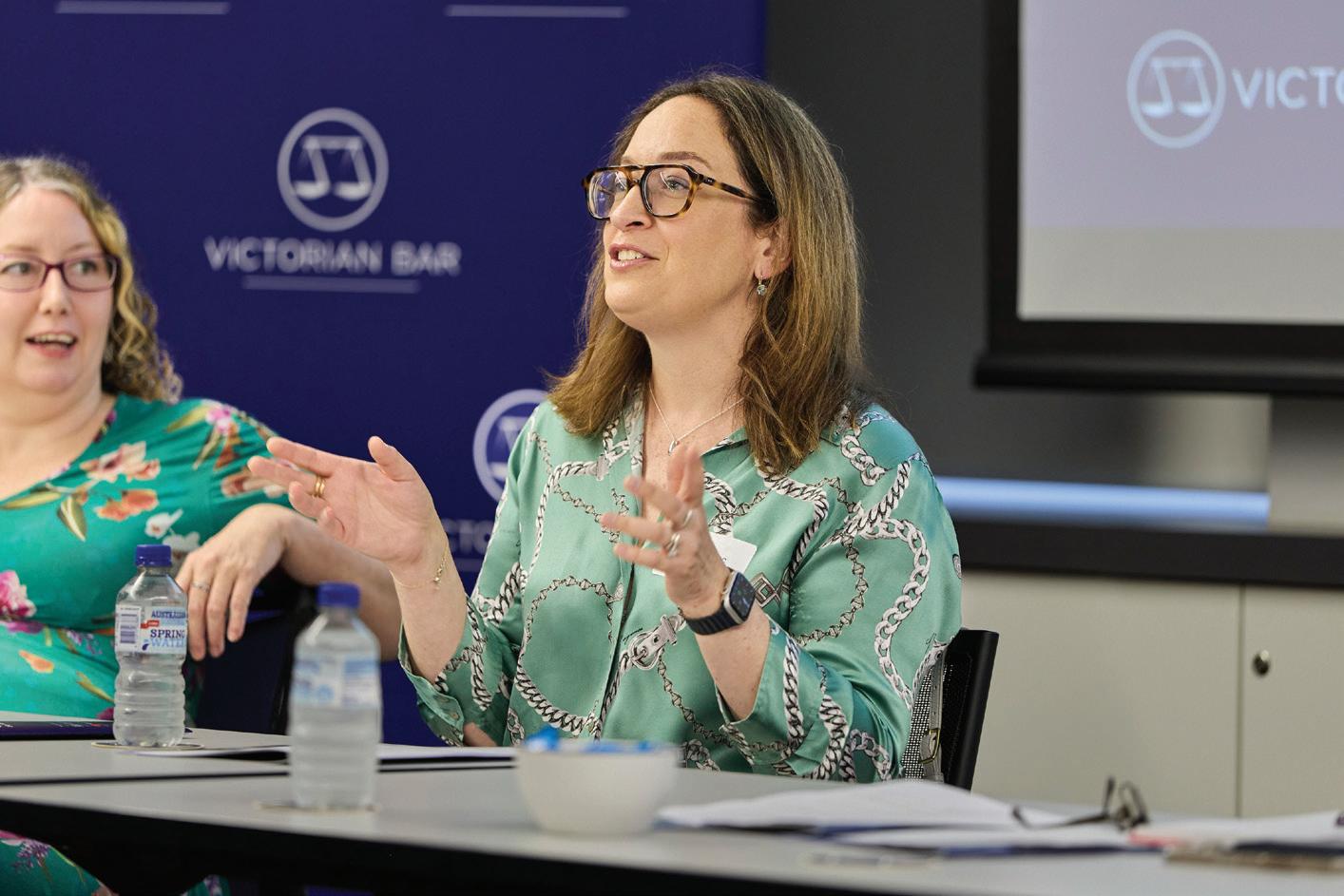
1. Ross Allen 2. Alezka Villaluz 3. Jeremy Smith
4. The Hon Chief Judge Amanda Chambers 5. Kathryn Browne 6. Mark Costello KC 7. Elizabeth Ruddle KC
8. Alison Finch, Emily Sheales, Olivia Kefford, and Sasha Di Sipio 9. Christopher Brown KC 10. Sophie Stafford
11. Colin Mandy SC, Sophie Stafford, Bryony Seignior and Elizabeth Ruddle KC 12. Mark Costello KC
13. Colin Mandy SC 14. Gabi Crafti SC
The MedicoLegal Society of Victoria
PATRICK TEHAN
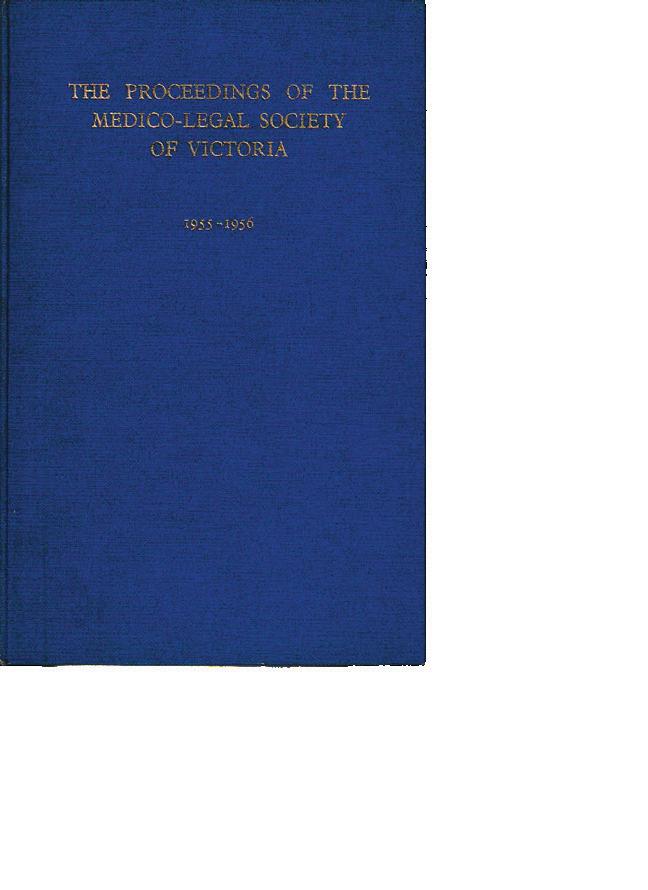
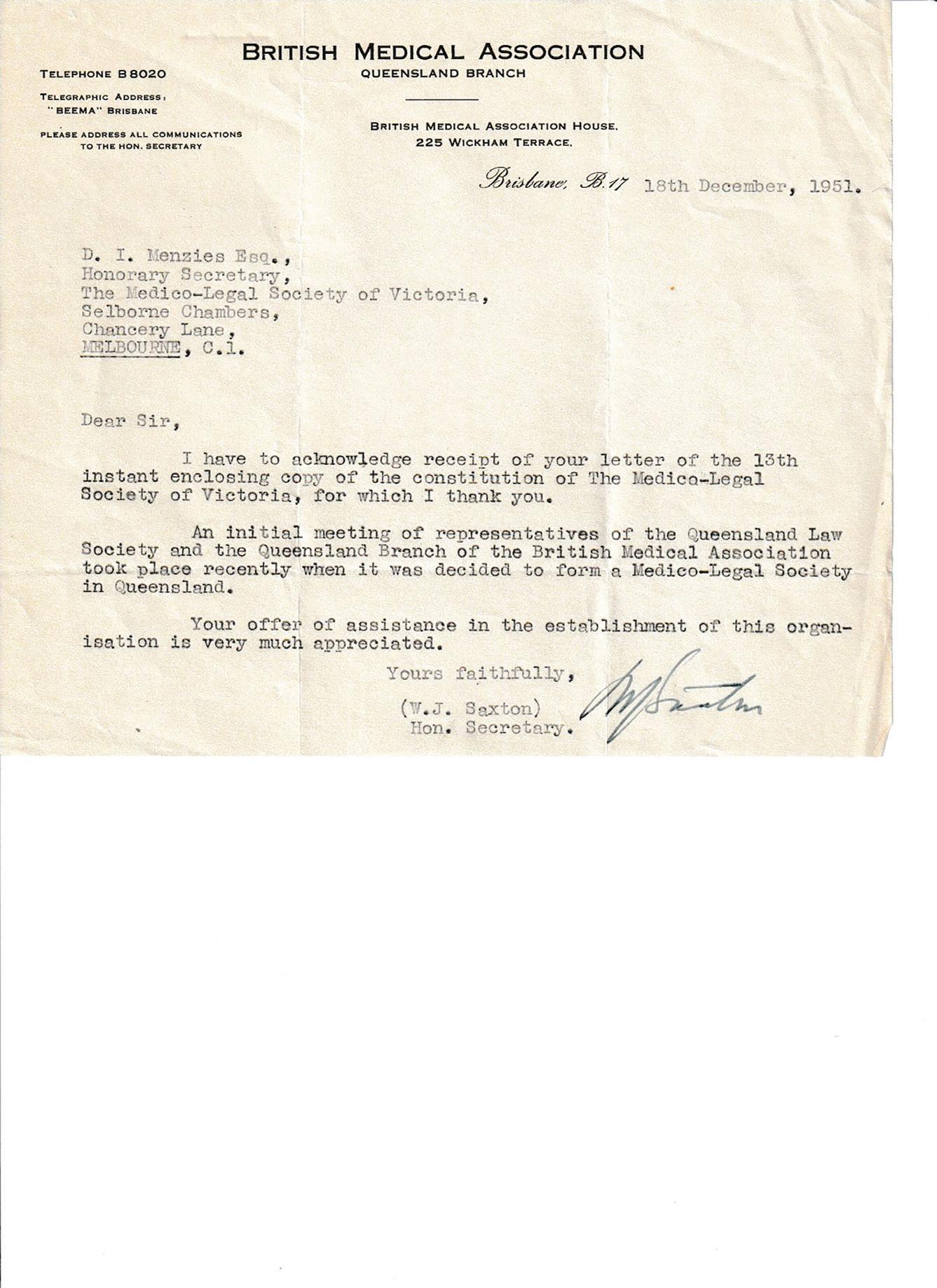
The Medico-Legal Society of Victoria was founded in 1931 with the object of the “promotion of medicolegal knowledge in all its respects”. The Constitution of the Society provided for it consisting of legally-qualified members of the legal and medical professions.1 It is notable for being the oldest society of doctors and lawyers in Australia, and for having had many eminent judicial, academic and senior medical and legal professional members throughout its history.
In the Preface to the first volume of the Proceedings of the Medico-Legal Society of Victoria, the editors, John V. Barry2 and A.E. Coates3, summed up the aspirations of the Society:
In the life of the community there must arise many problems which may be approached from both the legal and the medical standpoints, and, in the nature of things, an approach that is restricted to one or the other standpoint must be incomplete. That the legal and medical professions should be able to meet and discuss such problems, and thereby come to a fuller realisation of their nature, and be assisted towards their solution, is obviously desirable. Both professions exist to serve the community, and anything which enables their members to discharge that public service more intelligently and efficiently is for the public good.4
Those objectives present challenges. In a paper titled “The Plea of Insanity” delivered to the Society in April 1932 Dr. Reg. S. Ellery M.D, Honorary Psychiatrist to the Alfred Hospital, put the matter pithily:
While it is recognised that the aims of our two professions should lie in the same direction, subject to the common ideal of serving humanity, it has been found difficult to unite them in practice. The main difficulty lies in the widely different attitudes of the doctor and the lawyer, the former dealing with a somewhat new and developing science, the latter burgeoning under the shade of tradition and past usage. The doctor, seeing crime as an individual problem of behaviour, is seized with necessity of a radical alteration of the criminal law; the lawyer still falls to the lure of such shibboleths as “free will” and “criminal responsibility”, doubting the doctor’s deterministic doctrines, and viewing his psychological theories with alarm. It is, I take it, one of the aims of the


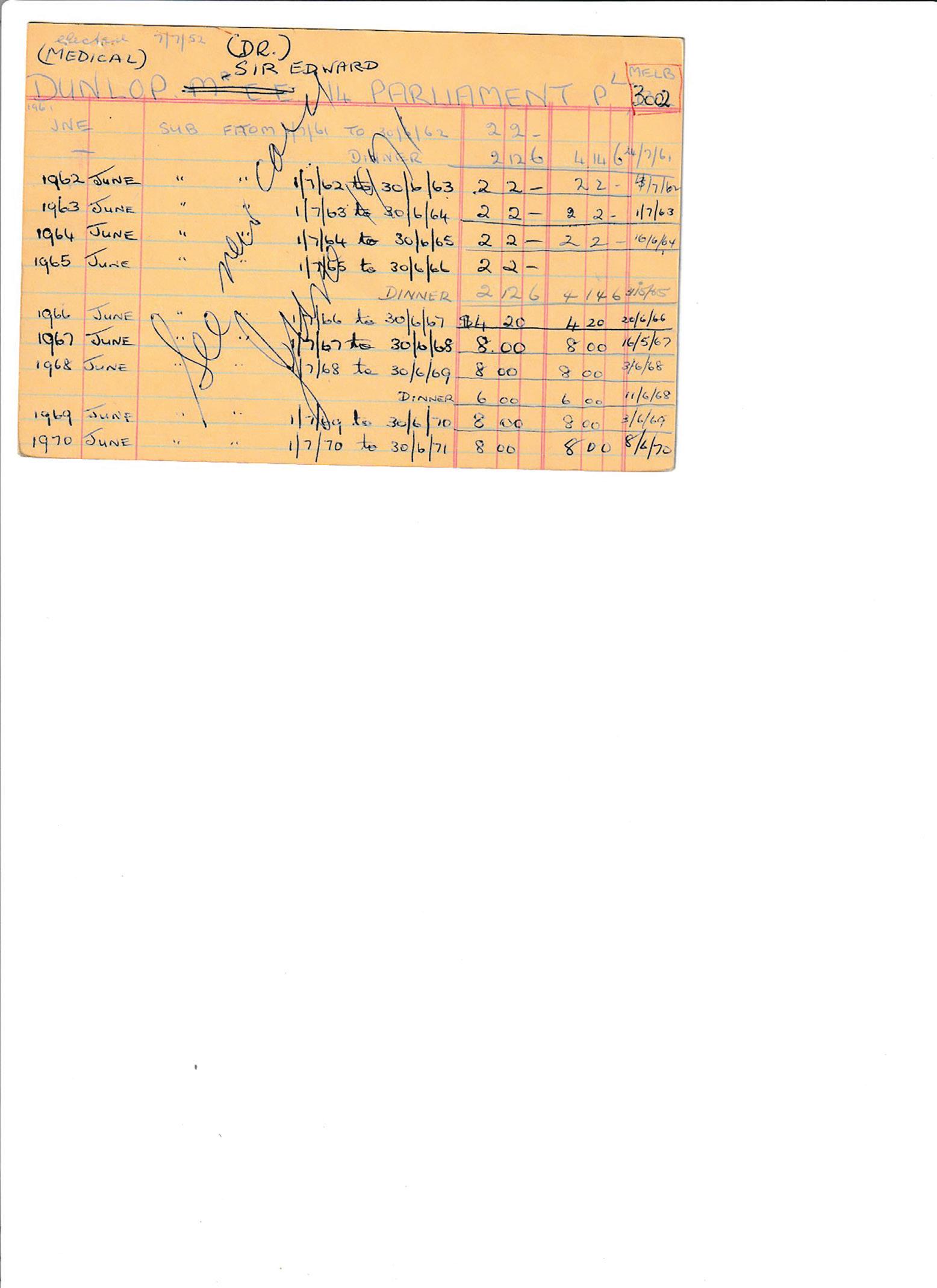
jury in the trial of Bertram Edward Porter in the High Court of Australia, in its criminal jurisdiction, in Canberra on 31st January and 1 February 1933.7
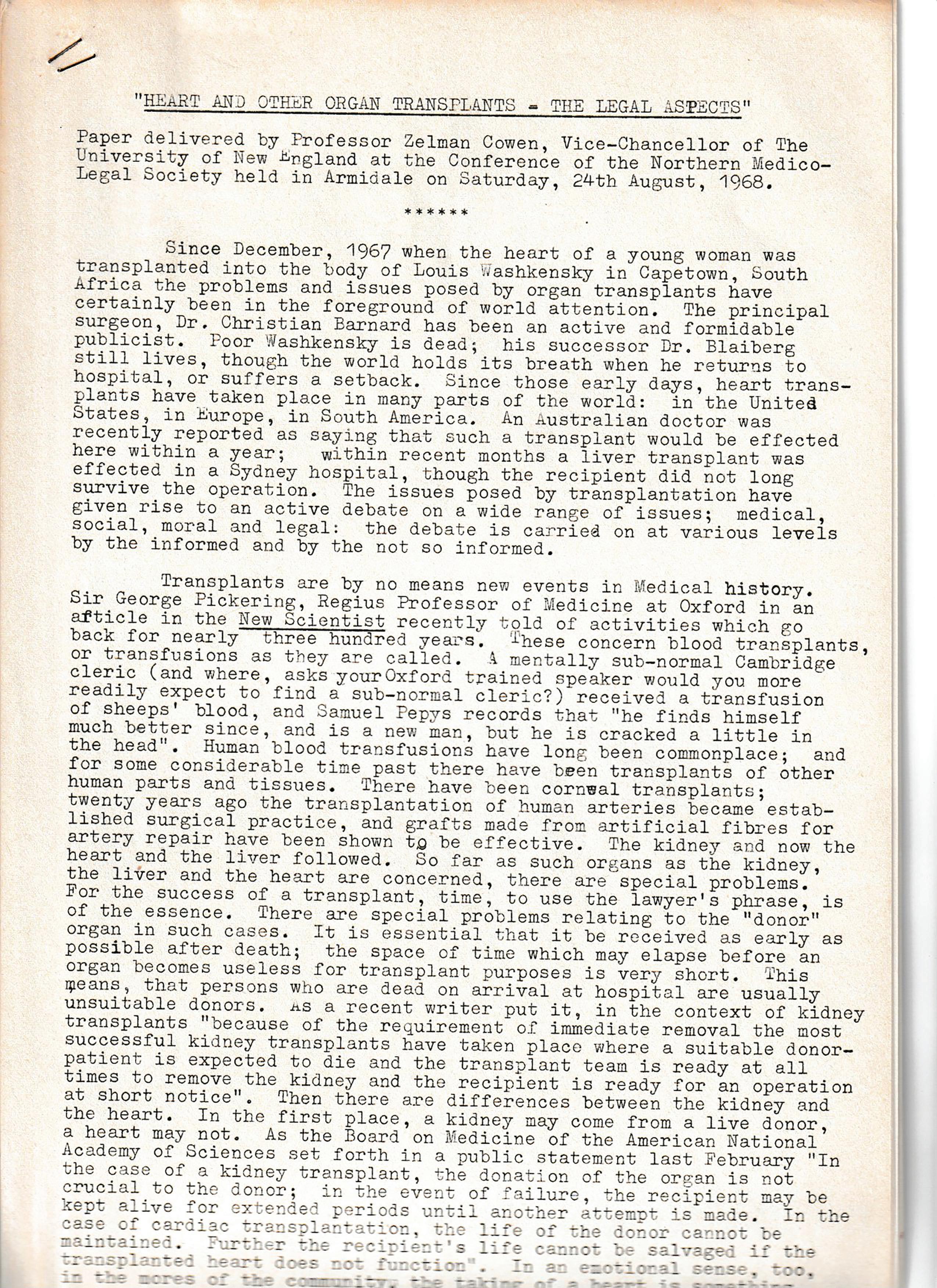
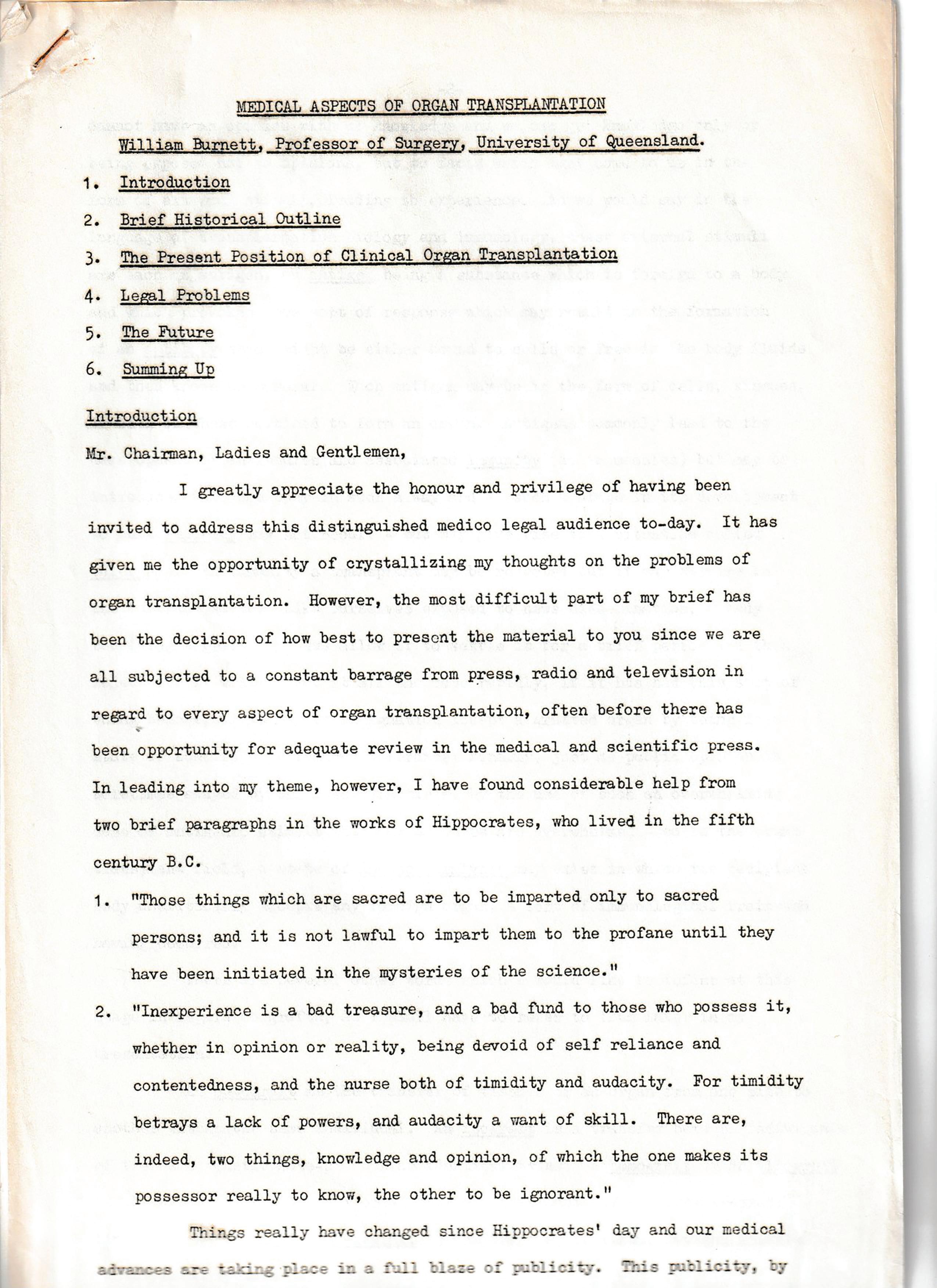
Today, the Society is strong and continues to hold general meetings where medico-legal
Around Town
1 The Society is now incorporated.
2 Later Sir John Vincent Barry, Justice of the Supreme Court of Victoria; foundation chair in the Department of Criminology at the University of Melbourne from 1951; and a member of the Victorian Parole Board from 1957. Barry was the foundation secretary of the Medico-Legal Society of Victoria.
3 Later Sir Albert Ernest Coates, Lieutenant Colonel, Australian Medical Army Corps from 1941; also served at Gallipoli and fought in the battle of the Somme in WW1; surgeon; and Senior Surgeon at Royal Melbourne Hospital and Stewart Lecturer in Surgery at the University of Melbourne.
4 John V. Barry and Albert E. Coates (eds.), The Proceedings of the Medico-Legal Society of Victoria: during the years 1931-1932, 1932-1933 (Brown, Prior & Co, 1933) ix.
5 Ibid, 23.
6 Ibid, 43-44.
7 The King v Porter (1936) 55 CLR 182. Dixon J (as he then was) was a founding member of the Medico-Legal Society of Victoria. Dixon maintained an abiding interest in mental impairment. In spite of his judgment in Porter he was overruled (together with Evatt J) by Latham CJ and Starke J in Sodeman v The King (1936) 55 CLR 192 in which interestingly Dr Ellery had given evidence at trial. His wrestling with that case is well documented by Phillip Ayres in Owen Dixon (The Miegunyah Press, 2003) at pp. 74-78. Dixon developed his views on the insanity rules in “A Legacy of Hadfield, McNaughten and Maclean” an address to the Law Council of Australia on 16 July 1957 published in Jesting Pilate – and Other Papers and Addresses (Law Book Company, 1965) at pp. 214-225.
Around Town
2026 ICLC Young CommBar Speaking Competition
GANESH JEGATHEESAN
Will artificial intelligence become the ‘preferred junior’ of Senior Counsel? Are all good barristers actors at heart? Are appeals superior to trials? Does specialisation diminish the quality of our advocates? These were the questions which new barristers were asked to contemplate and put their wit, quick thinking and speaking skills to the test in this year’s Young CommBar Speaking Competition, held at the Essoign Club on the evening of 26 March 2026.
This year’s competition continued a tradition established in 2018 held in the lead up to the biennial CommBar International Commercial Law Conference, providing an opportunity for young members of the legal profession to enjoy a convivial night with colleagues from the Bar, solicitors, in-house counsel and judicial associates, entertained by eight members of the Bar below six years’ call. Speakers competed for a grand prize of complimentary registration and economy return airfares to the 2026 CommBar International Commercial Law Conference in Dublin, Ireland, as well as the opportunity to join the speaking panel at one of the conference sessions. The evening’s competitors—Tom Carmody, Nicolas
Muniz Saavedra, Tom Middleton, Hannah McIvor, Declan Peacock, Lee Konstantine, Catharine Thorpe and Francis Killackey—charmed and amused a packed house at the Essoign Club, and were judged on their rhetorical flair by a panel comprised of her Honour Justice Lisa Hannon of the Supreme Court, Nick De Young KC and Tamieka-Spencer Bruce SC. Whilst all competitors distinguished themselves in their efforts, Declan Peacock was declared best speaker, with Hannah McIvor as runner-up. Whilst there can only be one winner, as a commendation for their contribution to a lively and entertaining evening, CommBar will be offering all competition participants discounted conference registration.
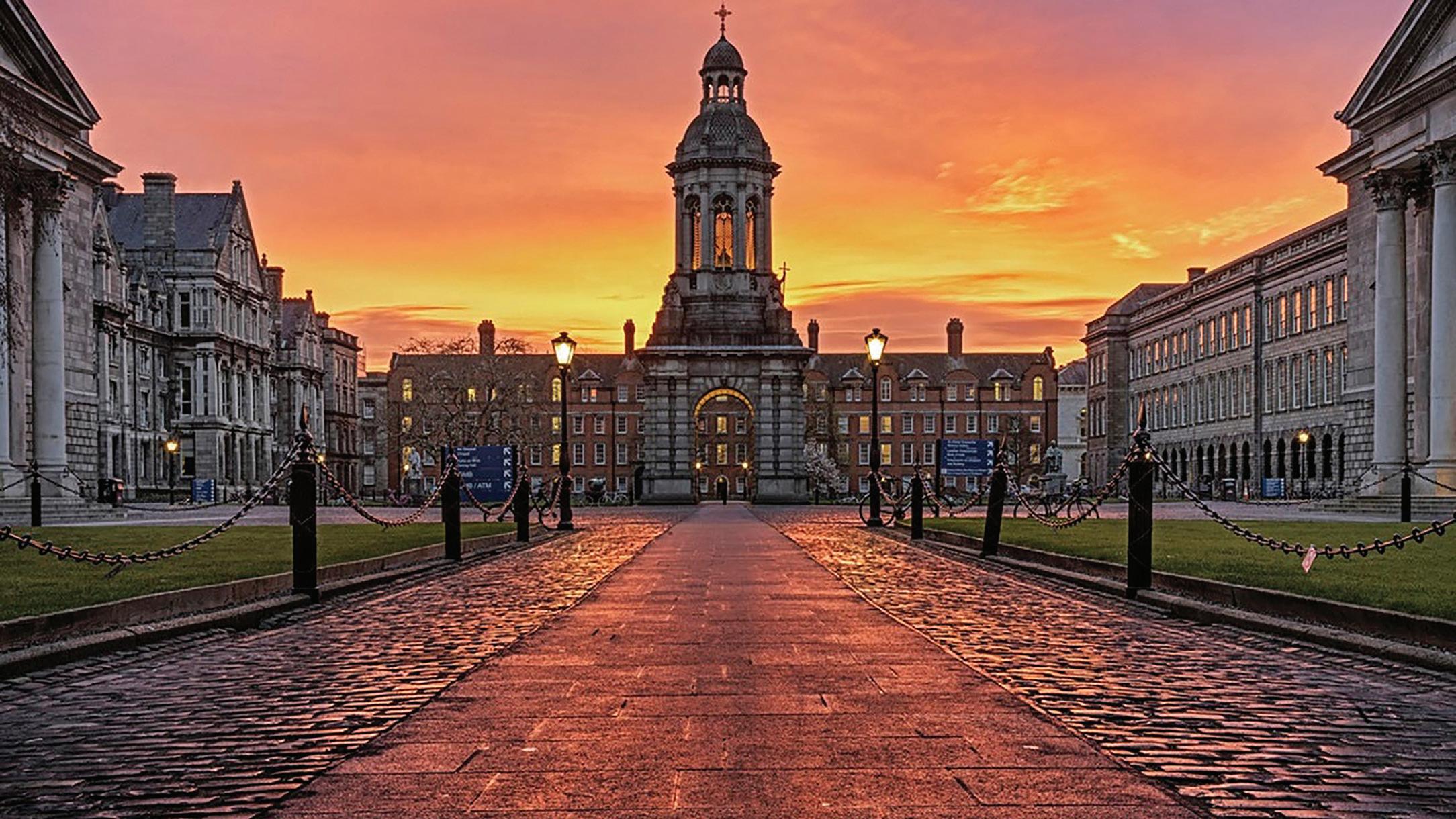
CommBar looks forward to welcoming all registrants to the 2026 ICLC Conference, to be held on 1 and 2 July 2026 at Trinity College, Dublin. The Conference will feature a series of seminars on a variety of topics spanning commercial litigation and arbitration presented by judicial officers and members of both the Victorian and Irish Bars, and a black-tie gala dinner in the historic Kings Inn. CommBar is also deeply grateful for the support of Svenson’s List as platinum sponsor of the 2026 ICLC Conference.

Oh, what a night!
Highlights from the 2026 Victorian Bar Dinner,
JO DOUGHERTY
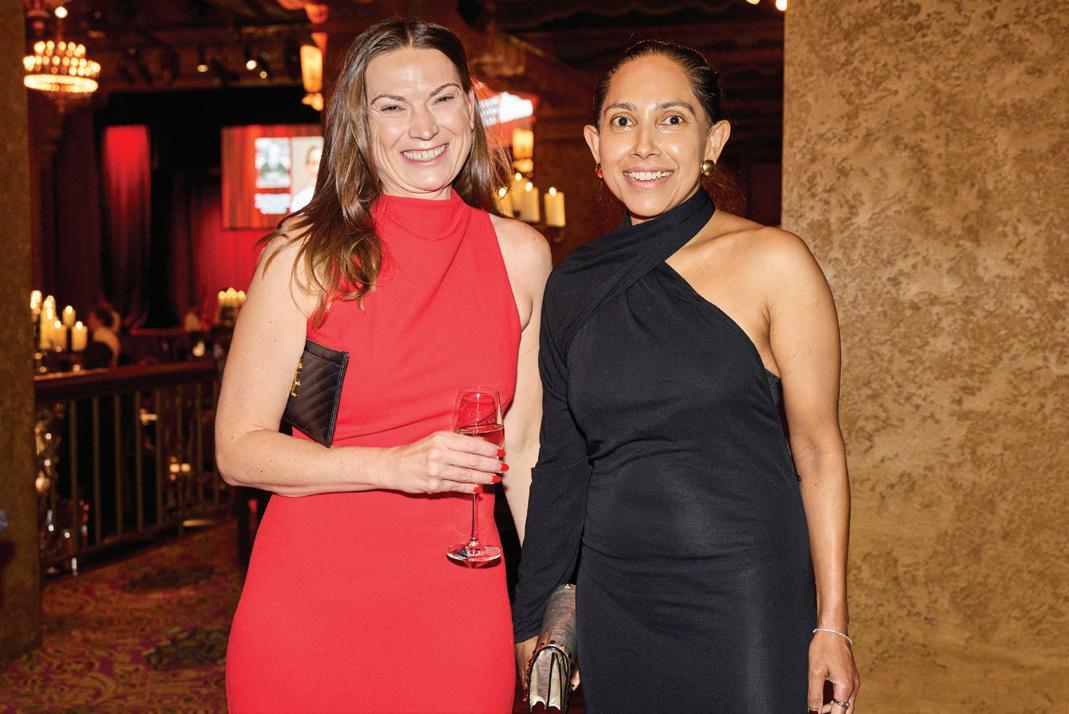
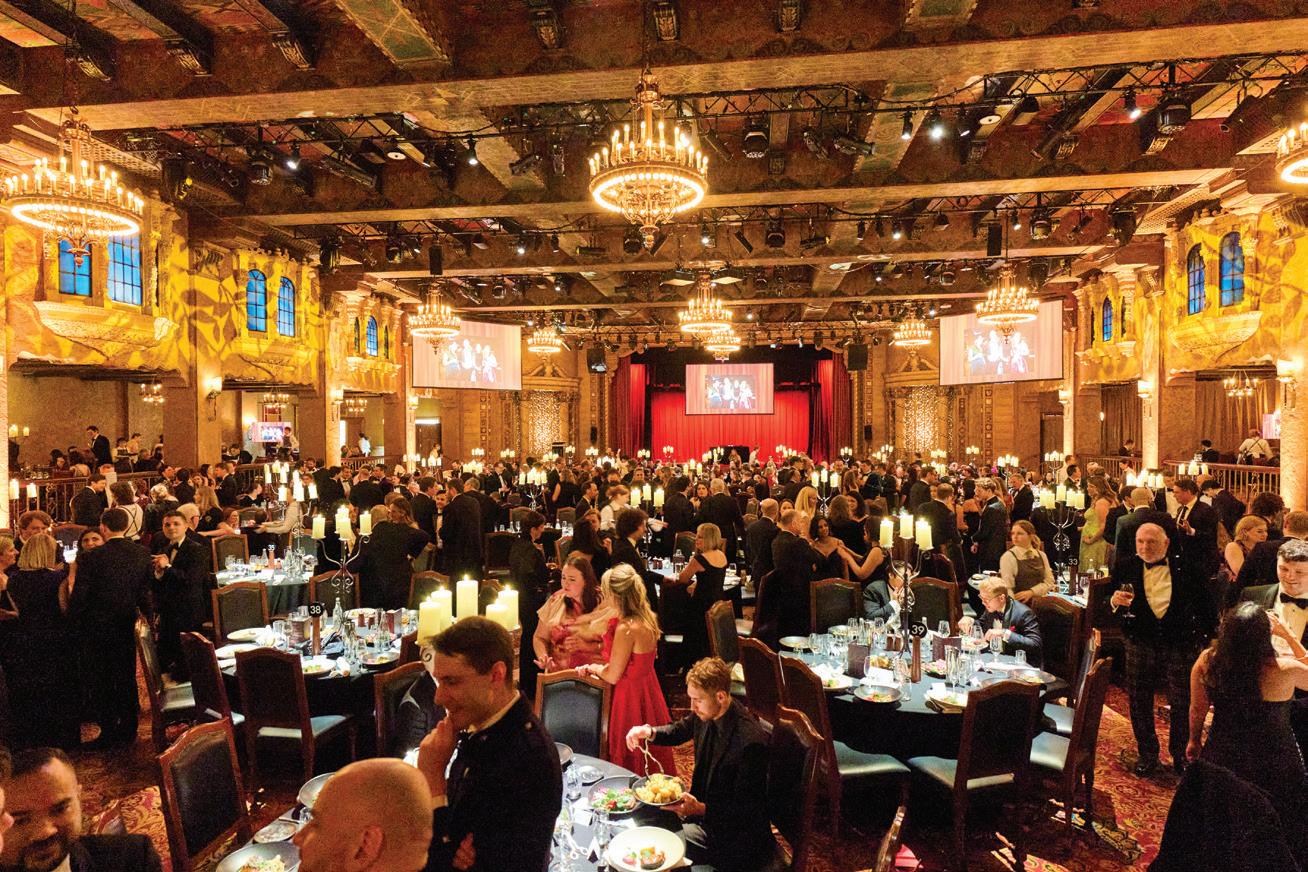
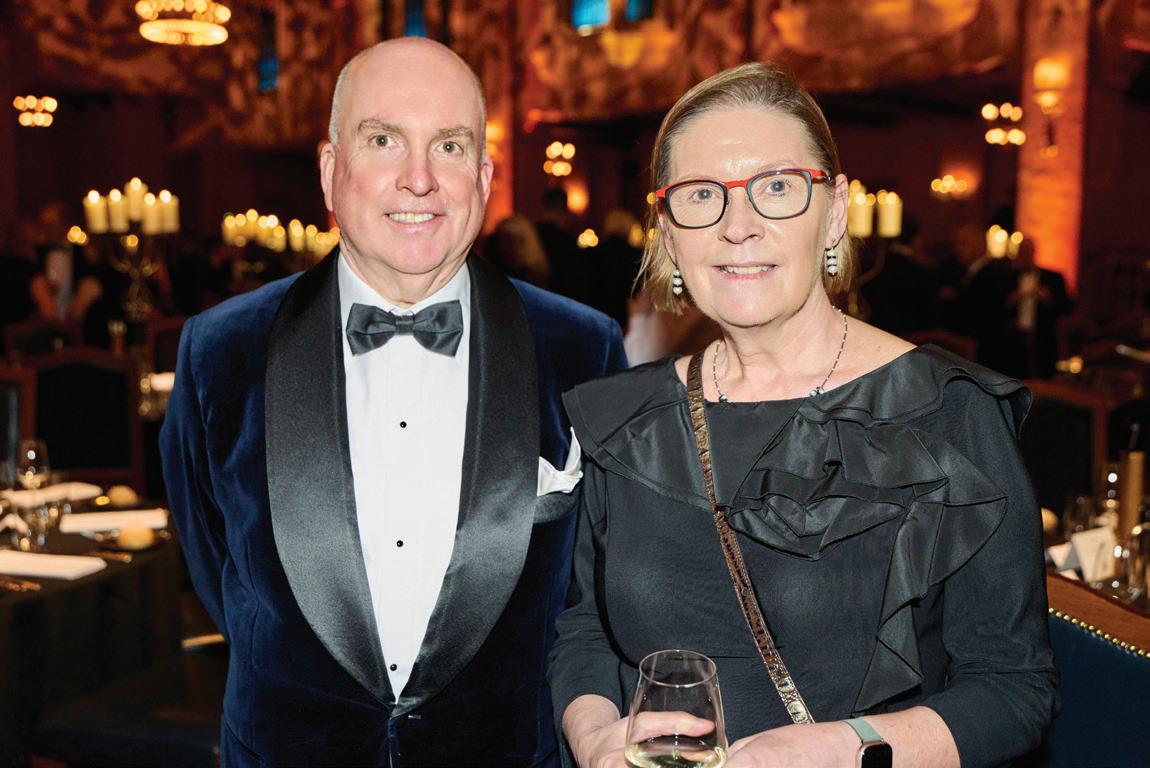
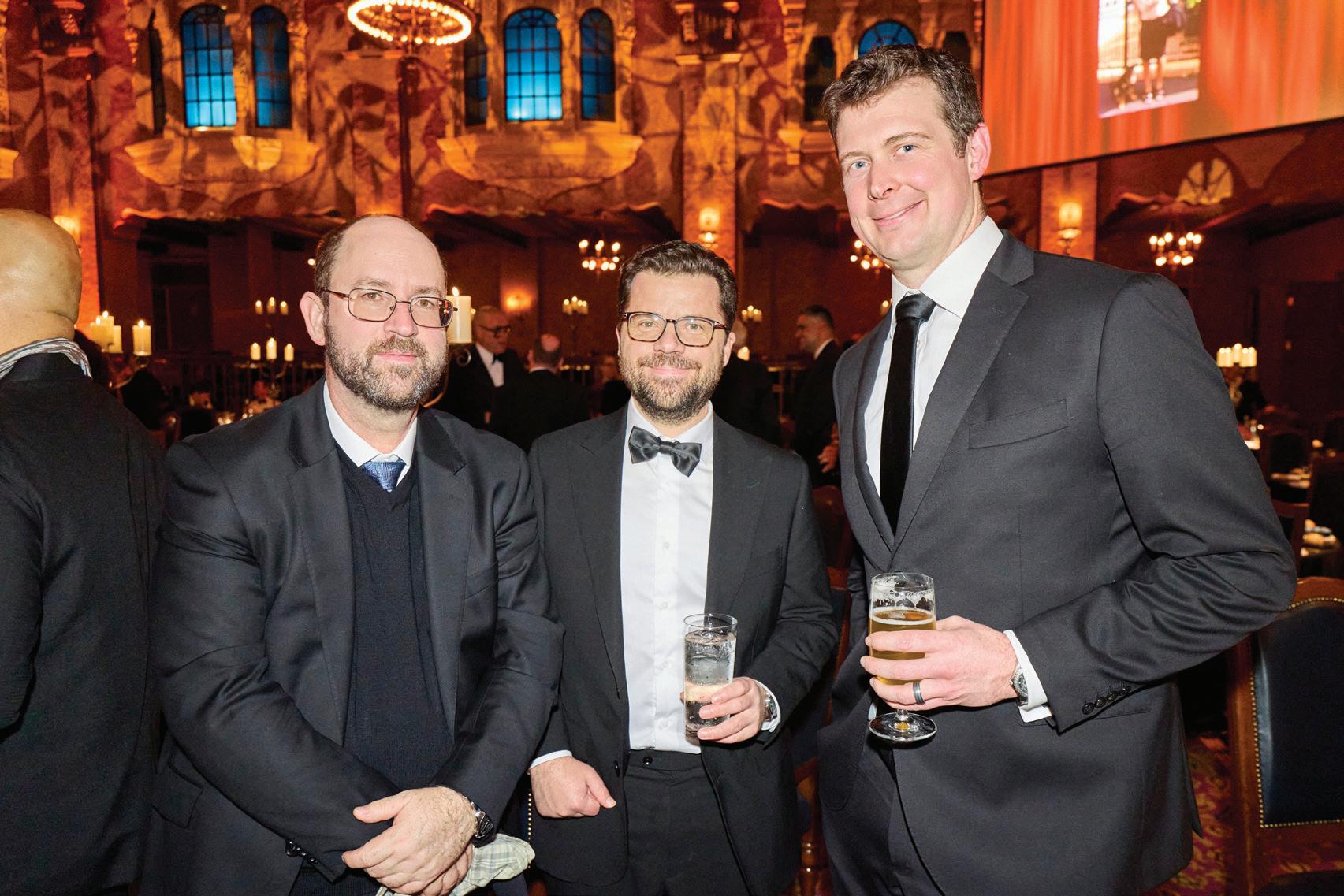
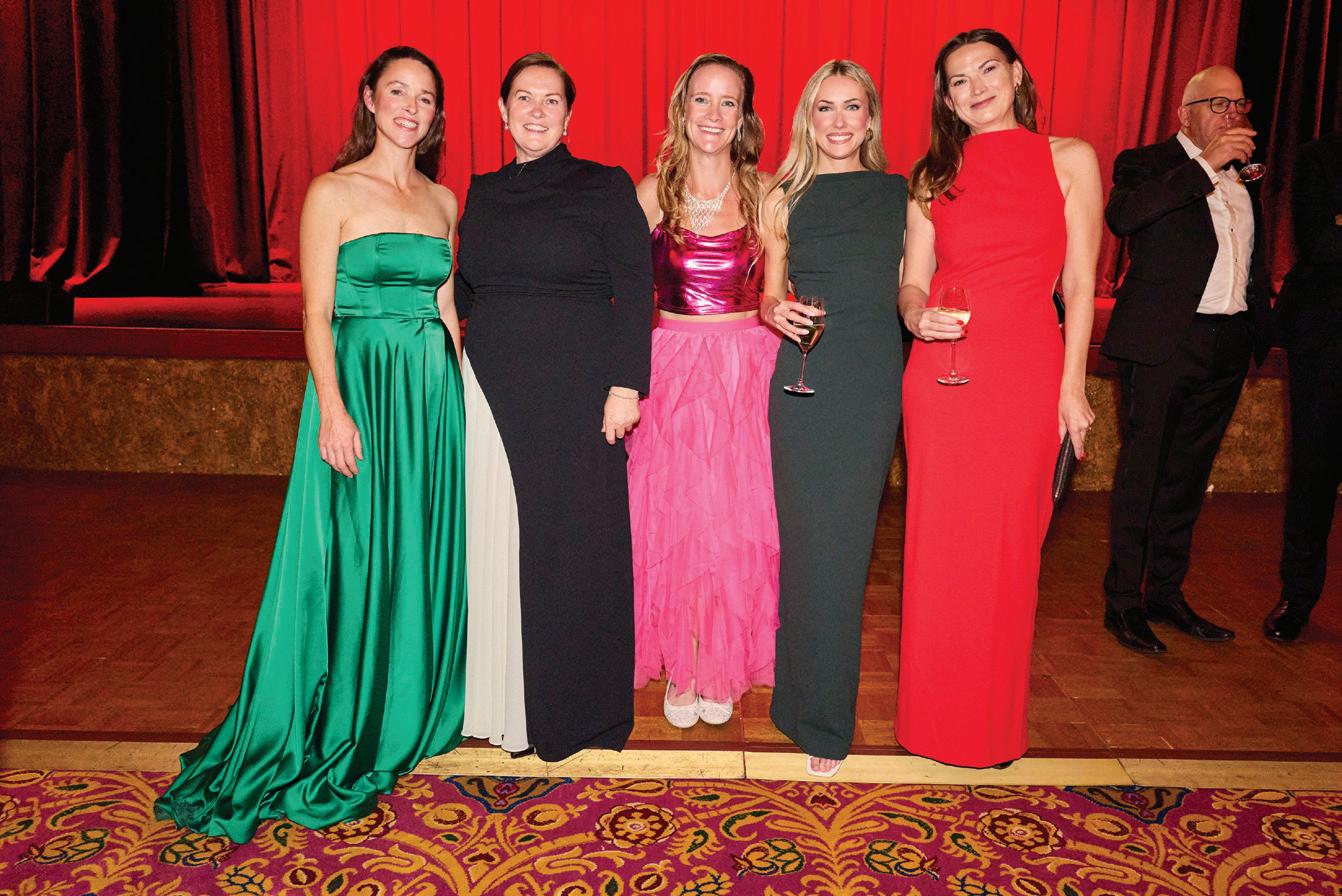
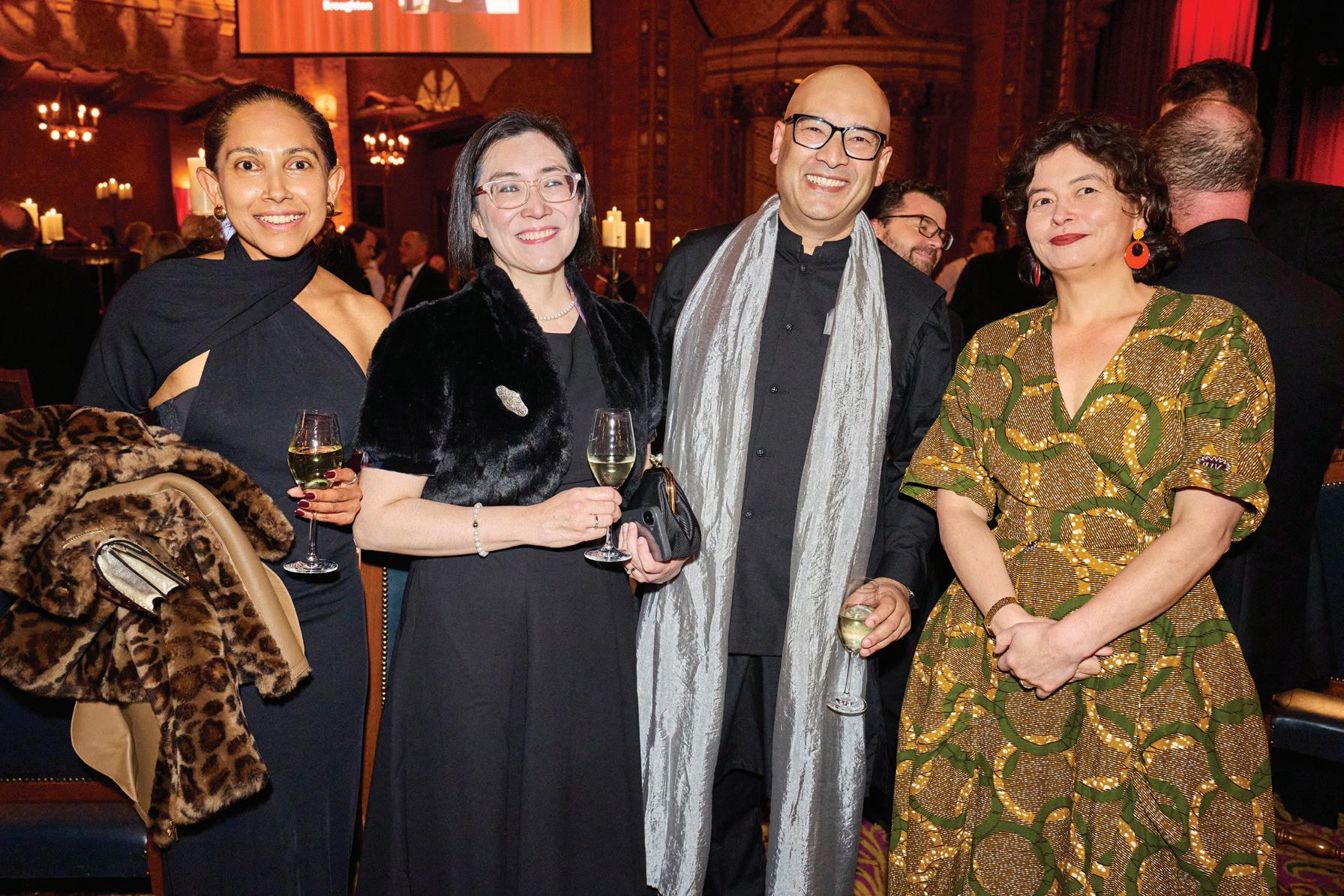
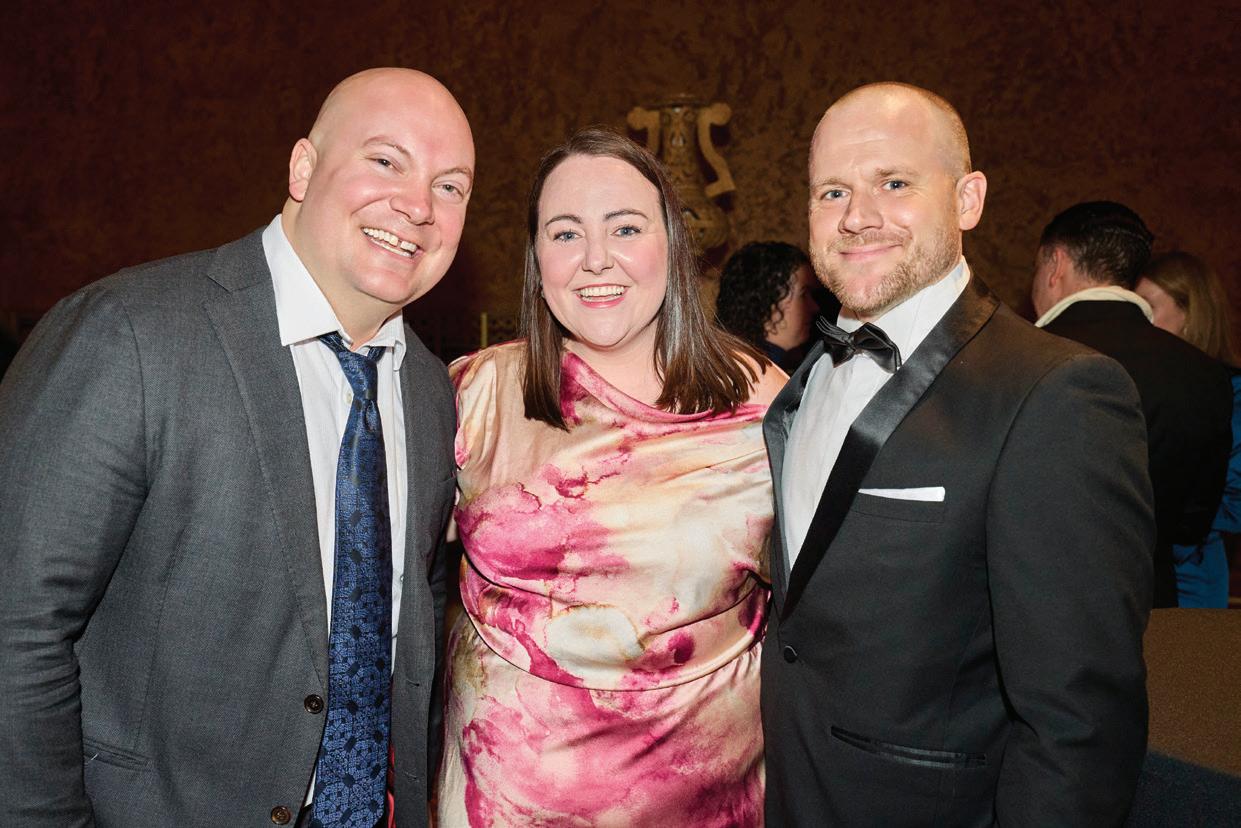
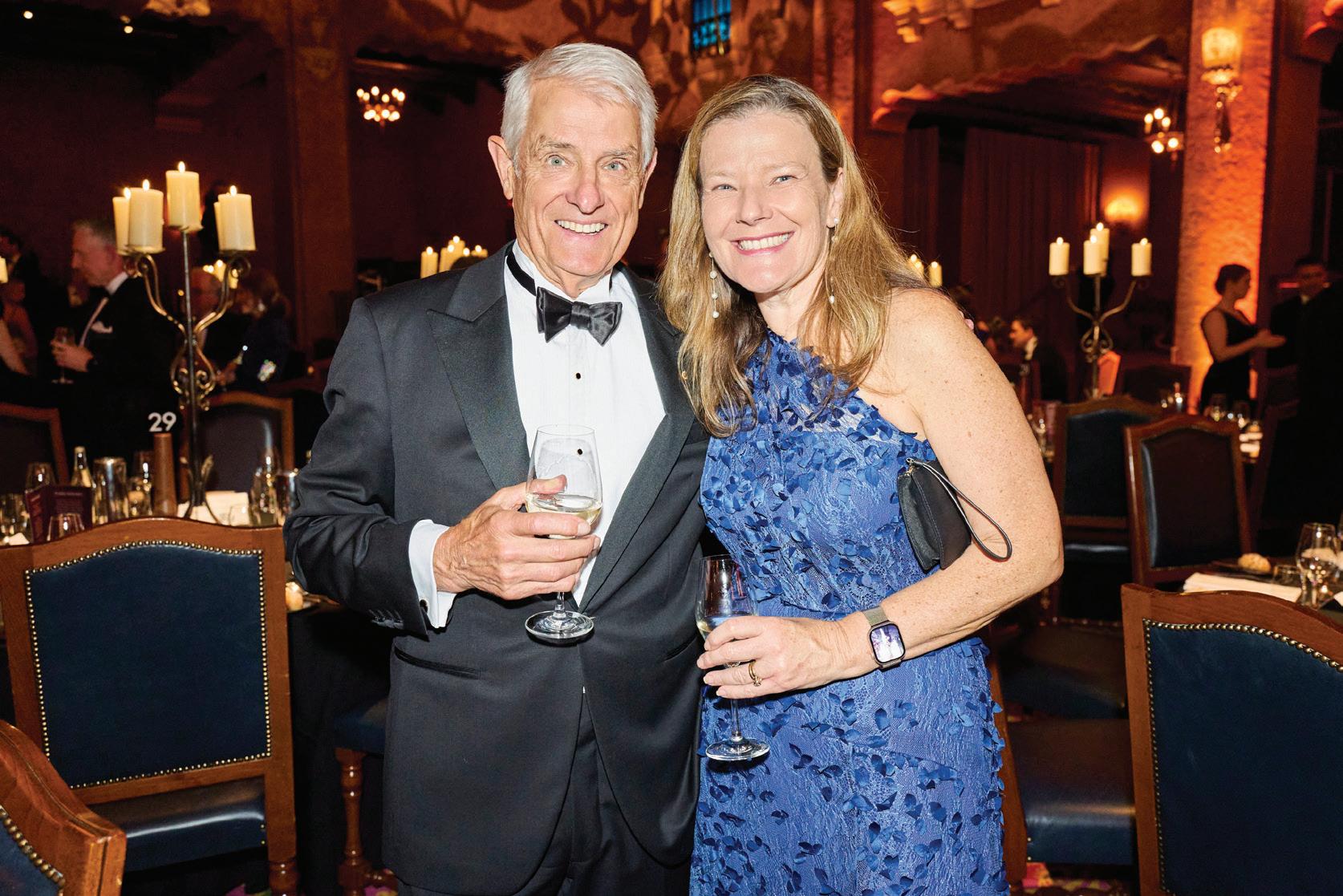
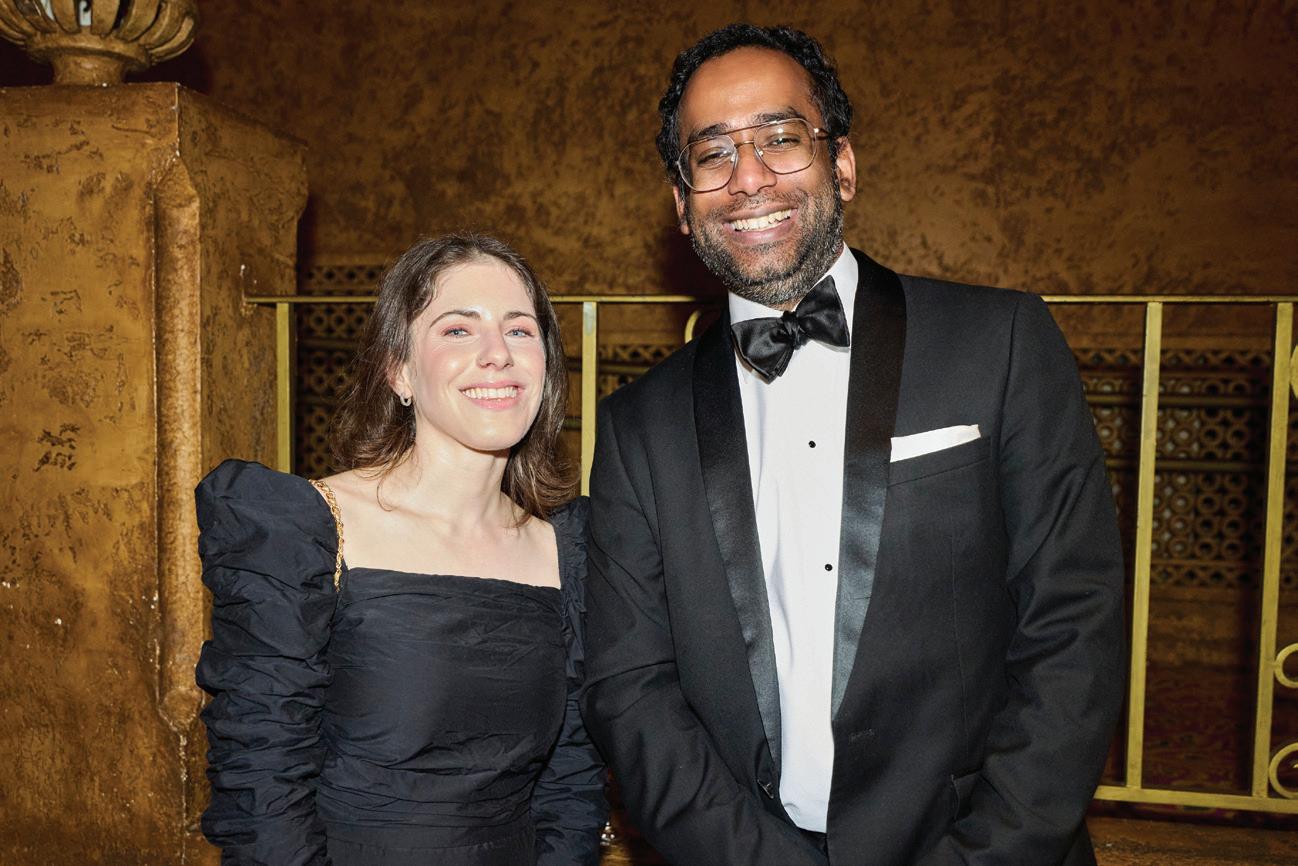
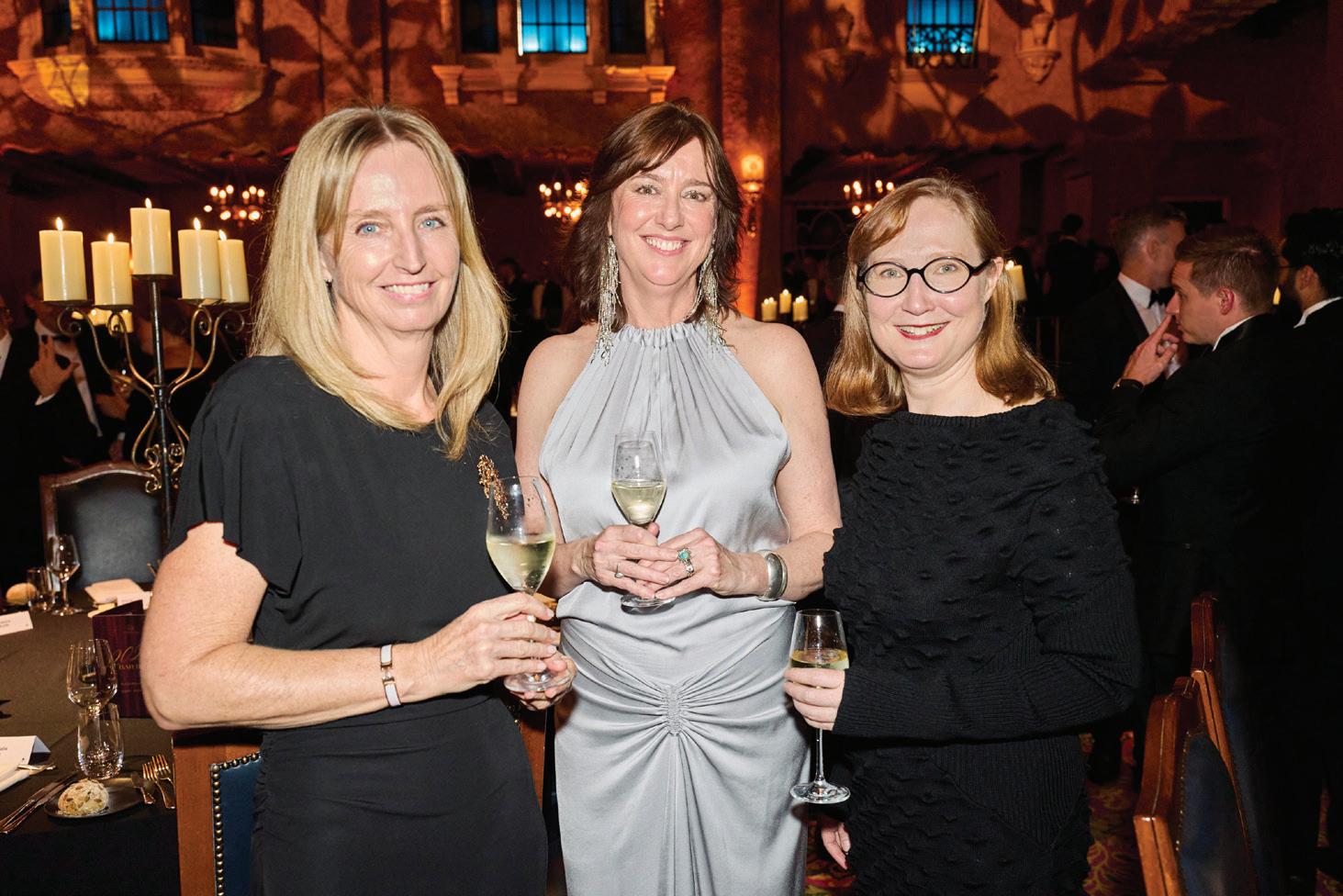
It was a night to remember at the Plaza Ballroom on Friday, 15 May 2026 when 525 people gathered for the biggest social event on the Victorian Bar calendar.
Among the distinguished guests were members of the judiciary, representatives from peak bodies, including the Law Council of Australia and the Victorian Legal Services Board and Commissioner, and members from all the independent Bars of Australia.
Several Heads of Jurisdiction were also in attendance, including the Hon Chief Justice Niall of the Supreme Court of Victoria, who paid homage to the significant contribution of the Bar’s Jewish members since Federation, particularly in cases in the High Court.
A special part of the evening was the acknowledgement of 12 Victorian Bar members who have achieved a remarkable 45 years of continuous practice.
Victorian Bar President Fiona Ryan SC said the “45-ers” came to the Bar when there was no internet, briefs were small and solicitors used discretion regarding which documents were included in those briefs – tied with a pink ribbon.
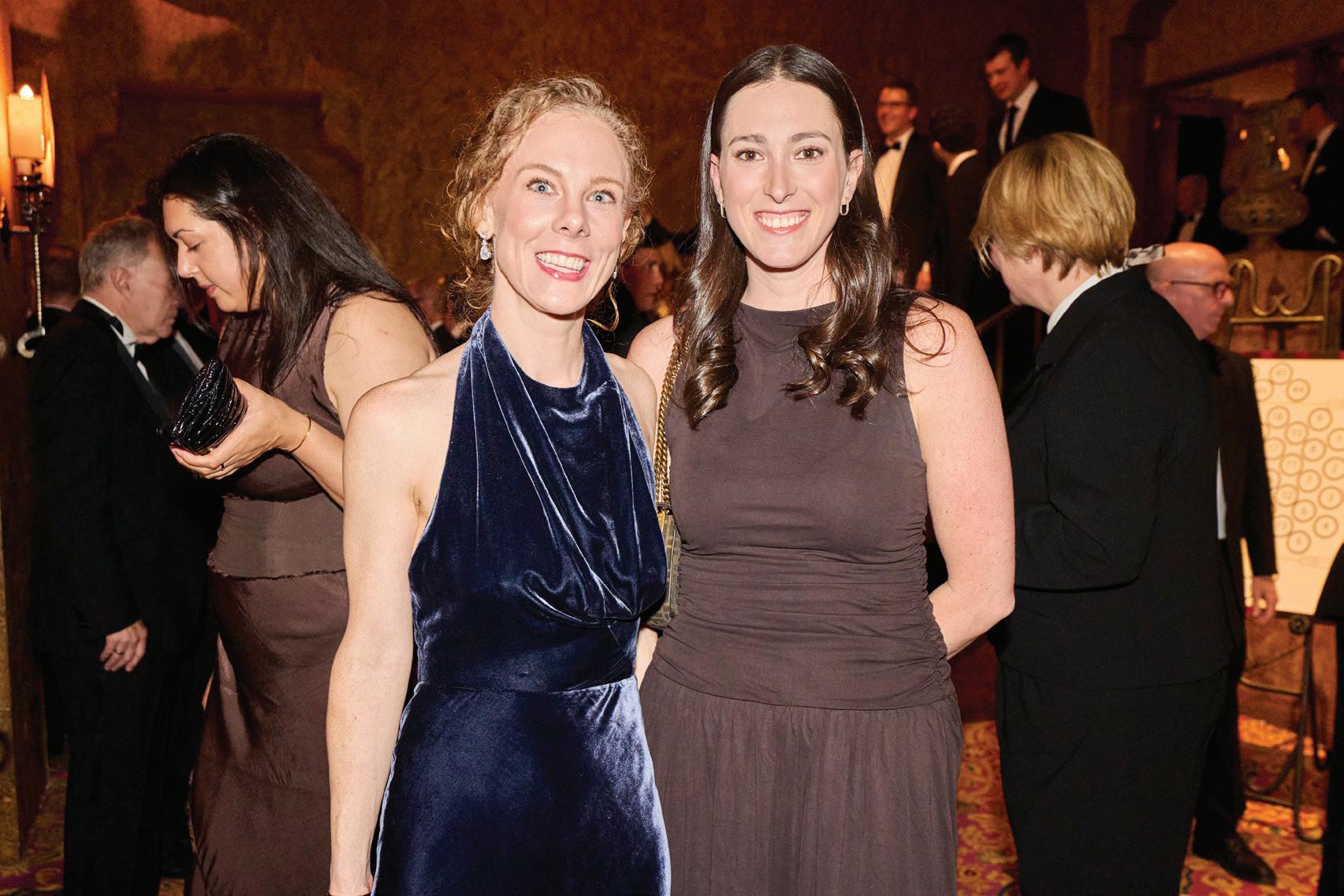
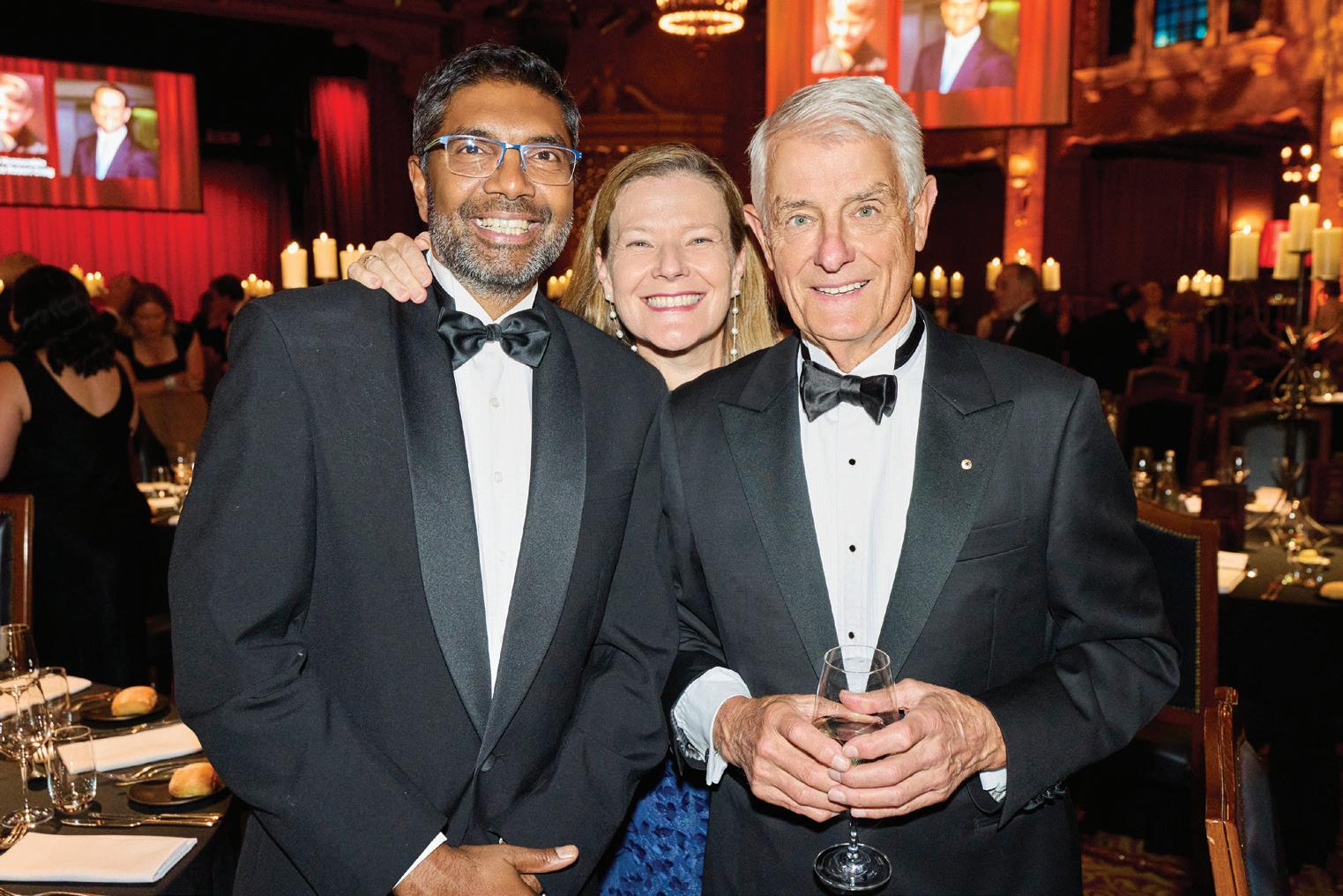
Following the humorous and heartfelt speeches hyper-energetic DJ Andrew McClelland ensured the dance floor kept pumping until the end of the night.
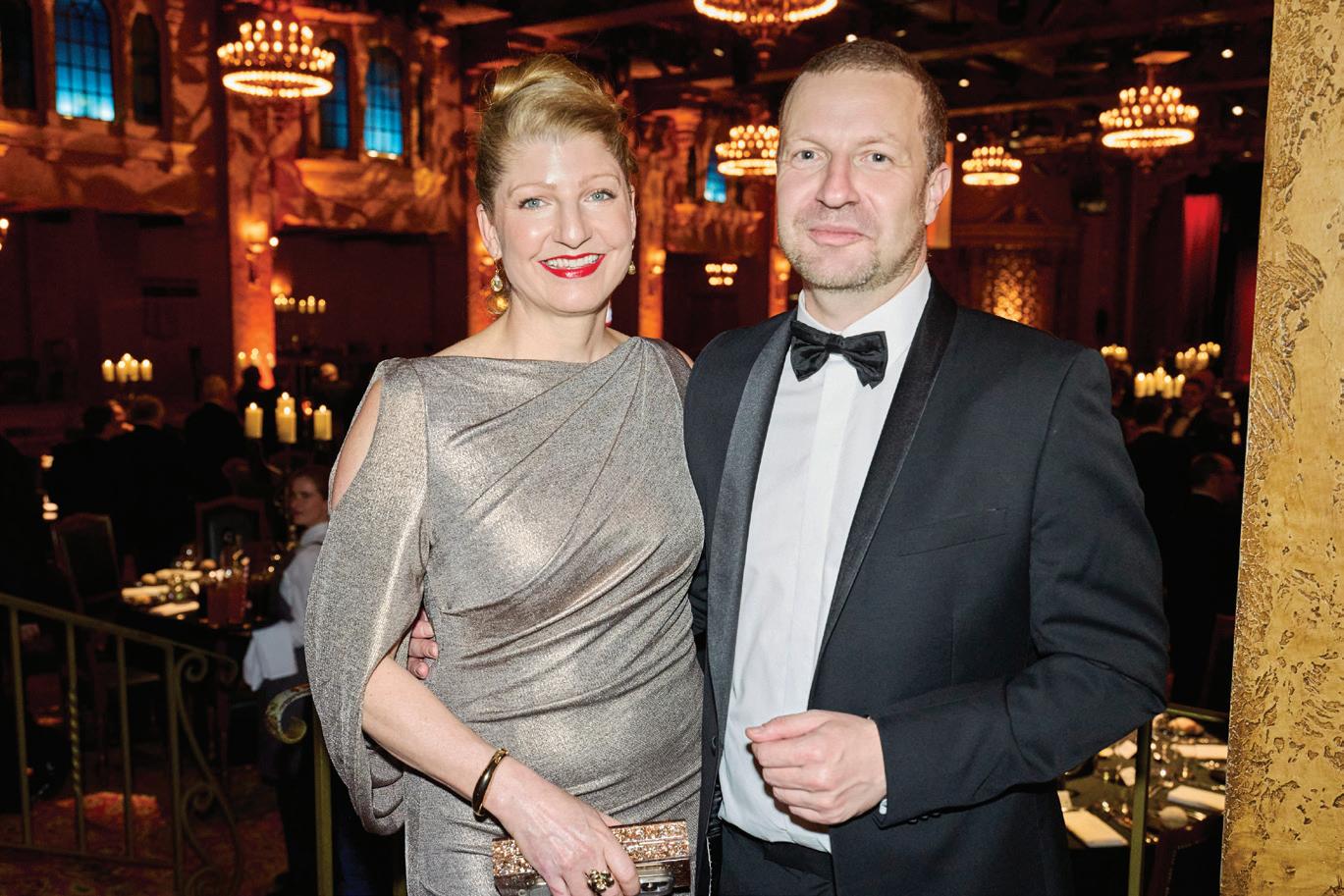
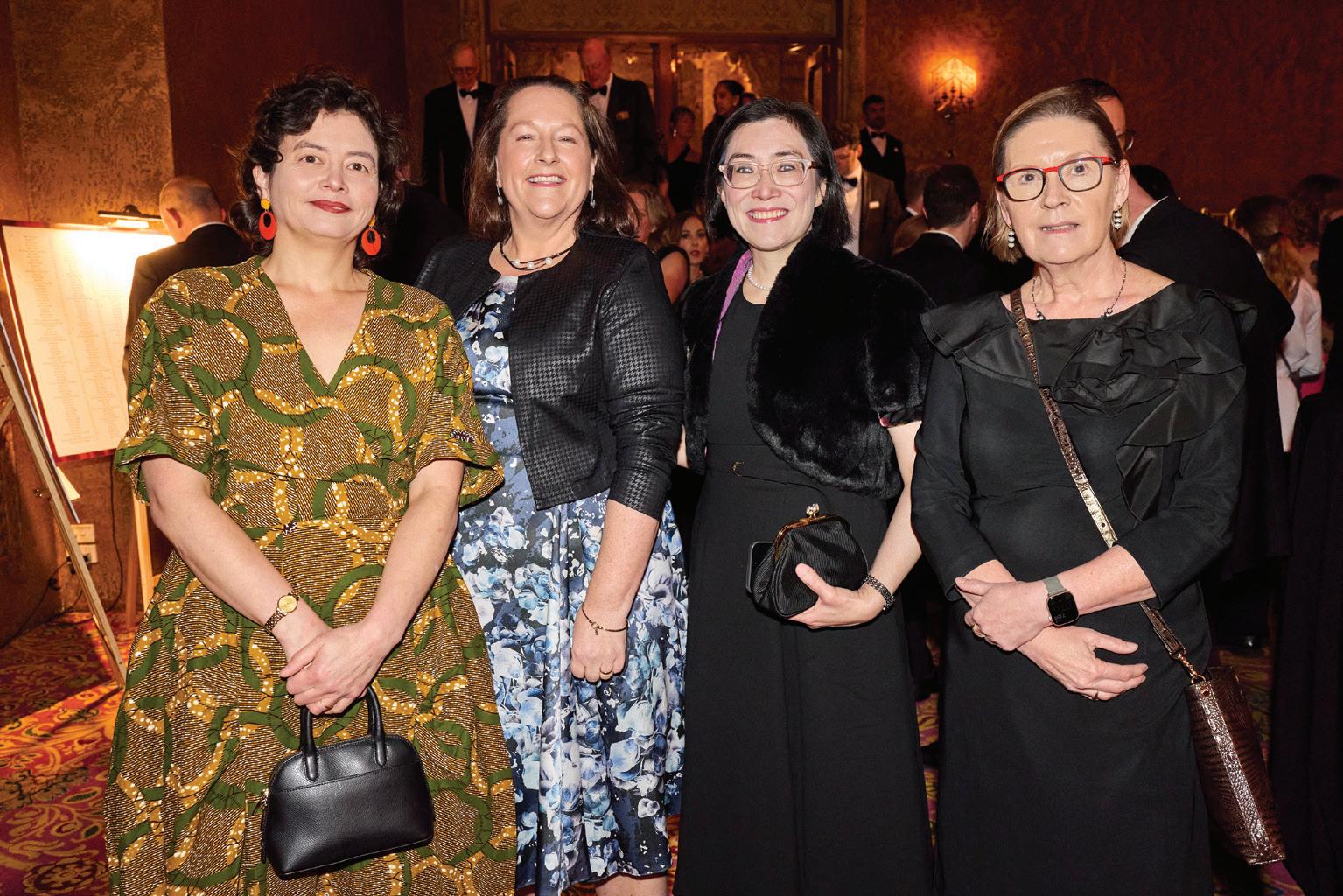
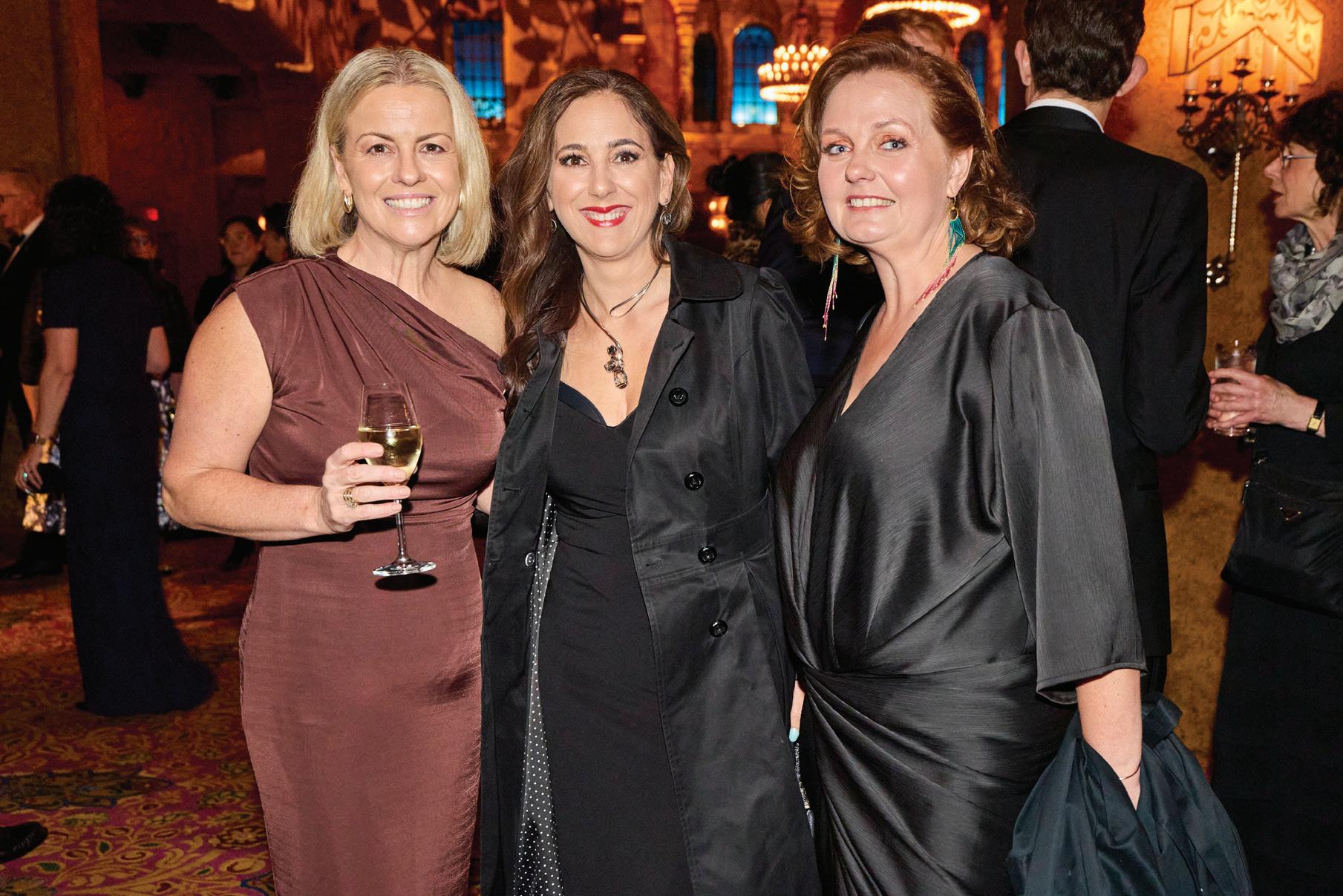
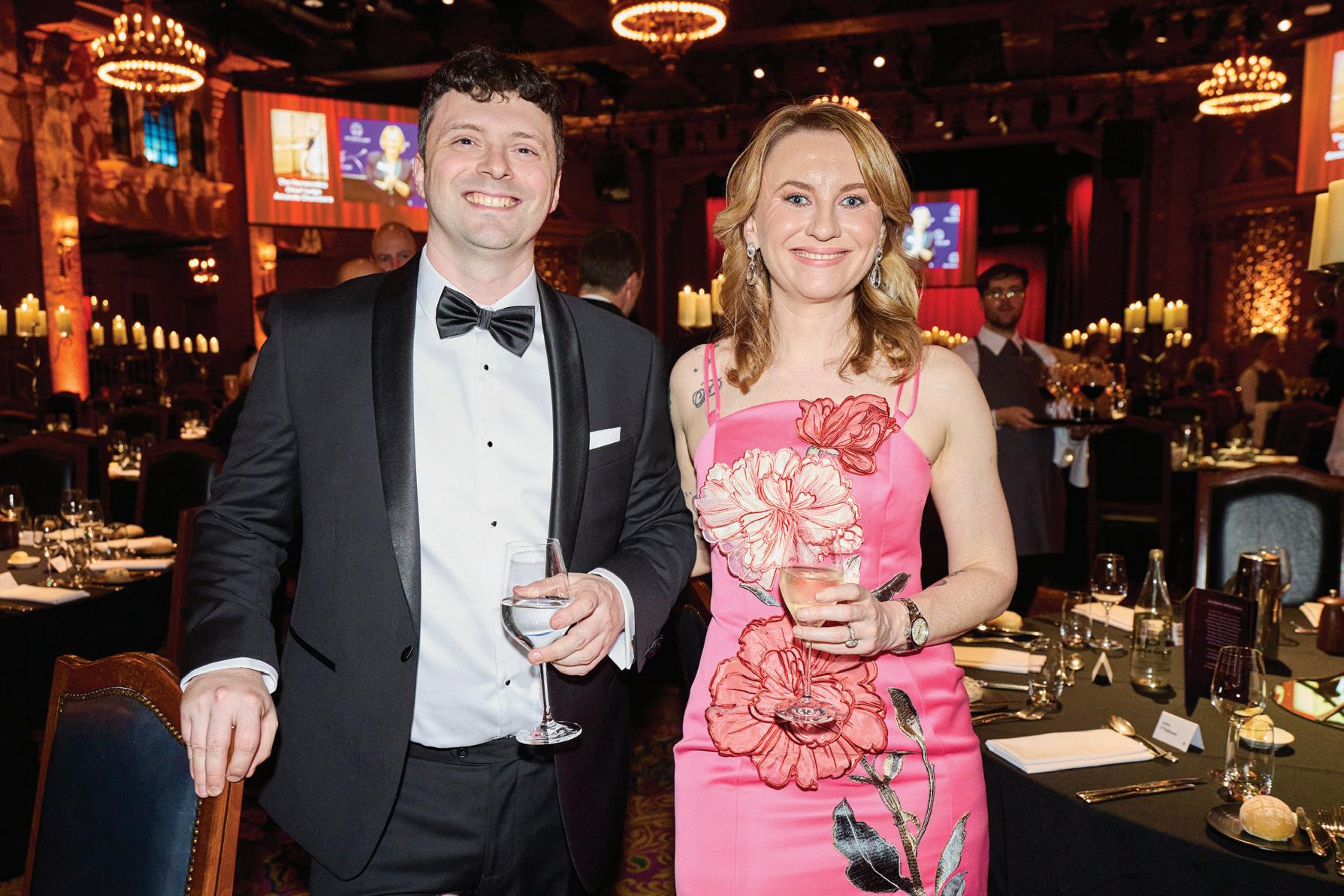
9
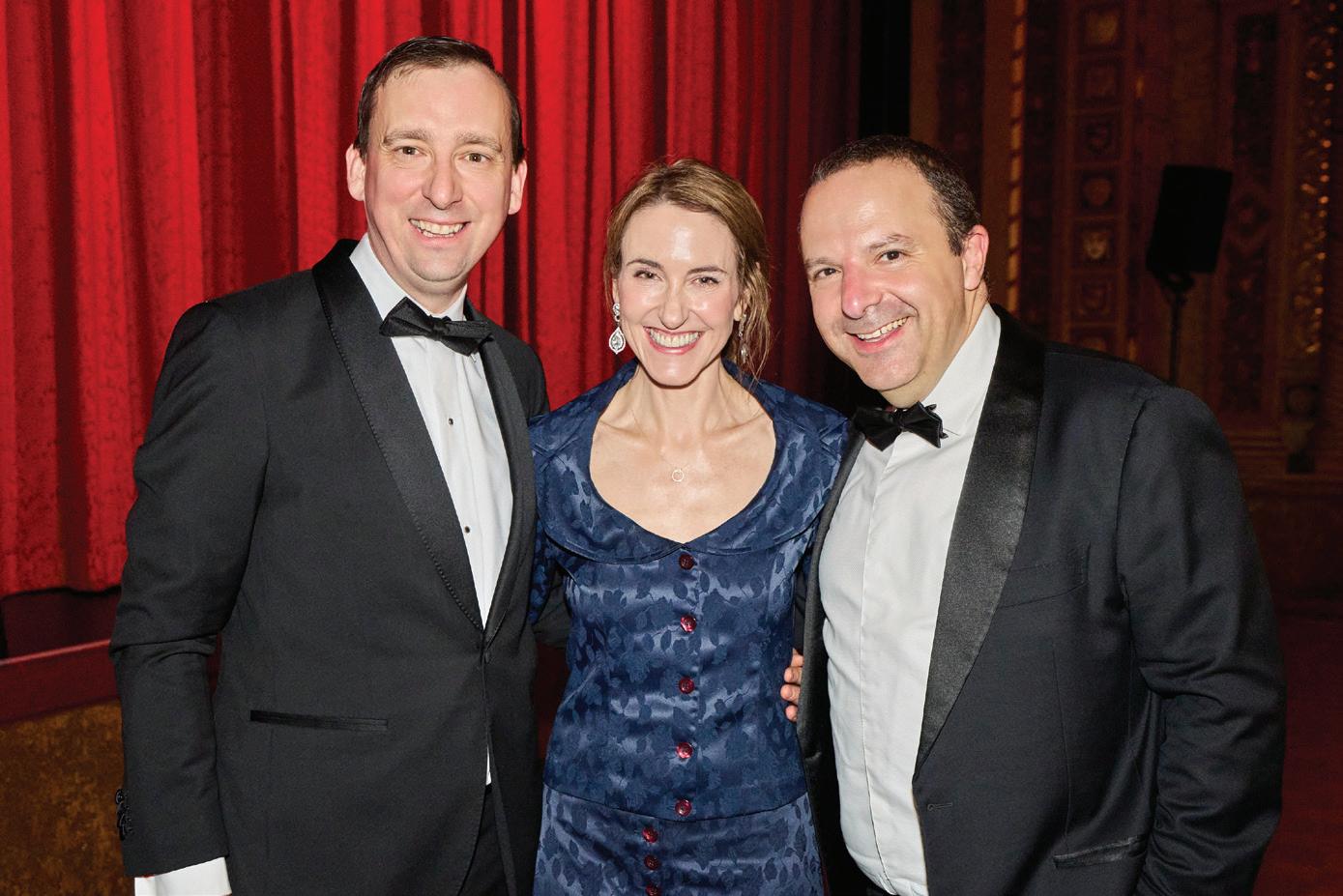
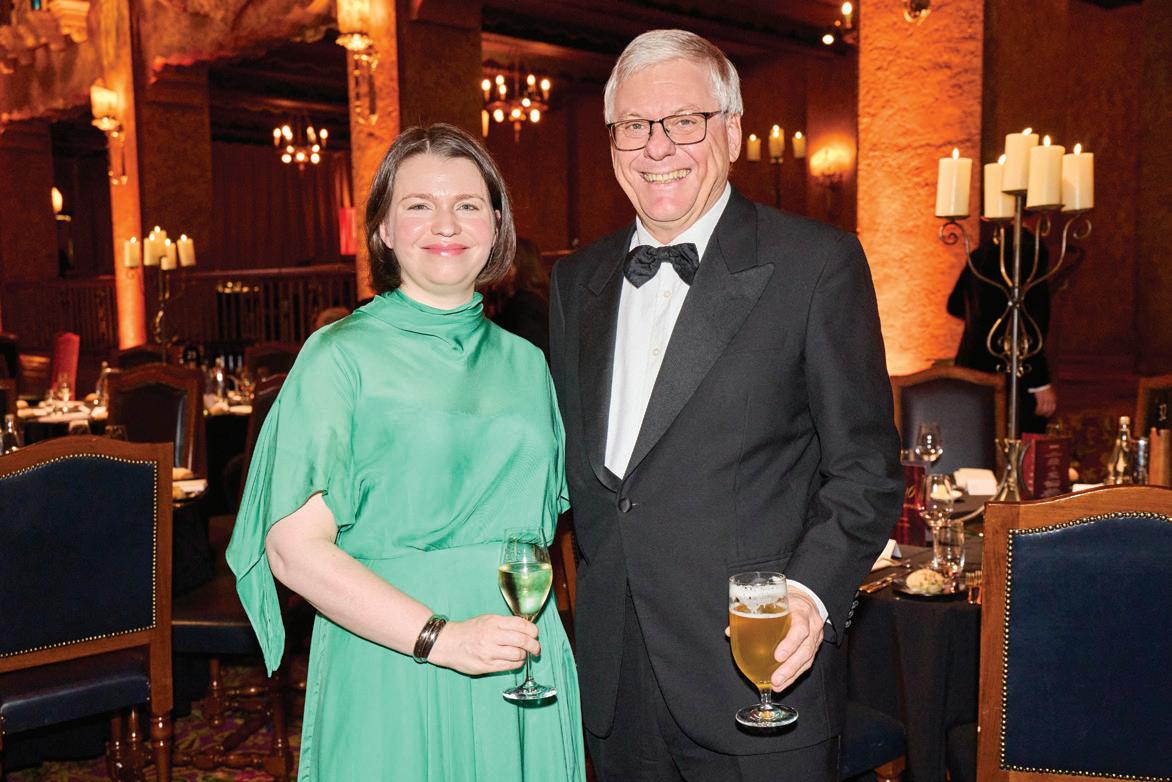
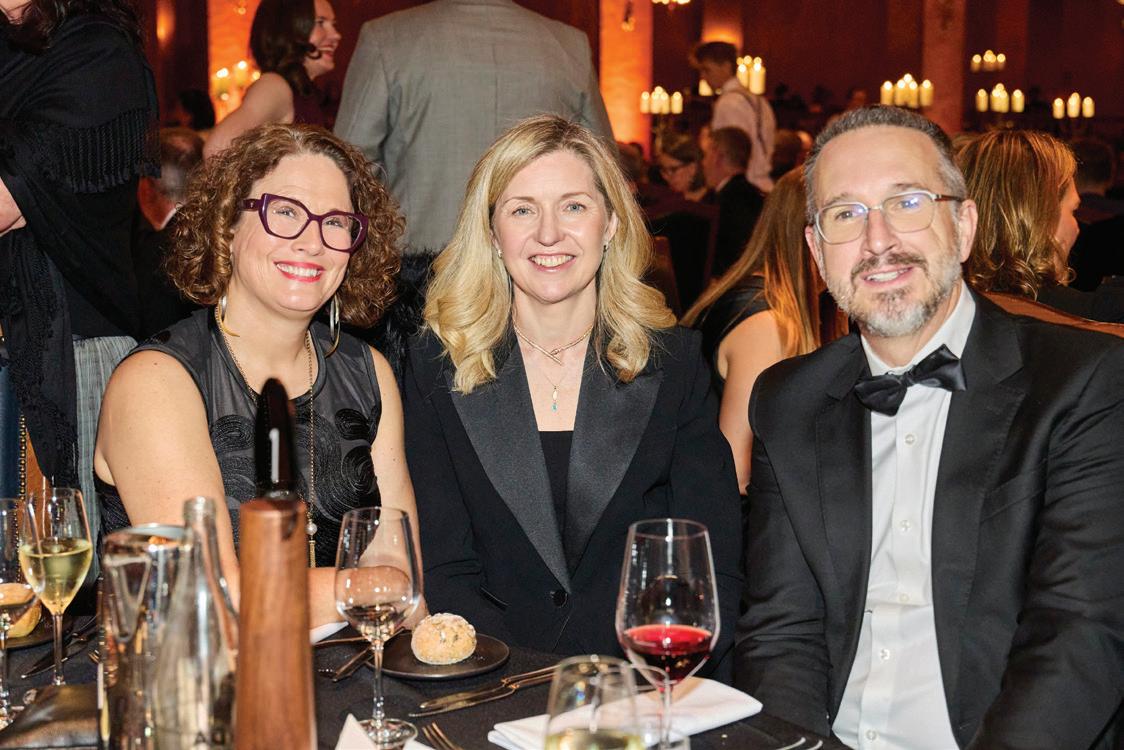
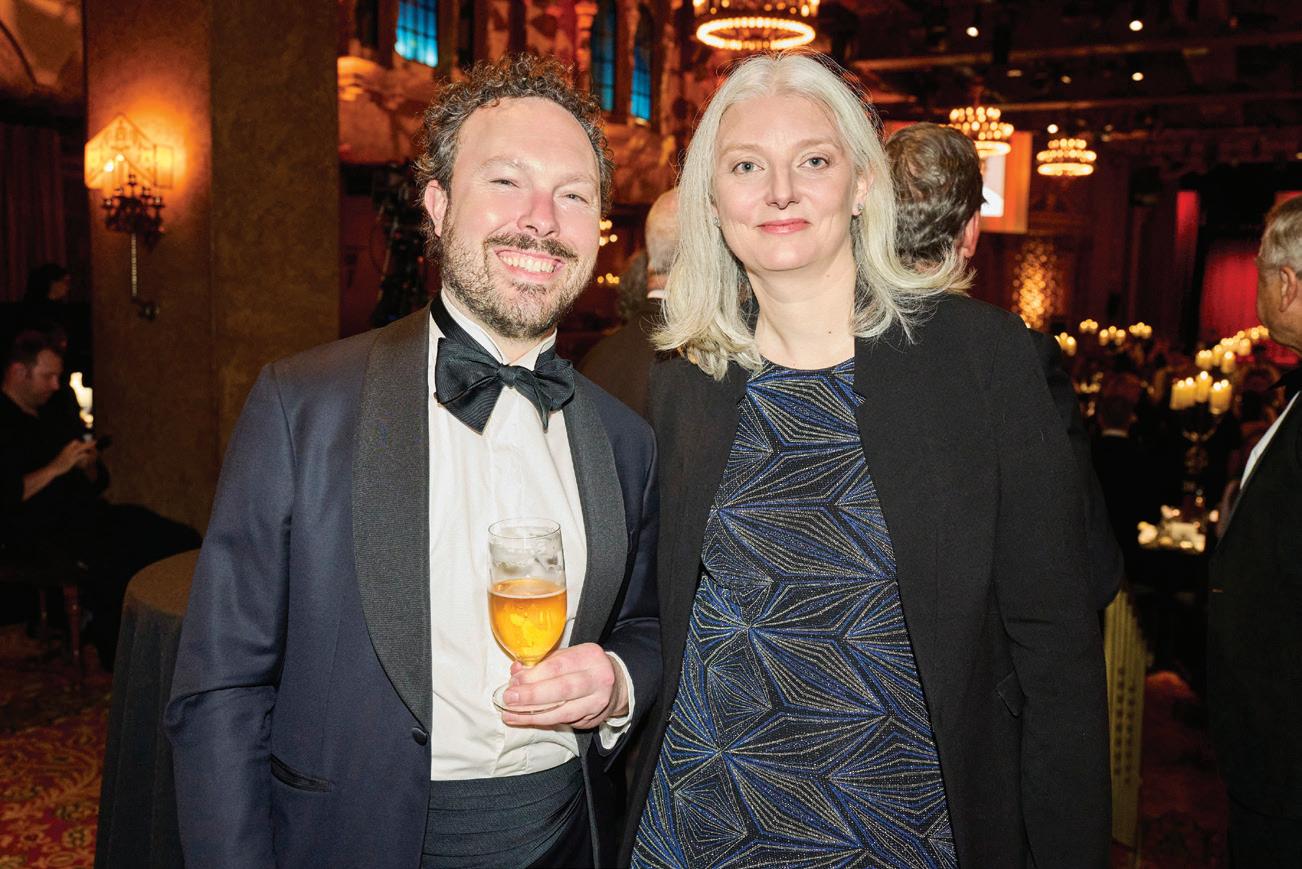
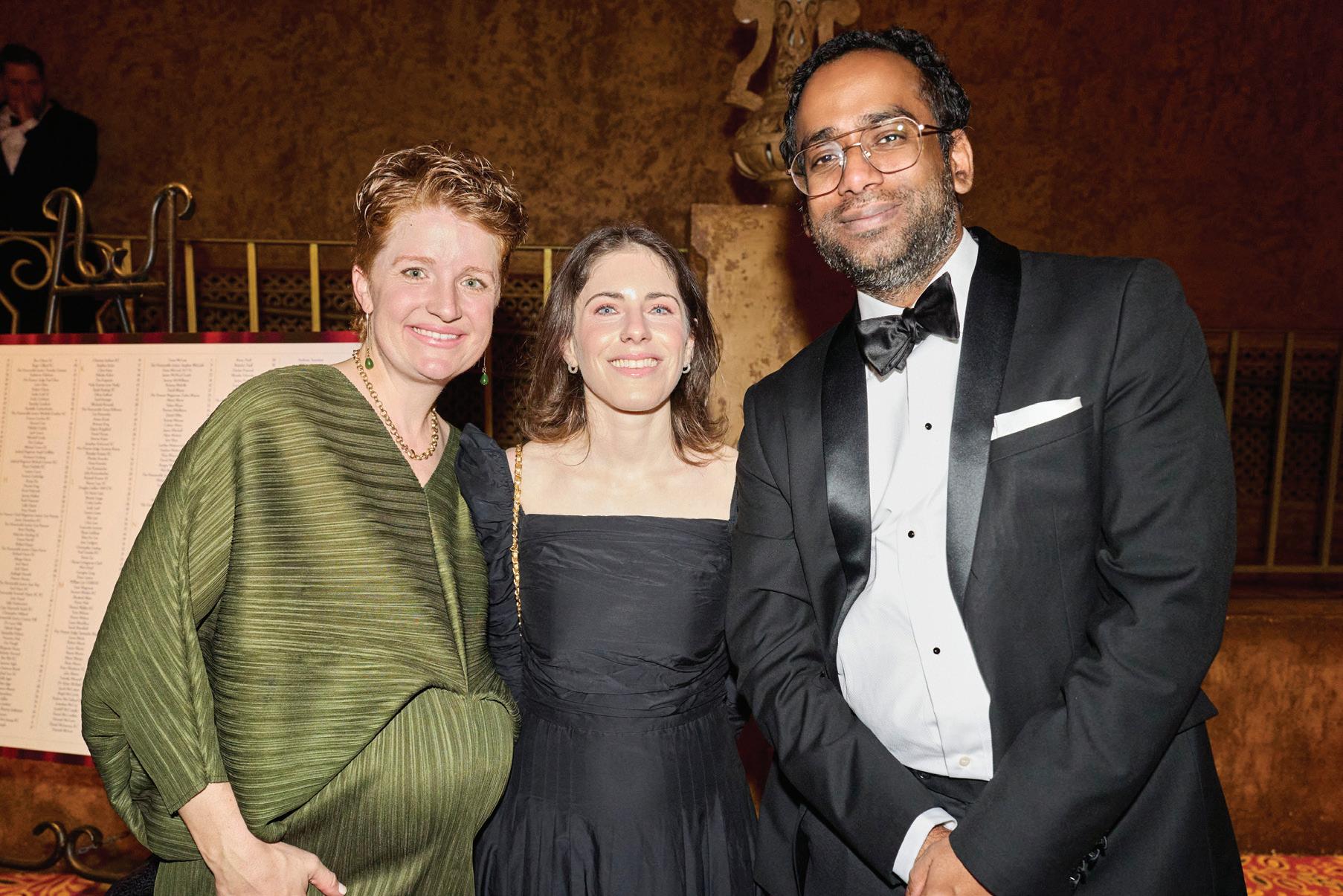
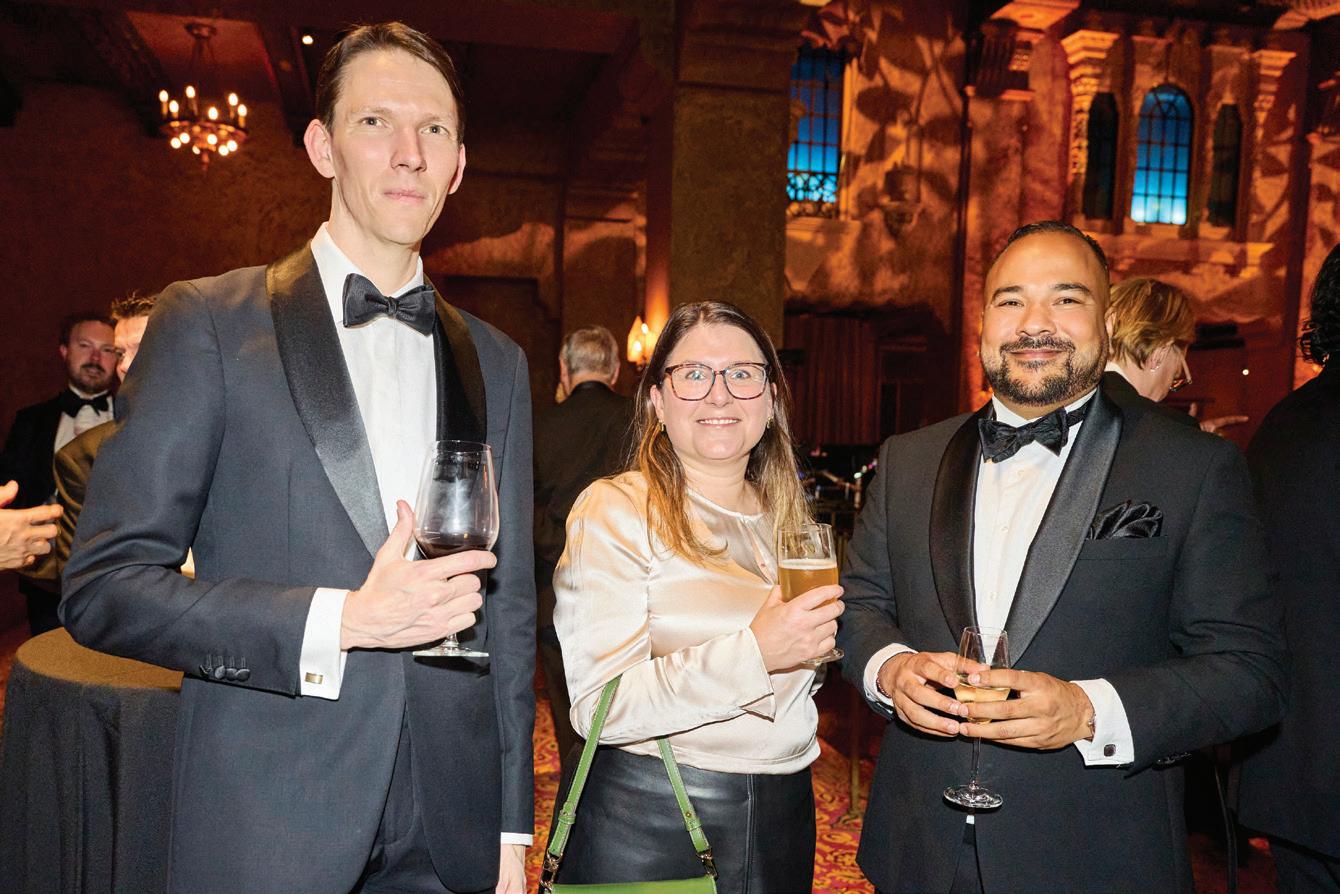
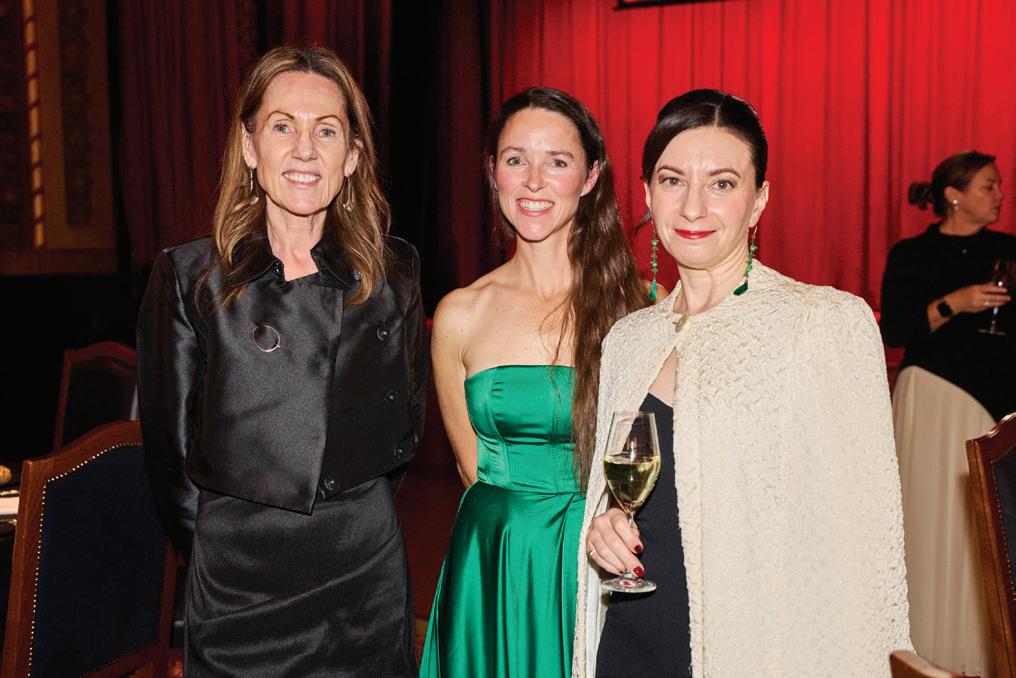
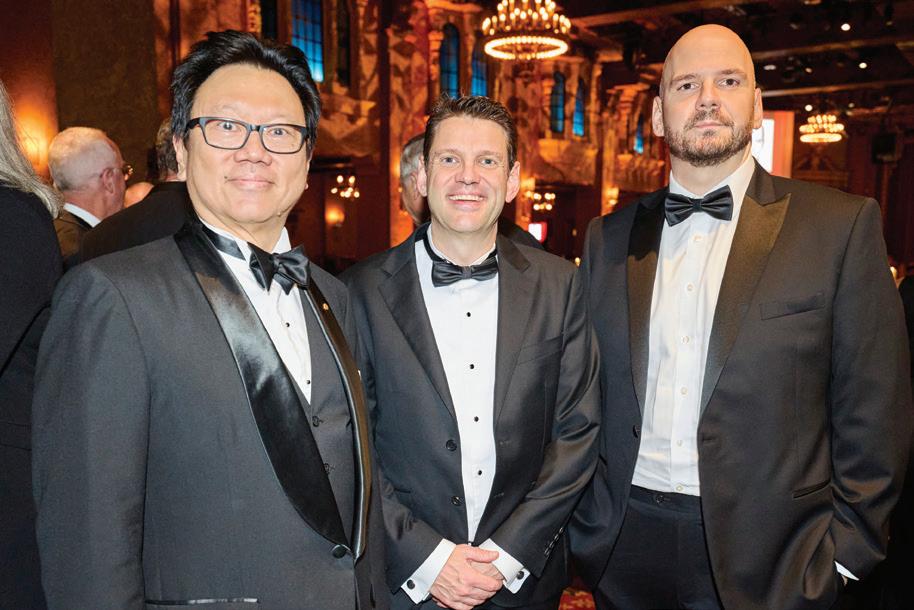
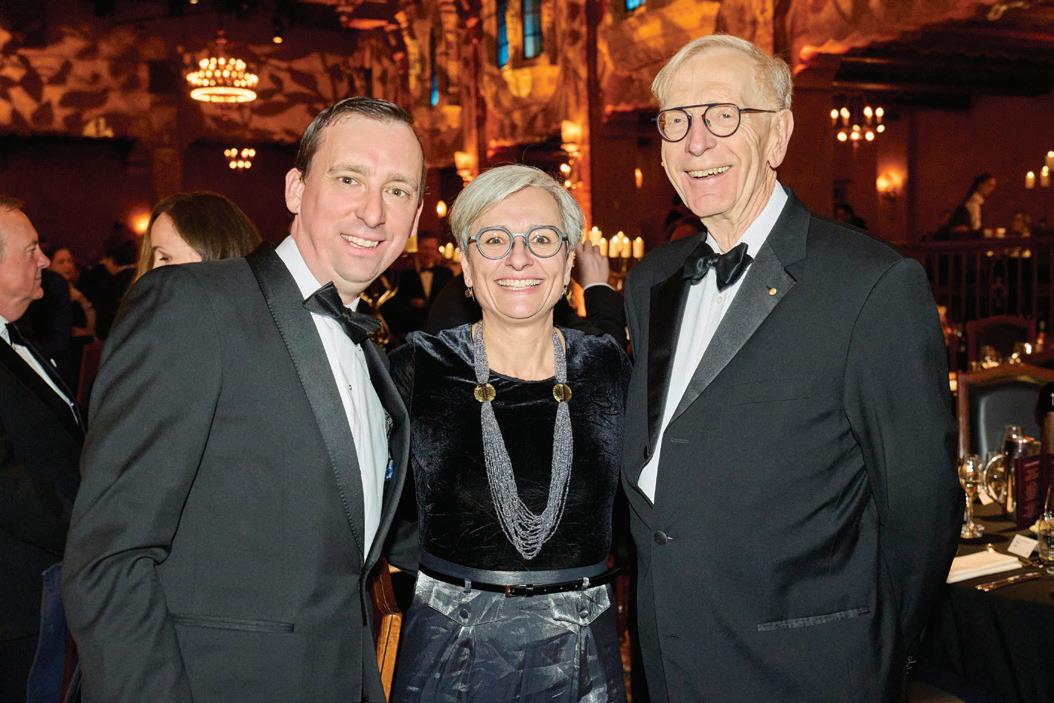
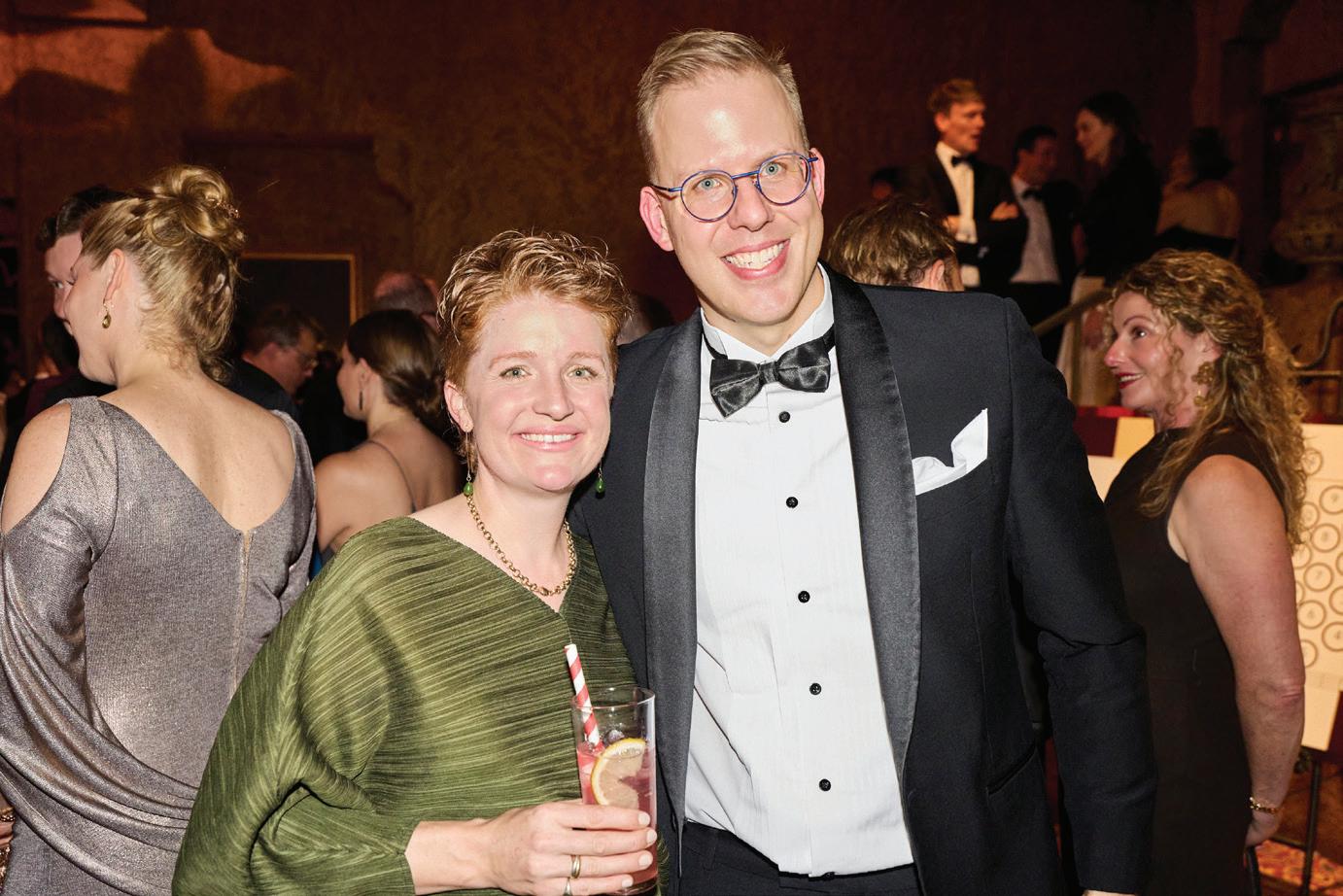
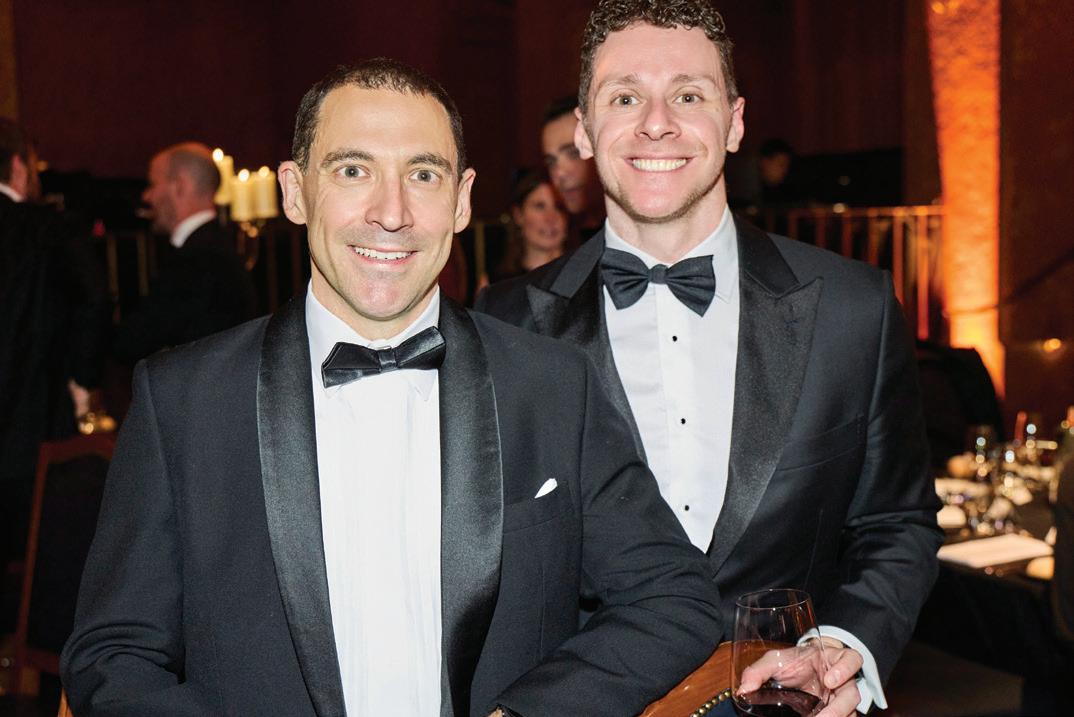
10 1. Fiona McLeay, Her Honour Judge Sanger and the Hon Associate Justice Fary 2. Her Honour Judge Tran, Her Honour Judge Kirton, Her Honour Judge Burchill and Her Honour Judge Daly 3. Kristie Churchill SC, Deeana Caruso and Samantha Holmes 4. Viola Katotas and Evangeline Arulrajah 5. Lara O’Rorke and Simone Kipen 6. Hamish Williamson and Amanda Storey 7. Emma Harold and the Hon Anthony Cavanough KC 8. His Honour Judge Pillay, the Hon Justice Tsalamandris and David Curtain KC 9. Mark Costello KC, Prue Bindon SC and Albert Dinelli KC 10. Angus Christopherson and Lindy Barrett 11. Raini Zambelli and the Hon Justice Hay 12. Hetty Champion de Crespigny, Maxine Lange and Nuwan Dias 13. Keith Sypott, Catharine Thorpe and Sunil Kemppi.
VICTORIAN
8
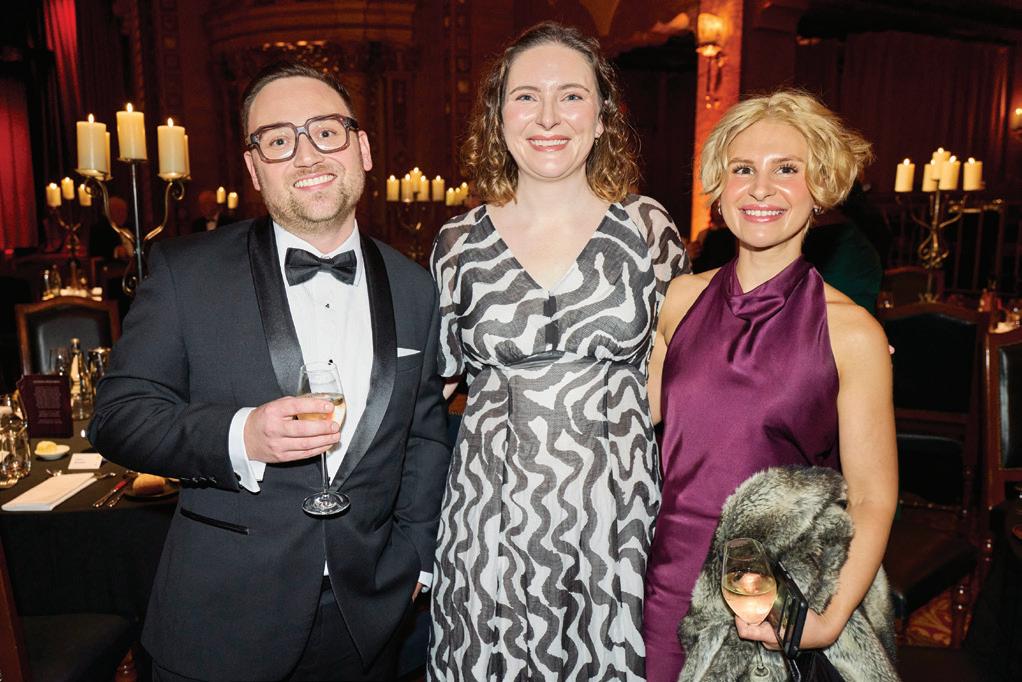
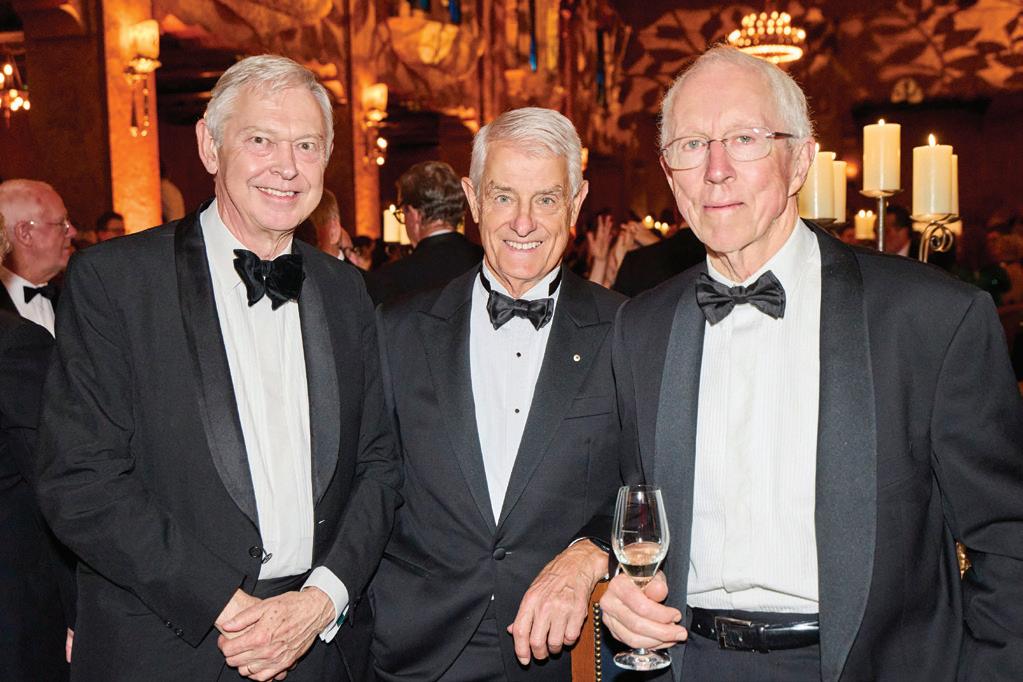
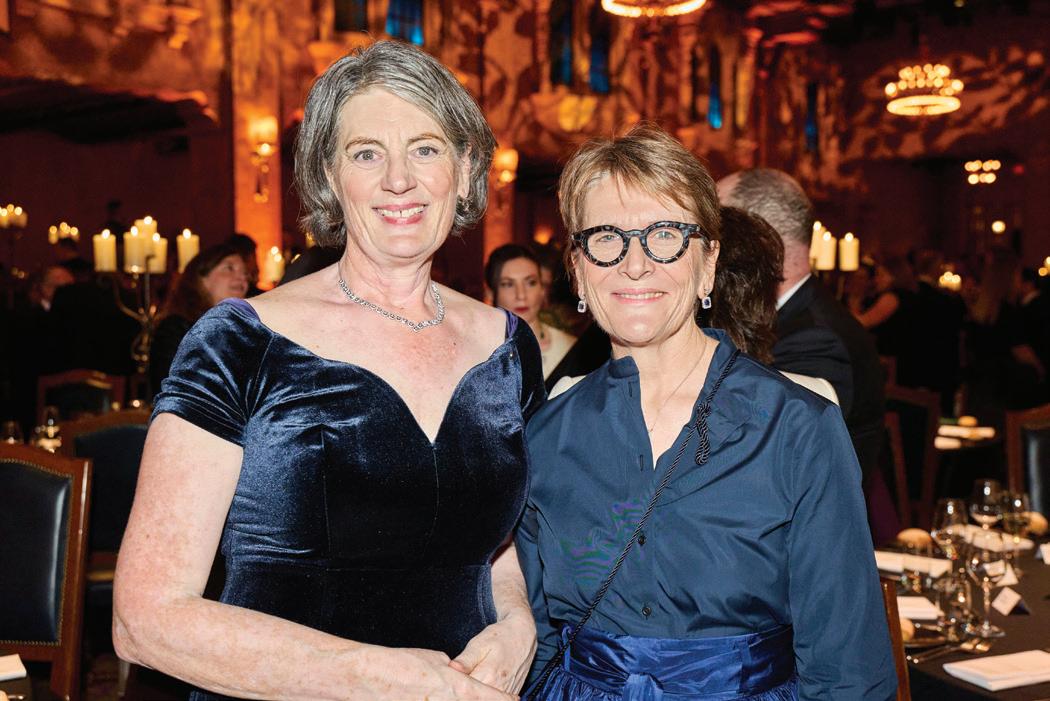
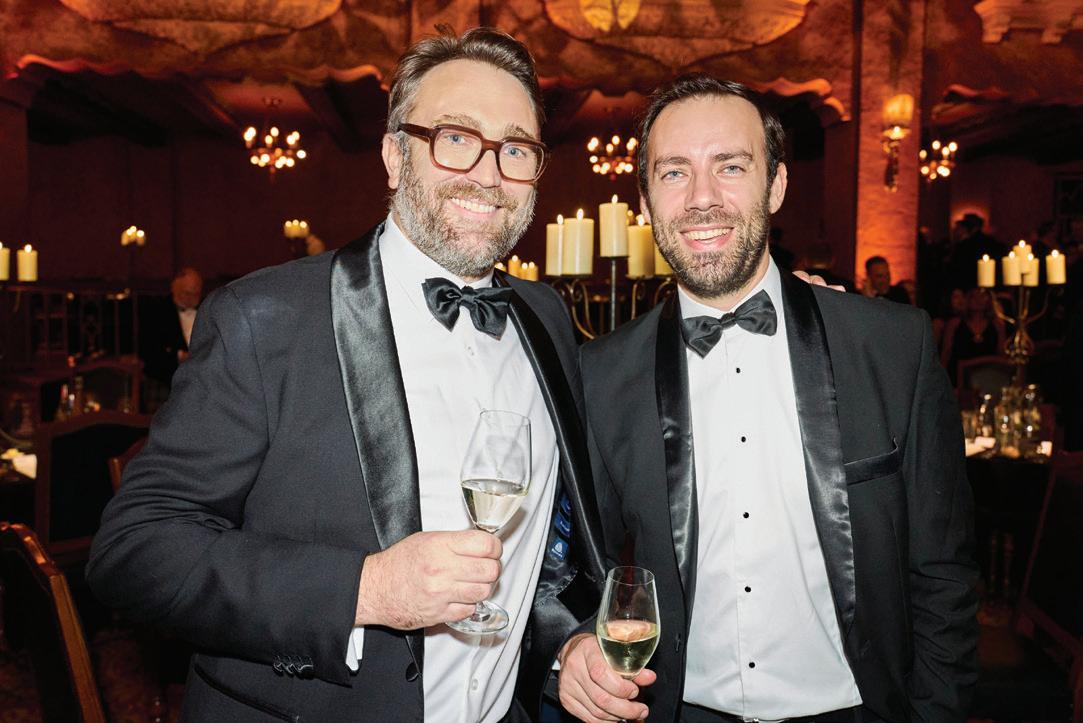
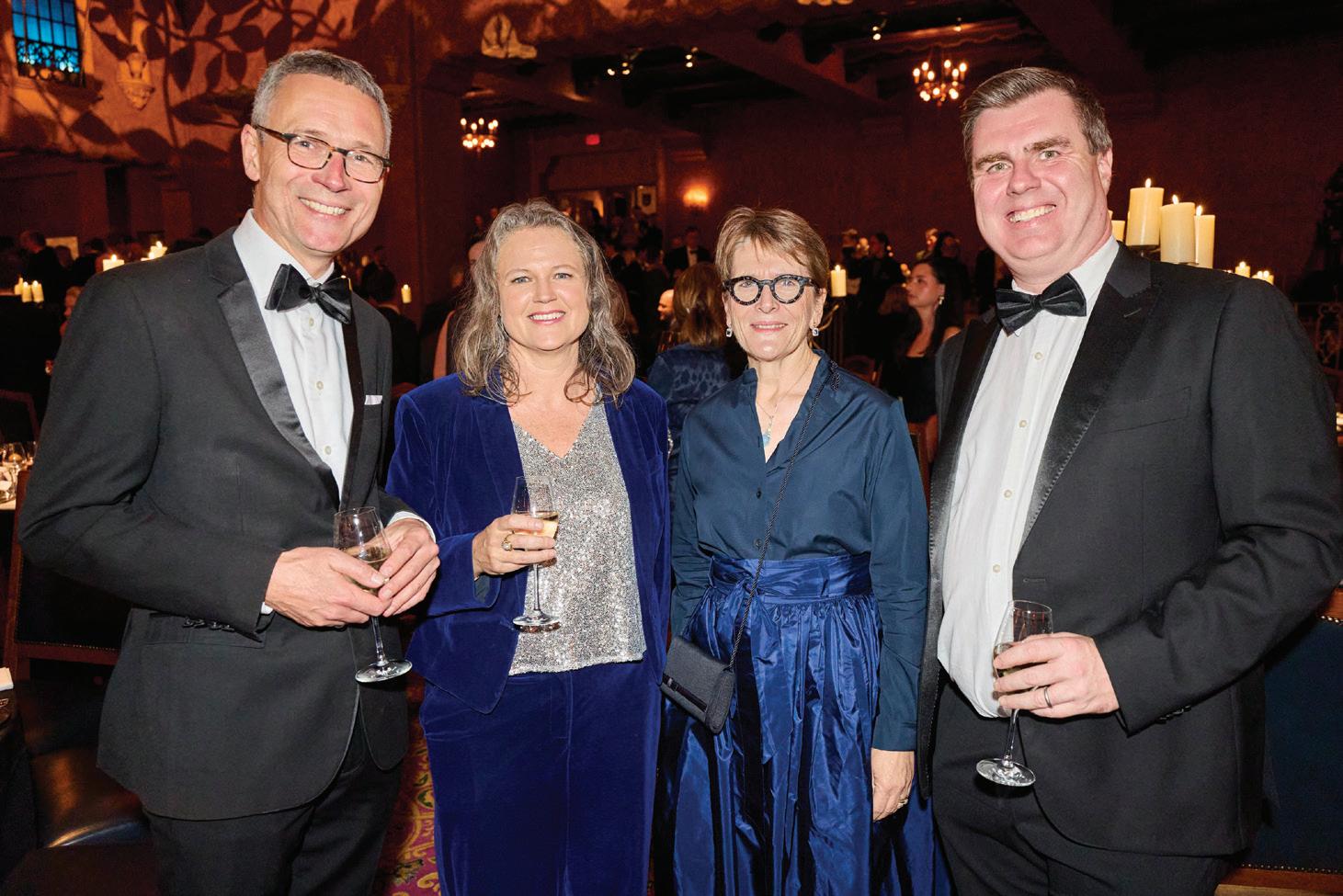
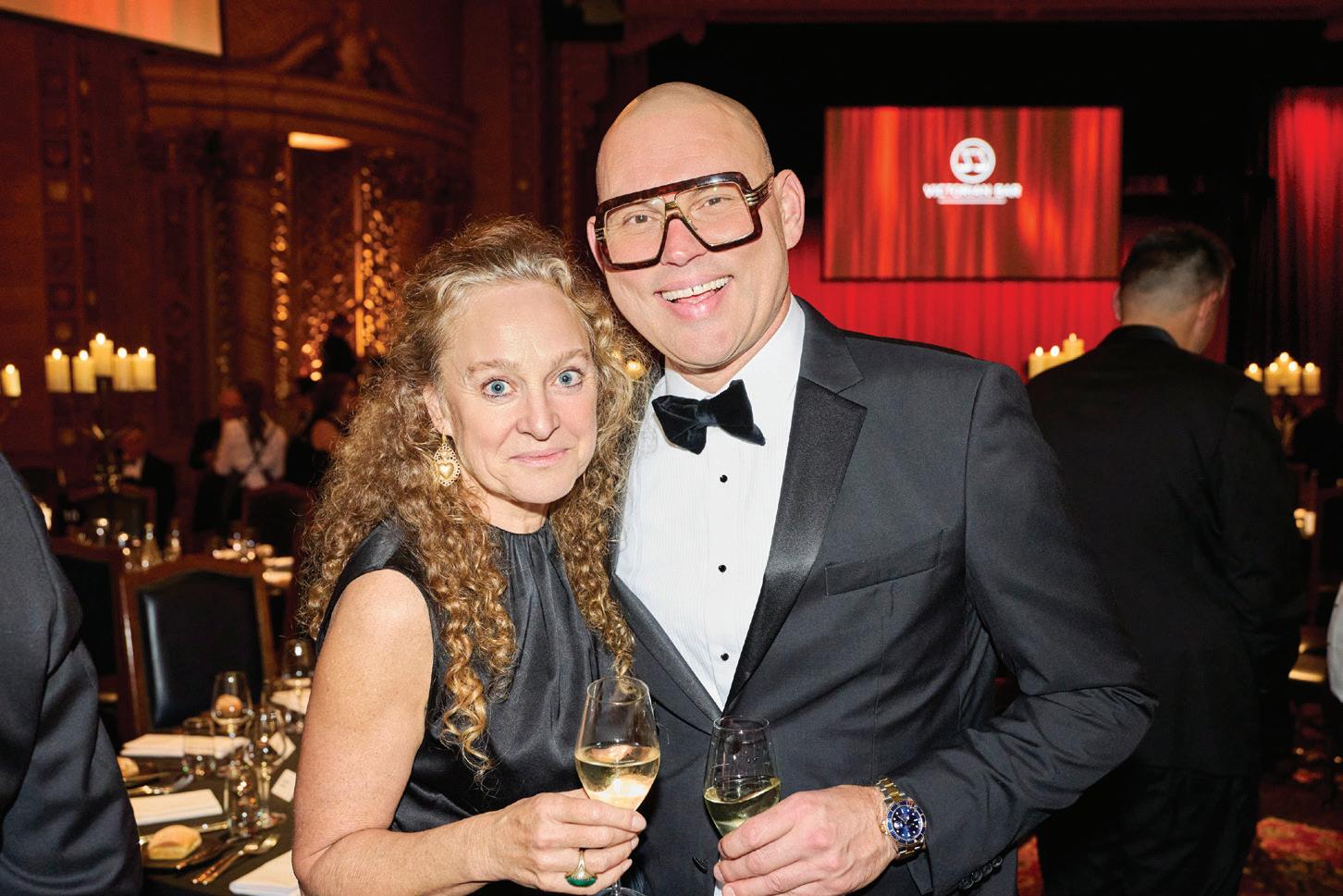
1. Chief Magistrate Hannan, Phoebe Knowles and Kate Burke SC 2. William Lye OAM KC, Liam Magowan and Csaba Baranyai 3. Brian Mason and Gerard Dalton KC 4. Mark Costello KC, Rae Sharp KC and the Hon Kenneth Hayne AC KC 5. Michael Shand AM KC, David Curtain AM KC and the Hon Christopher Jessup KC 6. Fiona McLeod AO SC and the Hon Justice Gordon AC 7. The Hon Justice Wheelahan and the Hon Judge Daly 8. Brett Harding, Megan Driscoll and Ivana Smojver 9. Justice Graeme Hill, Glyn Ayres and Tim Farhall 10. Jeremy Hallett and Tim Staindl 11. Phoebe Knowles, Cathy Dowsett SC, Tammy Leane, Giulia Frat and Viola Katotas 12. Her Honour Judge Burchell, Haroon Hassan and Her Honour Judge Tran 13. The Hon Justice Moshinsky, his Honour Judge Pillay and the Hon Justice Sloss.

IWhy are we here?
SPEECH DELIVERED BY CHIEF JUSTICE NIALL
begin by acknowledging the Traditional Owners of the land on which we gather this evening, the Wurundjeri People of the Kulin nation. I pay my respects to their Elders, past and present, and to First Nations persons here this evening.
I would like to thank the Bar Council and its president Fiona Ryan SC for the very kind honour of being able to address you tonight. It’s wonderful to be here amongst friends.
One major source of anxiety in giving these remarks is that I was to be introduced by Mark Costello. The fact that he is a friend of mine was the cause of, not an antidote to, the anxious moments I have experienced. We all know that barristers save a special venom when opposed to friends. It might be related to the two animating emotions of the Bar: schadenfreude and envy, which are always more powerful when applied to those we know.
So I am glad that Mark was so generous in his introduction. He also gave me words of encouragement. He said that I could talk for an hour on recent developments on jurisdictional error and you would lap it up, which was uncanny because that was exactly the topic I had in mind. But he then went on to explain that there were enough silks who wanted to be on the Supreme Court and enough juniors who wanted to be silks that they would laugh and applaud no matter how bad the speech. Not exactly encouraging. But I will persevere.
large question. Why are we here? Not here. I think there are a growing number of you who are now asking yourselves why you are more interested in the bigger question. Why are we at the Bar? What made us sign up, and remain a member of this great and enduring institution? Why are the 45 ers still with us?
perceptions, I don’t think it is for the money. Every
article in the media which refers to a leading silk seems to refer to the daily fee, but I don’t think it is the fee slip that keeps us here. Although we all wouldn’t mind owing a Polish brewery.
Rather, everyone who comes to the Bar dreams of doing the big cases, of making a difference, of wining for the underdog. From the inception of the Victorian Bar, there has been a proud history of counsel being instructed in significant cases that have shaped the law in this country and left their mark on our society. Some of course are trials, others appeals. But tonight, in particular, I want to acknowledge and pay tribute to the significant contribution that our Jewish colleagues have made to the life of the Bar and in particular in cases in the High Court since Federation. It is a remarkable contribution and one that deserves celebration. It tells the story of why we are here.
A good place to start is Sir Isaac Isaacs. As a judge on the High Court, he was the decisive influence in the Engineers’ case 1 For the common law silks, that was not a case about the design of a dodgy staircase. It was a seminal case about the position of the Commonwealth in the Federation. Isaacs joined the Victorian Bar in 1882, and quickly became a leader, taking silk in 1899. A political career followed. He was a state AG in the colony and later a Commonwealth AG. He managed a full-time

3. Georgina Schoff KC and Stephen Jurica
4. Raelene Sharp KC and the Hon Justice Hannon
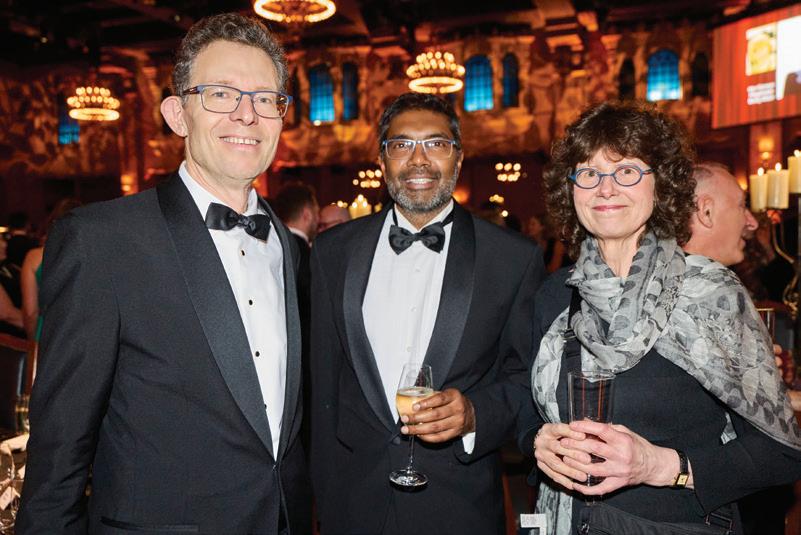
5. Catharine Thorpe, Lee Kimonides, James McNicol Smith and Philip Morrison 6. Maxine Lange and Nuwan Dias 7. Her Honour Judge Angela Ellis and Elliot Young 8. Nick Boyd-Caine, Alice Cooney and Houston Ash 9. Rebecca Devern and Jenny Firkin KC 10. Hetty Champion de Crespigny and Robert Marsh 11. David Curtain KC and the Hon Justice Tsalamandris 12. His Honour Judge Matthews, Joh Ollquist, the Hon Justice Gordon AC and Paul Smallwood 13. Lionel Wirth and Chris
1. Samantha Owen, Kahlia Shenstone and Stephanie Young 2. Louise Martin, Emma Harold, Yusur, Al-Azzawi, Julie Zhou and Suganya Pathan
Kaias.
some 23,000 casualties of whom almost 7,000 lost their lives. When we think it is a tough time to come to the Bar, we should take time to recall those who came after the World Wars.
Despite the horrors of war, Coppel showed signs that he was headed for the inner Bar – his war diary records that he bought seven bottles of Clos-Vougeot Grand Cru at a good price.

Coppel had a slow start at the Bar due to the war and illness but soon picked up big cases. He took silk in 1945 and argued more than 90 cases in the High Court. Many of his tax cases remain important and Batagol. 4 Coppel was briefed with Barwick and Kitto in Bank Nationalisation case, appearing in that gargantuan case in both the High Court and the Privy Council.5
Coppel thought, correctly in my view, that appointment to the Supreme Court was a crowning achievement for a career at the Bar. He was offered a role as an Acting Justice of the Court for a year to replace a Judge on leave, and then two more years followed. He declined a fourth year, thinking that the government had reneged on a promised full-time appointment. He returned to the Bar in
That year, he received a letter from Chief Justice Dixon. I want to read from part of it and then make two points. It
My dear Coppel
……….. it will be a very great advantage to the High Court to have you appearing before it again and I cannot believe that you will not find that both your true interests and your real happiness are best served by your return to the Bar. You have a freedom of action and an independence at the Bar for the loss of which the Bench can offer no compensatory advantages that are adequate.
No judge can ever experience the same influence or authority as an eminent counsel and he is never held in the same respect as such a counsel commands. And as for obtaining satisfaction from judicial work, well I can only say that
mine yields none nor is the load really any lighter.
At all events you have my best wishes for your happiness. With kindest regards
Yours sincerely Owen Dixon
Now I know that Sir Owen is our patron saint, but he does sound a bit miserable, and I assure you that although I cannot speak of the High Court, life on the Supreme Court is much more fun than Dixon suggests.
More importantly, his letter to Coppel is a testament to the important role that this Bar has long played in the life of the High Court. The High Court looks to this Bar to assist it in its work. He received a similar letter from Sir Frank Kitto.
At around this time, Maurice Ashkanasy was becoming a leader at the Victorian Bar. Born in 1901 in London, his father was a tailor’s cutter from Palestine, and his mother was born in Russia. They had very limited means. He came to the Bar in 1924 and read with Robert Menzies – they became lifelong friends. Ashkanasy was an immigrant, a labour supporter and came from very modest means. There is an important lesson there. He is a good example of the opportunities that the Bar offers and the breadth of friendship and professional connections at the Bar that span religious, political and social divides. And the importance of the Bar being open to all.
Having taken silk in 1940, he became Vice Chairman of the Bar in 1952 and Chairman the following year. In 1959, he appeared for the artist Albert Namatjira, in the High Court.6 Although not a case of any great legal significance, it is emblematic of its time, and an early occasion of a Victorian barrister appearing for a First Nations person before the High Court.
Earlier in his career, Ashkanasy also appeared in the case of Briginshaw for the appellant.7 Now I know Briginshaw is an important case, but I didn’t realise how important until I saw that it was being regularly cited in the AFL Tribunal.
Also appearing in Briginshaw was Joan Rosanove.
Rosanove was barely 17 when she began attending court in Ballarat as a clerk to her father, solicitor and barrister Mark Lazarus.8 Rosanove was the first woman to sign the Victorian Bar roll in 1923 and built up a practice specialising in divorce law.
Despite her stellar reputation, it wasn’t until 1965, 42 years after she had signed the Bar Roll, and following unsuccessful applications, that Rosanove was finally appointed QC. General opinion at the Bar was that she had been shabbily treated. She was the first female QC in Victoria and the second in Australia.
Rosanove said that she had ‘had to accept the fact that being a female in this day and age [she would] never be made a judge’.9 Her daughter, Margaret “Peg” Lusink, who very recently passed away, would later become Victoria’s first woman to be appointed to a superior court of record when she became a judge on the new Family Court in 1976.10
The next two female silks in Victoria – Lynnette Schiftan and Ada Moshinsky – were also Jewish.
When Ada Moshinsky arrived in Australia at the age of 7 following the Second World War, she did not speak a word of English. She was the mother of Justice Moshinsky of the Federal Court, who made his first Court appearance before he was born, at his mother’s admission.11 Ada Moshinsky (snr) developed a successful practice, especially in taxation and trusts, and alongside the Hon Susan Crennan, was the equal third female QC in Victoria.
Returning to Ashkanasy – he sought preselection for Labour for a Senate seat, up against another of our silks, Sam Cohen KC, who was a popular and very able industrial silk. In 1961, Cohen was victorious in the hardfought preselection battle and became the first Jewish senator in Australia. At the inaugural lecture in his honour, Bob Hawke described Cohen as having ‘constructive, compassionate, outgoing exuberance’ and ‘concern not for himself but rather for the needs of others’. His daughter Sue Cohen was a member of
our Bar and a very able and accomplished judge of the County Court.
Bill Kaye was another fierce advocate whose practice covered an enormous range or work including common law, matrimonial cases and he assisted in many inquiries. He was another person whose studies were interrupted by War Service, serving in the Royal Australian Navy during World War One.
Early on in his legal career, he developed a reputation as a powerful advocate and as a fierce and relentless cross-examiner, which earned him the nickname “the white pointer”. He appeared in cases in the High Court against Coppel – one of which was a matrimonial case in which Coppel led Joan Rosanove. After Coppel, who was appointed as an acting judge, he became the first Jewish Judge of the Supreme Court when he was appointed in 1972. Of course, his son Justice Stephen Kaye has also had an outstanding career at the Bar and is an ornament to the bench.
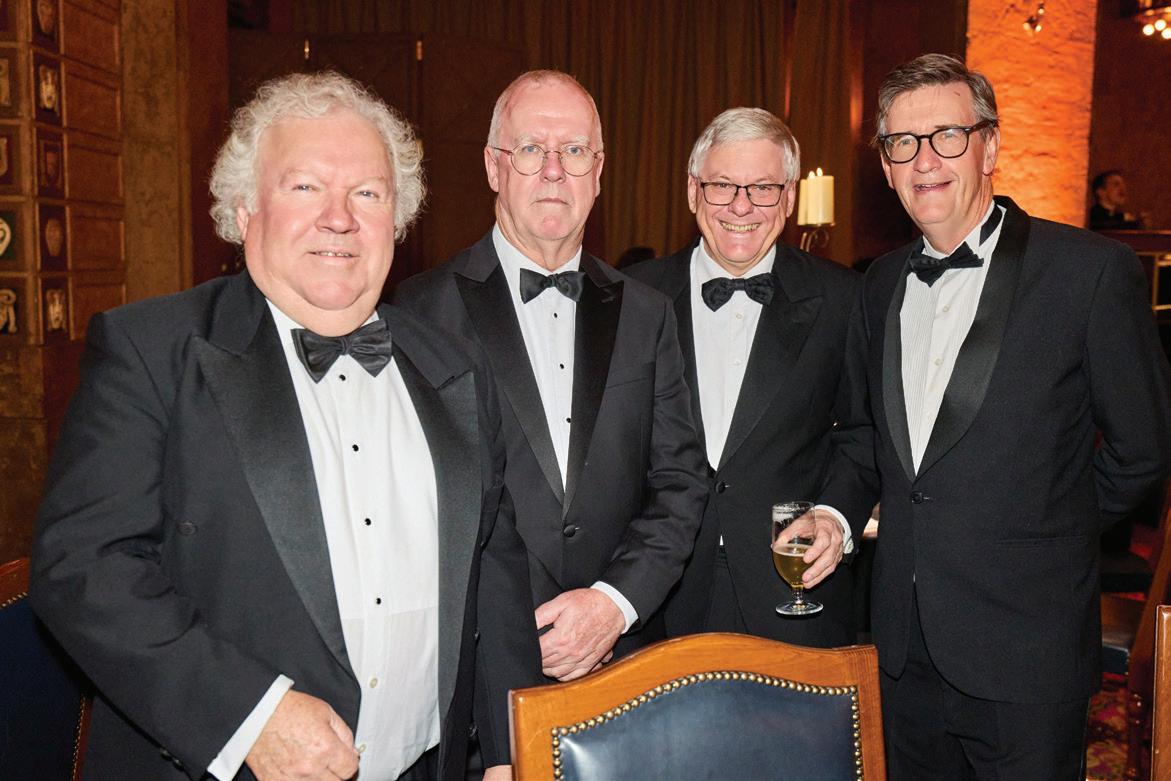
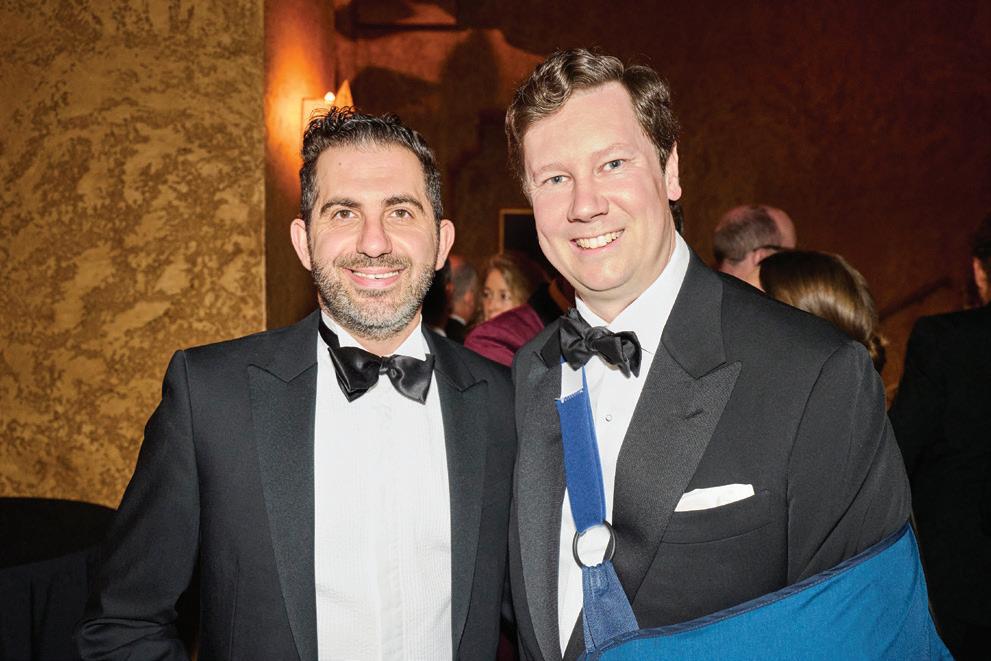
The 70s and 80s saw the emergence of a number of extraordinary Jewish barristers at the Victorian Bar. Alan Goldberg had an enormous commercial practice and appeared for Rodney Croome12 in the High Court, a challenge to Tasmania’s laws which criminalised homosexuality, and which led to their repeal. He appeared in the seminal competition case of Queensland Wire
Ron Merkel has argued a vast number of cases before the High Court, including in 2007 as counsel for the plaintiff in Roach14 – a critical case about voting rights and the franchise, which returned the right to vote to thousands of incarcerated Australians.
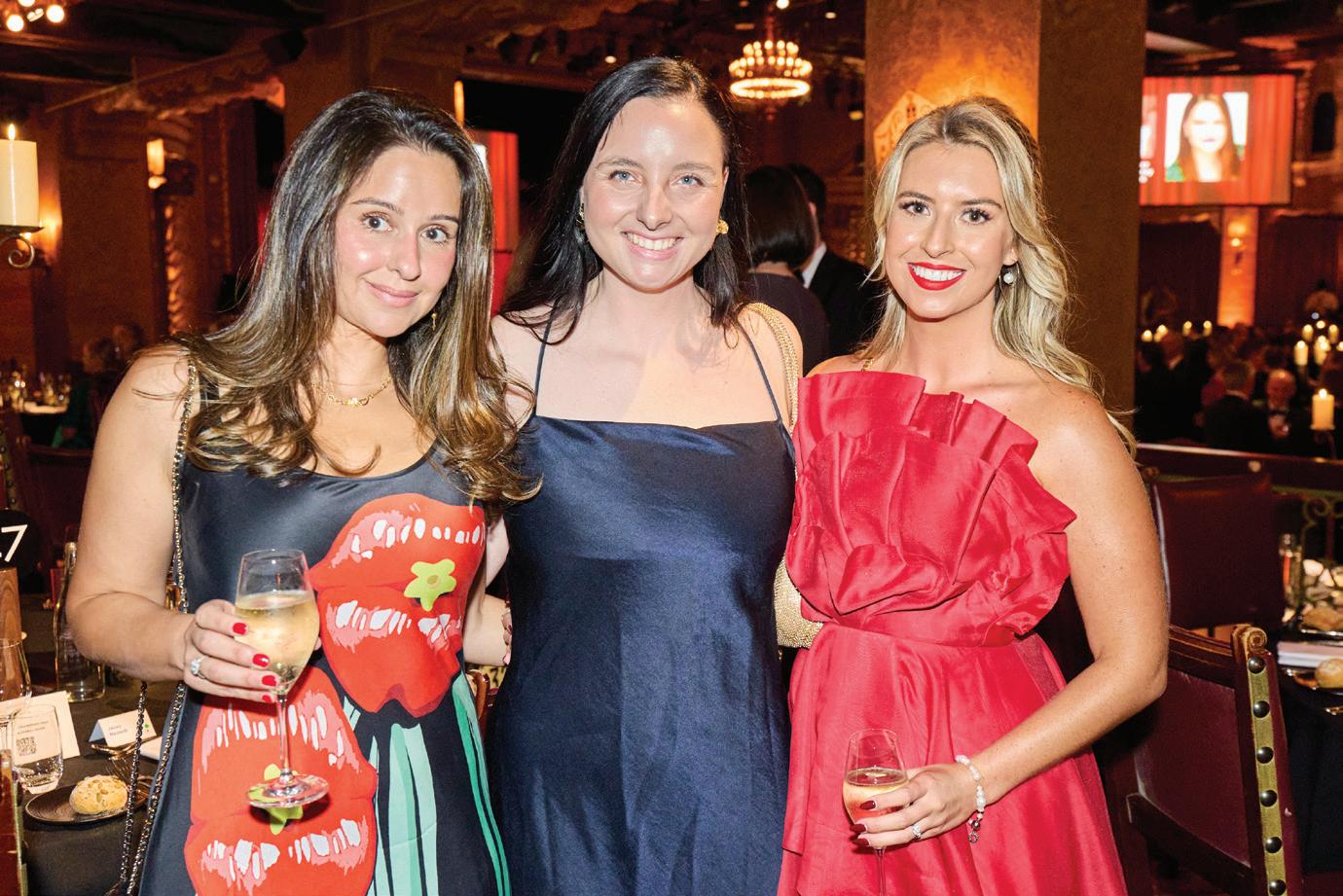
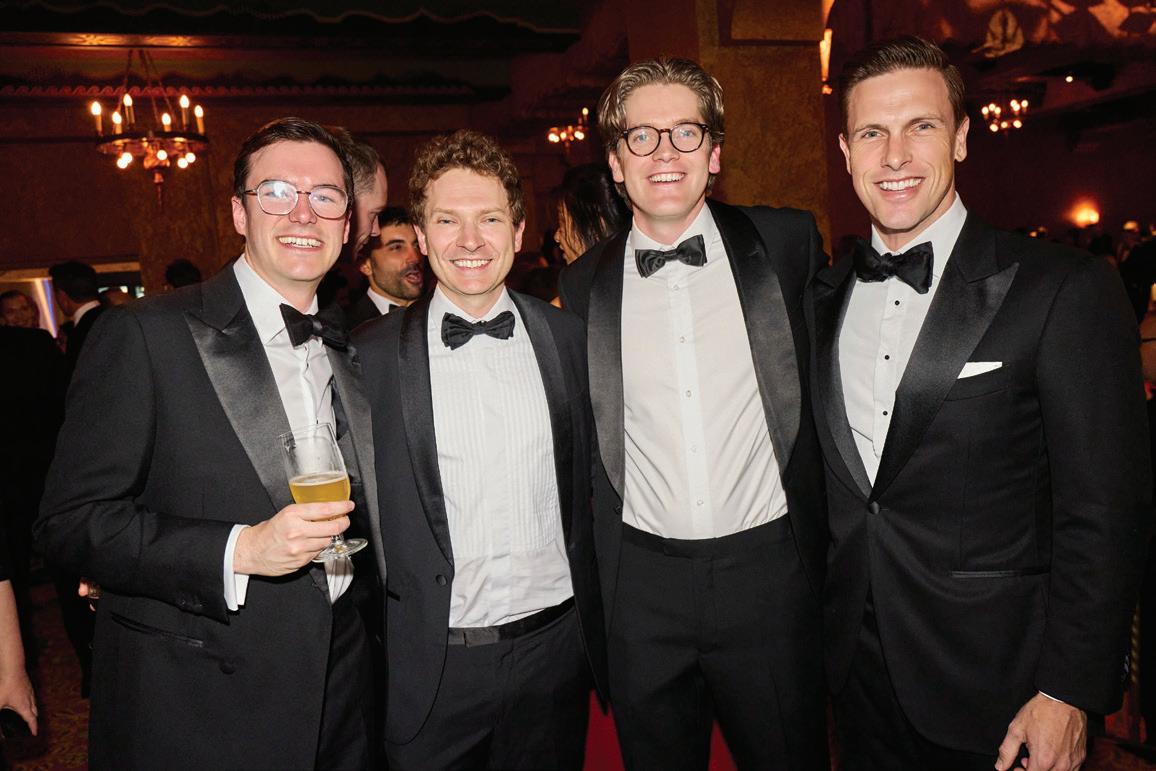
In Kruger, 15 Fink couldn’t get the High Court to find that laws which allowed Aboriginal children in the NT to be taken from their families were invalid, but the case revealed the horrific impact of this practice on the Stolen Generation, which was a step towards the Apology just over a decade later.
Jeff Sher is a legend of the Bar. He argued cases in the High Court on defamation in Gutnik, 16 common law and criminal law.
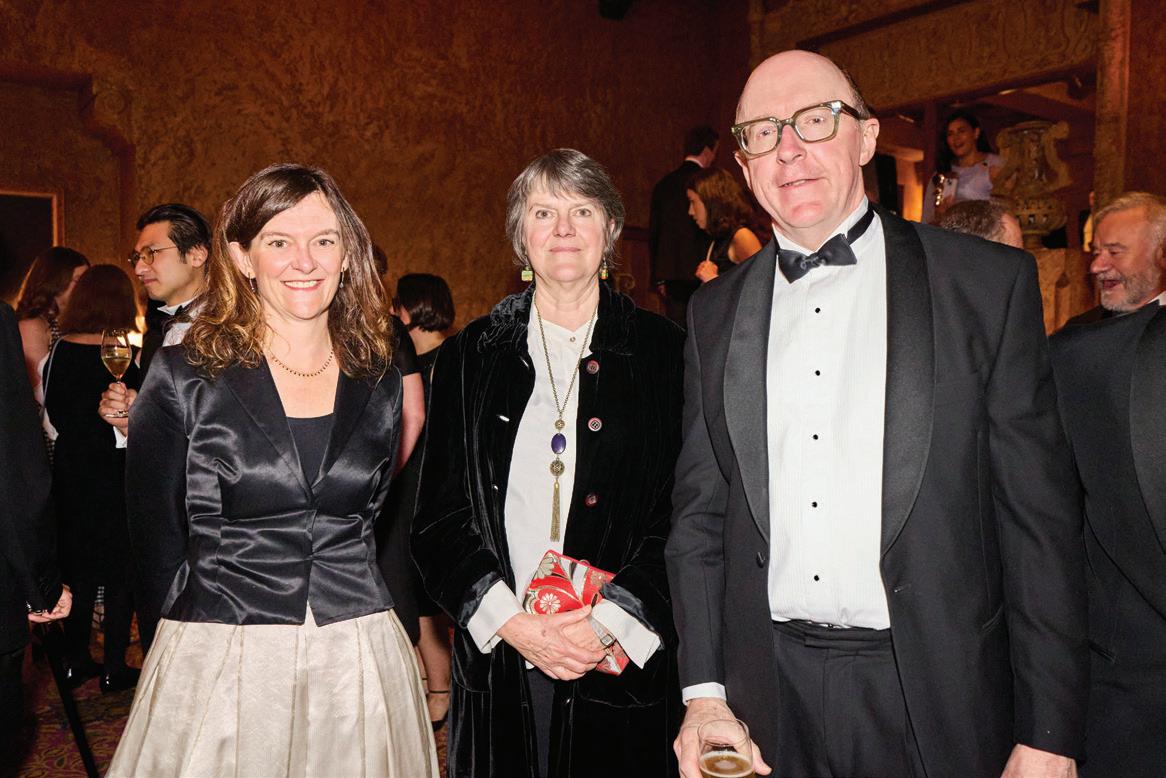
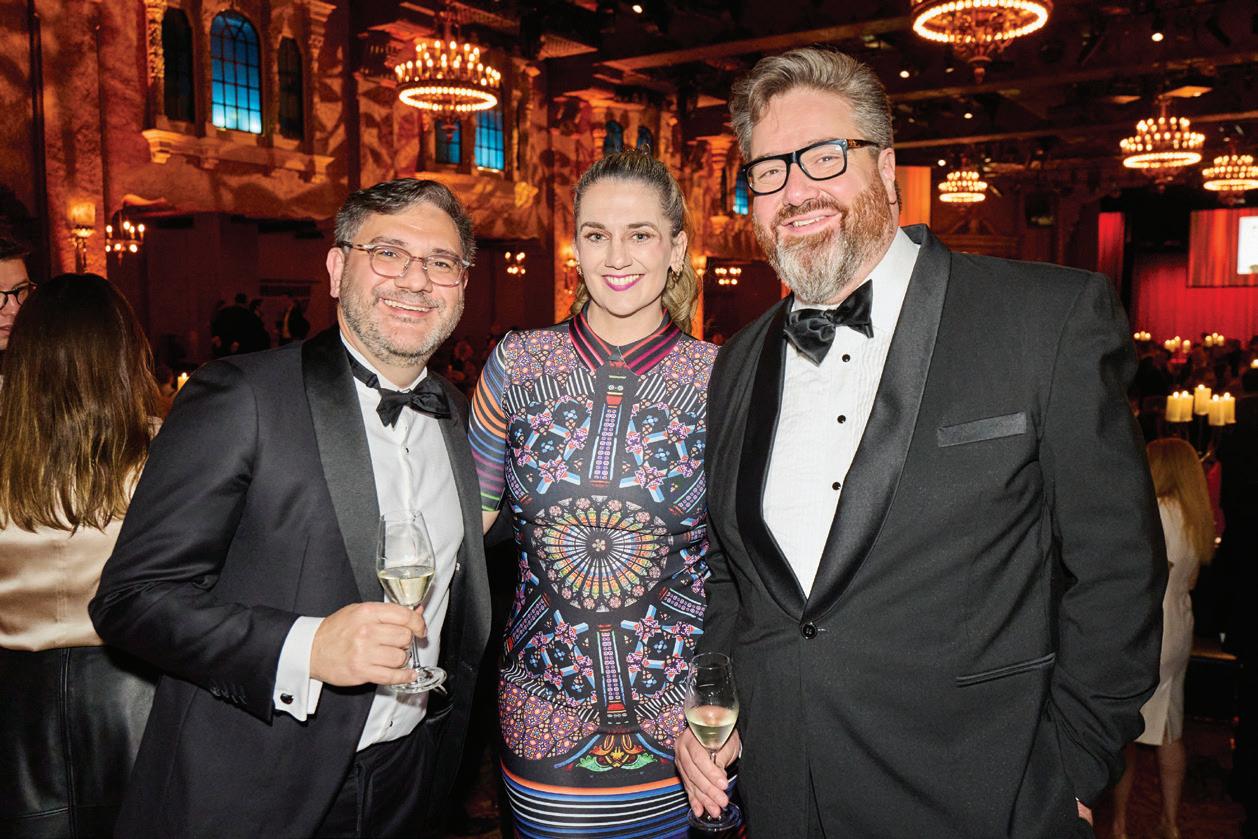
1. Chris Blanden KC, the Hon Justice Beach, the Hon Anthony Cavanough KC and the Hon Justice Beale 2. Priyanka Banerjee, Janey Fisher and Tim Graham 3. Sharni Stacey, Alexandra Theile and Emma Della Posta 4. Hadi Mazloum and Daniel Kinsey
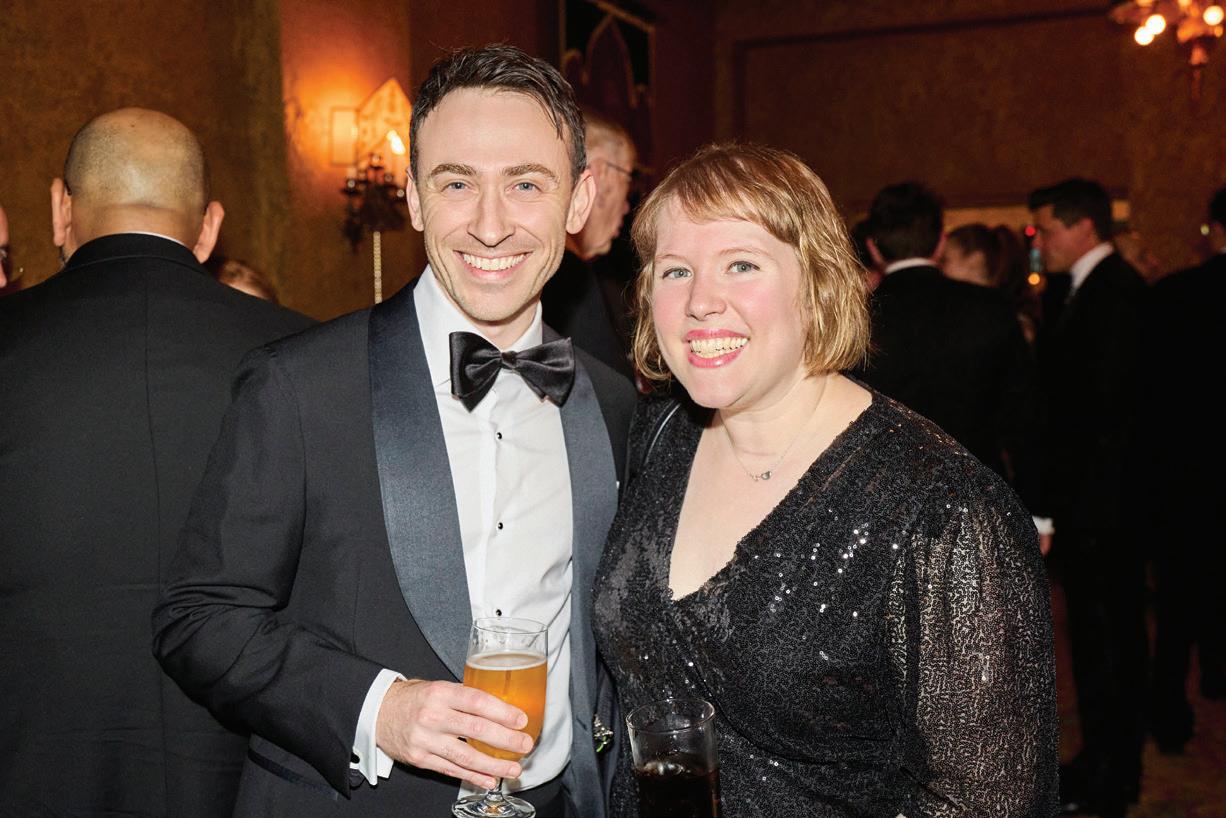
5. Lee Kimonides, Zoe Hough and Remi Cuce 6. The Hon Justice Harris, the Hon President Emerton and the Hon Justice McLeish 7. Luke Chircop and Sarah Zeleznikow
8. Cameron Inglis, Rowan Minson, Jack Trainor and James Waters 9. Tim Goodwin, Jessie Taylor and Tom Smyth
10. Kirsty Ha and Georgina Long 11. Harley Schumann, Andrew Spierings, Kerry Paull and Beatrice Paull
12. The Hon President Emerton and the Hon Justice Craig 13. Justice Andrea Tsalamandris, Fiona Ryan SC and the Hon Chief Justice Niall 14. Christine Clough, Her Honour Magistrate Teresa Porritt, Judicial Registrar Anjali Griffiths and Judicial Registrar Samantha Renwick.
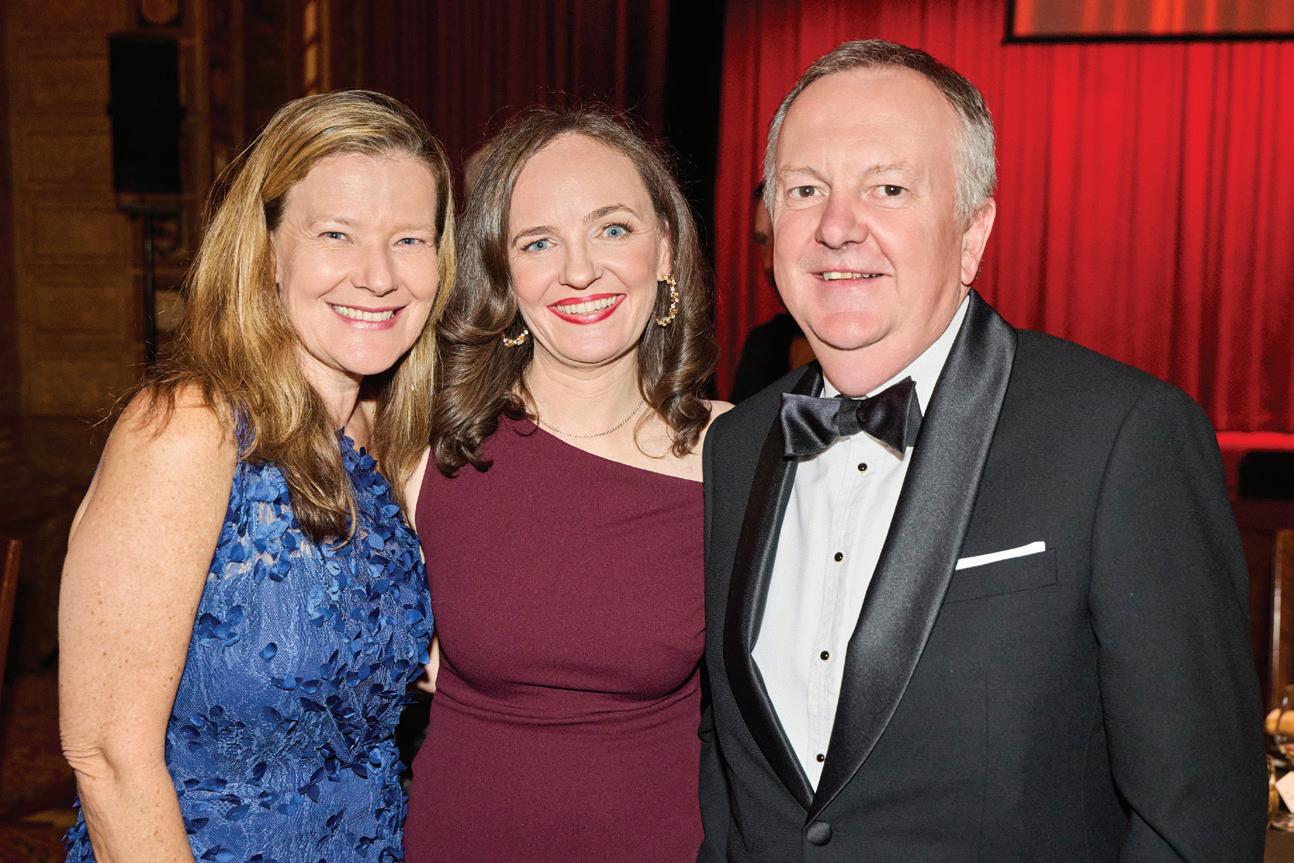
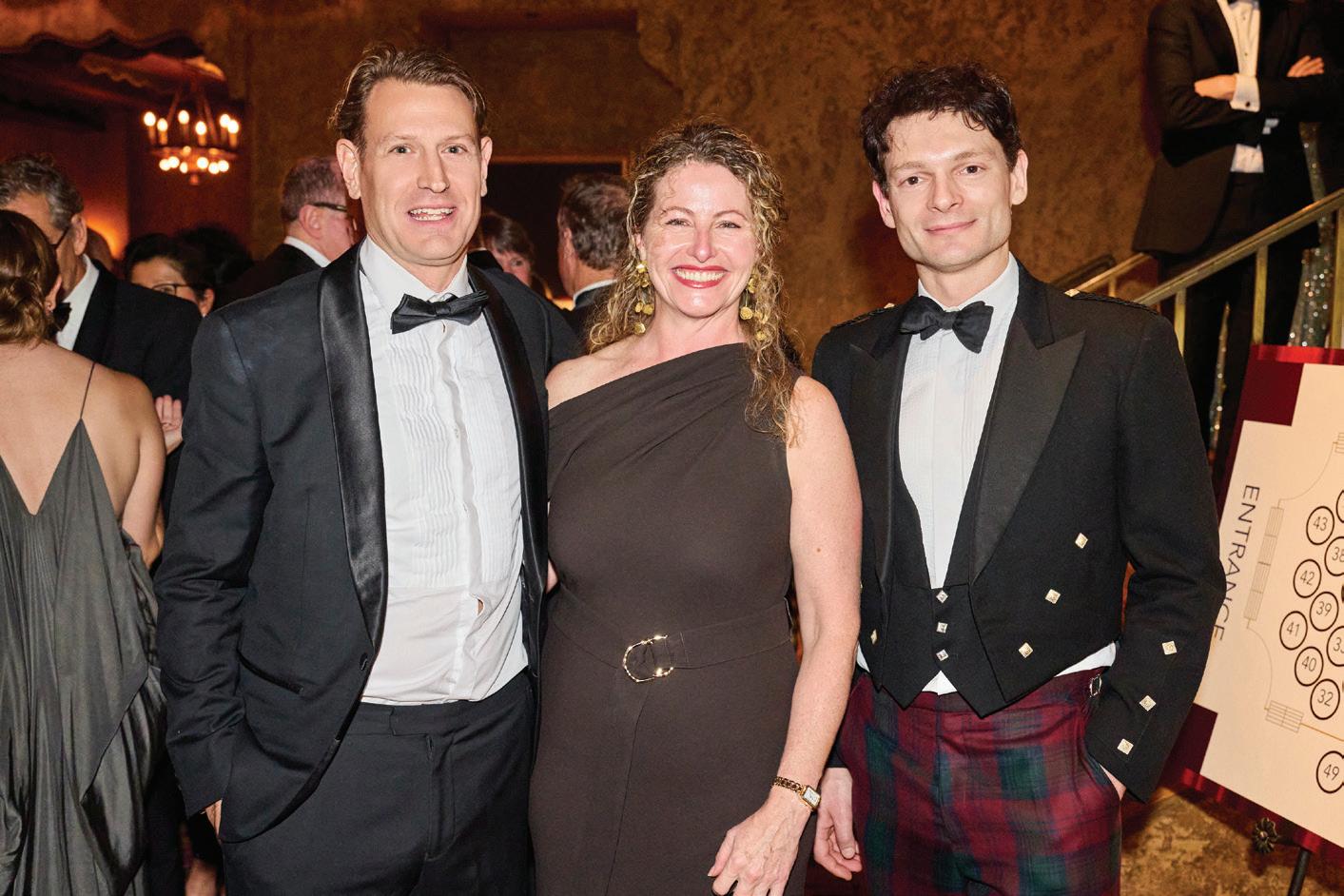
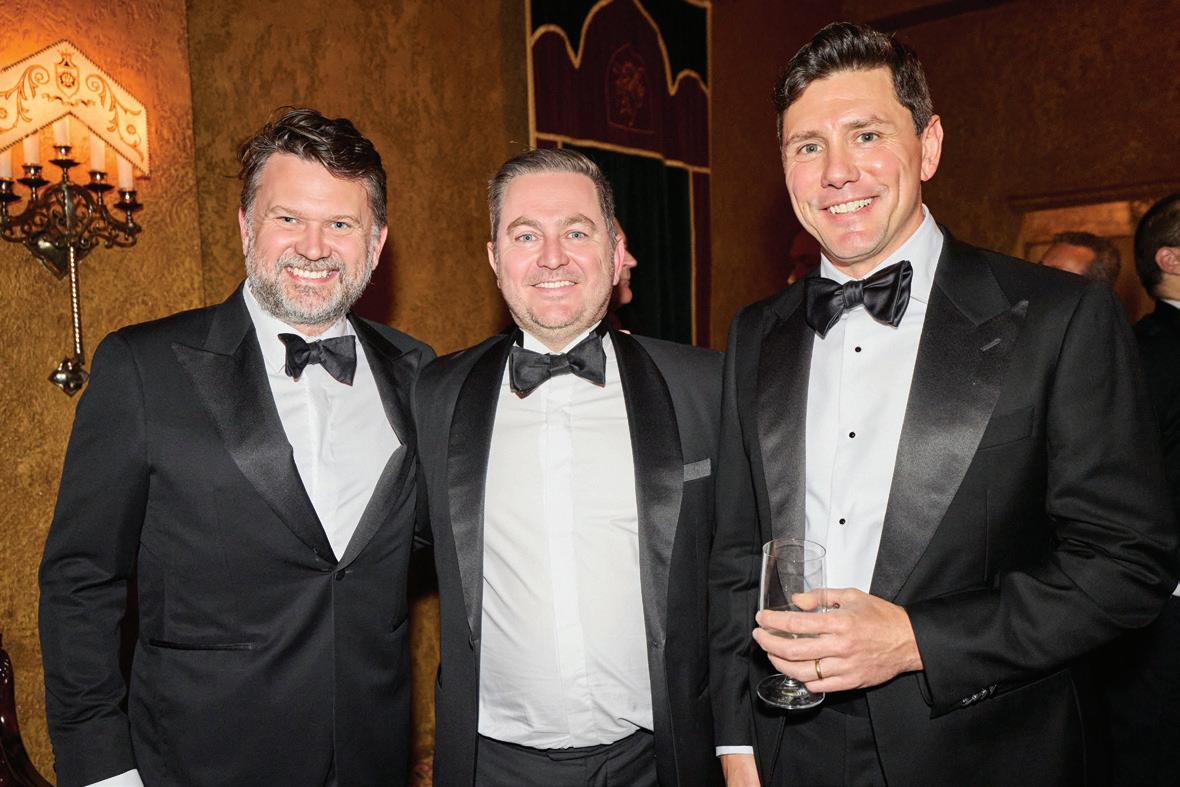
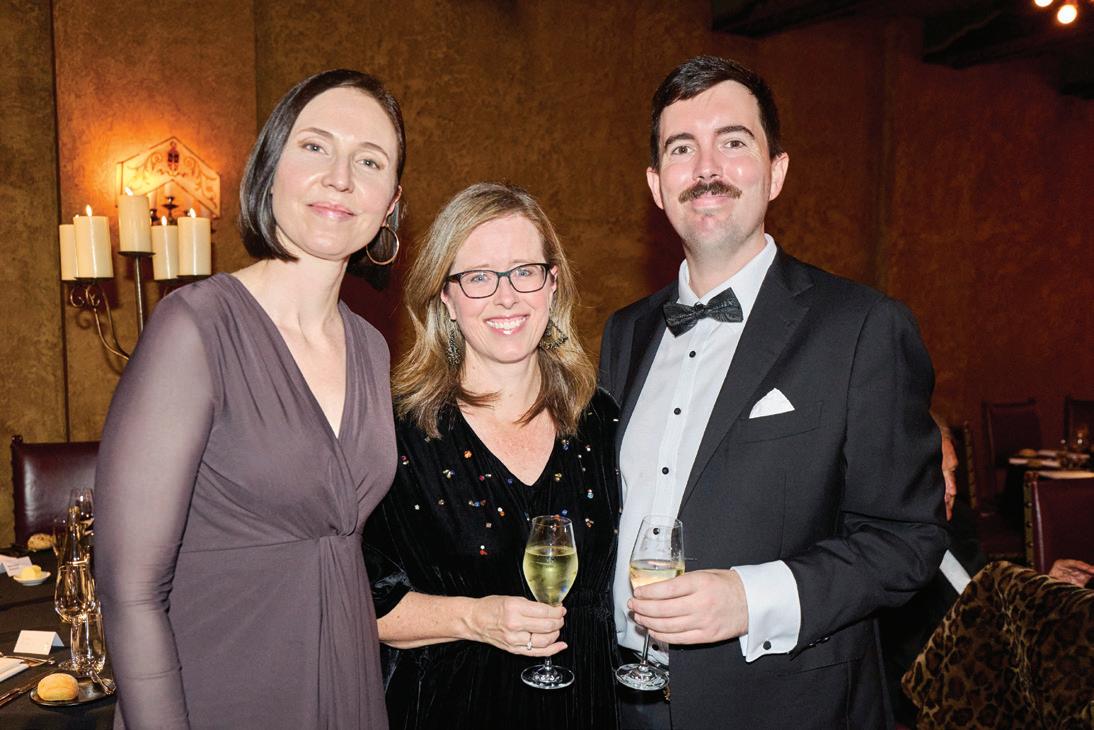
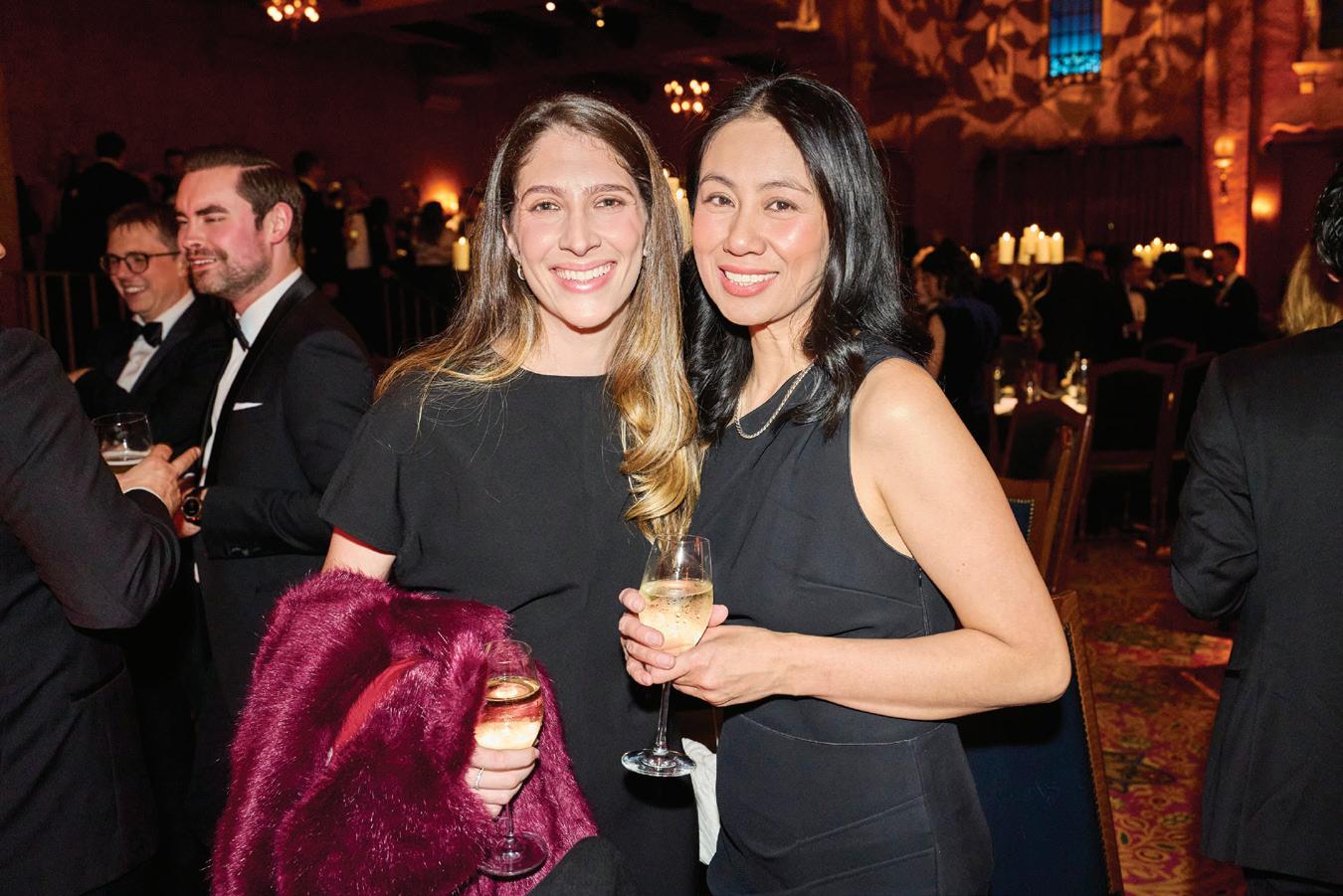

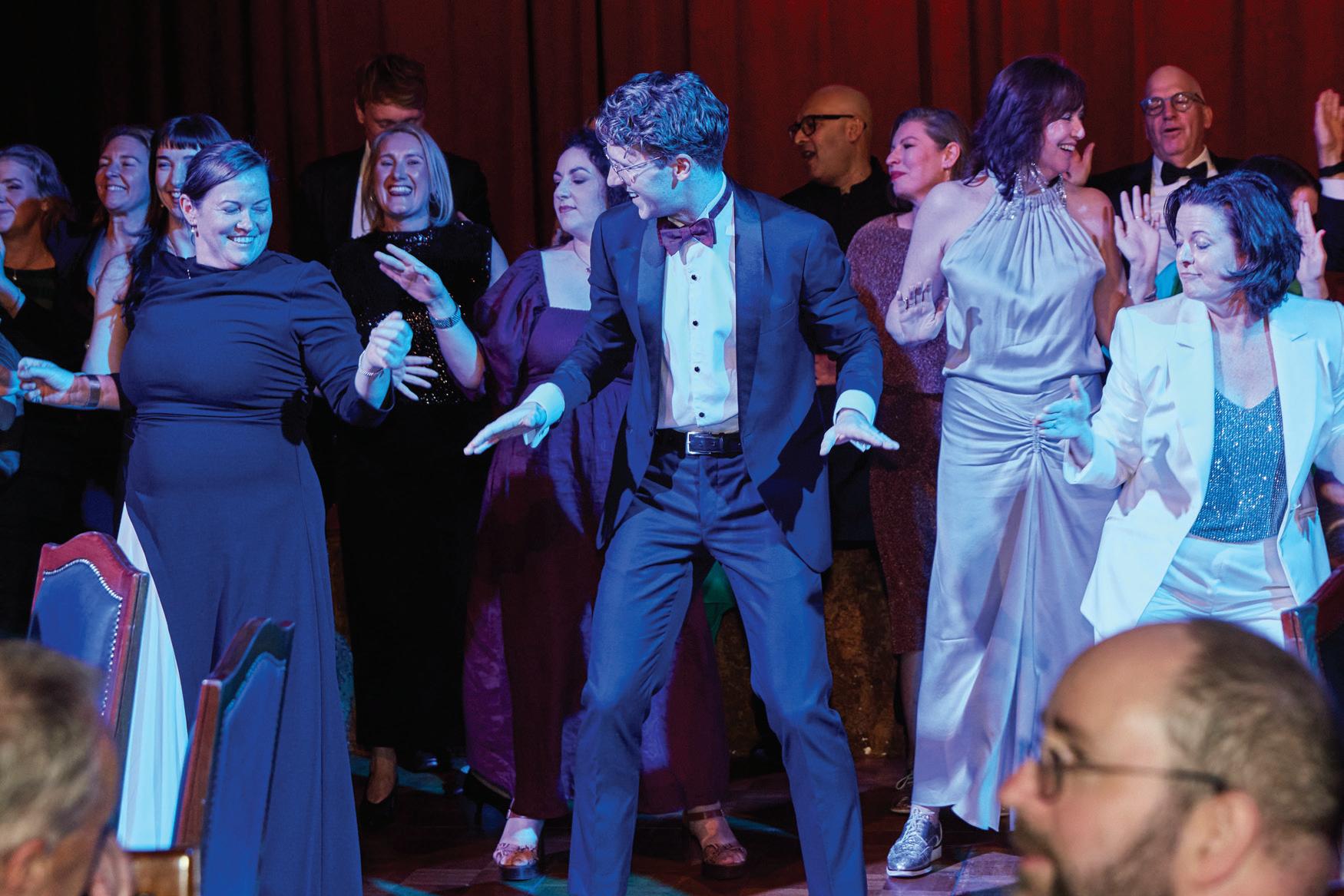
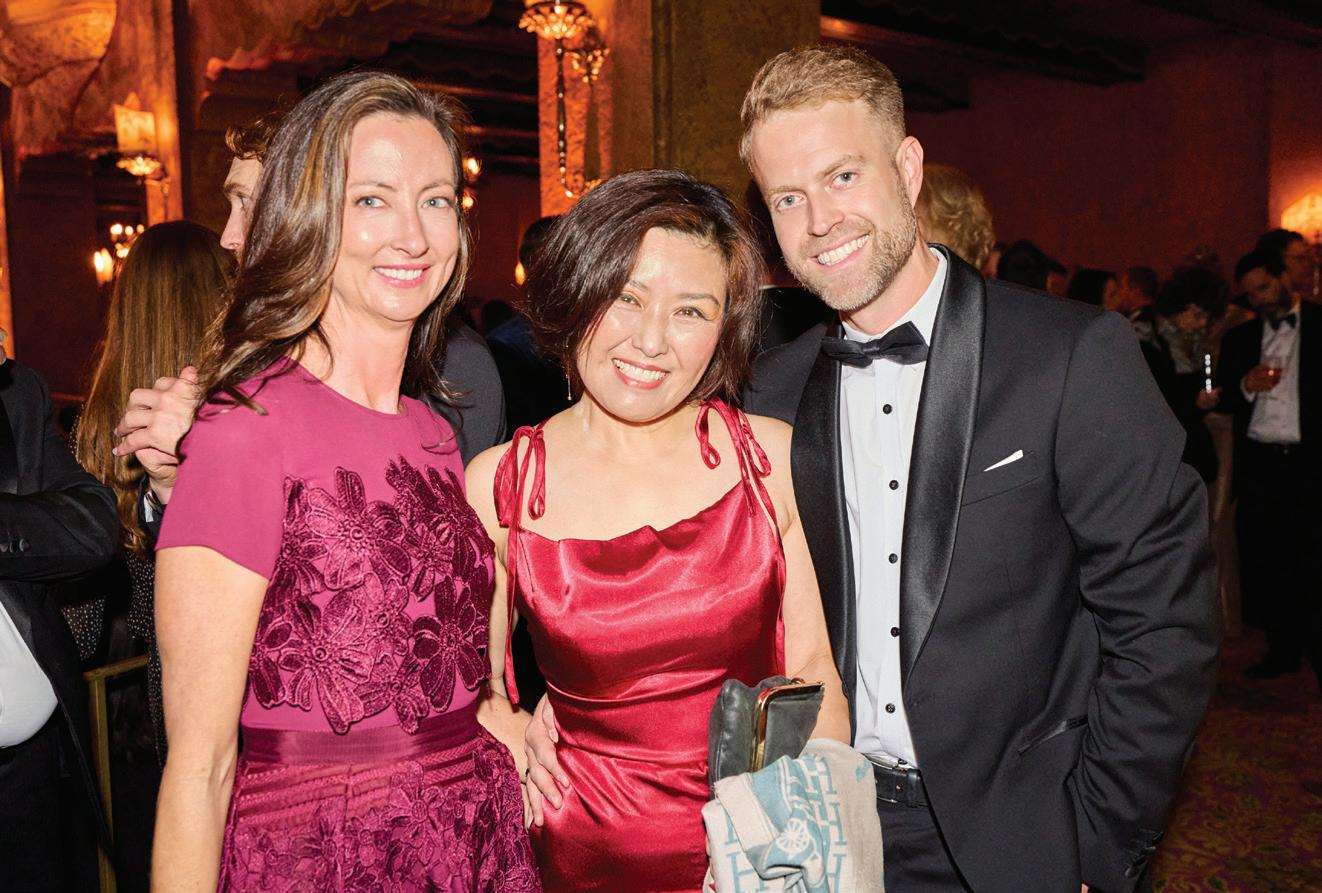
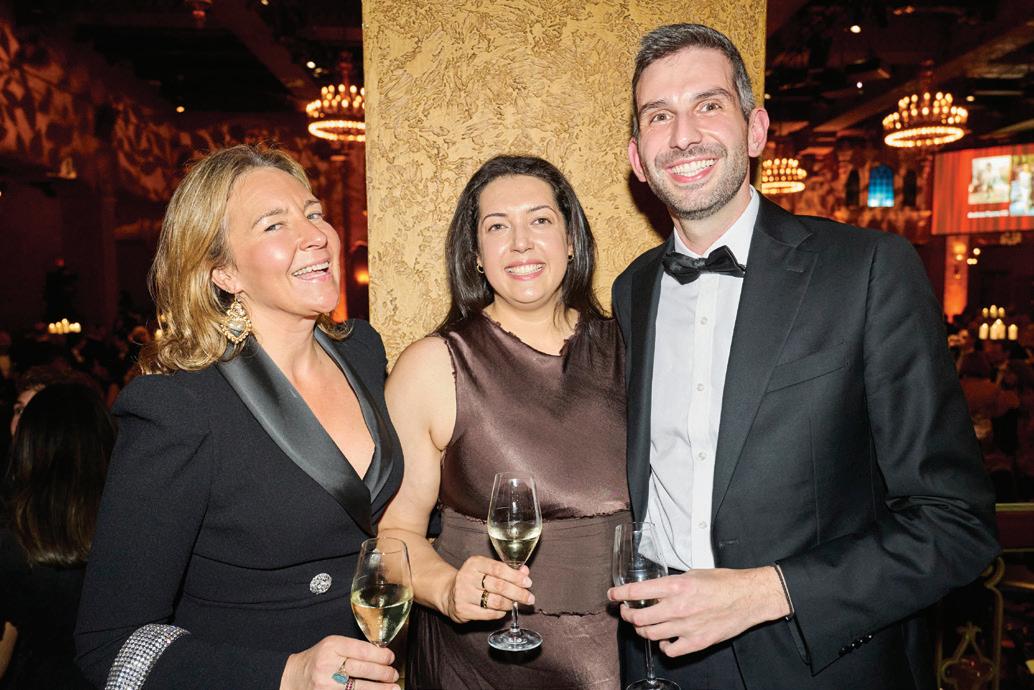
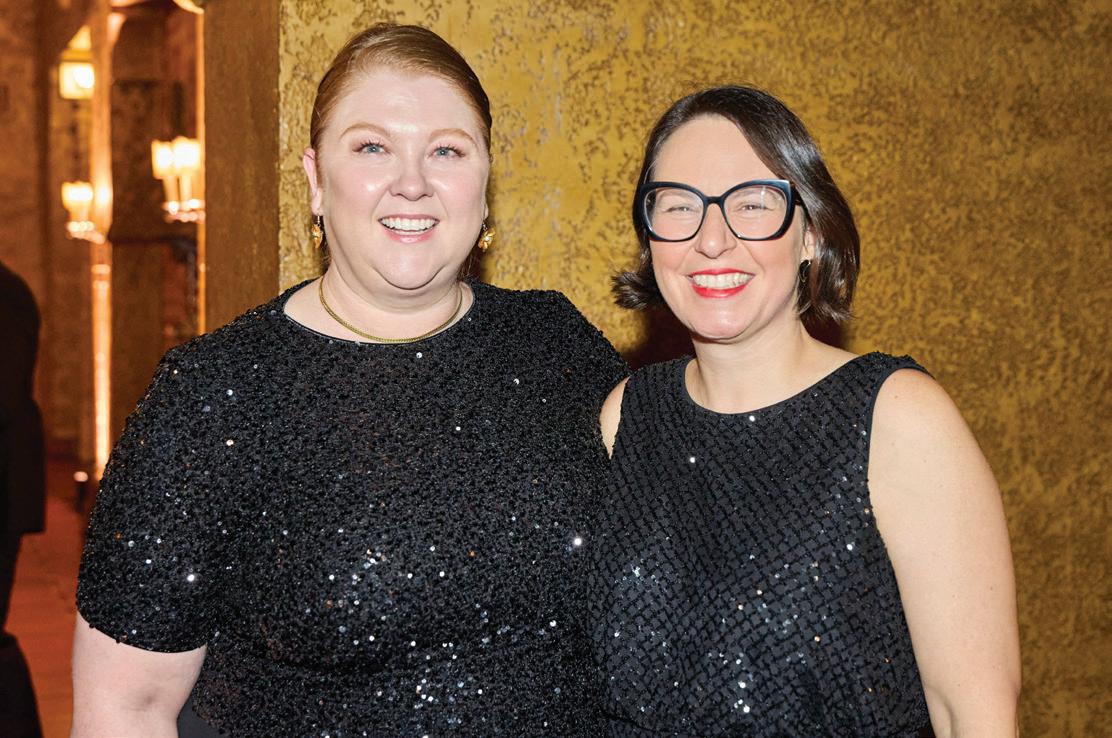
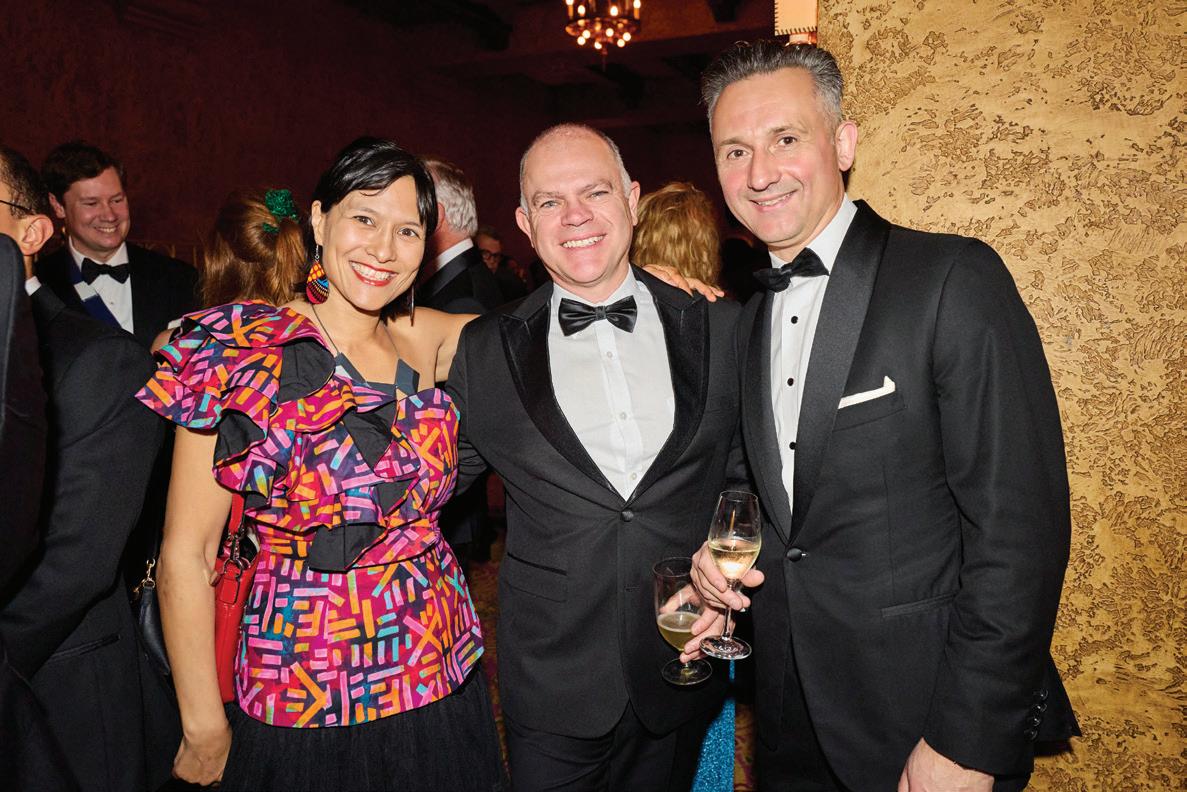
1. Julia Nikolic, Tim Farhall and Amanda Storey 2. Colette Mintz and Franceska Leoncio 3. Martha Browning and Alannah Slater
4. Oliver Scoullar-Greig, Tania Wolff and Lachlan Molesworth
5. Cait Storr, Lauren Gurry and Dayne Kingsford 6. Chris Winneke KC, the Hon Justice O’Connell and Sharon Lacy SC
7. Olivia Kefford, Zoe Hough, Peter Baccanello and Elliott Young 8. Stephen Scully, Andrew Saunders and Tom Ballantyne
9. Her Honour Magistrate Emily Allen and Sarah Keating SC
10. The Hon Justice Sloss and Bill Stephenson 11. Her Honour Magistrate Zoe Broughton, Nisha Patel and Pierce Russell 12. Simona Gory and Tess Simpson 13. Patrick O’Bryan-Gusah and Rachel Doyle SC 14. Diana Price and Emma Peppler
15. Eliza Saunders, Lily Yan and Christopher Lindsay 16. Evelyn Tadros, Dr Adam McBeth and Nik Dragojlovic.
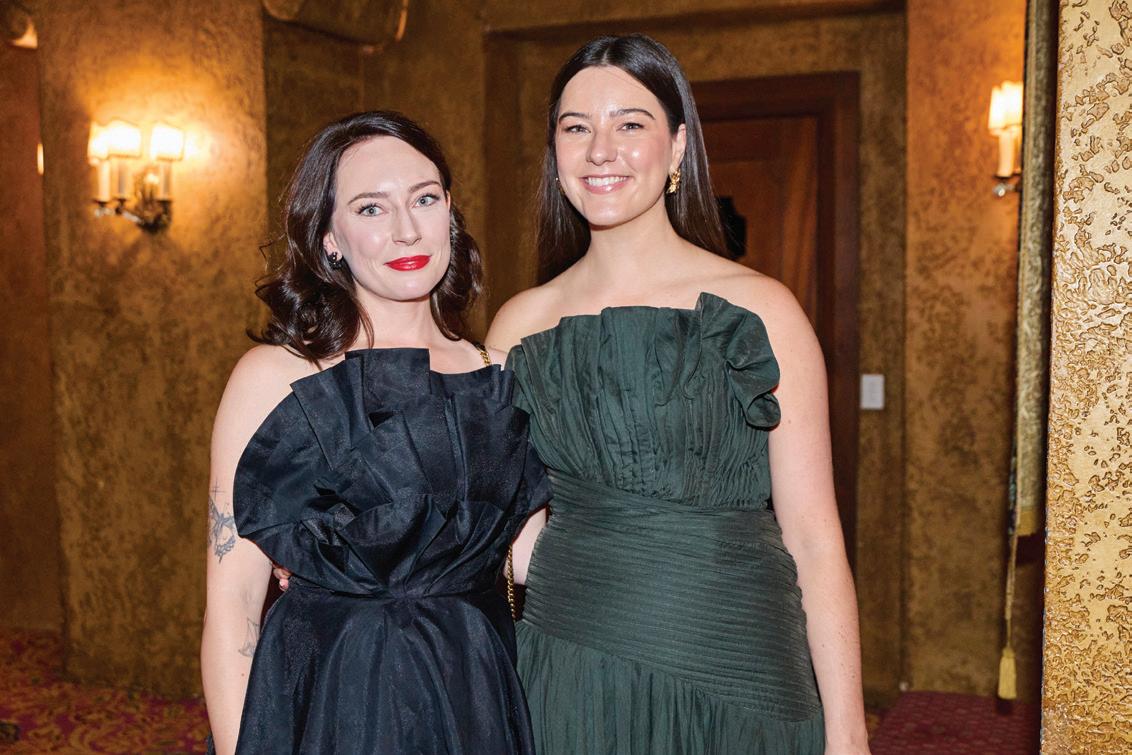
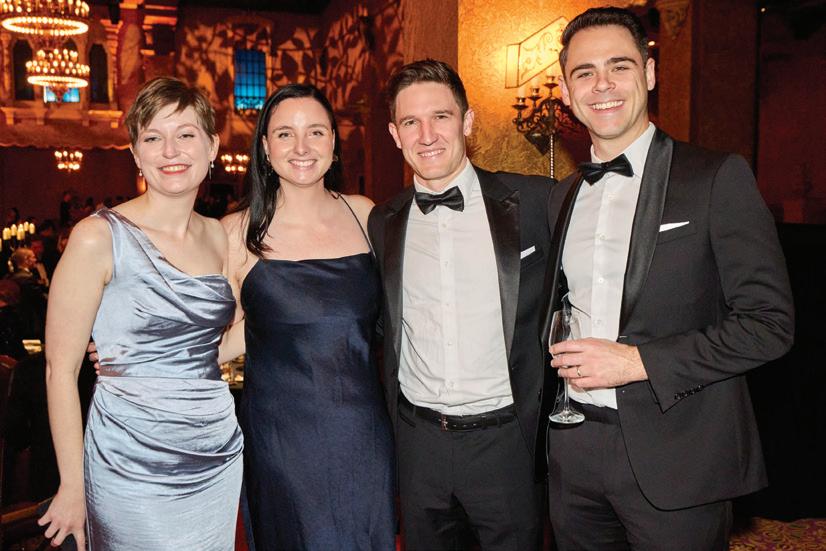
In the High Court, Jeff Sher appeared intervening for the Northern Land Council and the Central Land Council. Sher also appeared in Povey,18 as counsel for an airline, in which he successfully convinced the High Court that the cramped conditions of airline flights resulting in DVT was no ‘accident’, which somehow excluded them for all liability and, one assumes, secured him an upgrade on flights for life.
Our great orator Jeremy Ruskin regaled this dinner a few years ago with stories about his skills in court that revealed the power and brute force of his advocacy.
And of course there was Ron Castan, who often appeared in the High Court, most famously as lead counsel for Eddie Mabo. He appeared in so many leading cases: Koowarta, 19 the Tasmanian Dam case, 20 and Salemi 21 In a powerful address at the annual dinner of the Australian Jewish Democratic Society in 1993, Castan spoke of racism and discrimination in this country, observing that ‘it does seem to me that as members of the Jewish community and as members of the wider Australian community, we have an obligation to concern ourselves with larger issues as well as those issues within our own community.’
In the recent ABC series on the High Court which dealt with four of the most important High Court cases, three out of the four were argued by one of Goldberg, Merkel or Castan.
The influence of Victorian Jewish barristers has also been profound in the criminal law. Joan Rosanove’s brother Jack Lazarus was a towering figure and leader of the Criminal Bar. Lillian Leider was a storied criminal trial advocate, taking silk in 1992 alongside her friend and colleague Betty King. And of course there is Robert Richter. Who wouldn’t want a nickname like “the Red Baron”. He argued Pantorno, 22 Pollitt, 23 Rogerson, 24 and Lawless25 in the High Court.
In Sydney, they will always tell you that Sir Frederick Jordan was the greatest judge not to be appointed to the High Court. And in Victoria
the names Leo Cussen and Tom Smith are often discussed in the same way. To that august list can be added Mark Weinberg. Weinberg was an outstanding barrister and judge. As counsel he appeared before the High Court in cases such as Grollo v Palmer, 26 He Kaw Teh,27 Coco,28 Osland,29 Nicholas,30 and Polyukhovich.31
I have already noted that Isaacs and Cohen were in the Federal Parliament. I would also like to acknowledge the work of Mark Dreyfus and Linda Dessau who was an excellent Governor of this State and together with her husband Tony Howard, a great supporter of our Bar.
Of course I have left many out.
To what extent Judaism played any role in their professional lives is not known to me. Some may have objected to being called out as a Jewish Barrister. And I am conscious that harmful stereotyping can be found in praise, not just festering in harmful tropes. And there is a sense of awkwardness in paying this tribute on Shabbat which means a number of our colleagues are unable to be with us.
But it can’t be a coincidence that such a small group within our society have had such a profound and positive influence on the Bar and the work of the High Court.
When I look across that list of advocates, their diversity stands out. They defy being type cast. They can’t be put in a single box.
Some were observant in their faith, while others lived secular lives.
They did not share politics: Lazarus was a lifelong communist, Issacs a committed protectionist, believing in tariffs and duties. Liberal and Labor preselections were sought by various of them.
Their areas of practice differed markedly, covering the full spectrum of work in the High Court.
Their style of advocacy varied enormously from the bookish to the masterful cross-examiner.
Some came from relative affluence; others arrived as refugees or came from families who had been decimated by
the Holocaust.
In each of their fields they made a difference. Three of them – Isaacs, Rosanove and Castan – have sets of Chambers named after them.
It is obvious that they share hard work, ability and a commitment to justice. Three great attributes of the Victorian barrister.
I am not so naive that I do not see that privilege continues to play a role in life at the Bar. But when I look across the century and more that this Bar has contributed to the life and work of the High Court, I also see that merit, ability and industry play a much greater role. And the benefit of diversity in all its forms.
I have said before that the two great emotional states of the Bar are schadenfreude and envy. On a less cynical note, I am sure that pride in the Bar and in the work that you do remains a strong driving force to join and remain at the Bar.
It is my expectation that this Bar will continue to argue the big cases in the High Court; just not from my judgments please. The burden now falls on you to continue this great tradition.
We should all be proud of being members of this great Bar. Tonight, I pay particular tribute to our Jewish colleagues, and I do so at a time when many I am sure have felt exposed and anxious. I hope that the collegiality of the Bar is a source of comfort and strength.
The barristers I have mentioned and many that I have not, remind us of the importance of ability, hard work and commitment to justice.
And a bit of chutzpah doesn’t hurt. Thank you for listening.
1 Amalgamated Society of Engineers v Adelaide Steamship Co Ltd (1920) 28 CLR 129.
2 Charles Coppel on Elias Godfrey Coppel CMG QC LLD on the Supreme Court of Victoria | Forum.
3 Shepherd v Commissioner of Taxation (Cth) (1965) 113 CLR 385; [1965] HCA 70.
4 Batagol v Commissioner of Taxation (Cth) (1963) 109 CLR 243; [1963] HCA 51.
5 Bank of NSW v Commonwealth (1948) 76 CLR 1; [1948] HCA 7.
6 Namatjira v Raabe (1959) 100 CLR 664.
7 Briginshaw v Briginshaw (1938) 60 CLR 336.
8 Carter, Woman in a Wig (Lansdowne, 1970) 11.
9 Victorian Bar, ‘Pioneering Women Barristers Part 1 – Joan Rosanove’.
10 https://law.unimelb.edu.au/alumni/ mls-news/issue-20-november-2018/ an-accidental-lawyer.
11 https://www.fedcourt.gov.au/digital-law-library/judges-speeches/justice-moshinsky/moshinsky-j-20151111.
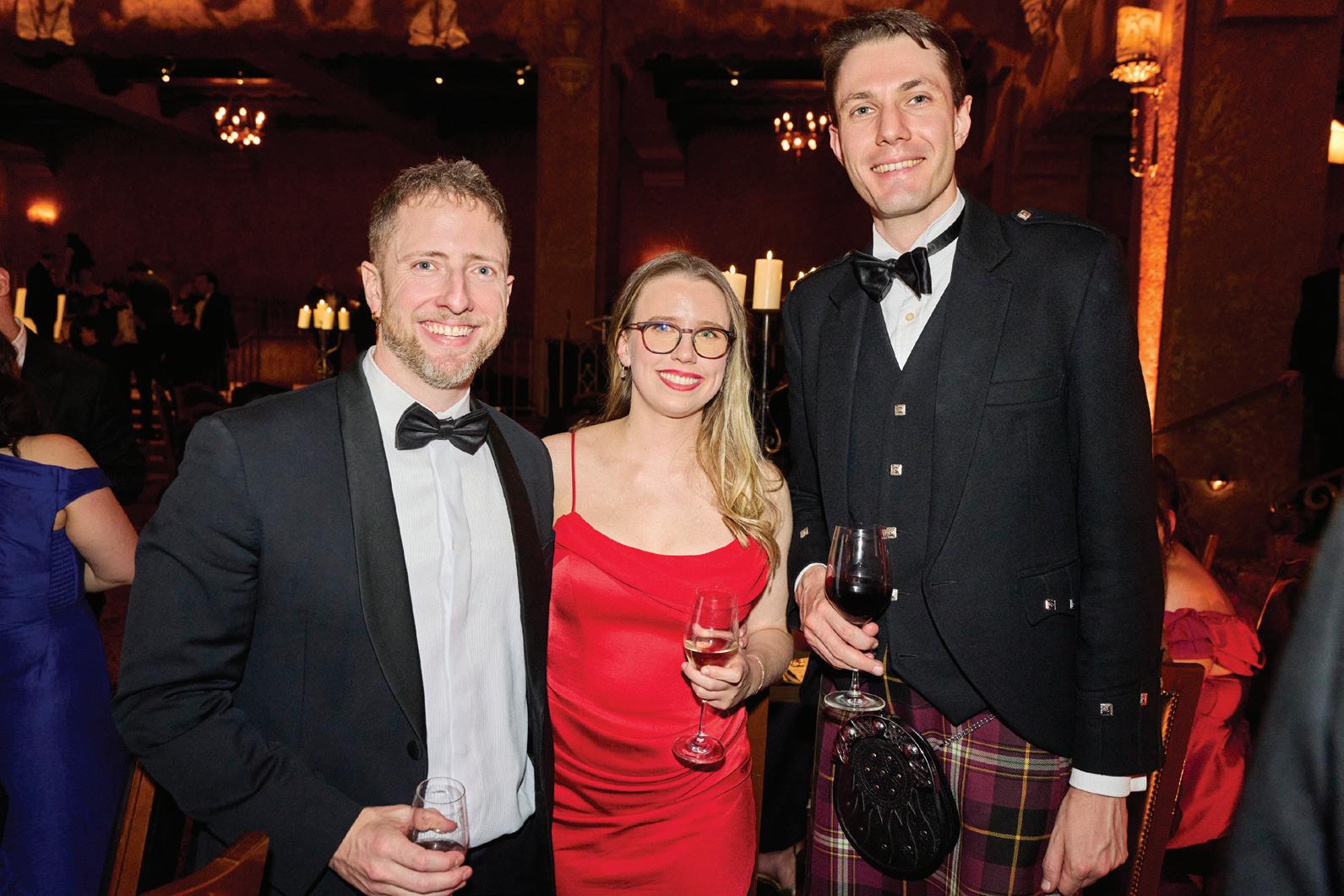
12 Croome v State of Tasmania (1997) 191 CLR 119.
13 Queensland Wire Industries Pty Ltd v Broken Hill Proprietary Co Ltd (1989) 167 CLR 177.
14 Roach v AEC and Commonwealth of Australia (2007) 233 CLR 162.
15 Kruger v Commonwealth (1997) 190 CLR 1.
16 Dow Jones & Company Inc v Gutnick (2002) 210 CLR 575.
17 Wik Peoples v Queensland (1996) 187 CLR 1.
18 Povey v Qantas Airways Ltd (2005) 223 CLR 189.
19 Koowarta v Bjelke-Petersen (1982) 153 CLR 168.
20 Commonwealth v Tasmania (1983) 158 CLR 1.
21 Salemi v Minister for Immigration & Ethnic Affairs (Cth) (1976) 137 CLR 388; (1977) 137 CLR 396.
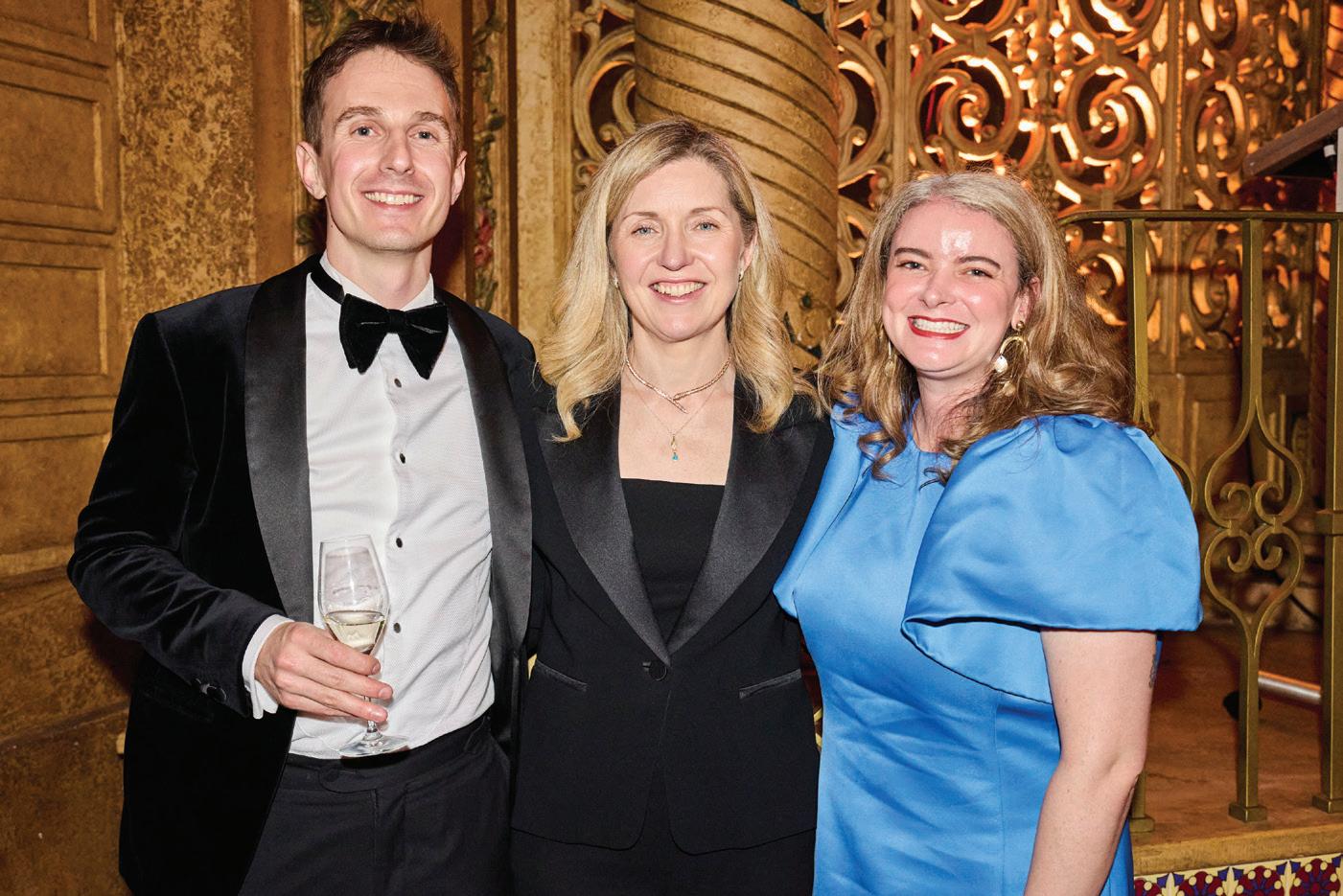
22 Pantorno v The Queen (1989) 166 CLR 466.
23 Pollitt v The Queen (1992) 174 CLR 558.
24 R v Rogerson (1992) 174 CLR 268.
25 Lawless v The Queen (1979) 142 CLR 659.
26 (1995) 184 CLR 348.
27 He Kaw Teh (1985) 157 CLR 523.
28 Coco v The Queen (1994) 179 CLR 427.15.
29 Osland v The Queen (1998) 197 CLR 316.
30 Nicholas v The Queen (1998) 193 CLR 173.
31 Polyukhovich v The Commonwealth (1991) 172 CLR 501.
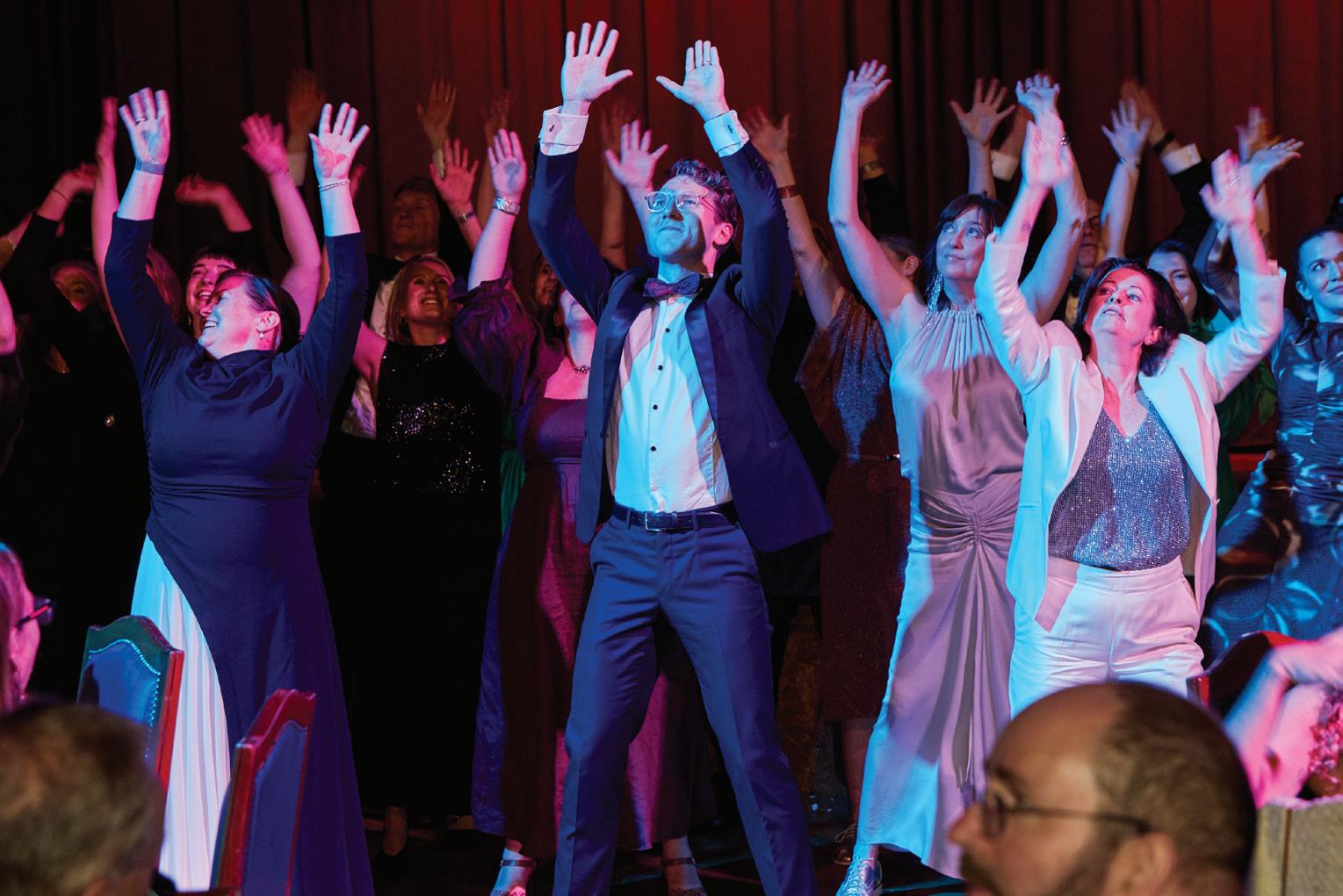
1. Josh Cunningham, Taylah Stretton and Andrew Spierings
2. Justin Hannebery KC, Amanda Utt and Tim Kapustin
3. Luke Chircop and Shakti Nambiar 4. Lindy Barrett and Olivia Callahan
5. Adrian Muller, Andrew Woods SC and Robert O’Neill SC
6. James Samargis, Karen Mak and Dr Ken HY Cheng 7. Alec Deasey, Her Honour Judge Sanger and Hollie Crossan 8. Gemma Cafarella, Ruth Hamnett and Moya O’Brien 9. His Honour Judge Matthews, Sarah Keating SC, Chief Judge Amanda Chambers and Her Honour Magistrate Zoe Broughton 10. Alissa Crittenden and Xuelin Teo 11. Róisín Annesley KC, Brittany King, Krystyna Grinberg and Karen Liu 12. Kylie WestonScheuber 13. Patrick O’Bryan-Gusah, Jenny Firkin KC and Rachel Doyle SC 14. Houston Ash, Eliza Saunders, Claire Jago, Harrison Reed and Alex Wolf 15. Hugh Crosthwaite and Jacob McCahon 16. Harriet Haig, James Garrick, Sharni Stacey, Alister Merry, Tyra O’Neill, Nikolas Goulas, Benjamin Scaramozzino and Christopher Lindsay.
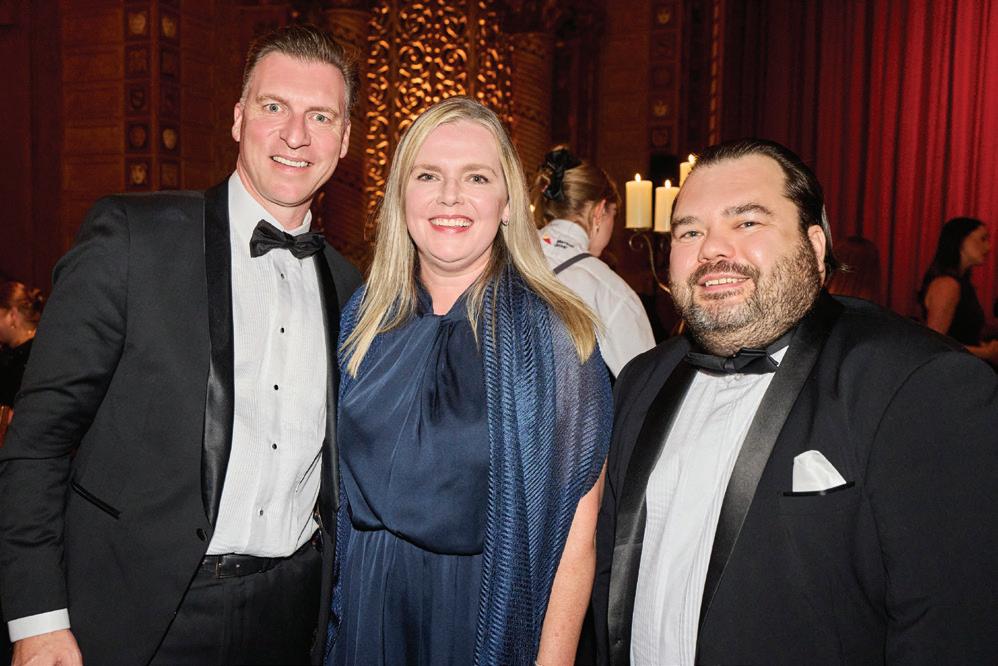
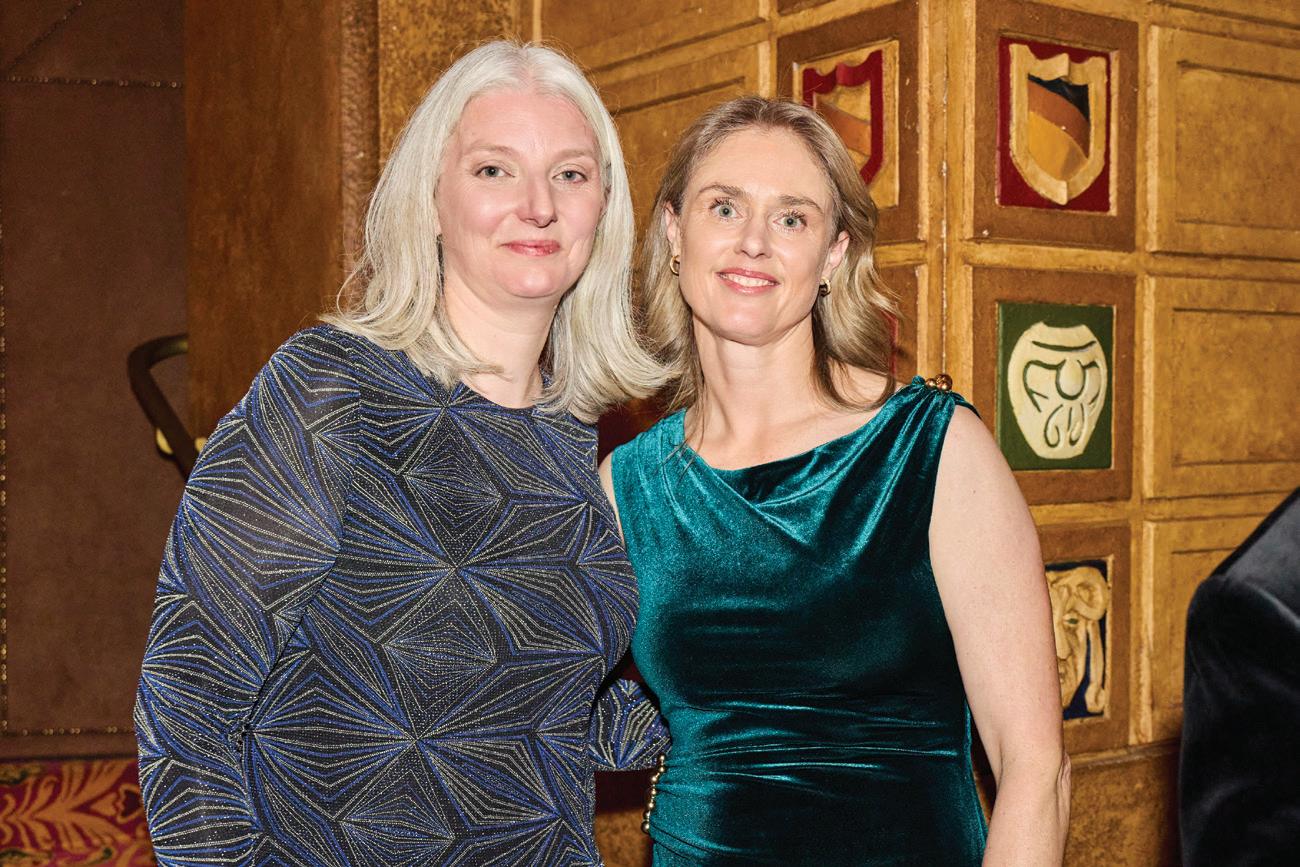
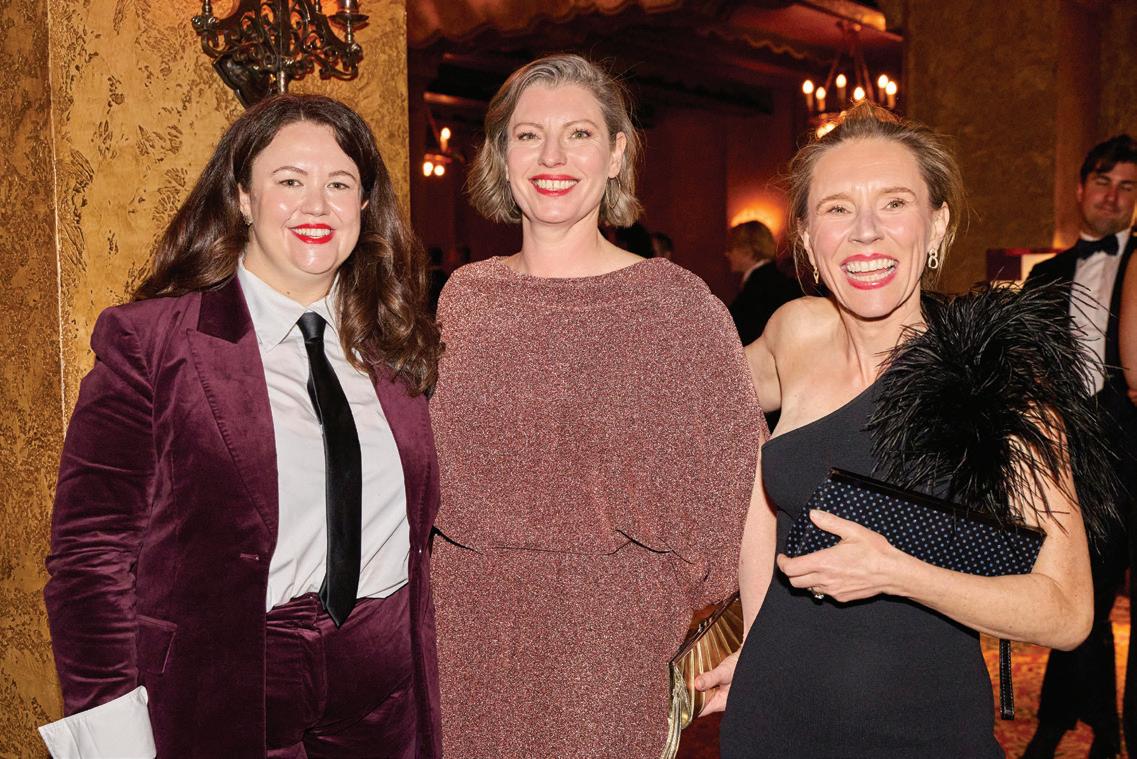
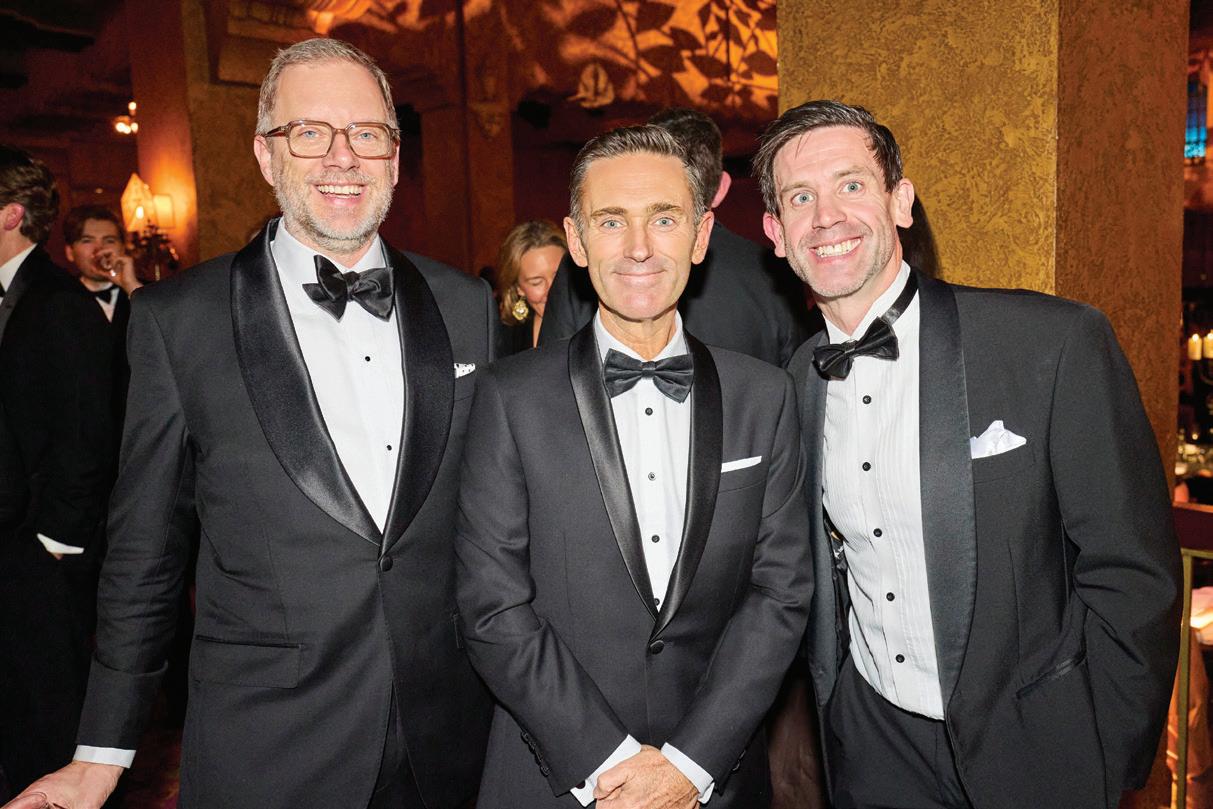
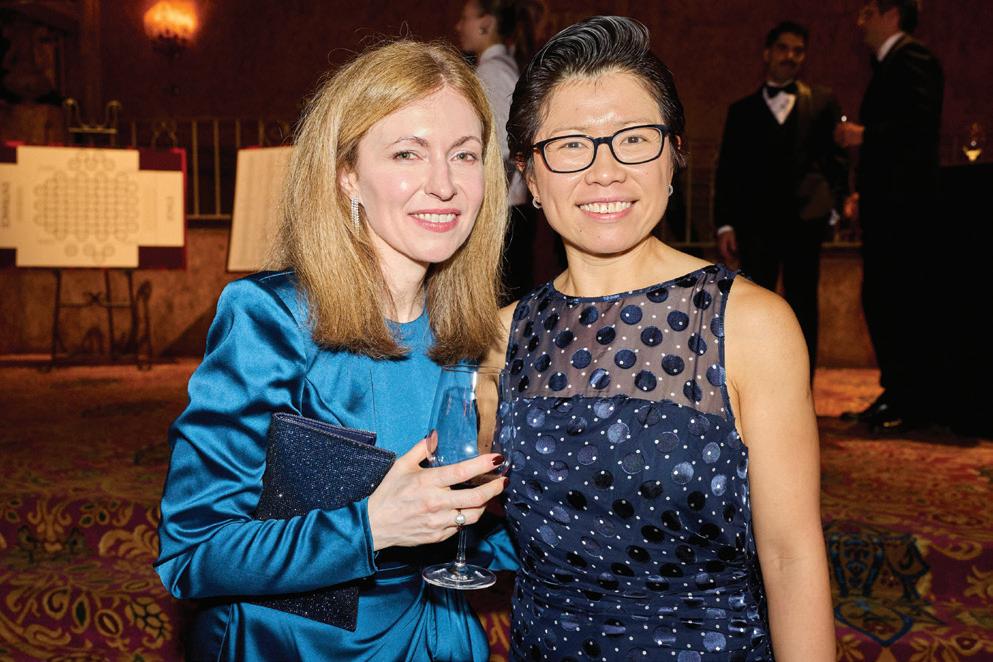
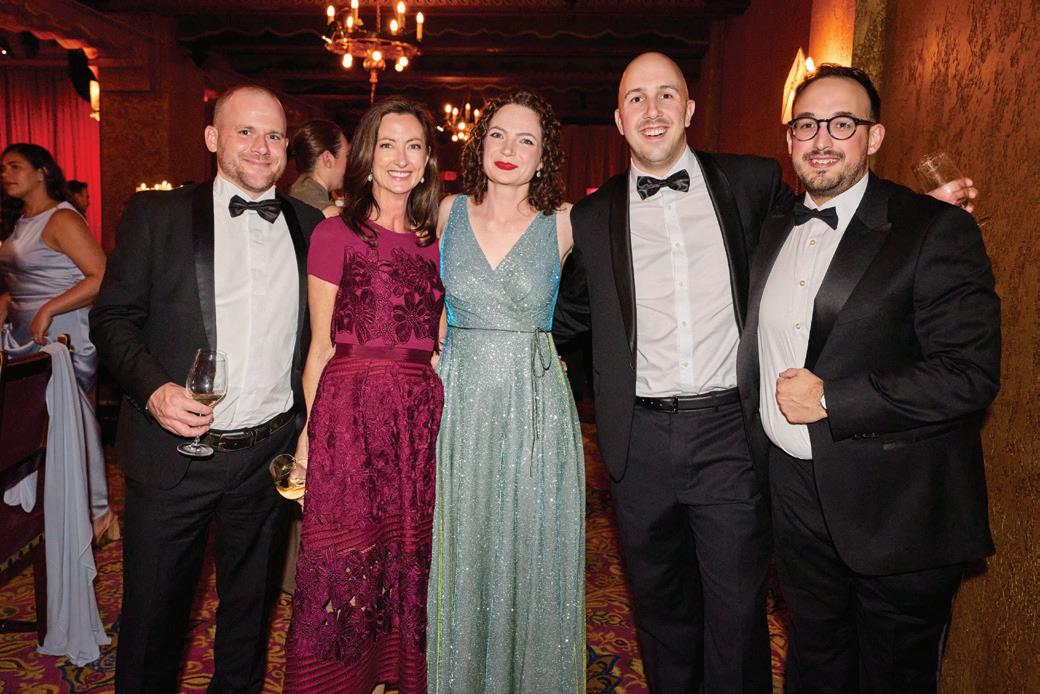
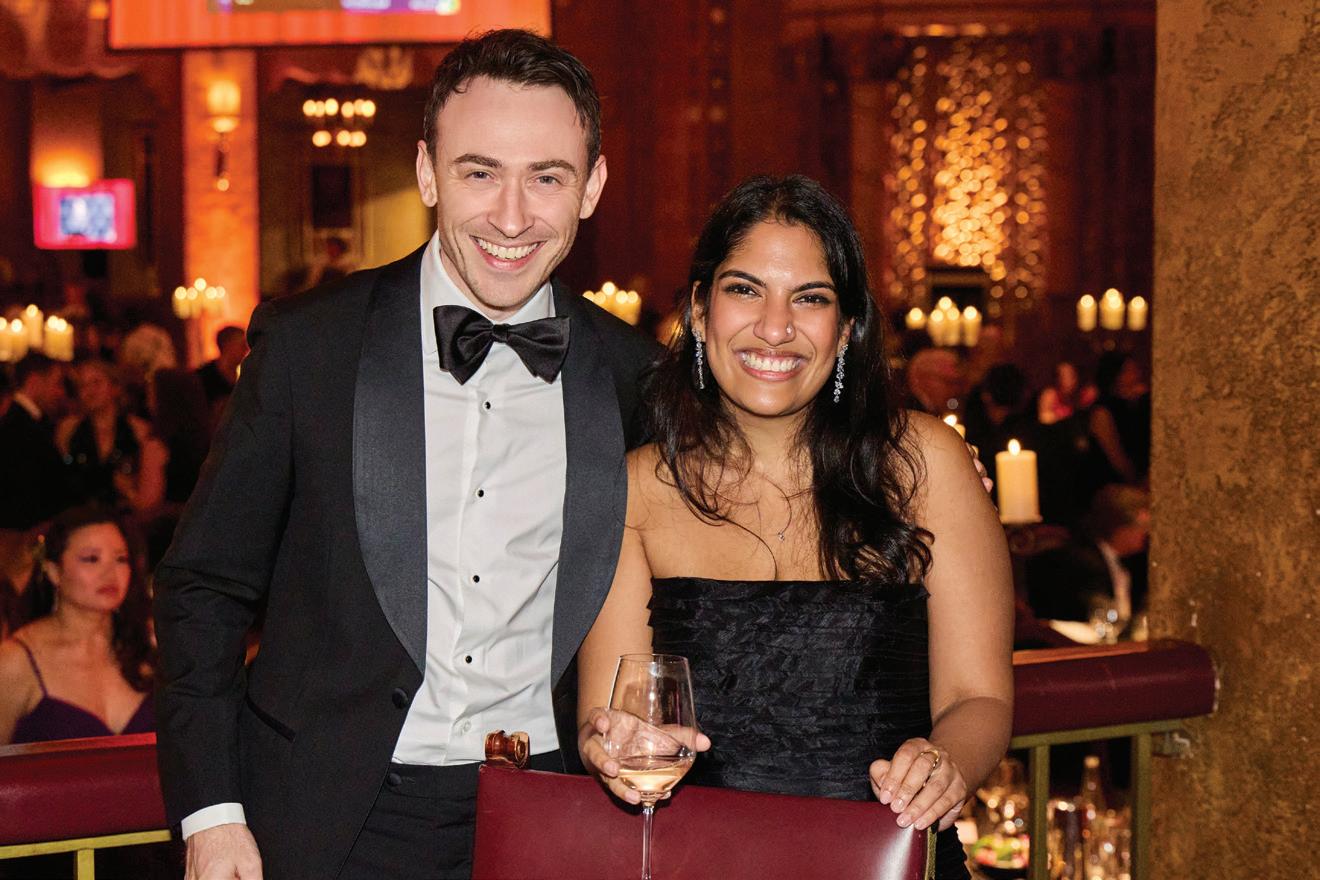
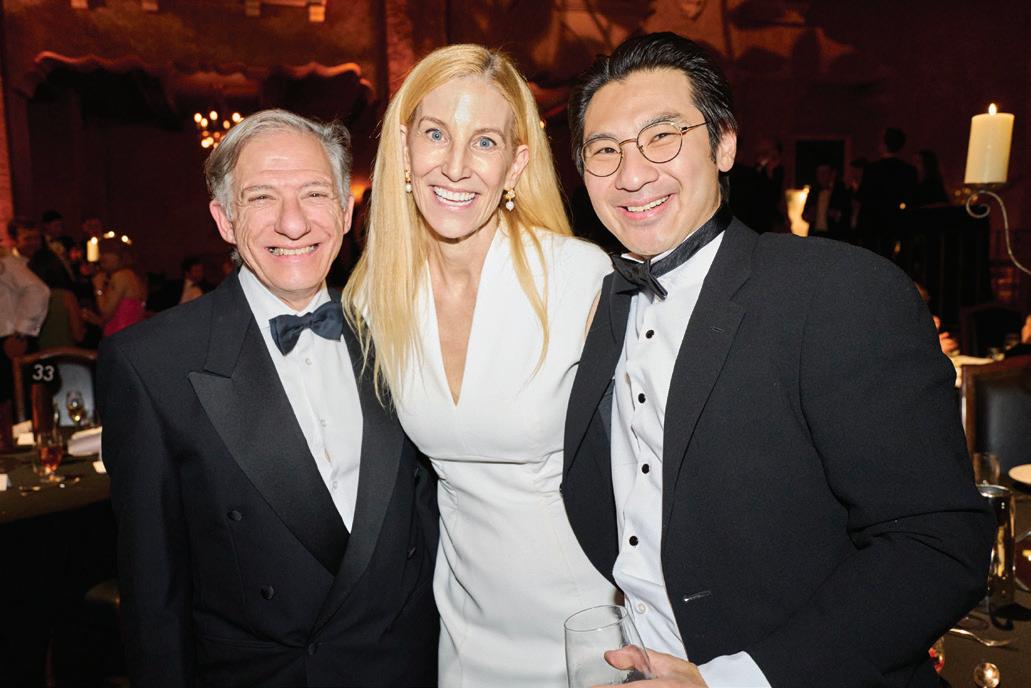
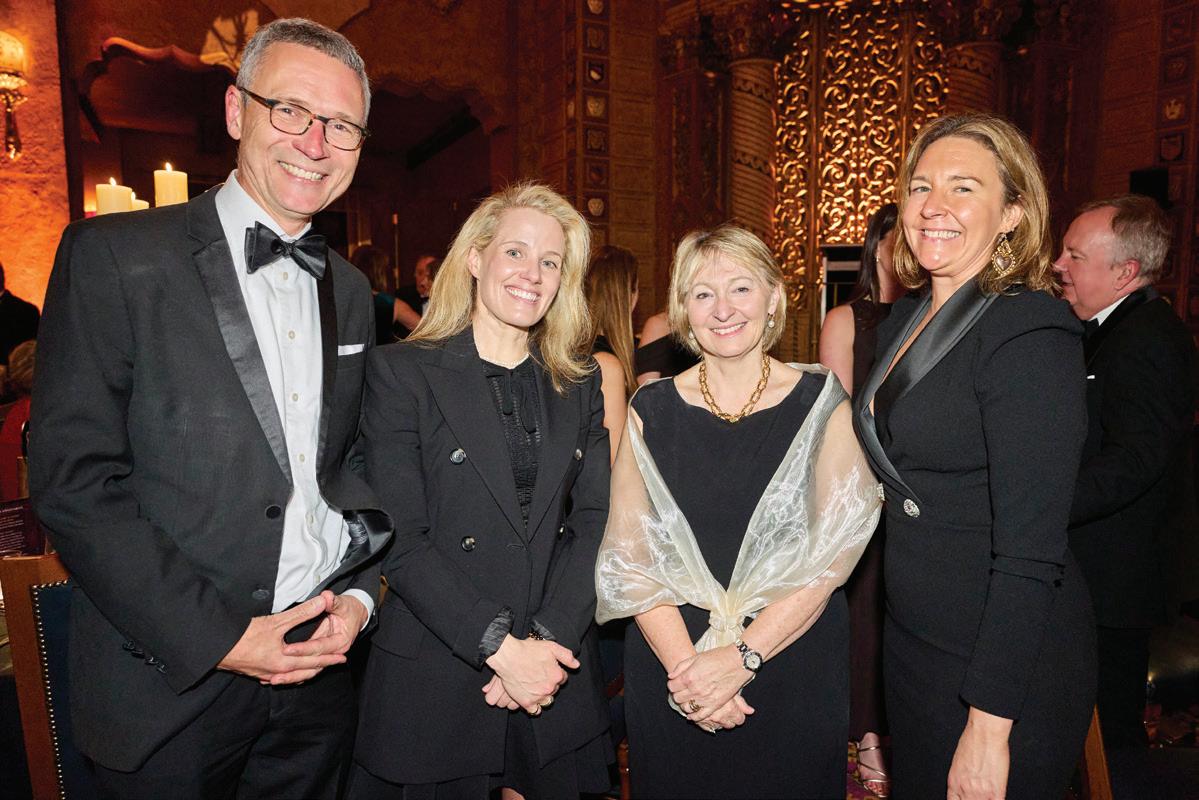
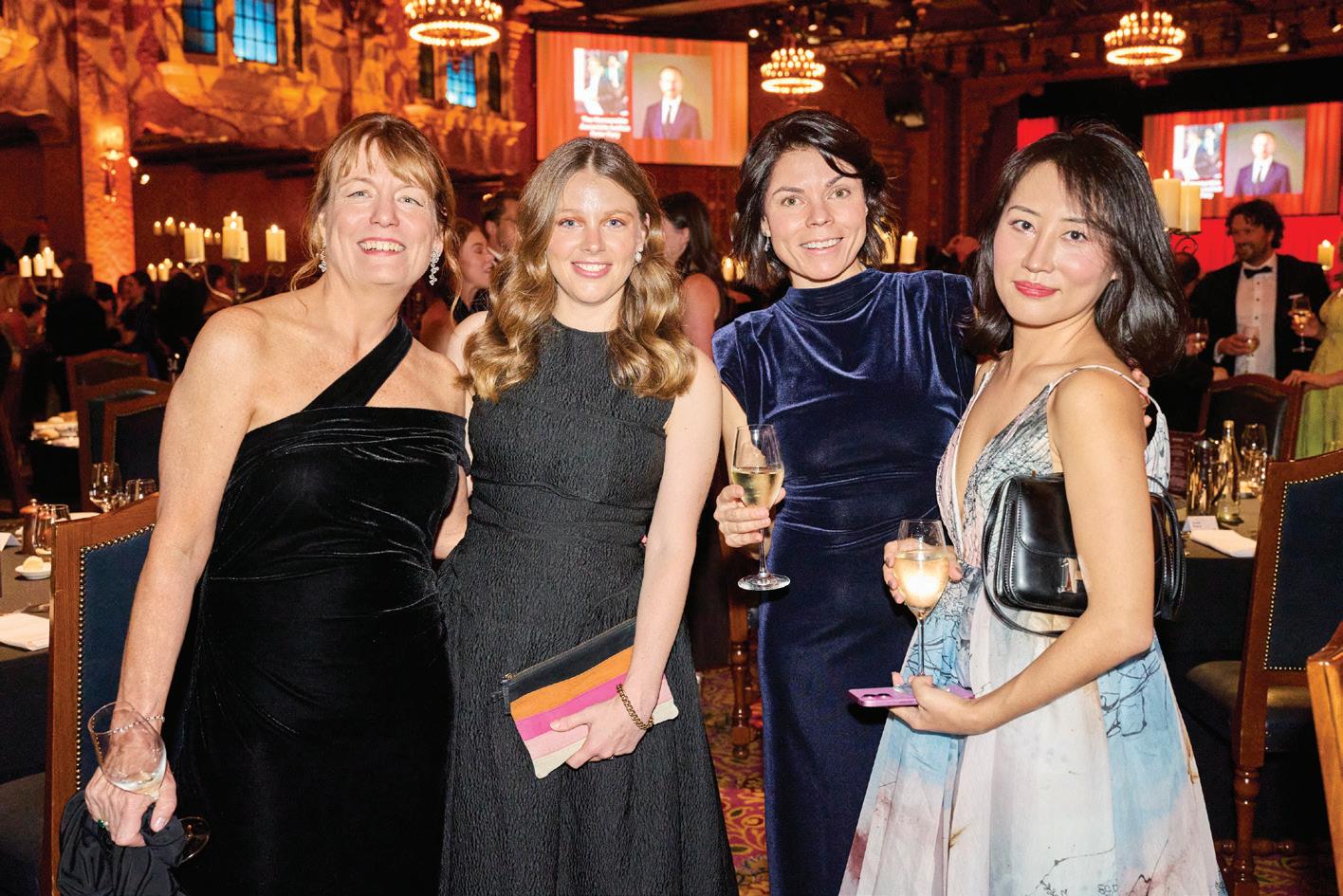

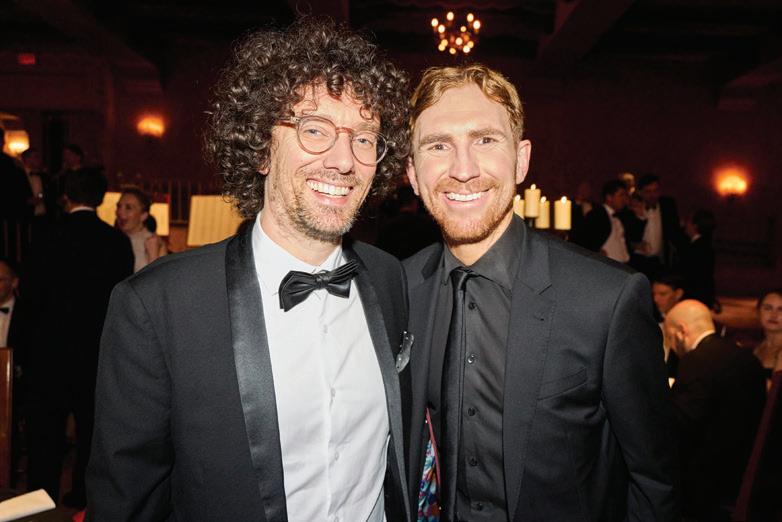
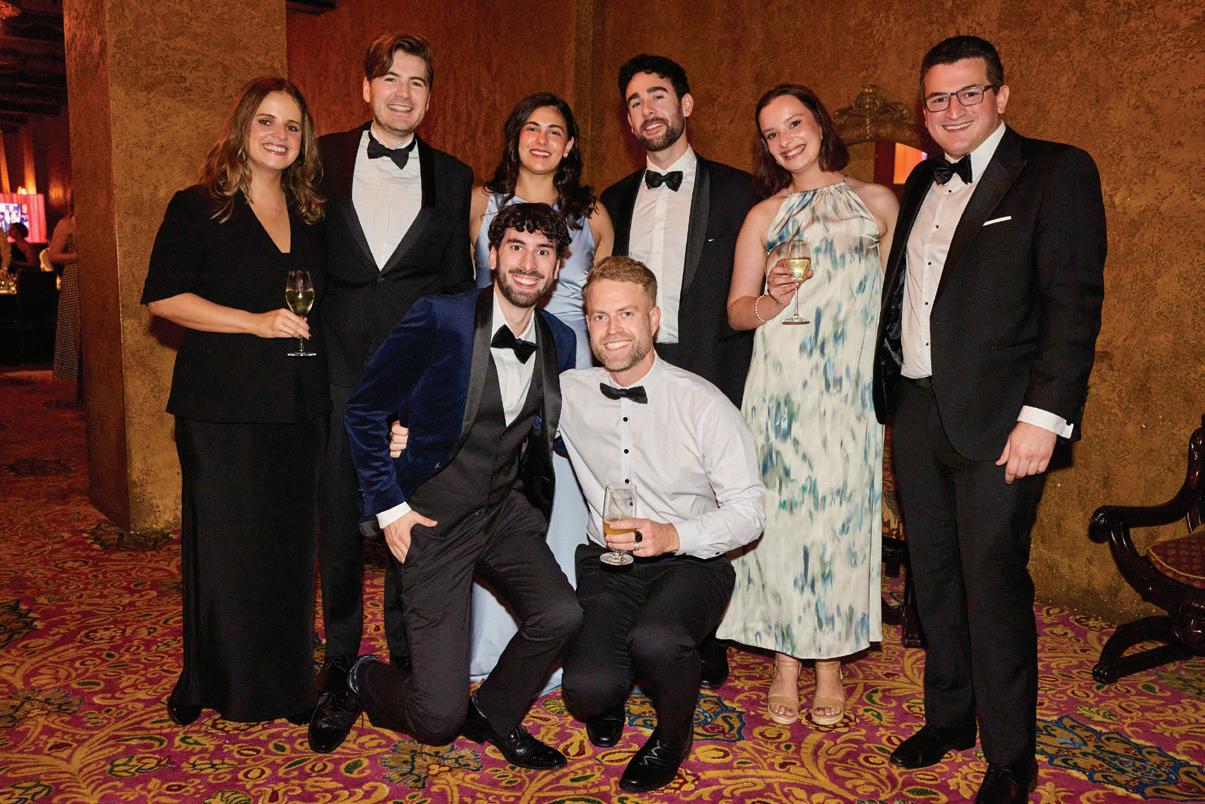
VICTORIAN BAR NEWS
Victorian

Internship program fostering diversity at the Bar
JO DOUGHERTY
In 2023, the Victorian Bar launched an innovative program (the first of its kind in Australia) whereby students from marginalised backgrounds could apply to participate in the Diversity Internship Program, which offered paid work experience to law students from culturally and racially marginalised backgrounds. Its aim was to provide opportunities for those participants to gain first-hand experience and build connections within the legal profession, particularly barristers and judicial officers.
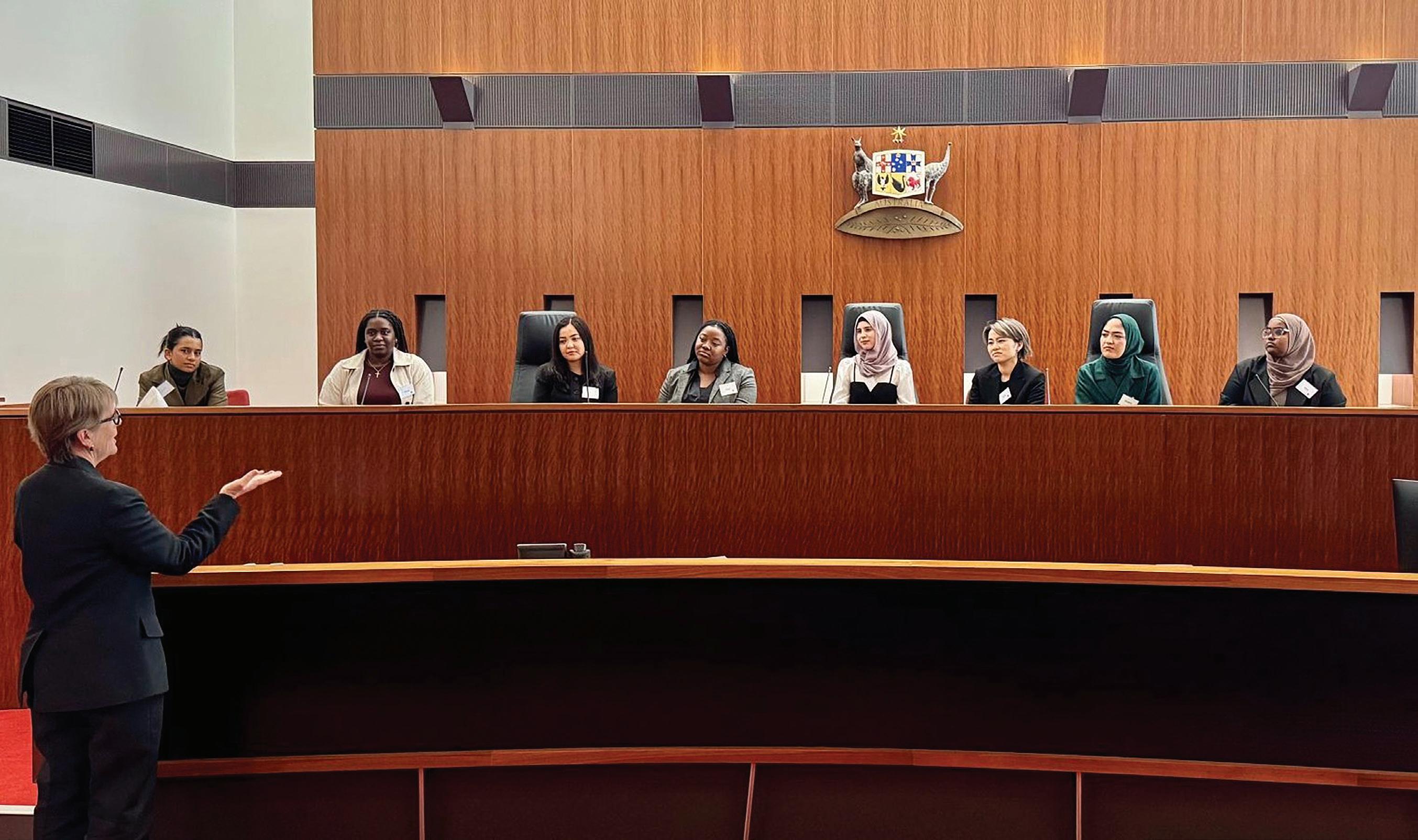
One of the Victorian Bar’s strategic objectives is “to maintain and increase the diversity of the Bar to reflect the community it serves”. One of the strategies that support this objective is to implement programs and initiatives that support and increase the diversity of the Bar via the attraction, retention and progression of traditionally underrepresented groups.
The Diversity Internship Program, under the stewardship of the Equality and Diversity Committee, was established with support from the Federal Court, Supreme Court and County Court—initially with three participants. Following the inaugural program’s success, and through the generous support of the Victorian Bar Foundation and the judiciary, the number of internships has more than doubled to eight in 2025. The program has also broadened its reach to now include the Federal Circuit and Family Court, Administrative Review Tribunal and Victorian Civil and Administrative Tribunal.
Victorian Bar Diversity Internship Program inaugural participants, Hanna Amin, Halima Weli and Mursal Rezai.
“My whole world just changed because of the Victorian Bar’s Diversity Internship Program.”
Mursal Rezai
As the program is open to any student from a marginalised background, the benefits of improving access and representation in the legal profession are not directed at a single community, but to the broader sphere of culturally and racially marginalised people in Victoria.
Participants who completed the inaugural program in 2023 were an extraordinary group of aspiring lawyers and members of the Afghani, Kurdish and Somali communities.
The other major beneficiary of the program is the Victorian legal profession. While the profession has never been more diverse than it is today, it is yet to fully reflect the current multicultural make-up of Victoria.
During the program’s launch event in 2024, Deputy Chief Judge Patrizia Mercuri of the Federal Circuit and Family Court spoke about the “significant role diversity plays in maintaining the community’s confidence in the judiciary”.
Few law students at the beginning of their career have direct access to senior members of the profession. This inaccessibility, as well as the cost of pursuing legal studies, may be further compounded for students from culturally and racially marginalised backgrounds.
Interns spend a week at the Victorian Bar, paired with a mentor and senior mentor, who volunteer their time, before spending a further two weeks in a participating jurisdiction, where they are paired with judicial mentors.
Many of the program’s participants, including the three inaugural interns, had to flee persecution in their home countries to seek a new life in Australia as refugees. English was not their first language. As well as adjusting to a new culture and way of life, they also juggled full-time study to support their families.
Mursal Rezai, who graduated from Swinburne University, is the oldest of four sisters and the first in her family to attend university and as such, in
her own words, “carries the weight of being a trailblazer”. Born and raised in Pakistan to Afghan parents, she and her family arrived in Australia on a permanent humanitarian visa in 2018 because her father wanted his girls to have a “safe and bright future”.
Mursal, who is now an Australian citizen, says she was drawn to law because of her deep passion for supporting the rights of vulnerable individuals and those from disadvantaged backgrounds. She is now a legal assistant at Victoria Legal Aid. Mursal says “her whole world just changed” because of the Victorian Bar’s Diversity Internship Program:
I believe that regardless of one’s background, every individual is deserving of equal and fair treatment. My aspiration is to not only ensure justice, but also to be an active voice for those who may feel unheard.
I spent the first week of the internship at the Victorian Bar and then two weeks at the County Court and
Participants in the Victorian Bar’s 2025 Diversity Internship Program visited the High Court of Australia in Melbourne, as guests of the Hon Justice Michelle Gordon AC. It was a special experience for the interns who heard candid and inspiring anecdotes. They also asked lots of insightful questions.
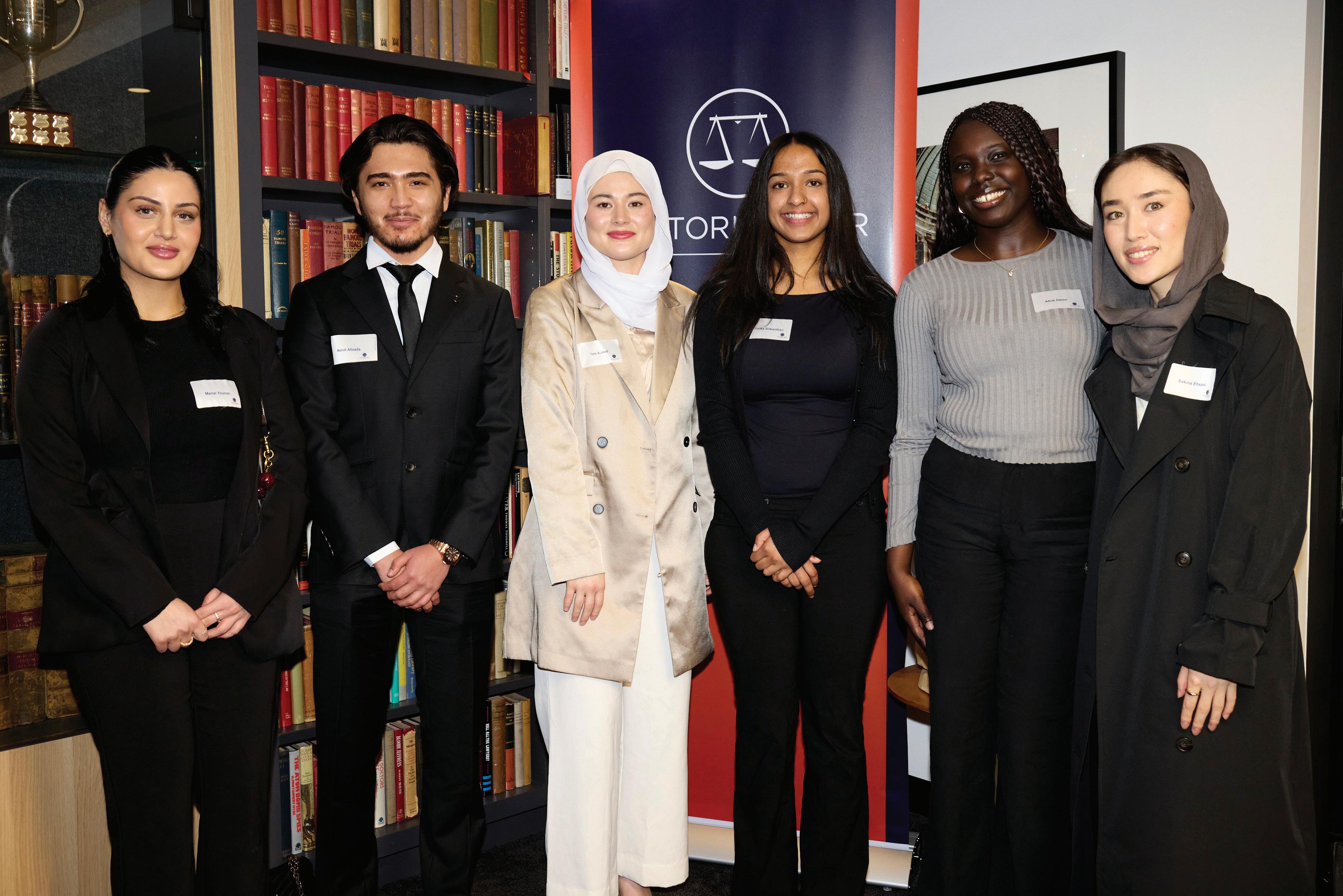
Federal Court, attending hearings with the help of associates. It was busy and there was a lot of information to take in, but I loved every bit of it.
I was in my second year at university. I had no idea what pathway I wanted to pursue, and I had zero professional network. This program exposed me to all these different areas that I can now explore further. It opened my eyes a lot.
Hanna Amin, who graduated from Melbourne University, was two years old when she and her family arrived in Australia by boat as Kurdish refugees in 2000. Fuelled by a sense of obligation to “give back” and contribute to refugee advocacy, Hanna’s legal passion lies in the stateless legal advocacy field. She now works as a judge’s associate. Hanna says:
“I
found the program to be demystifying. To see behind court doors how judges interact with associates and how barristers operate was eye-opening.”
Hanna
Amin
As I approached the end of my law degree, I thought about the pathways I have been given by virtue of being a citizen here in this country, compared to what would have been had my parents stayed in Kurdistan.
This was a well-structured program, and you could tell everyone wanted to be there. I found the program to be demystifying. To see behind the court’s doors, how judges interact with associates and how barristers operate was eye-opening. I feel very fortunate to have been one of the three inaugural interns. It was also a lot of fun.
Hanna says being in chambers at the Supreme Court was a privilege:
More than anything, the internship experience affirmed my drive towards working with and around the law. It was so helpful to visualise how we ourselves would operate as future lawyers and beyond.
It is a program that has been so thoughtfully crafted and tailored to those from either culturally diverse backgrounds, those who come from families with no prior connection to the law, or both. I am very thankful to have had this opportunity.
Participants in the 2024 Diversity Internship Program: Mana Younan, Medhi Alizada, Tani Kumail, Thivika Srikantha, Abuk Demo and Sakina Ehsani.
Halima Weli, who graduated from La Trobe University, says her parents instilled a sense of justice in her from an early age after fleeing Somalia and that she wants to be an “advocate for those who are voiceless”. She is now a lawyer at a national law firm:
I am so incredibly grateful for this program. It has been insightful, and a major confidence boost for me as I could picture myself being there (in court) one day. This internship reinforced my commitment to pursuing a career in law. It was invaluable and inspiring!
The program provides an experience that law students may not normally get. Diversity within the legal profession has improved but there
are still gaps that make it difficult for students like me. This internship is a fantastic opportunity that helps bridge these gaps.
These three remarkable, bright and articulate young women are an inspiration to their families, peers and communities.
Their personal stories share similarities and when the three of them are together, they are dynamic and engaging as they speak candidly about their experiences, the program, and their hopes for the future.
The Diversity Internship Program is one of several initiatives pioneered by the Victorian Bar that seeks to foster diversity at the Bar and improve educational outcomes.
“This internship reinforced my commitment to pursuing a career in law. It was invaluable and inspiring!”
Halima Weli

2025 launch
A distinguished crowd attended the 2025 Diversity Internship Program launch, including the Hon Justice Emilios Kyrou, President of the Administrative Review Tribunal, who provided the keynote address. The Hon Justice Michelle Gordon (High Court of Australia and Patron of the Victorian Bar Foundation), the Hon Justice Stephen McLeish (Court of Appeal, Supreme Court of Victoria), Deputy Chief Judge Meryl Sexton (County Court of Victoria), and former High Court Justice, the Hon Kenneth Hayne KC also attended.
Congratulations to Ebony Chiazor, Gul Dasta Ali, Idhil
Yussuf, Nour Maqsodi, Olifsayo (Sayo) Durojaye, Sughra Haidari, Swen Anthony and Zhen (Jenny) Li who were selected from a highly competitive field of candidates from all eight law schools to work alongside barristers and judicial officers.
ABOVE: Participants in the 2025 Victorian Bar Diversity Internship Program are pictured with the Hon Justice Michelle Gordon AC (High Court of Australia and Patron of the Victorian Bar Foundation), the Hon Justice Emilios Kyrou AO, former Victorian Bar President Justin Hannebery KC and Executive Director Amanda Utt.

AA, DP and the evolution of tortious liability in historical child abuse cases in Australia
GIDEON BOAS
Alot has happened in the law concerning institutional child abuse, even since 1 November 2023, when a 3:2 majority of the High Court ushered in “a new world” with respect to what constituted fair trials in civil child sexual abuse claims.1
Just over a year later, on 13 November 2024, the High Court unanimously upheld an appeal brought by Paul Bird, the Bishop of the Catholic Diocese of Ballarat, to the effect that the principle of vicarious liability, developed in the common law of Australia over many decades and rulings, only applied in an employment relationship, denying compensation to a man sexually abused by Father Coffey when he was around five years old.2
On 11 February 2026, some 14 months after the DP High Court Judgment was handed down, the High Court revisited key questions of liability in historical child abuse cases in AA v The Trustees of the Roman Catholic Church for the Diocese of Maitland-Newcastle. 3
Other judgments by the High Court over the past year or so addressed the proper application of law concerning permanent stays in historical child abuse claims that tidied up and reinforced GLJ Willmot v State of Queensland (2024) 98 ALJR 1407 and RC v Salvation Army (NSW) Property Trust (2024) 98 ALJR 1453,4 and declared the proper construction of the “just and reasonable” test in applications for the setting aside of previous judgments and settlements.5
DP and AA, in particular, intersect in critical ways, reveal intellectual legal preferences for the determination of liability in this area, and, perhaps most importantly, have had a significant impact (directly or indirectly) on the rights of institutional child abuse victims to compensation.
This article considers these two landmark judgments, the legislative responses to the DP decision and the broader context in which those cases arise. It is apparent that the High Court has, in recent years, taken a particular interest in how causes of action in institutional abuse cases are to be considered and applied. Their determination, in the period following the Royal Commission into Institutional Responses to Child Sexual Abuse (an area in which considerable legislative activity has also occurred), has led to extraordinary shifts in the areas of tort law with which this subject matter intersects.
AA v The Trustees of the Roman Catholic Church for the Diocese of MaitlandNewcastle
The most critical feature of the High Court’s judgment in AA, is the finding that the Diocese owed a non-delegable common law duty of care to the plaintiff, AA, which it had breached, giving rise to damages for sexual assaults by a parish priest. AA overturned the longstanding ruling of the High Court in NSW v Lepore6 which, by a complex majority, had held that there can be no common law non-delegable duty in respect of harm caused by an intentional criminal act;7 a holding described by Edelman J in his separate concurring judgment in AA as “indefensible”.8
AA had succeeded in his trial,9 on the basis that the Diocese was to be held vicariously liable for the sexual abuse of him by parish priest Father Pickin. At the time of that ruling, the High Court had not handed down its ruling in DP and the Victorian Court of Appeal’s ruling on vicarious liability in the context of a non-employed priest and his diocese was in place.10 Accordingly, the application of the principle of non-delegable duty was not determined by the trial judge.
By the time the case reached the New South Wales Court of Appeal, the High Court had determined DP and ruled that vicarious liability outside of the existence of an employment relationship did not exist as part of the common law of Australia.11 AA accordingly had to concede that his judgment could not be maintained on that basis, but argued that judgment should have been given on the basis that the Diocese owed him a non-delegable duty, an argument rejected by the Court of Appeal on the application of the principle in Lepore. 12
As relevant to this article, AA sought and obtained special leave from the High Court primarily to test the argument that a non-delegable duty did extend to a delegate committing an intentional criminal act, the purport of which was to pose the question: should Lepore finally be overturned?
The answer to that question was (by a majority of 5:2), yes.
The plurality judgment of Gageler CJ, Jagot and BeechJones JJ (Gordon, Edelman and Steward JJ agreeing on this point), found that “a non-delegable common law duty of care requires that the duty-holder has undertaken the care, supervision or control of the person or property of another, or is so placed in relation to that person or their property as
to assume a particular responsibility for their or its safety”.13 Further, the plurality, and Gordon and Edelman JJ, found that “a non-delegable duty may be breached by the intentional conduct of the duty-holder or their delegate”.14
The critical feature of this holding is that the majority position in Lepore (at least as interpreted since then) has now been emphatically overturned.
It has long been the case that a non-delegable duty (not simply the duty to take care but the duty to ensure that care is taken), extends in certain circumstances to the negligent acts of a duty holder’s delegates. Such has been found, for example, in the context of employment,15 schools16 and hospitals.17
As Gordon J put it, much “depends on the undertaking or assumption of care, supervision or control by the duty holder and, from the perspective of the plaintiff, the entrustment of their care, supervision or control to the duty holder”,18 the cases emphasising a “special dependence or vulnerability” of the plaintiff vis-à-vis the defendant.19
In the case of AA, the plurality held that the Diocese owed a duty to a child to ensure that while the child was under the care, supervision or control of a priest of the Diocese, as a result of the priest purportedly performing a function of a priest of the Diocese, reasonable care was taken to prevent reasonably foreseeable personal injury to the child, which extended to the intentional infliction of injury by the Diocese’s own delegates, including its priests.20
Bird v DP (a pseudonym)
On 13 November 2024, the High Court determined that the principle of vicarious liability, developed in the common law of Australia over many decades and rulings, only applied in an employment relationship. The effect of that finding, and in the context of the appeal it was hearing, meant that a Catholic Diocese could not be held vicariously liable for the actions of one of its priests, as the Catholic Church had consistently and effectively maintained a fiction of non-
employment of its religious ministers.21
The Court maintained that a “reformulation” of the law of vicarious liability was “properly the province of the legislature”, particularly given that all Australian jurisdictions had “sought to address…issues of institutional liability following on from various reports” and taken differing approaches.22
The case concerned allegations that Father Coffey, an assistant priest in Port Fairy in around 1970–1971, had sexually abused DP in DP’s home on two occasions when he was approximately five years of age, causing psychiatric injury and consequent loss.23
In what was to become a significant aspect of the claim, DP alleged, and the Court found, that the Defendant was vicariously liable for the sexual assaults by Father Coffey of DP. That ruling was upheld by the Court of Appeal.24
A Special Leave hearing occurred on 20 October 2023, at which Gageler J (as he then was) and Gordon J granted the Diocese leave. Of importance to considerations in this article and the recent judgment in AA, was a matter raised by the Court at the leave hearing as to whether DP might be a case in which to consider the relationship between the principles of vicarious liability and those governing non- delegable duties. On the invitation of the Court,25 a notice of contention was filed by DP, asserting that the Diocese also owed DP a non- delegable duty to protect him from the risk of sexual abuse by its priests, including Father Coffey.
Most other common law and civil law countries had in recent decades extended the common law relating to vicarious liability beyond the existence of an employment relationship.26
Nonetheless, the Court unanimously allowed the Diocese’s appeal in three separate judgments, signalling a disinclination to develop the common law beyond the existing rigid interpretation of vicarious liability as only applying to an employment relationship, the Court
instead expressly stating that such a change would have to be made by Parliaments.27
The evolution of AA and why DP was decided as it was There are different ways of viewing the evolution of common law liability for historical child abuse. While, as noted above, the High Court’s ruling in DP was at odds with common law development in most other countries where the issue has arisen, there is behind it a conceptual issue that, although already nascent, only crystallised in the judgments in AA. At least as far back as CCIG Investments Pty Ltd v Schokman, 28 Edelman and Steward JJ addressed “the three areas of law described as ‘vicarious liability’”, being agency, vicarious liability (proper) and nondelegable duty, explaining that there had been a confusion in the evolution and application of these principles in the common law of Australia.29 Their Honours concluded:
[T]he focus in the principal joint judgment in Prince Alfred College Inc upon factors of “authority, power, trust, control and the ability to achieve intimacy with the victim” has led leading writers in this field to make observations to the effect that in Australia “it might now be argued that imposing liability for breach of a non-delegable duty of care in cases of child sexual abuse is more appropriate than vicarious liability”. Once again, the use of the label “vicarious liability”, conflating three distinct areas of law, can distract from the underlying legal principles.30
This explains to some degree both the interest of the High Court in DP in non-delegable duty and the rejection of the primary finding of the lower courts of the principle that the law of vicarious liability had evolved in the common law of Australia beyond the confines of an employment relationship. The facts of DP would always have stretched the circumstances in which non-delegable duty had previously
been considered applicable (leaving aside the need to overturn Lepore), and, at any rate, it had not been pleaded below and the Court accordingly rejected the Notice of Contention.31
Non-delegable duty had, however, been pleaded and run at trial in AA, and the majority considered that the facts in that case gave rise to the application of the duty, and that Lepore should be overturned to extend the duty to intentional (including criminal) acts of a delegate.32
A reading of DP, in light of the judgment of Edelman and Steward JJ in CCIG referred to above, and now AA, suggests that the High Court has, for some time, seen the appropriate source of liability for tortious claims by historical institutional child abuse claimants to be non-delegable duty. During the hearing of DP before the High Court, Edelman J at one point put to counsel for the Diocese that it was “very hard to see why intentional wrongdoing would be carved out from non- delegable duties”, the response to which was that such an extension would be “drastic”.33 Not so drastic, it seems, that the Court had not clearly contemplated DP as a potential vehicle for such change and has now taken that step in AA.
In effect, the High Court in AA has now arrived at the point it appeared to be heading towards since DP and likely earlier. In the process, however, the legal landscape of liability in this area has evolved across the common law and statute in ways that may not have been entirely intended or expected.
Legislative reform to vicarious liability
The Court in DP made clear that, in its view, “[r]eformulation of the law of vicarious liability is properly the province of the legislature”.34 Advocates for child abuse victims promptly took up the challenge, leading to the progressive introduction of legislation in line with the retrospective application of vicarious liability in relationships akin to employment: first in the passing of
“While the application of the legislative changes are yet uncertain, they will be a significant legal vehicle in many abuse cases.”
the Civil Law (Wrongs) (Organisational Child Abuse Liability) Amendment Act 2025 (ACT) in October 2025,35 then the Justice Legislation Amendment (Vicarious Liability for Child Abuse) Act 2026 (Vic) in February 2026,36 while narrower legislation has been introduced into the Western Australian Parliament.37
That has led to a most interesting consequence, whereby the form of liability declared by the High Court as inapposite to deal with such cases (vicarious liability), at least at common law, is now or progressively becoming available through legislative change adjacent to the common law doctrine. At the same time, the High Court has overturned Lepore and favoured nondelegable duty as the source of liability for cases involving delegates (of Dioceses, States and other institutions) for intentional (including criminal) acts. While the application of the legislative changes are yet uncertain, they will be a significant legal vehicle in many abuse cases.
Another interesting feature of the virtually synchronous materialisation of the Victorian vicarious liability legislation and the handing down of AA, is the provision for the setting aside of previous judgments or previously settled causes of action for matters resolved from the date DP was handed down (13 November 2024) until the commencement date of the Justice Legislation Amendment (Vicarious Liability for Child Abuse) Act 2026 (24 February 2026).38 Cases compromised by the operation of DP and accordingly resolved for diminished value may now be revisited, and actions (re) commenced. That process has already begun. The clear purpose and import of the new provisions mean that institutional defendants will need to consider whether to plead such previous settlements in bar to suit or seek to set off payments made but re-engage in a
renegotiated outcome and, of course, it may mean that such cases will now need to be tried and determined at full value.
Conclusion
The plurality in AA said that the reasoning underlying Lepore was already doubted by the High Court in Bird, as well as Wilmot 39 It is sufficiently clear from AA, and by its interest in the matter in DP, that the Court has had Lepore in its sights for some time. That somewhat tortuous ruling has now been set aside insofar as it prevented the extension of non-delegable duty to the intentional acts of delegates. The effect is doubtless a strong network of tortious liability applicable to institutional child abuse, and it opens avenues to liability in many cases that were previously in question or closed (in part by DP itself). Bishop Bird and the Catholic Diocese of Ballarat may well be ruing the decision to take DP to the High Court, as might the Diocese of Maitland-Newcastle, but the tea leaves regarding non-delegable duty and its impact on historical child abuse claims were there to read, at least as early as CCIG.
The combined impact of these two cases would appear to be the creation of a strong network of liability in this (topically and numerically) significant area of litigation.
Dr Gideon Boas (BA, LLB, LLM, PhD) is a barrister at the Victorian Bar and Adjunct Professor of Law at La Trobe University. He was lead trial counsel and lead junior in the Court of Appeal and High Court appeals for DP.
1 GLJ v Trustees of the Roman Catholic Church for the Diocese of Lismore (2023) 280 CLR 442.
2 Bird v DP (a pseudonym) (2024) 98 ALJR 1349 (DP High Court Judgment).
3 [2026] HCA 2 (AA High Court Judgment).
4 Willmot v State of Queensland (2024) 98 ALJR 1407 and RC v Salvation Army (NSW) Property Trust (2024) 98 ALJR 1453.
5 DZY (a pseudonym) v Trustees of the Christian
Brothers (2025) 99 ALJR 806. Although addressing the Victorian legislation, the decision resolved the construction of relevantly exact or similar legislation in other Australia States and Territories.
6 (2003) 212 CLR 511 (Lepore).
7 See, AA High Court Judgment, [4] (plurality).
8 AA High Court Judgment, [339] (Edelman J).
9 AA v Trustees, Roman Catholic Church, Diocese of Maitland-Newcastle (2024) 334 IR 70.
10 Bird v DP (a pseudonym) (2023) 69 VR 408; [2023] VSCA 66 (Beach, Niall and Kaye JJA), 3 April 2023. See [125] for how the Court put the legal position with respect to this issue.
11 DP High Court Judgment, [5] (Gageler CJ, Gordon, Edelman, Steward and Beech-Jones JJ).
12 Trustees of the Roman Catholic Church for the Diocese of Maitland-Newcastle v AA [2025] NSWCA 72, [160] (Leeming JA).
13 AA High Court Judgment, [6] (plurality), citing Kondis v State Transport Authority (1984) 154 CLR 672 at 687.
14 Ibid.
15 See, Kondis v State Transport Authority (1984) 154 CLR 672.
16 See, The Commonwealth v Introvigne (1982) 150 CLR 258.
17 See, Ellis v Wallsend District Hospital (1989) 17 NSWLR 553.
18 AA High Court Judgment, [272] (Gordon J), citing DP High Court Judgment, [37], [41] (plurality).
19 Ibid, citing Burnie Port Authority v General Jones Pty Ltd (1994) 179 CLR 520.
20 AA High Court Judgment, [122] (plurality).
21 A number of cases and in different jurisdictions have considered the relationship of priest (and other religious) to employment (see, e.g., Ermogenous v Greek Orthodox Community of South Australia Inc (2002) 209 CLR 95).
450 Gore Street, Fitzroy By Neometro
22 DP High Court Judgment, [67] (plurality); [247] (Jagot J).
23 [2021] VSC 850, [1] – [3].
24 Bird v DP (a pseudonym) (2023) 69 VR 408 (Beach, Niall and Kaye JJA).
25 Bird v DP (a pseudonym) [2023] HCATrans 145.
26 The submissions on this point were picked up in Gleeson J’s judgment (at [73]).
27 See, [68] – [71] (plurality); [247] (Jagot J).
28 (2023) 278 CLR 165 (CCIG).
29 CCIG, [55] – [81].
30 CCIG, [81].
31 DP High Court Judgment, [42]-[43] (plurality).
32 Steward J, [433]-[443] and Gleeson J, [528]-[538] dissenting.
33 Bird v DP (a pseudonym) [2024] HCATrans 016, p 34.
34 Bird High Court Judgment, [67] (plurality).
35 See, Civil Law (Wrongs) Act 2002 (ACT), Chapter 8A, including s 114BC (as to the meaning of an employee).
36 See, Wrongs Act 1958 (Vic), Part XIIIA (“Statutory vicarious liability for child abuse”) and, in particular s 93C as to statutory vicarious liability of institutions for child abuse and an “akin to employment” test.
37 See, the Civil Liability Amendment (Child Sexual Abuse Actions) Bill 2025 (WA). In New South Wales, the Civil Liability Amendment (Organisational Child Abuse Liability) Bill 2025 (NSW) was introduced into the Legislative Council on 26 March 2025 but has made no progress since.
38 Justice Legislation Amendment (Vicarious Liability for Child Abuse) Act 2026 (Vic), ss 4 and 5, leading to amendment of the Limitation of Actions Act 1958 (Vic), ss 27OA, 27QA, 27QB and 27QC.
39 See the reasoning of the plurality in this respect at AA High Court Judgment, [45].

Vale—The Hon Margaret (Peg) Lusink AM
BAR ROLL NO 1171
The Hon Margaret Lusink signed the Bar Roll on 17 July 1975 and read with the Hon William (Bill) Gillard KC. Her Honour was a member of the Victorian Bar for 51 years. Margaret, known as ‘Peg’, was born at Tocumwal in New South Wales on 27 May 1922, the eldest daughter of Joan and Mannie Rosanove. The previous year, Joan had been the first woman to sign the Victorian Bar Roll. Forty-two years later, in 1965, Joan Rosanove QC would become Victoria’s first female silk.
Peg forged her own trailblazing career. In 1960, at the age of 38, following the death of her husband, Dr Graeme Larkins, and with three sons to support, she enrolled in the LLB at the University of Melbourne where son, John Larkins KC (Bar Roll No 737) was also studying law. During this time, Peg met and married fellow mature-age law student, Theo Lusink, a Dutch national who had joined the Royal Australian Air Force. Upon graduation in 1965, Peg joined Corr & Corr as an articled clerk. Her admission to practice in the Supreme Court of Victoria in 1966 was moved by her mother, Joan Rosanove QC, with son John as Joan’s junior. Within six years, Peg had become Corr & Corr’s first female partner, heading its matrimonial causes group.
Peg was called to the Bar in 1975. In 1976, she was among the first judicial appointments to the new Family Court of Australia. With that appointment, her Honour became the first Victorian woman to preside as a judge of a Superior Court of Record. She served the Family Court for 13 years, including four years as Judge Administrator to the Dandenong Registry. She was instrumental in setting up a progressive, counselling-oriented approach to family disputes at Dandenong.
In her post-judicial career, Peg spent time as an academic (Professor of Law at Bond University) and on legal and medical boards and committees, including two terms as a Member of the Adult Parole Board, President of the Commonwealth Professional Services Review Tribunal, a Member of the Royal Women’s Hospital Ethics Committee and the Representative for Euroa on the Victoria Bush Nursing Hospitals Association. She also gave to the community as the Foundation President of the Victorian Women’s Trust and Chairman and Honorary Life Member of the National Friends of Libraries of Australia. In 1996, Peg
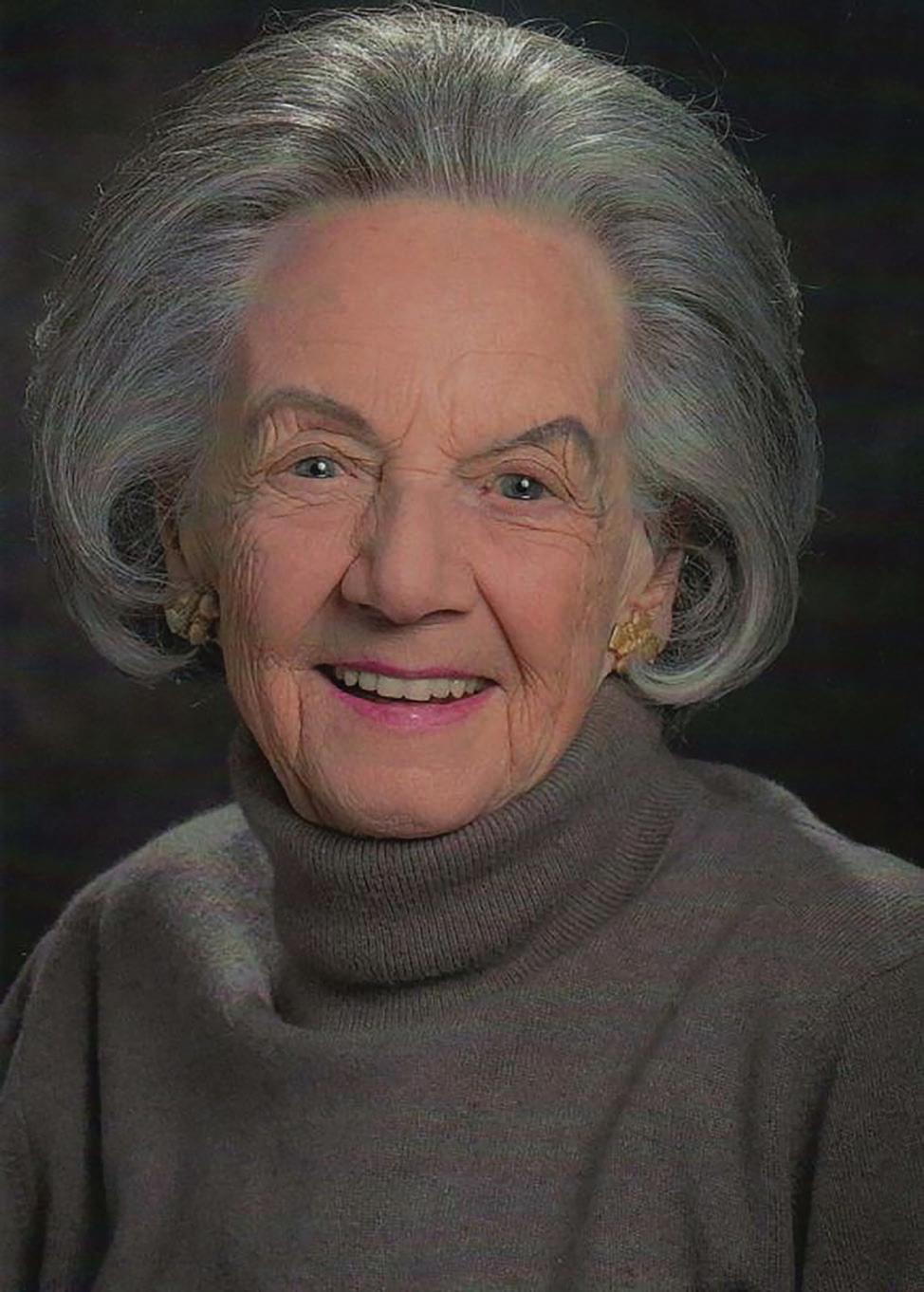
was appointed a Member of the Order of Australia in the Australia Day Honours for service to the law through the Family Court of Australia and to the community.
Whilst her Honour’s time in practice at the Bar was short, she stayed fond of the Bar and visited Owen Dixon Chambers often. In 2014, she donated the portrait of Joan Rosanove (c. 1952) by Flora Lion and her own portrait (c. 1975) by Dudley Drew, which hang together in the Peter O’Callaghan QC Gallery. Peg will be remembered not only as a legal trailblazer, but also as a charming, engaging and witty person. Her energy and positivity were legendary. She lived and travelled independently well into her 90s and died just short of her 104th birthday on 3 April 2026. She leaves behind her sons John, Richard and Stephen (dec), their families, and her many friends and admirers at the Bar, and in the legal profession.
In 2008, her Honour was interviewed by Simone Jacobson and Juliette Brodsky as part of the Women Barristers’ Association “Pioneering Women” slide show. The interview overleaf offers a valuable glimpse of her Honour in her own words. While the obituary reflects on the life she lived and the legacy she leaves behind, this conversation captures her voice, memories and perspective at a particular moment in time. Read now with the poignancy of hindsight, it stands as both a tribute and a reminder of the warmth, character and experiences that shaped her remarkable life.
Interview with Peg Lusink
JB: Juliette Brodsky and Simone Jacobson are from the Women Barristers’ Association and we have with us Peg Lusink. Good to have you with us.
PL: Thank you very much indeed. I’m delighted to meet you, Juliette, after all the contact we’ve had, which has been by email. I’m (also) delighted to meet a young barrister (Simone) of the up-and-coming generation—fantastic.
JB: I’d like to talk a little bit about the fact that you’ve described yourself as an “accidental lawyer”. In a way it shouldn’t have been an accident, because your mother of course, Joan Rosanove was a leading woman lawyer, in fact the first woman barrister at the (Victorian) Bar.
PL: Juliette, that is the natural reaction of anyone who knows the history—however it really isn’t very accurate. I grew up disliking the law intensely; I was surrounded with it. One thing I did not want to be was a lawyer and in those days, in the days before the Pill, you know, I met a bloke who was a school kid and all we wanted to do was get married. Consequently, I married at 18 and was just delighted not to have anything to do with the law. I had wanted to do medicine originally, but my father was a doctor and girls didn’t do medicine in those days, did they? So that was out. And so being somewhat rebellious, I did nothing, although I was pushed to the university for about five minutes, then left, then got married. And was very happily married for 18 years until my husband, who was a doctor, died.
JB: This was Graeme Larkins.
PL: That was in 1959, by which time I had three sons. I was widowed at 38 and with absolutely no skills, no marketable skills and three boys to support. I did think when I picked myself up off the ground that perhaps I’d have to do something for the rest of my life and I had matriculated, which in those days only entailed doing the right subjects. If you did a thing called “leaving honours” and if you had the right combination of subjects, you matriculated. So, my eldest son John (Larkins) started first year law. Having matriculated, I think I sort of had vague ideas that I could do
arts, that I could do teaching or perhaps commerce, although they’d add up very well, but anyway that’s where my mind was going. And then John came back from the university one day and said, “Oh, the boys and I have been talking”—and I should put in here that my two younger sons were still at school and they were both quite set upon becoming doctors, not because they were being pushed or anything, but that’s what they were both aiming for. And so John said, “The boys and I have been talking, we decided that you’d better do something you can make a living at, so I’ve made an appointment for you to see the dean of the law school”. So, a very surprised Professor Ford in those days took one look at me and I think he thought we were a family of eccentrics and he’d better humour me, so he said I’d better sit for the entrance (exam), which we had to do in that day. And I really think it was only out of compassion that I got through. Graham died on August 19, 1959, so at the beginning of 1960 I started law, but it was only occupational therapy, I really didn’t want to do law. And it was, interestingly enough when we had to (also) do an art subject. I picked psychology and criminology, while more sensible students picked English 1 or something, which was much simpler. I really was not wanting to do law. But it didn’t matter, I didn’t care really what I did—I was an accidental law student.
JB: So, when did your actual interest in the law begin to kick in? You said you did psychology and criminology, did that start to trigger things?
PL: No, you had to do two arts subjects with your 24 or whatever law subjects and you could pick whatever you liked. The more dedicated lawyers picked the easiest art subjects [whereas] me doing psych and criminology was regarded as somewhat extreme. But I was much more interested in that side of the academic world than I was about law.
JB: So you were going through the motions, but little by little, did things start to take shape in your mind? “This is a bit interesting, I can see myself going down that path” …
JULIETTE BRODSKY (JB) AND SIMONE JACOBSON (SJ), 27 MARCH 2008
Or it wasn’t until you graduated that perhaps then you started to think about (being a lawyer)?
PL: I like study, I enjoyed the academic side and I thought it was a good career path and it sounded as though I might do better than I would do at teaching or anything else—I’m quite sure about that. I never really loved the law ever— that’s a terrible admission—like my mother did. Law was her life; she loved every minute of it. I loved every minute of what I was doing and I was very fortunate that I ended up loving what I was doing, but it wasn’t my total life like it was for her.
SJ: Did [Joan] talk about work all the time? Did she take it home with her?
PL: Simone, you would have had to meet my mother. The best way I can describe her is if I tell you a story. Do you want me to?
SJ: Absolutely.
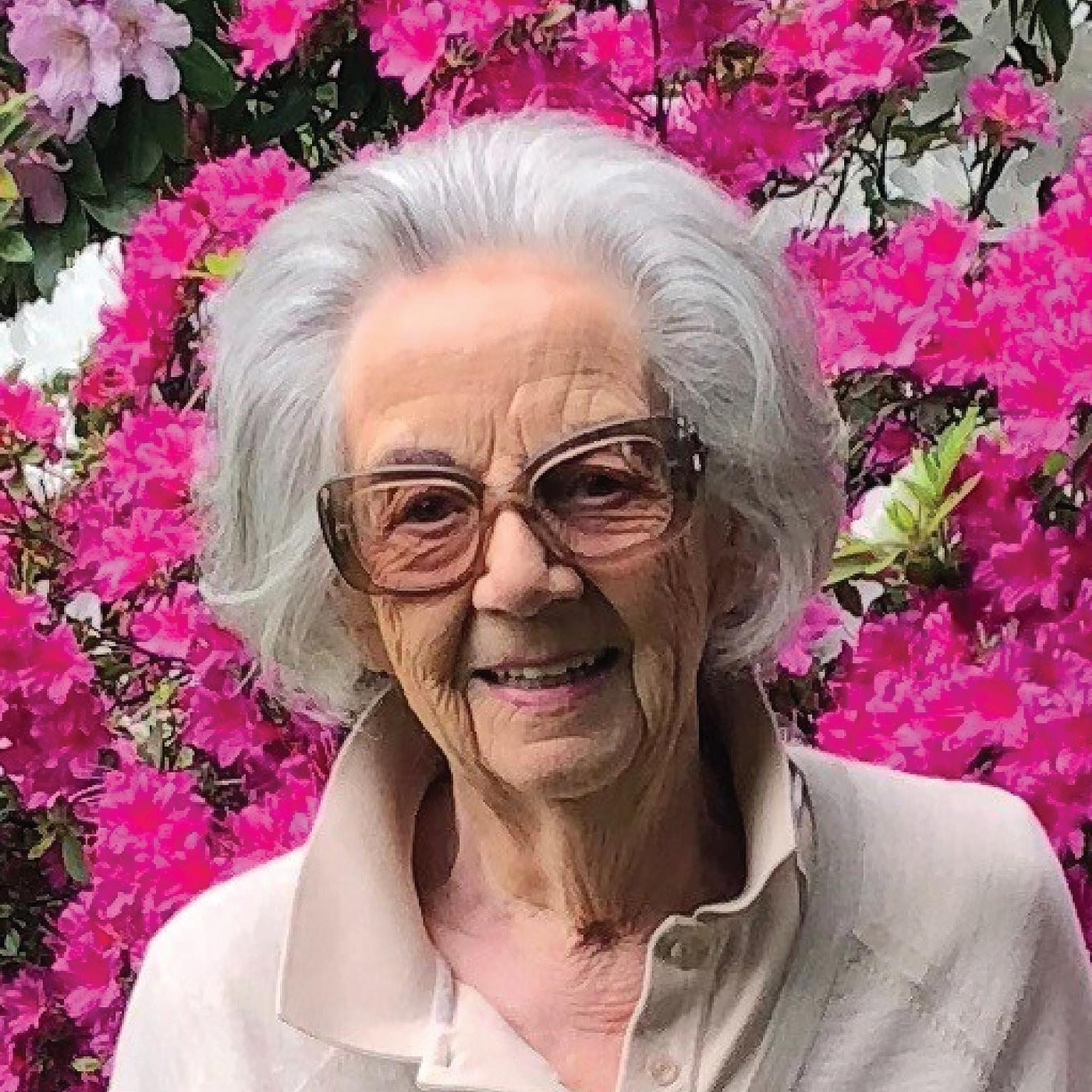
“I was an accidental law student.”
PL: When I was a solicitor, I didn’t brief her very much, because it all looked too familial and apart from that, don’t forget in those days, women lawyers were very suspect. I got thrown into family law quite accidentally [at Corrs]. I did my articles there, because John said to them, “Of course you’d better take my old mum,” and I was following on behind. They took me on and they were fantastic. And I got thrown into family law. Corrs were a firm who had a lot of very important big-time clients even then, but these clients didn’t run their home life as well as they ran their businesses. Consequently, when they got into domestic trouble, Corrs would send them to another firm. Then they found, of course, that the clients weren’t coming back. So, they realised that they would have to provide a service and I sort of walked in and fell into that. They said, “Do you know anything about family law?” and I said,
“Not much”—I’d done it, but it wasn’t a major subject at the time.
Anyway, so the practice grew, and very quickly and very substantially, but I didn’t brief my mother. One day, I was over in court and she was there. She was so tough in court, she was gorgeous looking, she had a woman coming to manicure her nails and do her hair in chambers twice a week. She wore the most beautiful clothes, I kid you not, and she had charm and was a fantastic lady. But in court, she’d get her wig on and she was very tough, really tough. I never had that sort of toughness. I went to court one day and she was there; she was tearing strips—I kid you not—off a young man who was a young barrister caught up in this family law stuff. [He was] blushing and in great confusion and she was tearing strips off him. She sat down [and] pushed a note across to
me. [It] said, “Peg, come to chambers after court”. After court, I went over to [her] chambers and I walk [in] and she’s standing in the hall and she’s still in a wig and gown, berating this young man and telling him how to run this case. She then turns around to me and said, “Peg, a patient has bought your father some crayfish. Will you and [Peg’s second husband] Theo come over and have dinner?” And we said yes of course. Over we go. [At] perhaps half-past-six [we] get there, something like that. My mama is lying on a chaise longue in their apartment, she is dripping in very flimsy gorgeous lacy things. She has a box of chocolates beside her, which she is eating and she is watching children’s hour on the television. There’s my beloved father in the kitchen pulling the crayfish apart, and she’d just changed, like that.
JB: Is it true your father said that as
“I'm doing this for the best of reasons—I like what I'm doing.”
a cook, your mother made a brilliant lawyer?
PL: As a cook, she made a brilliant lawyer. Theo, my husband, always says she was much cleverer than I was, because she never washed a dish, she never did a domestic thing in her life that I know. We had a very privileged background in that we had two help in the house always; we had the housekeeper and the cook or someone to look after me or look after my sister [Judy] who was born ten-and-a-half years later. [Joan] didn’t ever really do any academic thing beyond [her practice]; it was almost instinctual little things, I can’t describe it.
JB: She was obviously a very domineering personality; is that why you rebelled, do you think?
PL: I wouldn’t say “domineering” described her, Juliette. I would say she was an actress; she was a total actress. My father was really the boss. She wasn’t really domineering, she just was acting. Theo is a Dutchman and quite a strong personality, and my mother one day was carrying on. She was always a bit suspicious of him, I think, and she said, “That marriage will never last, you’re both too strong-willed”. He one day said to her, “You can sell that bullshit in the court, you can sell it to anyone else that listens, but don’t sell it to me”. And she went, “Whoa!” and she loved him from then on. I don’t think domineering is the right word, because when it suited her, she could play the little woman better than anybody.
SJ: Your father once said, I believe, that her clients would cut off her fingers for her rings.
PL: For her rings? She loved the good things of life, yeah. My father—I was much closer to my father than my mother. He adored her and she never stopped telling him how great he was and I remember long after they’d retired, they were living at Frankston and there was an absolutely hideous
plastic lounge suite and I said, “My God, where did that come from?” “Oh, it was your father, he went down to somewhere in Frankston and he just thought that it would be very suitable here”. It really was absolutely awful, but she wouldn’t care. I don’t want to denigrate her at all, because she was a remarkable woman.
SJ: So, she wasn’t really interested in the trivialities of household life?
PL: Not at all, absolutely not. I was born at a place called Tocumwal. My father had got through medicine just after the first [world] war and they had no money, so they [went] to Tocumwal which is just over the border of NSW, a little one-horse town. How they ever got there, I have no idea, but [Mum] stayed there long enough for me to be born there and they went back to Melbourne. Once they got to Melbourne, [my father] bought a practice in Westgarth—Northcote—a general practice, and for five minutes she stayed there; and when I say she stayed there, she didn’t work. Then, 10 minutes later, she was working. And if you can imagine a woman working in the law in 1920, 1924, 1925—she really wanted to go to the Bar then. And that was a total no-no—just not on—for some years [after] she then worked as a solicitor.
But immediately, help came into the house, and I was by myself for 10 years. To be honest, I remember my early days as to who looked after me, like Bridie and Miss Emery and I could reel them off, but Mama …. While we say [Joan] was a fantastic pioneer, in lots of ways, she had it a lot easier than you guys. I don’t know what your position is, Simone, [but] in those days she just slipped off. So, you have to say she had it easier than you, although she was a pathfinder in her own way. And then Molly Kingston, who was another one, never married and Dame Roma Mitchell never married, so whilst
they were pioneers and were hell-bent on pursuing their careers, they were having it easier in lots of ways than you people, you girls.
JB: So is that a way of saying you wouldn’t like to be practising law now?
PL: What, me? I would find it very difficult, because I’m a bit of a soppy mother. I over-compensated with my boys and I just loved cooking and I’m very domesticated. I’ve sort of gone into reverse, perhaps. I would find it very difficult, because I think this struggling of careers and kids and battling all the battles there, I think it’s a very difficult time for the girls. People say they have it all and they want it all; certainly, they’ve been brought up to say, “Yes, we can have it all”. In fact, I always think of a very interesting experiment that was done at Berkeley University in America. They divided up the chores between the young married couples, between the man and the woman as evenly as they possibly could and over a period of six months or something, they monitored them. At the end, they found the girls had done 75 per cent or 80 per cent of the work and the blokes had done 20 per cent. And the reason was because, with the best will in the world, you’d have people for dinner one night and the bloke would walk through and not notice that the cushions need poufing up, but the girls would walk past and pouf up the cushions. So, if girls marry nowadays thinking it’s going to be 50/50, they’re kidding themselves.
JB: Just going back to when you started at Corrs (I’m going from Isabel Carter’s Woman in a wig book that I brought with me), I believe when you started there, your mum said to you that you’re “only playing at law”.
PL: What did she say?
JB: She said, apparently, “Why are you doing that? You are only playing at law”. I think she was thinking you should have gone to the Bar.
PL: I don’t remember that. Isn’t that funny, is [that] in Woman in a wig, is it?
JB: Yes, it is, but you made a good reply, though. According to the book, you said, “I’m doing this for the best of
reasons—I like what I’m doing”.
PL: Look, I have been blessed with the sort of character that if I can throw myself into anything, I mostly enjoy [it], it’s just how you’re made. So, I really don’t remember that to be honest, Juliette, and I’m not quite sure what the ramifications of that were. There’s never been a time [that] I didn’t enjoy doing what I did. I think, to be fair, perhaps a lot of that goes back to the fact that I was very fortunate going to Corrs. They were, a very conservative firm, but on the other hand they were two old cousins by the time I got there, Mr Alan Corr and Mr Vernon Corr, very conservative and straight down the line. Everyone was very supportive of me; I think they all thought it was a bit of a hoot: “Here’s this old bod, having done law with her kids” and what have you. But they were very supportive.
Now I think probably if I’d had a different start, I might have easily walked out of the whole thing. I think the other thing [is], don’t underestimate this bloke of mine. We met at the university after I’d been there about three years and he had a Dutch law degree and he was doing the subjects you had to do to practise here. [Theo] has given me total support and my three sons; I’ve been very blessed with the boys around during my life. And I could have chucked it in, if circumstances had been different, I may well have not pursued it, but Corrs was so good and supportive, and it was all a bit of a giggle in those days. It wasn’t a giggle, because I ended up with five kids, two of his and three of mine, all teenagers thrown together, and very good training for the Family Court. But I’ve had so much support always, that’s probably kept me (going), you know…
JB: Professionally, who do you remember most warmly as mentors? You were mentioning the people at Corrs.
PL: All right. From being a solicitor, there were a couple of old-time solicitors around Melbourne. There was a man called Jimmy Pearce, who
was [with] Ridgeway Pearce and Freadman, and a bloke called Haines—there were just a few outstanding solicitors who taught me as I went along. In those days when you had to prove adultery and all that sort of thing and putting in things called discretion statements, the solicitors and you weren’t allowed to talk to each other, because you’d be up for connivance and collusion and a few other things. There were a few solicitors at Corrs. Amongst them was Bernie Teague who of course became a Supreme Court judge, just retired. And Bernie and I caught up again [in] recent years, because we were both on the Parole Board.
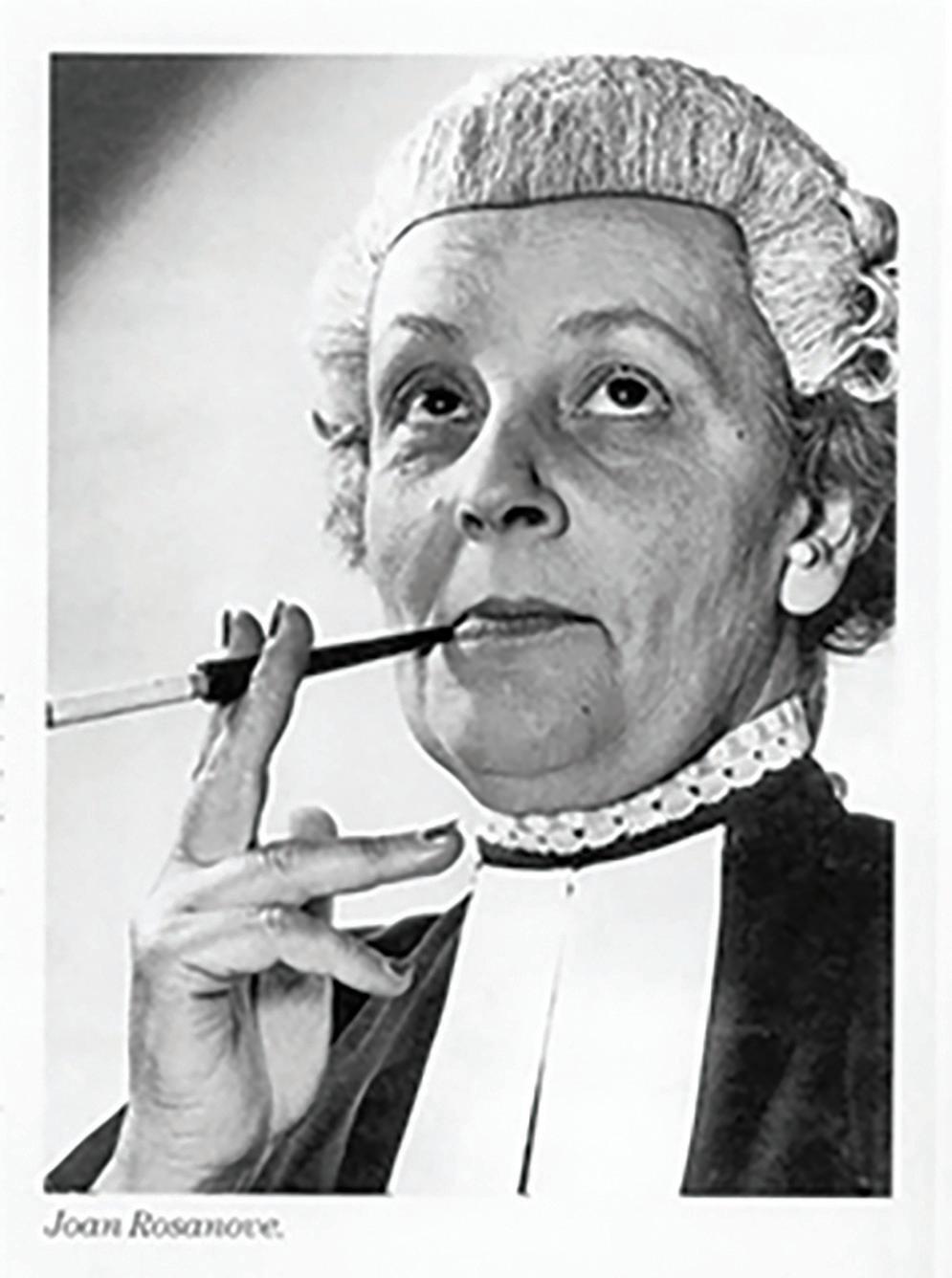
And there was Mr Justice [Esler] Barber from the Supreme Court, who was just the greatest man. One day he said to me, when I was at Corrs, “You know, you’d be a wise girl to put a wig on your head”, meaning go to the Bar. I didn’t really take it very seriously, but I think he was a mentor and friend. He was also a friend of my family, but particularly with me. Then when I got in the [Family] Court, Elizabeth Evatt was a quite outstanding woman. A brilliant brain, a woman of great intellect. You’ve got to understand that when we started on the [Family] Court, we really thought we were reinventing the wheel. We were going to make it so wonderful, people could just blissfully go to counsellors, sort out all their problems, we just give them a divorce, and all the children would be happy. We really did.
When I got on the [Family] Court, I was a total odd bod. I’d done my law late, I’d been to the Bar exactly six months—I was at the right place at the right time. You couldn’t call that coming from the Bar. Elizabeth Evatt
is a great academic, but she was very supportive. Austin Asche who was the first judge in the Family Court here— although he’d been at the Bar, he was a man of great foresight about how we’d do it differently with counselling and [making] the lawyers think differently. We just needed to get them and knock their heads together with the counsellors and suddenly they’d all be counsellors. The whole thing was idealistic and ridiculous, because you’re training so differently and everything was so different. See, they opened the doors—Austin was the only judge and there was a queue from about down here at Dalgety House down to the post office. So, two more judges were hurriedly appointed, who were Harry Emery and John Fogarty, and then another week later, (they appointed) me. This was all in February [1975]. Now, us four were the nucleus and here we were thrown into the deep end without any mentors or old judges to tell us how to do it, no precedents, a brand new law [the Family Court Act] that nobody really knew too much about, counsellors who none of us had hardly said ever two words to and certainly didn’t know what their
Joan Rosanove QC
training was, except me doing psyche 1 for a minute at Melbourne [University]. I was probably the best equipped, if you’d call it that, and we were plopped in this commercial building and told to be a nice friendly helping court. We had been slotted in next to the High Court. We were the Honourable This and That and as I say, our appeals went certainly to the three judges of the Appeals Court, but then straight to the High Court. And then they said, now take off your wigs and gowns, sit down at this lovely plastic table, I kid you not. They had a few potted palms around —“now you’re going to be a nice, friendly, helping court”. Now, if that’s not a dichotomy, what is? We’d been appointed in a bulk and we were on a very tough learning curve and we worked really, really hard. I can remember adjourning the court one day and racing upstairs and said “Good God, I’ve got someone that I’ve got to do something about with contempt and I don’t even know a thing about contempt law. What do I do?” Because some irate gentleman had walked out and clocked the solicitor and the wife, who was lying on the floor in front of the lift. They never told me about contempt law. Those four and John Fogarty and I are still great friends, and Austin Asche.
JB: You were of course the first Victorian woman judge of the Family Court, but Elizabeth Evatt was sort of a predecessor generally?
PL: It is a Federal Court, a Commonwealth Court. She was the Chief Justice and she was in Sydney. I was the first woman [judge] and I was really the only woman until I left, practically. Linda Dessau and Sally Brown came [later]; but see, I’ve been out of it all for a long time, I’ve been out of it since 1990, 1989/90. We were appointed for life, us early ones, so I could have been tottering around there still.
SJ: What was Joan’s reaction to the Family Law Act?
JB: I think she died the year before, [in] 1974.
SJ: I was just thinking about no-fault divorce. How do you think she would
have reacted to the whole idea behind that?
PL: How would she have reacted to it? She’d have gone with the flow happily, absolutely gone with the flow. If I’ve got any regrets about it all, my real regret (and I’m quite serious about this) is that I got the job she should have got. It was all a matter of timing. She was passionate about the law. She wasn’t made a QC until Winneke became the [Victorian Supreme Court] Chief Justice, because there was a bloke [before]—I’ve got to be careful what I say—
JB: Sir Edmund Herring—I know she’d made a number of applications to him and he’d turned them down, hadn’t he?
PL: Yes.
JB: And Henry Winneke finally accepted her [petition to take silk].
PL: Henry Winneke, that’s right.
JB: In 1965.
PL: And he always said, “When I get the job, you’ll become a QC” and she did, and it was the happiest day of her life. I went over and she was surrounded with flowers and she was absolutely ecstatic. And I said, “Now be honest with me—is this the happiest day of your life?” and she said absolutely. I then added a bit more, which I shouldn’t have, and I said, “Happier than the day I was born?” “Oh, good Lord, yes.”
SJ: She would have been very proud of you, though, being appointed to the Family Court.
PL: I don’t know, I don’t know.
JB: Why do you say that, Peg—why aren’t you sure?
PL: Oh no—she’d have been very pleased for me, but she was so ambitious, still. She hated retirement, because retirement really didn’t suit her. But I’m sure she would have put a marvellous face on it and I adored her. We knew each other too well, I think. We were probably too alike or something, but it’s what she would have loved so much. In one way, I was glad she wasn’t there, you know. It was frightfully important to me, of course, because it was fantastic, but to her it would have meant everything, much
more. She really didn’t do anything else, you know, she never read a book. If she [did] anything, as I say, she was watching the children’s hour. She didn’t do ordinary sort of things, and she didn’t really even read law much. She didn’t read the law books much, she ran on her instincts and her artistic talents.
JB: How would you describe, Peg, your own style when it came to presiding over a courtroom? What was your style as distinct from Joan’s?
PL: Friendly, helping, talking to the people, I loved talking to the people. The barristers I don’t think perhaps thought I was judicial enough. When people came into the Court quite honestly, I just thought of their wrecked lives and I thought if I could make it a little less miserable for them getting a divorce, because nobody’s a winner out of it all and if I could make it a little less horrible and things, that was my job. In those days, the more traditional barristers found it very hard to cope with the sort of court that I was running. And it was a huge success.
SJ: And it really was in stark contrast to what was operating before that in the Supreme Court, with barristers proving adultery and children being witnesses and all of that.
PL: Oh yes, of course, all of that had gone out in [19]76, totally. I think it’s a very interesting topic, because whilst divorce became no-fault and that was a great thing, because nobody wanted to go back to the days of having private eyes—in some ways, it made life very difficult. And they’re still grappling with it now and let me tell you why. In the old days when you went to get your divorce and some poor lady proved her husband had gone off with your secretary, she could sit there and feel very hardly done by. But at least the kids and the property all had to be settled at the same time before he got his divorce, right? Suddenly the pendulum swung and the law itself was really ahead of community standards— it was—honestly.
It was ahead of community standards and that always makes it very difficult to operate any law. The women
suddenly found that not only could Dad after a year rush into court with his secretary sitting beside him and get his divorce and get off, but suddenly [the wife] found that the goal posts had changed, that she was not going to be supported for life in a manner to which she’d been accustomed. Dad could remarry the floozy that he was on with and the only thing that was left to fight about, that she was left to sort of look to, were the kids and the property, which were to come subsequent to the divorce. So, the fights over the kids and the property became much more bitter and much more difficult and I don’t think any of us had foreseen it. It’s great having no-fault divorce, there’s no doubt and nobody is going to suggest anything different, but once you took [fault] out, the actual result made it a much more difficult exercise. As I say, the pendulum swung too far, because suddenly the women that had married with one expectation suddenly found they were out on the outer with nothing.
JB: So if you had your way again, how would you have changed that? Knowing what you know now, what would you have done differently?
PL: If I’d been framing the law?
JB: Yes.
PL: Well, I think you’d have to make marriage more difficult.
SJ: Harder to get married, you mean?
PL: Well, that’s irrelevant now, anyway, that’s silly. No. I’d have to think about that, Juliette, but I still think that the property and the kids ought to be settled all at the time of the divorce. I think that you’d still have no-fault divorce, but you’d have to have it [as] more of a package.
JB: I know you say your career at the Bar was brief, but if for example, you hadn’t been offered an opportunity to become a judge and you’d stayed at the Bar, do you think you would have been happy in the competitive atmosphere that is the Victorian Bar?
PL: That’s a very interesting question. I don’t know that I’d have really been; it was never intended actually that [I was] going to stay there indefinitely.
“In those days, the more traditional barristers found it very hard to cope with the sort of court that I was running. And it was a huge success.”
That bloke of mine and I bought a property up in the Murray. He’s a passionate farmer. Whether this would have worked or not, I don’t know. We only had just got rid of all our kids; two of his and three of mine. They were all at university and things, and the idea was that we would just stay at the Bar long enough to pay off this property up at the Murray, which was a big cattle property, and then we would retire there. This was what we’d planned, so I never looked about it as being a long-term thing. If I had had to stay at the Bar, I’m not at all sure that would have been what I’d have been. I’m not tough enough; that litigious sort of atmosphere really isn’t what I enjoy most—no. I don’t know what I would have done there. That’s an interesting thought.
JB: I just would like to return to something you raised earlier, because Simone and I are very interested in women’s careers at the Bar and the ability of women to flourish in the legal profession. You mentioned earlier that your mother Joan was a great actress. I’ve always been interested in the kind of personality that it takes to be successful in the law. You’re talking about women needing support in the home, but when they’re actually in their own career, what do you think it takes as a personality for a woman to be successful in the law?
PL: Heavens, heavens. I think that basically you’ve got to like people; you’ve got to really like people. It’s not easy for me to comment about women at the Bar, because firstly I didn’t experience it long enough. Secondly, I’d come at it differently, I hadn’t come at it straight from law school. I don’t think it’s really fair for me to comment. I’m sure many girls are going to get successful at the Bar in a million different ways with a million different personalities, like in anything else. I can’t answer that one.
JB: And yet you had a lot of people appear before you when you were a judge, so you were in an excellent position to know what really worked from the point of view of advocacy, weren’t you? When you were having a lot of advocates appear before you, barristers in the Family Court, you would have been in an excellent position to say that person’s approach in the courtroom works or that doesn’t work?
PL: That’s right, of course.
JB: What did you like, when you were listening and presiding over a case? What worked for you?
PL: To start off with, Juliette, don’t forget that it’s a very specialised area of law, so the people that worked in it—probably the majority I would think—were doing it because they liked it. The other few of them were doing it because there’s a quick bob in it and there’s a very large bob in it these days. There wasn’t then, but there is now. There was one particular barrister who was very naughty and [at] four o’clock every afternoon, we’d be ready to finish, and he’d say no. He didn’t say I’d like a refresher tomorrow, but in fact that’s what he meant. He would say I’ve got two more witnesses to call or something, see, so I would say “We’ll sit on” and that got me into trouble with the shorthand writers, in those days. But anyway, we’d sit on late. Long after I retired and I was [at] home in Benalla, the local solicitor—who is a very nice bloke—said, “Oh Peg, I’ve been down to Melbourne, I’ve got a message from this bloke for you”. And I said yes. “He said just to tell you that now you’ve left, the gravy train is going again”. But [such barristers] were in the minority; the majority of the barristers who were doing it were really doing it from choice and if they’re doing it from choice, you accredit them with the best motives.
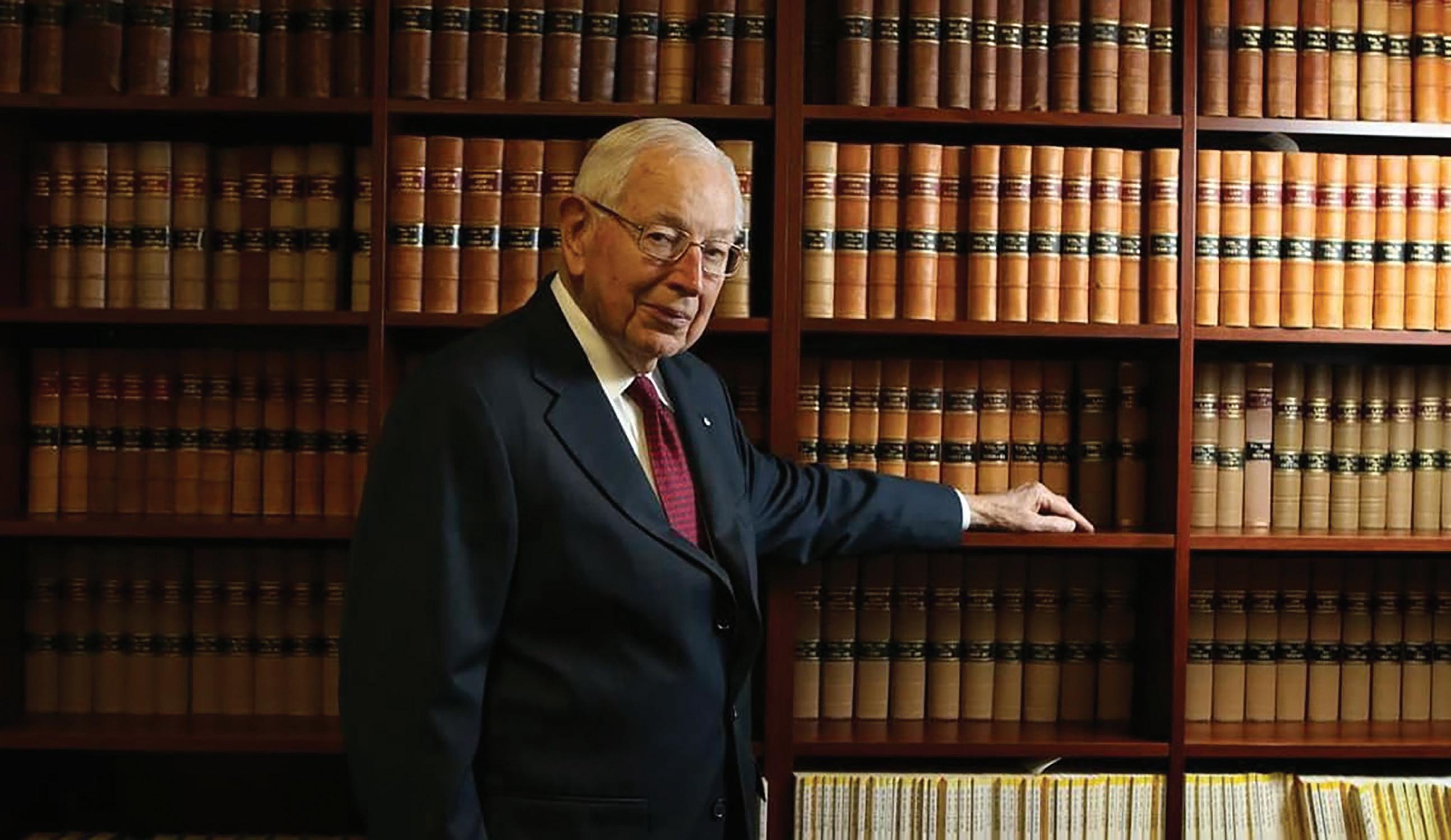
The Hon Sir Anthony Mason AC KBE GBM KC
THE HON JUSTICE KRISTEN WALKER
The Hon Justice Sir Anthony Frank Mason (known to his friends as Tony, but to me always as ‘Judge’) passed away on 17 March 2026. He was almost 101—and what an innings he had. He was one of Australia’s greatest jurists. He served on the High Court for 23 years. As Australia’s ninth Chief Justice, he presided over a period of significant change in the Australian legal system, widely regarded as one of the most exciting and important
periods in the Court’s history.1 Mason grew up in Sydney, where he attended Sydney Grammar School. After serving with the Royal Australian Air Force as a flying officer from 1944 to 1945, he enrolled at the University of Sydney, graduating with first-class honours in Law and Arts. Mason was articled with Clayton Utz & Co in Sydney, where he met his wife Patricia, to whom he was devoted and with whom he had two sons. He also served as an associate to Justice David Roper of the Supreme Court of NSW.
Mason was called to the New South Wales Bar in 1951, where he was an unqualified success. After only three years at the Bar, he appeared before the High Court in R v Davison,2 successfully persuading the Court that certain sections of the Bankruptcy Act 1924 (Cth) were invalid. Although High Court appearances involved much hard work, there were occasional moments of levity. In one case, Mason erroneously referred to the English case Ogdens v Nelson as ‘Ogden v Nash’. Dixon pointed out the mistake, implying that Mason had (mis)spent his youth reading Ogden Nash. During his time at the Bar, Mason also lectured in equity at the University of Sydney Law School, where he taught both the Hon Justice Mary Gaudron and the Hon Justice William Gummow AC. Mason took silk in 1964. Two days later, he was appointed SolicitorGeneral for the Commonwealth. In that capacity, he appeared regularly for the Commonwealth in constitutional
“Mason’s influence on the development of Australian law was far reaching and profound; and his influence on future generations of Australian lawyers and judges was also significant.”
cases. In addition, he was the leader of the Australian delegation to the UN Commission on International Trade Law from 1966 to 1969.
In 1969, Mason began his judicial career as a member of the NSW Court of Appeal. His tenure in that Court was short-lived because of his appointment to the High Court in 1972. He was appointed as Chief Justice of the High Court in 1987. It has been said that in his early years on the High Court, Mason was relatively conservative in his approach to judicial decisionmaking. However, his approach changed over time, particularly after he became Chief Justice. In an interview on Radio National in 1994, Mason responded to those observations:
I think that the extent of the change on my part has been somewhat exaggerated … It is inevitable, with the passage of time, that the views of an individual are likely to change. In my case, I have been a judge for 25 years. It would be strange indeed, if all my views remained static over that period of time. If they did, I would regard that as a worthy subject of criticism.
It is impossible to list in this obituary all the significant decisions during Mason’s period of Chief Justice. Two, however, stand out: Cole v Whitfield 3 and Mabo v Queensland (No 2).4 In Cole v Whitfield, the Court unanimously resolved 80 years of uncertainty about the meaning of section 92 of the Constitution. This illustrates one of Mason’s key roles on the Court: to provide a central point around which a majority could coalesce. In Mabo, the High Court overturned nearly 200 years of settler law to recognise native title. In addition, Mason presided over the discovery and development
of the implied freedom of political communication.5 His decision in the ACTV Case has remained influential in the later development of the implied freedom.
Mason retired as a Justice of the High Court upon reaching the age of 70 (the constitutional age of retirement).6 After leaving the Court he sat as a Judge of the Supreme Court of Fiji, as President of the Solomon Islands Court of Appeal, as a member of the Permanent Court of Arbitration and as a Non-Permanent Judge of the Hong Kong Court of Final Appeal, the latter for some 20 years.
Mason received a CBE in 1969, a KBE in 1972, and an AC in 1988. He received honorary degrees in law from the Australian National University, the University of New South Wales, Sydney University, Melbourne University, Oxford University, Monash University, Griffith University, and Deakin University.
Finally, mention must be made of Mason’s controversial role in the dismissal of the Whitlam government in 1975 by the then Governor-General, Sir John Kerr, who was Mason’s close personal friend. His role was unknown for many years. Then in 2012, Jenny Hocking, Kerr’s biographer, revealed that Mason had been Kerr’s confidant in the time leading up to the dismissal7, and that he had drafted a letter of dismissal for Kerr (which Kerr did not use). This controversy has not, however, diminished the significance of Mason’s contribution to the Australian legal system.
Mason’s influence on the development of Australian law was far reaching and profound; and his influence on future generations of Australian lawyers and judges was also significant. Several current members of
the judiciary8 had the great fortune to work as Mason’s associate as a young law graduate. I can but echo the words of Andrew Bell, Chief Justice of New South Wales, who described his year in Sir Anthony’s chambers as “one of the most important and formative of my professional life,” adding that “to observe at close quarters this master judicial craftsman at the peak of his powers was an opportunity as rare as it was invaluable”.
This obituary is in part based on Kristen Walker, ‘Mason, Anthony Frank’ in Michel Coper, Tony Blackshield and George Williams (eds), The Oxford Companion to the High Court of Australia (2001).
1 For a longer discussion of Mason’s role as Chief Justice, see Gabrielle Appleby and Andrew Lynch, “Sir Anthony Mason: Towering Over the High Court of Australia” in Rehan Abeyratne and Iddo Porat, Towering Judes: A Comparative Study of Constitutional Judges (Cambridge University Press, 2021), 56.
2 90 CLR 353 [1954] HCA 46.
3 (1988) 165 CLR 360; [1988] HCA 18.
4 (1992) 175 CLR 1; [1992] HCA 23.
5 Australian Capital Television Pty Ltd v Commonwealth (1992) 177 CLR 106; [1992] HCA 45; Nationwide News Pty Ltd v Wills (1992) 177 CLR 1; [1992] HCA 46; Stephens v West Australian Newspapers Ltd (1994) 182 CLR 211; [1994] HCA 45; Theophanous v Herald & Weekly Times Ltd (1994) 182 CLR 104; [1994] HCA 46.
6 Had he not accepted the role of Chief Justice he would have been entitled to sit indefinitely, under the constitutional provisions in place at the time of his appointment.
7 Jenny Hocking, Gough Whitlam: His Time (Melbourne University Publishing 2012), Chapter 10 ‘The Third Man’. See also Mason’s statement in 2012, published at www. whitlamdismissal.com/2012/08/27/mason-largely-confirms-kerrs-account-of-discussions/html.
8 Including: Stephen Gageler, Chief Justice of Australia; Andrew Bell, Chief Justice of New South Wales; Mark Leeming, Justice of Appeal of the New South Wales Supreme Court; and Stephen McLeish, Justice of Appeal of the Supreme Court of Victoria.
The case for kindness
JACK POPOLO
When your beloved scribe came to the Bar many years ago, he was regularly given pieces of advice by his colleagues. One that stuck was that given by the brilliant Lesley Glick KC: “Jack, just remember that the rule at the Bar is the opposite of what your grandmother told you; if you can’t say anything bad about someone, don’t say anything at all”.
In philosophical terms, this advice reflects a Hobbesian view of human nature (humans are inherently selfish, and life is “nasty, brutish and short”), and our grandmothers, whether they knew it or not, were Rousseans (humans are inherently kind and altruistic).
Now, it might not be readily apparent how this philosophical debate is relevant to your practices, or indeed the rest of your lives, so let me try and explain.
Over the course of an up and down career, your beloved scribe has seen that the vindication of rights through our legal system is an expensive business. He has concluded that the key to success at the Bar is to assist clients to resolve disputes as soon as reasonably practicable, and that empathy and understanding of an opponent’s point of view greatly assists in this task.
As Abraham Lincoln said:
Having recently re-read Rutger Bregman’s brilliant book Human Kind, a Hopeful History, I am more convinced than ever that humans are naturally social, unselfish and kind animals. And if Anne Frank were able to cling to her ideals and continue to believe “in spite of everything, that people are truly good at heart”, then I think you should stay with me.
Bregman notes the enormous influence on a generation of people of William Golding’s Lord of the Flies. Golding was undoubtedly a brilliant writer with a Conradian ability to plumb the darkest depths of mankind, and the winner of the 1983 Nobel Prize for literature. The book describes the descent into hell of a group of English schoolboys who find themselves stranded on a deserted island after a plane crash. The message of the book is that people are inherently cruel and selfish, and children left to their own devices will tear themselves apart.

These days, Golding is credited with being the unknowing originator of those awful reality TV shows where people are manipulated in various ways into being ghastly to each other.
Lord of the Flies is complete fiction, written by a deeply pessimistic man.
But is there any evidence of how children would in fact react if stranded on a desert island? Well, happily, Bregman found it.
Discourage litigation. Persuade your neighbours to compromise whenever you can. Point out to them how the nominal winner is often a real loser-in fees, expenses and waste of time. As a peacemaker the lawyer has a superior opportunity of being a good man. There will still be business enough.
The best way to assist clients to resolve disputes is to try and understand the other side’s point of view and do as Spinoza would have done: don’t laugh or weep at the actions of the other side, or start to hate them, but seek to understand them.
In 1977 six school boys from Tonga aged between 13 and 16 wagged school, stole a fishing boat, planning to escape to Fiji, some five hundred miles away. They got caught in a storm, drifted for eight days without food and water, and ended up on a small deserted island, Ata, some 160km south-southwest of Tonga. They were given up for dead, and incredibly rescued some 15 months later. On the island, the boys worked cooperatively together. As Captain Peter Warner, their rescuer, noted in his memoirs:
By the time we arrived the boys had set up a small commune with food garden, hollowed-out tree trunks to
store rainwater, a gymnasium with curious weights, a badminton court, chicken pens and a permanent fire, all from handiwork, an old blade and much determination.
When they first arrived on the island, one of the boys managed to make a fire using two sticks. Unlike the boys in Lord of the Flies who came to blows over the fire, the boys tended the fire for the time they were on the island to ensure it never went out.
Bregman tells many other stories that show that a cynical view of human nature does not conform to reality and demonstrates how our biases are used to sell newspapers, or more accurately these days, to attract clicks and gain followers. As Bregman notes, there are many studies that suggest that consuming news is a mental health hazard.
The following is just an example.
On 13 March 1964, Catherine “Kitty” Genovese was murdered outside her apartment in New York City. Two weeks later the venerable New York Times published the following on its front page: “37 Who Saw Murder Didn’t Call the Police.”
The article stated: “ For more than half an hour 38 [notwithstanding the headline said 37] respectable, lawabiding citizens in Queens watched a killer stalk and stab a woman in three separate attacks in Kew Gardens”.
The story said that Kitty could still have been alive. One policeman said: “A phone call would have done it”.
Abe Rosenthal, the metropolitan editor at the New York Times wrote: “What happened… was a symptom of a terrible reality in the human condition.”
The story of Kitty’s murder and the supposed reaction of bystanders to it became internationally famous. Episodes of Seinfeld and Law and Order were devoted to it. In a 1994 speech President Clinton recalled the “chilling message” of Kitty’s murder, and the US Government referred to the incident in justifying the 2003 invasion of Iraq, when Paul Wolfowitz suggested that Americans who opposed the war were
“So, my advice to you all is to look for the good in people. Those who have been successful in our profession tend to be able to do this, whether it is obvious or not.”
just as apathetic as those 38 witnesses. The Soviet press reported the incident as proof of capitalism’s “jungle morals”. But what actually happened on the night of Kitty’s murder?
At 3.19am Kitty screams in the street. It’s a cold night, and most residents have their windows shut. But at least two residents hear the screams and call the police. One of these residents when asked later says that the police said: “We already got the calls”.
But the police didn’t come immediately. It is speculated that the police assumed, based on the first calls they received, that this was some kind of domestic incident, in the days when spousal rape was not even a criminal offence.
Of the so-called 38 eyewitnesses, the vast majority did not actually see anything at all. At most they had heard something, but some had not woken up at all. It was later established that of those who were eyewitnesses, many thought they had seen and heard a young drunken woman in the street, and of those who saw a man and a woman, many thought they were witnessing a lovers’ quarrel or drunken brawl.
However two people certainly did see the first attack on Kitty. (There were, in fact, two attacks, not three as reported by the New York Times, and the second attack was inside the building.)
Joseph Fink, a strange, solitary man saw the first attack. He did nothing.
A second person saw the first attack, Karl Ross. Ross was homosexual in an age when homosexuality was illegal and gay men were treated brutally by police and stigmatised by papers such as the New York Times. Ross was too scared to call the police. He called a friend who urged Ross to call the police. Ross was too terrified to do that from his own apartment, so he climbed over the roof to his next-door neighbour and woke the woman who
lived there. That woman was Sophia Farrar. Sophia immediately ran out of her apartment, down the stairs and into the stairwell where Kitty was lying, the murderer having fled. Kitty did not die alone. In fact she died in Sophia’s arms.
Why was Sophia’s role in the story not mentioned? Whatever the reason, and according to her son Sophia did speak to a journalist at the time, Kitty dying in the arms of a Good Samaritan was not the angle of the story. Many residents of Kew Gardens also complained subsequently that their words had been twisted or not used by journalists.
Many years later, the New York Times acknowledged the errors in its story.
In an ironic twist, five days after Kitty’s death, Kitty’s murderer was apprehended due to the intervention of two bystanders who saw a man carrying a television set out of a neighbour’s house. This news did not make the papers.
Bregman concludes that Kitty’s story (and others he tells about the kindness of strangers) teaches us three things.
“One, how out of whack our view of human nature often is. Two, how deftly journalists push those buttons to sell sensational stories. And, last but not least, how it’s precisely in emergencies that we can count on one another.”
So, my advice to you all is to look for the good in people. Those who have been successful in our profession tend to be able to do this, whether it is obvious or not.
And get off social media. It is a nocebo that leads us to have a Hobbesian view of human nature, and drains empathy and compassion. Lastly, be warned: in an age of artificial intelligence, perhaps only those practitioners with empathy and compassion will have a long-term future.
As usual, our grandmothers were right.
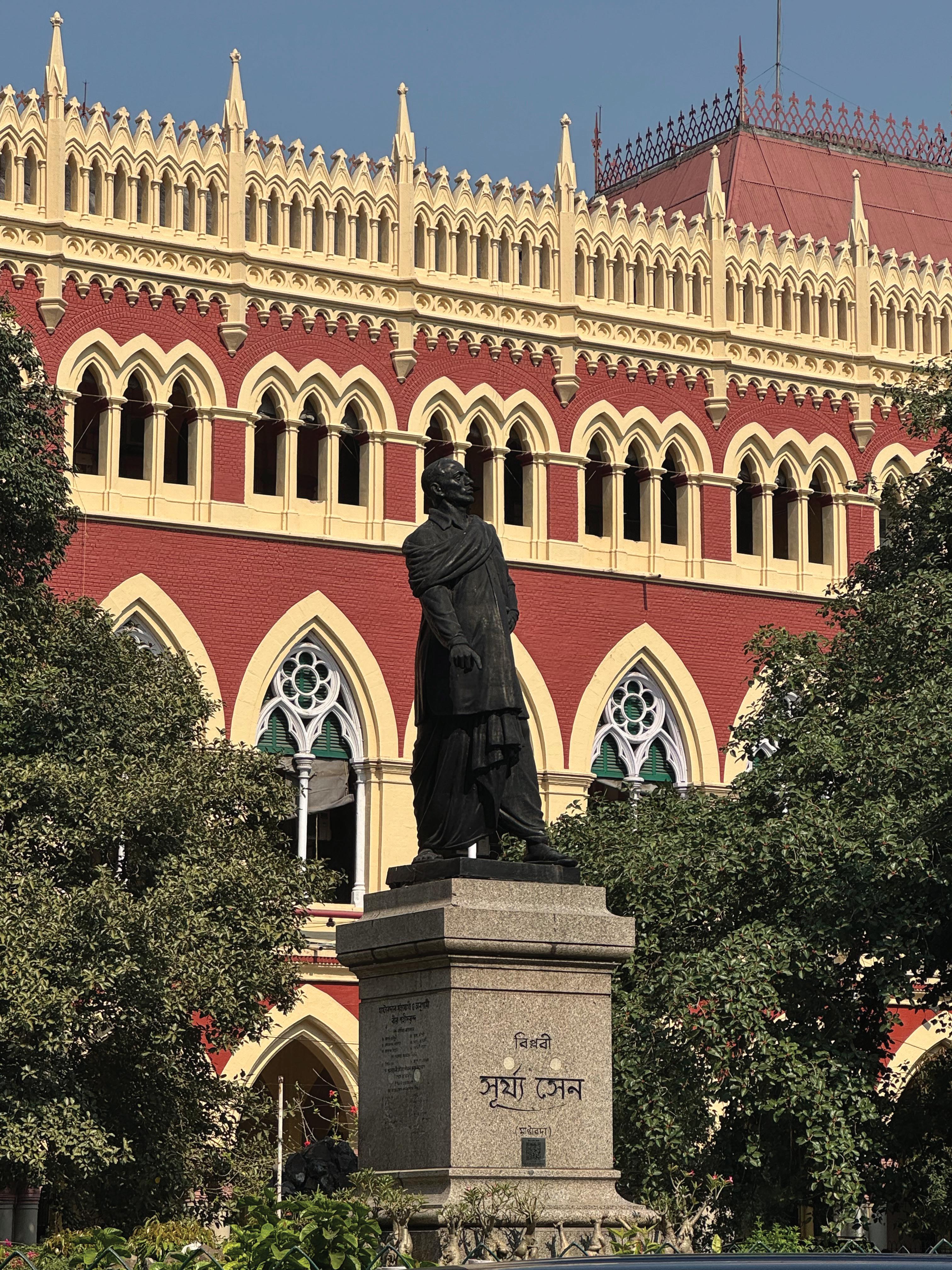

Samosas and judicial review: A day at the Calcutta High Court
SANDIP MUKERJEA
Sarada Hariharan is an expert in managing expectations.
When I first call her to confirm my guided visit to the Calcutta High Court she replies, “I’m sure you will be sorely disappointed,” before suggesting that I might prefer to spend my time at the neighbouring Eden Gardens cricket stadium. Sadly, I had spent the previous two days at Eden Gardens watching India feebly succumb to South Africa. So Sarada was stuck with me.
My plan is to spend a half-day exploring the Court. Sarada is adamant that I won’t want to stay longer than a half hour. We agree to meet outside the Court’s main gate the following morning. She asks me to arrive ‘early’… at 10.30am. Things move at a different pace here.
The Calcutta High Court is the oldest state superior court in India, established on 1 July 1862.1 Its jurisdiction extends throughout the State of West Bengal and to the Andaman and Nicobar Islands. 2 First constructed in 1872, it sits a stone’s throw from the banks of Kolkata’s Hooghly River and was reportedly modelled on the 13th century Stadt Haus (‘Cloth House’) in Ypres, Belgium. 3 In 1977, an annex known as the Centenary Building was added, the exterior of which neatly conforms with the original building’s neo-gothic design. The less conforming Sesquicentenary Building was added in 2012.
The Court’s red brick façade and towering spires dominate the skyline as I approach in an Uber. That approach quickly slows to a crawl before altogether stalling as traffic on the single-lane road leading to the Court’s expansive, circular
courtyard entrance predictably reaches gridlock at 10.15am. I decide to walk the last 300 metres.
Sarada is a few minutes late and so I take the opportunity to admire the striking statue of Indian revolutionary Surya Sen that guards the entrance to the Court. Sen is a peculiar choice for memorialising at a temple to the rule of law. He achieved notoriety in 1930 by leading a raid on a British Armoury in Chittagong (now part of Bangladesh) that resulted in the deaths of 80 British soldiers—an offence for which he was hanged in 1934. In addition to being immortalised by this statue, his life is celebrated in two Bollywood films. The law and show-business have always walked in parallel lines.
Sarada emerges from the building moments later. She is short, bespectacled and moves purposefully. Her tightly managed, salt and pepper curls betray the fact that she is probably older than she looks. She is fully robed because she is due to appear in court later in the day, but she is not a barrister. As she later explains to me, Kolkata no longer retains a rigid distinction between an independent bar and the solicitor branch of the profession—although there remains a ‘Calcutta Bar Association’. All lawyers are admitted as ‘advocates’ with rights of audience in the courts. Some choose to practice exclusively as ‘counsel’ and from those ranks are drawn the ‘senior advocates’. Sarada does not practice as counsel but appears from time to time in family law and wills and estates matters.
Following an obligatory exchange of pleasantries, Sarada reverts to managing my expectations. “Well, this is it,” she says, as we both turn away from Surya Sen and face the imposing court building. “I’m sure it’s nothing
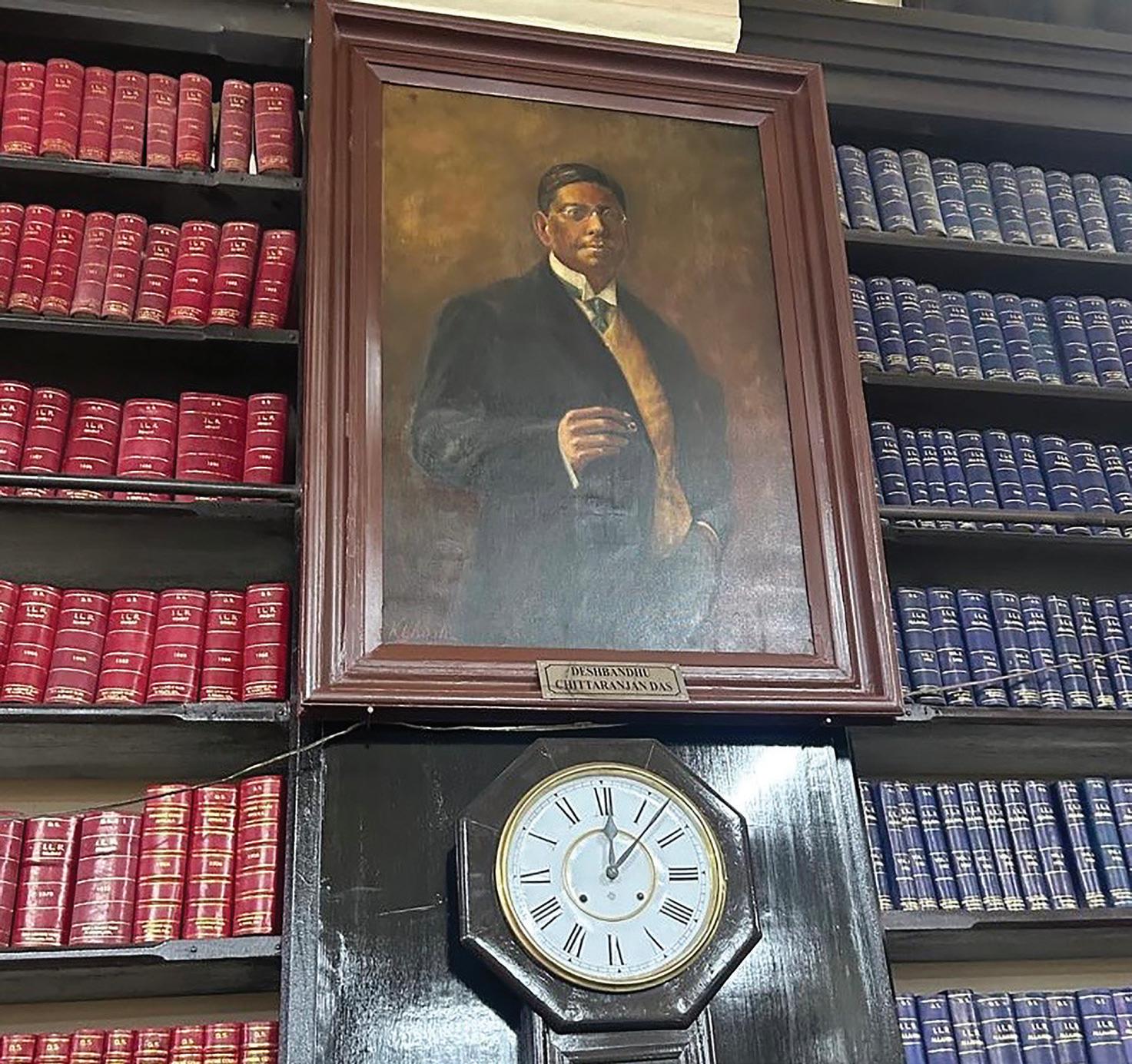
“The building’s lobbies, corridors, vestibules and alcoves are overflowing with masses of lawyers and litigants locked in conversation, gossip and negotiation—a scene resembling the packed grounds of a large private school at lunch time.”
compared to what you are used to in Melbourne.” Sarada plainly has never visited William Street.
Next, comes the ordeal of actually getting me into the building. Although the courts in India are notionally open to the public, superior courts implement a registration process for non-litigants to manage both numbers and security. The process requires photo identification and, critically, a signature from an admitted advocate. I am fortunate to have Sarada, a privilege I suspect is not available to most members of the public.
Once inside I am immediately struck by the scale of the operation that constitutes the administration of justice by this Court. The hallways of the original building boast soaring, arched, Victorian-era gothic ceilings in marble and granite, reminiscent of the Royal Courts of Justice (or Hogwarts). The entire complex houses 50 courtrooms spread across two floors of
the original building, three floors of the Centenary Building and seven floors of the Sesquicentenary Building. Many of those courtrooms maintain lists of cases numbering over 100 each day. Consequently, the building’s lobbies, corridors, vestibules and alcoves are overflowing with masses of lawyers and litigants locked in conversation, gossip and negotiation—a scene resembling the packed grounds of a large private school at lunch time. A court managing lists of 100 cases is a veritable nightmare for both judges and litigants. For judges because, in addition to the sheer volume of cases, only 32 out of a possible 54 permanent judicial appointments to the Court are presently filled. For litigants because, as Sarada explains, advocates briefed in multiple matters in a day do not enjoy the luxury of having a matter stood down to facilitate their appearance in another courtroom. The wheels of justice wait for no person when an

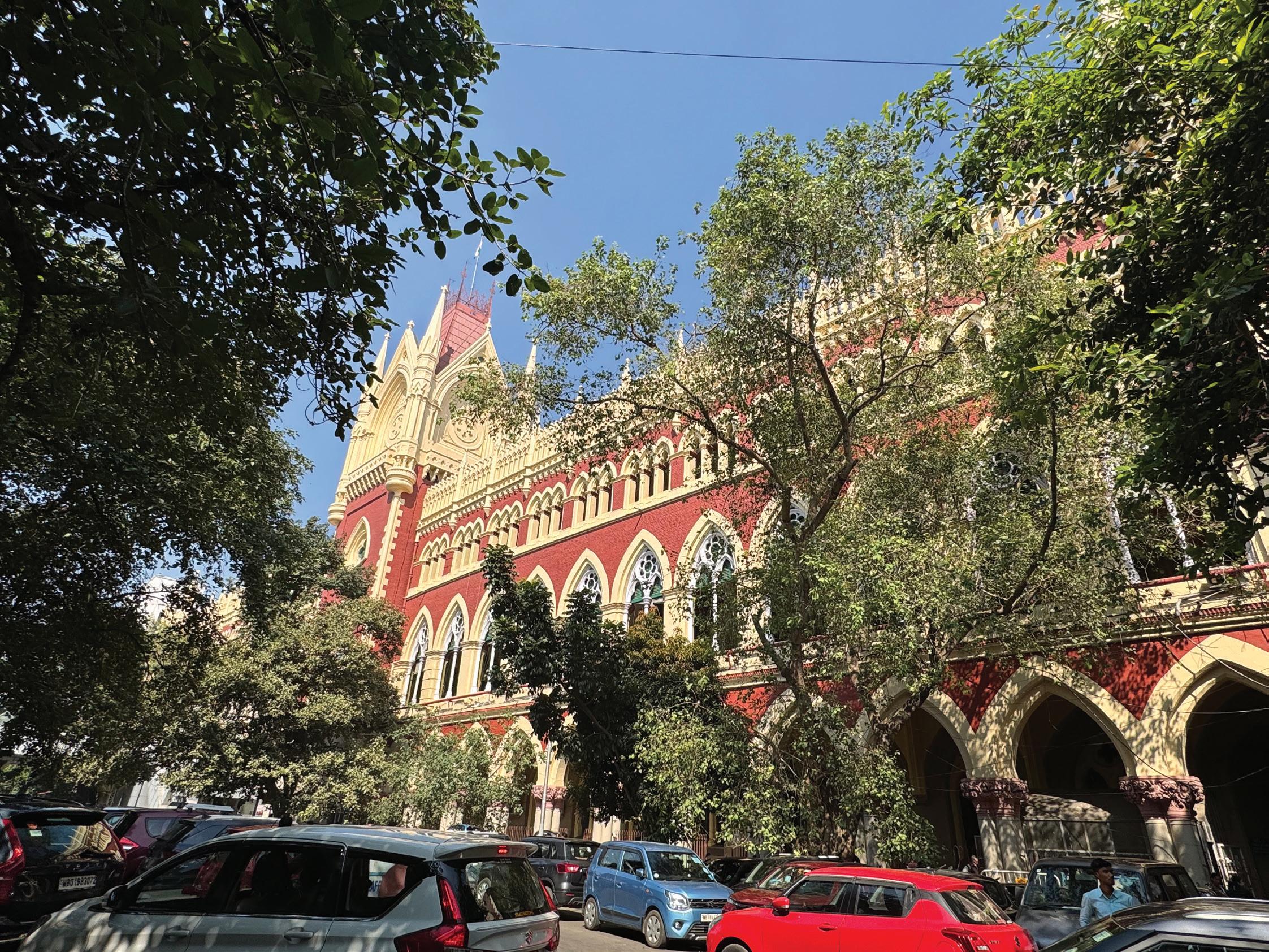
exasperated judge is trying to plough through 100 applications for urgent injunctive relief.
The result is that litigants are often compelled to brief teams of advocates (up to three or four) in every matter, to guard against the risk of any one of them being stuck in another hearing when the litigant’s matter is called. The progression of matters in each list is tracked in real time by the Court and displayed on monitors scattered throughout the complex, leading to panicked phone calls and text messages between advocates as their case nears to work out who amongst the team is actually available to appear.
My first stop is Court 1, the ceremonial court, where the freshly appointed Chief Justice of West Bengal presides over a bench of two. The room is noticeably larger though less grand than our Banco Court and it is filled to the brim. Judges and advocates are robed in more or less the same gowns, jackets and jabots seen throughout the common law world. The Bar table (spanning what appeared to
be at least 10 metres) is packed with senior advocates and their juniors representing a multitude of parties. The acoustics are poor and I struggle to comprehend precisely what the litigation is about, save that it appears to be some sort of challenge to an exercise of executive power.
But what fascinates me more than the subject matter are some of the unique conventions that have developed in this part of the world in the practice of advocacy. Each party’s advocates (senior and junior counsel and instructing solicitors) stand throughout the hearing, even when another party is addressing the Court. When a senior advocate addresses the Court, they do so surrounded by their juniors and instructors in a makeshift, semi-circular conclave, with suggestions being frequently whispered in the senior advocate’s ear and documents, laptops and notes ready to be thrust in front of their face. The order of addresses does not follow in a necessarily orderly way. Rather, I observe advocates frequently interject
clerk is tasked with managing and promoting the advocate’s practice and chambers, taking bookings, attending to administrative and clerical tasks, assisting the advocate in court and even arranging water, tea and food during court intervals. When I recently suggested to John Dever that he might consider expanding his offering to include a similar refreshments service, the phone went abruptly silent.
The Cambridge-educated Mookherjee is short, slim and with a balding head of wispy grey hair. He is making a judicial review application on behalf of one of the world’s largest multinational conglomerates, Reliance Industries, against a decision made by India’s anti-dumping tribunal. The arguments and principles are immediately familiar to my ear and he puts them succinctly, forcefully and in an easily digestible sequence. His voice is loud and firm and he uses hand gestures to emphasise many of his points.
His opponent is Harish Salve KC, a renowned Indian Supreme Court
“He explains his work habits, which include returning home for dinner following a day in court, only to pick up the next day’s brief and prepare into the early hours. Some truths are universal in this profession.”
advocate, former Solicitor-General of India and, currently, a King’s Counsel at the London Bar, from where he is appearing remotely. Mookherjee and Salve are old but friendly adversaries, as is immediately evident from some good-natured sledging across the video-link.
At the completion of his address, Mookherjee leaves the courtroom briefly to receive a paper cup filled with chai from his clerk, leaving his juniors to attend the bar table. He is plainly not particularly troubled by what Salve KC is going to say. I immediately seize the opportunity to engage him in conversation both about the case and practice as an advocate.
We discuss his grounds of review, his opponent and the judge (with whom he is particularly impressed). He expresses mild annoyance at the habit of juniors and instructors swarming around their leader during argument but appears genuinely perplexed as to how the practice developed. He explains his work habits, which include returning home for dinner following a day in court, only to pick up the next day’s brief and prepare into the early hours. Some truths are universal in this profession.
At the conclusion of the hearing, over a cup of tea and a samosa, we discuss the intersection between law and politics in India. Mookherjee’s father was aligned with India’s ruling, right-wing BJP Party and so Mookherjee was considered a surprising appointment as AdvocateGeneral by West Bengal’s Trinamool Party government. But Mookherjee has represented litigants drawn from all parts of India’s political spectrum (including the Chief Minister of West Bengal herself) and describes himself as fiercely apolitical despite his family history.
Indeed, he has previously quipped that he finds it difficult to espouse the
cause of any government, regardless of its ideology. He bemoans the politicisation of judicial appointments by the executive, increasing incursions by India’s central and state governments into the rule of law, and the proliferation of governmentappointed, non-judicial tribunals to seemingly usurp the independent judiciary’s jurisdiction.
By the end of my time at the High Court, I have comfortably exceeded Sarada’s half-hour estimate by an order of magnitude. Rather than being ‘sorely disappointed’, I found the experience to be enriching and informative. India, like many parliamentary democracies around the world, is confronting complex challenges concerning the rule of law and the separation of powers. There may be much for us to learn in coming years from how the legal profession in India (and elsewhere in the common law world) grapples with these challenges.
In the days following my visit to the Court my mind returns to a quiet moment spent in the Bar Library Club. It is a charming space, spread across four, musty, interconnected rooms. Each room contains large tables and chairs for working, researching or dining, with the walls graced by seemingly ancient bookshelves filled with law reports and textbooks. Interspersed between the bookshelves are portraits of some of West Bengal’s leading advocates of the past.
One such portrait is of Chittaranjan Das, depicted in a jacket, tie, waistcoat and winged-collar shirt, casually smoking a thin cigar. Das is perhaps West Bengal’s most famous advocate. He was admitted to the Inns of Court at Middle Temple in 1890 and called to the London Bar in 1894. Not long after, he left his legal practice to join India’s independence movement, in which he featured as one of the chief protagonists until a falling out
with Gandhi in 1922. His resignation as President of the Indian National Congress in 1923 and his premature death in 1925. 4
But it was in 1909 that Das first achieved national fame when he briefly returned to practice to defend, pro bono, the freedom fighter Aurobindo Ghosh in the ‘Alipore Bomb Case’5—an alleged conspiracy to murder the Chief Magistrate of the Presidency Court in Alipore, West Bengal. 6 The trial lasted 126 days and involved 200 witnesses, 4,000 documents and 500 exhibits. 7 In his closing address, Das reportedly reminded the jury that their verdict would echo not only within the walls of the court, but in the ‘High Court of History’. An acquittal duly followed. But by the end of the case, Das was nearly destitute.
Das had three children and 12 grandchildren. Two of those grandchildren were barristers who later held high offices in both the executive and judiciary in India. Another was Aditi Das—a woman of effortless charm and wit who cherished her family’s foundational role in both the law and the formation of a nation. She was my grandmother. Twenty-four hours prior to my arrival in Kolkata, she died peacefully at the age of 104. She would have enjoyed reading this article.
1 https://www.calcuttahighcourt.gov.in.
2 Ibid.
3 Ibid.
4 Krishna, Balraj, Great Indians, Rupa Publications, 2010, pp 105–6.
5 Emperor v Aurobindo Ghosh and Others.
6 https://en.wikipedia.org/wiki/Emperor_v._ Aurobindo_Ghosh_and_Others.
7 Krishna, Balraj, Great Indians, Rupa Publications, 2010, pp 99–100.
8 Dasgupta, Hemendranath, Deshbandhu Chittaranjan Das, in Grover, Verinder (ed.), Chittaranjan Das, Deep & Deep Publications, 1994, p 236.

UNCONVENTIONAL PATHS TO THE BAR
Lunch with the Boss
What do Bruce Springsteen and Justice Croucher have in common? Well, it’s more than you might think.
MOYA O’BRIEN
It’s a Friday lunchtime in March and the legal precinct is humming with the promise of a still and clear autumnal weekend. I’m a little nervous as I hustle my way down Little Bourke Street. What if the conversation is stilted? What if he only wants to talk law?
As I descend into the warm embrace of Caterina’s, I am met with the intimate murmur of the lunchtime diners. Down here, amongst the labyrinth of low rustic beams and the soft lights, it’s like you have entered another world. Upon arrival, I am greeted by Caterina, ever the enthusiastic hostess, who makes a point of always using your first name. I tell her about my date and insist that I need a quiet corner where I can lean in and speak freely. She directs me to a table near the kitchen where you can feel the heat and hear the hiss of meat hitting a scorching pan. It is perfect.
I order a drink and settle in. As I wait, I conduct a brief google search which reveals an enthusiastic post from Justice Croucher on an ACDC fan site in 2020. The post is on the 40 th anniversary of Bon Scott’s death and recounts his instant mesmerisation with the performer as a 12-year-old boy, pushed hard against the Wangaratta stage by the throng of the crowd. The post is signed off simply as “Michael Croucher, Melbourne (formerly of Myrtleford)”.
He is late, he apologises on text, as an issue has arisen in his trial and he needs to deal with it before they adjourn for the weekend. I understand the dynamic nature of a murder
trial, I know all too well that anything can happen.
When he eventually arrives, I tell him that in legal circles he is Melbourne’s hottest lunch date and he laughs easily. A waiter bustles over and recites the compendious specials list. Without hesitation, we both order half a dozen coffin bay oysters. I feel myself relax, we were going to get along just fine. With an order for the crispy skinned Barramundi (him) and the rabbit lasagne for me, we get down to business.
I’ve invited Justice Croucher here to learn more about his unconventional path to the Bar and ultimately the Supreme Court in 2013. But really, I am interested in what makes him tick, as a Judge sitting on murder trial after murder trial, as a husband, a father of three young men, and as a mate. Where does he find the balm for his soul after listening to the litany of human suffering year after year? How does he make sense of what he must absorb? And how does he give validation and meaning to all who come through his Court, the witnesses, the accused, and most importantly those who have been left behind reeling in grief.
I’ve heard that he draws heavily on music and literature to not only process his own feelings but as a way of communicating profound human sentiments. His repertoire is as varied as his life experiences and includes the likes of Neil Young, Nick Cave, Archie Roach, ACDC and the achingly beautiful altcountry rocker, Kasey Chambers.1
He starts by telling me about his uncomplicated and free upbringing in the small alpine town of Myrtleford, where he was the cheeky third child of four. His childhood was spent outdoors roaming the Ovens Valley, seeking out the best jumping spots along the river flanked by Willow trees. I wonder if his mind goes back to these days, the place of his youth when he listens to Neil Young, one of his favourite artists:
In my mind I still need a place to go. All my changes were there. Blue, blue windows behind the stars. Yellow moon on the rise.
I can envisage the gang now, riding home in unison, towels slung over their shoulders, dinners cold on the table, the shift of the twilight sky weaving a purple thread above the fields and the silhouettes of the tobacco huts bobbing against the changing amethyst sky.
Ruth, his mother, would always have an ear out for him, she would always be there waiting.
Ruth Croucher was an avid reader who shared her understanding and love of the power of language with her son. There was no scholarship to an illustrious grammar school for young Michael Croucher nor was there a costly stint paid for by proud but stretched parents at Cambridge or Oxford. His early education was spent in the saddle of a dirt bike on the family farm’s motocross track, engineered and constructed alongside his father ‘Spot’, who had been an avid scrambles and grasstrack racer in his youth.
Like most 15-year-old boys, adrenaline, being airborne and the glory of winning were at the forefront of Michael’s mind and much to the bewilderment of many he left school early, in Year 10, to pursue his passion for competitive motor cross.
Too often boyhood dreams are crushed in an instant, but for Michael it was a slow realisation, along with some broken bones at the aptly named training facility, Hungry Creek, that he just did not have the talent the circuit demanded.
Maybe it is the lacing of nostalgia that comes with age, but he tells me that amongst the dust of dirt track life, there was something stronger than a boyhood desire to wield a golden trophy above his head, there was something pulling him homeward. Her name is Robyn, and he has loved her from the tender age of 14, and only her.
Tucking into my silky pasta, he tells me that they went their separate ways for a brief period while she was at high school and he was chasing dopamine and personal bests. What strikes me is, despite having enjoyed almost 50 years together as a couple, as a team, he still appears to be lamenting that
brief moment of lost time with her. His enduring love for her is evident and refreshing in a profession that too often take for granted those who enable their successes.
When Robyn graduated, she left behind the Ovens Valley and headed to Melbourne to pursue a calling in early childhood education. A distance relationship ensued while he remained behind in Myrtleford. Eighteen-yearold Michael, it would seem, was still hankering for an environment driven by the thrill of competition, personal challenge and, I am sure, a bounty of masculine jocularity. He found work as a lumberjack where the pay packet was good if you were quick, and the camaraderie and banter were top notch.
In this job, he says, you are not connected by a shared vocation, but rather you are pulled together, a patchwork of different men, different upbringings and values, by pure grit alone. The ability to find a common thread with any type of any person is one of the essential qualities of a criminal barrister and I do not doubt it was at the bases of those towering trees that Michael mastered these skills.
He then leans in across the table and tells me about his epiphany.
It is far from the rugged slopes of a timber plantation where the hankering for a formal education, and a hankering for something more finally hit him. Unexpectedly, and incongruously, it occurs on the shoreline of a sophisticated Italian beach, surrounded by Robyn, her brother and his partner, all of whom had been to university, where the seed of a return to education is finally planted.
At the age 25 and now a married man, Michael returned to the classroom, to the very school he had turned his back on a decade earlier, Myrtleford High, and completed Year 12. It is unfathomable now, to think of our rigid state education system allowing a mature man to sit alongside a gangly, pimply 17-year-old in English class and give his adult perspective on novels such as Fly Away Peter and 1984, and yet somehow it worked. Michael
was a focused and capable student in his final year, and his marks earnt him a place at Monash University to study economics, along with the promise of a graduate position at the Reserve Bank.
Like many before him, Michael, because of his “high marks”, was cajoled into signing up for a law degree as well. And like many a fine barrister before him, the cases he devoured at university ignited a passion inside him. The Reserve Bank cadetship and the allure of a career in Sydney were soon dead to him.
He threw himself into articles with the small suburban law firm Hale and Wakeling and then later worked with David Grace KC. It is here he discovered an aptitude for criminal appeals. I laugh; I tell him that it is only natural that he would fall into this work. My observation of the barristers who excel in this intellectually challenging area is that they are quite simply wired differently—they work backwards, unravelling a case from the ending rather than from the beginning. By now, I have well and truly ‘settled in’ and I confidently tell Michael that his whole life has been approached backwardly to date, including only discovering his love for the dynamic energy of a trial as a judge, after years of unpicking conviction appeals.
In the year that both Nostradamus and Prince predicted the end of the world—1999— Michael Croucher signed the Bar Roll at the age of 35. And as if he were making up for lost time, in just 12 short years he managed to father three beautiful sons, appear in the High Court on multiple occasions, take silk and be appointed a Supreme Court Judge.
Some people say he is the ultimate chameleon. A man who is just as at home yelling profanities (always in disguise of course) at his own football team the Richmond Tigers, as he is on the Bench of the Court of Appeal. A man who could capture any audience in any country pub, but who is then not ashamed to show his own human vulnerability by shedding a tear in the Court.
Upon his appointment to the Supreme Court he received a congratulatory note from a colleague which read: “Pretty sure there haven’t been too many lumberjacks from Myrtleford appointed to the Supreme Court before. A judge who can fell a tree then whittle his own gavel, that’s my definition of a rounded judicial officer."2
Much like his winding passage to the Bar, Michael Croucher has been an inspiring and unconventional judge. However, as I dig into a fluffy tiramisu and he a “chocolate pud” (a late sugar hit which neither of us needs), he philosophises that he is certain there are detractors who would describe his Court room style as “judicially unbecoming”.
I wholeheartedly disagree with any of his detractors.
By this stage, the lunch crowd has thinned, and it is well into the afternoon. We get into what I believe is at the core of any rewarding career in criminal law—understanding the intersection between human nature, life’s experiences and how they can inform the approach to our cases. Sitting before me is a man who has thought deeply about his own life experiences, the frailty of the human condition, and most importantly has sought to process these thoughts through literature and more often music.
We talk candidly about the personal effects some of the cases can have on you, the type that just get under your skin.
He tells me that it is the split-second decisions, the cases where it all turns on a sliding door moment, which really have the capacity to unsettle the heart and mind.
He recounts a tale, clearly imprinted in his mind from 1983 as though it were yesterday, when he was felling a burnt tree after the Ash Wednesday bushfires. He was 19 years old and in a cavalier mood, he and his friend Ange were working far too close to one another, fuelled by the bravado and recklessness of youth, a large tree
Michael had attacked began to topple towards his
There were two choices open in the moment: he could yell and alert his friend to the crushing danger above, concerned that that would cause panic and shock his friend into the direct path of all the tree’s might, or he could remain silent and hope the tree missed his friend.
Like a flip of a coin, he chose the latter. Silence. It was the correct decision - the pine tree guillotine sailed past his unsuspecting friend with only centimetres to spare.
He tells me that this incident has never left him, but now he sees it through a different lens, the folly of youth, that assumption that you are untouchable. When carefully weighing up a sentence for a young person, his own life experiences also play a part in the “intuitive sentencing synthesis”. We talk about ebb and flow of life events over coffee. It is of course impossible to move through this life without experiencing the full array of human emotions and human reactions, the immense shock and grief of the death of a loved one, the overwhelming euphoria of holding your own shiny newborn, or the disappointments, struggles and regrets that pepper everyday life.
He tells me of the utter devastation in his own family when his brother Nicholas was killed in a car accident on the Hume Highway aged 22 years, along with two mates. Their lives cut short by decisions made in the moment. The loss of a child and the impact on a parent is something that he says he can still see today permanently etched in the lines of the face of his 93-year-old father, Spot.
He has found cause many a time, he says, to reference Rose Fitzgerald Kennedy’s thoughts on the grief of losing a child: “It is sometimes said that ‘time heals all wounds’. I do not agree. The wounds remain. In time, the mind protecting its sanity covers them with scar tissue and the pain lessens. But it is never gone.”
A murder trial is in many ways like
life, powerful and unpredictable all at once. It is an opera, or a great Greek play surging towards some sort of unknown grand finale, where despite the outcome there will always be the perception of “winners and losers”.
All these players, sometimes even the barristers, are looking to the judge to pull together that final refrain.
To orchestrate a closure that must not only denounce the crime but provide a fitting resolution and where, if at all possible, unite the cast.
I am feeling overconfident after our three-hour chat and he has that uncanny knack of making you feel like you are old friends. I offer my own unsolicited opinion, and my own views on his sentences and his propensity to cry in court.
The task of sentencing someone for taking the life of another person is not one that can be done without empathy or emotion. It is not simply a “professional task” which can be learned but rather one that demands deep personal reflection and an understanding of human weaknesses.
He tells me he tries to practise reading his sentences without allowing the emotions to bubble over. I tell him that as a mother of three sons I admire him for showing men, and our often emotionally reserved profession, that it is acceptable and normal to show emotion, empathy and vulnerability.
His former associate tells me of the power and the atmosphere of the Court when these moments arise. One such sentence is R v Lucas [2021] VSC 81, a manslaughter sentence in which the randomness of life is exquisitely illustrated by the recounting of the tale of a British gunner plummeting from the sky and unimaginably surviving the fall to earth which was by pure chance broken by a perfectly placed plantation of flexible pine trees and a pile of deep powder snow. Initially, the reader is confused, how on earth does this random tale from another time relate to today’s events in the Supreme Court.
This tale of incredible survival is used to perfectly juxtapose the unfathomable sudden death of a
“A man who is just as at home yelling profanities (always in disguise of course) at his own football team the Richmond Tigers, as he is on the Bench of the Court of Appeal. A man who could capture any audience in any country pub, but who is then not ashamed to show his own human vulnerability by shedding a tear in the Court.”
“man mountain” named David Blake, lovingly nicknamed “Tender” by his family, felled and killed instantly by two fleeting punches by a drunken lightweight, a fraction of his loveable bearlike proportions.
That former associate, now a courageous and fierce barrister herself, recounted to me the instant when David Blake’s father, a retired farmer from Cabbage Tree, lifted his gaze to meet that of Justice Croucher’s. Both grown men, both men who were allowing themselves to weep openly in a Court room.
The American wordsmith, Washington Irving, once observed, “there is a sacredness in tears. They are not the mark of weakness, but of power. They speak more eloquently than ten thousand tongues.”
In this moment, this observation was never truer.
His sentences are not the product of staid or impenetrable language pulled from a dusty Criminal Law Report.
This is a man who understands the importance of giving someone a song. His ability to translate life’s emotions and even legal principles into simple poetic language is a gift.
It is close to 5pm when we emerge into the late afternoon sunshine on Queen Street. I feel utterly invigorated. It dawns on me that I have just eaten lunch with the Bar’s very own version of Bruce Springsteen. A risk taker, a highly principled man, a man who is proud to describe his wife as his “anchor”, a man who can speak to anyone, but most importantly a man who understands the power of music to heal and knows when to use its influence to write to the heat.
1 Following our lunch Justice Croucher sent through a handful of the songs which have influenced him. Under the Spotify Playlist title, “Mum’s Judge’s playlist”, the entire family has enjoyed and benefited from a musical education.
2 A note sent on the occasion of his appointment to the Supreme Court August 2013, by Luke Barker of counsel.

Bush courts and city lawyers
JULIAN R MURPHY
For most of us ‘city lawyers’ going to court means crossing William Street or Lonsdale Street, passing through security with a wave of our Bar card, taking a corridor, lift or stairs to our allocated courtroom, entering our appearance with court staff, waiting in anticipation for our matter to be called on and then, once it is, announcing our appearance and often then having hours to make our arguments before retiring to Patricia's for a coffee. All of this occurs, of course, in purpose-built facilities with technology and functional climate control that almost always works. I take so much of this for granted that whenever

there is a slight deviation from the norm—a particularly long line to get through security, a last-minute change of courtroom, a broken air-conditioner—it leaves me in a heightened state of nervousness. But of course we should not take these things for granted.
Every day that the courts in Melbourne sit there are other courts across the country sitting in very different conditions. Some of these courts sit in portable buildings not much different to shipping containers, some sit in shelters that are not even fully enclosed from the elements, others sit (at least occasionally) entirely outside. Much of the time these are courts at the lowest level of the court hierarchy—the Magistrates’ Courts in most states, or the Local Courts in the Northern Territory and New South Wales. Superior courts also occasionally sit in remote settings, including to take evidence ‘on country’ in cases involving First Nations parties or witnesses. In the Federal Court, this mostly commonly takes place in native title proceedings, but has also occurred, notably, in tort proceedings in the Torres Strait and in two ‘stolen wages’ class action proceedings, one which sat in Broome and another in various regional hubs in the Northern Territory. But the majority of remote outreach by the courts is done, as I have said, by the lower courts. I have been lucky enough to have had some experience of these courts both prior to coming to the Bar and since, and was pleased to be asked to record some of my reflections here.
Perhaps the two most important things to observe about so-called ‘bush courts’ is that, in many instances, they are at once deeply flawed but hugely important. They are often flawed because they are under-resourced and need to get through too many cases in too little time with too few lawyers and not
enough cultural competence. I have written elsewhere about these flaws (Griffith Review, No 65, 2019) and will not dwell longer on them here. Rather, I want to focus here on the importance of ‘bush courts’ and what makes them work (when they do).
Bush courts are important because they bring the administration of justice— usually criminal justice—to people in their home communities. There is a sense in which this should be a basal entitlement. Just because a person (whether an accused, complainant, witness or juror) lives in a remote place should not mean that they must leave that place to participate in the justice system. But delivering government services to remote places can be expensive, which is why many people in these places do have to travel for other government services, for example specialist health services. Bringing courts to these communities is thus both a sign of respect but also practically improves access to justice because many people attend court who might otherwise not have made it (with the result that they would be sentenced in absentia for low level matters or have a warrant issued for their arrest for more serious matters).
It is not only in a numerical sense that access to justice is improved by ‘bush courts’, it is also qualitative. By sitting in the community in which an accused and witnesses live, the court can better get an understanding of the local context. Sometimes, in criminal matters, this gives the court a better understanding of what contributed to the alleged or admitted conduct,
“It is not only in a numerical sense that access to justice is improved by ‘bush courts’, it is also qualitative. ”
and potential safeguards against its repetition (whether on bail or at sentence). My experience of bush courts in the Northern Territory was that an accused was much more likely to be granted bail and sentenced to a non-custodial disposition at bush court than in the city. But other times the improved outcomes for accused people were due to the fact that they could adduce better evidence from witnesses, and the judicial officer could better understand that evidence, when the court sat in the community. I have a vivid recollection of one occasion in the Northern Territory when community members performed a ceremonial dance to the Magistrate to underscore the importance of the accused’s role in the community. This occurred in the outdoors, out the front of the courthouse. I have other more recent memories of a judge of the Federal Court being driven on a four-wheel motorbike across rugged terrain in the Torres Strait on a tour of sites of cultural significance.
Of course, not all of my memories of bush courts are happy ones. The court list often overwhelming with lawyers required to appear on as many as 20, 30 or more matters in a day (often for little more than a minute to seek an adjournment). The weather, as well as the work, could be gruelling, with most locations I attended requiring that client conferences were done
outside under trees, sitting on logs or flimsy fold up chairs. I would often be sweating through my shirt and I had at least one colleague (another solicitor advocate) who took the liberty of wearing shorts to court to deal with these conditions. These are not ideal conditions to be doing anything other than relaxing by the pool, much less taking instructions and giving advice on difficult legal matters of great importance to the clients affected by them. On many occasions, I felt that I was delivering a sub-standard legal service, but I was not sure then, and I am not sure now, that there is an obvious alternative under current funding models.
One way in which the difficulties of the funding constraints can be alleviated somewhat is by members of the Bar being willing to take briefs for First Nations legal aid services on a pro bono or reduced-rate basis. Many members of the Victorian Bar, particularly the criminal bar, have been doing that, particularly over the last few years and particularly in the Northern Territory. These briefs are not a holiday, and will most often involve regional rather than remote courts, but they are important and rewarding work. Members should contact Carly Sluiter (of the Pro Bono Committee) or Thomas Clelland if they are interested in these opportunities.

The
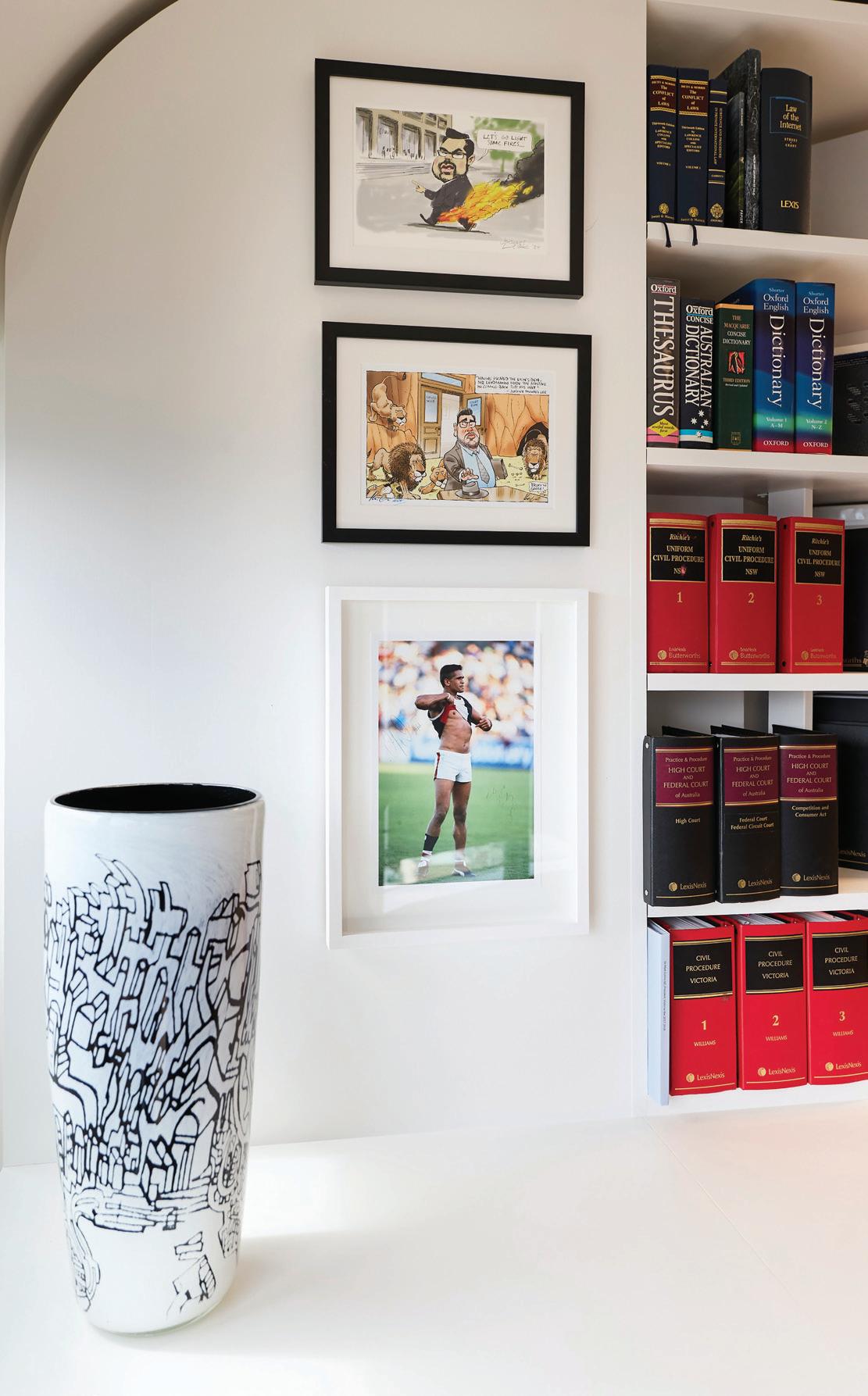
Candid Camera art of the
advocate
Pick a newsworthy defamation proceeding in Australia in the last two decades, and you would get less than even odds that Matt Collins KC was in it. Lehrmann v Network Ten, Gatto v Australian Broadcasting Corporation, Hockey v Fairfax Media, Wilson v Bauer Media, Deeming v Pesutto, Greenwich v Latham, Al Muderis v Nine Network. If you have happened upon Collins on Defamation, you know he literally wrote the book on defamation. For this edition’s Candid Camera, we caught up with Matt to chat defamation, technology in the law, and the intersection of art and architecture.
As you walk down the corridor to Matt’s room, you’re already admiring his art collection before you step across the threshold into his chambers. “Julian Burnside had chambers
SEBASTIAN CAMPBELL

When he retired, I couldn’t bear the thought of giving them up, and so I acquired them from Julian and gave them a permanent home on the walls of this floor.”
Once you step inside Matt’s chambers, every glance is richly rewarded as you happen upon a new work, more intriguing, unexpected, and interesting than the last. The eyes face an unenviable choice: to linger and savour the familiar rewards of a pleasing piece, or to wander the room in search of something new. First a pair of Siri Hayes photographs of Catalonia, then a Larrakitj from Arnhem Land, next a Robert Doble diptych, now a Damien Hirst NFT. The art of the past, present, and future, at ease sitting side-by-side.
In 2008, Matt moved to Level 32 of Aickin Chambers, where we find ourselves today. The concept of what chambers should be, or even could be, he says, has changed significantly in those two decades. “When I first moved to the floor, I was one of the most junior barristers. At that time
manifestation of the seriousness of the barrister.”
Matt took up his current room towards the end of 2014, completing a renovation over the summer before moving in at the start of 2015. For the overhaul he called upon friend and architect Jarrod Haberfield. “I had worked with Jarrod before on a residential project, so I knew he would understand the space I was looking to create. He was writing his PhD on the intersection between art and architecture, and I’ve always shared his belief that art can shape, and not just adorn, space.” In designing the space, Matt endeavoured to cater for the varied and disparate needs of the people it serves, namely: himself, his instructors, his clients, and his colleagues.
Firstly, it had to be a place where he felt comfortable. “Your chambers are your workspace. We spend long hours here, so I wanted a beautiful space in which to work and to meet with juniors when preparing matters.” Secondly, it had to be a place that his instructors




Knight from the Lehrmann v Network Ten trial, and a signed version of “that photo” of Nicky Winmar (Matt represented Winmar in defamation proceedings against Sam Newman and others), there are few traces of his past or present cases. Indeed, the only clue that you find yourself in a set of chambers is a collection of CLRs, VRs and textbooks which take on a wallpaperlike quality and blend in with the cabinetry.
unmistakably a place of business, I also wanted it to be interesting and welcoming. Litigation is stressful and meeting with senior counsel can be intimidating, particularly for the client, so chambers should be a place that they feel comfortable visiting, that they are in safe hands.”
Once your eyes acclimatise, there is a startling realisation; there is not a hardcopy brief in sight. Even a passing familiarity with some of the most recent newsworthy defamation cases, and the counsel in them, would suggest the lack of physical briefs isn’t because Matt’s practice has fallen into abeyance. Save for a few mementos, including cartoons by Johannes Leak and Mark
Having developed a paperless practice that enables him to run even the most document-heavy trials with just his trusty iPad, Matt says he’s invigorated by the constant challenge of keeping up with technological changes. One of the benefits of this paperless practice is clear to see, with increased real estate available for artistic pieces of all mediums, including some dazzling pieces of furniture. With many worthy candidates, perhaps the most eye-catching piece of furniture in the room is the Zanotta Cavour Desk where Matt conducts the “paperwork” side of his legal practice. Designed by architect and designer Carlo Mollino in 1949, the Cavour is a timeless wonder of engineering, with parallel boomerang shaped legs which simultaneously suspend the glass tabletop while effortlessly floating over

the stack of drawers. Nestled in the lefthand side of the


VICTORIAN BAR NEWS
Back of the Lift
Adjourned Sine Die
SUPREME COURT OF VICTORIA
The Hon Phillip Priest KC
Bar roll No 1540
On 30 December 2025, Justice Phillip Priest retired as a Judge of Appeal of the Supreme Court of Victoria—Court of Appeal. He had served with distinction for 13 years, having been appointed directly from the Bar in October 2012. Throughout his time on the Bench, his Honour was unfailingly fair and committed to justice in every case. His Honour’s dedication and discipline is undeniable. During his time on the Bench he gave judgment in over 1,600 cases, both in the Court of Appeal and in the Trial Division. In short, he was regarded by all as a true worker.
His Honour was educated first at Parade College in Bundoora, and later at Geoghegan College in Broadmeadows. After narrowly avoiding a career working as a bank teller and having been inspired by the 1957 film Witness for the Prosecution, his Honour commenced the Council of Legal Education Course at RMIT and completed the long articles program at Home Wilkinson Lowery (now part of HWL Ebsworth). While undertaking that course, his Honour was taught by distinguished members of our Bar, including then Solicitor-General Sir Daryl Dawson QC (later Justice Dawson of the High Court), Hartley Hanson (later Justice Hanson of the Court of Appeal) and the eminent J D Merralls QC.
Before his appointment, his Honour practised as a barrister at the Victorian Bar for over 32 years, the last 14 of which were as silk. His Honour completed the inaugural Bar Readers’ Course and signed the Bar Roll in March 1980. He went on to read with the late Peter Murley, who taught him about duty, respect, independence and (when the need arose) the necessity to be fearless in court.
Within only months of having signed the Bar Roll, his Honour appeared as junior counsel to the late Bill Lennon QC, for the Appellant in R v Bozikis [1981] VR 587 opposed—coincidentally—to Dawson QC who was appearing for the Crown. In addition to being one of his Honour’s earliest cases as a barrister, it was his first appearance in the then Court of Criminal Appeal. This case was the beginning of a career in the law that later included frequent appearances in the Court of Appeal— culminating in his appointment to that Court.
After coming to the Bar, his Honour regularly appeared to prosecute, instructed by the then Crown Solicitor’s Office. However, his practice eventually evolved and, by the late 1980s, his Honour was regularly appearing in jury trials for the defence. With the creation of the Court of Appeal in June 1995, his Honour (along with friend and fellow Murley pupil OP Holdenson—now KC) became known as a compelling and formidable appellate advocate.
While his Honour only had one formal reader, the late Thamsanqa Nqayi, he was an invaluable mentor to countless others including; Justice Croucher, Judge Hinchey, Judge Leighfield, Theo Kassimatis KC, Ruth Shann SC and Christopher Wareham. In addition to his mentoring of practitioners, his Honour never missed an opportunity to speak with students or to sit on the admission ceremony of newly admitted lawyers. Mentoring and teaching are fundamental parts of his character.
Off the Bench, one of his Honour’s greatest passions is karate inspired by films like The Samurai. Many of his Honour’s juniors during his time at the Bar (and later his Associates and the odd-judicial colleague) have—from time to time—benefited from his Honour’s demonstrations.
We wish his Honour a fulfilling and relaxing retirement with his wife Irene, sons Robert and David, and grandson Daniel.
OP HOLDENSON KC, CHRISTOPHER
Silence All Stand
COURT OF APPEAL
The Hon Justice Stephen Donaghue
On 27 January 2026, his Honour Justice Stephen Donaghue commenced his appointment as a Justice of Appeal of the Supreme Court of Victoria.
His Honour was raised in an academic family, but of a scientific rather than a legal persuasion. Debate around the dinner table was encouraged, and he soon realised that the persuasion game itself was what he enjoyed the most.
And so, upon graduating from Whitefriars College in Donvale, his Honour embarked on a double degree in Arts and Law at the University of Melbourne. He excelled as a student, graduating in 1995 with first class honours in law and the Supreme Court Prize. He also competed in basketball, served as the Editor of the Melbourne University Law Review, and honed his advocacy skills in debating and mooting teams, including a formidable partnership with his now-wife, Carolyn Evans (formerly Dean of Melbourne University, now Vice Chancellor of Griffith University).
The couple then moved to the United Kingdom, where his Honour practised briefly at Minter Ellison, and they both completed doctorates at Oxford, each on a prestigious scholarship. Towards the end of their happy days there, they learned they were expecting their first child. His Honour’s advocacy skills were called upon early, successfully dissuading the bursar from pursuing steps to remove them from their accommodation on the basis that it was not suitable for children.
On return to Australia in 2000, his Honour took up an associateship with Justice Hayne in the High Court of Australia. It was a demanding role; his employer’s standards were exacting. Again, his Honour flourished, enjoying Socratic dialogue with the boss in
chambers, and learning from example about effective appellate advocacy in court.
With that background, it might perhaps be assumed that success at the Victorian Bar was inevitable when he signed the roll in 2001, reading with James Elliot (now Justice Elliott of the Supreme Court). But with few connections (having never practiced in Melbourne), limited financial resources, and having a young family to support, it was “touch and go” for a while. However, pro bono briefs for applicants in migration matters led to his Honour’s talent being duly recognised by the Australian Government Solicitor and, soon enough, his Honour found himself regularly briefed on the other side. His Honour was also fortunate that the Hon Terence Cole, who had recently been appointed to conduct the Royal Commission into the Building and Construction Industry, had come across a book that he had published on royal commissions based on his doctoral thesis in Oxford. Commissioner Cole, suitably impressed, ensured that his Honour was briefed as a member of the counsel assisting team.
From these foundations, his Honour built an impressive practice, performing a significant volume of work for the Commonwealth and its agencies in complex and sensitive matters. His Honour frequently appeared in the High Court—initially as a preferred junior to then Commonwealth Solicitors-General, David Bennett QC and Stephen Gageler SC (now Chief Justice of the High Court)—and later as a silk. As was observed at his Honour’s welcome ceremony in February, his Honour was a “strategic asset” for the Commonwealth long before his appointment as the Solicitor-General. His Honour was appointed silk after 10 years at the Bar and therefore had only a short window to take readers. He mentored Raelene Sharp (now the Commonwealth Director of Public Prosecutions), and then me. It is impossible to overstate how valuable that experience was. He brought me into significant cases that he was involved in, recommended instructors
to send smaller cases my way, and generally assisted in smoothing my own path to practice at the Bar. His Honour cultivated a working climate where everyone’s contributions were encouraged, ideas were debated on their merits, and teams worked happily and effectively under his leadership, even in the most trying of times.
There were some trying times. One of my first briefs was as the most junior junior in the team defending the Malaysian Declaration in the High Court in 2011. It was a bracing experience. The special case was expedited, the legal issues were complicated, the political interest was heightened, the media scrutiny was intense. And we lost. Yet I cannot recall a moment either in that case, or any other, where his Honour lost his cool. His Honour did have a number of what have been described as “Stephenisms”, which were apt to be deployed in certain situations. But the very worst predicaments were only coolly appraised as being “very regrettable”, before they were then calmly confronted.
In 2017, his Honour was appointed the Solicitor-General of Australia, in which role he served with distinction until his recent appointment to the Court of Appeal. He served administrations of both political persuasions, including three prime ministers and five attorneys-general. At times, he had had to navigate treacherous waters, some notable and public examples including: appearing on behalf of various ministers in the Supreme Court while consideration was given to the bringing of contempt charges against them (2017); advising on whether Peter Dutton, who was then seeking the leadership of the Liberal Party and therefore the prime ministership, was disqualified from Parliament by s 44(v) of the Constitution (2018); advising on the validity of the appointment of Scott Morrison to multiple “secret” ministries (2022); and advising on the proposed Voice to Parliament constitutional amendment (2023).
As solicitor-general, his Honour managed a prodigious workload. There
are too many cases to mention. Perhaps less well-known is the work that his Honour performed in international fora including: the International Tribunal for the Law of the Sea in Hamburg; the World Trade Organisation Appellate Body in Geneva; the International Civil Aviation Organisation Council in Montreal (concerning the MH17 disaster); an Investor State Arbitration under the ASEAN-Australia-NZ Free Trade Agreement; and the International Court of Justice at the Hague on numerous occasions.
By any measure, his Honour has had an extraordinary career, which will now continue on the Bench. His Honour’s colleagues on Level 22 Owen Dixon Chambers West, and the many members of our Bar and the wider profession who have had the good fortune to work with him, will no doubt miss his counsel, his good humour and company. But we wish his Honour well, and hope that our submissions will be treated mercifully.
NICK WOOD SC SUPREME COURT
The Hon Justice Diana Piekusis
Bar roll No 3633
On 31 March 2026, attendees in the Banco Court gathered together to warmly welcome the Hon Justice Piekusis at her welcome ceremony and the occasion was marked with affection and celebration. Justice Piekusis joins the Supreme Court after a distinguished career of 17 years in Crown Prosecutors’ chambers.
Justice Piekusis was raised in East Kew and attended Balwyn High School. Her Honour’s parents came to Australia in 1949 as post-war refugees from Latvia. Her Honour was the first in her family to attend university and graduated from La Trobe University having completed a Bachelor of Legal Studies and a Bachelor of Law. Her Honour was admitted to practice in 1998 and completed her articles with Robert Stary at Stary George & Associates, as
it was then known. Justice Piekusis then moved to Victoria Legal Aid as a duty solicitor and later as an associate public defender in the criminal law division. She signed the Bar Roll in 2003, reading with Reg Marron at Aitken Chambers. Her Honour moved to Gorman Chambers and quickly established a flourishing criminal practice. Her Honour’s strong work ethic and determination led her to being briefed from an early stage of her career in serious criminal cases. Her Honour was known to be a popular junior and her leaders valued her careful preparation as well as her measured and unassuming style of advocacy. Her Honour’s integrity, intellect and good sense of humour made her both highly sought after and exceptionally busy as a barrister.
In 2009, her Honour was appointed as a Crown Prosecutor. As part of this role, her Honour spent two-and-ahalf years based out of the Geelong Office of Public Prosecutions. During this period her Honour appeared in matters in the courts in Geelong, Warrnambool, Horsham and Ballarat. This exposed her Honour not only to valuable professional experience, but also afforded her the benefit of living in Jan Juc and enjoying ready access to the Surf Coast, where she further developed her surfing skills.
Justice Piekusis then returned to Melbourne, where over the following years she built a formidable reputation as a prosecutor in some of the most serious criminal matters in Victoria. Her Honour was known as a model prosecutor—meticulously prepared, unscrupulously fair and possessed of excellent judgment.
In November 2018 her Honour was made silk, alongside fellow Crown Prosecutors Raymond Gibson KC and her Honour Judge Dalziel of the County Court of Victoria. Her Honour was appointed as a Senior Crown Prosecutor shortly thereafter.
Justice Piekusis appeared predominantly in the Court of Appeal, amassing a remarkable number of appearances in that jurisdiction. Few barristers could rival the depth of her
Honour’s appellate experience.
In 2024, Justice Piekusis was appointed Chief Crown Prosecutor, becoming the first woman to hold that role in Victoria. Although the position carries significant responsibility, her Honour approached it in her customary manner, demonstrating diligence, a calm manner, and thoroughness.
While at the OPP, her Honour was instrumental in setting up a program of seminars and workshops to help develop the prosecutorial skills of newer barristers. Although not being eligible to have readers in her roles at the Crown, her Honour mentored many junior barristers over the years. Her Honour was determined to ensure her juniors were entrusted to have speaking roles in court and to meaningfully assist with the strategy and decisions in the case. Her Honour was very generous with sharing her time and knowledge with junior barristers. Many of those her Honour mentored over the years have expressed that they will miss their ‘phone a friend’ but are delighted at her Honour’s elevation to the Bench.
So far as is known, Justice Piekusis is the first Latvian Australian to be appointed to a superior court in this country. The Latvian community, in particular, have proudly celebrated her Honour’s appointment—and rightly so.
Outside of work, Justice Piekusis has a strong passion for fitness and an impressive range of pursuits including surfing, yoga and CrossFit. Her Honour also has a keen appreciation for Broadway-style musicals. Her Honour is well known and admired for her impeccable sense of style, particularly when it comes to shoes, and for her strikingly elegant attire.
Her Honour’s mother, Inara; her brothers, Roland and Edmund, together with Edmund’s family and her Honour’s cousins, watched proudly from the jury box as her Honour was welcomed to the Court.
Justice Piekusis is a respected and warmly regarded member of the Victorian Bar and her appointment to the Supreme Court is celebrated.
SALLY FLYNN KC
Her Honour Judge Melissa Daly
On 15 December 2025, the Hon Associate Justice Melissa Lee Daly resigned from the Supreme Court and became a judge of the County Court, and Vice President of the Victorian Civil and Administrative Tribunal.
Her Honour was awarded a Bachelor of Commerce in 1986 from the University of Melbourne. She worked in the planning department of Melbourne City Council, and an economics and social research consultancy firm. Her Honour later returned to the University of Melbourne, and was awarded a Bachelor of Laws (with Honours) in 1995. Her Honour served articles at Mallesons Stephens Jacques, and worked there for 10 years before her appointment as a Master of the Supreme Court on 10 October 2006. On 17 December 2008, Masters of the Supreme Court were made Associate Judges by the Courts Legislation Amendment (Associate Judges) Act 2008 (Vic).
Prior to the introduction of Judicial Registrars to the Supreme Court, her Honour was known as the keeper of the ‘trial diary’ or ‘big diary’. Her Honour had the unenviable task of doing ‘the ring-around’ to find trial judges. Nearly every civil file in the Court contained her Honour’s orders recorded in perfectly hand-written blue forms of order prepared in duplicate (or perhaps triplicate?). These were the days when an application had to be made for a copy of an Associate Judge’s order which was duly cut and paste by the Prothonotary’s office from the ‘blue form’ and the Prothonotary’s seal applied. Her Honour was an exemplary Associate Judge. She heard a wide range of matters in the Common Law Division and the Commercial Court. In researching this article, it became clear that her Honour had heard applications and trials on almost every type of case. She would hear a Part IV application one day, and a building dispute the next. Her Honour was the ultimate ‘all-rounder’.
She also heard many trials on referral from trial judges.
Her Honour was a very hard and very consistent worker. In her nearly 19 years at the Supreme Court, she delivered (according to LexisNexis) 297 written judgments, and many more ex tempore. Her Honour was always friendly, kind and inquisitive on the Bench. While these were admirable qualities, it could be very hard to pick whether you were winning or losing. Her Honour was too nice to everyone!
Her Honour was also a very considerate judicial officer. The junior author of this article recalls a one-day trial on a Friday involving a contract of sale for land. After hearing closing submissions, her Honour said that she proposed to give her reasons later that day by Zoom as it may inconvenience practitioners and parties to return to Court in the late afternoon to receive judgment when they might want to get home before the traffic.
Her Honour’s appointment is a great loss to the Supreme Court, but a very significant gain for the County Court and the Tribunal.
THE
HON JUSTICE SAM HAY AND BRETT HARDING
His Honour Judge Anthony Lewis
Bar roll No 3707
It was standing room only as what seemed to be the entire criminal bar (and then some) descended on Court 3.3 to welcome his Honour Judge Anthony Lewis to the County Court of Victoria. It was, by every measure, a fitting reception for a true leader, mentor and fierce advocate of the criminal bar.
His Honour is the only child of the late William and Elizabeth Lewis. His father, originally a mechanical engineer whose grandfather had founded Kelly and Lewis, a pump manufacturing business in Springvale, went on to spend 35 years teaching at the University of Melbourne. His mother, Elizabeth, worked in her family’s retail business before devoting herself to other pursuits, including golf, a pastime she passed on to her son. His Honour
attended Melbourne Grammar School, where humanities captured his interest, before completing an Arts/Law degree at Monash University.
After graduating in 1994, his Honour undertook articles at White Cleland Lawyers before joining the Australian Government Solicitor in Melbourne. It was a subsequent posting to the Office of Public Prosecutions that lit the fire. Moving from instructing solicitor to advocate, he discovered his calling. A two-year stint at ASIC followed, a detour that proved fortuitous. His Honour signed the Bar Roll in April 2004. Instructing solicitors, naturally assuming he knew the Corporations Act inside out, began sending briefs and a thriving whitecollar crime practice was born.
He quickly established himself as a hard-working and gifted junior, regularly appearing with Neil Clelland KC and Ian Hill KC on complex white-collar matters. His Honour’s work ethic and meticulous preparation made him the junior of choice for the most demanding cases. He would not simply read the brief—he would inhabit it. One junior recalls being instructed to track down why a small square of carpet was missing from a crime scene photograph—a mystery that, it must be said, remains unsolved to this day.
As his Honour’s career developed, he became the go-to senior junior in white-collar crime matters and a regular on the Police Association rolodex. His Honour’s work extended from royal commissions to IBAC inquiries, murder trials to culpable driving matters of the most harrowing kind.
Throughout his career, his Honour’s dedication to the administration of justice was unwavering. He regularly took on tough cases at legal aid rates and maintained a considerable pro bono practice, including through his work with the Capital Punishment Justice Project. His most celebrated contribution there was the successful exoneration of Luke Cook, an Australian wrongfully convicted of drug offences who spent four years on death row in Thailand. His Honour spent countless hours poring over documents
from another jurisdiction, finding critical flaws in translated prosecution arguments. Characteristically humble, his Honour would describe his role as minor. His colleague Sara Kowal would describe it as anything but.
His commitment to the community extends well beyond the law. For more than six years, his Honour has volunteered weekly at the Salvation Army café on Bourke Street, serving meals and sitting with people experiencing homelessness. More recently, his eldest son Jeremy has joined him. One former reader noted that it spoke to something fundamental about his Honour’s character: that he did not volunteer in a legal capacity, though he could have. He served food and talked to people in our community who are so often forgotten by others.
In addition to mentoring eight readers, his Honour regularly appeared with junior barristers, often paying them from his own brief fee when client budgets would not stretch. His Honour is a true mentor, working collaboratively, ensuring juniors played substantive roles and developed their own advocacy skills, while always remaining the steady captain of the ship. Those who had the privilege of working with his Honour speak of a man who is meticulous, measured and possessed of a formidable legal mind—but also of someone warm, funny and genuinely modest. His fierce intellect is balanced by empathy and compassion. His wit is dry, his delivery quiet and his integrity is “unswerving.”
Outside the law, his Honour maintains a rich family life with his wife Jane and their sons Jeremy and Henry. He and Jeremy are black belts in karate, having trained together for a decade at Shubi Chikara Karate School. He enjoys watching AFL with Henry, albeit with the added anxiety that comes with barracking for the Melbourne Football Club. He is an accomplished golfer with a handicap of eight, known for an uncomplicated swing that sends the ball long and straight down the middle. His live music credentials are similarly sound, from his university days in the grunge era to a present-day devotion
to Nick Cave, Bruce Springsteen, Bob Dylan, Fugazi, Cash Savage, and regular attendances at gigs at the Northcote Social Club and the Corner Hotel.
The criminal bar’s loss is emphatically the Court’s gain. His Honour truly is the best of us. We wish him every success in a long and distinguished career on the Bench.
FELICITY FOX AND SOPHIE STAFFORD
Her Honour Chief Judge Amanda Chambers
Amanda Chambers was appointed Chief Judge of the County Court on 19 June 2025.
In crime, often the prosecution and defence don’t see eye to eye. But this appointment has been viewed as outstanding by both sides. Rumour has it that even the other judges on the County Court have been uniformly delighted. This is no small thing.
Mandy is known to be incredibly fair, very clever and empathetic to everyone involved in a proceeding in her court whether witness, complainant or accused. She is courteous to counsel and particularly supportive of junior members of the Bar. I have witnessed this myself over a great many years of appearing before her including when I just started out.
Mandy is also outrageously organised and a born communicator. She has always put her hand up for additional work: committees; law reform; mentoring; any help she can give in addition to her core role to support the administration of justice. And then she absolutely smashes it. Over and above what was asked. Her work ethic puts the rest of us to shame.
Mandy is also pretty fierce when required. Or maybe it is just that she has that gravitas where everyone knows that she could be fierce if required which might be all that is needed to be top dog of such a busy court.
Mandy has been impressing us at the Bar for many years. First in the Magistrates’ Court, then as President of the Children’s Court, then as judge of the County Court. She’s managed all of this while raising twins and being one half of a judicial double act with her
husband of now more than 30 years, his Honour Judge Peter Rozen (who is 100 per cent her biggest fan and I’m sure will be completely accepting that she is now officially his boss).
Many congratulations Chambers CJ from the Bar!
David Anthony Kendall
David Kendall KC died on 22 January 2026 aged 90 years. David was born on 3 September 1935.
He and his brother Nigel lived with their parents in Caulfield, not far from the racecourse. They led a happy and adventurous childhood.
David showed early business acumen as a very young child by collecting and then selling manure deposited by racehorses exercising in the neighbourhood. He developed strong negotiating skills to secure a top price for his product, skills which stood him in good stead many years later as barrister.
He attended Caulfield Grammar School where he was a bright student and a fine allround sportsman, representing the school in the First XI and First XVIII. He later played football with Old Caulfield Grammarians from 1954–1965 and was president of the club until 1970.
His three sons, his brother and his brother-in-law also attended the school.
David obtained his Bachelor of Laws at the University of Melbourne and was admitted to practise on 2 March 1959. He signed the Bar Roll on 17 December of that year, joined Dever’s List and commenced reading with the Hon William Harris QC.
He quickly established a large common law practice and had three readers: Philip Barton, Peter Rose KC and Andrew Ramsay.
David appeared mainly in Melbourne but also was very busy on the Sale circuit with a group of formidable counsel
RUTH SHANN SC
KC
Bar roll No 608
which included Rupert Balfe QC, Martin Shannon QC, Peter Galbally QC, Jack Keenan KC, Brian Collis QC, Paul O’Dwyer KC, Paul Scanlon KC and John Monahan. Their exploits are permanently enshrined in barristerial folklore.
He took silk on 27 November 1979 and was a sought-after leader until his retirement on 1 August 2005.
During his time at the Bar, David ably and tirelessly served on a total of 18 committees and associations. He was the foundation Chair of the Common Law Bar Association for 10 years until 2001 and led the battle against both federal and state governments, the TAC, the VWA and other enemies of the common law. On one occasion, the Association was the subject of a federal investigation into whether it had committed an unlawful restraint of trade by directing its members not to accept VWA briefs marked at improperly low fees. The investigator and counsel assisting were members of the New South Wales Bar. The hearing was in Melbourne. The atmosphere was tense and the cross examination of David was vigorous because he was the main target of the complainant. David triumphed in what for him was an easy game to win. The investigator ruled that there was no case to answer.
Other committees and associations that David served on included the Legal Aid Committee, the Bar Fees Committee, the Attorney-General’s Court Monitoring Committee, the Procedure Review Committee, the National Compensation Scheme Committee, the Medico Legal Standing Committee and the Academic Course Appraisal Committee.
David loved and respected the collegiate side of the Bar. His door was always open to counsel seeking guidance.
Notwithstanding the pressures and demands of his professional life David ensured that sufficient time was allocated to family life and the love and care of his five children and 10 grandchildren. He was very close to each of them and vitally interested in their lives and activities. He knew all about them.
David had a long and active life at the Bar and in retirement. He regularly attended the football and the cricket. He was an avid supporter of the Melbourne Football Club. In fact, he was a mad supporter who hated the opposition and umpires with a vengeance. It was better not to go near him during a game.
He was a very keen reader and owned a treasured library. Charles Dickens was his favourite author. He read and re-read Dickens’s works, which featured very prominently in his library.
David loved to travel overseas and was able to do so alone until a few years ago when he started to become frail. Old injuries became more troublesome. But his spirit and intellect were exceptional. He lived a fulfilling family life with his son Stephen and Stephen’s wife Alex. Their daughter Ellie was born four years ago. She was David’s joy and obsession. When she was not around, her place would be filled by the family dog Mickey who happily sat with David. David was looked after and cared for at home until the end.
David Kendall KC will be remembered as a kind, decent and generous person and as a topflight and highly respected silk.
We extend our sympathy to his adored and adoring family.
ROSS GILLIES KC
David Mattei
Bar roll No 650
David Mattei was born on the 8th July 1938.
He was admitted to practice on 1 March 1961 and signed the Roll of Counsel on 18 December 1961 having read with the Hon Bernard Shillito.
At the Bar David developed a large common law practice.
He was a sought-after mentor and had nine readers. As a mentor he was able to tread that fine line between giving encouragement and guidance and permitting the reader autonomy.
He was the master of his field and kept detailed annotations of every case decided in the High Court and the Supreme Court. His door was always open not only to his readers but to
any counsel needing advice or simply company after a bad day in court. Many times, would junior counsel enter his chambers and ask about an obtuse problem and David would pull out his notes and say, “Have a look at this case.” Invariably the case was on point!
David was a tenacious advocate for his clients. In his practice as in life in general he epitomised civility and integrity.
His quiet nature and conservative disposition concealed a mischievous sense of humour that came to the fore despite attempts to quell it.
Outside the law his faith, football and horse racing were his passions.
He served the Bar Council on committees including the Bar Fees Committee and the Tenancy Committee for many years.
David never took silk, although he would have been a “walk-up.” In part it must have been because of his modesty. He did not seek recognition, although it came to him because of his ability. That was why he was appointed to the administrative tribunal in later life.
He played football as an amateur. He had been asked to play VFL as it was then known but he decided to follow his passion for the law. He remained a lifelong supporter of the “mighty Blues.”
One reader recalls how proud he was of the 1995 team that won the premiership. He recalls David saying, “they did not need a coach they were so good.”
He enjoyed running and participated in marathons (although his performance was sometimes disputed such as in 1979 when he ran in the Big M Marathon and the Hon Frank Vincent AO KC alleged that “he hit the wall” after 200 metres.) David insisted that he had finished the race. His ability is verified by the fact that he was in the Bar team in the 1980 “Superun”.
His passion for racing was followed in a similar fashion to his practice. He kept meticulous records of his betting and was able to tell you of the amount he lost in any race, meeting, or year! He indulged in ownership of horses with others such as John Winneke. In 1976 they had an interest in Sica Flower a two-year-old that apparently “went like a cut cat and with racing should be able
to score up to 1200 metres”.
His advice on racing was sought by many. One reader tells the story that he was in chambers and received a telephone call. The conversation went something like this, given that the caller could not be heard:
David: “Hello [name of judge] I reckon numbers 4,9,10,13 and 17. You will need to make the final choice.”
When asked what it was all about David said that the judge wanted his top-three tips for the race.
The reader said, “but you gave him five horses”.
David replied, “Five is the judge’s lucky number.”
David and some of his readers were regulars at the RACV Calcutta prior to the Melbourne Cup.
Keenan, sometimes an opponent, recruited him to the “Tall Girls Club” a group who enjoined dining together.
Outside his sporting passions David was a board member of the RACV for many years and when “Father Joe” was setting up the Doxa foundation, he helped to raise funds for it.
David married late in life, but it is fair to say that once married his family took priority, although he still followed the races. He is survived by his wife Glenys and his daughters Stephanie and Alexandra.
His passing is a huge loss to all who had the privilege of knowing him, but they will, as Green has written, remember him as:
A man of wit
A man of charm
A man adroit…
[we] will all remember Your winning ways
Your gracious smile.
Vale David A Mattei.
Dianne L Mitchell
Bar roll No 3696
Dianne Leonie Mitchell was a barrister of great integrity. Her life and work were guided by a commitment to the principles of fairness, resilience and justice.
She died peacefully on 10 December surrounded by her family after a more than two-year battle with pancreatic cancer which she fought with her trademark strength.
Dianne was the eldest of four daughters in a close and valuesdriven family. Her early adulthood was marked by her independence, determination, and love of travel. She was a focused and devoted single mother to her two children, Ana and Tom. She raised them with love, fairness, and strength through both challenging and joyful times.
Following a significant personal loss, she decided to return to university at 35 to pursue a long-held ambition to study law.
At university she regularly achieved academic excellence, all while raising her children.
She worked as a lawyer in Morwell. After a period, she returned to Melbourne. In 2004, she was admitted to the Victorian Bar where she practised primarily criminal law. She was known not only for her sharp mind, but for her hard work and tenacity fighting for her clients in both the Magistrates’ and County Courts.
Last year she learned a client she had represented more than 10 years ago credited her alone with being the catalyst for a profound personal transformation—an outcome that spoke volumes about the dignity and belief she brought to her advocacy.
Beyond the law, Dianne lived richly: she cherished music, yoga, swimming, travel, paragliding and nurtured lifelong friendships. She was a proud grandmother—“Minnie”—to Archie and Romy, a role that brought her immense joy.
Dianne Mitchell leaves a legacy to her family, in her friendships, and the many lives changed by her steadfast commitment to justice.
AMANDA HURST, SARAH HINCH AND THE MITCHELL FAMILY
Glenda McNaught
FouNdiNg clerk oF list g
Glenda McNaught has a significant place in the history of the Bar and will be remembered by many as a significant part of it.
Glenda grew up in Yuna (50 miles north-east of Geraldton in Western Australia) in a family deeply involved in the Salvation Army. She eschewed organised religion in later life, but an engrained love of music, dedication to charity and strong sense of compassion for the vulnerable stayed with her always. She moved to Melbourne when she was 21 and found a place at the Victorian Bar working for the Hon Bill Gillard KC and the Hon Tim Smith KC, while also running a “cottage industry” typing cassettes for junior barristers—unable to afford secretaries—at all hours or the night and early morning. During this time, Glenda became a “chief educator” to many a new barrister and solicitor, including Paul Santamaria KC and Peter Rashleigh, who became her lifelong friends.
Ron Castan QC later joined the secretarial group. Glenda amended and re-amending the statement of claim in the Mabo litigation on a “golf-ball typewriter, steadfastly operated with increasing frustration” (as described by Dr Bryan Keon-Cohen KC). Those familiar with Glenda’s lexicon can only imagine her colourful language (language that, as her nephew reports, could even make a boy from Geraldton blush). Glenda later described her years working with “Ronnie” as the most enriching and influential of her life. Glenda’s knowledge of the Bar was extensive. Unfortunately, she could never be persuaded to write its unofficial history—she said she would never be able to afford the writs that would come her way.
Glenda made history in January 1991 when she became the first independent female barrister’s clerk at the Victorian Bar. As a student from a one-teacher primary school with 36 pupils in Yuna, this was a remarkable achievement. It showed tremendous determination and courage. The employees of List G
remember Glenda as a caring employer, always ready to provide advice over a cup (but never a mug) of tea. Glenda was always grateful to the barristers that supported her in establishing List G, many of whom became dear friends. Early supporters included, Ron Castan QC, the Hon Alex Chernov KC, the Hon Ron Merkel SC, the Hon Alan Goldberg QC, the Hon Susan Crennan KC, the Hon Ray Finkelstein KC, the Hon John Middleton KC, the Hon Justice Michelle Gordon, Jeff Sher KC, Charles Scerri KC, Elspeth Strong KC and Kate Anderson. Under Glenda’s stewardship, “List G” became the home to many of the country’s leading barristers, particularly in commercial and public law.
Outside her work at the Bar, Glenda sang in the Melbourne Chorale for 20 years and knitted, sewed, crocheted and baked to an Olympic standard. The product of this industry was regularly distributed to school children, asylum seekers, visitors to the Salvation Army Melbourne Project and even the occasional barrister.
Some of Glenda’s closest friends over 50 years were the women she worked with at the Bar in her early career, affectionately known as “The Boilers”. They report her talents as including driving a car “almost as fast as a helicopter” while putting on nail polish. This would surprise no one who knew Glenda: she always had places to be and people to see. Although her family lived in Western Australia, Glenda was always deeply involved in their lives and activities.
Glenda brought colour to the Bar, both in her style (particularly her fuchsia skirt suits, Ferragamo’s and matching handbags) and also by her disarming directness. She was willing to stand by her opinions. That strength of character defined her and underpinned her success. Glenda should be celebrated as a pioneer for women at the Bar in her own right. She was tough and loyal, which as many of us know, made her a terrific person to have in your corner— both as a clerk and as a friend. She will be much missed by her friends and family.
KATE BEATTIE SC
Genna Angelowitsch
Bar roll No 5453
On 10 January 2026, Genna Angelowitsch passed away at only 38 years of age.
Genna completed high school at Thomas Carr College, going on to study law at Deakin University alongside Jeremy, who would later become her husband. She began her legal career at Slater + Gordon, and also worked as a barrister’s secretary for Paul Halley.
After completing her law degree, she commenced practice at Adviceline Injury Lawyers, the personal injury department of Holding Redlich. As a solicitor, and as a person, Genna was kind, empathetic and hardworking. She became an accredited specialist in personal injury law and quickly progressed to lead the TAC team. Her technical knowledge of the law was tempered with common sense and a drive for justice. Genna’s advocacy for clients included coordinating the pro bono representation of families of victims of the Bourke Street massacre and instructing at the 2017 coronial inquest. She was a member of the Australian Lawyers Alliance and, for many years, served on the editorial committee of the publication Precedent.
Genna signed the Bar Roll on 20 October 2022 and read with Stella Gold SC. Her senior mentor was Michelle Britbart KC. At the Bar, Genna quickly established a busy practice in all aspects of personal injury law. Genna’s written and oral advocacy was efficient, measured and powerful. She conveyed the humanity of her clients’ cases calmly and without hubris, which was even more persuasive. Genna was a humble person who treated everyone with unfailing kindness and respect. She was an extraordinarily thoughtful and empathetic friend and colleague. Genna was a beloved and cherished member of our Bar.
As a reader, Genna was a member of Castan Chambers. Genna went on to share chambers with Amy Johnson and became a founding member of Ah Ket Chambers. Genna was diagnosed with leukaemia shortly before the birth of her second daughter. After a period of treatment and remission, her condition
relapsed, and she was never able to move into her new chambers.
Colleagues who remember Genna consistently speak of her unfailing calm in the midst of a storm, her quiet generosity, and her good judgement.
Genna’s great love and pride were her family. She was the adored wife of Jeremy and mother of their cherished daughters, Evelyn (Evie) aged 4, and Amelia (Mia) aged 18 months.
Genna was an outstanding barrister and an exemplary person who had a very bright future. Her friends and colleagues will treasure her memory always. Her premature death is a great loss to the Bar and an immeasurable loss to her family and friends.
An education fund has been set up for Genna’s daughters. Thank you to all who have already contributed. For those who still wish to do so, the details are below:
Greens List Clerking Services Pty Ltd
– Disbursements Account
BSB: 063-009
A/C: 10726200
When making payment, please use “Genna” as the payment reference and include your name (for example, Genna – [Your Name]).
FIONA RYAN SC AND STELLA GOLD SC
Her Honour Magistrate Mary-Anne MacCallum
Bar roll No 3202
Mary-Anne MacCallum was 57 when she died on 11 February 2026. She was at the peak of her powers and professional journey as a Melbourne magistrate and an example of someone who lived a good life. This was because she never lost her strong sense of justice and compassion—she was a well-rounded, balanced human being. In each encounter as a magistrate, she wanted to make a difference to the life of every person who entered her courtroom. The work is hard, and she was hard working.
Her diverse interests were evident in her exploration of her Greek heritage and combining this with her operatic singing. This rare union of creative talents and interests enabled her to, amongst other things, sing Greek songs solo, accompanied by a bouzouki! As a
student at the University of Melbourne there was early recognition of her leadership capabilities through her appointment to one of the coveted editor roles of the Melbourne University Law Review, as well as her success in establishing the Women’s Law Collective in 1986 with a collection of newly made friends.
Mary-Anne was an unusual lawyer because she succeeded in more than one sector, working in private practice (formerly Freehills), the Bar (1998), government (the Department of Justice), academia, and latterly contributing her brilliance to the work horse of the judicial system in Australia, the magistracy (from 2014). At her funeral Chief Justice Lisa Hannan remarked on how quickly she could produce perfectly articulated judgments. At the Court she accepted a variety of important leadership roles including a posting to Shepparton, Lead Family Violence Magistrate and Supervising Magistrate of the Drug Court. Like many others, she was also very concerned about the working conditions of magistrates, particularly after the loss of two of her colleagues with whom she was close.
There was a deep spiritual side to MaryAnne that informed her curiosity and poise as both a lawyer and magistrate, and subsequently her fortitude during her past 18 months of illness. Her husband, Ian, read out Mary-Anne’s daily affirmations at her funeral. She would look at these as she prepared herself for court each day. He said it was her conscious effort to be in touch with her essential humanity and to do her job properly. The affirmations are:
“I am anchored in the present moment and connected to the earth.”
“Realise deeply that the present moment is ALL that you ever have.”
“It is safe to be here, and it is safe to be me.”
SARAH REY
Loula Athanasopoulos
Bar roll No 3418
Loula’s journey to the Bar began at La Trobe University, where she was mentored by a fellow barrister. Even then, she was certain of her path to the Bar. She had a
sound Family Law Practice appearing regularly in the Family Court in both property and children’s matters. Loula also spent many years on circuit, handling complex country trials.
Loula was part of the September 2000 Bar readers’ group—a close-knit cohort that has remained in touch and celebrated their friendship every year since. Her warmth, humour, and generosity of spirit endeared her to all who knew her.
Loula was an unassuming and gentle soul, but also a fierce and principled advocate. A quiet achiever, she was deeply committed to her clients and a passionate defender of human rights. Those who appeared with or against her recall a worthy opponent—always prepared, respectful, and determined in pursuit of justice.
Beyond her professional life, Loula’s passions reflected her joyful spirit. She loved George Michael—travelling across Australia and to the United States to see him perform live—and she adored New York. She also pursued further studies in psychology and criminology, always curious and eager to understand people more deeply.
Her passing came as a great shock to her fellow members of the September 2000 Bar readers’ group.
Loula will be remembered as a wonderful friend, a dedicated barrister, and above all, a kind and generous person.
The Bar extends its deepest sympathy to Loula’s family, colleagues and friends.
VBN
Dr Michael J Crennan KC
Bar roll No 1741
Dr Michael Crennan KC died on Saturday 18 October 2025 at home, aged 80, after a considerable period of illness.
Michael was born in Melbourne on 2 May 1945. He attended CBC East Melbourne, was a Humanities Dux and received a scholarship to Newman College.
Michael met his wife, the Hon Susan Crennan KC in March 1963 as they were both enrolled in a degree in English Language and Literature. He was awarded the Enid Derham Prize
for Poetry for a thesis on the American poet, Hart Crane, which obtained first class honours. He became a tutor in the English Department at the University of Melbourne immediately after completing that degree. He was subsequently awarded first class honours for his Master of Arts degree, which included a thesis on James Joyce’s Ulysses. He spent 13 years of his working life teaching English Literature in the Academy. In his early 30s he decided on a vocational pivot to the law and completed a law degree. He was awarded the Exhibition in Banking and Negotiable Instruments. Later in life, he undertook a Bachelor of Letters as a prelude to his PhD. Michael completed his doctorate with a dissertation entitled English Tacitus which concerned “the reception of the writings of the Roman historian Cornelius Tacitus into English historical, literary and political culture” covering the period from approximately 1600 to 1960.
Michael was called to the Victorian Bar in 1982 and read with Bernard Bongiorno, later the Hon Justice Bongiorno of the Supreme Court. Michael took silk in 2000 and was also admitted to the King’s Inns in Dublin. He had four readers: Fiona Connor (née Story), Anne Wardell, Colin Campbell and Chris Hanson. He retired from active practice at the Bar in 2006. In the mid-1980s, Michael spent over a year in Sydney as junior counsel assisting an Inquiry conducted by Justice Donald Stewart of the Supreme Court of New South Wales. He was led by Philip Cummins QC, later the Hon Justice Cummins of the Supreme Court of Victoria. Michael enjoyed a busy practice in commercial law with a particular emphasis on competition law. He regularly advised government on jurisprudential developments in that area. Michael was an accomplished advocate and a resourceful crossexaminer. He worked on a number of major projects for the Victorian Bar in the late 1980s and early 1990s when the independence of the Bar was subject to significant attack. In many of these endeavours he worked closely with John Barnard QC and with the Hon Xavier Connor QC.
Of such existential threats, Michael observed:
The Bar, in the past, has treated proposals for change with a worldweariness which is no longer appropriate. The Law Reform Commission of Victoria, the Australian Senate’s Standing Committee on Legal and Constitutional Affairs, the Trade Practices Commission and other critics of the Bar are not creatures of a moment, a bad dream from which we shall soon awake. Nor, as the English example, not to mention the bipartisan history of our own trade practices legislation, convincingly demonstrates, is the call for reforms along the lines dictated by economic rationalisation confined to one political party or another.
—Bar News, Issue 78, Spring 1991. At around this time the Bar Rules in Victoria and New South Wales were substantially re-written and modernised. This work was largely done by Michael in Victoria and Bret Walker in New South Wales (both then junior counsel).
Michael was a member of the Victorian Bar Council, a long-standing member of the Ethics Committee and a Victorian Bar representative to the Law Council of Australia. He chaired the Essoign Club Advisory Panel. He chaired the Victorian Bar Council Committee and was a Victorian Bar conciliator for sexual harassment and vilification. He represented the Victorian Bar when the High Court Rules were revised. He was in demand as a moot master and frequently taught both law students and readers. Michael would typically tell those considering a career at the Bar (always acknowledging the originator of this cautionary joke who was an English Law Lord):
Imagine that you are flying a twinengine light aircraft on a beautiful summer’s morning. Suddenly one of the engines cuts out. Well, you think, ‘the other one will get me home’, at which point it cuts out too. Well, you say, ‘I have a problem’, and out you jump. You pull the ripcord, and, lo and
behold the parachute fails to open. You look down at the landscape and spot a haystack immediately below. No sooner have you thanked your lucky stars when the wind changes, you miss the haystack, and land on a nearby telegraph pole. Now, if you want to experience something like that several times a month for the next 30 years or so, then welcome to the Bar.
Ever a keen observer of matters of zeitgeist, upon the occasion of taking silk in 2000, as a member of the first group of Victorian silks to be designated ‘Senior Counsel’, Michael characteristically observed:
The title Queen’s Counsel has a long and honourable history in our profession. On the other hand, the title Senior Counsel has an honourable history both outside this country and increasingly within it. Further it is, perhaps, appropriate to the temper of the times and I, for one, am very glad to be in the first wave of Senior Counsel so designated in this State. In any event, the responsibilities which flow from the possession of either title are identical.
Bar News, Issue 115, Summer 2000.
In retirement, Michael’s offer to the Law Faculty of the Australian Catholic University to lecture occasionally in Roman Law transmogrified into a larger engagement, lasting several years, to design and teach an entire undergraduate course in Comparative Law.
Whilst most of Michael’s published work concerned literature, his occasional pieces concerning the law are a pleasure to read. In his review of Philip Ayres’ biography Owen Dixon, Michael concluded:
[Dixon] dismissed any notion that he had raised a permanent monument and, on his retirement, he confessed: “I know, really, quite well what is worth reading in the Commonwealth Law Reports and what is not, but still I am not going to take to reading them.” … What he did “take to reading” was his beloved Aeschylus, Sophocles, Homer
and other classical writers who, at the end as at the beginning of his life, were the great sources of his imagination.
—”A Classical Case”, Meanjin (2004), Vol. 63, No. 1.
Outside of the law, Michael had many interests. He loved travel and languages, once corralling his daughter, Kathleen, into undertaking with him a course in Swedish at the University of Melbourne, before going to Sweden. He loved the Edna Walling garden at his home in Kew. At his holiday house in Red Hill he established a magnificent rose garden of over 250 roses. He was delighted that his daughter, Brigid, chose to have her wedding in the Red Hill garden. Much later, he established a miniature rose garden at his house in Prissac, in SouthWest France. Michael always enjoyed visiting his son, Daniel’s small farm in Merrijig in the foothills of Mount Buller. Michael took up photography with enthusiasm and held five exhibitions in Melbourne, selling works both here and in France. All his life, Michael was very fond of animals and regularly owned a brace of Keeshond dogs and one, sometimes two, cats. Michael was a gifted amateur musician with a special love of early music and the Baroque period, as well as classical and jazz guitar. For some years, Michael chaired both Melbourne Musicians and the board of the Australian Book Review. He was involved in the establishment of the Vincent Buckley Poetry Prize and the Peter Steele Poetry Prize at the University of Melbourne.
Michael was a person of great presence with a very well-stocked mind. He was a fine conversationalist, a raconteur, a provider of wise advice, a generous host and very good company. He loved his family, friends and colleagues. He was very proud of each of his children and grandchildren. He deeply appreciated the companionship of his many colleagues at the Bar. His family has been much comforted by the extent to which that was reciprocated. May he rest in peace.
CRENNAN KC AND KATHLEEN CRENNAN
DANIEL
The Hon Howard W Olney AM KC
Bar roll No 2924
Justice Olney was not only a pleasure to appear before—courteous and respectful—but his broad life experience, fairness, and legal intellect ensured that the decisions that he made in superior courts for over 20 years, from 1982 to 2003, were very rarely appealed successfully. He took great pride in that.
On 7 October 1934 Howard was born in Nedlands, Western Australia. On 26 October 2025 he died aged 91 after suffering complications whilst being treated for leukemia.
He was educated at Perth Modern School, a selective entry government school which, like our Melbourne High and University High, has produced many eminent Australians, including Bob Hawke.
After graduating from Law in 1956 he joined his father’s firm Olney and Neville in St Georges Terrace, Perth. He worked in private practice, mainly in Industrial Law, until he was called to the independent Bar in 1974. He also served as a Stipendiary Magistrate in Carnarvon from 1965 to 1967. He took silk in 1980.
In 1980 Howard was also elected as a Labor member of the Western Australian Legislative Council. In February 1982 he resigned having accepted an invitation to become a judge of the Supreme Court of WA—made not by a Labor government but by Charles Court’s Coalition—a striking testimony to the widespread respect his Honour had achieved in professional and public life.
His Honour served on the Supreme Court until 1988. In 1985 he decided a case in favour of Lang Hancock and against his partner, Peter Wright and Hamersley Iron P/L. The Full Court reversed it and then it became one of the last cases to be appealed to the Privy Council who restored and praised Justice Olney’s decision.
In 1988 his Honour accepted joint commissions for both the Federal Court and the Family Court and
moved to Darwin. In 1991 he moved to Melbourne and sat in the Federal Court whilst continuing as Aboriginal Land Commissioner in the NT. In that role he heard 24 claims and returned hundreds of thousands of square kilometres to the traditional owners. He then joined the Victorian Bar at the invitation of the then Chairman, the Hon Susan Crennan AC KC.
In the Yorta Yorta native title case in 1998, his Honour ruled that “the tide of history” had “washed away any real acknowledgement of their traditional laws and any real observance of their traditional customs”. His Honour’s judgment was upheld by the Full Federal Court and the High Court of Australia.
In 2005 his Honour was made a Member of the Order of Australia “for service to the law and the judiciary, particularly in relation to Indigenous land issues.”
VBN, WITH JAMES PATERSON
Michael JG Gorton
Bar roll No 777
It is my privilege to write these few words concerning the late Michael John Grey Gorton, who died on 13 February 2026.
On coming to the Bar, Michael read with the legendary Jack Mornane and rapidly established a most successful workers compensation practice. I was delighted when, in May 1990, he was appointed a Judge and joined me on the bench of the Accident Compensation Tribunal. This was a little over two years before its abolition, to which I shall return.
Following that abolition Michael returned to the Bar and to normal court work. I was opposed to him many times thereafter. He had lost none of his extensive forensic abilities, which included very skilful cross-examination and the capacity to have the presiding Bench apparently running with him. This continued until his retirement. Michael’s practical skills had come to the fore immediately after the abolition of the Accident Compensation Tribunal and the sacking of its judges. The incoming attorney-general sent to each
judge a letter of dismissal. Attached was a cheque for a sizable amount.
I was sitting in what was left of my chambers, gazing at this letter and cheque, when in galloped Michael, waving his documents and saying as follows: “Did you notice something unusual about this letter and cheque? There is no Release!” And there wasn’t!
We made an immediate visit to the NAB across the road and got express clearances of the cheques. Our fallen colleagues followed suit.
Litigation was then commenced in the Federal Court. About a week prior to the ultimate hearing date it was settled, quite satisfactorily. Michael had been right on the ball!
Michael was a great person, but had two prominent peculiarities. Firstly, he was a desperate Essendon supporter. Secondly, despite living deep in suburbia, he kept chooks.
I have long treasured the invitation to Michael’s 50th birthday luncheon. On its cover is a cartoon of Michael. Above his unmistakable smiling face is a barristerial wig. The upper half of his body is clad in an Essendon football jumper. And this obviously very contented person is feeding chooks.
Michael was an extremely devoted family man. This is the most difficult of times for Paula and for the entire Gorton family. Those of us who had the privilege of knowing Michael at the Bar, on the Bench or as a great friend can only express our heartfelt condolences. This fine man will be greatly missed.
JOHN BOWMAN
The Hon James Parrish SC
BAR ROLL NO 1425
Jim signed the Bar Roll on 14 September 1978, having completed his articles with Coltman, Wyatt & Anderson. He read with the late Bill Magennis and thereafter specialised in workers’ compensation law. He became a leader of the Accident Compensation Bar and was Chairman of the Compensation Bar Association from 2004 until 2009.
Following the abolition of the Accident Compensation Tribunal, Jim, or Jamie as
he was affectionally known, branched out into a broader common law practice. He appeared regularly in the Supreme and County Courts with great success. He was hardworking and diligent.
In 1992, Jim was junior counsel assisting the New South Wales Independent Commission against corruption in an inquiry in relation to the then premier of that State, Nick Greiner.
Jim was appointed silk in 2003 and was a leader of the Common Law Bar until his appointment as a judge of the County Court on 1 December 2009.
For more than 30 years, Jim occupied chambers at Latham Chambers, 500 Bourke Street in a “suite” which included his close long term friends Tom (later Judge) Wodak and George Watkins, amongst others.
As a silk, Jim’s practice blossomed. He appeared regularly in the Court of Appeal and, for some years, journeyed on circuit to Mildura. On those latter occasions, the briefs which he held were simply too numerous and heavy to accompany him on the plane to and from Mildura. Rather, the briefs were transported via road.
As a barrister, Jim was a formidable opponent whilst always acting with the utmost integrity and fairness. His preparation was industrious. In court he was—unfailingly—polite and focussed on the issues. He cross-examined effectively, and never unnecessarily. His submissions, oral and written, were well researched. His deep understanding of medical matters, coupled with his great knowledge of the law, added to his effective advocacy.
On 1 December 2009, Jim was appointed a judge of the County Court from which he retired on his 70th birthday on 2 March 2023.
At his Welcome to the County Court on 1 December 2009, the then ViceChairman of the Victorian Bar noted: “Your Honour is respected as a Leader of the Common Law and Compensation Bars—a barrister of intellect, integrity and practical commonsense.”
On behalf of the Solicitors of Victoria, Jim was described as:
The ideal barrister to work with, hardworking, honest and respectful of the client and the Instructor and other staff. He was an absolute gentleman and hardworking. In 20 years he never let us down.
His Honour had a number of family connections with the law. His late father-in-law John Campton KC was a judge of the County Court as was his Honour’s sister-in-law Jane Campton. Jim’s wife, Prue Campton, has been a much respected and highly regarded solicitor for many years, practising in common law and, in recent years, with the Legal Practitioners’ Liability Committee. Prue and Jim’s two sons, Robert and Richard, practise as solicitors.
Following his appointment to the County Court, his Honour initially presided in the civil jurisdiction of the Court. Again, he was noted for his hard work, his diligence and for his absolute integrity. Counsel who appeared before him, whether they be acting for a plaintiff or a defendant, invariably commented on his fairness, his impartiality and on the fact that their clients had received “a fair go”. His judgments and rulings were almost always upheld by the Court of Appeal. After a number of years presiding over civil jury trials, and having heard and determined countless serious injury applications, he volunteered to sit in the criminal jurisdiction. Until then, Jim had little practical experience in criminal law matters but, with the same work ethic and solid application, he soon became as expert and distinguished in the criminal field.
At his Farewell from the County Court bench, the Victorian Government Solicitor recorded:
Amongst both Plaintiff and Defendant Lawyers in the Common Law Division, your Honour is regarded as a fair minded, pragmatic and very evenly balanced decision-maker. Your Honour has been described as the quintessential good bloke and I’m told that you are always regarded as a good draw by both sides of a litigated proceeding.
The Winter 2025 issue of Bar News contains the Vale Notice authored by Jim detailing the distinguished life of his father-in-law, the late John Campton KC, who died on 30 March 2025, aged 100.
Sadly, Jim was not able to achieve the same longevity. Having retired in 2023, Jim spent time with his family and travelled, including overseas travel.
Jim was acutely unwell for some months in 2025 following a gouging leg injury in the Northern Territory. A subsequent infection led to a skin graft, hospitalisation and the development of sepsis. Having recovered, or almost recovered, from that debilitating injury, Jim developed oesophageal cancer in late 2025. He died on 15 January 2026, aged 72 years.
Jim is survived by his loving wife Prue, and their two sons Robert and Richard, to whom we extend our deepest sympathy. Jim was incredibly proud of them and their achievements. Jim was a dear friend to many, especially his colleagues at the Bar and on the Bench. He was a loving man whose memory will be forever treasured by all who had the privilege of knowing him.
DAVID MARTIN
Paul Guest OAM KC, distinguished barrister, judge, sportsman, and patron of the arts, passed away peacefully on 15 March 2026, aged 87.
Born on 8 March 1939, Paul was educated at Wesley College in Melbourne, where he first demonstrated the discipline and determination that would define his life. He began practising law in 1965 and was admitted to the Victorian Bar in 1969, quickly establishing a reputation for intellect, integrity, and measured advocacy. In 1983, he was appointed Queen’s Counsel, in recognition of his standing as one of the leading members of the profession.
In 1998, Paul was appointed to the
The Hon Paul Guest OAM KC
Family Court of Australia, where he served with distinction for a decade until his retirement in 2008. On the Bench, he was respected for his fairness, compassion, and thoughtful judgments, particularly in matters affecting families and children. Paul’s pivotal ruling in the Re Patrick case impacted sperm donor’s rights under the Family Law Act.
Following his judicial career, Paul continued his lifelong commitment to service through his work with the Lasallian Foundation, joining its board and supporting initiatives aimed at improving the lives of disadvantaged communities across the Asia-Pacific region.
Alongside his legal career, Paul was an accomplished athlete. A former representative Australian rower, he was a six-time national champion and represented Victoria in nine King’s Cup eights over a remarkable 15-year period. He competed at three Olympic Games, reflecting both his talent and dedication to the sport. In recognition of his achievements, he was awarded the Australian Sports Medal in 2000 and was inducted into the Victorian Rowing Hall of Fame in 2011.
Paul was also a passionate supporter of the arts. A discerning collector of contemporary works, he contributed generously to cultural institutions, including the Bendigo Art Gallery. In 2010, he established the biennial Paul Guest Prize for drawing, fostering emerging and established artists alike. He also served as a member of the curatorial board of NotFair, reflecting his deep engagement with Australia’s contemporary art scene.
He is survived by his beloved partner Janette; his children, Nicholas and Alexandra; his daughter-in-law Mette; his grandchildren Jade, Bianca, Rose and Ryder; and his great-grandchild Sunny. He was a devoted husband, father, grandfather, and great-grandfather, whose warmth, wisdom, and generosity will be deeply missed by his family and all who knew him.
Paul Guest’s life was marked by excellence across multiple fields and by a steadfast commitment to justice,
community, and culture. His legacy endures in the institutions he served, the lives he touched, and the family he cherished.
DAVID BROWN KC
The Hon Kate McMillan AM KC
Bar roll No 1632
The Hon Kate McMillan AM KC was called to the Bar in March 1981, after being admitted in April 1976. Her Honour read with Dr Gavan Griffith KC and quickly established a busy practice in the areas of property, commercial litigation and trusts, equity and probate.
After mentoring seven readers, her Honour took silk in 2000 and led the Probate Bar with distinction. Her Honour was a calm, measured and unflappable advocate; a tremendous example to her many juniors whom she so generously mentored and encouraged.
Her Honour worked tirelessly as a barrister and exemplified the key pillars of hard work, contribution and mentorship, of which our Bar is so proud. After barely three years at the Bar, her Honour joined the Library Committee and thus began 28 years of substantial service to the Bar, including 15 years on Bar Council (Chair in 2005–6), eight years on the Ethics Committee (four of those as Chair), three years on the Counsel Committee, almost 12 years on the Council of Legal Education and six on the Supreme Court Board of Examiners. And the list goes on.
A visible and lasting legacy of her Honour’s service to the Victorian Bar is the portrait gallery in the foyer of Owen Dixon Chambers. Together with Peter Jopling KC, her Honour was instrumental in commissioning and collecting portraits, all of which display and preserve the rich heritage of our Bar. Her Honour was appointed as a Justice of the Supreme Court on 6 March 2012, taking over from the Hon David Habersberger KC as judge in charge of the Probate List, which was later divided into the Trusts, Equity
and Probate List and the Testators Family Maintenance List. Her Honour was instrumental in restructuring these lists and instituted structural and administrative changes that introduced important efficiencies, just in time for an enormous increase in case volume.
Her Honour was a diligent, decisive and efficient judge. Her work ethic and output could only be described as prodigious. Her Honour ran her lists in a way that epitomised the cornerstones of the Civil Procedure Act 2010—efficiency, cost-effectiveness and a focus on the real issues—and she expected the same from all those who appeared before her.
To her Honour, the law was never a game. Justice was a serious matter, with serious consequences for the litigants. Lawyers, but in particular counsel, had a duty to impress that upon their clients. Counsel was not a mouthpiece for their client: counsel bore responsibility for the decisions, good or ill, made by their clients, juniors, and instructors.
In her Honour’s view, counsel’s responsibilities were like those of ministers in the Westminster tradition: responsible, whether you were right or wrong. Blaming others was a cardinal sin. To take one example, in a busy directions list, her Honour could be heard thundering at counsel who dared to blame her associates for a document missing from the court file. But it was a standard she applied to her own work: any error in the preparation of reasons, or orders, was always hers, never her associates’.
Justice McMillan once wrote in VLSC v Horak that the Court “does not demand perfection of practitioners”— but she set the bar close to that mark. As a judge of the Civil Procedure Act era, no judge (other than, perhaps, Justice John Dixon, her neighbour in chambers in the Old High Court) embraced the dictates of that statute more fulsomely.
Her Honour saved her harshest critiques for lawyers who treated clients as just a paycheque. If the client wanted to run a bad point, some would say, and they were properly advised, there is nothing wrong with taking their money and running the case. Her Honour saw it
differently.
All the more so in estates cases. The aphorism that everyone gets paid from the estate did not hold true in Court 7. That money belonged to the clients, not the lawyers. Ordinarily, costs would follow the event. If counsel chose to run a losing case, their client’s suffering was their cross to bear.
Brilliance in counsel may no doubt have been admirable, but it paled in comparison to good judgement. And hard work was non-negotiable. No matter how many matters in Friday’s list, her Honour read every file the night before, and often knew the file better than those appearing before her. A judge who knew the matter was, in her view, something that litigants were entitled to expect. She required the same of counsel, and was unforgiving of those who did not know their brief.
In practical terms, her Honour’s demands of counsel were hard to meet. It is one thing to say that counsel should not let their client run a bad case. It is another thing to be able to persuade them not to. It requires one to be brave, and to be frank. In the June 2023 edition of the Bar News she said of herself: “not that many would ever describe me as subtle”. For her Honour, that was, in truth, a virtue to the Court and the administration of justice.
The uncompromising approach that her Honour had to the demands of her practice at the Bar, and then service on the Bench, no doubt wore her down. But she never shirked her responsibilities. When asked by the Bar News in 2000 why she had applied for silk, she said simply, “It was time”. The TEP List nearly doubled its caseload under her Honour’s watch. Despite at times severe back pain, she served as a judge well beyond pension eligibility, and continued as a reserve judge immediately upon retirement until July 2024 completing almost 50 years of service to the legal profession. This year, just months before her death, she continued to serve on the Victorian Legal Admissions Board.
Her Honour had seven associates, all of whom she was immensely proud,
six of whom are currently practising as barristers in Victoria and making their own valuable contributions to the very lists over which her Honour presided: yet another lasting legacy of her Honour’s.
Her Honour passed away, far too soon, aged 72 years. Her Honour leaves behind her husband, Will, her son, Charlie. She will be sadly missed by all those who knew and loved her.
SIMON PITT KC AND NICHOLAS BAUM
Thracy P Vinga
The Bar lost one of its great characters with the sudden passing of Thracy Vinga just prior to Christmas when he succumbed to a rapid and virulent cancer. He and his wife Kath had only just returned from three months in France which he regarded as his second home particularly since his retirement.
Those close to him—and there were many—knew him to be a bon vivant, an expert chef, a raconteur, a superb wit, a wearer of ghastly tropical shirts worn all year round, and an admirable practitioner.
They also knew him to possess a firstclass mind and to be a cruciverbalist of the first order. Sharing The Times cryptic crossword with him each day was one of life’s great joys. His knowledge of all sorts of arcana earned him the sobriquet of ‘the master of the minutiae’. His forte was herbs from exotic lands, buns and cakes from tiny municipalities in both Europe and Asia, and the subject of world cities—many in which the Vingas holidayed. The next trip was to be a sojourn to Morocco, Sardinia and Corsica.
He was a compassionate and caring friend and a man who put his family first.
He was an acknowledged expert in crimes compensation law and often received thanks from the Bench for his guidance in such matters.
Thracy gave particular support to Kath in her own career which often involved journeys interstate. That
necessitated him in earlier times caring for their small son, Tom, exclusively. Both parents were devoted to each other and their child.
In fact, he built his career around the needs of his family. He rarely did appellate work rationalising that his first priority was caring for their needs. It was a love that was entirely reciprocated.
There was a large attendance at his celebration with members of the Bar and the Bench alongside a large cohort of their many friends who warmly clapped the memory of this dear individual and the loving detail and work Kath and Tom had put into the celebration.
Ramon George Lopez
Bar roll No 916
Ramon George Lopez was the epitome of what every great criminal barrister should aspire to be—honest, robust, a man of integrity, a man whose word was his bond. A barrister who fought tenaciously for his client, no matter what their circumstances, no matter how overwhelming the case looked. He worked long and many unpaid hours on preparation, never neglecting a piece of evidence no matter how small or inconsequential it may have appeared to others.
He was quite a legend of the Criminal Bar, with his good looks, his booming baritone voice with the slightest hint of the accent of the lands from where he came. Juries loved him, sometimes judges also did and sometimes they didn’t. Opponents feared him in the main and those with whom he worked as either leader, co-counsel or junior adored him.
Ramon was born in Alexandria Egypt on 16 June 1934 to a Maltese mother (Nini) and a Spanish father (George), who was a professional actor; he was the youngest of three children with an older sister and brother Claire and Claude. The family came to Australia in 1948 following Claude who had left earlier to prepare the way for the rest of the family to escape the rising anti British and European tensions in Egypt, which
culminated in the Arab-Israeli war of 1948. Ramon often talked about his memories of his time in Alexandria— he spoke French, Spanish, Italian and Arabic, and some English. He arrived in this country aged 14 and was enrolled at St Bernards in Essendon and although English was not then one of his stronger languages he managed to survive and get through his education. At the completion of school he went to work.
During the 1956 Olympics, Ramon, his father and his brother Claude, being such talented multilingual people, worked as translators for the games. Very early on in our friendship Ramon told me that he had competed in the Olympics in fencing for one of the Olympic teams and that he was a medallist but was disqualified as he was caught cheating. He showed me his Olympic medal and the photo of him with the team in his uniform, and said it was the greatest shame of his life and that is why he never talked about it. He told me in detail about the whole thing. For well over two decades, I believed him and felt desperately sorry for him anytime the Olympics were mentioned as he would look shamefaced, until one day he just burst out laughing and told me that he was there as an interpreter, and he had made it all up. Took quite a while to forgive him for that one, but it was a good indicator of his ability to make a story compelling, maintain it over a lengthy period and of my own gullibility.
He came to the law later in life—and commenced studying at Melbourne University in 1960 at the age of 27 where he met the love of his life, and future wife, the incomparable Dianne Lewis. Together they had a wonderful time at university, surrounded by a crew of quite formidable soon-to-be criminal lawyers like Colin Lovitt QC and the Hon John Coldrey, amongst others. He married Di in May 1965 and Di had the first of their two children, Stewart, a year later. Two years after that Simon was born. Ramon had done his articles with Ronnie Window at Lynch and Window in Bridge Road Richmond, at that time a notorious area for wellknown criminals. He worked with Ron for five years and became very skilled at
Magistrates’ Court criminal advocacy and determined to go to the bar. He signed the Bar Roll on 23 July 1970, reading with Leo Hart (later KC and Country Court Judge) and practised as a criminal lawyer for 43 years. He retired at the age of 78.
Ramon had 12 readers from the period 1977 until his final reader in March 2009, they included, among others, his last reader Magistrate Olivia Trumble, Her Honour Jane Patrick, who became a close friend, the incomparable Julie Sutherland, the late Chris Gilligan and Peter Davis, and his unofficial reader—me.
I met Ramon when I was about one month at the Bar, I was reading with John Kaufman KC and he realised that I was not interested in learning about the niceties of interrogatories and advised that I go and pick a trial and watch it from beginning to end, so I did. The trial I chose was one in which Ramon was appearing for the defence, together with the late Maitland Lincoln and Boris Kayser; the late Judge Alan Dixon (father of Justice Dixon) was the prosecutor. After being interrogated by Ramon about whether I was there “running the rabbit”—an expression I’d never heard before—he basically opened his arms and said, ‘What do you need to know?’ He adopted me and became my de facto criminal law master.
I don’t think there has been a more generous man or indeed couple than Ramon and Di Lopez, and Di was so much a part of his life. In 1976, Di became the first female mayor of Brighton and Ramon called himself the Mayoress and took on what were then very female duties, such as organising the mayoral ball, and lady mayoresses luncheon, the lady mayoress’s charity functions and so on. They turned the council on its head and changed the way Brighton viewed their local council and what it should be doing for its citizens. Together, they saved the bathing boxes at Dendy street, helped establish the bike path that runs next to Nepean highway and saved the Brighton Baths, all done by two Liberal party members collaborating with the BLF to achieve these objectives. There was a great
photo of Ray and Di on the front page of The Herald about the first female mayor and her barrister mayoress husband which caused quite some consternation as to whether this was publicity and advertising and set the Bar Council quite a conundrum. In the end they wisely let it pass.
Ramon’s practice at the Bar blossomed and he was constantly busy. He, together with the late Lillian Leider QC, was counsel of choice for the Commonwealth DPP in their large drug cases. He was constantly briefed to act for allegedly corrupt or brutalising police, he acted for the Russell Street bombing defendants—the list of his work was endless. He was valued, his advice sought by many and his practice in the criminal law extensive.
There are things about Ramon that people won’t necessarily know or remember. First, that he was a man of absolute principle. He was very much a practising Catholic when he became involved in the Baby M case. That was a matter in which a baby was born in 1989 with very extreme birth defects, such that her life would be untenable. The parents were advised that she be conservatively treated with no “life-saving” measures to be applied. They consulted with two Catholic priests, other medical specialists and family and agreed. A family member then informed the Right to Life association, which attempted to adopt the child, and when she died 14 days later, accused the parents and doctors of murder. An inquest was held in 1991, which lasted five months. During that time Ramon appeared for the parents of Baby M arguing that what they had done was legal, moral and ethical and that the child had died of natural causes. The deputy coroner, Wendy Wilmoth, agreed and made scathing remarks about the intervention and role of the organisation.
Ramon did all the preparation and appearances on behalf of that family pro bono. In the very finest traditions of the Bar he sacrificed—at a minimum—six months of income to ensure that these people were protected from a powerful organisation, that their voices were heard and justice achieved for them and their much loved child.
That was the case of which he was most proud, and the one where his true decency, humanity and honour shone the brightest.
Ramon had over the years developed interests and involvement in the Church, the Liberal Party, Police and Citizens Youth Club and the Criminal Bar Association, to mention just a few. Whatever he did, he threw himself into it wholeheartedly.
The friendships over the years with so many fellow barristers now no longer with us were pretty special. The late Kent QC, Dane QC, Gullaci QC, Murphy QC, Lincoln, Flatman QC, and the special criminal table at Dominos— the Hon Mark Weinberg KC, the Hon Betty King KC, Silbert KC, Brustman KC, the late Leider QC, the Hon Paul Coghlan KC, Aizen, the late Kayser— most of whom still met on a Saturday morning many years after Dominos ceased to exist and they had retired from the Bar. An amazing group of loyal friends. During his last few weeks many now retired and semi-retired people came to visit Ramon to say their farewells and he loved seeing them all again. Instructing solicitors, barristers, police officers all wanted to be able to say goodbye to a man they cared about.
I asked some of Ramons instructors what it was like to brief Ramon and there was a relatively universal theme that emerged from the responses. It is best summarised by Stephen Young from the Commonwealth DPP who wrote:
I briefed Ray for a 6-header drug importation. After the voluminous brief had been delivered, I got a call from Ray to come to his house in New Street Brighton for a conference, along with the police informants. This seemed a bit unorthodox, so I asked Paresa about it and she told me that was entirely normal when briefing Ray. When I got to the house, I was accosted by at least one dog (maybe a couple?) at the front door, as were the informants, when they arrived. I was absent from the office for several days, while we worked through the evidence in the brief at the large table in the family room. I quickly became aware of Ray’s incredible ability to
digest vast amounts of factual material and sort it all in his mind to construct a compelling circumstantial case. I also became aware of his all-encompassing warmth, generosity and humour. To instruct Ray was like being welcomed into the family. During the course of our conferences at his home, we were introduced to his mother as she emerged from her room on a walking frame, singing in French, and to Di’s father when he came in from his unit at the rear with the form guide. Ray provided lunch for us all, and subsequently invited us (including my wife) out for dinner with he and Di and several of their friends over the course of the prosecution. Our first child was born during the lengthy proceedings in this matter. Ray was very understanding when I was almost falling asleep in court. When we had a big party for his first birthday, with the matter still going, Ray and Di joined us to celebrate the occasion.
There were so many parties in New Street—famous St Patrick’s Day parties with the Haydens, the Dunphies and most of the Criminal Bar, parties at the bathing box in Dendy Street, handicraft nights where people would turn up and paint or sculpt or knit or just share a drink. Most of all there was love—Di’s dad, Ramons’ mum, the dogs in the inappropriately named Azaria’s Lane— Turbo, Husky and Fang. There was their ‘butler’ Alecco, who would be there particularly in the colder months, he was a homeless alcoholic that they would pick up clean up and take home, where he was able to stay as long as he wanted before he wandered off again. The name ‘the butler’ was to give him the dignity of having a job and belonging in the house, although he never did any butlering. He was cared for until the end of his days and then the family buried him.
This was Ramon Lopez: the most decent honourable barrister and man I ever met and one whose like we may not see again at this Bar. Vale, you special man.
THE HON BETTY KING KC
Gonged!
Federal Court
The Hon Justices Jonathan Beach, Catherine Button and Penny Neskovcin appointed as part-time Deputy Presidents of the Australian Competition Tribunal
Supreme Court
The Hon Associate Justice Peter Fary
The Hon Justice Sam Hay
The Hon Justice Michael O’Connell
County Court
Her Honour Judge Rose Falla
Her Honour Judge Tara Hartnett
His Honour Judge Anthony Lewis
His Honour Judge Peter Matthews
Her Honour Judge Rebecca Wilson Judicial Registrar Alison Umbers
Children's Court—Judicial Registrars
Anjali Griffiths Samantha Renwick
Magistrates' Court of Victoria
Her Honour Magistrate Emily Allan
Her Honour Magistrate Zoe Broughton
His Honour Magistrate Zubin Menon
Her Honour Magistrate Teresa Porritt
Her Honour Magistrate Samantha Seoud
ELEVATIONS
The Hon Associate Justice Peter Fary (Judge of the FCFCOA Division 2 to Associate Justice of the Supreme Court)
The Hon Justice Michael O'Connell (Judge of the County Court to Justice of the Supreme Court)
AUSTRALIA DAY HONOURS 2026
The late Mr Robert Gowrie Bain AM KC
The Hon Anthony Graham OAM KC
The Hon Justice Kristen Walker AM
KING'S BIRTHDAY HONOURS 2026
Kate McMillan AM KC
Darren Mort OAM
Boilerplate
PORTABLE GAMING REVIEW
From here to there, you’ll game everywhere
ANNABELLE BALLARD
Although recent world events have meant that many of us are spending more time on public transport, this also creates an opportunity to fit some much-needed
“downtime” in our busy lives. One of the ways I have found myself transitioning from “work” to “rest” during this period is by going on a trip down memory lane into the world of portable gaming.
The contemporary gaming market is increasingly focused on high-tech, non-portable hardware, such as the PlayStation 5 and sophisticated gaming desktops that are sufficiently powerful to run the latest AAA games. But that doesn’t mean there is no place for portable gaming
in the market, or in our lives. Portable gaming remains an attractive alternative to traditional gaming or casual or timepoor gamers because it is more cost-effective, caters to a wider audience, requires less commitment, and lets you take your gaming experience anywhere.
This article surveys the latest portable gaming consoles, as well as some historical portable gaming options that are undergoing a cultural renaissance amid a broader interest in all things Y2K.
For Contemporary Players—Nintendo Switch 2 vs Steam Deck
Both the Nintendo Switch 2 and Steam Deck are excellent consoles overall, but they prioritise horsepower over delivering the main features we know and love in portable gaming consoles, in that they are not very portable or costeffective.
The Nintendo Switch 2 is relatively new and has the potential to develop into a great investment console for families. Its greatest strength is that, from a user perspective, it functions in exactly the same way as the Switch 1, save for some technical improvements, meaning there is no need to re-learn how to use it. It also has great parental controls and a limited, but growing, library of family-friendly games available via Nintendo Switch Online. However, despite portability being one of the main selling points of the Switch console series, the Switch 2 has a battery life of only 2–6 hours. Realistically, while you can take your Switch 2 on the go, it’s not suitable for longer commutes because it will run out of battery quickly. It also has a high price point compared with its predecessor portable consoles, costing $699.99. Rating: 7/10.
The Steam Deck came out in November 2024 and quickly emerged as a mature alternative to the Switch 1. Unlike the Switch series, which is marketed towards families, it is


aimed at more seasoned gamers who want to play high-performance PC games in a portable format. The Steam Deck also foreshadows an innovative economic model for console gaming, as the Steam platform is not tied to the Steam Deck, allowing users to continue accessing their games on other hardware for years to come. However, the Steam Deck also suffers from significant drawbacks. Unlike traditional portable consoles, it is large and unwieldy to handle and has an anaemic battery life of two hours when playing a contemporary highend game. These disadvantages make the $650–$ 1,200 price point for a Steam Deck feel extraordinarily steep. Rating: 6/10.
Old is Gold—Game Boy vs Nintendo DS
Vintage gaming consoles are undergoing a renaissance due to growing interest in Y2K culture and a desire to “disconnect” from internet or social media-enabled devices. While the Game Boy and Nintendo DS are not the only options, they have some of the best nostalgia value on the market.
The Game Boy is a little pocket rocket! Unlike the Switch 2 or Steam Deck, it’s small and lightweight, has a battery life of 30+ hours, and is extraordinarily durable, with one reportedly surviving an Iraqi bombing in the Gulf War. While most of us probably don’t need our Game Boy to be quite that robust, it’s reassuring to know that they are
made to last. It’s also extremely cheap to own and maintain a Game Boy1, with vintage models costing between $80–$350 depending on how rare they are. Another one of the Game Boy’s unexpected charms is that they can be as creative as you want them to be: because they were hand-made, you can make them your own. Game Boy parts are readily available online, and in times gone by, Nintendo released several whimsical accessories, such as a camera, a printer, the “Work Boy” PDA mod, and even a pocket fishing sonar. The only downside is that the Game Boy is now almost 40 years old, and its music, graphics, and overall processing power don’t meet modern standards. Rating 9/10.
of $70–$150, making it the best value for money of the bunch! Rating 10/10.
Emulators
In the context of the growing interest in Y2K culture, many “emulation consoles” have emerged on the market. While emulation makes vintage gaming more accessible and can facilitate the preservation of devices and games that aren’t as indestructible as the Game Boy, it also has significant drawbacks. Foremost among these is that emulation falls into a legal grey area. Emulation can be unlawful, insofar as it involves using copyrighted BIOS files (the code that tells a Game Boy how to be a Game Boy), and ROM files (the code for a particular game program) without authorisation or attribution. It is also less reliable than the real deal, as emulated consoles are prone to glitches and malfunctions that are difficult to fix, making the overall gaming experience feel less pleasurable and authentic. Rating 4/10.
Conclusion

Dusting off an old Nintendo DS is also an engaging way to reconnect with portable gaming, not only for fun but also because the DS holds a special place in our technological past. In 2004, the Nintendo DS pioneered the mainstream use of touchscreen technology. Following the integration of that technology into the first Apple iPhone in 2007, it’s become ubiquitous across smartphones, tablets and laptops—and the rest is history! Like the Game Boy, the DS is small and light but technologically more advanced, making it easier for modern gamers to engage with. It also has a decent battery life of 5–19 hours, making it more genuinely portable than modern consoles. To top it off, the DS is available at a modest price point

Ultimately, the best portable gaming console isn’t defined by raw power or cuttingedge graphics, but by how well it fits into your life. Whether you’re squeezing in a quick session on a daily commute, unwinding between responsibilities, or reconnecting with the simple joy of play, portable gaming offers a uniquely flexible form of escape. While modern devices like the Switch 2 and Steam Deck promise high performance, their size, cost, and battery limitations undermine the very portability they advertise. In contrast, older consoles like the Game Boy and Nintendo DS remind us that great gaming doesn’t have to be complicated, expensive, or shackled to a power outlet. Wherever you are, and wherever you’re going, portable gaming creates room in your bag, and your day, for a little adventure.
https://www.esquire.com/ lifestyle/a27183316/nintendogame-boy-survived-gulf-war/
Oh the Places
You’ll Go by Doechii
ANONYMOUS
Doechii’s Oh the Places You’ll Go is a debut EP that feels improbably polished for a self-funded, independently released project.
Dropping in 2020, it takes its conceptual cue from Dr Seuss’s eponymous picture book; an influence that initially sounds whimsical, even gimmicky, but ultimately becomes a clever framework for one of the rapper’s most revealing early works.
As one of Doechii’s first major bodies of work, the EP is already dense with personality and narrative ambition. Its defining feature is the use of dramatic personae: a tension-filled dialogue between a “mentor” voice and an “adolescent” self. Through these voices, Doechii negotiates ambition, self-doubt, trauma, and creative hunger. The result is a project that walks a deliberate tightrope— between introspective seriousness and irony, authenticity and satire—often within the same track.
The standout example is “Yucky Blucky Fruitcake”, widely regarded as the EP’s strongest song.

Structurally bold and emotionally raw, the song is presented as an invitation from her “mentor” persona to introduce herself. What results is an internal confrontation between aspiration and deeply ingrained negative self-belief. Rather than offering a clean resolution, Doechii lets the song sit uncomfortably within that friction, exposing how creativity is often forged under pressure from shame, expectation, and memory.
Beyond its storytelling, Oh the Places You’ll Go also showcases Doechii’s musical and artistic range. The EP resists staying within the traditional contours of rap, instead borrowing freely from spoken word and other musical genres. The influence of Dr Seuss is felt not just conceptually but rhythmically: flows are fragmented, playful, and deliberately sing-song. This approach makes the delivery feel more dynamic than traditional rap music, bending cadence and tone to mirror the psychological shifts within the narratives themselves.
In retrospect, Oh the Places You’ll Go clearly foreshadows Doechii’s more refined creative projects that have followed. Notably, Doechii revisits the same dramatis personae in her later track “Denial Is a River” (from her mixtape Alligator Bites Never Heal), suggesting that the internal dialogues introduced in Oh the Places You’ll Go were not a one-off experiment, but rather foundational to her artistic identity.
While Doechii’s later work may demonstrate greater artistic maturity, Oh the Places You’ll Go remains a compelling snapshot of an artist in the process of becoming. Its ambition, idiosyncrasy, and emotional honesty make it more than just an early curiosity. Even if rap isn’t your usual genre, this EP is well worth listening to, if only to hear the early signs of an artist who already knew she was going places.
If Books Could Kill
OWEN WOLAHAN
If Books Could Kill is an American podcast hosted by journalist Michael Hobbes and lawyer Peter Shamshiri to make fun of the books that you might think you should be reading—critically analysing familiar titles that have made an impact. Michael and Peter host a fortnightly discussion about a specific book. The first episode was published on 2 November 2022 where they said that they wanted to talk about “the dumb books that captured our collective imagination”.
The first episode discussed Freakonomics, said to be by rogue economists who think differently. Michael and Peter lay out numerous examples of the book misusing data by stripping all societal context, such as the statistic that a child is more likely to be drowned in a pool than shot by a gun. The book argues that it is, according to the data, more rational to withhold a child from visiting a house with a pool than with a gun.
A recent episode discusses Sapiens, a book that was likened by Barack Obama to visiting the Pyramids of Giza

and Bill Gates says everyone should read. Michael and Peter convincingly explain why this book has captured the imaginations of the Davos and tech set and provide examples of observations made by the author that have been debunked by relevant academic consensus and how some of its central ideas are ridiculous even at the point of just being described in the words used in the book.
The format generally is one of the hosts has read the book and he puts up passages from the book for the other to read and react to. It’s a twoman guided discussion of a particular book, one which you may have seen a celebrity discuss on a talk show or that your friends have mentioned, and it has a prominent spot on the bookshop shelves. You may have been tempted to read it, or bought a copy with that intention.
They will freely ridicule ideas they find silly, but they do so fairly and they don’t simply tear books apart for the sake of it. They’re politically left wing and present their ideas in an intelligent and amusing way.
Instead of reading these influential



books or buying them and pretending you have, why not listen to Michael and Peter explain why you shouldn’t? You may disagree with their view, but they have presented it well and will encourage you to think critically about what you are reading.
There are over 100 episodes, so dig in on your favourite podcasting platform and select a book you’re curious about. Available episodes include:
» Freakonomics by Stephen Dubner and Steven Levitt
» Sapiens: A Brief History of Humankind by Yuval Noah Harari
» Elon Musk by Walter Isaacson (two parts)
» How to Win Friends and Influence People by Dale Carnegie
» Blink by Malcom Gladwell
» The Art of the Deal by Donald Trump
» Bullshit Jobs by David Graeber
» Outliers by Malcolm Gladwell
» The End of History and the Last Man by Francis Fukuyama

A true confession?
PETER GRAY
Alittle girl named Cheryl Grimmer disappeared from Fairy Meadow Beach on the afternoon of 12 January 1970. She was three years old. The police and the girl’s parents feared that someone had abducted her. A thorough search of the area failed to find any trace of her.1 Fairy Meadow is a suburb of Wollongong.
Well over a year later, on 12 April 1971, NSW police interviewed a 17-year-old boy. As a minor, he was not identified by his real name. In court, he was given the pseudonym Mercury.2 He signed a record of the interview. It appeared to contain his confession that he had abducted and strangled Cheryl, and tried to hide her body. Mercury was aged 15 at the time Cheryl disappeared. He assisted police with a further, “walk-through” style interview on 3 May 1971. The police failed to find evidence to confirm the truth of his confession. They did not prosecute Mercury at the time.3
In 2016, the police reopened the case. They charged Mercury on 22 March 2017. Before his trial, his counsel objected to the admissibility of the record of interview.
Hulme J ruled that the record of interview was inadmissible in evidence.4 The prosecution did not proceed.
On 23 October 2025, a member of the NSW Legislative Council read Mercury’s record of interview into the record of that House.5
Police interviews in the days before recording
There was no recording of police interviews in 1971. Typically, one police officer would sit at a typewriter, typing up the interviewee’s statement, as one or more officers asked the interviewee questions. No-one knew much about the science of interviewing. It was common for the police to put propositions to the interviewee in the form of questions. If the interviewee answered “yes” to a question, the words of the proposition would go into the statement. At the end of the interview, the police would invite, and sometimes persuade, the interviewee to sign the statement.
The police and the courts tended to treat the words of a signed statement as the words of the interviewee. Often the interviewee had not uttered those words, but was stuck with them. Thus, the police could put words into the mouths of interviewees. Those words could include information that aligned with other evidence the police had, giving the record of interview the appearance of truth. Sometimes, those words would be incriminating words. This process, and its product, were known as the “police verbal”.
The high point of the police verbal came in a case that reached the High Court.6 The offences involved one gun, from which one shot was fired. Three men, each interviewed by different police, signed records of interview. Each one admitted to being the one who carried the gun and fired the shot. The High Court’s judgment was instrumental in persuading all governments in Australia that police should record their interviews with suspects, at least where serious offences are involved. The majority recognised that, “Once it is accepted that a record of interview may be fabricated, it must also be accepted that the atmosphere, including the isolation and powerlessness of a suspect held in police custody, which allows for its fabrication may also be conducive to the suspect signing a false document.”7
Mercury’s record of interview
Mercury’s record of interview resembles a transcript of the question-and-answer process. It contains 82 numbered questions, with an answer to each one. We should be reluctant to accept it as a verbatim transcript, however.
According to the record of interview, the interview occupied one hour and 40 minutes. It records 2,194 words as spoken. A news reader on the ABC would read those words aloud, at about 150 words per minute, in less than 15 minutes. Even read aloud slowly, at 100 words per minute, the whole record of interview would take about 22 minutes. It is unrealistic to assume that the interview was conducted at dictation speed, to allow the officer typing the record to get it down precisely.
Clearly, a lot more was going on in the interview than 2,194 words. It is likely that there were many more than 82 exchanges. They would go on until the officer typing the record decided what he would record as the question and the answer. In some cases, the question recorded is a closed one, usually a yes/no question. In others, Mercury is recorded as answering at length.
Linguistic issues
Written language is usually very different from spoken language. “[O]ral communication tends to be less formal than written language” and “written language tends to be more syntactically complex and lexically dense than speech.”8 We can tell the difference between a speech that the speaker is reading and a speech that is “off the cuff”, even without looking at the speaker.
“[T]he kind of sentence organisation that we find in speech is rather different from that found in writing”.9 When we write, we can plan. We can think about what we want to say and how we want to organise saying it, before we start writing or typing. When we speak, we are much more spontaneous. We make false starts, break off sentences and start again differently. We pause. We include “um” and “er” and similar thinking strategies, and use hedges like “well”. Transcriptions often eliminate some or all of these features of spoken language. What is left is the actual words of a speaker, but the appearance that the speaker uttered those words much more fluently than was the case.
The written (as distinct from the transcribed) version of what is said departs even more from the reality. The writer feels free to change the words that the speaker has uttered into words that the writer feels better express the meaning. This is what typically happened in the preparation of police records of interview. In my view, it is what happened in relation to Mercury’s interview. The language is too formal, the vocabulary too sophisticated and the grammar too correct for a 17-year-old boy in 1971.
Most notable is the answer to question 18, which appears as a 277-word monologue, telling the story of the offence. It is highly unlikely that a 17-year-old, troubled boy would produce the clear, sequential, grammatical account that this appears to be. It is much more likely that the narrative was constructed from a series of police questions. Some of them might have involved propositions put by the police, to which Mercury answered “yes”. Making the answer appear to be a single answer, and the work of the interviewee, is consistent with police practice at the time.
The questions as they are recorded, are recognisably full of police language. They are in the sort of stilted prose that is familiar to lawyers. In some cases, that kind of language creeps into the recorded answers. Here are some examples: “on occasions” and “my father got the urge to move on”;10 “I cannot describe what the girl looked like”;11 “I took that they changed themselves” and “made my way back to Fairy Meadow”;12 “fair complexion, fair to dark hair”;13 “No
particular reason”;14 “I cannot describe him”;15 and “under an assumed name”.16 It is difficult to imagine that this teenager would have said “I was going to have sexual intercourse with her”,17 or, “The body was on its back with the hands tied behind her.”18 In many answers, the record depicts Mercury as using the word “pavilion”, or the phrase “changing pavilion” to refer to a building at the beach, and the word “roadway” to refer to roads. These appear to me to be more like police expressions than those of a teenager at that time.
English forensic linguist Malcolm Coulthard identified the phrase “I then” as an example of police language in England.19 From my observation, it is very much a part of police language in Australia (and of lawyer language in affidavits and witness statements). Colloquially, we are much more likely to say, “then I”. The phrase “I then” appears four times in what is depicted as Mercury’s monologue in answer to question 18, and one other time in the record of interview.20
Conclusion
Mercury had a troubled life, which Hulme J described in detail in his judgment. He came to the police willing to confess. He might very well have fantasised his involvement in Cheryl’s disappearance. Having found a suspect, the police could make Mercury’s story fit what they knew. The linguistic clues suggest that this could have happened. There are other features of the record of interview that do not add up, or are inconsistent with facts recounted by Hulme J. I do not have enough space to deal with those. It would be dangerous to take this record of interview as a true account.
1 Canberra Times, 14 January 1970. Retrieved from https://trove.nla. gov.au/newspaper/article/131682130?searchTerm=Fairy%20Meadow
2 Although his real name appears in the records of the NSW Legislative Council, it remains restricted by a court order, so I do not use it
3 R v Mercury [2019] NSWSC 81 at [1]-[3]
4 R v Mercury [2019] NSWSC 81
5 https://www.parliament.nsw.gov.au/lc/papers/runningrecord/Documents/Noms%20given%20-%20Pre%20QT%20-%2023%20 October%202025%20(NOT%20TO%20BE%20PUBLISHED).pdf at 19. This is a retyped version of the confession
6 McKinney v The Queen [1991] HCA 6; (1991) 171 CLR 468
7 McKinney at [15] per Mason CJ, Deane, Gaudron and McHugh JJ
8 Peter M Tiersma, Legal Language (1999), The University of Chicago Press, at p 135
9 David Crystal, The Cambridge Encyclopedia of the English Language (2nd ed 2003), Cambridge University Press, at p 214
10 Both in the answer to question 11
11 Answer to question 14
12 Both in the answer to question 18
13 Answer to question 27
14 Answer to question 67
15 Answer to question 75
16 Answer to question 80
17 Answer to question 54
18 Answer to question 73
19 Malcolm Coulthard and Alison Johnson, An Introduction to Forensic Linguistics: Language in Evidence, (2007), Routledge, at p 179
20Answer to question 46

RESTAURANT REVIEW:
Roma Ristorante

VBN EDITORS
Notwithstanding that two of the VBN editors were locked in battle at opposite ends of the Bar table in the Supreme Court of Victoria, they (plus one stowaway) had a delightful lunch as part of a test service at “Roma Ristorante”. Roma is a new restaurant by legendary Melbourne figure Con Christopoulos that opened in late May.
Roma is on a terrace tucked behind St Michael's Uniting Church near the corner of Russell and Collins St. Its street exterior presence is marked by a large glowing sign, and a set of screens modelled off the entry gates to Sergio Leone’s house in Rome. The outside terrace is shared by the office building at 120 Collins, home to several briefers of the Victorian Bar, including ASIC. The restaurant’s interior is a striking mix of tiled floor and patterned ceiling, with green marble on the walls, and an open air deck in the canopy above Russell St.
The cuisine is that of its namesake; Roman classics. There is no shortage of less user friendly specialities like trippa alla romana (tripe served with tomato sugo) and chicken liver saltimbocca (chicken livers served with a pan sauce and prosciutto and sage). Both dishes were delicious, the saltimbocca “jumping in the mouth” as it translates.
We also ate more user friendly but no less delicious dishes such as the stand out bucatini all’amatriciana (long and thin tubes of pasta with tomato, chilli and guanciale sauce) and paccheri al ragu, and for mains steak served with a green olive dressing, and a perfectly cooked pan-seared chicken. A noteworthy side was a cold plate of various grilled or pickled vegetables, served simply with olive oil. You could almost taste the Mediterranean sea air!
The wine list features many Italian varieties and is reasonably priced. As Italian wine does so well, there were many regional grapes on offer that you may not have had before. We had a particularly lovely Garganega from Soave by Filippi. For dessert with finished perhaps the best pistachio house-made gelato in Australia, and a grappa café corretto affogato… the caffeine definitely needed but the grappa perhaps not.
Service was excellent. It was truly difficult to reach the bottom of a glass.
All in all highly recommended. In fact, it will not come as a surprise that some of your Editors have since been back!

Using AI can be a real game changer. Combining your expertise with leading AI technology from LexisNexis®, Protégé, improves your productivity and enhances your ability to deliver timely advice.
Grounded in familiar and authoritative LexisNexis content, Protégé gives you accurate information where it counts, and task flexibility where it matters.
Examine the Evidence


Power and control as you analyse case law, legislation and authorities alongside complex adjacent issues.









Protege supports the complex parts of your practice that consume time but don’t require forensic judgment such as researching authorities, statutory interpretations, drafting applications or submissions, or building timelines, and all while working through large volumes of legal data.
Citation accuracy with the CaseBase® agent that proactively checks the included legal sources.
Don’t Reach a Verdict Without a Trial
Choice of AI models with GPT-5, GPT-4, OpenAI, or Claude Sonnet within General AI.
Adopting technology isn’t about replacing your expertise. It’s about amplifying it, with trusted authority and guardrails in place. Curious? Learn more about LexisNexis Protégé.
Register Today for Complimentary Access to Protégé
For more information, contact your Relationship Manager
Craig Rodrigues 0412 122 668
craig.rodrigues@lexisnexis.com.au