eyes Issue 11 Summer 2021
NEWS
The newsletter of the ESE Young Endocrinologists and Scientists
RNA, miRNA, siRNA
A staircase to the future Also in this issue First ever EYES annual meeting online Birmingham, UK
CONTENTS & EDITORIAL
In this issue
Editorial
EYES News 03 EYES news and key dates 06 Insights from ESE’s new President Martin Reincke and Past President Andrea Giustina 10 eECE2021: EYES at e-ECE 2021 13 EYES Newsletter history Antoan Stefan Šojat
Walter Vena
Stavroula Paschou
Eva Coopmans
Philip McBride
Juan Manuel Jimenez Vacas
Features 04 What is RNA? 05 mRNA vaccines 07 Amazing careers: Meet Juan Castellano 09 Micro RNAs 11 siRNA and endocrinology 12 Diabetes and physical activity 14 YARE report 14 Urgent endocrinological conditions meeting online 15 ESE Focus Area: Endocrine-related Cancer
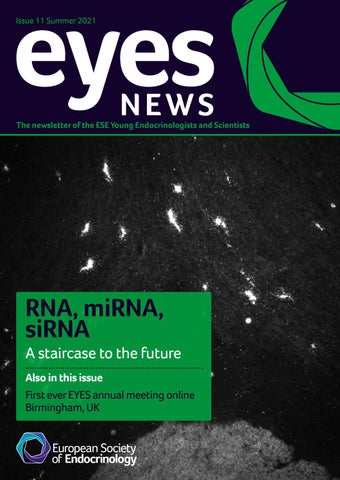
At the Back... 16 EYES 2021 meeting: Birmingham online Editor: Antoan Stefan Šojat, Serbia Copy-Editor: Walter Vena, Italy Editorial Board: Antoan Stefan Šojat, Serbia Stavroula Paschou, Greece Eva Coopmans, The Netherlands Walter Vena, Italy Juan Manuel Jimenez Vacas, Spain Victoria Withy, UK Philip McBride, UK Design: Qube Design Associates Cover Page: GnRH mRNA. Dark-field photomicrographs showing GnRH mRNA expression (white clusters of silver grains) in representative sections of the preoptic area. ©Dr. Juan Roa and Prof. Manolo Tena Maimonides Biomedical Research Institute of Cordoba (IMIBIC), Spain. Website: www.ese-hormones.org ©2021 European Society of Endocrinology The views expressed by the contributors are not necessarily those of ESE
2
This document is available on the ESE website: www.ese-hormones.org @EYEScientists fb.com/groups/eyes.endo The addresses used to mail this issue of EYSE News were supplied by the members of ESE and are stored in Bioscientifica’s database for future use. If you do not wish to receive further mailings, please advise info@euroendo.org Cover Page: GnRH mRNA1 Page 4: ARC Kiss1 mRNA ©Dr. Juan Roa and Prof. Manolo Tena Maimonides Biomedical Research Institute of Cordoba (IMIBIC), Spain. Page 9: Photo by Donald Tran - Unsplash Page 11: Photo by Walter Vena Page 12: Photo by Filip Mroz - Unsplash
It is summer time – a time for optimism and gratitude and a new EYES Newsletter in your hands. You can read all about how our newsletter founders Ljiljana Marina, Ayse Zengin and the EYES Newsletter team have made EYES Newsletter what it is today. In this issue we learn in depth about RNA, its implementation and impact in the world of science and endocrinology and future prospective through four exciting feature articles. We bring you the latest EYES news; an overview of e-ECE 2021 and EYES at e-ECE 2021 and exclusive insights from the new ESE President Martin Reincke and former President Andrea Giustina. For the amazing careers section, we sat down with the inspiring Juan Castellano, and our ESE Focus Area spotlight covers Endocrine-related Cancer. Also, we invite you to the first ever online EYES meeting – EYES 2021 Birmingham online, and we share messages from YARE, the Urgent Endocrinological Conditions meeting from Croatia and some new insights in to diabetes and physical activity. Happy reading! Antoan Stefan Šojat, Serbia
EYES NEWS
EYES Co-Chair Report
During my term as Co-Chair, EYES has evolved into the official early career arm of the European Society of Endocrinology (ESE). Through a lot of hard work, carefully thought-out processes and several meetings, we have developed EYES into what it is today - the leading voice for early career individuals within the field of endocrinology, not only in Europe but worldwide. I’m very proud of how far we’ve come since the beginning of EYES, where we started from holding our own annual EYES meetings in order to help develop oral communication skills of early career individuals and giving them an opportunity to participate in a meeting - to developing various career development initiatives such as the Clinical Observership Program (C.O.P), Mentoring Scheme, EYES Symposium at the European Congress of Endocrinology (ECE), the new Coffee Connections monthly online coffee and chat, and my favourite - highlighting and showcasing the achievements of early career individuals in the EYES Newsletter! And these are only to name a few! I write this last Co-Chair report with a heavy heart, yet I’m excited to see where EYES goes from here as I know that there
are very exciting times that lay ahead. It gives me great pleasure to pass on the baton to Eva (Coopmans) and Lina (Paschou) to lead EYES into an even brighter future. EYES has enabled me to not only form collaborations for my research, but also lifelong friendships. I strongly encourage you to be a part of the EYES Community - it’s full of vibrant, supportive and nurturing people who end up becoming great friends and excellent researchers within endocrinology. Thanks for all the laughs and good memories. Ayse Zengin, Australia
Key Dates for your Diary 17 - 18 June 2021
27 Sept - 1 Oct 2021
EMAS Virtual School: Late Parenthood
57th EASD Annual Meeting
24 June 2021
6-9 Oct 2021
ESE Spotlight on Science
45th Symposium on Hormones and Cell Regulation
Friday, 9 July 2021
Friday, 8 Oct2021
EYES Coffee Connections
EYES Coffee Connections
3 - 5 Sept 2021
21 Oct 2021
Online
Online
visit EYES Coffee Connections | ESE (ese-hormones.org)
8th ESE Young Endocrinologists & Scientists (EYES) Meeting 3-5 September 2021 Birmingham, UK. Online 8 - 10 Sept 2021
13th European Congress on Menopause and Andropause Online
13-15 Sept 2021
ESE Clinical Update on Acromegaly 2021 online webinars
Online
Mont St Odile, France
visit EYES Coffee Connections | ESE (ese-hormones.org)
ESE Spotlight on Science Online
Friday, 12 Nov 2021
EYES Coffee Connections
visit EYES Coffee Connections | ESE (ese-hormones.org) 9 - 11 Dec 2021
7th ENEA Workshop Dubrovnik, Croatia
Friday, 10 Dec 2021
Visit ESE Clinical Update on Acromegaly 2021 online webinars | ESE (ese-hormones.org)
EYES Coffee Connections
16 Sept 2021
Keep up to date with ESE events at Events & Deadlines | ESE (ese-hormones.org)
ESE Spotlight on Science
visit EYES Coffee Connections | ESE (ese-hormones.org)
Online
3
EYES SELECTION
What is the RNA? There is life beyond the vaccines
Ribonucleic acid (RNA) vaccines are a worldwide trending topic at the moment, mainly due to the fact that these prophylactic tools, among other types of vaccines, are helping to tackle the horrendous pandemic caused by the SARS-CoV-2 virus.
ARC Kiss1 mRNA Picture. Dark-field photomicrographs showing Kiss1 mRNA expression (white clusters of silver grains) in representative sections of the arcuate nucleus. This neuronal population, located at the bottom of the mediobasal hypothalamus, is one of the main activators of Gonadotropin-releasing neurons (GnRH), thereby, controlling puberty onset and the maintenance of the reproductive function.
For this reason, the word “RNA” is gaining more and more relevance, not only among the scientists and physicians, but among ordinary people. However, do we really know what RNA is? Let’s do a brief introduction. RNA is defined as a molecule consisting of a single chain of ribonucleotides, which are constituted by a ribose, a phosphate, and one of the following nitrogenous bases: adenine, guanine, cytosine, or uracil. RNA is much more versatile than its sibling deoxyribonucleic acid (DNA) since it can carry out different functions, from the control of gene expression to the regulation of the catalysis of certain biological reactions. Specifically, in the following articles we will focus on the messenger RNA (mRNA),
4
which allows the information found in genes (DNA) to be translated into proteins. The readers will not only find key information about promising techniques based on the deep knowledge we have obtained about this molecule during recent years, including mRNA vaccines, but about the potential clinical utility of those techniques that could represent a step forward in terms of diagnosis (i.e. miRNAs) and treatment (siRNAs) of endocrine-related pathologies in the near future. Juan Manuel Jimenez Vacas, Spain
EYES SELECTION
COVID-19 and mRNA vaccines: a clear message to the future
There is no doubt that 2020 will be remembered as a tragic year, with the Sars-CoV-2 virus having left behind over 3 million deaths. Despite these tragically impactful numbers, 2020 has also revolutionised the way we perceive science. In less than a year, the scientific community has been able to develop more than five safe and efficient COVID-19 vaccines thanks to the close collaboration and money invested. This is an incredibly important milestone which will be remembered by future generations. Not only for the speed at which these medicines were developed, but also because, for the first time, mRNA technology has been marketed with Moderna and BioNTech/Pfizer vaccines. This opens up a full spectrum of possibilities as mRNA technology bolsters different and important applications. The fact that mRNA technology has been able to give such a rapid response to the pandemic is not by chance. Many scientists have been focusing on the delivery of mRNA for over a decade now, with great advances as well as unanswered questions. Messenger RNA (mRNA) is a large, negatively charged biopolymer which has several advantages over other genetic therapies. Firstly, mRNA does not integrate into the genome as it doesn’t need to reach the nucleus to be translated into proteins, as opposed to some DNA therapies - a fact that has led to a higher safety profile. Secondly, mRNA can be easily synthesised in the laboratory following straightforward protocols. Thirdly, the possibility of updating mRNA sequence rapidly in case of viral mutations, makes this vaccine technology an extremely useful one in the context of a pandemic. However, physiological mRNA does not comply with the required pharmaceutical properties in order to be used as a medicine. If administered naked, mRNA is rapidly degraded by RNases and can potentially trigger an immunological response. To overcome these drawbacks in delivery, two main strategies have been developed over recent years. First, the modification of the mRNA sequence, to ensure less immunogenicity and increase stability. Second, the use of a delivery vehicle which protects and efficiently delivers the cargo to the target cells. Nanomedicine, as in the use of nanoformulations that act as vectors for different kinds of therapeutic molecules, have been the answer mRNA technology was hoping for. 1,2 Before today’s achievements, there have been many attempts to efficiently deliver mRNA in vitro and in vivo: from liposome-like systems, to lipoplexes and cationic nanoemulsions up until today’s most advanced carrier: Lipid Nanoparticles (LNPs).3 LNPs are unilamellar nanoparticles which encapsulate the nucleic acid by initial complexation with an ionisable lipid. They had been previously marketed in 2018, with the approval of Onpattro®, a siRNA-based drug. The structure is not fully understood, however, the composition and the formulation method of using microfluidics seems crucial to the final outcome. Today, lipid nanoparticles are composed of four constituents at very precise molar ratios: the ionisable lipid, responsible for nucleic acid complexation; the PEG-lipid, a polyethylene glycol anchor linked to a lipid tail which improves stealth properties and increases circulation time; phospholipids, which act as structural elements; and cholesterol, which gives stability. The mechanism of action of these vaccines relies on the translation of the administered mRNA into the encoding protein, spike proteins. When nanoparticles are injected intramuscularly,
they travel to meet dendritic cells, where they get endocytosed, and the mRNA transforms into proteins. As antigen presenting cells, dendritic cells exhibit spike protein onto their surface, so as to activate a T-cell cascade which will trigger immune activation against that specific antigen. Just as dendritic cells are the main transfected cells, other organs such as the liver can be targeted by making use of nanomedicine. In fact, mRNA technology can be applied to any other field where there is a need for a therapeutic protein, such as immuno-oncology, protein replacement therapies, gene editing and of course, other infectious diseases. Laura Taina González, Spain REFERENCES 1. Sahin U, Karikó K, Türeci Ö. mRNA-based therapeutics — developing a new class of drugs. Nature reviews. Drug discovery. 2014 Oct;1310:759-80. 2. Weng Y, Li C, Yang T, Hu B, Zhang M, Guo S, et al. The challenge and prospect of mRNA therapeutics landscape. Biotechnol Adv. 2020;40:107534. 3. Schoenmaker L, Witzigmann D, Kulkarni JA, Verbeke R, Kersten G, Jiskoot W, et al. mRNA-lipid nanoparticle COVID-19 vaccines: Structure and stability. International journal of pharmaceutics. 2021 May 15, 601:120586.
5
FEATURE ARTICLE
Presidents insights and aspirations Insights from the outgoing ESE President: Professor Andrea Giustina
Past-President of the European Society of Endocrinology (ESE) 2019-2021 Professor and Chair Institute of Endocrine and Metabolic Sciences (IEMS) San Raffaele Vita-Salute University IRCCS San Raffaele Hospital, Milan, Italy
During your term, EYES has evolved to become the official “early career” arm of the ESE. Why was this change important? From the beginning, EYES has been closely cooperating with the European Society of Endocrinology (ESE) which contributed greatly to establishing this group. Over the years, the significant growth of EYES was the result of a joint effort between ESE and many talented and motivated early career endocrine investigators across Europe and beyond. The Co-chairs of EYES were then invited to become ex-officio members of the ESE Executive Committee (ExCo), and representatives of EYES were included in all of the ESE Committees, including the Program Organising Committee (POC) of the European Congress of Endocrinology (ECE) - the most relevant and highly attended annual endocrine conference in Europe. One of the objectives of my Inclusion Plan was to transform ESE to become a more inclusive body and a reference point for all those involved in the field of endocrinology, playing a fundamental role in the dream of the creation of a global endocrine community. The inclusion of early career individuals was one of the pillars of this plan, with a structured ESE intervention focused on initiatives dedicated to early career members of the Society. In this vision, the creation of the early career members (ECM) task force, chaired by an EYES representative and an early career member of ESE, has become key for coordinating all ESE activities dedicated to early career members.
Aspirations for early career investigators from the ESE incoming President: Professor Martin Reincke
President of the European Society of Endocrinology (ESE) (May 2021-2023) Director, Department of Medicine IV, University Hospital, Munich, Germany
Why is the EYES committee important? George Bernard Shaw once said: “Youth is the most beautiful thing - and what a pity that it has to be wasted on young people”. From the perspective of ESE, the youth of the EYES members is no waste, it is a precious gift! EYES has been, from its very beginning, a constant source
6
The EYES Committee has developed and grown in strength over the past two years. This has contributed to growing the numbers of ESE early career members - what are your thoughts? One of the aims of my Inclusion Plan was to increase the membership of ESE to strengthen the representative role of over 20,000 European endocrinologists at the institutional level. In this regard, the growth in early career members of the Society, in which EYES and the ESE ECM task force played a role of paramount importance, was key to the development of the policy and advocacy strategy of ESE which enabled us to strongly represent endocrinology and endocrinologists in Brussels. A lot has changed during the pandemic - how do you think this has affected early career investigators? The pandemic has had a terrible impact on the lives of every human being and has also greatly affected the professional lives of all healthcare professionals. In particular, early career endocrinologists were often relocated to the front line, in the fight against COVID-19. I am particularly proud of all of you, who with extreme dedication and self-sacrifice, put your passion and hard work at the service of the community. Moreover, I am also proud that many of you contributed to the huge effort of ESE in the definition of the endocrine phenotype of COVID-19 that prompted the understanding of the key role that endocrinologists play in the prevention and management of a disease that was so far from our field of interest and expertise. Finally, all your efforts will not be forgotten and when all of this is over (hopefully very soon), I promise you that ESE will be there wto promote your professional growth, favour the exchanges and the experiences in all European countries, and give you the central role you deserve in our global endocrine community. What is your advice for early career investigators? Endocrinology is one of the most complex, central, pervasive, rapidly evolving, and fascinating disciplines in the entire field of medicine. Being an endocrinologist has been a dream for many generations of doctors, including mine, and continues to be for you who are the future of this marvellous discipline. of inspiration to ESE and has influenced our organisation and our goals. EYES has been part of our part-President Andrea Giustina’s Inclusion Plan (2019-2021) and it will be an important part of the Innovation Plan of my presidency. What is your vision for the EYES committee over the next two years? In my view, the EYES committee will have many new tasks, with a special focus on education, congress, and science. Also, I am welcoming new ideas and initiatives from EYES, and I will be in close contact with the Committee! How do you see the EYES committee and ESE developing in the future? I am quoting one of my favorites: “The best way of predicting the future is to create it”. And guess which group is best prepared to shape the future - EYES! Therefore, I am expecting input from EYES on how we can best approach the next generation of clinicians and
FEATURE ARTICLE
scientists. Which benefits are valued most? Which communications are preferred? Our digital environment is rapidly evolving, and ESE wants to take advantage of these developments. What do you think are the greatest challenges for early career investigators in the field of endocrinology, both scientists and clinicians? Currently, it is the pandemic that is the biggest challenge to early career endocrinologists and scientists: Will I be able to continue in my specialisation? How can I cope with lab down time? Can I work efficiently from my home office? How can I proceed with experiments? How is my clinical study going to continue during lockdown? How will funding develop during the next couple of years, essential for the positions and careers of EYES members? Many pressing questions, and it is difficult to keep spirits high during this tough phase. ESE wants to support early career investigators during these difficult times through excellent online seminars, tailored courses for clinicians and scientists in training, and more mentoring and grants.
What is your advice for early career investigators? My advice during the pandemic is to “think clearly, be sympathetic, and act calmly” (Adolf Kussmaul, 1822-1902). Remain optimistic and think of what you have already accomplished so far. Being an optimistic person, I am convinced that next year we will have the major recovery we are all so much hoping for.
‘Guess which group is best prepared to shape the future - EYES! Therefore, I am expecting input from EYES on how we can best approach the next generation of clinicians and scientists.’
Amazing endocrine scientists
Dr. Castellano obtained his Ph.D. degree from the University of Cordoba (Spain). His Ph.D. project focused on characterising the physiological roles of kisspeptins and GPR54 in the metabolic control of reproduction. During his postdoctoral period, he was awarded a Marie Curie Fellowship at Dr. Ojeda’s group (Oregon Health Science University, USA). At that time, he contributed to unraveling the key roles of novel epigenetic mechanisms in the central control of puberty. In 2013, he returned to the University of Cordoba, where he continued his research in Neuroendocrinology as an Emerging Scientist. During this period, he was awarded a new Postdoctoral Marie-Sklodowska Curie fellowship and a prestigious Ramon y Cajal contract, a programme aimed at incorporating researchers with an outstanding career in Spanish R&D centers. Furthermore, he has recently obtained two competitive research projects as a Principal Investigator to explore novel mechanisms in the metabolic control of reproduction. What motivated you to choose endocrinology? My interest in endocrinology grew as I progressed through my college career. This interest led me to choose all the optional subjects related to endocrinology, including those from other degrees. Thanks to this, I was fortunate to meet Drs. Tena-Sempere and Pinilla, who have been instrumental in my passion for this field. They gave me the opportunity to work in their laboratory, and there I definitely found that passion, especially in the field of Neuroendocrinology. In particular, I found it fascinating to study firsthand the neuroendocrine mechanisms responsible for the control of reproductive function, and even more to be aware of how they are coordinated and integrated with other relevant functions, such as metabolism.
7
EYES SELECTION
‘EYES has become an excellent platform for exchanging ideas between young clinical and basic researchers, creating connections with senior clinical and basic researchers who may act as virtual mentors, and strengthening the skills of young endocrinologists through a wide and attractive training program.’ How did your journey begin? I could say that my neuroendocrine journey started with the discovery of the role of a wonderful family of neuropeptides, called Kisspeptins, in the central control of reproduction. I remember as if it were yesterday - the first paper that my supervisor, Professor Tena-Sempere, gave me to read. In addition to supporting the critical role of the Kiss1 receptor, named GPR54, in the regulation of reproductive function, this article hinted that many key aspects of the Kiss1/GPR54 system were completely unknown. From that moment, I knew that my Ph.D. studies were to be focused on the characterisation of relevant aspects related to this system, especially those linking metabolism and reproductive function. Therefore, I could say that my journey began with a kiss. What do you see as a key moment of your career? I believe that every moment in your career and your life is very important and who you are right now is the result of what you have done before. Of course, there are some moments that you may consider more valuable since you are immediately aware of their relevance (e.g., being awarded a grant, getting a position, etc…), but when you reflect on that, you see that this is only the surface of something deeper. Based on this, I think that a key moment in your career is when you are aware of the meaning and purpose of what you are doing, which is the root of everything. This is something dynamic that not only depends on you, but also on your environment and how you perceive it. In this sense, I’ve been very lucky to be surrounded by extraordinary people, including my wife (also a scientist), my family (including my kitties), my mentors, my trainees, and my colleagues and friends. All of them enrich my perspective and are responsible for such a key moment. What were the greatest challenges you have encountered? The most significant challenges I have faced so far have been more related to aspects that are not strictly scientific than with scientific issues. Although scientific challenges can be very demanding, they are part of our motivation and can even reinforce it. In turn, the challenges of the current system, which include a constant struggle for funding, a very high level of competition, the need to publish frequently in top journals, and an ever-increasing bureaucratic burden, add a pressure that may undermine your motivation. I think it is in those moments when we must remind ourselves of the purpose of what we are doing, which is trying to improve the quality of life of patients with endocrine disorders. What do you think are the greatest challenges facing earlycareer endocrinologists now? Probably one of the main challenges facing young endocrinologists is to establish themselves as clinical specialists or basic researchers in a specific area of study. In my opinion, having a good mentor to guide you, help you identify your talent, and advise you on a
8
particular field that fits your interests, could be decisive. In the same way, establishing good collaborations can help your career development considerably and minimise the impact of competition. I think that competition, unless it is with oneself and within limits, can be more dangerous than beneficial, whereas real collaboration is always beneficial. How do these compare with when you were starting out in your career? Has there been any progress? I think that recent technological progress has favored both the ways we establish collaborations with other colleagues and the opportunities to learn about any subject that interests you. Moreover, I also perceive with joy and optimism the increasing number of specific platforms (e.g., Committees, Societies, Conferences) for young endocrinologists to discuss the present and future scope of research and make more visible their valuable contribution to the scientific community. In which areas do you think EYES can have the greatest and most useful impact in the future? In my opinion, EYES is doing great work in areas of enormous interest for the professional development of young endocrinologists. In addition to enhancing their visibility, EYES has become an excellent platform for exchanging ideas between young clinical and basic researchers, creating connections with senior clinical and basic researchers who may act as virtual mentors, and strengthening the skills of young endocrinologists through a wide and attractive training program. Which endocrinologists did you find most inspirational when you were starting out, and why? Which have inspired you most since? I have had the privilege of being trained by highly recognised neuroendocrinologists, such as Drs Tena-Sempere, Pinilla, Ojeda, and Lomniczi. They have been, and are still, a constant source of inspiration to me. I have learned from them the importance of commitment, collaboration, scientific rigor, being aware of the relevance of knowledge for making decisions, and being open to less conventional possibilities in your field of research. What advice would you give people setting out in endocrinology today? When something does not work as you expected, which is quite common, it is not worth despairing. This takes time and energy away from trying to find solutions, so after a short period of analysis and reflection, “move on”. There is a Sufi saying attributed to the great poet Rumi, which says, “live life as if everything is rigged in your favor”. This is my mantra under challenging times, which I apply both in my professional and personal life, as they are interconnected. Juan Manuel Jimenez Vacas, Spain
EYES SELECTION
MicroRNAs: staircase to the future of endocrinology MicroRNAs (miRNAs) are small, non-coding nucleotide molecules, able to regulate gene expression post-transcriptionally via basepairing with complementary sequences within the molecules of protein-coding messenger mRNA (mRNA). In the last few years, and thanks to next-generationsequencing (NGS) data, the number of known miRNAs has increased enormously, and is still rapidly expanding. Although the main function of the miRNAs is to fine-tune the expression of their target genes, a slight dysregulation of the levels of concrete miRNAs could have a major impact on a plethora of cell processes, leading to the development, and even to the progression, of many diseases. In this sense, the underlying molecular mechanisms responsible for the alteration of the levels of miRNAs are diverse, ranging from chromosomal rearrangements and epigenetic dysregulations to the malfunction of miRNA processing factors. The interaction of the endocrine system with miRNAs is mutual: on one side, some hormones (especially steroids) tightly regulate the production of several miRNAs; on the other hand, some miRNAs can directly target genes encoding hormones or enzymes involved in hormone production pathways, thus affecting hormone concentrations. In addition, concrete miRNAs are crucial regulators of the expression of key genes underpinning the correct development of endocrine glands, including the pituitary1, thyroid, and adrenal gland, while other miRNAs are linked to the pathogenesis of common endocrine diseases such as differentiated thyroid cancer 2, metabolic syndrome 3, as well as both male and female factor infertility4,5. Remarkably, given that miRNAs can be secreted by cells and detected in biological fluids, such as blood or urine, they are emerging as potential non-invasive diagnostic biomarkers for the early detection of numerous pathologies. Indeed, a broad number of studies have shown that the levels of specific miRNAs, detected in non-invasive tissues, exhibited a highly pronounced specificity and sensitivity to distinguish between patients with and without a pathological condition, even higher than those showed by the gold-standard tools used for the diagnosis
of those conditions. As examples, the diagnostic capability of prostate specific antigen (PSA) and chromogranin A (CgA), which are currently used for the screening of prostate cancer and neuroendocrine tumours respectively, has been reported to be overcome by that exhibited by the levels of certain miRNAs measured in plasma and urine. However, although the results are promising, additional, more in-depth, and prospective studies are necessary to confirm the clinical potential of these miRNAs. Regardless, based on the evidence the scientific community has reached in the last few years, it is clear that miRNAs will likely soon become part of the diagnostic algorithms used in our everyday practice for the diagnosis of common endocrine disorders.
REFERENCES 1. Zhang Z, Florez S, Gutierrez-Hartmann A, Martin JF, Amendt MicroRNAs regulate pituitary development, and microRNA 26b specifically targets lymphoid enhancer factor 1 (Lef-1), which modulates pituitary transcription factor 1 (Pit-1) expression. J Biol Chem. 2010;285(45):34718 –34728. 2. Kondrotienė A, Daukša A, Pamedytytė D, Kazokaitė M, Žvirblienė A, Daukšienė D, Simanavičienė V, Klimaitė R, Golubickaitė I, Stakaitis R, Šarauskas V, Verkauskienė R, Žilaitienė B. Plasma-Derived miRNA-222 as a Candidate Marker for Papillary Thyroid Cancer. Int J Mol Sci. 2020 Sep 3;21(17):6445. doi: 10.3390/ijms21176445. PMID: 32899424; PMCID: PMC7503340. 3. Karolina DS, Tavintharan S, Armugam A, Sepramaniam S, Pek SL, Wong MT, Lim SC, Sum CF, Jeyaseelan K. Circulating miRNA profiles in patients with metabolic syndrome. J Clin Endocrinol Metab. 2012 Dec;97(12):E2271-6. doi: 10.1210/jc.2012-1996. Epub 2012 Oct 2. PMID: 23032062. 4. Rahbar S, Pashaiasl M, Ezzati M, Ahmadi AsrBadr Y, MohammadiDehcheshmeh M, Mohammadi SA, Ghaffari Novin M. MicroRNAbased regulatory circuit involved in sperm infertility. Andrologia. 2020 Feb;52(1):e13453. doi: 10.1111/and.13453. Epub 2019 Nov 24. PMID: 31762071. 5. S ørensen AE, Udesen PB, Maciag G, Geiger J, Saliani N, Januszewski AS, Jiang G, Ma RC, Hardikar AA, Wissing MLM, Englund ALM, Dalgaard LT. Hyperandrogenism and Metabolic Syndrome Are Associated With Changes in Serum-Derived microRNAs in Women With Polycystic Ovary Syndrome. Front Med (Lausanne). 2019 Nov 1;6:242. doi: 10.3389/fmed.2019.00242. PMID: 31737638; PMCID: PMC6839444.
Walter Vena, Italy
9
e-ECE 2021
e-ECE 2021 and the EYES Symposium–
The future is NOW! As ECE’s technical crew member was counting down seconds to my live introduction to the e-ECE 2021 EYES symposium, I could not help thinking how distant this present moment felt to the one where I was taking a sip of coffee in Lyon in 2019 outside the Congress Centre where ECE2019 was about to start. One of the key reasons mankind came this far is our resilience and the ability to adapt, evolve and improve - despite difficult times that arise. Then the counting stopped and there I was, live, in front of an audience that was miles away... and the impression that struck me the most is the fact that even though we were scattered around the globe, with zero physical interaction, the spirit of working towards the same goal and asking crucial questions, somehow lived on through the cold computer screens, rainy dawns and sunny afternoons and gave this event a real sense of warmth, quality and elegance. From the opening to the closing ceremony, e-ECE 2021 was a special event, truly one of a kind: a force in the world of endocrinology and a platform where everyone can find content to fit their knowledge, interests and background. On Saturday we had the opportunity of hearing Award Plenary lectures and welcomed new members. Sunday featured The Patient’s Voice sessions with patient groups, ECAS and Nurses’ sessions and the Jens Sandahl Christiansen and Young Investigators Awards - as well as our own traditional “EYES Day” sessions. From the early morning EYES Speed Networking breakfast, followed by our Symposium, and then later the EYES Quiz and the social networking event to top it all off, we had the pleasure of interacting with many early career investigators but also many professors, mentors, teachers and experts, without whom the atmosphere that was created would not have existed. We named our EYES symposium “Bittersweet sixteen” as we wanted to tell a story about sweet and bitter pieces of the puzzle that come together to show us why reproductive and developmental endocrinology is the science of tomorrow. Cochaired by Elena Armeni, a Senior Clinical Fellow at the Royal Free London NHS Foundation Trust and myself, we covered the topic in depth. Firstly, we explored the basic with translational science, thanks to Juan Roa Rivas, an Associate Professor at the department of Cell Biology, Physiology and Immunology at the University of Cordoba. He gave us insights in to a decade long project, exploring the role of miRNA in the function of two key neurons in reproductive function - GnRH and Kiss1. Clinical talk followed, Giovanna Muscogiuri, Assistant Professor at the University of Naples “Federico II” had the virtual floor and gave a talk on obesity in early reproductive years. The participant meter kept rising steadily, reaching a number well over 400, resulting in good discussion and clear take home messages from both talks.
10
The following three days were very busy and diverse over six programme channels with e-ECE Hub sessions, interviews with the outgoing and new ESE Presidents, experts and other guests, exciting plenaries, Meet the Expert sessions and extended networking sessions, many oral communications and presented ePosters as well as some amazing symposia on adrenal incidentalomas, European prevention programs, cardiovascular protection and function and emerging concerns in reproduction to name a few. The multitude of content, ease of use and the quality of delivery made every participant feel included, and facilitated new connections and ideas through a platform that also allowed direct communication, interest and focus groups and Zoom discussions during some sessions. In the final social event breakout room of the “EYES Day” at e-ECE 2021, while we were discussing various topics, I asked my guests a question I did not intend to ask, but just came naturally “what are you hoping for the most for next year?” Almost everyone there answered unanimously that their biggest desire is to travel again. We could go on with numbers, records, tweets and retweets, but instead of all that, we should appreciate the mediums for knowledge and integration we have created and keep on searching for new ways to improve our work, our community and the lives of our patients. This is a cause it is always worth fighting for and e-ECE 2021 was a perfect example of that. Antoan Stefan Šojat, Serbia
EYES SELECTION
siRNAs as novel therapeutic tools for endocrine-related pathologies The clinical potential derived from the deep knowledge we have acquired in recent years about RNA biology does not only fall into miRNAs and diagnostics. Indeed, different types of non-coding RNA (ncRNA) are capable of regulating gene expression post-transcriptionally, including the aforementioned micro RNAs (miRNAs) but also the small interfering RNAs (siRNAs). The latest are small (i.e. about 20 base pairs) double-stranded non-coding RNA molecules involved in the regulation of gene expression by degrading mRNA after transcription, via the RNA interference (RNAi) pathway, and therefore preventing the translation of their mRNA target molecules into proteins 1. In this sense, the possibility of developing synthetic siRNAs to target undruggable genes that are involved in the pathogenesis of concrete diseases, including endocrine-related pathologies, has opened a promising new avenue for the treatment of such illnesses. Despite the clear therapeutic potential of siRNAs, it should be noted that some challenges are still associated with the use of siRNAs in clinical practice, including rapid degradation, poor cellular uptake, activation of innate immunity, off-target effects, or toxicity. However, these problems can be overcome by following a number of strategies, such as rational design and a subsequent in silico selection, as well as chemical modifications and the use of nanocarriers to facilitate an appropriate delivery 2. In fact, three siRNA-based therapeutic strategies have already been approved by the FDA, showing clear benefits and minor side-effects. In 2018, Patisiran became the first FDA approved siRNA for the treatment of hereditary transthyretinmediated amyloidosis, followed by Givosiran and Lumasiran, for the treatment of acute hepatic porphyria and primary hyperoxaluria type 1, respectively. Regarding endocrine-related pathologies, many clinical trials have been conducted or are still ongoing to evaluate the safety and effectiveness of specific siRNAs. As an example, a phase I clinical trial showed that the levels of proprotein convertase subtilisin/kexin type 9 (PCSK9) and low-
density lipoprotein (LDL) cholesterol were significantly reduced in response to ALN-PCS02 (a PCSK9 siRNA) in patients that had high LDL cholesterol plasma levels at the beginning of the trial 3. Unfortunately, there have also been certain negative outcomes from some of these clinical trials, as in the case of PRO040201, an ApoB siRNA encapsulated with lipid nanoparticles, which decreased LDL cholesterol levels but resulted in an immune response stimulation in some of the patients enrolled in the trial 2. In any case, taking the results of these trials together, there is little doubt that one of the therapeutic strategies for patients with hypercholesterolemia could be treatment with specific siRNAs in the foreseeable future. Along the same line, patients suffering from neuroendocrine tumors could benefit from a similar strategy, since a phase I clinical trial shows promising initial clinical data, with some patients even showing a marked tumor shrinkage in response to the inoculation of the MYC siRNA “DCR-MYC” 4.
It is clear then that we are currently living in an exciting time for the drugs based on RNAi strategies. Patisiran, Givosiran, and Lumasiran have been the first FDA approved siRNAs, and given that there are many other promising candidates currently at Phase 3 clinical trials, we could claim that siRNA therapeutics is an imminent clinical reality. Juan Manuel Jimenez Vacas, Spain
REFERENCES 1. Setten, R.L., J.J. Rossi, and S.P. Han, The current state and future directions of RNAi-based therapeutics. Nat Rev Drug Discov, 2019. 18(6): p. 421-446. 2. Ozcan, G., et al., Preclinical and clinical development of siRNAbased therapeutics. Adv Drug Deliv Rev, 2015. 87: p. 108-19. 3. Fitzgerald, K., et al., Effect of an RNA interference drug on the synthesis of proprotein convertase subtilisin/kexin type 9 (PCSK9) and the concentration of serum LDL cholesterol in healthy volunteers: a randomised, single-blind, placebo-controlled, phase 1 trial. Lancet, 2014. 383(9911): p. 60-68. 4. Tolcher, A.W., et al., Safety and activity of DCR-MYC, a first-in-class Dicer-substrate small interfering RNA (DsiRNA) targeting MYC, in a phase I study in patients with advanced solid tumors. Journal of Clinical Oncology, 2015. 33:15_suppl, 11006-11006.
11
FEATURE ARTICLE
Diabetes and the benefits of physical activity Awareness of the cluster of symptoms which make up diabetes and the benefits of physical activity to their treatment has long been reported on. Indeed for 2000 years, leading medical doctors have highlighted the benefits of physical activity in the treatment of diabetes. Aulus Cornelius Celsus (c. 25 BC – c. 50 AD.) when describing treatment for what is now commonly accepted to have been diabetes recommended physical activity and massage.1 As the understanding of the causes and symptoms of diabetes developed over the centuries, so too did the recommendations for methods of treatment. In the Eighteenth Century, the Scottish physician, John Brown once again highlighted the importance of physical activity as a treatment for diabetes. However, due to his misinterpretation of diabetes as a disease brought about by weakness, he concurrently recommended high calorie diets in order to strengthen the body, frequently resulting in undesirable responses from patients 1. In contrast, a late Eighteenth Century Army physician, John Rollo, suggested the opposite. Despite recommendations for the cessation of exercise and a number of other questionable prescriptions, such as the skin being “anointed with hog’s lard every morning” the patient on whom he reported did recover from his symptoms 2. However, by the Nineteenth Century, French pharmacist Apollinaire Bouchardat was able to formally establish a link between physical activity and tolerance to carbohydrate intake 3. Other medical practitioners of renown, such as Sir Henry Marsh and Armand Trousseau would go on to strongly support Bouchardat’s methods and denounce the recommendations of Rollo. Arnaldo Cantani then went on to establish that glycosuria may be diminished, or indeed abolished, through physical activity. And despite his disapproval of Buchardat’s methods, Ludwig Külz also showed the benefit of physical activity in a range of diabetic populations. Investigations into the benefits of physical activity on diabetes continued to develop, and by the mid-to-late-Twentieth Century, renowned researchers such as Jeremy Morris were leading studies to investigate the effects of different intensities and modalities of exercise and physical activity – initially in cardiovascular disease, and later expanding to explore the interdependent protective effect of moderate-to-vigorous physical activity for cardiometabolic health4. Contemporary research is now less concerned with establishing the benefits of physical activity for the prevention and treatment of diabetes, and more with the specific physiological systems involved, as well as the type, timing, and durations of physical activity to yield the most desirable outcomes5. As early as the mid-2000s,
12
researchers had identified links between physical activity and PGC1ɑ in people with type 2 diabetes 6. More recently researchers have demonstrated how chronic and acute physical activity can alter myokine expression at both the mRNA and protein level in skeletal muscle7. Additionally, despite the majority of research focussing on type 2 diabetes, the range of benefits of physical activity for people with type 1 diabetes should not be overlooked8. Lifestyle interventions are almost always preferable to pharmaceutical interventions, and it is exciting to see how research will continue to develop our understanding of the mechanisms of physical activity in a range of clinical populations. Phil McBride, United Kingdom
REFERENCES 1. Allen FM., Stillman E. & Fitz R. (1919). Total dietary regulation in the treatment of diabetes. New York: Rockefeller Institute for Medical Research. 2. Rollo J. (1797). Account of Two Cases of Diabetes Mellitus, with Remarks. Ann Med (Edinb), 2:85-105. 3. Bouchardat A. (1875). De la glycosurie ou diabète sucré. Son traitement hygiénique. Baillière, Paris. 4. Morris JN, Clayton DG, Everitt MG, Semmence AM & Burgess EH. (1990). Exercise in leisure time: coronary attack and death rates. Br Heart J, 63, 325–34. 5. Aune D., Norat T., Leitzmann M., Tonstad S. & Vatten L. J. (2015). Physical activity and the risk of type 2 diabetes: a systematic review and dose-response meta-analysis. European Journal of Epidemiology, 30(7), 529–542. 6. Franks PW. & Loos RJ. (2006). PGC-1alpha gene and physical activity in type 2 diabetes mellitus. Exercise and Sport Sciences Reviews, 34(4), 171-175. 7. Garneau L. & Aguer C. (2019) Role of myokines in the development of skeletal muscle insulin resistance and related metabolic defects in type 2 diabetes. Diabetes Metab, 45(6), 505-516. 8. Yates, T. & Davies, M. J. (2017). Physical activity and Type 1 diabetes: an underused therapy. Diabetic medicine: a journal of the British Diabetic Association, 34(11), 1498–1499.
FEATURE ARTICLE
EYES Newsletter History – reflecting the true spirit of EYES It is our great pleasure and honor that we (the EYES Newsletter Editorial Board) have successfully completed 10 issues of the EYES Newsletter and you are now reading the 11th one. The idea of a Newsletter came out after a fruitful discussion of the EYES Committee and was based on our native goal to keep all the members of the EYES community informed for the latest news.
While working on our very first issue, using only our enthusiasm and a trial version of an online design tool, we made it our goal to one day be shipped to all early career investigators throughout Europe. EYES Newsletter founders Ljiljana Marina and Ayse Zengin used much of their previous experience gained from being the EYES representatives on the ESE News Editorial Board. The first team was small, yet very well organised. Ayse Zengin used her fantastic organisational skills to help us prepare the inaugural issue and was in charge of reviewing the articles. Antoan Stefan Sojat, our newly elected Editor, started his first EYES activities with the preparation of the first issue and was in charge of keeping the team’s spirits high. Besides writing articles and announcements, we needed to design it as well. At first it seemed impossible that we could reach the quality of ESE News but with Ljiljana Marina’s newfound passion and talent for design EYES Newsletter stood proud. Our first issue came out in May 2018. It was just three pages in total where we covered important dates, events and funding opportunities. We were thrilled to see that our young endocrinologists and scientist colleagues and peers accepted the EYES Newsletter with great enthusiasm. The second issue came out in July 2018, almost double in size. A few months later, we were joined by Lina Paschou, and Eva Coopmans followed. The issues started to become more developed, covering a growing number of interesting topics and increasing not only the quantity but also the quality of the articles. We developed so quickly that we needed more members, and by late 2019 Walter Vena, Juan Manuel Jimenez Vacas and Philip McBride joined the editorial board. With new energy, desire and expanded skillsets we became even more serious and professional as we realised we were now representing a big and growing community. We developed a structured layout, regular feature articles and provided space for new voices to be heard in the world of endocrinology. We initiated collaborations with many groups, individuals and early career investigators that led to having a unique design, and the latest content.
The latest issues are 16 pages, they come out every four months and follow a certain structure. At the first page, the reader can see the editorial board team, the contents, and there is always a welcome letter from the Editor that introduces the current issue. The most important EYES news follows, along with the key dates of the most important upcoming international scientific events from EYES, European Society of Endocrinology (ESE) and other scientific societies. One of the newsletter’s repeated sections is ‘Amazing Careers’, where we interview accomplished endocrinologists and scientists with desire to inspire early career investigators to follow a successful career. There is also always a page dedicated to one of ESE’s eight Focus Areas, where the Focus Area leads present their activities, views and future goals. National endocrine societies or young endocrine groups from various countries are also often featured. Latest research is covered in each issue, while funding or other opportunities are always announced. As well as regular sections, each issue is dedicated to a different topic. Various topics have been presented so far, such as Hormones and Viruses, Endocrine Disruptors and Patients Advocacy Groups. ESE has supported the EYES Newsletter from the start. We are now delighted to feel that ESE truly recognised our efforts and success as Victoria Withy, ESE Sales and Marketing Manager, has join our newsletter team as part of her responsibility for the overall EYES activities. The EYES Newsletter is going to expand, new members will join the editorial board, and we have ESE’s professional designer making the issue look even better! All great ideas come from humble beginnings, and are carefully cherished by the energy and desire to leave a legacy. With respect for the past and excitement for the future, we will keep bringing you the latest and the greatest from the world of endocrinology – specifically for early career endocrinologists and scientists! EYES Newsletter Editorial Board
13
EYES SELECTION
First Online Regional Meeting of Young Endocrinologists: ‘Emergencies in endocrinology’ 5-6 May 2021 The first online Regional Meeting of Young Endocrinologists on “Endocrine Emergencies” was organised by the Young Endocrinologists Section of Croatian Society for Endocrinology and Diabetology on May 5-6, 2021. The aim of this meeting was to provide continuing education and networking with colleagues from the region. The virtual meeting was organised by Croatian Society for Endocrinology and Diabetology, Croatian Medical Chamber, and Zagreb University School by Medicine Department for Endocrinology, University Hospital Center Zagreb. The two-day scientific program consisted of four sessions: Pituitary Diseases, Adrenal Diseases, Thyroid/Parathyroid and Bone Diseases, and Diabetes Mellitus/Metabolic Diseases (Meet the Expert Sessions and Case Presentations). We have tried to cover the most common endocrine emergencies. Early career endocrinologists and medical
were present. The total number of participants was 330. The impressions of the participants were excellent and emphasised the importance and benefits of the symposium. There was great enthusiasm for the next meeting, hopefully in person. This meeting strongly supported the future 9th EYES Congress to be held in Zagreb, Croatia, September 2-4, 2022. I look forward to meeting you in Zagreb 2022.
students had the opportunity to present interesting cases through short oral presentations. I am very pleased that active participants from six regional countries (Bosnia and Herzegovina, Montenegro, Macedonia, Slovenia, Serbia, and Croatia)
YARE Meeting Report Providing a platform for students, early career endocrinologists and scientists – that is the aim of YARE (Young Active Research in Endocrinology). As part of the German Society of Endocrinology, YARE is connecting both German and European scientist since 1999. Thanks to the generous support our parent society and sponsors, we provide Travel Grants, Scientific Exchange Grants and the YARE Thesis Award for our 240 members. Our annual meeting takes place in a different city each year and represents for many of our members the first chance to present and discuss their research to an audience and connect to other young researchers. All presentations are held in English. All videos of our last annual e-meeting are available on-demand at https://www.streamed-up.com/ kategorie/dge/. The membership is free at yare-endo.de and you can tune in at twitter: @YARE_Endo. Empowering endocrine research, exchange and interconnectivity at the continent-wide level, we aim to deepen
14
the collaboration of young researcher across Europe together with EYES parallel to the efforts of the ESE and the national endocrine societies. Eva Coopmans The Netherlands
Karin Zibar Tomšić, MD, PhD, chair of the Organising Committee of the 1st Regional Meeting of Young Endocrinologists: “Emergencies in Endocrinology” Anja Barač, MD, member of the Organising Committee of the 1st Regional Meeting of Young Endocrinologists: “Emergencies in endocrinology”
ESE FOCUS AREA
ESE Focus Area:
Endocrine-related (hormonedependent) Cancer In this ESE Focus Area, we aim to highlight recent advances in hormone-dependent cancers, as well as identifying evolving areas of research and specific hormone-dependent cancer types that warrant attention. Hormone-dependent cancers are typically viewed as Estrogen Receptor positive (ER+) breast cancer and prostate cancer and whilst these are two of the most common cancer types, there are numerous other cancer types that are hormone-dependent, but do not receive the same degree of consideration; an issue we aim to directly address. There has been extraordinary progress in our understanding of hormone-dependent breast cancer and prostate cancer in recent years. This has included new molecular insight into the pathways that drive these specific cancer types, the establishment of new, physiologically relevant model systems, and the development and exploitation of new treatments for patients with these diseases. Professor Raul Luque from the Universidad de Córdoba/ IMIBIC (Spain) and Prof Jason Carroll from CRUK and University of Cambridge (UK), have been appointed as co-leads for ESE’s hormone-dependent cancer Focus Area. We believe that our insight and expertise will represent the critical areas of work in these cancer types, since the work for our laboratories has covered the spectrum, from fundamental molecular characterisation of hormone-dependent cancer, all the way through to clinical trials, that investigate new hormonal treatment regimes. What we identified as a weakness of this specific topic, is representation from some of the less common, but clinically important, hormone-dependent cancers. To address this, we have specifically recruited focus area members that cover some of these important topics, including cancers/tumors of Pancreas, Neuroendocrine, Parathyroid, Testis/Ovary, Multiple Endocrine Neoplasia and Pheochromocytoma/Paraganglioma. We are excited to work with our colleagues and experts in these areas
Prof. Jason Carroll
Prof. Raul Luque
[Drs. Kristi Alexandraki (Greece), Alfredo Berruti (Italy), Corinne Bousquet (France), Manuel Gahete (Spain), Simona Glasberg (Israel), Leo Hofland (The Netherlands) and Maria Chiara Zatelli (Italy)] and hope that this focus area covers most of the major hormone-dependent cancers and will permit the synergistic integration of biological and clinical insight from one cancer type to another. As is the case for ER+ breast cancer and prostate cancer, there are molecular and biochemical commonalities between these hormone-dependent cancers and insight from one can be leveraged for the understanding of the other. We hope to extend this to many other hormone-dependent cancer types, where utilisation of similar pathways and biological processes are likely to be exploited by distinct cancers that are driven by hormones. We will be meeting once a year, in person, at the ECE annual congress, but will also participate in workshops and discussion groups, to brainstorm and share ideas and insight from our respective fields. We place an emphasis on involving and educating trainees from this field and will ensure that they get the opportunity to present their research to the members of the focus area and to receive feedback from a number of experts in the community. Juan Manuel Jimenez Vacas, Spain
‘If younger members of the community have ideas to improve connectivity and communication within the focus area, we would be delighted to hear from them.’
15
EYES NEWS
EYES 2021
ESE Young Endocrinologists and Scientists’ annual meeting 3–5 September 2021 We invite you to attend the 8th European Society of Endocrinology (ESE) Young Endocrinologists and Scientists (EYES) Meeting from 3–5 September 2021. This will be the first-ever fully virtual meeting organised by early career researchers from the Institute of Metabolism and Systems Research, University of Birmingham, UK. This meeting will be a unique opportunity to share your knowledge and experience, promote future collaborations, and network with peers from across Europe and beyond in a friendly environment. EYES, founded in 2011, is a committee currently under the patronage of the ESE with the primary goal of amplifying the mutual exchange of ideas between early career clinicians and scientists in endocrinology, diabetes and metabolism to establish a scientific network and aspire for higher clinical and scientific achievements. Various panel discussions and Q&A sessions are scheduled with experts and researchers in academia, including examples of traditional and unconventional career pathways, to inspire the next generation of future leaders in their respective fields. Invited talks from early and mid-career researchers, scientific workshops and interactive sessions are also planned to share the recent advancements along with oral and e-poster presentations. All abstracts will be scored in an anonymised peer-review system with successful abstracts published in the open access fully citable Endocrine Abstracts journal. All abstracts will receive not just the outcome, but also constructive feedback on how they can improve their abstracts and presentations, thus ensuring openness of the process. Top scoring abstracts will be invited to present their work at the meeting while competing for prizes. The remaining successful abstracts will be invited to present their work as e-posters. The top prize will be an invitation to share their work at the ECE 2022 meeting, with top scoring
You can find out more information at: EYES Meeting (https://sites.google.com/ view/eyes2021/home) 16
SCAN ME https://tinyurl.com/ eyes-meeting-2012 presentations for each themed session receiving certificates of recognition. Scoring criteria for abstracts and presentations are published on our website. Please visit EYES Meeting (https:// sites.google.com/view/eyes2021/home) for more information. Registration and Abstract submission are now open. Other than 50 free registrations on a first-come-first-served basis for ESE members, registration cost is the lowest ever for a meeting of such stature – €10 (for ESE members) or €30 (for non-ESE members) for early bird registration. You can find out more information at EYES Meeting (https://sites.google.com/view/eyes2021/ home). Please note the attendance in this meeting is limited to ensure close-knit interaction between attendees. Preferential registration will be given to those who submit an abstract. EYES 2021 Meeting Local Organising Committee