eyes Issue 27 Winter 2026
NEWS
The newsletter of the ESE Young Endocrinologists and Scientists
Regenerative endocrinology Stem cells, organoids and transplantation
ISSN 2755-2756 (online)
CONTENTS & EDITORIAL
In this issue
Editorial
EYES News 03 From your ESE EYES Co-Chairs, plus ESE news highlights 04 Amazing careers: Anna Gloyn 10 Serbia welcomes the ESE EYES community 11 ESE Summer School gathers in Innsbruck, plus Basel gets ready for ECE 2027
Dorota Filipowicz
Shamini Ramkumar Thirumalasetty
Mirjana Đukić
Ioannis Lempesis
Lorenzo Marinelli
Petros Papalexis
EYES Selection 05 Pituitary organoids and endocrine replacement 06 T hyroid organoids in place of lifelong hormone therapy? 07 Building human adrenal organoids 08 A role for parathyroid allotransplantation? 08 Stem cells and adrenal medulla disease 09 Adrenal gland models and transplantation
At the Back... 12 W hat could an EYES Observership do for you? Apply soon!
Editor: Dorota Filipowicz, Poland Deputy Editor: Shamini Ramkumar Thirumalasetty, Germany Editorial Board: Mirjana Đukić, Croatia Ioannis Lempesis, USA Lorenzo Marinelli, Italy Petros Papalexis, Greece Victoria Withy, UK Sub-editor: Caroline Brewser Design: Qube Design Associates Website: www.ese-hormones.org ©2026 European Society of Endocrinology The views expressed by the contributors are not necessarily those of ESE
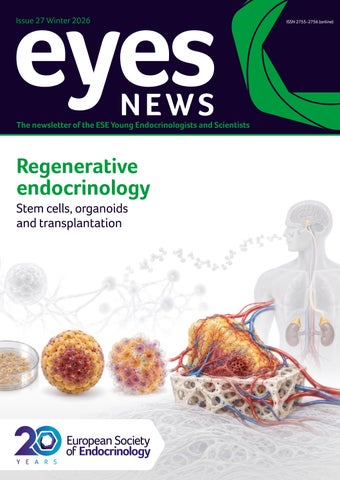
SE Young Endocrinologists E and Scientists eyescientists EYEScientists ese-eyes fb.com/groups/eyes.endo We welcome contributions and suggestions for articles. Please contact EYES News at info@ese-hormones.org. The addresses used to email this issue of EYES News were supplied by the members of ESE. If you do not wish to receive further mailings, you can update your mailing preferences by going to the My ESE EXTERNAL-LINK-ALT area of the ESE website or emailing info@ese-hormones.org. Cover image: Conceptual progression from a 2D culture to multicellular organoids, pluripotent stem cell-derived tissue and a vascularised graft. Read more on page 9. (AI-generated image supplied by Andrea M Isidori.)
2
Victoria Withy
What if we could go beyond hormone replacement and restore the body’s ability to produce the hormones it needs? This question lies at the heart of this issue, which explores how stem cells, organoids and transplantation could shape the future of endocrine care. Leading experts guide us through advances in pituitary, thyroid and adrenal research, as well as the potential of parathyroid transplantation. For our community of early-career endocrinologists and scientists, these topics invite us to think across disciplines, connect clinical questions with experimental research and help shape the research priorities of the next generation. Our interview with Professor Anna Gloyn EXTERNAL-LINK-ALT, recipient of the 2026 Transatlantic Alliance Award, offers valuable insights and inspiration for those building a career in endocrine science. There is also plenty to celebrate within the EYES community. We revisit the recent 2026 ESE EYES Annual Meeting EXTERNAL-LINK-ALT in Belgrade and this year’s ESE Summer School EXTERNAL-LINK-ALT in Innsbruck, and look ahead to ECE 2027 in Basel EXTERNAL-LINK-ALT next May. It’s now also time to discover opportunities that are available to you through the EYES Observership Programme EXTERNAL-LINK-ALT. Applications will open shortly: why not make 2027 the year when you find new perspectives with an Observership? I hope this issue encourages you to take part in our events and explore career opportunities, as you take the next step in your professional journey. As 2026 draws to a close, I warmly thank the Editorial Board and all our authors for making EYES News a place to find inspiration, to exchange ideas and to revisit shared memories. I wish you all a restful festive season and a new year full of curiosity. Dive in! Dorota Filipowicz Editor EYES News
ESE diary dates... Keep up to date with the latest ESE activities online EXTERNAL-LINK-ALT
EYES HEADLINES
From your ESE EYES Co-Chairs As 2026 comes to an end, we look back on another wonderful year for the EYES community, one defined by growth, opportunity, friendship and change. This year began with a record 105 applications for the ESE EYES Observership Programme EXTERNAL-LINK-ALT, once again confirming how much interest there is among early-career investigators in opportunities to grow, exchange ideas and build collaborations. With 56 awardees from 18 countries across four continents, the programme’s reach extends with every cycle. In May, ECE 2026 in Prague, Czech Republic, brought the EYES community together for another exceptional EYES Symposium. We also said farewell to our Co-Chair Juan Manuel Jiménez Vacas and committee member Jonathan Mertens, celebrating everything they contributed to EYES. Summer led us back to Innsbruck, Austria, where ESE Summer School EXTERNAL-LINK-ALT once again gave us the chance to reconnect with familiar faces, welcome new ones and combine learning with the friendships that make these events even more memorable. September saw us in Belgrade, Serbia, for the 13th ESE EYES Annual Meeting EXTERNAL-LINK-ALT. It was wonderful to see so many colleagues come together again, and equally special to meet so many attending the Annual Meeting for the first time, enjoying three days of science, exchange and friendship. More than anything, it reminded us how much our community has grown, not only in numbers, but in connections and collaborations. Three years ago, after joining the ESE EYES Committee, Kristina Saravinovska introduced #WeGrowTogether. This has become a motto that reflects the way our community supports one another, creates opportunities and grows through
Delegates gathering at the ESE EYES Annual Meeting
collaboration. This year We Grow Together became part of the ESE EYES logo − a lovely reminder of the path we have travelled together, and of everything that has grown along the way. Excitingly, the next year is already taking shape! As well as a new cycle of the ESE EYES Observership Programme EXTERNAL-LINK-ALT, the first ESE Obesity and Endocrinology School EXTERNAL-LINK-ALT will take place in Barcelona, Spain, on 15−17 March, with an aim to foster a new generation of experts equipped to tackle the obesity epidemic. Of course, ECE 2027 EXTERNAL-LINK-ALT will follow in Basel, Switzerland, on 8−11 May. We are already looking forward to coming together again, meeting new faces, reconnecting with friends and bringing the
Help call for action! ESE calls for a healthier endocrine future
• Read the Prague Declaration EXTERNAL-LINK-ALT and White Paper EXTERNAL-LINK-ALT • Share the findings through your professional networks
The new ESE White Paper includes full findings from the recent State of Endocrinology surveys. Entitled Endocrine Workforce 2026 – Recommendations for a Healthier Endocrine Future EXTERNAL-LINK-ALT, it has 29 detailed recommendations for action across five key areas. Survey responses came from across the ESE membership: 2400 clinicians and researchers, more than 250 nurses and 36 national endocrine societies. The five priority areas for action in the new ESE White Paper form the basis of the accompanying Prague Declaration EXTERNAL-LINK-ALT. This calls policymakers and healthcare leaders to make a strategic investment in endocrine care. It is endorsed by 46 national endocrine societies and three specialist societies.
• Post your thoughts on social media • Raise the recommendations with colleagues and decision makers in your institution.
EYES spirit to Basel, with many more activities and opportunities planned throughout the year. We are proud to represent you, and even prouder to grow with you. Kristina Saravinovska, Serbia Francesco Costantino, Italy
New ESE webinars
A new, free-to-attend, ESE webinar series will showcase cutting-edge endocrine science and practice, with expert-led discussions, offering a unique insight into the latest research from the Society’s industry partners. • Discover groundbreaking developments • Keep up to date with our rapidly evolving field • Connect with the wider endocrine community Find details on the ESE events webpage EXTERNAL-LINK-ALT
Endocrine Endocrine Workforce 2026W Recommen orkforce 2026 Recommendations for a d Healthier En ations for a Healthier Endocrine Future docrine Fu White Pape r ture The Prague Declaration September 2026
September
Obesity and Endocrinology School
2026
State of State of Endocrino Endocrinology log
y
This new ESE school will support the next generation of specialists working in obesity research and clinical practice. It is aimed at early-career clinicians who wish to further specialise in this area of endocrinology. The first school takes place on 15−17 March 2027 in Barcelona, Spain. Read more EXTERNAL-LINK-ALT
3
INTERVIEW
Amazing careers
Meet Anna Gloyn Anna Gloyn is Professor of Paediatrics (Endocrinology) and Genetics at Stanford University, CA, USA. She has received many international awards, recently including the joint ESE and Endocrine Society Transatlantic Alliance Award EXTERNAL-LINK-ALT. Mirjana Đukić asked her about her career and ground-breaking research − a source of great inspiration to the next generation of clinician scientists. How did your career in endocrinology and genetics develop? I knew from the start I wanted to be a scientist, and picked a degree in biochemistry. I fell in love with the hormone insulin as an undergraduate, for two reasons. First, my inspirational tutor, Jack Salway, made metabolism seem incredibly exciting, and insulin seemed to be so critical. And I met a good friend, Helen, who was also studying biochemistry and who happens to live with type 1 diabetes. It was an eye opener to see what an impact missing this one hormone had on her life. And there was a genetic aspect, because Helen’s brother and mother also have diabetes. So I started asking more questions, and saw an advert in Nature for a PhD in Oxford, UK, working on the genetics of diabetes. That really was the critical moment: choosing a PhD on the genetics of diabetes was motivated by those experiences as an undergraduate. Were there any other key moments? My PhD supervisor, Robert Turner, was well known for his pioneering work on the UK Prospective Diabetes Study. In the final year of my studies, he unfortunately passed away, just after arriving in the USA for a conference. Of course, this was an enormously sad event for all his family and colleagues, but for me, personally, I lost my anchor, the person who was steering my thesis. I was incredibly touched when his wife, Jennie, gave me a copy of my thesis that Robert had been working on during the flight. I still have it today: a first draft of my thesis with all his handwritten advice on what to do better. This was new motivation to make sure I did Robert proud, completing my PhD and getting a postdoctoral position. Then, when I was a postdoc, working with Andrew Hattersley and Sian Ellard in Exeter, UK, I was fortunate to have a project that really worked out. This was identification of the most common variety and genetic cause of neonatal diabetes. It changed how we treat people with this type of diabetes. As a basic scientist, having an impact on patient care so early in my career really made me think how my work could improve the quality of life of people living with diabetes. What other challenges did you face, early in your career? I remember spending months as a PhD student wasting hours trying to amplify a fragment of DNA and not understanding why it didn’t work. Then I had one of those moments where you realise what’s wrong! I’d ordered a primer and it was the wrong way round. I guess we all have times when battling with an experiment makes us feel inadequate. You have to overcome those challenges. Handling rejection is a bigger challenge: you’re thrilled to have submitted your first paper, but then an email comes back to say that it’s not even going out for review. It’s important to ‘normalise’ rejection, because some of my most impactful studies were rejected at an early stage. I’ve persisted, sometimes doing very little in addition, and it’s been peer reviewed and been published. So, don’t take rejection to heart. It is an opportunity to refine, regroup and try again. Why does mentorship matter for young scientists? I have been blessed with access to wonderfully kind and thoughtful mentors. When Robert unfortunately passed away, two incredible colleagues stepped up and helped me with my thesis and job hunting. If they hadn’t been there, who would have opened the doors for me? Sharing your networks with others, championing people, recommending people for positions, nominating them for awards all matter. Receiving my recent Trans-Atlantic Alliance Award required somebody to nominate me. I encourage us all to think about who we can put forward for an award. I also encourage trainees not to be bashful. If you’re looking for somebody
4
Anna Gloyn
to nominate you, and we’ve met and I know your work, contact me. It’s important. And don’t be shy to make connections at meetings. Go up to somebody at the posters, talk to them. You never know where that conversation will go; it could be the start of something exciting. What is important for success when people are starting out? First, resilience. As I mentioned, rejection can be a challenge. Being prepared to get up and try again is essential. Then there’s curiosity, asking questions that people want to know the answers to. If nobody cares about the answer it can be difficult to sell your idea or get funding. And one of the biggest qualities I look for in a collaborator is kindness. People should treat others how they wish to be treated themselves; that makes you a good collaborator. What is your advice for researchers who want to make an impact on patient care? All of you who are looking to be physician scientists in endocrinology, we so need you! There are huge challenges ahead, but it’s a very exciting time in diabetes, with new technologies and treatments. So it’s not really advice, but more of a plea: we need you, we appreciate you, and you are the future.
Watch the full interview EXTERNAL-LINK-ALT and our other Amazing Scientist interviews EXTERNAL-LINK-ALT
EYES SELECTION
Regenerative endocrinology
What’s next for hormone replacement? We look towards a future of stem cells, organoids and transplantation.
Pituitary organoids and endocrine replacement Treatment of pituitary hormone deficiencies is currently far from perfect. Most approaches replace the peripheral hormones, merely considering their circadian/ultradian rhythms when they are regulated by the pituitary. This at least partly explains why patients rarely regain a completely normal life after pituitary damage. Long-term pituitary hormone substitution is needed, but remains challenging. This has led to work on replacement treatments based on pituitary organoids for patients with various causes of pituitary deficiency.
Introducing pituitary organoids
Where do pituitary organoids come from, and what do we know about them from an endocrine viewpoint?1 They are 3D structures, initially derived from embryonic stem cells (ESCs) and, more recently, from human induced pluripotent stem cells (hiPSCs). They are designed to mimic the development and structure of the pituitary gland. hiPSCs are made from adult mature cells that have been reprogrammed to a pluripotent state, allowing them to differentiate into any
type of human cell. Under appropriate culture conditions, hiPSCs will spontaneously organise into complex 3D tissues that replicate critical aspects of embryonic development. Pioneering work by Shinya Yamanaka demonstrated that stem cell aggregates can reproduce the patterning and morphogenetic events that would normally require direct embryonic contexts. In endocrinology, these pluripotent stem cells could replicate the development of endocrine organs such as the pancreas or the pituitary gland. Unlike most endocrine organs, whose differentiation depends on patterning within a single embryonic tissue, pituitary development emerges through co-ordinated interactions between two anatomically distinct structures: the hypothalamus (derived from the ventral diencephalon) and the anterior pituitary itself (derived from the oral ectoderm via Rathke’s pouch). These tissues engage in reciprocal signalling that continuously shapes pituitary morphogenesis. These complex interactions made it particularly difficult to precisely analyse pituitary development in humans before the use of pituitary organoids. Reproducing this developmental dialogue in conventional 2D cultures was indeed impossible. Yoshiki Sasai and colleagues were first to show
that pituitary organoids from ESCs resulted in a more physiological pituitary structure than any previous model, by creating the multi-tissue context in which pituitary specification normally occurs.2,3 Ultimately, pituitary organoids derived from hiPSCs could produce fully functional, mature pituitary cells; these could potentially be used for patients with pituitary hormone deficiency.
Genetic studies using organoids
Over 10 years ago, our team, led by Professor Thierry Brue, initiated an ambitious research project on pituitary organoids derived from hiPSCs. Initially, our focus was not on replacement treatment, but on the genetic aetiologies of combined pituitary hormone deficiency. First, we needed to demonstrate that the pituitary organoids replicated normal pituitary development and, then, that they could be used to test the role of specific transcription factors in pituitary development, or the impact of mutations in transcription factor-coding genes on pituitary deficiencies. The long-term procedures carried out by Teddy Fauquier and Thi-Tom Mac finally produced promising results.4 We showed that pituitary organoids recreated the dynamic developmental interactions between the two structures and recapitulated normal pituitary development. Then, using TBX19 mutations as a proof-of-concept model (TBX19 is the main transcription factor involved in corticotroph development, and TBX19 mutations are the first identified genetic cause of adrenocorticotrophin (ACTH) deficiency),
A comparison of current treatment methods for corticotroph deficiency with hypothetical regenerative medicine based on pituitary organoids. HC, hydrocortisone; sc, subcutaneous. Organoid-derived corticotroph transplantation Potentially restores ACTH secretion (physiological mechanism)
Hydrocortisone
Continuous sc HC infusion (pump)
Correction of hormone deficiency
Restores cortisol levels and prevents adrenal crisis
Restores cortisol levels and prevents adrenal crisis
Physiological stress response
Illusion of daily rhythm created by higher Possibility of replicating morning dose and then lower dose, circadian cortisol rhythms with no early morning peak before the intake. Could be improved by modifiedrelease HC (not accessible everywhere)
Potential physiological rhythm provided by ACTH secretion only if hypothalamic stimuli are accessible
Endogenous feedback regulation
Impossible
Impossible
Patient co-morbidities and quality of life
Under- or overdosing of HC is determined by the patient (and physician) and can lead to side effects. Individual adaptation is challenging
Under- or overdosing of HC is determined by the patient (and physician) and can lead to side effects. Restored cortisol rhythm should allow for almost normal HC dose
Possible using CRH and dexamethasone in vivo? If the system can be regulated endogenously, then under- and overdosing would be unlikely
Cost/accessibility
Low cost and available everywhere. Rare episodes of drug shortage
High cost, not accessible everywhere. Rare episodes of drug shortage
Likely high cost, expertise required, not accessible to everyone, requires time to get differentiated cells
Possible improvements or steps to move forward
Modified-release HC
Ultradian pump replicates the rhythmicity of cortisol, so improving the physiological delivery of HC
Where to graft?
Need to identify individual markers of cortisol dose Need for an early optimal diagnosis and targeted treatment of side effects
Need to identify individual markers of cortisol dose
Viability and long-term functionality? How to improve maturity, differentiation and secretion of cells derived from pituitary organoids? How to replace hypothalamic stimuli if non-accessible?
5
EYES SELECTION
we demonstrated that inactivating TBX19 in organoids resulted in an absence of corticotroph cells. These results showed the feasibility of inactivating a gene involved in pituitary development to model a disease, in this case ACTH deficiency, in pituitary organoids. We used this model to characterise the role of NFKB2 in DAVID syndrome, which is characterised by ACTH deficiency and immune deficiency due to NFKB2 mutations. NFKB2 encodes a component of the non-canonical NF-κB pathway, a molecule involved in immunology, but not previously associated with pituitary development. The mechanism leading to pituitary deficiency was thus unclear. We used our pituitary organoid model to show that NFKB2 mutations result in abnormal pituitary development. Interestingly, this occurred in organoids containing no immune cells, demonstrating the direct developmental role of a molecule previously invisible within traditional pituitary research. This was the first time that pituitary organoids had been used to prove the involvement of a new factor in pituitary development. Our results therefore expanded the range of experiments available to endocrinologists and opened new avenues for investigating the mechanisms of congenital pituitary disorders.
Experiments in hormone secretion
Building on the idea of developing a potential substitutive approach using pituitary cells derived from pituitary organoids, we needed to show that differentiated cells obtained from pituitary organoids could secrete hormones. Preliminary experiments in the team now led by Anne Barlier, under the supervision of Thierry Brue, Teddy Fauquier and Pauline Romanet, showed that corticotroph cells obtained from pituitary organoids secrete ACTH and
respond to corticotrophin-releasing hormone (CRH) and dexamethasone. These results complement previous findings demonstrating the functionality of grafted corticotroph cells derived from ESCs in rodent models with ACTH deficiency. They illustrate the potential of these cells to be used as a future treatment in regenerative medicine.
Future challenges
However, this future will not be easy to achieve; significant challenges remain.5 The main one is that pituitary organoids do not replicate the complex vascular and immune microenvironment that influences pituitary physiology in vivo. Complete endocrine maturation to increase secretion is a key objective. This also implies improving our understanding by using novel techniques such as single-cell transcriptomics. Currently, while ACTH differentiation shows promising results, growth hormone differentiation remains incomplete. Scaling up for clinical transplantation will require methodological innovation; grafting in the sella seems ambitious, while grafting in other locations, such as the kidney capsule, complicates physiological regulation. Access to hypothalamic stimuli, when still present, is also challenging. For this substitutive treatment to truly replicate the physiological process and rhythms, hypothalamic regulation must either remain accessible or be replaced by an innovative system, such as optogenetics. It is unclear how long these cells would survive, or whether their functionality would be maintained. Immune rejection in patients with genetic defects could probably be controlled by editing the patient’s induced pluripotent stem cells, which could then be re-grafted once corrected and differentiated. For those with a non-genetic cause, using their own mature cells for reprogramming would be
Thyroid organoids in place of lifelong hormone therapy? For most people with hypothyroidism, daily levothyroxine is a simple, effective treatment. Yet thyroid hormone replacement cannot fully reproduce the remarkable ability of a healthy thyroid gland to continuously sense the body’s needs and finely adjust hormone production. Could regenerative medicine eventually provide a biological alternative? Recent advances in stem cell biology have brought this possibility closer through the development of thyroid organoids: 3D miniature tissues, structurally and functionally resembling the human thyroid. Generated from pluripotent stem cells or adult tissue, these organoids form folliclelike structures, express the proteins required for thyroid hormone synthesis and produce thyroid hormones in response to physiological stimulation.1,2
6
Beyond their value as research models, thyroid organoids have already demonstrated promising therapeutic potential. In preclinical studies, stem cell-derived thyroid organoids transplanted into hypothyroid mice restored circulating thyroid hormone levels, providing the first proof that engineered thyroid tissue can function in vivo.3 However, important challenges remain before thyroid organoid transplantation could become a clinical reality. Clinically compatible, transplant-safe protocols must be optimised to meet regulatory standards for human use. Large-scale production of reproducible organoids, long-term safety, immune compatibility and durable function after transplantation also require further investigation. Researchers must ensure that transplanted tissue responds appropriately to the body’s hormonal feedback system over time, while preventing immune-mediated destruction in patients with autoimmune thyroid disease. Even if transplantation remains at some distance from clinical practice, thyroid organoids
time-consuming and costly. An optimist would argue that, despite these challenges, regenerative medicine derived from pituitary organoids could offer significant improvements in the treatment of corticotroph deficiency, compared with currently available methods (Table). To conclude, although clinical applications still seem far away, human pituitary development can now be studied experimentally in 3D human tissue. This is a significant development. For early-career clinicians and researchers interested in regenerative endocrinology, this shift provides several entry points, including the mechanistic investigation of rare genetic disorders, the functional interrogation of unexpected regulatory pathways and the development of improved differentiation protocols. Although we are only at the start of a process that could transform our knowledge, we can hope that these developments will transform the management of patients with pituitary deficiencies. Frédéric Castinetti, France The author thanks all the members of the research unit (U1251, Marseille Medical Genetics, MOPED team EXTERNAL-LINK-ALT) and the clinical unit (Department of Endocrinology, La Conception Hospital, and the Reference Centre for Rare Pituitary Diseases HYPO). The author has nothing to disclose. REFERENCES 1. Clevers 2016 Cell https://doi.org/10.1016/j.cell.2016.05.082. 2. Suga et al. 2011 Nature https://doi.org/10.1038/nature10637. 3. Ozone et al. 2016 Nature Communications https://doi.org/10.1038/ncomms10351. 4. Mac et al. 2024 eLife https://doi.org/10.7554/eLife.90875. 5. Suga & Arima 2026 Internal Medicine https://doi.org/10.2169/internalmedicine.6866-25.
are already transforming research. They provide powerful models to study thyroid development, congenital and acquired disorders, and cancer initiation and progression, as well as to accelerate drug discovery using human tissue. Will thyroid organoids replace lifelong hormone therapy? Not in the immediate future, but the field is advancing at a remarkable pace. In just over a decade, human thyroid organoids have evolved from an experimental concept to functional tissues capable of restoring thyroid hormone production in preclinical models. Although scientific, manufacturing and regulatory challenges remain, continued innovation brings clinical translation closer. If academic researchers, clinicians and the pharmaceutical and biotechnology sectors join forces to develop safe, scalable and transplantready therapies, regenerative medicine may one day enable patients to regain living, hormoneproducing thyroid tissue. Mírian Romitti, Belgium
REFERENCES 1. Romitti & Costagliola 2026 Nature Reviews Endocrinology https://doi.org/10.1038/s41574-026-01249-6. 2. Romitti et al. 2022 Nature Communications https://doi.org/10.1038/s41467-022-34776-7. 3. Shankar et al. 2025 Biomolecules https://doi.org/10.3390/biom15050747.
EYES SELECTION
Building human adrenal organoids Our understanding of human adrenal development has been limited by restricted access to human tissues and substantial species-specific differences that complicate extrapolation from rodent models. Recent advances in single-cell genomics and stem cell-based organoids are beginning to overcome these barriers, while opening new possibilities for regenerative therapy.
Developmental origin and zonal morphogenesis
Rodent lineage tracing studies revealed that the adrenal cortex and gonads originate from a common progenitor, the adrenogonadal primordium.1 In contrast, our recent singlecell transcriptomics and histomorphological profiling revealed that the adrenocortical lineage in humans arises earlier and more anteriorly within the coelomic epithelium at about 3–4 post-conception weeks (pcw), independently of the gonadal lineage.2 This tissue, termed the adrenogenic coelomic epithelium (AdCE), exclusively gives rise to the adrenal primordium (AP) at approximately 5 pcw.2 Starting at about 6 pcw, the AP establishes a distinct zonal architecture consisting of the peripheral definitive zone (DZ) with putative progenitor potential, the intermediate cortisol-producing transitional zone (TZ) and the innermost androgen-producing fetal zone (FZ). These prenatal zones broadly parallel the postnatal zona glomerulosa (zG), zona fasciculata (zF) and zona reticularis (zR) respectively.3,4 Unlike mice, in which the DZ and FZ arise independently from the AP, our singlecell RNA-seq analysis revealed that the human FZ can arise either directly from the AP or indirectly through DZ-to-FZ transdifferentiation.2 The latter resembles adult adrenocortical dynamics, with centripetal migration and sequential transdifferentiation through the zG, zF and zR.4 Humans develop a markedly prominent FZ that, unlike its murine counterpart, produces abundant adrenal androgens.2,3 This species-specific developmental feature may reflect the requirement for sustained adrenal androgen production throughout prolonged human gestation.
iPSCs in reconstruction of human adrenal cortex
To generate experimental models that faithfully recapitulate human adrenal development and physiology, we turned to induced pluripotent stem cells (iPSCs). By iteratively optimising combinations of growth factors and inhibitors, we developed a robust method to reconstitute human adrenocortical
Transplant
In vivo counterparts Epiblast PIM AdCE/AP DZ
CapLCs niche
DZLCs progenitor
TZLCs
RSPO3
cortisol
Progenitor iPSCs PIM-like AP-like (DZLCs) Niche cells (CapLCs)
FZLCs androgen
Bicomponent organoid (in vitro) Maturing adrenal organoid (in vivo)
Generation and maturation of adrenal organoid
development in vitro through stepwise, directed differentiation of iPSCs.3,5 In this protocol, iPSCs sequentially progress through posterior intermediate mesoderm (PIM)-like cells and AP-like cells before giving rise to DZ-like progenitor cells (DZLCs) with striking similarities to the in vivo DZ (see Figure). Serendipitously, within the non-cortical fraction of the organoids, we identified a mesenchymal population with striking transcriptional similarity to the capsule cells overlying the adrenal cortex, which we designated capsule-like cells (CapLCs).3 By dissecting signalling crosstalk, we found that the CapLC-derived WNT activator R-spondin 3 (RSPO3) is indispensable for DZLC induction. DZLCs can be induced and maintained long term in the presence of recombinant RSPO3 while retaining their identity and differentiation potential. Upon exposure to both RSPO3 and adrenocorticotrophin (ACTH), DZLCs differentiate into cortisol-producing TZ-like cells (TZLCs), which subsequently give rise to androgen-producing FZ-like cells (FZLCs) with ACTH alone.3 Importantly, DZ-toTZ transdifferentiation also occurs in primary human DZ cell aggregates cultured ex vivo, supporting the progenitor potential of the DZ.3 This dual requirement for WNT activation and ACTH contrasts with rodent models, in which ACTH promotes and WNT inhibits glucocorticoid-producing TZ/zF fate.4
Self-organisation of bicomponent organoids
The adrenal cortex is maintained through continuous cellular turnover, with subcapsular progenitors undergoing centripetal migration and progressive differentiation to replenish the cortex.4 This balance between progenitor maintenance and differentiation is governed by the interplay between paracrine signals from the capsular niche and ACTH-mediated endocrine signalling. Because we can derive CapLCs and DZLCs separately from iPSCs, we hypothesised that these complementary niche and progenitor populations, together with systemic endocrine cues, would be sufficient to establish self-sustaining adrenocortical tissue
‘Despite these advances, several fundamental questions remain.’
with functional zonation. Remarkably, when admixed and transplanted under the kidney capsule of immunodeficient mice, CapLCs and DZLCs self-organised into durable, vascularised tissues with concentric zonation resembling the native adrenal cortex: outer CapLCs, subcapsular DZLC progenitors, intermediate TZLCs and innermost FZLCs (Figure).3 Circulating cortisol and adrenal androgens increased following ACTH stimulation but were undetectable in non-grafted controls, demonstrating in vivo endocrine function and responsiveness to the hypothalamic-pituitary-adrenal axis.
Outstanding questions and future direction
Despite these advances, several fundamental questions remain. Full functional zonation only emerges after transplantation, suggesting that vascular or other microenvironmental signals may be required for adrenal maturation.3 Moreover, the DZ-to-zG transition and aldosterone production have not yet been observed, and whether this process requires specific extrinsic cues or intrinsic maturation remains unknown. The developmental origin, cellular plasticity and mechanisms governing CapLC specification and maintenance also remain largely unresolved. Addressing these questions should establish adrenal organoids as a powerful model for understanding human adrenocortical development and homeostasis. At the same time, the ability of iPSC-derived progenitor and niche cells to self-organise into vascularised, hormone-producing tissue raises the possibility of regenerative therapy for primary adrenal insufficiency. Realising this potential will require achieving physiologic hormone production, optimising dose and transplantation routes, demonstrating durable function and safety, and developing scalable, immune-compatible cell products. Kotaro Sasaki, USA REFERENCES 1. Bandiera et al. 2013 Developmental Cell https://doi.org/10.1016/j.devcel.2013.09.003. 2. Cheng et al. 2022 Science Advances https://doi.org/10.1126/sciadv.abn8485. 3. Mayama et al. 2026 Cell Stem Cell https://doi.org/10.1016/j.stem.2026.02.002. 4. Chu et al. 2025 Nature Reviews Endocrinology https://doi.org/10.1038/s41574-025-01091-2. 5. Sakata et al. 2022 Developmental Cell https://doi.org/10.1016/j.devcel.2022.10.010.
7
EYES SELECTION
A role for parathyroid allotransplantation? Chronic hypoparathyroidism (HypoPT) in adults is a rare (orphan) disease, where lack of parathormone (PTH) results in low levels of circulating calcium and activated vitamin D. Pharmacological treatment consists of indirect conventional therapies, i.e. supplementation of vitamin D, activated vitamin D and calcium (the last preferably by diet), or systematic PTH replacement therapy.1 However, PTH replacement therapy is not available for all patients in need. In recent years, there appears to be an emerging interest in parathyroid allotransplantation, especially in patients who have uncontrolled HypoPT despite optimised medical treatment.2 Theoretically, successful parathyroid allotransplantation offers a definitive cure and omits the need for lifelong
PTH substitution therapy, but with the limitation of continuous immunosuppressive therapy. However, literature on this topic is scarce, mostly consisting of case reports and series. So far, only three small cohort studies have been published, assessing the results of a total of 141 parathyroid allotransplantations in 109 patients with HypoPT, and showing inconclusive results.3−5 One study (n=10) showed that, in all seven patients in whom allograft function was observed, conventional treatment could be discontinued during a follow up period of one year.3 In contrast, a study with two years of follow up indicated that patients could achieve a reduction in medication dose rather than discontinuation.4 The largest study (n=85) highlighted a relatively short average survival time for the transplanted parathyroid cells of six months, with 43% of grafts failing shortly after the procedure,5 indicating a need for re-transplantation.
‘Theoretically, successful parathyroid allotransplantation offers a definitive cure.’
Importantly, the published studies used various methods of parathyroid tissue preparation, transplantation techniques, immunosuppression, and donor−recipient compatibilities being vital for graft survival rate. Overall, the available evidence is considered of low quality. These findings suggest that, while the procedure shows some potential, the optimal procedure for parathyroid allotransplantation and concomitant results need to be further established. Until then, parathyroid allotransplantation has no role (or at least a limited place) in the management of chronic HypoPT in adults.1 Leonie van Hulsteijn, The Netherlands Jens Bollerslev, Norway REFERENCES 1. Bollerslev et al. 2025 European Journal of Endocrinology https://doi.org/10.1093/ejendo/lvaf222. 2. Stevenson & Mihai 2018 Langenbeck’s Archives of Surgery https://doi.org/10.1007/s00423-018-1693-y. 3. Aysan et al. 2016 Experimental & Clinical Transplantation https://doi.org/10.6002/ect.2014.0294. 4. Goncu et al. 2024 Experimental & Clinical Transplantation https://doi.org/10.6002/ect.mesot2023.p59. 5. Nawrot et al. 2007 Transplantation https://doi.org/10.1097/01.tp.0000258601.17505.9d.
Stem cells and adrenal medulla disease The adrenal medulla co-ordinates the response to acute stress through chromaffin cells, which produce adrenaline and noradrenaline. Maintaining this population is essential throughout life, but it is uncertain whether new chromaffin cells arise solely through duplication of existing cells or from a dedicated stem cell population. Using single-cell RNA sequencing of the postnatal mouse adrenal medulla, a population of cells expressing the transcription factor SOX2 was identified, which is a subset of the sustentacular cell population.1 Sustentacular cells were traditionally considered to have a supporting role, but these findings demonstrate that the SOX2-expressing subset are bona fide stem cells. SOX2-positive cells persist throughout life in mice and are also present in the normal adult human adrenal medulla. These cells originate from embryonic Schwann cell precursors, which generate chromaffin cells during development,2 but acquire a distinct identity after birth. Genetic lineage tracing revealed that descendants of SOX2-positive cells progressively populate the adrenal medulla, generating both adrenaline-producing and noradrenalineproducing chromaffin cells. Their stem cell potential is retained into adulthood. When isolated, only SOX2-positive cells formed self-renewing colonies in culture, a typical assay for stem cells. Following expansion and transplantation onto the chick chorioallantoic membrane, a transplantation system enabling tissue vascularisation, they generated 3D tissues containing differentiated chromaffin cells. SOX2-positive cells also influence their neighbours. They produce the signalling molecule WNT6, received by chromaffin cells, which show evidence of WNT signalling activation. Preventing WNT secretion specifically from the stem cells reduced cell division across the adrenal medulla. The stem cells therefore
8
SOX2+ cells, derived from Schwann cell precursors, are present in the adrenal medulla throughout life. (Brown indicates SOX2, nuclei counterstained with haematoxylin, scale bar 20μm.) Reproduced under CC BY 4.0 licence EXTERNAL-LINK from Santambrogio et al.1 EXTERNAL-LINK. ©The Authors 2025
support homeostasis in two complementary ways: by generating new chromaffin cells and by acting as signalling hubs that promote proliferation of surrounding cells. A similar paracrine function has been identified in pituitary stem cells, which are also SOX2positive.3 This discovery provides new opportunities for modelling adrenal medullary disease. SOX2-positive adrenomedullary cells could be used for in vitro study of disorders involving impaired catecholamine production and to develop regenerative approaches. They may also represent previously unrecognised cells of origin for phaeochromocytoma and paraganglioma.4 Introducing disease-associated mutations into these cells could reveal whether they contribute
to tumour initiation directly, through altered paracrine signalling, or both. Defining and studying this population therefore provide a new experimental foundation for investigating adrenal medullary physiology, regeneration and tumourigenesis. Cynthia L Andoniadou, UK
REFERENCES 1. Santambrogio et al. 2025 Nature Communications https://doi.org/10.1038/s41467-024-55289-5. 2. Furlan et al. 2017 Science https://doi.org/10.1126/science.aal3753. 3. Russell et al. 2021 eLife https://doi.org/10.7554/eLife.59142. 4. Kemkem et al. 2026 Endocrine-Related Cancer https://doi.org/10.1530/ERC-25-0242.
EYES SELECTION
Adrenal gland models and transplantation The journey from early grafts to engineered endocrine tissue has spanned almost 100 years. The history of adrenal transplantation began long before organoids and pluripotent stem cells. In 1934, Beer and Oppenheimer transplanted adrenal cortex in an attempt to treat Addison’s disease. The graft did not provide durable benefit, largely because tissue survival and revascularisation were inadequate.1 Many decades later, rare clinical reports showed that adrenal grafting could produce endocrine activity, but no reproducible treatment was established.2 This is worth remembering for young investigators: an unsuccessful experiment can still identify the next biological problem. Perfusion, tissue survival, immune injury and physiological regulation were substantial obstacles. They discouraged further surgical attempts, but redirected the field towards fundamental biology. As I say to my collaborators: the answer to complex questions often begins with a simple one.
Insights into the adrenal
The steroidogenic cortex and neural crest-derived medulla have different developmental origins, yet their functions depend on spatial organisation, vascular flow, autonomic input and paracrine communication. Cortical renewal and zonation support mineralocorticoid, glucocorticoid and androgen synthesis under different regulatory inputs, with substantial species differences between humans and mice. Capsule-derived R-spondin 3 (RSPO3)−WNT signals link progenitor specification to cortical differentiation, while sinusoidal glucocorticoid exposure contributes to adrenomedullary adrenaline synthesis.3,4 A useful model must therefore show the expected steroid profile, respond to adrenocorticotrophin (ACTH) and angiotensin II, preserve zonal identity and remain stable for the long term. For anyone entering this field, lineage markers are an entry criterion. Regulated endocrine function is the benchmark. Clinical need should guide experimental priorities.
Previous challenges
For many years, investigators worked with imperfect tools. H295R and Y1 cells supported mechanistic studies but were limited by tumour origin and incomplete receptor or enzyme repertoires. Primary cultures lost zonal identity, adrenal slices survived briefly, and rodents differed from humans in steroidogenesis and cortical remodelling.
Human single-cell and spatial atlases changed the field by providing a reference map of developmental states, progenitor niches and signalling pathways.3,4 They did not prove function, but they allowed models to be judged against human biology rather than a small set of familiar markers.
The arrival of 3D models
The recent turning point has come from 3D models. Tumour-derived adrenoids can mimic corticomedullary contacts and combined steroid and catecholamine secretion, although they remain models of tumour tissue.5 Human induced pluripotent stem cells (hiPSCs) can now be directed through mesodermal and adrenocortical progenitor states, and newer systems can reconstruct aspects of functional zonation and ACTH-responsive steroidogenesis.6,7 These protocols depend on carefully timed combinations of growth factors and pathway agonists or inhibitors. Chemical gradients, physical forces, cell displacement and complex matrices are key − and only partially disclosed − components of what are described (half-jokingly) as ‘miraculous cocktails’. There is no magic in them. Each exposure attempts to reproduce a developmental decision, and small changes in timing or dose may alter lineage, maturation and function. At the cortical periphery, capsule-derived RSPO3−WNT/β-catenin signalling supports progenitor specification and renewal. With centripetal displacement, increasing ACTH− protein kinase A responsiveness favours steroidogenic differentiation. NOTCH and NR0B1 also influence progenitor state and lineage choice.3,7 This spatial programme may contribute to sex-related differences in cortical turnover and zonal dimensions, although the mechanism remains incompletely defined. This is why reproducibility and mechanism matter as much as an attractive organoid image.
Transplantation sets a harder standard
Cortisol secretion in a dish is encouraging, but a graft must survive, vascularise, respond to ACTH, provide reserve during stress and avoid autonomous hormone excess. In a porcine model, autologous adrenocortical cells survived and self-organised within a vascularising scaffold, yet systemic output remained insufficient to eliminate replacement therapy.8 Short-term secretion is also poor evidence of durability.
Proposed hierarchy for early clinical development. Rank reflects translational suitability, not population-level cost-effectiveness.
A credible graft will need a self-renewing progenitor compartment, stable zonation and protection from immune injury. Cell dose, implantation site and perfusion remain unresolved. Young researchers should ask these functional questions early, before investing years in a model that is elegant but clinically weak. Improved glucocorticoid formulations also raise the standard that transplantation must meet.9
Looking forward
Future clinical use is plausible, but it will be selective (Table). Autologous, gene-corrected cells are most attractive for monogenic adrenal disease, such as congenital adrenal hyperplasia (CAH). However, in CAH, residual native tissue may still produce ACTH-driven androgens unless graft output suppresses ACTH. Allogeneic products will need local immune protection, because chronic systemic immunosuppression is difficult to justify. I demonstrated how modified-release hydrocortisone can improve metabolic and immune outcomes,9 while new corticotrophinreleasing hormone antagonists can help maintain androgen control in CAH.10 These advances should not discourage transplant research, rather raise the efficacy and safety threshold for cell therapy. Early trials should focus on recurrent adrenal crises or unreliable oral drug exposure despite optimised treatment. Partial physiological replacement and protection during stress would already be meaningful outcomes. The field is fascinating, because its central questions remain open. It needs young scientists who are patient with difficult biology and exacting about function. A useful project should begin with a measurable physiological question, not a promise of cure. Andrea M Isidori, Italy REFERENCES 1. Beer & Oppenheimer 1934 Annals of Surgery 100 689−703. 2. Grodstein et al. 2010 American Journal of Transplantation https://doi.org/10.1111/j.1600-6143.2009.02929.x. 3. Chu et al. 2025 Nature Reviews in Endocrinology https://doi.org/10.1038/s41574-025-01091-2. 4. del Valle et al. 2023 JCI Insight https://doi.org/10.1172/jci.insight.168177. 5. Martinelli et al. 2024 Scientific Reports https://doi.org/10.1038/s41598-024-58664-w. 6. Sakata et al. 2022 Developmental Cell https://doi.org/10.1016/j.devcel.2022.10.010. 7. Mayama et al. 2026 Cell Stem Cell https://doi.org/10.1016/j.stem.2026.02.002. 8. Clarke et al. 2024 Endocrinology https://doi.org/10.1210/endocr/bqae086. 9. Isidori et al. 2018 Lancet Diabetes & Endocrinology https://doi.org/10.1016/S2213-8587(17)30398-4. 10. Auchus et al. 2024 New England Journal of Medicine https://doi.org/10.1056/NEJMoa2404656.
Rank
Clinical indication
Potential advantage
Main limitation
1
Permanent adrenal insufficiency after bilateral adrenalectomy
Biologically defined setting with no competing native adrenal output
Conventional replacement is usually effective; the eligible high-burden population is small
2
Monogenic primary adrenal insufficiency
Potential use of autologous, gene-corrected, hiPSC-derived grafts
Genomic safety, manufacturing costs and predominantly paediatric populations
3
Autoimmune Addison’s disease
Recurrent autoimmunity against the graft
4
Classic congenital adrenal hyperplasia
Larger potentially eligible population; strongest rationale in patients with recurrent crises Potential application in selected patients
Persistent ACTH-driven androgen production from native adrenal tissue unless ACTH is normalised
9
EYES NEWS
Serbia welcomes the ESE EYES community Twelve years after the ESE EYES Annual Meeting was first held in Belgrade, our community returned to the Serbian capital for the 13th EYES Annual Meeting EXTERNAL-LINK-ALT, on 4−6 September 2026.
For the Local Organising Committee, the return of the ESE EYES Annual Meeting had a very special meaning. In 2014, our mentors and senior colleagues brought the event to Belgrade, helping to build a community and a tradition that we would join only later. Now, we were the ones welcoming the ESE EYES community, while many of those who had organised, supported and shaped the meeting previously were there to see the story continue, including Ljiljana Marina, former EYES Committee Co-Chair. That sense of coming full circle gave the meeting a meaning that went far beyond the scientific programme. This year, we welcomed 176 participants from 27 countries, bringing together early-career clinicians and scientists, established experts, old friends and many first-time attendees. The programme captured what makes the ESE EYES community special: high-level science, open discussion and a genuine sense of collaboration across generations. Over three days, participants delivered 49 oral and 47 poster presentations, alongside three outstanding plenary lectures by Anne Jouinot, Marija Kundaković and Bogdan Dugić, as well as two interactive workshops led by Aleksandra Buha Đorđević and Aaron Novikoff. We thank all the young endocrinologists and scientists who presented their work at the meeting. Congratulations go to Rosa Catalano, who won first prize for the best overall oral presentation, and David Fisher, as runner-up.
Attendees at the 13th ESE EYES Annual Meeting
Other awards for best presentation in each session went to Myrsini Chamakioti, Joan Gil, Aspasia Manta and Giada Mercanile. Aleksandra Gamrat-Zmuda received the award for best poster, with Ketevan Lomidze and Sofija Ignjatovic as runners-up. This environment, where it is possible for young endocrinologists and scientists to share their work, exchange ideas freely, learn directly from leading experts and grow through the support of peers and mentors, represents the essence of the ESE EYES community. It is about more than the scientific programme. Some of the moments that stay with us most happened between sessions, over coffee, at lunch or during the social events, where collaborations took shape, old friendships were renewed and new ones began. The energy, patience and commitment of the Serbian Early Career Endocrinologists and Scientists Local Organising Committee and our volunteers carried this meeting from an idea to
three very full days in Belgrade. We are equally grateful to our invited speakers, Chairs and workshop faculty, and to the rest of ESE, our partners and sponsors, and all the delegates, for their support. ESE EYES returned to Belgrade after 12 years with a different generation, different stories and different journeys, but with the same spirit. We all move at our own pace and follow our own paths, but this community continues to offer young endocrinologists and scientists a direction, a place to belong and people to walk alongside. And, in one way or another, all of those paths eventually lead back to the same place: our patients. With Belgrade behind us, the ESE EYES journey continues − and the next stop is Poland. Antoan Stefan Šojat Chair, Local Organising Committee 13th ESE EYES Annual Meeting
Save the date! 14th ESE EYES Annual Meeting Award winners with ESE EYES Committee members
in collaboration with Club 30 PSE ©Pixabay/Roman_Polyanyk
29−31 October 2027 Kraków, Poland
Local Organising Committee and ESE EYES Committee members
10 Boris Stroujko
EYES NEWS
Learning and fun in Innsbruck The ESE Summer School EXTERNAL-LINK-ALT took place once again in the shadow of the Austrian mountains of Innsbruck, on 5−8 July. The minds of young, inspired researchers in endocrinology were refreshed away from the heat of the city, creating the perfect atmosphere to stop, breathe and discuss science. At TBI-Grillhof, the days were packed with insightful lectures from leading international experts on basic and translational hot topics across endocrinology, as well as invigorating sports activities and engaging poster sessions. The event provided the ideal stage to put ESE’s #ThisIsEndocrinology EXTERNAL-LINK-ALT campaign into practice.
One highlight was the session organised by EYES, entirely dedicated to the role of endocrinedisrupting chemicals (EDCs) across the lifespan. It was led by renowned European experts, who offered a deep dive into the impact of EDCs on male and female fertility, their effects on pregnancy and offspring, and their influence on the onset of puberty. Scientific exchange was further fostered through workshops and masterclasses, opening the discussion on current biological models, the
Attendees enjoyed a chance to present posters
use of artificial intelligence in research, and how to make our lab habits greener. However, at the ESE Summer School, every moment is a good opportunity to discuss and share ideas, whether it is during a scientific session, a barbecue, a swim in the lake, or an evening chat at sunset. This creates a fertile environment where bonds, networks and collaborations can flourish. For this reason, we look forward to welcoming many of you for another unforgettable ESE Summer School in 2027. Clara Lazzaretti ESE EYES Committee Representative ESE Summer School 2026
Outdoor fun at the 2026 ESE Summer School
See you in Basel for ECE 2027!
ECE 2027 EXTERNAL-LINK-ALT will take place in Basel, Switzerland, on 8–11 May 2027. ©Shutterstock/Boris Stroujko
Bringing the European endocrine community to the heart of Europe, the Congress will once again provide an exciting platform to exchange the latest developments in endocrine research and clinical practice, meet colleagues from across Europe and beyond, and strengthen friendships and collaborations. The ESE EYES community will of course be a big part of ECE 2027! Early-career endocrinologists and scientists can look forward to dedicated ESE EYES activities and sessions throughout the Congress, providing opportunities for networking, scientific exchange and career development. A particular highlight will be the ESE EYES social event. With its traditionally vibrant and informal atmosphere, the event brings together young endocrinologists and scientists from across Europe and beyond, offering a unique opportunity to connect on both professional and personal levels. Whether meeting old friends, making new connections or exchanging ideas with colleagues facing similar career
8-11 May 2027 Basel, Switzerland
Submit your abstract by 20 January 2027
opportunities and challenges, the ESE EYES event reflects what our community is all about. It is especially exciting to welcome the ESE EYES community to Basel, a dynamic international city with a strong tradition in life sciences and a perfect setting in which to come together. We look forward to seeing you! Julia Beck ESE EYES Committee Representative Programme Organising Committee, ECE 2027
11
EYES NEWS
Could you benefit from an ESE EYES Observership? The ESE EYES Observership Programme provides an opportunity for early-career investigators to grow and learn during a one- or three-month stay in an endocrine centre of special interest. There are options for both clinicians and researchers. The Clinical Observership Programme (COP) and Bilateral Observership Programme (BOP) provide exciting opportunities to spend a month in a specialist clinical centre in Europe or Brazil respectively. The Research Observership Programme (ROP) and Advanced Research Observership Programme (AdROP) offer you the chance to
benefit from one or three months respectively with a specialist research group working on basic science or translational projects. ESE funds five COP, five ROP and three AdROP grants each year. Recipients receive €1000 for participation in COP or ROP, or €3000 for AdROP. Other Observership placements are self-funded by participants.
2027 could see you travelling to one of the many participating specialist endocrine centres, where you will be welcomed by your mentor and their colleagues. This is an opportunity that is sure to broaden your experience, develop your network and show you new perspectives.
Read on to hear from previous Observership candidates. You can find out more online and apply soon EXTERNAL-LINK-ALT It has been one year since my Clinical Observership in Basel, Switzerland, mentored by Professor Mirjam Christ-Crain. Looking back, I remember how warmly I was welcomed and how quickly I felt part of the team. One moment that meant a lot was when a colleague asked for my opinion on the management of a patient with a prolactinoma. It made me feel valued as a colleague, rather than simply an observer.
I also vividly remember the pathology meetings, discussing macroscopic and microscopic findings from endocrine surgery cases together with the pathologists. Personally, sharing this experience with Svenja, who was also pregnant, just two weeks behind me, made this experience even more special.
I spent my Research Observership in Lyon, France, where I joined Dr Philippe Bertolino’s team and collaborators. During my stay, we had the opportunity to share scientific experiences, discuss our projects and, of course, get to know each other in person. As a bioinformatician working in a wet lab and with a strong interest in omics, molecular biology and histological techniques, I found our French colleagues the perfect partners to exchange
ideas, discuss new approaches and share scientific advances. It was an incredibly enriching experience, allowing me to learn new methodologies and motivating me to continue developing my scientific career. It was such a fruitful and rewarding time that I will definitely be back.
My Clinical Observership in London, UK, was memorable and very valuable for my development in endocrinology. I was truly welcomed and supported by Dr Eleni Armeni, the early-career investigator contact, and Professor Ahmed Yousseif, the programme mentor, as well as the entire medical and nursing team. The programme was well organised and offered broad exposure to general endocrinology, diabetes, neuroendocrine tumours, complex clinical cases and research activities. I especially
appreciated opportunities to learn through daily clinical discussions, observe a different healthcare system and develop a more critical approach to patient care. I broadened my perspective, and the experience strengthened my motivation and increased my confidence. I would highly recommend this programme.
Patricia Anton, Romania
Nuria Sánchez de la Blanca Carrero, Spain
Evangelia Makri, Greece
Learn more about the ESE EYES Observership Programme EXTERNAL-LINK-ALT Exciting opportunities for early-career clinicians and researchers to grow and learn in an endocrine centre of special interest
12