

Responding to the August 2023 Wildfires in Lahaina and Kula
“There is still so much work that needs to be done.
Don't get distracted.
Don't give up.”
Maui Strong Grantee Gathering Participant

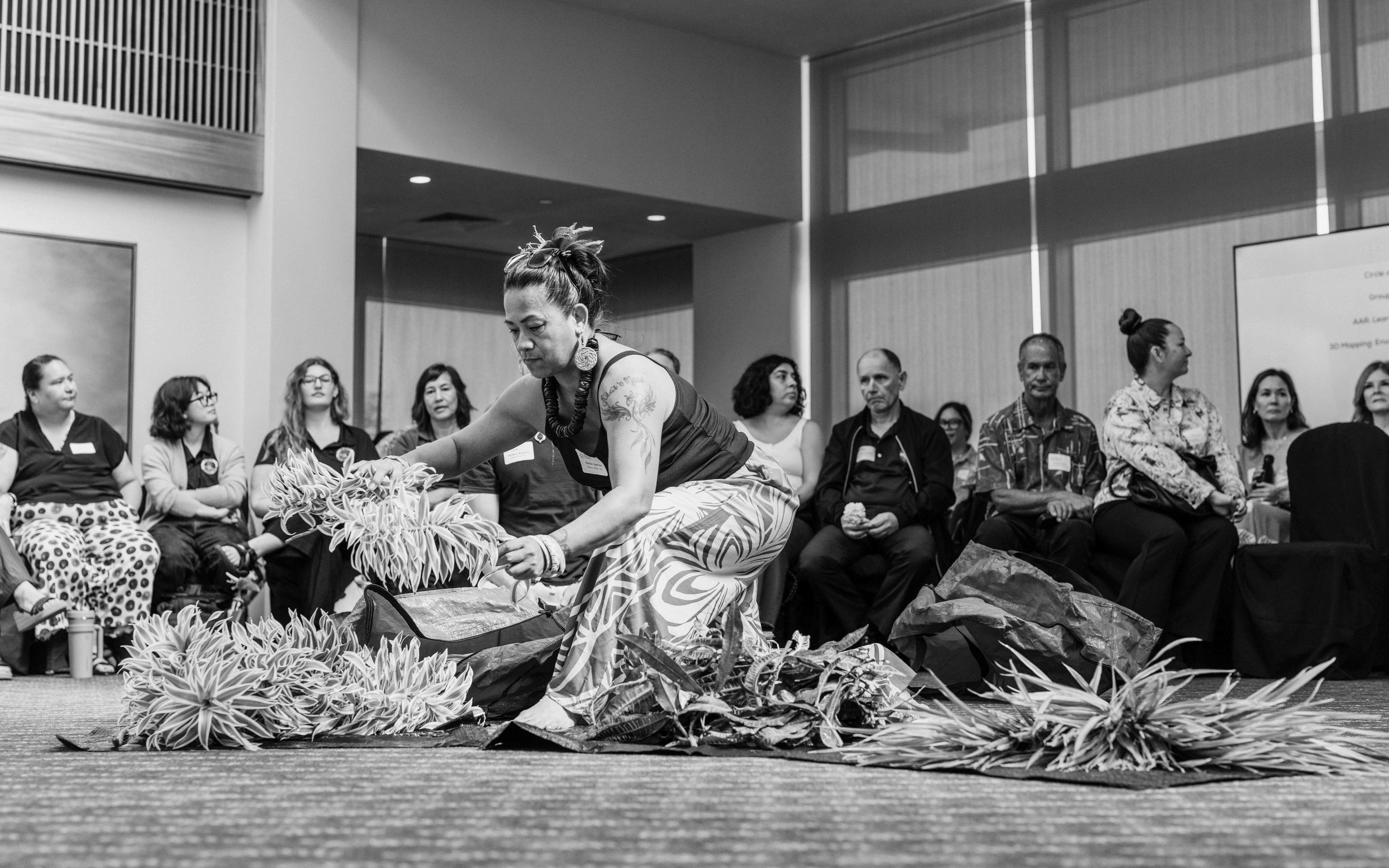
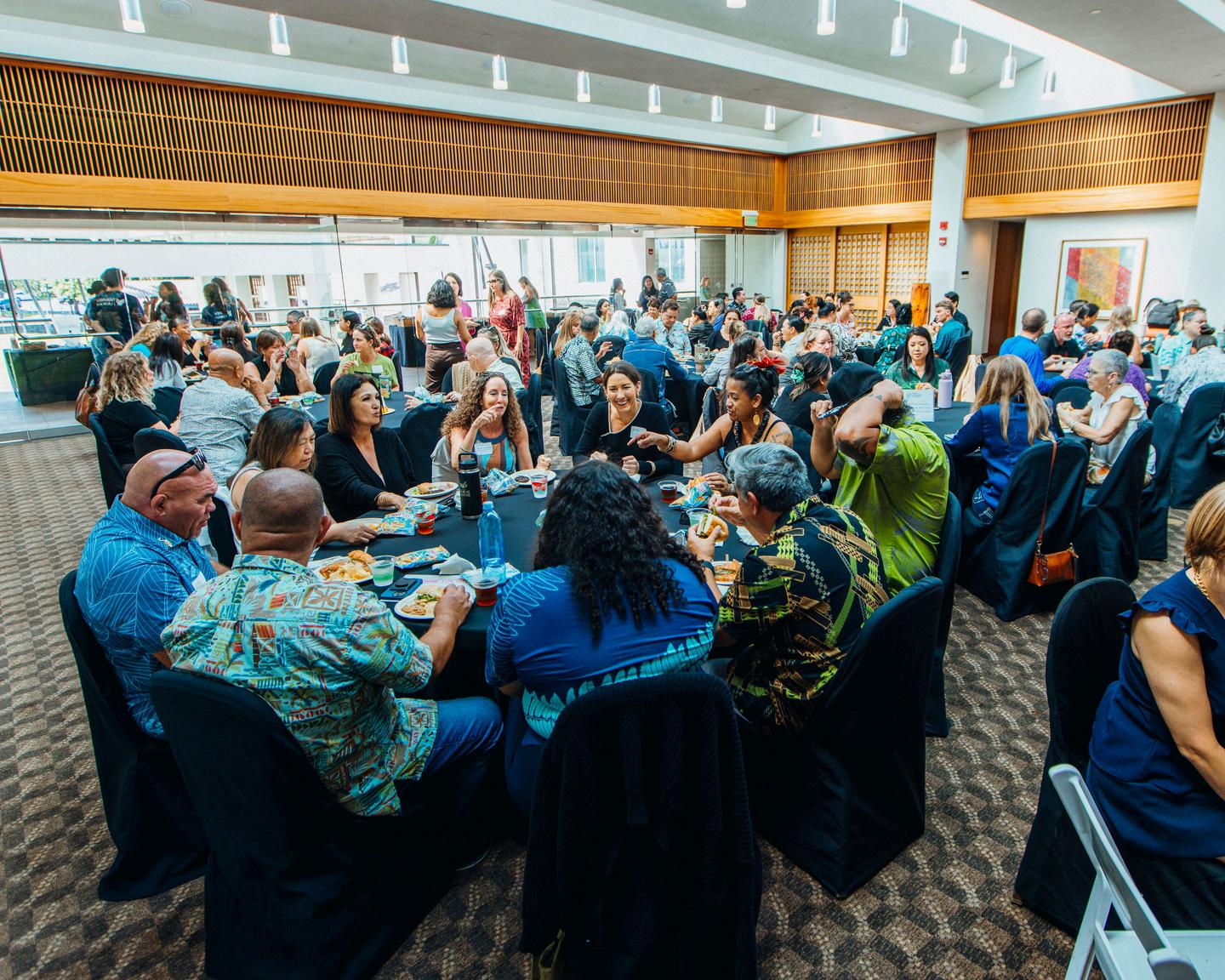
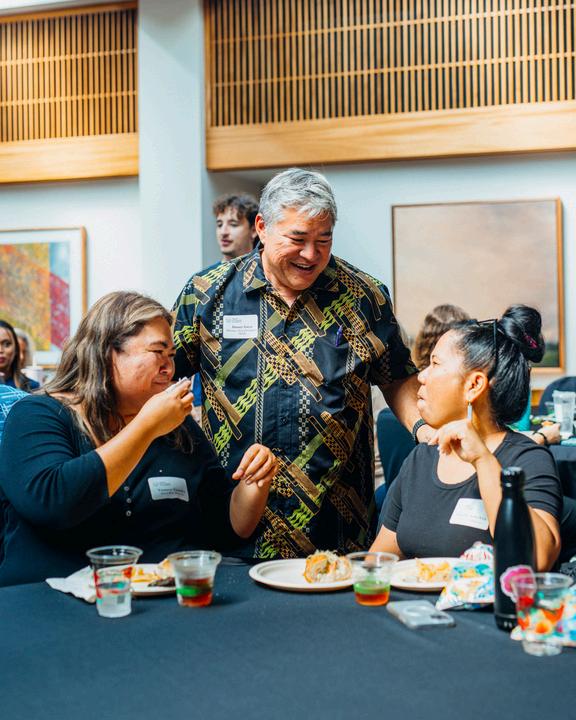
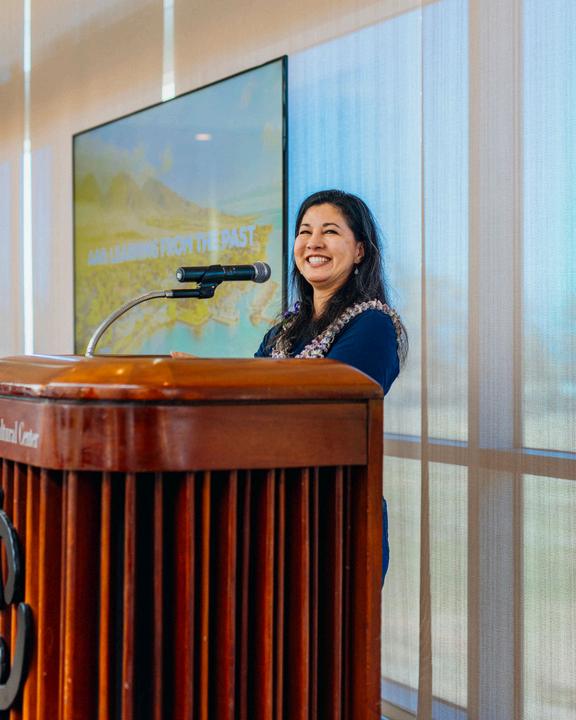
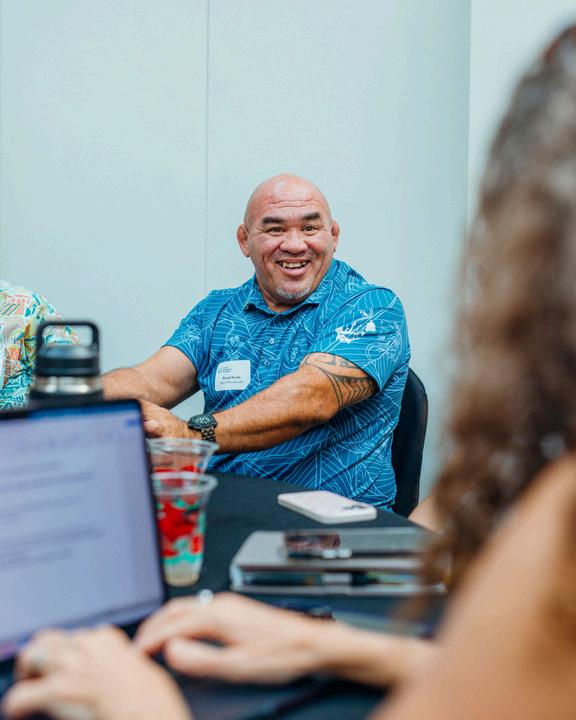
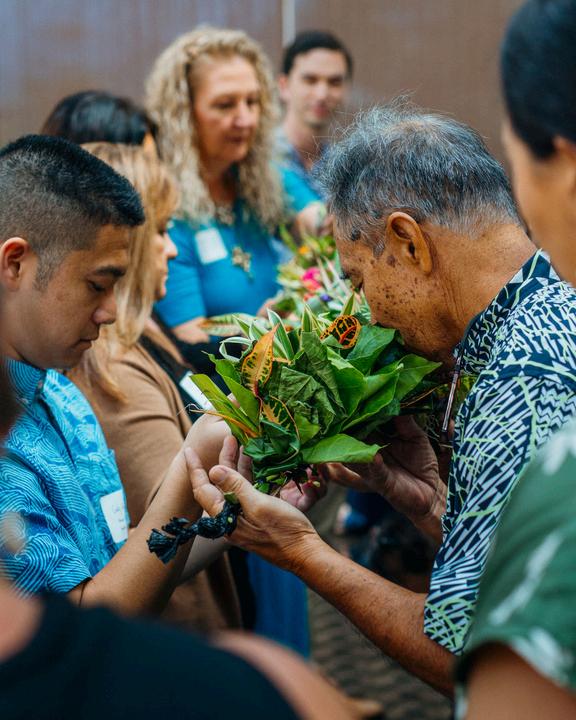
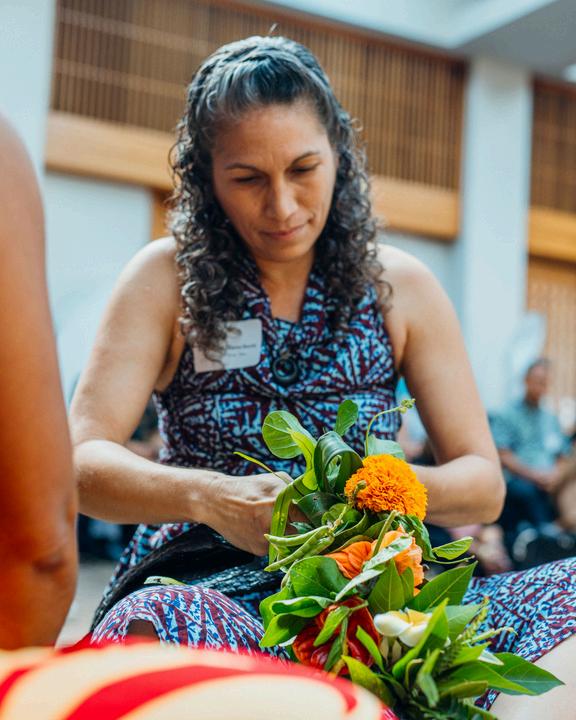
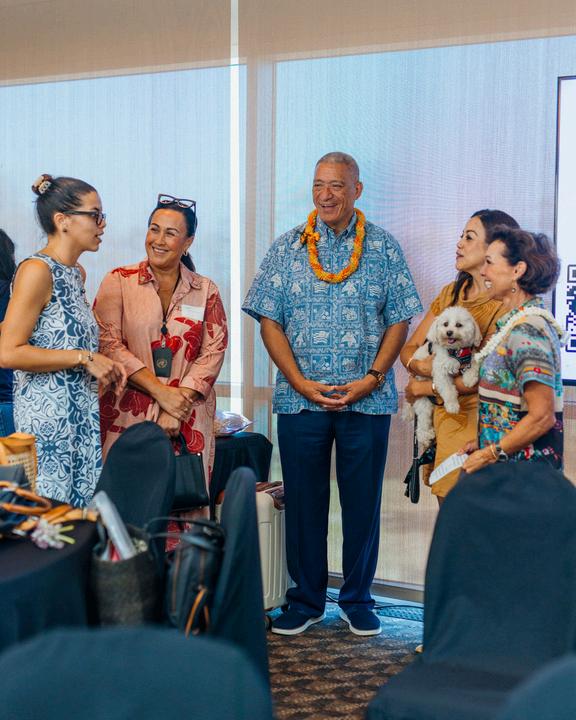
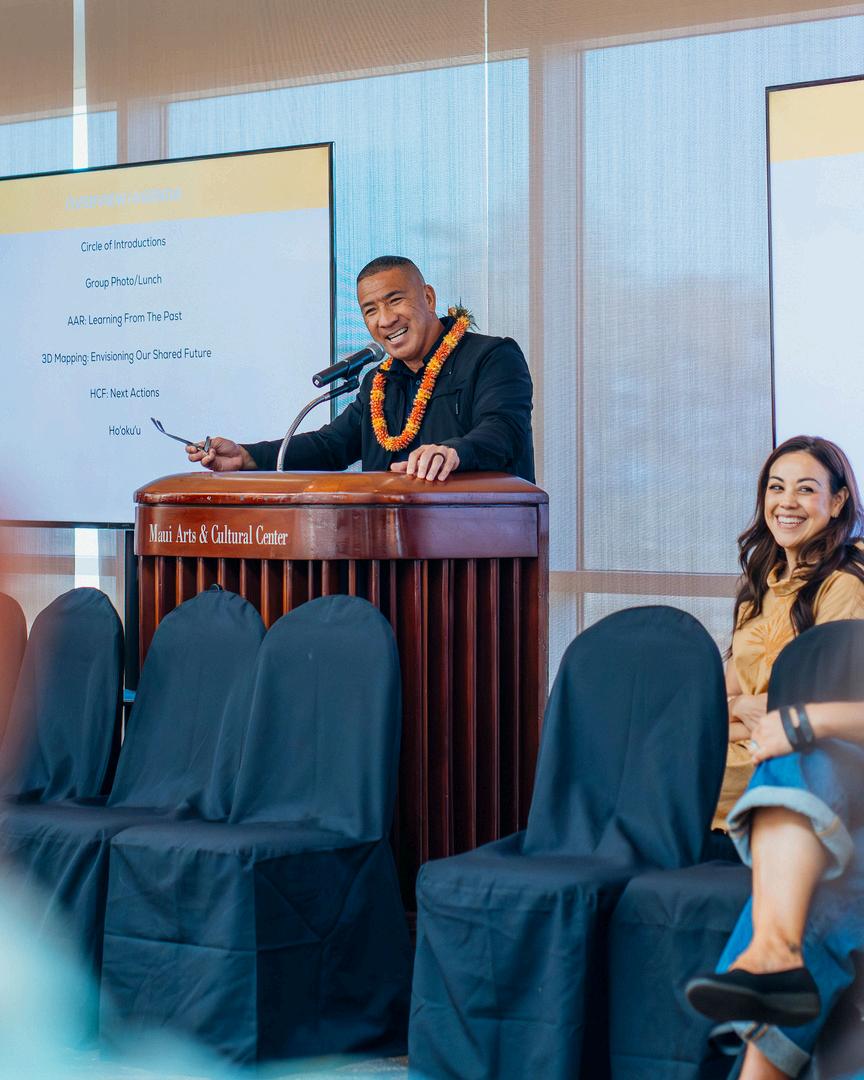
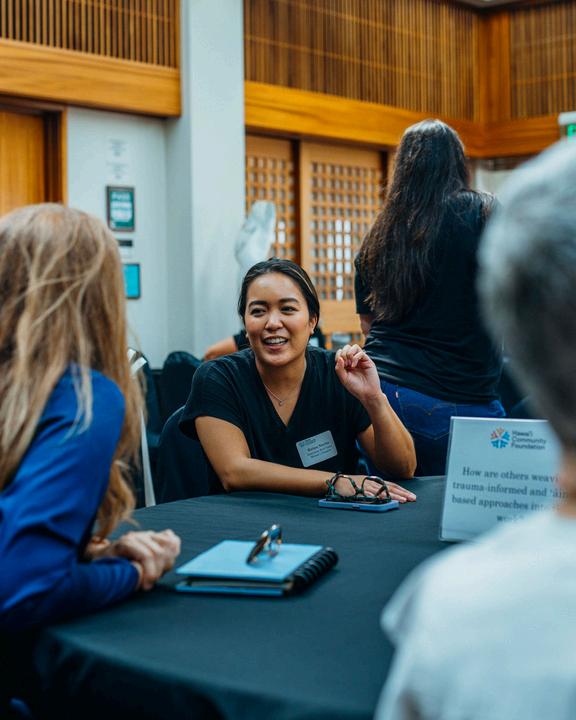
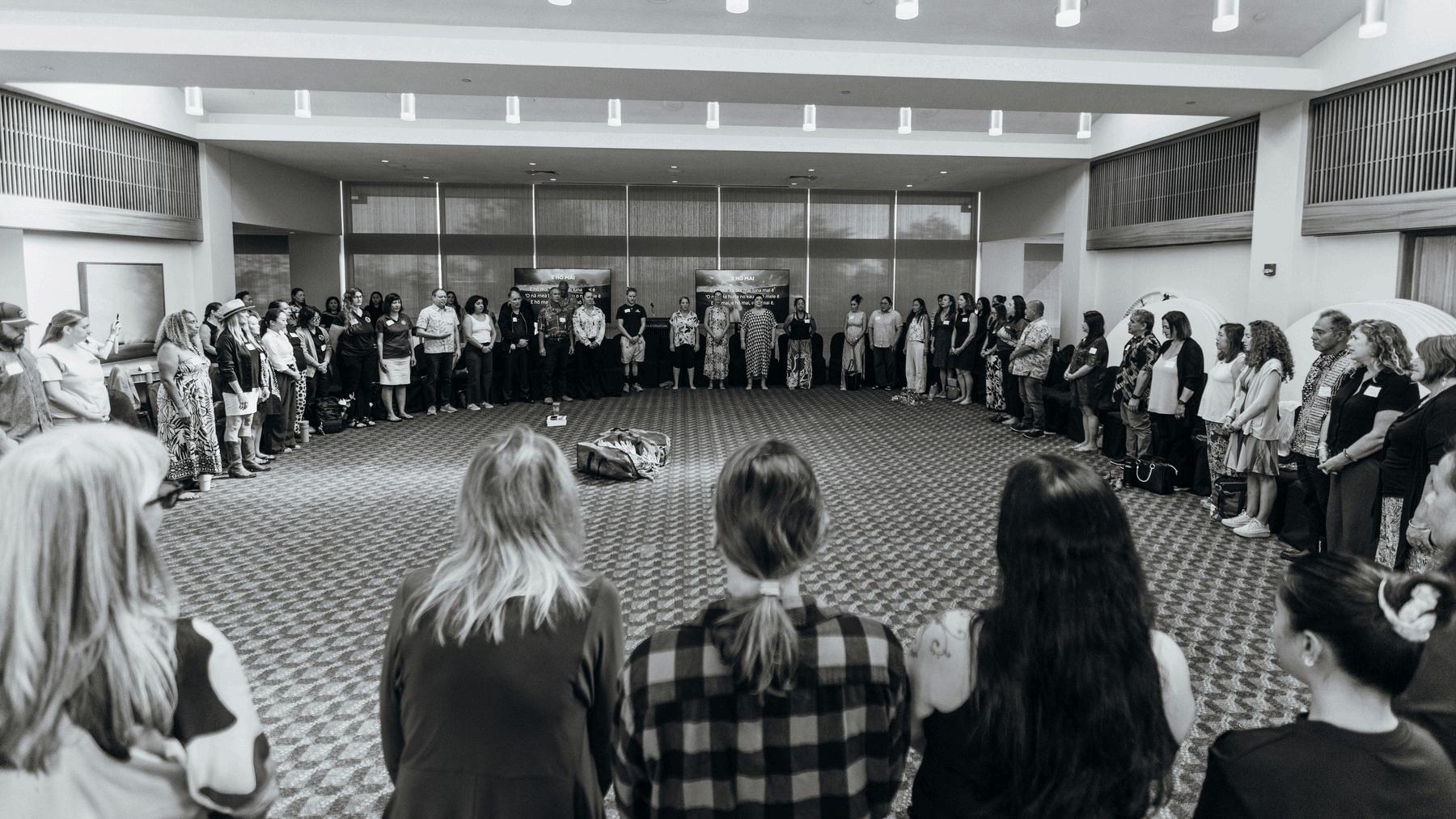
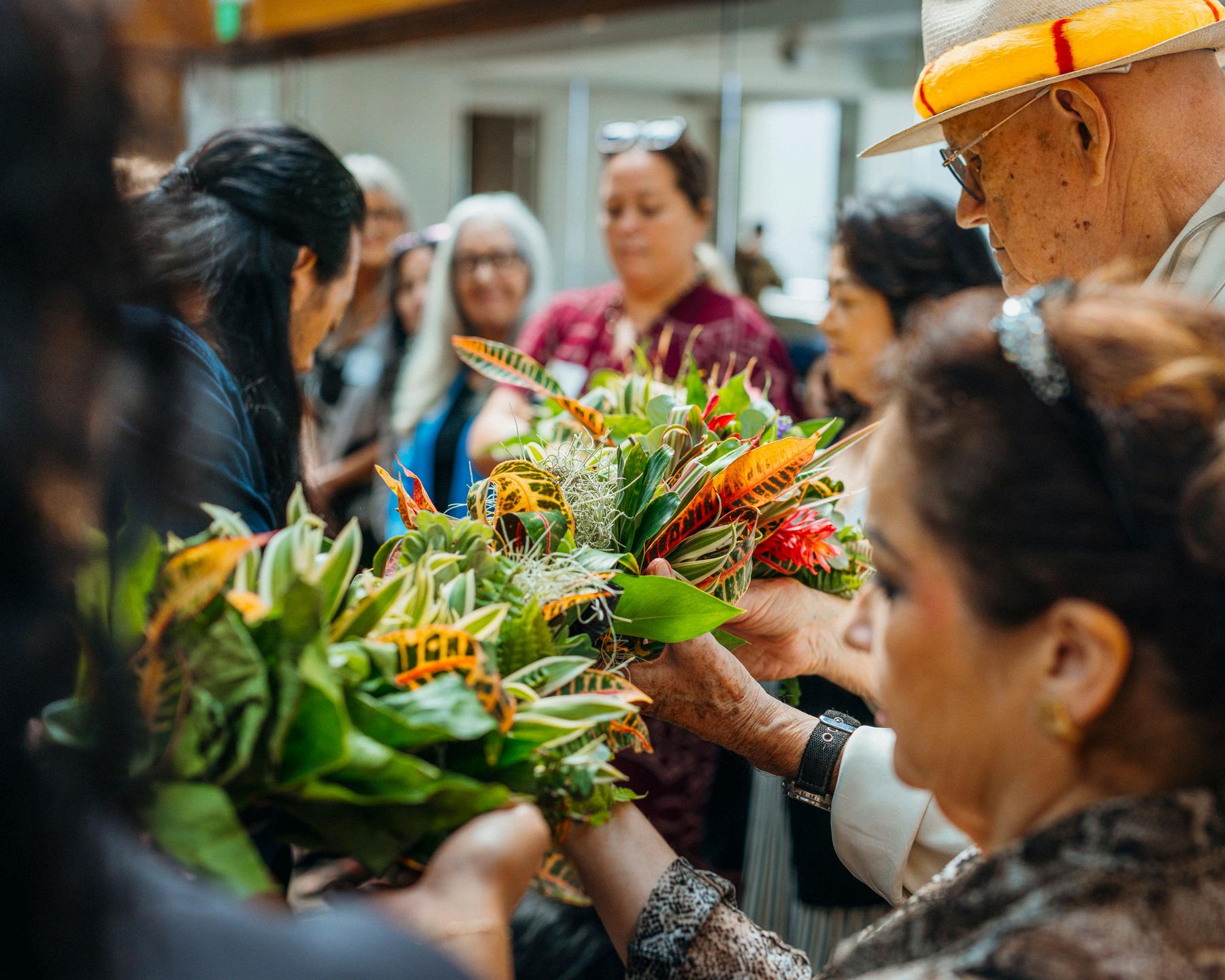
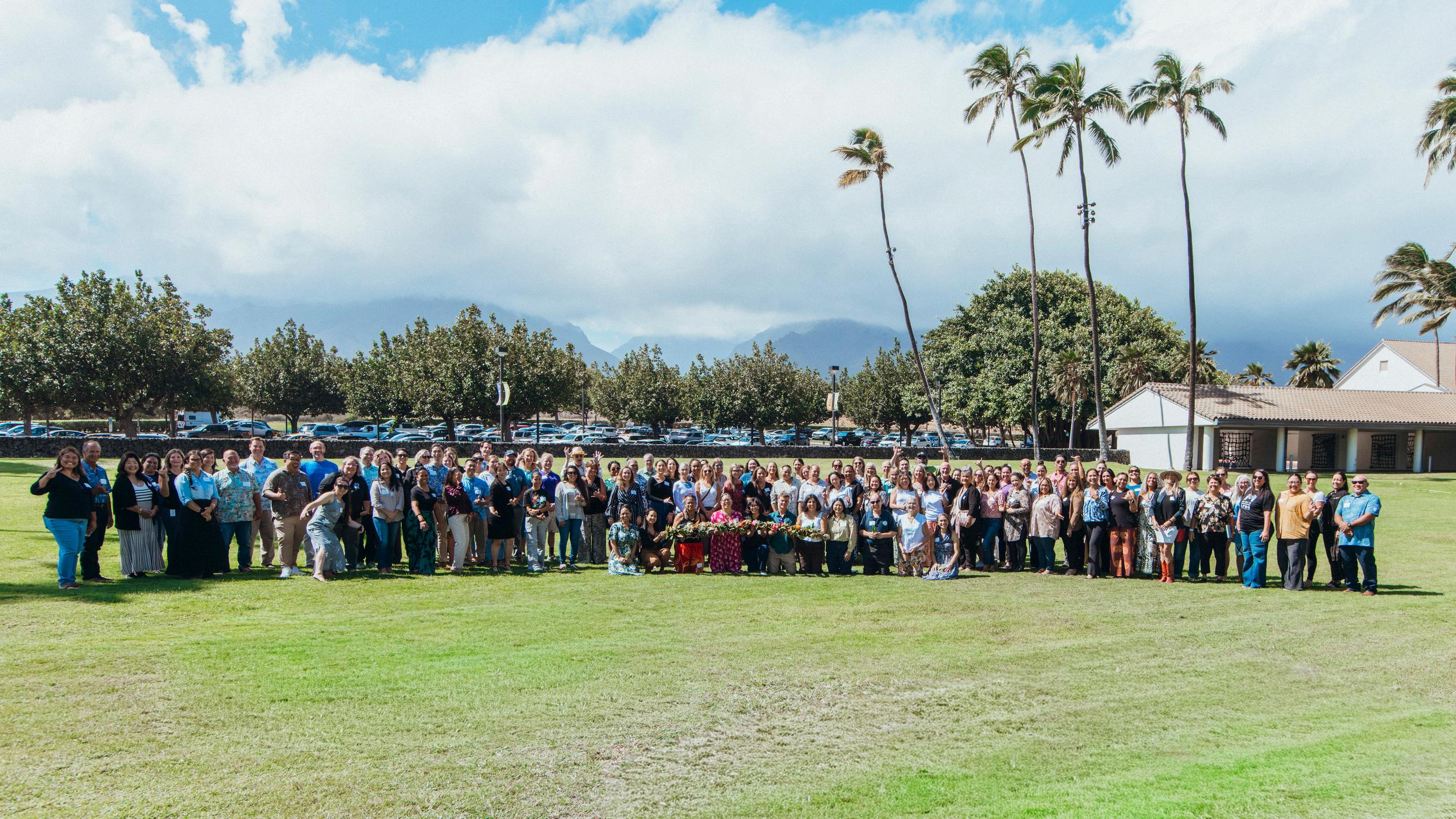
The Hawai‘i Community Foundation partnered with Vibrant Hawai‘i to gather Maui Strong Fund grantees in November 2025 with a goal to better understand the community’s experience with responding to the disaster of 2023. An After-Action Review model was selected to gather feedback that could be helpful with informing future disaster response programming in Hawai‘i, not only by HCF, but also for the broader philanthropic community.
3. About the Maui Strong Fund
4. HCF's Four-Phase Disaster Response Framework
5. Grant Award Dashboard
6. After Action Review: Introduction
7. After Action Review: Key Findings
9. Grant Lifecycle Performance (Part A)
10. What Worked & Where Strain Emerged
11. Three Implications for Philanthropy
13. Recovery Conditions & Community Voices (Part B)
15. Philanthropy's Role: Shifting Practice and Narrative
16. Recommendations for Philanthropic Practice
17. Sense-making Deep Dive: 3D Mapping (Part C)
19. Methodology
20. Looking Forward
21. What Grantees Are Most Proud Of
31. The Grantee Gathering: Convening Impact
33. Maui Strong Fund Grantees
The Maui Strong Fund was established by the Hawaiʻi Community Foundation HCF) in response to the August 2023 wildfires in Lahaina and Kula. The Fund was operated under the guidance of a four-phased disaster response framework developed in 2019 by HCF.
This approach recognizes that recovery requires both immediate action and sustained support as disaster recovery shifts into long-term stability and rebuilding. The phases are represented visually in an overlapping timeline, acknowledging that phases and timing of community movement through each phase is unique and responsive to many different factors.
$165,483,020.72

*Data current as of March 1 2026 st




Days to weeks
post-disaster: 20-25%
Months to years
post-disaster: 70-85%
Ongoing: 3-5% of Maui Strong Fund Allocations




Ongoing: 3-5%
Phases and timing of community movement through each phase is unique and responsive to many different factors.
Proactive investment in community systems and nonprofit capacity to ensure readiness before a crisis occurs.
Responsive and impact-focused funding for urgent needs including:
Food Shelter Healthcare
Vulnerable population support systems
Programs focused on wellness and emotional support
Transitioned within three months post-disaster. Support to help reinstate daily routines, community, and economic stabilization: Phase 3: Recovery & Stabilization
Housing navigation services
Mental health and culturally aligned care
Early childhood services
Workforce development
Youth/family-centered services
Phase 4: Long-Term Recovery & Resilience Building
(Ongoing focus on sustained community capacity and systems change)
Average Year Founded
Most Common Year Founded
Median
This After Action Review does not offer a single solution or prescriptive model. Instead, it provides grounded insight into how recovery systems are experienced by those closest to the work and how philanthropic practice can better align with lived reality over time.
The report is organized to support different reading needs and decision-making contexts:
Part A: Grant Lifecycle Performance examines how the Maui Strong Fund functioned as a grantmaking system during the emergency and early recovery phases, drawing primarily on Mentimeter data and grant lifecycle reflections to assess clarity, speed, responsiveness, and administrative burden.
Part B: Recovery Conditions and What Sustains Recovery shifts the focus from grant process to context, synthesizing post-gathering survey data and qualitative reflections to describe the conditions organizations are operating within and what is required to sustain community-led work as recovery extends.
Part C: Sensemaking Deep Dive (3D Mapping) surfaces systemic, relational, and emotional dynamics that are difficult to capture through surveys alone, offering funder-relevant insight into how recovery is experienced as a living system shaped by relationships, power, care, and constraint.
The report concludes with Consolidated Recommendations for Philanthropic Practice, translating insights from across sections into actionable guidance organized across near-term, mid-term, and longer-term horizons.
Throughout, quantitative findings are intentionally woven into narrative analysis rather than presented as standalone metrics, reflecting an understanding that disaster recovery is relational, non-linear, and not fully captured through numbers alone. Qualitative reflections are not treated as anecdote accounts, but as system-level evidence of how recovery operates or falters over time.
Taken together, the sections that follow are designed to help funders, partners, and practitioners understand not only what worked, but why strain emerged later, and how future disaster-response and recovery efforts can be designed to support both rapid action and longterm endurance.
1. The Maui Strong Fund functioned effectively as a rapidresponse grantmaking system.
Clear communication, accessible applications, rapid decisionmaking, flexible funding, and highly responsive staff reduced administrative burden when organizational capacity was most constrained. The grant process itself functioned as a stabilizing intervention.
4. Relationships function as core infrastructure, not a secondary feature.
Exceptionally high ratings for staff responsiveness demonstrate that human connection materially shaped grantee experience. Trust-based, relational support expanded access and increased implementation quality.
2. Strong process alone did not ensure sustained organizational stability.
Strain increased later in the recovery timeline particularly at points of transition. Grantees described growing uncertainty related to renewals, reporting timelines, and long-term planning. Transition points, not initial application, emerged as the greatest sources of stress.
5. Community intelligence and ʻāina-based knowledge are critical yet under-leveraged.
Participants emphasized stewardship of ʻāina, collective responsibility, and culturally grounded approaches as nonnegotiable elements of recovery. Local nonprofits and informal networks were described as first responders and long-term stabilizers.
3. Recovery on Maui remains ongoing, uneven, and nonlinear.
Participants consistently rejected the idea of a clear recovery endpoint. Recovery timelines defined by funding cycles or public attention do not align with lived experience on the ground.
6. Recovery systems must be designed for endurance, not only speed.
Short-term funding cycles and unclear transitions create destabilizing gaps. Sustained recovery depends on continuity, clarity at transitions, coordination infrastructure, and explicit investment in the people carrying the work.
The quantitative data indicates that the Maui Strong Fund performed strongly across speed, clarity, trust, and responsiveness critical factors in a post-disaster context. Between 89% and 96% of respondents reported positive experiences with clarity of purpose, eligibility, application instructions, communication, and staff responsiveness. This consistency suggests HCF reduced common barriers in emergency grantmaking and built a high degree of trust during a period of uncertainty.
At the same time, the data reveals ongoing capacity and systems stress. While the application was generally viewed as straightforward, more than half of respondents spent over five hours completing it, indicating that organizational strain not just application design contributed to the burden. Similarly, although system performance was strong overall, reported technical issues point to equity concerns in an emergency setting.
PROCESS
Purpose of grant clearly communicated
Eligibility criteria were clear
Application instructions easy to understand
Application easy to complete (rated 4 or 5 out of 5)
Online system functioned properly
Documentation requirements reasonable
Reporting expectations reasonable
Timely responses to questions
Application status communicated clearly
Funds disbursed in timely manner
Review/selection process fair & transparent
Participants described the Maui Strong Response Grant Program as unusually responsive and human-centered during the emergency and early recovery period. Fast decisions, flexible funding, and strong relational support helped organizations move when community needs were changing by the hour. The clearest strain emerged later at points of transition—when timelines lengthened, priorities shifted, and grantees experienced uncertainty about what came next. Across feedback, the consistent finding was not failure in the early grant process, but increasing difficulty maintaining predictability and continuity over time, particularly for returning grantees and ongoing programs.
The overall message to philanthropy: protect what worked, and strengthen what sustains recovery over time.
WHAT WORKED WELL:
1. Program Design: Speed & Simplicity Participants described the early program experience as fast, accessible, and workable during extreme conditions. Language used: "easy," "seamless," "fast," "grateful." The ability to act immediately hire staff, secure housing, provide childcare was tied to program speed and flexibility.
“Money upfront allowed the organization to focus on providing services immediately and serve the community efficiently.”
2. Relationship-Centered Grantmaking: Staff accessibility and relational support reduced stress and strengthened execution. Grantees valued program staff who felt like thought partners rather than gatekeepers.
“She helped keep us in line, but gave us space to figure things out.”
3. Flexibility Supported Culturally Grounded Response: Flexible funding was strongly linked to dignity and cultural fit meeting people where they were, including needs that shift daily.
“Some people wanted prayer, some wanted food, some just wanted to sit. The grant allowed us to do any of those things.”
WHERE STRAIN EMERGED:
1. Later-Phase Clarity & Continuity: The biggest improvement opportunities clustered around later-phase transitions. Slower approvals, unclear renewal pathways, and shifting systems created destabilization.
“Initial conversations were encouraging, but approvals took six months too long for crisis response.”
2. Coordination Gaps: Participants named the need for stronger shared coordination and visibility across organizations.
“What was going on at this level with other orgs? HUGE DISCONNECT.”
3. Phase Transitions Were Confusing: Many found the shift from Maui Strong to the Maui Recovery Funders Collaborative confusing and insufficiently communicated.
“Navigating the Maui Recovery Funders Collaborative is more difficult than Maui Strong.”
“How did you determine there were four phases, and how do we know when we are moving between them?”
1 2 3
Recovery systems must be designed for endurance, not only speed. Short-term funding cycles and unclear transitions create destabilizing gaps, even within well-run grant programs.
Relationships function as core infrastructure. Trust-based, responsive communication materially shapes grantee experience and effectiveness, particularly when systems are under strain.
Continuity and coordination are decisive factors in sustaining impact. Clear signaling, shared visibility, and support for collaboration reduce fragmentation and protect early gains.
To strengthen future disaster-response practice, philanthropic partners can:
Reduce uncertainty through clearer communication about phases, timelines, and renewal pathways
Invest in coordination and capacity-sensitive practices that support organizations with differing levels of infrastructure
Normalize multi-year or renewable funding approaches that align with realities of long-term recovery
This section synthesizes post-gathering survey findings (N = 34) alongside qualitative reflections to describe how grantees understand the current state of recovery on Maui—and what it takes to sustain effective work as the recovery timeline extends. Participants consistently described recovery as ongoing and nonlinear, shaped not only by funding and programs, but by workforce capacity, emotional load, coordination, and trust.
Participants consistently emphasized that Maui’s recovery remains ongoing, uneven, and non-linear, with many needs persisting well beyond the initial emergency phase. Respondents rejected the idea of a clear endpoint, instead describing recovery as a prolonged process shaped by setbacks, delays, and compounding challenges. As one participant stated plainly, “It’s not over.” Others described recovery as occurring in a space between crisis and stability, where rebuilding social bonds, trust, and emotional wellbeing is as significant as physical reconstruction. Taken together, these reflections underscore a central reality: the pace of recovery on the ground does not match the pace of public attention, and many families and communities are still living with daily instability.
Participants also stressed that many of the most important recovery stories remain under-told, particularly those rooted in community-led and culturally grounded work. Local nonprofits, volunteers, and informal networks were repeatedly described as first responders and long-term stabilizers, often filling gaps left by formal systems. Respondents highlighted healing spaces such as movement, cultural storytelling, and peer gathering—as
essential to emotional recovery for both adults and children. One participant reflected, “I would like to hear more stories about the healing process and building resilience,” pointing to the need to elevate forms of recovery that are relational, preventative, and difficult to quantify.
What stories about your community's recovery still need to be told?
There are survivors of the Maui Wildfires from Lahaina who still have not established all the coverages available to them under their insurance policies. I have not met a survivor yet who understands everything they have in their policy and would have left money on the table without UP's support and guidance. In one of the most poignant cases, the son of a landowner came in to see me. He was crying because his father could not see a path to rebuild and was going to let the family property go into foreclosure. Someone told him to come see me. After telling me his story, I told him we would get his policy and determine where he was with his coverages. I told him there was hope and not to give up. He wrote "there is always hope" on his pad of paper. With what his family was entitled to under the insurance policy, I referred him to Hawaiʻi Community Lending — the pathway to the LTRG. HCL put the family in touch with Lahaina Land Trust. With the joint effort of UP, HCL, and Lahaina Land Trust working in conjunction with one another, this family is rebuilding building security for generations to come.
Participants consistently emphasized that Maui’s recovery remains ongoing, uneven, and non-linear, with many needs persisting well beyond the initial emergency phase. Respondents rejected the idea of a clear endpoint, instead describing recovery as a prolonged process shaped by setbacks, delays, and compounding challenges. As one participant stated plainly, “It’s not over.” Others described recovery as occurring in a space between crisis and stability, where rebuilding social bonds, trust, and emotional wellbeing is as significant as physical reconstruction. Taken together, these reflections underscore a central reality: the pace of recovery on the ground does not match the pace of public attention, and many families and communities are still living with daily instability.
Participants also stressed that many of the most important recovery stories remain under-told, particularly those rooted in community-led and culturally grounded work. Local nonprofits, volunteers, and informal networks were repeatedly described as first responders and long-term stabilizers, often filling gaps left by formal systems. Respondents highlighted healing spaces such as movement, cultural storytelling, and peer gathering—as essential to emotional recovery for both adults and children. One participant reflected, “I would like to hear more stories about the healing process and building resilience,” pointing to the need to elevate forms of recovery that are relational, preventative, and difficult to quantify.
It would have been nice to have a gathering of the grant recipients in those early weeks to understand what all the projects that were being funded and if there were opportunities for partnership or synergy to further strengthen the value of the grants.
The Absence of a Shared Coordination Backbone
“I would have been more diligent about tracking metrics, and quantifying the impact we had… so much was happening so quickly… we weren’t able to accurately quantify the outpouring of support.”
“If I had to do it again, the only thing I would do differently is make more time for my ʻohana… resilience isn’t just about rising again, it’s about sustaining ourselves and our loved ones along the way.”
Trauma, Timing, and the Human Cost of Response
Despite the diversity of responses, a clear throughline emerges across these reflections. Participants were not questioning the commitment, care, or effectiveness of the people involved. Instead, they were naming the absence of early, shared systems coordination infrastructure, internal capacity, and humancentered supports that could have reduced strain and increased collective effectiveness.
Participants consistently emphasized that Maui’s recovery remains ongoing, uneven, and non-linear, with many needs persisting well beyond the initial emergency phase. Respondents rejected the idea of a clear endpoint, instead describing recovery as a prolonged process shaped by setbacks, delays, and compounding challenges. As one participant stated plainly, “It’s not over.” Others described recovery as occurring in a space between crisis and stability, where rebuilding social bonds, trust, and emotional wellbeing is as significant as physical reconstruction. Taken together, these reflections underscore a central reality: the pace of recovery on the ground does not match the pace of public attention, and many families and communities are still living with daily instability.
Participants also stressed that many of the most important recovery stories remain under-told, particularly those rooted in community-led and culturally grounded work. Local nonprofits, volunteers, and informal networks were repeatedly described as first responders and long-term stabilizers, often filling gaps left by formal systems. Respondents highlighted healing spaces such as movement, cultural storytelling, and peer gathering—as essential to emotional recovery for both adults and children. One participant reflected, “I would like to hear more stories about the healing process and building resilience,” pointing to the need to elevate forms of recovery that are relational, preventative, and difficult to quantify.
Participants consistently expressed a desire for earlier, deeper, and more frequent connection, particularly through convenings that prioritize relationship-building over information gathering. Several noted that a gathering like the recent Maui Strong convening would have been especially valuable a year earlier, when coordination gaps were widest. Time together was described not as ancillary, but as core infrastructure for effective recovery work.
Respondents also wished funders had asked more directly about the wellbeing of the people and organizations doing the work. Many described carrying significant emotional, administrative, and secondary trauma burdens, often while managing their own wildfire impacts. There was a strong call for philanthropy to recognize providers as humans first and to invest in healing, mental health, and sustainability not only service outputs.
A third area participants wished had been addressed more explicitly was long-term viability. Respondents wanted clearer conversations about continued funding needs, reasons for funding decisions especially when encouraged to reapply but not selected and whether funders understood that many organizations remain in crisis today. Underlying these reflections was a desire for transparency, partnership, and reassurance that trust and momentum would not be lost to funding cliffs or silence.
Findings from the post-event survey strongly reinforce the themes surfaced throughout this After Action Review and provide additional clarity on what grantees believe is essential to sustain impact in future grant cycles. Across responses, participants consistently identified speed, simplicity, and flexibility as the most critical strengths of the Maui Strong Fund—features that reduced stress, preserved capacity, and allowed organizations to focus on community needs rather than administrative requirements. Rapid response funding, short and accessible applications, upfront lump-sum awards (rather than reimbursable models), and light reporting were repeatedly described as enabling real-time action in highly unstable conditions. Survey respondents emphasized that flexibility to adjust spending as needs evolve is not optional in disaster contexts, where conditions shift daily and cannot be fully anticipated at the outset.
Publish a plain-language funding roadmap explaining recovery phases, anticipated decision timelines, and how organizations should interpret transitions between funding rounds
Proactively reach out to current/recent grantees near end of grant periods with learning-focused check-ins (not compliance-focused)
Establish a simple, shared grantee directory or contact list to support peer connection, referrals, and coordination
Host regular peer exchange spaces clearly framed as learning and relationship-building, distinct from data collection
Refine grant administration for organizational capacity: tiered reporting expectations, optional conversational or alternative reporting formats, access to technical assistance
Improve technology reliability: system resilience, autosave functionality, and accessibility under high-stress conditions
Launch a lightweight "who's doing what" dashboard to reduce duplication
Normalize multi-year or renewable funding pathways earlier in recovery cycles, even when amounts are modest or conditional
Simplify re-application for returning grantees with demonstrated impact
Share aggregate insights and reflections on how strategies have evolved — close the feedback loop
Invest in coordination, workforce stability, and organizational care as core recovery infrastructure
Build tiered requirements that fit organizational capacity
Invest in intermediaries or liaisons who connect funding to community-rooted work
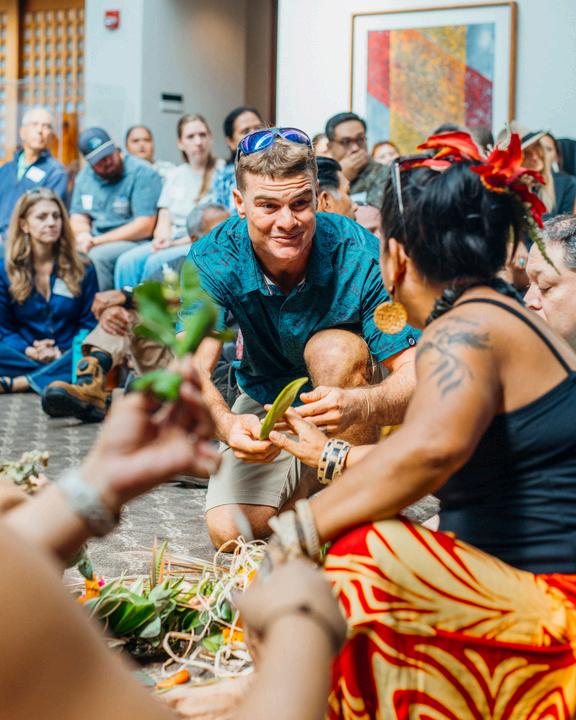
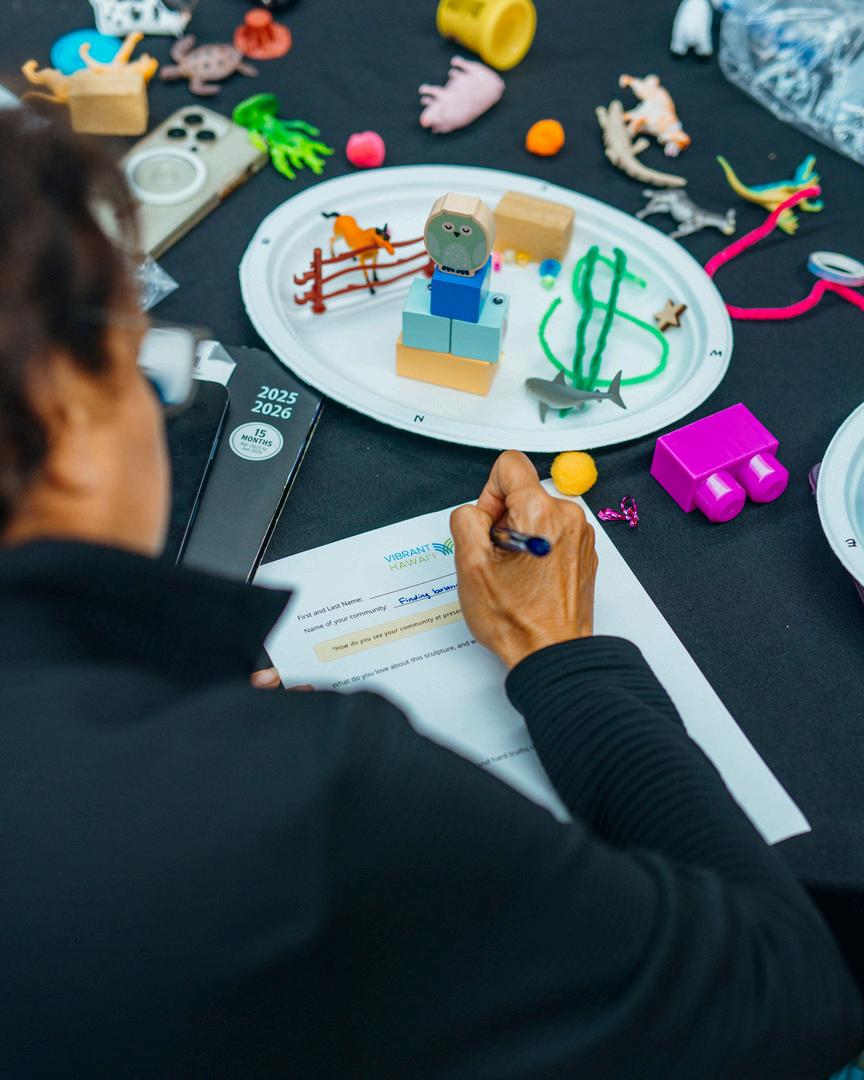
At its core, 3D Mapping is a sculpting-based inquiry process that invites participants to observe current reality from multiple vantage points. Through guided prompts, participants engage four perspectives, strengthening their ability to “makawalu”—to see from many perspectives at once while surfacing hidden assumptions and disrupting bias.
In disaster response and recovery contexts, 3D Mapping slows collective thinking, makes relationships between people and systems visible, and creates space for deeper insight. Rather than evaluating outcomes, it supports reflection on what is present, what is breaking down, what is emerging, and what is needed moving forward.
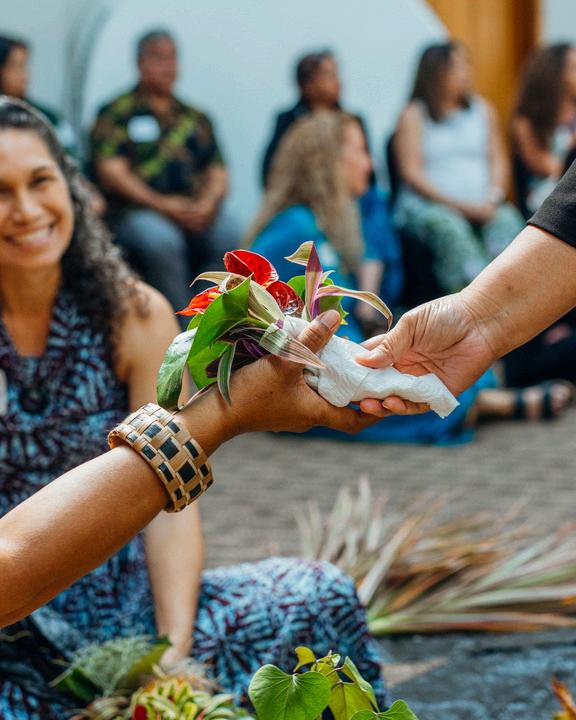
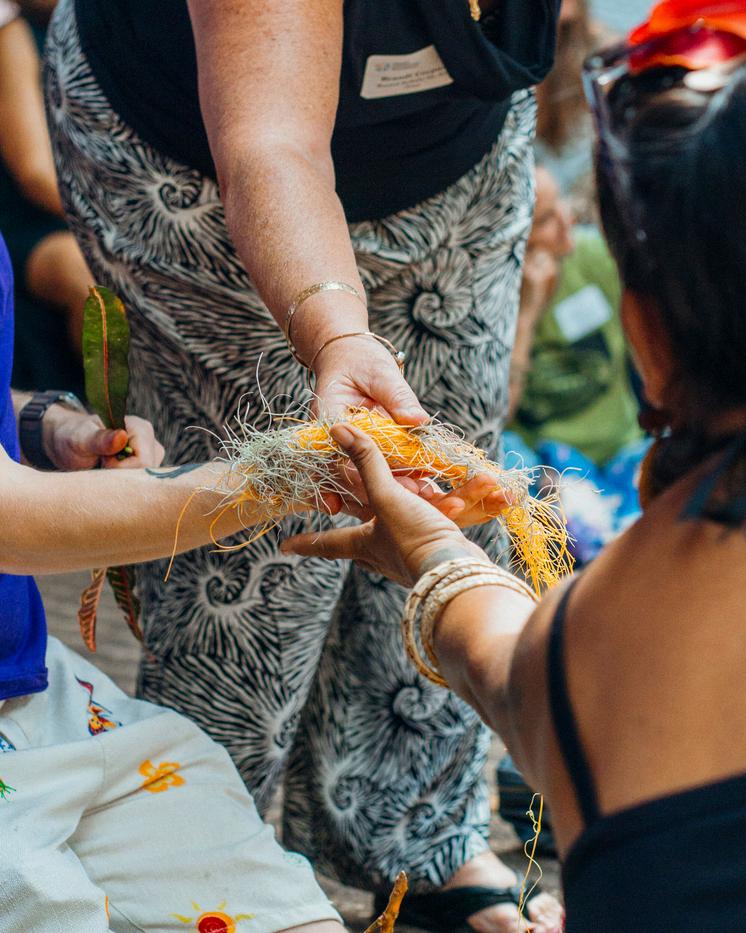
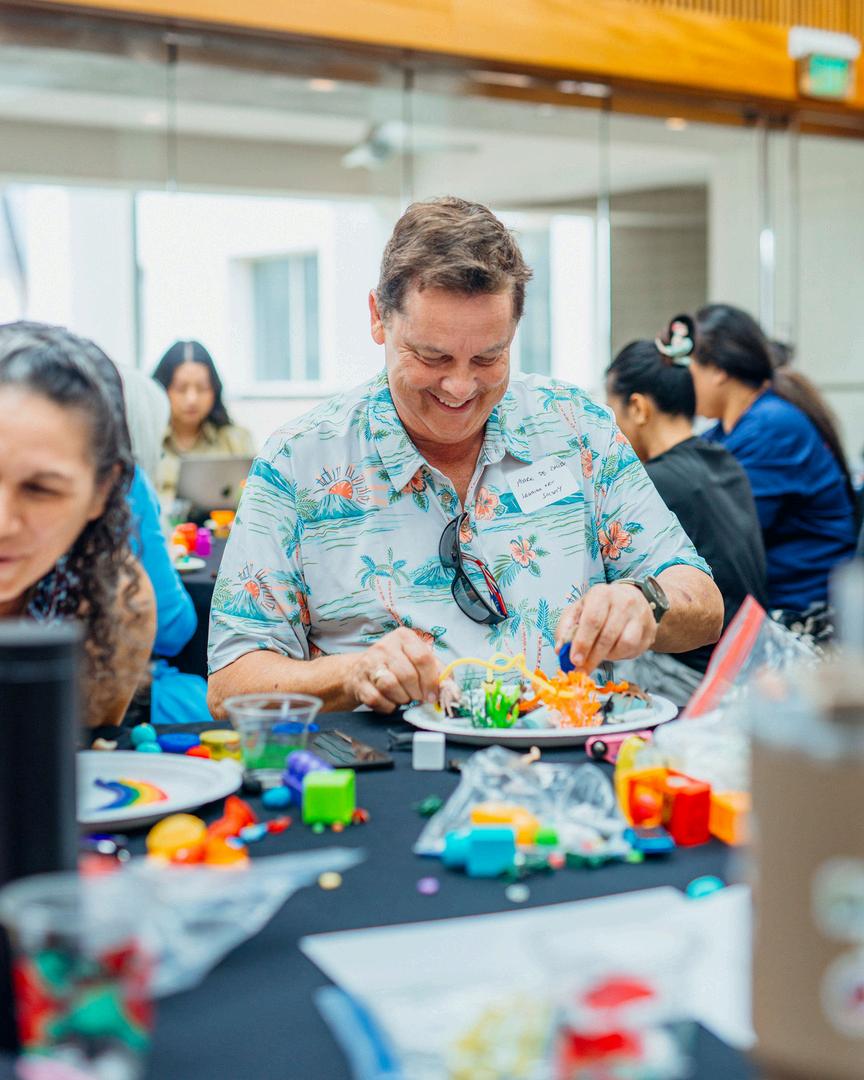
At the Maui Strong Grantee Gathering, participants created a shared sculpture representing the disaster response to the August 2023 Maui wildfires. Each person placed themselves within the sculpture, grounding the process in lived, relational experience. The reflections generated through this process inform the four inquiry questions analyzed in the following section, offering insight into the current recovery landscape, key tensions, what must be released, and what is emerging next.
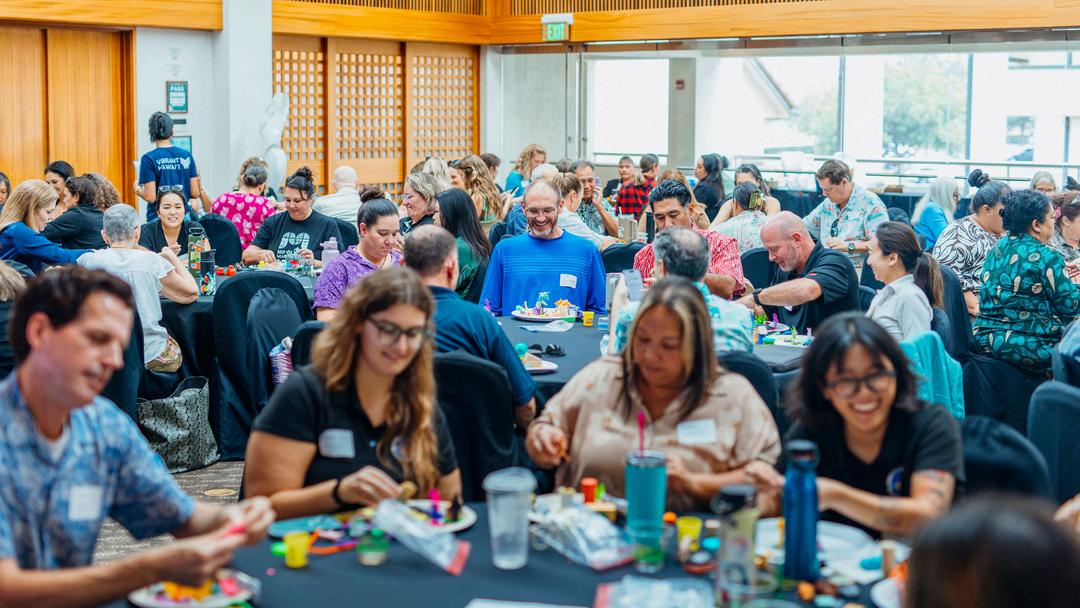
Q1: What do you love? What frustrates you? Participants described deep appreciation for interconnection, diversity, and collective care paired with frustration rooted in barriers, fragmentation, and fragility. The sculpture was interpreted as a symbol of community resilience and shared kuleana.
“Everyone has a big job, but we are all pulled in so many directions we lose sight of the north star.”
Q2: What are the conflicts and hard truths? Recovery is shaped less by intention than by limits of resources, capacity, systems, and visibility. Participants named water scarcity, climate change, and failure to mālama ʻāina as existential conflicts.
“There is hope, but limited resources blunts hope.”
Q3: What wants to end? What is trying to emerge? What must end: avoidable barriers, extractive dynamics, and fragmented approaches. What is emerging: a more coordinated, place-based, regenerative approach grounded in ʻāina, collective care, and community self-determination.
Q4: What advice does the sculpture have? Persist and don't give up. Work collectively. Pair perseverance with systems change. Care for the ʻāina. Center people over process. Lead with love.
“What benefits one part of Maui benefits ALL of Maui.”
What do you love? What frustrates you?
“I love the diversity of this sculpture, encompassing a full ahupuaʻa & interconnected ecology here on Maui.”
“Love: connection, unity, collective purpose, mālama, aloha, pono, kuleana.”
“[The sculpture] represents all of the strength and focus in the communities and the connections that could be made.”
“How difficult in reality it is to recreate ahupuaʻa systems. But we must persist.”
What are the conflicts and hard truths?
“We can't do it all, all the time… The cavalry is not coming. We are it.”
“Conflict and hard truth is that we are not taking care of the land properly.”
“I have to make do with what is provided, not with what I wish I had. Keep going and figure it out as you go.”
What wants to end? What is trying to emerge?
“End: dependence on outside world. Emerge: self-sufficiency food, governance, money, community mutual aid.”
“Cycles don't really ever end or die, but they do change shape.”
“[We need] ending old patterns of singular individual ownership and replacing them with a coming together to build something collective.”
What advice does the sculpture have?
“There is so much work that still needs to be done. Don't get distracted. Don't give up.”
“E ola i ka wai! Water is life!”
“Take your time. Actions that are intentional result in meaningful results.”
“$ is still needed. The babies are still there.”
“Support the helpers.”

This After Action Review integrates both qualitative and quantitative data to provide a holistic understanding of grantee experience across the Maui Strong Fund lifecycle. Qualitative findings draw from open-ended survey responses, facilitated discussions, and participant reflections shared during the Maui Strong Grantee Gathering. These narratives were analyzed thematically to identify recurring patterns, tensions, and insights related to recovery conditions, partnership dynamics, capacity constraints, and relational practices.
Quantitative data were collected through structured Mentimeter activities (N = 98) and a pre- (N = 121) post-gathering survey administered to participants (N = 34). Survey items measured perceptions of application processes, communication, trust, emotional safety, collaboration, and convening outcomes using Likert-scale responses. Rather than presenting quantitative results as standalone metrics, this review intentionally weaves numerical findings into relevant narrative sections to validate, contextualize, and sharpen qualitative themes. This mixed-methods approach reflects an understanding that disaster recovery outcomes are relational, non-linear, and not fully captured through quantitative measures alone, while still recognizing the value of data in identifying patterns, strengths, and areas for improvement.
Effective disaster philanthropy requires both speed and staying power. The Maui Strong Fund demonstrated that rapid, trustbased grantmaking can significantly reduce friction and stabilize community response in moments of acute crisis. At the same time, grantee feedback highlights that the greatest risks to impact emerge later—at points of transition, uncertainty, and prolonged strain when recovery becomes less visible but no less demanding.
"Community recovery is not a linear pipeline from funding to outcomes, but a living system shaped by relationships, transitions, and trust."
Recovery is sustained not by individual effort or short-term solutions, but by connection, continuity, and alignment between values, systems, and lived reality.
Mahalo to all grantee organizations, participants, and community members who shared their time, insights, and experiences to inform this review. Your voices are the foundation of this work.
“We have assisted nearly 5,000 households, helping more than 10,500 individuals and 300 businesses to date distributing over $30 million dollars in assistance.” - Debbie Cabebe, Maui Economic Opportunity, Inc.
“Standing up care on Day 2 and carrying it through re-entry. We launched a beach-side clinic at Pōhaku (S-Turns) within 48 hours, saw 1,000+ patients, wrote and paid cash for 103 prescriptions when systems were down, provided 100+ Mental Health First Aid encounters, placed 70 TB tests for shelter intake, did 20 newborn screenings, and helped stand up solar + refrigeration at hubs. We then served as medical lead with DOH for supported re-entry covering 88 zones and 2,000+ structures, assisting a couple of thousand families/support staff, coordinating 200+ volunteers, and helping distribute ~10,000 PPE kits. That continuum from crisis to re-entry to ongoing follow-up led to a permanent HMHB presence on Maui.”Sunny Chen, Healthy Mothers Healthy Babies Coalition of Hawaiʻi
“Substantial completion of the largest modular community in the nation within record timing, 18-months, possible through innovative policy tools, and partners who showed up with a 'how can' mindset to execute with passion and commitment.”
- Kimo Carvalho, HomeAid Hawaiʻi
“We launched the Lap Top Project and distributed over 1,300 lap tops, desk tops, Smart Phones and Tablets to those affected by the wildfires.” - Cesar Gaxiola, J Walter Cameron Center
“This grant allowed the Kalo Farmers of Maui, to once again feed the people of Hawaii their staple food, thus allowing Kalo to be at the center of the ʻohana unit once again. Helping to remind survivors of their identity and reminding them that they are not alone & that the ʻaina is here & that the caretakers of this ʻaina have not forgotten them and they belong to this place Hawaiʻi. This grant provided healing and nourishment to mind, body, and soul impacting over 13,000 residents.” - Bobby Pahia, Kaialahui Foundation
“Through MauiWES, we created Hawaiʻi's largest post-disaster health screening, enrolling over 2,000 wildfire survivors in less than a year. Beyond data collection, we provided same-day results, referrals to care, and support services that families urgently needed. This effort not only built trust but also laid the foundation for a long-term rural health system that can serve thousands more in the years ahead.” - Ruben Juarez, University of Hawaiʻi
“Our biggest win has been opening our gates to the 'entire community' after the wildfires, offering 3,500+ equine-assisted healing sessions that gave people a way to process grief, heal, reconnect, and begin to thrive again.” - Paige Deponte, The Spirit Horse Ranch
“Since August 2023, Nā Hoaloha has facilitated 3,454 escorted trips to medical facilities and doctor's appointments, 1,076 grocery and pharmacy trips, and supported 181 fire survivors with on-demand Lyft rides when volunteers were unavailable. In total, volunteers drove 130,393 miles and contributed 8,391 hours supporting older adults and wildfire survivors. This surge in activity reflects a 59% increase in participant requests for transportation to medical, grocery and essential services. Additionally, the organization distributed $21,816 in Durable Medical Equipment — including wheelchairs, rollators, and walkers to kūpuna recently discharged from hospitals or living in temporary housing.” - King Van Nostrand, Na Hoaloha-Maui
Interfaith Volunteer Caregivers
“I’m proud of the natural symbiosis that evolved within our community, where weʻve been able to step up and care for each other, largely due to the communityʻs help when there was little outside support. Itʻs equal parts empowering, humbling, and energizing to be part of the flow of generosity and aloha, where those who are in a position to help, do, and those who are legitimately still in need of help can get the support that they need. Iʻm proud of what our organization has accomplished, but Iʻm most proud of our island as a whole, for what the collective we the community showed we can do in our greatest time of need.” - Paula Ambre,
Mālama
Kula
“We are proud to have given away 150 kalo plants, and native Hawaiian trees including ʻulu, & other coastal native plants to Kula & Lahaina ʻOhana. We are proud to continue propagation and distribution of agricultural trees, native plants, and valueadded products in efforts to continue mahele (give-away) to Maui ʻohana in need. Through the support of Maui Strong, our capacity to serve our ʻohana has grown stronger than ever. This partnership has allowed us to expand our reach and deepen our direct kōkua, ensuring that our festival and supporting activities not only preserves and celebrates tradition but also actively contributes to resilience, food security, and economic opportunity for our community.” - Mary Ann Pahukoa, East Maui Taro Festival
“We completed and filled four Relief Cottages at Pukalani Nazarene Compassion Village, housing over 30 fire survivors and vulnerable families since the fires. Alongside that, we have continued to provide thousands of pounds of produce, clean water, counseling, and holistic care. This year we're extending that relief through a new mobile outreach trailer to identify needs in the wider community and bring support directly to survivors where they are. We are also expanding our work by adding more houses on adjacent land we purchased, ensuring even more families have a place to call home.” - Pastor Dylan Nails, Pukalani Nazarene Compassion Village
“The MSF was critical in launching our disaster case management program and emergency funding for survivors, which have served more than 2,300 individuals (nearly 900 families).”
- Ryan Catalani, Family Promise of Hawaiʻi
“We have created the largest social and biomedical cohort in state's history, recruiting more than 2,000 participants, informing policy, and linking survivors to health.”
- Alika Maunakea, John A Burns School of Medicine
“We provided 98 paid positions for individuals supporting community recovery efforts after the fire. These positions included volunteers at resource hubs delivering recovery and relief services to affected residents, as well as culinary students who prepared 1,800–2,500 meals daily for Maui residents who had moved from emergency shelters to hotels and other temporary housing.” - Keaohuana'oli Rivera-Leong, Kupu
“In the aftermath of the devastating wildfires in Lahaina, the American Cancer Society responded swiftly to support cancer patients affected by the disaster. Many guests arriving at the Hope Lodge on Oʻahu had lost everything. We expanded our transportation assistance program and opened all Hope Lodge facilities nationwide to welcome cancer patients impacted by the fires. We partnered with Maui Cancer Resources to introduce mental health support services for cancer patients in Lahaina.”Rebecca Vandaele, American Cancer Society
“We were able to establish an emergency preschool for displaced families who were directly impacted by the fires. This was after setting up an 8-week childcare service at one of the west side community hubs so parents had a safe place to leave their keiki while navigating resources. The emergency preschool is still in operation today.” - Kapua Chang, Imua Family Services
“Rescuing nearly 800 animals from the burn zone and reuniting over 200 animals back to their ʻohana.” - Nikki Russell, Maui Humane Society
“I am truly proud that AILH was able to stand alongside our Maui community during the recovery of Lahaina. One win that means a lot to me is how we were able to reach individuals with disabilities and functional needs who were directly impacted by the fires. Many of them were overlooked in the rush of relief efforts, but through our outreach and partnerships, we made sure their voices were heard and their needs were met.”
- Lehua Chang, Aloha Independent Living Hawaiʻi
“Our Financial Future (OFF) program supported 271 immigrant survivors by connecting them to safe and trusted banking through VICFCU, providing $5,000 in direct cash aid, and offering financial education workshops that fostered comfort, confidence, and community. In partnership with UHERO, this work doubled as research which also helps us better understand how financial support impacts the mental and emotional well being of immigrants rebuilding their lives.”
- Veronica Mendoza, Roots Reborn
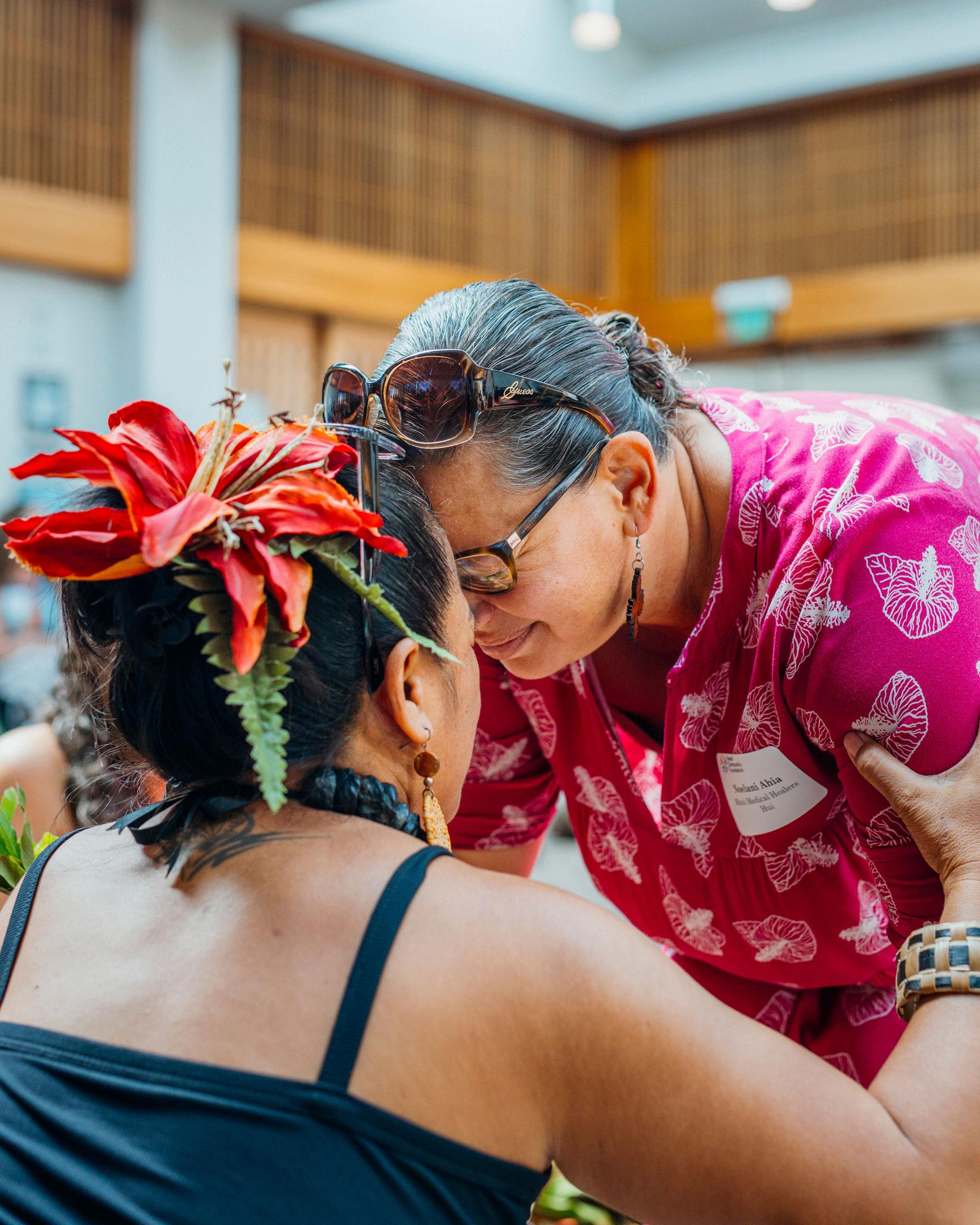
“We have our clinic running five days a week where our historically underserved populations get FREE care they normally wouldn't have access to. The mutual gratitude lifts us all everyday.” - Noelani Ahia, Maui
“Establishing a Wellness with Aloha approach that uses trauma responsive care and culturally appropriate tools and means to connect with fire survivors was a key component of our work that we continue to use. It guided us through every stage, beginning with addressing immediate needs, helping with case management support, and providing mental health and substance use treatment and interventions.” - Malia Bohlin,
“We launched a program that provides food (groceries and meals), transportation (Lyft rides), and care/resource navigation to kupuna and we are now serving over 300 kupuna. We hired people of Lahaina who in turn the community trusts them.” -
I
“In summer 2025, PONO Legal launched a one-of-a-kind legal training experience for law and college students interested in practicing disaster law and working in the disaster relief, recovery, and resilience space. In addition to providing key community support, our interns created a total of nine (9) new legal educational handouts focused on helping community members navigate key areas of law implicated by disasters.”
- Hiʻilei Casco, PONO Legal
“Expanding the language accessibility for survivors through the multilingual hotline, in-language PSAs, better translated materials and bilingual/bicultural navigators.”
- Liza Ryan Gill, Hawaiʻi Coalition for Immigrant Rights
“One of KOA's proudest wins has been witnessing Maui's youth reconnect with their home, their ocean, and themselves finding purpose through the water, confidence through cultural connection, and healing through environmental guardianship. Seeing keiki transform into leaders, mentors, and protectors of their ʻāina all while learning to care for their mental, physical and spiritual health reminds us why this work matters every single day.” - Zane Kekoa Schweitzer, Kahākūkahi Foundation (KOA)
“Goodwill Hawaiʻi was able to gift $425,000 of clothing and household goods to those impacted by the wildfires through $100 gift cards to shop our thrift stores. This allowed Mauians to obtain their desired necessities at a critical time in a dignified and respectful manner.” - Katy Chen, Goodwill Hawaiʻi
“Kupuna and her husband did not think they had enough insurance money to rebuild. Through United Policyholders' resources and one-on-one meetings with me over the course of a year, we identified additional policy benefits they could access and it turned out that they did have enough to cover their rebuild. I'm thrilled for them that they have just moved in to a rebuilt home.” - Sherry Peterson, United Policyholders
“At Mālama ʻĀina Foundation, we're proud of how both our Mālama Iho and Mālama Mau programs have strengthened the wellbeing of Hawaiʻi's educators and communities through both ʻāina-based healing and trauma-informed care. Through Mālama Iho, we've supported community organizations on Maui with spaces to process, rebuild, and reconnect following last year's devastating fires. And with Mālama Mau, we've recently launched our first series of reflective supervision sessions for school leaders at Lāhainā Intermediate School—creating time for rest and reflection as a means of healing.”
- Danny Goya, Mālama ʻĀina Foundation (MAF)
“We have been able to build and distribute over 40 Hale Papai with support from Maui Strong! This allows the families rebuilding to have a safe space for their possessions and tools while they rebuild.” - Jocelyn Romero Demirbag, UH Foundation at UHMC
“Getting the world's first deployable float facility constructed across the world and shipped to Maui so that we could provide free float therapy to all the fire survivors, first responders, and frontline workers.”
- Justin Feinstein, Float Research Collective (Maui Calm project)
“Maui AIDS Foundation employees brought $250,000 worth of goods to Lahaina and Upcountry donated through a wish list on Amazon in the first six weeks. We were able to continue that through a grant from HCF/Maui Strong into the next eight months.” - Linda Puppolo, Maui AIDS Foundation
“Organizing Filipino residents of Lahaina to fight for the future of Lahaina by launching the Lahaina Filipino Fire Survivors Association in May.” - Kami Yamamoto, Hawaiʻi Workers Center
“In the immediate aftermath of the fires, we mobilized our team and vessels to deliver food, water, and essential supplies to communities that were cut off by road closures. Using our boats allowed us to reach areas that were otherwise inaccessible. What began as an emergency response evolved into lasting partnerships and inspired our Mālama Pono program a community-based initiative that connects residents, visitors, and staff in caring for Maui's ʻāina.” - Dayna Galand, Pacific Whale Foundation
“Because of your generosity, we were able to provide 17 inperson grief and trauma care workshops, reaching 214 people across Maui County. Your support helped participants learn what to say to comfort people in need, recognize when others may need help, understand the far-reaching impact of the fires, gain skills to reduce fear and anxiety in others, and feel validated in their own experiences of compassion fatigue.”
- Harmony Hallas, Hospice Maui, Inc.
“We launched the first and largest mass feeding effort right after the fires at UHMC.” - Megan Nakashima, Common Ground Collective
“We increased our distribution of meals and supplies from 4,000 served in 2003 to 17,000 this year.”
- Bonny Wilson, A Cup of Cold Water
“We were able to purchase a freight farm and bring it to Lahaina to help grow fresh produce for the families and incorporate it into a mental health therapeutic activity for youth and families. It is a partnership with Maui YMCA Lahaina site and Piha Health and Wellness.” - Venus Rosete-Medeiros, Hale Kipa, Inc.
“We were able to serve over 800 households with financial assistance.” - Shellie Niles, Catholic Charities Hawaiʻi
“I’m proud of how our organization demonstrated the power and critical importance of culturally grounded arts in building trust and fostering trauma healing during times of crisis in our community.” - Sierra Dew, Wisdom Circles Oceania
“One win we are proud of is how our Maui Disaster Response team has continued to provide consistent, one-on-one housing counseling to fire survivors while helping them create sustainability plans and access new housing opportunities.”
- Kawehi Kaaa, Hawaiian Community Assets
“We opened an emergency preschool for displaced families and it is still in operation today.” - Dean Wong, Imua Family Services
“Following the wildfires, during our Maui Strong Grant period, we served 808 individuals in our services to support in healing from domestic violence and sex trafficking.” - Cayla Kutaka, Parents and Children Together
“We were able to reach over 100 first responders who rendered aid to fire victims in Lahaina and Kula. We provide responders with a device that monitors and indicates to them when their stress levels are high. We train them with techniques to immediately lower their stress levels in the moment.”
- Mark Kunimune, Hoʻohanu
“Being able to provide a safe and loving environment for our keiki and ʻohana to be together to mourn and heal after such devastation and heart break while keeping them grounded in kuana ʻike Hawaiʻi and ʻōlelo Hawaiʻi.” - Karyn Kanekoa, Pūnana Leo o Lāhaina
“Assisting survivors with over $1 million dollars of direct and/or resourced financial/recovery assistance.” - Eric Arquero, Kaibigan ng Lāhaina
“We are humbled and grateful to have had the opportunity to connect with and support families affected by the wildfires in their time of need. We are most proud of being there to help fill those 'gaps' in funding and services for families who may have gone without or had a delay in filling those needs.”
- Shana Orta, Child & Family Service
“Since receiving funding in November 2023, the program has hosted 17 weekend events, all free to participants, providing mentorship and ocean-based education in a safe and nurturing setting interwoven with Hawaiian cultural values.”
- Stephanie Hamano, YWCA Oahu
“We set up a rapid registration system for fire impacted residents of Maui to get immigration legal help from various attorney/providers in the first few months post disaster.”
- Bettina Mok, The Legal Clinic
“The on-going work of the Mauli Ola: Sacred Spaces for Disaster Recovery program that continues to serve the Lahaina community.” - Kuʻuleinani Maunupau, Native Hawaiian Philanthropy
“We provided space, meals, cultural experience to Lahainaluna high school students hula class to experience the Merrie Monarch Hula festival, cultural experiences, team building, mental health therapy, participate on stage at the MM festival and march in the parade with the YMCA float.” - Wendy Botelho, Island of Hawaiʻi YMCA
“Creating a straw man long-term recovery strategy to rebuild the early childhood system across health, safety and learning and learning from CA about what's needed.” - Kerrie Urosevich, Collaborative Support Services Inc. (dba Early Childhood Action Strategy)
“We did a lot even though we're really small, and many families told us that's why they liked coming to see us each week, because it feels like visiting friends/family. We also helped keiki transition to living on this side (central) by including them in our regular programs and helping them be involved in cultural activities and the community.” - Tamara Tanaka, Maui Hui Mālama
“Maui Hub has continued providing food distribution to fire survivors for 2 years now and plan to continue for another year+.”
“We were able to get funding for 7 much needed fire trucks capable of going to the fire to extinguish it.”
- Laura Mallery-Sayre, The Daniel R. Sayre Memorial Foundation
“All firefighters who lost their homes were given funds to help put the pieces back together.” - Chelsie Evans Enos, Live Like Tre’ Foundation
“We have provided childcare services to over 1,000 families on the west side since October of 2023.” - Steve Scraggs, Maui Family YMCA
- Brandi Sagon, Maui Hub
“The Smoke Remediation Work for 24 homes as well as on the Lahaina Aquatic Center so it could be re-opened.”
- Michael Shiffler, Red Lightning
“We were able to support families through Parent/Child interaction and engagement groups, which created a type of respite for families, by creating a safe space to have fun and interact with keiki. We also had community events that provided fun, activities and resources to families.” - Heidi Allencastre, Family Hui Hawaiʻi
“After the fires, we were able to expand our art kit program to reach fire survivors and the organizations that support them, creating 200 kits each month to help nurture healing and resilience in our community.” - Rachel Newbold, Hui Noʻeau
“Providing aina based, community lead restoration and cultural education engagement and opportunity for our ohana community who were so greatly affected by the fires.” - Brandi Corpuz, Rooted Kekahi Me Ka ʻĀina
“Having the opportunity to serve our community directly after the fires and then continue by accepting over 140 new students.”
- Stephanie Kirkham, Maui Preparatory Academy
“We have serviced nearly all pre and post disaster homeless on the island providing compassionate care, resource navigation and shelter supports.” - Robin Garrison, Project Vision Hawaiʻi
“We continued to serve our clients and caregivers right away, 2 days after the fire without any required paperwork. Our clients attended our other adult day care centers with the help of MEO Transportation and Paratransit. Our caregivers continue to receive the caregiver support services as well.” - Margie Dela Cruz, Maui Adult Day Care Centers
“We provide cultural continuity for our Maui ʻohana through Hawaiian language immersion for 60 students.”
- Lani Eckart-Dodd, Ke Kula o Piʻilani
“We have more than doubled the number of fire-impacted families served from 2024 to 2025 providing cancer supportive navigation services and direct financial assistance to 12 families (roughly 30 individuals) to help cover their essential needs and out-of-pocket treatment costs.” - Kandice Johns, UVSC
“Quickly mobilizing and conducting needs assessments for those impacted, and connecting them to services. We also worked with partners with bilingual CHWs that assisted those who didn't speak English.” - Kawehi Kea-Scott, Pear Suite
“Our mindful movement events brought families together in joy and raised awareness and funds that allowed us to give tuition assistance to over 50 Maui families who could not otherwise afford to enroll their keiki in after school movement programs.”
- Jennifer Lynn, Maui Access to Mindful Movement
“Building capacity for behavioral health providers on the island through the work we are doing in Lahaina.” - Lisa Ponichtera, Mālama Family Recovery Center
“We are focused on building the next generation of First Responders. This is primarily due to the Lahaina Wildfire.”
- Reid Shimabukuro, Hoʻomau Fire Academy
“One win that we are proud of is being able to expand our services to the community by including food distribution and family based gatherings at KAʻEHU.” - Keolamau Tengan, KA
“Starting a program like this where we could offer this aid to the survivors of the fire. This was the first program where we had specific, clear program goals and objectives that gave us an outline for the success of the project and for marketing the program to help the survivors.” - Paul Janes-Brown, Aloha Volleyball
“MFSS was able to provide concrete supports to families and their, whether they were directly or indirectly affected by the wildfires.” - Edel Baguio-Larena, Maui Family Support Services, Inc.
“We launched a monthly ohana movie in Lahaina that served 100 fire-impacted youth and parents each month.” - Becky Lind, Hana Arts
“We launched monthly ohana movie nights that included creative art projects, outreach, meals and giveaways.” - Trevor Arnholt, Hana Arts / Fuzz Box
“Through the generosity of donors, partners and collaborators, we were able to launch long-term recovery efforts to support and partner with community organizations.” - Raina Narita, American Red Cross, Hawaiʻi Chapter
“Servicing our local community members, Maui Police Department and Maui Fire Department who first handedly witnessed a lot during the fire and experienced trauma. We are proud to have provided a safe place to nurture each individually in order to start the healing process.” - Tema Watson, Piha Wellness and Healing
“We continue to have a presence in Lahaina serving the ʻohana at Ka Laʻi Ola.” - Malia Purdy, Hui No Ke Ola Pono
“We're proud of how long we been able to sustain programs and the partnerships we've been able to build on year-over-year. Most importantly that we have Maui based folks leading the way, which was always our goal if we ever went to Maui.”ʻĀnela Matsuura, Project Koa Yoga
“Hui was able to facilitate shipping containers and hub donations.” - Kula Gaughen-Haili, Hui O Waʻa Kaulia
“We were and have been able to continue working with our families without interruption even though we lost our dojo.”
- Rick Lewis, Lāhaina Ki Society / Honolulu Ki Society
“With our partners we started Keiki Social events that allow parents to take an evening off while kids engage in mindful movement and supervised play.” - Carrie Fidance, Maui Access to Mindful Movement
“Anytime someone says they feel so much better after attending one of our workshops.” - Nara Boone, Wisdom Circles Oceania
“Our Celebrity Surf for the Soul with our kids over there was a huge success with another coming in November/December.”
- Walker Rowsey, Kids Hurt Too
“We are working tirelessly to have the Olowalu Fire Station be completed by the end of the year.” - Rick Nava, West Maui Improvement Foundation
“We have made many connections to the Lahaina Community to provide our Family Strengthening, Pili Ohana. We were happy to find many partners very willing and wanting the services there.”
- Shari, Pili Kaiaulu Corp
"Teaching art and music to our Maui, Westside keiki, particularly after the Lāhaina fire." - Mark DeColibus, Lahaina Arts Guild
“Engaging families with young children with weekly program offerings holding a safe and nurturing space for them to engage with their keiki and obtain respite from the everyday stress of life.” - Cherilyn Shiinoki, Family Hui Hawaiʻi
“Being able to assist families, from keiki to kupuna, with requests in times of need to bring hope and healing to Maui.”
- Mia Sado-Magbual, Child & Family Service
“Continuing to house survivors.” - Sherry Kupau, Family Life Center
“We housed many families and elderly in Ohana Hope Village.”
- Sherry Kupau (2nd entry), Family Life Center
“In Maui County, the American Red Cross continues to meet the needs of our Community during emergencies.”
- Cheryl Jarrell, American Red Cross
“We are in the process of partnering with a local clinic to provide services. Our program will also be offering ʻāina based healing through our freight farm.” - Akoni Kanaele, Hale Kipa
“Building homes.” - Brandy Cajudoy, Hoʻōla iā Mauiakama Disaster Long Term Recovery Group
“We able to work with so many people.” - Maurissa DePonte, The Spirit Horse Ranch
“When fires happened I was part of the Molokai community that sent cooked meals to Maui via private boats, we sent gas, water, food to the residents of Lahaina.” - Tina He-Lindsey, Aloha Independent Living Hawaii
“Since the fires Maui Family YMCA has served over 600 individual families by providing child care services at no charge to families.” - Steve Scraggs (2nd entry), Maui Family YMCA
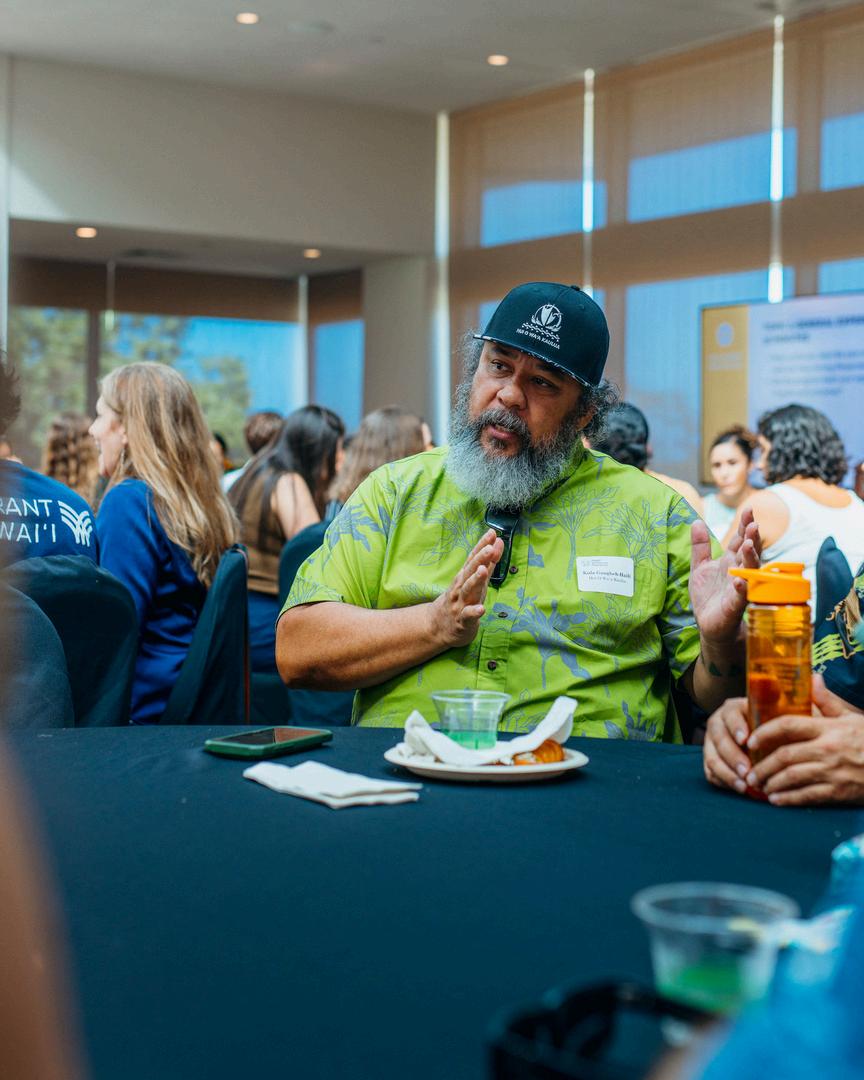
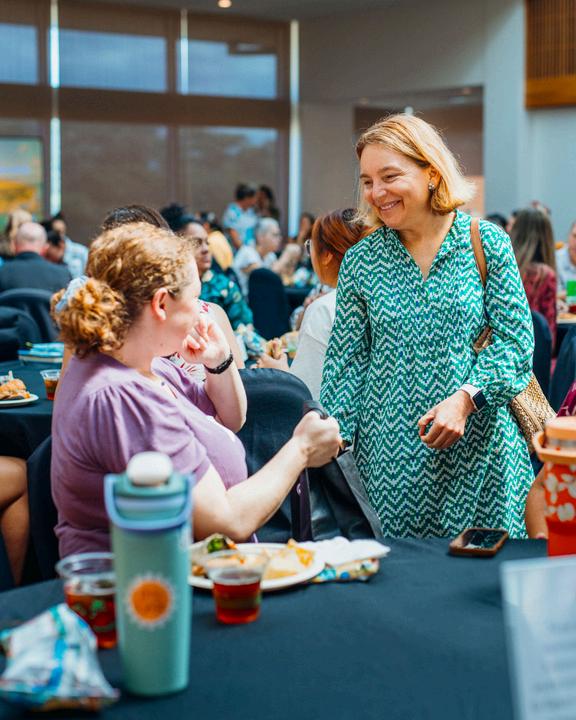
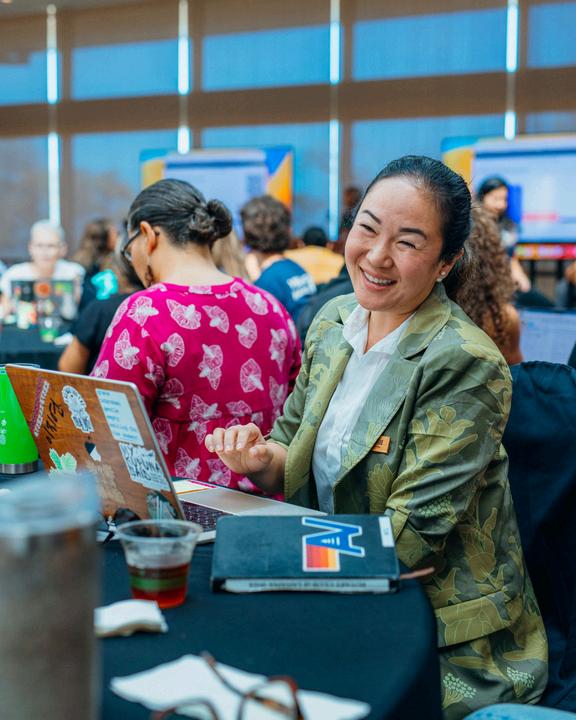
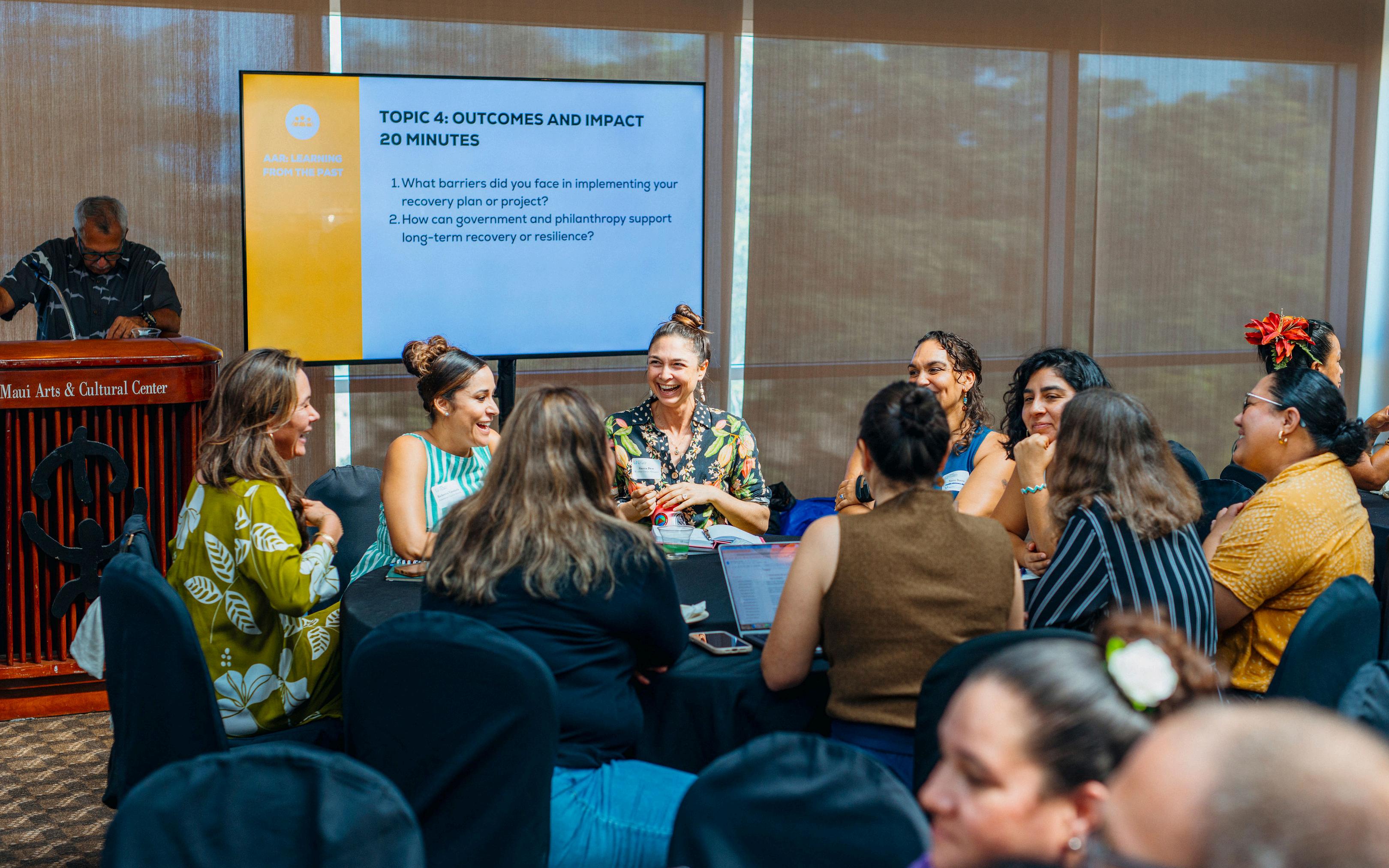
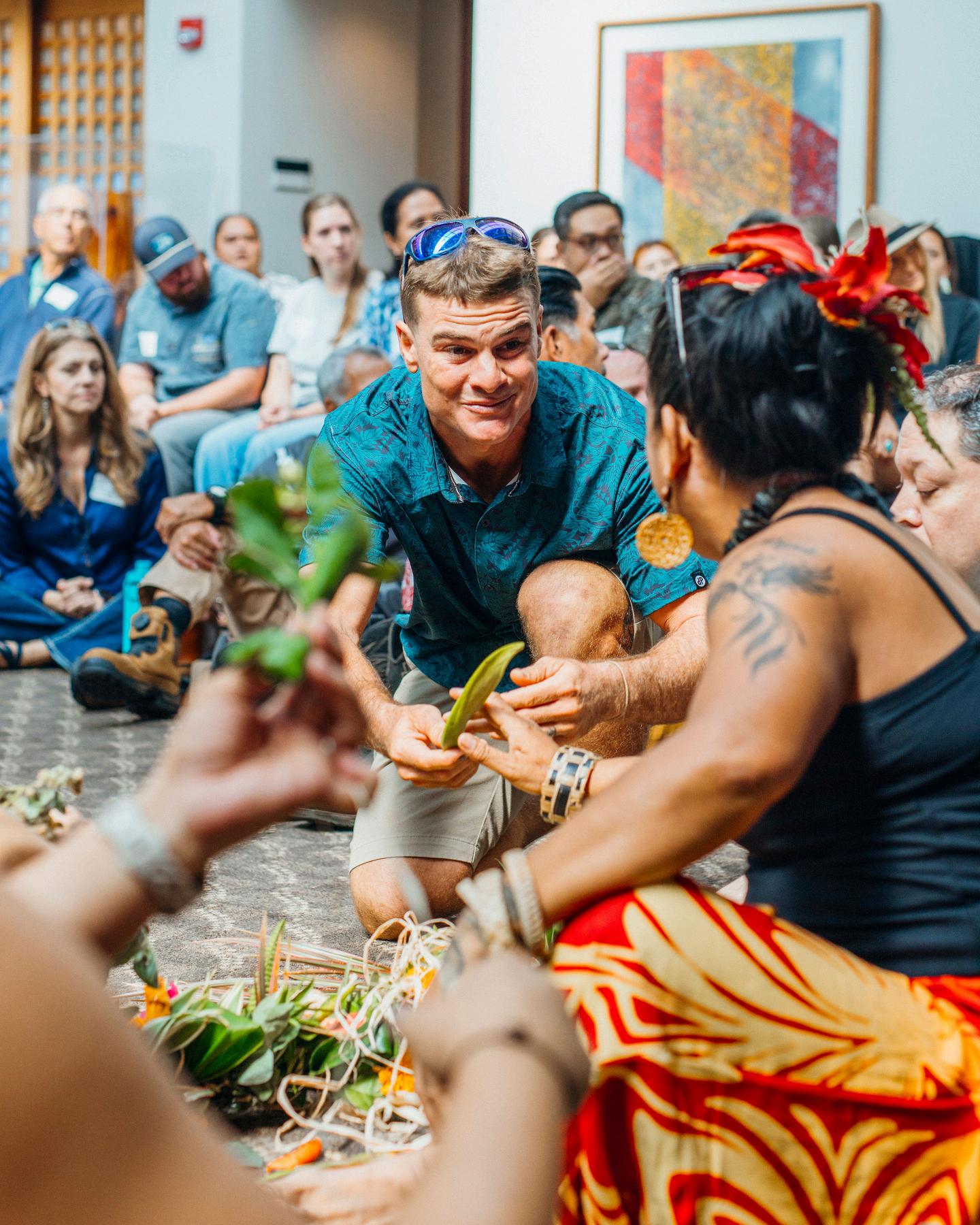
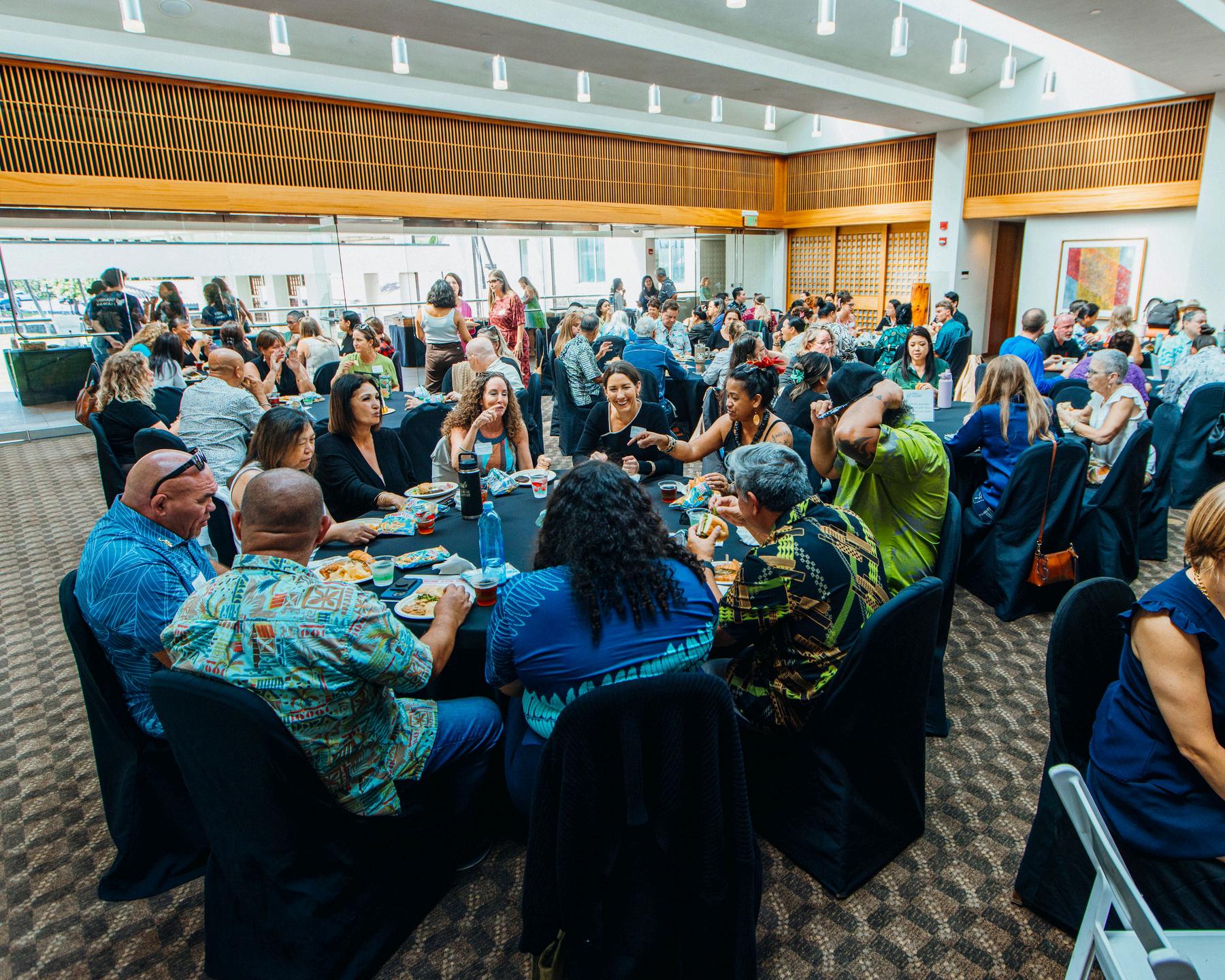
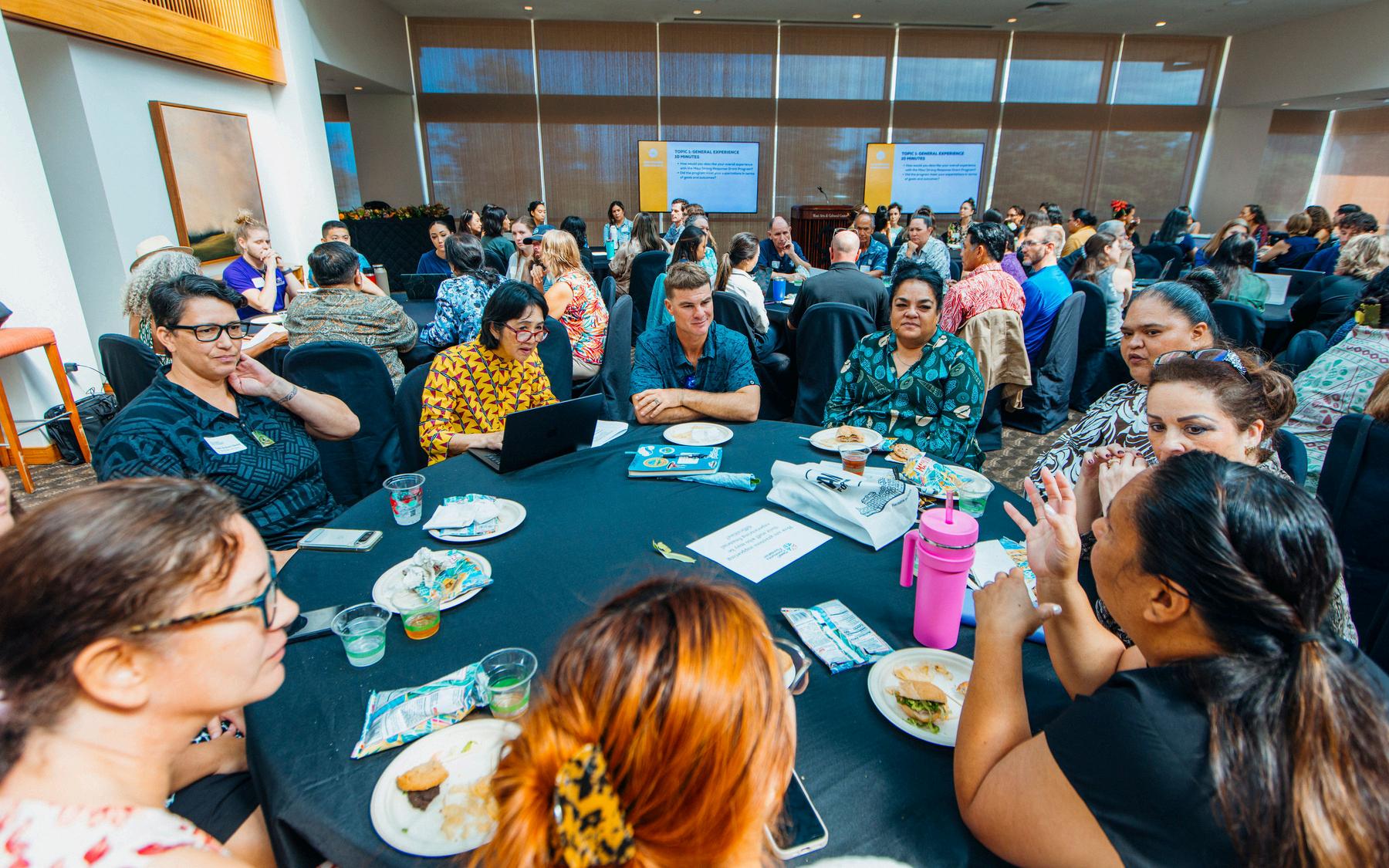
November 3, 2025 121 participants from 62 grantee organizations
ure nonprofit leadership support opportunities t were calm and supportive
es helped me feel less alone milar grantee cohort gatherings in the future s a valuable use of my time anizations I hadn't connected with before
aring or listening to others connection with others doing this work work of care and support
ed my relationships with MSF partners wn experiences, ideas, or resources the Maui Strong Fund team
omeone to explore collaboration s, tools, or approaches release
Participants primarily experienced the gathering as a relational and connective space rather than a trainingoriented forum. Items related to learning new tools (3.68) and receiving immediately useful resources (3.62) scored lower, while connection and belonging scores were consistently above (4.4).
50th State F.O.O.L.S.
A Cup of Cold Water
Accessurf Hawaiʻi, Inc
ʻAha Pūnana Leo
Albion SC Hawaiʻi
Alexander Academy Performing Company
All Hands and All Hearts Smart Response, Inc.
All Pono Foundation
Aloft
Aloha Amplified
Aloha Diaper Bank
Aloha House
Aloha Independent Living Hawaiʻi
Aloha Volleyball Association
Alzheimer's Association
American Cancer Society
American Lung Association
American Red Cross
Arc of Maui
Archive for Health, Arts, and Spirit
Association for Infant Mental Health
Baby2Baby
Ball Out ʻOhana Maui Youth Foundation
Blue Water Rafting
Book Trust
Boy Scouts
Boys & Girls Clubs of Maui
Cars for Maui/Give for Goodness Sake LLC with fiscal sponsor:
Lokahi Pacific
Catholic Charities Hawaiʻi
Child and Family Service
Children of the Rainbow Preschool
Citizen Church Maui
ClimbHI
CNHA Host Housing Support Program
Common Ground Collective
Community Clinic of Maui - Mālama I Ke Ola Health Center
Community Workday Program, dba Mālama Maui Nui
Consortium for Hawaiʻi Ecological Engineering Education dba
Malama Aina Foundation
Council for Native Hawaiian Advancement
Daniel R Sayre Memorial Foundation Inc
Doctor's On Call with fiscal sponsor: Collaborative Support Services
Downtown Athletic Club of Hawaiʻi
Early Childhood Action Strategy with fiscal sponsor: Collaborative Support Services
East Maui Taro Festival
EPIC ʻOhana Inc.
Family Hui Hawaiʻi
Family Life Center
Family Promise of Hawaiʻi
Family Violence and Sexual Assault Institute
Feed My Sheep
Float Research Collective
Footprint Project
For Children to Flourish
Fresh Help Maui with fiscal sponsor: Changing Tides Foundation
Friends of Children's Justice Center on Maui
Friends of Hawaiʻi Technology Academy
Goodwill Hawai'i
Grace Bible Church Maui
Grassroot Institute of Hawai'i
Grow Some Good
Haku Baldwin Center
Hale Kipa, Inc.
Hale Mākua Health Services
Hana Arts
Hawai'i Animal Kuleana Alliance
Hawaiian Community Assets
Hawaiian Council
Hawaiian Hope Org
Hawaiʻi Agritourism Association
Hawaiʻi Animal Rescue Foundation
Hawaiʻi Behavioral Health Connection
Hawaiʻi Building Industry Foundation
Hawaiʻi Coalition for Immigrant Rights with fiscal sponsor: HCAN
Hawaiʻi Community Lending
Hawaiʻi Executive Collaborative
Hawaiʻi Farmer's Union Foundation
Hawaiʻi Journalism Initiative
Hawaiʻi Land Trust
Hawaiʻi Peoples Fund
Hawaiʻi Psychological Association with fiscal sponsor: Hawaiʻi
Behavioral Health Connection
Hawaiʻi Self Advocacy Advisory Council
Hawaiʻi State Rural Health Association
Hawaiʻi VA Foundation
Hawaiʻi Workers Center
Healthy Mothers Healthy Babies Coalition of Hawaiʻi
Ho'omau Fire Academy
Hollander ʻOhana, LLC with fiscal sponsor: Healthy Mothers
Healthy Babies Coalition
HomeAid Hawaiʻi
Honolulu Civil Beat
Honolulu Ki Society
Hope Chapel Maui
Horizons Academy of Maui, Inc.
Hospice Hawaiʻi dba Navian Hawaiʻi
Hospice Maui
Hoʻaka Mana
Hoʻiwai Fund
Hoʻohanu
Hoʻoikaika Partnership with fiscal sponsor: Maui Family Support Services
Hoʻopili Farmers Association
Hoʻōla iā Mauinuiakama Disaster Long-Term Recovery Group
Hua Momona Foundation
Hui No Ke Ola Pono – part of Papa Ola Lokahi
Hui No'eau
Hui O Waʻa Kaulua
Hungry Heroes Hawaiʻi with fiscal sponsor: Enviro Community
Living Center, Inc.
Imua Family Services
In His House of Restoration Church
Island Mind Therapy LLC with fiscal sponsor: Players
Philanthropy Fund
Island of Hawaiʻi YMCA
J. Walter Cameron Center
Japanese Cultural Center of Hawaiʻi
Ka Hale A Ke Ola
Ka ʻIke Mau Loa O Ke Kai Hohonu
Kaho'olawe Island Reserve Commission with fiscal sponsor:
Pacific American Foundation
Kahākūkahi Foundation
Kaialahui Foundation
Kaiaulu Kanaka with fiscal sponsor: Enviro Community Living Center
Kaibigan Ng Lahaina
Kaiāulu Initiatives
Kaʻehu
Ke Kula o Pi'ilani
Kelea Foundation
Kids Hurt Too Hawaiʻi
Kings Cathedral & Chapels
Kitty Charm Farm
Ko'i'ula
Kristi Yamaguchi's Always Dream Foundation
Kula Community Watershed Alliance with fiscal sponsor: Na Koa
Manu Conservation Inc.
KUPU
Lahaina Arts Guild
Lahaina Community Land Trust
Lahaina Town Action Committee with fiscal sponsor: Hui o Wa'a
Kaulua
Lahui Foundation
Learning Endeavors
Leilani Farm Sanctuary
Lines for Life
Live Like Tre' Foundation with fiscal sponsor: Aunty Jan's House of Blessings
Living Pono Project
Makana ʻĀina Foundation
Mana Maoli
Marshallese Association of Kaua'i
Maui Access to Mindful Movement
Maui Adult Day Care Centers
Maui AIDS Foundation
Maui Cancer Resources
Maui Community Theatre
Maui Economic Development Board
Maui Economic Opportunity
Maui Economic Recovery Commission, with fiscal sponsor: Maui
Economic Opportunity
Maui Family Support Services
Maui Family YMCA
Maui Food Bank
Maui Health Foundation
Maui Hub
Maui Hui Mālama
Maui Humane Society
Maui Interim Housing Plan
Maui Junior Golf Association
Maui Medic Healers Hui
Maui Medic Healers Hui with fiscal sponsor: Maui Grassroots
Collective
Maui Music Mission
Maui Nui Resiliency Hui
Maui Preparatory Academy
Maui Public Art Corps with fiscal sponsor: Lokahi Pacific
Maui Reef Adventures
Maui Rescue Mission
Maui United Way
Maui Youth & Family Services
Maui Youth Rodeo
Mauliola Pharmacy with fiscal sponsor: Imua Family Services
Mediation Services of Maui, dba Maui Mediation Services
Mental Health America of Hawaiʻi
MODO
Mountain Fountain Creations
Mālama Family Recovery Center
Mālama Kula
Mālama ʻĀina Foundation
NAMI Hawai'i
Native Hawaiian Philanthropy
Nohona Health, Inc.
Nurture Cultivate
Nā Hoʻaloha-Maui Interfaith Volunteer Caregivers
Nā Keiki O Emalia
Nā Kia'i O Maui
Nā ʻAikane o Maui
O'ahu Alkaline Water with fiscal sponsor: Grace Bible Church
Maui
Olanur
Our Kūpuna with fiscal sponsor: Hawai'i VA Foundation
Pacific Birth Collective
Pacific Cancer Foundation
Pacific Gateway Center
Pacific Survivor Center
Pacific Whale Foundation
Parents and Children Together
Partners in Development Foundation
Pear Suite, Inc. with fiscal sponsor: Project Vision
Piha Wellness and Healing
PIKO
Pili Kaiaulu, Corp
PONOLegal
ProFormance Hawaiʻi Association
Project Koa Yoga, LLC with fiscal sponsor: Healthy Mothers
Healthy Babies Coalition of Hawaiʻi
Project Strong One
Project Vision Hawaiʻi
Pukalani Community Church of the Nazarene
Real Ongoing Opportunities To Soar, Inc. dba Roots School
Rebuild Maui.Org
Red Lightning
Regenerative Education Center
Rooted Kekahi Me Ka ʻĀina
Roots Reborn
State Democracy Project
Surfrider Foundation
Tagnawa with fiscal sponsor: Hawai'i Worker's Center
Teran James Young Foundation Inc.
The Economic Research Org at the University of Hawaiʻi with fiscal sponsor: UH Foundation
The Legal Clinic
The ParaGenius Foundation
The Salvation Army (Hawaiian Islands and Pacific)
The Sewing Hui of Maui
The Spirit Horse Ranch with fiscal sponsor: Players Philan Fund
The Underdog Foundation with fiscal sponsor: Maui United
UH Maui College
Unda Kava 808
United Policyholders
University of Hawai'i, Maui College with fiscal sponsor: Un of Hawai'i Foundation
University of Hawaiʻi-Mānoa, Richardson School of Law
UVSC
Valley Global
Vibrant Hawai'i
Village of Hope Maui
Waiʻanae Coast Comprehensive Health Center
West Hawai'i Community Health Center dba Hawai'i Island
Community Health Center
West Maui Improvement Foundation, Inc.
Wisdom Circles Oceania
Women Helping Women
Worldwide Indigenous Science Network
Youth with a Calling
YWCA of Oʻahu