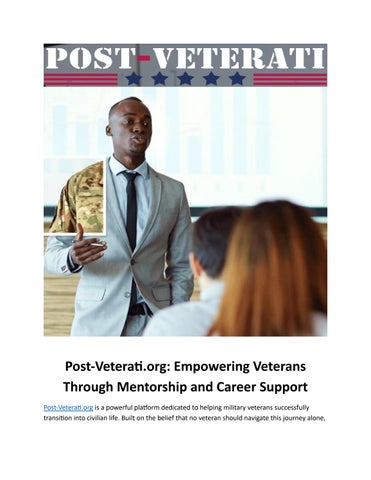
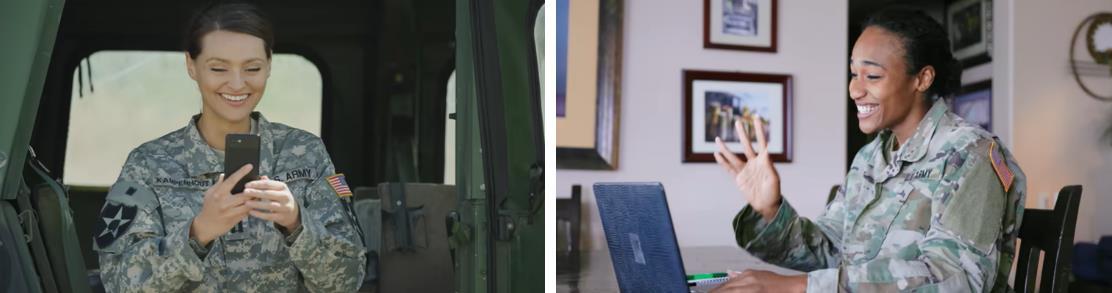
the organization connects service members with mentors who provide guidance, career coaching, and networking opportunities.
One of the most valuable aspects of Post-Veterati.org is its on-demand virtual mentorship model, allowing veterans to connect with professionals across industries regardless of location. This flexibility ensures that transitioning service members, military spouses, and even those in rural areas can access support when they need it most.
Beyond mentorship, the platform emphasizes career readiness by offering insights into resume writing, interview preparation, and professional development. By bridging the gap between military experience and civilian career expectations, Post-Veterati.org helps veterans unlock opportunities in diverse industries.
In every connection, Post-Veterati.org fosters confidence, purpose, and community ensuring veterans thrive beyond their service.
Mentorship Models That Work Best for Military Veterans
Transitioning from military service to civilian life is often challenging, especially when it comes to navigating new career paths. Mentorship plays a crucial role in helping veterans bridge this gap, offering both guidance and confidence as they enter unfamiliar industries.
One of the most effective models is peer-to-peer mentorship, where veterans support each other through shared experiences. This approach fosters trust and understanding while reducing the stigma of asking for help. Another strong model is corporate-sponsored mentorship, in which companies pair veteran employees with experienced mentors. These programs not only teach workplace culture but also improve long-term retention and career advancement.
Community and nonprofit mentorship programs further expand opportunities by connecting veterans with professionals across diverse fields. Organizations like Veterati and Hire Heroes USA offer structured guidance, resume coaching, and networking opportunities. In addition, virtual mentorship platforms have grown in popularity, giving veterans access to mentors regardless of location.
Ultimately, the most impactful approach is a hybrid model that combines peer, corporate, and community mentorship. This blend ensures veterans receive emotional support while also gaining the career insights necessary for success. By investing in strong mentorship models, society helps veterans thrive beyond their service.
Government vs. Nonprofit Veteran Support Programs: Which Has Greater
Impact?
Veterans transitioning to civilian life often rely on a mix of government and nonprofit support programs. Both play vital roles, but their impact can differ in scope, flexibility, and long-term outcomes.
Government programs such as the Department of Veterans Affairs (VA) offer large-scale benefits, including healthcare, housing assistance, and educational opportunities through initiatives like the GI Bill. Their nationwide reach ensures that millions of veterans can access essential services. However, government systems can sometimes be slow, bureaucratic, and limited in addressing unique, individual needs.
Nonprofit organizations, on the other hand, often provide more specialized and communityfocused support. Groups like Hire Heroes USA, Wounded Warrior Project, and Veterati offer mentorship, job training, mental health resources, and tailored programs that complement federal services. Their flexibility allows them to adapt quickly, filling gaps where government programs fall short.
The greatest impact often comes from collaboration between the two. Government programs provide a strong foundation of benefits, while nonprofits deliver personalized guidance and innovative solutions. Together, they create a support network that empowers veterans not just to survive, but to thrive in civilian life.
The Economic Impact of Hiring Veterans on Local Communities
Hiring veterans is more than a patriotic gesture it creates measurable economic benefits for local communities. Veterans bring valuable skills such as leadership, discipline, and adaptability, which help businesses grow and remain competitive. When employers prioritize veteran hiring, they not only strengthen their workforce but also stimulate the local economy.
One major impact is increased consumer spending. Stable employment allows veterans and their families to invest in housing, education, and local services, directly boosting neighborhood businesses. This ripple effect supports job creation beyond the initial hire. Additionally, many veterans pursue entrepreneurship, starting small businesses that generate local employment and foster innovation.
Communities also benefit from reduced reliance on social services. Gainful employment decreases the need for government aid, lowering public costs while enhancing veterans’ quality of life. Moreover, companies that hire veterans often report higher productivity and retention rates, which strengthens local industries and attracts outside investment.
The combined effect of veteran employment extends beyond economics it fosters stronger, more resilient communities. By hiring veterans, businesses not only honor service but also build sustainable growth and opportunity at the community level.
The Importance of Soft Skills in the Veteran Transition to Civilian Careers
When military veterans transition to civilian careers, much attention is given to technical training and certifications. While these are important, soft skills often play an even greater role in long-term success.
Veterans naturally develop many transferable soft skills during their service. Leadership, teamwork, problem-solving, and adaptability are ingrained through years of training and deployment. In civilian workplaces, these abilities help veterans manage teams, collaborate across departments, and remain resilient under pressure.
However, translating these strengths into civilian terms can be challenging. For instance, a veteran may have led a squad in high-stress situations, but may not recognize that this experience demonstrates project management, decision-making, and conflict resolution skills that employers value. Mentorship, career coaching, and resume workshops can help veterans articulate these competencies more effectively.
Employers who recognize the importance of soft skills in veteran hires often see higher levels of employee engagement and retention. Veterans bring a mission-focused mindset and a commitment to excellence that can uplift entire teams.
Ultimately, while technical training opens doors, it is soft skills that help veterans truly integrate, grow, and thrive in civilian careers.
https://www.post-veterati.org/