Before voters choose any candidates in the Primary Election on Tuesday, Aug. 11, they will first have to choose which ballot to use. The election determines who gets nominated from three political parties to move on to the General Election in November.
Voters can choose on the spot whether to use a Democrat, Republican or Progressive party ballot. The polls will be open from 7 a.m. to 7 p.m. in Williston at the National Guard Armory next to Town Hall. Early voting is available by request through the Town Clerk’s office.
All the action for this primary is on the Democrat ballot. There, Williston voters have a choice between five candidates for three seats in the Chittenden
Q(Incumbents) What have you learned during your years in the Senate that would inform your next term?
(Challengers) What have you learned in your professional or personal life that would inform your term in the Senate?
CHITTENDEN
My time in the Senate serving on Transportation, Education, Ethics, Economic Development and Finance committees has reinforced that real legislative progress requires breaking down silos between local, regional and state
Southeast Senate District. The district represents Williston and 10 surrounding towns. Three incumbents — Thomas Chittenden, Ginny Lyons and Kesha Ram Hinsdale — and two challengers Elizabeth Hunt and Joanna Grossman — are seeking the Democrat nominations.
The Observer interviewed all five in the Q&A below.
Voters choosing a Republican or Progressive ballot on Aug. 11 will see a dearth of candidates and no contested nominations for all but one (Mark Coester vs. Gerald Malloy for the Republican nomination for U.S. Congress) of the 17 elected offices in the statewide primary.
Now, onto the Democrat Senate candidate Q&A.
systems.
Complex issues — like property tax growth, housing availability and climate resilience — do not stop at municipal borders. I have learned that top-down, onesize-fits-all mandates often fail on the ground. Instead, the best state legislation provides local communities with the flexibility, technical support and structural incentives needed to collaborate regionally while maintaining local accountability.
My background as a South Burlington City Councilor, Green Mountain Transit Board Chair and UVM Grossman School of Business faculty member has taught me to scrutinize state policies and multi-million-dollar budgets through an empirical,
data-driven lens. I’ve seen firsthand how state policy ripple effects impact municipal tax rates and everyday operating costs.
If the voters allow me to continue to serve in this role, I will continue to apply these practical lessons to demand fiscal discipline, push for predictable state budgeting and ensure legislation focuses on measurable outcomes. My goal remains centered on affordability: delivering tangible, sustainable cost relief for working families, young professionals and fixed-income seniors across Chittenden Southeast.
GROSSMAN
Who we are as leaders is defined by how we show up when people are hurting.
I was a young spatial technologies developer in New York City when 9/11 happened. As one of a few specialists trained in critical mapping software, I was called by the city to assist on the recovery. Working as a World Trade Center responder was a critical moment for me that reignited my call to public service and community rebuilding.
When I moved to Vermont, my first job was with the Agency of Natural Resources — including hiking Mount Mansfield monthly to clear rain gauges, a formative experience that grounded my love for Vermont’s natural environment.
My deepest perspective comes from home: Losing my mom at age 7 taught me what it means
family-style catering
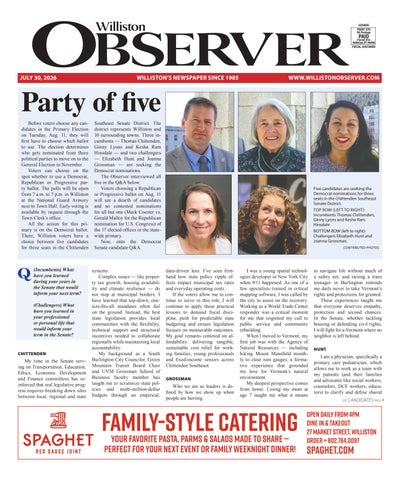
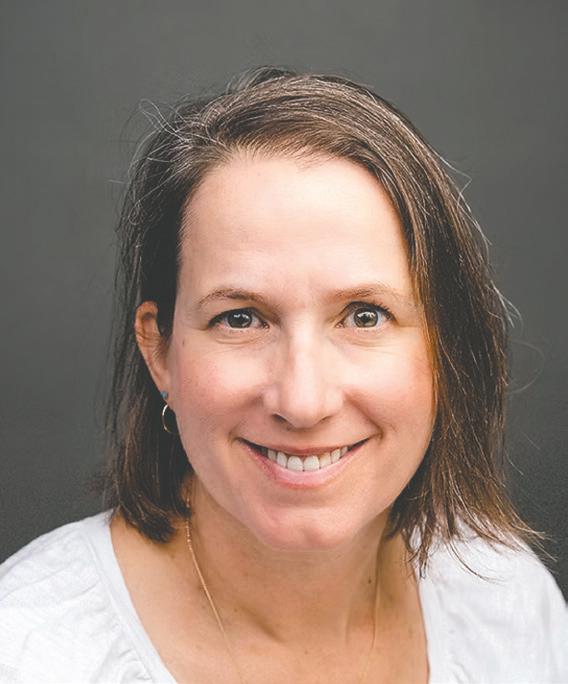
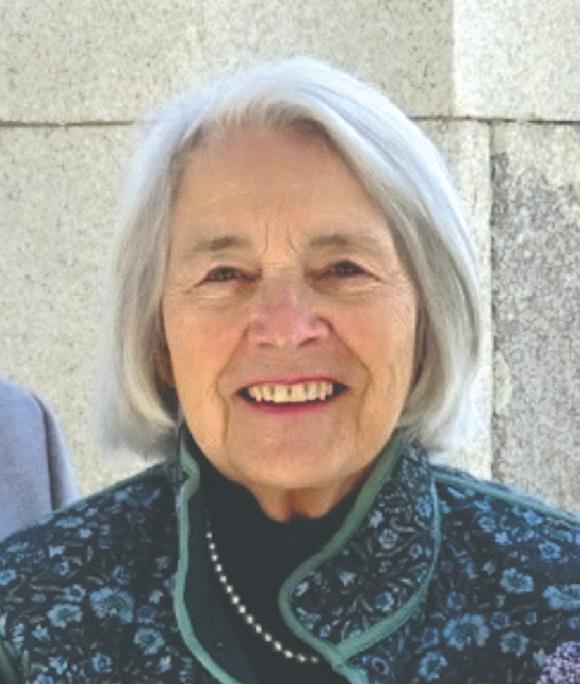
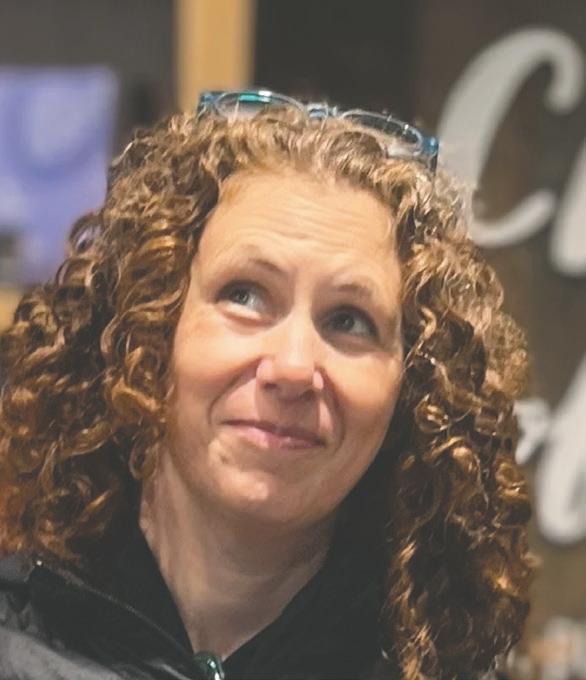
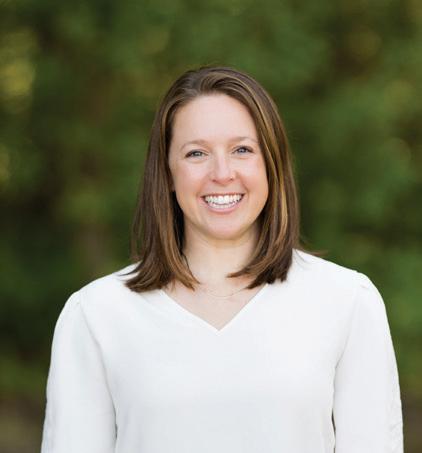
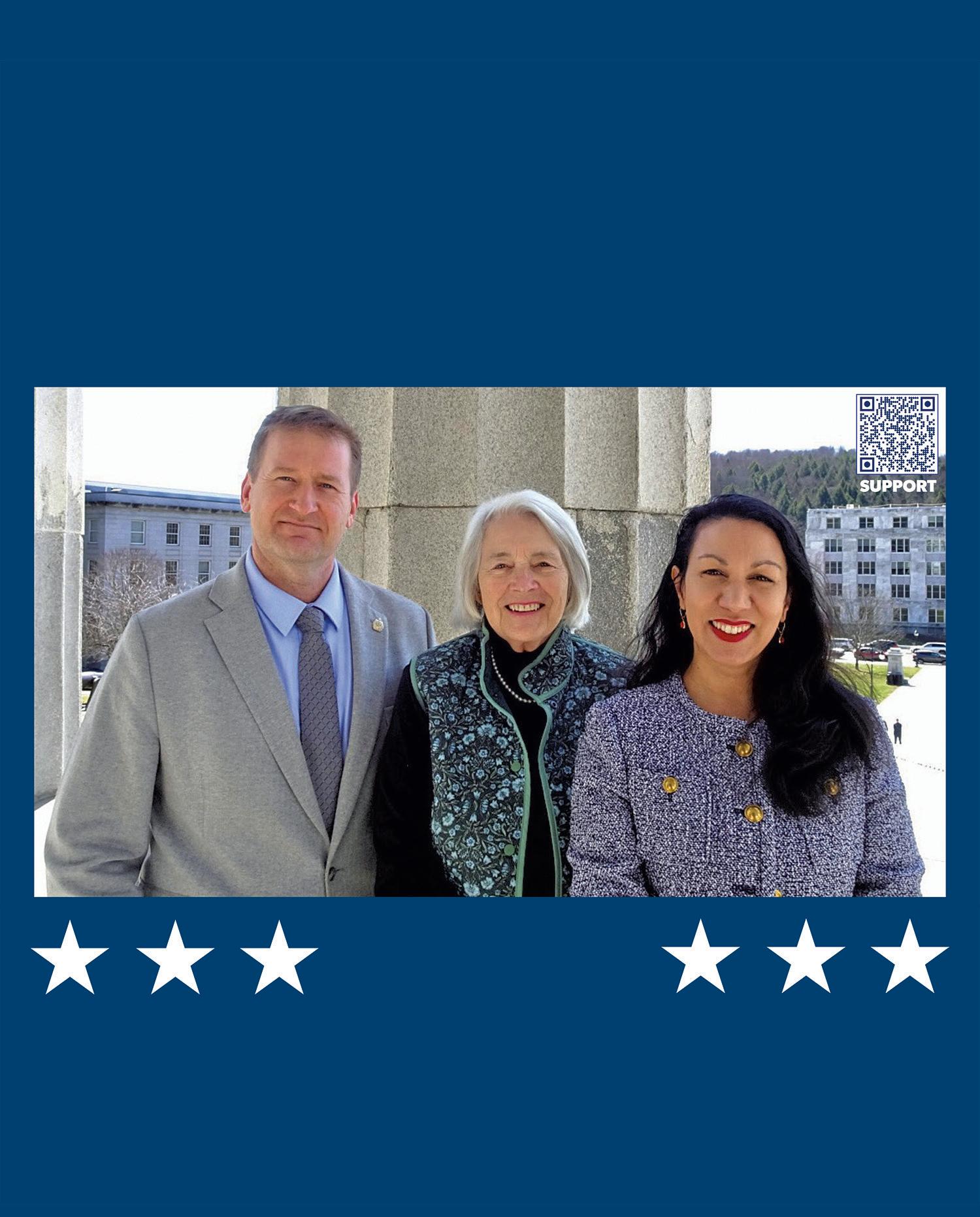
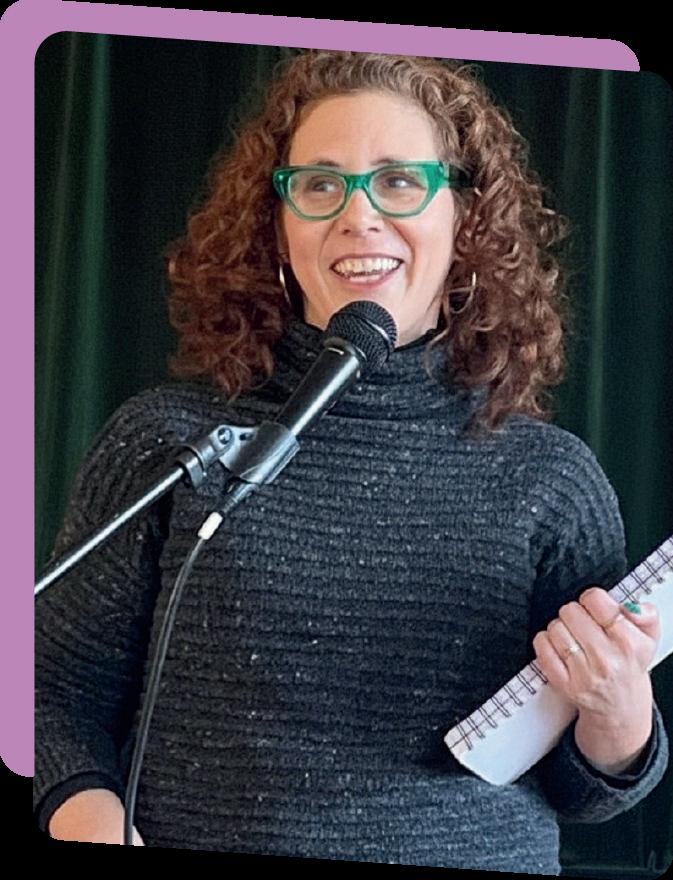
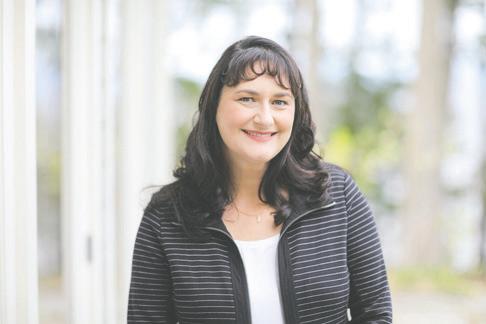
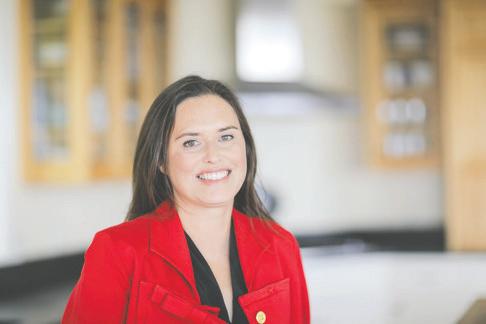
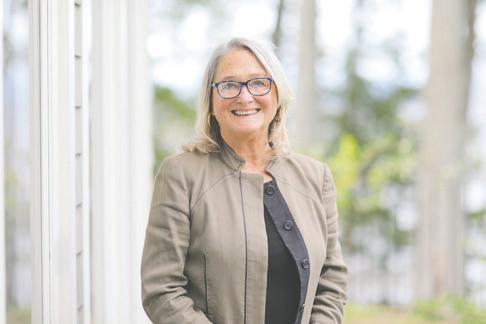
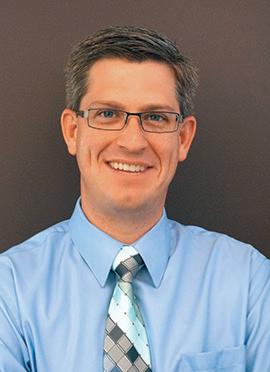
Five candidates are seeking the Democrat nominations for three seats in the Chittenden Southeast Senate District.
TOP ROW (LEFT TO RIGHT): Incumbents Thomas Chittenden, Ginny Lyons and Kesha Ram Hinsdale
BOTTOM ROW (left to right): Challengers Elizabeth Hunt and Joanna Grossman.
CONTRIBUTED PHOTOS
to navigate life without much of a safety net, and raising a trans teenager in Burlington reminds me daily never to take Vermont’s rights and protections for granted.
These experiences taught me that everyone deserves empathy, protection and second chances. In the Senate, whether tackling housing or defending civil rights, I will fight for a Vermont where no neighbor is left behind.
HUNT
I am a physician, specifically a primary care pediatrician, which allows me to work as a team with my patients (and their families and advocates like social workers, counselors, DCF workers, educators) to clarify and define shared
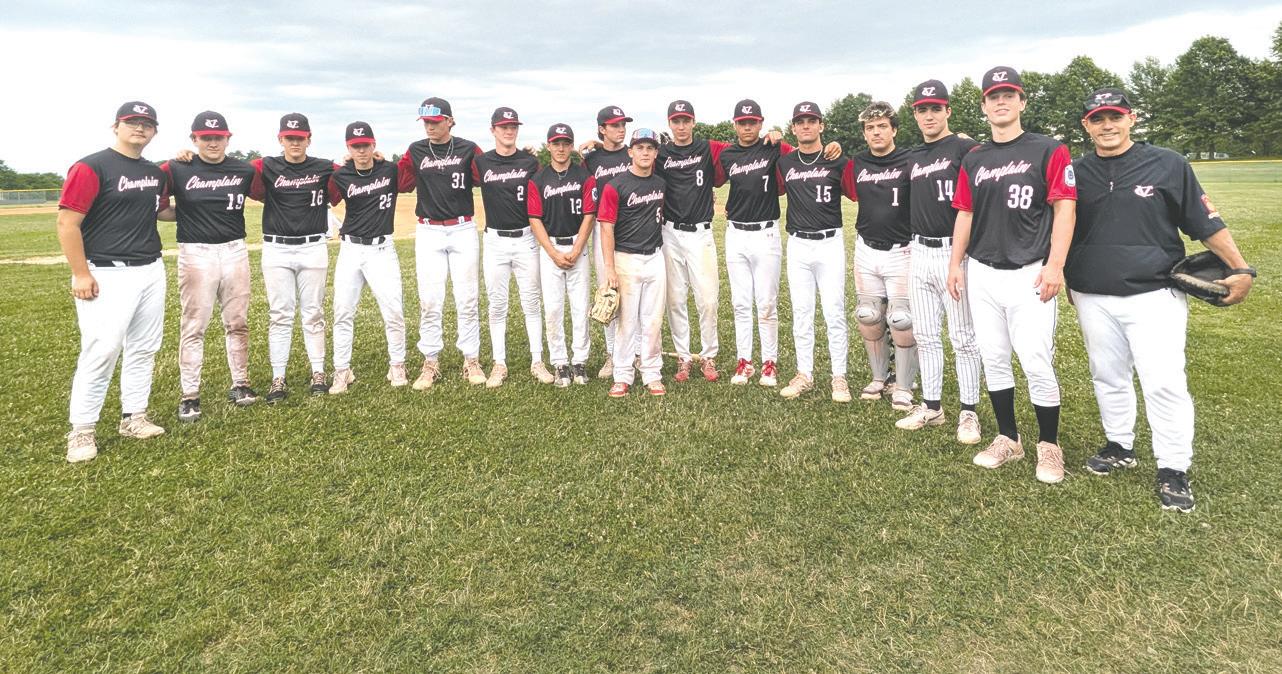
The Champlain Valley American Legion team, with players from Williston, Shelburne, Hinesburg and Charlotte, capped their summer season with a record of 7-11. Williston players included Owen Audette, above, and Jake Barrett, right.
Champlain Valley American Legion team has strongest showing since 2024 revival
The Champlain Valley American Legion baseball team finished its summer season in fifth place in Vermont’s Northern Division with a record of 7-11. It was the best showing for the team since it was revived in 2024 after a multi-year hiatus.
The team consists of high school aged players from Williston, Shelburne, Hinesburg and Charlotte.
Williston’s Tommy Barnes batted .353 over the season; Zephyr Haines batted .349; and Owen Audette batted .333. Pitcher Jake Barrett of Williston had an earned-run average of 3.5.
One of Champlain Valley’s players, Riley McDade, CVU Class of 2026, of Shelburne, received “Player of the Year” honors for the Vermont Northern Division.
“What I’m most proud of is the progress we’ve made as a program. This is only our third year, and we’ve continued to improve every season,” said coach Casey Martinez.
Visit www.cvlegion.org for more information about the team.
Around Town
Isham announces book release event
Williston farmer Mike Isham is publishing a book about his family’s farming history on Oak Hill Road.
Titled “Smoke from the Sugar House,” the book is a collection stories about the people, traditions and everyday moments that have shaped five generations of life on the farm.
Isham plans to read from the book during a kickoff event Aug. 23 at 2 p.m. at the Isham Family Farm, 3515 Oak Hill Road. Admission is free, refreshments will be served and copies of the book will be available for sale.
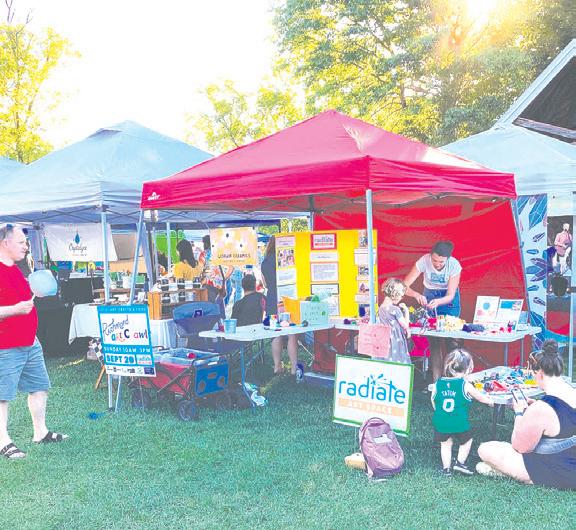
Kids Day coming to Richmond Farmers Market
Kids will find extra fun at a special Richmond Farmers Market event on Friday, Aug. 14.
The market will host its third-annual Kids Day with musicians, magic, crafts and games. Kids Day will also have the typical market offerings, from local produce, dinner options and baked goods to meat, dairy and artisanal crafts.
The market is held every Friday from 3-6:30 p.m. at Richmond’s Volunteers Green. Visit richmond-farmers-market. square.site for more information.
Wood4Good accepting new
requests for home
heating assistance
Wood4Good, a Vermont nonprofit that provides free firewood to families struggling to heat their homes, is working to reach more people who could benefit from firewood assistance this winter.
Since beginning in Jericho in 2019, Wood4Good has grown from a small community effort into an organization serving families across multiple Vermont communities. With the help of hundreds of volunteers, local businesses, tree services and community partners, Wood4Good collects donated and upcycled wood, processes and seasons it, and delivers it directly to households at no cost.
Wood4Good has already served more than 900 Vermont families since its founding, including seniors living on fixed incomes, veterans, families with children, and households facing unexpected financial hardship. As the organization increases the amount of firewood it can process and distribute, it has the capacity to help more households. People seeking help heating their home with firewood this winter can request assistance at Wood4Good.org.
OBSERVER COURTESY PHOTOS
The third-annual Kids Day will be held during the Richmond Farmers Market on Friday, Aug. 14.
CONTRIBUTED PHOTOS
Protesters again block access to ICE hub, prompting arrests
BY SHAUN ROBINSON VTDigger
State and local police arrested 13 protesters at a U.S. Immigration and Customs Enforcement surveillance office in Williston last Friday morning. The group intended to block ICE employees from accessing the facility at the start of the workday by sitting and standing in front of its entrances, according to protest organizers.
The protesters were taken to the Vermont State Police barracks in Williston. At least a dozen of them were charged with unlawful trespass because they entered the office building, which is privately owned, and refused to leave, according to a state police press release. Police did not specify a charge against the other protester because they are a juvenile.
All 13 were released after being processed at the barracks, state police said.
Julie Macuga, one of the organizers, said most of the protesters who were arrested came out to the ICE office intending or expecting to get detained. Both state and Williston police officers carried some protesters out of an east-facing entrance to the building around 10 a.m., while others walked alongside the officers.
About 30 people in total first gathered inside or outside the facility, which has been the site of similar recent protests and arrests,
around 7:30 a.m., according to Macuga. She and other organizers described the protest as a response to the fatal shootings by ICE agents earlier this month of people in Maine and Texas, among other concerns.
The Williston facility, which is in the White Cap Business Park off Industrial Avenue, houses ICE’s National Criminal Analysis and Targeting Center. Data collected at the office from publicly available sources, such as social media feeds, help ICE officers throughout the eastern U.S. know whom to arrest, according to federal records.
The facility is one of several U.S.
PHOTO BY GLENN RUSSELL/VTDIGGER
Department of Homeland Security offices in and around Williston. Just down the road, ICE operates a national tip line out of another office building.
Several demonstrators Friday said that in addition to hindering the targeting center’s operations, they wanted to draw more public attention to that work.
“I just find it reprehensible that this is in our town,” said Moki Fox of Williston, who was holding a hand-drawn poster of a large eyeball. “It’s just wrong. If I don’t stand up, who will? Everybody should be standing up.”
According to state police, the business
park’s owner asked officers to remove the protesters from the property after they refused to leave when asked. State and local police spoke with protest leaders, the release said. Several protesters left the inside of the building, police said, while 13 others “indicated they’d need to be arrested.”
While protesters were being brought out in handcuffs, Fox and about a dozen others stood in the building’s parking lot holding banners and signs and chanting “shame” at police. They also yelled, “You are not alone!” as protesters were carried or guided out. Some were driven off in a black van that did not appear to have any markings on the outside.
Those who were arrested and identified in the press release ranged in age from 20 to 74, according to state police. At least seven are from Vermont, three are from New Hampshire and two are from New York State.
All are due to appear in Chittenden County Superior criminal court on Sept. 24, police said.
Sarah George, the Chittenden County State’s Attorney, declined to prosecute 13 people who were arrested or cited for trespassing at a similar demonstration at the same ICE facility in February. Some of the same people arrested earlier this year were also arrested Friday, according to police press releases.
Protesters block the exterior entrance to Immigration and Customs Enforcement’s National Criminal Analysis and Targeting Center in Williston last Friday, July 24.
Candidates
continued from page 1
goals and work toward them together. To accomplish this, I put my own needs, desires and prejudices on the back burner to focus on my patient. Caring for people requires knowing your limits, speaking the truth and learning from your mistakes.
Sometimes we decide to do nothing or talk to an expert or wait and watch, but most often I create an action plan on a timeline geared toward clinical results with the patient.
I’m also someone who can talk to anyone and loves meeting people, which has provided the fuel for this candidacy. As a community based provider, I’ve been following our shared values and needs over decades and see a path to lead Vermonters toward positive change.
LYONS
There is need for stable leadership in the Senate after the loss of the Senate Pro Tem and the chair of economic development. This compounds the effect of losing
“We cannot allow regionalization to become another layer of administrative expense that distance school boards from the communities they serve.”
THOMAS CHITTENDEN
six Senate leaders in 2024.
There is an ongoing shift to political bias rather than data-informed decisions. Some legislators are voting from a political perspective rather than listening to data that committees hear.
My experience as third member of the Committee on Committees, Chair of Health and Welfare, member of Appropriations, and other Senate
commitments is critical for stability in the Senate. Collaborative decision making with businesses, health care organizations, local governments, farms, legislators, the administration and constituents is key to improving the economic and social outlook for Chittenden County and Vermont as a whole.
I will continue to have significant leadership responsibilities using experience from previous sessions to meet challenges of the coming session. I understand the importance of trusted, balanced information and relationships to help Vermonters thrive whether for health, economically, housing, workforce development or other aspects of living in Vermont.
RAM HINSDALE
I’ve learned that lasting change happens when you build trust before you need it. As Senate Majority Leader, I’ve seen that the biggest challenges — health care costs, housing, education, climate resilience — can’t be solved by one committee, one party or one legislative session. They require
people who can listen, bring different perspectives together, and stay focused on results instead of headlines.
I’ve also learned that government works best when we’re clear about the problem we’re trying to solve and willing to measure whether our solutions actually work. That’s the approach I’ll continue to bring: ambitious goals, practical implementation and a commitment to delivering for Vermonters.
QIf the population of Vermont is declining, how can we also have a housing shortage?
CHITTENDEN
While overall population growth across Vermont has remained relatively flat, our demographic makeup has fundamentally shifted. Over the last few decades, average household sizes have shrunk dramatically. We have significantly more single-person households, young adults living alone and aging seniors choosing to age in place in their family homes all the while
our housing stock needs more modernization. Consequently, our region requires many more individual housing units today simply to accommodate the exact same number of residents.
Furthermore, economic and job growth remain heavily concentrated in Chittenden County, creating intense localized housing demand that statewide population statistics obscure. Compounding these dynamics, our housing stock is among the oldest in the country, construction and labor costs have reached historical highs, and overly restrictive local zoning combined with complex statewide permitting (like Act 250) has severely bottlenecked new construction for decades.
The result is a critical deficit in workforce housing and middle-income starter homes. To fix this, we must modernize land-use regulations to encourage sensible infill development, invest in municipal water and sewer infrastructure, and provide targeted financial incentives to build homes that keep young families and local workers in Vermont.
see CANDIDATES page 5
Candidates
A declining population shouldn’t produce a housing shortage — unless inventory is being siphoned off elsewhere.
Vermont faces a shortage of over 30,000 homes while more than 60,000 sit as second residences or short-term rentals. We are losing critical housing stock to out-of-state investment, leaving local buyers completely outbid.
After knocking on 3,000 doors, I see the human cost every day:
— Young Vermonters in their 20s and 30s forced to live in parents’ basements because starter homes don’t exist.
— Seniors looking to downsize with nowhere in-state to go, trapping them in homes too large for them.
To fix this, we need direct policy action:
Vermonters, not speculative investments.
HUNT
Someone in power should have seen this coming, created a cohesive strategy so our aging neighbors and young workers weren’t without options. It appears that the supply persistently falls behind demand at the state level. There are less humans per dwelling in many Vermont regions; seniors are living in bigger homes because they cannot find a home at the price point and size they need — and they wish to avoid capital gains payment exposure.
“My legislation reflects a commitment to people, cost effective decision making, public health and the environment.”
GINNY LYONS
use and justice/corrections has waned significantly in the past 20 years.
of population size. We can provide increased housing options without undermining Vermont’s environmental values.
My work on the Senate Health and Welfare and Appropriations Committee provided resources for supportive housing for those with disabilities, assisted living for an aging population, investment in workforce housing, and affordable, income-based housing options.
people from streets to shelter and permanent housing. The compromise work includes support for those seeking employment and those with disabilities or health problems including mental health or substance use disorders. Next session requires continued attention to find a balance for all Vermonters’ housing needs.
RAM HINSDALE
LYONS
Housing authorities indicate a need for an additional 20,00030,000 units of housing in Vermont.
Vermont attracts those seeking seasonal homes, outside big money investment, or short-term rental housing. This can result in housing loss for permanent residents. Each of these issues continues to generate policy discussions at local, regional planning and state levels.
Housing demand isn’t driven only by population. Vermont has more households than ever, with smaller family sizes, more older adults living independently, and too few homes built over the past several decades.
Vacancy rates remain low, especially in city centers. We have 14% seasonal homes and 5% vacant homes per the most recent census. With this math, the Vermont Housing Finance Agency reports that 48% of homes are best and most high functioning.
continued from page 4 see CANDIDATES page 6
— Vacancy taxes to incentivize moving empty units onto the long-term market.
— Prioritize housing for Vermonters over out-of-state investors.
— Support for Accessory Dwelling Units (ADUs) and high-density infill to free up single-family stock.
— Fix state programs like CHIP by partnering directly with our Vermont financial institutions and municipalities so state funding actually turns into added housing instead of administrative bottlenecks.
Housing must be homes for
I believe this stems from too much ‘no’ and not enough ‘yes’ over time, including during the unprecedented pandemic era with domestic migration and high prices. Housing has not been managed transparently or with unified effort between public and private sectors for quite some time in Vermont. Look at the different “units needed by 2030” numbers floating around: Is it 12,000 or 30,000?
Adding insult to injury, we have let our safety net fail: The shelter system, programs and housing for disabled folks and veterans, support for substance
Vermont needs diverse types of housing to accommodate our changing demographic regardless
As Chair of the Senate Health and Welfare Committee, I worked with other legislators, the administration and advocates to develop a housing continuum of care for Vermont’s homeless population. This law will move
Many workers also compete with second homes and shortterm rentals in some communities. The result is that even with modest population growth — or even decline in some places — we still don’t have enough homes where people want and
Candidates
continued from page 5
need to live.
The answer isn’t just building more housing; it’s building the right housing in the right places: homes that working families, seniors and young people can actually afford, while protecting the landscapes and communities that make Vermont special.
QHow do you feel about the school service consolidation process begun under the Cooperative Educational Service Areas (CESA) model enacted this year?
CHITTENDEN
I support the underlying objective of the Cooperative Educational Service Areas (CESA) model: pooling regional administrative resources — such as specialized special education services, IT infrastructure, transportation routing, facilities management, and central business
administration — to capture economies of scale and relieve pressure on local property taxpayers. As a public school parent with three kids in our local schools, married to a dedicated public school teacher, I am deeply committed to preserving educational quality while addressing our unsustainable education cost trajectory.
However, administrative consolidation only works if it delivers true operational efficiency without adding bureaucratic overhead. We must ensure CESA implementation focuses squarely on cost containment, protects direct classroom funding and respects local community values and voter input during merger studies.
We cannot allow regionalization to become another layer of administrative expense that distance school boards from the communities they serve. In the Senate, I will advocate for clear benchmark metrics and state-level accountability so these regional models fulfill their promise of lowering the tax burden on residents while keeping our public schools strong, vibrant and student-focused.
“Vermonters deserve leaders who solve problems, not just argue about them, and that’s the standard I hold myself to every day.”
RAM HINSDALE
GROSSMAN
Vermont’s public education is central to our communities and essential to our democracy. While administrative sharing under the Cooperative Educational Service Areas (CESA) model improves upon forced mergers — which make zero sense for Chittenden County’s scaled districts — Act 73 and H.955 put devastating education finance plans in motion.
Legislators should read the bills they vote on and their companion Joint Fiscal Office analysis. I did. I stand with our four local school districts and Vermont’s educators in opposing two core
pieces of the plan supported by the incumbents:
— The Foundation Formula: As passed, it pulls over $60 million out of Chittenden County schools. Budget cuts inherently harm equity, hitting our most vulnerable students hardest.
— Arbitrary spending thresholds: Penalizing districts even if they level-fund forces an impossible choice between severe tax penalties — which raise our taxes, not lower them — or laying off educators.
Overruling locally passed budgets is antidemocratic. Chittenden County voters worked hard to balance these budgets.
Montpelier should support our communities’ choices, not override local democracy.
I encourage readers to contact your school board members or read the nonpartisan Joint Fiscal Office analysis to learn more.
HUNT
I completely support change in structure and improved efficiency in our educational system. It makes sense to bring our forces together with our declining enrollment, to join together
RE - ELECT YOUR CHITTENDEN
SOUTHEAST SENATE TEAM
and increase the offerings to students and collaboration among educators.
Any changes we pursue should be guided by two core goals: 1) improve learning outcomes and ensure every child has the foundation they need to succeed, and 2) reduce the financial burden on taxpayers. In addition, we must take a hard look at the administrative bureaucracy surrounding education to identify opportunities to streamline costs while finding ways to engage as many students in public education as possible. Also, with the low number of actual students, there are reasons not yet explored that families switch to independent/ private schools in Vermont that I can speak to and would like to address as part of the “denominator” problem in school funding.
LYONS
When the Governor’s mandate to change school districts failed, the Legislature put the education reform task force in place. That group developed processes that allow for local districts to work see CANDIDATES page 7
Candidates
continued from page 6
together to find cost saving efficiencies that do not undermine educational access and quality. CESAs give non-binding opportunities for local school boards and superintendents to work collaboratively toward savings without destroying the education system.
The process is analogous to health care system reform and has proven success in other states. CESAs can compare and analyze administrative or other costs with ongoing operational expenses. Cooperative purchasing, cooperative educational opportunities, improved access to tech centers or other programs can each result from this work.
It is rewarding to see the work that some superintendents are doing to respond to community needs while helping kids succeed. It is a piece of the puzzle as we look to reduce property taxes while keeping our strong educational system.
RAM HINSDALE
I supported the CESA model because it recognizes that Vermont can collaborate more without taking away local voice. We ask every district to solve the same challenges — from special education staffing to transportation, business offices and purchasing — even when working together would be more efficient. CESA creates opportunities to share services where it makes sense while allowing local communities to shape what works best for them.
Success will depend on implementation. My goal has never been consolidation for its own sake. It’s making sure we spend more resources in classrooms, support educators and give every student access to the opportunities they deserve, regardless of where they live.
QPlease describe your personal and professional background.
CHITTENDEN
I am a proud 9th-generation Vermonter with deep roots in Chittenden County.
“As an optimist and advocate for our future, I am not easily paralyzed by cynicism and inertia.”
ELIZABETH HUNT
Raised in South Burlington, I live here today with my wife and our three children who attend our local public schools. I hold a B.S. and an MBA from the University of Vermont, where I have spent the last 16 years as a Lecturer in Information Systems and Business Analytics at the Grossman School of Business. My colleagues twice elected me to serve as UVM’s Faculty Senate President, leading faculty governance through complex institutional budgets and academic planning.
My commitment to public service spans municipal and regional government. I served six years on the South Burlington City Council and five years on the Green Mountain Transit Board where I worked to modernize public transit and balance municipal budgets. This practical background — combining higher education leadership, municipal budget management, regional transit oversight, and private-sector business principles — gives me a grounded, analytical perspective in Montpelier.
I bring a collaborative, problem-solving approach to state governance that prioritizes fiscal responsibility and practical results.
GROSSMAN
Voters deserve representation that answers to them, not powerful interests. As Chair of the Chittenden County Democrats, a national organizer for Indivisible, and a manager of 17 campaigns in Vermont, I’ve dedicated my work to building grassroots power. Having personally knocked on over 3,000 doors this year, I know local needs get outspent by corporate lobbyists — unless we put in the work to truly listen.
Our House reps, City Councilors, selectboard members and school board
members have made it clear to me: They need a partner in the Senate who delivers for our communities, small businesses and nonprofits first.
Co-hosting my podcast “There’s No “A” in Creemee” with former Sen. Andy Julow has given me invaluable perspective alongside Vermont’s political leaders, policy experts and community advocates. It has deepened my listening skills, expanded my policy chops and built strong ties across our political landscape.
My work at Phoenix Books reinforces every day that neighbors are looking for support. It’s also taught me how many of our livelihoods face risk, making it crucial that our leaders shore up Vermont’s economic resilience and help keep Vermont money in Vermont to maintain the infrastructure that puts our values into action.
HUNT
I built my career in public health and then pediatric medicine. I have always enjoyed volunteering, whether at the polls in Charlotte or in our schools, and brought my three boys along for these endeavors. I have worked in the hospital system, independent practice where I was a physician owner and managed the business of healthcare, and served as staff physician at our former juvenile justice center.
I served in the U.S. Peace Corps in Ecuador for over two years and have
worked or volunteered in many developing countries, seeing how communities treat health care as a human right and do more with less to serve their neighbors. I took care of my mother through her colon cancer treatment, palliative care and end of life here in Vermont. My 83-year-old dad lives in New Jersey. My three kids were all born in Vermont and raised in the public school system where they have become awesome humans! I love to be outdoors in nature — gardening, hiking, boating, skiing, swimming, playing around — you name it!
LYONS
I was Professor of Biology at Trinity College for 27 years and taught at institutions, including UVM and CCV. I created and directed programs for students entering natural sciences, environmental, social service, education and health care work.
My students include Vermonters first in their families to enter college and older Vermonters returning to education.
I developed agreements for laboratory technology, post-baccalaureate pre-medical and other programs. Today my students are business owners, educators, childcare workers, physicians, social service and mental health professionals, among others. These experiences give depth of understanding to my Senate see CANDIDATES page 8
Candidates
continued from page 7
work.
I chaired the Senate Natural Resources and Energy Committee, guiding early responses to climate change, stormwater, land use and toxic substances. I chair the Senate Health and Welfare Committee and serve on Appropriations. My legislation reflects a commitment to people, cost effective decision making, public health and the environment.
I am a Justice of the Peace and was Williston Selectboard Chair for 14 years. My husband is a retired independent physician. We have lived in Williston for most of our lives and are acutely aware of needs for those on fixed incomes, especially with rising inflation and excessive cost of living. We have two adult daughters who live with their families in Vermont. We enjoy North Country recreation, including skiing, swimming, canoeing, hiking and local music events.
RAM HINSDALE
I have the privilege of serving as Vermont Senate Majority Leader and representing the
Chittenden Southeast District. Before that, I served in the House of Representatives and have spent my career working at the intersection of public policy, economic opportunity and environmental justice.
I also teach environmental policy, which keeps me connected to the next generation of leaders.
My husband and I are raising two young children here in Chittenden County, so the issues we debate in Montpelier — child care, housing, health care, education and affordability are deeply personal for our family. My upbringing also shaped my perspective: My Indian immigrant father and Jewish American mother ran an Irish pub in Los Angeles, teaching me early that community is built by bringing different people together.
QWhat else should voters know about you and your plans for your time in the Senate?
CHITTENDEN
Property tax burden and affordability is the defining issue facing Chittenden Southeast. Residents
“Voters deserve representation that answers to them, not powerful interests.”
JOANNA GROSSMAN
are feeling squeezed by mounting property tax bills, rising healthcare premiums and general cost-of-living increases that we see every time we go to the grocery store.
My primary commitment in the Senate is to champion pragmatic, fiscally responsible policies that foster economic growth and opportunity while safeguarding our natural environment and supporting our most vulnerable neighbors.
If elected to continue in this role, I will remain focused on expanding middle-income housing, investing in modern infrastructure and public transit, supporting our local business ecosystem and streamlining state operations to deliver better value for taxpayer dollars.
Having served in both local
A DIFFERENCE.
and state government, I know that effective leadership requires listening to all perspectives, relying on data rather than ideology and working across political aisles to solve hard problems. I take pride in being accessible, transparent and responsive to constituents. I respectfully ask for your vote in the Democratic Primary so I can continue bringing a balanced, practical and independent voice to Montpelier on behalf of our region.
GROSSMAN
I’m running for the State Senate because the status quo isn’t cutting it for working Vermonters — we deserve fearless leadership in Montpelier.
I deeply value Vermont’s rights and protections; they are no good if our kids can’t afford to stay here. Having knocked on over 3,000 doors, I see young Vermonters forced out because starter homes don’t exist, Vermonters can’t afford a doctor, and seniors have nowhere to downsize.
In Montpelier, I will work to stop the $60 million cut to our schools and fight for smarter funding — like a well-designed second-homeowner tax — rather than forcing tax hikes or layoffs on our districts.
We deserve a senator who fights for bold, family-centric, community-centric solutions. We need leaders looking inward, not upward. I’d be honored to earn your vote.
HUNT
Before launching this candidacy, I have consistently been told I have a lot of energy and enthusiasm for hard work and big ideas. I am a huge systems thinker: Just read my website at www. huntforvermont.com
As an optimist and advocate for our future, I am not easily paralyzed by cynicism and inertia. I feel fortified by my strong community from the very young to the very old.
I have no political baggage or major national office aspirations, I simply wish to take full advantage of our citizen Legislature and practice medicine while creating
We must protect Vermonters from being outbid by out-of-state investors. We must protect local healthcare access against corporate monopolies by recapturing Trump tax cuts for healthcare spending. We must protect Vermont’s economic resilience to guard against federal overreach and funding cuts.
policies to benefit Vermonters.
LYONS
I work with the Judiciary and Chief Justice of the Supreme Court to improve judicial responses for those with mental health and substance use disorders. I have already introduced and passed laws that reduce wait times for trials, increase access to community-based recovery services, and others.
I look forward to continuing that and work to improve access to Vermont’s system of health care, support those with disabilities, substance use disorder, mental health needs, food insecurity, and others.
As a senior member of the Appropriations Committee, I have a broad overview of Vermont’s budget. I look for-
without having to pay down property taxes.
The governor vetoed my hospital rate reduction bill that would have reduced educator and education staff health care premiums. The bill would have reduced property taxes for Vermonters in school districts, putting money back in Vermonters’ pockets. The bill would also have reduced the budget by at least $40-80 million. My committee developed the bill collaboratively with providers, insurers, hospitals, Green Mountain Care Board, Legislature, advocates and administration. It is unbelievable that the bill did not become law.
I will continue work to lower health care costs for individuals, small businesses and education
RAM HINSDALE
I didn’t run for office to make government bigger or smaller — I ran to make it work better.
My focus is on lowering the cost of living, expanding opportunity and protecting the freedoms that make Vermont a place where people want to build their lives. In the next term, I’ll continue working on affordable housing, health care costs, career and technical education and making sure every community has the tools to succeed.
I also believe leadership means showing up, listening carefully and being willing to change course when the facts change. Vermonters deserve leaders who solve problems, not just argue about them, and that’s the standard I hold myself to every day.
Adam Geffken, Account Manager adam@willistonobserver.com 802-338-1655
Rick Cote, Associate Publisher rick@willistonobserver.com 802-373-2136
EDITOR
Jason Starr editor@willistonobserver.com
PRODUCTION & DESIGN
Jan Kenney jan@willistonobserver.com
PUBLISHER
Susan T. Cote susan@willistonobserver.com
BILLING INQUIRIES
Michael McCaffrey office@willistonobserver.com
ADVERTISING SPACE DEADLINE
Friday at 5 p.m. for the next Thursday issue adam@willistonobserver.com 802-338-1655
CLASSIFIED ADS
Deadline is Friday 5 p.m. There is a fee for business, real estate, help wanted and legal ads. Free classifieds must be 25 words or fewer and are printed on a space available basis.
SUBMISSIONS & LETTERS
Deadline is Monday noon for Thursday issue. News/story tips are welcomed. Letters to the Editor should be 300 words or fewer and include your name, address and a daytime phone number so that we can verify the letter’s author.
The Williston Observer reserves the right to edit or refuse submissions or advertising. Opinions expressed in the paper are those of the writer and do not necessarily reflect the opinion of the paper.
A publication of Twin Ponds Publishing LLC
Member:
Rural roads are changing; our safety plan should too
BY MIKE ISHAM
For generations, Williston’s rural roads connected neighbors, farms and small communities. They were built for local families, school buses, bicyclists, walkers and the occasional tractor carrying hay or maple sap.
Today those same roads are carrying something very different.
As Williston has grown into Chittenden County’s commercial center, many of our rural roads have quietly become commuter routes connecting Hinesburg, St. George, Charlotte, Richmond, Essex, South Burlington and beyond. Every morning and evening, thousands of vehicles travel toward Taft Corners, Maple Tree Place, Route 2A, Interstate 89, UVM Medical Center and Burlington. What were once country roads now function as part of a regional transportation network.
Growth has brought many positive changes to our community, but our transportation planning has not kept pace.
This is not an argument against growth, nor is it an argument against commuters. It is a call to recognize that our roads
We are not asking for another multiyear study. We are asking that safety planning finally catch up with the remarkable growth our town has experienced.
now serve two very different purposes. They remain home to families, farms, school buses, cyclists and pedestrians while also carrying increasing volumes of regional traffic.
The Town of Williston, the Vermont Agency of Transportation and the Chittenden County Regional Planning Commission have already completed numerous traffic counts, speed studies, road safety audits and corridor studies. Those studies consistently identify speeding, narrow shoulders, bicycle safety and increasing commuter traffic as concerns. We believe the time has come to move
beyond studying the problem and begin implementing practical, affordable safety improvements.
Many of those improvements could begin today:
— Expand no-passing zones where visibility is limited.
— Install town-funded agricultural warning signs where farm equipment regularly uses the roadway.
— Improve pavement markings and speed-limit signage.
— Deploy portable speed-feedback signs throughout the rural road network.
— Review speed limits where road conditions and surrounding land uses have changed.
— Coordinate speed limits and safety improvements with neighboring communities so drivers experience consistent expectations across town boundaries.
This conversation should extend beyond Williston. Rural roads throughout Chittenden County are becoming increasingly interconnected. Working together with neighboring towns will create stronger and more effective long-term solutions than treating each road as an isolated local issue.
Williston has always valued its rural heritage. That heritage is still here. Families continue to farm these fields. School buses still travel these roads every day. Children ride bicycles. Neighbors walk along roads with little or no shoulder. These are not simply transportation corridors — they are part of our community.
We are not asking for another multi-year study. We are asking that safety planning finally catch up with the remarkable growth our town has experienced.
Working together, we can preserve the character of Williston while making our rural roads safer for everyone who depends on them.
I’ve spent my entire life on Oak Hill Road. My family has watched horses give way to tractors, dirt roads become pavement, and quiet country lanes become commuter routes. Change is inevitable. Making sure our roads remain safe for the next generation is a choice.
Mike Isham is a farmer in Williston, former selectboard member and leader of the Williston Rural Roads Safety Committee.
LETTERS TO THE EDITOR
Upholding election integrity
Together, we want to reiterate that elections in Vermont — and the nation — are free, fair, accessible and secure.
Here in Vermont, protecting our democracy is a team effort. Our offices work closely with town clerks, justices of the peace, and other election administrators and volunteers to make sure every eligible Vermonter’s vote is counted. We will continue to uphold the integrity of our elections to ensure that every Vermonter can access their fundamental right to the ballot.
Attorney General Charity Clark Secretary of State Sarah Copeland Hanzas
Library looks like a ‘no’ vote in November
I’m still not convinced the library addition is necessary given the current patron attendance and the declining population trend in Williston. It is difficult to justify this expenditure at $10 million.
I like the revised library plan in theory but disagree with the current
price tag. Given that the land, water and sewer infrastructure are already in place, the estimated costs are extremely excessive.
Specifically, the new addition is calculated at $500 per square foot (around $3.4 million), whereas a standard medium-build cost in Vermont is around $250 per square foot ($1.6 million).
Furthermore, allocating $3 million to upgrade the existing building is ridiculous and inefficient. Alternatively, it would be far more cost-effective to demolish the current structure and build a new library in the hub of Williston — Taft Corners — similar to the successful approach taken by South Burlington.
I would need to have more in formation of what the renovation entailed to get a general project cost, but it should definitely not be $3 million.
A reasonable total budget for this project is around $2.5 million to $3 million. As taxpayers, we need to ensure municipal projects are cost-effective and not ripping us off. Until an acceptable bid is presented, I urge a “no” vote this November on the library addition.
Vote on or before August 11th
We should have several quotes from contractors before any vote happens in November. Our pur pose as taxpayers is not to fund overpriced projects.
David Martel Williston
In print and online: we’re your neighbors, committed to keeping you informed on what’s going on in Williston.
Artificial intelligence debacle rocks pharmacy
Kinney Drugs’ ‘Burt’ bot causes delays, mistakes and privacy issues
BY TSEHAI ALFRED VTDigger
In voicemails, spam folders and text messages across Vermont, an artificial intelligence tool is filing through years of pharmaceutical records, incoherently listing drugs and requesting the wrong refills on sensitive medication.
And customers often have no idea they agreed to it.
“He calls you all the time, and he doesn’t say what the drug is,” said Kathy Callaghan, a Vermont customer of Kinney Drugs, referring to a new AI tool recently put to use by the Vermont and New York pharmacy chain.
Nearly every day, she recalled, her phone rings, and she hears an incomprehensive mutter of a drug from the AI voice. Confused, she approves the refill order, thinking the request is legitimate and she really is out of a prescription.
So far, it hasn’t been, she said.
“I’ve got four bottles of something that I take twice a week sitting here,” Callaghan said.
Earlier this summer, amid a nationwide wave of AI technology entering healthcare systems, Kinney Drugs implemented a new AI assistant for prescription refill services, lauding the tool as a way to improve communication and efficiency. But customers say it’s doing the opposite.
According to nearly a dozen Kinney Drugs customers across its stores in Vermont and New York who spoke to VTDigger, the AI rollout has coincided with a range of problems. Delays have grown between physicians ordering drugs and the pharmacy processing them. The system has been unable to locate longtime customer accounts, has ordered incorrect dosages and has failed to notify customers when refills were ready for pickup. And these inaccuracies are raising privacy concerns amongst customers. Their mounting frustrations toward the AI is leading some
customers to leave the pharmacy entirely, they said, and forcing others to continue using a system they distrust due to a lack of pharmaceutical
options in rural areas. As AI pops up in healthcare systems across the country, several lawyers told VTDigger that the
technology is outpacing regulation, leaving consumer protections thin.
“There’s a delay in laws that are
Kinney Drugs in Essex Junction on Tuesday, July 21.
PHOTO BY GLENN RUSSELL/VTDIGGER
Drugstore
continued from page 12
coming onto the books, so we’ve not seen a detailed picture of how companies are going to comply or how states are going to enforce the laws,” said Cody Venzke, a senior staff attorney at the ACLU.
In Vermont, a new data privacy bill, S.71, signed by Gov. Phil Scott on June 16, takes effect in two years. That delay creates a gap in compliance to a bill that privacy advocates say is already too weak to protect consumers.
“Even if it were in effect, I’m not sure that it would necessarily cover the situation,” said Ryan Kriger, a Vermont lawyer and resident who testified on the bill.
‘NO
VALUE, NO BENEFIT’
Kinney Drugs implemented the AI virtual assistant for patient communication and refill services in May. Soon after, its customers began to experience problems, they said.
“My first impression was it was just more complicated and cumbersome than the previous recording and service,” said Matt Penney,
who’s been receiving medication at a Kinney Drugs in Vermont for around two years.
Previously, to refill a prescription at Kinney Drugs, a customer would call a prompt-based, touchtone, phone system that would give them the opportunity to navigate a keypad to reach a pharmacist. Customers who spoke to VTDigger said this old system worked smoothly, and they had no problems.
Not so much with the new system, they said.
“It’s just something that wastes time and delays customer service.
As far as I’m concerned, it has absolutely no value, no benefit to the customer,” Vermont Kinney Drugs customer Dave Bellini said.
The AI assistant, which Kinney Drugs named Burt, after its founder, was built by third-party AI pharmaceutical company, Synerio. In the pharmacy’s terms, Kinney Drugs states that “Burt may not be accurate, complete or up-to-date and may be misleading or contain errors and omissions.”
Any customer who provides their telephone number to Kinney Drugs automatically consents to interacting with the tool, though they may later opt out, according to the
pharmacy’s terms. While some customers recalled signing onto a new refill system earlier this summer, others said they didn’t realize the company implemented the new tool until they called for a refill and heard the AI voice.
“Burt demands that you talk to him,” said Maria Aveni, a Vermont Kinney Drugs customer who has worked in healthcare as an anesthesiologist. “There’s no option to use a keypad to enter what you want to, which has been the case with other telephone interactions I’ve had. So it’s more of a talk to Burt or don’t get your drugs.”
According to Aveni and other customers who spoke to VTDigger, Kinney Drugs did not communicate about the tool before implementation.
When this month Aveni experienced a delay in receiving medication that her physician had ordered, she felt grateful it was not a lifesaving drug. Nevertheless, she was alarmed. Since then, she said she only goes in person to her pharmacy for refills in order to avoid AI interactions.
But for others, who live in rural areas and have limited access to transportation, going in person to
Summer Blooms at
receive refills as a way around the AI is impossible.
A Kinney Drugs representative who did not want to be identified by name, wrote in a statement to VTDigger that the company is “aware that some patients have experienced frustration with Burt, especially during rollout,” and that it is reviewing each concern and attempting to reach each patient.
While customers said they were confused over why Kinney Drugs switched to the AI, the company cited a clear reason: to eliminate repetitive tasks and free up time for its pharmacists.
Its leaders believe the AI has helped in achieving this goal, with one director saying that “it’s definitely doing the trick and handling those phone calls in such a nice manner that it’s reducing the calls to our pharmacy.”
But customers’ experience with the tool has led to an oftentimes opposite effect. As they encounter problems with the AI, many are turning to pharmacists more for help. In Vermont, pharmacists are already overburdened due to a chronic worker shortage.
“It’s slowing down productivity of an already stressed staff, and
because that staff has treated me for a long time, and I feel loyalty, it isn’t just a financial concern for me, it’s an inhumane way to treat the staff,” Aveni said.
‘PRIVACY IS JUST ABOUT OUT THE WINDOW’
While the AI tool’s reported inaccuracies are the primary frustration for many customers, others are citing privacy concerns for leaving the chain.
“Once I went into the store and actually read the privacy policy, I was shocked, and immediately transferred my prescriptions to UVM Hospital,” Tuan Green, a former Vermont Kinney Drugs customer, said.
The pharmacy’s privacy policy, released the same month as the AI assistant, discloses, for example, that customers’ protected health information may be used in AI tools to improve the pharmacy’s operations.
“These days, privacy is just about out the window,” Stephen McArthur, a Vermont Kinney Drugs customer, said.
Beyond Kinney Drugs, customers and privacy experts have also
see DRUGSTORE page 14
raised concerns with Synerio, the Texas-based technology company that supplies the AI tool to the pharmacy.
Joseph Near, an associate professor of computer science at the University of Vermont, said that, privacy-wise, the AI tool is worse than the pharmacy’s previous refill system because this additional company, Synerio, now also has access to customers’ health data.
“If I just interact with my healthcare provider, I’m relying on the security that they have. If they now start interacting with many other organizations, I now have to start worrying about all the security issues with each of them,” Bradley Malin, a professor of biomedical informatics at Vanderbilt University Medical Center, said, referring to Synerio.
The Kinney Drugs representative said that the company maintains “multiple layers of security controls,” invests in “information security technologies to help protect sensitive data” and has the protocols in place to respond to potential data breaches.
AI in healthcare settings also raises a host of concerns surrounding the federal health privacy law HIPAA, several lawyers and data privacy experts said, pointing to possible data sharing of protected health information.
However, as long as the pharmacy has a business associate agreement — the contract under HIPAA that establishes that third-party vendors securely handle protected health information — the companies are contractually obliged to handle data securely. The Kinney Drugs representative declined to share the agreement, citing an inability to disclose private vendor contracts, but wrote that the company “maintains the appropriate agreements.”
Synerio did not respond to multiple requests for comment, but also says on its webpages that the tools it creates are built to be compliant with HIPAA.
While Synerio did not respond to VTDigger’s questions about customer protections, Kinney Drugs’ pharmacy
management system, McKesson, acknowledged them in public filings, writing that “reliance on third-party AI tools and solutions may expose us to risks that are outside of our control, including compliance gaps.”
‘CONSENT IS NOT A REALISTIC SOLUTION’
As states move to create laws aimed at protecting data privacy, burgeoning AI tools, like the one Kinney Drugs implemented, could serve as a test case for how effective these laws are.
Zach Tomanelli, a privacy advocate with the Vermont Public Interest Research Group, said that customers’ experiences with AI is an example of why the Vermont data privacy bill should have gone further. The law gives residents the right to know what information is being collected about them, correct inaccurate data and opt out of their data being sold. But lawyers and advocates say it includes too many exemptions for companies collecting data.
Near, the UVM computer science professor, said that regulations like the new Vermont law are inherently flawed simply because they are based on consumer consent. Kinney Drugs, for instance, spreads its terms and conditions across 11 documents.
“I think that people absolutely do not understand what they’re consenting to, and so basing our regulation and what we think is okay on the idea of consent is not a realistic solution to these kinds of privacy concerns nowadays,” he said.
Stacey Tovino, a University of Oklahoma professor who teaches HIPAA, said the privacy law lets patients petition to correct inaccurate health information. But the process is so cumbersome that Tovino herself said she would just switch pharmacies to avoid the exposure.
Customers in rural areas of Vermont, however, may not have an accessible option to switch to, and even those who do say they don’t want to, citing the personal connection they’ve built with the small-scale pharmacy chain and the people who work there.
“I don’t want to leave the pharmacy that I can walk to, that I really like,” Aveni said. “But I will if it doesn’t sort itself out.”
Herd mentality:
Retired goats find new jobs as therapy animals
Vermont farmer turns goat dairy into animal-assisted therapy sanctuary
BY ERIKA TALLY Community News Service
For Lauren Gitlin, the decision to suddenly retire her 53-goat herd from milking was not one she envisioned making when she opened her own dairy in 2019.
But as an animal lover and vegetarian, Gitlin began to question whether running her dairy business, Villa Villekulla Farm in Barnard, was still aligned with her values.
“When you’re handling these animals day after day, you forge these very deep relationships with them, and the longer I worked with them, the harder it became for me to really justify even some of the minor realities of keeping them for commercial production,” Gitlin said.
Over the years, Gitlin has either kept the goats that are no longer making milk or finds them homes where they will not be killed for meat. But this spring, she decided to retire her milking herd for good and start a new venture: a non-profit sanctuary that offers animal-assisted therapy.
With the dairy out of production, Gitlin has found a unique way to provide for her lively herd while keeping them on the farm.
“There are many different ways that I can continue to have my goats and offer some of the things that they have been so generous in offering me to other people,” she said.
In 2014, Gitlin moved from Brooklyn to Vermont to work in the dairy industry, motivated by a love for cheese and a desire to
be involved in the craftsmanship of the production process. She first worked for Laini Fondiller at Lazy Lady Farm in Westfield before working at farms as far away as Italy.
After returning to Vermont, Gitlin rented a barn and creamery space in Tunbridge and began her dairy in 2019, with just three pregnant goats given to her by Fondiller. From there, the herd grew to 53 “handhugged” goats, whose milk Gitlin used to craft various goat’s milk products including skyr, a traditional Icelandic cultured dairy product.
“They’re just so goofy and so friendly.”
Bruce McClellan Farm volunteer
Gitlin says she originally planned to slowly scale back the dairy, but her current pregnancy motivated her to more quickly find a way for the goats to be productive without having to continuously breed them. She eventually decided on the animal sanctuary idea. Animal-assisted therapy involves trained providers coaching patients through treatment sessions where interacting with the animal is central to the process, according to the American Veterinary Medical Association.
Studies have shown that engaging with therapy animals reduces patients’ cortisol levels and blood pressure while increasing oxytocin production, a hormone that creates positive feelings. The method has
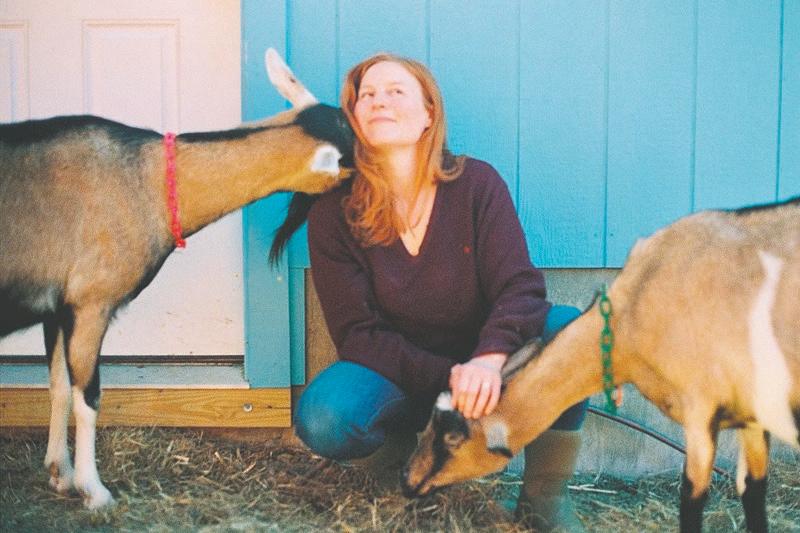
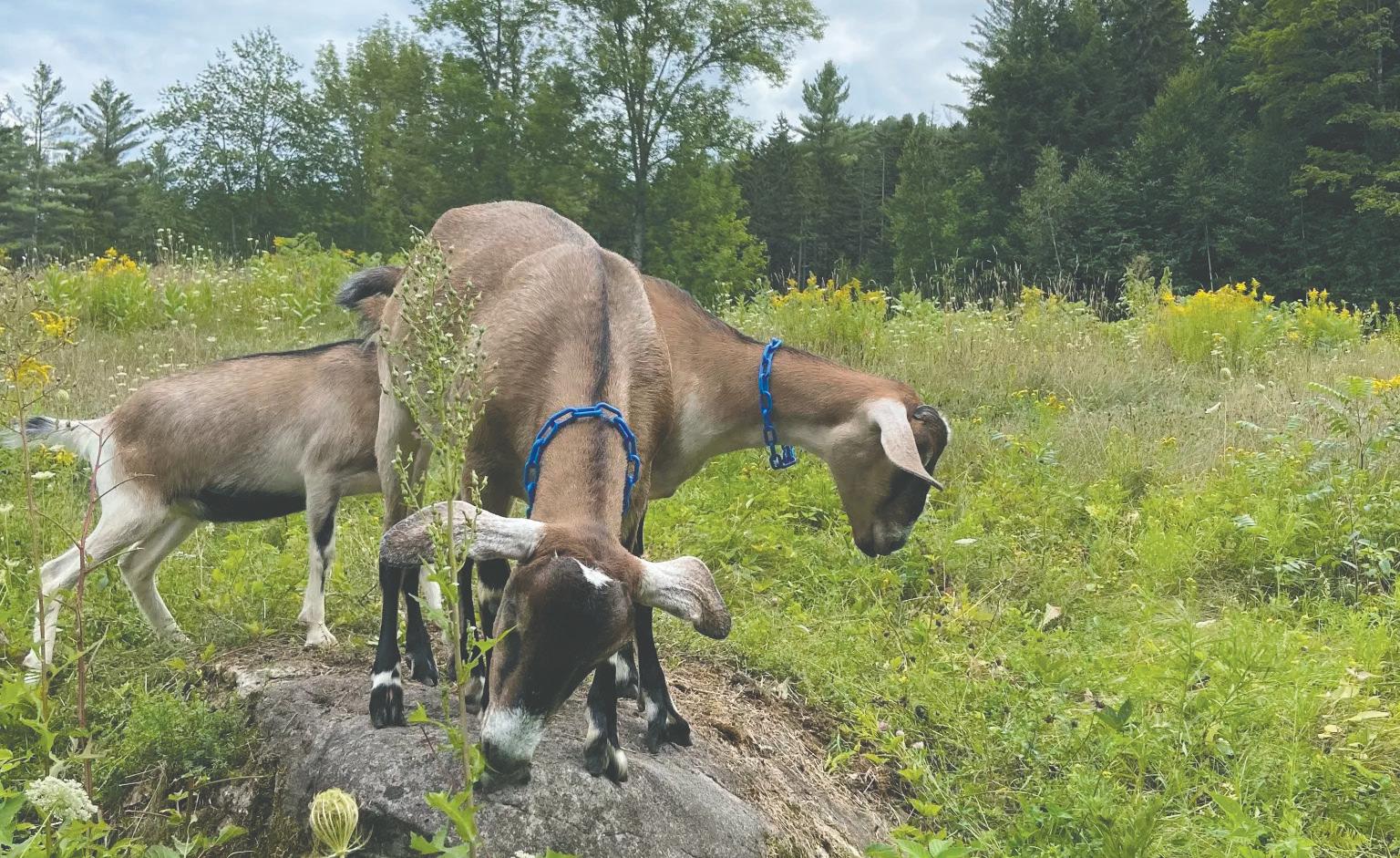
Lauren Gitlin, pictured here with her goats Mouse and Tate, opened Villa Villekulla Farm, a no-kill dairy, in 2019.
PHOTO COURTESY OF LAUREN GITLIN
More than a memory of Garth Brooks
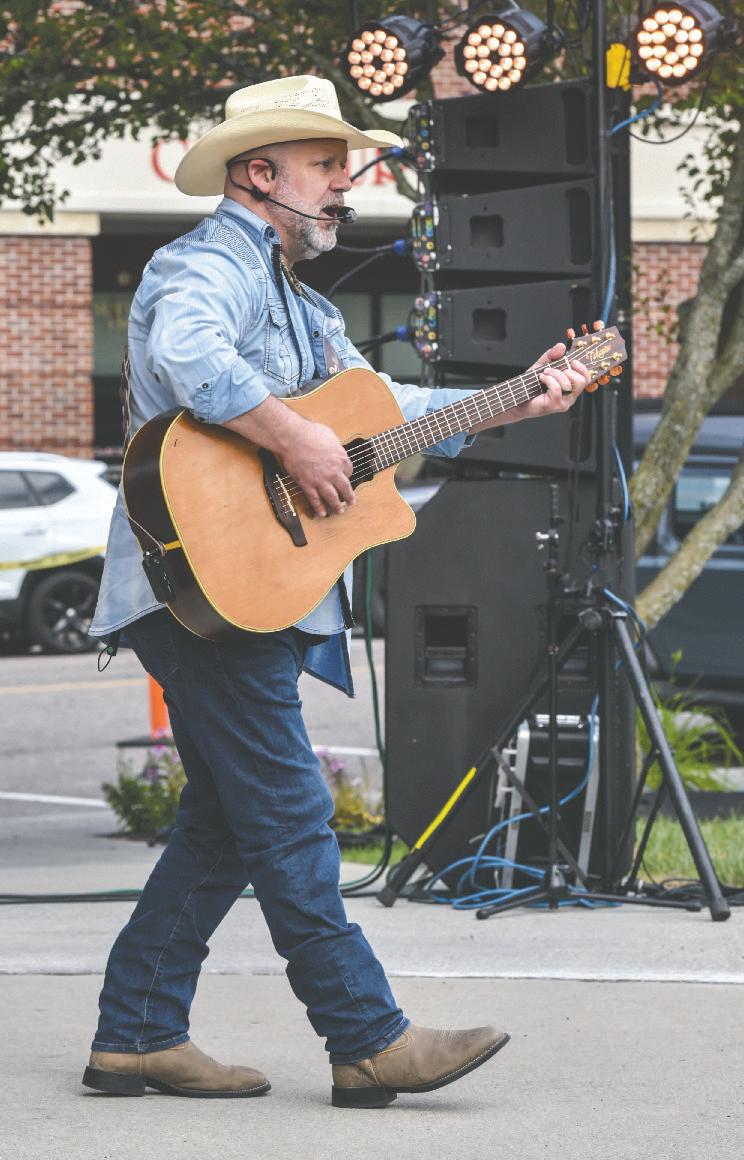
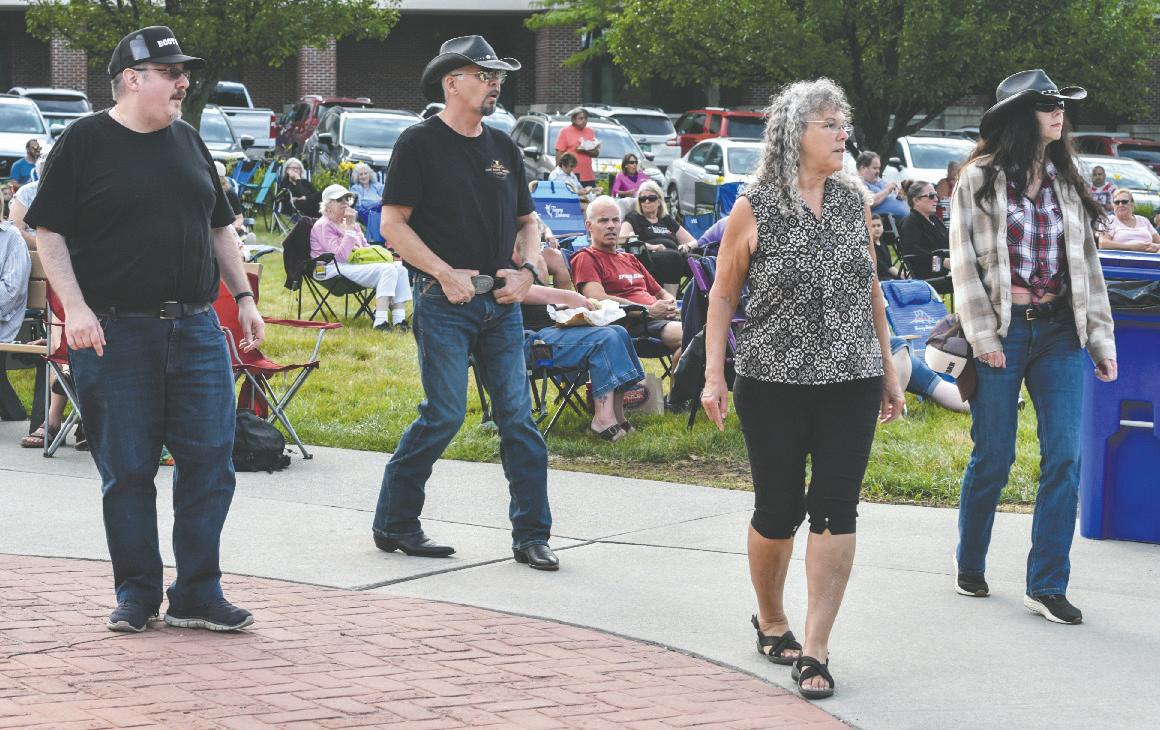
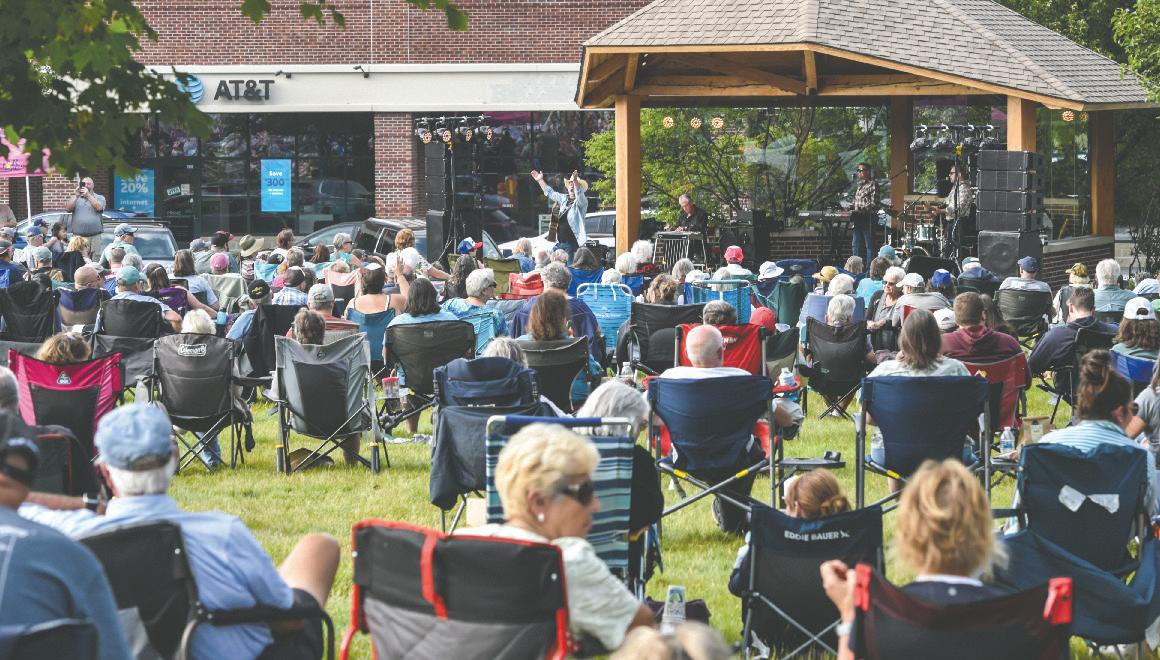
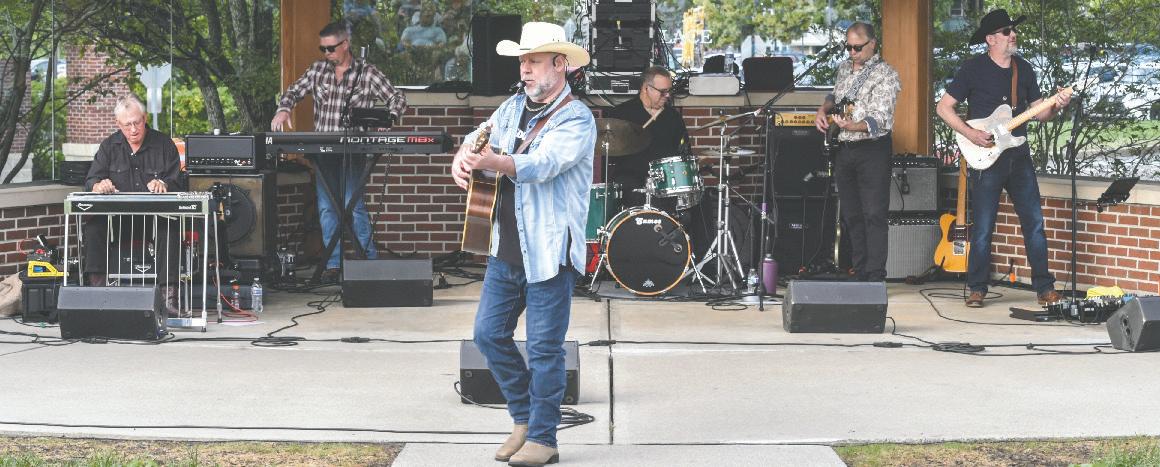
Kevin White and his band GARTH LIVE! The Ultimate Tribute!!, above and below, salute Garth Brooks at the Maple Tree Place Thursday Night Concert Series on July 23. Some folks take to the sidewalks, top right, for a little line dancing as the musicians perform some of Brooks’ greatest hits. The large crowd, center right, may be due to the fact that this was the second year the group rocked Maple Tree Place.
OBSERVER PHOTOS BY AL FREY
Library hours:
• Monday and Wednesday: 9 a.m.-7 p.m.
• Tuesday, Thursday, Friday: 9 a.m.-6 p.m.
• Saturday: 10 a.m.- 3 p.m. Visit www.damlvt.org to apply for a library card and register for programs. Need help? Call 878-4918 or email daml@ damlvt.org.
YOUTH PROGRAMS
Children in fourth grade and younger must be supervised by someone over 16 years of age.
TEEN GAME NIGHT
Friday, July 31, 5-5:55 p.m. Ages 12-18. Bring a Switch controller or use one of ours to play games.
Goats
continued from page 14
shown to be effective for patients with illnesses such as anxiety, depression and post-traumatic stress disorder.
Gitlin aims to partner with a licensed mental-health provider to offer a more rigorous and directed animal-assisted therapy program on her farm. She named Moonrise Therapeutics, a non-profit near Woodstock that uses horses in their treatment programs, as a possible model and collaborator. Gitlin is still determining what the therapeutic programming may look like.
The sanctuary isn’t yet open to the public, but the goats have already shown promise as therapy animals. Villa Villekulla Farm volunteer Bruce McClellan said he’s noticed a difference in himself since starting work at the farm last year.
“I always feel better when I come home. I honestly can say I wasn’t expecting this outcome. But every day I come home from being around these animals, I feel better. I feel more relaxed. I feel just happier,” he said.
McClellan has been volunteering at various animal organizations since his retirement five years ago. He said he
TEEN CRAFTERNOON: MARBLE & CLAY PETS
Monday, Aug. 3, 5-6 p.m. Ages 12-18. Use air-dry clay and marbles to make little clay friends.
STORYTIME
Tuesdays, Aug. 4 and 11, 10:30-11 a.m. Drop in for stories, songs and fun.
BABY TIME
Wednesday, Aug. 5, 10:30-11 a.m. Suggested ages 0-18 months. Drop in for gentle bonding and social activities with your little one.
PLAYTIME
Thursday, Aug. 6, 10:3011:30 a.m. Stop by the library for parallel or cooperative play with toys.
MUSIC & PLAYTIME
Thursday, Aug. 13, 10:3011:30 a.m. Drop in for music, followed by playtime.
LEGO TIME
Thursday, Aug. 13, 3-4 p.m. (All ages!) Build something exciting
connects the therapeutic benefits of goats and other animals to the effect they unconsciously have on those around them.
“They’re just so goofy and so friendly. And animals in general are completely unconditional. They’re just there for you. Once I’m around them, it just kind of falls away,” he said.
Valentina Jaramillo, a former Villa Villekulla intern, echoed this sentiment. She said Gitlin’s goats have provided an opportunity for connection and a lesson in self-love during periods of anxiety and loneliness.
“Any measure of time I spend with Lauren’s goats is an opportunity for me to slow down and feel present in my body, present for myself but also present for the wonderful animal who is being present for me,” she said.
Jaramillo, who formerly taught preschool, said the goats’ childlike personalities and cartoonish appearances can improve mental health, even for those who may be skeptical.
“Their eyes bulge ever so slightly out from their skulls. They are sort of lumpy. It’s an automatic rush of serotonin. You begin to imagine what they want to say to you, what they are thinking. Like any good relationship, it’s partly imaginary. But it is a real bond,” she said.
with our LEGO collection. KID’S YOGA
Saturday, Aug. 15, 10:3011:15 a.m. Suggested ages 1-5. Get ready for giggles, stretches and smiles in this GROW Kids Yoga class. Children and caregivers will explore, stretch, sing and have fun together.
MULTI-AGE PROGRAMS
SUMMER READING CHALLENGE: UNEARTH A STORY
June 13-Aug. 9. All ages, Williston and St. George residents. Register for the Summer Reading Challenge at https:// damlvt.beanstack.com/. Earn rewards and raffle tickets by tracking your reading this summer, and help us reach our community goal of 10,000 hours!
TAIKO DRUMMING DEMONSTRATION
Saturday, Aug. 1, 11 a.m. on the Town Green behind the library. Stuart Paton of Burlington Taiko will be performing this ancient, highly choreographed percussion art. Come experience the
musicality and athleticism.
ADULT PROGRAMS
For online programs or to join a book club, email daml@damlvt.org.
TEA CLUB: KENYAN BLACK TEA
Each month, we will highlight a true tea (made with tea leaves) and provide a sample, a description of the history of that type of tea, and instructions on brewing and tasting. Available while supplies last.
ADULT MEDITATION (ONLINE)
Every Friday, 12-12:30 p.m. Join our guided meditation to relax and re-center.
LET’S CHAT ABOUT BOOKS
Saturday, Aug. 1, 1-2 p.m.
Share what you are reading with others or get some ideas for a new read. This group will recur on the first Saturday of each month.
TECH TUTOR
Tuesday, Aug. 4, 1-4 p.m. Call and make an appointment with our tutor to help you with your individual tech needs.
ADULT CRAFTERNOON: FELTED CHICKENS
Tuesday, Aug. 4, 2-3 p.m. Felt yourself a funny farmyard friend. This craft takes manual dexterity. ADULT RPG
Wednesday, Aug. 5, 6-8:30 p.m. Have an adventure with our role-playing group.
MAH JONGG
Friday, Aug. 7, 1-3 p.m. Drop in to play this popular tile game.
CURRENT EVENTS (HYBRID)
Wednesday, Aug. 12, 10:30 a.m.-12 p.m. Drop in to chat with community members on your topics of interest.
LIFE STORIES (ONLINE)
Wednesday, Aug. 12, 2-3:30 p.m. Reminisce without leaving home. Each month, we have prompts to help you think of something to share.
CRAFTEREVENING: FELTED CHICKENS
Wednesday, Aug. 12, 6-7 p.m. For those who cannot join us during the day, fashion a furry farmyard friend.
While the project seeks to help humans in need, the business will help Gitlin support her aging herd, many of whom require more complex veterinary care. One such goat is Frida, who has deformed back hooves, requiring her to be sedated to maintain them.
The herd’s matriarch, Placer, namesake of the road where the farm is located, may have cancer. Gitlin said she’s grateful that ending dairy production
has given her more time to devote to aging goats like Placer, giving them more one-on-one care.
Gitlin says the project is being built from the ground up, and she is still in the early stages of setting up her non-profit with more steps to go. In the meantime, the farm supports its non-productive members with donations made via its website.
Gitlin said she hopes to someday create other opportunities
for people to connect with the goats, such as by offering artist residencies on the farm.
“I’ve found so much enrichment and fulfillment and comfort from being with these animals and working with them,” she said. “I think there’s so much potential there.”
Community News Service is a University of Vermont journalism internship.
Villa Villekulla goats enjoying some browsing outside.
PHOTO BY ERIKA TALLY
JULY 17
WILLISTON FIRE DEPARTMENT
• 9:13 a.m. — Firefighters responded to a malfunctioning fire alarm on Eden Lane.
JULY 18
• 4:46 a.m. — Crews investigated a malfunctioning fire alarm at Falcon Manor.
• 5:14 a.m. — An accidental fire alarm was reported on Tyler Way.
• 9:53 a.m. — Firefighters responded to a fire/smoke alarm activation at Falcon Manor.
• 11:31 a.m. — Crews provided a citizen assist at Eagle Crest.
• 1:59 p.m. — Firefighters investigated a fire/smoke alarm activation on Holland Lane.
• 8:31 p.m. — Crews extinguished a trash fire on Christmas Lane.
JULY 19
• 11:45 a.m. — Firefighters responded to an accidental fire alarm at Eagle Crest.
Joel E. Dubé
Joel E. Dubé of Williston passed away peacefully at the University of Vermont Medical Center on July 14, 2026, surrounded by the love of his family and friends.
Joel was born on Oct. 30, 1952 in Edmundston, New Brunswick to Simeon and Mattie (Michaud) Dubé and raised in Madawaska, Maine.
After graduation from Madawaska High School and a period of service in the U.S. Army, Joel graduated from the University of Maine, Orono and the Stonier Graduate School of Banking. His work with Farmers Home brought him to Vermont and evolved into a long career as a commercial lender with the Franklin Lamoille Bank, Bank North and Northfield Savings
• 3:52 p.m. — Crews were dispatched to a confined appliance fire at a structure on Blair Park Road.
JULY 20
• 10:56 a.m. — Firefighters provided a citizen assistance on Chelsea Place.
• 12:05 p.m. —Firefighters assisted with a motor vehicle crash involving reported entrapment on Interstate 89 South in Bolton.
• 7:35 p.m. — Crews investigated a fire/smoke alarm activation at Falcon Manor.
• 10:05 p.m. — Firefighters responded to a motor vehicle crash on Interstate 89 South in Williston.
• 10:29 p.m. — A malfunctioning fire alarm was investigated on
OBITUARIES
Bank. He liked nothing better than getting a “big deal” done. Joel met his future wife working on just such a deal.
Joel and Priscilla (Bondy) were married on June 17, 1989 and later welcomed Carolyn Bondy Dubé and Simeon Eugene Dubé to complete the family.
Joel was passionate about his family, photography and golf. He was active with Cary and Sim as they were growing up and, as his passion for photography developed into more than a hobby.
He spent many hours at riding rings, hockey rinks, baseball diamonds, on hikes and at various dog events, taking pictures and capturing memories for the family. He was so proud of them as they matured into successful, hard-working and kind adults.
A member at Vermont National Country Club, Joel spent many happy hours on the golf course and had two holesin-one to his credit.
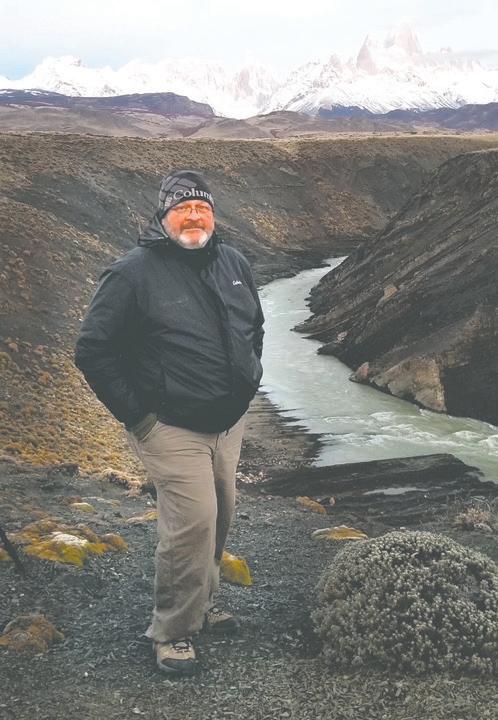
In recent years Joel traveled to take photographs in Maine, the Bad Lands, Death Valley, Texas, West Virginia, Arizona, Utah, Colorado, Washington, Alaska and other sites in the United States. He also went to Iceland and the Patagonia. It was on these trips he met and engaged with professional photographers who taught him so much. He established Mad Owl Photography as a way to share his pictures with others (Madowlphotovt. com).
Joel is survived by his
Sadler Lane and determined to be false.
• 11:20 p.m. — Crews assisted a person in distress on Brickyard Road in Essex Junction.
JULY 22
• 8:51 a.m. — Firefighters extinguished a grass fire at Maple Tree Place.
• 9:37 a.m. — Crews responded to a report of a downed or malfunctioning electrical power line on Industrial Avenue.
• 12 p.m. — Firefighters investigated a reported fuel spill or fuel odor on Industrial Avenue.
• 1:11 p.m. — An accidental fire alarm was reported on Marshall Avenue.
• 7:52 p.m. — Crews investigated an accidental fire alarm on South Road.
JULY 23
• 2:56 a.m. — Firefighters responded to a malfunctioning fire alarm on St. George Road.
• 9:31 a.m. — Crews investigated a fire/smoke alarm activation on Talcott Road.
• 9:53 a.m. — Firefighters conducted an elevator rescue on Blair Park Road.
• 7:36 p.m. — Crews provided a citizen assistance on Vine Street.
The Williston Fire Department also responded to 33 medical emergencies during this time frame.
wife/partner and best friend Priscilla and his daughter Cary and son Sim and Sim’s partner Hannah Benoit; his sisters Rachel Ouellette, Leola Moss and Eloise Batchelder (Charlie), his brothers Lionel (Peggy) and Elden (Sara) and many nieces, nephews and their children and his in-laws, Elizabeth Bondy (William Dunn), David Bondy (Debra) and their families. Joel was predeceased by his parents, Simeon and Mattie, his brothers Gerald and Guilford, his brother-in-law William Moss and his sister-in-law Marie-Claire.
The family would like to thank Joel’s best man and longtime friend Paul, “Pizza Night” partners of over thirty years; Paul and Lisa, all his golf buddies, especially Eric and Drew; his photography guru Kurt; and his whole family and circle of friends who have been there for him in ways that made his life full and rich. Also, thanks to the many people at UVMMC who cared for Joel and the rest of us during his short and intense illness.
There will be a gathering at a future date to celebrate Joel’s life.
In lieu of flowers, gifts in Joel’s memory may be made to the Green Mountain Audubon Center, 255 Sherman Hollow Road, Huntington, VT 05462 or to a cancer research organization of your choice. Please visit www.awrfh.com to share your memories and condolences.
Nancy J. Liberty Sharlow
Nancy J. Liberty Sharlow, 88, a resident of Crystal Lake Park, Wauchula, Fla, passed away peacefully into the lord’s arms on Thursday, July 23, 2026. She was born on April 16, 1938 in Burlington, the daughter of the late Francis S. Krupp and Dorothy G. (Muir) Krupp.
Nancy grew up in Williston and was raised on the family farm with her two brothers Patrick and Oscar. Nancy attended Cathedral High School and graduated in 1956.
She had a fierce compassion and love for animals from rescuing wild animals (birds with broken wings), nursing them back to health and releasing them back to the wild, to her pets who were part of the family and that she would do anything for.
Nancy worked at General Electric for several years, eventually settling down to be a homemaker raising her two daughters and taking care of her niece, Patty Krupp. She was active and was a member of the women’s bowling league for several years. She also played and pitched on the women’s softball league when that was first introduced. Her true love was snowmobiling and she was in a club where every weekend they all ventured out on their escapades blazing the trails. Her passion was cooking, gardening and being outdoors, so that’s why it was no surprise when she moved to Florida in the early 2000’s to be in a
warmer, more comfortable climate. She eventually was joined by her daughter Laurie who stood by and cared for her in her later years. We will miss her crazy sense of humor and always the ability to laugh.
Nancy is survived by her two daughters, Laurie Radvar of Wauchula, Fla., and Lisa Liberty of South Burlington; sister-in law, Nancy Krupp of Williston who is married to her brother Oscar; niece; Patricia Krupp of Colchester; nephews; Bruce and Katy Thompson of St. Albans; Tony Thompson and his partner Carolyn Snyder of Jericho; Jerry and Ruth Thompson of Milton, and Kevin and Elizabeth Thompson of San Diego, Ca., and their families respectively; first cousins; Jeanette (Muir) and her husband Ralph Leo of Colchester and Gary Muir of Montpelier. She was predeceased by her father Francis Krupp; mother Dorothy Krupp (Muir); brother, Patrick Krupp and his wife Nancy Krupp; and brother Oscar Krupp; uncle, Archie Muir; aunt Rachel Muir, and cousin Anthony (Tony) Leo.
The family would like to thank the nurses and staff from VIVO Nursing Home for the care and love for making Nancy’s transition into eternal life peaceful.
Private services will be held at a later date.
In lieu of flowers, donations may be made in Nancy’s name to:
Hardee Animal Clinic
1927 US Highway 17 N Wauchula, FL 33873
hardeeanimalclinic@yahoo. com.
Online Safety Tips
As school gets started again, you may find yourself using the computer, tablet or cellphone more. This week, The Mini Page reminds you how to be safe and responsible when using the internet.
Online gaming
Online gaming has become popular. People can play with friends or others they don’t know from around the world. It’s important to keep safety in mind when gaming. Choose a profile picture that doesn’t show your face or anything that can identify you. Tell an adult what you’re playing and who you are playing with.
With all games and apps having different options, make sure to ask a grown-up to check your privacy settings on games you play online.
Finding a good balance
Computers and smartphones have made it possible for people to talk with each other, find information and play games at any time of the day or night. Sometimes we get so excited about these possibilities that we spend too much time looking at a screen.
Experts suggest you use your electronics away from your bedroom. Don’t use them at the dinner table. Spend time talking with your family instead.
Charge phones and other devices away from bedsides. Noise and light can disturb sleep, which can be unhealthy. Put electronics away one hour before bedtime.
Mini Fact: Using the internet can be a great way to gather information, but it’s important to remain safe.
Choose privacy
It’s also important that you keep private information, such as your birthdate, address and phone number, off the internet.
Don’t share passwords or login names with anyone except your grown-ups. Ask them for permission before you download anything.
Relationships
Cellphones and social media keep us in touch with friends. But texts and emoji may not express very well what people are really feeling.
If someone posts something mean or hurtful to you, take some time to think about it before responding. Talk to an adult about how you should respond.
Protection and passwords
Back up your computer frequently so you won’t lose work you’ve done. Ask your family to install protection against viruses and malware (damaging software). Use a wireless network password.
When choosing a password, try to come up with something strong. Avoid using passwords that have personal details. Experts recommend using a mix of uppercase and lowercase letters, numbers and special characters. Try to make your password at least eight characters long, and use different passwords for different apps and websites.
Being ethical
Ethics are rules that guide people’s behavior. You use ethics to decide whether something you do or say will hurt someone else.
When you are online, it’s important to remember that everything you post or any comment you make will live on forever. Your online self is a reflection of your “normal” self.
When you share something online, think about your audience. Who will see what you post? Even if you think you are posting anonymously, you may not be, so it’s important to be careful about what you’re sharing.
Remember that work done by other people cannot ethically be copied and presented as your work.
In just a few years, you may be applying to college or trying to get a job. Colleges and companies sometimes look at social media to find out more about possible students or employees.
Ask a grown-up to review posts you would like to share on Snapchat, YouTube or other social media platforms before you share online.
Next Week: Pioneer women
Founded by Betty Debnam
photo by Lupuca
photo by Adam Fagen
from bedsides. Noise and light can disturb sleep, which can be unhealthy. Put electronics away one hour before bedtime.
Try ’n’ Find
characters. Try to make your password at least eight characters long, and use different passwords for different apps and websites.
Words that remind us of online safety are hidden in this puzzle. Some words are hidden backward or diagonally, and some letters are used twice. See if you can find:
One of Britain’s most familiar woodland creatures may be slipping quietly toward extinction in England. Conservation groups warn that native red squirrels now survive only in scattered northern strongholds after decades of pressure from invasive gray squirrels, introduced from North America in the late 1800s. Once common across Britain, the reds have steadily retreated as gray squirrels spread squirrelpox, a virus lethal to reds but harmless to the invaders themselves. Recommended solutions include controlling the gray population and developing a squirrelpox vaccine.
For later:
Look in your local newspaper for articles about online safety.
2-Bed, 2-Bath Condo in Williston, VT
LIVE AUCTION:
Tues. | August 25 | 2PM
OPEN HOUSE: Tues. | August 11 | 11AM-1PM
ADDRESS:
127 Holland Lane, No. 2 Williston, VT 05495
A well-maintained condominium in the desirable Finney Crossing community. Built in 2018, this onestory home offers approximately 1,351± square feet of living space with 2 bedrooms and 2 full bathrooms. The home features an open layout with a formal dining room, central air conditioning, and an attached garage.
THCAuction.com 802-888-4662
By Jim Miller
Dear Savvy Senior,
My mother, who has dementia, recently moved into an assisted living facility that doesn’t allow pets. I’m thinking about getting her a robotic pet to cheer her up. Are they worth it, and if so, which one do you recommend?
— Inquiring Daughter
Dear Inquiring, It’s completely natural to want to bring a little furry joy into your mom’s life. Moving into a new home without her pets can be tough, and sometimes even a small companion can make a big difference.
Robotic pets — lifelike, interactive companions — can brighten the days of seniors with dementia in ways you might not expect. They’re more than just cute gadgets; they
SAVVY SENIOR
EMAILED ADVERTISEMENT
ADVERTISING INSERTION ORDER
Thomas Hirchak Company
FROM: Cathy Morneault
Phone: 802-888-4662
Email: Advertising@THCAuction.com
To: Rick & Susan Cote
Paper: Williston Observer Max Length 12.5
offer comfort, companionship and a sense of purpose, along with plenty of smiles and fun. Before you pick one, here’s what you should know.
TODAY’S DATE: 07/22/2026
WHY PETS MATTER
NAME OF FILE: 07302026_WO
DATE(S) TO RUN: 07/30/2026
lifelike companion that reacts and even “talks back.”
BEST OPTIONS
Contact Adam Geffkin at adam@willistonobserver.com
which can be both calming and engaging.
SIZE OF AD: 1/16 page (2” x 5”)
EMAILED TO: Rick@Willistonobserver.com
Publishes in Williston Observer
SECTION: Auctions PO# Williston
Pets aren’t just cute — they’re family. They bring happiness, companionship, and even a gentle sense of routine. Studies have shown that pets can help reduce stress, anxiety and depression, encourage light activity, and improve overall well-being. They can also provide a sense of connection, which can be especially grounding for seniors living with cognitive changes.
Unfortunately, many seniors, like your mom, have to give up pets when they move into care facilities or can no longer care for them on their own. That’s where robotic pets can step in. Many studies have shown that robotic companion animals can improve quality of life by offering comfort, interaction and a sense of companionship.
Still, it’s important to remember that not all seniors connect with robotic pets. Some may ignore them completely, while others enjoy holding them or respond positively to a
If you’re looking for a hightech option, Jennie, a new Labrador puppy from Tombot (tombot.com), is the most impressive option available. Soft, cuddly and very lifelike, she reacts to touch and voice, moves naturally and even barks on command. A smartphone app lets you name her, customize her behavior and track interactions. She runs on a rechargeable battery and is expected to cost around $1,500, with financing available. Jennie is currently on back order, with new units expected this fall, so interested buyers may need to join a waitlist.
If that’s more than you want to spend, Joy for All Companion Pets (joyforall.com) are a wonderful alternative. These cats and dogs cost $160 or $180 and respond to touch with purring or barking. They can move their heads, lift their paws and open and close their eyes. With soft, brushable fur and a gentle “heartbeat,” they feel surprisingly real. They also give seniors a comforting routine, like stroking or “feeding” their pet,
For seniors who use a walker, the Walker Squawker bird ($65), also available from Joy for All, attaches to the device and chirps when the walker stops moving. It responds to touch and sound, offering a playful companion and gentle encouragement to stay active. Small touches like this can make a big difference in lifting spirits and keeping seniors engaged.
Robotic pets aren’t a replacement for real animals, but they can bring companionship, comfort and joy to seniors who can no longer have a furry friend. They are especially well-suited for seniors with dementia, providing interaction, routine, and a sense of connection. Whether you choose a sophisticated option like Jennie or a more affordable Joy for All pet, these interactive companions can turn moments of loneliness into smiles, connection and a little extra joy every day.
Send your questions or comments to questions@ savvysenior.org, or to Savvy Senior, P.O. Box 5443, Norman, OK 73070.
TODAY’S HISTORY:
• In 1619, America’s first legislative assembly met in Jamestown, Virginia.
• In 1956, President Dwight D. Eisenhower signed a bill establishing “In God We Trust” as the national motto of the United States.
• In 1965, President Lyndon B. Johnson signed the Social Security Amendments into law, establishing Medicare and Medicaid.
• In 1974, President Richard Nixon released subpoenaed White House recordings related to the Watergate cover-up.
TODAY’S FACT:
• “Top of the Pops,” the longest-running weekly music radio show in British history at 42 years, was broadcast for the final time on BBC Two on this day in 2006.
SOLUTION FOUND ON PAGE 22
GARAGE SALE
Sale. Saturday August 1st. 8 am to 3 pm. Bittersweet is on the right heading to Essex Junction from Taft Corners on Rte. 2A.
KOHLER & CAMPBELL
UPRIGHT PIANO—and piano bench. Available for free to piano student or educational institution. Recipient must arrange pick up and transportation. Email cymln@yahoo.com or phone (802) 399-2110.
RENT
LAKE CHAMPLAIN COTTAGE FOR RENT —5 bedrooms, air conditioning, new mattresses, cement dock & mooring. 3 miles north of Basin Harbor, end of road, private. No pets. Available August 15. $3800/week. Contact Brian 802-373-9861.
LEGAL
NOTICE OF 19 V.S.A. SECTION 502 PUBLIC HEARING STATE OF VERMONT AGENCY OF TRANSPORTATION
RE: ST. GEORGE STP 021-1(36) VT ROUTE 2A & VT ROUTE 116
ROUNDABOUT PROJECT
The Vermont Agency of Transportation (VTrans) hereby gives notice to property owners, parties interested in land or with rights in land, and municipalities affected by the proposed construction of the abovecaptioned transportation project, that VTrans will conduct a 19 V.S.A. Section 502 public hearing at 6:00 PM on Tuesday, August 25, 2026, at the St. George Town Hall located at 21 Barber Rd, in St. George, Vermont. VTrans is holding this hearing to receive suggestions and recommendations for changes from the public. The full hearing, along with any questions or comments will be recorded and transcribed for the hearing record.
VTrans will accept oral or written statements or exhibits at the hearing and for ten (10) days after the hearing via mail or email. VTrans will make these materials part of the hearing record. To submit statements or exhibits after the hearing, please contact the VTrans Project Manager, Michael LaCroix.
Mailing Address:
Vermont Agency of Transportation
c/o Michael LaCroix
219 North Main Street, Barre, VT 05641
Email Address: michael.lacroix@vermont.
gov
The intersection of VT Route 2A and VT Route 116 has been a high crash location for many years. The proposed project will improve the safety conditions at the intersection with the installation of a modern roundabout. The acquisition of easements is required to construct the roadways and, in some areas, maintain constructed features such as slopes, drainage structures and waterway channels,
and features for permitting requirements.
VTrans is notifying by certified mail all parties it knows who may be, but not necessarily will be, affected by the proposed project. VTrans will conduct property owner meetings with all the parties affected by the proposed project after the public hearing, at a later date.
Members of the public may see a copy of the 502 hearing figure plans and handout at the hearing, where VTrans representatives will discuss the tentative schedules for right-ofway easement acquisition and construction.
Dated at Barre, Vermont, this 16th day of July 2026.
JOE FLYNN, SECRETARY AGENCY OF TRANSPORTATION
VTrans ensures that all public meetings and locations are accessible to persons with disabilities. Any person with a disability may request accommodation in order to fully participate in any public meeting held by VTrans. Requests for translation, interpretive, or other services for accommodation, must be made at least ten (10) calendar days prior to the date of the meeting for which services are requested.
Please make requests to:
Colleen Montague
Director of Civil Rights, Civil Rights Bureau | Finance & Administration
Vermont Agency of Transportation 219 North Main Street | Barre, VT 05641 802-777-2654 | colleen.montague@vermont. gov
LEGAL
TOWN OF WILLISTON
Notice of Adoption
Williston Unified Development Bylaw Amendments
On July 21, 2026, the Williston Selectboard adopted amendments to the Williston Unified Development Bylaw following a public hearing held that same day to receive comments on the proposed amendments.
The amendments are summarized as follows:
Citation corrections and errors or omissions
In Chapter 14 Off-Street Parking and Loading. Clarify provision for the use of structured parking and solar canopy to increase number of permitted off-street parking spaces
15.3 Neighborhood Parks. Proposed bylaw amendments clarify the language about requirements for neighborhood parks.
Setbacks (multiple chapters)-setbacks and average setbacks throughout all zoning districts to be merged into a table and clarified. Add flexibility for properties with 2 front yards.
In 4.5.2 – Certificate of Appropriateness (COA) -Signs are exempt from COA
In 6.2.8, 6.2.9 – Preapplication actions –amendments to preapplication procedures.
6.5.3.3 – Notifications –amendments to written notification requirements
CLASSIFIEDS
7.1.6.2 – Guarantees for Public and Private Improvements –require surety at 110% of all improvements, public or private.
11.3.6 – Affordable Housing Income Limits -allows flexibility for affordable home income qualification. Dwellings affordable at 80% area median income (AMI) can be sold/rented to households earning 80-100% AMI; dwellings affordable at 100% AMI can be sold/ rented to households earning 100-120% AMI.
11.4 Residential Growth Target –Language amended to be consistent with Vermont Statutes and the Town’s Comprehensive Plan, with respect to housing targets.
Table 13.A Driveway Width Standards – Table added, for clarity and to allow smaller widths for smaller developments, with findings by the Development Review Board
19.5 Transfer of Development Rights (TDR) – Allows TDR from lands in Agricultural Rural Residential Zoning (ARZD) or conservation areas in other zoning districts to lands within any other zoning district that allows residential uses.
The amendments to the Bylaw will take effect on August 11, 2026, unless a petition signed by at least five percent of Williston voters is filed with the Town Clerk by August 10, 2026, asking for a vote to disapprove the adoption. If a petition is received, the Selectboard will warn a special meeting and the voters may vote on that question pursuant to 24 V.S.A. § 4442.
The above is a summary. The complete adopted amendments to the Williston Unified Development Bylaw are available for review during regular business hours at the Town Hall and can also be found on the Town’s website at https://town.williston. vt.us by navigating to public records and documents / legal notices. Members of the public can contact the Williston Planning Department at (802) 878-6704, or at planning@willistonvt.org with any questions.
Dated at Williston, Vermont this 23rd day of July, 2026. Erik Wells Town Manager Williston, VT
LEGAL
TOWN OF ST. GEORGE REQUEST FOR PROPOSALS
Willow Brook Lane Ditching & Road Crown Project
The Town of St. George is accepting sealed bids for ditching improvements and road crown restoration on Willow Brook Lane (TH #4). This project is funded through the Vermont Better Roads Grant Program (VTrans Grant BR1469, FY2027 Category B). Work includes ditch reshaping, stone and grass lining, road crown restoration, shoulder gravel placement, and culvert cleaning across approximately 656 linear feet.
Sealed bids must be received by Monday, September 7, 2026 at 4:00 PM at the
SERVICE DIRECTORY
Town Office, 21 Barber Road, St. George, VT 05495. Email bids are also accepted attownclerk@stgeorgevt.com. A pre-bid site visit is strongly recommended. The complete bid package, including specifications, bid form, and design plan information, is available on the
Town website, at the Town Office, or by contacting Lisa Laramee, Town Clerk & Administrator, at townclerk@stgeorgevt. com.
The Town of St. George reserves the right to accept or reject any and all bids.
BAIT
from page 2
The week-long bait drop is a cooperative effort between Vermont and the U.S. Department of Agriculture Wildlife Services to stop the spread of the
saliva. If left untreated, rabies is almost always fatal in humans and animals. However, treatment with the rabies vaccine is nearly 100 percent effective when given soon after a person is bitten by a rabid animal.
So far this year, 23 animals in Vermont have tested positive for rabies, and 14 of those have been raccoons.
RABIES BAIT
continued from page 2
Rabies is a deadly viral disease of the brain that infects mammals. It is most often seen in raccoons, skunks, foxes, and bats, but unvaccinated pets and livestock can also get rabies. The virus is spread through the bite of an infected animal or contact with its
Excavating Roadside Mowing
802-578-8347 email: adamdantzscher@aol.com
The week-long bait drop is a cooperative effort between Vermont and the U.S. Department of Agriculture Wildlife Services to stop the spread of the potentially fatal disease.
Rabies is a deadly viral disease of the brain that infects mammals. It is most often seen in raccoons, skunks, foxes, and bats, but unvaccinated pets and livestock can also get rabies. The virus is spread through the bite of an infected animal or contact with its
SHELBURNE DAY continued from page 4
According to wildlife officials, rabid animals often show a change in their normal behavior, but you cannot tell whether an animal has rabies simply by looking at it. People should not touch or pick up wild animals or strays – even baby animals.
saliva. If left untreated, rabies is almost always fatal in humans and animals. However, treatment with the rabies vaccine is nearly 100 percent effective when given soon after a person is bitten by a rabid animal.
So far this year, 23 animals in Vermont have tested positive for rabies, and 14 of those have been raccoons.
According to wildlife officials, rabid animals often show a change in their normal behavior, but you cannot tell whether an animal has rabies simply by looking at it. People should not touch or pick up wild animals or strays – even baby animals.
Shelburne Historical Society will have a display and president Dorothea Penar will lead a cemetery tour at 1 p.m. Food vendors round out the event with everything from coffee and lemonade to burgers and creemees. Kids will enjoy meeting animals from Shelburne Farms, craft projects, and
SHELBURNE DAY
continued from page 4
Shelburne Historical Society will have a display and president Dorothea Penar will lead a cemetery tour at 1 p.m. Food vendors round out the event with everything from coffee and lemonade to burgers and creemees. Kids will enjoy meeting animals from Shelburne Farms, craft projects, and
face Towards burne-Hinesburg head the Golf depending land.
Rotary’s
face Towards burne-Hinesburg head the Golf depending land. Rotary’s
i d e w a l k B u r l i n g t o n V e r m o n t S a l e
D A Y S O F U N B E A T A B L E D E A L S
A l l t h e d e a l s . . .
4 T 2 D : S c o r e 5 0 – 9 0 % o f f e v e r y t h i n g u n d e r t h e t e n t .
B e r t h a C h u r c h I n t i m a t e s : S a v e 2 0 – 5 0 % o n s e l e c t
s a l e s t y l e s
B i c k f o r d U S A : S a v e u p t o 4 0 % o n M a d e i n U S A
f a v o r i t e s , s h o p e x c l u s i v e s a m p l e s & s e c o n d s , p l u s
1 0 % o f f t h e e n t i r e s t o r e
C a t a m o u n t S t o r e : S a v e 5 0 % t o 7 0 % o n s e l e c t
a p p a r e l s t y l e s , a s w e l l a s 1 0 % o f f a l l r e g u l a r l y
p r i c e d a p p a r e l i t e m s
E C C O C l o t h e s : S a v e u p t o 7 0 % o n s e l e c t s t y l e s .
F e a r a n d C l o a t h i n g : 2 0 % o f f e n t i r e o r d e r .
G a k u R a m e n : F r e e m o c h i w i t h t h e p u r c h a s e o f m e a l
G o l d e n H o u r G i f t C o : F o l l o w @ g o l d e n h o u r g i f t c o f o r d a i l y s p e c i a l s r e v e a l e d o n I n s t a S t o r i e s
H a r b o u r T h r e a d : U p t o 8 0 % o f f
H o m e p o r t : S a v e 1 0 % o n p u r c h a s e s u p t o $ 2 5 , 1 5 %
o n $ 2 5 – $ 9 9 9 9 , a n d 2 0 % o n $ 1 0 0 + P l u s , s h o p
s i d e w a l k s p e c i a l s a t 4 0 % o f f o r m o r e
K i s s T h e C o o k : 2 0 % o f f s t o r e w i d e ( e x c . e l e c t r o n i c s & a l r e a d y d i s c o u n t e d i t e m s ) p l u s u p t o 6 0 % o f f u n d e r t h e t e n t .
M e d i a S p o n s o r s W e d n e s d a y , A u g u s t 5 - S u n d a y , A u g u s t 9 5
L a k e C h a m p l a i n C h o c o l a t e s : S w e e t d e a l s o n
t r u f f l e s , F i v e S t a r B a r s , S p r i n g C o i n B a g , a n d m o r e
L i t t l e I s t a n b u l : 2 0 % o f f s t o r e w i d e
M K C l o t h i n g : S a v e 5 0 % o r m o r e o n s e l e c t f i n d s
O u t d o o r G e a r E x c h a n g e : C o n s i g n m e n t Ya r d S a l e i s
b a c k 8 / 7 – 8 / 9 ! C o m e s c o r e a m a z i n g d e a l s o n g e n t l y
u s e d o u t d o o r g e a r , t h e n b r o w s e t h e c l e a r a n c e
s e l e c t i o n t o g e a r u p f o r y o u r n e x t a d v e n t u r e
P h o e n i x B o o k s : V i s i t t h e t e n t f o r a m a z i n g d e a l s o n
b o o k s , g i f t s , a n d m o r e
P u b l i c V i n t a g e : 5 0 % o f f s e l e c t v i n t a g e j e w e l r y ,
c l o t h i n g ( a d u l t s a n d k i d s ) + h o m e w a r e s
S a r a t o g a O l i v e O i l : E n j o y a f r e e t a s t i n g a n d
m e n t i o n " S i d e w a l k S a l e " f o r 1 0 % o f f y o u r p u r c h a s e
T h e O p t i c a l C e n t e r : 1 5 % o f f .
T h e P r i k : S p i n t h e p r i z e w h e e l f o r y o u r c h a n c e t o
w i n . T h e V e r m o n t F l a n n e l C o m p a n y : B a r n S a l e 2 0 % o f f
s e l e c t s t y l e s
Tr a d e w i n d s I m p o r t s : F r e e g i f t w i t h p u r c h a s e , w h i l e
s u p p l i e s l a s t
W h i m : D e a l s u p t o 7 5 % o f f
Z i n n i a : E v e r y t h i n g u n d e r o u r t e n t i s j u s t $ 5
L e a r n m o r e a b o u t o u r e x c l u s i v e d e a l s a n d g e t t h e d a i l y l i n e u p a t : C H U R C H S T R E E T M A R K E T P L A C E . C O M / S I D E W A L K S A L E