A ‘grand’ finale
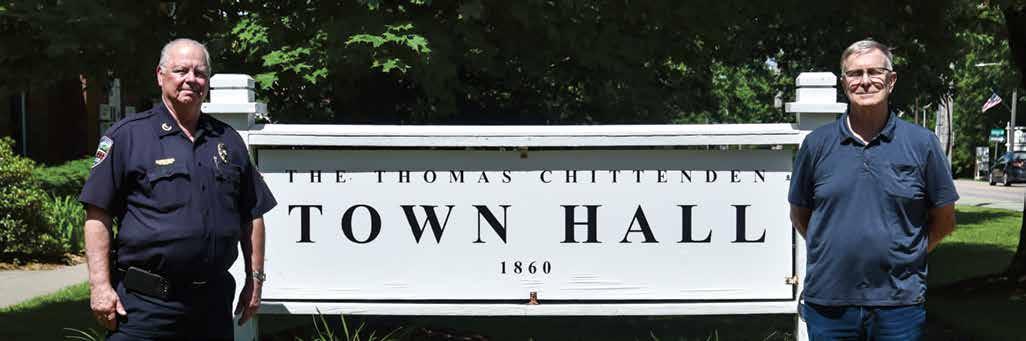
BY JASON STARR Observer staff
There is hardly a moment when Patrick Foley or Bruce Hoar are truly off duty. They both signed up for town jobs — police chief and public works director — with ’round-the-clock responsibilities.
But on the Fourth of July, when Williston stages its annual Independence Day parade through the Village, the pair will get a chance to give someone else the keys, sitting in a convertible as Grand Marshals at the head of the parade. It will be a time to wave, take a bow and say goodbye; they are both retiring at the end of the month.
During Foley’s nine-year tenure as Williston Police Chief, he’s typically been on foot during the parade directing traffic. He said his law enforcement mindset will likely creep in, even this year.
“I’m always working. Even

when celebrating, I’m always concerned about the what-ifs,” Foley said.
Hoar typically does not attend Williston’s parade but said he was honored when asked to be a Grand Marshal, feted for his 17 years leading the public works department.
“It’s a nice recognition,” he said.
FAMILY CALLS
Foley is wrapping up a 50-year law enforcement career, the majority of it spent as chief in Vermont and Massachusetts towns. He arrived in Williston in 2017.
Although he had planned to serve out the remainder of his current contract through 2028, family medical issues have pulled him and his wife increasingly toward his native Rhode Island over the past few years. Last winter, Foley, 73, decided it was time to move there. His wife had already been living in Rhode Island taking care of ailing family members.

“I need to relocate to help people down there,” Foley said. “It’s time. We need to be down there for everybody.”
Foley’s daughter and her family live in Vermont at a home in Bristol, and he expects to return often. He also has friends and colleagues amassed during a career that began as an officer at the Burlington Police Department in the late 1970s, with whom he looks forward to continued get-togethers.
“We will still visit,” Foley said. “It’s not that far of a ride and we like it here.”
In Rhode Island, Foley plans to continue his committee work with the National Association of Chiefs of Police and potentially take a law enforcement teaching job.
“I’m going to stay active,” he said. “I can’t sit still.”
Foley is leaving a police department that continues to try to staff up. Recruiting officers has been a constant challenge of Foley’s
tenure, and the department is currently three officers short of fully staffed. A female officer is being sworn in later this month.
Ideally, Foley would have had a deputy chief working under him for the past few years ready to step into the chief’s role. But departures of experienced officers short-circuited that plan.
Town administrators are hoping to have a new chief in place soon enough to train under Foley for at least a few weeks before his July 31 retirement date.
“The people I’ve heard who have expressed interest, any one of those would be a good replacement for me,” said Foley. “They are going to get somebody they are happy with.”
Public works is a second career for Hoar — one that’s lasted 30 years. A native of Lancaster, Penn., Hoar joined the U.S. Coast Guard at age 17, and came to Vermont
as a navigation officer on Lake Champlain. At age 30, he enrolled at Vermont Technical College, where he earned a degree in civil engineering.
Hoar worked in the South Burlington public works department before taking the head job in Williston.
“I’ve enjoyed my time here. It’s been a great career, but it’s time,” the 66-year-old Richmond resident said. “I don’t want to be the person in charge of everything anymore.”
More than any other municipal department, public works serves every resident every day. From the water system, to the sewer system to the roads and sidewalks, the department maintains the infrastructure that is essential to daily life.
“When you wake up in the morning and turn the water on, that’s public works,” said Hoar. “When you go out the door to drive down the road, that’s public works.






Vermont
‘Zero







EMAIL EVENT LISTINGS TO EDITOR@WILLISTONOBSERVER.COM
FRIDAY, JULY 3
Deb Beckett Memorial 5K Run/Walk. Registration opens at 7:30 a.m. Village Community Park. Ice Cream Social and Town Band Concert. 6:30 p.m. Village Green.
Library Book Sale. 4-6 p.m. Friday; 9 a.m.-1 p.m. Saturday. Williston Central School.
SATURDAY, JULY 4
Parade, Activities and Fireworks. Parade begins at 10 a.m. Activities on the Green at 11 a.m. Fireworks at 9:20 p.m.
TUESDAY, JULY 7 Selectboard meeting. 7 p.m. Town Hall. Agenda at town. williston.vt.us.
Marshals
continued from page 1
It’s in the background every day. There’s no way around it.”
His tenure started before the construction of Finney Crossing, the Hamlet, Creek’s Edge and other neighborhoods that have expanded the department’s scope of work. His staff, which now consists of 18 people, has grown, too.
“The job has gotten more complex,” Hoar said. “There is more coming online all the time … My staff has always been very good about, if there’s something new, we adapt and try to figure it out.”
The town has an open job posting to find a new public works director. According to Hoar, Assistant Public Works Director Christine Dougherty will be among the applicants.
Hoar is unsure of his retirement plans. He wants to continue working, but looks forward to no longer being on call.
“I won’t have to worry about water breaks,” he said. “I won’t have to worry about snowstorms. I want to be doing something, but I just don’t want to be doing everything.”
BY KEVIN O’CONNOR VTDigger
A U.S. bankruptcy judge has told the Vermont Roman Catholic Diocese she might dismiss the church’s bid to reorganize its depleting finances if a viable plan isn’t submitted soon.
The state’s largest religious denomination filed for Chapter 11 protection in the fall of 2024 after a past series of priest misconduct settlements reduced its claimed assets by half, to a reported $35 million. Since then, the diocese has paid more than $2 million of its remaining money in fees for its attorneys and for counsel to represent officially recognized creditors, as required by federal law.
To raise funds, the diocese is selling its South Burlington headquarters to Northeast Territories, a Vermont limited liability company, for $3.13 million, court records show. As a result, Bishop John McDermott is set to move his chancery offices to Saint Michael’s

College in Colchester, according to Vermont Catholic Magazine.
Lawyers for the church and creditors reported little other progress Tuesday at a court hearing in Burlington. But in a separate order, Judge Heather Cooper gave the parties until fall to agree on a plan or face the end of the process.
In September, the court will hold another hearing “at which the group will discuss whether this Chapter 11 case remains viable” and “whether
trust in current management remains,” Cooper wrote.
“The court anticipates a proposed plan, conversion, or dismissal as the case approaches the two-year anniversary of filing,” she added.
Ending the proceedings without a proposal would further endanger the diocese’s finances by reviving a set of abuse lawsuits placed on hold by the bankruptcy filing.
The diocese — one of 44 U.S. Catholic entities to seek Chapter
11 protection — has paid $34.5 million to settle 67 clergy misconduct claims, according to records, yet still faces 119 more dating as far back as 1950.
Although the church initially reported $35 million in assets tied to its South Burlington headquarters and state-level holdings, creditors — who include more than 100 abuse claimants — are seeking records on all local properties the diocese oversees. The latter group specifically wants to learn about nearly 70 parishes with an estimated collective worth of $500 million that were placed in trusts in 2006.
As lawyers argue whether the case involves just state or also local assets, the judge is aiming to save money for abuse claimants seeking compensation.
“My concern is that I don’t want it all going to the professionals,” Cooper said at an earlier hearing. “I do think that the survivors probably would like to have something left over at the end of the day.”








BY REED PARKER
Williston Energy Committee
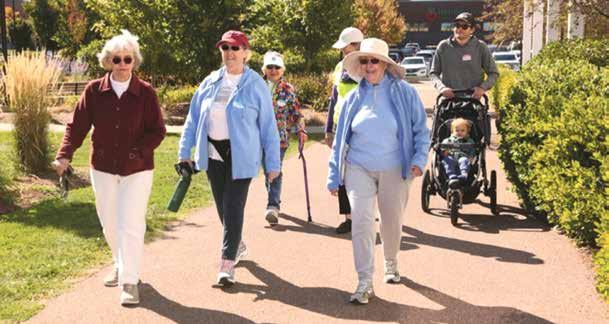
When a group of Williston residents gathered last year to talk about the value of walking in our community, then conducted a “walk audit” to assess the friendliness, safety and risks of walking, we found out just how very important and necessary walking is in many people’s lives.
In this article, we’ll review the highlights of the “Williston Walks!” final report and the recommendations made to the town and state, which could result in a safer walking experience for all residents.
Conducted on a beautiful fall day last September, the walk audit was developed as a community walkability assessment of the Finney Crossing and Blair Park neighborhoods. This location was chosen due to the large number of residents, the availability of retail businesses and services within a reasonable walking distance, as well as the proximity to several heavily trafficked roads including Routes 2 and 2A.
The Finney Crossing and Blair Park neighborhoods are part of the larger Taft Corners area, which was developed over decades, and until recently had little concern for pedestrian traffic. As one observer said, “Route 2A is not a street, it is a highway.”
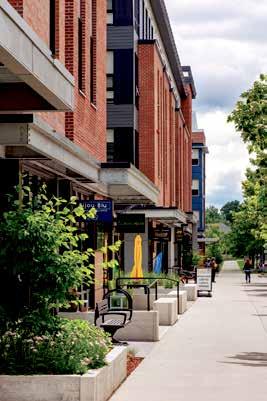
Fortunately, the town is changing. As the report states: “The Williston 2025 Comprehensive Plan commits the town to building “complete streets” whenever possible. Complete streets are designed to accommodate all users and modes of transportation safely — not just motor vehicles.”
The five major objectives of the “Williston Walks!” project were to encourage resident participation, gather data, coordinate with local municipal plans and make viable
recommendations to the town and state for improvement.
We encouraged neighborhood participation by involving residents in assessing local walking conditions and identifying opportunities to make Taft Corners more walkable and connected.
We supported Williston’s active mobility and transportation planning with data-driven input and resident feedback on pedestrian infrastructure, safety and accessibility.
We identified and recommended priority improvements, such as safer crossings, improved lighting, crosswalk visibility and seating areas to enhance pedestrian safety, confidence and comfort.
We documented resident opinions, perspectives and priorities to help inform decision-making on walkability, accessibility and investments in pedestrian-friendly infrastructure.
And we promoted awareness and collaboration among residents, town staff, partners and businesses to help complement Williston’s commitment to developing a safe, inviting and walkable community.
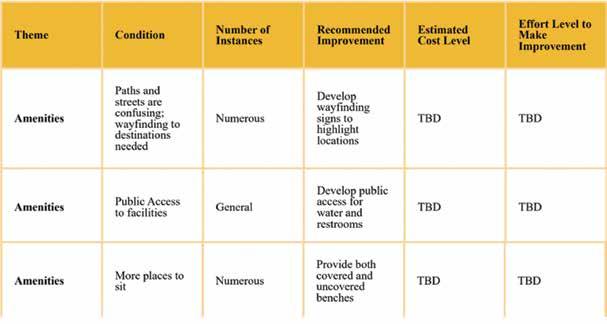
Six major findings came about directly from the walk audit. As shown in Table A, the first three can be resolved by relatively minor changes by the Vermont Agency of Transportation or the town. Recommendations four and five require more planning by the town, and the last is a social, cultural behavior problem with many drivers today.
As seen in Table B, existing amenities are more oriented to personal needs of the pedestrian and could be addressed by the town or state or a non-profit or volunteer organization — or even a retail merchant in the area.
The Williston Walks! report
WALKS page 5


continued from page 4
includes 14 broad recommendations in addition to the pedestrian related items noted above. The top three include:
— Utilize these report findings to inform future town planning and development efforts.
— Prioritize pedestrian and bicycle connections to other Williston neighborhoods.
— Plan and develop a multi-use path to the Village of Williston.
Many of these recommendations and residents’ desire for a safer, more walkable and rideable environment will be addressed by the “Williston Active Transportation Plan.” Now under development, this plan takes its direction from the Transportation chapter of the Williston Comprehensive Plan, proposing a significant focus on expanding and enhancing mobility in
Williston for modes of transportation that do not require a car.
As with the input from Walk Audit participants, the town needs
Complete streets are designed to accommodate all users and modes of transportation safely — not just motor vehicles.
to hear from you, as public participation will be key to the success of this new plan.
The “Williston Walks!” project was led by the non-profit Net Zero Vermont in conjunction with AARP
VT, Vermont Clean Communities, the Vermont Department of Health, the Town of Williston Planning and Zoning Department under a grant provided by the Chittenden County Regional Planning Commission.
To read the entire Williston Walks! final report, navigate to the “Get Involved” webpage on the Planning and Zoning Department section of the Williston Town website: https://bit.ly/3SG9YKN.
To participate in Williston’s energy future, reach out to your Williston Energy Committee at energy@willistonvt.org or attend a public meeting held on the second and fourth Wednesday of each month. The agenda for upcoming meetings is posted on the Town of Williston website (www. town.williston.vt.us). For more information, visit: https://www. willistonvtenergycommittee.org.

Full-service plumbing for new construction, renovations, and service work. Includes water and drainage piping, water heaters, and complete system installations.
Efficient, reliable heating systems designed for Vermont conditions. Boiler and furnace installation, replacement, and system upgrades.
Professional installation and replacement of air conditioning systems and heat pump mini-splits for homes and businesses.
Installation and service of plumbing, heating, and cooling systems for commercial buildings and facilities.
Specialized pipe welding for hydronic, gas, and mechanical systems, including fabrication and field installation.
Serving our community since 1985
willistonobserver.com
P.O. Box 1401, Williston, VT 05495 802-489-5499
ADVERTISING
Adam Geffken, Account Manager adam@willistonobserver.com 802-338-1655
Rick Cote, Associate Publisher rick@willistonobserver.com 802-373-2136
EDITOR
Jason Starr editor@willistonobserver.com
PRODUCTION & DESIGN
Jan Kenney jan@willistonobserver.com
PUBLISHER
Susan T. Cote susan@willistonobserver.com
BILLING INQUIRIES
Michael McCaffrey office@willistonobserver.com
ADVERTISING SPACE DEADLINE
Friday at 5 p.m. for the next Thursday issue adam@willistonobserver.com 802-338-1655
CLASSIFIED ADS
Deadline is Friday 5 p.m. There is a fee for business, real estate, help wanted and legal ads. Free classifieds must be 25 words or fewer and are printed on a space available basis.
SUBMISSIONS & LETTERS
Deadline is Monday noon for Thursday issue. News/story tips are welcomed. Letters to the Editor should be 300 words or fewer and include your name, address and a daytime phone number so that we can verify the letter’s author.
The Williston Observer reserves the right to edit or refuse submissions or advertising. Opinions expressed in the paper are those of the writer and do not necessarily reflect the opinion of the paper.
A publication of Twin Ponds Publishing LLC
Member:

BY REP. KATHLEEN JAMES
On May 28, Gov. Phil Scott vetoed H.727, an important bill that would have protected Vermonters from the negative financial and environmental impacts of future large-scale AI data centers.
On May 29, the last day of the legislative session, the House attempted a veto override. The roll-call vote had the support of every Democrat, Independent and Progressive legislator on the floor. But the Republicans all opposed, and the 83-52 count fell short of the two-thirds threshold needed to override.
The clock ran out. The final gavel fell. The 2025–2026 biennium ended. And the misguided veto stands.
H.727 received overwhelming support from legislators of all parties throughout the five-month legislative session. But Republicans flipped their votes after the Governor laid down the 62nd veto of his 10-year tenure. (It’s getting hard to keep track: In the all-time Vermont veto list, Gov. Howard Dean runs a very distant second, with 21 vetoes over 12 years.)
Americans for Prosperity, a right-wing, dark-money organization founded by the Koch Brothers and funded by Big Oil and Big Tech, applauded the Governor’s veto in a press release. “Data centers are not a threat,” the press release said. Many Vermonters disagree.
Across the country, Americans are fighting the rapid proliferation of massive data centers. That’s because they’re driving up electric bills, draining water supplies, and paving over fields and forests. Fueled by AI, cloud servers and a big push from President Trump — with an escalating need for ever-more computing power — a typical data center is about as big as two football fields. The so-called “hyperscale” data centers are up to 1 million square feet. That’s 17
the size of a typical big-box store, which means we need to get ahead of this and not wait. And despite what you might have heard, H.727 regulated data centers, and data centers alone.
H.727 guaranteed that any data center would go through the full Act 250 permitting process, no matter where it’s located. Among other things, the Act 250 criteria analyze impacts on air and water quality, water supplies, waste disposal, flood hazards, soil stability,
Our approach to this was specific and targeted: We closed any possible loophole by adding the definition of “data center” to the list of Act 250 triggers.
football fields.
Data centers consume a lot of power, which means they can raise the cost of electricity for ratepayers. They also consume huge amounts of water for cooling — a typical data center can suck up 300,000 gallons per day — and damage the environment in other ways: through air pollution, noise pollution or forever-chemical “PFAS” discharge.
The Legislature is sometimes accused of kicking the can down the road. Not this time. In H.727, we laid out a surefire, proactive way to ensure strict regulatory parameters around any prospective data center of 20 Megawatts or bigger. That’s


guaranteed that electric ratepayers would not be hammered with higher bills but instead would actually benefit. H.727 also would have maximized the construction of renewable power on site. And it included an annual payment the utility would use to help Vermonters — especially those who live near a data center — reduce fossil fuel use and save money on their energy bills.
When H.727 left our committee and won near-unanimous House support in March, it was a strong bill. The Senate made it even stronger. The Senate version passed 26-3 on May 15, garnered near-unanimous support again in the House on May 20, and was sent to the Governor for consideration on May 22. We know the result.
habitat protection, transportation, local schools and services, municipal expenses, historic resources, aesthetics and noise, primary agricultural soils, forest fragmentation, energy conservation, impacts of growth, and consistency with municipal and regional plans. Our approach to this was specific and targeted: We closed any possible loophole by adding the definition of “data center” to the list of Act 250 triggers. That’s a new and important step.
H.727 also required that any large-scale data center sign a 10year contract with its utility. The contract, reviewed by the Public Utility Commission, would have
H.727 would have ensured rigorous and comprehensive review for any large-scale data center that might set its sights on Vermont. It protected ratepayers, protected communities and protected our air, land and water.
In his May 28 veto letter, Gov. Scott raised a concern about the “broader message” that H.727 might send. His veto sent an even broader message to Vermonters: When it comes to large-scale data centers, regulatory protection apparently can wait.
Do you agree?
Kathleen James (D-Bennington) is chair of the House Energy and Digital Infrastructure Committee.

As Williston begins discussing recreation projects (the Recreation and Parks Department just released its Master Plan), I hope we avoid the mistake made during the library expansion process: Designing a project before establishing what taxpayers are willing to spend.
Too often, large projects are developed over several years without a defined budget. By the time residents learn the full cost, significant time and money have already been invested in planning, creating pressure to move forward despite concerns about affordability.
Before we commit $42.5 million — the total cost of all the improvements outlined in the Master Plan — the town should make sure it has a clear understanding of residents’ priorities and what they are willing to pay for. Surveys and public input are valuable, but they should accurately reflect the broader community, not just those residents who are most engaged in the process.
Once those priorities are understood, a project should be designed to fit within a defined budget. Transparency about both construction and ongoing operating costs should be part of the conversation from the beginning, not just before a vote.
Public silence should not be interpreted as public support. Many residents are busy managing work, family and rising costs, and may not follow every stage of a planning process.
If the community is expected to support future recreation investments, meaningful public input, fiscal responsibility and clear budget expectations must come first.
David Martel Williston
BY OLIVIA GIEGER VTDigger
When Gov. Phil Scott last week vetoed the Legislature’s boldest attempt this year to lower health insurance costs, he said his own package of proposals offered a better alternative.
Specifically, in a letter sent to the Senate, Scott highlighted efforts from a bill, H.585, that his administration put forward in January.
“These proposals included proven approaches that expanded affordable choices in other states,” Scott wrote, highlighting the boon he said the bill could provide to small businesses in particular.
Now, Scott says he will pursue executive action to implement some of those ideas.
H.585 set out to accomplish a wide-ranging suite of health insurance-related reforms and expansions, but it ultimately died in the Senate Finance Committee.
“It had a lot of pieces that were a good faith attempt at lowering healthcare costs, but none of them felt ready for primetime,” said Sen. Ruth Hardy, D-Addison, who sits on the committee.
The bill Scott vetoed, S.190, would have sped up the state’s ability to begin using a cost-saving tool called reference-based pricing. That approach ties insurers’ payments to hospitals to an external benchmark, usually a percentage of the rates that Medicare pays hospitals. S.190 would have made that change for just two insurance groups — public school employees and people buying plans on Vermont’s Affordable Care Act marketplace — an approach Scott said was unfair because it prioritized savings to some insurance groups over others.
But for Hardy, reference-based pricing had been better vetted in Vermont and beyond compared to Scott’s ideas in H.585.
Inside the 25-page bill, Scott’s team included a wide-ranging slate of efforts to expand insurance types in the state, particularly for young people and small businesses.
H.585 outlined a case for bringing association health plans back to Vermont. Those allow small employers to collectively create a larger pool of insured people through associations, such as a chamber of commerce, rather than purchasing through the marketplace. Those people would then leave the collective insurance pool, making the shared
marketplace smaller.
The state stopped allowing those plans to operate in 2020, following a federal court decision and concerns that they incentivized healthier people to exit the collective insurance pool, leaving older, costlier patients paying higher premiums for their own care.
One section of the bill included provisions for allowing insurance premiums to be based partially on age, in an effort to make it more affordable for young, healthy people to purchase insurance, while another hotly-debated piece of it proposed phasing in a billing change that would let insurers pay the same amount for certain services provided in or out of the hospital.
Part of the reason Scott vetoed S.190 may be because his administration wants to seek a special federal waiver before Vermont attempts to pull prices down for plans on the Affordable Care Act marketplace.
The waiver would allow Vermont to keep any federal subsidy money that could be lost by lowering Affordable Care Act insurance premiums through efforts, such as reference-based pricing.
Kaj Samsom, the commissioner of the Vermont Department of Financial Regulation, which oversees health insurance, told VTDigger the state could use the waiver to create a reinsurance fund — basically, a pool of money insurers can draw from if they need to pay out expensive claims. That could lower health insurance costs even further, Samsom said.
Since his veto, Scott hasn’t said which healthcare reforms he will pursue through executive action. Amanda Wheeler, a spokesperson for Scott, said his office plans to announce more details later this week.
Rep. Alyssa Black, D-Essex Town, who chairs the House’s healthcare committee, bristled at the idea of delaying efforts to reduce ACA premiums in the hopes of eventually securing a waiver to reroute those lost federal dollars.
“The (administration’s) argument was keep Vermonters paying more so that theoretically we can show that we achieved savings,” she said. “I found that disgusting quite frankly.”
She’s frustrated that collaborative work has become partisan. Black had championed a number of the provisions included in H.585.
Sen. Ginny Lyons, D-Chittenden Southeast, who leads the Senate’s healthcare committee, said she was “dumbfounded” by Scott’s veto,
especially after he has campaigned on affordability and efforts to lower property taxes, which she says S.190 could have done.
“I think he’s prioritizing insurers over individual people,” she said.
Republican leaders in the House and Senate did not respond to requests for comment.
Mike Fisher, the state’s healthcare advocate, worries the political battle at the heart of the veto distracts from bipartisan efforts already in-motion to
pull down hospital prices across insurance groups.
“Vermonters are being priced out of getting care. We are hearing from more and more Vermonters who have very poor coverage or no coverage at all, and are scrambling to know what to do when they get sick,” he said, “We have to have political fortitude to do this work, and I sure hope the governor’s veto is not a sign of a lack of commitment.”


BY EMMA GREEN VTDigger
Marita Canedo had just woken up when the phone started ringing.
It was early morning on March 11, and Canedo was the on-call team member for the emergency phone line of Migrant Justice, a statewide immigrant rights organization.
Several calls came in at once, Canedo said, and each caller said the same thing: U.S. Immigration and Customs Enforcement (ICE) agents were gathered outside of a
house on Dorset Street in South Burlington.
Despite the early hour, Canedo was prepared.
“We have talked many times here as a team (about) what to do when we get these emergency calls,” she said.
Migrant Justice’s rapid response infrastructure sprang into action. A trained volunteer verified that ICE agents were present, while Canedo talked on the phone with the people inside the house, informing them of their rights and taking down their information in case
The Economic Development Director is a highly collaborative and visible leader responsible for implementing South Burlington’s Economic Development Strategic Plan. This individual will steward partnerships, support business growth, strengthen key industry clusters, advance workforce and talent initiatives, and help shape vibrant places such as City Center and future mixed-use districts, ensuring that South Burlington’s economic growth reflects its climate leadership, community identity, and long-term goals.
Salary range: $95,000–$120,000 annually Apply by July 13,
they were arrested by ICE, she recalled.
Around 8:30 a.m., a text went out to Migrant Justice’s network in the surrounding area, alerting people that there were ICE vehicles outside the Dorset Street house.
“Get there ASAP to observe/ record,” it read. “Spread the word!”
Migrant Justice has spent the last year and a half revamping and expanding its rapid response network. That includes a handful of paid staff and a loose constellation of about 80 volunteers who are trained on how to verify or document immigration enforcement. In addition, more than 3,500 people are signed up for alerts on immigration enforcement actions.
As the Trump administration’s aggressive approach to immigration enforcement has made headlines across the country and in Vermont, volunteers across the state have worked to respond in their own communities, often in concert with statewide organizations such as Migrant Justice. From verifying reports of ICE agents to tracking

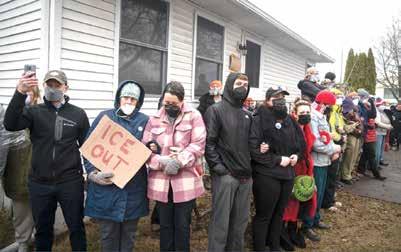
detainees, people are finding ways to document and resist the Trump administration’s push on immigration enforcement, both on the streets and behind the scenes.
While Vermont hasn’t seen a high-profile immigration enforcement surge like those in Minneapolis, Los Angeles and elsewhere, the state has seen some of the impacts of heightened ICE activity in neighboring Massachusetts, and activists said they’ve seen an increase in
immigration detentions since Trump returned to office.
Activists across Vermont also said that the Trump administration’s rhetoric and actions around immigration have created an atmosphere of fear for many immigrants in the state, and for people of color who fear they will be racially profiled by ICE.
In a statement attributed to an unnamed spokesperson, ICE said “if you are here legally and

have not committed crimes, there is no need to worry,” and said the agency’s enforcement actions are not based on racial profiling.
Migrant Justice has run a rapid response network since Trump’s first term, according to Rachel Elliott, an organizer with the group. The network was largely dormant during the Biden presidency, Elliott said, but when Trump was reelected, organizers chose to revitalize the effort.
“There were situations that we knew having responders on scene could help, and so we decided to reactivate and really dramatically expand the rapid response network,” Elliott said in an interview.
The group runs a statewide emergency hotline, where bilingual staff field calls from immigrants in need of direct assistance and from other community members calling to report potential immigration enforcement

sightings. When they get reports of potential ICE or Customs and Border Protection activity, Elliott said, they reach out to a network of about 80 people across the state who’ve been trained in verification.
Those volunteers aim to get on the scene as quickly as possible to determine whether the report is accurate, which helps Migrant Justice determine next steps and avoid spreading incorrect reports.
Community members who call into the rapid response line can sometimes mistake other law enforcement for immigration officers, Elliott said.
“We’re in a time where, because of fear and because of what people are seeing in the news, they’re understandably hyper vigilant,” Elliott said.
“We never want to be in a position to share misinformation,” they added.
Robin Morgan, an activist based in Brattleboro who organizes with Lost River Racial Justice, has done some of that verification work. She and other volunteers in the area have attended Migrant Justice trainings to learn how to verify reports of
“These are our community members. People are trying to steal them and hide them, and that is not okay. So (we’re) trying to prevent that as much as possible.”
Leif Taranta Activist
ICE activity, expanding the network in an area where Elliott said the group has fewer members.
When Morgan gets a report of potential ICE activity in her area, she and other volunteers figure out who in their network is available to respond and work to quickly get someone on the scene. They try to respond in pairs or groups to make the work safer, she said.
Volunteers look at uniforms and marked vehicles to identify what agency officers work for, Elliott said, and typically send photos or a description to the Migrant Justice team, too.

Volunteerism is vital to our mission
Donations are coming in daily, and we need your help sorting, stocking, and organizing. No retail experience is necessary, just a willingness to have fun!
Our homes are built by volunteers of all skill levels. Build sites are welcoming, judgment-free places to learn, with all training, tools, and safety equipment provided!
When you volunteer at Green Mountain Habitat for Humanity, you are giving us more than just your time. You’re supporting our mission to build affordable, energy-efficient housing in Northwest Vermont. Scan the QR code to learn more, or contact volunteer@vermonthabitat.org
Migrant Justice members also know some officers’ faces from attending ICE check-ins, and the organization keeps track of license plates associated with undercover ICE vehicles, which they use to help verify sightings, Elliott said.
Morgan said that most reports her local network has responded to have either turned out to be local or state police, or the reported officers have been gone by the time volunteers arrive. But dispelling rumors of immigration enforcement is often as important as identifying ICE activity, she said.
“When there are rumors of immigration enforcement, people will be afraid to go out, they’ll keep kids home from school, they’ll skip doctor’s appointments,” Morgan said.
Once reports of ICE or CBP activity are verified –– such as the report on March 11 ––Migrant Justice decides whether a larger mobilization is useful, then contacts people in the area of the report who are signed up to receive their alerts, Elliott said.
“Basically, the goal is to be the angel on the officer’s
shoulder,” they said, adding that having witnesses recording officers’ actions can help deter illegal actions.
Often, the group is responding to detentions that have already happened. But community mobilization still plays an important role at that point, Elliott and other activists said. Migrant Justice has organized rallies and packed courtrooms for people detained by ICE, including for the three people detained on March 11.
Behind the scenes, activists also work to track the paths of people who are detained in Vermont. Leif Taranta is part of a group of activists who track immigration detainees in Vermont.
The group maintains a public dashboard, based on state and federal data, that tracks how many immigration detainees are incarcerated in Vermont prisons and where they are transferred. But Taranta said the group also aims to track people in real time when they are in ICE custody. That can help detainees stay in
ICE page 10


touch with their families and legal counsel even when ICE moves them without notifying attorneys, Taranta said.
“Our goal is to play a little part in trying to keep track of someone,” Taranta said, “so the lawyer and the organizations (are) able to work their magic.”
“These are our community members. People are trying to steal them and hide them, and that is not okay,” Taranta added. “So (we’re) trying to prevent that as much as possible.”
Migrant Justice’s emergency line can also help connect people with legal counsel when they are detained.
“The sooner that someone can get legal representation, the sooner they can have a conversation with a lawyer, the more quickly they’re able to understand what’s going on and be able to make informed decisions about how to navigate the process,” Elliott, the Migrant Justice organizer, said.
Speedy action from lawyers can also prevent people from being transferred out of the state, keeping them closer to their community and in a jurisdiction that tends to rule more favorably on immigration detention cases, according to immigration attorney Kristen Connors.
Connors represented Johana Patin Patin, one of the people arrested by ICE on March 11.
Connors started working on the case immediately after Patin Patin was detained. The next morning, Connors learned Patin Patin had been released from a Vermont jail into ICE custody. She feared that Patin Patin was being transferred out of state.
“I had to write and file the fastest habeas petition I’ve ever had to file,” Connors said.
The same day, Connors secured an order from a federal judge keeping Patin in Vermont.
The following Monday, at a hearing packed with community members, some of them brought there by Migrant Justice’s rapid response network, a federal judge ordered her release.
Kicking off the Williston’s Independence Day celebrations will be the annual Deb Beckett Memorial 5K Run and Walk on Friday, July 3.
The event, which honors longtime Town Clerk Deb Beckett, is sponsored by the WillistonRichmond Rotary Club and takes place at Village Community Park. Runners and walkers of all levels are welcome.
Proceeds from the run/walk support Rotary Club community projects.
The first races will be for children ages 4-12; the first, at 8:30 a.m. is a one-mile followed by a half-mile run at 8:35 a.m. No fees or preregistration are required for children.
Children may also participate in the all-ages 5K run/walk if registered by an adult. Registering a child does not mean the adult
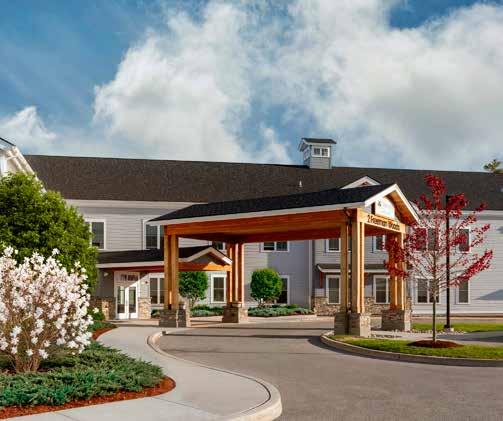
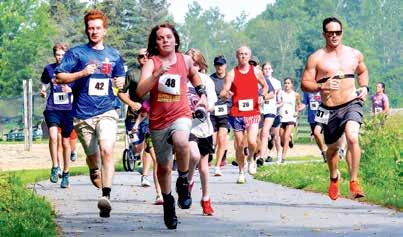
is required to run with the child but, of course, are welcome to run alongside. Volunteers will be race-side to help supervise unaccompanied children.
REGISTRATION DETAILS:
• Race Day Registration at Village Community Park
$20 (ages 16 & under)
$30 (ages 17+)
(Shirts and water bottles available while supplies last)
RACE DAY
Check in and registration starts at 7:30 a.m. at the park. Walkers will start at 8:45 a.m. and runners at 9:15 a.m.

BY STEVEN SHEPARD
It is the fall of 1776 in the newly settled, occasionally dangerous, sparsely populated frontier wilderness that will become the Town of Williston in the Republic of Vermont. Statehood is still 15 years away, and in July 1777, Vermont adopts its own constitution.
For the duration of the Revolutionary War, it exists as a sovereign nation. In January of 1791, delegates will meet in Bennington and ratify the U.S. Constitution, and later that year, Vermont will be accepted as the 14th state — the ‘plus one’ to the original 13 colonies.
In 1776, northern Vermont is heavily forested, with thick, dense stands of old-growth sugar maple, eastern hemlock, red spruce and white pine. Beech, yellow birch and balsam fir are common.
Compared to Vermont’s relatively young forests today, many of the trees in the old growth forests are immense, a thicket of northern hardwood and conifer.
Some clearing of the forest
has begun; the large-scale deforestation for sheep farming and industry will not reach its peak for another 35 years or so, because full-on immigration of European settlers doesn’t happen until the Revolutionary War ends.
Many of the felled trees become the temporary but rugged log cabins that house the first settlers who make their way to the region. They are single-room structures with dirt floors, small glassless windows, and crude stone chimneys. The logs are notched together, then chinked with mud, moss, sticks and clay to help keep the raw winter at bay.
Most of the cabins measure roughly 16 by 20 feet, their single room layout serving as living room, kitchen and bedroom. Some also have a sleeping loft, reachable by ladder. Roofs tend to be wooden shake, and furniture, such as it is, is primitive — rope beds, handhewn tables and crude benches.
Williston is chartered in 1763, and Thomas Chittenden and Colonel Jonathan Spafford establish the first permanent settlements in May 1774. By 1776,
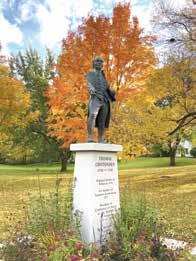
British, the Tories, and at various times, attacks from Quebec’s Caughnawaga, Kahnawake and Mohawk people, as well as members of the Abenaki nation. John Chamberlin is attacked in his home; a hired man and a child are killed in the attack.
traditional homelands begin to be surrounded by English and colonial settlements.
other families arrive, including Elihu Allen, Abijah Pratt and John Chamberlin, creating a small, vulnerable community. Vulnerable indeed: In 1776, as British soldiers and their allies advance from Canada, many of the settlers flee southward in advance of the enemy troops. Those who choose to remain face threats from the

Williston’s Native American population in 1776 is primarily Western Abenaki. Many of them are displaced by early colonial skirmishes and growing numbers of settlements. Their primary populations are in the Missisquoi region near present-day Swanton along Lake Champlain and along the upper Connecticut River. But based on archaeological evidence, they foraged and traded widely across the region. There is significant evidence of their presence in and around the site of modern-day Williston.
Interestingly, alliances and allegiances between Native American groups and settlers are “messy” and vary widely in 1776. The beginning of the American Revolution puts the Abenaki of Vermont in an awkward if not precarious position, as their


As the Revolutionary War becomes inevitable, some of the Abenaki try to stay neutral, but some have personal and tradebased relationships with the Canadian Odanak, who are allied with the British. Consequently, some Vermont Abenaki fight with the British against the colonial settlers. On the other hand, some Abenaki are sympathetic to the colonial cause, going so far as to join local colonial militia units. So, while Vermont’s Abenaki people are largely concentrated in two regions, they roam throughout the state, sometimes as a threat to the colonists, sometimes as allies. In spite of all this, life goes on. The landscape is transforming from undisturbed forest into a checkerboard of small family farms, each with crop fields and a few head of livestock. The town, such as it is, begins its development to the north, close to the Winooski River because of the rich, fertile soils found alongside



July 4 Parade
Independence Day!
Celebrate 250 years of the Red, White & Blue Grand Marshals
Patrick Foley, retiring Police Chief
Bruce Hoar, retiring Public Works Director
Pre-register on the Recreation website, https:// willistonvt.myrec.com to be in the parade.
Parade starts at 10 a.m. Line-up starts at 9 a.m. at the Johnson Farm on Rt. 2. Judging of entries starts at 9:30 a.m.



P 6:30 p.m.10:30 p.m. 6:30 p.m.10:30 p.m.
PARADE ROUTE WILL BE CLOSED to through traffic from 9:30 a.m. - 11:30 a.m.
Route 2/Williston Road from Johnson’s Farm to Old Stage Road 2









Deb Beckett Memorial 5K Run/Walk
Village Community Park
Kids one-mile run: 8:30 a.m.
Kids half-mile run: 8:35 a.m.
5K Walkers: 8:45 a.m.
5K Runners: 9:15 a.m.
Sponsored by the Williston-Richmond Rotary
Library Book Sale
4 p.m-6 p.m.
Williston Central School
Sponsored by Friends of the Dorothy Alling Memorial Library
Ice Cream Social 6:30 p.m.
Village Green
Sponsored by the Williston Federated Church
Town Band Concert
6:30 p.m.
Village Green
SATURDAY ★★ JULY 4
Library Book Sale
9 a.m.-1 p.m.
Williston Central School
Old Brick Church Open House
9 a.m.-12 p.m. Old Brick Church
Ringing of the Church Bell will be at 12 p.m. for 2 minutes and 50 seconds to celebrate the 250th Birthday Celebration
Hosted by Church Trustees
Stovepipe Corners
Schoolhouse Open House and Williston Memories
9 a.m.-10 a.m. & 11:30 a.m.-1 p.m.
Village Green
Sponsored by the Williston Historical Society
Independence Day Parade
10 a.m.
Rt 2/Williston Road
West from Johnson’s Farm to Old Stage Rd.
Activities on “The Green”
11 a.m.-12:30 p.m.
Village Green
Activities sponsored by Crosspoint Church Fire Department Open House
11:30 a.m.-1 p.m.
Williston Fire Dept.
645 Talcott Road
Evening Celebration
6-9 p.m.
Village Community Park
ACTIVITIES
Sponsored by Crosspoint Church FOOD TRUCKS
ENTERTAINMENT
NORTHERN
COMFORT BAND
Sponsored by Davis Reality
Fireworks
9:20 p.m.
Village Community Park
Rain date July 5

continued from page 11
its banks. The goal is to produce food, which is heavily influenced by British, Dutch and Native American cuisines. Central to all are local produce and game, cooked over an open hearth. Meals are rich, hearty and seasonal, and typically include preserved foods, wild game and root vegetables, a result of both the region’s harsh climate and scarcity brought on by the war. Tables offer salt pork, moose, venison, cornmeal johnnycakes, and boiled vegetables, with hard cider or beer served to adults and children alike.
The Friends of the Dorothy Alling Memorial Library reminds anyone planning to shop at their annual July Fourth Book Sale that only cash and checks will be accepted as payment. The Williston Central School gymnasium does not support electronic payments due to poor cell service.
offers trout, smallmouth and largemouth bass, and freshwater mussels. Even the Allen Brook provides panfish such as perch, sunfish, and crappie.
While there wasn’t much to Williston in 1776, It was nevertheless a place to be reckoned with. It grew steadily, with farms, family homes, businesses and industries popping up to take advantage of the town’s key location.
There will be 2 shuttles run by SSTA on July 4, starting at 6:30 pm.
One shuttle will start at Allen Brook School, and the other at the side parking lot of Shaw’s.
The last shuttle will depart for the Village Community Park to view the fireworks at 9 p.m. Fireworks start at 9:20 p.m.
The shuttle will run after the fireworks to get you back. The last shuttle run is at 10:30 pm.
Shuttle stops for both SSTA buses will be the following:
Allen Brook School parking lot: There will be a sign at the end of the sidewalk heading towards the walking path, west of the school.
Corner of Stillwater Lane and Holland Lane
in Finney Crossing: There will be a sign on the corner for pick up.
Corner of Market Street and Holland Lane: Diagonally across from Healthy Living parking lot. There will be a sign on the right side corner before the intersection for pick up.
Shaw’s left-side parking lot: The east side of Shaw’s, not the main parking lot.
Williston Central School: There will be a sign at the end of the bus loop/beginning of the path where drop off and pick up will be.
Call the Williston Recreation and Parks Department for more information at 876-1160.
Breakfast is porridge, cornmeal mush, fried bread, cheese, or meat and vegetables left over from the previous evening’s meal. The mid-day dinner, typically the main meal of the day, often includes a thick stew, a meat pie, or boiled salt pork or beef alongside whatever seasonal vegetables are in the offing. Supper, which is a lighter evening meal, is often leftovers accompanied by bread and milk. And dessert? Of course there’s dessert: maple sugar, berries, apple-based baked goods, and molasses cookies. Some things never change.
Early Willistonians with hunting skills are never in danger of starving. The region’s wildlife is abundant, diverse and undisturbed, and the forests provide plenty of cover for beaver, deer, black bear, moose, pine marten, fisher, ruffed grouse, turkey, and apex predators, including eastern bobcat, wolves, and cougars — what we know today as the catamount. Nearby Lake Champlain
The landscape is transforming from undisturbed forest into a checkerboard of small family farms, each with crop fields and a few head of livestock.
It’s fun to muse: What would Thomas Chittenden, Jonathan Spafford, Elihu Allen, Abijah Pratt, and John Chamberlin think of the place, 250 years later? What would their reaction be to the impossibly fast cars and trucks on the nearby interstate, to the town’s diverse businesses, to the styles of the town’s buildings, or to the way we live?
And how proud would they be that some of the buildings that went up during their lifetimes are still standing, a testament to Williston’s founders?
Dr. Steven Shepard is a member of the board of directors of the Williston Historical Society.

May 17 at 5:52 a.m. — 911 call from La Quinta. Accidental dial, no emergency.
May 17 at 12:43 p.m. — Male and female in Walmart causing a disturbance. Both parties were issued a notice of trespass and left the store.
May 18 at 1:04 a.m. — Silver sedan sped off from officer. Officers could not catch up to it.
May 18 at 1:45 p.m. — Retail theft reported at REI. Female suspect was gone before officers’ arrival.
May 19 at 8:42 a.m. — Intoxicated male at La Quinta. Male was transported to the hospital for evaluation.
May 19 at 5:32 p.m. — Assisted Essex Police Department with issuing a citation to a male living on St. George Road.
May 19 at 9:28 p.m. — Report of a noise disturbance on Seth Circle. Officers checked the area and could not hear anything.
May 19 at 10:51 p.m. — Assisted Vermont State Police with locating wrong-way driver on interstate. Vehicle was eventually located near Colchester.
May 19 at 11:06 p.m. — Report of a male passed out on the bench outside of La Quinta. Male was intoxicated. He moved along without issue.
May 20 at 1:35 p.m. — Retail theft reported at Home Depot. Male suspect was located and issued a citation to appear in court for retail theft.
May 20 at 9:31 p.m. — Female walking in the middle of the road. Officers located the female and she moved to the sidewalk.
May 21 at 11:33 p.m. — Male on Cornerstone Drive suffering a mental health crisis. Community Outreach came and helped with the male.
May 21 at 6:23 p.m. — Female wandering the halls of La Quinta and knocking on doors. Female was
moved along.
May 21 at 9:15 p.m. — Report of a stolen vehicle at Walmart. Vehicle was not stolen, complainant forgot where he parked.
May 22 at 2:59 p.m. — Disturbance at Zephyr Place. Parties were separated.
May 22 at 3:12 p.m. — Suspicious male and female at Taft Corners. Both parties were issued a notice of trespass and moved along.
May 23 at 11:15 a.m. — Report of an altercation at Zephyr Place. Male suspect was located and issued a citation to appear in court for aggravated assault.
May 23 at 6:09 p.m. — Retail theft reported at Walmart. Male suspect was located and issued a citation to appear in court for retail theft.
May 23 at 8:00 p.m. — Retail theft reported at Plato’s Closet. Three juveniles were located and issued referrals to the Williston Community Justic Center.
Officers also conducted 91 traffic stops and responded to six alarm activations and nine motor vehicle crashes during this time frame.

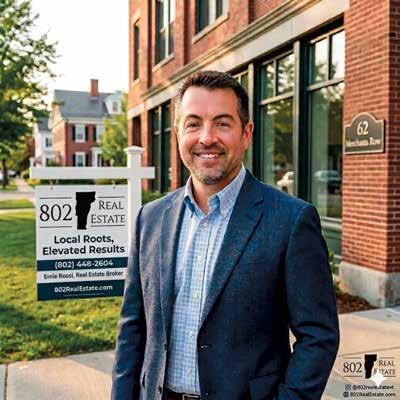









Register at www.willistonrec. org before July 2 to be in the July Fourth parade. The parade starts at 10 a.m. Judging of floats begins at 9:30 a.m. at the parade line-up.
The Deb Beckett Memorial 5K Run/Walk will be held on Friday, July 3. Information can be found at www.willistonrec.org. There will also be a Kids Run/ Walk. This event is sponsored by the Williston/Richmond Rotary Club.
LINE DANCING
Ages 15-plus. Learn each week and build your confidence and abilities while having fun. Hour-long beginner class is held Sundays, starting July 12, 4-5 p.m., at the R.E.C. Zone, 94 Harvest Lane. Instructor: Kelly Hayes. $10.

JUNE 12
• 9:08 a.m. — Firefighters responded to Eagle Crest after a report of an emergency. Crews determined no incident was present upon arrival and the call was classified as a location error.
• 11:45 a.m. — Personnel provided a lift assist for a resident on Industrial Avenue.
• 6:29 p.m. — Crews investigated a fire alarm activation at a business on Commons Road. No emergency was found.
• 8:19 p.m. — Firefighters responded to a fire alarm activation on Lawes Drive. No emergency was found.
JUNE 13
• 2:13 a.m. — A malfunctioning alarm prompted a response to Maple Tree Place. The activation was determined to be a false alarm.
PICKLEBALL SCRIMMAGE & LEARN
Focus on building skills through playing and instruction. This program is designed for intermediate-level players to develop their techniques. Bring your paddle. Instructor: Corey Gottfried. Tuesdays, June 30-Aug. 11, 5:30-7:30 p.m., $135.
TABLE TENNIS
Come out and play table tennis, stay fit and meet new people. The program is open to all experience levels. Players should bring their paddles (a limited number of loaner paddles are available).
Tuesdays, June 2-Oct. 6, 6:308:30 p.m., $30.
TENNIS IN THE PARKS
This program is for beginner or returning novice adult players. Led by a USTA-approved coach with a focus on fun and learning basics. Get great exercise while developing the skills to serve,
• 7:27 p.m. — Fire crews responded to Hawthorne Street for a reported emergency that was later classified as a false call.
JUNE 14
• 2:26 p.m. — Firefighters investigated a fire alarm activation on Tyler Way.
• 4:48 p.m. — Crews conducted a smoke investigation along Interstate 89.
• 6:25 p.m. — A carbon monoxide alarm activation on Cottonwood Drive prompted a response.
• June 15
• 5:36 p.m. — Firefighters responded to Seth Circle for a reported carbon monoxide release.
• June 16
• 8:55 a.m. — Crews responded to a fire alarm activation at Eagle Crest.
• 10:57 a.m. — Crews were dispatched to Carmichael Street in Essex, but the call was canceled before arrival.
rally and play tennis. Mondays and Thursdays, June 29-July 23, 6-7:30 p.m. $85
TAI CHI INTRO
Mondays, 9:30-10:30 a.m. Free. Instructor: Adina Panitch. BONE BUILDERS
Tuesdays and Thursdays, 10-11 a.m. Free. Instructors: Ann Naumann & Joyce Oughstun. SENIOR STRENGTH & FUNCTIONAL MOBILITY
Wednesdays and Fridays, 10-10:45 a.m. Free. Instructor: Jazmine Averbuck.
ZUMBA GOLD
Fridays, 11 a.m.-12 p.m., $10 per visit. Instructor: Ciara Gregory
NOTE: All R.E.C. programs are geared toward adults 50-plus but open to all adults who want a low-impact workout to start or continue their physical wellness journey. If you need specific adjustments, let your instructor know.
It is not too late to register for Day and Enrichment camps. Camps run through August. Check availability at www. willistonrec.org.
JUNE 17
• 11:54 a.m. — Crews extinguished a dumpster fire on Redmond Road. No injuries were reported.
• 2:48 p.m. — A call on Munson Way was canceled before firefighters arrived.
• 6:25 p.m. — Firefighters responded to Zephyr Road for a confined cooking-related fire. The blaze was contained.
JUNE 18
• 9:29 a.m. — Fire crews responded to Cottonwood Drive for a reported emergency but found no incident upon arrival.
• 9:42 a.m. — Firefighters assisted a resident with a lift assist on Brickyard Road in Essex Junction.
• 1:03 p.m. — Personnel provided a lift assist at Eagle Crest.
• 9:58 p.m. — A dispatch to Sawmill Road in Essex was canceled before crews arrived.
• 2:30 p.m. — Firefighters investigated a fire alarm activation on Tyler Way.
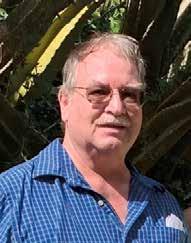
It is with great sadness, that we announce that Dale Alan Bushey, 67, of Williston, VT passed away
on June 8, 2026, peacefully surrounded by his loving family at McClure Miller Respite House in Colchester, after a long battle with interstitial lung disease.
Born in Burlington, VT on January 25, 1959, Dale was the son of the late Linwood and Dorothy (Lahaie) Bushey. He was predeceased by his son, Justin Joseph Bushey, who passed away in 2003.
He is survived by his wife Kathryn (Jacobs) Bushey, his beloved daughter Amber Bushey and husband Mark Gaworecki of Essex and their sons Emmett and Evan Gaworecki. He leaves behind his siblings Judy (Richard) Hosking of Essex, Virgil Bushey of Florida, Charles Bushey of Washington, and Robin Plouffe
and her partner Ken Bouchard of Essex. He also leaves many cherished nieces, nephews, cousins, and friends, all of whom left a indelible mark on his life.
Dale grew up on his family farm in Essex, spending many hours working the fields. He met the love of his life, Kathy and were married on Feb. 4, 1984. They welcomed their daughter, Amber and their son Justin.
Over the years, Dale built a life centered on family, the New York Yankees, the Dallas Cowboys, his great love of gardening, the outdoors, and in his later years, spending time with his grandsons.
Dale was known for his green thumb, specifically his vegetable gardens, which provided a
veritable bounty of vegetables for family, friends, or passersby. He was extremely proud to pass on his love of gardening to his grandsons, with whom he enjoyed entering prize-winning vegetables into competitions at the Champlain Valley Fair.
Dale spent many years working for his family farm, Ormond Bushey & Sons, and was a founding employee of the Lowe’s store in South Burlington, where he was employed until his passing.
He will be remembered for his kindness, generosity, towering bonfires, and very unique sense of humor.
Dale’s family wishes to extended our deepest gratitude to Dr. James Dougherty and Dr. Charlotte Teneback and the entire





staff at McClure Miller Respite house that were so caring during his stay.
A graveside service will be held on June 26 at 11 a.m. at Deer View Cemetery in Williston, followed by a celebration of life at the Holy Family Parish Center in Essex. All are welcome to attend, and in tribute to Dale’s impeccable sense of fashion, the family requests that everyone wear their finest Hawaiian or island style.
In lieu of flowers, the family requests donations to the Justin Bushey Memorial Scholarship at the Center for Technology, Essex or the McClure Miller Respite House in Colchester, Vermont. Please visit www.awrfh.com to share your memories and condolences.


Dear Savvy Senior,



I’m 63 and recently had a hospital stay that left me with bills I can’t afford to pay. I had Affordable Care Act health insurance, but after my premiums went up in January, I had to drop my coverage. Now I’m overwhelmed by medical bills. What can I do?
— Struggling Patient
Dear Struggling, You are definitely not alone. Medical debt is very common. About 1 in 12 Americans are dealing with it, and many had insurance when the bills started piling up. The good news is there are ways to reduce what you owe and make it more manageable. Here are some steps that can help.
Medical billing errors are more common than you might think, so start by taking a close look at every bill and explanation
By Jim Miller
of benefits you receive. Watch for duplicate charges, services you did not receive or prices that seem off.
If something does not look right, call your provider’s billing office and ask for an itemized bill. Do not be shy about asking questions. Even small mistakes can add up.
Most hospitals, especially nonprofit ones, are required to offer financial assistance programs, often called charity care. Depending on your income, you may qualify to have part or even all of your bill forgiven. Call the hospital billing office
and ask specifically about financial assistance. You can also visit DollarFor.org, a nonprofit that helps patients apply for charity care programs at no cost.
If you do not qualify for assistance, you still have options. Many hospitals and doctors are willing to work with patients, especially if you reach out early.
Ask if they can lower the bill or offer a discount if you can pay something upfront. You can also request a no interest payment plan to spread the cost out over time. If this feels overwhelming, a medical billing advocate can help. The Alliance of Professional Health Advocates, at aphadvocates.org, can connect you with professionals who review bills and negotiate on your behalf.
Since you recently lost coverage, it is also worth checking whether you qualify for Medicaid, especially if your income has dropped. You can apply through Healthcare.gov or your state Medicaid office.
Another helpful tool is BenefitsCheckUp.org, from the National Council on Aging, which can point you to programs that see BILLS page 22



TODAY’S HISTORY:
• In 1788, Virginia became the 10th state to ratify the U.S. Constitution.
• In 1876, Lt. Col. George Custer and 263 soldiers under his command were killed by Cheyenne and Sioux fighters in the Battle of the Little Bighorn.
• In 1938, President Franklin D. Roosevelt signed into law the Fair Labor Standards Act, enacting the first federal hourly minimum wage (at 25 cents per hour).
• In 1950, North Korean forces crossed the 38th parallel into South Korea, igniting the Korean War.
TODAY’S FACT:
• Lt. Col. George Custer’s nephew, brother-in-law and two younger brothers also died at the Battle of the Little Bighorn.





Along the Pacific Coast of the United States, on the border with British Columbia in Canada, lies Washington state. Our 42nd state joined the Union in 1889. It was named after President George Washington.
Washington history

The Evergreen State has been home to many Indigenous peoples for thousands of years. Early people, including the Makah, fished for salmon and hunted whales. People farther from the coast grew crops and hunted for food.
The first Europeans to explore the area were Spaniards. Unfortunately, they brought smallpox with them, and many in the Native American communities died. Later, a British and U.S. agreement allowed American settlers to move into the area. Britain finally gave up its claim to the area in 1846.
Early Washingtonians worked in farming, lumber, fishing, canning and mining. Washington is the leading grower of apples in the U.S., having produced about 8 billion pounds in 2025.
Today, major companies, including Microsoft, Costco, Starbucks and T-Mobile, have their headquarters in Washington.
Washington highlights
The Grand Coulee dam on the Columbia River is the largest concrete structure in the United States and the largest producer of

hydropower in the country.
Mini Fact: Mount Rainier is an active volcano that stands over 14,000 feet tall. A few hundred earthquakes happen there each year.
Washington is home to three large national parks: Olympic, Mount Rainier and North Cascades. The Oregon and Lewis and Clark trails also wind through the state.
The San Juan Islands, which lie off the coast of Washington near the Canadian border, are popular tourist spots, with whale-watching, kayaking and hiking activities.

The state capital is Olympia. About 56,000 people live there. The largest city is Seattle, with about 780,000 people.
Fun in Washington
Do you know anyone who plays pickleball? The sport was invented on Bainbridge Island in Washington in 1965.

Seattle has professional teams in football (Seahawks), baseball (Mariners), soccer (Sounders and Reign) and ice hockey (Kraken).
Washington residents like to explore rainforests, deserts, volcanoes, glaciers, lakes and mountains in the state. Downhill and cross-country skiing are popular in the winter.
Words that remind us of Washington are hidden in this puzzle. Some words are hidden backward or diagonally, and some letters are used twice. See if you can find:

Next Week: Summer safety
• Dale Chihuly is a glass artist who was born in Tacoma, Washington, in 1941. His blownglass sculptures are admired around the world, and his works are exhibited in the Chihuly Garden and Glass museum near the Space Needle in Seattle. Chihuly studied glass-blowing in college and in Murano, Italy.


• Beverly Cleary (1916-2021) was an author of beloved children’s books, including “Henry Huggins,” “Ramona the Pest” and “The Mouse and the Motorcycle.” Cleary earned a degree in library science from the University of Washington and worked as a children’s librarian in Yakima before she started writing her own books.
• Seattle Seahawks wide receiver Cooper Kupp was born in 1993 in Yakima. He was named the Super Bowl LVI most valuable player in 2021.
Whitney: Why did the whale blush?



Walt: Because it saw the ocean’s bottom!
Wendy: Who designs whale houses? William: Orca-tects!

The Grand Coulee dam on the Columbia River is the largest concrete structure in the United States and the largest producer of
rainforests, deserts, volcanoes, glaciers, lakes and mountains in the state. Downhill and cross-country skiing are popular in the winter.
Words that remind us of Washington are hidden in this puzzle. Some words are hidden backward or diagonally, and some letters are used twice. See if you can find:
APPLES, CANADA, CHIHULY, CLEARY, COAST, EVERGREEN, FORESTS, KUPP, MAKAH, OLYMPIA, PACIFIC, PICKLEBALL, PRESIDENT, RAINIER, SALMON, SEATTLE, WASHINGTON, WHALES.
You’ll need:
• 2 3/4 cups all-purpose flour
• 2 teaspoons baking powder
• 1 teaspoon cinnamon
• 1/2 teaspoon ground cloves
• 1/2 teaspoon nutmeg
What to do:
• 1/2 teaspoon salt
• 1 apple, finely chopped
• 1/2 cup butter, melted
• 3/4 cup brown sugar
• 3 eggs, beaten
1. In a large bowl, combine first 6 ingredients. Mix well.
2. In another large bowl, combine remaining ingredients. Mix well.
3. Pour flour mixture into apple mixture. Mix well.
4. Pour into a greased and floured loaf pan. Smooth to make it level.
5. Bake in a preheated 350-degree oven for 1 hour. Serves 4.
Use the letters in the boxes to make a word with the same meaning as the clue. The numbers in parentheses represent the number of letters in the solution. Each letter combination can be used only once, but all letter combinations will be necessary to complete the puzzle.
1. trophy or ribbon (5)
2. funny guy (8)
3. a little wet (4)
4. common (8)
5. talk quietly (7)
6. Atlantic or Pacific (5)
7. tool to look at the stars (9)


Whitney: Why did the whale blush?

Walt: Because it saw the ocean’s bottom!
Wendy: Who designs whale houses? William: Orca-tects!



At least 151 non-native fish species have been recorded in freshwater and coastal ecosystems across Mediterranean countries, with 106 now firmly established and reproducing in the wild. Researchers report the greatest concentrations in countries such as Italy, Spain and France, where trade, aquaculture and recreational fishing have repeatedly brought in non-native species. The invasion began in 1869 with the opening of the Suez Canal and has been intensified by climate change.


Look in your local newspaper for articles about events taking place in Washington.


continued from page 2

Runs great/drives well. 207,417 miles. Very clean underneath.
TOWN OF WILLISTON DEVELOPMENT REVIEW BOARD AGENDA
Tuesday, July 14, 2026 – 7:00 PM
Town Hall Beckett/McGuire Meeting Room (7900 Williston Road, use rear entrance) or Zoom Webinar ID 813 6162 7981 on www.zoom.us/join HP 26-04 Tim Morgan and Barbara Sauer-Davis request a Certificate of Appropriateness to replace the corrugated tin roof with standing seam metal and replace the siding
The week-long bait drop is a cooperative effort between Vermont and the U.S. Department of Agriculture Wildlife Services to stop the spread of the potentially fatal disease.
TRANSMISSION IS MISSING 3RD AND 4TH. Needs rockers under plastics and passenger-side window and wing mirror. No middle seats.
Rabies is a deadly viral disease of the brain that infects mammals. It is most often seen in raccoons, skunks, foxes, and bats, but unvaccinated pets and livestock can also get rabies. The virus is spread through the bite of an infected animal or contact with its
$1,100/ Bill of sale only. More photos/info/contact

https://www.facebook.com/ share/18D9qXQUwT/
To place a classified ad, email Adam@williston observer.com or call (802) 338-1655 Deadline for classifieds is Monday.
and soffits with cedar materials at 7604 Williston Road in the VZD.
continued from page 2
DP 26-02.1 Blair Knowles and Matt Parisi request pre-application of a 3-unit development at 7997 Williston Road in the VZD. The existing structure will remain 1 dwelling unit and a commercial office. 2 new dwellings constructed in the rear of the lot. Continued from March 24, 2026 and June 9, 2026.
Minutes”, and “Development Review Board”. Contact Planning & Zoning Office for more information: 802-8786704 or email planning@willistonvt. org.
saliva. If left untreated, rabies is almost always fatal in humans and animals. However, treatment with the rabies vaccine is nearly 100 percent effective when given soon after a person is bitten by a rabid animal.
Project details and site plans are available on the website, town. williston.vt.us, under “Public Records and Documents”, then “Agendas &

The Town of Colchester is hiring a Town Engineer to lead design, construction management, and capital planning for public infrastructure, including wastewater, stormwater, streets, and paths. Responsibilities span project management, consultant oversight, permitting, and field decisions. Requires a civil engineering
degree and six years of relevant experience. Apply at Colchestervt.gov.
The Town of Colchester’s Planning & Zoning Department is hiring a Development Manager to lead development review, serve as Zoning Administrator, and assist department leadership. Responsibilities include DRB permitting, compliance inspections, and public guidance. Requires a relevant bachelor’s degree plus two years of experience, land use knowledge, and strong communication skills. Apply at Colchestervt.gov.
saliva. If left untreated, rabies is almost always fatal in humans and animals. However, treatment with the rabies vaccine is nearly 100 percent effective when given soon after a person is bitten by a rabid animal.
Agriculture Wildlife Services to stop the spread of the potentially fatal
So far this year, 23 animals in Vermont have tested positive for rabies, and 14 of
and other medical expenses.
So far this year, 23 animals in Vermont have tested positive for rabies, and 14 of those have been raccoons.
continued from page 18
Rabies is a deadly viral disease of the brain that infects mammals. It is most often seen in raccoons, skunks, foxes, and bats, but unvaccinated pets and livestock can also The virus is spread through the bite of an infected animal or contact with its
According to wildlife officials, rabid animals often show a change in their normal behavior, but you cannot tell whether an animal has rabies simply by looking at it. People should not touch or pick up wild animals or strays – even baby animals.
help lower health care and prescription costs.
SHELBURNE DAY continued from page 4 face Towards burne-Hinesburg head the Golf depending land. Rotary’s

You do not have to handle this on your own. There are several trusted organizations that offer free or low-cost help. The Patient Advocate Foundation (patientadvocate.org) provides case management services and can help you find financial assistance. The National Foundation for Credit Counseling (nfcc.org) offers nonprofit credit counseling and guidance on managing debt. You can also visit NeedyMeds.org to locate programs that can help lower the cost of prescriptions




209 Falls Road, Shelburne, VT (802) 985-3370


Shelburne Historical Society will have a display and president Dorothea Penar will lead a cemetery tour at 1 p.m. Food vendors round out the event with everything from coffee and lemonade to burgers and creemees. Kids will enjoy meeting animals from Shelburne Farms, craft projects, and
The most important thing is to act sooner rather than later. Ignoring medical bills can lead to collections and added stress, but many providers are willing to work with you if you reach out.
According to wildlife officials, rabid animals often show a change in their normal behavior, but you cannot tell whether an animal has rabies simply by looking at it. People should not touch or pick up wild animals or strays – even baby animals.
Start by reviewing your bills, then explore assistance programs and payment options. With some persistence, you can often lower what you owe and set up a plan that fits your budget. Medical debt is common, even among people who had insurance, but it is often negotiable, and there are real resources available to help you through it.
Send your questions or comments to questions@savvysenior.org, or to Savvy Senior, P.O. Box 5443, Norman, OK 73070.
display lead dors from creemees. from