The Vehicle Recyclers’ Association • The Industry’s Voice •

EUROPE’S ELV OVERHAUL NEARS THE FINISH LINE
THE FUTURE OF VEHICLE RECYCLING IS DIGITAL
Why the businesses that embrace data, AI and connectivity will define the next generation
FROM GREEN PARTS TALK TO GREEN PARTS VOLUME
Why confidence, consistency and insurer backing will decide the next phase of growth






Andy Latham VRA Chairman
Welcome to the newly refreshed Vehicle Recyclers’ Association Magazine. I hope you enjoy the updated format and style.
Working closely with our new editorial team, we’ve created a publication designed to deliver industry news, valuable insights, and best practice guidance. Our aim is to inspire readers to grow and develop their businesses, enhance day-to-day operations, and support their teams in doing the same.
This sector is full of exceptional businesses and individuals, and this edition highlights just a few of them. We celebrate Charles Trent’s remarkable 100 years in operation, showcase Green Parts Specialist’s new headquarters, and recognise the individual contributions of Tom Hayward, Martin Handley, Dave Picking, and many others. Together, they represent an industry that is constantly evolving, learning, innovating, and moving forward. It is a privilege to be part of it.
Waste crime has been prominent in the news recently, with widespread coverage of illegal dumping across the UK and the export of waste tyres to India, where environmental and worker protections are reportedly minimal. While this increased attention presents challenges, it also offers an opportunity to highlight the strength of our industry. Vehicle recyclers responsibly reuse or recover 95% of every vehicle, manage hazardous materials correctly, and provide cost-effective recycled parts back into the repair market. However, greater visibility also brings increased scrutiny. It is essential that we continue to operate to the highest standards, ensuring full compliance across all aspects of our work. In recent months, this has
led to more engagement with the Environment Agency (EA) and DEFRA than at any time since I became Chairman.
Encouragingly, these discussions have focused on rebuilding strong connections and identifying how we can better support one another.
A positive outcome is the EA’s increased willingness to act on reports of illegal vehicle dismantling. If any VRA member is aware of such activity, please send details to info@v-r-a.uk, and we will forward them directly to the EA.
We have also re-established our relationship with EGARA (the European Group of Automotive Recycling Associations). Illegal dismantling remains a widespread issue across Europe, with some countries facing even greater challenges than the UK, Spain and Greece being notable examples discussed at recent meetings.
At our latest VRA Management Committee meeting, we agreed that the Association must evolve to become the recognised authority for vehicle recycling in the UK. To support this ambition, Adrian Pierce has been appointed as Development Consultant on a six-month contract to help drive the necessary changes. You can read more about this vision in a dedicated feature within this issue.
Thank you for your continued support as members of the VRA; it is greatly valued. We welcome your feedback on the new magazine: what you enjoy, what you’d like to see more of, and any topics you’d like us to cover in future editions. Please share your thoughts by emailing info@v-r-a.uk
Vehicle
COMMITTEE MEMBERS
Rob Austin
Jason Bishop
Terry Charlton
Ian Dronsfield
Paul French
Rolson Fry
Tom Harvey
Tom Hayward
Michael Hill
Dave Horsnell
Andy Latham
Tony Patsides
Adrian Pierce
Dave Picking
Derek Spall
Savo Vavan
Chris Wylie
MORE INFORMATION
Additional images (Shutterstock/Envato Elements) licenced by ARW-GROUP LTD or supplied by VRA committee members
CONTACT DETAILS PO BOX 8660 Ilkeston, Derby DE7 0GP tel: 0330 400 5380 info@v-r-a.uk editor@v-r-a.uk www.vrauk.org
Produced by ARW-GROUP LTD on behalf of Vehicle Recyclers’ Association (VRA)
The articles and information contained in this magazine are provided for general information and guidance only. They are not intended to be, and should not be relied upon as, authoritative statements of the law.
The views expressed in the vehicle recycler are those of the individual authors and do not necessarily reflect the views of the Vehicle Recyclers’ Association or its members.
material




Why UK ELV operators need to keep watching Brussels. UK ELV Operators Cannot Ignore Europe’s Next Move 44 A landmark anniversary for a recycling pioneer.
100 Years of Charles Trent Limited 50 ARC shows how practical leadership and clear standards can strengthen an industry. Canada’s recycling voice 54
VRA: The Next Phase Starts Now 59
The VRA sharpens its focus for a new era.
Silverlake outlines how recyclers can prepare for tougher salvage, EV and recovery requirements. Preparing for the 2025 ABI Code 62
Draft Circular Vehicle Regulation Enters Last Phase 67
EGARA highlights the final debates that could reshape reuse, recycling and battery rules.
The industry I see coming 70
Why digital change can no longer wait.
Why stronger people management is becoming essential across modern automotive recycling businesses. Leadership Starts From Within 84 Tom Hayward explores how customer expectations, reuse markets and standards are reshaping the sector. From Garage Beginnings to Industry Opportunity
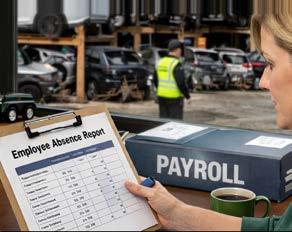
What the 2026 statutory sick pay changes could mean for budgets, payroll and absence management. Is your business prepared for changes to SSP?
Epyx has partnered with The Green Parts Specialists to give fleets easier access to recycled vehicle parts through the 1link Service Network.
Fleets can search and order from a catalogue of more than 350,000 recycled components, with nationwide delivery. Major items such as engines and

gearboxes are also available through a managed supply-and-fit service, with job sheets integrated into the 1link SMR platform.
The partnership is designed to make recycled parts easier to use in service, maintenance and repair processes, while meeting quality and traceability requirements.
All parts are checked to Vehicle Recyclers’ Association standards. The Green Parts Specialists, part of Copart, are VRA certified and meet the BS10125 BSI Kitemark standard.
Jane Pocock, CEO of Copart UK & Ireland, has been named Industry Woman of the Year at the 2026 Modern Claims Awards.
Pocock brings more than 35 years of automotive industry experience and leads one of Copart’s most established global markets. She is also the only female CEO within the NASDAQ-listed group.
In her role, she oversees all aspects of the UK and Ireland business, including service delivery across 33 locations and growth of Copart brands, including U-Pull-It, The Green Parts Specialists and Cash for Cars.
Commenting on the award, Pocock said she was
“surprised, honoured, and humbled” to receive the recognition. Although she was unable to attend the ceremony because she was at Copart’s headquarters in Dallas, she said the award was a “fantastic surprise” on returning home. She also thanked industry peers, partners and the Copart team for their support, adding that even after three decades in the sector, she still finds the industry motivating and full of opportunities to learn.

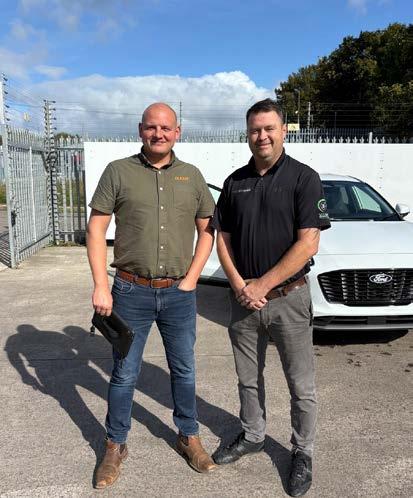
James Brain, owner of Forest Auto Salvage said the system is already helping to reduce stock-to-sale times, improve data accuracy and support stronger conversion on eBay, where listing quality and search visibility remain important to sales performance.
The move reflects the growing importance of digital systems for vehicle recyclers as more parts sales shift online. Businesses are under pressure to manage stock accurately, maintain consistent listings and respond quickly to customer demand across sales channels. Forest Auto Salvage said it wanted a more scalable platform capable of supporting daily operations and future growth.
Eladene combines inventory management, parts listing, order processing and marketplace integration
within a single system. According to Forest Auto Salvage, this should help reduce manual administration, improve part identification and categorisation, and give the business stronger control over pricing and inventory.
The company has also reported an uplift in eBay sales since making the change. It said improvements in listing structure, compatibility data and marketplace visibility have contributed to better online performance.
The investment reflects a wider trend across the vehicle recycling sector, where digital tools are playing a larger role in stock management, sales and customer service. The move also underlines how online trading, accurate data and efficient systems are becoming central to parts sales growth for modern recyclers in a competitive market.
LKQ SYNETIQ managing director Annick
Jourdenais has re-joined the Automotive 30% Club as a Patron, underlining her support for greater gender balance in automotive leadership following International Women’s Day on 8 March.
The Automotive 30% Club was founded to accelerate gender balance in automotive leadership teams, bringing together senior executives committed to measurable progress and clearer pathways into leadership across the sector.
Jourdenais’ renewed involvement comes as the automotive industry faces major change, with businesses responding to electrification, sustainability targets and growing pressure to build resilient, future-ready organisations. Alongside technological and commercial shifts, diversity and inclusion are increasingly seen as strategic priorities, influencing recruitment, leadership development and board-level decision-making.
She leads LKQ SYNETIQ, the joint venture between LKQ Europe and SYNETIQ Ltd, an IAA company. The business combines LKQ’s distribution network and aftermarket expertise with SYNETIQ’s dismantling, reuse and remanufacturing capability. In 2024, around 27,000 vehicles were dismantled across its four UK sites.
Under her leadership, LKQ SYNETIQ is focused on embedding circular

economy principles into mainstream vehicle repair and strengthening collaboration across insurers, repairers and supply chain partners to increase the availability of recycled original equipment parts.
Jourdenais said: “International Women’s Day is a timely reminder that while progress has been made, there is still more to do to build truly balanced leadership across our sector.
“As automotive continues to evolve, we need to be deliberate about developing future leaders, widening access to opportunity, strengthening talent pipelines and ensuring progression is based on performance and potential.”
Jourdenais first joined the club while CFO of LKQ UK & Ireland and helped champion LKQ’s original involvement. She also supported the diversity agenda through PAVE, launching a finance internship and graduate scheme in the UK. Alongside her operational role, she is part of the European Women’s Network Steerco and supports initiatives including LKQ’s Women’s Network.
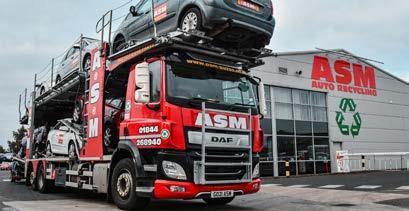
ASM Auto Recycling Ltd, of Thame, Oxfordshire, has been named in the UK’s Green Growth 100, an initiative from Small Business Britain and BT recognising small firms using sustainability to drive growth.
ASM was recognised for cutting emissions, maximising solar generation, reducing waste and embedding ESG-led practices across the business. The award highlights how environmental
performance can boost profitability, resilience and community links.
Established more than 40 years ago, ASM Auto Recycling is led by managing director Paul McDonagh, who has placed sustainability at the centre of operations.
Annabel Nicholls, environmental and sustainability coordinator, said: “It’s really exciting to be recognised nationally and an honour to be in the Green Growth 100.”
Thatcham Research has launched an Electric Vehicle Blueprint aimed at reducing unnecessary EV write-offs and improving insurability. The plan sets out eight recommendations to help the industry assess, repair and maintain battery electric vehicles more safely and cost-effectively.
Battery concerns remain the main issue for insurers and repairers, with packs worth up to 40% of a vehicle’s value, meaning even minor damage can result in a total loss.
Thatcham says better diagnostics, simpler battery handling, repairable battery casings, resettable safety systems and more serviceable component design would help keep more EVs on the road.
Built around safety, sustainability and affordability, the blueprint also supports battery refurbishment and remanufacture, while calling for closer collaboration between manufacturers, insurers and repairers.
UK consumers increasingly want vehicle repair and recycling services that genuinely reduce environmental impact. The CMA has warned that claims such as “carbon neutral”, “zero waste” or “fully recyclable” must be accurate, evidenced and clearly explained, with responsibility shared across the supply chain.
For ATFs, dismantlers and green parts suppliers, that means taking responsibility not only for claims they create, but also for claims they repeat from manufacturers, marketplaces or partners.
If evidence is weak or unclear, the wording must change or the claim should not be used.
Since April 2025, the DMCC Act has given the CMA stronger enforcement powers, including direct fines. For vehicle recyclers, the message is clear: robust evidence, traceability and approval processes are essential.
Done properly, credible green claims still offer a commercial advantage.
Silverlake Automotive Recycling has appointed Neil Joslin as director to support the company’s next phase of growth, innovation and service development.
Joslin brings more than 30 years’ experience in insurance claims management and the past eight years in senior vehicle recycling roles, including COO at e2e Total Loss Vehicle Management and leadership positions at Charles Trent. Silverlake said his appointment will help sharpen operations, strengthen partnerships and support the development of new services in response to market needs.
Managing director
Allen Prebble said Joslin’s operational leadership and understanding of both the insurance and vehicle recycling sectors would be invaluable as the business continues to grow and innovate.
Joslin said he was pleased
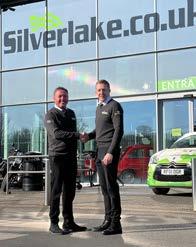
to join Silverlake at an important stage in its growth journey and looked forward to supporting operational excellence, partners and clients, while helping bring new solutions to market.
The appointment underlines Silverlake’s focus on customer service, innovation and growth across the automotive recycling sector.
The new service is designed to replace largely paper-based waste movement reporting with one digital platform across the UK. First announced in the 2018 Resources and Mandatory reporting through the UK’s Digital Waste Tracking system will begin in October 2027, six months later than originally planned, giving ATFs and vehicle recyclers additional time to prepare for the switch from paper Duty of Care records to a single UK-wide digital service.
required to record all waste movements digitally, marking the first firm deadline.
Phase two will apply to carriers, brokers, dealers

The new system is intended to replace the current, largely paper-based approach to recording waste movements with one digital platform across the UK. First announced in the government’s 2018 Resources and Waste Strategy, Digital Waste Tracking is designed to improve transparency, reduce waste crime and give regulators and policymakers better data on how waste is produced, managed and treated.
Phase one is already underway and applies to permitted facilities receiving waste. A private beta is live, allowing selected operators to test the service. From April 2026, the scheme will move into public beta, when all operators in scope can use it on a voluntary basis. From October 2026, permitted sites will be
and exporters, extending tracking across the full waste chain. Under Defra’s revised timetable, a private beta will begin in autumn 2026, followed by a public beta in spring 2027. Mandatory reporting for all relevant operators will then start in October 2027.
For vehicle recyclers that also transport waste, arrange collections or export material, the requirements will extend beyond site operations. The new system will require more detailed information for each transfer, including classification codes, a unique movement reference and treatment outcome data. The delay is expected to give smaller operators more time to prepare systems, processes and staff for what will be a major change in compliance reporting.
Eladene has secured ISO 27001, 9001, 14001 and 45001 certification, underlining its commitment to security, quality, sustainability and health and safety.
The four standards provide independent assurance that Eladene’s recycling software and internal processes meet recognised international benchmarks. ISO 27001 covers information security, ISO 9001 quality management, ISO 14001 environmental responsibility and ISO 45001 health and safety.
The achievement strengthens Eladene’s position as a secure and
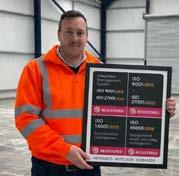
James Rowney from Eladene compliant technology partner for automotive recyclers as digital integration and regulatory demands increase.
CEO Dave Picking said the milestone reflected Eladene’s commitment to protecting data, maintaining robust systems and supporting customers responsibly.
Government, OEM and industry experts will headline ATF Professional’s Auto Recycling Intelligence 2026 conference on 11 June at the British Motor Museum, Warwickshire, with tickets now on sale.
The one-day event will examine the commercial and operational changes reshaping vehicle recycling, including circular economy policy, EV batteries, insurer write-off trends, global supply shifts and artificial intelligence across the sector.
Mary Creagh MP, Defra minister for nature, will outline the government’s circular economy direction, while Toyota Motor Europe vice president Leon van der Merwe will provide the OEM perspective on
vehicle design, lifecycle management and material recovery.
Other speakers include Andrew Marsh, Alan Colledge, Hans Eric Melin, Paul Sell, Mark Main and Conrad Caine, covering China’s market influence, battery handling, claims trends, EV economics and operational technology.
ATF Professional said the conference is designed to give recyclers practical insight into the sector’s next phase.

Auto Windscreens has moved recycled windscreens from concept to live supply through a partnership with The Green Parts Specialists, creating an insurer-backed green glass option for hard-to-source and obsolete screens.
Shaun Atton, business development director at Auto Windscreens, said the initiative builds on a sustainability programme that began in 2016. Since then, the company has become carbon neutral, set a net-zero target for 2045, and had its science-based emissions targets validated. In 2025, that focus turned to recycled glass, with GPS technicians trained to remove windscreens cleanly from end-of-life vehicles for reuse.
The partnership is designed to make reclaimed windscreens a practical option rather than a theoretical one. When Auto Windscreens needs obsolete, older or difficult-to-source glass, GPS checks for a matching vehicle. Trained technicians then inspect and grade the windscreen, with only Grade A glass accepted for reuse. The screen is removed using Auto Windscreens’ methods
and tooling, delivered to the nearest service centre, then fitted and any ADAS systems calibrated to manufacturer standards.
Atton said one of the main misconceptions is that ADAS makes salvaged glass too difficult to use. In practice, he said, trained technicians can remove it safely, provided calibration is carried out correctly before the vehicle returns to the road.
Auto Windscreens said the service is already being used by insurers and fleets as an alternative source of supply, with some insurers considering changes to policy wording to include green glass.
Atton said one of the main misconceptions is that ADAS makes salvaged glass too difficult to use. In practice, he said, trained technicians can remove it safely, provided calibration is carried out correctly on the road.
The Government’s new Steel Strategy could strengthen long-term domestic demand for ferrous scrap by backing UK steelmaking and tightening import controls, though recyclers will be watching closely to see whether ministers follow through on energy costs, carbon border rules and procurement reform.
UK Steel and Community said the strategy marks an important step towards a more competitive and resilient domestic steel sector. For ATFs and vehicle recyclers, it’s importance lies in the stronger emphasis on UK industrial capacity, steel supply chains and the role of scrap in manufacturing.
The Government wants the UK to produce up to 50% of the steel it uses, up from around 30%, while import quotas for steel are due to be cut by 60% from July. Steel imported above
quota levels would face a 50% tariff.
Although there is no immediate operational change for recyclers, a stronger UK steel sector could reinforce domestic demand for ferrous scrap, particularly as electric arc furnace capacity expands. BMRA welcomed the strategy, saying it recognises the role of recycled metal in a resilient, lower-carbon steel industry.
However, industry concerns remain over electricity costs and the proposed UK Carbon Border Adjustment Mechanism. UK Steel said the strategy does not go far enough on wholesale power prices and warned the CBAM, in its current form, could leave UK producers at a disadvantage.
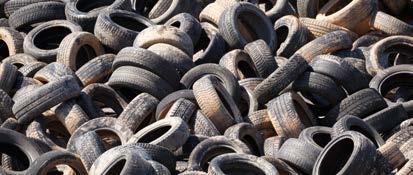
The Environment Agency’s (EA) 2026 plan puts waste tyre exports under tighter scrutiny, particularly shipments to India, and signals a wider crackdown on green list waste exports.
The plan follows concerns that UK waste tyres were being diverted to illegal pyrolysis operations in India. Exporters must now show receiving sites meet environmentally sound management standards, with India-facing shipments required to demonstrate standards equivalent to those in the UK.
Enhanced verification checks have been in place since 1 October 2025. Exporters are being asked for detailed shipment information, while
Global Ardour Recycling has acquired assets from Enablelink Limited, bringing two Birmingham operations into the group and increasing its processing capacity.
The deal includes a processing yard with shredding and shearing capability and a dedicated transport hub. It also introduces Global Ardour Recycling’s third shredder, strengthening
the company’s operational reach and supporting growth in the metal recycling sector.
The acquisition has also safeguarded local jobs by preventing Enablelink from falling into administration, providing a positive outcome for employees and the wider Birmingham economy. Global Ardour Recycling said the sites are now fully operational, with services
resumed under group ownership. The move follows the company’s recent acquisition of Adelphi Limited and its Newport Dock site, further expanding its national footprint.
As a BMRA member, Global Ardour Recycling said it remains committed to investing in infrastructure and responsible growth, underlining confidence in the UK recycling market.
Annex VII paperwork is being closely monitored. Between October and mid-December 2025, the EA served 42 exporters with information notices, approved 41 Indian facilities and rejected 13 that failed to meet the required standards.
Although most ATFs do not export tyres directly, the agency’s message is that the whole chain is under scrutiny. ATFs should review who collects their tyres, how routes are documented and whether duty of care records would stand up to regulatory checks.
The EA also plans to extend this approach to other ELV-derived green list wastes.
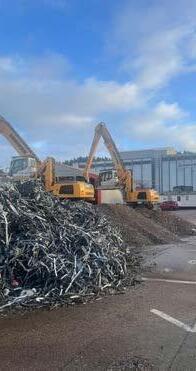
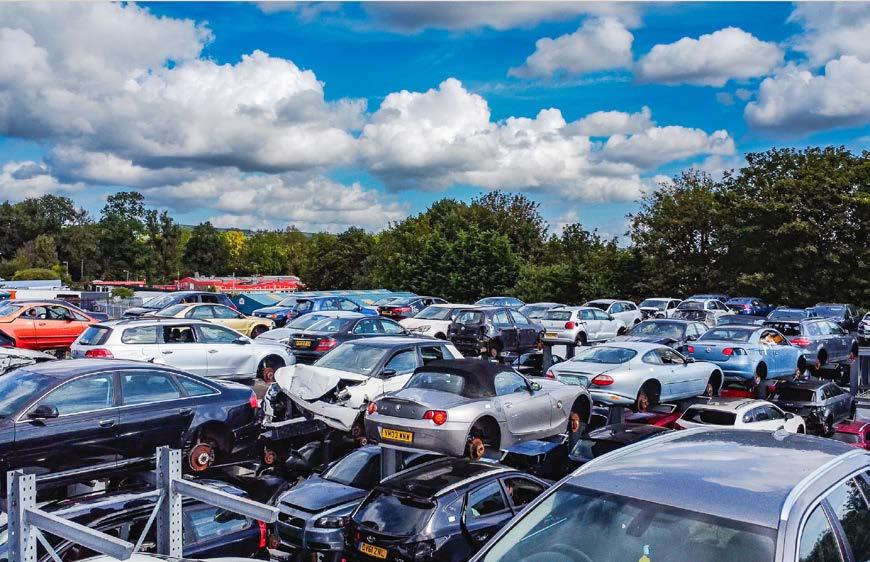

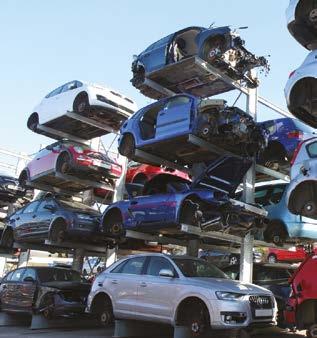



Materia AI has secured Innovate UK funding to develop ReGenTrace AI, a cloud-based platform using machine learning and blockchain traceability to improve the collection, dismantling and recycling of end-of-life EV batteries.
The platform is designed to help operators cut processing costs, maximise recovery of lithium, nickel and cobalt, and strengthen ESG compliance across the battery value chain.
Materia AI said ReGenTrace AI will support a more automated, data-driven and fully traceable approach to battery recycling at a time when end-of-life battery volumes are expected to rise sharply. According to the Advanced Propulsion Centre, recycled battery materials could meet up to 20% of UK automotive battery demand by 2035 if all available gigafactory scrap
and end-of-life battery material is recovered and refined.
ReGenTrace AI will include tools for battery collection and logistics, real-time materials identification, prediction of black mass composition, blockchain-based traceability, materials pricing forecasts and dynamic lifecycle analysis.
The first modules are due to go live by the end of March, with validation through a live minimum viable product deployment at a UK battery recycler.
Materia AI said the system could also support wider applications across battery materials production, gigafactories and OEMs.

Steer Automotive Group has acquired Marshall Motor Group’s Swavesey Paint & Body Centre, rebranding it as Steer Prestige Cambridge and adding OEM-approved repair capacity in the East of England.
The Cambridgeshire site joins Steer’s national prestige network and will support repairs to high-value vehicles, including EVs and ADAS-equipped models. Steer said it will continue investing in the existing team and equipment while
maintaining approvals including Jaguar Land Rover, Volkswagen Group, Volvo and Stellantis.
Chief executive Richard Steer said the acquisition reflects the group’s commitment to people, manufacturer approvals and repair capacity aligned with requirements.
The move strengthens Steer’s position in the UK prestige repair market and expands regional coverage for insurer, fleet and OEM work.
EMR has appointed automotive specialist Andrew Spencer as general manager for electric vehicle batteries to lead the next phase of growth at its Birmingham Battery Recycling Centre.
Spencer will oversee daily operations while expanding capacity, strengthening partnerships and increasing battery reuse as EMR scales its role in the UK’s circular battery supply chain. He joins from Project 3 Mobility and has previously held senior roles at Aston Martin and WMG at the University of Warwick.
EMR said the appointment supports its strategy to grow EV battery recycling and reuse following the launch of its Birmingham centre in 2024. The facility was developed after EMR’s involvement in the RECOVAS consortium, which helped create a

commercial-scale approach to recovering and reusing EV battery materials in the UK.
Director of ELV Helen Waters said Spencer’s automotive experience would help accelerate operations, deepen collaboration and support innovation as the business expands its battery recycling capability and strengthens support for a lower-carbon transport future, while helping build more resilient domestic circular supply chains and advancing sustainable resource recovery across the sector.
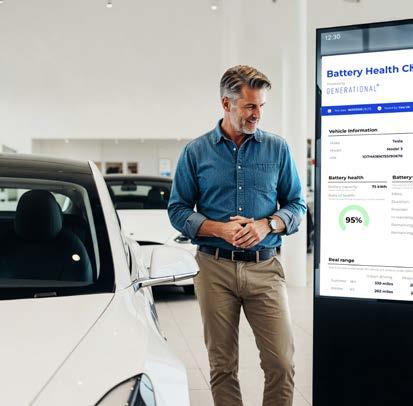
Generational’s 2025 Battery Performance Index, based on more than 8,000 UK battery assessments, suggests used EV batteries are in stronger health than many buyers and businesses assume, with an average State of Health of 95.15%.
The study, which covers 36 manufacturers, vehicles aged from 0 to 12 years and mileages from zero to more than 160,000, found older batteries also remained resilient. Vehicles aged eight to nine years retained a median 85% capacity, while EVs with more than 100,000 miles often still recorded 88-95% State of Health. Even within the four-to-five-year group, median battery health stood at 93.53%, with most vehicles remaining well above typical OEM warranty thresholds of 70%.
Generational said the
key issue for the used EV market is not widespread battery failure, but growing variation in battery condition as vehicles age.
In the eight-to-12-year bracket, battery health ranged much more widely than in younger vehicles, reinforcing the need for verified testing rather than assumptions based on age or mileage alone.
The company said mileage is becoming a less reliable guide to battery condition, with some younger high-mileage EVs outperforming older lower-mileage vehicles depending on use and charging patterns.
Generational said better battery transparency would help retailers, fleets, insurers and finance providers price risk more accurately, protect residual values and build confidence in the used EV market.
UK metals recycling could reduce its operational emissions by 93% and its overall carbon footprint by 70% by 2050, according to a new BMRA roadmap, though the association says government support will be essential.
The Carbon Footprint Assessment, carried out by Tunley Environmental, found that switching to steel produced in electric arc furnaces alone could cut the sector’s footprint by 38%.
BMRA said further reductions will depend on policy support in five areas: eligibility for the British
Industrial Competitiveness Scheme; incentives for biofuels such as HVO; access to low-interest loans for grid and power upgrades; fee modulation in batteries, end-of-life vehicles and WEEE reforms; and science-based steel standards that do not penalise recycled content.
Chief executive James Kelly said policy changes would be needed to accelerate the transition and help the UK produce net zero recycled metal, while strengthening competitiveness and long-term investment across the recycling sector.
Charles Trent Limited has appointed Jonnie Iles as sales and marketing director, strengthening its senior leadership team as the family-run business enters its centennial year.
Iles brings senior sales, marketing and commercial leadership experience, with a background in aligning strategy, digital performance and customer experience. Charles Trent said the appointment reflects its focus on building scalable, future-ready capability while maintaining the values and culture that have shaped the business for almost 100 years.
In the role, Iles will focus on sales performance, marketing effectiveness, digital channels, data-led decision making and
customer journey improvements. He said Charles Trent combined heritage, scale and opportunity, with a strong culture and clear commitment to innovation.
The company said the appointment comes at an important point in its development as it continues investing in people, facilities and digital platforms to support long-term growth.

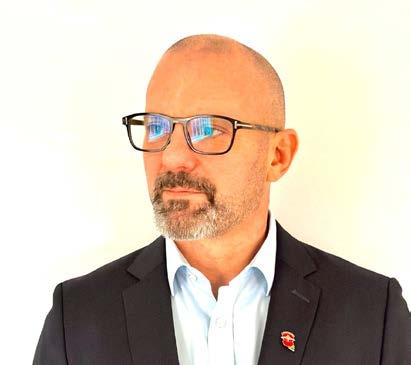
LKQ SYNETIQ has appointed Justin Elliot as sales director to support the next phase of growth for its recycled OE parts business.
Elliot joins the role with more than 13 years’ experience at LKQ, where he has held a number of senior positions within the Bodyshop Division. He will also continue in his wider role as LKQ Europe’s head of collision and coating strategy and innovation.
Formed this year as a joint venture between LKQ Europe and SYNETIQ Ltd, an IAA company, LKQ SYNETIQ combines LKQ’s distribution network and aftermarket expertise with SYNETIQ’s dismantling, reuse and remanufacturing capability. The business dismantled around 27,000 vehicles across four UK sites in 2024.
In his new role, Elliot will lead sales strategy execution, focusing on customer partnerships, market expansion and new opportunities across the
repair and insurance sectors. He will work closely with marketing, operations and the wider LKQ business to support a coordinated route to market and help scale the company’s recycled OE parts offering.
Managing director Annick Jourdenais said Elliot’s experience across the group would be valuable as LKQ SYNETIQ continues to strengthen customer relationships and grow its recycled parts offer.
The appointment marks another step in the company’s development as it looks to expand its reach, unlock new segments and support lower-cost, lower-impact repairs across the wider automotive supply chain, while reinforcing confidence in recycled parts among insurers, repairers and other key customers, and strengthening its position in a growing, sustainability-focused vehicle repair market across the UK.
Connected Energy is investing £2 million in what it says will be the UK’s most advanced second-life EV battery testing facility at Scottow, Norfolk, supporting battery reuse and grid-scale storage development.
The site, due to be operational by mid-2026, will include a 5MWh battery energy storage system and act as Connected Energy’s first wholly owned and operated second-life BESS facility. It will be used to test battery packs from multiple EV bus and truck manufacturers, starting with Forsee Power.
Connected Energy said the project will help prove the technical performance, grid
services potential and residual value of second-life battery packs before larger-scale deployment. By trading energy and providing grid services, the site will also assess how different battery types perform in energy arbitrage and flexibility markets across the energy sector.
Chief executive Matthew Lumsden said insights from the Scottow site would help shape future larger projects as more second-life batteries become available.
The project is being supported by the Advanced Propulsion Centre UK as part of wider work to improve EV battery reuse and recycling.
Ford’s Certified Used Parts online store is now live, offering a standards-led way to buy used components through a fully managed digital platform backed by Ford, Charles Trent and Autonative.
The new store is designed to bring more structure, transparency and confidence to the used parts market. Every part listed must meet bespoke programme standards and is assessed and prepared before sale, drawing on Charles Trent’s dismantling and parts processing expertise.
Autonative operates the ecommerce model behind
the store, managing the full process from supply and systems integration to customer experience. The platform has been purpose-built for automotive retail, with search, selection and checkout designed to feel seamless and straightforward.
Ford said the launch reflects changing customer expectations around online buying, transparency and brand accountability, even in the second-hand market.
The store has launched in phases, beginning with a focused product range, with availability expected to expand as the programme develops.
ELVES has delivered its first joint Electric ELVES training programme with An Garda Síochána, giving 24 Public Service Vehicle Inspectors TÜV Rheinland-accredited qualifications in EV safety and dismantling.
The six-day course took place in Naas, Co Kildare, and was delivered by Salvage Wire Ltd through ELVES’ Electric ELVES programme. It is the first time ELVES and An Garda Síochána have worked together on this type of training.
ELVES said the programme will help PSV Inspectors strengthen their work at road traffic collision scenes
and during technical examinations of electric vehicles, while improving understanding of EV safety across the wider vehicle chain.
The compliance scheme has been running EV dismantling training for authorised treatment facilities since 2019 and has delivered 33 sessions at 12 locations across Ireland, training more than 200 ATF staff.
ELVES said bringing frontline organisations and recyclers together supports a safer and smoother transition as EV volumes continue to grow.
The Tyre Recovery Association says the UK’s enhanced verification system for waste tyre exports is failing, with compliance below 25% and more than 75% of consignments undocumented.
Citing government data released in response to Parliamentary questions, the TRA said 3,281 Annex VII documents had been authorised for tyre exports since October 2025. Of 1,891 consignments that
had passed their eight-week reporting deadline, 1,370 had returned no post-shipment information, while only 458 met the required standards.
The association said the figures showed the regime was not preventing whole end-of-life tyres being exported into poorly controlled overseas markets and weakly regulated outlets.
The TRA is urging ministers to adopt an Australian-style shred-only export model, under which whole and baled tyres cannot be exported and material must be processed before shipment.
The association also called for an end to the T8 exemption.

Silverlake Automotive Recycling will sponsor the Silverlake C1 Racing Series for a fifth consecutive year in 2026, combining headline support with technical expertise and quality-graded recycled parts to help teams control costs and reduce waste.
The partnership, which began in 2021, has made Silverlake a central part of the C1 Racing Club, supporting competitors across the UK endurance calendar with sponsorship and practical trackside assistance. The first race of the new season will be the three-hour Brands Hatch Indy on 11 April 2026.
Silverlake first introduced quality-graded recycled parts into the C1 paddock in 2021, helping create a more sustainable racing environment without compromising performance or safety. The company said demand for recycled components has grown steadily over the past five years, reflecting wider interest in lower-impact motorsport.
Its support extends beyond branding. Silverlake attends meetings with parts, equipment and technical know-how to help keep cars on track.
Greg Rose, who heads the
Silverlake race team and brings more than 30 years of motorsport experience, has become a source of advice on set-up, fault-finding and race strategy. Kevin Hayter and Nacho Gonzalez-Yamada are also helping to develop C1 parts procurement through trackside support and the company’s website.
Managing director Allen Prebble said the series reflects Silverlake’s commitment to affordable motorsport and warranty-assured recycled parts. Robin Welsh of the C1 Racing Club said the sponsorship provides financial stability and paddock support for members.
Silverlake said the partnership shows endurance racing can remain competitive, accessible and environmentally responsible across the modern UK motorsport landscape.
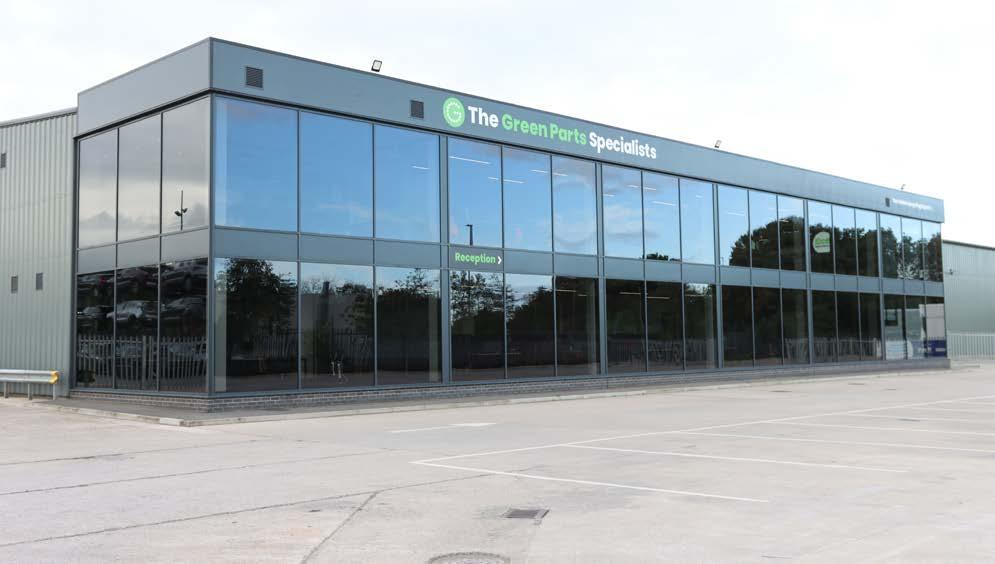
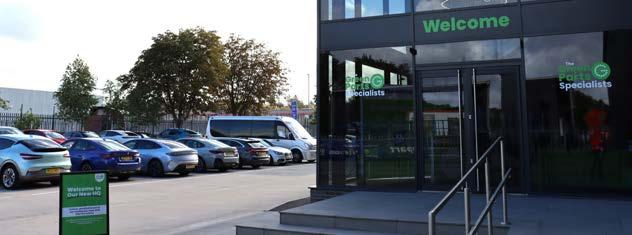
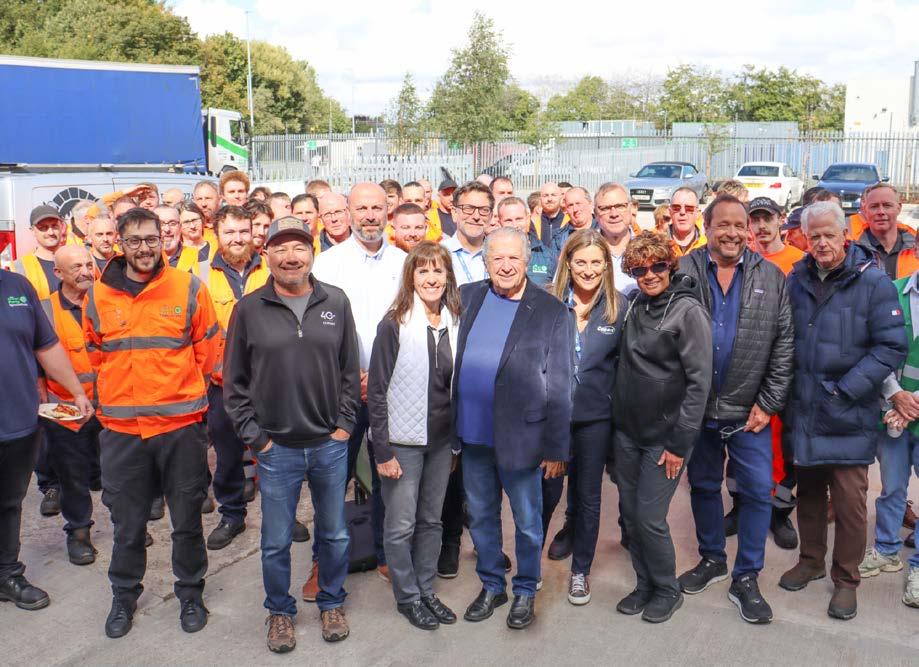
The Green Parts Specialists, the UK’s leading supplier of recycled vehicle parts, are entering an exciting new phase of growth, kickstarted by the unveiling of their new state-of-the-art headquarters in Skelmersdale last year.
Backed by Copart, a global leader in online vehicle remarketing and recycling, the company is transforming the role of green parts in supporting the UK’s automotive repair industry.
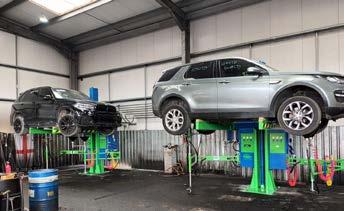
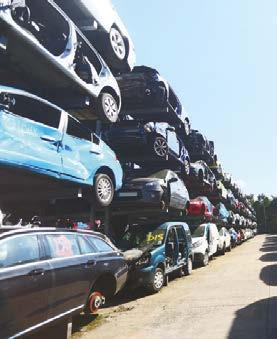
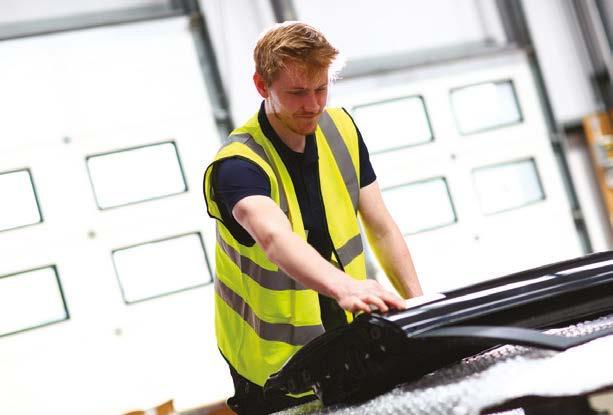
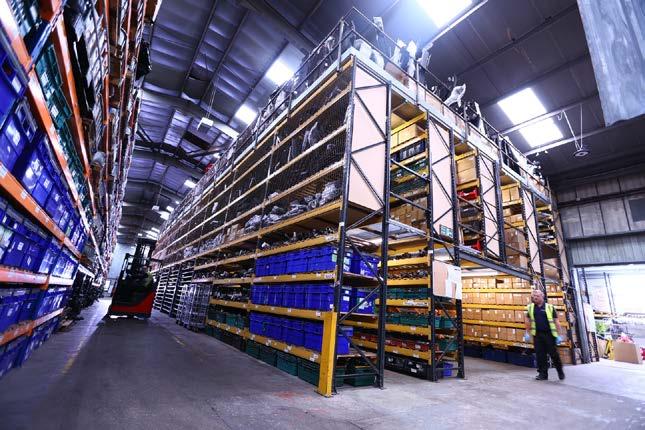
Located on a 25-acre site, the new eco-friendly HQ features advanced vehicle recycling technology, expanded warehouse space, modern meeting areas, and serves as the central hub for a growing branded fleet.
Designed with energy efficiency and innovation in mind, the building reflects The Green Parts Specialists’ mission to lead in sustainable automotive solutions.
The facility is part of a wider strategy to process up to 25,000 vehicles annually and meet rising demand for affordable, environmentally friendly repair parts.
in cutting-edge dismantling and depollution
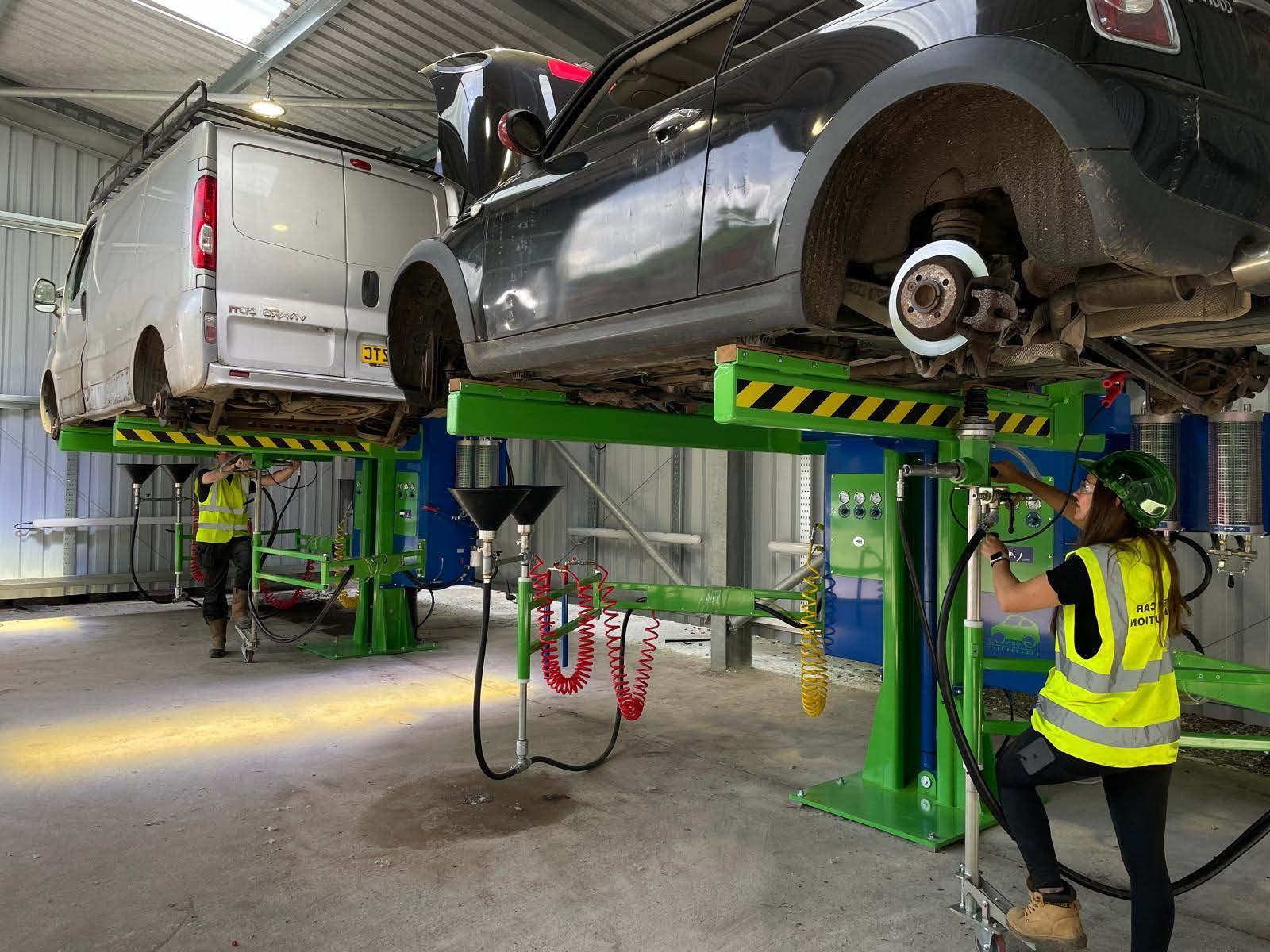
Recent investments include new cutting-edge equipment, such as Green Car Depollution All in One with Powerlift ELV Depollution Drainage Systems and Hyundai HX235A dismantling machines with Powerhand attachments, alongside a purpose-built 3,000m² panel storage unit capable of holding thousands of parts.
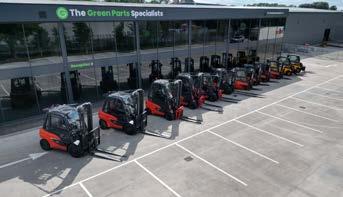
Logistics capabilities have also been significantly expanded with new delivery vans, JCB Telehandlers, Liebherr LH30 Grab, and Linde Pickers and Forklifts.
A growing network of Delivery Hubs, including a new site in Newbury, is also enabling faster, more efficient services while reducing the company’s carbon footprint by cutting down on long-distance travel from the Skelmersdale base.
To celebrate these developments, The Green Parts Specialists held a series of open days in September last year at the new HQ building.
Joined by Copart founder Willis Johnson, customers, stakeholders, and automotive industry bodies were given an exclusive behind-the-scenes tour, offering a closer look at the company’s advanced operations and leadership in green parts innovation.
customers, and partners
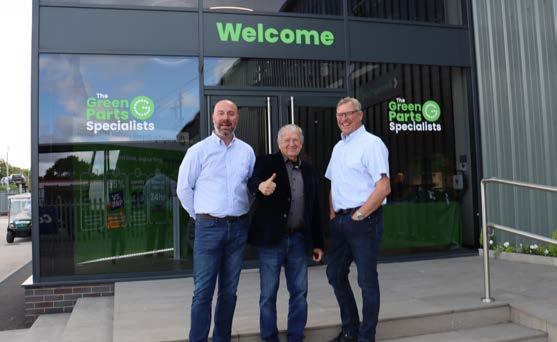
Director Phil DeGroot described the new HQ as “a major step forward for our business and for the circular economy in the automotive sector”, reinforcing their commitment to accessible, affordable, and sustainable vehicle repair.
With a robust infrastructure and expanding logistics network, The Green Parts Specialists continue
to lead the green parts revolution, helping drive the UK repair industry toward a more circular, low-carbon future.


VRA Committee member and Environment Manager at Copart/The Green Parts Specialists, Jason Bishop, is taking on an ultra-endurance challenge alongside his daughter, with the aim of raising vital funds for automotive charity Ben.

I’ve spent more than 25 years working in the automotive industry. Like many people in this sector, I have found it to be far more than just a job; it’s been a career, a community, and a constant throughout my working life. Over those years, I’ve seen the industry at both its best and its most challenging, and one organisation has consistently been there supporting the people who keep it moving: Ben.
Ben has supported thousands of individuals and families across the automotive industry. Whether it’s help with mental health, financial hardship, or personal crisis, Ben is there when people need it most, often at the toughest moments of their lives. Many of us don’t realise just how vital that support is until we, or someone close to us, needs it.
This year, I wanted to give something back.
Together with my daughter, I’ve signed up to run 106 kilometres around the Isle of Wight on 2nd May 2026, a demanding ultra-challenge that will push us well outside our comfort zones, both physically and mentally. It’s not something I’ve taken on lightly, but it feels like a meaningful way to support a charity that has spent decades supporting people in our industry.
Running this distance will be tough. There will be long hours, tired legs, and moments when quitting feels tempting. But none of that compares to the challenges faced by those who turn to Ben for help, people dealing with stress, illness, financial worries, or mental health struggles while trying to continue working and supporting their families.
That’s why I’m asking for your support.
Every donation, no matter the size, will help Ben continue its essential work. Your contribution goes directly towards providing confidential advice, counselling, financial assistance, and wellbeing support for people across the automotive industry, people just like us.
If you’ve worked in this industry for any length of time, Ben has been there for you, even if you didn’t know it. This run is my way of saying thank you and helping to ensure BEN can continue supporting future generations.
Please help me raise as much as possible for Ben and support the people who keep our industry running.
Donations can be made at: Jason Bishop is fundraising for Ben Support For Life:
Thank you for reading, and thank you for your support.


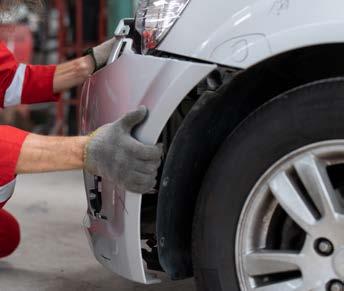
UK insurers are keen to be seen backing reclaimed (“green”) parts. Sustainability statements are now standard, and most repairers will say they use recycled components. Yet the reality inside authorised repairs remains stubbornly small: reclaimed parts still feature in a minority of jobs, often under 10%, and sit at roughly 4–5% of total parts fitted on some estimates. That gap between what the market says and what it does is now one of the most important commercial and operational issues facing the vehicle salvage and recycling sector.
It’s not attitude. It’s
The easiest mistake is to treat this as a question of attitude. It isn’t. The problem is mechanics. Estimators and technicians don’t choose parts in a vacuum: they choose them within systems, time pressure and approval rules. If the reclaimed option is uncertain at the moment the estimate is written, because availability is unclear, grading is inconsistent, or returns are unpredictable. The default becomes whatever feels safest and quickest to deliver a first-time-right repair. In other words, the industry is not short of goodwill; it’s short of certainty.
That is why the most valuable point is not the headline percentages, but the distinction between the two futures. In a conservative scenario, where reclaimed parts remain optional and largely “encouraged”, penetration rises gradually: perhaps to high single digits by 2027, the low-to-mid teens by 2030, and still below 20% by 2033. In an accelerated scenario, where insurers treat reclaimed/reman as the default for eligible lines, supported by integrated data and service-levelled supply, the curve steepens quickly: into the mid-to-high teens by 2027, potentially 25–30% by 2030, and 30–40% by 2033. This isn’t just a bigger number; it’s a different operating model.

By Adam Murray Head of Policy, Standards & Accreditation
The differences between those curves will be determined by insurers, who control the levers that shape repair behaviour at scale. Bodyshops are not going to “buy into” reclaimed parts through messaging alone. They will adopt what is easiest to specify, easiest to approve and easiest to fit. That means insurers and their partners must integrate reclaimed parts into everyday workflows so the greener option is not a detour, but the normal route.
In practical terms, three changes matter more than any campaign:
First, reclaimed/reman needs to become the default choice on clearly defined, non-safety-critical categories where it is appropriate, think many exterior panels, lamps, mirrors, wheels and interior trim, while maintaining proper exclusions for restricted items. “Default” is the keyword here: if the reclaimed part is merely permitted, it will remain a niche. If it is the starting assumption, it becomes habit.
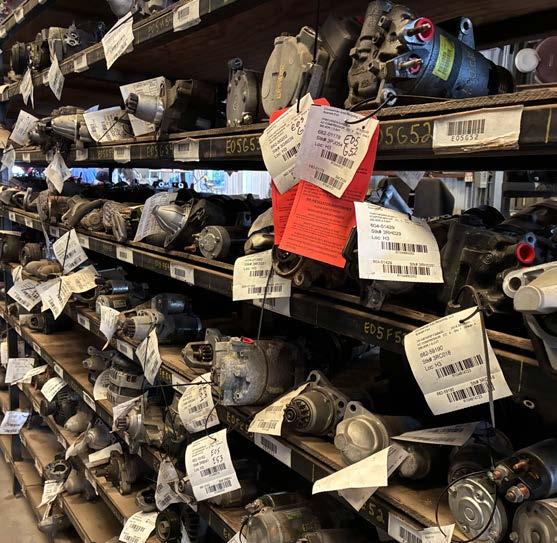
Second, reclaimed options have to surface automatically at the point of estimate. If the estimator is forced to stop, search and guess, the moment is lost. But if live feeds and availability data are integrated into the estimating platforms and parts procurement processes already used by networks, reclaimed parts become a simple selection rather than a special exercise. This is where the sector’s data maturity becomes a differentiator: accurate inventory, consistent grading, clear imagery where possible, and frictionless ordering all translate directly into adoption.
Third, supply has to be contracted and managed like any other mission-critical component of the authorised repair chain. Insurers will not risk cycle time, customer satisfaction, or complaint volume due to inconsistent experience. The salvage and recycling industry has made major strides in professionalism, but scale will require service-level discipline: delivery windows, warranty terms, returns processes, provenance and traceability must be predictable, not variable. In short, reclaimed parts need to feel as dependable as the alternatives, because in an insurer environment, predictability is the currency that buys policy change.

When this clicks, the commercial impact is material, the paper illustrates the maths using a notional insurer handling around 300,000 repairs a year, with roughly 17 parts per repair. In that kind of portfolio, moving from 10% to 30% reclaimed share isn’t a marginal environmental win; it is millions of parts and a meaningful cost movement. Based on the paper’s assumed average savings per reclaimed part, potential annual savings scale quickly into the eight figures at moderate penetration and increase further if reclaimed becomes truly mainstream. Even if the precise savings vary by category, the direction of travel is clear: reclaimed parts are one of the few levers that can support cost control while also advancing carbon narratives that matter to boards, regulators, and customers.
The final barrier is often described as “the customer,” but that description is often oversimplified. The paper’s consumer section argues that willingness is not uniform: younger drivers and cost-conscious motorists are more receptive, and acceptance rises on older vehicles where the logic feels intuitive. Higher-income customers, premium policies and newer vehicles bring different expectations, and that is where
messaging and assurance matter. But the lesson for the sector is not that customers block progress; it is that customers need confidence.
“Second-hand” is a weak frame. Approved, warranted, traceable, and fit-for-purpose is the stronger one. If insurers want volume without backlash, they will need consent journeys that are clear, consistent and built into claims communications, not left to repairers to improvise at the front desk.
For VRA members, the opportunity now is to make yourselves impossible to ignore in the only language that really changes insurer behaviour: performance. The next phase of the market will reward operators who can evidence consistent grading, rapid fulfilment, low returns, strong warranties, and clean data integrations. The industry doesn’t need to persuade insurers that reclaimed parts are good in principle; insurers already say that. What they need is confidence that reclaimed parts can deliver the same operational certainty as the parts they replace.
If that confidence arrives, the gap between “green parts” talk and green parts volume closes quickly. And when it closes, it won’t be because the industry found a better slogan.
It will be because reclaimed parts became the default outcome of a well-designed process, measured, managed and delivered at scale.
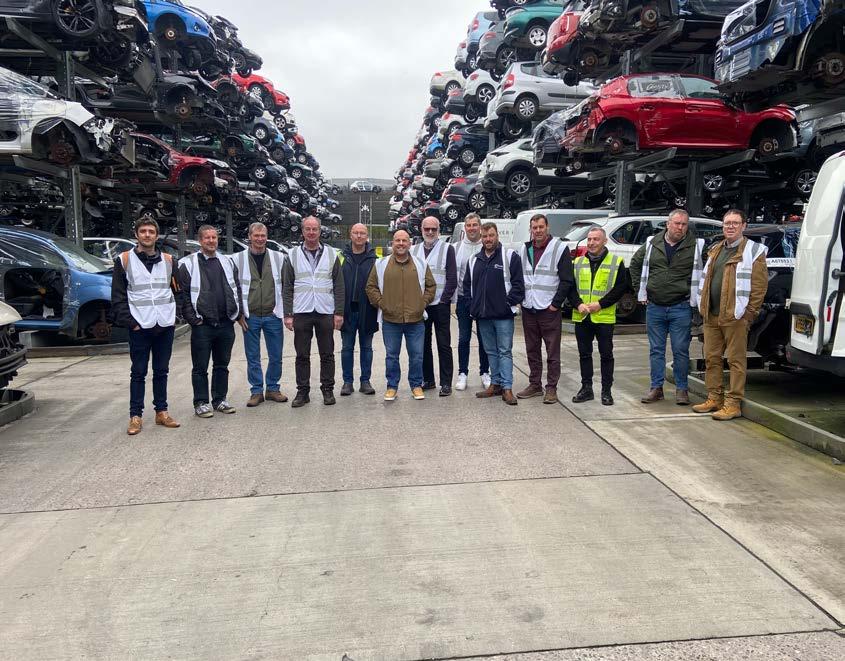
The Vehicle Recyclers Association (VRA) is entering an exciting and defining phase, one shaped by opportunity, innovation, and renewed purpose. As the vehicle recycling sector continues to evolve at pace, driven by rapid technological advancement, increasing environmental expectations, and a more complex regulatory landscape, the need for a strong, unified, and forward-thinking industry voice has never been greater. The VRA is uniquely positioned to meet that need and to lead the sector confidently into the future.
activity. Together, these pillars create a balanced and sustainable framework that supports both the needs of individual businesses and the wider ambitions of the industry.
Four Key Pillars
Membership
A SECTOR AT A TURNING POINT A MORE INCLUSIVE MEMBERSHIP MODEL
Today, the Association stands on the brink of meaningful transformation. With a clear understanding of the scale and diversity of the industry, comprising around 1,200 active businesses, the VRA has a powerful opportunity to expand its reach and reinforce its role as the central hub for vehicle recyclers and the wider network that supports them. Rather than maintaining traditional models, the focus is now on building an organisation that is more inclusive, more accessible, and more impactful in everything it does.
“THE STRENGTH OF THE ASSOCIATION LIES NOT IN EXCLUSIVITY, BUT IN INCLUSIVITY”
At the heart of this evolution is a renewed commitment to delivering tangible value to members. This value is built around four key pillars: Membership, Compliance, Certification, and Commercial
A simplified and more transparent membership model is central to this approach. By introducing a fair and accessible structure, the VRA can open its doors to a broader range of businesses, encouraging participation from across the sector regardless of size or scale. This is a significant cultural shift, one that recognises that the strength of the Association lies not in exclusivity, but in inclusivity. Every member, regardless of turnover or size, plays an equal role in shaping the future of the industry.
Expanding membership is about far more than increasing numbers. It is about building a vibrant, engaged, and connected community. By creating opportunities to
involve a wider network of stakeholders, including suppliers, regulators, policymakers, and service providers, the VRA can position itself at the centre of industry collaboration. This connected ecosystem enables the sharing of knowledge, the development of best practice, and the creation of a collective voice that carries real influence.
Alongside this growth, the VRA is developing a forward-thinking framework for professional standards. This includes a structured pathway for businesses to demonstrate excellence in compliance, safety, and operational performance. Through robust certification and ongoing assessment, members will be able to clearly demonstrate their commitment to high standards, not only strengthening their own businesses but also enhancing the reputation of the industry as a whole.
This focus on standards is not simply about compliance; it is about leadership. By defining what “good” looks like and supporting members in achieving it, the VRA can help raise the bar across the entire sector. In doing so, it creates a more level playing field, where responsible operators are recognised and rewarded, and where best practice becomes the norm.
Association and reducing the financial burden on members. By generating revenue through value-added services, the VRA can maintain competitive membership fees while continuing to invest in the development of the organisation and the industry it represents.
Complementing these initiatives is a strong and evolving commercial strategy. Commercial activities will play a vital role in supporting the work of the Association while also delivering direct value to members. These activities will include the VRA Conference, publications, technical training programmes, discounted business services, insurance solutions, and other tailored offerings designed specifically for the sector.
“THIS FOCUS ON STANDARDS IS NOT SIMPLY ABOUT COMPLIANCE; IT IS ABOUT LEADERSHIP.”
Importantly, this commercial activity is not an end in itself; it is a means of strengthening the

A key element of the VRA’s rise is its growing capacity to influence the wider landscape in which the industry operates. With a more structured, engaged, and representative membership base, the Association is well placed to play a proactive role in shaping policy, supporting regulators, and addressing some of the most pressing challenges facing the sector, particularly unlicensed activity and inconsistent enforcement.
By working collaboratively with organisations such as the Environment Agency and DEFRA, the VRA can help to create a more balanced and effective regulatory environment; one that supports compliant businesses while addressing areas of concern in a practical and proportionate way. This collaborative approach ensures that regulation is informed by real-world experience and that the industry has a meaningful voice in the decisions that affect it.
Central to this ambition is the development of a clear, evidence-based position for the industry. By actively gathering insights from members and stakeholders and translating them into a coherent, compelling narrative, the VRA can establish itself as the authoritative voice of the vehicle recycling sector. This is about more than representation; it is about leadership, credibility, and influence.
“THE RISE OF THE VRA IS NOT ABOUT LOOKING BACK; IT IS ABOUT LOOKING FORWARD. IT IS ABOUT RECOGNISING THE IMMENSE POTENTIAL WITHIN THE INDUSTRY AND HARNESSING THAT POTENTIAL TO BUILD SOMETHING STRONGER, MORE RELEVANT, AND MORE IMPACTFUL THAN EVER BEFORE.”
To support these ambitions, the Association is embracing a more professional and sustainable operating model. While the dedication, expertise, and voluntary contribution of committee members remain invaluable, there is a clear recognition that delivering meaningful change requires dedicated resources and focused leadership. By investing in operational support and strategic direction, the VRA can ensure that its ambitions are matched by its ability to execute and deliver.
Importantly, this transformation is being driven by a strong spirit of collaboration and shared purpose. There is a growing energy within the Association, with members increasingly engaged in shaping and contributing to its future direction. This collective momentum is one of the VRA’s greatest strengths. It reflects a shared belief in what the Association can become and a willingness to work together to achieve it.
The journey ahead is one of growth, innovation, and impact. By focusing on accessibility, professional standards, and industry leadership, the VRA is laying the foundations for long-term success. It is moving beyond traditional models and redefining what a modern trade association can and should be: dynamic, responsive, and firmly aligned with the needs of its members.
A defining principle that must underpin everything the VRA does is a clear and unwavering commitment to high professional, personal, and product standards. These standards should shape not only how we operate as individual businesses, but also how we are perceived collectively as an industry.
Why is it that one organisation succeeds while another, offering essentially the same product, struggles? In most cases, it comes down to three critical factors: quality, customer service, and price. Customers are loyal to businesses that consistently deliver on these elements, providing a reliable product, backed by excellent service, at a fair and competitive price point.
A good example many of us will recognise is Screwfix. Their website is intuitive and easy to use, their click-and-collect service is efficient and dependable, and if an item is not immediately available, it is typically ready the next day. Importantly, this experience is consistent across every branch in the country. Customers know exactly what to expect, regardless of location.
While our industry is more complex, with a broader range of products, services, and operational challenges, the ambition should be no different. We should aim to make it simple for customers to find and order parts, ensure those parts meet the required quality standards, and provide reliable availability, whether on the shelf or via next-day delivery. Just as importantly, the level of service
should be consistent across all VRA members, regardless of where the customer is based.
Can we achieve this today? Not yet. But it is entirely within reach. By working together, setting clear standards, collaborating openly, and sharing best practices, we can collectively raise performance across the sector. If we succeed, customers will respond, sales will grow, and our industry will secure a stronger, more central role in the parts supply chain.
There are wider benefits too. Higher standards will improve staff engagement and retention, reduce turnover, increase efficiency, and enhance overall quality; ultimately strengthening the bottom line for every business involved.
In many ways, this is a defining moment. The VRA has the opportunity to establish itself not just as a membership body but as a driving force for positive change, supporting businesses, influencing policy, and shaping the future of vehicle recycling in a meaningful and lasting way.
The rise of the VRA is not about looking back; it is about looking forward. It is about recognising the immense potential within the industry and harnessing that potential to build something stronger, more relevant, and more impactful than ever before.
With the right focus, clear leadership, and continued commitment from its members, the VRA can, and will, become the voice that the vehicle recycling sector both needs and deserves.



Graham Hall has never been one for polishing the story into something glossy. Talk to him about his working life, and you get it straight: hard graft, a few frustrations along the way, and real pride in how far the industry, and the VRA, have come. Now, after decades of committed service, he’s handing over the VRA presidency baton to Terry Charlton, with complete confidence that he’ll keep things moving forward, firmly on track.
Graham’s roots in vehicle recycling go back to Dewsbury Road Autos in Ossett, West Yorkshire, the family firm. Graham joined around 1977, leaving local government behind and getting stuck in at yard level.
“Circumstances just made it happen, really,” he says. His parents were beginning to think about stepping back, and Graham had “always had a passion for vehicles” since he was knee-high and loved being in the yard working with them.
He didn’t arrive and start making grand changes on day one. In fact, he describes those years as a familiar family-business pattern: the next generation can see what’s coming, but the handover takes time.
By 1990, his parents had stepped back completely, and Graham took over fully. By then, he admits, he was getting quite frustrated because he could see the future. Looking back, he’s blunt about it: “I knew in my head what needed doing, but I’d been held back throughout the 80s.”
Around that same period, Graham started to look beyond his yard in Yorkshire. His first brush with the association, which was then the MVDA (Motor Vehicle Recyclers Association), wasn’t at an AGM, but at a one-off seminar-style meeting, and he still remembers exactly why he went; “it was actually my mother who instigated going to this meeting at the Viking Hotel in York,” he says. “And I’d never been to anything like that; it

was a bit of an eye-opener.”
That ‘eye-opener’ also came with a memorable first encounter with Terry Charlton, who is now replacing Graham as the VRA President.
Graham recalls Terry’s presentation, because Terry had been travelling to the States for years and bringing ideas back with him: “They were racking everything, taking pre-dismantling, all of that. Well, that wasn’t something that was generally done.” He added, “It was something that appealed to people who were curious, who looked for better ways, and who weren’t afraid to challenge the old habits.”
His first AGM followed a few years later, in 1989, at the Midland Hotel in Morecambe. Graham remembers it fondly because it felt welcoming and
was also his wedding anniversary.
From there, involvement turned into responsibility. Graham continued attending regional meetings and AGMs, and then, as he puts it, he was “coaxed” onto the committee in the early 1990s.
Committee work dropped him straight into the period that, in his view, forged the modern vehicle recycler: the Environmental Protection Act 1990 era. “The big deal in the early 90s… was the EPA… and that was a massive deal,” he says. The Act effectively rewired expectations for dismantlers and scrap yards by tightening the legal framework for waste handling and disposal, including the Duty of Care for anyone who produces, stores, transports, or transfers waste. Even efficient businesses, he notes, “weren’t particularly environmentally friendly in their processes.”He calls it “a massive turning point”, not just for compliance, but for professionalism across the board.
It’s also where you hear his frustration, even now, about how hard good operators have worked to do things properly, and how important it is that standards are enforced consistently.
As the association evolved, Graham was there for the long debates about identity too. He laughs off the idea that he was the driving force behind the name change from the MVDA to the VRA, but he’s clear on why it mattered. “There was a very long
debate about whether the name should be changed at all,” he says. “I was persuaded at the end because motor vehicle dismantling may not have cut it in the modern age, whereas vehicle recycling clearly does.”
His route through senior roles of the association was anything but textbook. In the 1990s, he was asked to be Chairman, thought hard about it, and decided: “I’m not sure what I can bring to this role at the moment.”
In the end, as he tells it, he helped “turn this situation around so that John Hesketh from Remoco became Chairman.”
good friends, over decades basically,” he says. “I’ve learned so much, hopefully given as much or more back, and yes, long may they continue.”
“IT’S BEEN A FANTASTIC EXPERIENCE MEETING SO MANY GENUINE PEOPLE AND MAKING SUCH GOOD FRIENDS, OVER DECADES BASICALLY,” HE SAYS. “I’VE LEARNED SO MUCH, HOPEFULLY GIVEN AS MUCH OR MORE BACK, AND YES, LONG MAY THEY CONTINUE.”
Later, he became President in what he describes as a slightly “unprecedented situation”. He said, “No one had been president without actually having been Chairman.” As Graham reflects on his time with the VRA, what stands out isn’t a single policy win or a single headline moment. It’s the people. “It’s been a fantastic experience meeting so many genuine people and making such
Stepping down doesn’t mean going quiet either, not if you know Graham. “I’ve always been one to pick the phone up and tell people what I think,” he says, and he fully intends to keep coming to AGMs. But he also has a very clear line he doesn’t want to cross. “Please, please tell me if I no longer have anything to contribute,” he’s told the committee before.
He’s seen past leaders turn up without the background and derail meetings, and he’s adamant: “There’s nowhere on earth I wanted to be that person.”
Which brings us to the handover, and to Terry Charlton from Charlton Autoparts. Graham doesn’t overcomplicate it. “I certainly have absolute confidence in Terry,” he says, “and I wish him nothing but the
best. I’m sure that he will make sure that things stay on track.” That confidence feels rooted in history: Graham remembers meeting Terry at the very beginning of his association life, remembers the ideas Terry brought back from overseas when those ideas were still new, and now sees him taking the helm at a moment when steady leadership matters. It’s the passing of the baton, but it’s also, in Graham’s words, “continuity, someone at the rudder, keeping the ship moving in the right direction.”

BY SIMON BASTIN-MITCHELL COMMERCIAL MANAGER - RECLAMET LTD
Watching the story of Ford v. Ferrari and the vision shared by Carroll Shelby and Ken Miles is inspiring, both for its imagination and for its drive to succeed. Their ambition to build a car capable of beating Ferrari at Le Mans culminated in the GT40 Mk I, which is rightly celebrated for its engineering brilliance and competitive spirit.
But one moment in the film stands out more than any other.
Shelby watches a red folder being passed from desk to desk, department to department, before it finally lands where it needs to be. Nothing dramatic happens on


screen, yet the point is unmistakable. Vision alone does not build winning machines.
Progress depends on how effectively ideas, decisions, and information move through a system.
THE UK VEHICLE RECYCLING INDUSTRY HAS NEVER LACKED RESILIENCE. FOR DECADES, ATFS HAVE ANSWERED THE CALL TO SAFELY, RESPONSIBLY, AND ECONOMICALLY DEAL WITH ELVS, OFTEN UNDER INCREASING REGULATORY PRESSURE AND TIGHTENING MARGINS
That moment resonated because it reflected how I already think about building and improving operations. Over time, I have observed that consistent performance rarely arises from individual decisions in isolation, but rather from how clearly processes are aligned and how effectively information, accountability, and decision-making move through an organisation.
Applying that thinking to vehicle recycling has helped sharpen how inefficiencies are identified, how flow is improved, and how better commercial decisions are made across the operation.
The UK vehicle recycling industry has never lacked resilience. For decades, Authorised Treatment Facilities have answered the call to safely, responsibly, and economically deal with end-of-life vehicles, often under increasing regulatory pressure and tightening margins. As an industry, we are good at what we do.
But being good is no longer enough.
After more than two decades working across almost every commercial and operational function within vehicle recycling, one truth has become increasingly clear: too many of the most important decisions in our industry are still being made on instinct, in a market that increasingly demands insight.
This is not a criticism of operators. In many ways, instinct is what built the sector.
Experience, judgement, and hard-won knowledge have kept operations running through volatile scrap markets, regulatory change, and global disruption. However, the industry is now entering a phase where those instincts must be supported, and sometimes challenged, by better data, better systems, and a sharper commercial lens.
Few areas expose this more clearly than vehicle sourcing, not because buying price alone determines success, but because it sits at the top of a chain of commercial assumptions.
What a vehicle ultimately returns is shaped by far more than what is paid for it on day one. Scrap price exposure, catalytic converter values, processing efficiency, labour input, and the speed at which a vehicle moves through the operation all play a part. Two vehicles purchased at similar prices can produce very different outcomes once these variables are accounted for.
Focusing too narrowly on headline buying prices risks masking where value is actually created or lost. Without understanding how these factors interact across the operation, it becomes difficult to distinguish disciplined buying from decisions that rely on favourable conditions holding steady.
The same instinct-led thinking often appears elsewhere. What should a part realistically sell for? How many people are genuinely required to process today’s volumes, and tomorrow’s? Are management accounts being reviewed and acted on quickly enough when performance shifts from the norm? These are not abstract questions. They directly determine whether an operation scales efficiently or quietly erodes margin.
WHAT INSIGHT ACTUALLY LOOKS LIKE IN PRACTICE
Insight does not require complex systems or perfect data. In most cases, it starts with asking better questions of the information already available.
For example, understanding the true return of a vehicle across all revenue streams, rather than viewing it through a single lens such as scrap value or parts potential, often reveals where assumptions no longer hold. A change in catalytic converter pricing, a slowdown in processing, or a backlog in parts sales can quickly alter the commercial outcome if not recognised early.
In parts sales, insight shows up in knowing which listings
convert reliably and which do not, and being able to explain why. Small differences in description quality, imagery, or fulfilment can have a disproportionate impact on customer confidence and returns.
At a people and cost level, insight appears in recognising when labour and overheads drift out of line with throughput. Operations that spot this early can correct course quickly, rather than discovering the issue months later in year-end numbers.
These are not abstract exercises. They are practical disciplines that allow experience and instinct to be applied with greater confidence and consistency.
One of the most visible opportunities for improvement lies in how products are sold, particularly online. Platforms such as eBay have transformed parts sales; however, while some operators set excellent standards, many still fall short of customer expectations.
Quality listings, accurate descriptions, clear imagery, and professional fulfilment are no longer nice to have. They build trust, not just in individual operations, but also in the industry as a whole. There is a long-established principle in sales that people buy people first. In an increasingly digital marketplace, listings, communication, and after-sales processes are our people. When standards rise collectively, customer confidence improves, disputes reduce, and long-term value strengthens for everyone.
COLLABORATION IS NOT ABOUT GIVING AWAY ADVANTAGE. IT IS ABOUT RAISING STANDARDS TOGETHER, SO CUSTOMER CONFIDENCE IMPROVES, DISPUTES REDUCE, AND LONG-TERM VALUE STRENGTHENS ACROSS THE SECTOR.
This customer-first perspective should not stop with parts buyers. It applies equally to vehicle owners, insurance partners, and, critically, employees. Hiring the right people in vehicle recycling is difficult. Keeping them is harder still. Too often, operations focus on recruitment while underestimating the importance of structure, clarity, and fair reward once someone is through the door.
As Chris Hurst explains in No Bullsht Leadership*, sustainable performance is never about the brilliance of individuals in isolation, but about building teams that are clear on purpose, properly supported, and aligned to shared outcomes. People are not overheads to be minimised; they are capacity and capability. Too few staff, and an operation cannot scale. Too many, and it becomes inefficient and unfocused.
Time spent in the United States offers a useful comparison. While the UK industry is characterised by strong independence, US recyclers tend to collaborate more openly, sharing ideas, systems, and benchmarks in
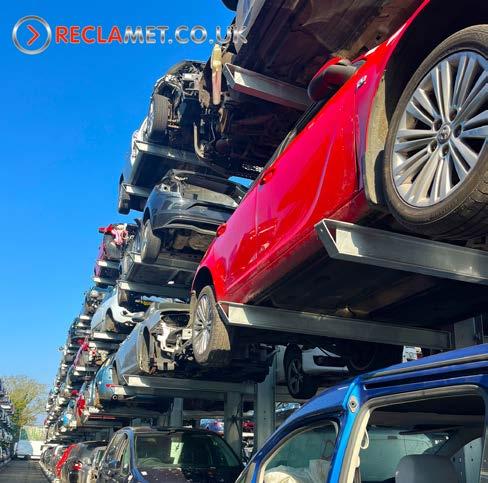
ways that ultimately strengthen the sector as a whole. The mindset is not about giving away advantage, but about raising standards so that everyone benefits.
That approach is increasingly relevant in the UK, where independent operators dominate, and knowledge is often guarded unless it offers immediate commercial return. As margins tighten and compliance expectations rise, the cost of operating in silos grows. Collaboration does not require uniformity, but it does demand a willingness to learn from one another and to professionalise together.
The vehicle recycling industry has every reason to be confident. It plays a vital role in the circular economy and continues to adapt under pressure. But confidence must now be matched with commercial discipline.
What could your business and this industry become if we truly understood how much potential they hold?

E q u i p m e n t
D e p o l l u t i o n & D i s m a n t l i n g S y s t e m s
V e h i c l e L i f t s , S t a n d s , T i p p e r s
B a l e r s
T y r e R e c y c l i n g M a c h i n e s
C a t C u t t e r s
A i r c o n R e c o v e r y E q u i p m e n t
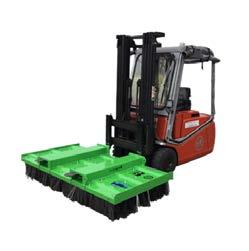
I n d u s t r i a l F o r k l i f t B r o o m s
F u e l M a n a g e m e n t S y s t e m s
F u e l S t o r a g e T a n k s
L i f t / R a m p I n s p e c t i o n s
F l u i d S t o r a g e T a n k I n s p e c t i o n s
D e p o l l u t i o n E q u i p m e n t S e r v i c i n g
C o m p r e s s o r S e r v i c i n g
O n - s i t e F G a s A s s e s s m e n t s
D e p o l l u t i o n E q u i p m e n t T r a i n i n g
L P G R e c o v e r y T r a i n i n g
C a t C u t t e r / A i r b a g T r a i n i n g

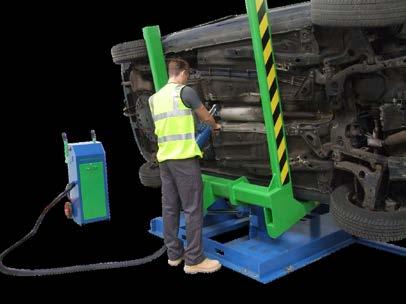
E V / H y b r i d R e c y c l i n g
E V D e p o l l u t i o n S y s t e m s
T w o P o s t L i f t s
B a t t e r y F i r e B l a n k e t s
D i s m a n t l i n g T o o l s
B a t t e r y W i n c h e s / L i f t i n g T a b l e s

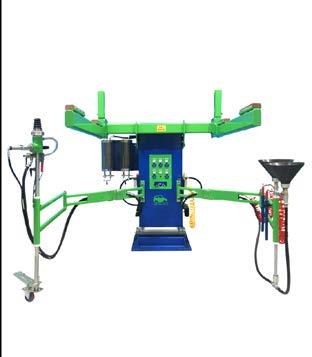
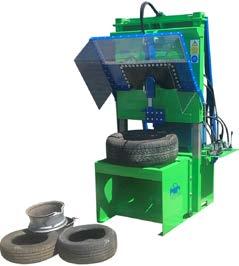
i n f o @ g r e e n c a r d e p o l l u t i o n . c o m 0 1 6 8 4 2 9 8 0 8 4
w w w . g r e e n c a r d e p o l l u t i o n . c o m
BY ALAN COLLEDGE TECHNICAL DIRECTOR LITHIUM BATTERY RECYCLING SOLUTIONS
As we enter a new year, the pace of change across the automotive, mobility and energy sectors shows no sign of slowing. Electric vehicles, battery-powered equipment and energy storage systems are now firmly part of everyday life, and with that progress comes a growing responsibility to manage lithium batteries safely and sustainably at end of life.
More recently, DEFRA is now undertaking the challenge of adopting a revision to the legislation and governance for all batteries under the new European Battery Regulation (2023/1542) (EUBR). This now sets out a comprehensive list of requirements that covers sustainability, performance, safety, collection, recycling, second life and a passport system for certain batteries to give
information supporting the battery’s lifecycle. Extra rules now detail carbon footprint, recycled content, and durability, putting pressure on manufacturers to become more responsible than ever. We will see how the UK adopts the new EUBR as the year continues, but it is already in place in EU member states and Northern Ireland.
At Lithium Battery Recycling Solutions (LBRS), we’ve been preparing for this moment for more than a decade. Since first handling lithium-ion batteries in 2012, we’ve developed one of the UK’s most specialist and comprehensive lithium battery recycling services. Demand for this expertise is now accelerating rapidly, and we’re responding by investing in larger premises to expand capacity and support businesses nationwide.
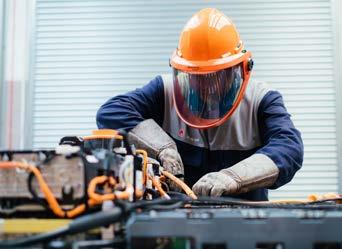
Lithium batteries are not just another waste stream. Classified as a Dangerous Good, they pose serious risks if stored, transported, or dismantled incorrectly, including fire, thermal runaway, and environmental harm. Managing them safely requires specialist knowledge, infrastructure and trained engineers.
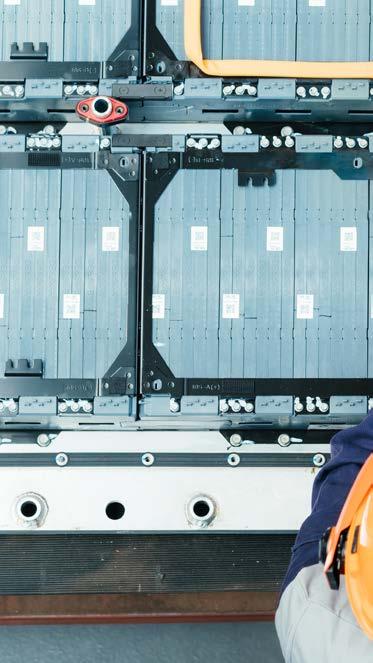

Our dedicated lithium battery treatment facility in Luton is one of the first of its kind in the UK. Here, high-voltage-trained engineers carefully de-energise and dismantle batteries in a controlled environment before processing them to recover valuable materials. From audit and risk assessment through to ADR-compliant packaging, transport and treatment, every stage of the process is designed around safety, compliance and sustainability.
This expertise is increasingly vital. Many businesses still don’t realise that lithium batteries must be handled by authorised operators, or that recycling them is a tough challenge reflecting the specialist controls required. A core part of our role is education, helping organisations understand their responsibilities while offering a clear, compliant route for battery disposal.
The long-term goal for lithium battery recycling is circularity. While the UK’s metallurgical processing capacity continues to develop, LBRS works closely with trusted European partners to ensure recovered materials such as lithium, cobalt and nickel are returned to the supply
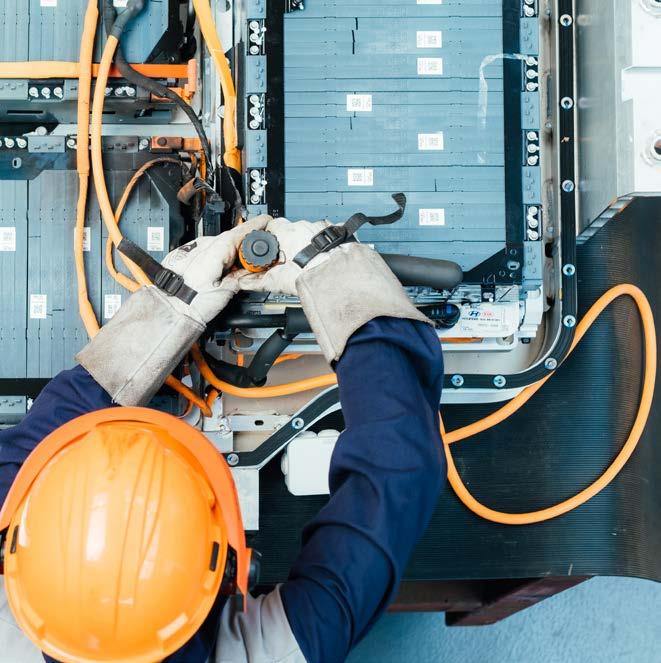
chain through advanced hydrometallurgical processes.
The focus has always been on developing a full circular process.
“The long-term goal for lithium battery recycling is circularity”
By combining UK-based treatment with established European recovery routes, we’re protecting people, the environment and valuable resources, while helping the industry move forward responsibly.
This approach supports manufacturers, recyclers and fleet operators alike, ensuring that critical materials remain in use and reducing reliance on newly mined resources.
With electric and hybrid vehicles now commonplace, and batteries embedded across transport, logistics and industry, demand for specialist lithium recycling is rising sharply. To meet this need, LBRS is preparing to move to larger premises in 2026, significantly increasing processing capacity and enabling us to support a wider network of partners across the UK.
This expansion reflects both market demand and our long-term commitment to investment, innovation and safety. It will allow us to process higher volumes, support more recyclers and manufacturers, and play an even greater role in building a resilient UK battery recycling infrastructure.
As businesses navigate the transition to net zero, access to specialist services like lithium battery recycling will become increasingly important. At LBRS, we’re proud to lead from the front, combining decades of waste management
Lithium batteries may be complex, but with the right expertise and partnerships, they can be managed safely, responsibly and sustainably “ ”
experience with cutting-edge capabilities in one of the fastest-evolving areas of the circular economy.
As 2026 approaches, our message is clear: lithium batteries may be complex, but with the right expertise and partnerships, they can be managed safely, responsibly and sustainably, today and for the future.

For more information about lithium battery recycling services, contact the team directly on 0208 0907 300 or at hello@lithiumbatteryrecycling.co.uk




With more than five decades of hands-on experience in vehicle recycling and a formative role in shaping the industry’s very identity, Terry Charlton steps into the presidency of the Vehicle Recycling Association. It is, as those who know him will attest, exactly where he belongs.
There are individuals who find their way into an industry, and there are those for whom the industry is, quite simply, a birthright. Terry Charlton belongs firmly in the second category. His father, Ron, was breaking cars in Sawston, Cambridgeshire, as far back as the 1950s, running a small yard on the main London to Cambridge road where a handwritten blackboard advertised stripped Austin Cambridges and Ford Anglias to passing motorists. By the time Terry was eight years old, he was manning the petrol pumps. By the time he was fourteen, he was unlocking the gates of the family’s newly acquired breaker’s yard on the morning of Decimal Day, 15 February 1971.
That yard, a couple of acres holding around 500 cars, would prove to be the foundation of a career defined not merely by longevity but by genuine, substantive contribution to the vehicle recycling trade. Now, as he assumes the presidency of the Vehicle Recycling Association (VRA), succeeding Graham Hall in the role, Terry Charlton brings with him a living archive of the industry, and, crucially, a clear-eyed view of where it needs to go.
To understand Terry Charlton’s appointment as president, it helps to understand the man’s relationship with innovation and with being told he was wrong. In 1978, on a working holiday to California with his
girlfriend, he visited a salvage yard in Los Angeles that specialised exclusively in Chevrolets. Two acres. One acre of customer parking. One acre of warehouse, three storeys high, parts catalogued, cleaned and racked. Not a car to be seen.
Customers were queuing at the counter; something we take for granted today, but at the time, a truly alien concept in the UK industry.
That visit changed everything. Terry returned to the UK and presented what he had seen, pre-dismantling, parts on shelves, tested components, inter-yard trading, to the Motor Vehicle Dismantlers Association (MVDA), the predecessor to today’s VRA. He was, by his own account, comprehensively dismissed. “That will never work here,” he was told. “That’s all right in America.”
He pressed on regardless. His conviction brought American trainer Barry Eisenberg to the UK, where he ran a series of seminars for around 40 dismantlers across three separate sessions, covering warehouse layout, pre-dismantling, guarantees, customer service and sales training. The impact, Terry believes, was lasting. It also brought him into

contact with Russ McKinnon, then executive vice president of the Automotive Dismantlers and Recyclers Association in the United States, beginning a transatlantic relationship with the American industry that has continued to this day.
BUILDING THE FOUNDATIONS: NSG, THE MVDA AND THE VRA
Terry’s influence on the wider industry is perhaps best illustrated by his role in forming the National Salvage Group (NSG). In the early 1980s, following a conversation at an MVDA Meeting in Jersey with a fellow dismantler named Jeff Hill (owner of then Hills Motors (now The Green Parts Specialists) and father of Ian Hill), they identified an emerging opportunity in insurance salvage contracts. The first such contract had just been awarded in the UK, and the independent dismantling sector had not been included. Terry assembled a group of seventeen like-minded operators, pooled their resources and went after the business.
NSG won contracts, grew its membership to over 40 prominent dismantlers, and ultimately merged
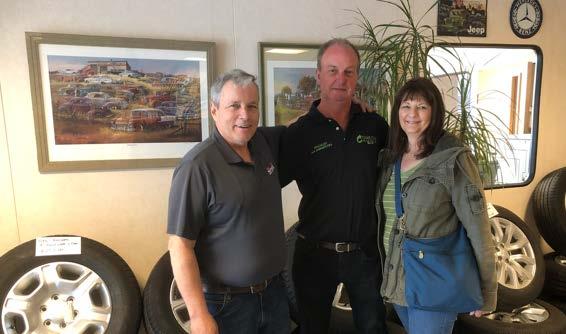
with the competing National Auto Salvage Amalgamation (NASA) to jointly handle the Direct Line contract in the 2000s, a venture that would evolve into what is now known as e2e Total Loss Vehicle Management. More than a commercial venture, NSG forged professional bonds that endure to this day. “We were business partners, but we were friends,” Terry reflects. “Friends you could count on.”
Throughout this period, Terry remained firmly embedded in the MVDA, serving as chairman for over three years, considerably longer than the standard two-year term, when a predecessor stepped down shortly after appointment. He credits that era and the professionals he worked alongside as pivotal to the association’s evolution from a sometimes fractious talking shop into a credible industry body. It was also during his tenure that the long-running secretaryship of Brian Brewer, whose father had been among the MVDA’s founders in 1943, eventually gave way to Duncan Weems, a consummate professional who, in Terry’s words, could “manage the room.” Chas followed Duncan, and under his stewardship, the association took its most significant step in generations: rebranding from the MVDA to the Vehicle Recycling Association, a name that better reflected both the breadth of the membership and the direction of the industry.
Terry is disarmingly candid about what the presidency means to him, and about his role within it. “On the one hand,” he says, “what do they do with somebody who’s been on the committee most of the last forty-something years, and they’ve got to the end? Well, you make them president, and they’re a figurehead.” He pauses. “But I still like to feel that I can contribute.”
That contribution, he is clear, will focus on the members, all of them. Whether a multi-site operation running dozens of staff or a father-and-son business operating with a single employee, Terry has always held the view that the smallest members are every bit as important as the largest. “I’ll speak to anyone, big or small,” he says simply. It is a principle he has carried throughout his career, from NSG’s earliest days to his current specialist operation at his
Cambridgeshire yard, where he focuses on Land Rovers, Jeeps and pickup trucks, a business he describes, with evident affection, as “still a hobby, really.”
He is also full of praise for the work currently being done behind the scenes at the VRA. Andy Latham and the committee, he says, are delivering a level of professionalism that he finds genuinely impressive, and the ideas emerging around the association’s future structure give him real confidence. “They won’t achieve it all,” he concedes, “but if they can only achieve a part of what they’re planning, it would be a huge leap forward for the members.” He envisages a larger, more engaged membership, a VRA 2.0 that people actively want to be part of.
THE GOLDEN ERA, AND WHY THE VRA MATTERS NOW MORE THAN EVER
For all the warmth of his recollections, Terry Charlton is not a man given to nostalgia for its own sake. He looks at the current state of the used parts market in the UK and sees something he describes, without hesitation, as a golden era. The pandemic-driven parts shortages accelerated demand for quality secondhand components. Digital platforms have opened entirely new routes to market. Body shops that once recoiled at the idea of second-hand panels are now waiting
eagerly at the door when the delivery arrives. The perception of the industry, long hobbled by the image of mud and dogs on chains, is changing, and changing fast.
“I look at this period,” he says, “and I think I’m going to look back on it the way I look back on the era of Vauxhall DTV racing, where I served my apprenticeship. This is the golden time for the used parts industry in this country.” But he is equally insistent that complacency is the industry’s single greatest threat. The opportunity is real, but it has to be earned through quality standards, consistent presentation, professional customer service, and the kind of operational discipline that he has been evangelising since he returned from California nearly five decades ago.
“WE’VE GOT TO RAISE STANDARDS TOGETHER, AND IF WE DO, EVERY SINGLE ONE OF US IN VEHICLE RECYCLING BENEFITS.”
This is precisely why the VRA matters, he argues. An industry navigating rapid change in regulation, technology, consumer expectations, and environmental responsibility needs a strong, well-run association to represent it, protect it, and, where necessary, educate the wider world about what vehicle recycling actually is. Terry has seen that external misunderstanding at close quarters. He knows that the gap between perception and reality remains wide in some quarters, and he has no intention of letting it stay that way.
“We need to make an association that people want to be part of,” he says. “Want to come to the meetings. Want to receive the magazine to find out what’s happening. And want to know that their interests are being looked after.” The history of the VRA and the eighty-plus years of association life that preceded it tell him that this has always been achievable when the right people are pulling in the same direction.
With Terry Charlton as president, the VRA has a figurehead who has lived the full arc of that story, from a blackboard on the Cambridge road to the boardrooms of the insurance industry, from the chaos of early association meetings to the quiet confidence of someone who has seen it all before and knows exactly what comes next.
Many VRA members will already be aware of the British Metals Recycling Association (BMRA). We share many members, and work on many similar lobbying activities and projects.
Like the vehicle recycling industry, metal recyclers are being faced with a never-ending slew of government bureaucracy that will test even the most resilient of businesses.
2025 was an extremely busy year for the BMRA as we released our much-anticipated sector-specific fire prevention plan guidance. The Guidance is designed to help BMRA members develop their own fire prevention plans (FPPs) by considering approaches and techniques that apply to the majority of metals recycling facilities, with practical examples of how site layout, infrastructure, and fire management provisions can mitigate fire risk. This is in accordance with requirements set out in the Environment Agency’s permitting regime.
The Guidance also provides information on specific techniques to consider based on the activities and materials processed by facilities, including end-of-life vehicles.
The guidance highlights current and future options for treatment and disposal of metal shredder residue (MSR), and the regulatory requirement of operators, as Regulatory Position Statement RPS 314 is scheduled to be withdrawn by 31 March 2026. If that happens, many MSRs would only be allowed to be landfilled at sites permitted for hazardous waste.
BMRA has also undertaken significant work to highlight the sector’s importance globally and environmentally.
In addition, we have released the BMRA’s Roadmap to Net Zero. Launched at a Parliamentary reception, and based on an assessment by Tunley Environmental, it concludes that UK metals recycling’s Scope 1 and Scope 2 emissions could fall 93% by 2050 and switching to steel made from Electric Arc Furnaces (EAFs) alone could reduce the industry’s emission footprint by 38%.
‘Export curbs could cost £5bn GVA and 20,000 jobs across recycling supply chains’
2025 also saw the release of BMRA’s Landfill guidance for shredders operators - for those who process end-of-life vehicles, household appliances, and other metal wastes.
Firstly, the Sheffield Hallam report, Assessing the impact of potential restrictions on UK recycled metals exports. This report concluded that export impediments to domestic scrap metal, particularly to non-OECD countries, would lead to nearly £5bn lost in gross value added (GVA) and would cost over 20,000 direct and indirect jobs. This would be devastating not just to metal recyclers but also to the ripple effect on those who rely on the industry for jobs or income, which could also see the closure of many other businesses. At the time of writing, BMRA also awaits the outcome of the Government’s impending Steel Strategy, but we hope to see recycled metal exports remain as they are today, without impediments, thanks to our lobbying efforts.
“This assessment not only reinforces metals recycling’s current environmental and sustainable credentials, but shows how it can go further, substantially reducing its Scope 1, 2 and 3 emissions, and progress towards the UK being the first in the world to produce net zero recycled metal”, said James Kelly, CEO, BMRA. “However, like most progressive and innovative ideas, changes to Government policy are needed to support the industry to enable this transition. The five proposed policy changes will accelerate the journey to net zero, safeguard the industry, make operational costs cheaper, and the move to sustainable processes easier.”
Additional efforts, as set out in the BMRA’s Agenda for Change, include lobbying Government consistently to provide more relief for members, such as bringing the sector into scope for its British Industrial Competitiveness Scheme (BICS).
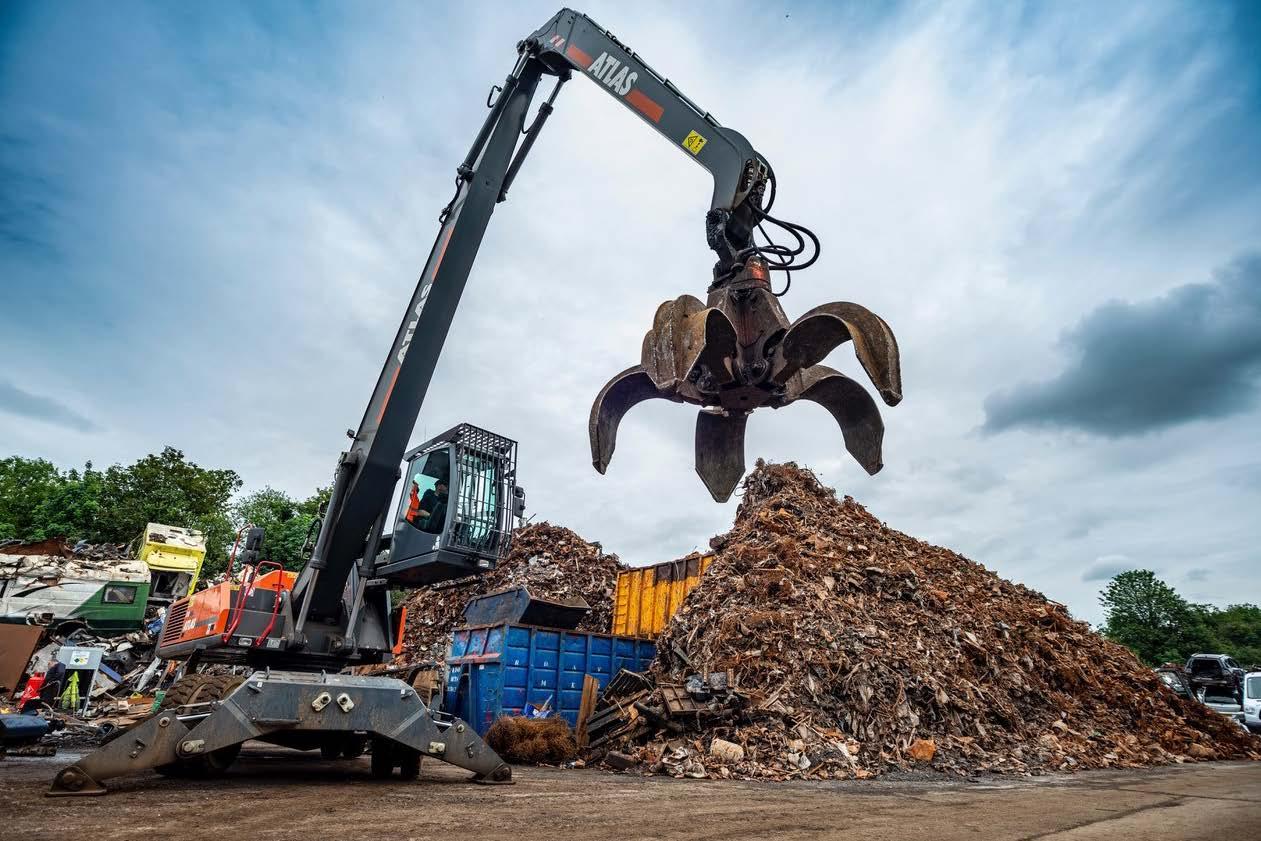
This scheme is designed to reduce electricity costs for key manufacturing sectors identified in the Government’s Industrial Strategy, as well as the foundational sectors that support them. At the same time, we would like to see the funding opportunities for scrap facilities set out in the National Wealth Fund come to fruition.
Externally, the Environment Agency (EA) has begun a review of metals recycling facilities, and this will continue well into 2026. They will be examining all current permits to see if they remain fit-for-purpose and assessing on-site water capture and treatment, as well as more general abatement measures. This proves that trade association membership is needed more than ever, as we and other associations remain on hand to support members through this time.
and a ban on exporting non-roadworthy vehicles after a five-year transition period.
For the UK’s Authorised Treatment Facilities (ATFs) and vehicle dismantlers, the impact will depend on how Defra aligns with the new framework. Key risks include increased dismantling obligations, stricter material quality standards, landfill restrictions, export controls on non-roadworthy vehicles, and producer responsibility reforms.
‘trade association membership is needed more than ever’
Even without full UK alignment, EU recycled content targets and quality standards are likely to affect supply chains, so UK operators trading with European manufacturers may face indirect compliance pressures.
where we will discuss permitting issues, including the time it takes to issue and vary them, enforcement of regulations, tackling illegal sites, and the upcoming digital waste tracking. 2026 will also see the reconvening of the All-Party Parliamentary Group (APPG) that covers metal theft. Previously known as the APPG for Metal, Stone and Heritage crime, it will endeavour to hold the Government to account for the lack of enforcement of the Scrap Metal Dealers Act 2013.
Elsewhere, in Europe, the new End-of-Life Vehicles (ELV) Regulation is nearing finalisation. This regulation will significantly change vehicle design, dismantling, and recycling across the EU. It will replace the current Directive with directly applicable rules, including mandatory recycled content targets, stricter dismantling requirements, higher shredder output standards,
BMRA is actively engaged at the European level through our membership in Recycling Europe to ensure UK recyclers’ interests are represented. In the UK, we maintain regular dialogue with Defra on potential ELV regime reforms, advocating for proportionate implementation that protects competitiveness and supports circular economy objectives.
Our Public Affairs and Policy team will continue to represent the industry at the EA’s Regulated Business Forum,
On a positive note, 2026 is one of celebration for the BMRA as we mark 25 years of being a united Association. It was formed in 2001 when the British Secondary Metals Association and the British Metals Federation (previously known as the British Scrap Federation) merged in order to better serve the needs of the British metals recycling industry with a united voice.
We will celebrate with a Golf Day and Summer Dinner at Gleneagles in June, our Annual Dinner in November, as well as a conference in September at the British Motor Museum in Warwickshire.


Name: Martin Handley
Company: Local Recycling Group Ltd / Scrap Local
Town/City: Darwen, Lancashire
Role: Director
Years in vehicle recycling: I’ve been in the scrap metal industry since 2007. I started as a tatter’s assistant, then got a job at my local scrapyard and worked my way up to yard manager. I left in 2017 to follow my interest in web design & marketing and began building websites. That led me to start a lead-generation business for the scrap industry. I started my own scrap car collection business with my dad, and to manage enquiries properly, I developed a tech platform for the industry. That eventually evolved into Scrap Local, which became what we’re doing today. Now I’m building my first yard from the ground up. It’s been a journey, and I’ve been through the mill, but I’ve stayed disciplined in the sector and learned the industry from every angle.
Off-the-yard hobby: Work has been my main focus for the last few years. But I’m looking to get back into swimming. I competed for Team GB at youth level, and I want that routine back in my life to clear my head and get properly fit again. It’s good to stay disciplined in something.
Tea or coffee: I mostly drink tea throughout the day, but I do love a strong caramel macchiato with an extra shot of coffee and whipped cream.
Favourite band/artist: Eminem
still gets me fired up and motivated. “Lose Yourself” It was my race day song when I competed in swimming as a teenager.
Guilty-pleasure song: “A Thousand Miles” by Vanessa Carlton. Blame Terry Crews in White Chicks.
Comfort watch (film/TV): Definitely The Greatest Showman. As a business owner on a similar journey, it hits me every time, especially knowing I do what I do for my wife and three girls. It’s about taking risks and backing your vision, but it’s also a reminder not to lose sight of the people you’re building it for. I’ve drifted from that a few times, and it brings me back.
Go-to meal (or takeaway): BBQ chicken wings and garlic bread with cheese.
Favourite holiday destination: Definitely Orlando, Florida. Disney and Universal never get old. It’s without a doubt my happiest place on earth. There’s just something magical about Disney. It’s one of the few places where I can properly switch off and just enjoy being present with the family.
Most underrated part to sell: I’d have to say Fuel injectors. They fail regularly, they’re quick to remove and easy to post without getting damaged. Refund rates are low, and even the old or redundant units still
have value through core buyers, so there’s margin both ways.
Best bit of kit in the yard: By a country mile, the Powerhand. It’s transformed how quickly we can process vehicles and made the whole operation more profitable.
Best thing about the job: The variety. No two days are the same. One minute you’re solving a problem in the yard, the next you’re planning the next step. It keeps you on your toes.
Worst thing about the job: The compliance and admin side. It’s necessary, but it can pull you away from running the yard, which is why I built systems to keep it under control.
How has the industry changed in the last five years: Technology and compliance have really moved on. There’s a bigger focus on doing things properly, running tighter operations and improving standards overall.
One change you’d like to see in the industry: More collaboration and transparency. There’s enough work for everyone, and the industry would move forward faster if we raised standards together.
Dream car (owned or wish-list): It’s on the wish list: Aston Martin DBX. It’s got real presence, but it’s not over the top.

The UK may have left the EU, but the ELV sector remains shaped by developments in Europe, and those developments are accelerating.
For Authorised Treatment Facilities (ATFs), the question is not whether change will have an impact, but how significant that impact will be and whether businesses are prepared to adapt.
The UK continues to operate under the retained ELV framework. Operationally, little has shifted since Brexit, but that looks set to change.
The EU is replacing the old ELV Directive with a more ambitious and far-reaching Regulation.
Proposals include:
• 25% recycled plastic in new vehicles
• A defined proportion of recycled materials sourced from ELVs
• Improved material traceability
• Digital vehicle passports
• Wider vehicle category coverage

UK Manufacturers selling and exporting to Europe must comply with EU rules. At the same time, vehicles imported here from Europe will already meet those standards.
In 2025, 254 automotive assembly plants operated across the EU and UK (Source: ACEA). Production networks, component supply chains and material for these facilities span across UK and European borders.
While EU legislation may not formally apply in the UK, its commercial impact does. OEMs are unlikely to maintain a separate compliance system for the UK, so when ELV legislation tightens in Europe, those standards will inevitably influence supply chains operating here.
For ATFs, there will be a shift away from weight-based recovery targets towards quality, accountability and supply chain integration.
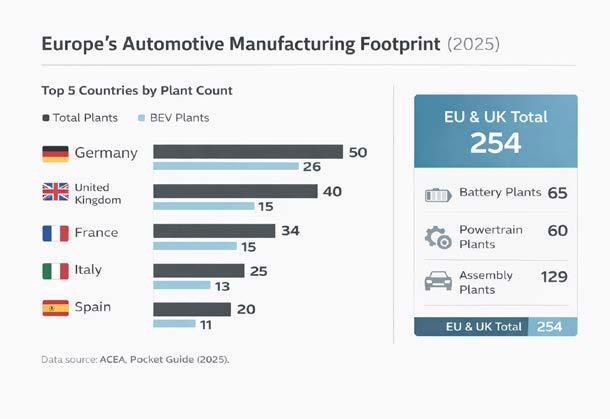
ATFs will need to demonstrate:
- Verified ELV origin, strengthened traceability and supporting documentation
- Consistent and reliable volumes to meet OEM material requirements
- The ability to correctly identify, classify and separate polymers into value streams
Modern vehicles contain increasing volumes of polymer, driven by weight reduction and electrification. Unlike steel and aluminium, which are relatively straightforward to recover and traded by weight, polymers are more complex and costly to process, particularly for automotive-grade applications.
Emerging legislation will require manufacturers to demonstrate ELV-derived recycled content in new vehicles. As a result, certain automotive-grade polymers will become strategically important within the automotive supply chain, so must be extracted cleanly. Once plastics are blended into
shredder residue, both quality and value decline rapidly. Identification and separation therefore need to take place at the vehicle dismantling stage.
The practical outcome is clear: Less metal per vehicle, resulting in lower scrap tonnage More plastic per vehicle, resulting in greater material separation demands
The goal will be to separate and divert clean, uncontaminated polymers away from the shredder and into higher-quality, segregated recovery streams, all while continuing to optimise returns from metal.
Stronger dismantling discipline and cleaner streams before shredding. As standards tighten, pressure to demonstrate material quality and origin will move upstream to ATFs.
Vehicle passports and digital traceability systems are likely to become standard across Europe. Expectations in the UK are likely to follow.
Closer Links with Processors and Manufacturers
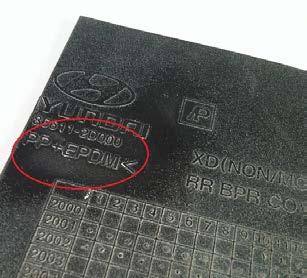
Source: Hyundai
OEMs will seek greater visibility and security in ELV material flows.
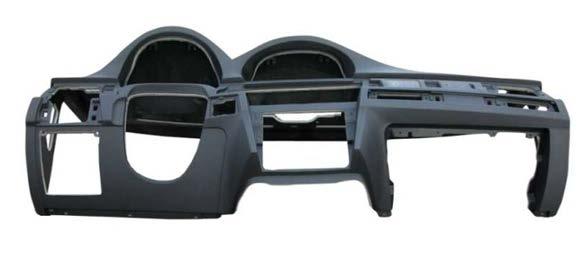
Smaller ATFs may consider a coordinated approach, potentially through trade associations, to aggregate supply, strengthen negotiating leverage and secure agreements with European polymer processors.
More Labour and Skills
Improved material segregation will require greater discipline at dismantling
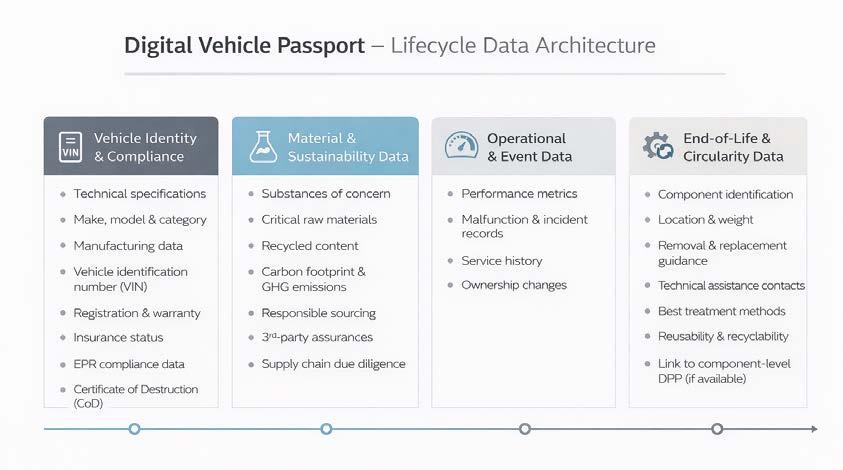
stage. Identifying and separating valuable polymers demands operators who understand materials, contamination risks and correct techniques.
At the same time, electrification is adding complexity, with high-voltage systems and battery components requiring additional technical knowledge and safety competence.
As pre-shredder activity becomes more intensive, the demand for skilled labour, and for targeted training, will increase.
As oversight strengthens compliance expectations and enforcement will increase.
Historically, enforcement has been concentrated at the application stage, ensuring new facilities are compliant from the outset. However, as digital traceability systems and AI-driven monitoring are adopted, ongoing compliance will become easier to track and enforce.
Given that enforcement has been widely criticised as a weakness of the Environment Agency, more assertive regulatory action and structural change should be anticipated.
The UK dismantling sector remains heavily reliant on used parts. With over 30 million vehicles on UK roads, that market is not disappearing, as ICE vehicles will remain in circulation for many years.
However, EVs will remove traditional resale categories and introduce high-voltage batteries, inverters and power electronics, components that are more complex and sometimes more restricted in reuse.
ATFs that diversify and build capability in EV dismantling, battery handling and traceability, rather than ICE drivetrain categories, will be better positioned going forward.
EU legislation will move the ELV sector away from weight-based scrap towards material quality, traceability and supply chain integration.
The industry already understands that vehicles contain value. The next step is maximising how that value is captured and returned to production. In an uncertain global market, raw material security is becoming a strategic necessity.
‘EU legislation will move the ELV sector away from weight-based scrap towards material quality, traceability and supply chain integration.’
This is not a sector in decline, but one evolving into a more sophisticated and integral part of the automotive supply chain. Those who adapt early will help shape the next phase of UK vehicle recycling, and secure their place within it.
‘Those who adapt early will help shape the next phase of UK vehicle recycling and secure their place within it.’

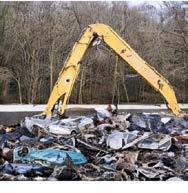

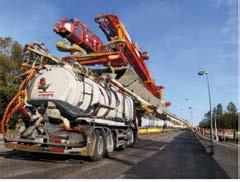
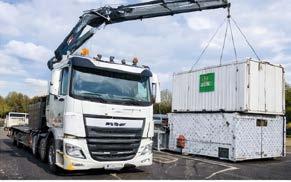


Come down to our busy breaker yard and find the high quality green car parts you need at surprisingly low prices. You're free to explore by yourself or, if you need a hand, our friendly staff can help.
Top prices paid for your scrap metal, scrap cars and MOT failures. We also supply high quality scrap metal at great prices.
Our selection of units are readily available for rental, conveniently located at our 7 depots across the UK. Serving all your outdoor event and construction needs.
A1 is a UK leader in wet waste. With our integrated services, busy fleet of specialist vehicles and outstanding customer service, we're ready to help you manage your waste better.
A1 Transport specialises in transporting site accommodation in and around the UK. From HIAB services up to 85' and 360-degree front loader capabilities.


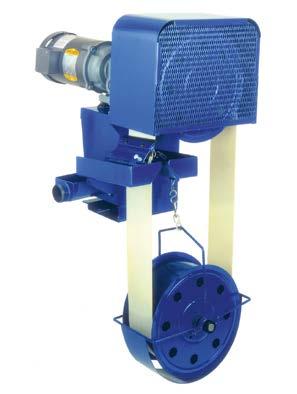
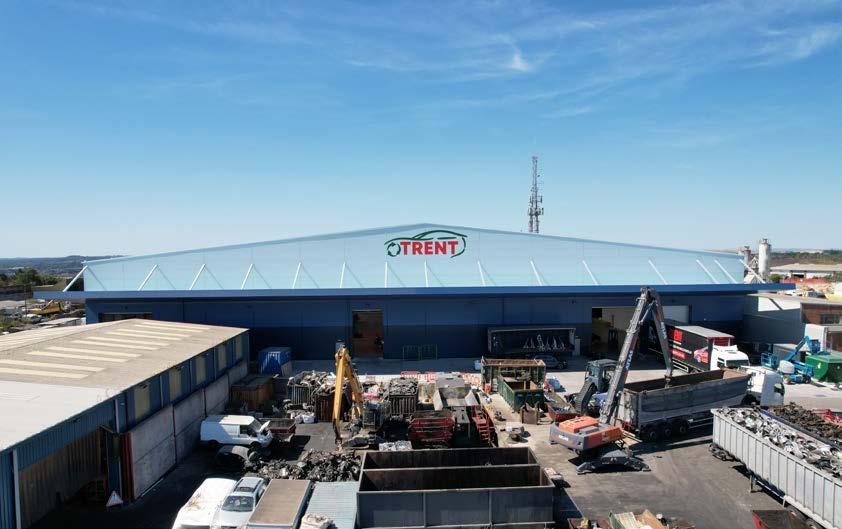
In 2026, Charles Trent Limited will reach 100 years in business. In an industry that has experienced profound technological, regulatory and commercial change over the past century, that milestone represents far more than longevity. It reflects an ability to adapt, to innovate, to professionalise, and to anticipate what comes next in an ever-evolving industry.

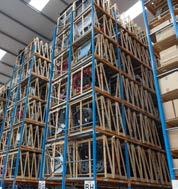
Founded in 1926 by Charles Trent himself, the business began as a modest, family-run operation serving local motorists in Poole. The early years were shaped by practicality and resourcefulness. Vehicle dismantling was driven by demand for affordable parts and efficient material use, long before sustainability entered the mainstream conversation. Reuse was simply good business. In the early years, particularly during the 1930s and 1940s, operations were largely manual, as was common among dismantlers of the era. Knowledge was passed down through experience, and growth was incremental rather than strategic.
One of the defining characteristics of Charles Trent’s history has been that
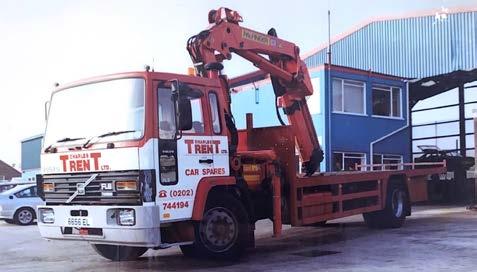
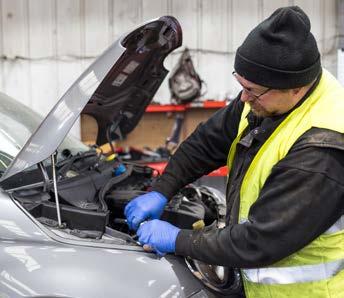
the business has always remained a family-run enterprise. Each generation inherited not only a business, but a responsibility to modernise where necessary while preserving the values that built it. As vehicle manufacturing evolved in the latter half of the twentieth century, the complexity of dismantling and parts recovery increased. Each generation faced new challenges and achieved significant milestones, driven by the same mindset of continuously moving the business forward.
For Charles Trent, as vehicles became more advanced, this period marked the beginning of a more deliberate approach to infrastructure and
systems. The business invested in larger premises, concreting, modernising facilities, improved vehicle handling, and more organised stock management. What had once been a trade defined primarily by experience began moving towards process, data and systems.
For Charles Trent, as vehicles became more advanced, this period marked the beginning of a more deliberate approach to infrastructure and systems.
The late 1990s and early 2000s marked a turning point for the vehicle recycling industry across the UK. Regulatory change, particularly around environmental standards and depollution requirements, fundamentally reshaped expectations of Authorised Treatment Facilities.
For Charles Trent, this was not simply a compliance exercise; it was an opportunity to professionalise further. Investment in depollution equipment, environmental controls and documented procedures reinforced the business’s commitment to operating responsibly. Standards were no longer optional; they were central to credibility. As the End-of-Life Vehicles Directive came into force and reporting requirements increased, data and traceability became more important. Paper-based systems gradually evolved into digital tracking and stock control. Transparency, accountability and measurable performance became the new baseline.
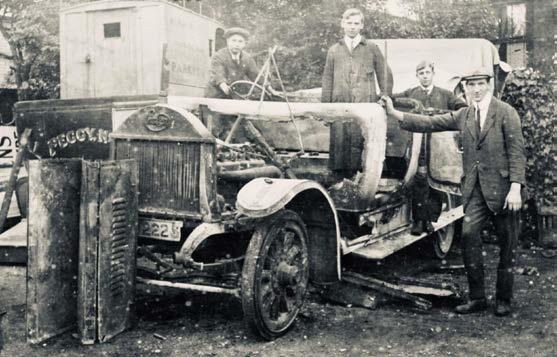
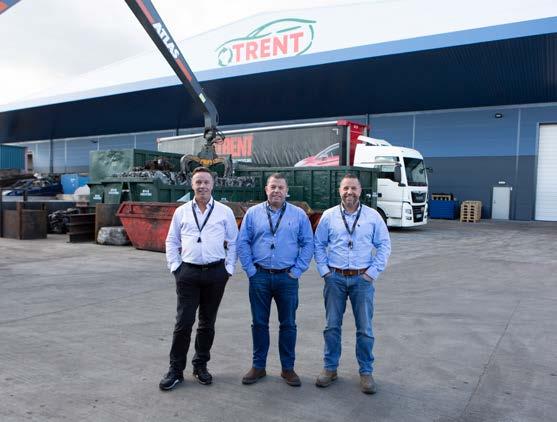
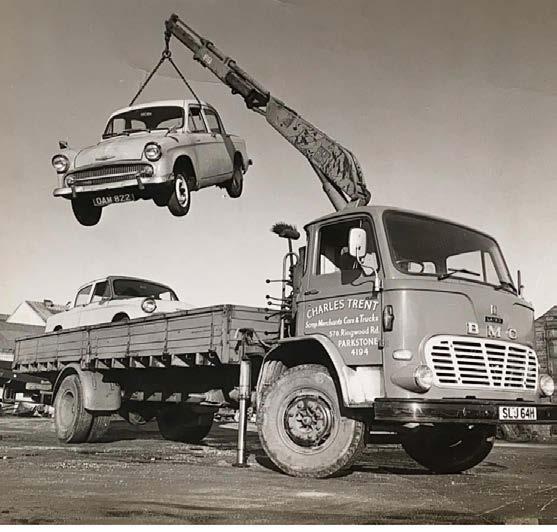
Rather than viewing regulation as a burden, Charles Trent treated it as a framework for improvement, a way to differentiate serious operators from those unwilling to invest. The ethos has always been to raise standards rather than simply meet them, and to lead through investment and operational discipline.
Over the past two decades, Charles Trent has transitioned from a regional operator to a business with national reach and a growing international presence. Expansion has been characterised not by rapid acquisition but by steady capability-building, investing in its people and making bold, forward-thinking investments to modernise how vehicle recycling is done.
The last 6 years have seen

remarkable changes, positioning Trents as a market leader in auto recycling and green parts. In 2021, a 30,000 sq ft purpose-built distribution centre opened in Holton Heath, Poole. This state-of-the-art centre manages over 60,000 quality green parts, which are distributed nationwide. The shift towards dismantling, quality-checking and pre-packaging parts has enabled faster delivery and improved turnaround times for both the public and trade customers nationwide.
Investment has been a significant chapter in Trents history. In August
2022, Charles Trent Limited unveiled a UK industry first. After five years of research, planning, investment and testing, the company unveiled a £35 million, 100,000 sq ft facility in Poole, the UK’s first reverse production line for vehicle recycling powered by solar energy. It uses industrial, “de-production” methods to dismantle 8-10 cars per hour, recovering high-value parts and materials with over 96.3% efficiency.
This facility also houses a technology-driven distribution centre that stores over 130,000 quality
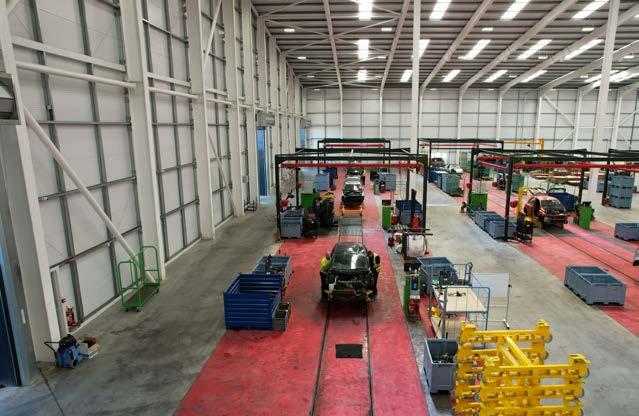
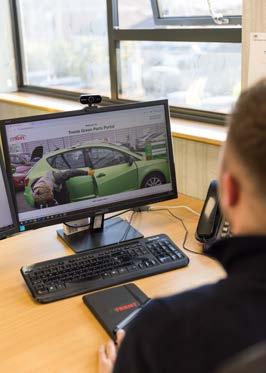
panels and green parts, ready for next-day dispatch.
As much as physical operations have evolved and changed within Trents history, the evolution of technology, data and digital has been significant in how Trents operates today. The way technology is adopted across the business today bears little resemblance to 1926. The in-house development of a vast array of enhanced systems, software, and technology is propelling the business to operate smarter and more efficiently, and to drive even greater environmental friendliness. The introduction of Trent’s Parts
Portal and the latest website platform is changing how businesses access green parts.
Digital capability has become as important as operational efficiency. Accurate descriptions, quality assurance and rapid fulfilment are expected as standard. For a business celebrating 100 years, embracing this transition has required both investment and cultural alignment.
As Charles Trent Limited marks its 100th year, the emphasis is not on nostalgia but on momentum.
The lessons of the past century are clear: adapt early, invest in standards, retain strong values and build capability deliberately. The next chapter will demand the same discipline.
Electrification, digitalisation and regulatory evolution will continue to shape the sector.
As Charles Trent Limited marks its 100th year, the emphasis is not on nostalgia but on momentum.
Businesses that combine operational excellence with commercial clarity and environmental responsibility will define the next era.
For Charles Trent, the milestone of 2026 represents both reflection and renewal. The vehicles may have changed beyond recognition since 1926, but the principle remains consistent: operate responsibly, maximise value from every vehicle and raise standards wherever possible.
One hundred years in business is not simply about endurance. It is about evolution. And for Charles Trent Limited, that evolution continues.
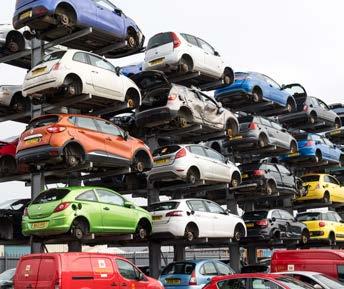
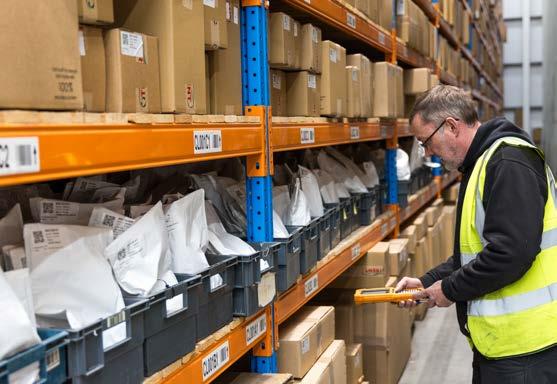
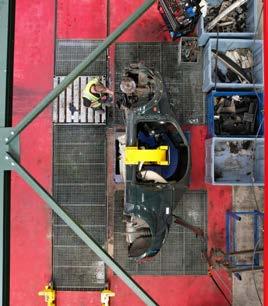
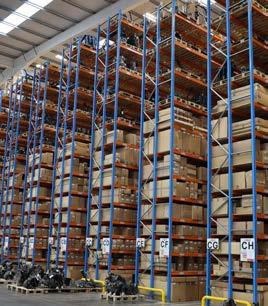
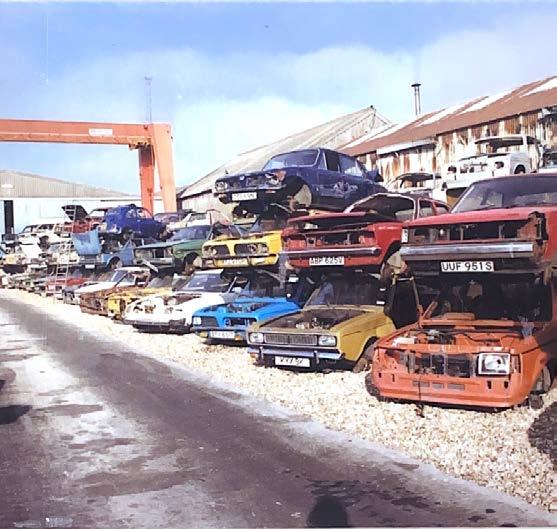
By Wally Dingman, Executive Director, Automotive Recyclers of Canada (ARC)

Lean by design, Canada’s ARC unites provinces, sets audited environmental standards, delivers practical programs, and prepares recyclers for EVs, proving credible industry leadership doesn’t need bureaucracy.

L-R: Ed MacDonald, previous ARC Chairman, at a media event in Halifax Nova Scotia to announce ARC winning the Gold Star Award at the ARA Convention as Affiliate Chapter of the Year. 2005, with Steve Fletcher, retired ARC Executive Director in the background
Canada’s automotive recycling industry operates under unique conditions: vast geography, harsh climates, remote communities, and a sector dominated by independent, family-run businesses. From its earliest days, the Automotive Recyclers of Canada (ARC) was shaped by that reality. Rather than building a large central bureaucracy, ARC evolved as a lean national body designed to coordinate, support, and amplify the work of provincial associations, while keeping its focus firmly on practical outcomes for recyclers.
Over time, that approach has proven remarkably effective.
Long before environmental compliance became a regulatory expectation, Canadian auto recyclers recognised the need for self-regulation. Early voluntary initiatives laid the foundation for ARC’s leadership role, particularly during the development of Canada’s first national vehicle scrappage initiatives.
ARC was selected to administer Retire Your Ride (RYR) on behalf of Environment Canada, a national program designed to remove older, higher-emitting vehicles from the road.
Participating recyclers were required to meet strict environmental standards, an early signal that credibility would be built through verified practices, not marketing claims.
That work led directly to the creation of the National Code of Practice for Automotive Recyclers, originally developed for vehicles processed through RYR. By 2011–2012, ARC recognised that environmental responsibility needed to extend beyond scrappage programs. The Code was expanded and rebranded as the Canadian Auto Recyclers Environmental Code (CAREC), a national environmental standard applicable to all end-of-life vehicles.
CAREC focuses on preventing pollution through proper fluid removal, battery handling, and the management of

hazardous materials such as mercury switches. Over time, ARC moved beyond voluntary participation to require third-party auditing as a condition of membership through provincial associations. As recyclers improved, audit scores increased, and intervals were extended, demonstrating measurable, sustained performance nationwide.
ARC’s influence has always been built through programs that address real-world recycling
challenges. The Switch Out program tackled the environmental risks posed by mercury switches by ensuring they were removed before vehicles were crushed. Car Heaven, a national charitable vehicle donation program, provided donors with a transparent way to support charities while guaranteeing vehicles were processed in compliance with CAREC.
ARC also played a key role in Tundra Take Back, an early initiative aimed at recovering abandoned vehicles from Canada’s remote northern communities, an example
of ARC adapting national programs to challenging geographic realities. This work helped shape ARC’s later success with Retire Your Ride and cemented its role as a trusted national coordinator.
To strengthen confidence in recycled OEM parts, ARC developed the Gold Seal Program, a voluntary quality-assurance accreditation that standardises grading and inspection. Gold Seal has become an important tool in discussions with insurers and repairers, reinforcing the reliability, traceability, and professionalism of recycled parts.
While ARC’s mandate is national, its outlook has never been inward-looking. Recognising that recyclers around the world face increasingly similar challenges, environmental compliance, EVs, data integration, theft risk, and circular-economy pressures, ARC was instrumental in establishing the International Round Table (IRT).
The IRT was created as a forum to bring organisations and recyclers together from across the globe to openly discuss emerging issues, share best practices, and compare regulatory and market developments. That dialogue continues today, overseen by ARC’s retired Executive Director Steve Fletcher, and Auto Recycling World’s Haydn Davies, and remains an important strategic tool for ARC. Through the IRT, Canadian recyclers benefit from global insight, while ARC contributes practical, operations-driven perspectives to international conversations.
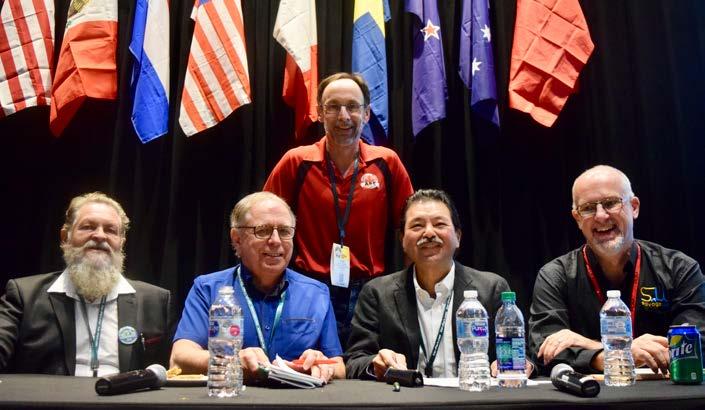
Coordinated growth, not centralised control
ARC’s effectiveness is rooted in its partnerships with provincial associations, including the Ontario Automotive Recyclers Association (OARA), BC Auto Recyclers (BCAR), and others nationwide. This structure allows ARC to remain lean while still providing national coordination on policy, standards, and advocacy.
That model has become increasingly important as Extended Producer
Responsibility (EPR) frameworks expand across Canada. ARC works closely with provincial partners to ensure recyclers are integrated into EPR discussions related to tyres, vehicle batteries, and other regulated materials, protecting recyclers’ interests while supporting environmental outcomes.
Between 2020 and 2025, ARC’s focus expanded as electric vehicles entered dismantling streams in meaningful numbers. ARC supported the development of the EV
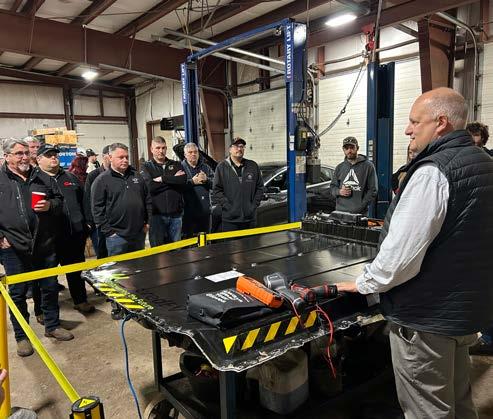
central structure and a strong national and international network, ARC continues to deliver tangible results for recyclers while navigating rapid technological and regulatory change.
For the UK’s VRA readership, ARC’s experience reinforces a simple lesson: effective industry leadership does not require scale. It requires clear standards, verified performance, trusted partnerships, and a willingness to engage, nationally and globally, on the issues that matter most.
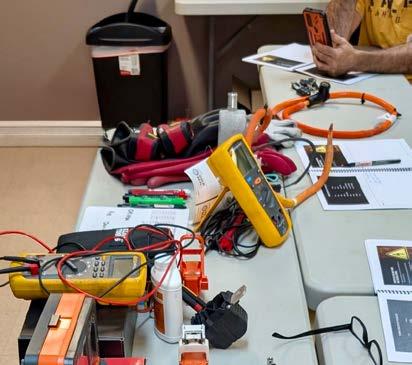
Dismantler Training Program, following a two-year pilot in Quebec, and contributed to the national launch of the Electrified Vehicle Battery Program in June 2025. ARC has taken a pragmatic position on EV policy, consistently emphasising that safety, training, and infrastructure must keep pace with mandates, and that recyclers must be properly equipped before risk is transferred downstream.
Why “small but mighty” still works
ARC’s story is not about size; it is about consistency, credibility, and coordination. With a small
Formed in 1997, the Automotive Recyclers of Canada (ARC) is the national voice of automotive recycling, representing about 400 end-of-life vehicle recyclers through provincial affiliates.
The ARC promotes industry leadership and standards, including CAREC, independently audited, and required for membership across all member associations.

LKQ SYNETIQ is the UK’s leading provider of vehicle dismantling and recycled original equipment parts. Delivering affordable and sustainable solutions.
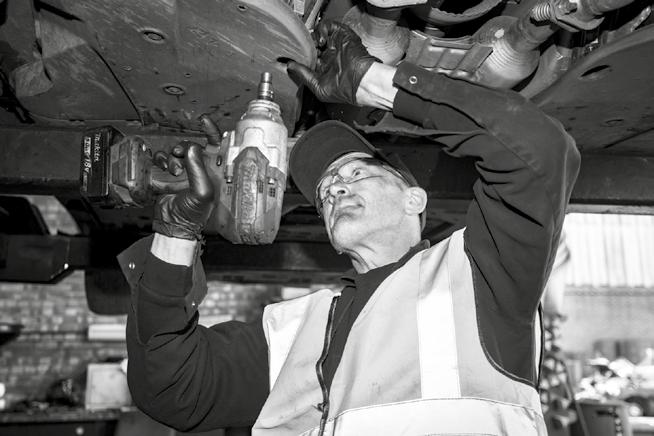
Market-leading sustainable circular economy for automotive parts.
Unrivalled distribution network, logistics infrastructure and aftermarket customer base.

Transform the availability and accessibility of recycled parts across Europe.
Hundreds of thousands of parts, dismantled and ready to be despatched.
Receive an automated quote within 1 hour.
LKQ SYNETIQ is part of something bigger.
As a member of LKQ Europe – a key division of LKQ Corporation, we’re connected to a global organisation powered by 46,000+ team members across 1,400+ locations in 26 countries.
As the VRA enters a new phase, the Association is sharpening its focus on advocacy, standards, collaboration and growth, with ambitious plans to deliver more for members and for the wider vehicle recycling sector.
By Adrian Pierce Development Consultant
Welcome to your new magazine.
The committee of your Association hope that you approve of the new look, and we also hope some of you are reading the magazine for the first time.
Changes to the magazine are significant, but perhaps not as significant as those changes being planned for the Association itself.
The VRA has, for many years, provided a gathering point for recyclers across the UK. Supported by volunteers, it has seen many changes since its beginning in 1943. Over the years, a huge number of people have dedicated large amounts of their time to ensuring that our developing industry has a representative body.
Current and recently retired Chairs, Secretaries and Presidents brought experience of both the industry and business to bear to the benefit of all. We should all acknowledge the many years of history and thank all of those who have historically brought the Association safely through decades of change to the present day. As the Chairman explains elsewhere in this issue, the Association is now entering the next phase of its long history and has ambitious plans to enhance the benefits of being a member.
Today, we face very different challenges from those faced in wartime Britain in 1943. In recent years, we have seen the global financial crisis of 2008 and the chaos of the COVID pandemic, and, for most, have found our way through. The impacts of these huge events are felt by

everyone. But in our sector, we face a very specific set of challenges alongside those faced by all UK businesses. In this next period of the Association’s life, we need to be practical, determined and clear in our focus if we are to make a difference for our members.
Our greatest challenge lies in regulation, though it might not be the regulations themselves that are the issue. In our sector, the ELV directive drove regulation in early 2003, and its latest successor is now on the near horizon. The original changed the very basis of vehicle dismantling and salvage, and its latest incarnation may prove to be just as dramatic in its impact. Some might say that the original legislation offered at least as many opportunities as it did challenges for responsible businesses in our sector. After all, the rules are the same for everyone, aren’t they? The intention of the legislation is logical; perhaps even honourable, but in practice, we all suffer the negative impact of its application. As businesspeople, we see competition as part of our lives and our landscape. Our members compete with each other constantly, and they strive to improve their operations and offerings to gain an advantage.
Competition is healthy, it benefits the consumer and drives innovation; an echo from the eighties, but it is still the basis of UK trade today.
Only it isn’t. I mean, it isn’t a competitive market. In 1943, under rationing, the UK had a second economy, the Black Market. Demand
“The Association is sharpening its focus on advocacy, standards, collaboration and growth, with ambitious plans”
“ “
was far greater than supply, and black marketeers could charge whatever they could get away with for whatever they had…wherever it came from. We face the same challenges. Dismantling under the Directive and in compliance with national and local requirements is not only difficult, but it’s also variable. The goalposts don’t just move from time to time; they are mobile and flexible.
In the coming months, our Association plans to create an accurate, public, audited statement of our view on regulation and enforcement. It’s not just the rules, it’s the referee. In football, we have VAR (and I know that’s a very imperfect system!) because sometimes the referee needs re-directing. As a representative body, we need to work to make our voice heard and improve our advocacy; The VRA, as VAR.
Being heard in the modern world is expensive, and we cannot expect every member to contribute beyond the subscriptions you all pay already.
However, in recent weeks, we have been able to secure pledges of practical support to help us campaign more effectively for change from businesses in our membership. As these plans are put into action, we will keep you informed, and we will be asking you for help with information, examples and facts to support our case. We will renew our efforts to make your concerns heard. Making this possible, we have more help than ever being given to the Association. The scale of campaigning required can’t be funded by your subscriptions alone, but if asked, larger players in our industry seem to be willing to help. What’s good for the industry is good for all of our members, and we should all help as much or as little as we can. That could simply mean filling in an online questionnaire to give us ammunition! If your organisation can help with donations or free use of services, get in touch.
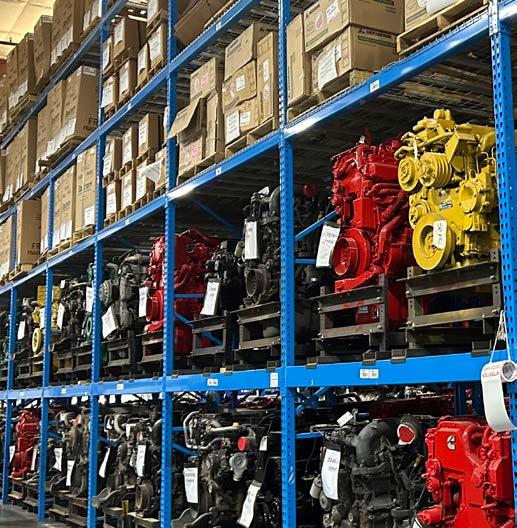
be expensive, though. Some, by being open to all, can actually fail to protect the customer and devalue our legitimate offer. Customers need to know what they are buying, but more importantly, they need to know who they are buying from.
“ “
“We are truly committed to not-for-profit operations and to acting on behalf of the industry as a whole.”
Being a member of the Association and paying subscriptions is the basis of everything we do. In return, in the coming months, you will see us working even harder to give you a louder, more insistent voice in the ears of those who make and enforce policy. We will also respectfully ask those best positioned to help to invest in our efforts for the benefit of all.
Along with regulation and enforcement, another major issue is the challenge we face in finding customers. We have parts, and we know there are people who need them. Demand is not the biggest part of this problem. We have routes to these customers through our own efforts, global platforms, and new channels being developed within our membership. Some access to the market can
Some years ago, work began on adding the VRA’s name and reputation to green parts through the VRA Certification process. The idea is brilliant, and initially, it appeared that this might answer many problems. In practice, though, we need to convince more dismantlers to get on board before we can expect customers to see the value of the VRA endorsement.
Work has already begun to make certification more accessible and meaningful, and provide better value to both customers and enrolled members. Perhaps it needs to be more flexible, more demanding? Perhaps we need more levels, less complexity, and more promotion. We definitely need to make it more appealing to dismantlers! Consider this: if you ask an adult homeowner in the UK buying a new boiler what CORGI means, they will know. Our standards need to have that reach. We will keep you informed as we develop our strategy for achieving this, but as a member of the Association, your input will be critical, and we are preparing to give you the chance to have your say very soon. As our chairman explains in his piece, we have very ambitious plans, but members’ views must always drive our work.
If, and it’s a big if, we can continue to standardise and ensure that all Green parts approved by the VRA meet the same standards, then we might just achieve the aim so dear to many of our members and develop meaningful, cost-effective intertrading between members.
I worked many years ago with a carpenter who had over 100 types of woodscrew in his van. He told me he only had two sizes: too bloody big and too bloody small. This is a familiar concept to those selling anything at all from
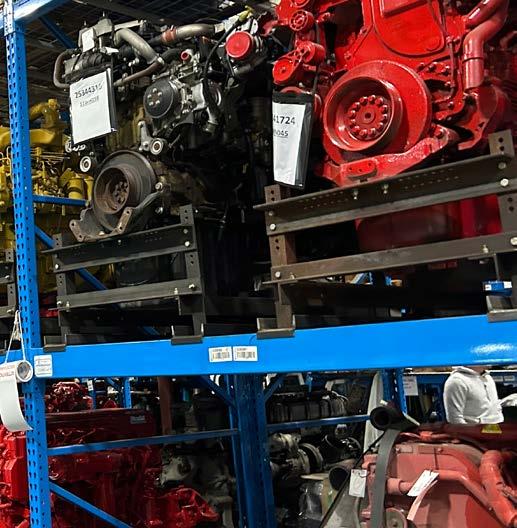
stock, but stock is the greatest asset a supplier possesses. It’s also where a lot of money is tied up. It’s no wonder so many organisations and individuals invest time and money in the concept of active trade in green parts between dismantlers. As a membership association, we should occupy a critical position in this. We are truly committed to not-for-profit operations and to acting on behalf of the industry as a whole. This gives us impartiality and makes us an honest broker for real debate about how competing businesses can continue to fight in the marketplace while working together cooperatively to mutual benefit. Five men fighting over a pie is a fight. Five men, each eating a share of a pie, is a dinner!
Discussions are already underway about how to build on the work already done by members of the VRA committee and their businesses. We also want to bring those outside the Association into this debate. We hope to set up an open event to discuss certification and intertrading to be held in the next 6 to 8 weeks at a ‘free to all’ workshop, so look out for more details.
The final key area for all of us is the pace of change now being experienced. Our industry is dynamic, innovative, often multi-generational and covers every scale from one-person operations to 9-figure turnovers.
Since 1943, the industry has changed and evolved, survived and succeeded. As the Association that has stood for the industry for over 80 years, it has seen countless members, officers and employees come and go and achieved significant results. As a representative body, the Association stands at the same crossroads as the industry. Should we rest on our laurels and past successes then, or drive for faster, more determined change?
It seems there are companies willing to invest both
resources and money in the Association’s ambition to rise to the next level. As a leading industry figure said to me the other day, you can be driven by more than just profits, but also by a desire to leave a mark on the industry, to feel that you have achieved not just success in financial terms but in terms of a vision of how good a vehicle recycling business can be. The man who said that can be seen to have achieved huge things in his life. Yet he is still driven to improve his business. Our Association should adopt that thinking. It will continue to work to be the Association our industry wants and needs and match the pace of development of many of its members. It can, with the support of its membership, bring more and more businesses on board and far exceed its historic achievements. Just as so many businesses in our sector drive endlessly for improvement, so should we.
“If the Association works hard, though, it can provide the industry with a single, powerful voice”
The Association should be at the heart of honest discussion about the interests of the industry and how it is represented. Cooperation is key; working together will add weight to our arguments and percentage points to our profits. Within the Association, we must give everyone the opportunity to discuss openly issues that affect them, whilst respecting privacy and commerciality in equal part. The industry is not made up of one kind of business, one kind of owner, or one kind of employee. If the Association works hard, though, it can provide the industry with a single, powerful voice and give that voice a far better chance of being heard.
As a final thought, currently every year in the UK around 1.8 million vehicles reach the end of their lives for various reasons, and in a year the Ford Motor Company make a little over 4 million new ones. Their founder revolutionised vehicle production starting in 1903, and in a spare moment, he also said this;
“Coming together is a beginning; keeping together is progress; working together is success.”
Henry Ford
From a man who put a lot of cars together, perhaps we have the key to how an association can help unlock huge potential in the businesses of those who take cars apart.
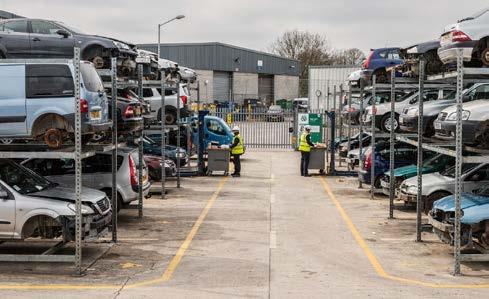
By Kevin Hayter - Optimisation Manager, Silverlake Automotive Recycling

At Silverlake, we believe that staying ahead of regulatory changes is crucial, not just to keep operations running smoothly, but to ensure we are providing the safest and most professional service possible. 2025 has already brought significant developments for our sector, particularly the ABI’s revised Salvage Code of Practice and the Home Office’s consultation on police vehicle recovery. How we respond as businesses and as an industry demonstrates our ability to adapt to a changing automotive environment and the evolving needs of the market.
The 2025 ABI Salvage Code: reflecting a new automotive reality
The ABI’s 2025 update is a timely response to the way vehicles are evolving. Electric and hybrid models are now a growing share of the fleet and present distinctive challenges: high-voltage batteries, complex electrical systems and safety considerations. Many of us have already been investing in infrastructure and training to manage these responsibly.
For the first time, the Code gives explicit guidance on how EVs and hybrids should be categorised after a write-off. This provides greater clarity on when such vehicles may be safely dismantled for parts and when they should be scrapped entirely. That clarity is welcome, as it keeps safety front and centre.
The Code also considers advances in vehicle manufacturing, such as megacasting, where large structural components are cast as single pieces.
These parts are typically non-repairable and difficult to replace. The revised guidance makes clear that vehicles with megacast

structures require extra care in assessment and may fall into Category S (repairable structural damage) or Category B (not repairable but parts recoverable), depending on the circumstances. For recyclers, this is likely to require process adjustment and further upskilling.
Another notable update is the strengthened approach to dispute resolution. The Code now introduces a streamlined process involving Appropriately Qualified Persons (AQPs) to mediate disagreements over categorisation. This is intended to provide quicker, evidence-based outcomes and reduce the ambiguity
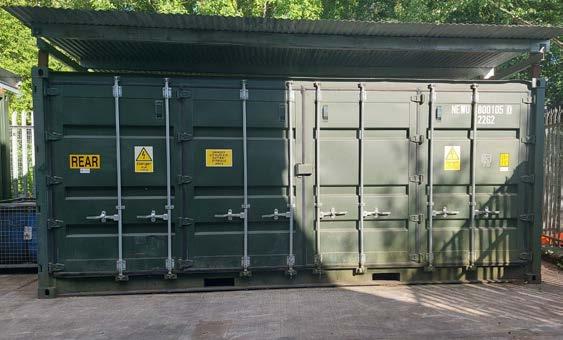
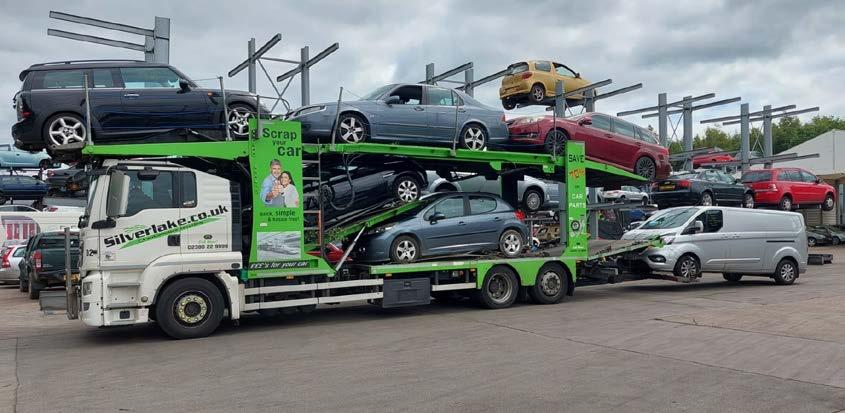
that has historically slowed down salvage decisions.
At Silverlake, we are:
• Investing in advanced training for the safe handling of EVs and hybrids.
• Expanding infrastructure with dedicated EV storage, workshops and dismantling equipment.
• Reviewing and updating our categorisation procedures to align with the revised Code.
• Meticulously documenting processes and policy changes for
audit and transparency.
By embracing these changes, we can confidently position ourselves as specialists in handling modern vehicles safely and efficiently, a capability that will only become more critical to future proofing our businesses.
Alongside the ABI Code, the government is also reviewing how police vehicle removal and disposal operates, particularly in cases involving anti-social behaviour or criminal activity. In 2025, the Home Office launched a consultation on proposed amendments to the Removal, Storage and Disposal of Motor Vehicles Regulations 2023.
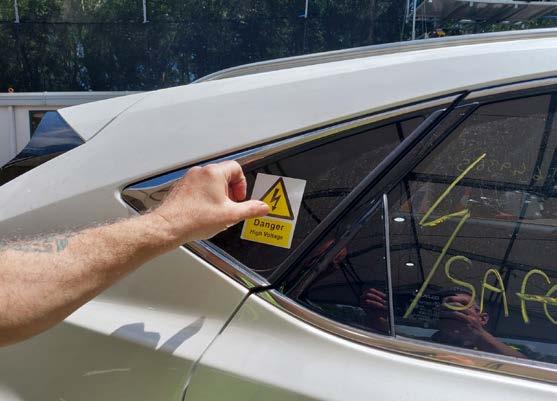
The stated aims are to simplify and speed up disposal timeframes, cut backlogs for police and storage yards, and reduce opportunities for re-offending. While the outcome is not yet final, if adopted these reforms could result in higher volumes of vehicles passing through the recovery system with shorter turnaround expectations.
The consultation also considers updates to statutory fees and inflation adjustments, which could have implications for future commercial contracts in vehicle recovery and disposal.
At Silverlake, we are preparing for potential increases in volume and speed of throughput by:
• Investing in intelligent tracking systems and logistics coordination.
• Using bespoke procedures, overseen by our Decision-Making Unit, to streamline every stage of vehicle collection and processing.
• Continuously refining workflows to avoid bottlenecks and ensure compliance with professional standards.
This ensures we are ready to manage increased intake without compromising safety or service quality.
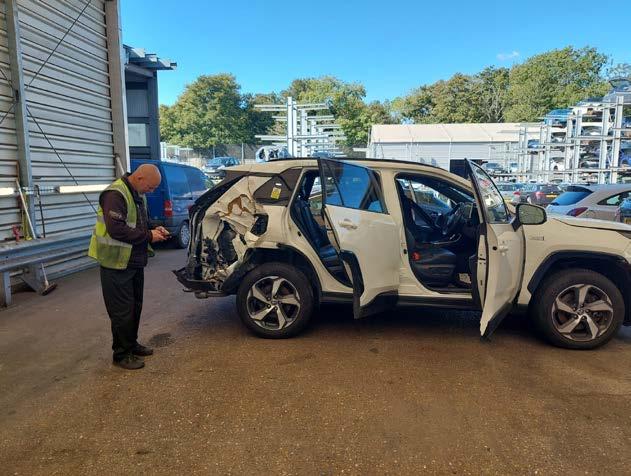
These regulatory shifts are part of the natural evolution of our industry, challenging, but manageable if we stay informed and proactive.
The ABI Salvage Code revisions encourage us to become experts in modern vehicle technology, reinforcing our role as gatekeepers of road safety and environmental responsibility.
The police recovery proposals, if adopted, will push us to be more agile and efficient, qualities that benefit any business.
As an industry, we have a record of successfully adapting to change. The automotive recycling landscape is evolving rapidly, but we know how to turn challenges into opportunities. After all, we are not just about vehicles, parts and protecting the environment; we are about agility, resilience, responsibility, and readiness for whatever comes next.
At Silverlake, we are:
• Investing in advanced training for the safe handling of EVs and hybrids.
• Expanding infrastructure with dedicated EV storage, workshops and dismantling equipment.
• Reviewing and updating our categorisation procedures to align with the revised Code.
• Meticulously documenting processes and policy changes for audit and transparency.
• Investing in intelligent tracking systems and logistics coordination.
• Using bespoke procedures, overseen by our Decision-Making Unit, to streamline every stage of vehicle collection and processing.
• Continuously refining workflows to avoid bottlenecks and ensure compliance with professional standards.
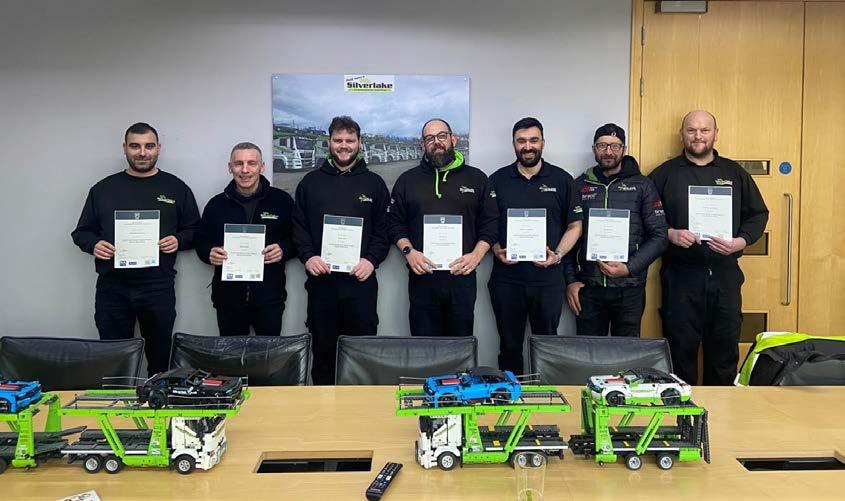


By Henk Jan Nix Secretary of the European Group of Automotive Recycling Associations (EGARA)
The draft Regulation has often been a topic for Egara’s articles. Long story short: The European Commission expects the new regulation to be published before the summer. Before it is adopted, the text needs to be agreed upon by the European Parliament and the European Council. At this moment, the text is being consolidated by the EC. All amendments and advice must be included in the text; any contradictions within the text and with other legislation need to be removed. As a result, the ELV team is currently busy finalising the remaining tasks.
The key questions, however, are:
• What will the final text look like?
• What will be the final changes in the text?
• Which obligations need to be followed up on?
• What restrictions will limit our business?
• How did the amendments turn out?
• What advice was taken? What contradictions were taken out and remained?
• Who had the most successful lobby?
The drafting process was already a significant undertaking, but the subsequent amendments by
European politicians took it to the next level.
At EGARA, we are concerned about more than one topic:
• Parts not to be reused;
• Compensation for unprofitable material removal;
• Procedure for determining whether parts are designated for reuse or recycling;
• Acceptance of complete vehicles only;
• When does the Battery Regulation take over from the Vehicle Regulation?
This provision applies to parts we have long sold responsibly, including airbags, ECUs, steering housings, mufflers, and emission-control filters.
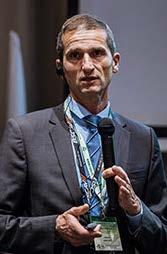
Allowing these parts to be reused has not compromised safety or environmental protection; if anything, it supports both by keeping vehicles on the road safely, cleanly, and at lower cost. Functional components are kept in productive use rather than being discarded unnecessarily.
We could accept a restriction limiting sales of certain parts to licensed professionals, but an outright ban is hard to justify. It reduces the residual value of ELVs and makes repairs to older vehicles unnecessarily expensive. Preventing the reuse of serviceable parts wastes resources, capital, and environmental benefits.
COMPENSATION FOR MANDATORY REMOVAL OF UNPROFITABLE MATERIALS (ARTICLE 20.1.A)
It’s not the total value of the ELV that decides compensation. Parts reuse needs to be considered apart from material reuse. We buy vehicles for parts reuse, and new obligations should not disturb the market or our competitive position. We often have to pay to prevent these EVs from ending up in the hands of illegals. We do not need to make a profit from mandatory removal, but we should be compensated for materials removed without a market.
DESCRIPTION OF PARTS ASSESSMENT IS NOT IN LINE WITH PRACTICE (ARTICLE 31.1.A)
Parts assessment (do we reuse or recycle?) is performed at the vehicle level, so it should be described accurately or omitted. We even assess a complete vehicle for parts reuse before we buy it. We do not remove any part and then decide whether to reuse it or place it in the material recycling pile. We often need to test the part while it’s still on the vehicle, and resetting parts digitally only works if we do it on the original vehicle. They will not function on another vehicle if we don’t. It’s highly ineffective to dismantle any part first and then decide what to do with it, and it’s simply not what we do.
NO ACCEPTANCE WITHOUT COSTS FOR EELVS WITHOUT THE BATTERY (ARTICLE 24.2)
We do not see how this encourages second use. If a battery is removed without being replaced or returned, it’s considered dismantling. Only ATFs are allowed to dismantle vehicles.
This article encourages illegal dismantling at dealers’ and workshops. They can cherry-pick the best batteries and leave the remains for the ATF. We need complete vehicles. We can accept complete vehicles at no cost to the previous owner. It should be allowable to charge a fee for any incomplete vehicle.
WHEN DOES THE VR (VEHICLE REGULATION) APPLY TO THE BATTERY? (ARTICLE 31.1)
Until when does the VR apply to the Battery in an ELV, and from what moment does the Battery Regulation (BR) take effect? The point is that some countries treat every activity as ‘prepare for reuse’ (in the BR, but based on the Waste Framework Directive), which means EPR (extended producer responsibility)
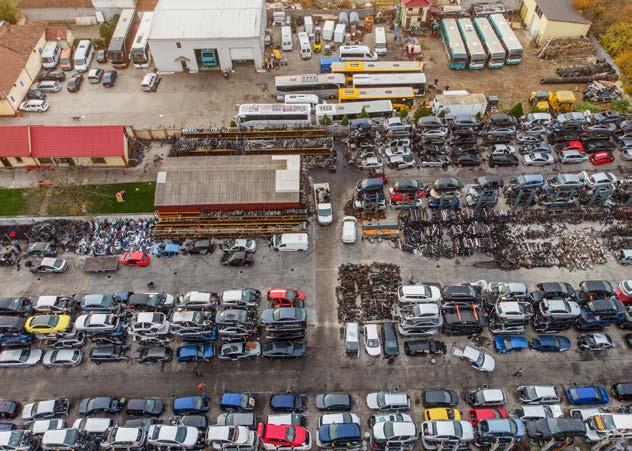
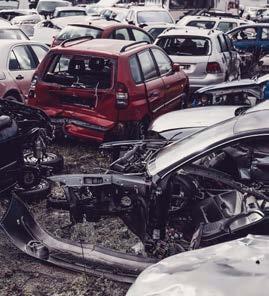
shifts to a dismantler. We understand that, at this time, only a BR exists, as the VR has not yet been adopted or published. Why is an EPR required of an ATF that only sells a battery for the same purpose? Nothing has changed with the battery or the purpose. We hope the text isn’t adjusted anywhere to make a battery apply to the BR before we can assess it
A CIRCULAR AND SUSTAINABLE LAW?
Beyond making life unnecessarily difficult for ATFs, ineffective and counterproductive restrictions on reuse do not promote or encourage a circular, sustainable economy.
A vehicle’s footprint becomes unnecessarily big if it’s not kept roadworthy and safe with used parts; either parts are used with a potential lifespan of 20 years on a vehicle with

only 5, or a vehicle that could serve for a few years is written off prematurely as it’s too expensive to repair or maintain it with new parts, while used ones are widely available. In the amendments from the past year, we saw some important items disappear or be limited, so we are very curious to see the final text and whether member states will address these matters in the last round.

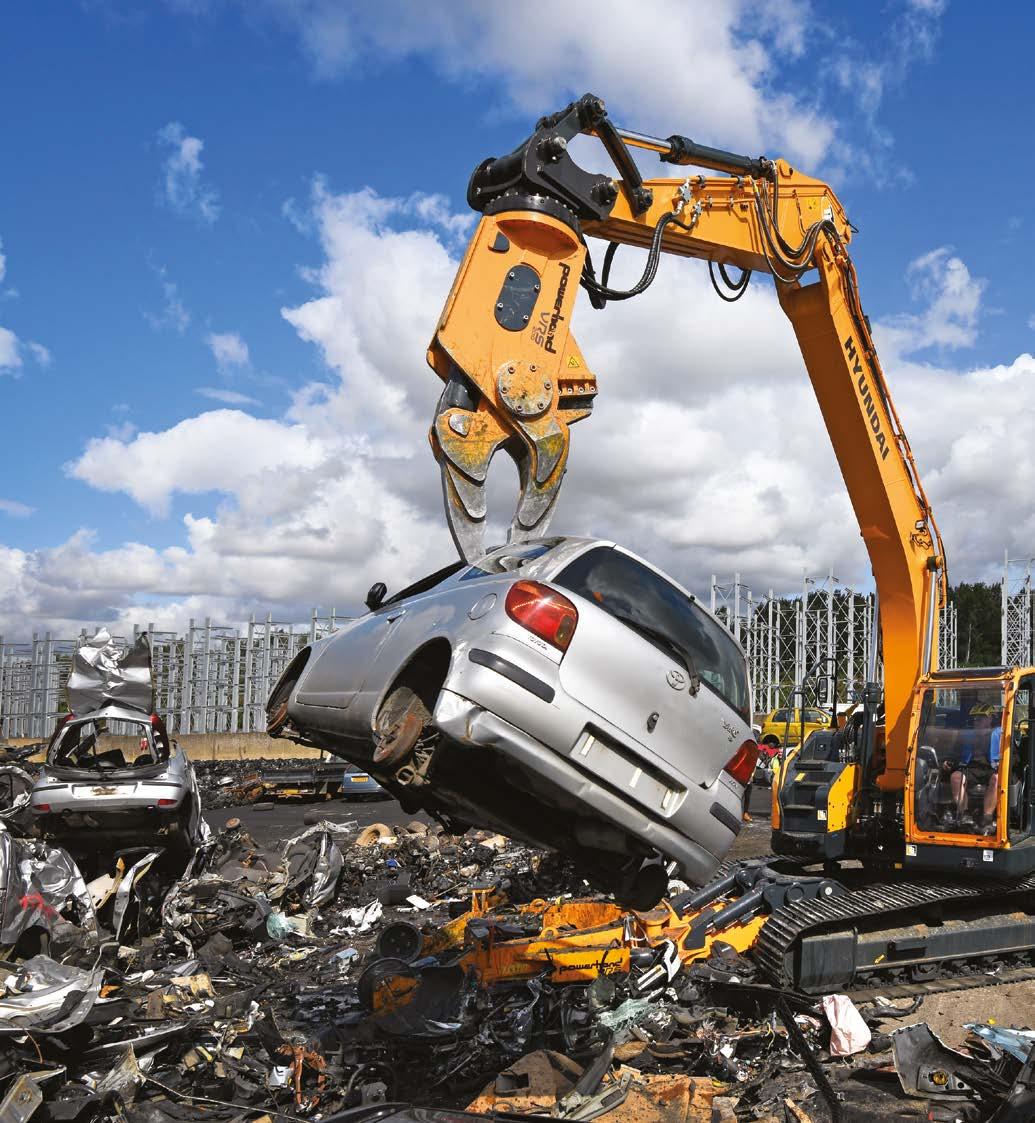



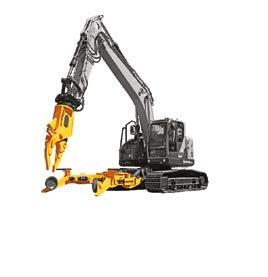
VEHICLE
RECYCLING IS STANDING
AT A
CROSSROADS.
THE BUSINESSES THAT GRASP WHAT IS CHANGING AND ACT ON IT WILL DEFINE THE SECTOR FOR THE NEXT GENERATION.
BY DAVE PICKING DIRECTOR - ELADENE SYSTEMS
I’ve been in and around vehicle recycling my entire working life. I started as a dismantler, built a specialist vehicle recycling business, and along the way became deeply involved in the software that runs these operations, not because I set out to be involved in tech, but because I couldn’t find tools that actually worked for the realities of running a yard.
Over the years, I’ve also had the opportunity to work closely with others across the sector through industry groups and collaboration with recyclers around the
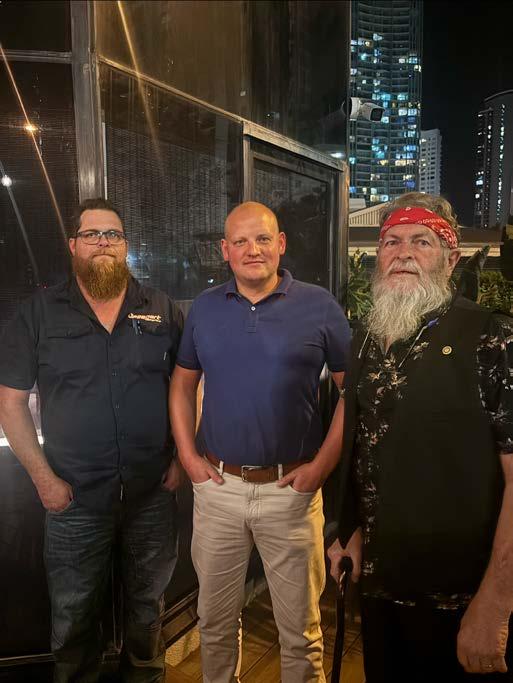
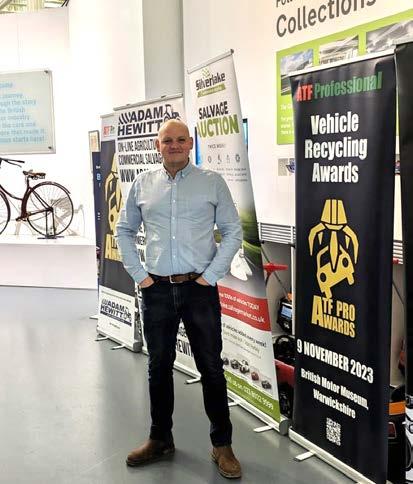
events globally, giving me the chance to see how different markets approach dismantling, parts sales, regulation, and inventory management.
I’ve also spent time speaking with recyclers, software developers, insurers, and parts buyers in those markets, comparing the challenges they face with the ones we deal with here in the UK.
That perspective, combined with my experience on the ground in yards and in building the systems that support them, gives me a particular vantage point on where this industry is going.
And I’ll tell you what I see: an industry that is more important, more relevant, and more commercially significant than it has ever been, but one that is at serious risk of not fully realising that potential if it doesn’t embrace the digital transformation happening all around it. I’m not talking about this in abstract terms. I’m talking about specific, practical changes reshaping how the most successful recyclers operate right now and will define who is still thriving in ten years’ time.
THE PERCEPTION PROBLEM, AND WHY DATA SOLVES IT
For too long, our industry has carried an image problem. Despite the professionalism of certified members, the broader perception of vehicle recycling among insurers, bodyshops, and the general public remains stuck somewhere between scrapyard and salvage bin. That perception costs us business every single day.
Repairers default to new parts, not because recycled parts are inferior, they’re not, but because the process of finding, verifying, and trusting them has been too cumbersome.
The future I see is one where that changes decisively. When a certified recycler can make their entire stock visible in real time to a repairer across the country, with
clear grading, accurate descriptions, and the quality assurance of certification behind every listing, the conversation shifts. It stops being a question of whether to use a recycled part and becomes a straightforward commercial decision. Digital inventory, live, optimised, and connected to the right marketplaces, is the mechanism that makes this happen. It is not merely an operational tool. It is a reputation tool.
I’ve seen this shift starting to happen. Bodyshops that previously wouldn’t entertain recycled parts are engaging with certified recyclers through connected platforms. Insurers who understand the circular economy argument are beginning to ask their repair networks to actively seek quality recycled alternatives. The appetite is there. What’s needed on our side is the infrastructure to meet it, and that infrastructure is fundamentally digital.
A SECTOR THAT FINALLY TRADES LIKE ONE CERTIFIED RECYCLERS INTER-TRADING, SHARING STOCK VISIBILITY, AND COLLECTIVELY OFFERING A DEPTH OF SUPPLY THAT NONE OF THEM COULD MATCH INDIVIDUALLY.
One of the things that has always frustrated me about our sector is how fragmented it is commercially. Hundreds of independent recyclers, each sitting on valuable stock, operate largely in isolation. If a recycler in the South East doesn’t have a part, the chances are one in Scotland does, but the buyer will never know, because there’s no effective way for them to look. That fragmentation is a weakness that digital connectivity can, and I believe will, resolve.
The future of vehicle recycling is a networked one. Certified recyclers inter-trading, sharing stock visibility,
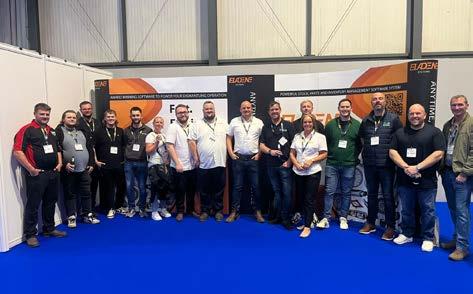
and collectively offering a depth of supply that none of them could match individually. When buyers, whether bodyshops, garages, or private customers, can search across a trusted network of certified operators and find exactly what they need, the competitive position of our sector changes dramatically. We stop losing sales to new parts dealers because buyers can’t find what they’re looking for. We start winning on quality, speed, and value.
This is not a distant vision. Platforms connecting certified recyclers with repairers are already operational. The foundations are being laid. But their success depends on participation, on recyclers committing to having their stock digitised, accurately listed, and visible through these channels. A network is only as strong as the businesses that commit to it.
WHAT AI ACTUALLY MEANS FOR A RECYCLING YARD
I want to spend a moment on artificial intelligence because I think it is widely misunderstood in our sector, either dismissed as irrelevant hype or feared as a threat to jobs. The reality is more interesting and more practical than either of those reactions suggests.
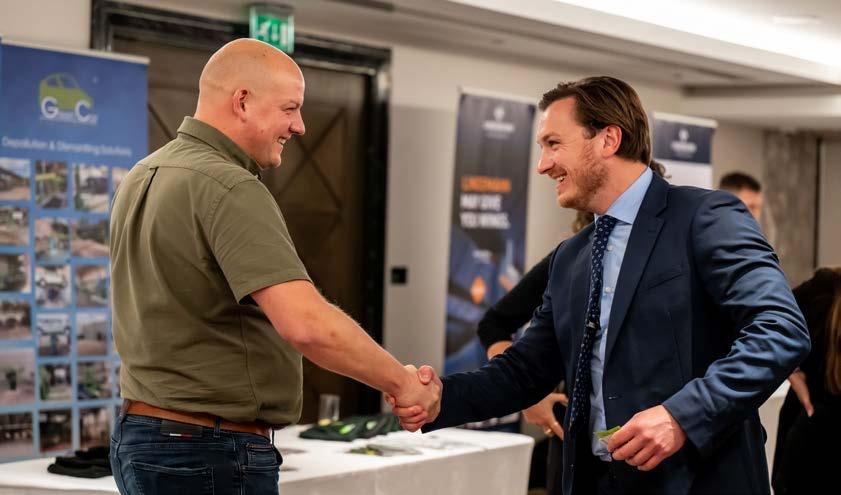
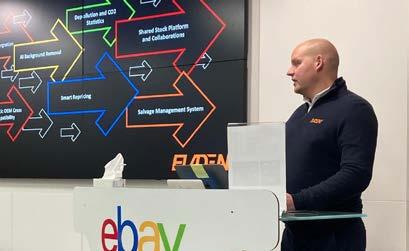
Think about the tasks in a recycling operation that are repetitive, time-consuming, and prone to human error. Writing accurate, searchable part descriptions. Pricing stock competitively against live market data. Identifying the most profitable vehicles to purchase based on current demand patterns. Flagging when a listing isn’t performing and suggesting why. Every one of these is something AI-assisted tools are already beginning to handle in other retail and logistics sectors, and every one of them has a direct equivalent in vehicle recycling.
The recycler of the future won’t be spending hours manually writing eBay listings or guessing at pricing based on gut feel. They’ll be working with systems that do the heavy analytical lifting automatically, freeing up their team to focus on the physical work, dismantling, grading, and dispatch that still requires human skill and judgment. AI doesn’t replace the expertise of an experienced dismantler. It removes the administrative drag surrounding that expertise and prevents it from being as productive as it should be.
The businesses that begin engaging with these tools now, even in small ways, will have a genuine head start. The learning curve for AI-assisted systems is not as steep as people imagine, and the compounding benefit of better data, better listings, and better buying decisions adds up rapidly. I’d rather see our members experimenting with this now, making small mistakes, and learning, than arriving at it in five years’ time from a standing start.
THE REGULATORY TIDE IS COMING IN — BE READY
The political and regulatory environment is moving in our direction, and we should be energised by that, but also realistic about what it demands of us. The EU Vehicle Circularity Regulation signals a direction of travel that the UK will inevitably follow: a world where vehicles are treated as assets to be maximised, not waste to be managed, and where recyclers are recognised partners in a genuinely circular automotive economy. OEMs like Toyota are already restructuring around circular economy principles. Insurers are being pressed to account for sustainability in their supply chains. Regulators want data, traceability, and documented standards.
This is an enormous opportunity for certified recyclers, but only if our operations can demonstrate what regulators and partners will ask for.
Compliance documentation. Parts traceability. Quality audit trails. Environmental performance data. None of this can be reliably produced from a paper-based or fragmented digital operation. The businesses that will be trusted partners in the circular economy of 2030 are those building the digital foundations today.
I genuinely believe that certified vehicle recyclers are among the most important businesses in the UK’s transition to a low-carbon, resource-efficient economy.
We extend the life of components that require enormous energy and raw materials to produce. We keep vehicles out of landfill. We supply quality parts at prices that make repair viable rather than defaulting to replacement. That story deserves to be told powerfully, and it can only be told with data.
The future of this industry will be won by recyclers who think of themselves not just as dismantlers, but as data-driven businesses that happen to deal in physical parts. That doesn’t mean losing what makes this sector great, the expertise, the relationships, the practical knowledge that no algorithm can replicate. It means wrapping that expertise in digital capabilities that let it reach further, sell more, and compete with anyone.
My honest assessment, having been in and around this industry for my entire career, is that the next five years will see more change than the last twenty. Electric vehicles are reshaping our stock profiles. Repairers are under cost pressure and are actively seeking quality alternatives to new parts. Regulators are increasingly focused on the circular economy. And digital tools, from cloud inventory systems to AI-assisted analytics, are making it possible to operate at a level of sophistication that was simply out of reach for an independent recycler a decade ago.
THE FUTURE OF THIS INDUSTRY WILL BE WON BY RECYCLERS WHO THINK OF THEMSELVES NOT JUST AS DISMANTLERS, BUT AS DATA-DRIVEN BUSINESSES.
The industry I see emerging is one in which certified recyclers are recognised, valued, and commercially powerful partners in the automotive supply chain. Where inter-trading between businesses is seamless. Where a buyer anywhere in the country can find the right part from the right recycler in seconds, with total confidence in its quality. Where our environmental contribution is measurable and celebrated rather than invisible.
We can get there. The question is simply whether we’re willing to make the decisions that will take us there. I, for one, intend to keep pushing, and I hope the rest of this membership will push alongside me.
Dave Picking began his career as a vehicle dismantler before founding a specialist recycling operation, and subsequently Eladene Systems, an award-winning cloud-based inventory platform for the vehicle recycling industry. He sits on the board of the Vehicle Recyclers Association, where he is an active voice on digital transformation and industry standards. Eladene Systems has won the ATF Professional Digital Service Provider Award in consecutive years.
GET IN TOUCH
Dave can be contacted at www.Eladene.com

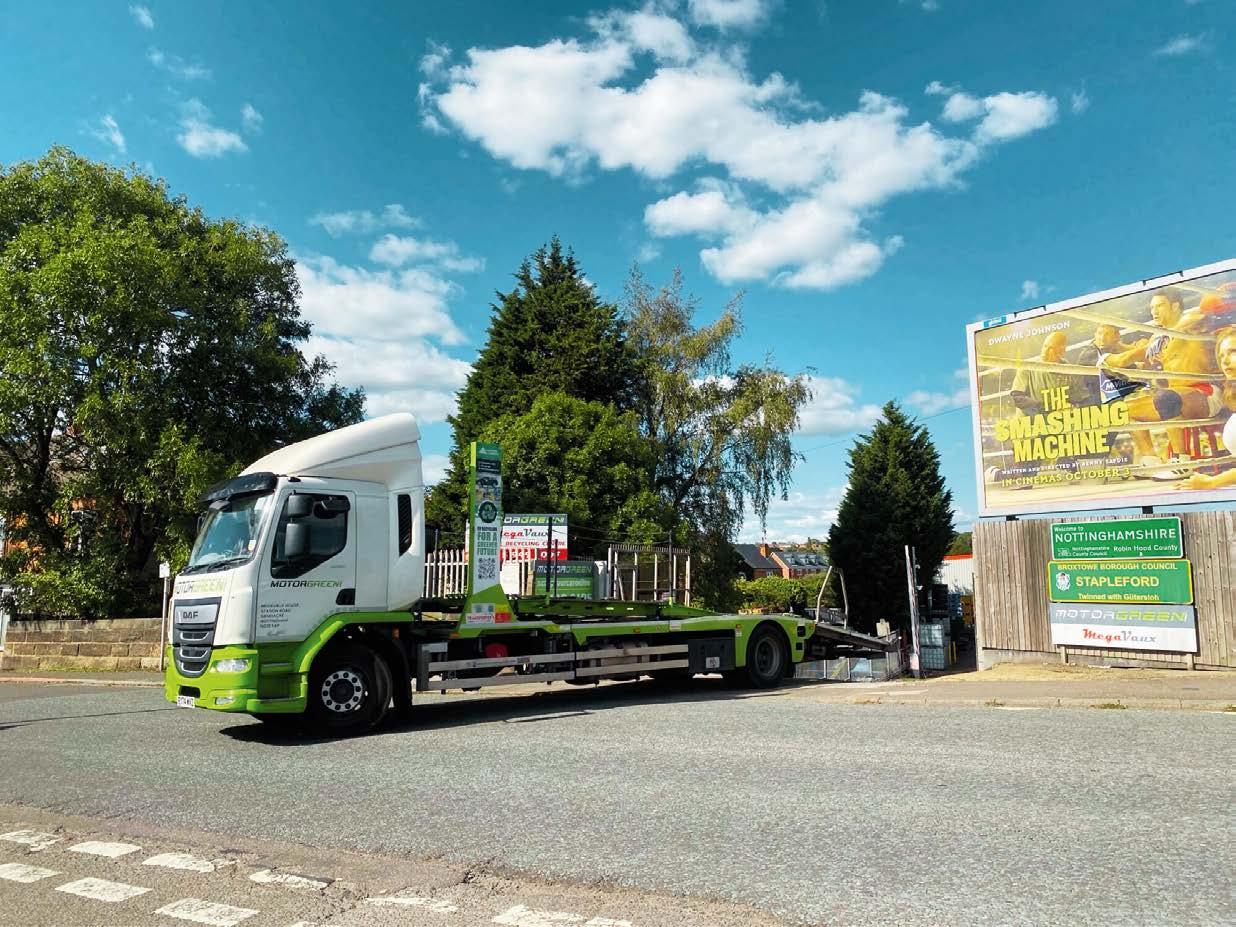
Motor Green is one of the UK's most established vehicle dismantlers and parts suppliers, with hundreds of vehicles currently being broken and thousands of parts in stock ready to despatch
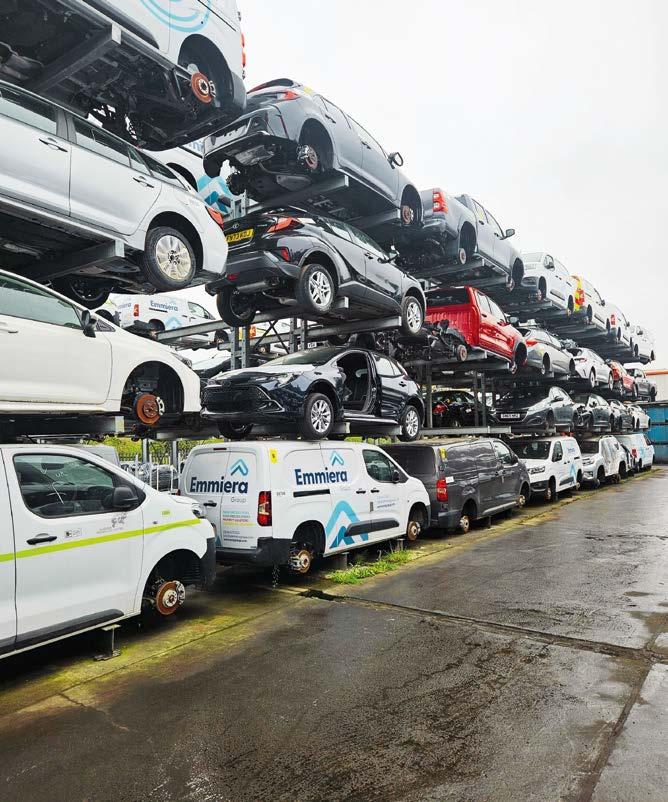
Large stock of recycled vehicle parts
Trusted supplier to the motor trade
Professional dismantling operation
Fast dispatch from UK stock
Competitive pricing
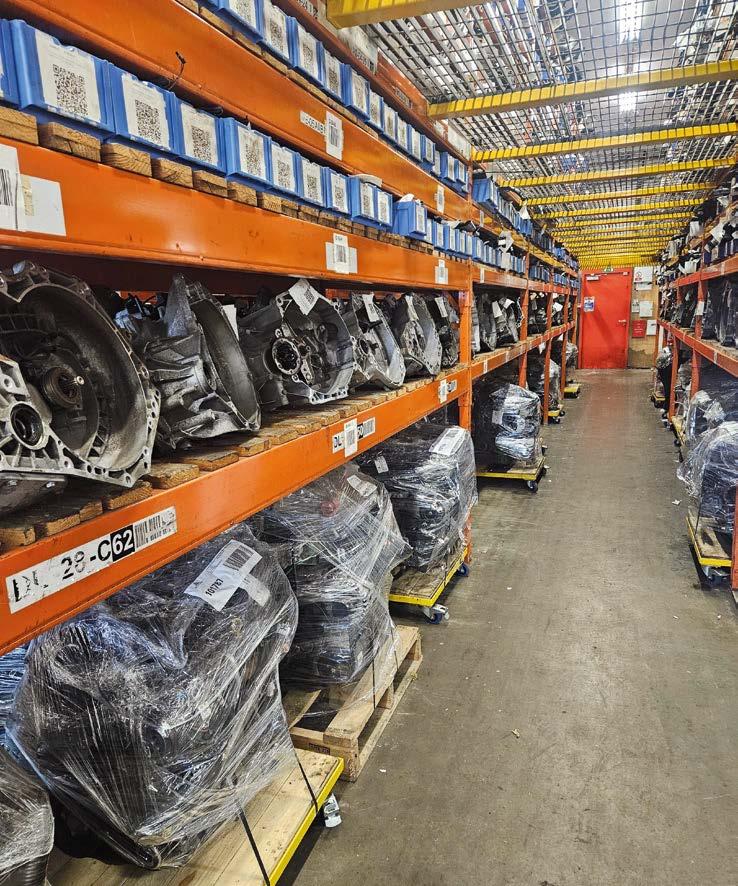

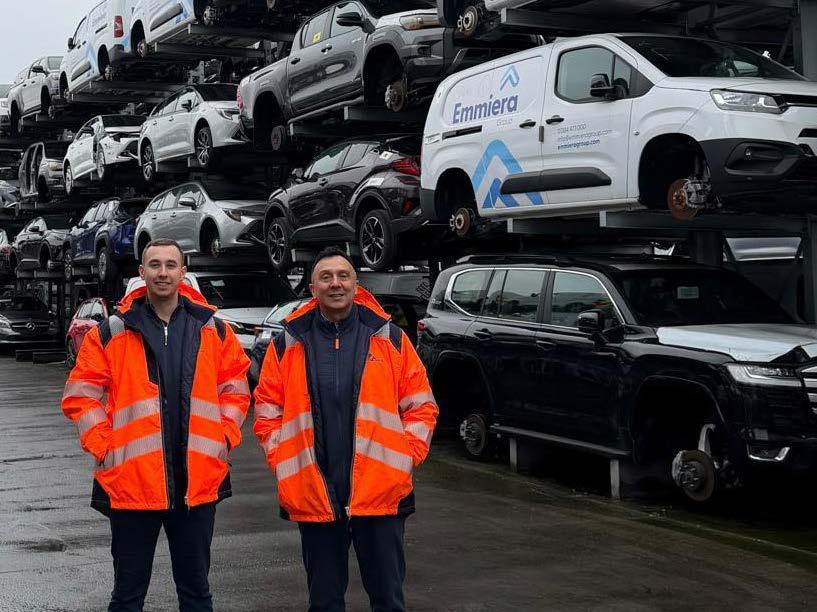
How Dragan and Savo Vavan turned a derelict yard into a modern recycling operation, and why they believe the industry’s most important chapter is still ahead.
Every business has its origin story, but few begin quite as scrappily as this one. It was the early 1990s, recession biting, jobs scarce, when Dragan Vavan and his brother started buying, fixing and selling cars. They weren’t chasing a vision; they were chasing a living. But somewhere between the grease and the graft, an opportunity came into focus: there was more value in taking a car apart than putting it back together.
“From repairing cars, we started buying for spares,” Dragan recalls. “Then the opportunity came to move to a yard.” That yard, a site in operation since 1955 under its previous owner, was, by the time Dragan acquired it in 1998, little more than a licensed patch of ground. “It was run to the ground. Nothing left. Just a yard with a licence. We had to start from scratch.”
The first years were defined by sheer physical effort: levelling the ground, laying concrete, building workshops piece by piece, year by year. By the time the site began to resemble a proper operation, Dragan had already been trading for two or three years from rented premises. The journey that followed, he’ll tell you with a dry smile, “only took 30 years.”
Into this world came Savo, the second generation and, as it turned out, the right man at the right moment. He remembers the early days from a child’s perspective: a small office with a counter flap like a pub bar, Saturday mornings wiping desks while his dad managed the yard. Later came the forklift rides after hours, the summer holiday stints on the ELV rig, and the gradual,
unspoken realisation that this place was in his blood.
“I could be a rebellious teenager,” Savo says, laughing. “I used to say, no, I’m not going to work there. But as you mature, you realise, this is what I
The first years were defined by sheer physical effort: levelling the ground, laying concrete, building workshops piece by piece.
‘‘
was brought up in. It was the natural place to be.”
Dragan was deliberately hands-off about the succession. “I always left them to their own initiative,” he says of his three children. “Be an educated person, find yourself, do what you’d like to do, that was my first question.”
Savo went to university, graduating with a degree in Politics, before working his way through several roles in the business: warehousing, sales, and customer service. The broad grounding wasn’t accidental. “Without those years,” he reflects, “I wouldn’t be as suited for the working world.”
Today, the two operate in clear but complementary lanes. Dragan, as Managing Director, oversees recycling and the exporting side. Savo leads parts sales and dismantling. Around them, a team of roughly 30 keeps a modern, fully licensed site running, one that now boasts a purpose-built warehouse, ELV depollution facilities, EV recycling capability, and proprietary in-house software. An expansion is in the pipeline.
Ask Dragan for the single milestone that changed the business’s trajectory and he doesn’t point to a building or a machine; he points to a seminar. Sometime in the early 2000s, he sat in a room at an MVDA event and listened to a speaker discuss e-commerce: online part numbers, digital presence, and the emerging possibility of selling beyond the local market.
“He was a good presenter. He already had everything in place. And I thought, let’s start from there.” The business went online in earnest around 2005, and the shift in scale was immediate. “It was like a curtain that had been pulled back,” Savo says. “From only serving the local market to shipping parts across the UK and beyond.”
That turning point captures something important about how the Vavans think: they read change early and move on it. The same instinct drove investment in racking when others hadn’t yet cottoned on, the development of in-house management software, and now the integration of AI into their vehicle purchasing and management systems. The industry has become more competitive, margins are tighter, customers expect Amazon-speed delivery, data now underpins every buying decision, but those who adapted have thrived.
For all that has changed, both men are clear-eyed about what the sector now faces. Electrification is the defining challenge, not because the technology is insurmountable, but because the framework around it is dangerously absent.
“There’s no guidance, no firm standards around the ELV process for electric vehicles,” says Savo. “Which is putting all of us in a bit of a limbo zone. If we had concrete rules, we
don’t always like rules, but if we knew where the boundaries were, we could charge straight at them. As it stands, you’re wary. You don’t want to receive these vehicles, you don’t want to process them, which is a shame.”
The concern isn’t theoretical. EV batteries pose real handling, storage, and discharge risks, risks that demand proper training, specialised tooling, and facilities that many smaller or less-regulated operators simply don’t have. Without mandatory certification requirements for EV processing, auction houses can move end-of-life electric vehicles to any buyer, licensed or not. The comparison both men reach for is
The industry has become more competitive, margins are tighter, customers expect Amazon-speed delivery, data now underpins every buying decision, but those who adapted have thrived.

‘‘Customers
treat us (ATFs) as a serious business, not an old-fashioned scrapyard. But with that come higher expectations for quality, service and accountability.
that the draw is on the B salvage model: vehicles that can only be treated by authorised facilities. Something similar, they argue, must apply here.
“Someone could get killed,” Dragan says bluntly. “How do you test? How do you store? What do you do? It is what it is now, but it shouldn’t stay that way.” He added, “Fortunately, we are fully geared up, our staff are thoroughly trained, and we are prepared to handle EVs in compliance with all relevant requirements.”
Dragan’s longer view is nuanced. He’s sceptical of the political certainty around full electrification. Toyota’s continued commitment to hybrid technology, he notes, suggests the combustion engine isn’t finished yet. And from a recycler’s perspective, there’s a commercial reality too: ICE vehicles yield far more dismantlable components than EVs. More parts, more revenue, more value from each vehicle. The transition will reshape the economics of the trade significantly, and the industry needs to plan accordingly.
Dragan joined what was then the MVDA more than 20 years ago, when membership was, by his own account, “more social”, a chance to hear good speakers, exchange experiences, and gather with others who spoke the same trade language. The association has evolved considerably since. The rebranding
About Motor Green
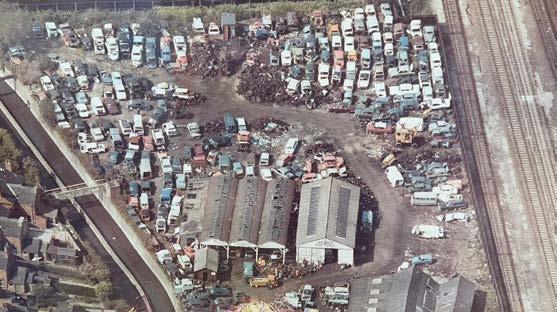
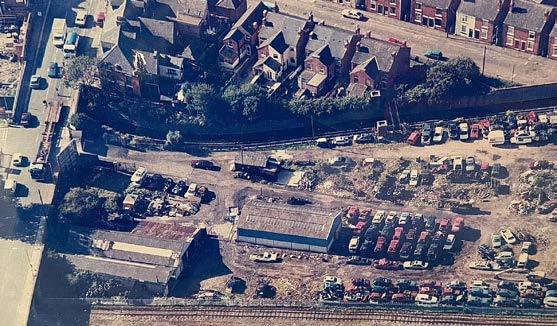
of the VRA, driven in large part by the advocacy of figures like Paul Dixon, marked a shift in ambition: from social club to professional body.
Both Vavans see the VRA’s next chapter as a critical one, and the EV challenge is central to it. For Savo, membership is about more than standards or networking: it’s about the sector having a credible, unified voice at the table when legislation is being shaped. “You can’t have a hundred vehicle recyclers all saying ‘we want this’. The VRA is the collective, to listen, to put the points forward, to talk to government.”
The support and camaraderie with fellow members remain a real draw, “colleagues treading the same path,” as Savo puts it, but the stakes are higher now. For new entrants to the trade in particular, the VRA represents a structured route to raising standards, understanding
compliance, and accessing guidance that simply wasn’t available 30 years ago. For established businesses, it’s a seat at a table that increasingly matters.
“The professionalism of the industry has come a long way,” Dragan reflects. “Customers treat you as a serious business, not an old-fashioned scrapyard. But with that come higher expectations for quality, service and accountability. The VRA is part of holding that standard.”
Thirty years on from those first tentative car deals in a recession-hit market, the Vavans are still building. A new site is coming. AI-assisted purchasing is being developed. And a father and son, divided by generation but united by purpose, are watching the next chapter of their industry take shape, with a clear view of what it needs to get right.
Motor Green is a UK vehicle dismantler and used-parts specialist, offering thousands of in-stock recycled parts, fast nationwide delivery, scrap car services, and immediate dispatch from Sandiacre for UK motorists.
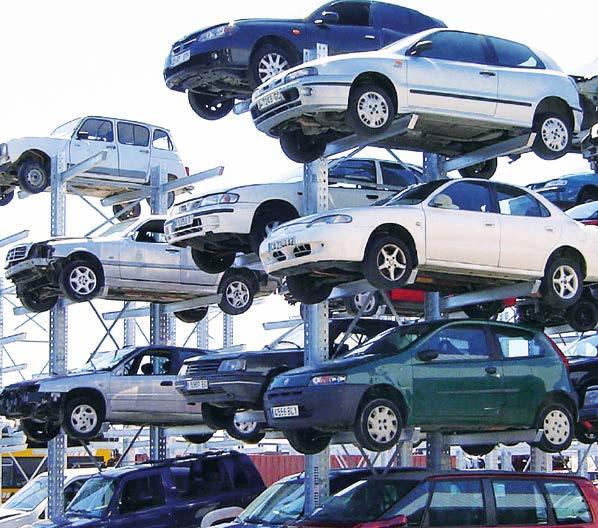
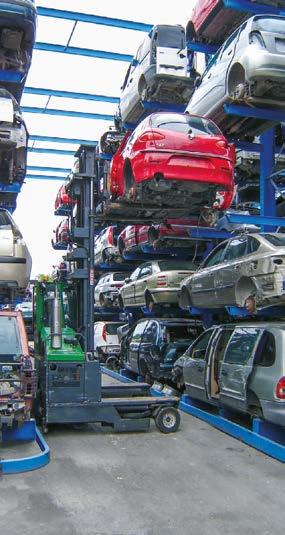
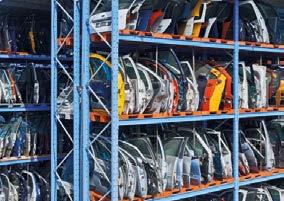
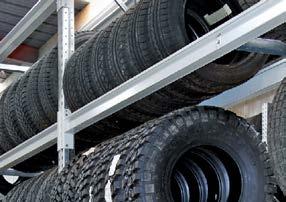
FROM CHANGING CUSTOMER EXPECTATIONS TO NEW REUSE MARKETS AND STRONGER INDUSTRY STANDARDS, TOM HAYWARD REFLECTS ON HOW VEHICLE RECYCLING HAS EVOLVED, AND WHY THE NEXT PHASE OF GROWTH WILL DEPEND ON INNOVATION, COLLABORATION AND BETTER COMMUNICATION.

BY TOM HAYWARD I NEED SPARES
Over the past 15 years, I’ve seen this industry evolve, what started as a hobby in a home garage to a fully licensed ATF facility and now a retail operation specialising in sustainable spare parts. During that time, one thing has become clear: our customers range widely, from individuals repairing their own vehicles to insurers authorising repair work. We should never assume they understand our terminology or processes. While we may be fluent in grading, engine types, and trim levels, customers primarily seek confidence, clarity, and trust when choosing the right parts.
LOOKING BEYOND THE OBVIOUS
Although vehicle volumes for recycling may be strong, we must be
wary of complacency. Focusing only on the top 10 most common parts could limit our potential. There is significant untapped value in precious metals and core components, as well as in plastics, brackets, and trim pieces that require more effort but offer meaningful environmental and commercial benefits.
Thinking creatively can unlock new opportunities, for example, repurposing vehicle interior leather for use in fashion, or adapting electric-vehicle cooling fans to operate efficiently on lower-voltage systems while delivering high motor output. Emerging companies are already exploring innovative solutions, such as repurposing plastics or giving EV batteries a second life.
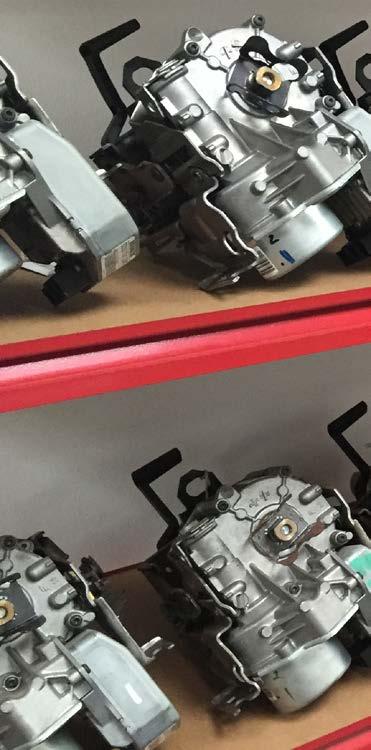
Supporting these initiatives may not yield immediate returns, but they will help drive progress across the sector.
Attending trade shows outside our immediate industry can also open unexpected opportunities, revealing new markets and potential partners who may require components sourced from vehicles.
Thomas Reid’s principle that “a chain is no stronger than its weakest link” applies directly to our work. As VRA members, we share responsibility for strengthening the industry’s future.
Building partnerships with forward-thinking organisations and aligning on standards around grading, packaging, fitment assurance, and provenance will create consistency and a healthier market for everyone.
Staff training is essential, and while
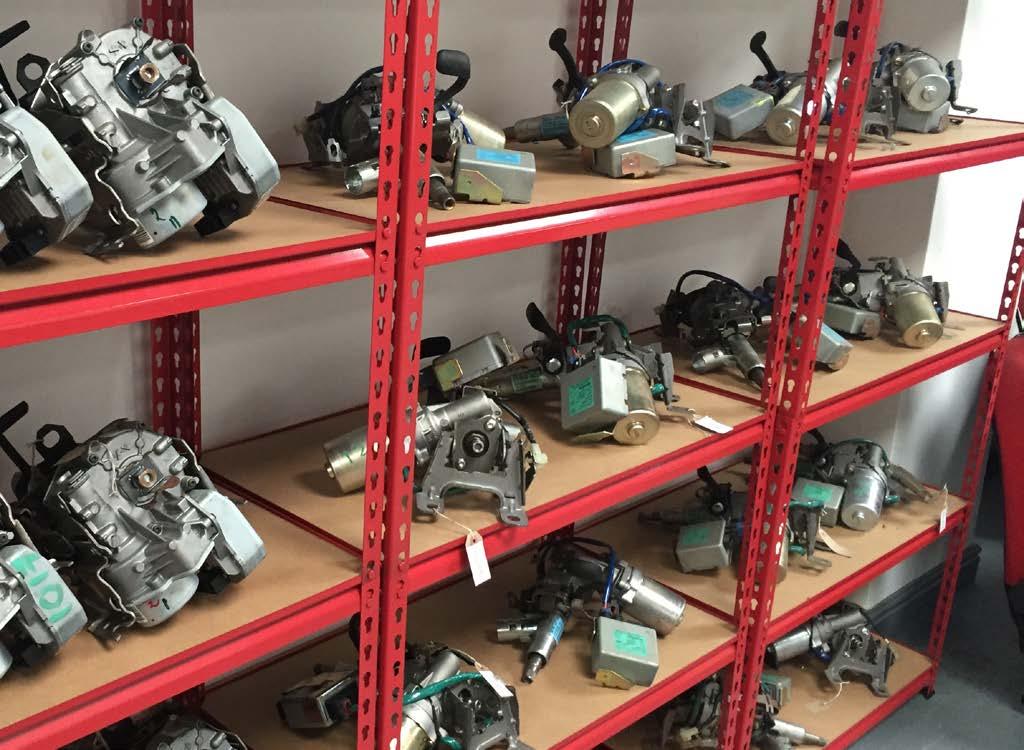
AI can be a valuable tool, it must complement, not replace, the skilled people who keep our businesses running. We must also recognise that external stakeholders face their own challenges when deciding whether to use parts derived from ELVs. Taking the time to speak with them directly and understand those challenges can reveal valuable insights and spark new avenues for innovation.
Having served on the VRA committee for several years, I am committed to supporting members in any way I can. Our association plays a vital role in enabling businesses of all sizes to learn from one another. The current restructuring, centred on four key pillars:
• Membership
• Commercial
• Compliance
• Certification
All of these will enhance the organisation’s ability to serve as
the industry’s voice and support growth in jobs, economic value, and environmental impact. Expanding our membership and strengthening communication channels will lead to higher standards, better customer experiences, and increased adoption of reusable parts. Ultimately, this benefits the entire industry.
And finally, communication. I’m sure many of us share the frustration of being unable to speak to a real person when seeking customer support, only to be directed to a website or automated response.
Face-to-face and verbal communication should not be replaced by on-screen answers or chatbots. People want to engage with people, and in the years ahead, I believe we’ll see a renewed shift toward more human interaction. We must be cautious about replacing too many operational tasks with automated systems. Sometimes a
quick phone call can resolve an issue far faster than an email, while also strengthening relationships with colleagues, industry partners, and external stakeholders.
We have achieved a great deal over the past decade, and the next five to ten years promise to be just as exciting. Together, we are making a significant impact by returning more parts to reuse, strengthening the economy, creating jobs, and advancing sustainability.
Our industry is becoming increasingly mainstream, with more people recognising the value it delivers. Let’s continue to grow as a community, pick up the phone, connect with fellow recyclers, attend events, network, innovate, and explore new markets, training opportunities, and career development. There is enormous potential not only to meet market demand but to expand it, benefiting everyone involved.
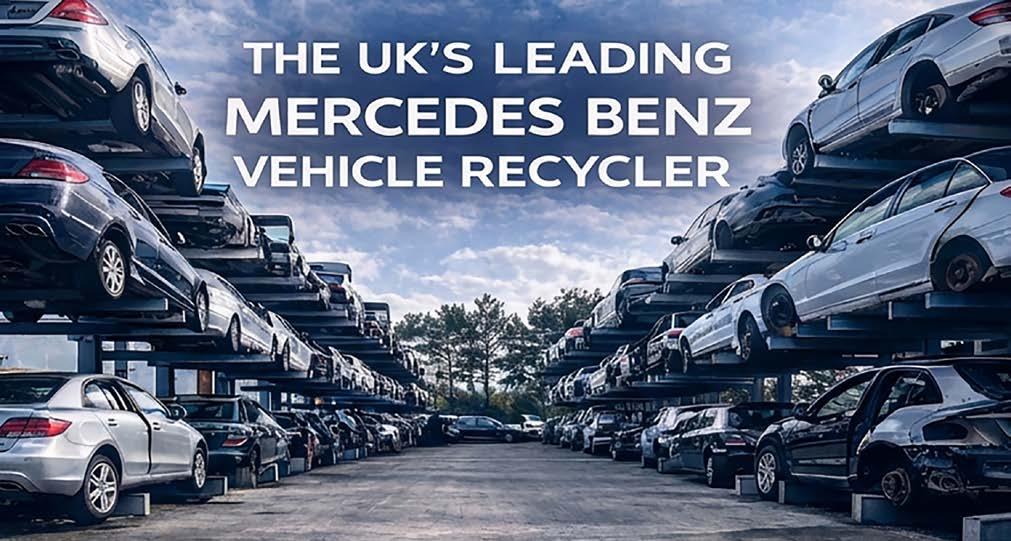
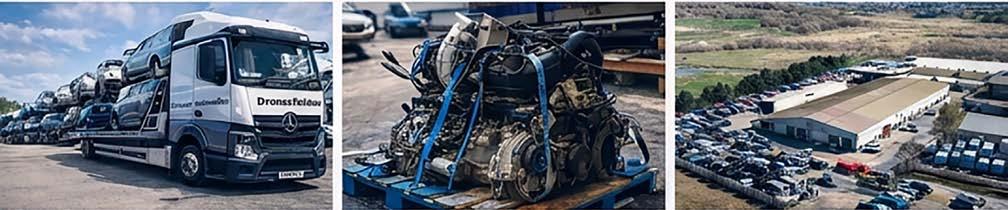
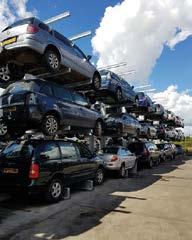
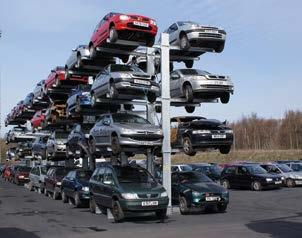
CarRax by Prodek is a vehicle racking system developed for the car recycling and salvage industry. By combining heavy-duty hot-rolled steel and robust ground anchoring, CarRax supports the storage of up to 5 vehicles per side.
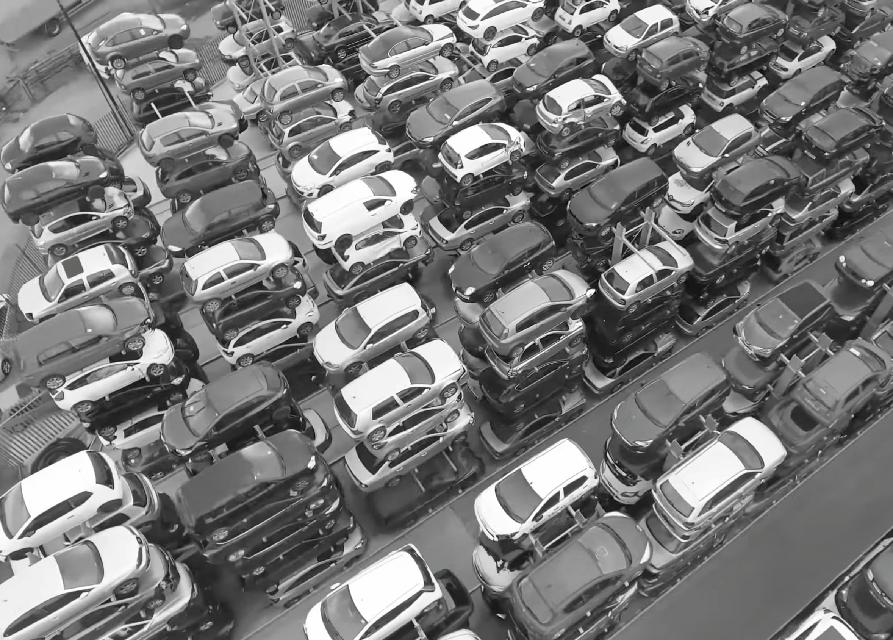

By Andy Latham Driven Leadership

The automotive industry is changing faster than at any point in its history. Electrification, advanced driver systems, digital diagnostics, environmental compliance, and skills shortages are redefining what it means to run a successful automotive business. Yet while technology continues to evolve, one thing remains constant: people drive performance.
Leadership training is helping automotive professionals move beyond managing jobs and processes, and toward leading people with confidence, clarity, and purpose.
Many leaders in the automotive sector rise through the ranks because of their technical ability. They are excellent technicians, engineers, dismantlers, or managers who understand vehicles inside and out.
But leadership requires a different skill set.
John C Maxwell’s leadership framework addresses a common industry challenge: the transition from hands-on technical expert to influential people leader. It helps automotive professionals recognise that leadership is not about giving orders from the workshop floor or the office, it’s about influence, trust, and example.

As Maxwell states, “Leadership is influence, nothing more, nothing less.”
In busy workshops, collision repair centres, and fleet operations, influence determines whether procedures are followed, safety is prioritised, and teams remain engaged under pressure.
Automotive environments are often fast-paced, deadline-driven, and safety-critical. From high-voltage electric vehicles to heavy machinery and environmental compliance, the cost of poor leadership can be high, financially, legally, and personally.

Leadership training strengthens the human factors that sit behind safe and effective operations, including:
• Clear communication on the workshop floor
• Consistent decision-making under pressure
• Accountability without blame
• A safety-first mindset driven by behaviour, not just rules
• Respect between management, technicians, and support staff
Strong leadership doesn’t replace technical training; it amplifies it.
This is not classroom theory disconnected from reality. The training uses practical examples relevant to the automotive sector, encouraging participants to reflect on how they lead during everyday situations such as:
• Managing productivity without compromising safety
• Leading teams through EV and hybrid transitions
• Addressing resistance to new procedures or technology
• Developing apprentices and junior technicians
• Maintaining morale during high workload or regulatory change
Participants learn to lead themselves first, setting personal standards of discipline, professionalism, and integrity that others naturally follow.
One of the strengths of Maxwell’s approach is its accessibility. Leadership is not reserved for senior management; it exists at every level of an automotive organisation.
This training is highly effective for:
• Workshop supervisors
• EV and high-voltage team leaders
• Vehicle dismantling and recycling managers
• Service managers and operations leads
• Business owners preparing the next generation of leaders
By focusing on personal growth, values, and influence, the programme helps individuals lead confidently regardless of job title.

The automotive businesses that thrive are those with strong internal cultures, where people feel valued, listened to, and invested in. Maxwell’s leadership principles encourage leaders to shift from simply managing output to developing people.

This creates workplaces where:
• Safety becomes a shared responsibility
• Skills and knowledge are passed on, not lost
• Staff retention improves
• Continuous improvement becomes part of daily operations
As the automotive industry continues to evolve, the need for grounded, ethical, and people-focused leadership has never been greater. Technical competence will always be essential, but leadership determines whether teams adapt, engage, and succeed.
Training equips automotive professionals with leadership skills that endure long after the technology changes.
Because in an industry driven by machines, it is people, and the leaders who guide them, who make the difference.
Want to know more about becoming an influential leader? Driven Leadership can assist you and your team with coaching, mentorship and leadership training, all led by a Maxwell Certified speaker, leader and coach.


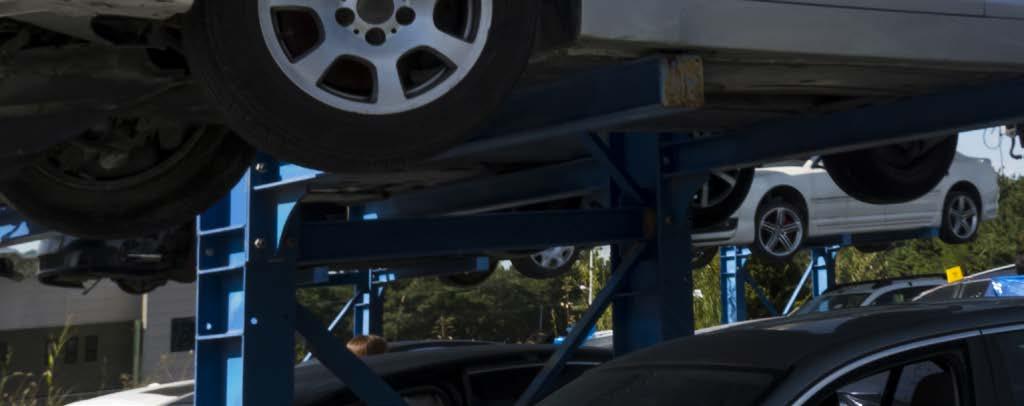
Be prepared as you can to quickly bounce back after a disaster
Running a vehicle recycling business in the UK comes with its fair share of challenges, tight regulations, environmental responsibilities, and the constant flow of vehicles in and out of your yard. But what happens when disaster strikes?
Whether it’s a fire, flood, cyberattack, or power outage, having a Disaster Recovery Plan (DRP) in place can mean the difference between a quick bounce-back and a long, costly shutdown.
Here’s how to build a DRP that works for your yard, your team, and your customers:
A DRP is your playbook for getting back on your feet after an unexpected event. It helps you:
• Minimise downtime
• Protect your staff and assets
• Stay compliant with the Environment Agency and DVLA
• Keep your customers informed and confident
Define what the plan covers 2
Start by outlining the scope of your plan. For a vehicle recycler, this usually includes:
• Your physical site (yard, workshop, offices)
• IT systems (inventory, compliance records, customer data)
• Staff and communication
• Environmental compliance
• Customer and supplier relationships
Identify the risks 3

Steve Walker
List key contacts 4
Create a contact sheet with names and numbers for:
• Your DRP coordinator
• Site manager
• IT support
• Environmental officer
• Insurance provider
• Local emergency services
Make sure everyone knows who to call and when.
Think about what could realistically go wrong. Common risks in our industry include:
• Fire in the workshop or storage areas
• Flooding from heavy rain or nearby rivers
• Cyber-attacks targeting your systems
• Power outages affecting your operations
• Theft or vandalism of parts or vehicles
Rate each risk by how likely it is and how much damage it could cause. This helps you prioritise when planning.
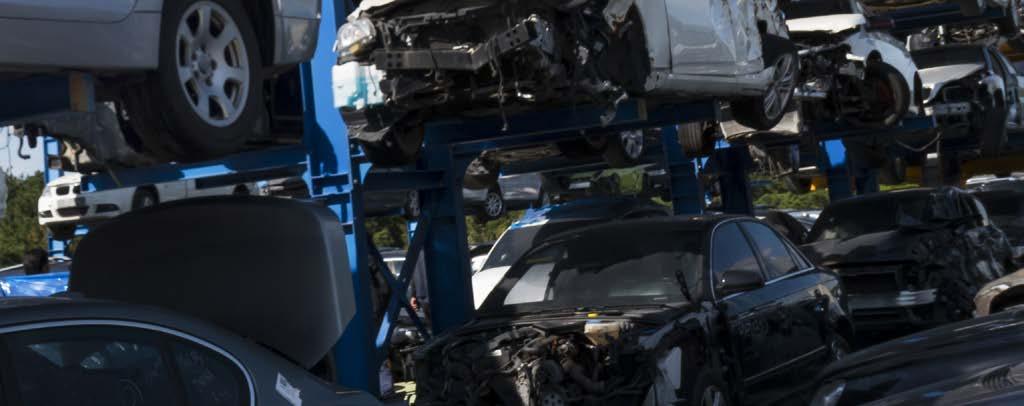
This is the heart of your DRP. For each risk, outline how you’ll respond and recover.
Physical site
• Install fire suppression and flood protection
• Keep emergency spill kits and mobile generators on site
• Use modular units for temporary workspace if needed
• Identify a recovery zone within your licensed yard (since relocation may not be allowed)
IT systems
• Back up your data daily
• Use cloud-based systems where possible
• Have a cyber incident response plan
• Set targets: for example, recover systems within 24 hours (RTO) and restore data from the last 12 hours (RPO)
Staff and communication
• Set up a WhatsApp or SMS group for emergencies
• Train staff on evacuation and recovery roles
• Keep emergency contact details up to date
Supply chain and customers
• Keep a list of backup suppliers
• Prepare customer messages for delays or disruptions
• Offer remote services (like online quotes) during recovery
A DRP isn’t a one-and-done document. Test it with your team at least once a year – run a fire drill, simulate a cyberattack, or walk through a flood scenario.
Update the plan whenever you:
• Change systems or suppliers
• Expand your site
• Experience a real incident Test and
Store your DRP:
• In the cloud (Google Drive, OneDrive, etc.)
• On a USB stick in a secure location
• In printed form in your site office
Make sure your team knows where to find it. Keep it handy



Disasters don’t wait for a convenient time. But with a solid Disaster Recovery Plan, your vehicle recycling business can weather the storm – literally and figuratively. Need help creating your DRP? We’ve got a free template to get you started. Just ask!
Steve Walker
Supporting insurers, fleets, bodyshops and repairers with compliant ELV processing and high-quality recycled parts
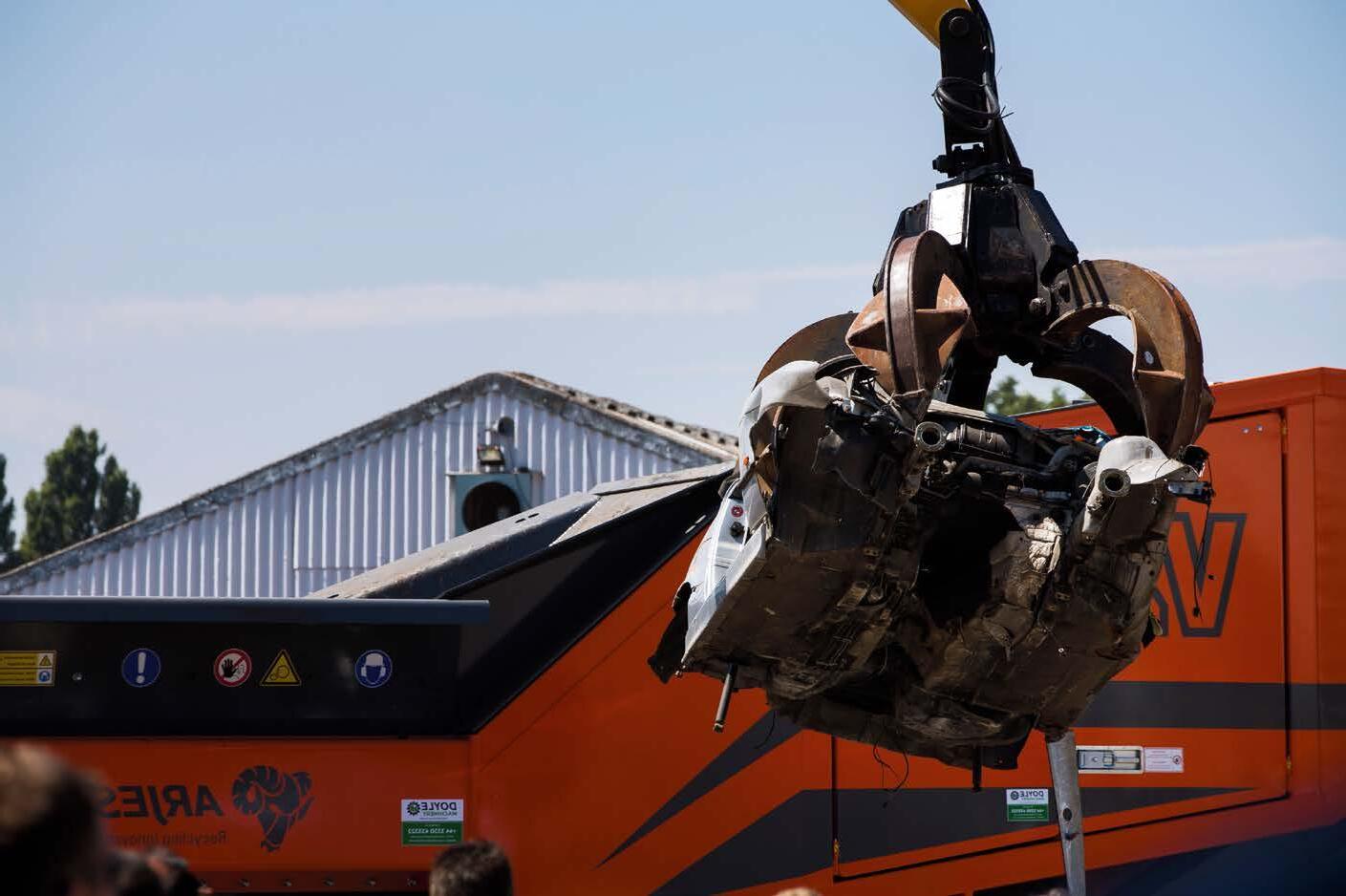

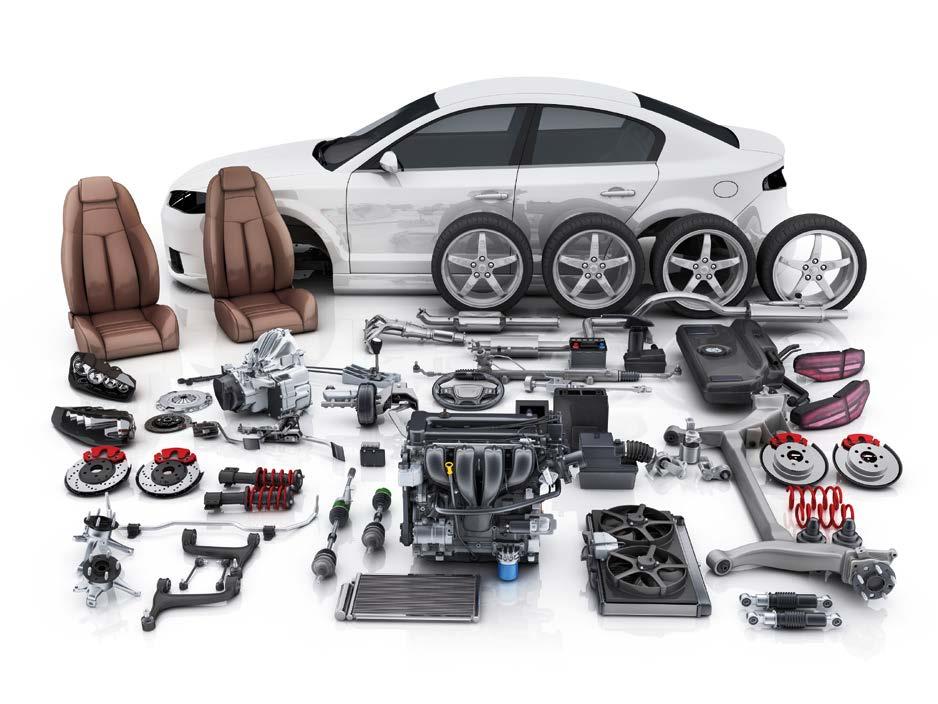




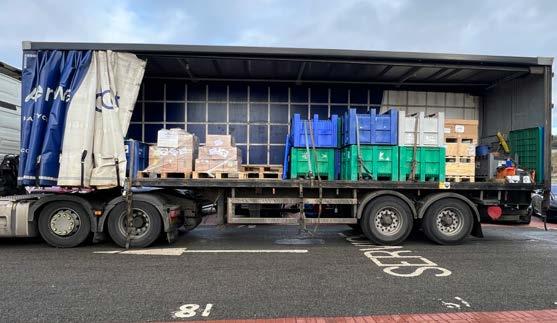
Throughout 2025, the volume of electric vehicles (EVs) entering the waste stream continued to rise, with projections indicating even faster growth in 2026. For Authorised Treatment Facilities (ATFs) and associated operators, this shift presents both opportunity and increased responsibility.
The Vehicle Recyclers’ Association (VRA) has consistently emphasised the importance of preparedness in three key areas: safe dismantling, secure storage and regulatory compliance.
While some commentary within the wider industry can overstate the risks, EV batteries bring genuine technical, logistical and administrative challenges.
High-voltage systems, damaged lithium-ion packs, fire risk, hazardous waste classification and manufacturer-specific approval processes all demand structured and informed management.
Even ATFs that do not routinely dismantle EVs are increasingly
attendees gained valuable insight into EV risk management and the growing importance of accredited training, which remains fundamental to future-proofing ATF operations.
However, technical competence alone is not enough.
What happens when you need to move or dispose of an EV battery?
The VRA has observed increasing pressure on ATFs struggling to secure timely battery collections, particularly where vehicle manufacturers are unable to provide direct support. The VRA, therefore, is working with specialist provider ELEVATE to facilitate access to a nationwide EV battery collection service for members.
Battery collection is not a standard transport activity. It requires technical understanding, regulatory awareness and established downstream recycling routes.
The ELEVATE collection framework is designed specifically to reduce operational risk and administrative burden for ATFs, and the service is designed to be free of charge to VRA members, with ELEVATE’s team
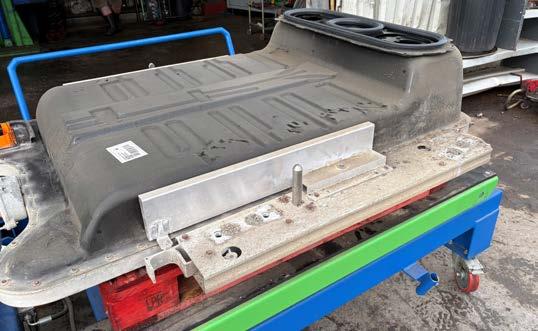
encountering battery-related issues. Vehicles can arrive with undeclared damage, unknown battery condition or incomplete documentation, and on-site battery storage can quickly become both a safety concern and a compliance risk. The VRA’s position is clear: the sector must move beyond reactive workarounds and adopt robust, professional solutions.
At last year’s CARS event Skills Lab,
taking on the sometimes challenging task of working to secure vehicle manufacturer funding under their Extended Producer Responsibility obligations.
Requests can be submitted via a straightforward online form or through direct contact. Once logged, the ELEVATE team coordinates logistics, confirms collection details, and provides the appropriate
documentation. ATFs retain a full audit trail and receipt following collection, supporting compliance and record-keeping obligations.
The majority of batteries encountered are rechargeable lithium-ion (Li-ion) units, typically falling into one of two main chemistries:
NMC (Nickel Manganese Cobalt) – widely used in earlier generations of EVs LFP (Lithium Iron Phosphate) –increasingly adopted due to cost and stability advantages
The VRA has been reassured that the service can manage batteries across a range of voltages and sizes, including 12V, 48V and high-voltage systems exceeding 60V, as well as damaged units requiring specialist handling.
Compliance within the ELV sector has rightly become more rigorous. Hazardous waste transport regulations, fire safety guidance and environmental reporting obligations all apply to EV batteries. A structured collection service that embeds these requirements into its processes helps prevent battery storage from becoming an unmanaged on-site risk.
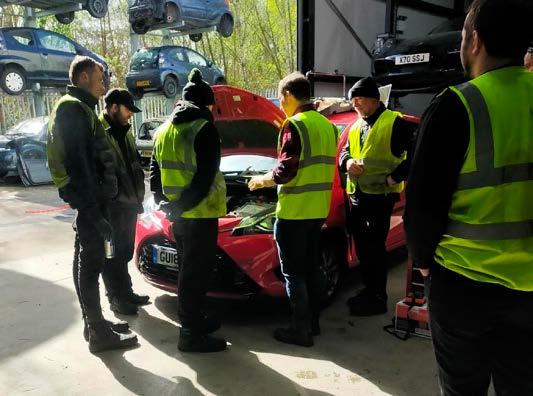
Beyond compliance, battery recycling plays a critical role in supporting vehicle manufacturers’ recycling quotas and broader environmental objectives.
Processing the batteries through compliant facilities enables the recovery of valuable materials for reintroduction into the automotive supply chain. While recycling requires energy, it remains significantly less resource-intensive than the primary extraction and refining of raw materials.
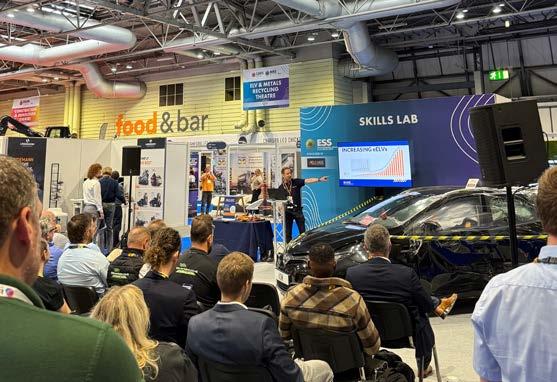

The VRA’s role is not only to highlight emerging challenges but also to identify practical, scalable solutions for members.
A professional battery collection pathway can reduce:
• Fire and storage risk
• Reulatory exposure
• Administrative workload
• Delays associated with manufacturer liaison
As EV penetration accelerates, indefinite on-site battery storage is neither operationally efficient nor strategically sustainable.
The transition to electric mobility is irreversible. The ELV sector must evolve in parallel, ensuring that high-voltage components are managed with the same professionalism and discipline long applied to conventional vehicles.
The VRA encourages ATFs to review their current battery-handling procedures and assess whether their existing arrangements are sufficiently robust. Safe, legal and transparent battery management is no longer optional; it is now a core operational requirement within the modern ELV landscape.

Offset design of the grab legs allows the grab to clear width of the vehicle
Offset design of the grab legs allows the grab to fit within the vehicle chassis for pulling engines out
Offset design of the grab legs allows the grab to lift baled vehicles in a manner that always keeps one side of the bale clear for easy stacking and loading.
Well guarded hydraulic cylinders produce excessive gripping forces which are ideal for engine removal + a premium rotator.
See in action at our Dumfries yard Special offer on one grab for immediate FOC delivery UK mainland £13995 + vat + top links made up for any machine (some in stock)
Assembled in the UK from a mix of high yield and wear resistant specialist steels, which give the Vulture Autograb strength, flexibility and duribility where needed
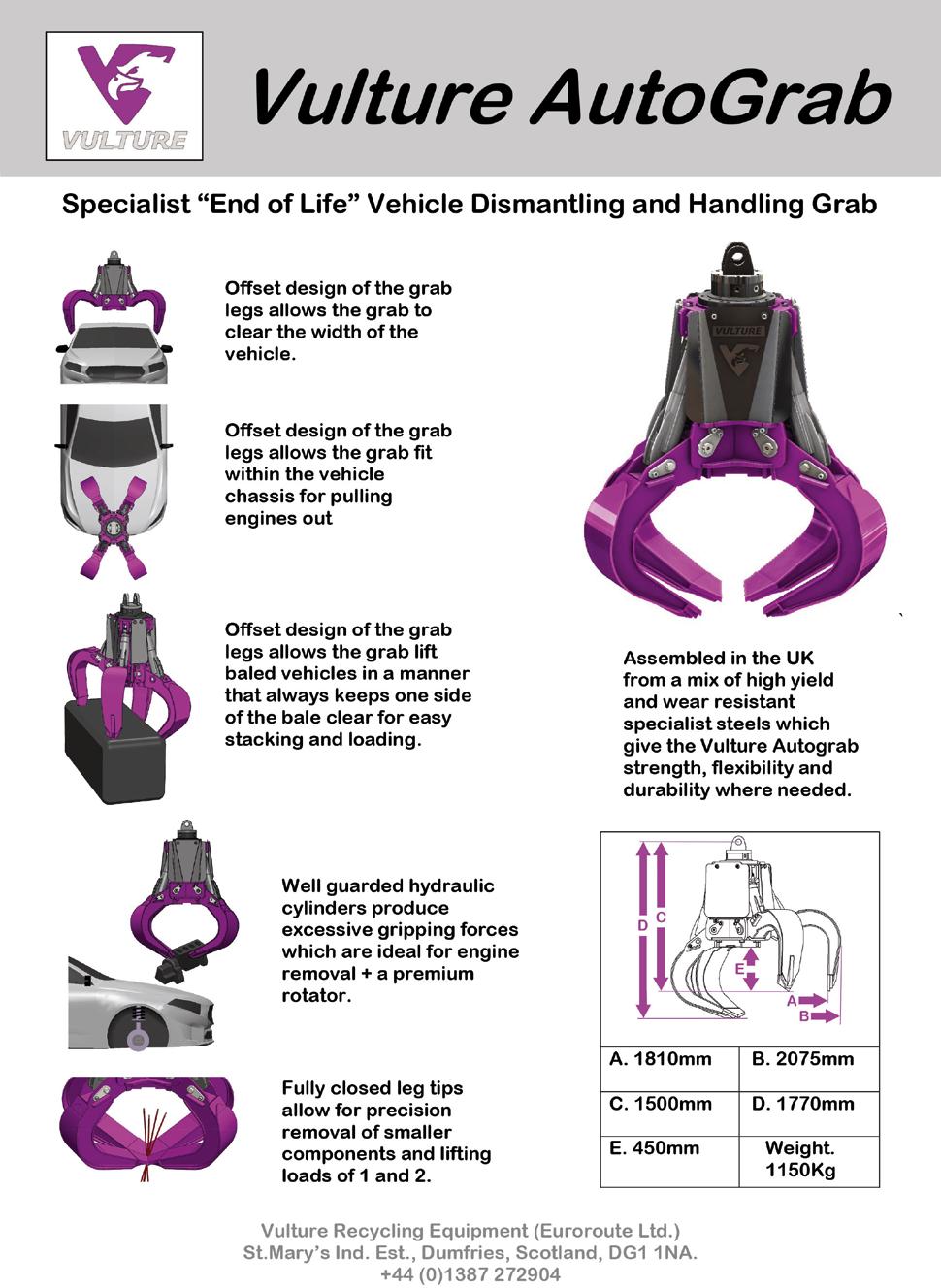
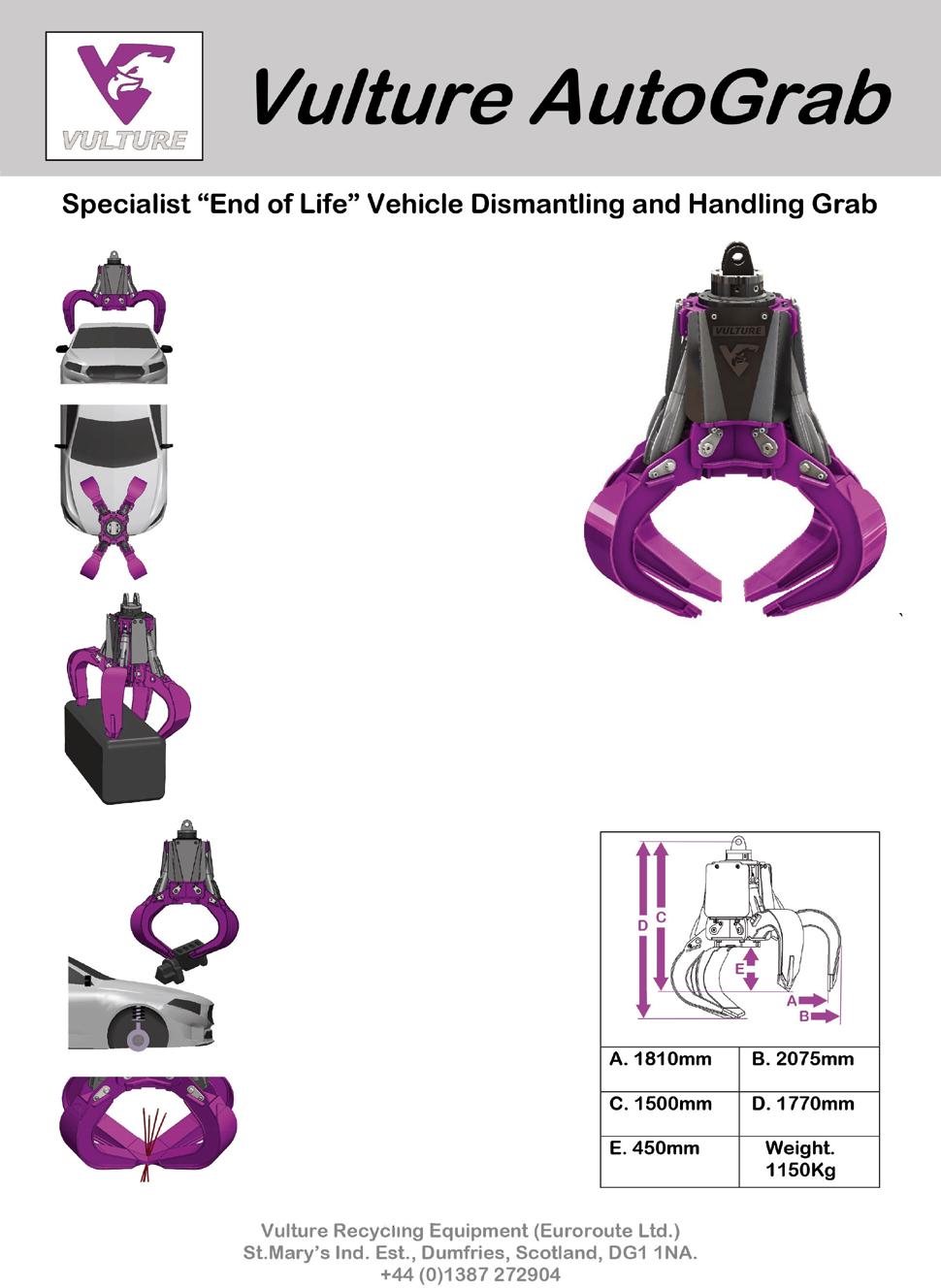
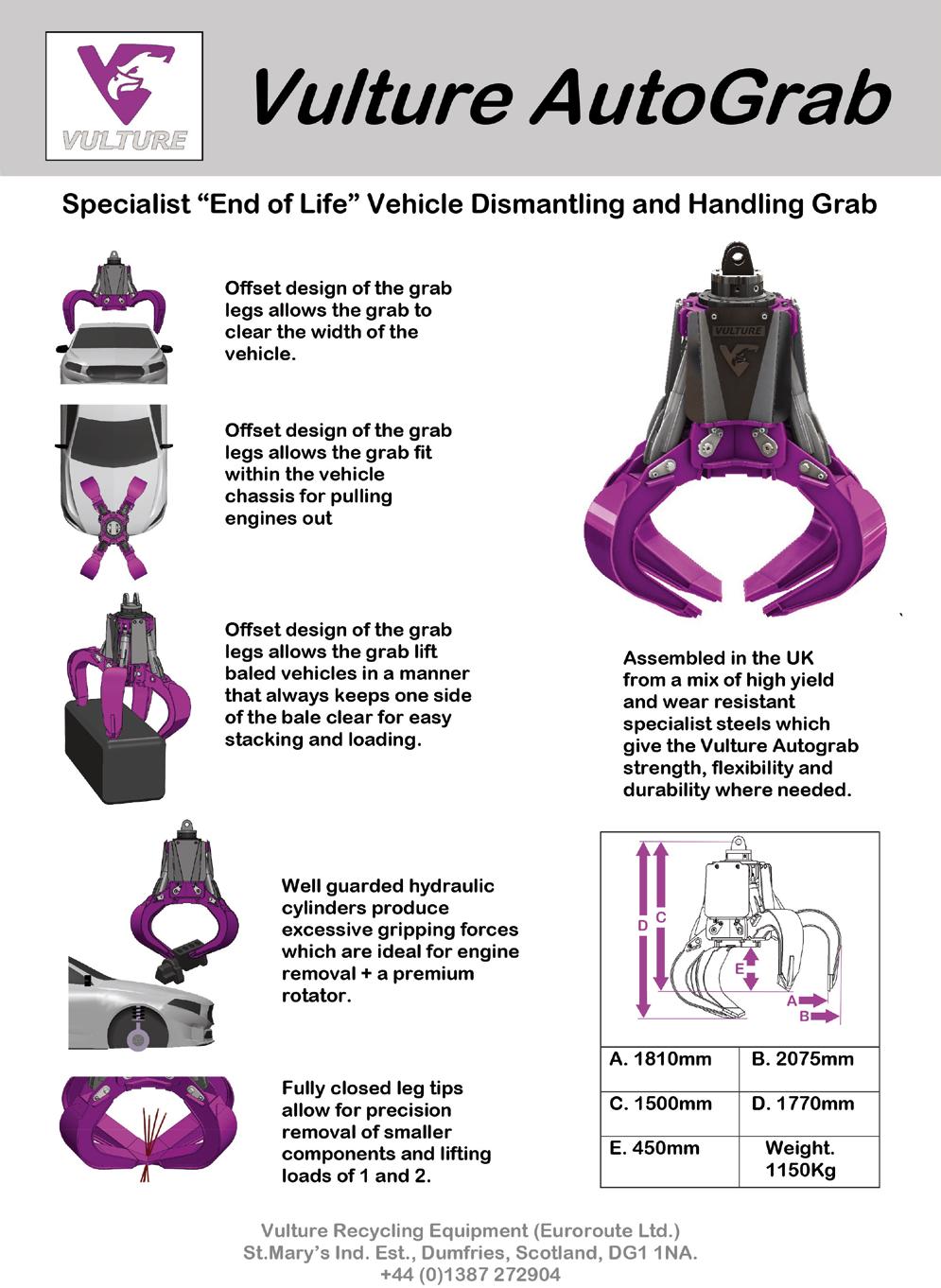










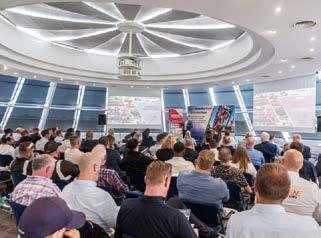


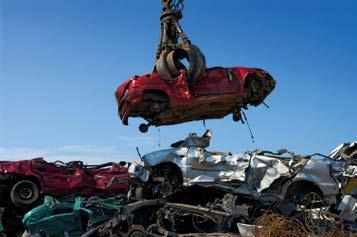






A conference for the vehicle recycling sector

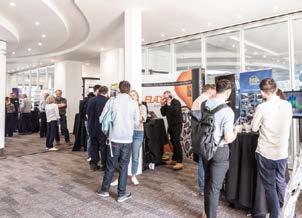
A focused day of insight on regulation, EVs, market trends and the future of vehicle recycling
11 June 2026
British Motor Museum, Warwick ATF Professional









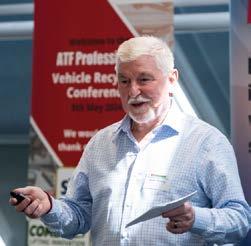
Scan to view the agenda and reserve your place
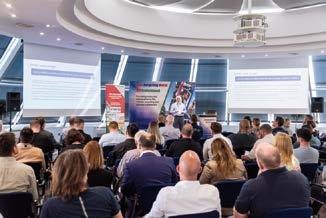
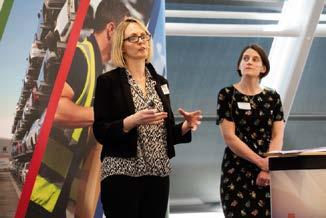

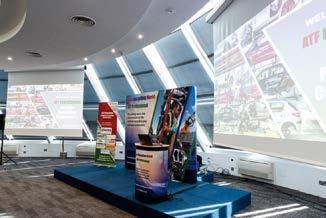
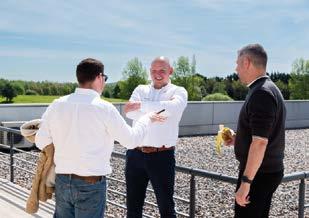













With the changes taking effect in April 2026, now is the time to review your budgets, payroll processes, and absence management to ensure your business is ready.
Changes to Statutory Sick Pay (SSP) are due to take effect from April 6th this year. This will require finance teams to budget differently, and for line managers and payroll to be aware of the changes, process pay, and, arguably, manage people differently.
Currently, SSP must be paid from the 4th day of absence when employees are off sick. This means that the first 3 days of absence, known as “waiting days”, are unpaid. From 6th April 2026, these rules will be relaxed, and SSP must be paid from the first day of absence. Additionally, the lowest earners will become entitled to receive SSP for the first time when absent from work owing to sickness.
This legislative change is likely to result in increased costs for employers, and, as such, business leaders should plan for the changes from a financial, budgetary, and payroll perspective. We would recommend that employers review their absence management procedures and practices to ensure they are fit for purpose and robust enough to keep sickness absence as low as
From 6th April 2026, SSP must be paid from day one, increasing costs and payroll demands

By Emma Harvey Managing Director
Candid HR
possible. Proactive absence management is also required to ensure that notification, recording, monitoring, and return-to-work practices are followed, which undoubtedly impact attendance and reduce absence levels.
• Budget for the changes
• Review current absence management procedures
• Review payroll procedures
• Consider the implementation of an absence management policy if not currently in place
• Consider Absence Management Training for line managers
We hope that you find this article useful. If you have any further questions or require support implementing the changes, Candid HR will be happy to help.
E: hrsupport@candidhr.co.uk T: 0113 3456944

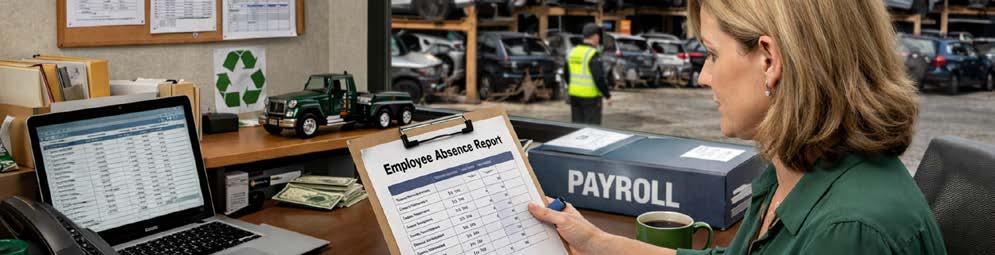
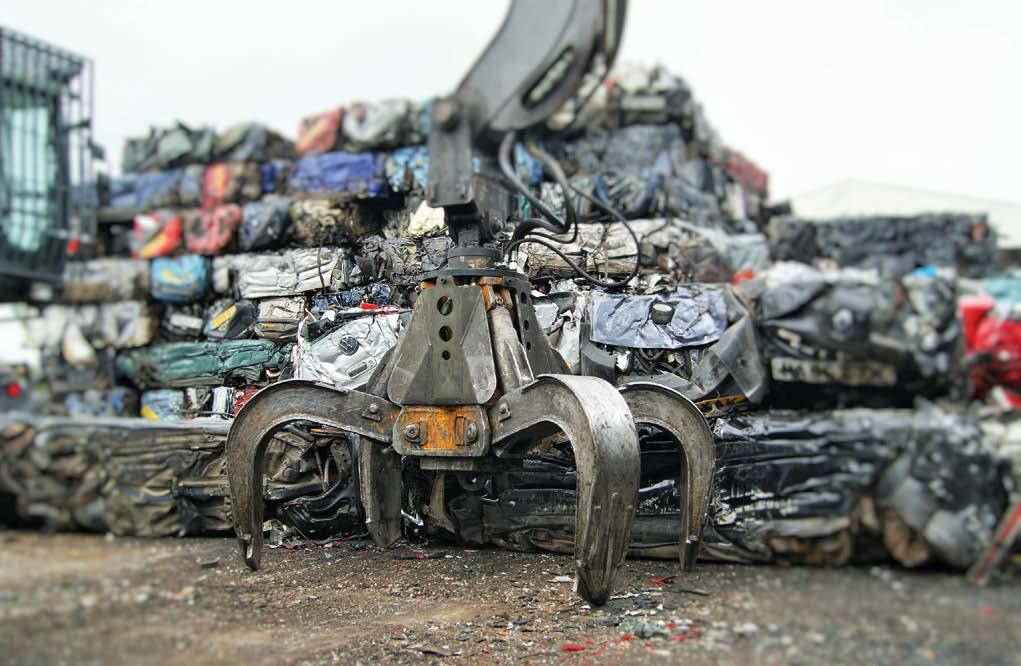
•
•
•
• The