Richmond Ren Faire brings jubilant display

BRYER HAYWOOD Staff Writer
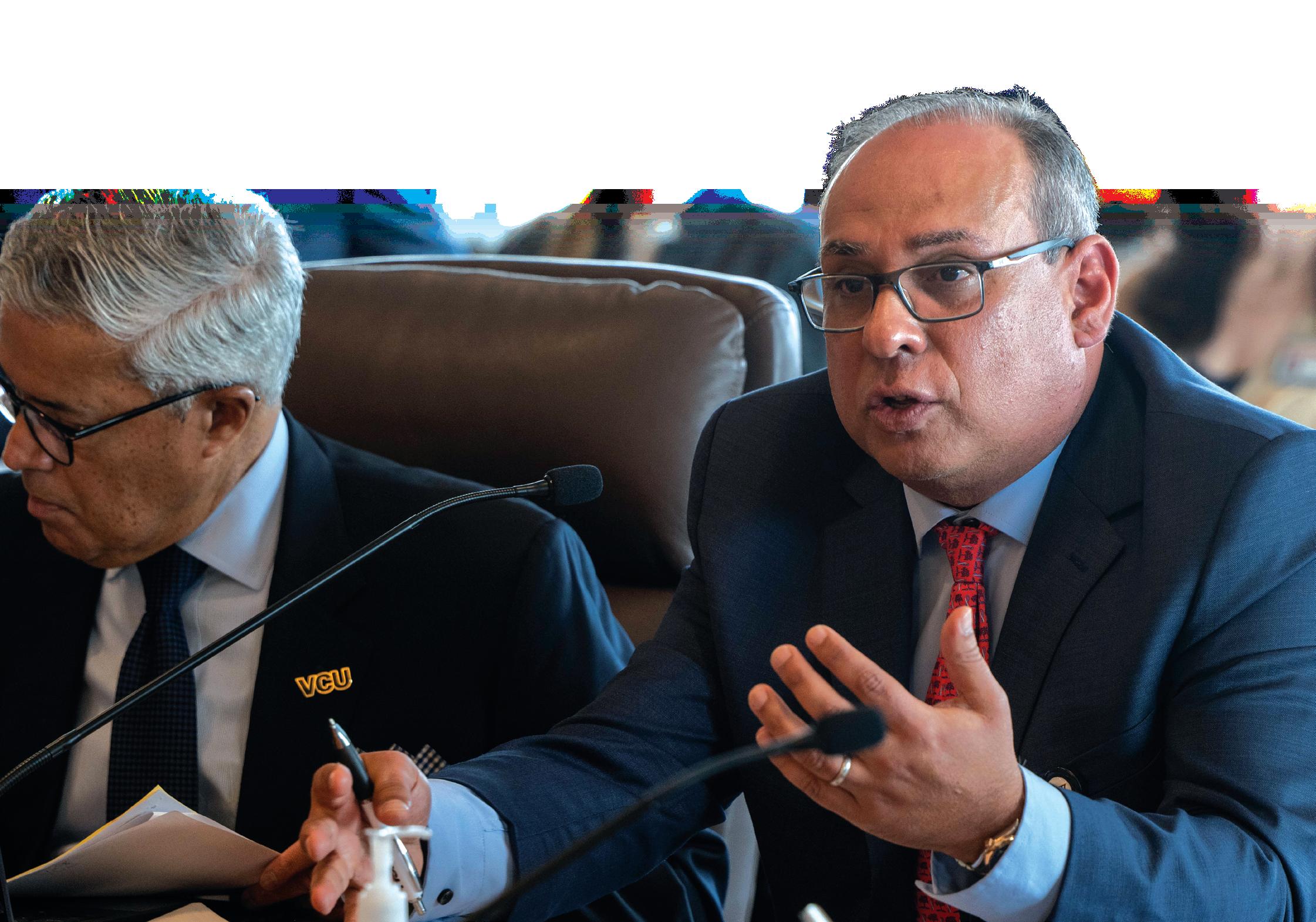
Many VCU faculty and staff have called on their peers and administrative representatives to stop a change to VCU’s tenure policy from going through, citing
MAEVE BAUER Spectrum Editor
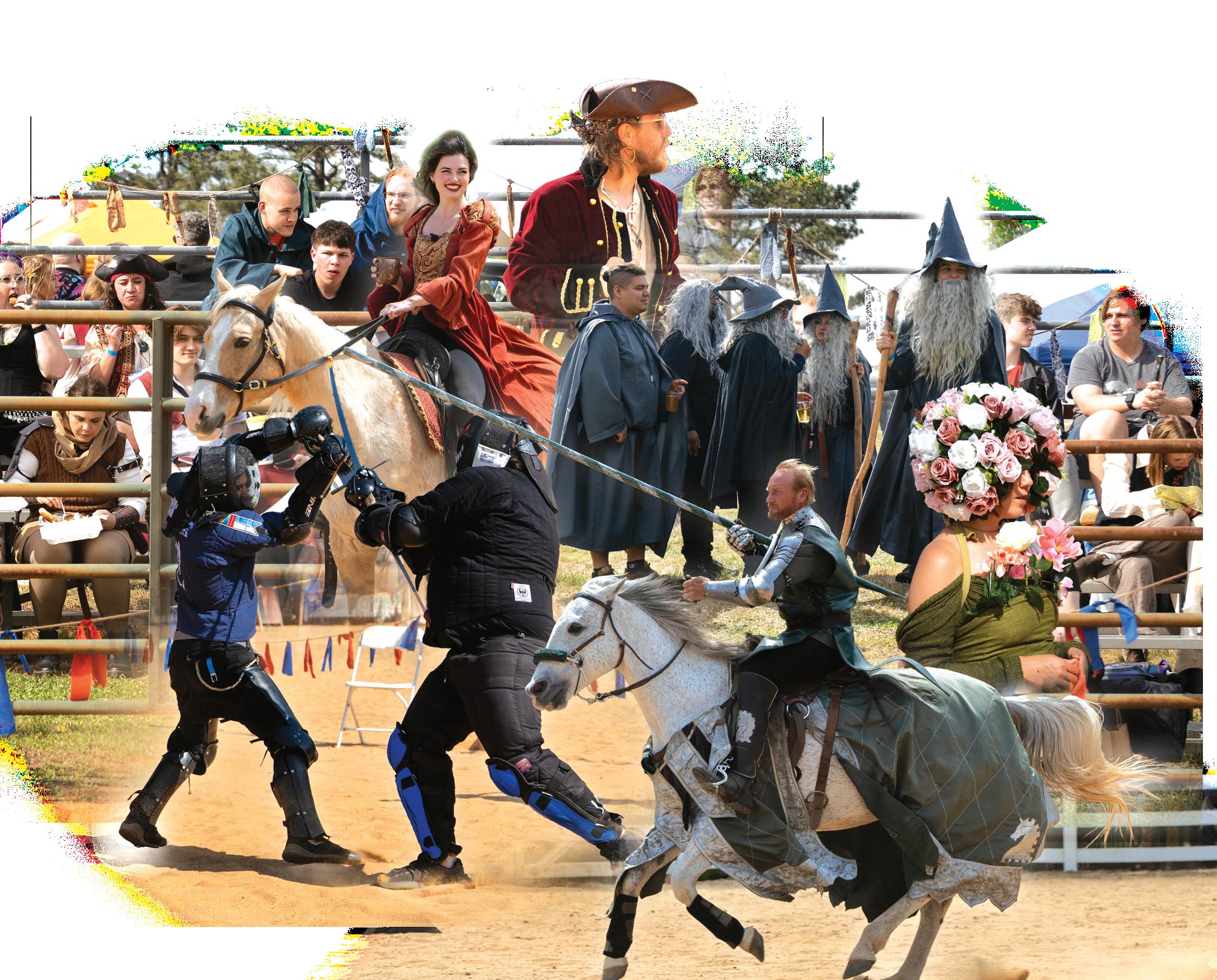
Once upon a time peddlers, paupers, painters, pirates, poets and a plethora of ye ole Renaissance faire goers paraded the ground of Dorey Park — henceforth marking April 18 and 19 as the first Richmond Ren Faire.
It is safe to say the folks of RVA had a jolly good time at the inaugural event, through rain and shine, as over 14,000 guests attended between both days. The Richmond Ren Faire was brought to the community by Virago Alley and supported by a roundtable of Richmond nonprofits.
The faire was the brainchild of Amanda Robinson, founder of Virago Alley, Gallery5 and now the Richmond Ren Faire. She has been heavily awarded for her work within the city’s art scene and her persistent dedication to convening communities in the name of creativity.
Virago Alley is a nonprofit organization set on the quest to bring people together and share knowledge and skill. They ultimately plan on opening a community center equipped for combat training, archery and workshops teaching a variety of historical trades.
The Richmond Ren Faire was focused on the tradespeople and artisans who encompassed the Renaissance Era. [...]
REN FAIRE
Continued on page 9
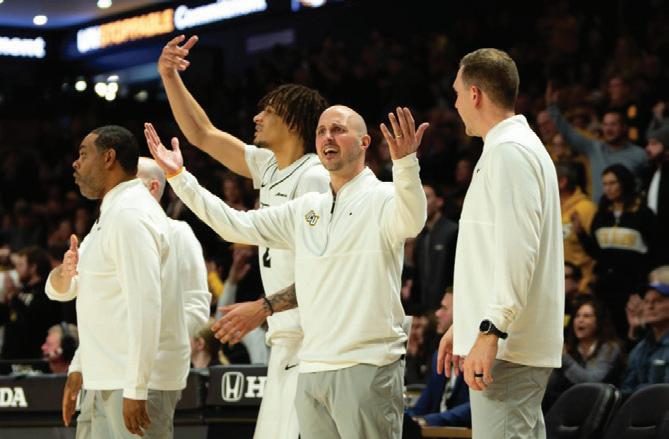
Men’s basketball welcomes one of highest ranked recruiting classes in program history
BEN MARTINDALE Staff Writer
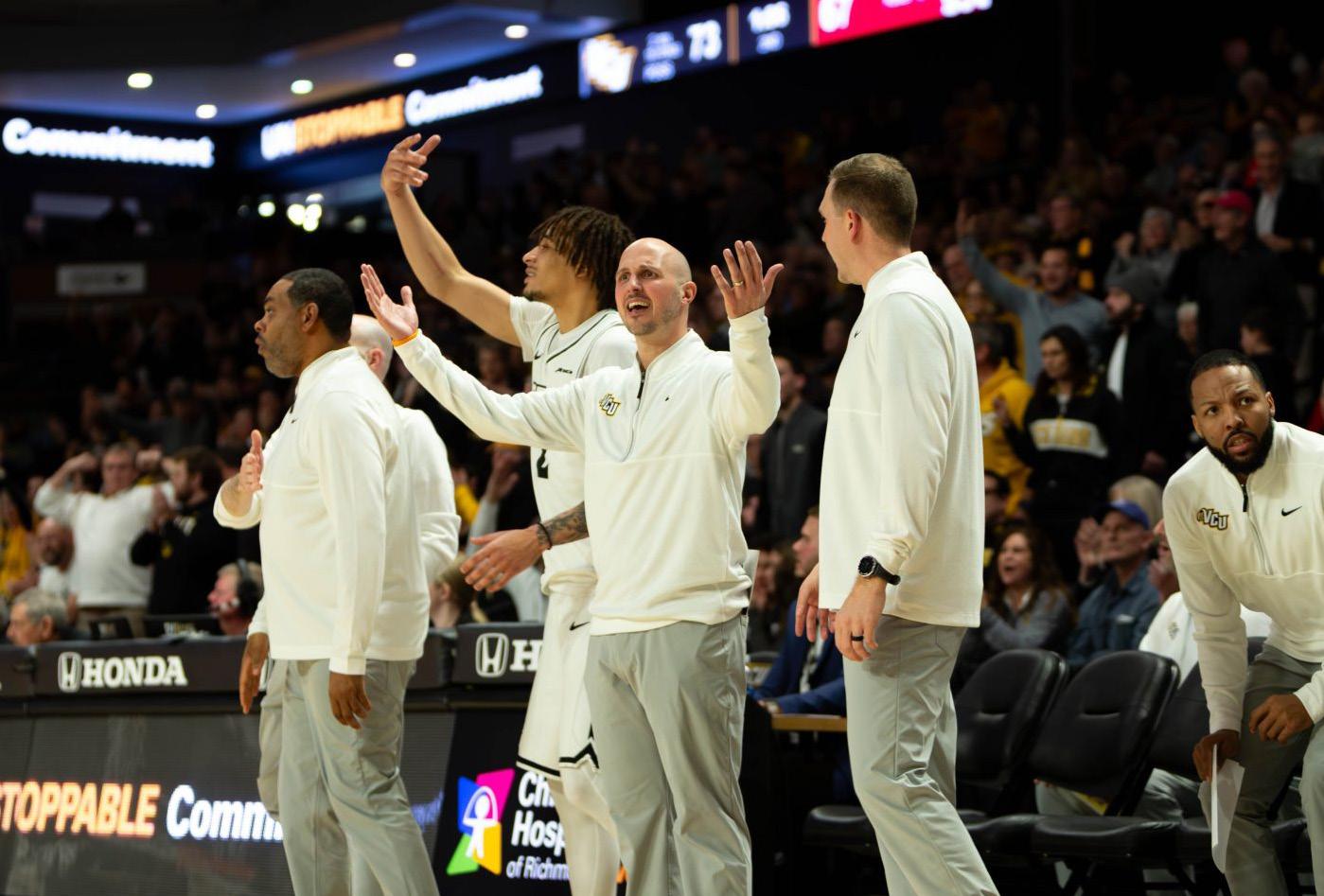
In 2025, VCU head men’s basketball coach Phil Martelli Jr. started his tenure with the Rams by bringing in the No. 46 ranked recruiting class in the country. Now, following a successful first season, Martelli and his staff welcome an exciting group of fresh faces to the fold. Ranked No. 29 in the nation according to Rivals, this year’s incoming class is one to look out for.
Continued on page 6

national: President Donald Trump extended the ceasefire with Iran indefinitely. He said the armistice will be over when peace talks “conclude.”
international: The Earth is currently 2.32 degrees Fahrenheit hotter than during the 1800s.
SAL ORLANDO Assistant News Editor
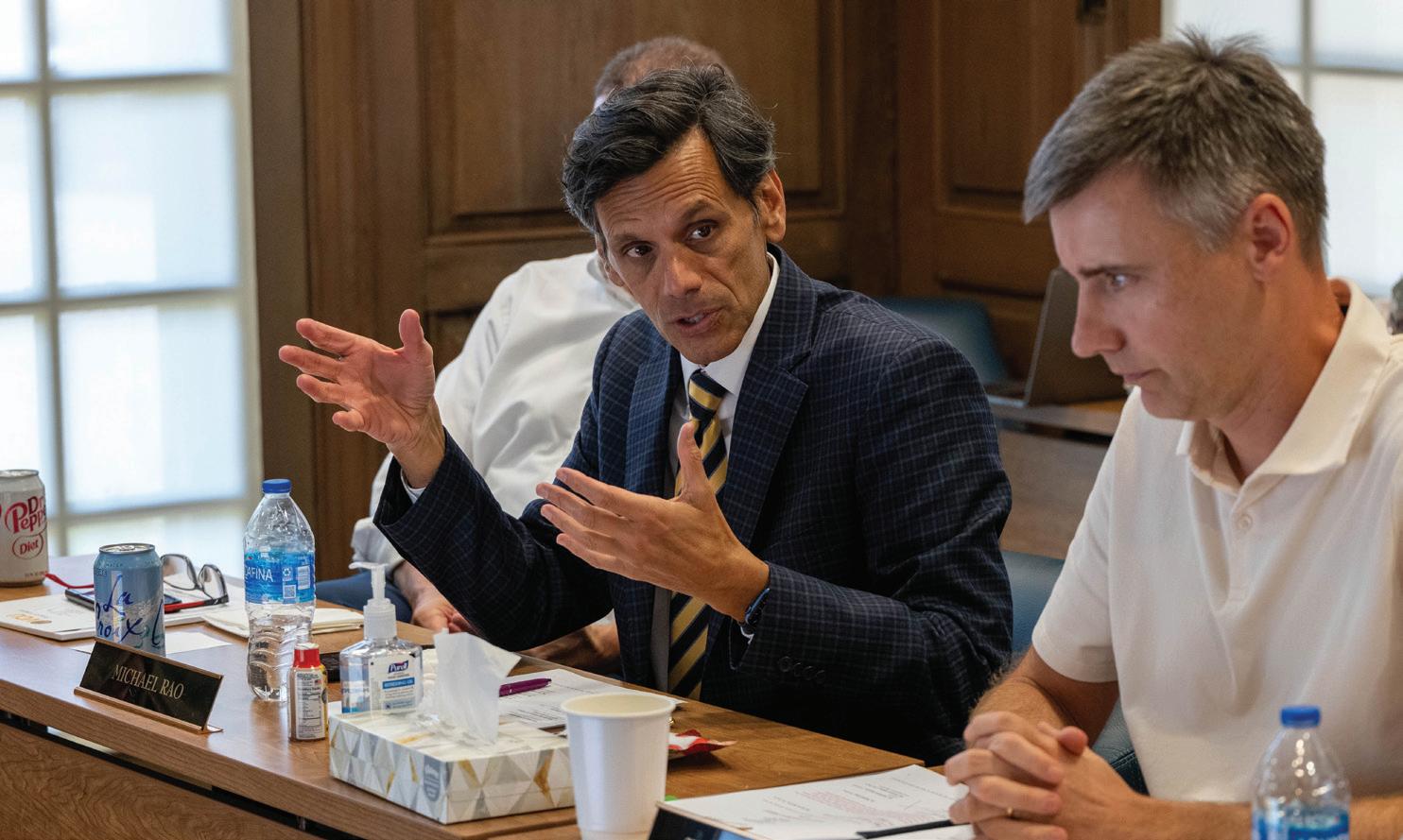
VCU Health System will remove university President Michael Rao as chair of its board of directors as part of leadership changes recently approved by Gov. Abigail Spanberger. Rao will still serve as president of VCU.
The change follows a failed redevelopment plan that cost the health
system nearly $80 million, according to a previous report by The CT.
The VCU Health System Board of Directors governs the academic health system, patient care, teaching and medical research, according to Virginia law. The law previously required the president of VCU to also serve as the chair of the VCU Health board.
The newly signed legislation, patroned by Del. Betsy Carr and Sen. Lamont
HECIEL NIEVES BONILLA News Editor
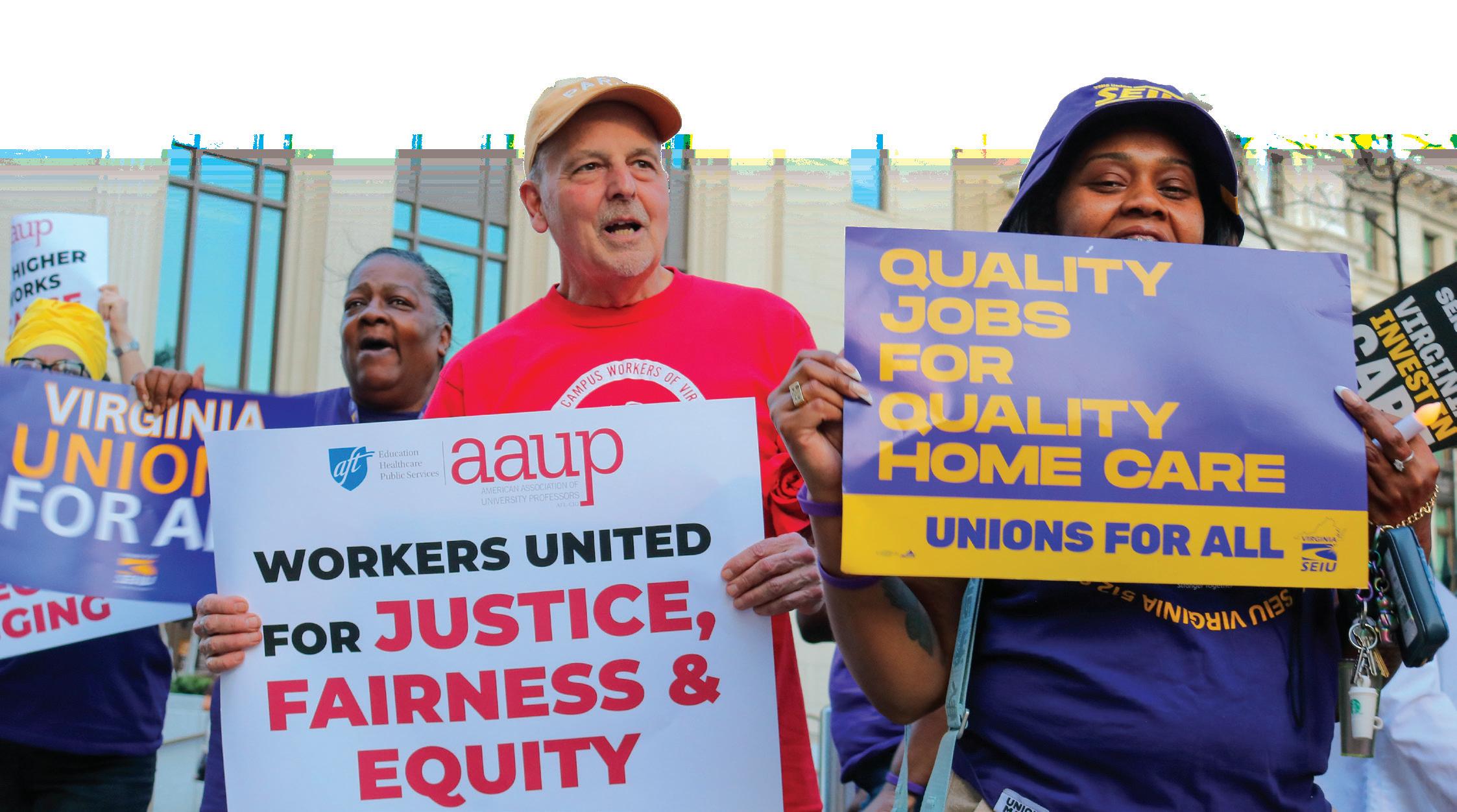
Gov. Abigail Spanberger proposed amendments to dilute the bill repealing Virginia’s ban on collective bargaining for public employees, drawing ire from unions and Democratic lawmakers.
The proposed changes would delay the bill’s implementation for local governments until 2030 and remove the ability for thirdparty mediators to force an agreement through a negotiation process.
Spanberger gave updates on her legislative priorities ranging from data centers to burying utility lines to collective bargaining during a virtual press call on April 14. She spent much of that time defending her decision to recommend delaying the parts of the collective bargaining bill’s implementation.
The governor argued that a Public Employee Relations Board, a state agency the bill would create by 2028 to govern the relationship between public unions and employers, should “lead by example” by only dealing with state workers for the first 18 months to ensure the process works.
“I think that lead time matters, because we’re going to have an entirely new process here in the Commonwealth of Virginia,” Spanberger said. “Bringing in state and local employees across bargaining units, from law enforcement to local employees to teachers to firefighters across every locality in Virginia, for those who might choose to move forward, that is a lot to move all at once.”
Spanberger’s term in office ends in 2030, around the time local government employees would be allowed into the terms of the bill. She defended the correlation
between the two, pointing out Virginia’s unique rule limiting governors to one consecutive term.
“But that doesn’t mean that just because I only have four years as governor that I need to rush things much, much faster,” Spanberger said. “It is about being methodical.”
Another of Spanberger’s amendments removes the possibility for “binding arbitration,” or the power for a third party to mandate an agreement when parties are at an impasse, in this case between an
Bagby, D-Richmond, also reduces the number of members on the board from 21 to 16, lengthens their terms from three to four years and requires an election every other year for the chairman and vice chairman of the board. Bagby is also a member of the board.
The law will take effect starting July 1.
Former Gov. Glenn Youngkin vetoed the same proposal last year, citing “a material and unnecessary shift in the governmental balance of powers, changing the board from a majority of executive appointments to a majority of legislative appointments.”
The vetoed bill included an amendment that certain appointed members would need to demonstrate expertise in finance or commercial real estate, which the recently signed bill does not include.
Youngkin called for Rao to step down as president of MCV following the failed redevelopment deal, stating he wanted someone “with the experience and time commitment” to lead the health system, according to a previous report by The CT.
Rao stated that he is grateful for the evolution of the VCU Health board, and the change in law that no longer requires the VCU president to also be the VCU Health board director.
The proposal had a tumultuous path through the state legislature, according to previous reports by The CT. The version of the legislation that reached Spanberger’s desk excluded many university workers, despite continued calls for their inclusion by state unions within and outside the education system, including the VCU chapter of the United Campus Workers of Virginia.
UCW-VA president Harry Szabo stated the revisions are disappointing and represent a weaker bill than the legislature’s version — which did not include many UCW members.
“Making city and county employees like teachers and firefighters wait another four years to have real collective bargaining
“I believe that our VCU Health board requires a chair who can be 100% devoted to the health system,” Rao stated. “This change makes us similar to our sister institution, UVA, and many other universities with large health systems, where the university president is not required to serve as chair.”
Changes to the board were previously recommended by Virginia’s Joint Legislative Audit and Review Commission in a report on leadership structure following the failure of the Clay Street Project.
VCU Health signed a multi-million dollar lease in 2021 to turn the city’s former Public Safety Building into a 17-story office building for MCV, according to the report. Poor site conditions and rising costs after the Covid-19 pandemic halted the construction and led to VCU Health paying the city $72.9 million to exit the deal, and $5 million to demolish the site, per a previous report by The CT.
The former VCU Health CEO Art Kellerman raised concerns about project risks prior to signing the lease, but Rao had emphasized the importance of obtaining the building, according to the JLARC report.
Kellerman had the authority to decline the lease, but “sought direction from the VCU president.”
VCU Health representatives thanked elected officials for their support in a statement, adding that they “look forward to setting the board of directors up for success in the future.”
is disappointing. Weakening the [Public Employee Relations Board] is disappointing. Public workers in Virginia deserve better than this. Our union is urging the [General Assembly] to reject these amendments.”
Senate Majority Leader Scott Surovell, D-Fairfax, told Virginia Dogwood he was similarly disappointed with the governor’s amendments, including rejecting the power they give the proposed board. Giving the role of defining the terms of collective bargaining to an executive arm and not the state code gives governors unfriendly to labor a “regulatory kill switch” against bargaining, Surovell said.
The General Assembly will reconvene on April 22 to consider
Continued from front page
VCU interim provost Arturo Saavedra proposed a post-tenure review policy in a March faculty senate meeting, according to a previous report by The CT. The proposal was unpopular with faculty who decried its inconsistency with existing policies at VCU.
The policy is open for a public comment period until April 24. Over 270 comments have been submitted so far — the majority of which either disapproved of the changes wholesale or decried the approval schedule and what many deemed to be insufficient faculty input.
Faculty typically go through a cycle of evaluations to receive tenure, culminating in an evaluation every six years thereafter. Tenure generally comes with more permanent employment, more benefits and greater discretion to pursue research.
Post-tenure review would add an additional cyclical review to keep or lose tenure and a “trigger” when professors receive low marks for their performance or are otherwise put on notice by the Provost’s office, which would hold final say on the matter.
Multiple faculty senate members sent a letter to peers in opposition to the proposed policy on April 10. Faculty senators who wrote the letter cited research suggesting negative outcomes for post tenure review policies. They also decried the quick turnaround throughout the rulemaking process.
While the original letter was signed by three faculty senate members, it has since
been shared among several other faculty. It calls on faculty to ask their counterparts on the University Council, a body beneath the board of visitors made up of faculty, staff and students to “unanimously vote “NO.”
During the March meeting, Saavedra stressed the policy was designed to reward faculty for positive performance and it would only negatively affect a small number of faculty members. Over half of the policy was revised following the feedback from faculty senators, according to the Provost’s office.
“VCU’s proposed policy ensures we have a modern framework that supports faculty development and better protects the vital institution of tenure,” stated David Oglethorpe, assistant vice president for academic affairs communications.
The policy was initially introduced in January to be finalized at the Board of Visitors meeting in April, but faculty senators and stakeholders pushed for the timeline to be extended.
The policy is now set to be finalized at the June 4 board meeting, according to the Provost’s office. By that point, Gov. Abigail Spanberger will likely have three more of her own appointees on the board.
VCU’s Provost office sent an email response to faculty on April 21 with a video of Saavedra explaining the proposed policy.
The email stated the proposed policy is not designed to remove tenure, but to “preserve academic freedom,” and that VCU has an existing post-tenure review policy that has not been updated since 2013. It described the change as in-alignment with “other R1 public universities” — linking a website for the policy and its approval timeline.
VCU non-education & general funds and VCU Health System funds.
Nanoscience professor Everett Carpenter told The CT the policy is “absolutely not rewarding.”
Carpenter said the proposal is inconsistent with existing VCU policies and that enforcing it would be a burden.
Carpenter added that faculty members would like to have a meaningful conversation with VCU administration so that the policy can be reworked and the implementation process can be slowed down.
Carpenter also explained that Auburn University implemented a similar post tenure review policy in its 2006-2007 school year to the one VCU is proposing, and later repealed the policy because it became such a burden.
It remained in effect for the 20072008 school year but was repealed by the following year. Auburn University followed a universal post tenure review policy model rather than the “trigger” model VCU is proposing. The universal post tenure review process became inefficient and expensive, according to the Auburn University Provost’s office.
Suzanne Makarem, an associate professor of marketing and faculty senator, is also opposed.
“The Provost’s office developed this new post-tenure review policy without meaningful faculty input, in direct conflict with VCU’s own shared governance principles and policy development requirements,” Makarem stated.
Makarem listed a number of ways the policy could negatively affect faculty if implemented, including damaging faculty recruitment and retention, placing
women and underrepresented faculty at disproportionate risk and correlating with worse student graduation rates. She stated that the policy does not have an evidencebased reason for its implementation.
Those with a VCU login can view all 270 comments on the proposed policy at https://faculty.provost.vcu.edu/ptr/posttenure-review/
The VCU Board of Visitors will consider approving a new memorial for the East Marshall Street Well Project as part of the university’s efforts to recognize those whose bodies were posthumously stolen by what is now the VCU School of Medicine.
The board will consider the over $3 million project during meetings on March 23 and 24, according to their agenda.
Plans are for the structure to be built between the Kontos Building and Egyptian Building on the MCV campus, near the location of the well where at least 44 adults and nine children, primarily of African descent, were found during a 1994 construction project.
The bodies were initially robbed from their graves by the former Medical Department of Hampden-Sydney College between 1848 and 1860.
The memorial is a part of the East Marshall Street Well Project, an initiative by VCU to ensure the remains of the victims receive appropriate study, memorialization and reburial. It would be funded by MCV Foundation support,
If approved, the project will be another of the 17 recommendations made by the project’s planning committee in 2018. The completed recommendations include the returning of the ancestral remains to Richmond, the establishment of the Implementation Committees in 2019 and the Kontos Building memorialization panel’s unveilment in 2021.
African-American Studies Department chair Shawn Utsey stated he is happy the project is moving forward.
“The designs are appropriate and will give voice to those formerly enslaved and free African Americans whose bodies were stolen in the name of science,” Utsey stated.
As for further steps, Utsey pointed to the existence of other remains used for similar purposes that were never recovered from their respective trash pits. He wants the university to address the issue and “do right by the community that has done so much for it.”
“We cannot rest until all of our ancestors are freed from the wells at the bottom of MCV’s campus,” Utsey stated.
The Provost’s office developed this new post-tenure review policy without meaningful faculty input, in direct conflict with VCU’s own shared governance principles and policy development requirements.”
Suzanne Makarem associate professor


ANDREW KERLEY Executive Editor
The VCU Board of Visitors will vote this week on whether to create two new STEM degrees and discontinue the bachelor of science in health and physical education.
The proposed degrees are a master of science in pharmaceutical engineering and a bachelor of science in public health.
The proposals have already been approved by the University Undergraduate Curriculum Committee, University Committee on Academic Affairs, University Council and the President’s Cabinet. If passed by the board of visitors
they would be targeted for implementation in 2027.
The master of science in pharmaceutical engineering would be jointly administered by the College of Engineering and the School of Pharmacy — the first of its kind for Virginia universities, according to the board’s agenda.
The program is meant to prepare students in health sciences that lead to therapeutic drug discovery, development and manufacturing — supporting local pharmaceutical industry needs.
would teach the discipline.
The bachelor of science in public health will be a new undergraduate option for its school — which currently only has masters, graduate and Ph.D programs listed on its website.
The program is meant to develop experts in the health needs and concerns of populations, including disease prevention. Students would learn the legal, ethical, policy and regulatory aspects of health — preparing them for entry-level roles in communities and government agencies.
allocated money for — as well as two staff for advising and student services.
Data from the Bureau of Labor Statistics shows growing needs for both professions.
As for the bachelor of science in health and physical education, enrollment has not been high enough to sustain the program, documents show. It has only averaged 13 students per year, and has no full-time faculty teaching its core classes.
A teach-out plan is in place for the seven students currently enrolled in the program, all of whom are expected to graduate

ANDREW KERLEY
Executive Editor
The people of Virginia voted on Tuesday to pass the mid-decade redistricting amendment by a nearly three point margin — allowing the General Assembly to redraw Congressional district lines in a way that favors Democrats 10-1.
Virginia’s redistricting referendum was set up by Democrats, in their words, as a measure to fight President Donald Trump and his pressures to redistrict in other states to favor Republicans.
With the proposal’s passage, Virginia has a new Congressional map that will take effect immediately — opening the door for Democratic challengers in previously-solid red districts across the commonwealth.
Democrats spent over $64 million and Republicans spent over $21 million trying to swing the results in their favor, according to the Virginia Public Access Project. Over 3 million people voted in the referendum.
Alyssa Morris, a first-year art foundation student, voted “yes” on the referendum because even though people have called the new map “gerrymandered,” Republicans are guilty of doing the same in other states.
“We may as well try to do that too, level out the playing field,” Morris said.
Alex Keena, an associate professor who studies political representation and elections, stated that, under the new map, voters will not have much of an effect on the outcome of the general election in any of the districts, except for Va-02, so the Democratic primary elections will be the only way for voters to influence who wins.
The condensed primary timeline set up by redistricting presents an extraordinary challenge for younger and first-time candidates, Keena explained.
“Typically, candidates get at least a year after redistricting to learn the new districts and prepare their ground game,” Keena said. “This year, candidates only have a couple of months. This dynamic gives well-funded candidates a huge advantage in the primary elections because it will allow them to organize, adapt to the new district boundaries, and build a campaign much more efficiently than candidates who are not as well connected with party insiders and wealthy donors.”
The reshaped map also allows Northern Virginia and its influence to “dominate,” according to Keena.
“This presents a unique opportunity for the wealthy to ‘buy’ members of Congress,” Keena said. “I expect money to pour in from out-of-state from all sorts of monied interests in an attempt to get their favored candidates elected. I also expect dark money to continue to flow into Virginia through the primary election. This has the potential to divide the Democratic Party in advance of 2028.”
Brian Cannon is a leader of the advocacy group No Gerrymandering Virginia who helped pass the constitutional amendment that established the
bipartisan redistricting commission system the state has used for the last five years. Cannon said the measure weakens Virginia’s democratic norms and “screws over” rural voters.
“It’s gonna make it look silly in the end,” Cannon said. “The reality is that these extra few seats will not matter in the national blue wave that’s coming. People are tired of Trump.”
The Democratic and Republican primaries for Virginia’s 11 Congressional districts will be held on August 4. The general election is on Nov. 3.

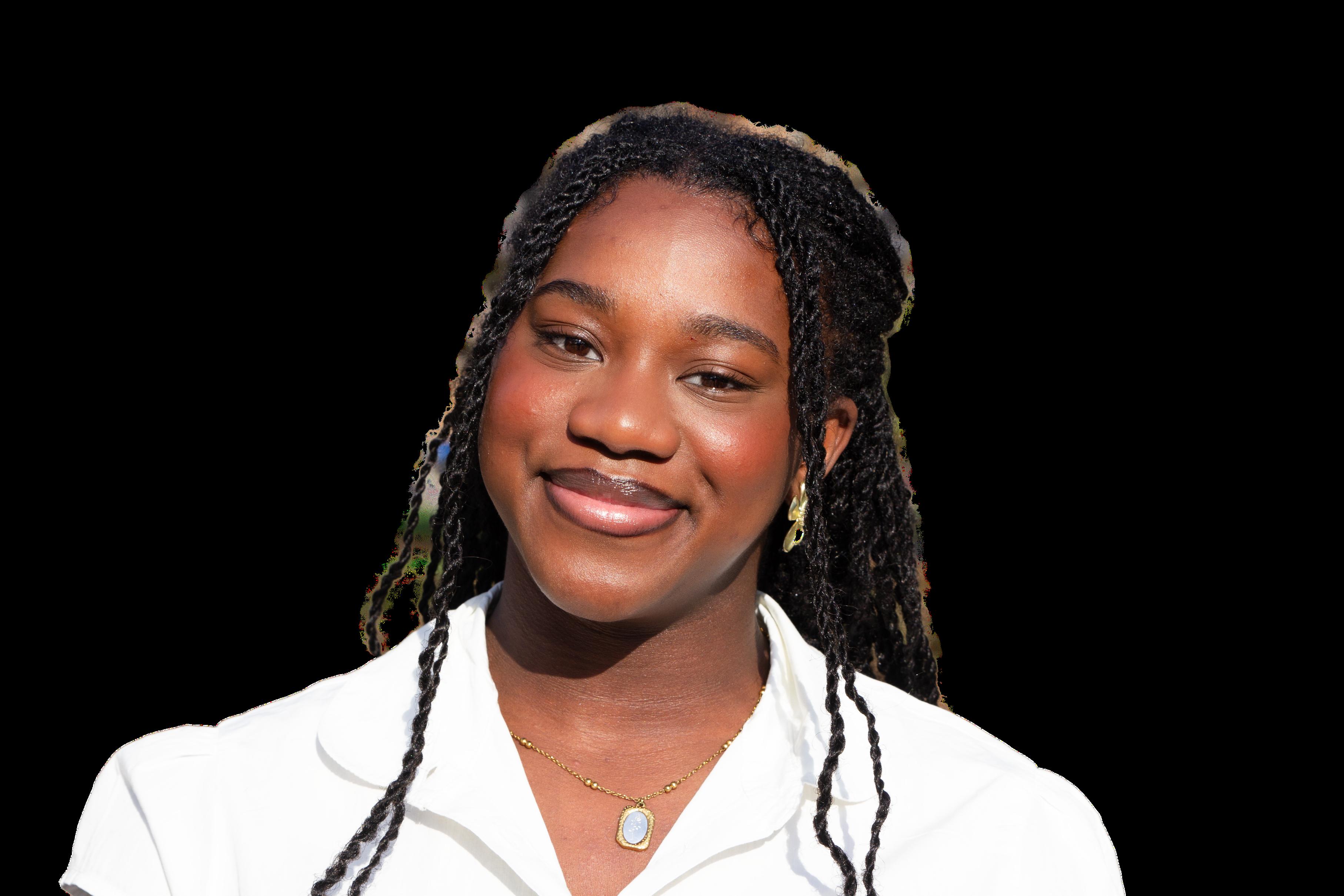
S T U D E N T S T A F F S P O T L I G H T A L E X I S A L B R I G H T


Job Position: Resident Assistant Year: Junior Major: Nursing A l e x i
i

A l e x i s b r i n g s a s e n s e o f p o s i t i v i t y a n d w a r m t h t o e v e r y
i n t e r a c t i o n , e v e n w h i l e b a l a n c i n g t h e d e m a n d s o f h e r
c l a s s e s a n d r e s p o n s i b i l i t i e s . A l e x i s h e l p s c r e a t e a
s u p p o r t i v e a n d w e l c o m i n g c o m m u n i t y , s e t t i n g a
s t r o n g e x a m p l e f o r h e r p e e r s t h r o u g h h e r e v e r y d a y
a c t i o n s . W e ’ r e g r a t e f u l f o r t h e e n e r g y a n d c o m p a s s i o n
s h e b r i n g s t o o u r t e a m a n d t h e V C U c o m m u n i t y .
APRIL 2026
JENNY ALLEN Staff Writer
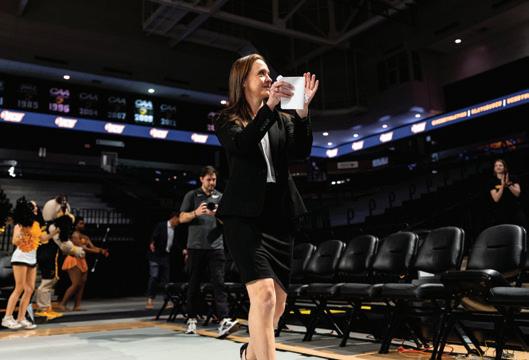
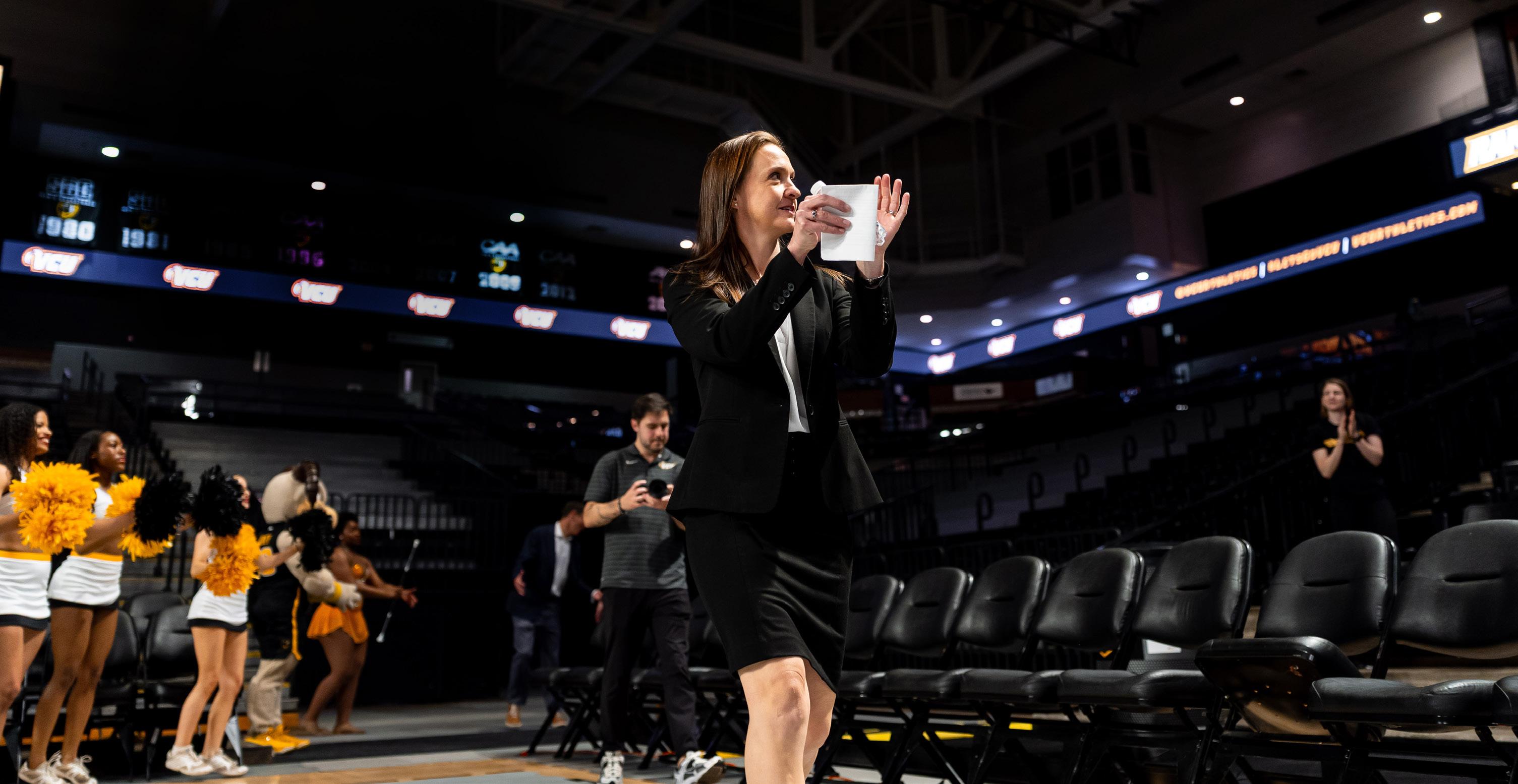
New VCU women’s basketball head coach Chelsea Banbury joined the Rams just in time to begin recruiting for the transfer portal — which opened on April 6 and remained open until April 20.
After ending the 2025-2026 season with an unfortunate 8-23 record, Rams key fourth-year redshirt guard Mary-Anna Asare entered the portal, according to The IX Sports.
Asare is looking for a final season elsewhere after being approved for a medical redshirt.
Despite Asare’s injury last season, her prior performances proved her crucial contributions on offense and defense.
During Asare’s third year, she was named to the All-Atlantic 10 Second team and led the Rams with 16.0 points per game, scoring double digits in 25 out of 30 games played, according to VCU Athletics. Her skills went beyond scoring as she averaged 4.2 rebounds, 2.7 assists and 1.7 steals per game.
The day of the portal’s closing, Asare announced her official commitment to the University of Virginia where she will complete her final year of eligibility. The loss of Asare is significant to the Rams, however their prior season without her gave them the opportunity to excel on their own.
The 6-foot-7-inch redshirt thirdyear forward Hawa Doumbouya also announced her entrance to the portal. The loss of Doumbouya takes away the Rams’ tallest player, leaving their height advantage behind.
Finally, the Rams lost guard Ty Williams and forwards Makennah White and Tanya Tkachenko due to eligibility.
Aside from Asare and Doumbouya, no other players announced their intention to enter the portal, giving the Rams eight returning players, according to Ram Nation.
The Rams have optimism from three current incoming recruits: Alexis Riggs,
Gianel Quist and Nicole Torresani, allowing Banbury the opportunity to grow with a young team.
The 6-foot forward, Riggs attends Mt. Zion Prep Academy which has given her the experience of competing at high-levels, preparing her for the collegiate level.
SPIRE Academy 6-foot-2-inch forward Quist will give the Rams the opportunity to regain their height advantage with the loss of Doumbouya.
Torresani is a 5-foot-10-inch player for the Italian International Basketball Federation giving her the chance to elevate the Rams team, according to FIBA.
She was a part of the FIBA U18 Women’s EuroBasket and FIBA U17 Women’s Basketball World Cup in 2024 and was recently a part of the FIBA U18 Women’s EuroBasket in 2025.
The Rams also gained Lexi Flemming and Macy Spencer from the portal.
Flemming is a 5-foot-4-inch guard who formerly played at Bowling Green University and High Point University where she has stacked up over 1,000 career points, according to HPU. She was named to the All-Mid Atlantic Conference Third Team in the 2024-2025 season before facing an injury in the 2025-2026 season. Spencer, a 5-foot-8-inch guard, also attended HPU where she was named Big South Player of the Year and Big South Newcomer of the Year in the 2025-2026 season, according to HPU.
She also earned Big South Player of the Week four times in the 2025-2026 season and was named to the Big South First AllConference Team and the Big South AllTournament Team.
The newly committed Rams give the possibility for the team to grow and learn its strong suits under the fresh leadership of Banbury.
Men’s basketball welcomes one of highest ranked recruiting classes in program history
Continued from front page
Blake Harper is a 6-foot-7-inch thirdyear guard with huge upside. In his first year, playing at Howard University, he became the first Mid-Easter Athletic Conference player to win rookie of the year and player of the year in the same season.
Harper is a proven scorer, averaging just shy of 20 points per game at Howard, making him a welcome addition to an already talented Rams backcourt. The third-year guard is coming off of a less productive season at Creighton University in which he averaged 7.7 points per game.
Torey Alston is a third-year forward who boasts a lengthy 6-foot-8-inch frame and has exciting two-way potential. Alston averaged an impressive 13 points and eight rebounds last season at Middle Tennessee State. His highlight reel is littered with emphatic rejections that will compliment an already aggressive VCU defense. Alston showed improvement throughout last season, especially on the offensive end of the floor. As the season progressed Alston became more and more aggressive offensively, scoring in double figures in 11 of 13 games to close out the season. His efficient brand of scoring will fit in nicely with a VCU team that values taking good shots.
Sammy Jackson
As a top 70 player in his class and four-star recruit, Sammy Jackson had offers to play at SEC, Big 10, ACC and Big 12 schools but decided early on in the recruiting process that VCU was the place for him. Jackson was guided through the recruiting process by his father, former NBA player Marc Jackson.
Jackson is a 6-foot-6-inch wing with a tight handle and silky smooth jumper that can score with ease. According to 247 Sports’ ranking system, Jackson is the fifthbest prospect in VCU program history.
Collin Ross
Collin Ross is a 6-foot-10-inch forward who played his high school ball at SPIRE Academy. Ross boasts a pro-sized frame coupled with elite athleticism that enables him to be effective on both ends of the floor. Ross has been touted as one of the best two-way players in his class and fits right in with the type of athletic defender Martelli has utilized so effectively. The upside is huge for Ross who figures to have an opportunity to make an immediate impact for the Rams.
Terrence Hill Jr.
Losing second-year guard Terrence Hill Jr. is a huge blow for a VCU team that relied heavily on his talent down the stretch of last season. The 6-foot-3inch guard truly came into his own last season, showing legitimate NBA talent and proving himself to be one of the best bench scorers in all of college basketball.
Hill, who signed with the University of Tennessee, will always be remembered by VCU fans for his iconic game winning three against the University of North Carolina in the 2026 NCAA tournament.
Christian Fermin
Christian Fermin played four seasons at VCU and started every game during the Rams’ 2023-2024 season. Fermin is an excellent shot blocker who averaged 1.2 blocks per game during his VCU career. Fermin’s 2025-2026 season was cut short due to personal reasons, resulting in him appearing in just four games. Fermin always got a big pop from the VCU crowd when he entered the game and will be missed by the fans.
Keyshawn Mitchell
Electing to follow coach Martelli from Bryant following the 2024-2025 season, Mitchell struggled to see meaningful minutes, playing 10 per game, half of his average the season prior. At six feet and 11 inches, Mitchell boasts an imposing frame and still has lots of potential on both ends of the floor if he can find the right system.
Obinnaya Okafor
Initially a walk-on, Okafor earned a scholarship from VCU prior to the 20232024 season. Unfortunately for Okafor, injuries sidelined him for the entire 20232024 season and he has been unable to work his way into the VCU lineup since.
Jordann Dumont
6-foot-8-inch Jordann Dumont came to VCU after spending a season at Villanova. While initially an exciting prospect for

the Rams, Dumont failed to make a meaningful impact, playing a total of just 16 minutes over the course of the 20252026 season.
Nyk Lewis
Following an outstanding freshman season, first-year guard Nyk Lewis earned Atlantic 10 rookie of the year honors. The athletic floor general will look to build on his early success and cement his status as one of the best young guards in the country.
Lazar Djokovic
Third-year forward Lazar Djokovic was a mainstay in the starting lineup last season, delivering in big moments time and time again. Retaining the 6-foot-11-inch forward is a big win for the Rams — whose roster has gotten smaller with the losses of Fermin and Mitchell.
Brandon Jennings
Reeling from the loss of star guard Terrence Hill Jr, VCU will need to rely on other players to run the show. Brandon Jennings, who will be entering his third year at VCU, is prepped and ready to do just that after stepping into the starting role last season.
Jennings, a Richmond native and fan favorite, showed noticeable improvement across the board last season, boosting his scoring average from 2.7 points per game to 8.5 points per game on an elite 43 percent from three point range.
Ahmed Nowell
Second-year guard Ahmed Nowell was the picture of reliability last season for the Rams. Taking pressure off of Terrence Hill Jr. in the backcourt, Nowell proved to be a capable scorer on and off the ball. Nowell averaged 4.5 points per game and shot 41 percent from behind the arc last season.
DREW
THOMPSON Sports Editor
The Rams got swept in the weekend series to George Washington University, losing 4-3, 8-7 and getting dominated 9-3 in game three.
Graduate student pitcher Everett Vaughn was credited with the game three loss after 1.2 innings pitched, four hits, three earned runs, four walks and a strikeout.
Third-year infielder Trent Adelman and redshirt first-year infielder Alec Warden both had the only multi-hit performances for the Rams in the game three loss.
Third-year infielder Nate Kirkpatrick and redshirt third-year utility Quinn Maher both had good games despite the game two loss. Maher drove in a careerhigh four runs.
Redshirt fourth-year pitcher Patrick Stietz started game one strong for the Rams, but the game broke open after he was relieved.
VCU lost 4-3 to GW on Friday to start a three game series, falling back to earth after its upset win over the University of Virginia earlier this week.
Neither team made much of an impact in the first inning, with both sides failing to get a hit.
VCU cruised through the top of the second despite redshirt fourth-year pitcher Elias Holbert hitting two batters.
The Rams started the bottom of the second with a lead-off double from thirdyear infielder Nate Kirkpatrick. Graduate student catcher Teige Lethert followed up with an RBI double to score VCU’s first run of the game.
The third inning came and went without much action. VCU’s Holbert walked two batters before a double-play brought in the Rams hitters. However, VCU went out three up, three down.
Holbert walked two more batters in the top of the top of the fourth, but VCU escaped the inning again without giving up a hit or a run. The Rams came into the bottom of the fourth looking to capitalize on the good defensive play, but once again went three up three down.
George Washington upended VCU in the top of the fifth after the Rams brought in third-year pitcher Caleb Clover. The Revolutionaries doubled, before the baserunner got home on a fielding error. Another double sent a second baserunner home to give GW a 2-1 lead.
VCU responded with a lead-off double from Warden, but Warden got picked off at second. The Rams could not move forward from there, going into the sixth still down one.
Both the sixth and seventh inning came-and-went with little action. VCU got a runner in scoring position in the seventh but failed to tie the game.
George Washington scored two more runs
Michael Belle
Michael Belle will return to VCU following the most productive year of his college career. The third-year guard/ forward averaged 7.3 points per game and 5 rebounds per game in 22 minutes per game, all career highs. More than the stats, Belle was a sparkplug off the bench and brought a winning mentality to each possession, both offensively and defensively.
Jordan Tillery
First-year guard Jordan Tillery is coming off of a quiet freshman season that saw him appear in 12 games and average seven minutes per contest in those appearances. Tillery, an athletic 6-foot5-inch guard that can get downhill in a hurry, still has boatloads of potential and will figure to get plenty of chances to prove himself over the course of the coming season.
Third-year guard Tyrell Ward, who transferred from LSU prior to the 20252026 season, was an excellent pickup for VCU and an important piece in winning the A-10 tournament. The athletic guard averaged 5.7 points per game off the bench and brought energy and intensity to every possession on both ends of the floor.
WOMEN’S TENNIS VS. DUQUESNE UNIVERSITY WON 4-0
MEN’S TENNIS VS. DUQUESNE UNIVERSITY WON 4-1
BASEBALL VS. GEORGE WASHINGTON UNIVERSITY LOST 3-4
in the top of the eighth off of RBI singles.
VCU brought in third-year pitcher Brody Leyboldt, who put a runner in scoring position off a wild pitch before getting immediately replaced by secondyear pitcher Cooper Campbell.
Campbell gave up the second RBI single of the inning, giving GW a 4-1 lead.
VCU answered back with an RBI double from third-year outfielder Michael Petite and an RBI single from Kirkpatrick, bringing the lead back to 4-3.
The Rams ran through three Revolutionary batters to start the top of the ninth, giving VCU the chance to tie or walk-off the game in the bottom of the ninth.
The first two VCU batters struck out and grounded out to start the ninth, before graduate student utility Dante DeFranco was hit by a pitch. DeFranco then stole second, putting a runner in scoring position for VCU.
Second-year catcher Jacob Lee stepped up with a chance to give VCU the game, but struck out swinging to dash the Rams’ rally, 4-3.
Kirkpatrick led the Rams, going 2-2 with a double and an RBI. Clover took the pitching loss — his second on the season.
VCU is now 22-16 on the season and 11-6 in the Atlantic 10.
VCU lost again on Tuesday to Virginia Tech, 8-6.
WOMEN’S TENNIS VS. SAINT JOSEPH’S UNIVERSITY WON 4-0
MEN’S TENNIS VS. SAINT JOSEPH’S UNIVERSITYY WON 4-0
LACROSSE VS. SAINT JOSEPH’S UNIVERSITY WON 16-15
BASEBALL VS. GEORGE WASHINGTON UNIVERSITY LOST 7-8
19
BASEBALL VS. GEORGE WASHINGTON UNIVERSITY LOST 3-9


KARA HAAS
Contributing Writer
VCUarts fashion design and merchandising students will display their works in the theme of “Synergy” at their annual student-run fashion show at the Virginia Museum of Fine Arts on April 28.
“Synergy” conjures up movement, according to Kimberly Guthrie, associate professor and chair of the department.
“The synergy that we’re focusing on is if we have the tracks between merchandising and design come together and make synergy,” Guthrie said.
Design students are focusing on fabric and textiles in their garments. When designing, each student composes a own

story within them, Guthrie said.
“Young designers are able to start developing a design point of view or design ethos,” Guthrie said. “Inspiration can come from a fabric, a technique or a cultural moment, and then that inspiration is what starts the story.”
Guthrie mentioned multiple fashion classes are involved such as a tailoring course, where students explored different pants designs. In the senior level course, they focus on the shapes and details of pants.
Other classes include “Mixteco,” focusing on indigenous craft. There is also a zerowaste collection where the dresses are made from pieces of waste fabric.
Students in the “CLO3D” course create designs on an online avatar and translate
them into production patterns.
Fashion students feel a moment of the show that will leave an impression is “the flood,” where all students involved — in front and behind the scenes — celebrate the final product.
“The flood” displays the emotions of all the students who worked together for months putting the show together, according to fourth-year fashion merchandising student Haley Faison, who is the back of house director.
Kalani Coleman, another fourth-year fashion merchandising student and front of house director, agreed.
“It allows us to not only share who’s behind the scenes and who’s creating the show but also showing that we all have a
connection,” Coleman said.
The audience can expect a surprise in the beginning of the show, the details of which are still under wraps.
“We do a decent job of doing something that kind of pulls you into the show to begin with,” said Greyson Foster, another front of house director.
Julia Karns, a fourth-year fashion merchandising student and the editor-inchief of student-run publication River City Fashion, said a previous event she attended as a first-year deeply impacted her future.
“I hope that students who are underclassmen come to watch the show and have the same inspiration that I felt afterwards, feel inspired and have pride in our school and department,” Karns said.
art and the space. It is located at 1309 Hull Street Rd, and will be on display from Apr. 10 - May 10 according to their instagram.
As spring settles in and the city starts to warm up, Richmond’s art scene is stepping into the spotlight. From major museum exhibitions to intimate gallery shows and pop-up experiences, there is no shortage of creativity to explore across the city.
WANDER THROUGH WORLD CLASS COLLECTIONS AT THE VIRGINIA MUSEUM OF FINE ARTS
Constantly changing, the VMFA hosts several exhibitions at a time — from African and Indigenous art to portraits of Richmond’s historic Jackson Ward. Current highlights include “Frida: Beyond the Myth,” a major exhibition exploring the life and work of Frida Kahlo, alongside photography exhibitions like “Nothing Gold Can Stay,” which reflects on childhood through a series of striking images. Visitors can find out more about each exhibition on the museum’s website.
EXPERIENCE RAW LOCAL VOICES AT SOUTHSIDE CONTEMPORARY ART GALLERY
The exhibition “keep it 1000” brings the authentic energy of nine emerging artists to Richmond’s Southside. Featuring contemporary art, priced reasonably for newer collectors, the show emphasizes intentionality and community in its work.
The gallery offers a more intimate setting where visitors can connect closely with the
EXPLORE ACTIVISM THROUGH ART AT GALLERY5
Gallery5’s exhibition “Richmond Resistance” highlights socially engaged artwork that reflects on the history of activism, identity and community in Richmond. Visitors can expect thought-provoking pieces across a range of mediums, including documentary photography from protests and punk shows, archival materials like zines and flyers, and mixed-media works using found objects tied to the city’s DIY culture. Community-sourced artifacts and personal narratives add another layer, showing how everyday Richmonders have shaped movements for change. The gallery is located at 200 W Marshall St. and more can be found on their website.
SUPPORT EMERGING ARTISTS AT VISUAL ARTS CENTER OF RICHMOND
VisArts’ Collector’s Night celebrates 40 years as Richmond’s longest running annual art auction. The evening hosts a cocktail reception with the opportunity to connect with fellow art enthusiasts, the auction featuring work from students, local artists and professionals alike. Visitors can expect a mix of mediums and styles all under one roof May 2, at 1812 W Main St. Guests can purchase tickets starting at $175 on their website.
STEP INTO AN INTIMATE SHOW AT ANNE’S VITAL ART STUDIO GALLERY
“The Lost Weekend” at Anne’s Visual Art Studio offers a smaller, more personal exhibition experience. Only on display for two days, the gallery’s cozy setting allows visitors to slow down and engage deeply with the striking black-and-white photography of May Pang. Her exhibition displays candid photos of John Lennon and Yoko Ono, whom she used to work for as a personal assistant. The gallery is located at 208 W Broad St and will be shown Apr. 21-22 from 1-7 p.m.
BROWSE CURATED WORKS AT QUIRK GALLERY
Quirk Gallery’s exhibition “Hand Picked” showcases a carefully curated selection of brooches from Nikki Couppee, an artist who has worked with the gallery in the past. It was created in collaboration with the botanical exhibition, a display of art showcasing the five years spent working, learning and studying flowers alongside Virginia flowers. The exhibition will be presented at the Quirk by Anne Blackwell Thompson from Apr. 2 - May. 2 .C ouppee designed her work to be “rooted in spring and blooms,” according to gallery manager Erin Bannan. Visitors can also explore the connected shop for unique finds while taking in the displays. The gallery is located at 207 W Broad St, and anyone interested in buying the art can do so on their website.
It was split into 12 unique guilds, all specializing in a historical craft. In the absence of monarchy, guilds rely on the existence of one another.
It was important to focus on all aspects of the Renaissance time period and the cultural exchanges taking place, not just Europe, according to Ash Moore, managing director of Virago Alley. They were inspired by the exchanges that took place on the Silk Road.
“Taking that approach was important to us,” Moore said. “The way that we’re shifting the focus towards the everyday people. Most Renaissance faires follow the storylines of nobility and figures who were in a higher class system and we’re choosing to focus in on the artists and the tradesmen of the era.”
As the faire came together, Moore noticed the way the different grassroots organizations, or guilds, supported each other — making the Richmond Ren Faire what it was.
“I always joke that the real renaissance is the community building that we see behind the scenes,” Moore said. “I’ve watched this event come together and I’ve watched people come together from various communities and they’re really building something. I think that’s what’s so special about all of this — it’s inspiring in a lot of various ways.”
Preparations for the festival have been in motion for over a year. Festivities kicked off on March 7, 2025, with the “Richmond Renaissance Faire: A Fundraising Kick Off.”
During the fundraiser, a sword was forged by Join or Die Knives of the Iron and Steel Guild. The sword was carefully crafted to be auctioned off with the proceeds going toward the greater faire. The winner of the auction was announced on Sunday, and soon after, a new sword was forged for next year’s faire.
The full scale of the event was much larger than what anyone imagined, according to Bizhan Khodabandeh — who wears many hats, or helms, as vice president of Virago Alley’s board of directors, one of their Historical European Martial Arts instructors, an assistant professor at VCU’s Robertson School of Communication and Robinson’s spouse.
“We kind of started out with this doing a Ren Faire-themed art exhibition at Gallery5 and as soon as we posted the Ren Faire logo, it went bananas,” Khodabandeh said. “We ended up doing other events leading up to this to kind of test the waters, to kind of get some organizational things down cause we’ve never done anything like this before and then finally led up to this one.”
Virago Alley hosted “Warriors in Bloom” at Agecroft Hall, a screening of “The Princess Bride,” at the Byrd Theatre and a handful of other gatherings with local businesses that saw to the completion of Richmond Ren Faire.

Many historians came to share old trade knowledge with the ren faire folk. The Illuminators and Scribe Guild gave demonstrations on how ink was once made and how script was once written. The Combat Guild showed festival-goers how to historically defend and disarm with honor.
Henrico Parks and Recreation shared the secrets of the spindle — using wool from Henrico County sheep, looking to give people a hands-on history lesson, according to their history programmer Kara DiComa.
DiComa admires the mission of the Richmond Ren Faire to shift focus to the tradesmen of the time and give space to tell their history.
“Within history, a lot of times what is
Cathy enjoys the craftsmanship of everyday objects — finding beauty in belongings that can be used for a lifetime. The couple prides themselves in never making the same spoon or broom twice, taking their time and enjoying their retirement together as artisans.
“We’re thrilled as vendors, in what we’ve sold, but I had no idea it would be this much fun,” Cathy said. “People are so nice and I love the inclusivity of it all. When we came on Friday we felt like ‘oh my gosh, we are the oldest, whitest, square-ist, straightest — we’re just like grandparents,’ and we have felt like anything but that. We just feel like, it sounds so corny, but
connected with one another during a rainfilled Sunday morning. They rejoiced as the sun made an appearance that afternoon, giving way to a picturesque sky and the perfect weather.
Holy River Music and EarthFolkRVA played the last song of the Richmond Ren Faire. While fair maidens, monks, wizards, knights, fae and all other fantastical creatures circled the stage — creating a jubilant ending to a festival that will forever be remembered in RVA’s story.
A fair maiden on horseback from Debracey

Maymont’s annual plant sale Herbs Galore returns this Saturday! Get a ticket and set your alarms to get there at 8 a.m. sharp with your wagon ready to load up on new additions to your garden (or fire escape).
MAEVE BAUER
Spectrum Editor
The VCU School of Social Work Radical Alliance for Anti-Racism, Change and Equity, or R.A.A.C.E., was formed in 2020. Their mission is to address the racial injustices that exist in the field of social work, in the past and today.
It is a focus of RAACE to level the playing field of academia, according to Lisa Borntrager, Ph.D. student and cochair of R.A.A.C.E. They hope that the organization can bring about a more diverse and equitable environment.
CHECK YOUR BIAS
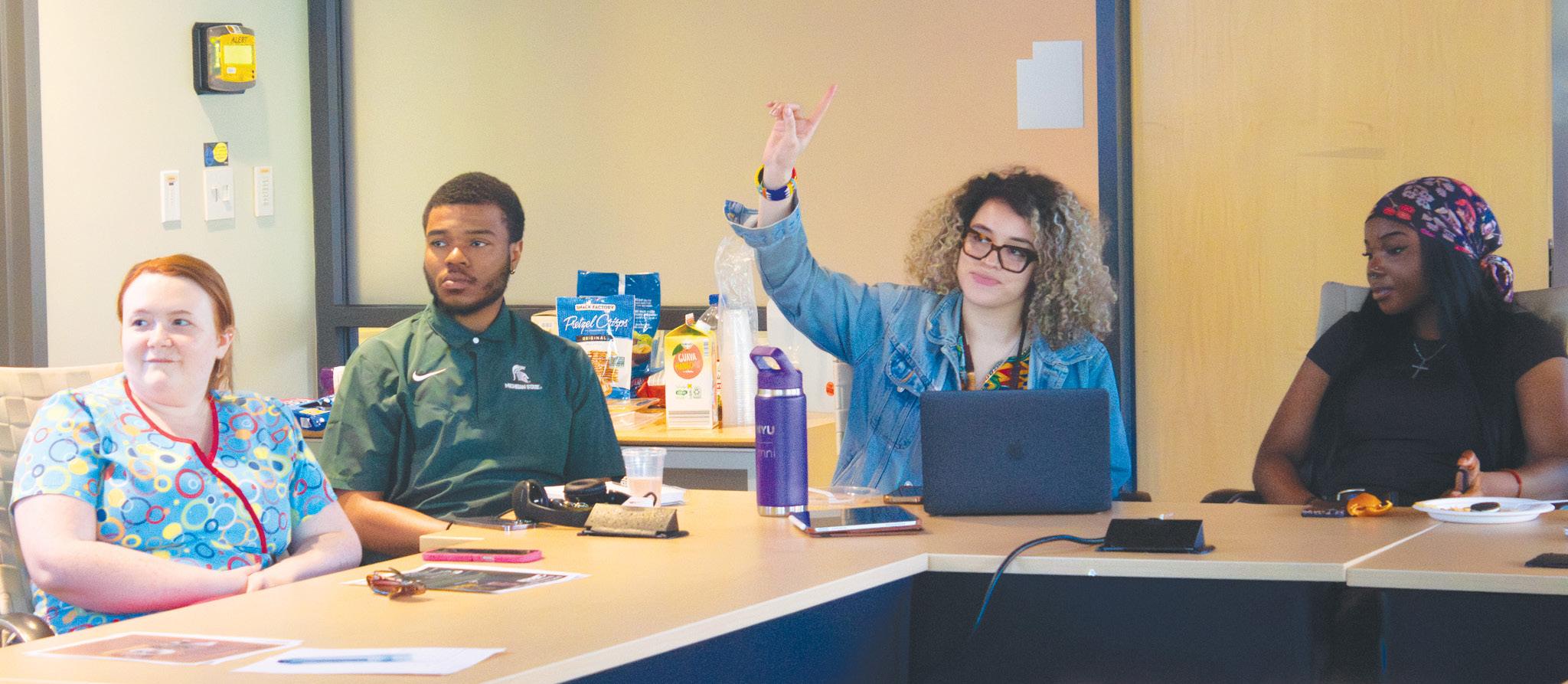
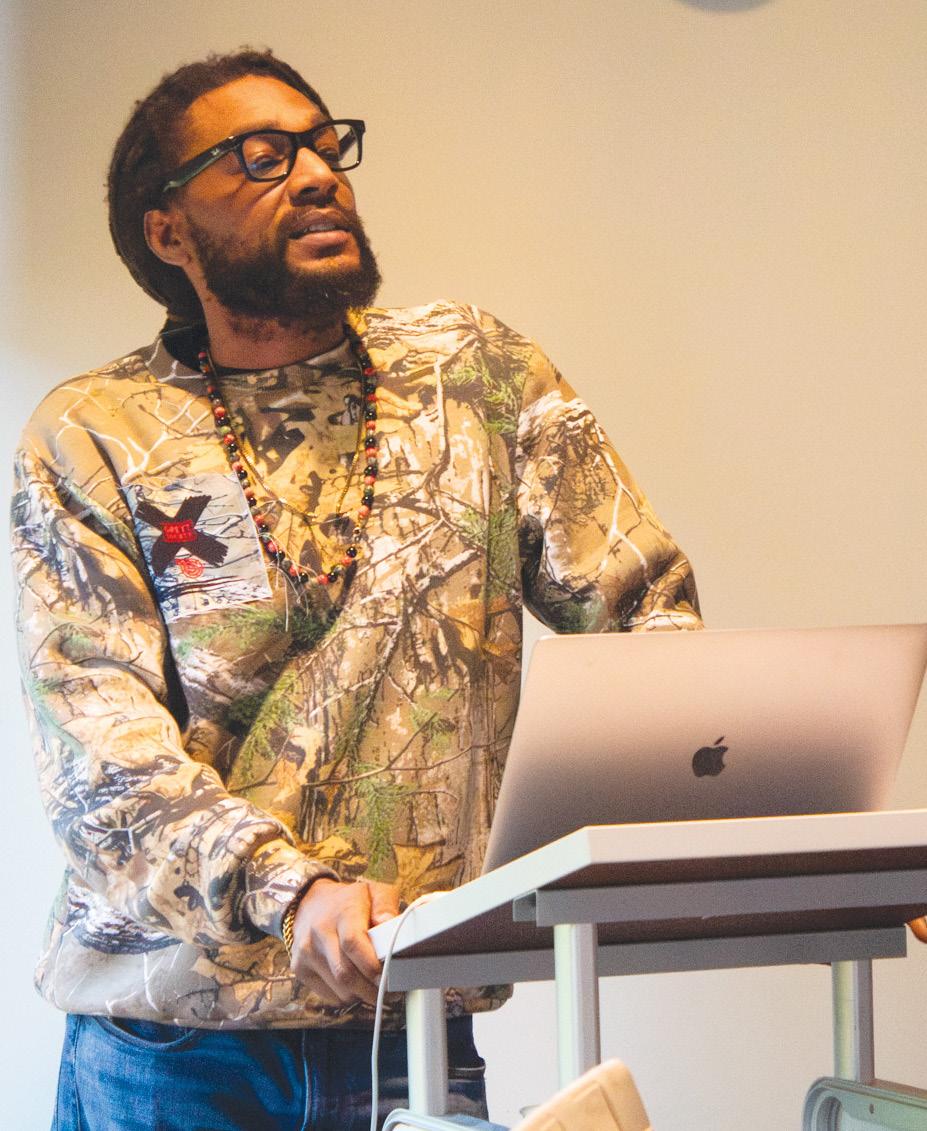
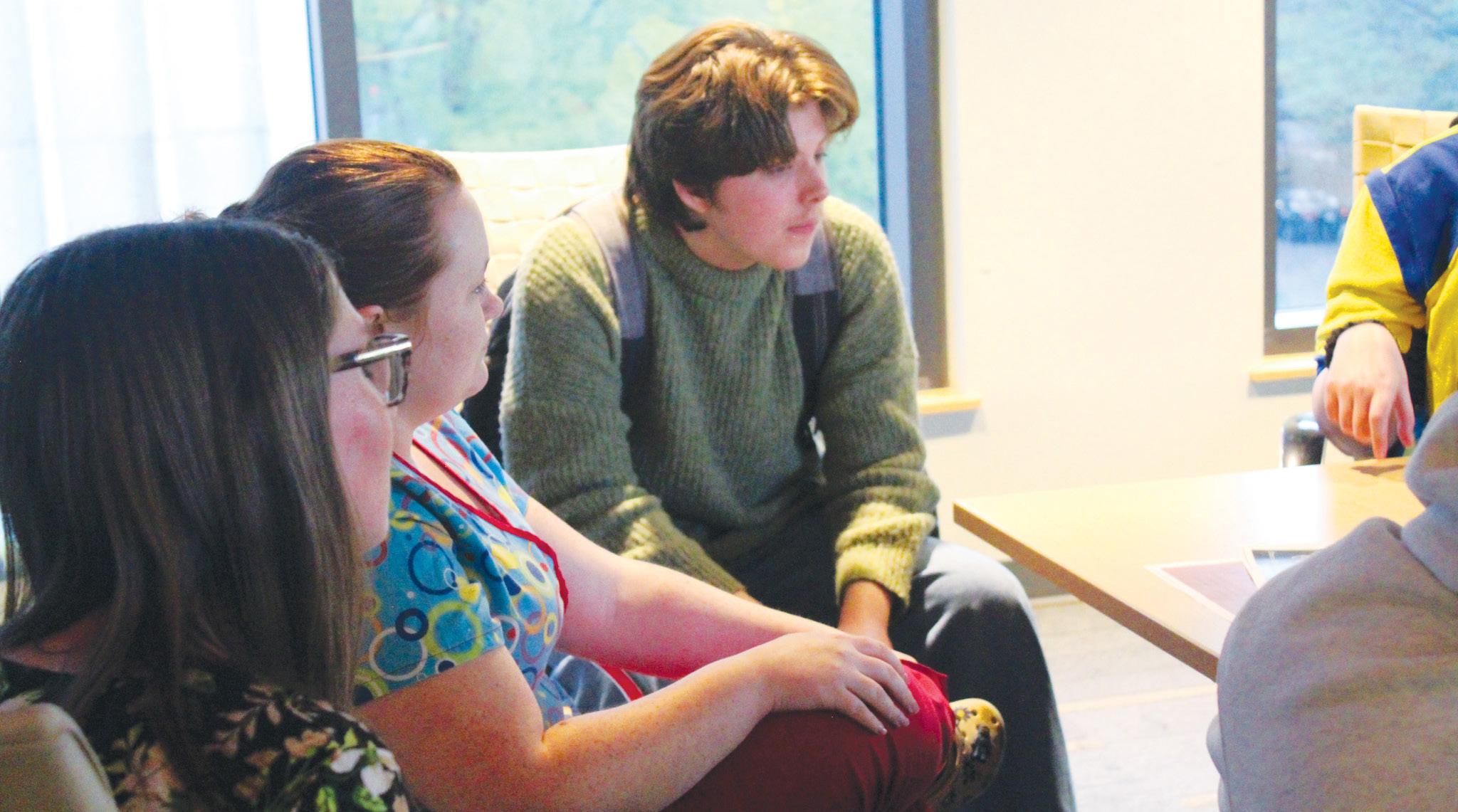
To do this, the board hosts different events that break down the barriers of these conversations. Just this last month they have hosted three of their own events. “Check Your Bias,” by Ra-Twoine “Rosetta” Fields, challenged participants to confront their own biases.
Fields challenged students and faculty to acknowledge their own biases and confront them. He brought different hypothetical scenarios to the crowd surrounding different racial, social and religious groups and asked participants to answer honestly what they thought.
“Y’all are being nice,” Fields claimed, as the group danced around what they wanted to say, scared that they would say the wrong thing. However, in this room, there was no right or wrong, just honest. As more people joined in the conversation the more honest people got and that is where the real work began.
As the session progressed, Fields broke everyone into groups of four and tasked them to openly talk about their biases. The groups were given dice and a list of categories such as age, disability, religion, ethnicity and social class. Group members took turns rolling the dice, and based on the corresponding numbers, told a member of the group what they thought their race, age, disability, etc. was.
The night ended in a conversation between all the participants about what they learned, how they can use this information to move forward and challenge
biases they have.
“Check Your Bias,” was necessary to the mission that R.A.A.C.E. strives for, according to Shamayah Nutifafa, the Association of Black Social Workers’ R.A.A.C.E. representative.
“Bias is one of those things that heavily impacts the way people treat each other and while we’re trying to deconstruct some of
these inequities in the school social work, we think it’s very important to address that and make it known,” Nutifafa said.
Nutifafa sees the organization as a bridge between students of the college and the faculty behind it. With a mix of undergraduate, graduate and staff members, everyone is at a different level of their social work journey, but R.A.A.C.E. leads the way to collaboration between all levels.
In tandem with the VCU Association of Black Social Workers they hosted “Cultural Awareness Day” on April 11. The organizations were able to create a space where members and interested community members could gather and talk about different issues that are affecting Black students on campus, according to Aya
Caballero, Ph.D student and co-chair of R.A.A.C.E.
Caballero is in her second year as a graduate student within the school of social work. She joined R.A.A.C.E. after
real work because a lot of the barriers when you’re trying to do programming and be in with the community comes with, you know, going to have to have the money to back it up.”
hearing about it and feeling like the work they do lines up with the work she is trying to accomplish.
“A lot of the work that I do is surrounding race and inequities that stem from colonization,” Caballero said. “As I learned more and realized there’s funding put back behind this. We could actually do

VCU R.A.A.C.E. reach expands further than the bounds of campus as they invite speakers who are experienced in social work and social equity programs. They are holding a racial sensitivity class led by Gene Cash, the CEO and executive director of Counseling Alliance of VA, on April 23.
In alignment with their commitment to community building, they provided transportation to Southside Contemporary Art Gallery on April 10 for the opening day of their exhibition, “Keep it 1000.” Curated by Fields and Jax Causey, the recurring exhibition features work from nine emerging artists from a plethora of visual art mediums.
VCU R.A.A.C.E. is dedicated to breaking down the barriers within academia and the greater Richmond community — looking to cause a positive shift and open people’s ears to the issues affecting everyone.

HECIEL NIEVES BONILLA News Editor
“[In Spanish] I feel that I have found [Richmond] needs many changes. And that there is a lot of need out there. And before, when I had recently arrived, I couldn’t see that either — because normally when we arrive we submerge ourselves in a job, in long hours, and we don’t see that.”
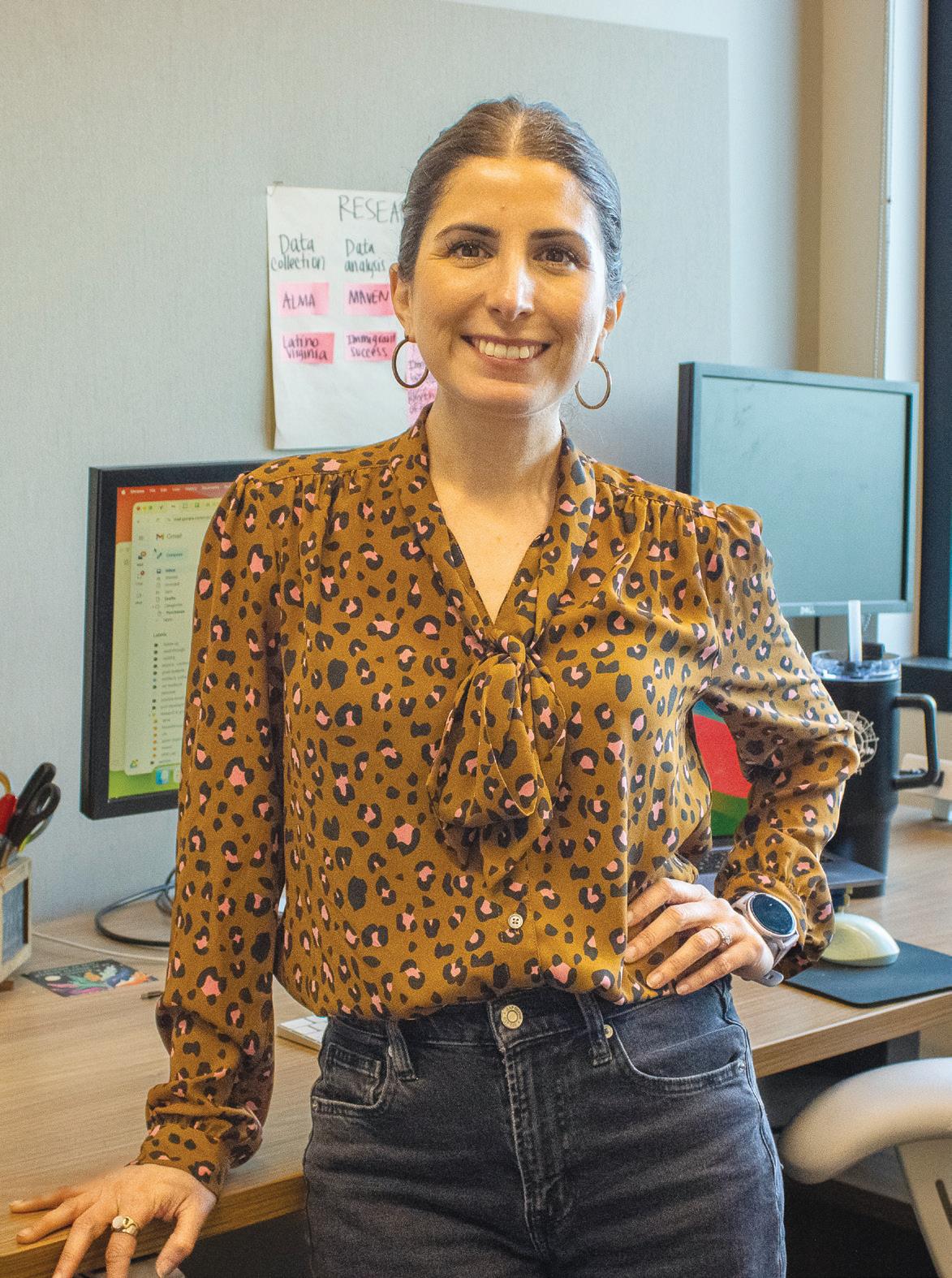
That is the experience of Richmond resident Claudia Leolo, captured in the Latino Virginia Oral History Project, which involved conducting over 140 interviews with Virginians who share a background or heritage in Latin America.
The research was led by VCU associate professor of sociology Gabriela LeónPérez and associate professor of history Daniel Morales.
León-Pérez said their main goal with the interviews was to dispel myths and stereotypes about Latin American migration.
“In some cases, yes, it’s because of better economic opportunities, but also it can be for family reunification for families that have been separated, it can be due to domestic violence in the country of origin, or for better educational opportunities,” León-Pérez said.
RESEARCH DIVES INTO IDENTITY, DIVERSITY OF EXPERIENCE
Virginia was home to more than 1.19 million immigrant residents in 2024, according to the Migration Policy Institute, more than double from 2000. Immigrants make up 13.5% of the state’s total population.
A 34.4% plurality of these were of “Latino origin.” 11.6% of the state’s total population was Hispanic or Latino in 2025 according to the U.S. Census — over a million people, many of whom were born in Virginia. They are the third largest Census-designated group in the state.
León-Pérez said their observations of the interviewees coincided with research that indicates first-generation immigrants tend to identify mostly with their home
country, while people born in the United States tend to primarily take on the identity of “Latino.”
“It’s an identity that only exists in America,” León-Pérez said. “Because outside of the U.S. you are Colombian, you are Mexican. There isn’t this term until you come to the U.S. and you’re lumped into this broader group that kind of combines everyone from Latin America.”
León-Pérez added to Virginia’s history of immigration herself when she moved to the state to work at VCU, after graduating university in Mexico and earning her Ph.D. in Nashville. She has felt welcome in the state — however, some of the interviewees’ personal experiences differed.
“I’m talking to my daughter over the phone in Spanish and I hear this lady complaining, “I am so tired of listening to these people talk in Spanish, I am done,” interviewee Giselle Rosas told researchers. “‘Why don’t they go back to their country?’”
ON VIRGINIA’S HISTORY: WHO GETS TO PARTICIPATE?
Morales said Virginia’s history can be understood as a struggle over who does and does not get to participate in political life.
Thomas Jefferson’s declaration that “all men are created equal” was followed by petitions to hold the state to that promise by the many groups excluded from its original application — land owning, white European men, according to Morales.
Successive conversations about the political representation of poor whites, Black men, women and other groups were defined by events in Virginia — specifically the struggle for Black civil rights, including Nat Turner and Gabriel’s revolts, much of the Civil War, the brief successes of the Redeemers and the advent of Jim Crow, according to Morales.
After the Civil Rights Act expanded political rights in the 1960s, immigration from all over the world into Virginia expanded quickly.
“It’s the same sort of fight of like, ‘these people have arrived, are they our neighbors or are they not?’ Are they equal to us or are they not?” Morales said.
Through recording the experiences of Latino immigrants specifically, Morales realized he had underappreciated the degree to which migration to Virginia was the result of the consequences of U.S. foreign policy.
“Virginia is one of the few places where Central Americans make up the majority,” Morales said. “Because of that, there’s a lot of people who have come with a lot of war and trauma and violence, and that’s part of the background story of why they came.”
COMMUNITY LEADERS
SPEAK TO THEIR PAST, VIRGINIA’S FUTURE
These experiences are not universal: Morales said around ⅔ of Latinos are born in the United States. Both immigrants and U.S.-born Latinos face historical exclusion — but also opportunities for political action.
Rosalia Fajardo has served on several multicultural boards in the state and is strategic partnerships director at a disability-focused nonprofit. She said she chose to immigrate to Arlington with her family for its multiculturalism, and decided to involve herself in community leadership to fill a need for Spanish bilingualism.
“Latinos and immigrants should be understood as a powerful force in the history and ongoing development of this state,” Fajardo stated, citing as evidence their role in the growth of small business and agriculture. “In every sense, Latinos and immigrants are not on the margins of Virginia’s story — we are central to its prosperity, its workforce, and its future.”
Fajardo said immigrants continue to push for improvements, including in-state tuition for DACA students, increased minimum wages and driver’s licences for non-US citizens.
“Our community reminds Virginia that inclusion is not just an idea — it is a practice,” Fajardo stated.
Liliana Castillo is administration director at Richmond’s Sacred Heart Center, a nonprofit affiliated with the Catholic Church which offers services including ESL and GED classes, health
clinics and immigration services.
Castillo stated she herself began her journey in the state in 1987, taking ESL classes in Henrico’s Freeman High School. She found mentors are critical to establishing themselves in the state.
“Community organizations play a critical role in that process,” Castillo stated. “They often serve as the bridge between newcomers and the broader community.”
Castillo noted community organizations often step in to meet the needs of the city’s residents including food, housing and employment difficulties, but deeper structural barriers for Latino residents remain.
“Housing affordability often determines where families can live, which in turn affects access to quality schools,” Castillo stated. “Health disparities are also an issue, as many families prioritize immediate needs like housing and food over preventive care. Despite these challenges, Latino Richmonders continue to move forward with resilience.”
The oral history project was recently previewed at a research symposium in the Virginia Museum of History and Culture, which continues to mark the 250th anniversary of the U.S. Declaration of Independence with features on immigrants. This includes the “Commonwealth Crossroads” event at which Latino and other immigrants to Virginia shared traditional art.
The research will be promoted to the public at an event in September, according to VCU News. The Sacred Heart Center plans to host an event to share more of the stories the oral history project collected on September 15, the first day of Hispanic Heritage Month.

SHINY CHANDRAVEL
Assistant Opinions Editor
People ask me where I’m from all the time. If you look anything like me, they ask you too.
I think people expect me to tell them my exotic stories of living in the Indian subcontinent, stories they’ve seen in movies like “Slumdog Millionaire” or in Nick Jonas and Priyanka Chopra’s viral wedding video. But the truth is much more anticlimactic. I’ve lived in Richmond my whole life, born and raised.
I’ve learned to meet people halfway with my response: “I’m from here, but my parents are from India.”
For a long time, that response did the trick. It equally satisfied their curiosity, my heritage and my stubbornness to be truthful to the city I’ve spent my life calling home.
I was recently asked this question again at the hospital where I work. In my rounds, I met an older patient who, like many before him, asked me where I was from. But when I gave him my usual response, I was thrown off when he pressed his investigation.
“What do your parents do?” he asked abrasively.
I responded that my dad worked in a
pharmacy while my mom was a stay-athome mom. Hearing this, he leaned back, relaxed, closing his eyes as if he had finally found what he wanted.
“Your mom better start working. We don’t let your people here just so they can sit around doing nothing.”
At that moment, as heat flooded my skin, I wanted to say so many things. I wanted to argue that my mother was not just “sitting around doing nothing,” but that she raised two college-attending children who now work in the medical field. I wanted to stress that she has sacrificed more than he’ll ever understand to be a good member of the community that he just happened to be born into.
But for the sake of keeping my composure — and my job — I instead explained that while it was her dream to work in the U.S., it was this country’s government that didn’t grant her a work visa for 15 years to do just that.
But when I came home that night, I wished I hadn’t responded that way.
Why should I have to justify to some stranger why my family — 20 years into living in this country — deserves to call this place home? No answer would ever satisfy him. I could literally be working in an emergency room, nursing him back to
health, and yet he could still find a reason as to why I shouldn’t be there.
But his confidence in investigating me, a child of immigrants, does not exist in a vacuum. His comments are merely holding up a mirror to some of the most powerful figures of our nation.
On April 1, the Supreme Court case “Trump v. Barbara” platformed oral arguments that will soon decide whether or not to terminate birthright citizenship for children born in the United States to parents who are either undocumented or in the country on a temporary basis, such as those on student and work visas. This could undermine the interpretation of the 14th Amendment that’s been upheld since 1866.
It’s an unsettling feeling watching lawyers and attorneys, dressed in professional suits with heavy briefcases, walk into a courtroom looking to revoke the reason you call this place home.
The court’s decision is said to be made in mid-summer of this year. But to immigrants and children of immigrants, the decision isn’t pending until this summer — it was made before it even entered court.
The moment we entertained the idea of stipulating certain people’s citizenship within our legal conversations, it became acceptable in our social ones as well.
Our leaders may not be successful in overturning constitutional law, but that doesn’t mean there aren’t people living among us who are willing and impassioned to take on that responsibility themselves.
We can see it in the language used to speak with one another — the baseless accusations and assumptions that trickle into our conversations.
We see it when people are celebrated for inciting violence — breaking into Somali daycares and heckling Haitians with accusations of “eating the dogs.”
We see it in how easily the most agitated individuals are hired by our government to point a gun at their neighbor’s back in the name of “security.”
Whether or not our leaders succeed in revoking birthright citizenship legally, they’ve already tainted it culturally.
Someone’s citizenship does not need to fit your narrative of being American. It is neither conditional on how “useful” you find someone, how well they assimilate nor whether they make others comfortable.
I am not more deserving of being here because I work in a hospital. My mother is not less deserving because she stayed home to raise her children, nor do I want to explain that to anyone again.
The Constitution already did.

KYLIE GRUNSFELD Staff Columnist
I was sitting in the Student Commons a week ago when someone stood up and started shouting. I didn’t hear much of what came out of their mouth, but I didn’t need to; my mind had already gone to the worst possible place. I was bracing myself for what feels more and more inevitable with every day — a mass shooting at our very own school.
Any chaos or disruption in a public place or any loud, sudden noise triggers the fear that lives perpetually inside me. In every classroom, I map out my theoretical escape plan. In every movie theater, I take note of the exits. In my own bedroom, I wonder
how quickly I could spring up and block the door with my heavy wooden furniture.
It’s extremely unfortunate that these are things a college student must take into consideration. A mass shooting could happen anywhere at any time, but shootings at college campuses often dominate the news; it’s only natural a student would be on edge.
In the past few years alone there have been major shootings at the University of Virginia, Brown University and Old Dominion University, the latter occurring only last month.
I can vividly recall my friend’s panic during the shooting at Brown, their sister



being a student there at the time. When the shooting at UVA happened, I was attending school only a few miles away. I have been present during an intruder lockdown on multiple occasions. I know many fellow students share similar experiences and are constantly on high alert as a result.
Though VCU campus takes precautionary measures, such as student IDs being required to enter student dorms with 24/7 front desk security, text notifications when crimes are committed nearby and Alertus technology, I do not feel 100% safe here. These methods, while comforting, are not foolproof.
Contrary to popular belief, Cabell Library does not have metal detectors installed by the front doors. The grey structures you must pass through on your way in and out are for preventing books from being stolen, not for protecting the students within the library itself.
I worry about the lack of preventative measures on the Monroe Park campus. It
seems like the measures we do have are more concerned with mitigating damage rather than keeping it from happening in the first place.
Gov. Abigail Spanberger has proposed several pieces of legislation regarding gun safety. Senate Bill 749, which would prevent the sale and distribution of assault firearms — the type typically used in mass shooting incidents — has not yet been signed by Spanberger. It was recently amended and sent back into the General Assembly to work its way through the House and Senate.
This bill is promising, but its full and complete implementation is not guaranteed.
When the ODU shooting happened in March — a tragedy that saw one casualty and two injuries — it made the news briefly, but I did not hear anyone talking about it for long enough.
The terrifying truth is that tragedies of this nature are so common that many
Americans, specifically American students, have become desensitized. It takes a toll on the psyche to react strongly to every gun-related act of violence in our country, so the preferable alternative is to compartmentalize. I understand this because I do it too — as much as I am able to.
But as desensitized as we can be, we should not accept this as our new normal. We should not accept that the leading cause of death for children and teens in America is firearm-related injuries.
I cannot feel wholly safe walking around this school knowing that this is the reality, especially when our safety mechanisms are not airtight. I want to attend VCU with confidence that my peers and I will be safe. I do not know if this will ever be possible, but the bills in progress right now give me hope that someday it could be.

MAYA KAMAT
Contributing Writer
The first time I learned CPR, I was sitting shoulder-to-shoulder with my peers in a dimly lit classroom as an earnest gym teacher played a video about Automatic External Defibrillators (AEDs) and chest compressions. I was watching the video intently when my friend tapped my shoulder.
“They take your shirt off to put on an AED?” she said with disgust. “I would rather they just let me die.”
I remember feeling distinctly horrified. Why would she say that? How did we get to the point where the female breast had become so sexualized that women are uncomfortable with receiving life-saving care?
I don’t remember what I said to my friend then, but I would say this — with the way people treat female bodies, they probably would have let her die.
Women are 27% less likely than men to receive basic CPR in out of hospital cardiac arrests, according to a 2024 study. CPR can nearly double a person’s chances of survival. All 50 states as well as D.C. have good samaritan laws that protect
bystanders performing CPR. And yet, women across all racial backgrounds are consistently less likely to receive this lifesaving care.
As an EMT, I also see how women’s pre-hospital care differs from men’s.
The first time I did an electrocardiogram (EKG) on a female patient, I felt so lost. We train on these smooth, flat-chested dummies, but the reality is that our patients — male or female — do not look like that. It makes no sense that we train on dummies that resemble the easiest possible scenario.
Female-modeled CPR dummies aren’t a new concept. In fact, the first ever CPR dummy was named Resusci Annie, who debuted in 1960. Her face was modeled after an unidentified woman who had drowned in the River Seine in Paris. Despite having a woman’s face, Annie’s torso resembled that of a very smallbreasted female or a flat-chested male.
The woman who died in the Seine remains nameless. She had no say in the way her face would be used for countless decades. She had no say in how her torso would be changed to resemble a man. Resusci Annie has saved countless lives since she entered the world of CPR
training, but instead of honoring the woman who died, people joke and call her “the most kissed woman.”
How could we expect people to respect her legacy? Her life and womanhood has been overshadowed by the lives of all the men she’s helped save.
Today, there are some CPR mannequins with breasts. This is certainly a step in the right direction, but most of these mannequins feature unmoving, perfectly symmetrical breasts that stay out of the way during CPR; they don’t accurately represent the population they’re supposed to be advocating for.
In January, a “CPR Kiosk” was set up in the Commons that featured a mannequin to teach hands-only CPR. The mannequin features a dark skin tone and what might be considered a “genderless torso.” While this representation is on the right track, it’s not enough to bridge the existing gap between health outcomes for women and men.
When we know that women are less likely to receive CPR outside of hospitals, making all CPR dummies distinctly female draws attention to a cognitive bias by normalizing the female body. From the moment people receive training for CPR they are getting a clear message: “This is
a body you might have to do CPR on, it might make you uncomfortable, but you have a life to save.”
It’s no secret that women’s health has taken the backseat to men’s health for all of history.
Women’s symptoms for heart attacks are less widely known or are considered “atypical.” Conditions that affect exclusively female bodies are less studied. Even in mouse trials for clinical research, it’s considered industry standard to only use male mice because female mice have hormonal cycles that are considered “confounding factors.”
These disparities can’t be addressed by adding breasts to a few mannequins. To even begin to change the training landscape for pre-hospital care, I think all training mannequins should resemble a female body.
We can’t know what the woman who died in the Seine would have wanted for her body, her face, her legacy. But we can make sure that we use her legacy to save women just like her. So that the next time a passerby sees a woman unconscious in a river, they will pull her out, check for a pulse, and immediately, without hesitation, start correctly performing CPR.

EXECUTIVE
MANAGING
COPY
NEWS
ASSISTANT
SPORTS
ASSISTANT
SPECTRUM
ASSISTANT
OPINIONS
GRAPHIC
DIRECTOR
ASSISTANT
By Darryl Gonzalez
Edited by Patti Varol
Gonzalez
Edited by Patti Varol