PORTRAIT horizons
PORTRAIT
issue #16 : spring 2026
horizons
cover design | Miranda Liu & Yuetong (Michelle) Mi
inner cover design | Yuetong (Michelle) Mi
Letter from the Editor-in-Chief
Dear reader,
It is my pleasure and honor to introduce you to the magnificent works that make up Issue 16 of Portrait. The rich and beautiful perspectives of our contributors are on full display this semester, and I am so grateful for their time, effort, passion, and dedication to this magazine. Each contributor is what makes Portrait so special. So, a sky-spanning thank you to the contributors who make this issue magical with their skilled work and, of course, to you for reading this sublime publication.
Each meeting, issue, and year, we say that Portrait is a home for so many of our members, and like the warmest homes, Portrait is a family. The compassion and creativity of the Portrait community drives us to care for one another and look to the distance together, finding inspiration in places we might otherwise not. This willingness to evolve and soar to new heights together makes what we know as Portrait. I have only described a fragment of what makes Portrait so dear to me, and it will stay with me beyond graduation as my time with this magazine comes to a close.
On that note, it is bittersweet to share that our theme for this issue is an exploration of the word horizons. Our Portrait family has spent the past few months meditating, exploring, and playing with this word and what it means to us. I am so thrilled to have seen this work in action and am honored to present you with the product of these conversations.
With a full but heavy heart, I am so proud to present to you, Horizons. As you explore this magazine, I hope each piece fills you with the same wonder as they do for me. Once more, thank you to everyone who made this issue possible and to you for sharing this beautiful Portrait experience with me.
Looking towards the horizon, Ulysses 유지승 Bergel,
Editor-In-Chief
Executive Board
editor-in-chief: Ulysses Bergel
content editor: Nicole Gao
creative director: Miranda Liu
design lead: Yuetong (Michelle)
Mi
lead producer: Christian Wolke
launch liaison: Michelle Mei
publicity manager: Aijia Zou
treasurer: Anni Yu
first-year representative: Misha
Wichita
Writers/Project Leads
Rabiah Aziz
Ulysses Bergel
Sebastian Chang-Leung
Yonghan Chen
Ameyaa Desai
Nicole Gao
Alyssa Gu
Owais Haider
Cody Hoang
Sarah Huynh
Kristen Stewart
Ari Kikuta
Mia LaBianca
Julia Landicho
Lena Lee
Miranda Liu
Hodaka Maeda
Apollo Marks
Michelle Mei
Tina Ni
Zoe North
Akshaya Raghavan
Jing Seto
Ember Tao
Joanna Toy
Anni Yu
Aijia Zou
Editors
Ulysses Bergel
Catriona Chapman
Yonghan Chen
Nicole Gao
James Hatch
Makie Koizumi
Nicole Lai
Michelle Mei
Lela Mittman
Angela Moon
Tina Ni
Tina Nicole L.
Michelle Yuetong (Michelle)
Akshaya Apollo Mia Ulysses
Sebastian Ruimei Alyssa Kinsey
Alicia Salva
Hadley Snell
Kristine Sohn
Ember Tao
Joanna Toy
Christian Wolke
Designers
Rabiah Aziz
Ulysses Bergel
Sebastian Chang-Leung
Ruimei Chau
Yonghan Chen
Nicole Gao
Ari Kikuta
Miranda Liu
Michelle Mei
Yuetong (Michelle) Mi
Tina Ni
Zoe North
Akshaya Raghavan
Chloe Russo
Kinsey Wang
Misha Wichita
Anni Yu
Aijia Zou
Producers Social Media
Aijia Zou
Aijia Zou
Christian Wolke
Sarah Zoe Miranda Aijia
Misha
Julia Anni Christian
Makie
Kristine
Nicole G. Ari
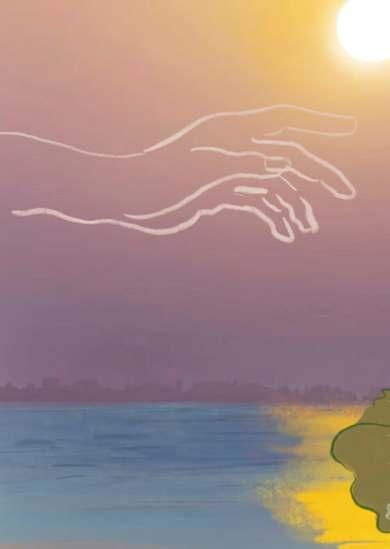
Another day, another sunrise
The sun is shining, but it fades beside your gaze
A glow brighter than the morning light
With the shade of blue that matches the sky
Carrying such joy and endless love
Similar to a flower, blooming with the right people
Your personality is what makes you a charmer–
Like a slight breeze, a quiet wind,
Your silence and peace is what makes your presence calm
The air around you carrying a quiet ease
When fully bloomed, you are beautiful and
Ethereal when you are yourself,
In peace you calm, in passion you captivate
These energies attract me to you,
Making me want to pick you and admire your petals
But others want to pick you too
Walking by and seeing how pretty you are
Tempted to separate you from the dirt grounding you Can’t help my want of others to stay away
So I can be the one to admire your bloom
The more I get to know you, the more I like you
The more I want to pot you and keep you somewhere safe
Somewhere with sunlight, water, and anything you need I would give you my attention, company whenever wanted I would stick by your side and watch you grow
When the sun starts to set, another day is about to end
Happy I got to talk to you, be with you, even see you
But am jealous that another still wants you
The chance of you letting them pick you out the ground hurts
Hurts to know that it might not be me afterall
But with each passing day I will continue to think of you
Think of how sweet and amazing you can be
And think of being with you whenever I look at the setting sun
I will continue to wish that I can pick you
And hope that one day my wish will come true
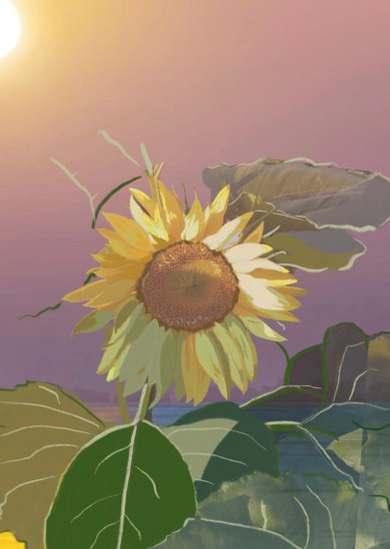
If Only I Could Pick You
Written by: Jules Landicho
Edited by: Ember Tao
Designed by: Kinsey Wang
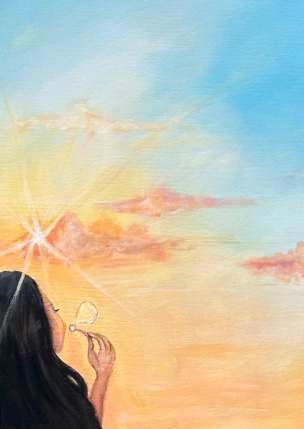
The Shape of Time
The car was full of laughter, warm takeout resting between us, steam curling upward, softening the glass. The windows fogged until the world became impression, streetlights smeared, trees reduced to shadows. And then the sun found us.
It poured as gold through the windshield, spilling itself across our faces as if it wanted to remember this, as if it knew this moment would not stay.
Time felt suspended there, caught between red lights and unfinished sentences, between the last stretch of daylight, and the night waiting patiently behind it. I didn’t know yet that this was a kind of goodbye. I only knew how full my chest felt.
I had always feared time, the way it kept walking even when I begged it to stay, even when I begged it to hurry. Each day carried the same soft bruise, a bittersweet blue, the sense that something important was slowly slipping past me.
But that year, time changed its shape. It slowed in familiar places, lingering in doorways and parked cars, settling into the spaces I used to rush through. I began to notice how often the light followed me, as if it was trying to keep up.
Every afternoon, the sun bent lower, trailing me from classrooms to parking lots, casting long shadows across teal lockers and off-white walls. I watched it fracture itself, a perfect circle thinning into a half-remembered shape.
Somewhere in that repetition, I understood what was coming. Not all at once, just a steady awareness, like hearing the end of a song before the last note played.
Knowing I would leave made the days feel denser. Laughter stayed a second longer. Silences felt fuller, not empty. Every ordinary moment carried a quiet weight, as if it knew it was being counted.
There was sadness in that knowing, but also a strange relief. The decision had been made. My name already existed somewhere beyond this place. The future wasn’t pulling me forward yet. It was waiting.
So all that remained was to stay. To let the days pass unguarded. To laugh louder in parked cars, to treat every ordinary afternoon like something worth keeping. I didn’t need to rush anymore. I only needed to be here.
I stayed with what was leaving. I didn’t reach to stop it. I let it move through me, unbroken, and watched it become memory.
Written by: Ameyaa Desai
Edited by: Kristine Sohn
Designed by: Chloe Russo
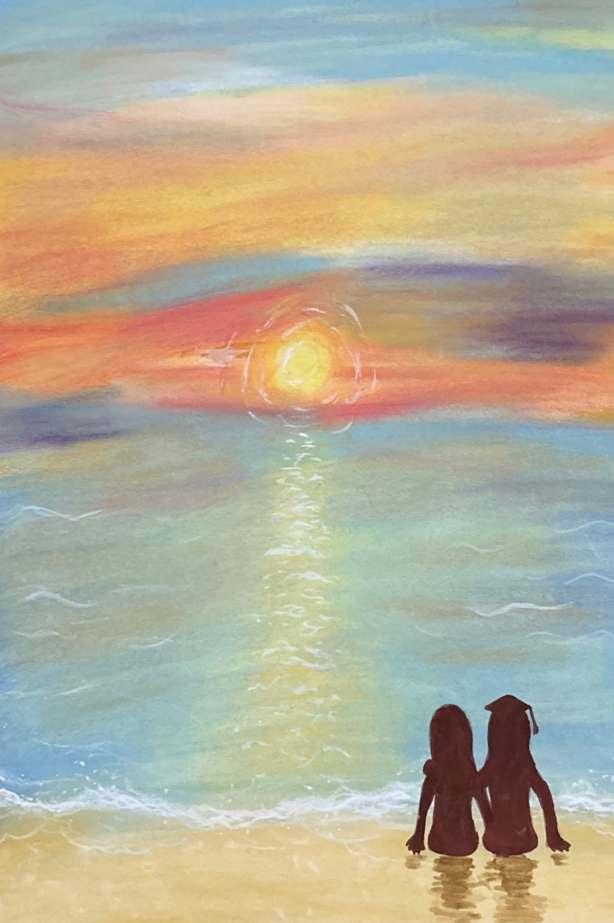
BeyondtheHorizon
By Sarah Huynh By
Edited by Catriona Chapman Edited Catriona
Designed by Akshaya Raghavan
Dedicated to the seniors who have supported me this year
Dedicated to the seniors who have me year
Beyond the horizon, where the sun meets the sea, the horizon, where the sun meets the sea, You’ve now unlocked a world of possibility. You’ve now unlocked a world
As you toss your cap high into the sky, As you toss your into the You recount how quickly four years have passed by. You recount
You were my big siblings away from my home, You were The ones who made sure I was never alone. ones I was never With every small gesture, in each meal we’d share, With in each meal we’d share, You showed me that you’d always be there You showed me there.
Through victories bright and the losses so low, victories and the losses so low, We lifted each other up as our friendship did grow. We lifted each other up as our You were the guides I didn’t know I had, You were know I had, Proof the unknown wouldn’t be bad bad.
Who would’ve known that we’d come here and find, Who would’ve known that we’d come here and Such supportive friends – both encouraging and kind. Such supportive friends – both kind.
I know this goodbye will not be the end, I know will not be the end, Our paths will of course intertwine again. Our will of course intertwine again.
Beyond the horizon, you’ll go very far. the you’ll There’s no doubt the world will see the stars that you are. There’s no doubt the world will see the stars you are. I hope you know when you cross that nearing line, I know you cross that You’ve forever redrawn this horizon of mine.
Haze washes through cities and streets to the vanishing point, where days turn into nights, one moment into the next –round and round.
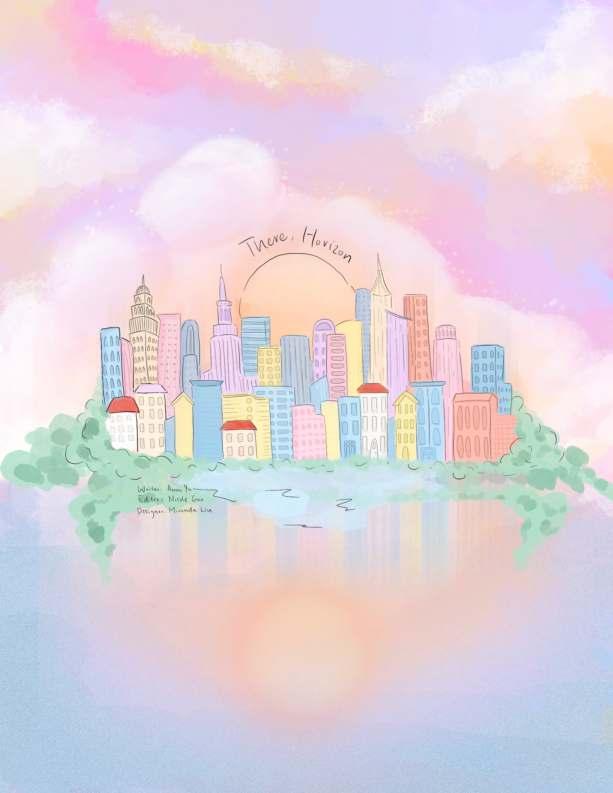
Sisyphus or carousel: when we reach, it recedes; rest, it persists.
Where does the horizon extend?
From the earth to the sun and beyond –or does it trace the curvature of superimposed edges, encompassing a world folding into itself?
The oil-tainted sludge, once sand, beneath your feet as I chased the orange sun dipping low past the slate-gray waters, bolting past striped pink-and-white (the shirt you wore that day and so often), past the sandals now discharged on the entryway shelf, collecting dust.
It would take twenty hands in twenty lifetimes to display on my fingers the number of times I have tried to rebuild you: not with hands, but with closed eyes. Forgive me–for all I have is this one life. All I can reach for in lieu of memory, is you in the Live Photo™ where your legs propelled yourself off the ground;
For less than a second, if I hold the photo, suspend it: you laugh with the joy that comes from defying gravity, and having that defiance captured, frozen, timeless–or rather, time-full.
So thank whatever god for whoever made photo, then video–although I’m not sure whether a god would be amused or annoyed by those imitations of divinity. Because don’t those inventions emulate a numinous capability? To capture a specific interpretation of light that physically cannot be recreated: to extend a moment so far it can reach into where it never was, a time where it doesn’t–couldn’t–exist. Even so, I took far too few pictures.
And I am certainly no god.
I can only close my eyes, pretend that I remember your shadow against the setting sun, imagine: the cold brush of your hands on the small of my neck as you wrap around me. I can never be held as wholly as your womb did my entire frame. And I don’t want to Photoshop you into every special occasion after they’ve already happened.
That would be trite, crude.
Too bad you can’t Photoshop Galveston; what an ugly, sorry excuse for a beach, but it’s the best we could get in that petroleum worshipping state. I never understood the Thanksgivings spent there, until the day I rummaged through the family albums to find a younger me, more skeletal and yet more alive, lifted by a younger you–less skeletal, definitely alive.
That was in Hua Lian; breathtakingly stunning even without a filter. The guilt struck me then, harder than it had already been my whole life; you don’t make do with what you have, you make do with what you can get–even if sometimes there’s no difference between the two. And a lot of times, what you want to get is what you had and lost, or never had; I’ve realized
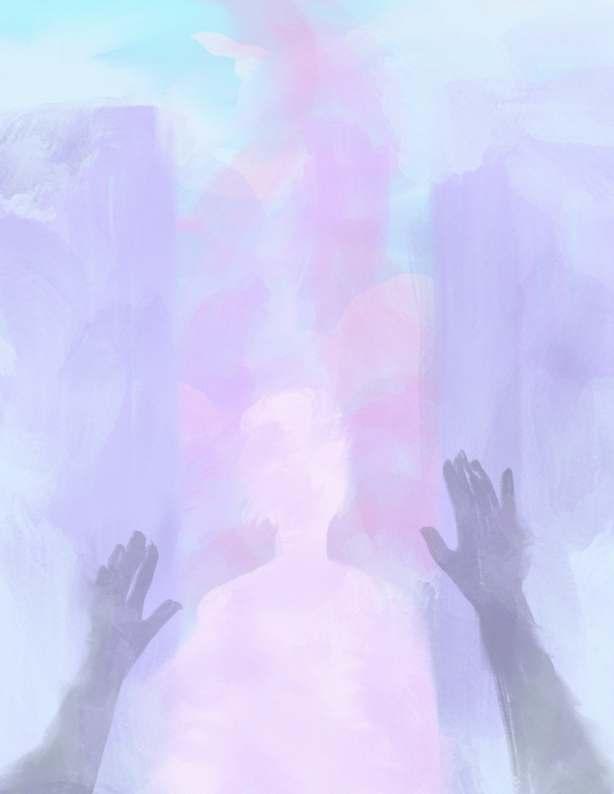
we live our lives by mimicry: to spend our entire lives chasing, chasing.
I never understood how your voice rang, clear through the wind, yet failed to reach me and my legs that kept running. It was easy, then: one foot forward, then behind the other. Nor did I understand how each appendage began to bear the weight of the universe with each knock at my window that grew louder, louder–a reckoning from the wordless noise of sleep.
I will never hear a sound that urgent again. Still, I almost believe I do, every time I wake.
In the city of Houston, there is no line where the sky meets the sea, no place your eyes can rest on, fixed, as you stare out the car window: looking for a god you can blame. There is only the space in between two tall buildings–which do not move, much less meet. With the light filtered through the glass, you can’t feel it–the summer swelter condensed on top of your hands.
So I stepped out the car, lodged myself firm in that interim between buildings: the body a knife between two small bodies of sky. There is no blood, save for what has not been archived–and what mind doesn’t remember. But this knife remembers: it cuts back and forth, although it only ages one way. Muscle and marrow hold on to what has long been washed away–tightly, tightly –the body a translation between times.
Then, the shadow a crevasse that folds into itself–an embrace. For you cannot be still, and you cannot keep running; you can only predict when the sun sets, angle yourself so you can catch it from wherever you are. The sun rises and sets without you. For once, I am still in the city where you left me.
Written
by: Ember Tao
Edited by: Joanna Toy
Designed by: Michelle Mei

There’s More Ahead
Written and Designed by Zoe North || Edited by Yonghan Chen
I’ve always viewed life as something to win first and enjoy second. The basic structure I understood was this: from the age of 10 to 26, all I needed to do was pass each academic stage with good choices and minimal mistakes. If I could do that, I would guarantee myself a good job, which would ensure a good life, a life that could be deemed as successful. Everything before that was preparation, and it was all up to me to win the prize. As you might expect, this damped life a bit.
Quality performance was required, not something you aimed or hoped for. Anything less than an A- was cause for concern, but there was no reward in an A or A+ because I was expected to get that. You don’t get to feel proud just for brushing your teeth or taking a shower, so why should I feel proud here? Lower grades like B’s meant I had to get my life back on track, C’s meant I was on the edge of failure, and D’s or F’s had my adolescent brain believing that my life was over. Day after day, year after year, each choice, each grade determined how the next step would go. By high school, it seemed like one too many mistakes would rip away this life I was promised.

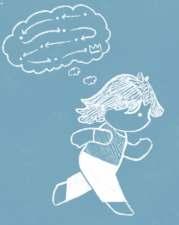
My most consequential milestone was graduation with a proper degree. It was the penultimate step to the end, but I felt that if I could get college right, I would be set no matter what. From the first day of orientation, this was my checklist: all A’s, take zero “useless” classes, complete my major, attempt a double-major or a “useful” minor, and graduate within 4 years. It wasn’t much different from each stage before, so it seemed achievable! That was until I struggled in intro bio. And then intro chem. And then intro neuro… The only STEM classes I had done well in by sophomore year were a handful of psychology and cognitive science classes, none of which were hard sciences.
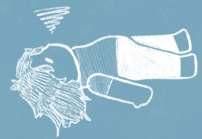
It became clear that a hard-science path was simply not a good fit for me, which, at the time, was devastating. I had already settled on the fact that I wasn’t enough to pursue pre-med, law, or engineering, and I had agreed to pursue neuroscience because it was close to psychology, but still a true hard science. But now, I felt like I was failing miserably. All my preparation, planning, and hard work were crumbling! All because I couldn’t grasp certain concepts.

As if the universe was trying to send me a message, I started to be surrounded by specific kinds of success stories. Online, I would get videos about individuals who struggled with adversity, confusion, or indecisiveness during their young adult years but who managed to get their feet back on the ground. I found the Instagram account of my second cousin, who I was told would not live a comfortable life as an artist, but who is more successful in her career than we could have ever expected. In intro chem, the professor had us watch interviews of MIT researchers who found their way into their professions despite unconventional starts.
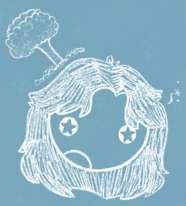
What shocked me the most was that, despite uncertainty, difficulty, or mistakes, they were all happy. Every single one of them. Even if they were in a profession that I was taught wasn’t “good” enough, or if their life led them every which way except where they had planned, they were still okay. That was insane to me! But it was also very relieving. For the first time, it set in that brute-forcing a path or trying to follow a strict timeline wouldn’t lead me to security. It was also made clear that no amount of excessive planning would save me from mistakes or obstacles. All I could do was keep pushing, and if I did, life would work out in its own way.
I had fallen in love with cognitive science at the time, and my professor was pushing me to declare a major in it because he saw my potential. I was still terrified of diverging from my plan because cognitive science did not feel safe enough as a major to my parents, and the goal of pursuing neuroscience was all I had known for the last few years. But after many long phone calls, I finally took the jump and changed course.
Finally, I started to feel more secure in my future than I had ever felt with my timestamped plans. Milestones felt less like requirements and more like opportunities, and I started to trust myself and my choices. The greatest change was how I began to focus on the present. I wasn’t preparing for some far-off future that may or may not even happen. Instead, I was focused on making myself proud in my work and enjoying the process, regardless of how others appraised it. I started seeing value in myself beyond what I could be or what I was supposed to be. There was merit in my effort, not just in the quality of my performance.
While I still have long-term plans for my future, I’ve decided that they’re made to guide me. If I stumble, fail, or hit a wall, there’s no reason to think that it’s the end. Others may pass me and reach their goal sooner, but as long as I continue to push myself forward and focus on enjoyment over winning, I trust that I will be okay. All I need to do is make myself proud.
I chase after dreams, I chase after the limits, and I chase after the next big thing.
I see the divide between the sky and the ground. I see myself, childlike, on the ground, and I see myself, now, above the ground.
Chasing towards the sun, Racing towards the clouds, Pacing around and around to go above and beyond.
The horizons that divide. Over yonder, they all say The horizons that suffice. Through the roof, I do say.
I forget how far I’ve come, I remember how far I’ve made, I see how far I am above the clouds, and I reached towards new horizons.
written by: Cody Hoang | edited by: Tina Ni | designed by: Michelle Mei
Writer: Michelle Mei | Editor: Makie Koizumi | Designer: Miranda Liu
When Sora was a mercurial seventeen years of age, she passed through the water into a pearlescent land that smelled of honeydew and crisp promises.
She lived where the sky met the sea in parting kisses, a kaleidoscope of brilliant colors dotting the turning tides. Her mother had always warned against swimming in the waves, undulating against the sand in a persistent dance—but their allure drew young Sora back day after day, admiring the ephemeral glitter that coated the shore. It seemed as though her very hands became translucent with the briefest touch of water. Then an abrupt call from her mother, a low, dangerous thing, would send Sora stumbling back home. Forbidden, she said— a word too complex for Sora’s young brain to process.
Clouds littered the sky when Sora first fully sank into the misty sea. Her mom was preoccupied with a phone call, her stern tone chasing Sora from the house. She didn’t mean to wander in the water—but her first step was into crisp coolness, a refreshing air washing over her. It was as if she entered a trance, wading slowly into the pale blue. A hand reached out and yanked her dress, Sora’s arms flailing as she stumbled backwards into the sand. Her mom, red-faced and furious, said not a single word as she carried Sora back home, like a lion with her cub. Thunder struck overhead, but it was no match for her mom’s beration, constant cymbal clashes to Sora’s ears.
It wasn’t fair to Sora—how the adults would shiftily glance at each other whenever water was so much as mentioned, how even drinking it was a chore for them. It had been years with no answer, no explanation for this absurd fear. And here, her mother expected her to simply sit quietly and agree, as she had done with her own mother.
Well, Sora was never too fond of upholding a tradition. Especially not one of secrets she wasn’t granted the clearance to know about. She’d stare at the elders of the town, huddled in shoebox homes too tight for their families, or watch as the younger children got hauled straight back from school like animals in invisible cages. And Sora would plot, plot for a day where she’d finally defy the hard lines drawn in the sand for her. An opportunity where she would finally enter the water in front of the townspeople, disproving their idiotic fearfulness.
The fateful moment arrived on a brisk summer’s day, when the high tide swept across the shorebanks. All of the town had gathered by the wrought fence that divided them from the beachside, sipping cool lavender tea in the balmy air. Sora wasted no time—as the town’s fastest runner, she flew past the dancing children and adults languishing on their lawn chairs, heads shooting up in her wake. Alarmed shouts—like a simmering kettle boiling over—fireworked in the air, but it was futile. Sora had made it to the tide, feeling that once familiar coolness wash over her again.
“Sora!” Her mother had yelled desperately, but Sora blinked in sudden exhaustion, a haze settling over her body. Was this what it was like to float? As the waves rocked her, Sora fell into a stillness, so silent that even the faintest bubbling was like a hurricane.
Sputtering cold water, Sora was like a fountainhead when she emerged from the waves. A girl, seemingly her age, stood on a cherry-blossom dock, mouth agape in a delicate circle. She blinked owlishly at Sora, her eyes pale and sparkling. Behind her, wispy, translucent hair floated in the saccharine breeze. The clouds streaked above her in dreamy rose and peach shades, hints of a purple sky underneath their painting.
Sora blanched at the unfamiliarity. “Who are— ”
“We haven’t seen someone from the other side in ages.” Her voice was lightly accented, soft and languid. The girl’s bony fingers reached out, fanning out in the shape of angel wings as she watched Sora expectantly. “Come.” Sora tried to resist the sudden urge to follow, her limbs moving confusedly as her head and body disagreed.
“Where am I?” Examining more carefully, Sora now wondered how it was possible that droplets were ascending from the lake, bubbles dancing in their prismatic symphony.
“All will be realized in due time.” The girl’s steps were light as air, a spacey quality to her. Sora learned the girl’s name—Mizuki—and how it was given toher after being born on a lotus flower under the full moon. Koi and jellyfish swam in the air alongside them as Mizuki took her along a riverbend, approaching a lonely cottage burrowed in maplewood trees. Sora furrowed her eyebrows, wondering where they were headed—then, the sun dipped under the horizon, revealing milling people, weavers and bakers, and countless storefronts. Fireflies and gems were jarred together, hanging from long twine and reflecting rainbows. Everyone had a glassiness to them, skin and hair shimmering in the effervescent moonlight. Mizuki tugged on her sleeve gently, a secretive lilt to her smile as she led them into the crowd.
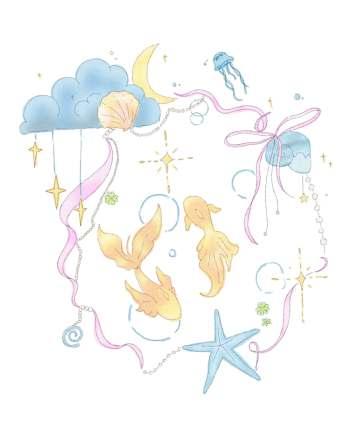
Soon, they had an entire view of the village, perched in a silver-veined tree of bonbon-shaped fruit. Sora asked outlandish questions under the dusky sky—how were the fish flying? How did the day and night cycle work here? Why did this world exist? And Mizuki would just laugh, a breathy, chiming noise that awakened the stars themselves. Her voice was like a lyrical sigh, foreign-sounding to Sora’s ears. Foreign, yet uncomfortably familiar, like the music box that sat on her dresser collecting dust for a decade. An heirloom, according to her mom, passed down the generations before landing in Sora’s hesitant hands.
Her frustrations spilled like freshly tapped syrup into Mizuki’s palms, a gentle coercion tangling the breath between them. Perhaps it was the fact that her mother couldn’t reach her here, but Sora went through her numerical list of grievances, feeling a physical lightness settle in her bones. Mizuki smiled mysteriously, one corner of her mouth curled up into a crescent moon. Later, Sora learned that it was she who took away the tension in her shoulders and the deepening frown lines that outlined her face. The world had an innate, whirring fantasy to it—mental weight transformed into dapper-gray hummingbirds that perched low in bonbon trees. Sora touched one’s feathers briefly as it flew by, feeling the heart-sinking despair for a last, fleeting moment.
As the days passed on, Sora grew to appreciate the strange magic of the otherworld, living alongside Mizuki and her family. Her father was a woodsmith, burly arms swinging curved axes at the bonbon trees to create sugar serum. Mizuki explained its purpose in Sora’s world—to imbue children with a natural sense of goodness, a natural stimulant for brightness in childhood. Her mother, however, was a ferrywoman, tasked with the more specialized job of creating maps of everyone’s lives. Sora attempted to sift through the cluttered office, but had no luck finding her townspeople, much less her mother—all the scrolls were written in a language of the otherworld.
Sora and Mizuki spent long days simpering under the sunpeach tree in the cottage’s backyard, fruit eternally glistening with honey in the light. Sometimes, they would share in each other’s stinging insecurities, picking apart each other’s imperfections to create a mosaic of where they’ve been—Mizuki once returned from her class distraught and seeking some quiet physical comfort, and Sora stroked Mizuki’s moonlit hair until she fell asleep from the exhaustion. As days toiled on, Sora began to realize how repetitive the motions were in the otherworld, much like her little town she was adamant on leaving. But this system was already rooted in the very fibers of the otherworld, in how their sole purpose was to power Sora’s land. If Sora could take the tension from Mizuki as Mizuki did for her, she would do so in a heartbeat.
On a midsummer breeze of a day, they were sitting under the sun-peaches as usual, eyelashes catching honey bubbles as the tree slowly dropped fruit around them. The words they spoke felt like a reverie, tuning in and out in a constant haze.
“Will you stay here?”
Mizuki suddenly turned from her serene position, head resting gently on her deli- cate hand. Sora blinked, the elusive charm of the otherworld wearing off lazily as she contemplated the question.
“What do you mean?” Sora hadn’t known about any limitations on the length of time she could possibly spend in the otherworld, trudging through each day as if she was floating along a lazy river.
“The lake you came from—that’s the gateway to your world, it closes tomorrow. Are you staying?” There was an uncharacteristic warmth to her voice, gentle affection that had grown from their sunny days spent together. But Sora could only focus on the prospect of being permanently cut off from her mother and the townspeople—unable to even have the choice of going back. She couldn’t believe that such a significant thing was kept from her. Mizuki watched in Sora’s periphery, leaning in expectantly.

“No.” It was a simple word, uttered by humanity countless times, but it felt especially sharp when said to Mizuki. Her face went lax before crumpling like a thin sheet of paper, and Sora almost reversed her decision right then. But her mother’s face flashed continuously in her mind, the stark fear released in her voice right before Sora entered the otherworld, and she couldn’t do it. She couldn’t subject her mother—the closest confidant, yet the worst enemy—to the pain of losing a child. And she couldn’t subject the future generations in that town to another story of how the water took her mercilessly. If she didn’t return, it would just be another weapon to use against the water.

“Mizuki, you wouldn’t leave your world for me, no matter how much I’d beg. Please understand my decision. I’m sorry.” With that, Sora sat up, the grass no longer soft, but prickly against her legs. Mizuki followed suit, a thunderstorm of hurt in her otherwise pearly eyes. No more pleasant conversation—Mizuki stumbled as she picked up fruit angrily, a departure from her usual grace. Placing them in her basket, she didn’t even glance back at Sora before retreating back into the cottage.


That night, Sora ate her last supper at the long, mahogany table she’d come to love. Even the gossamer curtains in the dining room had lost their shine, drooping sorrowfully across dimmed windows. Mizuki hadn’t spoken a word since Sora dropped a note of finality on their relationship. Sora discovered shortly afterward from Mizuki’s mother that such a gateway would only open every couple of hundred years, always for a month at a time. It wrenched at her heart overwhelmingly, but the last of Sora’s resolve was fully dedicated toward returning to the waylaid town of her childhood. They needed to see how the water had a special healing power, rather than its monstrous portrayal in their tales. Sora’s eyes batted to Mizuki at the thought, who was picking at her food with little appetite. Her own stomach paled at the sight, having yet another mini-cataclysm on the prospect of never eating at this table again. Sora had never felt a true sense of belonging, until a plate was placed in front of her like she’d always been there. Now, that plate would be buried under another mountain of dishware, a faint reminder of Sora’s presence in the otherworld.


In the early morning, Sora ran through some last preparations before her farewell, a ritual of light on the water that she had to perform to get back home. Mizuki’s mother had instructed her so softly on how to conduct it, as if Sora was another daughter to her. Later, Sora walked alone to the edge of the dock, the same place she had met Mizuki a month ago. The cherry blossom felt overwhelming now, the wood a brooding shade of wine instead of its blushing beauty. She swiped at her eyes futilely, placing a hand on her chest in an attempt to still her racing heart. As Sora uncovered the few sticks she had left, a strangled cry erupted from the village line—Mizuki, eyes tearstained and arms outstretched. The two met in the middle of the dock, fireflies winking in their negative space, embracing with a month’s worth of unspoken feelings between them.
After Sora’s thumb swiped away flowing tears, Mizuki handed a locked box to Sora with strict instructions to open it later. A quiver in Sora’s lip prevented another choked-up goodbye, but it had become their nature to understand each other without words—the water’s edge would always connect them, even if they could never lay side-by-side under the sun-peach tree again. As the sun began to dip, Sora placed the last set of sticks, walking backwards, desperately taking in the last glimpses of Mizuki. Her face would only live in Sora’s memory now.
The first thing Sora did while tumbling from the waves was open her box, key jangling in the lock despondently. Inside, she found windchimes, etched with an otherworld harmony that would sing in their hearts forever.

Shoebox homes had expanded, and the little beachside town was now an array of new, colorful individuals, all looking for a quiet place to land. From afar, families slowly packed their towels and umbrellas, leaving the shore in preparation for a storm. Sora, hair thinned with wisps of gray, gripped her toddler’s hand with a tinge of soft-bellied resignation, thinking of all the work to be completed before she could allow herself to sink into a soft bed. It was funny how she fell into place as the generations before her did—her dreams of rebellion felt so far away now, a distant memory barely visible on the horizon. They made it to their front step before long, the wind howling contemptuously. Sora still needed to set the chairs out in the lawn, so she ushered her child to the living room, placing several vibrant blocks out. Her husband was barely home, a marriage of convenience rather than true feelings of the heart—Sora preferred it that way. It left little room for another heartbreak or the what-if question constantly lingering in her chest.
She stepped out from the glass into their small, yet tidy lawn, a soft breath releasing from her mouth as she examined the landscape. The chairs had already begun to collect water, handfuls of glitter poured upon them. Mizuki’s windchimes sung operatically, wailing echoes into the sky. Yet, it was a small section of pooling water that drew her attention. Sora gazed upon the puddle, the rain overhead distorting the shimmering hourglass sand. Her hands reached towards the water instinctively—and then drew back, as if possessed. That life would be impossible now. She made her decision a long time ago.
In Focus
Written by Ari Kikuta | Edited by Alicia Salva | Designed by Michelle Mi
Diya had been missing for several weeks before she was declared dead. Her parents had approached Wendell at the funeral, whispering softly to one another before thrusting a bag in her direction.
“She would have wanted you to have this.” Her camera.
Wendell had never been much of a photographer. She didn’t have enough patience to fiddle with all the buttons, and most of the photos she took came out blurry. She laid the camera in her lap, her vision clouding with tears.
Life that followed was a whisper. She quit school, began working at the local grocery store. It wasn’t long before she gave up that job, too. The majority of her days were spent in bed, the camera balanced in her hands. Wendell pressed buttons. On, off. On, off. She watched the lens open and retract, stared through the viewfinder.
Near the tail end of spring, the lens stopped working. Wendell tried futilely to wipe away at the dust, but nothing happened. No matter what she tried, the lens always stuttered, eyelid halfway open before sinking closed again.

“We’re out of tape!”
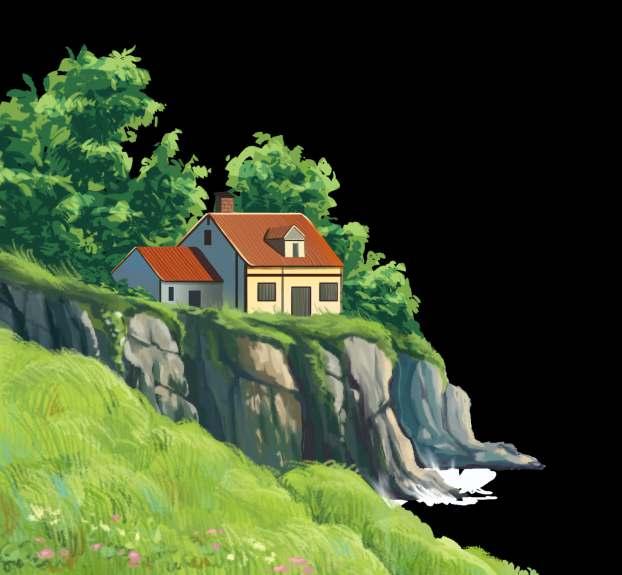
Wendell eyed the empty roll wrapped around her wrist, then the brewing storm on the horizon. The clouds were heavy with late summer rain, leering over the neighborhood with a promised week of torrential downpour. The air was so muggy it left a damp coat on every surface. The village residents, nestled on the edge of the coast, were accustomed to the threat of flooding. They prepared with a precise calmness, a stark contrast to Wendell’s frayed nerves. She had arrived in Japan a little over a week ago, and the country seemed content with destroying her hopes for a rejuvenating getaway.
“Ms. Aoyagi, did you hear me?”
Wendell hopped down from where she had been perched on the kitchen counter, carefully keeping her arms pressed to her sides as she avoided taking the stacks of clean dishes down with her. She crept into the living room, peering into the crannies between walls of cardboard boxes, stacks of tripods, and sagging bookshelves. No sign of her.
The rows of wind chimes lining the porch were deafening as they clacked against each other. Wendell’s cry of surprise was lost in the noise as she spotted Rena precariously balanced on a lawn chair, using the handle side of an old broom to clear the moss clogging the gutters.
“Be careful!” she attempted to steady the chair, her hair whipping around in the wind, “I thought we agreed I would handle the drains.”
Rena said nothing at first, before grunting, “We have to hurry.”
Wendell turned towards the sea, at the choppy waves breaking against the rocks, before voicing her agreement. Once she was certain Rena wouldn’t tumble to her death, she began lifting pots full of stolen clippings and ripe plants into the mudroom, cursing her weak muscles as they strained under the weight. She was sticky with sweat by the time they managed to shove all of the most important outdoor furniture into the house, strapping sandbags to what was remaining and praying nothing would get lost to the violent winds. All she wanted now was to run her head under the sink, because for all of the countryside splendor, the sweltering heat was enough to make any view uninspiring.
The windows!
Rena was seated on a short stool, fanning herself with an old newspaper. With her directioning, Wendell managed to seal the last few windows, blocking off their view to the outside world. She held up her hand, an instinctual high five, before it occurred to her that that was the most embarrassingly American thing she had done her entire stay. She lowered her arm, and Rena clasped her hand instead, the pair shaking hands as Wendell felt her cheeks burn. Without the urgent tasks to keep them busy, the two of them simply stared at each other, drowning in things they might say.
Helping Rena sell her house had been her parents’ idea. She’d long suspected her parents had grown tired of watching her pad around the house, pajama-clad well into the late afternoon, her hair still stuck to the side of her face from where it had lain against a pillow for hours on end. Every day was a sluggishly slow routine, like clicking through a movie frame by frame. The thought of traveling hadn’t even occurred to Wendell until her parents brought it up over dinner. Rena was an old family friend, a relatively well-known photographer in the curatorial circles her father worked in. He’d organized several of her exhibitions in the past, and she’d often been the subject of many droning one-sided conversations her father held as he drove Wendell to school.

“I’m going to start preparing dinner. I’ll tell you when it’s time to eat,” Rena got up with effort, wobbling over to the kitchen, “Oh, if you could start sorting through the books, that would be a big help. There’s a donation center just down the road.”
Her expression was pinched as she turned away. Wendell began pulling books off the shelf, grimacing at the unleashed dust cloud. Most of the books were in Japanese, and it took considerably more effort than she would have liked to clumsily sound out the titles. It was disheartening how quickly four long years of Japanese classes were forgotten.
Wendell reached for another book, startled as a stack of papers fluttered out from between the pages. Upon closer inspection, she realized they were pictures of Rena. She was surprised to see how youthful she looked, but more so, to find her standing amongst so many people. There she was, helping set up at a festival, giving a lecture, lounging on the beach. Throughout the entire week, Wendell hadn’t seen Rena leave the house once. She did all of her shopping online, had groceries delivered to their doorstep, and though she hadn’t said it outright, dreaded talking to the realtor. It was honestly miraculous that Rena had welcomed Wendell into her house, and she was starting to suspect her parents had bribed her into it somehow.
She had nearly finished clearing out the first shelf by the time dinner was ready, and the two of them ate quietly. The village was known for its dried salmon, cured for months before they were ready for consumption. Wendell had been wary of the taste at first, but the salty flavor was beginning to grow on her. In between every couple of bites, she glanced up at the other woman, perhaps waiting for the opening to begin a conversation, before chewing another mouthful. Her plate was practically empty by the time Rena spoke up, her voice reserved.
“The realtor was supposed to come tomorrow, but the delay is probably a good thing. Packing up 30 years worth of stuff is an even harder task than I thought,” Rena chuckled, but she seemed wistful as she poked at her food. Despite their weeks of correspondence before her arrival, Wendell still hadn’t caught the reason as to why she wanted to move in the first place.
“Why have you decided to move? This house, it’s beautiful.”
Wendell couldn’t imagine leaving behind the sounds of waves lapping against the shore or the whistling of birds in the morning. It was a stark contrast to the metropolis she had grown up in, where every movement felt like a missed opportunity.
Rena went quiet again, her gaze growing fuzzy. Wendell waited for a response, but it never came. They merely began shuffling their plates to the sink after the last grain of rice had been scooped up. The conversation steered towards which part of the house they would clean up tomorrow, falling back into the same, distant routine. As Wendell tucked herself into bed for the night, she wondered if she had touched a nerve.
There were students out there who would have killed to be in her position, living with a seasoned artist, and it was mostly circumstance that had brought her to Japan. Wendell didn’t even like photography. She shifted onto her side, gazing in the direction of the nightstand and tracing the outline of Diya’s camera. She reached over to grab the camera strap, rubbing the nylon between her fingers. She wanted to ask Rena what made her photographs more than images to hang on walls. Was it the camera that made pictures sing?
Outside, the wind clawed at the windows, begging to be let inside.
–
A terrible sound ripped out of Wendell’s throat, jolting her awake. She gripped her chest, the bedsheets wrapped around her body like a sprung trap. She made it halfway through a ragged breath before choking on her own saliva, descending into a fit of pathetic coughs. Even months later, the nightmares hadn’t subsided. The worst part about them wasn’t the fear, but the fact that she could never recall what they had been about. It was cruel how her subconscious suppressed any memory that might fill the gaping hole in her chest. Diya was missing even in her dreams.
Her hand moved to turn the lamp on, but even after several clicks, the darkness persisted. Wendell didn’t realize she had been crying for help until a trail of light wandered in, illuminating Rena’s face. She was holding a small flashlight, her grey hair sticking up on one side. She wore that same pinched expression on her face, as if her mind was waging two different wars.
“The power’s gone out,” Rena clutched her nightgown, nervously fiddling with the fabric, “Mind if I sit?”

Wendell sniffed, eyes still blown wide, before nodding. For a couple minutes, they sat breathing in tan-
-dem, allowing her a chance for her to remember where she was.
“Did I make you mad earlier?”
It was easier to speak when there was a veil of darkness between them, half of her mind still lingering in a nightmarish haze.
“No, it wasn’t you. I thought I was ready for this move, but I suppose it just doesn’t feel real yet,” Rena shook her head. She paused, before reaching over to squeeze Wendell’s clammy hand, “Photographers, we’re just poor souls stuck in the past. People, they come and go. Photographs, trinkets…I can keep them for as long as I want. That’s what I thought.”
“What happened?” Wendell cleared her throat, trying to dislodge the heavy feeling that stuck there.
“A couple months ago, one of the houses down the road, it just– tumbled right into the ocean! What a terrible day. The government came and inspected the land. They told us, this town…it won’t be long before the sea swallows it right up.”
“That can’t be true!” Wendell sat up straight in bed, suddenly hyper aware of the rain howling outside. “Are…are we safe?”
“Ah, I didn’t mean to make you worry! They reinforced the foundation. It’s all good for now, it just won’t last forever. The government workers, they’ve begun paying the neighborhood money to move out. I’m a stubborn woman, I wasn’t planning on going anywhere until your father called me.”
“Oh God, what did he do?”
“No, it was nothing bad. Quite the opposite, actually. He called to tell me about his new exhibition, said he wanted me on the project committee. I said, ‘You want me, this old lady?’ He said, ‘Yes, nobody else will do. It has to be you.’ So I told him, ‘Okay, but I have to sell my house first. It’s going to be a lot of work. I’m not easy to work with.’ I thought that would convince him to find someone else, but your dad, he’s a stubborn man. He told me, ‘That’s quite alright. I know just the person who could help you out.’”
Rena spoke in two different voices. Every time Wendell’s father had a line, she would deepen her voice, and though she sounded nothing like him, Wendell was struggling to suppress laughter by the end.
“I can’t believe it. Actually–I definitely can,” Wendell huffed, putting her face in her hands. “My dad is so embarrassing. He’s always meddling, and he won’t take no for an answer. He pestered me for weeks before I agreed.”
“Well, it’s not so bad here, is it?”
Rena looked so vulnerable then, and Wendell’s heart squeezed.
“No, I…really appreciate you letting me stay here,” she looked down at the bed, blinking as she noticed the camera strap tangled among the sheets. Blood was rushing in her ears, “I actually have a question. Can you fix cameras?”
Rena looked thoughtfully at the camera on her nightstand, “That one? I can certainly try.”
Wendell’s whole body straightened at those words. She wasn’t really thinking as she inched sideways until her head bumped lightly on the older woman’s shoulder.
“It was my friend’s camera.”
–
Wendell leaned closely over the table, watching carefully as Rena popped off the lens of the camera. She used a fine microfiber cloth to wipe away the grime before attaching a brand new lens. Earlier that morning, they had practically torn the house apart in their effort to locate a box of camera parts. It was miraculous how much stuff a tiny space could hold.
“There, why don’t you try turning it on now?”

The old woman passed her the camera. Wendell held it delicately, half convinced nothing would happen when she powered it on. She jumped as the screen flickered to life and the lens opened. The view through the wayfinder was blurry, but she could still see all the shapes of the furniture and the little stripes of green on Rena’s sweater. “It works,” she breathed in disbelief, before jumping into Rena’s arms. She was warm, and the scent of lunch still clung to her clothes. When the old woman placed her hands lightly on Wendell’s back, she let out a sigh of relief. She didn’t realize how much tension she had been holding until she felt her jaw release, and a full breath rushed into her lungs for the first time since the funeral.
“Alright, alright,” Rena peeled herself away, looking shy as she worked the wrinkles out of her pants, “Why don’t I teach you a few things?”
Rena walked her through the basics: ISO, shutter speed, aperture. It was agonizing trying to memorize all the different functions, and she had to ask Rena multiple times to repeat herself. They eventually went on another hunt for a whiteboard so she could visually write out the instructions.
“This button, here,” Rena leaned down, demonstrating, “if you press it halfway, it brings everything into focus.”
Wendell accidentally pressed down too hard and let out a noise of surprise as the shutter clicked. She rolled her shoulders back a few times, pointed the camera at the wall, before trying again.
“Why don’t you stand there? It looks weird without someone in the picture,” she gestured for Rena to get into the frame, despite her small protests.

She peeked through the wayfinder, focused the camera. Click!
“How do I look at the pictures?” Wendell turned the camera around in her hand, convinced she had already forgotten.
Rena pointed at one of the buttons on the right side.
The first picture on the camera was a mirage. She hadn’t realized that the memory card still held all of Diya’s photographs, but there she was, beaming at the camera. It was an awful picture. Her eyes were halfway closed and her hair was blowing everywhere, a pigeon mid-flight in the background. Wendell lowered herself into a chair, her head spinning.
“Is everything okay?”
Rena lowered herself into a chair beside Wendell.
“I…yeah. It’s just, my friend, the one who owned this camera…she’s gone now.”
The words were lead on her tongue.
“I want to know, who takes photos of the photographers? The other day I found some–” she sniffed, her voice breaking as she tried to resist the tears welling up in her eyes, “--some pictures of you. Who took those?”
Rena reached for a box of tissues, pulling one out before gently wiping at Wendell’s cheeks. She knew she must look awful, puffy and blotchy, but the tears were coming down heavily now, running into her ears and dripping into her lap.
“Your father took those pictures. I was hesitant to accept him as my student, you know, and I was right. He was a terrible listener, and his photographs almost never developed correctly. But, he somehow always managed to get the people in his pictures to smile.”
Wendell couldn’t respond, but she nodded, swallowing hard. She should have known. All those times her dad had talked her ear off, she simply hadn’t been listening. Rena brushed the hair out of her eyes and tucked the strands behind her ear.
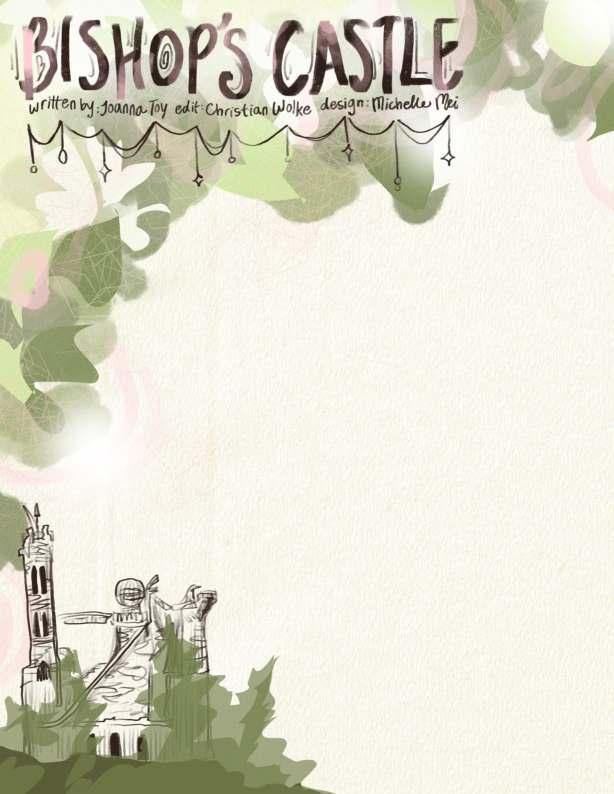
We leave Denver at 8am, the sun at a blinding angle over the horizon. Pavel drives while Jackie and I share the backseat. Abbey sits shotgun. This is the first time we’ve all been together since the summer, during the few weeks I was home between DC and Vassar. We all went to Denny’s out of nostalgia, or muscle memory, or because it’s funny or maybe necessary to pretend that nothing has changed.
As we pass Colorado Springs, Jackie insists we listen to John Denver. She takes blurry photos of the dry prairies and mesas out of her window and crooked pictures of pine studded foothills out of mine.
“See, you don’t get landscapes like this in New England, people in the northeast just don’t get it, everything is just grey and flat” she says. I’ve heard some version of these words every time we’ve spoken since she started college in Boston. Sometimes it’s about the mountains, or the dry air, or the sunshine. Most often, it’s about the people, who just aren’t the same, who just don’t get it. Recently, it’s been the dust, fine red grit that only accumulates in a desert.
I’m just as insufferable as she is about being from Colorado; I complain about the hills masquerading as mountains, the quantity of rain, the thick, oxygen laden air. That’s not what I really miss, not the reason I want to come home. Jackie and I are the ones who left, who spend months out east, living with the trees and rivers and cities. I know the others can’t relate to the commiseration. Pavel and Abbey stayed, working and living in the same place we grew up, with the dust and the desert and the sun. They’re both itching to leave.
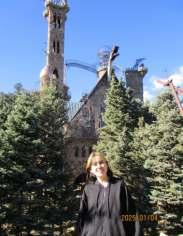
The road trip was Abbey’s idea, a little adventure before we all scatter back to our disparate corners of adulthood. We make one stop on the way down, for gas and stale popcorn and rye chips. Our destination is Bishop’s Castle, three hours south of Denver in the San Isabel National Forest. It was built singlehandedly over the course of fifty years by Jim Bishop, a libertarian extremist with no architectural or engineering training of any kind, a picture of the Colorado that I miss and the one that my friends can’t wait to escape.
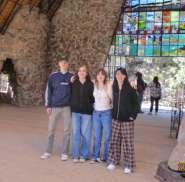
We arrive before noon, parking next to the porta potties and between several of the handpainted antigovernment signs. Stepping out of the car, I catch my first sign of Bishop’s Castle, 160 feet of concrete, stone, and metal. There are rambling archway, dizzying stairs, catwalks and balconies, a metal observatory about a hundred feet in the air, a silver dragon head sticking up above the peak of soaring stained glass windows, a metal bridge suspended between two of the precarious towers, all dwarfed by a thin spire with turrets and atop that, an iron ladder which sways violently in the wind. Most of the tallest windows have no panes or covering at all. In several places the stairs are partially or entirely missing steps. On other stairs, each step is so thin I have to turn my feet out at an angle to walk down. The catwalks have holes big enough to stick your leg through. One of the stained glass windows depicts Betty Boop. There are no handrails. Jackie, we learn, is afraid of heights. She grips Pavel’s arm, legs shaking as they traverse the steep stairs. It’s sunny, sixty degrees in January, but the wind shakes the metal structures, sending the patchwork floor swaying violently as we cling to the metal supports.
We take pictures on the metal bridge, suspended between towers, in front of the looming wall of stained glass, and next to the wooden sculpture of bigfoot, who’s holding both middle fingers up. At the gift shop, I buy a shot glass and a postcard picturing a man juggling on top of the dragon head, which is breathing fire.
“I’m going to miss you guys so much,” Jackie says as we walk back to the car. She says it like she says everything, like she can hardly speak but for laughing.
Jackie’s flight to Boston leaves tomorrow, so this is the last we’ll be seeing of her for a while. As Pavel starts the car, we talk about when we’ll meet again, maybe in June, if Jackie can get an internship in Colorado, if we can make time to drive up to Yellowstone, where Abbey will be waiting tables for the summer. I like to tell Jackie that we’re living in parallel, that we’re changing but we’re changing together, that there are things stronger than distance or time. But there are huge chunks missing now, which we try to make up among dropped calls and sparse texts. Sitting next to her in the hot car, I can feel the lost moments stretched out between us.
As we wind our way back through the hills, I play my shitty emo music as loud as Pavel will let me. He tells us about the 14ers he wants to do, but can’t because they’re too dangerous to hike solo. Jackie tells us that she actually hates cybersecurity, but that it’s too late to change course now. Abbey tells us that she wants to quit her job early, but it would be too hard to find something else before she leaves for Yellowstone.
Then we all say the same things, about after graduation, or after a few years, or after we save up some money, when we’ll all move somewhere close by, when things will be easy. How we’ll go to the Redwoods before they burn down or Glacier before it melts. I don’t know how much of it I believe, how many more years we’ll
“I’m resigning.”

Maggie looks up at me, eyebrows crinkling together like a wrinkled chip bag. “From what? Your job?”
I nod. “I don’t think there’s anything else in my life I could resign from.”
She shakes her head, not up and down but side to side, slowly, as if she was trying to talk down a wild dog from doing something. “But you love your job.” It’s not a question.
I hold my glass between my fingers, moving it in circles. It’s empty, except for the large spherical icecube in the middle. I had tried to drink that too, but ended up almost choking on it and having to spit it out back into my cup. I watch as the ice sphere rolls in circles inside the glass. “Does anyone actually love their job?”
Maggie rolls her eyes, then takes a sip of her drink. It’s pink and bubbly and still almost full. “As much as someone can love their job, you love your job.”
She isn’t wrong. I don’t know anyone else who likes their job more than I like mine, although maybe that’s only because almost all of my friends spend their days in fluorescently lit offices with burnt coffee and computers from 2010 that always only display excel spreadsheets. I’m sure someone at the gallery has a job that also consists of spreadsheets, spreadsheets on the prices of pieces and spreadsheets on the days each piece will be displayed and spreadsheets on when openings and parties and artist workshops are, but I haven’t had to look at a spreadsheet in years. I only look at pieces. Paintings, photographs, wire sculptures, lithographs, three second clips of footage, anything that spends time in the St. James Studio and Gallery.
When I talk to Maggie, or anyone for that matter, about why I like my job, I always say it’s because of the beauty. The beauty of the artwork, the beauty of a paint stroke, the beauty of the people who come in with their collections of work that could fill small storage lockers. I smile and quip about how few people get to see so much beauty every single day.
That’s not actually why I like my job. Sure, it’s nice, looking at art is much more interesting for the eye than spreadsheets, but really I like playing God. I like knowing it’s my decision, whether the wire sculpture a man built of his dead lover or the mosaic of someone’s childhood beach house is displayed or banished to the back closet of some artist’s two room apartment. There’s an element of control, a rush of power I imagine hiring committees feel when interviewing employees. I might miss that.
“I just can’t do it anymore.”
Maggie’s forehead is creased with concern. “Have you actually thought this through? Like at all?” she finally starts sipping her drink. “It’s not like you can just not work. Do you have another job lined up?”
I’m not looking at her anymore. I’m looking out the window. I see a rat, or maybe a mouse, it’s hard to tell from this side of the window. It’s running in circles by the gutter. I finish my drink.
“Maggie told me you’re quitting your job. Trời ơi, your liberal arts degree isn’t going to help you get any other job. Do you even have plans? No I mean it, I really mean it, do you have any other plans. Tell me.”
My mom is wiping the counter as she talks at me. My counter. I never should have given her keys to my apartment, she comes and goes from my two room studio more than I do.
“Life’s not just about work.”
My mom presses harder into the counter. The apartment is never clean enough for her, every time she comes
she starts obsessively cleaning: swiffering the floors, moving things around in the refrigerator, dusting. The spot on the counter, a spot I can’t see, seems to not be coming out. “Oh, do you have the money to pay for this apartment? After a month of not working are you just going to move back with me and your father?”
I sit on the couch. It takes up a third of the room. Instead of answering I open my laptop. I navigate to my email drafts. It’s sitting there. Unassuming. A brief little resignation letter.
I do not wish to continue working for St. James Studio and Gallery, hence I resign.
My mom hasn’t noticed that I haven’t answered yet, that or the question was rhetorical. “Your cousin is still working at the pharmacy. Do you think anyone likes being a pharmacist? No! She does it because she needs a job. She has work ethic. She understands that she can’t just quit her job even though she hates it.”
I change the font of the email. Garamond. Georgia. Comic Sans. Playfair.
“Some people are homeless. Did you know that? They don’t have the money for a job. They can’t even find a job. You know that could be you? Just abandoning your job with no plans. It’s foolish.”
I click send. A small pinwheel replaces my cursor. I wait. The cursor spins in circles. I feel mocked.
“Did they do something at the gallery? Did they change something? Did they give you a demotion?”
The circle is still spinning. I feel like throwing up.
Error: Message Not Delivered.
In the small text below they recommend connecting securely to a strong wifi. I close my laptop. “I’m going out.”
When I look up to my mom, she’s still trying to scrub out the stain, her hand rubbing small circles into the counter.
…
I go to a cafe across the street. Before I was promoted to my current position, I did more secretary-type work. Scheduling appointments, ordering congratulations flowers to artists’ doorsteps, browsing the websites of competing galleries, that sort of thing. Mainly, though, I sent hundreds of emails. Emails to artists, emails to buyers, emails to my boss and her boss about the artists and the buyers. When the wifi in my apartment got flakey I always came here.
It’s not a nice cafe. They used to have a more cohesive brown theme throughout the whole place, but the owner had let a friend paint a mural of multi-colored coffee beans and pastries on one of the walls. Her friend was not a good artist.
The food was not great either, every pastry I had gotten from there was stale. The drinks were fine though. Although, it was hard for any place to mess up tea with a splash of milk too horribly.
I order my tea before sitting down, mainly because it feels rude to come to a cafe only to use their wifi.
“Do you want ice with that?”
“No, no thank you.”
“Sugar?”
“No, I’m fine.”
“Decaf?”
“No.”
“Honey?”
I wish I had just sat down and not bothered to order a drink. I snap at her. “No to everything.”
She blinks at me.
I realize I might be coming off as rude to the sixteen-year-old girl just trying to do her job. “Thank you.”
I sit down and open my laptop. The little pinwheel is still spinning in circles. I click around to get to my computer’s settings, navigate to the little wifi icon, and click reconnect to the cafe’s network.
A window pops up. Incorrect password for “JavaBean2009!!!” Re-enter password.
I stare at my laptop. I don’t even remember what password I must have typed in and pressed a box confirming I wanted it saved to my laptop over five years ago. I close the window and request to reconnect again. My laptop once again helpfully informs me that the password is wrong.
I walk back up to the counter. “I’m sorry, did you change the wifi password? I’m trying to reconnect to your network and it’s not working.”
The girl looks up from the latte she’s stirring. “Ummm, I don’t know. I’m not allowed to use my phone at work.”
I smile tightly. “Well, is the password up somewhere? Like on a sign or something?”
She doesn’t bother looking up from her drink this time, instead just pointing at a chalk board behind the counter. It is covered in special drinks and recommended syrup combos, all written in loopy cursive with white chalk. In the bottom right corner it says Wifi: JavaBean2009!!! then, right below, Password: FWQP23 and then I have to squint. I can’t read the last three (or at least I think it is three) digits of the password. The chalk is smudged.
I turn back to the teenaged barista. “I’m sorry, I don’t mean to bother you again, but I can’t read the end of the password.”
The girl looks behind her at the chalkboard, squints at the corner, then shrugs. “I’m sorry, I can’t either.”
“Well could you ask someone for it?”
She is still looking into the latte that she’s swirling in circles. “Oh, um, no.” It is only after another few seconds of me standing, waiting for an explanation, that she follows up with, “Kelly, my manager, she’s out for the day. And we respect work-life balances here so I can’t, like, text her.”
I go back to my laptop and try different three character combinations after FWQP23. FWQP23456. FWQP23567. FWQP23KJR. FWQP234L9. FWQP23WTF. FWQP23KMS.
I sit there, probably for more than twenty minutes, attempting different combinations of letters and numbers. I even throw in a few dollar signs. My laptop doesn’t seem to care, apathetically repeating back: Incorrect password for “JavaBean2009!!!” Re-enter password.
I try random three character combinations until my laptop dies. I don’t bother picking up my tea as I leave.
It’s as I’m walking across the street to my apartment that I realize I don’t have to send an email at all, I can just tell my boss I’m quitting face to face, like a real grownup. So I course-correct, and start walking to the nearest bus station.
Taking the bus makes me feel like I’m in middle school again, riding around while someone I don’t know takes me to where I need to be. It also disgusts me; I was never really one who enjoyed the idea of sitting on chairs covered with neon fabric that hundreds of other people who I don’t know sat on. I’m reminded of this every morning when I go to work, and every morning I say I’m going to save up enough money to buy a car. But then I think of how much money that would cost, not even factoring in the cost of gas which seems to always be rising, and how no one really needs a car when you live in a city if you have enough spirit and grit, and by lunch I’m spending nineteen dollars on a fancy mocha and croissant sandwich.
When I get on the bus it is close to empty, so I get to sit by myself, next to a window, which is a small comfort to distract me from the fact that I don’t know the last time this bus chair was cleaned. But when I look out the window, the sun hits my eye in an annoying way that makes me wish I had brought my sunglasses, so I decide to look at the other bus riders instead.
There aren’t many, and none of them really interest me.
An elderly woman, maybe seventy or eighty, is sitting near the front of the bus and is knitting a bright green scarf that does not go with her outfit of clashing, muted fabrics that all look like rejected rug designs. I think about letting her know that the scarf she is knitting has fallen off the seat next to her and now the ends are on the floor, probably collecting dirt, but I decide against it.
Behind her is a business woman in a garish purple suit. Purple is also clearly not her color. She doesn’t seem to notice as she chats on the phone, her voice irritatingly high-pitched and overly enthusiastic. Yes! Yes of course, that is absolutely right, I will have that changed for you by the end of the day. No, No of course she should have known! Even though the bus is almost empty she clutches the briefcase she is holding close to her chest.
A dad and his son are sitting a bit behind her. The dad, wearing a polo shirt and baseball hat, is trying to quietly say something to his prepubescent son, but the son is refusing to even look at him, which is clearly starting to frustrate the dad. The son has his arms crossed over a neon green t-shirt. It matches the old woman’s scarf.
I wonder if any of them are thinking about me, watching me watch them and analyzing my simple outfit of a white t-shirt and jeans, drawing conclusions by the fact that my laptop is sticking out of my Borders-branded tote bag. I doubt any of them know I’m about to quit my job.
I spend the ride jumping to conclusions about the people on the bus. The suited woman is covering for her boss’s affair with his other secretary who only wears pink suits. The kid is pissed at his dad for buying him this stupid neon green shirt and making him wear it. The elderly woman is knitting the scarf for her controversially younger girlfriend.
I probably spend a good thirty minutes thinking about the people on the bus before I look out the window, like truly consciously look out and observe the surroundings, and realize we are nowhere near St. James Studio and Gallery. I check my map. We are half an hour south of my apartment. St. James is twenty minutes north of my apartment. I sigh and get off at the next bus stop.
When I check my phone I’m not really surprised to realize that even if I took an Uber to St. James, I’d get there after the gallery closes. As the bus pulls away I squint, as the sun is once again shining painfully into my eyes.
But as I open them I realize that the sun is setting. I blink a few times, adjusting to the light, and watch as it inches down, slowly setting into the faraway buildings on the west side of town, watching as it reflects off sky-
scrapers and as the sky around it changes from blue to purple to pink and orange. I realize that it is a completely cloudless day.
I sit down on the bus stop bench, not looking away from the sun. For the first time in a while I think what I’m looking at is beautiful.
As I look forward, three birds fly a couple of feet above me. They are flying in a small loop, following each other. Circling me.
Written by: Kristen Stewart
Edited by: James Hatch
Designed by: Misha Wichita








Worms can’t breathe seafoam. It doesn’t matter that they can grovel their wet bodies into ground, sink into the nutrients that create their kingdom, or build sand castles out of dirt. It won’t matter that you scream without a noise in the folds of your sheets, washed blues pulling you under, heavy cotton wrapping your throat too tightly for humming. You used to hum in the face of adversity: at doors left open, toppling lies, fear, then resentment over feeling that you shouldn’t have to fear. Now you’ll wake up in sudden suffocation, sickly sweat making hair clin across your eyes. Your first sight will be those strands, marking sharp lines across the ceiling above you.
You’ve learned that you’re not supposed to hum, that humming and singing and talking will onl exacerbate the waves. The waves caused by tidal forces and the waves that you create by displacing water. Why are you in the waves? They’re not safe at night. You have been swimming for a couple decades now, yet still haven’t learned to make the ocean your kingdom. You dread what may lie below when you finally sink to take a look. Looking at everything you have forgotten, looking at everything you will forget and the reasons you are now floating above, trying not to think of the Underneath.
You’ve learned that humming angers, that it means you are a sparrow untethered to the burdens of gravity, of ground and reality. It gives off the impression that “you don’t care. It doesn’t matter whether you hum to drown out the sounds of the waves. The waves are your fault; the least you can do is listen. Some nights, you feel the waves behind your eyelids; the pressure climbing furiously against the curves of your skull, rushing towards bone and falling back into your mind. Eventually, the build-up of seabrine burns on its way down your stomach and in the bile that rises in your throat. You want to scream but it has been some time since your voice has lost its way in the sea of cluttered memories. Yes, you feel much closer to a worm than a bird.


To a certain extent, worms can breathe in water. In fact, they require a thin layer of moisture on their flaccid bodies at all times to help diffuse oxygen across the skin. A worm is more than capable of living in well-oxygenated water for extensive periods of time. This too, however, is conditional. Saltwater dehydrates and deeper waters don’t have as much access to dissolved oxygen. At sea, salt and sand are ultimately insufficient as a habitat for the worm.



you even see the shore anymore? It’s cold. Each time the water recedes from your thighs, the exposed skin prickles in frigid air. You should be used to this by now, but nights like these remind you that you are helpless at sea.
You envy the worm on land. Worms who know how to breathe under the layers of ground scaffolding like city streets, threatening to close in the sky. They have learned to survive—no, they thrive—under the heavy pressures of darkness that press down on their smooth forms. Your own body, hooked onto this pervasive storyline, is limp and limbless, thrown into the depths where the poking and prodding creatures of the dark slowly bite away at the remaining senses.
Now, you’re no longer sure if you’re stuck or waiting here. Waiting to see sunrise while gravity tugs deeper, downwards. Then there’s that fear that you have stopped waiting at all. That you’ve found comfort in the

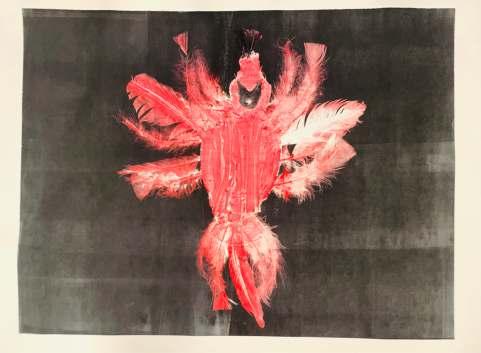
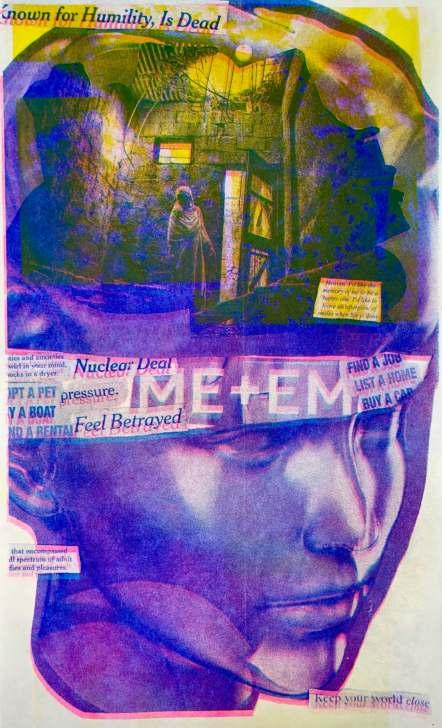
Cardinal (left) & Humility (right) by Rabiah Aziz
I.

Everlasting Glory
Writer: Tina Ni Editor: Ari Kikuta Designer: Miranda Liu
The death of a god is typically a quiet affair.
Within the ruins of an ancient kingdom long forsaken to history, a deity, once beloved as the land’s patron god, drifts into the warm embrace of Their final rest.
This is the fate of a forgotten god. Nameless, and withering.
Even the specters of divinity must yield to the inevitable winds of time. All that has made THEM great, all of which They have shaped to become a legend, have long since run its course. Ever drifting, the seeds of Their essence must serve as the root for the next cycle of gods.
Within the cradle of the civilization that was once their home, the waning spirit takes a final breath, just as the string that tethers Them to Their sole devotee dissolves into golden mist. At the base of a sculpture carved in the likeness of Their image, the Knight collapses in anguish. Without having been told, they know deep in their soul what has finally occurred.
“Why…? Was my devotion not enough?” the Knight pleads, blinking up toward the statue through mournful tears.
It was all wrong. This figure does not resemble their friend. Though humanoid in form, it is still far too removed from the image of the god the Knight keeps in memory. Yet, this is all that remains of the lost god, salvaged from the wrecks of THEIR fallen land.
The one the Knight had known was like the morning sun. The light that dawned upon their dark world, setting their sights toward what they were once blind to.
At the end of every story, the Hero reaches a resolution.
“I promised I would stand by you until the end of the world. Now that you are gone, I have nothing else to aspire to. This final death marks the end of my journey. ”
When asked, the locals of the village will direct any travelers toward the cavern nestled deep within the base of a mountain at the forest’s edge.
“Holy Knight of might you heed our call?”
Time flows thickly in the realm of the Knight in their self-induced rest. Wallowing, pitying.
How much time has passed since they last felt alive? They cannot tell. A feckless husk of what they once were, they ignore the pleas of the acolytes that gather outside their domain.
But after seven days and seven nights of resistance, irritation begins to stir in their breast.
Telling themselves, ‘just this once’, at last they acquiesce to their audience.
Through a series of convoluted reasonings the Knight does not attempt to comprehend, the acolytes explain that—as ordained by a great prophecy—the fate of the world will soon hang on their shoulders, and it is their destiny to, well, save the world.
Firmly, the Knight rejects their summons.
They hold little love for the world that cast aside their god. They, who was buried due to humanity’s ignorance.
People say that apathy breeds contempt, but at the end of every dark tunnel, a golden light shines.


Deep in the recesses of their dreams, the Knight feels the familiar caress of warmth against their skin. Day after day, night after night, they chase after that gentle and comfort. What is the purpose?
“D , " a voice echoes, hauntingly unfamiliar. "Remember your promise to me." Shaken, they rise from their slumber and emerge from the mouth of their domain and into the world.
The night air is pleasant and crisp with winter chill; gleaming stars hang low above the forest canopy. The Knight wanders aimlessly through the lands as the moon charts its course across the sky. Little seems to have changed in their absence, yet they can't shake the feeling as if something was off, missing.
When the first glimpse of the sun's golden rays creeps upon the horizon, the Knight comes across a small child curled over the gnarled roots of a large tree.
"What are you doing?" the Knight asks.
"I have run away," the child explains, poking at the scratches and bruises decorating their legs. "There is no place left for me, so I am waiting out here to die."
The Knight feels unexpectedly indignant by this. "What a waste of a life!" they exclaim.
The child shrugs, then turns over to sleep.
At a loss for further words, the Knight lies down beside the child. A strange sense of protectiveness curls in their heart.



A century ago, In search of mortal glory, a young hero set off from their home to journey to a foreign land.
Although scarcely human, the sheltered youth's naive wish was to leave a beautiful mark on the world. How could they have known that through a stroke of bad fortune, their travels would instead take them through the thorn-laden path teeming with all the ugliness humanity has to offer, instead?
Blessed with superior strength and power incomparable to most mortals, the hero quickly grew disillusioned with the frailty of humanity and their virtues. Repulsive vermin, the lot of them were. Everything was tainted.
On the road back home, they stopped to rest by a chapel. There, they found a lone figure dressed in white, sitting by a tombstone.
The figure beckons the weary hero over, and together they fall into the lull of mindless conversation.
A debate arises about the worthiness of humanity. The figure in white argues that there is always hope and love to be found, while the hero argues against.
It feels as if the hero has finally emerged from the belly of the beast. An angel, fallen from heaven, has c to show them the true beauty of this world.
The angel hums deep in thought before exclaiming, “Oh! I know.”
The hero waits, wide eyed as the angel steps closer to them. Eclipsing the sunlight, they extend a welcoming hand toward the hero.
"You can be my knight! That's something that will give you a sense of duty, won't it?"
And so the new dawn began.
V.
This story is dedicated to you.
Though you may carry sorrow deep within your breast, just as the sun always emerges from the horizon every passing day, there will always be a new dawn.
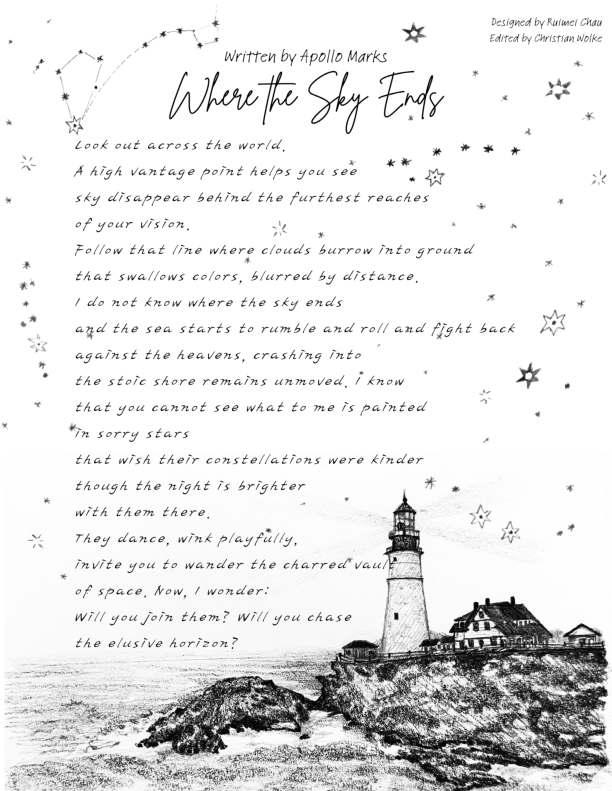
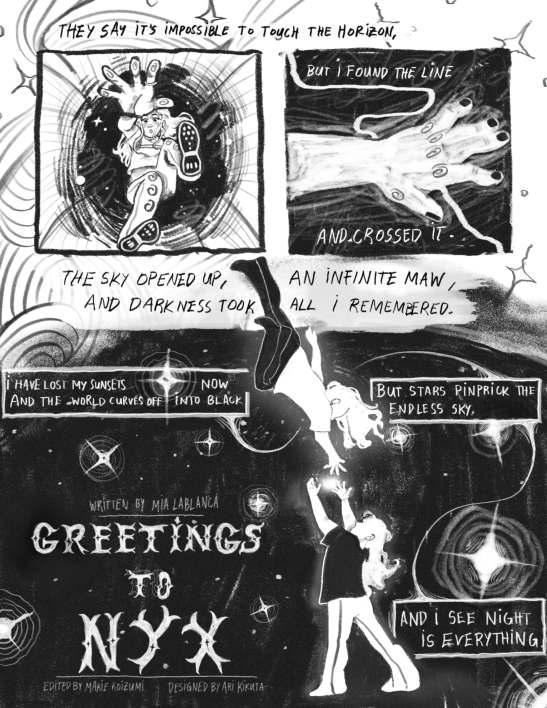
EditedbyHadleySnell|DesignedbyMichelleMi
WrittenbyAkshayaRaghavan
Time is a double-edged sword that I am yet to master allowing me to grow but limiting me with its weight
I stand where many stand hoping to know myself but the light diffracts me into kaleidoscopic facets
Colors flow and muddle contradictions arise
I cannot tell what is real and what is a projection

I thought I had changed but the tide retracts eventually revealing sharp fragments embedded in smooth dunes
Dreams spiral into a vortex beliefs escape from my grip crumbling away like wet sand while I sink without a fight
An orb of light glows from within my chest creating golden outlines in the distant waves
My eyes are finally open Time is meaningless and I become myself ad infinitum
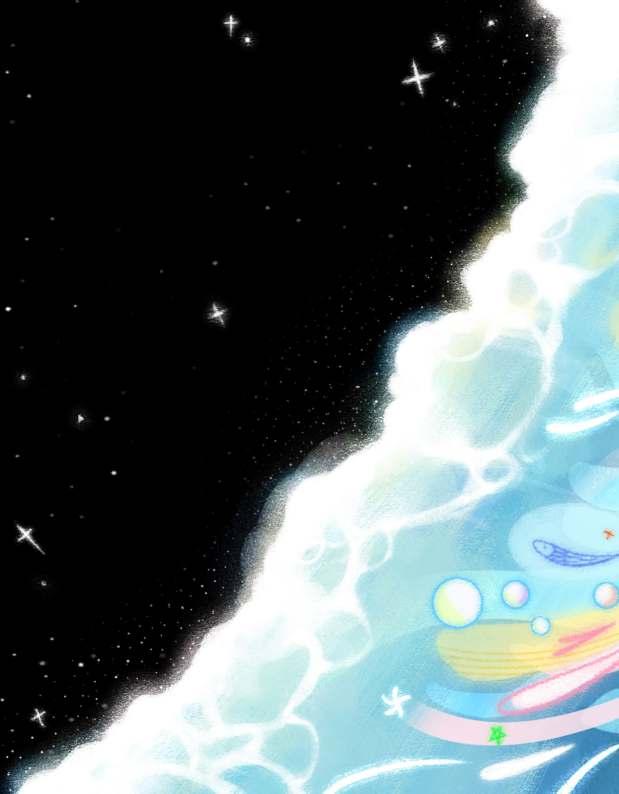
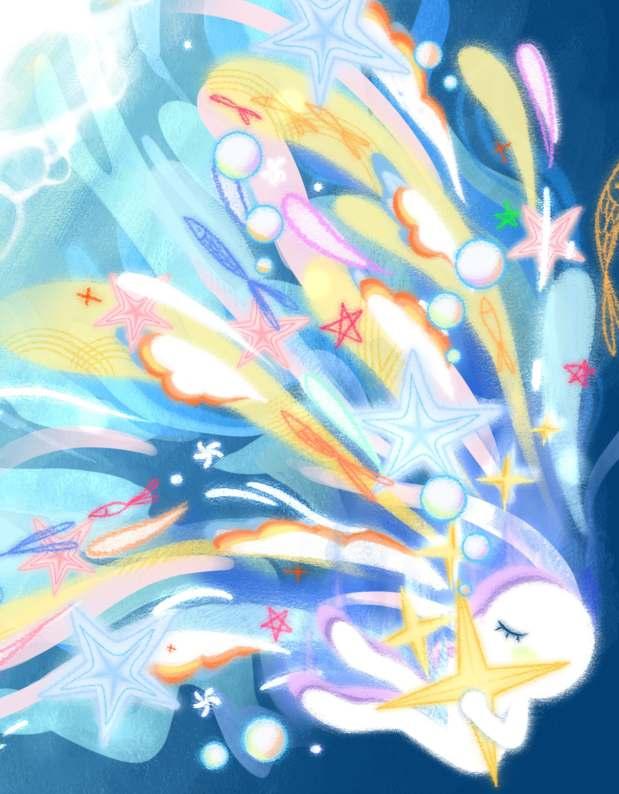
In the fissures of the earth, you feel the heat, the fevered hum of a sun beneath your feet. No simple star, but a wild, burning name —“The Distance”— an ambition, a thundering flame, raging in your chest, a storm in the soul, the first to measure the void, to make it whole.
*After the myth of Kua Fu, who chased the sun
With every stride, the dust is woven to wind; your eyes fixed on the horizon, bright as a silver lure. A perfect lie, a masterpiece of guile: for every step you gain, it shifts its face. Forever at the edge of all we see, taunting the brave with its merciless decree. Into the parched beds, your sweat begins to cry; the Wei and the Yellow answer with a thirsty sigh. Muscles tear, the heart drums out its thud; it is not the fire alone that burns your blood, but hunger—to touch, to grasp with your hand the Alpha and Omega of that luminous land.
When the body collapsed and the flesh met the clay, your staff bloomed to peaches in the light of day. The world had called your chase a folly, a doomed design,
As long as the sun climbs the arc of the sky, where gold meets shadow, you do not die. Still running, still seeking, through the ages of man, never arriving—yet forever widening the span.
Mythic context:
This poem draws on the Chinese myth of Kua Fu, the giant who chased the sun. In some versions, dying of thirst during the pursuit, he drinks from the Yellow River and Wei River, and after death his staff transforms into a peach grove.
Writer: Yonghan Chen
Editor: Ember Tao
Designer: Yonghan Chen
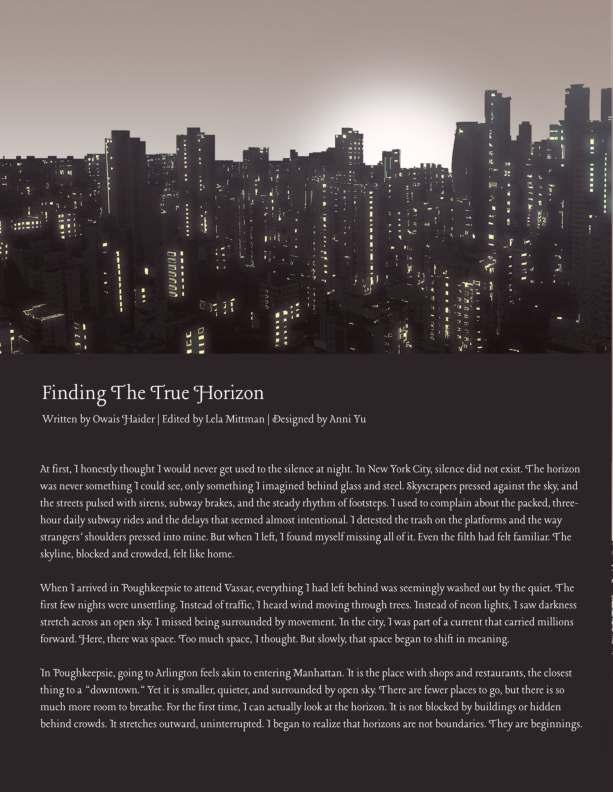
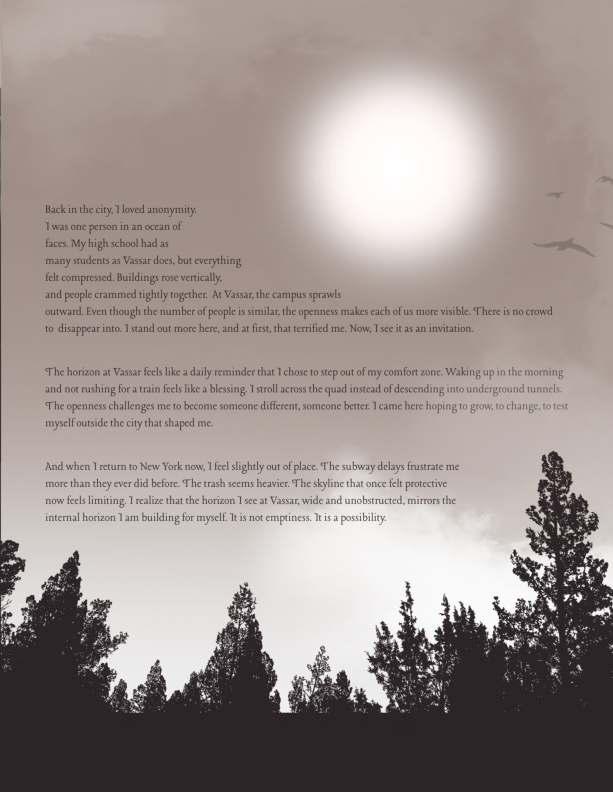
Written by Jing Seto
The Flavors That Never Change
Edited by Ulysses Bergel | Designed by Michelle Mi
Over winter break, I traveled to Taiwan for the first time in five years. With my family, I went to a nightmarket in Taipei to get 汤圆 (Tang Yuan), the same place we’ve gone for years. For me, it was like experiencing a physical manifestation of my memories—the jumbled, lively atmosphere hadn’t changed since I was twelve, eight, or four years old. I ordered a bowl of six peanut tang yuan served atop a bed of shaved ice, prepared the same way for over a decade. The steam fogged up my glasses as my teeth bit through the chewy glutinous rice, releasing the warm peanut filling inside. The grainy crushed peanuts coated my tongue, sweet but not overpowering. It was delicious.
Taiwanese nightmarkets are culinary machines with a hustle that is almost palpable. People explore the streets of specific neighborhoods, passing by blocks of food carts and hole-inthe-wall restaurants looking for their favorite bites. The servers and chefs waste no time getting your order and serving you. With bubble tea, fried popcorn chicken, takoyaki, tang yuan and more, the staples of the nightmarket have roots in various cultures, reflecting Taiwan’s complex and contentious history.
The island itself has been controlled by the Dutch and Spanish, the Qing Dynasty, the Empire of Japan, and finally, the Republic of China (led by the Chinese Nationalist Party). The Chinese Nationalist Party retreated to Taiwan in 1949 following their defeat by the Chinese Communist Party in the Chinese Civil War. This history gives rise to the modern-day circumstances, with China pressuring for reunification and control. For many Taiwanese citizens, they’ve lived their entire lives under this looming threat.
Over the last several years I’ve seen just how precarious the balance of peace can be. When Russia first invaded Ukraine, one of my first thoughts was “What if China initiates a similar invasion in the name of “justified reunification”? How would I feel if I opened up the news to see rubble that was once the streets that I grew up on? Yet the threat and everpresent danger of a Chinese invasion is something the Taiwanese have grown accustomed to.
I’ve watched these tensions grow from the news I consume in the US. Articles frequently tell of Chinese fighter jets flying through Taiwanese airspace, or about increasingly bold military invasion drills. So on the flight to Taipei, I was expecting to land in a very different place from the one I left.
My tang yuan tasted like it did every time. The sights, sounds, and smells of the city were just as I remembered. I saw kids going to school in the uniforms that I once wore, the cafe where I used to do homework, the apartment that was once my home. The distinct jingle that Taiwanese garbage trucks play still rang through the streets, and the aromas from restaurant kitchens—sizzling chili peppers, steaming buns, grilled onions— continued to make their way to my nose. Perhaps most importantly, the flavors hadn’t changed a bit. I was surprised and relieved to find that virtually nothing had changed.
At some point along the trip, I realized that part of me was already worrying about what the future of Taiwan would look like. I had to take a step back and realize that my emotions were mirroring those from five years ago, the last time I knew I would have to leave. Watching the activity of the city around me, I began to understand something. The Taiwanese read the same headlines I do. And yet the nightmarkets are just as vibrant, the garbage trucks still play their happy high-pitched jingle, and the tang yuan are made the same way they’ve been made for decades. The Taiwanese aren’t unaware of what looms over them. It’s not ignorance or denial—it’s something more deliberate. It’s the choice to focus on living life and enjoying the moment.
I’m still learning how to do that. At the very least, I know that the best response to an uncertain horizon isn’t to stop watching the sunset.
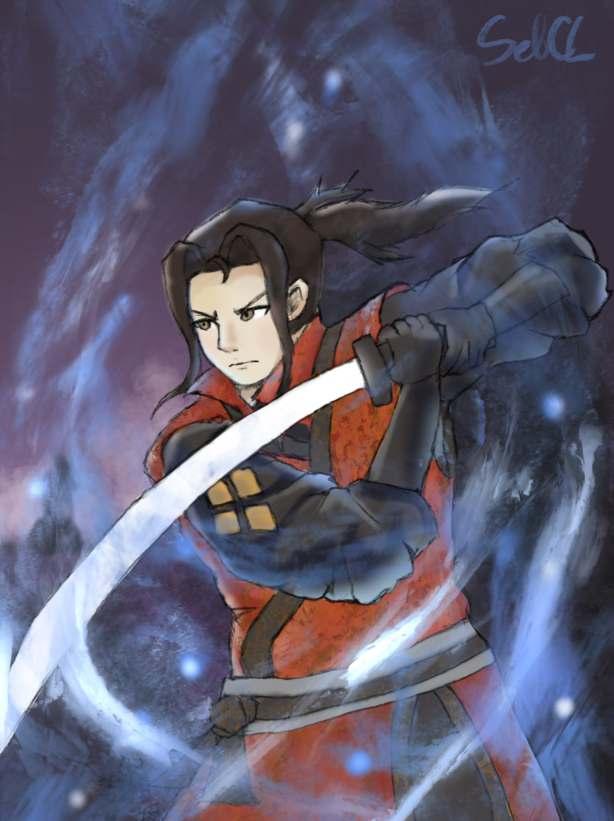
For New Horizons
OWritten and Designed by Sebastian Chang-Leung
OEdited by Angela Moon
The Octopath Traveler series is one of my favorite video game series, but even with the recent release of Octopath Traveler 0, I still prefer II out of the three main titles. I didn’t even think I would enjoy it that much when I played the original, as it wasn’t a game I had my eye on. Rather, my dad had bought it for me, but playing it broadened my horizons to this genre of turn-based JRPGs. The original is what got me hooked, and the Bestower themes of 0 are some of my favorite of Yasunori Nishiki’s compositions, but the thing that most engaged me with the middle entry was the characters. As the title suggests, the Octopath Traveler games follow the journeys of eight different characters, which you can complete in any order. Compared to a linear story, having eight characters set off on new horizons creates a different narrative dynamic and feeling to the experience. In the original, while they all take place in the same world and there are some interactions between the protagonists, such as with lore or tavern talks, their stories still feel largely separate. In the newest release, while the narrative is the most interwoven, it deviates from the traditional formula by having over thirty recruitable characters, as it was based on the series’ mobile gacha title, with eight main antagonists rather than travelers. This meant that many of the playable characters were less developed, some only having a single quest attributed to them rather than a whole storyline. Octopath Traveler II hits the sweet spot by featuring a core cast of eight, while also having their stories contribute to a final combined narrative involving all of the travelers.
Octopath Traveler and Octopath Traveler 0 both take place on the continent of Orsterra, with 0 serving as a prequel to the first, whereas Octopath Traveler II takes place on Solistia. Both continents have eight regions, one for each traveler, and while the environments and towns of Orsterra are certainly varied, they still generally stick to a medieval aesthetic. Solistia’s regions are more varied in setting, including woodsy Beastling settlements, an Industrial island entering the Age of Steam, and kingdoms inspired by Imperial Asia. One such kingdom, Ku in Hinouema, serves as the locus for one of the traveler’s stories: Hikari Ku, second prince of the kingdom. The main arc of Hikari’s story is reclaiming his land from his bloodthirsty half-brother Mugen, who staged a coup to take over as ruler. In Japanese, Mugen means infinity, while Hikari means light. Hikari, like the light of the sun, has to break the infinite line of the horizon in order for a new day to dawn for his kingdom. This is also the theme of the final combined storyline of the game, where an evil god is trying to deny the dawn and cast an eternal night over Solistia.
As I near the end of my first year at Vassar, I appreciate how coming here has broadened my own horizons, such as gaining new knowledge in my classes or meeting new people and friends. By joining clubs such as Portrait, I have been encouraged to further my knowledge and skills in my interests like art and playing the cello. In the Octopath Traveler games, the travelers each set out on their journey for something (in the case of the first game) or in pursuit of something (in the case of II), with this fact being referenced in their character music motifs, such as with Hikari’s being “In Pursuit of Kingship”. I have not yet decided what I will ultimately pursue after my college journey, but as I travel down this path I will continue to search for new horizons.
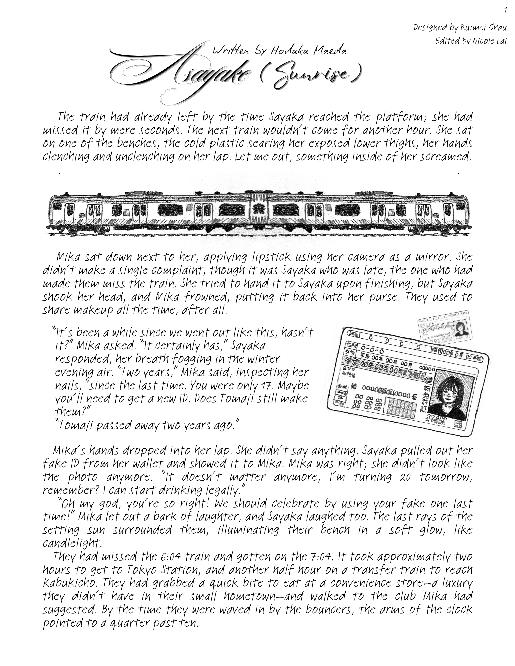
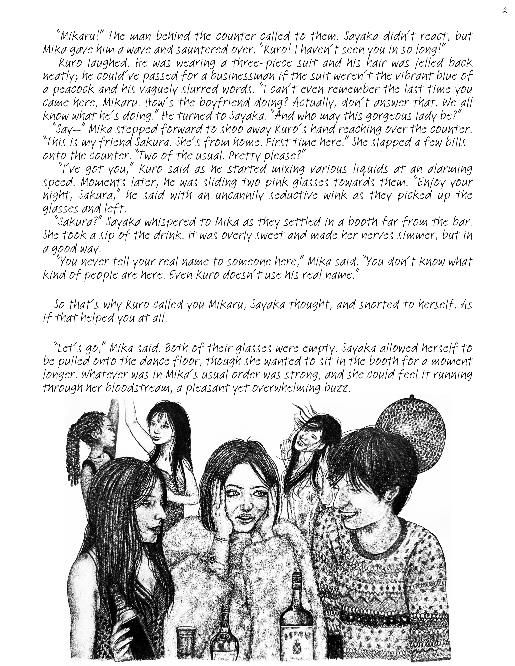
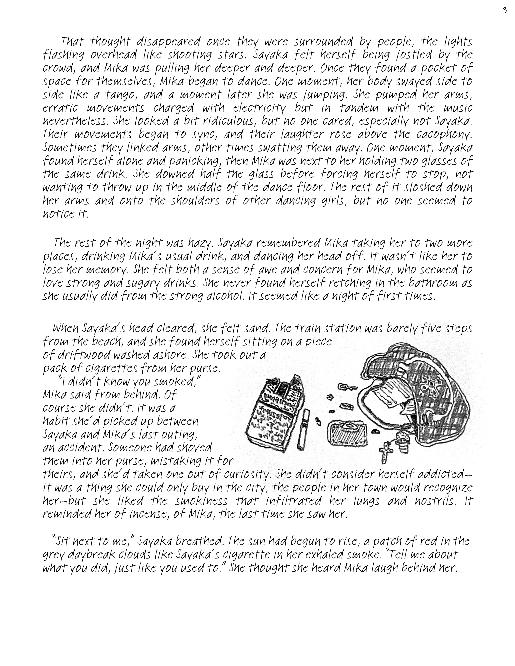
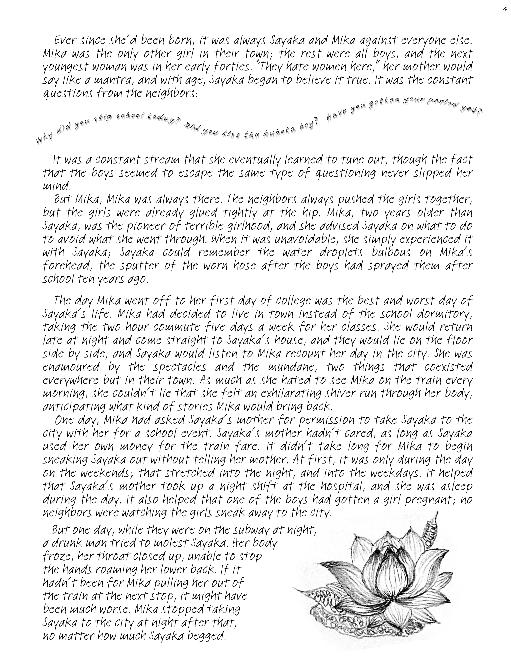
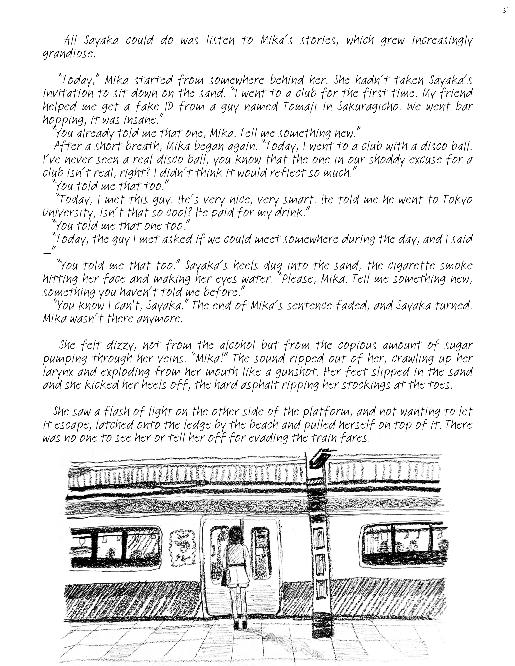
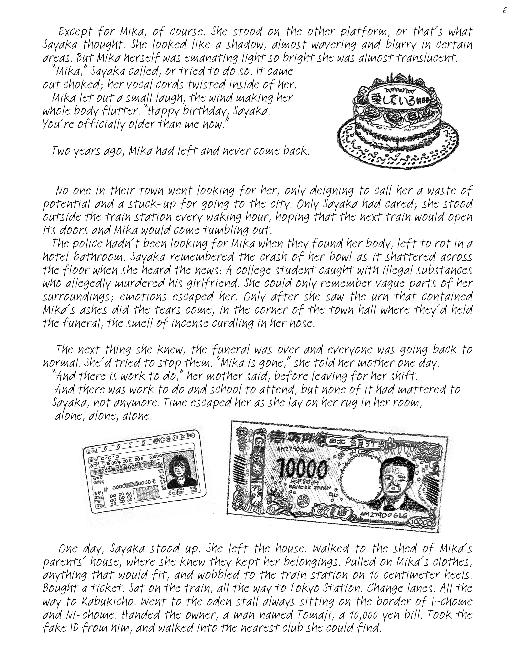
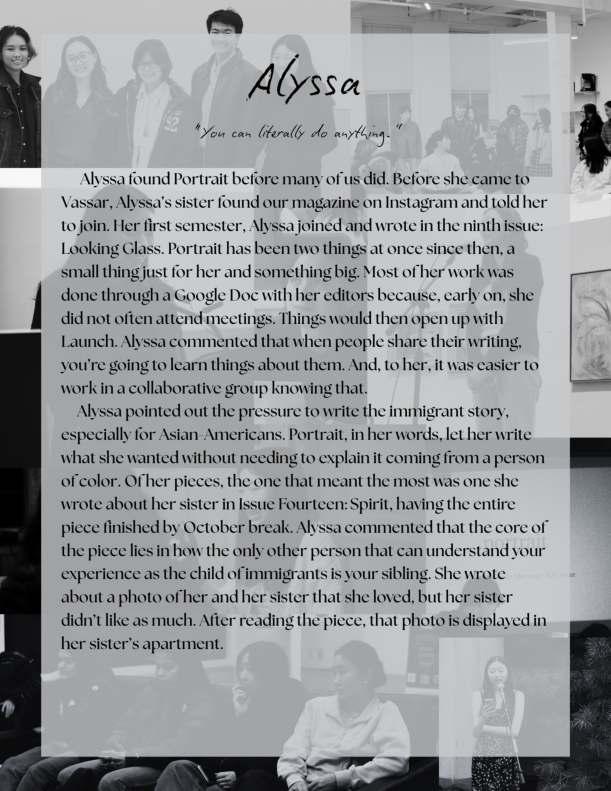
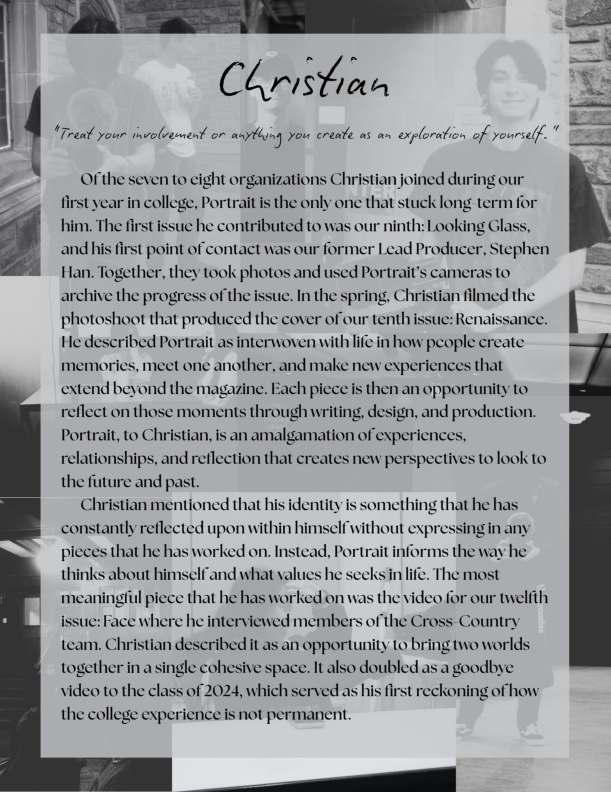
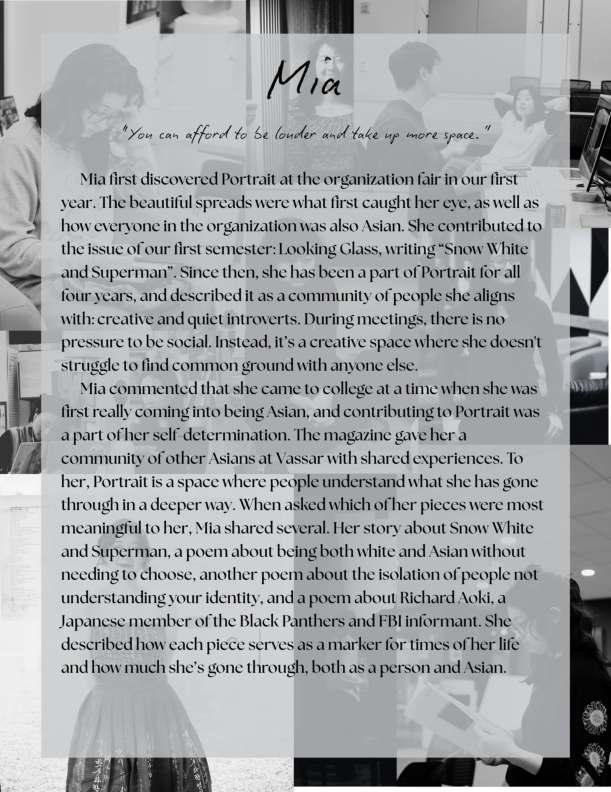
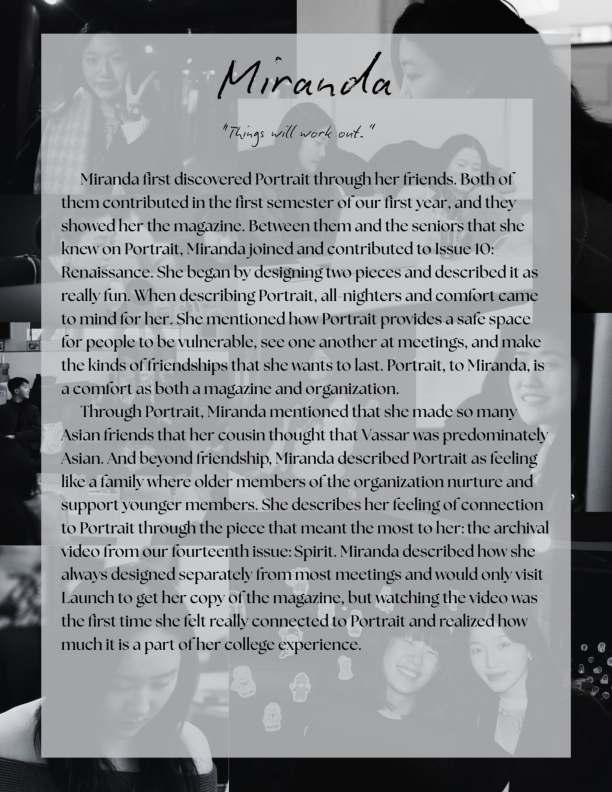
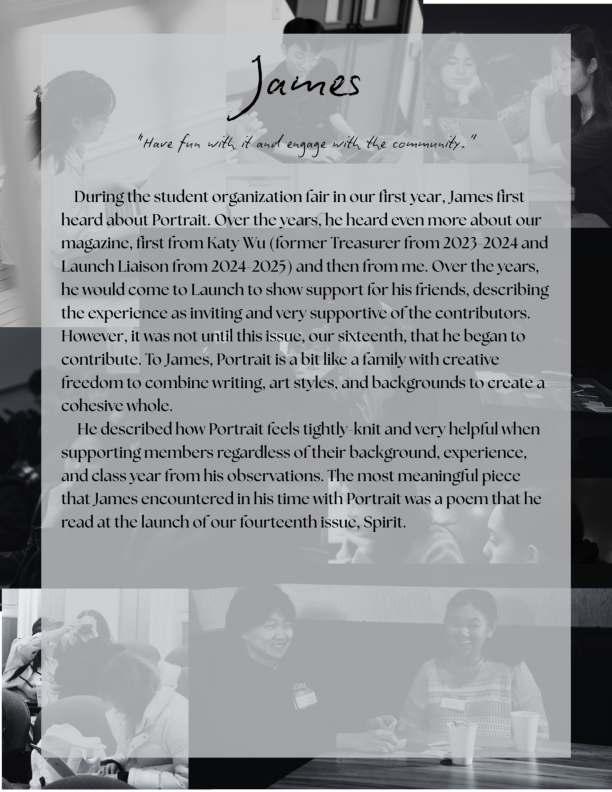
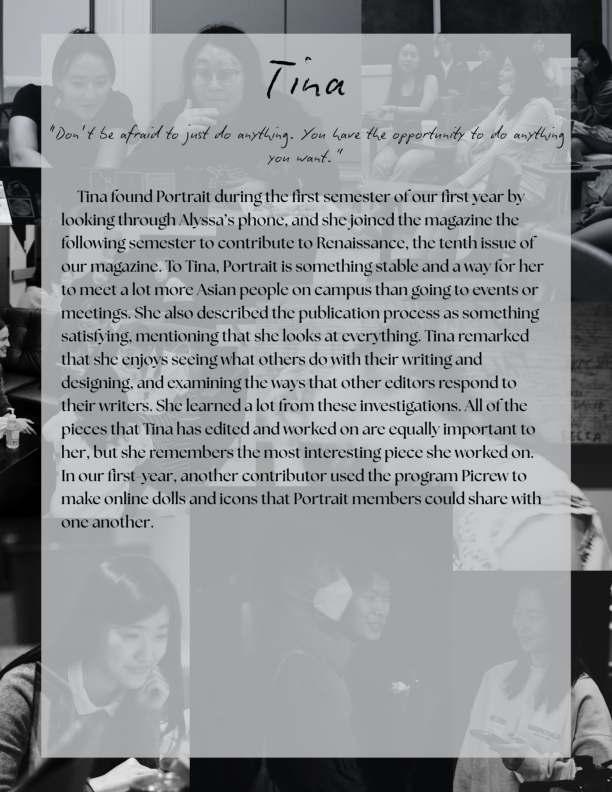
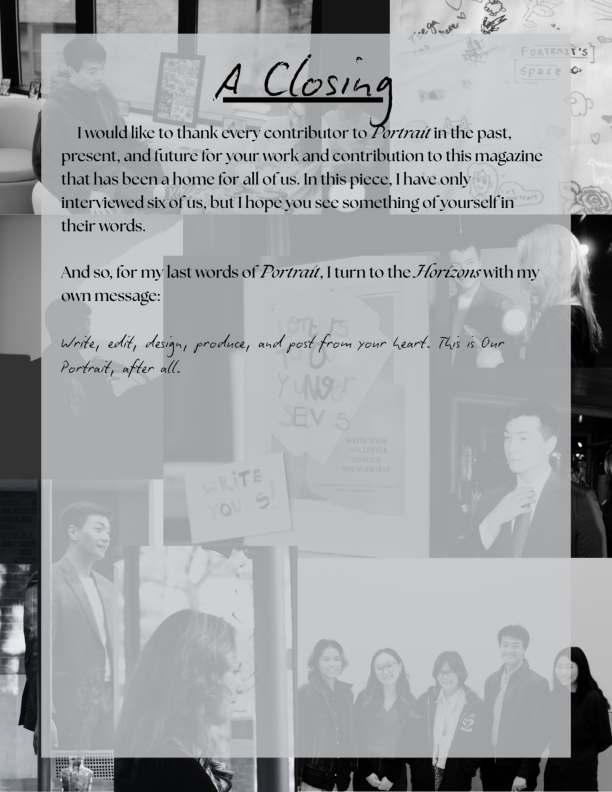
Dear Reader,
In my last semester as the First-Year Rep., I continue to feel so, so grateful to get to know the talented members of this magazine - writers, editors, designers, and the EB alike! The effort and care that is put into the Portrait community will always be one of my top highlights of Vassar. I cannot wait to be a part of future issues of Portrait and to see how the magazine grows.
This semester’s issue of Horizons is deeply creative and hopeful. The pieces I have read and worked on all explore exactly what Horizons means to them. These pieces share themes of appreciation for the past and for moving forward, whether bittersweet, resolute, or joyful. I loved reading how each piece felt intentional and carried so much hope in its stories. While my role as First-Year Rep. comes to a close, I look forward to being Design Lead for next year. This magazine truly means the world to me; it has built up my confidence and brought me so much joy.
This issue is a bittersweet one for me - I love the reflective theme, but it also reminds me that some of my favorite people will be graduating. In the spirit of new beginnings and cherishing past experiences, thank you to the wonderful seniors on EB: Miranda, Ulysses, and Christian for making this magazine such a welcoming space. I wish you all the best in your new horizons.
Sincerely,
Misha, First-Year Rep.
letter design | Miranda Liu
back inner cover design | Miranda Liu photos | Portrait Contributors
thank you for reading!


find blog posts, films, past issues, and more on our website readportrait.com
keep up with us!
instagram | @vc.portrait youtube | @vcportrait
linkedin | @vcportrait