St. George Blvd. Magazine | Summer Solstice 2026 — Vol. 1, No. 2
St George Blvd Microzine™ / Summer Solstice 2026.
S T G E O R G E B L V
Photo: Storme Kovacs
Page 07
Water Wars: First in Time, First in Right?
Page 18
Kids Corner: The Watcher on The Hill -The Silent Sentinel
Page 22
The Galactic Mind: Founder Jim Cloman
Letter from the Editor,
Many thanks to all who support this journey May we find joy, culture, and camaraderie in the pages that follow and may this work continue to bring us together in purpose and spirit
With gratitude and hope
Monica B Morrison Founding Editor & Creative Curator
S t G e o r g e
B l v d
St George Blvd
Magazine
St. George Blvd. is more than a magazine it's a gathering place. A place where stories of the desert meet stories of the heart. Where the people, the land, and the life of Southern Utah are celebrated in equal measure honestly, warmly, and without pretense. Within these pages you'll find the pulse of this remarkable corner of the world. Community voices and local legends. Timeless recipes passed down through generations. The red rock landscapes that don't just surround us they shape us. And the people who chose this place, or were born into it, and never looked back.
St. George has always been a town that beckons. This magazine exists to honor that spirit and to help you discover its wonder.
The Sahara's Fennec Fox, an evolutionary twin to the native Desert Kit Fox found roaming the red sands of St. George and Southern Utah
Photo: Storme Kovacs
“FIRST IN TIME, FIRST IN RIGHT”
Rights were recorded, not by those who lived there but by those that arrived.
This is not a metaphor, it became law.
BY MONICA B MORRISON | ST GEORGE BLVD NO 2 SUMMER SOLSTICE 2026
Utah water law runs on a principle called prior appropriation first in time, first in right. The person or entity that established a water claim earliest holds the senior right When the river runs low and there isn't enough to go around, junior rights holders get cut off first. The senior rights holders drink.
The system was designed in the 19th century to encourage settlement and irrigation across an arid West. The people who drew the lines were the people who arrived first and in Utah, that meant settlers who moved quickly, establishing farms, irrigation ditches, and legal claims before most anyone else had a seat at the table
WHAT “BENEFICIAL USE” LEAVES OUT
Under Utah law, water rights are only valid if the water is put to “beneficial use” a legal term covering irrigation, industrial purposes, and municipal supply.
Those original claims have been passed down, sold, and consolidated for 150 years. They sit at the top of a legal hierarchy that has barely changed since. New residents arriving in St. George or Springdale today have no claim to that history. They turn on the tap and it works for now because the infrastructure is still delivering. But the Colorado River system that feeds it is in crisis, and the math of growth versus supply is not a mystery. It is a reckoning that keeps getting deferred
What it does not easily cover: feeding families on a small farm Restoring a degraded wetland. Protecting minimum river flows so the fish that live in them don't disappear. The ecological health of the Virgin River, which winds through Washington County on its way from Zion to Nevada, has no legal standing under current law. The river has no seniority It cannot hold a water right
The Virgin River chub and the woundfin fish found nowhere else on Earth are hanging on in a system that does not legally recognize their right to the water they need to survive.
“Beneficial use should mean feeding people, growing food, and sharing life not just pumping into ditches.”
For centuries before the ditches were dug, Utah's Indigenous nations managed water communally, guided by principles of balance and shared stewardship. The Ute, Navajo, Southern Paiute, Goshute, Shoshone, and Ute Mountain Ute communities lived within these watersheds and cared for them. Their water use was not based on private ownership. It was based on relationship.
The prior appropriation doctrine, built on the concept of individual ownership and historical accident, does not reflect those values and in many cases actively displaced them. Many tribal communities still lack full legal access to their traditional water sources, despite long-standing use and treaty protections that predate the state of Utah itself.
This is not ancient history. It is the present condition of water governance in this state
AN INVITATION TO RETHINK
This article is not an indictment. The people who built St. George, who farmed the Hurricane Valley, who established the water infrastructure that serves hundreds of thousands of people today they were working within the system they had, solving the problems in front of them
But a legal framework designed for 19th-century settlement is not adequate for a 21st-century reality of climate variability, population growth, ecological stress, and the long-overdue recognition of Indigenous sovereignty.
Reform conversations are happening Water policy researchers, tribal nations, and environmental advocates are working toward recognition of the public trust doctrine the principle that water belongs to everyone, held in common for current and future generations, not simply allocated to whoever established a claim first.
"Tribal nations are the original stewards of Utah's waters. Their voices must guide reform."
A WORKING FRAMEWORK
A working framework the Utah Water Justice & Public Trust Act, a citizeninitiated proposal offers a starting point for what that reform might look like:
Water as a public trust governed for the benefit of current and future generations, not treated as a commodity First Peoples, First Rights recognizing Indigenous sovereignty and centering tribal leadership in water governance reform
Equity over seniority replacing a doctrine that perpetuates historical inequity with allocation that reflects need, ecology, and justice
Living waters, living systems legally protecting rivers, aquifers, and wetlands as the living systems they are
Community and Tribal Advisory Councils permanent, well-resourced bodies guiding ongoing water policy
This draft is not law It is an invitation to tribal nations, legal experts, water stewards, farmers, and community members to review, critique, and shape a conversation that affects everyone in this watershed.
TO THE TRIBAL NATIONS OF UTAH
This publication and this series approaches your nations with respect and with the recognition that your expertise, your history, and your sovereignty are essential to any meaningful reform.
We are reaching out to the Ute, Navajo, Southern Paiute, Goshute, Shoshone, and Ute Mountain Ute communities individually and with equal respect. No statements or positions will be shared publicly without consent. If your Nation wishes to respond, to correct, to guide, or to contribute a statement to future issues of this series, that invitation is open and genuine.
The rivers have been running through this canyon for millions of years. The people who understood it best were here long before the law arrived to divide it.
Their knowledge belongs in this conversation.
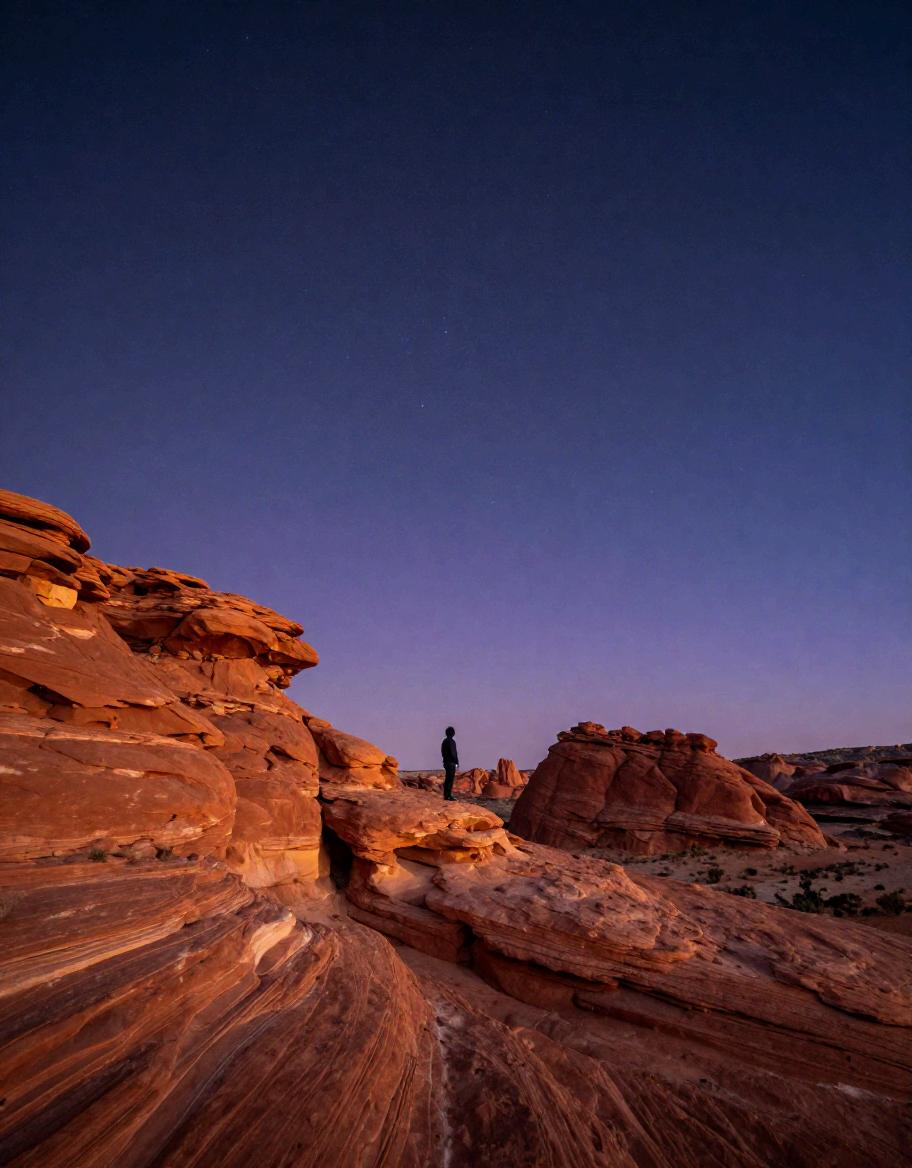
The canyon was built over millions of years by water, wind, and heat. The sky above it has been the same sky for all of that time. Some nights, standing in the dark below those walls, you can almost feel the scale of it.
Water Wars is an ongoing series in Zion Park Blvd and St. George Blvd magazines (Microzines™) examining water law, Indigenous rights, growth, and the future of the Colorado River watershed.
Responses, corrections, and contributions from tribal nations and community members are welcomed.
Annette Baca L'Archevêque
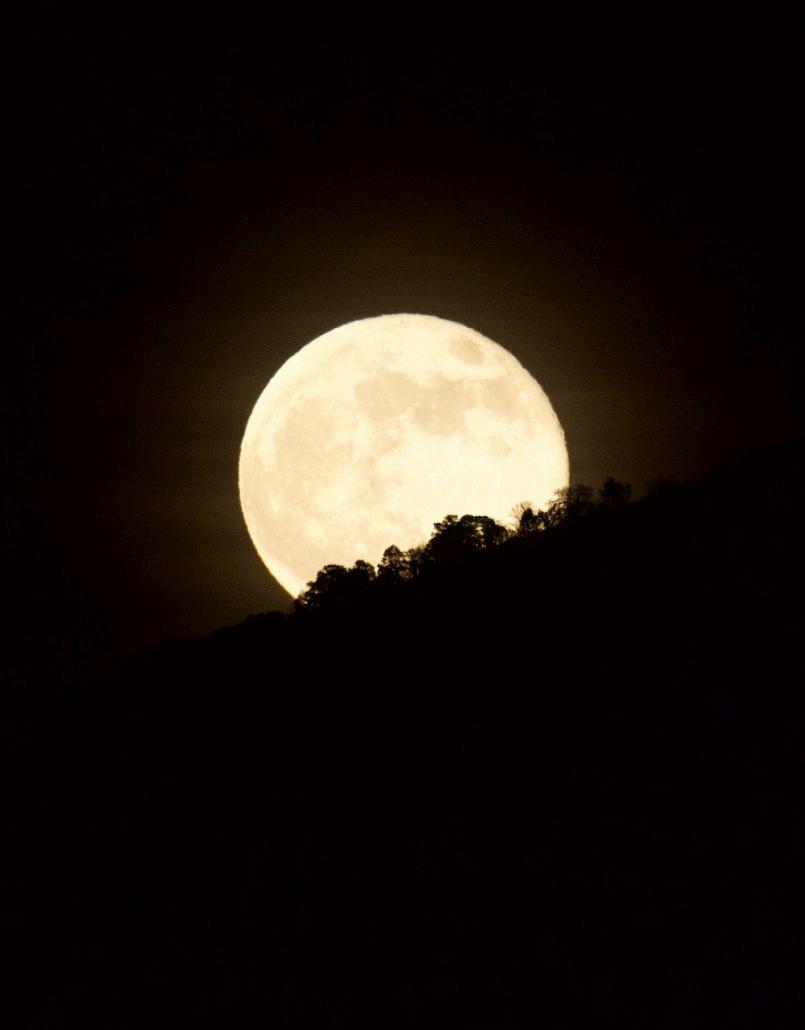
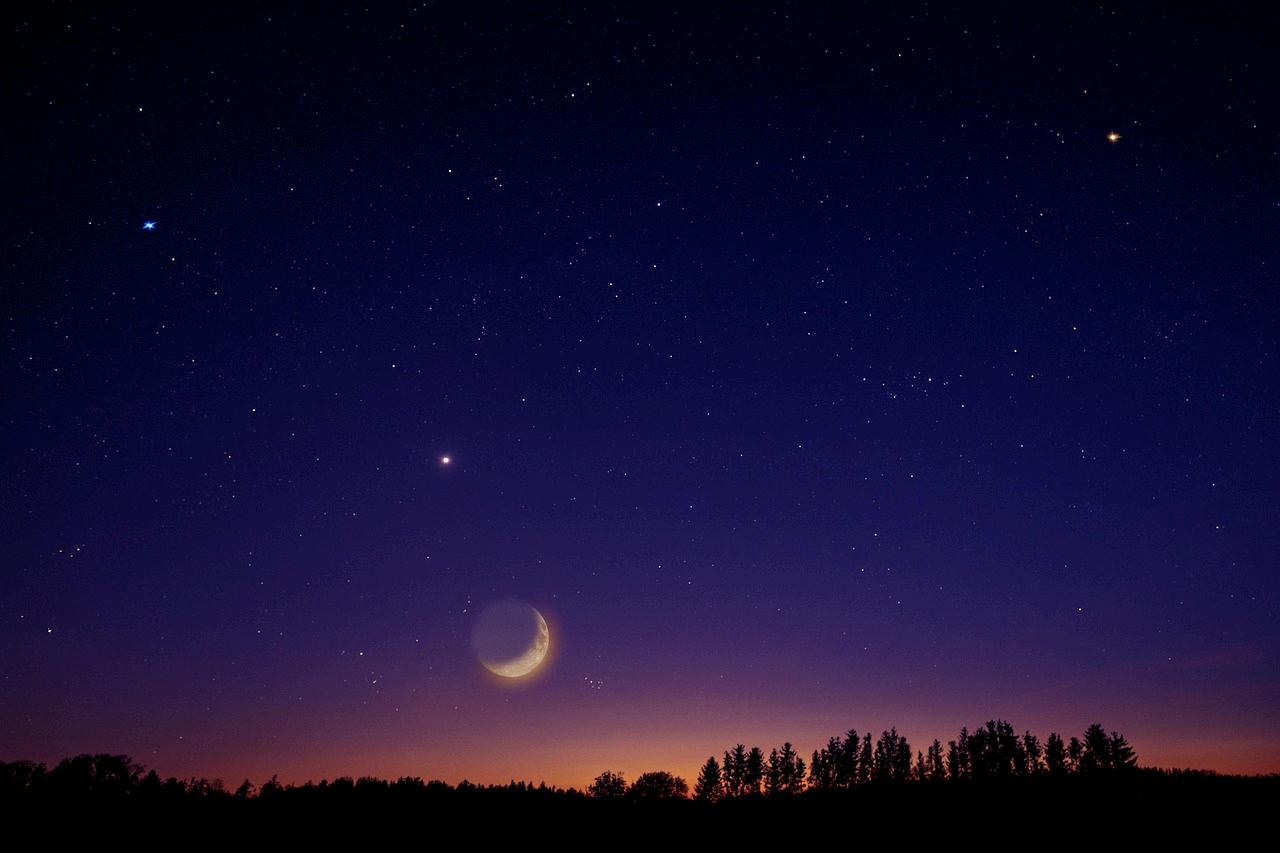
In ancient Greek mythology, the goddess Selene was the moon, driving her silver chariot across the night sky. The Aztecs revered the full moon as a symbol of fertility and rebirth. In Native American traditions, it was sacred too linked to spiritual rituals and nature's cycles.
LIGHT SOURCE
Across every civilization that has ever looked skyward, the full moon has stirred something deep and unnameable. In China, it embodied yin the quiet, intuitive feminine force celebrated each autumn in festivals of lanterns and mooncakes In Celtic tradition, it was Cerridwen, keeper of the cauldron of knowledge, a symbol of wisdom passed down through moonlit generations.
Even our language carries its fingerprints. The words "lunacy" and "lunatic" trace back to Luna, Rome's moon goddess an echo of the ancient belief that the full moon could move the human mind, just as it moves the tides. Perhaps that's the real mystery. Not what the moon is, but what it does to us the way it silences a room, pulls us to a window, and makes us feel, just for a moment, that we are part of something much larger than ourselves
Here in the desert Southwest, under skies rarely interrupted by city light, that feeling is especially alive. Step outside on a full moon night in St. George, and you'll understand why every culture that ever existed looked up and believed.
Photo: A. L'Archevêque
i l i
R e d D e s e r t C h
INGREDIENTS:
TheBase: 2 lbs ground beef (or ground turkey for a lighter version)
1 large yellow onion, diced
4 cloves garlic, minced
2 tablespoons olive oil
TheSauce:
1 can (28 oz) crushed
tomatoes
1 can (15 oz) tomato sauce
1 cup beef broth (or water)
TheBeans:
1 can (15 oz) kidney beans, drained and rinsed
1 can (15 oz) pinto beans, drained and rinsed
1 can (15 oz) black beans, drained and rinsed
TheSpices(TheRedDesert
Magic):
3 tablespoons chili powder
1 tablespoon ground cumin
1 teaspoon smoked paprika
1 teaspoon dried oregano
½ teaspoon cayenne pepper (optional for heat)
1 teaspoon salt
½ teaspoon black pepper
1 tablespoon honey (balances the heat)
OptionalToppings:
Shredded cheddar cheese
Sour cream
Fresh cilantro
Diced avocado
Crushed tortilla chips
Lime wedges
R e d D e s e r t C h i l i
RedDesert ChiliRecipe
SERVES: 6-8
PREP TIME: 15 minutes
COOK TIME: 45 minutes
TOTAL TIME: 1 hour
INSTRUCTIONS:
1.BrowntheMeat
Heat olive oil in a large pot or Dutch oven over medium-high heat. Add the ground beef and cook until browned, breaking it up with a wooden spoon (about 6-8 minutes). Drain excess fat if needed.
2.BuildtheFlavorBase
Add the diced onion to the pot and cook until softened (about 5 minutes) Stir in the minced garlic and cook for another minute until fragrant.
3.AddtheSpices
Sprinkle in the chili powder, cumin, smoked paprika, oregano, cayenne (if using), salt, and pepper. Stir well to coat the meat and onions. Let the spices toast for 1-2 minutes to release their flavors.
4.PourintheTomatoes&Broth
Add the crushed tomatoes, tomato sauce, and beef broth. Stir to combine. Bring to a simmer.
5.AddtheBeans&Honey
Stir in all three types of beans and the honey. Reduce heat to low, cover, and let it simmer for 30-40 minutes, stirring occasionally. The longer it simmers, the deeper the flavors.
6.Taste&Adjust
Taste and add more salt, chili powder, or honey as needed. If it's too thick, add a splash of water or broth. If it's too thin, let it simmer uncovered for a few more minutes
7.Serve&Enjoy
Ladle into bowls and top with your favorite fixings cheese, sour cream, cilantro, avocado, or crushed tortilla chips. Serve with warm cornbread or tortillas on the side.
The walk back down the hill felt different. The hollow ache in Eli's chest hadn't vanished, but it had softened, replaced by a strange, humming curiosity. All night, as he drifted to sleep, he couldn't shake the image of those piercing, amber eyes reflecting the full moon.
"The Silent Sentinel"
C o r n e r
K i d s
The next evening, the desert heat refused to break. The air was thick, and the silence in the house was too heavy to bear. Without a word to anyone, Eli laced up his sneakers.
His feet knew the path before his mind even made the choice. He was going back up.
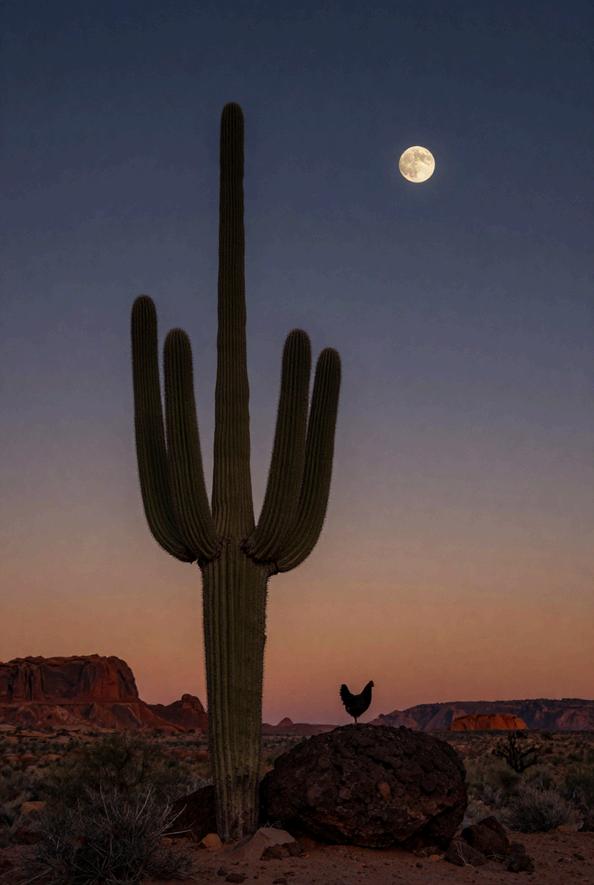
As he climbed, the wind began to howl, whipping dust across the basalt flats. Up ahead, the jagged silhouette of the old cactus loomed against the twilight sky. It looked as bold and scarred as ever, a towering monument of the St. George desert.
But when Eli reached the crest, his eyes didn't look at the cactus. They searched the shadows at its base.
She was already there.
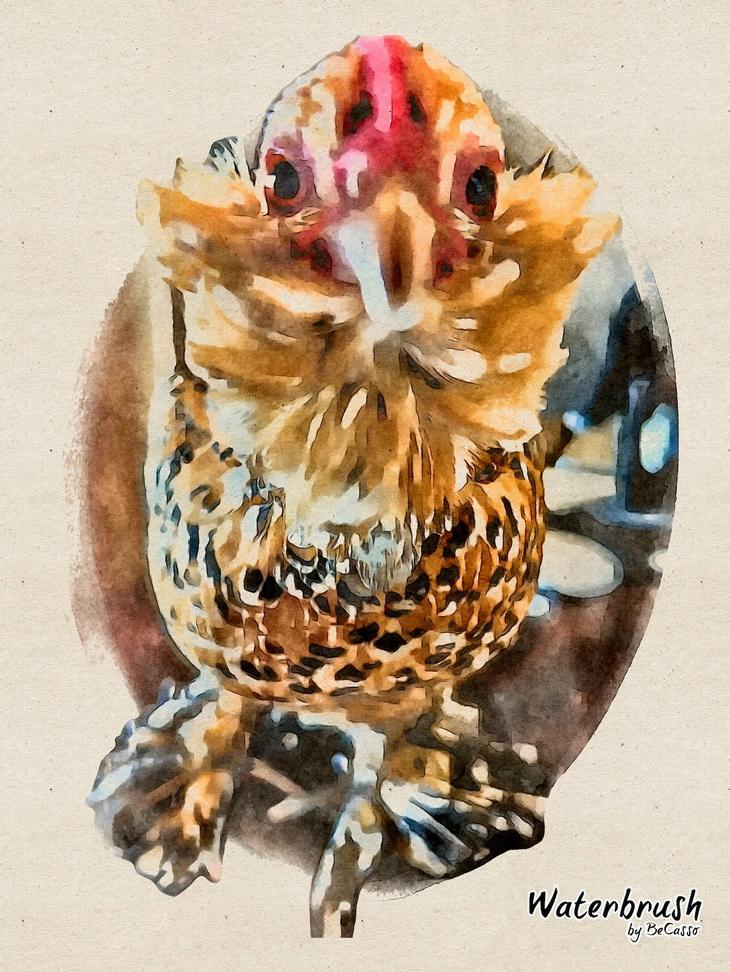
The little chicken sat perfectly still on a flat volcanic stone, right in the shadow of the giant plant. In the fading light, her feathered boots blended seamlessly into the gravel. She didn't rustle. She didn't scratch the dirt. She simply tilted her head, her unblinking gaze locking onto Eli the exact second his foot cleared the ridgeline.
Eli took a slow step forward. "Hey there," he whispered, his voice catching in the wind. "You're still here."
He sat down on the same cool rock as the night before. This time, he didn't look out at the horizon or up at the stars. He watched the chicken.
And that's when the pieces began to click together. For generations, town folks had climbed this hill. They had looked at the massive, scarred plant and whispered stories about "The Watcher." But a cactus is just a plant. It reacts to the sun, grows toward the light, and stands frozen in the wind. It doesn't choose to look at you.
This bird did.
With an eerie, absolute stillness, the chicken shifted her weight. Her head stayed perfectly level, tracking Eli's every micromovement with an intelligence that felt entirely too heavy for such a small creature. She wasn't acting like an animal seeking food. She was acting like a guard on duty.
The realization washed over Eli like a wave of cool water. The cactus wasn't the Watcher. The cactus was just the landmark—the giant green signpost pointing to the hill. She was the real Watcher. She was the patient, quiet holder of the desert's secrets.
Eli reached into his pocket and pulled out a small, faded yellow tennis ball. It was covered in teeth marks and desert dirt Scruffy's favorite ball. Holding it made Eli's chest tighten with a familiar sadness, but he felt safe here. He rolled it gently across the dirt toward her.
The ball stopped just inches from her feathered feet.
The chicken didn't flinch. She looked down at the bright yellow ball, then looked back up at Eli. Slowly, she hopped off her stone. With a gentle, deliberate motion, she leaned down and gave the tennis ball a soft, reassuring tap with her beak.
The ball nudged forward, rolling right back to Eli's shoe.
Alow, vibrating click resonated from deep within the chicken's throat. It wasn't a panicked cluck, but a rhythmic, comforting sound. It was almost like she was saying, I've got you.
Eli picked up the ball, a tiny smile finally breaking across his face. The Watcher didn't have fur, and she couldn't bark, but she held his gaze with total certainty under the first emerging stars. In that silent exchange, Eli knew the truth. She knew about his sadness. She knew about Scruffy. And she was going to keep watch over his broken heart until it healed.
Southern Utah’s Destination
A Microzine™ Inspired by Land, Legacy, and Wonder
ST GEORGE BLVD Magazine is part of our Microzine™ collection, a series devoted to exploring the diverse wonders of Southern Utah and its surrounding areas. With a focus on natural sciences spanning biology, earth sciences, and human wellbeing we aim to illuminate the beauty, complexity, and resilience of this remarkable landscape
At St George Blvd Magazine, our mission is to create space for reflection and understanding, inviting readers to engage deeply with the magnificent ecosystems that shape our surrounding red rock desert. Rooted in the wisdom of ancient and local communities, we are committed to sharing perspectives that honor the cultural and ecological heritage of southern Utah perspectives that are timeless, interwoven, and sacred
Through these pages, we celebrate not only the science of the land but the enduring relationship that Indigenous and local communities maintain with this extraordinary place. We invite all who walk these paths visitors and residents alike to discover the profound natural wonders and living stories that make Zion truly unique
The Southern Utah Founder Building a Publication for Curious Minds
Through The Galactic Mind, Jim Cloman is creating a home for people drawn to out-of-the-box thinking.
THE GALACTIC MIND
Every region produces its own kind of storyteller.
In the Southwest, stories are often shaped by distance, landscape, memory, and sky. There is room here for practical people, spiritual people, skeptical people, dreamers, builders, and wanderers. It is a place where history and imagination often sit closer together than expected.
For Southern Utah creator Jim Cloman, that environment helped shape the vision behind The Galactic Mind, an independent digital publication exploring anomalous phenomena, consciousness, philosophy, ancient mysteries, speculative science, and the edges of reality itself.
The Galactic Mind did not begin as a traditional magazine. It started in the faster-moving world of social media, where short videos and visual posts introduced audiences to strange questions, cosmic ideas, and stories from the unknown. But over time, Cloman saw the need for something more durable than a scroll.
He wanted a publication.
Not just viral posts. Not just mystery content. Not just another page chasing attention.
The Galactic Mind became a home for longer-form thinking. It now features Case Files, Dossiers, Deep Think essays, thought-provoking articles, and a free weekly Digest for readers who want the strange and big questions treated with more care.
That is part of what makes the project different. The topics are unusual, but the tone is not reckless. The Galactic Mind is interested in non-human intelligence disclosure, altered states of consciousness, ancient questions, future civilization, and the philosophical implications of discovery. But it approaches those subjects with a grounded editorial style.
The goal is not to make readers believe everything.
The goal is to make readers think.
THE GALACTIC MIND
For Cloman, the heart of the project is curiosity. He sees a growing audience of people who are tired of two extremes. On one side, they do not want every mystery exaggerated into certainty. On the other side, they do not want every strange subject dismissed before it is examined.
The Galactic Mind tries to live between those two habits.
Its Case Files look at real events, claims, and historical mysteries. Its Dossiers profile people and ideas shaping public conversations around science, disclosure, consciousness, and culture. Its Deep Think pieces ask what the unknown reveals about human identity, meaning, and belief. Its SPEC articles move into speculative territory, imagining how civilization might change if today’s fringe questions became tomorrow’s accepted reality.
In that way, The Galactic Mind is less about answers and more about orientation.
It asks: How do we stay thoughtful in an age of uncertainty? How do we explore mystery without becoming gullible? How do we stay skeptical without becoming closed off? How do we make room for wonder in a culture that often rewards certainty?
Those are questions that reach beyond non-human intelligence or ancient mysteries. They touch the way people live, believe, and make meaning.
They also reflect a very human story behind the publication.
Cloman is not building The Galactic Mind from a media office in New York or Los Angeles. He is building it from Southern Utah, while balancing family, rural life, entrepreneurship, and the pressure of turning a creative idea into something real.
THE GALACTIC MIND
Like many independent founders, he is learning in public. The publication is growing step by step, article by article, subscriber by subscriber.
That makes The Galactic Mind a regional story as much as a digital one.
It is about a creator in the Southwest using modern tools to build an independent media brand around ancient questions. It is about taking subjects that often live on the edges of culture and giving them a more thoughtful frame. It is about asking whether curiosity itself can become the foundation of a community.
The Southwest has always held space for people drawn to the horizon. Some come looking for land. Some come looking for silence. Some come looking for reinvention. Others come looking for a better view of the stars.
The Galactic Mind is built for that last group, but also for anyone who senses that modern life has become too quick to explain away wonder.
Its readers may arrive through a UFO case, a consciousness theory, a thoughtprovoking essay, or a question about the future of humanity. But the deeper invitation is the same: slow down, look closer, and consider that reality may be larger than the stories we inherited.
For Cloman, the publication is still in its early stages. But its identity is becoming clear.
The Galactic Mind is a place for curious people who want to explore the unknown without surrendering their judgment.
A publication for the strange, the thoughtful, and the open-minded.
A signal from the Southwest to anyone still asking bigger questions.
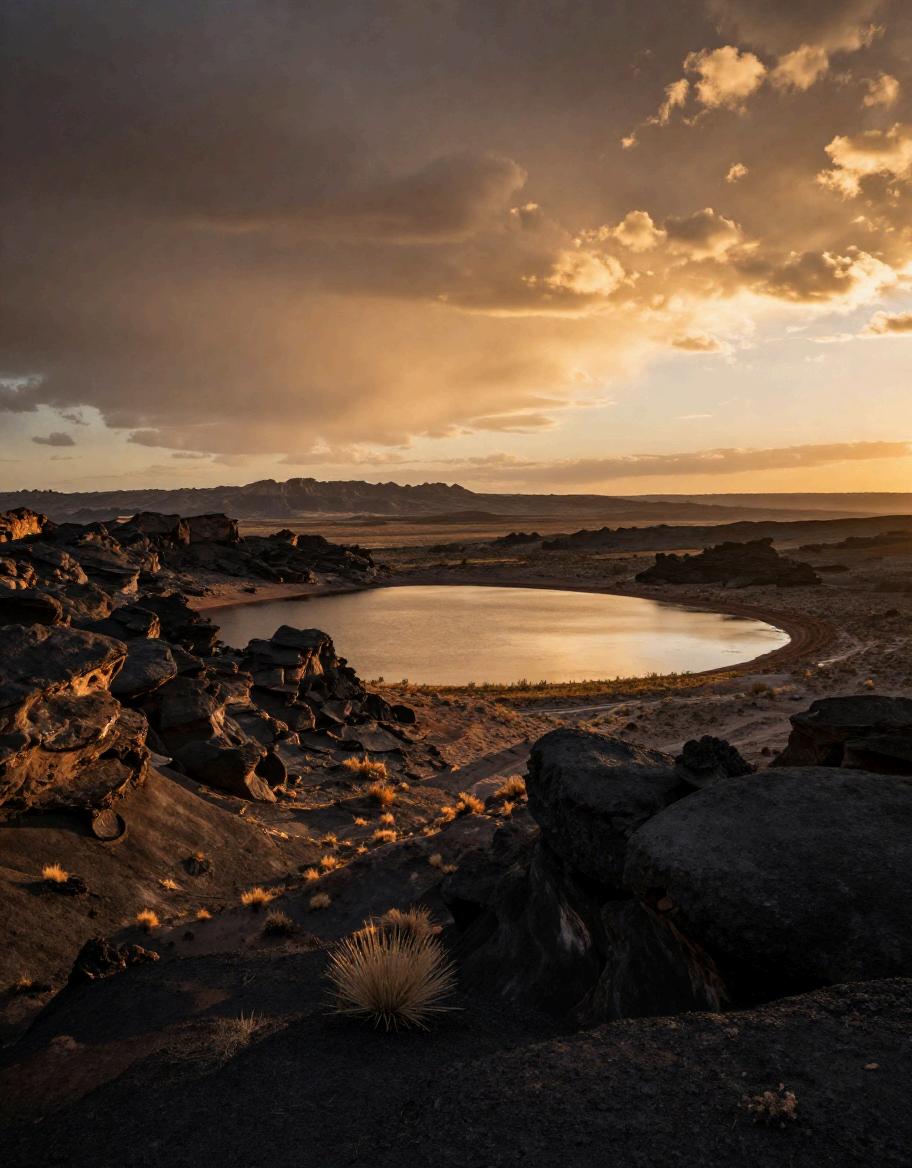
Chief Toquer Reservoir | Washington County, Utah
A Dual-Source Strategy and the Man Behind the Name
Where the Water Comes From: A Dual-Source Strategy
To fill the massive 115-acre basin of the Chief Toquer Reservoir, water managers are deploying an innovative, dualsource infrastructure strategy. Rather than relying on a single river or local stream, the reservoir utilizes a combination of natural mountain runoff and recycled regional water.
The primary natural supply relies on the Ash Creek Project, which features an 18.8-mile pipeline stretching down from the old Ash Creek Reservoir near New Harmony. This pipeline captures pristine surface water and seasonal snowmelt flowing off the slopes of Pine Valley Mountain.
To maximize conservation, this mountain runoff is paired with highly treated, recycled reuse water. Pumped northward from the Confluence Park Treatment Plant, this reclaimed resource integrates the reservoir directly into Washington County's expanding regional water reuse network.
By blending these secondary-grade water sources into the new reservoir, the county can execute a critical water "exchange". Local towns will transition to using this reservoir water for outdoor irrigation and agricultural needs. This pivot successfully frees up the ultra-pure, high-quality spring water flowing from Toquerville Springs, preserving it exclusively as culinary drinking water to support the region's growing population.
The History of Chief Toquer: The Man Behind the Name
The name of the reservoir carries a profound historical connection to the valley's original inhabitants. It honors Chief Toquer, a prominent 19th-century leader of the Southern Paiute people who lived along the banks of Ash Creek.
In the Southern Paiute language, the word toquer (pronounced "toe-ker") translates directly to "black". This name serves as a perfect geographic descriptor for the landscape. The surrounding hillsides, ridges, and fields are heavily blanketed by distinct, dark volcanic basalt rock.
Historical accounts from the Toquerville Historical Archives characterize Chief Toquer as a peaceful, enlightened, and deeply respected leader. When the first eight Mormon pioneer families arrived to settle the area in 1858, Chief Toquer chose a path of peaceful diplomacy. He welcomed the outsiders, helped them navigate the unforgiving desert terrain, and showed early families how to farm the rugged land.
In recognition of his peaceful alliance and leadership, the settlement was named Toquerville in 1858. Local history suggests that Chief Toquer was eventually laid to rest within the prominent black lava bluffs overlooking the valley. Centuries later, his name continues to define the community, bridging the area's ancient indigenous roots with its modern water-security future.
NIGHT SKY
What to See This Summer Solstice Quarter
The summer solstice marks the longest day of the year but for stargazers, it also marks the beginning of the best dark sky season in the Zion corridor and southern Utah.
Once the solstice passes and the days begin to shorten, the windows of true darkness grow. By late July and August, the nights are long enough and dark enough that the Milky Way rises fully above the canyon walls. Zion sits within one of the darkest regions in the continental United States, far from major city light domes, and the night sky here is something that most Americans born after 1970 have never seen from where they live.
Here is what to look for this quarter.
June
21
The Solstice Sunset Alignment
On the evening of the summer solstice, the sun sets in precise alignment with the canyon corridor as viewed from the Pa’rus Trail near the visitor center. The light travels the full length of the main canyon and strikes the Court of the Patriarchs formations directly. This phenomenon is visible for roughly three evenings around the solstice date.
Arrive at the Pa’rus Trailhead by 7:30 p.m. and face west. You will not need a telescope.
Late June through July Saturn and Mars
This summer, Saturn is well-placed in the southern sky after 10 p.m.
From a dark site in the Zion corridor, you can see its rings with a modest pair of binoculars or a small telescope. Saturn rises in the southeast and reaches its highest point around midnight.
Mars remains visible in the western sky in the early evening, setting a few hours after sunset. Its reddish tone pairs beautifully with the terracotta of the canyon walls at twilight.
The Milky Way Window
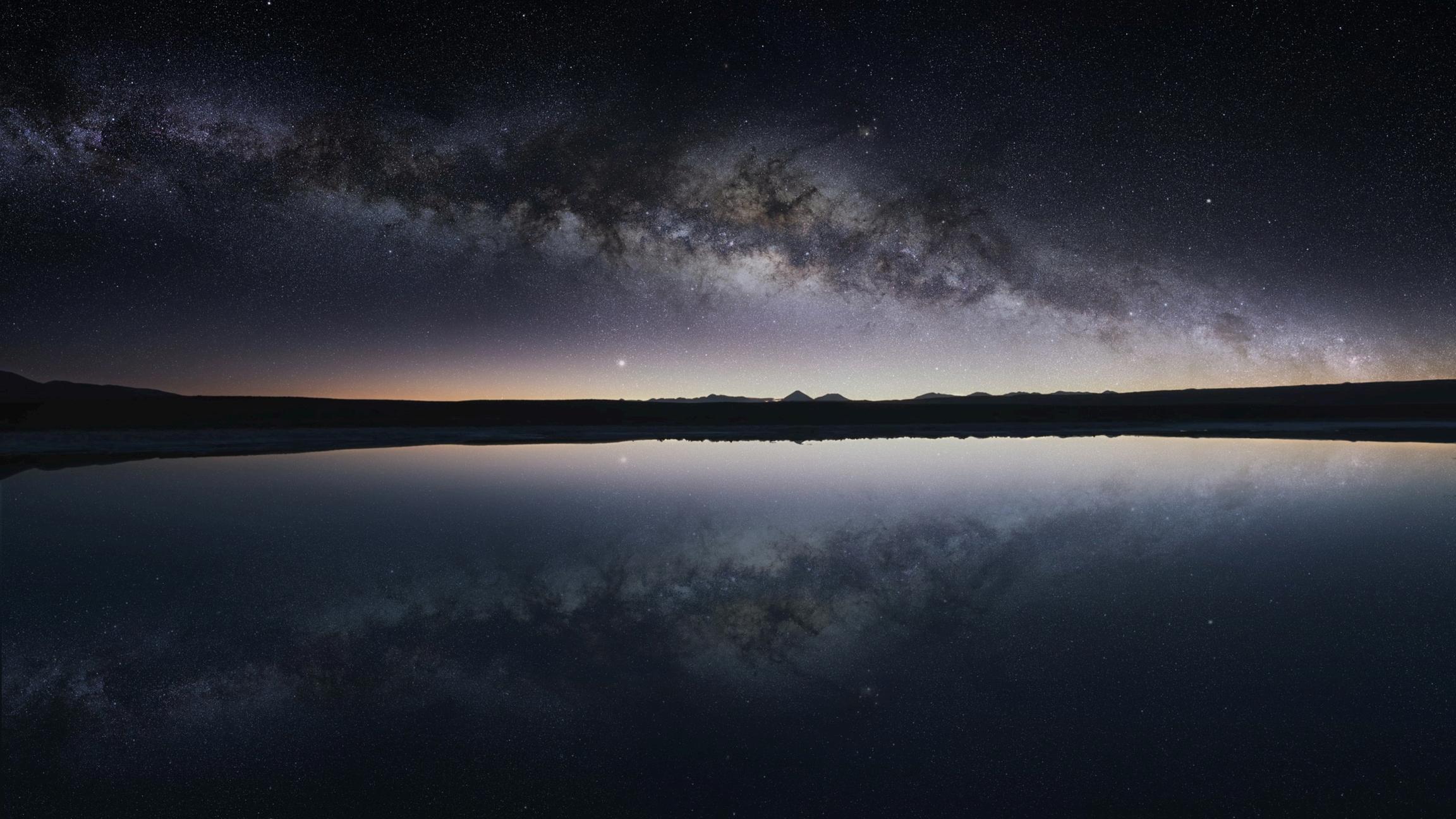
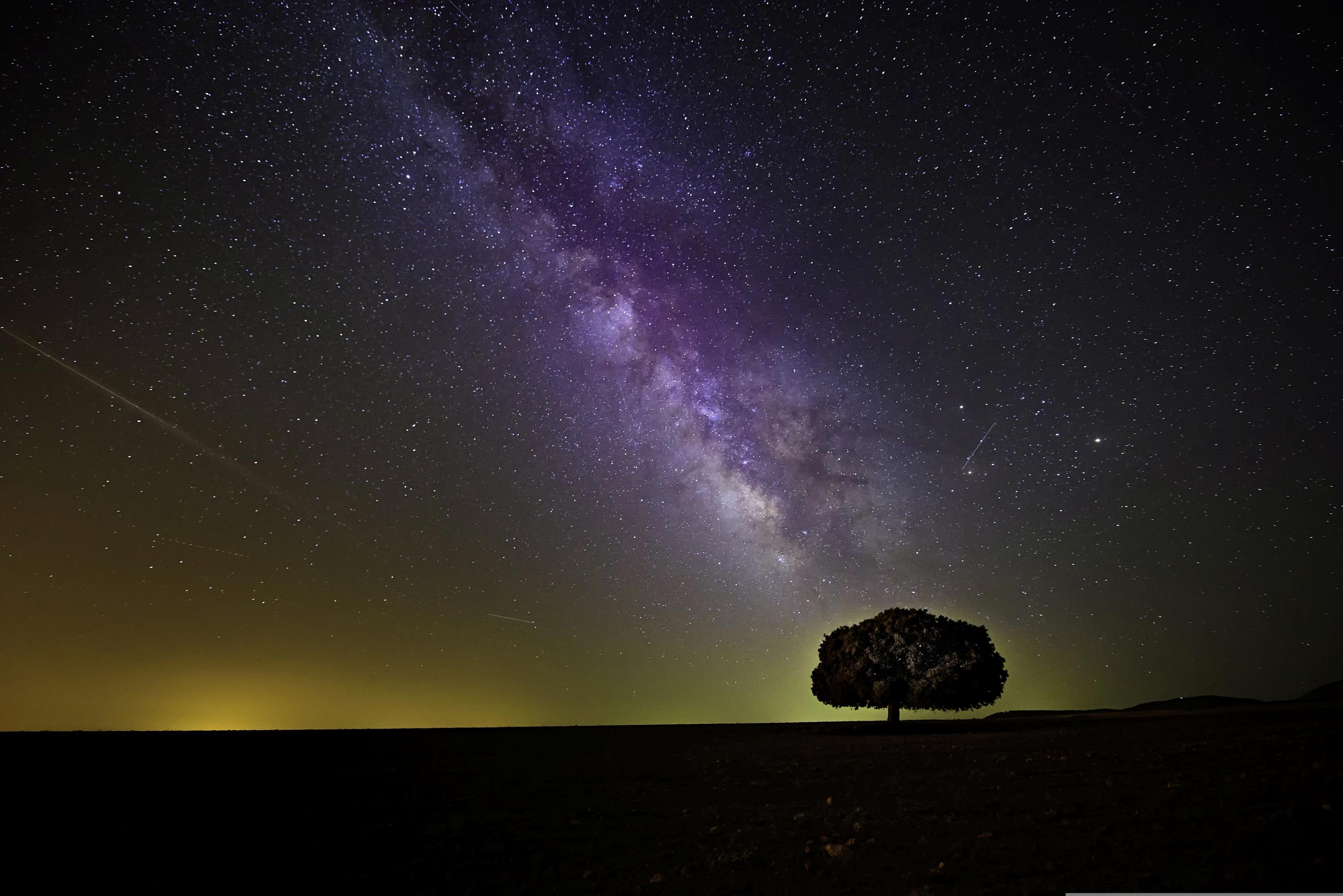
From late June through early September, the galactic core of the Milky Way is visible in the southern sky between roughly 9:30 p.m. and 3:00 a.m. The core the dense, bright central bulge of our galaxy rises in the southeast and tracks westward through the night.
The best viewing is on moonless nights. Check the lunar calendar: the new moon in July falls on July 14th, giving you a window of roughly two weeks on either side of that date for excellent dark sky conditions.
From the Canyon Overlook Trail, from Grafton Road near the ghost town, or from any pull-off on Kolob Terrace Road above 6,000 feet elevation, the Milky Way is visible to the naked eye as a dense river of light crossing the sky from horizon to horizon.
July 28–29 — Delta Aquariids Meteor Shower
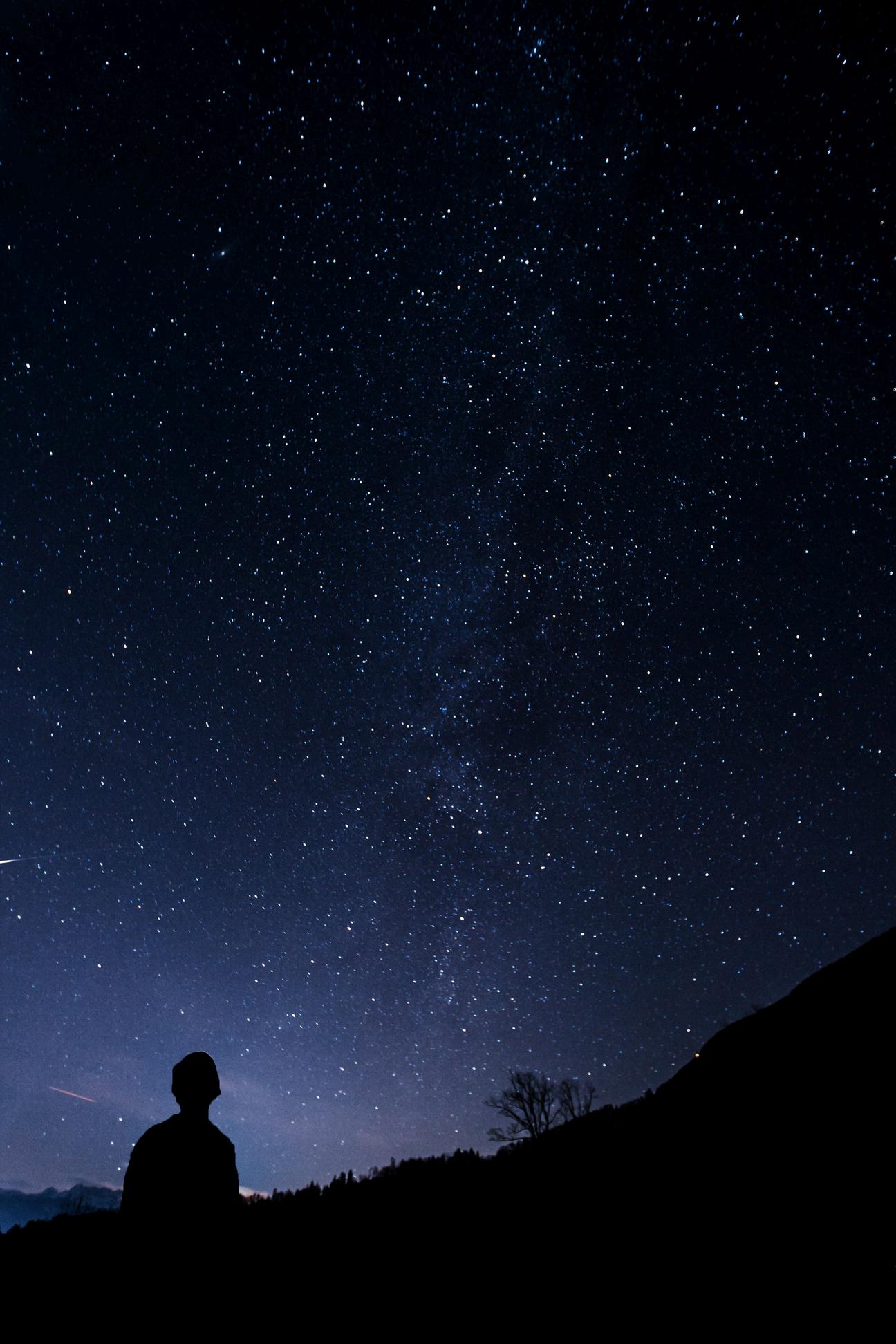
The Delta Aquariids peak in late July and are best observed from the southern hemisphere — but from southern Utah, the shower still produces a reliable display of 15–20 meteors per hour at peak. The radiant point rises in the southeast around midnight.
The shower runs from mid-July through late August, so even if you miss the peak, any clear night in this window will produce meteors. No equipment needed. Find a dark spot, lie flat, and look up.