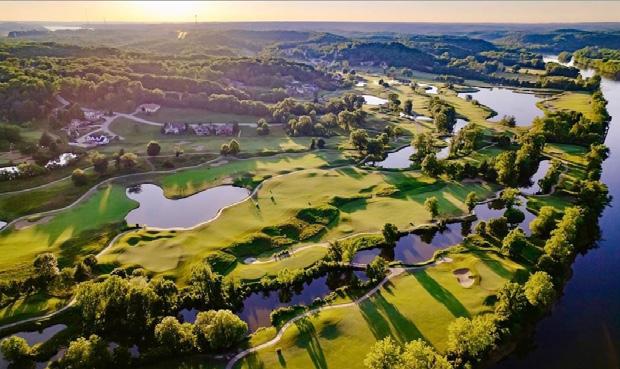
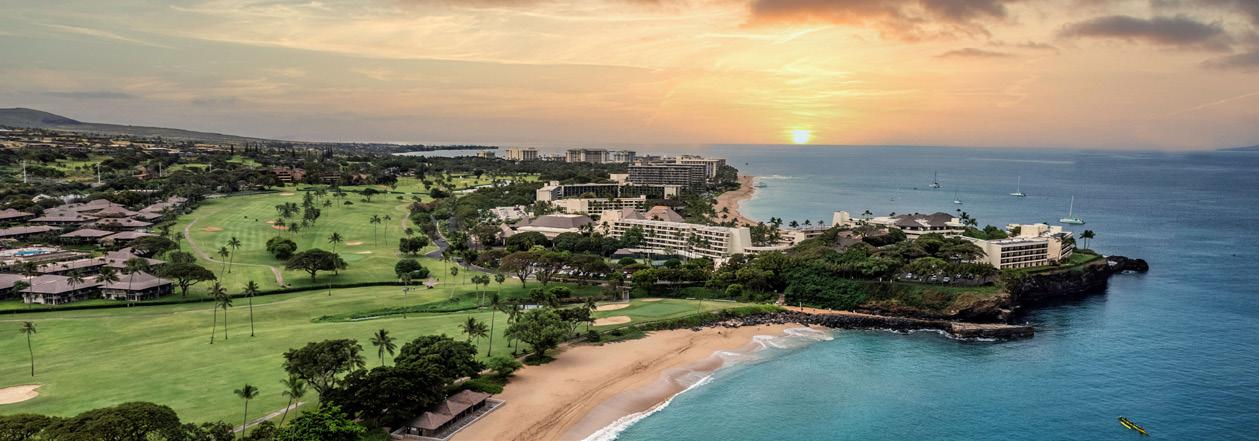
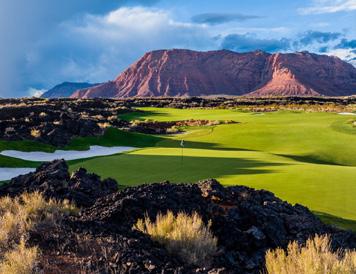
Discover the sun, sea and culture that make Cape Cod truly magical, truly remarkable and truly yours.
MIS SOURI’ S MIS SOURI’ S L ARGE ST L ARGE ST
GOLF C AR DE ALER GOLF C AR DE ALER
10
• Publisher Dick Stephens shares his thoughts on the cornucopia of golf experiences here and abroad DEPARTMENTS
12
TEEING OFF
TRAVEL ABROAD
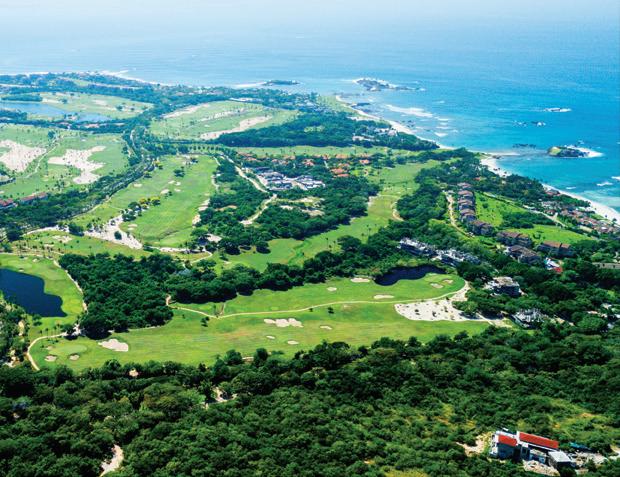
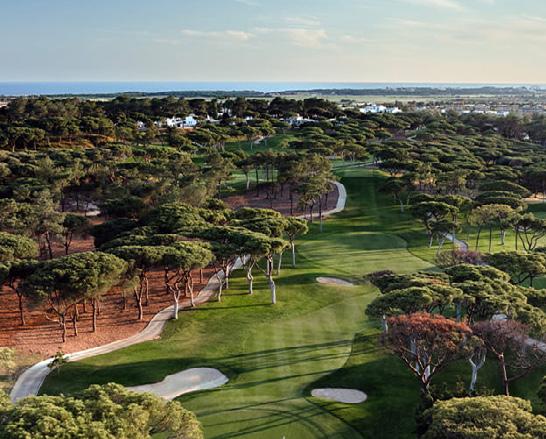
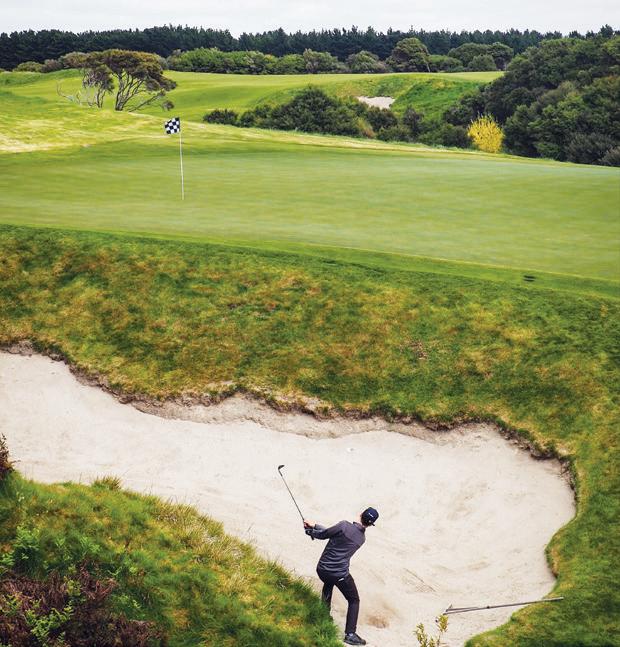
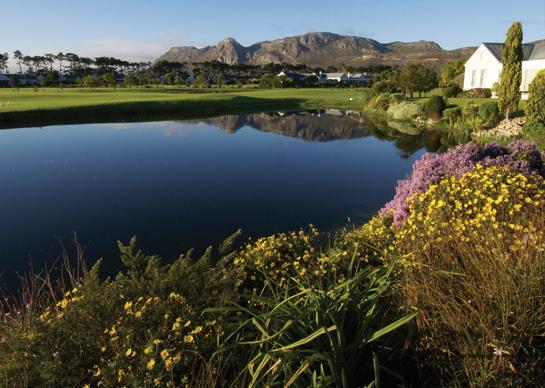
• Globetrotting Gems in Mexico, British Columbia, South Africa, Portugal and New Zealand
90 EQUIPMENT SHOWCASE
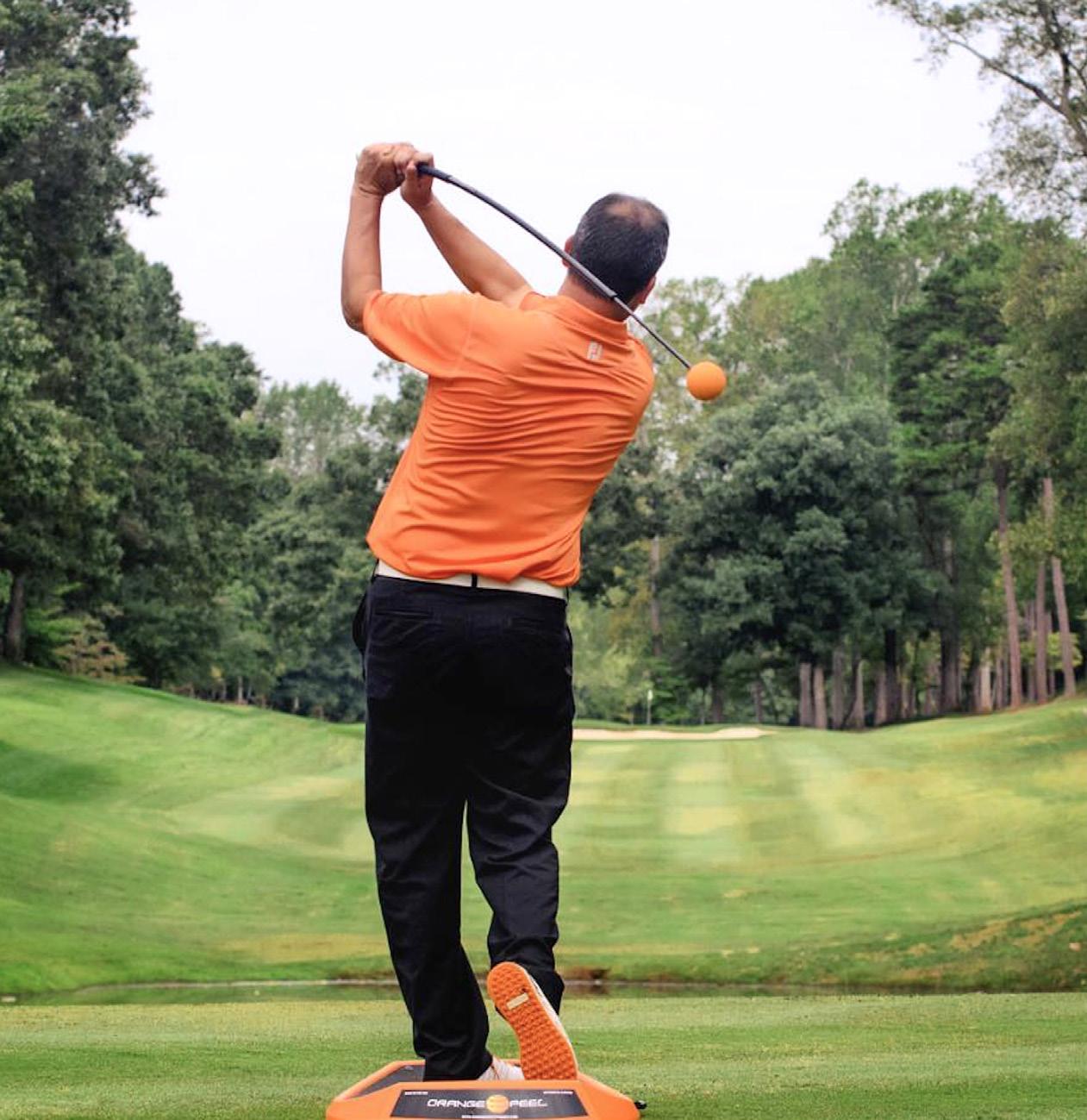
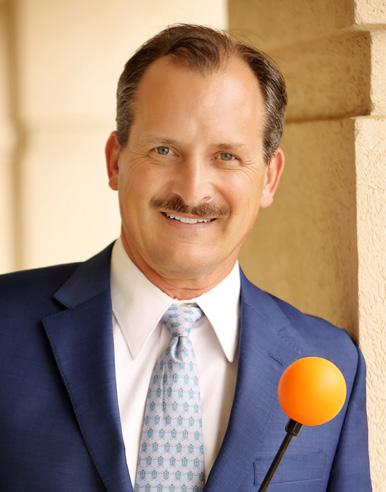
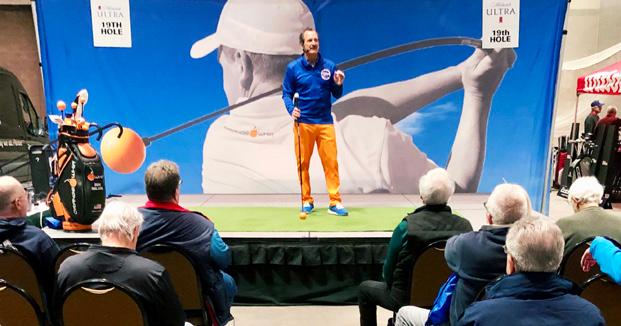
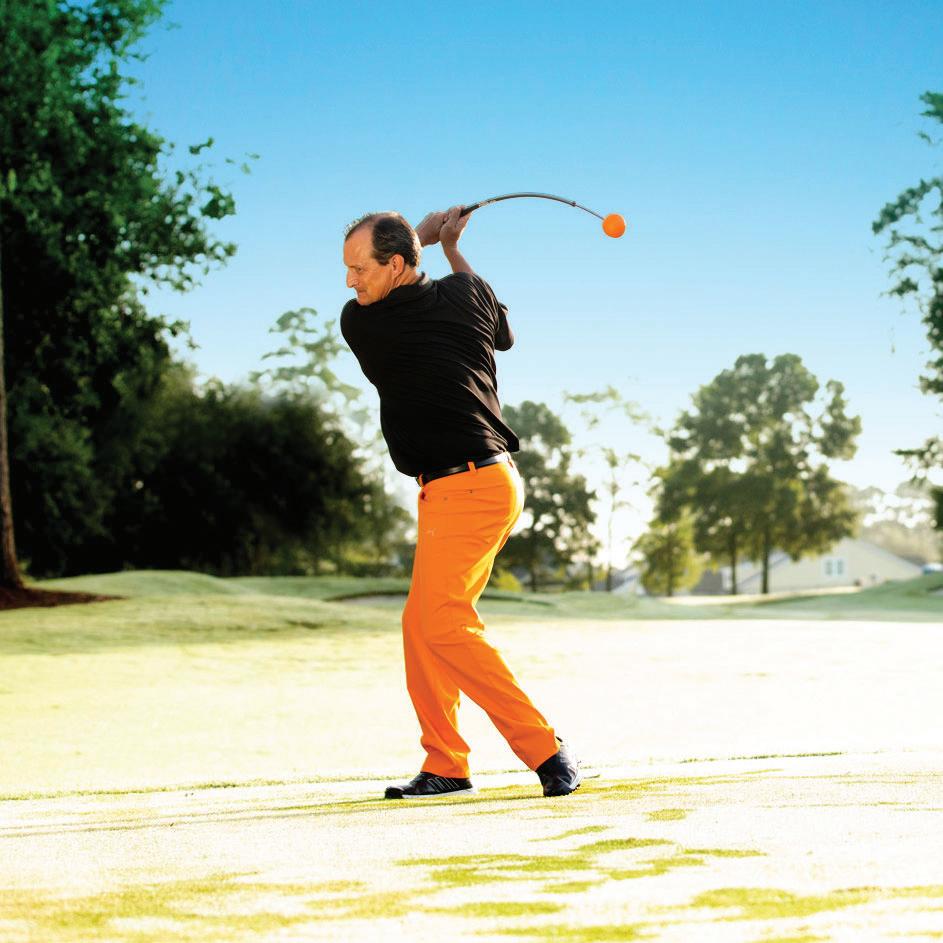
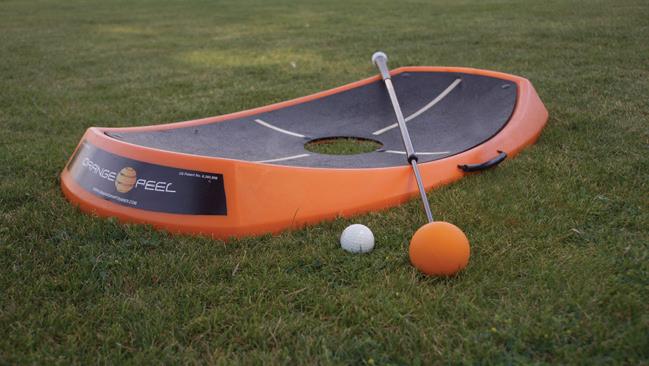
• Orange Whip and Jim Hackenburg
• Regional retailer super sales
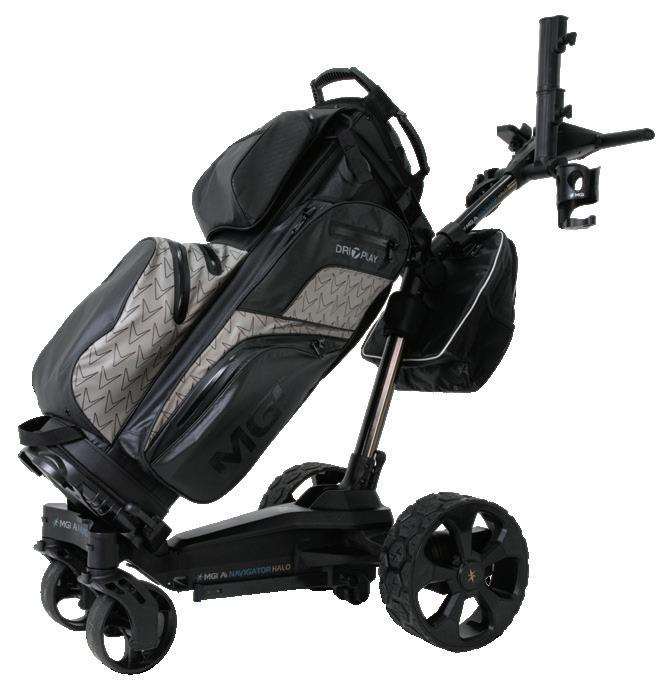
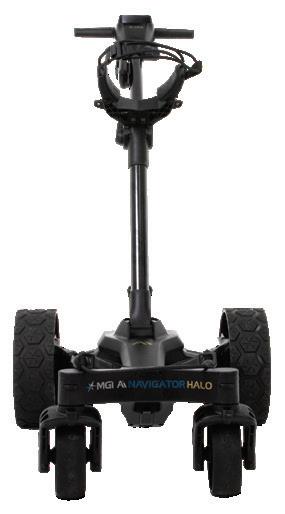
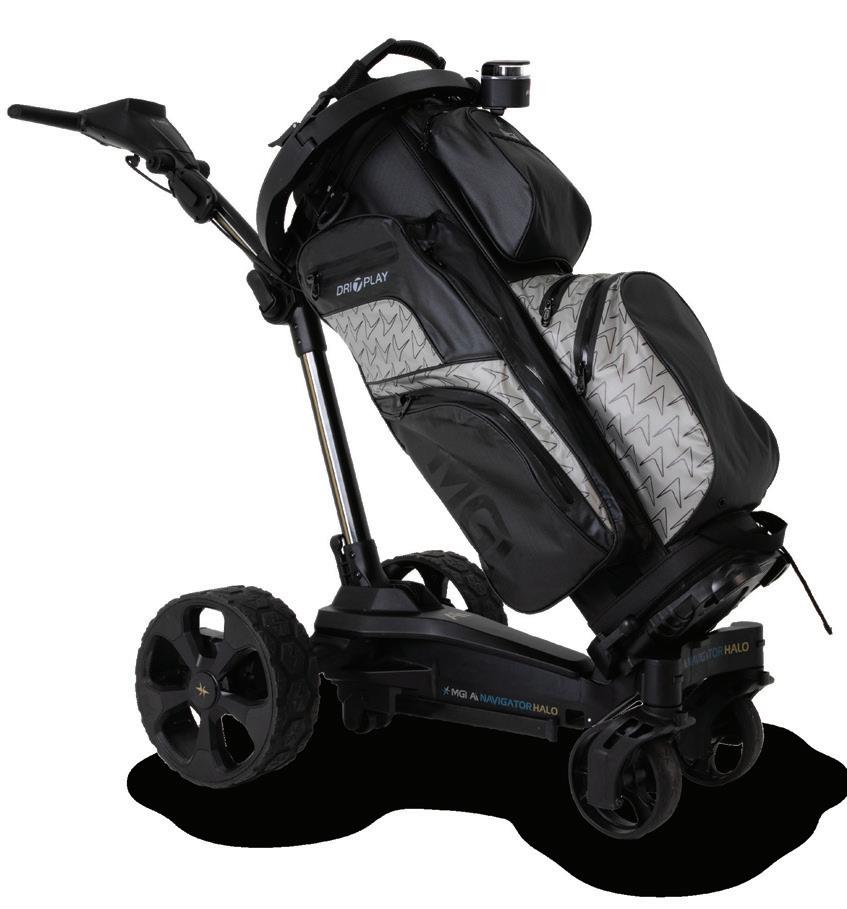
• MGI carts are a 2026 hit
• Cleveland, Srixon and XXIO
19TH HOLE
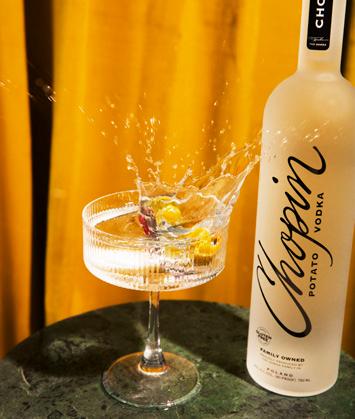
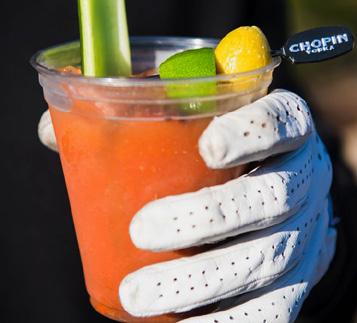
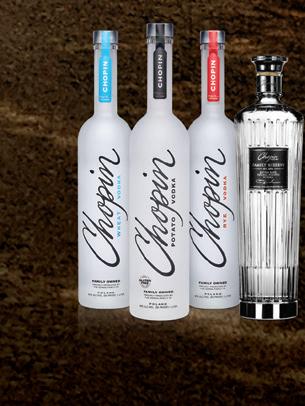
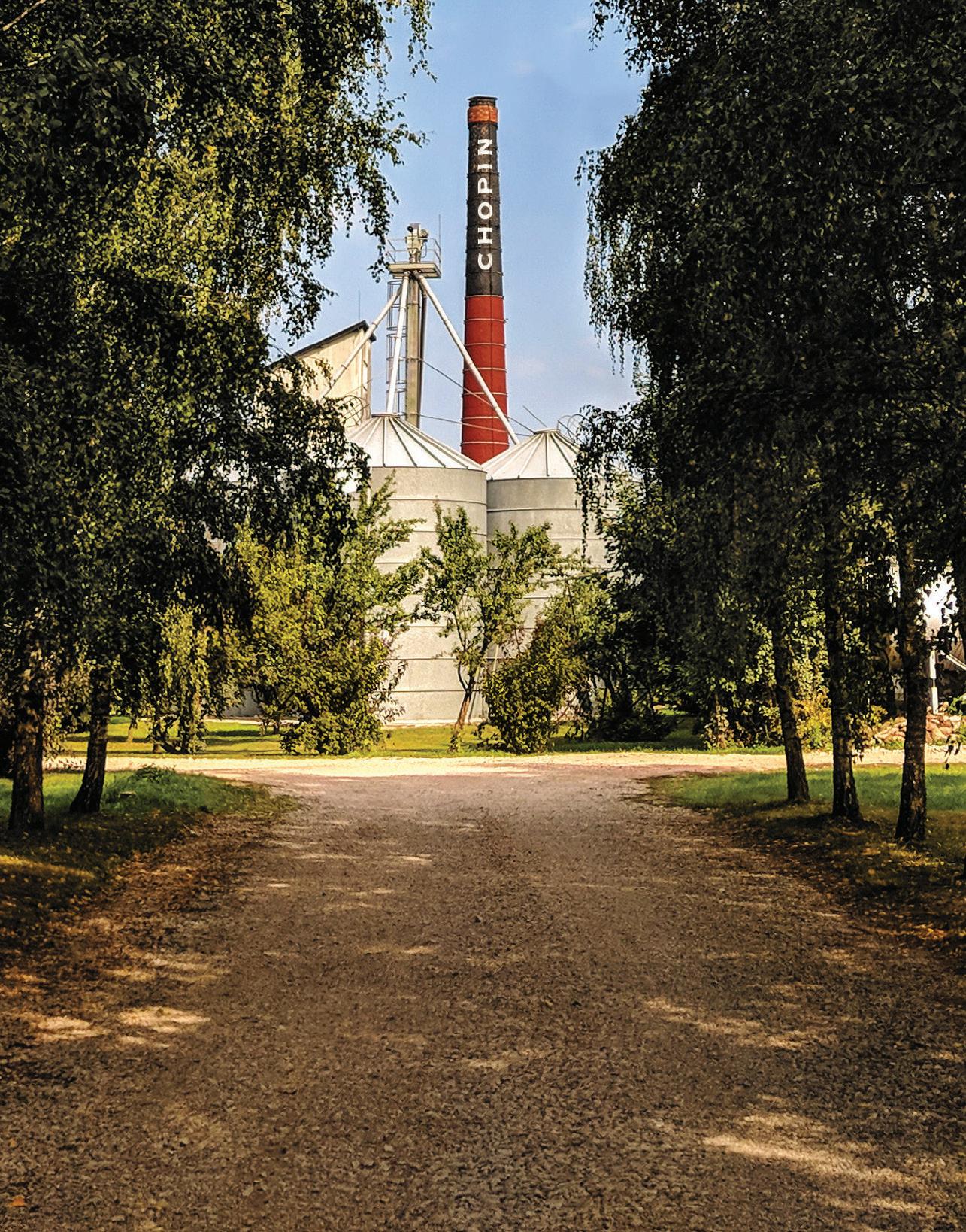
• Chopin Vodka’s flavor and elegance
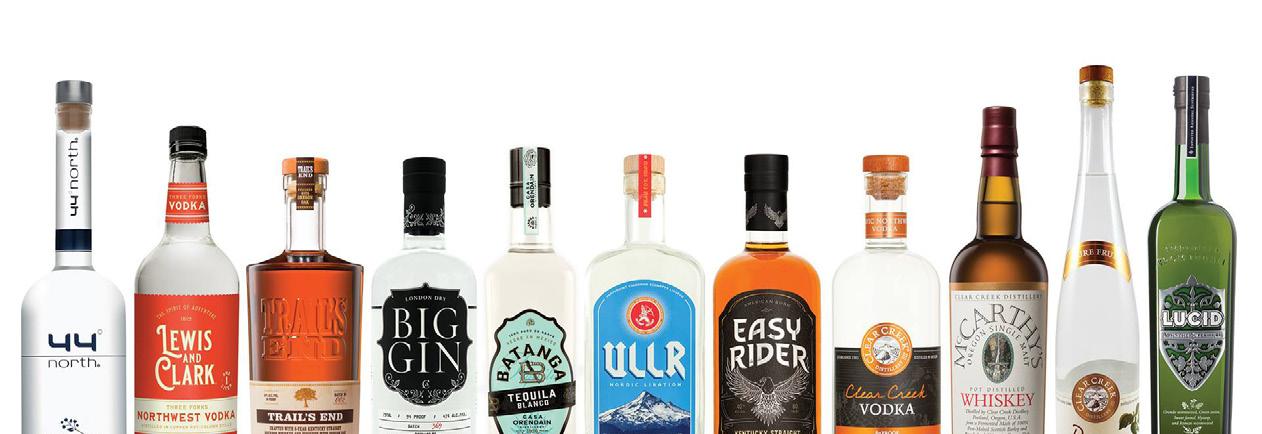
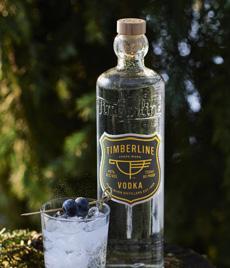
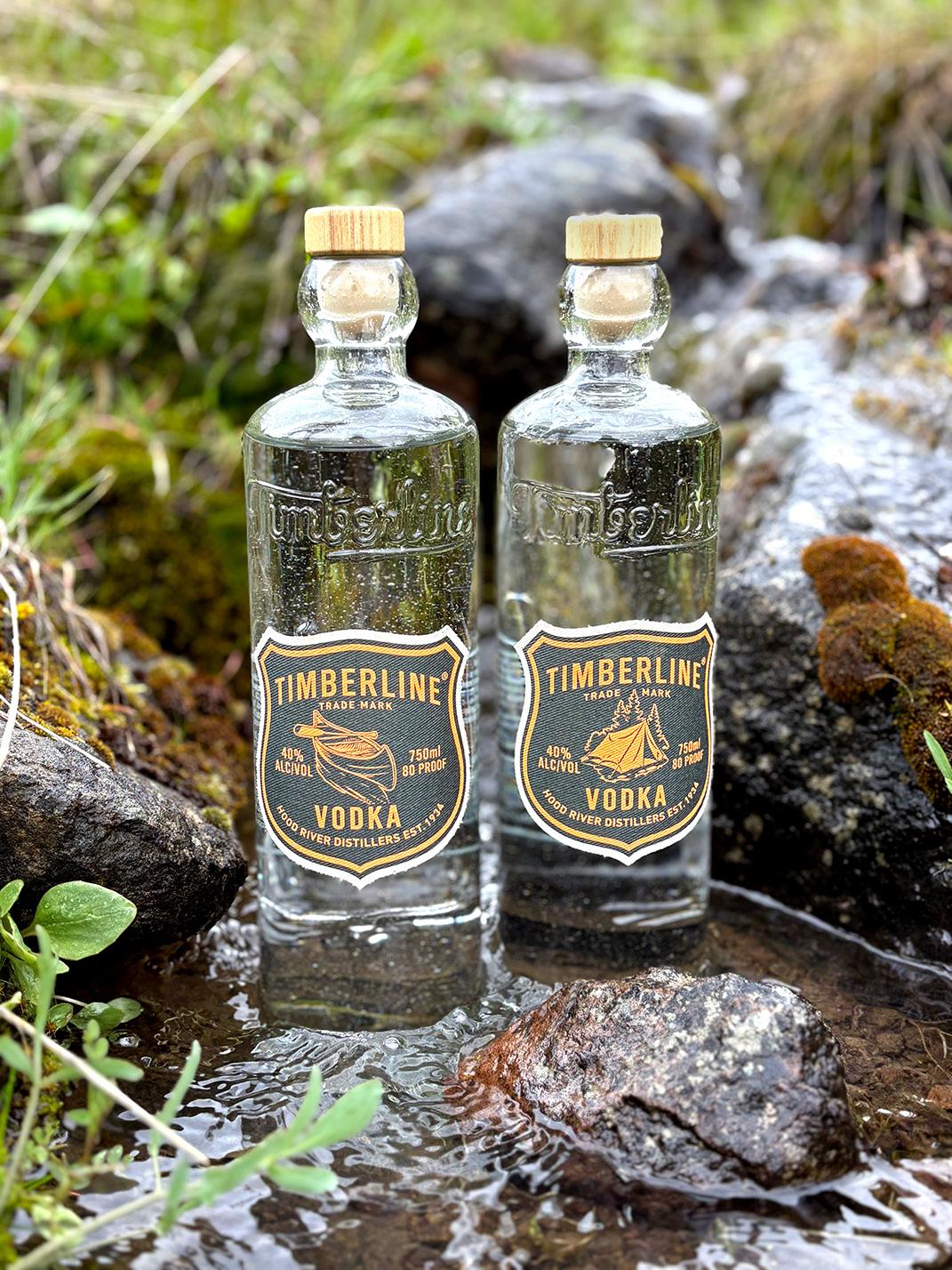
• Hood River Distillers soars in Oregon
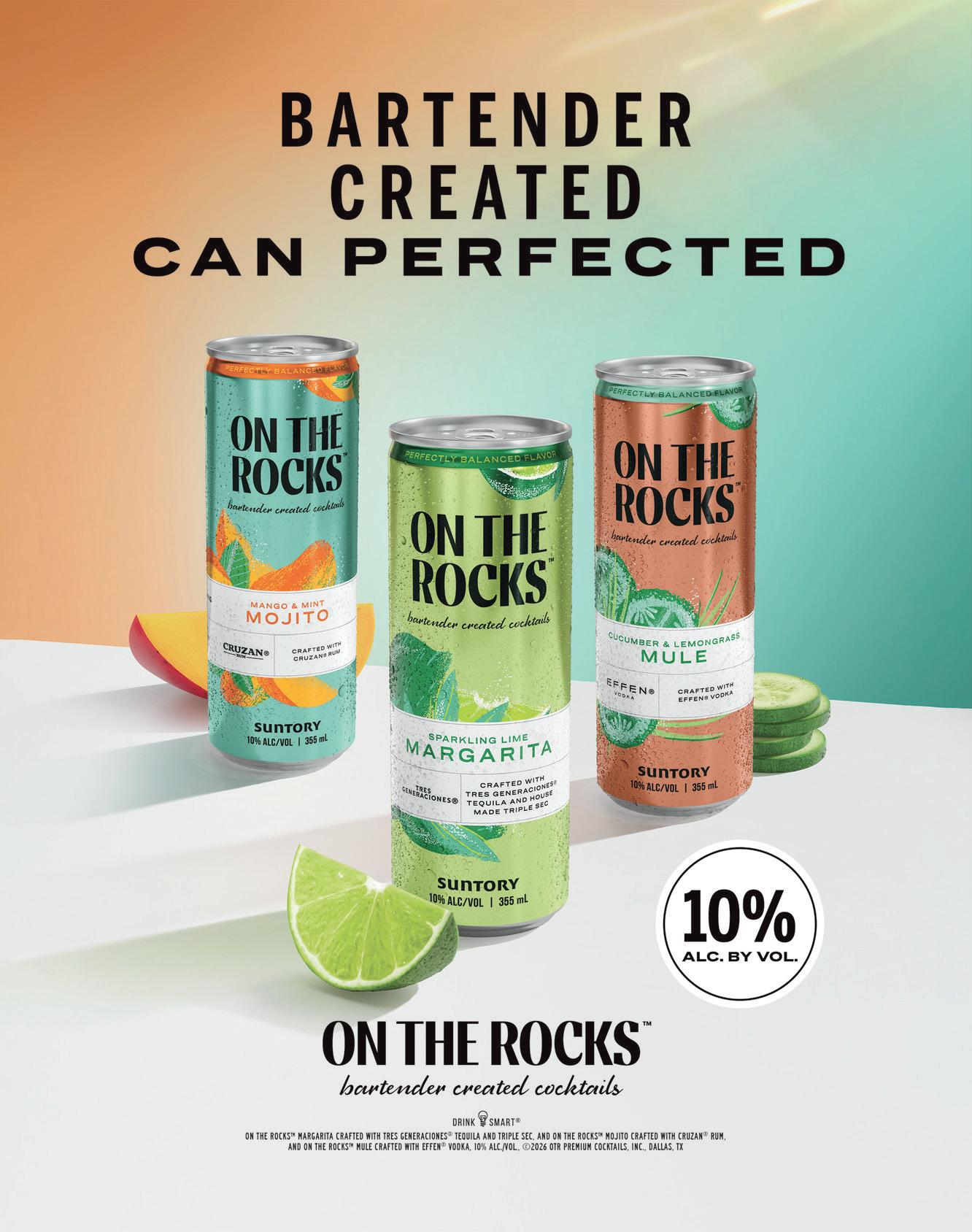
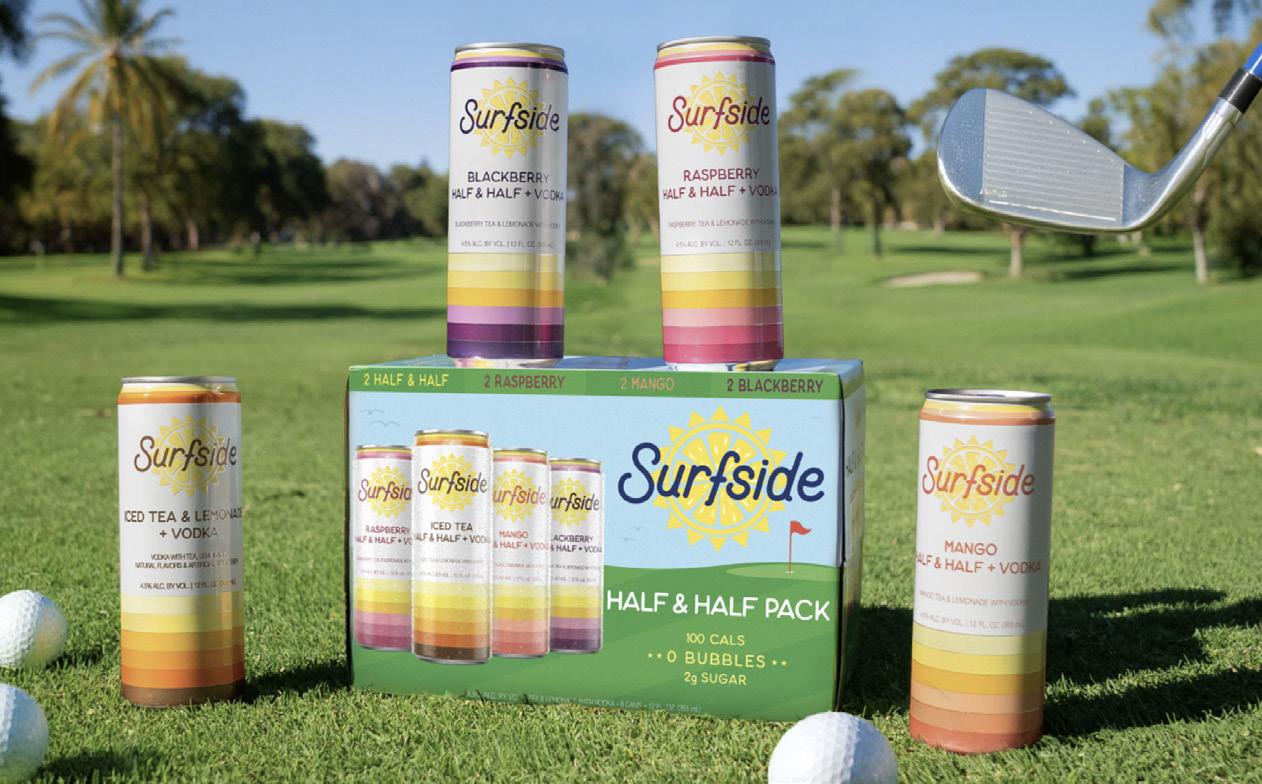
• Surfside’s RTD is a summer favorite
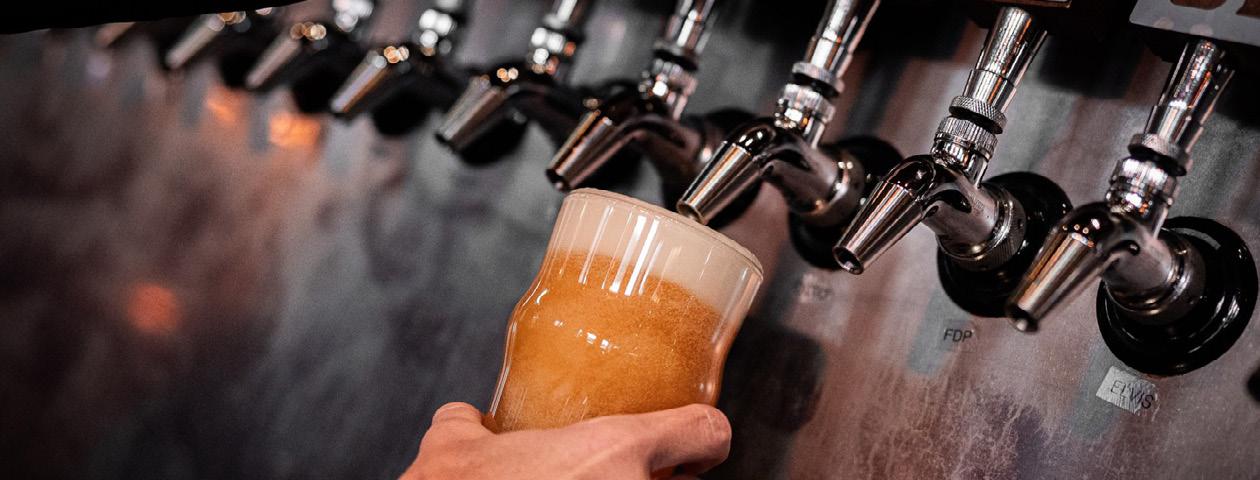
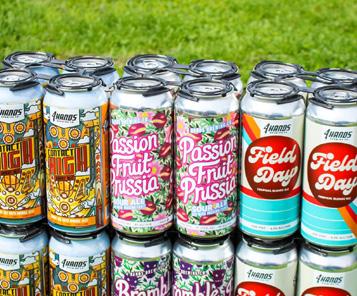
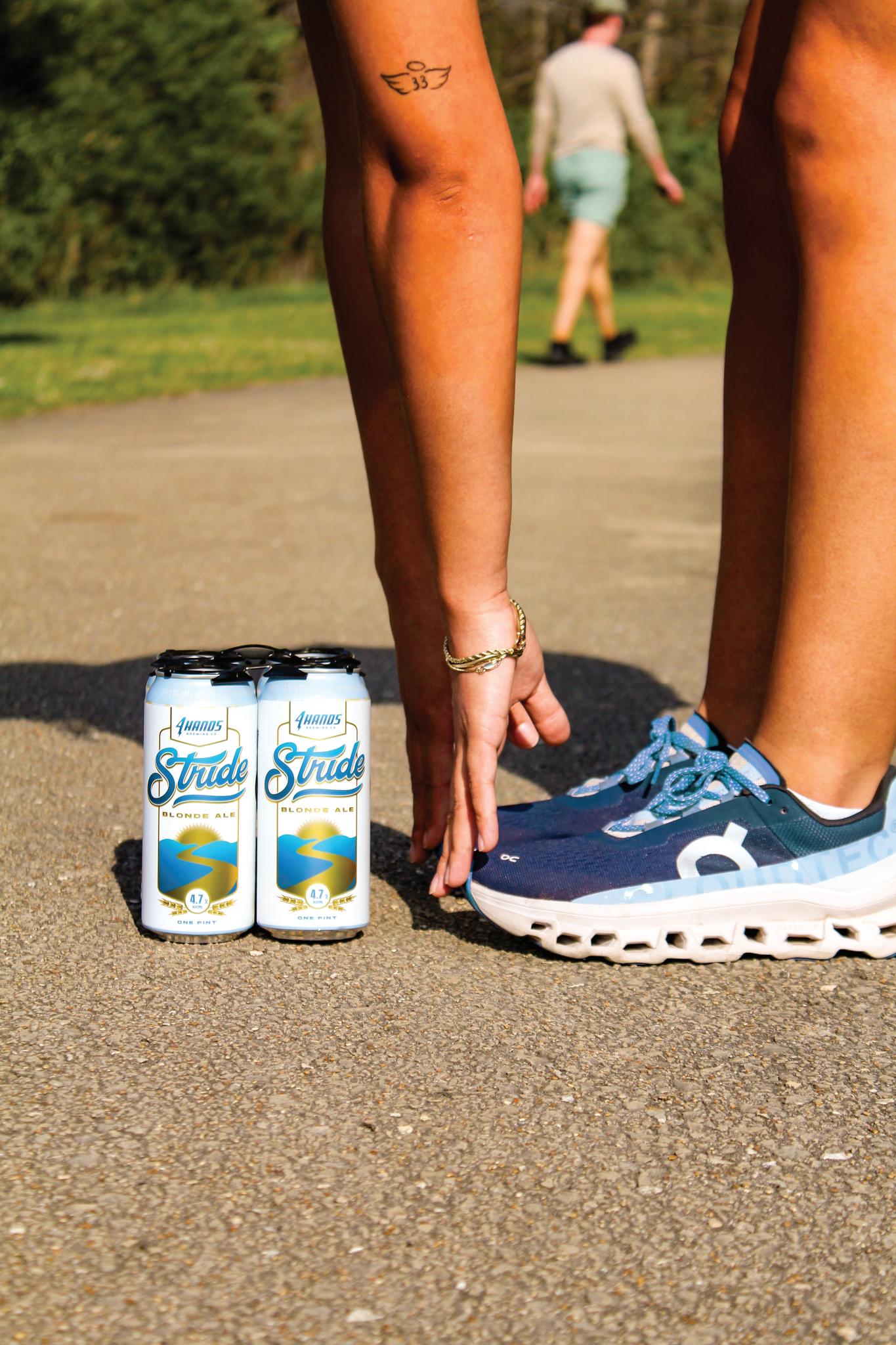
• 4 Hands new way to chill out
• Our expert’s top golf beers in U.S.
DESTINATIONS
PLAY THE SOUTH
22
• Sweet Home Alabama
26
• Magnolia Magic in Mississippi
28
• Shangri-La in Oklahoma
DESTINATION MIDWEST
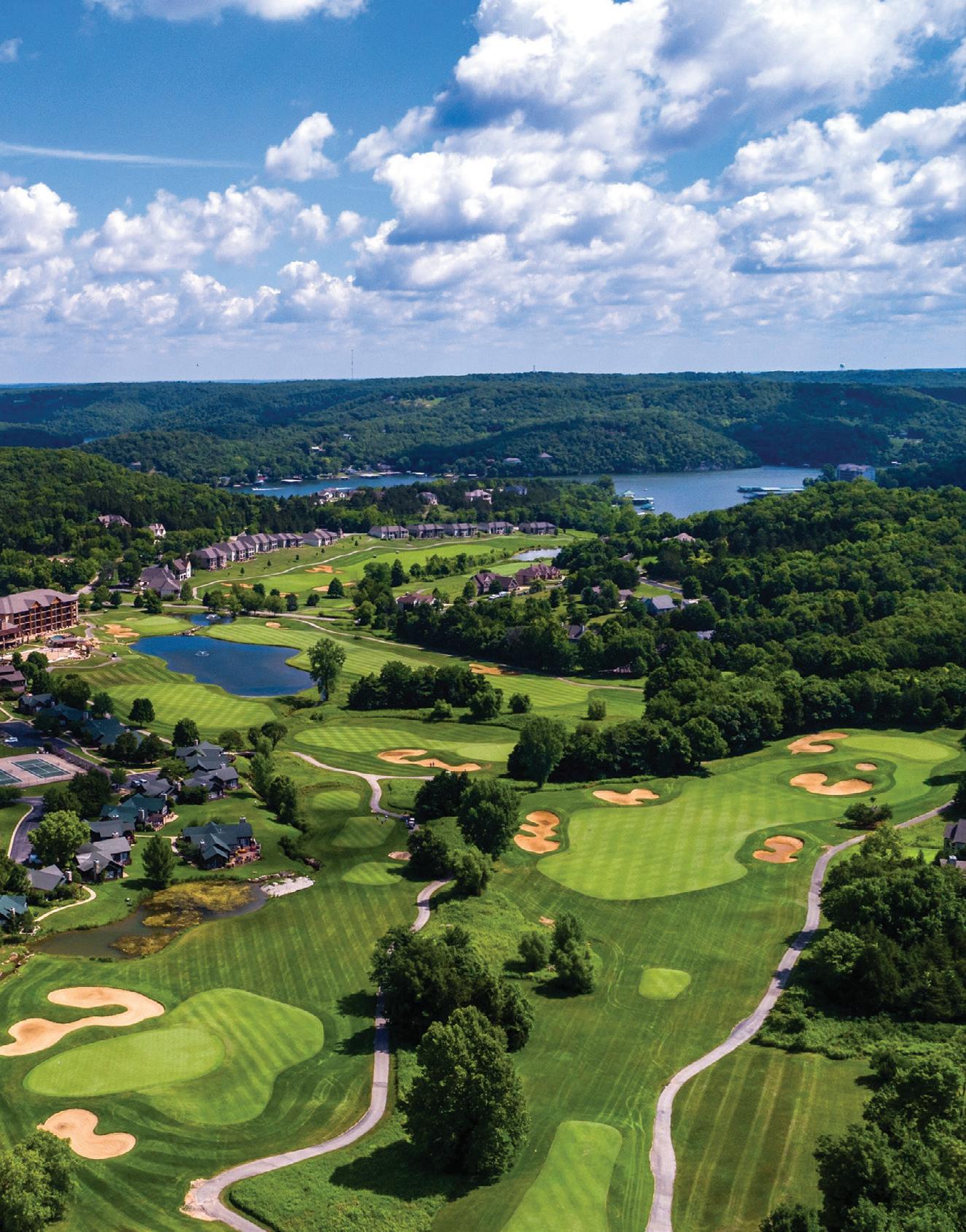
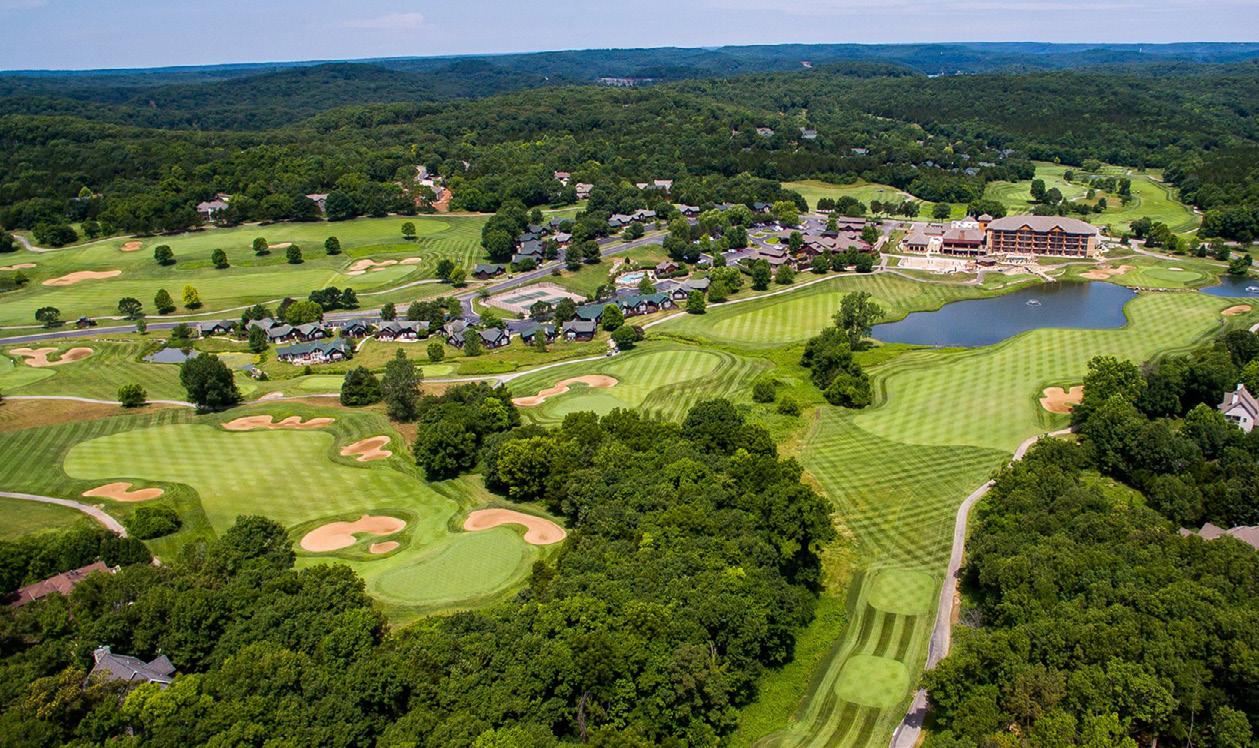
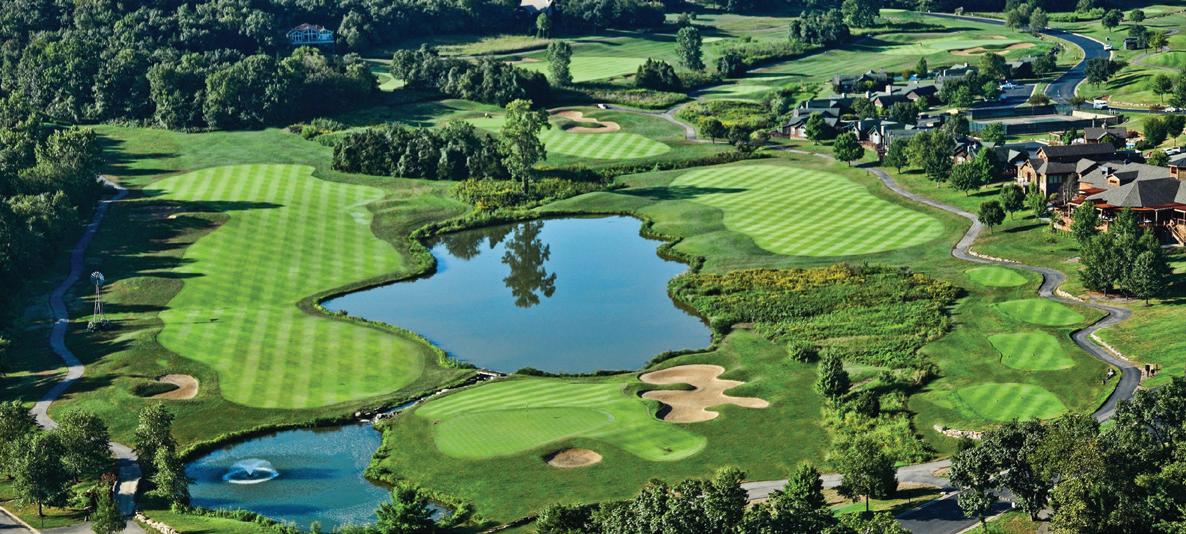
32 • Lake of the Ozarks Golf Trail
36 • Old Kinderhook in Camdenton
38
• ELV8 in Lake St. Louis
42
• BMW Championship
44
• All Seasons Indoor Golf
46 • KC’s Pierpont’s and Hereford House
48 • Mulligan’s Country Club
50 • Kansas legend Booth Creek Wagyu
GO WEST
58 • Heavenly spots in Hawaii
60
• Greater Zion area awaits golfers
62
• Circling Raven in the Gem State
64
• Cottage Golf in Portland
66
• The Standard Portland Classic
68
• Salish Cliffs a Northwest hot spot
70 • Scarecrow and Gamble Sands
72
• River Ranch revealed in Washington
74 • Horn Rapids GC shines
76 • Visit Tri-Cities — wine-lovers haven
80 • Desert Willow is first class in Coachella Valley
HEAD EAST
84 • Middlesex Health in Connecticut
86 • Dryvebox delivers in New England
ON THE COVER
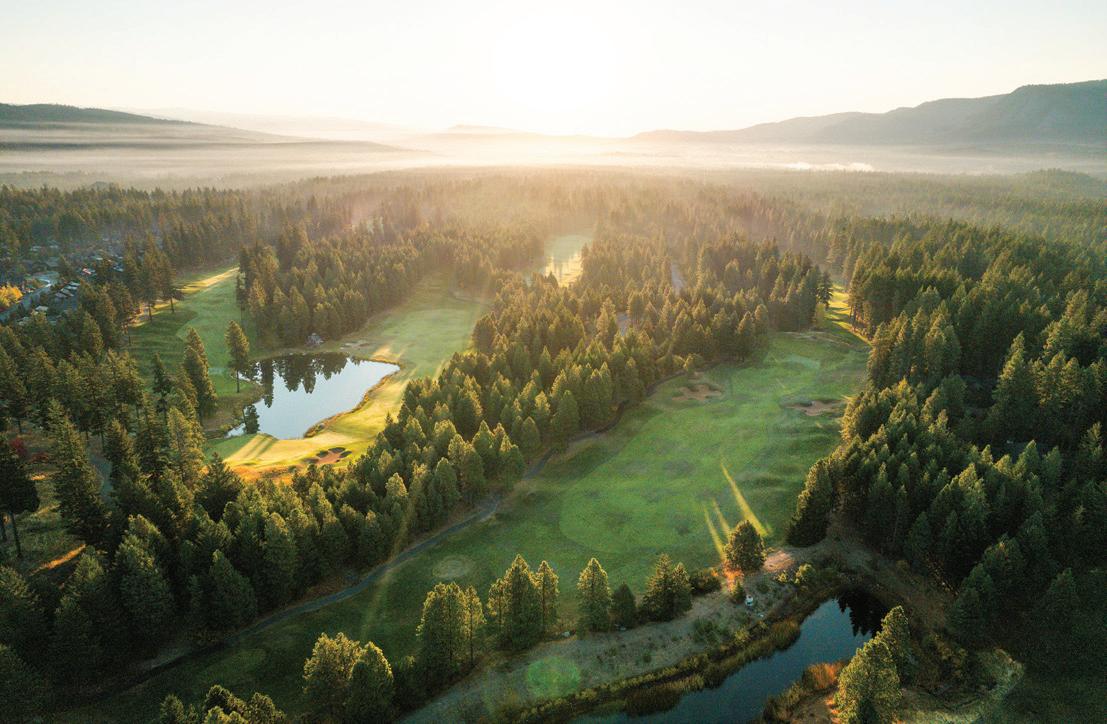
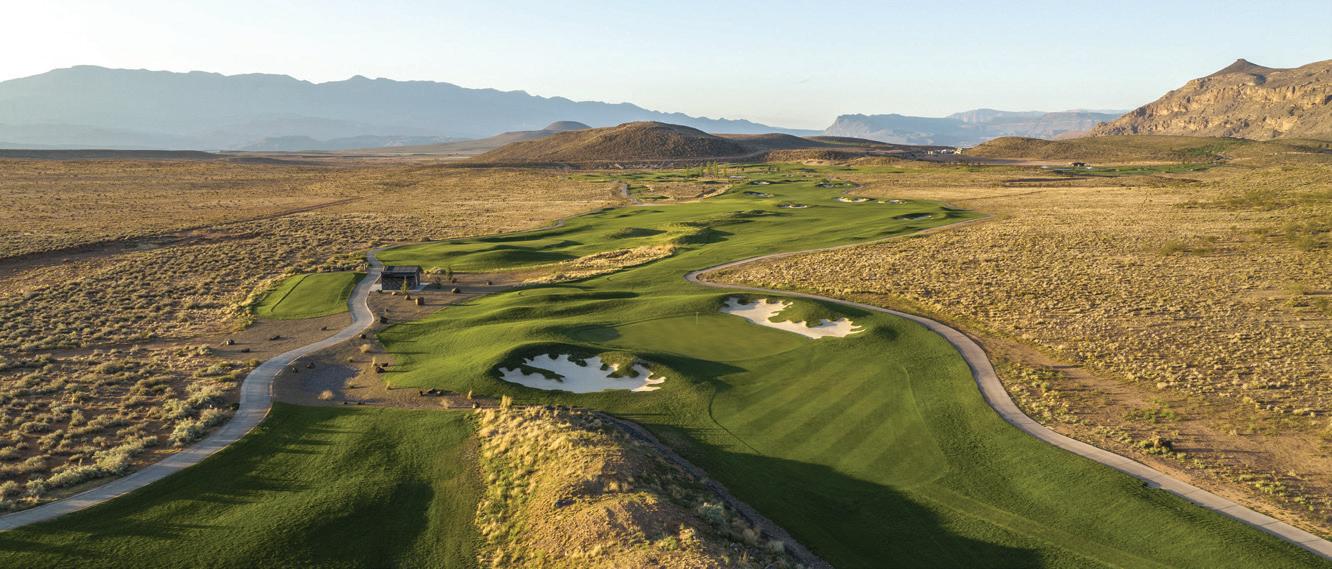
We are featuring a new bucket list stop in Brewster, Wash, at Gamble Sands. David McLay Kidd put this place on the map again with the new 18-hole thrill ride Scarecrow. With endless golf options like their 14-hole short course, rollercoaster putting green hangout and two top courses, this is an oasis.
Photo courtesy of Brian Oar
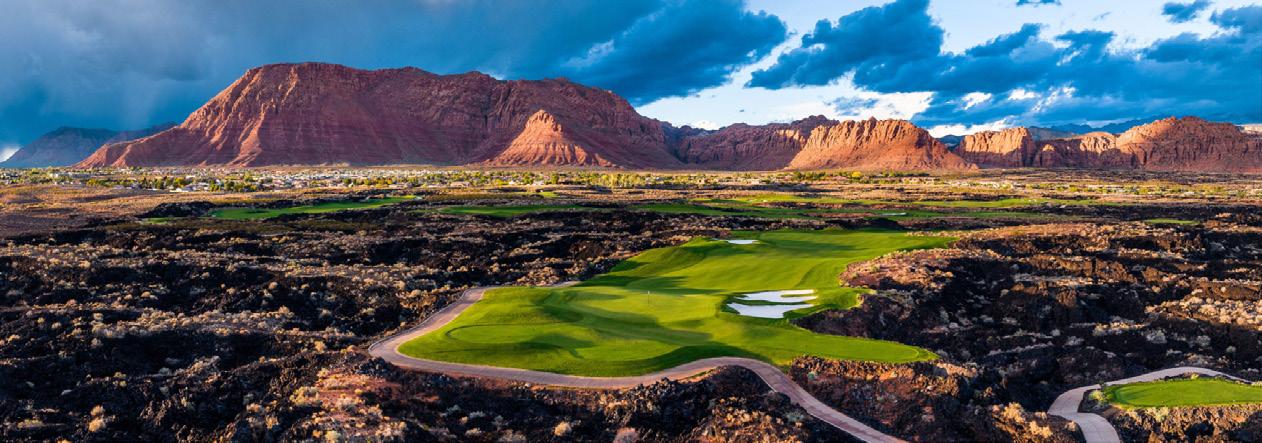
ON THIS PAGE
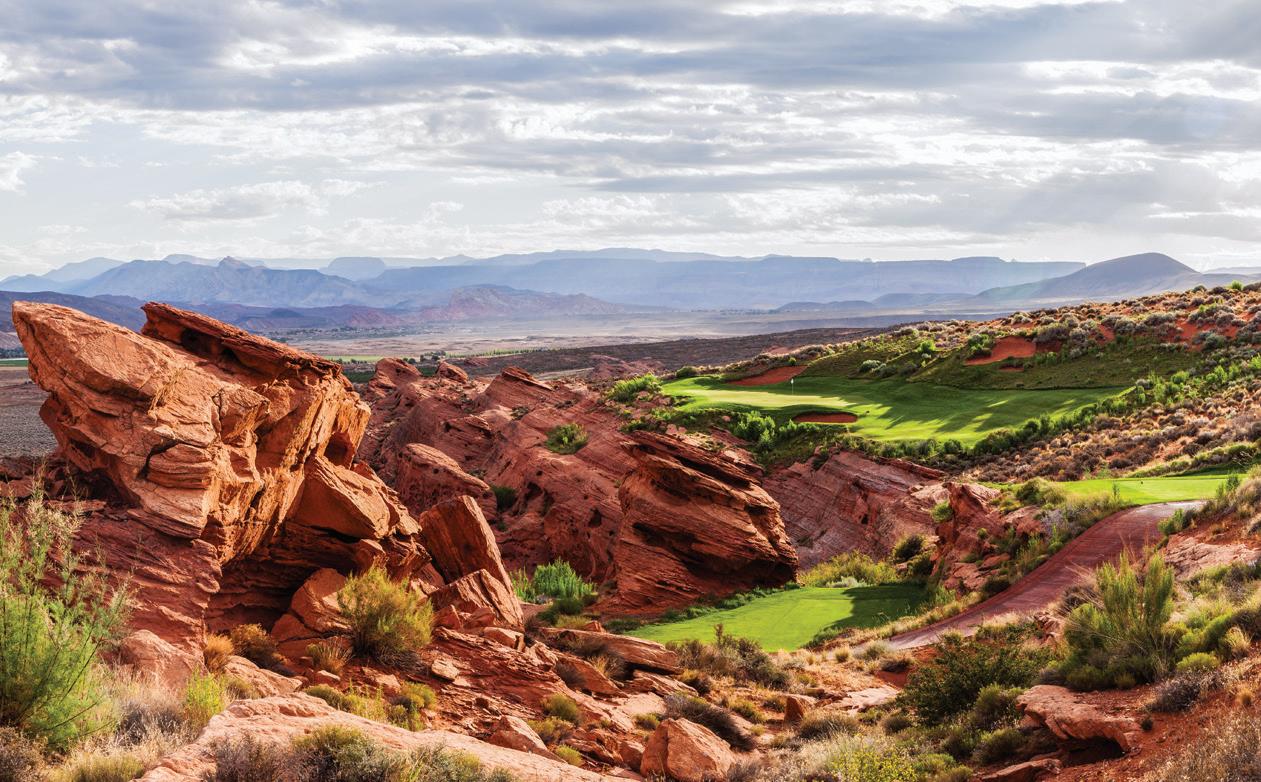
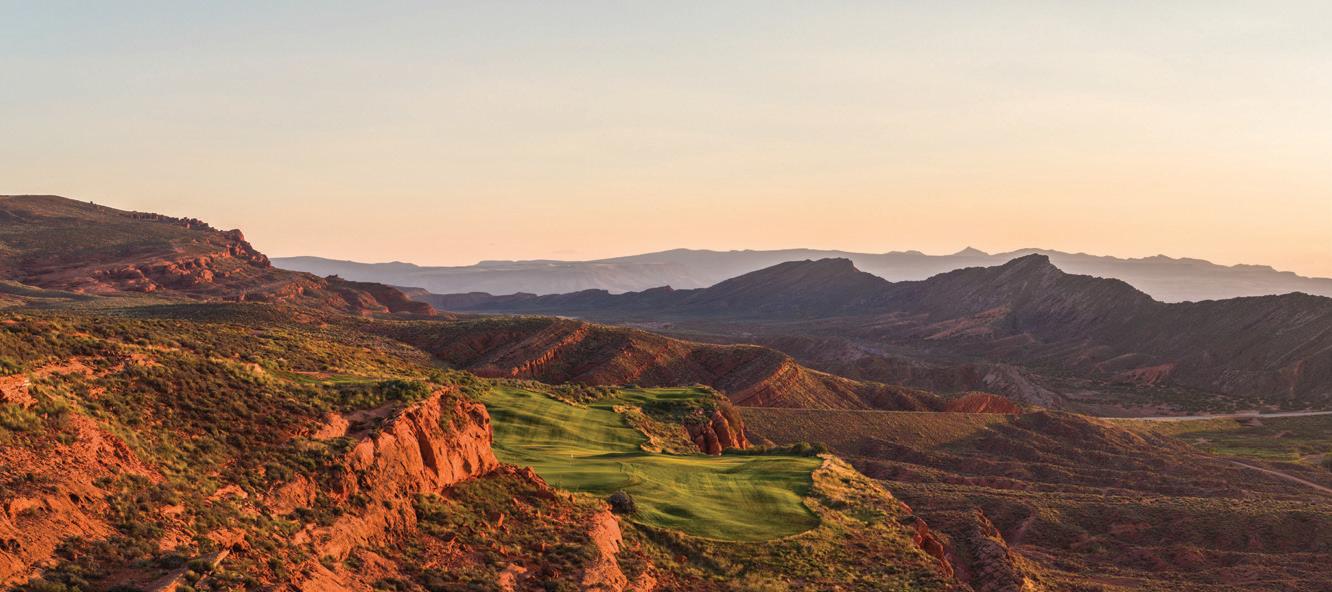
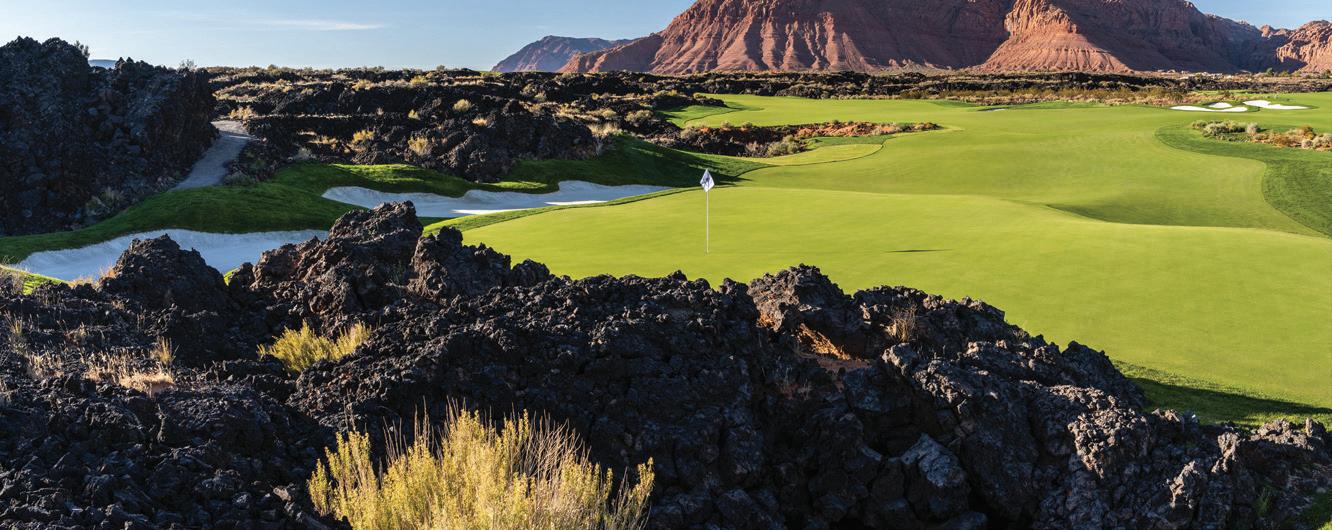
Sand Hollow Resort in Hurricane, Utah (near St. George and Zion National Park), is a stunner. The 18-hole Championship Course, designed by John Fought and Andy Staples, features red rock, desert, and clifftop holes. It's widely ranked as a top course in Utah.
Photo courtesy of Sand Hollow Resort
Sand Hollow • Championship Course
Destination Golfer is published and owned by Varsity Communications, Inc.
VARSITY COMMUNICATIONS
2128 Sahalee Drive East Sammamish, WA 98074 varsitycommunications.com
EDITORIAL STAFF
PUBLISHERS
Kirk Tourtillotte & Dick Stephens
ART DIRECTION & GRAPHIC DESIGN
Robert Becker
CONTRIBUTING EDITOR
Tony Dear
STAFF WRITERS
Bob Sherwin, Bart Potter & Lily Stephens
COPY EDITING
Charles Beene
FOR EDITORIAL SUBMISSIONS stephens@varsitycommunications.com
ADVERTISING & MARKETING STAFF
GOLF MARKETING MANAGER
Simon Dubiel
FOR ADVERTISING & ACCOUNTING INQUIRIES CONTACT
Simon Dubiel simon@varsitycommunications.com
COPYRIGHT 2026 Destination Golfer.
PUBLISHED IN THE USA. All rights reserved. Articles, photos, advertising and /or graphics may not be reprinted without the written permission of the publisher. Advertising and editorial contained herein does not constitute endorsement of Destination Golfer or Varsity Communications, Inc. Publisher reserves the right to edit letters, photos and copy submitted and publish only excerpts. The publisher has made every effort to ensure the accuracy of all material contained in this issue. However, as unpredictable changes and errors do occur, the publisher can assume no liability for errors, omissions or changes.
All photos are courtesy of the course or individual unless otherwise noted.
PROUD PRODUCERS OF
TDestination Golfer takes you to all points on North America’s compass and around the world
BY DICK STEPHENS • PUBLISHER
his issue is another showcase of our American and worldwide bounty of golf — a cornucopia of links and experiences spanning the globe, displaying what our sport can offer you all in 2026.
Our golfing options are as diverse as we are — a smorgasbord that reaches any player that wishes to delve deeper.
Destination Golfer magazine plays its part in showing the U.S.’s appeal internationally to our friends and fans who live in Europe, Asia and all over the world — and of course, to our readers here at home. We will never stop pinching ourselves as a reminder of the incredible places to play and report on everywhere we go.
The spoils of this business continue to gift me more than my share of special experiences: The Pebble Beach-area links (sans Cypress Point, my white whale) which is my favorite annual respite, desert golf in Nevada and Arizona, the whole Bandon Dunes collection of courses, Bethpage Black, stops on the Robert Trent. Jones Golf Trail, Kapalua, play along the Gulf of Mexico, the Deep South and many others.
I’m indeed grateful for these cherished experiences, as each allow us and I as a writer to help put the focus on places that appeal to our evergrowing readership.
Since we last connected here, I charted a new bucket list stop, which was more amazing than I dreamed — and accessible to all. The TPC at Harding Park on the San Francisco Peninsula was a top 20 “Major” vibe for me — yet unpretentious with its muni feel.
This year, we’ve again produced our consumer golf expos with our team in Connecticut, St. Louis, Kansas City, Portland and our hometown of Seattle. We hosted 40,000 consumer golfers and showcased 1,000 sponsors and exhibitors over a nine-week period on the show tour. As a result, we get a sense of habits, appetites and views of our fellow golfer.
by Shutterstock
I can summarize by saying: golf is healthy, still growing and there’s a place for every budget for golf travel.
Life is more expensive — that’s for sure. Meaning the average golfer’s decisions on travel and experience will fit your pocketbook and desire — like buying a special bottle of wine and savoring it.
We hope this magazine will spark your desires and choices for the year to come. It’s our biggest Destination Golfer ever — yours free of charge or obligation.
We hit all four corners of the U.S. map and take you abroad this year. Our foreign coverage extends to Canada and Mexico. We also touch on amazing locales as far as New Zealand and Africa.
No DG is complete without our sweep of the south, so we have features on the many offerings in Mississippi, Alabama and Oklahoma.
Our writers reflect on the vibe and value all around the Lake of the Ozarks Golf Trail, and hotspots and dining along I-70 between St. Louis and Kansas City.
We worked our way up the Atlantic with focus on New England’s people and places and learn about beer again from our friend Brett Hollander.
Being West Coasters, we always have coverage on the world-class golf and lifestyle in Washington, Oregon, Idaho, California and Hawaii.
And we’ll cap off our reporting and propose a toast in our 19th Hole section on libations, cocktails and mixology that will “stir” your soul. Golf is “spiritual” — we will introduce you to the masters of vodka, whiskey and beer. Cheers!
In closing, I wish to thank the many great advertisers of this title that make Destination Golfer possible. You’re not just clients. We see you as partners and friends — vital to making this fun and worth the read.
Enjoy your 2026 journey, write your own narrative and relish your time with the game at home and on the road. And, as always, TAKE IT EASY.
Photo
VILLA DEL PALMAR TRAVEL ABROAD
Mexican Miracle
Championship golf and coastal splendor at Villa del Palmar and TPC Danzante Bay
TBY BART POTTER • DG STAFF WRITER
he math is simple: Add one world-class golf course to a universe of Old Mexico resort amenities and a ton of mind-boggling scenery by the Sea of Cortez … and the sum is: Spectacular.
A stay-and-play vacation here, roughly a halfhour from the town of Loreto in Baja California, might as well be a stay and play and play and play … on the golf course and off.
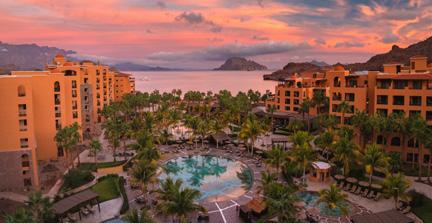
Danzante Bay is a 740-acre master-planned community, home to the award-winning Villa del Palmar at the Islands of Loreto hotel and new “Baja contemporary” real estate offerings.
For a lot of destination travelers, it starts with the golf, the most popular amenity of the resort and the most well-known. It won’t take long to understand why.
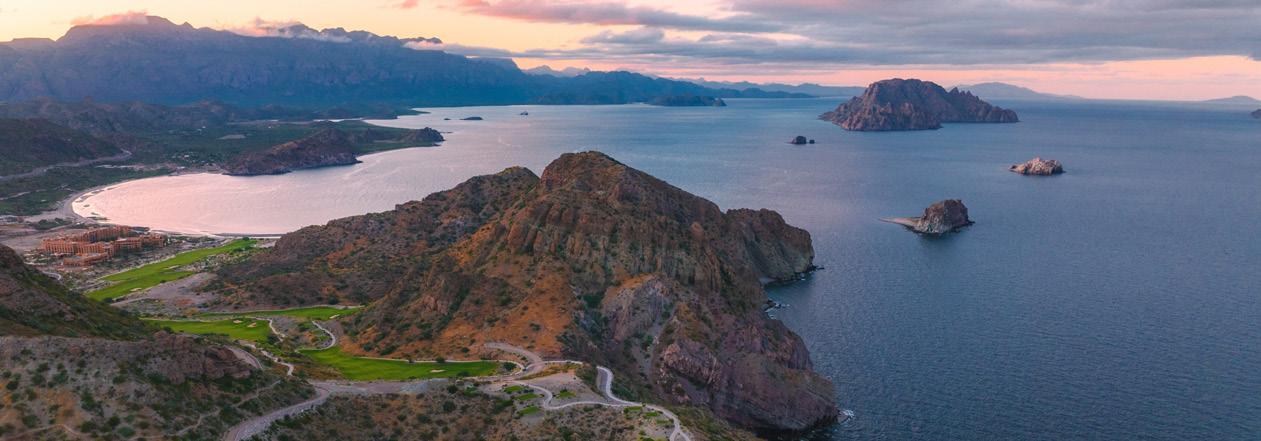
Danzante Bay, voted the best golf course in Mexico by Golf Digest, is an 18-hole beauty designed by world-renowned architect Rees Jones. The only TPC course in Mexico, Danzante Bay is known for its shot-making challenge and jawdropping visuals.
The natural beauty of the course arrests the eye. The rolling hills of the Sierra de la Giganta Mountains hug the contoured greens and open to views of the Islands of Loreto.
At 7,237 yards from the back tees, TPC Danzante Bay is a golf challenge, while the clubhouse, pro shop, and exceptional practice facilities add to a golfer’s day.
Jones’s layout takes a player through some mountains and valleys and close by the sea and
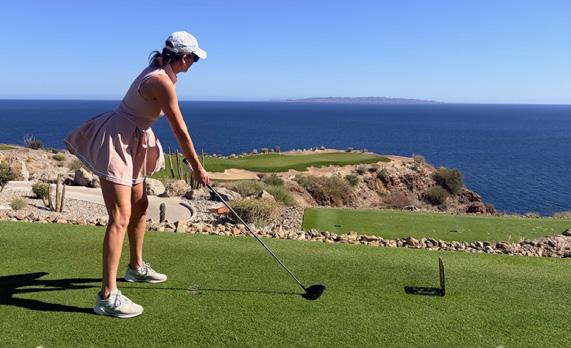
then back up through some more peaks and valleys. When the routing works around to No. 17, you will have arrived at one of the most beautiful par-3s in the world.
Late winter and early spring is whale season here. Which means a golfer could be playing 17 and see dolphins out there and whales spouting and bouncing around.
Danzante Bay might be the most photographed course in Mexico, and No. 17 is almost certainly its most photographed hole.
On No. 18, a worthy finishing hole, a player descends from the top of the mountain back to the clubhouse.
Loreto, the oldest human settlement on the Baja California Peninsula, sits on the eastern coast of the Sea of Cortez. The beach town is known for its secluded, unspoiled setting, clear seawaters rich with marine life, colonial buildings from the early 17th century, and natural landforms and seascapes unique to Baja.
OK: great golf. Amazing views. So is hitting the little white ball and gazing at the scenery the only things going on here? Not exactly.
Villa del Palmar is a blessing for families and multi-generational travel. A seemingly endless variety of activities to entertain children of all ages — including cooking classes, treasure hunts, Spanish lessons, and Mexican crafts — combine with a secluded stretch of beach and spacious suites. The resort’s Family Fun Package includes a four-night stay in a deluxe suite, daily breakfast,
a snorkeling excursion, putting at TPC Danzante Bay, a beach bonfire, and more.
Hotel-led boat and scuba diving tours offer guests an up-close look at the underwater wildlife of the Loreto Bay National Marine Park. Dubbed the “Galápagos of Mexico,” the park is home to nearly 800 animal species, including manta rays and those dolphins and whales.
Villa del Palmar takes pains to ensure the property, sheltered by the bay, is safe for families. All parts of the property are joined by paths, making it feel like a small community.
At the hotel you’ll have everything you need — five restaurants with an array of dining options, with food grown and sourced locally. All the hotel rooms are suites with kitchenettes, and a market stocked with fresh food is on-site.
The resort takes special measures to serve the youngest family members. Join the Kids Club on the first day and they’re covered for the rest of their stay, with special programs just for children.
The property offers several packages including a Stay and Play package and Unlimited Golf or Spa package.
Also, Villa del Palmar wants you to know a visitor today can be a year-round resident tomorrow. The Loreto region is emerging as the next big Baja resort and residential market. For visitors seeking an authentic Mexican lifestyle in a setting of natural luxury, lots and homes are available for sale.
Come early, stay late, or stay forever. Whatever else you do, don’t forget the golf. It’s that good.
Villa del Palmar View
From fundraiser bid to Baja bliss: A Kansas couple’s unexpected dream vacation
BY BART POTTER • DG STAFF WRITER
Jennifer Kenyon knew she was bidding on a premium Mexico vacation at the Hallbrook Culinary Classic fundraiser last September. She didn’t know much about it.
“What inspired me to bid?“ she said, laughing. “Just needing a vacation, and the competitive spirit that I have of wanting to win.”
The auction was part of a Friends of James Beard Foundation Benefits event, held at the Kenyon family’s home club, Halbrook Country Club, in Leawood, Kan.
Jennifer did win. Her husband, Jake Kenyon, knew only that there was a good golf course at the resort under the auctioneer’s gavel. It wasn’t enough to get him to bring his golf clubs along when the winning bidders cashed in on their auction bounty in early 2026.
Whatever the couple’s expectations might have been for Villa del Palmar Beach Resort & Spa at the Islands of Loreto, on Mexico’s Baja Peninsula, and Danzante Bay, its TPC golf course, consider them exceeded. Wildly.
When Jennifer, an attorney, and Jake, a physician, landed at the airport in the tiny town of Loreto, Jake looked around.
“Everyone there had brought their clubs,” Jake said. “And I was like, maybe I should have.”
Not to worry. Danzante Bay staff was able to supply them both with golf clubs. The Rees Jones-designed Danzante Bay did not disappoint.
“I was very impressed,” Jake said. “I didn't anticipate all of the undulation and just everything around it. It was so well-manicured. It was challenging, but really playable.”
Jennifer said, “I'm not a great golfer, so I'm really there for the vibes and the atmosphere. I think it's maybe 17 where (the hole) is like literally carved into a bluff and you're aiming at the ocean. It's really, really cool.”
One crack at Danzante Bay was enough for Jennifer. There’s plenty else to do at Villa del Palmar.
She found time for hikes on the trails that snake along the cliffs and through the golf course. She sat by the pool and read and drank cocktails. She indulged in some “work” at the Sabila Spa and Wellness Center.
And Jake, who plays to a 13 handicap, did get in a second round, hoping to adjust based on mental notes from the first time around.
All day, in every way, the hospitality at Villa del Palmar shone through, the Kenyons said, all in a safe, self-contained property that leaves little need for going beyond.
Jake said, “We kind of had everything that we wanted right there.”
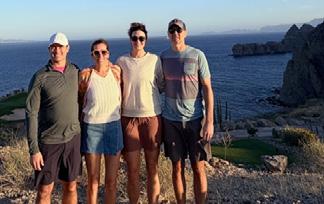
These amazing images taken by Jennifer and Jake Kenyon of Leawood, Kan., show the breathtaking views and après golf found at Villa del Palmar. They enjoyed memories that will never fade. POSTCARDS FROM THE EDGE OF MEXICO
GLOBETROTTING GEMS
PORTUGAL
DG
and
Travel There and Back
takes you tee to tee around the
world
BY BOB SHERWIN • DG STAFF WRITER
ust about everyone who has taken up the game of golf has a bucket list — time-honored or wellregarded courses around the world that one day they dream of playing.
When the day arrives that those folks are willing to go the extra mile or pay the extra buck to realize their golf goals, they might want to speak with Michelle Wicks Cypher. Michelle co-owns the Washington-based Travel There and Back agency with her husband Michael. For decades, they have specialized in sending mostly North American golfers to far-off
golfing dreamlands and destinations.
They have the knowledge, contacts and sources that can get their clients on many of the outstanding courses in the world, plus design cool experiences once the clubs are put away.
Here are some of their most requested global golf destinations that Michelle and Michael have been sending golfers, singles, couples, foursomes and beyond: Mexico, British Columbia, Portugal, South Africia and New Zealand.
Old Course at Vilamoura • Portugal
BC
Predator Ridge • British
MEXICO
FBRITISH COLUMBIA
M
any golfers have been sent to the Vancouver and Whistler areas over the years, but Michelle has seen significant golf growth in the Okanagan Valley area, east of Vancouver. It is a much drier area known for more than 200 wineries, fruit orchards, the scenic Okanagan Lake and a few dandy golf layouts.
“It’s really considered a destination, staying at one resort and branching out to a bunch of different courses within a 30- to 50-minute drive,” Michelle said. “It’s like the landscape you’d find in Central Oregon or Eastern Washington. Also, there is a high density of wineries.”
One recommended golf destination is the two-course Predator Ridge Resort in Vernon, B.C., nestled among several lakes. The Predator Course is a links-style layout. that has been voted the best public course in B.C. and is the two-time host of the World Skins Game. The other, the Ridge Course, is known for its beautiful granite rock outcroppings, elevation changes and stunning vistas.
The Harvest Club golf course in Kelowna, B.C., “is kind of cool because it’s built into a working orchard,” Michelle said. “If you go north of there, a day trip, there’s Tobiano in Kamloops. It sits on a bluff above the Kamloops lakes. It’s beautiful.”
For non-golfing folks who want to enjoy other Valley delights, she suggests the Sparkling Hill Resort in Vernon, B.C., an adults-only 146-room wellness spa resort. It’s adjacent to the Predator Ridge courses. Pet friendly, too.
or years, the agency has sent scores of travelers/golfers to the well-developed Cabo resorts, at the end of the Baja Peninsula. But Michelle said there are two other burgeoning and disparate golf areas: Puerto Vallarta on the West Coast, tight against the Pacific, and Cancun, a resplendent spit of land on the Yucatan Peninsula that reaches out into the Gulf of Mexico.
“We love Puerto Vallarta. They have a lot of really cool courses in the area,” Michelle said. “There are two Jack Nicklaus courses about an hour outside of Puerto Vallarta called Punta Mita, the Bahia course and Pacifico. What’s really cool about that area is the scenery. Just beautiful scenery.”
She said Pacifico has the unique distinction of having the world’s “only natural island green.” It’s an optional par-3 19th hole, 194 yards straight out towards the ocean called “Tail of the Whale.”
“By the way, it can only be played at low tide,” Michelle said. “So, you have to time your golf. For those golfers who have a bucket list of courses they like to cross off, they can say they played there.”
Another course in the area that also has a unique feature is Vidanta Vallarta, a Greg Norman-design that has hosted the PGA Tour’s Mexico Open. The course, which winds around the Ameca River, has the world’s longest golf cart suspension bridge, over the Ameca.
Norman also designed another elegant course in the Cancun area, Playa Mujeres. The area also features a Robert Trent Jones course, Riviera Maya, just 25 kilometers from the Tulum Ruins. Michelle’s agency can arrange tours to such sites as well as rum runs and tequila trips.
A popular adventure for her clients has been a trip to Jalisco, about an hour and half drive from Puerto Vallarta. It’s the tequila capital of the world, where folks can walk the fields, witness the processing as well as relish the final product.
Columbia
Punta Mita • Mexico
Punta Mita’s Tail of the Whale hole.
PORTUGAL
This is a country that has not only drawn increasing interest in golf but, for many Americans expats, it has become a ‘safe harbor’ for living a robust European lifestyle.
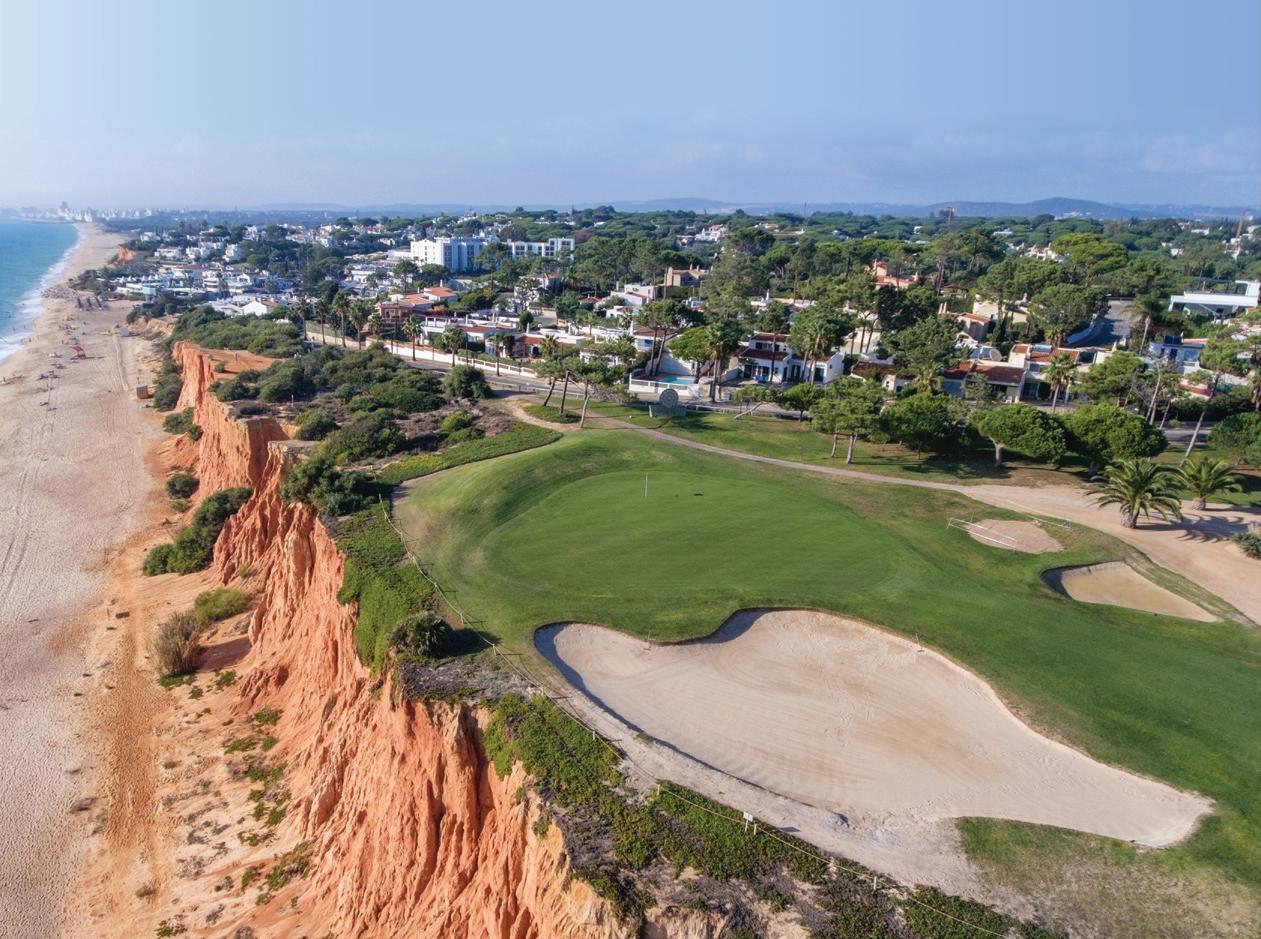
Michelle recommends the Algarve region, the southernmost point of Portugal, about 100 kilometers south of Lisbon along the Atlantic Ocean west/ south coastlines. There are dozens of quality courses along the southern edge. She likes the Old Course in Vilamoura, the “Grande Dame” of the region.
“It’s a challenging, world-class golf experience. It’s on people’s bucket list,” she said.
Another one that should be on many golfers’ list is Quinta do Lago, an eight-time host of the Portugal Open.
Jack Nicklaus also has a design there, Monte Rei, a splendid course more inland, near the town of Tavira. It is consistently ranked No. 1 in Portugal.
“And especially for those golfers who have that checklist, another course (Vale de Lobo) features the most photographed hole in Europe (Vale de Lobo 16th hole at the Royals Course),” Michelle added.
“For the 16th hole, your shot needs to carry over a red sandstone cliff.”
The best shot on this hole, for many, might be the one with their phone camera.
ZEALAND NEW PORTUGAL
NEW ZEALAND
There are few places on earth that have more spectacular golf vistas than New Zealand. The views are stunning, and the golf ain’t bad.
“Kauri Cliffs is consistently ranked as one of the world’s top courses,” Michelle said of the North Island gem. “It’s perched on a cliff top. Six of the holes are played alongside a cliff, 500 feet down. I don’t think you’re getting your ball back if that shot goes wide.”
Another course probably represented in every coffee table golf photography book is the Tom Doak-designed Cape Kidnapper, also on the North Island. It is carved out of a mountain edge where you basically hit from cliff top to cliff top.
“You’re hitting to fingers of land going out into the ocean,” Michelle said. “It’s just a modern marvel. How they can make a golf course there kind of blows your mind.”
Te Arai Links is another North Island two-course set hugging the ocean. The North course was fashioned by Doak, while the South course was designed by Bill Coore and Ben Crenshaw.
The South Island’s most noted course is Jack’s Point, more inland between the Remarkables Mountain range and Lake Wakatipu. It is picturesque to a mind-numbing degree.
The ‘Jack’ in the name is not Nicklaus. It’s actually named after a local Maori man, Jack Tewa, who bravely saved a gentleman (and himself) from drowning when their boat capsized in 1862.
Just a few miles away (everything in New Zealand is just a few miles away) is a unique layout, The Hills Golf Club. It is famous for its large-scale metalwork sculptures.
“You’re kind of playing through an art gallery,” Michelle said.
Another quality South Island course is Millbrook, with two 18-hole courses and the host of the annual New Zealand Open. It was designed by Sir Bob Charles, the legendary lefty PGA Tour icon.
New Zealand also offers an abundance of non-golf reasons to travel there. Among them, as Michelle points out, “Of course, New Zealand, wine. Hello.”
Old Course at Vilamoura • Portugal
Photos by
Cape Kidnappers • New Zealand
SOUTH AFRICA
The latest focus for golf in South Africa is the Paarl-Franschhoek area, east of Cape Town. It is one of the more well-to-do regions with a ton of golf and non-golf activities.
Nicklaus shows up again — the Pearl Valley Signature Golf Course. It’s in a pristine valley surrounded by the Simonsberg Mountain range. Nicklaus has said “it is one of the most spectacular settings in which I have designed a golf course.” It was ranked the third best course and one of its most popular destinations in the country.
Another top course is Steenberg Golf Club in the Constantia Valley, winding through vineyards. The distinctive Table Top Mountain is its backdrop.
Besides plenty of destination golf courses in the region, Cape Town has travel bucket lists as well. Safaris, for sure. You can drive to nearby game farms or take a short flight to Kruger National Park, where just about every African species can be spotted. There is even a golf course just outside the park gates, Skukuza Golf Club, where play can be held up at times by crossing creatures.
There’s a penguin habitat in the region. Robbins Island, where Nelson Mandela served decades of confinement, is just a short boat ride off Cape Town. Another boat can take you to an encounter with great white sharks. Table Top Mountain has a cable car to the summit and vineyards/wineries can be found in every direction.
AFRICA SOUTH
Steenberg • South Africa
Steenberg • South Africa
Spectacle A Southern
One epic tee shot, three can’t-miss Alabama golf destinations
BY TONY DEAR • DG EDITOR
With some holes, all it takes is one photograph to get golfers animated. See an image of the famous 17th at St. Andrews in Scotland, the incredible 2nd at Lofoten Links in Norway, or the supernatural 4th at Banff in Canada, and golfers are apt to start salivating and reaching for their phone or laptop to start booking flights and scheduling tee times.
The 5th hole on FarmLinks at Pursell Farms in central Alabama, 10 miles west of Sylacauga and about 50 miles southeast of Birmingham, typically has that effect on golfers who generally love an inviting, downhill par 3.
The hole drops a vertiginous 170 feet, and though it measures 210 yards from the back tee, you absolutely won’t be needing a long iron or hybrid to reach the putting surface. Your author can’t resist telling you he hit a 7-iron on his first trip around this splendid course a few years ago, and waited for several seconds (the hole is named
“Hang Time” for a reason) before his ball finally landed on the green, about four feet from the cup. The fact he missed the putt is neither here nor there. All that really matters is that he experienced the thrill of the tee shot.
FarmLinks was designed by Mike Hurdzan and Dana Fry, opened in 2002, and traverses a beautiful, pastoral site lined by mature trees. It was built primarily to demonstrate the effectiveness of the slow-release POLYON fertilizer, a groundbreaking product created by the Pursells’ decades-old fertilizer company and launched in 1992. Hundreds of superintendents and golf course professionals from around the country visited the 3,500-acre farm on which the holes had been laid out — a move that proved so successful, the course quickly evolved into a public facility which, over the last 20 years, has consistently ranked among the state’s top three public courses.
It is now part of a highly acclaimed resort
that offers 81 spacious, elegantly furnished guest rooms in various locations. There are 15 activities besides golf to fill your time, and three distinctive restaurants offering quick bites to hearty comfort food to fine dining.
There are half a dozen packages offering accommodations with golf, spa, or resort credits, that ensure an enjoyable and relaxing mini-break in a peaceful and very beautiful place.
It’s just an hour southeast on Highway 280 to the handsome city of Opelika and Grand National, one of the four sites to open on the Robert Trent Jones Golf Trail in 1992. There are three 18-hole courses at Grand National — Lake, Links, and Short — covering a 1,300-acre property that Jones called the greatest natural site for golf he’d ever seen. A major feature of the site is the 600-acre Lake Sougahatchee, on which 32 of the resort’s 54 holes are positioned.
Despite their differing names, the Lake and
Farm Links • Sylacauga, Ala.
the Links courses closely resemble each other, with the lake a constant threat, along with large bunkers and deep forest made up of pines, oaks, and various hardwoods. Golf Digest ranks both layouts among the top 15 in the Yellowhammer State, while the Short Course is recognized as one of the nation’s best par-3 courses with half of its 18 holes touching the lake.
When visiting Grand National, you’ll want to stay at the adjoining Auburn Marriott Opelika Resort and Spa. There are 221 guest rooms at the resort, which opened in 2002 and was refurbished in 2018. When not playing golf, you can enjoy the swimming pools and tennis courts or indulge yourself at the 20,000-square-foot Spa at Grand National. There’s over 17,000 square feet of meeting and event space and multiple dining options, with the Southern Oak Restaurant serving up some Southern classics, such as Shrimp and Grits (Gulf shrimp, local Conecuh sausage, corn, tomatoes, creamy pimento cheese grits) and Sweet Tea-Brined Chicken.
From Opelika, it’s a 4.5-hour drive through Montgomery, then on I-65 to Alabama’s far southwest corner. There sits the colorful, historic, and culturally significant city of Mobile, whose foundation dates back to the early 1700s, when it was the French colonial capital. There’s some excellent golf in and around Mobile, with two Robert Trent Jones Golf Trail sites within close proximity of the city — 54-hole Magnolia Grove and 36hole Lakewood.
The excellent Earl Stone-designed Rock Creek sits between Mobile and Lakewood, and there are 27 more Earl Stone holes at TimberCreek. Stone partnered with Bill Bergin to renovate the beloved Spring Hill College Course in Mobile in 2009, and Jerry Pate/Steve Dana’s redesign of the old Linksman course is set to open as Cypress Creel later this summer.
For now, though, the best course in Southwest Louisiana is perhaps Kiva Dunes, located on a narrow strip of land between the Gulf of Mexico and Bon Secour Bay, 60 miles south of Mobile and 15 miles west of Gulf Shores, which has some fine golf of its own.
Kiva Dunes was Pate’s first solo project and opened in 1995 (Pate renovated it in 2015). It was built on a thrilling site with white sand dunes and plenty of native vegetation.
The resort has dozens of condominiums available for overnight guests, and a similar number of single-family homes for rent, many of them on the beachfront.
Kiva Dunes, FarmLinks, and Grand National make up a fine trio of public facilities and we’d recommend visiting all three if you can. Whatever your schedule and budget allow, though, you’re in for a grand time in the Heart of Dixie.
Kiva Dunes • Gulf Shores, Ala.
Magnolia Grove • Mobile, Ala.
Timber Creek • Daphne, Ala.
Grand National • Opelika, Ala.
Elvie’s | Jackson
MagnoliaMasterpieces
Why Mississippi’s public golf
shines Mississippi
BY TONY DEAR • DG EDITOR
Mississippi is one of the rare U.S. states where the best golf might actually be public. Yes, there are a handful of esteemed private courses — Annandale, The Country Club of Jackson, Laurel, and the West Point duo of Old Waverly and Mossy Oak.
But publicly accessible courses such as Fallen Oak and the two layouts at Dancing Rabbit are considered just as good as their more exclusive neighbors and elevate the Mississippi golf trip to something of a must-take.
There’s good golf to be found in the north of the Magnolia State at Tunica, where a couple of fine courses provide entertainment for those visiting to spin the wheel at the town’s five casinos. River Bend Links was designed by Clyde Johnston and opened in 1995 on a windswept 200 acres that flooded in 2011. It was salvaged and purchased by a new owner, who invested heavily in the course by adding 60 acres of native grasses and generally enhancing the treeless, links-like look. River Bend Links remains open to the public and is closely associated with Hollywood Casino Resort, where
stay-and-play packages are available.
The town’s other course, Tunica National, also partners with the Hollywood, plus Gold Strike and the recently renovated Horseshoe Casino Hotel & Spa. It opened in 2004 and was designed by 10-time PGA Tour winner Mark McCumber, who gave a predominantly flat, 212-acre site a good deal of interest with excellent zoysia grass fairways, large Champion Bermuda greens, and plenty of water hazards. There’s also significantly more vegetation here than at River Bend Links, eight miles to the west.
Eighty miles southeast of Tunica is the elegant city of Oxford, where the University of Mississippi has stood for 182 years. “Ole Miss” opened its own
golf course in 1973 when alumnus Cary Middlecoff, who won three major championships and 39 Tour events, routed a course through beautiful woodland 10 minutes north of town. It was renovated in 2008 by another Ole Miss graduate, Nathan Crace, who rebuilt virtually everything on the aging course and installed a new irrigation system. Bob Cupp’s Mallard Pointe on the north shore of Sardis Lake, half an hour northwest of Oxford, is also a lovely round.
One hundred and thirty miles to the south and east is Pearl River Resort and the two superb courses at Dancing Rabbit, owned by the Mississippi Band of Choctaw Indians. The Azaleas and The Oaks were designed by Tom Fazio and Jerry Pate, with The Azaleas opening in 1997 and The Oaks two years later. Though both play through the same stately pine/ oak forest and feature some elevation changes, the Azaleas is perhaps the better-known of the two thanks to its gorgeous, pink, Augusta National-like azaleas.
The Oaks has slightly wider playing corridors and is a little more rugged, but still enormously enjoyable and, like its sibling, rated among the best 10 courses in Mississippi.
Fallen Oak • Saucier, Miss
Tunica National • Tunica Resorts, Miss.
Mike Young’s excellent Beau Pré, 10 miles south of the historic city of Natchez in south-western Mississippi, justifies a significant drive, as does Mark McCumber’s highly regarded Timberton, two and a half hours to the east in Hattiesburg.
The golf has certainly been good to this point, if a little isolated. For a much greater concentration of quality courses, you need to head as far south as the state will go, to the towns of Bay St. Louis, Pass Christian, Gulfport, Biloxi, Vancleave, and Gautier.
Arnold Palmer’s The Bridges is an amenity of the Hollywood Casino Gulf Coast, opened in 1996. It is one of the state’s most popular courses with 21 bridges crossing/skirting 17 lakes and four acres of wetlands.
Moving east, you soon come across The Oaks in Pass Christian, whose design is usually credited to Stephen Caplinger and Chris Cole, employees of the Landmark Land Company, which developed the course. In 2020, Nathan Crace rebuilt the bunkers on what is a surprisingly undulating property.
Twelve miles further east into Gulfport, then another 10 north to Wortham, then six southeast through the DeSoto National Forest, takes you to the Jack Nicklaus-designed Grand Bear, an amenity of Harrah’s Gulf Coast and a lovely journey through the pines and alongside the Biloxi River — for a few holes at least. The fairways aren’t narrow by any means.
But as with all Nicklaus courses, there are plenty of hazards and challenges that might come between you and a scorecard worth celebrating. Decent score or not, though, you’ll likely have a memorable day out at Grand Bear. Jerry Pate’s fantastic course at The Preserve, a few miles south of Vancleave, and Davis Love III’s equally thrilling layout at Shell Landing, part of which skirts the brackish marshes bordering the Graveline Bay Coastal Preserve, are both classic Mississippi layouts and appear in virtually everyone’s state top 10 list.
At the top of those lists, you invariably find the Mississippi course that makes it into most national rankings and which stays long in the memories of those fortunate enough to play it.
The Tom Fazio-designed Fallen Oak, which opened in 2006, is publicly accessible, but you need to be a guest of the incredible Beau Rivage Resort in Biloxi, an MGM property, to get on. The 7,487-yard layout (don’t worry, there are four other sets of tees) moves through 510 acres of the DeSoto National Forest, passing by century-old oak trees, streams, lakes, marshland, and pecan/magnolia groves. It hosted a PGA Tour Champions event for a decade and is now home to the prestigious Fallen Oak Collegiate Invitational.
A Mississippi golf adventure would undoubtedly include amazing food and possibly some great music events. But with courses like those described above, the bottom line is golf worthy of your travel budget.
Grand Bear Golf Club • Saucier, Miss.
Dancing Rabbit Golf Club • Philadelphia, Miss.
The Preserve Golf Club • Vancleave, Miss.
Sooner State Splendor Oklahoma
Shangri-La resort: Born of a dam, built into a destination
BY BOB SHERWIN • DG STAFF WRITER
No one, no matter what anyone says, could have predicted this.
It would have been inconceivable in late 1941, during one of the darkest times in human history 85 years ago, that this obscure corner of northeast Oklahoma — close to the borders of Missouri, Arkansas and Kansas — would one day develop into mid-America’s most renowned golf and entertainment mecca.
The reason was that its creation was a virtual afterthought. Back in ’41, a dam was constructed that flooded the vast low-lying terrain, producing a sixmile-long, man-made Grand Lake ‘O the Cherokees. Suddenly, folks discovered the unaccustomed pleasure of waterfront property on the previously parched red port, silt loam soil. Swimming, boating, fishing and visitors followed.
The high ground amid this new watery inception was the area called Monkey Island, where there are no monkeys but plenty of ingenuity. The transformation really started in 1964 with the construction of the original Shangri-La Resort hotel in Afton, a town of fewer than 1,000 residents. Vacationers from the surrounding states were drawn to the area to enjoy the water activities.
In the early 1970s, the resort developed three nine-hole golf courses — The Champions, The Heritage and The Legends. The Legends honors an Oklahoma luminary — Yankee great Mickey Mantle, who was born in nearby Spavinaw but lived in the area until his death in 1995.
“As we refer to it, ‘the old Shangri-La,’ it had that kind of (positive) reputation. So, we have a long history of the Shangri-La name out in the marketplace,” said Mike Williams, Shangri-La’s Director of Communications and Government Relations. “(But) the resort has been completely rebuilt since Eddie Gibbs
bought the property in 2010.”
Gibbs, a Tulsa businessman, poured more than $100 million into the aging resort, expanding and enhancing the marina in 2011, and building a new 119-room Shangri-La hotel with 8,000-square feet of convention space in 2017. Various housing projects sprouted up as well and a series of golf/entertainment projects constructed by the resort, virtually each year since.
In 2021, the resort opened a $12-million, yearround indoor/outdoor facility called The Anchor, featuring tennis courts, pickleball courts, basketball courts, a Fenway Park-like Wiffle Ball park and Trackman Golf Simulators. It’s called The Anchor because the facility has on display a 20,000-pound replica of the battleship USS Oklahoma’s anchor. Oklahoma was one of the ships sunk during the surprise Pearl Harbor attack by the Japanese on Dec. 7, 1941. There also is a tribute wall to the 429 servicemen who lost their lives on the ship that fateful day.
“It is, in this area, the only significant indoor activity center,” Williams said. “That’s why we get so many corporate and family events during the winter, folks from age 5 to 95.”
The resort continues to enhance and maintain its golf property. The championship course, with the different nine-hole combinations, has been consistently honored as best in the state. It was named Oklahoma’s No. 1 Golf Destination by Midwest Golfing Magazine, Best Golf You Can Play in Oklahoma by Tee Times, Kansas City, Top 5 Oklahoma Courses by Golf Oklahoma, and ranked among the top state courses by USA Today and Golfweek
Then in May of last year, the resort unveiled The Battlefield, a unique par-3 course. The driving distances range from 110 to 245 yards with waterfalls, hazards and a 100-foot elevation change. What makes
it even more special is that each of the 18 holes is named in honor of an Oklahoma military figure who served in World War II.
“Several publications have rated it the No. 1 par3 course in the country,” Williams added. “We’re almost always in the top five.”
The Battlefield strengthened the resort’s regional/ national reputation and heritage. This year the resort is recognizing its other original and seminal element — the water.
“The biggest thing is we are doing significant work on is our outdoor pool and hot tub,” Williams said. “Over the winter, we doubled the deck space around the pool. We always had a pool bar, but we just added a pool kitchen. With that kitchen, on the resort property there are now eight locations for food and beverage services.”
If visitors come to this area and mix water sports and golf, as many do, the resort provides a seamless connection.
“Surprisingly, we have a lot of golfers who come by boat,” Williams said. “We run (free) shuttles from the marina either to the golf course or the Battlefield. It’s about five minutes to the Championship course and 10 minutes to the Battlefield.
“Our biggest roots are golf,” added Williams. “Early in the season, we get an awful lot of golfers from the northern Midwest, Iowa, Minnesota, Illinois, Wisconsin. When we think it’s cold, they come here and play in short-sleeved shirts. The reason they play with us is because they can’t find their golf courses. They’re covered in snow.”
Despite sometimes erratic Sooner weather, the Championship course is open all year long, as Williams recommends tee times well in advance. The most popular months of play are September and October, as the starter sends off 30,000 rounds a year.
Shangri-La Resort • Monkey Island, Okla.
Swing Into Summer at Oklahoma’s Top Golf Resort
Summertime is about tee times and good times.
With 45 holes and resort amenities right on site, Shangri-La has you covered on both fronts.
ENDLESS VARIETY
Choose from the 3 nines on our 27-hole Championship Course or play 18 on The Battlefield par-3 course
SUMMER SAVINGS & EVENTS
Check out our website for special offers and events. Junior programs start in June!
OFF-COURSE FUN
Plenty for non-golfers: spa and wellness, The Anchor & Racquet Club, pools and fire pits, lake activities, and more
SCAN FOR GOLF INFO
SCAN FOR OFFERS
Missouri Trail Blazing
The Lake of the Ozarks Golf Trail: Built for every golfer
BY BOB SHERWIN • DG STAFF WRITER
Over the past few decades, the folks who promote Central Missouri’s Lake of the Ozarks Golf Trail have developed a steadfast understanding of what they have to offer and who wants to benefit.
“We have a lot of golf professionals and staff that have been at these golf courses for a number of years, so it’s almost like family when people show up from Iowa, St Louis, Chicago, Madison or Milwaukee,” said Steve Walker, who represents the 12 or so courses connected in Central Missouri Ozark Lakes region.
“We have our niche. That’s where our market is. As we say, ‘go fishing where fish are,’” he added. “We pretty much know exactly where the golfers are, where they come from and when they come here. That lets us know we’re doing something right.”
They promote affordability, as the Trail ranges
from high-end, “designer” courses to laid back rural layouts. They promote drivability, as the Trail is in the geological center of the country, within an easy drive of 12 bordering states. The courses also are all within a 30-minute drive of each other. They also promote playability, as the different courses have varying degrees of difficulty.
“We have a course that fits every size of pocketbook and every level of handicap,” Walked said.
Playability also involves the weather.
“The weather tends to be a whole lot better in the spring than people in those northern tier states have,” Walker said. “It’s amazing how many golfers we get in the spring and the fall.”
Probably the anchor of the Lake of the Ozarks Golf Trail — one Walker says, “everyone wants to play — is Old Kinderhook. The 6,726-yard, par-71
course — with its 84-room Lodge — was designed by one of the most respected names in the industry, Tom Weiskopf.
Since the course opened in 1999, Old Kinderhook has been ranked as the first- or second-best course in the state. Golf Digest lists “OK” among its top 100 courses in the country.
“There are a lot of great courses on the lake,” said Blake Conklin, manager of the Lodge at Old Kinderhook and director of golf group sales. “But we are right there at the top.”
Quite conveniently located just across Hwy 54 from Old Kinderhook is Lake Valley Golf Club. That works well for those ambitious golfers staying at the Lodge, who might want to play 36 holes in one day. The 6,373-yard, par-72 Lake Valley layout is unique in the fact that it boasts six par-5s, six par-4s and six par-3s.
Osage National Golf Course • Lake Ozark, Mo.
There are two other Trail courses even closer to each other, “within two drivers away from another,” Walker said. They are the Ridge at the Lodge of Four Seasons resort and the Cove, also at the resort. They are both operated by Troon Golf and attached to the Lodge but are considered separate Trail members.
The Cove, a 6,553-yard, par-71 layout, was designed by Robert Trent Jones. It’s quite a challenging course with the emphasis on shot precision. The signature hole, perhaps of the whole Trail, is the par3 “Witch’s Cove,” featuring an all-carry drive over water ranging from 110 yards to 230 yards.
The Ridge course, a 6,447-yard, par-72 beauty, was designed by noted architect Ken Kavanaugh. It is perhaps the most scenic of the bunch, with views of the lake and a 180-foot elevation change. It also has a memorable hole — the long and narrow sixth
The Oaks at Margaritaville • Osage Beach, Mo.
Bear Creek Valley Golf Club • Osage Beach, Mo.
Indian Rock Golf Club • Gravois Mills, Mo.
The Cove GC at Lodge of Four Seasons Lake Ozark, Mo.
Bear Creek Valley Golf Club • Osage Beach, Mo.
hole (555 yards) that many consider the hardest par-5 in the state.
The one course that most visitors would consider a must-play is Osage National Golf Resort. That’s because it is the only course in Missouri designed by the legendary Arnold Palmer. There are 27 holes — the Mountain nine, the River nine and the Links nine.
Osage National sits on a bluff overlooking the Osage River. Palmer finished the Mountain and the River nines in 1992 while the Links nine was added in 1998. It is annually considered among the top courses in the state.
Yet another designer course among the Trail offerings is The Oaks at Margaritaville Lake Resort. It was finished by the notable design team of Bruce Devlin and Robert Von Hagge, who have designed more than 50 courses together worldwide. The course meanders through the scenic tree-lined hillside with breath-taking views of the lake.
There’s a host of other well-favored Trail courses, among them are Rolling Hills CC in Versailles, the most established course (1955), The Golf Club at Deer Chase in Linn Creek, Eldon GC, Indian Rock GC in Gravois Mills, semi-private Redfield GC in Eugene and Bear Creek Valley GC in Osage Beach.
The LOZ Golf Lounge in Osage Beach, featuring numerous indoor Trackman booths, is considered a vital part of the circuit. When golfers come from long distances only to be weathered out, they still have the option to swing a club and swig a drink at the indoor facility.
“It doesn’t surprise me knowing our products appeal to so many people,” Walker added. “There are duffers that come to play these less-challenging courses, then there’s these jocks who want to play from the tips and play the Palmer course or the Robert Trent Jones course. Or the ones who just want to play with their buddies, stay in a condo, have a BBQ and a few beers.”
GETA WAY SUMMER GOLF
National Golf Resort • Lake Ozark, Mo.
The Cove GC at Lodge of Four Seasons Lake Ozark, Mo.
The Golf Club at Deer Creek • Linn Creek, Mo.
MIDWEST
The Ozark Mountain’s Daredevil
Old
beauty and relentless challenge is more than “OK”
BY BOB SHERWIN • DG STAFF WRITER
Once you sink your tee into the Zoysia grass at Old Kinderhook Golf Course and assess your opening tee shot on the par-4, 430yard first hole, you might be a bit fooled. You won’t see it initially, as your downhill drive appears benign. But things change on your second shot.
That's when the challenge begins. For this hole and just about all 17 to follow, the second (approach) shot is what matters. That’s by design. It’s one of those courses where you can see what the architect has in store for you with every approach shot … some risk, some reward and something always to avoid.
That architect who envisioned Old Kinderhook was the late great Tom Weiskopf, who has a vast portfolio of quality designed courses around the world. This was his only handiwork in Missouri. Old Kinderhook — on a bluff overlooking Lake of the Ozarks right in the middle of the state and the
country — has been consistently ranked the first- or second-best course in the state since it opened in 1999. It also has been rated among the top 100 public courses in the nation.
It’s a quality piece of work that annually attracts thousands of golfers, mostly from around the eightstate Midwest region. The 6,726-yard, par-71 layout caters to all skill levels but getting to the green from any distance requires precision. And, at times, swing courage.
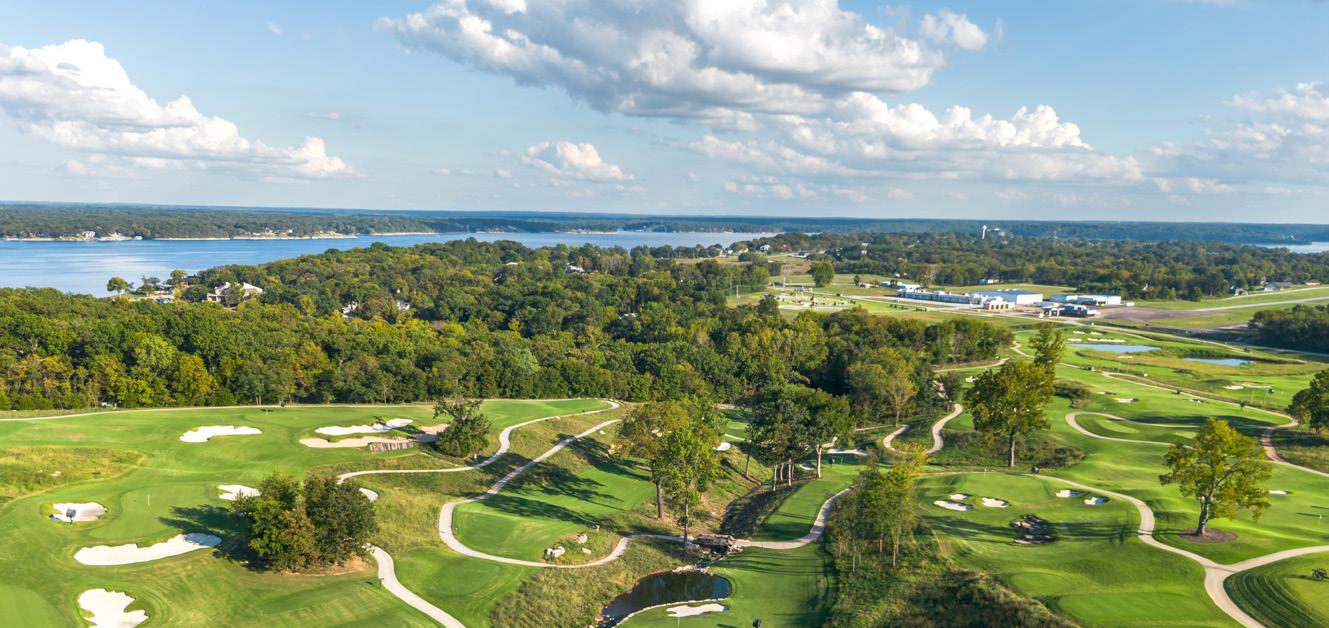
The course is the central feature in the 700-acre Old Kinderhook master-planned Camdenton, Mo., community. It is adjacent to Lake of the Ozarks, where the Osage River empties. It is part of the much larger 55,000-acre recreation area that annually draws folks for boating, fishing, camping, hiking, swimming and golfing.
Old Kinderhook’s name derives from two centuries past, with a remote reference to America’s
eighth president, Martin Van Buren. When searching for a name, it was pointed out that Camden County was once called Kinderhook County, in honor of Van Buren, who was born in Kinderhook, N.Y. He was known as “OK” throughout his life, so Ozarkers adopted the motto “OK” or “All is Well.”
Old Kinderhook is much better than OK. Weiskopf created such diverse courses as TPC Scottsdale with the crazy enclosed “Stadium Hole,” where the PGA Tour’s Waste Management tournament is held, to the more elegant Olympic Club in San Francisco and the Kukui’ula and Hualalai in Hawaii. Old Kinderhook is somewhere in the middle, like country chic, as Weiskopf routed the course among the fairway-lined elm, oak and maple trees and into the rolling Ozark hills. Streams meander alongside and across the playing surfaces with plenty of elevation changes and water hazards fashioned to shrink your ball supply.
Old Kinderhook Golf Course • Camdenton, Mo.Missouri
Kinderhook’s
The course doesn’t give in or give up throughout the circuit. The front nine is particularly challenging for budding pinseekers, as Weiskopf closes the nine, No. 7 through No. 9, with risk/reward drama.
No. 7 is just a 152-yard par 3 but the smallish green is elevated and guarded by impenetrable forests on either side. You also can’t be short, as the false front will tumble short shots back down into the bramble.
No. 8 is a 416-yard terrible beauty. The green is nearly unapproachable from distance. There’s a lake on the left with a green that slants toward it. A tree guards the left side, and a bunker is right in the way, up front.
The front nine closes with a 514-yard par-5 and a deep bunker complex directly in the middle of the fairway, about 20 yards short of the green. Quite unusual. Then there’s another sizable bunker behind it, adjacent to the green.
No relief on the back side. The par-5 14th, the course’s longest hole at 549 yards, offers a very small green to all those second shots. There’s water all along the left side with a pair of bunkers on the right and on the left.
It doesn’t let up even to the end, as the par-5, 516-yard 18th is dramatic and potentially traumatic. There’s a lake all along the left side and a creek that crosses the front. The golfer must steer the ball left of center to hit the green and avoid all the bunkers, including a nasty pot bunker just behind the hole.
The 84-room Lodge at Old Kinderhook Resort, which opened in 2015, is adjacent to the first hole. It is, like the course, well designed.
Elevated Experience
From startup to standout: ELV8 Golf’s impact on players young and young at heart
SBY TONY DEAR • DG EDITOR
earch for ELV8 Golf’s page on Instagram (elv8golf), go down to the second row of images, and click on the video second from left. Now turn the volume up. The kid ripping balls into the screen and creating the sort of sound you associate with tour pros is a high school sophomore named Kenny Crislip who’s been coming to ELV8 in Lake St. Louis, Mo., since it opened.
As you can see, his swing speed with a driver has shot up — 15.2 mph to be precise. This new velocity is enabling him to generate 28 mph more ball speed, an increase that has resulted in a carry distance that’s 84.8 yards longer than it was when he began training — 84.8 yards! So instead of driving the ball 193.4 yards, he’s now sending it 278.2 yards … CARRY.
Crislip’s athletic ability clearly makes him something of an outlier. But scroll down the ELV8 page, and you’ll see countless boys, girls, teens and adults improving, becoming stronger and fitter, rehabilitating from injury, and not only enjoying the game more but also the hard work it takes to get better at it. There are tournament wins, course records, massive handicap reductions, vastly improved swings, kids clearly having a lot of fun, and numerous college commitments.
Indeed, General Manager Taylor Goodsell says more than 30 young golfers who have progressed through ELV8’s proprietary program have gone on to play college golf or signed letters of intent.
ELV8 Golf opened just two and a half years ago and has developed a great reputation while growing its business. Goodsell says the company has really
been focusing on its junior golf program, which is called ELV8 Elite and currently has about 200 members ranging in age from three to 18.
“ELV8 Elite is a program, but we also refer to it as a club,” says Goodsell. “There are five stages of progress, and we have all skill levels.”
The first stage sees kids ages three to six participating in a once-a-week group class with games and activities. It introduces golf to them in a way that makes it fun and something they want to continue learning about. Different skills and lessons are introduced at each level until the player reaches high school. That’s the fifth and final stage where they practice together multiple days a week, train individually in the ELV8 studio every day, and travel together to local and regional tournaments.
“We plan and program the training days at our facility to include a half hour of warm-up and golfspecific exercises,” says Goodsell. “Then there’s half an hour of full-swing drills in the simulator bay, and finally half an hour focusing on the short game with putting and chipping drills.”
ELV8 Golf coaches coordinate all the programs and make changes weekly depending on where the players are at with their games and fitness. Some advance quicker than others, obviously. The coaches are there to assess each golfer’s level of progress, ensuring everyone receives an appropriate amount of attention and challenge.
“The coaches supervise and assist with the whole process,” says Goodsell.
In addition to the GM, there are six coaches at ELV8 Golf, including the Managing Partner, Zach Conlin, a Class A PGA member who was the teaching professional at Old Hickory GC in suburban St. Louis for 11 years before co-founding ELV8 Golf. His website bio says he “believes in building complete golfers, focusing not only on swing mechanics, but also course management, mental performance, and long-term growth.”
According to the bio, Conlin is “committed to creating a positive, competitive environment that challenges players while fostering confidence and love for the game. Through ELV8 Golf, he continues to develop programs that support junior golfers, competitive players, and aspiring athletes looking to elevate their performance.”
It’s a philosophy that clearly resonates with people interested in becoming better golfers. Besides the 200 or so juniors taking advantage of Conlin and ELV8’s methods, there are more than 100 adults seeking to learn the game, lower their handicaps, possibly win a tournament or two, and, more than anything, just become a stronger, fitter, more confident version of themselves.
“I’m not surprised to learn that ELV8 Golf is popular and doing good business,” says Dick Stephens, CEO and President of Seattle-based Varsity Communications, which owns and operates the annual St Louis Golf Expo. “They had a studio at the event this year and it was busy the whole weekend. The word is obviously out.”
On the Tee: The Lou
Reigning
BMW Championship returns to St. Louis for first time in nearly two decades
The 2026 BMW Championship at Bellerive Country Club in St. Louis – which hosted the historic PGA Championship in 2018 – is highly anticipated among golf fans across the Midwest and excitement is building. Tournament organizers at the Western Golf Association have seen strong interest evidenced by high volunteer and ticket responses.
Bellerive Country Club, one of golf’s most storied venues, will host the event on Aug. 17-23. The WGA expects to fill more than 2,000 volunteer positions and anticipates strong demand for tickets as the event returns to St. Louis for the first time since 2008.
“Bellerive has a proud history of hosting golf’s biggest events, and the passion for the game in this community is undeniable,” said Vince Pellegrino, WGA Senior Vice President of Tournaments. “With the energy we’ve seen so far from fans and businesses across St. Louis, we expect this to be a special week that showcases world-class golf and makes a significant contribution to our charitable beneficiary, the Evans Scholars Foundation.”
Fans interested in ticket information and volunteer news can learn more on the event’s website.
The WGA opened volunteer opportunities to those on the priority interest last October. Patrons who signed up for ticket updates were eligible to purchase 2026 tickets through an exclusive pre-sale event before they became available to the public last Nov. 20.
The 2026 BMW Championship will be a milestone event for the city of St. Louis and the region alike. In addition to being the BMW Championship’s first visit in nearly 20 years, the event will mark the first time many of the PGA Tour’s best have stopped in St. Louis since the 100th PGA Championship in 2018. Bellerive is also scheduled to host the 2030 Presidents Cup.
Proceeds from the BMW Championship annually benefit the nationally
acclaimed Evans Scholars Foundation, which awards full tuition and housing college scholarships to deserving youth caddies. Since 2007, the event has raised more than $60 million for caddie scholarships, helping send more than 4,000 young men and women to college.
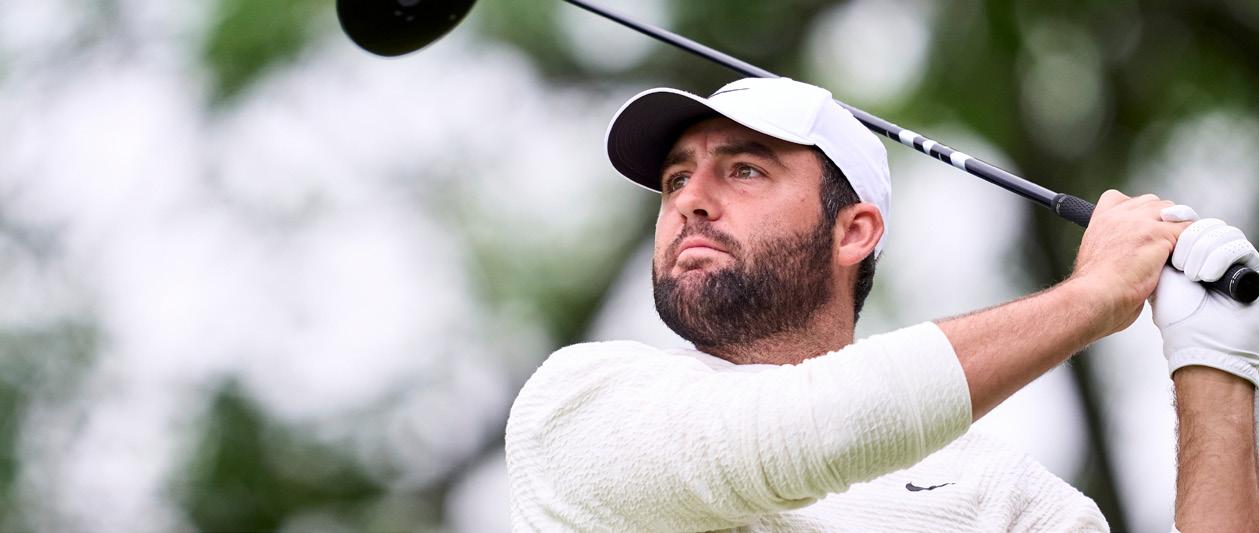
The BMW Championship field will include the top 50 players in the FedExCup standings as they compete for the J.K. Wadley Trophy and a spot in the season-ending TOUR Championship. Past champions include Scottie Scheffler, Keegan Bradley, Viktor Hovland, Justin Thomas, Jason Day, Rory McIlroy, Justin Rose and Tiger Woods.
Tournament Facts
Conducted by the Western Golf Association to benefit the Evans Scholars Foundation, the BMW Championship is the second of three events in the PGA TOUR Playoffs for the FedExCup and determines the final field of 30 for the TOUR Championship at East Lake Golf Club in Atlanta.
Event Title:
Date
BMW Championship
Aug 18-23, 2026
Location Bellerive Country Club, St Louis, Mo
Purse
Field
$20 million in prize money
Top 50 players in the FedExCup Playoffs
Defending Champion Scottie Scheffler
Title Sponsor BMW of North America, LLC
Conducted By Western Golf Association
Charitable Beneficiary Evans Scholars Foundation
Editor’s note: Information was gathered from the event website. Go to bmwchampiopnship.com for updates and news.
Gary Yee / Shutterstock.com
Debby Wong Shutterstock.com
The 2025-26 Masters champion Rory McIlroy
champion
Scottie Scheffler
A Manor for All Seasons
Splitting the fairway: Inside a business built for every kind of golfer
BBY BOB SHERWIN • DG STAFF WRITER
ryan Moore, who picked up the game of golf just a couple years ago, tested the indoor golf studio market in his native Kansas City at three different facilities. He believed something was lacking — something he could change.
“I have some entrepreneurial experience,” said Moore. “I used a little of my abilities gained owning and operating some completely separate businesses to devise a plan that approached the market in a little bit of a different way than what Kansas City was offering at the time.”
Moore had the advantage of knowing how to run a business and, as a consumer, knowing what was essential to those who patronized that business. From his experience gained as a roving indoor golf client, he figured there were primarily two types of participants: those who were serious about getting better and needed solid instruction with the latest technology, and those who merely wanted to hang with the guys, drink some beers and compete in virtual simulated games.
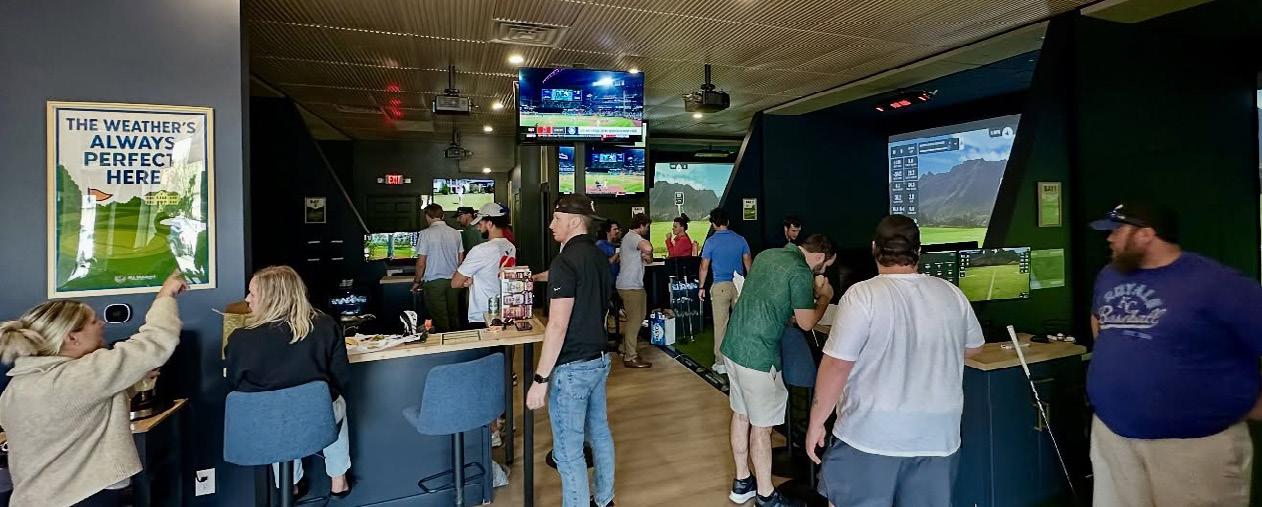
His business plan was intended to split that fairway down the middle, appealing to both sides. In June of last year, he and his father Dwayne Moore built the All Seasons Indoor Golf Club, a 2,000-square-foot facility about 20 miles south of downtown Kansas City.
“I didn’t want to be a bar, nor did I want to be an academy. I consider those two to be extremes
when it comes to finding a solid indoor golf experience,” Moore said. “I didn’t want a bar, so I could still attract the practice crowd. But I didn’t want to not make alcohol available, so I could still attract the social golfer.”
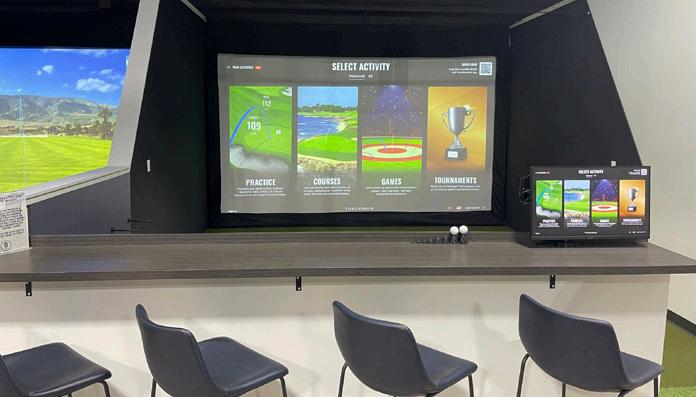
He decided his place was going to be a BYOB club. Golfers could arrive with a case of beer (there’s a liquor store in the same complex), tacos or pizzas and swing the night away with buddies. Yet on the adjacent bay, there might be a quite serious golfer, working on a simulator with one of his two instructors, tracking swing speeds, ball flights, launch angles and ball rotations with the latest in cameras and sensors.
He has five bays available for his members, or walk-ins. That’s generally one or two more than most of the other clubs in K.C. Clients can punch a few buttons to bring up more than 2,500 virtual golf courses — including 40 to 50 K.C. courses — to play.
All Seasons also has two professional instructors — Bob Usher, a PGA Professional, and Shannon Kneisler, a former LPGA Tour member. Moore can vouch for them, having taken instruction from both.
“I tried to nestle myself into a part of the market that I felt didn’t exist,” he said, “because I find myself in both of those groups of people.
“We have guys who want to put in the time,
on their lonesome, looking to develop a repeatable golf swing. Guys can use a coach to their advantage and others use us as a practice spot to ingrain some of the coaching they’ve received. And you have guys who use it as a social outlet, grab a case of beer, and join a bunch of guys playing 18, 27 holes at a time. So, I have the ability to attract all different styles, all different categories of golfers, with BYOB,” he added.
All Seasons is open from 7 a.m. to 11 p.m. seven days a week, plenty of hours to fill. He is assisted by both his father, his mother Michelle, and the instructors. Many of the clients are selfreliant, not needing much assistance. There are folks who come in at 7 am, before work, trying to tame a slice. On the other end, there's a foursome who'll drop in after work, enjoy a Horsefeather or Boulevard Pale Ale, and play 18 virtual holes at Pebble Beach or Augusta.
“The way I describe the lion's share of our golfers, they are somewhere between 24 to 40 years old,” Moore added. “They’re in their early stages of professional careers. They’re climbing the corporate ladders with young kids at home and don’t necessarily have the time to dedicate five hours on a random Friday to go play 18.
“But they do have two or three hours to hang out with the guys, get connections again with their friends, have some beers and play virtual golf.”
Bon Appetit
Service, soul and class: The heart of two KC classics
BY BART POTTER • DG STAFF WRITER
It’s no mystery to Mary Holland why Pierpont’s at Union Station and Hereford House stand among Kansas City’s most esteemed restaurants.
It’s the people, she says — the good people that work in these KC institutions to create a worthy experience for the good people who leisure and dine at these famed establishments time and time again.
“I love the people,” says Holland, vice president of brand development and management, speaking for the local ownership of the restaurants. “Our chefs, bartenders, servers, service support, and the whole team it takes to create and deliver delicious and fabulous food to every one of our guests.”
Pierpont’s at the historic Union Station and Hereford House, with locations in Independence, Mo., and Shawnee, Kan., are a vital part of a strong dining and drinking culture in the greater Kansas City area.
“While KC is still considered a relatively small town,” Holland says, “it’s a city with great spirit and innovation on the food front. We’re home to magnificent local eateries, breweries and distilleries.”
Pierpont’s, which has been in business since 1999 with the reopening of Union Station, sets a high bar for fine dining restaurants in the region.
“You're going to enjoy a fantastic meal, and a great and personal service experience,” Holland
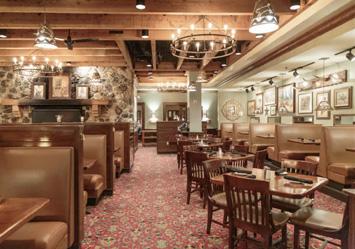
says. “You’re going to get a magnificent feast for your eyes in this beautiful setting. The bar, if you go to our website and look at some of the pictures, we have an iconic masterpiece of a bar that is just gorgeous.”
Again, Holland points to the people. General manager Tim Watters and executive chef Matt Barnes each have more than 20 years on the staff.
“Both of those individuals grew up in our company,” she says.
Watters started as a server and worked his way up and through management.
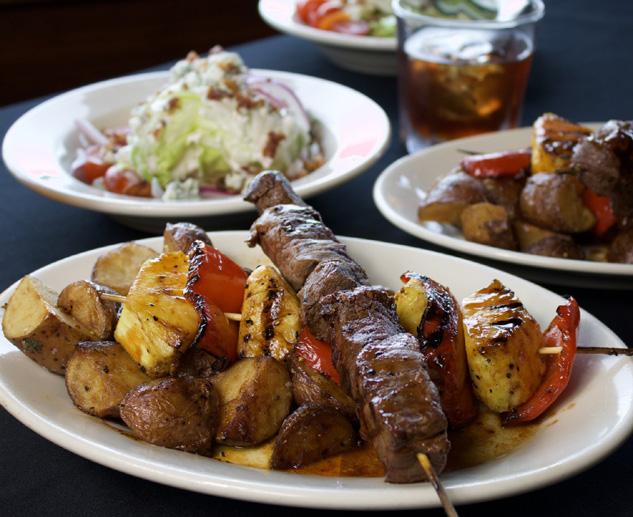
Barnes came to Pierpont’s as an apprentice after studying in the culinary and hospitality program at Johnson County Community College. His menu is rich with beef creations cut from local Hereford steers (complemented on the spring menu with a 14-ounce bison ribeye).
“Matt is so creative,” Holland says. “It's unreal. You can always find him working alongside his team back there, and he’s a great teacher.”
At Hereford House, the ambiance — call it an elevated casual steakhouse vibe — is different from its sister restaurant, but no less welcoming.
“You're going to feel like you’re walking into your home away from home,” says Holland. “You're going to get that personal, warm Midwest service and fantastic, filling, soul-warming food.”
Herf to Surf, Whiskey Medallions and Firegrilled Meatloaf are prominent on the Traditions part of Hereford culinary director Patrick Williams’ wide-ranging menu.
The staff in both of these KC gems make it happen every day, Holland says.
“I love seeing a special event come to life. I love to see a young couple celebrating a romantic evening. I love the passion our bar team has for creating craft cocktails and sharing wine knowledge with our guests. I love the creativity of our chefs and the entire kitchen team. Watching them procure and create dishes is a beautifully orchestrated event.”
You’re never a stranger for long when you walk through the door at Pierpoint’s or Hereford House, even if it’s your first time in.
“We take great pride in looking at the details, because the little things are the big things,” Holland says. “We take great pride in knowing the guests, knowing little things like it's a birthday or they're celebrating an anniversary, making sure we know those kinds of things and that they’re acknowledged.
“And folks like that. They like feeling like they're known when they walk in the door. We have a ton of regulars, and we know them.
“And we know they’ll be back.”
Pierpont’s at Union Station
Hereford House
Vividly Vintage
Collectable gear, fresh perspective: Mulligan’s Country Club reinvents golf retail in KC
WBY MARK MOSCHETTI • FOR DESTINATION GOLFER MAGAZINE
hen real life threw Max Ledom the equivalent of a shot into the rough, he decided to make the most of it. He wanted to have some fun with it and ultimately take golfers of every ability, background, and interest level along for the ride.
Today, the ride with Ledom leads to the front door of Mulligan’s Country Club in Westwood, Kan., about six miles south of that state’s Kansas City (where he lives).
Step inside, and customers won’t be walking into a “country club” in the traditional sense.
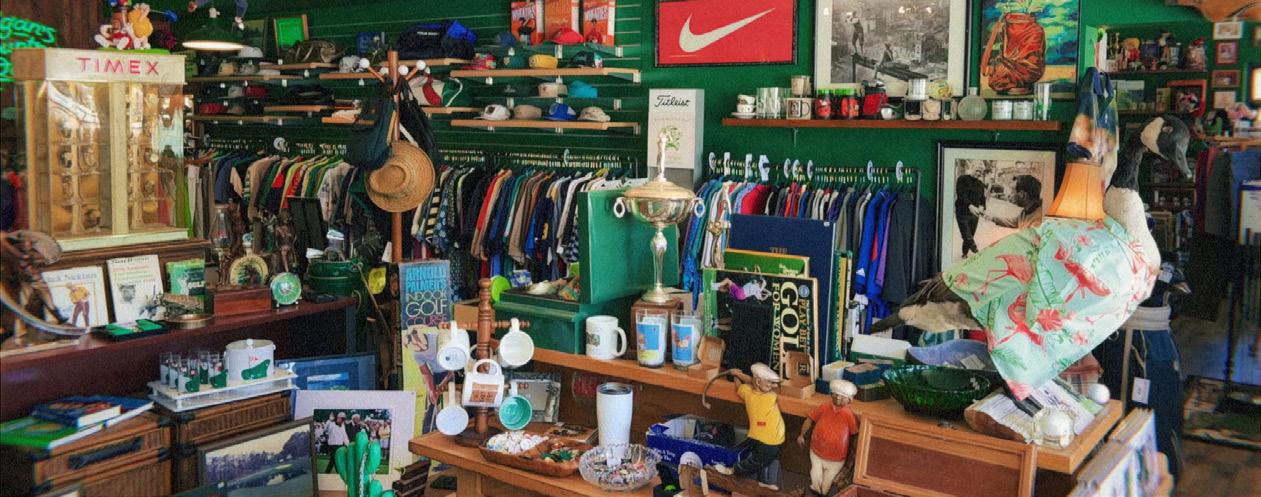
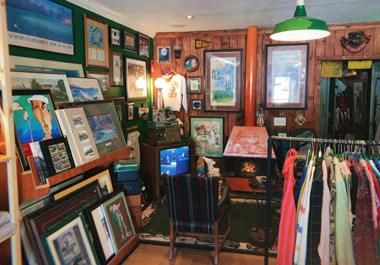
What they will walk into is a 1,600-square foot layout that is wall-to-wall with vintage golf gear: Shirts. Bags. Clubs. Hats and visors. Framed photos and other artwork. Even a Masters divot tool set.
“I was at an estate sale, and I realized, there is some really cool, awesome old golf stuff out there,” said the 32-year-old Ledom, who was looking for something else to do after being laid off from his previous job in 2023. “I said, ‘Is anyone doing some sort of vintage golf brand?’ I looked it up and some people were selling vintage clothes. But no one was selling vintage clothes or vintage golf apparel and doing the whole thing as a brand or as a business.
“That’s when a switch flipped in my brain and the branding side of my brain lit up.”
It didn’t take long for Ledom’s “branding side” to make the connection between the gear and the game.
“I realized that when you take a mulligan in golf, you get a second shot,” Ledom said of his collection of gently used but still very usable merchandise. “So why not call it Mulligan’s?”
His own version of “country club”
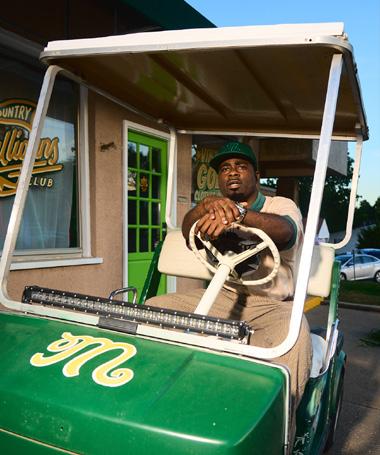
While customers will find all of those vintage items – along with some of Ledom’s own branded merchandise, dubbed Mulligan’s Originals – what they won’t find inside his front door are membership fees, dress codes, tee times, or stuffy vibes, even though its name includes “Country Club.”
Ledom grew up in Johnson County, Kansas, “around a lot of very wealthy people.” As he tells it, his family didn’t fit the “wealthy” profile, but that “my parents provided more than enough.”
It helped shape his outlook on life — and on golf, to a certain extent.
“I was kind of an against-the-grain type than my friends. I love my friends, but we were different,” he said. “When I was on the course play-
ing with them or their college or work buddies, I felt like an odd man out, and didn’t fit in with the crowd that I saw golfing.”
So, in the process of starting up his store on Westwood’s Rainbow Boulevard in March 2025, the concept of fitting in was one of Ledom’s priorities.
“I wanted to make a country club — a tonguein-cheek country club – that was for everyone else and was opening the doors for everyone,” he said of adding that moniker to the Mulligan’s name. “Whether you’re an experienced golfer, a whitecollar golfer like that, or a skateboarder who wants to get into golf and find your way there, or just want to learn how to play, or whatever it is –our doors are open to that.
“We want to get you suited out there in all this cool golf stuff and get you out on the course and make you feel like you belong on the course – and you do belong on the course. That’s what golf is all about.”
Adding a personal touch
Ledom’s items come from all over, some from as far away as Japan.
Several are from the Masters. They range from club bags to duffels to artwork to pen-and-pencil
sets … even that divot tool set.
“I can find stuff pretty regularly. But Masters stuff, I had to take an entire year to build that,” Ledom said. “It takes a lot of time to find really cool Masters stuff. I want the meat of the collection to be really cool, old Masters things that you just don’t see.”
Not everything is vintage. Ledom’s self-developed line of Mulligan’s Originals is a growing part of the collection — hats, T-shirts, hoodies, ball markers, and golf tees.
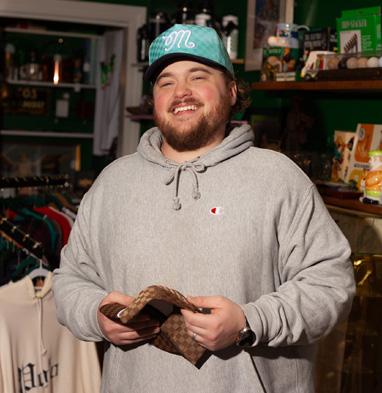
“I love our hats. I worked hard designing them, then built them from the ground up," he said. “I picked the fabric and the design — I wanted to make sure it was exactly the way I wanted it. Our checkerboard Mulligan’s hat is our biggest hit, and it’s something I really enjoy offering to people.”
Growing it responsibly
After starting out with a 400-square foot store when he opened in March 2025, the space next door became available, allowing Ledom to expand to 1,600 square feet last October.
As he tells it, the customers are loving every inch of it.
“When you get big reactions out of it, that’s when you feel kind of confirmed with what you’re doing or trying to achieve,” Ledom said. “I want (customers) to feel there’s a sense of history with this place and that they’re taking part of something. Whether they buy something or not, they feel like, ‘That was a real cool shop.’”
If he had a chance to do it all again … well, that’s exactly what Ledom’s plan are: Do it all again.
“I think our playbook is very similar to a lot of brands: Growing means reaching out to different areas of the country,” he said. “We have ideas to do a lot of things to grow the brand and grow what we’re doing. Opening new stores in different areas, we’re kind of getting to that part and (figuring out) how we’re going to get there.”
His wife recently left her job to devote full time to the business, and he also has brought on a chief financial officer.
“We’re doing our best to grow it responsibly, so we don’t get above our heads,” Ledom said. “The most important thing is to keep the vibe intact.”
The success so far has exceeded Ledom’s grandest expectations.
“It’s an amalgamation of everything I really love,” he said. “When I started this, I had ideas of what it could be, but I knew I was taking somewhat of a risk with an untested market and taking a risk with a vintage store. I was deciding to do something, and I would find out if it was good or bad. I had full confidence in it, and the support has been beyond my wildest dreams.
“The sky is the limit for us.”
Find out much more about Mulligan’s Country Club online at mulliganscountryclub.com. Many items can be purchased on the website.
JOIN THE CLUB
Membership is free. No dues, no catches. Just early access to drops, exclusive colorways, event invites, and the best vibes in golf.
• FIRST DIBS: New drops hit your inbox before anyone else.
• EXCLUSIVE GEAR: Members-only colorways and designs.
• EVENT ACCESS: Invites to pop-ups, scrambles, and the annual Open.
• THE BACK ROOM: Access to their private archive of rare finds.
• E-MAIL: fore@mulliganscountryclub.com
• SOCIAL MEDIA: Find them on Facebook, Instagram and TikTok.
MIDWEST
A Cut Above
Booth Creek Wagyu’s bold expansion
BY BART POTTER • DG STAFF WRITER
B
en Fuentes would be the last person to say his super-premium, ultra-marbled Wagyu beef steaks are for everyone.
Fuentes, marketing director for Booth Creek Wagyu in Manhattan, Kan., would gladly sell his steaks to you and everyone else. Yet he knows some people will never make that purchase – too expensive, too rich, too this, too that.
He hopes, at least, that you’ll try it.
“As the marketing director, my job is easiest when I can let you taste the product.
“It sells itself.”
That’s why staff in every Booth Creek retail store in Kansas, and now at the newest location in Southlake, Texas, will cook up a sample for any customer who wants one.
“When you come into one of our Booth Creek locations, we really want it to feel like an experience, from the way the store looks to the way the store feels.
“Our Southlake customers were just blown away with how the inside of the store looked. They're like, this isn't what I thought it was going to look like when I came to a meat market.
“They expect old-timey meat markets, the smell, the grime, the dirty floors … and they come in and everything’s behind glass.”
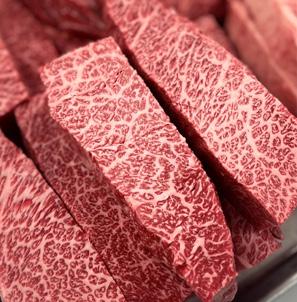
“Wagyu” literally means “Japanese cow” (“wa” meaning Japanese and “gyu” meaning cattle). Historically, these cattle were bred in Japan for strength and endurance, leading to a genetic
propensity for intense intramuscular fat, or marbling. That marbling produces the tenderness and flavor that define Wagyu beef and justifies its premium price.
Booth Creek Wagyu, founded in 2020, has grown from an entrepreneurial seed into a vertically integrated operation – ranching, feeding, processing, retail, and wholesale distribution.
According to the company, founder Dave Dreiling first encountered Wagyu cattle through family connections and became convinced of the breed’s potential after attending a Wagyu auction in 2020.
Fuentes says, “About six years ago, he tried Wagyu for the first time and said, you know, this is what I want to do. This is what my legacy is going to be.”
Dreiling purchased full-blood Wagyu animals and embryos and began assembling what would become Booth Creek Wagyu.
Dreiling’s approach differed from traditional cattle operations. Rather than selling into commodity markets, Booth Creek was set up as a “vertically integrated” business, controlling every stage from genetics to retail sale.
Fuentes says Booth Creek grew slowly at first, then more steadily, and has grown fast for about a year. Dreiling’s vision, he says, is 100 stores nationwide.
Expansion into the Lone Star State is acknowledgment, Fuentes says, that Texans are proud of
their own homegrown beef.
“And that was kind of like the hurdle. So, about a year ago, we trademarked the slogan, ‘Changing the Way America Eats Beef,’ which is a really, really bold statement. So, we said, if we're going to make a statement that bold, then we need to go down to Texas and prove it, feeling that if we can make it in Texas, we can make it anywhere.”
Fuentes was recently a sponsor at the Kansas City Golf Show, aiming to educate golfers about his luxury products. He sees golfers as people who appreciate the best things in life, like Wagyu beef steaks.
He found golfers open to learning, for instance, about Booth Creek’s grading system, the transparency of which sets it apart from its peers.
“When we hang a carcass, we take a picture between the fifth and sixth rib and we send that picture to Japan and they analyze it for us and they say, ‘Hey, the marbling percentage on this ribeye is, say, 43.27 percent marbled.’
“So now we know what percentage of marbling is averaged across that carcass, and we actually put that right on the front of the label.’’
All science aside, the staffers in his company’s retail stores, Fuentes says, are the front lines of Booth Creek’s sales and marketing.
“They're the ones answering the questions ‘what is Wagyu’, ‘what steak would you recommend’, and ‘why does it taste so good?’”
Maui’s Royal Classic
Hawaii
Royal Ka'anapali Course • Lahaina, Hawaii
Ka’anapali’s championship past and present is a resort golfer’s dream
TBY TONY DEAR • DG EDITOR
he Royal Ka’anapali Course on the Hawaiian island of Maui has hosted some big events and big names in its 66 years. Designed by Robert Trent Jones Sr., it opened in July 1962 with a foursome featuring Bing Crosby, and a year later staged a “Shell’s Wonderful World of Golf” match between Dave Ragan and New Zealand’s Bob Charles, who had recently won the Open Championship at Royal Lytham and St. Annes.
In December 1964, the Canada Cup was played there. The international competition, which ultimately became the World Cup of Golf, featured 34 teams and many of the world’s leading players, including Bob Charles, Gary Player (representing South Africa), Peter Thomson (representing Australia), Roberto De Vicenzo (representing Argentina), and the home team of Jack Nicklaus and Arnold Palmer. Not surprisingly perhaps, the U.S. ran out clear winners, beating Argentina by 11 shots with Nicklaus and Palmer finishing first and second in the individual competition.
From 1982 to 1985, the LPGA held the Kemper Open at Ka'anapali, with Betsy King winning the last two events. And in 1987, the senior men arrived for 14 straight years of the Ka’anapali Classic with Palmer, Lee Trevino, Dave Stockton and former Masters winners Tommy Aaron and George Archer teeing it up. In 2008, a two-day skins game featuring Nicklaus, Palmer, Player, and fellow seniors Tom Watson, Jay Haas, Loren Roberts, Peter Jacobsen and Fuzzy Zoeller was
played at Royal Ka’anapali.
In more recent years, the Royal course has become a regular venue for NCAA D-1 college events, with the University of Hawaii women’s team hosting the 2025 Dr. Donnis Thompson Invitational, won by the University of Washington, and in April of this year, the Big West Women’s Championship.
On the men’s side, Royal Ka’anapali has been the scene of the prestigious Ka’anapali Classic by Outrigger since 2014. The University of Oklahoma has won the event five times, most recently last year when the Sooners won by 12 shots. The Sooners’ Ryder Cowan, currently 22nd in the World Amateur Golf Rankings, shot an amazing 193 (-20) for the 54 holes (Oklahoma’s Jase Sammy, a Walker Cup player and 8th in the WAGR, was third).
Though the world’s best players would no doubt love for Royal Ka’anapali to be part of today’s professional tour schedules, at 6,700 yards, it probably isn’t sufficiently challenging for players who average 300-plus yards off the tee. It remains a genuine championship venue by virtue of the college events it hosts today — events in which possible stars of the future compete regularly.
The reason it remains so popular is that it is the ideal resort course, providing ample entertainment and endless pleasure for vacationers who can play it off the Uliuli (Royal blue) Tees or move forward to the more accommodating Keo Makamae (Sandy White) Tees at 6,267 yards or even the Kula (Gold) Tees at 5,389 yards. The Pu
Kokoo (Burgundy) Tees are set at 5,016 yards.
You’ll play a number of thrilling holes, not least the 550-yard opening hole, 474-yard 5th, which takes you to the beach at Black Rock, the 12th which takes you to the foothills of the Wet Maui Mountains, and the 440-yard 18th which Arnold Palmer described as one of the best and most challenging finishing holes he ever played.
In addition to the Royal, Ka’anapali also offers the Ka’anapali Kai Course, originally a nine-hole executive layout and lengthened to 18 by Jack Snyder in 1976. Hawaii’s own Robin Nelon completed a major renovation in 2005. At 6,400 yards from the tips, the Kai Course may be a little shorter than its regal neighbor, and it is regarded as the more player-friendly of the two courses, but it’s certainly no pushover and not to be taken lightly.
After golf, you’ll probably need to refresh yourself with something cold in the clubhouse. You should return in the evening, though, for some Hawaii fusion cuisine at Roy’s, the Maui restaurant of renowned chef Roy Yamaguchi. Feast on Misoyaki Butterfish, Teppanyaki Seared Black Tiger Shrimp, Ka’anapali Cioppino, or any of the other exquisite entrees, and finish off with the Macadamia Nut Tart or Chocolate Toffee Mousse Cake.
Golf by the beach, under the sun, on a championship course that Nicklaus, Palmer, Player, and Watson all played, followed by cold beer and chocolate toffee mouse cake. Now that really is having your cake and eating it too.
OUTRIGGER Kā‘anapali Beach Resort is located on a three-mile stretch of the award-winning Kā‘anapali Beach, beloved for its pristine white sand and crystal blue waters along the sunny western shores of Maui The resort provides an ideal setting for a relaxing tropical vacation with an authentic Hawaiian cultural experience. Immerse yourself in the vibrant traditions and customs of the islands as our full-time Hawaiian cultural specialists guide you through daily activities, captivating Hawaiian entertainment and insightful programs Our commitment to preserving and sharing the Hawaiian culture is evident in every aspect of the resort, from the décor by Hawaiian artisans to the daily cultural experiences Located in the heart of the Kaanapali Resort, conveniently between Black Rock and the Whalers Village shopping center and adjacent to Kā‘anapali Golf Courses.
Greater
I Uniquely Utah Utah
Zion’s golf zenith arrives: Black Desert headlines region’s surge
BY TONY DEAR • DG EDITOR
n October 2024, PGA Tour rookie Matt McCarty won his first PGA Tour event at the inaugural Black Desert Championship, played at the $2 billion Black Desert Resort in Ivins, Utah.
It was the first time the Tour had stopped in Utah — more specifically in the ever-growing golf destination called Greater Zion — in over six decades, and the tournament was a huge success. McCarty admitted to struggling with what he thought was an altitude headache during his first practice round (Ivins’s elevation is about 3,000 feet) but recovered quickly by drinking plenty of water.
He ended up shooting 23-under 261 for the 72 holes to win by three. The Scottsdale, Ariz., native — who won three Korn Ferry Tour events earlier in the year to earn his place in the tournament — spoke about how much he enjoyed the course.
“I love the design and the views,” he said. “It’s just a great place to be.”
Last May, South Korea’s Haeran Ryu seemed equally impressed with the course in winning the LPGA’s Black Desert Championship, saying it made her “so happy.” The South Korean made a confession of her own, though, conceding she had “prayed to God” on every tee: “no rock.”
The two tournament winners summed up the very distinctive course in just three short sentences. Yes, it’s undoubtedly beautiful, but there’s also plenty of danger. In building the course, developer Reef Capital Partners of Lehi, Utah, had two things going for it.
First, it’s an incredible site surrounded by south-
ern Utah’s Red Cliffs National Conservation Area at the northeastern extent of the Mojave Desert, and covering black lava fields in the Santa Clara volcanic field formed roughly 30,000 years ago. And second, their chosen architect, Tom Weiskopf, was still able to work despite being diagnosed with pancreatic cancer.
Weiskopf’s diagnosis happened at about the same time as work on what would be his 73rd and final course began. He visited the site as often as his health would allow, but finally lost his battle in August 2022, nine months before the course opened.
It is, in a word, stunning. Lush, green fairways move through gaps in the lava with large, white sand bunkers and the occasional water hazard adding to an almost supernatural visual package.
Black Desert could well be at the top of your wish list when devising a golf tour of southern Utah and the area around St. George, but by no means is it the only course that could be considered “bucket list.”
The St. George golf trip has been winning advocates for two or three decades, with several courses providing the same incredible red rock scenery you get at Black Desert. The first phase of the city’s popularity centered on courses like Keith Foster’s excellent Coral Canyon, Jeff Hardin’s equally eye-opening Sky Mountain, and other St. George staples — Green Spring, Sun River, Southgate, Sunbrook, St. George, Bloomington, and the highly entertaining nine holes at Red Hills.
In 2006, however, the trip rose a notch with the opening of Matt Dye’s The Ledges, and it took a profound leap two years later when Sand Hollow opened,
14 miles east of St. George. Here, John Fought and Andy Staples found six of the most spectacular holes anywhere in the world and completed the course with 12 good, though less extravagant, holes.
The resort’s nine-hole Links Course sits on less photogenic ground, but the firmness, contours, and design make it almost as much of a must-play as its longer neighbor. The Wee Course is a fun nine-hole par-3 layout with holes ranging in length from 50 yards to 120 yards.
It would be another dozen years before St. George’s golf scene grew even more attractive with the addition of the Dale Beddo-designed Copper Rock, 10 miles east of Sand Hollow. Copper Rock has hosted the Epson Tour since 2021 and covers more than 200 acres of glorious high-desert topography with the ubiquitous red rock views.
Then it jumped again in 2022 when David McLay Kidd’s superb redesign of Johnny Miller’s original holes at Entrada at Snow Canyon opened (it’s private, but you can play if you stay at the Inn at Entrada). Then 13 months later, it reached its current zenith when Black Desert came on board.
In the U.S., there are roughly five golf facilities for every 100,000 residents. Washington County, of which St. George is the county seat, has about 220,000 residents and 19 places to play — so, a little more than double the national average. And when so many of them are worth flying to, and a handful are rightly considered world-class, then golfers know they have to go.
Black Desert Resort • Ivins, Utah
Your Own Private Idaho
Easy to reach, hard to forget — Circling Raven beckons
BY BART POTTER • DG STAFF WRITER
For the general traveling public, the town of Worley is a dot on the map, and a tiny one at that.
For the golf traveler, Worley, Idaho, home to 253 souls, is also home to a golf course that is anything but small-town. Circling Raven Golf Course, the centerpiece of the Coeur d’Alene Casino Resort in Worley, looms large in the greater Pacific Northwest as a destination golf experience.
And there’s this: You can get there from here — and there, and there, and pretty much everywhere.
Don Rasmussen, general manager at Circling Raven Golf, said he entertains golf and travel communicators from around the country at the course.
“One of the things they’re very impressed with,” he said, “is they can fly into Spokane and we’re 45 minutes from the airport.”
Rasmussen wants you to know, once you’ve established headquarters at the Coeur d’Alene Casino Resort Hotel (view stay-and-play options at cdacasino.com/hotel) and played a round or two at Circling Raven, there are plenty of other good courses in and around Spokane and its Idaho borderlands, a region known worldwide as the Inland Empire.
The Coeur d’Alene Resort Course with its famous island green is straight north on Highway 95, 25 minutes away from Circling Raven. In the other direction, south from Worley on 95 is Pullman, Wash. Its highly rated Palouse Ridge course on the campus of Washington State University is a little
over an hour away.
Spokane is renowned for the quality and affordability of its public courses — such as Indian Canyon, The Creek at Qualchan, Kalispel and Meadowwood — and it’s just that pretty 45 minutes away from Circling Raven over the East Palouse Highway (WA 27).
However traveling golfers find their way to Worley, Rasmussen is proud of the golf experience to be found at Circling Raven, widely considered the best course in the Inland Empire. Its challenge and scenery have it consistently rated among the top courses in the Pacific Northwest. The desert vistas and the sheer scope of the property, which uses only 110 of its 650 acres for golf play, will resonate with golfers long after they’ve finished a round here.
Circling Raven emerged from the 2025-26 off-season in fine shape at its early April opening, Rasmussen said.
“Last year, my superintendent and I took a tour (around the time of opening) and he said in his seven years here, he’d never seen the golf course come out of the winter so well,” he said. “And we went out (in April this year), and we're better than we were last year.”
Circling Raven stretches to 7,189 yards from the back tees, with a slope/course rating of 74.1/144. Raven is very playable from the white tees (6,108 yards) and the reds (4,708 yards.)
Players hoping to meet the challenge will benefit
golf travelers Idaho
from practice facilities considered by Rasmussen to be the best among public and resort courses in the Inland Empire, boasting a 12,000-square-foot practice putting green and a 25,000-square-foot wedge green.
Rasmussen said his grounds crews have been working hard to enhance the wedge green even more. Eventually, practicing players will be able to work on their chipping Wednesday through Saturday and their pitching Sunday through Tuesday. Key chipping spots will be identified and yardages for short-game aiming will be easy to see and plentiful.
Not to mention the animals.
“We have critters out there that are as long as 10 feet and four feet high. We’ve got bears, we've got moose, we've got deer, we've got salmon,” Rasmussen said. “They are silhouettes out of metal and brown in color. They’re targets out on the practice range and by peak season we’ll have yardages to each of them.”
Circling Raven Indoor Golf Suites opened in late 2024 with three golf simulators in a 1,200 square-foot space in the adjacent Coeur d’Alene Resort Casino. The simulator room fills a cold-weather niche for Rasmussen and scratches an itch for golfers denied wintertime play on most Inland Empire courses.
For now, though, Circling Raven is real 18hole golf, on grass, on a course that now, in June, is approaching its full springtime prime.
It’s all here, very near little old downtown Worley. It’s easy to find.
Circling Raven Golf Club • Worley, Idaho
A Portland Pioneer
Cottage Golf: Innovative and inviting space helping women embrace golf
BY BOB SHERWIN • DG STAFF WRITER
It’s something that’s been fairly evident, ongoing now for decades. For various reasons, women have struggled to overcome ”the gender inequities in the golf industry.”
That’s the view of teaching pro Kat Gerrish. Four years ago, in her small measure, she sought to do something about it.
“I thought that we have to change the way people approach golf in order to change outcomes on the golf course,” said Gerrish, who lives in Portland, Ore. “The way golf is structured, I wanted to develop a different type of coaching environment to see if that would move the needle and get more women interested.”
In an 1,800-square-foot space in Beaverton, just west of Portland and not far from the massive Nike campus, she runs her Cottage Golf studio. It has a Trackman simulator, two bays and a wider gathering event space.
“When you walk in, it feels like a retail boutique space or spa setting instead of a golf setting,” she said. “It’s immediately disarming. People feel really comfortable. It’s calm, it’s private. It’s a nice place to learn golf.”
Together with assistant teachers, Katya Kurkoski and Alice Takamiya, two recently graduated college golfers with pro tour aspirations, Gerrish said, “we’re helping (women) get better at golf but also helping them enjoy golf. That might mean we improve their confidence or have them look at the game in a different way or find the right people or course for them to play. We become mentors, in a way.”
It’s a niche approach that, from the start in 2022,
turned into a cinch. “It was immediate. People started signing up before I was even open.”
Gerrish calls her place “a woman’s focus studio.” But don’t think that implies exclusivity. She said her message is “very inclusive. We teach everyone. I’d say our percentage is 80 (women)/20 (men), which is exactly the opposite from what you’ll find on a golf course. The guys who come in are lovely. Most of the time they’re coming in because they heard about us from their female friends. Or that they just want to see if they can get better at golf.”
It’s clear, however, Gerrish and her assistants are there to help women, who over the decades have faced many more impediments in their efforts to jump into the game’s mainstream.
“Women in business need to play golf, so they can be part of the conversation,” Gerrish said. She welcomes a wide variety of women from all walks and stations of life.
“Someone with a new job, a new partner. Someone newly retired and needing a hobby. An empty nester, single or widowed just looking for a connection in the community,” Gerrish said.
Her effort has engendered a generation of folks to pick up or improve their games; she estimates 200-300 a year since the studio was opened. She has helped girls as young as four, as well as one 92-yearold retired attorney.
“She’ll come in every few months, pop up the stairs into the studio,” Gerrish said, “and wonder why she’s losing distance.”
The women come to her and her staff for a
variety of motivations. Some just want to learn the game, some want to be as competitive as possible, some desire the social aspects. Some simply want the confidence to show up at a golf course and seamlessly mix in with any gender group or competitive level.
“They can approach the game any way they want. They can score or not score,” she said. “There’s lot of women who are competitive with their friends. They like that aspect. They feed off the competition and use the handicap system. That’s where I can help funnel people into the right situation.”
What gives Gerrish the most satisfaction is the feedback she receives, via phone calls and texts proclaiming their first par, first birdie, first nine holes, first chip-in.
“I had someone call me from a club to say, ‘four of the top 10 players of the year are your students,’” she said. “We’ve had club champions. I love it when those texts of holes-in-one come in. That thrill, that dopamine surge it gives you, is so good. Once you get a little of that, you just want more and more of that.
“When they connect with people they haven’t connected with in a long time, their dads, grandpas, over golf, it really makes me sublimely happy.”
She said that women need to be equal partners in the game and have the opportunity to enjoy equal social benefits.
“Golf gives back so much to your life,” Gerrish added, "whether it’s a connection or confidence or a challenge or health benefits. I think everybody wishes they would have done it earlier.”
Kat Gerrish
A Rose City Original
The Standard Portland Classic celebrates women and community on the LPGA stage
BY BOB SHERWIN • DG STAFF WRITER
It might be surprising to Northwest golf fans to know that the LPGA’s Portland Classic has been contested longer than three of the sport’s five majors.
The Classic, now called The Standard Portland Classic, began in 1972. The 55th edition of the event will be Aug. 13-16 at Columbia Edgewater Country Club, which has hosted the event 38 times.
The oldest major for women is the U.S. Open, inaugurated in 1946 and designated a major in 1950. The KPMG Women’s PGA Championship started in 1955. But the three other majors were all designated years, even decades, after Portland began teeing it up. The Chevron Championship became a major in 1983, the AIG Women’s Open in 2001, and the Evian Championship in 2013.
The Standard Portland Classic is the longestrunning non-major LPGA tournament and the only tier one pro tour stop in the Pacific Northwest. It is also the only tournament on the LPGA schedule owned and operated by a non-profit organization, Tournament Golf Foundation. TGF was established in 1972 with the intention of bringing women’s professional golf to the Rose City.
More than a half century later, it survives and thrives. And the tournament also has raised more than $18 million for local charities.
All this supports the tournament's popularity with fans in Portland and around the world. And the ath-
letes that play in the Classic are fans, too.
In a players-only poll last year, Columbia Edgewater was voted the second-best course on the LPGA schedule. The first was Dundonald Links in Ayrshire, Scotland.
“I guess that makes us the No. 1 course in the U.S.,” said Monica Olson, who has been producing the event for the past six years. “They love the course itself. They love our city. They like the hospitality and how they are treated when they are here.”
Olson and her business partner Lynn Clary run Little Bird Media Solutions. They are co-directors of the Portland Classic. Last year, the event drew “the largest attendance in recent years,” she said.
Olson said the reason why the tournament has had such a long run is because “there is a lot of support here.” From the Columbia Edgewater membership. From the TGF. From the volunteers and city folks who take pride in hosting a big-time Northwest event.
“They’ve (Edgewater) been an awesome partner. They really love this tournament,” Olson said. “The members have been very supportive.”
Over the years, some members have hosted players at their homes for the tournament week and have remained friends over the years. One LPGA member who has played in the tournament, Caroline Inglis, retired last year and is a Columbia Edgewater mainstay member.
Olson added that “our really strong volunteer program does so much for us on the course.” More than 400 volunteers are needed each year, many returning faithfully year after year.
The tournament is supported by an amazing title sponsor that loves golf and believes in the mission of the LPGA. The Standard Insurance Company, a Portland-based carrier that specializes in workplace benefits, stepped up last year with a three-year sponsorship deal. It will run through 2027. The event carries a $2 million purse with $300,000 to the winner.
Last year, Akie Iwai of Japan shot a final-round 66 to win the tournament by four shots over Gurleen Kaur. It was Iwai’s first victory on the LPGA Tour.
With four months to go, the tournament is filling in a world-class field of players from around the globe. The LPGA event has undoubtedly welcomed Tour sensation Nelly Korda into the field. Korda has been at the top of the rankings, or close to it, for at least three years running. She has played in the tournament twice, in 2022 and 2023.
Another top player the tournament hopes to entice is South Korean star, Hyo Joo Kim. She also is considered among the best in the game. She played in the event in 2023 and 2025.
The ultimate summer pro golf experience awaits you in Portland — visit portlandclassic.com for tickets and fan information.
The 2025 champion Akie Iwai
AKIE IWAI 2025 CHAMPION
Salish Cliffs: Where great golf meets coastal comfort in the Evergreen State Peninsula Par Excellence
BY TONY DEAR • DG EDITOR
The trip to Shelton on Washington’s unimaginably gorgeous Kitsap Peninsula and the Squaxin Island Tribe-owned Salish Cliffs Golf Club has become a favorite for Pacific Northwest golfers.
Not only do they get to play a top-rated golf course, but they can mix it with a little gaming action at the nearby Little Creek Casino (likewise a Squaxin Island property), great dining, spa sessions, and live entertainment, all in virtually the same place.
Seattleites have two ways to get there — it’s 75 miles by car, or they can take the ferry to Bremerton, then drive the rest of the way. The ferry/car option may take a little longer, but if it’s a sunny summer day, Elliot Bay is at its shimmering best, and time isn’t an issue, it’s the way to go. Because who doesn’t love sitting on an outside ferry deck in the sunshine? The driving part is altogether more enjoyable than taking on Seattle and Tacoma traffic on I-5. Portlanders, meanwhile, have a two-hour drive north, and those requiring a plane to get here can be on the first tee 90 minutes after landing at SeaTac.
However you get there, though, and wherever you’re coming from, your time in Shelton is likely to be one of the highlights of the year. And if you’re fortunate enough to visit frequently, then consider yourself very lucky, leave some salmon for the rest of us, and repair your ball marks.
If golf is the main reason for your visit, prepare yourself for a PNW classic — beautiful, playable, and exciting. Gene Bates’s design, which opened in
2011, takes you on an endlessly engaging adventure that skirts some deep forest, provides wonderful views of the Kamilche Valley, and makes the most of the elevation changes. The course rises and falls 600 feet, but you never feel it because Bates saved the steepest drops and climbs for the cart path. It also traverses 320 acres, but you never sense the size of the site, either, because the forest isolates many of the holes.
And what holes they are! You’ll have your own favorites, and though it’s difficult to pick just one, the hole that seems to attract the most attention is probably the par-4 14th, where good thinking is as important as good ball striking.
There’s plenty of space to the right and the green’s orientation makes an approach from that side a little easier, especially if the pin is on the left. But you’ll have to clear more of the creek/gulch/trench/ gully that runs diagonally in front of the green.
Go left off the tee, and you’ll probably have a better view of the green and be left with a shorter approach. But the green will be shallower, making it harder to stop your ball on the putting surface.
Whichever side you favor, a four is hard-earned and will feel very good. It would be remiss not to mention the superb par-4 16th hole, which swings right around three sizeable fairway bunkers, or the home holes on each nine, which end on a huge double green with large pond short.
After a drink or some lunch in the impressive cedar-log clubhouse following the round, you make
Washington
your way down the entrance road to your digs for the night at the 190-guest room Little Creek Casino Resort. Here, as well as sleeping, you dine at the Seafood Bar or Island Grille where, if you’re hungry, you’ll order the Oyster Stew and legendary Seafood Bake. You’ll rejuvenate at the Seven Inlets Spa and enjoy a cigar and single malt in the Cigar Lounge. Or you could take in a show, or perhaps an MMA contest, at the 1,800-seat Event Center.
The smoke-free casino, which offers roughly 63,000 square feet of gaming space, opened in 1995, but the hotel wasn’t built until the end of 2003. Since then, numerous additions and renovations have been completed, most recently to the guest rooms in Tower II, which were refurbished and received new shower/plumbing fixtures, in 2025.
Other recent or planned improvements include a complete kitchen remodel for The Grille at Salish Cliffs, where new equipment will be installed and the setup improved to create a more pleasant dining experience and help staff withstand the high volume of business during summer.
A new administration building is being built, and though that won’t affect golfers, gamers, or guests necessarily, the new family entertainment arcade to be built when the admin building is ready certainly will. Lastly, new synthetic turf will soon be installed at the driving range.
Salish Cliffs and the Little Creek Casino Resort has always been a great combination. And it’s only getting better.
Salish Cliffs Golf Course • Shelton, Wash.
Kidd Strikes Again Washington
From curiosity to classic: Scarecrow adds to the Gamble Sands experience
ABY TONY DEAR • DG EDITOR
few months before it opened to the public, a group of golf writers met at Gamble Sands in central Washington to learn the name of the resort’s new 18-hole course. They, and everyone else who’d played the original layout — designed by David McLay Kidd and opened in 2014 — had watched its neighbor slowly evolve over the previous couple of years and grown extremely curious about what it might be called.
The first course’s moniker had mixed a little of the property’s history with a physical feature of the land on which it sat — Dan Gamble was the Nova Scotian who walked to Washington in the 1890s to find gold and whose daughter, Martha, married John Gebbers — part of a family of landowners, farmers, ranchers and, later, golf course developers. Might that formula work a second time, or would the Gebbers go for something a little more predictable — Columbia Dunes, perhaps, or River Bend?
When the name was announced — Scarecrow — and the course’s logo was revealed, there was a moment of stunned silence before murmurs of approval began to fill the room.
Everyone present knew it was a fitting nod to the site’s farming heritage. But, though we all expected it to be extremely playable like its predecessor, as early reports and rumors had suggested, there was now a question mark over just how player-friendly it might be.
The name contained the word “Scare”, and the logo was a mysterious, faceless scarecrow holding
a golf flag in his right hand and resting it on his shoulder. To be honest, it bordered on foreboding. Every writer went to bed that night wondering what they might discover the following morning when they would be among the first golfers to ever play the course.
What they found both delighted and challenged them. Yes, the fairways were wide, the views over the Columbia River and towards the Cascade mountains were incredible, and the risk of losing a ball was minimal. But there were slopes and contours and deep bunkers and ridges and knobs and bluffs and saddles and a dry creek-bed that got in the way of recording a decent score.
When everyone had been allowed a moment to reflect on the experience, the verdict was unanimous — Scarecrow was every bit as intriguing and enjoyable as the Gamble Sands Course, and only by playing it a second time (or third, fourth…) could you hope to figure out which of the numerous options you had for navigating a hole might be the most effective.
The round starts with a short par 4 that’s both artful and deceptive and is followed by an outstanding par 3 with a long, narrow green in a natural dip. The 5th, a drivable par 4 with a lot of room to the left and the high-desert to the right (but which must be carried if you’re going for the green from the tee), might be the best hole on the course, but there are many other great holes from which to choose.
The views that give golfers a sneak preview of the course as they look north from the resort’s park-
ing lot, or the Cascades Putting Course, are as memorable as you suspect they might be. The short 11th plays southwest to a green overlooking the river. The long, sloping 12th doubles back with the creek bed right of the fairway, forcing you to make multiple consequential decisions.
The tough par-4 13th heads back up the hill, while the incredible, long par-4 14th tumbles down the slope toward the gulch/ravine before finishing on an enormous, beautifully contoured green. The par-5 15th heads north with a ravine close by on the right.
The round then finishes with a dramatic par 3 and two bumpy, relatively short par 4s at which birdies are certainly possible but where fives and sixes are also in play. It’s a fun and fitting end to an exciting and compelling round.
Though McLay Kidd is credited with the design, it was his partner, Nick Schaan, who made most of the creative decisions. And what an incredible job he did, building Golf Digest’s “Best New Public Course” and Sports Illustrated’s “Best New Resort Course” for 2025.
With two nationally-ranked 18-hole courses, the 14-hole Quicksands short course, the vast Cascades Putting Course, The Barn event space, the acclaimed Danny Boy Restaurant, and 77 guest rooms (40 GolfView rooms alongside Scarecrow’s 2nd hole and 37 River-View rooms next to the Putting Course), Gamble Sands Resort is now a bona fide destination that golfers who love natural, firm, ground-hugging golf shouldn’t really think twice about visiting.
Gamble Sands • Brewster, Wash.
Photos courtesy of Brian Oar
RIVER RANCH REVEALED
David McLay Kidd’s Snake River project takes shape
IBY TONY DEAR • DG EDITOR
t was reported in the reliable Northwest periodical Cascade Golfer magazine last December, that David McLay Kidd was building a new course on the Snake River, 15 miles northeast of Pasco, Wash. CG didn't state the course’s name for a very good reason — it didn’t have one yet. That changed on January 21 at the PGA Merchandise Show in Orlando. Kidd, along with KemperSports which will manage the course, filled in a lot of the gaps involving the project’s plans and business model, and announced what it will be called — River Ranch.
Tri-Cities Tee to Green
Wash.
Readers will probably have seen pictures of the amazing site which, until about six years ago, was owned by the Gordon Estate Winery and the Gordon Family’s own vineyard operation, Kamiak Vineyards Inc. Winemaker Jeff Gordon had purchased 200 acres in 1978, planted his first vineyard in 1980, and produced his first wine in 1985. But the business began to fail in the mid2010s and, following initiation of bankruptcy hearings, the winery scaled down operations, and the property was sold in August 2024.
The bankruptcy case finally closed in July 2025, but it took until the end of the year for the winery to wind down, sell its assets and fully vacate the premises. By then, of course, the land had been stripped of its vines and cherry trees, and work had begun on the golf course that the new owners sought to create.
The ownership group comprises four local businessmen — developers Ben Harris and Kennewick Council member Brad Beauchamp, who formed North 44 Homes in 2018, together with Keith Tiegs and his son, Jordan. Keith is son of the late agricultural titan Frank Tiegs, whose 30plus businesses still employ over 5,000 people, own 20 food-processing plants, and farm over 140,000 acres across the Northwest.
The four joined forces to bid on more than 300 acres of the Gordon Estate that had become available and, according to tricitiesbusinessnews.com, paid $9.2 million. Harris and Beauchamp had grown up fishing and boating at the now closed,
and sadly neglected, Levey Park, which juts into the river east of where the golf course will be. They initially wanted to repurpose the park as a marina with adjoining cabins. But, after walking the land with their new business partners, the idea of a golf course came up, and the thought of using this incredible place for potatoes, onions, fruit trees (or worse, houses) quickly faded.
And who better to design and build a worldclass golf course in the Pacific Northwest than David McLay Kidd, the Scot who now lives in Bend, Ore., and who has created a handful of the region’s very best courses.
As we noted in December, just a few weeks after the land purchase was confirmed, Harris called Kidd, who warned him that he turned down far more proposals than he accepted. Harris insisted Kidd come and see the site for himself, and about six months later, Kidd’s diary finally allowed him a window of opportunity.
As we now know, Harris hadn’t been joking about the quality of his property. Kidd called it a “unicorn” and said it had everything a golf course architect hoped for — sandy soils, awesome views, interesting topography, and a year-round golf climate. The fact it was so close to his adopted home, and there was no immediate need for a housing component just made it all the better.
Construction began initially on five holes last November with Kidd working alongside Caden Jensen, an assistant construction manager with Kidd’s own course construction company, Golf
Landscapes. Jensen worked under Kidd’s design partner, Nick Schaan, on Scarecrow at Gamble Sands.
Shaping continued in the new year and should be complete by late spring when the course will be grassed. It’s not clear yet when it will open but the target is August 2027. Right now, it’s thought the course will be entirely fescue, although bent grass may be used for the greens. And though there will be membership categories with members enjoying early access to the brand-new course, the development will actually be a high-end destination resort open to the public with guest cottages and upscale dining.
Kidd hopes River Ranch will become a significant part of a long-haul trip international golfers make that might also include visits to Chambers Bay, Bandon Dunes, Gamble Sands, Scarecrow, and Wine Valley.
And while Keith Tiegs likewise hopes it will put southeast Washington on the world golf map, he is also aware of how beneficial it could be to the local market.
“By drawing visiting golfers and receiving widespread attention, it will strengthen the entire golf ecosystem,” he says.
“It will benefit public courses, private clubs, hospitality providers, and tourism partners alike. Ultimately, this project is not just a new course, but rather an anchor asset that will raise visibility and credibility and have a significant economic impact across the region for years to come.”
Horn Rapids Garza Heralds His Home
Tri-Cities Tee to Green
Washington
A ‘Rising Tide’ for the Tri-Cities
BY TONY DEAR • DG EDITOR
Tri-Cities golf insider and Head Professional of the Keith Foster-designed Horn Rapids Golf Course Josh Garza is excited about the development of River Ranch (see feature on previous page) and supports it all the way.
“It’s such an awesome place and, as Bandon Dunes and Gamble Sands would indicate, a course designed by David McLay Kidd is going to be enjoyable from start to finish,” Garza says. “Golfers and golf businesses here should be embracing it with open arms.”
Garza hopes Washingtonians and Oregonians who travel to the Tri-Cities to play the new course and stay for a few days also visit the Cities’ other layouts. There’s Horn Rapids, of course, as well as the very highly thought of Canyon Lakes, which opened in 1981 and was designed by John Steidel. There’s also Jim Engh’s excellent Columbia Point and the lovely Sun Willows designed by Robert Muir Graves and opened in 1960. And then there’s the short but always enjoyable Zintel Creek, which opened in 1938 as the Twin City Country Club, became the Tri-City Country Club in 1948 and, in 2017, was purchased by 20 members who wanted to save it from the threat of being bulldozed. (If they’re fortunate enough to know someone, golfers might also get a game at
the private Meadow Springs.)
“I hope River Ranch will create a rising tide that floats all boats,” Garza adds.
Before a shot is struck at River Ranch, though, Horn Rapids will continue to enhance the visitor experience.
“We want to continue making upgrades and positive changes to the golf course every year,” says Garza. “Our goal will always be to make noticeable changes that golfers want to see.”
An important recent improvement has been adding more sand to the bunkers.
“Now they play better, look better, and are easier to get out of,” says Garza. “We want them to be hazards, but we also want to give people a better chance of getting out of them, which was becoming harder to do as we lost sand.”
The course will also continue to monitor the height of bunker lips. It doesn’t want bunker shots to be easy and not cause players at least a little anxiety, but it’s not hosting the U.S. Open.
“The bunkers should be a challenge without golfers being stuck in them for long,” says Garza.
A new tee box has been added to the 497-yard 18th hole with the aim of encouraging golfers to take on the left side of the hole, threading the needle between the bunkers on the left side of the
fairway and the practice range. Take that line and you’ll likely be hitting your second from a fairly bare desert lie, but it should be very playable and the distance you have remaining to the green will be cut significantly. It gives an extra ripple of interest to an already interesting hole.
The fairways should have been aerated by the time you read this (phone ahead to make sure), which will make them play beautifully come the start of the summer season. It can certainly get pretty warm in the Tri-Cities during July and August but, from late April through June, the needle hovers around the high 60s to the high 70s, which most Pacific Northwesterners will probably prefer. And the sun will more than likely come out — the Tri-Cities receive about one-fifth as much rainfall as Seattle does in a year, and there are twice as many days when the sun shines.
With better bunkers, aerated fairways, an altered closing hole, much-improved irrigation over the last few years under Brad Rew’s management, and the always great weather, Horn Rapids promises to be a popular stop for Washington golfers this year.
River Ranch will likely be the Tri-Cities’ ultimate showstopper in future years, but Horn Rapids is definitely making strides to be the next best game in town.
Horn Rapids Golf Course • Richland, Wash.
“The new and improved Horn Rapids Golf Course” Come play 18 holes on the only links course in Tri-Cities Washington!
“Home of the Smash Burger” Located at Horn Rapids Golf Course, Rewtser’s Craft Bar & Grill is the perfect place to go after a fun day of golf!
MON-THUR 18 HOLES WITH CART - $68
FRI-SUN 18 HOLES WITH CART - $78
NEW GPS GOLF CARTS
The Tri-Cities: Where great golf meets world-class wine
The Tri-Cities of Washington Kennewick, Pasco, and Richland
— might not be the first place that comes to mind when golfers start planning a Pacific Northwest trip. But maybe it should be. With nine public courses within a short drive, a long playing season, and a landscape shaped by three rivers and wide-open skies, this corner of southeastern Washington offers the kind of variety that makes a golf getaway feel easy.
Golf there is shaped as much by
the environment as the architecture. The Columbia, Snake, and Yakima
Rivers converge in the region, creating rolling terrain, desert bluffs, and ribbons of green fairway cutting through the high desert. The result is a mix of layouts that reward creativity, solid ball striking, and the occasional willingness to let the wind become part of the round.
Kennewick alone delivers several distinct golf experiences. Canyon Lakes Golf Course is often the one that gets golfers talking. Routed through dramatic elevation changes with water in play on multiple holes, it asks players to think their way around the property while still offering a fair challenge. It’s the kind of layout where club selection matters and every tee shot frames a new view of the surrounding hills.
Just a few minutes away, Zintel Creek Golf Club provides a completely different vibe. Established in 1938, this historic course offers a walkable layout lined with mature trees and a straightforward design that makes for a relaxed round for players of all skill levels.
Columbia Park Golf Tri-Plex rounds out Kennewick’s public offerings with a format that welcomes players of all abilities. The shorter layout and practice facilities make it a great spot for sharpening wedge play, introducing someone to the game, or squeezing in a quick round when time is limited.
Across the Columbia River, Pasco’s Sun Willows Golf Course provides a full-length municipal test that has quietly built a reputation among regional players. Wide fairways give golfers room to swing, but the course still demands accuracy and a thoughtful approach into the greens. It’s a layout that rewards good golf while remaining enjoyable for everyday players.
Richland adds even more personality to the local golf scene. Columbia Point Golf Course sits along the Columbia River and pairs scenic water views with a layout that challenges golfers from the opening tee shot to the finishing hole. Breezes off the river can add an extra layer of strategy, and the setting alone makes the round memorable.
Buckskin Golf Club offers a relaxed nine-hole experience locals have enjoyed for decades — perfect for a quick round that can easily stretch into a leisurely afternoon.
Additional public courses in West Richland and throughout the Columbia Basin round out the Tri-Cities’ nine-course lineup, giving visiting golfers the chance to play a different course each day while experiencing a range of designs.
Of course, golf might be the anchor for a visit, but the Tri-Cities offer plenty to explore once the scorecard is signed.
The region’s three rivers create a natural playground beyond the fairways. Columbia Park stretches along the riverfront with scenic paths and open spaces perfect for unwinding after a round, while the Sacagawea Heritage Trail links the TriCities with more than 20 miles of paved pathways for cycling or evening walks. Richland’s Howard Amon Park is a favorite gathering spot, especially when the sun dips over the Columbia River and the sky turns the soft gold locals know well.
Then there’s the wine. The Tri-Cities sit in the Heart of Washington Wine Country, surrounded by vineyards and tasting rooms showcasing some of the state’s most respected varietals. For golfers, the 19th hole might come with a glass of cabernet or syrah and a view of the vines that produced it.
In the end, what makes golf in the Tri-Cities stand out isn’t just the number of courses — it’s the rhythm of the place: a morning tee time under wide blue skies, an afternoon along the river, and the sense that there’s always another course waiting tomorrow.
For golfers who enjoy discovering new places to play, the Tri-Cities might be one of the Pacific Northwest’s best-kept secrets.
To plan your golf getaway and pick your spots to sip in Heart of Washington Wine Country, check out VisitTri-Cities.com.
Canyon Lakes Golf Course
Zintel Creek Golf Club
Sun Willows Golf Course
Columbia Park Golf Tri-Plex
Canyon Lakes Golf Course
Horn Rapids Golf Course
Visit the Tri-Cities for an immersive golf experience. Toast the wineries, savor the food, let the friendliness of our people move you, and allow the spirit of exploration expand your horizons.
DESERT WILLOW
FIRST-CLASS ACADEMY AND A KEEPS ON GIVING
FRESH FINE GREENS DINING
SBY TONY DEAR • DG EDITOR
everal very complimentary articles about Desert Willow Golf Resort have appeared in these pages in recent years, and we wondered if we might have exhausted everything worth saying about one of our favorite golf destinations in the Coachella Valley.
Nope. There’s still a very significant part of the operation we’ve never touched on but which you should know about.
The Palm Desert Golf Academy opened with the courses in 1997 and, over the last 25-plus years, has earned a glowing reputation for providing quality instruction in a welcoming and friendly environment. There are currently nine PGA-certified teachers at the academy which provides a regular schedule of immersive, multi-day schools and daily clinics, all overseen by Director of Instruction Paul Bucy
Desert Willow • Mountain View
Bucy is originally from Connecticut but has been at Desert Willow for 20 years, giving about 250 private lessons a year and directing schools that provide OnForm Video Analysis (OnForm is a coaching app designed to accelerate skill development), TrackMan4 data, Stick Mobility warm-ups, on-course coaching, personal practice plans, and even dining (you have lunch with your instructor on the clubhouse terrace every day).
“With an average student to instructor ratio of just 3 to 1, our students get personalized instruction,” says Bucy, who is quick to highlight the success of the academy is very much a team effort. “Our students love that they can enjoy toptier instruction, lunch, and play our courses all on the same day.”
Bucy refers to “students”, but a handful have been to so many schools over the years they’ve really become friends as well as clients. In October, two of his longest-standing students met with Bucy and Desert Willow’s Head Golf Professional Jason Wilkinson for a weekend of golf and football in Seattle.
“We played Chambers Bay and then caught the game at Lumen Field against the Buccaneers,” says Bucy. “Unfortunately, the Seahawks lost but what a game! We’d talked about taking that trip for years and it was great to finally make it happen.”
One of Bucy’s students there that weekend was Scott Rumpel, a restaurant franchisee from Vancouver B.C, who has been going to Desert Willow’s schools for over 10 years and who says his game has benefitted enormously in that time.
“I’ve had the privilege of learning from both Paul and Jason,” Rumpel says. “Their instruction has not only improved my game but deepened my passion for the sport. Beyond the lessons, we’ve become good friends.”
The other student in Seattle was Derek Archer, likewise from Vancouver, who reiterated what a great weekend it was and how much he enjoys attending golf school at Desert Williow.
“It’s undoubtedly one of my favorite weeks of the year,” he says. “I’ve been coming to Desert Willow Golf Academy for 12 years with the same group of four buddies. In that time, my game has gone from a high handicap down to an eight. The courses are spectacular, and the coaching from Paul and Jason is fun, relaxed, and clearly effective.”
A small number of two and three-day schools were first offered in 2007. Their popularity increased rapidly, and in 2024, the academy recorded its best year, hosting a total of 59 schools attended by 189 students.
That a place like Desert Willow should be home to a golf school as highly regarded as the Palm Desert Golf Academy doesn’t come as a surprise when you consider how good the whole facility is. The City of Palm Desert clearly meant business when they built this place and hired Michael Hurdzan and Dana Fry to design the two courses — Firecliff and Mountain View.
This time last year, we spoke about the exten-
sive renovation that had been completed on the Firecliff Course where the tees were levelled, a new tee was built at the long, Par-4 10th hole, and all 18 greens were restored to their original size and shapes. The greens were also resurfaced with MiniVerde, an ultra-dwarf Bermuda grass perfectly suited to the region’s climate, altitude, and the amount of cart and foot traffic the two courses saw.
Replacing the existing 328 Bermuda (which had done a good job for over two decades but was beginning to require excessive maintenance) had become necessary, and the transition has kept Desert Willow among the best-conditioned courses in the Valley. This year was the first full season for the new tees and greens, and the reports are pretty much as expected. The new tees were certainly appreciated but, not surprisingly, the greens attracted the lion’s share of attention.
“The feedback has been outstanding,” says Brian Simpson, Desert Willow’s Sales and Marketing Director. “We’ve enjoyed probably the best playing conditions in our 28-year history, and they’re only getting better.”
We also mentioned the new roof the clubhouse got in 2024, and the improvements continued this year with new carpets, a fresh coat of paint, and renovated restrooms and locker rooms. Visitors will recognize the place this winter, but they’ll be pleasantly surprised by a facility that’s fresh, bright and clearly keen to prevent the dusty, dated look some Palm Springs-area courses can be guilty of.
Returning over the course’s peak season will be the extremely popular Music and Dining Under the Stars program with live music and themed dinners on select Thursday nights. Executive Chef Francois Gaertner and Sous Chef Gustavo Garcia, who catered for 750 guests at a Thanksgiving event in late November, have designed menus designed to pair with the evening’s music: island-inspired seafood to accompany steel drum melodies, classic Italian fare for a jazz-infused set, and steakhouse cuts that go just right with blues and rock.
Firecliff continues to rank among California’s top 25 public courses in nearly all golf publications. In a state that boasts the three layouts at the Pebble Beach Resort, plus PGA West, Pasatiempo, Torrey Pines, TPC Harding Park, and Pelican Hill, it’s in some pretty good company. Add the slightly less challenging and always enjoyable Mountain View Course and you have 36 terrific holes that will entertain you for the duration of your visit. You can learn how to score better on them at a golf academy with a team of professionals that make improving at golf not only likely but also very enjoyable. And you can enjoy top-class food and entertainment in the clubhouse and Terrace Restaurant.
Golfers have known how special a winter trip to Desert Willow Golf Resort is for over 20 years. If you’ve been before, you’ll know what we’re talking about. If this year marks your first trip, we hope you enjoy a place we’re sure will become a quick favorite.
A small number of two and three-day schools were first offered in 2007. Their popularity increased rapidly, and in 2024, the academy recorded its best year, giving a total of 59 schools attended by 189 students.
Desert Willow • Firecliff
THE SKINNY
Tee Times 8:30 a.m.-12:30 p.m. on both courses both days
Two-Person Best Ball Saturday and Sunday
Net and Gross Divisions • Two Different Flights
Over 100 Team Prizes Available
Prize Pool Daily and Two-Day Overall
4 KPs, Long Drive and Straight Drive Daily
Saturday Evening Corona Premier Happy Hour and Auction Benefitting Multiple Sclerosis
Your $1,390 team entry fee includes:
• Tournament entry for both players
• Green fees, cart and range for both players on Gamble Sands and Scarecrow
• Round of golf for both players on Quicksands (anytime Friday-Sunday)
• Lunch for both players Saturday and Sunday
• Friday Corona Sunbrew Shamble Shootout at Scarecrow
• Tee Times 10:45 a.m.-1:15 p.m.
• $650 team fee
HEAD EAST
Golf Fit
Middlesex
Health on golf, wellness and injury prevention
BY SARAH CODY OF MIDDLESEX HEALTH • SPECIAL TO DG
Golf is more than a pastime — it’s a meaningful way to support whole-body wellness.
A round on the course naturally builds physical activity into your day, with walking alone offering powerful cardiovascular benefits. “When you walk on a golf course, nine holes can be three miles. This is wonderful for your heart. It strengthens your health and vitality,” says Dr. Jennifer Sutherland, a primary care physician at Middlesex Health in Connecticut.
The benefits extend well beyond the physical. Golf encourages time outdoors, which can reduce stress and improve focus, while the strategy of the game keeps the mind engaged. It’s also a valuable way to stay socially connected.
Still, like any sport, golf comes with risks — especially when preparation is overlooked. Many common injuries stem from overuse or skipping a warm-up. “Some people don’t stretch properly,” says Dr. Mark D. Lorenze, Chair of the Department of Surgery and an orthopedic surgeon at Middlesex Health. Without that preparation, the shoulder — particularly the rotator cuff — can become strained, leading to inflammation or chronic pain.
Repetitive motion can also take a toll on the elbows and wrists. “We can start to see micro tearing and micro trauma of the tendons,” explains Dr. Jeffrey Chen, an orthopedic surgeon at Middlesex Health. “With continued use, that can lead to persistent pain.” Golfer’s elbow and wrist injuries are especially common, often caused by swing mechanics or repeated impact. As Chen notes, “We think of golf as a benign activity, but a golf swing is a very complex series of motions.”
Lower body injuries can occur as well, particularly on uneven terrain. “We see people with acute injuries from twisting while they’re playing or people who have arthritis and increased pain after walking the golf course,” says Dr. Steven M. Luster, a fellowship-trained orthopaedic surgeon at Middlesex Health.
The good news: most of these conditions are highly treatable. From guided athome exercises and physical therapy to advanced imaging and minimally invasive procedures, Middlesex Health offers a comprehensive, coordinated approach to care — helping patients recover, move better, and stay active.
With the right balance of activity, preparation, and expert support, golf can remain a lifelong source of health, connection, and enjoyment.
Leading the charge: Leland McKenna drives the game forward
For Leland McKenna, golf and wellness have long gone hand in hand. As Vice President of Planning and External Affairs at Middlesex Health, he has helped build meaningful connections with the region’s vibrant golf community, positioning the organization as a trusted partner both on and off the course.
“I first swung a golf club when I was around 11,” McKenna says. “I can remember the shot vividly. I actually hit the ball so well it went over the green. I was hooked.”
That early spark grew into a deeper passion later in life. After graduating from Connecticut College and later earning his MBA from the University of Connecticut, McKenna found his way back to the game with renewed focus. “I didn’t start loving it — and getting serious about it — until I was about 30,” he explains, recalling competitive golf trips with friends that brought a new level of intensity and enjoyment.
That same energy now fuels Middlesex Health’s presence at marquee events like the Connecticut Golf Show, which draws thousands each year. “My predecessor saw it as a way to raise our brand in the state,” McKenna says of the partnership, which began in 2020.
Beyond the show, Middlesex Health serves as the official healthcare provider of the Connecticut State Golf Association, supporting events such as the Connecticut Amateur Championship and the Father-Son Championship. The organization is also a sponsor of the Travelers Championship, a beloved PGA Tour stop held right in its service area.
“Golf keeps people healthy,” McKenna says. “But when you’re injured, you can seek a partner like Middlesex Health to get you back on the course.”
With three children at home, time to play is limited — but meaningful. “My wife knows it’s my happy place,” he says. “And I look forward to the day I’m out there more with my kids.”
Don’t let a sore back turn your dream golf getaway into a weekend stuck in your hotel room. At Middlesex Health, our fellowship-trained spine specialists use the latest medical innovations to ensure your swing stays fluid and your score stays low.
From the opening drive to the final putt, we provide the expert care you need to power through 18 holes with confidence.
Get back to the game you love—pain-free. for
Mobile Magic
A golf business on wheels: Dryvebox gains ground nationwide
BY BART POTTER • DG STAFF WRITER
In the evolving world of sports entertainment, Dryvebox has made a space for itself, offering a mobile, technology-driven experience that brings golf to the people where they are.
It’s a business model that attracted Mike Dusiewicz of Fairfield, Conn. He’s turned his mobile golf-simulator business into a nice “side hustle” in his three years as a Dryvebox franchisee.
“Yeah, the e-golf business has definitely been taking off,” Dusiewicz says. “They (Dryvebox) patented the conversion of an RV into a simulator on wheels. You name the type of event; we can be there.”
Founded in 2020 in San Francisco, Dryvebox has grown from a startup concept into a franchised operation in multiple U.S. markets. It’s a leading player in the burgeoning golf-simulator industry, blending hospitality, golf training and hands-on marketing into a single package.
When he first heard about Dryvebox, Dusiewicz was in the real estate world in Washington, D.C., a serious golfer who traveled the world to play and played locally as well.
“Golf is kind of a hobby at this age,” he says. “I mean, I’m in my mid-40s. I’d always wanted to work in sports, but never actually ripped the Band-Aid off and did it.”
He was back living in Connecticut and looking to put some capital to work. He had a buddy in Charleston, S.C., who he’d already talked to about doing some business in the golf space.
His friend’s daughter, as it happened, was
taking golf lessons in Charleston out of the first Dryvebox simulator-on-wheels on the East Coast.
“He told me about it, and I looked it up, did some homework, reached out, flew out to San Francisco to meet the (Dryvebox) team and made the investment shortly thereafter.”
Dryvebox is built on a simple idea — make golf more accessible. “Cultivate golf everywhere” is the mission, reflecting a belief that the sport’s benefits should not be limited by geography, weather, or access to traditional courses.
Dryvebox’s flagship product is its patented mobile golf simulator trailer — often referred to as a “Box” — equipped with a Trackman simulator. The units can be set up in as little as 15 minutes, creating an immersive golf environment virtually anywhere.
Inside the trailer, players can play hundreds of virtual golf courses and get instant swing data such as ball speed, launch angle and spin rate.
“So, I've done weddings, I've done bachelor parties, I've done ninth birthday parties, 21st, 30th, 40th, 50th. You name a birthday, I've done it.”
He’s done engagement parties, tons of corporate events, plenty of employee-appreciation days. Closest to the pin competition on the Trackman is a popular customer choice, Dusiewicz says.
He’s worked food and wine festivals and beer fests. He’s set up outside sports arenas doing activations for (golf) brands. He’s been onsite at multiple PGA events, including U.S. Opens. He was at the 2026 Connecticut Golf Show
The trailer that houses the simulator is big and versatile.
“It’s self-leveling, solar powered, heated, cooled,” Dusiewicz says. “It has a 10-foot party deck on the back. It's got two TVs on the inside, two on the outside, awnings for protection from weather.”
The trailer is 13.5 feet tall and eight feet wide and can be bumped out to 15 feet side-to-side.
In addition to its trailers, Dryvebox offers indoor pop-up enclosures for tighter spaces and a smaller format putting system known as “Puttr,” allowing Dusiewicz to adapt to a range of venues and event types.
Dryvebox’s growth into states on both coasts and in between reflects a shift in how people engage with sports — favoring convenience, social interaction and technology-enhanced experiences.
Dusiewicz is still in real estate, but he hasn’t been tempted to leverage his expertise in that field to acquire a brick-and-mortar site for a simulator business. But he doesn’t rule out a partnership with existing indoor golf businesses in Connecticut and Massachusetts.
“They've got the clientele, they've got the people coming in and booking,” he says. “But the brickand-mortar does very well in the colder months, whereas I'm busier in the warmer months. So, we've had plenty of talks and still ongoing about figuring out a way to blend the business.”
For now, though, his little side hustle in his big, beautiful trailer and it’s humming right along.
DRYVEBOX OYSTER
BAY/FAIRFIELD EXPERIENCE
The Ultimate Golf Experience Anytime, Anywhere
Elevate your event with Dryvebox Mobile Golf Simulator
State of the Art
Technology, Music, TV’s, Lights, Party Deck, and much more!
SCAN HERE
From Major Activations to Corporate Events, Birthdays, Weddings, and Graduation Parties any event you have, we cover it all!
RHYTHM GAME THE OF THE
BY TONY DEAR • DG EDITOR
A JIM HACKENBERG and the invention that changed golf practice forever
t a charity event in Southern California in 2019, Jim Hackenberg got to meet Geoff Ogilvy at last. The inventor of the incredibly popular Orange Whip Trainer had aways enjoyed watching the former PGA Tour star from Australia, whose eight wins included a memorable victory in the 2006 U.S. Open at Winged Foot.
“Geoff told me he owned an Orange Whip,” says Hackenberg. “That was extremely gratifying as his sweet swing was partly responsible for its development.”
Hackenberg grew up in North Dakota and always wanted to play on the PGA Tour. The closest he got, however, was caddying for his buddy Patrick Moore in 2003. Moore, who had won three times on the Buy.com Tour (now Korn Ferry Tour) in 2002, suffered back and neck injuries that shortened his playing career, but he teed it up in enough events for his caddie to get a good look at some of the best golf swings in the world.
“Whenever we went out to the range, I’d try to set our bag next to a player whose
swing I admired,” says Hackenberg. “Don’t get me wrong. Patrick was obviously a very good player with an excellent swing, but I wanted the opportunity to observe the very best, and Ogilvy’s action was definitely one of them. I used to watch and marvel at how uncomplicated it seemed. It was so simple and balanced and easy looking, but it generated a lot of speed and power.”
Inspired by Ogilvy’s pleasing rhythm and consistent tempo, Hackenberg rigged up a device he thought would help golfers develop some good rhythm of their own.
“I was a teaching professional, too,” says Hackenberg. “I saw how a lot of my students struggled with timing.”
Their swings might have possessed some speed, Hackenberg notes, but it usually came at the wrong time — the start of the swing or in transition from backswing to downswing.
“I wanted to create something that helped them feel speed and energy building up during the swing and then unloading at the point of impact.”
The first few iterations used fishing rods, billiard balls, and doorknobs filled with lead and might have looked odd, but students loved them and asked Hackenberg if they could buy one.
“I sensed this could become quite popular, so I worked on the design, eventually finding the right combination of shaft flex, counterbalance at the butt end, and head weight,” he says.
Hackenberg introduced the Orange Whip Trainer publicly for the first time at the 2008 PGA Merchandise Show in Orlando, where it attracted a lot of attention. He got the name from a line in the “Blues Brothers” movie when parole officer Burton Mercer, played by John Candy, asks a bartender for three orange whips.
“I heard that line and instantly knew I had the name,” says Hackenberg.
Because he had access to PGA Tour ranges, word of Hackenberg’s device also percolated among Tour players, many of whom showed an interest.
“I remember Jim Furyk telling me he’d heard about it and wanted to give it a try,” says Hackenberg. “And soon quite a few more were using it.”
Retief Goosen, Sergio Garcia, Matt Kuchar, Jeff Sluman, Tom Purtzer, Ben Crenshaw, Fred Funk, Scott McCarron, Fuzzy Zoeller, Padraig Harrington, Angel Cabrera, and Daniel Berger are some of the bigger names to have used an Orange Whip. But, says Hackenberg, the total number of Tour players who have benefitted from swinging it runs into the hundreds. Perhaps most notable among them is Phil Mickelson, who warmed up and practiced with an Orange Whip prior to winning the 2021 PGA Championship at age 51. Mickelson had been using his long and limber swing for decades prior to that historic win at Kiawah Island, but even he needed to stretch his golfing muscles and dial in his timing.
Hackenberg, still competing professionally, does too.
“I use mine twice a day, every day, even when I’m not playing,” he says. “I swing it for maybe ten minutes in my office or at the start of every range session. It keeps my body tuned to the pace and tempo of the golf swing and enables me to maintain my range of motion and clubhead speed.”
Over 800,000 Orange Whip Trainers have been sold since 2008 and Hackenberg, who now lives in South Carolina, says it completely changed his life. Get into the same habit of swinging it a couple of times a day, and it will more than likely change yours. too.
Following the success of the Orange Whip Trainer, Hackenberg investigated developing other training aids designed to make the game more enjoyable. In 2016, he teamed with former Tour pro and short game maestro Stan Utley to develop the Stan Utley Wedge, a counter-balanced 56-degree wedge with a very flexible shaft that, like the original Orange Whip Trainer, promotes great rhythm and timing. The Orange Whip Putter Blade, also introduced in 2016, likewise helps you build a smoother, more balanced and repeatable putting stroke, which will help you make more putts.
Last year, Hackenberg worked with Jody Vasquez, who shagged balls for Ben Hogan in the 1960s, to introduce the Putt Master.
“It’s Jody’s creation,” says Hackenberg. “We met at the PGA Show and talked about bringing it to market. It’s available on our website
and will help you create the proper putting setup and a perfect pendulum stroke. It eliminates unwanted wrist movement during the stroke and, like the Putter Blade, will help you get the ball in the hole quicker.”
Hackenberg has also launched a form of the game aimed at introducing people to golf (soft launch so far with something much bigger planned for 2026). Called ‘Chappie Golf’, it offers products designed to make learning the game fun and stress-free. The club is called the ‘Indigo-Bunter’, while the durable, compressed foam, baseball-sized ball is ‘The Yolk’.
“Consider it the 'pickleball' of golf,” says Hackenberg. “The ball flies a maximum of about 100 yards, and the club can be used by right or left-handers. Initially, I thought it would be for beginners, but I’ve recognized good players love it, too, because the Yolk is designed to curve so seasoned golfers can use it to work on fade and draw swings. You can play anywhere: the yard, a park, football field, the beach, even in the snow.”
Jim Hackenberg’s inventions have helped make the game easier and more enjoyable for millions of golfers, and if there was such a thing as a hall-of-fame for golf training aid inventors, he’d surely be voted in unanimously and among the first to be inducted.
LEARN MORE AT orangewhipgolf.com and chappiegolf.com and better understand these useful products.
Rollin’ with the Changes
MGI leads the charge with next-gen electric caddies
BY TONY DEAR • DG EDITOR
After first appearing in the U.K. in the 1960s, the powered-trolley business remained stagnant for many years as demand remained low and the cost of building one was relatively high. Plus, U.S. golfers had long been accustomed to electric/gas-powered ride-on carts. With better motors/design, sales picked up significantly in Britain during the 1980s and, to a lesser extent, Australia, where CaddyMatic soon morphed into Motorized Golf International. MGI attended its first PGA Show in Florida in 2014 and fully committed to the U.S. market in 2018.
U.S. golfers have since adopted powered trollies/caddies in significant numbers and MGI has become the top-selling brand in North America. It now operates in more than 25 countries, and its innovative products have become increasingly light, yet rugged with an ever-growing number of features.
This year, MGI has released two new electric caddies — the flagship Ai Navigator Halo ($2,599) and the more affordable E-BOOST ($599). The Navigator Halo offers state-of-theart GPS capability and hands-free control with
an updated remote.
Geo Protect uses mapped hazards, ensuring smart navigation. Powerful, brushless motors drive each wheel independently while the improved fifth wheel makes it reliably stable.
The E-BOOST is a hybrid pushcart/powered caddie that performs much like an E-bike - manual mode until you need some help.
Visit PuetzGolf in the west, Pro-Am Golf USA in the Midwest and Chris Cote’s Golf Shops in the east to view and order an MGI – in person or online.
IDunlop’s trio of brands delivers again
Srixon, XXIO and Cleveland will help you make your mark — Srixon’s new irons tailored to game improvers
BY TONY DEAR • DG EDITOR
XXIO 2026 Line
n early 2025, Srixon launched its ZXi irons. The ZXi7 was a compact, forged players’ club, while the ZXi5 was a forged players-distance model and the ZXi4 was designed for game-improvers. Because they received universally positive reviews and Srixon had established an industry-standard two-year cycle for renewing irons, there was no reason to suspect we’d see a new Srixon iron until 2027. At the beginning of this year, however, it launched the ZXiR and ZXiR HL. ZXiR is even more of a game-improvement iron than the ZXi4 — subsequently repositioned as a “Players’ Development” iron, while the ZXiR HL (High Launch) is for super game-improvers. Srixon recognized most golfers belong in the GI/SGI categories, so moved to meet demand. Both new clubs are cast rather than forged and are made from a proprietary, soft, low-density metal called i-Alloy. The size/shape of Srixon’s MOI-enhancing Mainframe is specific to each club, the sweetspot coming down slightly to get the ball airborne. The ZXiR’s top line is thick, there’s noticeable offset, and the V.T. sole is wider than on other ZXi irons. The HL has a longer, lighter clubhead with a lower center of gravity (CG), a wider sole, and higher lofts to help the ball ascend and descend more steeply.
Part of the same Dunlop-owned stable as Cleveland and Srixon, XXIO is the slowerswingspeed player’s friend, building clubs with ultra-lightweight components for 75-90 mph swingers. XXIO released its first clubs in Japan in 2000 and brought them to America in 2008. The first release was simply called “XXIO,” but subsequent products were named in the order of their release. After 26 years, we’re now at XXIO 14 with significantly evolved, but still lightweight, clubs. XXIO 14 irons have high-density tungsten weights at the bottom of the clubhead to lower the CG and increase moment of inertia, and a counterbalance weight in the butt-end to help improve tempo. The tungsten might seem to contradict the “lightweight” message, but significant weight is removed from elsewhere in the club. A new face material called VR-Titanium is both stronger and lighter than what XXIO has used previously, and “UltiFlex”, an innovative head construction, makes the high-COR area of the XXIO 14 driver-face a remarkable 151 percent larger than it was on XXIO 13. XXIO 14+ is a slightly heavier model with a higher CG that’s targeted at players whose driver swingspeed reaches 90-100 mph, and the ladies' model isn’t simply an afterthought, but a line designed specifically for women’s swings.
Visit your local retailer PuetzGolf.com in the Northwest, ProAmGolfUSA.com
Cleveland CBZ Wedges
While major manufacturers have been designing wedges for better players that promote low-launch and high-spin, Cleveland was keen not to forget the mid-higher-handicapper who still needs forgiveness even in their wedges. To create its new CBZ wedge, the company spent years researching material science to come up with a steel that met its requirements. The result is what aand one of the first metals developed purely for golf clubs. Cleveland says Z-Alloy is 25 percent softer than the steel it used for its CBX 4 wedge in 2024. But while a new softer, lighter material was all well and good, the club needed to benefit from some existing Cleveland technologies to make it a great wedge. Most notable among them, perhaps, is ZipCore which Cleveland introduced in 2020. A low-density material inserted in the hosel repositions the club’s CG putting it more in line with the hitting area which, Cleveland says, creates better feel. GelBack TPU inside the clubhead dampens the vibrations made at impact which, likewise, improves feel. The HydraZip face blast and sharp UltiZip grooves create plenty of spin to get your ball dancing round the pin. Dunlop Sports has products for every golfer. A great site to learn and keep up with Cleveland, XXIO and Srixon — and their other golf brands Asics and Never Compromise – is us.dunlopsports.com.
Srixon ZX Irons
Cheers Around the World
CHOPIN VODKA
I Chopin Vodka: Where ingredients define luxury
BY BART POTTER • DG STAFF WRITER
f there’s one thing we have learned over the decades as it relates to sojourns, traveling in style both decadently and casually, hitting the links and relishing après golf, is that vodka is always in style at the turn, at the 19th hole and in the golf cart cup holder.
It's millions of golfers go-to aiming oil and refreshing way to relax with the game.
If you drink your vodka neat, garnished with bubbles and citrus or the base spirit of your favorite cocktail, its clean and crisp delivery never disappoints.
Chopin Vodka is the world’s first luxury vodka brand and has a clear offering and vison for destination golfers from coast-to-coast and around the globe.
Founded in 1993 by Tad Dorda, Chopin pioneered the super-premium vodka category and remains family-owned and operated today — a rarity in the world of spirits.
Chopin is the only major Polish vodka brand still owned by a Polish family, with Tad's family, including daughter Alexandra, playing key roles in operations.
The brand follows an honest farm-to-bottle
philosophy, working closely with farmers within an 18-mile radius of its eastern Poland distillery to cultivate potatoes, rye, and wheat of exceptional quality.
Chopin’s distillery dates back to 1896, with over a century’s worth of knowledge lining its walls. From refined everyday luxury to ultracollectible rarities, Chopin’s portfolio spans classic expressions such as Potato, Rye, and Wheat, alongside the coveted a Reserve and Vintage Vault.
Whether you prefer the creamy texture of Potato, the spicy notes of Rye, or the elegant lightness of Wheat, each expression reflects the singular character of its base ingredient — tailored to your palate.
For those looking to elevate their post-round ritual, Chopin Family Reserve represents the gold standard of accessible luxury. As the world’s first rested, super-premium potato vodka, it is crafted from young potatoes and rested for two years in 50-year-old oak barrels. The result is a vodka of remarkable softness and depth, best enjoyed neat or in a classic martini.
Just as a golfer spends years mastering their
swing, Dorda has spent 30 years elevating Polish vodka beyond neutrality. Success in the distillery, much like on the fairway, isn't found in shortcuts. It is found in the provenance of the land and the patience to let each spirit reach its peak.
Chopin as taken keen focus on golf across the U.S., evidenced by its recent sponsorship of the Portland Golf Show and Cascade Golfer Magazine in the Pacific Northwest.
“We have had the pleasure of offering libations and cocktail offerings to our showgoers and readers in Washington and Oregon for over 20 years” said Producer and Publisher Dick Stephens. “Chopin’s elegant, comfortable and inviting tasting experience at the Portland show with Nelson Beverage Company was one of the finest we’ve ever seen. Thousands of golfers enjoyed their sampling studio — it was one of the most popular experiences at the expo.”
Stay in step with them at chopinvodka.com and @chopinvodka online and start your neverending journey to better understand their story and tasty ideas to best enjoy their portfolio this spring and summer.
Founder Tad Dorda
An Oregon Libation Legend
From Mount Hood to Crater Lake: A distillery company rooted in Oregon identity
BY BART POTTER • DG STAFF WRITER
Hood River Distillers’ April acquisition of Crater Lake Spirits makes sense to Jordan Sanchez for the usual reason: If it’s good for the business, it’s good for the business.
But there’s so much more, says Sanchez, Oregon state manager for Hood River. Crater Lake Spirits just fits, he says.
The reasons why it fits say as much about Hood River (the oldest distillery in Oregon, established in 1934) now doing business in more than 40 states, as they do about Crater Lake or any of the other brands in the growing Hood River portfolio.
To begin with, “The name ‘Crater Lake’ just screams Oregon,” Sanchez says. Crater Lake, named after the world-famous volcanic lake and tourist attraction in central Oregon, slides in nicely next to Hood River’s Timberline vodka, its flagship product, named after the nearly equally famous Timberline Lodge on Oregon’s Mount Hood.
Crater Lake looks at home among the Hood River family of brands, he says. Family: It’s another reason. Crater Lake, founded in 1996 in Bend, Ore., remains family-owned.
“Just like us,” Sanchez says. “We’re fourthgeneration family-owned.”
The business reasons are business reasons.
“I’d be lying if I didn’t say the monetary side of things is big, too, because (Crater Lake) adds instant revenue to our company.”
Sanchez, an avid golfer, also appreciates Crater
Lake Spirits because of its location in Bend, the most golf-intensive city in the Pacific Northwest.
But the last reasons are maybe the most important to Sanchez: Crater Lake’s reputation and the quality of its spirits.
“The stuff that goes into the glass is really, really good.”
Hood River Distillers, based in Hood River, Ore., was founded in the immediate aftermath of Prohibition. The company was granted Oregon’s first distilling license in 1934.
Its earliest distilled products were fruit brandies made of surplus fruit discarded by the abundant orchards in the Hood River valley. The young distillery leveraged its no-cost raw materials to quickly ramp up production.
Through the years, Hood River expanded beyond fruit brandies into a wider range of spirits, including whiskey, vodka, rum, gin, tequila and liqueurs.
Hood River created Pendleton Whisky in 2003 to honor the American cowboy and celebrate the tradition of the Pendleton Round-Up, the world-famous rodeo in Pendleton in eastern Oregon. Pendleton became Hood River’s first real national brand, according to Sanchez. And though it still imports and bottles the Canadian whisky, Pendleton’s distribution was sold to Proximo Spirits in 2017.
In recent decades, Hood River has been active in acquiring a diversity of brands.
In 2014, the company acquired Clear Creek Distillery, a pioneering Oregon craft distiller featuring McCarthy’s Oregon Single Malt Whiskey.
In 2016, Hood River entered the craft gin segment by adding Big Gin of Seattle.
In 2018, the acquisition and relaunch of Easy Rider Bourbon solidified Hood River’s American whiskey lineup.
The acquisition this spring of Crater Lake brought bottles like Crater Lake rye whiskey, Prohibition Gin, Hazelnut Espresso liqueur and Hatch Green Chile vodka to the table.
Other brands in Hood River’s portfolio include Batanga Tequila, the aforementioned Timberline Vodka, and Lucid Absinthe, demonstrating the company’s mix of in-house production, imported spirits, and acquired labels in its portfolio.
In the future, Sanchez says, Hood River Distillers will look for ways to expand.
“Going forward, we will continue to try to grow our current portfolio in hopes of finding our next big brand like Pendleton,’ he says, “with Timberline Vodka most poised to be that brand right now.”
Sanchez is a Portland boy who now has worked for Hood River for 12 years. He likes it – for all the same reasons he appreciated the acquisition of Crater Lake Spirits: Family. Good people. Good business, good spirits. In Oregon.
It all goes into the glass. And it tastes good.
Surf’s SURFSIDE
Up!
From small batch to big splash: The Surfside story
BY BART POTTER • DG STAFF WRITER
Stateside Brands of Philadelphia has transformed from a small craft distillery into a major force in ready-to-drink (RTD) beverages, boosted by the explosive popularity of its Surfside line of canned vodka drinks.
A big part of Stateside’s marketing of Surfside has been its connection to recreational sports — particularly golf. Its products have gained traction in golf due to their easy-to-use, easy-to-drink format.
Stateside’s origins trace to the early 2010s, when brothers Matt and Bryan Quigley experimented with distillation at home and eventually launched a formal business.
By 2016, they had launched Stateside Vodka, aiming to create a high-end American vodka at a
time when the U.S. spirits market was dominated by established global labels.
Stateside Vodka soon got a foothold in Pennsylvania. But the company’s long-term expansion was built on the rising demand for convenient, pre-mixed alcoholic beverages.
Stateside Brands entered the RTD category in 2021 with vodka sodas, the company’s first step outside traditional bottled spirits.
The company introduced the Surfside line of canned cocktails combining vodka with iced tea and lemonade, with low calorie and sugar levels compared to many competing beverages.
Initial stock sold out quickly, prompting Stateside to ramp up with new flavors. Within
two years, Surfside had become one of the fastest-growing brands in the alcohol industry.
The look of the Surfside products is distinctive, with brightly colored cans and beach-inspired images. Surfside’s recognizable ingredients — vodka, tea and lemonade — has helped it to stand out in a crowded RTD market and positioned the brand as an easy choice for golfers and for casual social gatherings.
Today, Stateside Brands has moved far beyond its origins as a small distiller. Surfside alone sells millions of cases annually.
By combining a craft vodka foundation with mass-market convenience, Stateside has positioned itself at the forefront of the RTD category.
Party Smart. 21+ Vodka, iced tea and/or lemonade, natural
Pouring Good Vibes
4 HANDS BREWING CO.
4 Hands enters THC drink market
BY BART POTTER • DG STAFF WRITER
Chris Trunk’s working title is hospitality director for 4 Hands Brewing Co. in St. Louis. He might as well be called Ambassador of Good Vibes for a company with strong community connections that also makes hugely popular beer and spirits.
He’s the right guy in the right place right now, as 4 Hands rolls out its newest products — a trio of cannabis beverages in a can called Zest, Raz and Trop — in its tasting rooms as well as at golf courses, cocktail lounges and retail outlets through the region.
“So, it's just like another exciting thing to see people enjoy,” says Trunk, who’s worked at 4 Hands since 2019. “Because that's all we're trying to do — create an experience for people to enjoy and feel comfortable where they're at, no matter what they drink.”
Established in 2012, 4 Hands Brewing makes regional institution Citywide among its many beer offerings, and gin and vodka under the 1220 Spirits brand. Zest, Raz and Trop are the new kids in town.
“It's the way we're going,” Trunk says. “I mean, we're forever a brewery — we're making beer. That's our number one. But it's so fun to be creative and have fun with new categories.”
Zest is a fruit-forward blend of lemon and yuzu infused with delta-9 THC (10 milligrams per 12-ounce can) and cordyceps, an adaptogenic mushroom for energy and a centered mind.
Raz is a fusion of wild raspberry, lime and a
hint of rose. It weighs in with a THC hit of five milligrams, with goji berries in the mix for a “whisper of vitality.” Trop is a blend of passionfruit, mango and guava with five milligrams of THC and adaptogenic reishi mushroom to promote relaxation.
“We wanted to create an experience with our drinks, so it's not just you're having a drink and you go do what you're doing,” Trunk says. “We made three different ones for three different experiences.”
Broad acceptance of cannabis products is not necessarily automatic or immediate in any state that has legalized the stuff. Missouri made it legal to consume marijuana recreationally in 2022.
Of his cannabis drinks, Trunk says, just try ‘em. You’ll like ’em. His case in point: his mom.
“I've smoked weed since I was in my late teens and it's always been a point of contention between my parents and myself even though we have a great relationship,” Trunk says.
He got his mom to try the five milligram THC options.
“And she's a woman that’s drunk nothing but wine her whole life,” he says. “She loved it. I called her as she was, like, ‘I’m getting ready to drink this’ and I said, ‘We’ll take notes, you know, like when you start feeling it.’”
One customer segment Trunk sees growing is golfers and the golf course bartenders who serve them.
“We've got this new exciting product that we
think would go really well with golfers,” he says. “I'm a golfer, and we smoke weed. I want my community, the golfing community, to enjoy this product. I go play golf and I smell people smoking weed on the golf course all the time. So now you don't have to hide it as much and you can get it in the can.”
Nothing demonstrates 4 Hands’ involvement in the Greater St. Louis community more than the philanthropic activities around Citywide, St. Louis’s most prominent beer, which this year marks its 10th anniversary.
Starting 10 years ago, 4 Hands has taken one dollar for every case of Citywide sold and put it aside for donation to charitable organizations.
Says Trunk, “To be frank, none of us saw 10 years down the road we’d be like, oh, we're gonna sell 450,000 cases and give back $450,000 to St. Louis.”
4 Hands’ tasting rooms in the brewery on 8th Street in downtown St. Louis and in suburban Chesterfield and Kirkwood are never far removed from a party — with endless craft beer options, boutique cocktails and now Zest, Raz and Trop.
Trunk loves the spirit of innovation that brought cannabis in a can to the party and the people who foster that creativity in the 4 Hands culture.
“Everybody here is just, like, a good person,” he says. “I know that sounds hard to believe, but we've got great people that work here that care. That really helps, you know.”
Three generations of Hollander family members have owned and operated Hartford Distributors, Inc. (HDI). In the beer wholesaler world, this family is legendary from coast-to-coast. In 1963, Jules Hollander purchased the AnheuserBusch distributorship in downtown Hartford, Conn., along with his sons Ross and Bob. After graduating high school in 1991, Brett Hollander, Ross' son, started in the family business part-time, sweeping floors, managing recycling and helping sell bar snacks.
After graduating from Clemson University (now a proud alum who frequents Death Valley on home football weekends), Brett returned to HDI and has worked with his father ever since. Ross is now the CEO and Brett is the craft brand sales manager and a certified cicerone.
While many Hollanders have been involved in the family business over the course of their 62year history, Brett likes to joke, "I was the first Hollander who liked beer."
As Brett's interest grew and HDI began to carry more craft products, he decided to learn more about beer and the history of brewing. He began his research with resources from Samuel Adams and Goose Island, home to some of the most influential craft beers ever brewed in the United States. Then, in 2012, Brett took a trip to Belgium, which has one of the richest brewing histories in the world — it introduced Brett to beer traditions dating back to the 12th century. He tasted beers fermented in 300-year-old barrels, produced via brewing methods created by monks. Every beer he tried was poured into a glass made for that brew.
Belgium introduced Brett to "what proper really means for serving a beer ... I had never seen anything like it in the United States."
He took his new knowledge and expertise back to New England. You can feel his passion, immense knowledge and love he has for the industry. HDI now distributes 28 craft brands, including craft cocktails and THC beverages. Outside of his day-to-day work at HDI, Brett also hosts beer dinners and showcases his Cicerone Certification through food pairings — sharing his insights with the guests.
"Beer has a bigger world of pairing opportunities than any other beverage," he says.
Destination Golfer asked Brett to share his perfect pairings for your next round.
1ST HOLE: Amber Ale or Lager
ABV 5.2%
If it’s still morning, grabbing your first beer before noon could be questionable to some, but this Cicerone won’t judge. Reach for an amber ale or lager to get your round started off on a sweet note. City Steam Naughty Nurse Amber is one of the best! An original English malt character that tastes like the biscuit in the red package you get with your coffee on the airplane. If City Steam isn’t available in your neck of the woods, a nice Yuengling Lager offers the same biscuity flavor.
10TH HOLE: Session IPA
ABV 4.8%
It’s turning out to be a good round after all, maybe let's tone down the ABV, but keep those flavors of grapefruit and melon going … time for a Session IPA at the turn! Session meaning you can have many of these in one session and still be able to hit the ball down the middle. A great example that’s easy to find all over the fruited plain is Founders All-Day IPA, clocking in at 4.8%.
BRETT ON BEER RIGHT HERE!
13TH HOLE: Hefeweizen
ABV 5.3%
4TH HOLE: India Pale Ale
ABV 7%
Let’s push the ABV up a little! Perfect time for a New England-style IPA, hazy, floral, grapefruit notes. This will get your game turned around. Or make you forget about those last hole.
Usually hovering around 7% ABV, the style offers just what I need most of the day! I personally love the flavors of ripe melon, orange and grapefruit without the fruits being added. The full flavors modern-day brewers get out of the hops now without the old school bitterness found in IPAs of yesteryear is simply amazing! My number one pick here is an all-time favorite, Sierra Nevada Hazy Little Thing or one of its variants. Hoppy and delicious!
How about a nice fruited Hefeweizen to start winding down your round?
By now, the day has warmed up, the sun is out, it’s a great time of the day for wheat beer. The wheat in this beer builds the mouthfeel giving it more body. A nice citrusy lemon tasting note pairs well with fruit being added or on its own like a Sam Adams Summer Ale or a Schofferhofer Hefeweizen Grapefruit Ale.
Helles Lager
ABV 4-6%
Let’s finish clean and keep focus on beating the other players in your group.
Helles Lagers are a lower ABV option that are perfectly balanced between malt and hop character, offering a clean finish that truly gives a beer-flavored beer experience. This style was invented in Germany many years ago, but now our craft brewers in the U.S. are making their own tasty versions for us to enjoy! Hunt out your favorite and share it with your crew.