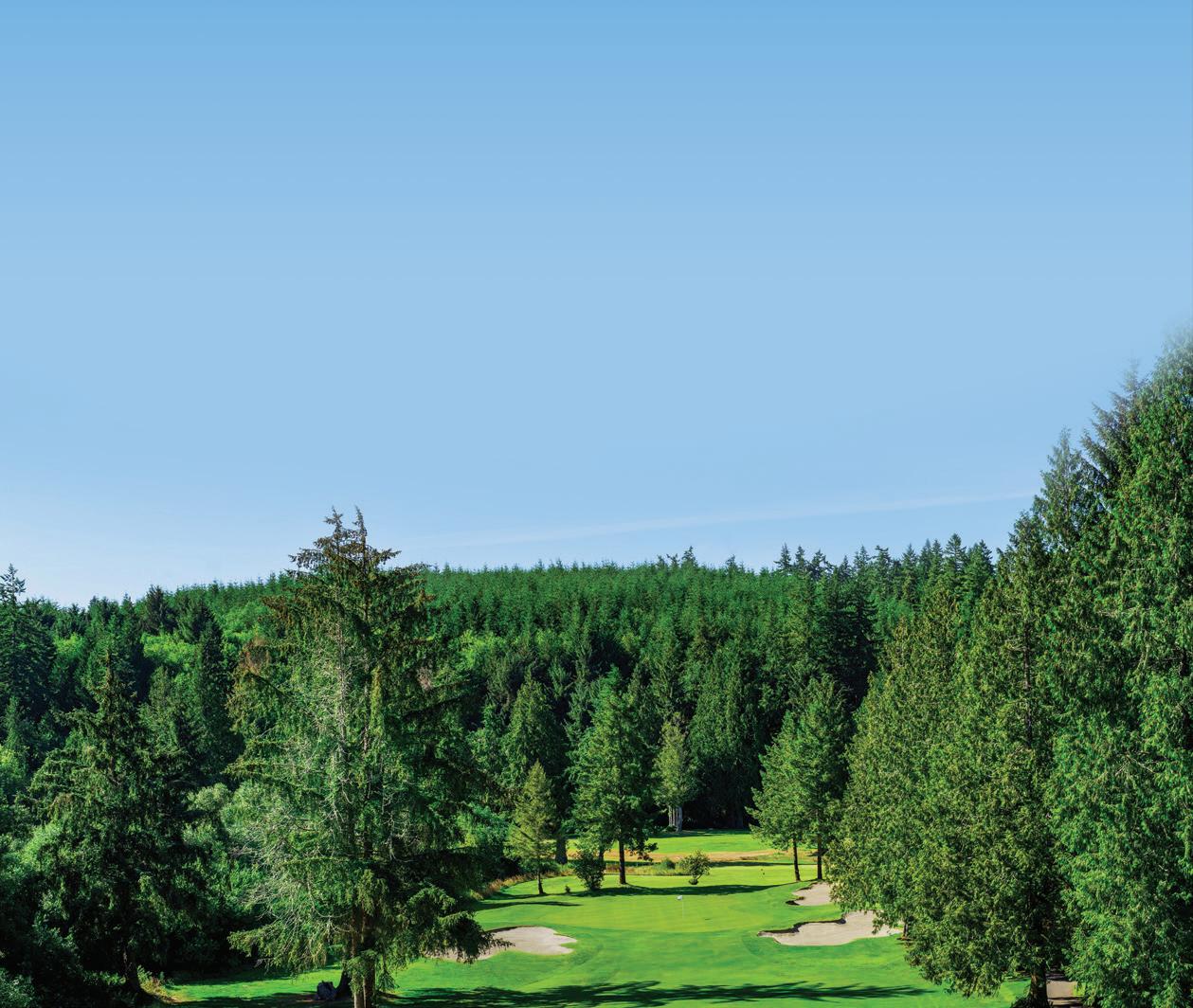
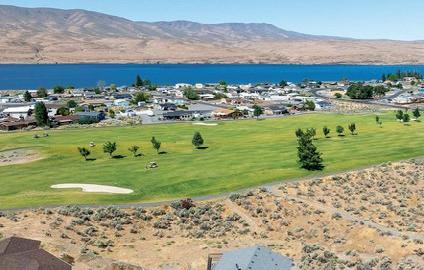
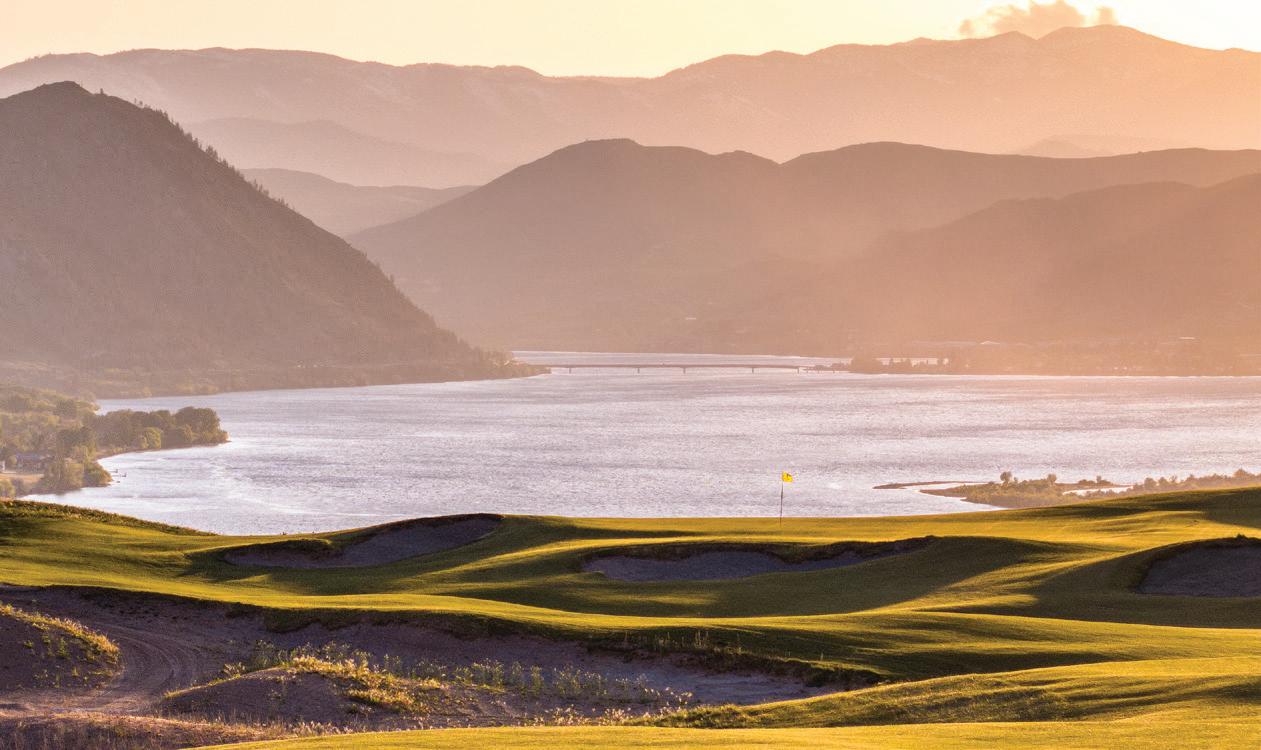
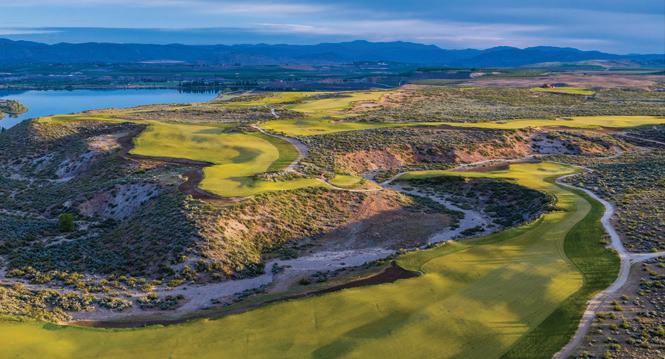
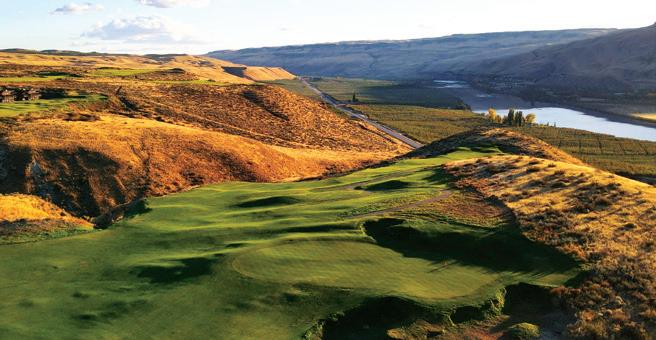
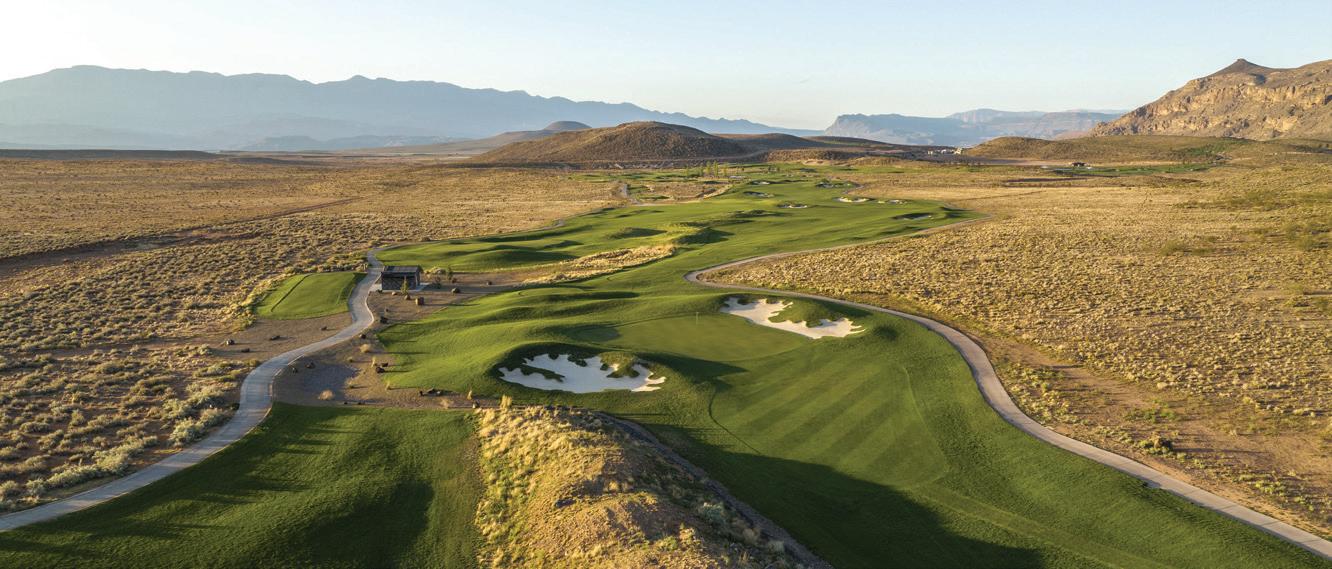
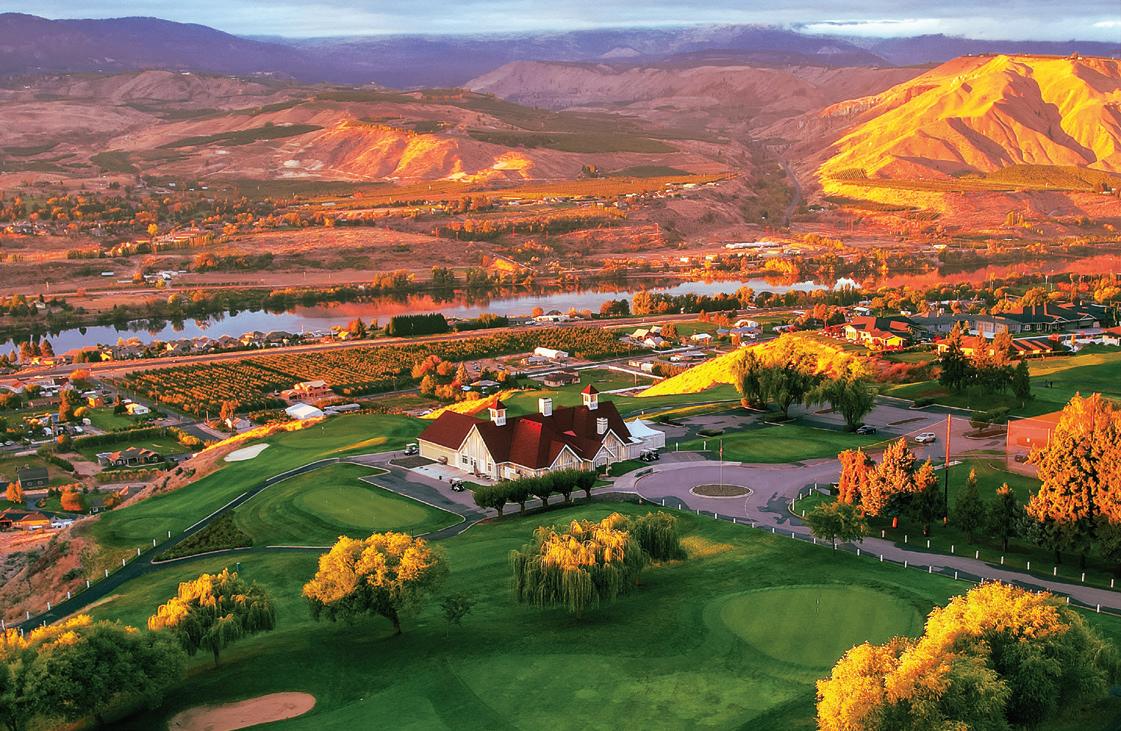
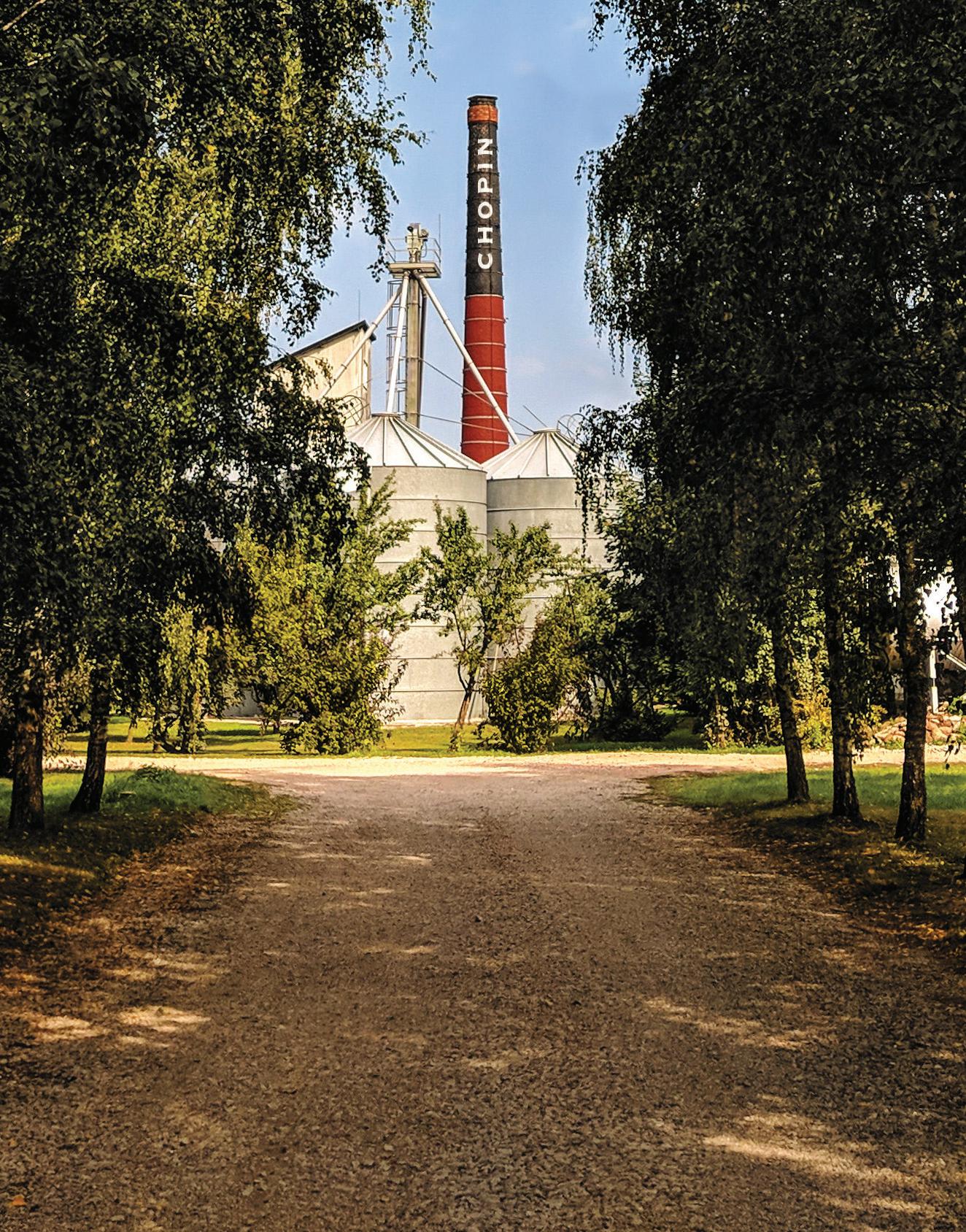
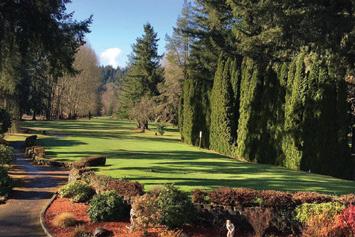
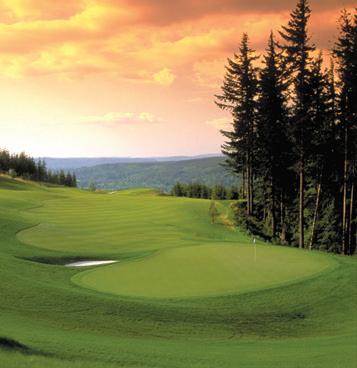
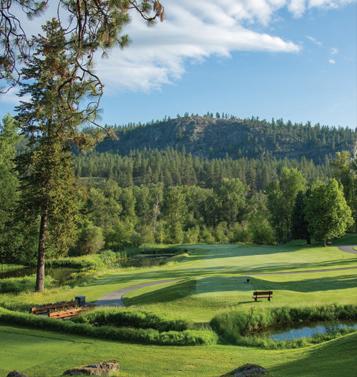
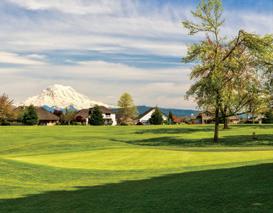
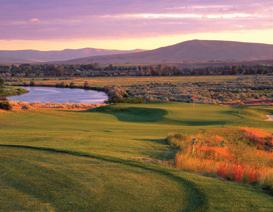
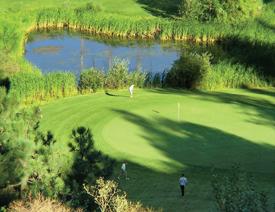
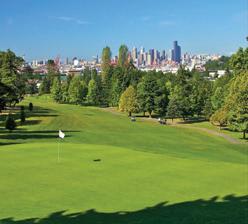
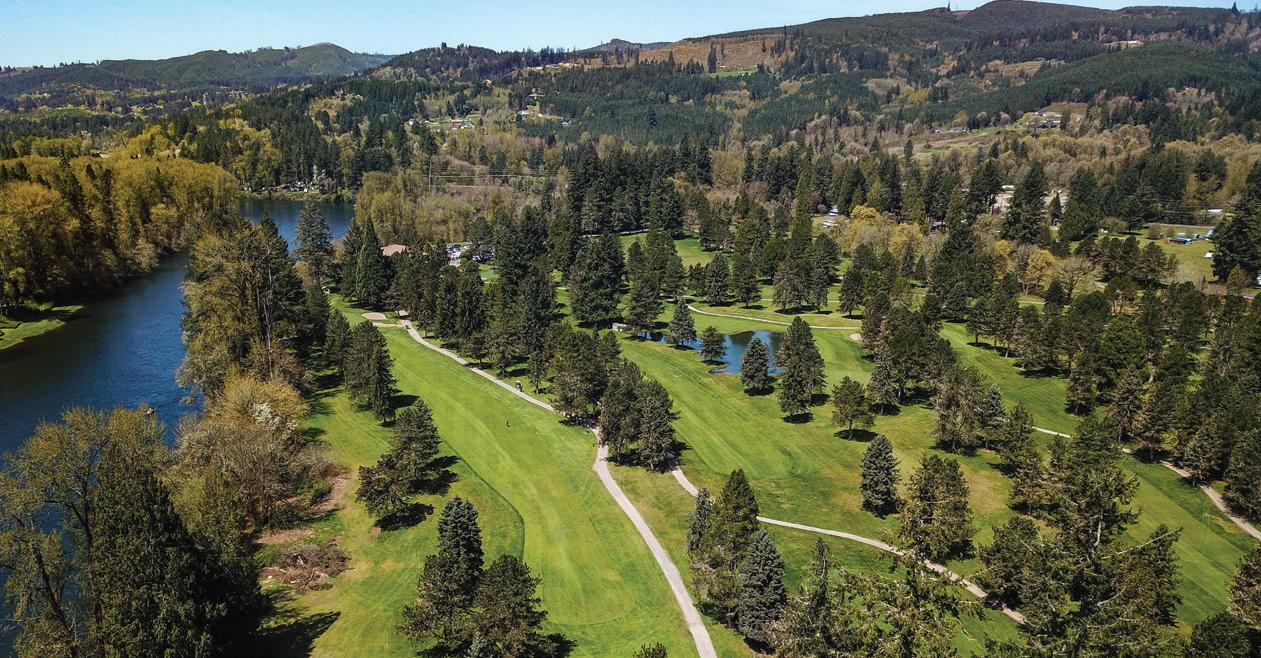
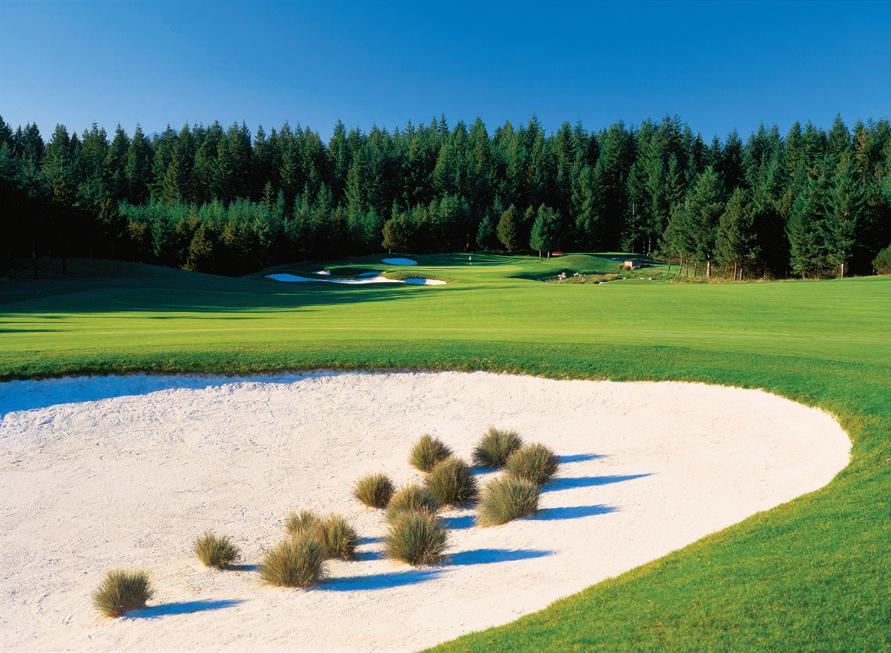
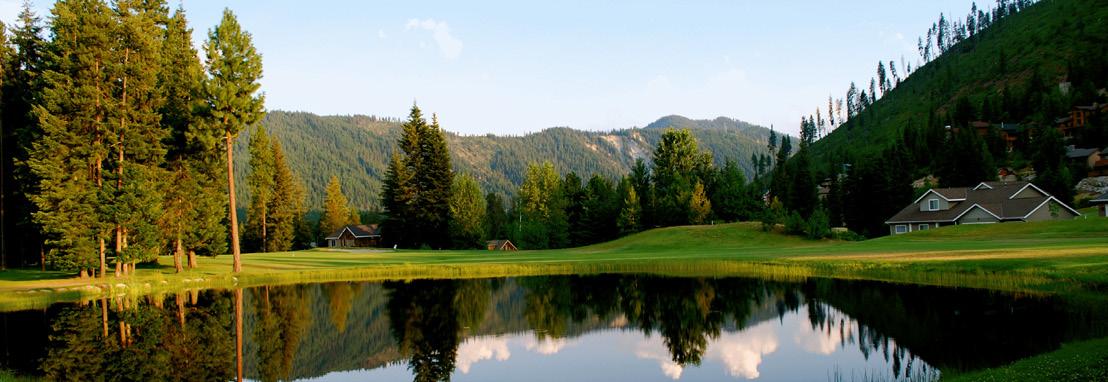
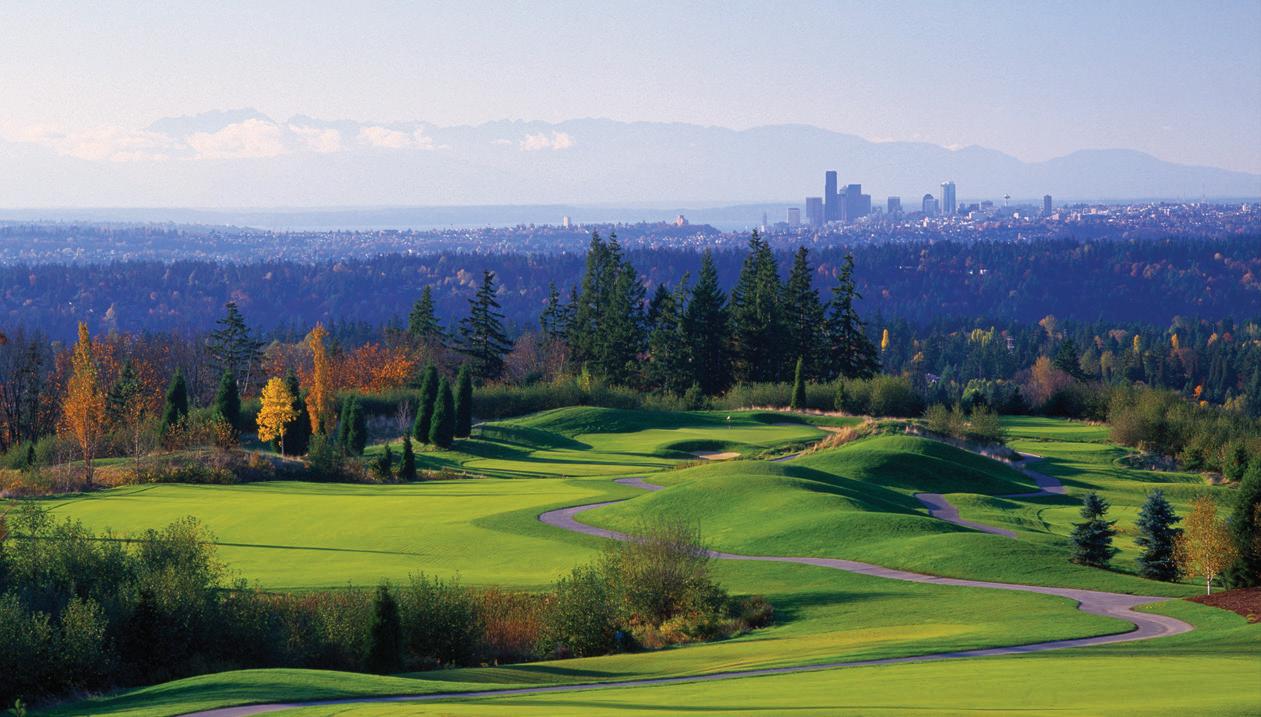
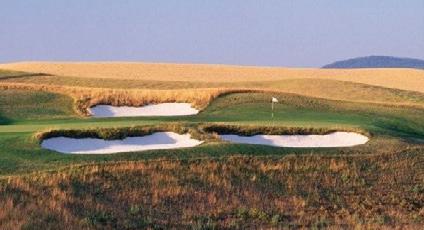
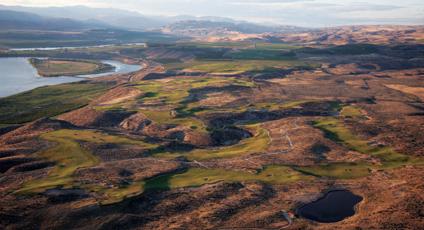
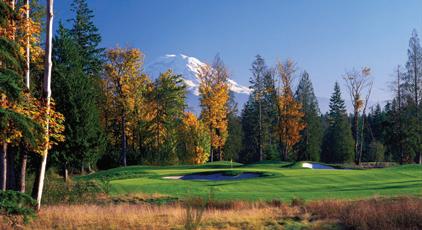
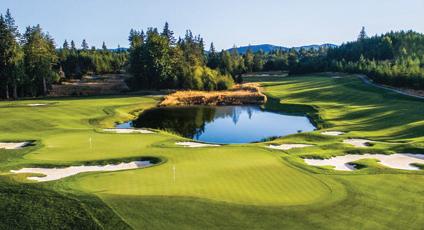
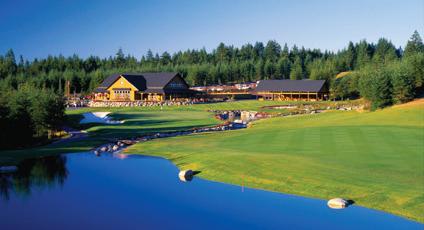
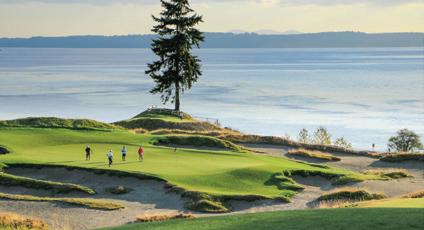
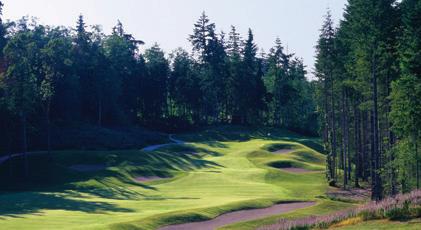
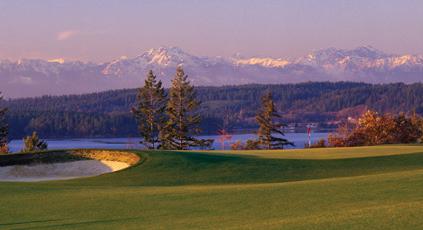
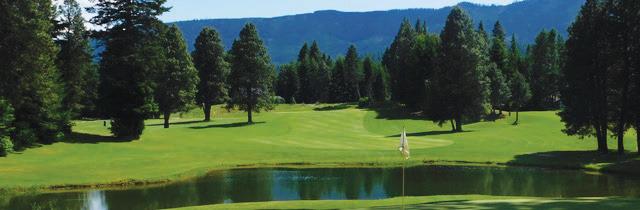
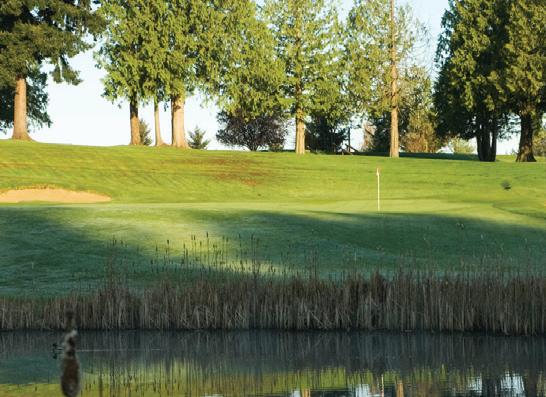
GOLF SAVINGS 28-37 ON THE COVER Palouse Ridge in Pullman might be the late great John Harbottle’s best design ever. The amazing course architect passed away in 2008 – the same year this legendary course opened. In 2024, Palouse Ridge landed as No. 8 in our reader’s poll, cementing it as a regional treasure.
Your Vote! Vote for the Top 10 Washington Public Golf Courses
Home Turf
From Mud to Masterpiece: The rise of the Northwest synthetic turf industry
The Standard Portland Classic: Golf, community and a celebration of women on the LPGA stage
Tip Top
From Army camp to golf haven: How Central Oregon keeps raising the bar and remains a leisure leader
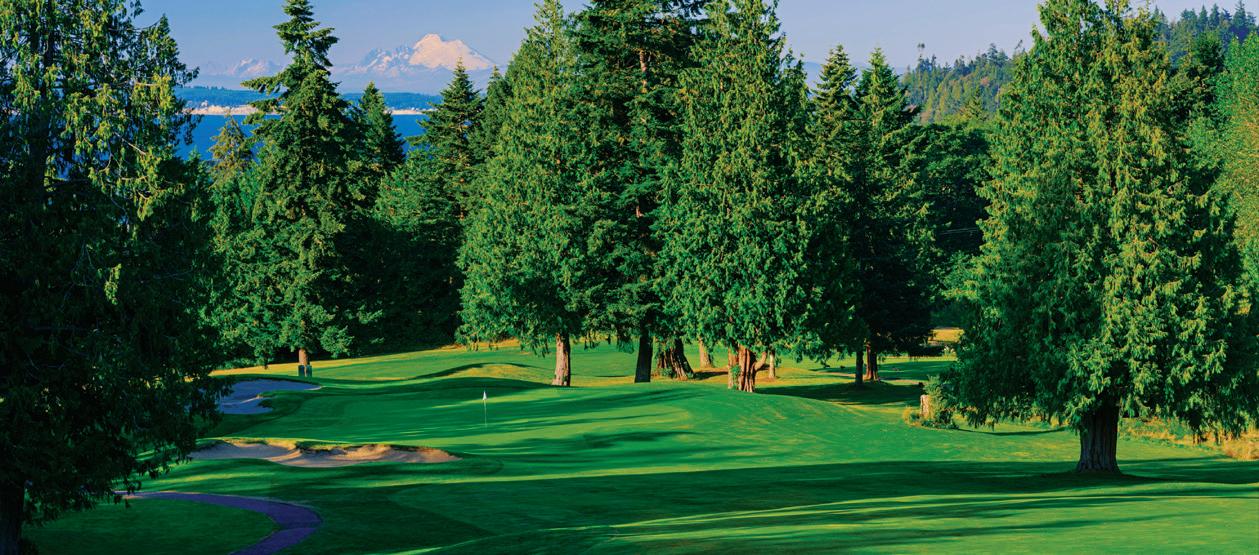
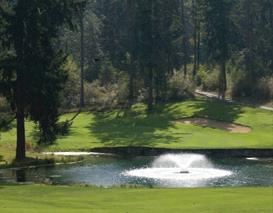
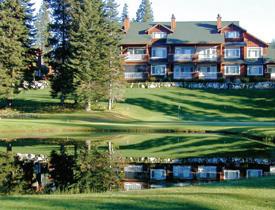
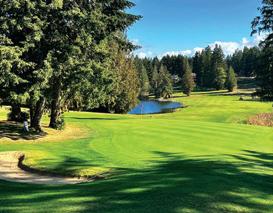
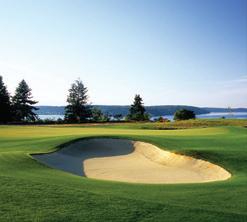
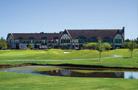
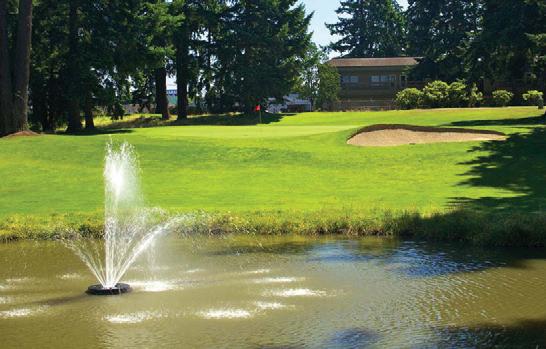
Port Ludlow GC was designed by renowned architect Robert Muir Graves. Opened in 1975, it was designed to complement the Olympic Peninsula beauty, featuring the Tide and Timber nines, which offer views of Puget Sound and the surrounding mountains. The resort and course are a SeattleTacoma favorite.
Photo courtesy of Port Ludlow
Photo courtesy of Rob Perry
THE SKINNY
Tee Times 8:30 a.m.-12:30 p.m. on both courses both days
Two-Person Best Ball Saturday and Sunday
Net and Gross Divisions • Two Different Flights
Over 100 Team Prizes Available
Prize Pool Daily and Two-Day Overall
4 KPs, Long Drive and Straight Drive Daily
Saturday Evening Corona Premier Happy Hour and Auction Benefitting Multiple Sclerosis
Your $1,390 team entry fee includes:
• Tournament entry for both players
• Green fees, cart and range for both players on Gamble Sands and Scarecrow
• Round of golf for both players on Quicksands (anytime Friday-Sunday)
• Lunch for both players Saturday and Sunday
• Friday Corona Sunbrew Shamble Shootout at Scarecrow
• Tee Times 10:45 a.m.-1:15 p.m.
• $650 team fee
CASCADE GOLFER
PUBLISHER’S PITCH
Warm sunbeams, long shadows and summer memories await
ADICK STEPHENS
Cascade Golfer is published and owned by Varsity Communications, Inc. It’s mailed via USPS to 50,000 homes and e-mailed to 100,000 golfers in Puget Sound.
VARSITY COMMUNICATIONS, INC. varsitycommunications.com cascadegolfer.com
EDITORIAL STAFF
PUBLISHERS
Dick Stephens & Kirk Tourtillotte
EDITOR
Tony Dear
ART DIRECTION & GRAPHIC DESIGN
Robert Becker
WRITERS & COPY EDITING
Bob Sherwin, Bart Potter & Charles Beene
FOR EDITORIAL SUBMISSIONS AND INQUIRIES:
Dick Stephens • Publisher stephens@varsitycommunications.com
FOR ACCOUNTING INQUIRIES: Kirk Tourtillotte • Publisher kirk@varsitycommunications.com
ADVERTISING & MARKETING STAFF
SALES/MARKETING MANAGER & TOURNAMENT DIRECTOR Simon Dubiel simon@cascadegolfer.com
COPYRIGHT 2026 Cascade Golfer. PRINTED IN THE USA.
All rights reserved. Articles, photos, advertising and/ or graphics may not be reprinted without the written permission of the publisher. Advertising and editorial contained herein does not constitute endorsement of Cascade Golfer or Varsity Communications, Inc. Publisher reserves the right to edit letters, photos and copy submitted and publish only excerpts. The publisher has made every effort to ensure the accuracy of all material contained in this issue. However, as unpredictable changes and errors do occur, the publisher can assume no liability for errors, omissions or changes.
All photos are courtesy of the course or individual unless otherwise noted.
PRODUCER AND OWNER OF THE
nyone that knows me understands that I love this time of year. On many fronts, the month of June feels like a brand-new clean slate is handed to us as we crossover and watch the tail end of spring morph into long summer days.
The solstice is upon us. Everyone that lives up here above the 45th parallel gets to enjoy June with unique sunbeams cast upon us all — the warm light lingering longer in the Pacific Northwest than most of the Americas.
When I think about my journey with golf and reflect at this time each year, a familiar memory always flashes in my mind.
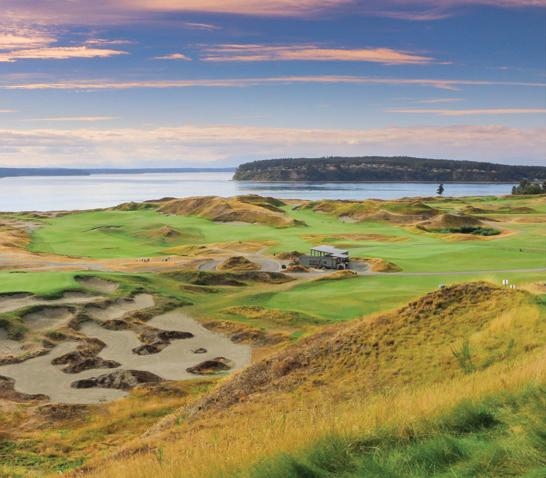
One of them is walking and playing Chambers Bay right around that second or third week of June, and holing out on the 18th with all the shadows washing over that beautiful Robert Trent Jones Jr. masterpiece just before 8 p.m.
The layout looks like the golf gods took a green and golden 60-acre quilt and unfurled it just right, with all the humps, valleys and elevations representing an amalgamation of patches sewn together by RTJ II himself.
I encourage everybody to give that a shot if they haven’t yet. Even if you don’t play, sit out on their veranda
and enjoy a nice meal and a cool beverage and watch the sunset over the bay as it fades behind the Olympic Peninsula — it’s one you’ll never forget.
On page 12, there’s a special event that may whet your whistle at Chambers that hits on exactly what I’m talking about.
Hope springs eternal and in June that statement rings true.
We have a couple of fantastic things that we want to point out to you in this issue. First, make sure that you take a look at our Corona Premier Shootout at Gamble Sands that takes place July 18-19. This two-day event is about competition and camaraderie. We have a few spots left and we’d love for you to join us.
Secondly is your opportunity to vote in Washington’s Top 10 Public Course Reader’s Poll on page 40. In the August issue, we will publish the results. We enjoy carrying the mantle of being the only open-ranking system along these lines in our great state. It’s not about us — it’s about you, and your voice counts.
I hope that you guys have an amazing start to the summer and keep us posted with your news and views on our social media channels. And as always, TAKE IT EASY.
Big names and new faces will shine as the Boeing Classic turns 20 SHORT GAME
Veteran PGA Tour professionals don’t always find instant success once they turn 50 and become eligible for the PGA Champions Tour. They quickly learn that they might not be prepared for the new accelerated routine — just three rounds (54 holes). They also will encounter a field full of friendly yet ferocious competitors.
Success on the regular Tour doesn’t naturally carry over against these older, wiser foes.
That has not been the case for Zach Johnson, the 12-time PGA Tour champion, including the 2007 Masters title and the 2015 Open championship at St. Andrews. The 2026 first-year headliner for this year’s Champions Tour has been the exception. He has made an immediate impact.
Two weeks after his 50th birthday on Feb. 24, Johnson won the first tournament he entered, the James Hardie Pro Football Invitational by four strokes over 2009 Open champion Stewart Cink.
Two weeks after that in his second Champions tournament, he finished third in the Cologuard Classic. A week after that, he was runner-up at the Hoag Classic. A 1-3-2 start to his second career.
When the annual Boeing Classic commences Aug. 14-16 at Snoqualmie Ridge Golf Club, if Johnson is in the 78-player field, he may arrive as the most heralded “rookie” in the 46-year history of the Champions Tour. Padraig Harrington is considered the best rookie ever when he won four times in 2012 and finished second in the Schwab Cup standings.
This will be the 20th year for the Boeing Classic and the field also could include another quality first-timer — Rory Sabbatini, a six-time Tour winner, runner-up at the 2007
Masters, and the bronze medal winner at the 2020 Olympic Games.
Steve Allen, last year’s Boeing champion, is an example of what those elite veterans encounter in the Champions Tour. Allen had never won on the PGA Tour in 214 starts. He had to go through qualifying school to get on the Champions Tour, then won three times in 2025 and earned $3.1 million in prize money. That’s as much as he won after more than 20 years on the PGA Tour.
The Champions Tour is full of those kinds of late bloomers, such as former Boeing winners Stephen Ames (twice), Brandt Jobe, Scott Parel and John Riegger.
They might be joined by bigger names as well, likely hometown favorite Fred Couples, Cink, 2011 Open champion Darren Clarke, four-time major champion Ernie ‘Big Easy’ Els, and Bernhard Langer, the all-time Champions Tour winner, including two Boeing titles, who turns 69 in August.
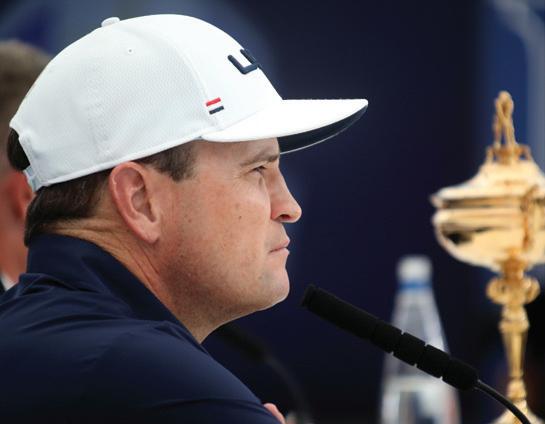
Past Ryder Cup Captain and new Champions Tour star Zach Johnson may be the one to watch at Snoqualmie Ridge.
SHORT GAME EXTRA
Logging and legendary vistas highlight Port Ludlow history
TRAVEL THE NORTHWEST
Port Ludlow Golf Course is not just your quintessential Northwest golfing experience — tall timbers, lush fairways, mountain/water vistas. It is also a glimpse of what life was like more than 200 years ago in the Washington territory.
Port Ludlow — described as ‘’a village in the woods by the bay’’ — is about 25 miles south of the Strait of Juan de Fuca, gateway to the Puget Sound. The golf course, which celebrated its 50-year anniversary last year, is central to the community’s second revivification. The first was, not surprisingly, attributed to timber.
“Everything goes back to running timber and lumber out of the area through the Puget Sound,’’ said Jim Mancill, the golf course’s head professional. “One of the things our golf course is known for is the stumps left from logging years and years and years before. Some of them have notches still visible where the loggers would put in planks then hop on top to cut the trees.’’
The Chemakum native tribe occupied the land until the early 18th century when various nations’ ships arrived, ultimately taking over. In 1841, American explorer Charles Wilkes, the discoverer of Antarctica, explored the Northwest during his circumnavigation of the world. He named the port city after Augustus C. Ludlow.
Lieutenant Ludlow’s heroic status stemmed from the War of 1812, as he was second in command of the USS Chesapeake to Capt. James Lawrence. Lawrence was famous for his quote, “Don’t Give Up the Ship,” when the Chesapeake battled the British frigate HMS Shannon on June 1, 1813, about 20 miles off the coast from Boston.
Both Lawrence and Ludlow died in that encounter.
Lt. Ludlow had no apparent connection to the city, the state, the West or anything this side of New York. Wilkes’ connection to him is unknown.
In 1852, the first lumber mill was built on the waterfront, and the community would shortly become the largest settlement in the Washington territory. It was the beginning of an 80-year success story.
The mill ceased operations in 1935. Ludlow became a peninsula ghost town. Then, in 1960, the Hood Canal Floating Bridge was completed, opening the region to traffic and commerce.
Port Ludlow Associates now operates the 37-room Inn at Port Ludlow, the adjacent 300-slip marina, West Harbor home construction, Olympic Water and Sewer, and the golf course. That’s just about the whole bailiwick, which is fine with the 2,500 residents, largely retired folks.
“It’s a tiny town. There’s no downtown. There’s no main street. There’s just one little road that goes through it,’’ said Mancill.
The golf course, built in 1975, draws most of its golfers (estimated to be 85 percent) from beyond 15 miles away.
The course was designed by Robert Muir Graves, whose Washington courses include Avalon Golf Links, Canterwood CC and Overlook CC.
“They were looking for a way to draw people to the area and saw the vision for this,’’ Mancill said. “It was super popular and well received right out of the gate.
“None of the courses we have today were built back then, no White Horse, no Gold Mountain, no McCormick Woods. Coming this way, there was only Chevy Chase
Win an Eagles Pride Twosome
Located off I-5 near Dupont, Eagles Pride is one of the most underrated tracks in the PNW. It combines wooded fairways, beauty and just enough challenge to keep you on your toes – it’s fun. We’re sending two readers to see for themselves, on us. Go to CascadeGolfer.com to register.
(nine holes), now Discovery Bay, in Port Townsend. Now we have a third generation of people who began playing golf at Port Ludlow.’’
Some players today arrive at the port the same way those early explorers did — by boat. They moor at the marina and/or stay at the Inn. The course sends a shuttle to bring golfers to the course.
The course is comprised of the original Tide and Timber nines (the Trail Course nine was closed in 2009) and is virtually the same as the day it opened in May 1975. It’s a par-72, 6,861 yards. “It’s pretty short by today’s standards,” Mancill said. “But because of elevation changes and doglegs, for us, hitting from the back tees, it seems really long.’’
Mancill hopes golfers will take a memory with them of No. 2, a 342-yard, par-4 dogleg left.
“What makes it really memorable is when you come around, you’re looking directly at Mount Baker. Looking right across the green, right across the Sound, then you’ll be looking at Mount Baker. It’s just a stunning, stunning vision,’’ he said.
“My hope when they finish the day, they’ll take away not only the natural beauty of the golf course, the conditioning, and, I hope, the friendliness of the staff and members. And the relaxed nature of everything that goes on here.’’
Port Ludlow Golf Course • Port Ludlow
SHORT GAME
Solstice stroll: Walking 72 holes at Chambers Bay in one day
If you’ve not been getting in as many steps as you’d like lately, consider playing in the Summer Solstice event at Chambers Bay on June 21. Organized and run by Seattle’s First Tee program, the day attracts 100-plus players who each record 58,000 steps, give or take, and cover 28 miles in completing four rounds at the 2015 U.S. Open venue.
That’s a lot of walking on some pretty demanding terrain, but not everyone walks the same distance.
“We have people tracking their progress with GPS, who discover they walked as much as four miles farther than other people in their group,” says Evan Johnsen, VP of Programs and Development at First Tee, Greater Seattle.
Now in its seventh year, the event has raised over half a million dollars thanks to sponsors and golfers who go all out for the cause. Participants typically turn up at about 3 a.m., toss whatever they need for the day (different socks and shoes) into a tote with their name on it and which they can access between rounds, and then head to the staging area. They go out to their starting hole (modified shotgun start) and are ready to fire their first tee shot at 4:40 a.m. It’s still dark at this point but people can usually see their ball by the time they reach it.
There are 16 hours of daylight, which means players have about three hours and 55 minutes to complete each trip around the course (five minutes between each round to change clothes, go to the bathroom, reapply sunscreen, etc.) The First Tee provides carefully chosen, energy-sustaining food and drink (hard-boiled eggs, turkey wraps, fruit, electrolyte drinks), though players can obviously bring as much water as they like.
They can also have contests within their groups. The First Tee abandoned official competitions after the second year, in the interest of getting people round before 9 p.m., as players are not permitted to start new holes after that time.
“Pace of play is very important,” says Johnsen. “The players tend to have a high golf IQ, so there are rarely hold ups and everyone gets round in about the same time.”
Roughly 50 percent of the golfers who start play the 72 holes, and though there have been many “one-and-done-ers,” Johnsen says about half the field signs up every year.
If you think you’re up to four rounds at Chambers Bay in June, have at it. Go have some fun and raise some money. But know what lies ahead. Walk as many rounds as you can in the weeks leading up to the solstice and remember to apply a lot of sunscreen and remain hydrated during it.
“You don’t have to be a marathon runner,” says Johnsen. “But neither should you show up unprepared. It’s a long walk on what could be a hot day.”
Chambers Bay GC • University Place
SHORT GAME
On Dec. 1 last year, Kyle Wiggins took over Blue Heron GC from Gary Remlinger of Remlinger Farms, who had bought it out of foreclosure in June and considered turning it into a wedding venue.
A week after Wiggins’s purchase, the course, like so many others in western Washington, was several feet underwater.
“We had a 200-year flood,” says Wiggins, president of North Bend-based Floor Solutions. “Being surrounded by the Snoqualmie River means we have to contend with being fairly wet a lot of the time, but this was obviously unexpected.”
The clubhouse, restaurant, pro shop, and maintenance shed were, likewise, all inundated, meaning Wiggins would have a lot of work to do to get the place up and running again.
“We were very fortunate to get a lot of help from the superintendents at Broadmoor and Snoqualmie Falls,” says Wiggins, who had to pay for a lot of the repair work out of pocket as the insurance hadn’t yet kicked in. “We bought a fleet of auto-mowers, and as soon as we could start mowing, we began work on getting the course back into reasonable shape.”
During the months it took to revive the course, Wiggins received roughly 1,700 emails from golfers who
missed it and wondered how long it would be before they could come back.
Wiggins renamed the course Tolt GC after the nearby river and name of the town before it became Carnation. And he invited the emailers to come out for a soft opening on April 18.
“We charged $25 and were very busy,’” he says.
If all goes according to plan, the restaurant should be welcoming guests again sometime this spring, and the golf course will officially reopen in June. Godspeed, Kyle.
Blue Heron/Tolt isn’t the only western Washington course whose name has officially changed, as Tacoma’s North Shore GC became Cedar Irons GC on May 1.
The course, owned by the Puyallup Tribe since 2016, finished its $7.5 million redesign/renovation carried out by Dan Hixson late last year, and reopened all 18 holes on April 25. Hixson began work on the back nine in November 2024 and, once that was done, flipped to the front nine, meaning at least nine holes were always open during construction.
Nearly half the budget went to a new irrigation system that will give Superintendent Bob Proctor and his team a much greater level of control over the amount of water the course receives — rain not withstanding of course. That
should ensure the turf becomes increasingly healthy and the playing surfaces significantly firmer.
Elsewhere, five greens were relocated (without changing the routing) and hundreds of trees were removed. The number of bunkers was reduced while several of those that remained were relocated, so that every bunker on the course had a meaningful purpose and wasn’t just there for decoration. Bunkers that are rarely found and which don’t affect play at all are a massive and unnecessary drain on a club’s resources. Greens were expanded to add new pin positions and recontoured to add interest. And mounding was added to some of the green complexes.
A combination of wider, firmer fairways, larger greens, and fewer bunkers probably suggests the course has become significantly easier, but in fact, it is now more interesting, more playable, and healthier.
In March, Puyallup Tribal Enterprises’ Chief Operating Officer, Kyle Eley, explained the name change to Puyallup Tribal News: “The name Cedar Irons brings together two important elements — cedar, which has deep cultural significance for the Tribe, and irons, a fundamental part of golf,” he said. “It’s a name that honors the heritage of the Puyallup Tribe, while also reflecting the spirit of the course. It felt like a natural fit.”
Golf Carts South Sound
Three State of the art Trackman Simulator indoor climate-controlled hitting bays featuring over 270 golf courses worldwide
Summer Junior Golf Camps Begin in July
Ladies Golf Lessons & Wine Tasting openings available
High Cedars Golf Club
One of the best practice facilities in Western WA.
Over 40 stalls with 20 covered Over 400 yards long Grass tee area
Real range golf balls - not limited flight! Putting greens
Chipping green and a practice bunker
Golf Lessons
High Cedars Golf Academy
Team Griffin ( Sara and Chris, PGA Professionals )
Chris Ming, PGA Professional and Director of Instruction
Brandon Solomonson, PGA Professional
Craig Wilcox, PGA Professional
HIGH CEDARS GOLF CLUB 14604
SHORT GAME
Double up: With Circling Raven and Kalispel, no wrong choices in the Inland Empire
Today, we’re here to help you, the traveling golfer on a two-night getaway in the Inland Empire, to make a couple important decisions.
First decision point: Which golf course will you play, Circling Raven Golf Club in Worley, Idaho, or Kalispel Golf and Country Club in Airway Heights, west of Spokane?
You really must ask? There’s only one right answer: Play ‘em both.
Second decision point: Where will I stay first, at the Coeur d’Alene Casino Resort Hotel, home to Circling Raven, or the Northern Quest Resort & Casino, home to Kalispel?
OK, that’s an easy one, too. The right answer is … there’s no wrong answer.
We’re not mathematicians, but we’re pretty sure if it’s roughly 45 miles from Airway Heights to Worley, it’s the same distance back the other way. So all that’s left to you, and we trust you, is some minor strategy-making around whether you want to walk off 18 and go straight to your hotel or rise in the morning and go straight to No. 1.
For purely hypothetical reasons, let’s start you off at Kalispel. Note: Non-members can only get on Kalispel if they spend a night at Northern Quest; see below for stayand-play pricing and amenities.
Kalispel, established in 1898, is one of the most revered golf courses in the Pacific Northwest. The course was acquired by the Kalispel Tribe in 2015 and has since welcomed major enhancements. It stretches to more than 6,600 yards, featuring fairways and greens that meander through the Spokane River Valley.
The combination of natural beauty and thoughtfully crafted holes ensures a rewarding experience for golfers of all inclinations.
Among many standout holes is the long par-4 4th at 466 yards, known for its partially hidden bunker on the right and a sunken green guarded by bunkers left and right.
If you’ve chosen Northern Quest for your first lodging night (and après-golf play), the hotel stay-and-play package is a can’t-go-wrong choice. Starting at around $470, it includes a round of golf for two at Kalispel with GPS-enabled cart rental, a night’s stay in one luxury room at Northern Quest Resort & Casino, 10 percent off dining and $2 off drinks at both 1898 Public House and the members-only Kalispel Grill (both located at the golf course), and up to 20 percent off golf shop purchases.
Northern Quest boasts impressive dining options,
catering to a range of tastes and preferences. For a casual bite, guests can visit EPIC, a sports bar offering a sporty atmosphere with giant screens, perfect for catching the latest game while enjoying classic American fare like burgers, wings and craft beers.
OK. Onward to Circling Raven, consistently rated among the top courses in the Pacific Northwest. Its desert vistas and the sheer scope of the property, which uses only 110 of its 650 acres for golf play, will resonate with golfers long after they’ve finished a round here.
When this Gene Bates design opened in 2003 at the Coeur d’Alene Casino Resort, it quickly rose to co-equal status with the Coeur d’Alene Resort’s course, with its famous floating green, among western Idaho’s premium courses.
What you get on Circling Raven’s 7,189 yards (from the back tees) is broad landing areas off the tee on most holes. But first you need to sight-read the right direction. Even then, more often than not, you must defeat a forced carry that can stretch to 200 yards.
Circling Raven is challenge enough for any golfer. When you’re done, taking advantage of the Coeur d’Alene Casino Resort’s stay-and-play options is a good play. Starting at $467, the package includes a one-night stay and a round of golf for two players.
The resort offers plenty of selections for your dining pleasure, from gourmet cuisine at Chinook Steak, Seafood & Pasta to the authentic flavors of Mexico at El Coyote Cantina to Asian-inspired dishes at Little Dragon Eatery … and lots in between.
When you’re all done, you might have one more decision to ponder: Which golf getaway experience did you enjoy more, Circling Raven or Kalispel? Sorry, we can’t help you with that one. We know it’s a tough call.
Circling Raven GC • Worley
Kalispel G&CC • Airway Heights
SHORT GAME
CG Players Card: 12 green fees for only $199 less than a buck-a-hole
Looking to play a ton of golf this year for less than $1 a hole? Well, you’ve hit the jackpot with the 2026 Cascade Golfer Players Card. You get 12 rounds for just $249 — a discount of over $500 — at some great tracks throughout western and central Washington. It’s a deal that’s hard to beat — use code “50off” and it gets even better with the card’s price coming in a $199.
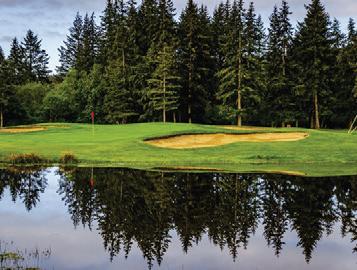
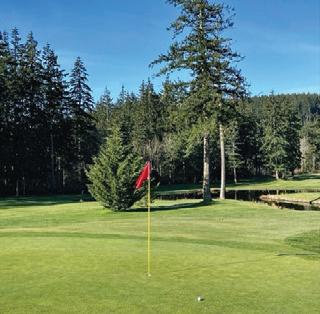
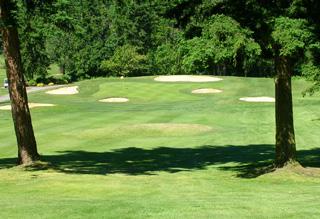
The 2026 Players Card is simply “golf for less.” This is the 15th edition featuring Port Ludlow, Apple Tree, Sun Country, Horn Rapids, Eagles Pride, Desert Aire, Whidbey, Camaloch, High Cedars, LakeLand Village, Kahler Mountain and Highlander. Buy the card and you get a green fee at each of those courses.
Play any of the 12 individually, or head out for a 36hole day. Maybe you’re looking for a multi-day road trip? Many pair up for a great back-to-back. Use the card at your leisure knowing that even redeeming half the rounds will leave you in the black for the year. The number of cards is limited each year making this offer exclusive to a rare group of golfers who love to play often. The early bird gets the worm so act fast — you will be glad you did.
Log on to CascadeGolfer.com and get your card today. See you on the fairway.
LakeLand Village GC
Highlander GC
Eagles Pride GC
Port
This year marks the 50th anniversary of the Lewis River Golf Course, about 30 minutes north of Portland in southwest Washington. It has taken nearly that long to enjoy sustained success.
The course was originally just nine holes, designed by Ralph Stading in 1967. The Stading family would own and operate the course for more than four decades. Golfers’ reactions were positive to the new course, but it was clear early on that another nine was necessary. That was finished in 1969, believed to be with the influence of noted Northwest golf designer Ted Robinson.
Denise Miller, the course’s chief operations officer, said disaster struck in 1996 “when a devastating 200-year flood (from the Lewis River) swept through the area, washing away nearly the entire back nine.’’
The Stading family completely rebuilt most of the back nine, and by 2000 also had refashioned three holes on the front. The result was a virtually new and improved layout.
In 2000, another misfortune struck. A fire destroyed the golf shop and restaurant. They were rebuilt in 2001.
The Stading family sold the course to the Cowlitz Indian Tribe in 2015. The Tribe operated it for six years before Portland businessman Matthew Dumke purchased it in 2021, during the height of Covid. He launched a long-term vision for the course that included improvements to the irrigation system, the greens and clubhouse.
“The driving range has been renovated to be user-friendly year-round,’’ Miller said. “A new chipping area is set to be completed this season to help golfers warm up their short game, while the 17th hole has been restored to its former beauty after a recent renovation on the ponds.’’
Miller added that other upgrades include the conversion of a water hazard along the second green into a grass bunker, and significant renovations to the clubhouse, with the restaurant now open seven days a week.
Even though the course is just five minutes off I-5, exit 21, it is an environmental haven between the Lewis River and the Cascades foothills. The lush, tree-lined layout is 6,473-yards long with enough water hazards to prompt bringing another sleeve.
Toughest Tee Shot 10th hole
No. 10, a 504-yard, par-5. Dogleg left around 220 yards out. If your drive is too short or along the left side, trees can block the approach.
Best Birdie Opportunity — 7th hole
No. 7, 190 yards, longest among the four par 3s. Trees along the left side, marsh across the middle of the fairway.
Best Par 3 3rd hole
No. 3, 165 yards. Straight drive through a corridor of trees, with two bunkers guarding the front and one on the right side.
Favorite Hole 13th hole
No. 13, a 393-yard par 4. Short but trees encroach at various points along both sides of the fairway.
Emergency Nine front or back?
For those who might want to score, the front side has just one par 5, a relatively short 456 yards. The back nine is more than 500 yards longer, with two par 5s, including one of the longest holes in the Northwest — the 649-yard 12th hole.
Go-To Lunch Item on the clubhouse menu
Strawberry salad with salmon. It is noted that the much-used Lewis River Iron Smoker can be spotted in the parking lot, just outside the North Fork Grill.
HOLE PAR White Red Blue
GOLFING GOURMET
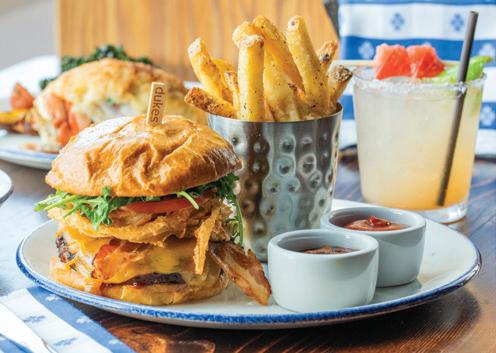
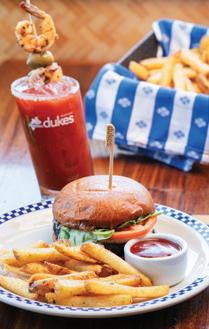
Duke’s and Royal Ranch Beef roll out an amazing Northwest-inspired burger
Even the most die-hard seafood lover gets a hankering for a burger now and then. Duke’s Seafood, who’s known for their namesake, has a menu and vision that spans beyond the catch of the day. Not only do they source the best-tasting salmon, halibut, cod and shellfish, but each of their partners share their vision for sustainability.
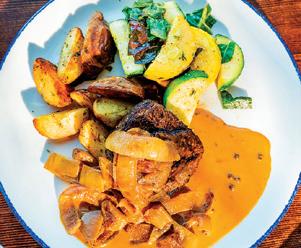
But finding great-tasting beef for their burger and steak lovers that also met that same picky sustainability standard turned into quite the quest. They needed burgers and filet mignon that were 100 percent grass-fed and tasted out of this world, but they also wanted to partner with a ranch that treated its animals humanely, not tainting them with unnecessary antibiotics or chemicals, and who were excellent environmental stewards.
After months of searching and interviewing, Duke’s connected with The Royal Ranch, located in Royal, Wash. Owner Austin Allred invited the team out for a visit, and they were deeply impressed.
Not only does their beef taste amazing, but they are also a completely sustainable cattle ranch with a “carbon negative” footprint. Royal Ranch grows their own feed and uses state-of-the-art waste recycling. Their cows roam on over 1,000 acres, spending their days being cows. It’s a family-run ranch several generations in the making, and they’re as committed to sustainable farming as they are in caring for their animals.
But the best part is the taste: burgers that are juicy, tender, and packed with flavor. Filet mignon that melts in your mouth. But don’t take our word for it. The next time you’re craving a burger or a steak so good it will give you an out of body experience, think of the Allred family and Royal Ranch.
What a way to celebrate after a round of golf this summer — a burger and a brew — at any of Duke’s six locations.
Mixology Master
Adam Gerlach
Kai’s Thai Street Food and Bar
Adam Gerlach is not the guy you’ll find sitting behind a laptop tap-tap-tapping on a spreadsheet. It’s a little too much like work.
To be clear: “I never, I never ever, will do that, never have, never will,” he says.
He’d rather focus his energy on more exciting things. Like building craft cocktail menus for the two bars at Kai’s Thai Street Food and Bar in Seattle’s U District.
The owner of Kai’s — Kai — “calls me his creator. So, I create the vibes in the room.”
He says, “I think that’s just kind of like my niche that I found, where it’s like I really like doing this. It doesn’t feel like work to me.”
Gerlach’s spring menus feature 20 cocktails out front in the Thaiger Room and another 10 in his baby, the Alley Cat Lounge, which you’ll find after you go around to the alley to the main way in.
“Then you get in and everything’s black,” he says. “Black bar, black walls, black everything. It’s like movie theater dark.”
You’ll know where you are by the throb of the ultra-high-end sound system in the lounge, which Gerlach picked out and had installed. You don’t need to ask who picks out the music.
Bow to The Don
Glenfiddich 14 -year single malt stars in this smoky twist on the Rob Roy
BY BART POTTER • CG STAFF WRITER
A
sophisticated summer Scotch sipper
This issue’s 19th Hole cocktail is a riff on a Rob Roy, which is like a Manhattan except with Scotch, and it’s like nothing you ever tasted.
It seems ever since the pandemic — at least to us at Cascade Golfer — that whiskey and scotch cocktails had a re-birth. All of us were holed up in our homes, watching tons of streaming on TV and our phones, learning and trying endless spins on our love of libation. It was the worst of times and the best of times on that front.
We were thirsty to pass the time and finding ways to take shelter from the storm was part of many golfer’s regular ritual.
And why not. We had time to burn, nowhere to go, a wideopen imagination, people to share time with and a safe haven to sip, sample and savor.
Five years clear now from all that, we are still looking for lightning in a bottle — or a glass. And this issue we have captured it again.
Adam Gerlach, the cocktail’s creator in his job as all-thingscocktail dude at Kai’s in Seattle’s U District, calls this flash of brilliance The Don. It features Glenfiddich 14-year single malt as its spirits base — with smoke.
The Glenfiddich, a bourbon-barrel-aged single malt distributed by William Grant & Sons Inc., is perfect for this cocktail, he says, because it’s smooth and delicious and bears no peat flavors.
This Scotch, which hails from Dufftown, Scotland, of course is the spot on spirit for this summer sipper. We have full confidence in the Scots when it comes to après golf offerings — they have a few centuries of a jump on us when it comes to proper 19th hole activity.
Let’s tee this up.
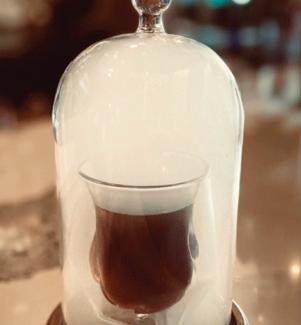
So: Two ounces of Glenfiddich, one ounce Carpano Antica sweet vermouth, and two dashes of tobacco bitters go into a glass. Then the glass goes into a freezer set to minus-8 degrees before the final note: the whole cocktail goes into a cocktail smoker with profuse wood smoke before being placed in front of a customer.
Gerlach has his own closely held recipe for the tobacco bitters … which he can’t talk about because then it wouldn’t be a secret. The whole project carries a whiff of smoky nostalgia.
“I picture smoking a cigar around a campfire, you know, and you have a Scotch in your hand. But I’m doing it all for you in one glass.”
At Home Bar Mixology
The Don By
Adam Gerlach
Kai’s Thai Street Food and Bar U District • Seattle
INGREDIENTS
• 2 oz. Glenfiddich — this is a 14-year single malt in this offering but feel free to experiment with other Scotches as your budget allows.
• 1 oz. Carpano Antica sweet vermouth.
• 2 dashes tobacco bitters.
INSTRUCTIONS
• Put all ingredients in a cocktail glass.
• Put the glass into a minus 8-degree freezer — or closest you can manage at home.
• Place the entire cocktail into a cocktail smoker.
• Sip and enjoy.
• Practice makes perfect.
RISK vs. RE WARD
Setup
This slight dogleg right is the second of back-to-back par 5s and gives you an opportunity to get one back, so to speak. The tee shot must fit between three fairway bunkers, leaving you in decision-making territory 200-250 yards out. From there the approach is downhill and slightly blind, with a pond guarding the green in front. Left or right of the green is forgiving, with the No. 3 green bordering the left side.
Risk
The pond that sits in front of the green was installed in 2024 and instantly upped the ante for this hole. Now you have to consider taking the big stick and playing a big pot or laying up on the top of the hill and trying to make birdie the old-fashioned way. Choose wisely. Plus, be aware of the wind from the west. It may not be felt from the fairway, but it is alive and well up there and will knock approach shots short. Splash!
Reward
You don’t often play back-to-back par fives, and when you do, it’s hard to pass up being aggressive, especially one playing under 500 yards. If you split the fairway, you have a downhill approach with room around the green to miss. You just have to take enough bat to avoid the pond. Misses left, right or long keep you in the ballgame and a chance to put a circle on the scorecard.
Final Call
You probably have to pull a head cover to get home in two, or at least a long iron. You are pushing your chips in. The blindness of your second shot tests your commitment, and the ability to hit the center of the club face. Both “musts” if you want to be dancing. For today, it’s time to lean on your wedge game. Lay up to your number at the top of the hill and let’s go throw a dart. Giddy-up!
IN THE BAG
PRODUCT REVIEWS
and equipment news you can use
BY TONY DEAR • CG EDITOR
The key to lower scores? It might be in your bag
By now, you’ve hopefully put a few good scores together in 2026, and your handicap is dropping. Or, if you don’t have a handicap, you’re maybe threatening to record your personal best round. Whether you do or don’t post scores, though, we trust you’re having some fun in the sun.
We’re writing this issue shortly after another incredible Masters, fully expecting Rory McIlroy’s hugely impressive repeat of his 2025 win to have had the same effect on you as it did us, which is to get out for a game more often and strive to become a better golfer. Not as good as Rory, perhaps, but certainly better than we’ve been in the past.
The more we learn about this game, the more we appreciate how many factors go into a successful shot/round/month/season/career. Good technique is obviously important, but it clearly isn’t everything – if it were, how do you explain how golfers with unconventional swings like Lee Trevino, Ray Floyd, Arnold Palmer, Fuzzy Zoeller, and Scottie Scheffler became multiple major champions?
Strength, fitness, and good health are likewise paramount … or are they? If so, how did Ed Furgol (damaged elbow on which several surgeries were performed), Calvin Peete (broken arm that was never properly set), John Daly (not the ideal physical specimen), Ed “Porky” Oliver (the clue is in his nickname), or Tiger Woods (broken leg at the 2008 U.S. Open) get it done? The ability to hit the ball a long way helps, of course, but numerous “short” hitters have won the game’s biggest titles – Corey Pavin, Paul Runyan, Zach Johnson, Brian Harman, to name a few. Really, there have been relatively few perfect, complete, identikit golfers.
What all these divergent players had in common, though, was equipment that suited them. Though rudimentary compared with what it has become, a level of club-fitting and customization existed a hundred years ago. Golfers play better with gear that’s suited to their height, weight, strength, stamina, etc., whether it’s a driver (loft, length, flex), a ball (firmness, spin), shoes (stability, comfort), their bag (size, weight), or mode of transport (legs, basic trolley, electric trolley, bike, scooter, cart).
And that’s where Puetz Golf comes in, of course. You can help yourself play markedly better golf by using equipment that brings out your best. Something here might help!
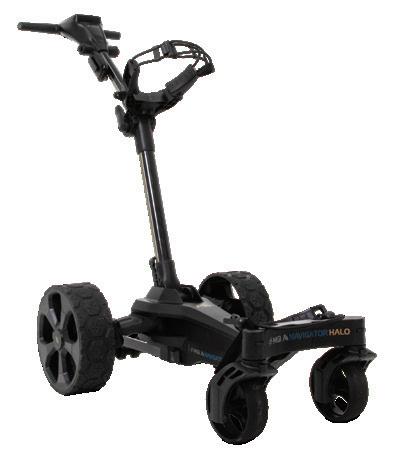
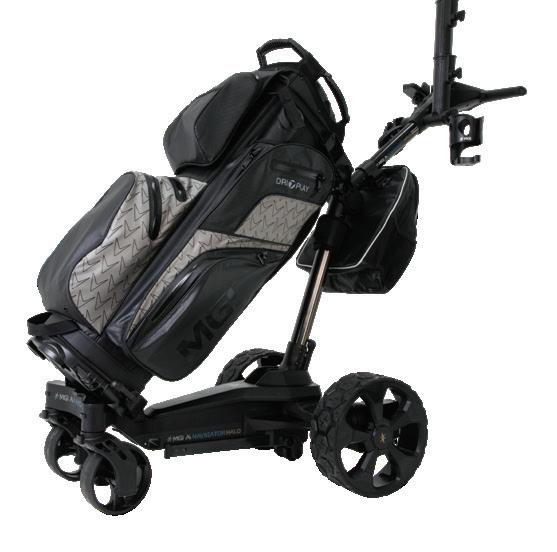
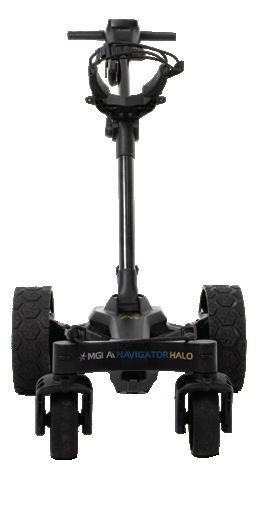
Ai Navigator HALO EYE cart 1
GOLF PRICE
$2,995.99
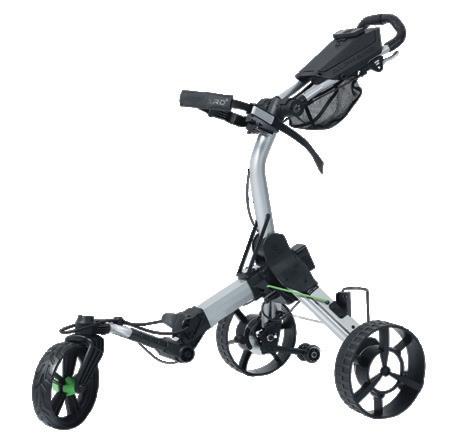
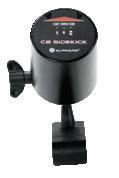
After first appearing in the U.K. in the 1960s, the powered-trolley business remained relatively stagnant for many years as demand was fairly limited and the cost of building each unit wouldn’t budge. Plus, U.S. golfers had long been accustomed to electric/gas-powered ride-on carts. With better motors and design, sales picked up significantly in Britain during the 1980s and, to a lesser extent, Australia, where CaddyMatic soon morphed into Motorized Golf International. MGI attended its first PGA Show in Florida in 2014 and fully committed to the U.S. market in 2018. U.S. golfers have since adopted powered trollies/caddies in significant numbers, and MGI has become the top-selling brand in North America. It now operates in more than 25 countries, and its products have become increasingly light yet rugged with an ever-growing number of useful features. This year, MGI has released two new electric caddies, including the flagship Ai Navigator Halo, which offers state-of-the-art GPS capability and hands-free control with an updated remote. Geo Protect uses mapped hazards to enable smart navigation. Powerful brushless motors drive each wheel independently, while the improved fifth wheel keeps it reliably stable. And the LIDAR Eye is an attachment for full follow-me, point-to-point, go-home, and obstacle avoidance technology.
PUETZ
$1,379.99
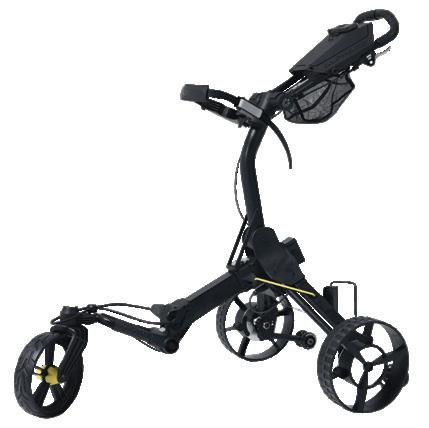
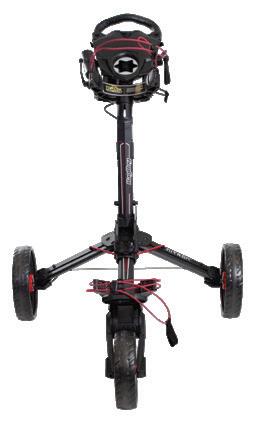
ew companies have had to innovate, take stock, realign, and battle for funding quite like Alphard. Family-owned and named after a bright star in the Hydra constellation, it was founded in 2012, 10 years after its patriarch began making push trolleys for Sun Mountain. Alphard’s first product was a critically acclaimed bag/ trolley combination that, despite good reviews, was commercially unsuccessful, forcing the company out of business. After raising funds via Kickstarter, Alphard resurfaced in 2017 with Club Booster – electric wheels that could be attached to any pushcart. It was another potentially great idea, but technical issues limited success. More funding via Indiegogo meant Alphard could return with an improved version which, at last, gave the company some stability. Alphard says the new Cybercart is the culmination of everything it’s learned. It features an LCD remote with out-of-range auto stop, a low center of gravity for maximum stability, and an easy one-click folding system. It has an automatic parking brake, downhill speed control, and can be used as a manual pushcart. The 6-Axis Gyroscope keeps it moving straight regardless of any slope, and anti-tip bars prevent it from tipping on severe slopes. The keypad lock prevents anyone else from using your caddy.
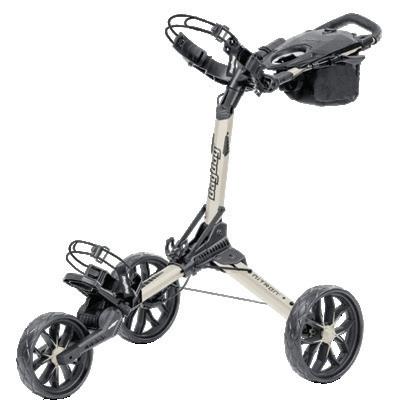
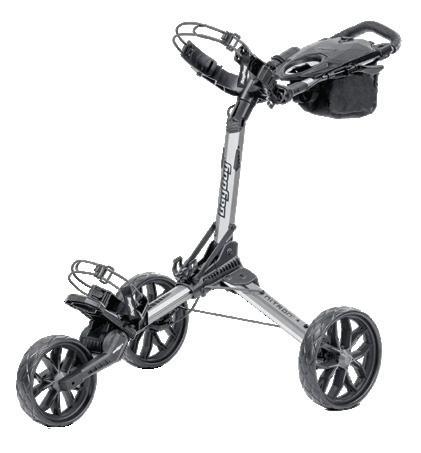
There’s still a sizeable market for non-electric trolleys/ caddies, of course. You’re still walking the course and getting a little more exercise (because you’re pushing it), while saving significant money. Bag Boy’s roots go back to the mid-1940s and Portland, Ore. After the founders sold their interests, there were numerous owners before Dynamic Brands bought it in 2004. A simple system on the Nitron the manufacturer calls “Top-Lok Technology” enables users to attach their bag to the cart quickly and easily, while the three smooth-rolling wheels (wheel diameter: front – 9.5 inches, rear – 11 inches), designed with low-resistance tires, ensure a comfortable ride on virtually any terrain. Several storage features – accessory bag, cupholder, umbrella holder, mobile device holder – help you keep your accessories organized and within reach. The Nitron is a compact design (19 inches x 13.5 inches x 22 inches folded) making it easy to store when not in use. A handle-mounted parking brake allows you to avoid the scenario we’ve all seen on Instagram when an unparked cart rolls down a hill at some speed and eventually crashes into the woods. The mechanism that opens and folds the trolley saves you time and is exceptionally easy to operate. This cart is made for golf in the Pacific Northwest — get yours and hit the links.
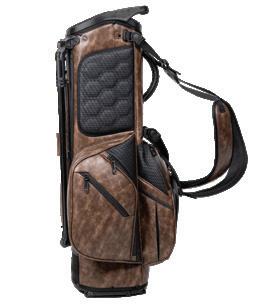
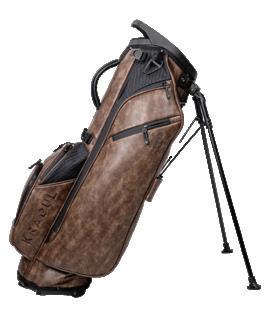
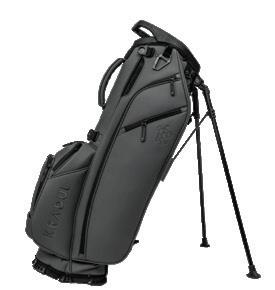
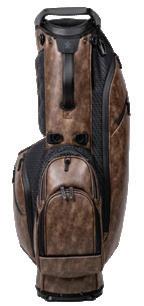
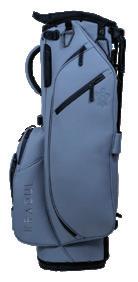
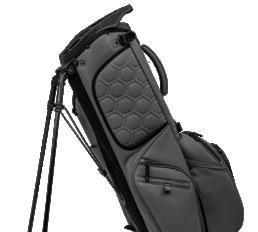
Like Alphard (left), but with golf bags instead of trolleys, the people behind Kradul worked in manufacturing for numerous recognizable brands for many years, before setting up their own company. Having learned how they might operate differently or fill a gap in the market, the founders decided to offer quality products at a vastly reduced price by cutting mark-ups, reducing overhead, and rejecting expensive ad/marketing campaigns – sort of the Tour Edge of golf bags. Before you walk into Puetz and inquire about Kradul, you should know Kradul is pronounced “cray-dull”, as in “the hand that rocks the cradle.” The company’s logo is the Nevada Tortoise, symbolizing the bags’ hardness and durability. Kradul says everything about the 4.5-pound V2 “screams luxury” with “supreme vegan leather and a combination of tonal silicone and stitch logos that give a clean look waiting for any personalized embellishments on the removable front decoration panel.” There are two full-length dividers, and numerous features to keep your valuables and necessities dry and organized. Colors include Black, Stone Blue, or Hippo. The G has an 8.5-inch, four-way top and is constructed using weathered, rawhide vegan leather accented with a whicker weave.
PUETZ GOLF PRICE
$799.99 7-piece sets
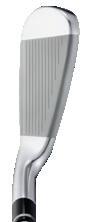
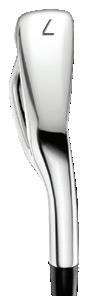
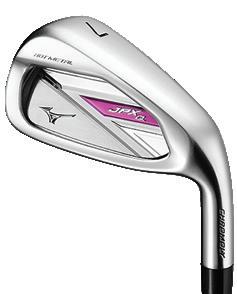
Given its price, you might think Mizuno didn’t give much thought to the MX-1 iron. We know better than to think Mizuno might produce a sub-standard club, though. While the MX-1 is significantly more affordable than the company’s top-tier models, like the Mizuno Pro and JPX lines, the MX-1 is positioned as an entry-level game-improvement iron. It’s important to remember it’s made with the same level of craftsmanship as anything that comes out of the Mizuno factory. The MX-1 is made from Mizuno’s proprietary nickel-chromoly for speed and features a cup-face design that maintains speed on off-center hits. It is therefore not unlike the much pricier JPX 925 Hi-Launch, although the JPX club provides just a little more forgiveness (larger, tungsten weighting, more offset, wider sole), a little more speed (thinner face), a higher launch/steeper descent angle, and more custom-fitting options. The women’s JPX Q is the first JPX iron specifically designed for women. Made using Mizuno’s famous Grain-Flow Forged technique, it has a 1025E Pure Select steel head with copper inlay – a combination that makes it very durable but with exceptional feel. The elegant Satin Nickel Chrome finish reduces glare and gives it an extra level of durability.
IN THE BAG
PUETZ GOLF PRICE
$109.99
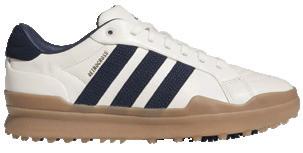
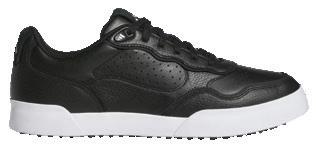
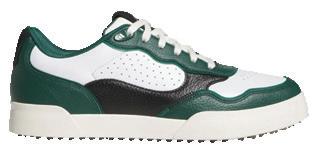
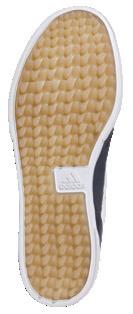
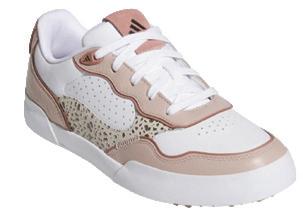
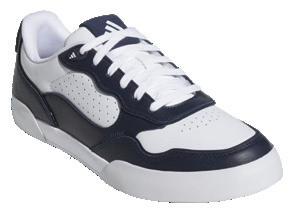
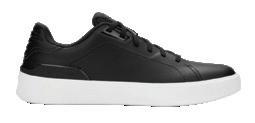
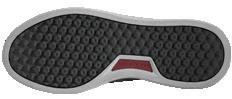
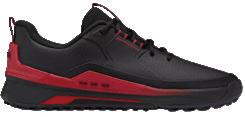
n 2017, adidas launched Adicross, a relatively casual line of golf apparel and shoes, which used terms like “versatility,” “seamless,” “everyday,” “casual,” and “comfort” in its marketing. Unlike its high-performance golf shoes such as the TOUR360 and CodeChaos, Adicross was described as “court-inspired” and “trainer-like” and was designed to be worn both on the golf course and the street. They obviously weren’t best suited to Pacific Northwest winters but were ideal for the summertime. Four years later, the company introduced Adicross Retro, which soon became Retrocross – shoes based on the Adicross philosophy but with retro styling and a vintage look. The standard Retrocross features a lace tie-up, a leather/synthetic waterproof upper (good for light, intermittent showers rather than prolonged, heavy rain), and a spikeless outsole. Each year brings its own designs, and as well as the standard men’s shoe, a model with greater traction featuring raised nubs and ridges called “Gripmore” is available, as is the Women’s Retrocross. Twenty years ago, a shoe like the Retrocross would have been unthinkable – you wore golf shoes on the golf course and sneakers or dress shoes off it. These days, the golf/tennis/office/restaurant shoe is all the rage, and we are here for it.
PUETZ GOLF PRICE
$119.99
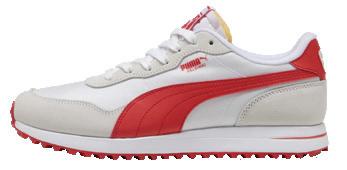
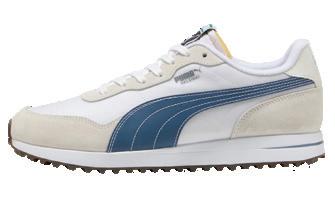
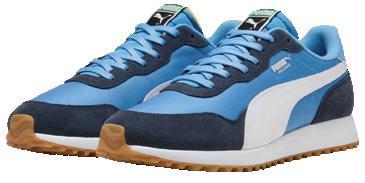
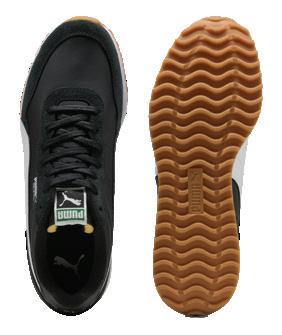
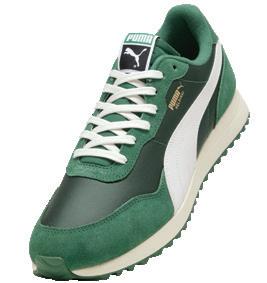
The Puma-adidas rivalry was once a bitter affair that divided a town and family. Brothers Adi and Rudolf Dassler dueled over the direction of their shoe company in the 1940s, with Adi leaving to form adidas and Rudolf creating Puma. Herzogenaurach, Germany — where the brothers formed their new firms — became known as “The town of bent necks” because everyone apparently stooped to see what shoes everyone else was wearing. The feud became more corporate than personal over the decades, and today it’s restricted to boardrooms and market-share data. Indeed, you probably haven’t witnessed Puma wearers fighting pitched battles with adidas fans or even sharing unpleasantries. For what it’s worth, adidas is by far the larger of the two now, though they are the second- and third-largest (sales/employees) sportswear brands in the world. The brand with three stripes retains a much larger presence in the global golf market, though Puma has introduced some very successful golf shoes in recent years. The Helsinki G is proving similarly popular. Like the Retrocross, the Helsinki G is a lightweight, comfortable, trainer-like golf shoe with a one-year waterproof guarantee. Puma is known for its bold colors and daring styles, and the Helsinki G fits the bill with eight eye-catching designs.
IN THE BAG
Pioneer Magnolia, Cypress and Willow; Presidio and Osprey 8
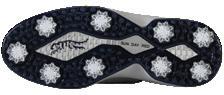
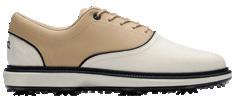
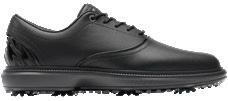
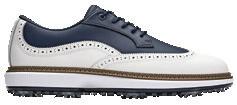
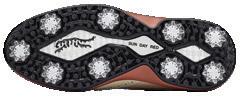
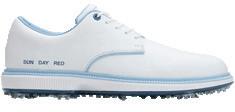
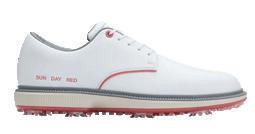
Shortly after Nike and Tiger Woods ended their 27-year partnership in January 2024, Woods announced a venture with TaylorMade — an apparel line named Sun Day Red. Its logo would be a tiger with 15 stripes — one for each major Woods had won. Sales of men’s apparel began online in May, followed by footwear and accessories. The brand is now trading internationally, and while some remain unconvinced by both the name and the logo, there’s no doubting the quality. The flagship shoe is the Pioneer Magnolia, obviously named for the shrub associated with Augusta National, where Woods has won five green jackets. It features a full-grain, waterproof, leather upper, a wingtip design and brogue details with a Blucher throat construction. The calfskin lining, insoles, and midsole foam ensure maximum comfort — nine cleats/five colorways. The Pioneer Cypress likewise has a full-grain, waterproof, leather upper plus a 6 mm heel-to-toe drop — nine cleats/eight colorways. The Pioneer Willow is of similar quality with a different design — nine cleats/four colorways. The Osprey is a more casual, zero-drop shoe good for the course and office — nubs/five colorways, while the trainer-like Presidio has foam padding and a more complex arrangement of sole nubs — four colorways.
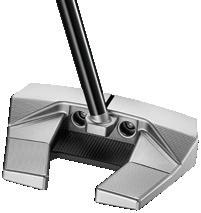
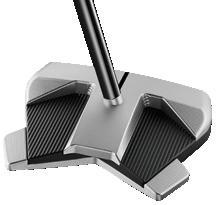
After designing putters for Cleveland, Maxfli, Mizuno and others, Scotty Cameron set up his studio in 1991. Two years later, Bernhard Langer asked him to make a putter with extra loft and an extended grip to accommodate his unique hold on the club. The German then won his second Masters, and word of the Cameron-built putter spread. In September 1994, Cameron signed a deal with Titleist, and he has since made putters for hundreds of professionals, including Jordan Spieth, Brooks Koepka, Justin Rose, Adam Scott, Geoff Ogilvy, Justin Thomas, Rickie Fowler, and, of course, Tiger Woods, who used a Newport 2 for 14 of his 15 major wins. Cameron putters are known primarily for their style and the precision with which they’re made. OC putters (Fastback OC, Phantom 5 OC, Phantom 11R OC) were released earlier this year, adding to the popular Fastback and Phantom lines. “OC’ stands for Onset Center — the shaft meets the putter head in line with its center of gravity, and leans one degree forward, giving the putter very little torque and enabling the face to stay square to the path. The Phantom 11R OC has a milled face while the other models feature a carbon-steel insert. Allow the Puetz fitting pros to show you the Cameron that best suits your stroke.
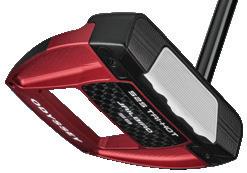
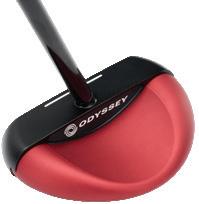
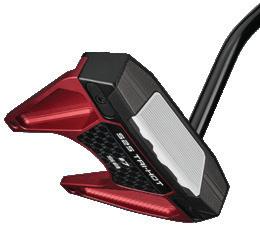
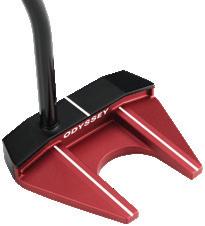
The technology in zero-torque putters (developed by Directed Force, later LAB Golf) was always sound, but the earliest models looked very unconventional. As the tech gained acceptance, however, other manufacturers began making them, trying to combine the science with a more appealing look. Odyssey produced its first ZT putter — the Ai-ONE Square 2 Square (S2S) — in late 2024. It was center-shafted (equidistant between heel and toe), but the shaft was also positioned well back from the face to align with the head’s center of gravity (CG). At the end of last year, Odyssey unveiled the center-shafted S2S TRI-HOT. Here, the shaft was positioned well forward, just behind the face, thanks to 140 grams of tungsten under the topline. That moved the CG forward, enabling Odyssey to move the shaft forward. That eliminated the need for a forward press. But Odyssey still needed to create a traditional-looking ZT putter whose shaft met the head closer to the heel. The SB models, released in April, feature a single bend in the shaft that enters the head between the center and the heel. The new Ai-DUAL insert has two urethane layers (one firm, one soft), promoting consistent ball speed as well as great feel.
Phantom 11R OC
Phantom 5 OC
Fastback OC
Osprey
Pioneer Cypress
Pioneer Magnolia
Pioneer Willow
Presidio
Rossie
Seven Cruiser SB
Jailbird SB
CAST YOUR BALLOT
Photo
Photo
TBY TONY DEAR • CG EDITOR
he chance to vote for your favorite public courses in Washington is here again, and we’re as eager as ever to discover which course in our fair state has the most admirers.
One thing this time that has us excited is the addition of Scarecrow to the list of candidates. We last previewed our contest for top Washington honors in spring 2024, when we wondered aloud how the new course at the Gamble Sands Resort in Brewster might affect the voting in future contests.
We won’t predict the outcome, but we’re confident Scarecrow will not only place somewhere in the top 10, perhaps in the top five, too. But that’s up to you to determine. And who’s to say it won’t challenge Chambers Bay, which has won five of the six times we’ve run this reader’s poll. And don’t count out the OG course at Gamble Sands, runner up four of the last five rankings, and the last course to dethrone Chambers Bay, back in 2017.
What might work against Scarecrow, of course, is how new it is. As of this writing, David McLay Kidd and Nick Schaan’s sequel to their epic original at Gamble Sands hasn’t even been open a year, which means only a limited number of readers are likely to have seen it. In fact, with its winter closure, the new course has only been playable for five months. Those who haven’t played it yet might have tee times for later this summer by which time all the votes will have been cast and counted, and the winner announced.
We think a remote (but not too remote) and entirely natural site with views of the Cascade Mountains and Columbia River, wide fairways that make it relatively difficult to lose a ball, contoured greens that are as fascinating and charismatic as they are intriguingly-positioned and beautifully-maintained, and holes that trigger every golfing emotion from fear to ecstasy, is a pretty potent combination.
But, of course, even with such a long list of assets, can Scarecrow beat Jones, Carlton, and Blasi’s wonder-course on the coast at University Place? Chambers Bay is nearly 20 years old now, has hosted a major championship, and is getting better all the time.
Changing the turf on the greens from Fescue to Poa Annua seven years ago was a smart move, resulting in considerably better putting surfaces.
A links-like course establishes itself very differently from a parkland course, for instance, as the soils and vegetation are so dissimilar. But it’s plain to see how well Chambers Bay has become part of its landscape.
In human terms, it clearly feels very comfortable in its own skin now, as it was still coming of age in its formative years. The bare patches on the greens and faux dunes are long gone, and it’s beginning to look and feel much older than it is, thanks largely to Director of Agronomy Eric Johnson and his maintenance team.
Regulars at Chambers Bay might have been saying something similar for a while now. Or the differences between one visit and the next might have been so small
those frequent visitors weren’t able to discern them. Perhaps fewer visits allow you to see the progress more clearly, like when you see a friend’s kids for the first time in a year or two.
Whatever it is, we’re just saying Chambers Bay is special and we suspect (without forecasting, of course) it will remain one to watch.
It’s hard to know how else the top 10 will shake out, but we’re sure the usual suspects will be in there somewhere.
The beloved Olympic Course at Gold Mountain was third last time out and always has a strong showing when the tally is totaled. We’re certainly not making any bets on what may come about — there’s so many amazing top 10 candidates.
In 2024, we were pleasantly surprised to see The Home Course rise into fourth spot — it had come in eighth two years previously.
Where had The Home Course suddenly found such favor? Were people finally becoming familiar with its architectural merits, or were they ready to celebrate it as “Washington’s own course?” Whatever it was, we’re very interested to see where it finishes this year.
Will White Horse return to the top 10? For some reason, it dropped from 7th to 13th between 2022 and 2024. Had something like that happened 10 years ago, it might have been a lack of votes that accounted for it. But with thousands of votes now being cast, we think the rankings should be taken at face value, so White Horse’s ranking reflected the reader’s 2024 viewpoint. And how will Trophy Lake’s new bunkers affect its position — will it climb back into the top 10 where many people think it belongs?
The Home Course, Trophy Lake, and White Horse aside, we do expect Desert Canyon, Palouse Ridge, Wine Valley, Salish Cliffs, Prospector, Washington National, Apple Tree and Port Ludlow to all contend for top spots, too. How can they not — each shine in their own way.
Might there be a spot in the top 20 for North Shore, or rather Cedar Irons, which has dramatically improved thanks to Dan Hixson’s $7.5 million rebuild? Or might the work still need a year or two to settle? And could Spokane’s city-owned courses that have benefited from a bunker rebuild (Indian Canyon) or improved irrigation (Downriver and The Creek at Qualchan) have shot up in people’s estimation? Might Meadow Park’s major investment see it make a significant rise in the rankings? Is it too early in the renovation of Gold Mountain’s Cascade Course for its position to have changed much?
And how long before we’re having to rethink everything again because of River Ranch along the Snake River? It’s reported to open in late 2027.
So, as the only independent ranking system we are aware of in the state, now is the time to be counted and cast your votes. See the QR code at the right and share your views — we can’t wait for the August issue to show you the results.
Shoot the QR code and share your input on the form.
We will draw randomly from the voters for these great prizes below.
ME
BY BART POTTER • CG STAFF WRITER
M From Mud To Masterpiece: The rise of the Northwest turf industry Turf
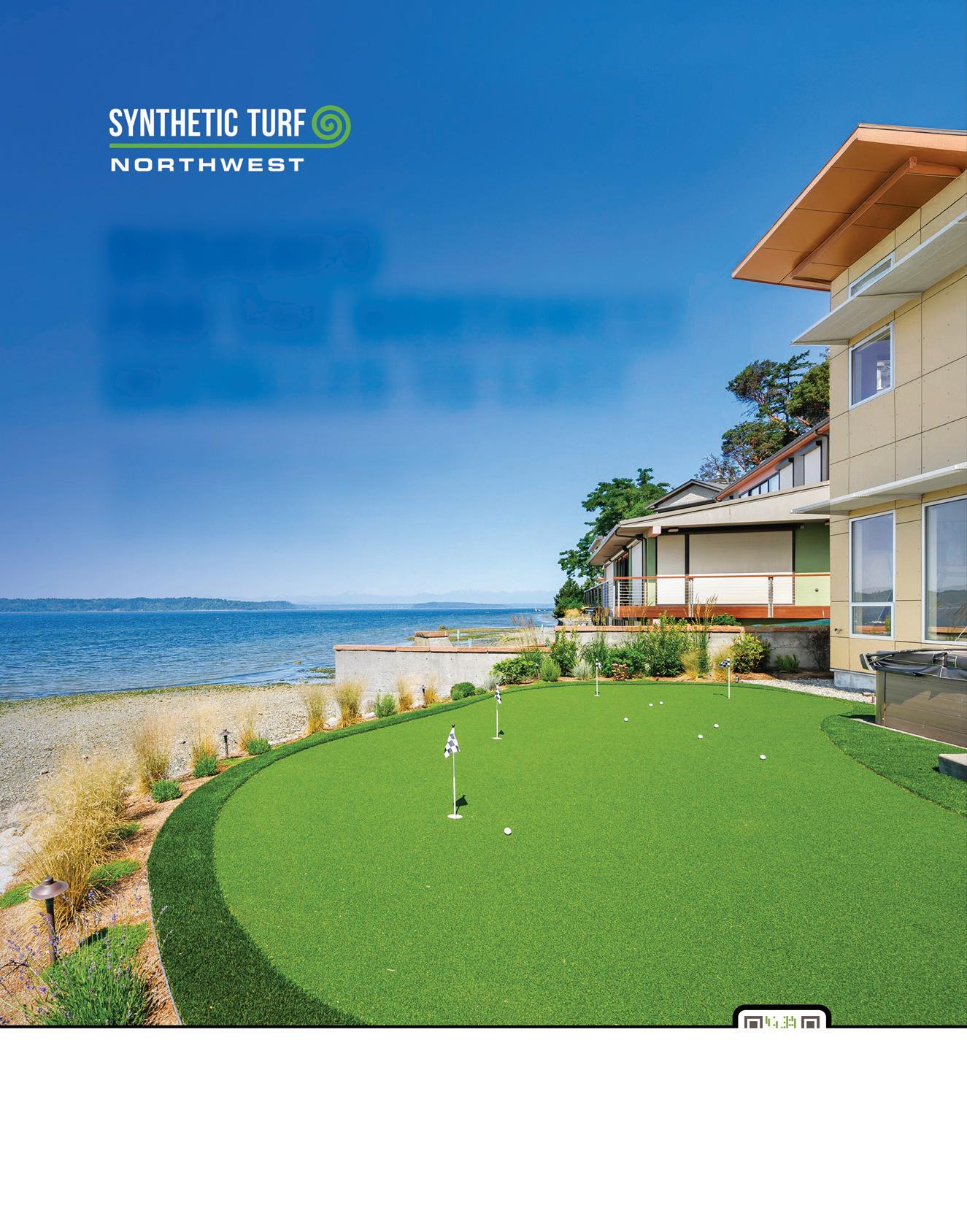
ike Vandaveer doesn’t believe there’s much excuse for bad, poorly maintained synthetic turf on streetside yards or backyard putting greens — not with the quality of materials today, and the expertise and customer service of companies like Synthetic Turf Northwest (STN) of Woodinville.
From suburban backyards to golf practice greens, STN has spent three decades at the intersection of landscaping, sports engineering and evolving materials science.
Vandaveer, the current owner, says company founder Glenn Charvat was a pioneer in the industry when he launched Advantage Golf Greens, as it was then known, in 1996.
“He quit his career in corporate America and started a synthetic turf company, a long time ago when it was really a huge risk for him and his family,” says Vandaveer.
The company emerged under Charvat during a time when artificial turf was still largely associated with stadium “AstroTurf” surfaces, often criticized for their stiffness and unrealistic look. Early synthetic turf lacked the texture, color variation and durability demanded by residential customers.
Eventually, manufacturers of turf products started to explore what they called “landscape turf” for home installations.
“It was not sports field turf,” says Vandaveer. “It was like, we’re going to try to make these turfs to look and emulate grass.
“For a lot of people in the Northwest, the problem was the space around their home was wet and mucky and muddy more than it was dry,” Vandaveer remembers. “And so Glenn transitioned his business from Advantage Golf Greens to Synthetic Turf Northwest, and he was a premier installer of lawns and putting greens and playground areas, everything that wasn’t a sports field.”
Vandaveer bought the company from Charvat after the two men got paired up by chance at Snohomish Golf Course and ended up talking in the parking lot.
“I saw his car and it had his logos on it. And I said, Hey, I want to get a putting green in my backyard. What does that take? From there, the conversation was, ‘Well, I’m getting ready to turn the lights off on
Turf
“Quality products, quality installation,” he says. “There are neighborhoods you can go into now where it’s just a hodgepodge mess of DIY front yards and just weird material purchased cheaply through big box stores where, you know, people’s version of quality is very different.”
Over time, STN built its business around installing hundreds of synthetic lawns and golf practice greens in western Washington, from Bellingham to Olympia, for both residential and commercial clients.
“In 2015, I would sell you turf and tell you, well, I can have the turf in three weeks,” Vandaveer says. “And I would see you in three weeks.”
In recent years, STN has expanded its operations to include a second warehouse in Fife, reflecting a shift
toward vertically integrated service combining supply, fabrication and installation under one umbrella.
“Now we have a warehouse full of products that we’ve manufactured or designed,” Vandaveer says. “And in our warehouses, we actually cut the turf based on the cuts that you need, and we put it on your truck right in the warehouse.”
The company’s growth reflects broader shifts in landscaping preferences — particularly in the Pacific Northwest, where heavy rainfall, shade and maintenance costs can make natural grass challenging.
STN has emphasized craftsmanship and local expertise.
“You call me directly and I install your turf, which is the biggest part of my business,” Vandaveer says. “The next part of my business is you come to my warehouse and you buy from me at retail or as a contractor.
“And then one of our third lines of revenue is the care business, where we’re aggressively getting out to people and helping them maintain their turf so it doesn’t turn into an eyesore.”
In addition to STN, other leading synthetic turf companies were showcased at the Seattle Golf Show in March including: Sta-Built Construction, Thurston Turf & Pavers, GrassLand Synthetic Turf and System Pavers. Clearly the industry is strong and growing.
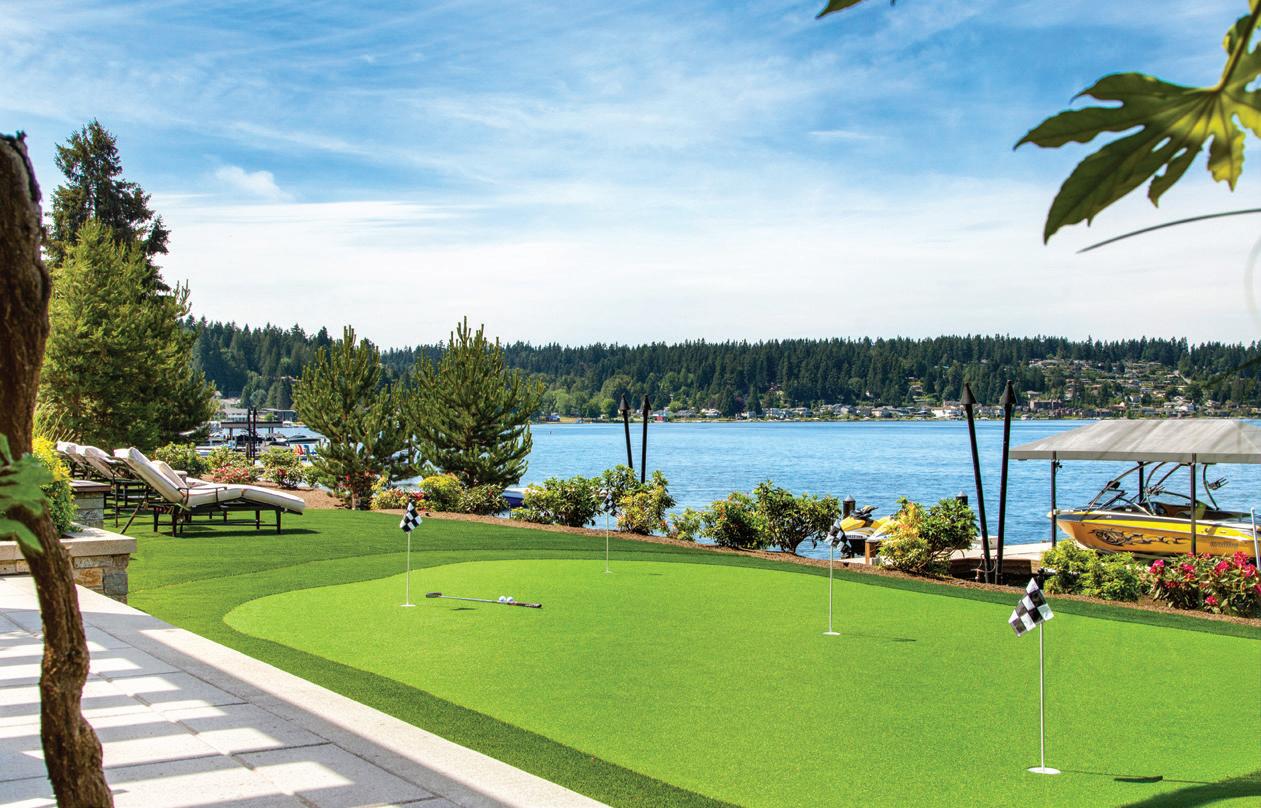
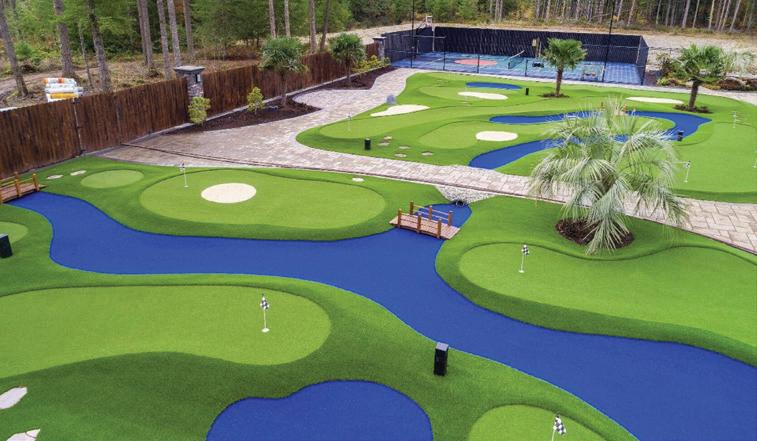
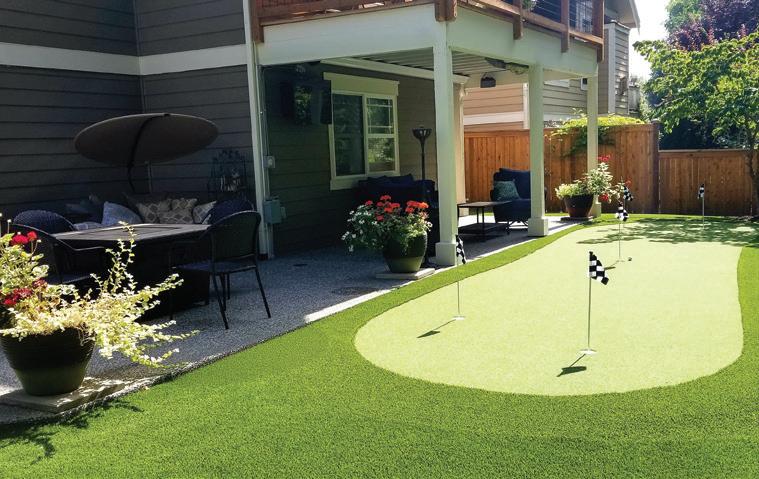
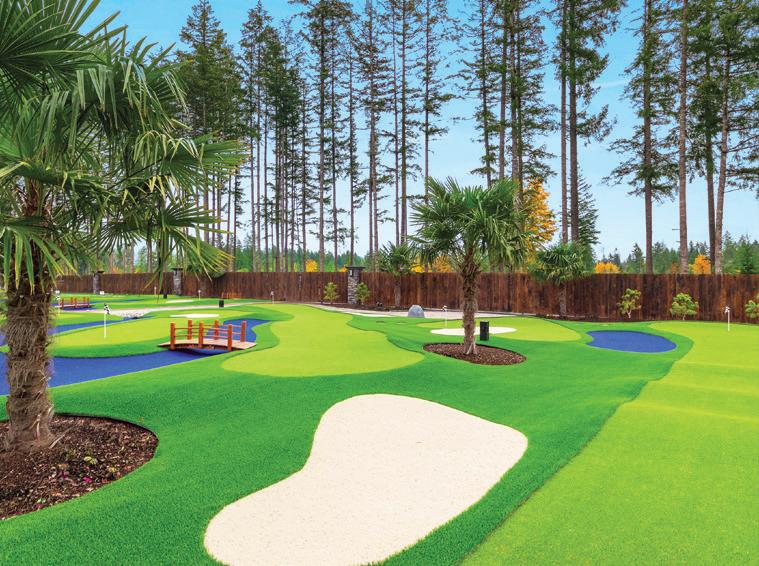
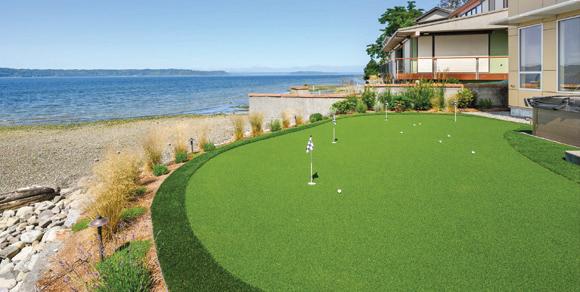
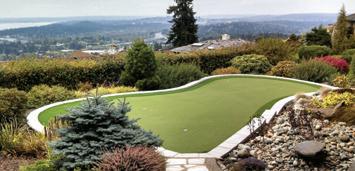
Modern synthetic putting surfaces deliver consistent ball roll, customizable speed and contouring that mimics real course conditions. Installations can include fringe areas, sand bunkers and multi-hole layouts, allowing users to practice a range of short-game techniques without leaving home.
Unlike AstroTurf and other early formulations, today’s surfaces feature multi-tone fibers, varied blade shapes and lengths, and improved underlayment for drainage — critical in western Washington’s wet climate — while keeping the playing surface stable.
When Vandaveer’s team is crafting a putting green for a home customer, he says, he takes an artist’s approach.
“We always try to give people a left to right, a right to left, and a straight flat. We try to let the homeowner be a part of the design process. And it’s fun for them, and they can put their own fingerprint on the golf green.”
It might not be a simple process to have a quality golf green installed in your back yard. But it is easy, if you hire the right people to get it right.
Rose City A al R
The Standard Portland Classic:
Golf, community and a celebration of women on the LPGA stage
TBY BOB SHERWIN • CG STAFF WRITER
he LPGA’s Portland Classic is more than just a tournament. One of the longest-standing women’s golf events on the schedule — older than three of the sport’s five majors — it has endured through the decades of ebbs and flows, drawing thousands, raising millions for charity while establishing one abiding attraction.
It is a celebration of women.
The Portland Classic, now in the middle of the three-year sponsorship deal with Portland-based The
Standard Insurance Co., began in 1972. Only the U.S. Women’s Open, which became a major in 1950, and the KPMG Women’s PGA Championship, in 1955, have longer tenures. It’s the longest-running non-major on the LPGA schedule and the only tournament owned and operated by a non-profit organization, Tournament Golf Foundation (TGF).
TGF was established in 1972 with the intention of bringing women’s professional golf to Portland. The Rose City folks have embraced it from the start.
Abdul Razak
Latif / Shutterstock.com
American Rose Zhang had an impressive result in the 2025 Portland Classic finishing in the top 20.
“I would say, yes to that (it’s a celebration), and probably even more specific to female athleticism,” said Lynn Clary, one of two co-directors of the tournament along with her business partner Monica Olson.
“Portland loves golf and Portland loves community events such as this,” Clary added. “Over time, it also has been one of the most well-attended LPGA events.”
The Standard stepped up last year with a three-year sponsorship deal to keep the tournament on its steady course. The 55th edition of The Standard Portland Classic will be held Aug. 13-16 at Columbia Edgewater Country Club. Edgewater, which opened in 1925, has hosted the event 38 times.
“They’ve (Edgewater) been an awesome partner. They really love this tournament,” Olson said. “The members have been very supportive.”
Over the years, some members have hosted players at their homes for the tournament week and have remained friends over the years. LPGA member Caroline Inglis has played in the tournament. She retired last year and is a mainstay Columbia Edgewater member.
In a players-only poll last year, Columbia Edgewater was voted the second-best course on the LPGA schedule. The first was Dundonald Links in Ayrshire, Scotland.
“I guess that makes us the No. 1 course in the U.S.,” said Olson, who operates Little Bird Media Solutions with Clary. “They love the course itself. They love our city. They like the hospitality and how they are treated when they are here.”
Olson said last year the event drew “the highest attendance we have seen in years.”
The 2025 champion Akie Iwai with the perpetual trophy.
Beyond its suitability and popularity with the professional players, Columbia Edgewater is the ideal course because of the influence of women among its membership. The Women of Columbia (WOC) is one of six governing committees that help the Board of Directors ensure the club’s success. The Crest Room, located in the heart of the women’s locker room, is an ideal social gathering spot for women during the week, and the year.
Edgewater’s 18-hole layout is called The Macan Course to honor the architect, A.V. Macan. His parkland-style design is apparent with the abundance of trees that demand accuracy off the tee and strategically placed approach shots to heavily contoured greens. It measures 6,823 yards from the tournament tees, with 54 bunkers.
There also is a nine-hole Mason Course that will be used Saturday morning to recognize promising young girls in golf, 17 and under.
“Some of the players come over and give autographs after they’ve completed their round,” Olson said.
There will be additional players from ‘the next generation’ who have earned the right to be in the field. Maris Jose Marin, who won the Augusta National Women’s Amateur in April, has been guaranteed a spot. Also, the winners of the U.S. Women’s Amateur, The Women’s Amateur Championship, and the NCAA Division I Women’s Golf Championship have been invited to compete with the pros.
Yet another amateur can gain an exemption into the tournament at the Amateur Open, hosted by Columbia Edgewater on July 1. The second- and third-place finishers will also earn a spot. That’s six amateurs, and possibly two more, who will have the chance to tee it up with the best players in the world.
THE VENUE
Columbia Edgewater CC
THE GALLERY
Great viewpoints to stake out
After 50-some years of tournament play, the locals know how and where to view the competition. For those golf fans venturing south from Tacoma/Seattle, north from Salem/Eugene or west from Spokane/Bend, Olson suggests the best vantage points to watch these professionals.
The best view is to pay a little extra for a special ticket for the grandstands around the 18th green.
“It’s the premium viewing spot.”
Not only do you see all the action passing by, including what could be the dramatic final pairings, but you get unique access that allows you to move about, sample the food items as well as catch play on other holes before returning for the finale.
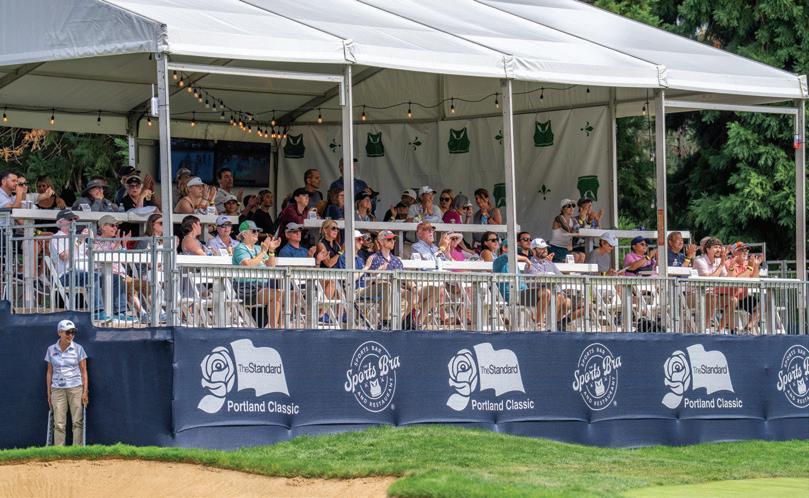
At the par-4, 403-yard 15th hole, there are more grandstands along with an innovative popup sports bar. Or more specifically, a Sports Bra. It is patterned after Portland’s first of its kind in the country. The Sports Bra puts a premium on women/girls sports, playing all women sports on the TVs as well as selling women’s sports teams/players collectables. The Sports Bra was
founded by Portland’s Jenny Nguyen and already has franchised out to a downtown spot in Indianapolis, with expansion plans for Boston, Las Vegas, St. Louis and Portland, Maine.
To start the day, Olson says it’s “pretty cool” to stick around the first hole to watch various starts. “You’re right there, anticipating everyone teeing off. It’s very viewable, right by the clubhouse.
“Another great location is between No. 17 and No. 2,” Olson added. “You can see play on both 17 and 2 clearly. Plus, there’s a bar and food there.”
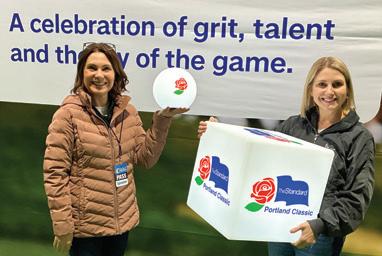
Tournament Directors Monica Olson (left) and Lynn Clary at the Portland Golf Show. The tournament is the welcoming sponsor of the Rose City’s popular expo.
Canadian
is always a favorite in the Northwest.
STAR TALENT
Players to watch in 2026
Last year, the Classic was won by Japan’s Akie Iwai, a Tour rookie with her first career victory. She took the title by four strokes over American Gurleen Kaur. Akie has a twin sister Chissy, also a LPGA member and an eight-time winner on the LPGA Tour of Japan.
A most unexpected Classic winner was Thailand’s Chanettee Wannasaen in 2023. The 19-year-old Tour rookie earned the right to play by winning the Monday qualifier. She would go on to shoot a final-round 63 for a four-round tournament record of 26-under 262. She won by four strokes. After her resounding win, she then missed the cut in nine of the final 12 events that season.
Wannasaen was the first qualifier to win on the LPGA Tour since Canadian Brooke Henderson in 2015. Henderson also won the Classic twice, 2015-2016. She is one of four women who have won the tournament twice. The others are: Suzann Pettersen (2011, 2013), Annika Sörenstam (2002, 2003), and Nancy Lopez (1987, 1992).
The tournament also makes the connection between the fans and the LPGA Tour pioneers. Nancy Lopez, 69, a 48-time winner on the Tour, has been invited back to the Classic to serve as a tournament “ambassador.”
The LPGA Tour player field for The Standard Portland Classic will not officially be known until at least a week before the August event, but the organizers are hopeful that three of the Tour’s most popular and talented players — American Nelly Korda, South Korean Hyo Joo Kim and Thailand’s Jeeno Thitkul — will join the field. Korda has played in the tournament twice, in 2022 and 2023, while Kim played in the event in 2023 and 2025, and Thitkul played in Portland in 2023-2024.
All three have entered the field, well in advance, but as the summer continues circumstances could change their schedule plans. It is noted, however, that this will be one of the last tournaments of the LPGA schedule to earn Solheim Cup points.
Brooke Henderson
TipTop
HOW Sunriver AND Central Oregon
KEEP RAISING THE BAR AS A LEISURE LEADER
WBY BOB SHERWIN • CG STAFF WRITER
hen visitors make their way to the wilderness-friendly golf entertainment center at Sunriver Resort near Bend, Ore., invariably they ask the same question the folks who run the facility ask themselves: “What’s new?”
“We’re investing in our golf courses every year,’’ said Josh Willis, Sunriver Resorts VP of Operations. “If we’re not doing something to our golf courses, then we’re going to fall behind.”
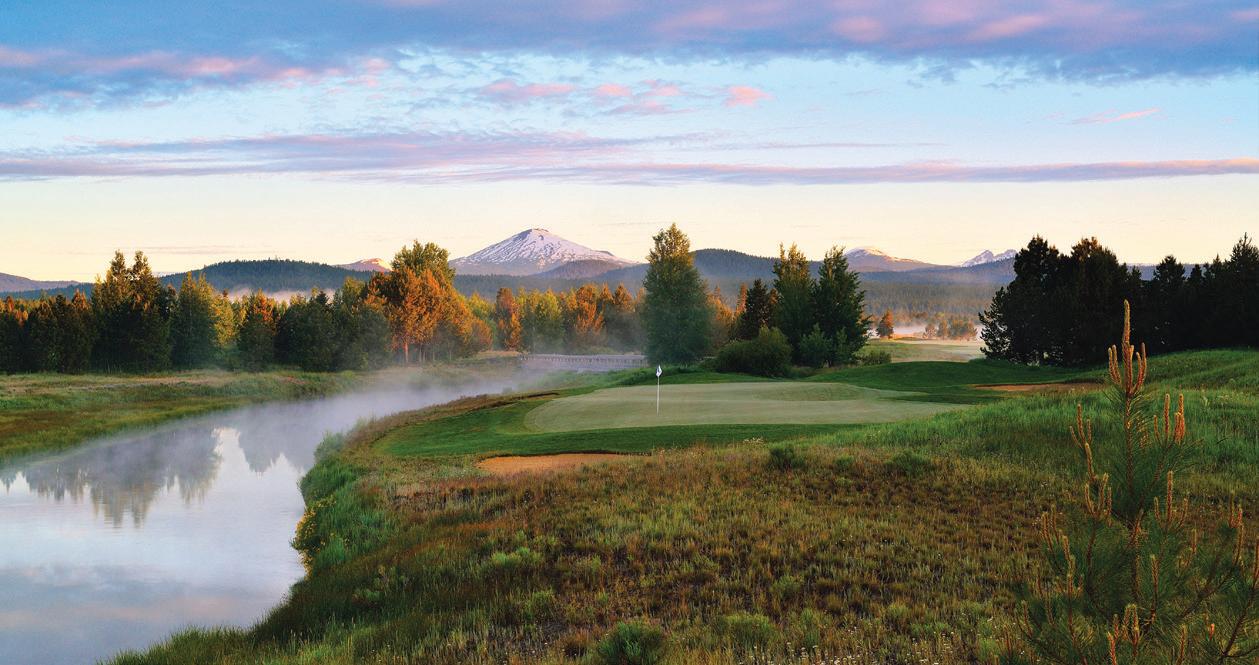
Crosswater
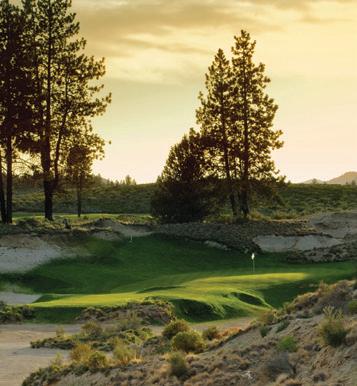
That’s what people want to hear. That’s why people have come to Central Oregon for decades. The resort’s golf courses are critical to Sunriver, and the resort has been instrumental in establishing the Greater Bend area as a time-honored tourist destination playground.
This place was once no destination for anyone, more of an obligation. It was originally a World War II training facility for combat engineers — Camp Abbott. From 1942 to 1944, thousands of soldiers rotated through the boot camps and bivouacs. The only evidence of its existence today is the officer’s quarters, which transitioned from a cattle barn to the renovated and bucolically elegant “Great Hall” on the Sunriver campus.
Crosswater • Sunriver, Ore.
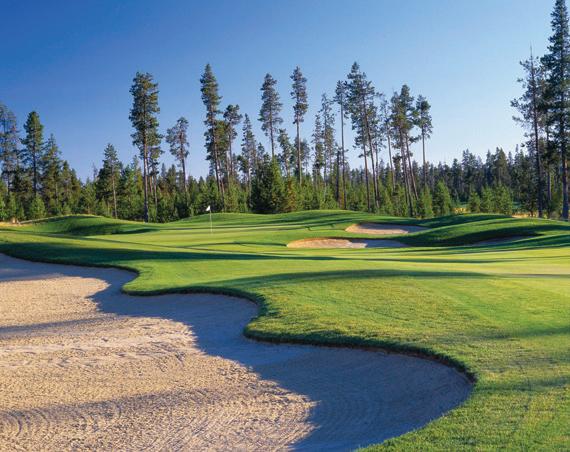
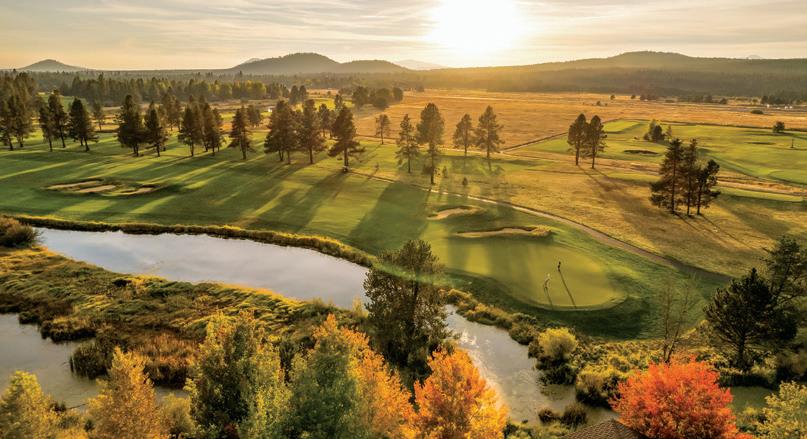
The first course built in the area was Meadows in 1969, a time when forest critters got their first look at men with clubs. The John Fought-designed course (Washington National, Trophy Lake) adjacent to the Sunriver Lodge put a spotlight on the area. The 7,012yard layout, with seven holes bordering the Sun River, won numerous awards and hosted the 2006 NCAA Division I Championship. It has been named a top-10 destination for family golf, as determined by Golf Digest.
Sunriver’s 6,913-yard Woodlands Course, designed by Robert Trent Jones, Jr., opened in 1981, followed by the 7,683-yard, Bob Cupp-designed Crosswater Course in 1995. Cupp and local architect Jim Ramey also designed the nine-hole, par-3 Caldera Links, opening in 2007.
When Crosswater opened, it was hailed as the best new course in America and remains on the nation’s list of the top 100 courses. It also inspired Portland businessman John Gray and the Sunriver Limited Partnership to expand amenities and activities involving the natural surroundings — fishing, boating, kayaking, hiking, biking, horseback riding, archery, swimming and general frolicking. Thousands of home sites for second homes and retirees also were sold.
Woodlands Meadows
Woodlands
“When they built Crosswater, their goal was, ‘we are a drive-market, generational resort. We want to put Sunriver on the map nationally,’” Willis said. “Crosswater was part of that strategy.”
Crosswater has a long list of tournaments it has hosted, including the PGA Professional National Championship four times, the JELD-WEN Tradition four times and a national TV event, the 1999 Shell’s Wonderful World of Golf tournament that featured Fred Couples and John Daly.
“All of these things were about awareness, bringing in people to Sunriver that would never have known about Sunriver if it were not for that golf course,” Willis added. “It reshaped the customer landscape … that’s
the exposure that ensures this amazing place remains sustainable into the future.”
As for the resort’s agenda — to maintain and grow or fall behind — all the courses have had tee, green and bunker renovations and irrigation projects over the years. So much so that the resort’s original golf course, the Meadows course, has taken over some of the prestige and tournament focus from Crosswater.
In 2024, Meadows hosted three significant events, the Women’s PGA Club Championship, the Women’s PGA Cup, and the Senior PGA Professional National Championship at the Meadows and Woodlands. Over the next 10 years, Meadows will host four USGA events, including the prestigious 2031 Mid-Am Championship.
Golf moves the masses around the courses and through the accommodations, yet the resort folks understand that vacationers do not always arrive with drivers and putters. They hold an eclectic array of fishing rods, tennis rackets, camp stoves and swim goggles.
In the summer of 2021, the resort opened its indoor (and outdoor) pool complex that featured a spa treatment center and the Cinder Cone water slide. That $40 million investment came in the teeth of the Covid pandemic, underscoring the resort’s commitment to maintaining its investments.
The Forest House at Caldera Springs, near the ninehole, par-3 course, is another answer to “what’s new?” It underwent its first full year of operations a year ago. It
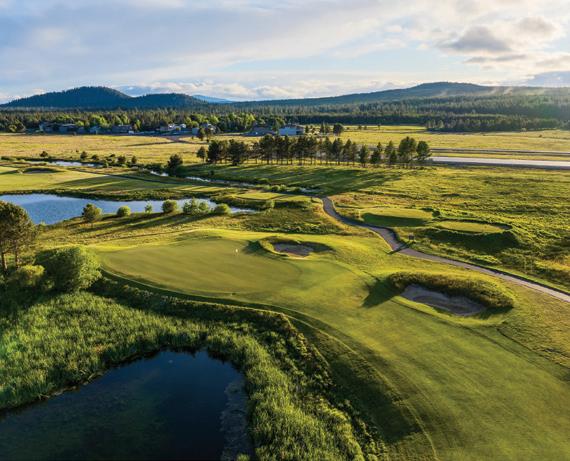
Tetherow
features a huge pool, water slide, lazy river, fitness center and Piney’s poolside bar and café.
Piney’s is one of 12 restaurants on the expansive Sunriver property, considered a self-contained, rustically refined community with stay-and-play packages for all pastoral passions.
“It’s been a continuing effort in innovation and investment in amenities that ensures the generational customer continues to want to come to Sunriver,” Willis added.
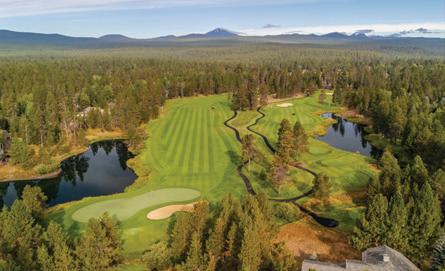
However, there is plenty of life and links outside Sunriver’s green borders, an abundance of quality golf courses within a 15-mile radius of Bend. Perhaps the most renowned is Tetherow, just seven minutes from the popular Old Mill District in downtown Bend.
Tetherow, which opened in 2008, was designed by noted architect David McLay Kidd, who also designed Bandon Dunes. It has a reputation for being tough but fair. Big boy pants required. The course, part of the Tetherow Resort, is 7,298 yards long, and is ranked 57th in Golf Digest’s best 100 courses in the nation.
Another great designer, Tom Fazio, is responsible for Pronghorn, which has been ranked as high as 39th among the top 100 best courses in the nation. Fazio has developed such outstanding tracts as Adare Manor in Ireland, Shadow Creek near Las Vegas and Pinehurst No. 6 and No. 8. Pronghorn is not near anything. After entering the gate, it takes another four miles on a secluded road just to reach the clubhouse. There’s no saving your slice at that point.
Pronghorn also has an adjacent Jack Nicklaus-designed course, Pronghorn at Juniper Preserve. It was originally the second-best private course in the country but has since been opened to public play.
Brasada Canyons in Powell Butte is another celebrated course. It’s part of the Brasada Ranch Resort and features some of the best wilderness views in the state. It was designed by Oregonians Jim Hardy and Peter Jacobsen, and, like Tetherow, it is long — 7,295 yards. But the air is thin, and the firm surface can seemingly carry the ball all the way to the green.
If you’ve taken more swings than anticipated during your Bend journey, you can find ample sustenance in such family-friendly places to eat around Bend that include Deschutes Brewery Bend Public House, The Craft Kitchen and Brewery and the Crux Fermentation Project.
Desert Aire Golf Course
MATTAWA
Desert Aire Golf Course offers a distinctly inland Northwest golf experience shaped as much by geography as by design.
Opened in 1973 and designed by architect Jim Krause, the course emerged as the centerpiece of a planned recreational community along the Columbia River during a wave of development in the late 1960s and early 1970s.
Built on land carved from shrub-steppe desert in the Columbia Basin, the course reflects its environment: wide-open skies, sparse vegetation and frequent winds.
Located in the rain shadow of the Cascade Mountains, the region receives abundant sunshine and minimal rainfall, creating firm playing conditions and fast fairways. The layout runs 18 holes at par 72 and stretches to approximately 6,490 yards from the back tees, with multiple tee options providing variety: blue (6,490 yards), white (6,147 yards), gold (5,555 yards), and red (5,233 yards).
Krause’s design emphasizes playability while incorporating subtle challenges. Fairways are generally generous, but desert rough, strategically placed bunkers, and ever-present wind demand thoughtful shot-making. The course’s relatively flat terrain is punctuated by slight elevation changes and views of the nearby Columbia River, lending both aesthetic appeal and strategic complexity.
While the course lacks dramatic elevation or water hazards typical of coastal layouts, several holes stand out. The par-5 ninth (526 yards) and par-5 18th (549 yards) offer classic risk-reward opportunities, tempting long hitters to reach in two while punishing errant approaches.
The par-3 holes, including the 190-yard third and 193-yard 14th, are notable for exposure to wind, often playing longer or shorter depending on conditions. The par-4 eighth, regarded by some as the course’s signature hole, is also the hardest by handicap, requiring accuracy and distance.
Green fees remain one of the course’s most appealing features. Peak weekend rates typically range around $45 for 18 holes, with weekday rounds closer to $40, and discounts available for seniors and local property owners. Earlier aggregated estimates place typical total fees with a cart near $75, still modest by regional standards.
That affordability, combined with year-round playability and low crowd density, defines Desert Aire’s value. Golfers will find a full-length, well-maintained course in a scenic but uncrowded setting – an increasingly rare combination in Washington.
For players willing to trade lush greenery for rugged beauty, the course delivers a straightforward but rewarding test at a price point that encourages repeat play.
YARDAGE (PAR 72) 5,233-6,490 yards
RATES $28-$45
TEL (509) 932-4439 • WEB daoa.org
2 Lake Spanaway Golf Course
SPANAWAY
Lake Spanaway Golf Course screams western Washington golf, with its towering evergreens, damp coastal air and a layout shaped by one of the region’s most influential architects.
The course opened in 1967 and was designed by A. Vernon Macan, a Scottish-born architect whose work helped define golf in Washington and British Columbia. Later refinements by Ken Tyson and John Harbottle III preserved Macan’s original routing while modernizing playability. Today, the course is owned by Pierce County and operated as part of its public golf system.
The layout occupies lowland terrain just south of Tacoma near Spanaway Lake, with terrain typical of the Puget Sound Basin. Fairways are framed by tall Douglas firs, creating narrow driving corridors on some holes. The ground is relatively flat and walkable, but the length and trees make it a demanding test. Large greens with subtle breaks add another layer of difficulty.
Lake Spanaway is a par-72 championship course that stretches to 7,083 yards from the back tees. Multiple tee options provide variety: black (7,083 yards), blue (6,601 yards), white (6,206 yards) and red (5,604 yards). The length alone distinguishes it from many municipal courses in western Washington, placing it closer to a tournament-caliber layout.
Several holes stand out for both challenge and visual appeal. The par-4 second hole, a long and narrow test, is often ranked among the most difficult due to its tight landing area and demanding approach. The par-5 ninth offers a classic risk-reward opportunity, reachable in two for long hitters but bordered by trees that punish errant shots.
On the back nine, the par-3 14th — playing around 150 yards from the tips — requires precise club selection to a well-protected green, while the finishing par-4 18th provides a strong closing test framed by forest on both sides. These holes collectively serve as the course’s defining stretch.
Green fees are structured to keep the course accessible. Weekday walking rates are typically around $36, with weekend and peak-time rates fluctuating between about $35 and $45 under a dynamic pricing model that adjusts based on demand. Discounted rates are available for seniors, juniors and certain public-service groups, with junior rounds as low as $20. Cart fees are additional. Estimated peak all-in rates with a cart can approach $80–$86, still competitive for a course of this length and conditioning.
YARDAGE (PAR 72) 5,604-7,083 yards
RATES $20-$45
TEL (253) 531-3660 • WEB lakespanawaygc.com
Lake Spanaway Golf Course • Spanaway
3
Cedarcrest Golf Course
MARYSVILLE
At Cedarcrest Golf Course, the golf experience reflects nearly a century of public golf in the Puget Sound lowlands — where tight corridors, mature trees and modest yardage combine to test precision over power.
The course opened in 1927, making it the oldest public golf facility in Snohomish County. It was designed by Pacific Northwest architect John Steidel, whose work on compact footprints forced players from the earliest days of the course to play strategically or face the consequences. Over the decades, Cedarcrest has undergone several updates, including a major renovation in 1997 and the addition of 52 bunkers in 2010, while retaining its traditional parkland character.
Cedarcrest’s fairways are lined with tall firs and cedars that have matured for nearly 100 years, narrowing sightlines and demanding accuracy off the tee. Natural drainage areas and small water features come into play on several holes, while the relatively flat topography keeps the course highly walkable.
Cedarcrest plays as a par 70 and measures 5,811 yards from the back tees, with shorter options at 5,381 yards (white) and 4,846 yards (red). Though short by modern standards, its small, undulating greens and tree-lined fairways call for careful club selection and precise shot-making.
The course’s most difficult stretch centers on the par-4 eighth hole, widely regarded as the toughest on the property. A narrow driving chute leaves little margin for error, water crosses the midpoint of the fairway and lurks right of the green, and approach shots must avoid bunkers close by the putting surface.
The par-5 ninth at 466 yards offers a scoring opportunity but punishes aggressive play with out-of-bounds and dense rough. On the back nine, the par-3 16th at 180 yards stands out for both its visual appeal and the typical wind, requiring sharp distance control.
Green fees remain one of Cedarcrest’s strongest draws. Cedarcrest is a Premier Golf facility and uses Premier’s Dynamic Pricing model, by which prices may rise or fall according to demand. Standard weekday rates are typically about $28–$32, rising to roughly $31–$37 on weekends and peak times. Twilight rounds can drop into the low-$20 range.
The pricing structure — combined with year-round access and a walkable layout — helps Cedarcrest retain its reputation for value. Players will find a historic, well-maintained course that rewards thoughtful golf, all at a price significantly lower than many modern public facilities in the region.
YARDAGE (PAR 70) 4,693-5,823 yards
RATES $22-$40
TEL (360) 363-8460 • WEB cedarcrestgc.com
Cedarcrest Golf Course • Marysville
Masters notebook: The lead vanished — but Rory didn’t
BY TONY DEAR • CG EDITOR
nyone who watched last year’s Masters, indeed, anyone who’s watched Rory McIlroy for long, didn’t need Brandel Chamblee or Paul McGinley to tell them on the Friday evening of this year’s tournament that it was far from over.
The Northern Irishman had established a record six-shot lead after two rounds, of course, but knowing what we know about Augusta National and what McIlroy had done there in the past, very few of us thought a repeat win was a foregone conclusion.
McIlroy certainly isn’t a big choker (for want of a better word), and he has enjoyed more successful moments than dire collapses. But he has had his … moments.
Many readers will remember how, in 2011, he arrived on the 10th tee at the Masters with the lead but shot a back-nine 43 to finish tied for 15th. In 2022, he had a two-shot lead after 63 holes of The Open Championship at St. Andrews but wound up third after finishing with eight rather pedestrian pars while Cameron Smith and Cameron Young blitzed the back nine. At the 2024 U.S. Open, he missed two short putts in the closing holes to lose out to Bryson DeChambeau.
Between 2015 and 2025, he finished in the top five at major championships 10 times without adding to the four he’d won by the end of 2014. At non-majors, he held a twostroke lead after three rounds at the 2016 WGC-Cadillac but finished tied for third after a weak 74. Another disappointing 74 lost him a two-shot, 54-hole lead at the 2014 Honda Classic, where he finished T2.
These are isolated incidents, of course. In a professional career that goes all the way back to September 2007, when he decided not to show up at East Tennessee State having signed a letter of intent, it’s actually an impressive lack of disaster.
Even so, no McIlroy fan felt comfortable at the start of this year’s third round. And two holes in, those same fans had definitely started to fidget. While McIlroy began with a bogey five and failed to birdie the par-5 second hole, his playing partner, Sam Burns, birdied the first two holes. And Patrick Reed, McIlroy’s nemesis before DeChambeau and playing in the group in front, birdied the first three.
While the 12 players in the last six groups averaged 69.91, McIlroy shot 73 and his six-shot lead vanished entirely. On Saturday evening, he was tied for the lead with Young, and there were now 11 players within six shots.
And he didn’t make a terribly convincing start to round four, either. Yes, he birdied the third but then doubled the short fourth and bogeyed the shorter sixth. With Justin Rose, two groups ahead, and Young playing well, McIlroy fell a couple behind, looking very much out of sorts.
But whatever he said to himself walking to the seventh tee should be used in team-building exercises and inspirational seminars, because it obviously flipped his switch. From the seventh to the 17th,
a sweet stinger drive at the 17th, then a nifty chip for his third.
He played so well in that stretch while others couldn’t quite do what was necessary to catch him, that he arrived on the 18th tee with a two-shot lead. Surely now, McIlroy fans were able to relax and enjoy a 72nd hole ceremonial walk. Nope. A wild block/push/fade/ slice to the right put him in potential double-bogey territory. He did well to find the front bunker with his second and eventually holed for a five which was good enough. It hadn’t been a smooth weekend but, as McIlroy said himself, he really doesn’t make things easy for himself.
In winning his second Masters and sixth major, McIlroy probably went to the top of the list of the five greatest ever European golfers, pushing Seve Ballesteros into second, Nick Faldo into third, Harry Vardon into fourth, and James Braid into fifth (though we would be happy to hear alternative versions). And where might he figure on the world all-time list?
A couple of things in closing: We always enjoyed watching Sergio Garcia play, but after his latest infantile reaction to a bad shot (Sunday tee shot at the second), we’ve probably had enough. And while we genuinely hope Tiger Woods can get fixed in Switzerland or wherever he is now, we just hope he makes a proper return to the limelight and does so with grace and growth.
LakeLand Village twosome up for grabs
hether it is Generation I, II or III, you are bound to have fun as this 27-hole facility. Gen II and III are what makes up their Ranch Course and we are sending two of you to check in out for yourselves. Go to CascadeGolfer.com to register.
McIlroy was four-under-par, hitting one of the great Sunday shots at the 12th, ripping a majestic drive at the 13th, negotiating a 20 foot-breaking putt at the 16th, hitting