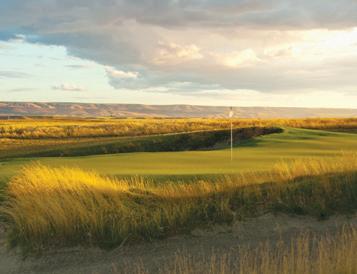
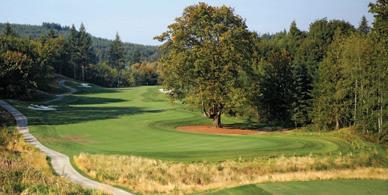
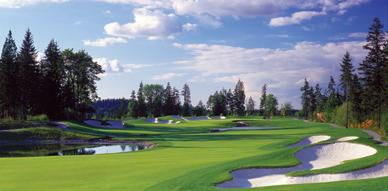
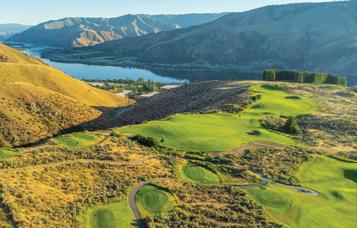
Your votes are counted: Washington’s finest courses ranked and reviewed 34
The remarkable golf pipeline in South Puget Sound produces world-class talent on the tee, on the bag and behind the scenes 46
The Tacoma Boys!
• Camaloch
• The Classic GC
•
•
PUETZ GOLF SAVINGS 24-33
• Whidbey GC
62 MICHELOB ULTRA POST GAME
• Tony Dear’s August notebook
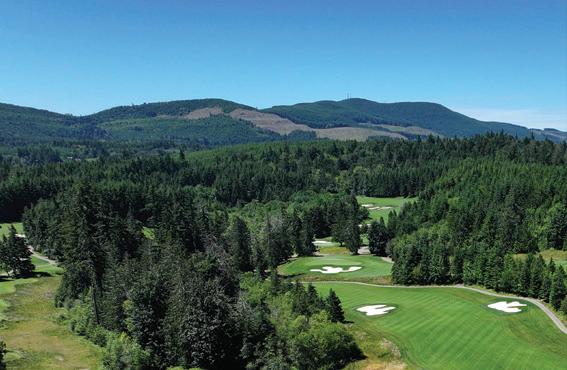
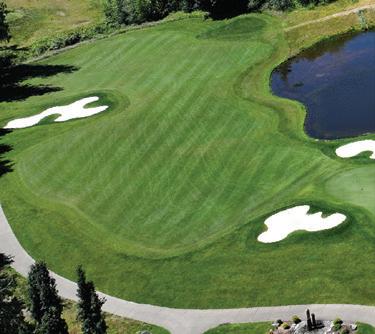
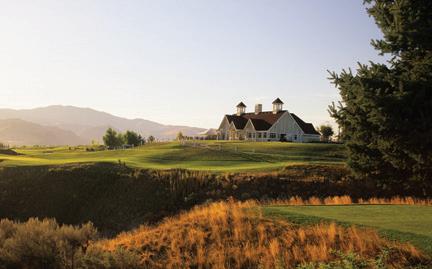
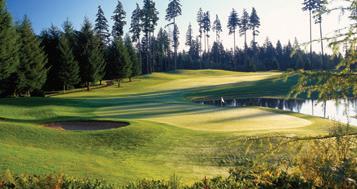
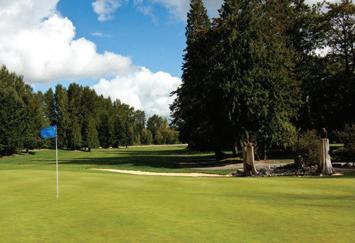
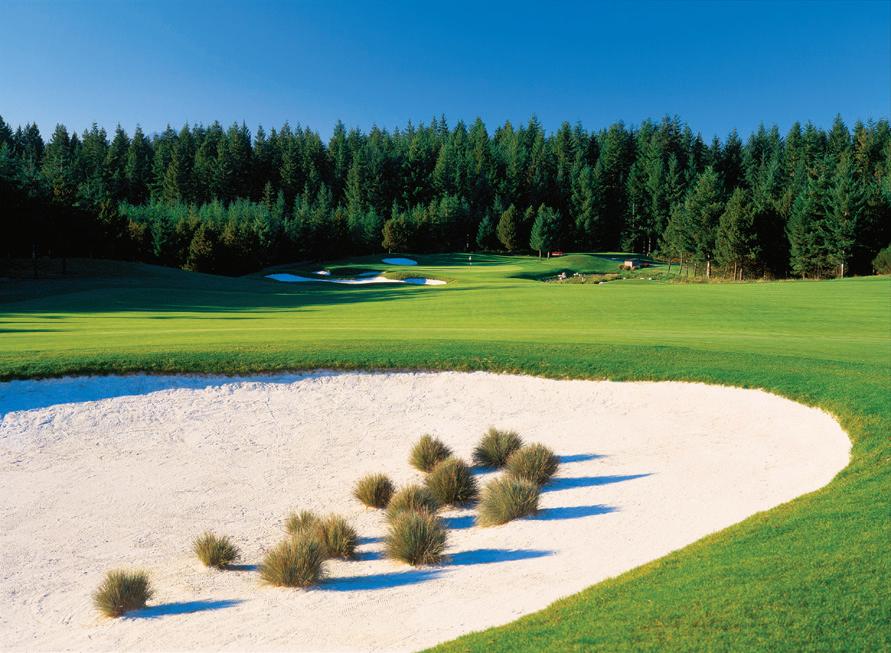
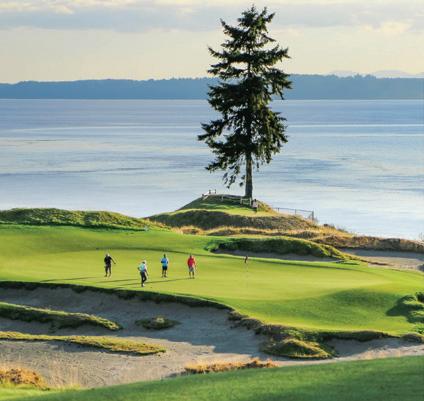
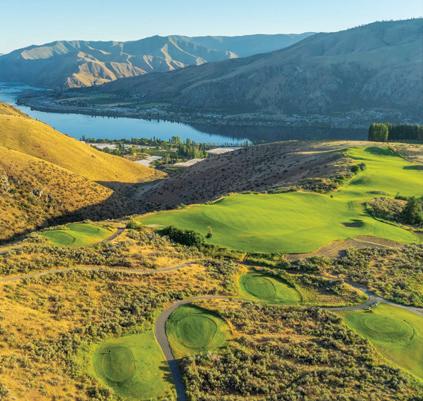
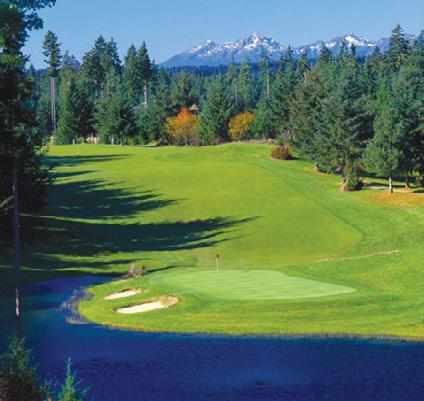
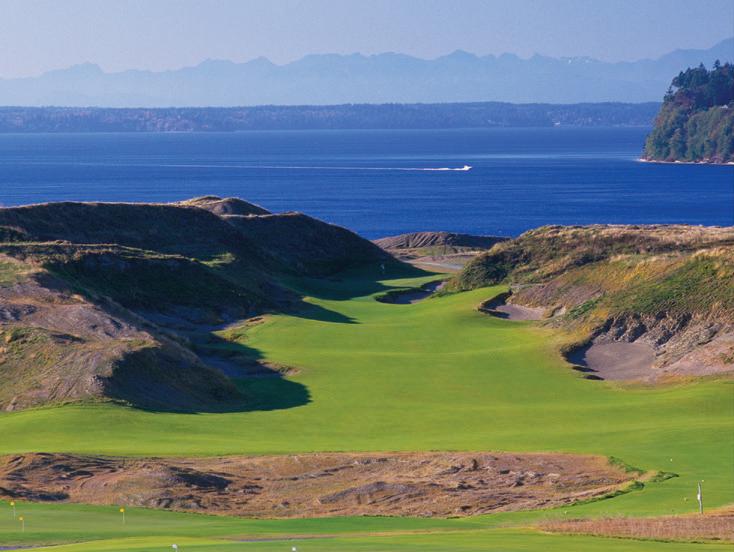
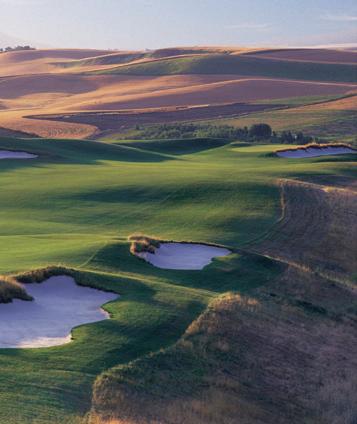
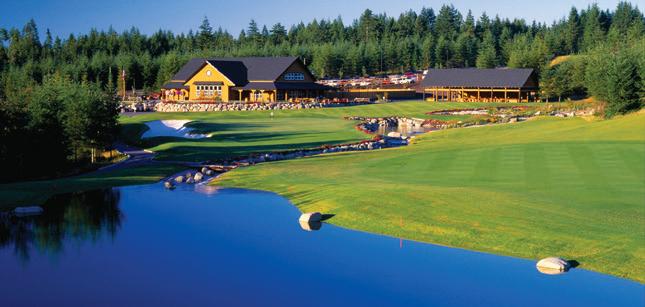
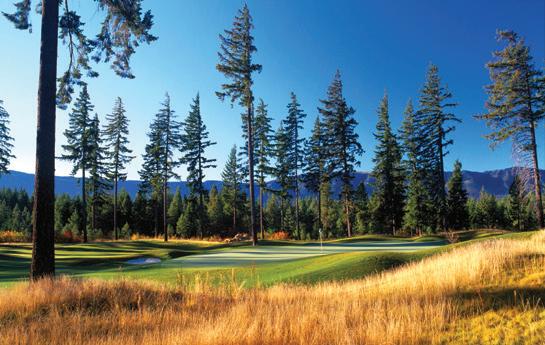
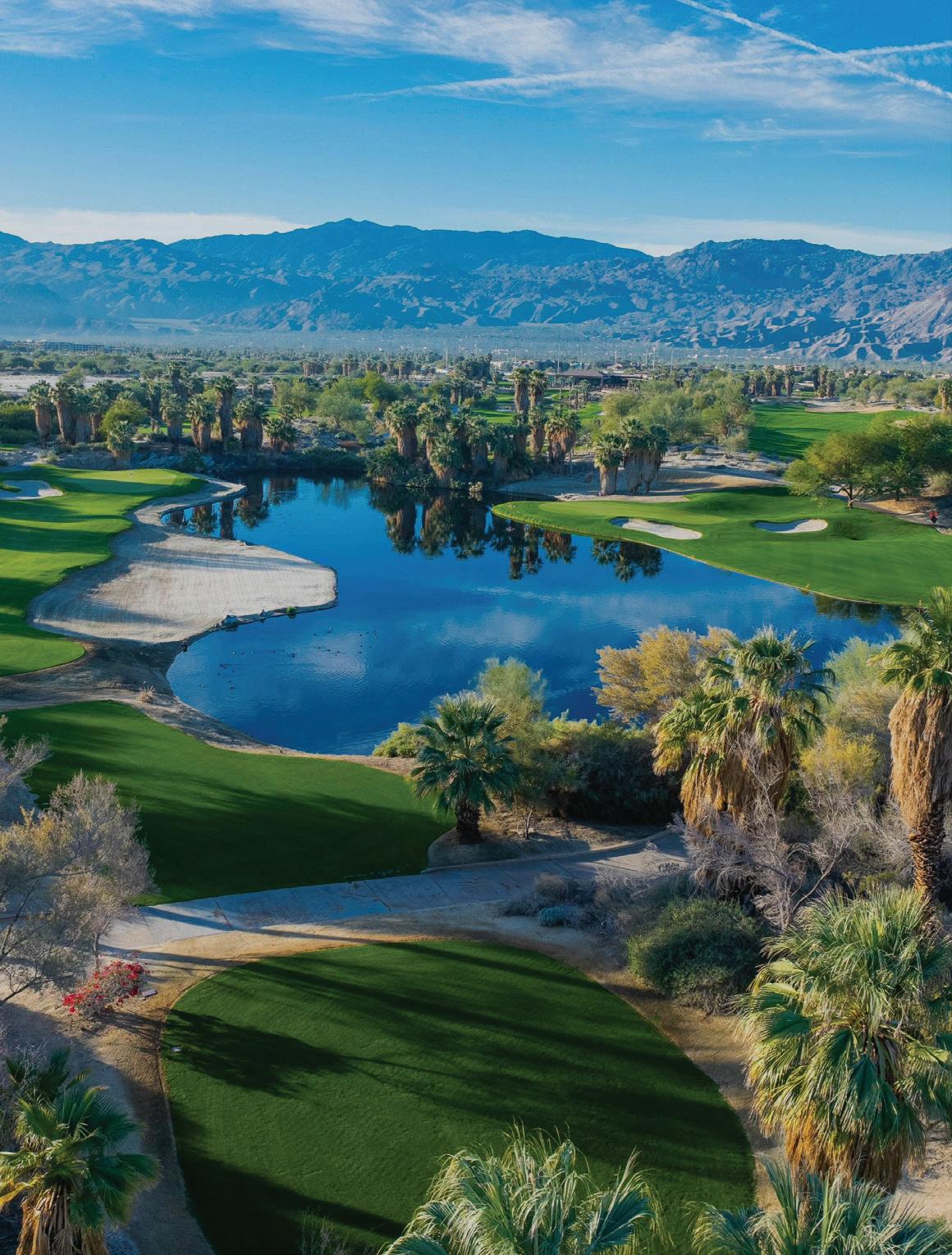
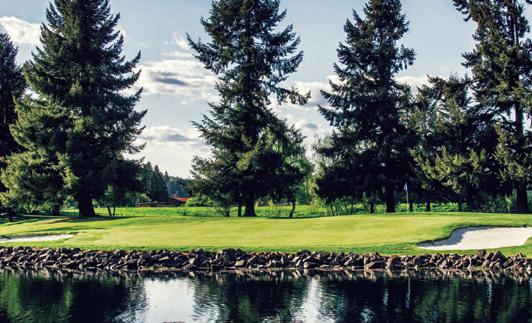
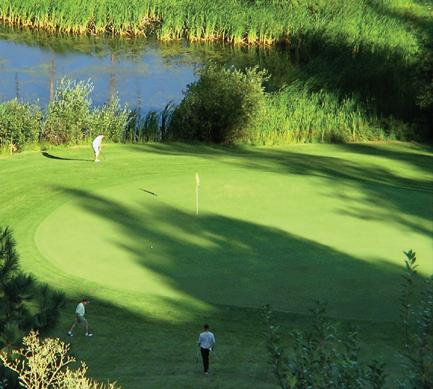
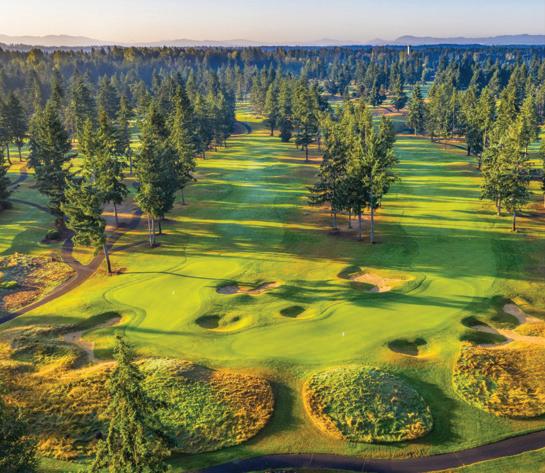
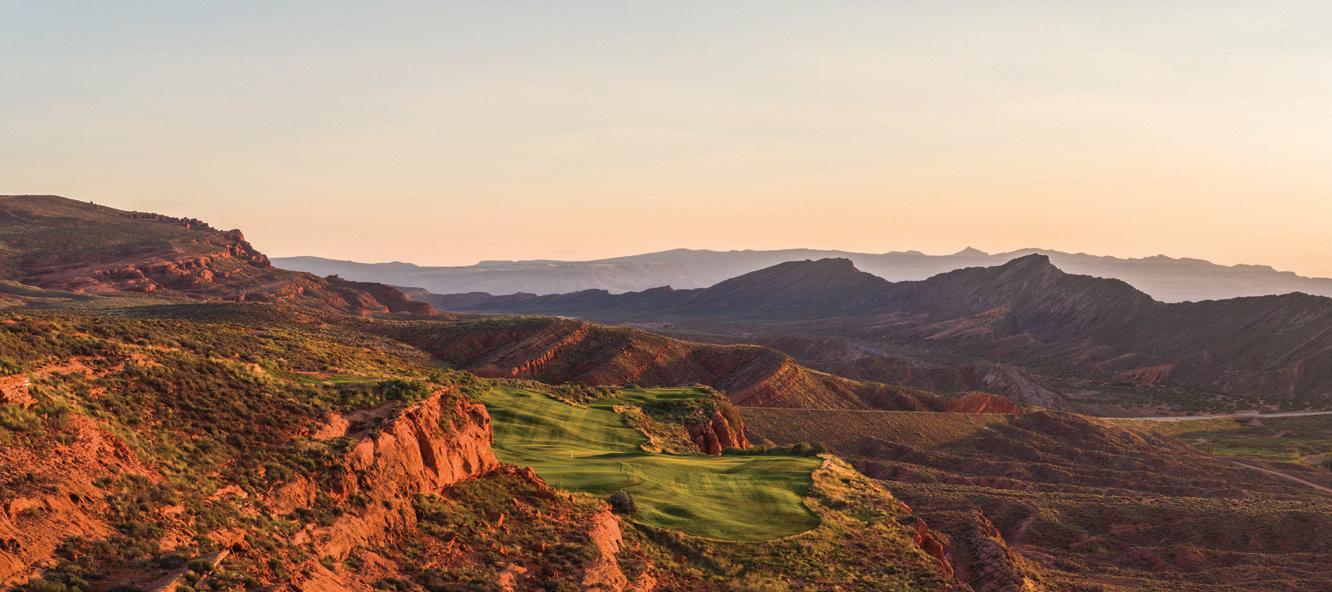
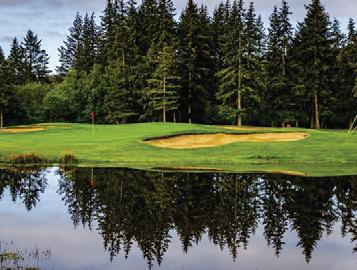
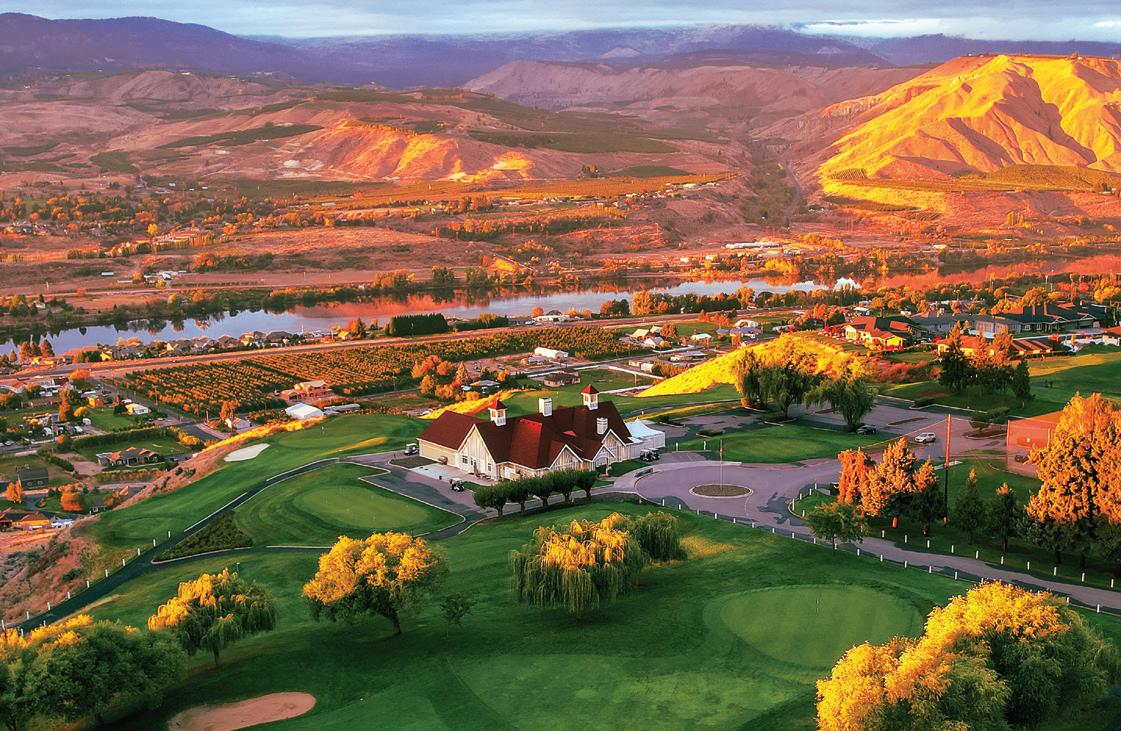
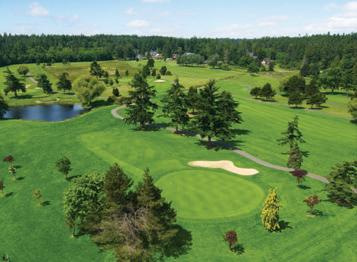
The beautiful 15th hole on the Squaxin Island Tribe’s Salish Cliffs GC in Shelton graces our Top 10 cover. This Gene Bates design has been impressing golfers since opening in 2011. Salish Cliffs cemented its No. 6 ranking again in 2026 (was 6th in 2024, too) as one of the readers’ favorite places to play.
of Salish Cliffs.
Highlander GC ON THE COVER
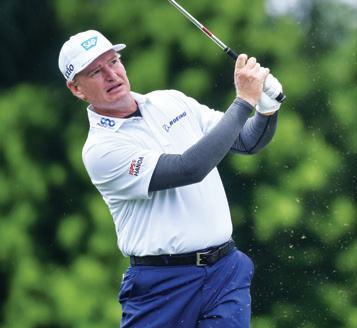
Boeing Classic offers plenty of star power 50 ON THIS PAGE
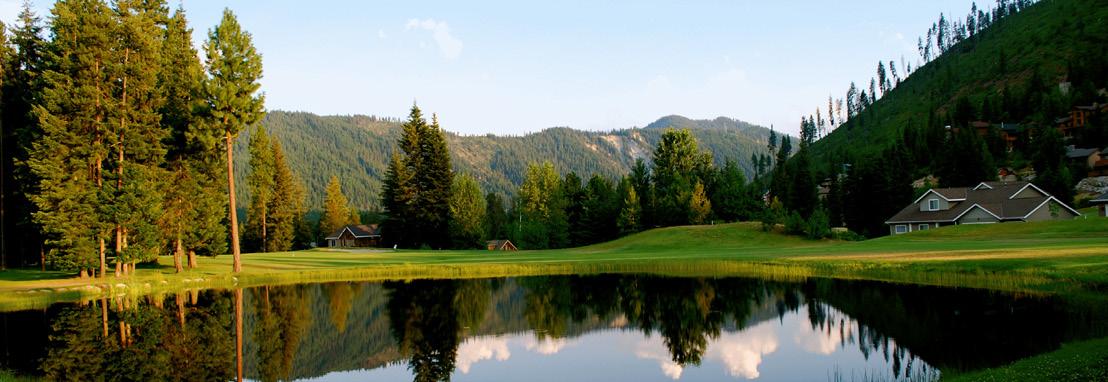
Summiting Snoqualmie Ridge
Luxe Life
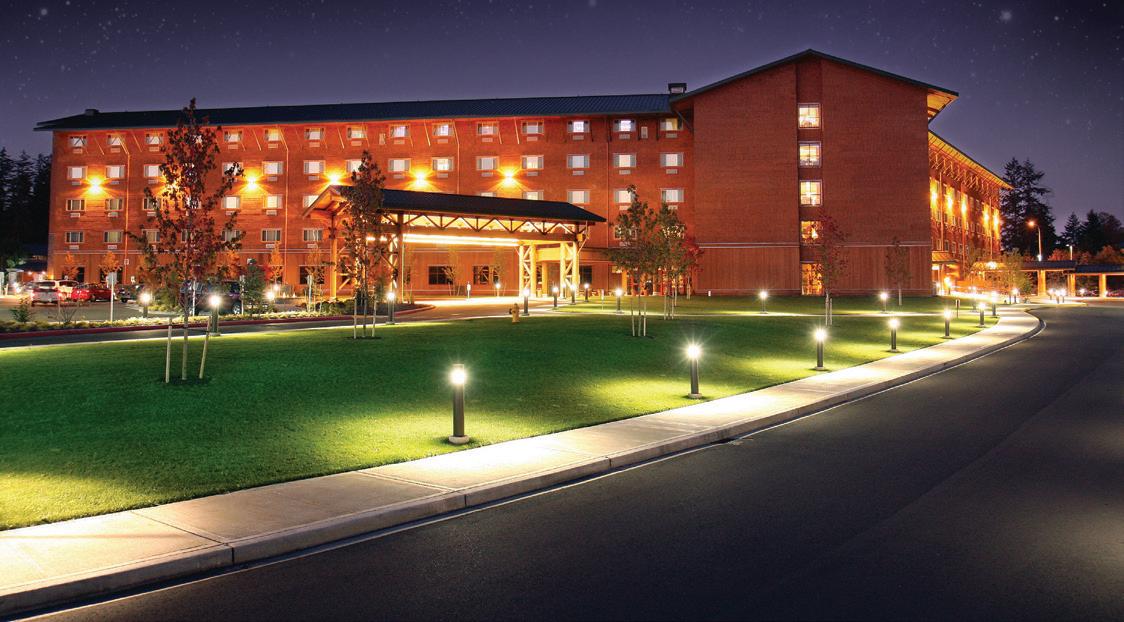
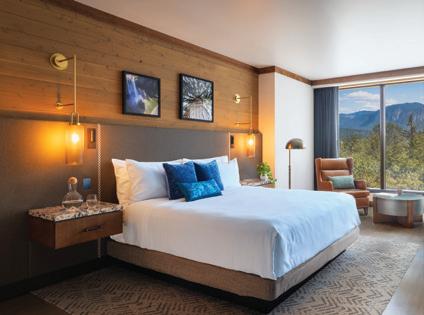
Snoqualmie Casino & Hotel welcomes golfers with resort expansion, culinary delights and spa just minutes from Seattle 53
Congratulations to University Place’s Chambers Bay for once again winning CG’s Top 10 Washington Public Course poll. Like fine wine, this Robert Trent Jones Jr. layout continues to evolve and age gracefully. The home of the 2015 U.S. Open not only is your No. 1 but is a bucket list course globally. Melanie Decker / Shutterstock.com
Enter to win for some CG Swag and hit the links on us. Check out these great prizes we are awarding this issue. We love our readers — here’s a small way to say thank you!
• Highlander CG Twosome • Page 12
• Sun Country GC Twosome • Page 56
• Whidbey GC Twosome • Page 62
Photo courtesy
CASCADE GOLFER
Cascade Golfer is published and owned by Varsity Communications, Inc. It’s mailed via USPS to 50,000 homes and e-mailed to 100,000 golfers in Puget Sound.
VARSITY COMMUNICATIONS, INC. varsitycommunications.com
EDITORIAL STAFF PUBLISHERS
Dick Stephens & Kirk Tourtillotte
EDITOR
Tony Dear
ART DIRECTION & GRAPHIC DESIGN
Robert Becker
WRITERS & COPY EDITING
Bob Sherwin, Bart Potter & Charles Beene
FOR EDITORIAL SUBMISSIONS AND INQUIRIES: Dick Stephens • Publisher stephens@varsitycommunications.com
FOR ACCOUNTING INQUIRIES: Kirk Tourtillotte • Publisher kirk@varsitycommunications.com
ADVERTISING & MARKETING STAFF
SALES/MARKETING MANAGER & TOURNAMENT DIRECTOR Simon Dubiel simon@cascadegolfer.com
COPYRIGHT 2026 Cascade Golfer. PRINTED IN THE USA. All rights reserved. Articles, photos, advertising and/ or graphics may not be reprinted without the written permission of the publisher. Advertising and editorial contained herein does not constitute endorsement of Cascade Golfer or Varsity Communications, Inc. Publisher reserves the right to edit letters, photos and copy submitted and publish only excerpts. The publisher has made every effort to ensure the accuracy of all material contained in this issue. However, as unpredictable changes and errors do occur, the publisher can assume no liability for errors, omissions or changes.
All photos are courtesy of the course or individual unless otherwise noted.
AND OWNER OF THE
Your voice was heard loud and clear in the 2026 top 10 voting and results
am writing this to you as America is basking in the light of our 250th birthday and while the USA is shining as one of the host nations of the FIFA World Cup. Sorry to see our boys bow out in the round of 16, but we all felt the patriotism for sure during their run. Seattle again showed the world we are a serious sports town.
With celebrating our independence and love for our country comes the reminder that we are fortunate that we enjoy living in a democracy. This column doesn’t delve into politics, but we at Cascade Golfer also believe that our readers have a vote and say, too.
A great example of that is this issue’s biennial Top 10 Best Public Courses in Washington edition and poll results. It’s all about you, your views and votes — we just count ‘em up and showcase the tally.
I don’t want to take away from Tony Dear’s opening salvo of our top 10 feature on Page 34, but I do want to thank you for taking the time to cast your ballot. We’re always blown away with how much feedback we get when we put the word out that it’s time to vote.
It’s not just about showing who won but sharing how many courses get votes, what part of the state they come from and how they have held their position or slid
Gold Mountain’s Olympic always holds its own in the rankings.
into a new spot since the 2024 results. It also gives us a fair indication of not just popularity, but playability.
Washington is blessed with so many varied and incredible topographical regions, so it’s always amazing to see how they fare against one another. I truly hope you enjoy the results — please share your thoughts and comment on how you think they came out. These results always aid in 19th hole banter.
Congratulations to Chambers Bay claiming the No. 1 spot again. And kudos to every course that received even a single vote. They all make up this great state of golf here in the Pacific Northwest.
Enjoy the rest of this beautiful summer and as always, TAKE IT EASY!
SHORT GAME
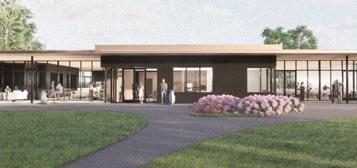
New Lake Wilderness GC clubhouse slated to open this fall
On July 29, 2025, the City of Maple Valley issued a press release announcing the clubhouse at Lake Wilderness GC was to be demolished and replaced with a new structure to open in the fall of 2026 (weather pending).
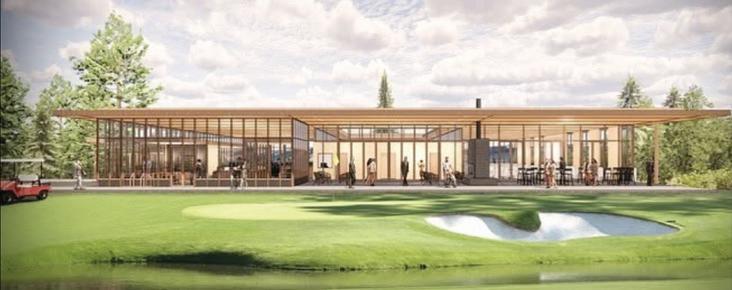
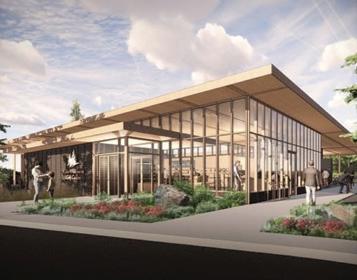
The new, 10,000-square-foot, two-story building will sit on a knoll overlooking the 18th green and take full advantage of views over the golf course, Maple Valley, and the Issaquah Alps (the forested highlands to the north that include Tiger Mountain and Cougar Mountain).
The beloved, municipally owned, 5,292-yard par-70 Lake Wilderness course is managed by CourseCo and was designed by Ray Coleman in 1929. The original clubhouse was described as a “social hub for chicken dinners and community meetings” but was destroyed by fire in 1979. It had actually been replaced as the course’s main clubhouse five years previously, and it is this 1974 building that was leveled last October to make way for Lake Wilderness GC’s new home.
“It was just time for it to go,” says Ron Cox of the
52-year-old building.
The course’s general manager since 2019, Cox says it had begun to leak after heavy rainfall, and that the air conditioning was faulty.
“It was really just showing its age,” adds Cox. “If it had rained, it leaked quite a bit, and if it was a really hot summer day, it had kind of become difficult to find a comfortable spot.”
Designed by Seattle’s Johnston Architects and being built by Schuchart Construction, the new clubhouse has a modern, contemporary look and will house a 65-person restaurant and bar, a 250-person banquet facility, a pro shop, two golf simulators, and an employee break room, while the outside space will feature a fire pit. The course is operating out of a 56-foot-long trailer while the new clubhouse is going up.
“It’s fine, but we obviously can’t wait for the building to be finished,” says Cox, who believes the opening date will probably be sometime in early November.
Artist renderings of the new Lake Wilderness GC clubhouse.
SHORT GAME
True Linkswear moves to Oakbrook in Lakewood
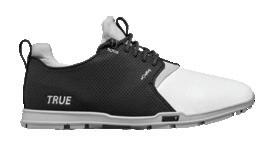
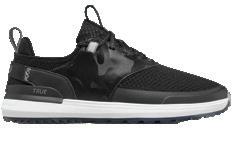
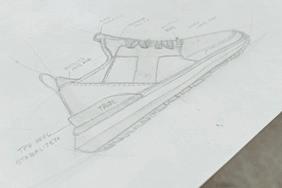
True Linkswear golf shoe company outgrew itself in 2026, its executives say. It’s a nice problem to have. The solutions for this western Washington company are working out nicely, too.
Co-founded in 2009 by Jason Moore and his brother, professional golfer Ryan Moore, True Linkswear has moved its warehousing and distribution from Tacoma to Las Vegas.
But in the change most visible to Washington golfers, True as of Aug. 1, has established its corporate offices and a retail storefront at Oakbrook Golf Club in suburban Lakewood, Wash.
Moving True’s retail base to Oakbrook, which is owned by Ryan Moore and the brothers’ father, Mike Moore, is a way to bring golf and golfers into a direct relationship with the business and its products, Jason Moore said.
“We just wanted a place where we can kind of live within the golf culture,” he said, “and look out at the golf course when we’re not able to play it and be in the environment and meet customers and be an advocate for the game of golf.”
The True warehouse/distribution center in Tacoma was “bursting at the seams,” Jason said. What started as a “digitally naive” e-commerce brand has evolved to the point where wholesale operations and the ability to serve customers in person are major parts of the business.
The big picture windows of the retail store — which look out on Oakbrook’s No. 18 green — will generate thousands of golfers’ worth of foot traffic every month, strolling by the True line of shoes, clothing and accessories.
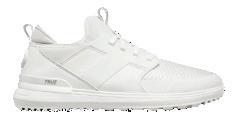
The Antigravity, a new model in True’s innovative lineup of golf shoes, has quickly become a top seller. Joel Dahmen of Clarkston, Wash., plays the shoe on the PGA Tour.
“We think it’s one of our most eye-catching designs,” Jason said. “It’s incredibly light, has really responsive cushioning and just this amazing natural feel once you put it on.”
True has about 40 employees, 17 of whom work in the Oakbrook offices.
“The team’s working well through the transition and the change,” Jason said. “It’s an exciting move for us, for sure, and so far so good.”
SHORT GAME
Olympia legend Gonzales takes the head coaching reins at his alma mater UNLV
He was already gainfully employed in two different corners of the golf industry, and he wasn’t looking for work. Then his alma mater came calling.
Three State of the art Trackman Simulator indoor climate-controlled hitting bays featuring over 270 golf courses worldwide Ladies Golf Lessons & Wine Tasting openings available Summer Junior Golf Camps Begin in July
Andres Gonzales — COO for a golf apparel company he co-founded and a golf commentator for ESPN+ — took the call.
On the other end of the line was Erick Harper, director of athletics at the University of Nevada Las Vegas. What he said, in short, was, hey, I have this job opening. Can we talk about it?
“He said my name had run across his desk a few different times,” Gonzales said, “and he thought he owed it to himself to give me a call.”
That May 22 call reached Gonzales just hours after Harper had announced Jean-Paul Hebert was leaving his post as UNLV’s head golf coach to take the same job at Baylor University.
Eight days later, Gonzales — Olympia native, Running Rebel All-American, former PGA Tour pro — was announced as the new head coach at UNLV, the fourth in the school’s history.
One day after that, he was fully immersed into the whirlwind — the transfer portal and agents and young clients and NIL and all the rest of recruiting and managing a roster for an NCAA Div. 1 golf program in today’s environment. Plus … finding a place to live (he got a house in Henderson, Nev.) and talking it all over with his family back home in Washington (they’re on board).
“I knew it was a special opportunity,” said Gonzales, “and one that doesn’t come up very often.”
He finalized his 2026-27 Rebel roster by the end of June.
Real
Chipping
Golf Lessons
Team
Brandon Solomonson, PGA Professional
Craig Wilcox, PGA Professional
“I was able to get a few guys from the portal,” he said, “and we’re ready to roll and start chasing a national championship.”
Since taking the new job, Gonzales, 43, has set aside his day-to-day involvement in PLT Golf, an apparel brand launched in 2023 (the initials stand for Professional Leisure Tour). The company’s motto is “Give, Golf, Grow.”
PLT CEO Pat Cusick said Gonzales’s hiring at UNLV does nothing but reflect well on the company.
“It really is part of this brand for people to grow in their careers,” she said, “and to support them in their growth.”
PLT’s website (www.pltgolf.com) describes the “give” part of the motto, which is to donate the greater of 50 percent of profits or 10 percent of revenue to support community organizations.
The middle word of the motto — the “golf” word — reflects the brand’s versatile, well-crafted golf clothing — polos, t-shirts, quarter-zips, hoodies — that deliver the vibe on course or off.
Gonzales had a lot to do with that, Cusick said, “That was really all Dre,” she said. “For the last two years, he dove in on sales and design and really poured his heart and soul into this company.”
Gonzales’s colleagues from his four years at PGA Tour Live on ESPN+ wished him well in his new endeavor. The broadcast gig is on hold, too.
But his job right now is well-defined: to take the talented golfers on his nine-man Rebel squad and help them maximize their potential at the highest level of college golf … and beyond.
Gonzales flourished in his years at UNLV (2003-06) in the competitive culture fostered by legendary Rebel coach Dwaine Knight. Gonzales was a third-team All-American, a Mountain West all-conference and academic all-conference honoree, earned a tournament victory, and led the team in scoring average (72.08) in 2005-06.
He can show them by the example of his own professional career — five years on the PGA Tour, six years on the Korn Ferry Tour, five professional victories — that there can be a life in golf after college.
“My experience here at UNLV was fantastic,” he said. “One thing that I’m selling when I’m recruiting is I wasn’t the most talented player, but I was able to take advantage of the opportunities I was given. I owe so much to my experience here in Las Vegas.”
Andres Gonzales
Photos courtesy of UNLV
SHORT GAME
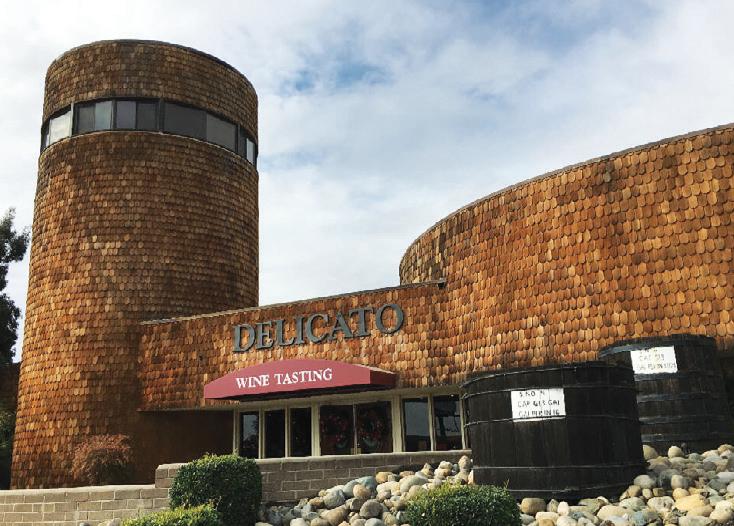
Delicato Wines — perfect for the summer quaff
Amy Berry can expound, if asked, on every bottle in the Delicato Family Wines portfolio — from the star-powered vintages at the top of the line to the popular wines that famously come in a box.
Berry, the Renton-based area sales manager for Delicato in Washington state, speaks with unforced enthusiasm about it all.
“There really is something for everyone in our portfolio,” she says.
Coppola Winery, from winemaker/filmmaker Francis Ford Coppola, brings celebrity to the Delicato lineup, even beyond the industry-giant members of the Indelicato family who run this top five U.S. wine company, started in 1924 by their forebears.
Delicato’s Black Stallion was named American winery of the year for 2023 by Wine Enthusiast.
But it’s not Coppola, or Black Stallion, that pops up first when you click on the portfolio link (delicato.com/ portfolio/) on the Delicato site. Nor is it higher-end labels like 1924 and Thomas Schmitt Private Collection. It’s not even the “outlaw” wines of Three Finger Jack. Or the music-industry collaborations with Gnarly Head (in conjunction with the Grateful Dead) and Z. Alexander Brown (crafted with country star Zac Brown).
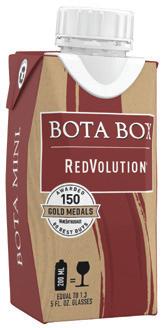
It’s Bota Box. Bota, as the name suggests, comes in a box.
In that same democratic vein, Berry doesn’t hesitate when she’s asked to name the one bottle in the whole Delicato portfolio of brands she would choose for a glass — right now, tomorrow, any time: It’s Stoneleigh Sauvignon Blanc ($16.99) from New Zealand.
“It has everything to be expected in a New Zealand sauvignon blanc,” she says. “It’s just refreshing, and it’s my go-to if I’m having dinner or sitting on a patio.”
Stoneleigh rests easily atop Berry’s list when she’s asked to name three (or so) wines that bless a summer evening.
For bubbles good and cold, Coppola prosecco makes the list. Coppola’s light and crisp pinot grigio earns her favor, too.
Okay, a fourth: Berry calls Shimmer, an easy-drinking sauvignon blanc/pinot grigio blend from Coppola’s Diamond Collection, a “patio pounder.”
Berry loves to play golf, which brings us back to Bota. It just fits.
“Typically, if I’m golfing, if I’m not having a beer or a seltzer, Bota Box is a go-to for me,” Berry says.
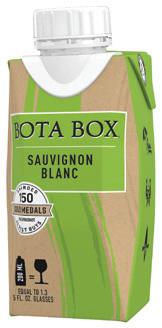
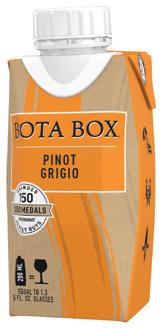
Bota comes in cabernet sauvignon and pinot grigio flavors in a shatterproof three-liter box ideal for a party at home, as well as a 500-milliliter Tetra Pak Mini, equal to three 5.4-ounce glasses and perfect for the golf course.
“It can fit in your bag,” Berry says. “And it’s not glass. And it’s delicious juice. It’s great.”
Berry is ready to welcome a new player in the Bota Box array — a single-serving 200-milliliter Bota Box, debuting in August, that she expects to be a hit with golfers and the beverage cart personnel who serve them.
Also new in the Delicato box-wine arena is Bota Box Breeze, which aims at a growing segment of drinkers who want less — in the case of Breeze, that means fewer calories and carbs.
As Berry said, there’s something for everyone at Delicato.
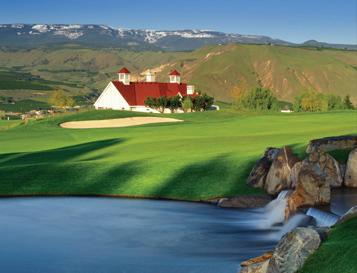
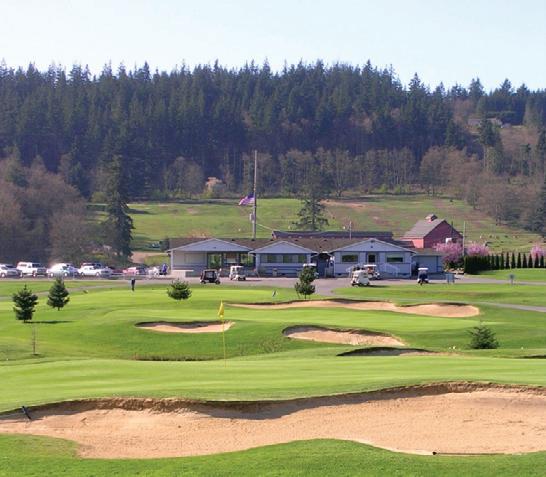
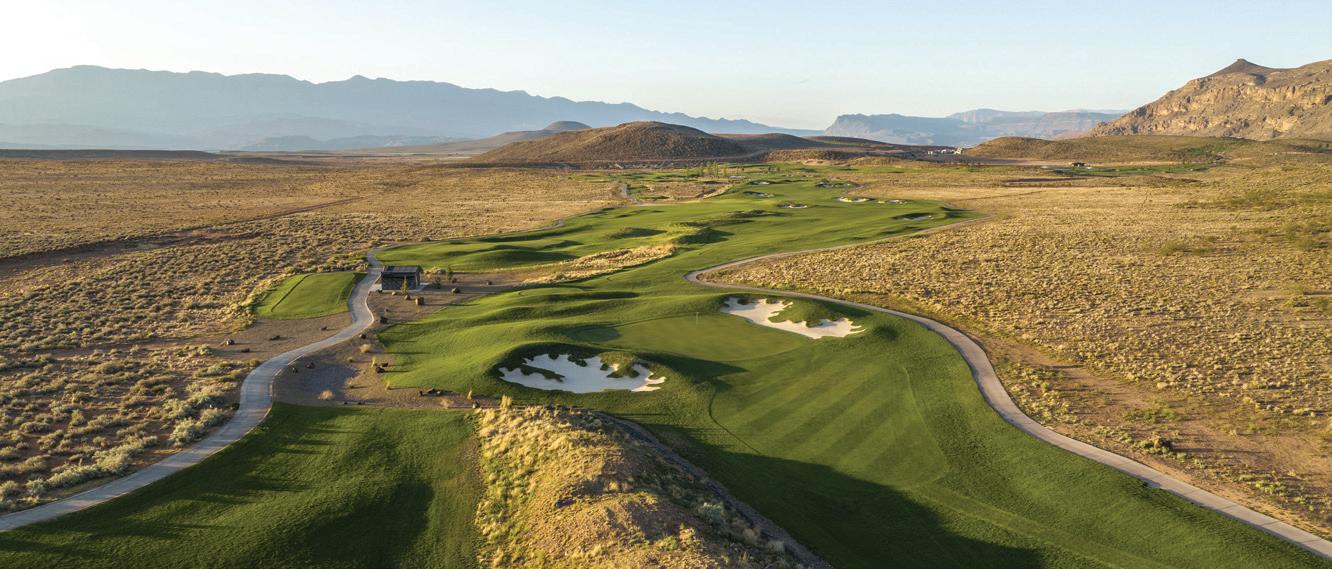
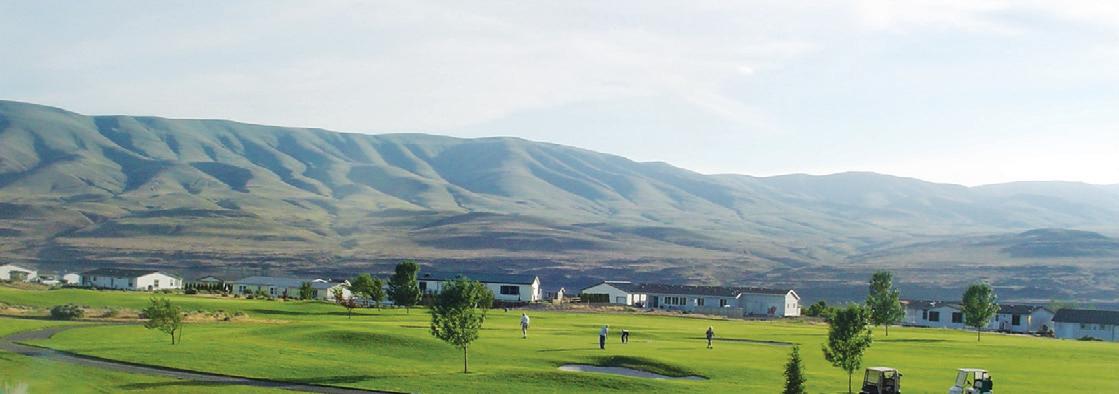
Home to one of the best par 3s in the state (No. 9), Highlander GC is a great option for those heading east and looking for a fun round while saving a couple bucks. Even better, we have your green fees comped! Enjoy the round and the vistas there. Enter to win today at CascadeGolfer.com.
A Holmes Harbor GC future still undecided SHORT GAME
t the time of writing in late June, it was still unclear exactly what the outcome might be from a district/community meeting held in Freeland, Wash., on June 11 in response to the apparent closure of Holmes Harbor Golf Course.
The course’s operator, Holmes Harbor LLC, led by PGA professional Paul Lavin, which leased the 54-acre property from owner Holmes Harbor Sewer District, had posted a notice on its website in late May announcing the course’s permanent closure. But at the public Freeland meeting, District Board President Bill Hamilton, together with attorney Julia Dougherty, said no decision had yet been made on the site’s future. But they added there was a possibility the golf course could continue to operate in some form or other.
Other options included converting the land into open space with hiking and biking trails. Residential or commercial development seemed to not be an option presently, however, as the sewer district uses the site as part of a wastewater function.
Although the final decision to close the course appeared to have been made in Island County Superior Court, which ruled in favor of the sewer district, the dispute between it and the golf course had been rumbling
on behind the scenes for a few years and was focused largely on the course’s rough.
Per the story in the Whidbey News-Times, the sewer district’s position says Lavin and Holmes Harbor LLC were reportedly responsible for maintaining the premises, which included mowing the rough. Lavin reportedly contends he never owned or had access to equipment necessary for the job, and that he understood the sewer district would continue to perform the task. Indeed, Lavin’s attorney said the sewer district had in fact not billed Holmes Harbor LLC for months.
The district has positions on the terms of the lease and there were some concerns regarding sharing updates with residents. The residents pointed out that board agendas had not been posted online since 2022. The district says it had grown concerned about the cost of maintaining the rough, which was said to be paid for by local ratepayers. The Whidbey News-Times reported on June 12 that Hamilton believed using ratepayer funds to subsidize maintenance for a privately operated golf course was not appropriate.
The report added that Holmes Harbor LLC did eventually pay the maintenance bill but refused to cover the district’s legal costs.
Holmes Harbor GC opened in 1939 and was converted into a par-69 executive course by an ownership group headed by former Seattle Supersonics player Jack Sikma in the mid-1990s. It closed in 2010 because of the failing economy but reopened a year later under new ownership. It changed hands a few times before being purchased in 2013 by the sewer district, which first leased it to Lavin and Holmes Harbor LLC in 2016.
Per the News-Times in June, the property is now in receivership as financial and legal issues are resolved.
Hamilton told us that no decisions have yet been made regarding the future use of the land. “We are engaging with the community and industry experts to understand the feasibility of reopening as a golf course, having a park with amenities, or an open green space,” he added. “There may be other options considered as well. This process is expected to take a few months.”
Holmes Harbor GC • Freeland
LA north star that has shone since 1993
oomis Trail Golf Club is the northernmost course on the West Coast, just three miles from the Canadian border. It draws about an equal number of golfers from Whatcom County as it does from Vancouver and southern British Columbia.
It has been considered one of the top courses in the state, establishing a solid reputation for accessibility, affordability and quality of play. Tee sheets have been reliably filled for years, but that all changed during this decade when the Canadians either couldn’t or wouldn’t play the course.
“We went through COVID, and that was rough when the border was closed,” said Justin Conlan, Loomis Trail director of golf. “Then everything opened back up and businesses came back, and we were really better than ever. Then politics got in the way.’’
When the current administration took over in 2025, trade wars among the two nations forced folks on both sides to back away from the border. Commerce and communications among what were once friendly neighbors degenerated.
“It put a big damper on things last spring. Summer was good. We were able to fill the tee sheet. We kind of got through it,” Conlan added. “It really has been rough on Blaine, Ferndale, Bellingham, the whole county. You really see it the closer you get to the border.
“Certainly, there’s a lot of people who voice opinions on either side, but I think a lot of the Canadians coming down have been coming down here for years, supporting the Whatcom County area, and understand it’s not us making those decisions so why punish local businesses. I think the course value and accessibility drove people back.”
The quality of the golf course is the primary reason the Canadians have returned. Designed by Canadian architect Graham Cooke, Loomis Trail opened in 1993. It was part of the two-course Semiahmoo Resort complex. In 2018, the Lummi Nation purchased Loomis and its adjacent 15-room boutique hotel for $3.75 million to be used as a guest amenity for its Silver Reef Casino. Like so many courses around the state that have been purchased by Native American tribes, the cash infusion helped upgrade the maintenance and subsequent quality of play.
The layout plays fast and firm and features a unique large double green at holes 10 and 17.
Here’s Conlan’s snapshot six-question perspective on Loomis Trail.
A Bucket with Director of Golf • Justin Conlan
Toughest Tee Shot 2nd hole
I would say the par-5 (562 yards) No. 2. There’s a pond right in the landing area. You can play it out left with an iron or fairway wood. It’s a big sweeping dogleg right, so you can play it safely out left. It gives you kind of a narrow, longish second shot. Or you can be more aggressive and try to hit driver over the pond. That can open up the width of the fairway but hit it too far and it can go through the fairway into some dense vegetation. You have to hit a good shot.
Best Birdie Opportunity 11th hole
No. 11 (par 5, 506 yards). It’s a short par 5 with a split fairway. Depending on your tees played, if you are long enough to hit it down the left side, a lot of golfers can get it there in two. It definitely gives you a good opportunity to make birdies.
Best Par 3 12th hole
No. 12 (255 yards) is probably one of the best and toughest par 3s in the Northwest. From the back tee box, it’s 255 yards and is one of the holes that is exposed (to the elements). There’s almost always a breeze there. There’s a big pond at the green and a water hazard left of the green. There’s not much margin for error. It’s definitely a challenging start to the back nine.
Favorite Hole 13th hole
My favorite hole is probably No. 13 (par 4, 358 yards). It’s kind of a risk/reward. You can hit driver and get it over a pond, with a chip shot to the green. But if you don’t make it, you’re in the water. If you miss right, you’re in the trees. It’s a fun birdie opportunity. You can play conservatively and have a short iron into the green. It’s a long narrow green, so hitting full shots into that green is hard to get the ball to the hole location.
Emergency Nine — front or back?
The front is cool because holes one through four are kind of in a loop. You can stop after four, you can do a nine-hole loop and stop, or you do 11 and stop. The front gives you the opportunity to just play four, nine or 11.
Go-To Lunch Item on the Clubhouse Menu
Our chicken curry wrap. I think that’s pretty darn good.
GOLFING GOURMET
hen it comes to sourcing salmon for their menu, nobody goes the extra mile like Duke’s Seafood.
“We’ve been sourcing wild salmon from Alaska for almost three decades, way before it was cool,” says co-owner Duke Moscrip. “There’s no better tasting fish on the planet.”
But it’s not just about the taste. Duke’s is also obsessed with their sourcing, and wild salmon from Alaska gets the highest marks for sustainability. Duke’s buys all of their salmon from one supplier — Alaska Glacier Seafoods — a family-run operation that’s more like a partnership.
“They send us videos from their boats, so we can see the crews hauling in our catch,” says co-owner John Moscrip. “It gives us peace of mind that we’re getting the very best for our guests.”
According to Duke, the secret to great-tasting salmon starts the minute it’s harvested from the sea. To lock in the amazing flavor, salmon needs to be processed and frozen quickly.
“Back when we first started sourcing salmon, we thought fresh was the only way to go,” says Duke. “But when we did taste tests, frozen wild salmon won by a landslide.”
Buying frozen also means Duke’s has a reliable source of salmon year-round. Sure, Duke’s could do it cheaper. Farmed salmon are readily available and the cost is much less than sourcing wild salmon from Alaska. But the environmental and potential health risks associated with farmed fish didn’t sit well with Duke’s.
A post-round meal or nosh at one of the six Duke’s locations always hits the spot.
“But even if we ignored those atrocities, farmed salmon just doesn’t taste right,” says Duke.
What are Duke’s go-to wild salmon menu items?
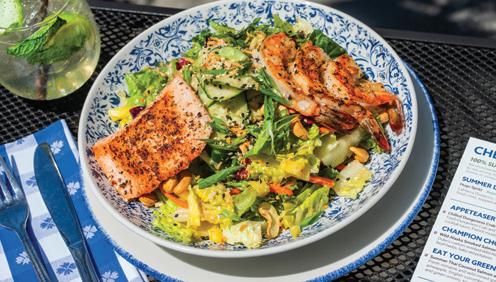
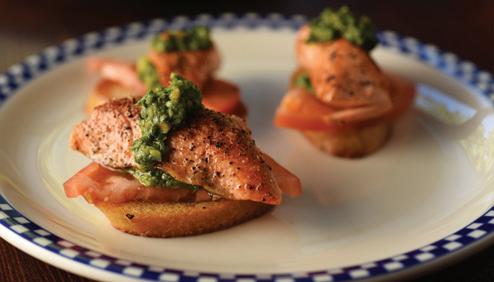
“The Summer Thai Salmon and Prawn salad is so good. The combination of flavors is unreal,” Duke says. “Or if you just need a snack, our wild salmon sliders with our famous sourdough bread always hits the spot.”
Amber Davis Triangle Spirits
Amber Davis would love to make you a drink.
Even more than that, she wants to know what she can do to make you happy when you walk into Triangle Spirits, the bar in Seattle’s Fremont district she resurrected and now runs with her partner in life and business, Kenji Jensen-Otsu.
“My favorite thing about this job is the hospitality,” says this restaurant industry lifer. “You know, that’s why I got into it. That’s why I stayed in it.”
She started in food service when she was 15, working at a Baskin-Robbins in Enumclaw. She worked restaurant jobs to pay for college at UW, managed a couple bars in Seattle and helped open a couple others.
She and Kenji took the opportunity, in 2017, to buy the bar in the historic Triangle Building wedged into the acute angle corner of Fremont Place North and North 35th Street. That’s a story for another day.
“It’s just been such a labor of love,” she says. They spent the first 18 months or so cleaning, restructuring, figuring out what it would be. Then, COVID happened.
The way through, as it turned out, was takeout fried chicken. The product was way good right away. It’s way better now, Davis says, after years of testing and refining the recipe.
Today, Triangle Spirits stands on its three legs as a wicked good chicken joint with a great back bar — and an owner not afraid to use it.
“I’ve done every single job,” she says. “I love bartending. I love serving. But really, creating a cocktail and doing it for somebody on the fly and watching them enjoy it is just really cool.”
19TH HOLE
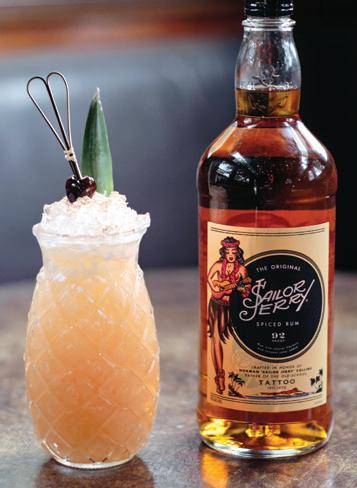
A quality spiced rum cocktail
The Drunken Monkey
starring Sailor Jerry with tiki vibes and vivacious flavor
BY BART POTTER • CG STAFF WRITER
Relax and relish this late-summer elixir
Our booze maestro this issue doesn’t tend toward a sweet cocktail when she sets about inventing a new one.
It’s no secret why: “I don’t like to drink ‘em,” Amber Davis says.
Thus: The Drunken Monkey. Delicious. Not too sweet. Hints of hotness.
“I usually aim for a really balanced cocktail that’s got a nice dry finish that makes you want to keep drinking it,” she says.
So: The Drunken Monkey, a new addition to the summer cocktail menu at Triangle Spirits in Fremont, where Davis is co-owner and bar goddess in residence.
The Drunken Monkey starts with Sailor Jerry, an American spiced rum bottled at 92 proof. The cocktail’s creation started with a straight shot.
“It’d been a long time since I had Sailor Jerry on its own,” Davis says. “So, when I was drinking it, the spice quality came through a lot for me.
“That rich kind of molasses-y flavor was how I started for the cocktail. I knew immediately that with it being summer, I wanted to do something that was Tiki-driven.”
The ingredients that follow Sailor Jerry into the drink
At Home Bar Mixology
The Drunken Monkey
By Amber Davis • Triangle Spirits Fremont District • Seattle
INGREDIENTS
• 2 oz. Sailor Jerry Spiced Rum
• 2 oz. pineapple juice
• 1 oz. orange juice
• 1 oz. coconut cream
• .5 oz. Orgeat
• .5 oz. Ancho Demerara syrup
• 2 dashes Angostura bitters
• 1 dash orange bitters
INSTRUCTIONS
• Add all ingredients into a shaker.
• Add ice for mixing and shake it up.
• Strain into 16-ounce glass over fresh ice.
• Grate fresh nutmeg on top.
• Garnish with pineapple frond or picked cherry.
are Tiki-appropriate: pineapple juice, orange juice, rich coconut cream, Orgeat syrup, Ancho Demerara syrup and two kinds of bitters.
Here’s some insider’s info to home bartenders: The Ancho syrup is made with one dried Ancho chile in a cup of boiling water and a cup of Demerara sugar, stirred until the sugar is fully incorporated; steep for 10-15 minutes or to the desired spice level, then discard the chile.
Sailor Jerry’s higher proof stands up to the other ingredients, Davis says.
“It lets you be a little bit more creative with what you’re putting in there and bringing some bigger flavors.”
Davis chose the name Drunken Monkey because if you drink a couple of these, you’re on your way to being one. Slowly enjoying one of these is just right.
Sailor Jerry rum is named for Norman “Sailor Jerry” Collins, a legendary and influential tattoo artist. The label art is his.
Drinkers, be wise — given the strength of the rum and the potency of the Drunken Monkey — and heed the words elsewhere on the label: “Respect his legacy. Drink Sailor Jerry responsibly.”
RISK vs. RE WARD
Foster Golf Links
Hole No. 8
264 yards (Blue Tees) Par 4
By Simon Dubiel
Setup
Like many holes at Foster Golf Links, you stand on the 8th tee with all club options available. You can play it conservative and pop an iron off the tee. Or if you are more adventurous, pull a head cover and roll the dice. For some, driver may not even be needed to reach the putting surface. No matter what club you choose, avoiding the two bunkers that guard the front of the green is a key to making birdie, especially with a back pin placement.
Risk
Although you likely stand on the tee box hoping for a great birdie look, a poorly struck drive can change things quickly. Albeit not overly tight, the fairway is lined with tall fir trees the entire length. Mess with them and you’ll be scrambling for par. Landing in one of the front bunkers is far from ideal, and likely leaves you walking to the 9th tee feeling … “unsatisfied,” as Teddy KGB put it in the movie “Rounders”.
Birdie. Birdie. Birdie! If there is ever a course and hole to play aggressively, Foster and No. 8 are just that. Sure, two bunkers guard the dance floor, but they don’t leave you drawing dead. At only 264 yards, this is begging for you to give yourself an eagle look, or at worst an eagle chip. If you’re a bomber or even stripe it with average length, you gotta love this hole. Are you not entertained?
Final Call
If you booked a tee time at Foster, you have two things in your future. A fun round of golf on a well-maintained course, and a good score. And hopefully a little gamble in you. Sure, you can negotiate this layout by laying up all day. But do you sit down at the poker table and plan to fold your way to a profit? It is time to splash the pot. Take off the head cover and give her a rip. Tweet tweet!
PRESENTED BY
IN THE BAG
PRODUCT REVIEWS and equipment news you can use
BY TONY DEAR • CG EDITOR
The gear to make your summer game sizzle
We’re well into the season now and, hopefully, you’ve recorded a few good scores and are enjoying our beautiful state at its sun-drenched, comfortably temperate, and clement best. The courses you’ve played have hopefully run firm and fast and been immaculately presented, and you’ve had plenty of opportunities to spend long hours at the golf course with family and friends.
We write this on the eve of the U.S. Open at Shinnecock Hills, which we’re expecting to be a very memorable event played in good weather with a little wind on one of the very best golf courses in the world. And, by the time this issue arrives in mailboxes, we’ll probably have witnessed the year’s final men’s major, too — the Open Championship at Royal Birkdale, a course your correspondent has enjoyed several times despite being roundly beaten by its intimidating dunes and deep bunkers. What an amazing summer of golf in store! We trust you enjoyed it.
The anticipation leading into the summer’s major championships, and the excitement of watching golf history being made, is a constant the golfer can depend on each year. Something else western Washington golfers can depend on is Puetz Golf, which always seems to have what you need to play better and enjoy the game as much as possible. Here’s another strong collection of products that we recommend find their way into your bag (or into the trunk of your car, or onto your feet) at some point soon.
1
TAYLORMADE
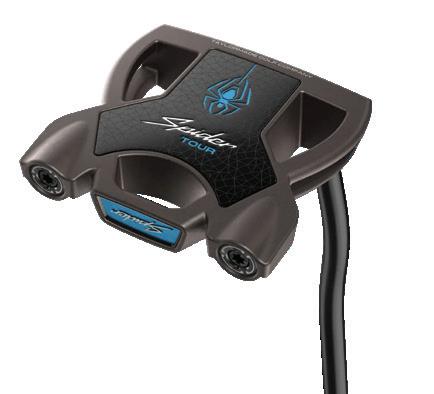
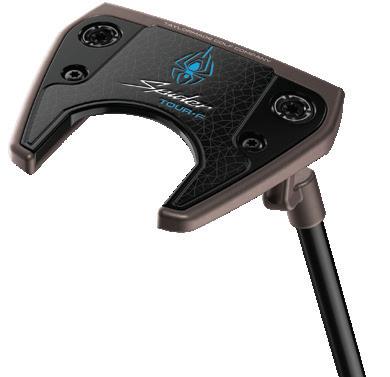
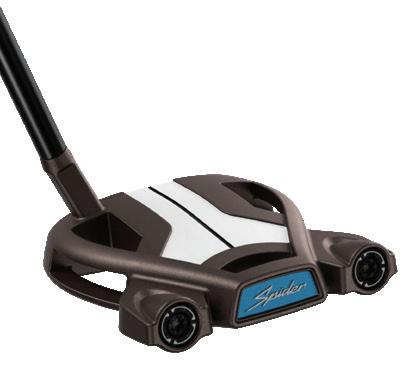
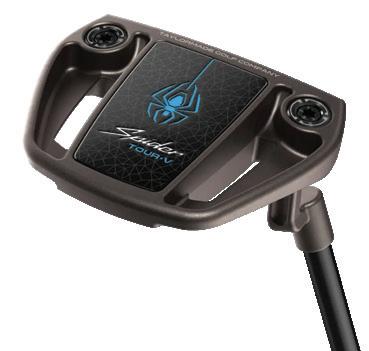
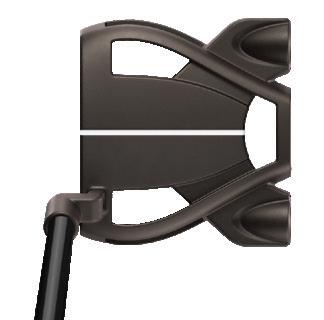
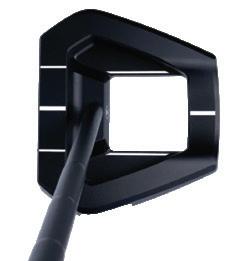
Spider Tour Torched putters 1
PUETZ GOLF PRICE
$349.99
I
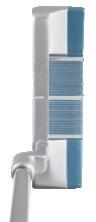
t’s not quite black, brown, copper, or bronze … but somewhere in between. This is Tour Torched, Rory McIlroy’s favored finish. For a while, McIlroy was the only player with a Torched putter, but now it’s available to everyone. There are four Torched models — Spider Tour, Tour X, Tour F, and Tour V — which feature different Center of Gravity (CG) locations, making them perform differently from each other. The Spider Tour, available with a slant-neck or L-neck shaft/hosel, has the deepest CG and is the most stable of the four. There are three Tour X models — L-neck, slant-neck, and double-bend — which feature TaylorMade’s TruePath alignment system. The L-neck is also available with a single, front-to-back alignment line. The Tour F comes in double-bend shaft and L-neck models. The double-bend feels more mallet than blade, while the L-neck is more blade. The CG is furthest forward in the Tour V which is only available in L-neck and gives the most blade-like feeling in the lineup. All four have the White TPU Pure Roll insert whose grooves are angled at 45 degrees to promote roll, not skid. Behind the face of each is a strip of HYBRAR ECHO material which reduces vibration.
IN THE BAG
Fairways
PUETZ GOLF PRICE
$699.99 • $399.99
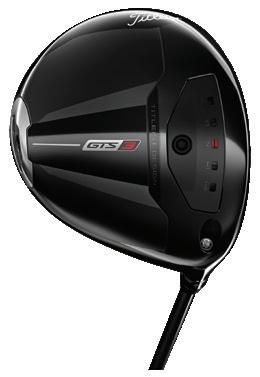
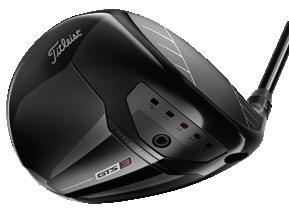
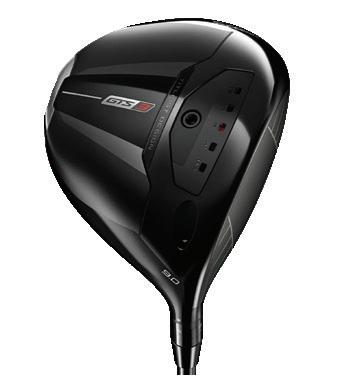
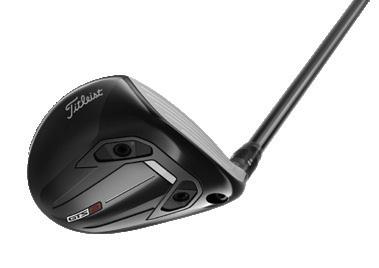
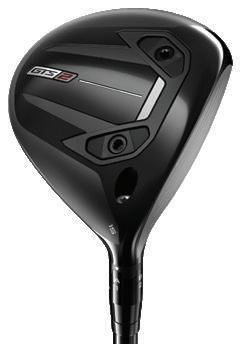
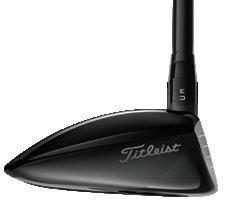
The most significant difference between the GT drivers and the new GTS is the increased use of PMP (Proprietary Matrix Polymer) in the crown. It gives the GTS a more titanium-like sound, and because it’s light, gives Titleist 30 grams of discretionary weight. Some of it went to the clubhead’s rear to boost MOI, while some was pushed forward to retain ball speeds and lower spin. This Split-Mass was present in the GT, but the GTS takes it a step further. All three GTS models (GTS2, GTS3, and GTS4) are 460 cc. The GTS2 and GTS3 have raised rears and more teardrop-shaped heads. The Speed Sync Face alters the shape of the GT’s Speed Ring which is now more of a U-shape than a circle. That increases ball speeds on above-center hits. The GTS2 has moveable forward and back weights while the GTS3 and GTS4 feature a track weight that slides to one of five positions. The fairway metals (13, 15, 16.5, 18 and 21 degrees of loft) feature the lightweight Wraparound Composite Crown. The GTS2 has a shallower face and deeper CG than on the GT fairways, while the GTS3 has a deeper face for players who hit down on the ball.
PUETZ GOLF PRICE
$499.99
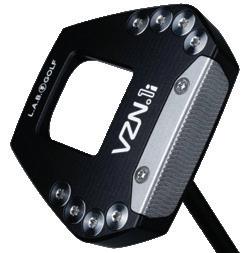
ost readers will be familiar with the evolution of L.A.B. Golf putters. They started out in 2018 with large and unique-looking putter heads that have become gradually smaller and more conventional-looking in the eight short years since Sam Hahn established the company. It’s unlikely that L.A.B. Golf putters will ever look prototypical, but that’s okay. A few idiosyncrasies are fine, within reason. The company’s new VZN.1i putter is center-shafted, which might not be to everyone’s taste and may put some people off immediately. But it’s a fairly regular size and shape for a mallet. L.A.B. spent years focusing on the Lie Angle Balance technology that is now mainstream, and which distinguishes itself as a zero-torque innovator. We tip out hat to early ZT adopters Dogleg Right and Axis 1, both of which still exist but not as widely know. L.A.B. is concentrating more this time on alignment with a series of lines at the front, middle, and rear of the head. The putter’s body is aluminum, and a milled 303 stainless-steel face insert gives impact a solid yet responsive feel. It’s available with 0-degree or 1.5-degree of shaft lean, which allows golfers to find the look and alignment that suits them best.
PUETZ GOLF PRICE
$597.99 driver $399.99 fairway metals
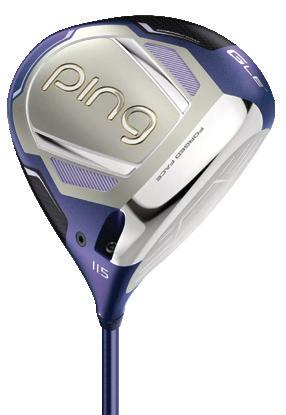
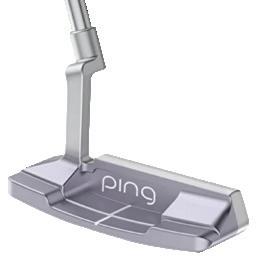
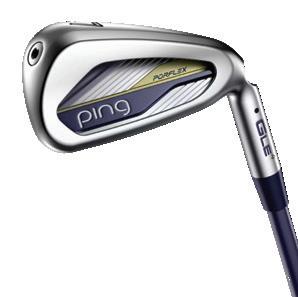
$1,299.99 irons PING G Le4 women’s clubs 4
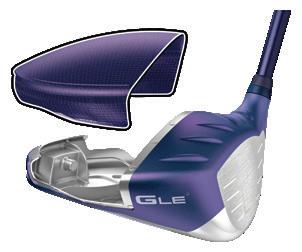
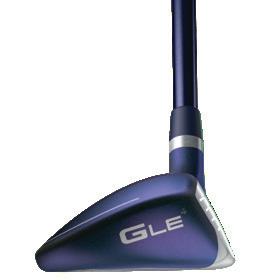
his is the fourth generation of Ping’s popular G Le women’s lineup, which debuted in 2017. The attractive, 460 cc driver has 11.5 degrees of loft and features a lightweight Carbonfly Wrap crown that frees up weight, allowing engineers to position the CG deep and low in the head. A heavy backweight near the heel helps square the face at impact, preventing shots that fly to the right. And Ping’s familiar turbulators on the crown, together with a Vortec Cavity (a recessed cavity, or ‘dent’, near the rear of the clubhead), improve aerodynamics. The T95+ face (a proprietary, high-performance titanium alloy used for the forged face of the company’s best-selling G440 K driver) has a Variable Face Thickness (VFT) design to maintain ball speeds wherever contact is made. The fairway metals (18, 23, 28 and 33 degrees of loft) have a strong Maraging Steel face that is both durable and helps increase ball speeds, giving you a few extra yards. The irons are an iron/hybrid combo, so you get plenty of help and forgiveness with the longer hybrid irons which are easy to launch, and precision with the shorter clubs, which are perimeter-weighted to boost MOI and ensure they are also forgiving.
IN THE BAG
S2S Tri-Hot putters 5
PUETZ GOLF PRICE
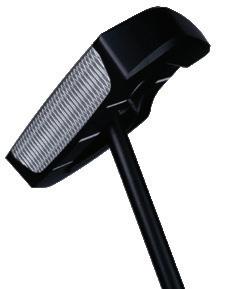
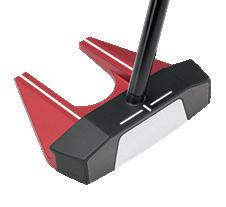
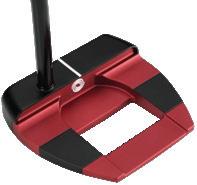
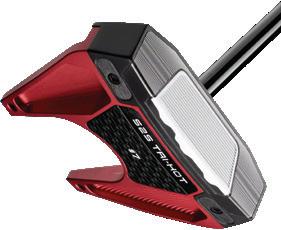
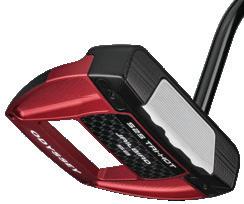
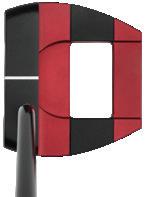
Odyssey, a Callaway-owned brand since 1997, released its first zero-torque S2S Tri-Hot putters at the end of last year. The four models were all centershafted and had a distinctive red/black color scheme. In April of this year, the line expanded to include putters featuring a Single Bend shaft that enters the putter head much closer to the heel, giving the putter a much more conventional look. In June, Odyssey added to the lineup again with two center-shafted models (#7 and Jailbird) and four Single Bend (SB) models (Rossie, #7, Jailbird, and #7 Cruiser) that each had an all-black finish. The tech is essentially the same as in the original Tri-Hot putters. A combination of aluminum, steel, and 140 grams of tungsten in the head pushes the CG forward and allows Odyssey to position the shaft much closer to the face than on other manufacturers’ zero-torque putters. Both the center-shafted and SB models feature Odyssey’s Ai-Dual insert, which has two layers (firm inner, soft outer) that enhance feel and combine to produce consistent ball speed no matter where on the face the ball is struck. The insert’s Forward Roll grooves are angled at 19 degrees to promote green-hugging roll rather than skid. Odyssey ZT putters are very popular on the pro tours — come into Puetz and give the S2S a roll and see for yourself.
PUETZ GOLF PRICE $309.99 PUETZ GOLF PRICE $249.99
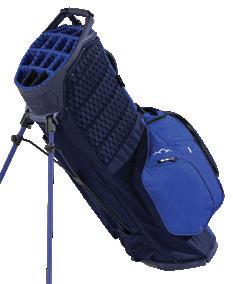
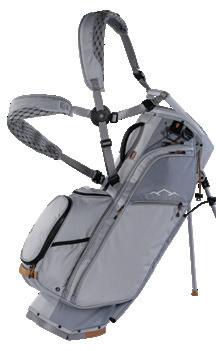
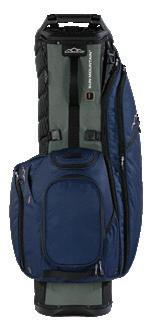
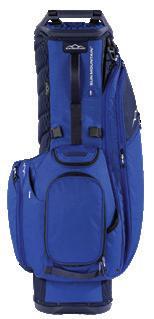
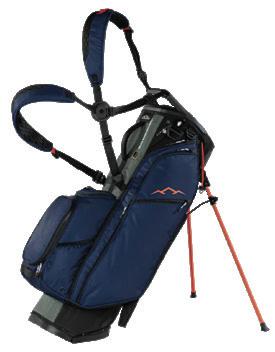
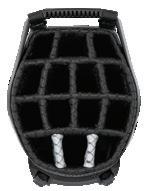
Every time we feature Montana-based Sun Mountain, it seems we come away astonished by how a privately-owned company with about 100 employees can continue to make such good products, sponsor a small team of athletes and content creators that includes Washington’s own Joel Dahmen and PGA professional Michael Block, and remain so respected in a $150 billion industry. Founded by former pro Rick Reimers in the early 1980s, the company was purchased by Solace Capital Partners in 2022 and remains in Missoula. The 22-strong list of stand/cart bags it currently offers is highlighted by the famous Eclipse range whose original model debuted in 1986 and revolutionized the game by featuring sturdy, integrated legs. The popular Eclipse 4.5 was introduced early last year and is still a big seller. Weighing 5.8 pounds, it features 14 individual, full-length dividers. There are 11 pockets, a number that includes two valuables pockets, a roomy apparel pocket, a water bottle pouch, and multiple accessory spots. The ball pocket is removable and customizable, while the X-FIT Dual Strap System balances the bag’s weight across your shoulders for a comfortable carry. Sun Mountain’s VLO Technology allows the bag to move easily to a cart.
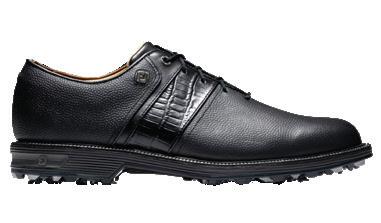
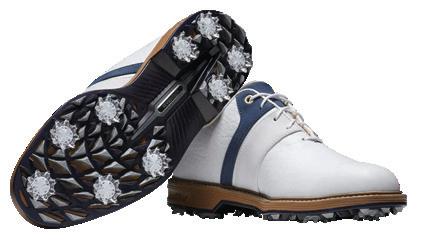
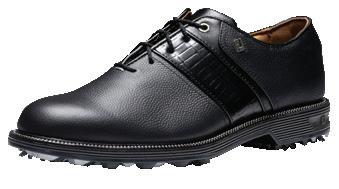
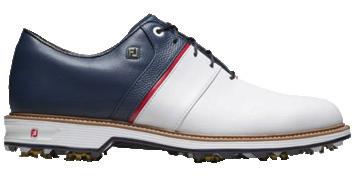
Updated in 2026, FootJoy’s Premiere shoe line has been around since 2021 and is designed for the golfer who appreciates quality materials and craftsmanship. The Packard and Tarlow have been mainstays and are worn by numerous PGA Tour players, including Max Homa and the always impeccably turned out Adam Scott. The uppers are made from premium full-grain leather and are beautifully detailed with the look of an elite, flagship product. The modern Premiere shoe offers some significant technological/performance improvements over FootJoy’s past classics, including a lightweight EVA midsole that provides cushioning, shock absorption, and energy return. The Packard comes with a two-year waterproof guarantee and remains stable and comfortable to the end of a grueling 36-hole day. The OrthoLite TruFit Tongue and OrthoLite EcoPlush FitBed contribute to the shoe’s all-round comfort, while the ARCTrax Outsole and renewable SoftSpikes Pulsar LP cleats keep you upright and balanced. Puetz Golf offers the Packard in three colorways — White/White, White/Pageant Blue/Denim, and White/Gray. There’s a line in the “Shawshank Redemption” when Morgan Freeman’s character — Ellis Boyd Redding or Red — asks how often you really look at a man’s shoes. If he’s wearing the FootJoy Premiere Packard, we think it’ll be fairly often.
IN THE BAG
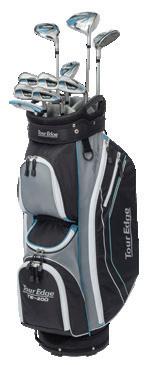
Like Sun Mountain, Tour Edge is a successful company with humble beginnings. Founded in a Chicago suburb in 1986, clubmaker David Glod’s plan was to make quality clubs for much less than what the major OEMs charged. The company has retained its original ethos while growing steadily and attracting a sizeable and loyal following among golfers and club fitters. Tour Edge makes a full range of men’s and women’s equipment and entered the highly competitive ball market with the Tour Edge Exotics ball in the fall of 2025. Thanks to the huge influx of women who have taken up the game since COVID (estimated at 2.5 million), Tour Edge currently offers four complete sets for women — the TE-400, TE-300, TE-200, and the TE-200 half set. The popular TE-200 set includes four metal woods — a 15-degree driver, an 18-degree 3-wood, a 22-degree 5-wood, and 27-degree 6-hybrid, with three short irons (7-9), a pitching wedge, sand wedge, a Lady Edge putter (blade or mallet), and a Lady Edge stand or cart bag. The emphasis is very much on lightweight, playable clubs designed to make it easy for new women golfers to get the ball up in the air. Puetz Golf embraces the growth of the game among women and proudly offers several options for golfers at every budget level.
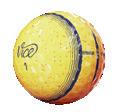
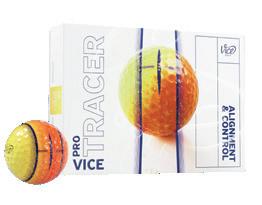
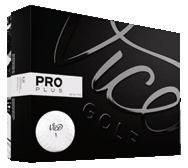
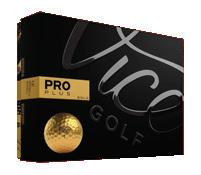
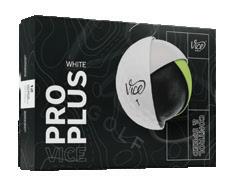
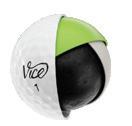
ounded in Germany in 2012, Vice Golf began as a direct-to-consumer brand selling top-quality golf balls at about half the price of the industry’s established companies. It has branched out in recent years, adding clubs to its inventory and partnering with more traditional retail channels. Making good but inexpensive golf balls is still the core business, however. Its Pro Plus is a four-piece ball with a cast-urethane cover that generates the highest spin rate in the Vice lineup. With a compression of 100, the Pro Plus feels firm and is meant for golfers with high swing speeds. The three-piece Pro is positioned between the Pro Plus and the company’s Pro Air and offers a similar combination of distance and precision but with a slightly lower trajectory than what the Pro Plus generates. The ball’s 90 compression obviously gives it a softer feel, too, and makes it suitable for slightly slower swing speeds. Golfers who swing it fast but prefer a softer-feeling ball will also fit into the Pro. Vice says it and the Pro Plus feel “pure” because of the cast urethane cover. The Pro Tracer offers the same feel and distance as the Pro but includes additional alignment lines. With a great story of growth, cost-conscious options and top-shelf quality, Vice Golf is another great choice for your bag’s ball pouch. Give them a shot.
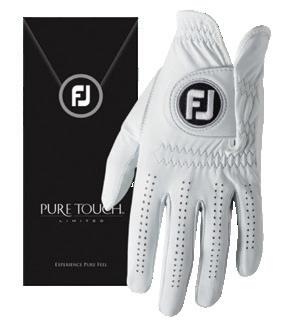
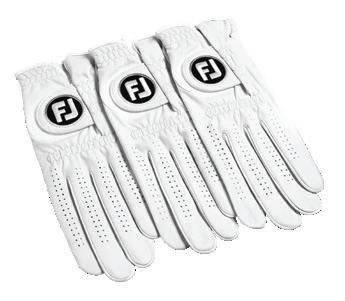
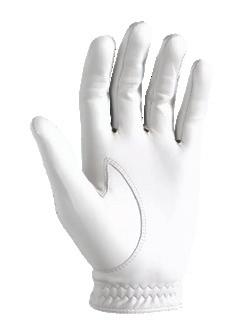
ootJoy has established itself as the gold standard in glove wear, fit and technology. The brand is famous for quality and getting your money’s worth. Those tempted to try the new Pure Touch will see and feel why it’s been a leader for so long. FootJoy, an Acushnet brand (along with Titleist, Vokey, Pinnacle, Kjus, and Club Glove), uses the highest-grade, proprietary selection of Cabretta sheepskin leather for the Pure Touch, and the glove undergoes a preparation process developed specifically for it. The result is a thin and exceptionally soft and supple glove that almost feels like a second skin. It’s also very tacky, helping you form a confident grip on the club. Strategically placed elastic makes the glove conform precisely to the hand’s contours, which minimizes bunching and enhances comfort and feedback without producing unwanted bulk. There are no palm-side perforations or ventilation holes which can hinder feel. Moisture-wicking elements help manage sweat, which extends the life of the glove. The Pure Touch is made in limited quantities on a dedicated line and by a dedicated team. FootJoy’s attention to detail is what makes this a serious golfer’s glove and is proudly for sale at the four Puetz Golf locations around Puget Sound and at puetzgolf.com.
The results are in! No big shakeups :
A steady top 10 signals trust in
Washington golf rankings
WBY TONY DEAR • CG EDITOR & BOB SHERWIN • CG STAFF WRITER
e find it settling, heartening, and encouraging that there’s relatively little movement in our reader-driven Cascade Golfer Top 10 Best Public Courses in Washington every two years.
Why? We think it demonstrates two very important aspects of the list. First, we believe it’s an endorsement of the voting system and shows that the number of readers who vote makes this a worthwhile and credible ranking. If the order or identity of the courses were completely different from one ranking to the next, it might suggest that some biased voters colluded or a major change at one of the courses may have altered the outcome.
We got the impression that might have happened once or twice in the rankings’ early years when a couple of courses we hadn’t expected to appear showed up in the top 20 or so. But it hasn’t happened for several years, and the courses that appear regularly in the top 10 are clearly there because of an objective and genuine belief among a significant number of people that this is where they belong.
Second, it’s obviously confirmation of how good these courses are. You have chosen Chambers Bay as the top public course in the state in six of the seven contests to date. How fortunate we are that then-Pierce County Executive John Ladenburg had the vision to use the former sand/gravel quarry in University Place for a public golf course. And that Robert Trent Jones Jr., Bruce Charlton and Jay Blasi had the skill to turn it into a beautiful and invigorating links course.
It fits most people’s definition of a links by playing over firm, sand-based ground and fast-running fescue fairways next to a major body of water with no trees (well, one) and being good enough to host the U.S. Open. It is Golf Digest’s highest-ranked course in Washington and No. 19 in its current list of America’s top 100 public cours-
es. Golfweek likewise ranks it as the best public course in Washington, and the 17th best in the USA. Those are some heady numbers in a country with roughly 12,000 public golf courses.
Of the major publications, Golf Magazine is alone in not rating it the best in Washington. For its No. 1 in the state, it opts for the No. 2 course in our rankings — Gamble Sands, which did overtake Chambers Bay for the top spot in Cascade Golfer in 2017 but has settled into the No. 2 slot since. Golf Magazine rates Gamble Sands No. 18 in the U.S. (public) and Chambers Bay No. 31.
These are deservedly the best two public courses in Washington, and both are highly rated in the nation. The gap between them and national publications’ thirdranked course in Washington is significantly larger than the gap between the two of them. Plus, it’s not always the same course in third. Sometimes the Olympic Course at Gold Mountain gets the nod, sometimes it’s Wine Valley. But the point stands — the gap between Chambers Bay/ Gamble Sands and Gold Mountain/Wine Valley is wide compared to that between Chambers and Gamble. Gold Mountain gets your vote as No. 3, as it has done for the last three contests.
But then something a little odd happens. At fourth in our (your) rankings is The Home Course, Mike Asmundson’s parkland beauty in DuPont with amazing views of the Olympic Mountains and Puget Sound. But it doesn’t get a mention in Golf Digest’s list of the best 15 courses in Washington (including private courses). It’s similarly shut out in Golf Magazine’s list of best Washington public courses and, to introduce another respected ranking entirely, comes in 14th among public courses in the Evergreen State on top100golfcourses.com. We were a pleasantly surprised the PNGA/WSGA-owned facility came in at No. 4 in our rankings two years ago, but it obviously wasn’t
a blip because it’s back at No. 4 this time. So, who’s right?
We trust our readers implicitly. They know local golf better than anyone and the fact The Home Course has finished fourth two contests running says a lot. So, what are the national publications missing? Do they just not play it enough — one-and-doners who obviously miss its finer points during their one visit?
We’re inclined to think so. Mind you, we will be watching with great interest again in 2028.
Something else we’ll be keeping an eye on is Scarecrow’s expected rise in the rankings. It appeared on only 31 percent of ballots this time and yet still came in 14th, meaning those who have been lucky enough to play Gamble Sands’s younger sibling already obviously thought very highly of it.
Frequent visitors to Brewster, Wash., love both and, together, they make for a multi-course resort that only golfers in a handful of places could possibly look down on — Pinehurst in North Carolina, Bandon in Oregon, Monterey in California, Kiawah Island in South Carolina, Sand Valley or Kohler in Wisconsin, Streamsong in Florida, and maybe a couple of others.
Lastly, we’re glad to see Washington National continuing its rise (17th, 10th and 7th the last three contests) up the ladder. It’s now over 600 votes clear of Desert Canyon in 8th which shows just how good John Fought’s 2000 design must be.
As we say, we think Evergreen State golfers know what they’re talking about and putting Washington National in the mid-table mix alongside Salish Cliffs is absolutely how it should be. It’s only 76 votes shy of Salish, in fact, so that’s another interesting contest to watch out for next time.
Enjoy the results and share your input with us — we’d love to hear your thoughts.
How’d We Do It?
The voting system we installed in 2024 is clearly working, as we received another bumper-crop response this year, with well over 5,000 pieces of data to calculate. We awarded 15 points to the course that was at the top of voter’s lists, 14 for second, etc. Chambers Bay, which has become the perennial winner, amassed a grand total of 3,609 points — 1,116 more than it won in 2024. An astonishing 37 courses received at least one first-place vote. We think 37 different tracks being someone’s favorite is a remarkable number, and it shows the diversity and widespread quality of our state’s public golf. Thirty-one percent of voters chose Chambers Bay as their No. 1 course in the state, while 17 percent said Gamble Sands is best.
1
Chambers Bay University Place
What made this course No. 1 again goes back to a decision in April 2019 when all the greens had fescue grass stripped out. The golf world bore witness to how the parched fescue barely held up at the finish of the 2015 U.S. Open.
The greens were replaced with more durable and reliable poa annua grass. The retrofit made the greens more receptive and consistent. It helped Chambers to be continually ranked high in the nation, 19th by Golf Digest among public courses and 31st by Golf.com. With the 20th anniversary of the course next summer, the Robert Trent Jones, Jr. layout has continued to evolve. The University Place course added a $4 million turn stand, called The Landing, and attracts premier events, the Junior Amateur next year (Charley Woods’ final year of eligibility), the 2028 U.S. Amateur Four-Ball and the 2033 U.S. Amateur.
“The course had the best year it ever had last year and we’re tracking to do even better this year,” said head golf pro Ryan Young.
Whether the course is awarded another U.S. Open is uncertain, but what matters is we have, on our doorstep, a world-class layout to play any time we want.
Others receiving votes beyond top 20, in order: Newcastle Coal Creek, Shuksan, McCormick Woods, Loomis Trail, Alderbrook, Indian Summer, Avalon, Indian Canyon, Eagles Pride, Mt. Si, North Bellingham, Newcastle China Creek, Moses Pointe, Canyon Lakes, Auburn, Echo Falls, Highlander, Capital City, West Seattle, Cedar Irons, The Creek at Qualchan, Everett Legion Memorial, Cedarcrest, Camas Meadows, Redmond Ridge, Latah Creek, Desert Aire, Hawks Prairie Links, Harbour Pointe, Battle Creek, Hawks Prairie Woodlands, The Classic, High Cedars, LakeLand Village, Bellevue, Snoqualmie Falls, Riverbend, Columbia Point, Sun Country, Oakbrook, Nile, Willows Run Eagle, Whidbey, Downriver, Foster Golf Links, Snohomish, Sudden Valley, Jefferson Park, Meadow Park, Lake Chelan, Horn Rapids, Jackson Park, Camaloch, Tumwater, Walter Hall, Willows Run Coyote, Kahler Mountain, Swinomish Golf Links, Gallery, Lake Wilderness, Gleneagle, Ocean Shores, Sun Willows and Riverside.
It doesn’t matter who’s No. 1 in our poll — Gamble Sands or Chambers. Both have spent time at the top and either one could be No. 1 in any given year.
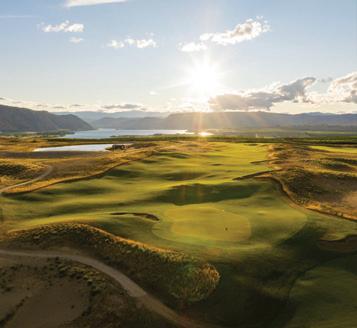
It’s not a zero-sum game. If there is a winner, it’s us. We have access to both, albeit 200 miles apart. We don’t need to choose. Both are world class. Both are challenging links-style layouts with awesome views and accommodating tee positions that make them playable and enjoyable. Gamble, which opened in 2014 in the middle of the Okanogan County (Brewster) apple orchards, was hailed as the best new course in the nation.
That was just the beginning of its impact. What followed was a 37-room Inn at Gamble Sands in 2017 with the adjacent 100,000-square-foot Cascade Putting Course. A 14-hole, par-3 course, Quicksands, opened in 2020. The Barn, a casual dining spot, came along in 2024. Finally, a second course, Scarecrow, designed again by David McLay Kidd, opened this year. Scarecrow is too new to climb high in this poll (it begins at No. 14), but it has generated a
Golfers love it. By the next poll, the state’s most flourishing golf complex might have two Kidd courses chal-
for
Gold Mountain Olympic Bremerton
The Olympic course in Bremerton opened in 1996 and is an on-going and consistent reflection of the late John Harbottle’s design talent. The Tacoma-based architect, who died in 2012 at age 53, weaved a perpetual masterpiece among the firs.
OLYMPIC PENINSULA REGION
Golfers who voted for Olympic as the third-best course recognize how well it’s conceived and how fairly it plays. It’s also among the best maintained courses anywhere, which is a challenge considering the heavy daily traffic. The Olympic course has hosted the 2006 U.S. Amateur Public Links, the NCAA men’s regionals in 2008 and 2015, the Husky Invitational and the 2011 U.S. Junior Amateur (won by 17-year-old Jordan Spieth).
Yet, despite hundreds of thousands of rounds, the course record remains at 65. Harbottle made sure it couldn’t be tamed. Anyone who has played the courses recently has seen that changes are coming to the massive 360-acre Gold Mountain complex, primarily to the adjacent Cascade course. Cascade, opened in 1971 and 17th on our list, is undergoing a $4 million renovation project to improve the bunkering, irrigation and hole rearrangement. By 2030 or so when the project winds down, Gold Mountain might have a pair of top 10 candidates.
4 The Home Course DuPont 4
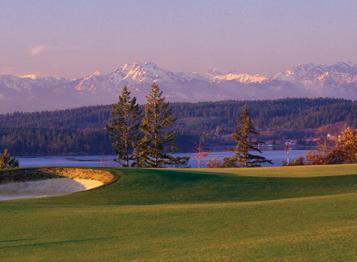
The Home Course always has been mentioned regionally with nearby Chambers Bay (opening within weeks of each other in 2007), but the DuPont layout clearly appeals to an abundance of local golfers and stands on its own. It was ranked ninth best five years ago, before jumping to fourth, where it remains. Among the reasons for the rise is offered by GM Justin Gravatt.
“If you have golfed here before, you are familiar with our sod-faced bunkers that are reminiscent of old Scottish courses,” he said. “This last year we went through and renovated all of our sod-faced bunkers with a new synthetic sod that allows the bunker to have that sharp clean look year after year.”
Golfers have been comfortable with the 7,420-yard layout, its architectural nuances and its illustrious history. The land dates to the Salish people more than 1,000 years ago. Hudson’s Bay Co. established a trading post (and evidence of a six-hole golf circuit around the post), then E.I. du Pont de Nemours Co., which made explosives to cultivate the land, and finally Weyerhaeuser made it’s mark. It is now owned cooperatively by the Pacific Northwest Golf Association and Washington Golf. It also helps that the course has about the cheapest green fees on our list.
Industry Colleagues
ne of our favorite aspects of writing this feature is the chance we get to reconnect with industry colleagues we might not have seen or spoken with for several years. We ask everyone in the contacts lists on our phones and everyone in old telephone and address books (yes, we refuse to discard them like normal people do) who we know has a good deal of experience and a deep understanding of public golf in Washington to give us their rundown of the state’s public courses. It doesn’t matter where they are from, necessarily.
For nearly 20 years, we’ve been friends with golf writers from as far away as Maine who contributed to our industry poll again this year. It’s always nice to hear from them and their high regard for our home state, some of them volunteering that they actually prefer our piece of the union to theirs. It’s certainly not just writers we talk to, though. Many others get the call: club professionals, teaching professionals, superintendents, course builders, clubhouse managers, food and beverage directors, CEOs of companies involved in the golf industry, course designers and even a handful of PGA Tour pros we’ve been lucky enough to get to know and who are familiar with Washington public golf. And, as in 2024, Gamble Sands came out on top again. We’ve written about this in the past and can never be quite sure why industry colleagues put the Brewster course above the former U.S. Open venue while readers go the other way. But it’s a thing because it happens consistently. And while Scarecrow came in 14th with readers, it finished third, Gold Mountain (Olympic) in fourth, with colleagues who obviously have had more of a chance to play the new Kidd/Schaan high desert masterpiece.
Wine Valley, Salish Cliffs, Palouse Ridge, and Indian Canyon were other big vote-winners, Indian Canyon enjoying a significant jump up the table. Noticeably, though, while readers clearly love The Home Course, it doesn’t resonate quite so deeply with those employed in the industry.
Wine Valley
Walla Walla
Wine Valley GC in Walla Walla is a lovely road trip no matter where you start. It’s 20 miles from the Oregon border in Washington’s southeast corner, 250 miles from Seattle, 230 from Portland and even 170 from Spokane. It is probably the least played, most beloved course on our list, with enough loyalty love to once again rank fifth. It just goes to show, you can’t hide quality. Its popularity is primarily because of its design characteristics.
Dan Hixson, an underrated, high-achieving Northwest designer, carved a masterpiece out of the grainy Palouse soil, with links-style wide fairways, ample undulating greens, surrounded by treeless wheat and alfalfa fields. Hixson’s proficiency is shaping golf courses out of remote rural terrains. Other than Wine Valley, among his career achievements is the wildly remote and unique reverse 18-hole Silvies Ranch, another 240 miles from Wine Valley in Burns, Ore.
Since our last top-courses survey, Wine Valley opened a 40,000-square foot putting complex called the Corkscrew. Wine Valley, which opened in 2009, is ranked the 97th best course in America by Golf Digest. It reminds folks of courses in Scotland, but with considerably better wines, as the nearby hills produce some of the best wine grapes in the country.
Other courses receiving votes in order: Trophy Lake, Suncadia Resort Prospector, Washington National, Desert Canyon, The
Course, Druids Glen, Loomis Trail and Bear Mountain Ranch.
Movers & Shakers
We always enjoy looking back at our (or rather, your) first ranking and comparing it with the current year’s list. Our original Cascade Golfer Top 10 Best Public Courses in Washington came out in 2013 and went like this: 1. Chambers Bay, 2. Gold Mountain Olympic, 3. Wine Valley, 4. Salish Cliffs, 5. Palouse Ridge, 6. Washington National, 7. The Home Course, 8. Suncadia Resort Prospector, 9. White Horse and 10. Desert Canyon.
As you can see, there’s been very little change — the only significant difference is the addition of Gamble Sands, which went straight in at No. 2 in 2015, enjoyed a brief stay in the top spot in 2017, and has pretty much shored up the second spot since then.
Prospector at Suncadia has dropped out of the top 10, but not very far, and there have been a few other tiny changes. Nothing spectacular.
The movement of one course, though, has interested us in particular. In 2013, The Home Course was seventh, then went ninth, seventh, sixth, and eighth over the next eight years. Last time out, it rose to fourth. Moving up four or five spots isn’t typically a big deal, but when we are talking about a rise of that size within the top 10, it is a big deal.
We wondered if it might be an anomaly, something to do with the new voting system we introduced in 2024, or if fans of The Home Course had made a special effort to vote in larger numbers this time. Nope, it did it again. There it is in fourth place, maintaining its small advantage over Wine Valley (189 votes) and somewhat larger lead over Salish Cliffs (490 votes).
We’re not terribly surprised to see Washington National jump three places. We’ve always thought it a superb design and, though we’re aware it dropped a few places in recent years with some conditioning issues, we’ve always known it has great bones. The courses above it are pretty special, and it may be hard to rank much higher, but you never know. We were impressed to see the rise of The Home Course, and may see the same thing with Washington National in the future, too.
White Horse’s three-place jump isn’t very surprising either. Dropping six places from seventh in 2022 to 13th in 2024 had surprised us, however. We’re really not sure why that happened, but we are glad to see it back in the top 10 where we believe it belongs. They do exist, certainly — New York, Florida, California, North Carolina, Michigan, Texas — but there can’t be too many more states where a course as good as White Horse wouldn’t make it into the top 10.
Druids Glen’s drop from 15th to 19th isn’t calamitous, but that’s what the 2026 ranking shows. Perhaps further development in the property is in the cards for this jewel as we here at Cascade Golfer have always felt it has top 10 potential.
Scarecrow’s arrival caused a little disruption in the rankings (see “Industry Colleagues”), and we suspect it will just go on climbing.
Outside the top 20 Movers & Shakers below, we were pleased by the rise of Shuksan in the Northto-the-Border region. In 2024, it finished 12th in the category, but this time it catapulted all the way to the top, even overtaking the always-impressive Loomis Trail and Avalon. We knew John Tipping would have a big impact when he took over as General Manager at the start of 2025, but 12th to 1st? This result has 2026 Golden Tempo Kentucky Derby vibes, and the readers have spoken.
Here’s the exciting movement within the top 20.
6
Salish Cliffs Shelton
When the Squaxin Island Tribe elders invested in Salish Cliffs Golf Club, they had no idea how well it would turn out. The Tribe was simply looking for an amenity for folks to play-and-stay at the nearby Little Creek Casino in Shelton. Yet when the course debuted in 2011, both Golfweek and Golf Magazine ranked it the best new course in the country. Such an amenity, as state golfers have again ranked it sixth.
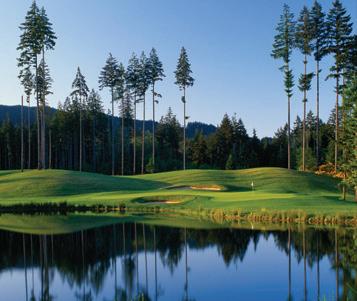
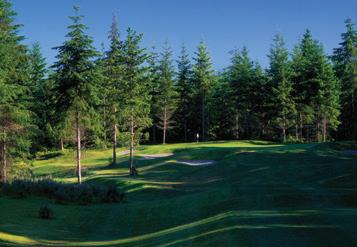
That’s a tribute to the elders’ vision, who put in the necessary resources as well as the nationwide effort to attract the best designer. Gene Bates, who worked under both Gary Player and Jack Nicklaus, designed more than 150 courses worldwide, including another Northwest Native Americanowned course, Circling Raven in Idaho. He designed the 7,269-yard Salish layout to cut neatly through the pristine fir forests while maintaining harmony with nature that the Tribe demanded. The course is salmon-safe and adheres to responsible environmental standards.
Golfers enjoy the sweeping views of the Kamilche Valley. There’s more than 600 feet of elevation change, the most dramatic is the par-3, 161-yard 17th hole, 80 feet above the valley floor. The round ends with folks hitting into the unique Bates-inspired 15,000-square-foot 18th/9th shared green.
7 Washington National Auburn
This is a serious golf experience. Local golfers realize when they come to Washington National in Auburn, they are going to be challenged. Opened in 2000, it was designed (by Northwest architect John Fought) with the best golfers in the country in mind.
It is the home of the Washington Huskies golf team, which annually ranks among the top collegiate teams in the nation. Huskies such as Nick Taylor, C.J. Pan, and Joel Dahman have played here on their way to professional tours. Its training facility, with a 11,000-square-foot practice green, a practice bunker and bent grass chipping area, is one of the best in the state.
The Husky Invitational is held here as well as NCAA regional competitions. All that only benefits the rest of us and why Washington National has a solid stake in our top 10. Players’ games are tested, such as distance at the par-4, 473-yard (Husky tees) sixth hole, or accuracy at the par-4, 313-yard 15th that features a wide moat in front of the green. There is no doubt, to the end, where this course’s allegiance is, as the par-4, 391-yard 18th hole features a “W” shaped bunker in front of the green and “W” insignia adjacent to it.
Desert Canyon Orondo
Desert Canyon Golf Resort faced challenges a couple of decades ago. Opening in 1993, the course, in remote Orondo, was slow to catch on. The tee sheet was sparse, and course maintenance was finding its way. The financial burden led to bankruptcy in 2006.
Homestead Northwest, Inc., owned and operated the property without much improvement until Don Barth, who owned Alta Lakes Golf Resort, took full control in 2011, along with partners Randy and Lyn Anderson. Barth had a vision and seized on it. He polished this gem, and it has become a steady top-10 layout.
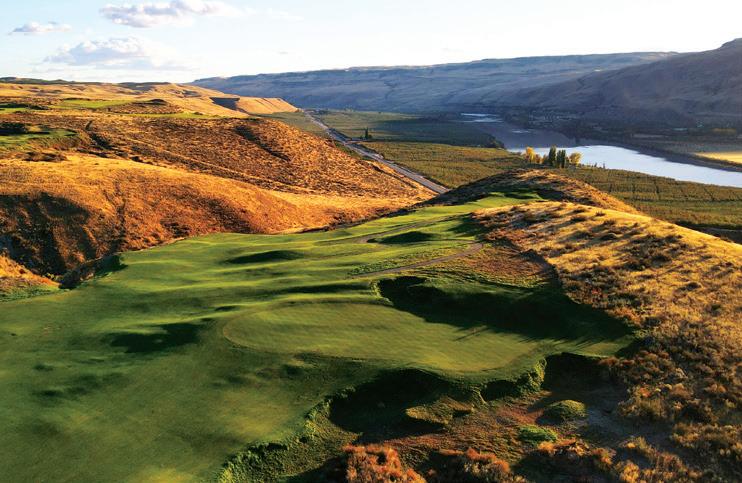
The doleful beginning was puzzling because anyone could see its potential just standing on the opening hole. The magnificent granite wall down the fairway and across the Columbia River is breathtaking. Late Northwest architect Jack Frei (and Rick Fehr) made sure golfers drove right toward that wall on No. 1 as well as the par-5, 515-yard 10th hole. It’s in sight for the entire front nine before the 7,285-yard course meanders back through a desert prairie. The par-5, 632-yard 15th hole, on the edge of a canyon, has been described as the signature hole, but the course is full of signatures and maintenance is exceptional again for this desert beauty.
Palouse Ridge Pullman
This is the second course (No. 3 Gold Mountain Olympic is the other) in the top 10 designed by late golf architect John Harbottle, a Washington graduate who left a lasting golfing gift to Washington State. His name is destined to be invoked when the course hosts three prominent events — the Pacific Northwest Men’s Amateur in July, the Pacific Northwest Pro-Am Championship Sept-30-Oct. 1, and the Pac-12 Men’s Golf Championships in 2027.
The original $12 million project was praised from the beginning, ranked the second-best new course by Golfweek when it opened in 2009 and ninth best in the world by Travel & Leisure Golf. Golf Digest considers it eighth among best college golf courses.
The 7,335-yard layout features a unique back nine with three par-3s, three par-4s and three par-5s. Palouse is prominent among a wave of state courses opened this century, including Chambers Bay (No. 1), Gamble Sands (No. 2), The Home Course (No. 4), Wine Valley (No. 5), Salish Cliffs (No. 6), Washington National (No. 7), Suncadia’s Prospector (No. 12), Scarecrow (No. 14) and Suncadia’s Rope Rider (No. 18).
White
Horse Kingston
White Horse is like an old friend, as it returns to the top 10. Its design, playability and its Northwest fir beauty are undeniable. Its place among the best in the state should be everlasting. Credit goes to the Suquamish Indian Tribe, which purchased the Kingston layout basically out of bankruptcy in 2010 and transformed it into a luscious walk through an old growth forest.
The late course architect John Harbottle, with two courses in the top 10, shows up again here. The original design — by Cynthia Dye McGarey, the first female designer to win new course of the year by Golf Digest — was hailed as challenging yet a bit too difficult. Harbottle was hired to soften the edges for more predictability and playability. State golfers rank it in the top 10 again but Golf Advisor places it in the top 25 in the nation.
The telegenic pristine setting prompted the USGA to have its LPGA Legends Tour women’s event at the course. The course concentrates on the Chief Seattle Golf Days Tournament, now in its 15th year on Aug. 13. What makes their day even more enjoyable is taking the 20-minute Kingston ferry ride from Edmonds to this 7,093-yard nature walk.
If you’re heading north (Everett, Bellingham, etc.) to the Olympic Peninsula, or east to central and eastern Washington at any point during the rest of the summer or want to schedule your summer tee times for 2027, you’ll find this info very useful. You the reader brought this to life.
Frankly speaking, it’s such a bonus to us all that we have such a collection of diverse ecosystems in which to showcase regions such as these. With linksland, parkland, heathland, mountains, meadows and desert, the Evergreen State stands alone in the U.S.
Olympic Peninsula
1. Gold Mountain Olympic
2. Salish Cliffs
3. White Horse
4. Trophy Lake
5. Port Ludlow
6. Gold Mountain Cascade
7. The Cedars at Dungeness
8. McCormick Woods
9. Alderbrook
10. LakeLand Village
Seattle/Tacoma/Eastside
1. Chambers Bay
2. The Home Course
3. Washington National
4. Druids Glen
5. Newcastle Coal Creek
6. Indian Summer
7. Eagles Pride
8. Mt. Si
9. Newcastle China Creek
10. Auburn
North-to-the-Border
1. Shuksan
2. Loomis Trail
3. Avalon
4. North Bellingham
5. Legion Memorial
6. Cedarcrest
7. Harbour Pointe
8. Battle Creek
9. Whidbey
10. Snohomish
Central Washington
1. Gamble Sands
2. Desert Canyon
3. Apple Tree
4. Suncadia Resort Prospector
5. Gamble Sands Scarecrow
Eastern Washington
1. Wine Valley
2. Palouse Ridge
3. Indian Canyon
4. The Creek at Qualchan
5. Latah Creek
TOP 11-20 TRACKS
BY TONY DEAR • CG EDITOR
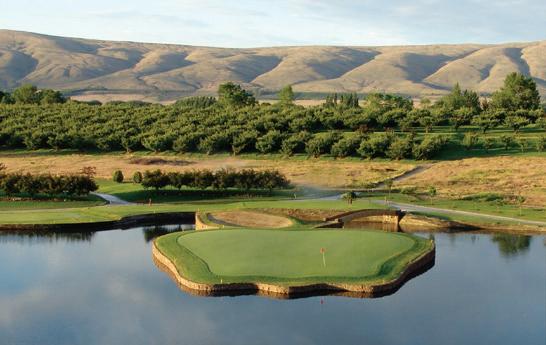
If you asked a random Washington golfer which course had finished 12th, 15th, 15th, 13th, 13th, 11th, and 11th in the seven top 10 contests we had run, there’s a pretty good chance they’d say Apple Tree in Yakima. Readers know it’s a really fun round that’s worth the effort to get to. It puts Yakima on the golf map and we’re glad it does. The weather, wine, beer and relaxed atmosphere make Apple Tree a Casacade Golfer favorite each year.
The main attraction, of course, is the apple-shaped island green at the par-3 17th hole. It would be unfair, not to say totally inaccurate, to suggest it’s a main reason people choose to play Apple Tree. Just as it would be totally inaccurate to say you won’t be thinking about it for the first 16 holes of your round (as well as during the drive to the course, eating breakfast that morning, while sleeping the night before, and really every moment between scheduling your tee time and boarding the tee). You might have bogeyed every hole up to this point, but if you find the green safely and walk off with a par, you’ll momentarily forget what has gone before and float to the 18th tee.
On Aug. 30, 2005, a little over a year after the front nine of his design firm’s Prospector Course had opened at the 6,000-acre Suncadia Resort, Arnold Palmer helicoptered in, landed on the practice ground, and walked into the Prospector Inn (now the Inn at Suncadia) to address a room full of media personnel. In typically flamboyant, articulate and gracious style, Palmer said how much he’d enjoyed designing his second course in Washington (Semiahmoo was the first in 1986).
“This is one of the greatest sections of the country to build a golf course with the firs, the various types of pines and the different seasons,” he said. “This is just a perfect place to come play golf and enjoy the Northwest.”
You could tell he meant every word, no matter the official count of how many times he’d actually been on-site. And people have been enjoying the beautiful layout that journeys through a stately pine forest with views of Mt. Baldy, Domerie Peak, and the Thomas and Red mountains, for over 20 years now. Playing the bunker-heavy 10th hole with its 150-foot drop from the tee and magical views to the west is one of Washington golf’s great moments.
11 Apple Tree Yakima
12
Suncadia Resort Prospector Cle Elum
Trophy Lake Golf & Casting • Port Orchard
13
Trophy Lake Golf & Casting
Port Orchard
At the turn of the century, John Fought’s design career was running at full throttle. Langdon Farms and The Reserve Vineyards in Oregon, The Gallery in Arizona, Ridge Creek in California, and Windsong Farm in Minnesota all came online around that time, and he left two very impressive reminders of his talent on the Washington landscape. Washington National in Auburn was perhaps the pick of them, but Trophy Lake, which had opened about a year before, wasn’t far behind and might actually get a lot of Washington golfers’ vote.
It embarked on a three-phase, three- to four-year bunker renovation at the end of 2025 with the ever-dependable Ridgetop Golf leading the project. Besides filling the bunkers with new sand, some have moved while others have been rebuilt. The focus is on improved playability, with most of the bunker faces being sodded. It’s too early to tell what impact the work might have on the course’s future ranking, but all reports coming out of the course in Port Orchard, 12 miles southwest of Bremerton, have so far been positive. So, who’s to say Trophy Lake won’t return to the top 10, where it has been three times before, in 2028?
14
Gamble Sands Scarecrow Brewster
This may be the last time we write about Scarecrow being in Washington’s second 10. We speculated over how high it might finish this year, weighing how good it is with how few readers are likely to have played it, given how young it is. Many journalists have shared, its future competition will come from its sister course at Gamble Sands and Chambers Bay for top accolades.
We said in the past how we thought the Brewster resort’s second layout would be earning its stripes when compared to the original Sands course because the site was still coming of age. And we’re happy to report that it’s not looking or playing anything short of world-class.
The circle irrigation fields and surrounding lines of apple trees visible on Google Earth (and from the Gamble Sands parking lot) for a while didn’t inspire much confidence, but scrape away the top layer, and the sandy soil and intriguing ground features that had seemed hidden for so long gradually revealed themselves. Pair that recipe with Nick Schaan and David McLay Kidd’s vision and skill for unearthing great golf holes, and the final result was extraordinary. There are several unforgettable moments at Scarecrow, and it’s a round you will be eager to repeat.
15
• 27 Holes
• Club Fittings
• Srixon/Cleveland
• Golf Lessons
• Full Bar
• Cafe
•
•
Port Ludlow Resort
Port Ludlow
Famed Port Ludlow designer, Robert Muir Graves led an interesting life, graduating from UC Berkeley (Landscape Architecture) before joining the Navy during the Korean War. He was proficient in music, horseback riding, and several sports, and was a visiting lecturer at UC Berkeley, the University of Massachusetts, Utah State, and the Harvard Graduate School of Design. He is credited with over 70 original designs, of which Port Ludlow is surely one of his most beloved. His worldly gifts come shining through at this amazing course.
This beautiful layout, so typical of the Pacific Northwest, promises a peaceful journey through a forest of handsome conifers with several water hazards adding to the challenge. The water-carry par-3 17th (8th on the Timber Nine) is perhaps the course’s most memorable hole, asking for a long/mid-iron over a large pond. It’s a tough shot, but there’s plenty of room right, and the large green should accommodate all but the worst mishits.
Port Ludlow is one of the few resorts you can get to from Seattle or Tacoma in an hour or less, and it has been a Puget Sound favorite for many years.
16
Bear Mountain Ranch
Chelan
If we ever decided to run a contest seeking to identify Washington golf’s most thrilling reveals, it’s likely playing the front nine at Bear Mountain Ranch would vie for top spot.
Coming off the second green, you turn north and enjoy a stretch of golf dominated by amazing views over Lake Chelan and the Cascade Mountains. At the sixth, you turn back on yourself for an interesting, dogleg left, par 4 before turning toward the lake, again, for the long par-3 seventh hole. There are plenty more invigorating holes on the back nine, which finishes with a gargantuan par 5/6 of 680 yards (tees are set at 627, 580, 518 and 481 yards) where you must carry a creek just short of the green. Really, whatever marker you play it from, a par will be a thoroughly satisfying way to end a memorable round.
The course opened in 2005 and was designed by the original developer Jerry Scofield, the “King of Central Washington Golf” Don Barth, and Bellevue landscape architect Robert Yount. The trio couldn’t muster a single course architecture qualification between them (Barth added nine holes at Alta Lake in the 1980s), but what a course they built at Bear Mountain Ranch.
18
It appears readers don’t really know what to make of Rope Rider, the Prospector Course’s neighbor at Suncadia. Since 2013, the Peter Jacobsen/Jim Hardy design that opened in 2011 has finished 11th, 8th, 14th, 17th, 26th, and now 16th in our rankings. Can anyone say fluctuating?
We’re at a bit of a loss to explain it. We rate it highly because of its undoubted beauty, the innovative routing that makes three six-hole loops possible, and the wonderfully firm conditions. So, we weren’t at all surprised by the eighth-place finish in 2015. Falling to 26th, though? Rope Rider? Really?
Perhaps, for a spell, not enough people were going to play the course whose last three holes on the front nine surround the 120-foot-high pile of coal-mining tailings, known as Tipple Hill. That might be just clutching at straws, though. Maybe people just had a bad round. Whatever caused it, we’re encouraged to see the course that’s named for the brave miners who rode the treacherous rope tracks into the coal seam between the late 1800s and middle of the 20th century, and where each hole has a youth tee so the whole family can play together, is back in the top 20 where it belongs — it’s such a gem.
17
Gold Mountain Cascade Bremerton
This is an exciting time for Gold Mountain. The municipally owned facility offers golfers amazing rates at one of the finest municipals in the country; the John Harbottle-designed Olympic Course (1996) finished third in our rankings. It is also upgrading its other popular Cascade Course, designed by Ken Tyson (1971), with a comprehensive, multi-year renovation led by Canadian architect Jeff Mingay.
Self-funded (no tax dollars), the renovation on Cascade will surely enhance its duel offering with Olympic, thanks to the job Mingay is performing. We’re certain it will be almost unrecognizable come the end of the decade, by which time 12 percent of its trees will be gone, some greens will have been relocated and recontoured, several tees will have moved, bunkers will either have been repositioned or taken out, and the irrigation system will have been replaced.
So, what is now an enjoyable but aging and overgrown layout that has finished in our top 20 in the last three contests will have become a vastly better-conditioned course that’s more strategic and engaging while maintaining its Pacific Northwest character. Who knows, by 2030, perhaps it will be pushing for a spot in the top 10?
19
Druids Glen Covington
We’ve become disheartened by the lack of activity at Druids Glen over the last few years. And we can’t imagine how frustrating it must be for those that play there regularly. It was only four years ago that the owners, Phoenix-based Parks Legacy Project (PLP), were talking about adding purple heather, rebuilding bunkers, adding another set of tees, and replacing the irrigation system. But here we are in 2026, with the only change being the doubling of the number of people signing the petition demanding that the course be saved from developers.
It would be a crying shame to lose this superb Keith Foster design that opened in 1997. Set on 230 acres of second-growth forest, it measures 7,146 yards from the tips and features bent/poa annua greens with about 60 bunkers and nine lakes. Oh, and perhaps the best view of Mt. Rainer from any course in Washington. Our hope is that PLP’s favored architect, Forrest Richardson, finally gets the opportunity to do the work it has been talking about since it purchased the course in September 2019. Then it might stop clinging to a place in the top 20 and legitimately set its sights higher.
Suncadia Resort Rope Rider
Cle Elum
With 557 points, The Cedars at Dungeness has made it to the top 20 at last. After failing to get a mention in 2013-2015, it finally popped onto the radar in 2017 by finishing 44th. It rose to 27th place two years later and climbed again in 2022, finishing 21st. It repeated its 21st place last time out, and this time it won the votes it needed to move one place higher still.
Several improvements have been made over the years to the Jack Reimer-designed Dungeness GC, whose first nine holes opened in 1969 and was purchased by the Jamestown S’Klallam tribe in 2007. The tribe changed its name to The Cedars at Dungeness to link it to its 7 Cedars Casino and Resort, 12 miles southeast in Blyn. The Cedars at Dungeness is everything the typical Pacific Northwest course should be, with its share of handsome pines, firs and cedars, and amazing mountain views looking southwest towards the Olympics. It does differ from every other PNW course, however, by having a huge, crab-shaped bunker short and right of its third green. The Olympic Mountain rain shadow helps create excellent conditions that help ensure a very enjoyable day out. 20
The Cedars at Dungeness Sequim
Tacoma Boys!
The remarkable golf pipeline in South Puget Sound produces world-class talent on the tee, on the bag and behind the scenes
Ryan Moore
IBY BOB SHERWIN • CG STAFF WRITER
t’s hard to explain why such a relatively small patch of land south of the Tacoma Narrows Bridge and north of McChord Air Force Base has had such a remarkable national impact on the game of golf — producing professional tour players, high-profile caddies, architects, executives and entrepreneurs.
They’re from various walks of life, learning the game at driving ranges and public courses and country clubs, from a wide span of junior programs, a variety of teachers and a diversity of uncommon denominators.
It might begin with John Bodenhamer, 65, who grew up in Lakewood — ground zero for this concentrated golf colony — and went to Lakes High School. He was a junior champion in Washington, part of Brigham Young University’s NCAA championship golf team in 1981 and is now a USGA executive, serving as the vital Chief Championships Officer. He’s very visible during the USGA’s championship weeks on TV and online. Prior to that, Bodenhamer led the Pacific Northwest Golf Association and Washington State Golf Association as executive director.
Then along came the players, emerging from various junior programs at local courses. Perhaps the first was Troy Kelly, 47, who won 40 junior tournaments, went to the University of Washington and turned pro in 2009. He played on various pro tours, including 66 starts on the PGA Tour.
“We all looked up to Troy Kelly, who was five years older than us. That kind of drove the three of us to play,” said Andres Gonzales, part of a wave of elite players that included Ryan Moore and Michael Putnam.
Gonzales, 43, recently named the head golf coach at UNLV, grew up in Olympia but gravitated to the Lakewood area to play with Moore and Putnam. Gonzales, who played for Oregon State and UNLV, earned his first PGA Tour card in 2015 and would earn $2.67 million. His most lasting legacy was his spirited personality, earning him the nickname, “Half Man, Half Amazing.”
Moore, 43, who went to Puyallup’s Cascade Christian High and UNLV, is far and away the most successful. As an amateur, he was a four-time All-American, Hogan Award winner (2005), and U.S. Amateur (2004) champion. He earned his Tour card in 2005, won five times in 454 starts, with 74 top 10s, earning more than $34 million. He won the crucial clinching single match for the U.S. team at the 2016 Ryder Cup.
Moore also is a notable businessman, giving back to his home area. In 2011, he helped his family take ownership of three south Puget Sound courses: The Classic Golf Club, McCormick Woods Golf Course and Oakbrook Golf Club. In 2010, Ryan and his brother Jason also started True Linkswear, a successful golf shoe and apparel company.
Michael Putnam, 43, is part of one of the most illustrious golf families in the state, that includes his PGA Tour-playing brother Andrew Putnam (and brothers Joel and Nathan). Michael went to Tacoma’s Life Christian Academy, was three-time All-American at Pepperdine, won the Byron Nelson Award (2005) and was elected to the school’s Hall of Fame (2016). He turned pro in 2005, won three times on the Web.com Tour, and earned his PGA Tour card five different times. He had 134 starts with two top-fives and 17 top-25 finishes, winning $2.6 million.
“The three of us used to travel together,” Gonzales said. “We’d get two queen beds and a rollaway when we played junior golf.’’
What connected these local elite players as they matured was the Tacoma Country & Golf Club, right in the middle of Lakewood on the shores of American Lake.
“The Tacoma Country & Golf Club is a huge part of that. They have an unbelievable practice facility,” Gonzales said. “Once we got on the tour, it was easy to stay there because it’s a great family course with the lake.”
When the course was revised in 1987, the old No. 2 was dedicated just to wedge work from 130 yards and the previous No. 17 and No. 18 were converted into a huge driving range. Interestingly, renowned Northwest course designer John Harbottle helped with TC&GC renovations until his death in 2012. Harbottle was raised in Lakewood and went to Bellarmine Prep.
When Gonzales and Michael returned to TC&GC during the summer, they turned their attention to helping the next generation, such as Andrew Putnam, five years younger than Michael, and youngsters R.J. Manke and Joe Highsmith.
“I gravitated toward R.J. and Highsmith when they were about 10 years old. Michael did the same thing,” Gonzales said. “They would be able to see how we practiced and what we did. It almost inspired them to think, ‘it’s (PGA Tour) not that far away.’ It seemed attainable.”
Manke, 27, born in Lakewood, went to Bellarmine Prep, Pepperdine University and University of Washington. He was part of Pepperdine’s 2021 national championship. He transferred to Washington for the 2022 season and still holds the school’s single season scoring average (69.32). He’s building his professional career.
Highsmith, 26, also born and raised in Lakewood, was Manke’s teammate at both Bellarmine and Pepperdine, turning pro in 2022. He won the 2025 Cognizant Tournament, had three top-10 finishes last year and has won more than $4.4 million. He finished T8 at the 2025 PGA Championship.
Andrew Putnam, 37, went to Life Christian Academy, was a three-time All-American at Pepperdine and currently is inside the top 60 on the PGA Tour money list. He won the 2018 Barracuda Open, has finished second five times with 27 top-10 finishes. He has won more than $19 million on Tour.
Another standout from this mini golf community is Kyle Stanley, out of Gig Harbor and Canterwood Country Club. He’s another Bellarmine product.
“He’s the same age as Andrew and has the same competitive attitude as Andrew,” Gonzales said of Stanley. “He was good enough to be No.1 in country as a collegiate player. Both were highly recruited.”
Andres Gonzales
Andrew Putnam
Joe Highsmith
Kyle Stanley
Michael Greller
Stanley, 38, who went to Clemson, turned pro in 2011 and won twice on the PGA Tour with 12 top fives and has more than $17 million in winnings. He’s attempting to re-establish his professional career.
At this point in the revolving array of local players, Andrew Putnam, perennially among the top 10 putters on the PGA Tour, is “the guy.”
“Right now, it’s Andrew. We can say that’s the guy from my state. He’s our representative on Tour right now,” said Ryan Young, the head golf professional at Chambers Bay.
Young, 37, who grew up in Mill Creek and played for Whitworth University, played junior golf with and against the Putnam brothers.
“The common denominator are the golf courses — Fircrest, Tacoma Country & Golf Club and Canterwood,” Young said. “I know a lot of them got started at Tacoma Firs, now closed.”
Lakewood’s Meadow Park was also part of the mix and have menu items named after these gents.
Young gravitated to teaching and has been at Chambers since 2016. He began working under Brian Moog, who went to Lakes High School and was named among the top 50 instructors in the nation. This past January, Young was named a PGA of America National Award Winner for Player Development.
“That was my mission when I started the academy in 2016. We wanted to be a hub for growing the game here,” Young said. “We’ve become that. We’re one of the best in the country. I’m proud to say that confidently.”
The community has also produced two of the top caddies in the country, Greg Bodine and Michael Greller.
Bodine, 38, was born in Lakewood, went to Life Christian Academy and played golf for Biola University. Cousin to the Putnam brothers, he is the No. 1 tendered caddie at Chambers. He caddied for Andrew Putnam as an amateur, then carried the bag for Tony Finau for six years. He now carries for Bryson DeChambeau on the LIV Golf Tour.
In 2022, Bodine, Andrew Putnam and former Seahawks wide receiver Jermaine Kearse — another Lakes High School graduate — became business partners in the Evergreen Golf Club in Redmond. Based on the Redmond success, in 2024 they opened a second indoor studio in Fircrest, just a couple miles from Chambers.
Greller, 48, was born in Michigan, went to high school in Iowa, played golf for Northwestern Iowa College and now lives in Gig Harbor. He picked up a bag for Justin Thomas at the 2010 U.S. Amateur at Chambers. Thomas then recommended that Jordan Speith use him for the 2011 U.S. Junior Amateur at Gold Mountain. It led to him
“The common denominator are the golf courses — Fircrest, Tacoma Country & Golf Club and Canterwood,” Young said.
“I know a lot of them got started at Tacoma Firs, now closed.”
— Ryan Young, head golf professional at Chambers Bay
leaving his middle school teaching job to be a full-time caddie. Greller has been on the bag for all of Speith’s 13 career victories, his three majors, including the 2015 U.S. Open at Chambers. He has earned more than $8 million in the process.
“Both Bodine and Greller are very kind people,” Gonzales said. “When he (Greller) picks up the bag for Jordan Spieth, one of our generational talents, it just goes to show how good his character is. He’s a phenomenal human being and well respected by everyone.”
It’s not one player or one course or one instructor that’s responsible for this pocket Hamlet community to have such a mighty impact on the national game. It takes a village of unheralded, unnamed and unsung instructors to get all these lads on their way. With more on their way.
Gonzales summed it all up: “It’s a fun fraternity to be a part of, that’s for sure.”
SUMMITING
Snoqualmie Ridge
Boeing Classic offers plenty of star
power — tournament week is Aug. 10-16
BY BOB SHERWIN • CG STAFF WRITER
very year, as far as Boeing Classic golf galleries at The Club at Snoqualmie Ridge are concerned, the focus is always on our hometown guy Fred “Boom Boom” Couples. He has long said that this is the one tournament he would love to win. His many fans here root for the same result. But his best finish has been third, which he’s done four times, the last in 2019.
He is 66 years old now with a well-documented history of back issues. Couples has played in just three Champions Tour events this year, the last one on March 27 at the Hoag Classic, finishing T40. He has not played competitively since he gutted out two rounds at the Masters, missing the cut.
The 1992 Masters champion has played in every Boeing Classic but one (back issues in 2016) since he turned 50 in 2010, but never knows when his back will betray him, such as 2012. After hitting his opening tee shot at the Snoqualmie Ridge course, he locked up and couldn’t even finish the hole.
If Couples can’t compete when the 20th Boeing Classic begins Aug. 10, perhaps fans can follow these three former major champions, also with smooth, elegant swings.
LEGENDS BY THE FALLS Here’s Three To Watch
Zach Johnson
The 12-time PGA Tour champion — including the 2007 Masters title and the 2015 Open Championship — turned 50 on Feb. 24. Two weeks later, he won the first tournament he entered. Two weeks after that, he finished third. A week later, he finished second, a 1-3-2 Champions start. By mid-June, he had two victories in eight starts, a second, two thirds and two fifths. If he is in the field, he’ll challenge for the best rookie season ever. He will be Champions Tour force for years to come and has the respect of everyone.
Ernie Els
Els, 56, had a prolific career, with 47 international victories, including 19 PGA Tour wins and his four major wins — 1994 and 1997 U.S. Opens, 2002 and 2012 Open Championships. In his 139 starts on the Champions Tour, by mid-June, he had seven wins, 12 seconds, 14 thirds and 75 top 10s. Last year at the Boeing, he finished third, two strokes behind the winner Steve Allan. Els remains popular not just because he’s still competitive but because, like Couples, he has a distinctive “Big Easy” swing. So relaxed, yet so dynamic.
Stewart Cink
Cink, 53, will always be remembered for his 2009 Open Championship victory over Tom Watson. That was one of eight PGA Tour victories. He has had 691 Tour starts — among the most ever — making 506 cuts. By mid-June, he had the same number of victories (8) in 45 Champions Tour starts. He has finished in the top 25 for 42 of his 45 starts. By mid-summer, he was leading the Schwab Cup standings by nearly $1 million in prize money. In his lone appearance at the Boeing last year, Cink finished second, one stroke behind Steve Allan.
LATE BLOOMERS
Take note of these past champions
If those three major champions are in the Boeing field, they’ll attempt to become the fourth major winner to win the Boeing, joining Bernhard Langer (1985 and 1993 Masters), Mark Calcavecchia (1989 Open Championship) and Tom Kite (1992 U.S. Open). By contrast, six of the 17 Boeing champions never even had one victory on the PGA Tour. They had to wait until they were past 50 to wear their first crowns. Here are the late blooming Boeing champions with a combined 1,055 PGA Tour starts without taking home a trophy.
David Eger 2005 • Age 74 (retired)
The tournament’s inaugural champion, Eger, then 53, had four career victories on the Champions Tour in 299 starts, taking home $7.4 million in prize money. On the PGA Tour, he missed the cut in 41 of the 71 tournaments and finished with no wins, one top five finish and $461,988 in earnings.
John Riegger 2013 • Age 66
Boeing was his only Champions Tour victory in 84 career starts. And it was his only victory overall, including 224 starts in his PGA Tour career. Riegger won Boeing with birdies on three of the final four holes to hold off veterans Bernhard Langer, Tom Lehman, John Cook and Couples, who had a combined 34 PGA Tour victories, including four majors.
Scott Dunlap 2014 • Age 62
Boeing is one of two Champions Tour victories in his 249-start career and $7.17 million in earnings. He had 204 starts on the PGA Tour, winning $2.9 million, and his best finishes were two third places.
Scott Parel 2018 • Age 61
He has cashed in like no other among the 50-plus crowd. Boeing was one of four victories on the Champions Tour in 235 starts and has won $8.6 million. His PGA Tour career was barely noticeable — five starts, four missed cuts, and $11,660 in earnings.
Brandt Jobe 2019 • Age 60
Boeing was one of two Champions Tour wins in his 168 starts, earning $6.69 million. His PGA Tour career was respectable, finishing with 337 starts (145 missed cuts) and $9 million in earnings, but no wins and four second place finishes.
Steve Allan 2025 • Age 52
This Aussie youngster finally hit his stride in his third Champions season, winning three times last year. He already has won $2.8 million on his late-bloomer golf life. In his 214 PGA Tour starts (missing 114 cuts), he had two seconds and one third, collecting $3.62 million.
Miguel Ángel Jiménez
Perch From These Points Of View
Three locations to watch the events unfold
18th Hole Craftsman
This hole was made for spectators, as the Jack Nicklaus-designed course carved a half bowl around the par-5 finale. There is no reasonable limit to the number of fans that can fill the natural amphitheater hill behind the hole while the corporate tents line the left side.
14th Hole Canyon Club
If you walk down the reverse left side of the 18th hole, you’ll reach a small grass hill that takes you to premium 14th par-4, canyon hole bleachers. You can catch all the risk/reward drives coming from a 100-foot drop into the smallish green. It’s an all-day festive amphitheater.
13th Hole Bleachers
Now climb that 14th hole to the par-3 13th. Here you will be rewarded with two of the best views on the course. You can follow pin-seeking groups coming through while the whole time staring out at the granite face of Mount Si and the Cascades.
Make Or Break Spots
Three consequential holes can present challenges
NO. 18 Par 5 • 498 yards
The best view hole also is the most consequential. It’s a short par-5 (498 yards) as most of the players can reach in two. They need accurate approaches as the green is surrounded by bunkers with a small green entry. Many of the tournaments have had dramatic finishes, including six playoff battles ending on 18.
NO. 14 Par 4 • 448 yards
The Canyon Hole. It’s a risk/reward, all-carry drive to the green over a deep canyon. Tournament officials generally move up the tees to tempt the players. It’s a safe play to drive it short, then chip up to the pin. But come Sunday when a player trails by a shot or two, the risk is worth contemplating.
Technically, 2021 Boeing winner Miguel Angel Jimenez never won on the PGA Tour but he’s not a late bloomer or loser. The Spainard has won 45 tournaments worldwide, including 17 Champion titles.
NO. 4 Par 4 • 426 yards
From an elevated tee position, the drive needs to be pinpointed along the left ridge. Too far left and the ball could be lost in the bramble. The bramble extends to the left side of the green while bunkers guard the right side and behind. Another precise approach is necessary.
S Luxe Life
Snoqualmie Casino & Hotel welcomes golfers with resort expansion, culinary delights and a luxury spa just minutes from Seattle
noqualmie Casino & Hotel’s expansion, rebranding and ongoing reintroduction as a full-service resort destination coincides this month with the Boeing Classic golf tournament at the nearby Club at Snoqualmie Ridge.
The timing could hardly be better for the casino and hotel as well as for patrons of golf, gaming and good food. Warm weather and the perfect tournament hub are yours to enjoy.
When the world’s best 50-and-over golfers from the PGA Champions Tour take on the testy and beautiful Snoqualmie Ridge Aug. 10-16 in the 20th annual Boeing event, “Seattle’s Closest Casino” — Snoqualmie’s wellknown motto — and the newest super-premium hotel in the region stand ready to show their faces and open their doors to a world of visitors.
Amanda Beltran, advertising and public relations strategist for the property, said lodging at the new 210-room Snoqualmie Hotel is expected to sell out during the tournament weekend — making it the perfect basecamp for fans.
“We’re a convenient choice for guests looking to combine world-class golf with luxury accommodations, dining, entertainment and gaming,” she said, “all in one place.”
As the newest addition and cornerstone of Snoqualmie’s expansion and rebranding, the Snoqualmie Hotel offers guests consummate comfort and only-in-the-Northwest views of the Snoqualmie Valley and 4,167-foot-tall Mount Si.
The hotel was built with an emphasis on sustainability and modern design, Beltran said. Architectural details are inspired by Snoqualmie culture, from a slant-roof hotel design, representing the original longhouses of the Sno-
BY BART POTTER • CG STAFF WRITER
qualmie Tribe’s ancestors, to carefully chosen artwork throughout the property.
The hotel’s luxurious rooms and upscale amenities cater to both leisure and business travelers. Note for golf spectators: The Snoqualmie will offer regular shuttle service from the hotel to the Club at Snoqualmie Ridge during the Boeing Classic.
The Snoqualmie expansion also introduced MoonRise Spa, a wellness mecca featuring treatment rooms, relaxation spaces, eucalyptus saunas, and an indoor relaxation pool.
MoonRise’s treatment menu includes curated Signature Journeys — with premium emollients and aromatics — as well as massage, facials, skincare and body rituals, and couple’s experiences.
After all that, you could be hungry, Beltran suggests.
Fine dining aficionados are in for a treat with any of Chef Jack Wynne’s creations at Vista Prime Steaks & Seafood. Vista offers an elevated dining experience with locally sourced ingredients in a setting that — as the name suggests — can blow you away with its views.
Signature entrees range from pan-seared scallops to King salmon to Chilean sea bass, and you might as well try the lobster mac and cheese. Beef lovers are in for an experience with tableside carving events for Delmonico or Tomahawk steaks.
Take some time to pore over the Vista wine list. All your favorite Washington wines are represented, along with hundreds of selections from the world’s best winemakers.
The regionally popular happy hour at Vista features hand-built cocktails and afternoon offerings such as burg-
er sliders, halibut fish and chips and Snoqualmie’s justly famous crab dip.
Despite the draw of a big-time golf tournament minutes away, if you never left the Snoqualmie property, you would lack for little in a sporting vein.
Start with the casual atmosphere of Hawks Peak Sports Bar & Grill, which features 66 large-screen TVs, huge food and beer menus and daily happy hour specials. You might want to hang out for the fan favorite Falls Buffet, serving prime rib daily.
Golf nuts — or fans of any sport — can also visit Snoqualmie’s sportsbook, the first to open in Washington when sports betting was legalized, offering the chance to wager on major events — including the Boeing Classic. Massive HD screens document all the action you care most about — kick back and enjoy the action in the relaxed environment.
Sports wagers can be made at in-person windows, at kiosks throughout the casino, or on the state’s first Sportsbook app.
Snoqualmie’s gaming floors include a capacious non-smoking area, and you never have to look far to find one of the more than 1,800 slot machines or 58 table games, including blackjack, roulette and baccarat.
Snoqualmie’s newly renovated 2,000-seat entertainment and convention center hosts concerts, comedy shows, and special events throughout the year. Coming soon: Former Saturday Night Live ace David Spade hits the stage Aug. 15.
Beltran says it best: “We are far more than a traditional casino experience. It’s all here.”
TRAVEL THE NORTHWEST
ADVENTURE EVERGREEN AN
TAKE THE NEXT EXIT:
Six great Washington golf stops you’re already driving past
To get to these six worthy golf courses in Washington, you barely need GPS.
If they’re not near where you live, don’t worry — they’re on the way to somewhere. Better yet, they’re highly accessible from a major highway you could very well be on … this very summer.
With Seattle, say, as a starting point, heading north, south or east, with wine, weather or song as a reason for a road trip, you could find these courses (or stumble upon them) … and golf could happen.
“Seventy-five percent of our play is from outside as visitors,” says Ed Quick, general manager and head PGA professional at Leavenworth Golf Course in north central Washington.
Quick welcomes the drop-ins like so many of these courses do.
“Just show up, let’s play some golf, let’s have some fun,” he says, “and kind of strip away all the formality.”
Put these on your list and hit the road.
Lake Padden Golf Course
Lush parkland gem in Bellingham
lakepaddengolf.com • (360) 738-7400
There is much to see, do, eat and drink in Bellingham besides golf. But know this: There’s good golf, too, and the first Bellingham course you’ll encounter heading north on I-5, on purpose or not, is just a quick turn off Exit 246. Lake Padden Golf Course, established in 1970, is a serene up-and-back layout thick with old-growth timber and the challenges that brings.
“Whatever road took you to our golf course, we want you to have the best time when you’re out here,” says Lake Padden General Manager Phil Gaggero.
This municipal course is affordable — spend the cash savings on Bellingham things like the Chuckanut Bay Distillery or dining, upscale or not. Or spend nothing on a stroll through the Fairhaven Historic District or the campus of Western Washington University. You don’t need golf to go to Bellingham, but since you’re there …
BY BART POTTER • CG STAFF WRITER
Lake Padden Golf Course • Bellingham
The Links at Moses Pointe • Moses Lake
Riverside Golf Club
Aviation adds to the allure
playriversidegolf.com • (360) 748-8182
Tucked just off Exit 79 from southbound I-5, along the banks of the Chehalis River, sits Riverside Golf Club. Easy to find, even if you weren’t necessarily looking for it, and easy to like. Riverside has been a fixture of southwest Washington golf since 1927, when it opened with nine holes along with dedication of the neighboring airfield, now known as Chehalis-Centralia Airport.
The course expanded to 18 holes in the mid-1970s. Its modern-day challenge comes less from length than from the need for precision. White-sand bunkers guard fast and true greens, which are among the best on the I-5 corridor. A distinctive feature here is the course’s proximity to the airport — small aircraft overhead add an aviation soundtrack to a golf round at a course that’s worth more than a fly-by.
Sun Country Golf Resort
Mountain respite not so far east
golfsuncountry.com • (509) 674-222
You’re in mountain golf country when you leave eastbound I-90 at Golf Course Road (Exit 78) and pull almost immediately onto the grounds of Sun Country Golf Resort in Cle Elum. Sun Country used to be the ultimate “on the way to” niner for golfers heading to Spokane or elsewhere east. Today, with a second nine in place since 2009 and an RV resort on-site, Sun Country can be a destination of its own, even for a drop-in.
Sun Country’s challenge is in its rolling terrain and gnarly elevation changes. Golfers face sloping fairways and greens that offer rewards only for good shot selection. If it’s views you want, you’re in the Cascades here, and you feel it. After golf, hit Sun Country’s 9 Iron Bar and Grill or the Red Arrow, a stellar burger joint in Cle Elum.
The Links at Moses Pointe
Find your way to this oasis
mosespointe.com • (509) 764-2275
The Links at Moses Pointe in Moses Lake is a laudable public course found by driving four miles alongside beautiful Moses Lake from Exit 174 off eastbound I-90. Most golfers have a tee time on arrival at Moses Pointe, but if not, GM Jerry Olson will fit you in where he can. He gets people on the way to Spokane or maybe going on to Gamble Sands.
“We’re like a destination-y spot, too, in my mind, for people going through the area,” he says.
First-time players or drop-ins won’t necessarily find a carefree time at Moses Pointe, but they will find a meticulously maintained course that’s long — 7,300 yards from the black tees, 6,300 from the whites — and a fun challenge to play. After the round, the lake itself is a cool relief on a summer afternoon. If the agenda calls for exploring the city of Moses Lake, Sporty’s Tavern is a downtown institution.
A mile off US 97 North and five minutes from downtown Chelan, Lake Chelan Golf Course is a slice of well-groomed wildness with views. There are abundant opportunities for recreation and entertainment in Chelan, the busy resort town next to the largest natural lake in Washington, and don’t fail to count golf among them … even if it wasn’t your intention when you drifted into town.
The golf course manages to be somewhat of a hidden gem, but it offers ample elevation change, natural rocky features and strong shot values. The practice range is a central Washington favorite and makes the experience complete. After golf, you’ll think of something to do, and you can’t go wrong with a wine tasting at Siren Song Vineyard Estate and Winery or Tsillan Cellars Winery, among others in beautiful settings. That’s Chelan all over.
Riverside Golf Club • Chehalis
Sun Country Golf Resort • Cle Elum
The Links at Moses Pointe • Moses Lake
Lake Chelan Golf Course • Chelan
Sun Country Golf Resort twosome up for grabs
Sun Country is extremely unique, mixing club selection with patience. For anyone heading east on I-90 this fall, take the 30-second detour to Sun Country and make a loop. And this time we have your green fees covered for two! Go to CascadeGolfer.com and enter to win.
Leavenworth Golf Course
Leavenworth Golf Course
Relax in Washington’s Bavaria
leavenworthgolf.com • (509) 548-7267
Leavenworth Golf Course is less than a mile from the Icicle Road turn-off from U.S. Highway 2 and just outside the Bavarianesque town center of Leavenworth, Chelan County. There’s a friendly vibe radiating around the town’s Euro-style public spaces and chalet-style buildings: beer (Icicle Brewing, Blewett Brewing), wine (five wineries in town or nearby) and spirits (Blue Spirits Distilling) are recurring themes. At the golf course, general manager Ed Quick fosters the same vibe, from the dress code — no lederhosen required, nor even a collared shirt, so long as you keep your t-shirt neat — to the on-course flow.
“We’re an old, super well-maintained course that’s really playable,” Quick says. “The course is on the short side but has enough movement to make it challenging.”
And it’s fun. Quick sees to that.
“It’s just a welcoming atmosphere for everybody. You guys are here to recreate and have a good time. We’re here to help you.”
Camaloch Golf Course • Camano Island
Camaloch Golf Course
CAMANO ISLAND
Camano Island’s public golf scene revolves around Camaloch Golf Course, an 18-holer whose roots trace to 1967.
That year, volunteers of the Camaloch Association worked to turn undeveloped property into a golf course. That first effort, opened in 1972, soon earned a reputation as one of the better nine-hole facilities in the region.
In the late 1980s, course architect Bill Overdorf designed a second nine that opened in 1991.
The course sits in Washington’s “sun belt,” an area that receives less rainfall than many mainland communities. Marine air from Puget Sound helps moderate summer temperatures; while rolling terrain, evergreen forests, wetlands, and glimpses of surrounding island topography give the property a Northwest character.
Camaloch is not long, but it’s demanding. The course measures 6,234 yards from the blue tees, 5,801 yards from the whites, and 5,194 yards from the reds, all playing to par 72. Tight corridors, elevation changes, and fast greens place a value on accuracy over power.
Many locals consider the par-5 14th hole the course’s signature hole, known for its unusual design and strategic demands at 463 yards.
Players also cite the par-4 fifth, the course’s No. 1 handicap hole, and the long par-5 sixth, which stretches 502 yards from the back tees, the course’s longest hole. A shared-fairway area on holes 15/16 are divided by a narrow lake adds visual interest and shot-making challenges not often seen on public courses.
Value remains one of Camaloch’s virtues. Peak-season weekday rates are $45 for 18 holes during prime times and $40 during afternoon periods, with senior discounts reducing those prices to $40 and $37. Weekend rates are $56 during prime time and $48 in the afternoon, while juniors 17 and under play for $15.
Combined with year-round playability, respected greens, and island views, the course delivers an experience well worth the price.
YARDAGE (PAR 72) 5,194-6,234 yards
RATES $40-$56
TEL (360) 387-3084 • WEB camalochgolf.com
2 The Classic Golf Club SPANAWAY
The story of The Classic Golf Club begins with the transformation of former gravel-mining property into one of the South Puget Sound region’s most distinctive public golf courses.
Located in Spanaway southeast of Tacoma, The Classic was designed by Washington golf-course architect Bill Overdorf and opened in 1991. Built on rolling terrain left behind by glacial activity and ore excavation, the course took shape on landforms that gave Overdorf an unusual canvas and allowed him to design a course with elevation shifts uncommon in western Washington public golf.
The Classic plays to a par of 71 and stretches to 6,681 yards from the black tees, down to 5,866 from the whites and 4,474 from the front yellow tees.
The variety of teeing grounds makes the course accessible to beginners while providing a challenge for accomplished players.
The long and challenging No. 9 plays at 597 yards from the black tees, making this No. 3 handicap hole the longest on the course. The hardest hole at The Classic by handicap is the gnarly fourth hole, a 444-yard par 4.
The back nine opens with the difficult par-4 10th hole, 396 yards from the black tee but more playable from the white tee at 349 yards.
No. 15, the longest par 4 on the course, measures 444 yards from the black tee, 421 from the blue, and checks in as the No. 2 handicap hole.
Other memorable holes feature downhill tee shots that show off panoramic views across the property. Elevated greens through the layout place a premium on distance control and short-game skill.
The course’s value proposition remains one of its strongest attractions. For the 2026 season, weekday green fees are $50, while weekend and holiday rounds cost $55. Twilight rates drop to $30 on weekdays and $32 on weekends. Seniors, military personnel and first responders receive 20 percent discounts, and juniors receive 30 percent off standard rates.
Those prices are notably competitive for an 18-hole championship-length course with year-round play, fast bentgrass greens and a layout that offers scenic beauty and strategic variety.
For golfers seeking a challenging round without resort-level pricing, The Classic continues to live up to its name.
YARDAGE (PAR 71/73) 4.474-6,681 yards
RATES $32-$55
TEL (253) 846-9868 • WEB theclassicgc.com
The Classic Golf Club • Spanaway
3
Whidbey Golf Club OAK HARBOR
Whidbey Golf Club offers country club-quality golf that’s accessible and affordable for public golfers.
That’s the value proposition at this venerable course in Oak Harbor, a part of the Whidbey Island golf landscape for more than six decades.
The semi-private club dates to 1960, when local golf enthusiasts — the earliest members — began planning a golf course. The group purchased a dairy farm property in May 1961, seeded the original greens later that year, and opened the first nine holes for play in 1962. A second nine opened in 1979.
Those island golf pioneers chose not to hire a name architect — the club members laid the course out largely themselves, reflecting the grassroots character that remains part of the club’s identity. Volunteer labor converted the property’s dairy barn into the original clubhouse and transformed a calf barn into a pro shop. Fire destroyed those buildings in 1996, and a new clubhouse and restaurant opened in 1998.
That’s the history. Today, Whidbey is a private/public course — members-only until 1 p.m., public play after that. The formerly fully private course is a golf test by any measure as its rating/slope is 72.4/127 from the black tees.
Oak Harbor’s location in the Olympic Mountain rain shadow brings significantly less rainfall than many Puget Sound communities, helping keep the course playable throughout the year.
The course stretches 6,537 yards from the black tees, 6,077 yards from the blues, 5,360 yards from the whites, 5,139 yards from the golds and 4,252 yards from the front orange tees.
The 577-yard No. 6 hole is a par-5 with bite. The par-3 second is another standout, requiring a precise shot over attractive terrain to a well-guarded green. Throughout their round, golfers encounter a mix of risk-reward opportunities and scenic views that showcase Whidbey Island’s rural beauty.
Public green fees are $75 before 11 a.m., $60 from 11 a.m. to 1 p.m., $50 from 1 p.m. to 3 p.m., and $40 after 3 p.m. Walking rates are $40, $35, $30 and $25 during those same periods.
Considering the course’s conditioning, year-round playability, island setting and full-service clubhouse, Whidbey delivers solid value compared with many higher-priced Northwest golf facilities.
YARDAGE (PAR 72) 4,252-6,537 yards
RATES $25-$75
TEL (360) 675-5490 • WEB whidbeygolfclub.com
Whidbey Golf Club • Oak Harbor
From Cape Verde to the fairway: The lure of the unlikely hero pulls America’s heartstrings
BY TONY DEAR • CG EDITOR
On July 3rd, a nation that few people could have pointed to on a world map and whose population is about two-thirds the size of Seattle’s took the three-time champions to extra time in a Round of 32 match at soccer’s World Cup. Having already drawn with the highly-rated Spain in the group stages, Cape Verde took on Lionel Messi and the feared Albiceleste (the White and Sky Blue) and scored twice, eventually going out of the tournament because of an 111th-minute own goal.
It was an epic performance. And America loved it.
Because Messi, arguably the best player in the world today (and one of the top three or four in history), has played in the U.S. since joining Inter Miami in July 2023, and because the U.S. is now a legitimate international team, despite the disappointing loss to Belgium, the 2026 World Cup was incredibly popular. It broke all sorts of attendance, live TV audience, and streaming records in the U.S.
The U.S. Men’s National Team’s progress was a big factor in the World Cup’s success in America, but Cape Verde’s play had millions engaged in an event they probably hadn’t anticipated or been terribly interested in before the summer. And similarly unexpected tales like Curaçao (total population less than a third of Cape Verde’s) scoring its first-ever World Cup goal against powerhouse Germany in an admittedly heavy defeat.
Other heartfelt American memories are Scotland’s Tartan Army endearing itself to Bostonians, the city of Lawrence, Kan., warmly adopting the Algeria team, Vozinha’s (Cape Verde’s goalkeeper) mother being granted a visa so she could enter the U.S. to watch her son play and Iran’s dressing room note that thanked Los Angeles for its hospitality.
These really pulled the heart strings: the Democratic Republic of Congo’s valiant efforts despite the country being at war, Haiti’s likewise
spirited soccer, Japan’s fans cleaning stadiums and numerous other feel-good moments enthralled a nation that heretofore had been largely indifferent to soccer.
What, though, has all this to do with golf? The parallels are few, and we’re reluctant to stretch too far to find a connection between the World Cup and our own favored sport, just for the sake of a magazine article. But as sports fans, we’re aware of what we think is an obvious link.
The truth is we, and really the whole of America, love a good story, an underdog story, a story of how a team or individual facing terrible odds somehow overcomes challenging hurdles to compete with, and occasionally overcome, the very best in the sport.
American sports fans recognize and celebrate talent and determination, regardless of where the team or individual hails from. Of course, we pull for our favorites, be they a star in the NFL, MLB, NBA, NHL, the team itself, or anyone representing the Stars and Stripes. But we also recognize international greatness wherever it comes from.
The three best-ever golfers to have come from largely non-golfing nations are Fiji’s Vijay Singh, Germany’s Bernhard Langer, and Zimbabwe’s Nick Price. Germany’s Martin Kaymer, Argentina’s Roberto de Vicenzo and Angel Cabrera, and New Zealand’s Bob Charles also deserve a mention.
Because of his somewhat taciturn personality and an alleged rules incident early in his career, Singh has never really enjoyed wholesale popularity. But who could deny that coming from a remote and tiny island nation in the Pacific Ocean and going on to win three of golf’s major championships (one of them the 1998 PGA Championship at Sahalee CC in Redmond) and 73 worldwide titles, including 34 on the PGA Tour, is a massive accomplishment?
Langer is a two-time Masters champion and has 136 professional victories, including a record 47 on the PGA Tour Champions. And, though he comes from what is now Zimbabwe, Price grew up in what was then Rhodesia, which gained its independence from Britain in 1980. Yes, the colonialists played some golf, but Price emerging
hidbey Golf Club is a fantastic grouping of risk vs. reward holes and a total blast to play. Some may not know it but it is semi-private and open to the public at 1 p.m. This time enjoy a round for you and your buddy on us! Enter to win at CascadeGolfer.com.
Germany’s Bernhard Langer is a fan-favorite and golf’s ironman.
from the country and eventually winning three majors while claiming 55 pro wins worldwide (18 on the PGA Tour) is likewise sensational. And, like Singh and Langer, he enjoyed tremendous respect among U.S. fans.
The world is a smaller place than when these three pioneers conquered the game, and though today’s stars might not have yet scaled the same heights as their predecessors, we now enjoy the skills of international golf heroes regularly. I know at CG we love and follow: Norway’s Viktor Hovland and Kristoffer Reitan, Denmark’s Højgaard twins, Sweden’s Ludwig Åberg, Korea’s Si Woo Kim and Tom Kim, New Zealand’s Ryan Fox and Daniel Hillier, Colombia’s Nicolas Echavarria, Finland’s Sami Valimaki, Germany’s Matti Schmid and Stephan Jaeger, and China’s Haotong Li — all of whom are among the world’s top 100 golfers.
Watching Cape Verde’s national soccer team or golfers from faraway places mixing it with the world’s best is great entertainment and hugely inspiring. And America’s sports fans can’t get enough of it.
Cape Verde captured the nation and the planet’s imagination during the World Cup.