








Software Developer: £60k
Business Analyst: £60k

Technical Engineer: £60k
Service Analyst: £45k
Account Manager: £60k
Implementation Specialist: £45k


I’m writing this editorial in the middle of May, with the threat of exams looming large – hopefully, by the time this Yearbook is in your hands, those will be a semidistant memory. It’s something of a cliché, but yet another year has own by, and before we know it, we’ll be packing up our rooms to head home. You should never wish your time away –especially during what is, by all accounts, such a magical time of your life – but I have to say the arrival of May Week is a relief after what has been a very long year.
Varsity’s reporting this year has taken us to every corner of the city. e News team found themselves out on the streets speaking to countless protesters, the success of the campaign to save the Vet School demonstrating once again just how powerful the student voice can be.
Like always, we’ve heard from several famous faces: Ed Davey (p. 42) tells us about his plans to defend the UK from far-right populism; Harriet Lamb (p. 40) recounts her time as Fairtrade Foundation UK leader and the joys of activism as Green Party CEO; Motherland writer Helen Sera nowicz (p. 60) talks about the creative process of making a television show. Switching from the individual to the collective, this Yearbook hosts several features, so turn to p. 32 to hear from young carers at the University, p. 34 to learn about Jewish life in Cambridge, and to p. 36 to see whether students think their exam adjustments are actually helping.
It’s no secret that a Cambridge degree can be somewhat… challenging. Most of us need that little extra something to get us through the long
library-imprisoned days when our love for the subject isn’t quite enough. For some, this may take the form of a creative outlet in Arts (p. 26) or in Fashion (p. 44), or, like me, some may throw themselves head rst into a society –whether that’s student politics (p. 20) or the Footlights (p. 38) is your prerogative – ideally, though, not head rst into the Cam. For those who want something with a little bit less commitment involved, you might turn to Music (p. 22) or the big screen (p. 53) for solace instead. is Yearbook is the product of countless hours of planning, writing, drawing, and editing. It’s a celebration of Cambridge talent, in all its various forms. It has been a learning curve for all those who worked on it, myself in particular. ere were times when we couldn’t quite see the light at the end of the tunnel – thankfully, the sun shone down right in the nick of time for our own exam periods to begin. More than anything else, it’s been so much fun, as well as proof that Elbow’s ‘One Day Like is’ and e e’s ‘ is Is the Day’ cannot be overplayed. It has been the greatest privilege of my time at Cambridge to take on the challenge of editing Varsity – I have truly fallen in love with the paper over the last four terms, and I can’t wait for the long line of editors after me to have the same ex- perience. ose of us who contribute to the paper (and frankly, never shut up about it) get so much joy from it – I hope









that, as you ick through this magazine, you’re able to share in that joy too.
So, as I nally return to my much-neglected degree (if you’re my DoS, pretend you didn’t read that), I’d encourage everyone reading this to take a break from theirs with this year’s Yearbook & Review.


5 The year in news
The biggest stories of the last three terms
9 Horoscopes
Discover what May Week has in store for you this year
10Romance.ucam.org
A conversation with the founder of Cambridge’s own dating site
12The finalist’s bucket list
Find some inspiration for your post-exam celebrations
14Quiz Figure out what post-night out food staple you are
31Confessions from a May Ball crasher
An anonymous account of a daring descent into Downing May Ball
16The language of lasts
Why endings, especially those at university, feel so bittersweet
22Predictions for OR3


An analysis of Olivia Rodrigo’s newest era, through her lyrics
24The paradox of the live album
A love letter to the experience of music played to a live audience
26Arcsoc on life drawing
Discussing the community that can be gained from life drawing
27Bound for success
17Are our degrees rotting our brains?
Exploring whether the use of AI is making us less intelligent
18My favourite dance floor is the one with my friends on it
Why it’s not the venue, but the people you’re with, that make a night special
19Exercise and academia
How perfectionism nds its way into every aspect of Cambridge life
Talking to Cambridge students who’ve taken the plunge and written a novel
28Look, don’t touch
How museum exhibits limit the sensory experience of art
32Caring in Cambridge
Speaking to those who are balancing a degree alongside being a young carer
34Jewish life at Cambridge
Investigating antisemitism and Jewish identity among students
36Exam adjustments
20Controversy, infight- ing, and just straight up fighting
Debating whether this has been a good year for student politics
Talking to disabled students about their experiences of the exam period
38Are the Footlights get- ting dimmer?
Exploring whether the comedy troupe’s golden era has ended

40Harriet Lamb e Green Party CEO on activism, populism, and politics
42Ed Davey
Speaking to the Lib Dem leader about his plans to tackle Reform



44Spotlighting student designers
Talking to students about how they incorporate identity into their creative practice
51Everybody’s a critic
Discussing the limitations of theatre reviewing
52All of Cambridge is a stage
Exploring the creativity behind student theatre staging
53Lights, camera, Cam- bridge e Varsity team discuss the lms and TV shows that have de ned their time at Cambridge
56Fellows on films
Speaking to subject experts about the biggest lms of the year
60Helen Serafinowicz e Motherland writer speaks about motherhood and working in television
58Is Cambridge sport really accessible?

Putting the accessibility of university sport under a microscope

29Smoking area
Take a break with some classic puzzles



At the end of October, three Cambridge students launched a single-sex women’s society, describing it as the rst of its kind at the University. e society’s co-founder, Maeve Halligan, told Varsity at the time that the formation of the Cambridge University Society of
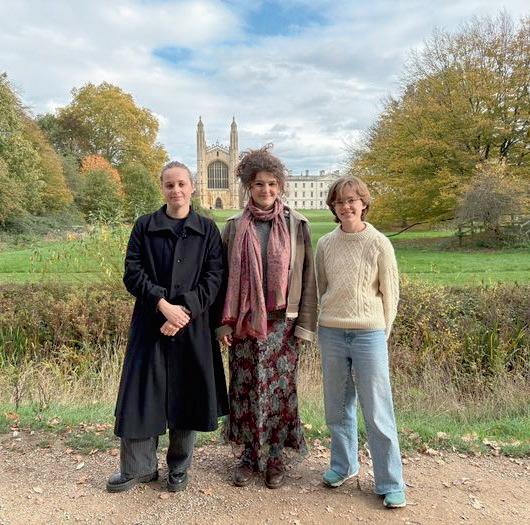
Women (CUSW) was prompted by the lack of single-sex spaces for women within Cambridge. In November, Varsity reported that CUSW’s GoFundMe page had raised nearly £14,000 since its launch the previous month. CUSW was formally registered with the University at the end of November. e Students’ Union (SU) registered the society the following month, and released a statement “in response to widespread student concerns regarding the rights of our trans students,” clarifying that the SU was legally obliged to register “all eligible societies – even if they contradict our ethos.” Halligan told Varsity it was “disappointing” that the SU had felt compelled to justify the decision to register CUSW.
e University Council voted in October to divest from companies which produce “weapons illegal under UK law,” in response to a report by the Working Group on Investments. e group was established in 2024 to assess Cambridge’s nancial connections to the defence sector.
e report outlined three possible avenues going forward: maintaining the current approach, applying a formal 1% limit to conventional weapons investments, and total divestment from weapons manufacturers. A vote on these options was expected in November, but Varsity later reported that this was pushed back to February, with councillors requesting more information about the University ’ s current invest-
e Department for Education’s (DFE) counter-terror team contacted the University in November in relation to a speaker event hosting a Palestinian journalist. e event was organised by the Cambridge University Palestine Society (PalSoc), but was ultimately cancelled, after it emerged
Abubaker Abed, made posts on X (formerly Twitter) in which he described members of Hamas as “resistance ghters” and called the group’s October 7th attacks “a great day”
ments. However, at its February meeting, the Council again did not reach a decision.
In April, Varsity reported the Council had voted to introduce a transparency system regarding defence investments. Under this system, if the University’s exposure to companies primarily manufacturing weapons surpassed a pre-determined threshold, a report outlining the details of these companies would be released.






ance, meaning transgender women would no longer be eligible to play in women’s competitions.







Varsity reported at the time that the DFE’s counter-terror unit was never in contact with PalSoc directly in relation to the planned event, but that the team “raise[d] concerns” with the University, as the event had been agged under their counter-terror protocol. It was reported that prior to the event’s cancellation, Newnham, along with the University, had been looking into “ potential mitigations” to allow the event to take place.
In November, colleges told women’s and non-binary college football captains that they would be cutting all support for the newly established ‘Intercollegiate League’, which was created in response to new Football Association (FA) guidance regarding the inclusion of transgender and non-binary players on women’s football teams. Captains were told that colleges would only support the women’s teams in the future if an o cial women’s league was re-established that was a liated with the University Sports Centre and conformed to FA guidance.
In October, Varsity reported that the Cambridge University Women’s Association Football League had changed its constitution to conform with FA guid-
Also in October, college rowing captains voted to conform to British Rowing guidelines by maintaining the gender division in competitive rowing. is led to the creation of an ‘open division’, separate to the women’s division which was subsequently restricted to those assigned female at birth.



In a meeting of the Council of the University’s School of the Biological Sciences in December, academics voted unanimously to recommend that the University end its veterinary medicine course, citing “long-running losses” being incurred by the veterinary hospital. At the time, the plans involved the Vet School closing in 2032, with students applying for 2026 entry being processed as normal.











Royal College of Veterinary Surgeons found in November that the veterinary course had made signi cant progress with its recommendations, following a review last year that stated the course failed to meet 50 of its 77 accreditation standards.










e resulting ‘Save the Vet School’ campaign attracted huge support – Varsity reported in January that the campaign’s dedicated website had already received more than 1,000 messages of support from students, sta , vets, and members of the public. e announcement came after the

Guillotina, a local drag performer, posted on Instagram in December about a racially-motivated hate crime he experienced in central Cambridge, which he alleged was perpetrated by university students. He reported being called a racial slur by a young white person, who was standing with a group of people wearing Cambridge University Lawn Tennis Club jackets, all of whom ignored the incident. Guillotina claimed that he had reported the incident to police, but that he was told by Cambridgeshire Constabulary that this did not constitute a hate crime because the comment was not made to his face.
In January, Guillotina announced that he had launched
In early January, Trinity Hall received signi cant public backlash after a leaked memo showed the College had approved a proposal to target elite private schools as part of their outreach approach, to shore up the number of students applying for certain subjects. e memo stated that for subjects such as classics, music, and history of art, private schools o er “the strongest
applicants,” due to their “rigorous academic environment” and “extensive support for university preparation”
Varsity reported that a petition was subsequently started by a Trinity Hall student in protest against the policy, which has since garnered more than 2,500 signatures.
Alastair Campbell, who studied at Cambridge, told e Guardian that the policy suggested “a total departure from reality” e College stated in response to the backlash: “ ere has been no change to Trinity Hall’s widening participation policy. is modest additional activity is aimed at ensuring we get the best applications from talented students from all backgrounds.
a new social movement, ‘Cambridge is Chopped’, which aims to highlight incidents of racism in Cambridge. He told Varsity he sought to collate information about people's experiences of racism, and use this to identify the places where these most commonly occur, in order to put pressure on venues he says are not doing enough to tackle racist incidents.
e Cambridge University Conservative Association (CUCA) cancelled a planned speaker event with YouTuber Tom Rowsell in January, after the Cambridge University Labour Club (CULC) accused him of having links to the “far right” Rowsell has previously criticised what he describes as left-wing e orts to “undermine the idea of identity itself, particularly for the English people.” e campaign group Hope Not Hate alleged that Rowsell attended a gathering of Neo-Byzantium, a private members’ club that operates as a branch of the eugenicist organisation the Human Diversity Foundation. In a post on X, Rowsell denied expressing any racist or eugenicist views.
CUCA cancelled the event and distanced itself from Rowsell's comments.



























CULC was also critical of the decision to invite political commentator Jack Anderton, who has previously argued in favour of “mass deportations,” and argued in a blog post that Britain should not have fought against Nazi Germany during World War II. e talk went ahead in early February, though Varsity re- ported that a small group of protesters gathered outside the venue to protest his invitation to speak.


Towards the end of February, the University’s General Board unanimously agreed to continue admission to the vet course, after months of deliberation. Varsity reported throughout January and February that several large rallies, attended by sta and students, were held in support of the Vet School.
Prior to the decision, Varsity reported that nearly 1,000 members of Regent House, Cambridge’s senior gov-
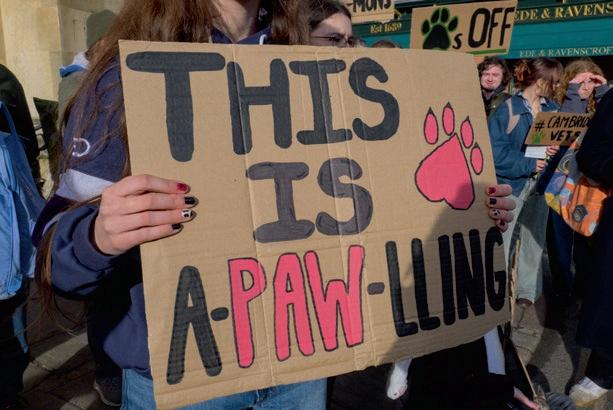
erning body, had signed a petition calling for formal protections to be put in place to prevent any decision to cease veterinary admissions being made without the input of Regent House. e petition was prompted in part by the news in January that Vet School applicants for 2026 entry had not received any o ers yet, despite previous con rmation that this admissions cycle would take place “as planned”
In March, Varsity reported that the General Board had decided to move management of the Vet School from the School of the Biological Sciences to the Faculty Board of Veterinary Medicine, in recognition of the need for “new leadership” in the aftermath of the decision to continue the course.
Also in February, Varsity exclusively reported that newly released documents relating to the human tra cker Je rey Epstein revealed he had sought to make contact with various academics in Cambridge with the aim of discussing research funding.


Epstein attempted to contact academics through an intermediary, who referred to him as “Je rey Stein” to obscure his identity, as the communications took place well after he originally pleaded guilty to procuring a girl below age 18 for prostitution.
No evidence was found of
At the beginning of March, Melanie Benedict was elected undergraduate SU president. eir platform included policies such as reducing student workload, continuing to support the campaign for divestment, and raising the pro le of the SU within the student body.




grad election.
any donations or grants having been made. e documents also showed Epstein sought to visit Cambridge in the autumn of 2010, and requested to see speci c academics, but this trip does not appear to have happened. e documents, released by the US Department of Justice, showed no evidence of any wrongdoing by Cambridge academics.










is year saw fraught elections at the Cambridge Union. e Lent Debates O cer, Pollyanna Greene-Wright, resigned after an internal investigation found she had committed electoral misconduct, which led to her being banned from running for Union President for Michaelmas 2026.





Jeeves Rohilla, who campaigned on the platform of improving a ordability for students and reducing wealth inequality between colleges, was announced as the newly elected postgraduate president two weeks later, after various rule breaches delayed the results of the post-
Rohilla was brie y banned from campaigning after he appeared in an Instagram post on the University's ofcial account, which the SU said gave him an “unfair advantage” – however, it acknowledged that Rohilla had not been anticipating the post being released during the campaign, and that he noti ed the Elections Team of its existence, which meant he did not receive a full ban.



principle that a presidential election should be a contest, not a coronation.” Soon after this result, it was announced that Greene-Wright had successfully appealed against her disquali cation, after an appeals panel found that the original investigation's ndings were not “adequately supported by the available evidence” .






Meanwhile, Roman Shainskyi was disquali ed from the postgrad race after he was the subject of multiple complaints, including voting on behalf of another student and being disrespectful towards SU sta – Shainskyi denied the allegations and appealed the ruling, but was ultimately unsuccessful.
Greene-Wright denied the ndings of the report, describing the investigation as “totally at odds with the constitution” In the aftermath of her disquali cation, several anonymous members of the Union launched a ‘re-open nominations’ campaign – at the time, they said that they were “motivated solely by the


Simon Goldhill, a classics professor at King’s College, gave up his teaching duties in April after a university investigation found that he had broken several university policies “by making unwelcome and unpermitted sexual advances” towards one of
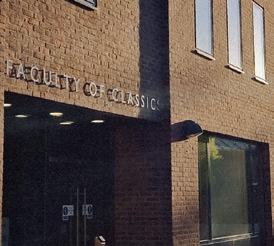

his students.
Goldhill was able to continue teaching for several months after the investigation began – additionally, it was reported that as he is due to retire at the end of the academic year, it is possible that he could still be made an emeritus
In April, the billionaire hedge fund manager and investor Chris Rokos made a £130 million donation to the University, and agreed to provide up to £60 million in additional funds, making it the largest donation given to a British university in modern history.






A by-election was subsequently called, which was held towards the end of April. GreeneWright again stood for election, as did Joe Hesketh, the Lent Speak-

Later that month, it was reported that two more women had accused Goldhill of sexual harassment, with one incident having allegedly occurred in
been built on undeveloped land in the Cambridge West Innovation District. is funding surpasses the previous largest donation to a British university, made by Stephen Schwarzman, who donated £175 million to the University of Oxford in 2022 to fund the Stephen A. Schwarzman Centre for the Humanities.












e funds will be used to establish the Rokos School of Government, which will o er master’s degrees and PhDs, as well as facilitating research by political scientists, economists, and government experts.




reported at the time that s provost Gillian Tett had only learned of the University investigation’s ndings on Goldhill when they were rst announced in the press, and had yet to receive a copy of the report, despite it having existed since February.

e School is due to begin operating in autumn 2026 – it will be located at a temporary site until its facilities have
Elections for the president of the Union for Michaelmas 2026 were held in March. e disquali cation of Pollyanna Greene-Wright, which was later overturned, meant that Equalities Ofcer Isaac James ran unopposed for President. However, re-open nominations received 88 votes in the subsequent election, while James received 51 – Varsity reported at the time that this was the rst presidential election in modern history to have ended with this result.
ers O cer. Greene-Wright’s campaign policies included more head-to-head speaker events, as well as a greater emphasis on welfare. Meanwhile, Hesketh promised a termcard that does not “platform online ragebait,” while not “shy[ing] away from di cult policies”. Hesketh received 63 votes, securing the presidency, while GreeneWright received 55.
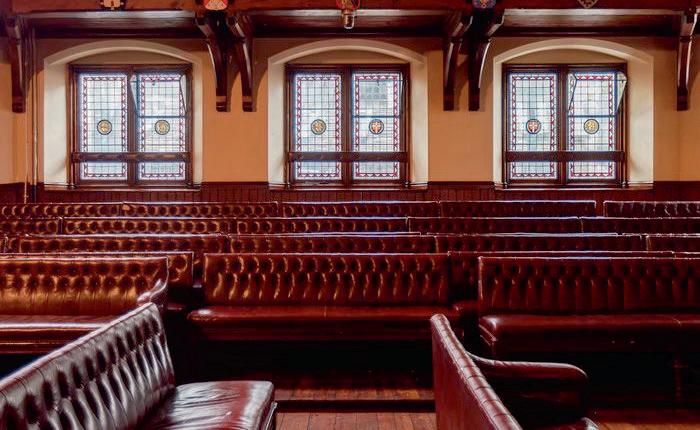
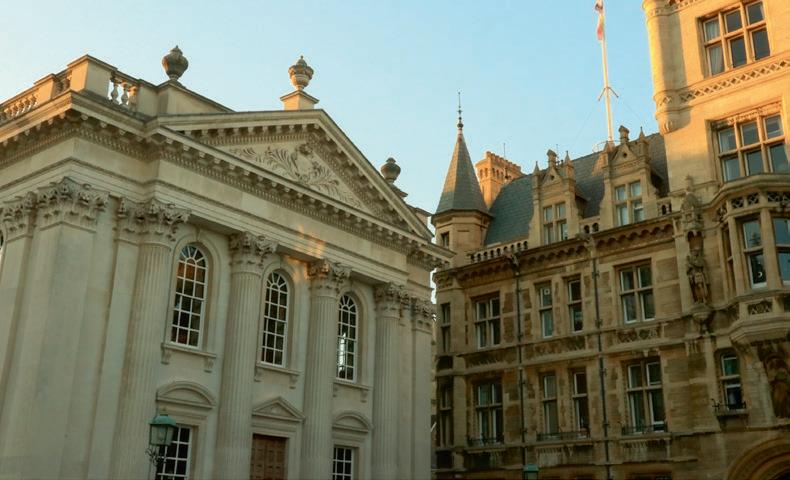
In May, Varsity reported that University leadership had approved a proposal by the Judge Business School (JBS) to sign a memorandum of understanding with Saudi Arabia’s defence ministry. e agreement would cover “ potential collaborations” in areas such as “executive education,” “leadership development,” and “healthcare administration strategies”. is collaboration would take place exclusively between JBS and “the civilian administration of
the [Kingdom of Saudi Arabia’s ministry of defence].”
Cambridge’s committee on benefactions and external legal a airs, which assessed the proposal on the basis of reputational risk, was told by JBS that “Strong mitigations were in place to protect against reputational risk, including emphasis within the draft MoU of its civilian-only scope”. Nonetheless, committee members expressed concerns regarding the human rights record of the Saudi government, as well as potential risks to academic freedom.
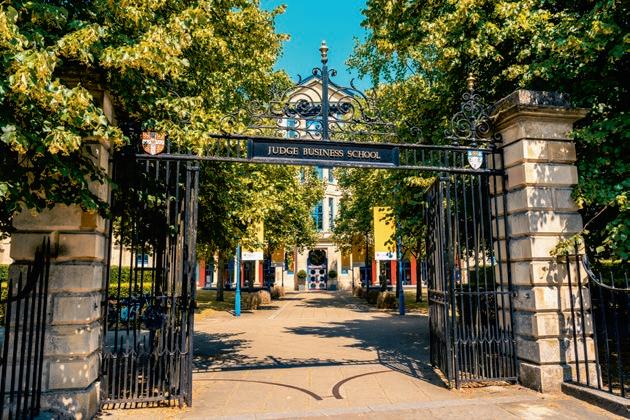
A JBS spokesperson said of the report: “Cambridge Judge business school has not signed such an MoU with the Saudi Arabia defence ministry.”


May Week will see both the creative Neptune and the responsible Saturn enter your region of the sky. Lean on those around you to strike the right balance, and ensure your celebrations don’t land you in Addenbrooke’s.

With Mercury entering your sign, the time is ripe to be honest about your emotions. Is there something you have been meaning to tell someone before the term is over?



Exam term is a brittle time for relationships. Perhaps you succumbed to jealousy over your college sibling’s insane ability to lock in, but fear not. When the Moon enters Libra, your natural charm and diplomacy will return and help you heal those painful divisions.



With Mars in Taurus, your patience and determination will shine amid even the fiercest of conflicts. If you are attempting to graduate without paying that £2 library fine, there has never been a better time to stand up for yourself.
Venus and Jupiter have come to visit you, just as endless parties, balls, and open-air plays provide ample opportunity for striking up friendships, partnerships in crime, or perhaps something more…
Who needs May Balls when for the same price you could book yourself an impromptu trip, learn to paraglide, or purchase a didgeridoo? With the Moon in Scorpio, it’s time to trust your instincts and be spontaneous.




Capricorns are known for their patience, responsibility, and ambition. Combine that with the Sun being in Cancer and it’s safe to say you have a fair chance of reaching Survivors’ this year.


Pluto is moving in retrograde through Aquarius, bringing with it meditations on a year of power struggles. Did that society election really merit such bitter disagreements? Can you finally reconcile with your tripos rival? Only time will tell.
The stars are on your side if you attempt to break into a May Ball. While Varsity cannot condone such behaviour, we can only imagine you have already concocted some hairbrained scheme as the rebellious Uranus enters your area of the zodiac.
As the Moon moves from
Scorpio and then Sagittarius, your diligence is likely to wane. Leaving packing until late is therefore illadvised, unless you wish to incur the wrath of multiple college staff and/or family members.


Help! The end of term has raised some scary questions: what will I do with myself for the next four months? Well, perhaps the Moon entering Sagittarius later in the week may give you some muchneeded optimism for the future.
Nature is where you should be spending your May Week. The Sun being in Cancer will only enhance your desire to remove yourself from the furore of college life and reembrace the simple things.













Ywere few opportunities for it.”





Do you think things have changed?

Most of your single friends will have something to say about dating in Cambridge – something bad, that is. We usually mention combing through Crushbridge or Camfess, multiple eye-contact Sidg-uationships, the desperate urge to go to a house party and meet someone you didn’t already know, and routinely fending o the creepy middle-aged men who seem to just spawn in on a night out.
Unsurprisingly, this isn’t a new problem. ere’s always been the issue of the ‘Cambridge bubble’, and since the dawn of the internet, there’s always been a space for online dating. You might have heard of romance.ucam. org (RUO3): a website which was created at the start of the millennium, that has experienced an unprecedented in ux of members in the last few months, likely because of a Camfess post advertising it as a refreshing alternative to Hinge. I sat down to talk to the website’s co-creator, Richard Neill, to learn more.
In 1999, while studying Natsci at Trinity, Richard dreamt up the idea of a Cambridge dating website with his friend, John Surcombe from St John’s:
“We basically thought: well, there’s this new thing called the Internet, you can even order a pizza online, and the Americans have come up with these online dating sites. Why don’t we have this in Cambridge?”
John handled the code, and Richard adopted the title of 'Cupid' – essentially an admin-slashmatchmaker – which he still holds 26 years later.
So, why did Cambridge need a dating website?
“Dating in Cambridge is hard. I suspect it’s hard now for di erent reasons than it was back then, but the biggest problem was that everyone was far too shy. e stupid thing is, in Cambridge, almost the entire University has impostor syndrome. I know of a couple who had been making eyes at each other since Freshers’ Week, but only got together after Finals, because neither of them could nd a way to broach the subject.
“It was especially a problem in the sciences: if you were a physicist or an engineer, only a fraction of the class were women. It was alright if you were the kind of person who could just go into a nightclub, get absolutely plastered, and then somehow feel comfortable making your introduction to the person you woke up next to the morning afterwards. e joke used to be that without booze, the country would die out. But if you wanted to do things normally, there
“I think that’s gone and people are much more comfortable with each other, but because people are so wrapped up in their own worlds – or their own devices – nobody knows how to break into another person’s consciousness anymore.”
And dating websites have been replaced by apps now. But there’s always meeting through friends, right?
“ at works brilliantly if your friend circle continues to include a pool of people you haven’t met. Usually, however, it freezes absolutely solid at some point. But in terms of dating apps, there’s just been a complete erosion of trust. We know that if you use Facebook, you’re the product,

not the customer, because you’re being sold as an advertising demographic. People have lost trust in technological institutions because they’re invading their privacy; if you look at what they do, they’re not on your side.
“ e thing is, they gamify to trap you on the platform and sell you advertising; then they do some very dotty things with your 'super likes' or whatever it is. Tinder has no desire to lose its users. If they could actually nd the perfect person for you, they might well not show them to you. ere was a time when people were moving on from the site to dating apps, but I think this recent rise in RUO3’s popularity can be attributed to people realizing those other platforms are taking advantage of them. We’ve always put the user rst.”
So what was different about RUO3?
“What made us di erent, in short, were our ethics (we are doing this to make people happy, not for the money), locality (everyone is a member of the University, so you can easily meet someone for co ee the same day), and cost (or lack thereof – it’s always been free). We also care deeply about people’s privacy.
idea. Many people don’t have photographs, and while this originates from an era where if you wanted a photo, you had to borrow a scanner, it results in a culture where people often open conversations with something more profound.”
But don’t you have to play a kind of game in matchmaking, to push people to get past those rst few awkward hurdles?
“I think the description of a riddle ts best, because it’s the problem of: how do you nd the person who likes you, and you like them, and you’re both single at the same time, and you’re both kind of thinking how to make the rst move, which is still very di cult. You have to gure out how to end with two people happy together.”
How does the site help you solve it, then?
“A lot of people don’t want to tell everything about themselves. ey may want to talk about something they love but not who they are. I would encourage people to talk about their interest in Shakespeare rather than their identity. e least interesting thing about you is your name, address, college. So why share that rst? People often create personas or imaginative pro les too. at’s okay, I think, as long as other users are in on it.”
I suppose it’s about striking the right balance, then. How do you balance being both 'Cupid' and a website administrator?
“Some time ago, I was a member of the site to date, as well as to administrate, which meant I had two personas. I was very careful to keep the two ‘hats’ strictly separate, because being the site admin could be seen as an unfair advantage – though I haven’t used the site myself for quite some time.”
You’ve brought about at least 16 weddings, according to the site’s testimonials. Is there an element of living vicariously through the couples you’ve brought together?
“It is a great feeling to know that you’ve made someone else happy. You know, it’s much easier to host a party than be a guest, especially if you’re organising it, because then you’ve got a reason to be there.”

“We came up with a lot of di erent ways to nd potential matches, whether this was through a keyword search (a lot of people nd it easier to list 10 things they like, rather than write a paragraph), or through the photo gallery page where you could mark who you fancied by liking photos, rather than messaging them, which kind of predated Tinder as an
Operating in a smaller and better-aligned dating pool, which runs against the current of ‘gami ed’ algorithms, will de nitely alter your perspective, most likely for the better. If RUO3 is a force for any kind of change in the future of Cambridge dating, I think it encourages a community more focused on honesty and the will to give each other a little grace, which, at the end of the day, is a lot closer to how actual human relationships work.

In anticipation of my graduation this year, I’ve spent the entire year fretting about my imminent departure from Cambridge. Some time around the middle of Lent, my friends and I started marking our ‘lasts’, a practice that quickly turned from sentimentality to silliness. After marking actual milestones – last weekly essay, last Homerton bop – the ritual slowly became ridiculous: “ is is my last time studying in the Waterstone’s cafe”; “ is is the last time I’ll ever get a book out of the UL”; “ is is the last time I’ll have a supervision at Newnham on a Monday…”
Time is life’s Achilles’ heel, an injury magnied by the three-year-long, formative experience of university. No matter how far through you are, time su ocates: in rst year, you worry about spending such a long summer away from your friends, while in second year that same summer seems far too short to read every single Greek tragedy ever. And as for third year, well, it goes without saying...
As we wade through the dregs of Easter term, I’m proposing we collectively enter a delusional state in which we see time as on our side. Contrary to popular belief, there is time to have fun during Easter, and once exams are done, social and temporal conventions are thrown completely out of the window anyway. Walking out of the exam hall on the 12th, I will not be thinking about the medieval supernatural and whether Margery Kempe would feel her famous “gret sorwe” if she read my paper. ree glorious weeks will be stretching out before me, begging to be lled with just about anything except studying. I owe it to those weeks, Cambridge, and myself, to ful l this divine prophecy.
❝
My friends and I are more than ready to lock in to fun
Having spent the past three years ‘locking in’ to academic work, job applications, and maintaining sanity, my friends and I are more than ready to lock in to fun. Post-exams last year, our alarms were still set (albeit several hours later than before), but we weren’t waking up to pump out practice essays or memorise Milton: we had plans for Jacks on the backs, window shopping, and yes, a lot of pints. We were putting in eight-hour shifts at the pub instead of the library. Cambridge is kind enough to grant
its undergraduates a few weeks of relaxation to mitigate the entire year of stress. e post-exam period fosters spontaneity. You go to a May Ball, wake up at 3pm the next day, and then decide to randomly walk to Grantchester, or to buy a co ee without (shock horror) instinctively pulling out your laptop. is year, I’ve decided to do things di erently, and have composed a comprehensive bucket list of everything I want to do in Cambridge before leaving. 27 days is not a long time to relive all the best parts of three whole years. My friends and I are keen to accomplish the bucketlist, our bank accounts and livers less so. But fun must prevail. So here’s what I’ll be getting up to this June.
In Cambridge dialect, ‘doing nothing’ directly translates to ‘not studying’. It is di cult to shake the belief, often instilled forcefully by our supervisors, that ‘not studying’ equates to being lazy. But ‘the art of doing nothing’ becomes re-intellectualised and thus sanctioned when you ip it around to ‘doing nothing, in art’. I would not be doing justice to my former titles as Arts Writer, Arts Editor and Vulture Editor if I didn’t encourage you to make the absolute most of Cambridge’s arts scene while you can. We are incredibly lucky to have access to so much of Cambridge’s culture, often for free and so close by to us. I refuse to leave Cambridge without going to consider the Kettle’s Yard lemon one last time. Go to an exhibition, a play, a poetry reading, anything – before you realise it’s not nearly as easy to do these things elsewhere.













e concept is not fun if it involves taking your exam stress with you into every available study space in Cambridge. It is fun, however, if, like me, you have reached full capacity for the amount of books taken out of Cambridge libraries and need to return them before you go home. I will greatly enjoy walking into the English Faculty Library knowing I don’t have to sit down and work for the next eight (or nine, or ten…) hours. I might even make a weekend of it, as I don’t think I can quite manage lugging 20 books around Cambridge. It would be completely understandable if you take a vow to not read a single book for the next six months after your nal exam. However, if you can stomach some light reading, the library crawl is a perfect way to return all your course-related books and take out books to read for fun. (Reading for pleasure – a radical idea, I know!) Across all of Cambridge’s libraries there are 16 million books. We often forget that not all of those books contain niche, dry criticism about a topic nobody outside of the Cambridge bubble will have heard of, let alone care about. ere are so many contemporary ction and non- ction books that are available for borrowing. When else will you ever have such a vast selection of books just a stones throw away from your bedroom?











Once the (medieval) supernatural has vanished into thin air, the natural will need tending to. In other words, I will be needing nature to tend to me after spending more time in the library than my own room. Cambridge’s green spaces are few and far between, but the ones we do have more than make up for this. I’m envisioning spending long afternoons reading in the Botanic gardens, replicating C-Sunday on Jesus Green, and getting sunburnt in the orchard (or just not rained on). Moments of peace are also rare at Cambridge, and I intend to reclaim such moments in nature (while dodging the odd ying cork from prosecco sprayings).
Two culinary staples have marked my university experience. Each Sunday during term, no matter what state my weekly essay was in, I’d
A couple of quid in exchange for a plate of unimaginable joy in the form of hash browns or cauli ower cheese is, to me, a fantastic deal. And that’s yet to mention the endless ow of co ee, juice, and conversation about your weekend antics. As well as maintaining my hall presence, I’m going to level up both meals by splashing out on a Fitzbillies eggs orentine or a pub lunch.
Speaking of pubs, we’ve reached the activity that will be dominating my post-exam period. My friend Lucy and I are the proud founders of Friday pub tradition (you’ll never guess what that entails), so we’re more than quali ed to point you towards a well-poured pint. e Granta and Byron’s Bear are perfect for sunny afternoons which beg for a beer garden. e Pick is a student staple, while the Eagle is a Cambridge rite of passage (and somewhere my dad insists on taking me every time he visits). For a balance between cosiness and claustrophobia, e Free Press and Champion of the ames pour a healthy dose of each. e Rock or Prince Regent are just far enough to qualify leaving Homerton without bothering to go back into town at the end of the day. And when I can’t be bothered to leave at all, I simply fall out of bed and into e Gri , the hidden gem that is Homerton’s bar. I reckon I could easily take on a pub a day for three weeks, in my aim to toast Cambridge farewell from the Regal to the Eagle.



found and connections I’ve made here are what have changed me the most (and I’m not talking about the LinkedIn kind).
❝ We’ve watched each other grow up










We all probably have about 30 people we know fairly well here – friends from clubs, college, your course – who’ll all be needing a catch up over co ee (a at white or an espresso martini – the choice is entirely yours and guilt free post-exams). But I’ll bet there are ve to ten people who have de ned your last three years, and who will logically dominate your last three weeks. I love Cambridge, I love Homerton, and I love studying English, but the supportive network I have
Friends get you through the everyday of uni: you work, eat, and even live together. ey are pretty much the only thing that remains constant in such a transitory period. Despite the downsides of cramped college accomodation, living on top of each other means that friendships are cemented for life (alongside your mortal enemies if the college ballot lottery did not work out favourably). erefore, do not take this unique proximity for granted! I’ve met the most amazing set of people who I feel privileged to support and be supported by. I met my girlfriend during Freshers’ Week, and we’ve been together ever since. e people who I knew when I didn’t know anything – about living alone, doing a degree, being an adult – have stuck around, and we’ve watched each other grow up, and grow as people. So, going to the pub is, in fact, not the most important thing on my bucket list. It is making the most of the people who are not just part of, but are my university experience. And going to the pub with them. (Refer to ‘Cakes and ale’ for a refresher on the best pubs to go to with your friends.)
❝ Everything goes when you leave, except your memories and your mates
Pretty much anything goes during the last few weeks of Easter term. And everything goes when you leave, except your memories and your mates. So keep those things around. And don’t miss brunch on Sunday (unless it’s a roast this week, in which case don’t miss a roast).
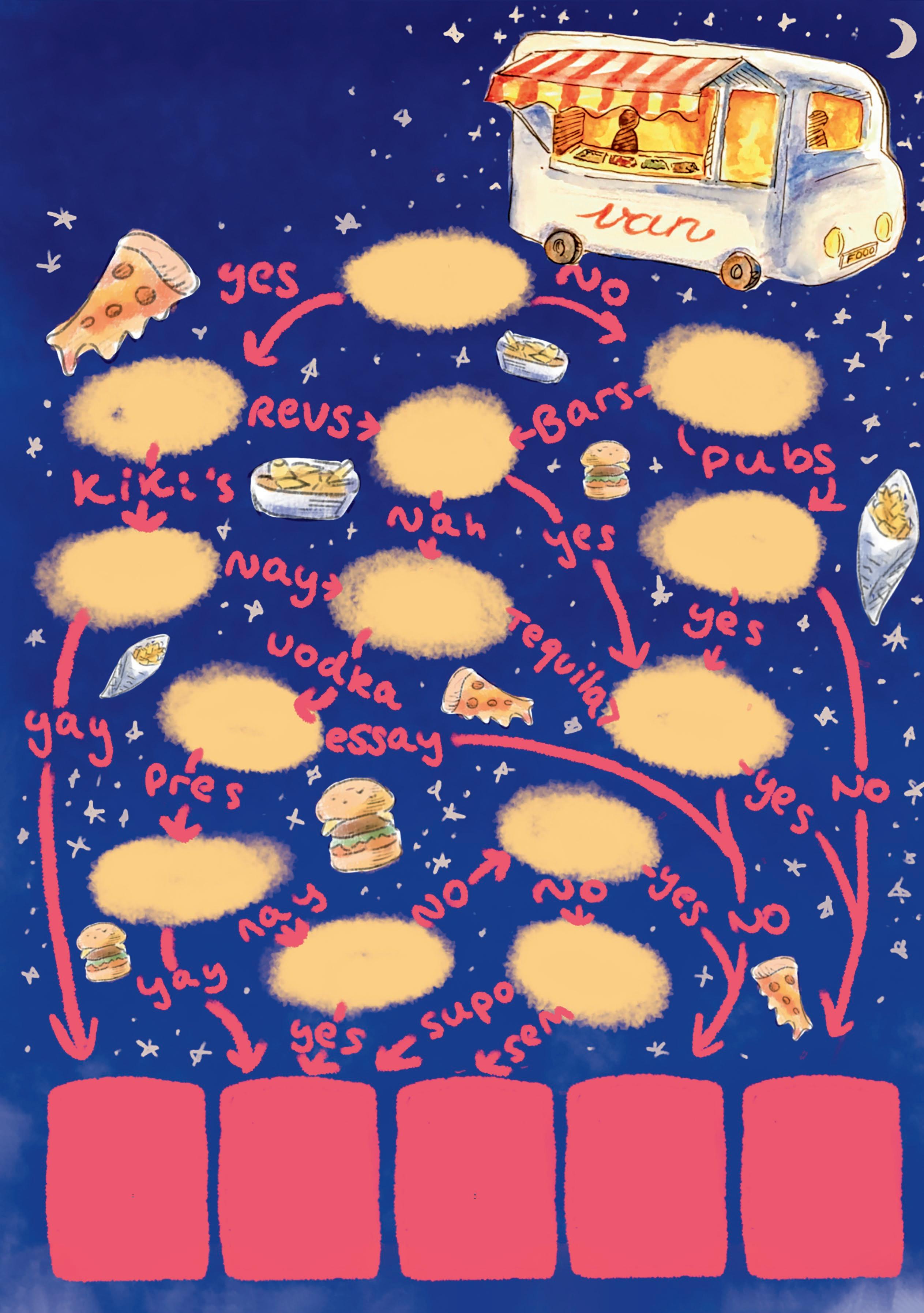
Emma Gower plates up the food destination to cure your next hangover...
Do you like clubbing in Cambridge?
Kiki’s or Revs? Toofreshers?many
Kiki’ssystem?one-way Essay or presentation? beforePre-reading term? Supoor seminar? Subject dinner?
You’re the kind of person who loves to live life on the edge. You’re the unhinged friend, but everyone loves you for it. And let’s face it, by this point, you’ve got a stomach of steel.
Pubs or collegebars?
Are stayingyouuntil closing?
Are you doing a PhD? Vodka tequila?or
Clubbing on C-Sunday?
McDonald’s You get on with everyone around you, and you love to stick to routines, whether that be for studying or for going out. Don’t be afraid to branch out from Wevs to La Raza sometimes...
You’re the person in the friend group who always hosts pres and you love that. You always say that you hate Revs, but if we’re being honest, it’s really your favourite place.
You’re the fun-loving friend who’s always up for an adventure. But honestly, everyone knows that you only really go on a night out to get Van of Life chips at the end of it...
You’re the sort of person who everyone likes. You might be quiet sometimes, but you’re very funny, and your friends can always count on you being tucked into bed by 11pm.










’
Pooja Gada explores why the end of term feels so bittersweet through the language of lasts
In mid-June, a strange feeling settles over Cambridge. Finals are over, the sun is no longer a stranger, and May Week arrives in all its sleep-deprived, champagne-stained glory. It’s the feeling of that nal supervision, the nal formal, the nal afternoon on Jesus Green – ordinary moments made poignant by the knowledge that they’re ending. Across cultures, humans have tried to give this ache a name. But where does it come from?

Japanese aesthetics has a name for this: mono no aware ( ), often translated as “the pathos of things”. Articulated by the eighteenth-century scholar Motoori Norinaga in his readings of e Tale of Genji, it captures the ache of transience: the way ordinary things become poignant when we know they cannot last. It is why every nal thing feels di erent from all the others: nothing about the grass, the gowns, or the lukewarm prosecco has necessarily changed –what has changed, though, is our sense of time. Psychology o ers another vocabulary for the same shift. Socioemotional selectivity theory suggests that when people perceive time as limited, their priorities shift: they become less interested in abstract future goals and more drawn to emotionally meaningful experiences and relationships. Cambridge, in June, is full of these small countdowns; their scarcity deepens our appreciation of them. As mono no aware suggests, not all time is emotionally equal. e end of term feels precious because it makes everyday moments feel numbered.

much of Cambridge has been made meaningful by other people.



❝ Not all time is emotionally equal



By June, Cambridge friendships have acquired their own strange shorthand: the person who saves you a seat in the library without asking, the friend who knows your co ee order by exam term, the group chat that becomes increasingly unhinged after midnight. Shaped by Confucian ideals and Korea’s emphasis on social bonds, jeong ( ) describes the affection that forms through repeated shared experience. It is the bond of having been there, again and again, for the same small rituals. Sociology o ers another account of this shared intensity: collective e ervescence, the heightened emotion and sense of unity that can arise when people gather around a shared event. e end of term hurts not only because time is running out, but because it reveals how



Sung at graduation ceremonies across Europe, Gaudeamus igitur – “so let us rejoice” – originates in a Latin manuscript from 1287 and belongs to the old tradition of carpe diem: an entreaty to enjoy life while we can. is is not joy in spite of transience, but joy because of it. ere is a cognitive reason this kind of joy endures. Emotionally heightened experiences are more likely to be encoded as lasting memories, partly because activation of the amygdala can strengthen the consolidation of salient events. At the end of term, those conditions are everywhere: relief after exams, novelty after routine, social intensity after weeks of private revision, and the awareness that the moment is nite. is helps explain why endings linger so vividly. As we throw ourselves into May Balls, late-night walks across the city, and the questionable decision to do it all again on far too little sleep, we are not just celebrating the end of the year; we are making the memories that will outlast it.

No single word or psychological theory can quite claim this feeling: relief, exhaustion, joy, longing, nostalgia. But whether you’re a fresher watching your first Cambridge year slip away, or a nalist counting your lasts, take comfort in knowing you are not alone in it. Across cultures and centuries, humans have tried to name the ache of endings. In the meantime, this May Week, let’s make memories that will stay.


At the very beginning of the academic year, the University of Cambridge announced that students are now permitted to use AI tools in order to “support personal study, research, and formative work”. Nowhere has this change been more apparent than in our libraries – in any given study space, it’s likely that ChatGPT will be open on at least one laptop screen. As a growing number of students begin to rely on the use of generative AI to write elaborate supervision essays and complex Python scripts, does this new guidance throw into question the ideology that ‘degrees make us smarter’, especially as less of our work becomes authentically our own? Is there anything science can tell us about the potentially detrimental e ects of AI use on our brains, or are we jumping to false conclusions too soon?
One particularly common motivation among students for using AI is to seek help with writing the occasional supervision essay. Researchers from MIT set out to understand the e ects of using AI on our brains by comparing the brain activity of people who wrote essays using either ChatGPT, traditional search engines, or no online tools. ose who used ChatGPT to write their essays displayed fewer, weaker connections between di erent parts of their brains, highlighting how using AI can in uence the brain’s underlying architecture. Moreover, the writers who used ChatGPT found it much more di cult to quote their essays correctly, if they could even quote them at all, unlike those who used traditional search engines or no online tools.
roughout the process of writing an essay or studying for an exam, the hippocampus – a small, sea-
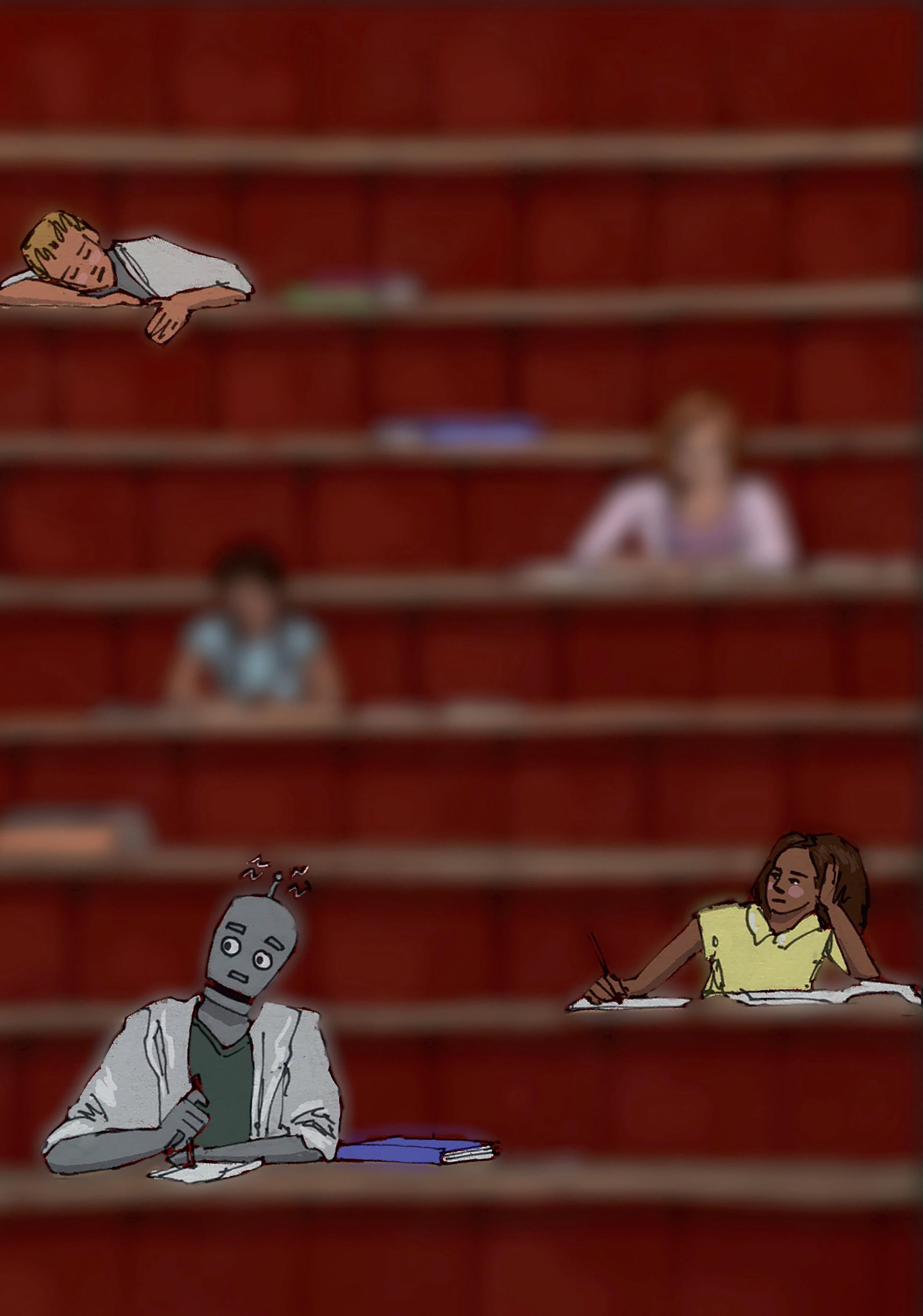

horse-shaped structure within the brain – is responsible for converting short-term memories into long-term memories. e hippocampus also stores important memories and retrieves them later on when needed, enabling us to remember crucial information from our previous study sessions during exams. However, using generative AI tools to write eloquent essays or make detailed lecture notes may lead to weaker activity in areas of the brain linked to memory formation, making it harder for us to recall important information when we need it most.
❝
Researchers are also investigating how the use of generative AI can in uence what’s known as our ‘cognitive e ort’, which re ects how much mental energy we invest into performing challenging tasks, such as solving problem sheets. Dedicating time to learning new information and solving complex problems is thought to be essential for keeping our brains t and healthy, as engaging in di cult learning tasks can potentially help to rescue dying brain cells in the hippocampus – supporting the idea of ‘use it or lose it’ in maintaining a healthy brain. Avoiding this crucial learning process, such as by using generative AI to perform difcult learning tasks for us, may harm the survival of thousands of our brain cells every day.
the survival of thousands of brain cells every day
While provoking news headlines may lead us to think otherwise, it is important to note that there is currently no evidence to suggest the long-term use of AI has a detrimental effect on our brains. To claim that ‘AI is making us stupider’ is therefore an inaccurate way of summarising what we currently understand about how generative AI use in uences our intelligence and brain health. Many students would argue that using AI can actually enhance our education, for example, by structuring exam revision and guiding us towards up-to-date resources. Using AI tools to perform the time-consuming, inefcient parts of our studies is referred to as ‘cognitive ofoading’, which allows us to devote more time and mental resources to delving deeper into the course content that interests us most. It’s certainly possible that cognitive o oading could ultimately improve the depth of knowledge we develop throughout our time at university, assuming that we only devote the additional mental resources to our studies.
Essay writing and note-taking are not the only reasons why students are turning towards AI for help. Some of the most popular motivations for using AI chatbots include coping with life’s challenges and providing an inexpensive, readily accessible alternative to therapy. is could potentially pose the risk of AI harming our emotional intelligence, especially considering the tendency of AI chatbots to agree with the user’s viewpoints, which runs the risk of reinforcing negative feelings. Relying on AI for emotional support during our most stressful times at Cambridge may add another layer of complexity to the potential impacts that AI could have on our lives.
▲ LYRA BROWNING
Depending on the evidence that will inevitably emerge over the next few decades detailing any precise impacts of AI on our intelligence, Cambridge granting its

students permission to use AI could either be a helpful or harmful addition to the more traditional aspects of our education. Our motivations for using AI to aid our studies, whether this is for essay planning, emotional support, or writing a shopping list, may also play a key role in determining the precise impacts of AI use on our brains. Crucially, we are in complete control over how we use AI tools within our degrees – whether or not we choose to embrace them is up to us.

Juliette Berry argues that the best night out is de ned by the company, not the venue
ow do we measure a good night out? Is it by the post-club food, the side characters you bump into, or by the intensity of your hangover the next morning? In planning this article, I attempted to separate and examine all of the blurry memories from my Cambridge club nights. But I was instead faced with a familiar collage: sticky oors, sweaty men and the same rotating cycle of indistinguishable pop songs. My setting and environment rarely stood out. One blends into the next in a uorescent haze, de ned less by where you are and more by the fact you’ve ended up there –again.







The rotation of Revs to Mash to Kikis (and the occasional pilgrimage to Junction) was one of the rst lessons I learned when arriving at university, committing myself to religiously and blindly obeying these divinely chosen rules, trusting that I was in the safe hands of the clubbing veterans who seemed to know exactly what nights were the best. is circuit, however, soon lost its novelty, as you stopped to take a look around you and realised you were surrounded by the same collection of faces on a weekly basis. I knew Cambridge was small, but the selection of people who are brave enough to face its clubbing scene seemed even smaller. And yet, there is something strangely reassuring about that familiarity. However chaotic the night becomes, you’re never far from someone you recognise – whether you want to see them or not, and whether you’re entirely sober enough to remember how you know them.

❝ Nothing beats an overpriced pint in a pub garden with a table of friends
bridge scene, which de nitely says a lot about the state of our clubs. You can see this from the condensation that drips from its windows and the slow, army-like crawl you have to make to wade through the sweating bodies in search of the toilets. In saying this, ‘Wevs’ holds a special place in the undergraduate heart and is almost guaranteed to produce a run-in with at least one of your campus celebrities. On the other hand, there’s Kikis. A place I have entered a solemn ve times because of the unfathomable queue that it generates, leading to an inevitable one-in-one-out system that is bound to ruin even the most optimistic person’s night out before it has properly begun. Meanwhile, Junction behaves as a magical faraway land, promising an improved setlist but an expensive taxi journey, resulting in it acting as a once a term (or year) escape and a glimpse into what our nightlife could’ve been if we’d gone to our insurance unis. Even La Raza remains, for now, slightly mythologised; as a meagre rst year, I am yet to truly uncover it, but I hope that the older years’ gatekeeping is worth the hype, rather than another Bridgemas ball-style disappointment.

to my friends (in an attempt to attend ‘Woo Wednesday’), I realised my fondness for it has less to do with the club itself, and more with the people I end up there with. Although this might be an unsatisfying conclusion, it’s unavoidable. e success of a night out in Cambridge rarely relies on the venue but instead the people you arrive with, the people you nd, and the people you eventually leave with.
For this reason, I nd that the most memorable parts of the night rarely happen in the club at all. e pub, by contrast, o ers something the clubs don’t – a place to actually communicate and bond. Conversations stretch, cards are played, and the night doesn’t require copious amounts of alcohol to feel sustainable. Nothing beats an overpriced pint in a pub garden with a table of friends (not even an end of term Revs).
❝ In the end, the ̒best’ club matters far less than who you happen to nd

It seems, then, that the destination of the night rarely changes the crowd it attracts – but this isn’t to say that I don’t have a favourite. Revs behaves as the central hub of the Cam-

For those of you who are club educated, you may have realised that I have missed one out: Mash. As a proud ‘Frash’ fan, I am aware this is a controversial stance. But for me, Mash o ers a less su ocating alternative to Revs – still cheesy, still chaotic, but with the added appeal of its queer nights, and, of course, a pretty fun name. When trying to defend Mash


ROSIE BEYFUS


So what makes a good night? I think I’ve found my conclusion. e best club is the one you end up at when your friends all unexpectedly put down their work and decide to leave college. It's where you bump into your course friends and make future plans to meet up (even if these are never executed). e best club is where you nish in Taco Bell with your college wife and a newfound group of strangers. Although Cambridge o ers a limited rotation of venues, and a painstakingly repeated setlist, it is perhaps that very predictability that makes these moments possible. e nights themselves may blur together, but the people rarely do. In the end, the ‘best’ club matters far less than who you happen to nd when you’re there.




Amanda Ljunberg explores how the addiction to success follows Cambridge students from the library to the gym in a harmful way
Your rst lesson at Cambridge is that you aren’t the only one to have been smart, or consistent, or taken on way too much and thrived in spite of it all (or even because of it all). But exceptionalism takes no prisoners. So if academic excellence is no longer what gives you that rush, perhaps your discipline can. Perhaps your body can.
Perfectionism, as some of the polymaths I have spoken to attest, can seep into every corner of your life. But there is something speci c about the physical nature of exercise. Obviously, it releases dopamine. It gets your mind o stress. But exercise plans also o er structure, break your time into sessions, distances, splits. It not only calms the overactive mind, but gives that mind something to dominate. You can apply the same high standards from your academic life to your tness life, and begin to reap rewards from your su ering – not in that strange, delayed realm of mark schemes and feedback, but right in the immediacy of your person.



gym and their exercise. ey agree that the gym improves their mental health, but insist that it isn’t a trade-o for the ‘big things’ in their lives.

If exercise is a helpful outlet for so many, it seems unfair to call a passion for it excessive, or disordered. So where do we draw the line?
❝ e competitive environment of our academic system thus nds a mirror in sports
Most people I have spoken to tell me they nd it a useful outlet. Some are wary of my expecta-















Overemphasis on aesthetics is a part of it. is is a time charged with the need to go out, mingle, and look good doing it. When so much of our hard work is hidden in libraries and essays, a t body is a visible proof of private e orts. Dedication can be an attractive trait. So can seeming resilient, low-maintenance, and hard on yourself. In fact, university itself heralds the arrival of a sudden wealth of overwhelming changes – not least the chance to independently decide where, when, and with whom you spend your time. How much of that newly found free time could you put towards making yourself perfect?

achievers,
many of us feel


I suppose this returns me to what our ‘big things’ are. Your priorities can narrow sharply when left to your own devices. Your degree becomes an obvious anchor. But then what? You can invest in friendships, societies, work, creative endeavours. Yet how many of these o er the same tangible sense of progress?

obvious target to work to-
tion, making that itself an identity. But, as my friend Emma told me, “we have to remind ourselves that these things are supposed to be fun.”
❝ Any hobby is dangerous when taken beyond moderation –and I think right now exercise is a particularly fraught one



ebral life. en your body can appear to o er a fresh arena of agency. When the centre of your life, your degree, starts to feel uncontrollable, why not show yourself, someone, anyone, that you can still call the shots about something?

Cambridge is full of former prodigies playing long-form endurance games of acceptance. Since we don’t offer US-style scholarships demanding excellence in chosen the

A wish, or sometimes a requirement, to be at a lower weight in order to improve sports performance can become a gateway into unhealthy eating habits. is feels especially dangerous now, with the prevalence of ‘looksmaxxing’ and ‘skinnytok’ content as we come to the climax of an insidious obsession with protein, ‘toning’, and bodily discipline. But my argument isn’t only about how ambitious students are more vulnerable to self-destructive behaviours. It’s about how ‘exercise addiction’, even in its looser forms, allows the student who is already willing to su er for their degree to su er in a way that can be visible and mistakenly praised as health, or even romanticised for just how unhealthy it is.
In our cultural moment, the distance between self-improvement and willing self-destruction is becoming horri cally thin. I have great empathy for the desire to prove your self-control in a volatile world, and exercise is de nitely not bad. But any hobby is dangerous when taken beyond moderation – and I think right now exercise is a particularly fraught one.

Cambridge’s reputation as a powerhouse producing an extensive dynasty of in uential political gures has been tarnished by the diminished quality of student politics, which now resembles a caricature of the national scene.
One thing Cambridge student politics can reliably claim to do is re ect national trends: the year began with the formation of the University of Cambridge Left Society (UCLS), which quickly claimed support from Your Party founder Jeremy Corbyn. For a time, at least, the idea of a new political society with an active membership held promise. Nine months later, though, and UCLS has largely faded into obscurity.
Upon its formation, the society described itself not as “a recruitment agency for parliamentary careers,” but “a society dedicated to advancing independent working-class politics”. is begs the question: what have they actually achieved since then? Aside from advertising the occasional protest, it’s not clear UCLS has mobilised any kind of political movement that didn’t already exist at Cambridge, driven by other groups such as Cambridge for Palestine. is points to a decline in meaningful political activism within the student body – UCLS shouldn’t be faulted for trying, but almost a year on
I’m sure most students agree that this year of student politics hasn’t been pretty, but the lack of perfection has actually exempli ed exactly the type of progress student politics is supposed to make.
One of the more notable perfect imperfections of this academic year came on the left, with the formation of UCLS. Advertised as “the new home for left student politics at Cambridge,” the society opened the gates up for in ghting among the glamorously dressed Sidge-attending leftists of Cambridge. Now, it is true that it’s hard to point to tangible positive consequences of the society’s formation (and it doesn’t help my case that, at the time of writing this, the ‘about’ and ‘term card’ pages on the website only o er an ‘under construction’ message), but it did, almost immediately, manage to do something. It created a new space for leftist thought that people may or may not resonate with – and that in and of itself is a major win for student politics in my books. It
from their formation, they appear to have failed to spearhead any kind of political revival.




e attempted rejuvenation of left-wing student politics this year came alongside a total meltdown on the right.




e Cambridge University Conservative Association’s (CUCA) decision to host a talk from Jack Anderton, who argues in favour of “mass deportations” and suggested Britain should not have involved itself in World War II, was genuinely nonsensical. No serious person is suggesting that rightwing politics should not be discussed in Cambridge: a diversity of political thought is essential within a democracy, because only by engaging with the alternate view can one con dently conclude that their own perspective is the better one.

a bid to safeguard their political futures, are attempting to court the new generation of the far right. If Cambridge remains a factory for the next cohort of parliamentarians, then we must expect a greater display of responsibility from those who stand to bene t from that privileged position. Opposing views must be engaged with thoughtfully – blindly inviting whoever espouses the most outrageous opinions is not serious politics.


But there is a di erence between ‘hearing the other side out’ and inviting in ammatory gures just for the sake of it. I must agree with UCLS’ critique of Cambridge politics here: some CUCA members clearly see which way the wind is blowing with regard to Reform UK, which has been leading national polls for more than a year now, and in
made CULC members think – it made leftists think – ‘is my politics actually represented here? ’ And regardless of how many people answered negatively before deciding to join UCLS, the fact is that every student’s political journey became more intellectually interesting and assured.
❝








On the right side of Cambridge, this year it was the familiar and established institutions of the University that all seemed to su er from a common plague: speaker event horror shows. CUCA’s cancellation of their events hosting Tom Rowsell and Jack Anderton seemed to exemplify both a harsh embrace of extremism and a simultaneous cowardice in doing so. e Cambridge Union once more played jump rope with controversy, almost intentionally provoking the left with their invitations to the particularly provocative Katie Hopkins, Mike Pence, and more. When speakers come, go, get cancelled, get protested against, it’s hard to nd genuine
















My primary problem with student politics this year is this: it has become detached from political reality. It’s true that those participating in it may not be deciding national policy. However, those who are active in the political sphere now will likely continue to be so, and these people exert a disproportionate in uence over our politics, given that the average person engages very little with political discussion. Should we not, on that basis, expect a more serious approach from those who do choose to put themselves at the forefront of student politics? Real-world politics is not a game, and if those engaged in Cambridge politics have started as they mean to go on, the future of British politics looks bleak.
Chaos leads to thinking, and thinking is meaningful political engagement
political progress amid the chaos. e rst thing we get wrong about this, though, is that inviting extremism is surrendering to its unreality. Like it or not, Reform is on the rise, Republicans run the show across the pond, and ideas we nd nonsensical genuinely exist in large numbers outside our own social bubble. Engaging with extremism, if anything, therefore shows that this place is taking the dangerous reality seriously. And all the chaos it entails for student politics is once more a necessary part of the political assuredness students need to nd at university. Chaos leads to thinking, and thinking is meaningful political engagement.
Among the chaos, therefore, often lies progress. Of course, we should be engaging in student politics to the end of striving to improve on the often laughable state of our country’s ‘real’ politics. But the way in which the two mirrored each other this year was promising; preparation for the ‘real world’ post-graduation involves experiencing the ugliness, grittiness and, frankly, the bullsh*t that it has to o er.
by
‘It’s
Ell Heeps predicts what we can expect from Olivia Rodrigo’s
Teenage girls the world over (myself included, though I’ve sadly had to renounce my teen status since) rejoiced in April when Olivia Rodrigo nally announced her third album, You Seem Pretty Sad for a Girl So in Love. As with her previous lead singles, the build-up to the release of ‘Drop Dead’ later that month was de ned by rumours surrounding a recent breakup –fans have scoured the lyrics for references to Louis Partridge, though with lines like “Pisces and a Gemini / But I think we might go really nice together,” one doesn’t necessarily need to look very hard. Nonetheless, Rodrigo has been reasonably coy about the subject of the record as a whole, describing the album as one made up of “sad love songs,” and never directly referencing the relationship in interviews, leaving the rest of us to ponder what exactly she has in store for us. I’m writing this piece having literally just failed to secure tickets for Rodrigo’s tour next year, which frankly made me reconsider the entire venture, but my passion for ‘Drop Dead’, and Rodrigo’s discography in general, trumps all – so, I’m going to make the fatal mistake of predicting what might await us in this latest release.
On rst listen, ‘Drop Dead’, which at this point I must confess is one of my favourite songs of all time, appears to be a quintessential love song. is marks a departure from her usual topics of heartbreak and teenage growing pains: ‘drivers license’ and ‘Vampire’, which kicked o the previous two Rodrigo eras, are unmistakably breakup songs, and although much of the speculation around the new album centres on her failed relationship with Partridge, she has taken a di erent approach to this most recent rollout by beginning with a much more upbeat lead single.
She told Cosmopolitan that the song was inspired by a rst date, and she perfectly captures the experience of that rst rush of feelings, with dreamy synths and a soaring string accompaniment. However, she described the song upon its release as “the first chapter in the story,” which suggests that all might not be as it appears from the song’s jubilant tone.
a universal feeling with startling precision, and her references to various
❝ She perfectly captures the experience of that first rush of feelings
thing feel timeless. Sure, she wrote the song at age 22 about a





















Signs of this can be seen within ‘Drop Dead’ itself, if you look close enough. e lyrics reveal a deep fear, suggesting that what she’s actually articulating is closer to anxiety than real love. She speaks in absolutes throughout the song: “I hope you never nish that beer” becomes “If you let me stay the night / Well, I think I might just have to stay forever”. She repeatedly implies that the relationship is fated, with lines like “It’s feminine intuition / ’Cause I always had a vision of us standing like this,” but that doesn’t stop her uncertainty about the entire thing shining through: “I’m paranoid I made you up”. e music video embodies this panicked obsession: Rodrigo runs around the grounds of the Palace of Versailles as though trying to escape her all-consuming feelings. That she was allowed to film at such an iconic location (which has, until now, been notoriously strict in who it permits to use it as a backdrop), the rst artist to be permitted to lm speci cally in the royal apartments, is testament to just how much she has outgrown her days as a Disney star, and found a musical identity of her own.
but the
music video is set in a 17thcentury palace, and Rodrigo sprints through the corridors wearing 80s-esque over-theear headphones, in scenes which evoke that one moment in e Crown a young Diana rollerskates around Buckingham Palace, equally uneasy about her future.


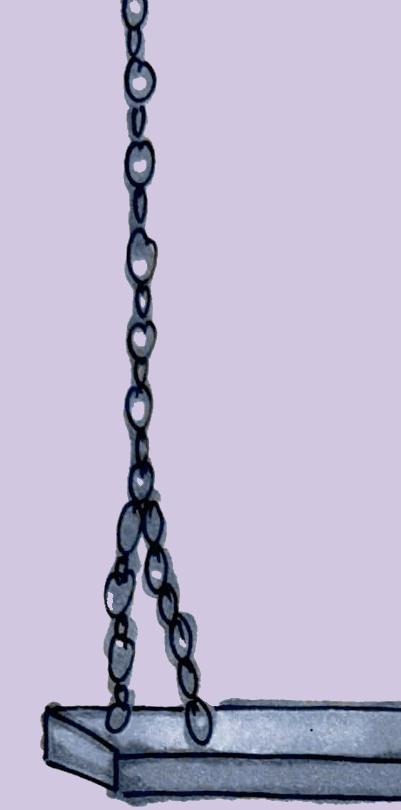

Her songwriting has matured with every album, and her recent work appears to be no exception. Listening to ‘Drop Dead’ for the rst time, I felt like Rodrigo had genuinely read my mind. She articulates



Another song Rodrigo has revealed from the album, ‘begged’, marks a return to her angsty roots, as she sings about being left wanting more from her emotionally detached partner. e song could not be more di erent to ‘Drop Dead’, though presumably she sings about the same relationship. Her grand vision of a fairytale love story in the former is replaced by romanticisation of small, basic gestures from her partner: “All that I want is to sit here silently / And watch movies on TV / What a shame you’re not here”. e lyrics use the same absolutist language as her previous single: she describes a need to “know undoubtedly / at you just have eyes for me,” and laments that her partner is oblivious to her “endless well of needs”. At the same time,
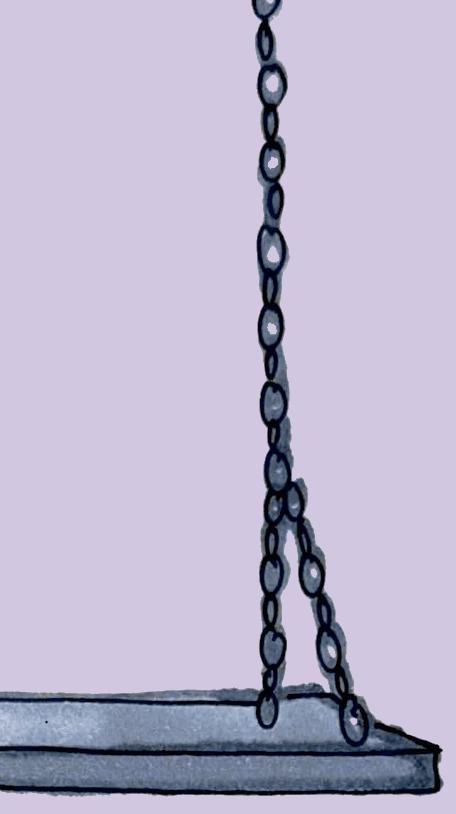
she downplays her emotions, pretending to be “cool and forgiving” despite receiving very little in return. She also utilises the language of water to emphasise the depth of her sorrow. She is “an anchor in the ocean,” “ ght[ing] back the waves” of her discontentment. Both this song and ‘Drop Dead’ share the sense that Rodrigo is out of control: in the former, she feels stuck accepting the bare minimum from the person she loves, while in the latter she has been struck by overwhelming feelings of an intensity she has never felt before. Her performance of in early May embodied the album title’s juxtaposition. In direct contrast to the ‘Drop Dead’ music video, Rodrigo is static in this performance: she sits motionless on the swing from her album cover, having been brought back down to earth by her partner’s indifference. e lyrics are much more clearheaded –she acknowledges that regardless of the a ection she is shown, “it’s not quite enough when I know that to get it I begged”. is, it seems, is the type of song we can expect to make up most of the album: it’s the type of song she does best. Much to the devastation of those of us who were hoping for love songs, Rodrigo seems to have found her niche in heartbreaking ballads about the agonies of rejection.
about what actually happened between Rodrigo and Partridge. e album cover itself appears to draw inspiration from ‘ e Swing’, an 18th-century painting in the Rococo style, which, incidentally, was itself a reaction against the architectural movement that inspired the Palace of Versailles. e visual art of the album then, for those of us who do our research, serves to represent both a rejection of the music video’s regal location, and the too-good-tobe-true relationship Rodrigo sings about from within it. e chronically online among us were quick to point out that Partridge had actually posted a picture of ‘ e Swing’ on Instagram in March (though in fairness, it’s possible this was just a coincidence – whether he was referencing her or vice versa, I suppose we will never know). Even more implausibly, some pointed out that the Palace of Versailles was built under the reign of a king named Louis…

❝ Rodrigo seems to have found her niche in heartbreaking ballads about the agonies of rejection


Despite her reluctance to directly reference the relationships that inspire her songs, the marketing for the album thus far clearly plays into fan speculation










Now, I’m not suggesting I believe Rodrigo would be quite so on the nose, but Easter eggs like this have largely driven the fan discussion about the upcoming album, and Rodrigo has clearly chosen to fan the ames. One of the alternative music videos for ‘Drop Dead’ is packed with references to various aspects of British culture – red phone boxes, black cabs, pints of Guinness, and a range of London landmarks. In interviews, she has described the album as being partly inspired by London, and “experiences that I’ve had” there. One can’t help but see the connection there. Though, this is perhaps not particularly surprising. Rodrigo seems to pride herself on her confessional songwriting, and any artist following in the footsteps of Taylor Swift, whose penchant for writing about romance has led
to every single interaction being dissected for all the world to see, is forced to su er the same fate. Rodrigo has been subjected to this to a particularly vicious degree at times: the release of ‘drivers license’, believed to be about ex-boyfriend Joshua Bassett, led to fan speculation about a love triangle between the two and Sabrina Carpenter, though in hindsight this was largely manufactured by people on the internet with not enough to do. Rodrigo walks a di cult line between using personal experiences as inspiration, and maintaining a semblance of privacy, which explains her reluctance to disclose who exactly a song as complementary as ‘Drop Dead’ might be about. Nonetheless, part of the ‘hype’ for the album will inevitably, at least for a subsection of her fanbase, be drawn from continuous (and, frankly, unwarranted) conjecture about Rodrigo’s personal life.
e album as a whole, then, seems set to tell a love story in reverse. Rodrigo will take us from the high of the very rst date, right through the gradual breakdown of the relationship. “[S]ad love songs,” as she characterises them, are an interesting new approach – one might expect one or the other, particularly from Rodrigo, who is best known for her melancholic ballads. But, if the rst two songs are anything to go by, it seems she’s pulled it o . Is that the album of the year I hear?
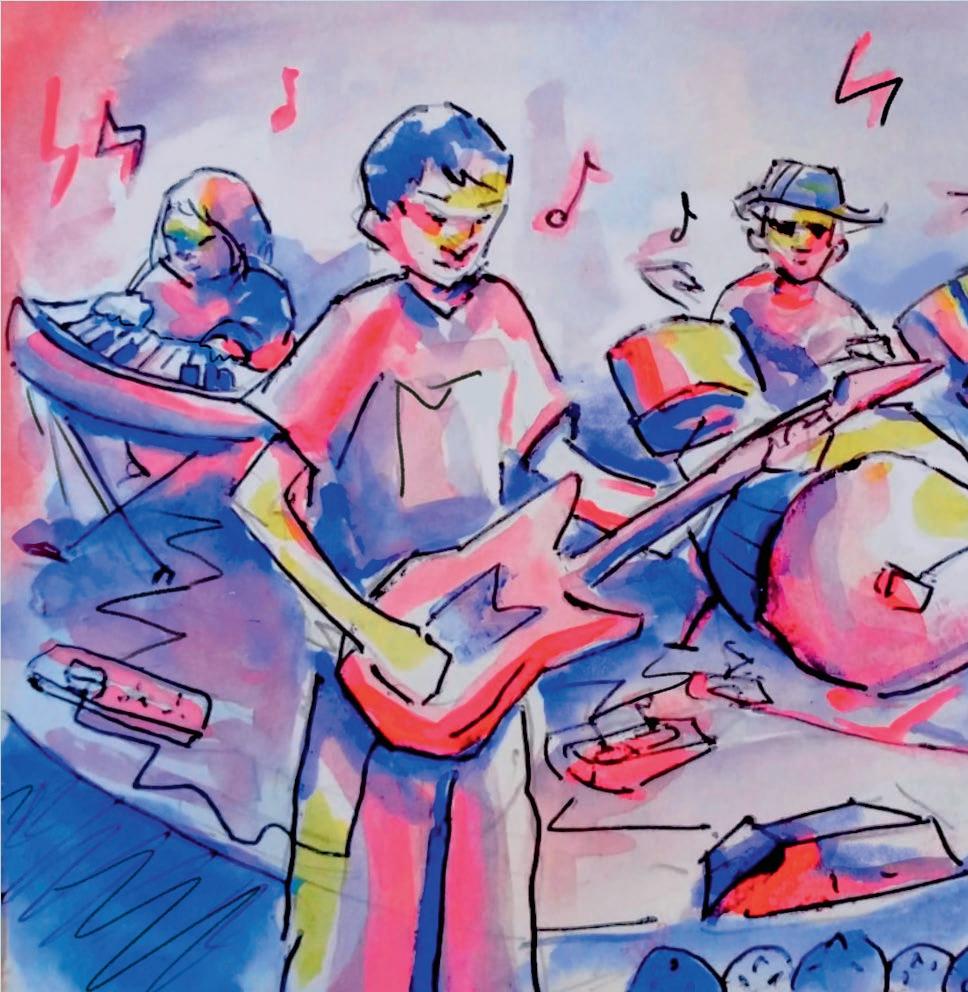

Live music: better in every way compared to its studio-recorded sibling. But take that 60-minute set you’ve thinking of, heat it to 150°C, and press it: you now have a perfectly at record of your three-dimensional gig experience. Go one step further. Compress it. All the way down to 320 kilobits per second, producing a digital le for you to take with you anywhere you go.


It’ll never yield quite the same experience as that magical night where you could almost see the whites of the eyes of your favourite artist, even hear their ngertips against the guitar strings – you can’t t that in a le. And yet, the live album remains a discographic gem of almost indescribable allure. Your favourite artist might yield one, maybe two, if you’re lucky. e live album reanimates some musical archaeologist in us all, eager to catalogue what changes have been made and love them all the more, even if we have to lament our absence at the moment of the musical origin.


reins


But there’s another
facelift but ‘Four Out Of Five’ doesn’t quite translate onto the Albert’s stage; neither does ‘Brianstorm’, as Turner’s dragging delivery pulls on the reins of Helders’ fury of drums. Certainly, some tracks shine: ‘Pretty Visitors’ has the magnitude and Californian candour of a San Franciscothreatening earthquake. But there’s another faultline in the Monkeys’ strange 90-minute halfway-house. Much to the vinyl-lovers lament, the mix isn’t quite right. Turner is (rightly) given prominence, but it sounds as if they’ve exiled Helders’ drums to another continent and given O’Malley a toy bass guitar instead of a real one. It’s almost impossible not to wince as Turner’s lyrical peaks bristle against the microphone.









alongside HGU’s refrains of “I forgive you, I forgive you, I forgive you.” roughout the album, Carner cross-stitches evocative anecdotes with his lyrical acts of storytelling, turning each track into a cluster of lived moments that intensify emotional resonance. But aside from the piano-draped dedications and childhood stories, hugo: reimagined also dazzles as an instrumental feat. e album serves as a gateway drug to Carner’s music for the rapuninclined, with masterfully anthemic production, unobtrusively wide and perfectly mixed. Collaborating artists like Sampha, JNR Williams, and Jordan Rakei each pull the crisp, well-contoured sounds of the studio-recorded source material into the moment and humanise it. One minute, you delight in the humanity of Carner’s lyrics, and the next, you’re shuddering along as Richard Spaven throws himself across the drumkit.


Telling stories – it’s what music does. And something Loyle Carner does expertly on hugo: reimagined (live from the Royal Albert Hall). Carner, to a ve-thousand-strong, wide-eyed and keen-eared audience, prefaces ‘HGU’ with ‘ e Cycle’, embarking on a story about re guring generational trauma. His story of driving lessons with his father in a “VW Polo, right from ’98, dusty red” with a “seatbelt that didn’t really click in," but just about “road safe, ’cuz he’s not a bad dad” emotionally stupe es when paired


With what seems to be becoming an everpresent truism of the music world, “Radiohead did it perfectly back in the 2000s," it seems that the only answer is their hybrid approach on e King of Limbs – Live from the Basement (2011). In their other live album, I Might Be Wrong (Live), muddiness fractures into militant sonic lawlessness. Meanwhile, TKOL o ers a strange ‘goldilocks zone’ of a live album. e charming vocal editions and little jokes that adorn the periphery both build the imaginative picture of the recording as well as betray its true nature: Yorke’s quip that “this is a run-through, so I guess Jonny can do email at the same time,” and the prompts like “Let’s move on then,” draw attention to the fact that these are live performances, but ones picked from the best of the runthroughs. ere’s no audience to associate with, but live kinetic energy remains.


But take a gig performed in the same space, four years prior. A live album can equally sound like a strange identity-less mix, straddling the large gap between a band’s shift in sound. e Arctic Monkeys’ Live at the Royal Albert Hall (2020) sees the band’s music-making try and retain the vigour of their earlier albums, but inject into it the languorous lounge-ease of Turner’s sci- pet project, Tranquility Base Hotel & Casino (2018). It works – in places. ‘Do I Wanna Know? ’ is given a much-needed





So, it’s not quite live, but maybe it’s better. Floating along on the melancholic chords of ‘Codex’, atomised by the instrumental wash of ‘Staircase’, or even enjoying the recorded tea-break before ‘Separator’, it’s easier to imaginatively insert yourself here, in the basement, than in any concert arena or wood-panelled pub. Retaining the artistically capsulised nature of a studio recording but bubbling with incorruptible authenticity, it’s a happy harmony of reliable, yet experimentally delightful. If it’s a debasement to label this a perfect live album, I’m guilty. I think it’s as close as you can get.


A unique opportunity to study Directing, Dramatic Writing or Producing within a unified Creative Practice ecosystem. Designed for multi-hyphenate practitioners who are excited by collaboration and meeting the demands of the modern creative industries.
Dramatic Writing - Producing - Directing APPLICATIONS FOR SEPTEMBER 2026 ARE OPEN



As we sit down over co ee in a pair of converted choir stalls in the exalted atmosphere of Michaelhouse Café, Z, the Head of Life Drawing for ARCSOC (Architecture Society), points out it is perhaps not the most appropriate setting for the conversation we were about to have. ARCSOC’s Friday evening life drawing sessions have long been a xture of the Cambridge arts scene, and it has only gone from strength to strength; a recent session I attended was so chock-a-block that Z had to rush out to squeeze in more chairs. e events straddle a series of contradictions; taking in at once a sense of privacy and openness, making space for beginners and art a cionados, and the student body as well as the public. After a little preamble, I open the conversation by asking about the changes and continuities in the experience of running life drawing this academic year after being on committee last year. Z replies beamingly: “the structure of life drawing has been kept quite similar. I think the thing I didn’t expect is that the models have such an outward view of life; it takes so much bravery to model to people but most of them have a way of being comfortable in a room, even with people they know.”
Going into the interview, I am especially interested in how the organisers go about putting the models at ease, so I ask Z to talk a little more about the modelling experience: “our models are both Cambridge students and external and because of this we have a real range of body types and age. I have had one or two students that have been to our sessions before reaching out to say it’s something they are interested in, but most of the people who model have modelled for a while. ere should be a big expectation for the people who come to draw to help create a comfortable and respectful environment.”
we are open to both students and members of the public.”
at said, for Z, life drawing could still be a little more social than it is: “people tend to come together in groups of three or four. e people who come by themselves are often more open to talking to other people. When I rst started running life drawing I wanted to have a moment at the end of the session where people could lay out all their work on the oor and for people to mingle and chat to each other”. She pauses a moment to think before continuing: “I think people were a bit too reserved and it didn’t really end up working out. Going forward, I would love to see more of that from life drawing, though I don’t know exactly how that would happen.”
I am keen to know more about the relation-
ship between the sitters and artists. Z responds hearteningly that “some models are really comfortable with speaking to the people who are drawing. It breaks down the perception that you as the person coming in to draw are super separated from the model who almost becomes a sculpture.”
Given how much art and culture generally tend to idealise one type of body, I ask Z about how life drawing might help us understand the multitude and variety of bodies. She re ected that, “for the average person, we realistically don’t see that many naked people,” laughing a little – it feels like a funny thing to say in an old church. Life drawing teaches us that we all feel the same things, Z says: “to see someone in their most pure form creates a sense of human connection”.



Creativity can often feel a solitary thing, especially at Cambridge, so I am keen to ask Z about how doing art communally changes the dynamic. “It’s so fantastic to sit with other people and see the di erent ways that they interpret,” she answers passionately. “Everyone picks up on di erent details, and places importance on di erent facets. at said, I would love to see people interact with each other more. What’s so special about ARCSOC, unlike college life drawing, is that
Life drawing is about practicing attention and really seeing, for Z: “so often we notice things and we don’t question why we feel drawn to them. Let’s say you’re walking down the street and a particular tree catches your eye – it’s not something you really think much about. ere’s always something more to that; it will be tied to an emotion or a memory. Life drawing is about really slowing down and seeing things.” Both of us conscious of having to rush o to the library to make a start on revision, I close our fascinating chat by asking Z about what she sees as the signi cance of the non-academic, non-competitive, art-for-art’ssake nature of life drawing. She concludes that “our sessions are orientated both towards people wanting to start out and people who are a bit more comfortable. It’s important to have that environment for people to come into and feel like they are able to practice their drawing skills,” she says earnestly. “We try to keep the sessions relaxed; there’s not a super imposing structure, apart from the timings. It’s all about just keeping it open to everyone.” For me, this strikes at the heart of what makes life drawing so special and enduringly popular. It is a space without judgement that you can step into at the end of a long and tiring week, where you can let both your pencil and your mind wander.



So many great writers have studied at the University of Cambridge: E. M. Forster, Christopher Isherwood, Salman Rushdie, Zadie Smith, Catherine Airey, and the list goes on. Sometimes, walking down King’s Parade, I wonder to myself, have I just walked past a future literary giant? In this article, I talk to some of the student novelists who assure me that I have. I sit down with current students and graduates alike, asking them about their experience of novelling alongside their degree, as I try to gure out what makes Cambridge such a cauldron of writing talent.
Stan Wierzbicki, currently studying for a master’s in creative writing, re ects on how the degree has reshaped his writing. Wierzbicki came to Cambridge with a fully drafted 80,000-word magical realist novel and a second novel in progress, which, ironically, has taken a backseat while he works towards his master’s. at said, he looks forward to returning to it for his extended project next year. Before Cambridge, Wierzbicki read English literature and creative writing at the University of Lancaster, where he says the pandemic limited his ability to interact with fellow creatives. Now, at Cambridge, he prefers the “collaborative environment” the creative writing MSt promotes: “through the people who surround me, I have found motivation.” Students arrive from across the world with diverse skills: poets, playwrights, novelists, non- ction writers, and even video game designers. Wierzbicki says that writing poetry, as a relative beginner, alongside people for whom it is their whole focus, has “opened up” his writing. Wierzbicki is also keen to stress the “playfulness” the degree promotes. It is not as “serious” or “academic” as people might assume. Classes include short warm-up exercises – responding to prompts or inventing characters – leaving room to “experiment,” to “be silly, and for that silliness to be

taken seriously.” is philosophy underpins his writing and is part of why he got into writing in the rst place: “to have full power” over what is created. at being said, Wierzbicki appreciates his supervisor’s demands for new writing. Writing consistently for his assignments has been new for him, as somebody who used to write only in short bursts, around work, when inspiration struck. “I can’t even tell the di erence between what I wrote in a good mood or bad mood,” he admits, suggesting that sometimes you just have to sit down and write. “Just like children need time to play, so do adults.” Writing is a chance to escape the world. Plus, Cambridge has such a literary history, he says, that it would be a shame not to take part in it.
❝ I believe I have found two more of Cambridge’s literary greats to be
Millie Redding, who graduated in July 2025 with a degree in English literature, agrees. She recalls drafting two novels in her nal year, one of them a coming-of-age story involving Catalan triplets, inspired by a family holiday she took in her rst year. e novel was complicated, and enriched, by her third-year tragedy paper. “A lot of tragedies double as family sagas too,” she says, adding that their example “informed my own thinking around family dynamics and traditions.” Anne Carson’s Nox inspired the eulogy one of her triplets writes (on a square of kitchen roll), while Virginia Woolf’s To e Lighthouse brought about Redding’s “creative turn towards detailed studies of character.” And, not just her reading, but the city itself, has shaped her writing; looking back over her past drafts and documents is like reading through an archive of herself, she suggests, some mapping walks she took around the city and others mapping the psychological terrain she has traversed since her matriculation.

a way of communicating her thoughts and feelings in words. Nowadays, whenever she is bored, she finds herself opening her laptop and trying to add a few hundred words to whatever she last left off. “In most cases it is not about nding the time, but the time finding me.” Some days at Cambridge, she would wake with a scene in her head and know she couldn’t make any progress on her essays until it was “out of my system.”



“Writing is my way of making sense of the world around me,” Redding tells me: that is the “essence” of why she writes. Writing has been her outlet since childhood,
Looking back on the “chaotic” three years she spent balancing novel and essay writing, Redding is proud to have produced two half-drafted novels and achieved good marks in her nals. She’s humble about it: “someone with much better organisation than me may very well be able to nish their three years with a complete 80,000-word manuscript and a rst-class degree.” She doesn’t think doing well in one means doing badly in the other – if anything, the opposite. “Sometimes your creative writing skills can feed directly into your academic writing,” and vice versa. As Wierzbicki said, thinking across forms means thinking more freely about the written word; it means nding where your voice sits between academic and creative registers.
Redding begins an English literature master’s in September, where she will keep “writing for pleasure” and dreaming of being published… “one day!” Wierzbicki, meanwhile, is weighing up a PhD, while focusing on getting his work on the shelf. In both of them, I believe I have found two more of Cambridge’s literary greats-to-be.
L ook, don’t
Ellie Buckley considers what is lost when art and tactile objects become museum
Back in April, I visited the Wellcome Collection with a speci c object in mind: a medieval birthing girdle. is rare artefact was worn by women during childbirth, its surface inscribed with prayers and images of Christ’s wounds, believed to o er protection in a moment of extreme danger. Now enclosed in a glass case, illuminated brie y by a timed light, it exists as something to be looked at carefully and from a distance. Yet it once functioned very di erently. It was wrapped tightly around the body, handled repeatedly, and used with urgency. e visible wear on its surface – its faded inscriptions, rubbed illustrations – alongside scienti c evidence of bodily uids embedded in the fabric, testi es to its active role in birth. What we now preserve as history was once an intimate, tactile tool. Because of its intricate decoration, the girdle can easily be classi ed as art. But this designation risks misunderstanding its original purpose. For those who used it, it was not an object for contemplation but for action. e shift from tool to artefact marks a broader transformation in how such objects are encountered. In the collection, the girdle is encountered visually, its meaning mediated through glass and controlled lighting. To wear it is for the girdle to become useful, to ease a passage in some way. Its tactile dimension – once essential to its function – is no longer accessible, and this loss of touch fundamentally alters the relationship between object and viewer. is contrast raises a wider question about how art is experienced. Many museums privilege sight above all other senses, encouraging a mode of viewing that is observational rather than participatory. Yet there are notable exceptions. At Kettle’s Yard, for example, Harold O eh’s exhibition ‘Mmm, Gotta Try a Little Harder, It Could Be Sweet’ created an immersive environment in which sound, fabric, and movement shaped the experience.
cal response, as if the eye alone were enough to register depth and materiality because the eye links to our sense of dimension and physical sensation.
is reaction is not purely visual; it is informed by memory and embodied perception. Smell, texture, and sound, whether directly present or imaginatively reconstructed, can trigger associations that connect the viewer’s present experience to their personal past. In this way, engagement with art becomes active rather than detached.
However, this sensory richness is often limited by the practical demands of preservation. e glass case surrounding the girdle, like the controlled lighting that governs its visibility, is designed to protect it from damage. ese measures are necessary, but they also impose distance. Objects become atter, more remote, less able to re ect the three-dimensional, sensory nature of the bodies that once interacted with them. e result is a tension between conservation and connection: to preserve the object is, in some sense, to restrict how it can be experienced. is tension is not insigni cant. e power of art to a ect us sensorially is evident in moments when it is disrupted, such as acts of protest in which artworks are defaced. ese incidents provoke strong reactions precisely because they intervene in the visual and material presence of the work. It is body-on-body crime, where the body of the viewer interferes with the body of the art. ey remind us that art is not only seen but felt, and that its physical form carries meaning beyond representation.

Wearing headphones, the viewer entered a soundscape that extended beyond the visible room, while suspended textiles invited physical interaction. Moving through these fabrics altered both perception and spatial awareness, producing a temporary sense of enclosure that was disrupted whenever another visitor entered. Here, engagement became active, where the viewer’s body became part of the work. Experiences like this suggest that sensory involvement deepens our connection to art. Even within more traditional settings, such as the Fitzwilliam Museum, visual encounters can evoke other senses. e textured surfaces of certain paintings can produce an almost physi-

Plato famously argued that art deals only in appearances, o ering an imitation rather than the absolute essence of an object or person. Yet this view underestimates the role of the viewer. When we look at a painting such as Van Gogh’s Chair, we do more than register its image. We imagine its texture, its solidity, even the sensation of sitting upon it. In doing so, we extend ourselves into the work, engaging not just visually but imaginatively and bodily. e experience of art is therefore not con ned to surface appearances; it is shaped by the interplay between object and viewer, perception and memory.
To encounter art fully is to engage more than the eye. Whether through direct sensory stimulation or through the mind’s capacity to reconstruct it, art has the potential to involve the whole body. When this happens, the boundary between viewer and object becomes less xed, and the experience of art becomes not merely observational, but immersive and deeply felt, where the world of the art has the power to impact ours.

1 Stolen cut (6)
4 Run through Australia after a hundred horsemen (8)
8 They say to stick around for Mass (6)
9 Worldly temperature of mouth (8)
12 Lizards which ordain us invalidly (8)
13 Loads of sticky stuff left out of language (6)
14 Pulls Americans (5)
16 Leave subordinate knight to become queen (8)
19 For instance, arsenic reacting with oxygen (8)
21 Sixpence confusion (5)
24 Einherjar gone spouting technical nonsense (8)
25 Maybe cow drink held by worker? (8)
28 Segregate fiscals roaming around entrance to Yale (8)
29 With a singular exception, where to start a piece (3,3)
30 Attackers risk collapsing with rest (8)
31 Charlie suspicious about English demographics (6)
DOWN
1 Defiantly say no when accepting amount of cash in modern times (8)
2 Bun made from mushroom, depleted of current (7)
3 Characteristic of some quiet hospices (5)
5 VIP formerly Ecuadorian (4)
6 Not grand, but honest (7)
7 Malleable sliver of metal (6)
10 Stand for trial (7)
11 More unfeeling cardinal? (6)
15 Wavy transgressions concerning you and the other place (7)
17 Baseline question of spirit (6)
18 Old elegist giving a bit of thought to meandering estuary (8)
20 Pirate French horns song (7)
22 Keen to arrange azulejos with no justice (7)
23 Puts up with Romeo turning into Juliet, but vanishes from the plane (6)
26 Vacuous; confined to an onset of emptiness (5)
27 From a distance, I have lost a piece of myself (4)
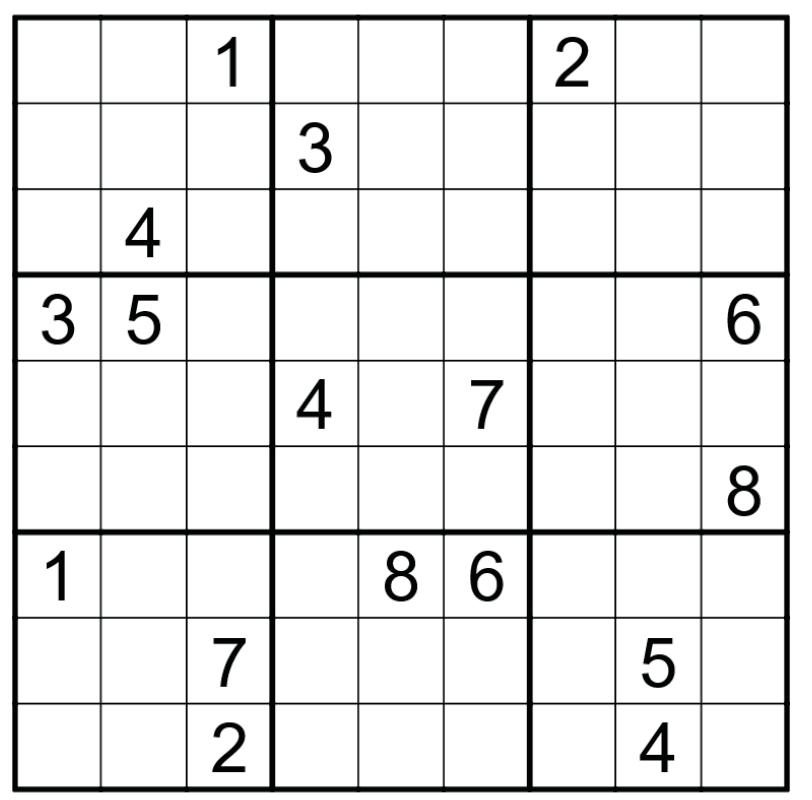














We are a European consultancy firm focussed on analytical and quantitative topics and the development of sustainable solutions to bring about positive change for our clients.
What does d-fine offer you?
- Diversity: Work with clients on topics ranging from financial engineering and machine learning through to climate risk and healthcare
- International: Collaborate in project teams staffed across Europe
- Education: Acquire new skillsets to broaden your technical and professional repertoire
Who is eligible to join?
Master’s or PhD-level graduates in STEM fields
How can I apply?
Please go to our Job Portal on our website www.d-fine.com
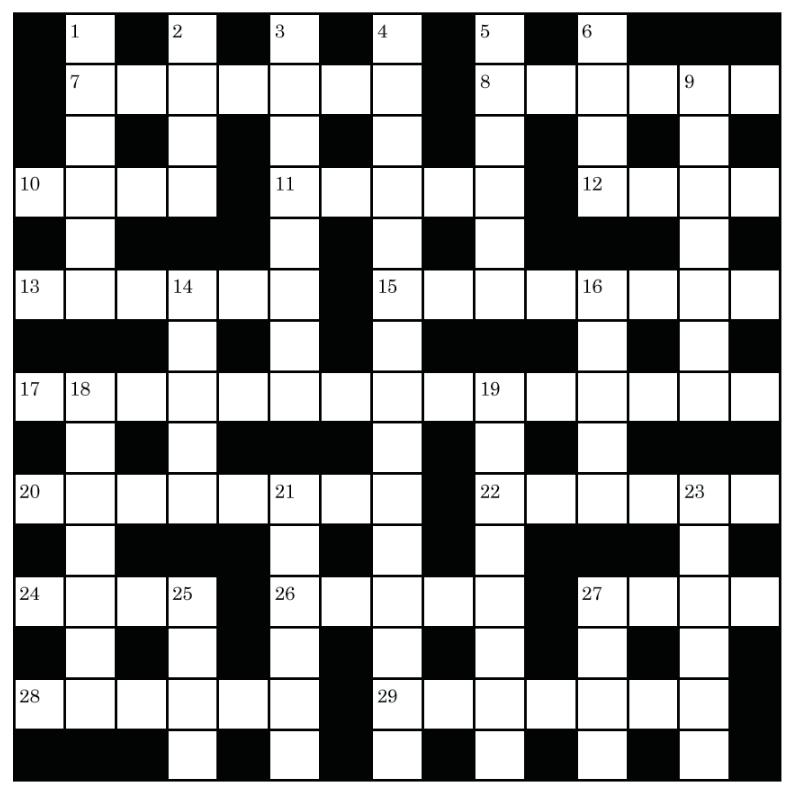
’Twas the night before Downing May Ball 2025. My mates and I were about a dozen drinks deep at Jesus May Ball when we hatched a plan: we would do a May Ball bender on a budget. at budget being zero pounds – we were going to crash a May Ball.
But this story actually starts earlier that term. I’d been told by someone going to Downing May Ball that the headliner had been announced: ENNY. ‘Charge It’, her most famous single, had been my most-played song in both 2022 and 2023, so the Ball FOMO hit immediately – and it only grew stronger as the term went on.
Now, I know May Ball crashers get a bad reputation: distasteful, sel sh, dishonest – the list goes on. I could pretend that my choice to stay anonymous is about maintaining an air of mystery, but we both know I’m just trying to shield myself from an onslaught of Camfess abuse. I appreciate that crashing is a bit unfair to the paying attendees and the committee, but life’s unfair. And, if you’ll indulge the rage bait, surely the hatred towards crashers is just jealousy that you couldn’t manage it?
DOWN
1 Origin of sorts (6)
2 Blackthorn (4)
3 Apparent (8)
4 Gland specialist (15)
5 Chronic breathlessness (6)
6 Three pairs of balls (4)
9 Copper plate print (7)
14 Proficient (5)
16 Rotationally yoked (3)
18 Aperture (7)
19 Without honour (8)
21 Double-check (6)
23 Place of rest (6)
25 Stuffs oneself (4)
27 Penalise (4)
Fast forward to that fateful night. Still hungover from Jesus May Ball, we spent the evening painting over our wristbands and scouting the area for a potential entry point. We slipped into all-black out ts in an attempt to camou age ourselves. ere was just one small problem: every inch of the perimeter of Downing was teeming with security.
Cambridge that night had two kinds of people: those inside the May Balls, and those plotting how to get in. As you wander the empty Cambridge streets on the night of a May Ball, the only other people you pass are fellow would-be crashers, which creates a strange sense of camaraderie. Knowing looks are exchanged. Intel about where security is thickest gets quietly shared.
At one point, we tried to climb a wall obscured by trees when an ominous voice called out: “I know you’re there. Come out from the dark.” We ran. e whole thing felt slightly horror-movie-meets-007. By this point we’d almost lost hope. But I live by the words “where there’s a will, there’s a way,” and so giving up wasn’t on the cards.
7 Worcestershire town (7)
8 A union (6)
10 Factual (4)
11 Marrow solution (5)
12 Student food (4)
13 Musical form (6)
15 Where all rationality lives, and then some (4,4)
17 The (second) farthest reach of civilisation (8,7)
20 Shorely (8)
22 Jump to conclusion (6)
24 Spread – like wild fire (4)
26 Herbivore convert (5)
27 Only fair! (4)
28 Mortar’s second partner (6)
29 Gather (7)
A magician never reveals his secrets, so I won’t disclose exactly how my mate and I eventually pulled it o . It was dramatic, but not in the way you might imag- ine. No jumping over

walls, no security guards chasing after us.
Instead, it involved the most elaborate blagging and improv I’ve ever attempted – and the rst time my 9 in GCSE Drama has truly come in handy. If all the world’s a stage, that night I delivered the performance of my life. e adrenaline high lasted for hours, and you better believe I drank and ate the equivalent of what a family of eight would consume. In hindsight, it was reckless, unnecessary, and dishonest. Would I recommend it? Probably not. Would I do it again? Well. ere’s a reason why I won’t disclose the details.
I’ll end with a bit of wisdom for anyone feeling brave (or in third year with nothing left to lose). Do not bring any form of ID: no CamCard, no driving licence. Scout the area beforehand, and don’t attempt any ridiculous stunts. Another friend who separately tried to break into Downing May Ball ended up in A&E that night… Of course, you could just buy a ticket, be an honest person, and save yourself the hassle. But where’s the fun in that?


Vall speaks to students about of making their way through
Coming to Cambridge is an overwhelming experience for everyone. From the moment you put on your gown and sign the matriculation book you’re thrust into a whole new world with its own language and traditions. Freshers’ Week is a confusing whirlwind of excitement, hangovers, and homesickness that even the most put-together students struggle to process properly. A few days later you’ll be huddled in a library trying to make sense of Hobbes or Proust without the time to stop and think about the mania of the night before, or how your friends at home are doing. at’s kind of the point. You’re a Cambridge student now, your life should be contained within a three- mile radius of Great St. Mary’s. But for some students, it’s not that straightforward.
There are at least 350,000 young adults with caring responsibilities in the UK, making up about one tenth of the student-age population. But Lucy, who has looked after her mum
since she was twelve, was convinced she was “literally the only carer at this entire University,” when she arrived. “I remember we had an induction talk from the Senior Tutor on the rst day, who talked about how we should work 4050 hours a week to keep on top of our studies, and how we had to stay in Cambridge to make sure we ‘keep term’. I remember just thinking, shit, this isn’t going to work for me. I couldn’t think how anyone who cares for a loved one could do what colleges are asking for.”
Lucy isn’t alone in her isolation. e students I spoke to talked about a stigma around being a young carer. James, who helps care for his sister, explains how he felt “like lots of people have this idea of what caring is like that’s incompatible with Cambridge”. ere’s a diversity to care that he feels is often missed in stereotypes of it being “a full time thing you couldn’t possibly juggle with a degree. I know that is a lot of people’s experience, but that neglects how care can be done from a distance, it can be helping do the grocery shopping online, or just spending an afternoon on the phone when my sister’s having a rough day.”
full ABBA superfan mode,” she started to enjoy herself. A typical Cambridge club experience followed; Lola’s till 2am then her rst ever trip to Gardi’s. When she woke up in the morning “in that horrible state when you’re not quite sure if you’re hungover or still drunk” she saw ve missed calls from her sister. Her mum had fallen down the stairs and was in hospital, and Evie had been calling to ask for advice about which painkillers were safe and who in the area could drive them home.
❝ I remember thinking, shit, this isn’t going to work for me
For James, the ‘scare tactics’ of his college telling him how much he’d need to work over his rst Christmas break exempli ed that. “ ey told all the freshers to do 30 hours a week during the break. I get that it’s just done to scare us now, but at the time it just felt like having responsibilities other than my degree was banned, and that talking to my tutor or DoS about looking after my sister would land me in hot water.”
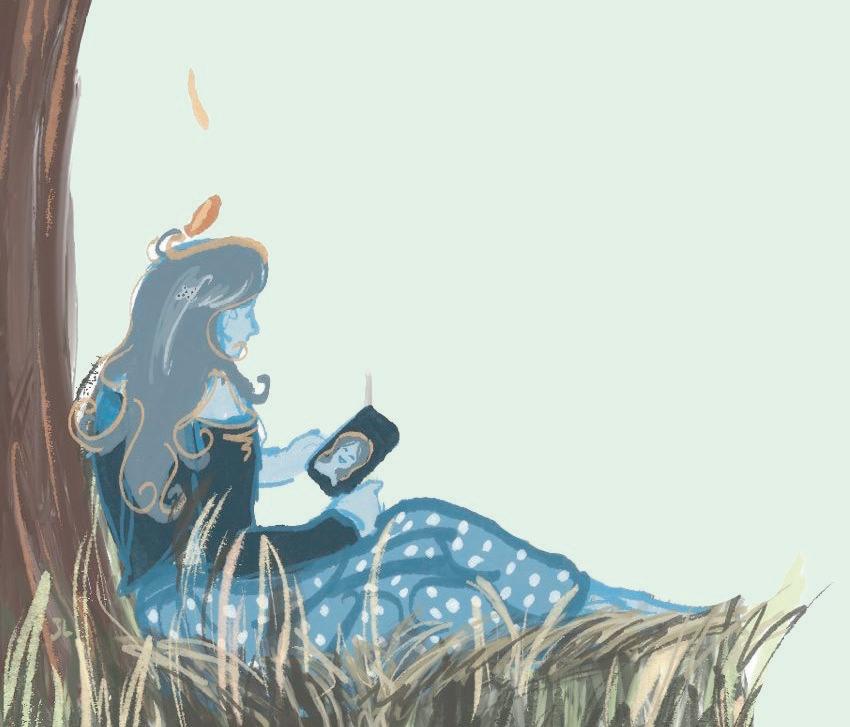
at lack of support is a serious problem across the country. Around 30% of students with caring responsibilities drop out of university to focus on their caring role. Sylvie, who looks after her mum, says she came close during Freshers’ Week. She talks of how she went on a night out for the rst time with friends from her college, “It’s not the kind of thing I really got to do at home. It’s just me, my mum, and my little sister Evie. I took the lead when it came to looking after mum but Evie was picking up a lot of the slack for me when I left. ose rst few days I felt like I had to be on call 24/7.” She felt guilty for not calling her sister and mum at the start of the night, but as she relaxed and “got into my
“When I saw those texts it just felt like someone had pulled a rug from under my feet. I’d had one night of being a ‘normal’ student and then everything just went wrong.” She decided – partly “under the in uence of hangxiety” – that Cambridge wouldn’t work for her, and drafted an email to her Senior Tutor asking to intermit. Her mum, now feeling much better, texted her before she sent it o saying: “Don’t ever blame yourself for having fun. I love you, please keep being the amazing, talented angel that you are.” Lucy tells me of a similar experience. “I remember just being so anxious about Mum from the moment I got dropped o at College. I don’t think I’d ever been away from her for more than three days since I was twelve, and now I was ve hours drive from home.” About four hours after being dropped o , during a college ‘afternoon tea’ icebreakers about where you live, what your parents do, it got too much. “I slinked o to a quiet patch in College, sat under this big tree and facetimed Mum sobbing, saying how sorry I was for leaving her, and that I’d come home if she wanted. She just smiled and said ‘I promised you I’d be ne, I want you to promise me the same thing. I want to sit with and laugh about how you tried to drop out on your rst day when you graduate’.” ree years later, at her graduation garden party, Lucy and her mum sat by the same tree “getting drunk on the free champagne, laughing about how I almost dropped out in less time than it takes to get home.”
Despite the guilt and isolation they all felt coming to Cambridge, all the students I spoke to were able to nd support around them. “It took me like two terms to speak to my tutor about my sister, and once I actually got past that rst hurdle so many doors opened up.” e issue of
identifying himself as a carer was made worse for James by the opacity of it all. “I’m not your typical carer in that I’m not my sister’s primary source of support, so I gured I wouldn’t be eligible for whatever stu the Uni o ered, and that discussing it would just raise alarm bells”. is wasn’t helped by the fact that Cambridge only holds UCAS data about whether students have caring responsibilities for a month, and in the experience of the carers I spoke to, it’s never communicated to colleges or the University Counselling Service. James says how his tutor was “shocked there wasn’t more explicit information about support for student carers when she did some digging, but even then the counselling and nancial support I did get was an absolute lifesaver.”
Sadly, not everyone’s experience was as helpful. After discussing her caring responsibilities with her DoS, Sylvie felt like the college’s primary concern was “making sure looking after Mum didn’t mean I got a 2:ii”. While her college tried to nd her support, “Everyone insisted that I wasn’t their problem. And I had to ll out so many stupid invasive forms that I just didn’t have the bandwidth for and ended up being a bigger distraction than help. It’s such a shame because I’ve heard stories of such great support for students in other cases, but it felt like because nobody expected a young carer to actually come to Cambridge, they just didn’t know how to deal with me.” After frustration with her college, Sylvie eventually turned to friends for some support, “even just little things like letting me vent to them over a cup of tea felt so liberating. It was a bit weird at times because they didn’t have caring experiences and I was scared they wouldn’t get it. But just having that human interaction when College had just thrown bureaucracy at me was such a big step.”

❝
start shouting about it at the University until we got somewhere.”
Everyone insisted that I wasn’t their problem
Sylvie wasn’t the rst student carer to feel lost in Cambridge’s bureaucracy. Alice, who is the Class Act Society’s representative for carers, tells me of how, when she started at Cambridge as a research assistant, and later a master’s student, she found herself asking “where on earth is all the support for students?” ere was no clear guidance for students looking for support from either their college or the University, and no clear mechanism of disclosing their caring responsibilities. “So me and a friend decided to
at somewhere was the Carers Working Group, which has been trying to help develop explicit care for student carers at University. “It consists of some student voices who’ve got caring experience, and also people from across the University, including a member of the University Counselling Service.” e working group has existed for over two years, and is attempting to provide “some level of coherence and understanding” for carers, so that adequate support can be provided. Two of the central aims of the group have emerged from experiences of isolation and misunderstanding the diversity of care, with the group urging colleges to provide students an easy method of disclosing caring responsibilities without fearing consequences, and for colleges to provide training for tutors to be able to better understand and empathise with the diverse world of caring experiences. Despite making progress, Alice admits that trying to a ect major changes has “been really tough”. Cambridge’s traditions and idiosyncrasies “might seem harmless, but when you’re trying to get colleges and university departments to speak to each other, it becomes really di cult.” Alice is keen to emphasise that it’s not “out of malice or anything from colleges. When we do manage to get through to Senior Tutors who want to help they’re really understanding and helpful. It’s just that then getting that message across all the di erent university bodies is difcult.” is isn’t helped by the stereotypes of carers in Cambridge, “Every carer’s experience is di erent,” Alice says, “and trying to navigate whether you need to speak to the UCS or the EAMC, when nobody’s ever provided you guidance on how to deal with these di erent bodies, is a nightmare.” is is made harder by the lack of an employee who works explicitly for carers:
“everyone we speak to is juggling loads of different responsibilities, and we’re all volunteers, so being able to make collaborative progress and just nd time for meetings can be hard. It is frustrating, the University has so much money and have done loads great work for widening participation or counselling, but they do seem a little unwilling at times to try to properly make sense of the support for student carers.”
For Alice, as it was for everyone I spoke to, the best rst step is starting a serious conversation about what it means to be a carer in Cambridge. e Class Act Society does socials for carers, which she says are “so great to just speak to someone else who gets what caring is like,” but awareness of caring experiences in the wider student body are a priority. “Just doing anything we can to start a conversation and get colleges to think more about carers and make them feel wel- come and supported would be amazing.”

The experience one has at university is often de ned by what they choose to do, and who they choose to be. Coming to Cambridge, I chose to be a philosophy student, an athlete, a student journalist. But my experience has nonetheless been largely de ned by a part of my identity that I didn’t choose: my Jewishness.
I’ve made my Jewish identity a far more open and unapologetic part of my life now, so perhaps this is to be expected. But why has that taken me so long to do? Why now does it de ne my experience in such an all-consuming way? Sometimes, I wonder if I’m alone in having these thoughts; I stop having answers to my own questions, and so I turn to my community for help.
ere’s no doubt that the Jewish community here at Cambridge acts as a haven for its members. One student described the community as a “safe space for Jewish students on campus,” another as a community to which they were able to “slot right in”. Yet, for everyone I spoke to, recounting the positive aspects of their experience, while clearly meaningful, merely acted as a preface to much bleaker re ections.
What immediately stood out to me is that Cambridge is no outlier for housing the worst of the Jewish experience. Many agreed that they feel much safer here compared with back home, where their presence in a Jewish majority bubble makes them a target. Yet falling victim to extremism and blatant Jew hatred still de nes the experience of many. Students recounted various hate crimes occurring on the streets of Cambridge, involving statements such as “Heil Hitler” and “dirty Jew” being directed at them.
A particularly shocking story arose from the aligned testimonies of two students. One of them recounted how, over one summer, a student they previously had a friendly relationship with began to completely ignore them. at same person reportedly acted in the same manner towards another Jew-


ish student, this time immediately upon meeting them. After enquiring about this odd behaviour, the students were told explicitly that it was motivated by the fact that they were Jewish.
One of these students said: “ e saddest bit was convincing myself that I was the problem.” e other re ected on the odd reality of the situation: “It’s just very, very weird and uncomfortable to know that somebody hates you, like hates you viscerally, but they don’t even know you.”
But the Jewish struggles at Cambridge aren’t limited to obvious cases of extremist in uence – they extend to what can and is perceived as rational, righteous, and sensical. Indeed, during every one of my many conversations with Jewish students, the room we occupied also hosted a rather large elephant: the connection between that student – as a member of the Jewish diaspora – and Israel. e problem is clear: criticisms of one are utilised as weapons against the other. And this happens most often through con ation of the two in truly nonsensical ways.
❝
they ‘thought they may be a Zionist’, despite the student stating no political opinions at that time.
Another common theme across my conversations was learning about direct public attacks involving a pipeline of verbal abuse, starting with Israel and ending with overt Jew hatred. As part of just one of these stories, a student recalls “it started ‘f*ck Israel, f*ck that’, and then it went on to ‘f*ck the Jewish people, Jewish people are the devil’.”
You’re either going to t their narrative, or you’re going to have to work hard to change it

Again, many students recount negative experiences even when meeting people for the rst time, where their Jewish identity is used as grounds for interrogation. One student described how time spent with friends would often get ruined by such con ation, noting that revealing their identity turned them into “the spokesperson of Israel”. ey continue: “I’m exhausted […] I’m bored of it. I just want to have fun on my night out and not debate about Israel because I’m Jewish.” A similar annoyance was expressed by another student, who said: “often when meeting people I immediately get asked about my opinions on Israel […] it’s not a conversation I want to be having when I rst meet someone.” And, indeed, why should it be? Criticisms of Israel aren’t just projected onto Jewish students, but they’re weaponised against them. In Michaelmas of one student’s rst year, their college parents decided to ‘disown’ them. The supposed reason was that
▼ CLIOSZE



Getting treated in this way leads to habits of hiding one’s identity to prevent stumbling into such uncomfortable situations. One student said: “I used to wear my Star of David necklace everywhere. And I stopped […] because I got fed up.” e same caution was prominent in the testimonies of many others: “I’m walking on eggshells, I can’t be visibly Jewish. I might not wear my jewellery or certain clothes in order to protect myself.” e same upsetting reality ensues for a di erent student: “I won’t do things that will intentionally put me in harm’s way, and I do feel like wearing anything that indicates that you’re Jewish is just going to do that.”
What I then discovered is that the apparent need to hide one’s identity comes from the mutual feeling that, as put by one student: “there are denitely more Jews than allies.”
A di erent student with family in vulnerable areas, including Israel itself, also recounted how they have never received an unprompted message of support from some of their closest friends following an attack that could have plausibly impacted them directly. “I’ve always told myself that getting mad at that was unreasonable, but given that these are truly some of my best friends, I can’t seem to shake that.”
In another conversation, I received validation of my original hesitance to publicly embrace my Judaism: “ e hardest thing about going into Freshers’ Week is that most people are anonymous – but as soon as you tell people you’re Jewish, you’re no longer anonymous. People are now projecting their ideas of what Jews are onto you, and you’re either going to t into their narrative, or you’re going to have to work hard to try and change it.”
It seems, therefore, that I’m not alone – I am far from the only one whose university experience is de ned by their Judaism. Whether that’s a good, bad or neutral thing remains everchanging and ambiguous, and, in truth, out of our own control.







































Friday 12th June 2026
‘Kis is a closed book exam. You may not start
eep calm and carry on’. ‘Just keep swimming’. ‘Put one foot in front of the other’. If you’ve ever found yourself amid an academic nightmare – coursework deadlines piling up, yet-tobe-revised-for exams around the corner, and a concerningly high ca eine concentration in your bloodstream – you’ve likely been o ered this advice. I’m certain that on receiving it, while you might be appreciative of the sentiment, an internal eye roll commences; we know that empty sentiments like ‘take it one day at a time’ don’t quite cut it. However, for a signi cant proportion of students, a ‘more positive outlook on life’ during the exam period is not just a patronising suggestion, but misses the mark entirely.
❝
problem, nor does it answer the question of whether disabled students are being e ectively supported.
Before I came to Cambridge, I thought I wouldn’t get any of this, but they seem almost too willing to give it to me
Exams, by nature, are a standardised means of testing, but for many these standards are impossible to meet. Whether it’s dyslexia slowing down processing speed, or chronic back pain making focussing impossible, the range of disabilities with the potential to negatively impact exam performance is expansive. ‘Reasonable adjustments’ (or more formally, ‘exam access arrangements’) encapsulate the list of preventative techniques. In Easter term 2025, 24% of Cambridge students sat adjusted exams. With such a considerable cohort, is the University managing to successfully support them?
“I don’t know what I’d do without them,” “the di erence between passing and failing,” and “degree saving” were answers provided by three students when asked if they believed their access arrangements make a difference, alongside similar responses from 15 others. So, it’s clear – the answer is yes, and they’re a legal entitlement under equalities law in the UK. Unsurprisingly this does not solve the
When you try to marry standardised testing with the 3,500 Cambridge students who receive exam access arrangements, it’s inevitably not a simple x. “If we want e cient processing then we need to standardise [it] […] At the same time, by standardising things […] you can miss out on the nuance of an exam access arrangement,” says Interim Deputy Head of Education Services at the University Sarah d’Ambrumenil. As the head of the Student Administration department, Sarah o ers me an insight into the perspective from the other side. When a student joins Cambridge, the University’s Access and Disability Resource Centre (ADRC) acts as the “main gateway into disability support,” by compiling a Student Support Document (SSD). An SSD, formal diagnosis, or JCQ18 quali cation can be used as evidence by the Exam Access and Mitigation Committee (EAMC) to award that student exam access arrangements.
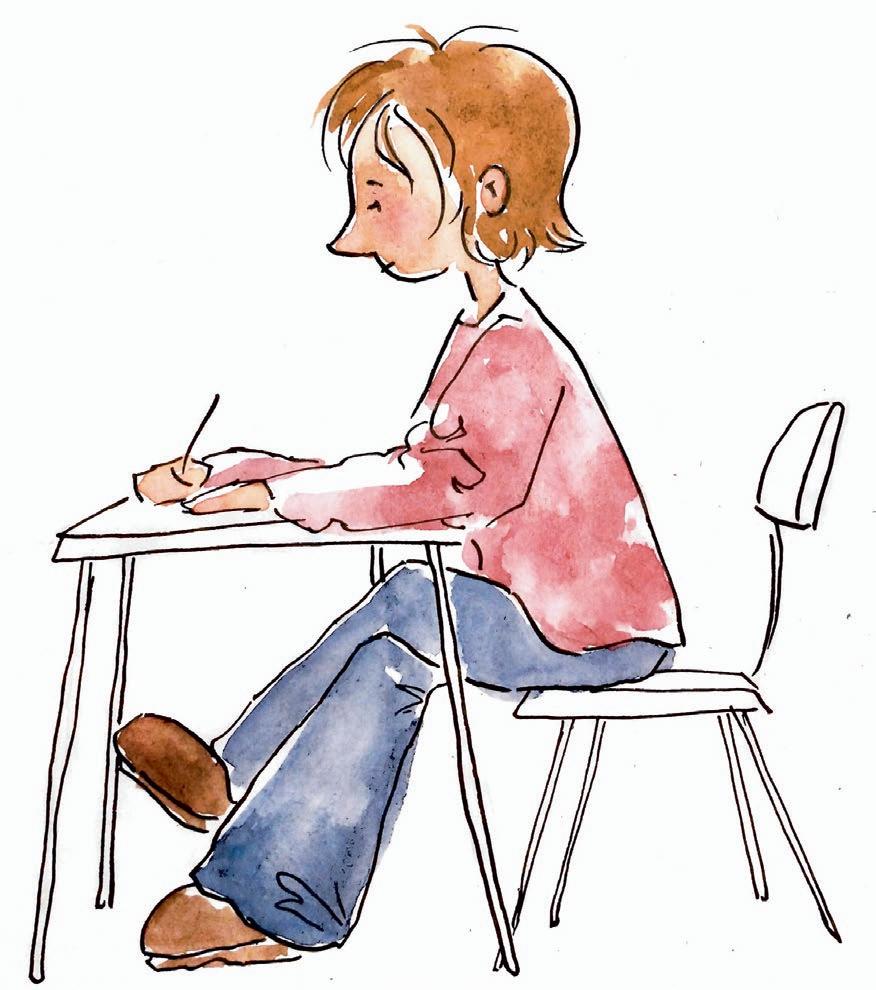
We know that disabilities form a spectrum; no two students are the same, and the exact things they need to “level the playing eld,” as Eleanor Girt-Izod, Joint Head of the ADRC, puts it, will re ect that. “I always go back to that tension between having an e cient process but one that also treats everyone as individuals,” Sarah reiterates. As one student put it: “[Exam access arrangements are the] best way to make it more even […] but you can never really measure whether it’s the right amount.” Here lies the crux of the issue, which was echoed by the majority of the students I spoke with: to what extent are exam access arrangements awarded on a one-size- ts-all
basis? And is this causing disabled students to feel unsupported?
One student said: “I suppose [my adjustments help] because they’ve ung the kitchen sink at it […] Before I came to Cambridge, I thought I wouldn’t get any of this, but they seem almost too willing to give it to me.” I asked both Sarah and Eleanor whether they think ‘one-sizets-all’ is a fair assessment; Sarah described it as “very understandable,” but Eleanor had a di erent answer: “I wouldn’t agree because it’s in discussion with [the student] that we come to a conclusion.” is contrasts with more than one student testimony: “I’ve got this really niche condition […] they didn’t really ask me about it. ey said ‘OK, you’ve given us proof, so here’s an exam arrangement’.” One described how she had screened positive for ADHD with the ADRC but hadn’t been awarded any reasonable adjustments as her processing skills were ‘high enough’. “If you can identify the inattentive traits of ADHD, why do my processing skills dictate that decision? It doesn’t matter if I’m using the extra time to understand the question [or …] stare out the window.” Another detailed a wild goose chase with the ADRC: despite being on medication for anxiety, she wasn’t granted adjustments due to a lack of a diagnosis; she then screened negative for ADHD but positive for low processing speed; they couldn’t diagnose her with processing issues because she had hearing problems.

“If anyone is unhappy with the recommendations we’ve made, they’re always welcome to come back and talk to their advisor […] [who’d] be horri ed if a student felt that they had not been understood properly,” Eleanor says. But the issue stands: many students don’t know they can have these subsequent conversations. One student referred to a “big culture of having to advocate for yourself […] if you’re a pushover, you’re just going to accept it”. She went on to describe how there’s a lack of space for conversations that provide students with “the exact adjustments they need, rather


than an unhelpful baseline that coerces you into accepting it.”
is tributary feeds into a larger running theme: students feel there is a lack of communication. Several made references to unclear deadlines that were “easy to miss,” and others commented on not fully understanding how their adjustments worked. “You have to really hunt for a lot of this stu […] It takes a lot of digging.” Uncertainty about exam venues was also listed, with one stating that the tours took place before her lease had even begun. Indeed, the one student who did visit the venues noted she was “practically the only one there”.
In the ADRC 2024-5 Annual Report, under section 3.2 ADRC Adviser rating, it states: “Students […] held the ADRC responsible for a perceived lack of authority in ensuring adjustments were made”. Under 6.1 Barriers to learning: “Academic sta showed a perceived lack of awareness of disability leading to insensitivity or a failure to o er support proactively.” ere’s a gap between the ADRC and University sta and, again, more than one student validated this. For a typed paper, one student wanted to handwrite – her DoS recommended against this in case of a biased examiner. “A friend pointed out that would just be discrimination […] [my DoS] should know that.”
Sarah explains how one goal is to create an automated process through which students already familiar with their reasonable adjustments can self-declare, removing the administrative layer currently handled by colleges. In parallel, Eleanor mentions wanting to reduce the individual number of SSDs. Although this may sound like the opposite of moving away from one-size- ts-all, it will streamline the system, creating space for those who do need that more nuanced conversation. “In an ideal world in education, students wouldn’t have to selfidentify because they would have their needs addressed from the start.”
is stands against rhetoric, purported by more than one student, that there ought to be harsher regulations. One described how he only needs rest breaks but has also been awarded extra time.
“[It makes] a massive difference, but I don’t think it’s exactly fair.”
One described the way they utilise their adjustments as “cheat-

ing,” others used the word “tactical,” and one mentioned feeling guilty about asking for adjustments, despite acknowledging she “denitely needs” them.
Eleanor takes a justi ably harsh stance against this. Other students lay on Eleanor’s side of the debate – including myself. I believe the notion that exam access arrangements constitute ‘gaming the system’ is born from the cut-throat competitive atmosphere that the University fosters. It’s easy to jest during school, when you’re up against every other 16-year-old in the UK, that you can’t share notes in case they raise the grade boundaries. However, in cohorts a thousand times smaller, remarks like this hold some sincerity. As pointed out by one student: “exam adjustments will only bene t you if you actually need them” and making them harder to obtain would be detrimental to disabled students. Another countered the idea of ‘cheating’ – the disability that warrants the adjustments may also have a longer-term negative impact during the revision period: “it evens it out by giving them a bit more of an advantage in the exam.”
❝
do so.
nor states that “at another university, there wouldn’t be this same level of support.”
One student described struggling during school, where it was “never a conservation that could’ve been had,” but at Cambridge it was easier than she expected: “I didn’t know how to ask for help […] somebody just giving me that space to try something new and to say that it’s okay has made me so much more comfortable.”
I don’t think there’s much else the University could do without completely restructuring itself
My conversations often ended with the student granting the University some slack. “I don’t think there’s much else the University could do without completely restructuring itself.” Some mentioned how time-consuming extra time and rest breaks make their exams but admitted they have no other solution. Another suggested that exams are too restricted, even for those who don’t qualify for adjustments: “if the exams were less demanding, people could showcase what they know better.” To a similar e ect, one student said: “I wish it was easier for everyone [but that’s like saying] I wish the world was rainbows […] it’s just a silly thing to say.” But what if it isn’t?
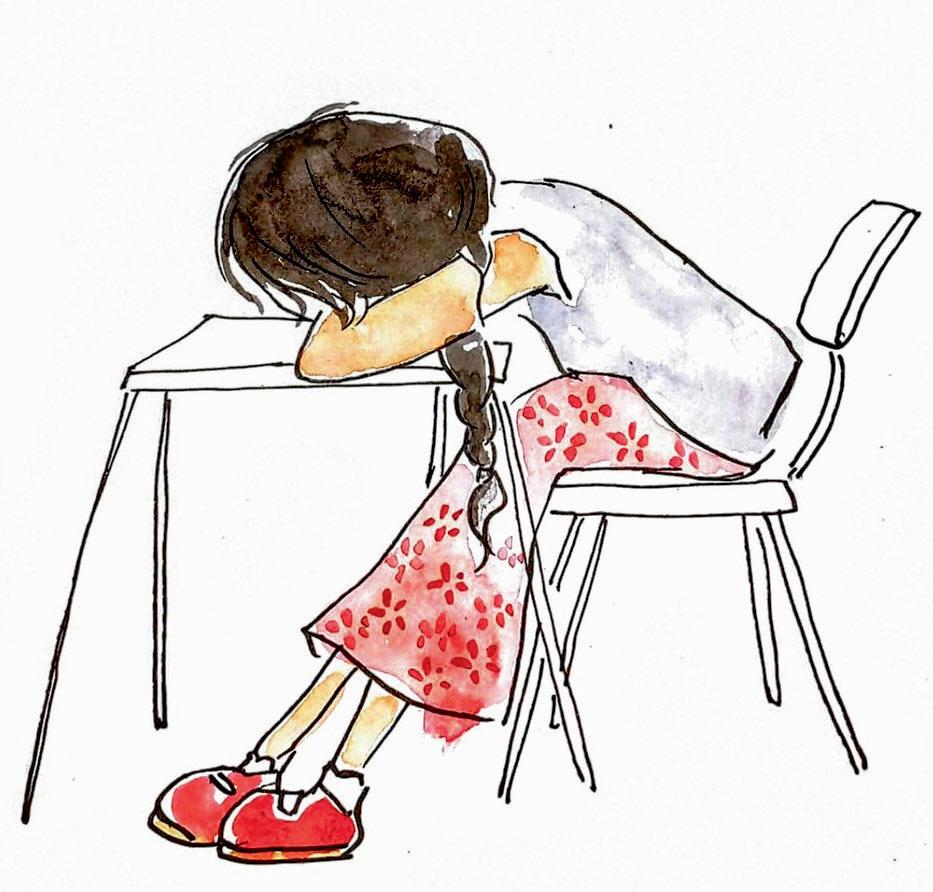
Multiple students gave weight to this statement, commenting on how their adjustments a ect the whole exam period. “Obviously you still feel nervous, but I despair less about how exams are going to go.” Of course, this was almost always caveated with a comment about extreme pressure: at Cambridge, the volume of content is immense and “when you have speci c learning disabilities, that just really doesn’t mesh well.” Others mentioned feeling less con dent or struggling for the rst time when starting at Cambridge, referencing the lack of structure and parental support. However, Cambridge does o er speci c advantages: Sarah explains how the college system makes it harder for students to slip through the cracks, and Elea-
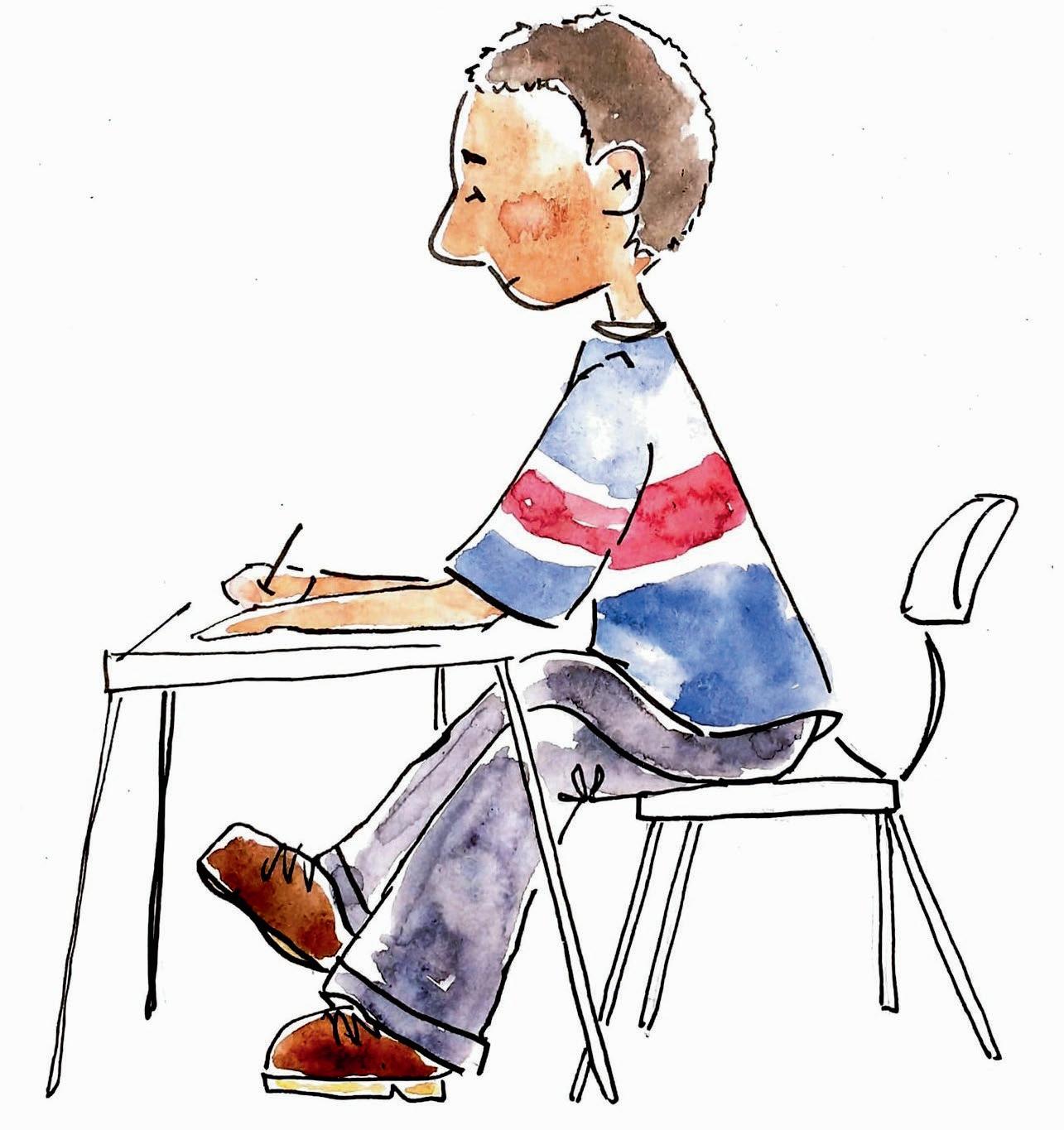
My nal question to Sarah is on the permanence of the three-hour unseen exams. She says: “ ere have been real e orts to diversify assessment, however that three-hour exam still remains a critical component in many Triposes,” and Eleanor expresses that this “needs to be challenged”. Trends suggest we will only see increases in the number of students who need exam access arrangements, and it’s unlikely that a university famed for academic rigour will soon weaken its means of testing academic potential. What remains certain, though, is that disabled students deserve clarity beyond an email forgotten in a stale inbox, and they deserve answers beyond just ‘yes’ or ‘no’.

“Footlights seem[s] to be behind about half of the stu worth paying attention to,” wrote former Footlight David Mitchell in his 2013 memoir. If you think of the Footlights, names such as Stephen Fry, Emma ompson, Hugh Laurie, Robert Webb, and Olivia Colman may come to mind. ese people all have one thing in common: they have made it big in mainstream media. It seems, however, that there is a dissonance between the Footlights’ illustrious reputation and students’ current perception of it.
For many, the Footlights’ legacy no longer aligns with the quality of its contemporary output. Some variation of the sentiment ‘I’m not hearing massively positive things about the Footlights’ was a common response from students regardless of whether they had seen many of the society’s shows. One student, previously involved in the Footlights herself, put it bluntly: “If you say the Footlights are funny you’re in the minority at the moment,” adding that this is unexpected from a troupe that has produced so much talent in the past. “ ey’re supposed to represent the pinnacle of comedy, they’ve launched careers – so why has it suddenly gone like this?” is sentiment rings especially true for students who grew up watching shows like Taskmaster and Peep Show. One student recounts
❝ ere is a culture of recycling the same people over and over again
Footlights. However, reality did not meet her expectations when she arrived in Cambridge. Her perception of the Footlights as a “powerhouse of comedy” that produced “all of the great [British] comics” was quickly dispelled after she saw them perform. “I didn’t laugh once, and it was only made more painful by what was essentially a laugh track supplied by the front row – who were clearly the performers’ friends.” Despite this, another student who has stewarded both Smokers (shows that do not exclusively involve Footlights members) and the Spring Revue (which do) expressed the opposite view: “I’ve always found [the Footlights shows] very funny,” though he points out that “you can tell that they think they’re funny.”
“[It was] basically suggesting that we get rid of membership, because it’s ruining it […] just get rid of the idea of being an ‘o cial Footlight’.”

the Footlights, says that this appears to be the direction the society is heading in.
“I think at its heart it just makes it more inclusive and allows […] for a wider of voices



Foot-





Freya, the new president of range lights]”. This tions: have the Footlights reached a point where such
does the push for a wider range of voices re ect a desire to diversify, or a need to address concerns about the quality of its output?



e Footlights’ prestige is a double-edged sword; it’s helped launch comedians’ careers, but it also means the talent of current Footlights is only ever measured against that of those who’ve ‘made it’. Recent members have found success within comedy, but few can claim the same level of recognition as the previous members that cemented the Footlights’ formidable reputation.


When I speak with the previous president, James, about his time overseeing the society, our discussion centres around his instigation of a movement to reform the Footlights. e internal structure of the







e counterargument presented by James when I suggest it may be the latter – that the Footlights’ are just no longer producing mainstream stars at the rate they once did – is that this is a misconception. “ ere actually has been a lot more people coming from Footlights in recent years than people realise,” James tells me. assuring me that “there are so many Footlights who have graduated recently who are really big,” though caveats that statement with the quali cation that they’re often “famous in the comedy scene, but not necessarily in the mainstream.”


















Both Freya and James cite Ania Magliano, a Girton alumna who graduated in 2019 after reading English. Magliano has emerged as one of the leading stars in contemporary British comedy, after appearing as one of ve on series 20 of Taskmaster, which aired in autumn 2025, and even more recently as a permanent cast member on SNL UK. Despite Magliano’s relatively quick rise to fame since graduating, when recalling her own time at the Footlights to e Guardian, Magliano rather damningly critiqued the troupe as “at risk of producing a very samey, repetitive type of comedy” and stated that she hoped “things were changed for the better”.
Before 2018, the committee (members of the Footlights society) and the Footlights (those performing in shows) were one and the same. ese two entities are now separate, although there is often overlap. e decision to do this was not immediate, and, as suggested by Magliano, outstanding: “By the time I
comedy troupe, or if they were never there in the first place
was on the Footlights committee, there were lots of conversations that were well overdue happening about representation and diversity.” is concern is still held by many current students, despite it now being seven years since Magliano graduated. One student who used to be involved in script writing and sketch shows for the Footlights tells me that “there is a culture of recycling the same people over and over again”. is discourages people from a wide range of backgrounds and levels of experience from getting involved, as they may feel as if they are “crashing an already existing culture”.





proves, in James’s view, is that the Footlights are always going to be held to an impossibly high and arguably outdated standard. He adds, however, a silver lining: it gives thick skin to the students involved, something necessary for survival in the entertainment industry. “In other societies, you don’t get that criticism. And having that criticism makes you improve massively, and you’re [therefore] prepared for anything the
era was marked by a relatively clear route from Oxbridge into mainstream media, a pathway that has largely disappeared. James highlights this overall positive change as the fundamental explanation for the society’s reduced visibility in mainstream entertainment. “We can’t deny that there was a bias towards Oxbridge students. […] They were getting TV shows immediately after graduating, which is obviously a crazy idea to think about now.”















e decision to separate membership and committee in 2018 was presumably made as an attempt to remedy the nepotistic management tendencies. Speaking candidly about his occasionally di cult time as president, however, James explains that this decision was not the panacea people thought it might be. Lockdown soon followed, leaving unanswered questions about whether this system change had been successful. James tells me that after his time as president, he has “[come] to the conclusion that it very much isn’t working”. e creation of a Footlights ‘membership’ has created more issues than it has solved, according to James. “People aren’t really doing the shows for the sake of doing the shows, they’re doing shows to try and get that membership.”



❝ Varsity eatre reviewers described Mitchell and Webb’s rst two man show as “the most obviously underrehearsed production ever”



James adds that this “bizarre, nebulous ship” has posed a students getting involved, simply because it is di cult to wrap your head around.



e alleged stellar reputation of the Footlights has posed di culties for its recent members.
James recalls how two years ago, when directing the Footlights’ tour show for the Edinburgh fringe, he experienced a massive “culture shock”. Performing to a sold-out show of “older people who were expecting Hugh Laurie, Mitchell and Webb, [and] Emma ompson,” the audience were sorely disappointed with their performance and so they “had to rewrite the entire show to their sensibilities”. What this anecdote
not particularly well received. Varsity eatre reviewers at the time described how “near disasters occurred in every scene,” describing the show as “the most obviously under-rehearsed production ever to appear on a Cambridge stage.” e polished, sharp comedy produced by former Footlights we see on TV comes after years of practice after graduation, and the hilarious lines in shows and movies they star in are often written by expert script writers – indeed, Peep Show was written by neither Mitchell nor Webb. A comment on a whole-scale societal shift is unavoidable. e Footlights’ supposed golden


Freya is also keen to highlight that mainstream media was “far more elitist in the past,” and that comedy is now saturated –shows that catapulted former Footlights to fame are no longer novel. “[Recent Footlights] are doing hilarious things. ey’re so entertaining, but people aren’t seeing them or accessing them in the same way because of the amount of media we have.” So, perhaps the Footlights aren’t on a tragic Shakespearean trajectory. Maybe they were never



that funny, and were simply propelled by the entrenched Oxbridge elitism of the late 20th century; or maybe they are that funny, but are held to impossible standards that, realistically, a group of 20-year-olds juggling demanding degrees and developing frontal lobes are never going to meet. ere’s no doubt it’s time to face the music and acknowledge the need for reform. But, after all, walking out of a student comedy gig and complaining that your deaf cat could have done better stand-up is an essential part of the university experience. We only remember the funniest and now famous former Footlights, but as one student astutely put it: “I’m sure there were plenty of shit ones in 1995 too.”
Howell sits down to of politics and activism
leader
When I ask if a Cambridge education prepared Harriet Lamb for her life as an activist, she screws up her face in confusion. I laugh off this frank rejection of my question, and the tension in the room melts away as I begin a wideranging conversation with the mind behind Fairtrade UK, the CEO of the Green Party of England and Wales, and alumna and honorary fellow of Trinity Hall.
After describing her work in India after university as integral to her development as an activist, Lamb reconsiders my question and reflects on the interplay between academia and activism.
“I switched [from English] and did social and political science in my final year,” she concedes. “That did give me an opportunity to start to think about some of the ways in which politics works and how we can all play our part.”
Our focus moves from Cambridge to Costa Rica, where Lamb began her fight against inequality within the banana trade. “I went out to Costa Rica to do some research and to meet with the unions there, and they told me about how the use of chemicals […] on Latin American plantations had left thousands of people sterile.” While the bright yellow fruit is now synonymous with Fairtrade, it was a tough fight to get there. Lamb was “hooked on the politics of bananas” and eventually “bananas became as iconic a Fairtrade product as coffee” – one of her “big, iconic moves” was convincing Sainsbury’s to stock Fairtrade bananas: “However low your income was, if you were shopping in Sainsbury’s, you could buy Fairtrade bananas.”
As we move from her past in activism, to the future of the field, the passion in her voice is almost contagious. “You can have so much fun as part of the social movement for change. I’ve got to recommend it!” she exclaims, grinning from ear to ear. “You’ll always be working with such lovely and committed people.” Lamb
sees the individuality and creativity required to navigate career activism as imperative for social change. “You have got to forge that career yourself, and find the places where you can make the biggest difference.”
Lamb’s experience at Fairtrade is invaluable in her current role as CEO of the Green Party. Both projects were decried as unrealistic, but were met with widespread public embrace. She lets me in on her secret to success: timing. The important thing is creating a moment which can “catch the zeitgeist. You can create it, catch it, and then roll with it” she explains. Lamb reckons that the frustration people feel with the current political milieu is one such moment which has led people to join the Greens “in their thousands”.
As their membership grows and opinions diversify, I wonder how the Greens will prevent schisms within the party. Some of the openness Lamb displayed during our conversations about activism fades as we enter the thornier territory of party politics. Citing the party leader Zack Polanski, she states “if you agree with 7 out of 10 of our policies, that’s great; if you agree with 10 out of 10 that’s a bit weird.” It is the vision that matters, not the minutiae of policies. “I do think where the Left is united is that we’ve absolutely got to beat the rise of Reform,” she adds with urgency.
populism mean? ’” she reflects, but concludes that populism is not a uniquely right-wing phenomenon. “Populism should be about being able to reach out to the public more broadly” she explains, confidently adding that “eco-populism can absolutely do that on the Left”.
❝ One of her “big iconic moves” was convincing Sainsbury’s to stock Fairtrade bananas ❝ You’ve got to forge that career yourself, and find the places where you can make the biggest difference
The Green Party and Reform UK are superficially similar: populist parties which have shaken up the “dusty old parties,” and the political status quo. However, they lie on opposite sides of the political aisle. I’m curious what Lamb makes of the label ‘populist’, given its frequent association with right-wing politics. “People can get themselves tied up in knots about ‘What does
I question the longevity of this unity. We have seen how making lofty promises during an election can backfire as the party struggles to rise to the heights of their ambitions once in power. Undeterred by my apprehensions, Lamb sees the scope of the Green Party’s ambitions as an advantage: “When you have a mandate from the public and they voted for you because of your bold politics, that can help steel you to resist the forces that will try to pull you back.” She contrasts this approach with the “very managerial view” put forth by the Labour Party. Lamb suggests that Labour’s current issues have stemmed from this, with the party becoming “even more managerial in power”. We then move to some of the controversy surrounding proposed Green Party policies. For example, proportional representation has long been resisted due to the risk of opening the floodgates to extremists in Parliament. Lamb believes that ship has long sailed: “just look at the rise of Reform.” She also emphatically rejects the notion that wealthy people will be driven from the UK by wealth taxes. “I think most wealthy people want to live in a country that’s well run,” she explains, adding a blunt message to those who would not be willing to contribute to the country they claim to love: “Please go”. Lamb entertains more nuance while discussing national security, taking a pragmatic approach to the Green Party’s pacifist stance. It is her view that we can’t achieve national security “if we can’t even operate our own army or our own armed forces without reliance on the US”. She also emphasises the importance of conflict mitigation by “tackling


the root causes of much of the global insecurity,” citing fuel, food and climate insecurity as key factors in current con icts.
Lamb nds celebrating small victories along the way keeps the party motivated to achieve their goals. “We really welcome all those many, many people who chip in […] so that the Greens can go on being a force for change here and now, while also building up towards winning more MPs in the future.” Harriet Lamb is no stranger to winning seemingly impossible ghts. If she could take the banana trade from a fringe issue to a global sustainability movement, who is to say that she can’t work similar magic with the Green Party, catapulting them to mainstream success?






Afew days before the local elections, I stumble across a TikTok edit of Ed Davey to the viral SOPHIE song ‘VYZEE’ with the lyrics “We can stay here, or we could go up, up, up…”
‘We can stay here’ plays alongside clips of Keir Starmer doing the 6-7 motion, images of him looking awkward, and that infamous photo of him cosied up beside Mandelson. ‘Or we could go up, up, up…’ accompanies clips of Ed Davey – the perfect foil, feeding animals and campaigning with a beaming smile. is is not a niche political edit from an A-level politics student putting o their work; it was created and posted by the Liberal Democrats’ o cial TikTok account.
“One thing we [previto do was have a stronger media presence to show and what we stand for,” admits. So, the edits and into internet culture are to win the support of people – who would guessed? I speak with Davey just after he’s delivered a talk at the Union which, unsurprisingly, attracted an older crowd. He assures me his party is working to change this: “I think as we improve our social media presence […] young people will be more attracted to what we say, partly because it’s very principled, and partly because it’s more pragmatic and realistic.” Although Davey’s ambition to expand the party’s social media presence is







clearly strategic, it occasionally comes across as rather haphazard. Furthermore, given he himself admitted a lack of social media uency to
e Guardian – “When I said I’m leader of the Rizz Dems, I didn’t quite know what I meant” –questions about whether his stunts undermine his credibility naturally arise.
Davey’s persona has always been the reasonable, centrist dad with a kooky a nity for bungee jumping, tumbling o paddle boards, and watersliding – and that’s yet to mention hobby-horsing. To cement this persona into the public imagination, Davey waltzed onto the stage at the Lib Dem
❝
these views are not conducive to the kind of attention-grabbing social media clips that populists like Farage have mastered, Davey has had to lean into the wacky stunts and (verging on ‘brain-rot’) memes.
The Lib Dems will be far more powerful than people are thinking
Two years on from the general election, however, the political landscape has changed; not least because of the supercharged growth of Reform UK. When the next general election rolls around, there will be a new generation of voters aged 16-21 who were ineligible to vote in 2024. We know that young people are moving towards the Green Party in huge numbers: 72 ‘young Greens’ were elected into 74 council seats. While the Lib Dems have enjoyed success in the recent local elections, they cannot a ord to be complacent –and, frankly, social media stunts are not enough to win the a ection of

Davey, however, warns that this shift towards the Greens is somewhat alarming: “Under Zack Polanski, they’re taking the Green Party to the far left so they’re attracting people who used to believe in Corbynite labour politics, [which is] quite a left-wing position.” We talk about why this shift has been so rapid; however, Davey’s diagnosis comes across as slightly patronising. “Some will have understood that and supported it. Other people may have gone with more of a vibe and not quite reale – is captioned ‘(Centrist)




e same is true for Reform voters, Davey would argue. With the Greens gaining signi cant traction, that’s certainly a lot of people “not quite realis[ing]” what they’re signing up to.

Perhaps some people have passively “gone along” – but surely this is also a signal of people’s distrust of main party politics. ere is certainly something to be said for Polanski’s ability to capitalise on young voters’ distrust. Davey tells me that the challenge of rebuilding trust in politics is “one of the most important things facing our country.” He adds: “Democracy is so viable but people at the extremes, particularly Nigel Farage, want people to think that politics can’t deliver. And that’s a very dangerous place for us to be: when extremists who are dangerous to our democracy play on those fears and that lack of trust.” But how can that trust be rebuilt by a party like the Lib Dems which has a chequered history of neglecting the interests of young people, typi ed by the breaking of their student loans promise back in 2010?


shaped his advocacy for a “rounded education”. He adds: “[when] more children and young people are able to do sports, arts, crafts and music

people with di erent skills shine. I think that’s a great way to bring di erent people together.”









I get the impression that Davey is motivated by genuine conviction and one that stems from personal life experiences. As a young carer for his terminally ill mother as a teenager, and now a carer for his disabled teenage son, improving the care system has always been a priority. Now, Davey tells me that combatting the threat of the far right is his party’s primary concern.




We talk about his time at university, where it ought not to go unnoted that he and his cohort paid virtually no tuition fees. To my surprise, politics was not at all on Davey’s radar at that time. You might assume that while reading PPE at Oxford, he was a union hack; however, he was not involved in a single political society. ere’s a slight irony in an Oxford-educated politician sitting in front of me at the Cambridge Union explaining that “life isn’t just about exams and grades”. When Davey begins to reminisce on his university days, his face lights up: “I’ve got so many friends from my university days and they have helped me keep sane and healthy.” It is these lasting bonds and memories from beyond the curriculum that have friends




“ e Liberal Democrats are going to stop Reform and the Tories because we can [persuade] that one-nation, traditional liberal Conservative voter who is appalled by Kemi Badenoch’s shift to the right and appalled by Nigel Farage.”

Davey is certainly condent that his party’s growth trajectory is positive.






















































“Through the way I lead, the Lib Dems will be far more powerful than people are thinking.” Whether the endearing ‘centrist dad’ persona will be overshadowed by other political characters or withstand the test of the next general election is an entirely different matter, however. I suppose only time will tell if we’ll “stay here,” or “go up, up, up”

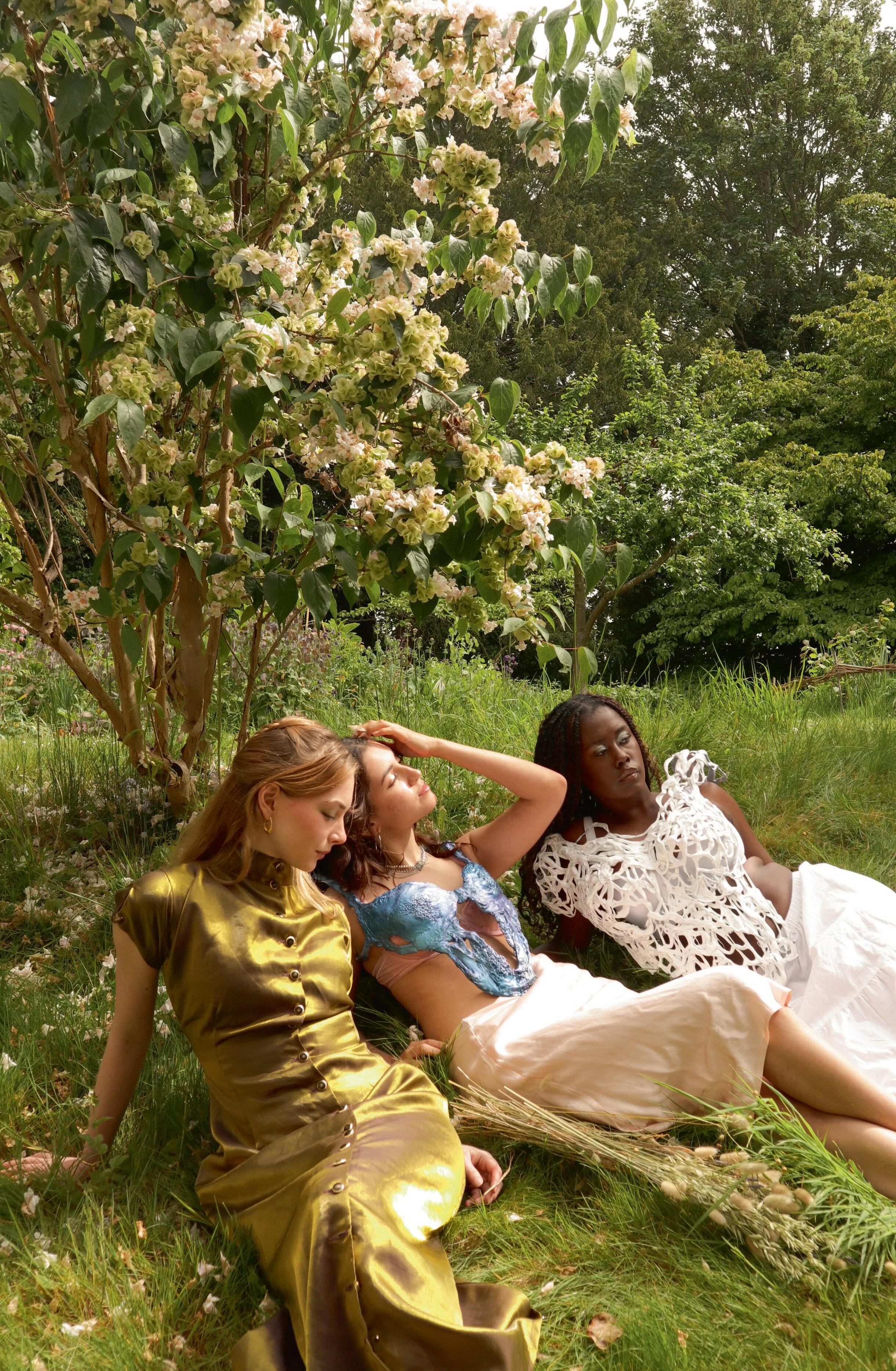


As a city so steeped in traditions, fashion in Cambridge is often associated with college gowns at formal dinners and blacktie dresses for May Balls. Attempting to balance creative pursuits with a university degree can sometimes seem like a perilous task. Fashion design, in particular, can prove difficult to break into. For some aspiring fashion designers in Cambridge, this is why it feels especially important to create space for garments that speak through identity, background, inheritance and experimentation. We sat down with designers studying at the University of Cambridge and Cambridge School of Visual & Performing Arts (CSVPA) to better understand the processes of young artists working in this historical city.
For Jessica Hammond, a politics finalist at Murray Edwards College and founder of ‘Zwuanli’, fashion is rooted in movement. Inspired by her Tanzanian heritage and British upbringing, her wearable art moves between memory, material experimentation and cultural fragmentation. When asked to describe ‘Zwuanli’ in one word, Jess chooses “rhizomatic”.
The term, she explains, comes originally from gardening, but has since been taken up in sociology and political theory. Rather than growing upwards like a tree, a rhizome grows horizontally, without a single centre. “If you remove a part, the whole thing just regrows”. Her garments work in a similar way: moulded and remoulded, broken and re-formed, allowed to continue growing. Her fashion is thus circular rather than linear.
That concept also reflects her own upbringing. Born in London, Jess moved with her family to South Africa, Malawi and Nigeria, before eventually returning to the English countryside. “It’s been an open journey,” she says, one that has shaped how she thinks and creates. Her biodegradable bodices are made through a process that is both intimate and physical. Laughing, she says, “I literally cook the garments in the kitchen.” She melts down the low-melting-point biodegradable material before stringing it directly onto the body, cutting and casting as she goes. Every line on the final garment therefore marks a point of contact.
For Jess, this turns the garment into a record of collaboration. The process requires learning what parts of the body the wearer wants to show or hide, and “sometimes I see freckles they’ve probably forgotten they have,” she adds. The finished piece becomes an accumulation of shared time, memory and conversation. This sense of connection became especially significant during Jess’s exhibition in Tanzania. She describes going there partly to understand her mother better. In Moshi, in the rural Kilimanjaro region, she found herself working in a kitchen with a model she had never met, across a complete language barrier. Yet through that process, real friendships formed. There was “laughter and understanding that didn’t need a shared language”.
That experience brought her closer to questions of inheritance and loss. Her mother is Tanzanian, but “I don’t know my mother’s tongue,” she says, “and that broke my heart a little.” For her, this is at the centre of her practice: “what gets carried across fragmentation and what gets lost in migration and exile.”


Dhruv Tank, a second-year fashion design student at CSVPA with a parallel interest in theology, also approaches fashion as a way of carrying inheritance. His work is “bold, silk-led and deliberately garish,” drawing on Hindu thought while paying homage to Indian heritage through print, fabric and form.
Dhruv’s interest in fashion began in his childhood. His mother introduced him to the sewing machine when he was young, and he started by making small things: teddy bears, beanbags, and eventually clothes for people he loved. “When I was eight, I made a pair of trousers,” he recalls, laughing. Made from a Ben 10 bedspread and stitched together with pyjama bottoms, they were, by his own admission, a “very loose attempt” at trousers – but he still has them.
ough his mother owns an accountancy rm, she is “very crafty” and has always pushed him and his sister towards creative elds.
One of Dhruv’s most striking looks is a silk piece with a sculptural headpiece made entirely from recycled silk cocoons. Usually used in Korean beauty for exfoliation, the 5,000 cocoons were due to be discarded before he separated, recycled and reused them. e dress itself is made from two vintage saris belonging to his grandmother. Each sari is around seven metres of handwoven silk, and the two, he says, “matched perfectly”.
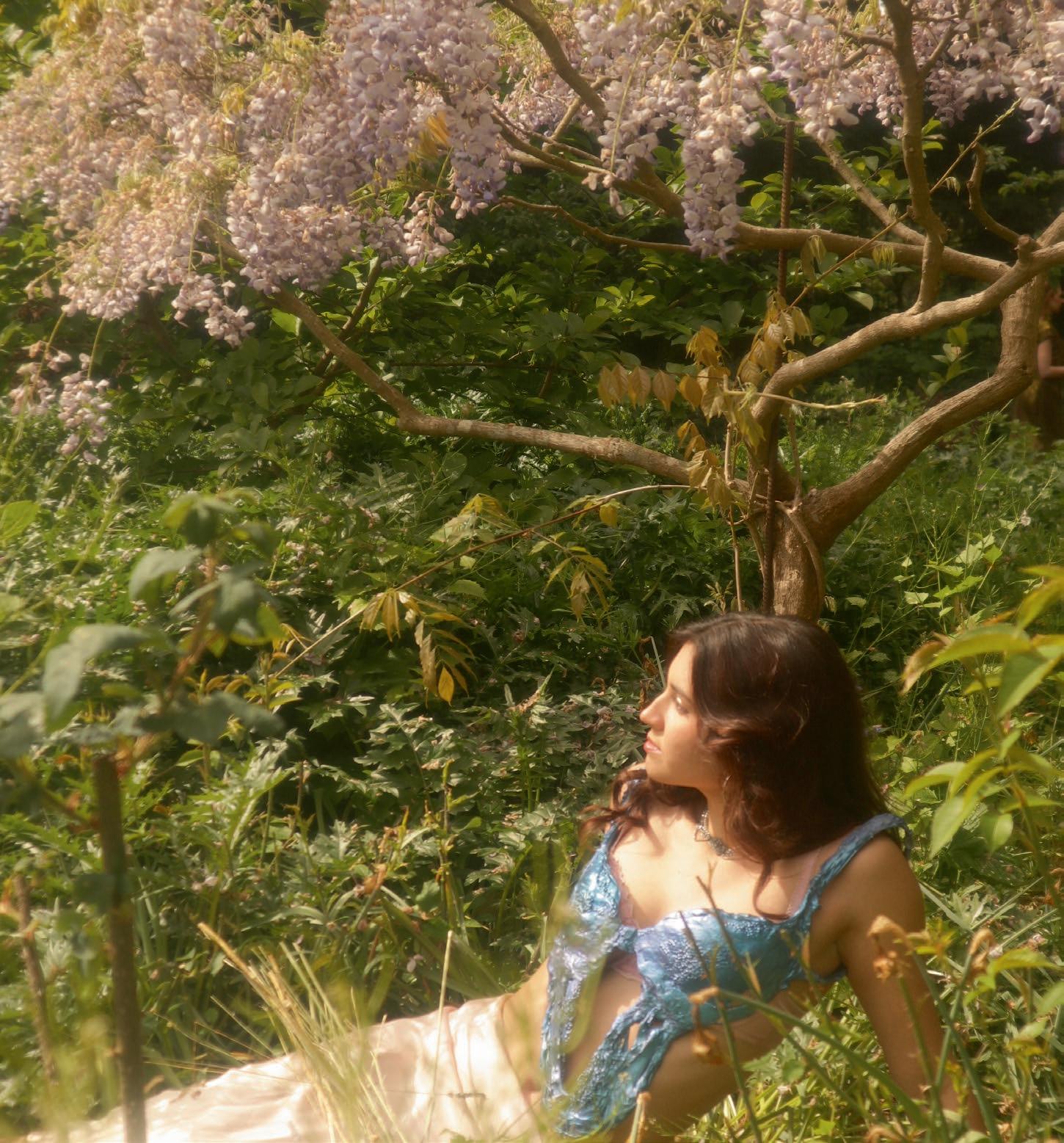













































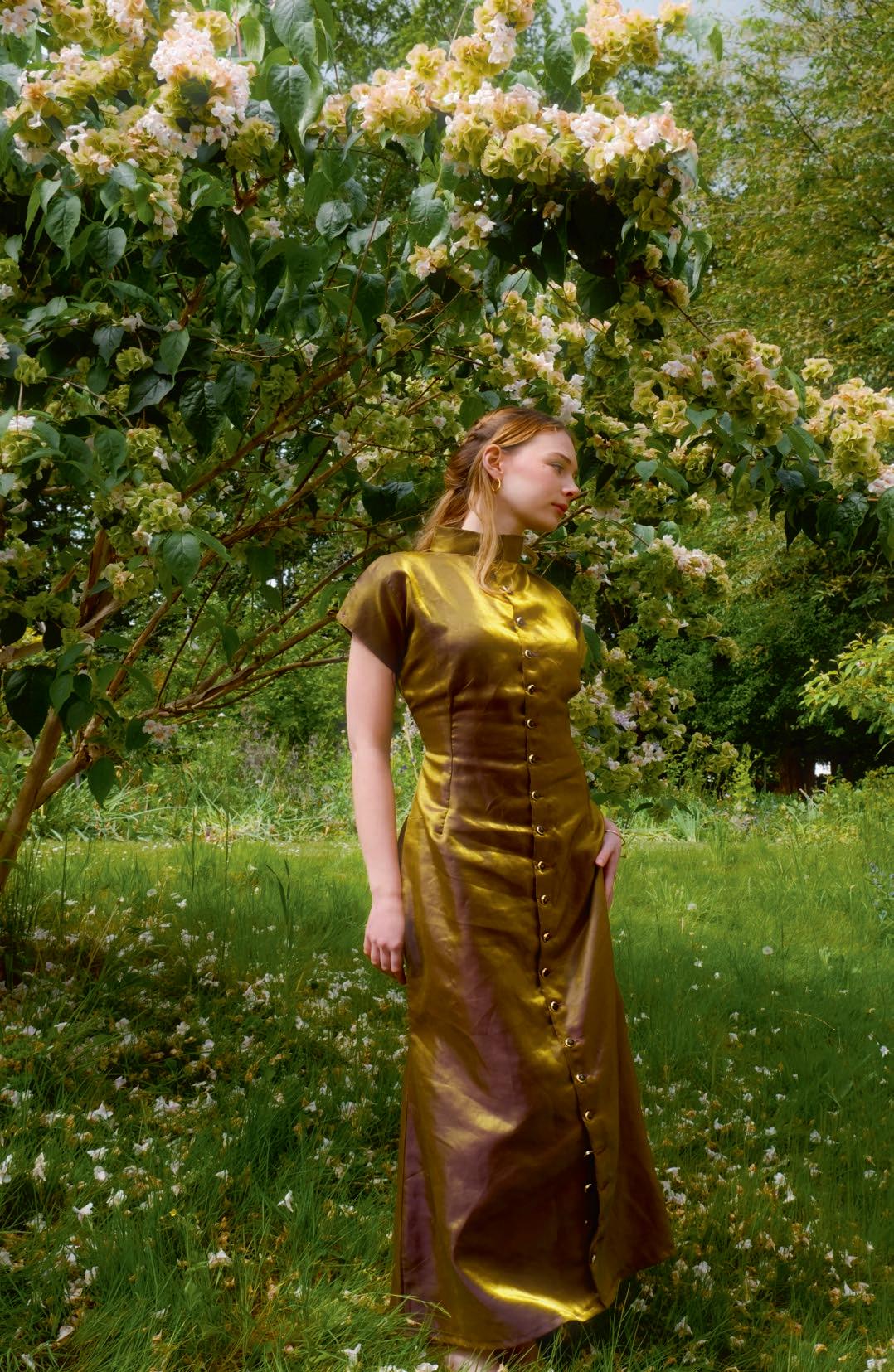

The look stages a conversation between raw and finished silk: the cocoons in the headpiece and the sari silk draped across the body. Dhruv deliberately kept the fabric continuous, almost like a sari, instead of cutting it into a conventional pattern. Conceptually, the piece asks where silk comes from. After conducting a survey, he found that many people did not know about the insects behind silk production. The work also considers colonisation and the movement of Indian textile traditions into the UK. Theology deepens this symbolism. Drawing on Hindu thought, Dhruv became interested in the four sources of authority and wisdom, especially the importance of texts that are spoken and listened to rather than only written down. In the West, he observes, written words often carry a particular “credence”. By contrast, the four ear-like forms in his garment appear to converse with each other, exchanging knowledge and wisdom. The piece is closely tied to his religious identity and cultural background, and he wanted to place “as much meaning and nuance into it as possible”.
As a vegetarian, Dhruv is often asked about his use of silk and leather. He acknowledges the ethical difficulty, especially because silkworms are killed in silk production. But for him, the issue is also environmental. Synthetic alternatives are often derived from crude oil and can be more harmful to the planet. The question, then, is one of conscious making. One carefully made leather jacket, he argues, has a very different impact compared to a fast-fashion brand producing thousands of leather-like garments. “The cost of death and the environmental impact, are always things I have to weigh.”
Lily studies art history at Lucy Cavendish College, and sells handmade jewellery online across the country, and to students here in Cambridge. Her designs are inspired by historical jewellery, and often incorporate repurposed pieces and fragments of broken treasures. Her chainmailmaking abilities are also seriously impressive.
As an art history student, Lily has always been interested in fashion history, and she tells me her favourite thing about jewellery is “the way that jewellery fashions basically haven’t changed since Ancient Rome.
Even in the Fitzwilliam Museum, they have some Ancient Roman signet rings and some earrings, and they kind of look like stuff that people are making and selling today.” And the techniques jewellery makers used haven’t even changed that much either – much like Lily, the Ancient Romans were hand-making all of their jewellery. Lily tells me that a big part of the appeal of the history of fashion design is that “I love that I’m using the same techniques as the Ancient Romans!” It may seem like a daunting task to get into designing jewellery while completing a degree at Cambridge, and Lily explains that she started
making jewellery before coming to university, and would sell her work in a local gallery in Brighton.
❝ I love that I’m using the same technique as the Ancient Romans!
This is what inspired her to start selling in Cambridge, from which she’s found a large demographic of people interested in her work, noting: “It’s great to be able to see stuff I’ve made when I’m out around town.” Lily tells me about her jewellery-making process, explaining that she will “usually stay up very late at night and spread all my beads and everything out on my bed. I’ll put on an album, so when I’m making things I get so locked in, I don’t check my phone for hours.” As she shows me the most recent pieces she’s made, she remembers that she was listening to Rebel by EsDeeKid on repeat while making them. For Lily, music is reflected in her creative work: “whatever I’m listening to or what I’m watching when I’m making things, the craft gets imbued with it. [...] I can remember exactly what I was listening to when I was making it.” What strikes me most in our conversation is Lily’s explanation of how unusual the sensation of touching chainmail is. She notices that “the first time touching chainmail is so exciting because it’s such a weird texture, it moves in all directions. It’s like fabric.”
She goes on to explain her approach to creating ideas, which involves scavenging unique charms and pieces: “I like to find something, like a piece that’s broken or detached from something, and then I’ll build the jewellery around it. For example, I’ve made pieces out of broken jewellery I got from my grandma – I like to repurpose a lot.” She also shows me how her interests influence the way she puts different pieces together, “I’ve got a piece made from a charm I got in Prague, with the Infant Christ of Prague on it, and I found I had all of these other charms which felt relevant, with fleur-de-lis, crosses, and stuff.”
It seems incredibly impressive to me that Lily is able to balance all of this creative work with a degree. She points out that “the university does have a good creative community,” mentioning that she would never have had the opportunity to sell at a market if it were not for a student-run zine. Although Cambridge does not offer an art degree, Lily does not view this as a disadvantage. On the contrary, she believes it makes Cambridge’s art scene moreinclusive: “I think if there was an art degree at Cambridge, the art scene would exclusive.”
Erika studies at CSVPA, and creates designs inspired by her Spanish heritage, as well as bespoke tailoring with her company Serene. Her designs are tailored, elegant, and timeless, with stories stitched into every seam.
Could I give these garments to my own daughter?
Serene was created with the intention of creating bespoke garments in conversation with customers, drawing on their individual fashion interests to create pieces separate from anything you’d find in a shop. Erika explains that she is inspired by the style of her grandmother: “I look in my wardrobe, but I have so many pieces from my grandma. And I think, now I have plenty of garments, but in the future, could I give these garments to my own daughter?” This leads her to think about durability in everything she creates, an incredibly important factor in creating sustainable fashion. And in the creation of a bespoke garment, Erika wants to get to know the customer she’s designing for.
Erika’s designs are built on her varied history of creative experiences. During the pandemic, her grandmother inspired her to buy a sewing machine while she was studying in Spain. After working with plenty of designers, studying at CSVPA, where she tells me she was pushed to be her very best. She notes how much she has learned from her teachers, remembering when she started making the decadent gold jewellery for Heredara out of clay “which was quite difficult because it can break – my teacher would test it for me, and one day she threw it and it didn’t break. That was when I learned how to do it. It’s a process.”
Together, these designers show that fashion in Cambridge is not confined to May Balls or formal dinners; it can be an array of wearable art, shaped by history, migration, theology, heritage, and personal narratives. Whether through Jess’s biodegradable bodices, Dhruv’s silk dialogues, Lily’s repurposed treasures, or Erika’s lasting garments, each designer reminds us that what we wear can tell stories of its own. In a city often defined by tradition, their work shows that fashion is also a site of experimentation for intimacy, memories and connections with our surroundings.
~ Joanne Yau & Flossie Bullion
Photographer: Amika Piplapure & Clio Sze
Shoot Co-ordinator: Paige Griffiths
Models: Elizabeth Omondi, Aishwarya Khadka, Dara Osinowo, Aaliyah Haque, Ismene Forsyth

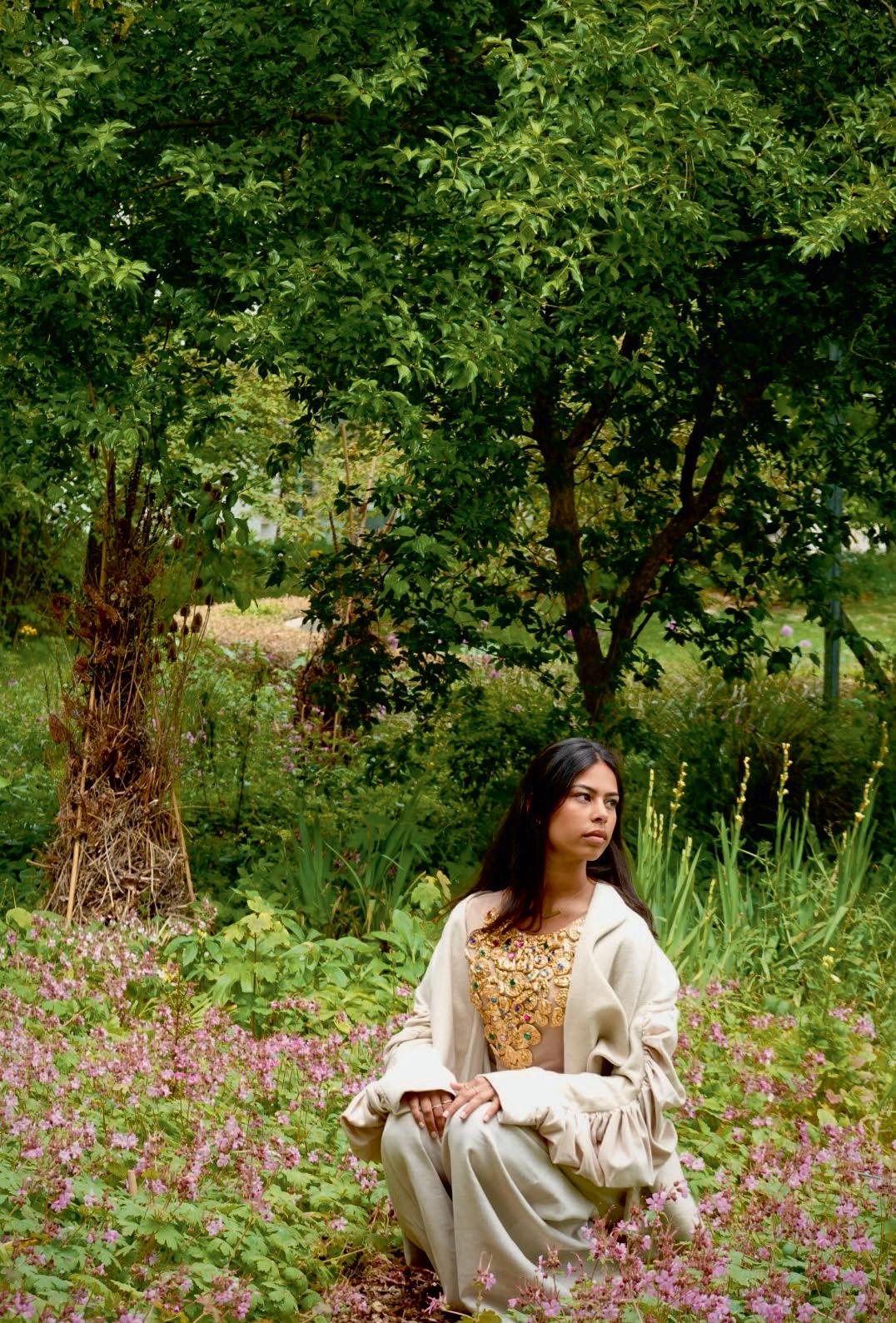
















Theatre is eeting. A performance lives on stage for merely a few hours, surviving beyond that through our dialogue and memory only.

e reviewer takes a front-row seat in this ephemeral space, crafting an immediate response in the hours after leaving the theatre. Historically, critics held a powerful gatekeeping role: a handful of broadsheet reviews could determine a production’s commercial fate, either extending or curtailing its run. In a digital age where anyone can publish their opinion instantly, this raises the pressing question: what is the role of the theatre critic today?






Part of the di culty lies in the nature of reviewing itself. eatre reviews are often written in the narrow window between the falling of the curtain and the following morning’s publication. is overnight response relies on quick rst impressions, posing the question of this initial reaction’s validity – were we ‘wrong’ the rst time around? Last summer, I watched an outdoor production of Twelfth Night outside Lich eld Cathedral. inking it to have been a delightful iteration of Shakespeare’s renowned farce, I worried that the cathedral’s stunning backdrop, bathed in the setting sun, had romanticised something otherwise mediocre. Yet, when I saw a di erent production at the Cambridge Arts eatre in January, I was reminded of what had rst entranced me. My rst response remained the same, and I loved the play all the more the second time around. Perhaps, then, the issue is not that rst impressions are inherently awed, but that we ask them to stand as de nitive nal judgements.
e digital age has only complicated this demand further. With blogs, social media, and a wealth of public platforms, you can scroll through hundreds of opinions without ever leaving your bed. e conversation is only getting bigger, and the authority once concentrated in the hands of professional critics has di used into the crowd. Audiences are now active participants in criticism, rather than passive recipients, generating a constant stream of reaction that sits alongside, and often competes with, traditional reviews. is democratisation is not without value. eatre has never been a monolithic art form but encompasses everything from major commercial spectacle to small-scale experimentation. It depends on a plurality of perspectives to remain alive. A wider critical landscape allows for voices historically excluded from broadsheet culture to shape the conversation, broadening its reach and relevance. We are all contributors to the cultural conversation that surrounds the narratives posed on stage. Interpretation, after all, belongs to the beholder, a vision in ected by personal experience, taste,
favour. e question is no longer simply who can speak, but whose voice is heard above all the noise; and on what grounds we choose to trust it. Media outlets are under pressure to generate clicks, and long-form reviewers struggle to compete with content that is faster and more instantly gratifying. Algorithms have eroded the authority of the salaried expert, privileging immediacy over re ection, and spotlighting responses which are easily digestible at a glance. It is easy to nd yourself pulled into a stream of compressed, short-form reviews that distill complex works into a minute of reaction or edited clickbait. Lost in this process is detail and the space for ambiguity, contradiction and sustained thought. e trend risks art into a series of quick and dirty consumable fragments. e demand for cultural commentary has not diminished; if anything, it has intensi ed. What has changed is not the appetite for judgement, but the conditions under which it is formed and consumed. As the movie reviewer Pauline Kael once observed: “the critic is the only independent source of information. e rest is advertising”. at independence still matters, perhaps now more than ever. e role of the critic is shifting, subtly but decisively, from the delivery of de nitive judgements to o ering perspective and reaction in a saturated and fast-moving context. Traditional criticism is changing shape, but the reviewer still has a front-row seat.






Yet, this expansion comes at a cost. e sheer volume of commentary can create an echo chamber where judgement is driven by immediacy and algorithmic




the essence of everything I love about it. From the apper dances and sparkling dresses to the bold lighting and smooth New York accents, every aspect blared with the unashamed charisma of the Jazz Age. Lost in their own wealth and exuberance, joyful moments of self-indulgence and eccentricity were juxtaposed with a romantic longing which makes this story endlessly relevant, even to us today. is play gave actors the chance to breathe new life into some of the most loved characters in the literary canon, and did so wonderfully!




Bringing 1930s glamour to the ADC, Clementine Rice’s adaptation of Noel Coward’s Private Lives certainly proved a highlight of this year’s Cambridge student theatre. Encapsulating the most theatrical and concealed characteristics of a relentless yet enticing love, Kate Woodman and Leo Morad bring to life Amanda and Elyot’s charismatic, irresistible chemistry, while skilful directorial decisions allowed moments for these individual actors’ talents to radiate throughout. Perhaps what this play does so masterfully, is speak to our guilty pleasures and the facades of unvanquished love that we so frequently prescribe to. Teeming with wit, comedy and sensitivity, Private Lives clearly proved a public success.
– LUCY FARMER
e Great Gatsby is one of my favourite stories. is production perfectly captured
– ELLA HARDY

A Streetcar Named Desire is encompassed by tension, psychological complexity, and its sultry New Orleans surroundings. Directed by Bella Ofo, the actors in the ADC’s production brought Williams’ fascinating characters to life. In particular, Coyle’s enamouring southern accent and intricate rendition of Blanche’s trauma swept me back to the National eatre production with Gillian Anderson. e actors playing Mitch and Stella, Lauren Akinluyi and Jacob Mellor, captured the essence of their characters – Mellor’s balancing act between aggression and Mitch’s awkward masculinity were exquisitely expressed, and Akinluyi’s cry to Blanche brought tears to my eyes. Without a doubt, a vestar production with incredible performers.
– NIKITA VAJRALA
Staged on an incredible rotating set, Noises O was a side-splitting iteration of Michael Frayn’s formidable farce. Amid the asco’s synchronised timing and carefully rehearsed movement, the cast embodied their characters perfectly. Each actor moved seamlessly through the dysfunctional drama, pulling the audience through their emotional whiplash with admirable comedic timing. e stage crew should be equally highly commended, coordinating the complex details of the slapstick anarchy. As a farce within a farce, this play delightfully demolished the fourth wall, guaranteeing laughter from its audience. It truly was the best show I have seen in Cambridge to date.
– ELEANOR BALDWIN
Whether it be an impressively detailed set, or the innovative use of stage space, Cambridge student theatre is uniquely rich
the audience’s ears through a live recording from an o stage studio, such as in the Footlights’ 2025 pantomime Jack and the Beanstalk. In other productions, musical accompaniment has quite
of Amanda and Elyot’s twinned honeymoons. Housing a wide variety of technically ambitious plays, the ADC remains an unparalleled space to accommodate the elaborate creativity



































we saw Eddie Luchmun’s Gatsby roll o into this prop pool (in what seemed like a risky stunt), it was clear that the ADC’s Great Gatsby appreciated the importance of this quintessential prop. Also featured in the rising use of a live band in theatre brings with it new technical challenges and endeavours. Some productions ensure that music greets


A Breakfast of , to candid comeHens audience proximity allows





became covered in an








house structure created on stage. Symbolising a creative safe space for Jo, cascading backdrops of parchment and suspended book pages helped cultivate the play’s sphere of female literary creation. Boundaries were equally created on stage Private Lives, recreating a swanky hotel suite with 1930s inspired checkerboard ooring. Patio door structures were rolled on stage, with a rope and two identically mirrored balcony spaces set up, all building up to the comic, inevitable reveal
use of the door for a toilet cubicle, concealing the drunken pursuits of characters. Pembroke New Cellars likewise proves an adaptable and intimate space, staging plays such as Ringing which was able to split the performance area into four quadrants to create the illusion of differing locations connected by the smartphone. It is clear that student creativity has thrived in adapting di erent environments for the stage. Here’s to the next year of transformative spatial adaptation!
Jess Gotterson asks Varsity’s writers for the onscreen media that best captures their time
Adults, an FX comedy series about ve friends in their 20s living together for the rst time while fumbling through the early stages of adulthood, instantly springs to my mind. ough this show will leave you in stitches, it simultaneously manages to address the serious anxieties of people our age. Who here hasn’t been forced into the sudden realisation that some people from their past are blatantly awful, like Kyle, an old high-school acquaintance who makes the national news for sexual harassment. Severely intoxicated, the group try xing their broken water heater in episode one – a particularly relatable situation that once involved too much wine after a formal and us morphing into emergency plumbers to unblock our clogged toilet (more by luck than skill). en there’s Billie, who develops rectal bleeding from stressing over her job; as much as I’d like to think that this would never happen to me, it could, especially with the kind of high-pressure environment that Cambridge cultivates. I also can’t pretend that dropping an AirTag into an attractive man’s bag isn’t exactly the kind of unhinged thing me and my friends would do… As housemates, they later host their rst ‘proper’ dinner party, where the chicken turns out to be raw, much like that time in rst-year we all attempted Christmas dinner in a gyp. When the group nally decide to trawl through their backlog of mail, they realise Paul Baker’s visa is expiring – eerily similar to the moment I missed a supervision after neglecting my Outlook inbox for too long. e friendships which see these newly turned adults navigate their messy lives, everyone guring things out together, are exactly what my time in Cambridge has been all about.










































In the loosest sense of the word, the ‘ lm’ that de nes my time at uni is none other than John Mulaney’s Net ix standup special Kid Gorgeous. With his signature dapper look and classic old-timey cadence, Mulaney is (arguably) at his peak as he prances around the stage lamenting “the worst nancial decision [he] ever made”: going to university. Now, I don’t personally feel this way (yet* – I am an MMLer!), but in the wake of my rstyear exams, something about his comedy resonated. Whether that was simply because my work was done and I could binge-watch to my heart’s content, or be- cause the unserious seriousness of uni – summed up as he jokes “I paid $120,000 for someone to tell me to read Jane Austen, and then I didn’t” – had nally become clear to me. I loved Cambridge, and I hoped I’d done well in my exams, but I was also just a rst year and they literally didn’t matter – and now I was eating pesto pasta in bed in the middle of the day while my atmates continued to work their asses o . It was legitimately one of the best weeks of my life, Schadenfreude epitomised, and after eight months of imposter syndrome I could nally rest knowing I’d done enough to make myself proud. Uncovering the treasure trove that is Mulaney’s comedy was simply the cherry on top.
very unseasonable choice, but Love Actually has frequently provided solace to me when Cambridge has got too tough. Let the record show that I’m a longstanding fan of this lm (yes, I’m aware it’s aged quite poorly), but I got a new perspec- tive on it watching it with my college wife at the end of our rst Michaelmas. Cambridge was still so new to us, and I was still guring out who I really wanted to ‘be’ in my time here, but getting to share what is such a Christmas staple for my family with a new friend reassured me for the rst time that I might eventu- ally feel at home here. As someone who had always been a diehard supporter of the Hugh Grant/Martine McCutcheon storyline, discov- ering that some people watch Love Actually for the mess that is Andrew Lincoln pining after Keira Knightley was… eye-opening. It was the perfect way to round o my rst eight weeks in Cambridge, and I’m sure next year, when both my college wives have abandoned me for their respective years abroad, I’ll nd myself putting it on again, trying to recall the magic it carried in rst year.
























LISLE



















































TThe day after submitting my dissertation, I rewatched (for approximately the millionth time) Mary Poppins, featuring the national treasure –that is, Julie Andrews. As a child, this was the movie that made me love movies. ere was a behind-the-scenes documentary on the 45th anniversary DVD, detailing every technique pioneered and perfected to create this entrancing urban fairytale. I watched it on a loop, enthralled by the artistry of this brilliant, dedicated team. I remember every detail every time I watch the movie: the tiny pinholes in the matte paintings, creating the ickering lights of a smokey London twilight; characters flying on wires; stop-motion animated toy soldiers marching into the toybox. It reminded me, in my semi-delirious state, that to me lm is a labour of love, just like the time we spend in Cambridge. Film is teamwork, the shared labour of a thousand pairs of hands, every frame the product of loving, human hard work and imagination; our degrees are too, to some extent, the product of this same shared labour and love from the friends who surround us. ey are the ones that get us through the stresses of exam term. Light refracts through the eyes of love: this is the real ‘movie magic’, and it’s utter joy.








































he rst lm that comes to mind is one of the most in uential of my adolescent years: Educating Rita. Originally a stage comedy by British playwright Willy Russell, it follows protagonist Susan (‘Rita’) White, a working-class Liverpudlian hairdresser who enrols in an Open University literature course to broaden her horizons. Rita is an endlessly endearing, incredibly powerful and spirited character, with her 80s perm and clacking heels that sound over the university grounds as she navigates her way to the cynical, alcoholic o ce of Frank Bryant. Although from two very di erent classes, upbringings and worlds, their professional re- lationship of mentor-student grows into a heart-warming friend- ship that leaves you at once struck with warmth and an enduring melancholy. One scene feels particularly poignant now: Rita is in a pub and she feels alone, even while surrounded by her friends and family, when she describes a distinct feeling of inadequacy, not in herself, but in her circumstances. A song begins to play on the radio and the whole pub joins in until Rita notices: “‘when I turned around, me mother had stopped singin’, and she was cryin’. I said, ‘Why are you cryin’, Mother? ’ And she said, ‘ ere must be better songs to sing than this.’ And I thought, yeah – that’s what I’m trying to do, isn’t it? Sing a better song’”. We are all at university for a reason, and that reason is summed up well in this moment of glaring truth, that we want for more; more discovery, more freedom, more passion, more knowledge; to sing a better song. When the credits roll, a question emerges: what song will you sing?








Dylan Ingram




















ne of my friends bought a cheap projector back in Freshers’ Week and we would watch lms on it in big groups, sprawled around his room. A lot of our conversations at dinner involved wrangling over what to watch next; while sitting beneath the vaulted roof of Peterhouse’s dining hall, I advocated for Star Wars’ political thriller already loved the show, and this was a chance to share it with my friends. It’s an intense production, lled with subtle dangers and chaotic, violent resolution. On a projector, surrounded by my friends, this tension and release burnt o the screen. It was fun to watch their faces through every escalating moment of each epi- sode. ere is something deeply a rming about sharing some- thing you love with the new people you have come to love. Sometimes, when you rewatch a lm, you catch things you hadn’t noticed before. I think you can also notice things in the person you’re sharing it with, if you watch closely enough..



































If the area of the outside square is 100cm², what is the area of the inside square?
What percentage of respondents successfully solved this?
professors
The last year has been great for movies, from high-concept science fiction in Project Hail Mary to the deep cultural implications of The Secret Agent and Sinners But what did the experts think? We sat down with four Cambridge academics to discuss films related to their research.

The Secret Agent is a Brazilian political thriller nominated for Best Picture earlier this year at the Oscars. Set in Recife in the 1970s, under the military dictatorship, it follows researcher Armando as he evades two hitmen and tries to maintain a relationship with his Jaws-obsessed son. I spoke with Professor Maite Conde, who has written on early Brazilian cinema and modernity. She also hosted Secret Agent director Kleber Mendonça Filho in Cambridge in 2017, where he shared his work on his 2019 Pictures of Ghosts and gave an interview to Varsity
I start by asking about the political background of the film, which lurks under the surface like a shark threatening to strike. The Secret Agent is set during Brazil’s military dictatorship, which lasted from 1964–1985, but it was written during the far-right authoritarian Bolsonaro
regime, which styled itself on that dictatorship. Conde tells me that in Brazil crimes committed by the dictatorship weren’t prosecuted, which resulted in a kind of cultural forgetting of what it felt like. Filho, in this film and in his previous work Bacurau, aims to remember the period, and the film itself is invested with different kinds of memory: urban legend, archival material, and family ties. This strange memory results in a film that is surreal and hard to parse for those not in the know.
Under the dictatorship itself, Conde describes the “weirdness” of a society held between a paranoia-inducing authoritarian government and a surprisingly playful, thriving film industry. The only film to challenge Jaws at the Brazilian box office in the period was 1976’s Dona Flore And Her Two Husbands, a sexual comedy about a woman who remarries after her husband dies, and then imagines having sex with both husbands at once. The poster features her in bed with the two men. Conde said the least censored films were the most sexual ones: there was a surface-level liberal, consumer culture alongside deep, repressive forces. This might be represented best in the film when the ‘hairy leg’, a real urban legend invented by the press to report on police brutality, beats up gay men cruising at the beach. This moment is strange and gory and funny, but underscores a repeated pattern of conflict between a free culture and a corrupt, authoritarian state that feels so unique to the film’s texture.
❝ Sinners is a celebration of AfricanAmerican culture
the film’s unreality begins and ends with its inclusion of vampires. I sat down with Dr Ali Meghji, a professor of postcolonial sociology at Sidney, to investigate whether Sinners really walks the walk. I start by asking Meghji about the film’s tackling of ‘myths’ surrounding this era of history – a concept addressed by the main characters, Smoke and Stack (Michael B Jordan), who attempt to quash their cousin Sammie’s (Miles Caton) fantasies about the salvation that awaits Black people in the north without the Jim Crow laws. They advise him against believing everything he hears, stressing that Chicago is just “Mississippi with tall buildings instead of plantations”. Meghji confirms this reality, describing the unofficial segregation that plagued the city’s housing and education systems. The twins learned this truth the hard way, having left their Mississippi hometown in pursuit of a better life up north. This nonlinear trajectory – Smoke and Stack’s ‘escape’ leading them right back to where they started – particularly struck Meghji. The Great Migration, he explains, is largely understood without nuance; it was not a singular, one-directional movement from the south to the north, but rather it encompassed movement within the south and, prominently, from the north back to the south. There was “no one ‘Great Migration’ [...] just an ongoing
If you liked The Secret Agent, Conde recommends Filho’s earlier Bacurau and 2002’s beloved City of God for other depictions of the military dictatorship.
Coming off a record-breaking 16 Oscar nominations, it’s safe to say that Sinners has received a fair amount of praise. Francis Ford Coppola himself raved about the film, applauding its ability to invite him into a life “he could never know any other way”. This rings true – with me, at least. Sinners sheds a light on the ambiguous realities of life as a Black person in the Jim Crow-era US, and as an average viewer, the film appeared to do a great job of correcting misperceptions about the Black experience at the time. I was left wondering, however, whether

get their takes on the three of biggest films of the year
practice of movement”.
As well as a tale of racial inequality, though, Sinners is a celebration of African-American culture – principally shown through Sammie’s supernatural musical ability which summons past and future members of the community to dance together. At a time where it was thought that society “was only white society” (Meghji notes, referencing W.E.B. Du Bois’s ‘veil’ theory) and Jim Crow therefore refused Black people “the capacity to have social organisation”, Sinners presents a defiant truth: that there were, in fact, “pockets of space” for Black people. Sinners’ highlighting of Black-run shared spaces and religious organisations demonstrates that Black communities could “fulfil the criteria of a functioning society” – even if they did only exist because of segregation. It demonstrates that there was a life ‘beyond’ the veil – and that segregation is not the “only way to present a story of Black life in the states.”
It would be remiss to end this interview without touching on the film’s headline-grabbing vampires. Widely understood as a metaphor for cultural appropriation, the vampires feed not on blood, but on Black characters’ “stories”. I was struck by the film’s emphasis on the selective nature of this thirst – summed up by Slim’s remark, “white folks, they like the blues just fine. They just don’t like the people that make it.” And when I bring up this quote to Meghji, he asks: “how is that different from this movie?”
Films like this, he explains, are often embraced by audiences today, achieving critical acclaim, but their treatment of such media’s creators is a different story altogether. This year’s BAFTA Film Awards disappointingly played right into the film’s self-commentary, complimenting Sinners with 13 nominations, but neglecting to protect Michael B. Jordan and Delroy Lindo (Slim) in their failure to edit out the N-word being shouted at them by an audience member with tourettes, despite other similar moments being cut. The connection makes itself: white institutions are seemingly all too happy to drink up the success of this Black-made film, but they draw the line at treating its makers with respect.
Overall, my conversation with Meghji highlighted how the film addresses areas of misconception among its viewers and characters alike – elucidating the sad truth about the illusion of escape from oppression, while also rejecting the idea that African-American people didn’t experience community in the same way
▼ AISHA AZIZUL

that white people did. All of this to say: whether you loved, hated (which I doubt) or just haven’t seen Sinners, it’s hard not to respect its commitment to justly honouring the Black experience.
Project Hail Mary is a science-fiction film about a desperate space mission in which Earth’s top scientists send Ryan Gosling to the distant star of Tau Ceti in an attempt to solve a world-ending crisis: the Sun getting dimmer. It turns out there’s an alien microorganism, ‘astrophage’, living on the Sun and Tau Ceti harbours a natural predator, the microscopic ‘taumoeba’. Gosling’s Ryland Grace teams up with the adorable alien Rocky to collect a sample of the taumoeba, which they ship back home to feast on the astrophage and control its population.
❝ NASA have considered using algae for fuel in space
Dr Justin Gerlach is a tutor and fellow at Peterhouse and an expert in conservation biology, ecology, and evolution – we begin our interview by discussing this attempt at biological control. Gerlach has conducted extensive research on species interaction, discovery, and evolution-
ary history. When we talk about the biological control in the film, his first point is that it tends to go wrong! He tells me that most predators are not evolved to be specialists and typically eat a lot of different organisms. When introduced to a new ecosystem, this flexibility means they end up eating things you don’t want them to. Maybe Rocky and Grace will have to deal with the disastrous consequences of their poorly thought-out ecology in Project Hail Mary 2
A key plot point in the film is breeding the taumoeba to a stable population. Gerlach says that maintaining a healthy and sustainable breeding program for conservation can take ten to fifteen years. The film squeezes this into a couple of months, which makes sense for a film – even if it is almost three hours long. Even after that time investment, though, Gerlach stresses that the process of conservation itself might hurt the success of the organism’s population. The film addresses this idea in the most dramatic way possible, as the taumoeba escape captivity, and cause chaos on Grace’s ship.
The mysterious astrophage is a high-concept organism, able to use the light energy from the Sun to power its propulsion. I spoke to Professor Chris Howe, leader of the Howe Group, which pioneers research into photosynthesis. Howe who describes photosynthesis as a process “using light energy to strip electrons out of water”. Some bacteria, as well as plants, can photosynthesise, and when they do, they sometimes release excess electrons. In the film, the scientists use the astrophage’s extreme interaction with light to power a longdistance spaceship. Howe’s research group were able to harness these electrons to generate enough electricity to power small-scale electronics like microprocessors. The scale of these circuits is limited, so powering a space ship is a pretty out-there idea, but Howe tells me that NASA have considered using algae to produce hydrogen for fuel in space or for use in waste management and food production. He emphasises the fundamental importance of photosynthesis to life on Earth, calling its development the “most important event in the history of the Earth,” and this relationship between light and life is at the centre of Project Hail Mary’s conflict.
The key takeaway from my conversations with Howe and Gerlach was that the more science fiction tries to explain its high concepts, the less believable they become. All of these films are deeply researched and are heavily invested in, if not perfect accuracy, the stakes of their subject matter.
Tristan Sykes explores whether Cambridge is as accessible in practice as it is in theory
Making sport accessible to all in Cambridge has long been a principal focus of the University and its colleges in equal measure. e success of these initiatives has sparked debate among students who are concerned about a wider framework of issues surrounding accessibility and equality. While issues of accessibility with regard to Cambridge as an institution in general are undoubtedly unresolved, sport represents one of its most progressive achievements.
e foundation of this successful movement towards accessibility is college sport, providing access to a wide variety of competitive and recreational endeavours – often for free. e separation of sports into the collegiate system is of course crucial to this progress. e most notable example of this is rowing. Rowing is obscenely expensive in itself as a sport. A topquality shell for eight can cost well over £50,000 – yet, Cambridge’s top collegiate rowing clubs make such equipment, alongside telemetry (onwater sensor systems that measure data to allow the analysis of stroke, technique, power and e ciency), accessible to students who want to give the sport a go.
Given the nancial investments and risks that colleges engage in, the opportunities supplied to students are an incredible privilege, with some colleges not even having membership fees. ese opportunities can be further bolstered with college sports funding, which is not limited to those representing the University, and can be obtained for the pursuit of trying out new sports when nances may have proved a limiting factor.

many as four crews per gender to accommodate degrees of pro ciency and involvement. ose not wishing to compete also have the opportunity for a more casual and leisurely approach to the sport. College rowing – and even rowing for the University – is not a restrictive system. It is common for the top rowing boats of Gonville and Caius and Lady Margaret Boat Club (two of the current top three in the open division of the May Bumps) to include those who had never rowed prior to their time at Cambridge.
The 2026 Boat Race saw Carys Earl represent the Cambridge women’s blue boat in the same vein. Bumps, rowing camps, and regattas across the country, all for a relatively tiny cost, give Cambridge students participating in college rowing the opportunities to compete and enjoy a standard of sporting excellence which other universities only supply to the athletes at the top of their respective sporting elds – a privilege which must be celebrated.
StoneX stadium and Lord’s respectively, providing similar opportunities for support at prestigious venues. However, the cost of transport, as well as the time taken away from students’ degrees to travel to such xtures, may well still have put attendance out of reach for some.
❝ Cambridge provides portunitiesop-and accessibility which cannot be obtained at other academic institutions




College rowing is equally accessible in its emphasis on providing opportunities to students in spite of previous rowing experience – or sporting background in general. Taster sessions throughout the academic year ensure the sport can be accessed at any point in a student’s degree, while colleges will often



College sport also generates a sense of community and pride in Cambridge. e recent college football Cuppers nals have seen the sidelines of Grange Road lled with ecstatic supporters. Cardboard signs bearing slogans and the names of players, megaphones, and vuvuzelas create an intensely jovial atmosphere, with those competing spurred on by friends and college peers. ese displays of collegiate sporting pride can also be seen in rugby and cricket xtures, creating unity among those who represent the college, and those who sup-

It must also be acknowledged, then, that Cambridge is – at least in part – inherently inaccessible. Its focus on academics depletes the role of sports, unlike universities like Loughborough or Oxford Brookes, whose emphasis is the reverse. It is something to be celebrated that sport is as accessible as it is despite the intensely academic workload, and Cambridge’s nature as an academic institution cannot be neglected. Yet it is equally paramount to acknowledge that Cambridge is a largely meritocratic place. It is crucial to maintaining the University’s prestige, reputation, and enduring quality that such a focus must take centre stage. While this precedent will always endure, it is necessary that it adapts to a more accessible framework. Now, more than ever, there is an expanding plethora of sports to be enjoyed, alongside an ever-growing demand among young people to engage with this growth. Cambridge’s new Padel club is the clearest example of this: a rapidly growing sport taking advantage of the accessibility of sport in Cambridge, leading to more than 150 participants in their rst social session of Easter term.

Sport is equally accessible to students beyond the county of Cambridgeshire. is year’s ‘Super Sunday’ football Varsity xtures saw about 200 Cambridge students travel to Oxford by coach to support the men’s and women’s second and third sides – an impressive gure given the distance. e Blues’ game itself saw even more spectators at Grange Road. e rugby and cricket equivalents took place in London, at Saracens’












Sport in Cambridge is, on the whole, accessible. e opportunities to participate and compete in sports which are typically out of reach to all but elite athletes is a privilege which must not be ignored. e collegiate sporting system provides a sense of community and inclusivity to Cantabrigian sport, enforcing a structure which enables those of all abilities and expertise to engage. Finally, Cambridge’s sporting scene is undoubtedly deeply rooted in its prestigious heritage as an academic and sporting institution. However, sport in Cambridge has developed to such an extent that this heritage is reconciled with accessibility, ensuring that Cambridge provides opportunities and accessibility which cannot be obtained at other academic institutions across the country.






Bibi Boyce speaks to the Motherland writer and two-
“It’s the worst torture because you never switch o .” “Torture” is not often the rst word people use to describe their line of work, but perhaps for Cambridge students it’s rhetoric that will resonate when they next lie awake thinking about diss proposals, or having visions of integrals dancing in the shadows cast by branches on their bedroom walls. For writer and television producer Helen Sera nowicz, this manifests as “everything [becoming] a possible line”.
“Once I painted a wardrobe while I was on hold to BT – I always wanted to have an episode of Motherland where one of the characters was on hold for a long time, and we managed it when Julia’s on hold with the Verlux window people when she’s falling in love with her builder.” Unsurprisingly, Motherland, like many sitcoms, is based in reality – “embellished situations that have actually happened” – and listening to Serafinowicz only revealed more and more scenes in the show that have been directly lifted from her day-to-day life.
“When we were pitching Motherland, the initial reaction from one of our producers was ‘it just sounds like a lot of moaning women’, but there’s a much deeper insight to it.”
them. It was so much fun – we were all in our 20s, and it was quite typical to arrive and someone would be hiding under your desk to jump out.” Alongside this, she began writing sketches: “I was on holiday, and there were these two couples that were British and German. You could see they’d become friends, but couldn’t really communicate. And so I wrote this sketch for Armstrong and Miller of a British couple trying to explain what crazy paving is to a German couple.” She explains how being a writer was never something she’d aimed for; she presents it as a career that evolved by chance rather than through careful engineering.
It’s the mundane that provides Sera nowicz with her material, and the birth of Motherland was no di erent.
❝ The best comedy comes from experience
As a show written by women, about women, and for women – to me, at least – Motherland is an inherently feminist show. “It’s funny you say this. We didn’t – or I certainly didn’t –have the intention of making a feminist show. e school gates is typically a female-heavy environment, full of mums who are juggling everything or have sacri ced their careers to raise their kids. ey’ve left a grown-up job to join the world of people that are left behind in society.” e beauty of Motherland stems from how clearly the writing re ects real-life experiences, rather than a script produced through imagination. “We wrote series three during COVID. It was quite poignant because we were all women trying to write a sitcom, but also acting as the glue of our households. We felt like we were probably the only writing team that were just hanging out the washing and putting the dinner on as we were on Zoom.”
But, of course, Motherland is far from the only project Sera nowicz has been involved in. “I’m 52, and I still don’t know what I want to be.” She started out at Cartoon Network: “I kind of tripped into a job, which was to watch loads of cartoons and make little trailers for
“I became a mum, and noticed that there were a lot of funny things happening to me. I had this Google Doc, not knowing where it was going to lead, but I would just add to it all the time. It was almost like having a journal. I was forming characters and situations just from what I was observing. e best comedy comes from experience.” She touches on how her “mission” when rst entering the world of motherhood was to nd her “cohort,” and follows immediately with an anecdote from a friend who was once late to a baby group: “At the entrance, another mum who looks kind of similar to her – unshowered, hair’s a bit of a mess – and she said to this woman, ‘do I smell of wine?’ and she replied ‘no, do I?’ and they became really good friends.” For any fans of the show, you’ll recognise this dialogue between Julia and Meg in season two.
o’clock, and the residents were complaining about the noise. And so they’d hand out lollipops, and that would quieten them; so I used that in real life and brought lollipops with me on the next school trip. It was quite a genius trick.” Listening to Helen’s anecdotes, I nd it hard not to chime in with my own. I have relatively quirky parents – my father greets the postman in a fez and dressing gown.
She brings up how sports day di ers between independent and state schools; I recount how, at my village primary school in rural Norfolk, my mother attended sports day for the rst time. At midday she brought out the Pimms, only to discover that was not appropriate.
“Write it down, write all of this down,” Serafinowicz responds:
“you never know where you can use it later on. I go back to my old documents and
▼HELENSERAFINOWICZ

“I really like to stick my nose in the school and look at the funny side of it. I went on this trip and the coach driver gave paracetamol out to the parents because he was preparing us for what a headache the day would be. e next time, I brought lollipops because I’d heard this advice from a police o cer, who had this problem with a bingo hall. All these women would come out after their night of bingo, all yapping at 11

think ‘great, I can use that’.”









I ask what other advice she’d o er to a student hoping to pursue a similar career. “Avoid using AI! I get a lot of scripts sent to me that are clearly AI’d up the eyeballs. People can recognise they’re in a funny situation, so I get a lot of ‘have you ever thought about this?’ –the world is rich, but it’s the execution of it that’s the skill.” As a rst step, she suggests “writing to the people that you admire,” or “[volunteering] to be on set to help the art department. It’s such a great experience because you can watch as the writing becomes alive, and see what each department of a crew









▲BIBIBOYCE



there’s always at haps there’s script, but the crew. Sometimes lines can be
misinterpreted if it’s not coming through on the



page, and we also try to limit as much ad Moth, the actors were exactly who I had in














both her involvement and how well she portrays Amanda’s mother.
Looking back to the earlier stages of production, we discuss the start of the scriptwriting process: “Kicking o the show, we were in a room lled with hundreds of these colour-coded cards. ese anecdotes or situations would then be streamlined for each character we’d created – nding little stories that would t them was so much fun. We’d then split away into pairs, write three episodes each, and then swap them over. We would ddle and edit these scripts up until we’re on the set.”
❝ All the ‘Amandas’ in my life were pretty alien to me until I became a mum
For the majority of university students, the world of motherhood is entirely unfamiliar on the one hand, yet all too recent on the other – watching the show, I can spot these scenarios and characters in my childhood memories. With a work-
ing mother, my father did the school run for his two daughters. He’d cry at all our school reports with pride, and the vivid picture of him attempting to dry our damp tights with a hairdryer will never leave me (which, I’d like to highlight, was an unsuccessful technique) – he seems like a textbook Kevin. However, it was my mother who made us breakfast, packed our lunches and made sure the tights had been washed in the rst place, all while dealing with some irritating message from her own mother and getting herself ready for work – she really was a textbook Julia. I want to know if Helen’s childhood perspective ever informed her writing: “Oh it’s so di erent. I grew up in Liverpool; there were no drop-o s, pickups. It was just ‘get to school and make sure you come home’. Now I’m sort of middle class, but working class at heart – I guess it’s allowed me to observe this world that I was unfamiliar with. All the ‘Amandas’ in my life were pretty alien to me until I became a mum.” Motherland rst aired in 2016, I was 11 and my sister nine – we were at each other’s throats every day and only calmed down when we started playing Minecraft (or Mein Kraft?) together. Our mother couldn’t bear to watch the show as it was too excruciatingly accurate – this is something Sera nowicz anticipated: “Would I want to spend my evening, having put the kids to bed, after a day of relentless handwashing and cleaning up puke, to then sit down and watch that again?” Clearly this didn’t put enough mothers off, considering the show’s roaring success, and ten years later my mum can enjoy watching it without feeling at risk of a stress-induced rash. We nish our chat on a subject ever-present to both of us: both of Sera nowicz’s children are now at university. Every time I move back to Cambridge, I give my mother all my laundry the night before, we leave three hours later than planned, and I’ll have forgotten my pencil case. “Nothing changes. Motherhood is a relentless stream of experiences that I can tap into, and I don’t think it will ever end.”

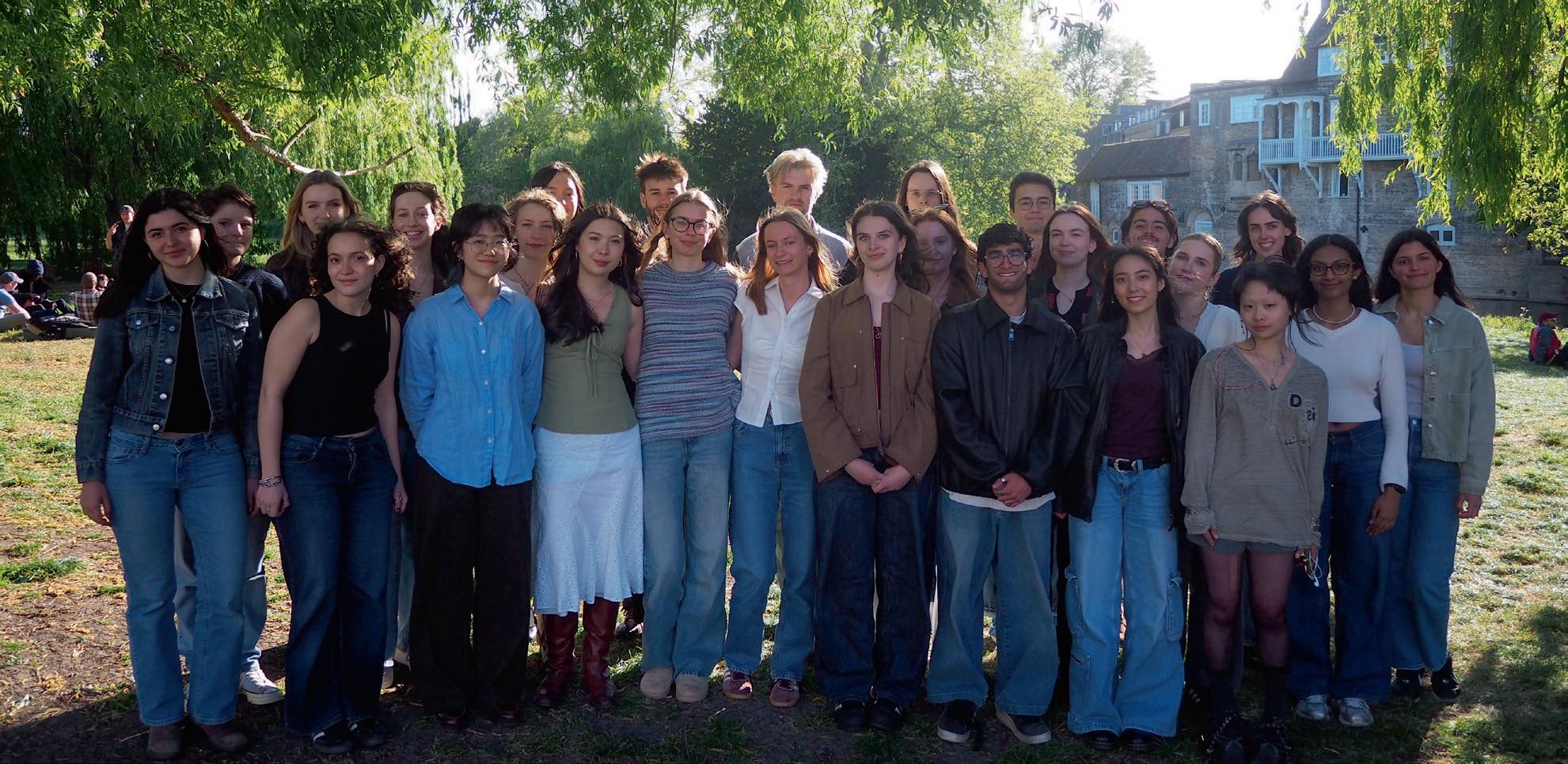

EDITOR Ell Heeps editor@varsity.co.uk
DEPUTY EDITORS Bibi Boyce & Ben Lubitsh deputyeditor@varsity.co.uk
VULTURE EDITORS Jess Gotterson & Mary Anna Im magazine@varsity.co.uk
VISUAL EDITORS Jordan Inglis (illustration), Amika Piplapure, & Clio Sze (photography)
SOCIAL MEDIA MANAGERS Georgia Gooding, Maddie Harding, Elijah Jacobs, Daniel Kamaluddin, & Niall Quinn socialmedia@varsity.co.uk
SENIOR NEWS EDITORS Alessia Fietta & Maria Eduarda Paixao news@varsity.co.uk
DEPUTY NEWS EDITORS Hayley Butler, Maebh Carey, Benjamin Pine, & Neve Wilson
FEATURES EDITORS Olivia Goodman & Emma Tenzler features@varsity.co.uk
COMMENT EDITORS Juliette Berry & Amanda Ljunberg opinion@varsity.co.uk
INTERVIEWS EDITORS Rosalind Howell & Isadora Vargas-Mafort interviews@varsity.co.uk
SCIENCE EDITORS Pooja Gada & Lucy George science@varsity.co.uk
SPORT EDITORS Nicholas Hall & Sam Ho sport@varsity.co.uk
ARTS EDITORS Daniel Kamaluddin & Ollie Liversedge arts@varsity.co.uk
FILM & TV EDITORS Georgia Gooding & Dylan Ingram lmandtv@varsity.co.uk
FASHION EDITORS Flossie Bullion & Joanne Yau fashion@varsity.co.uk
FASHION SHOOT CO-ORDINATOR Paige Grifths
LIFESTYLE EDITORS Emma Gower & Ruby Randall lifestyle@varsity.co.uk
BLIND DATE CO-ORDINATOR Ruby Randall
MUSIC EDITORS Otto Bajwa-Greenwood & Francis McCabe music@varsity.co.uk
THEATRE EDITORS Eleanor Baldwin & Lucy Farmer theatre@varsity.co.uk
ILLUSTRATORS Aisha Azizul, Rosie Beyfus, Bibi Boyce, Lyra Browning, Ashlyn Chew, Marios Diakourtis, Ivi Fung, Florence Gibson, Ezra Izer, & Rachel Wang
PHOTOGRAPHERS Gordon Chung, Scott Granger, Advaith Jagannath, Unmilan Kalita, & Teagan Rice
SUB-EDITORS Daisy Cooper, Georgia Gooding, Marnie McPartland, & Lucia Taylor
VARSOC PRESIDENT Wilf Vall president@varsity.co.uk
VARSOC COMMITTEE Sophie Ennis (Secretary) & Anuk Weerawardana (Junior Treasurer)
ASSOCIATE EDITORS Daisy Bates, Alex Brian, Ellie Buckley, Ben Curtis, Sophie Ennis, Nick James, Calum Murray, Charlie Rowan, Wilf Vall, & Anuk Weerawardana


VARSITY BOARD Dr Michael Franklin (Chairman), Dr Tim Harris, Michael Derringer, Mark Curtis (Company Secretary), Sophie Ennis, Hugo Gye, Wilf Vall, Anuk Weerawardana (Directors), Lotte Brundle (Guest) & Zoah Hedges-Stocks (Guest)
Cover illustration: Jordan Inglis
With special thanks to Bibi Boyce’s speaker, Ben Lubitsh’s dinner runs, and the ‘delete message’ function on Microsoft Teams.
VARSITY ISSUE 946.
© VARSITY PUBLICATIONS LTD, 2026. All rights reserved. No part of this publication may be reproduced, stored in a retrieval system or transmitted in any form or by any means electronic, mechanical photocopying, recording or otherwise without prior permission of the publisher.
Varsity, 16 Mill Lane, Cambridge CB2 1RX. Telephone 01223 337575.
Varsity is published by Varsity Publications Ltd. Varsity Publications also publishes e Mays.
Printed at Warners Midlands – e Maltings, Manor Ln, Bourne PE10 9PH.

Registered as a newspaper at the Post O ce. ISSN 1758-4442.




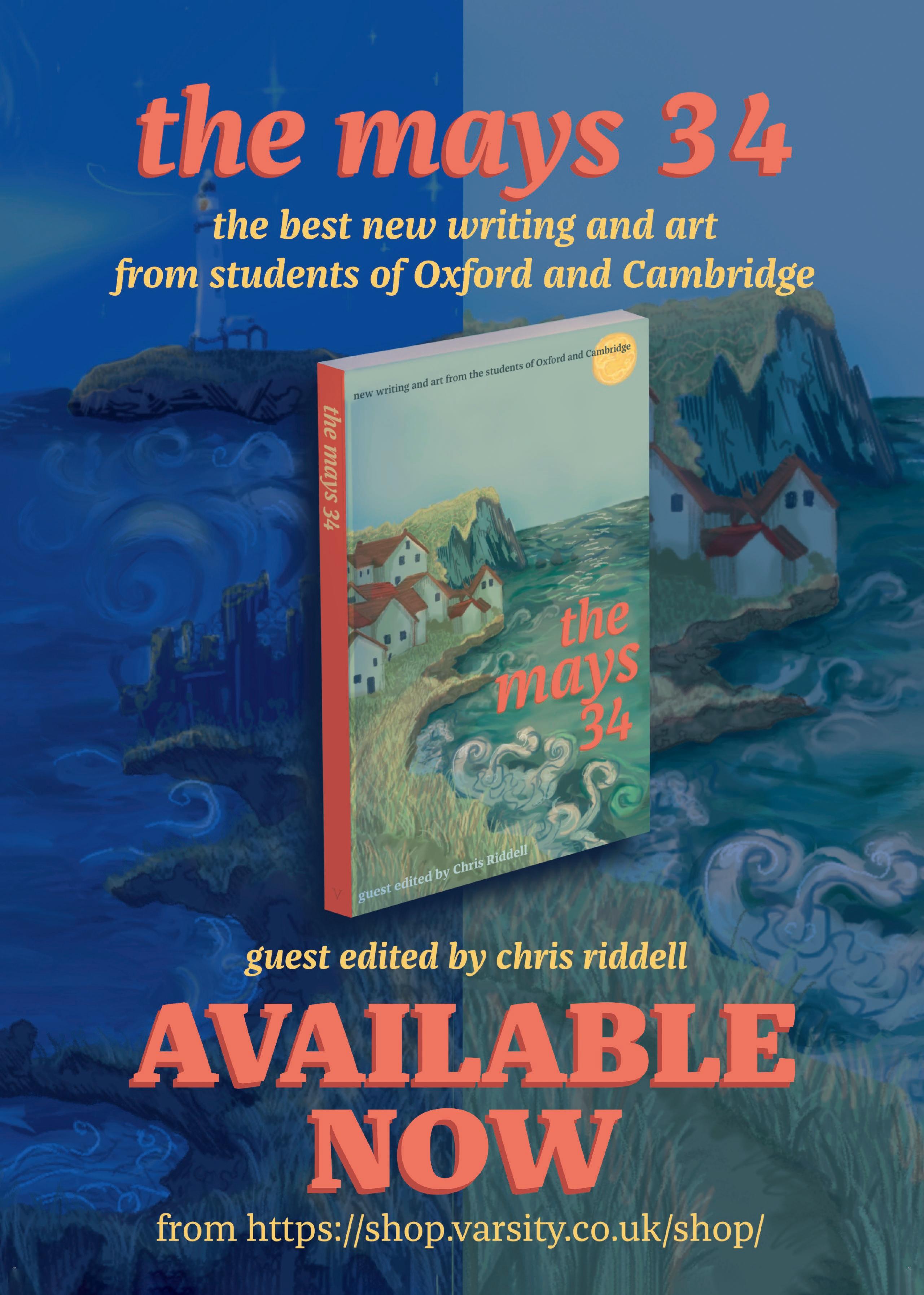
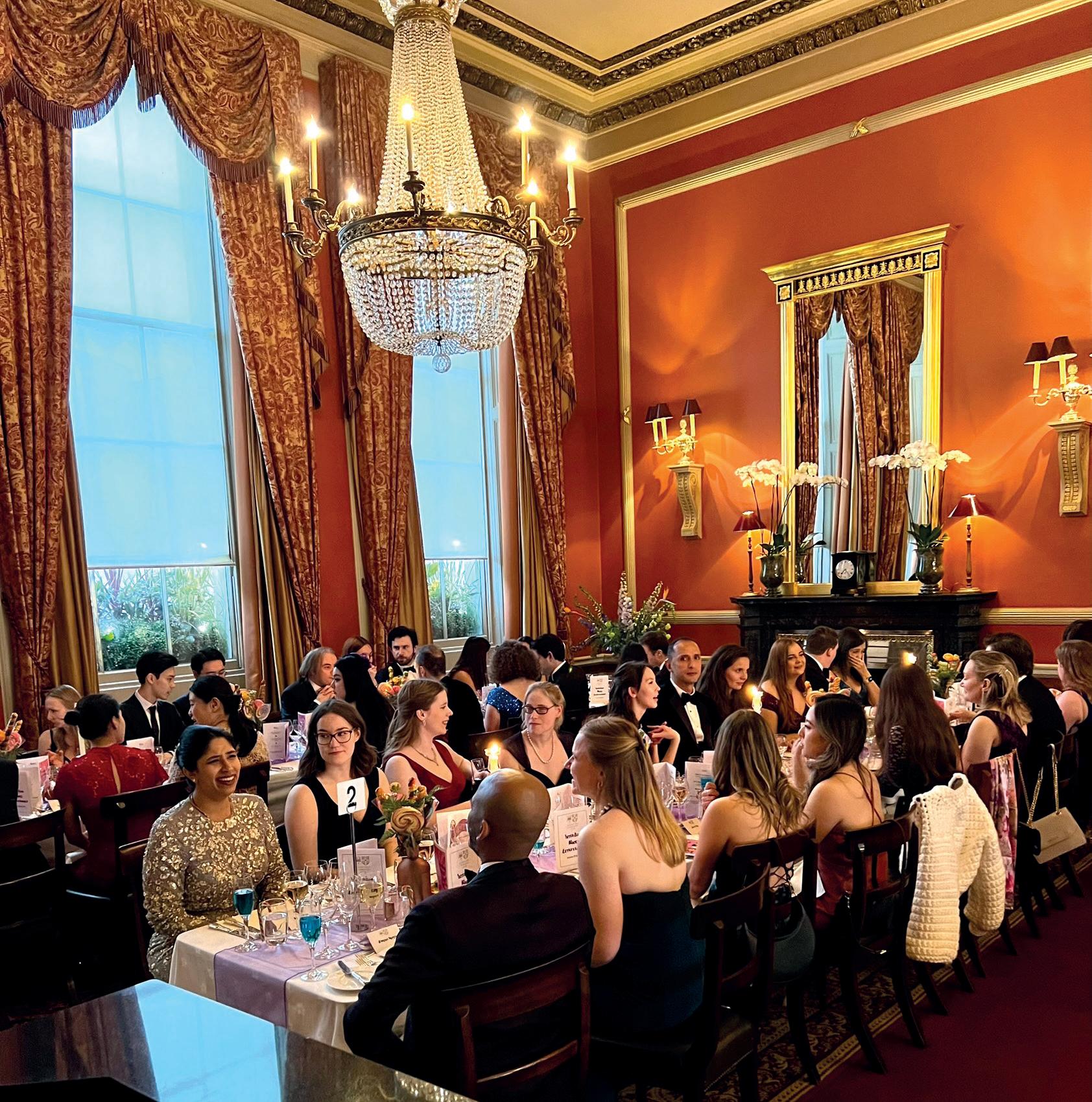





















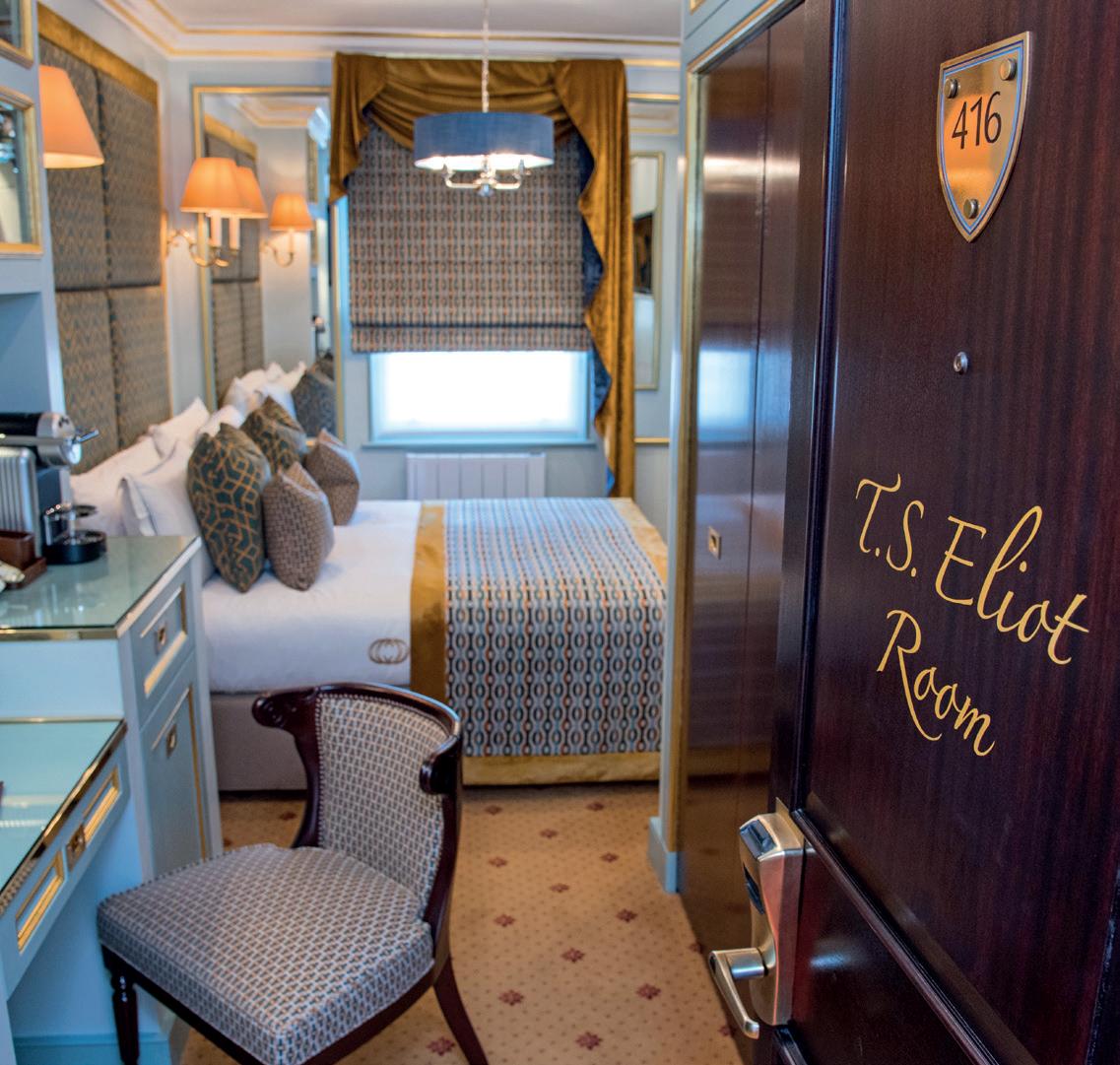
For nearly 200 years alumni have chosen to take up membership of a spacious and elegant private club in the heart of London. The Oxford and Cambridge Club in Pall Mall is the perfect place to meet for a drink, entertain friends and colleagues in magnificent surroundings, play squash, take a break, host a party or just find a quiet corner to prepare for a meeting. A thriving social scene, sports facilities, a lively calendar of events including talks, tastings, dinners and balls, an exceptionally well-stocked library, extensive wine cellars and more than 40 bedrooms mean our members use their club for recreation, relaxation and business - and now you can too.
For details on membership or a tour of the Club house on Pall Mall, please visit www.oxfordandcambridgeclub.co.uk or call 020 7321 5110 Oxford and Cambridge Club @oandcclub