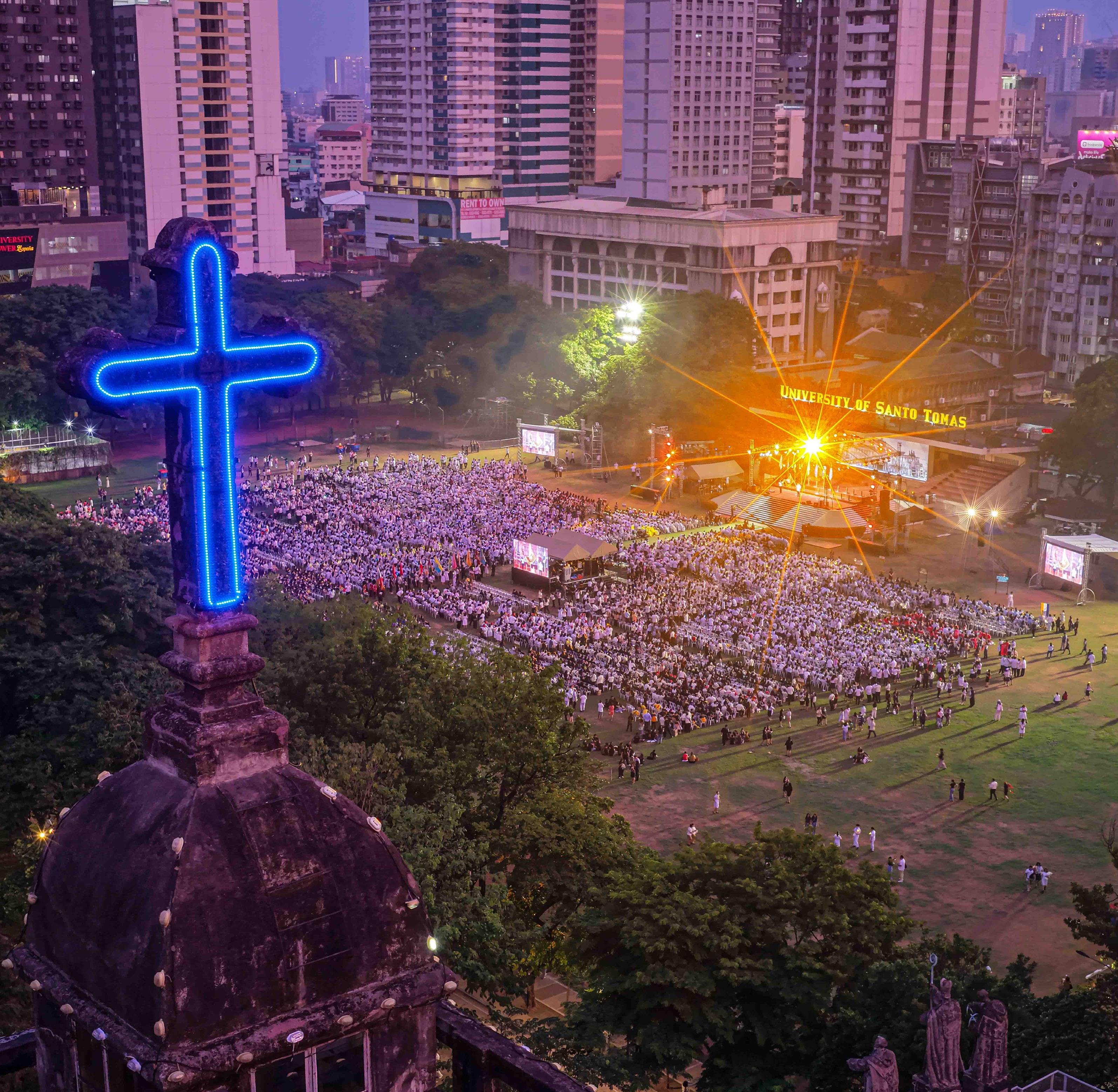
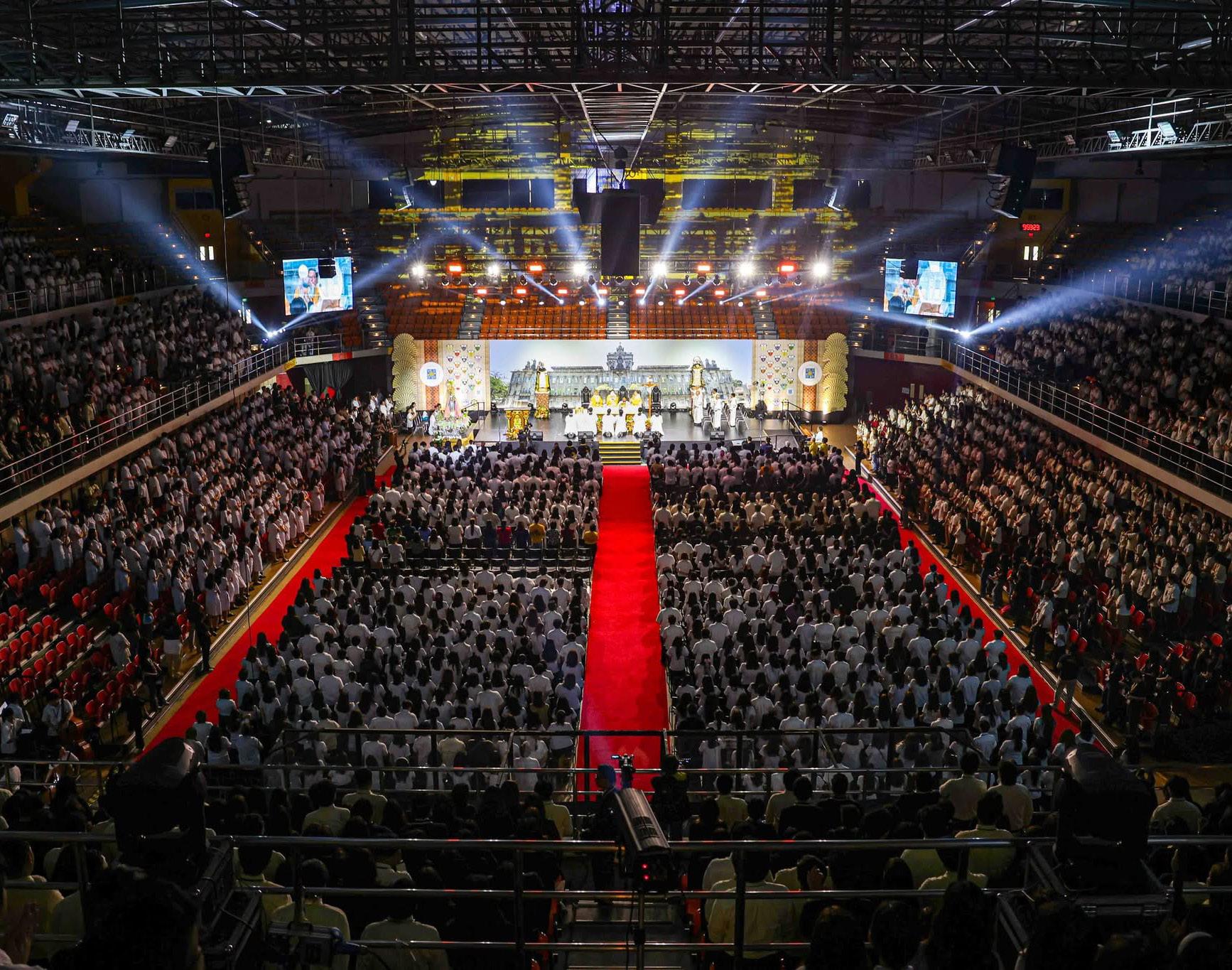
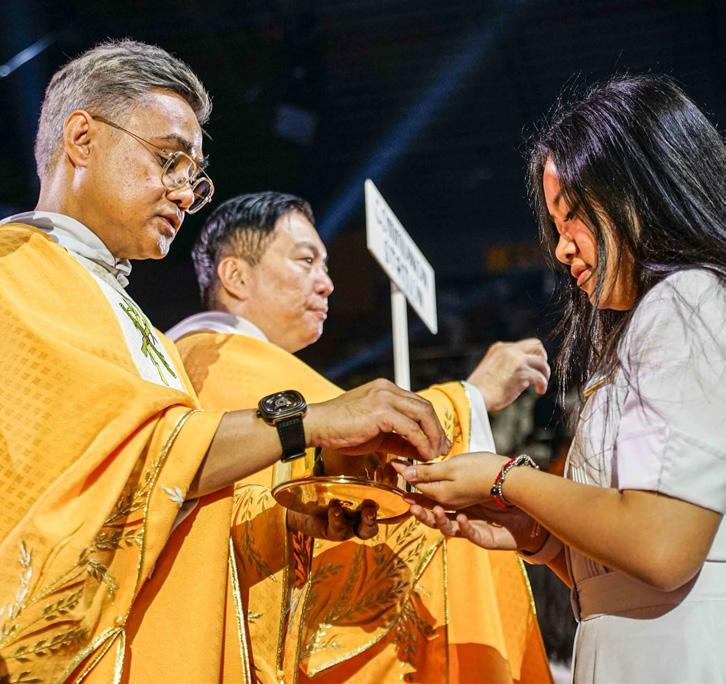
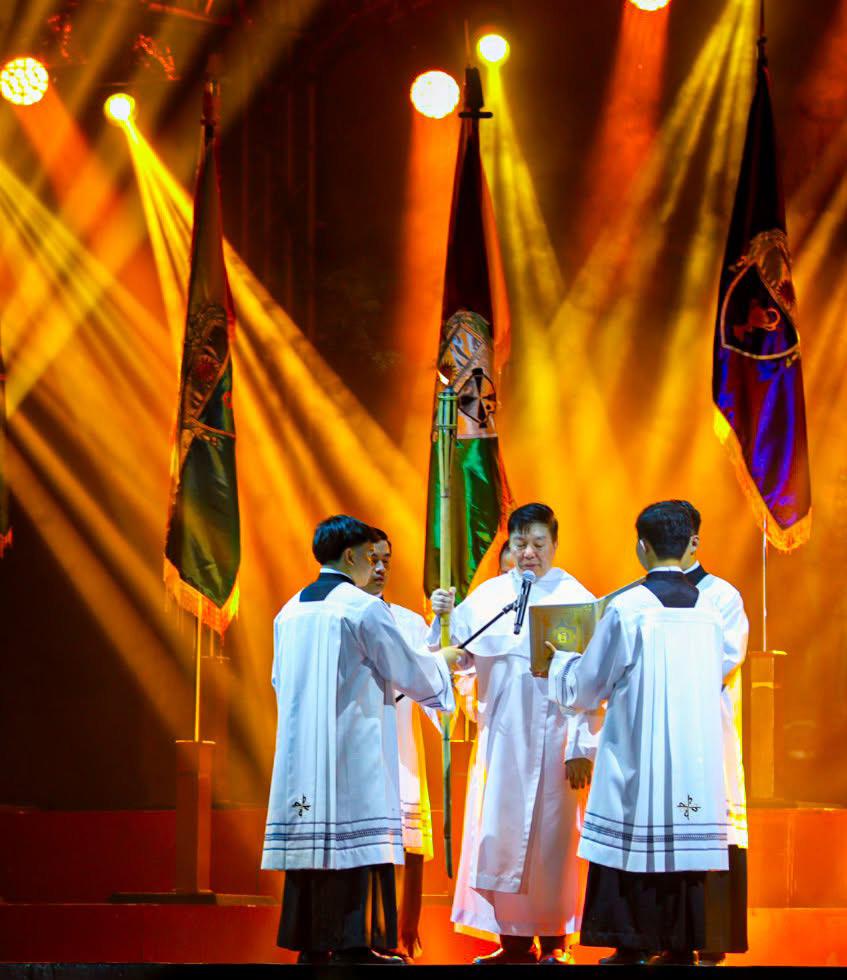
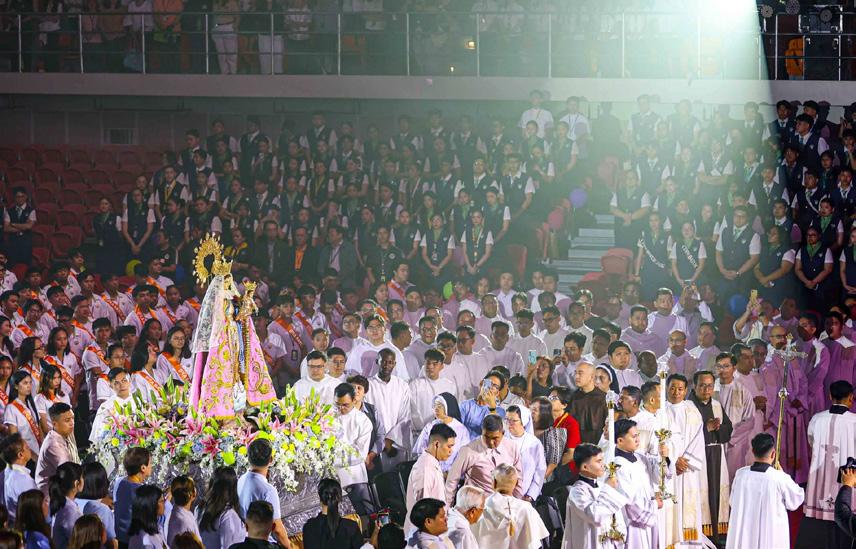
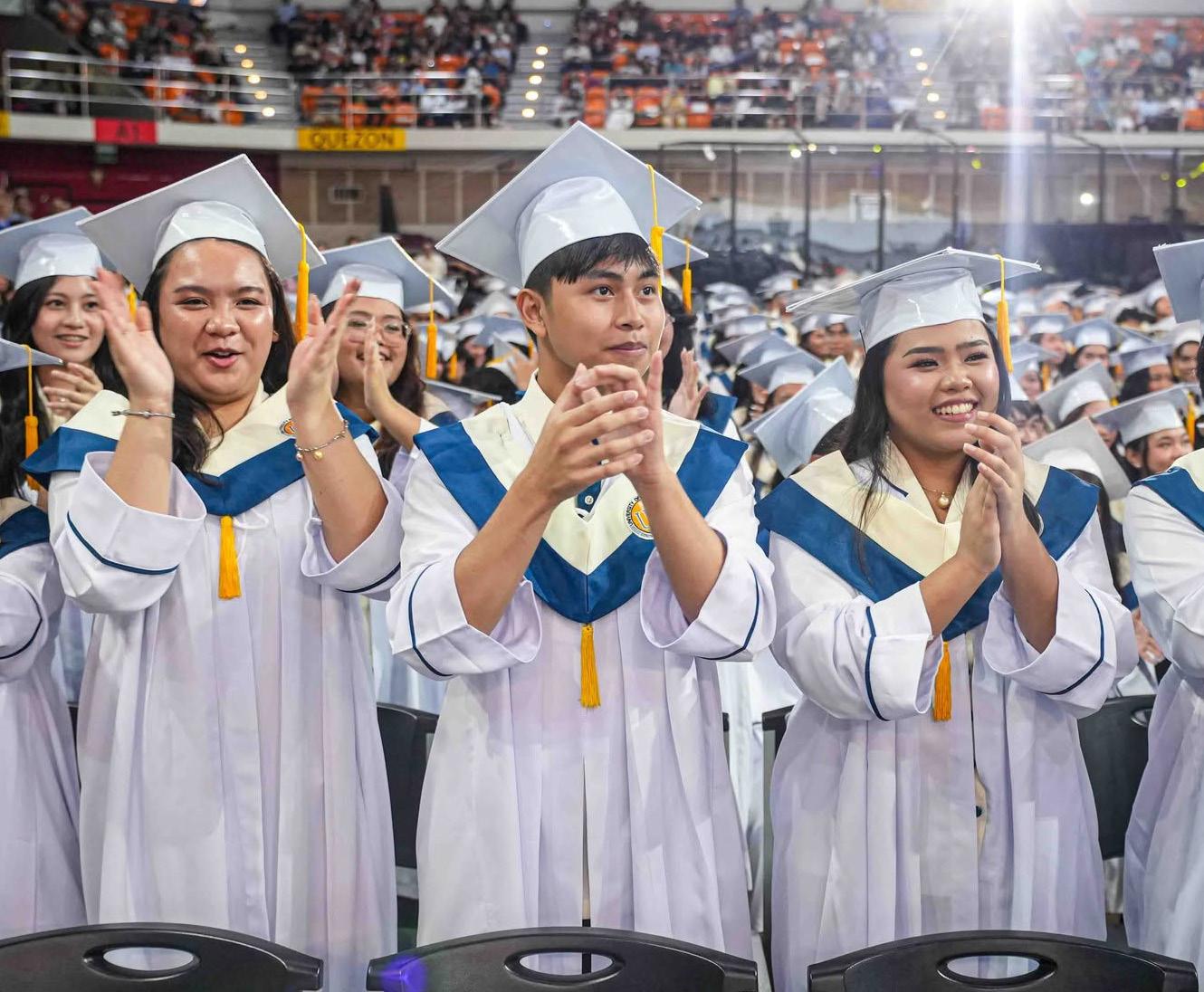
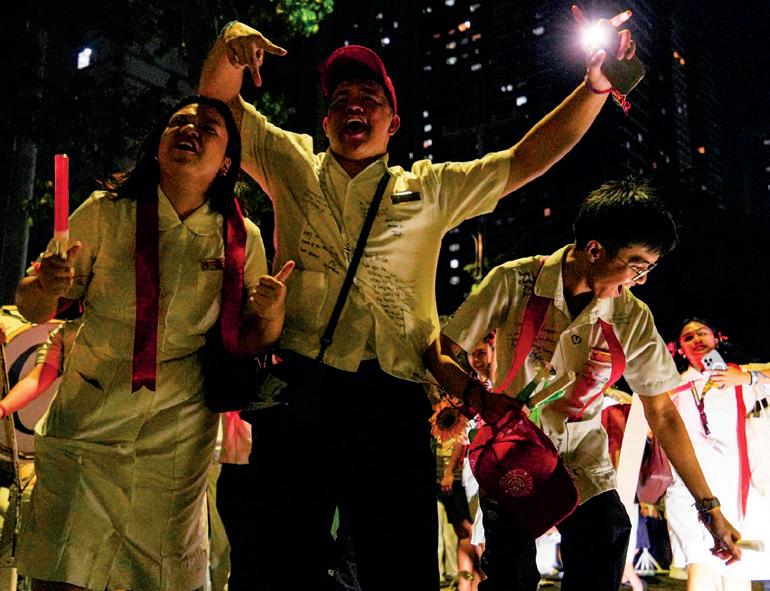
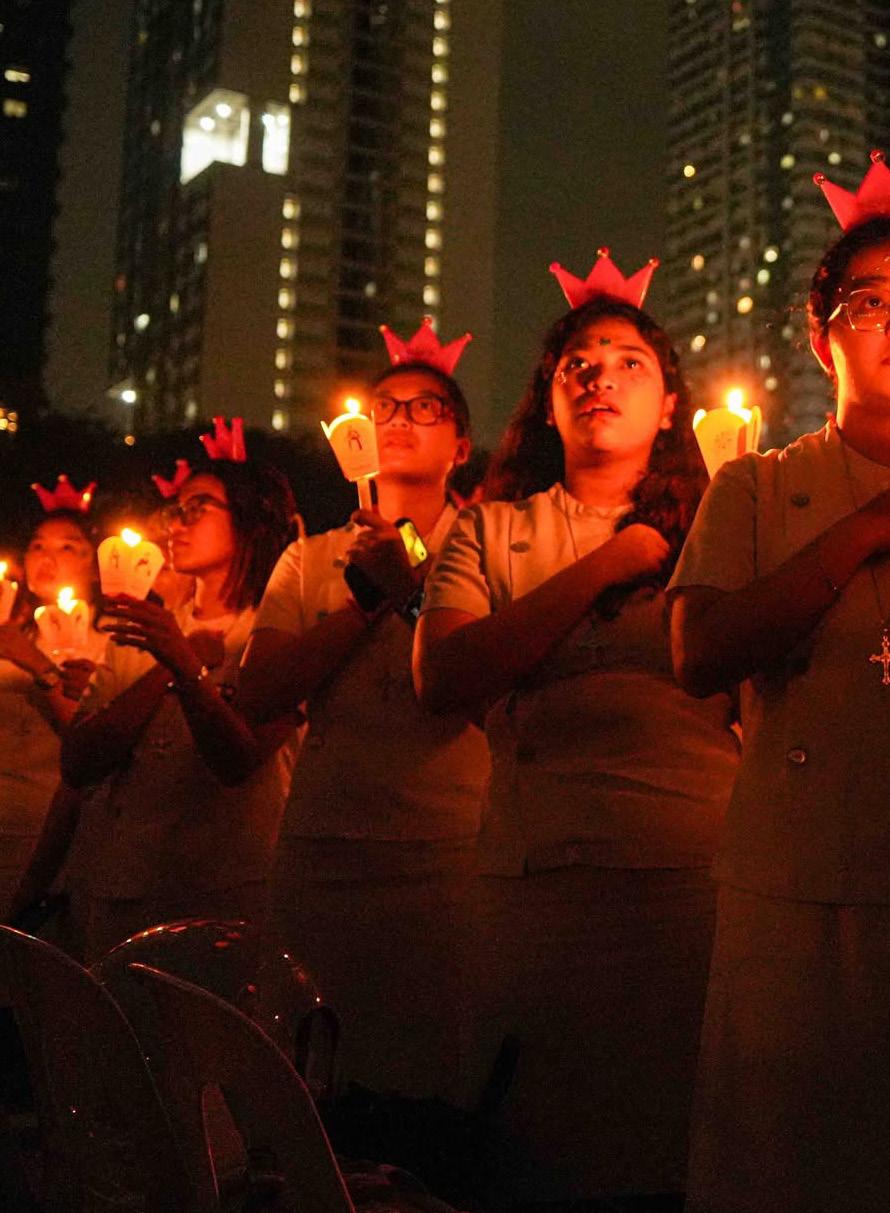
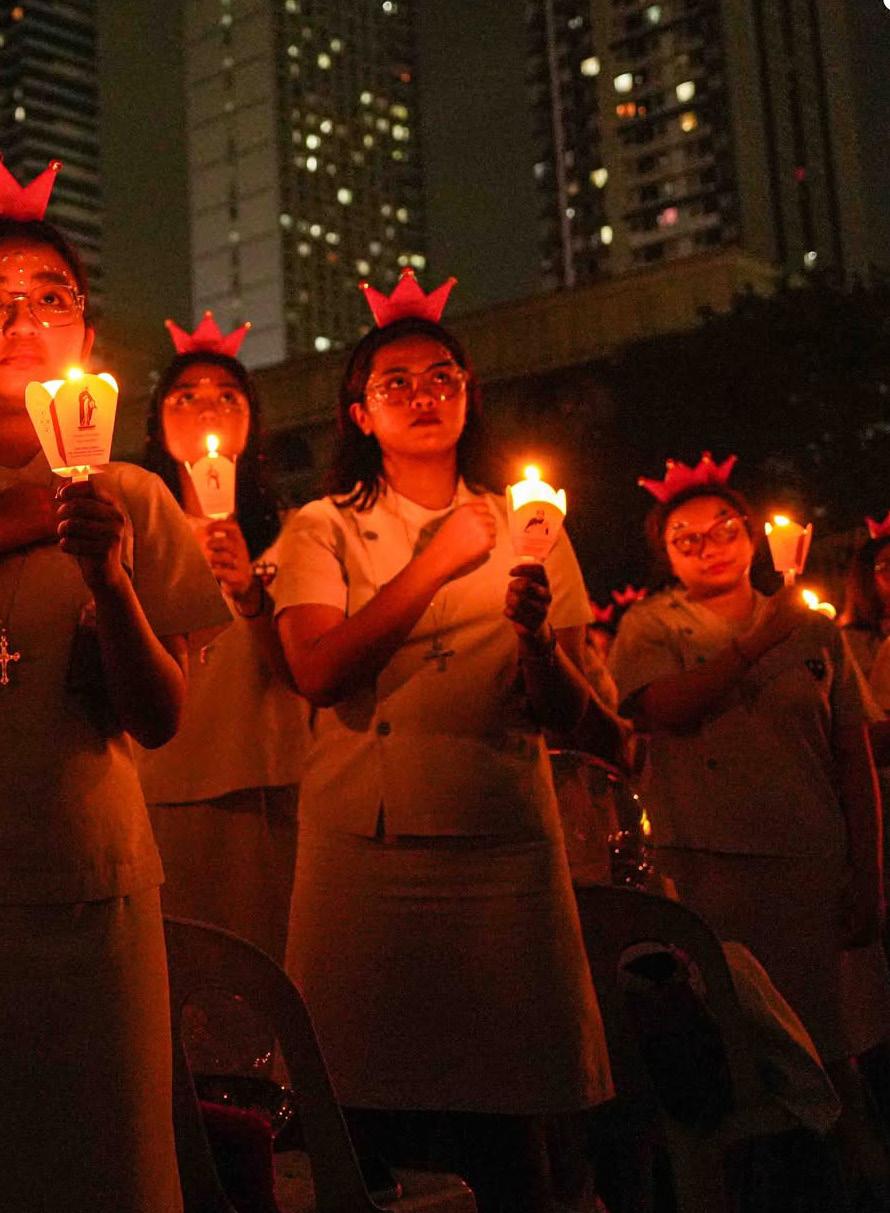
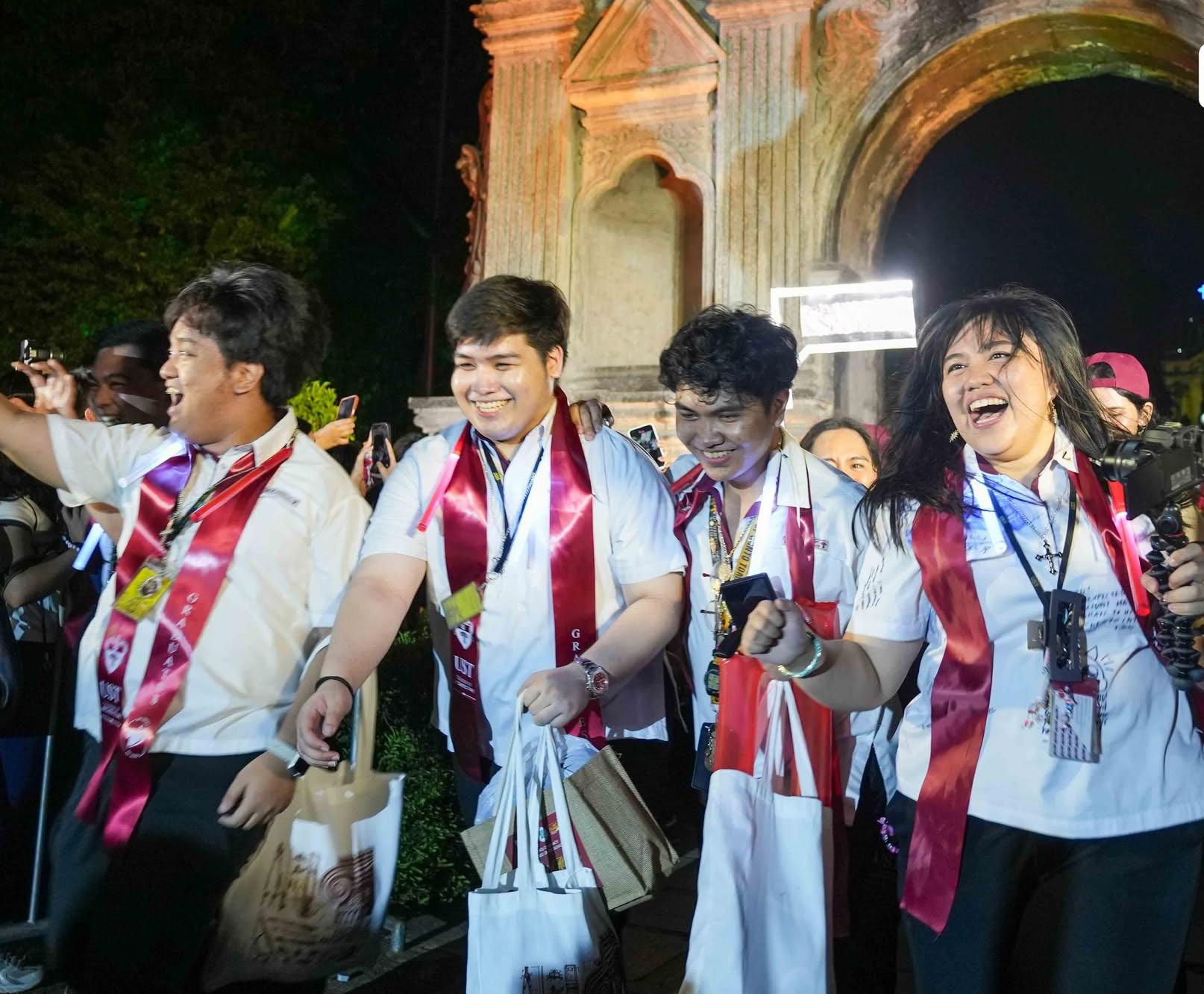
INSTEAD OF last year’s rain-soaked sendoff, more than 7,000 graduating Thomasians marked the end of their stay in the University under scorching heat during the 2026 Baccalaureate Mass and send-off rites on Friday, May 29.
Metro Manila experienced a danger-level heat index, ranging from 42 to 47 degrees Celsius during the ceremonies, as forecasted by Philippine Atmospheric, Geophysical and Astronomical Services Administration.
Based on a partial record, the University announced 7,329 graduates from higher education and 3,634 graduates from the basic education departments.
UST Education High School recorded 77 graduates, while the Junior High School tallied 389 graduates. The Senior High School recorded a total of 3,168 graduates.
The number of Class of 2026 graduates from the tertiary programs was 5.26% higher than the 6,963 graduates in AY 2024-2025.
BY SYDNEY VENICE V. BERBA
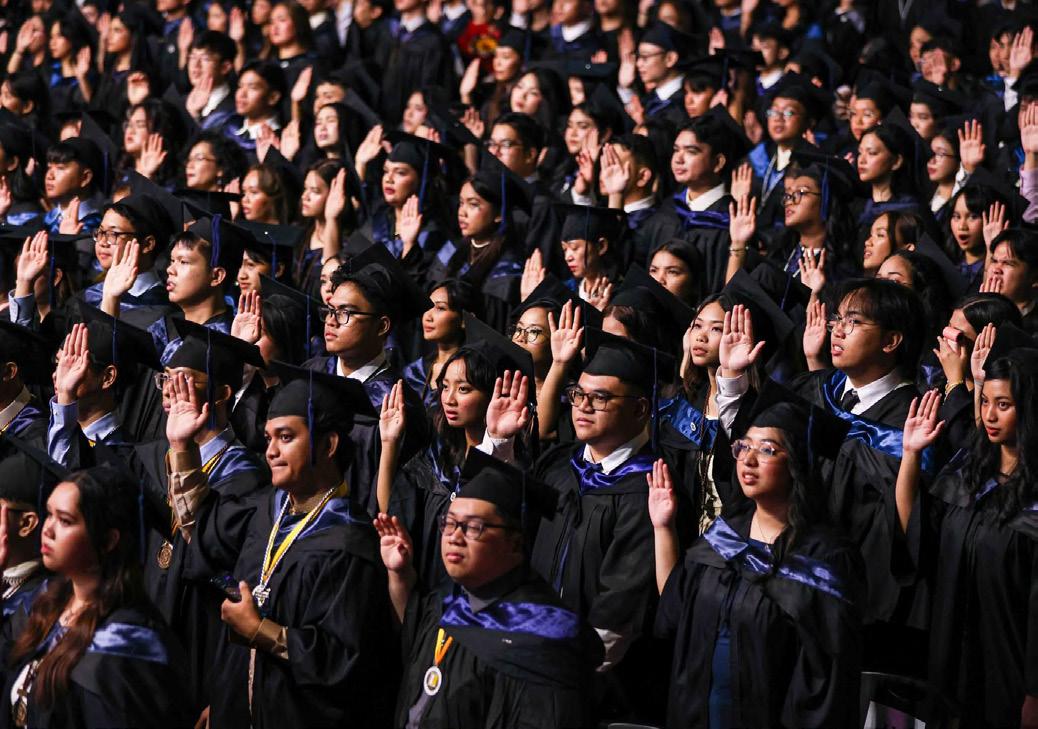
Graduating students participated in the Baccalaureate Mass, which was divided into morning and afternoon batches, both held in the Quadricentennial Pavilion for the second consecutive year as a precautionary measure from last year’s postponement due to heavy rains.
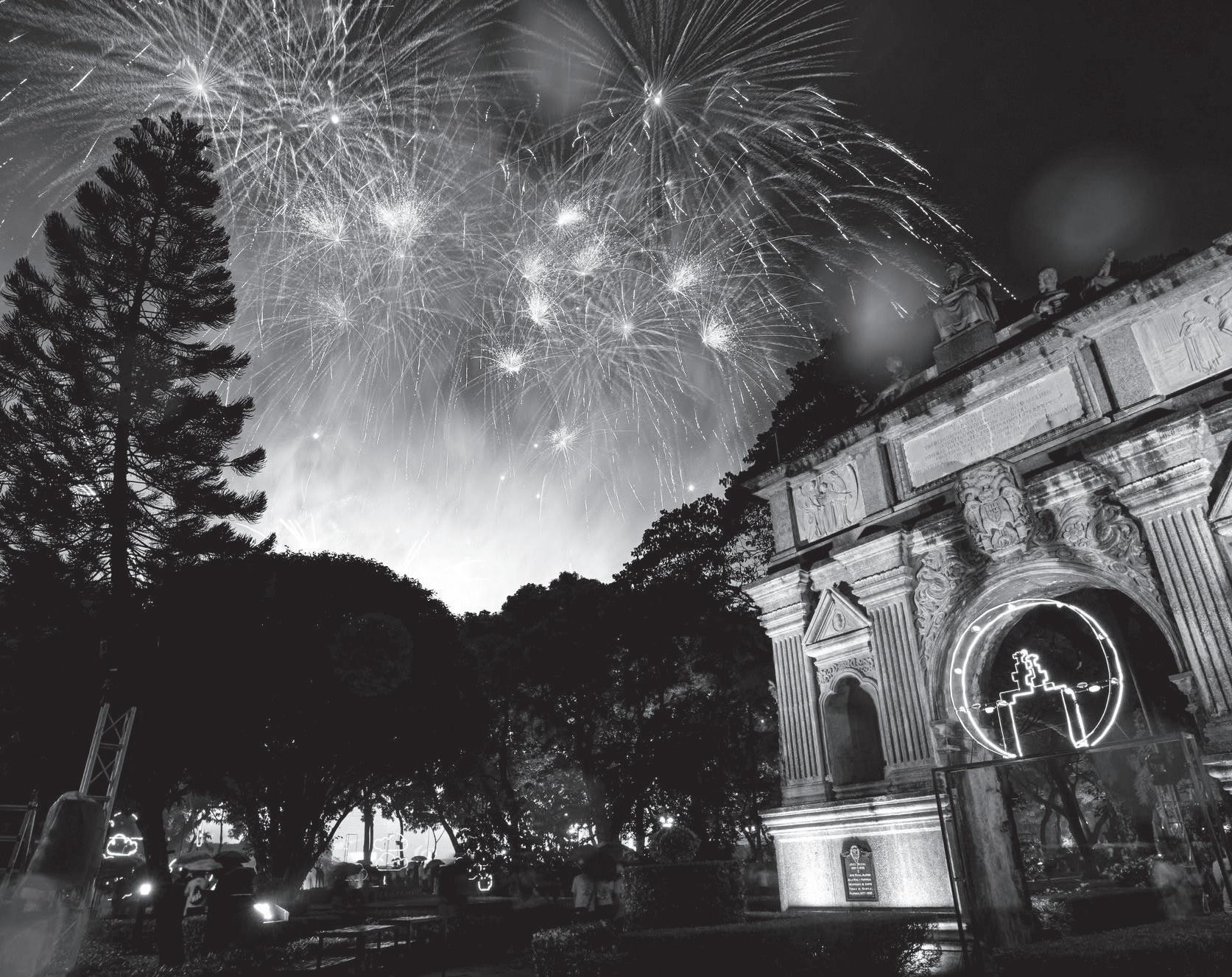
The send-off rites for the graduating students were capped by an eight-minute pyromusical display featuring pop songs such as “Beauty and a Beat,” “Never Say Never,” and “Karera.”
Bittersweet farewells from seniors
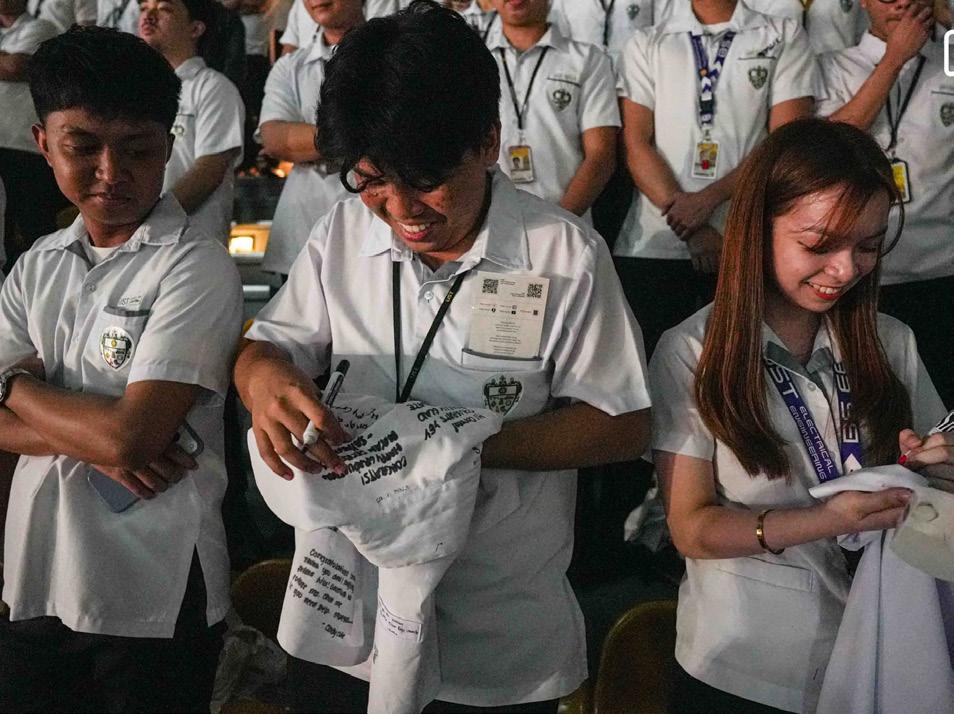
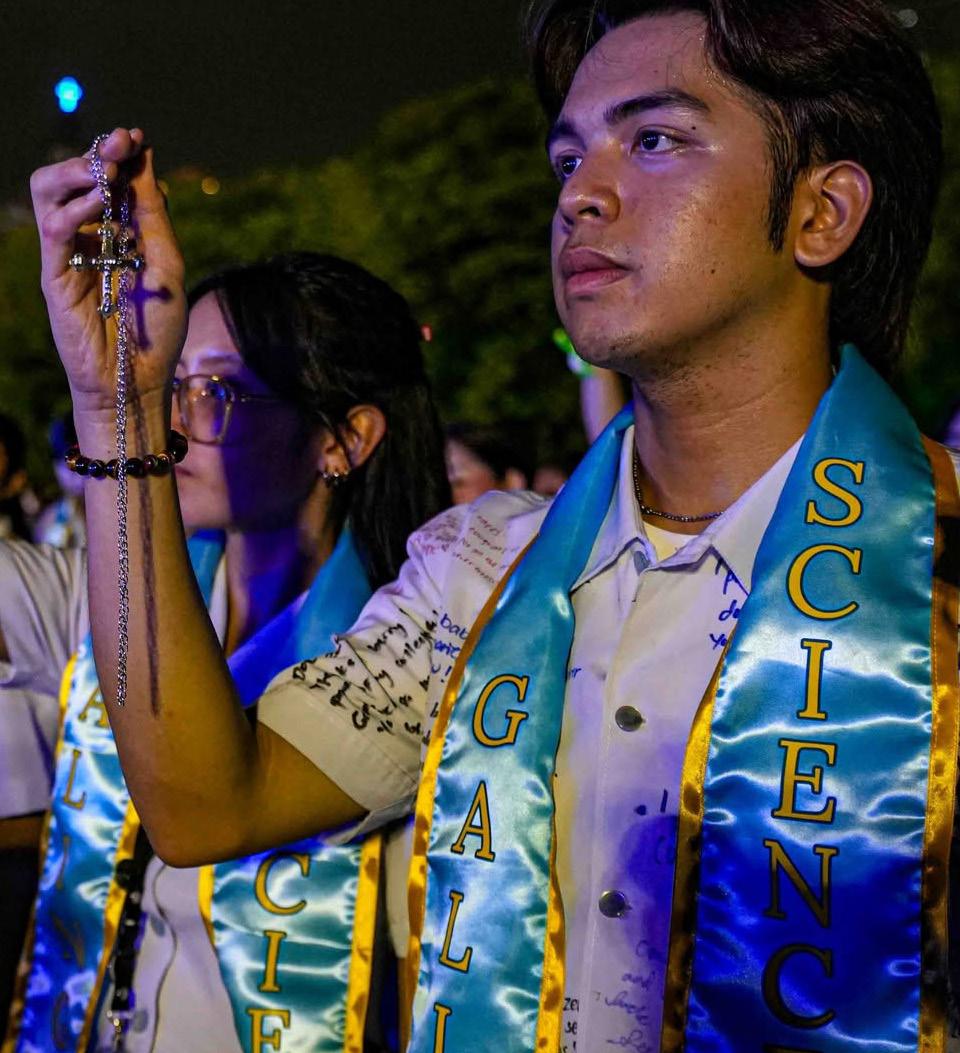
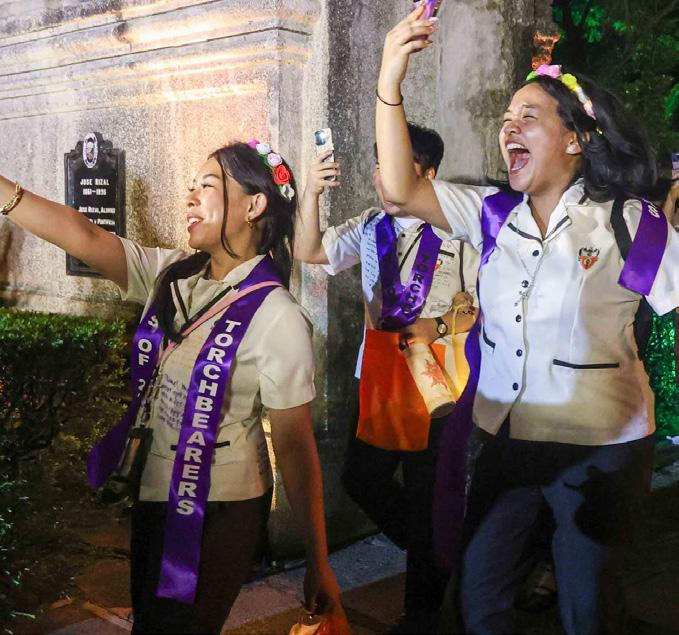
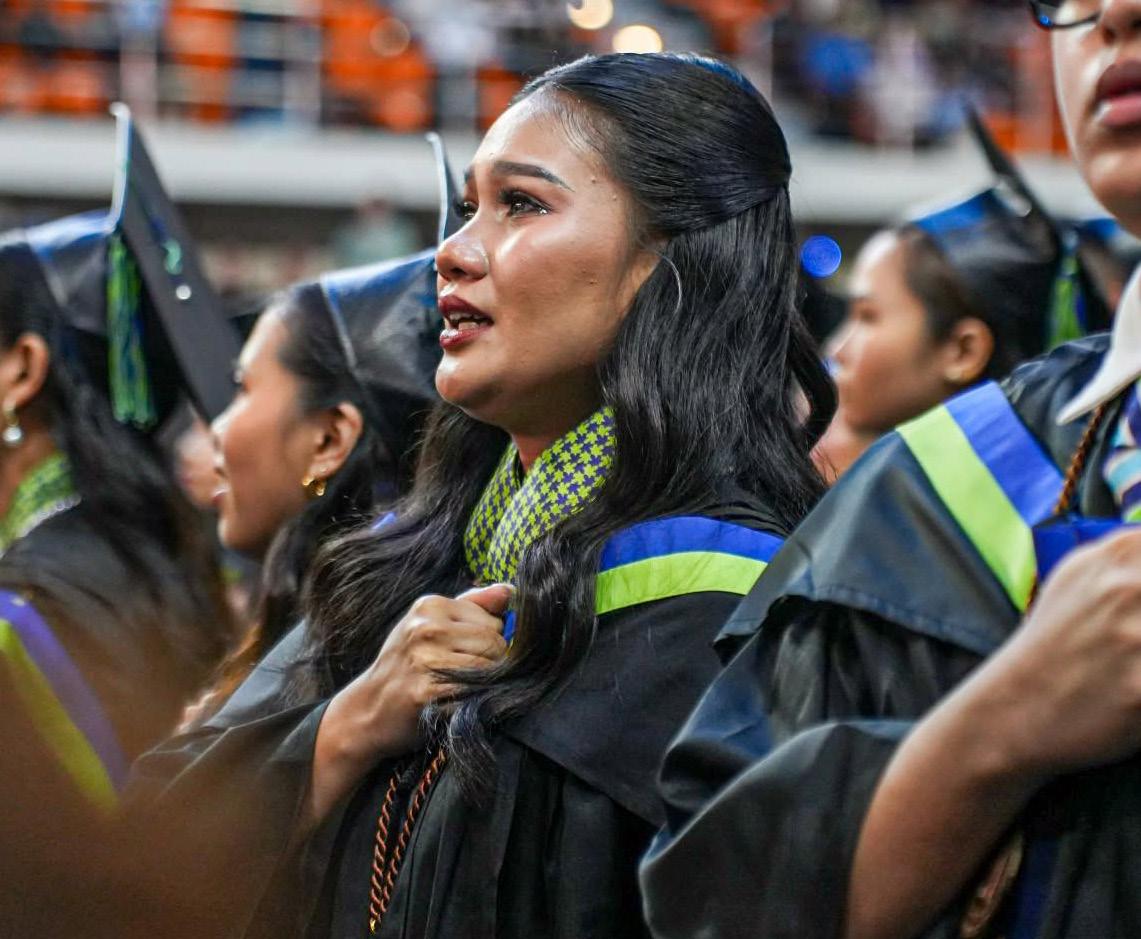
For many graduating students, the send-off rites carried mixed emotions as they prepared to officially mark the culmination of their years in the University.
“Parehong masaya at malungkot. Masaya kasi alam mong lahat ng ginawa mong hard work is nag-pay off na,” Shawn Guevara, a grad
uating student of the Faculty of Arts and Letters, told the Varsitarian Kaya siya malungkot din is syempre, mawala na rin ‘yung nagpapasaya sa school life mo,” he added.
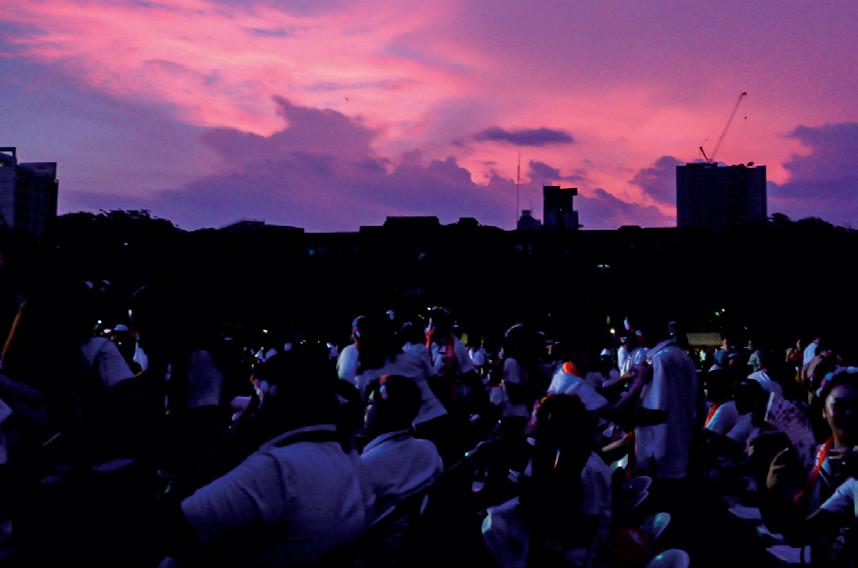
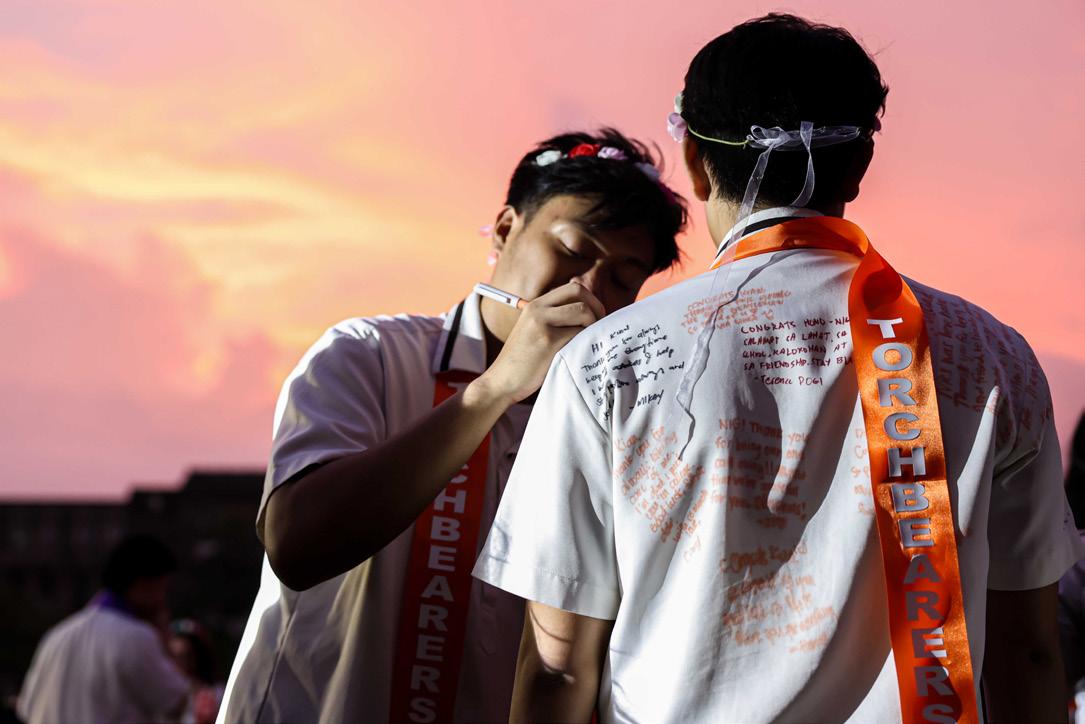
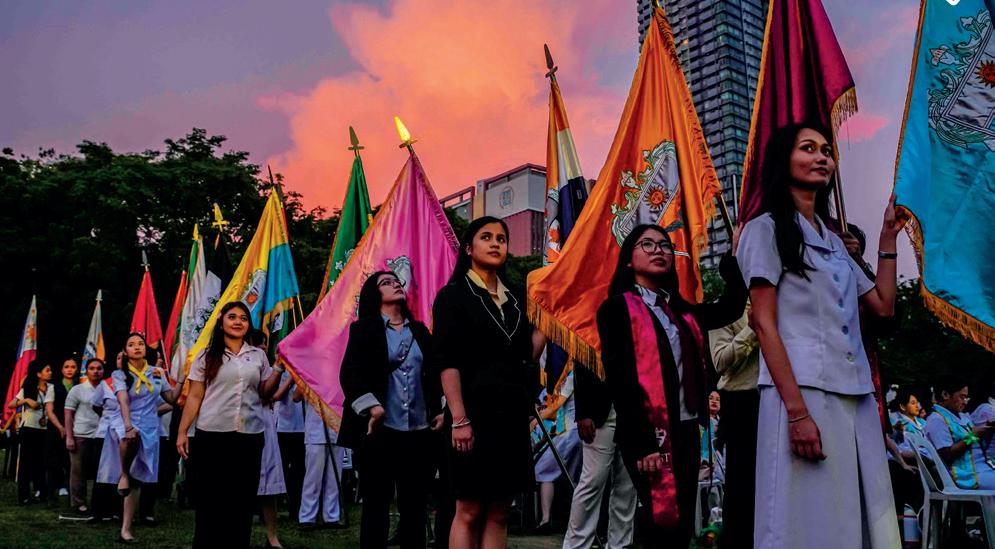
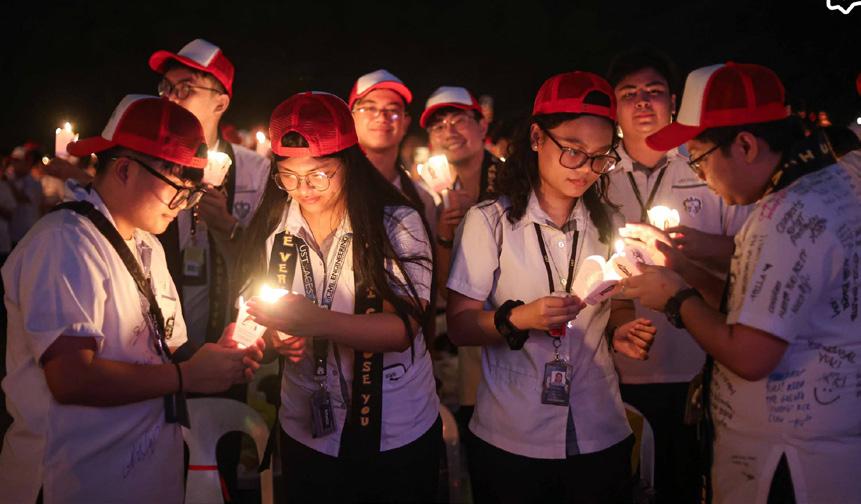
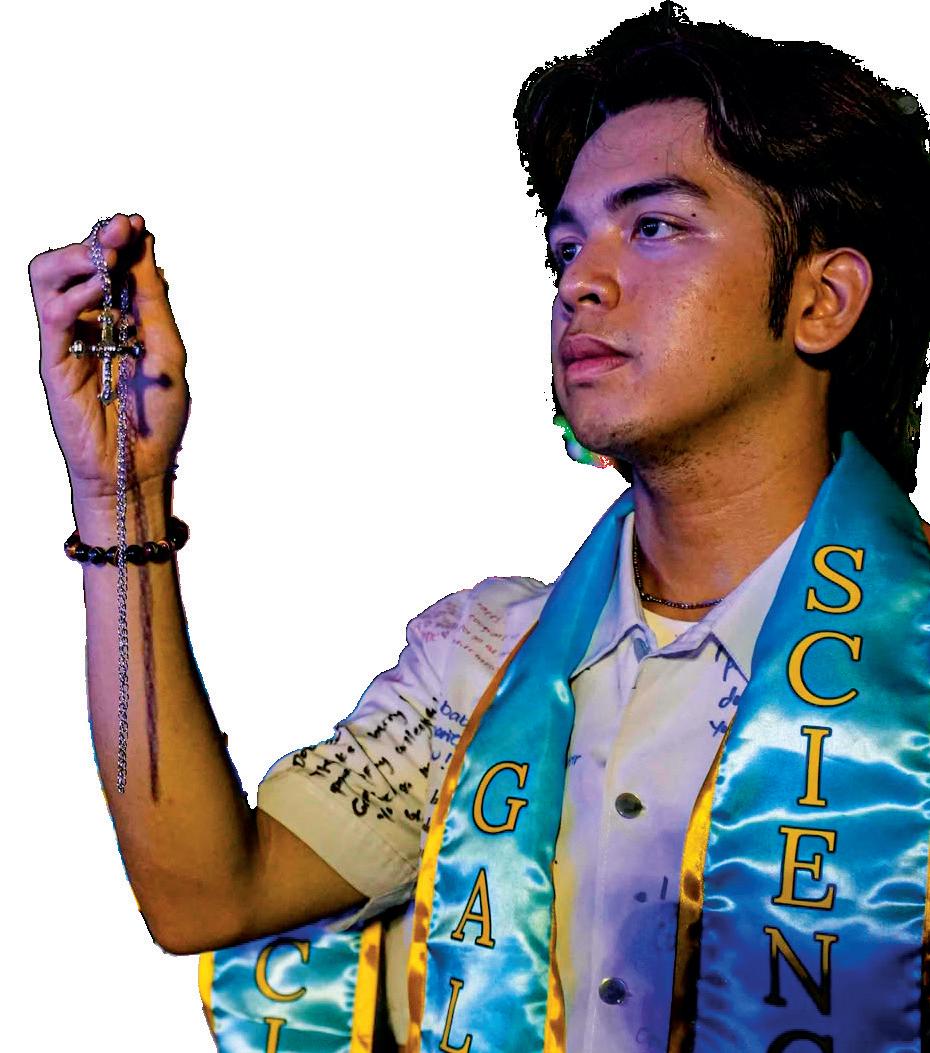
► Graduating Thomasians bask beneath pink-tinted skies as they gather at the UST Open Field for the culminating send-off rites of this year’s Baccalaureate Mass on Friday, May 29.
PHOTOS BY


By Micah G. Pascua
RENEGOTIATIONS BETWEEN
the University of Santo Tomas Faculty Union (USTFU) and the UST management panel reached a quick conclusion, with salary increases and higher benefits for staff covering Academic Years (AY) 2024–2025 and 2025–2026.
Under the deal for the final two years of their collective bargaining agreement (CBA), both sides agreed to a baseline salary increase of 1.31% for AY 2024–2025 and 1.81% for AY 2025–2026.
“The conclusion of the negotiations is both unprecedented and [historic]. This is because for the first time,
the completion of the negotiations is on time, that is, it is within the 20212026 period,” the parties said in a joint statement released on Friday, May 22.
“We believe that the timely conclusion of the 2021-2026 CBA is due to the eagerness of both panels to fos-
ter the spirit of synodality each time they meet and to embrace the values of cordiality, respect, [and] prudence in words and actions,” they added.
USTFU and the UST administration held talks from April 24 to May 15, and signed a memorandum of agreement on May 22.
Under the deal, the base salary for NSTP facilitators was capped at the Instructor 2 level’s 100% compensation, and their honorarium was increased to P3,000 from P2,000 per term.
Also included was a mental health leave, allowing academic staff to take five days off when mental health concerns arise.
The eyeglass benefit was increased to P8,000 from P2,500, sourced from
USTFU’s hospitalization fund. Medical cash support for dependents was likewise increased to P4,000 from P3,000 per annum.
The St. Thomas Day and USTFU Day bonuses were raised to P3,000 from P2,500.
Full-time academic staff may avail themselves of the University’s onetime technology support of P10,000, while part-time academic staff may get a subsidy of P5,000.
‘Very different’
Every five years, employers enter into negotiations with unionized workers through a CBA to set the terms and conditions of employment, including salaries, benefits, and working hours.
In 2025, the administration and union negotiators reached a deadlock following a disagreement over hospitalization and a proposed P17-million salary restructuring for some faculty members.
Disagreements escalated into an industrial dispute in March 2025, when
USTFU filed a strike notice with the National Conciliation and Mediation Board.
But in June 2025, faculty members ratified a new salary and benefits agreement, including hospital coverage and a P220-million share in tuition increases from AY’s 2021–2022 and 2023–2024.
In the final stretch of the renegotiation, the management panel was chaired by Education Dean Pilar Romero, replacing Vice Rector for Academic Affairs Cheryl Peralta.
In an earlier interview with the Varsitarian, Romero described the negotiation as “very different,” in which both panels would not be treated as “conflicting panels, but panels that are united by our common service to the University and to the faculty members.”
“Because from the start, we have agreed in the panel that it will not be so much a negotiation, but a dialogue that
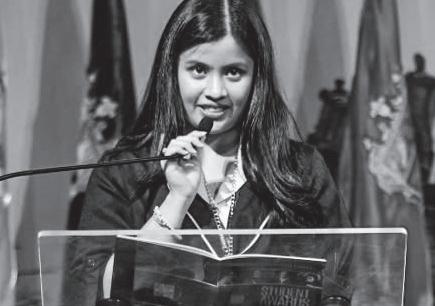
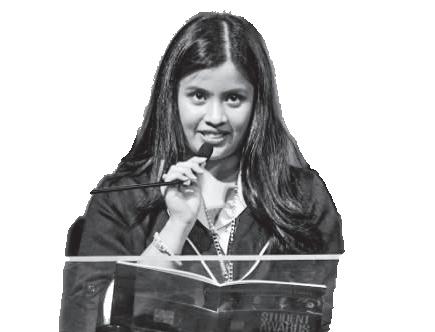
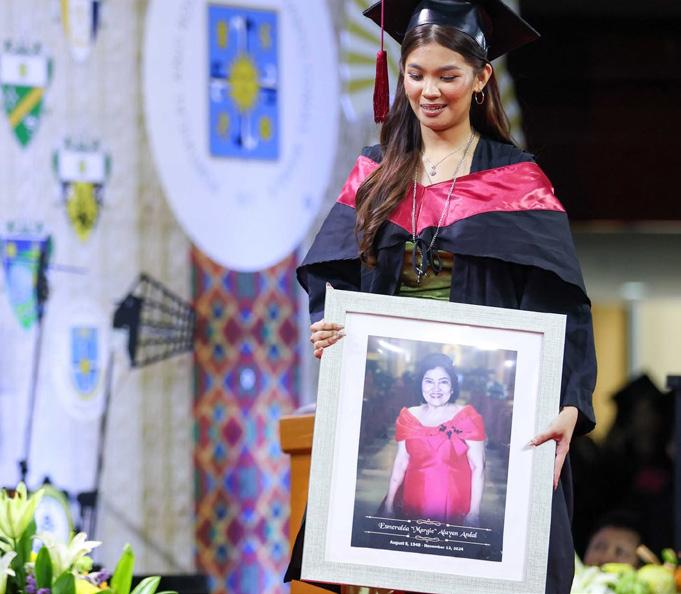
► Allyah Amboy of the College of Commerce and Business Administration receive the Rector’s Award for Academic Excellence. — PHOTO BY
P. MEGUINES
By Fritz Nathan A. Diaz
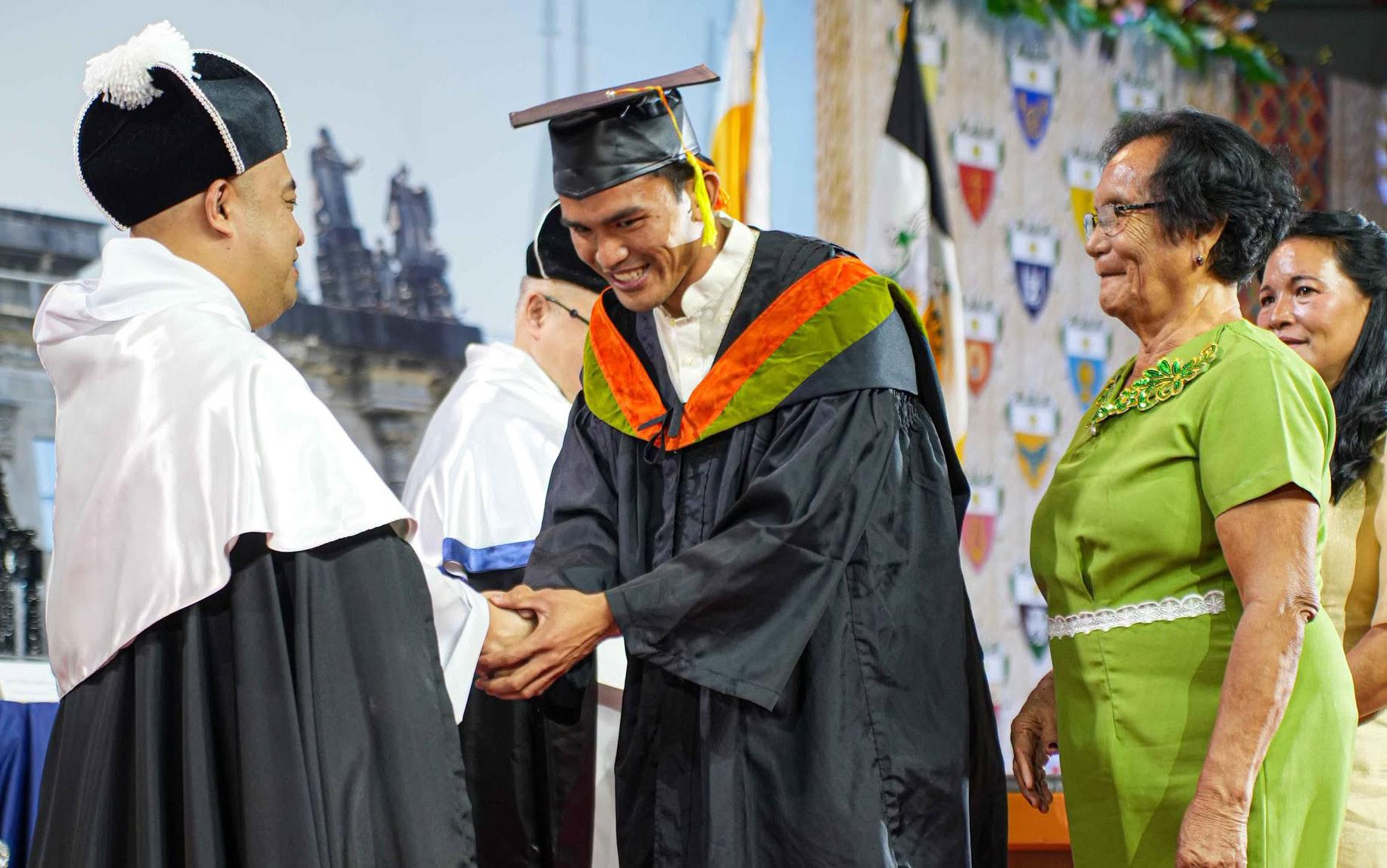
A MARKETING management student was named valedictorian of the Class of 2026 after attaining the highest general weighted average (GWA) of 1.058 among graduating students this year.
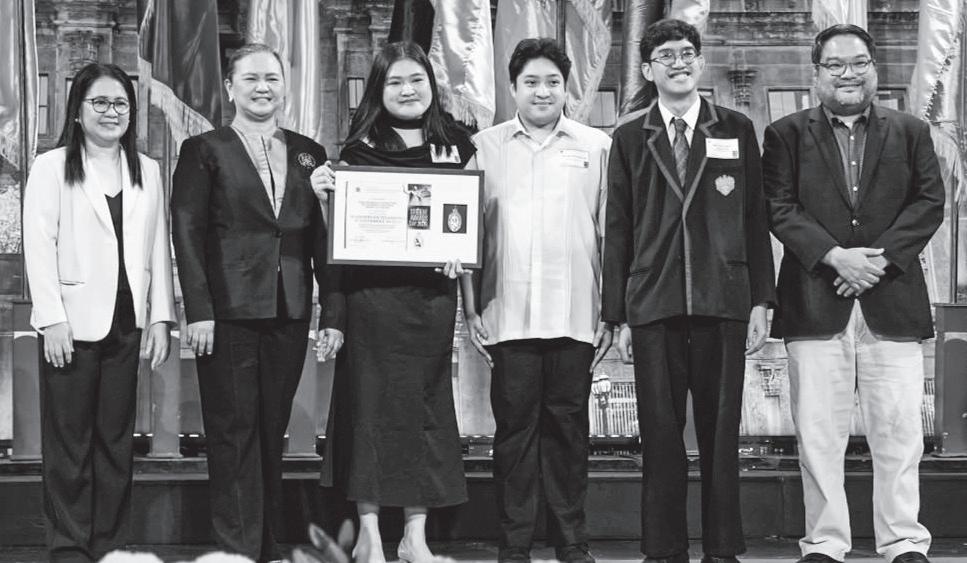
Allyah Amboy of the College of Commerce and Business Administration received the Rector’s Award for Academic Excellence — given to seniors with the highest GWA within their academic unit — during the UST Student Awards Day on May 22 at the Quadricentennial Pavilion.
Amboy described her Thomasian journey as “everything but ordinary,” emphasizing the unconventional path she took throughout college.
“I think one of the best words to describe my Thomasian journey is irregular. I didn’t have sort of a conventional path,” she told the Varsitarian
After graduation, Amboy said she would focus on the business she had built together with her family.
Amboy shared the spotlight with her fellow Thomasians—working students, student leaders, athletes, researchers, and children of overseas Filipino workers.
“Some of them carried grief, and kept going anyway,” she said.
Among the lessons she shared with the graduating class was the impor-
tance of growth through discomfort.
“Always put yourself in a room where someone is better than you… That is not defeat, that is how you grow,” Amboy said.
Amboy also paid tribute to her late grandmother, whom she described as her “mother figure.”
Amboy recalled the last time she stood on a podium was for her eulogy to her grandmother.
“If she were here, I would tell her something that might sound strange coming from me. Lola, I was never the smartest person in the room,” she said.
UST conferred the Rector’s Academic Award on 16 other graduating students:
Bro. Antonius Pramudianto, O.P. – 1.113 (Faculty of Theology)
Bro. June Mercede, O.P. – 1.198 (Faculty of Philosophy)
Abigail Amrad – 94.02 (Faculty of Medicine and Surgery)
• Ryan Toyocan Jr. – 1.063 (Faculty of Pharmacy)
• Brandon Capiña – 1.064 (Faculty of Arts and Letters)
• Mark Añasco – 1.14 (Faculty of Engineering)
• Charles Cuyana – 1.148 (College of Education)
Deone Sanchez – 1.137 (College of Science)
Camila Puse – 1.476 (College of Architecture)
‘V’ feted
By Fritz Nathan A. Diaz
THE UNIVERSITY recognized student leaders, researchers and organizations for their academic distinctions and extracurricular contributions during the 2026 Student Awards Day on Friday, May 22.
The Central Student Council (CSC) received the Tradition of Excellence Award, which is conferred upon student organizations that have shown exemplary performance on a sustained level by winning the same award for five consecutive years.
Tiger Media Network, the official broadcasting arm of the University, was awarded the St. Dominic de Guzman Award and the Benavides Outstanding Achievement Award.
The St. Dominic de Guzman award is given to a student organization for outstanding performance in organizing campus activities, while the Benavides Outstanding Achievement Award is given for outstanding achievements in local or international academic or scientific fields.
Ten recipients were given the St. Dominic de Guzman Award, while a total of 18 individuals and 32 groups, including the Varsitarian, received the Benavides Outstanding Achievement Award.
The Varsitarian reaped three Benavides Outstanding Achievement Awards for international victories in campus journalism.
It received first place awards from the College Media Association (CMA) during the 2026 Apple Awards in New York City and the 2025 CMA Pinnacle Awards in Washington.
Among the V’s recognized works was the print issue titled “Filipinos Declare: No to Corruption,” which won first place in the newspaper category of the Apple Awards.
“‘Superstar’ — UAAP Season 87 Second Semester Primer,” placed first in the audio-visual sports feature category of the CMA Pinnacle Awards.
The photo album entry, “Traslacion 2026: Black Nazarene procession in Manila draws millions,” placed first in the Apple Awards photo album category.
A total of 35 students received the Quezon Leadership Award, which recognizes exemplary leadership and service.
Eleven individuals and 13 groups were granted the Pope Leo XIII Community Development Award for initiatives focused on social involvement and community engagement.
The Pope John Paul II Outstanding Achievement Award was awarded to 31 individuals and 12 groups for accomplishments in extracurricular and co-curricular activities.
The St. Albertus Magnus Award was granted to 49 individuals along with 24 groups for outstanding re-
Always put yourself in a room where someone is better than you.
That is not defeat, that is how you grow.
Allyah Amboy
Christine Catelo – 1.164 (Conservatory of Music)
• Daniel Clerigo – 1.374 (College of Nursing)
• James Cruz – 1.090 (College of Rehabilitation Sciences)
• Mivida Aguirre – 1.13 (College of Fine Arts and Design)
• Joseph Corpuz – 1.189 (Institute of Physical Education and Athletics)
Paul Pañebe – 1.299 (UST-Alfredo M. Velayo College of Accountancy)
Dann Figueroa – 1.132 (College of Tourism and Hospitality Management)

By Amador Denzel M. Teston
THE RECTOR exhorted graduating students to be brave enough to bear the brunt of persecution and to anchor themselves in Thomasian values to stand against graft and corruption.
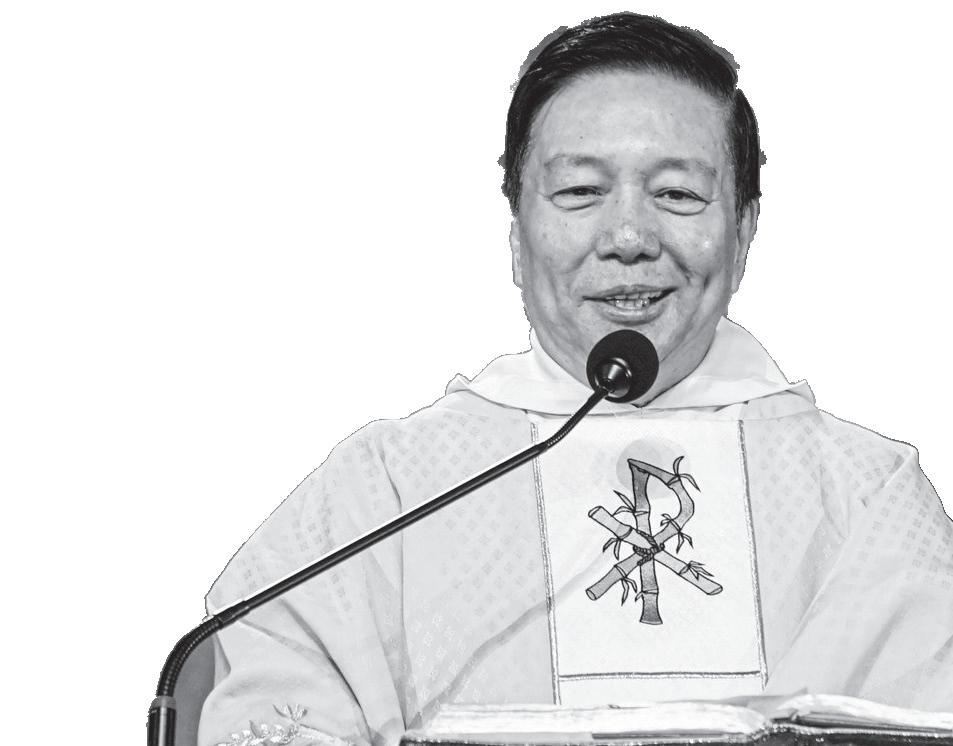
In his homily for the morning batch of the 2026 Baccalaureate Mass, UST Rector Fr. Richard Ang, O.P., urged the graduating class to participate in promoting integrity and human dignity outside the campus.
“Align your actions with your values as you navigate this world. And be active agents of positive change. Make it contagious once and for all,” he said.
Ang highlighted the importance of ethics and humanities in society, maintaining that they should always be part of general education (GE) amid a proposal to remove them from the tertiary curriculum.
GE courses, particularly ethics, provide a strong moral foundation that leads to good decision-making, he stressed.
“As your rector, I strongly be-
lieve that ethics and the humanities should always be an essential part of the general education curriculum as it equips students with a faculty for the moral reasons needed for making the right choices in life,” he stated.
The Commission on Higher Education has postponed the implementation of the reframed GE curriculum, which aims to reduce the number of GE units to a minimum of 18, removing courses such as ethics and Rizal.
The Rector urged the graduating seniors to remain firm in the values taught by the University amid corruption and other national issues.
“May tiwala ako sa inyo, nakakasiguro ako na mayroon kayong pinanghahawakang prinsipyo na maka-Diyos, makatao at makakalikasan para labanan ang malawakang katiwalian at korapsyon sa ating bansa,” Ang said.
“Hindi ito madaling gawin… dahil may mga makakabangga kayo, may kokontra sa inyo, pero kakayanin niyo sa paggamit ng tamang pamamaraan. At kailan-

V’ makes history, winning awards from US
the same category.
THE VARSITARIAN made history as the first Philippine and Asian student publication to win on both the national and regional levels at the prestigious Society of Professional Journalists (SPJ) Mark of Excellence Awards.
The 98-year-old official student publication of UST joined the roster of winners from top American educational institutions, including Harvard University, Northwestern University, Columbia University, and Yale University.
The publication’s UAAP Season 88 Term 1 Primer, “Welcome to My House,” bagged the national award for Best Sports Videography. It also won the Region 2 in
The video primer was produced by sports editor Rob Andrew Dongiapon and managing editor Karis Tsang, edited by photo editor James Magboo, and animated by assistant art editor Regina Louise Sanota and artist Aisha Fortes.
In the SPJ’s Region 2 Mark of Excellence Awards, the Sept. 29 “Thomasian walkout against corruption” coverage led by the V’s News, Special Reports, and Photography sections, topped the breaking news reporting category for schools with more than 10,000 students.
The UAAP Season 87 2025 Term 2 Primer “Superstar” also won the regional award for Feature Videography category.
Also in the SPJ Region 2 Mark of Excellence Awards, The Flame,
the student publication of the Faculty of Arts and Letters, won under campus reporting category with tuition hike stories.
The Flame got finalist citations for its story titled “More than a year after TomasinoWeb ruckus, six UST media entities claim to have faced various restrictions,” photo essay on Nazareno 2025, and feature story titled “Just another break: How Thomasian atheists spent the Holy Week.”
The SPJ Mark of Excellence Awards honor the best in collegiate journalism annually, recognizing entries first at the regional level before first-place winners advance to the national competition.
SPJ’s Region 2, to which the Philippines was assigned this year, covers campus media in Delaware, District of Columbia, Maryland, North Carolina, and Virginia.
This year, the “V” stood out among collegiate works published or broadcast in 2025, which saw students and staff from 45 newsrooms across the United States receive national honors.
Founded in 1909 as Sigma Delta Chi, the SPJ is the most broad-based journalism organization in the U.S., focused on protecting press freedom, promoting media ethics, and recognizing outstanding professional and student achievements.
In October 2025, the Varsitarian won in several categories in the Pinnacle Awards of the U.S. College Media Association (CMA).
The “V” won anew in the Apple Awards given during the CMA’s spring conference in New York in March 2026, including Best Newspaper, Best News Website, and Best News Photography.
For Kalel Joson of the College of Commerce, crossing the Arch of Centuries brought a “complex” feeling of both relief and accomplishment.
“There’s a sense of finality of like, you’re only supposed to cross back out through the Arch when it’s all over. And I was like, ‘Wow, it’s done. We got to the other side,’” she said.
“And it was like, relief. There was a sense of accomplishment. But it was like, it came all at once like a full package,” she added.
Maria Kaela Torres of the Faculty of Pharmacy, said she initially expected heavy rains, but was instead met with clear skies that turned pink during the 6 p.m. post-Mass activities at the UST Open Field.
“Hinihintay ko rin po sanang umulan kasi blessing din po ‘yun ni God. More opportunities po, kahit po mababasa po kami. Kaso hindi po dumating,” she said.
“Pero, thankfully naman po, maganda po ‘yung pink skies po today. Good ‘yung weather,” she added.
During the post-Mass rites, incumbent Central Student Council President Annie Agon and outgoing treasurer Kojie Uy, a graduating student from the Faculty of Engineering, delivered a message for the Class of 2026.
“Carry forward the invaluable lessons cultivated beyond the classroom, the bonds of fellowship, the adversities that refined your purpose, and the shared convictions that remind us why our highest aspirations are a duty to pursue,” Agon said.
“The ideal circumstances may not have been handed to us, yet look at us now, we were able to pull through all that and open the next chapter of our lives,” Uy said.
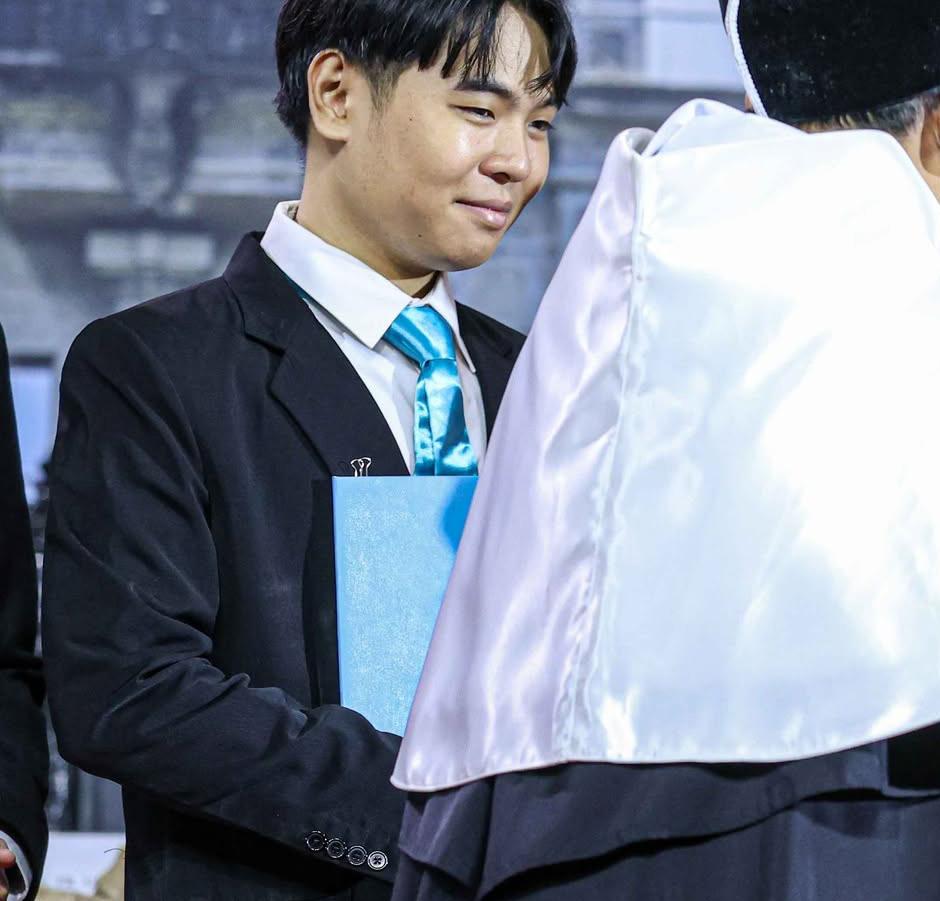
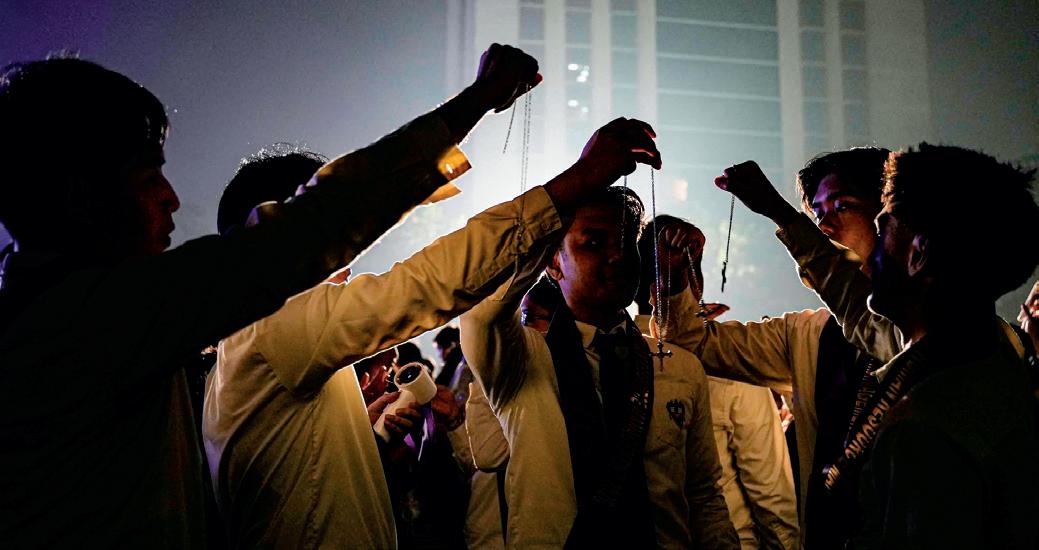
UST Rector Fr. Richard Ang, O.P. led the blessing and imposition of the Thomasian mission cross together with student representatives and deans of the colleges and faculties.
The solemn investitures of the academic units began on May 8 and will last until June 30.
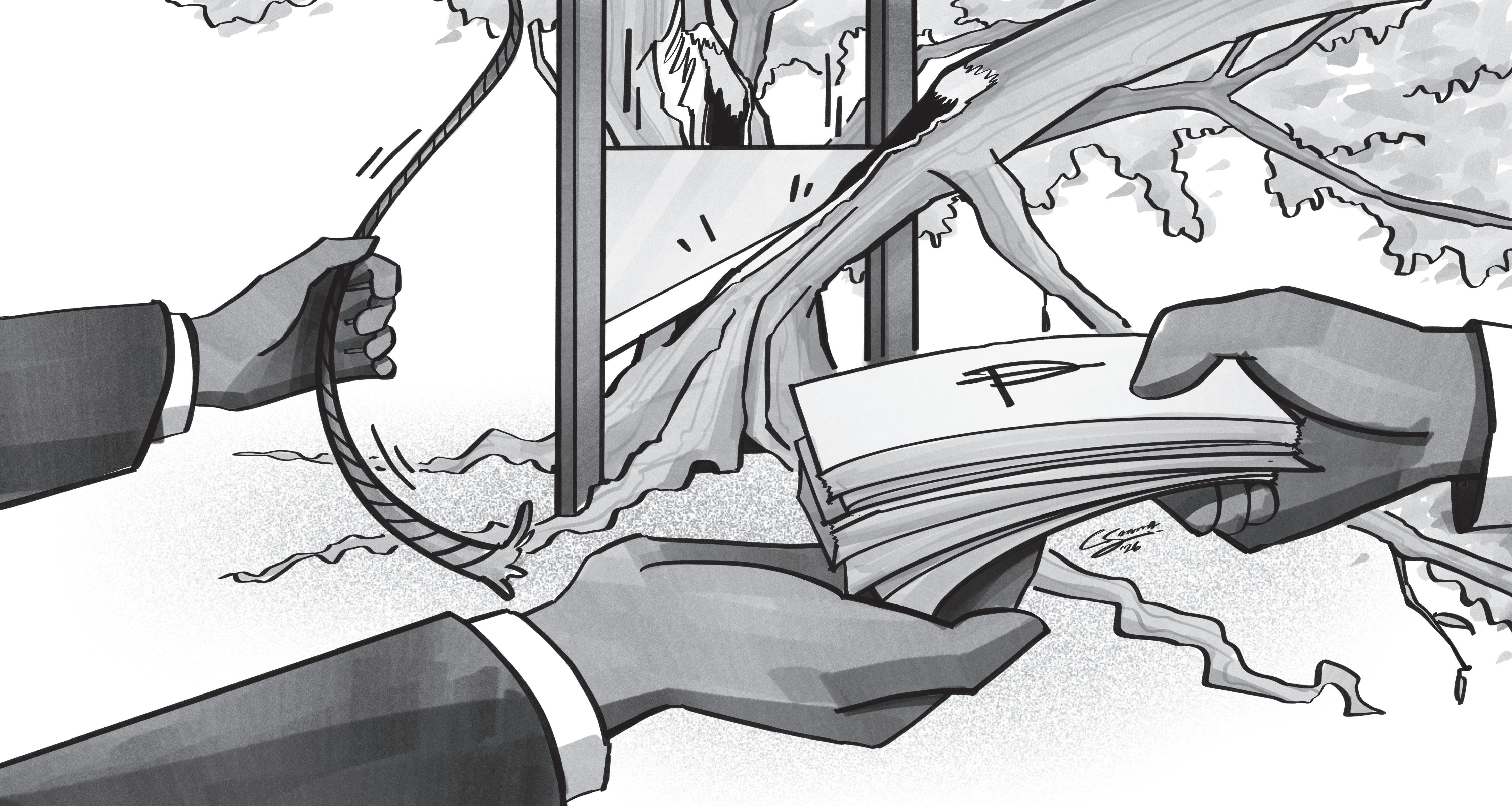
THE DISAPPEARANCE of trees along Quirino Avenue in Manila is more than just another construction project. It is a reflection of a larger question that cities must confront: What kind of development do we want, and who pays the price for it?
Rows of trees that once provided shade to commuters, pedestrians, and nearby communities were cut down to make way for the Southern Access Link Expressway (SALEX), an infrastructure project connected to the Skyway system.
The project was granted a tree-cutting and earth-balling permit by the Department of Environment and Natural Resources (DENR), covering hundreds of trees along affected areas. Public backlash followed, with environmental groups and citizens questioning whether the loss of mature trees could truly be justified by promises of mobility and progress.
The DENR later suspended the cutting activities to review possible safeguards and additional tree relocation measures. But the pause should not end the conversation. It should force a deeper examination of how infrastructure is planned in one of the most vulnerable urban environments in the country.
Because a tree is not merely an obstacle standing in the way of a road.
A tree is a public asset. It cools streets in a city increasingly experiencing extreme heat, filters pollution, absorbs rainwater, and makes urban spaces more livable.
Replacing decades-old trees with newly planted saplings may satisfy a compliance requirement, but it does not immediately replace the ecological services that old trees provide.
The issue is not simply whether a project has permits. The bigger question is whether legal approval always equals responsible development.
Geographically fated to be flood-prone because it is below sea level, Manila, with its
be protecting every possible source of natural relief, not treating trees as disposable in the name of infrastructure.
This also extends beyond Quirino Avenue and into the future of the Pasig River.
A petition has emerged calling for the Pasig River to be declared a National Cultural Treasure and historical landmark, as part of opposition to the proposed Pasig River Expressway
For too long, urban planning has prioritized vehicles over pedestrians, concrete over ecosystems, and speed over sustainability. The result is a city where people walk under unbearable heat, where flooding remains a constant threat, and where historical landscapes continue to disappear.
former coastal suburbs such as Pasay, Caloocan, Malabon, and Navotas, already struggles with limited green spaces, worsening heat, and congestion. Flooding has been exacerbated by corruption, as shown by the continuing saga of ghost flood-control projects involving not only the DPWH but likewise national lawmakers from both houses of Congress. Manila and other cities facing these problems should
(PAREX), a planned elevated highway project associated with businessman Ramon Ang’s San Miguel Corporation.
Supporters of the petition argue that the river is not just a transportation corridor but a historic waterway central to Manila’s identity, culture, and history.
The Pasig River carried the stories of precolonial communities, Spanish-era Manila,

trade, and the growth of the capital.
To reduce it solely into space for another highway risks losing an opportunity to restore and reconnect Filipinos with one of the country’s most important waterways.
The call to protect the Pasig River is not a rejection of development. It is a demand for a different kind of development: one that considers heritage, environment, and people alongside economic growth.
For too long, urban planning has prioritized vehicles over pedestrians, concrete over ecosystems, and speed over sustainability. The result is a city where people walk under unbearable heat, where flooding remains a constant threat, and where historical landscapes continue to disappear.
Progress should not mean leaving future generations with a city that is faster but less livable.
The fate of Quirino Avenue’s trees and the Pasig River represents the same struggle: whether Manila will continue building a future that sacrifices nature, or whether it will finally recognize that the environment is part of the city’s infrastructure.
A highway can be built. A river can be developed. But once a city loses its memory, its shade, and its natural defenses, rebuilding them may no longer be possible.
Manila deserves development that does not ask its people to choose between mobility and a livable home.

FOR OVER two decades, the month of May has been dedicated to honoring the beauty and diversity of Philippine heritage.
For this year’s national heritage month celebration (NHM), the National Commission on Culture and the Arts (NCCA) chose the theme “Roots and Horizons: Our Shared Heritage, Our Collective Future.”
During NHM, we are reminded that heritage is significant in developing a shared sense of purpose as a nation. We are called upon to practice stewardship, to know more deeply where we come from, well enough to decide where we want to go.
At the University of Santo Tomas, the past is
Penchants
not a distant memory but a daily presence, where generations of students have studied beneath centuries-old arches.
As the oldest university in Asia, UST envelops us in history, tangible and intangible heritage, as well as institutional memory. Living and learning amid such tangible heritage markers teaches a simple lesson—heritage is not only about preservation but about continuity. It invites students to ask: which parts of our past do we carry forward, and how do we renew them for the future?
Also, as Thomasians, we not only learn about cultural heritage, but we also spend most of our time in a city where we can easily participate in cultural activities.
Just a few kilometers away from the campus are three National Museums, namely Fine Arts, Anthropology, and Natural History, where one can easily explore different aspects of Philippine culture and heritage.
Near the complex of National Museums is Intramuros, where you can explore the 16th-century walled city of Manila and participate in cultural and arts
events. Recently, the Film Development Council of the Philippines opened the Cinematheque Centre in Intramuros, where they regularly screen Philippine heritage films are screened.
Heritage engagement is easily accessible to students in Manila. In this city, every street corner offers a chance to ignite curiosity and strengthen one’s Filipino identity through a deeper connection with heritage.
Heritage participation must be intentional. Admiration without action lets tradition calcify into a static display. Intentional participation means actively learning local histories, speaking and supporting indigenous and regional languages, patronizing traditional artisans, and pursuing heritage education beyond the required academic curricula.
Filipinos must not only be familiar with monuments and myths: they should also have a deeper contextual understanding of why history and heritage are memorialized. They should have a deeper understanding of remembrance.


THE Commission on Higher Education’s (CHED) renewed proposal to further revise the general education (GE) curriculum in higher education institutions has reignited debate among educators, academics, and students.
The plan seeks to further reduce GE units—from the current 36 units under the 2018 reform to as low as 18 to 24 units in some drafts—through the consolidation of subjects and the removal of several standalone courses.
Under the proposal, existing GE subjects may be merged into broader interdisciplinary courses. Purposive Communication, for instance, may be integrated with digital literacy components, while Contemporary World and Science, Technology, and Society may be combined under a single course on global and technological developments. Even the mandated Life and Works of Rizal course under Republic Act No. 1425 has been considered for absorption into a broader Philippine history framework, raising concerns among historians and educators who argue that such a move weakens the law’s intent to ensure a dedicated study of Rizal’s works.
CHED has justified the continuing reduction of GE units by citing curriculum decongestion, supposed redundancy with the senior high school (SHS) curriculum, and the need to produce graduates who are more “work-ready” through greater specialization.
However, this justification reveals a deeper misunderstanding of the purpose of higher education.
The current crisis in Philippine education is primarily rooted in basic education, not higher education. International assessments such as the 2022 Programme for International Student Assessment (PISA), where Filipino learners scored below the OECD average in reading and mathematics, reflect the learning challenges of basic education students, particularly at the foundational level.
These gaps are serious and demand urgent intervention. However, they cannot be solved by reducing the breadth of college education. Weaknesses in basic education should be addressed within basic education not by transferring the burden to universities and colleges.
The argument that college general education merely repeats what students learned in basic education also overlooks the distinct role of GE in higher educa-
tion. While basic education introduces foundational concepts, college GE develops these ideas at a deeper level appropriate for young adults preparing to participate in society as professionals and citizens.
General education is rooted in the liberal arts tradition—not because it exists to make students immediately employable, but because it trains them to think critically, reason independently, communicate effectively, and engage with complex social realities.
Liberal arts education has historically included both the trivium—grammar, logic, and rhetoric—and the quadrivium—mathematics, music, geometry, and astronomy. Its purpose was never limited to preparing students for a particular occupation. Instead, it formed the intellectual foundation necessary for students to pursue specialized fields.
Whether a student enters the humanities, sciences, engineering, medicine, education, business, or other
The claim that GE subjects are redundant also fails to recognize that disciplines such as philosophy, ethics, history, and the social sciences are not simply collections of information. They provide frameworks for reasoning, moral judgment, and civic responsibility.
professional fields, the ability to analyze arguments, evaluate evidence, and understand ethical consequences remains essential.
Higher education becomes “higher” precisely because it goes beyond training for employment. Its responsibility is not only to produce workers but to cultivate thinkers capable of contributing to society.
The push to make undergraduate education primarily “labor-ready” also ignores the existing pathways that determine professional readiness. In many fields, competency is assessed through professional licensure examinations and accreditation systems. Graduates who enter trades and technical careers may pursue certification through technical-vocational pathways.
College education, therefore, cannot be reduced to a job-training program. Specialization and professional preparation are important, but they are built upon the broader intellectual foundation provided by general ed-
ucation.
The claim that GE subjects are redundant also fails to recognize that disciplines such as philosophy, ethics, history, and the social sciences are not simply collections of information. They provide frameworks for reasoning, moral judgment, and civic responsibility.
Reducing these subjects into compressed interdisciplinary courses risks weakening sustained engagement with ideas that shape responsible citizenship.
The concern, then, is not whether the curriculum should evolve. Higher education must continue adapting to changing realities. The concern is whether repeated reductions in GE are based on evidence or simply administrative convenience.
After the 2018 GE overhaul, CHED has yet to present comprehensive long-term evidence showing that further reductions improve critical thinking, civic literacy, or graduate outcomes. There must also be clearer consultation with faculty members, historians, and academic institutions that will be responsible for implementing these changes.
Philippine education policy has repeatedly undergone curricular restructuring. While reform is necessary, constant revisions without sufficient assessment create instability for educators and students alike. Universities are forced to redesign courses, adjust materials, and restructure programs without clear proof that these changes address the actual problems facing education.
At the same time, higher education is not without challenges. Universities face issues involving quality assurance, resources, and unequal access. But these concerns are distinct from the structural failures of basic education. Confusing the two leads to solutions that fail to address either.
Until curriculum reforms are grounded in evidence and shaped through genuine academic consultation, the continued reduction of general education raises a fundamental question: is education being improved, or are its problems merely being tweaked?
What appears increasingly clear is that CHED’s approach reflects a narrow and diminished understanding of what higher education should be. In fact, its approach betrays the Commission’s ignorance of the liberal arts as the foundation of university education.
Without transparent consultation, clear empirical justification, and careful consideration of long-term educational outcomes, further cuts risk being mere petty administrative moves. By what appears more and more as a low-minded and even dim-witted Commission on Higher Education.
Higher benefits FROM PAGE 2 ►
is forged in synodality,” she said.
“The response of the management is always anchored on good will, what is good, what is best for our academic staff and what the University truly envisions for them. That they will have a life of dignity and a life of dedication also to the University,” she added.
awards FROM PAGE 2 ►
The union panel was chaired by Asst. Prof. Emerito Gonzales, who was reelected USTFU president in the April 2026 USTFU elections. WITH REPORTS FROM YUVSHENKA ANDREA R. OSEA search work.
In his opening remarks, UST Rector Fr. Richard Ang O.P. emphasized the importance of recognizing achievements in fostering self-esteem and personal growth.
“Recognition matters because sometimes, a medal recognizes excellence. At times, recognition helps restore a person’s faith in his capabilities. Sometimes, it reminds a young person that you carry possibilities greater than your doubts,” he said.
Stanley Co, president and CEO of Robinsons Retail Holdings, delivered the keynote address, reflecting on how UST had shaped generations of professionals across various industries.
Co, a UST Commerce alumnus, cited the shared upbringing of fellow Thomasians across the corporate world.
At times, recognition helps restore a person’s faith in his capabilities. Sometimes, it reminds a young person that you carry possibilities greater than your doubts.
man, ang dahas, ang paghasik ng gulo, ang pagtataas ng boses ay hindi tamang paraan para bigyang solusyon ang problema,” he added.
Graduating students were divided into morning and afternoon batches to fit within the QPav’s 5,000-seat capacity. Nearly 3,900 graduating students
attended the morning session of the Baccalaureate Mass, from the following colleges: Faculty of Medicine and Surgery, Faculty of Arts and Letters, College of Commerce and Business Administration, Conservatory of Music, College of Nursing, College of Rehabilitation Sciences, College of Fine Arts and Design, UST-Alfredo M. Velayo College of Accountancy, and College of Information and Comput-
ing Sciences.
A total of 11,523 students are set to graduate from the University in Academic Year 2025-2026, with 7,889 students coming from bachelor’s and professional programs.
For the second consecutive year, the University held the Baccalaureate Mass for graduating students at the Quadricentennial Pavilion (QPav) instead of the UST Open Field and
Grandstand to avoid disruptions in the event of heavy rain.
The University has prepared an outdoor post-Mass program at the UST Grandstand and Open Field, beginning at 6 p.m.
Downpours forced last year’s open-air Baccalaureate Mass to be rescheduled indoors, with the University moving the 2026 sendoff rites to the QPav the day after. Fight corruption FROM PAGE
Fr.
Richard Ang, O.P UST RECTOR
“[We were] all shaped by these halls. These same values. This same stubborn curiosity. It tells me something important, what UST builds,” he said.
Co urged students to use their future positions not only for personal success but also to create opportunities for others.
“This is also the role: not just to lead the company but to be the door that someone else walks through. Someone opened the door for me once and, if curiosity has taught me one thing, the greatest thing it can lead you to is someone else’s beginning,” he stated. The Student Awards Day is an annual recognition ceremony that celebrates the excellence of Thomasians in various fields. It also marks the start of the “graduation season” in the University.
With prayers of thanksgiving and centuries-old academic to the Class of 2026 through its Baccalaureate Mass and Solemn Nonscholaesedvitaediscimus—“We learn not for school, but the beginning of lives devoted



academic traditions, the University of Santo Tomas bade farewell Solemn Investitures. As the ancient Latin adage reminds us, school, but for life.” The ceremonies marked not an ending, to truth, compassion, and service. GUISAMA, CHLOE ELYSSE B. IBAÑEZ, JAMES MICHAEL M. MAGBOO,
AND VIO NEIRO M. VILLAESCUSA





EDITOR: VINCE ALFRED M. PILLAGARA
‘Seek wholeness in Jesus,’ Manila, San Pablo bishops urge young Catholics
By Reya Vincent P. Misa
YOUNG CATHOLICS must deepen their relationship with Christ, who is the source of unity and an aid to brokenness amid the modern world, San Pablo Bishop Marcelino Antonio Maralit said in a Mass during Day 2 of the Youth For Christ (YFC) International Conference at the Quadricentennial Pavilion on Saturday, May 23.
In his homily, Maralit said the present generation is restless, pressured, and fragmented.
“Unity begins in one’s own self. In this world, many people are successful professionally. Yet, they are impoverished spiritually,” Maralit, chairman of the Episcopal Commission on Youth of the Catholic Bishops’ Conference of the Philippines, said.
He reflected on St. Augustine’s words and Pope Leo XIV’s papal motto “In Illo uno unum” (In the one Christ we are one).
“Christ Himself is the one, the prin-
ciple of unity. In Him, all things hold together… The challenge we ask you before any relationship develops in your life… If you want a true, deep relationship with others, start with your relationship with Jesus,” Maralit said.
The prelate cited the examples of St. Paul and St. John, who remained steadfast despite persecution and misunderstanding because of their deep relationship with Christ.
“You’re not just youth, you’re youth for Christ. I would like you to sometimes change it to ‘a youth in Christ.’ So that you can become youth for Christ,” he said.
Receive gifts of Pentecost
During the third day of the YFC International Conference, Manila Archbishop Cardinal Jose Advincula said young catholics could become modern instruments of the Holy Spirit by seeking truth and strength in Jesus Christ.
Preceding the Mass for the Solemnity of Pentecost, Advincula spoke about three “gifts” from the Holy Spirit, repre-
AMID THE education crisis faced by the country, the UST College of Education is proof of the University’s commitment to quality education, UST Rector Fr. Richard Ang said during the closing Mass for the college’s centennial celebration on Friday, May 15.
In his homily at the Santísimo Rosario Parish Church, Ang said the crisis stems from the lack of quality education and teachers.
“Magandang maipalaganap ang kultura ng katiyakan ng kalidad. Maraming nagtatapos sa edukasyon sa ibang eskwelahan na hindi nakakapasa sa licensure examination. Maaaring kulang sa quality assurance at kailangan ng tulong ng mga centers of excellence tulad ng Eduk,” Ang said.
The rector said the college’s Center for Holistic and Inclusive Learning and Development Laboratory, a space for de-
sented by the words “enlightens, emboldens and ennobles.”
“He wants to enlighten our lives with truth, strengthen our hearts with faith, and raise our lives beyond the limitations of sin and human weakness. Our world does not need more youth who are Christians, but Spirit-filled disciples who know Christ, love Christ, and proclaim Christ with faith and joy,” Advincula said in his homily.
Reflecting on enlightenment, the cardinal stressed that the Holy Spirit opens the faithful’s eyes to recognize God’s presence in their lives and to gain wisdom beyond human understanding.
“Many people today are educated but spiritually confused. They know many things about the world but very little about God. An enlightening touch of the Holy Spirit can dispel years of darkness and confusion,” he said.
According to Advincula, the second gift of Pentecost, which “emboldens,” serves as a source of strength and encouragement for the younger generations of the faithful, enabling them to persevere through the difficult daily challenges they face.
“Many people still live behind back doors today. Many are knocked out by fear. Fear of rejection, fear of failure, fear of suffering or fear of openly living out their pain. But the Holy Spirit offers courage and strength to all,” he said.
velopmentally appropriate and holistic early childhood education, is a solution to children’s “stunting growth.”
The College of Education’s Research Initiatives for Teacher Education, a program for evidence-based research to improve teacher training, curricula, and policy, in partnership with the Teacher Education Council, ensures quality and excellence in the academe, Ang added.
“Ang kinabukasan ng edukasyon sa bansa ay nakasalalay sa pagkakaroon ng mga magagaling na guro,” he said.
The College of Education was founded in June 1926 to address the national teacher shortage and to become a school for Catholic educators.
“A new work by its nature not only involves the hard work of laying down the foundations, but it also entails the need for sustainability to make the work endure the test of time,” Ang said. YUVSHEN-
KA ANDREA R. OSEA
For Christians, courage is not the absence of weakness, according to Advincula, but is trusting that God is greater than their weaknesses.
Stressing the third gift, which “ennobles,” Advincula highlighted the power of the Holy Spirit to uplift the burdens from the hearts and minds of the faithful.
“Our human nature is weak, selfish, fearful and divided. Human wisdom alone is limited. Human strength eventually fades. Human love can easily become conditional and self-centered. Even good people continuously struggle with pride, jealousy, anger, and discouragement,” the archbishop concluded.
Celebrated 50 days after Easter, the Solemnity of Pentecost commemorates the descent of the Holy Spirit upon the apostles and the Blessed Virgin Mary.
By receiving the Paraclete on Pentecost, the apostles were empowered to speak in different languages, enabling them to spread the Gospel to diverse crowds. The feast is deemed the “birthday of the Church.”
The global youth gathering culminated at the University on Sunday, May 24.
The YFC international conference 2026 bore the theme “As One,” emphasizing fellowship, unity and shared mission of the youth in Christ. YUVSHENKA
ANDREA R. OSEA WITH REPORTS FROM VIO NEIRO M. VILLAESCUSA
‘Never lose the person behind the screen,’ Thomasian prelate advises Catholics on 60th World Communications Day
By Reya Vincent P. Misa
COMMUNICATION MUST never lose sight of the human behind social media profiles amid a digital world consumed by speed, visibility, and endless content, Caceres Archbishop Rex Andrew Alarcon said on the 60th World Day of Social Communications on Monday, May 18.
Alarcon, chairperson of the Episcopal Commission on Social Communications of the Catholic Bishops’ Conference of the Philippines, emphasized that technology is not a danger in itself, but is meant to serve humanity.
“Behind every profile is a face. Behind every account is a story. Behind every post, reaction, silence, or cry for attention is a human heart longing to be seen, heard, understood, and loved,” Alarcon said in a message posted by the commission on Facebook.
The Thomasian prelate also chal-
lenged Catholic communicators and media professionals to see their vocation as more than content creation but to propagate truth, dialogue, and healing through online spaces.
“As Catholic communicators, you are called not merely to produce content, but to foster encounters,” he said. “Not simply to gain attention, but to lead others toward truth, goodness, compassion, and ultimately towards Christ himself.”
Pointing to Christ as the model communicator, Alarcon stressed that genuine communication is rooted not in performance, but in presence.
“Christ did not communicate from a distance. But people face to face, He called them by name, He walked with them,” he added.
Preserving human voices and faces
In his World Communication Day message, Pope Leo XIV warned that
artificial intelligence (AI) and algorithm-driven platforms risked weakening authentic human relationships and critical thinking.
“Faces and voices are sacred. Safeguarding faces and voices ultimately means safeguarding ourselves. Embracing the opportunities offered by digital technology and artificial intelligence with courage, determination and discernment does not mean turning a blind eye to critical issues, complexities and risks,” Pope Leo said in his message released on Jan. 24, coinciding with the Feast of St. Francis de Sales, patron of communicators and writers.
Waiving creativity, mental capacities and imagination to machines would mean burying God-given talents, the pontiff said, warning that it “would mean hiding our faces and silencing our voices.”
The pope emphasized that technol-
ogy can still become an instrument for evangelization and authentic human encounter when guided by truth and ethical responsibility.
“We need faces and voices to speak for people again. We need to cherish the gift of communication as the deepest truth of humanity, to which all technological innovation should also be oriented,” he concluded.
Established by Pope St. Paul VI in 1967, World Communication Day is an annual global observance by the Church to recognize and celebrate the achievements of media and journalists, and to acknowledge the power of the press, television, radio, and cinema to spread the Gospel.
The celebration, celebrated on Ascension Sunday, was inspired by the Second Vatican Council’s decree on Social Communications, Inter Mirifica.
Golden standard FROM PAGE 10 ►
tation.
Season 88 became an opportunity for UST to showcase what the university could offer. It also raised the standard for how the UAAP could look, feel and inspire moving forward.
“I think it was a success—just like the previous season also of UAAP,” Cansancio said. “So every season of UAAP is unique. And I would say as host for this season, [Season 88], I would say that it was a success. It was a huge success.”
“We try to put up a closing that is the same as how we open up this season. So usually, the Thomasian way is really rooted in history and culture, but performed with class and elegance.”
Raising the bar
As the curtain fell on UAAP Season 88, UST’s hosting also reshaped expectations for what a UAAP season could look like.
For months, the league operated on a scale rarely seen before: campus-wide productions, largescale ceremonies, expanded sporting events and a season-long effort to blend athletics with culture, entertainment and Thomasian identity.
Behind all of it was a demanding day-to-day process that, according to Cansancio, only became fully meaningful once the season concluded.
“The daily grind of hosting Season 88 felt unclear until now,” Cansancio said. “Seeing the student-athletes and coaches giving everything, and seeing us come together as one community, made it all worth it.”
The success of Season 88 also created a challenge for the next host school, Far Eastern University, which officially received hosting duties during the closing ceremony at the Quadricentennial Pavilion.
Incoming UAAP president Mark Molina acknowledged the scale of what UST accomplished throughout the year.
“What UST did this year was amazing, spectacular. In terms of the opening and closing, it’s something we’ve never seen before,” Molina said. “So we’ll try to live up to that.”
“We’ll hopefully, in our own way, do something that the UAAP and FEU community will be very proud of. So it’s underway, everything, all the preparations. We’re opening on September 12 at the Mall of Asia Arena, and we’re already preparing for that.”
For UST, however, the legacy of Season 88 is shaped by Thomasian history, tradition, artistry and community spirit.
And for Cansancio, that is ultimately how he hopes the season will be remembered.
“My hope is that people remember this season in full — from opening to closing,” Cansancio said. “More than that, I want it remembered as Thomasian through and through: rooted in history and grandeur, carried out with gratitude and class.”
“I am honored to have led this organization, and I would do it again without hesitation if given the chance.” WITH REPORTS FROM MIGUEL ANGELO B. MARCO, JOAQUIN EDGARDO


ication, we made it happen.”
“If I had to pick one moment, it was during the opening preparations. That was when it felt the hardest. Prayer and my support system carried me through: my Thomasian family, the UAAP Board and community, my family at home, and the Dominican community.”
UST’s dominance as host school
The grand opening eventually became a fitting preview of UST’s dominant year in competition.
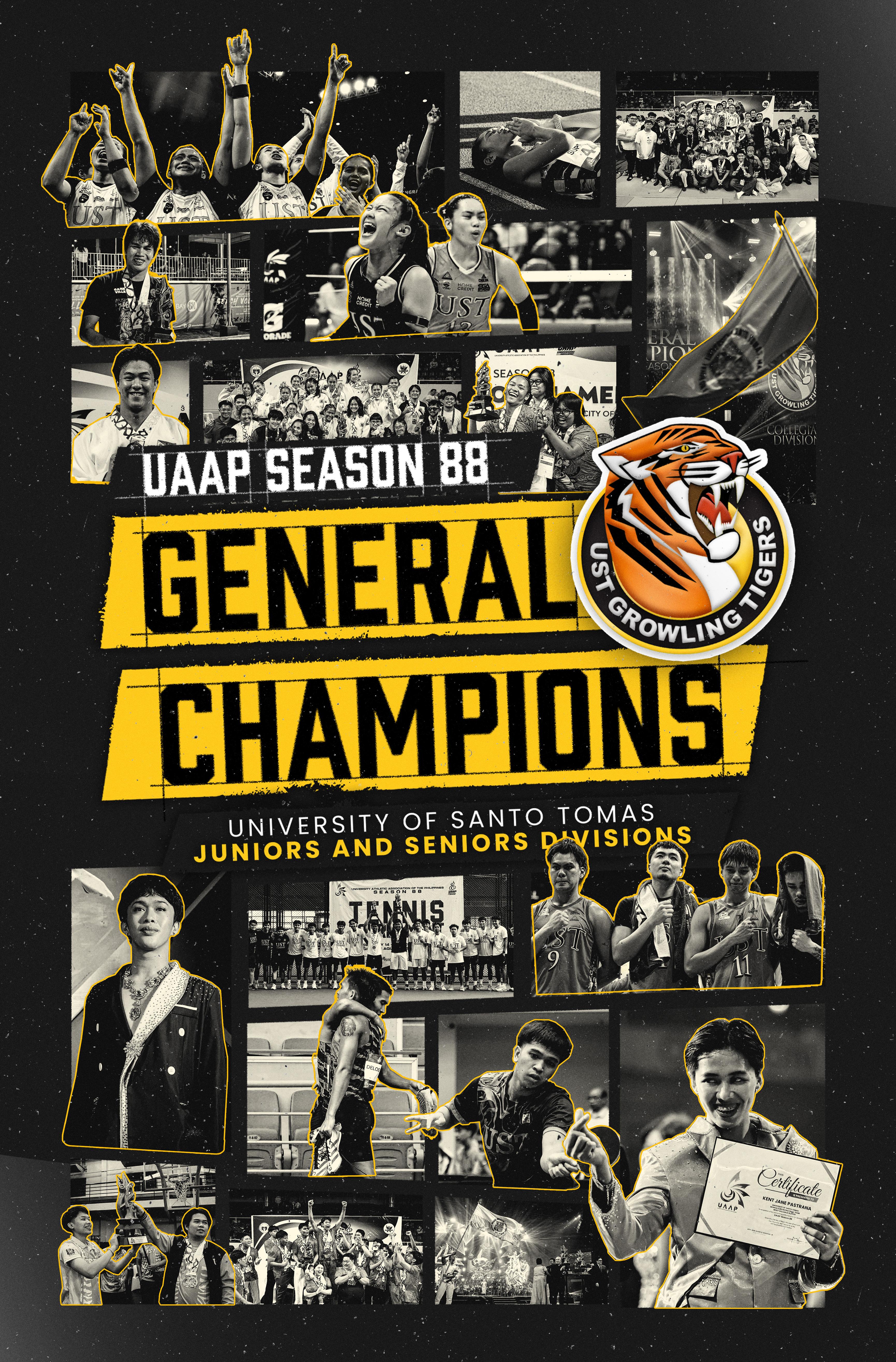
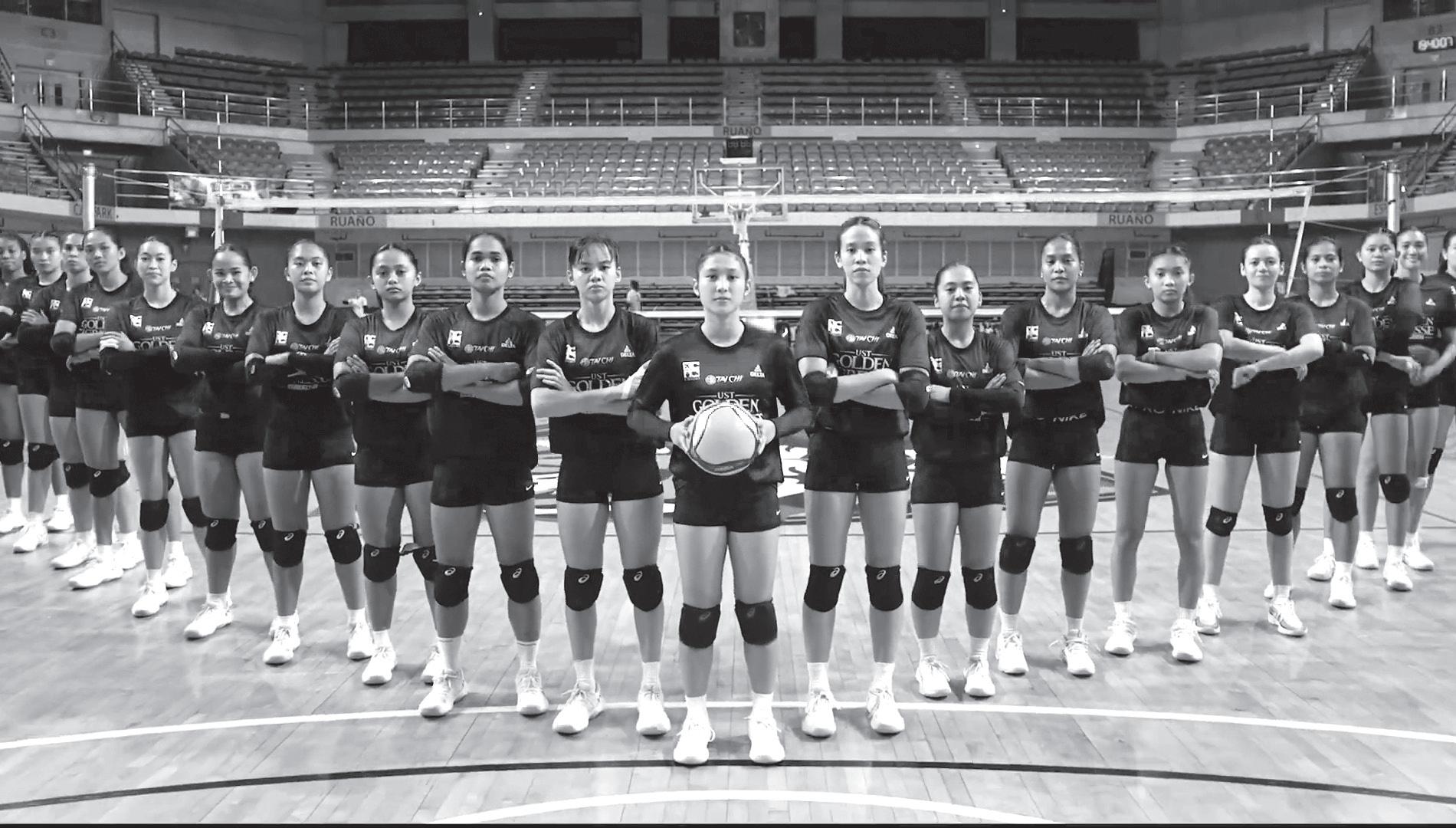
UST amassed 356 points in the seniors’ division after collecting 13 championships, six silver medals and two bronze medals, surpassing last season’s 346-point total.
The Growling Tigresses reclaimed both the women’s basketball and women’s 3×3 titles, while the Tiger and Lady Judokas swept the judo competitions.
UST also completed championship runs in beach volleyball, table tennis, tennis and chess.
The university finished 68 points ahead of runner-up De La Salle University in the general championship race.
For coaches, the support system established during Season 88 became a major factor behind the school’s success.
“Huge credit kay Father Rodel and also to the IPEA people for making this successful hosting,” UST Lady Judokas head coach Gerard Arce told the Varsitarian
“Actually, he gave us full support for our preparation, giving us the leeway kung anong diskarte gagawin namin on preparing our teams and supporting us sa lahat ng request namin.”
“Even if he did not literally say na kailangan mag-champion kami, the way he supported us parang sinasabi na rin niyang, ‘Nabigay na namin lahat sa inyo.’ That became one of our motivations: to give back the trust he showed us.”
For athletes, the sustained success reflected UST’s long-standing commitment to sports development.
“UST has the best support for athletes,” said Chino Sy, a four-time UAAP gold medalist and two-time Southeast Asian Games champion.
“Sigurado dahil sa suporta ng UST sa amin at sa buong UST community, kayangkaya pa itong ituloy.”
Season 88 athletics MVP Hokett Delos Santos, who also won gold in decathlon during the SEA Games, echoed the same sentiment after competing through injuries throughout the season.
“Dahil sa support at pagmamahal ng UST kaya nakukuha ang general championship,” Delos Santos said. “Kapag atleta ka, hindi lang physical ang laban. Sports have the power to change people’s lives.”
For Cansancio, however, the season was never about individual credit.
He emphasized that UST’s success was built collectively by administrators, coaches, athletes, sponsors, doctors, therapists, staff members and the wider Thomasian community that rallied behind every team throughout the year.
“It’s not a one-man show,” Cansancio said. “It’s the effort of the whole Thomasian community. Right now, I have nothing but gratitude, first to our mighty God for all the blessings He has given us throughout this season.”
Beyond the medals and championships, Season 88 also became a statement on how far the UAAP could go in terms of presentation, production and overall experience.
From the massive opening ceremony at the UST Grandstand to the elegant blacktie closing rites at the Quadricentennial Pavilion, UST’s hosting earned praise from coaches, athletes and officials across multiple sports.
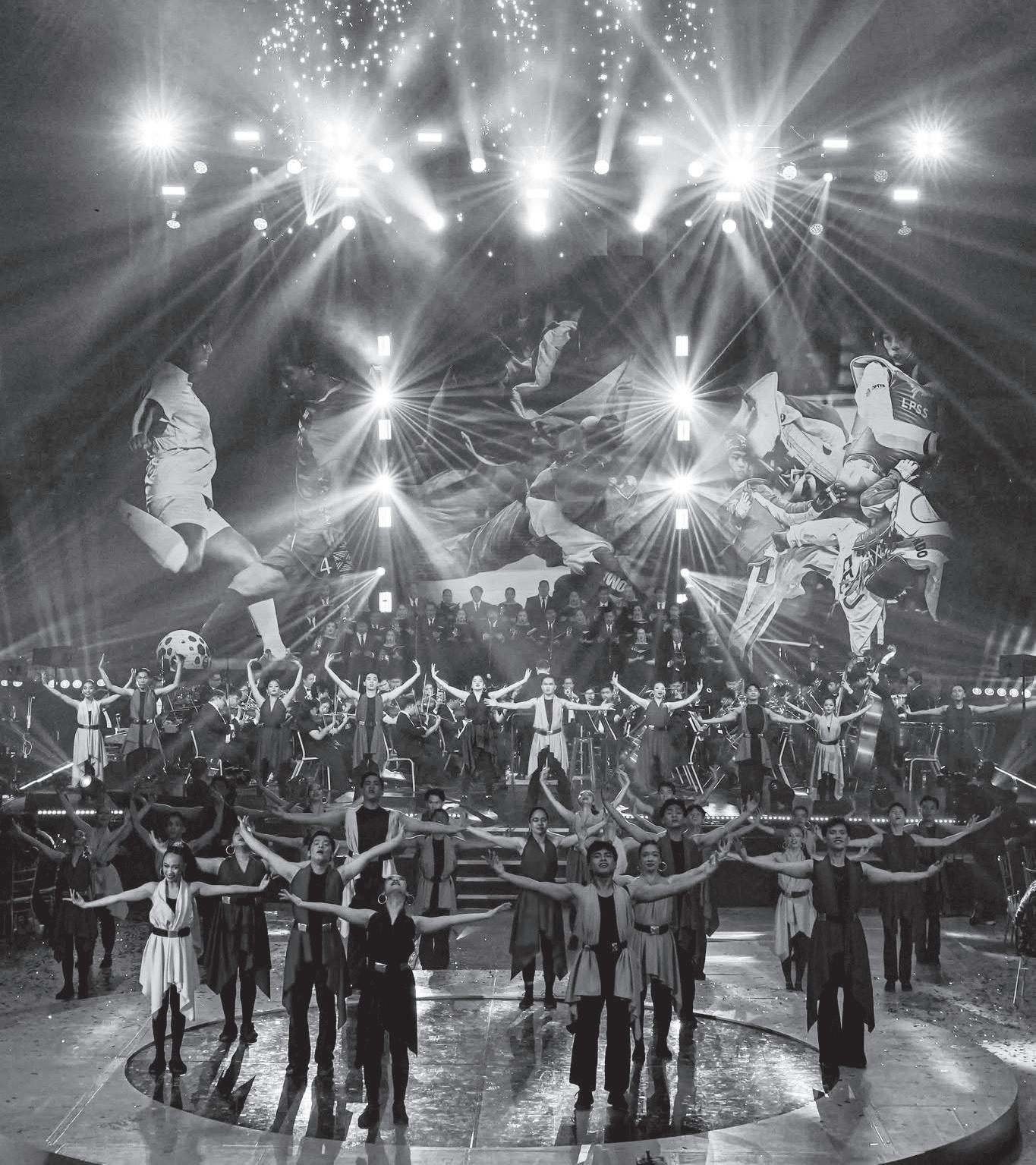
The season departed from the UAAP’s traditional approach to ceremonies. Instead of brief formal programs, UST transformed both the opening and closing into full-scale productions complete with concert performances, thematic segments, orchestral numbers, red carpet entrances and largescale stage designs.
For many within the Thomasian community, it elevated the league into something closer to an international sporting event.
UST beach volleyball head coach Paul Doloiras said the closing ceremony, in particular, stood out because of its sophistication and attention to detail.
“The best hosting na napanood ko, lalo na ‘yong closing. Sobrang elegante,” Doloiras told the Varsitarian
The same sentiment was echoed by UST under-16 Tiger Cubs head coach Noli Mejos, who described Season 88 as unlike anything he had experienced in his coaching career.
“Sa coaching career ko, ngayon lang ako naka-encounter ng ganitong opening at closing. Sobrang na-amaze ako sa pag-handle ng UAAP this season,” Mejos said. “Ibang klase talaga, pang-world class.”
Much of that impression came from the sheer scale of the events.
The opening ceremony transformed UST campus landmarks into performance venues, while the closing ceremony inside the QPav featured a fully dressed stage, orchestral accompaniment, formal attire requirements and concert-style performances from Thomasian groups.
UST performing organizations such as the UST Salinggawi Dance Troupe, the UST Symphony Orchestra, the UST Singers and the Sinag Ballroom Dance Company all became integral parts of the season’s presen-

By Rob Andrew L. Dongiapon
UAAP SEASON 88 became unlike anything the league had ever seen before, from its world-class opening ceremony in September that transformed the UST campus into an Olympic-style village to the May 15 closing ceremony that resembled the Oscars.
Back in March 2025, while preparations for hosting were still underway, UST athletics director Fr. Rodel Cansancio, O.P., spoke with the Varsitarian for nearly 30 minutes about his vision for the season and how it would differ from anything previously seen in the UAAP.
Bold, spectacular and unforgettable. That was how he described it at the time. And spectacularly, UST delivered, Cansancio said.
“We nailed it,” Cansancio told the Varsitarian after Season 88 concluded at the Quadricentennial Pavilion with a grand closing ceremony featuring a red carpet affair, a full orchestra performance and an awards-show atmosphere.
As Season 88 president, Cansancio oversaw operations, including the spectacle-filled opening ceremony last September that turned the UST campus into a massive stage, culminating in a Paskuhan-style concert featuring Sarah Geronimo, Kean Cipriano, Lola Amour and Rob Deniel.
Cansancio managed all 60 UAAP events alongside league officials while also supervising support for UST’s varsity teams throughout the year.
By the end of the season, UST secured its ninth straight collegiate general championship and eighth consecutive juniors’ title, extending its reign as the winningest school in UAAP history.
“There were doubts, sleepless nights, and personal sacrifices behind the scenes. I was not sure if we would pull it off,” Cansancio said. “The weight of hosting UAAP Season 88 was huge, but seeing it all come together made it worth it.
“What people don’t see is the work behind it: countless meetings, preparations, sleepless nights, and personal sacrifices.”
Throughout Season 88, Cansancio balanced multiple responsibilities beyond serving as league president.
“The role of being president of UAAP Season 88 demanded everything from me,” Cansancio said. “It consumed my time, tested my patience, and pushed my perseverance. There were moments when I was not sure if I could handle it.”
Yet for those who worked closely with him, the season reflected the kind of ambitious leadership he wanted to bring to the UAAP.
UST officials and athletes repeatedly pointed to the scale of support extended to teams throughout the year.
Building the biggest UAAP opening in recent memory
The Season 88 opening ceremony ultimately became the defining image of UST’s hosting year.
More than 30,000 athletes, officials, alumni and Thomasians filled the UST campus grounds in what became one of the largest opening ceremonies in league history. Instead of staging a conventional indoor program, UST mounted a campus-wide celebration that blended sports, music, pageantry and Thomasian identity.
But behind the spectacle were months of uncertainty.
“If there was a point I felt stretched thin, it was during the Season 88 opening preparations,” Cansancio said. “I was exhausted, overwhelmed, and
honestly unsure if it would all pull together.”
The ceremony featured some of UST’s most celebrated athletes, including EJ Obiena, Sisi Rondina, Sydney Tancontian-Sy and Jervy Cruz, who participated in the torch relay.
Cansancio also collaborated with UST Communication Bureau production supervisor Marvin Rellamas, who served as director for both the opening and closing ceremonies, to conceptualize the massive production.
The event extended beyond athletics, honoring eight Thomasians recognized as “Icons of Hope” for their contributions to society: Jose Advincula for Faith and Service, Alice Eduardo for Nation Building and Enterprise, Carmelo Casas for Sustainable Architecture, Maria Rosario Singh for Public Health and Service, Willy Layug for Culture and the Arts, Christian Esguerra for Truth and Responsible Media, Haydee Ong for Women Empowerment in Sports and Karen Ibasco for Science and Environmental Stewardship. For Cansancio, staging the event outdoors was one of the biggest risks of the season.
“What if it rained?” he recalled thinking. “But with prayer and faith in my fellow Thomasians’ talent and ded-
My hope is that people remember this season in full — from opening to closing. More than that, I want it remembered as Thomasian through and through: rooted in history and grandeur, carried out with gratitude and class.
He represented the UAAP in board meetings, press conferences, groundbreaking ceremonies and league launches while simultaneously handling internal concerns involving scheduling, logistics and stakeholder coordination.
Under his leadership, the league broke new ground in several areas. UAAP events were staged in New Clark City, boys’ tennis and golf were introduced as demonstration sports, and the league’s broadcast partnership was extended through Season 93.
This season also marked the start of construction for the UAAP Arena in Pasig, which is scheduled to open in 2028.
He also became one of the most visible figures throughout the year, appearing in nearly every major UAAP function from the opening ceremony to the closing rites.