
VOLUME XCVIII / NO. 4 · JANUARY 30, 2026 ·


VOLUME XCVIII / NO. 4 · JANUARY 30, 2026 ·
By Louisse Raye Shara C. Santos
FOUR THOMASIANS led the fresh batch of Thomasian lawyers, with the University ranking third among law schools with more than 100 examinees.
UST obtained an overall passing rate of 87.16% in the 2025 Bar examinations, and a 96.3% passing rate for first-time takers. The 2025 overall passing rate was an improvement from the 80.35% it recorded in 2024.
Spinel Albert Declaro placed second nationwide with a 92.46% score.
Alaiza Adviento claimed the third spot with a score of 91.91%.
Marc Angelo Santos scored 91.58%, placing fifth. He was followed by Johann Raphael Gata at No. 7, with 90.90%.
Adviento, who graduated batch valedictorian in 2025, said topping the Bar examinations still felt surreal.
“My goal was to just pass the Bar exam. Pero siyempre, at the back of my head, I knew I still needed to top the bar exam because I needed to give pride to UST, especially to the UST Faculty of Civil Law community, [which] had very high hopes for our batch,” Adviento told the Varsitarian
Gata said he felt overwhelmed seeing his name appear on the list of topnotchers.
“Honestly, hindi po ako makapaniwala na ‘yong name ko [ay] lumabas doon. [I’m] thankful po for the blessings,” he said.
Lexanne Garcia, former associate editor of the Varsitarian, and former Filipino section writer Kim Naparan, were among the successful examinees.

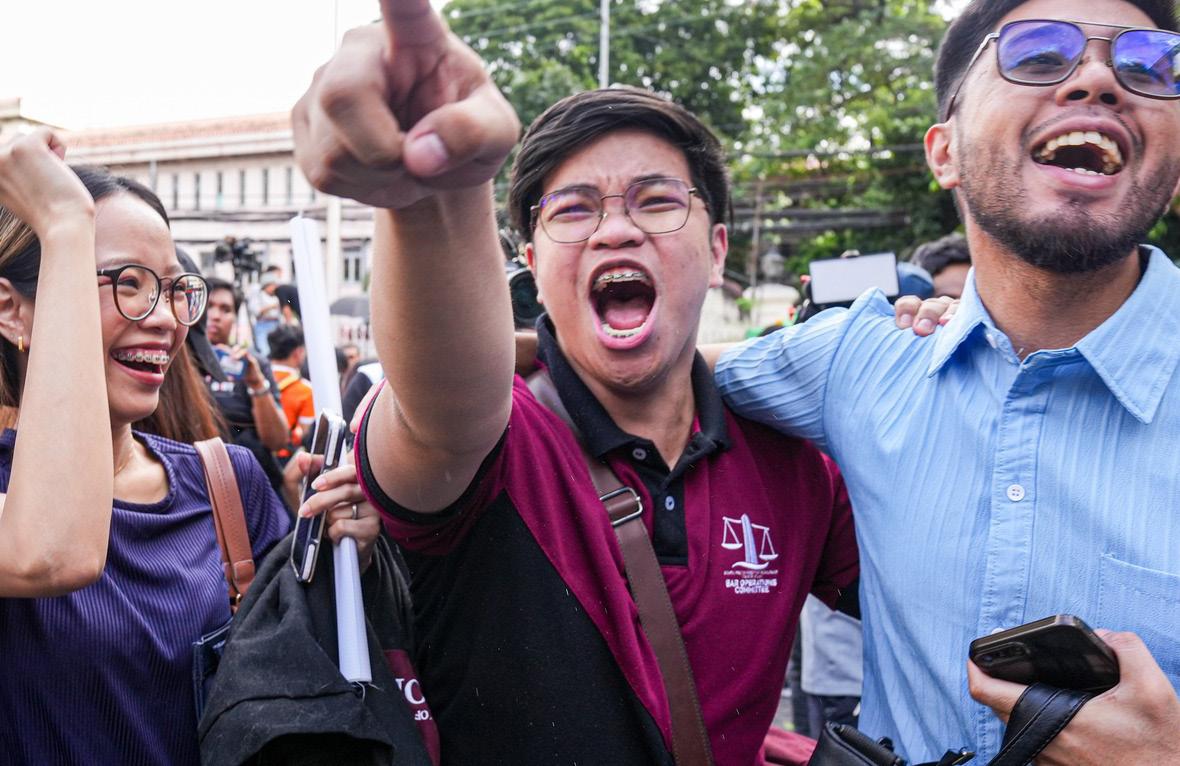
Civil Law Dean Nilo Divina congratulated the fresh batch of Thomasian lawyers and topnotchers on Facebook.
“In the 2025 Bar Examinations, UST once again affirmed its tradition of ex-
cellence, producing four Bar topnotchers and posting an outstanding 96.3% passing rate,” his post read.
“To the families, mentors, students, office staff, and friends


By Reya Vincent P. Misa
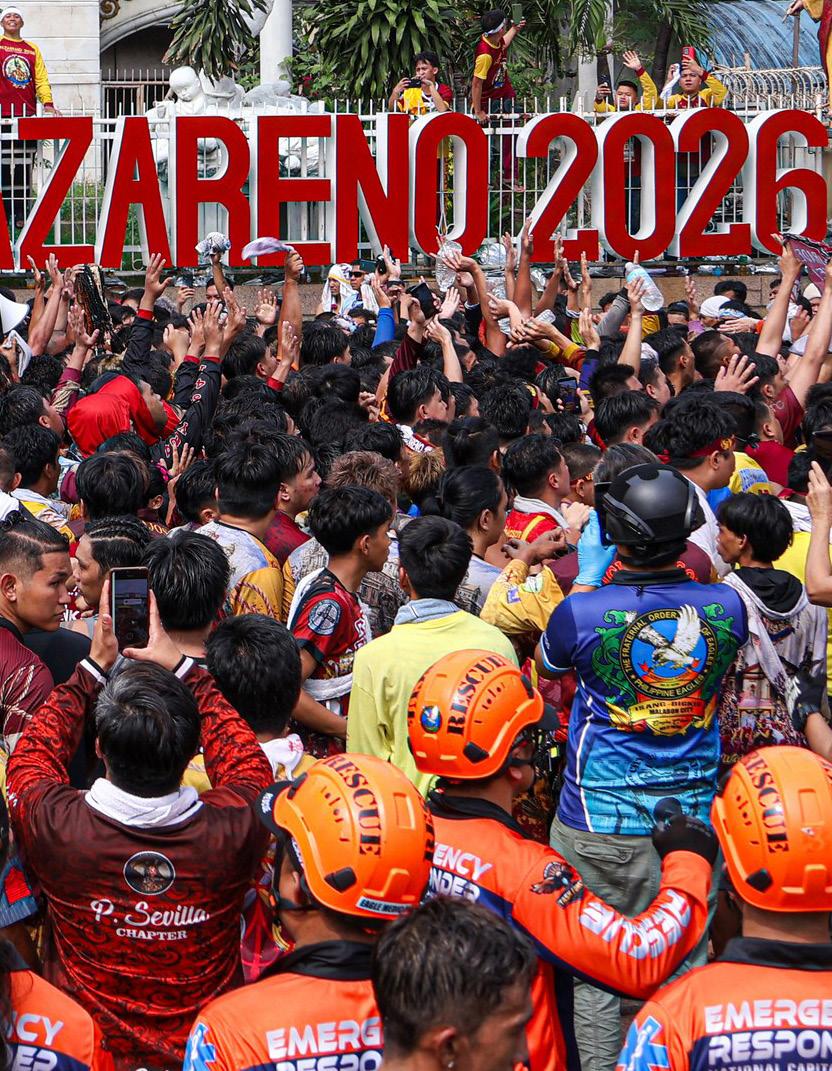
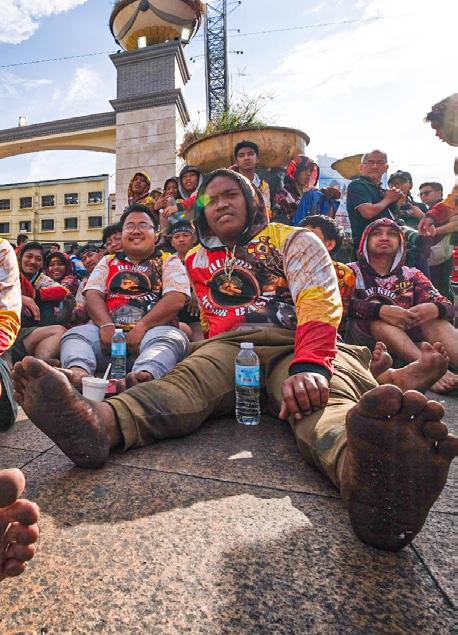
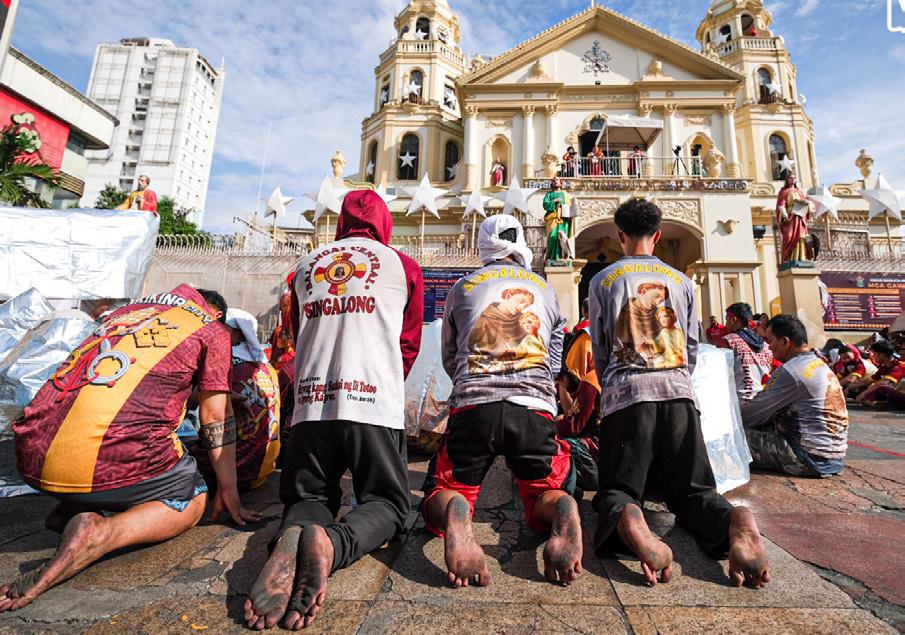
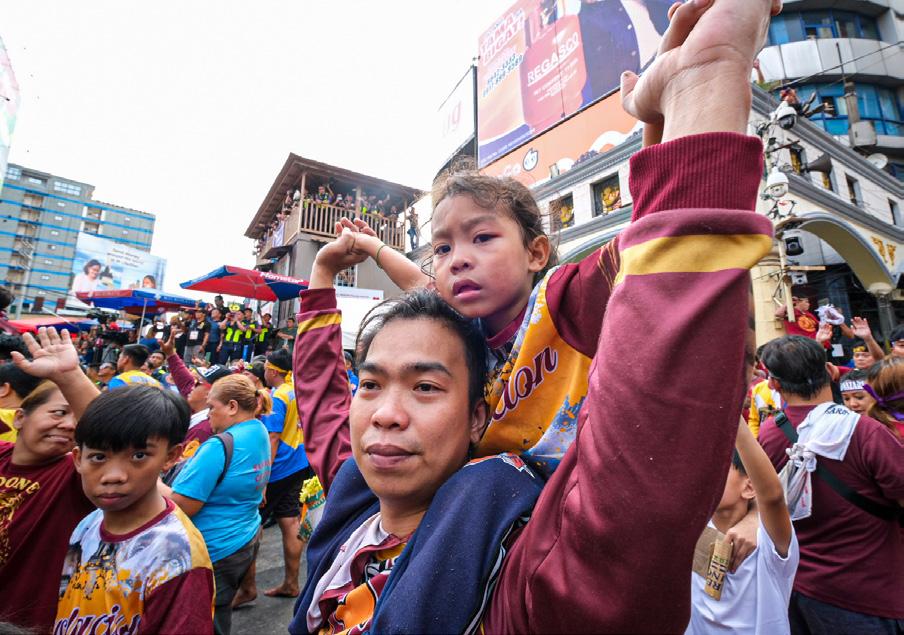
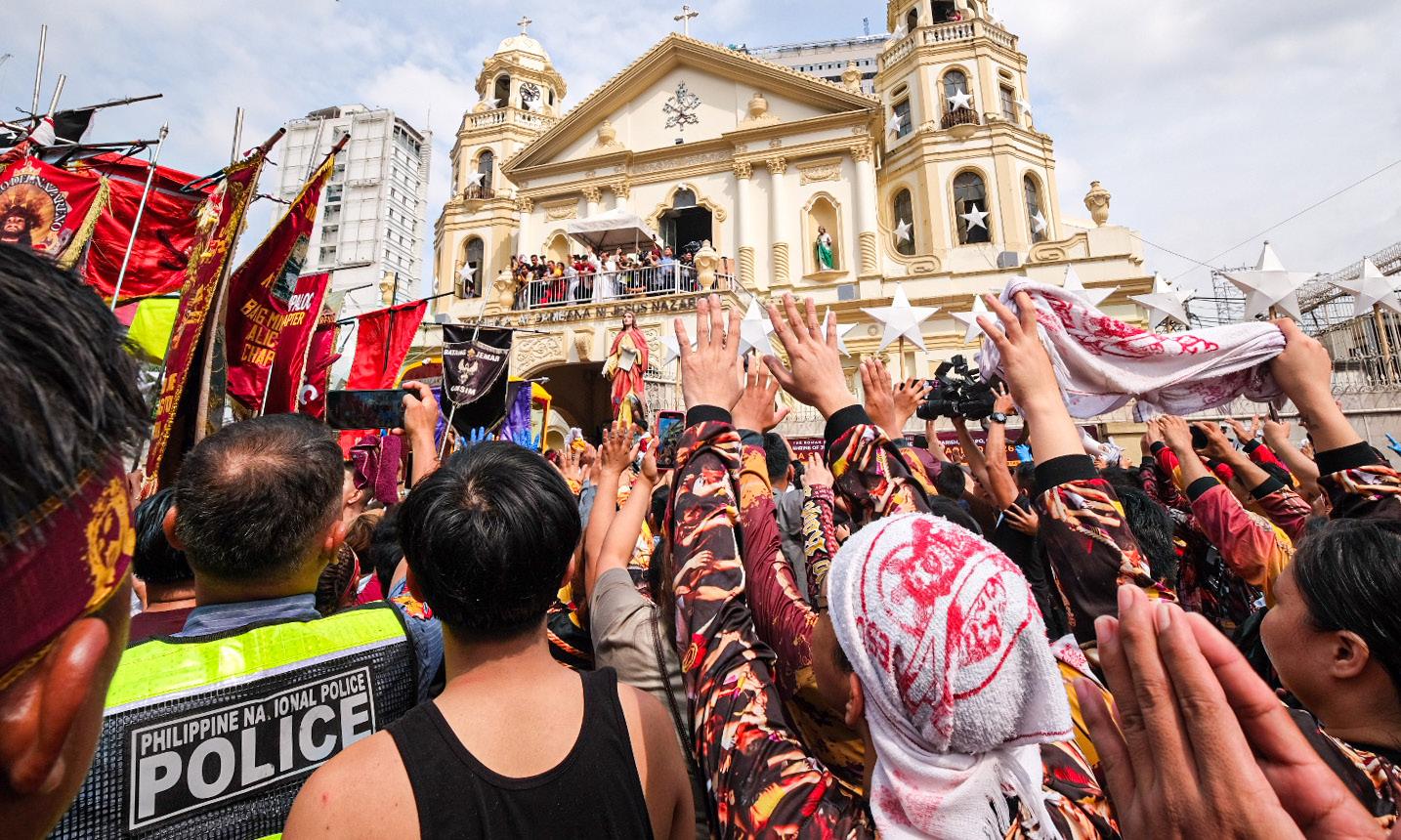
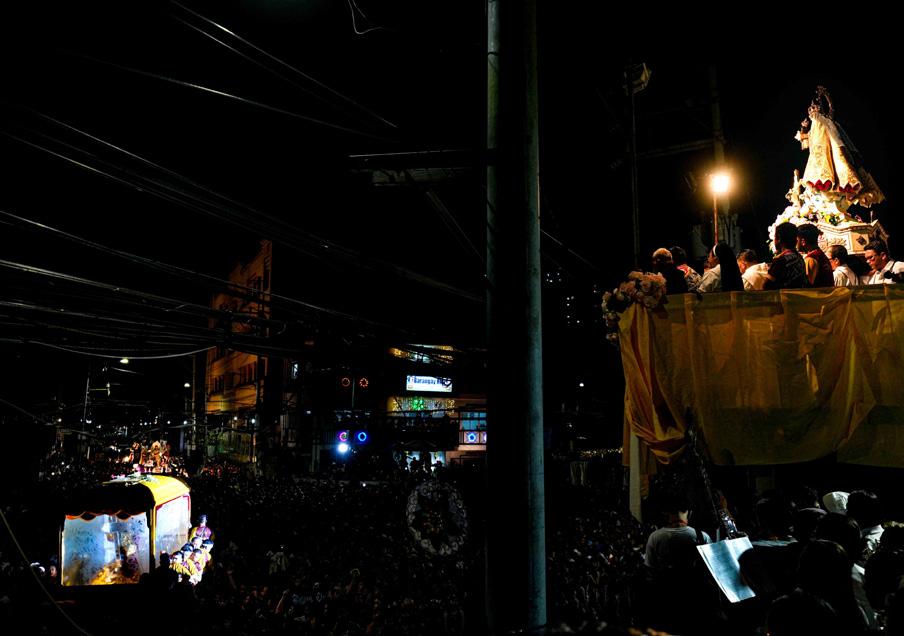
THE CENTURIES-OLD image of Jesus Nazareno arrived at Quiapo Church on Saturday, Jan. 10, after a procession that took 30 hours, 50 minutes, and one second, the longest ever Traslación since 2012.
The annual procession however claimed the lives of four people, the National Capital Region Police Office (NCRPO) said.
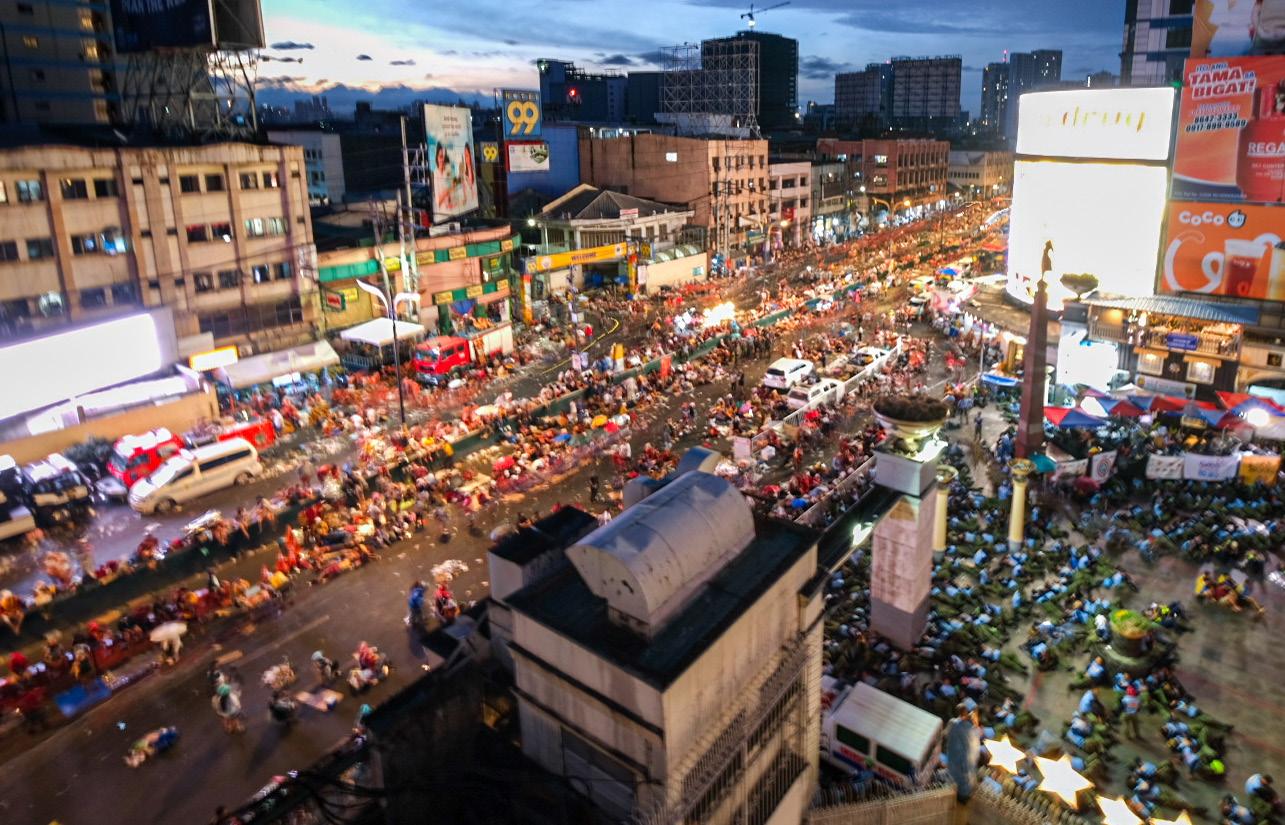
The Traslación began at 4 a.m. on Jan. 9, at Quirino Grandstand and ended at the gate of Quiapo Church at 10:50 a.m., drawing an estimated 9.6 million devotees, the Quiapo Church Command Post reported.
This year’s turnout and duration surpassed Traslación 2025, which lasted 20 hours and 45 minutes with over 8.1 million devotees, with no recorded deaths.
Deaths Among the fatalities was Itoh Son, a photojournalist from a local news outlet, who collapsed at a station near the Quirino Grandstand and died before the start of the procession.
The NCRPO also confirmed the death of one devotee who was rushed to the hospital on Friday morning after suffering from a heart attack.
Two more deaths were confirmed by the NCRPO but it did not provide details as of writing.
“We’re going to report our casu-

alties once we have all the details already. Currently, these are fresh pieces of information, but we need to really hone in on the details of these two casualties,” Nazareno 2026 spokesperson Fr. Robert Arellano said in a press conference on Saturday morning.
Delays
The procession moved slowly despite several improvements to the andas or carriage, including a four-wheel mechanism, steering system, brakes and a reinforced underchassis. Quiapo Church communication coordinator Silgen Cabrito said the delays were caused not by mechanical issues but by human factors, as large groups of devotees attempted to
mount the andas, affecting its balance.
“Sa bigat at dami ng mga sumasampa, napapayuko ang harapan ng andas,” Cabrito said.
Church marshals and officials repeatedly urged devotees to refrain from climbing the andas, but many ignored the reminders, visibly exhausting the hijos pulis or policemen-devotees assisting in the procession.
The delays worsened when the main rope pulling the carriage snapped along Quezon Boulevard between 2:50 p.m. and 3 p.m. A 30-meter backup rope was installed nearly an hour later, allowing the procession to resume.
At 7 p.m., organizers recorded more than 980,000 devotees along
the route, surpassing last year’s turnout of 387,010 devotees.
After passing through Arlegui Street, the andas entered Fraternal Street at about 8:15 p.m. and reached Vergara Street at 8:56 p.m., drawing massive crowds.
Devotees continued to gather along Hidalgo Street, particularly near the Sisters of the Holy Face of Jesus convent, despite the slow pace of the procession.
“Siyempre tatapusin natin ‘yung panata,” said Eric Mallari, who had been waiting since Jan. 7. “Hindi natin mafe-feel kung hindi natin natapos ang pagpasok ng Señor,” he said.
At 4:21 a.m., the andas arrived at Plaza del Carmen in front of San Sebastian Basilica for the traditional Dungaw or encounter between the Nazareno and the image of Our Lady of Mt. Carmel.
Although Quiapo Church Rector and Parish Priest Fr. Ramon Jade Licuanan initially announced that the image would remain at San Sebastian Basilica indefinitely, devotees later pulled the andas back to its original route.
According to Cabrito, the image passed through Villalobos Street at 9:58 a.m. before finally returning to Quiapo Church at 10:50 a.m. to conclude the Traslación. WITH REPORTS FROM DJENHARD YRENEO RAPHAEL Y.
AND


Student writers from UP, PUP win in UST campus press awards
By Luis Angelo N. Palma
Named
was “She Was Only 16. But She Was Able to Vote,” by Eunicito Barreno of the Philippine Collegian, the official student publication of the University of the Philippines (UP) Diliman. The winning story tackled the erosion of democratic safeguards in Lanao del Sur, revealing how minors were illegally registered to vote and drawn into electoral fraud through family pressure, vote-buying, and institutional failures. The report showed how election laws are bent to benefit politi
By Ella Mae A. Sison and Jamiebeth P. Ortega
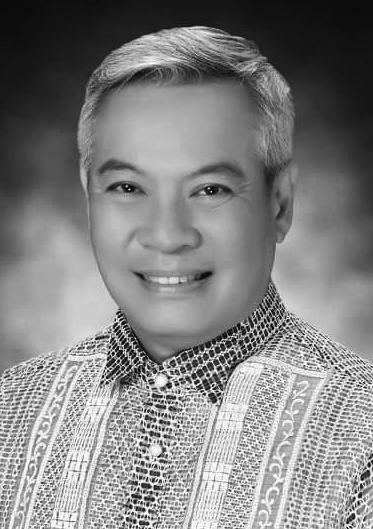
THE FORMER director of the UST Graduate School – Center for Conservation of Cultural Property and Environment in the Tropics has been elected chairman of the National Commission for Culture and the Arts (NCCA).
Prof. Eric Zerrudo, the cultural heritage program lead of the UST Graduate School, will concurrently serve as NCCA executive director until 2028.
He replaced Victorino Manalo, whose term ended on Dec. 31, 2025.
Zerrudo is deemed a pioneer of cultural heritage mapping and served as faculty member of the NCCA Philippine Cultural Education Program.
His specializations include heritage management, heritage context and issues, and heritage education and interpretation. He is accredited under the World Heritage International Council on Monuments and Sites.
Zerrudo is a former commissioner for the Philippines of the United Nations Educational, Scientific, and Cultural Organization.
The NCCA is the policymaking and grant-giving body responsible for preserving and promoting Filipino arts and culture.

By Sydney Venice V. Berba
THE UNIVERSITY has appointed 12 new officials to various administrative and academic units, the Office of the Secretary General announced in a circular on Jan. 1.
Among the new appointees is Michelle Avila, who will serve as the college secretary of the College of Commerce and Business Administra-
tion, replacing Assoc. Prof. Marie Antoinette Rosete, who was appointed assistant dean.
Asst. Prof. Francis Lawrence De Jesus, the former assistant dean, will serve as acting director of the Human Resource Department, replacing Assoc. Prof. Maureen Gelle-Jimenez, who is now the program quality management officer at the Office of Planning and Quality Management.
Prof. Donald Manlapaz will serve
as acting dean of the College of Rehabilitation Sciences, succeeding Prof. Anne Marie Aseron who had held the post since July 2017.
Assoc. Prof. Rodel Canlas is the new university-level chair of the Department of Psychology.
Fr. Quirico Pedregosa, O.P. will be the acting regent of the College of Science, replacing UST Secretary General Fr. Louie Coronel, O.P. Assoc. Prof. Angelie Bautista will
take charge as acting director of the Counselling and Career Center.
Jonah Casilla was appointed project manager of the Facilities Management Office.
Prof. Ma. Frieda Hapan has been named director of the Center for Continuing Professional Education and Development.
Edmund Tucay is the new college secretary of the College of Information and Computing Sciences.

Campus press urged to take lead in reporting graft, pressing gov’t
JOURNALISTS urged the campus press to exercise power responsibly and practice accountability within their own newsrooms, in powerhouse talks during the 27th edition of Inkblots, the UST National Campus Journalism Conference organized by the Varsitarian
other. Practice what you preach,” she said.
Manila Bulletin columnist and former UST journalism coordinator Nestor Cuartero spotlighted the challenge posed by the growing power of influencers and the risks that come with it.
you,” it added.
The Supreme Court announced the list of passers and topnotchers on Jan. 7 at its Manila headquarters.
The national passing rate rose to 48.98% (5,594 out of 11,420), higher than last year’s 37.84%.
Associate Justice Amy Lazaro-Javier, chairperson of the 2025 Bar examinations, led the announcement of the topnotchers.
“The court welcomes you into the legal profession with high hopes that you will bear the privilege of this calling with humility, the weight of its responsibility with resolve, and the trust of the public with unwavering integrity,” she said.
UST served as the national headquarters and a local testing center for the examinations.
Jhenroniel Rhey Sanchez of the University of the Philippines placed first with a score of 92.70%.
The bar examinations were administered on Sept. 7, 10 and 14 last year.
The oath-taking of the newly minted lawyers will be on Feb. 6 at the Philippine Arena.
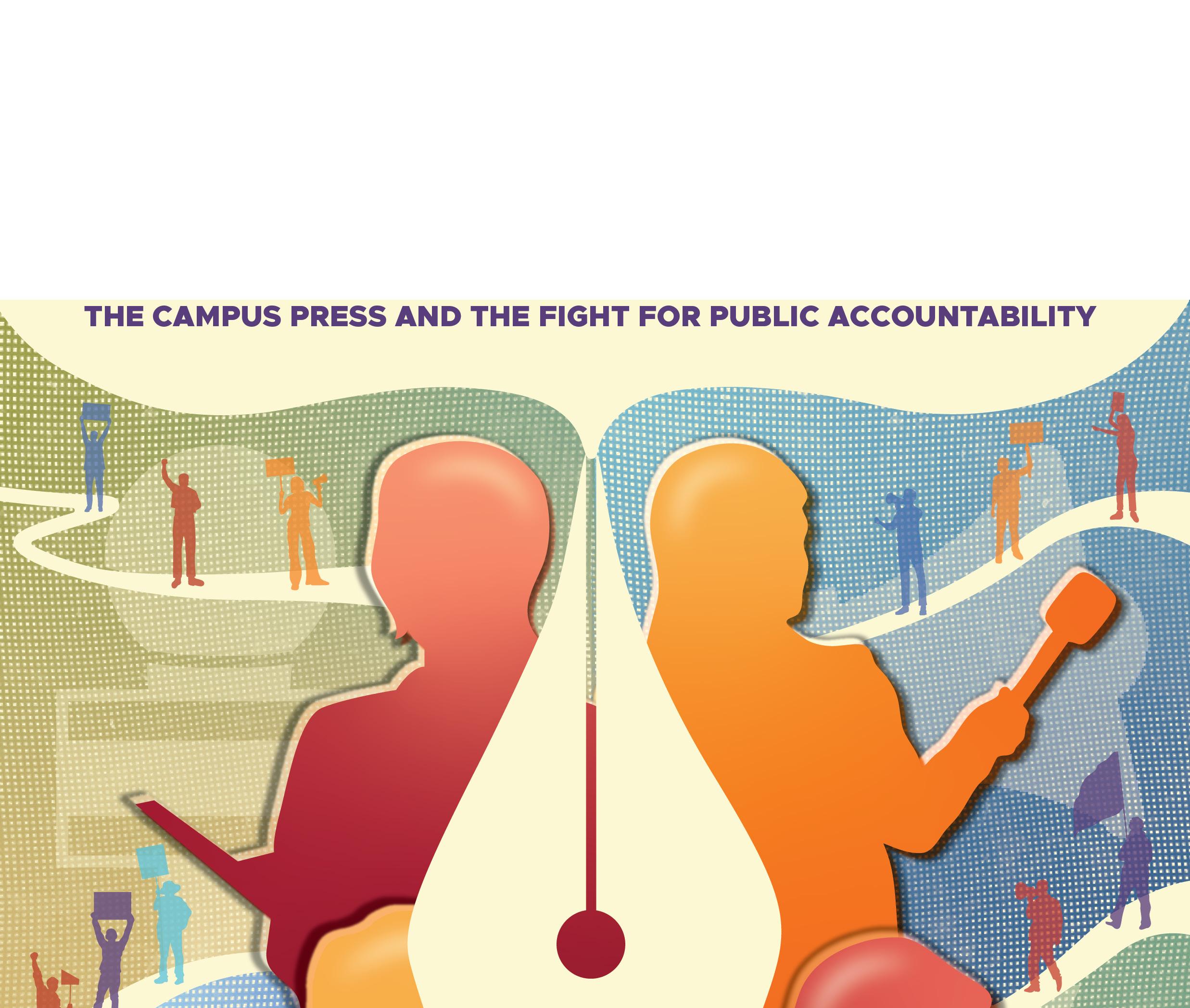
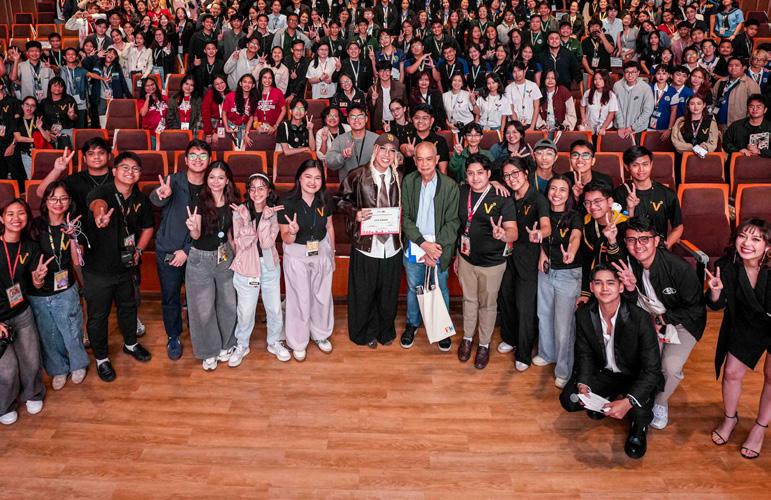
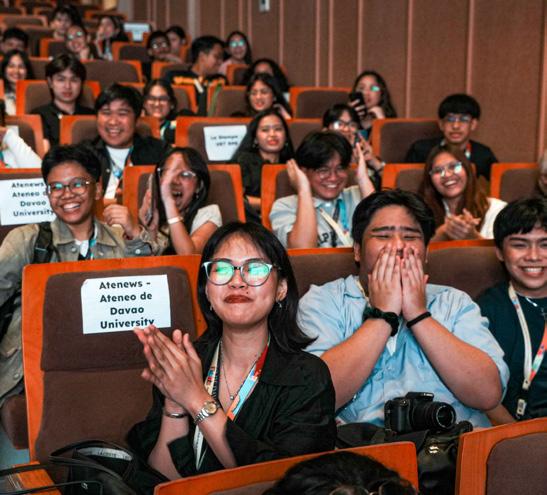
More than 200 fellows from 25 schools and student publications gathered at UST’s St. Pier Giorgio Frassati, O.P. Auditorium for the two-day fellowship, which carried the theme “Campus Press and the Fight for Public Accountability.”
“Power is exercised not only in the administration but also in your newsroom. If you want to demand it from others, you must practice it within your walls,” Arlene Burgos, chief content officer of Inquirer. net, said during her talk on campus press and public accountability on the first day of Inkblots, Jan. 13.
“You have the chance to model journalism. And your voice matters because it is heard by thousands of students and families who depend on your reporting to make sense of their own universities,” she added.
Accountability, Burgos said, should not be confused with attack or sensationalism, and should be grounded in a clear sense of public interest.
“If you want others to be accountable, you must be accountable to your audience and to each
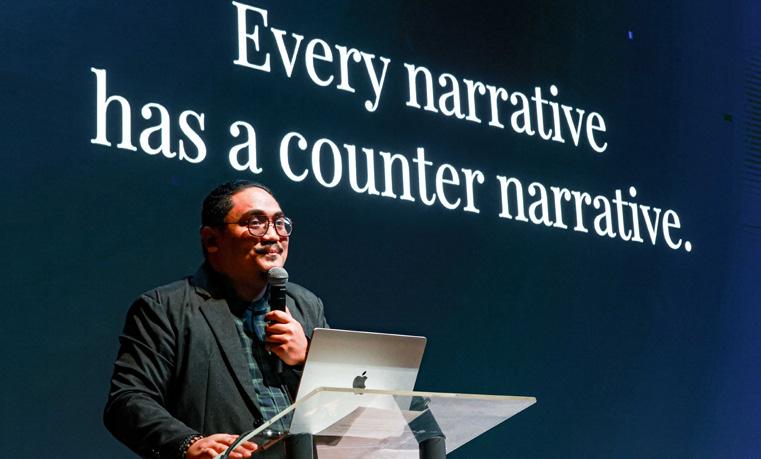
The rise of social media influencers has displaced traditional journalism as a primary source of information, shortening attention spans and enabling the spread of misleading content, said Cuartero, who is also a member of the Movie and Television Review and Classification Board.
“Widespread disinformation— we can’t control it anymore. So our call is for you, as responsible student journalists, to be more conscientious about what you do,” Cuartero said during his feature writing talk. “Mean what you write and write what you mean.”
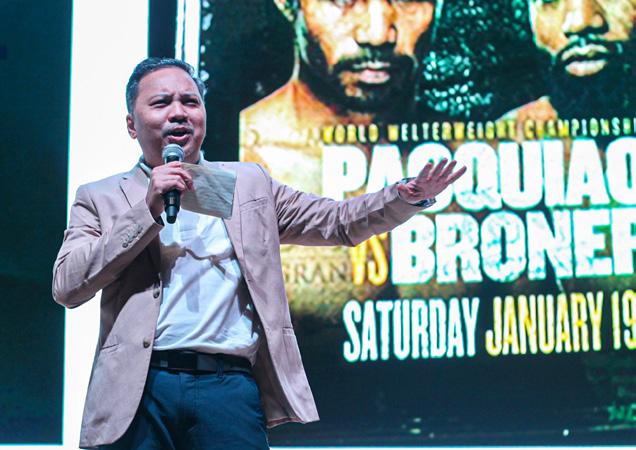
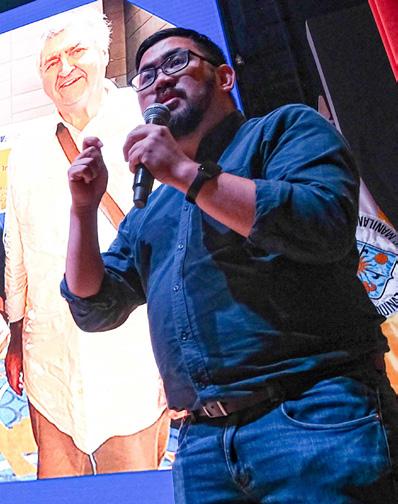
Cuartero brought popular TV host Vice Ganda for his yearly mock press conference.
Religion reporter and UST journalism faculty member Paterno Esmaquel II echoed the call for depth, saying good journalism depends not only on facts but also on the lenses reporters use to view the world.
“It is just one other form of journalism that will teach us a thing or two about being sensitive, compas-
If you want others to be accountable, you must be accountable to your audience and to each other.
Practice what you preach.
Arlene Burgos KEYNOTE SPEAKER
sionate, and diligent. It also provides us with fresh lenses through which we can view the world,” Esmaquel said during his talk on religion reporting.
He stressed that journalism’s task is not preaching but understanding—helping audiences grasp why people act the way they do, especially in moments of suffering or moral struggle.
“The prime mission of journalists is not just to chronicle events, or be a photocopy of what transpired. We have to be faithful chroniclers, but we must also help people make sense of the world,” he added.
That responsibility becomes even more urgent, Burgos said, when journalists hold power to account.
Speaking on campus press freedom, she reminded student reporters that campus journalism is “not practice journalism” but real watchdog work.
“Filipino student journalists have an extraordinary history, and campus papers became voices of resistance. Expose government corruption, and give voice to the voiceless. The campus press was not decorative—it was needed for democracy,” she said.
At a time when trust in institutions is fragile, Burgos stressed that accountability begins by asking uncomfortable questions: who decided, who benefits, and who is left out.
She warned against publishing administrative press releases verbatim, calling them “leads, not stories,” and urged student journalists to investigate systems rather than personalities.
“When you publish something powerful people dislike, they will come after you,” Burgos said. “Your best defense is ethical, transparent, and accurate reporting.” JOHN KOBE S. BALOD WITH REPORTS FROM
EDITOR: VINCE ALFRED M. PILLAGARA

► The andas of Jesus Nazareno, regarded as the “King of Quiapo,” arrives at San Sebastian church for the traditional “Dungaw” rite. — PHOTO BY DJENHARD YRENEO RAPHAEL Y. SAPANHILA
THE “DUNGAW,” the point of the annual Traslación procession where the image of Jesus Nazareno meets the image of Our Lady of Mount Carmel, is a tradition of courtesy between the “king” and “queen” of the Quiapo district.
A day before the Nazareno procession, the Marian image is brought down from above the main altar of the Minor Basilica of San Sebastian.
A short prayer is then offered before the image is brought through the nave of the church to her camarin, a room at the convent. Inside the camarin, the Blessed Virgin Mary’s image is dressed in her regalia.
On the day of the Traslación, the image emerges from the room to be processioned back inside the church to wait for the arrival of Señor Hesus Nazareno, the centu-
ries-old image of Christ carrying the cross.
Kenny Galia, the basilica’s Social Communications Ministry head, explained that as the image of Our Lady of Mount Carmel emerges from the camarin, it is carried by lay ministers and accompanied by altar servers and priests to the patio in front of the church.
The “Queen of Quiapo” then “nods” three times to acknowledge the presence of Jesus Nazareno, the “King of Quiapo.”
‘Antiques of Quiapo’ Galia said these images are the genuine “antiques of Quiapo,” as their origins could be traced back to the same place — Mexico — and had been in each other’s presence since the early years of Catholicism in the Philippines.
The image of Our Lady of Mount Carmel was brought to the country by the Order of the Augus-
tinian Recollects in 1618. It was a gift from the Discalced Carmelites of Mexico.
The Recollects also brought the Nazareno image to the Philippines sometime in the middle of the 17th century.
The Marian image is revered at the all-steel Minor Basilica of San Sebastian, regarded as the first shrine dedicated to Our Lady of Mount Carmel in the country. It was given a pontifical coronation on Aug. 18, 1991.
Devotees’ testaments
A devotee of almost two decades, Arjay Garcia recalled how his father had urged him to pray to the Nazarene during trying times. Despite his hesitation, his prayers were heard, and from there, he never looked back.
Asked why witnessing the Dungaw is important, Garcia described it as a “holy” encounter.
“Diyan ni-representa ‘yung mahal na ina at ‘yung kanyang anak, bugtong na anak,” Garcia said. For Collynne Collado, 20, the Dungaw is a time of prayer and honoring maternal love.
Due to her mother’s intense devotion to the Nazarene, Collado believes her grandmother was bestowed a longer life.
Collado said this cemented her faith as she grew up and accompanied her mother to the annual Traslación.
Clearing confusion
Traslación neophytes and peers Jovelyn Pacana, Jolina Garing and Kevin Beboso said the Dungaw was the part of the procession they were most curious about.
Galia clarified that the Dungaw is not a reenactment of Jesus’ encounter with Mary on his way to
Gratitude fills devotees’ hearts at this year’s ‘pahalik’
By Reya Vincent P. MIsa and Ashley Valkyrie E. Bueno
THOUSANDS OF Nazareno devotees flocked to the Quirino Grandstand for this year’s “Pahalik,” with the faithful seeking blessings and expressing gratitude to the Jesus Nazareno.
The pahalik provides an opportunity for devotees to touch, kiss, or wipe their handkerchiefs on the centuries-old image of the suffering Christ during its annual festival that reenacts its transfer (traslacion) from Intramuros to Quiapo church, now the Minor Basilica of Jesus Nazareno.
Long-time devotee
Among those who waited patiently in line was Agani Bisnu, 47, a devotee from Quezon City. Since 2014, he has attended the Nazareno festivities with his wife and daughter. His devotion, Bisnu said, grew stronger after prayers for his family were answered by Señor—most notably his 98-yearold mother’s recovery from a recent
Isapuso.
Hindi naman sa nilalahat, pero karamihan ng kabataan, parang nagkayayaan lang. Sana magkaroon ng kahulugan ‘yung pagpunta nila rito.
Maribel Vargas DEVOTEE
hospital confinement.
“Malaking bagay talaga na nandiyan si Nazareno na hindi kami pinababayaan,” Bisnu said, urging the youth to experience the devotion firsthand. For him, the pahalik is a sacrifice rooted in faith and hope.
New Pahalik devotee from the province
Similarly, Allan Santos, 58, of Dolores, Quezon, is a devotee of 12 years and is participating in the pahalik for the second time.
Santos described lining up for the pahalik as both physically demanding and spiritually rewarding.
“Itong pagpila mo at paglakad, talagang mahirap, pero pagdating at nakahipo ka, wala na ‘yung pagod at hirap,” he said, explaining how the experience tests the body but fulfills the spirit.
Second life
Maribel Vargas, 50, of Pateros, attended the pahalik to commemo-
rate what she called a second chance at life. A devotee of seven years with her husband, Vargas said her faith strengthened after recovering from an ICU confinement last October.
“Isa puso. Hindi naman sa nilalahat, pero karamihan ng kabataan, parang nagkayayaan lang. Sana magkaroon ng kahulugan ‘yung pagpunta nila rito,” she said, encouraging young devotees to approach the ritual with sincerity and purpose rather than mere curiosity.
A family tradition
Among the crowd are those whose families have been devotees for generations, like Peter Añonuevo Jr. and Bong Garcia. Garcia, a 44-year-old jeepney driver, became a devotee in his childhood years, following the footsteps of his father and uncle, who took him to the annual feast.
He first joined the mammoth pro-
‘Expose the corrupt’: Ex-vice rector challenges ‘V’ to stand for truth amid gov’t deceit
JOURNALISTS ARE vital to exposing government corruption and realigning the public’s moral compass, a former UST vice rector said during the thanksgiving Mass marking the Varsitarian’s 98th founding anniversary at the St. Dominic Chapel on Friday, Jan. 16. Fr. Virgilio Ojoy, O.P., a former Varsitarian associate editor, urged the ‘V’ staff to bring corruption issues to light to increase the public’s awareness of wrongdoings in the government.
“Many Filipinos cannot move up the ladder of social mobility because they are robbed of opportunities. They cannot chase their dreams because the means are stolen from them,” Ojoy said in his homily.
He challenged the publication staff to call for better leadership by pushing government officials to be accountable.
“Expose the corrupt, shame them, tell them that the Gucci and the Rolex they are dangling are stolen from us. Tell them that it (corruption) is not according to the will of God, who desires all the goods of the earth to be shared by all,” Ojoy said, referring to the politicians’ shameless flaunting of their luxurious lifestyles on social media.
Ojoy said journalists should also help the vulnerable by informing them about the truth.
Let us raise their consciousness and moral compass by making them see the concrete effects of their corruption on people who lost their homes or their property and were killed as the floodwaters mercilessly engulfed them.
“Let us raise their consciousness and moral compass by making them see the concrete effects of their corruption on people who lost their homes or their property and were killed as the floodwaters mercilessly engulfed them,” Ojoy said. The Varsitarian, the Philippines’ oldest Catholic newspaper and one of the oldest student publications, was founded on Jan. 16, 1928, by a group of students led by Jose Villa Panganiban, the lexicographer and future director of the National Language Institute. Throughout the years, the Varsitarian has produced journalistic and literary titans such as Arsenio Lacson, Felix Bautista, Jose Burgos, Jullie Yap-Daza, Neal Cruz, Jake Macasaet, Francisco Tatad, Antonio Lopez, Alice Colet-Villadolid, Ophelia Alcantara-Dimalanta, Cristina Pantoja-Hidalgo, Norma Miraflor, Eric Gamalinda, Vim Nadera, and Eugenia Duran-Apostol.
It has produced four National Artists: Cirilo Bautista, Bienvenido Lumbera, J. Elizalde Navarro and F. Sionil José. YUVSHENKA ANDREA R. OSEA

DESPITE THE Department of Education annually having the highest budget, functional literacy in the Philippines has continued to decline to precipitous levels.
The 2024 Functional Literacy, Education and Mass Media Survey (FLEMMS) of the Philippine Statistics Authority reported that only 70.8% of Filipinos aged 10–64 are functionally literate — able to read, write, compute, and comprehend.
That figure is not an abstract percentage. It means nearly one in three in that age group lacks at least one basic skill that modern life normally demands, from following written instructions to making sense of information that shapes decisions and livelihoods.
The 22.3-point gap between basic literacy and functional literacy reveals a troubling reality behind seemingly strong literacy figures and points to a hidden learning crisis. This problem extends beyond individual effort. It raises questions about the effectiveness of the Philippine education system itself.
Functional literacy is not just an academic benchmark; it is the foundation of learning, work, and citizenship. When students can recognize written words but don’t understand what they mean, then they will be lost when
reading science explanations, history, and math word problems.
The problem follows them into adulthood, when misinformation, scams, and unfair contracts take advantage of people left guessing rather than comprehending.
Global data reinforces what local numbers
costly to address over time.
This underscores why the budget debate is important. DepEd’s 2026 approved budget of P1.015 trillion has been presented as evidence of the top priority given to education.
While increased funding should yield positive results, the most fundamental outcome —
Functional literacy is not just an academic benchmark; it is the foundation of learning, work, and citizenship. When students can recognize written words but don’t understand what they mean, then they will be lost when reading science explanations, history, and math word problems.
already suggest. The World Bank’s learning poverty indicator shows that before the pandemic, 91% of Filipino children at late primary age were not proficient in reading, including out-ofschool children. This crisis starts early, worsens rapidly, and becomes increasingly difficult and
functional literacy — remains severely lacking. A bigger budget without improvements in literacy necessitates a critical examination of current practices to determine which are effective, which are wasteful, and which consistently fail our students.

DepEd’s learning recovery efforts deserve the same hard scrutiny. The ARAL Program is being scaled with P 8.93 billion, targeting around 6.7 million learners and over 440,000 tutors for the academic year 2026 to 2027, covering reading and math (Grades 1–10) and science (Grades 3–10).
But ARAL cannot be measured in tutor headcounts and hours rendered. It must live or die on a single metric: measurable comprehension gains. Without full transparency, ARAL may become a record of tutoring hours rather than a true measure of learning recovery.
Even the best tutoring programs will fall short if learning loss is viewed only as a teaching issue. Many students fall behind due to poverty, hunger, distance, family responsibilities, and daily costs.
When the state increases funding without addressing systemic issues, it may reinforce compliance and reporting instead of improving literacy.
Which raises an unavoidable policy question: if public schools absorb most funds yet to produce strong functional literacy outcomes, why is the government not expanding every channel that can deliver measurable reading gains now — especially where capacity already
From
the Pew VINCE ALFRED M. PILLAGARA

POPE LEO XIV officially capped off the Jubilee 2025 celebrations last Jan. 6, with the closing of the Holy Door of St. Peter’s Basilica. The year-long Jubilee of Hope, inaugurated by the late Pope Francis in December 2025, has come to a close.
Looking back, I was able to visit Rome last July and was blessed to pass through the Holy Doors of the papal basilicas. As I entered through and touched the big, metallic doors in prayer, I would always utter, “Lord, make me hopeful.” It was a prayer of submission to God, because that was the promise of the jubilee year: hope, pilgrimage, and renewal.
Yet, amid the realities we have been facing as a nation, such as massive corruption scandals, environmental disasters, and public fatigue over politics, I cannot help but ask: Did the Jubilee Year truly make us hopeful, or did it merely remind us that we should be?
Perhaps for some, the concept of “hope” or pagasa was viewed only on a surface level. The Jubilee felt distant and abstract. To truly enliven its spirit, we must move beyond branding, slogans, pilgrimages, and events. While these are concrete acts that can bring us hope, Catholics must heed the call to conversion, answer uncomfortable moral demands, and unite with the victims of injustice.
Pope Francis, in his papal bull, Spes non confundit (Hope does not disappoint), proclaimed the theme of the Jubilee as “Pilgrim of Hope,” obviously referring to the Church as God’s people making their pilgrimage in this world with hope in their
really made us hopeful?
hearts. The theme obviously focused on spiritual renewal, global solidarity in a world riddled by conflict, climate crisis, and social challenges—realities that the country was also experiencing.
The Philippine Catholic Church has remained steadfast in guiding her flock and in providing moral compass. Caloocan Bishop Pablo Virgilio Cardinal David has ardently condemned government corruption and encouraged Catholics to join the
True pilgrims still walk even when the road is unclear. Faithful pilgrims do not wait for ideal conditions, even when it is uncomfortable. They choose the road despite uncertainty.
call for transparency and accountability.
The former president of the Catholic Bishops’ Conference of the Philippines also joined major political marches, such as the Trillion Peso March in EDSA, with clear and unrelenting calls for public accountability. Likewise, Manila Archbishop Cardinal Jose Advincula released several pastoral letters and circulars guiding the Manila laity to pray collectively against corruption, while Alaminos Bish-
op Napoleon Sipalay, Jr., O.P., urged a fervent battle against corruption and a search for truth during a University event advocating good governance.
They, along with other Church leaders, are guiding us clearly: Filipino Catholics must resist corruption and take a moral stand, all within the context of hope. Advincula, in his homily during the closing Mass of Manila’s Jubilee, asked: Is there still hope for our country? Is there still hope for Filipinos? He made it clear: yes, there is still hope through the Lord, who will not let His children stray.
True hope is active trust in God’s faithfulness despite visible signs of suffering and social challenges. Romans 5:3–5 reminds us to endure suffering because it produces endurance, which builds character and ultimately leads to a “hope that does not disappoint.” This is also a call from Francis’s papal bull to create a “culture of hope” that addresses systemic issues such as poverty and injustice.
Life as a pilgrim is never promised to be easy. It is a journey toward God, and social challenges are trials on the road. The past year was intended to be an opportunity for pilgrims to rediscover their faith and continue moving forward. It required concrete actions, reevaluation of conscience, and discomfort amid national issues.
True pilgrims still walk even when the road is unclear. Faithful pilgrims do not wait for ideal conditions, even when it is uncomfortable. They choose the road despite uncertainty. The Jubilee’s challenge was not how many Jubilee churches we visited nor how many holy doors we passed through: it was moral, spiritual, and, most importantly, social.
As we move forward to the next extraordinary Jubilee Year of Redemption in 2033, we bring the lessons of this jubilee: that we are pilgrims of hope, ready to walk and take on the challenge of following the Church to Christ.
In the Round KARIS M. TSANG

FOR MANY Filipinos, the Metro Manila Film Festival (MMFF) has long been a way of enjoying the holidays. Families often go to the movies together to make their Christmas celebrations more festive and joyful. Yet, ticket prices to these films follow market value, ranging from P380 to P500, becoming inaccessible to the ordinary Filipino.
It is a shame that despite the festival’s commendable shift toward a more diverse lineup—featuring stories that represent different communities and address real social issues, moving beyond the usual fantasy-comedy clichés viewership continued to decline.
How can these stories of joy and representation reach those whom they intend to impact when the people can’t even go through the cinema doors because of prohibitive ticket prices?
With the rising prices, low-income, and other socio-economic issues, families do not see filmviewing as among their priorities.
Jun Robles Lana, director of MMFF 2025 3rd Best Picture “Call Me Mother,” expressed on social media the level of luxury Philippine cinema has become.
”By pricing the ordinary Filipino out of the theater, the industry hasn’t lost customers, it has lost its
Pahalik FROM PAGE 3 ►
cession in the early 1990s and then decided to attend it yearly starting in 2013.
“(Ang Nazareno para sa akin ay) siguro doon sa araw-araw na blessing na binibigay niya… ‘Yung hindi ka lang ma-aksidente, malaking bagay ‘yun,” Garcia said.
“Doon sa kahit na wala kang kitain, makauwi ka (lang) ng ligtas, para sa akin, ayos na ‘yun,” he added.
Unexpected blessing Like Garcia, Añonuevo took after
Press awards FROM PAGE 1 ►
out” by Paul Bryan Bio and John David Parol of PUP Campus Journalists, an autonomous student publication at the Polytechnic University of the Philippines Manila, won Best Feature.
The winning story examined the hidden costs of online gambling through the experience of a young student whose pursuit of independence descends into loss and secrecy.
It showed how easy access, aggressive promotion, and weak safeguards draw young Filipinos into addiction, shifting the burden to families and communities while the state profits from gambling revenues.
The feature story “Someone’s son, Someone’s brother: Left-behind families of EJK victims,” by Ariana Enriquez and Alyanna Fabella of The Guidon, the official student publication of Ateneo de Manila University, received a Special Jury Citation.
The entry centered on families left behind by extrajudicial killings, documenting how grief, trauma, and the search for justice persist long after the violence. The story showed how loved ones confronted stigma and institutional failure while drawing strength from community support and collective remembrance.
The Editorial category was dominated by The Communicator, the official student publication of the Polytechnic University of the Philippines Manila College of Communication.
soul,” Lana said in a post.
On top of that, streaming services offer audiences access to hundreds of films on-demand for a relatively low monthly fee, which provides greater value and diminishes the allure of the traditional cinema experience.
Yet, Filipinos still long for the feel of watching stories that matter on the big screen. They want to support the diversity and creativity behind the Philippine film industry, but they simply do not have the capacity to do so.
The Metropolitan Manila Development Authority (MMDA), organizers behind MMFF, should be reminded of the festival’s evolved identity, a season that brings entertainment and joy to families across the nation, keeping the presence and importance of film during the holidays.
Right now, there are no discounts for students, senior citizens, or persons with disabilities (PWD). Instead, ticket prices follow the regular rates set by theaters. To make these films more affordable for Filipinos, MMFF should work with local government units and movie theaters to offer
his devoted father and became one himself at an early age.
He recalled a moment when he attended Mass in Quiapo Church during a time of hardship, praying to the Nazarene for help.
“Bago pa lang ako nagbabarko noon, [tapos] meron akong training certificate na kukunin, walang-wala ako no’n. Sabi ko, subukan ko nga lumapit sa Nazareno… paglabas [na paglabas] ko, nakapulot ako ng isang libo. Sobra pa ‘doon sa kailangan na kailangan ko,” Añonuevo said. “Nagkataon lang naman siguro pero parang tinupad [ng Nazareno
yung dasal ko],” he added.
Garcia also once prayed to the Nazarene to bless his family with a second child, who was later on born in 2007.
The people’s devotion to the Black Nazarene holds importance for the Filipino people in their own ways. For Garcia, it’s to ask for forgiveness.
“[Importante ang debosyon] para mabawasan ‘yung mga kasalanan natin, lalong-lalo na ‘yung mga corrupt. Tayong mga simpleng Pilipino ang nagsu-suffer… ‘yung kahirapan, lalong lumalala. Maraming Pinoy na nakakalimutan na ‘yung (pananalig)
discounted tickets through subsidized prices. MMDA has the capacity to enhance the accessibility of the MMFF by pivoting from a profit-driven approach to a more supportive mission, which would ultimately nurture and strengthen Philippine cinema. The festival deserves public support. Continued production of quality movies won’t happen without people actively watching and supporting them. As MMFF works to balance diversity in its films, it’s also up to us as viewers to help keep these stories alive.

sa Panginoon,” Garcia said. Añonuevo emphasized that joining in the feast is an opportunity to profess one’s faith.
“Ang debosyon ng Nazareno, hindi lang naman ito parang katuwaan, enjoyment, nandito kayo. Manalig kayo, magkaroon ng sariling faith na ang Diyos, nandiyan lang,” he said.
The Pahalik began on Jan. 7 at the Quirino Grandstand, following the Mass for volunteers, and will continue until Saturday, Jan. 10. WITH REPORTS
FROM REV E. DELA CRUZ AND ALEXANDRA GABRIELLE C. MANSINEROS
Arian Claire Galpao won Best Editorial for “Ballots, Handcuffs, and Nation’s Youngest Convicts,” which examines the policy debate on lowering the age of criminal responsibility. The editorial challenged punitive narratives and situated the issue within electoral accountability, highlighting how systemic failures placed the most vulnerable at risk.
Earies John Porcioncula received a Special Jury Citation for “Tanggalin and Pasanin o ang Kamalayan?” which critiqued proposals to remove key general education courses.
The winners were selected from nearly 200 entries submitted by 46 student publications nationwide and screened by the Varsitarian and the Journalism Studies Association of the Philippines.
Winning entries received a cash prize of P15,000, a plaque and a certificate, while publications that earned a Special Jury Citation were given P5,000 each and a certificate.
The panel of judges was composed of Philstar.com chief editor Camille Diola; OneNews.PH assistant editor and UP journalism faculty member Janvic Mateo; veteran political journalist and host of “Facts First” Christian Esguerra; religion reporter and UST journalism faculty member Paterno Esmaquel II; and Varsitarian assistant publications adviser and PressOne.PH fact-check lead Felipe Salvosa II.
“What stood out across the winning entries was a disciplined, deeply humane sense of social justice—one based on lived experience, held systems accountable, and showed how policy failures most sharply affected the youth and the vulnerable,” said Salvosa, former chair of the UST Department of Journalism.
The 11th UNCJA winners were announced during the fellowship night of the 27th Inkblots, the annual campus journalism fellowship organized by the Varsitarian, held on Jan. 14, 2026 at the Saint Pier Giorgio Frassati Auditorium.
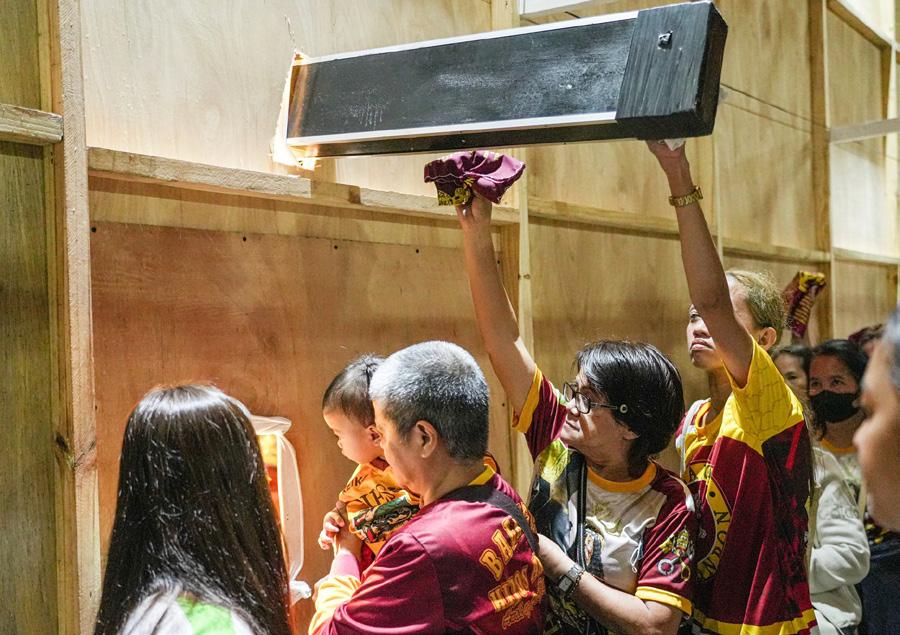
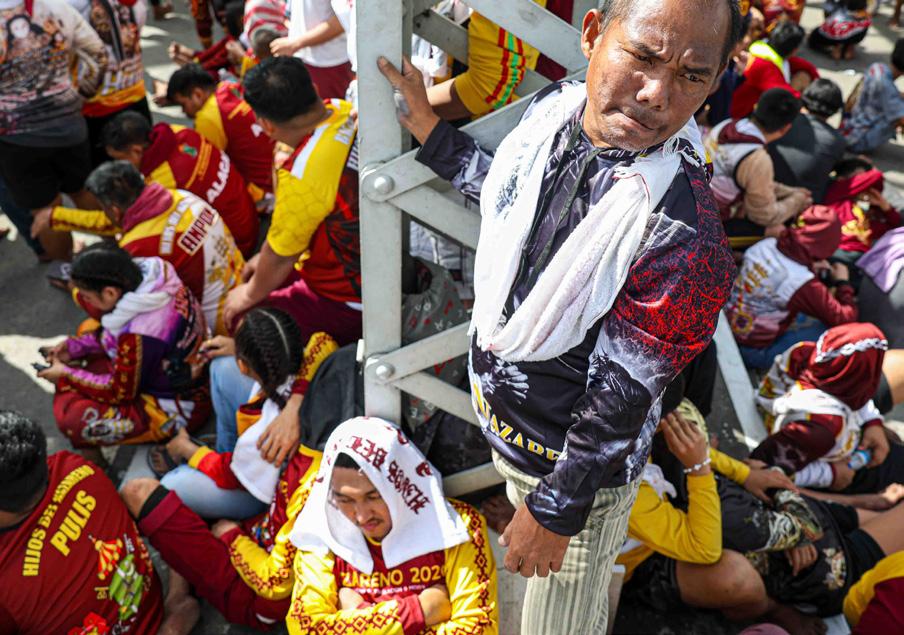



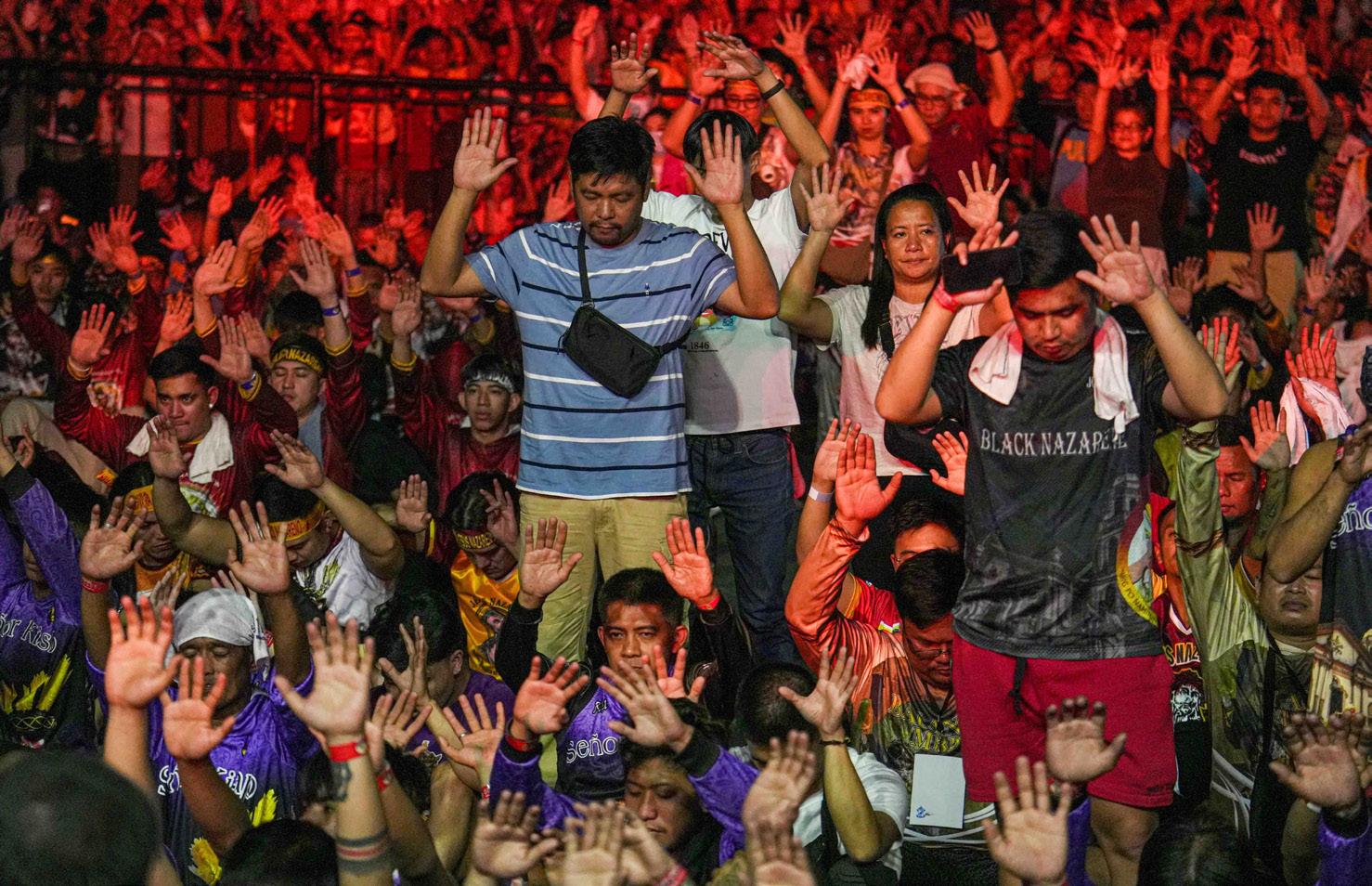
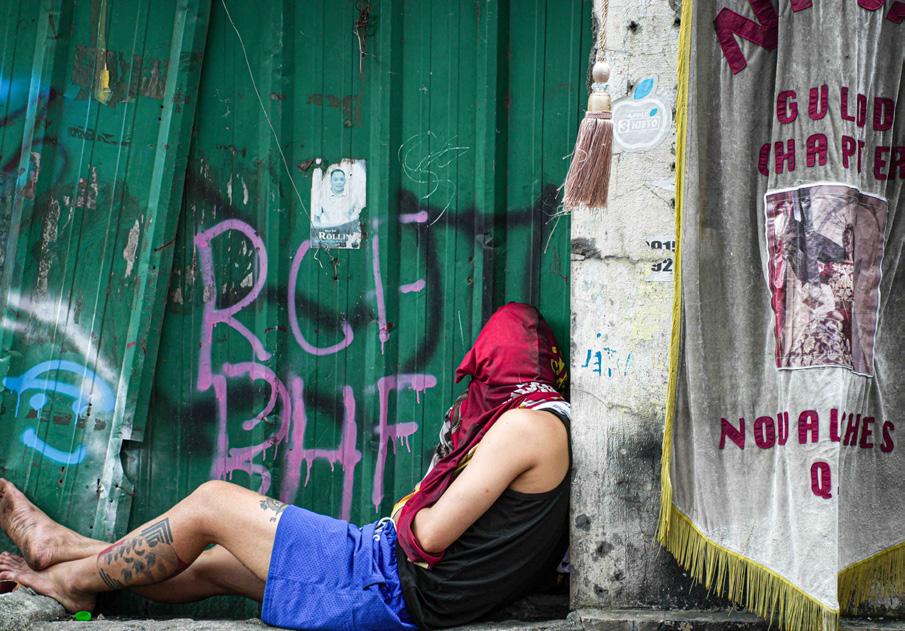
Catholics filled the streets of Manila on the mammoth procession held in devotion to This year’s Traslación marked




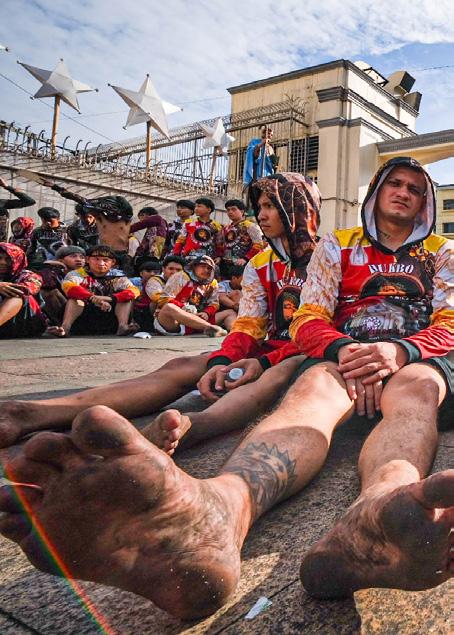

on Jan. 9 to 10 for the annual Traslación, to the centuries-old image of Jesus Nazareno. marked the longest ever since 2012.

FELISMINO, ETHAN JOSHUA NIKHOLAI F. GUISAMA, CHLOE ELYSSE B. IBAÑEZ, NIGEL Z. TANGLAO, JUSTIN JACOB S. URAG AND VIO NEIRO M. VILLAESCUSA




By Elihoenai Hazael B. Cortez
BEFORE HE became one of the most recognizable and decorated figures in Philippine comedy and film, Jose Marie Viceral experienced a devastating loss when his father, Reynaldo, a barangay captain in Tondo, Manila, was shot and killed in front of him and his family in 1991.
The tragedy became a defining moment in his life, forcing his mother to work overseas as a caregiver and inspiring him to vow never to stay silent in the face of injustice, a promise he continues to uphold today as Vice Ganda, a multi-awarded artist with two Asian Academy Creative Awards, a FAMAS Award, and even a Guinness World Record.
Vice Ganda, who added to his long list of accolades by winning Best Actor at the 2025 Metro Manila Film Festival for his performance in “Call Me Mother,” said acting should transcend






entertainment and be used to confront urgent social realities.
Speaking during a press conference with student journalists at the 27th Inkblots, the annual UST National Campus Journalism Conference organized by the Varsitarian, Vice Ganda said he intentionally takes on roles outside comedy to address national issues and forge a deeper connection with his audience, whom he calls the “madlang people.”
“You see me every day on TV, so I use that platform,” the actor-comedian said. “If ever I feel like there’s a very important issue to tackle, I do not waste the chance. And I make sure that the opportunity on the platform is not wasted. Because not everyone is given that platform and that chance to speak up.”
Although his father’s murder remains unresolved and he has said he has forgiven the perpetrator, Vice Ganda said the experience continues to drive him to speak out against injustice.
By Czeantal Naomi P. Delos Santos
DISINFORMATION continues to be rampant alongside the growing use of artificial intelligence (AI), investigative journalist Niceforo Balbedina II said at the 27th Inkblots, the Varsitarian’s annual campus journalism fellowship.
The PressOne.PH multimedia editor said thousands of AI-generated accounts were being used to spread disinformation online, affecting Philippine news and potentially influencing election turnouts.
“‘Yung ganitong mga activity online it creates a manufactured reality, nililito nito ang publiko, binubuhay sila sa isang pekeng reality,” Balbedina emphasized.
He urged campus journalists to actively engage in fact-checking, underscoring the role of the campus press in safeguarding truth and democracy.
“Kayo ang nasa forefront ng laban na ito,” Balbedina stated. “‘Yung pinro-proteksiyunan nating demokrasya, kayo ang makikinabang.”
Balbedina said journalists must go beyond debunking false claims and examine how and why disinformation persists.
“Ilang taon na nagfa-factcheck ang mga fact-checking organizations. Pero hindi nauubos ang misinformation. So I think it is about time that instead of focusing our powers on fact-checking falsehoods, we should also analyze how and why they exist,” he added.
Rappler columnist and editorial consultant John Nery, in his session on opinion writing, emphasized fact-checking as the “essence of journalism.”
Varsitarian assistant publications adviser and UST journalism faculty member Felipe Salvosa II discussed campus newsroom management.
“As campus media advisers, we are here to support student journalists, not just in reporting truthfully, thinking critically, and upholding campus press freedom, but in many responsibilities that go far beyond the editorial,” Salvosa noted.
Philippine Daily Inquirer sportswriter Marc Anthony Reyes led the sportswriting session, focusing on accuracy and context in sports reporting.

















By David Nigel C. Cortes, Djenhard Yreneo Raphael Y. Sapanhila and Kirsten Therese C. Barrameda

‘Love You So Bad’
Love and the choice between stability and adventure are at the heart of Mae Czarina Cruz-Alviar’s 2025 Metro Manila Film Festival entry, “Love You So Bad.”
The story delves into the life of Savannah Aquino (Bianca de Vera), a driven and passionate college senior often perceived as carefree and unrestrained—a character de Vera brings to life with ease.
She finds herself torn between two men: bad boy and chick magnet L.A. Dolores (Dustin Yu) and principled and ambitious Vic Alvarez (Will Ashley), all while struggling with academics and family pressures.
The film pays homage to the classic Filipino rom-com “Dahil Mahal Na Mahal Kita,” directed by Wenn Deramas. Cruz-Alviar subverts the traditional love triangle trope by exploring themes beyond romance, including gender, selflove, and the tension between freedom and societal expectations.
Part of the excitement surrounding the film comes from fans of the “DustBia” (Yu and de Vera) and “WillCa” (Ashley and

‘Call me Mother’
“Call me Mother” is a touching and hilarious, but more so emotional, film that answers the question of what it truly means to be a mother.
Labeled as a comedy, the movie is directed by Jun Lana, a Thomasian filmmaker who has won multiple awards for his film work, and stars Vice Ganda, one of the country’s most influential queer icons; Nadine Lustre, a charming, award-winning actress; and Lucas Andalio. The tension and chemistry between the two leads, as well as with Andalio, stand out throughout the film.
Vice Ganda stars as Twinkle Reyes, a former pageant coach who gains custody of a child. The child, Angelo, drives Twinkle to sacrifice everything for him—career, priceless memorabilia from past successes. Ten years later, Twinkle receives an offer to go abroad, a lifelong dream. Yet the first thing that comes to mind is Angelo.
To take Angelo overseas, Twinkle must secure an adoption signature from Mara, played by Nadine Lustre—a former

‘Rekonek’
There is a reason certain tropes are so common in holiday films. Audiences are hard-wired to find comfort in the familiar: a broken family household, a will-they-won’t-they romantic connection, and last-minute reconciliations. In “Rekonek,” director Jade Castro presents these same tropes through the contemporary lens of the digital age.
After a six-year hiatus since his previous directing effort in “LSS,” Castro expands the cast of characters he focuses on and creates an ensemble where each subplot occasionally intersects with one another.
The film starts off promising enough, with the sun sending out a solar flare that causes a global internet outage 10 days before Christmas, prompting the principal characters to confront their issues and connect on a more intimate level.
The opening narration of “Rekonek” alludes to an alien species observing the human race, likening the internet to a natural ecosystem and framing the film as a documentary that shows how hu-

‘Manila’s Finest’
Raymond Red’s first entry in the Metro Manila Film Festival is not holiday fare. “Manila’s Finest” is a period crime drama that resists spectacle, choosing instead to examine corruption as a slow, corrosive force—one that seeps quietly into institutions.
Set against the backdrop of rising social unrest in the years leading up to the declaration of Martial Law, the film situates its story in a Manila on edge. The atmosphere is tense but restrained, mirroring a society inching toward authoritarian rule as abuses of power become increasingly normalized.
At the center of the narrative is police officer Homer Magtibay, who finds himself caught between rival forces within law enforcement—his own unit, “Manila’s Finest,” and the formidable PC Metrocom—while a string of murders unfolds in the city’s slums. The struggle is less about solving crimes than about navigating shifting loyalties and moral compromise.

‘I’mPerfect’
While a significant step forward for the place of the Down syndrome community in Philippine cinema, director Sigrid Andrea Bernardo’s “I’mPerfect” often leans into moral posturing that feels more performative than sincere.
“I’mPerfect” revolves around the romantic relationship of Jiro and Jessica, who both have Down syndrome. This relationship results in anxiety among their families, who worry about the couple’s individual well-being.
The film boasts of heartfelt performances, especially from its leads Earl Amaba and Krystel Go, which ground the film in humanity and sincerity.
Yet in Bernardo’s attempt to demolish stereotypes associated with persons with Down syndrome, the screenplay’s reliance on sermons results in a film that is too heavy-handed for its own good.
At times, the film comes across as condescending rather than enlightening.
Being the first film to spotlight the Down syndrome community is a historical moment in the 51-year existence of the

‘Bar Boys’
After this year’s musical run at the Arete Theater, “Bar Boys” returns to the big screen with “Bar Boys: After School,” an official entry to the 51st Metro Manila Film Festival.
Set a decade after the events of the original film, the sequel follows Erik (Carlo Aquino), Torran (Rocco Nacino), Chris (Enzo Pineda), and Josh (Kean Cipriano) as they reunite—now professionals grappling with careers, personal loss, and the long shadows of their law school past.
New characters Arvin (Will Ashley), Trisha (Sassa Gurl), and CJ (Therese Malvar) are introduced as narrative counterpoints to the original quartet, keeping the law school franchise intact while gesturing toward a new generation shaped by similar pressures.
Odette Khan reprises her role as Justice Hernandez, transitioning from stern professor to ailing mentor. Her presence anchors the sequel, retaining the authority and warmth that made her performance one of the original film’s most memorable elements.

Jeffrey Jeturian’s drama “UnMarry” presents the realities of dissolving a marriage in a conservative society.
The film follows Celine Santos (Angelica Panganiban) and Ivan Buencamino (Zanjoe Marudo), who repeatedly cross paths in the office of lawyer Jacqueline Lombridas (Eugene Domingo).
Celine is determined to defend her rights as the rightful CEO of her bakeshop, which she co-owns with her husband, Stephen Alcaraz (Tom Rodriguez).
Ivan, meanwhile, is a painter-turned-comic book illustrator who struggles with alcoholism in an effort to keep his family together.
As they proceed with the annulment of their respective marriages, Celine and Ivan find comfort in each other’s presence, becoming each other’s stronghold amid the frustrations and anxieties of the legal process.
The film challenges the intrinsic Filipino value of family-centeredness, raising the question of whether it remains worth fighting for when the household
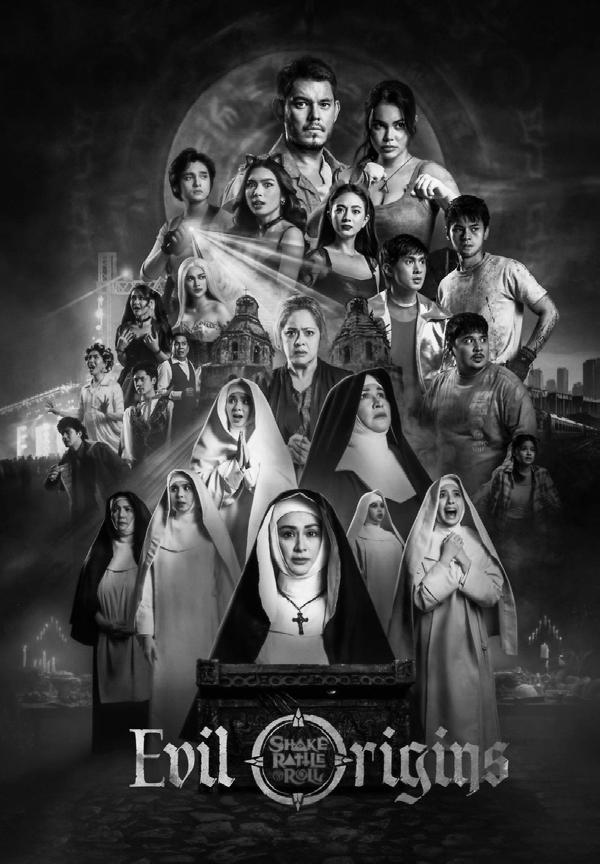
Evil Origins’
“Shake, Rattle & Roll: Evil Origins” returns to the Metro Manila Film Festival as the 17th installment in the franchise, exploring the convergence of history, the present day, and dystopian timelines within a single narrative.
The local horror scene has long been rich and well-appreciated, evolving over decades through a distinct blend of indigenous and folk influences.
Directed by Shugo Praico, Joey de Guzman, and Ian Loreños, “Evil Origins” contributes to the country’s evolving horror landscape by tackling the challenge of blending multiple horror genres.
The film’s strongest asset is its use of symbolic storytelling, which enhances thematic depth through its effective use of terror sequences. It combines shocking moments, visual effects, and underlying subtexts to lend greater significance to the plot.
However, instead of relying on a more psychological foundation for horror, the film leans heavily on jump scares and gore as shock factors, producing superfi


‘Call me Mother’ FROM PAGE 9
student of Twinkle and Angelo’s biological mother. Fearing that Angelo might choose Mara over her, Twinkle becomes overprotective, straining their relationship. Meanwhile, Mara persists in building a bond with her son, despite Twinkle’s resistance.
Moviegoers spend half of the film’s two-hour runtime laughing and the other half in tears. The comedy from Vice Ganda is expected; however, as the film progresses, Twinkle draws an emotional depth that brings viewers to tears. The theater, minutes after erupting in laughter, fills with quiet sobs.
One subplot—the challenges of having queer parents—deserves more attention than the film allows. While there are scenes showing prejudice against Twinkle, such as teasing from Angelo’s
classmates and questioning glances from other parents, these moments are not fully explored. The film acknowledges these struggles but ultimately prioritizes what it does best: its central theme of a mother’s sacrifice and love for a child.
“Call Me Mother” poses difficult questions: Is there a price to pay for becoming a mother? Must one sacrifice personal dreams for a child? Mara’s character, initially unprepared for motherhood, chooses ambition over raising Angelo—echoing the film’s recurring theme that “every crown demands a sacrifice.”
But what makes a mother is not blood, gender, or legal documents. A mother is someone who, as the film puts it, “expresses radical, selfless love enough to raise and empower another human being, ready to sacrifice a piece of yourself.” INAH DENISE A. MANANSALA
‘Bar Boys’ FROM PAGE 9 ►
The plot centers on the group’s decision to care for Hernandez as her health declines—a premise that attempts to merge professional duty with personal gratitude. Along the way, the characters are drawn into mentoring students who mirror their own struggles from a decade earlier.
With its nearly two-hour runtime, “Bar Boys: After School” falters under the weight of its ambitions, juggling too many plotlines without allowing any to fully develop.
Aquino’s Erik remains the emotional core, his arc effectively exploring grief and the sobering realities of legal practice. In contrast, Nacino’s Torran fails to assert himself as an educator, struggling to command the authority once embodied by Khan’s Justice Hernandez or to carve out a distinct presence of his own.
Pineda’s Chris feels adrift, with his separation subplot consuming significant
screen time but yielding little narrative payoff. Cipriano’s Josh, meanwhile, is sidelined despite a compelling setup as a recovering addict attempting to rebuild his life through the law.
Although each character is afforded a personal conflict, their resolutions often feel rushed and unearned. What begins as a promising slow burn gives way to frantic payoffs, particularly among supporting characters, leaving little room for emotional impact to settle.
Still, the film finds moments of clarity and inspiration—largely through Khan’s award-winning performance. The quartet’s chemistry remains its strongest asset, with banter that feels lived-in and romantic beats that land with genuine “kilig.”
Ultimately, while weighed down by a tangled narrative, “Bar Boys: After School” offers a familiar, if uneven, return to a franchise that continues to resonate through its lessons on friendship, perseverance, and the lifelong demands of the legal profession.
‘Love You So Bad’ FROM PAGE 9 ►
de Vera) tandems, with audiences eager to see the chemistry between the pairings as their characters’ stories unfold.
Despite its classic rom-com influence and familiar love triangle, the film struggles to establish a cohesive storytelling rhythm. Its back-and-forth construction—alternating between Savannah’s perspective of L.A. and Vic— can feel ambiguous. The uneven pacing
results in abrupt transitions between narratives and timelines, which may confuse viewers.
Amid the carousel of dynamics among the three leads, an underlying theme of self-love and personal discovery carries greater weight, shaping both the narrative and Savannah’s growth.
In many ways, “Love You So Bad” adopts a feminist lens, with Savannah overcoming stereotypes and labels that dictate what women should or should not be.
‘Manila’s
FROM PAGE 9 ►
Despite projecting an image of uprightness, Magtibay is no stranger to the same failings that plague police officers.
As the narrative progresses, these ills become increasingly pervasive, reflecting the present times.
UST alumnus Piolo Pascual is wholly convincing in his performance of Magtibay, a man troubled by conflicting ideals and faced with ominous threats.
He is supported by Enrique Gil as Billy Ojeda, a fellow officer whose refusal to tolerate systemic rot offers a stark counterpoint to Magtibay’s wavering resolve.
Ashtine Olviga appears as Agnes Magtibay, an anti-imperialist activist whose convictions place her directly in the path of state violence. Her role underscores the personal cost of dissent, while also reinforcing the film’s insistence that
political turmoil spares no family.
These performances are enough to keep viewers engaged, despite the pace being slower than usual for an MMFF entry.
Its leisurely pacing, however, is reminiscent of corruption’s subtle infiltration into an already decaying institution.
Viewers are also given sufficient time to bask in sepia-tinged Manila. Production designer Digo Ricio’s depiction of early 1970s Manila successfully evokes political instability and its resulting disarray in a Manileño’s way of life.
Serving also as cinematographer, Red’s affinity for lingering shots allows discomfort to seep in, prompting internal reflection among viewers.
Together with Moira Lang and Sherad Anthony Sanchez, UST Computer Science alumna Michiko Yamamoto again delivers a screenplay that has a solid grasp of the intersection between past and present.
Despite the absence of explicit mentions as regards Philippine political history, the screenplay crafts a compelling narrative that provides enough for audiences to fill in the blanks. This goes to show that the creators and the film itself have trust in their audience.
The film’s lack of explosive confrontations or loud declarations may prove frustrating for viewers. However, its absence is a testament to how corruption operates in real life. It does not call attention to itself, nor does it announce its presence, but it is felt once it has finally arrived.
While the film does not provide clear resolutions, it provides enough to ponder over the holidays.
The film won trophies for 3rd Best Picture, Best Cinematography, Best Original Theme Song, Best Sound, Best Musical Score, Best Production Design, Best Float, and the Gatpuno J. Villegas Cultural Award.
‘Rekonek’ FROM PAGE 9 ►
mans survive outside their usual habitat.
“Rekonek” excels in how its screenplay interweaves several storylines into a cohesive whole. However, the overwhelming breadth of characters leaves each subplot feeling underbaked, often failing to explore the larger emotional implications of each conflict.
The film attempts to highlight several issues that are pervasive throughout the Philippines, such as phishing scams, the plight of overseas
workers, and wrongful arrests.
However, like its overstuffed cast, the film is unable to delve deeper into these issues beyond the surface level. “Rekonek” hints at interesting commentary, but lacks the necessary depth and dramatic heft to fully explore it.
Despite this, there is something to be admired in how the film does not offer a clean resolution to all of the conflicts. Not every character is absolved of wrongdoing, and not every relationship is reconciled by the end.
Many of the actors sell these scenes and give solid, earnest performances, with Gloria Diaz as an elderly widow
named Cory being a particular standout.
Directing-wise, “Rekonek” is underwhelming as the placement of shots remains static throughout, and the color grading is generally bland and flavorless. The editing is choppy due to a lack of establishing shots that help ground the setting.
“Rekonek” makes for a heartwarming watch during the holidays, but does not leave a lasting impression afterwards. The film draws from universal themes of communal love, family, and togetherness, but fails to find fresh ways to tackle these timeless themes.
JOHN KOBE S. BALOD
The fellowship concluded with a photojournalism lecture by award-winning photographer Basilio Sepe, who stressed the growing responsibility of photojournalists amid the spread of fake news.
“In this digital era of social media, photojournalists face greater challenges in staying
objective. With fake news and disinformation so widespread, I believe our responsibility is becoming more demanding, and our responsibility in telling the truth,” Sepe noted.
A total of 221 fellows gathered at the auditorium of the St. Pier Giorgio Frassati Building for the 27th Inkblots, which carried the theme “The Campus Press and the Fight for the Public Accountability”
This year’s Inkblots featured esteemed journalists from across the country, a performance by OPM band Sugarcane.
The event concluded with the awarding of winners of the 11th UST National Campus Awards and the fellowship night. WITH REPORTS FROM CHARLIZE ANN D.
AND
NINE THOMASIAN writers were named finalists in the 43rd National Book Awards, including Cristina Pantoja-Hidalgo, director of UST Center for Creative Writing and Literary Studies.
Hidalgo, a former Varsitarian editor in chief, was nominated for Best Anthology in English for her compendium, “Encantada: The Essential Cristina Pantoja-Hidalgo.”
The collection spans more than 50 years of Hidalgo’s writing, encompassing excerpts from her novels, short stories, sketches, memoirs, travel essays, and criticism.
In the same category, J. Neil Garcia, a journalism alumnus and former director of the UP Press, earned a nomination for editing “Kamustahan: Creative Writing in the Philippines.”
The essay anthology explores diverse writing traditions and com-
munities that sustain creative works in Philippine native languages, featuring contributions from 12 Filipino writers, including Hidalgo.
Literature alumna Merlinda Bobis’ “The Solemn Lantern Maker” was nominated for Best Novel in English. It follows Noland, a mute 10-year-old lantern seller who helps an injured American tourist involved in a driveby shooting in Manila.
Creative writing professor Chuckberry Pascual’s “Ang Nawawalang Barangay” was among the finalists for Best Novel in Filipino.
The story centers on Detective Bree’s investigation into disappearances in Malabon. It is a continuation of his acclaimed mystery novel, “Ang Nawawala,” which bagged the 2018 Best Book of Short Fiction in Filipino by the National Book Awards.
Vim Nadera, former literary editor and editor in chief of the Varsitarian,

earned a nomination for Best Book of Nonfiction Prose in Filipino for his work, “Tokhang at Iba Pang Nanlalabang Sanaysay.”
The essay collection is part of Nadera’s “Terapiyang Trilohiya,” a trilogy he started during the height of the pandemic as a continuing narrative for personal healing.
Eric Gamalinda, another ex-Varsitarian literary editor, was nominat-
ed for Best Book of Poetry in English for his collection, “Amigo Warfare.”
Two UST Publishing House (USTPH) authors, Alyza Taguilaso and Mark Cayanan, were named finalists in the same category for their collections, “Juggernaut” and “Unanimal, Counterfeit, Scurrilous,” respectively.
Maynard Manansala was nominated for Best Book on Drama and Film for his debut work, published by the USTPH, “Tao Po…Samot-Saring Tao sa Dula,” which explores the complex stories of characters depicted in stage plays.
The National Book Awards was first organized in 1982 by the Filipino Critics Circle, formerly known as Manila Critics Circle. It was co-administered by the National Book Development Board beginning 2008.
Its 43rd edition awarding ceremony is set to take place in March 2026.
JOHN KOBE S. BALOD
‘UnMarry’
no longer serves as a safe space for its members.
Celine emerges as a prime example of resistance to such conventions, as shown by her ability to stand her ground in reclaiming both her financial and bodily autonomy. In contrast, Ivan remains firm in his optimism and belief that he can still have a second chance at a happy family, despite his past actions.
“UnMarry” does not shy away from portraying husbands in a negative light, underscoring the maltreatment that Filipino families, particularly wives and children, often face under a patriarchal society.
Stephen is depicted as controlling and verbally abusive toward Celine, while Ivan is portrayed as neglectful of his son during his years as a raging alcoholic.
The film also highlights the role of children in separated families, validating their struggles in regulating emotions and emphasizing the need for parental guidance amid such stressful situations.
The film won Best Screenplay, Best Director for Jeffrey Jeturian, Best Supporting Actor for Tom Rodriguez, Breakthrough Performer for Zack Sibug, Best Editing, and Best Festival Float. CHARLIZE ANN D. LAVASTIDA
“Naging biktima ako ng kawalan ng hustisya, at ang sakit sakit n’on. Hanggang ngayon nararamdaman ko ‘yon — ang kawalan ng hustisya. Kaya ‘pag nararamdaman ko kung anong nangyayari sa kanila, lalo ko itong ikinasasakit. At hindi ko ikaliligaya kung wala akong magagawa para sa kanila,” he said.
While acknowledging the fear that comes with joining protests against corruption, Vice Ganda said speaking up is a responsibility that comes with his platform, adding that success has not deterred him from confronting injustice despite the risks.
“Nakakatakot man, pero mag-iingat at hindi mananahimik,” he said. “Yes, fear is very powerful, but my love for the madlang people is even more powerful.”
Despite the presence of injustice and the fear it brings, Vice Ganda expressed his belief in comedy’s ability to transform lives.
“Sa dami ng nangyayari sa paligid ngayon — at ang daming rason para maging malungkot at mawalan ng pag-asa — masarap na kahit papaano, nabibigyan ko kayo ng rason para tumawa at makatakas sa hirap ng buhay,” he said.
Vice Ganda’s filmography spans slapstick comedies, message-driven narratives, and blends of both. Many of his films, often drama-comedies, combine humor with social critique to mirror the everyday struggles of Filipinos.
As a queer artist, Vice Ganda said portraying layered characters strengthens his craft and affirms his dignity as a performer.
His Best Actor win at the 2025
‘Shake, Rattle & Roll’
cial fear rather than an ominous, lingering atmosphere.
Despite its surface-level, shock-driven terror, the film remains a highly engaging and entertaining watch, with humor and brief lighthearted moments providing levity amid the chaos.
While “Shake, Rattle & Roll: Evil Origins” aims for a more interconnected narrative and expanded world-building
‘I’mPerfect’
Metro Manila Film Festival (MMFF).
While not perfect, “I’mPerfect” should
MMFF, where he portrayed Twinkle Reyes in Thomasian filmmaker Jun Lana’s emotional film exploring the meaning of motherhood, marked another milestone in his career, making him the first openly queer performer to receive a major acting award at the festival.
“It’s a win not just for me but for my entire community,” he said. “It is a win for the LGBTQIA+ community. And of course, we are so used to being invalidated, we are so used to being questioned, but again, we have to own it — it’s ours.”
Vice Ganda also pointed out that injustice extends to the way Filipinos experience cinema.
Asked about the issue of high MMFF ticket prices, he said the concern is not simply about cost but about the limited purchasing power of Filipinos amid low wages and rising expenses.
to the Rector for sports.
Jarencio then coached the Tigers to back-to-back Final Four appearances in Seasons 87 and 88, bannered by Nic Cabañero and Forthsky Padrigao.
In the last three years with UST, Jarencio has posted a 17-27 record in the UAAP.
With the extension, Jarencio will continue to mentor the
next generation of the team, as new recruits including Kurt Laput, Kris Porter, James Jumao-as, Mur Alao, and Michael Mara are poised to take over the mantle left by Cabanero, Padrigao, and Kyle Paranada.
The seasoned coach will also continue guiding the likes of Mark Llemit, Amiel Acido, Gelo Cirsosotomo, and foreign student-athlete Collins Akowe, all of whom impressed in Season 88.
faith and life lagi niyang kinekwento para magsilbing aral for his juniors and for other people na rin.”
Tiger Judokas head coach Kidao Esteban said Cadampog’s faith reinforced the team’s discipline and respect, values deeply rooted in a sport defined by honor.
“His devotion toward the teachings of Christ has influenced his teammates to be better,” Esteban told the Varsitar-
Editorial FROM PAGE 4 ►
exists, and accountability measures are in place?
The state already has effective mechanisms in channeling public fund allocation to private schools in the service of the general welfare, and that includes Education Service Contracting and the Senior High School Voucher Program. These tools should be treated as literacy interventions, not side programs.
If the goal is functional literacy, the government should deliberately use vouchers and contracted slots to move struggling learners into capable private schools, sectarian or non-sectarian, including parish school systems that can provide tighter support and less congested learning environments. There should be substantial gains registered in literacy, irrespective of the provider’s nature because public money should buy understanding, not reputation, tradition, or branding.
An effective literacy strategy must also extend beyond schools. With simple guidance, parents can also improve the literacy of their children through activities such as reading to their kids for a few minutes each day, posing “why” and “how” questions, and establishing simple and quick routines without incurring significant costs.
compared with previous installments, transitions between segments often feel abrupt and uneven. Still, the film ultimately manages to bring its storylines together, stitching the threads into a cohesive whole and closing the narrative loop. Although the film is commendable for exploring three distinct time periods, the climax and conclusion feel underwhelming, failing to fully sustain audience engagement and resulting in a disappointing payoff to its world-building.
be the start of giving people with Down syndrome proper representation in Philippine cinema.
Even barangay libraries and reading rooms can be revitalized, made functional, and established, particularly with their reading sessions, guides, and materials having the same reading comprehension level required in school.
The film won Best Picture, Best Actress for Krystel Go, and Best Ensemble.
“Actually, hindi ‘yong presyo ng ticket ang dapat nating tanungin. Tanungin natin kung bakit mababa ang kakayahan ng mga Pilipino na bumili at gumasta,” he said, adding that high ticket prices are an effect of deeper social and economic injustices.
Manila Bulletin columnist and former UST journalism coordinator Nestor Cuartero introduced Vice Ganda as a guest during The Varsitarian’s 27th Inkblots, the publication’s annual campus journalism fellowship, held Jan. 13 and 14, at the St. Pier Giorgio Frassati, O.P., Auditorium.
More than 200 fellows from 25 schools and student publications gathered at the UST St. Pier Giorgio Frassati, O.P. Auditorium for the two-day event, which carried the theme “Campus Press and the Fight for Public Accountability.”
ian. “He helps them understand their fellow people by being kind and respectful.”
Cadampog said he would continue his devotion to the Nazarene, especially as he approaches the end of his collegiate journey and prepares for the next phase of his life.
“Magkaroon tayo ng pananampalataya,” he said. “Ang daming nangyayari ngayon. Talagang kailangan nating ibigay lahat sa Panginoon kung ano ang dapat sa kanya.” WITH REPORTS FROM YUVSHENKA ANDREA R. OSEA
Education expenditures lack meaning in the absence of common standards for measuring outcomes. This country requires a national standard in which literacy is the primary outcome across all programs.
Until the state makes functional literacy a non-negotiable outcome of education, supported by transparency, accountability, and a willingness to fund effective solutions, students will continue to read words without understanding their meaning.
Mother’s love FROM PAGE 3 ►
Mount Calvary.
“We call that Encuentro, and that happens on Good Friday. So, ang lumalabas naman noon is ‘yung Mater Dolorosa, hindi ang Virgen del Carmen,” he told the Varsitarian It has been more than a decade since the custom was revived in 2014 as part of the Quiapo festivities. The Dungaw was discontinued in the early 1900s. Galia said this practice was especially significant for San Sebastian Church, as it helped propagate the devotion to Our Lady of Mount Carmel.
In recent years, more places have begun observing the Dungaw practice in their own fiestas, including Marilao, Bulacan; Zaragoza, Nueva Ecija; Naga City, Camarines Sur; Balanga, Bataan; and Mambajao, Camiguin. YUVSHENKA ANDREA R. OSEA
The Varsitarian JANUARY 30, 2026



By Miguel Angelo B. Marco
UST MAY not be where Kent Jane Pastrana’s UAAP journey started, but it is where her legacy will live on after a storied career that culminated in a championship and Finals MVP honor in UAAP Season 88.
Pastrana was just 19 when she left Negros Occidental for Manila in 2019 to begin her collegiate basketball career with the DLSU Lady Archers.
Moving away from her family in Bacolod, Pastrana quickly made her mark in the UAAP by winning the Season 82 Rookie of the Year award and earning her first Mythical Five selections.
Her momentum was halted for three years due to the pandemic, after which she transferred to UST and debuted in Season 86 following a oneyear residency.
In a 2024 interview with the Varsitarian, head coach Haydee Ong described Pastrana’s arrival as nothing short of divine intervention.
“Hulog ng Diyos, ‘di ba? Matagal
Jarencio to stay as Tigers coach as UST-SMC partnership poised for 2-year extension
By Rob Andrew L. Dongiapon
PIDO JARENCIO and San Miguel Corp. (SMC) are here to stay. With his three-year deal now exhausted, Jarencio, who steered UST to its last men’s basketball championship in 2006, is expected to remain as Growling Tigers head coach, with a forthcoming two-year extension between UST and backer SMC.
SPIN.ph first reported the news, which was confirmed to the Varsitarian by a team and school official.
The source said the two sides will meet in the second week of January to formalize the extension and discuss plans for the future of the Tigers. SMC entered as UST’s main backer in 2023 following two straight seasons as the league’s bottom feeders, with SMC sports director and UST alumnus Alfrancis Chua appointed as special assistant
na magkakaroon ng ganitong player ulit sa UAAP,” Ong said of Pastrana.
At 25, Pastrana closed her UAAP chapter far beyond her DLSU rookie roots. At UST, she became a two-time champion, with the Season 88 Finals MVP crowning what turned out to be the Growling Tigresses’ greatest season in program history, marked by just one loss all year.
“She is one of the greatest Tigresses to ever wear a UST jersey,” Ong told the Varsitarian following their gold-clinching win over the NU Lady Bulldogs on Dec. 14 at the Mall of Asia Arena.
“I hope I can develop more Kent Pastranas in the future. … It is bittersweet na last playing year na niya, but life must go on. We need to develop more players like them in the future.”
In her debut campaign with the Tigresses in Season 86, Pastrana wasted no time asserting her impact, averaging 17.64 points, 5.64 rebounds, 2.29 assists, and 3.00 steals per game.
She rose to the occasion when it mattered most, knocking down a crucial basket in Game 3 of the finals to knot the score at 69-all against NU’s Camille Clarin before Nikki Villa-
‘‘
Ito na naging‘yongbunga ng lahat ng paghihirapan ko at lahat ng sinakripisyo ko.
Sobrang mamimiss ko ‘yong UAAP kasi once-in-alifetime lang ‘to.”
sin finished the job with a fastbreak layup that snapped UST’s 17-year women’s basketball title drought.
Pastrana followed it up with another Mythical Five selection the next year, averaging 15.21 points, 8.36 rebounds, and 3.29 assists, though NU eventually stopped UST in the Season 87 finals.
During the offseason, Pastrana suited up for Gilas Pilipinas Women in the 2025 FIBA Asia Cup in China, where the squad placed sixth in Division A.
Determined to close her UAAP career with another championship, Pastrana guided UST to a historic 14-0 sweep of the eliminations in her final season, securing the Tigresses an outright berth in the finals.
She ranked third in statistical points and earned another spot in the Mythical Five, averaging 16.21 points, 6.79 rebounds, 4.36 assists, and 2.57 steals.
That result set up a trilogy in the Tigresses’ rivalry with NU. After dropping Game 1, Pastrana and co-captain Eka Soriano led UST to victories in Games 2 and 3, securing the Season 88 championship.
“Sobrang grateful at happy kami na nakuha namin ulit ‘yong crown,” Pastrana told the Varsitarian. “Sobrang tagal naming pinaghandaan na ibalik ‘yong korona sa España.”
“Since last playing year na nga namin ni Eka, sinabi ko lang sa sarili ko na ibibigay ko lahat ng makakaya ko kasi wala na akong ibabawi pa next year.”
Pastrana capped her UAAP career by earning the Season 88 Finals MVP award. She averaged 13.0 points, 7.7 rebounds, 5.3 assists, and 3.8 steals in the series, highlighted by her final game performance of 16 points, nine rebounds, five assists, and five steals.
Looking back, Pastrana, a Mythical Five member in every UAAP season she played, acknowledged the challenges that shaped her both on and off the court.
“Nag-grow ako as a person and as a player dito sa UAAP. Marami akong natutunan kasi as a leader rin, hindi siya madali,” Pastrana said.
“Ito na ‘yong naging bunga ng lahat ng paghihirapan ko at lahat ng sinakripisyo ko. Sobrang mamimiss ko ‘yong UAAP kasi once-in-a-lifetime lang ‘to.”
By Rob Andrew L. Dongiapon
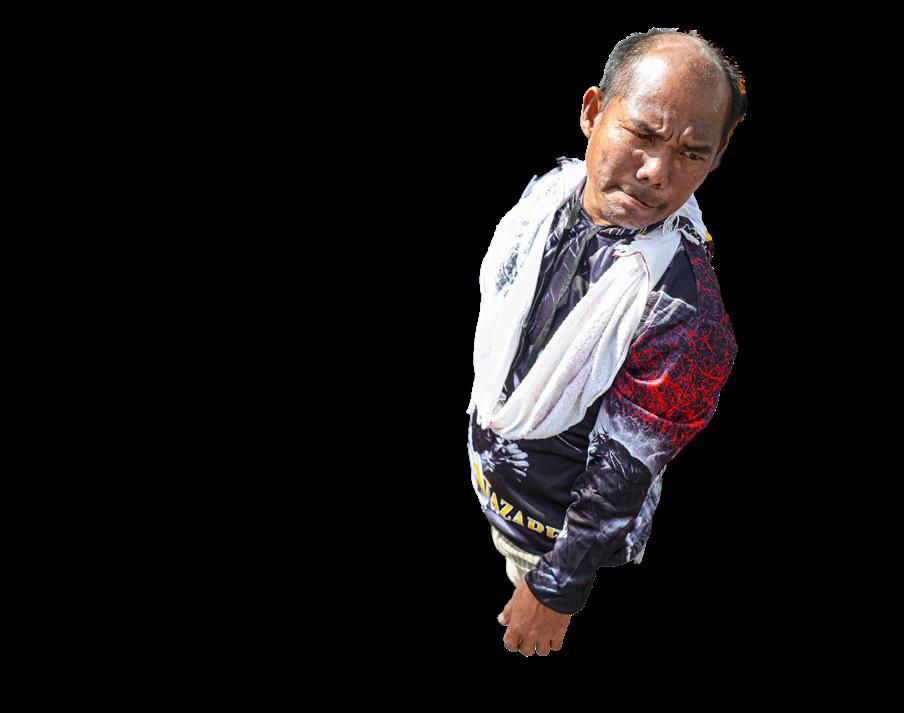
UST TIGER Judoka Adrian Cadampog pushed through dense crowds of devotees on Friday, Jan. 9, to catch a glimpse of the Nazarene during this year’s Traslacion, carrying a varsity towel marked with his name and the UST Growling Tigers logo.
Cadampog’s devotion to the Nazarene has served as a personal wellspring of strength he has held onto since his days of simply aspiring to enter UST.
“One of the things na pinagdasal ko talaga ‘yong pagpasok ng UST,” he told the Varsitarian. “Kasi, mahirap pumasok sa UST bilang athlete. Ang daming pagdaraanan, pagdating sa pag-tryout namin. Thankful ako na nakuha ako sa UST kasi pinagdasal ko talaga ‘to.”
Cadampog has been part of the UST program since 2022, debuting in the UAAP in Season 85 and playing a key role in lifting the Tiger Judokas to a championship.
After surrendering the title in Season 86, the Tiger Judokas reclaimed the crown in Season 87.

Beyond the UAAP, Cadampog has carried UST’s banner in multiple national competitions, including the Philippine Judo Federation National Judo Championships and several regional tournaments.
To Cadampog, wearing UST colors symbolizes an answered prayer
he had offered to the Nazareno at the height of the Covid-19 pandemic.
“Talagang nagsimba lang ako diyan sa Quiapo kasi pandemic at that time. Isa ito sa mga pinanalangin ko na nangyari talaga,” Cadampog, now a senior at the Institute of Physical Education and Athletics, said.
“Natupad naman. Thankful ako. Ngayon, isang semester na lang, ga-graduate na.”
Cadampog’s devotion began at age five, when his family fed devotees tasked with pulling the Nazarene’s carriage, a practice known as caridad, Spanish for charity.
From there, his faith continued to grow, leading him to join Quiapobased religious groups and remain active in Catholic ministries.
That same devotion carried over to the Tiger Judokas, where teammates witnessed how Cadampog’s vow to the Nazareno fueled his ascent in collegiate judo.
“Siya lagi ang favorite naming prayer leader before and after trainings and tournaments,” Tiger Judoka Kyan Ballecer told the Varsitarian “Ang fulfilling ng mga words na ginagamit niya for his prayers and mas lalo kaming ginaganahan sa prayers niya.
“Napaka-disciplined niya and [nagtuturo siya] ng manners sa team, lalo na sa juniors niya. … ‘Yong mga personal experiences niya with his