Vanheede Environment Group - Circular Insights 2025 EN
Waste is not the end of the line. It’s only the beginning.
“Anyone still thinking in a linear way today is missing out on the value of tomorrow.”
Dear Reader,
Waste is not the end of the line. It’s only the beginning.
And yet, even today, all too often it’s seen differently. We make, we use, and then we throw away. But the real value is to be found in this last step: in what we sort, in what we recover, and in what we reintegrate as a raw material.
This is the very essence of the circular economy. And this is where we want to make a difference.
This magazine will explain how we do that in real terms. It will help you understand why sorting at source is the foundation on which everything is built. Proper sorting right at the start really does determine what it will be possible to do later on. We’ll take you backstage at our new site in Roeselare Haven, where special and hazardous waste is grouped, reconditioned and stored thanks to innovative automation techniques. And you’ll see how, at Rumbeke, we use advanced technology to give thousands of tonnes of material a new life.
And that’s not all.
We’ll also show you how waste can be turned back into raw materials. How we find new uses for plastics. How materials that are difficult to recycle can still retain value thanks to chemical recycling. And how we extract energy from residual waste for injection back into our economy.
But we can’t do all that on our own.
Circularity only works if the whole chain is committed to it. From the producer to the processor. From policy to practice. That’s why we invest not just in technology, but in collaboration too. With our customers, our partners and the authorities. And, perhaps most importantly of all, we invest in simplicity. Because circularity has to remain simple to put into practice in everyday life. That’s why we’ve come up with solutions like the Plastic Switch and myVanheedeso that you can start sorting, tracking and optimising your streams more easily right away. Without it being any more complicated than necessary.
The challenges are serious. Raw materials are becoming rarer. Regulations are becoming stricter. Expectations are becoming greater.
But solutions are out there.
You’ll find them in this magazine. And, above all, in practice.
Happy reading,
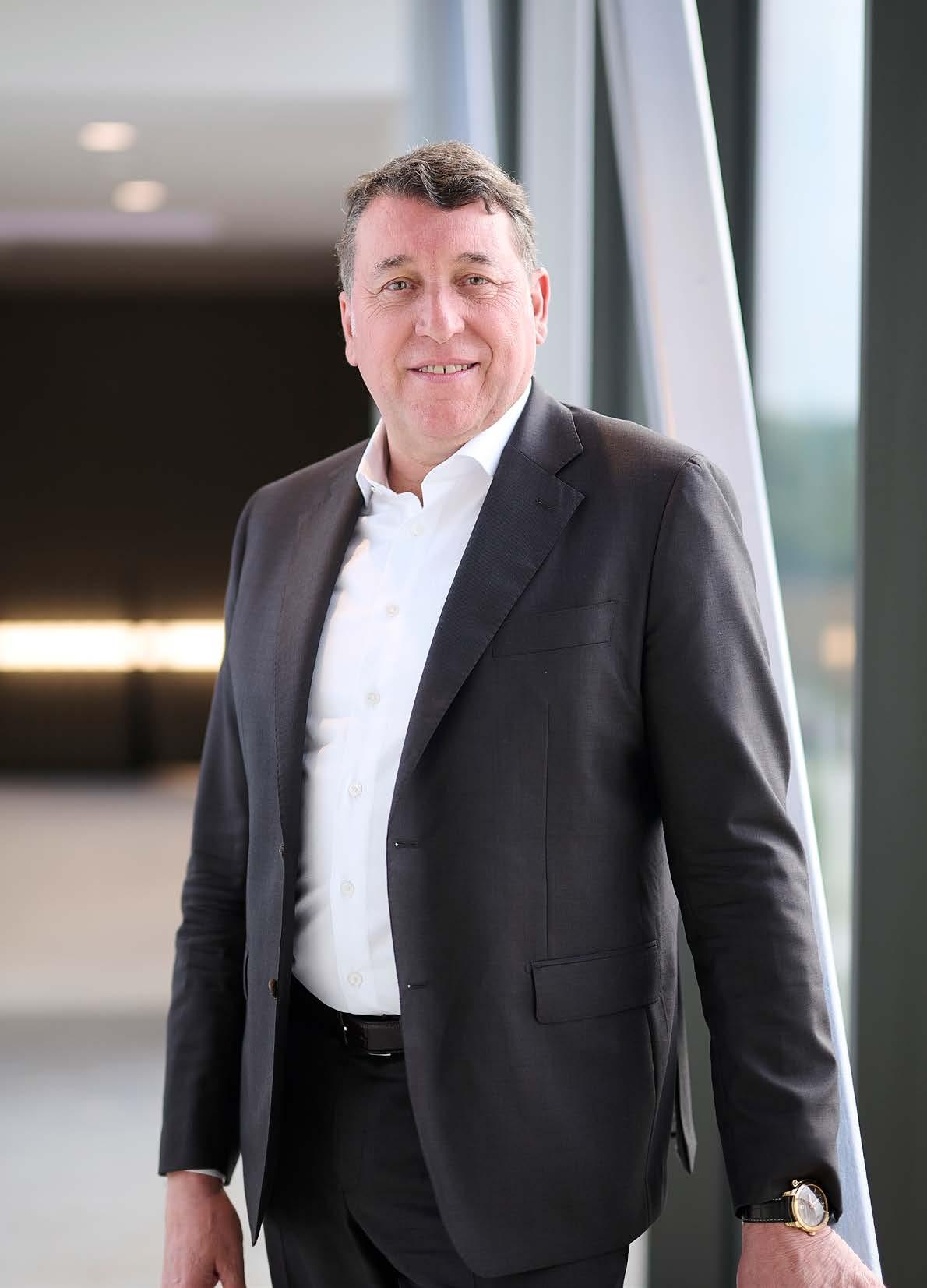
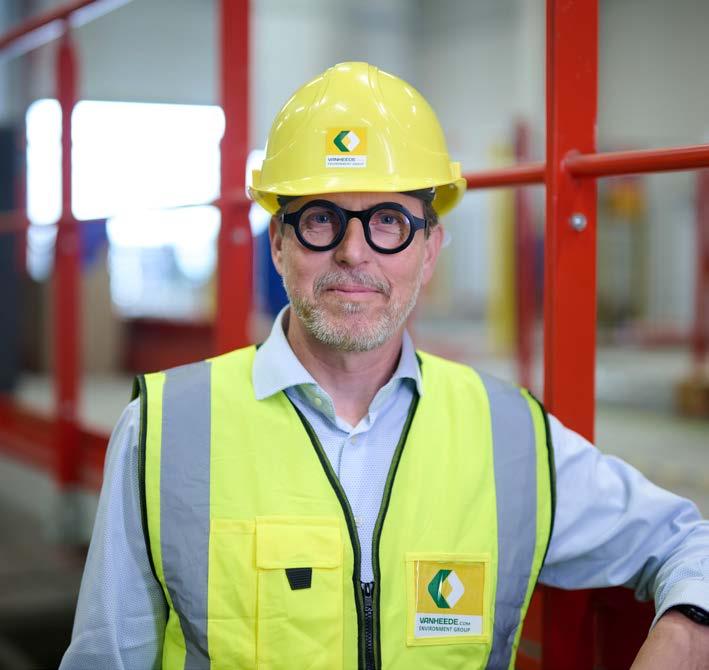
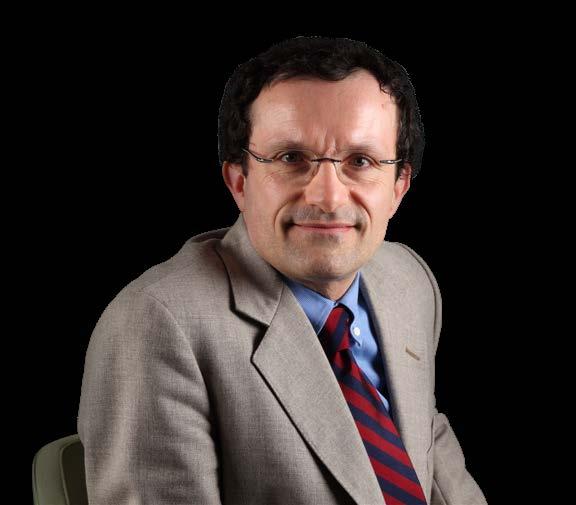
David Vanheede, CEO Vanheede Environment Group
Index
Curious about Vanheede’s
Sustainability Statement?
Scan this QR code to read it:
Sorting
What does sorting at source mean to you as a producer of waste? Why is it such a crucial step in the circular economy?
Waste embarks on a new chapter: Roeselare Haven
A look back at spring 2025. The heart of Special Waste Management is moving from the site in Rumbeke to Roeselare Haven.
Let’s make plastic collected and recycled in Europe the first resort
Turning non-recyclable, high-calorific-value waste into alternative fuels
The future is circular
Raw materials are becoming scarce, while waste streams are becoming more complex; urgent action is now needed for our planet. The time has come to stop seeing waste as the end of the line, but rather as a new beginning. Reuse, recycling, energy recovery: the Recycling Revolution is a necessity, but not everyone has realised this yet.
In 2024, only 12.2% of materials used in industry across Europe came from recycling. The figure was higher in Belgium: at 22.7%, our country had the second best score (source: Eurostat). But we can do even better.
European sustainability directives
Fortunately, Europe is taking important steps. One of these is the Waste Framework Directive. This encourages sustainable waste management in order to promote the circular economy.
A key element of this is the Extended Producer Responsibility (EPR). This legislation makes producers responsible for the entire life cycle of their products, from production to processing and recycling.
What is Vanheede’s role?
As an environmental group, we can only applaud Europe’s sustainability ambitions. At the same time, we are also aware that we cannot lead this Recycling Revolution alone. That’s why we’ve decided to help our customers by making it as easy as possible to comply with the legislation and to choose the sustainable way, together. The goal is clear: to recycle as much collected waste as possible. We’re already recycling 58,2%.
Updating the Waste Framework Directive: textile EPR
At the end of 2025, a special section for textiles was added to the Waste Framework Directive. In real terms, Europe now requires all member states to establish an EPR for textiles and footwear, so as to make this chain circular too.
By 2028, Belgium will have to transpose this European directive into its national legislation. Textile producers will then be required to guarantee the take-back of their products at end of life. They will also have to be able to show that the materials are being reused, recycled or otherwise recovered.
Vanheede is already prepared for these new regulations. With our textile solutions, you can easily give your professional textiles a second life.
“a
Our ecosystem
Pivot in circular economy
Raw materials move through various circles as a result of economic activities
In a circular economy (1), we do not deplete finite stocks of raw materials (2 & 3), but instead give residual waste streams (6) a new purpose. In line with the Waste Framework Directive, we prevent waste generation (4), minimise waste (3) and promote reuse (5). The remaining waste streams are transformed into new, green raw materials (10) and green energy (9, 13 & 14).
Through collection and sorting (7), recycling (8) and energy recovery (9, 13 & 14), we extract maximum value from waste. Landfilling (12), after incineration (11), is the least preferred option and is only intended for waste that is no longer suitable for reuse or recycling.
Challenges for the world (1 → 5)
More production and consumption result in a greater climate impact. A low-carbon economy is therefore also a low-material economy. In addition, the circular economy makes us more resilient and better equipped to adapt to change.
Challenges for the sector (6 → 14)
Raw materials are finite. Preserving their value for as long as possible and at the highest possible level is essential.
Challenges for Vanheede (7 → 9 & 14)
Vanheede fulfils its role as a linchpin within the circular economy
Smart waste management for professionals
No detours
One partner for collection, treatment, and circular support. From daily waste collection to specialised services, Vanheede makes waste management safe, straightforward, and scalable.
Collection & Logistics
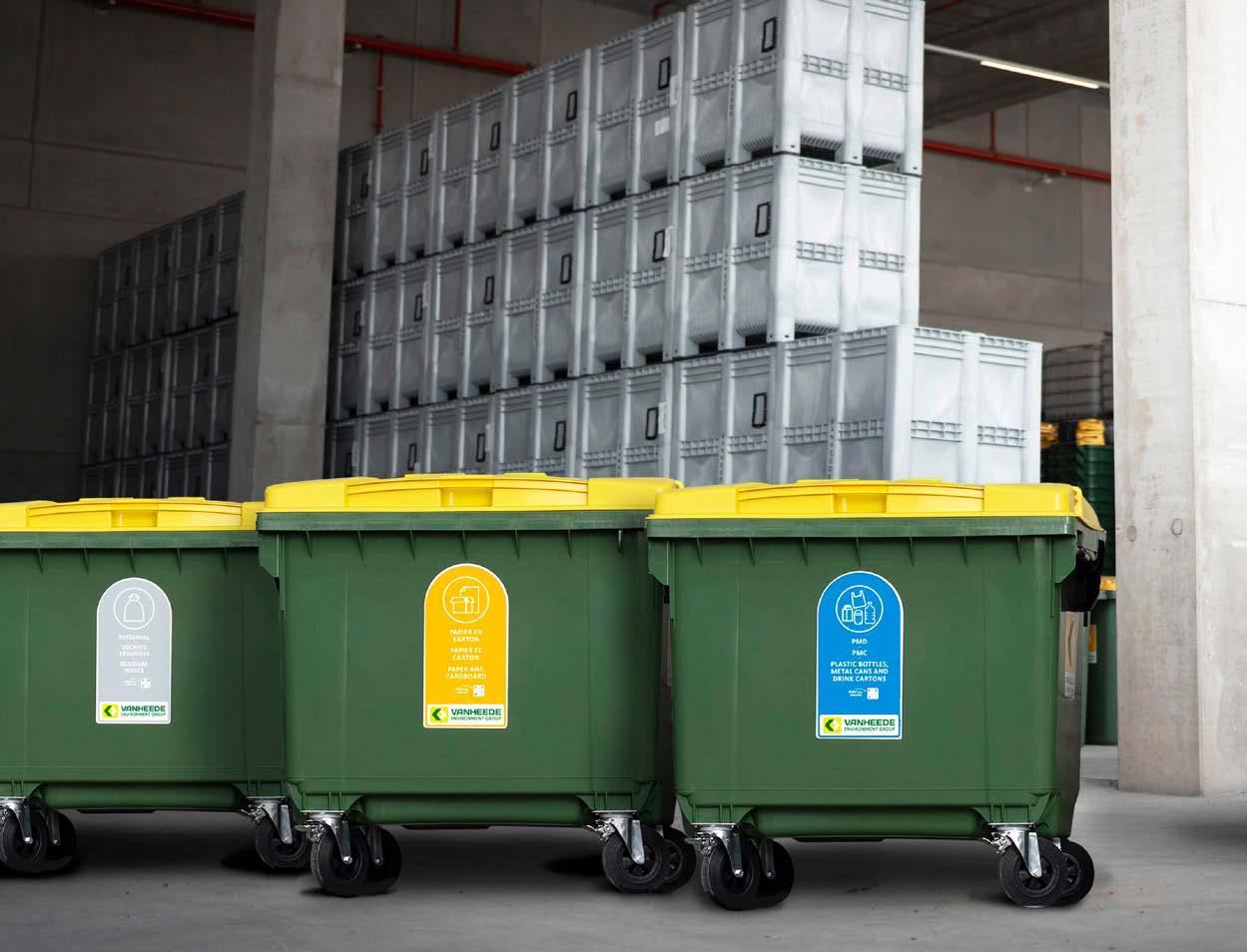
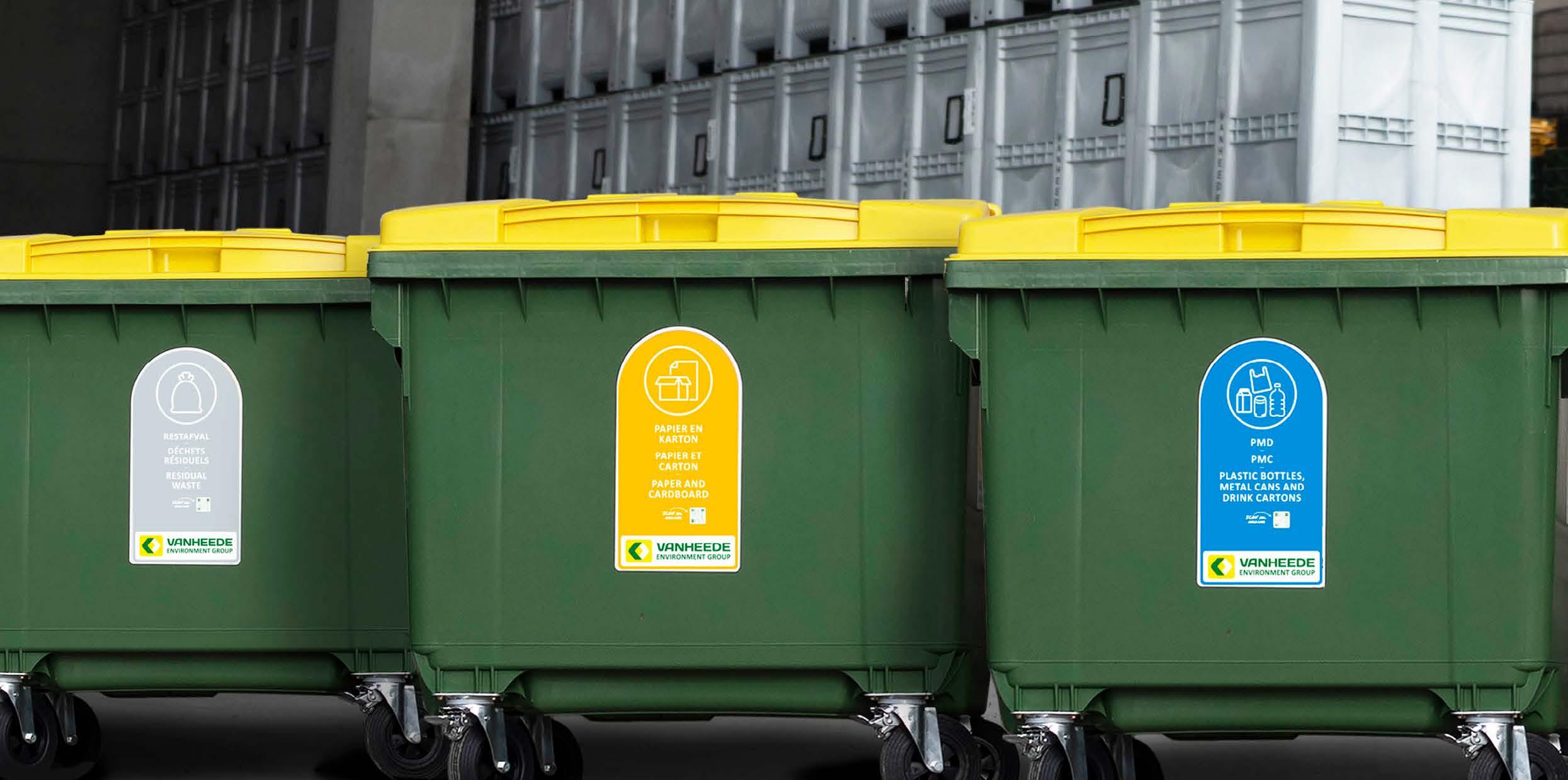
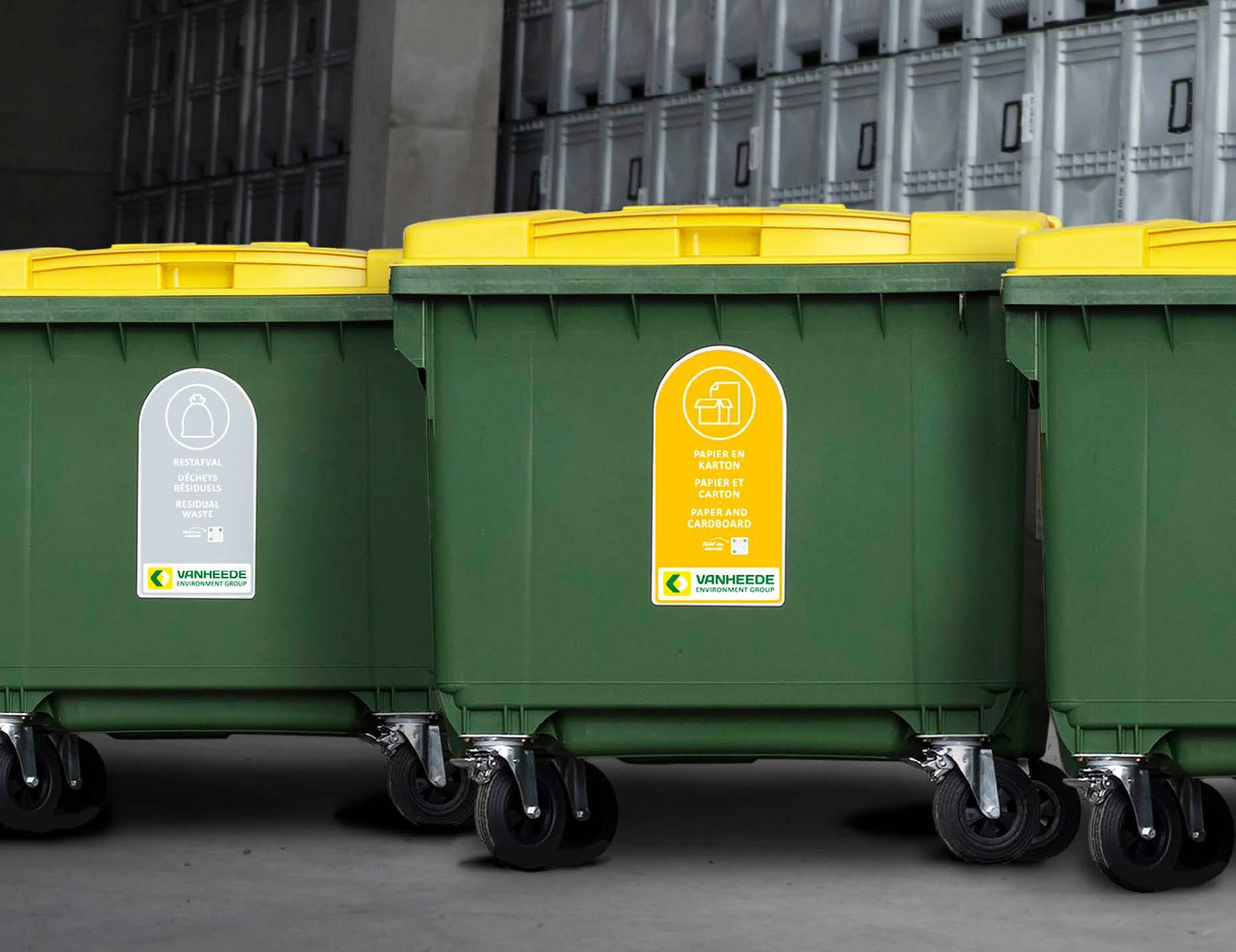
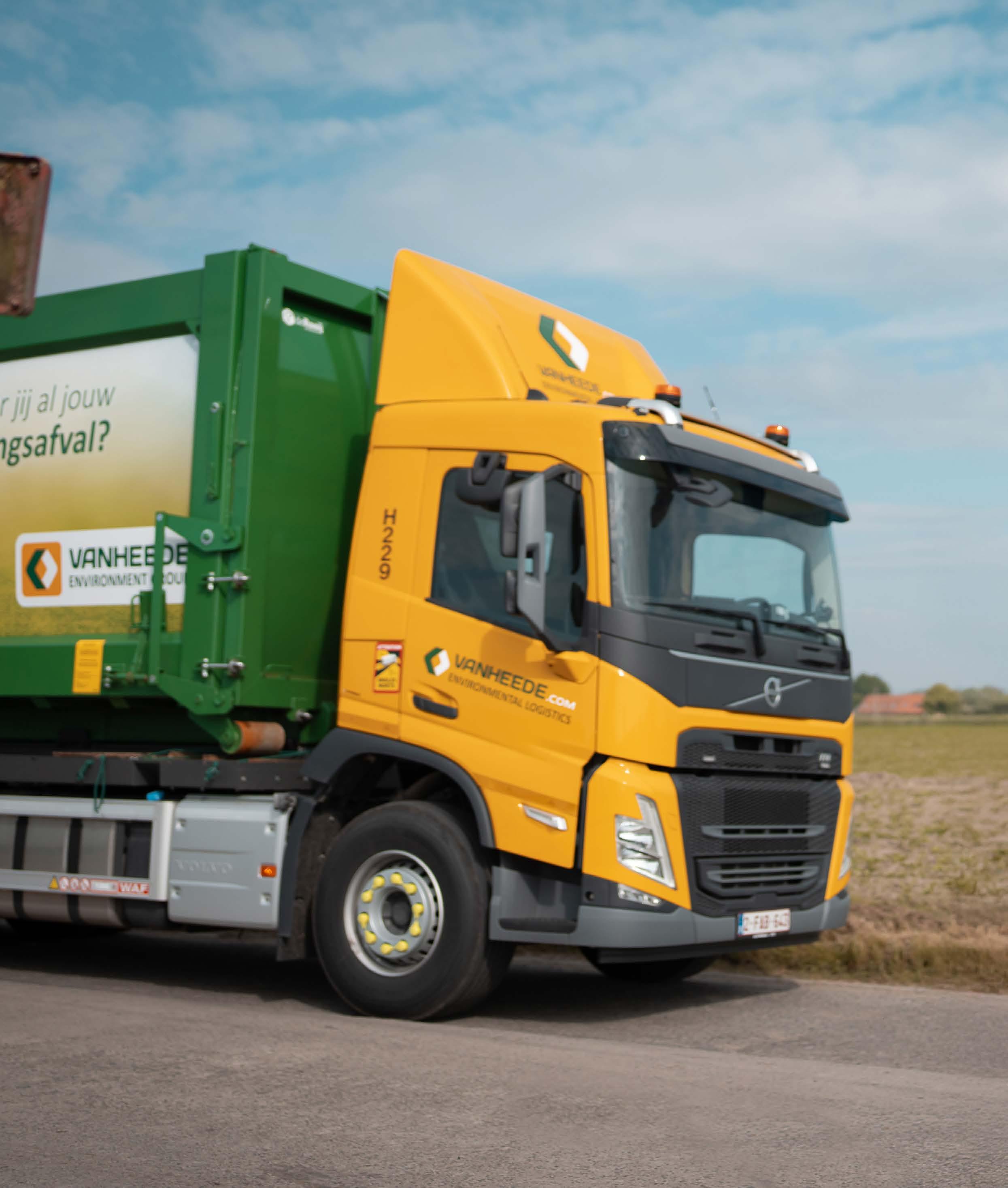
Wheelie bins, compactor containers, dumpsters and bulk collection. Smartly tailored to your volumes, site requirements and operational rhythm.
Special Waste
Hazardous, regulated or complex waste streams? Safe collection, transport and treatment, fully compliant and traceable.
On-site Services & Additional Services
From sorting support and internal logistics to Total Waste Care. Also for destruction services, site clearance, unpacking, dismantling, industrial cleaning and 24/7 emergency interventions.
Waste Delivery
Bring your waste directly to our professional recycling parks. Ideal for smaller volumes, project waste or specific waste streams. Fast, safe, flexible and close to you.
The Recycling Revolution unfolding
Plastic Switch
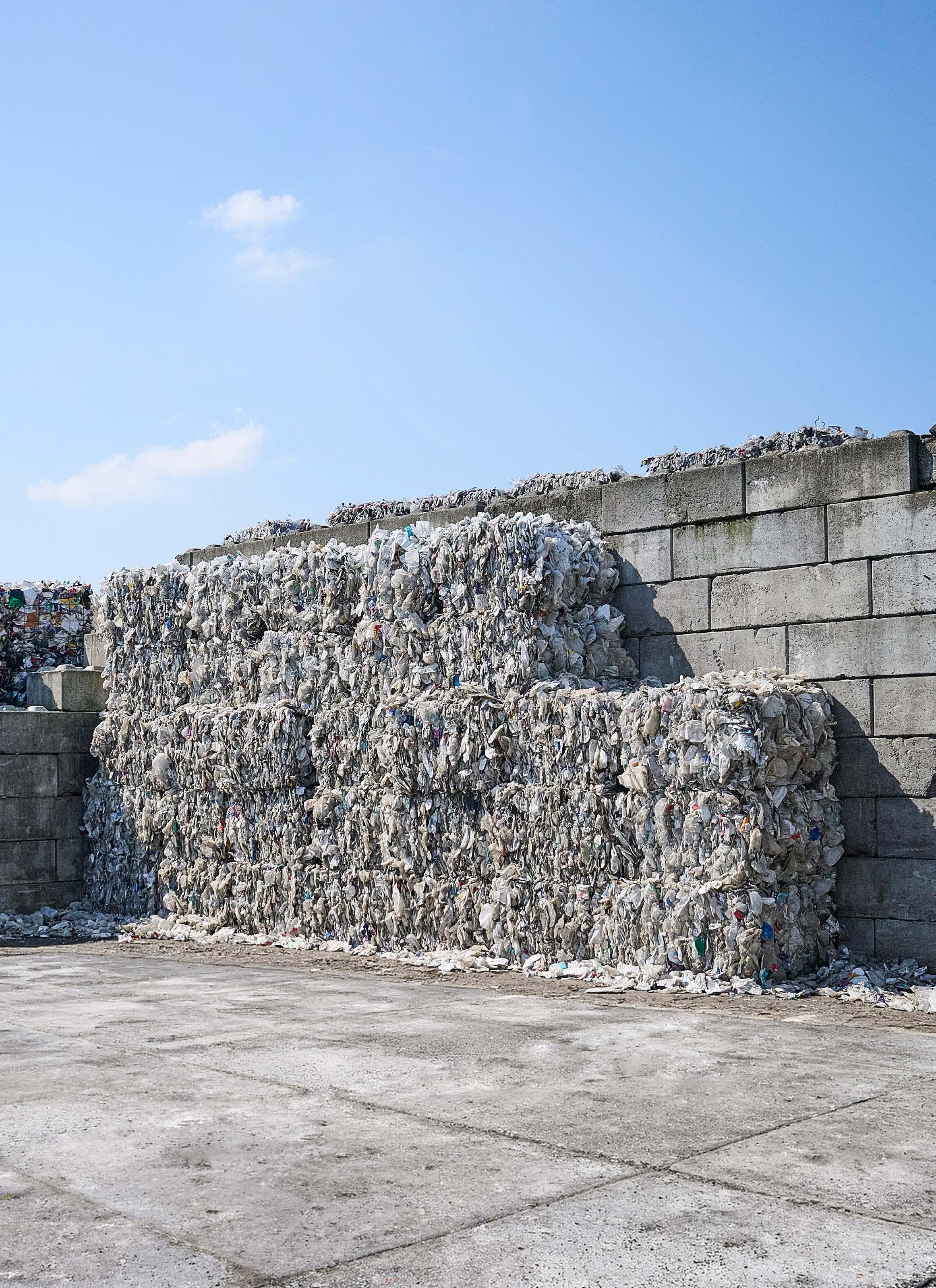
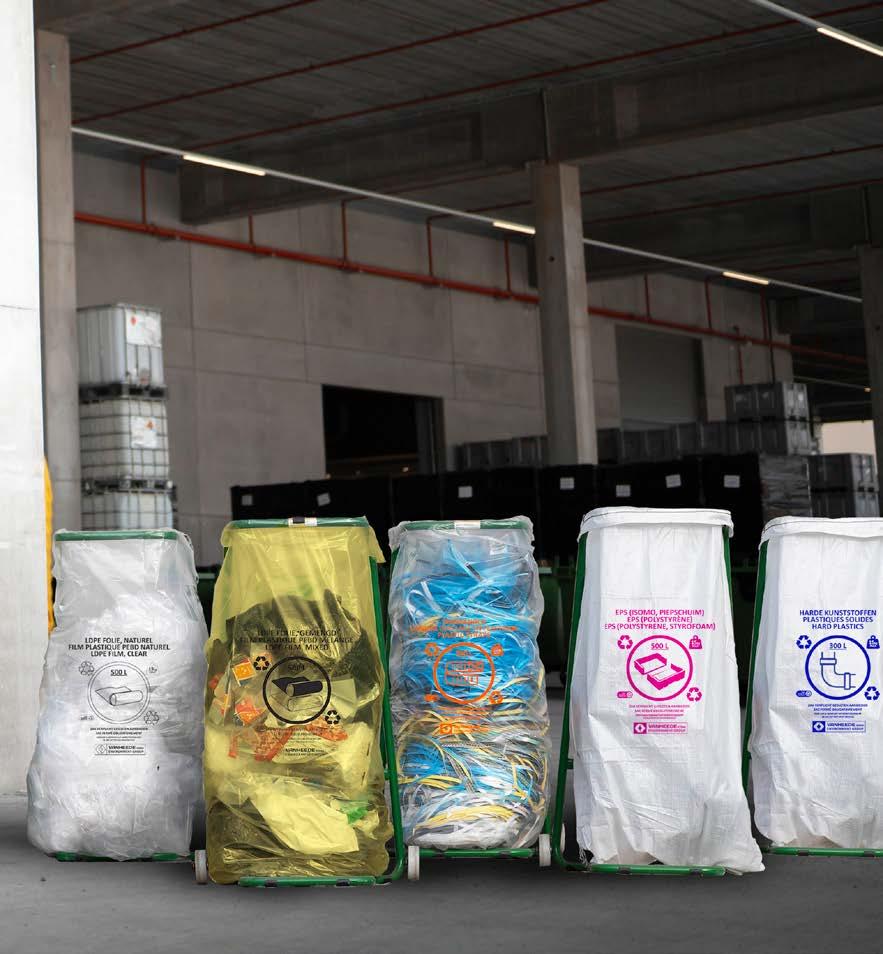
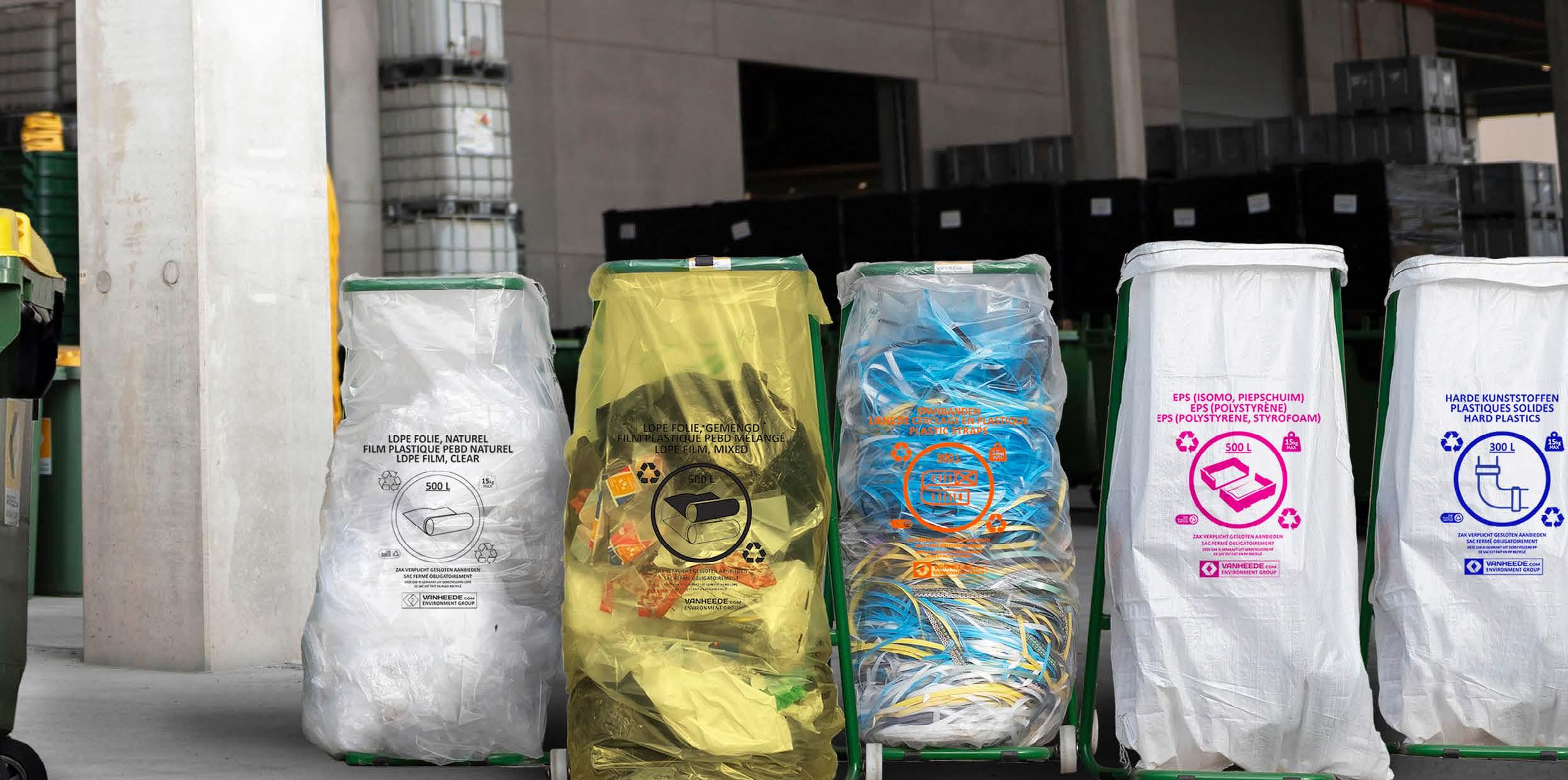
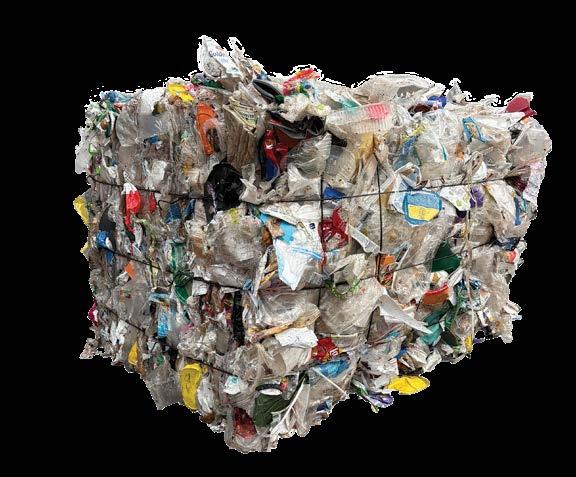
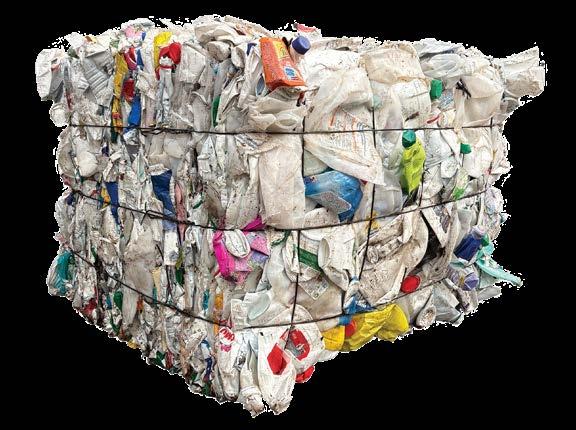
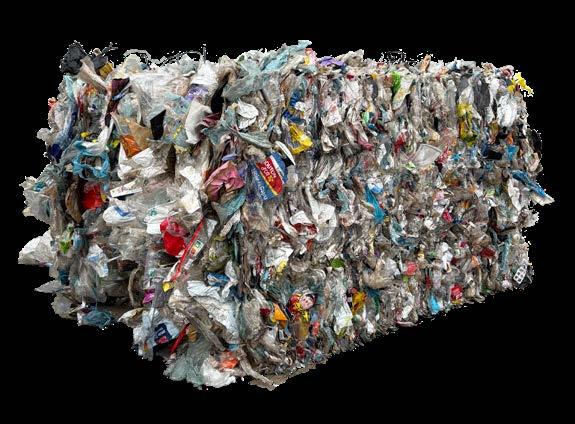
Six types of plastic waste collected in a single operation. From films and strapping bands to rigid plastics.
Organic Switch
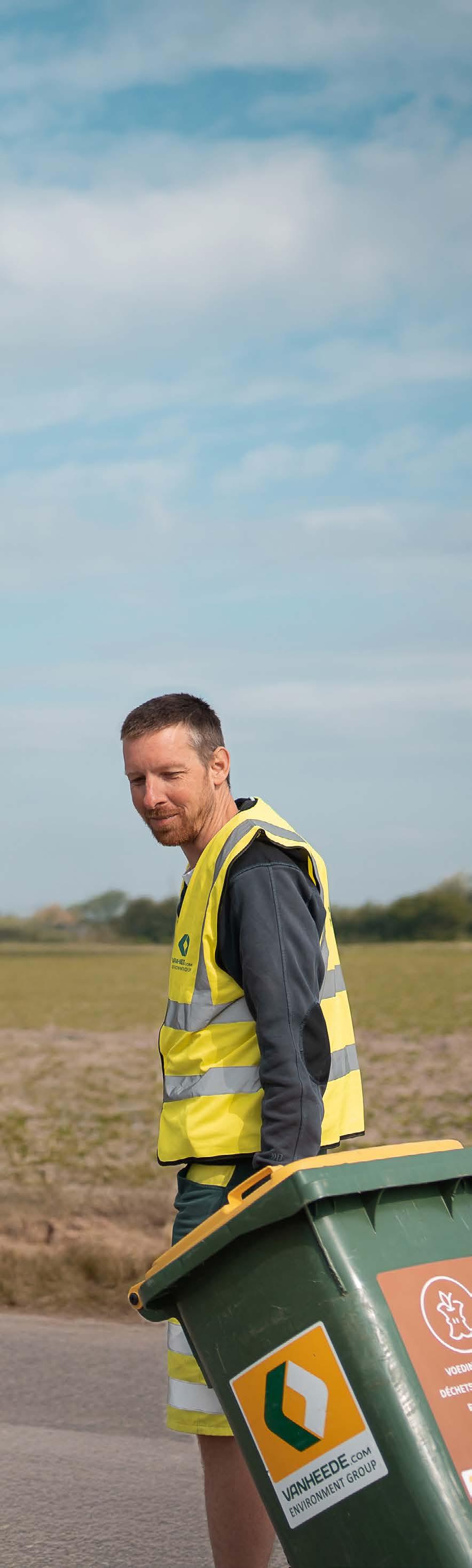
Kitchen and food waste collected separately. From fruit and eggshells to coffee grounds.
HHW Switch
Hazardous and special waste collected safely and correctly. From oil and batteries to solvents.
Textile Switch
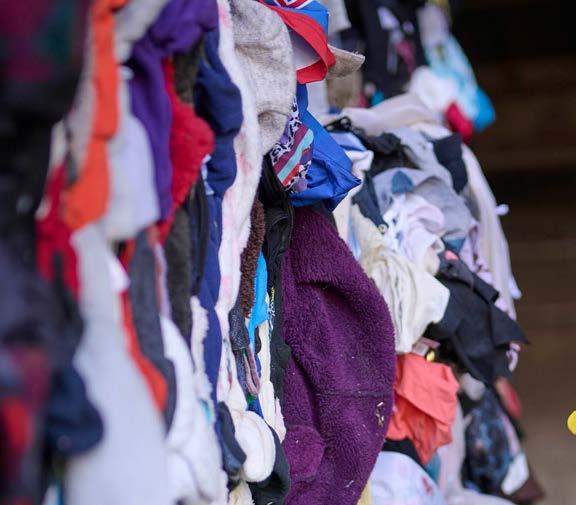
Professional textiles collected separately as they should be. From workwear and shoes to towels.
More than just collection.
Already 21,000 customers are part of the Recycling Revolution and trust in our approach. From sorting at source to treatment and circular solutions. Making the Switch is easy!
Why companies choose our approach
One-stop-shop
Collection, treatment and support through a single partner.
Safe & compliant
Full traceability and compliance.
Maximum circularity
Every stream is channelled to the best possible destination.
Digital insights
myVanheede and Vanheede Plus provide real-time access to data and reporting.
Scalable from SMEs to industry (private & public)
Solutions that grow in line with your volumes and complexity.
Tailored advice
Practical guidance by sector, site and waste stream.
Good sorting at source means more recycling and less incineration.
Sorting at source: your role
in the circular economy
What does sorting at source mean to you as a producer of waste? Why is it such a crucial step in the circular economy? Three experts with different roles discuss the same challenge: extracting more value from waste through better sorting at source.
Pieter Vierstraete
Material Recovery Manager at Vanheede, Manages treatment solutions for all waste streams.
Xavier Lhoir
Deputy General Manager at Valipac, Coordinates the collection and recycling of professional packaging waste in Belgium.
Mik Van Gaever COO at Fost Plus, Oversees the entire chain, from household packaging waste collection to recycling in Belgium.
Sorting at source versus post collection sorting
First things first. What does sorting at source mean?
Pieter: “ Sorting at source means waste is sorted where it is produced, i.e., at source. Post collection sorting is the opposite: everything is initially all thrown in together, before being sorted later. Belgium opted for sorting at source, as it’s the best way to protect the quality of materials.”
Xavier: “Exactly. And it’s the quality that determines what can be done with it later. The better the quality, the greater the recycling potential is. So it’s the best choice.”
So, sorting at source and recycling are inextricably linked.
Mik: “Absolutely. As Xavier said, sorting at source is the bedrock of quality recycling. A concrete example would be PET bottles; when sorted at source they can be reused for food packaging. But if the PET bottles come from residual waste, that’s no longer allowed under the law.”
Regulations
Belgium has made sorting at source compulsory. What does that mean in terms of regulations for businesses?
Xavier: “Companies are required to collect certain waste streams separately. However,
these rules vary from region to region. In Flanders, there are 29 compulsory streams, compared to 24 in Brussels and 16 in Wallonia. This doesn’t make life easy for companies that have sites spread throughout the country. SMEs face different complications. They often generate such small quantities of waste that they don’t have room to install multiple containers.”
How does Vanheede help these SMEs?
Pieter: “Vanheede organises various Switches. These are specific services that make it as easy as possible for businesses to collect waste streams separately. The Plastic Switch, which we launched with the backing of Valipac and Fost Plus, is a great example. It means companies are able to collect separately five streams of plastics – transparent film, coloured film, strapping bands, EPS (expanded polystyrene) and rigid plastics – in bags, without having to install additional containers. We then collect these bags in one trip, along with the PMD collection. So it’s very handy for small quantities.”
Real challenges
What do you see as the main challenges when it comes to sorting waste at source?
Mik: “With Fost Plus, we have to persuade 12 million Belgians to sort their waste. At home, they’re pretty good at this. The challenge lies in on-the-go sorting, in other words, household
waste produced outside of the house; at work for example, or on public transport. The quality of sorting isn’t as good, and a lot of plastic still ends up in residual waste.”
Xavier: “I have the same concern with waste coming from businesses. We’re still finding far too much professional plastic packaging in their mixed waste.”
Too much plastic in residual waste then. What do you think is causing this?
Pieter: “On the one hand, a change in behaviour: people need to get into the habit of following the sorting rules. On the other, the complexity of some materials and streams.”
Xavier: “It’s true; paper is easy to recognise. It can be more difficult with plastics. But it’s also a question of facility. Is the residual waste bin nearer? Then you can be sure that’s where most waste will end up.”
Mik: “In household waste, we also see this kind of mistake with plastics. A charcuterie tray often ends up in the residual waste because people begrudge scraping out the contents. At the same time, many people still clearly don’t know that PMD only covers packaging. So not plastic toys or kitchen utensils.”
Solutions and collaboration
How do you help avoid sorting errors?
Xavier: “Valipac awards a start-up bonus to companies that are embarking on selective collection for professional packaging waste for the first time. We also arrange recycling bonuses based on the quantities collected, and we run awareness campaigns. Our website, jetriedansmonentreprise.be, is a good example of this.”
Mik: “At Fost Plus we also combine incentives and awareness campaigns. We’re lucky in that we have the support of local authorities: residual waste bags cost people more than selective collection bags. PMD bags are always cheaper, and paper and cardboard collection is actually free.”
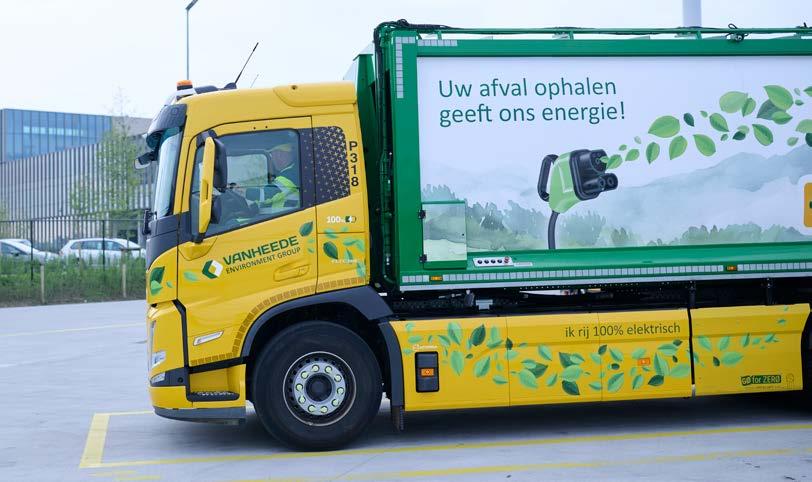
Pieter: “Vanheede wants to make life as easy as possible for its customers, for example through the various Switches, myVanheede and on-site training. The information we get from our smart waste trucks helps us a lot.”
Smart waste trucks? Tell us more!
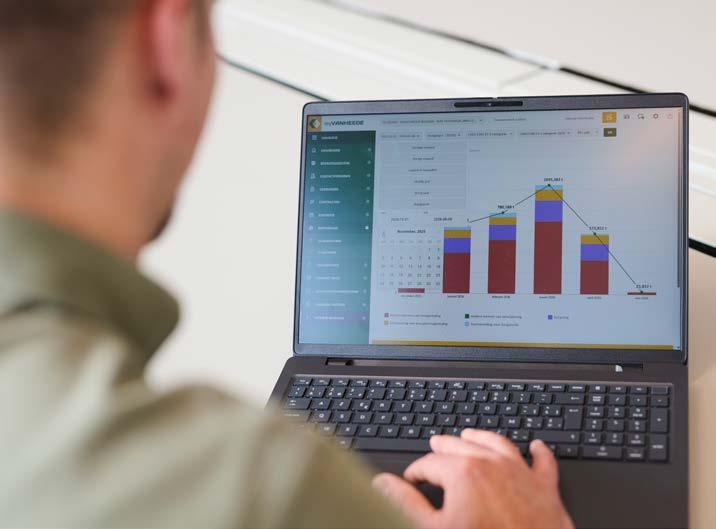
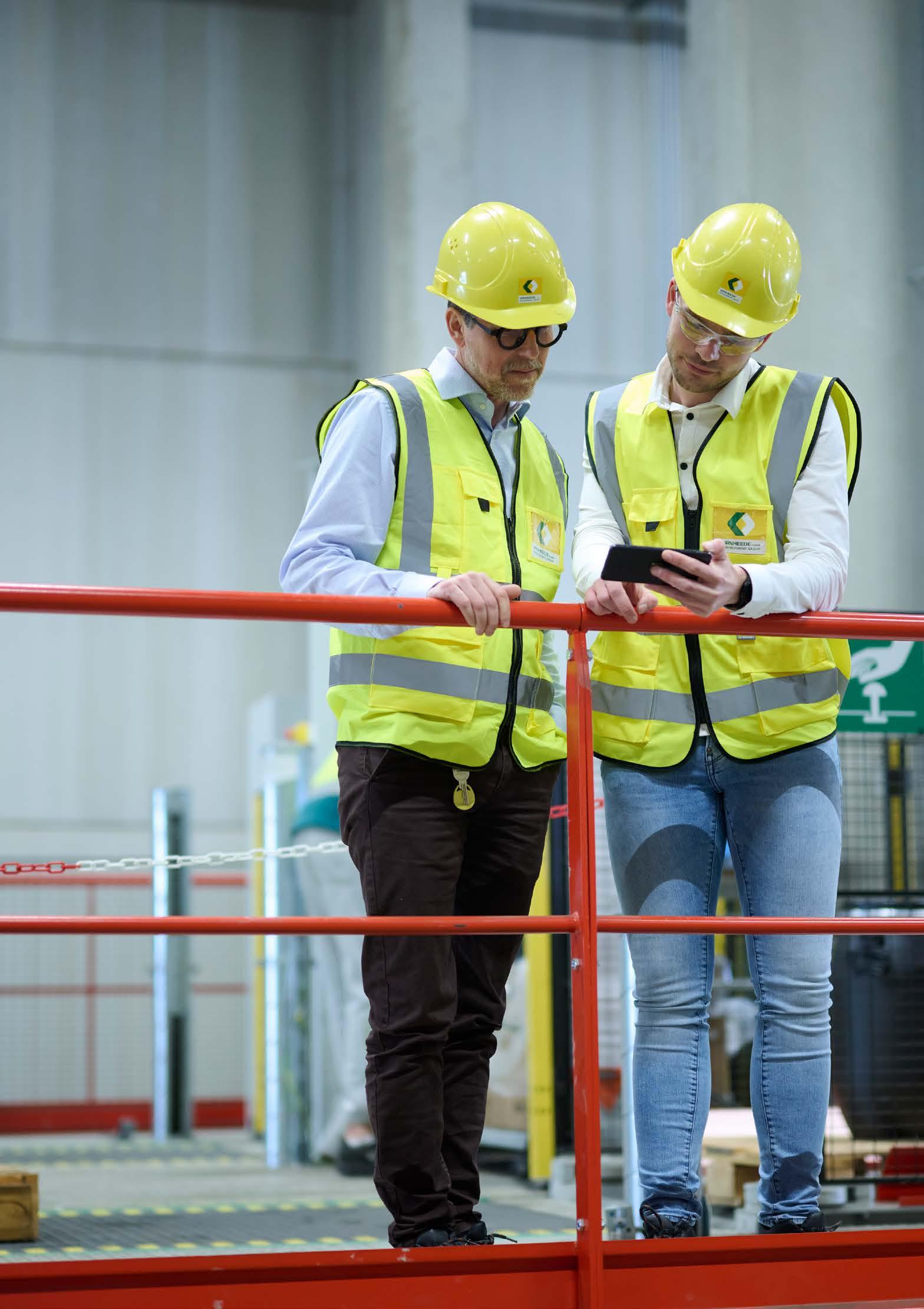
Pieter: “Each of our waste trucks is fitted with a camera that photographs the waste. Using AI, we can identify the various materials. This generates interesting data, which we then make available to customers via myVanheede. This provides them with a better overview of their residual waste and allows them to make targeted improvements. With our help, of course.”
Your three organisations have a common mission: to continue improving sorting at source. How do you work together to achieve this goal?
Xavier: “We support companies through bonuses, and Vanheede provides customers with concrete solutions. They’re on the ground, so they make all the difference. We also work with Vanheede on innovation projects. The cameras fitted to the waste trucks are a good example. We test new ideas together, such as collecting and recycling PU foam cannisters.”
Mik: “I second that. We see Vanheede as a key partner throughout the entire chain, from collection to recycling. What we appreciate in particular is that they study these matters with us and are open to innovation.”
Pieter: “We can count on real support from Fost Plus and Valipac. They’re helping professionalise the sector, which means we’re able to continue investing in quality and innovation. By working together, we’ll pave the way for even more efficient sorting at source.”
myVanheede:
where data and circularity come together
Legislation around waste can seem complex, especially when it’s not a core part of your business. Vanheede wants to offer its customers more support in this area. We do this by communicating in a proactive way on changes to regulations, and also through our tool, myVanheede. On it, customers can find all the information they need to comply with legislation. So they can focus on their business, knowing that their waste is being managed according to the rules.
Waste legislation and the waste register
In Belgium and in France, companies are required to keep a register of their waste streams. How this is rolled out and its name vary by region: in France, it’s the Code de l’environnement, or Environmental Code, in Brussels it’s Brudalex, and in Wallonia it’s the Arrêté du Gouvernement wallon relatif aux déchets, or Walloon Government Decree on Waste. In Flanders, this obligation comes under the Vlarema regulation.
ADVICE. If you’re working with Vanheede for all your waste streams, you will have a global overview and you’ll no longer need to collate figures. What if your company operates several sites? Then you will get a breakdown per site as well as an overview of all your sites.
The legislation always follows the same principle. As a waste producer, you have to log the types and quantities of waste you produce, as well as when it is removed, by whom, and to which treatment plant. You might think this would create a mountain of paperwork. But with myVanheede, your waste register is automatically updated for all waste streams that we handle for you.
What if you are audited? All you have to do is open myVanheede, go to the waste register and you are ready.
So they can focus on their business, knowing that their waste is being managed according to the rules.
CSRD
Another key sustainability reporting obligation is the European CSRD. It is currently mandatory for companies with more than 1,000 employees and a turnover exceeding €450 million. Many companies comply with the CSRD even though they don’t have to, to demonstrate their environmental credentials.
Last year, additional data was added to the waste register so that each company could easily complete its CSRD reporting, whether or not it was required to do so:
• Total waste generation per year;
• A breakdown of hazardous and nonhazardous waste;
• A breakdown per treatment method: recycling, reuse, energy recovery or landfill.
All this information is easily accessible in myVanheede. If you ask us to, we can also provide additional information on the CO₂ emissions related to your waste.
Bonus: Waste management tool
On top of mandatory reporting, myVanheede enables you to take concrete action to better manage your waste. It’s easier to spot areas where you could improve things when you better understand your waste streams.
For example, you might notice that a significant share of your waste is still being incinerated. There are doubtless ways you could optimise this.
Your waste management is no longer a simple administrative duty: it has become a tool for improving your organisation’s sustainability goals. A key advantage of myVanheede? You can draw on objective data rather than your intuition.
myVanheede turns 10
Kim Delvoye, co-developer of myVanheede, on the tool’s beginnings.
“Like so many new products, myVanheede was born out of a personally experienced difficulty. I’ve been with Vanheede for 13 years, but before that I was head of IT for another firm. Following the 2007 crisis, I was also asked to be prevention advisor and ISO quality manager. One of my tasks? Waste management across 12 different sites.
Kim Delvoye Marketing & Communication Manager
The waste register was already mandatory at the time. What chaos! All these sites, all these different waste streams, and no proof of the waste we were producing. As an IT man, it drove me crazy that there wasn’t a tool to manage all that better.
“Fast-forward to 2013. Vanheede was looking for someone to automate and digitalise its business processes. It was a perfect role for me! Together, we built the customer portal into what it is today. The first customer to test it was my former employer. Since then, we have expanded the ecosystem with the Vanheede Plus app and we now have 20,000 active users.
A fun fact: satisfaction surveys show that customers who use myVanheede are even more satisfied than those who don’t.”
Special Waste embarks on a new chapter: Roeselare Haven
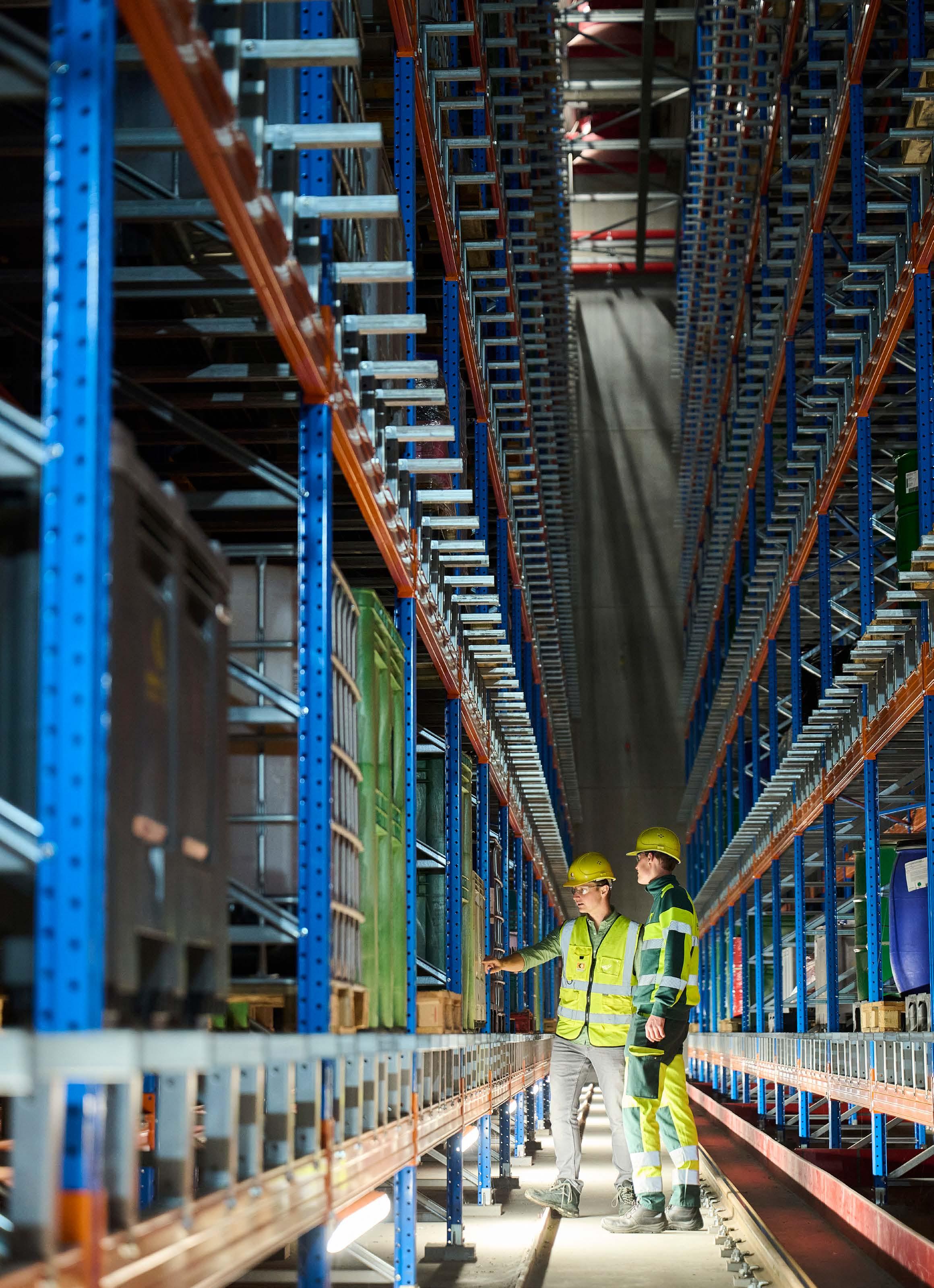
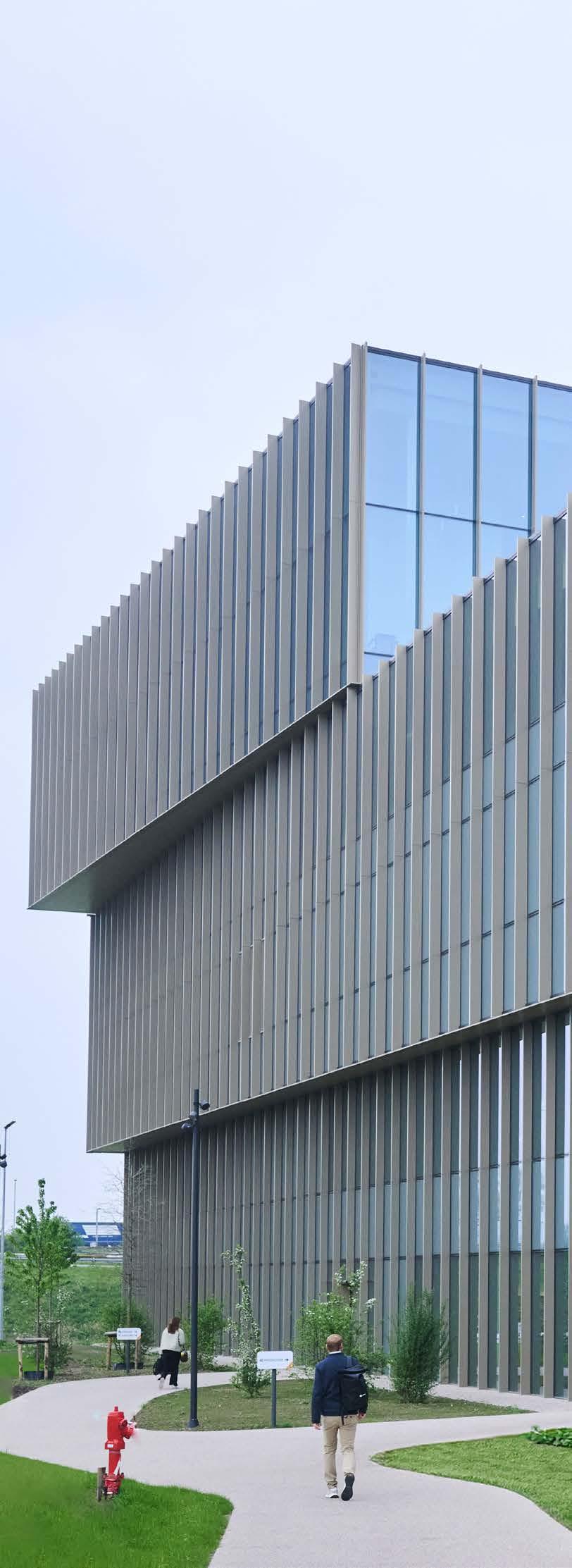
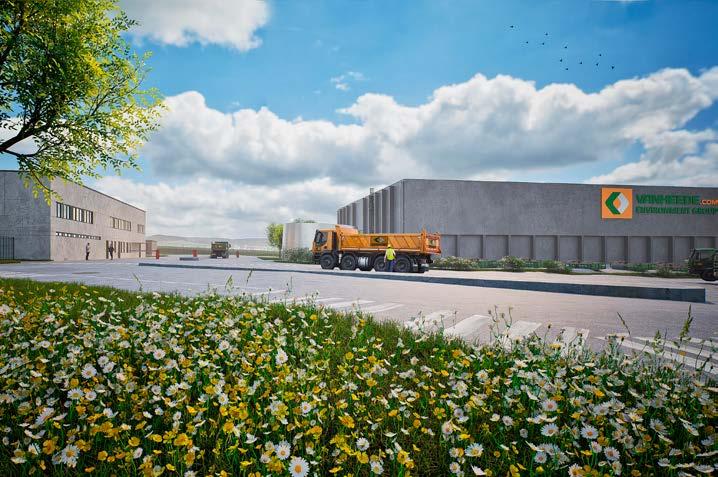
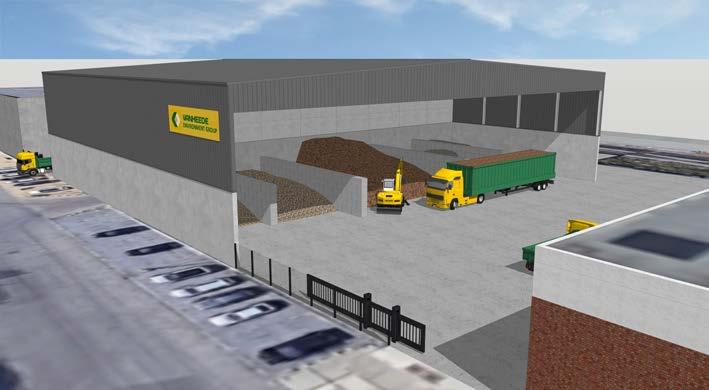
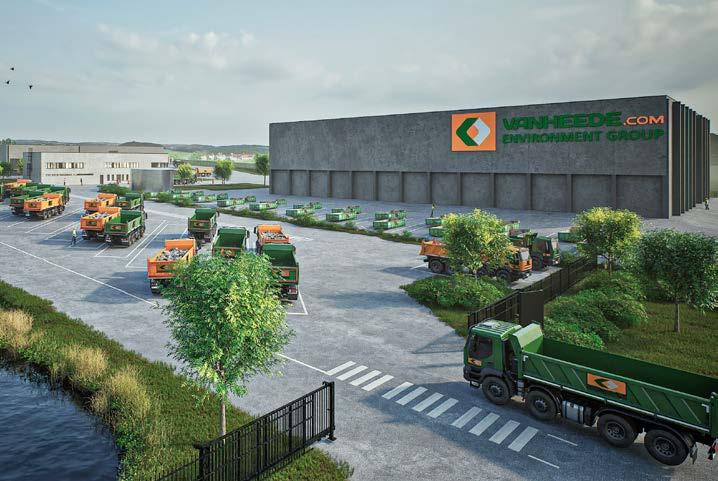
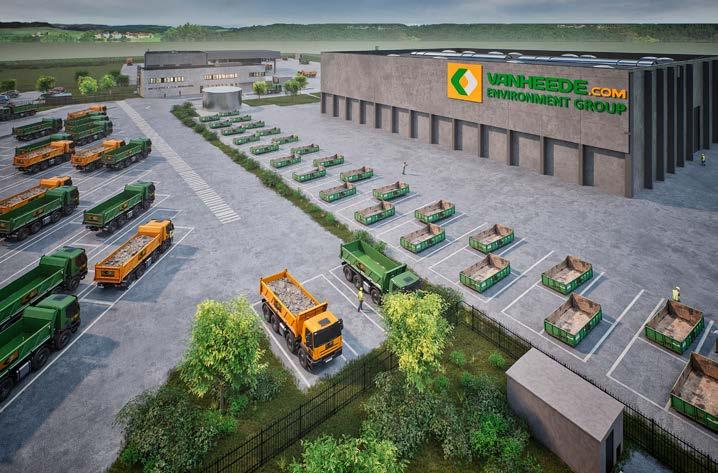
In spring 2025, the core part of the Special Waste Management Business Unit moved from its Rumbeke site to Roeselare Haven. The new site is five times bigger, completely covered and fully automated – the first of its kind in Belgium. A year on from the move, and the site is operating at full capacity. Kurt Van Brabandt took us inside the automated warehouse, complete with fire detectors and ventilation systems. As the Business Unit Manager, he now knows the site like the back of his hand.
Roeselare Haven in numbers
5,5 hectares in area
Kurt Van Brabandt Business Unit Manager
Sustainability and safety
are the guiding principles behind our new site.
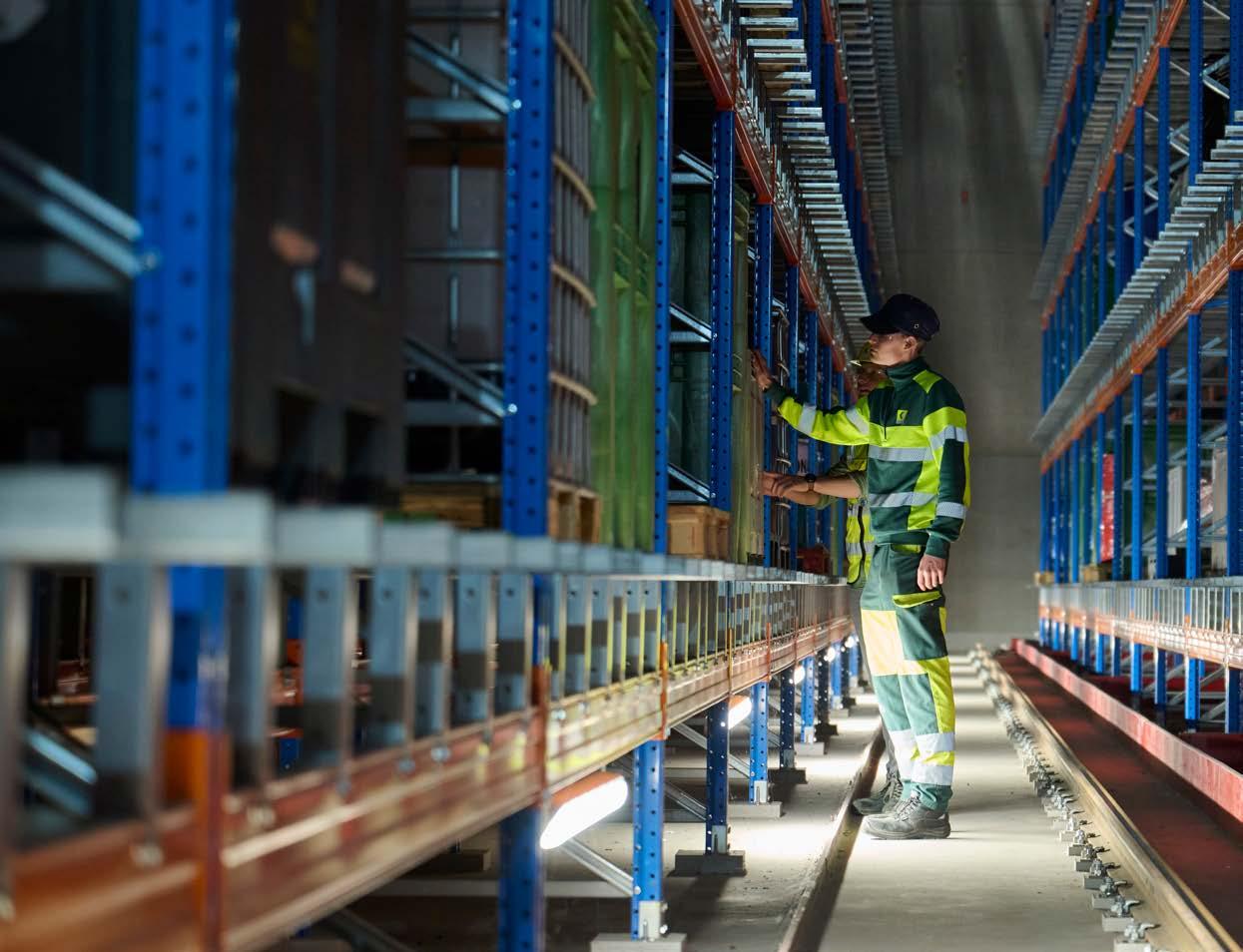
A fully automated warehouse
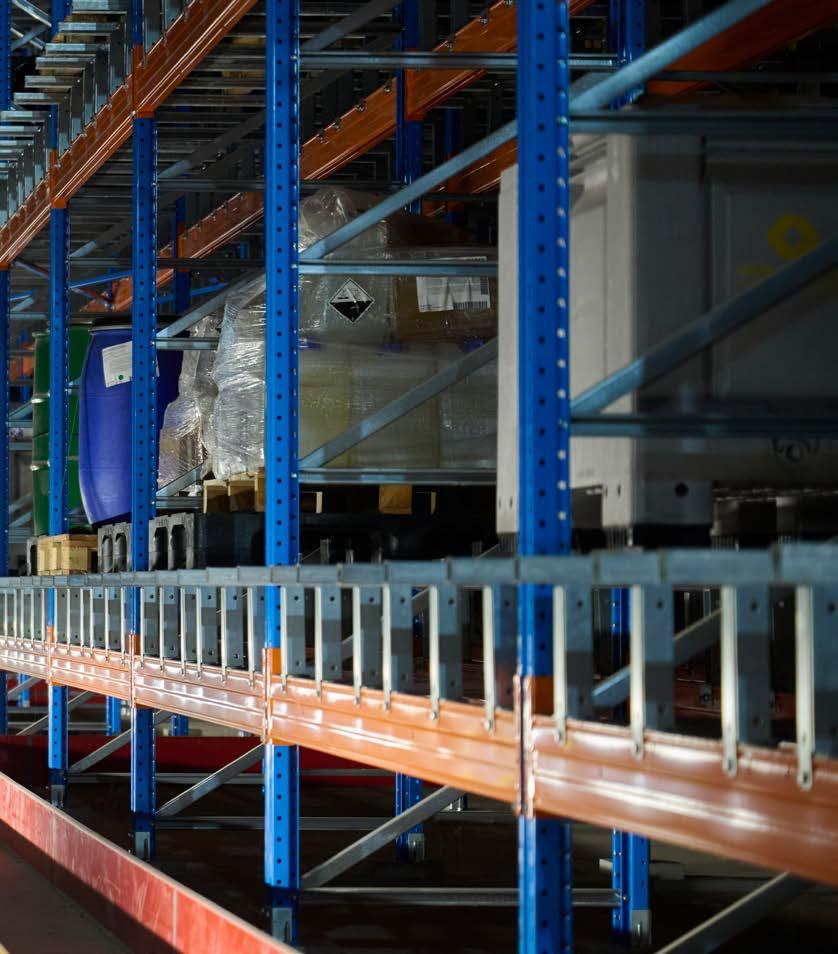
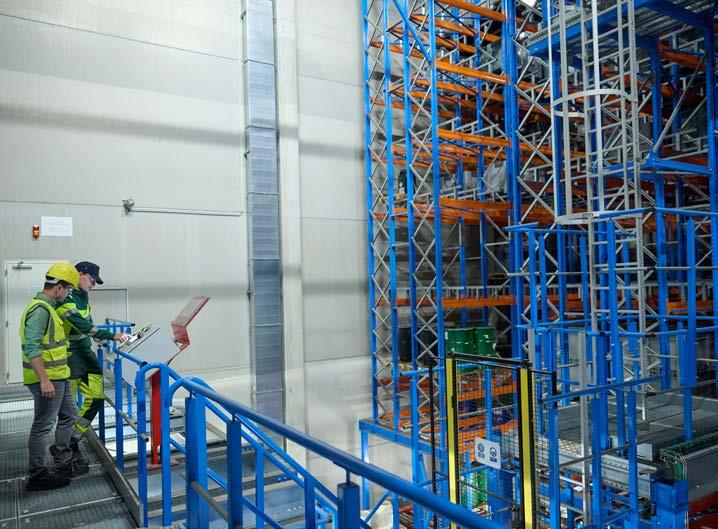
The nerve centre of the site is the fully automated warehouse, where all waste is stored. “This warehouse operates without human intervention,” Kurt explained. “Each time waste needs to be moved, it’s done by automated bridge cranes. The last human contact is in the acceptance area, before the waste enters the warehouse. That’s where the waste is checked, then it disappears into the warehouse, where bridge cranes transport it to its assigned storage spot, and then retrieve it if necessary.”
“These bridge cranes are programmed so that our warehouse is fully in compliance with legislation. Vlarema, for instance, sets rules on spacing waste. Some materials can’t be stored too near others. Our system factors all that in.”
Each time waste needs to be moved, it’s done by automated bridge cranes.
Special Waste Management: what
does Vanheede do?
Batteries, ink, glue, medical waste, chemical or asbestos products: special and hazardous waste is part of daily life at the Special Waste Management Business Unit. How do we ensure they get the best treatment?
• We advise waste producers on their special and hazardous waste, and we collect that waste.
• We then label it, issue certificates and provide the producer with all the documents it needs so that everything is in order legally.
• We accept, sort, bundle and treat the waste streams.
The goal? To provide quality end products, while minimising the impact on the surroundings and environment.
A high-rise construction and a digital twin
What’s also remarkable about the warehouse is its height. Standing 16 metres tall, it catches the eye, on the site and even from far away.
“We opted for a high-rise construction,” said Kurt. “Not only for our warehouse, but also for the surrounding logistics buildings. This means we can occupy less floor space, while still having a large capacity. This is especially true in our warehouse, which has eight storage levels.”
This storage space also has to be monitored. And Vanheede uses a digital system for that too. “We call it our digital twin: a digital copy of the warehouse. So, staff can see in real time where each material is located, which areas are filled, and where there is still space. This gives us an overview of everything at all times.”
Fire safety
One of the biggest investments for the new site was in fire safety. The warehouse is equipped with five automatic systems to detect and fight fire. “The site has been designed to reduce risks as much as possible,” explained Kurt. “For example, in the warehouse we’ve installed light foam extinguishers. In three minutes, the entire warehouse will be filled with foam, the oxygen cut off and the fire put out.”
“This extinguishing equipment is triggered automatically. We have two types of fire alarm. If the two alarms go off simultaneously, the extinguishing systems will go off 30 seconds later.”
Zero emissions
Other safety measures have also been put in place at the new site. An accurate system makes it possible to reduce emissions to zero. “At the old site, we worked in a covered space with natural ventilation. So it was difficult for us to keep our emissions under control.”
“Now we’re operating in a totally different way. The building is completely closed and we work with a controlled ventilation system. Air never goes straight outside: it goes through a network of ducts to the central filters first. That’s where harmful substances are captured before the air is released outside. We measure residual pollution in a flue. And I’m proud to announce it’s virtually zero.”
“Fresh air is being pumped in constantly at the same time. By creating a slight negative pressure in the building, air always flows from the outside to the inside, never the other way around.”
Sustainable materials and techniques
The environment and sustainability were also uppermost in the design and construction of our site. The car park, for example, is no ordinary car park, but a green space, with a wadi in the centre.
Vanheede also leant into circularity when it came to building materials. “The concrete in our new building contains cement made from high calorific value pellets that we manufacture at our Dottignies site. Plus, we reused more than 7,500 m³, or 12,500 tonnes, of materials from old buildings at our Rumbeke site: mixed rubble, crushed concrete and soil. Isn’t that a great example of circularity?” Kurt concluded.
A second life for special and hazardous waste
From collection to treatment; here is how Vanheede finds the most sustainable solution for your special and hazardous waste.
Identifying special waste
Whether it’s a little box from a dental practice or tarpaulin-covered articulated lorries from chemical companies, customers can contact Vanheede for any type of special and hazardous waste.
The first step is to categorise your waste as accurately as possible. What is the product made of? What packaging does it come in? What production process does it come from? All this information is included on your product’s safety data sheet. If you don’t have enough information, our specialists will come to you.
3,200 families of products
Once your product’s properties have been identified, we match them with the products in our database. We have identified 3,200 families of products in all. To each family, its own process; a sort of treatment “recipe”. So even before we’ve collected your product, we already know what treatment will be the most sustainable.
Turning waste into quality products
We collect your product and bring it to Roeselare Haven. On site, we check if it meets the characteristics identified earlier, and then it goes off to our central warehouse or laboratory.
That’s where the real work begins. The waste undergoes various processes depending on the recipe that matches its category. We bundle small volumes with the same characteristics and remove certain waste from its packaging, etc.
280 end products
That’s how we go from 3,200 families to 280 pure end products, which are then sent to the final processing plants. The fact that they are of high quality opens up a wide range of possibilities for reuse.
The high purity level of our end products opens up a wide range of possibilities for reuse.
Efficient waste management at De Watergroep
Help with sorting
“The Flemish government’s Vlarema legislation requires us to sort waste in an optimal way. It’s a challenge, and it also means our colleagues have to make an effort. Thankfully, Vanheede has provided us with amazing support in this. Vanheede transformed the acceptance conditions, which rather dryly list what belongs to each waste stream, into clear and eye-catching posters. So our colleagues can see what goes in which bin in an instant. The poster for food waste has been displayed very prominently.”
Plastic Switch
“We recently joined the Plastic Switch too. It really is very easy! We bought bags for mixed and transparent plastic films, strapping bands and EPS. Once they’re full, we leave them next to our PMD bin, and Vanheede collects everything at the same time. We don’t even need to contact them further on this. We’re probably going to start using the same system for our rigid plastics.
Trust in practice
Off to a smooth start at ATS
The personal touch
“In June 2025, we switched over to Vanheede and what struck us immediately was the personal approach. Willem, our designated contact, visited all our sites so he could map our waste streams and work out the best solutions for us. He also explained the digital tools to colleagues. That was greatly appreciated. An in-person discussion with the teams on site made all the difference.”
A centralised overview
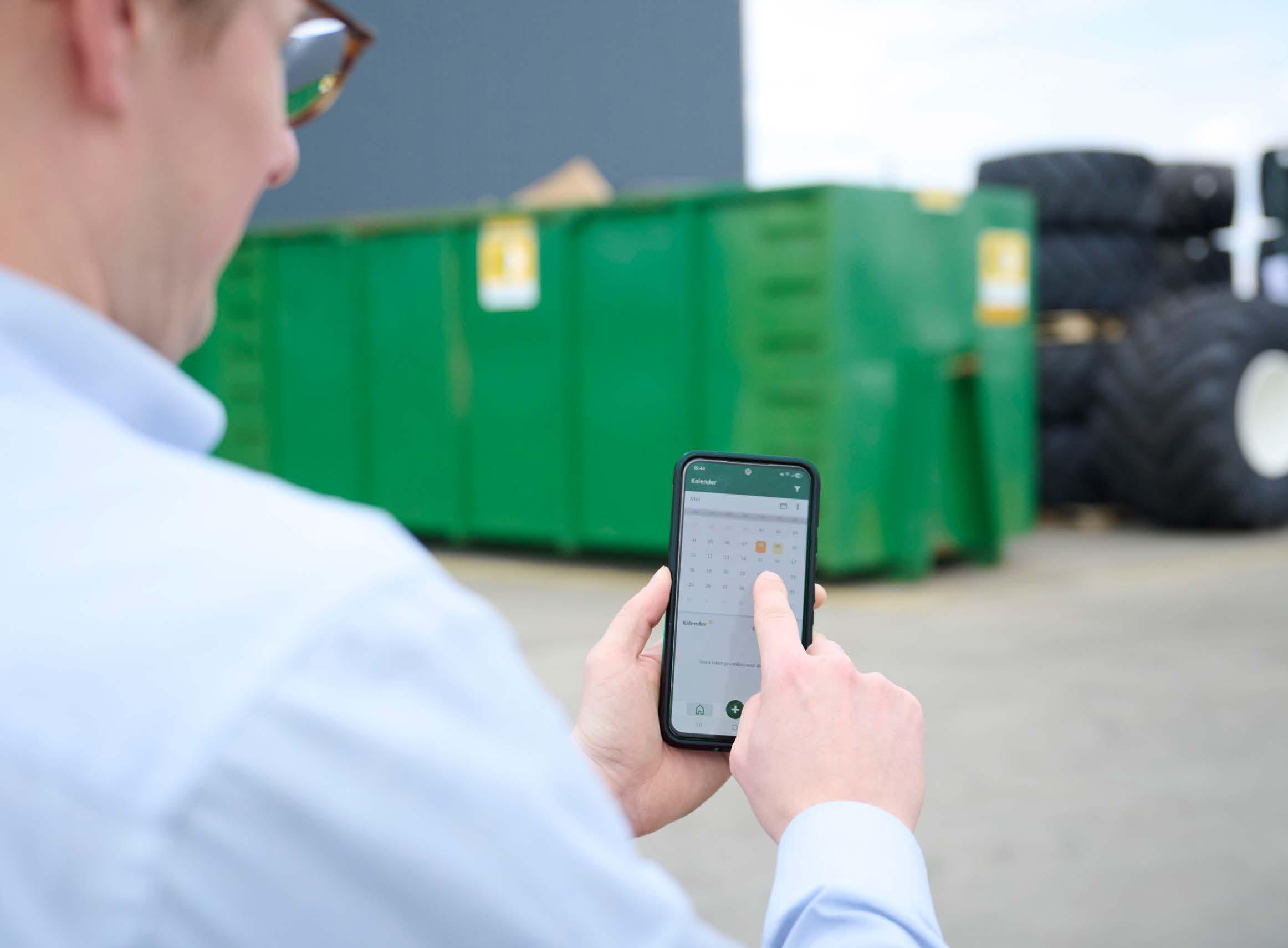
“What else made a difference? That would be myVanheede and the Vanheede Plus app. ATS has 23 sites in Flanders. Each of them has their own waste volumes and streams, like electronic waste or packaging. Thanks to these digital tools, colleagues are able to submit collection requests, consult the calendar and analyse site statistics easily. All while allowing me, as environment coordinator, to still have a centralised overview. That’s essential, because it means I can access all the sustainable reporting data I need in one place.”
4,3
Peace of mind for Huro
A designated contact
“With six waste containers, six wheelie bins and six pallet boxes, our courtyard looks a bit like a mini container park. Sometimes, we end up with very specific waste streams, and we don’t know the right way to dispose of them. When this happens, I call Steven, our contact at Vanheede, and we get an answer straight away. You know what I appreciate about working with the company? Vanheede is excellent at what it does, which means we can devote ourselves fully to our core business: waterproofing roofs.”
Always complying with legislation
“Waste management also involves a whole series of regulations. If there are any new ones, Steven lets us know immediately. So we don’t have to worry about keeping on top of them ourselves. The same goes for our waste register. We know that everything is clearly listed in myVanheede, which gives us real peace of mind. On this, they really are leading the way.”
Valerie Verschatse
Environment Coordinator at De Watergroep
Martijn De Baets
Environment Coordinator at ATS
Xavier Reynaert administrative assistant at Huro
By working sustainably at a local level, we have a global impact.
From logistics to treatment: a circular approach at each step
Working towards a sustainable and circular world through quality waste collection and treatment: this is what we do every day at our 20 sites stretching across Belgium, Northern France and Luxembourg. Let’s take a closer look at our environmental group.
A specialised solution for 3,000 types of waste
Paper, plastics, organic or hazardous waste: did you know that we have a solution for more than 3,000 types of waste? We handle some of it in-house, and we work with specialist partners for the rest.
When deciding what to do, we factor in the type of waste, the treatment possibilities, the distance to the treatment centre and the total cost to the customer. The goal is always the same: to treat each waste stream in the most efficient and sustainable way possible. Our two kinds of sites - logistics sites and treatment sites - play a central role here.
Logistics sites (1)*
First, our logistics sites. They are the link between collection (1)* and treatment (2 & 3). This is where we centralise the waste before transporting it to a treatment centre. But we do more than just stock it. We also carry out quality controls and prepare waste streams for further processing: sorting, pressing cardboard and plastic films, and shredding wood etc.
The logistics sites also serve as operational bases for our lorries. Located throughout Belgium, Northern France and Luxembourg, they enable us to stay close to our customers and respond flexibly to their needs.
Our logistics sites in Antwerp and Engis are getting an upgrade. Find out more on page 46.
77,7%
17%
Treatment sites (2 & 3)*
Of the 705.417 of waste that we collect, 17 percent are headed to our own treatment plants. Here’s an overview of our specialities.
• Sorting (Recovery Facilities).
Recovering products from mixed waste and plastic rich feedstocks.
→ Site Rumbeke
To find out more, see page 30.
• Plastic waste (Plastic Recycling).
Washing, sorting and grinding dirty plastics to obtain quality flakes, intended for manufacturing new plastic products, such as shampoo bottles or car bumpers.
→ Site Dottenijs
Plastic recycling is one of our biggest investments. To find out more, see page 34
• Organic waste (Organics Recycling).
De-packaging and biomethanation of food waste to obtain soil amendment and green energy.
→ Site Quévy
• High calorific value waste. (Chemical Recycling).
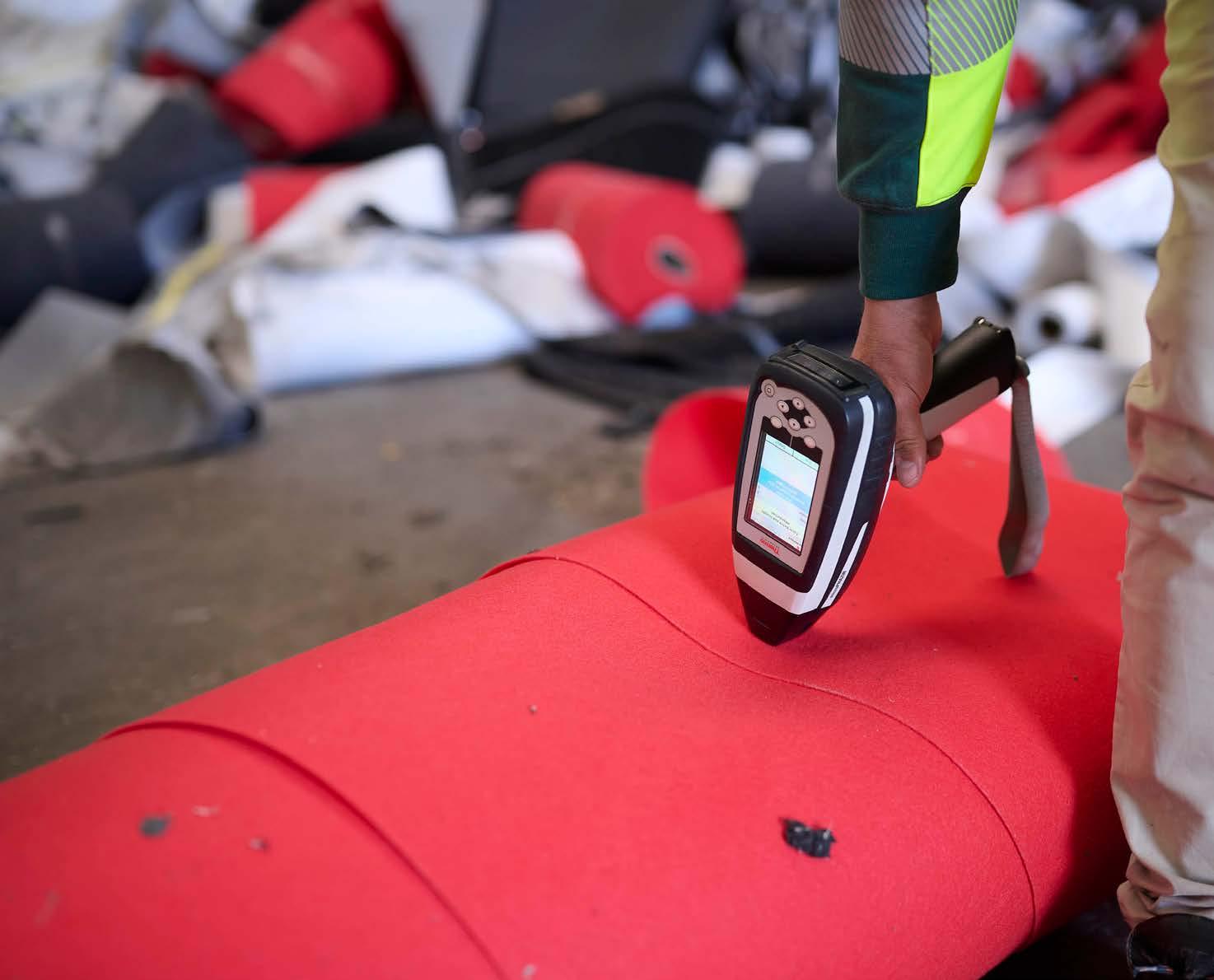
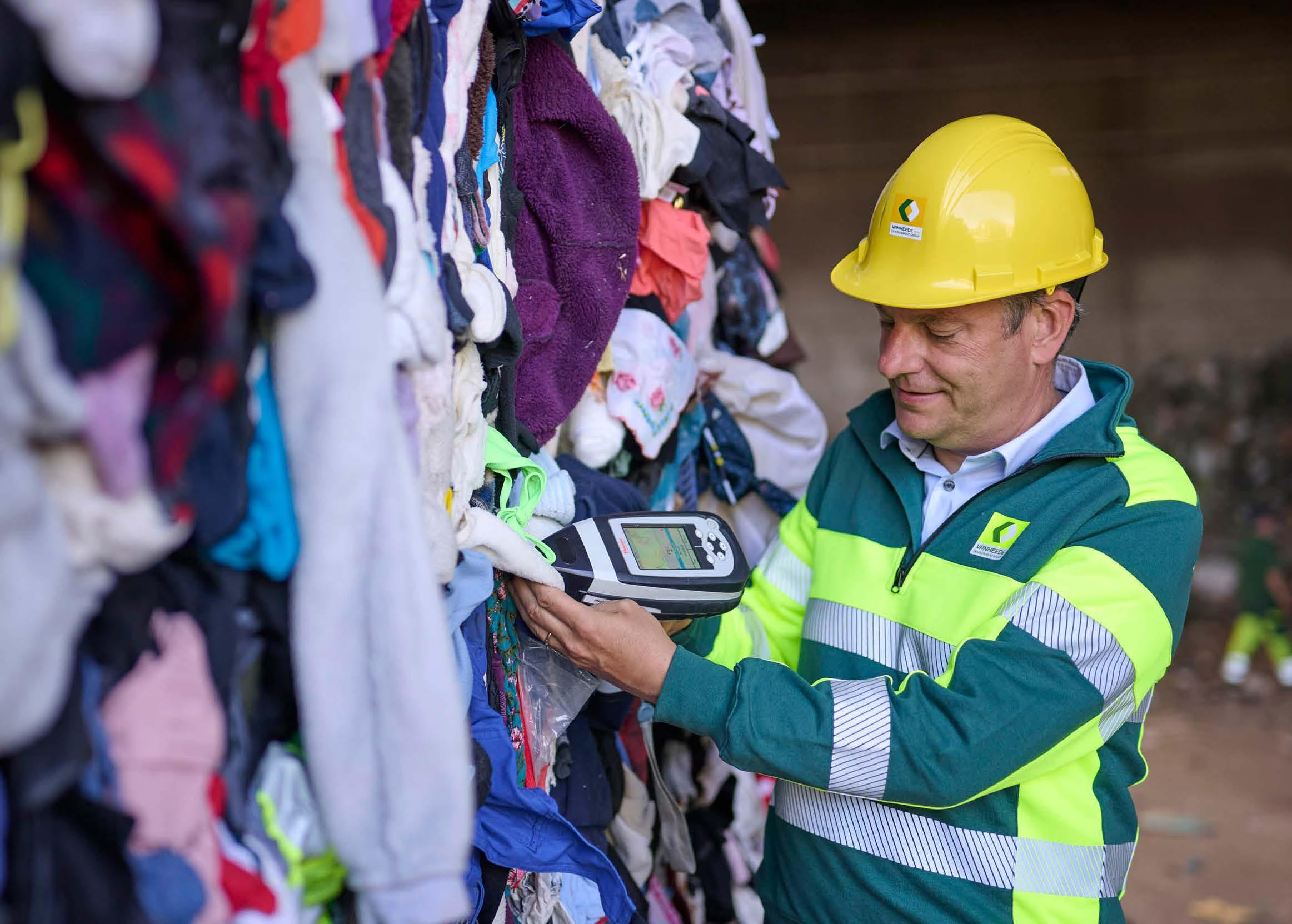
Upgrading textile or carpet waste, nonrecyclable dirty plastics and sorting and processing residue into pellets. These are then used in energy-intensive industries, such as the cement and lime industries.
→ Site Dottenijs
Would you like to know how it works?
See page 36
5,3%
Landfilling (4)*
Lastly, there is the waste that’s left over despite all our recycling efforts, and that can no longer be reused or recycled. We call this ultimate waste. Roughly 5.3% of the waste we collect falls into this category and is sent to landfill.
That could be, for example, our landfill at Rumbeke, created in the 1980s in the clay pits of a brickworks. It’s a controlled environment that we monitor constantly. And even there, we are always looking for the most sustainable solution. That’s why we degas landfill waste and use this gas to produce electricity. The last link in the chain: a nature area that we are building over and around the landfill.
Learn about the landfill’s future on page 43.
Caroline Vanheede:
“A family firm with a global mission”
Think global, act local
The strategy behind this range of sites? A local presence with a global impact Being present where our customers are, while never forgetting that the scope of our operations extends much further. Many of our secondary raw materials end up being used internationally. We work with foreign treatment centres or treat waste from abroad ourselves. By making sustainable choices at a local level – by responsibly managing collection, treatment and transport – we do our bit for a circular world beyond our borders.
“When my parents, Herwig and Claudette Vanheede, started this company in 1968, its core business was waste collection. We very quickly moved into waste treatment. This step quickly evolved into an ambition to make more out of waste; to give it added value by developing our own sorting capabilities and recycling solutions. That’s how we gradually gained more and more expertise in sustainable waste treatment.
We really are a family firm. Even if I only officially started in 1991, my brother and I were already involved from a very young age, and we helped out during our free time. Now a third generation has also joined the adventure. Every day we work together to uphold Vanheede’s vision: towards a circular world, in a sustainable way.”
Vanheede
3 Sorting plants
Recycling centres
From waste to a new
bottle
In most companies, a plastic bottle’s story ends at the recycling bin. At Vanheede, that’s just the beginning.
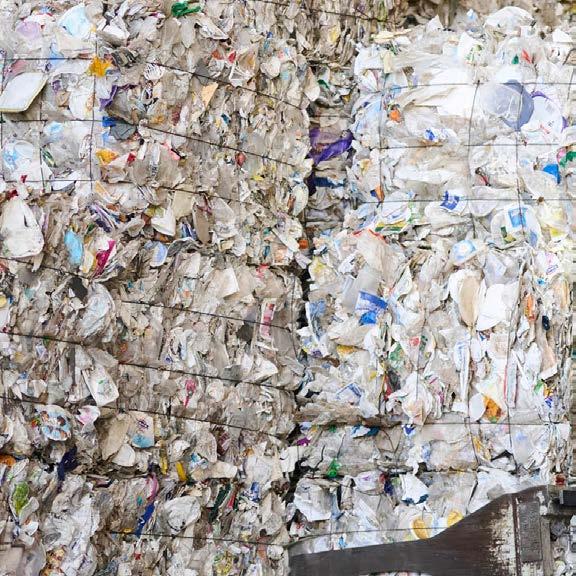
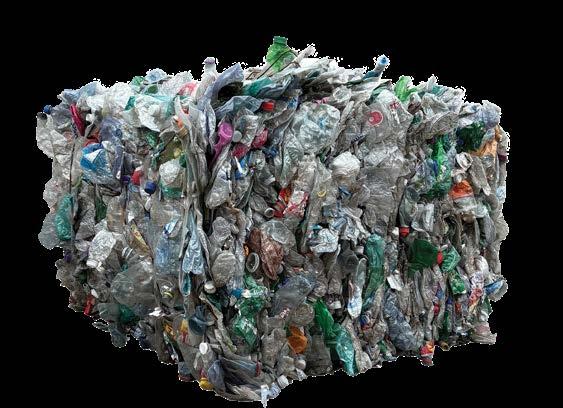
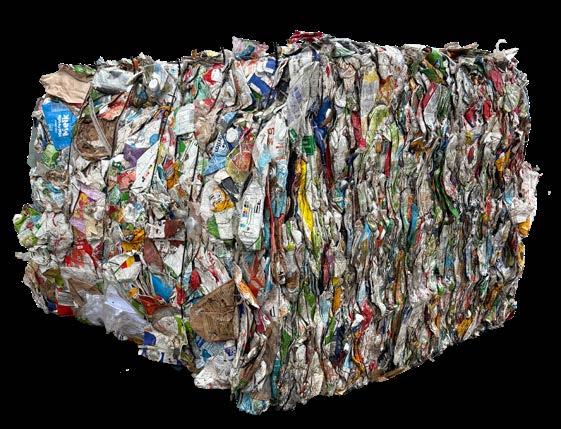
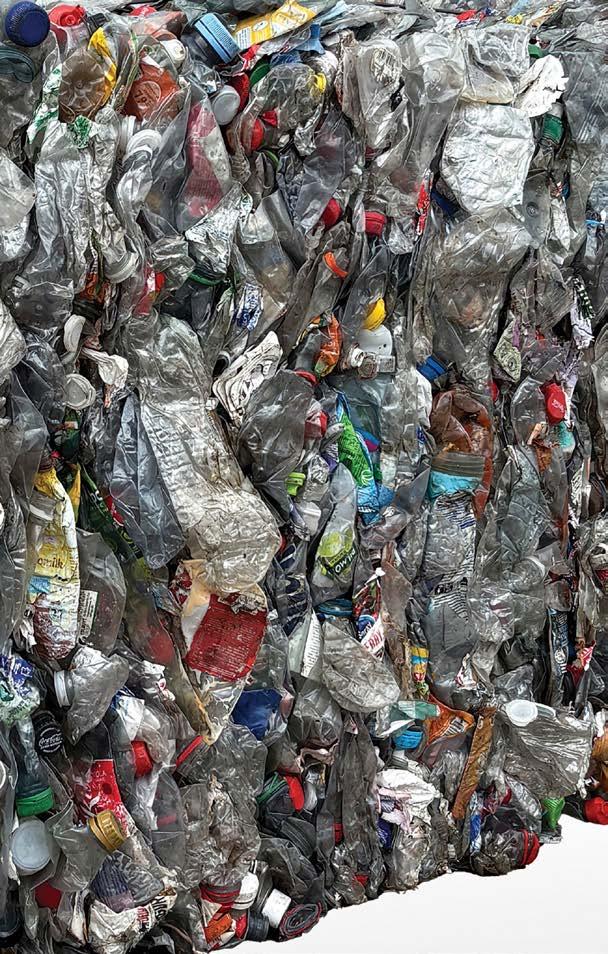
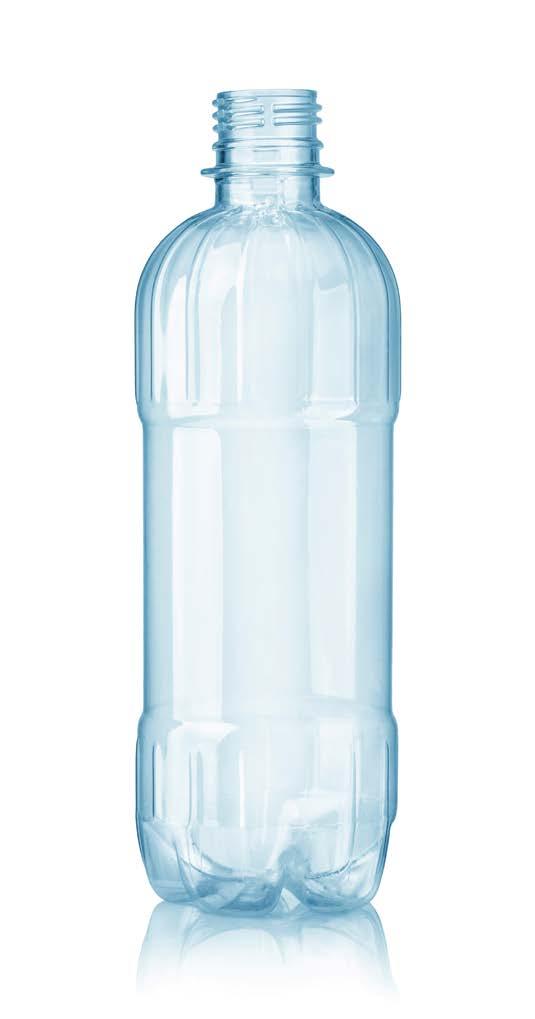
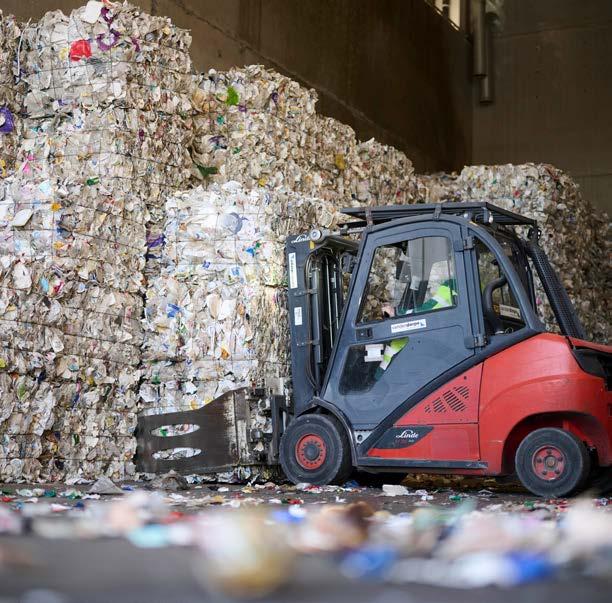
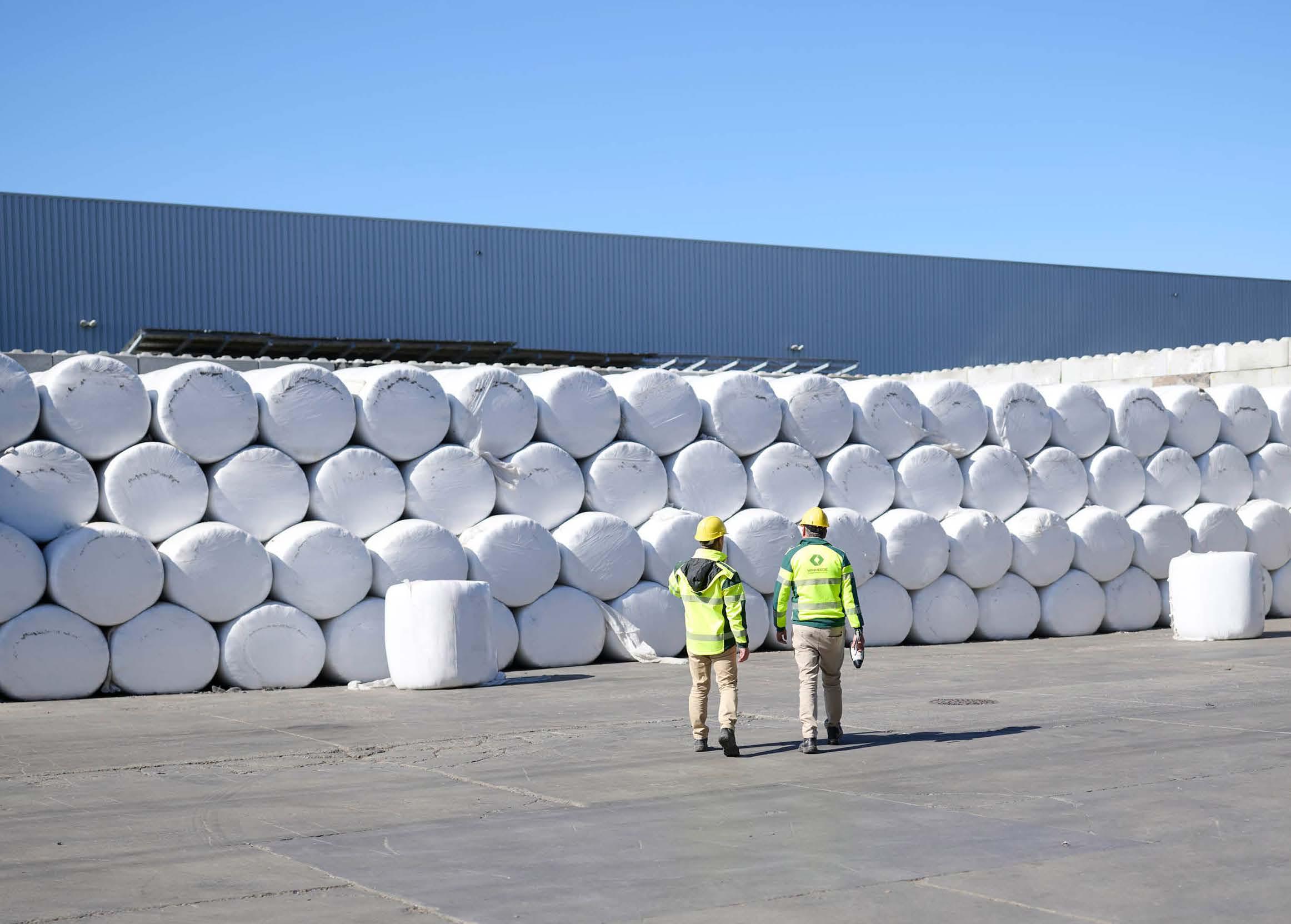
PET bottles are sorted, compressed into bales and sold to specialist recyclers, like Dentis, an Italian multinational and the European leader in mechanical PET recycling.
Dentis has been taking regular shipments from Vanheede since
2019, turning the PET into foodquality flakes and pellets. These are mainly used to manufacture new bottles. “Vanheede is a reliable partner, who guarantees us a steady supply and good quality,” said the group’s CEO, Corrado Dentis.
This partnership is a great example of what can happen to your PET waste in the right hands. It’s a circular chain - and you can be a link.
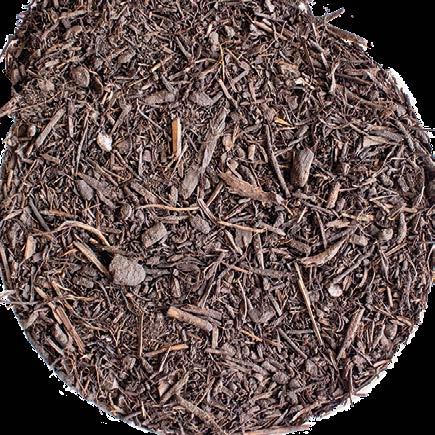
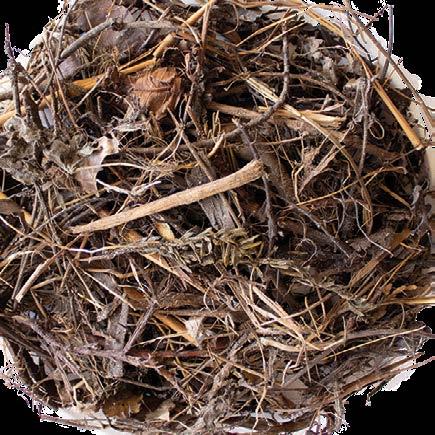
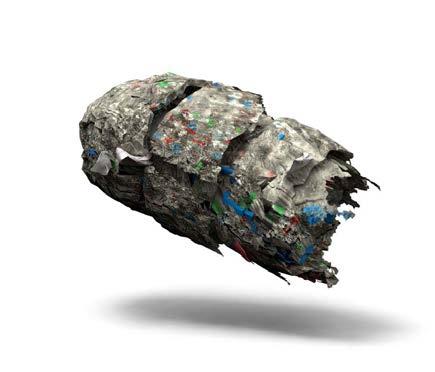
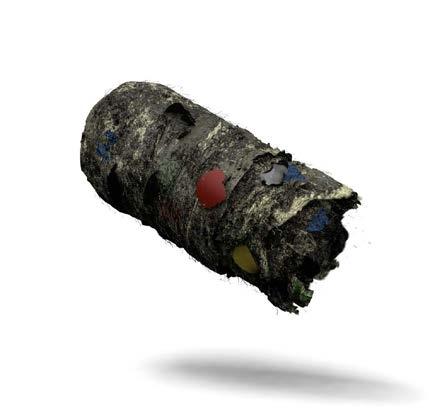
AfterCoal Hard
AfterCoal Soft
AfterCoal Fluff
We are the only partner in Belgium capable of carrying out post collection sorting of residues from PMD sorting centres.
50.000 tonnes of waste towards a circular world
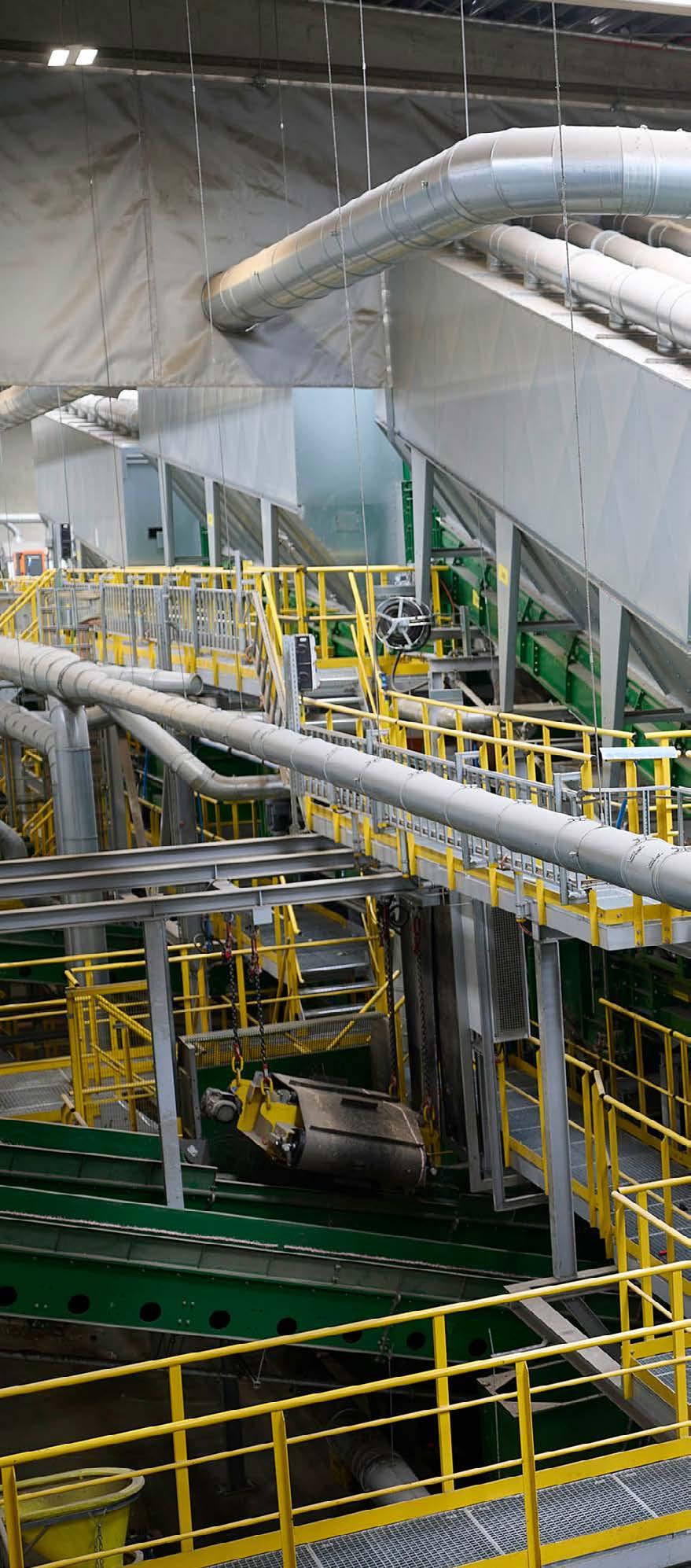
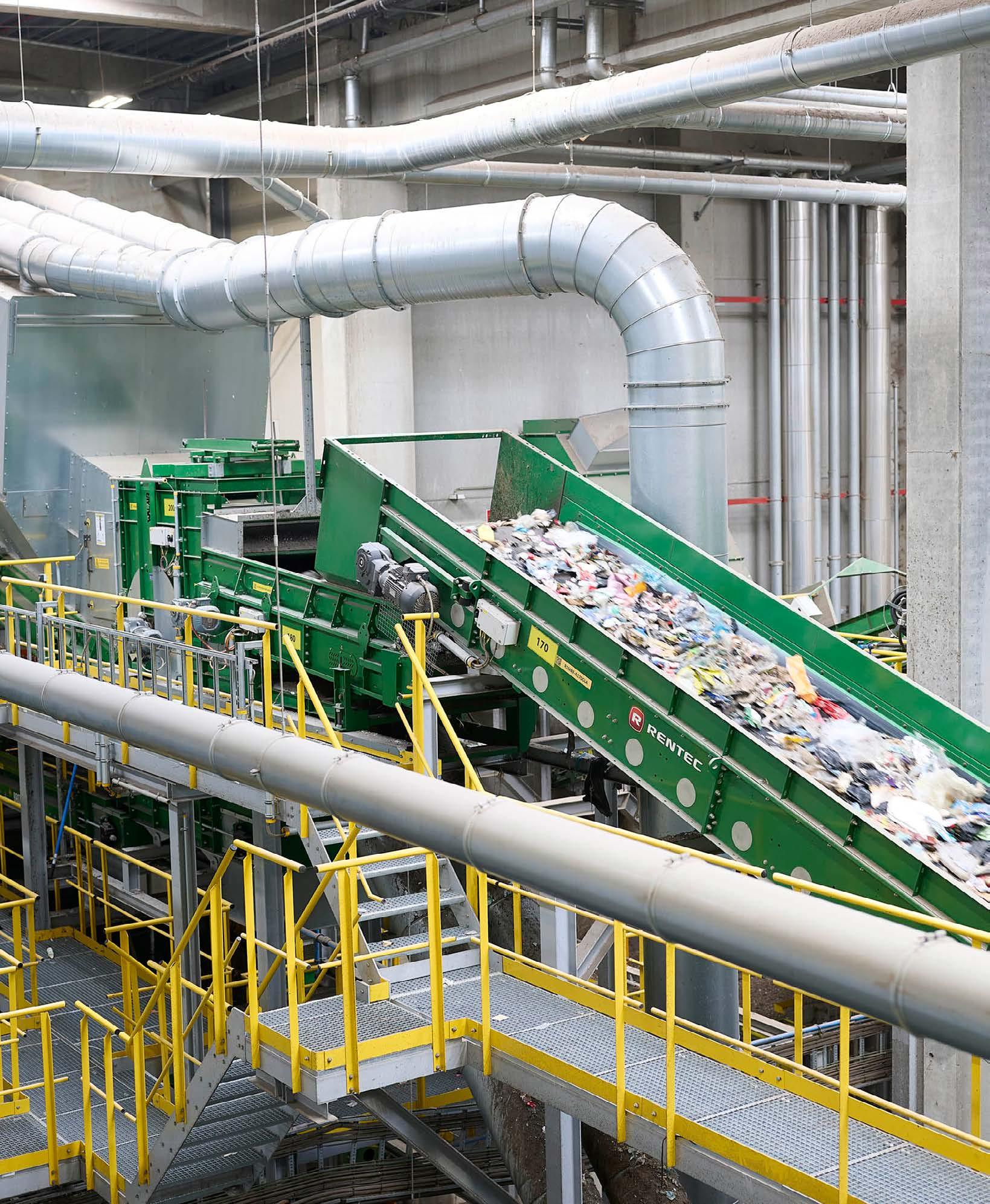
In 2025, Vanheede gave a second life to 50,000 tonnes of precious waste at Rumbeke. The heroes behind this result are two state-of-the-art sorting lines brought together at a single site. Thanks to advanced sorting techniques, we are able to extract maximum value from complex waste streams –and return materials to the circular economy.
Vlarema legislation
The MRF line provides a concrete response to the Vlarema legislation, which makes it compulsory to recover as much recyclable materials as possible from companies’ residual waste. So it helps OVAM’s goal of reducing this waste by 30% by 2030.
Two lines, two well-defined rolls
At our Rumbeke site, two state-of-the-art sorting lines work closely together, each with its own specialisation.
The Material Recovery Facility (MRF) has been operational for two years and has quickly become the gold standard in our sector. With an additional capacity of 100,000 tonnes per year and the creation of 50 additional jobs, this installation has considerably boosted our recycling business.
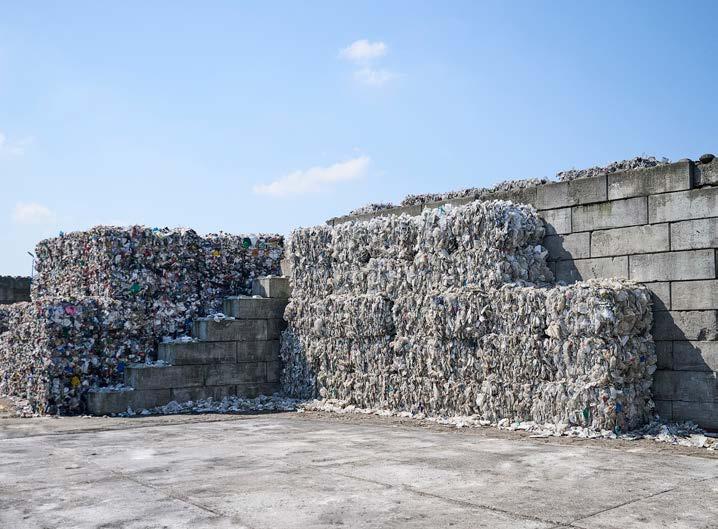
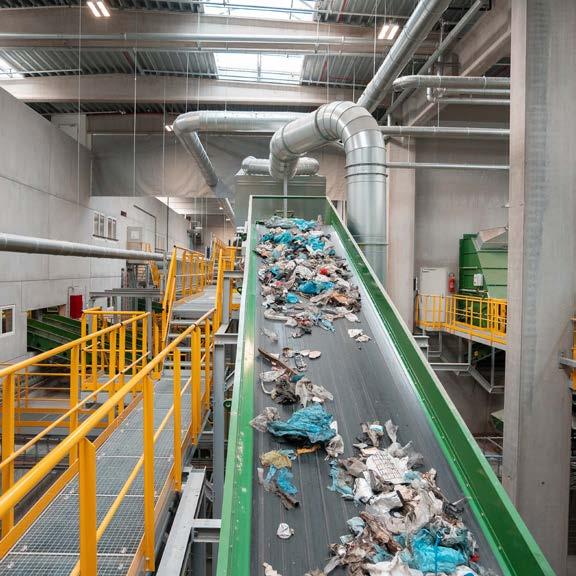
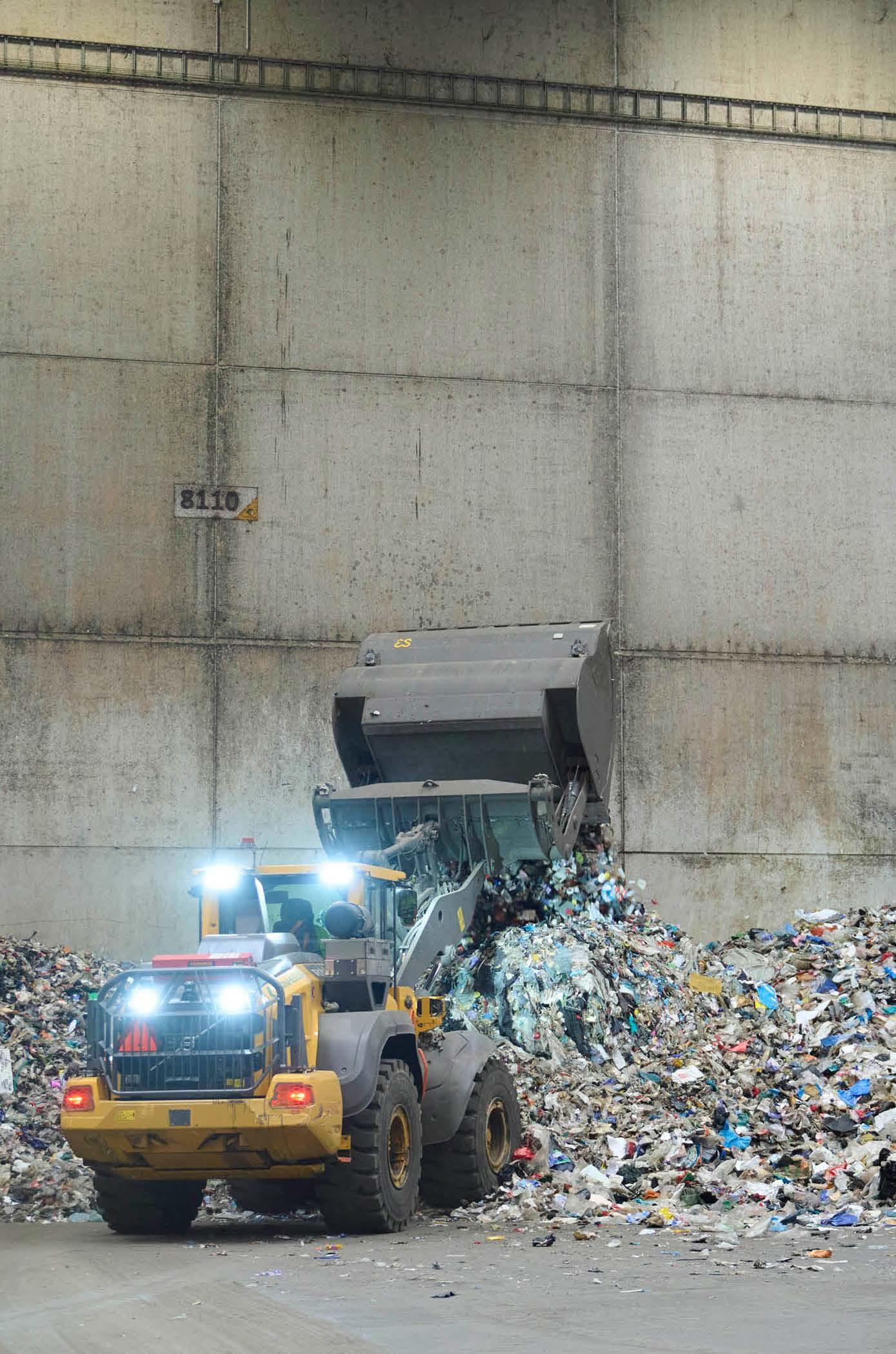
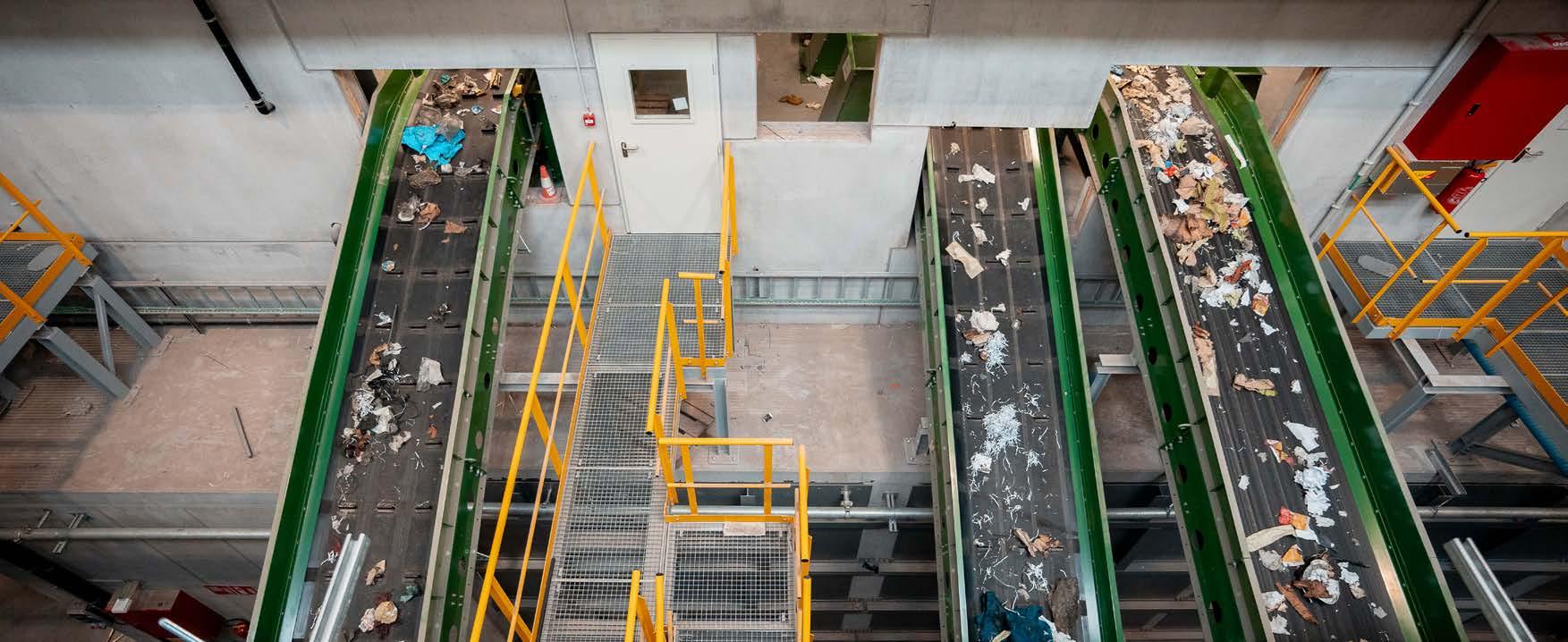
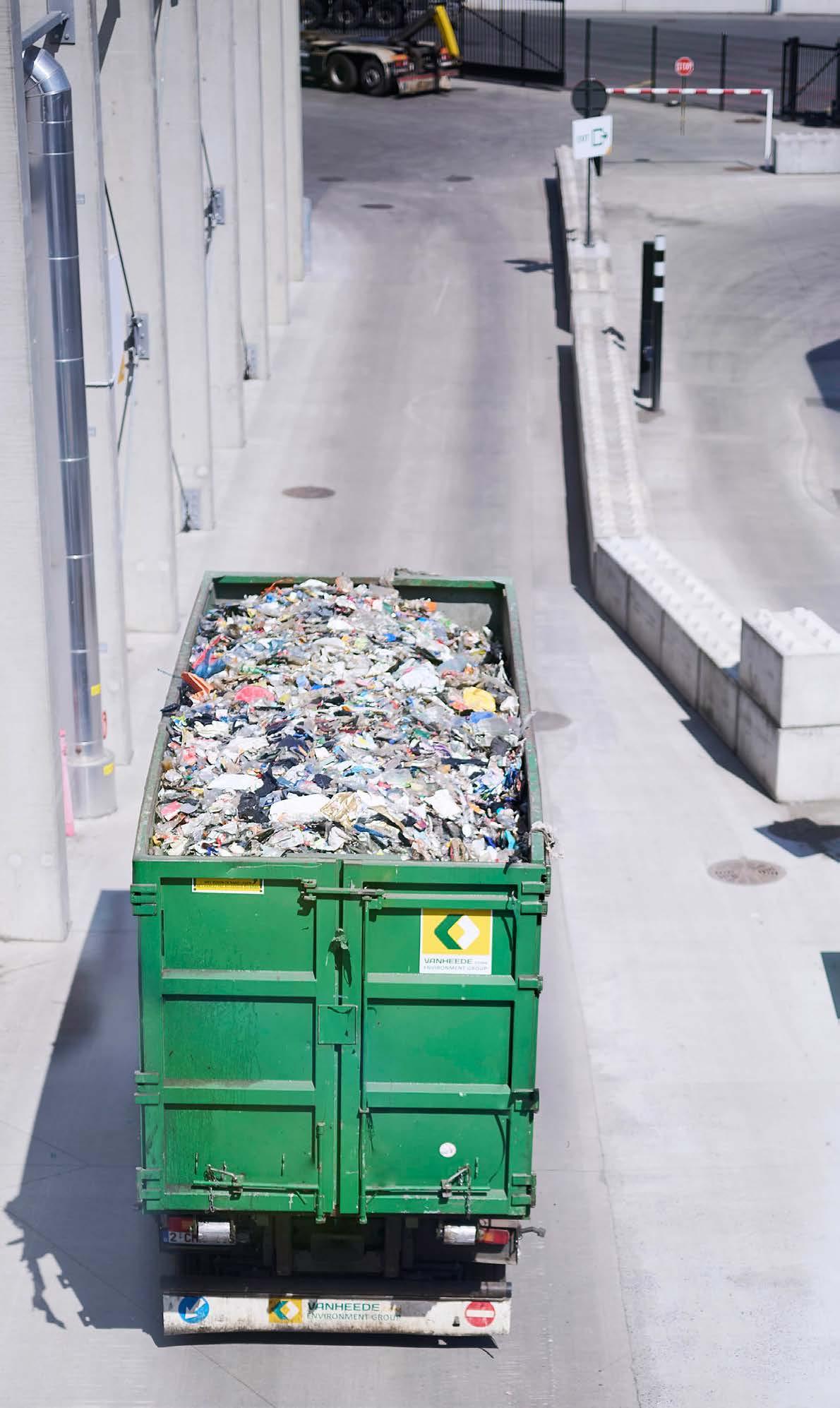
The MRF concentrates on sorting mixed streams into big material families, such as wood, paper and cardboard, rigid plastics, plastic films, metals and PMD, etc. The line specialises in treating residual waste from businesses, residual PMD and residual streams from other facilities. Whereas previously these materials were sent for incineration, we are now able to recover them and send them off for recycling.
The Plastic Recovery Facility (PRF) The Plastic Recovery Facility is for the fine sorting of plastic packaging, metals and drinks cartons. Unlike the MRF, this line does not sort into big material families, but into very specific streams. Thanks to advanced automation and continual investment, we are able to obtain 16 streams of pure materials.
Together, the two lines form a powerful tandem: from broad sorting into product families to extremely fine sorting into very specific material streams, depending on the polymer, colour or chemical properties, etc.
This means that, after sorting, some PP and HDPE plastic streams continue their journey in our processing plants. We upcycle them into high quality plastic flakes, mainly used in the car industry.
Want to learn more about plastic recycling? Read more on page 34.
Did you know that the annual amount of additional materials recovered from residual PMD is the same as the annual volume of PMD waste for one province?
A
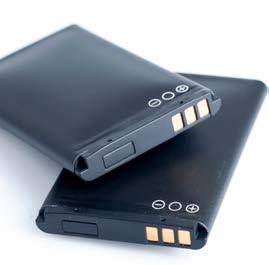
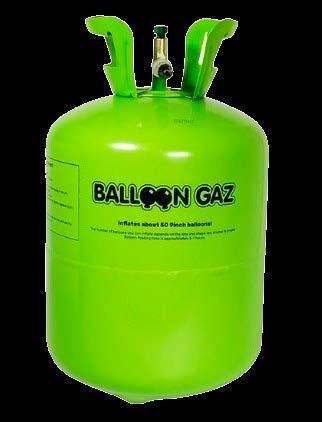
public service announcement: batteries and gas cylinders must be collected separately!
Unfortunately, batteries and gas cylinders continue to be put up in the wrong waste containers far too often. They end up in our sorting facilities, where they can create dangerous situations and present a fire hazard. With Special Waste Management, they’ll be collected safely and you’ll be in compliance with regulations.
Find out more about Special Waste Management on page 16.
A vital link in the circular economy chain
Our sorting activities go far beyond just treating waste. They form a vital link in the circular value chain.
By turning mixed and complex waste streams into pure material streams, we ensure that they can be reused as raw materials in new products.
This has a positive impact on a circular level, and also on a strategic one. By recovering and reusing materials locally, we boost our region’s self-sufficiency in raw materials and reduce our dependence on imported primary raw materials. Economic development and prosperity has always been based on raw materials. Circular raw materials now play an increasingly big role in this; they will be the driving force behind a sustainable and competitive economy.
Thanks to this approach, we are accelerating the transition to a system where raw materials
remain in circulation for as long as possible. Together with our customers, public authorities and our partners, we are continuing to advance the circular use of materials, while laying the foundations for future prosperity. And this is what our Recycling Revolution is all about.
Would you like to find out more about these innovative techniques?
Scan the QR code for a virtual tour of our MRF line!
Maxime Vanheede Business Unit Manager Plastic Recycling
Let’s make plastic collected and recycled in Europe the first resort
We’re perfectly capable of recycling plastic in Europe. And yet we import huge quantities of virgin plastic from Asia and America. There’s a simple reason for this: brand-new costs a lot less than recycled.
And there’s the catch. Because aside from the fact that this model is anything but sustainable, it keeps Europe in a constant state of dependence. By improving plastic processing and recycling, and, most importantly, by keeping these activities in Europe, Europe would strengthen its position on the world stage.
Plastic Recycling: such great potential
Vanheede has been investing heavily in plastic recycling for years, particularly plastic soiled by use which is harder to treat. Finding a circular solution for these materials is a valuable and crucial step towards a robust economy focused on the future. But it’s also a major investment. Especially since the market hasn’t caught up yet.
The fact is, demand for recycled plastic is still limited. Why? Because too much virgin plastic continues to pour into Europe from Asia and America. It’s cheaper to produce it there mainly because labour and energy overheads are lower, but also because environmental requirements and safety standards are much laxer. As a result, virgin plastics are prioritised over their locally produced recycled alternative.
More self-sufficiency for Europe
Yet recycled plastic offers major advantages. Plastic is a reliable raw material that we still aren’t exploiting sufficiently. By recycling it, we create our own reserve of materials. This is really crucial for Europe, which has few natural resources and remains heavily dependent on imports.
This makes plastic recycling a strategic choice in increasing our industrial and economic self-sufficiency. At the same time, recycling remains the key to a sustainable Europe. If we want to achieve our sustainability goals, we have to manage our waste in a circular way.
Heading towards fairer competition
So the market needs to shift. As long as virgin plastic remains cheaper, manufacturers will vote with their wallet. Fortunately, demand for recycled plastic is expected to increase sharply in the coming years in the packaging and automotive sectors, thanks to a push from European regulations such as the Packaging and Packaging Waste Regulation (PPWR) and the End-of-Life Vehicles (ELV) Regulation. But that won’t be enough to effect change in the short term.
Advanced mechanical recycling; the key to circularity
Plastic is given a second life at our Dottignies plant. What seems like waste at first sight is turned, in steps, into a valuable primary material.
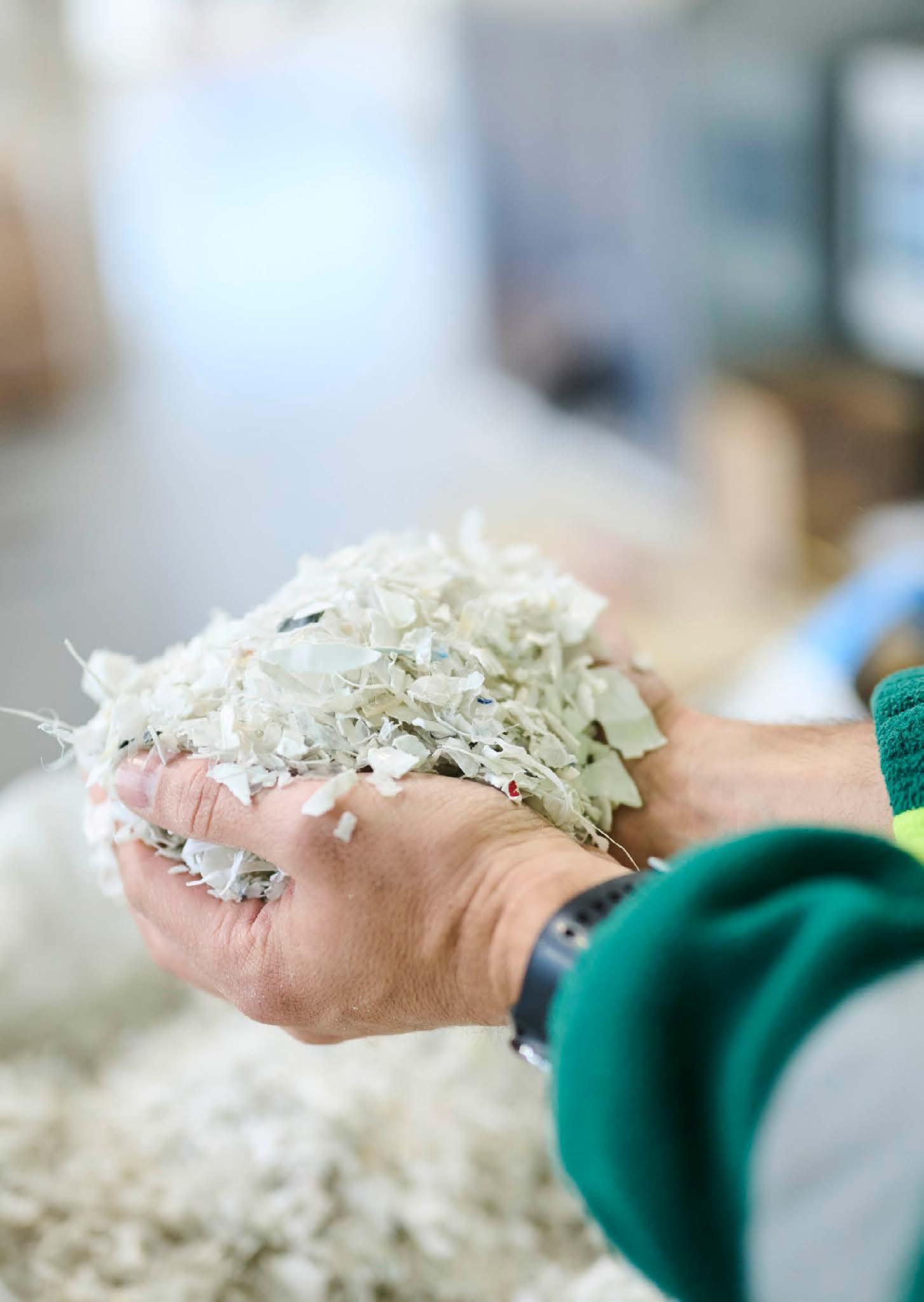
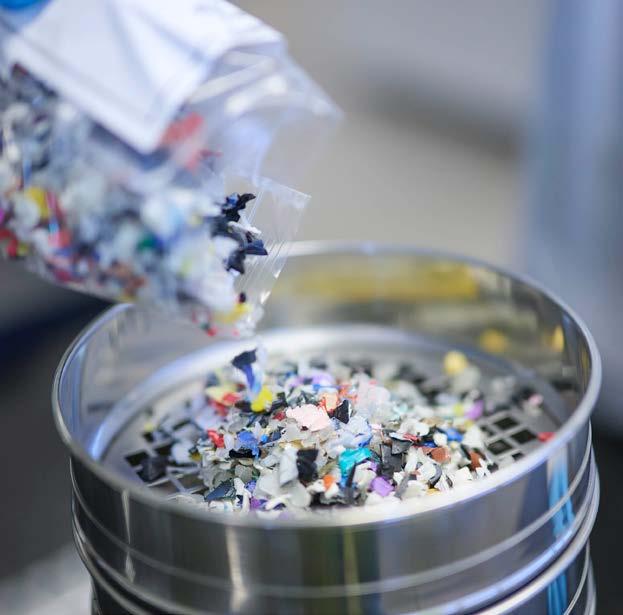
We start out with bales of sorted plastic packaging made from PP and HDPE, which we then sort and clean again. We remove impurities through a series of special washing and purification stages, retaining only high-quality materials.
Using smart technology and rigorous process control, the material is made increasingly pure, resulting in a clean, homogeneous plastic, ready for new applications. This is how we keep materials in circulation and help build a circular future every day.
What Europe could do right now is reward manufacturers who chose recycled plastics, for example. One way to do this would be using ecomodulation as part of the extended producer responsibility (EPR) to grant packaging manufacturers a significant reduction when they use recycled materials rather than entirely virgin plastic.
Lastly, Europe also needs to better support and protect its recycling industry. Current environmental regulations and quality standards are stricter here than in many other parts of the world. The rules are justified, but they also mean that recycling is much more expensive for us. If Europe is to take circularity seriously, it also needs to help this sector remain competitive, with energy support or stricter controls on imported materials for instance.
To sum up, solutions are out there. Vanheede is ready for the transition to a stronger Europe through plastic recycling. Now it’s time for the politicians to act.
Transparency and traceability as strengths
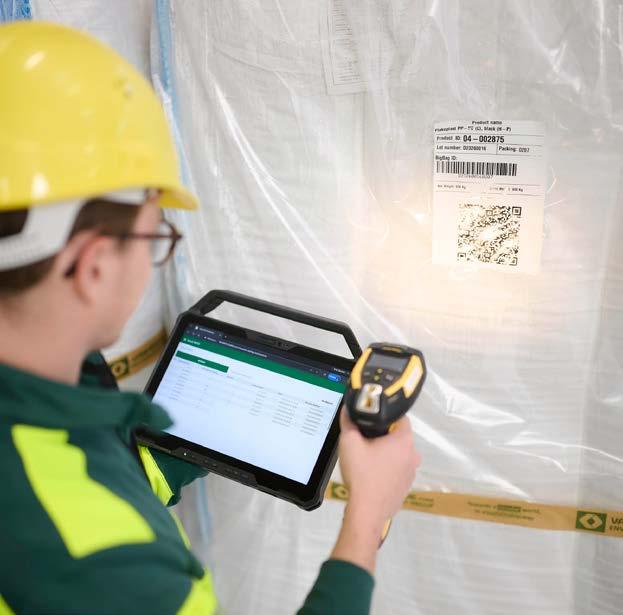
With regulations on materials and product safety becoming increasingly strict, compliance and traceability are essential. That’s why we track materials throughout the treatment process, from reception to delivery. Everything is recorded digitally and given unique identifiers, so that each batch remains traceable. This enables us to offer our customers guarantees regarding origin, quality and compliance with European standards. This guarantee is backed by certifications such as RecyClass.
We are pioneers and rank among the most advanced companies in the sector in Europe. We have been building our expertise since 1998.
Turning
non-recyclable, high-calorific-value
waste into alternative fuels
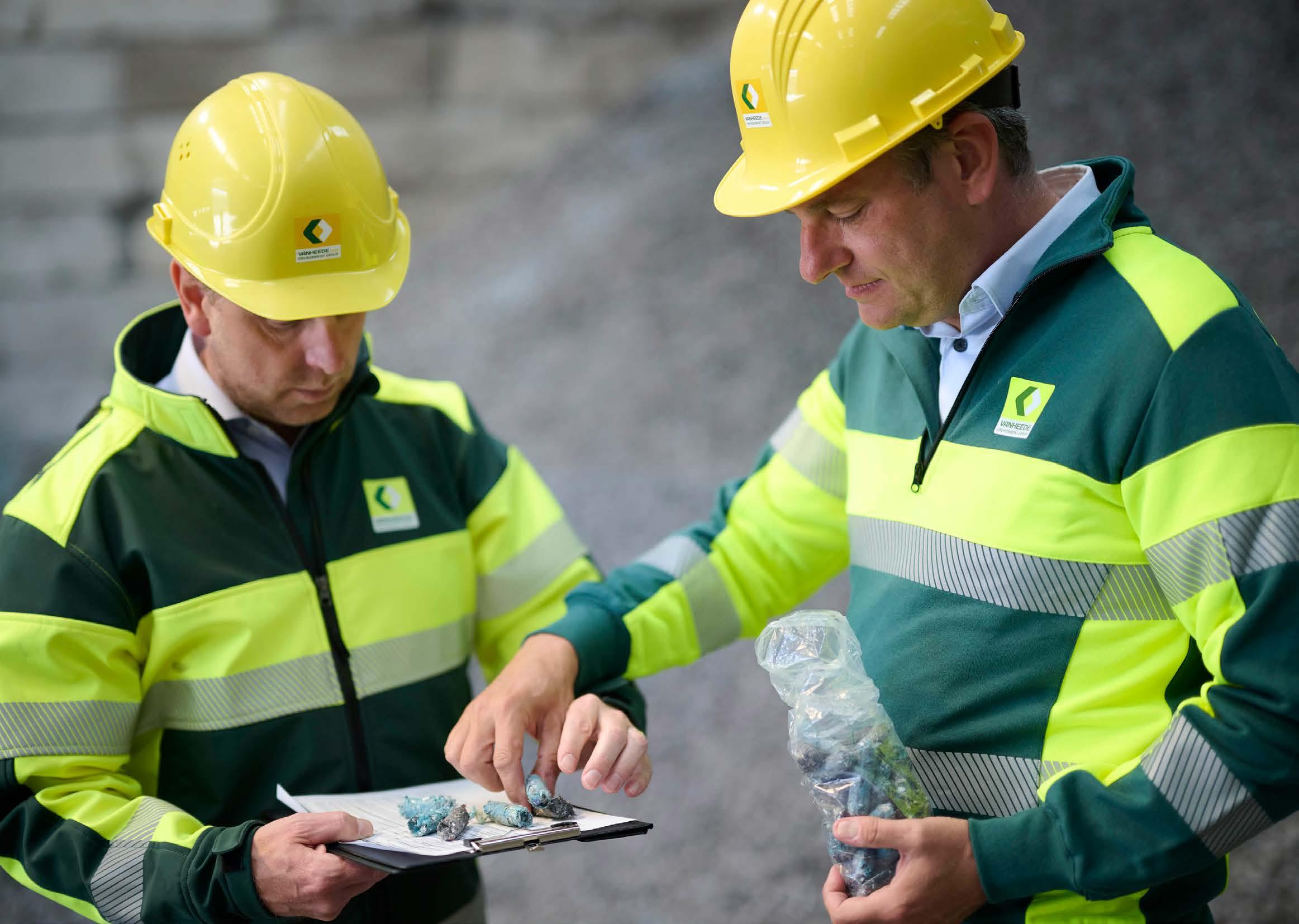
Chemical recycling is a core business at our second site in Dottignies. Our mission? To reuse 100% of materials that are difficult to recycle, in the form of alternative fuels and, by extension, raw materials. Would you like more details? Tom Defeyter, Chemical Recycling Business Unit Manager, and Nico Kimpe, Sales Manager, tell all.
We find a way to reuse materials that, traditionally, would have been sent to landfill or incinerated.
What waste streams do you take in?
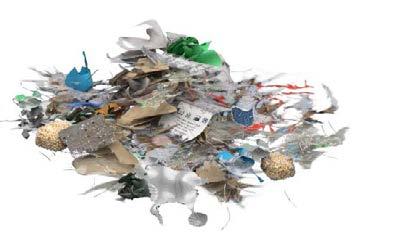
Nico: “High calorific value complex and synthetic waste that is no longer recyclable: dirty and used carpets, clothing and multi-layered plastics. But also, residue from plastic sorting and recycling processes.”
Tom: “These are all materials that can no longer be reused. Traditionally, they would be incinerated or sent to landfill. But we find a way to reuse them.”
What do you do with this waste?
Tom: “Do you have a few hours? (Laughs). Chemical recycling is a complex process which can be
summed up like this: we take a mixed waste stream and turn it into a pure and homogeneous product. The result? AlterCoal.”
Tom Defeyter Business Unit Manager
Nico Kimpe Sales & Sourcing Supervisor
Tell us: What is AlterCoal?
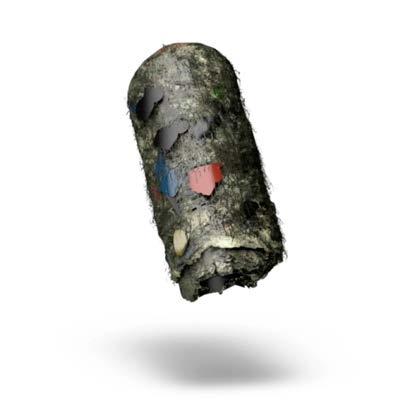
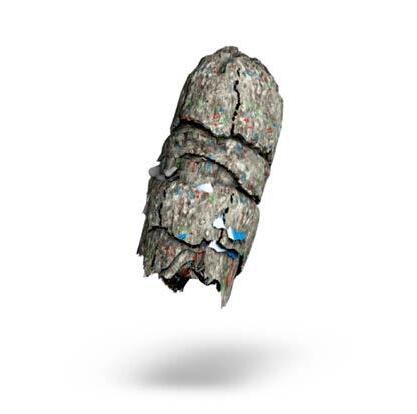
Nico: In a nutshell, AlterCoal – which comes in pellet form – provides an alternative to fossil fuels, such as coal or oil. It’s used as a substitute fuel and raw material in industrial production processes, especially in the cement, lime and steel industries.”
Tom: “We make bespoke AlterCoal, depending on the customer’s needs. Lime production, for example, needs a different composition to that of cement. Creating these “recipes” requires a great deal of expertise.”
Why is it in these industries’ interest to use AlterCoal?
Tom: “Because these are energyintensive industries. But the law still requires them to reduce their CO₂ emissions. Since our AlterCoal contains biomass, that reduces their carbon footprint significantly straight away. On top of that, and especially in the current context, these companies have everything to gain from being less dependent on foreign raw materials and working with local alternatives.”
Nico: “And that’s where our AlterCoal provides the best solution. We are pioneers and rank among the most advanced companies in the sector in Europe. We have been building our expertise since 1998. Which explains the very high quality of our AlterCoal.”
Finally, to what extent are chemical recycling and AlterCoal circular?
Tom: “We give a second life to waste which, at first glance, no longer seems usable. It is turned into alternative fuel or a new raw material. And our product also contains many minerals.”
Nico: “Exactly. Take the cement industry, for example. After using our AlterCoal as fuel in the cement kiln, ashes remain. These are minerals needed for cement production. That’s why these ashes are incorporated straight into the product to enrich it as a raw material.”
Tom: “This means we’re able to reuse 100% of materials that previously would have been sent to landfill or incinerated.”
ArcelorMittal is replacing coal with AlterCoal
The ArcelorMittal steel plant in Ghent imports huge quantities of coal every year. It’s an aspect of their business that could be more sustainable. So they reached out to Vanheede with a very specific request: “Create a product that’s similar to our fossil fuels, but made from local waste.”
With backing from the European LIFE SMART programme, we developed an AlterCoal tailor-made for a steelworks. Over time, it will replace a large part of the coal. And this will lead to positive results:
the plant will be less dependent on imports and it will reduce its CO₂ emissions. A recent study showed that, with this process, replacing 2% of the coal with pellets like AlterCoal reduces total emissions by 6.4% (Ávila et al., 2026).
Good to know. ArcelorMittal has succeeded in transforming gases from steel production into new raw materials for plastics. These raw materials are used to make products like bottles, which might end up back at Vanheede after use. We will then convert them into new, recycled plastic or AlterCoal. And so we come full circle.
Source: Ávila, M., Verbrugge, S., Bellemans, I., Verbeken, K. (2026). Carbon footprint of coke-making in Europe and the cost-effectiveness of plant design: Optimization by using alternative reductants. Waste Management, volume 212, 115346. https://doi.org/10.1016/S0956-053X(26)00016-4
Quévy: an industrial site cultivating biodiversity
This
is a chance to prove that industrial activity and biodiversity can exist side by side.
Environmental protection is an integral part of Vanheede’s DNA.
Once upon a time there was a lagoon
At the Vanheede Biomass Solutions site in Quévy, there once was a lagoon that was slowly dying. In the past it had been home to a diverse fauna, and migratory species were regular guests too. But it had been gradually drying up since 2018 due to increasingly dry summers. There were even years when this large watering hole had completely drained away by the winter. A visible sign of climate change and, for Vanheede, a chance to do something.
A haven of biodiversity
Out of plans to expand the biogas plant, a project was born: to restore the lagoon, maintain a permanent water level throughout the year and landscape the surroundings in compliance with the Department of Nature and Forests regulations. The goal wasn’t to recreate what had previously existed, but to do better: a smaller space, but much more welcoming, able to self-regulate and develop autonomously over the years.
Common toads, grass frogs, palmate newts, brown damselflies and common shelducks - these are just some of the species that Vanheede hopes to see flourish here. A biologist will conduct regular inventories to measure progress and adapt the landscaping if necessary.
“In 4 to 5 years, we hope to see new species appearing,” commented Julien Pozza, Organics Recycling Business Unit Manager. “We’ll have managed to create something that flourishes on its own.”
A project for everyone
The Quévy site is located in what used to be a sugar factory, and has been part of the village’s history since well before Vanheede. Locals feel at home here, and the company knows it. The project received an enthusiastic welcome from the community, and no-one came out against it during the public inquiry.
The area will be open to members of staff during their breaks, and also, on occasion, to the public - schools, associations and neighbours, for example. It’s a concrete way of showing that industrial growth and respecting nature are not incompatible. “This is a chance to prove that industrial activity and biodiversity can exist side by side,” added Sefora Vullo, HSE Business Partner environment.
For Vanheede, this project is first and foremost about a conviction: a company that moves into an area owes it something in return. In Quévy, this conviction is taking the shape of a lagoon and a permanent water level that will soon welcome new life.
See you in December 2026
This project is the first of its kind in Wallonia, following the one in Rumbeke. It should be completed in December 2026. It’s yet another example of Vanheede’s commitment to industrial development that respects and enriches the environment in which it operates.
Sefora Vullo
Julien Pozza
common shelduck
1. What is RED?
The RED directive (Renewable Energy Directive) is a European regulation encouraging the use of renewable energy. In real terms, this refers to energy produced from biomass, such as food waste, wood and vegetable oil, or from waste with high calorific value, like some types of textiles.
To comply with the directive, the entire chain, from collection to processing and through to energy production, must be carried out in a sustainable and transparent way.
2. What waste does RED cover?
Any waste that can turn biomass into renewable energy. Practically, at Vanheede this means:
• Organics Recycling: we upcycle wood and food waste to generate energy through incineration or fermentation.
• Chemical Recycling: we turn high calorific value waste, such as mixed textiles, into alternative fuel.
• Special Waste Management: oils are reused as biofuel.
Turning textiles into fuel: how does that work? Read it on page 36!
The RED directive explained
The RED directive. There’s a strong chance you have already heard about this. But has anyone explained it to you in clear terms? Challenge accepted! Five questions, five answers, in plain language.
Important: incineration is always the last step in the chain. Take food waste, for example; first we have to see whether it can be used as animal feed. If it can’t, then we need to check whether or not we can recover energy as we process it. If it can be incinerated with energy recovery, it falls under the RED directive.
3. What do you have to do as a waste producer?
It’s simple: you need to make sure that what you put out for collection really is waste. These are materials that no longer serve their original function and that you wish to get rid of. Do you remember the RED selfdeclaration? That was the whole purpose of it.
The good news is that in the latest version of the directive (RED III), you no longer need to fill out a self-declaration. The fact that your waste has a waste code (a Eural code) when it leaves is enough.
We now take care of all the paperwork. There’s only one thing you still have to do: sort your waste properly
4. What are Vanheede’s responsibilities?
Vanheede must demonstrate that the entire chain has been strictly monitored, from collection to processing. And that involves a lot of work.
For example
• Recording and tracking each waste stream;
• Tracking waste volumes and origins via mass balances;
• Calculating and reporting greenhouse gas emissions;
• We undergo audits every year to renew our certification.
And what does all this rigorous monitoring get us? Vanheede is fully certified and in compliance with the RED directive. That means all the energy we produce from your waste is 100% compliant with the directive and contributes to a more sustainable Europe.
5. Why is it important to work with a certified partner?
The main reason for you is peace of mind. You know that your waste is treated in accordance with the regulations, without having to keep track of every detail. Plus, you’re contributing to national and European climate goals, which also has a positive impact on the sustainability of your business.
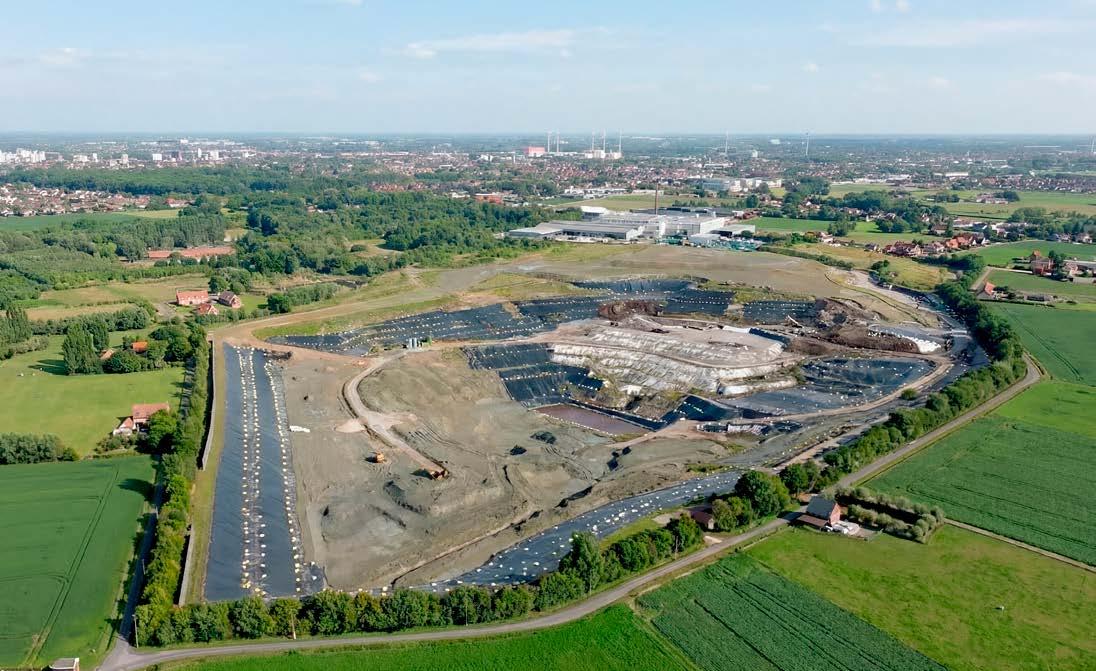
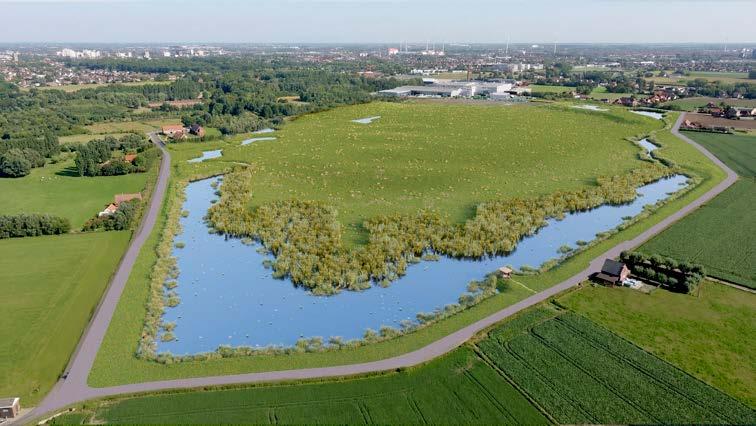
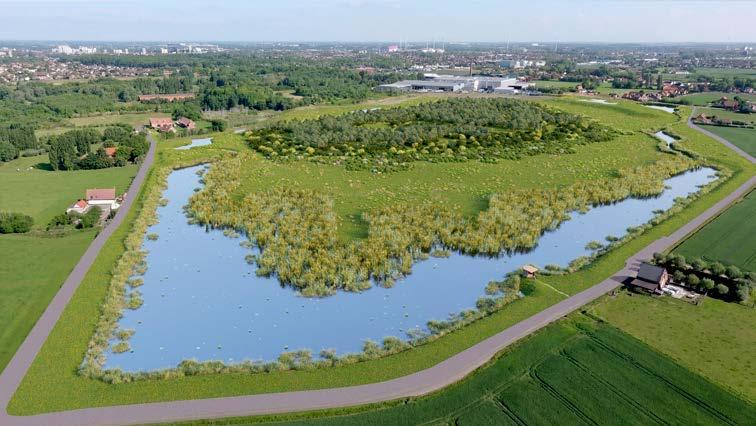
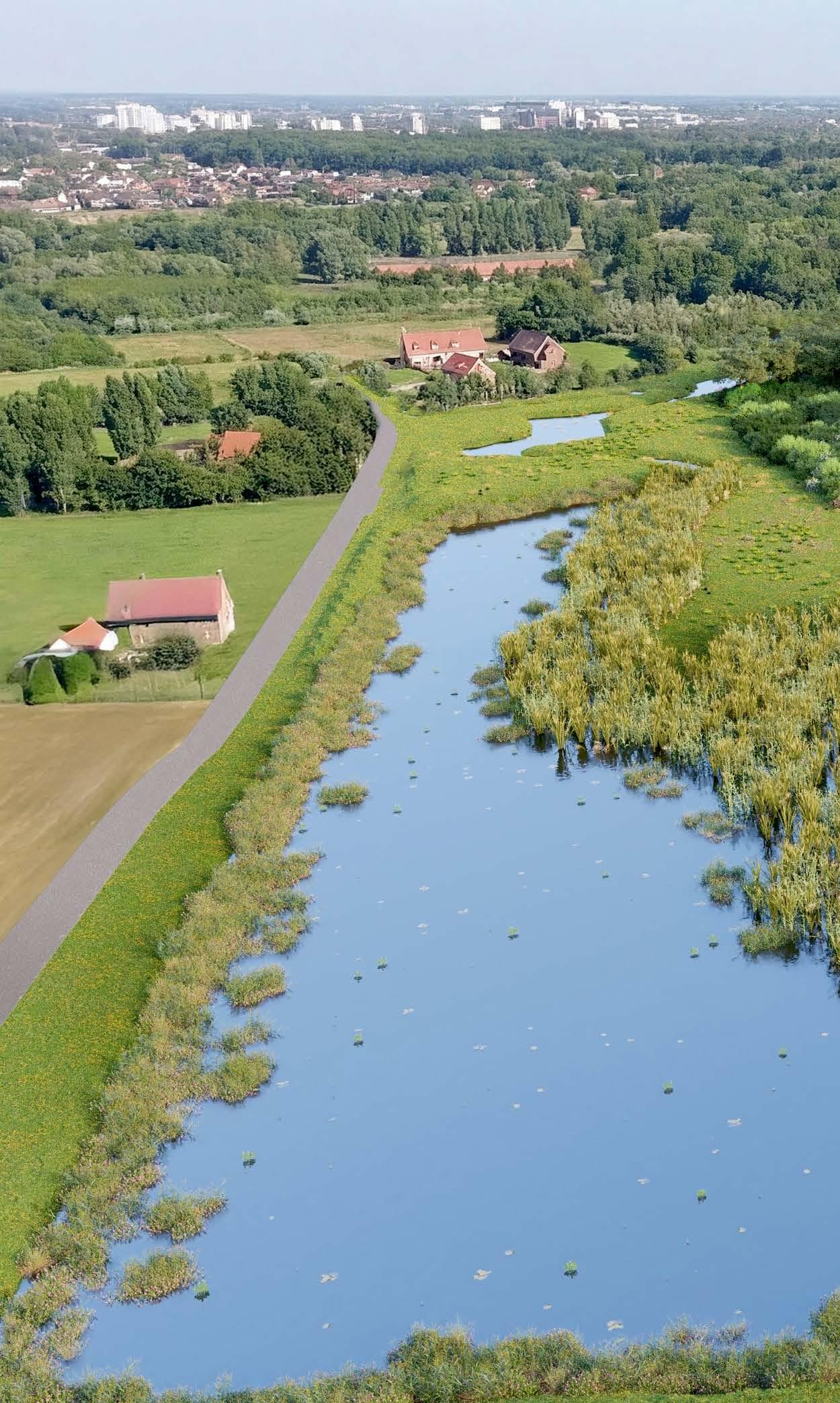
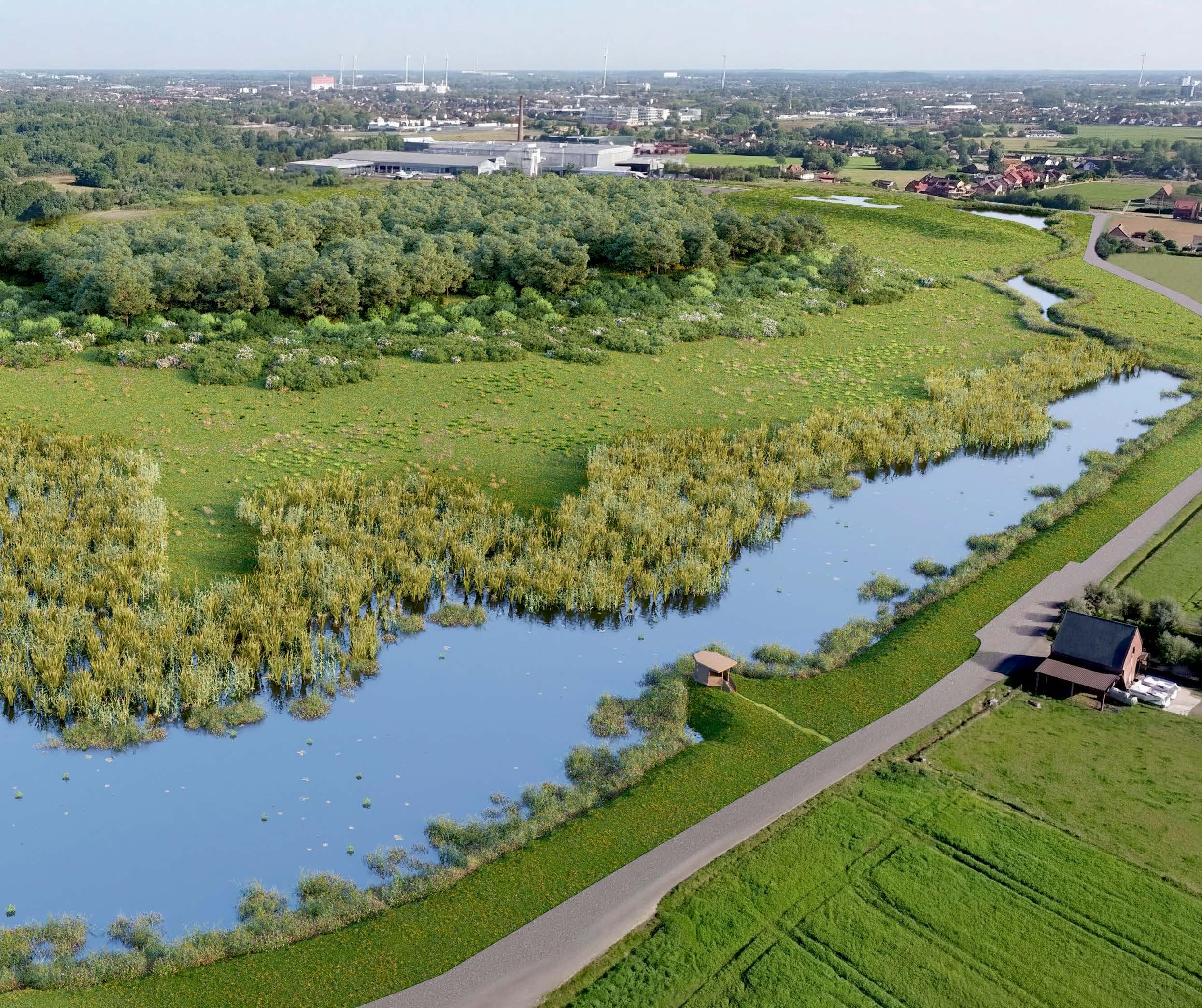
On the photo: a flash-forward to 2050. The location: our landfill site at Rumbeke. Does it look like a rubbish dump to you? You’d never guess. And that’s the whole point.
Right from the start of operations at this landfill, we had a clear vision of the end game: to restore nature. Working with Stad Roeselare, Natuurpunt and the Flemish Agency for Nature and Forests, ANB, we are developing this natural area. It’s near Bergmolenbos and has been designed by environmental consultant Jan Feryn.
What lies at the heart of the project? Creating new biotopes and providing a space that encourages biodiversity in a nature-poor region. The absolute icing on the cake would be the little bittern. This colourful little heron is very particular about where he makes his nest. He’s the reason why we called our final development plan “The Little Bittern Plan”. This is a concrete example of how extraction and backfilling activities can help nature flourish.
Vanheede Energy Producer 2025
53.845 MWh = 3.167 households
From waste to renewable energy
Supplies heat to production buildings, office buildings and a neighbouring business
A road map for the future
Sustainable entrepreneurship means conducting your business with a vision for the future. A look behind the scenes at our three latest investments.
Antwerp: bigger and safer
Our logistics site in Antwerp is expanding. In addition to the existing sorting hall, a 50-metre by 54-metre roof is planned. This means we’ll be able to store all waste at the site under cover. That’s excellent news for the environment, since incoming waste will no longer get rained on. Another advantage is that this expansion will create more space, enabling us to help our customers even faster with their waste storage.
As well as these new features, a fully automatic system will be installed on the site. Each incoming truck will follow an automatic route: first the waiting area, then access to the site at the green light, then automatic weighing of the load… and so on until the truck leaves. The result? A safer environment and a smoother operation.
Billy-Berclau: Belgian technology setting up in France Engis: a strategic foothold in the Liège region
The Billy-Berclau site hasn’t stopped growing since 2013: it has gone from €5.5 million in turnover and 30,000 tonnes of waste treated, to €21 million and 110,000 tonnes in 2025.
And a new milestone is about to be passed.
By the first quarter of 2027, the plant will be home to the first Vanheede installation of its kind in France: a line that combines mechanical waste sorting with the production of solid recovered fuels (SRF) in a single process. Incoming waste is sorted to recover as much recyclable material as possible. Rather than dumping the residue in landfill, we convert it into SRF for use in cement factories as a replacement for fossil fuels.
“The waste that comes onto the line has a guaranteed recycle or upcycle rate of 100%,” explained Stéphane Beaurain, Area Manager Hauts-de-France.
Until now, these two activities were handled at separate sites. Billy-Berclau will be the first Vanheede site to combine them, which means less transport between sites and lower CO2 emissions. Technology that has been tried and tested in Belgium will now travel across the border for the first time.
On November 5, 2025, the ground was broken at the new Vanheede site in Engis. Vanheede didn’t chose to set up there by chance: Engis is an open industrial town, with good connections to the main road networks and the Meuse waterway, and it’s under 10 km from Liège airport. This makes it an ideal logistics intersection for businesses in the Liège and Huy regions.
The site covers four hectares, and a main building of 4,500 m² for sorting and transferring non-hazardous waste is already under construction, with an opening planned for the end of 2026. Companies in the region will be able to bring their waste straight to the plant.
The long-term aim is to make the site one of Vanheede’s main hubs in Wallonia.
Colophon
Edition: VANHEEDE ENVIRONMENT GROUP nv Dullaardstraat 11, 8940 Geluwe www.vanheede.com
Responsible editor & contact: Kim Delvoye: Marketing & Communication Manager p/a Dullaardstraat 11, 8940 Geluwe kim.delvoye@vanheede.com
Special thanks to: Jade Desmet, Marketing & Communication Assistant
Vanheede Environment Group supports more than 21.000 businesses and public authorities with sustainable and efficient waste management solutions. As an integrated environmental company, the group processes over 1.3 million tonnes of waste annually, of which 94.7% is recycled or valorised. In doing so, Vanheede actively contributes to the circular economy by converting waste into new raw materials and green energy.
With more than 1.100 employees, 20 sites in Belgium, France and Luxembourg, and a turnover of €274 million, Vanheede ranks among the top 5 players in the Benelux and Northern France.
Discover more about our sustainability ambitions and insights. Scan the QR codes to explore our Sustainability Statement and Circular Insights magazine.