No part of this publication may be reproduced in any form without the written permission of the publisher. Every e ort is made to avoid errors and omissions. If you notice an error, please accept our apologies and notify us.
PUBLISHED BY
Lodestar Media
thegrowler.ca @thegrowlerbc
OUR CONTRIBUTORS
CASSANDRA ANDERTON
Cassandra is a freelance travel, food, drink and lifestyle writer, blogger and broadcaster, and is the publisher and editor of Goodlifevancouver.com, a website devoted to what’s good in and around Vancouver, and sometimes far beyond.
KRISTINA MAMELI
A former music journalist, radio host and news editor, Kristina brings her passion for craft beer, fair share of quips, and unique marketing perspective to the Growler’s social channels, sales inquiries, and the occasional article.
NO Ë LLE PHILLIPS
Noëlle has a PhD in medieval literature, and is a Certified Cicerone and a BJCP Certified Beer Judge. Her most recent book, Brewmasters and Brewery Creek: A History of Craft Beer in Vancouver, was published in Fall 2024.
MATT
POIRIER
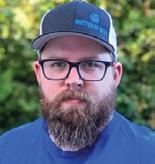
Matt is a certified Cicerone®, beer educator, consultant and columnist based in Victoria, B.C. Find him at MatterOfBeer.com.
SANDRA THOMAS
Sandra is an award-winning journalist at the Coast Reporter newspaper on the beautiful Sunshine Coast, who can now add “beer aficionado” to her resumé.
JOE WIEBE
Based in Victoria, B.C., Joe is the author of Craft Beer Revolution: The Insider's Guide to BC Breweries. Find him at ThirstyWriter.com
QAQTIS
Qaqtis is a Vancouver-based visual artist and graphic designer recognized for bold lines and vibrant colour. Working locally and internationally, she creates dynamic, concept-driven work rooted in doodling while maintaining a distinct artistic voice. Through contrast, shape, and intentional use of space, she constructs striking compositions where simplicity commands visual tension and curiosity.
Disc
by Joe Wiebe
STYLE SNAPSHOT
A guide to the refreshing, affable kölsch by Kristina Mameli
FLAVOURS IN BEER: THE GOOD, THE BAD AND THE UGLY
Part 4: Water. by Matt Poirier
GLOSSARY
Beer terms you need to know (for non-geeks and beginners).
DID YOU KNOW?
Hands off the workers’ beer! by Joe Wiebe
B.C. BREWERY AND CIDERY LISTINGS
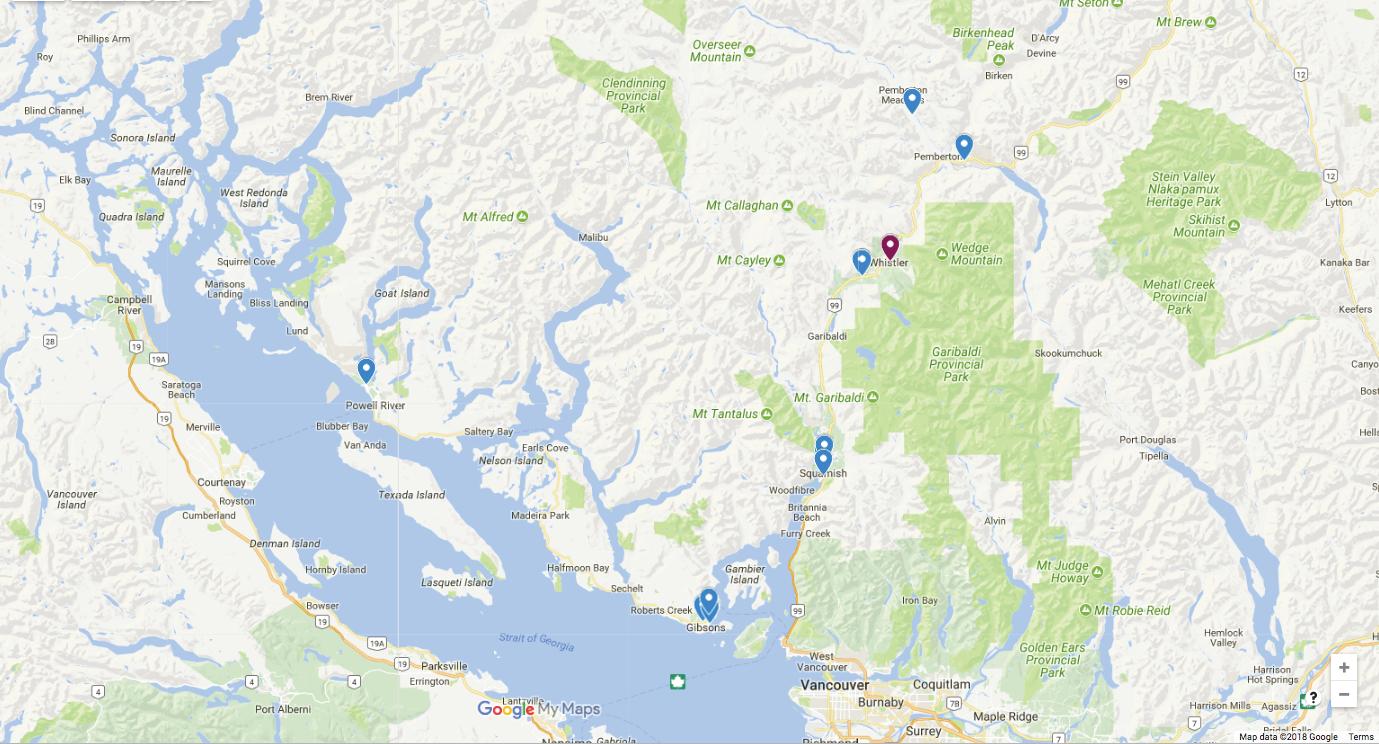
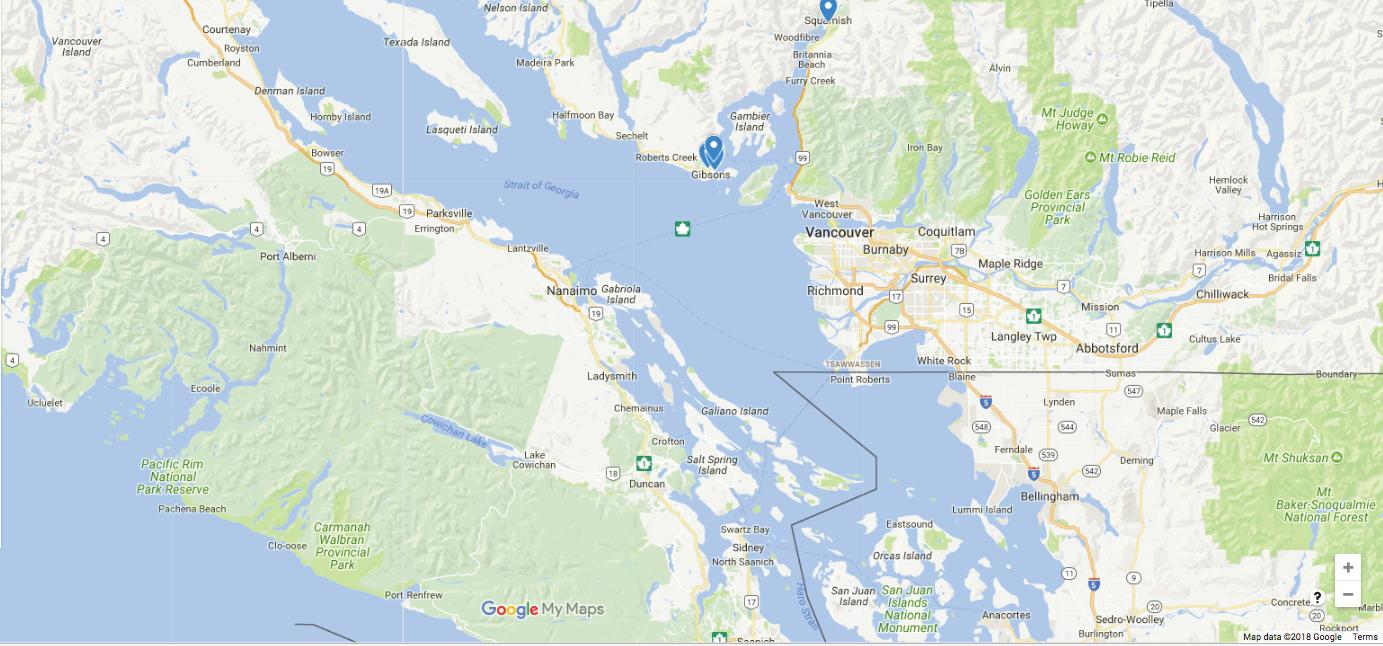
A listing (with maps) of B.C. breweries and cideries to plan your next outing.
B.C. BEER HISTORY PROFILE
A “then and now” brewery pairing: Vancouver Brewery and Main Street Brewing. by Noëlle Phillips
CRAFT BEER EVENTS
Everything you need to know about everywhere you need to be this spring and summer. by Kristina Mameli
THE SUNSHINE COAST
CIDER TRAIL
Four cider producers worth the ferry ride. by Cassandra Anderton
Photo courtesy of Mariner Brewing
Noëlle Phillips photo
Cassandra Anderton photo
BRITISH COLUMBIA
Please don't call it “Frolf” Please don't call it “Frolf”
WDisc golf pairs well with B.C. craft beer
by Joe Wiebe
hile flinging a flying disc for fun likely dates back to the proliferation of the pie pan, it became popularized in the 1950s with the commercialization of the Frisbee. A variety of sports involving flying discs have been invented since then, most in conjunction with the hippie movement because, you know, man, frisbees are groovy. Today, the two most popular disc-based sports are Ultimate and disc golf, the latter of which, it turns out, has a huge following in B.C.’s craft beer community. When I reached out to my contact list of B.C. breweries hoping to hear back from a few folks that were into disc golf, little did I know my inbox would soon be overflowing with responses. They are still coming in as I write this!
Makes sense. Disc golf is a fun, accessible sport that is easy to get into. It works well for beginners,
as well as folks who treat it as a hobby and those who make it the primary focus of their lives. Modeled after conventional golf (or “ball golf” as many disc chuckers refer to it), players throw discs at baskets or special “tonal” targets on a preset course, which is usually integrated into the landscape unlike traditional golf where nature is landscaped over. You will often find yourself throwing a disc around trees or over streams, and by the end of a session you might feel like you enjoyed a nice hike while you played. Disc golf courses are also typically free to access, although occasionally there is a small payment or reservation required if they are located on private property.
Don’t call it “frisbee golf”—or even worse: “frolf.” Actually, specially designed discs are used that have slight variations to their shape, weight and balance, making them better for different distances
and types of throws. They are generally split into three categories: drivers, mid-range, and putters.
You can pick up a starter set of three discs for $25 at a sporting goods store—and some B.C. craft breweries even sell their own branded discs.
Disc Golf Goes Great With Craft Beer
As I already mentioned, B.C.’s craft brewing community loves disc golf! Many breweries sponsor local clubs and tournaments, and some offer discounts to club members. Penticton’s Cannery Brewing even hosts the Penticton Disc Golf Club’s indoor putting league on Monday evenings during the winter.
Fox Mountain Brewing in Williams Lake is conveniently located midway through the local 18-hole course at Boitanio Park. “We get lots of people coming in for a beer and a bite at the turn,” explained Dave Reedman, brewery president. “Some people start at our parking lot so that they can end here as well.”
It is the best (and hardest) sport I have ever played, and the community rocks. Disc golf just has that extra special piece to it being able to play in such wide array of courses in so many different places.
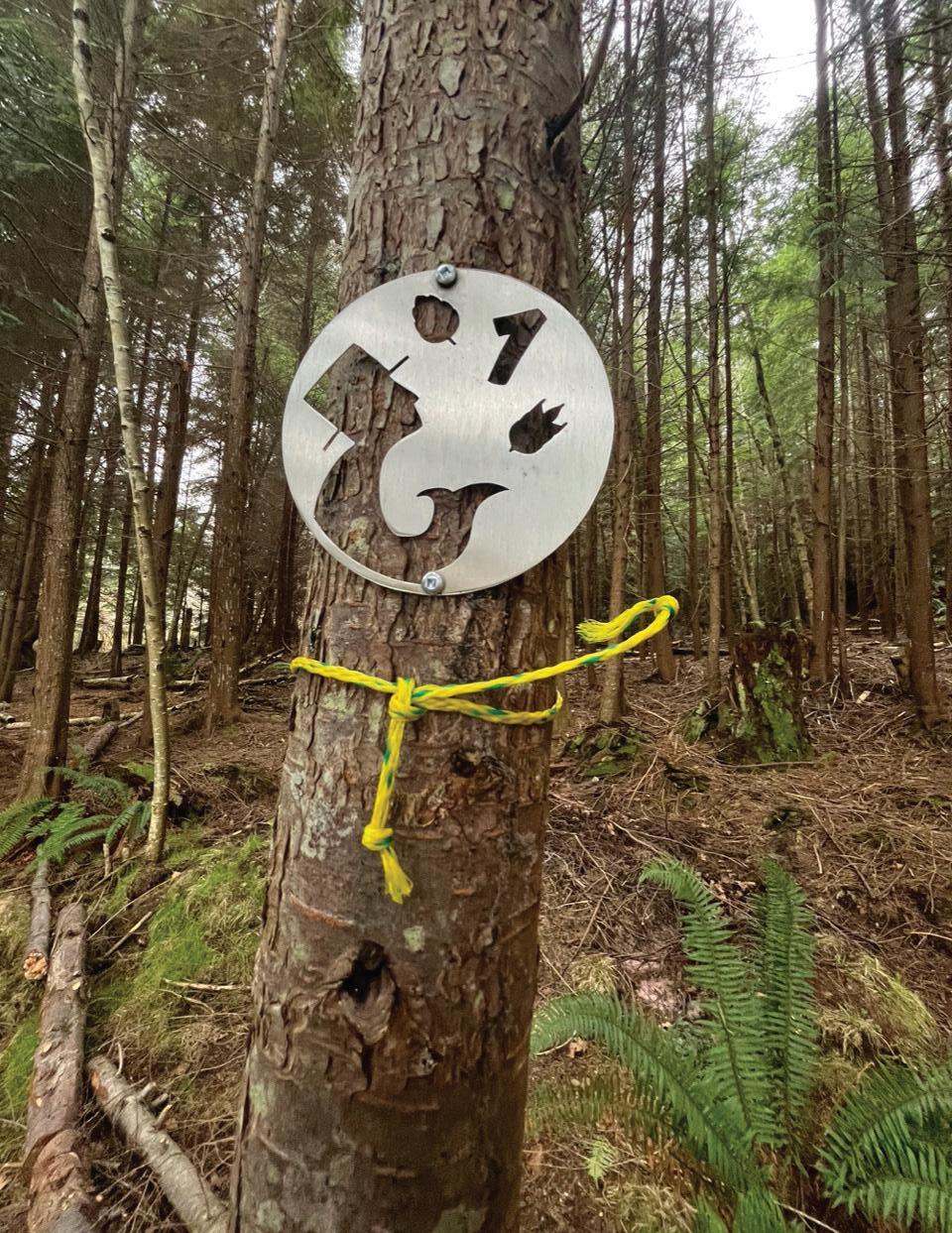
Opposite page: A stainless steel tee marker at Checkerhead Brewing, designed by a loyal patron of the brewery. Photo courtesy of Checkerhead Brewing
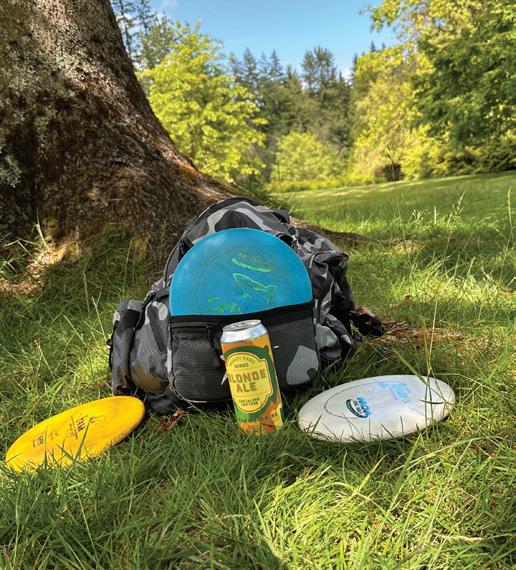
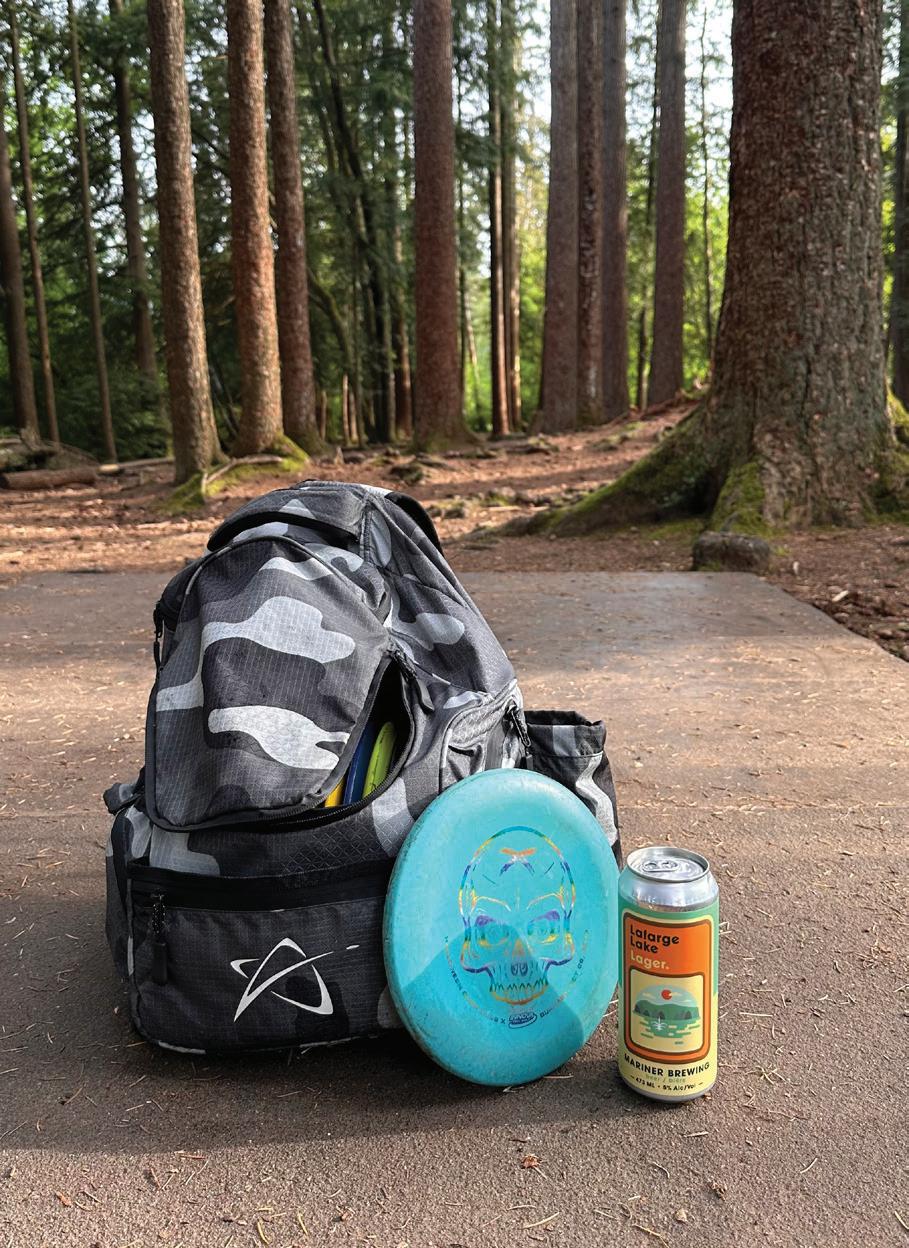
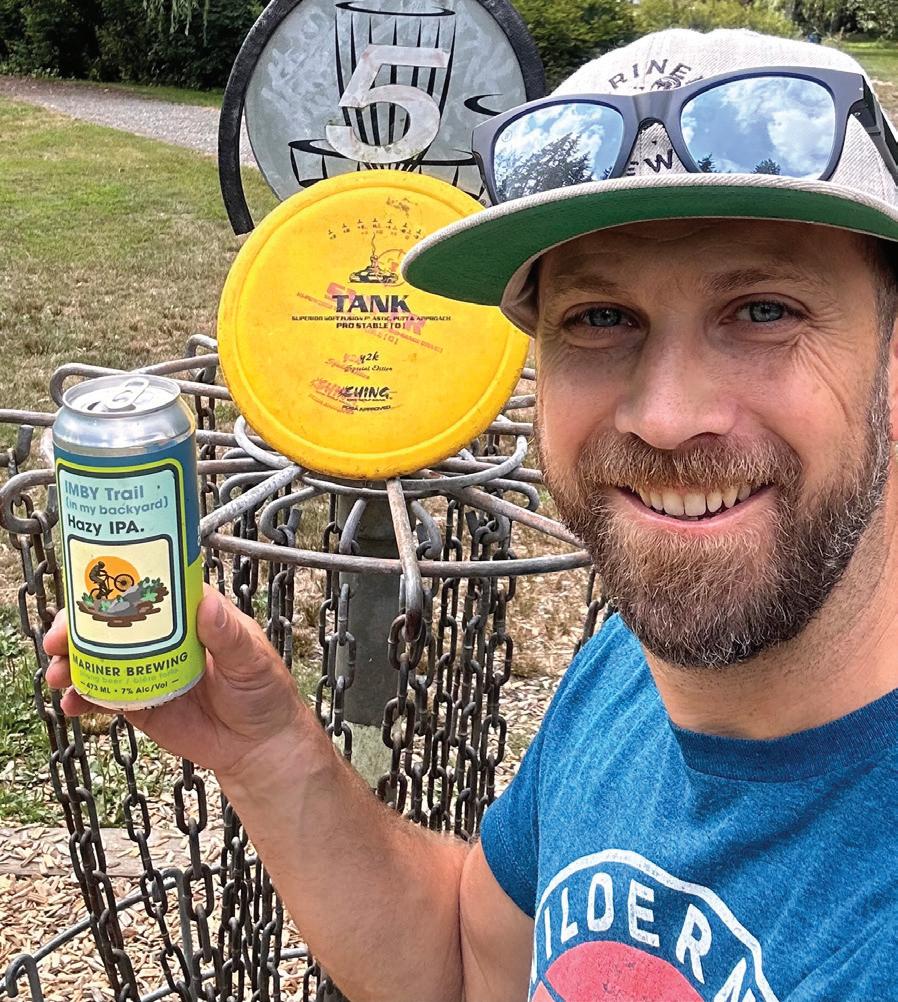
Left: Disc golf is an accessible sport that pairs perfectly with a cold B.C. craft beer, like this Lafarge Lake Lager from Mariner Brewing. Photo courtesy of Mariner Brewing
Checkerhead Brewing in Shirley, a little bit west of Sooke on the southwest corner of Vancouver Island, has its own six-hole course in the forest behind the brewery that was designed by Iain Warren, head brewer at Serious Brewing in Chemainus (where a brand new disc golf course recently opened at Fuller Lake Park). “Instead of baskets, he used old corny kegs as the targets. They make a very satisfying sound when the disc hits them!” enthused Checkerhead’s owner, David Aiken, who says he plans to extend the course to nine holes when he has time.
The owners of Mariner Brewing in Coquitlam are big disc golf fans, and the brewery even makes two related beers. According to co-owner, Gil Desaulniers, “A beautiful thing about Coquitlam is all parks are allowed alcohol so playing disc golf with beer is fully allowed at Mundy Park!” Indeed, it is not uncommon to see disc golfers enjoying a cold beverage while playing, but of course, heed local regulations and be sure to carry out your empties! Tapworks Brewing in Gibsons is all in. Owner Geoff Gornall said, “We sponsor a tournament
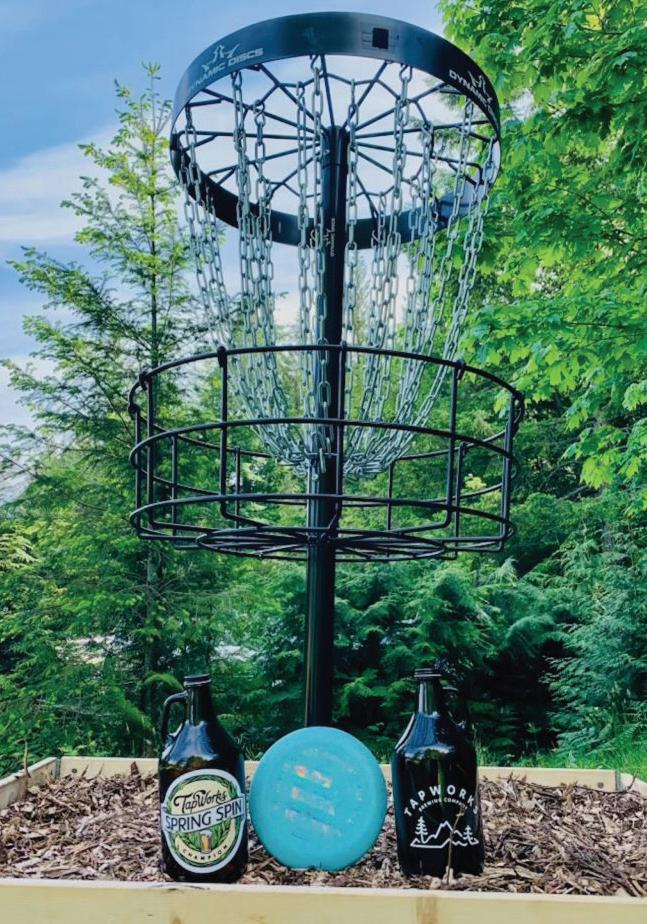
Left: Tapworks Brewing in Gibsons is "all in" on the sport, sponsoring local tournaments and even producing their own branded discs. Photo courtesy of Tapworks Brewing. Right: In some B.C. communities, local regulations even allow players to enjoy a craft beer while they navigate the course. Photo corutesy of Mariner Brewing
with the local disc golf association, have done branded discs, and have tossed a few ourselves over the years.” Nearby, Persephone Brewing once had a course set up on its farm so you can also check in with them to see if that is still an option.
Personally, my favourite course on Vancouver Island is in Cumberland. I love the way it is integrated into the forest there. And then afterwards you can enjoy some great beer and food at Riders Pizza or Cumberland Brewing, which is a real hidden gem if you’ve never been there before.
Another of my favourite places to disc golf is Mayne Island, home to another excellent brewery. There are two courses there, a public one at Dinner Bay Park (right next to the Japanese Gardens which I recommend highly) and a private one called Ravens Ridge, which also offers accommodation on Airbnb. For a great island vacation, stay there or in a cabin at Blue Vista Resort, visit Mayne Island Brewing, and eat at the Montrose Local. Or expand it into a Gulf Islands Disc Golf & Brewery Tour. Salt Spring Island has an excellent course to go along with its resident brewery. Pender Island doesn’t have a brewery, but it has one of the country’s
Top 10 courses, Disc Island, a cidery, winery and lots of other great experiences. Saturna Island has a solid if basic disc golf course along with Sage Hayward Vineyards, which offers seasonal food menus at the Feral Goat Bistro.
I could keep going with recommendations, but suffice to say there is likely a disc golf course in any B.C. community that has a brewery so you should have no trouble building out your own Disc Golf & Craft Beer adventure this year. j
B.C.’s Best Disc Golf Courses
According to UDisc.com, Canada is the third best country in the world for disc golfing, behind only USA and Finland, and British Columbia is home to six of the top ten courses in Canada: #2 Raptors Knoll (Langley); #6 Wycliffe Park (Cranbrook); #7 Rose Hill (Kamloops); #8 Golf Island (Pender Island); #9 Three Blind Mice (Penticton); and #10 Thin Air (Rossland). Raptors Knoll is considered one of the world’s best courses.
KÖLSCH A guide to the refreshing, affable
by Kristina Mameli
WHY AREN’T YOU DRINKING ONE RIGHT NOW? Seriously. Kölsch is oft-lauded as one of the most approachable brews around. Filtered to brilliant clarity, this top-fermented then lagered beer is subtle: exquisitely balancing understated malt, almost imperceptible fruit, noble hops, and perfect bitterness; the delicate finish makes it the quintessential palate cleanser.
DANGER LEVEL
Quaffable AF! GLASS Stange
STYLE STATS
ABV 4.8-5.3% IBU 22-30
COLOUR Pale to light gold
BODY Low to medium, dry, crisp
BUBBLES Stable, rich and lively
ORIGIN STORY
Though the term “Kölsch” wasn’t used until 1906, the beer originated in the late 1800s, (with bureaucratic roots as far back as the 1600s) in Cologne (Köln), Germany. Like Champagne, Kölsch isn’t truly Kölsch unless it meets the standards of the Kölsch Konvention (1986), which defines the beer as “light, highly attenuated, hop-accentuated, clear top-fermenting Vollbier” and restricts production to 24 breweries in the region.
DRINK WITH
Bratwurst, pretszels or schnitzel
Light salads Thai curry
SO, HOW IS KÖLSCH TRADITIONALLY SERVED?
Traditionally served in small cylindrical glasses called Stange, Kölsch is best enjoyed quickly! In Cologne, waiters known as Köbes carry multiple fresh rounds on trays called kranz, replacing your glass immediately without asking if you want another one. This essentially makes your glass bottomless! And also keeps your beer fresh, cold and at peak carbonation. When you’re ready to tap out, put your coaster on top of your glass to signal you’re ready for the bill.
Brassneck, Klutz
1 3 5 2 4 6
Steamworks Brewing Co., Kölsch
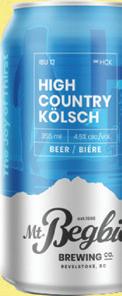
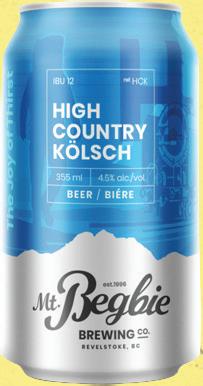
Mt. Begbie Brewing Co., High Country Kölsch
Bridge Brewing Company, Wunderbar Kölsch
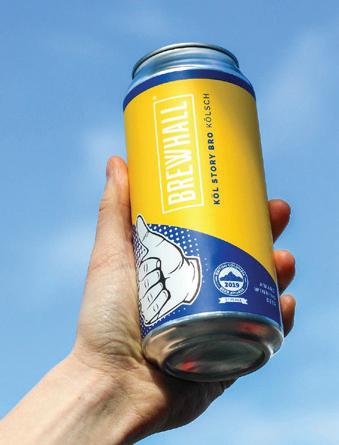
Brewhall, Köl Story Bro
Red Truck Beer Company, Campfire Kölsch
good bad ugly FLAVOURS IN BEER : THE THE & THE good bad ugly PART 4: water
by Matt Poirier
We’ve talked about the sweetness of malt, the aromatic punch of hops, and the magical transformation provided by yeast. Now, it’s time to look at the ingredient that makes up about 90 to 95% of your glass: water.
Because it’s clear and generally "tasteless" from the tap, many people assume water is just a blank canvas. In reality, water is the stage upon which all other ingredients perform. It’s the unsung hero that can make a hop profile "pop" like a high-definition photo or leave a malt profile feeling as flat as a week-old soda.
From the historic wells of Burton-on-Trent to the soft mountain streams of Pilsen, the mineral makeup of water has defined beer styles for centuries.
Ready to see why your "plain" water is anything but? Let’s dive into the liquid foundation of every pint.
THE GOOD: THE MINERAL ARCHITECTS
When the mineral balance is just right, water acts like the perfect seasoning, enhancing the characteristics you want to shine. These aren't "flavours" in
It’s often called a "blank canvas," but water is actually the stage upon which every other ingredient performs. iStock/ Getty Images Plus/Yevhenii Khil photo
the sense of a fruit addition, but rather "texture and accent" creators.
Crispness (sulphates): If you love a sharp, biting West Coast IPA, you can thank sulphates. These minerals act like a magnifying glass for hop bitterness, making it feel clean, dry, and crisp on the palate. Without them, a bitter beer can feel "flabby" or heavy. Think of it as the difference between a sharp kitchen knife and a dull one, sulphates provide the edge that makes the hops dance.
Fullness and Sweetness (chlorides): On the flip side of sulphates, we have chlorides. These minerals enhance the perception of malt sweetness and contribute to a "round," silky mouthfeel. If you’re drinking a velvety Oatmeal Stout or a juicy New England IPA, the water likely has a higher chloride-to-sulphate ratio. It’s the culinary equivalent of adding a pinch of salt to a chocolate cookie—it doesn’t make it salty—it just makes the sweetness feel deeper and more luxurious.
The "Bones" (calcium): While you won’t "taste" calcium directly, you’ll certainly notice its absence.
Calcium is essential for yeast health and clarity. It helps the yeast flocculate (clump together and drop out) after fermentation is done. A beer with a solid calcium foundation looks brilliant in the glass and tastes "cleaner" because the yeast has done its job efficiently and tucked itself away.
Smoothness (soft water): Sometimes, the "good" is what isn't there. Extremely soft water—water with very low mineral content—is the secret behind the world’s greatest Pilsners. It allows the delicate, bready notes of the malt and the floral perfume of noble hops to shine without any mineral "noise" getting in the way. It’s the ultimate clean slate.
THE BAD: WATER WOBBLES
These are issues where the water isn't necessarily contaminated, but its natural chemistry is working against the beer's style, leading to a muddled or distracting experience.
Dullness (high alkalinity): If your water is very high in carbonates (alkalinity), it can act as a buffer, preventing the mash from reaching the ideal acidity levels. The result? A beer that tastes dull or lifeless. It’s like a song played through a muffled speaker, the notes are all there, but the clarity is gone. This often results in "soapy" flavours or a lack of that refreshing "zip" we expect in lighter styles.
Harsh Bitterness (magnesium/iron overload): While magnesium is a necessary nutrient for yeast, too much of it can lead to a sharp, astringent or even slightly laxative effect (don't worry, you'd have to drink a lot!). When combined with high sulphates, it can make the hop bitterness feel metallic or unpleasantly "husky," like chewing on a grain of raw barley.
Chalky Mouthfeel: Ever had a beer that felt like it left a fine powder on your tongue? This can happen when there’s an excess of calcium carbonate that hasn’t been properly balanced. It’s not a "bad" flavour per se, but it's a distracting texture that can make a beer feel "heavy" or "dirty" instead of refreshing.
THE UGLY: THE LIQUID HORRORS
These are the deal-breakers. These flavours don't just distract, they dominate and usually mean the water should have been filtered or treated much more aggressively before it ever touched the grain. Chlorophenols (plastic/Band-Aid): This is the ultimate "Ugly" of water. Most municipal tap
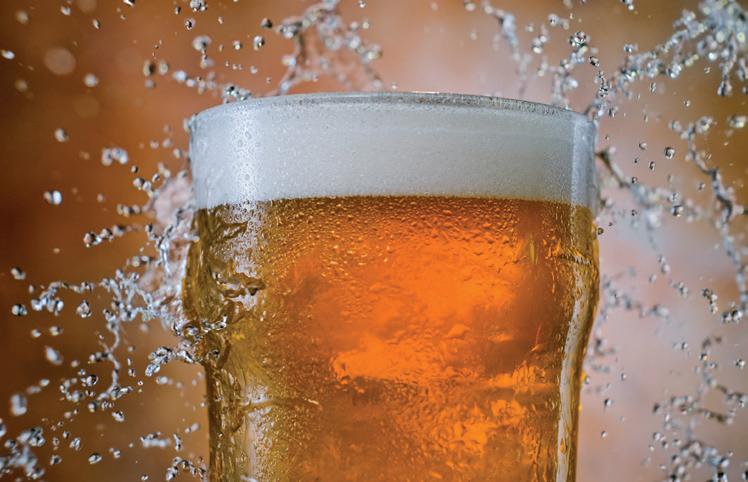
When the mineral balance is just right, water makes the difference between a hop profile that feels "flabby" and one that dances on the palate with a crisp, high-definition edge.
E+/simonkr photo
water is treated with chlorine or chloramines to ensure its safety. If a brewer doesn't remove these before brewing, the chlorine reacts with phenols from the malt or yeast to create chlorophenols. The result? A beer that tastes and smells exactly like Band-Aids, plastic, or a hospital disinfectant. It is unmistakable, aggressive, and a definitive sign the water treatment failed.
Geosmin (earthy/musty/swampy): Have you ever turned on the tap in the summer and noticed the water smells a bit like dirt or a damp basement? That’s often caused by algae blooms in the water source, producing a compound called geosmin. In a beer, this manifests as a "pond water" or "musty cellar" flavour. It’s a natural occurrence, but in a delicate lager, it’s a total disaster that tastes like you’re drinking straight out of a garden hose left in the sun.
Briny/Saline (saltwater): Occasionally, water sources high in sodium can lead to a beer that tastes noticeably salty or briny. Unless you’re drinking a Gose (where salt is added on purpose!), a salty beer is a bizarre and unpleasant experience. It clashes with the bitterness of the hops and can make the beer feel cloying and "thick" in all the wrong ways. It’s like someone accidentally dropped a salt shaker into your mash tun.
So, the next time you take a sip of a perfectly crisp IPA or a smooth, chocolatey porter, give a little nod to the water. It might be the "background" of the beer, but it’s the difference between a masterpiece and a mess. Cheers to the water: May yours always be filtered, balanced, and Band-Aid free! j
Okanagan Fest of Ale supports the local community
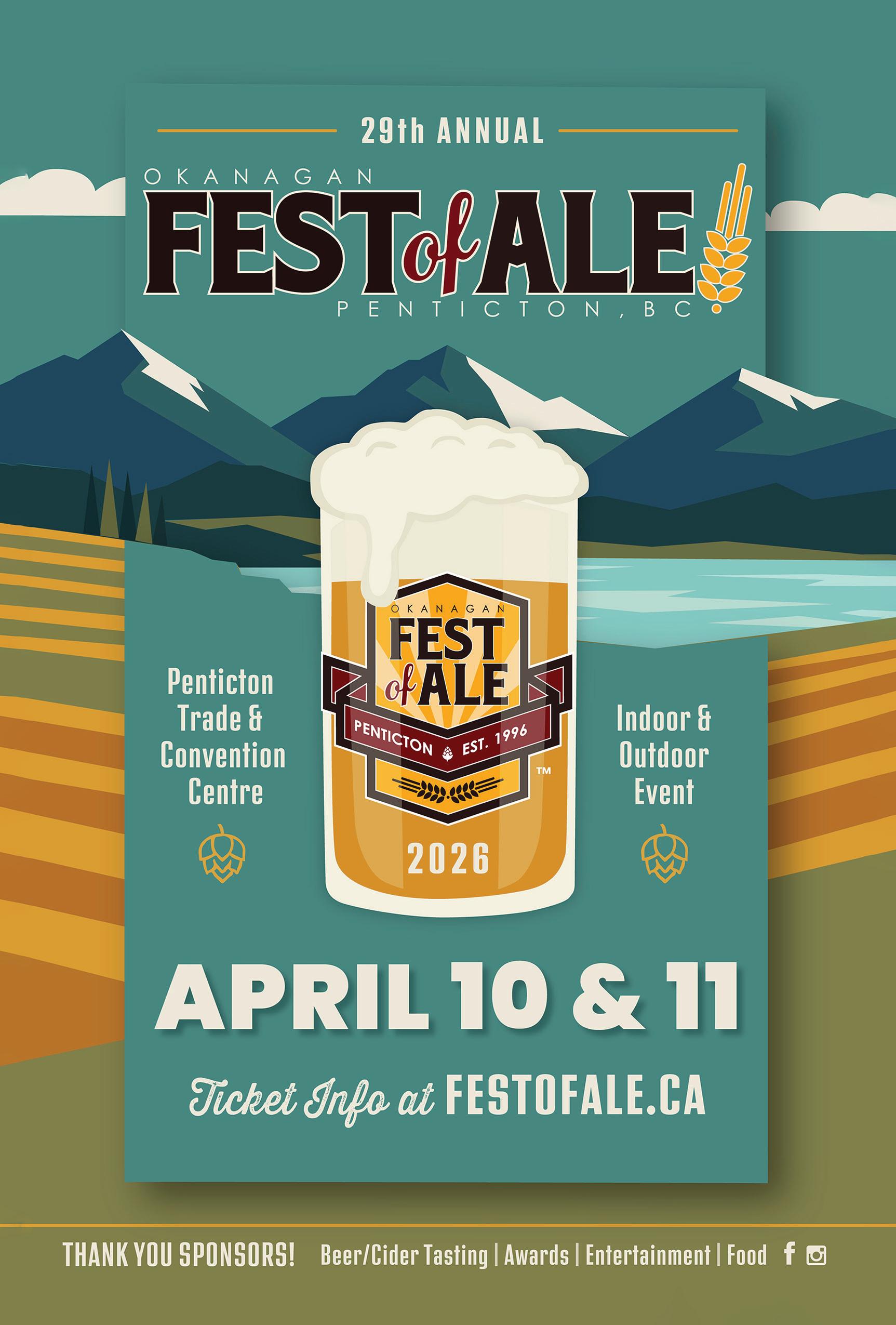
The long-running Okanagan Fest of Ale returns to Penticton April 10-11. In addition to a wide variety of beer styles presented by breweries from all over British Columbia, this two-day event also features ciders, fabulous food, and entertainment.
The Fest of Ale is unique in that it donates all of its proceeds back into the community. Operating as a non-profit society, the organizers are committed to supporting and promoting the growing world of quality brewery products, local tourism, and local charitable organizations. Since its inception in 1996, over $850,000 in net proceeds has been gifted back to registered charities.
A special focus of the event is the now BJCP Sanctioned Fest of Ale Awards program. Participating breweries enter their best beers to compete in several different style categories. A panel of judges tastes all the submissions—they consider the aroma, appearance, flavour, mouthfeel, overall quality of each beer, and provide constructive
feedback for the brewers. Ultimately, they pick the best beer in each category and then select a Best in Show out of all the style winners. The awards are announced from the stage about an hour before the end of the event on Saturday so that folks in attendance can seek out and taste the winners themselves.
The Fest of Ale takes place at the Penticton Trade & Convention Centre, with breweries stationed both indoors and outdoors, along with numerous food options and other fun activities like a free photo booth, live music and games. Why not stretch out your visit around the festival for an extra couple of days? There are several local breweries to visit plus numerous activities to enjoy, including golf, shopping, touring the Penticton Farmers’ Market, and walking or bicycling along the Kettle Valley Rail (KVR) Trail.
There will be lots of additional events happening around town—check festofale.ca for details. j
B.C. BEER HISTORY PROFILE: LOWER MAINLAND
VANCOUVER BREWERY MAIN STREET BREWING
&
In the next several issues of The Growler, look for a new B.C. Beer History Profile: a pairing of a 19th century B.C. brewery with a craft brewery currently in that area. A different region of B.C. will be featured in each History Profile!
by Noëlle Phillips
THE VANCOUVER BREWERY A.K.A. D&M BREWERY A.K.A. VANCOUVER BREWERIES
In 1887, the area of Vancouver’s Mount Pleasant that’s now the corner of Scotia and 7th was comprised of dirt roads, trees, and brush. Brewery Creek rushed through the area, carrying with it some of the refuse from the tanneries and slaughterhouses upriver. However, the water still flowed clearly enough; the creek offered good water for drinking and fishing, not to mention powering mills. It was here that Charles Doering, originally from Leipzig, Germany, but a former resident of San Francisco and Victoria, decided to build something that was missing in Vancouver at the time: a brewery.
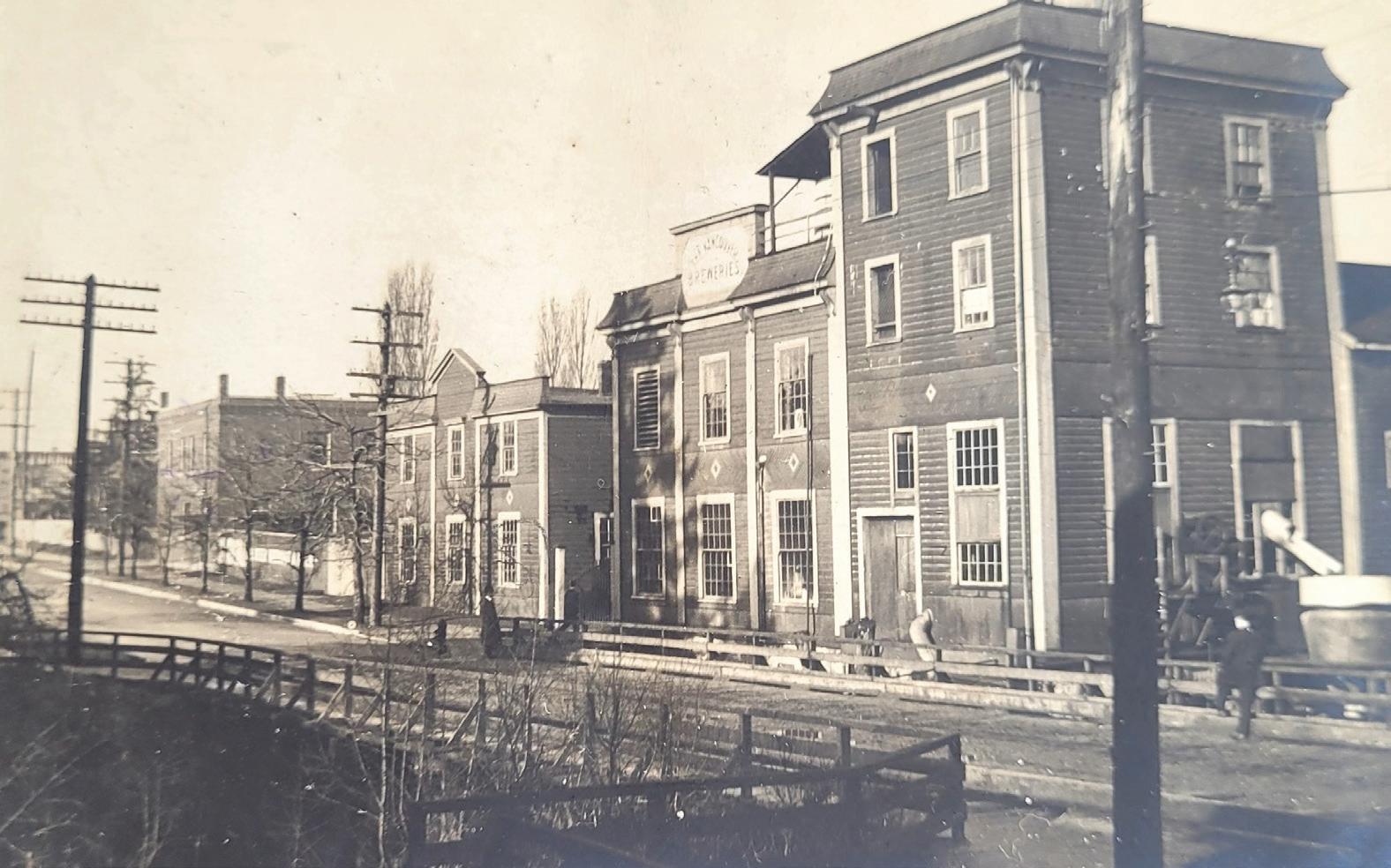
When he opened its doors in 1887, Doering christened his new business Vancouver Brewery. A three-story wooden building, the brewery had an ambitious daily capacity of 1,500 gallons (a stark difference from a contemporary brewery with a mere 500 daily gallon limit). However, Doering’s ambition wasn’t misplaced; his traditional German lager appealed to the many Germany immigrants
flocking to Vancouver. Victoria had a thriving local brewery scene, but until Doering’s arrival most Vancouverites had to slake their thirst with European imports.
Doering’s success allowed him to expand. By 1892, he’d brought a formally trained Danish brewer over to partner with him. Otto Marstrand’s arrival transformed Vancouver Brewery into Doering & Marstrand Brewery—also known as D&M Brewery. D&M launched their new business partnership with a lavish party at the brewery and began to advertise to non-traditional drinkers, such as women, invalids, and even children (for non-alcoholic beers). In 1902, D&M merged with their main competitor, Red Cross Brewing, to become Vancouver Breweries. This version of the brewery would last for decades and produce one of the province’s most well-loved beers: Cascade. Vancouver Breweries became so successful that Doering renovated the brewhouse and eventually relocated the brewing itself to the large new facility at Yew and 11th, built by future rum-runner Henry Reifel. The old brewery was used as office space and then, around 1920, it was rebuilt as a
garage for brewery deliveries. Once Vancouver Breweries became more centralized and fell under the control of much larger corporations, the brewery garage was no longer needed. Throughout most of the twentieth century, this building sat quietly on Scotia Street, living out its destiny as various versions of an autoshop, until it found new life in the 2000s.
MAIN STREET BREWING
Like Vancouver Brewery, Main Street Brewing on Scotia and 7th was established by a savvy businessman—or, rather, two businessmen: Nigel Pike and Cam Forsyth, owners of the Cascade Room and Portland Craft, respectively. They both knew
the beer industry as well as the history of the building on Scotia and 7th. “We wanted to bring a brewery back to the neighborhood that was all about breweries,” says Pike. To get their name out there, they were already contracting brewing their first beer—a pilsner—through Russell Brewing in Surrey. That pilsner, an approachable combination of German and American lager styles, is still a flagship.
With their beers on liquor store shelves before opening day, they were getting industry momentum. And they needed it. Main Street was set to open around the time that the provincial government changed the laws to allow breweries to
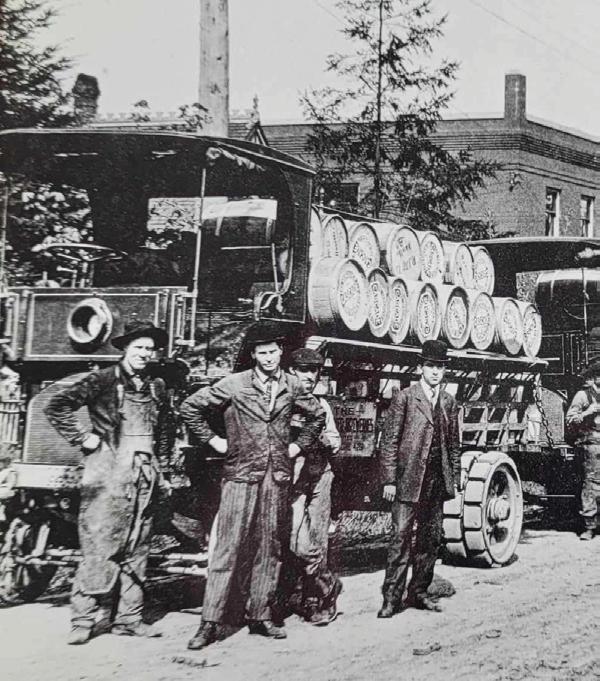
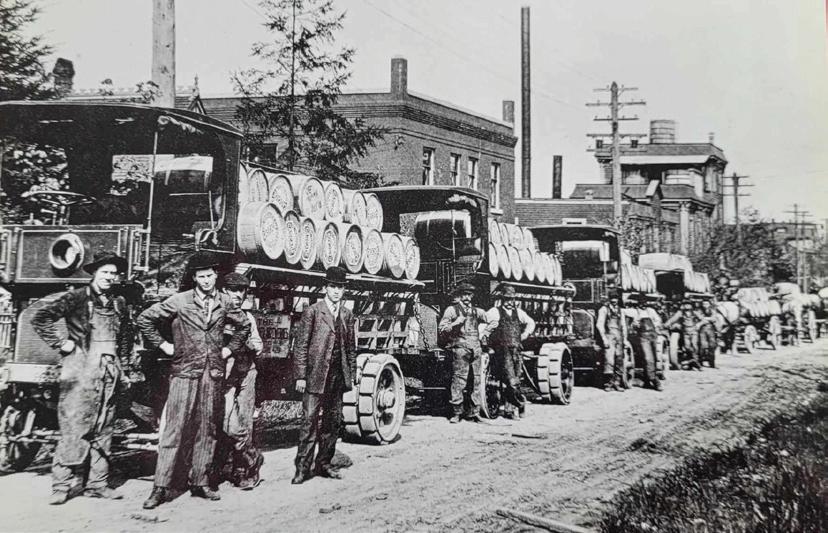
Top: The original Vancouver Breweries building. Jerold Mutter photo. Bottom left: A newspaper clipping from Daily News Advertising promoting D&M's Alexandra Lager. Bottom right: Vancouver Breweries trucks.
serve their beer on site in tasting lounges. Before 2013, you couldn’t sit down at a brewery for a couple of pints. This was a huge change for the industry, and Pike and Forsyth wanted to be riding this new wave as it crested.
Before the tasting lounge legislation passed, there were vocal opponents to the idea of having a brewery in the historic Brewery Creek neighbourhood. One public hearing email in February 2012 voiced the disgust some had for Pike and Forsyth’s plans:
“Check out the plans for that heritage building now, because it is to become a restaurant/brewery, wheeeee! no mention of ah, community and such […] seeing as absolutely *no one* in the actual Mount Pleasant artist and otherwise community…WANTS a bloody restaurant/brewery on the site! That is a retail and commercial space, it is not what was promised at all. YOU GAVE THEM PERMISSION CONTINGENT ON AN AMMENITY [sic], so how in the hell does this rate as an ammenity?? That someone is going to make money off a bunch of drunks and well-off diners???”
Given the area’s history, it might be surprising to see this Vancouver constituent’s antipathy towards breweries. However, the letter reveals how little public understanding there was about breweries and their role in the community. Just one year after that public hearing, Vancouver citizens were expressing their full-throated approval for brewery lounges across the city.
The opening of brewery tasting lounges boosted public awareness of what craft breweries are.
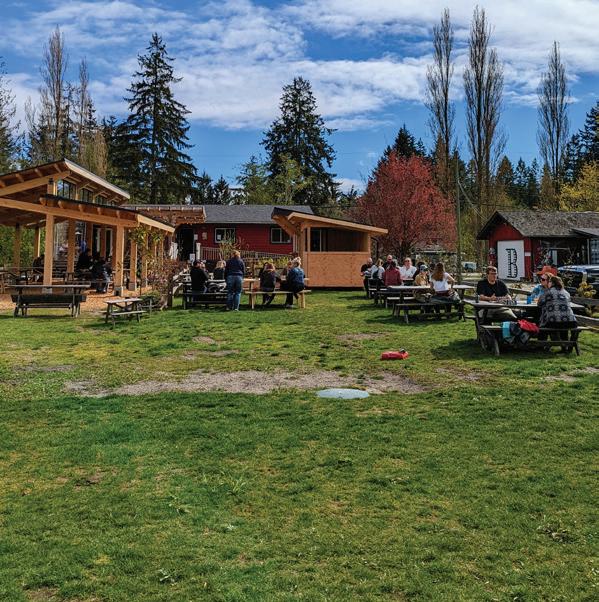
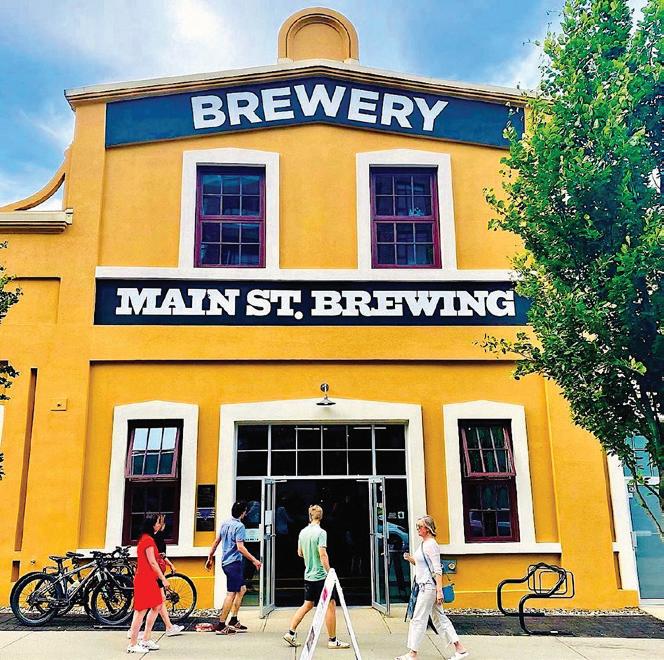
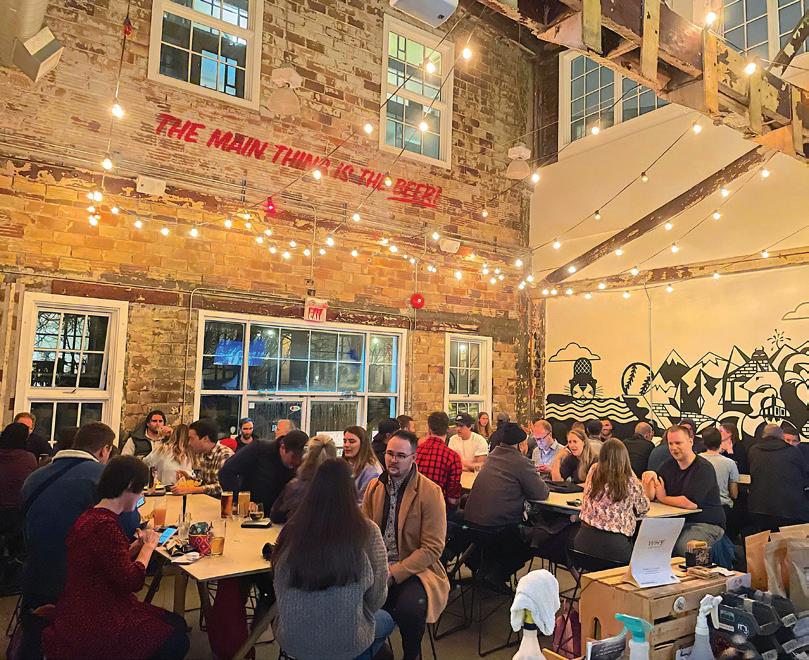
The Main St. Brewing building, as it exists today. Both the interior and exterior of the building give a nod to the past with modern and colourful updates. Photos courtesy of Main St. Brewing
Breweries like Main Street, Brassneck, and others who embraced the opportunities provided by the new law showed the public what to expect. It’s unusual to see “a bunch of drunks” in a craft brewery; you’re far more likely to see people savouring a flight, families having an afternoon break, or dogwalkers stopping by for a quick pint. When Main Street Brewing did open, it was to a warm reception by locals—not a protestor in sight!
Main Street Brewing, now in its 12th year, is a mixture of old and new: bright, modern murals enliven the lower portions of the left and right walls, but the front has kept its brick form, with “The Main Thing is the Beer” scrawled in red paint across it. The high roof with its criss-cross wooden beams reminds us of its early 20th century beginnings while menu screens provide modern convenience. The taplist features hazy IPAs and fruited sours along with traditional cask-conditioned ales (Main Street is one of the few modern B.C. breweries that still use cask engines). This brewery is definitely the place to go if you want to soak up a bit of Vancouver’s beer history. Brewery Creek is now deep under the city streets, but its spirit is still alive at Scotia and 7th. j
Note: material for this article was adapted from my book, Brewmasters and Brewery Creek: A History of Craft Beer in Vancouver, Then and Now.
Everything
you
need
to
know about
everywhere you need to be!
APRIL 10-11
Okanagan Fest of Ale (Penticton)
B.C.’s largest and longest running beer festival celebrates its 29th anniversary this year at the Penticton Trade and Convention Centre! Over the years, the non-profit society has donated an impressive $850,000 and counting to local charities and other non-profits. Join them this year for two days of craft beer, cider, food and live music. New this year: extended hours and two tokens included with your ticket! FestOfAle.ca
JUNE 13
Brewhalla Fort Langley (Langley)
Indulge in the best of local craft beer, cider, wine, spirits, and zero proof at the Fort Langley edition of Brewhalla Craft Beer and Music Festival! Peruse the festival grounds with friends while enjoying live music, delicious food and drinks, and the atmosphere. Brewhalla.ca
JULY 4
Parksville Beer Festival (Parksville)
The third annual Parksville Beer Festival promises to be the biggest one yet! Bringing together community through great local beer and food, this has quickly become one of the Island’s most anticipated festivals. ParksvilleBeerFestival.com
AUGUST 15
Cowichan Craft Beer and Food Festival (Chemainus)
Hosted by the Chemainus BIA, the Cowichan Craft Beer and Food Festival is officially the largest craft beer festival on the Island! Featuring over 100 local brews, including ciders, 15+ food trucks and local eats, live music and more! The festival is also taking donations to support the Canucks Autism Network. CraftBeerAndFoodFest.com
AUGUST 29
Squamish Beer Festival (Squamish)
Now in its 10th year, the Squamish Beer Festival features 50+ craft breweries and cideries, 200+ local creators in an artisan market, live music, food, and so much more! Join them outdoors in the heart of Downtown Squamish.
ExploreSquamish.com
SEPTEMBER 11-13
Barnside Harvest Festival (Delta)
Metro Vancouver’s largest music festival just happens to also be a craft beer festival! Family-friendly, the festival features live music, artisan markets, food trucks, kids’ activities, and of course, farm fresh beer (and other craft beverages)! As of press time, the festival line-up has not yet been announced, but based on previous years, you can expect a line-up chock full of stellar Canadian bands. Check online for updates!
BarnsideHarvestFest.com
SEPTEMBER 14-20
Whistler Village Beer Festival (Whistler)
The annual WVBF brings together 40+ craft beverage makers, serving 80+ varieties of beer, cider, canned cocktails and non-alcoholic options. Set against the stunning Whistler mountains at the Whistler Olympic Plaza, it’s the perfect excuse to book a much needed retreat!
GibbonsWhistler.com
SEPTEMBER 19
Cask and Keg (Oliver)
Celebrating local breweries, distilleries and cideries, Oliver’s Cask and Keg is bigger than ever just in time for its 10th anniversary! Enjoy live music, food and community and take part in the Beer Olympics and stein holding events! VisitOliver.com j
Sunshine Coast Cider Trail o
Four cider producers worth the ferry ride.
by Cassandra Anderton
The Sunshine Coast’s rugged shoreline and working farmland create the ideal setting for a cider scene. Just a ferry ride from Metro Vancouver, the Coast offers a compelling cider trail where orchard fruit and thoughtful production converge. From estate-grown heritage apples to experimental co-ferments and dry-hopped releases, these four producers make a dedicated Sunshine Coast cider tour well worth planning.
Banditry Cider: Farm-Driven and Food-Forward
Banditry Cider in Gibsons operates as a true working farm. Heritage apples and perry pears grow onsite and sustainability is top of mind with irrigation ponds and rainwater collection. While roughly 2,000 litres come from estate fruit, additional juice is sourced through land-leased orchards in Keremeos and Surrey, blending cider and culinary varieties such as Spartan for balance and structure.
The production approach is clean and consistent: minimal sulfites, no oak aging, and stable, filtered cider packaged primarily in cans and kegs. Rosa,
a small-batch wild-fermented heritage cider, represents the cidery’s more experimental side and has built a following on tap.
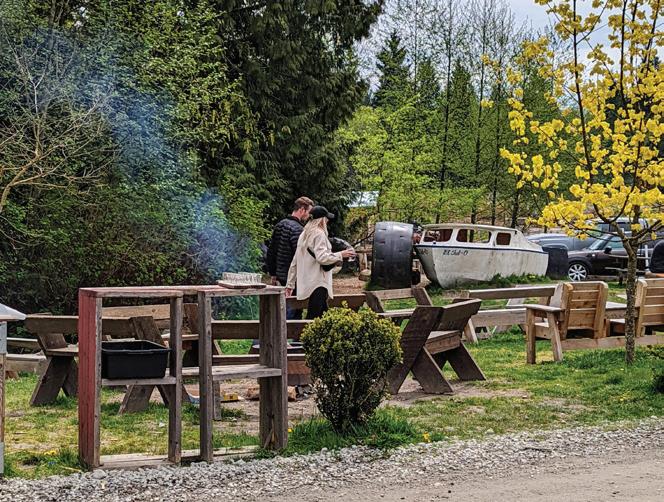
Visiting Banditry is as much about food and community as it is cider. A new culinary program features pit-smoked pigs, brined and candied pink salmon bellies, fry bread and whole roasted chicken dinners. A cedar stage was built from trees cleared on the property for live music and events, reinforcing Banditry’s role as both agricultural operation and gathering place.
Bricker’s Cider: Orchard Roots, Playful Spirit
Bricker’s Cider traces its origins to a two-acre heritage orchard on family land near its current site. After early pressing experiments in 2010 sparked serious interest, the family purchased a five-acre property in 2015 and committed to building a cidery from the ground up.
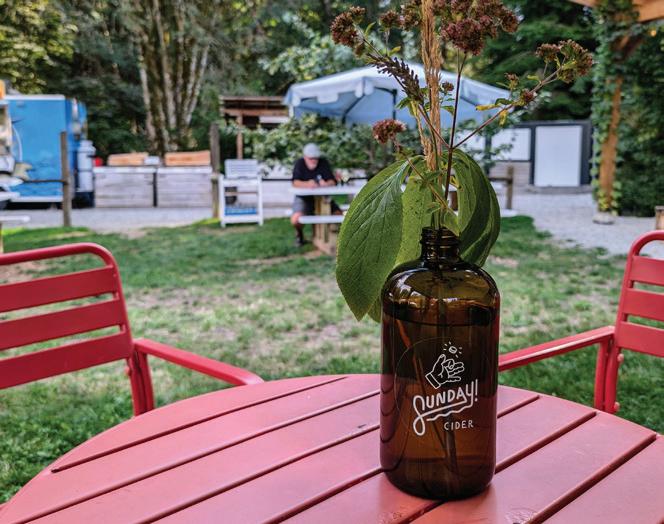
Cassandra Anderton photos
Today, Bricker’s works with a mix of estate fruit and apples sourced from East Kelowna, North Kelowna and Abbotsford. A replanted two-acre block is maturing, strengthening their Coastgrown program. Their Suncoaster Cider is pressed from three tonnes of crowd-sourced Sunshine Coast apples and stands out for both flavour and impact, with proceeds supporting the local food bank.
House style leans drier than most, with no back-sweetening and a thoughtful balance between cultured yeast core ciders and specialty wild ferments. Seasonals often push creative boundaries: Cidre de Mayo with salt and lime, barrel-aged pear, and rum-barrel guava and lemongrass reflect a willingness to experiment while staying orchard-driven.
Open nearly year-round, Bricker’s offers pizza from the shed, rotating releases and a relaxed, community-focused atmosphere.
Persephone Brewing Company: Regenerative Farming and Accessible Cider
Persephone began producing cider alongside its farm-based brewery in 2014, building a program rooted in regenerative agriculture and community engagement. A visit to the Gibsons farm includes more than a tasting bar, expect live music, seasonal events, Pride celebrations and currently there’s even a sauna onsite.
The cider lineup varies, Dry-Hopped Cider is consistently available in cans, while seasonal releases such as First Frost and spring Rhubarb-Ginger add variety. Organic and estate cider are poured on tap at the farm, and distribution extends beyond the Coast through private retailers
and a new BCLDB listing. Persephone’s Spare Room Pub and Bowling Alley in Powell River further is worth a visit.
Fruit comes partly from their Gibsons acreage, supplemented by Southern Okanagan growers. Using cultured yeast, the house style is clean, balanced and versatile. As a certified B Corp, Salmon-Safe and bee-friendly operation, Persephone integrates sustainability and inclusive employment into its farm and cidery practices.
Sunday Cider: Estate Ambition and Modern Expression
Sunday Cider evolved from small collaborative batches into a 20-acre property with 450 young apple trees now growing onsite. The estate orchard is supplemented with organic fruit from the Similkameen, combining Gala, Fuji and Honeycrisp for bright, sessionable cans with cider apples for more structured releases like Elfie Wild.
Sustainability underpins the orchard program: low spray, low water and nutrient-dense apples intended to express local terroir. Production splits between cultured yeast for tropical, easy drinking “Sesh” ciders and wild fermentations for drier, more complex bottled releases.
Standouts include Twice as Nice, a co-ferment with Fraser Valley wine grapes that adds tannin and colour, and Bay Noir, blending local blackberries with black cherry and Pinot Noir. Visitors can expect rotating food trucks, vegan fare, coffee, markets and regular live music nights.
New this season, Sunday Soda introduces a zero-alcohol line in 250 ml cans, reflecting a broader shift toward lower-alcohol, inclusive sparkling alternatives. j
GLOSSA RY. for non-geeks & beginners
AB V : Alcohol by Volume Measured as the percentage volume of alcohol per beer
ALE : Beers fermented with top fermenting yeast (see below), fermented at warmer temperatures than lagers.
B ARL E Y: A cereal grain used as a base malt in the production of beer.
BOMBER : A 650 mL (or 22-ounce) bottle of beer.
BREW P UB : A restaurant-brewer y whose beer is made primarily for sale in the restaurant and bar.
CRAFT BEER : A term as complicated to define and explain as Jim Morrison’s poetr y, though, come to think of it, way more fun to tr y.
CRAFT BREWE R Y: A brewer y that makes craft beer (obviously) (see above).
FERMEN TAT I ON : A complex process that chemistr y students spend years earning PhDs to truly understand. Turns sugars, won from the malts, into equal parts alcohol and carbon dioxide, at which point the brew can actually be called “ beer” .
GR O W L ER : A 1.9L re llable glass beer bottle. Also, the
best dang craft beer magazine in the whole wide world!
HOMEBR E WING : e art of making beer at home, with var ying results, depending on who makes it.
HOPS : Humulus lupulus, a perennial climbing vine, a cousin of cannabis, the ripened female flowers of which are used for flavouring beer
IBU : International Bitterness Unit e measure of the bittering substance in beer, i.e the hops, the amount of which depends on the style of beer
IMP E RIA L : Indicating a strong beer, regardless of style Hops and malts are doubled or tripled during brewing, resulting in higher ABV
I PA : India Pale Ale A style of pale ale (see below) developed in England for export to India e West Coast variety often has higher IBUs and ABV
LAGE R : Any beer that is fermented with bottomfermenting yeast (see below) at colder temperatures Often associated with crisp and clean flavours.
M A LT: It ’ s, ah kinda complicated It ’ s made from barley? And helps make sugar during fermentation? Um It ’ s important for the brewing process, for sure Google it
MI C RO B R EW E R Y : In B C , defi ned a s a ny operat ion t hat produces no more than 160,00 0 hectolitres of beer per year Often used interchangeably with “craft brewer y ”
PA L E AL E : A style of ale characterized by a higher proportion of pale malts that result in a lighter colour
See also: IPA, Saison.
PI LSN ER : A style of lager, characterized by points so minute only serious beer enthusiasts will really give a hoot, and anyway, we don’t have enough room to address them here.
P O R T ER : A dark style of beer, extremely popular in 1700s L ondon, made with roasted malt.
RE IN H E I TSG EB O T: e German beer purity law passed in 1516, stating that beer may only contain water, barley and hops.
S AI S O N : A style of pale ale, usually highly carbonated, fruity and spicy, and cloudy golden in colour
S E SS IO N B E ER : A beer of lighter body and alcohol designed for drinking more than one in a single sitting
S T O U T: A generic term for the strongest (or stoutest) porter, typically around 7% or 8% ABV
T O P / B O T T O M FE R ME N TATI O N : e two basic fermentation methods characterized by the tendency of yeast cells to either rise or fall in the fermentation vessel Ale yeast is top fermenting, lager yeast is bottom fermenting
WAT ER : One of the four basic ingredients in beer If you need further definition, we ask you: How are you even reading this right now?
W O R T: e bittersweet sugar solution obtained by mashing the malt and boiling in the hops, which becomes beer through fermentation.
Y EA S T: D uring the fermentation process, yeast converts the natural malt sugars into alcohol and carbon dioxide gas. j
Hands off workers’thebeer!
Aby Joe Wiebe
lthough not well known today, Thomas Uphill was B.C.’s longest serving MLA, representing Fernie from 1920-1960. Prior to joining provincial politics, Uphill was Mayor of Fernie during B.C.’s short-lived Prohibition (1917-1920), which he opposed heartily even though he himself was a Methodist who rarely drank alcohol. His stance reflected his working-class constituents’ views; after all, Fernie had voted against Prohibition by the greatest majority of any riding in the province.
advocate for the worker’s right to a cold glass of beer.
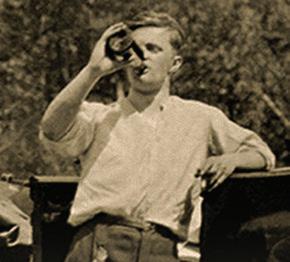
When national prohibition once again reared its ugly head during World War Two, Uphill urged his fellow MLAs to demand Ottawa remove restrictions on beer. Standing in the B.C. Legislature, he brandished an empty bottle of beer, declaring, “Beer is as necessary to the worker as milk is to the baby… Hands off the workers’ beer!”
Following the repeal of Prohibition, the government made alcohol available in sealed packages only to qualified citizens who paid a $5 annual fee. Uphill contended that workers were being unfairly discriminated against, and introduced amendments to allow workers’ clubs to serve 4% beer on draft, something that veterans were allowed to do in Legion Halls. He was unsuccessful but he continued to
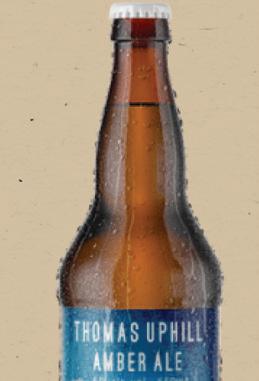
Ten years ago, historian Wayne Norton brought this story to the attention of brewer Chris Lukie at Victoria’s Swans Brewpub, who agreed to create a beer in honour of Thomas Uphill. The result, Thomas Uphill Amber Ale, was launched at a special event in October, 2017, coinciding with the publication of Norton’s article about Uphill in Canadian History magazine, which is available online today at canadashistory.ca/explore/politics-law/theworking-man-s-beer. j which is available online today at
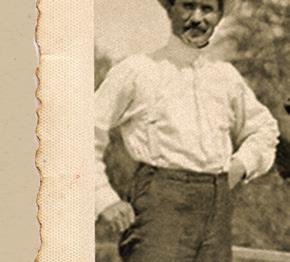
Photo: Fernie Museum and Archives-5676
lower mainland
KPU BREW LAB
20901 Langley Bypass | KPU.ca/Brew
FRI 1-6PM
EST. 2014
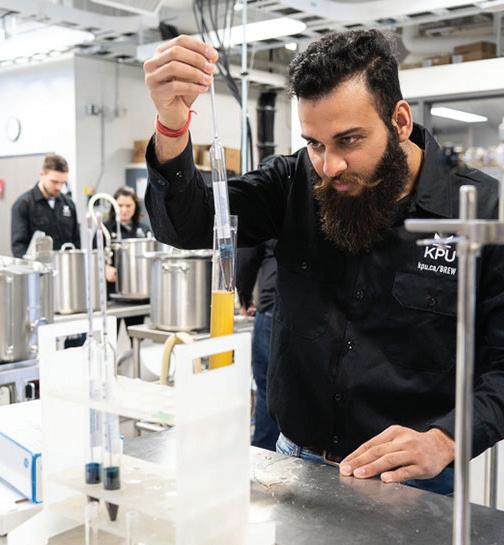
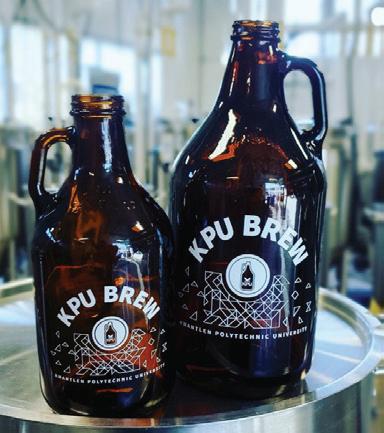
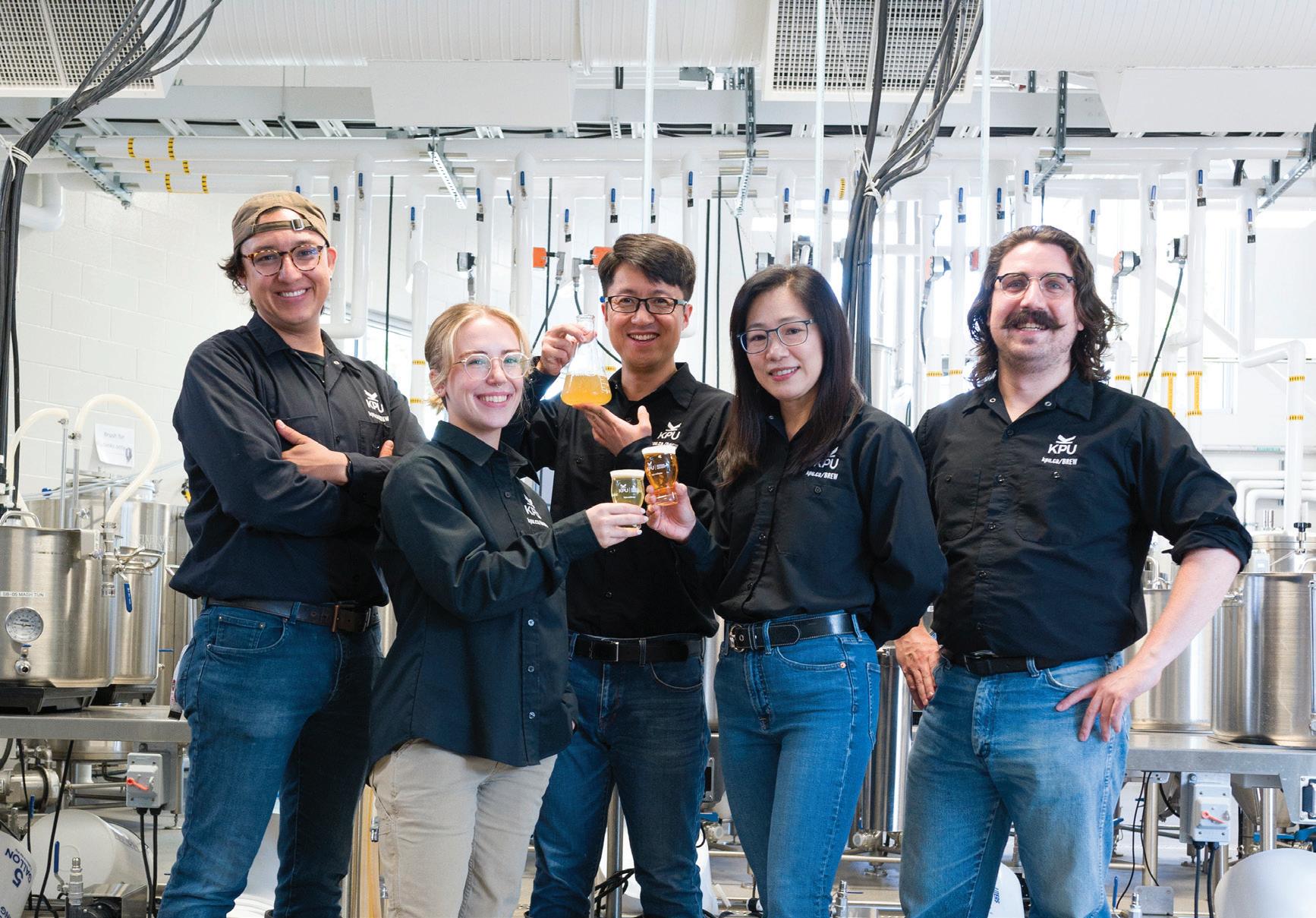
B.C.’s only Brewing Diploma is offered at KPU’s award-winning teaching brewery, where students gain hands-on experience and learn the science, business, and practical skills behind alcohol production. New part-time and continuing studies options offer flexibility for anyone looking to launch or grow a career in the alcohol and beverage industry.
MACTOFF SCOTCH ALE
Seasonal
A sweet, dessert-like Scottish ale featuring rich caramel, brown sugar, maple, estery notes, and a touch of blackstrap molasses for old-world warmth.
DAS FEST
FESTBIER/PALE GERMAN LAGER
Availability: Seasonal
KPU’s multi-award winning Das Fest is a traditional German Festbier that’s crisp, malty and refreshing. Prost!
JELLYFARM SAISON
Availability: Seasonal
Pilsner and wheat malts meet peppery citrus notes, balanced by clean Triumph bitterness and soft herbal, floral Fuggles hop aromas.
FINAL LECTURE
BLACK LAGER
Availability: Seasonal
Celebrating brewing legend Nancy More, this black lager layers six malts with notes of toasted bread, chocolate, plum, and raisin.
Learning options
KPU’s Brewing program offers flexible learning options in addition to our full-time diploma, including two part-time diploma completion options, a one-year certificate, four micro-credentials, and continuing studies courses. Whether you’re exploring a new path or building on experience, there’s an option for you. Learn more about KPU’s award-winning program and teaching brewery at kpu.ca/brew.
FOUR WINDS BREWING CO.
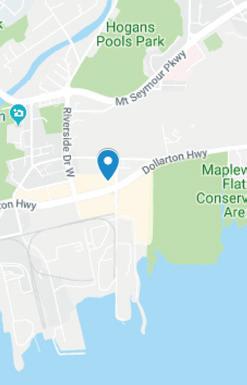
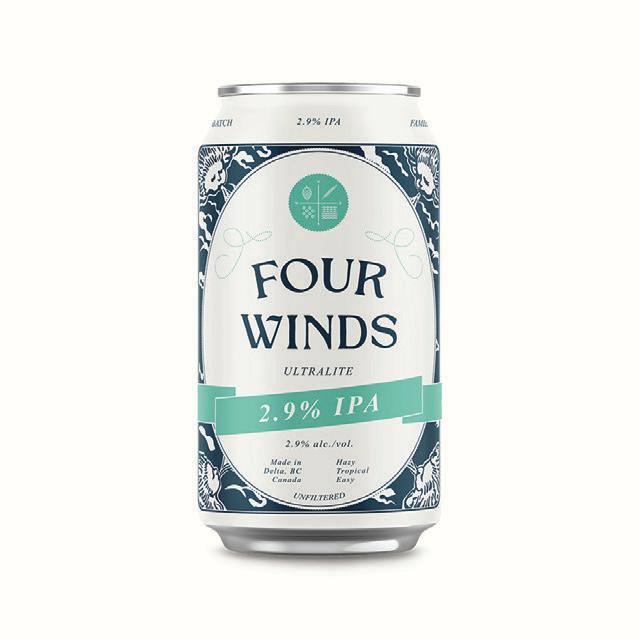
4-7355 72 St., Delta | FourWindsBrewing.ca
Visit the original Four Winds taproom and kitchen for excellent beer and an array of delicious tacos, bowls, burgers and other tasty bites.
CAMP BEER CO.
110-19664 64 Ave., Langley | CampBeer.ca
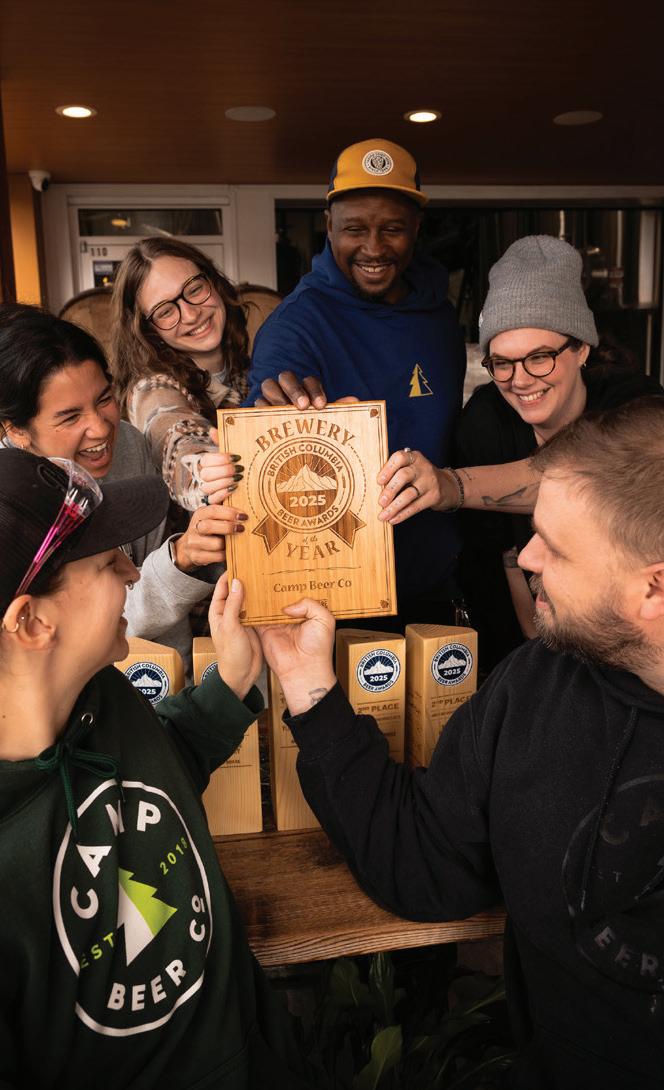
The reigning Brewery of the Year at the BC Beer Awards, Camp always has special events at their welcoming brewery as well as new and creative releases throughout the year.
WINDBREAKER COLD IPA
BARNSIDE BREWING
6655 60 Ave., Delta | BarnsideBrewing.ca
LOCALITY BREWING
7111 252 St., Langley | LocalityBrewing.ca
Watch for these great events later this summer: Between the Bines dinners late August; and the Barnside Harvest Festival Sept 11-13 — with a bigger and better BC Craft Corner.
Locality’s “field-to-glass” beer and cider is made using their own barley, hops, apples and honey. The farm also hosts music, food and agritourism events throughout the summer.
Availability: Limited
Availability: Limited Availability: Year-round
Availability: Year-round
THE PATCH BREWERY
12745 Laity St., Maple Ridge | ThePatchBrewery.com
This farm brewery is owned and operated by 6th generation Maple Ridge farmers. Visit for beer and food in the tasting or dog-friendly picnic area.
FOUR WINDS BEACH HOUSE
6350 Market Ave, Delta | FourWindsBrewing.ca
Availability: Year-round
Availability: Year-round
This beautiful, custom-built brewery features its own in-house beers on tap and an upscale restaurant serving a delicious array of dishes focused on locally sourced ingredients.
Availability: Seasonal
Availability: Year-round
MAPLE RIDGE
TSAWASSEN
HOWE SOUND BREWING
37801 Cleveland Ave., Squamish | HoweSound.com
MON-WED 11:30AM-9PM + THU-SAT 11:30AM-11PM + SUN 11:30AM-8PM
EST. 1996
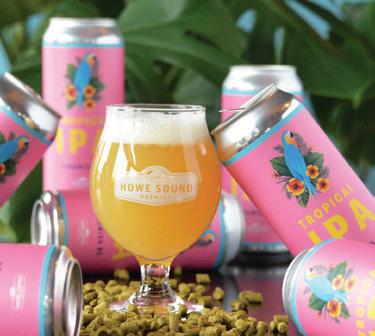
This Squamish brewpub is celebrating 30 years of brewing excellence! Watch for special releases leading up to the big party on July 26. TROPICAL IPA
Availability: Seasonal Availability: Seasonal
Generous hop additions of Citra, Cryo Pop and El Dorado result in a mango, pineapple and stone fruit flavour medley.
Crisp and refreshing, this Cerveza is best enjoyed with amigos and sunsets. No passport required.
LILLOOET BREWING COMPANY
104 Main St., Lillooet | LillooetBrewing.com
Soak up majestic mountain and river views on the expanded dog-friendly patio while enjoying an award-winning beers along with delicious food.
HOYNE BREWING CO.
101-2740 Bridge St., Victoria | HoyneBrewing.ca
Availability: Year-round
Availability: Year-round
Expected to open by spring, Hoyne’s new tasting room will feature nine direct-to-tap serving vessels along with a full kitchen, patio and mezzanine.
Availability: Year-round
Availability: Seasonal
Greater VICTORIA & Gulf Islands
ALBERNI BREWING COMPANY
4630 Adelaide St., Port Alberni | AlberniBrewingCompany.ca
Relax in the lounge or patio and choose from 20 taps of rotating craft beer plus cocktails and mocktails along with a full food menu featuring delicious rotating specials.
ZEST INTENTIONS SOUR
Availability: Seasonal
A bright, puckering sour bursting with zesty orange and tart cranberry. Juicy, refreshing, and unapologetically bold.
Availability: Year-round
Bright clear golden lager. Light and refreshing.
Offering 20 craft beer and cider taps plus cocktails and mocktails
Indulge in our full food menu with rotating specials
ALBERNI PILSNER PILSNER
LONGWOOD BREWERY
2046 Boxwood Rd., Nanaimo | LongwoodBeer.com
Walk or cycle to Longwood’s tasting room and picnic patio on the new Boxwood Road Pathway that connects to Beban Park, the Parkway Trail, and the E&N Trail.
ISLAND TIME PILSNER
Availability: Year-round
Availability: Year-round
RUSTED RAKE BREWING
3106 NW Bay Rd., Nanoose Bay | RustedRakeBrewing.ca
Taste the terroir at this farm brewery that uses its own barley to make its beers on site. The excellent kitchen also serves up a delicious menu.
THE TWO LOUIES COFFEE STOUT
Availability: Year-round
Availability: Year-round
THOMPSON OKANAGAN
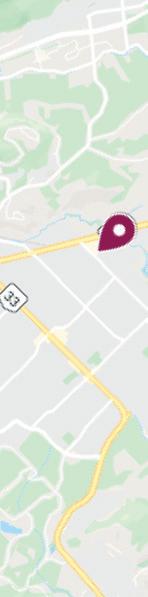
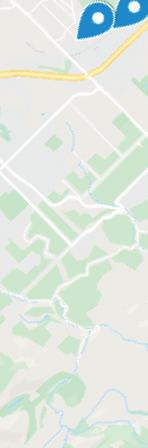
HIGHWAY 97 BREWING CO.
200 Ellis St., Penticton | Hwy97Brewery.com
If you need another reason to visit Highway 97’s dog-friendly taproom and patio besides the great beer, they have live music every Saturday night.
Manitou Rd., Fernie | FernieBrewing.com
You’ll always find something fresh and interesting in Fernie’s beer lineup, including a range of tasty non-alcoholic beers branded as Logo.
TAVES ESTATE CIDERY
333 Gladwin Rd.
TavesFamilyFarms.com/Hard-Cider
HOURS CHECK THE
EST.
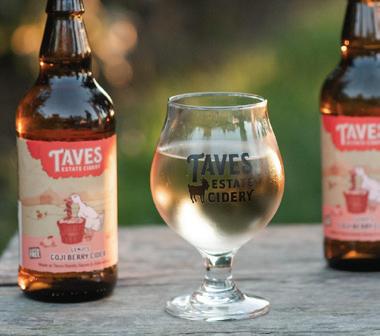
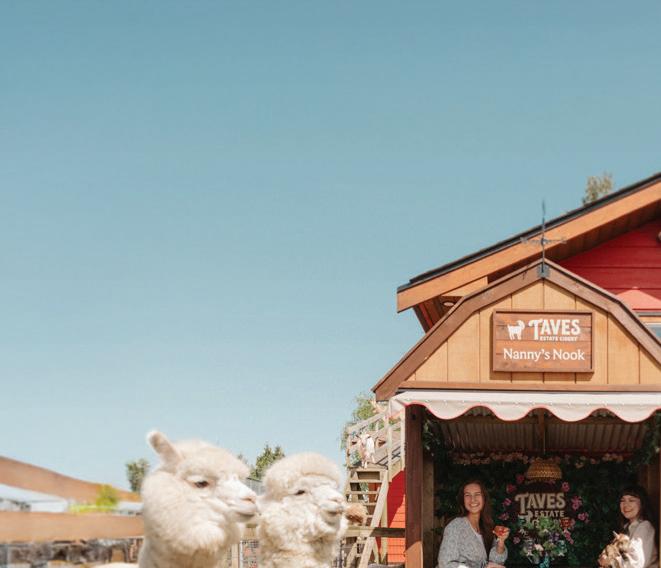
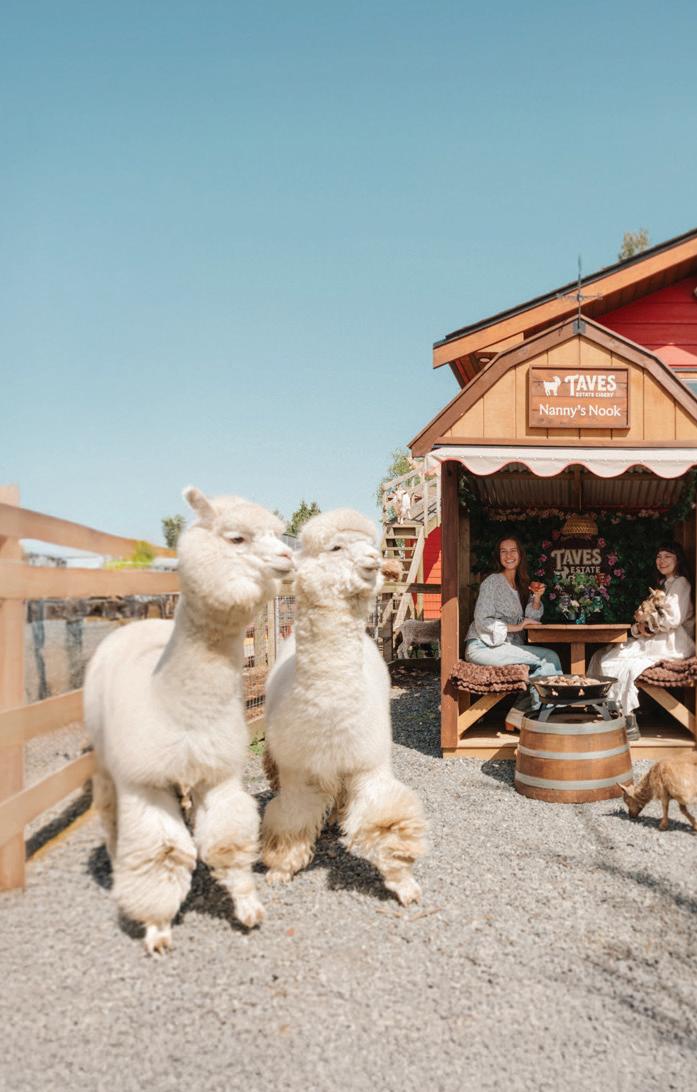
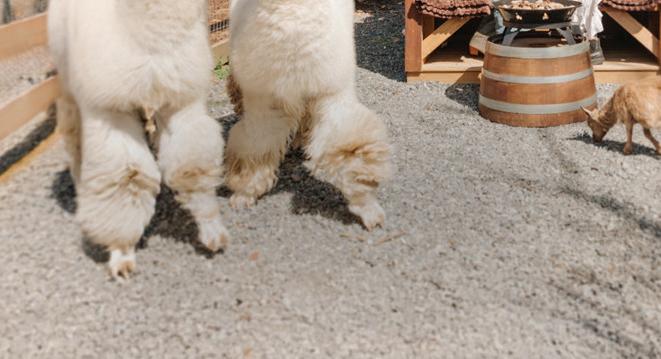
Sure, this farm-based cidery offers a plethora of delicious bevvies, a family- and pet-friendly patio, and plenty of live events. The highlight, though? Goat cuddling.
GENJI’S GOJI CIDER GOJI BERRY CIDER
Availability: Seasonal
ABV 6.5%
Sweet and spicy, with a hint of ginger and raspberry, try pairing this gently effervescent number with salmon!
CHARLIE’S PUMPKIN PUMPKIN CIDER
Availability: Seasonal
ABV 6.5%
We’re sure you’ll love Charlie’s Pumpkin Cider as much as we do! This refreshing cider is the perfect mix of sweet, spice and all that’s nice.
SUNDAY CIDER
1632 Sunshine Coast Hwy SundayCider.com
Join us in Sunday Cider’s beautiful picnic area for free live music Fridays at 6pm, April through October, plus outdoor movies every Thursday through the summer.
TWICE IS NICE–PINOT NOIR
CO-FERMENTED WITH PINOT NOIR GRAPE SKINS
Availability: Year-round
Availability: Year-round
ROSE HILL ORCHARD & CIDERY
11911 Okanagan Centre Rd. E., Lake Country | RoseHillOrchard.com
Rose Hill blends Okanagan traditions with regenerative practices to showcase Lake Country’s terroir. Enjoy our destination cidery with food trucks and live music on summer weekends.