Intercultural Guide to Good Practice
Emotional kit
Sfântu Gheorghe 2022
Editor: Școala Gimnazială “Kálnoky Ludmilla”, Valea-Crișului
Authors: Serap Semerci, Manuel Alexandre Alvelos Arques, Pabstné Adorján Zsuzsanna, Vancea Eszter, Farkas Imre, Gaál Zsuzsanna, Vișoiu-Baló Éva-Katalin, Deák Judit
Year of publication: 2022
ISBN: ISBN 978-606-9011-26-3
Attribution: Non-commercial
The content of this document may be copied, distributed and used for educational, non-profit purposes, provided the source is mentioned.


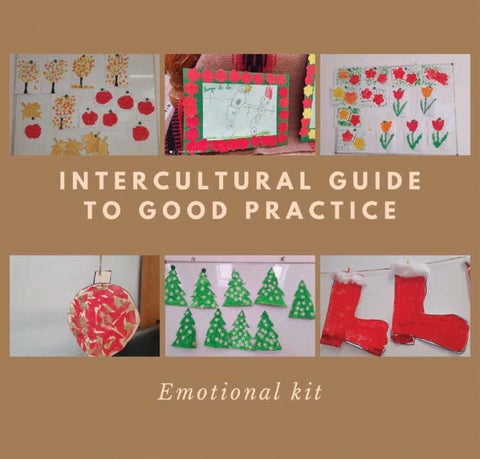
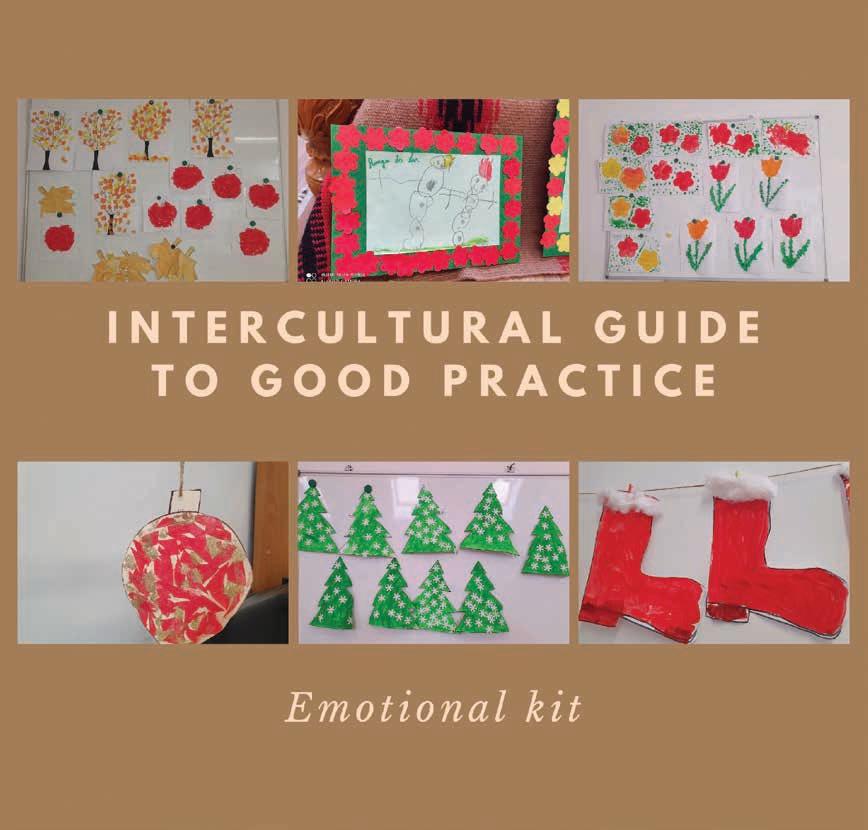
Cover picture: Children activities from Kálnoky Ludmilla Kindergarten
1. Content
2. Introduction
2.1. Presentation of the participating schools
2.1.1. Kálnoky Ludmilla Secondary School, Romania
2.1.2. Agrupamento de Escolas Rio Novo do Príncipe, Portugal
2.1.3. Pécsi Éltes Mátyás Integrated Special Education Methodological Institute, Kindergarten, Primary School, Special Education Vocational School and Dormitory, Hungary
2.1.4. Burhan Erdayı Primary School, Turkey
2.2. Development of social skills
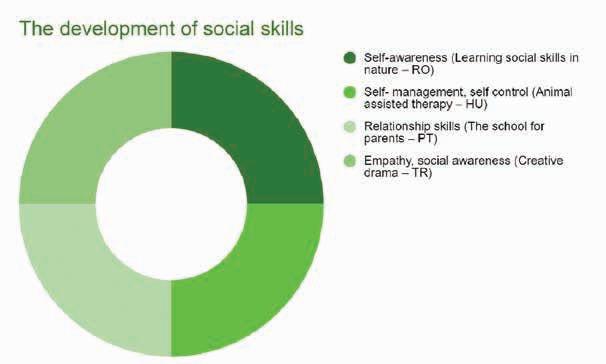
2.2.1. Self-awareness: Learning social skills in nature – RO
2.2.2. Self- management, self control: Animal assisted therapy – HU
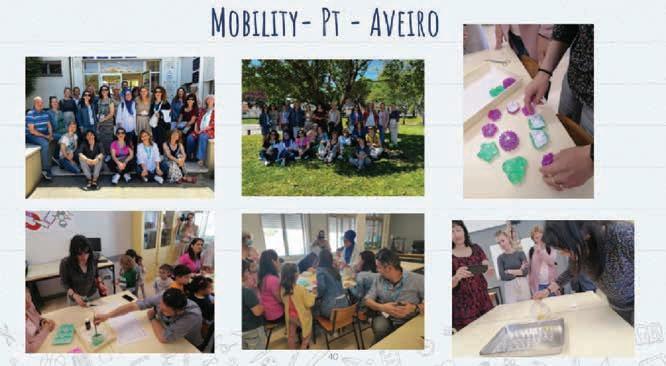
2.2.3. Relationship skills: The school for parents – PT
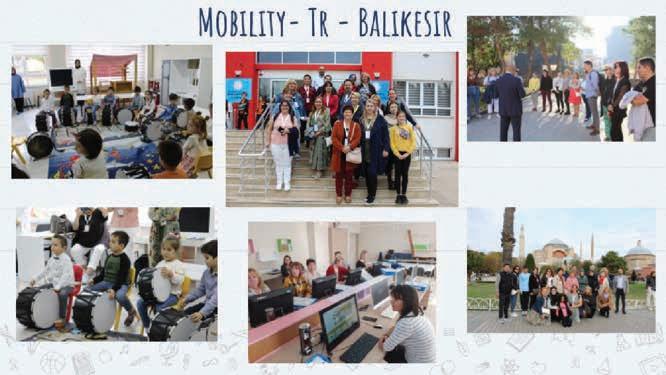
2.2.4. Empathy, social awareness: Creative drama – TR
3. Dysfunctional negative emotions and Positive emotions
3.1. Thematic activities, games for developing social skills (interactive, cooperative, outdoor)
3.2. Contemporary stories, folk tales, animated film, poetry, songs
3.2.1. România - Romania
3.2.2. Ungaria - Hungary
3.2.3. Portugalia - Portugal
3.2.4. Turcia - Turkey
3.3. Artistic works with different techniques
3.4. Religious, traditional holidays
4. Project results
5. Annexes
5
6
2. Introduction
7
In the first years of his life a child experiences the environment through the relationships he establishes with the adults around him. The quality and stability of the child’s relationships from the first years of his life constitute the basis for all subsequent acquisitions: self-confidence, mental health, motivation to learn, school performance, professional success, ability to control aggressive impulses, prosocial conflict resolution, the distinction between good and bad etc. Studies that have investigated this topic suggest that the development of social competence during early childhood favors social, emotional adaptation, subsequent cognitive and academic development.
This is why we consider that it is important to develop social competence in preschoolers in order to form adults who easily integrate into social life.
The Kálnoky Ludmilla Kindergarten in Valea Crișului carried out the KA229 project Primary socialization in kindergarten – our priority between 01.12.2020 – 30.11.2022 allying the following institutions: the Kálnoky Ludmilla Secondary School in Romania, the Agrupamento de Escolas Rio Novo do Príncipe in Portugal, Pécsi Éltes Mátyás Integrated Special Education Methodological Institute, Kindergarten, Primary School, Special Education Vocational School and Dormitory in Hungary and the Burhan Erdayı Primary School in Turkey.
The objectives of the project were:
• the development of social skills regarding self-awareness, self-management, social awareness and relationship management of 348 preschoolers and the acquisition of some forms of social behaviors and constructive codes of conduct by the end of the school year 20212022;
• developing the intrapersonal, interpersonal, professional skills of 28 preschool teachers by the end of the school year 2021-2022;
• the increased quality of the teaching-learning-evaluation process at partnership level in the context of the development of social skills during the implementation period of the project through exchanges of good practices and international cooperation.
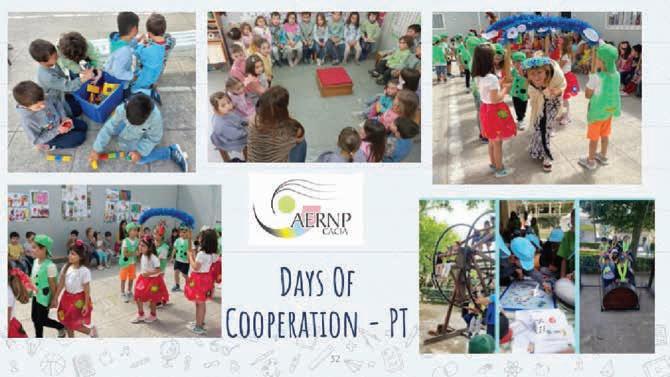
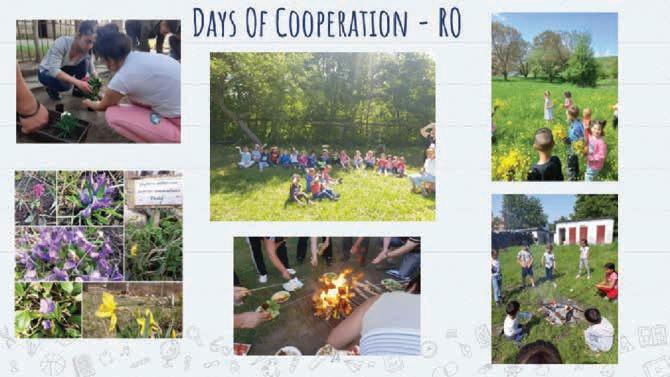
Educational projects related to the theme and objectives of the project were developed within the learning activities: days of cooperation, friendship, happiness, kindness, love, problem-solving strategies, month of sharing, anger and fear management.
During the partnership there were four short-term joint staff training events with a duration of 5 days each in order to achieve the project objectives through the following themes: Self-awareness (Learning social skills in nature – RO), Self-management and self control (Animal assisted therapy – HU), Relationship skills (The school for parents –PT), Empathy and social awareness (Creative drama – TR).
8
9
2.1. Presentation of the participating schools
2.1.1. KálnoKy ludmilla Secondary School, Ro-
mania
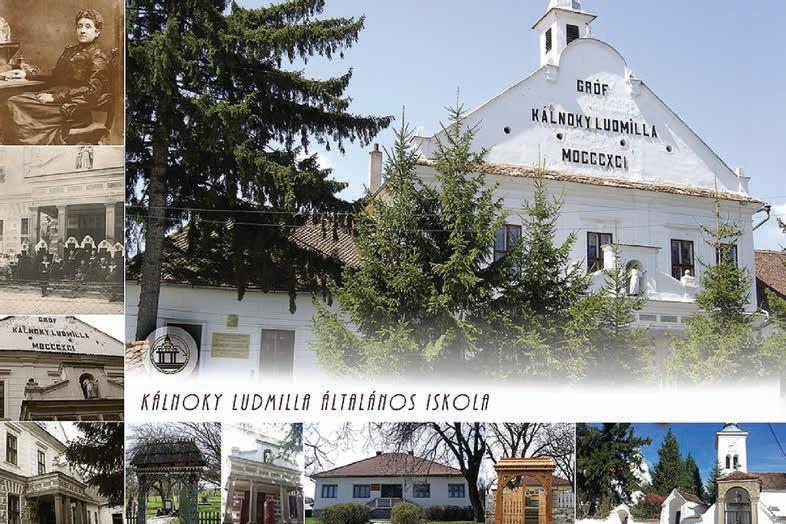
Countess Félix Kálnoky, after her beloved husband died, on 28 December 1889, had made a decision: she’ll commemorate the names of her husband and brothers in law, Imre and Pál.
On January the first, 1891, a very sad event had happened in the village. While the parents were out, one of the cottar houses caught fire. Two of their children died in the flames. That event made a great influence upon the countess, so she decided to found a kindergarten. The building was ready in September 1981. Only the interior arrangements needed to be done in 1982.
The school got the name of: “Count Kálnoky Félix, Ludmilla, Imre and Pál Institution”. The education was ensured by the nuns from Saint Vince order. The opening celebration was on 16 September 1982. In the first year there were 120 Kindergarten children, 130 pupils enrolled in the institution. It was developed with a boarding school in 1899.
In the summer of 1948 according to the educational law of the Romanian state, the Monastery of the Nuns” from Kőröspatak was closed and became statual property. The school got its name of „Kálnoky Ludmilla” General School in 2001. On 29th of September 2005, the institution was given back to the Kálnoky family, and in 2008, the Local Council bought it from them.
2.1.2. agrupamento de eScolaS rio novo do príncipe, PoRtugal
We are a cluster of schools, we belong to the same school, in several buildings. This makes all teachers keep the boat running with the same strategies (at all the levels of the institution – pre primary, primary, secondary). Our cluster of schools has 700, 3-15-year-old students and 95 teachers. That includes classes from kindergarten up to the 9th grade.
Our kindergarten provides education to children aged 3 to 6, having 105 pre-schoolers in 4 kindergartens. There are 7 preschool teachers. The kindergarten is involved in several Green Flag national projects, including sustainability education, garbage separation and some ecology activities, and in other educational activities, including a large scale of workshops on different topics, e.g. foreign language learning.
Many of the children come from families that are at risk of socio-economic exclusion. Aveiro is located in an industrial region where the income of families depends on the current economic and financial situation of factories and companies. The harmonious development of the child’s personality depends on the family climate. Together with the parents, the school has its well- defined role, intervening in the primary development of the child. We consider that it is a necessity to educate the parents in accordance with the psycho-pedagogical scientific principles.
To this end, we introduced “The school for parents” into the educational offer, a program successfully implemented in our institution. Our Psychology and special needs department with our parents association provides monthly parenting courses on a lot of problems and needs at institutional level.
10
11
2.1.3. pécSi élteS mátyáS integrated Special education methodological inStitute, Kindergarten, primary School, Special education vocational School and dormitory, HungaRy
The Pécsi Éltes EGYMI is a methodological institution with a kindergarten, a special primary school and a school that cares for children on the autism spectrum.
In our kindergarten, we care for 21 children in three groups, 14 of whom have autism spectrum disorder with varying degrees of intellectual / learning disability, and seven children have intellectual disability as their primary disability. In addition to their primary disability, 2 children have reduced mobility and 3 children have hearing loss, including a preschooler with cochlear implant.
Experts in the kindergarten groups: 4 special education teachers, 1 kindergarten teacher, 6 special education assistants.
The aim of our kindergarten is to provide a set of conditions that takes into account the variety of symptoms, the individual load-bearing capacity, special educational needs, to prevent potential learning disorders at school and to prepare for school.
Key areas of development:
• developing and correcting gross motor skills, improving the sense of balance
• developing speech organs, speech initiation: in addition to speech therapy development, we apply augmentative and alternative communication methodology to our non-speaking children
• improvement of socialization: we help children to develop and understand social relationships
To this end, the AAT (Animal Assisted Therapy) program has been introduced into the educational activity of the institution since 2012.
The therapy dogs are ready to play with children, teaching them to communicate, to express feelings, to
manage their own emotions. The dog is taught to perform different tricks that amuse the children, but also serve a therapeutic purpose. Through their unique behaviors animals meet all the conditions necessary for the role of entertainers, especially in the case of children.
We wish to participate in this project to produce changes in the instructional-educational-evaluative process through new learning experiences and we wish to share our practical knowledge of AAT through the partnership.
Key persons involved in the project:
• special education teacher – has competences in international project management (Erasmus+) and is also the contact person
• the headmistress and the special education teacher who teach and develop by applying dog therapy
• 2 preschool teachers – have the ability to communicate, to interact in the language of the project; have methodological competences concerning psycho-pedagogy, communication and interaction
Our kindergarten contributes to the project by sharing AAT with the members of the partnership and its positive effects on the development of social skills, speech, communication skills and on the development of fine and gross motor skills.
12
2.1.4. Burhan erdayi primary School, tuRkey
Turkey also called Türkiye is a large peninsula that bridges the continents of Europe and Asia. It is surrounded on three sides by the Black Sea, the Mediterranean Sea, and the Aegean Sea. The population of the country is about 85,1 million. The capital city is Ankara. The official language is Turkish and the currency is Turkish lira.
Turkey was a founding member of the United Nations, which was created after World War II. It has been an associate member of the European Union since 1963, but has not been accepted as a full member. Turkey is a member of the North Atlantic Treaty Organization (NATO) which is a defense alliance. Because of its location in the Middle East, the country is strategic in world affairs.
Our school is in the city of Balıkesir. The city is located in the Marmara region of Turkey and it is the fourth largest city of the region in terms of population. More than 1 million people live in Balıkesir. It is also among the developed cities of the Marmara Region in terms of tourism, animal husbandry and agriculture. Olive cultivation, viticulture and fishing are also important activities in the coastal areas. On the other hand, Balıkesir is a touristic center that attracts attention with many places to visit. The city is famous for its seaside towns such as Ayvalık, Erdek and Edremit. Cunda Island, especially in Ayvalık district is the most popular holiday destination of the city.
Burhan Erdayı Primary School
Our school is situated in Balıkesir, Türkiye and it has 1372 students overall with six preschool classes and 147 preschool students. We have 50 teachers, 6 of them are kindergarten teachers.
Our kindergartners are aged 4 to 6. After finishing preschool, they continue their education in our primary school. We give great importance to preschool education because it underlies our primary education. We try
to make our students gain self-care, social competence and adaptation to school life. Our educational offer consists of educational activities which are in line with the preschool level’s curriculum. We provide preparation for literacy activities, integrated activities, science and nature activities, free time activities, game-based learning activities and first language acquisition activities.
2.2. Development of social skills
Social skills are one of the foundations of employability and life success. We use social skills every day to interact and communicate with others.
Social skills encompass the capacity to know oneself and to know others. Despite this crucial impact on our lives, we only learn social skills from experiencing the learning by doing method.
Asking for help, seeking feedback, conflict management, praising others, teamwork, emotional intelligence, and working with others are skills like any other skill. They develop from experience with people and learning from successes and failures in social settings. Social skills can be taught, practiced and learned. We can improve them if we put an effort into it.
Developing social skills is about being aware of emotions and communication patterns and using them effectively in different situations with people, for instance negotiating, customer service, project management, chatting with friends and family.
Evidence-based techniques from positive psychology build skills and incorporate lasting habits into people’s lives. By using positive psychology tools, we ensure the lasting impact of our projects in which we support people in developing their emotional and social intelligence. In those projects we usually focus on effective listening, clear communication, knowledge of social rules, understanding self and others, using social skills in different settings such as work environment and private life.
14
2.2.1. Self-awareneSS: Learning sociaL skiLLs in nature – Ro
Conștientizarea de sine - Învățarea abilităților sociale în natură
Termenul „outdoor activities” înseamnă activitate în aer liber, și se referă la recreerea făcută în aer liber, cel mai frecvent în cadru natural. Termenul este format din cuvintele englezești „out” și „door”, adică „în afara ușii”.
Activitățile care cuprind recreerea în aer liber variază în funcție de mediul fizic în care se desfășoară. Pe lângă promovarea dezvoltării abilităților motorii și a funcțiilor cognitive, activitățile în aer liber au și un efect pozitiv asupra sănătății.
În România, acestea sunt în mare parte legate de educația pentru mediu și programele de educație centrate pe natură. În țările scandinave, și într-o măsură mai mare în Norvegia, activitățile în aer liber joacă un rol decisiv în educația de grădiniță. În timpul activităților în aer liber, copiii învață să se îmbrace adecvat pentru vreme, învață să călătorească cu încredere în natură, care include siguranță în apă, schi, ciclism și drumeții.
Prin experiență, ei ajung să cunoască și să învețe legile naturii. În majoritatea grădinițelor se organizează zilnic excursii mai lungi și mai scurte. Activitățile în aer liber stau la baza educației norvegiene și sunt pe deplin acceptate și susținute de familii. În cadrul formării profesorilor de grădiniță, elevii sunt pregătiți în cursuri speciale pentru cea mai înaltă calitate posibilă a activităților în aer liber (Lysklett & Berger, 2017).
Tipul de joc pe teren poate fi împărțit în două părți: Activități dirijate: Profesorul creează un curs de obstacole folosind echipamentele de joacă din curte, pe care copiii (individual sau în echipe) trebuie să-l depășească. Diverse unelte, semne etc. ascunse în curte, pe care copiii
trebuie să le găsească individual sau în echipe. Diferite competiții de rând și ștafetă, chiar completate cu întrebări teoretice.
Activități libere: Permite utilizarea liberă a sculelor și obiectelor de curte, ținând cont de respectarea regulilor de prevenire a accidentelor. Să permită cățăratul pe copaci mai mici, jocul cu deșeurile naturale (crengi de copac, crenguțe), munca creativă, cu niște jucării, jocuri care nu corespund funcției de pagină etc.
Școala în natură este o oportunitate de a implementa educația pentru mediu prin activități în aer liber. Începuturile școlii forestiere în Europa se regăsesc în Germania, unde a fost creată în primul rând în scopuri de sănătate (s-au organizat campanii de vacanță de două săptămâni pentru copiii vulnerabili din orașele mari pentru prevenirea tuberculozei).
Cele mai importante inovații ale școlii în natură sunt: - ieșirea din ritmul cotidian al școlii - noi instrumente de predare - învăţarea se bazează pe experienţa senzorială directă
- „sală de clasă” nouă (=pădure)
- o multitudine de sarcini care necesită experiență, activitate, practicitate și creativitate
15
Self-awareneSS - Learning sociaL skiLLs in nature
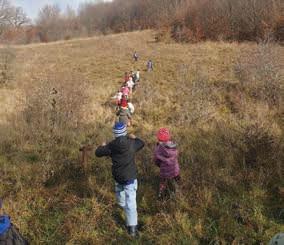
The term “outdoor activities” means outdoor activity, refers to recreation done outside, most commonly in natural settings. The term is made up of the English words “out” and “door”, i.e. literally means “outside the door”.
The activities that encompass outdoor recreation vary depending on the physical environment they are being carried out in. In addition to promoting the development of motor skills and cognitive functions, outdoor activities also have a positive effect on health.
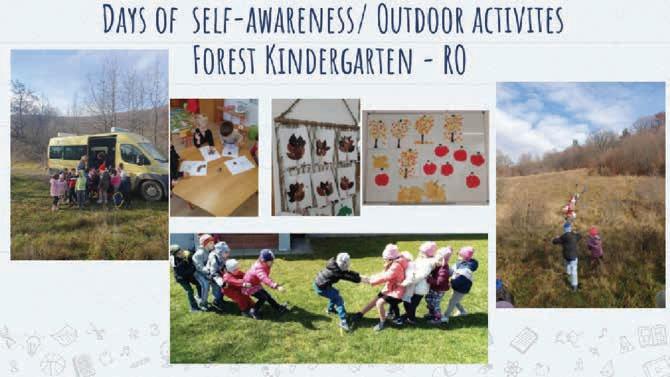
In Romania they are mostly related to environmental education and nature-centered education programs. In the Scandinavian countries, and to a greater extent in Norway, outdoor activities play a decisive role in kindergarten education. During the outdoor activities, children learn to dress appropriately for the weather, learn to travel confidently in nature, which includes water safety, skiing, cycling and hiking.
Through experience, they get to know and learn the laws of nature. In most kindergartens, longer and shorter trips are organized on a daily basis. Outdoor activities are the basis of Norwegian education and are fully accepted and supported by families. In the kindergarten teacher training, students are prepared in special courses for the highest possible quality of outdoor activities (Lysklett & Berger, 2017).
Court playing time can be divided into two parts: Guided activities: The teacher creates an obstacle course using the playground equipment in the yard, which the children (individually or in teams) have to overcome. Various tools, signs, etc. hiding in the yard, which the children have to find individually or in teams. Different row and relay competitions, even supplemented with theoretical questions.
Free activities: Permitting the free use of yard tools and objects, keeping in mind the compliance with accident prevention rules. To allow climbing on smaller trees, playing with natural waste (tree branches, twigs), creative work, with some toys, games that do not correspond to the page function, etc.
The Forest School is an opportunity to implement environmental education through outdoor activities. The beginnings of the forest school in Europe can be found in Germany, where it was created primarily for health purposes (two-week holiday vacation campaigns were organized for vulnerable children in big cities to prevent tuberculosis).
The most important innovations of the forest school: - getting out of the school’s everyday rhythm - new teaching tools
- learning is based on direct sensory experience - new “classroom” (=forest)
- a multitude of tasks requiring experience, activity, practicality and creativity
16
2.2.2. Self- management, Self control: animaL assisted therapy – Hu
Animal assisted therapy entails practices that, after a complex assessment of the child’s age, mental capabilities and interests, aim to develop the child’s skills with the support of a dog through exercises and games involving movement. Therapy sessions minimize the disadvantages these children face due to their disabilities, improve their social skills and empathy, and contribute to the strengthening of psychological functions. Therapy teaches them perseverance and a sense of responsibility. It has developmental effects on motor skills and advances the coordination of gross and fine motor skills. The improvement of communication and the expansion of vocabulary is a priority area. Main areas to develop: attention, memory and thinking. During practical demonstrations, the relationship between dog and child is fundamental, thus we are strengthening the communication between them so that later on, the child’s communication inside the school and the workplace will be seamless.
We work in groups. Each group has six children. The therapy sessions are conducted by two people: one of them controls the dog and the other leads the session. The dog plays an active role in the session. It gives tasks to the children in a bag attached to its harness, and brings them various items in its mouth. The dog presents different movement forms in different order, which the children has to imitate. The dog develops body schema and spatial orientation with its body. Its touch calms the children. The dogs are well-trained and know various tricks, which means that we motivate the children by showing them tricks (or letting them ask the dog for tricks) instead of giving them points.
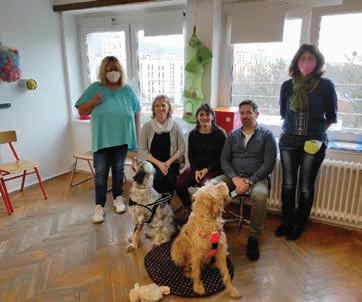
In 2019, we started teaching the children road traffic safety with the help of dogs. In the framework of the program, the children learn about traffic signs and reg-
ulations. Other than acquiring new knowledge, we also develop the childrens’ skills in every exercise. We developed a method that helps in not just the development of their skills but also plays a great role in the acquisition of different ideas and important knowledge.
After discussing the experiences, the colleagues can try the demonstrated techniques with the dogs.
2.2.3. relationShip SKillS: the schooL for parents – Pt
The Parents’ School is where parents, parents-to-be and caretakers, gather to learn and raise consciousness about how to accompany children as they grow up and deal with any issues that surface in contact. The focus is on establishing stable communitarian structures of solidarity where children can develop healthily.
The key work is in building community and the healing of love, because these topics are crucial turning points from a closed system of fear to one of freedom and trust.
17
2.2.4. empathy, Social awareneSS: creative drama – tR
One of the innovations included in our educational offer is creative drama and we wanted to share our experiences with our partners on this subject.
Creative drama is a type of theater used for educational purposes that helps children work on social skills and academic subjects using theater games and improvisations.
It is an effective training method in the classes attended by normal children, in integration classes and in the special education classes. It is a method that makes the individual active in the learning process, allows him to learn by doing and living, contributes to his self-realization and being a creative and productive individual, to establish positive social interaction with others, and to the development of the individual in all aspects.
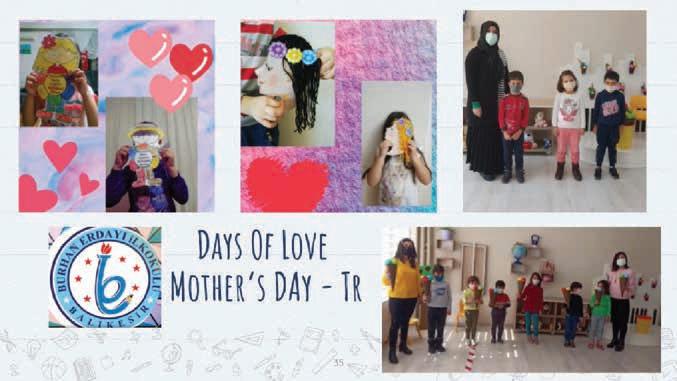
How does creative drama help children?
Creative drama provides an outlet for young children to express their thoughts, wishes and emotions. It challenges children’s perceptions of their world and themselves. Acting out imaginary roles and situations encourages them to think critically and creatively. Creative drama is an encompassing learning medium, emerging from the spontaneous play of young children and utilizing the art of theater to build and enhance the participants’ artistic sensitivity, awareness of self, others, and the world and develop each child’s dramatic imagination.
Considering these benefits, we wanted to share our knowledge with our partners by including the following activities in our LTT activities in Turkey.
18
Presentation of creative drama techniques
• Pantomime: is the expression of non-verbal communication. Pantomime helps children to be good observers by focusing on a certain activity, while giving them the opportunity to know their bodies and use body language effectively. Pantomime is the expression of feelings and thoughts without words. Children like Pantomime, which is the most effective way to introduce drama to children. In the early years of development, pantomime is handled simply without words, using facial expressions, gestures, and sometimes voices. It is said that this technique is useful in developing children’s communication skills through simple rhymes, folk tales and daily activities, pantomime expression exercises and gestures, and gives them the opportunity to express themselves.
• Improvisation: the action and dialogue are performed spontaneously in the moment . . Improvisation manifests itself as an imaginative free act of creation, without predetermined patterns and without being bound by certain editing processes. It is a sequence of behaviors that exist at the moment, cannot be repeated, and flow naturally, without relying on a preparation or scenario. Therefore, it can be said that improvisation studies improve students’ creativity and their ability to speak fully and accurately.
• Role-playing: the children act out a life problem and play different roles in the scenario. Similar to pantomime, role playing makes it easier for students to use their facial expressions at the maximum level in the role they play, and gives them the opportunity to express themselves with strength, courage and confidence. According to Larousse (1987), students reveal a certain situation when they assume a role. Playing means that students take on a role in a safe environment where they can be as creative and active as possible. There are many similarities between students who play role-playing activities during
the lesson and children who play “teacher” or “doctor”. They both create and reflect their own realities, experimenting with real-world knowledge and improving their ability to communicate with people.
• Sense memory improvisation: These exercises emphasize the five senses - sight, smell, sound, touch and taste.
• Emotions: children have a safe place to explore their own feelings through role-playing.
• Characterization: these improvisations teach the similarities and differences in people. When there is a character who is the focus of the story in the drama study to be done, it can be used to center this character, examine it and reveal detailed information about the character. Getting started with this technique is also quite effective in attracting students’ attention. The technique starts with placing a large piece of craft paper on the floor or sticking it to the wall, a human silhouette is drawn and proceeds with the student-teacher dialogue. The teacher can start the work with the instruction “You can write the emotions that this character experiences inside the silhouette and what is happening around it outside”.
• Dialogue: children use dialogue to express their feelings
• Story dramatization: the children act out stories that they heard previously
Here is the steps of a creative drama activity that we did:
WEATHER EVENTS
Materials: Moving music- Cloud-Sun-Wind-Rain-SnowBird-Butterfly-Tree
STAGE 1
Children cross each other.
Teacher: You are all rain clouds. He says you can dance freely when the music starts. When the music is turned off,
19
the teacher says it was lightning. Students clapping their hands and falling to the ground.
The game is repeated several times.
STAGE 2
Appropriate pictures are hung on the necks of the children by distribution of roles according to the number of children. Trees take their places at regular intervals. Directions are given with appropriate resonances.
The weather is beautiful today, the sun is shining brightly (the sun comes). Birds, Butterflies flying around the trees...
The wind started to blow slowly. The branches of the trees away from side to side.
The wind suddenly picked up. Now it’s blowing so strong. The weather got cold. Butterflies hid in the house
with the bird. It started to get dark. What’s the room!!…. Rain clouds are coming. It started to rain drizzling (slowly), splattering!!! (fast).
The weather got colder and it started to snow. Hurray ! Come on, let’s play snowballs.
STAGE 3
At the end of the story, the children are asked:
• What did you do in the game?
• What did you like most in the game?
• How did you feel while playing your role?
• What happens when the wind blows?
• When is the weather the coldest?
• Do you love making snowmen?
20
3. Dysfunctional negative emotions and positive emotions
21
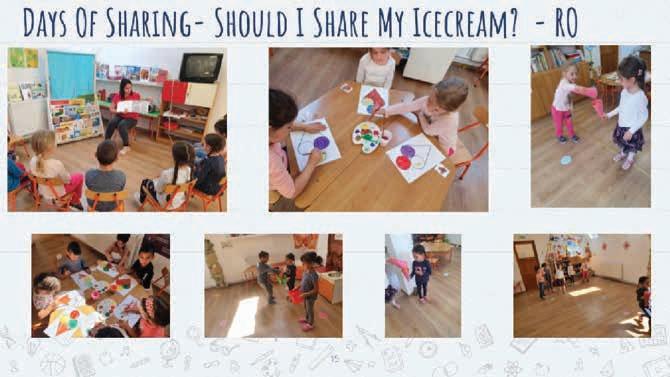
3.1 Thematic activities, games for developing social skills (interactive, cooperative, outdoor)
22
23
3.2 Contemporary stories, folk tales, animated film, poetry, songs
3.2.1. românia - romania
Punguța cu doi bani – de Ion Creangă
Era odată o babă și un moșneag. Baba avea o găină, și moșneagul un cucoș; găina babei se oua de câte două ori pe fiecare zi și baba mânca o mulţime de ouă; iar moșneagului nu-i da nici unul. Moșneagul într-o zi perdu răbdarea și zise:
– Măi babă, mănânci ca în târgul lui Cremene. Ia dă-mi și mie niște ouă, ca să-mi prind pofta măcar.
– Da’ cum nu! zise baba, care era foarte zgârcită. Dacă ai poftă de ouă, bate și tu cucoșul tău, să facă ouă, și-i mânca; că eu așa am bătut găina, și iacătă-o cum se ouă.
Moșneagul, pofticios și hapsin, se ia după gura babei și, de ciudă, prinde iute și degrabă cucoșul și-i dă o bataie bună, zicând:
– Na! ori te ouă, ori du-te de la casa mea; ca să nu mai strici mâncarea degeaba.
Cucoșul, cum scăpă din mânile moșneagului, fugi de-acasă și umbla pe drumuri, bezmetec. Și cum mergea el pe-un drum, numai iată găsește o punguţă cu doi bani. Și cum o găsește, o și ia în clonţ și se întoarnă cu dânsa înapoi către casa moșneagului. Pe drum se întâlnește c-o trăsură c-un boier și cu niște cucoane. Boierul se uită cu băgare de seamă la cucoș, vede în clonţu-i o punguţă și zice vezeteului:
– Măi! ia dă-te jos și vezi ce are cucoșul cela în plisc.
Vezeteul se dă iute jos din capra trăsurei, și c-un feliu de meșteșug, prinde cucoșul și luându-i punguţa din clonţ o dă boieriului. Boieriul o ia, fără păsare o pune în buzunar și pornește cu trăsura înainte. Cucoșul, supărat de asta, nu se lasă, ci se ia după trăsură, spuind neîncetat:
Cucurigu! boieri mari, Daţi punguţa cu doi bani!
Boierul, înciudat, când ajunge în dreptul unei fântâni, zice vezeteului:
– Mă! ia cucoșul ist obraznic și-l dă în fântâna ceea. Vezeteul se dă iarăși jos din capră, prinde cucoșul și-l azvârle în fântână! Cucoșul, văzând această mare primejdie, ce să facă? Începe-a înghiţi la apă; și-nghite, și-nghite, până ce-nghite toată apa din fântână. Apoi zboară de-acolo afară și iarăși se ia în urma trăsurei, zicând:
Cucurigu! boieri mari, Daţi punguţa cu doi bani!
Boierul, văzând aceasta, s-a mirat cumplit și a zis: – Mă! da’ al dracului cucoș i-aista! Ei, las’ că ţi-oiu da eu ţie de cheltuială, măi crestatule și pintenatule!
Și cum ajunge acasă, zice unei babe de la bucătărie să ia cucoșul, să-l azvârle într-un cuptor plin cu jăratic și să pună o lespede la gura cuptorului. Baba, cânoasă la inimă, de cuvânt; face cum i-a zis stăpânu-său. Cucoșul, cum vede și astă mare nedreptate, începe a vărsa la apă; și toarnă el toată apa cea din fântână pe jaratic, până ce stinge focul de tot, și se răcorește cuptoriul; ba încă face ș-o apăraie prin casă, de s-au îndrăcit de ciudă hârca de la bucătărie. Apoi dă o bleandă lespezei de la gura cuptiorului, iesă teafăr și de-acolo, fuga la fereastra boierului și începe a trânti cu ciocul în geamuri și a zice:
24
Cucurigu! boieri mari, Daţi punguţa cu doi bani!
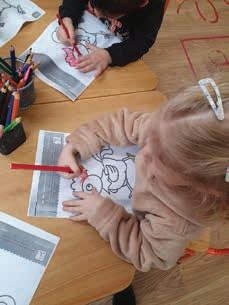
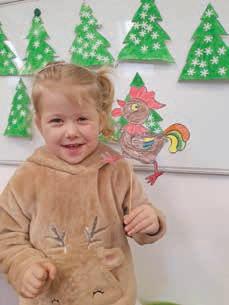
– Măi, că mi-am găsit beleaua cu dihania asta de cucoș, zise boieriul cuprins de mierare. Vezeteu! Ia-l de pe capul meu și-l zvârle în cireada boilor ș-a vacilor; poate vreun buhaiu înfuriat i-a veni de hac; l-a lua în coarne, și-om scăpa de supărare. Vezeteul iarăși ia cucoșul și-l zvârle în cireadă! Atunci, bucuria cucoșului! Să-l fi văzut cum înghiţea la buhai, la boi, la vaci și la viţei; păn-a înghiţit el toată cireada, ș-a făcut un pântece mare, mare cât un munte! Apoi iar vine la fereastră, întinde aripele în dreptul soarelui, de întunecă de tot casa boierului, și iarăși începe!
Cucurigu! boieri mari, Daţi punguţa cu doi bani!
Boierul, când mai vede și astă dandanaie, crăpa de ciudă și nu știa ce să mai facă, doar va scăpa de cucoș. Mai stă boierul cât stă pe gânduri, pănă-i vine iarăși în cap una.
– Am să-l dau în haznaua cu banii; poate va înghiţi la galbeni, i-a sta vreunul în gât, s-a îneca și-oiu scăpa de dânsul.
Și, cum zice, umflă cucoșul de-o aripă și-l zvârle în zahnaua cu banii; căci boieriul acela, de mult bănărit ce avea, nu-i mai știa numărul. Atunci cucoșul înghite cu lăcomie toţi banii și lasă toate lăzile pustii. Apoi iesă și de-acolo, el știe cum și pe unde, se duce la fereastra boierului și iar începe:
Cucurigu! boieri mari, Daţi punguţa cu doi bani!
Acum, după toate cele întâmplate, boierul, văzând că n-are ce-i mai face, i-azvârle punguţa. Cucoșul o ia de jos cu bucurie, se duce la treaba lui și lasă pe boier în pace. Atunci toate paserile din ograda boierească, văzând voinicia cucoșului, s-au luat după dânsul, de ţi se părea că-i o nuntă, și nu altăceva; iară boierul se uita galiș cum se duceau paserile și zise oftând: – Ducă-se și cobe și tot, numai bine că am scăpat de belea, că nici lucru curat n-a fost aici!
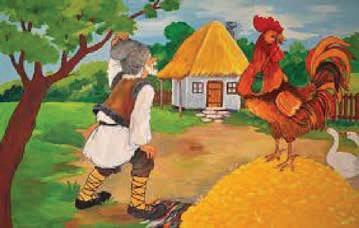
Cucoșul însă mergea ţanţoș, iar paserile după dânsul, și merge el cât merge, până ce ajunge acasă la moșneag, și de pe la poartă începe a cânta: “Cucurigu! cucurigu!” Moșneagul, cum aude glasul cucoșului, iesă afară cu bucurie; și, când își aruncă ochii spre poartă, ce să vadă? Cucoșul său era ceva de spăriet! elefantul ţi se părea purice pe lângă acest cucoș; ș-apoi în urma lui veneau cârduri nenumărate de paseri, care de care mai frumoase, mai cucuiete și mai boghete. Moșneagul, văzând pe cucoșul său așa de mare și de greoiu, și încunjurat de-atâta amar de galiţe, i-a deschis poarta. Atunci cucoșul i-a zis: – Stăpâne, așterne un ţol aici în mijlocul ogrăzii. Moșneagul, iute ca un prâsnel, așterne ţolul. Cucoșul atunci se așază pe ţol, scutură puternic din aripi și îndată se umple ograda și livada moșneagului, pe lângă paseri, și de cirezi de vite; iară pe ţol toarnă o movilă de galbeni, care strălucea la soare de-ţi lua ochii! Moșneagul, văzând aceste mari bogăţii, nu știa ce să facă de bucurie,
25
sărutând mereu cucoșul și dezmerdându-l. Atunci, iaca și baba vine nu știu de unde; și, când a văzut unele ca aceste, numa-i sclipeau răutăcioasei ochii în cap și plesnea de ciudă.
– Moșnege, zise ea rușinată, dă-mi și mie niște galbeni!
– Ba pune-ţi pofta-n cuiu, măi babă! Când ţi-am cerut ouă, știi ce mi-ai răspuns? Bate acum și tu găina, să-ţi aducă galbeni; c-așa am bătut eu cucoșul, știi tu din a cui pricină… și iaca ce mi-a adus!
Atunci baba se duce în poiată, găbuiește găina, o apucă de coadă și o ia la bătaie, de-ţi venea să-i plângi de milă! Biata găină, cum scapă din mânile babei, fuge pe drumuri. Și cum mergea pe drum, găsește și ea o mărgică ș-o înghite. Apoi răpede se întoarce acasă la babă și începe de pe la poartă: “Cot, cot, cotcodac!” Baba iesă cu bucurie înaintea găinei. Găina sare peste poartă, trece iute pe lângă babă și se pune pe cuibariu; și, după vrun ceas de ședere, sare de pe cuibariu, cotcodocind. Baba atunci se duce cu fuga, să vadă ce i-a făcut găina… Și, când se uită în cuibariu, ce să vadă? Găina se ouase o mărgică. Baba, când vede că ș-a bătut găina joc de dânsa, o prinde ș-o bate, ș-o bate, păn-o omoară în bătaie! Și așa, baba cea zgârcită și nebună a rămas de tot săracă, lipită pământului. De-acu a mai mânca și răbdări prăjite în loc de ouă; că bine și-a făcut râs de găină și-a ucis-o fără să-i fie vinovată cu nemica, sărmana!
Moșneagul însă era foarte bogat; el și-a făcut case mari și grădini frumoase și trăia foarte bine; pe babă, de milă, a pus-o găinăriţă, iară pe cucoș îl purta în toate părţile după dânsul, cu salbă de aur la gât și încălţat cu ciuboţele galbene și cu pinteni la călcâie, de ţi se părea că-i un irod de cei frumoși, iară nu cucoș de făcut cu borș.
A kis kakas gyémánt félkrajcárja
Volt a világon egy szegény asszony, annak volt egy kis kakasa. Csak ott keresgél, csak ott kapargál a kis kakas a szeméten, egyszer talál egy gyémánt félkrajcárt. Arra megy a török császár, meglátja a kis kakasnál a gyémánt félkrajcárt, azt mondja neki:
– Kis kakas, add nekem a gyémánt félkrajcárodat.
– Nem adom biz én, kell a gazdasszonyomnak.
De a török császár erővel is elvette tőle, hazavitte, betette a kincseskamarájába. A kis kakas megharagudott, felszállott a kerítés tetejére, elkezdett kiabálni:
– Kukurikú, török császár, add vissza a gyémánt félkrajcárom!
A török császár, csak hogy ne hallja, bement a házba, de akkor meg a kis kakas az ablakába repült, onnan kiabálta:
– Kukurikú, török császár, add vissza a gyémánt félkrajcárom! Megharagudott erre a török császár.
– Eredj, te szolgáló, fogd meg azt a kis kakast, hogy ne kiabáljon, vesd belé a kútba.
26
A szolgáló megfogta, kútba vetette. De a kis kakas csak elkezdi a kútban:
– Szídd fel begyem a sok vizet, szídd fel begyem a sok vizet!
Arra a begye mind felszítta a vizet a kútból. A kis kakas megint felszállott a török császár ablakába.
– Kukurikú, török császár, add vissza a gyémánt félkrajcárom! Megint azt mondja erre a török császár a szolgálójának:
– Eredj, te szolgáló, fogd meg azt a kis kakast, vesd belé az égő kemencébe.
A szolgáló megint megfogta a kis kakast, az égő kemencébe vetette. De a kis kakas megint csak elkezdi:
– Ereszd ki begyem a vizet, hadd oltsa el a tüzet! Ereszd ki begyem a vizet, hadd oltsa el a tüzet!
Erre a begye mind kieresztette a vizet, eloltotta a tüzet. Akkor megint csak felszállott az ablakba.
– Kukurikú, török császár, add vissza a gyémánt félkrajcárom!
Még nagyobb méregbe jött erre a török császár.
– Eredj, te szolgáló, fogd meg azt a kis kakast, vesd belé a méhes kasba, hadd csípjék agyon a darazsak.
A szolgáló belévetette a kis kakast a méhes kasba. Ott megint elkezdi a kis kakas:
– Szídd fel begyem a darázst; szídd fel begyem a da-
rázst! Arra a begye mind felszítta a darázst. Akkor megint felszállott a török császár ablakába.
– Kukurikú, török császár, add vissza a gyémánt félkrajcárom!
Már a török császár nem tudta, mit csináljon vele.
– Eredj, te szolgáló, hozd ide azt a kis kakast, hadd tegyem ide a bő bugyogóm fenekébe.
Megfogja a szolgáló a kis kakast; a török császár beteszi a bő bugyogója fenekébe. Akkor a kis kakas megint csak elkezdi:
– Ereszd ki begyem a darázst, hadd csípje meg a farát; ereszd ki begyem a darázst, hadd csípje meg a farát!
A begye mind kieresztette a darázst, azok jól megcsipkedték a török császár farát. Felugrik erre a török császár.
– Jaj, jaj, a fránya egye meg ezt a kis kakast! Vigyétek hamar a kincseskamarába, hadd keresse meg a maga gyémánt félkrajcárját.
Bevitték a kis kakast a kincseskamarába, ott megint elkezdi a maga mondókáját:
– Szídd fel begyem a sok pénzt, szídd fel begyem a sok pénzt!
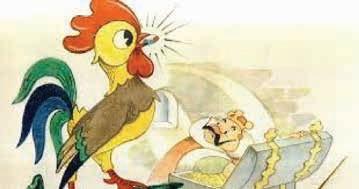
Erre a begye mind felszítta a török császár három kád pénzét.
A kis kakas hazavitte, odaadta a gazdasszonyának; gazdag asszony lett belőle, még máig is él, ha meg nem halt.
27
28
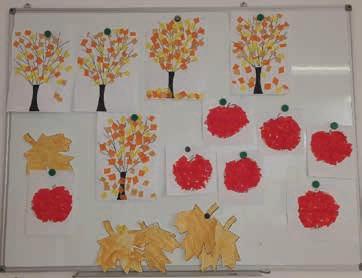
Toamna, tu ne-aduci
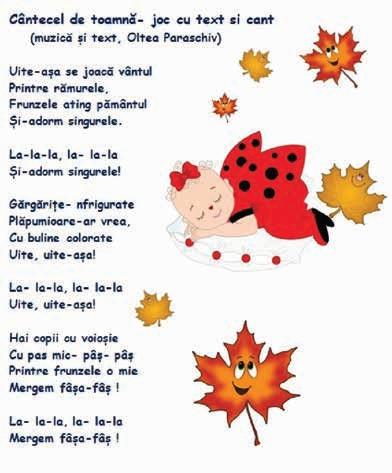
Multe fructe dulci.
Gutui, nuci și mere.
Struguri, prune, pere. Și porumb de măcinat La gospodărie-n sat.
29
Osvát Erzsébet: Jött őszanyó
Jött őszanyó hideg széllel, Aranysárga vízfestékkel. Sárgák lettek a levelek, Fújtak, fújtak őszi szelek.
Fújtak, fújtak őszi szelek, Lehullottak a levelek. Itt vannak a fák alatt, Látod a sok aranyat?
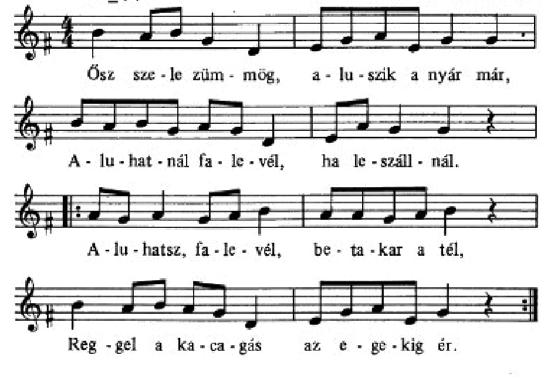
Ősz szele zümmög
Ősz szele zümmög, aluszik a nyár már, Aluhatnál falevél, ha leszállnál. Aluhatsz falevél, betakar a tél, Reggel a kacagás az egekig ér. Aluhatsz falevél, betakar a tél, Reggel a kacagás az egekig ér.
3.2.2. ungaria - hungary
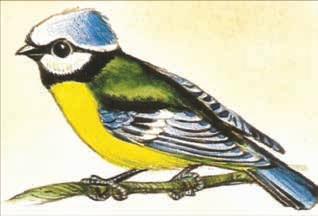
Nád a házam teteje, teteje Rászállott a cinege, cinege Hess le róla cinege , cinege Leszakad a teteje, teteje Ha leszakad mi lesz vélem Sárga lábú cinege, cinege de Hess le róla cinege, cinege Mert leszakad a teteje, teteje.
30
https://youtube.com/watch?v=Uw3SSe3QR3k&feature=share
Bartos Erika: Bogyó és Babóca / A barátság
Egy meleg nyári napon Babóca, a katicakislány jókedvűen nézett ki háza ablakán.
– Megreggelizem – gondolta –, és sétálok egyet az illatos nyári réten!
A sétára a talicskáját is magával vitte.
– Hátha találok valami érdekeset, amit hazahozhatok benne – morfondírozott. – Nahát! – kiáltott fel Babóca. –Egy csodaszép cseresznye! Ez aztán a kincs! Finom ebéd lesz belőle!
Megpróbálta feltenni a cseresznyét a talicskára, de túl nehéz volt. Babóca hiába erőlködött, nem sikerült megemelnie. Épp arra járt Bogyó, a csigafiú.
– Miért búslakodsz, kis katicabogár?
– Nem sikerül feltennem a cseresznyét a talicskára.
– Ne szomorkodj! Majd én segítek! – mondta Bogyó segítőkészen, és együtt tényleg sikerült felemelniük cseresznyét.
Babóca köszönés nélkül hátát fordított Bogyónak, és elindult hazafelé. Bogyó csalódottan nézett utána.
– Nem gondolod, hogy nekem is jár abból a cseresznyéből? – dobbantott dühösen Bogyó. Hiszen segítettem neked!
– De hát ezt a cseresznyét én találtam! – feleselt Babóca. – Nem adom! Az enyém!
De Bogyó nem hagyta magát. Ráncigálni kezdték a cseresznyét.
– Nem adom! Az enyém! – hajtogatta Babóca.
– Nekem is jár belőle! – kiabálta Bogyó.
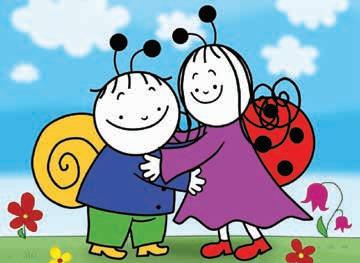
Addig rángatták ide-oda a cseresznyét, míg ketté nem szakadt, Bogyó és Babóca pedig a földre huppantak. Meglepetésükre a cseresznyéből egy dühös kukac bukkant elő.
– Mit tettetek a cseresznyémmel?! – mérgelődött. –Hiszen ez az én lakásom!
De látva Bogyó és Babóca ijedtségét, így folytatta:
– No, nem kell úgy megijedni! Szívesen megmutatom nektek, hol találtam ezt a cseresznyét. Ott nektek is akad majd harapnivaló, én pedig választhatok új házat magamnak.
A kukac bemászott a talicskába, és együtt elindultak a cseresznyefához. Csakhamar meg is találták. A fa telis-tele volt édes, illatos cseresznyével. A kukac hamar álomba szenderült, Bogyó és Babóca pedig hosszasan csemegéztek.
Cseresznyemajszolás közben gyorsan szaladt az idő. Későre járt már, mikor hazaindultak. Két cseresznyét vittek magukkal a talicskában, az egyiket Babócának, a másikat Bogyónak. Napnyugtakor értek Bogyó házához. Leemelték a talicskáról az egyik cseresznyét, aztán elbúcsúztak egymástól. Bogyó hosszan integetett Babócának csöpp háza ablakából. Babóca visszaintegetett Bogyónak. Bogyó hamar elaludt az izgalmas nap után. Álmában újra cseresznyék között ugrándozott Babócával, és kedvükre falatoztak, míg tele nem lett a bendőjük. Hamarosan Babóca is hazaérkezett.
Ettől a naptól kezdve Bogyó és Babóca elválaszthatatlan jó barátok lettek.
31
portugalia – portugal
O princípe com orelhas de burro
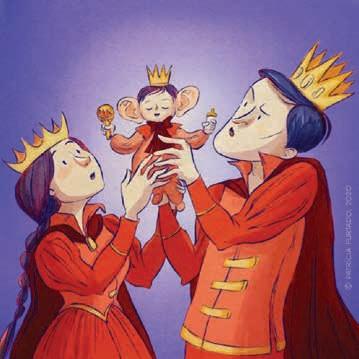
Era uma vez um rei que vivia muito triste por não ter filhos e mandou chamar tres fadas para que fizessem com que a rainha lhe désse um filho. As fadas prometteram-lhe que os seu desejos seriam satisfeitos e que ellas viriam assistir ao nascimento do principe. Ao fim de nove mezes deu a rainha á luz um filho e as tres fadas fadaram o menino.
A primeira fada disse: «Eu te fado para que sejas o principe mais formoso do mundo.»
A segunda fada disse: «Eu te fado para que sejas muito virtuoso e entendido.»
A terceira fada disse: «Eu te fado para que te nasçam umas orelhas de burro.»
Foram-se as tres fadas e logo appareceram ao principe as orelhas de burro. O rei mandou sem demora fazer um barrete que o principe devia sempre usar para lhe cobrir as orelhas. Crescia o principe em formosura e ninguem na côrte sabia que elle tivesse as taes orelhas de burro. Chegou a edade em que elle tinha de fazer a barba, e então o rei mandou chamar o seu barbeiro e disse-lhe: «Farás a barba ao principe, mas se disseres a alguem que elle tem orelhas de burro, morrerás.»
Andava o barbeiro com grandes desejos de contar o que vira, mas, com receio de que o rei o mandasse matar, calava comsigo. Um dia foi-se confessar o disse ao padre: «Eu tenho um segredo que me mandaram guardar, mas eu se não o digo a alguem morro, e se o digo o rei manda-me matar; diga padre, o que eu hei de fazer.» Responde-lhe o padre que fosse a um valle, que fizesse uma cova na terra e que dissesse o segredo tantas vezes até ficar aliviado d’esse peso, e que depois tapasse a cova com terra. O barbeiro assim fez; e, depois de ter tapado a cova, voltou para casa muito descançado.
Passado algum tempo nasceu um canavial onde o barbeiro tinha feito a cova. Os pastores quando alli passavam com os seus rebanhos cortavam canas para fazer gaitas, mas quando tocavam n’ellas saiam umas vozes que diziam: «Principe com orelhas de burro». Começou a espalhar-se esta noticia por toda a cidade e o rei mandou vir á sua presença um dos pastores para que tocasse na gaita; e saiam sempre as mesmas vozes que diziam: «Principe com orelhas de burro». O proprio rei tambem tocou e sempre ouvia as vozes. Então o rei mandou chamar as fadas e pediu-lhes que tirassem as orelhas de burro ao principe. Então ellas mandaram reunir a côrte toda e ordenaram ao principe que tirasse o barrete; mas qual não foi o contentamento do rei, da rainha e do principe ao ver que já lá não estavam as taes orelhas de burro! Desde esse dia as gaitas que os pastores faziam das canas do tal canavial deixaram de dizer: «Principe com orelhas de burro.»
32
3.2.3
The King with Donkey Ears – portuguese tall
A long time ago, there was a king who had floppy ears shaped just like the ears of a donkey. The king was very embarrassed about his ears and always covered them up when he was in public so that the people of the village would never be allowed to discover his secret. The only person who ever saw the king’s ears was his hairdresser.
The king often warned the hairdresser, ‘You must promise never to tell anyone that I have ears shaped like a donkey or I will send my guards to your house and they will take you away to my prison where you shall remain for the rest of your life.’
The hairdresser found it very hard to keep this secret because he wanted to tell all of the villagers about the king’s ears, but he always remembered the king’s warning and so kept the secret to himself for many years.
But one morning, the hairdresser woke up and knew that he could keep the secret to himself no longer. He got dressed and left his house and walked out of the village into the countryside where he was sure that he was all alone. Then he found a patch of flat grass and began to dig with his hands.
Eventually the hairdresser made a very deep hole, and when he was satisfied with his work he leaned over into the hole and shouted at the top of his voice, ‘The king has ears shaped like a donkey! The king has ears shaped like a donkey!’
Once he had shouted out the king’s secret, the hairdresser felt much better. Then he covered over the hole with earth and grass and returned to his home, reassuring himself that he had not really betrayed the king’s trust.
Many years later, there was a school built next to the hole, and a playground built around the hole where the children would play when they were not in class.
One day, when all of the children were playing in the
playground, a young boy discovered the hole hidden beneath the grass and earth. The boy quickly cleared the earth away and all of a sudden a loud voice escaped from the hole up into the air for all the children to hear: ‘The king has ears shaped like a donkey! The king has ears shaped like a donkey!’
The children were very surprised to hear the hairdresser’s voice fill the air, and they giggled and laughed about the secret of the king’s ears. When they got home that day, the children told the secret to their parents. Then the parents told the secret to the rest of their family. Then each family told the secret to all of their friends.
‘The king has ears shaped like a donkey,’ they laughed to one another.
Very soon the whole village knew about the king’s ears and they all giggled and laughed because they now knew why the king always covered up his head whenever he was out in public.
Well, it did not take very long at all before the king realised that everybody knew his secret and he was very embarrassed and very angry.
The king remembered that only one man knew about his donkey-shaped ears and so he sent his guards to the hairdresser’s house. The guards took a hold of the hairdresser and dragged him back to the palace and threw the man into the prison where he was told he would spend the rest of his life.
The hairdresser pleaded with the king to let him go, but the king said to the hairdresser, ‘You promised me that you would not share my secret but you could not keep it to yourself. I trusted you and you betrayed me. For this you will spend the rest of your life in prison and you will learn that it is always important to keep your promises to others and not to share secrets.’
And so the hairdresser remained in prison for the rest of his life and always felt sorry for sharing the king’s secret when he had promised not to do so.
33
3.2.4. turcia - turKey
Göle Maya Çalmak Fıkrası
Günlerden bir gün Nasrettin Hoca eline yoğurt mayası bakracını alıp göle doğru yola koyulmuş.
Gölün etrafında piknik yapan köylüler Hoca’ya dikkat kesilmişler.
Hoca Nasrettin başlamış yoğurt mayasını göle kaşık, kaşık çalmaya. Köyüler şaşkınlıkla izlerken, içlerinden biri Hoca’nın yanına varmış.
– Hayırdır Hocam? Ne yapıyorsun böyle? diye sormuş.
– Göle yoğurt mayası çalıyorum, demiş.
– İlahi, hocam, hiç göle maya çalmakla göl maya tutar mı?
– Hoca Nasrettin O nüktedan cevaplarından birini daha vermiş:
– Ya tutarsa…
Nasrettin Hoca, bu davranışıyla yaşadığı toplumda olmadık işlerle uğraşan, boş hevesler peşinde koşan kişilere ders vermek istemiştir.
Making yogurt in the Lake Joke
One day, Nasreddin Hodja took the yogurt yeast baker and set off towards the lake.
Villagers picnicking around the lake paid attention to Hodja.
Hodja Nasreddin started to pour the yogurt yeast into the lake, spoon by spoon. While the villagers were watching in amazement, one of them came to Hodja.
– No, Sir? What are you doing like this? he asked.
– I’m making yogurt from the lake, he said.
– Oh sir! How is it possible to make yogurt in the lake?
Hodja Nasreddin He gave another of his witty answers:
– What if it happens…
With this behavior, Nasreddin Hodja wanted to give lessons to people who are dealing with unconventional jobs and chasing vain desires in the society he lives in.
34
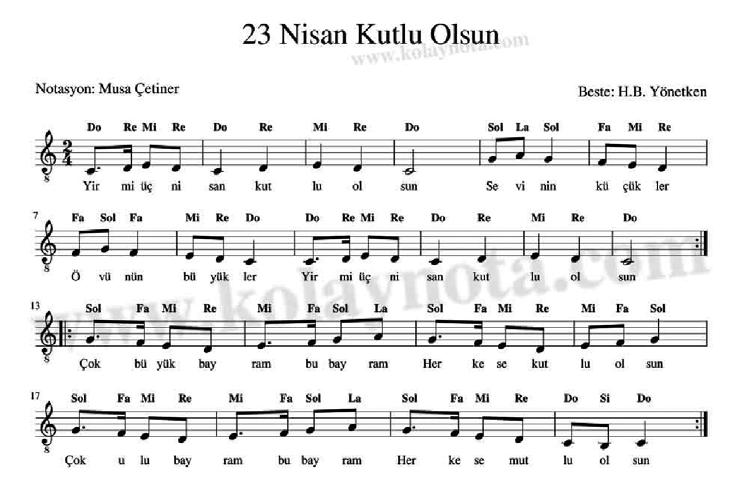
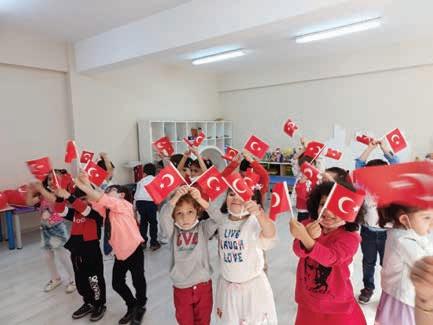
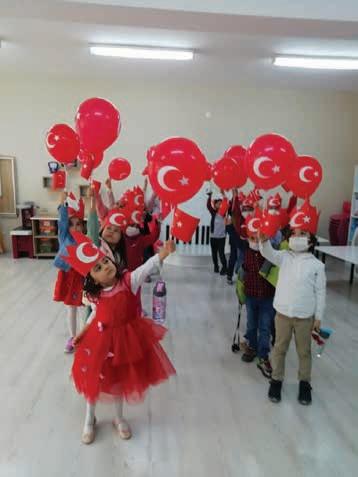
Link for the song: https://www.youtube.com/watch?v=NeiyOBaOa-k
35
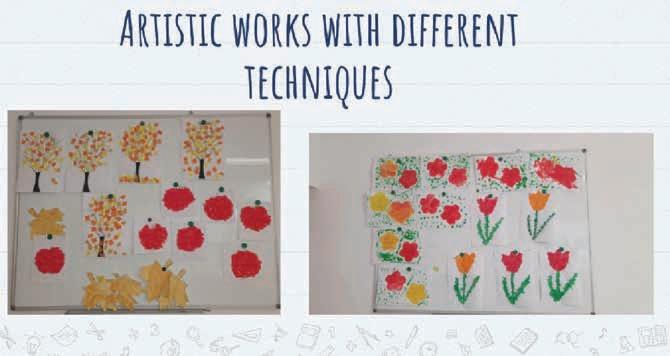
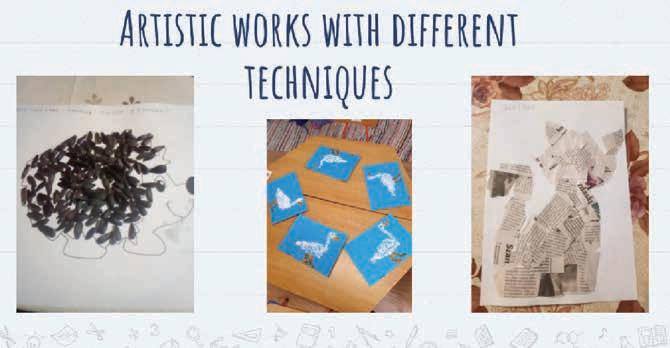
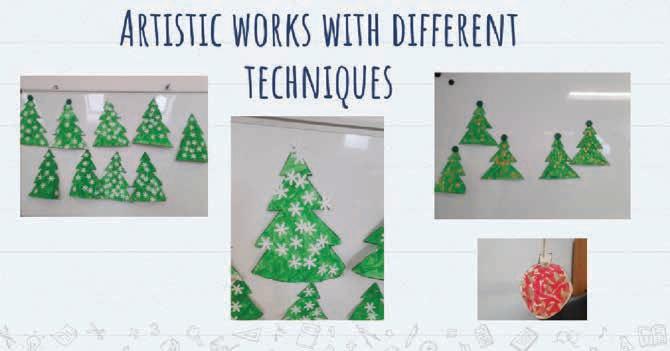
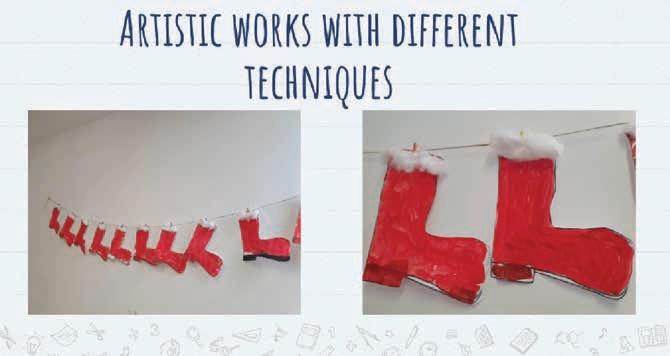
3.3. Artistic works with different techniques
36
37
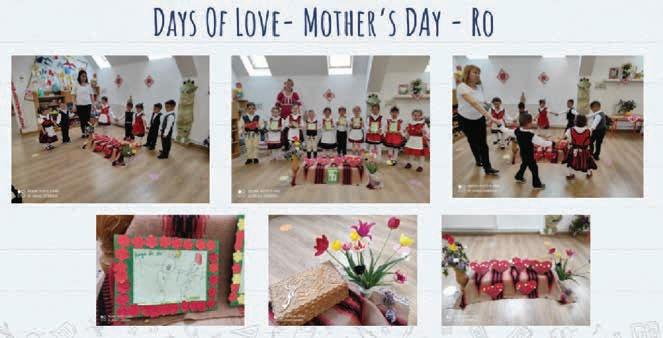
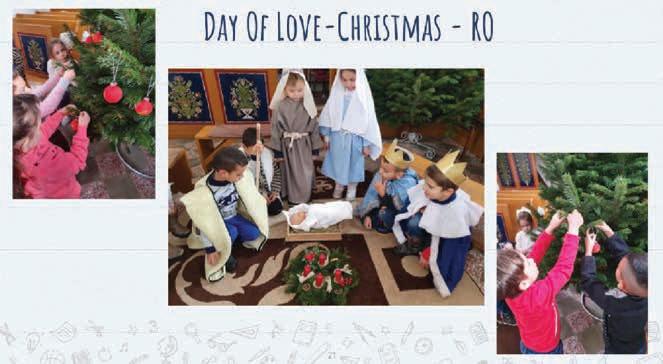
3.4. Religious, traditional holidays
38
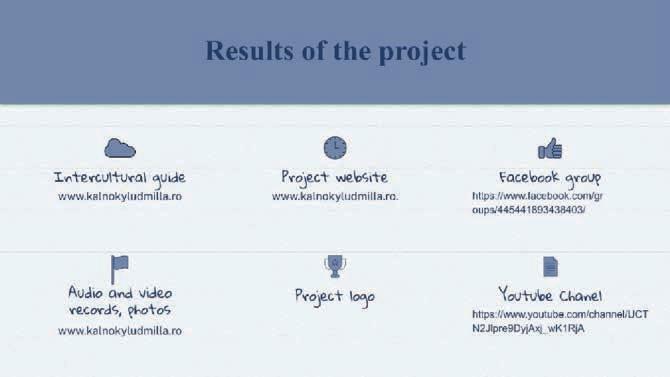
4. Results of the project
39
40
5. Annexes
41
42
43
44
https://www.step-institute.org/services/social-skills-development/#:~:text=Developing%20social%20skills%20is%20 about,chatting%20with%20friends%20and%20family.
www.kalnokyludmilla.ro
https://www.youtube.com/channel/UCTN2Jlpre9DyjAxj_ wK1RjA
https://www.facebook.com/groups/445441893438403/
https://m.haberturk.com/balikesir-haberleri/91704259burhan-erdayi-ilkokulu-kindergarten-our-priority-projesi-ile-romanyada
“The European Commission’s support for the production of this publication does not constitute an endorsement of the contents, which reflect the views only of the authors, and the Commission cannot be held responsible for any use which may be made of the information contained therein.”
45
Sources
46

ISBN 978-606-9011-26-3