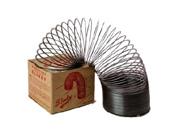
Vol. 22: #26 • Yo-Yos • (6-21-2026) Tidbits of Coachella Valley
by Janet Spencer
The yoyo first appeared in the historical record around 500 B.C. and has been a popular toy across Europe and Asia for centuries. Since its primitive days, it’s enjoyed a tremendous revolution in design changes and inventive techniques. Follow along as Tidbits looks at how this unique toy has evolved over the years and remains a popular pastime for folks of all ages!
THE UPS AND DOWNS OF IT
• The yoyo’s popularity burgeoned in the 1920s due to a man named Pedro Flores. Flores grew up playing with yoyos in his native Philippines, but a brainstorm idea that he had resulted in a major transformation of the toyʼs design and function.
• Instead of tying the string to the center of the spool with a knot as had been done for centuries, he looped it around the yoyo’s axle so it would continue to spin freely after it reached the end of the string. Instead of merely spinning down and instantly jerking back up, it now remained stationary while
TRIV
(Answers on page 16)
1. U.S. STATES: Which state has the most national parks?
2. ANATOMY: Which blood type is considered to be a universal donor?
3. GENERAL KNOWLEDGE: Which three signs of the Zodiac are considered to be Earth signs?
4. ROYALS: What was Queen Elizabeth’s favorite dog breed?
5. GEOGRAPHY: Which continent has a mountain range called The Great Rift Valley?
6. MONEY: What is the basic currency of Russia?
7. TELEVISION: Which long-running TV sitcom features a dog named Comet?
8. MUSIC: How many strings does a standard violin have?
9. GAMES: How many title deeds does the Monopoly game have?
10. SCIENCE: What is the main cause of ocean tides?
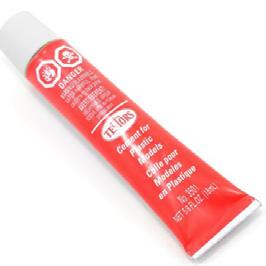
• A Swedish man named Axel Karlson came to America in 1925 and settled in Rockford, Illinois. He started a glue factory. His product was called Karlson’s Klister, with “klister” being Swedish for “glue.” It was geared towards mending women’s stockings and also found a market with cobblers repairing shoes. His friend, another Swedish man named Nils Testor, lived nearby.
• Testor had worked for Woolworth’s for years, working his way up from stock clerk to manager. One day, Karlson propositioned Testor to quit his Woolworth’s job and come to work for him as manager of his glue factory. Testor saw it as an opportunity and gladly accepted the offer.
• Before long, the Great Depression was becoming severe and the glue factory began to falter. Karlson returned to Sweden, leaving Testor to handle the entire operation by himself.
• Soon after, Testor decided to scrape together enough cash to purchase the failing business. Karlson agreed to the proposal, and Testor officially became the owner. Seeing potential in their product, he renamed the enterprise the Testor Chemical Company. He reformulated the glue composition and called it “Crystal Clear Household Cement.”
• Because it could be used in many applications, he began marketing it widely, selling it in bulk to cobblers, and packaging it in small tubes for household use. His diverse glue product could mend china, glassware, leather goods, and other household products. Sales quickly increased, and for many years, “Testors” and “glue” were nearly synonymous.
• By the late 1930s after the Depression years, hobbyists began using Testor’s cement and adhesives for modeling projects. Testor responded by formulating new compounds explicitly designed for gluing model airplanes and model railroad components. He then added specialty paints and paint brushes specifically for these specialized projects.
• Testor Chemical Company was a founding member of the Hobby Industry of America in
1940. With hobbyists now providing a solid foundation of support, the firm expanded.
• The advent of World War II made goods and supplies very scarce, but one material readily available was lightweight balsa wood. Testor began designing and marketing scale model airplanes to be assembled with pre-cut pieces. He later added powered balsa planes controlled from the ground using an attached line.
• The economy boomed after the end of the war, and Testor’s company thrived. He added new factories, expanded his line of paints, created new adhesives, and added lacquers and decals. He also designed new balsa gliders and created a collection of rubber-band-powered, propellordriven planes.
• By the mid-1950s, the company was the country’s largest buyer of tiny glass bottles (for paint) and plastic tubes (for cement). It was also the world’s leading consumer of balsa wood. Testor was selling 100,000 bottles of enamel paint every single day.
• In 1965, the Jupiter Corp. acquired Testor. At the time of the sale, Testor employed 450 workers, 200 of which were based in Rockford. Nils Testor remained the company’s chairman.
• In 1969, the new Testors Corporation bought out the Hawk Model Company, makers of plastic model kits. They introduced an entire line of high-quality snap-fit model kits ranging in complexity and price.
• In 1984, the firm was acquired by RPM Inc, maker of Rustoleum products. They continue to produce a wide array of interesting models in addition to paints and adhesives. Kits include cars, planes, tanks, and even UFO crafts. Annual sales now top $50 million.
• Nils Testor died in 1967 at the age of 64, having built an entire empire out of ideas he spawned for innovative new uses of glue.
YoYos (from page one)
maintaining its spinning energy. He found that this energy gave the yoyo new abilities, so he experimented with ways to perform amazing stunts and tricks never before seen. Flores didnʼt realize it, but he had pioneered a new world of yoyos, and forever elevated its popularity and standing in the entire toy industry.
AMERICAN DEBUT
• When Flores immigrated to the U.S. in the 1920s, he got a job working as a luggage handler at a California hotel. During quiet moments, he would practice tricks with his yoyo, attracting a lot of attention from hotel guests.
• He began making yoyos at home at night and selling them to hotel patrons. They sold so well that he took on a couple of partners who raised enough capital to purchase equipment that could mass-produce yoyos. Sales continued to grow, allowing them to purchase property needed to create three yoyo assembly locations in Santa Barbara, Hollywood, and Los Angeles.
• Flores found that the best way to promote yoyo fun was to have practiced yoyo experts give demonstrations in front of crowds. Next, he began organizing yoyo competitions, inviting the best yoyo artists to compete for prizes. Popularity was growing and sales kept rising.
• One curious demonstration bystander was a man named Donald Duncan. Duncan was an expert in marketing, with several successful ventures already to his credit. His first was the manufacture and promotion of parking meters, followed by his invention of the ice cream truck under the name “Good Humor.” When he saw the yoyo in action for the first time, he instinctively knew he could make a fortune off this toy.
• Although Flores had patented the design, he had not trademarked the yoyo name. Duncan
quickly applied to trademark the name “yoyo,” and obtained legal rights. Then, in 1929, Duncan bought out Flores lock, stock, and string.
A MARKETING MOGUL
• In the midst of the Great Depression, Duncan hired yoyo experts to travel the country putting on yoyo exhibitions and promoting yoyo contests. He stipulated that if a yoyo man worked for him for seven years, receiving good pay all the while, that when their contract concluded he would pay for their college education, as much college as they wanted. The open positions filled immediately.
• His yoyo men traveled the country, giving demonstrations at community centers, libraries, schoolyards, shopping plazas, and theaters. They dressed well, drove nice company cars, ate at fine restaurants, all while garnering massive amounts of attention and publicity wherever they went. Yoyo fever swept the nation. Winners of the contests sometimes went on to become Duncan yoyo demonstrators.
• Duncan was fast becoming known as a formidible marketing guru in the business world. One of his most innovative ideas involved approaching publishing magnate William Randolph Hearst, who owned newspapers across the country.
• Duncan asked Hearst to give him whatever leftover unsold space he had in his newspapers to advertise his upcoming yoyo contests. The twist was that to enter the contest, an entrant had to sell at least two subscriptions to their local paper.
• Hearst was impressed by this innovative thinking and agreed to test this plan out in the Chicago area. Astoundingly, over 50,000 new subscriptions rolled in over the next six weeks! It was a win-win deal for everyone involved.
• Duncan's strategy was simple yet brilliant. Who was best at selling newspaper subscriptions? Paperboys. Who was interested in practicing yoyo tricks? Paperboys. Who was most invested in winning the bikes and radios being given away as contest prizes? Paperboys! It was targeted marketing at its finest.
• Duncan started advertising on TV in the early 1960s. In 1962 he sold 45 million yoyos at a time when there were only around 40 million children in the U.S.
• Duncan also improved the design in periodic leaps of technology. By 1950, wooden yoyos sported carved ribs, which improved spin. Plastic yoyos came on the scene in 1960. Next, the “clam-shell” halves of the yoyo were reversed,
so they now faced outward in a butterfly shape, which improved stability. Then aluminum yoyos were developed, followed by titanium.
CONFLICTING COMPETITION
• However, there were glitches along the way. One employee left Duncan in 1937 and went on to found his own toy company, Royal Tops, selling
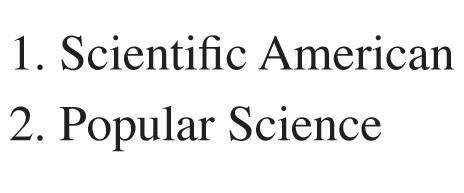
1. In 1916 this magazine was the first to use the term "yoyo" in print when it published instructions on making the toy at home.
2. What magazine in 1929 printed instructions on how to make the new "Filippino yoyo"?
The popularity of the yo-yo got a boost in 1986 when comedian Tommy Smothers of the Smothers Brothers made his debut appearance as the "YoYo Man" on the Johnny Carson Show. This was followed by a Smothers Brothers Yo-Yo Man Instructional Video released in 1988, which sold over 200,000 copies. YoYos made numerous appearances on the Smothers Brothers Comedy Show in 1988 and 1989.
By Lucie Winborne
* Unlike some genocides in which victims could sometimes avoid persecution by converting to another religion, Nazi Germany generally defined Jews by ancestry rather than personal belief. Under the Nuremberg Laws, a person’s classification depended largely on the religious affiliation of parents and grandparents, so conversion to Christianity usually did not exempt someone of Jewish ancestry from anti-Jewish persecution.
* Turtles can see well underwater, but on land they are nearsighted.
* In one of his occasional efforts to improve public relations, Chicago gangster Al Capone opened a soup kitchen during the Great Depression.
by Mary Hunt
Little-Known Airline Rules That Can Trip You Up
by Mary Hunt
Imagine this: You’re off on a dreamy New York-London-Paris adventure. Somewhere over the Atlantic, someone swipes your carry-on. The airline shrugs. “Not our responsibility.” You roll with it. London is fabulous. So fabulous, in fact, that you skip your flight to Paris and instead hop a train a few days later.
Fast-forward to departure day in Paris. Your return flight home? Canceled because you skipped a leg.
Add in a middle-name typo that blocks check-in, a flight credit that expires before you blink, and you’ve just taken a master class in Airline Rules 101 -- whether you meant to or not.
Here are five little-known airline rules that can quickly drain your bank account if you don’t know they exist.
1. SKIP ONE LEG, LOSE THE REST
names, like “Mike” instead of “Michael.” Wrong middle name? Transposed letters? That can mean no boarding pass.
If you book directly with an airline, minor corrections are sometimes possible. If you book through a third party, changes can become a bureaucratic Ping-Pong match between the agency and the airline -- and you’re the ball.
Here’s the good news: Under U.S. Department of Transportation rules, you can cancel and rebook within 24 hours of purchase without penalty (as long as the flight is at least seven days away).
Smart move: The moment your confirmation email arrives, check every name like you’re proofreading your will.
4. “ONE YEAR” MAY NOT MEAN 12 MONTHS
Cancel a nonrefundable ticket, and you may receive a flight credit “good for one year.” Lovely. Except that some airlines start that clock from the actual purchase date, not from the date you cancel.
That means if you bought the ticket in January for a July trip and cancel in June, your “one-year” credit could expire the following January. Congratulations. You just got seven months.
* During the pre-WWII drafts, an illiterate gentleman hoping to avoid military service asked his wife to write the draft board and explain how much he was needed at home. The plan backfired when his lady instead requested that her husband be taken because he was a “no-good” alcoholic who didn’t help around the house.
Miss one flight on a multileg itinerary and poof! The rest of your ticket may be automatically canceled.
ADVERTISING PROOF
Smart move: When does the credit expire, and from which date is it calculated? Write it down. Screenshot it. Do not trust your memory.
5. ILLNESS DOESN’T AUTOMATICALLY MEAN A REFUND
MON., MAY 18
Airlines call this “married segments.” If you no-show for one flight, they often void the remaining legs immediately. Not next week. Not after a courtesy email. Immediately.
* In the U.S., graduating nurses take an oath called the Nightingale Pledge, named after Florence Nightingale and adapted from the Hippocratic Oath taken by doctors.
Earl’s Air Conditioning
pg H 4-C 13x
Smart move: If you know you’ll miss a flight, call the airline before departure and ask them to preserve the remaining legs. Do not assume your return flight will wait patiently for you.
2. WATCH YOUR STUFF (Because they won't)
If you or a family member gets sick before a trip, common sense says you’ll get a refund or credit. Policy says ... maybe. Some airlines show flexibility. Others stick to the contract. Unless required by law, they are not obligated to refund you because of illness.
This is exactly why travel insurance exists. Not glamorous or thrilling, but occasionally worth it.
Smart move: Read the fine print on that travel insurance policy before you click to add. Is illness on the list, or do you have to have lost a limb to qualify for a refund?
ADVERTISING PROOF
If someone pulls your bag from the overhead bin or your jacket disappears after a flight attendant kindly hangs it up, the airline will likely point to the fine print: They are not responsible for carry-on items.
BONUS REALITY CHECK: VERBAL PROMISES ARE WORTH EXACTLY $0
May 24, 2026 Vol. 22 - No. 22
* After his first son’s birth, Claude Monet attempted suicide by jumping into the Seine. He was poor, estranged from his father and disappointed in the French art scene. Fortunately, he survived and later helped found the Impressionist movement. ***
In most cases, your only recourse is to report the loss immediately and possibly file a police report. Your renter’s, homeowner’s or travel insurance may cover it -- but the airline probably
An agent may say, “Don’t worry, we’ll reimburse the difference,” or, “You can submit that hotel expense.”
Unless it’s written policy, or otherwise in writing, expect it to evaporate faster than your overhead bin space.
Earl’s Air Conditioning
pg H 4-C 13x
May 24, 2026 Vol. 22 - No. 22
Thought for the Day: “When obstacles arise, you change your direction to reach your goal; you do not change your decision to get there.” -- Zig Ziglar (c)
Inc.
Frontline employees often aren’t authorized to make binding financial promises. If something sounds generous, politely ask for it in writing or a reference to official policy.
Airline rules aren’t personal. They’re contractual. Complex, sometimes maddening? Absolutely.
But here’s the empowering part: Once you know the rules, you stop being blindsided by them. And that is how you travel smarter and keep your vacation budget intact. Always practice the smart moves!
* * *
Mary invites you to visit her at EverydayCheapskate.com, where this column is archived complete with links and resources for all recommended products and services. Mary invites questions and comments at https://www.everydaycheapskate. com/contact/, “Ask Mary.” This column will answer questions of general interest, but letters cannot be answered individually. Mary Hunt is the founder of EverydayCheapskate.com, a frugal living blog, and the author of the book “Debt-Proof Living.”
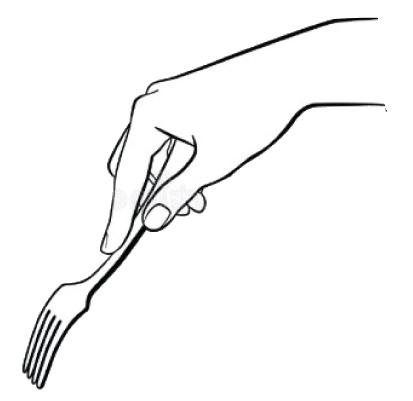
You wouldn’t think that an innocent table item like a fork would be controversial, but it was indeed just that -- and for a very long time. Read on to see how it took such a long and bumpy road to finally become one of our standard eating utensils.
• When eating, spoons are necessary for scooping loose morsels or liquids. Knives are needed for cutting food. But anything a fork can do, fingers can do better. At least this was the prevailing attitude, beginning at the time where humans first began gathering to share a meal.
• Forks, usually oversized and two-pronged, were used to spear heavy things such as roasts, and transfer them to the table. But it was customary to use your fingers for getting it up to your mouth. People grabbed food from a central platter, tearing what they needed using their hands. They ate from their plate, fingers-to-lips.
• Scandal over the use of a fork broke out in the Byzantine era when Princess Maria Argyropoula, a noblewoman, married the Venetian Magistrate’s son in the year 1003 A.D. At her lavish wedding banquet, Maria produced an ornate, two-pronged golden fork. She used it to bring food to her lips because she did not wish to get her hands dirty.
• Shortly after the event, a clergyman in Venice gave a passionate sermon condemning her. He insisted, “God in his wisdom has provided man with natural forks—his fingers! Therefore, it is an insult to Him to unnecessisarily substitute
them with metal forks!” He ranted on, saying that Christ and his disciples used no forks at the Last Supper. Forks were never mentioned in the Holy Bible. To insert a man-made object between the hand and the mouth was to disrupt a sacred and natural act. And who could miss the resemblance of the fork to the Devil’s pitchfork? Therefore, the fork was condemned as a symbol of moral decay, decadence, and social arrogance. This belief remained the prevailing mindset for several more centuries.
• However, attitudes began to change, largely because cuisine had begun to evolve. It was the chefs of Italy who were responsible for a shift in table mannerisms. They favored pasta with various slippery sauces, meats dripping with gravy juices, fruits prepared with syrups, and sugared delicacies swimming in gooey confections.
• The Italians were the first to embrace the use of forks because it’s quite a challenge to eat spaghetti with your fingers. The Italian nobility adopted the practice of using forks, an act that instigated profound changes in food culture and table habits. When the aristocracy began using forks, it heralded the beginning of more dignified and refined dining manners.
• Still, progress was slow. Common folk tended to feel that the fork was a symbol of excess and a sign of vanity. Men in particular viewed forks as simply unmanly showmanship.
• Then Catherine de’ Medici entered the scene. Born into the influential Italian Medici family, she married Henry II of France in 1533. She brought with her not only Italian cuisine, but also Italian dining habits, and the Italian table always featured the fork. While hosting elaborate
banquets, she demonstrated not only the proper use of a fork, but also an entire array of proper and refined table manners. She was the Emily Post of her day. She did much to transform the fork from a curiosity to a symbol of grace, refinement, and distinction. The French ate it up. Now the fork had become a status symbol.
• Then, mass production was invented. With forks now affordable even for the lowly masses, the divide was crossed. By the mid-1800s, forks were presented on every table.
• Still, however, it’s estimated that a full third of the global population continues the age-old practice of just eating with their fingers.
CLIP AND SAVE
by Dana Jackson
Q: Is the series “Lioness” with Zoe Saldana coming back for another season, and if so, when? -- D.P.
A: Yes, “Lioness,” one of the many scripted series created by the prolific Taylor Sheridan, is returning to Paramount+ on Aug. 2. It stars Oscar winners Zoe Saldana as a CIA operative and Nicole Kidman as her supervisor, who manages the tactical deployment of her Lioness operatives. Other operatives include Laysla de Oliveira and Genesis Rodriguez.
In the third season, look for Joe’s (Saldana) relationship with her surgeon husband, Neal (Dave Annable), to become more complicated as her missions get more dangerous. Another Academy Award winner, Morgan Freeman, will also be returning this season as the United States secretary of state.
Q: I finally watched the final season of “Stranger Things.” I don’t like it when endings are vague. Have the creators of the show
1. Scary Movie (R) Marlon Wayans, Shawn Wayans
2. Masters of the Universe (PG-13) Nicholas Galitzine, Camila Mendes
3. Backrooms (R) Chiwetel Ejiofor, Renate Reinsve
4. Obsession (R) Michael Johnston, Inde Navarrette
5. The Amazing Digital Circus: The Last Act (NR) Lizzie Freeman, Michael Kovach
6. Star Wars: The Mandalorian and Grogu (PG-13) Pedro Pascal, Brendan Wayne
7. Michael (PG-13) Jaafar Jackson, Nia Long
8. The Breadwinner (PG) Nate Bargatze, Mandy Moore
9. Pressure (PG-13) Andrew Scott, Brendan Fraser
10. The Devil Wears Prada 2 (PG-13) Meryl Streep, Anne Hathaway
2026
definitively said whether Eleven is alive or dead? -- M.A.
A: I’m with you. I like my series finales to spell out the endings of my heroes and villains. Even better is when they give a glimpse into their futures. (“Six Feet Under” gave its fans a top-tier ending, in my opinion.)
While nothing could be as vague and unsatisfying as the ending of HBO’s “The Sopranos,” many viewers were disappointed with how “Stranger Things” wrapped up the story of one character in particular -- Eleven, played by Millie Bobby Brown.
When asked about the true fate of Eleven, creators Matt and Ross Duffer told the Hollywood Reporter that they did have discussions with Brown and that “we all have our own interpretations.” They emphasized that it’s important to them for the audience to find their own meaning in the show’s conclusion. Matt further stated, “There’s a point in not knowing,” and that knowing would “minimize Eleven’s sacrifice.”
Be sure to check out the Netflix documentary “One Last Adventure: The Making of Stranger Things 5,” which gives further insight from the writers and cast.
***
Q: Who is Dua Lipa’s new husband? He’s a British actor, I believe, but I haven’t seen him in anything. -- K.S.
A: Callum Turner is a 36-year-old British actor/model who met pop singer Dua Lipa at a mutual friend’s birthday party. They were seated next to each other and realized that they were both reading the same novel (“Trust” by Hernan Diaz). They were soon spotted at the premiere of the miniseries “Masters of the Air,” which starred Turner and Austin Butler.
Turner is probably best known for playing a wizard named Theseus in the “Fantastic Beasts” movies, which serve as the prequels to the “Harry Potter” films. He bleached his hair to play a 1930s rower for the movie “The Boys in the Boat,” which was directed by George Clooney. You can also catch him in the upcoming Apple TV series “Neuromancer” with Peter Sarsgaard (“DTF St. Louis”).
* * *
Send me your questions at NewCelebrityExtra@gmail.com.
(c) 2026 King Features Synd., Inc.
Want to Work for Tidbits?
Tidbits is in need of independent contractor help distributing our newspapers to businesses in the Coachella Valley. A retired husband/wife team is preferred, who wish to supplement their monthly income by driving and distributing to a specified delivery route in the LaQuinta/Sun City area. Requires year-round commitment of one day per week, either Thursday or Friday, during regular business hours. One person needed to drive; the other to place copies at delivery locations.
Interested parties must posess a responsible work ethic, furnish their own vehicle and auto insurance, and have a friendly demeanor when dealing with the public. Interested couples call Erik at 760-320-0997 for more details.
Depositphotos
Zoe Saldana (“Lioness”)
Good Recipes from
Roasted Asparagus
1 bunch (about 1 pound) asparagus, trimmed
Salt and coarsely ground black pepper
1 tablespoon olive oil
2 tablespoons freshly grated Parmesan cheese
1. Heat oven to 450 F. In 15 1/2-by-10 1/2-inch jelly-roll pan, sprinkle asparagus with 1/4 teaspoon salt and 1/4 teaspoon pepper and drizzle with oil; shake pan to coat asparagus.
2. Roast asparagus 10 to 12 minutes (depending on thickness) or until lightly browned and tender. Remove pan from oven; cover with foil to keep warm.
3. Just before serving, sprinkle Parmesan over asparagus.
Each serving: About 55 calories, 4g total fat (1g saturated), 2mg cholesterol, 195mg sodium, 3g total carbohydrate, 1g dietary fiber, 2g protein.
Buttermilk-Chive Dressing
This dressing is fat-free and delicious, and takes just minutes to make. Toss it with salad, homemade coleslaw or cucumber slices.
1/2 cup reduced-fat buttermilk
2 tablespoons distilled white vinegar
2 tablespoons chopped fresh chives
1 tablespoon low-fat mayonnaise dressing
1/4 teaspoon salt
1/4 teaspoon coarsely ground black pepper
1. In small bowl, with wire whisk or fork, mix all ingredients. Serves 6.
Each serving: About 6 calories, 65mg sodium, 1g total carbohydrate.
Easy Cappuccino Dessert
1 package chocolate flavor, sugar-free instant pudding and pie filling for 4 servings
1 1/2 cups milk
1 tablespoon instant espresso-coffee powder
Whipped cream in aerosol can Ground cinnamon
1. Prepare pudding as label directs, but use only 1 1/2 cups milk and instant espresso powder.
2. Pour into 4 dessert dishes. Garnish with whipped cream and sprinkle with ground cinnamon. Serves 4.
Each serving: About 105 calories, 5g total fat, 15mg cholesterol, 360mg sodium.
By John Allen DIAMOND LIL
by Brett Koth
Donald
NEXT WEEK in TIDBITS CELEBRATES
Holidays & Observances This Week
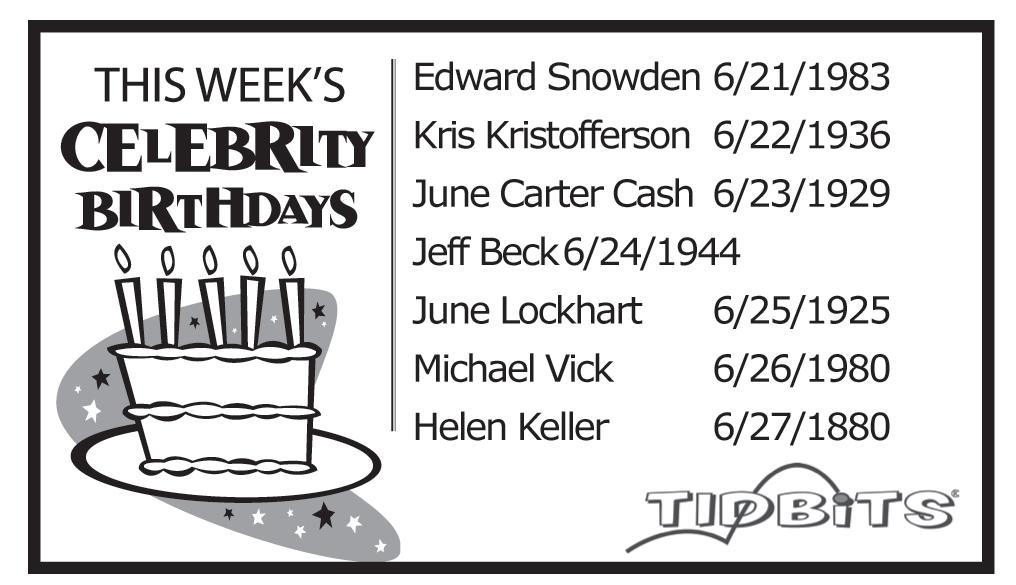
6/21 Fathers Day / Summer Begins
6/22 Stupid Guy Thing Day
6/23 Just Let It Go Day
6/24 Celebration of the Senses Day
6/25 Day of the Seafarer
6/26 National Food Truck Day
6/27 Decide to be Married Day
"We must reject the idea that every time a law is broken, society is guilty rather than the lawbreaker. It is time to restore the American precept that each individual is accountable for his actions."
-- Ronald Reagan
Dog Talk with Uncle Matty
By Matthew Margolis
Twice Their Weight in Trouble?
Toy dogs are so darn cute. You can tuck them under one arm or even into a small carry-on. They’re trendy. They travel. They’re the perfect dog for today’s go, go, go lifestyle.
They also seem to invite twice their weight in trouble. Why? Because we let them -- even encourage them. Yes, the biggest trouble with toy dogs is the people who adore them. For example:
“I have a cute miniature pincher -- a rusty. Her name is ‘Sweetie.’
“The problem is that I have disabled children and Sweetie steals food from them and never gets to socialize with other people and pets. There isn’t a lot of time to take her out, and now she has bitten a couple of people who have come into our courtyard and house.
“One of the people she bit is disabled herself. Lucky for me, she is a neighbor -- not to mention her dog bit me once!
“I was wondering whether you might know someone who could take Sweetie, because I can’t afford a lawsuit. I was hoping to find an adult with another dog for her to play with, who hopefully would be able to take her out to socialize more.”
To state the obvious: Toy dogs are not actually toys. They’re dogs. And while it’s undoubtedly true that Sweetie needs to be socialized, it’s equally clear that she needs some good old-fashioned training.
This reader is on the right track in that Sweetie does require a new home -- one without children. But she should also be tested to determine whether a home with other pets is appropriate.
People tend to make the assumption that small dogs can only create small problems. But what about the dachshund that urinated on the carpet “a little bit” every day, for years? The yapping Yorkies that landed their owner in court with a noise complaint? The Chihuahua that got underfoot and landed her famous owner in the hospital with a broken nose? The Pomeranian that killed an infant in her crib?
These were all extremely costly incidents -- monetarily and emotionally --that could have been
Here we are again, in the heat of summer. We seniors are the ones most at risk for serious health problems because of the high temperatures. Many of us take prescription drugs, some of which can keep us from being able to regulate our body’s temperature. And there are chronic medical conditions that do the same thing. Add to that our reduced ability to sweat, which prevents the evaporation process needed to cool down our bodies.
Thus, it falls on us to take purposeful steps to asssure that we stay cool enough.
Those of us fortunate enough to have central air conditioning need to turn it on and leave it set between 72 and 78 degrees. This is not the time to worry about the electric bill! This is the temperature range suggested by the U.S. Department of Energy (DOE) as one that can keep us cool while protecting our health.
Humidity plays a big part in our comfort level: Running the air conditioning will reduce
Reinvent Your Rooms
We’ve all been there. You look around your home and wish you could immediately. change the way things look. You can!
To redecorate your whole house sounds like a lot of work -- and it is to a certain point. Think of it as a bit of serious housekeeping. But you can reinvent your rooms as often as you like. Houses are not meant to be stagnant. So roll up your sleeves and get to work on your home makeover.
Just like your wardrobe, where pants, shirts and shoes can be mixed to create an infinite number of outfits, redecorating a home with what you already have can be tackled in a similar manner. When items are moved throughout your home, each item as it is paired with another can give your room an exciting new energy.
We often get used to the way things look, especially if they have remained a certain way year after year. It is important to keep an open mind and consider that all furniture, art and accessories are fair game to move from one location to another.
the humidity in the air, adding comfort along with keeping us cool. Even window air conditioners can go a long way to keeping temperatures and humidity down. If necessary, shut doors to block off an area that you can keep as a cool zone.
If you don’t have air conditioning, call your town office to find cooling centers. They might be at the rec center, the library, a shopping center, the school gym or the senior center.
Meanwhile, keep the drapes pulled closed, wear light clothing, drink plenty of water (ask your doctor how much), stay indoors during the hottest part of the day and keep an eye on the weather news to know what temperatures are expected.
This year LIHEAP (Low Income Home Energy Assistance Program) was allocated $4 billion for help with utility bills. In most states the qualifying income level is capped at 150% of the federal poverty level. Call the National Energy Assistance Referral at 866-674-6327 to find out how and where to apply in your area.
Over heating is dangerous. Make sure you're prepared to deal with it correctly!
Matilda Charles regrets that she cannot personally answer reader questions, but will incorporate them into her column whenever possible. Send email to columnreply2@gmail.com. (c) KingFeaturesSyndicate2026
sider to be too small and boring might be the best looking and functioning kitchen for a gourmet chef. It always seems the grass is greener on the other side. But to embark on a no- or low-cost redesign of your home, you need to embrace all of its imperfections.
Finding inner peace and serenity in your home has a lot to do with celebrating the art of imperfection. In the Zen tradition, “wabi-sabi” objects are beautiful yet imperfect as designed by nature. Imperfections are lauded as sublime. Your home should embrace all of its warts and cracks with grace in acceptance of its history and the day-to-day activities of life.
Here is some inspiration and a few tips for reinventing your home:
1) If you enjoy having coffee on your sofa, why not consider placing one in your kitchen?
Many of us feel that our homes have to be perfect. Although that is a good objective to aspire to, the reality is that most homes have some kind of flaw, some more apparent than others. Too big, too small, not the right style, etc. These “flaws” are usually very visible to the homeowner and generally invisible to everyone else.
As food for thought, that kitchen you con-
2) Why not glam your bathroom with a chandelier if it makes you feel like a star?
3) If green is your thing, paint your living room walls the perfect shade of avocado.
4) What to do with a Peptopink bathroom? Add matching grasscloth to the walls and celebrate the color!
5) In the mood for an exotic Moroccan fantasy? Layer your room’s floor with different types of oriental rugs of varying colors and sizes.
6) Your collection of family photos could make a statement on a den wall all framed in black and hung ceiling to floor. The ideas are endless. Go for it!
* * *
Joseph Pubillones is the owner of Joseph Pubillones Interiors, an award-winning interior design firm based in Palm Beach, Florida. To find out more about Joseph Pubillones, or to read features by other Creators Syndicate writers and cartoonists, visit the Creators Syndicate website at www. creators.com.
COPYRIGHT 2025 CREATORS.COM
avoided with training and a little more diligence on the part of the owner. But for some reason, people let their guard down and lower their expectations when it comes to miniature canines.
Those who own toy dogs should not be fooled by mythology. Little dogs need exercise. Little dogs need training. Little dogs have sharp teeth. Little dogs can bring big trouble.
This is not to say toy dogs are bad dogs. To the contrary, toy dogs make great pets, wonderful companions and even stellar guard dogs. The difference between worth their weight in gold and twice their weight in trouble is largely up to us.
Woof!
Dog trainer Matthew “Uncle Matty” Margolis is the co-author of 18 books about dogs, a behaviorist, a popular radio and television guest, and the host of the PBS series “WOOF! It’s a Dog’s Life!” Read all of Uncle Matty’s columns at www.creators.com, and visit him at www.unclematty.com.
COPYRIGHT 2014 CREATORS.COM
YOUR SOCIAL SECURITY
by Tom Margenau
Benefit Computations: Simple and Advanced
After doing this column for more than a quarter century, I’ve learned that, with respect to how their benefits are figured, there are two kinds of potential Social Security beneficiaries. The vast majority are just looking for a general idea of how it works. But there are more than a few senior citizens out there who want to know exactly how the government comes up with their retirement benefit calculation.
I’ll start today’s column addressing the first group. In a nutshell, a Social Security retirement benefit is a percentage of your average monthly income using your highest 35 years of inflationadjusted earnings.
So when you file for retirement benefits, the Social Security Administration will look at your earnings history and pull out your highest 35 years. They don’t have to be consecutive. If you don’t have 35 years of earnings, the SSA must plug in an annual salary of “zero” for every year you did not work, until the 35-year base is reached.
However, before they add up those “high 35,” they index each year of past earnings for inflation. And this is where the formula starts to get messy. That’s because there is a different adjustment factor for each year of earnings, and each year’s adjustment factor is different based on your year of birth.
Here is a quick example. If you were born in 1964 and earned $20,000 in 1990, they would multiply those earnings by an inflation adjustment factor of 3.3, meaning they would actually
1. The book of Zechariah is found in the a) Old Testament b) New Testament c) Neither
2. From Numbers 21:6, what repulsive creatures bit the Israelites in the wilderness? a) Scorpions b) Fiery serpents c) Worms d) Hornets
3. Before the Tower of Babel, how many languages were in the world? a) One b) Two c) Three d) Unspecified
4. From Mathew 7:7, Jesus said that we should seek, knock, and do what? a) Pray b) Believe c) Ask d) Trust
5. What book's last verse is, "Remember me, O my God, for good"? a) Obadiah b) Job c) Amos d) Nehemiah
6. From Genesis 5:5, how old was Adam when he died? a) 40 b) 196 c) 670 d) 930
use $66,000 as your 1990 earnings. But if you were born in 1959 and earned that same $20,000 in 1990, they would use an inflation factor of 2.5, resulting in $50,000, as the 1990 earnings used in your Social Security computation.
You can find a complete breakdown of those inflation adjustment factors for each year of birth at the Social Security Administration’s website: www.socialsecurity.gov. If you have a hard time negotiating that website, just Google “Social Security indexing factors,” and it will lead you to the right place.
The next step in the retirement computation formula is to add up your highest 35 years of inflation-adjusted earnings. Then you divide by 420 -- that’s the number of months in 35 years -- to get your average inflation-adjusted monthly income.
The final step brings us to the “social” part of Social Security. The percentage of your average monthly income that comes back to you in the form of a Social Security benefit depends on your income. In a nutshell, the lower your average wage, the higher the percentage rate of return you get.
Once again, the actual formula is messy and varies depending on your year of birth. As an example, here is the formula for someone born in 1964. You take the first $1,286 of average monthly income and multiply it by 90%. You take the next $6,463 of your average monthly income and multiply that by 32%. And you take any remainder and multiply it by 15%.
You can find a complete breakdown of those computation “bend points” at www.socialsecurity.gov. Or just do a Google search using the phrase “Social Security bend points” to find several sites that should help you.
Believe it or not, that was the simple explanation for those who just want some kind of idea of how their Social Security retirement benefit will be figured.
To summarize, it is a percentage of your average monthly income using your highest 35 years of inflation-adjusted earnings. If this were a college course, think of it as Social Security Benefit Computation 101.
But now I’m going to get into a little more of an advanced version of retirement benefit calculations for those who want to know the nitty-gritty of the process.
I’ll start by introducing this term: the “primary insurance amount,” or PIA. The PIA is your basic retirement benefit upon which all future calculations will be based. The “raw PIA” is actually calculated at age 62. In other words, when the SSA pulls out your highest 35 years of earnings, they only use earnings up to age 62. Then that raw PIA gets “cooked,” or increased, to take into account any earnings you had after age 62 and to include any cost-of-living adjustments (COLAs) that were authorized for Social Security benefits after the year you reached age 62.
But it gets a little tricky when SSA does the recomputation for any earnings you have after age 62. If you worked full-time until age 66, for example, you would normally assume that those earnings between age 62 and 66 would definitely increase your PIA. After all, you figure, they are some of your highest earning years, so they will become part of that “high 35.”
But not necessarily. And here is why. For reasons I really don’t totally understand, earnings after age 60 are not indexed for inflation. They get calculated at the current dollar value only. So if your “raw PIA” was based on a full 35-year history of high inflation-adjusted earnings, your current earnings may not be high enough to become part of your “high 35,” so they won’t increase your benefit. Or they possibly might bump up the PIA, but not by much.
estimate they are getting from the SSA now (at age 66, let’s say) is not much more than the estimate they got back at age 62. Their current benefit estimate includes the COLA increases, but either little or no bump for their post-62 earnings. The reason why is the lack of inflation indexing after age 60. As you can see, the Social Security retirement benefit formula is pretty messy. But for most of you, I would say: “Don’t worry about it.” Just let the SSA do it for you. Go to www.socialsecurity.gov, and click on the “Get a benefit estimate” icon on the homepage. It will walk you through the process of finding out what your Social Security benefit will be.
In fact, I hear from readers all the time who tell me that they are confused because the benefit
If you have a Social Security question, Tom Margenau has two books with all the answers. One is called “Social Security -- Simple and Smart: 10 Easyto-Understand Fact Sheets That Will Answer All Your Questions About Social Security.” The other is “Social Security: 100 Myths and 100 Facts.” You can find the books at Amazon.com or other book outlets. Or you can send him an email at thomas.margenau@comcast. net. To find out more about Tom Margenau and to read past columns and see features from other Creators Syndicate writers and cartoonists, visit the Creators Syndicate website at www.creators.com. (Answers on page 16) For comments or more Bible Trivia go to www.TriviaGuy.com
Helping a Person Who’s Experienced a TonicClonic Seizure
DEAR DR. ROACH: My husband suffered a grand mal seizure about six months ago. He was in the hospital for seven days. When he came out of the seizure, he was very combative and experienced memory loss. He still deals with short-term memory loss, and his neurologist says that it could take up to a year for him to get back to normal. Is there anything I can do to help him? --
L.H.
ANSWER: Seizures can happen for many reasons, and there are different types of seizures. When a person has the type of seizure that is often shown on TV or in movies, where they have uncontrollable shaking movements and aren’t conscious, it’s called a generalized tonic-clonic seizure, which used to be called “grand mal.”
Most people have memory loss in the minutes before and after a generalized seizure, and they are often confused for a period of time afterward. However, prolonged memory loss and personality changes can happen due to damage to the brain during the time of the seizure, because of low oxygen and excess brain activity. What happened to him is similar to a stroke, and the recovery period is variable. Being older and being male will cause him to have a slower recovery period, but I agree with the neurologist that recovery is possible for up to a year after the event.
You can help him recover by making sure that you discuss any treatment he might be getting for his seizures with his neurologist, as some treatments are more likely than others to cause memory problems.
Of course, preventing further seizures is critically important. You can also ask about memory rehabilitation programs, although these are specialized and aren’t easy to find.
DEAR DR. ROACH: You mentioned in a recent column that prospective randomized controlled trials (RCTs) are a powerful type of study. Can you tell me if the original COVID vaccine or any of the boosters were part of a trial like this? -- C.W.
ANSWER: There have been 33 RCTs that looked at the effectiveness of vaccines for COVID-19, including over 50,000 people who were given the vaccine and almost just as many who received a placebo. Studies on the initial vaccines and boosters are included.
A 2021 review of all trials that were published at the time found strong evidence that the vaccines had high efficacy and low rates of serious adverse effects.
There’s no such thing as a perfect vaccine, and the rate of mutation in the virus has led to challenges in making sure that the vaccines are effective against the types that are currently circulating.
It’s the same case with the
perience predicting flu strains, whereas the changes in the COVID-19 virus are harder to predict.
An infectious disease doctor, Dr. Jake Scott at Stanford Medicine, and his colleagues have made an easily accessible list of RCTs of vaccines, a link to which is on my page at Facebook.com/KeithRoachMD. As of the day I write this, there are 1,683 vaccine trials on the spreadsheet, and all are available vaccines.
VETERANS POST
by Freddie Groves
Fiduciary Rules
ADVERTISING PROOF
Not all RCTs are placebo-controlled. A placebo-controlled vaccine trial is ethical when a safe and effective vaccine doesn’t exist (as was the case at the beginning of the pandemic). RCTs may also be ethical when populations who weren’t included in the previous trials get tested or when there’s limited access to the existing vaccine. In 2026, further placebo-controlled RCTs for COVID-19 would be unethical.
A new vaccine should be tested against the best available treatment, including any of the COVID-19 vaccines like Moderna or Pfizer.
Dr. Roach regrets that he is unable to answer individual questions, but will incorporate them in the column whenever possible. Readers may email questions to ToYourGoodHealth@med.cornell.edu.
(c) 2026 North America Synd., Inc. All Rights Reserved
ADVERTISING PROOF
Fiduciary fraud is one of the lowest scams that can be perpetrated against a disabled veteran. Not only is the thief taking taxpayer money, but he (or she) is stealing the money directly from the veteran. There are so many examples of fiduciary fraud -- and when caught, the thieves end up in prison.
There’s the woman who stole from her own disabled veteran son for five years. Against the rules, she commingled his VA money with her own bank account and proceeded to spend it on trips, bills and even a vehicle. And of course she didn’t file the required paperwork.
Then there was the thief who swindled a very elderly disabled veteran, spending the money on himself for vacations, jewelry and more.
If you agree to become a fiduciary for a veteran, be sure you understand the rules. Here are a few:
That money is for the sole use and benefit of the veteran -- medical care, internet, taxes, travel, telephone, food, housing, clothing, monthly bills and anything else -- and that money is to be kept in a separate account.
You’ll be expected to file paperwork and reports, keeping track of where every dime has gone and noting any changes to the circumstances such as a new address, medical condition or income. Keep all receipts and bank statements.
You may not pull cash out of an ATM or cash checks just made out to “cash.”
You may be awarded a small fee for fiduciary duties. You cannot take more than that amount, and fees are not paid if you are related to the veteran.
If you’re a fiduciary or if you’ve been asked to be one, be certain you know what you’re doing. The rules are quite specific. If you have questions, call 888-407-0144.
To learn all that’s involved in being a fiduciary, check benefits.va.gov/FIDUCIARY/docs/fy-25-docs/va-fiduciary-guidemarch-2025.pdf (or tinyurl.com/yrjskc8a), a 36-page VA file. Take a close look at the instructions for the accounting forms that you’re required to fill out.
If you suspect fiduciary fraud, report it at 800-488-8244.
Freddie Groves regrets that he cannot personally answer reader questions, but will incorporate them into his column whenever possible. Send email to columnreply2@gmail.com.
How to Save on Prescription Eyeglasses
DEAR SAVVY SENIOR: What tips can you recommend for finding affordable prescription eyeglasses? I currently have vision coverage through my employer’s insurance plan but will lose it when I retire in a few months and sign up for Medicare. --Nearsighted Nancy
Dear Nancy: You are wise to plan ahead. Eyeglasses can be expensive. A basic pair often runs $150 to $300, and bifocals or progressive lenses can easily be double or triple that. The good news is that with a few strategies, you can keep costs manageable once you retire and transition to Medicare.
Medicare & insurance
Original Medicare and Medigap plans generally do not cover routine eye exams or eyeglasses, except after cataract surgery, when Part B helps pay for corrective lenses. But many Medicare Advantage plans, also called Part C, do include vision benefits. These plans, offered by private insurers, must cover everything original Medicare does and often include extras like dental, hearing and prescription drug coverage.
That said, I would not choose a Medicare Advantage plan just for vision coverage alone, but it is worth understanding what is available. To compare plans in your area, visit medicare.gov/
plan-compare or call 800-633-4227. Be sure to check the details to confirm coverage for routine eye exams, frames and lenses.
You can also buy a stand-alone vision insurance plan. Major carriers like Humana, Blue Cross Blue Shield, Aetna and UnitedHealthcare, along with specialty providers like VSP and EyeMed, offer plans with premiums typically ranging from about $10 to $30 per month. Before enrolling, compare the costs and benefits to make sure the savings on exams and glasses outweigh the premiums and copays.
Discount stores
Buying eyeglasses from discount retailers can save you a substantial amount. Warehouse clubs like Costco Optical and Sam’s Club Optical offer eye exams typically ranging from $80 to $130 depending on location, with basic prescription glasses starting around $120. You will need a membership, but the savings on this and the warehouses of food and other goods they also sell often justifies the cost.
Other good options include Walmart Vision Center, Target Optical and independent optical shops. Prices vary, so it pays to shop around and ask about package deals or seasonal promotions. An AARP membership can also provide discounts at retailers like LensCrafters, Target Optical and Visionworks.
Buy online
Ordering glasses online is another excellent way to save, often cutting costs significantly compared to traditional retailers. Reputable sites like Warby Parker, EyeBuyDirect and GlassesUSA offer single vision glasses starting around $70, with progressive lenses typically ranging from $120 to $200 depending on features.
You will need a current prescription and your pupillary distance, which may be included on your prescription or can be measured by your provider or even at home. Many online retailers offer virtual try on tools so you can see how frames will look before you buy.
Also pay attention to lens options such as anti-reflective coating, scratch resistant coating and blue light filtering. For most people, a basic pair with durable coatings is usually sufficient.
Low-income assistance
If your income is limited, local clinics may offer free or reduced cost eye exams and eyeglasses. Your local Lions Club is another excellent resource. Many chapters sponsor vision programs or can direct you to nearby services. You can find your local club at lionsclubs.org/
en/start-our-approach/club-locator
The nonprofit New Eyes also provides eyeglasses through a voucher program for people in financial need, working with participating providers to supply frames and lenses at little or no cost.
With a little planning, you can keep your vision sharp without overspending. Between Medicare options, discount retailers, online shopping and community programs, there are plenty of ways to find quality eyeglasses at a price you can afford.
-- by Jim Miller
more valuable.
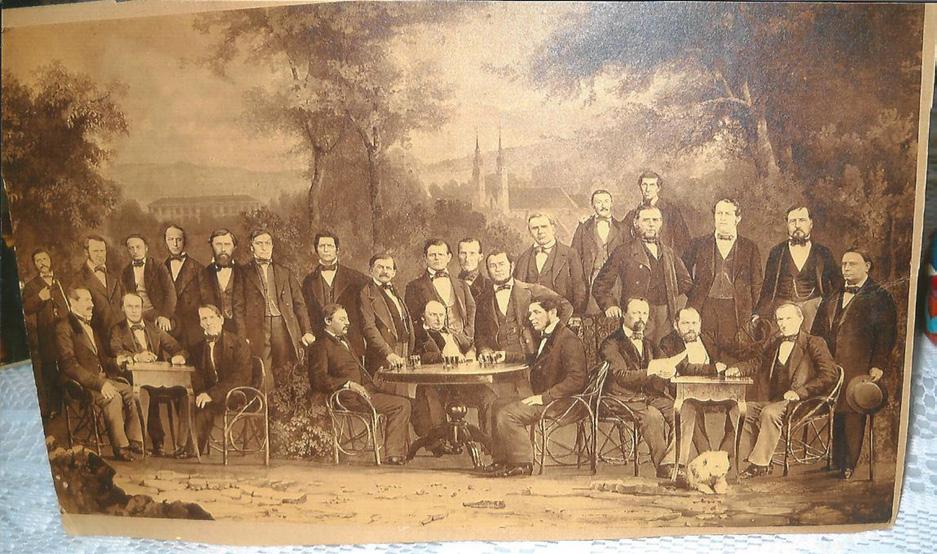
Victorian era pictures provide a good view of the times. The Bentwood style chairs and tables
by Anne McCollam Creators News Service
Antique Picture Reveals Clues to Victorian Era
Q: Enclosed you will find an antique picture of some relatives of mine, probably taken in Switzerland around 1870. This picture has been in my family for a long time and has been passed down from my greatgrandmother. The last name of one of the persons in the picture is Zwingli. He is a descendant of Ulrich Zwingli, who was known as the “Martin Luther of Switzerland” in the 1500s. He was stoned to death for his beliefs.
Since I’m not sure how old the picture is, I would like to know if it is possible to date a picture by the clothes the people wore. Is the picture of any value, other than sentimental?
A: The clothes, hairstyles, beards and furniture are clues to the time the picture was made. Your estimate of the timeframe is accurate. Ulrich Zwingli was a scholar of Renaissance humanism and a leader of the Reformation in Switzerland in the 1500s. He and Martin Luther met at one time to discuss the issues they had with the Catholic Church.
Zwingli was killed in the battle of Kappel in Switzerland in 1531. If you can document which person in the picture is a Zwingli descendant and your connection to him, it could make the picture
Your circa 1870 picture would probably be
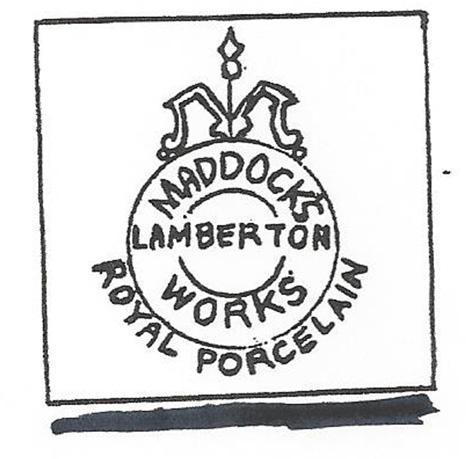
Q: I have enclosed the mark that is on the bottom of a covered tureen that I have. We aren’t sure how old it is, but do know it has been in the family for generations. I can remember holiday dinners at my grandmother’s, and she always placed it on the middle of the table.
The tureen is decorated with multicolored flowers, garlands and trimmed in gold. It is in perfect condition.
I plan to pass it along to my daughter and would like to know more about its history. Also, I’m thinking about having it insured and would like to know what its value is. Any information you can provide will be greatly appreciated.
A: Maddock’s Works, located in Trenton, New Jersey, made your tureen. They were in business from 1893 to 1929. The mark you provided was used on their fine-quality semi-porcelain. Your tureen was made around 1900 and should be insured for $150 to $200.
* * *
Antiques expert and columnist Anne McCollam has since retired and no longer receives inquiries nor answers reader letters. Due to the popularity of her column, this publication will continue to reprint previous columns of interest to our readers.
To find out more about Anne McCollam and read features by other Creators Syndicate writers and cartoonists, visit the Creators Syndicate website at www.creators.com
COPYRIGHT 2026 CREATORS.COM
* On June 22, 1611, after a winter spent trapped by ice in what is now northeastern Canada’s Hudson Bay, the starving crew of the Discovery launched a mutiny against their captain, English navigator Henry Hudson, setting him, his teenage son, and seven of his supporters adrift in a small open boat. They were never seen again.
* On June 23, 1956, Gamal Abdel Nasser was elected the first president of the Republic of Egypt. Nasser had overthrown the country’s monarchy four years earlier, in a military coup, and was the sole candidate on the ballot. His new constitution, making Egypt a one-party socialist state with Islam as its official religion, was also almost unanimously approved by voters.
* On June 24, 1374, a “dancing plague” swept through Germany, causing medieval villagers to writhe and whirl uncontrollably and leaving many people in a state of exhausted collapse in the streets or dead from heart attacks and strokes. The cause is still unknown, though ergot poisoning, mass hysteria and religious devotion have all been suggested.
* On June 25, 1910, Congress passed the Mann Act, which was ostensibly intended to keep young women from being enticed into prostitution, but was more about a way to make various types of consensual sexual activity a crime.
* On June 26, 1948, American and British pilots began delivering food, water, clothing, medicine and fuel by airplane to Berlin after the city was isolated by a Soviet Union blockade. Some in President Harry Truman’s administration had called for a military response to the blockade, but Truman believed such an action could incite another world war.
* On June 27, 1985, the American Association of State Highway and Transportation Officials decertified the iconic Route 66, which in its heyday stretched about 2,400 miles over a span of eight states from Chicago, Illinois, to Santa Monica, California, and voted to remove all its highway signs.
* On June 28, 2007, the bald eagle was removed from America’s List of Endangered and Threatened Wildlife.
(c) 2026 King Features
Synd., Inc.
Tureen was made by Maddock’s Works in Trenton, New Jersey.
Antique pictures, such as the one shown from the Victorian Era, can provide a view into a past era.
YoYos: (from page 3)
tops and yoyos. Pedro Flores joined the company, and they went into competition with Duncan. Duncan sued, claiming that the word “yoyo” was his trademark and that they were infringing it. The court case dragged on for years before the court finally ruled in favor of Royal Tops. In 1965, the court held that the word “yoyo” was now in the public vernacular, like thermos or aspirin, and was no longer protected by trademark law.
• Now dragged down by legal fees, Duncan declared bankruptcy shortly afterwards. Fortunately, the Flambeau Plastics Company, which had long been Duncan’s plastic supplier, bought the company in 1968.
• Although Pedro Flores died in 1964 before seeing how the court case turned out, and Duncan himself died in 1971, the yoyo’s popularity dipped only slightly before resurging. Still, the Duncan YoYo Company was the top producer of yoyos for 35 years, claiming 85% of the entire U.S. yoyo market during that time.
• With fresh leadership now at the helm, innovations quickly improved the design of the yoyo. There were whistling yoyos, light-up yoyos, and glow-in-the-dark yoyos.
• The science of the yoyo rapidly pushed forward. Silicon O-rings enhanced the grip, accelerating the spin. Precision-balanced aluminum rims helped it spin as fast as the blades inside a jet engine. Brass axles contributed to longer spin times. Then came the internal clutch, released as “Yomega, the yoyo with a brain.”
• The ball-bearing-based transaxle was next. This genius innovation greatly reduced friction, which alone did more to improve yoyo performance than anything since Pedro Flores looped the string. Whereas the record for the longest spin time for a single throw from a yoyo with a standard axle stood at 51 seconds, the record for the ball-bearing-based transaxle now stands at over 30 minutes! This, of course, opened up a world of new possibilities for even fancier tricks.
• The first modern world yoyo championship was held in 1992, and was followed by the formation of the American Yo-Yo Association in 1993. Today, regional, country-wide, and national championships are held every year, with winners reaping great rewards. All thanks to Pedro Flores and Donald Duncan, who created a kid-crazed energy thatʼs still spinning at high speed today.
your golf-related advertising message targeted visibility in full color in this weekly 2” x 6” fixed location $159 per insertion reaches 70,000+ readers each week at the low cost of only $2.27 per 1,000 reader impressions!
Game Changers
by Jason Jenkins
Throw It Away
The golf swing can become bogged down into angles, forces, planes, degrees, and a myriad of other technical elements. Unfortunately, most golfers can’t relate to the engineering language of golf instruction that is becoming popular of late. Junior golfers and golf “athletes” work better off of images that they have used in the past, or can easily imitate.
The right arm in the golf swing most simulates the throwing action seen in many sports. The arm floats away from the body into a folded position at the top of the windup, with the wrist flexed in preparation to throw. No athlete has the arm glued to the body, nor the wrist curled (like making a muscle). By practicing the common throwing position with a ball or golf club (one handed), you’ll soon achieve the natural, powerful position that many top golfers achieve. Jack Nicklaus was criticized in his prime of having a “flying elbow” yet he just didn’t try to glue his elbow to his body. Rather than thinking about angles or degrees, simply float your right arm into its best throwing position at the