Vol. 22: #13 • Sea Monkeys (3-22-2026) Tidbits of Coachella Valley
by Janet Spencer
Nearly every wannabee entrepreneur has had visions of hitting it big with a clever idea like the Pet Rock, creating an exciting new product that will catch on fast and rocket them to success. This week Tidbits gives you an inside look at how one such clever innovator turned a simple idea into a marketing phenomenon!
SEA MONKEY BUSINESS
• Harold Braunhut was born in 1926 in Tennessee but grew up in New York City. His grandfather ran a toy company so he grew up surrounded by the business. In the late 1950s, he had a brilliant new idea for a children’s “toy.”
• The Wham-O company had recently tried their hand at selling “instant fish: just add water.” A lump of dried mud contained the dormant egg of a killifish. When placed in water, the egg hatched, and the fish grew. However, the product failed because demand exceeded supply, orders went unfilled, and the product subsequently flopped. Around the same time, the Ant Farm kit became all the rage.
• So the precedent was there. You could sell science
TRIV
TRIV
TRIVIA NEWSFRONTAIVIRT TNORFSWEN
(Answers on page 16)
OFFICE SUITE FOR LEASE
1. MOVIES: Who is the director of the Oscar-winning movie “Parasite”?
2. FOOD & DRINK: What is miso?
3. LITERATURE: What are the names of the romantic couple in “Wuthering Heights”?
4. GENERAL KNOWLEDGE: Which city’s nickname is “Pearl of the Orient”?
5. HISTORY: In what year were the first modern Olympic Games held?
6. U.S. PRESIDENTS: Before becoming president, Barack Obama served as a senator from which state?
7. GEOGRAPHY: Which peninsula is the largest in the world?
8. MYTHOLOGY: Who is the Greek god of war?
9. MUSIC: Who composed the opera “The Ring of Nibelung”?
10. ACRONYMS: In computer emails, what does the acronym “CC” stand for? Answers 1. Bong Joon Ho. 2. Fermented soybean paste. 3. Heathcliff and Catherine.
Classic Games & Toys
• Kenner Toys was one of the biggest toy companies in the country in the 1950s and 1960s. Named after the Cincinnati street where their headquarters was located, they had a couple of gangbuster successes such as the Bubble-Matic (a toy gun that shot bubbles) and Spirograph.
• One day, a Kenner employee was walking down the street in New York when he was inspired by the portable ovens used by street vendors selling hot pretzels, and the headlamps that kept them warm. Taking the idea back to the company, he suggested marketing a tiny oven that would actually bake things.
• Other Kenner employees designed an oven that used two 100-watt incandescent light bulbs to heat a small oven to 350°F (177°C), hot enough to bake tiny cakes, cookies, and brownies. The clever method worked, and the Easy-Bake Oven was born.
• Released in November of 1963, it was an immediate success – over half a million sold in its first year. The price tag was steep at $15.95, about $150 in today’s dollars. But sales boomed, and the Easy Bake industry was off and running.
• The oven came with baking pans, a mixing bowl, utensils, a cookbook, and pre-packaged cake mixes that required only water to activate. Their popularity led to the constant release of improved and innovative designs, with about a dozen different models released over the years. Many mixes were created, providing a wide selection of recipes to follow.
• When a 13-year-old girl petitioned the company to release a model geared towards boys, a sleek black-and-silver model joined the pink-andpurple models on the shelves, depicting boys doing the cooking.
when lightbulb standards were tightened. A 100-watt incandescent lightbulb emits only 5% of its energy as light, with the remaining 95% released as heat. But technology changes led to the phasing out of incandescent bulbs and they were replaced by more efficient designs that did not get hot enough to bake a tiny cake.
• Customers were then required to supply their own lightbulbs, and when incandescent bulbs became obsolete, so did Easy Bake Ovens that used them. The result was the release of the Easy-Bake Ultimate Oven, which uses a heating element.
• The Easy-Bake Oven was inducted into the National Toy Hall of Fame, just in time for its first big disaster. All previous models had been designed so that baked goods were pushed through the oven, slid forward with a spatula. The 2006 model was the first to feature a frontloading oven with a door that pulled open, allowing kids to reach inside and pull out the hot dishes. Kids were instructed to use tongs (included) to grasp the hot pans, which many did not do. When reports of burn injuries started rolling in, over a million units were recalled and replaced with safer models.
• In 2003, the Toy Industry Association listed the Easy-Bake Oven on its Century of Toys list. Time magazine named it as one of its 100 AllTime Great Toys in 2011.
• Kenner Products was purchased by General Mills, then by Tonka, and finally by Hasbro, which now distributes the Easy Bake Oven. By 2025, sales had surpassed 50 million units. Today, a wide selection of specialty cookbooks is available that cater to Easy-Bake chefs.
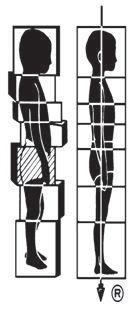
In a series of 10 sessions, Rolfing® actually changes the way your body is structured. You become straighter, taller, more graceful, flexible and free-moving. Possibly many aches and pains will disappear. How does this actually happen?
Please review carefully. Double
• In 2003, the Real Meal Oven was capable of cooking larger portions and main courses. It could cook two pans at once and handle items like pizza and nachos.
We manipulate connective tissue called fascia
that holds the body together and gives it
Fascial planes shape
of the body. Dr. Rolf’s discovery was that if you put certain kinds of
on fascia, the shape of the tissue will change in a lasting way. She worked with a very firm level of pressure. Since then, we have found that lighter pressure combined with your movement makes the body reshaping occur quicker. Call to schedule an appointment or for a free consultation:
• The Queasy Bake Cookerator was created and marketed exclusively to boys. It featured recipes such as Chocolate Crud Cake, Delicious Dirt, Mud n’ Crud Cakes, Drip and Drool Dog Bones, and Worms ’n’ Bugs.
• One of the first significant challenges occurred
(from page one)
to kids using actual life-forms. The stage had been set. All it needed was the right entrepreneur, the right idea, and the right critter.
• One day, Harold walked into a pet shop and noticed that they were selling live brine shrimp as pet food. Just scoop some out, put them in a bag of water, and take them home to feed to your fish. Harold also noted that the brine shrimp, officially known as Artemia salina, could be purchased as eggs to be grown at home.
• This started him thinking. How could these tiny creatures be repackaged into a kit and sold as a home project for kids? Harold figured out how to package up a miniature brine-shrimp farm and sell it for only 49 cents. It was a great idea, but how to get it on the market?
• He took the idea to all the biggest toy distributors, and was turned down flat. They had already been burned by the Wham-O “instant fish” debacle and werenʼt about to make that mistake again.
TARGETED
MARKETING
• Since he couldn’t afford to market his idea with newspaper and TV ads, Harold decided to go directly to the customer, bypassing both the middleman and the parents. Instead, he bought ads in the back of comic books and sent his ad message directly to his target customer -- the kids themselves. Send in 49 cents and receive an envelope in the mail containing “Instant Life.”
• When the product hit the market in 1957, it was called simply “Instant Life.” Kids were expected to provide their own fishbowl. The kit included a packet of granular water conditioner, a packet of eggs, and a packet of food. Following the instructions, children added the “magic crystals” to tap water, waited a day, added the eggs, waited 7 days, and then started adding the food.
• The first packet contained mostly salt and chemicals to balance the pH of tap water, but it also (secretly) included eggs. Waiting a day before adding the second packet allowed enough time for the concealed first batch of
eggs to hatch. The second packet, added the next day, contained more eggs – but it also contained a small amount of blue-green dye. When the dye hit the water, it made yesterday’s tiny hatchlings more visible in the water, thus living up to the claim of “instant life!” The third packet contained powdered spirulina algae and yeast, the highly nutritious food needed for growing brine shrimp.
MONKEY BUSINESS
• Harold later labelled them as “exotic Saskatchewan brine shrimp” before coming up with the name “Sea Monkeys”, a catchy name chosen simply because they have a curly tail like a monkey.
• The newly-named Sea Monkeys hit the market in 1962, now priced at $1. The kit included a tiny plastic aquarium with built-in magnifying lenses.
• Now Harold’s dilemma was that the sea monkeys tended to die too quickly. He went to marine biologist and micro-crustacean expert Anthony D’Agostino for help. He was the perfect man to begin cross-breeding brine shrimp to create a new hybrid that was heartier, larger, and longerlived. It was officially named Artemia NYOS, an abbreviation of the New York Ocean Science Laboratory, where it was created.
On October 29, 1998 the Space Shuttle Discovery carried 400 million brine shrimp eggs into space. The eggs spent nine days of weightlessness before they were returned to Earth. They were hatched eight weeks later, and the creatures showed no ill effects from their journey.
• Harold hired comic book artist Joe Orlando to help him with marketing illustrations. Orlando later became vice president of DC Comics and associate publisher of MAD magazine.
• Orlando drew a happy sea monkey family, with their wide smiles, pot bellies, and tiny crowns. There was a disclaimer in fine print: “Caricatures shown not intended to depict actual creatures”. The disclaimer was generally ignored.
• The instruction manual that came with the kit made all kinds of wild claims: that Sea Monkeys would follow commands, learn tricks, dance, play, be hypnotized, play baseball, and run races. In reality, the only thing Sea Monkeys do is flit around in the water, eating algae, and occasionally mating. But they will gravitate towards light, such as a flashlight. And they always swim against the current, so they could
“race” and “play baseball” when placed in little plastic mazes with water flowing through that they would swim through.
SPINOFF SPECIALS
• Of course, there were many little “extras” that could be purchased. There was the “wrist aquarium” and the “aquarium necklace” so you
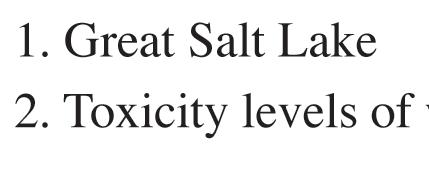
1. Despite their small size, brine shrimp are still the largest creatures in this Utah Lake.
2. Brine shrimp are used in science experiments to test and measure what?
Sea Monkeys
The children's show "The Amazing Live Sea Monkeys" aired on CBS in 1992. The series -- which starred Howie Mandel
By Lucie Winborne
* Adding bubbles to your bath keeps the water warm for a longer amount of time.
* To perform Kermit’s opening swamp scene in “The Muppet Movie,” Jim Henson had to spend a day in a 50-gallon steel drum under a pond.
* Wakes were originally held in case the apparently deceased returned to life.
* The word “love” or “zero” in tennis possibly derives from the French word “l’oeuf,” meaning “egg,” which may represent the figure zero.
* Giraffes have the highest blood pressure of any mammal.
* The Pyramid of Khufu at Giza, the largest Egyptian pyramid, weighs as much as 16 Empire State buildings.
* A stork shot by a hunter in Germany in 1822 was found with a Central African spear piercing its throat, providing scientists with the first evidence for long-distance bird migration.
* Soccer stars Cristiano Ronaldo and Lionel Messi were born 869 days apart, and their respective eldest sons were also born exactly 869 days apart.
* Pulmonary arteries are the only ones in the human body that carry deoxygenated blood.
* The SkyWheel in Helsinki is the only Ferris wheel in the world featuring a sauna in one of its gondolas.
* “To Have and Have Not,” starring Humphrey Bogart and Lauren Bacall, was made into a movie after director Howard Hawks told Ernest Hemingway he could make a great film from what Hemingway called his worst book. ***
Thought for the Day: “An optimist stays up until midnight to see the new year in. A pessimist stays up to make sure the old year leaves.” -- Bill Vaughan (c) 2026 King Features Synd., Inc
by Mary Hunt
My Simple Friday Reset That Makes the Weekend Even
And that’s it.
Three simple actions. No special products. No marathon cleaning sessions. No background music required, though it doesn’t hurt. What makes this reset work isn’t the clock or the exact steps. It’s the rhythm. Ten minutes once a week keeps small stressors from multiplying.
Better
Everyday CHEAPSKATE®
When counters stay clear, mornings run smoother. When the refrigerator gets checked regularly, food decisions feel easier. When floors aren’t gritty, the house feels calmer -- literally underfoot.
by Mary Hunt
Most household stress doesn’t come from dramatic, headline-worthy disasters. It sneaks in quietly. It’s the mail spreading like ivy across the kitchen counter. The leftovers shoved to the back of the refrigerator to “deal with later.” The grit that magically appears anywhere people walk in and out all day.
None of it feels urgent in the moment. But taken together? It creates that constant, lowgrade feeling that you’re behind -- no matter how hard you try.
If I hired a housekeeping service, I’d schedule them every Friday afternoon without fail. There is nothing I love more than heading into the weekend with a clean house and a clear head. But there’s no hiring going on at my house. I rely on something else: a simple Friday afternoon reset.
This is not deep cleaning. This is not perfection. It’s 10 minutes. Minimum. That’s it.
The point isn’t how much you do -- it’s that you interrupt the slow creep of little messes before they turn into frustration, wasted time and that nagging feeling that everything feels harder than it should.
For me, this weekly habit doesn’t just straighten up a few problem spots -- it clears my mind. Sometimes it even sparks a little joy, which is no small thing at the end of a long week.
My reset always starts in the kitchen, because that’s where clutter likes to gather and multiply.
First up: counters and sink. Anything that doesn’t have a permanent home on the counter gets removed. Mail. Stray dishes. Papers. Bags. Empty cups. Random piles of “I’ll deal with this later.” If it doesn’t belong there, it goes -- wherever it actually belongs.
Then I give the sink and fixtures a quick polish until they shine like a brand-new penny. It’s amazing what a clean sink does for the overall mood of a kitchen. Even if nothing else is perfect, a shiny sink makes the whole room feel like it’s got its act together.
Next comes a quick refrigerator check -emphasis on “quick.” This is not a scrub-down or a full reorganization. It’s just a look.
Leftovers that need to be eaten soon get moved front and center. Anything past its prime gets tossed before it turns into a mystery science project. Produce gets an honest assessment. No guilt. No debates. Just decisions.
This tiny step removes a surprising amount of daily friction. When you know what’s actually in the refrigerator, meals are easier to plan. And that constant “What are we going to do about dinner?” stress? It quiets down considerably.
With whatever time I have left, I sweep or vacuum the hard floors in the highest-traffic areas -- the entryway, kitchen and main hallway. Dirt and grit have a way of spreading everywhere if they’re ignored, like they’re on a mission. Catching them weekly keeps floors from feeling grimy and prevents that nagging sense that the house is never quite clean, no matter how often you tidy.
This is what works for me, but it’s not meant to be a rigid system. Think of it as a template. Maybe your reset takes 15 minutes instead of 10. Maybe you swap out one step for something that causes more stress in your household. The goal isn’t precision -- it’s consistency.
Most household stress builds quietly when no one is looking. A weekly reset interrupts that process. It keeps messes visible and manageable before they become overwhelming. And what a fine way to head into the weekend -- with a cleaner house, a clearer head and one less thing nagging at you from the back of your mind.
* * *
Mary invites questions and comments at https:// www.everydaycheapskate.com/contact/, “Ask Mary.” This column will answer questions of general interest, but letters cannot be answered individually. Mary Hunt is the founder of EverydayCheapskate.com, a frugal living blog, and the author of the book “Debt-Proof Living.”
COPYRIGHT 2026 CREATORS.COM
BRINE SHRIMP
• Artemia is a genus of aquatic crustaceans commonly known as brine shrimp, and named after Artemis, the Greek goddess of hunt, wilderness, and the moon. Although they are known as “sea monkeys”, these curious creatures don’t live in the sea, and do not even vaguely resemble monkeys.
• Brine shrimp measure only half an inch long (1.2 cm) at full maturity. Their natural habitat is salt lakes and salt flats, where they dine on algae. They can be found in about 500 lakes worldwide and are a vital component of the ecosystem. Not only do they keep stagnant water clean, but they also act as an important food source for many aquatic creatures.
• In shallow areas they will gather their large numbers together in the morning and rise to the surface. In the evening, the large mass will move in unison to the bottom, creating a "mixing" of the water, thus helping to prevent stagnation.
• A female brine shrimp can produce 100 eggs a week for her entire life. She is able to self-fertilize; no male required, though male involvement is preferred.
• If the water is warm, clean, and full of food, the female will give birth to live, swimming babies called nauplii. This allows the population to explode rapidly when conditions are perfect. But if the water is too salty, too cold, or food is scarce, she will instead produce hard-shelled “cysts.” These eggs will remain dormant until conditions improve, ensuring the next generation survives even if the current colony dies out.
• The dormancy period, called cryptobiosis, is similar to suspended animation, which allows them to survive prolonged droughts. The trick is a special sugar called trehalose, which forms a glass-like protective matrix inside their cells, preventing damage to cell membranes and DNA even when totally dry. These ultra-hardy cysts can survive boiling for many hours at 212°F (100°C) or freezing to almost absolute zero which is -459°F (-273°C). They can survive exposure to harsh chemicals, pesticides, and even pure alcohol without harm. They can hatch even after being dormant for up to 50 years.
• Mature brine shrimp don’t have gills or lungs. Instead, they breathe through their feet, all 11 pairs. The constant movement of their feathery feet allows oxygen in the water to enter their
bodies. If they stop moving, they suffocate. Their feet also guide nutrients towards their mouths.
• When oxygen levels drop too low in the water, they can produce high levels of hemoglobin (the same protein in human blood). When they do this, the entire colony can turn a noticeable shade of pink or deep red, maximizing every available molecule of oxygen.
• When the eggs hatch, the shrimp are about as big as the period at the end of this sentence.
• They are born with only a single rudimentary and primitive eye in the middle of their forehead, which is capable only of sensing light and dark. This guides the tiny hatchling towards the light, because the algae it needs to eat is found at the surface. As the shrimp matures, it develops two additional eyes at the ends of short eye stalks. The original eye remains, acting as a permanent light meter to keep them oriented, while the stalked eyes are sophisticated, multifaceted eyes (like those of a fly) which can detect movement and possibly perceive color.
• Their typical lifespan is usually several months, though they can survive for several years under
ideal conditions.
• Because they cannot survive outside of salt water, there is no danger of them becoming an invasive species if they are flushed down the drain.
• The fossil record shows they started out in fresh water but later adapted to thrive in salt water environments as well, likely distributed around the world on birds’ feet.
Opera in the Park
Get the latest Tidbits edition emailed to you every week — FREE. Unsubscribe anytime
March 29, 2026 5:30pm
Sunrise Park, at the corner of Sunrise Way and Ramon Road in Palm Springs
Fo od and drink available for purchase on site!
by Dana Jackson
Q: Is the actress playing Lexie on “Days of Our Lives” the same one who played her years ago? I know the character was killed off, but I’m thinking this is a different actress, too. -- K.B.
A: Renee Jones played Lexie Carver on the daytime soap “Days of Our Lives” from 19932012 until she decided to retire from acting. The character was killed off until now, 24 years later, when Lexie was resurrected by Dr. Rolf (William Utay) for what is sure to be nefarious purposes. Her husband, Abe (James Reynolds), will be in for a big surprise whenever she does reveal herself, especially since he’s now married to the town’s mayor Paulina, who’s played by Jackee Harry.
Nikki Crawford, a Tony-nominated actress who’s had numerous guest-starring television credits over the years, has been cast in the role. She told TV Insider that the character’s identity was kept secret when she auditioned for the role. Like many seasoned actors who take on their first
1. Hoppers
(PG) Piper Curda, Bobby Moynihan
2. Scream 7
(R) Neve Campbell, Courteney Cox
3. The Bride!
Jessie Buckley, Christian Bale
4. GOAT
(PG) Caleb McLaughlin, Gabrielle Union
5. Wuthering Heights
(R) Margot Robbie, Jacob Elordi
6. Crime 101
(R) Chris Hemsworth, Mark Ruffalo
7. EPiC: Elvis Presley in Concert (PG-13) Elvis Presley
8. Send Help
(R) Rachel McAdams, Dylan O’Brien
9. I Can Only Imagine 2 (PG) Arielle Kebbel, Milo Ventimiglia
10. Demon Slayer: Kimetsu no Yaiba Infinity Castle
daytime soap role, Crawford was impressed with the fast pace of filming but did find it daunting at first.
“Days” is now exclusively found on the streaming service Peacock after spending an impressive 57 years on NBC.
***
Q: I saw that Timothee Chalamet has upset artists and fans of ballet and opera with his lack of appreciation for it. They said that it will probably cost him the Oscar this year, but hadn’t voting already ended at this point? -- V.D.
A: The ballot deadline for this year’s Academy Award nominees ended on March 5. The remarks that you’re referring to aired on CNN during a town hall that was held at the University of Texas on Feb. 21, with special guests Matthew McConaughey and Timothee Chalamet. It definitely could have affected voters’ opinions.
His remarks? Well, he shot himself in the foot when he said, “I don’t want to be working in ballet or opera or things where it’s like, ‘Hey, keep this thing alive, even though like no one cares about this anymore.’”
Chalamet is a huge basketball and WWE wrestling fan, and these art forms just aren’t his jam. He’s allowed to have his opinion, but people are also allowed to not vote for him should they so choose.
***
Q: What ever happened to the “Community” movie? I thought it would have been out by now. -- S.S.
A: The cult classic NBC comedy series “Community” ended a decade ago. Danny Pudi’s character, Abed, famously once predicted that his
favorite show, “The Cape,” would have “six seasons and a movie.” When “Community” itself ended after six seasons, this quote became the rallying cry of fans of the show, who wanted more after their beloved series was canceled.
According to Entertainment Weekly, in 2024, Peacock greenlit a “Community” movie. The writers’ and actors’ strikes that originally stalled the project are now over, too, but one of the actors’ projects got in the way. This is likely to keep happening with such a talented cast that includes Joel McHale, Alison Brie and Donald Glover.
* * *
Send me your questions at NewCelebrityExtra@gmail.com.
(c) 2026 King Features Synd., Inc.
Nikki Crawford (“Days of Our Lives”)
Courtesy of CBS
Good Recipes from
Salmon Sliders
This recipe is a fun and creative way to use up leftover wine. These bite-sized sandwiches also make a great party snack to complement your favorite bottle.
6 hot dog buns, toasted
1 pound skinless salmon, cut into chunks
2 green onions, chopped
3/4 cup wine
2 tablespoons mayonnaise
1/3 cup mayonnaise, for sauce
1/4 teaspoon salt
1/4 teaspoon pepper
1. In food processor, pulse 2 toasted hot dog buns into crumbs; transfer to bowl. Pulse salmon until chopped.
2. Mix with crumbs, green onions, 1/4 cup wine, 2 tablespoons mayonnaise, salt and pepper. Form into 12 patties.
3. Bake on foil-lined pan in 425 F oven 10 minutes or until cooked through. In saucepan, boil 1/2 cup wine on high until reduced by half, stirring; chill slightly.
4. Toast 4 more buns, cut into thirds. Whisk wine into 1/3 cup mayonnaise; serve with patties on buns. Makes 12 sliders.
Spinach Pesto With Pasta
Verdant and versatile, pesto sauce is something every home cook should master. This version keeps it simple and affordable, with baby spinach, salty pecorino, roasted almonds and a bit of lemon for brightness.
1 pound pasta
2 roasted almonds
1 small clove garlic
1 teaspoons lemon zest
4 ounces baby spinach (about 4 cups)
2 tablespoons olive oil
2 tablespoons grated pecorino or Parmesan Kosher salt and pepper
1. Cook the pasta according to package directions. Reserve 1/2 cup of the cooking liquid, drain the pasta and return it to the pot.
2. Meanwhile, in a food processor, pulse the almonds, garlic and lemon zest until finely chopped. Add the spinach, oil, pecorino and 1/8 teaspoon each salt and pepper. Puree until smooth, scraping down the sides of the bowl as
necessary.
3. Toss the pasta with the sauce, adding some of the reserved cooking water if the pasta seems dry. Serves 6.
By John Allen
TIDBITS
P.S.ShortFilmFestVisitors!
Holidays & Observances This Week
3/22 Tuskegee Airmen Day
3/23 World Meteorological Day
3/24 World Tuberculosis Day
3/25 International Day of the Unborn Child
3/26 National Science Appreciation Day
3/27 Medical Science Liason Day
3/28 Barnum and Bailey Day
-- Benjamin Franklin
Dog Talk with Uncle Matty
By Matthew Margolis
Protection and Aggression are Not the Same Thing
Not long ago, a woman called me, very upset. She’d just dropped her dog off at a shelter - the same shelter from which she had originally adopted him only a few weeks earlier.
When I asked why she returned him, she described what were obvious signs of severe aggressive tendencies.
When I asked why she had taken him home with her in the first place, she said, “For protection.”
OK. “For protection” makes sense. A lot of people bring a dog into the family for protection. But protection and aggression are not the same things.
You don’t want your four-legged, iron-jawed protector protecting your home and belongings from you and your family. And you don’t want to have to protect yourself and your family from little Cujo. You are then prisoners in your own home, held captive by your own dog. That’s no way to live. We all want to feel safe. And we all have our ideas of how to find that feeling of safety. Bigwigs hire bodyguards. There’s the home alarm system - just a notch above the car alarm in effectiveness. And some folks keep a gun near the nightstand - intimidating, but not for everyone. Still others - many, many others - get a dog.
If you’re leaning toward the latter, there are some things you should know and understand before diving in.
Above all, protection dogs should be social, friendly and loving - with everyone. What? What about growling? Snarling? Frothing at the mouth?
Protection dogs are not mean or scary. They’re highly trained, physically conditioned and mentally alert creatures. They’re also incredibly loyal and loving - when properly trained and socialized and treated with love, praise and affection.
Protection dogs do their best work from inside the house. Left outside, your watchdog is vulnerable to the very people you want protection from.
Dogs will be dogs, and even the most sophisticated and intelligent watchdog finds it hard
Recall: Glass in Rice Products -- and Other Dangers
A recent food recall for one manufacturer includes a list of fried rice, ramen and dumpling products that is 23 pages long. The list covers lot numbers and production dates going back many months. With 50 items per page, that comes to 1,100 items. The problem? They all might have glass laced in them.
The additional concern? They were sold under several brand names, including as the house brand for two big chains. One of those alone has a recall for over 30 million pounds of the rice products.
But there’s more. We also have a BBQ sauce with undeclared allergens; the cat food without enough vitamin B1; dog treats with salmonella and cottage cheese that contains milk that wasn’t pasteurized.
It’s not only food items that are currently on recall lists. We have baby monitors that can catch fire while charging, the bath foam that can forcefully eject pieces (three injuries so far) when
Starting an Art Collection
An art collection is one the most personal aspects of an interior design project. It tells information about the collector, revealing what interests them, what moves them emotionally, and sometimes even political preferences or social concerns that matter to them.
While some consider art to be just the finishing touch, other homeowners and collectors design and build projects around a single work of art. Some homeowners are less interested in the nature of what goes up on the walls and see art as a decorative nuance. Others view art as an investment and are genuinely concerned with buying art that will appreciate and not just function as “expensive wallpaper.”
opened, and the wire grill brushes that can break tiny pieces off and get into the food.
Vehicles aren’t being left out. Ford is recalling transit vehicles because the brake pedal can come apart and fail. (Free inspection and repair, however.) Certain 2025-2026 Subaru vehicles are being recalled due to fuel leak, which can cause a fire (another free repair). BMW has damaged air conditioning wire harnesses that are a fire danger. Kia Telluride, which has power front seats, are recalled because they might not restrain occupants in a crash.
To find the list of rice products that might contain glass, go to fsis.usda.gov/recalls. At this writing, there is a banner across the top of the page, and it’s classified as a Class 1 (High) recall.
Make it a weekly habit to take a look at recall sites, such as fsis.usda.gov/food, fda. gov/food (food and drugs), cpsc.gov/recalls (consumer products) and recalls.gov (a variety of products, food and medicine). Keep an eye on vehicle recalls at nhtsa.gov/recalls (you’ll need your VIN).
Stay informed and stay safe!
Matilda Charles regrets that she cannot personally answer reader questions, but will incorporate them into her column whenever possible. Send email to columnreply2@gmail.com. (c) KingFeaturesSyndicate2025
preciate or that makes you feel good.
That which drives every collection and collector is different. Some collectors acquire art by artists from their home town; others collect Midcentury works on paper; some have an affinity for European landscapes from the early 19th century; some more daring collectors buy the works of unknown artists right out of art school. Recognizing what is appealing to you could require repeated visits to art fairs, galleries and museums -- and patience. No collection should be born out of a race to fill wall space, but rather out of a self-satisfying process of finding the right works.
Which approach to collecting is best? The answer is a combination of all of the above. Deciding what to buy can be disconcerting and frustrating. Most homeowners do not want to make a mistake, especially a financial one. So where does one begin?
First, let’s discard the notion that any work of art has to match your sofa. Art is the combination of the visual and technical expression of one person’s thoughts. Liking or, better yet, loving the visual imagery is a great and necessary point of departure. Art, unlike other investments, is not meant to be bought and sold quickly for a profit, but rather is meant to provide enjoyment over a long period of time. So whatever you buy should bring out some emotion in you that you can ap-
Education is truly an asset when buying a work of art or amassing an art collection. Once you determine what grabs your interest, do some research on your artist. This can be accomplished via regular visits to galleries and museums and by developing relationships with galleries or cultural institutions and their curators. Financial and board commitments to venues where artists frequently exhibit can lead to additional information and contact with up-and-coming as well as established artists.
Finally, some decorative advice. The works you collect or decide to fill your home with needn’t necessarily match the decor or each other. If you love the color red, it would follow that some of your collection would be based on that color. Your collection could be comprised of a variety of works that are diverse. They could complement each other and foster a dialogue as a whole. The most important thing is that you love them. In the end, in your collection and in your preferences of style and tone and color, you will shine through.
* * *
Joseph Pubillones is the owner of Joseph Pubillones Interiors, an award-winning interior design firm based in Palm Beach, Florida. To find out more about Joseph Pubillones, or to read features by other Creators Syndicate writers and cartoonists, visit the Creators Syndicate website at www. creators.com.
COPYRIGHT 2025 CREATORS.COM
Cody’s Corner (from page 9)
to resist a juicy sirloin. If some ne’er-do-well drops a sweet-smelling hunk of beef seasoned with arsenic into your backyard, your pal and protector won’t be around to help you when you need it. This really happens. Evil does exist. So keep your dog inside, where he can keep you safe and you can keep him safe.
In thinking about a dog in terms of protection, ask yourself what you really want and what you really need. Do you want a protection dog, trained like a police dog, or do you really want a burglar alarm with a heart?
Unless your only other choice is the Witness Protection Program, what most of us really need is a dog who will cause a stir if someone’s jiggling the door handle in the dead of night. As Waylon Jennings once sang, “You wanna get the rabbit out the L-O-G, you gotta make a commotion like a D-O-G.”
Waylon’s right. Mr. Burglar makes a small noise, little Fluffy makes a big ruckus, and Mr. B has to pause and ask himself, “Do I feel lucky?” Most likely, he’ll move along to a more peaceful place, where he can slip in and out without the fuss. But if you really do need a protection dog, first carefully consider the breed. Certain breeds are better suited to provide that kind of service than others, and you might be surprised by what you find.
A 90-pound Bloodhound asleep at the foot of your stairs might look capable of doing some serious damage, but chances are a clown car full of burglars could step right over him, empty your jewelry drawers and head out without so much as a “Woof!” from Sleepy. A 7-pound, yappy Yorkshire terrier, on the other hand, could easily be a burglar’s worst nightmare.
Do your research. Decide what kind of protection you need. Be aware that professionally trained protection dogs are more expensive. Your local police station may be able to provide additional information on this option if you feel it’s the one for you.
Whatever you do, know the difference between protection and aggression. Protection is a legitimate reason to get a dog, but there is no reason at all to live with aggression. Woof!
* * *
Dog trainer Matthew “Uncle Matty” Margolis is the co-author of 18 books about dogs, a behaviorist, a popular radio and television guest, and the host of the PBS series “WOOF! It’s a Dog’s Life!” Read all of Uncle Matty’s columns at www.creators.com, and visit him at www.unclematty.com.
COPYRIGHT 2014 CREATORS.COM
YOUR SOCIAL SECURITY
by Tom Margenau
Simple and Smart Update
Readers are always asking me if I could recommend a good book about Social Security. I always steer them to the best book out there. It’s called “Social Security Simple and Smart -- 10 easyto-understand fact sheets that will answer all your questions about Social Security.” And it just happens to be written by yours truly!
I bring this up today because the (slightly delayed) 2026 version of the book is now available. I redo the book every year to incorporate the latest numbers that are updated by law annually. For example, when I talk about the earnings penalty that applies to Social Security beneficiaries under their full retirement age who are still working, the 2025 edition of the book says the earnings limit is $23,400 and the 2026 edition says the earnings limit is now $24,480. There are about a dozen of these kinds of number changes that I update every year.
I also re-read the book each year and, always finding some rules or other issues that I could have explained more clearly, I update those sections accordingly. This year, I had to totally rewrite the section on government employees and Social Security because of the recently-passed “Fairness Act.” I also slightly expanded the section on Medicare, although as I always point out, I’m a Social Security expert but not much of a Medicare expert.
If you are wondering why the subtitle of the book refers to “fact sheets,” it’s because in the past, I used to have a series of fact sheets I would send to the readers of this column. Each of those fact sheets covered a major part of Social Security. Because I would often get the same questions over and over again emailed to me by the readers, instead of “reinventing the wheel” by answering those questions each time, I would simply say,
1. The book of Miriam is found in the: a) Old Testament b) New testament c) Neither
2. 2 Kings 19 and which other book's chapter are almost alike word for word? a) Job 16 b) Isaiah 37 c) Deuteronomy 7 d) Jeremiah 50
3. From Genesis 29, which of Jacob's wives was first to bear children? a) Naomi b) Bilhah c) Zilpah d) Leah
4. Of these, who stole idols from her father? a) Rachel b) Elisabeth c) Deborah d) Martha
5. In Acts 22, what famous rabbi was Paul's teacher? a) Hillel b) Gamaliel c) Zakkai d) Turkel
6. From Genesis 4, who invented farming? a) Adam b) Cain c) Abel d) Jubal
“Read the attached fact sheet and it should answer all your questions.” And I eventually decided to simply incorporate those fact sheets into one book.
So anyway, here is a rundown of what’s in that book.
It begins with a section that debunks the top ten myths about Social Security. Interestingly, I start out that section saying, “I could write a book called ‘The top 100 Social Security Myths.” And guess what? I have. That book is called “Social Security - 100 Myths and 100 Facts.” After the myth section of the book, we get to the fact sheets.
Fact Sheet No. 1 is called “Social Security Basics.” It provides an introduction to the Social Security program.
Fact Sheet No. 2 is called “Myths and Facts about Social Security Financing.” There are just so darn many rumors and myths floating around on the Internet about how Social Security works and is financed. This fact sheet tackles all those silly and misleading myths and sets the record straight. It also includes a section that discusses serious and workable proposals for Social Security reform.
Fact Sheet No. 3 is the most popular. It is called “When to take your Social Security benefits.” It clarifies all the rules associated with retirement benefit eligibility and explains the mechanics of applying for benefits.
Fact Sheet No. 4 is called “Working after retirement and the earnings penalty.” This chapter explains the convoluted rules that apply to Social Security recipients who are under their full retirement age but still working.
Fact Sheet No. 5 is the second most popular part of the book. It is called “A woman’s guide to Social Security.” It explains the benefits a woman might be due on a husband’s, or ex-husband’s, Social Security record. It also explains the benefits available to widows and divorced widows. (By the way, the same rules apply to husbands and widowers.)
Fact Sheet No. 6, called “Benefits for children,” explains benefits available for the children of retirees or for the children of people getting disability benefits. Survivor benefits for the children of a deceased parent are also discussed.
Fact Sheet No. 7 is called “Disability benefits from Social Security.” It clarifies everything you need to know about the Social Security and Supplemental Security Income disability programs. It includes a section with tips for getting your disability claim approved. It also includes information for disabled senior citizens.
Fact Sheet No. 8 is called “Social Security and Public Employees.” This is the rewritten section I talked about earlier in this column. It provides information about the recently passed Social Security Fairness Act that increased Social Security benefits for those public employees who spent most of their careers working at government jobs not covered by Social Security.
Fact Sheet No. 9, called “When Social Security says you owe them money,” was written for anyone who has received an overpayment letter from the Social Security Administration.
Fact Sheet No. 10 is called “Working after your Social Security checks start: will your additional income increase your Social Security check?” And this fact sheet answers that question.
And finally, there are two bonus fact sheets at the end of the book: “What to do when someone getting a Social Security check dies,” And “A Quick Medicare Overview.”
just turned several of those stories into published children’s books. One is a cute little story called “A House Made out of Shells.” Here’s the opening stanza to the book: “Emily lived by the sea in a house made out of shells. And when a breeze blew off the seas, they tinkled like little bells.”
And then there is “Molly’s Magic Laces” about a girl who likes to run. But when she straps on her magic shoelaces, she ends up running to far-flung places around the world. “Elliot Fixes Things” is about a young boy who, like his dad, can fix almost anything. And finally, “Lucy’s Really Big Horse Ranch” is about a little girl who loves horses and ends up having the biggest horse ranch in the world. If you have a child, grandchild, niece or nephew, I think they will really love any of these little books.
All the books I mentioned in today’s column are available from Amazon or Barnes and Noble. If you are ordering the Simple and Smart book on Amazon, and the 2026 edition does not show up when you first click on it, then look for the link that says “See all formats and editions,” and you will find the 2026 edition there.
* * *
If you have a Social Security question, Tom Margenau has the answers. You can email him at thomas.margenau@comcast.net. To find out more about Tom Margenau and to read past columns and see features from other Creators Syndicate writers and cartoonists, visit the Creators Syndicate website at www.creators.com.
COPYRIGHT 2026 CREATORS.COM (Answers on page 16)
www.TriviaGuy.com
And as long as I’m shamelessly promoting my two Social Security books, let me mention some other books I’ve written -- even though they have nothing to do with Social Security. My readers may be surprised to learn that I’m not just a boring old former government employee who writes columns and books about Social Security. I’m also a grandpa who writes stories for his grandchildren. And I
Taking Vitamin K2, Though Safe, Doesn’t Prevent Osteoporosis
DEAR DR. ROACH: I’m a 68-year-old female who is in good health. I currently take vitamin D3, and the only prescription that I’m on is rosuvastatin.
It has been brought to my attention by my cousin, who is a devout vegan, that taking vitamin D3 with K2 is much better than just taking D3 alone. If this is true, I’m wondering why my doctor hasn’t recommended it. When I mentioned this to my friends, they had never heard of combining D3 and K2 either.
Do you see an advantage to switching over to this supplement? I had a bone density test done this past year, and the doctor said that there were no problems. -- W.R.
ANSWER: In my opinion, supplements can be a way of treating symptoms and some medical conditions. But there are very few situations in which a supplement is proven to be effective at preventing problems for a person who feels well.
Vitamin D3 may be one exception as it is important to prevent and treat osteoporosis for those who are at risk. While I often hear that vitamin K2 is effective for osteoporosis (probably based on a Japanese study), several studies in the United States failed to show any significant benefit of it over a placebo. So, I do not recommend vitamin K2 for people with osteoporosis, nor do I recommend K2 to prevent it. Since you don’t have osteoporosis based on your bone density test, you would be taking it for prevention.
Vitamin K2 is being evaluated for helping to reduce heart disease risk, but the evidence isn’t strong enough to recommend it yet. Vitamin K2 is very safe, and I don’t object to people using it, although they are likely wasting money. ***
DEAR DR. ROACH: Outside of limiting your salt intake, avoiding potassium and phosphates, and hydrating properly, is there anything that one can undertake to stop or reverse declining kidney function? -- H.M.
ANSWER: The answer depends on the underlying reason for the chronic kidney disease (CKD) and how far the disease has progressed.
Limiting sodium, potassium and phosphates is good general advice for most people with CKD. It’s also important to avoid drugs that stress the kidney. The most important classes of drugs to avoid are anti-inflammatory drugs (like ibuprofen and naproxen) and the many prescription drugs in the NSAID class.
Medical procedures with dye should be avoided if possible, and some antibiotics are problematic. So, it’s important for all your doctors to know about your kidney disease.
Blood pressure control is important for everyone with CKD. Some medicines for high blood pressure (such as ACE inhibitors and angiotensin receptor blockers) are more protective of
the kidney than others, so it’s worth asking your regular doctor or kidney specialist if your medicines are optimal. People with diabetes should also keep their blood sugar in the optimal range as much as possible.
For people with CKD and high levels of protein in their urine, the use of SGLT2 inhibitors (such as dapagliflozin or empagliflozin) has been proven to slow the progression of kidney disease by almost 30%. People with CKD who smoke should stop. Modest protein restriction remains controversial, but I advise it for my patients with CKD.
Dr. Roach regrets that he is unable to answer individual questions, but will incorporate them in the column whenever possible. Readers may email questions to ToYourGoodHealth@med.cornell.edu.
VETERANS POST
by Freddie Groves
Fake Prescriptions Scam
How much would you trust a prescription cream compound that was whipped up in a back room by a bunch of untrained teenagers? Sounds dangerous, and it turned out to be just that by patients who used the fake cream and ended up with painful rashes.
It was a real moneymaker for some scammers, however: Just have some kids mix up $15 worth of ingredients in the back of a pharmacy, then charge the government $16,000 for each prescription, and youʼre in business.
The VA Office of Inspector General (VAOIG) was one of a handful of agencies who investigated a doctor who was part of this $145 million scam, as well as his pharmacist pals. Besides the VA, the Department of Labor, the Post Office and the IRS were involved. There were bribes and kickbacks paid by unscrupulous pharmacy owners, unnecessary prescriptions written by the doctor (an orthopedic surgeon) and, of course, thieves don’t pay taxes on their ill-gotten millions.
The operation was a well-oiled machine devoted to making money. Special prescription pads were provided to the doctor that referred patients to a specific pharmacy, and the doctor’s staff were instructed to write prescriptions for each patient seen that day, whether or not they even needed the compounded cream. One of the pharmacists checked several times a day to see how much had been billed that day. If out of the office, staff would text him the amount of money that was made.
The doctor was sentenced to eight years in prison and has to pay back $13 million in restitution. One pharmacist was sentenced to 17 years in prison and will repay $115 million in restitution. The other pharmacist will serve 15 years in prison. Together with his thief pharmacist buddy, they will forfeit $405 million in seized assets.
So there is actually some justice in action here. None of them will be out of prison quickly, and when they are finally out again, their fancy homes, cars and high-roller friends won’t be there, and neither will the millions they stashed in multiple accounts and phony shell companies.
* * *
Freddy Groves regrets that he cannot personally answer reader questions, but will incorporate them into his column whenever possible. Send email to columnreply2@gmail.com.
What Happens if You Die Without a Will?
DEAR SAVVY SENIOR: Even though I've known for years that I should make a will, I've always put it off for "later". What actually happens to my money and property if I should die without having done this? Maybe your answer will be what gets me to finally take care of this. -- Procrastinator Peter
Dear Peter: If you die without a will or a trust, your assets will be distributed according to the laws of your state, known as intestacy laws. Rather than you deciding who inherits your property and financial accounts, the distribution of your assets will automatically be ordered by the state. Since rules vary from state to state, it’s important to check the specifics in effect where you live.
A helpful starting point is heirbase.com, which lists Intestacy Evaluators for 37 states. You enter your household information and see
how your estate might be distributed. If your state isn’t included, Nolo has a useful state-by-state intestate succession guide at nolo.com/legalencyclopedia/intestate-succession
In the meantime, here is a general overview of what can happen, depending on your family situation.
Married with children:
When a married person with children dies without a will, all property, investments and financial accounts that are “jointly owned” automatically go to the surviving co-owner. It does not have to go through probate. Probate is the legal process that decides how a deceased person’s assets will be distributed.
But for all other separately owned property or individual financial accounts, the laws of most states award one-third to one-half to the surviving spouse, while the rest goes to the children.
Married with no children:
Some states award the entire estate to the surviving spouse, or everything up to a certain amount (for example the first $100,000). But many other states award only one-third to onehalf of the decedent’s separately owned assets to the surviving spouse, with the remainder generally going to the deceased person’s parents, or if the parents are dead, to brothers and sisters.
Jointly owned property, investments, financial accounts, or community property automatically goes to the surviving co-owner.
Single with children:
All state laws provide that the entire estate goes to the children, in equal shares. If an adult child of the decedent has died, then that child’s children (the decedent’s grandchildren) split their parent’s share.
Single with no children or grandchildren:
In this situation, most state laws favor the deceased person’s parents. If both parents are deceased, many states divide the property among the brothers and sisters, or if they are not living, their children (your nieces and nephews). If there are none of them, it goes to the next of kin, and if there is no living family, the state takes it.
Make a Will
To ensure your assets go to those you want to receive them, you need to create a will or trust. If you have a simple estate and an uncomplicated family situation, there are do-it-yourself resources that can help you create all these documents for very little money.
Some top-rated options include the Quicken WillMaker & Trust (willmaker.com, $109) and Trust & Will (trustandwill.com, $199). Or, if that’s more than you’re willing to pay, you can make your will for free at freewill.com or doyourownwill.com
If, however, you want or need assistance or if you have a complicated financial situation, blended family or have considerable assets, you should hire an attorney. An experienced attorney can make sure you cover all your bases, which can help avoid family confusion and squabbles after you’re gone.
Costs will vary depending on where you live, but you can expect to pay anywhere between $200 and $1,000 for a will.
The National Academy of Elder Law Attorneys (naela.org) and the American College of Trust and Estate Counsel (actec.org) websites are good resources that have directories to help
you find someone in your area.
If money is tight, check with your state’s bar association (findlegalhelp.org) to find lowcost legal help in your area. Or call the Eldercare Locater at 800-677-1116 for a referral.
Send your senior questions to: Savvy Senior, P.O. Box 5443, Norman, OK 73070, or visit SavvySenior. org. Jim Miller is a contributor to the NBC Today show and author of “The Savvy Senior” book.
Enjoy Tidbits with a Friend!
-- by Jim Miller
JUNQUE
by Anne McCollam Creators News Service
Rocker is Golden
Q: This oak rocker has been in our family for over 90 years. It has scroll work across the top, has an imitation leather seat and is in excellent condition.
Anything you can tell me about the background and value of my rocker will be greatly appreciated. Also, should I have it insured?
A: You have a pressed back Golden Oak late Victorian rocker. The scroll work across the crest rail was pressed into the wood rather than hand carved. The furniture manufacturers used a new technology that was introduced in the late 1800s. A metal die was used to press embossed designs into wood. Pressed backs can be seen on rockers, side chairs and high chairs.
The imitation leather seat, turned legs, back and side spindles, stretchers and pressed design are all typical of furniture that was made around 1900. Pressed back furniture was widely popular from around 1890 to 1915.
The insurance value of your circa 1900 rocker would be $200 to $300. * * *
Q: I am curious about the mark that is on the back of a porcelain plate that I have
since the late 1950s. The plate is decorated with multi-colored pansies and green leaves. It is 9 inches in diameter and in mint condition.
I would like to have some information on the manufacturer, its vintage and value.
Rosenthal and Company has been in business since 1879.
A: Rosenthal and Company made your plate. They have made fine porcelain in Selb, Bavaria, Germany, since 1879. As the company grew, they added several new factories.
Rosenthal is well known for producing high-quality dinnerware and figurines. They are in business today and produce porcelain for the United States market.
This mark was first used in 1953. It would have a value of $50 to $70.
Art glass “Jack-in-the Pulpit” vases were in demand in the first half of the 20th century. They can be characterized by the resemblance to the jack-in-the-pulpit wildflower blossom on a tall stem. Not all were marked, making it almost impossible to identify the maker.
Your early 1900s vase would probably be worth $60 to $85.
* * * Antiques expert and columnist Anne McCollam has recently retired and no longer receives inquiries nor answers reader letters. Due to the popularity of her column, this publication will continue to reprint previous columns of interest to our readers.
* On March 23, 1983, Barney Clark died of varied complications 112 days after becoming the world’s first person to receive a permanent artificial heart. The last four months of his life had been spent in a hospital bed at the University of Utah Medical Center in Salt Lake City, where he was attached to a 350-pound console that pumped air in and out of the implant through a system of hoses.
* On March 24, 1943, G.I. Joe, one of military history’s most decorated homing pigeons, was hatched. During World War II, he flew 20 miles in 20 minutes, just in time to save a battalion from being bombed, and was credited with saving some 1,000 British troops.
* On March 25, 1957, the U.S. Customs Department confiscated 520 copies of Allen Ginsberg’s book “Howl.” Poet and bookstore owner Lawrence Ferlinghetti had published it the previous fall, leading to his arrest on obscenity charges. But he was found not guilty after nine literary experts testified at his trial that the poem was not in fact obscene.
* On March 26, 1968, President Lyndon B. Johnson decided to convene a nine-man panel of retired presidential advisors after Defense Secretary Clark Clifford told him that the Vietnam War was “a real loser.” The group became known as the Wise Men and included generals, members of the State Department and McGeorge Bundy, National Security Advisor to both John F. Kennedy’s and Johnson’s administrations.
* On March 27, 1998, the Food and Drug Administration (FDA) approved the use of the drug Viagra, an oral medication to treat male impotence, which was originally studied only for its effects on hypertension and angina pectoris.
* On March 28, 2006, Duke University officials suspended its men’s lacrosse team for two games following allegations that team members had sexually assaulted a stripper hired to perform at a party. The following spring all charges were dropped for lack of evidence, and nearly two decades later the accuser admitted her story was false.
* On March 29, 1865, the final campaign of the Civil War began in Virginia when Union troops under General Ulysses S. Grant moved against the Confederate trenches around Petersburg.
(c) 2026 King Features Synd., Inc.
"I'm
looking for a go-getter workaholic who feels the satisfaction he gains from the great job he does is compensation enough."
Golden Oak rocker is vintage 1900.
Sea Monkeys: (from page 3)
could squirt a few sea monkeys into a sealed plastic water bubble and wear them with you to show to friends. There were all sorts of different shapes and sizes of tanks: tanks shaped like submarines, tanks that glowed in the dark, tanks with bumpy floors which gave algae more up and down motion as they moved along the bottom.
• There was also an entire selection of specialty packets: vitamins, super-food, growth stimulator, mating powder, medicine, and even a “banana” dessert.
• Another packet called “Sea Diamonds” was billed as toys that the Sea Monkeys would play with. This was actually a packet of tiny plastic shards, which floated to the surface or sank to the bottom of the tank depending on the salinity level. Given the right conditions, the plastic bits would float in the middle of the tank, which was billed as “magic!” However, Sea Monkeys may flit past the “diamonds” but never truly interacted with them as claimed. They mostly served as a selling gimmic and a substrate for algae to cling to.
• Nearly all of these extra specialty packets were filled with salt, eggs, and algae. They all cost a dollar or two, and were advertised in the back of the 32-page instruction manual included with every kit.
THE PAYOFF
• By now, Harold was awash with orders for Sea Monkeys, so he added more products: X-Ray glasses, hypnosis glasses, and glasses that would let you see underwater. He sold the “Crazy Crab” which was actually a live hermit crab shipped in a box. There was even “hairy paper” which would sprout hair through a chemical reaction. Harold eventually held nearly 200 patents.
• In the 1950s, Harold Braunhut changed his name to Harold von Braunhut because he wanted to sound less Jewish and more German.
• As a startup entrepreneur, he had gambled on a get-rich scheme and actually succeeded beyond his dreams. Along with the luxury purchases that his riches provided, to his discredit he also supported the Ku Klux Klan, the Aryan Nation and, surprisingly, was an admirer of Adolf Hitler.
• Harold von Braunhut died in 2003 at the age of 77 as a result of a bad fall.
• Today, The Original Sea-Monkeys products are primarily marketed and distributed by Schylling Inc., a toy company specializing in classic and novelty items. Annual sales of the Sea Monkeys still exceed $3.5 million
Give your golf-related advertising message targeted visibility in full color in this weekly 2” x 6” fixed location
$159 per insertion reaches 70,000+ readers each week at the low cost of only $2.27 per 1,000 reader impressions!
TODAY
TO RESERVE YOUR SPACE
Game Changers
by Jason Jenkins
Hip to Be Square
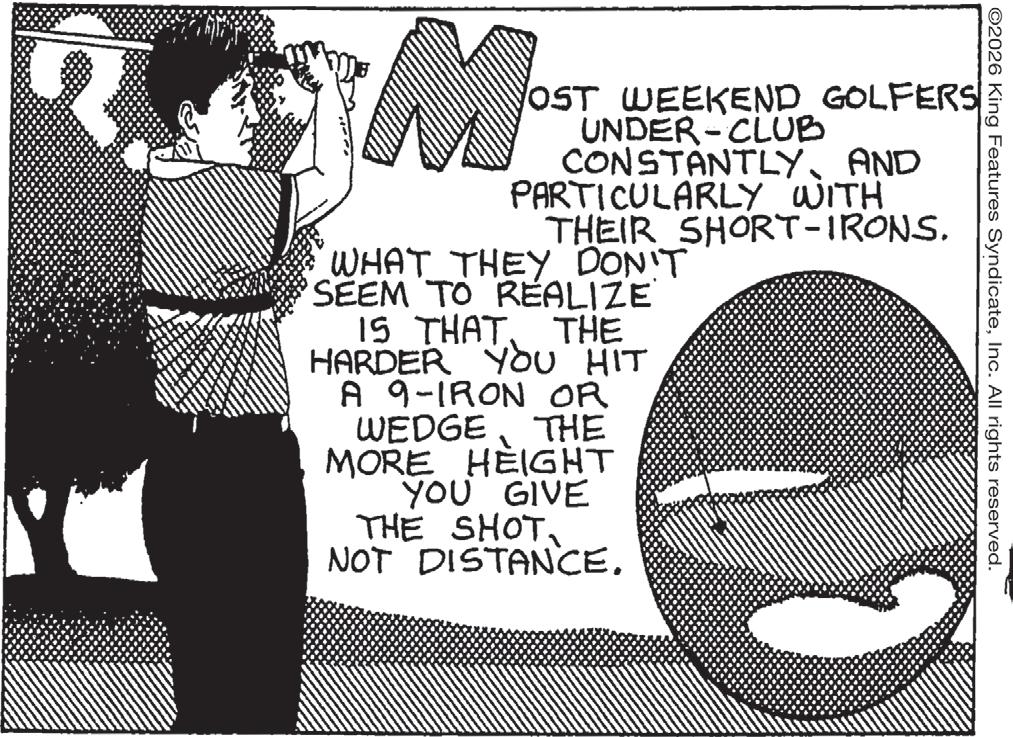
Not every greenside bunker shot is played the same, which implies that not every set up for these shots should be the same. Bunker shots can be divided into two basic categories: good lies and poor lies.
Good lie situations call for an open face wedge position, preferably the one lofted wedge with a high bounce. This orientation of the clubhead allows the club to glide through the sand without digging too deeply. Great for hitting the sand a few inches behind the ball when it’s resting in a good lie or soft sand.
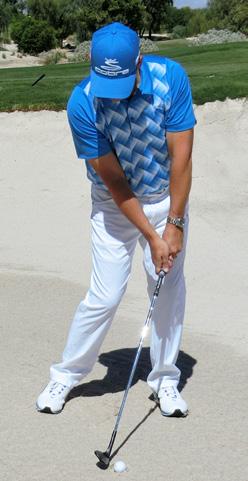
But many times you’ll find your ball in a poor lie which should call you to make the one most critical adjustment: square the clubface at address! By simply squaring the clubhead, you’re creating a digging instrument that can excavate enough sand under and with the ball to send it out of the bunker. An open face from poor lies leads to a reflecting clubhead off the sand or simply puts the leading edge into the equator of the ball.
After you’ve squared the clubface, lean the bodyweight and the clubshaft toward the target slightly so that you can achieve a sharper strike into the sand. Try hitting closer to the ball with your new square face alignment as well.
“The Ring of Nibelung”?
10. ACRONYMS: In computer emails, what does the acronym “CC” stand for?
Answers
1. Bong Joon Ho.
10. ACRONYMS: In computer emails, what does the acronym “CC” stand for?
Answers
10. ACRONYMS: In computer emails, what does the acronym “CC” stand for?
Answers
1. Bong Joon Ho.
by Linda Thistle
1. Bong Joon Ho.
2. Fermented soybean paste.
2. Fermented soybean paste.
3. Heathcliff and Catherine.
4. Manila, Philippines.
5. 1896 in Greece.
6. Illinois.
7. Arabian Peninsula.
8. Ares.
9. Richard Wagner.
2. Fermented soybean paste.
3. Heathcliff and Catherine.
4. Manila, Philippines. 5. 1896 in Greece.
6. Illinois.
The idea of Go Figure is to arrive at the figures given at the bottom and right-hand columns of the diagram by following the arithmetic signs in the order they are given (that is, from left to right and top to bottom). Use only the numbers below the diagram to complete its blank squares and use each of the nine numbers only once.
3. Heathcliff and Catherine. 4. Manila, Philippines.