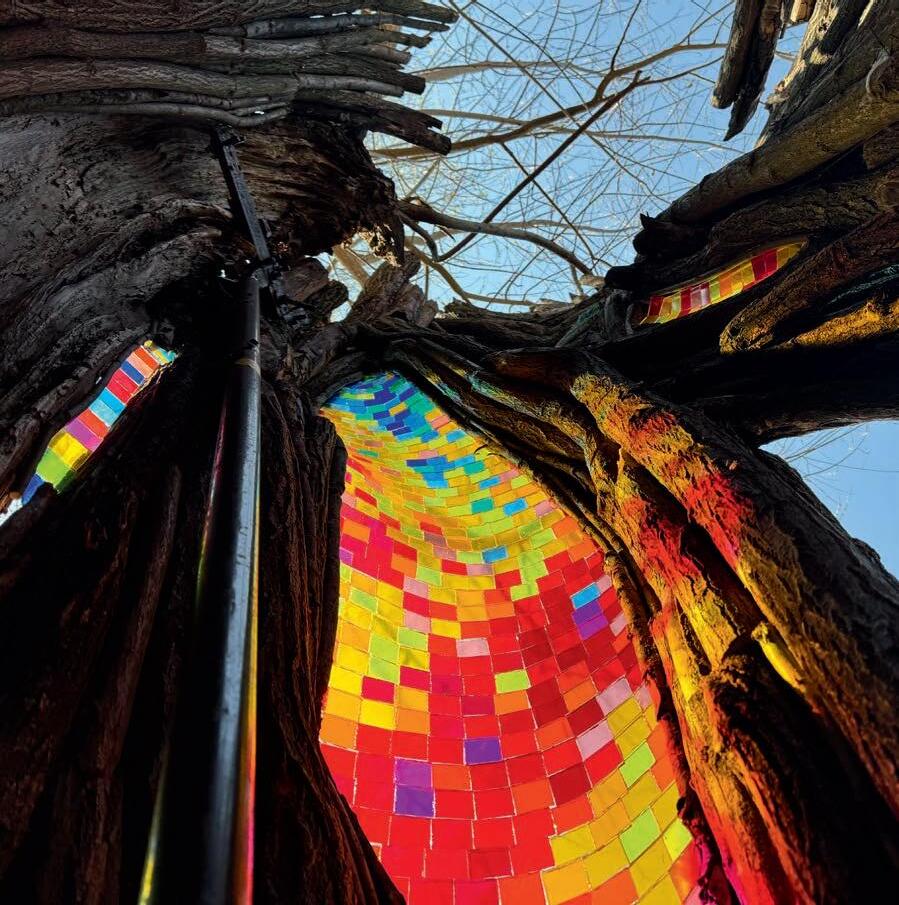
Artist Jan Sajdak’s stained-glass willow brings a poetic twist to Warsaw’s public art scene. Blending natural form with luminous color, the installation offers a contemplative moment in the urban landscape. It’s a striking example of how contemporary art can reshape everyday surroundings.
In the News
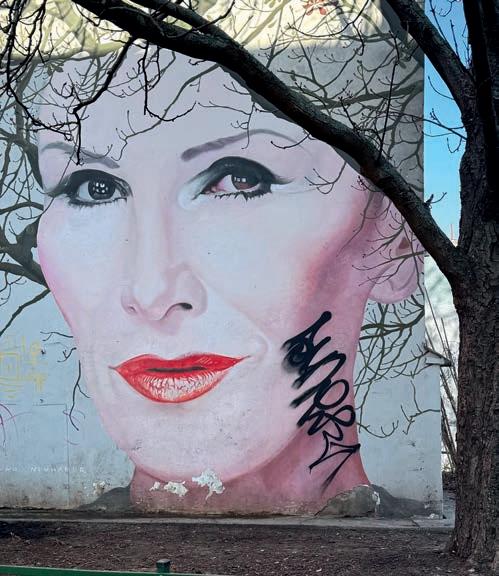
Mural Outrage
Vandals have damaged the beloved Kora mural, sparking public anger and calls for restoration. The artwork had become a cultural touchpoint, and its destruction highlights ongoing issues around public art protection. Residents are already rallying to bring it back.
PARKS
Intraco
Unprotected
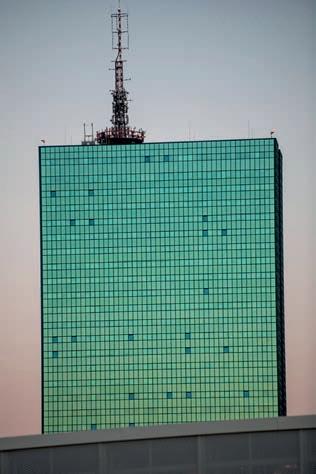
The Intraco tower will not receive heritage status, clearing the path for redevelopment or demolition. The decision has sparked debate between preservationists and investors, highlighting Warsaw’s ongoing tension between modernist legacy and commercial pressure. For now, one of the city’s recognizable skylines faces an uncertain future.
TOURISM
Roma Ambition
Unveiled at MIPIM—the world’s leading real estate fair held annually in Cannes—the Roma Tower project is raising the stakes with interiors designed by Pininfarina. Combining architectural scale with high-end design pedigree, it aims to redefine luxury in Warsaw’s skyline. For now, with only early-stage materials presented at the event, much remains conceptual—but the project reflects the city’s growing confidence and ambition on the global stage.
(2), BŁAŻEJ PINDOR, ZDM
CULTURE
CULTURE
Gallery Arrival
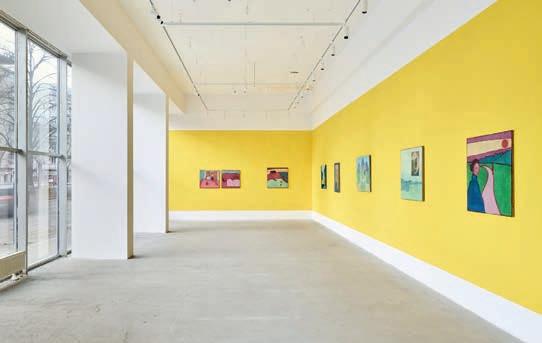
The new BD Gallery positions itself as a fresh voice in Warsaw’s contemporary art scene. With a focus on ambitious programming and emerging talent, it signals continued growth in the city’s cultural infrastructure. Another sign that Warsaw’s art world is gaining momentum.
PARKS
Rainbow Row
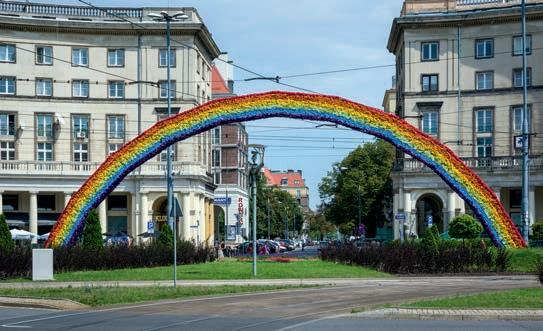
Even before its return, the iconic rainbow installation at Plac Zbawiciela is stirring political tensions. Critics on the right are already mobilizing opposition, reviving a familiar cultural flashpoint. Scheduled to reappear in June 2026 to coincide with Pride Month, the artwork’s comeback risks reigniting debates over identity, symbolism, and public space in the capital.
CULTURE
Central Overhaul
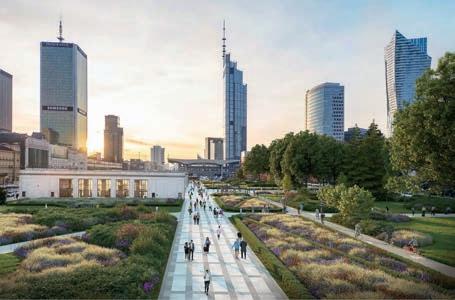
Long-neglected land beneath Warszawa Centralna is finally set for transformation, with plans for a new mixed-use development. The project promises to reconnect fragmented urban space and introduce greenery, services, and pedestrian-friendly design. For many, it’s a long-overdue upgrade to one of the city’s most chaotic transit zones—though concerns remain about execution and coherence.
What's in for April
Warsaw Game Days & Fantasy Fair
Gaming culture takes over EXPO XXI with a packed weekend of premieres, tournaments, and hands-on experiences. From AAA titles to indie gems, visitors can test upcoming releases, meet industry insiders and creators, and explore tech zones showcasing the latest gear. With esports competitions, cosplay, and a lively main stage, it’s an all-ages celebration of interactive entertainment.
Where: EXPO XXI Hall, ul. Prądzyńskiego 12/14
When: April 11–12
Tickets: targifantastyki.pl/bilety
Kim Gordon (Play Me Tour)
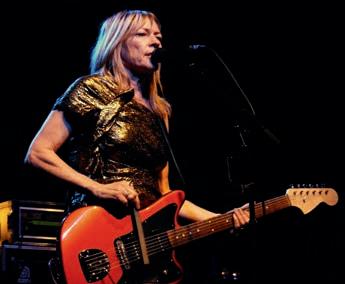
A defining figure of experimental rock returns with a performance that continues to challenge and evolve her singular artistic voice. Known for pushing the boundaries between music, art, and noise, Kim Gordon’s latest work explores themes of power, technology, and cultural decay through an uncompromising sonic lens. Expect a raw, thought-provoking live set, with support from The New Eves.
Where: Progresja, Warsaw
When: April 21, 18:00
Your Small House Trade Fair
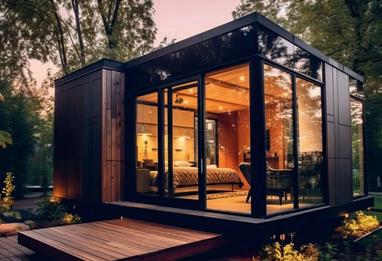
Europe’s largest trade fair dedicated to compact living returns for a spring edition, celebrating five years of showcasing smart, modern homes. Step inside fully built modular, prefab, and mobile houses, explore cutting-edge technologies, and consult directly with architects and industry experts. A new garden zone adds inspiration for outdoor living—from saunas to pergolas—making this a must for anyone dreaming of efficient, design-led living.
Where: PGE Narodowy
When: April 24–26
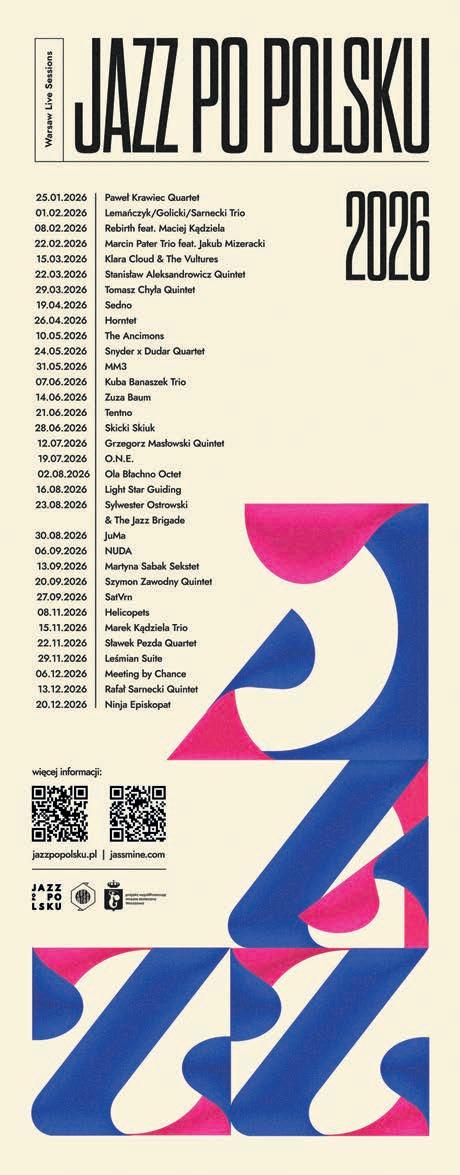
Royber Trio –Album Premiere
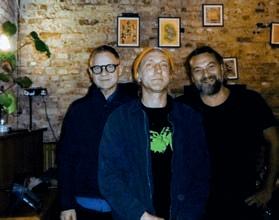
An evening of intense, boundary-pushing sound as the Royber Trio premieres its debut album November. Blurring the line between composition and improvisation, the trio—featuring Mikołaj Trzaska, Olo Walicki, and Macio Moretti—creates a live musical dialogue rooted in film scores yet evolving into something entirely their own. Expect a deeply immersive, organic performance where every moment unfolds in real time.
Where: Pardon To Tu, al. Armii Ludowej 14, When: April 15, 2026 (doors 19:00, concert 20:30)
Tickets: 69 PLN presale / 89 PLN on the door
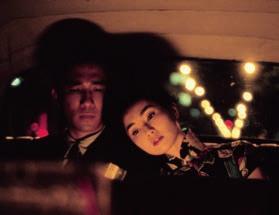
Wong Kar Wai
Retrospective
Kinoteka turns the spotlight on one of cinema’s great visual poets with a month-long retrospective of Wong Kar Wai’s most iconic films. From the restless romance of Chungking Express to the aching beauty of In the Mood for Love, these screenings capture the director’s signature blend of longing, atmosphere, and hypnotic style. A rare chance to revisit—or discover— modern classics on the big screen.
Where: Kinoteka, pl. Defilad
When: Thursdays throughout April
must-have
In Bloom
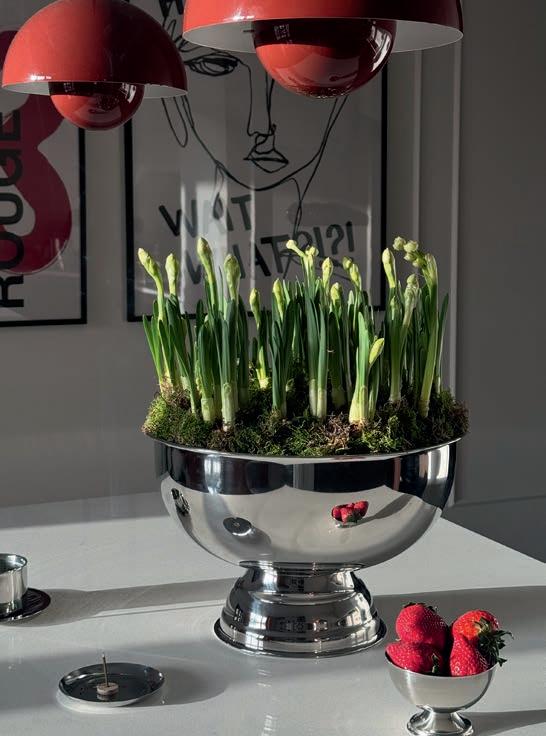
A slower, more intentional approach to flowers
In a city where floristry often leans toward the decorative, Bulb offers something altogether more thoughtful. This Warsaw-based project reframes flowers not as fixed arrangements, but as living compositions — objects that evolve slowly, inviting attention rather than demanding it.
Working exclusively with bulb plants such as narcissus and muscari, each piece arrives in its earliest stage: green shoots just beginning to push upward, roots still visible, potential still intact. Set within minimal, sculptural metal bowls, the compositions feel closer to design objects than bouquets — restrained, architectural, and quietly expressive.
Over the following days, the transformation unfolds. Stems lengthen, buds swell, and blooms appear, subtly reshaping the composition with each passing moment. What you’re given is not a finished product, but a process — one that rewards patience and observation.
There’s a calm intentionality at the core of Bulb. It aligns with a broader shift toward slower living and non-disposable objects, where value lies not in permanence but in experience. These are flowers you live with, not simply look at.
The aesthetic draws from Scandinavian minimalism and fashion editorial sensibility, yet remains grounded in something more organic and tactile. Nothing feels overworked; the materials step back, allowing the plants to lead.
More than decoration, Bulb feels like having Spring in your home — a living, breathing presence that marks time in the most gentle, poetic way.
Instagram.com/ bulb.warsaw
Warsaw for Free
The Capital’s best experiences that don’t cost a złoty
DISCOVER THE TCHOREK PLAQUES
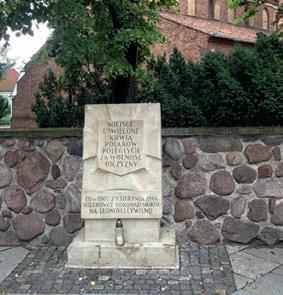
Look closely at Warsaw’s walls and you’ll notice small sandstone plaques marked with a cross and dates from the Second World War. Known as Tchorek plaques, they mark locations where executions and battles occurred during the German occupation, turning everyday streets into a powerful map of Warsaw’s wartime history.
WANDER THE OLD TOWN
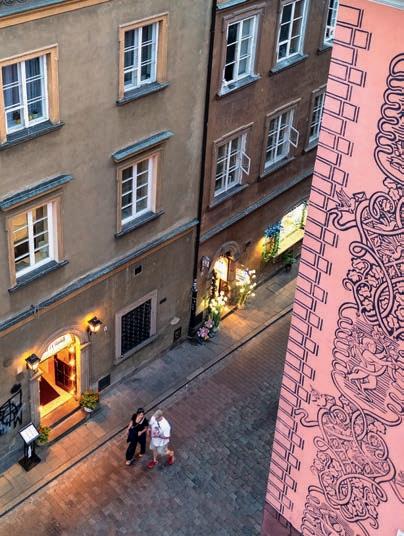
Rebuilt almost entirely after World War II, Warsaw’s Old Town is one of Europe’s most extraordinary reconstructions. Spend time wandering its cobbled lanes, watching artists work in Market Square or slipping into quiet church courtyards. The district’s colourful façades and lively atmosphere make it a perfect introduction to the city.
VISIT MUSEUMS ON FREE DAYS
Many of Warsaw’s major museums open their permanent exhibitions free once a week. The National Museum offers free admission on Tuesdays, while the Royal Castle does the same on Wednesdays. With a little planning, visitors can experience some of Poland’s finest cultural institutions without spending a złoty.
RELAX IN ŁAZIENKI ROYAL PARK
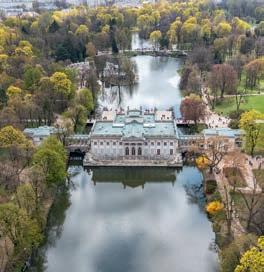
Łazienki Królewskie remains one of Warsaw’s most elegant green spaces. Stroll among classical sculptures, watch peacocks wandering the lawns, or sit beside the Palace on the Isle reflected in the water. In summer, the park hosts free Chopin concerts that draw crowds to the composer’s monument.
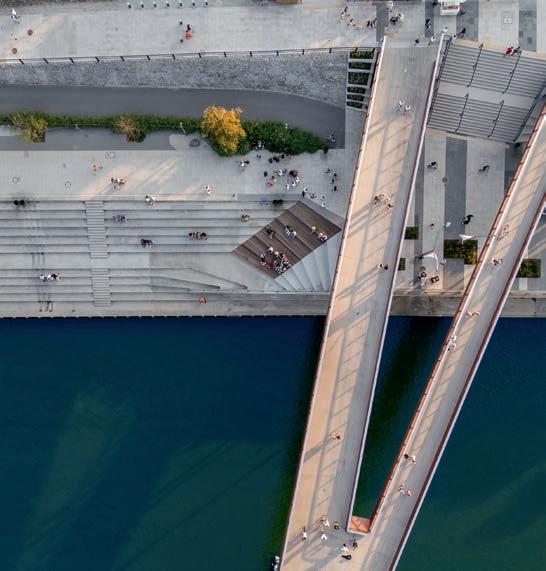
WALK THE VISTULA BOULEVARDS
Walk or cycle along the boulevards or simply watch the sunset over the skyline. For a wilder contrast, cross to the Praga side, where untamed riverbanks and sandy clearings feel worlds away. The new pedestrian bridge has quickly become a favourite vantage point—especially at to watch the light fade over Warsaw’s skyline.
EASTER TABLE
Polish Easter dishes & modern brunch ideas
After the long restraint of Lent, the table returns with force: rich, symbolic, unapologetically abundant. This is not a casual brunch. It’s a culinary reset, built on dishes that carry memory, ritual, and a deep sense of seasonality.
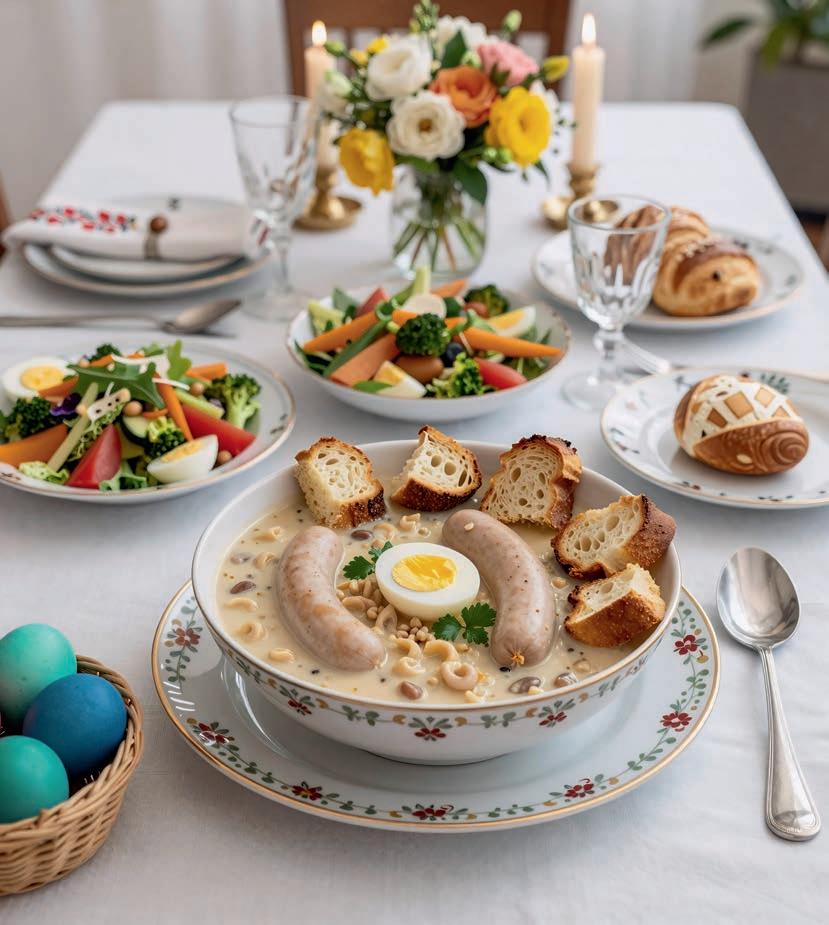
At the heart of it all is biała kiełbasa (white sausage, unsmoked, gently spiced with garlic and marjoram). Served warm, often with ćwikła (grated beets mixed with horseradish), it delivers something elemental: meat, salt, heat. Nothing more, nothing less.
Alongside it sits żurek , Poland’s defining Easter soup. Made from fermented rye starter, it’s sour, earthy, and deeply satisfying. Add sausage and egg, and it becomes a complete story in a bowl—one that stretches back centuries.
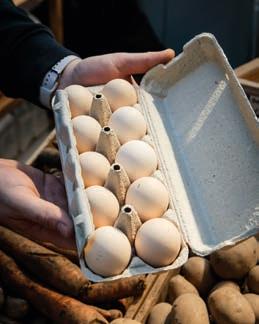
Eggs, of course, are everywhere. Decorated as pisanki, blessed, shared, and eaten in every possible form. They symbolize renewal, but also serve a more practical purpose: they bind the table together. Devilled, sliced, or simply seasoned, they are constant.
Then there’s śledźie (herrings), a holdover from Lent. Sharp with vinegar, softened with oil, often paired with onion, it reminds you where the feast began before pushing you forward into richer territory.
And finally, the sweets.
Mazurek , flat and ornate, is pure expression—nuts, chocolate, dried fruits layered without restraint. Sernik, made from dense twaróg, offers a quieter, creamier counterpoint. Babka, tall and golden, rises like a centerpiece, while makowiec, spiraled with poppy seeds, adds depth and a hint of nostalgia.
This is the traditional table. But increasingly, in modern Warsaw homes, something else is happening. Easter is opening up.
While the structure based on tradition remains, the edges soften. The meal stretches later into the day, drifting toward something closer to brunch. And with that shift comes new elements—ones that don’t replace tradition, but sit comfortably beside it.
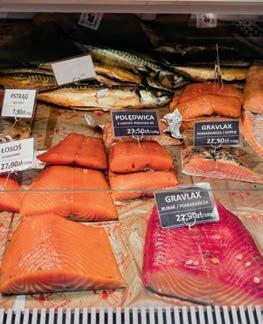
Think smoked salmon or gravlax , laid out next to eggs and fresh bread. Clean, silky, lightly cured—it brings brightness to a table that can lean heavy. Add a squeeze of lemon, a handful of dill, and suddenly the meal feels lighter, more contemporary.
Then there’s the unexpected but entirely logical pairing: eggs and avocado. Not Polish, not traditional—but visually striking and texturally perfect. Creamy, rich, vibrant green against the pale yellow of yolk—it’s a modern addition that works without apology.
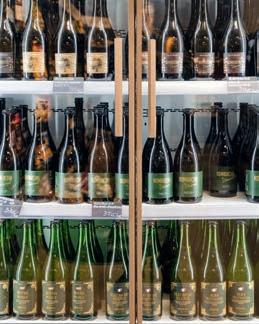
Even the drinks are shifting. Alongside coffee and compote, you’ll now find kombucha —fermented, slightly sharp, refreshing enough to cut through the richness of sausage and cake. In its own way, it echoes the sour notes of żurek or pickled herring—just reinterpreted.
This is how food traditions survive. Not by staying fixed, but by adapting—absorbing new influences while holding onto their core. Because at its heart, the Polish Easter table isn’t about rules. It’s about gathering, abundance, and the quiet understanding that after a long winter –you’ve earned this.
TRADITIONAL STAPLES:
• Biała kiełbasa with horseradish
• Żurek with egg and sausage
• Decorated eggs (pisanki)
• Pickled herring
• Mazurek, babka, sernik, makowiec
MODERN BRUNCH ADDITIONS:
• Smoked salmon or gravlax
• Eggs with avocado
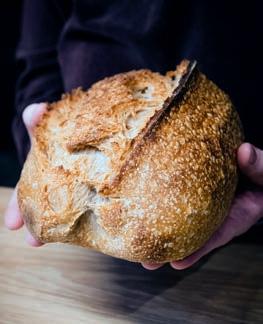
• Fresh sourdough bread
• Kombucha or light ferments
And come Easter Monday, be ready for Śmigus-Dyngus—arm yourself with a water pistol or squeezable egg to fend off mischievous family ambushes.
BIOBAZAR EASTER
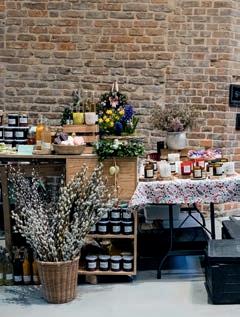
In a city like Warsaw, that choice defines everything that follows: the depth of your żurek, the texture of your babka, the flavor of your eggs. And for those who take Easter seriously, one place has become essential: BioBazar at Norblin Factory
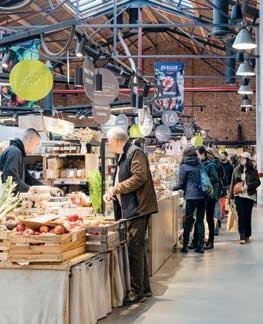
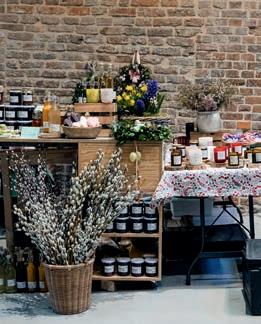
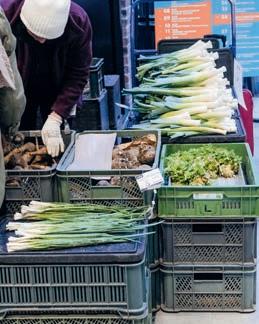
Set inside the revitalized industrial complex of the Norblin Factory, BioBazar is less a market and more a curated ecosystem. Farmers, bakers, cheesemakers, butchers — all gathered in one space, all working at a scale where quality still matters.
This is where Easter shopping becomes intentional.
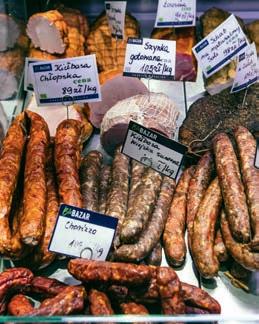
Start with biała kiełbasa. Here, it comes from small producers who understand balance — garlic that doesn’t overwhelm, marjoram that lingers, meat that actually tastes like meat. It’s a difference you notice immediately, especially when the dish is this simple.
For żurek , the foundation is everything.
Where to shop Easter ingredients in Warsaw
BioBazar offers proper zakwas — fermented rye starter that brings depth and acidity you simply won’t get from shortcuts. It turns a basic soup into something layered and alive.
Eggs — arguably the centerpiece of the entire holiday—are another highlight. Sourced from smaller farms, they deliver richer yolks and better structure, whether you’re boiling, stuffing, or baking with them.
Then come the building blocks of dessert. Proper twaróg for sernik . Butter that tastes like butter. Flour that behaves the way it should. Dried fruits and nuts that haven’t been stripped of character. These are small details — but Easter baking is nothing if not detail-driven.
And for those navigating time, there’s a practical side to BioBazar as well.
You’ll find ready-made dishes — pierogi, soups, traditional preparations — made without preservatives and designed to retain the integrity of homemade food. It’s not
a shortcut so much as a smart adaptation.
The same goes for drinks. Alongside juices and natural wines, BioBazar has embraced kombucha and other fermented beverages — an ideal counterpoint to the richness of Easter dishes, and a natural fit for a table rooted in fermentation.
Even the more modern Easter table finds its footing here.
Looking to add smoked salmon or gravlax? You’ll find quality versions that sit comfortably alongside traditional Polish staples. Need fresh bread, herbs, or produce to lighten the spread? It’s all here — and it all connects.
Because that’s what BioBazar does best. It doesn’t replace tradition. It supports it. It gives you access to the ingredients that make Polish Easter what it is — while quietly allowing space for evolution. For new dishes, new habits, new rituals.
And in a holiday built on renewal, that feels exactly right.
FOR TRADITION:
• Biała kiełbasa from artisan producers
• Zakwas for authentic żurek
• Free-range eggs
• Fresh horseradish and beetroot
• Twaróg for sernik
FOR BAKING:
• High-quality butter and flour
• Nuts, dried fruits, raw honey
FOR A MODERN TABLE:
• Smoked salmon or gravlax
• Fresh bread and seasonal produce
• Kombucha and natural drinks
BONUS:
Ready-made pierogi and classic dishes
Expert vendors who offer real guidance
BioBazar
The Norblin Factory, Żelazna 51/53, biobazar.com.pl
AERIAL
INSTINCT
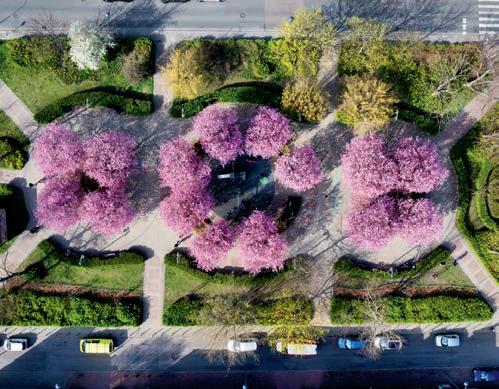
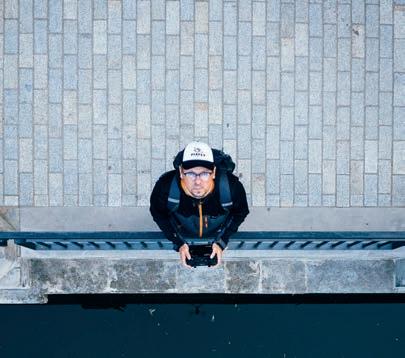
Cezary Warś, aka PixFly, captures Warsaw’s transformation from above
photography
INSIDER: Two years have passed since our last conversation. When you look back at the photographs you were making then, what differences do you see in the way you approach your work today?
Cezary Warś: I suppose the most important thing is patience—both technical and purely creative. Two years ago, I was quicker to press the shutter button. Now I’m able to wait for the right light, the right conditions, for that moment when a place I know by heart suddenly looks different. On the other hand, I’ve also learned when not to wait. Sometimes you’ve got just a few seconds and the scene is about to disappear—that’s when instinct has to kick in.
Warsaw is constantly changing. Are there transformations in the city over the last two years that have particularly caught your attention from above?
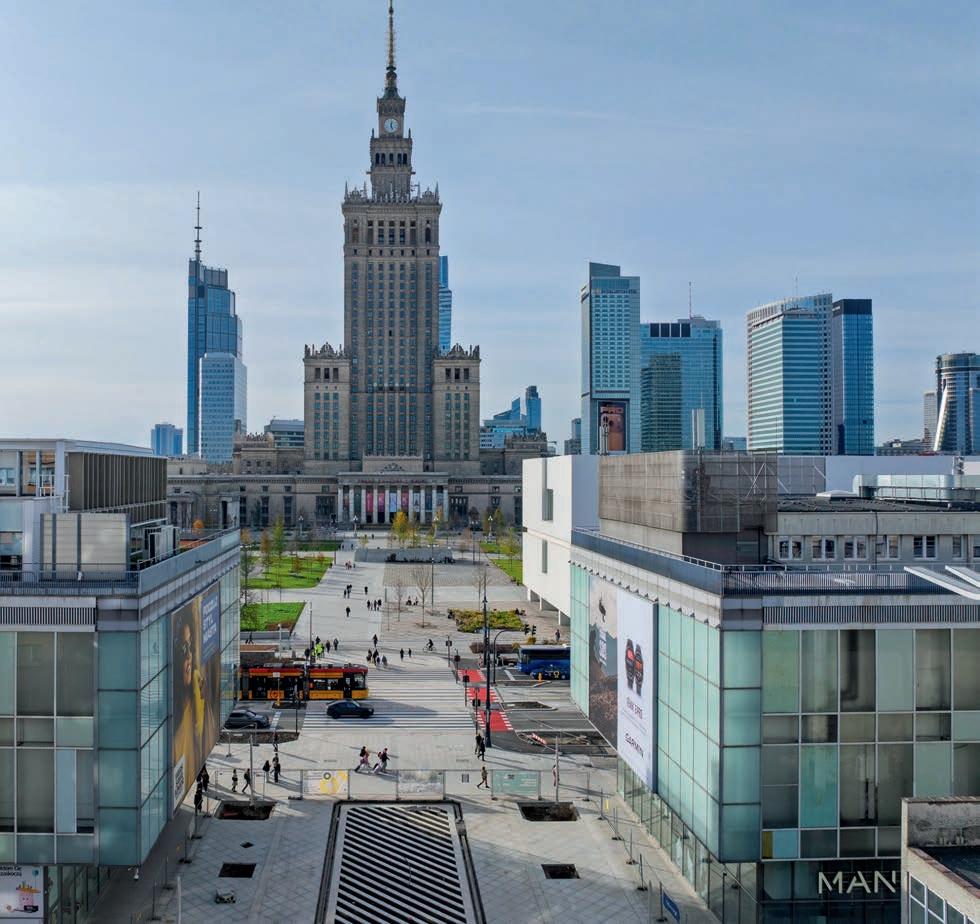
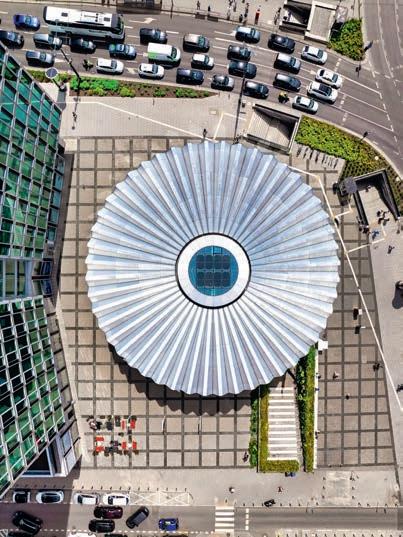
What’s happening around the new Warsaw Center has been incredible to watch from above. And I’m not talking about any one development—it’s more about how they fit together. From the ground, Chmielna, Plac Centralny and Plac Pięciu Rogów look like separate building sites. From the air, you can see that there’s a plan behind it—that someone is deliberately redesigning the city centre, bit by bit.
Drone photography has become far more common in recent years. What do you think distinguishes a compelling aerial photograph from the thousands of images now taken from the sky?
In my view, it all boils down to three things. Patience—that is, waiting, sometimes for weeks, for the right light and the right moment. Intuition—that is, knowing when not to wait because the scene is about to disappear. It sounds like a contradiction, but over time you learn to navigate it. And the third thing, which is talked about less often, is responsibility. Flying a drone requires serious preparation: checking the airspace, liaising with the authorities, analysing conditions. I’ve approached it this way from the very beginning. You can’t be fully focused creatively if you’re not fully prepared technically.
Your photographs often reveal unexpected geometry and patterns in the city. Do you think about your images more as documentation of Warsaw or as a form of visual abstraction?
To be honest—both, depending on what I’m photographing. When I’m documenting urban changes—the redevelopment of a street, a new square taking shape—that’s archival work. The comparison of “how it was” and “how it is” has real value. This is what Chmielna Street looked like; this is what it looks like now.
But when I’m working with architecture, I often find myself moving into something more abstract. I start looking at lines, shadows, rhythm, the arrangement of forms. Then it becomes less about the place itself and more about the image. And I often don’t know this in advance. Sometimes I fly the drone without a specific plan and only then discover a certain arrangement or geometry that isn’t visible from the ground at all. Regardless of which mode I’m working in, my goal is similar: to show Warsaw as a truly beautiful city.
Have there been any projects, series, or single photographs over the past two years that felt especially important for you creatively?
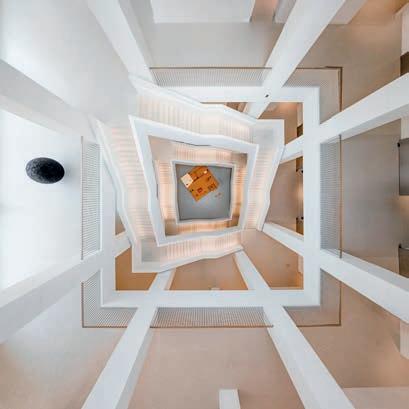
The most important project for me over the last two years was documenting the Museum of Modern Art—from its construction through to its opening. When you return to a single place over a long period of time, the photographs begin to take on a completely different significance. A single visit won’t achieve that. Over time, you really do build a relationship with the place.
A very important moment for me was flying a drone inside the museum. At that time, few people had the opportunity to do something like that. I particularly remember the staircase, because it looked completely different from above than from the level of the steps—full of geometry, light, and a very interesting spatial dynamic.
I also had the chance to exchange a few words with the architect, Thomas Phifer, before the opening. It was a brief conversation—but one you never forget. There’s something special about standing in a building and talking to the person who conceived it.
Beyond Warsaw, are there other cities or landscapes you feel drawn to explore from the air in the future?
Yes, definitely. I’m a geographer, and I think that has shaped the way I view the world from above more than anything else. I’ve always been drawn to landscapes just as much as to cities. I like observing how terrain unfolds—how rocks, water or vegetation create patterns from above that you
don’t notice in everyday life.
I’ve been lucky enough to fly over some truly extraordinary places in the Seychelles and New Zealand, and both captivated me in completely different ways. But my next big adventure is Iceland, which I’m looking forward to with great anticipation. For a nature photographer, it’s almost paradise: rugged terrain, volcanic landscapes, glaciers…
The sense of freedom that comes from flying over this wild expanse is still hard for me to put into words—I hope the photos will do it for me.
Looking ahead, what directions or ideas are you most excited to explore in your photography over the next few years?
What pleases me most is that, after all these years, I still feel the same joy I experienced during my first drone flights. It’s not even about new equipment or technique. The most important thing is that photography continues to give me immense satisfaction. And I’m aware of how lucky I am to be able to do something professionally that I truly enjoy.
Warsaw will continue to change; Iceland is already on the horizon. But the most important thing for me is not to lose that sense of discovery—so that every flight can still surprise me with something. As long as I feel that, I’ll keep doing it with the same enthusiasm.
To see more of Cezary's photographs scan here
CASUAL DECADENCE
Modern dining with a social pulse
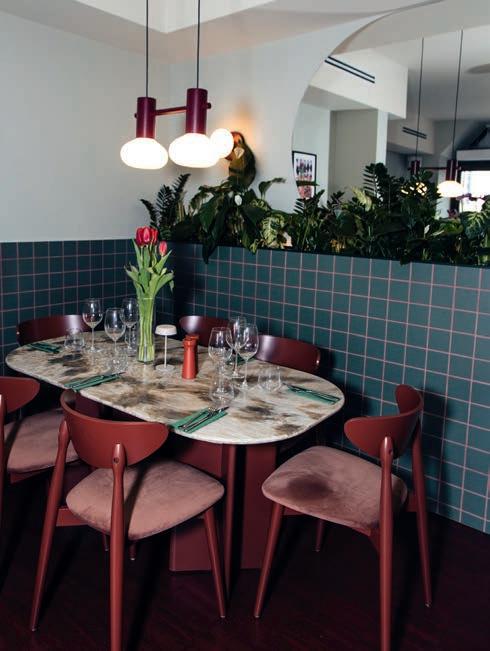
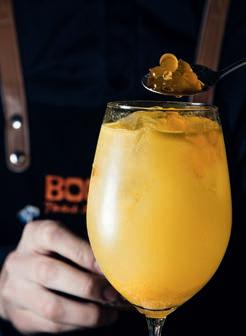
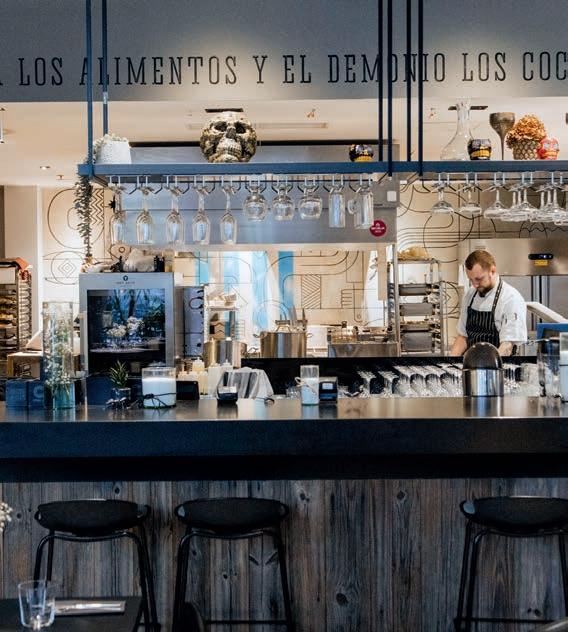
There’s a certain kind of place that Warsaw keeps trying to get right: casual but not careless, stylish without suffocating under its own aesthetic, and—crucially—alive in that low, electric way that makes you want to order another bottle and stay longer than planned. BOCADO Food & Cocktails is one of the rare newcomers that actually pulls it off.
You feel it before the first bite. The room hums with that calibrated looseness—dates leaning in, friends sharing plates, a suited trio talking numbers over good wine. It’s hip, yes, but not performative. There’s intent here. Even the VIP room, accessed through a discreet courtyard entrance, carries a whisper of exclusivity without tipping into cliché. It’s the kind of detail that signals ambition.
Then the food lands, and things get serious.
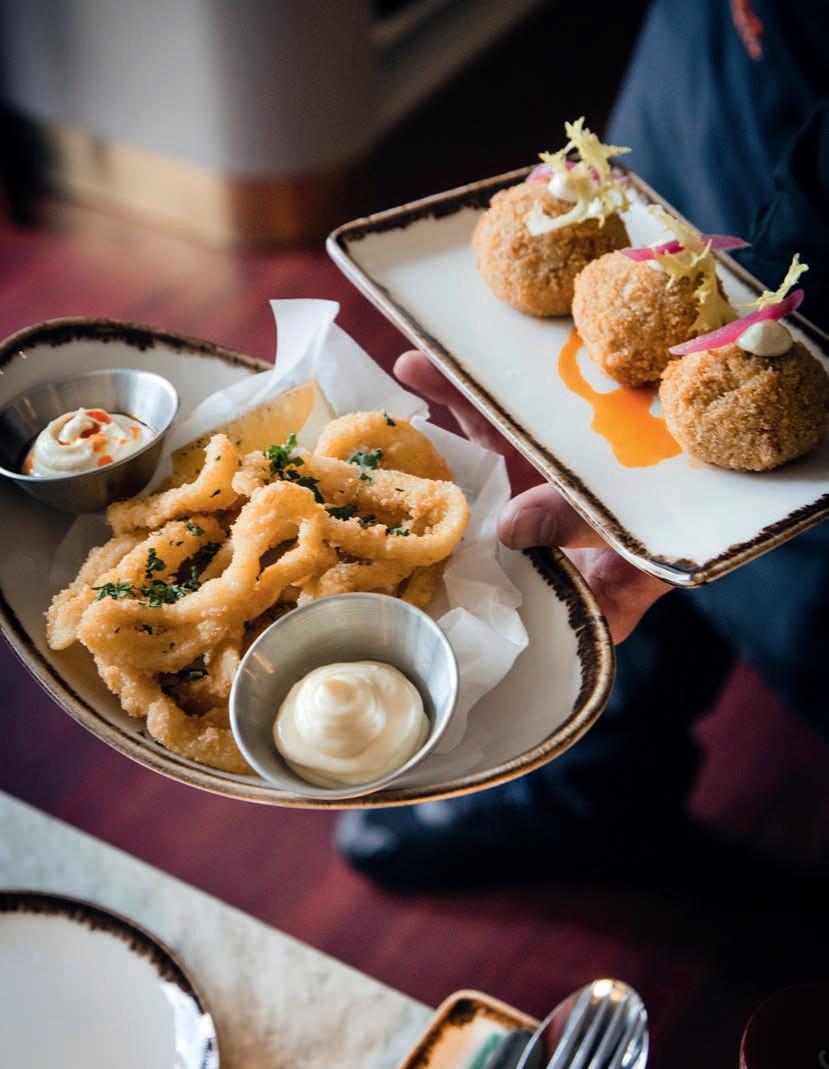
The calamari arrives golden and delicate, the batter light enough to shatter under your teeth rather than drag you down. It’s easily among the best in Warsaw—no exaggeration, no caveats. Just clean, confident cooking.
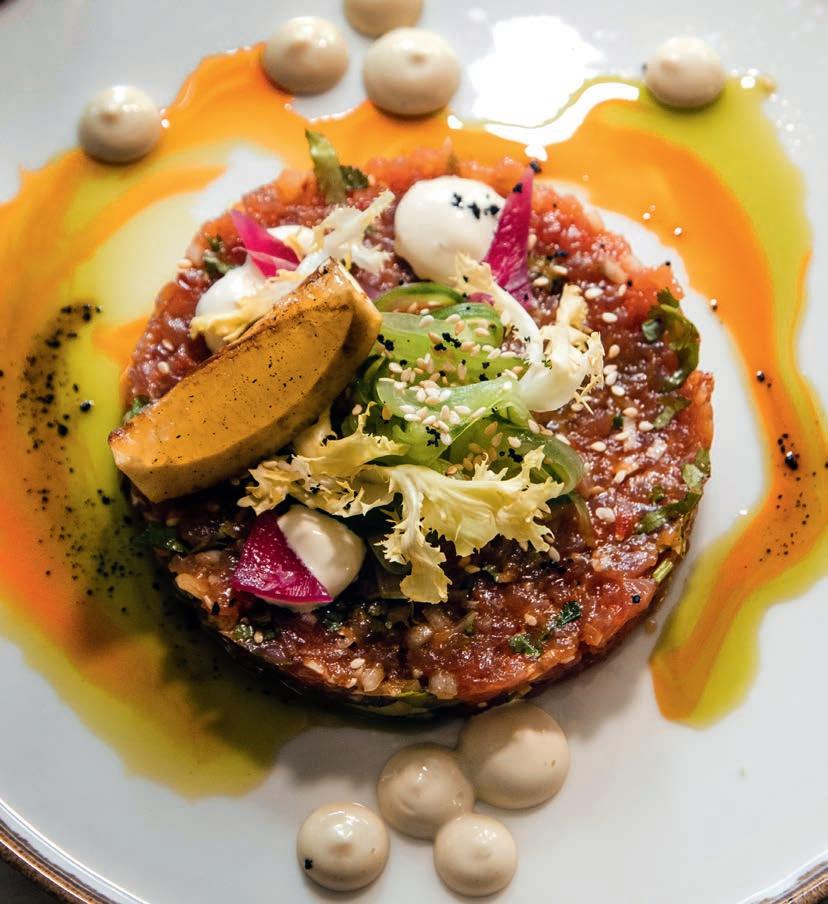
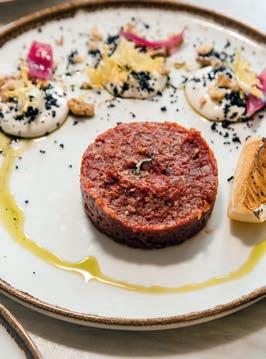
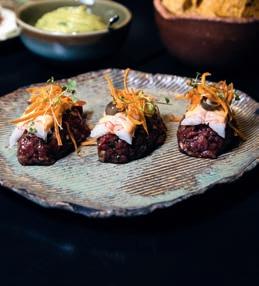
There’s a playful turn with the tartares. The tuna version is bright and precise, while the tomato tartare—often a gimmick elsewhere—feels fully realized here. Fresh, balanced, and unexpectedly satisfying, it’s a reminder that not everything needs to revolve around beef to feel indulgent.
“
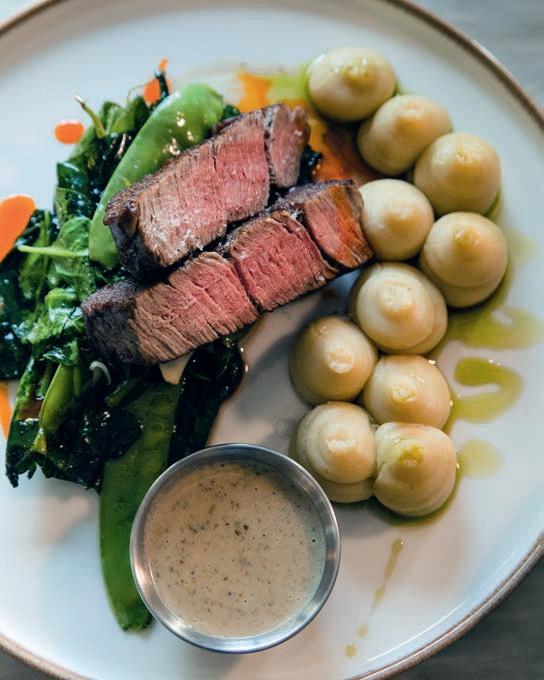
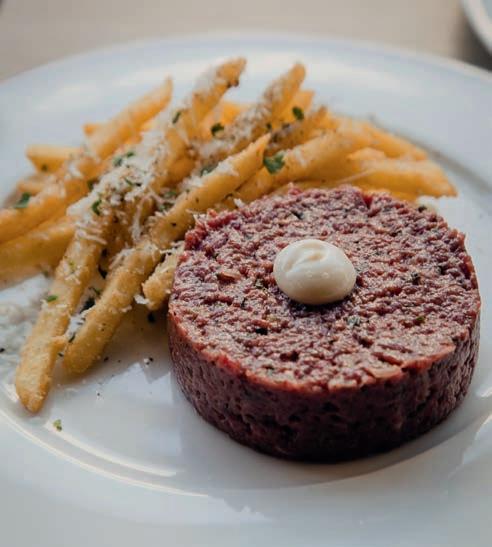
Beef, peppercorn sauce, house red — everything clicks...
But let’s talk about the chorizo croquettes. These are dangerous. Crisp shells giving way to smoky, creamy interiors that hit all the right notes of salt and spice. Order one portion and you’ll regret it. Order three and you might still fight over the last one.
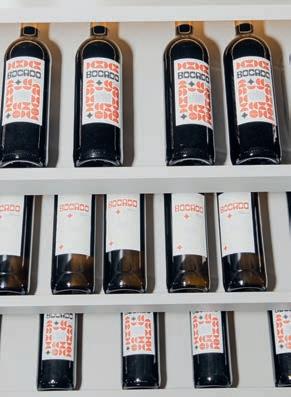
Then comes the knockout: beef tenderloin with peppercorn sauce. This is the dish that resets your expectations. The meat is perfectly judged, but it’s the sauce—deep, velvety, unapologetically rich—that steals the show. It lingers, it coats, it demands attention. Paired with the house red—yes, they bottle their own table wine—it all clicks into place. The wine isn’t trying to impress; it’s trying to belong. And it does.
That’s the thing about BOCADO. It understands context. It knows that great dining isn’t just about technique or plating—it’s about how everything fits together in the moment. The room, the people, the food, the wine. You come for dinner. You stay because it feels right.
BOCADO Food & Coctails ul. Wspólna 35, (City Center), bocado.pl
AT A GLANCE
Vibe: Hip, low-lit, effortlessly social
Best For: Date nights, group dinners, business meets pleasure
Signature Dishes: Calamari; chorizo croquettes; beef tenderloin with peppercorn sauce
Don’t Miss: Courtyard entrance to the VIP room
The Verdict: A polished crowd-pleaser with real bite
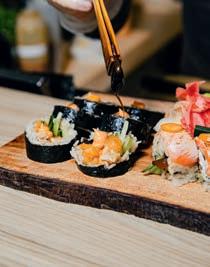
EDOMAE ENERGY
Precision sushi with rhythm, soul, and speed
T“ That brittle, golden crackle of tempura is the culinary equivalent of vinyl static before the music begins...
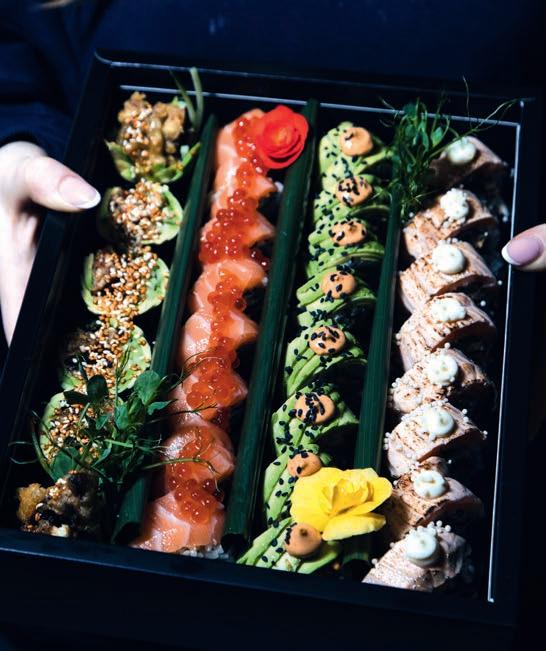
here’s something quietly poetic about the word tsuma. In Japanese, it means “wife”—one’s own, specifically—but it also moonlights as the delicate garnish that accompanies sashimi. Companion and embellishment, substance and flourish. It’s a duality that feels unexpectedly apt for Tsuma, a new sushi spot in Warsaw that manages to be both deeply grounded and lightly, almost playfully, ornamental.
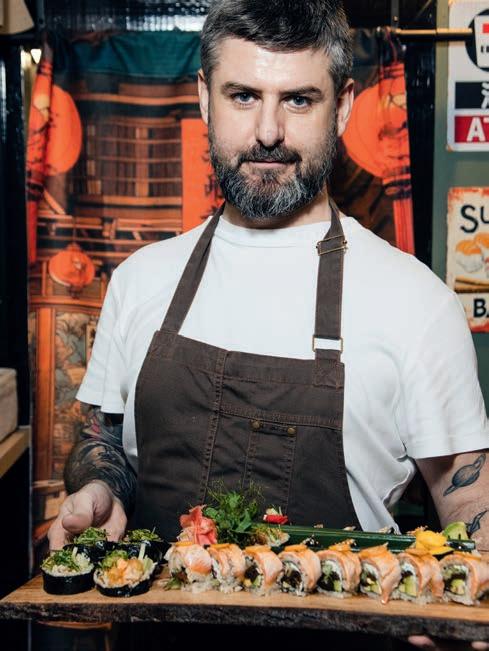
At its center is Paweł, a seasoned chef whose résumé threads through some of Warsaw’s most respected sushi institutions, including Sakana Sushi Bar, with further seasoning gathered in kitchens across Europe. But résumés don’t tell you much about rhythm, and Tsuma is all about rhythm.
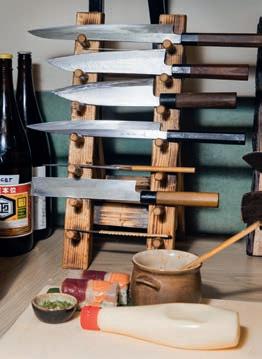
Sit at the bar. That’s non-negotiable. Because watching Paweł work is more gripping than anything currently streaming. There’s a kind of kinetic calm to it: hands moving fast but never rushed, each slice and press executed with the kind of quiet authority that only comes from repetition elevated into art. You don’t just eat here—you witness.
The first real signal that you’re in good hands comes not from the fish, but from the fryer. That sound—the brittle, golden crackle of tempura emerging into the world—is pure, uncomplicated joy. It’s the culinary equivalent of vinyl static before the music begins. And when it hits the plate, still whispering heat, it’s gone in seconds.
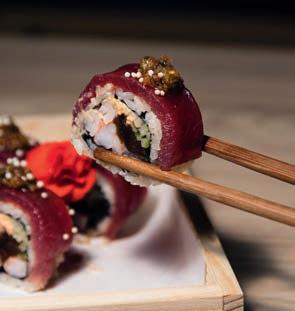
Then comes the parade. Nigiri assembled at a pace that borders on audacious, yet each piece feels considered, almost intimate. Watching Paweł build sets so quickly is like watching a master painter running an assembly line of masterpieces— if such a thing were possible. There’s no wasted motion, no flourish for flourish’s sake. Just precision.
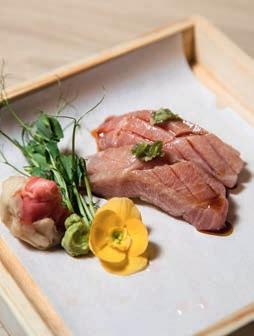
The fish itself is pristine, but Tsuma doesn’t lean on luxury as a crutch. Instead, it’s about balance—rice that holds just enough warmth, seasoning that doesn’t shout, textures that play off each other with subtle intelligence. This is sushi that understands restraint.
And yet, like its namesake, there’s always that hint of garnish—those small, thoughtful details that elevate the experience from excellent to memorable. A brush of sauce here, a surprising crunch there. Nothing overwrought, everything intentional.
In a city that’s no stranger to good sushi, Tsuma feels like something rarer: a place where craft, speed, and soul align. A companion worth returning to.
ul. Czerwonego Krzyża 8 (Powiśle), tsuma.pl
AT A GLANCE
Cuisine: Edomae-style sushi, tempura
Vibe: Intimate, counter-led, quietly electric
Best Seat: At the bar, front row
Standout: Lightning-fast nigiri, pristine fish
Chef: Paweł (ex-Sakana Sushi Bar)
Why Go: Dinner and a live performance in oneExtras Insider Secret: Order delivery
Tsuma
Mur Mur
ul. Chmielna 108 (City Center)
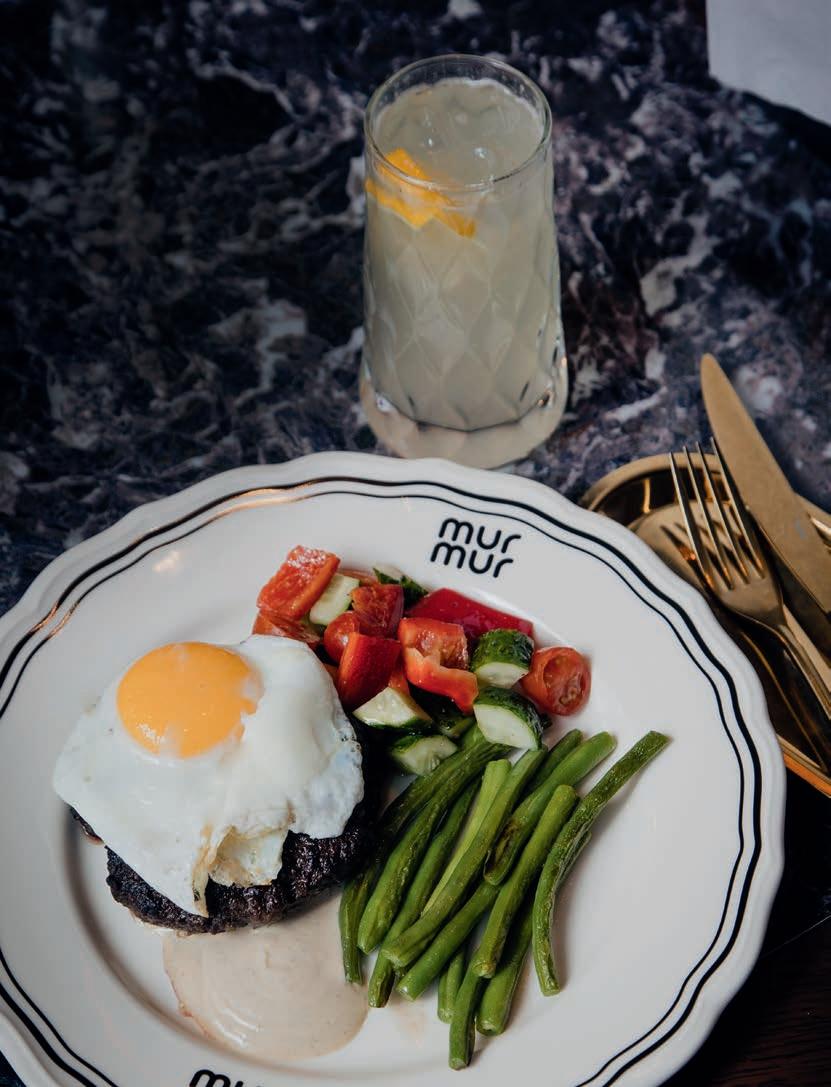
Mur Mur’s “Adult Happy Meal” reframes the lunch break with polish and quiet indulgence. Think crisp chicken cutlet with buttered greens, golden fish fingers with tartare, or a beef steak crowned with a sunny egg and Gonza sauce. There’s a shrimp burger with chipotle mayo, and a bright tuna bowl for balance—all paired with a non-alcoholic cocktail. Served daily from 12:00 to 16:00, it’s a composed, feel-good pause in the day.
Lunch
Insider Fav
CEVICHE CALLING
Fresh South American flavors, perfect for spring
If you have friends flying into Warsaw and want to show them the city at its most vibrant, book a table at Ceviche. This is the kind of place we return to again and again—reliable, atmospheric, and bursting with the kind of freshness that feels tailor-made for spring.
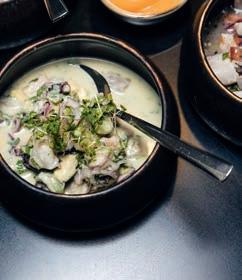
The concept, shaped by Martin Castro Gimenez, leans confidently into South American flavors without slipping into cliché. Instead, it delivers something transportive: bright citrus, clean heat, and a rhythm of dishes that feel both light and deeply satisfying. The eponymous ceviche is, of course, the anchor—perfectly cured fish, sharp with lime, lifted by chili and herbs—but the broader menu rewards exploration.
What makes Ceviche essential isn’t just the food, though. It’s the atmosphere. There’s an easy, sociable energy here—tables clinking with pisco sours, plates arriving to share, conversations stretching long into the evening. It feels like a warm escape from Warsaw’s lingering chill, a place where spring arrives a little earlier.
For us, it’s simple: when people ask where to go, this is always on the list.
Ceviche ul. Twarda 2/4 (City Center), cevichebar.pl
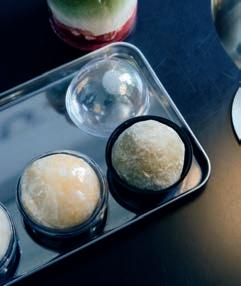
MATCHA MADE IN HEAVEN
Toasted sweetness meets vibrant green indulgence
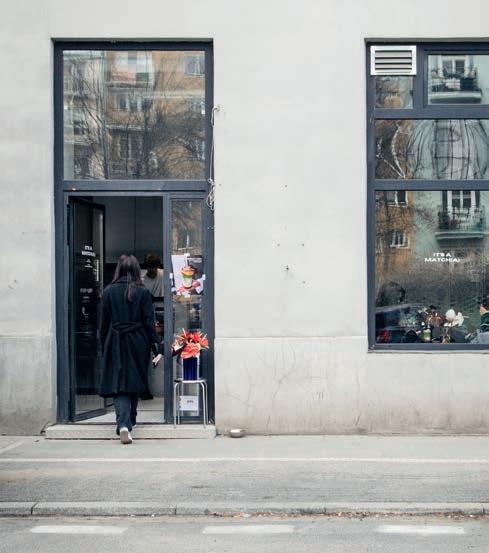
It's a Match(a) ul. Solec 111 (Powiśle), itsamatcha.pl
Matcha may be having a moment, but for some, it has long since crossed into something closer to ritual—a quiet, green devotion that borders on the obsessive. At It’s a Match(a), a small Powiśle address humming with lowkey energy, both worlds meet: the trend seekers and the true believers, united by the promise of a better cup.
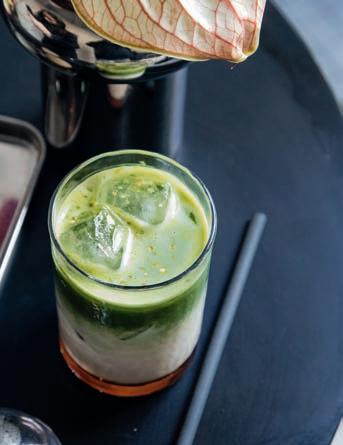
Tucked along Solec, the place leans into the idea that matcha isn’t just a drink but an experience. The menu moves comfortably between the classic and the playful— ceremonial-style pours sitting alongside iced blends, nutty interpretations, and fruit-laced variations that feel designed for slow afternoons. Yet there’s restraint here. Nothing feels excessive, and each cup arrives with a sense of intention.
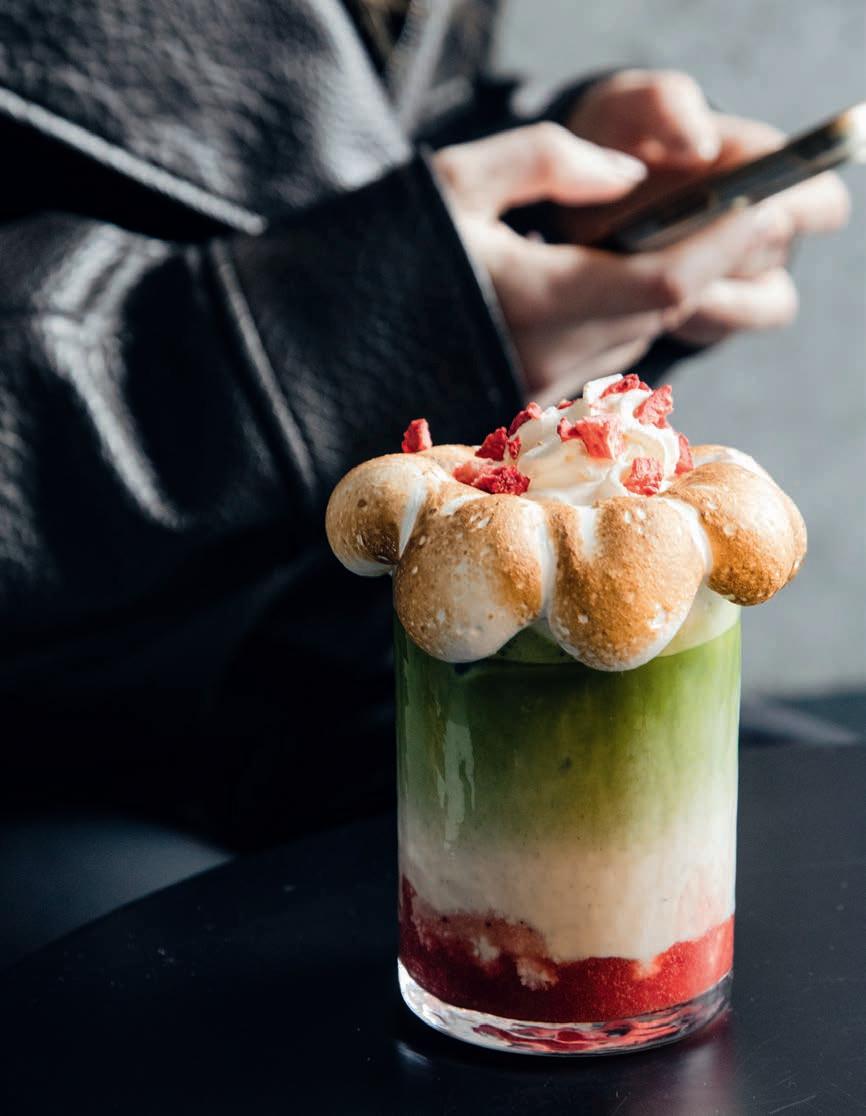
Order a hot matcha crowned with their singed marshmallow topping and you get something close to edible contrast. The grassy, slightly bitter depth of the tea is lifted by caramelized sugar and a whisper of smoke, creating a balance that shifts subtly with each sip. It’s indulgent, but not in a way that dulls the edges—instead, it sharpens them.
The mochi offers a quieter pleasure. Soft, gently elastic, it yields just enough before giving way completely, turning each bite into a small, tactile pause between sips. It doesn’t compete with the matcha so much as echo it.
There’s a calm precision in how drinks are prepared, whisked and assembled without fuss. Even the iced versions, layered in deep and milky greens, feel composed rather than ornamental. In a city fluent in coffee, It’s a Match(a) offers something more introspective—a slower rhythm, and a reminder that bitterness, handled well, can be deeply satisfying.
Second Look
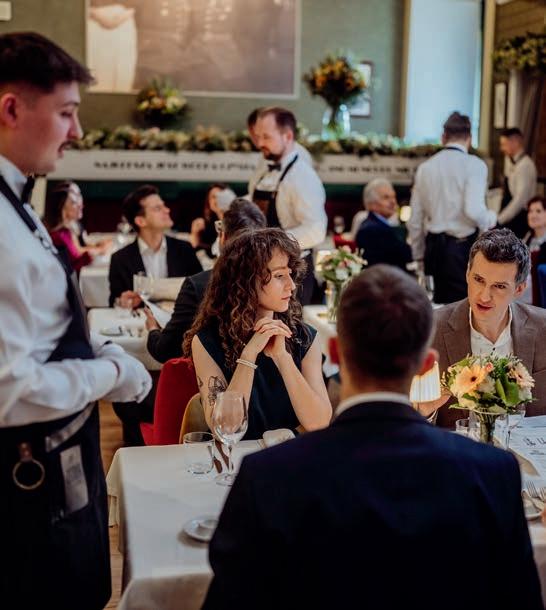
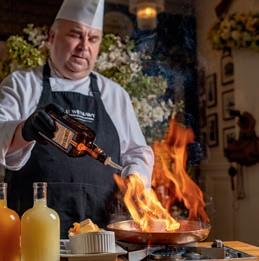
DINING WITH HISTORY
Heritage dining, reimagined for today
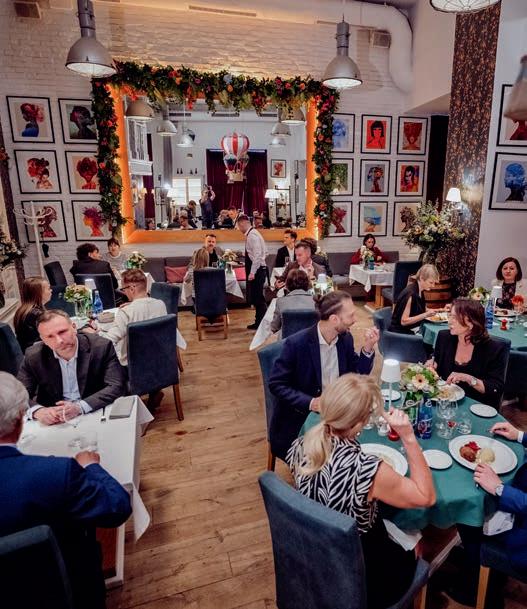
At Piłsudski Square, U Wieniawy draws deeply from Warsaw’s pre-war imagination. Set within the Grand Theatre, between the Old Town and Saxon Garden, it occupies one of the capital’s most resonant addresses.
The concept is clear: revive the spirit of historic Warsaw din-
ing without turning it into a relic. Named after General Bolesław Wieniawa-Długoszowski — diplomat, bon vivant, and emblem of a more flamboyant era — the restaurant channels both elegance and theatricality.
In the kitchen, tradition is treated as a starting point rather than a boundary. The menu leans on refined Polish cuisine shaped by the multicultural influences that once defined the city. It balances familiarity with nuance, appealing equally to locals and visitors.
Crucially, U Wieniawy avoids nostalgia for its own sake. Plans for an in-house cabaret, Ave Pegaz, and the “Perłowa” room signal an ambition that extends beyond dining. A forthcoming summer promenade aims to bring new life to the square.
As the Saxon and Brühl Palaces edge toward reconstruction, this part of Warsaw is poised for revival. U Wieniawy fits naturally into that narrative — where history isn’t preserved, but set in motion.
U Wieniawy
pl. Marszałka Józefa Piłsudskiego 9, (City Center)
Newly Opened
Foczka Warszawska
ul. Emilii Plater 12 (City Center)
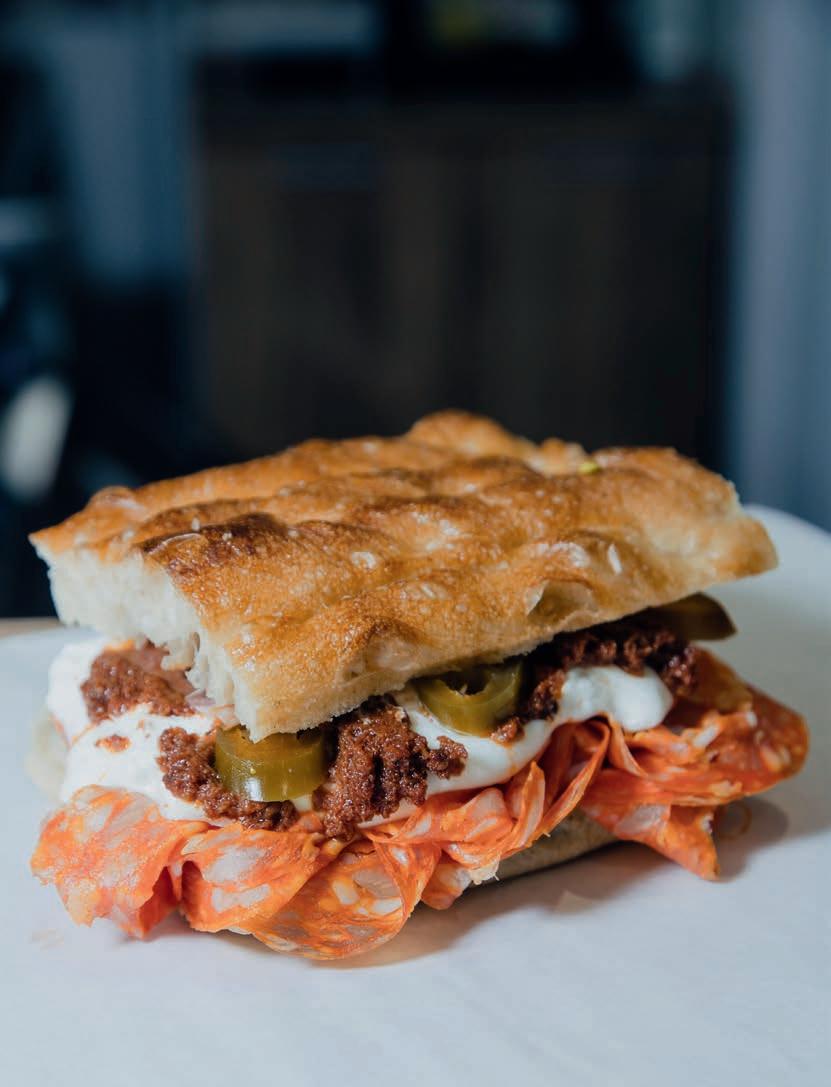
At Foczka Warszawska, focaccia takes center stage in a tight, well-edited lineup of Italian-leaning sandwiches. The Bologna layers mortadella, burrata and pistachios with a slick of olive oil, while the Maranello leans richer—prosciutto crudo, sun-dried tomato pesto and peppery rocket. The Mugello and Torino bring heat and heft with salami, jalapeño and burrata, while Noale offers a lighter, grilled aubergine option. Simple, satisfying, and truly worth trying each of their signature sandwiches.
Review
THE INTERVAL
Two spaces shaping a shared sensibility
BY JOSEPH AWUAH-DARKO FOR THE WARSAW INSIDER
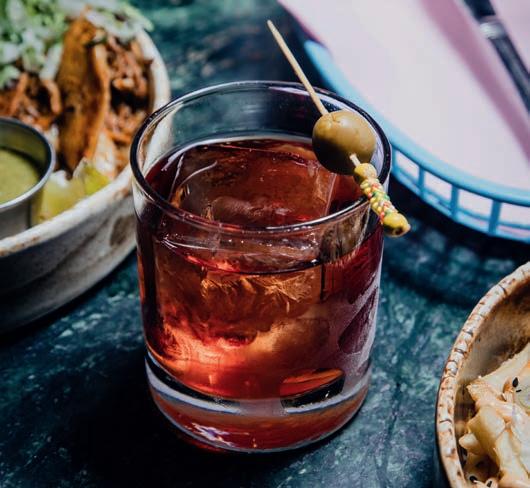
There are nights in Warsaw that unfold less like an evening and more like a conversation; often layered, unexpected, lingering long after the last Porn Star Martini is drained. That cocktail lingers as both reference and residue of a recent encounter with two neighboring concepts, Negroni Centrale and The Morning After. And each of these establishments are
shaping Warsaw’s evolving palate in distinct yet intertwined ways. Together, they form a dialogue between indulgence and reflection, between night and morning, both under the assured hand of Belarusian head chef Maksim Litvanau.
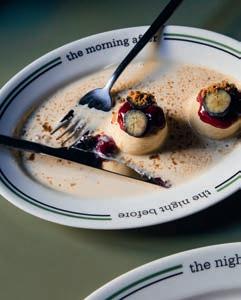
The afternoon began at The Morning After, now three years into its quiet ascent. Litvanau, whose culinary journey from Minsk to Warsaw spans over sixteen years, operates with a fluency that is both technical and emotional. His menu moves seamlessly between Eastern Europe and Asia, a sensibility echoed in the restaurant’s interior: a lush, horticultural green punctuated by delicate, almost theatrical Japanese branch chandeliers. It is a space that invites pause.
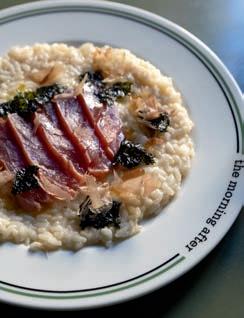
The dishes follow suit. Eggs Benedict arrives reimagined with eel and guacamole, an unlikely pairing that resolves into something deeply coherent. A rice porridge layered with tuna and an umami-rich Asian sauce leans into comfort without sacrificing precision, while a mushroom pie grounds the experience in some -
The Morning After ul. Poznańska 7 (City Center)
Negroni Centrale ul. Poznańska 13 (City Center)
thing earthy and familiar.
Yet it is the scrambled eggs with prawns that linger and deservedly my favourite dish. Silken, barely held together, the eggs fold into themselves with a softness that feels almost indulgent, punctuated by the sweetness of prawns that snap gently against the palate. It is a dish that understands restraint; comfort elevated without unnecessary intervention.
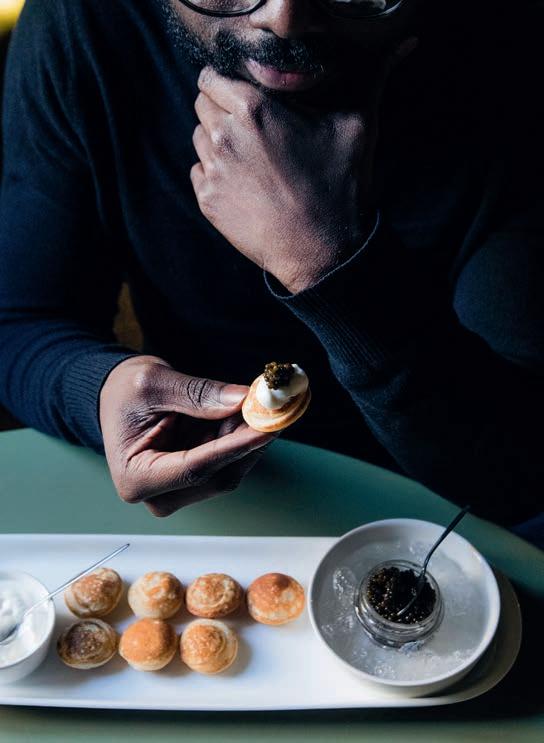
There are moments, too, of deliberate excess. A gold-dusted Medovik arrives as both spectacle and triumph, its honeyed layers rich without becoming cloying. Preceding it, a tasting of Ossetra caviar underscores the kitchen’s confidence in balancing opulence with control. A recent collaboration with H&M briefly extended this philosophy beyond the plate, blurring the line between fashion and food in a way that feels distinctly Warsaw.
“Between indulgence and restraint, something like belonging begins to take shape
If The Morning After is the prelude, Negroni Centrale is its crescendo. A short walk away, the shift is immediate. The interior; lined with tapestries and warm red upholstery; leans less toward refinement and more toward a deliberate, almost nostalgic conviviality. It is a space built for immediacy.
The menu follows. Arancini with mozzarella and calamansi aioli arrive crisp and molten, their richness cut cleanly by citrus brightness. The playfully named “Antoni Bourdain” sandwich;
layered with mortadella, Emmentaler, and pickle relish, is unapologetically indulgent, its salt and fat calibrated with precision, each bite both excessive and exacting.
A classic Negroni; remarkably priced at 28 zł; anchors the experience. Bitter, balanced, and unpretentious, it does exactly what it should: it carries the evening forward without fuss or flash.
In a city increasingly defined by movement, these two spaces map what it means to belong to more than one place at once. Between Litvanau’s kitchen and the quiet dialogue between these rooms, Belarus meets Warsaw, Europe meets Asia, and indulgence finds its counterpoint in restraint.
Somewhere between the first cup of Earl Grey and the final Negroni, it becomes clear: this is not merely dining. It is a continuum.
Review
TASTY SEOUL FOOD
Korean comfort for busy Warsaw days
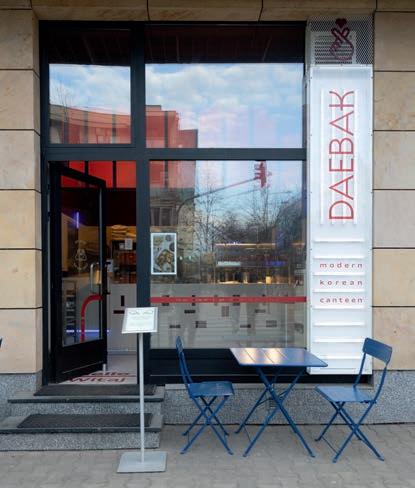
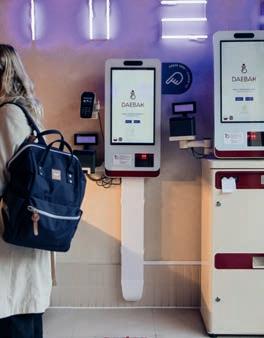
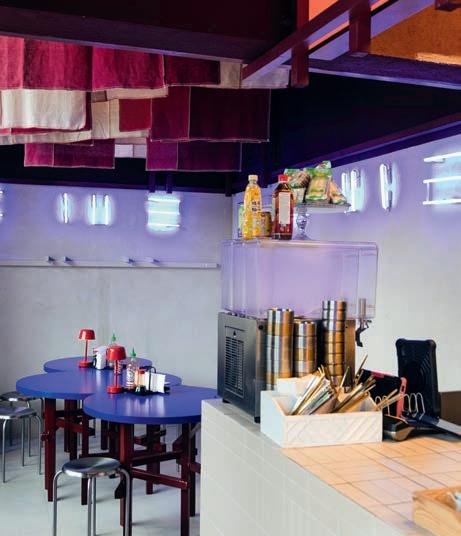
Powiśle has never been short on good places to eat, but affordable ones— those are rarer, scattered thinly between concept cafés and polished bistros. Into this gap steps Daebak, a neon-lit Korean canteen just by the university library, acting as a refuge for students on their lunch break and the wiser locals who already understand what’s
on offer. It’s the kind of place that doesn’t posture, doesn’t linger over ceremony—it just feeds you, quickly and well.
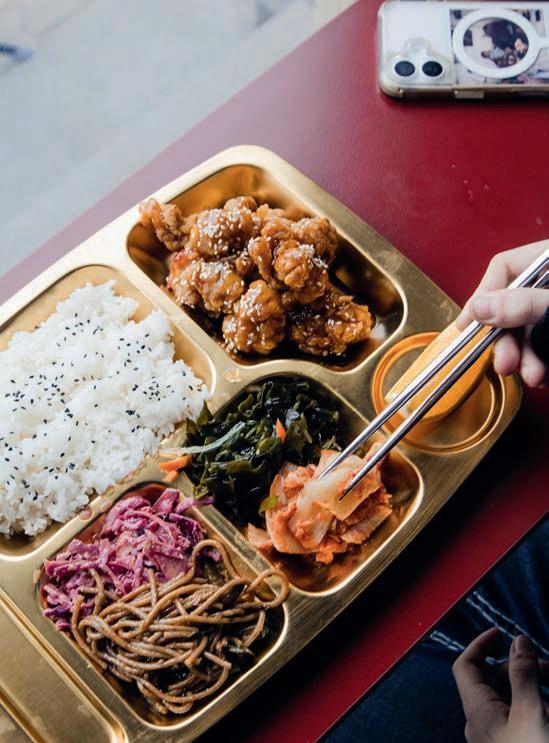
The first encounter is with a machine. You order at a self-service screen by the door, tap through your choices, and wait. It feels impersonal for a moment, almost clinical, but that dissolves as soon as the tray begins to form. Behind the counter, servers greet you with easy smiles, scooping out the fermented sides with quiet care—kimchi sharp and alive, soy-seasoned spinach, slippery beansprouts, roasted seaweed. These are not extras but essential counterpoints, small jolts of flavour that keep everything in motion.
At the centre of it all sits the rice, and it tells you everything you need to know. Fluffy, properly cooked, never clumped or neglected, it’s the foundation of the meal and a quiet sign that this is a kitchen paying attention. Around it, each box builds itself in the Korean tradition: rice, a main, and four rotating banchan, sometimes even a piece of fruit to close things out.
The fried chicken is what pulls many people in, and rightly so. It arrives audibly crisp, the coating shattering before giving way to juicy meat beneath. You choose your path—teriyaki for that sweet, sticky comfort, a mild glaze for balance, or something spicier that
“ No fuss, no excess, just honest food, done properly..
creeps up and stays with you. It’s not delicate food. It’s food that demands appetite. But there’s range here too. Tofu makes a quiet but confident appearance as a main, often glazed or stir-fried, offering something lighter but no less satisfying for those who don’t feel like committing to chicken.
By midday, the place fills with a particular energy—students with half-packed bags, conversations mid-thought, the low hum of people pausing just long enough to eat before moving on. Daebak understands this rhythm. It’s built for it.
In a neighbourhood that often leans toward the curated and expensive, Daebak feels refreshingly direct. No fuss, no excess, just honest food, done properly, at a price that makes sense. And sometimes, that’s exactly what you need.
AT A GLANCE
Concept: Modern Korean canteen with fast, semi-automated service
Order Style:
Self-service kiosk at entrance
The Format:
Build-your-own bento: rice + main + 4 rotating banchan + often fruit
What to Eat:
Korean fried chicken (mild, spicy, teriyaki-style variations)
In today’s Warsaw, the choice of restaurant is no longer incidental—it is strategic. Where once dining out served a purely practical purpose, it has become an extension of professional identity. The right table signals taste, discretion, and intent.
For three decades, Akademia has understood this shift instinctively. Positioned in Mokotów yet operating far beyond neighborhood confines, it has cultivated a reputation as a trusted partner to the city’s business community. Its founders anticipated a move away from standardized hotel dining toward more personal, independent venues—places where relationships matter as much as menus.
At Akademia, that philosophy is expressed through both cuisine and service. The kitchen draws deeply from Polish culinary tradition, treating it not as dogma but as a springboard—refined, reinterpreted, and occasionally challenged. The result is food that feels rooted yet contemporary, satisfying both local expectations and international palates.
Equally integral is the staff: composed, attentive, and attuned to nuance. Whether hosting a discreet lunch or a full-scale corporate event, the team operates with quiet precision, adapting seamlessly to the rhythms of business hospitality.
Over time, this balance—of consistency and flexibility, tradition and evolution—has fostered lasting relationships. For many, Akademia is not just a restaurant, but a reliable stage on which Warsaw’s professional life continues to unfold. Akademia ul. Różana 2, (Mokotów), restauracjaakademia.pl
CROSS THE VISTULA
Praga dining with energy and ease
For many visitors, the Vistula still feels like an invisible divide: on one side, the composed elegance of the city centre; on the other, Praga — looser, more creative, and unmistakably alive. At the heart of it, on Koneser Square, Setki Powodów makes a compelling case for the crossing.
Translating to “Hundreds of Reasons,” the name captures the spirit. This is a place built for gathering — informal, energetic, and sociable without trying too hard. It draws in groups of friends, after-work crowds, and those evenings that slip easily from dinner into something longer.
The kitchen leans into international comfort food, elevated with
a contemporary touch. The approach is confident but unfussy: bold flavours, generous portions, and dishes that prioritise pleasure over pretension. Familiar ideas are reworked with care, resulting in a menu that feels both accessible and considered.
The setting follows suit. Industrial and open, the space mirrors Praga’s character — raw edges softened by a welcoming rhythm. Long tables invite conversation, while the tempo gradually builds as the evening unfolds. On some nights, DJs take over; in summer, the square outside becomes an extension of the experience, with open-air gatherings and the occasional silent disco.
What defines Setki Powodów is its balance. It’s lively without excess, polished without losing warmth — equally suited to a casual dinner, a celebration, or a relaxed company night out.
For those willing to step beyond the obvious side of Warsaw, this is as good a place as any to start.
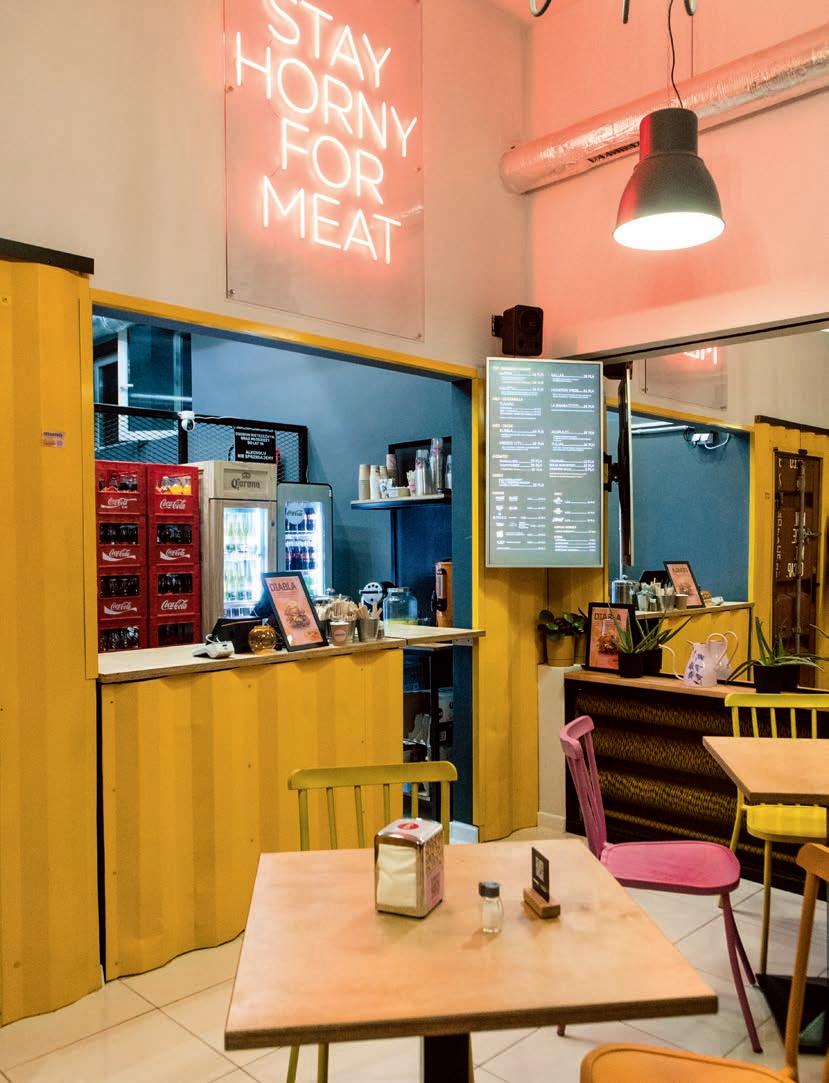
On Hoża, where concepts come and go with the seasons, MIMO by BBQ Bar feels refreshingly self-assured. The latest project from Marta Stoczewska and Michał Makowski trades polish for personality, transforming a former hair salon into something closer to a street-side pit stop than a polished bistro. Think bright colors, tight quarters, and walls that echo the ribbed steel of a shipping container. A slogan splashed across the space— “Stay Horny for Meat”—sets the tone: playful, a little irreverent, and entirely focused on what matters.
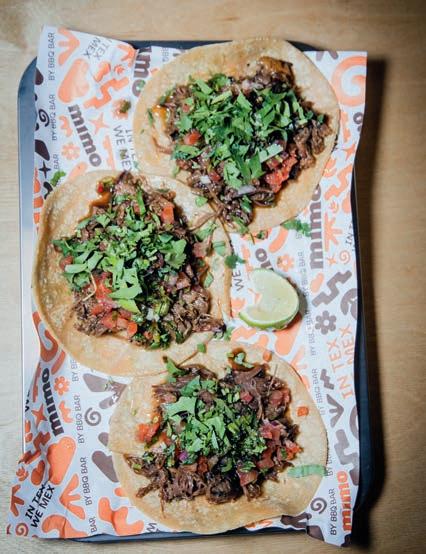
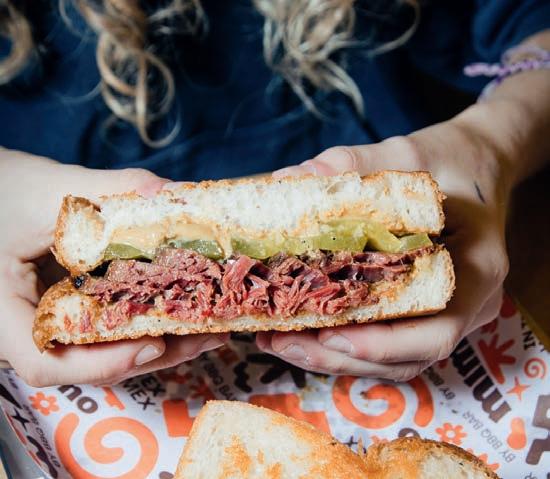
Despite nods to Mexico on the menu, this is not a place for those chasing the finesse of taquerias like Señor Lucas. The tacos here are something else entirely—vehicles rather than the main event. What lands on your tray is Texas barbecue at its core: deeply smoked, expertly handled meat that speaks of patience and fire. Brisket arrives with a peppery bark and melting interior; pulled pork is rich without tipping into heaviness. Tortillas (and occasional slices of white bread) feel almost incidental, as if a pitmaster reached for whatever was nearby to carry the real prize.
The menu is short, which works in its favor, keeping the focus tight and execution sharp. There are vegetarian options, though this is undeniably a carnivore’s playground.
MIMO doesn’t try to be everything. Instead, it leans into its strengths—smoke, meat, and mood—and in doing so, quietly becomes one of the more distinctive casual bites in central Warsaw.
“ Meat first, everything else follows
Mimo BBQ Bar ul. Hoża 40, (City Center)
MAYO ALL MEANS
Casual charm, refined flavors opposite Koszyki
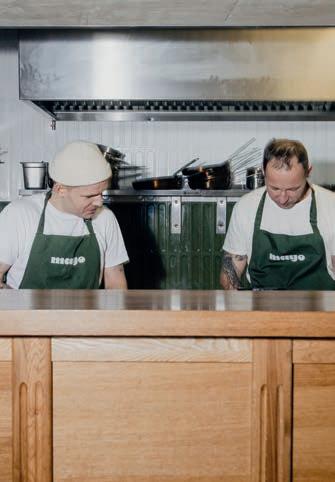
Mayo Bistro is the kind of place that doesn’t shout for attention, even though it sits directly across from the ever-buzzing Hala Koszyki. Step inside, and the contrast is immediate. Where Koszyki hums with energy, Mayo slows the tempo, offering a more intimate, self-contained experience that feels like a destination in its own right.
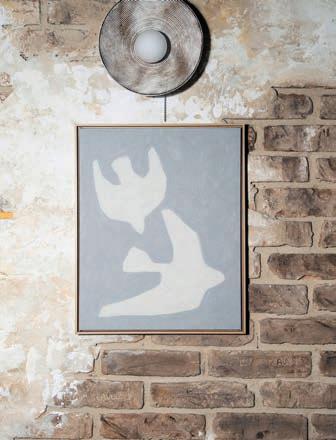
The space itself leans into that mood. Warm lighting, red drapes, and tactile ceramics create a setting that feels considered but never overworked. There’s an undercurrent of artistry—quite literally, with sculptural elements and handmade details—that elevates the room beyond the standard bistro template. Yet it remains relaxed, almost disarmingly so. It’s the kind of place where a glass
Mayo Bistro ul. Koszykowa 62 (City Center), reservations kontakt@mayobistro.pl
“
Across
from the buzz, Mayo sets its own rhythm
of white wine arrives effortlessly, and suddenly the street outside feels a world away.
And then there’s the food— rooted in French technique but interpreted with a lightness and modern instinct. The menu is concise, seasonal, and quietly ambitious, reflecting a kitchen that’s more interested in precision than spectacle.
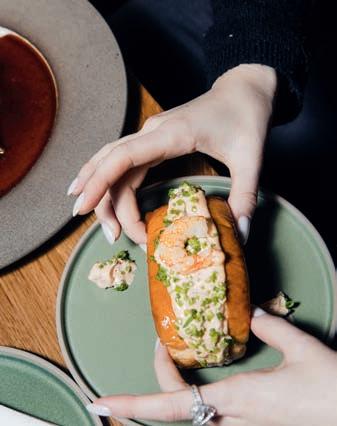
Take the Rolls Mayo (44 PLN), where shrimp meets a gently spiced mayo lifted by piment d’Espelette. It’s a dish that sets the tone immediately: clean, balanced, and just indulgent enough. There’s a delicacy to the execution that feels almost Parisian—simple on paper, but exacting in practice.
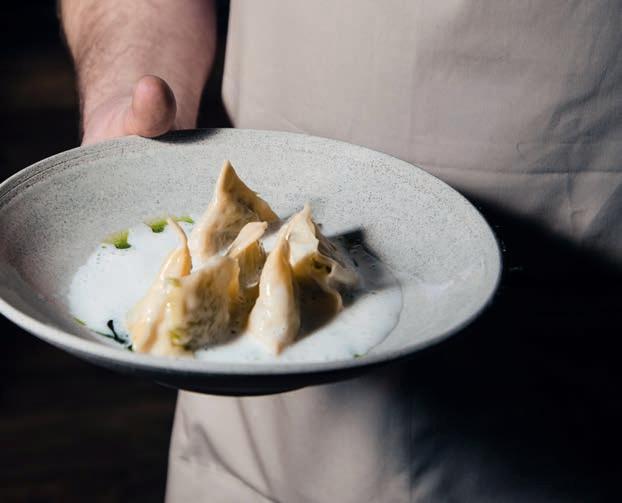
The dumplings (51 PLN), filled with smoked halibut, are perhaps the most surprising
expression of the kitchen’s voice. Paired with leek, horseradish sauce, and a softly sweet applesauce, they bridge Polish comfort with French finesse. It’s a clever dish, but never feels contrived—just thoughtfully composed, with each element pulling in the same direction.
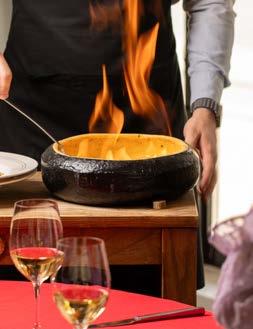
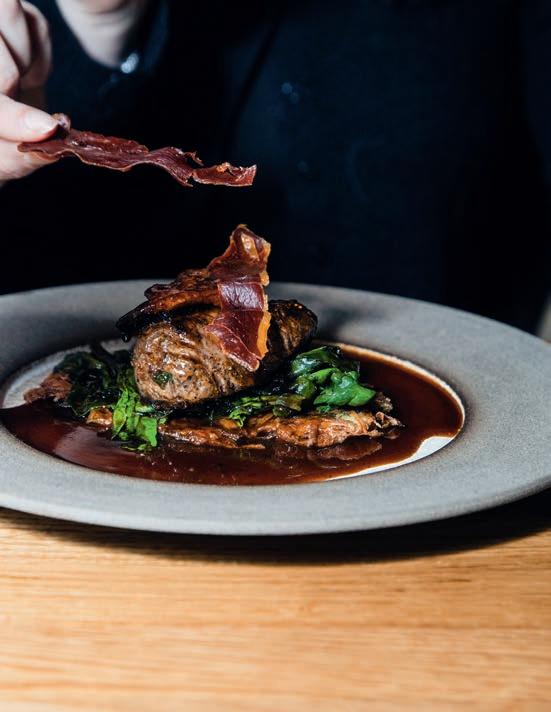
Then comes the showstopper: beef tenderloin (89 PLN), served with a crisp potato pancake, spinach, foie gras, and shards of ham chips. It’s rich, unapologetically so, but grounded by structure and restraint. A nod to classic French luxury—think echoes of tournedos Rossini—but translated into something more contemporary, less formal, and entirely satisfying.
What makes Mayo Bistro compelling isn’t just the food,
though. It’s the way everything aligns—the setting, the pacing, the understated confidence of the cooking. Walk out onto Piękna or Koszykowa after dinner, and there’s a fleeting moment where Warsaw feels like Paris: a little slower, a little softer, and infinitely more romantic.
AT A GLANCE
Vibe: Relaxed, intimate, Parisian-leaning bistro
Cuisine: French-inspired with modern Polish touches
Must-Try: Shrimp Rolls Mayo and halibut dumplings
Price Range: Mains 44–89
PLN
Best For: Date nights, slow dinners, lingering over wine
Le Cedre 61
The Buzz
Presenting the city’s most talked about venues, join us on a whistle stop tour of the cafes, pubs and cocktail dens and wine bars that you can’t afford to miss…
INSIDER PICK
BEST LATE-NIGHT HAUNT
Bar Pacyfik ul. Hoża 61
I may be biased — many post-shift hours have been spent perched at the bar with a mezcal Negroni — but Bar Pacyfik remains one of the most reassuringly chaotic places in the city. A reliable watering hole for the industry, it is known for late opening hours, loud music, solid food (the birria tacos deserve their reputation), and a steady stream of Fernet shots that tend to appear whether you asked for them or not. It is not polished, nor does it try to be. What it offers instead is energy, familiarity, and the kind of atmosphere that keeps the lights on long after most places have called last orders
WINE & DINE
Kontakt
Sandomierska 13
Weaknesses do not exist in Kontakt, and if they do, they have yet to be formally identified by any who visit. Looking glorious in its deep shades of blue, its look is complemented by a 400-strong wine list slanted towards natural, bio-dynamic and organic wines. The five-star experience is aided by wonderful food.
LOCAL WINES
Brać
Nowowiejska 1 & Sierakowskiego 4A Resistant as traditionalists may be to the very notion of Polish wine, Brać have made it their mission to showcase its unknown quality. Presenting on-edge sips from niche domestic producers (including collabs with the Funky Fluid craft brewery!), all this is done in a stylish space that feels good to be in. From 2023, this was our favourite wine-related find!
NATURAL WINE
Rascal
Moliera 6
Formerly a canteen for ballet dancers, this address now holds the largest bar in Europe specialising in natural wines – you weren’t expecting that! Entered past a lavish drape, this cool space has a suitably adventurous choice of rebel wines.
BEER GEEKS
Jabeerwocky
Nowogrodzka 12
Good old Jabbers will never let you down. A Warsaw institution, the adventurous choice of beers gives nods to international pioneers, domestic talents as well
The Buzz
as their own house beers. Pre-war floors and the welcome smell of spillage give it a great atmosphere that becomes a boisterous babble of international voices the later it gets. For something quieter, take your pint next door to their sister bar, Jabeerwocky Junior.
CUTTING EDGE CRAFT
Hopito Chmielna
Chmielna 24
Opened last year as the younger sister of Hopito’s Żurawia venture, this branch feels a little more mature in its target audience, though every bit as fun in its beer selection - radicalized drinkers will love Hopito’s own crazy brews.
OLD TOWN PINTS
Same Krafty vis-à-vis Nowomiejska 11/13
Jammed between the Barbican gateway and the Rynek, Same Krafty’s pair of Old Town drinkeries face opposite each other to offer their own mini-pub crawl. Appearing as raucous and rugged tavern-like bars, the experimental craft beers are a league ahead of the mainstream fizz peddled by the other nearby bars.
CREATIVE COCKTAILS
Ave Pegaz
Piłsudskiego 9
Inside a lively interior that doesn’t take itself too seriously (check the ‘ceiling garden’), swivel about to gawk at a mighty collection of corkscrews and drinking implements. In this alchemist’s workshop find yourself enjoying some of the most creative cocktails in Warsaw.
COCKTAIL PORN
VHS
Poznańska 7
The shoebox sized VHS pays tribute to the 80s and 90s and is a model for good times – boasting a flamingo and pictures of Mr T., the toilet says it all. The drinks are among the wackiest in Warsaw, and they’re as fun to drink as they are to photograph.
THE ATMOSPHERE
Beirut & Kraken
Poznańska 12
Somewhere, amid all the junk relating to the Lebanese conflict (sandbags, ammo boxes…), you’ll find the spirit of Poznańska contained within this long, skinny bar. As fashionable now as it was when it opened, finish the evening in their connecting venture, the Pirates of the Caribbean-style Kraken. Evenings dissolve into a wild, happy whirl of international voices.
INSIDER CLASSIC
Pardon, To Tu
Al. Armii Ludowej 14
Despite the upgrade in surrounds, they’ve retained the leftfield spirit of their old haunt thanks to flexi hours, a commitment to obscure sounds, and a well-spaced interior that references their former venue through its decadent colour scheme and wall of favoured musicians. The air of friendly, unforced cool is unmatched!
FOR THE MUSIC
Młodsza Siostra
Dobra 14/16
Known for his ear for upcoming talent, the owner Michał isn’t averse to taking risks in order to broaden Warsaw’s musical palate. The scrappy backdrop of
bike repair garages give a vibe redolent of the shadowy courtyards of Berlin and Budapest, whilst inside it’s all creaking floorboards, mismatched furnishings and a clientele sourced from the local Academy of Fine Arts.
REBEL SOUNDS
Chmury / Hydrozagadka 11 Listopada 22
Set in a fleapit courtyard, it’s hard to tell where one begins and the other ends, but both are spiritually cojoined by a devotion to eclectic live music. Tight and crowded, it’s a place where audience and band become one, feeding off each other to generate an electrifying atmosphere.
A BIT OF EVERYTHING
Foton
Wilcza 9A
You know it’s been an epic weekend when you wake up on Monday knowing that Foton was involved. Conversation with strangers is natural after a few of Foton’s cocktails, and these are enjoyed to a cool backdrop made up of fleet of tumbling plants perched on steel-framed irrigational contraptions.
PRE-CLUB DRINKS
Bar Pacyfik
Hoża 61
Based upon the kind of Tijuana dive bar you’d have happened upon during the Miami Vice era, Pacyfik is all candy floss pink and shades of teal: a raw-looking den that looks purposefully imperfect. Keeping the hip international crowd on the wrong side of drunk are kick-ass cocktails!
LATE NIGHTER
Republica de San Escobar Poznańska 7
Lacking airs and graces, it’s a place where fun rules the roost. Tiny in size, find an interior filled with corrugated iron sheets, zappy neons, chunky woods and bike pedals on the footrests. The fun-loving spirits is irresistible, and the tight dimensions mean the party often spills onto the terrace outside.
STUDENT CARNAGE
Nowy Świat ‘Pavilions’ ul. Nowy Świat 26
For the highest condensation of bars in the capital head to ‘the pavilions’, a collection of ramshackle drinking cabins, shot bars and sheesha lairs inside a tight grid of shadowy back alleys. Adding to the gentle sense of confusion comes the realization that so many bars look the same –accessed through clattery, barred doors, visitors walk into murk and chaos.
ALT. ENTERTAINMENT
Worek Kości
Bagatela 10
There is nothing ordinary about Worek Kości and that’s underlined by its collection of 400 replica skulls. Known for its burlesque nights, this passionate celebration of the beautiful and bizarre also has a busy roster of lectures dedicated to criminal profiling, forensics and serial killers. Oh, and the cocktails are good.
LIVE SPORTS
Shamrock Sports Bar Krucza 51
At long last, Warsaw has the sports bar it deserves. Zapping in football, rugby and suchlike from around the world (but mainly Britain), this Irish-run spot is an offshoot of the atmospheric
Shamrock Irish Pub on Zgoda. Though a lot smarter than its sister, the raucous sense of fun has carried over – as has the quality Guinness.
ESSENTIAL CHECK-IN
Fabryka Norblina
Żelazna 51/53
Without fail, the big winner of 2023 was Norblin – hell, we even saw Kieran Culkin walk-
ing through over summer! In terms of nightlife, winners include the elite MOXO and the craft-minded Uwaga. Packed in the evening, the atmosphere is squared out perfectly by the live music that frequently escapes from the Piano Bar. The Insider fave though remains Piano Bar, a place with fancy cocktails, a 12-foot chande-
lier and a crowd that errs from late 20s upwards.
THE PRAGA VIBE
W Oparach Absurdu
Ząbkowska 6
Craft beers lurk within the fridge, but for the seminal Absurdu experience order a tray of vodka before bulldozing through the crowds that gather to listen to Balkan rock and Afro-Latin bands. Somewhere, hidden deep beneath the creaking antiques and moth-eaten Persian rugs, you might be lucky to find a wood-carved bar.
NORTHERN NIGHTS
Havana
Słowackiego 16/18
Set on the first floor of a PRL era tower, the super cool interior offers up a coherent display of retro posters, luscious plants and light wood trimmings that are respectful of this space’s former life as a 1960s cafe. Perched among hip freelancers and theatre types learning their lines, sip away on trendy bio wines, adventurous lemonades, craft swigs or specialty coffee sourced from local roasters.
UPMARKET CLUBBING
Sen
Wioślarska 6
Some would say that Sen enjoys its heyday in the summer when the rooftop terrace opens to afford views of the illuminated bridges that span the river. But even outside these months it’s long enjoyed a reputation as Warsaw’s premier super-lux club. High class cocktails and a stringent door policy have helped maintain their name as the principal destination for glam, catwalk excess.
DESTINATION COFFEE
Café Pląs
Puławska 113A (Królikarnia)
Set inside the Króliarnia palace, it’s laidback and artsy-cool, something aided by the strategically placed plants, chillout beats and rare-find art books placed reverentially on the shelves. Specialty coffee, bio wines, alternative soft drinks and craft beer make it a highly versatile place to finish in after a brisk autumn walk around the palace grounds.
COFFEE OF LEGEND
Stor
Tamka 33 / Bracka 18
For many there is no better café anywhere in Poland than Stor’s original on Tamka. When the sunlight slopes in through the window, there are few finer feelings than idling away in this plant festooned refuge. Famed for their glorious coffee and detail-driven approach, recognition should also be handed to their devotion to local causes and zero waste philosophy.
FOR VINYL CHILLOUT
Hałas
Elsterska 10
Divide Hałas into two sections: first, a small chamber selling collectors classic vinyl and coffee sourced from some of Europe’s top roasters. Then, smuggled in the back, discover a Nordic-style living room arrangement that encourages afternoons spent sipping coffee whilst catching up on email.
FOR QUICK ESPRESSO
Błysk
Słowackiego 22
Served over a PRL era counter, Błysk’s super-tight confines generate a natural air of familiarity. Often standing room only, the buzz and hubbub owes itself not just to the delicious espresso shots, but
also the homemade cookies and dog-loving owners that will spoil your pet.
HIDDEN STAR
El Cafatero
Marszałkowska 27/35 & (ul. Emilii Plater 8)
Tucked behind the patinated domes and intricate steeples of Zbawiciela, chilling in this little café has you thinking you’re somewhere cute and quaint like Vilnius or Lublin. Specialising in roasting their own African coffees, the super-hip vibe is highlighted by the wall of Polaroid snaps.
CHAMPION BREWS
Forum
Elektoralna 11
Forum has it all: a fashionably frayed interior, a friendly dog nuzzling around (hi Apollo!), and a client base that expects nothing but the best – and at Forum, that’s exactly what they get. Marketing themselves as “the home of the Polish Aeropress and Polish Brewers’ Cup Champions”, these accolades say everything there is to know.
NEIGHBORHOOD FAV
Ciacho
al. Niepodległości 80
In Mokotów, Ciacho stands apart as a true neighborhood institution — a bakery and breakfast spot that quietly draws locals back year-round. Hidden near Jordanowski Park, it shifts with the seasons: a lively family terrace in summer, a warm, oven-scented refuge in winter. Breakfast is the anchor, from creamy scrambled eggs on house sourdough to a cult-favourite kimchi brioche. Add excellent pastries and breads to take home, and Ciacho reveals itself as something rarer than a café: a steady, glowing hearth.
Dine & Delight
When only the best will do, we’ve cut through the chaff to present a curated choice of Warsaw’s top eateries –
THE MICHELIN STAR
Nuta
pl. Trzech Krzyży 10/14
Andrea Camastra’s restaurant is a magical enclave in which time stands still. Mixing his famed scientific techniques with artisanal processes, his tasting menu is expressive in its aesthetics and flavour, as if it were an extension of his own firecracker character. Even the cheeseboard is a mind-bender – on our April visit, jaws hit the floor as this arrived in the liquified form of a pear consommé topped with warm gorgonzola foam. A bold, world-class adventure, no other restaurant offers such a ride – a second Michelin star seems guaranteed.
BEST NEWCOMER
Wandal ul. Pańska 97 (Wola)
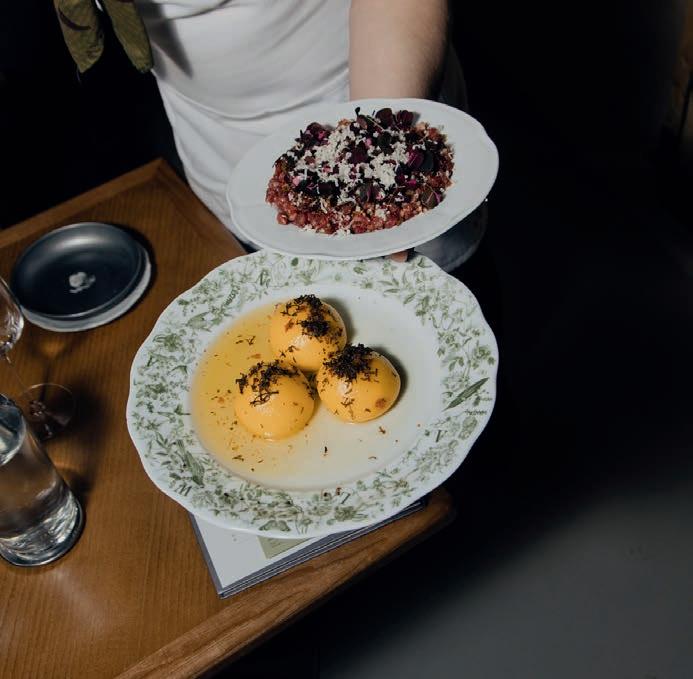
If you want to know where Warsaw’s chefs eat after service, follow them to Wandal. On Pańska, Adrian Bęben’s kitchen treats Polish memory with a cook’s discipline and an artist’s wink: herring with rösti, silken potato purée with yolk, pyzy glossed in cream and truffle. Nothing feels twee, everything feels considered. It’s part tavern, part workshop, buoyed by Piotr Pietras’s sharp, local wines—a place where tradition isn’t preserved in amber, but sharpened and sent back out into the night.
FORMAL & EXTRAORDINARY
Epoka
Ossolińskich 3
Nineteenth century cornices and baroque drapes lend an enveloping sense of luxury to this A-Class space. Epoka’s menu is based on Polish cookbooks from different epochs, with the dishes reconstructed in a way that’s innovative, unexpected and a roller coaster of thrills. La Liste officially rank it among the world’s Top 100 Restaurants.
EXQUISITE
Nolita
Wilcza 46
Winning our 2022 award last year for ‘Outstanding Achievement’, chef Jacek Grochowina’s enclave of class looks dashing with its monochrome colours and muted gunmetal shades, but it’s the food that has made it the place Warsaw heads to live the life of the 1%. Treasuring detail and finesse, Nolita demonstrates fine dining hasn’t died.
Dine & Delight
ECLECTIC & UPMARKET
Dyletanci
Koszykowa 47
Subtle and stylish with its muted, neutral colours and pops of art, amid the light woods and sky-coloured walls, the assembled fine wines have been selected to dance in tandem with the cooking of Rafał Hreczaniuk. His cooking is elegant, eclectic and never short on sensational taste.
FOR THE TASTING MENU
Rozbrat 20
Rozbrat 20
Fusing upmarket, casual styling with an exciting wine list, interactive service and the kind of atmosphere you can’t get enough of, Rozbrat 20 is a Warsaw gastro landmark. Under chef Bartosz Szymczak, the frequently changing menu has a real playful inventiveness to it.
DATE NIGHT
alewino
Mokotowska 48
Regularly adjusted to utilize the best items the season has to offer, the menu is a triumph of expertly balanced tastes and is admired for some of the most interesting cooking in the city – think elegant with a localized twist. Rounding out the experience is an intimate, labyrinthine design that’s ideal for when it’s cold and grim, and a decked courtyard terrace for when it’s not.
INSIDER PICK
BEST MEAT LOVERS
Rotisserie Bistro al. Rzeczypospolitej 14 (Wilanów)
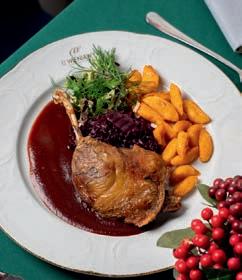
From the team behind Mięsny comes Rotisserie Bistro, a Wilanów address that smells gloriously of roast chicken and good decisions. Duck-stuffed fritters crackle, tartare lands sharp and classic, and bronzed birds turn lazily on the spit. Next door, Mięsny’s deli stocks sausages and cuts for summer grilling—or grab a table in the leafy garden by the little pond and let someone else do the work. It’s relaxed, confident, deeply satisfying.
NEW WAVE
hub.praga
Jagiellońska 22/LU1
Heading the kitchen is Witek Iwański, a chef whose past accolades include our very own ‘Top Talent’ title at our Best of Warsaw awards. The tan, beige and white interior is embellished with moon-shaped mirrors and statement art, and is twinned with tiny a’la carte courses that appear like miniaturised works of art.
CASUAL SCENE
Bibenda
Nowogrodzka 10
With no reservations accepted, Bibenda’s enduring popularity ensures that queues often build at the entrance – even at the height of the Polish winter. Augmenting the warm interiors of raw red brick and dim yellow lighting, guests flock for a menu that celebrates the fields, forests and farmsteads of Poland. honey and peanut chili crisps.
THE NEED TO KNOW
The Eatery Koszykowa 49A
This attractive off-street space comes swathed in
white-on-white colours –blissfully cocooned from the outside world, and decorated orb-like installations, this chic but casual space gives Polish food a modernised translation. Visiting for our May issue, we were bowled over by the pork cheeks served with a punchy demi-glace and whirls of liquified peas and red cabbage.
NEW POLISH
Źródło
Targowa 81
Hardwood floors, exposed pipes and a flurry of plants equip an open area decorated with blasts of contemporary art, recycled furnishings and extravagant light installations. Menu-wise, the food lights the soul. But more than just celebrating the power of local produce, there’s a refinement at play that speaks of a kitchen team that aims for magnificence.
POLAND REIMAGINED
Bez Gwiazdek
Wiślana 8
Regarded as one of Warsaw’s gastronomic treasures, each month sees Robert Trzópek design a tasting menu inspired by a specific region of Poland. His creative interpretations of the nation’s culinary traditions are delicate, nuanced and beautifully balanced. The chic but casual setting reflects the philosophy.
TRENDING POLISH
Pod Gigantami
al. Ujazdowskie 24
Once seen as a classic restaurant for ‘old people’, Pod Gigantami’s reinvention stretches to 3 a.m. finishes come the weekend. Marrying heritage with hip, during more normal hours enjoy thoughtfully cooked Polish classics
including an old school schabowy the size of a small planet.
POLAND FOR INSIDERS
Oma Radna 13
Stepping into Oma is like entering Babcia’s house for a holiday—a warm embrace of Polish tradition with a modern flair. Oma, named after the chef’s grandmother, exudes
Oma-goodness. Nestled in Powiśle, it charms with its vintage Polish decor and fresh flowers. The menu offers classic dishes with a twist: schabowy topped with Parmesan and zupa pomidorowa with garlic. Desserts like knedelki—a cottage cheese dumpling with apples and orange peel—are irresistible. The thoughtful vintage design and caricatures of Oma on the
Dine & Delight
servers’ shirts add a personal touch. Make a reservation to avoid heartbreak, as Oma’s popularity often leads to a full house. Dive into this cozy haven and savor the best of Polish summer cuisine, where every bite feels like a warm hug from Babcia herself.
NEIGHBOURHOOD GREEK
Mr. Greek Souvlaki
Londyńska 16
Festooned with potted shrubs, the outdoor wooden deck is one of Saska’s finest outdoor check-ins. If that’s packed – and it often is –head inside where an atmosphere of gentle chaos reigns in the noisy open kitchen. Eschewing warmth and authenticity, the atmosphere fits well with the meaty skewers.
SOUTH AMERICAN FLAIR
Ceviche Bar
Twarda 4
With Argentine chef Martin Gimenez Castro injecting his passion and personality into the venue, this is an address that punches through the greyness of everyday Warsaw. Ceviche is naturally the default order, and here it’s served in around five different forms.
INSIDER FAVORITE
Tuna Elektryczna 2
Resembling the scales of a fish, Tuna’s core decorative element are 18,000 tuna cans that sheathe the walls. Smartly appointed in dark metallic colours, visit for an exhilarating menu that includes salmon jerky, tuna sausages, an elaborately reconstructed dorada tail and the best-selling chili con tuna.
CITY CENTRE VEGAN
Peaches Gastro Girls
Stalowa 36
Peaches, Warsaw's vibrant vegan hotspot, serves up seasonal dishes with finesse. From their umami-packed grilled mushrooms to inventive cocktails, every bite and sip delights. The minimalist interiors and open kitchen make it an experience for both eyes and palate.
VEGAN NOODLES
Vegan Ramen Shop
Finlandzka 12 / Jana Pawła II 52/54 / Narabutta 43
Dubbed by some as “the best noodles in the world!” They’re definitely memorable, and the spicy miso ramen will for sure make new true believers.
BRUNCH ANYONE?
Seagull
ul. Dobra 1, (Powiśle)
The menu carries a subtle Asian accent — eggs Benedict with yuzu hollandaise and shrimp, harissa-spiked chickpea toast, bright matcha and thoughtful non-alcoholic drinks alongside mimosas. It’s a neighbourhood spot for plans, conversation and clarity, where morning isn’t rushed through, but properly lived.
SUSHI LOVERS MUST
Misaki Kawasaki
Wybrzeże Kościuszkowskie 43B/3rd floor (Powiśle)
Paula Mycka cooks with global confidence, fusing Japanese precision, Thai vibrancy, Middle Eastern depth, and Peruvian playfulness. Highlights include bold vegetarian dishes, scallops in brown butter, a Wagyu Katsu Sando, and toro tartare on a sesame waffle with yuzu crème fraîche.
WELCOME TO GREECE!
For authentic Greek food & hospitality, look no further than Mr. Greek Souvlaki!
Walecznych 68a/3 (Saska Kępa)
COMMUNITY HUBS & FOOD HALLS
CENTRUM PRASKIE KONESER
Plac Konesera 8, koneser.eu
Reopened in 2018 as a mixed-use project containing cultural sites, F&B outlets, A Class offices and loft-style apartments, no other investment has had a bigger impact on Praga’s overdue regeneration than Koneser. Culturally, it’s also done much thanks to the Polish Vodka Museum, the Museum of Fantastic Art and temporary exhibitions such as Banksy in 2021. For most though, the F&B lineup is the strongest attraction of all and this includes upmarket Indian from Bombaj Malasa, the casual eatery Spółdzielnia and the real feather in the cap, the Koneser Grill – a meat-centric venue of high sophistication.
BROWARY WARSZAWSKIE
Grzybowska 58, browarywarszawskie.com.pl
Utilising elements of a historic brewery and setting them against an upmarket backdrop of freshly mapped streets and immaculate new build that feels contextually suited to the district, Features include a premium food hall, Robert Lewandowski’s Nine’s sports bar, the ever-popular Balkan eatery Munja, and Baila – a stunning live entertainment emporium.
FABRYKA NORBLINA
Żelazna 51/53, fabrykanorblina.pl
Representing 200-years of history, the two hectare site is riddled with over 50 leftovers from the Industrial Revolution and these are set against attractions such as the luxury Kinogram cinema (champagne vending machines!), the immersive Art Box Experience, a factory museum and the Smart Kids Planet –a 1,600 sq/m project with nine zones that aim to promote logical thinking, healthy eating, motor functions, perception and creative thinking.
HALA KOSZYKI
Koszykowa 63, koszyki.com
Considered the grande dame of food halls, the brick and wrought iron interiors of this spot look beautiful with the F&B offer split between standalone restaurants such as the fancy Warszawski Sen to vendors like the fist-bumping, burrito boys at Gringo. For craft beer and grilled sausages then Kiełba w Gębie doesn't put a foot wrong, whilst the open-all-hours ĆMA is a legend in its own lifetime.
ELEKTROWNIA POWIŚLE
Dobra 42, elektrowniapowisle.com
Elektrownia’s blended approach includes an exclusive top floor beauty hall filled with cutting edge beauty solutions and a retail offer than tends to shirk the mainstream to instead slant in on contemporary Polish design, upscale vintage, niche brands and established local talent. The food and drink has also been a major plus, with most attention going to a food hall that appears in an energetic sea of neon.
Poster Revival
Wilanów’s design temple returns refreshed
CULTURE
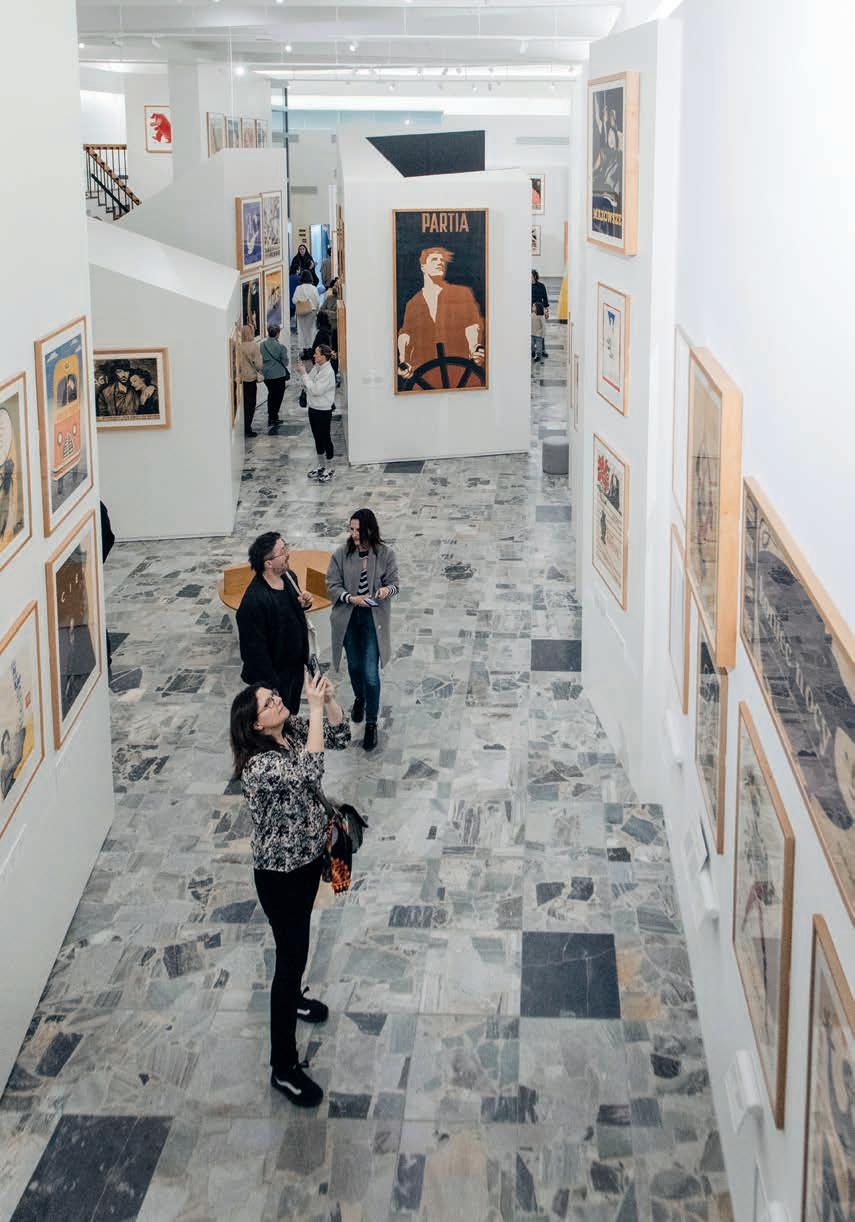
After nearly five years behind scaffolding, Warsaw’s Poster Museum has quietly slipped back into view—refreshed, relevant, and still singular. Tucked beside Wilanów Palace, this institution remains the world’s first museum dedicated entirely to the art of the poster, a fact that still feels improbably Polish in its specificity and ambition.
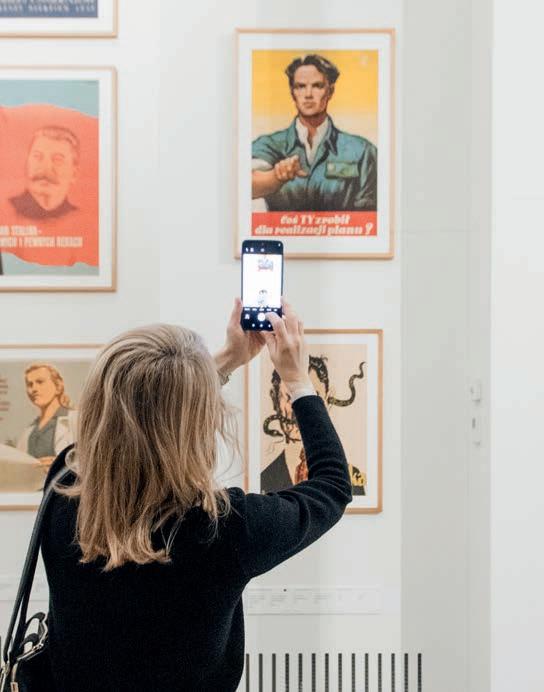
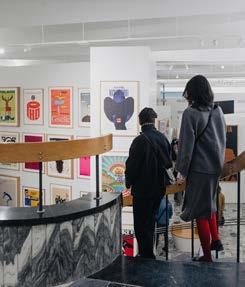
Inside, the reopening exhibition charts over a century of visual culture, drawing from a vast archive of tens of thousands of works. Around 240 pieces are currently on display, spanning everything from pre-war advertising to Cold War propaganda and contemporary graphic commentary. The curatorial thread is deliberately broad: posters are presented not just as artworks, but as artifacts of daily life— once pasted across city walls,
“ Polish poster design is as culturally essential as pierogi
tram stops, and kiosks.
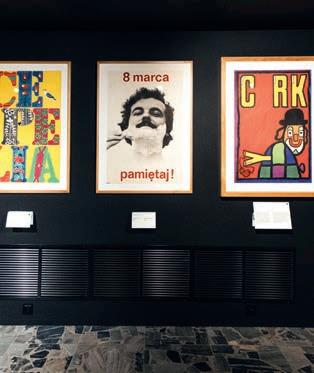
There’s a particular pleasure in encountering the icons. The stark urgency of Tadeusz Trepkowski’s anti-war “NO!” still lands with force, while the instantly recognisable Solidarity logo anchors a moment when graphic design and political resistance became inseparable. Yet it’s often the lesser-known works—playful circus posters, abstract theatre announcements—that linger longest,
revealing the wit and painterly freedom that defined the Polish School of Poster.
Let’s be honest: Polish poster design is as culturally essential as pierogi. Both are rooted in tradition, endlessly reinterpreted, and quietly exported as national calling cards. And nowhere does that lineage feel more alive than here.
For this Insider, the WWII-era posters remain the most compelling—pared down, almost austere compositions that deliver their message with striking economy. There’s a lesson in restraint that contemporary design rarely matches.
The museum’s new display strategy ensures constant renewal: works are rotated roughly every three months for conservation reasons, meaning each visit offers a slightly different iteration of the same story. It’s a clever way of animating an archive that could otherwise feel static.
If there’s a note of disappointment, it’s in the afterthoughts. The gift shop, still underwhelming, misses the chance to extend the experience—surely a place like this should let visitors leave with a beautifully printed poster under their arm. And the absence of work by Ryszard Kaja, whose contemporary reinterpretations of Polish identity have struck such a chord, feels like a missed opportunity.
Still, as cultural reboots go, this one matters. In a city constantly reinventing itself, the Poster Museum reminds us that some of Warsaw’s strongest
voices have always been printed on paper.
Poster Museum
ul. Kostki Potockiego 10/16 (Wilanów), postermuseum.pl/en
Tickets: 22 PLN / 16 PLN
Free Entry: Wednesdays
Human Comedy
Wit, warmth and the poetry of everyday life
Marking its 20th anniversary,
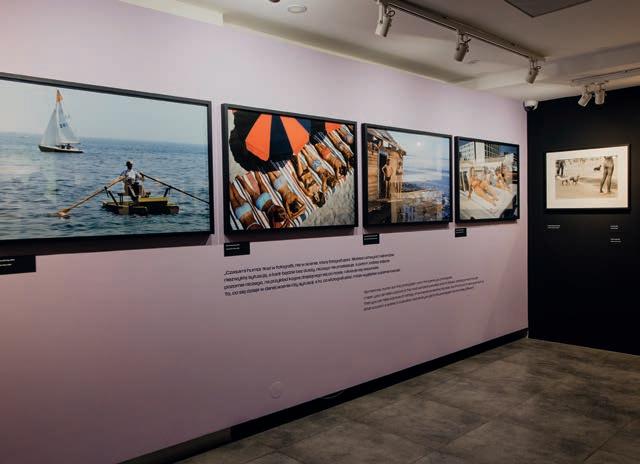
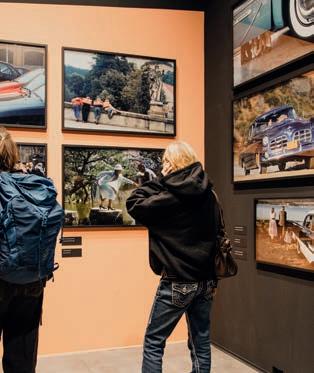
Dom Spotkań z Historią presents a sweeping retrospective of Elliott Erwitt—one of the defining figures of 20th-century photography. Spanning over seven decades, the exhibition gathers a rich cross-section of his work, tracing a career that moved effortlessly between reportage, portraiture and visual storytelling with a distinctly human touch.
Born in Paris and shaped by an itinerant childhood between Italy, France and the United States, Erwitt developed an early sensitivity to the nuances of everyday life. That instinct
would define his practice. Whether photographing political heavyweights, movie stars or anonymous passersby, his lens sought out moments that reveal something quietly universal. His long association with Magnum Photos—which he joined in 1953 at the invitation of Robert Capa—cemented his place among photography’s great observers.
Poland appears here not as a footnote but as a lived-in landscape. On assignments in 1959 and 1964, Erwitt documented cities including Warsaw, Kraków and Gdańsk, capturing fragments of life behind the Iron Curtain with the same clarity and empathy that define his
global work.
What sets this exhibition apart is its tonal balance. Erwitt’s images often hover between irony and tenderness, elevating fleeting, even absurd moments into something enduring. Dogs mirror their owners, strangers share private gestures, history unfolds in the background. The result is a body of work that feels both light and profound— an invitation to notice, and to smile.
Elliott Erwitt
Retrospective 20.03.2026 — 20.09.2026
Dom Spotkań z Historią ul.Karowa 20, dsh.waw.pl
A Decade of Learning, Leading and Inspiring
The Insider congratulates British Primary School of Wilanow on ten remarkable years
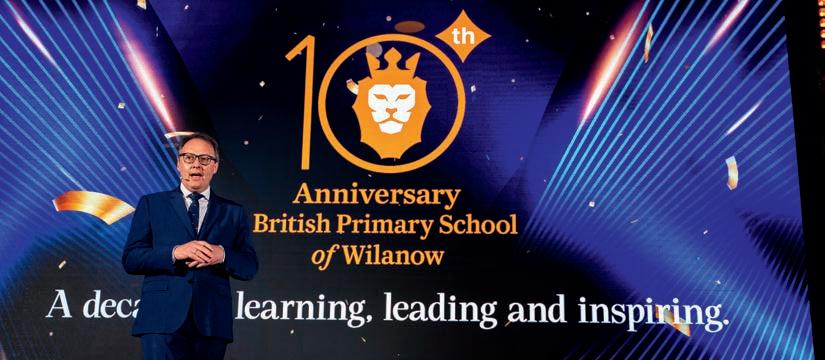
Saturday, March 21st, the British Primary School of Wilanow (BSW) marked a milestone worth celebrating: ten years of shaping young minds in Warsaw. What began in 2015 as a small, close-knit preschool of just 20 children has grown into a thriving international community of over 400 students aged 3 to 14, representing 35 nationalities.
Over the past decade, BSW has evolved in step with a broader shift in education—one that places skills, curiosity, and critical thinking above rote learning. Rooted in the British curriculum, the school emphasizes communication, collabora-
tion, and confidence, preparing students not just for exams, but for life in an increasingly global world.
At the heart of BSW lies a strong values system—“The Walk of the Lion”—championing respect, courage, cooperation, care, and integrity. These principles are not simply taught, but lived daily, shaping students into empathetic, resilient individuals ready to embrace challenges and think independently.
Fully accredited with the Council of British International Schools (COBIS) and Cambridge Assessment International Education and a member of International Schools Partnership, BSW has firmly established
itself as a leader in international education in Poland. Its commitment to inclusive learning— through programs such as EAL and SEN support—ensures that every child, regardless of background or ability, is given the tools to thrive.
As demand for high-quality, English-language education continues to grow in Poland, BSW stands as a testament to what can be achieved when learning is placed first.
The Insider congratulates our valued partner on a decade of excellence—and looks forward to the next chapter.
British Primary School of Wilanow tel. 22 111 0062 ul. Hlonda 12, bsw.com.pl
preschools
AMERICAN SCHOOL OF WARSAW
Students aged 3-5 are encouraged to try new things, ask questions, and take risks in a nurturing environment in which they learn life skills alongside academics. Following the Primary Years Programme (PYP), our young students become caring, active participants in a lifelong journey of learning. Contact admissions@ aswarsaw.org
BRITISH PRIMARY SCHOOL OF WILANOW
A values-driven school offering a world-class education based on the best of British Education. BSW is the first school in Poland to be accredited as Compliant by the Council of British International Schools (COBIS). Based in a purpose built premises in Wilanow BSW is accepting applications from Nursery to Year 9. Please email admissions@bswilanow.org to organise a visit.
THE BRITISH SCHOOL WARSAW – EARLY YEARS CENTRE
Our Early Years Foundation Stage provides a play-based learning curriculum full of curiosity, wonder and discovery – the perfect springboard into Primary education. ul.
– Antoni Rapczyński (psychologist, Benjamin Franklin School Number One)
Psychological and Pedagogical Directions of Change in Schools
A dozen years ago, the school model was relatively fixed: teachers delivered knowledge, students absorbed it, and results were measured through tests. Today, education operates in a very different social and technological landscape. Rapid change, digital acceleration, and recent global disruptions have expanded the role of schools. They are no longer just places of instruction, but environments supporting a child’s cognitive, social, and emotional development.
Developmental psychology shows learning is far more complex than memorisation. Children learn best through action—by experimenting, collaborating, and engaging with real problems. Schools must therefore prepare students not only with knowledge, but with the ability to function in an unpredictable world.
Competencies That Shape the Future
Education increasingly emphasises psychosocial skills: cooperation, communication, emotional regulation, and conflict resolution. While not always reflected in grades, these are critical in adult life.
Emotional intelligence is equally vital. The ability to understand emotions, empathise, and build relationships contributes to both professional success and
BROUGHT TO YOU BY PRZEDSZKOLE NUMER JEDEN
well-being. Schools are now expected to support these skills alongside academic achievement.
The Teacher–Student Relationship
One of the strongest predictors of learning is the quality of the teacher–student relationship. Children learn best when they feel safe, respected, and understood. Teachers are no longer just instructors, but mentors—guiding students, nurturing motivation, and helping them discover their potential. A positive classroom atmosphere fosters curiosity and a willingness to take on challenges.
Learning by Doing
Modern pedagogy prioritises active learning. Instead of passive absorption, students engage in projects, experiments, discussions, and group problem-solving. These approaches build independence, creativity, and collaboration.
Holistic Support
Many schools now offer integrated specialist support, employing psychologists, pedagogues, and therapists. This reflects the understanding that effective learning is closely tied to mental well-being, and allows teaching to be tailored to individual needs.
Education as a Shared Responsibility
A child’s development extends beyond school. Cooperation between parents and educators—based on dialogue and shared goals—is key.
Choosing the Right School
Look beyond exam results. Consider values, specialist support, teacher development, parent relations, and atmosphere. The right school not only educates, but builds confidence and foundations for future growth.
Przedszkole Numer Jeden al. Rzeczypospolitej 31/Au1 przedszkolenumerjeden.pl tel. 780 116 115
EDUCATION
THE CANADIAN SCHOOL OF WARSAW PRESCHOOL
Welcoming students from the ages of 2.5 to 6 years old, currently 45% of their admissions are international students. The dedicated, IB-trained teachers deliver an innovative program (PYP) in English designed for modern world needs. The program offers a combination of Literacy, Maths, Science, Physical Education, Arts & Culture, French and Polish classes. ul. Ignacego Krasickiego 53, tel. 697 979 100, canadian-school.pl
CASA DEI BAMBINI & TODDLER SCHOOL
With three green and harmonious locations in Mokotów and Izabelin. The school in Izabelin is set in the quiet of the Kampinos Forest just outside the city. Teachers are fully trained in early-childhood education in English according to the Montessori philosophy. Registration open to children 12 months to 6 years of age. ul. Badowska 19, ul. Tatrzańska 5a (Mokotów), ul. Szkolna 16, (Izabelin), tel. 692 099 134, wmf.edu.pl
THE INTERNATIONAL TRILINGUAL SCHOOL OF WARSAW
Established in 1994, offering nursery, primary, and pre-school education with an international curriculum for children aged from one to 15. The full immersion trilingual setting allows for the choice between English, Polish, Spanish or Chinese, French or Japanese. Teachers are highly-qualified native speakers. ul. Nobla 16 (tel. 501 036 637), ul. Karowa 14/16 (tel. 503 072 119), ul. Królowej Aldony (tel. 533 321 084), office@3languages.pl, itsw.edu.pl
schools
AMERICAN SCHOOL OF WARSAW
AKADEMEIA HIGH SCHOOL
An academically selective international school in Warsaw, offering iGCSEs and A Levels whilst preparing students for the best universities in the world. The staff body consists of alumni of the world’s best universities, whilst facilities at what has become Poland’s most prestigious school include an art studio, auditorium, sports hall and roof garden. ul. Ledóchowskiej 2, akademeia.edu.pl
With over 50 nationalities, ASW has been welcoming students from around the world since 1953. As an IB Continuum school, our students follow the PYP, MYP and DP throughout their learner journey. Students graduate with either the IB diploma or an American high school diploma. All programs are conducted in English, with integrated EAL support for non-native speakers. Contact: admissions@aswarsaw.org or 22 702 85 00, ul. Warszawska 202 (Konstancin-Jeziorna), aswarsaw. org
BRITISH PRIMARY SCHOOL OF WILANOW
A values-driven school offering a world-class education based on the best of British Education. BSW is the first school in Poland to be accredited as Compliant by the Council of British International Schools (COBIS). Based in a purpose built premises in Wilanow BSW is accepting applications from Nursery to Year 9. Please email admissions@bswilanow.org to organise a visit
warsaw montessori family
Warsaw
Montessori Schools accepting applications for our programs and locations:
The mission of TBS is to balance academic success with character building and well-being. Students at The British School Warsaw learn an internationally respected curriculum, based on the best of British academics. They take pride in their excellent results at both International Baccalaureate Diploma Programme (IBDP) and IGCSE level, which are well above the global average. ul. Limanowskiego 15, tel. 22 842 3281, thebritishschool.pl
THE ENGLISH PRIMARY
The English Primary is designed specifically for children in the primary education ages, just as children experience in England but in an international community. Pupils are taken through the key learning stages so that they can achieve to the best of their ability through a fun learning experience. The Core Curriculum subjects include English, Phonics, Science, Mathematics, French, PE and Swimming, Music, Personal, Social and Health Education. ul. Rzodkiewki 18, tel. 784 037 808, tep.edu.pl
THE CANADIAN SCHOOL OF WARSAW INTERNATIONAL ELEMENTARY AND MIDDLE SCHOOL
Located on two campuses in the Mokotów this is the only authorized IB School with PYP programs taught in English and Polish. French is taught as a third language. International staff, cultural events and challenging student initiatives create the perfect learning environment. ul. Bełska 7, tel. 692 411 573 / 885 420 044, secretary@canadian-school.pl or secretary. olimpijska@canadian-school.pl
THE INTERNATIONAL TRILINGUAL SCHOOL OF WARSAW
Established in 1994, offering nursery, primary, and pre-school education with an international curriculum for children aged from one to 15. The full immersion trilingual setting allows for the choice between English, Polish, Spanish or Chinese, French or Japanese. Teachers are highly-qualified native speakers from the US, France, Spain, China and Japan. ul. Nobla 16 (tel. 501 036 637), ul. Karowa 14/16 (tel. 503 072 119), ul. Krolowej Aldony (tel. 533 321 084), office@3languages.pl, itsw.edu.pl
schools
JOY PRIMARY SCHOOL
Treating pupils with mutual respect but not at the expense of being demanding, the methods used are hard on the problem but soft on the person. Taking into account what students think, feel, learn and want for themselves and their world, Joy Primary teaches important life skills as well as respect, care for others, problem solving and co-operation. Here, children are challenged to discover their abilities and competences, while encouraged to explore personal strength and autonomy. ul. Syta 131A, tel. 722 305 333, sekretariat@joyprimaryschool.pl
MONNET INTERNATIONAL SCHOOL
Located in Mokotów, the Monnett is the only school in Poland that implements the International Baccalaureate Program from kindergarten level all the way through to secondary school. The fully-qualified staff are committed to delivering only the highest standards of education. ul. Stępińska 13, tel. 22 852 06 08, maturamiedzynarodowa.pl
WARSAW MONTESSORI SCHOOL
leader in the field of Montessori education, well-trained teachers guide students to independent and successful learning with both English and bilingual classroom provided. Located just steps from Łazienki Park the school resides in vibrant surroundings near to museums, embassies and natural settings which provide students with learning outside the classroom. ul. Szwoleżerów 4 (grades 0-4), tel. 608 488 420, wmf.edu.pl A
WARSAW MONTESSORI MIDDLE SCHOOL
Guided by trained specialists, students are responsible for managing their household, operating small businesses, caring for local flora and fauna as well as domesticated animals, taking charge of the younger children and much more. “Adolescence Program” activities, integrated with academic studies, help students discover their inner strength to meet real life challenges. ul. Tatrzańska 5A (grades 5-8), tel. 604 137 826, wmf.edu.pl
WARSAW MONTESSORI HIGH SCHOOL
Warsaw Montessori High School aims to teach students the values which Maria Montessori outlined in her educational philosophy such as: responsibility for one’s own development, care for others, honesty, empathy, and service. The school continues to meet the principles of Maria Montessori through implementing the IB Diploma Program principles and practices. Warsaw Montessori High School is an authorized IB World School for the Diploma Programme – code 061201. ul. Pytlasińskiego 13A, tel. 787 095 835, wmf.edu.pl
LOOKING BACK
Wreath-laying ceremony on the 9th anniversary of the Warsaw Ghetto Uprising, 1952
sions of memory remained limited. The situation worsened after the state-sponsored antisemitic campaign of 1968, which forced many of Poland’s remaining Jews into exile, weakening the community that had carried this memory forward.
RISING MEMORY
The
evolving memory of the ghetto uprising
The remembrance of the Warsaw Ghetto Uprising has evolved alongside Poland’s political and moral landscape, shifting from fragile commemoration to a deeply rooted civic ritual.
In the immediate postwar years, memory emerged amid ruins. The first anniversary in 1944 passed in silence under German occupation, but by 1946, survivors and Jewish organizations had installed a modest marker on the site of the former ghetto. In 1948, the Monument to the Ghetto Heroes was unveiled in Warsaw, becoming one of the earliest and most significant Holocaust memorials in Europe. It affirmed a crucial narrative: that of Jewish resistance, not only victimhood.
During the communist period, remembrance became constrained and politicized. Official discourse emphasized collective antifascist struggle, often subsuming the specifically Jewish experience. Annual ceremonies were permitted but tightly controlled, and independent expres-
By the 1980s, remembrance began to take on a more openly contested form. The 40th anniversary in 1983 exposed tensions between official ceremony and moral authenticity. Marek Edelman, who had remained in Poland, declined to participate in the state-organized event. Instead, alternative commemorations, linked to the democratic opposition, gathered at the monument. These gestures restored the uprising’s ethical dimension—resistance not only to Nazi oppression, but to injustice in any form.
After 1989, with the fall of communism, remembrance entered a new phase of openness and integration. The uprising became a central element of Warsaw’s historical identity. Research expanded, public discussion deepened, and new institutions—most notably the POLIN Museum of the History of Polish Jews—helped anchor this history within a broader narrative of Jewish life in Poland.
Today, in 2026, remembrance is both solemn and widely shared. Each year on April 19, ceremonies take place across Warsaw, accompanied by educational programs and public participation. A simple symbol has come to define this collective act: yellow daffodils, inspired by Edelman’s annual tribute of laying flowers at the monument. Handed out across the city, these paper blooms have become a quiet, enduring emblem—of memory, resilience, and the responsibility to remember.