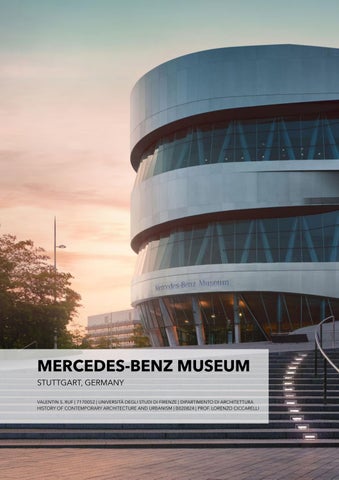
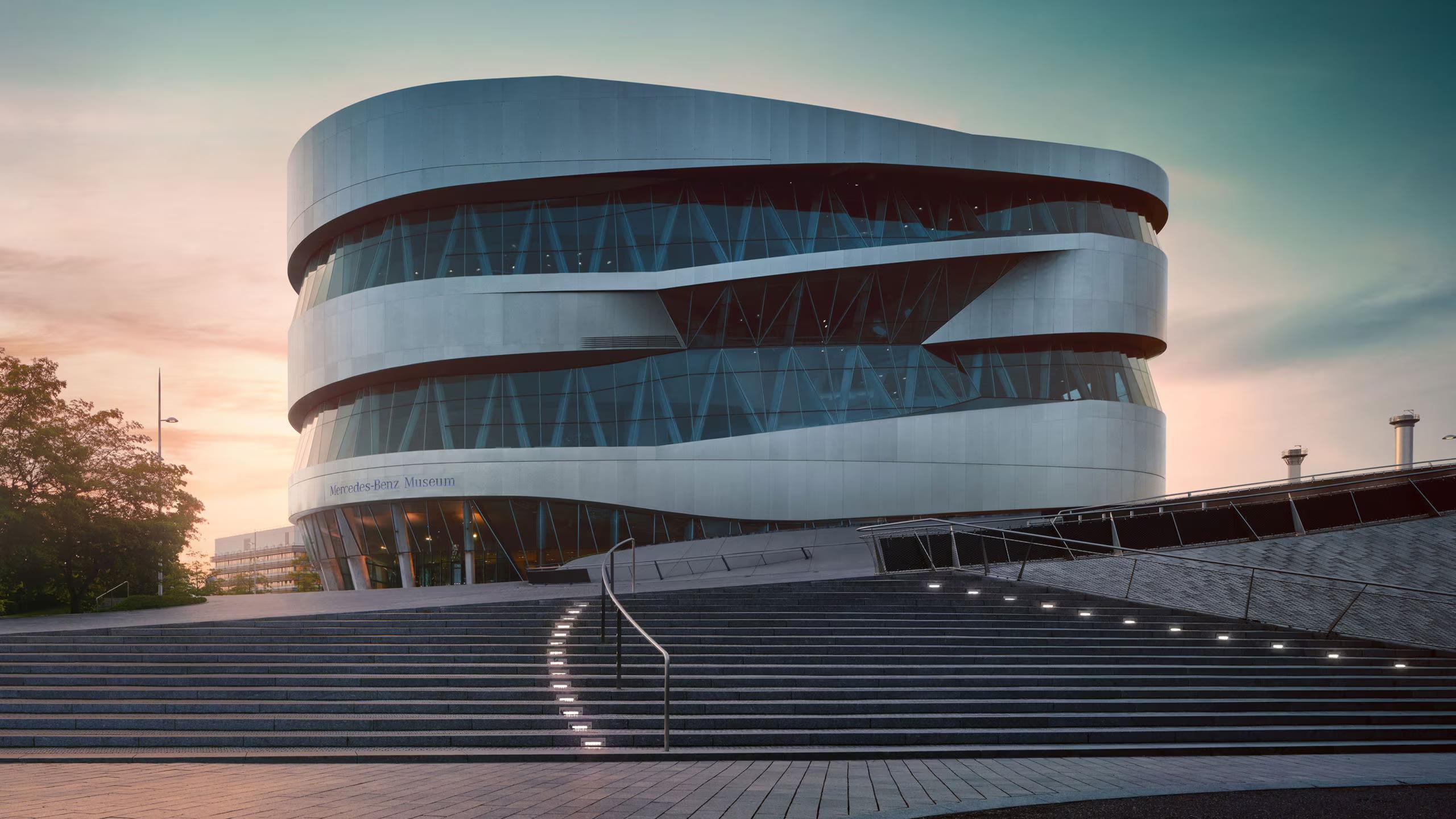
MERCEDES-BENZ MUSEUM
STUTTGART, GERMANY
VALENTIN S. RUF | 7170052 | UNIVERSITÀ DEGLI STUDI DI FIRENZE | DIPARTIMENTO DI ARCHITETTURA HISTORY OF CONTEMPORARY ARCHITECTURE AND URBANISM | B020824 | PROF. LORENZO CICCARELLI
The Mercedes-Benz Museum in Stuttgart:
Architecture as an expression of innovation and brand culture
THEMATIC HISTORICAL ESSAY OF CONTEMPORARY ARCHITECTURE
VALENTIN S. RUF | 7170052
UNIVERSITÀ DEGLI STUDI DI FIRENZE | DIPARTIMENTO DI ARCHITETTURA
HISTORY OF CONTEMPORARY ARCHITECTURE AND URBANISM | B020824
PROF. LORENZO CICCARELLI | DECEMBER 16, 2024
FACT SHEET
Client DaimlerChrysler Immobilien GmbH, Berlin, part of Daimler AG (today Mercedes-Benz Group AG)
Architect UNStudio (Ben van Berkel, Caroline Bos), Amsterdam
Engineers Werner Sobek, Stuttgart and many others
Location Mercedes Straße 100, Stuttgart, Germany
Building surface 35,000 m2
Total floor area 16,500 m2
Exhibition area 8,500 m2, more than 160 cars and other exhibits
Construction costs 150 million euros
Planning phase 2001 - 2003
Construction phase 2003 – 2006
Opening Mai 19, 2006
Programme Car museum, shop, restaurant, offices, auditorium
Prizes won
2009 Hugo-Häring Preis
2008 Architekturpreis Beton
2008 German Design Prize
2007 Architekturpreis
2006 Ingenieurbau Preis
2003 1822-Kunstpreis
SELECTION OF THE PROJECT
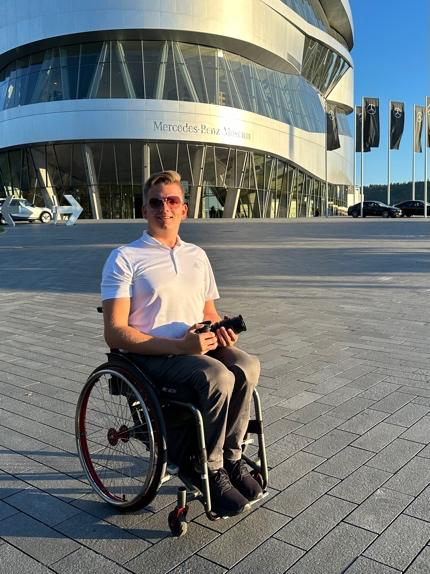
The Mercedes-Benz Museum in Stuttgart has impressed me since I was a child and has great significance for me. We went on family trips to the Mercedes-Benz Museum several times a year, where he explained everything to me in detail. This made me develop a great interest in technology, automobiles and, not least, architecture. Nowadays, with my expanded understanding of architecture, I am increasingly more impressed by the building and its concept.
Fig. 2: Me at the museum, 2023
INTRODUCTION
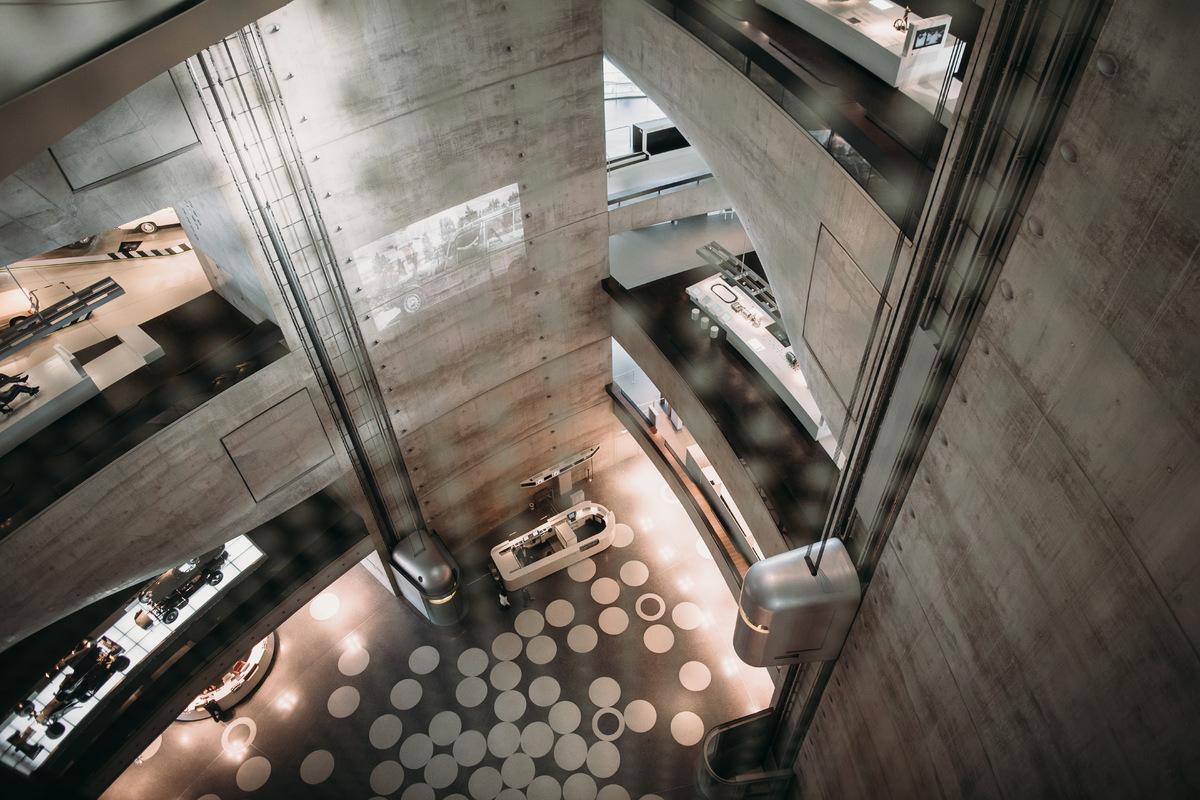
The Mercedes-Benz Museum in Stuttgart is undoubtedly an architectural masterpiece in Germany, combining architecture, innovation and technology and making a significant contribution to the presentation of the Mercedes-Benz brand. Opened in May 2006, the building is more than just a museum, it is a landmark that embodies the innovative power and long tradition of Mercedes-Benz in an impressive way.
It was designed by the renowned Dutch architecture firm UNStudio, which was founded by Ben van Berkel and Caroline Bos in Amsterdam. The unique and complex geometry and the shape inspired by the DNA double helix reflect dynamism, precision and continuous development, which are also core values of the Mercedes
The design of the museum picks up on the company's history, which dates to the invention of the automobile, and translates it into a spatial experience that appeals to technology enthusiasts, historians and architecture lovers alike. Over 160 vehicles and countless other exhibits that trace the company's technological development and history of innovation are presented on an exhibition area of 16,500 square meters.
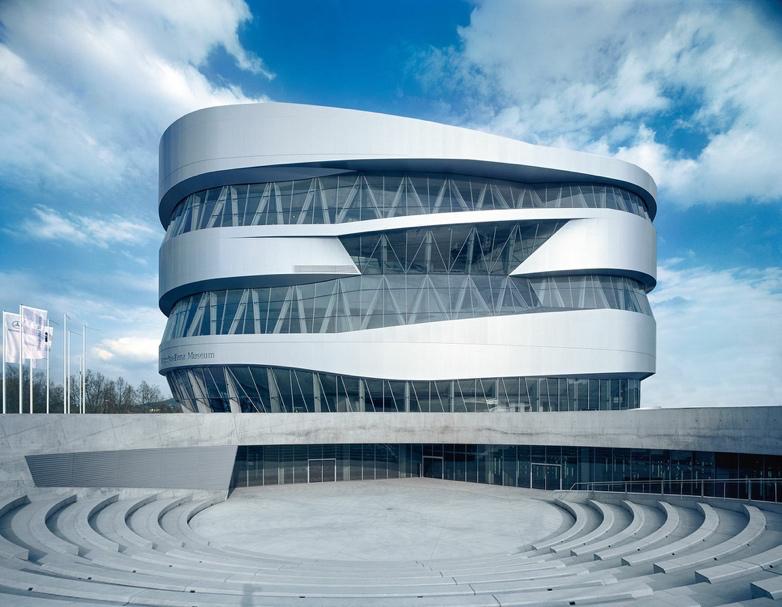
In an interplay of modern materials such as concrete, glass and metal, as well as sculptural forms and clear lines, the Mercedes-Benz Museum combines
Fig. 3: The Mercedes
functionality with aesthetic appeal. It not only fits in with the company's corporate identity but also strengthens it. The museum is an expression of a brand that combines tradition and future and thus makes a significant contribution to the brand identity of Mercedes-Benz. At the same time, the innovative design has cemented UNStudio's international reputation and opened new opportunities for the architects. 1
This essay explores how the Mercedes-Benz Museum functions as an architectural expression of innovation and brand identity. My aim is to show how architecture can serve as a medium for communicating corporate values and their history and what significance the museum has for the Mercedes-Benz brand as well as for modern architecture.
1 Vetter, Andreas K.. UNstudio Mercedes-Benz Museum: design evolution. 2006.
Fig. 4: Inside atrium of the museum
CLIENT AND OBJECTIVE
The owner and client of the project was a subsidiary of today's Mercedes-Benz Group AG, then still known as Daimler AG. It is one of the most traditional and innovative car manufacturers in the world. The Mercedes-Benz brand symbolizes innovation, quality and design to this day. The decision to build a new museum at the beginning of the 2000s was also in keeping with this tradition. The need to present the company's history in a modern setting was more urgent than ever due to the rapid technological changes and increasing global competition. At the same time, the museum needed to make a forward-looking statement that would make the brand's innovative strength and aspirations visible for future generations.
The Group spared no expense or effort for the project, investing 150 million euros and pursuing a clear goal with the new museum: to visualize the Mercedes-Benz brand and the connection between tradition and the future in a unique architectural context. The previous Mercedes-Benz Museum, which opened in 1961, was less well-known and no longer able to fulfil the increased requirements in terms of presentation, space and technological infrastructure. A new building should not only offer more exhibition space but also create an architectural experience that embodies the values of the Mercedes-Benz brand. The aim was to reflect the company's innovative strength in the form of a museum that also represents an exemplary project for modern architecture.
The objectives of the museum project included various strategic aspects. One primary goal was to increase the brand's presence on a national and international level. The museum should not only appeal to car enthusiasts, but also attract tourists, historians and people interested in design from all over the world. Due to its proximity to the headquarters and the factory premises in Stuttgart Untertürkheim, the museum became an integral part of the company campus and strengthened the region's identification with the brand.
Another key objective was to strengthen the emotional connection to the brand. Through the unique exhibition design and the spatial staging of the vehicle history, the museum was to create an immersive experience. Visitors should not only be able to see the Mercedes-Benz brand but also experience it. A connection should be created that goes beyond the pure product and creates a deep identification with the values of the brand.
Ultimately, the museum also served as a benchmark for Mercedes-Benz's own capacity for innovation. At a time when the automotive industry was facing major challenges such as digitalization, electrification and sustainability, Mercedes-Benz wanted to use the museum to show that it was ready to face these challenges while preserving its tradition. The construction of the museum was therefore a strategic investment in the future of the brand and a clear commitment to the culture of innovation that has characterized the company since its beginnings.
SELECTION OF THE ARCHITECT
The architect for the Mercedes-Benz Museum in Stuttgart was selected through an international architectural competition organized in 2001. The aim of this competition was to find an innovative and representative solution that would reflect the values of Mercedes-Benz on an architectural level. The competition attracted numerous renowned architectural firms from all over the world. The jury consisted of representatives from Mercedes-Benz, architecture specialists and experts in museum construction, who jointly assessed the ambitious designs.
After an intensive evaluation phase, the jury decided in favor of the Dutch architecture firm UNStudio from Amsterdam, founded by Ben van Berkel and Caroline Bos. Their design impressed the jury with its innovative spatial structure, inspired by a double helix, and its seamless combination of aesthetics and functionality. The concept offered a dynamic, flowing visitor experience that lived up to Mercedes-Benz's claim of embodying innovation and technological excellence in a spatial form. The visionary design by UNStudio created a spatial metaphor for the constant progress and development of automotive technology.
The studio is known for its avant-garde designs and experimental use of forms and materials. UNStudio pursues an interdisciplinary approach that combines architecture, urban planning and infrastructure. The office's projects are characterized by a combination of technological innovation and conceptual clarity. Their designs are orientated towards principles of movement, dynamism and networking, which fits in perfectly with the brand values of Mercedes-Benz.
However, the decision in favor of UNStudio was not only based on the design quality of the design, but also on the office's ability to use modern planning methods. UNStudio uses digital modelling techniques such as Computer Aided Design (CAD) and Building Information Modelling (BIM) to develop and efficiently realize complex spatial structures. In doing so, they were way ahead of their time, as BIM is still not a standard in many offices today. This technological affinity was in line with Mercedes-Benz's innovative aspirations and strengthened the conviction that UNStudio could create a building that would represent the brand both functionally and symbolically.2
2 Bos, Caroline, and Ben van Berkel. Mercedes-Benz Museum: Architecture & Design. Prestel Verlag, 2006.
DESIGN AND CONCEPT
The design concept of the Mercedes-Benz Museum is based on an innovative interior design that creates a unique visitor experience in terms of both design and function. The outstanding architectural idea of the building is the double helix structure, inspired by the shape of a DNA spiral. This structure characterizes the entire building organization and enables two parallel, intertwined tours. Visitors can either follow the chronological development of the brand or explore thematically organized collections. This dynamic concept ensures seamless movement through the exhibition and at the same time symbolizes the continuity of innovation and tradition at Mercedes-Benz.
The two exhibition routes offer different perspectives on the history and technology of the automobile brand. The Myths Tour takes visitors through the chronology of the company's history in seven sections, starting with the beginnings of the automobile right up to the present day. Running parallel to this is the Collections Tour, which presents themed collections of vehicles, including commercial vehicles, racing cars and futuristic concept studies. This dual structure offers visitors flexibility and allows them to explore the exhibition according to their interests.
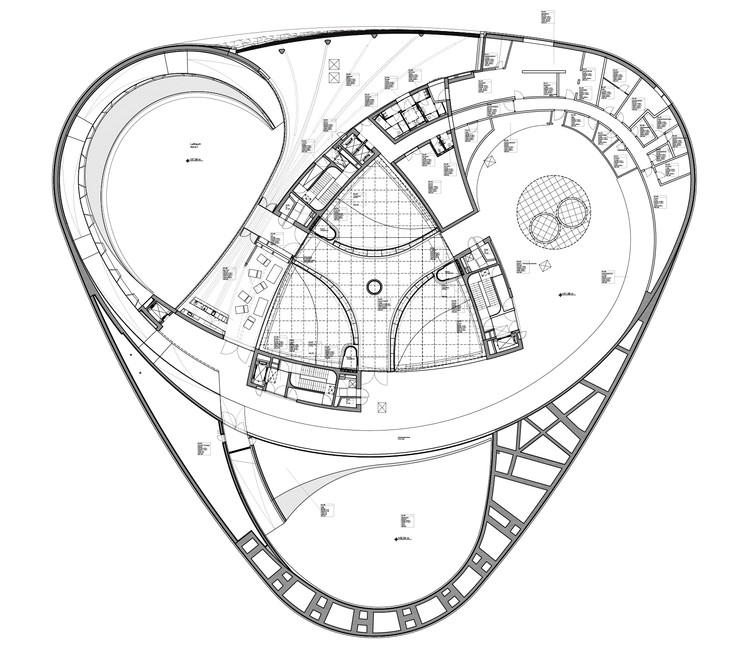
Fig. 5: Floor plan
The spatial programme of the Mercedes-Benz Museum includes a variety of functions that make the building a multifunctional experience center. The exhibition space totals 16,500 m², of which around 8,000 m² is for the permanent exhibition. In addition to the two main exhibition routes, there are separate areas for special exhibitions, which present temporary or themed exhibits.
The museum also has several event rooms that can be used for conferences, lectures and corporate events. A museum shop is also part of the concept, where visitors can purchase souvenirs, books and exclusive Mercedes-Benz items. Technical areas and administrative spaces have been efficiently integrated into the overall concept to ensure the smooth operation of the museum.
The ambitious spatial programme and design were developed in close cooperation between Mercedes-Benz Group AG as the client and the architectural firm UNStudio. The specific requirements of Mercedes-Benz, including the presentation of the company's history, the integration of exhibits and the creation of a unique brand experience, were integrated into the planning from the outset. Through regular consultations, workshops and digital modelling, the client's needs were combined with UNStudio's visionary design.
This co-operative development process ensured that the architectural design not only met aesthetic requirements but also fulfilled the functional requirements of a modern museum. The result is a building that reflects the identity of MercedesBenz in every detail thanks to its innovative structure and well thought-out spatial programme.
STAKEHOLDERS INVOLVED AND CONSTRUCTION PHASE
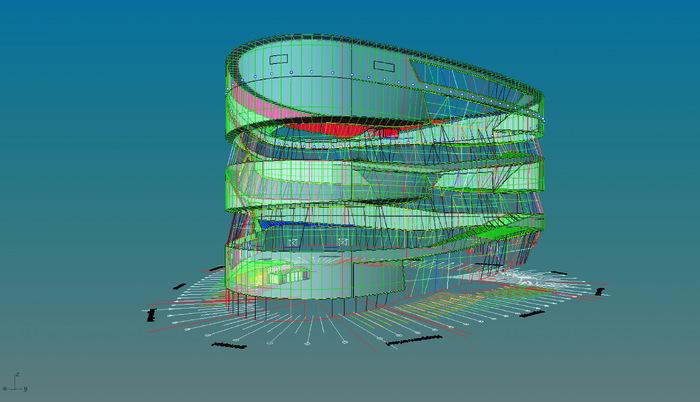
The Mercedes-Benz Museum is the result of intensive collaboration between leading experts from various fields. The well-known engineering firm Werner Sobek, which was responsible for the structural design, played a central role. Sobek is internationally renowned for his ability to translate ambitious architectural visions into technically realizable structures. Due to the innovative double helix structure of the museum, conventional solutions were not sufficient. Sobek and his team developed special structural concepts to realize the extraordinary, selfsupporting concrete ramps and the wide-span ceilings. Advanced digital modelling methods in CAD and BIM were used to calculate the precise geometry and put it into practice. Digital 3D models helped to simulate the complex spatial connections and identify potential problems at an early stage.
Numerous consultants and experts in building technology, lighting and exhibition design were also involved in the project. The lighting design had to be flexible enough to meet the different requirements of the exhibitions without disrupting the overall aesthetic. For the exhibition design, curators and scenographers worked closely with the architects to present the content in a clear, appealing and easily navigable form. The aim was to present both the chronological presentation of the history of Mercedes-Benz and the thematic collections in a coherent and visually impressive way.
The construction phase of the Mercedes-Benz Museum lasted from 2003 to 2006 and was characterized by a multitude of technical challenges. The realization of the complex geometry of the double helix required innovative construction techniques and maximum precision. The spiral ramps and wide-span ceiling constructions had to be manufactured with millimeter precision. Specially manufactured formwork and digitally controlled measuring systems were used to cast the unusual concrete moulds. Special attention was paid to the combination of form and function to ensure the load-bearing capacity of the self-supporting elements without compromising the architectural vision
A few changes were made during construction, mainly of a technical nature. For example, adjustments had to be made to the design of the steel beams to ensure structural integrity. These changes were necessary to solve unforeseen problems arising from the combination of concrete, steel and glass in this unusual shape.
Fig. 6: Building information modeling (BIM)
Despite these challenges, UNStudio's original design was largely retained, which emphasizes the good and detailed planning and flexibility of those involved.
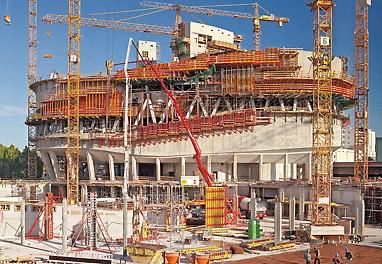
Despite the structural complexity, the schedule was largely adhered to. The construction phase lasted a total of three years, and the museum was opened as planned in May 2006. The project budget of around 150 million euros was also adhered to, which can be attributed to the precise planning and efficient project management. The early integration of all specialist disciplines and the use of digital planning methods helped to avoid delays and cost overruns.
The successful realization within the specified time frame and budget illustrates the professionalism and high level of cooperation between the client Mercedes-Benz, the architects from UNStudio, the engineers from Werner Sobek and the numerous specialist consultants and construction companies.34
3Hemmerling, Marco. Vom Zeichnen zum Programmieren. Bauwelt, 2011.
4 Article 2: Baus, Ursula. Galerie der Helfer, Lasten und Namen. Bauwelt, 2006.
Fig. 7: Construction phase
SIGNIFICANCE FOR THE BRAND
The Mercedes-Benz Museum was presented both internally and externally as a pioneering fusion of architecture, technology and brand identity. The grand opening in May 2006 was a carefully orchestrated event that put the innovative power and heritage of the Mercedes-Benz brand center stage. Numerous representatives of the automotive industry, international media, architects and politicians attended the opening ceremony, emphasizing the global significance of the brand.
The marketing and PR strategies for the opening of the museum were designed to reach a wide audience and communicate the link between tradition and the future. The opening was specifically timed to coincide with the 2006 FIFA World Cup in Germany in order to capitalize on the international attention. By placing the museum in the immediate vicinity of the main plant in Stuttgart, the local anchoring of the brand was also emphasized.
The critical reception of the Mercedes-Benz Museum was overwhelmingly positive. Experts from the fields of architecture, engineering and design particularly praised the innovative structure of the building and the seamless combination of form and function. The trade journal Bauwelt described the museum as a ‘masterpiece of technical precision and architectural vision’. The clear visitor guidance and dynamic spatial organization were rated as outstanding.
The museum made a significant contribution to strengthening the brand and raising its profile worldwide. It conveyed the values of innovation, quality and technical excellence in an impressive way and made the history of the automotive brand tangible. The museum became a central point of contact for automobile enthusiasts, tourists and those interested in architecture from all over the world, thereby increasing identification with the Mercedes-Benz brand. It conveys a clear image of Mercedes-Benz as a brand that skillfully combines tradition and innovation. The consistently high visitor numbers and positive feedback are proof of the long-term success of this strategy. 5
5 Bos, Caroline, and Ben van Berkel. Mercedes-Benz Museum: Architecture & Design. Prestel Verlag, 2006.
SUMMARY
The Mercedes-Benz Museum in Stuttgart uniquely embodies the combination of architecture, innovation and brand identity. The visionary design by UNStudio, characterized by the iconic double helix structure, brings the continuous development and innovative power of the Mercedes-Benz brand to life. The innovative building structure enables dynamic visitor guidance that conveys both technological advances and the rich tradition of the brand.
The successful realization of the complex design would not have been possible without the use of digital planning methods. The architecture firm and engineering firm Werner Sobek used state-of-the-art 3D modelling techniques to calculate and precisely implement the demanding geometries of the supporting structure. These digital tools enabled efficient planning and realization, which meant that both the schedule and the budget could be adhered to. The museum thus exemplifies how digital innovations are pushing the boundaries of what is architecturally feasible.
The museum is of immense importance to the Mercedes-Benz brand. It acts as a brand ambassador, bringing together the values of innovation, design and quality in an architectural landmark. The museum strengthens the global perception of Mercedes-Benz as a future-orientated car manufacturer and creates an emotional experience that goes far beyond the product. At the same time, the project cemented UNStudio's international reputation and established the architects Ben van Berkel and Caroline Bos as leading representatives of innovative architecture.
Overall, the Mercedes-Benz Museum shows how architecture can serve as a medium to communicate corporate values and convey brand identity in an impressive way. It is an example of how digital planning methods and architectural innovation go hand in hand to create buildings that are both functionally and symbolically meaningful.
LITERATURE
Book 1: Bos, Caroline, and Ben van Berkel. Mercedes-Benz Museum: Architecture & Design. Prestel Verlag, 2006.
Book 2: Sobek, Werner. Engineering the Future: Sustainability and Design. Birkhäuser Verlag, 2010.
Book 3: Vetter, Andreas K.. UNstudio Mercedes-Benz Museum: design evolution. 2006.
Article 1: Hemmerling, Marco. Vom Zeichnen zum Programmieren. Bauwelt, 2011.
Article 2: Baus, Ursula. Galerie der Helfer, Lasten und Namen. Bauwelt, 2006.
Website 1: https://www.mercedes-benz.com/de/kunst-und-kultur/museum/
Website 2: https://www.unstudio.com/en/page/12482/mercedes-benz-museum
ILLUSTRATIONS
Fig. 1: https://www.mercedes-benz.com/de/kunst-und-kultur/museum/
Fig. 2: Valentin Ruf, private 2023
Fig. 3: https://www.baunetz-architekten.de/wernersobek/7562832/projekt/7563011
Fig. 4: https://www.unstudio.com/en/page/12482/mercedes-benz-museum
Fig. 5: https://www.archdaily.com/805982/mercedes-benz-museum-unstudio
Fig. 6: https://www.unstudio.com/page/12482/mercedes-benz-museum
Fig. 7: https://www.peri.de/projekte/mercedes-benz-museum-deutschland.html