
RED ZONE = 0 - 6ft ORANGE ZONE = 6-15ft GREEN ZONE = 15ft or more
Distance from an exposure to a fall of 4ft or more.
DCBAToe-boards are recommended on guardrail systems that are over access doors, walkpaths or areas where people may be working below per OSHA 1910.28(c)(1).
Roof hatches (when open) are considered a hole and therefore are a fall hazard. OSHA 1910.28(b)(3)(i), OSHA 1910.28(b)(3)(iv).
Fixed ladders over 24ft in vertical height require a ladder safety device or fall protection anchor per OSHA 1910.28(b)(9)(i) A, B, C & D.
Equipment within 15ft of a fall hazard must be protected by a form of fall protection. Exception for the 6-15ft zone: if the work performed is temporary and infrequent, a warning line could be used. OSHA 1910.28(b)(13)(ii).
ESkylights must be protected as per OSHA 1910.28(b)(3)(i). F
When workers are 15ft or greater from the fall hazard, fall protection is still required. If the work performed is temporary and infrequent, then fall protection is not required per OSHA 1910.28(b)(13)(iii)(A). If there’s frequent access, fall protection will be required.
GSafe access must be provided over obstacles, pipes or elevation changes that exceed 19in per OSHA 1926.1051(a).
HIf the parapet wall height is less than 39in, a form of fall protection must be provided. OSHA 1910.29(b)(1).
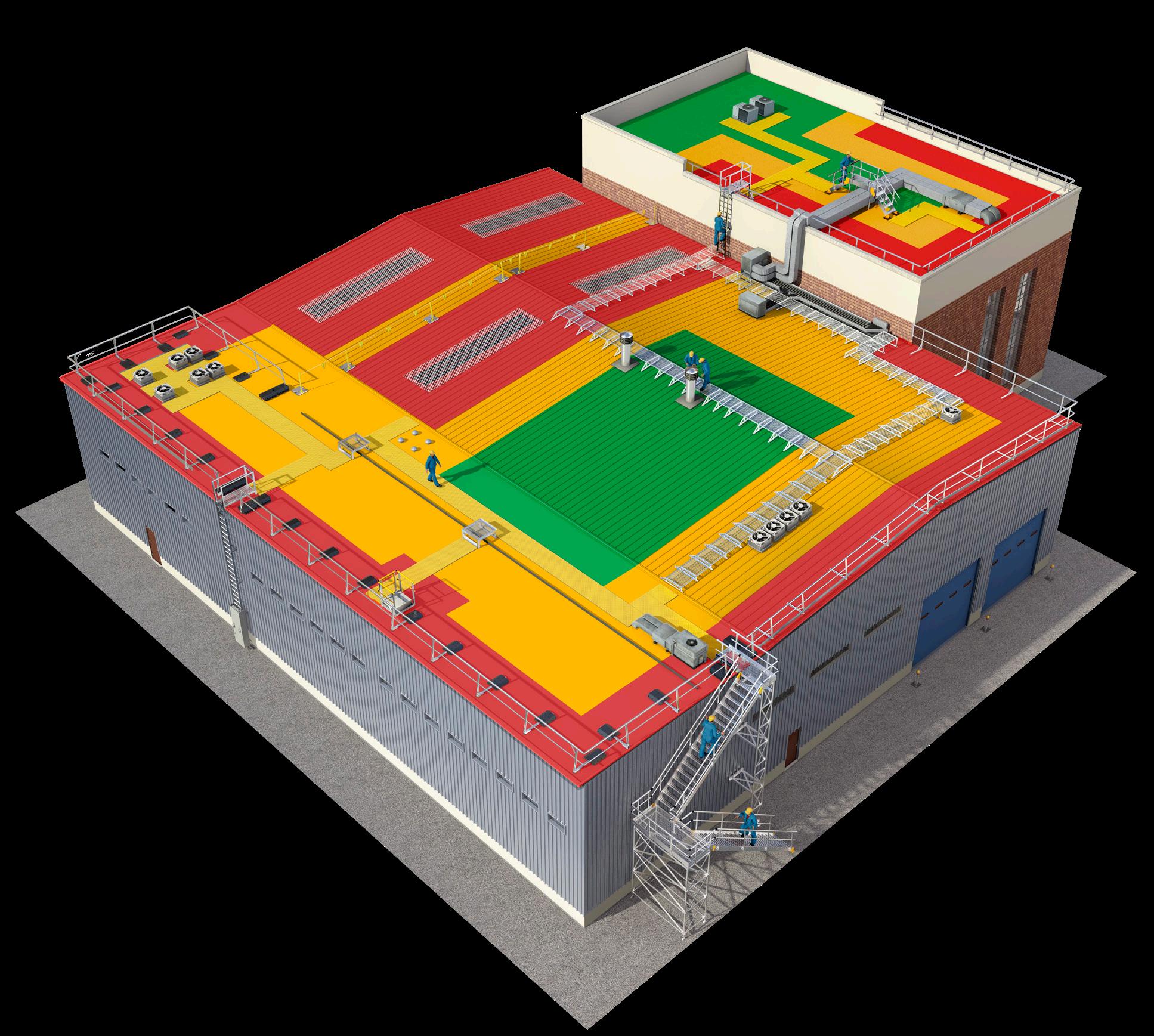
Clearly designated paths of travel coupled with documented training can result in workers being kept away from fall hazards. OSHA 1910.22(c).
Warning Line Systems can be set no closer than 6ft from the unprotected edge if the work being performed is “infrequent and temporary.” Best practice is to install warning lines 15ft from the leading edge. OSHA 1910.28(b)(13)(ii).

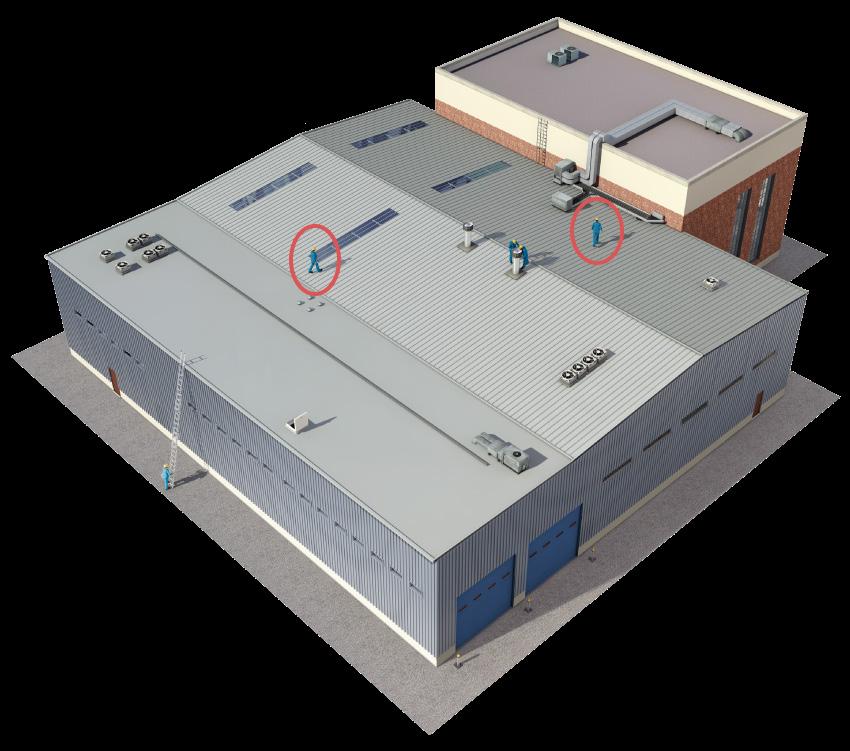
STEP 1: ROOF ACCESS
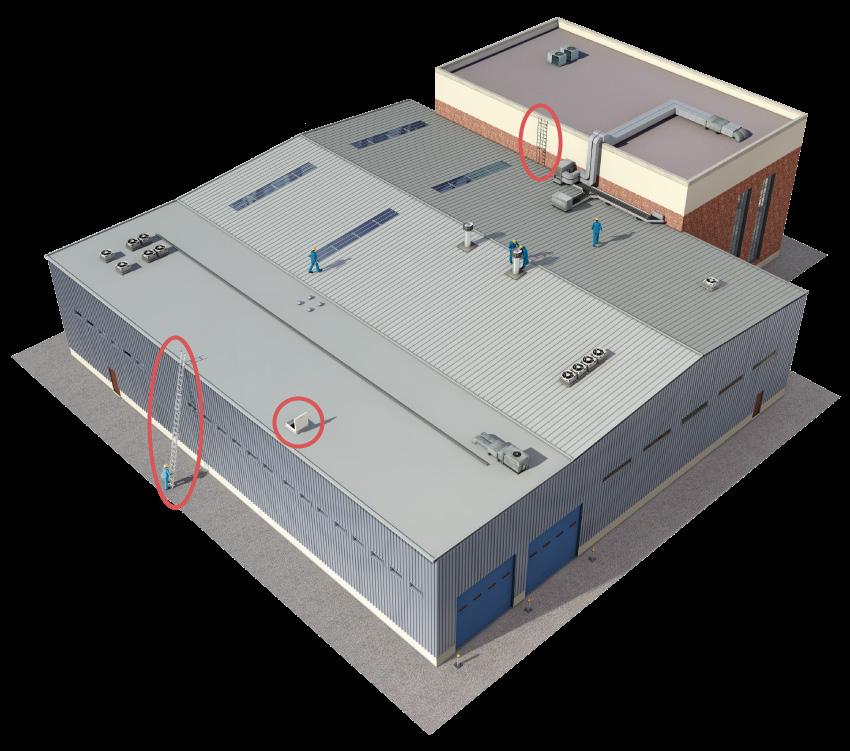
Roof access is where the majority of falls occur so having compliant access to a roof is paramount. Carefully assess how different areas of your roof are accessed and highlight any areas of concern.
Compliant solutions include:
• Exterior fixed ladders
• Roof hatches
• Exterior stair systems
• Elevated working platforms
• Ladder support brackets for use with portable ladders
STEP 2: ROOF ACCESS FALL HAZARDS
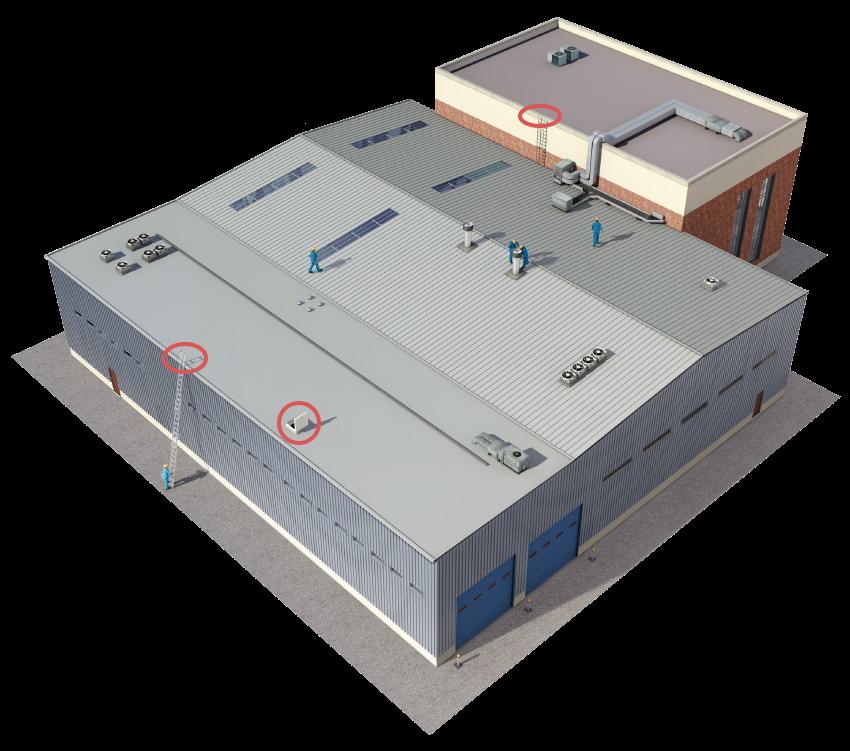
Hazards at the access or egress point increase the risk of a fall, so it is crucial to examine and access points for potential issues. Look for areas that require difficult movements or have obstacles in the way and flag anything that presents a hazard.
Compliant solutions include:
• Guardrails around unprotected edges
• Roof hatch guardrail
• Self-closing gates
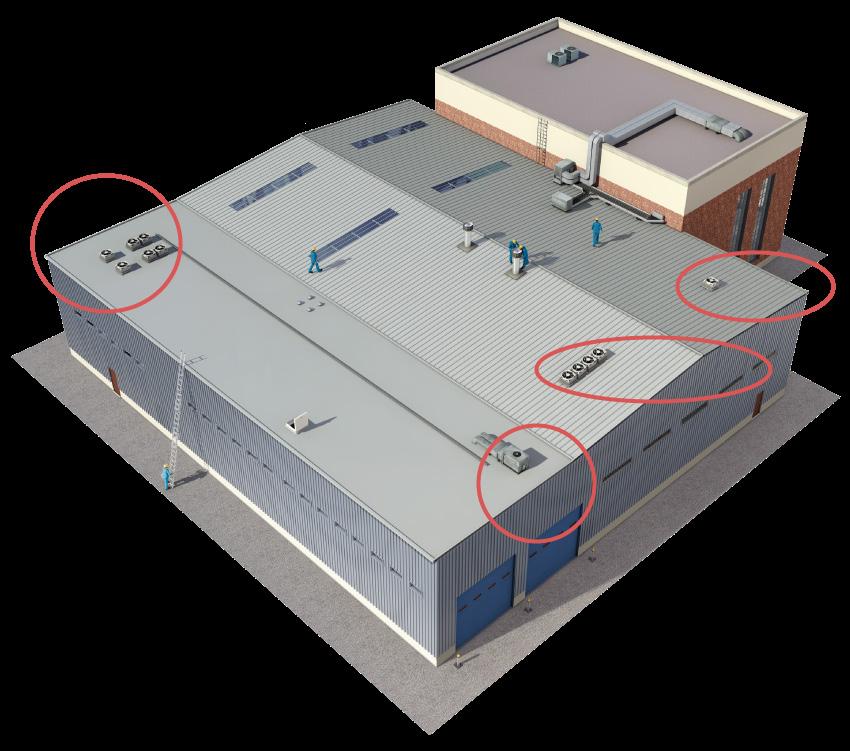
STEP 4: EQUIPMENT NEAR FALL HAZARDS
Equipment that is located within the danger zone can drastically increase the risk to maintenance workers who will need to access that equipment. Look for equipment that is within 15ft of a fall hazard or the unprotected edge on a low slope roof.
Compliant solutions include:
• Guardrail systems
• Walkways
• Warning lines
• Roof hatch guardrail
• Fall arrest system
STEP 3: DESIGNATED WALKWAY ROUTES
Clearly defined walkway routes help ensure workers avoid fall hazards and stay on intended pathways only. If hazards such as unprotected edges, skylights, pits, smoke vents, openings, and elevation changes can be identified, then designated walkway routes & guardrails should be installed to keep workers safe & away from these areas.
Systems that help reduce fall hazards include:
• Aluminum walkway
• Flexible walkway
• Guardrail systems
• Warning line systems
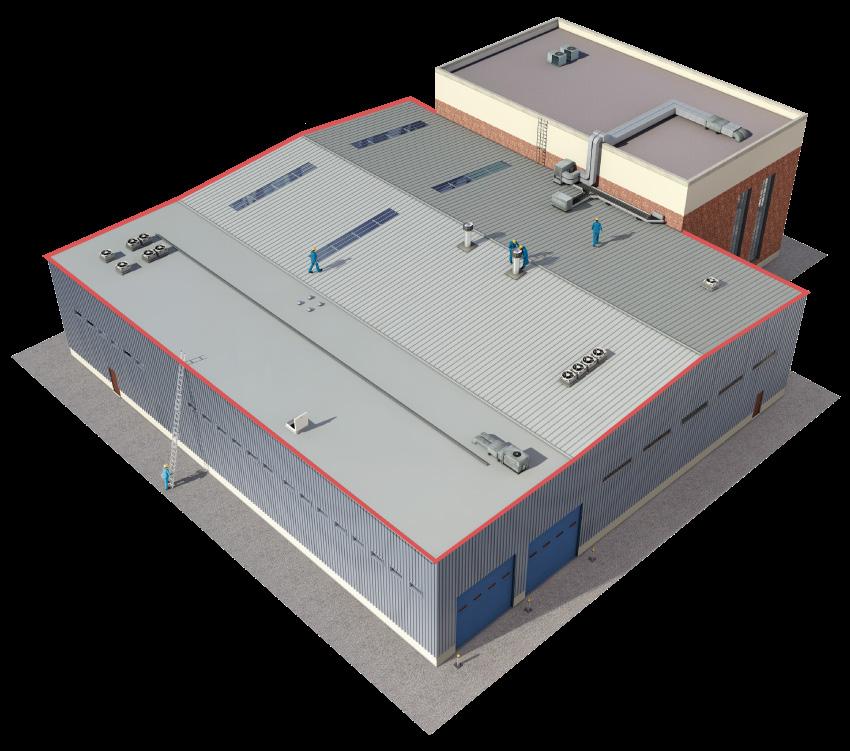
STEP 5: UNPROTECTED EDGES
Unprotected edges always pose a serious risk. If the previous steps of this program were followed, then the high-risk areas should’ve already been addressed.
Compliant solutions include:
• Roof hatch guardrail systems
• Warning line systems
• Fall restraint
• Fall arrest anchors