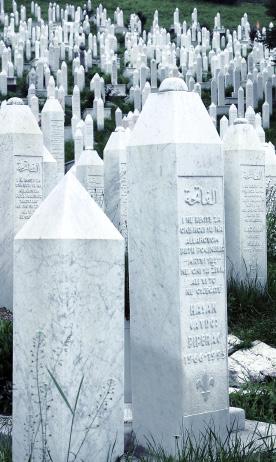
The Prison Doctor’s Dilemma: Cooptation, False Safety, and the Limits of Témoignage in Srebrenica
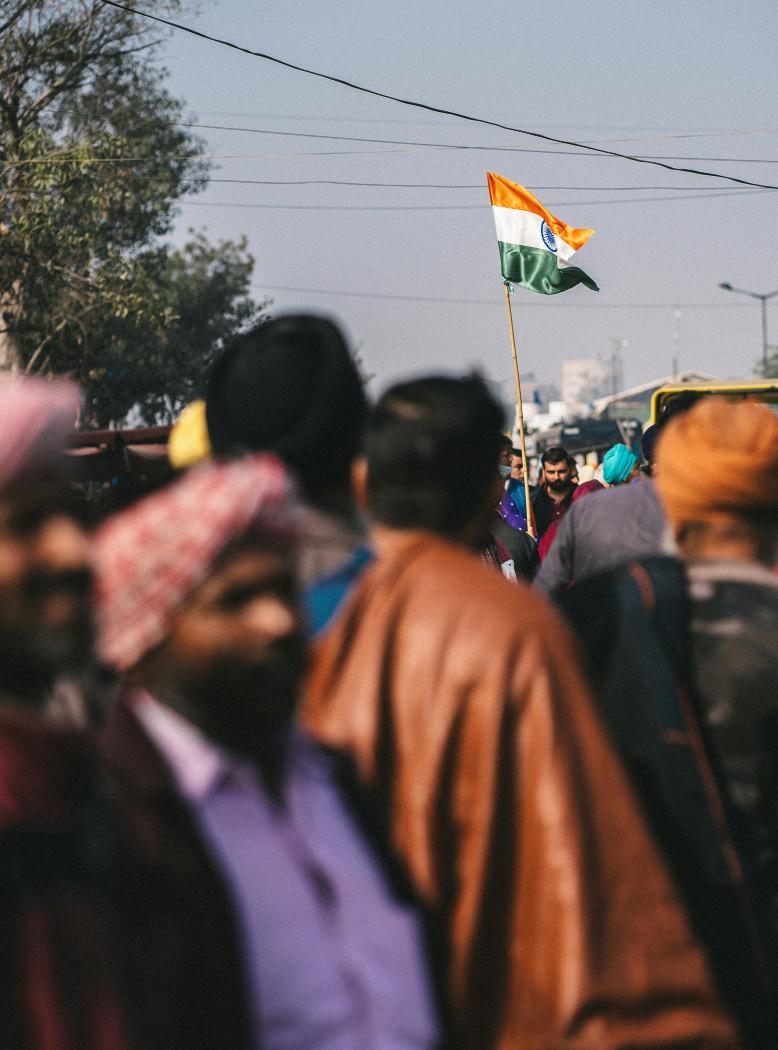
India’s Informal Caste Conservers: The Role of Vigilante Violence in Sustaining Social Hierarchies
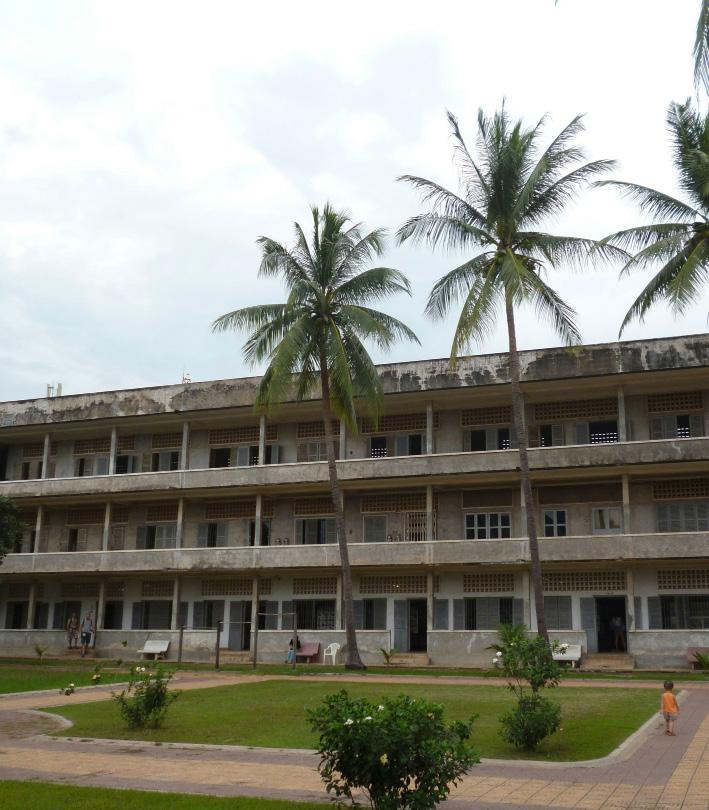
“Simple American Barbarism:” Peasants and US Nation-Building in Cambodia, 1970-1975
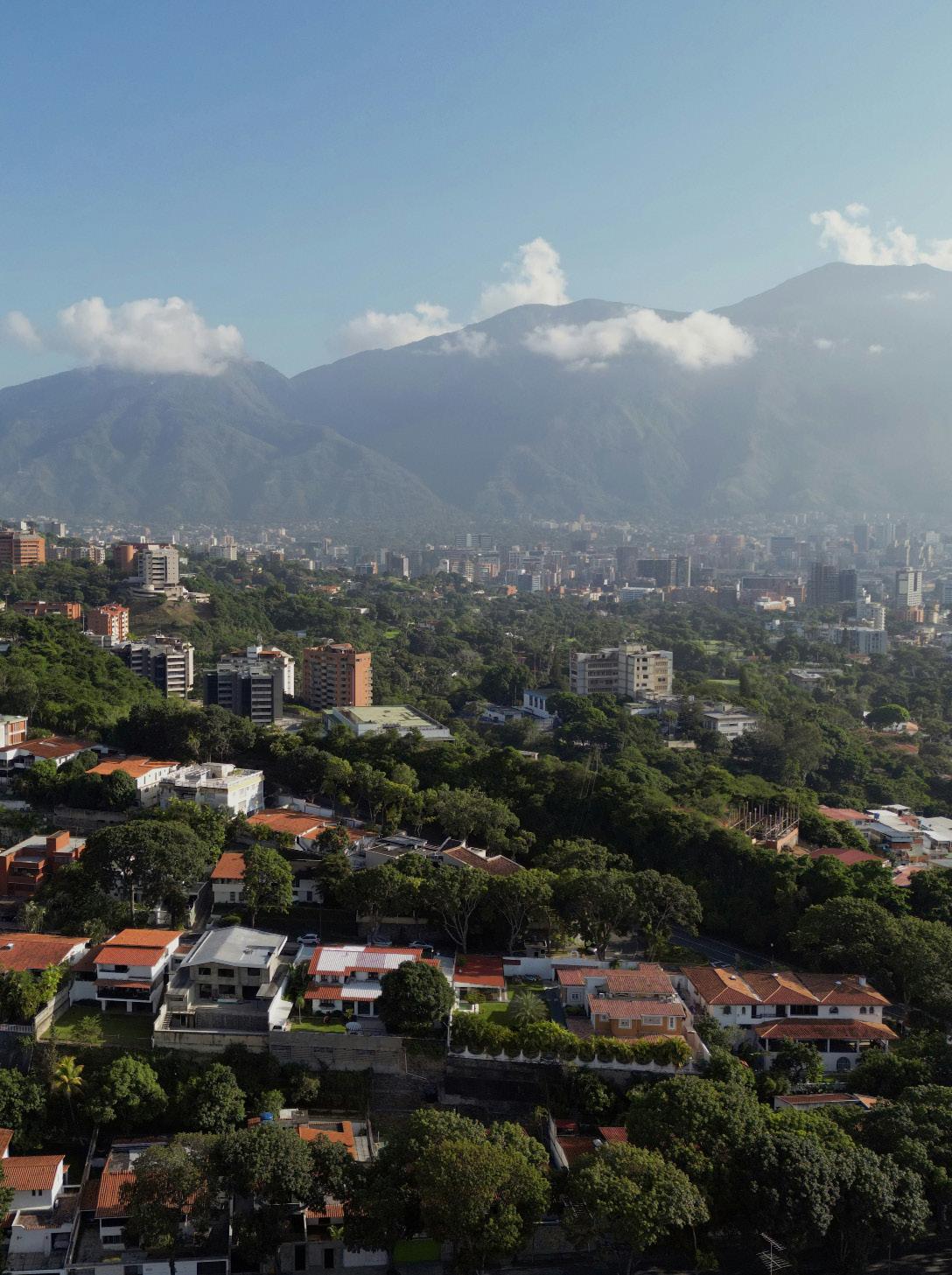
Securitizing Displacement: U.S. Security Rhetoric and the Utilization of Venezuelan Migration
Patel
Calvin Pan
Kristina Harrison
Staff
Editor-in-Chief
Co-Managing Editor
Co-Managing Editor
Production Chair
Media Manager
Event Coordinator
. Apal Upadhyaya
Wyatt Dayhoff
Anna Douglas Piper
Charlotte Sparling
Luke Crafton
Priya Buddhavarapu
Staff Editors
Ingrid Schaefer
Avery Sigler
Elizabeth Hardin
Astrid Cheng . Alex Yang
Ella Gilmore
Alexander Macturk
Vyshnavi Tatta
Information
About the Virginia Journal
The Virginia Journal of International Affairs is the University of Virginia’s preeminent publication for undergraduate research in international relations. The Virginia Journal is developed an distributed by the student-run International Relations Organization of the University of Virginia. The Virginia Journal is one of the only undergraduate research journals for international relations in the country, and aims both to showcase the impressive research conducted by the students at U. Va. and to spark productive conversation within the University community. The Virginia Journal seeks to foster interest in international issues and promote high quality undergraduate research in foreign affairs. The Journal is available online at vajournalia.org
Submissions
Interested in submitting to the Virginia Journal? The Journal seeks research papers on current topics in international affairs that are about ten pages in length. Only undergraduates or recent graduates are eligible to submit. Submissions should be sent to VaJournal. editor-in-chief@iroatuva.or
Contact
Please direct all comments to vajournalia@gmail.com
From the Editor
Dear Reader,
Building on the global events of the last year, the Spring of 2026 has continued posing the same difficult questions of our world. Ethnic, religious, and political conflicts have left an almost unrecognizable world amid a shifting global order. The development of conflicts makes international relations more complicated yet more important today than ever before. The works featured in this edition of the Virginia Journal deliberately provides a survey of multiple areas in need of a deeper research focus for the future of international relations. These works are presented with the hope of providing clarity and encouraging facilitation of deeper, critical conversations that must be addressed for a more peaceful future.
The papers included in the Spring 2026 Journal include topics ranging from the impacts of successful and unsuccessful nation building in Cambodia to evaluating the generational effects of a stratified caste system in India, from assessing the outcomes of humanitarian organizations like Doctors Without Borders to the political instability of Venezuela. Our goal for this edition of the Virginia Journal was to not only display works with a variety of focus, but also to encourage deeper discussions in each of these different subject areas. I sincerely hope that our readers will learn and thoughtfully engage with these papers and their content beyond the pages on which they are printed.
The production of this journal would not have been possible without the collaboration and contributions of many different people throughout the editing and production process. The hard work members of the Virginia Journal Executive Board and our staff editors cannot be overstated. We are also grateful for the trust of the authors whose papers are featured in this edition and for their contributions throughout the editing process. Furthermore, the Virginia Journal extends our gratitude to the International Relations Organization at UVA for providing us their continued support to
produce this semester’s edition of the Journal.
Lastly, I would like to show appreciation to our readers for taking the time to read and learn from the works presented in this edition of the Virginia Journal. Thank you for taking the time to support undergraduate research in a time more important than ever before. This may be my last Virginia Journal, but I know there will be many more to come. Now, I am honored to present the Spring 2026 edition of the Virginia Journal of International Affairs.
Sincerely,
Apal Upadhyaya Editor-in-Chief of the Virginia Journal of International Affairs
Spring ‘26
The Prison Doctor’s Dilemma: Co-optation, False Safety, and the Limits of Témoignage in Srebrenica
By: Farah Eljazzar
About the Author:
Farah Eljazzar is a Third-Year student, pursuing a major in Foreign Affairs and a double minor in Spanish and Religious Studies from McLean, Virginia. On Grounds, she served as The Cavalier Daily’s Opinion Editor for the 136th term and is involved in the University’s Arab Student Organization, Lebanese Club, and the Muslim Institute for Leadership and Empowerment. She is
particularly interested in how state power and national security discourse shape diaspora communities.
Abstract:
This paper examines the ethical limits of humanitarian impartiality and neutrality through a case study of Médecins Sans Frontières’ (MSF) presence in the Srebrenica enclave between 1993 and 1995. Drawing on humanitarian ethics theory and MSF’s internal case study, the paper argues that in contexts of political violence, humanitarian tenets of neutrality and impartiality inevitably become entangled with the very political forces that perpetuate suffering. The humanitarian space that MSF seeks to carve out may, in extreme cases, lead to silence in the face of atrocity and ultimately, complicity. The analysis draws on the “prison doctor” role that MSF workers were forced to assume, the production of a false sense of safety that MSF perpetuated, and the failure of témoignage when witnessing is severed from political advocacy. Ultimately, the case exposes a moral trilemma at the heart of humanitarianism and calls for a reevaluation of neutrality in contexts where humanitarian space itself has become ethically untenable.
Introduction
Médecins Sans Frontières (MSF), meaning ‘doctors without borders,’ provides medical assistance to those affected by “conflict, epidemics, disasters, or exclusion from healthcare.”1 The organization adheres to medical ethics and the principles of “impartiality, independence, and neutrality,” prioritizing provision of aid independent of partisanship and championing universal access.2 These tenets are built on medical ethics that require the organization to employ a variety of strategies, such as negotiating access independent of political interests and mobilizing rapid emergency response. Together, these culminate in the MSF’s core goal: to “save as many lives as possible in as short a time.”3
Yet, this commitment generates a fundamental ethical paradox in situations of hyper-politicized violence that often necessitate MSF’s presence. The impartiality and political neutrality that MSF aims to abide by simply cannot, and should not, be applied in the midst of an ethnic cleansing, siege, or genocide. In such contexts of political violence, the very act of humanitarian aid, no matter how neutral in intent, inevitably
1 Médecins Sans Frontières, “Who We Are,” accessed December 15, 2025, https://www.msf.org/who-we-are.
2 Ibid
3 Médecins Sans Frontières, “How We Work,” accessed December 15, 2025, https://www.msf.org/how-we-work.
becomes entangled with the political forces that perpetuate suffering. The humanitarian space that MSF seeks to carve out may, in extreme cases, lead to silence and complicity in the face of atrocity.
“MSF
and Srebrenica 1993-2003”
In extreme crises, MSF’s foundational goal of saving lives may require political engagement that transcends and occasionally contradicts its stated principles of neutrality and impartiality. This paper argues that humanitarian aid organizations like MSF must sometimes prioritize mitigating human loss over neutrality in political conflict to remain effective in their commitment to saving as many lives as possible. Aid organizations must decide whether to maintain operational access by remaining silent, or risk that access by bearing witness — a practice called témoignage — to the political causes of suffering.
The siege and subsequent fall of the Srebrenica enclave (1993-1995) serve as a critical case study of this dilemma. After Yugoslavia disintegrated in 1992, Bosnian-Serbian forces took control of most of eastern Bosnia-Herzegovina and attempted to forcibly bring all non-Serbs under their rule. As a result, the city of
Srebrenica became an overcrowded enclave that served as a refuge for the region’s Bosnian Muslim population. In March 1993, General Morillon, Commander of the United Nations Protection Force (UNPROFOR) in Bosnia-Herzegovina, finally managed to enter the enclave with a United Nations High Commissioner for Refugees (UNHCR) convoy after months of blockade. He promised the population that he and his forces would “ stay… until the day that their survival is assured.”4 At the same time, MSF entered the city and informed the media of the enclave’s dire conditions. For two years, the team worked in what was considered to be an open-air prison. When Serbian forces attacked Srebrenica in July 1995, two MSF staff members who were helping the wounded witnessed the military offensive. They saw that NATO soldiers did not provide any military resistance to the capture of the safe area or towards protecting Srebrenica’s population. MSF provided detailed accounts about the atrocities that had occurred, and it was discovered that during the weeks that followed, Serbian forces had tortured, massacred, and slaughtered over 8,000 Bosnian-Muslim male adults and adolescents over the age of sixteen.5
4 John F. Burns, 1993. “U.N. General to Stay in Bosnian Town.” The New York Times, March 17, 1993. https://www.nytimes.com/1993/03/17/world/un-general-to-stay-in-bosnian-town.html.
5 Laurence Binet, MSF and Srebrenica, 1993–2003, Speaking Out Case Studies (Paris: Médecins Sans Frontières, 2025).
A document published by MSF titled “MSF and Srebrenica 1993-2003” explores the constraints and dilemmas raised when MSF launched internal investigations regarding the events that occurred in the enclave.6 This document was specifically designed to explore MSF’s témoignage—the act of bearing witness. The document itself creates a narrative that unfolds chronologically, following the siege of Srebrenica and MSF’s entry, the organization’s daily routine and medical work in what they describe as an “open air prison,” and, finally, a review of the accounts from the MSF team’s logbook during the Serbian siege. The document also maintains a unique methodology, utilizing a comprehensive combination of primary sources: internal MSF documents, transcribed interviews, and differing perspectives of disagreements that MSF staff grappled with regarding the moral dilemmas at hand. Ultimately, the document works to reach five conclusions: the profound discomfort of being trapped in a “prison doctor role,” the failure of the international community and the United Nations on the basis of creating a political illusion of a safe area, the notion of witnessing amidst an ethnic cleansing, an active demand for political accountability, and an evaluation of MSF’s complicity—a question explicitly raised but never settled.
Therefore, this paper aims to grapple with three moral 6 Ibid
dilemmas that MSF faced. First is the “prison doctor dilemma,” by which MSF’s medical care managed a captive population and legitimized violent imprisonment that inadvertently became a tool for the Serbian forces. Second, the false sense of safety that MSF imposed upon the Bosnian population allowed their presence to be co-opted into sustaining a fundamentally unjust and dangerous political arrangement. Lastly, and most importantly, why an organization dedicated to bearing witness (témoignage) decided not to publicly advocate for the population’s desired evacuation, even when its own coordinators on the ground identified this as a potential risk to thousands of lives?
The Prison Doctor Dilemma
The agonizing dilemma in which humanitarian action is urgently needed yet entangled with political violence constitutes not merely an operational challenge, but also a moral one. Hugo Slim’s introduction in Humanitarian Ethics emphasizes that effective humanitarian action should respect people’s autonomy and agency, working with those impacted, rather than treating them as passive beneficiaries.7 Slim identifies a fundamental problem: if there is no clear criteria for humanitarian action beyond 7 Hugo Slim, Humanitarian Ethics: A Guide to the Morality of Aid in War and Disaster (Oxford: Oxford University Press, 2015).
generalized value statements regarding impartiality and neutrality, what is the basis on which aid organizations like MSF maintain moral coherence while operating in contexts where providing medical care and confronting political violence become inseparable challenges? Moreover, can a mission of immediate protection of life be challenged if confronting the political root causes of suffering is necessary to save those lives?
This dissonance is evident in the MSF case study document. MSF field reports describe Srebrenica as an “openair prison” and a “safe haven turned legal extermination camp.”8 Graziella Godain, the program manager at the MSF-France operational center, details daily negotiations with Serbian commanders who largely viewed the Muslims with contempt and MSF as a nuisance at best.9 Here, the moral limbo becomes glaringly concrete: MSF’s commitment to maintaining neutrality and impartiality forced them to play an active role in facilitating an ethnic cleansing. This reality proves not only that it was clear that the enclave was an extermination camp, but that dehumanized Bosnians were not a population that MSF could be impartial towards if it truly wanted to prioritize saving as many lives as possible. Instead, MSF was presented with a series of impossible
8 Laurence Binet, MSF and Srebrenica, 1993–2003, Speaking Out Case Studies. 9 Ibid
choices that rendered the ‘impartial humanitarian’ a functional component of the oppressive apparatus.
Further, Eric Stobbaerts, MSF General Coordinator in the former Yugoslavia, highlights an internal debate within the organization: MSF’s medical care kept mortality just low enough to avoid a “humanitarian scandal that would attract too much attention” by ensuring the “stability of (not improving) the health status of the populations-cum-bargaining chips,” while also admittedly reinforcing Sarajevo’s oppressive political system by neglecting that “above all, [the Muslims] wanted their freedom.”10 Stobbaerts’s considerable frustration with the system’s inherent dehumanization and MSF’s bare-minimum response ultimately places the organization not only in a position of complicity but also as an essential actor that perpetuated Serbian violence undermining the very principles the organization was founded on. Stobbaerts questions MSF’s inaction, writing, “Isn’t it time to start thinking differently, thinking objectively, by going back to the principles that brought us here, and by grasping the suffering of these populations?”11 To be a “prison doctor” meant providing a bare-minimum level of care, not with the objective of ensuring that the Bosnians were receiving the treatment they deserved, but 10 Ibid 11 Ibid
to keep the population just below the tipping point of a scandal. MSF was not merely a passive witness to the atrocities within the enclave, but a part of an essential operational function of an ethnic cleansing while claiming champion access and neutrality.
The Humanitarian Alibi
It must be acknowledged that MSF was not in a uniquely culpable position but rather was one actor in a long-broken system that perpetuated political instability. In addition to humanitarian aid and medical care, Srebrenica also needed structural political reform. In the early stages of the conflict, numerous foreign policymakers characterized the war as rooted in “centuries-old ethnic hatred” and chose to employ humanitarian aid rather than work towards systemic reforms or further intervention.12 This plays into the notion of the ‘humanitarian alibi’—a metaphor for a process in international conflict in which humanitarian aid substitutes for tangible political reform to prevent violence from becoming cyclical.13 This concept can be extrapolated to that of Srebrenica’s, as humanitarian aid can serve as a substitute for political action, not just out of negligence, but as a systemic pattern
12 Matthew Bywater, “The Humanitarian Alibi: An Overview and a Redefinition,” Journal of International Humanitarian Action 6 (2021): Article 22, https:// doi.org/10.1186/s41018-021-00106-7.
13 Ibid
when states and international actors prefer the optics of aid over the risks or commitments of intervention.
Published by the Journal of International Humanitarian Action, “The humanitarian alibi: an overview and a redefinition” specifically investigates how the atrocities of Srebrenica were in large part a result of a humanitarian alibi and political inaction at the international stage. The research asserts that an internal review of the humanitarian response to the crisis in Bosnia and Herzegovina concluded that “there seems...to have been no concerted centralized policy to create a massive relief response [or] a humanitarian alternative to forceful political action” and that “humanitarian response came to fill the vacuum left by the weak political and military policies of the U.S. and other Western nations” with “no strategic reflection on what goals this response was intended to achieve.”14 While the journal does not specifically refer to or investigate MSF, it must be acknowledged that this analysis directly frames the context in which MSF operated within the enclave. By providing the very “massive relief response” that filled the political vacuum, MSF became an unwitting pillar of the humanitarian alibi: it substituted humanitarian action for political will, sustaining the captive population to a bare-minimum standard while the internation-al community avoided meaningful 14 Ibid
intervention.
More specifically, though the MSF case study document does not directly discuss the notion of the humanitarian alibi, several of the moral dilemmas and internal discourses that MSF outlines in its case study allude to it. This is encapsulated in MSF’s discussion of the false sense of safety that it may have imposed on Bosnians inside the enclave. While the United Nations provided a formal security ‘guarantee’ by declaring Srebrenica a “safe zone,” MSF’s presence became a powerful psychological tool which the internally displaced refugees associated with safety and protection. Internal debates, discourse, and disdain from MSF staff themselves note how this false sense of safety may have prevented transparency and the decision to allow refugees to seek evacuation. MSF Director Jacques de Milliano blames the Dutchbat leadership (Dutch UN staff who worked directly with MSF) for this failure. De Milliano explained that after the fall of the enclave, the Ministry of Defense claimed that the Dutch would only depart when all wounded and refugees of Srebrenica had been brought to safety.15 Additionally, he notes that humanitarian aid organizations working on the ground gave “the refugees a false sense of protection.”16 Though refugees spoke directly to MSF
15 Laurence Binet, MSF and Srebrenica, 1993–2003, Speaking Out Case Studies
16 Ibid
and humanitarian aid staff regarding this sense of safety, staff did nothing to accurately clarify such statements, which could have resulted in the loss of life and directly negated principles of humanitarian aid.
“MSF’s
presence became a powerful psychological tool which the internally displaced refugees associated with safety and protection.
discourse,
Internal debates,
and disdain from MSF staff themselves note how this false sense of safety may have
prevented transparency
and the decision to allow refugees to seek evacuation”
Moreover, MSF made the decision in July 1995 to stay in Srebrenica based on the belief that their “presence [would] limit the effects of the violence, because [the Serbian forces] wouldn’t dare.”17 Just a few days after the decision, the MSF team was under the impression that “fighting was about to resume.” Soon enough, the enclave quickly came under constant bombardment and on July 6th when Bosnian Serb forces launched major attacks on the 17 Ibid
enclave, thirteen wounded patients arrived at the MSF hospital in a single day. Over the following weeks, as the enclave fell and mass atrocities unfolded, the MSF Srebrenica team logged six rockets falling on the UN compound, 150 tank bombs, and shelling throughout the day — with four killed and thirteen wounded recorded on July 6th alone, “although the number of dead people [would] be most probably much higher since they don’t arrive at the hospital.”18
Legally, the safety guarantee was in the hands of the UN. However, morally, MSF must bear the burden of understanding how its symbolic power influenced civilian behavior. Its principles as a humanitarian organization—originally meant to alleviate suffering and prioritize saving the greatest number of lives in the shortest amount of time—were co-opted into an alibi for governments to claim they were helping while avoiding deeper responsibility of protection, prevention of atrocity, and peacemaking. MSF chose to remain in Srebrenica in July 1995 partly because they believed their presence would deter atrocities, an assumption that proved tragically wrong. This requires us to ask: Did MSF unintentionally reinforce the illusion that the enclave was protected, ultimately going against humanitarian ideals of prioritizing saving lives?
18 Ibid
Témoignage
If MSF’s medical work risked complicity as filling the role of a “prison doctor” and perpetuating a false sense of security, an even wider gap emerged between the theory and practice of témoignage—the act of witnessing. The MSF case study document notes that by 1995, 70% of the enclave population wished to evacuate the city.19 MSF field coordinators like Stobbaerts advocated for evacuation of the refugee population but were overruled by headquarters, who said that evacuation was “not MSF’s mandate,” not only because it would have been a political declaration, but also that it would be “playing into the Serbs’ hands” in terms of ethnic cleansing. 20
Hugo Slim’s “Relief Agencies and Moral Standing” supplements this claim by asserting that humanitarian aid organizations such as MSF find themselves in a moral limbo, attempting to represent values of humanity and peace yet intervening in situations dominated by inhumanity and violence. Slim argues that the “debate surrounding humanitarian principles,” specifically those of neutrality and impartiality, “is ultimately a debate about the moral stance or position of third parties in other 19 Ibid 20 Ibid
people’s wars.”21 This ethical dilemma creates a profound cognitive dissonance for agencies like MSF: on the one hand, they are mandated to uphold principles of neutrality and impartiality, and on the other, they must operate within a system that is designed to fundamentally shatter those principles. Specifically, when it comes to témoignage, MSF experienced a dilemma in which they were committed to witnessing the atrocities, neglect, and massive suffering the refugees endured, but were torn on the moral duty to vocalize support for the enclave population as it would be considered “political.”
MSF aims to adhere to conflict ideals témoignage, impartiality, and neutrality. This dissonance is sharpened by the inherent flaw in the concept of impartiality itself, which Slim helps to expose. Impartiality demands that humanitarian aid be provided based on need rather than taking sides during a political conflict.22 For MSF in Srebrenica, this meant attempting to remain impartial—providing care based on need—while witnessing atrocities without the ability to politically advocate for Bosnian evacuation. At the same time, the act of witnessing makes MSF’s humanitarian work inherently non-neutral—MSF simultaneously
21 Hugo Slim, “Relief Agencies and Moral Standing in War: Principles of Humanity, Neutrality, Impartiality and Solidarity,” Development in Practice 7, no. 4 (1997): 342–352.
22 Médecins Sans Frontières, “How We Work,” accessed December 15, 2025, https://www.msf.org/how-we-work.
worked to save lives while bearing witness to atrocities, all while remaining silent on the population’s own needs.
“At the same time, the act of witnessing
makes MSF’s humanitarian work inherently non-neutral—MSF simultaneously
worked to save lives while bearing witness to atrocities, all while remaining silent on the population’s own needs”
This places MSF in a position where the act of witnessing publicized violence has transformed the organization into an actor that interprets injustice. This undermines the MSF’s claim of political neutrality.
If the humanitarian tenets of bearing witness, impartiality, and neutrality are in conflict, we must question whether humanitarian organizations should be held to the standard of moral obligation to facilitate escape—even if it steps beyond the bounds of outlined tenets. If humanitarianism is defined strictly as lifesaving, MSF could not advocate for evacuation while remaining politically neutral. But because those within MSF perceived
themselves as advocates of safety, political advocacy was the only practical option present in order to save lives.
Humanitarianism as a Political Choice
MSF’s adherence to its medical mission and application of témoignage, while morally grounded, is not practically feasible, since it ultimately renders the organization vulnerable to cooptation. By continuing to provide care within the enclave, MSF’s presence was used as evidence that Srebrenica was indeed a “safe zone” despite the absence of meaningful military or political protection, even from NATO soldiers. Medical care thus replaced genuine protection or political reform, allowing international actors to avoid responsibility as violence escalated. However, MSF did not create this dilemma alone. The organization was one of many victims of a corrupt political system. It found itself saving lives while managing a captive population, perpetuating an image of safety while lacking the power or predictability to guarantee it, and bearing witness while unable to advocate for the population’s primary desire—escape.
It must be noted that abandoning the tenets of impartiality and neutrality may have jeopardized MSF’s integrity and long-term
reputation. While political engagement would have saved lives in the short term and adheres to the mission of saving as many lives as possible, sacrificing neutrality risks eroding the operational access that allows MSF to provide care for future conflicts.
Neutrality functions not only as an ethical principle but also as a strategic tool that enables humanitarian access. In Srebrenica, overt political advocacy may have saved lives immediately but may have jeopardized MSF’s ability to operate in other conflict zones, thereby undermining its legitimacy as a humanitarian aid organization.
Nonetheless, Srebrenica poses a catastrophic exception: when the humanitarian space itself is unethical, how can organizations be expected to maintain neutrality? The case suggests that in the face of systematic annihilation, the most ethical and practical form of humanitarianism may require a temporary, principled partiality that prioritizes saving lives over adherence to a neutrality that has already been co-opted.
Conclusion
The atrocities in Srebrenica reveal a profound ethical contradiction at the heart of humanitarianism: MSF did not fail because it misunderstood the task at hand or because it lacked moral commitment. Instead, its failure was ultimately due to its
adherence to neutrality, impartiality, and témoignage, resulting in a moral ‘trilemma’ in which all three cannot be achieved together. In such a context, medical care became a substitute for protection, humanitarian presence became an alibi for inaction, and witnessing became constrained by the very principles meant to give it moral force. The “prison doctor” dilemma thus exposes a structural failure in which humanitarian action reinforces and sustains the very systems of violence that it seeks to mitigate.
“Srebrenica, therefore, demonstrates the impossible dilemma and danger of expecting humanitarian organizations to compensate for political failure while simultaneously requiring that they remain neutral within fundamentally unethical political spaces”
Nevertheless, responsibility cannot rest solely with MSF. The organization operated within an environment that repeatedly utilized humanitarian aid without political reform, allowing states and international institutions like the UN to claim engagement without intervening to prevent violence. Srebrenica, therefore,
demonstrates the impossible dilemma and danger of expecting humanitarian organizations to compensate for political failure while simultaneously requiring that they remain neutral within fundamentally unethical political spaces. Ultimately, Srebrenica forces a reckoning with the limits of humanitarianism itself.
Humanitarian aid organizations should not be expected to uphold the ethical tenets of neutrality and impartiality within spaces that are engineered for political violence, nor should they bear sole responsibility for failures of international political will.
Bibliography
Binet, Laurence. MSF and Srebrenica, 1993–2003. Speaking Out Case Studies. Paris: Médecins Sans Frontières, n.d.
Bywater, Matthew. “The Humanitarian Alibi: An Overview and a Redefinition.” Journal of International Humanitarian Action 6 (2021): Article 22. https://doi.org/10.1186/s41018-021- 00106-7
Médecins Sans Frontières. “How We Work.” Accessed December 15, 2025. https://www.msf.org/how-we-work
Médecins Sans Frontières. “Who We Are.” Accessed December 15, 2025. https://www.msf.org/who-we-are
Slim, Hugo. Humanitarian Ethics: A Guide to the Morality of Aid in War and Disaster. Oxford: Oxford University Press, 2015.
Slim, Hugo. “Relief Agencies and Moral Standing in War: Principles of Humanity, Neutrality, Impartiality and Solidarity.” Development in Practice 7, no. 4 (1997): 342–352.
India’s Informal Caste Conservers: The Role of Vigilante Violence in Sustaining Social Hierarchies
By: Aman Patel
About the Author:
Aman is a Fourth-Year International Economics and Foreign Affairs double major from Fredericksburg, Virginia. Currently, he is interested in international human rights law and policy strategies surrounding foreign direct investment. In his free time, he enjoys playing basketball, hiking, and hanging out with friends.
Abstract:
Despite the constitutional abolition of “untouchability,” caste oppression in India persists, frequently enforced through brutal vigilante violence. This paper interrogates the mechanisms that allow upper-caste militias, specifically the Ranvir Sena in Bihar, to operate with virtual impunity. Rather than viewing these atrocities as isolated instances of rural disorder, this study argues that vigilante violence functions as a structured form of caste governance designed to repress Dalit mobilization and sustain historical hierarchies. Through a multi-layered analysis, the paper identifies three interconnected drivers of this impunity: systemic bias and complicity within India’s legal institutions, often resulting in “judicial massacres”; the seamless integration of caste militancy into local economic and electoral machinery; and the role of media in distorting public narratives to shield perpetrators from accountability. By examining the Ranvir Sena’s legacy, this research highlights how informal violence and state-sanctioned impunity can coexist within formal democratic frameworks to perpetuate deep-seated inequality.
Introduction
Much has been written about the brutality of caste-based violence across India and the motivations of the perpetrators behind attacks on Dalit, formerly “untouchable,” communities. Human rights scholars and local activists frequently attribute this violence to resentment over calls for land redistribution, cow protection, and the growing assertions of Dalit rights.1 Are these explanations sufficient? Are these premeditated, unpunished bouts of vigilante violence simply the product of local political tensions and social panic, or do they reflect something enduring and systemic about India’s democracy? Failure to address these questions risks obscuring the deeper political functions that caste violence plays in sustaining hierarchies that post-independence India was supposed to abolish; it also risks mistaking state inaction for state weakness, ignoring the possibility that this toleration of informal violence could be a calculated move. In this sense, the case offers an important lens for comparative politics scholars studying how informal violence and state-sanctioned impunity can coexist with formal democratic institutions. Like other democracies with histories of inequality, India demonstrates how extra-legal actors can be used to enforce social
1 Narula, Broken People, 28-30; Human Rights Watch, Violent Cow Protection in India: Vigilante Groups Attack Minorities, February 19, 2019, https://www. hrw.org/report/2019/02/19/violent-cow-protection-india/vigilante-groups-attack-minorities.
hierarchies that the state ostensibly rejects.
I will present a different perspective by analyzing the mechanisms that made it possible for upper-caste vigilante groups like the Ranvir Sena to act with virtual impunity in enforcing caste hierarchies through violence and how this may have reinforced the subjugation of Dalits over time. Specifically, I will show that, like other vigilante groups, Ranvir Sena’s impunity is not coincidental, but structured. Impunity stems from systemic failures and caste biases within India’s legal and political institutions, the intertwining of caste militancy with local economic and electoral powers, and the distortion of caste-based violence in media narratives. I will argue that these characteristics allow vigilante violence to operate as a legitimate mechanism of caste governance and to reinforce hierarchies that have been imposed on Dalits for centuries. My first two contentions are specific to the case of the Ranvir Sena’s activity in rural Bihar, while the final contention is a broader commentary on public opinions of vigilantism in India.
Table of Contents, Methodology, and Methods
To explore this argument, my paper begins with a brief overview of the research methodology and the sources used to
analyze the Ranvir Sena and its broader context. It then moves through three interconnected sections, each addressing a distinct mechanism that enables caste-based vigilante violence to persist: institutional complicity and bias within the legal system, the entrenchment of caste militancy in local political and economic structures, and the role of media in shaping public narratives about caste violence. While each section can stand alone analytically, taken together, they reveal how deeply embedded and interconnected these mechanisms are in India’s democratic fabric. The paper concludes with a discussion of the limitations of the case study, including questions of generalizability and source constraints, before reflecting on the broader implications of this analysis for understanding both the persistence of caste hierarchies and the function of informal violence in democratic states.
My research is grounded in the feminist research ethic as articulated by Brooker Ackerly and Jacqui True in their 2010 book Doing Feminist Research in Political and Social Science. I have committed to a perspective that emphasizes three pillars: reflexivity, attentiveness to marginalized voices, and justice-oriented knowledge production. This framework allows me to ethically engage with both the subjects of my inquiry and the power structures shaping their lives. Following this framework, I have approached
the subject of caste violence not only as a matter of academic interest but as a site of lived suffering that demands rigor and sensitivity. I drew from a wide range of interdisciplinary sources, including legal case studies, ethnographic fieldwork, historical texts on caste and colonialism, quantitative analyses, and contemporary policy analyses.
To manage the diversity of sources, I organized them into three primary analytical categories: legal and state literature, which included court rulings, reports, and legislative commentary; social and cultural analyses, such as historical and ethnographic work on caste and violence; and methodological texts, which provided the analytical tools to interpret and find patterns across literature. This structure allowed me to trace recurring themes such as systemic, symbolic violence, and caste-based hegemonic power.
Finally, in reflection of my positionality as an Indian man studying in the West, I recognize I occupy a space of both proximity and distance. I am aware that my academic position is shaped by privilege and creative freedom. I do not claim to speak for Dalit communities or victims of caste violence; my goal is to critically examine the systems that perpetuate their marginalization and to situate this work as part of a broader scholarly and ethical commitment to justice and responsibility.
The Legal Fiction of Accountability
The Constitution of India claims to provide social, political, and economic justice for all under the proclamation of the Constituent Assembly. To achieve this end, the constitution has several provisions to protect individuals of “scheduled”—the official name for lowest—castes and to improve their position.2 Article 17 abolished “untouchability;” Article 21 guarantees the right to life and liberty, which the Indian Supreme Court interprets as “the right to be free from degrading and inhuman treatment…and the right to speedy justice;” and Article 46’s objective is to promote the educational and economic interests of the “weaker sections of people,” especially those of the scheduled castes/tribes.3 In addition to these constitutional provisions, the government pursued a twopart strategy designed to bridge the socio-economic gap between the scheduled caste population and the average Indian; one part focused on protection, the other focused on enabling pathways to self-sufficiency. I will focus on the protective measures. This protection came with the passage of two acts: the Protection of Civil Rights Act in 1955 and the Scheduled Castes and Scheduled Tribes (Prevention of Atrocities) Act in 1989. These laws were meant to broaden the categories of abuses for which upper-caste individuals
2 Narula, Broken People, 179.
3 Narula, 179-180.
could be punished while subsequently giving more weight to Dalit complaints of abuses, opening more pathways to protection from systemic violence.4 However, despite these constitutional provisions and legal mechanisms, the Indian legal system, through both formal structures and informal biases, consistently failed to hold upper-caste vigilantes accountable and thus reinforced caste hierarchies. Human Rights Watch has documented systemic failures in registering First Information Reports (FIRs), delays in arrests, and gross negligence in prosecuting perpetrators of caste atrocities. I infer that the state’s inaction is a form of complicity that has allowed violence to become normalized.5 As a result, opportunities for upward mobility were greatly hindered and Dalits were less likely to report cases, exacerbating an already discriminatory system. Enforcement is rare, delayed, and in some cases, sabotaged.
“...the Indian legal system, through both formal structures and informal biases, consistently failed to hold upper-caste vigilantes accountable and thus reinforced caste hierarchies”
4 Narula, 181-183.
5 Narula, 188-189.
The poor performance of the judiciary in situations involving caste violence is exemplified by the 1996 Bathani Tola massacre in Bihar, in which members of the Ranvir Sena slaughtered twenty-one Dalits, mostly women and children. The group claimed justification for their actions based on the perceived threat posed by the growing influence and activities of the CPI(ML) in the region, asserting they had to “pluck this thorn out before it destroyed their very existence.”6 The CPI(ML) supported lower-caste labourers’ demands for better wages and challenges to oppressive practices by landlords, which the Bhumihar landlords found to be a direct threat to the dominance of established social hierarchy. The ensuing violence was directed at Dalits, backwards castes, and Muslims who were perceived as supporters of the CPI(ML). Bhatia notes that simply being a Dalit or member of a backward caste was often enough reason to be seen as a supporter of the CPI(ML), and thus targeted.7 While convictions were initially secured in 2010 after a protracted trial (where only 23 of the 68 accused were initially convicted), the Bihar High Court overturned the verdicts in 2012, citing lack of evidence. The court’s decision contrasted starkly with survivor testimonies and eyewitness accounts, prompting Bhatia to refer to the decision as a “judicial massacre.”8 The ruling
6 Bhatia, “Justice Not Vengeance,” 45.
7 Bhatia, 49.
8 Bhatia, 41.
was the result of several factors: the tardy and biased manner of the judicial system; “a clear leaning in the direction of the accused;” dismissal of victim and survivor testimonies; political patronage; and the acceptance of biased police accounts.9 All of these factors suggest that the judiciary is inherently biased to the wishes of upper-caste elites while blatantly ignoring the Dalits’ right to justice. Bhatia argues that the judicial system’s dismissal of credible Dalit testimonies reveals a deeper structural bias that does not view Dalits as trustworthy or aggrieved subjects worthy of state protection. This bias is not only legal but also social; it reflects a Brahminical epistemology embedded within India’s institutions wherein justice is often mediated through the lens of caste authority rather than equality.
Beyond the failures of individual trials, the broader pattern of police inaction and state neglect has solidified a culture of impunity for upper-caste militias. The implementation of the Scheduled Castes and Scheduled Tribes Act failed largely due to its overreliance on a fair police force. As the Dalit district superintendent of police noted, “Higher-caste police already have a biased mind. They assume that complaints of [Dalits] are made up or bogus. It is with this mentality that they investigate.”10 Under Indian law, a po-
9 Bhatia, 41, 49-50, 53.
10 Narula, Broken People, 187.
lice officer is obligated to enter all reports made to him, and failure to do so is grounds for punishment. However, in most cases surrounding abuse of Dalits, the offending officer escapes punishment and is not held accountable. By taking on the role of the judiciary and having the first say on which cases are valid for registration according to their upper-caste lens, the police influence cases at all levels through caste bias and corruption. In the event that cases are registered, the absence of special courts can delay convictions up to three or four years.11 From 1992 to 1997, about 750 cases of atrocities were registered annually by state police. In the same timeframe, only four out of 1,500 cases led to a conviction.12 With such low levels of conviction and the commonly expressed opinion that Dalits are not worthy of state protection, vigilante actors are implicitly given impunity to incite violence without fear of accountability. Kumar notes that despite the Ranvir Sena’s formal ban in 1995, the organization continued to operate freely and openly, a claim made evident by the fact that its spokesman issues advance notice of massacres through media, and that most of the massacres committed were after the ban.13 These failures are not merely bureaucratic but strategic, reflecting a tacit alignment between state power and dominant caste interests.
11 Narula, 188-189.
12 Narula, 191.
13 Narula, 179; South Asia Terrorism Portal, “Ranvir Sena.”
“When violence goes unpunished and perpetrators are protected, Dalits are not only physically terrorized but are symbolically reminded of their ‘place’ in the social order”
Under these contexts, legal impunity is not a byproduct of state failure; it is a deliberate form of caste governance. I argue that the result is not only an emboldening of vigilante groups, but also a chilling effect on Dalit political and social mobility. When violence goes unpunished and perpetrators are protected, Dalits are not only physically terrorized but are symbolically reminded of their “place” in the social order. The law’s inaction sends a clear message that Dalit lives are expendable, their rights negotiable, and their assertions punishable. The erosion of faith in democratic institutions manifests in declining Dalit participation in the formal legal system, as it fails its most vulnerable citizens while legitimizing dominance of upper-caste militias.
The Political Economy of Fear: Land, Labor, Votes
The cited purpose of the Ranvir Sena was to counter the
influence of left-wing extremist groups, or Naxalites,14 in Bihar.15
However, the group became entangled within the broader political economy of Bihar, where caste hierarchies have historically been anchored in control over land, labor, and electoral votes. Though banned by the state government, the Ranvir Sena continued to gain social and political backing, ultimately emerging as a quasi-political actor with deep connections to dominant caste interests.16 This linkage to political institutions enabled the Sena to operate with informal impunity. In addition to retaliation against extremist groups, vigilante violence in Bihar was used as a strategic political tool. Groups like the Ranvir Sena would receive donations from parties sympathetic to them for doing “dirty works” during elections, including voter intimidation and the targeted repression of Dalit mobilization.17 These acts of violence were not singular episodes of conflict, but structured interventions aimed at preserving social, economic, and political order that privileged dominant castes.
At the heart of this impunity lies the historical structure of agrarian inequality in Bihar, where land ownership has been tightly concentrated in the hands of dominant castes, particularly Bhumihars and Rajputs, while Dalits and Other Backward Castes (OBCs)
14 Naxalites are Indian communist groups influenced by Maoist ideology, also known as Maoists or Naxals.
15 Narula, 179; South Asia Terrorism Portal, “Ranvir Sena.”
16 Kumar, “Peasant Unrest,” 222.
17 Kumar, 219.
were relegated to landless laborers. Caste senas are explicitly linked to the economic interests of the landowning classes and are used to enforce control. The unequal arrangement of the economy created an environment in which caste dominance went beyond symbolism to be materially enforced through land control, labor exploitation, and wage suppression. Caste senas like the Ranvir Sena became the de facto enforcers of this semi-feudal order. The emergence of these militias is best understood as a direct response to the material contradictions between the “rural oligarchy” and the lower castes.18 As Dalits and backward castes grew more conscious and assertive by the late 1970s—organizing through leftist platforms like the CPI(ML)—their demands for higher wages and resistance to landowner exploitation increasingly challenged the dominance of upper-caste landlords.19 This is where upper-caste groups began responding with organized violence. Land, as a contested resource, emerged as a site of imminent class war, with landlords deploying vigilante violence to maintain their privileges.20
The strategic use of violence by upper-caste militias served 18 Kumar, 10.
19 APS Chouhan, APS Chauhan, and Dinesh Kumar Singh, “Political Economy of Agrarian Movement in Bihar.” The Indian Journal of Political Science 65, no. 4 (2004): 521-22. http://www.jstor.org.proxy1.library.virginia.edu/stable/41856074.
20 Kumar, “Peasant Unrest,” 10.
a dual purpose: to prevent the redistribution of resources and to discipline Dalit political assertion. What distinguishes the Ranvir Sena’s actions is not merely the scale or brutality of its violence, but the political protection it received. Despite being officially proscribed, its members often evaded arrest, and many of its leaders continued to enjoy local influence. This protection was structural, as Bhattacharya (2012) explains: “from its inception it has functioned on the public-private partnership model, an example of a state-backed private army.”21 This is of crucial significance, as it demystifies the Ranvir Sena as an organized group backed by the state. The Sena became a counterweight against the perceived influence of Naxalites, and the state’s refusal to prosecute (or even investigate) massacres committed by the Sena reflects more than mere indifference; it signals institutional endorsement of caste supremacy.
I am not claiming that all vigilante actors emerge from identical conditions. My goal is to flesh out the origin of impunity, and in the case of the Ranvir Sena, how its integration into Bihar’s economic and political machinery enabled it to normalize violence as a form of governance. The fact that such violence went unpunished for decades reveals how the legal system functions as a 21 Bhattacharya, Dipankar. “Ranvir Sena Revisited: Feudal-Kulak Power and Lalu-Nitish Continuum,” Economic and Political Weekly 47, no. 30 (July 28, 2013), 15. https://www.jstor.org/stable/23251760
protective shield for the economic interests of dominant castes. By failing to convict or even properly investigate these massacres, the state does not merely condone the violence, it legitimizes the very structure that necessitated it.
“By failing to convict or even properly investigate these massacres, the state does not merely condone the violence, it legitimizes the very structure that necessitated it”
Media as a Sword and Shield
Our prior discussion was situated in historical Bihar, where the Ranvir Sena group enjoyed impunity through mechanisms including a weak judiciary, caste bias, and political backing. But what about the modern day, where anything can be recorded or reported on with the click of a button? In India, where caste hierarchy permeates every major institution, the media plays a crucial role in shaping public memory and political consequences. Through underreporting, euphemistic framing, and selective storytelling, dominant media narratives often obscure the systemic
Bibliography
Bhatia, Bela. “Justice Not Vengeance: The Bathani Tola Massacre and the Ranbeer Sena in Bihar.” Economic and Political Weekly 48, no. 38 (September 21, 2013): 41–54. http://www.jstor.org/stable/23528540
Bhattacharya, Dipankar. “Ranvir Sena Revisited: Feudal-Kulak Power and Lalu-Nitish Continuum.” Economic and Political Weekly 47, no.30 (July 28, 2012): 15–19. http://www.jstor.org/stable/23251760
Brooke A. Ackerly and Jacqui True. (2010). Doing Feminist Research in Political and Social Science (Second Edition). Bloomsbury Publishing.
Chouhan, APS, APS Chauhan, and Dinesh Kumar Singh. “Political Economy of Agrarian Movement in Bihar.” The Indian Journal of Political Science 65, no. 4 (2004): 517–30. http://www.jstor.org.proxy1.library.virginia. edu/stable/41856074.
Center for the Study of Organized Hate. Streaming Violence: How Instagram Fuels Cow Vigilantism in India. November 19, 2024. https://www.csohate.org/2024/11/19/instagram-fuels-cow-vigilantism-in-india-report/.
Heinz, Carolyn Brown. “Bihar: Caste, Class, and Violence.” In The Asian City in the 21st Century: Contemporary Approaches to Municipal Management, edited by Robert J. Stimson and Scott Baum, 39–54. Dordrecht: Springer, 2011.
Kain, Deepanshu, Narayan S., Sarkar T., & Grover G. Online Caste-Hate Speech: Pervasive Discrimination and Humiliation on Social Media. The Centre for Internet and Society, 1-32 (2024). https://www.apc.org/ en/pubs/online-caste-hate-speech-pervasive-discrimination-and-humiliation-social-media
Krishnan, Kavita. (2013). Battle for Justice and Democracy: Laxmanpur-Bathe. Economic and Political Weekly 48, no. 45/46 (November 16, 2013): 10–12. http://www.jstor.org/stable/23528596
Kumar, Ashwani. “Peasant Unrest, Community Warriors and State Power in India: The Case of Private Caste Senas (Armies) in Bihar.” PhD diss., University of Pennsylvania, 2003. ProQuest Dissertations & Theses Global (305304187). https://proxy1.library.virginia.edu/ login?qurl=https%3A%2F%2Fwww.proquest.com%2Fdissertations-theses%2Fpeasant-unrest-community-warriors-state-power%2Fdocview%2F305304187%2Fse-2%3Faccountid%3D14678
Minority Rights Group. “Dalits in India.” Accessed May 10, 2025. https://minorityrights.org/communities/dalits/.
Narula, Smita. Broken People: Caste Violence Against India’s “Untouchables”. New York: Human Rights Watch, 1999. https://www.hrw.org/report/1999/03/01/broken-people.
Olcott, Mason. “The Caste System of India. American Sociological Review, 9, no.6 (December 1944): 648-57. https://doi.org/10.2307/2085128.
South Asia Terrorism Portal. “Ranvir Sena.” Accessed March 16, 2026. https:// www.satp.org/satporgtp/countries/india/terroristoutfits/ranvir_sena.htm
Human Rights Watch. Violent Cow Protection in India: Vigilante Groups Attack Minorities. February 19, 2019. https://www.hrw.org/report/2019/02/19/ violent-cow-protection-india/vigilante-groups-attack-minorities
What is India’s caste system? (2019, June 19). BBC News. https://www.bbc. com/news/world-asia-india-35650616
“Simple American Barbarism:” Peasants and US Nation-Building in Cambodia, 19701975
By: Calvin Pan
About the Author:
Calvin Pan is a Third-Year from McLean, VA, graduating in 2026
with a Bachelor’s in Foreign Affairs with minors in French and Data Science before graduating in 2027 with a Master’s in Public Policy at the Batten School. Calvin’s research interests center around economic development, with a focus on urban planning, transportation, and sustainability. Calvin speaks fluent French and Mandarin, and is aiming to pursue a career in development
policy in West Africa and East Asia. He is currently writing a thesis for the Foreign Affairs Distinguished Major Program on the effectiveness of subnational diaspora engagement policies in attracting diaspora foreign direct investment (FDI). Calvin was the former President of UVA’s International Relations Organization, and is also a Representative with the University Judiciary Committee. In his free time, he loves to play keyboard with his rock band (@namegamebandd on Instagram!) and run and hike around Charlottesville.
Abstract:
On May 4th, 1970, as protests over Cambodia turned deadly at Kent State, the United States was already embarking on one of its most ill-fated nation-building ventures. Between 1970 and 1975, Washington invested enormous sums of money, airpower, and political capital into sustaining the Khmer Republic under Lon Nol. Yet in April 1975, the regime collapsed, ushering in Khmer Rouge rule. Why did such an immense commitment of resources fail to produce a viable state? This paper tests a central hypothesis in the nation-building literature: that success depends on constructing a governing coalition that incorporates smallholding farmers representing the median voter. In overwhelmingly rural
Cambodia, that median voter was a Khmer Buddhist peasant in the central rice lands, primarily concerned with debt relief, economic security, and protection from predatory violence. I argue that U.S. nation-building failed because neither Washington nor the Khmer Republic succeeded in incorporating—and in many cases actively alienated—this pivotal constituency. Thus, the case of Cambodia strengthens the median voter nation-building hypothesis. Using process tracing, the paper reconstructs the causal chain linking American intervention to peasant political realignment. Drawing on archival memoranda, congressional debates, budgetary records, contemporary journalism, and postwar peasant interviews, I examine five potential levers of coalition-building: the 1970 ground incursion, the subsequent bombing campaign, reform of the Cambodian armed forces, the targeting and oversight of economic aid, and the enactment of pro-peasant legislative reforms. Across these domains, I find a consistent pattern: policies either ignored rural grievances or exacerbated them, from indiscriminate bombing and tolerated military corruption to captured aid programs and unimplemented reform promises. The result was a regime increasingly detached from its rural base and dependent on external support. When U.S. aid contracted in 1974–1975, the absence of peasant buy-in rendered the Republic
unsustainable. This case underscores a broader lesson: external resources cannot substitute for domestic coalition-building grounded in the preferences of the governed.
Introduction
On May 4th, 1970, the sound of bullets pierced the air at Kent State University as the Ohio National Guard fired on unarmed protesters, killing four students—none of whom were above the age of twenty. The students were demonstrating against what quickly became one of America’s most hated and least successful attempts at nation-building: the U.S. intervention in Cambodia. On March 18th, 1970, Cambodian General Lon Nol launched a coup with possible CIA support to oust King Norodom Sihanouk, whose government had been tacitly harboring North Vietnamese bases. American troops then crossed the Cambodian border in late April 1970, aiming to opportunistically destroy those North Vietnamese bases and also to defend the newly declared Khmer Republic from North Vietnamese troops that had seized its northern provinces. Unexpectedly, this energized the weak Khmer Rouge movement, which grew from a lowly 4,000 members—fed by those whose villages had been burnt in the American incursion who now resonated with the organization’s
anti-imperialist message. By the withdrawal of U.S. ground troops in June, the Rouge were 40,000 strong.1 The next five years were a civil war between the American and South Vietnamese-supported Khmer Republic and the North Vietnamese-supported Rouge. It was a constant losing battle: no matter how many bombs the U.S. dropped on Communist forces or how much money was splurged on Lon Nol’s pacification campaigns, the Khmer Rouge kept getting stronger. On April 12th, 1975, the last American choppers took off from Phnom Penh—presaging the fall of Saigon just 17 days later. Why did the immense commitment of American money and manpower to Cambodia only empower the soon-tobe-genocidal Khmer Rouge? Put simply, why did U.S. nationbuilding from 1970 to 1975 fail in Cambodia? This paper tests a popular hypothesis in nation-building discourse: that nationbuilding succeeds when a government builds a coalition that includes small farmers representing the median voter.
Methodology
I begin by operationalizing this hypothesis for the case of
1 Kate Grace Frieson, “The Impact of Revolution on Cambodian Peasants: 1970-1975” (Ph.D., Australia, Monash University (Australia), 1992), https:// www.proquest.com/docview/304036873/abstract/B21950BF67D04B8EPQ/1.
Cambodia. Was the Cambodian small farmer really the median voter, and if so, what were their preferences? From 1970-1975, rural dwellers formed ninety percent of Cambodia’s population and thus were definitively the median voter.2 The median voter represented the eighty-five percent of Cambodians who were Khmer, Buddhist, and lived in the central rice lands.3 Unlike Vietnam, Cambodia had a weak landowning class: by 1962, only 14% of the rural population had more than 5 hectares, 55% had between 1–5 hectares, and 31% had less than 1 hectare (which had actually decreased since 1955’s figure of 55% with less than 1 hectare).4 As such, our median voter would likely own the one hectare of land needed for subsistence rice farming and would not be very concerned with land redistribution.5 However, the proportion of completely landless tenant farmers had grown from 4% in 1950 to 20% by 1970, and this growing minority would have favored land redistribution. More pressing for most farmers was the system of debt peonage run by mostly Chinese moneylenders and merchants. In 1959, soon-to-be National Assembly Member Khieu Samphan said that most Cambodian farmers “lack[ed] operating capital” and would borrow at usurious 2 Frieson, “The Impact of Revolution on Cambodian Peasants,” 13.
3 Frieson, 20.
4 Ben Kiernan and Chanthou Boua, Peasants and Politics in Kampuchea, 19421981 (London New York: Zed press M. E. Sharpe, 1982), 6.
5 Kiernan and Boua, Peasants and Politics in Kampuchea, 4.
interest rates of 200-300%.6 They would then be unable to pay those loans off due to selling produce at below-market rates made by Chinese merchants, leading the colonial Credit Office to find in 1952 that 75% of peasants were “in significant debt.”7 Our median voter was therefore likely a Khmer Buddhist peasant living in the central ricelands, concerned with debt reform but not land redistribution.
Given this, what does our independent variable, ‘whether peasants were included in the coalition or not,’ look like? For starters, we cannot examine how peasants voted. Cambodia had two elections from 1970-1975: a Presidential election in 1972 regarded as fraudulent by Western and American diplomats with Lon Nol inflating his vote total by as much as 20%, and a one-party-only parliamentary election in 1972.8 There is also no available evidence of Cambodian opinion polls during this period. We are then left with two approximations of peasant support for a given coalition (the government or the Khmer Rouge). The first measure is whether the coalition proposed and enacted any significant debt-reform measures. The logic here is twofold: if peasants supported the coalition, they would have advocated for
6 Kiernan and Boua, 7.
7 Kiernan and Boua 10, 8.
8 William Shawcross, Sideshow: Kissinger, Nixon and the Destruction of Cambodia (New York: Simon and Schuster, 1979).
debt reform, and if the coalition cared about peasants, it would have tried to win their support with debt reform. The second measure is anecdotal peasant attitudes and actions. In her 1992 thesis, Kate G. Frieson conducted 111 interviews with Cambodian peasants who had lived through the 1970-75 period. Though not meeting the gold standard of a well-sampled opinion poll, the relatively large sample size and regional diversity of her respondents makes her work the best approximation we have of peasant attitudes in this period. In short, for the hypothesis to succeed here, the Khmer Republic and the US must have failed primarily because their coalition did not attract the median peasant voter.
American Options to Increase Popular Support
The Lon Nol government began without peasant support. King Norodom Sihanouk had a “traditional, almost messianic, and personal appeal” to the Cambodian peasantry, who largely (though not uniformly) viewed their Samdech Euv (King Father) as above the corruption that had plagued the government.9 When he was overthrown, large peasant demonstrations broke out in the center 9 Kiernan and Boua, Peasants and Politics in Kampuchea, 1942-1981, 218; Frieson, “The Impact of Revolution on Cambodian Peasants,” 62.
of the country, with 25,000 peasants marching in Kompong Cham to call for the reinstatement of Sihanouk and the National United Front for Kampuchea (FUNK) coalition government he had formed (which, unbeknownst to peasants, was in collaboration with the Communist Party of Cambodia or Khmer Rouge).
“The intervention also wrecked the legitimacy of the Khmer government in the regions that it was able to claim due to the behaviors of ARVN troops and the validation of FUNK cries against U.S. imperialism”
Did the Lon Nol government gain any peasant backing after this poor start? There were five main ways the U.S. could have aided in creating political support. We shall examine each of those in detail. Firstly, the intervention by American and South Vietnamese (ARVN) ground troops from April 29th, 1970 onward to clear out Northern Vietnamese bases could have been an avenue for the Lon Nol government to consolidate its hold on rural regions. However, the intervention ended up securing only the southern half of the country for the Lon Nol
government: growing domestic outrage spurred by Kent State, coupled with Nixon’s promise of Vietnamization and limiting U.S. involvement in Indochina, led Congress to mandate a pullout by June 30th, 1970. The intervention also wrecked the legitimacy of the Khmer government in the regions that it was able to claim due to the behaviors of ARVN troops and the validation of FUNK cries against U.S. imperialism. Upon taking power, Lon Nol decided to “compensate for the lack of peasant support by exploiting the Khmers’ traditional fear of the Vietnamese.”
Thousands of Vietnamese men were taken from their villages, shot, and thrown into the Mekong, “and for days their swollen bodies floated downstream.”10 In retaliation to those atrocities, South Vietnamese troops committed their own crimes when they crossed into Cambodia, “raping, looting, burning.” In response, many Cambodian peasants joined the resistance against the Lon Nol government: “Villagers from Krachap, Prey Veng province told Ben Kiernan in 1980 that 3 peasants had been killed by ARVN soldiers. Some 50 people from this village decided to join the [FUNK] resistance as a direct result of South Vietnamese harassment.”11
10 Shawcross, Sideshow, 132.
11 Frieson, “The Impact of Revolution on Cambodian Peasants,” 95.
Method 1: Pacification Campaigns
Pacification campaigns were debated as a possible way the U.S. could counter this newly created anti-government sentiment. A New York Times article on June 6, 1970 mentions that Nixon Administration officials favored a program post-withdrawal that would “presumably include public safety operations in villages, aid to education and refugees, and attempts to repair the battered Cambodian economy, which was badly hurt by the destruction of rubber plantations during allied thrusts into Cambodia.”12
A monograph written by Brigadier General Tran Dinh Tho, commander of ARVN forces in the incursion, also mentions that post-withdrawal plans for the ARVN would include “pushing pacification and development efforts to success.”13 However, none of those programs were enacted. In sum, the US/ARVN ground intervention turned out to be an optics disaster for the Lon Nol government, and neither force carried out any campaign to win back the ‘hearts and minds’ of Cambodian villagers.
12 Tad Szulc Special to The New York Times, “U. S. Favors Allied Pacification Program in Cambodia,” The New York Times, June 7, 1970, sec. Archives, https://www.nytimes.com/1970/06/07/archives/us-favors-allied-pacification-program-in cambodia.html.
13 Dinh Tho Tran, “The Cambodian Incursion,” Indochina Monographs (Washington D.C.: U.S. Army Center of Military history, 1979), https://web.archive. org/web/20210831010346/https://apps.dtic.mil/dtic/tr/fulltext/u2/a324718.pdf.
Method 2: Military Actions Following Withdrawal
Secondly, military actions by the U.S. following the withdrawal of ground elements could have been a path to remedy those past errors and regain rural support. However, they would achieve the opposite effect. From July 1970 onwards, the primary means of American military intervention was Operation Freedom Deal, a massive bombing campaign that saw 539,129 tons of bombs dropped—nearly three times the 180,000 tons dropped on Japan during World War II. The bombing was incredibly haphazard, as the maps used by the U.S. Embassy were only 1:50,000 in scale. Individual boxes on the map would be designated as bombing zones, but as the Political Section Chief of the U.S. Embassy William Harben discovered, “nowhere in Cambodia could bombs be dropped without boxing a village.”14
Historians like Ben Kiernan and Kate Frieson generally agree that the bombings achieved their goal of staving off a revolutionary victory in the short term, playing a role in the 1973 FUNK siege of Phnom Penh barely failing.15 However, the human cost of the bombings was cataclysmic: 200-300,000 Cambodians were killed (5% of the nation’s population of seven million in 1970), and a further two million were internally displaced.16
14 Shawcross, Sideshow, 271.
15 Frieson, “The Impact of Revolution on Cambodian Peasants,” 188-189.
16 Ben Kiernan, ed., Genocide and Democracy in Cambodia: The Khmer Rouge,
“Thousands flocked to the ranks of the Khmer Rouge, who gave an outlet to the common rage that ‘the Khmers didn’t even have any airplanes and here the Americans had brought theirs to bomb us,’ emphasizing in recruitment messaging that the bombings were a ‘manifestation of
simple American barbarism’ ”
The destructive effect the bombings had on the lives of so many Cambodians fostered rage against the Lon Nol government: “In one village in the special region, Lon Nol was irreverently referred to as ‘A Knul,’ a name usually reserved for dogs.”17
Thousands flocked to the ranks of the Khmer Rouge, who gave an outlet to the common rage that “the Khmers didn’t even have any airplanes and here the Americans had brought theirs to bomb us,” emphasizing in recruitment messaging that the bombings were a “manifestation of simple American barbarism.”18 This groundswell of support for the Rouge allowed them to take full control of the FUNK, and by 1973, the name of the government-in-exile was the United Nations, and the International Community, Monograph Series / Yale University Southeast Asia Studies 41 (New Haven, Conn: Yale University Southeast Asia Studies, 1993); Shawcross, Sideshow, 156.
17 Frieson, “The Impact of Revolution on Cambodian Peasants,” 179.
18 Frieson, 178.
changed from the Royal Government of the National Union of Kampuchea to the Party Government.19
American high command believed the bombings to be essential to Cambodia’s survival, but also recognized that they were radicalizing the population. In response, in 1971 the Joint Chiefs of Staff submitted a second proposal for a pacification program to the Senior Review Group (SRG), chaired by Henry Kissinger. This would have allocated $325 million to Cambodia to be spent under the four headings of “Pacification,” “Unconventional Warfare,” “Psychological Operations,” and “Civil Affairs,” with the country divided into eight pacification areas “supervised by a new United States Deputy Ambassador—as in South Vietnam—in a new embassy structure.”20 A memorandum from Kissinger summarizing the SRG’s meeting on October 18th, 1971 reflects that the budget proposal was entirely approved, with a final $330 million requested from Congress. However, the eightzone pacification plan is entirely omitted, and no nation-building projects are mentioned.21 Even after the withdrawal of ground 19 Frieson, 198.
20 “Joint Chiefs Said to Devise Costly Cambodia War Plan,” The New York Times, October 13, 1971, sec. Archives,https://www.nytimes.com/1971/10/13/ archives/joint-chiefs-said-to-devise-costly-cambodia-war-plan-laird-said-to. html.
21 Henry Kissinger, “271. Memorandum From the President’s Assistant for National Security Affairs (Kissinger)” (United States Department of State, October 20, 1971), Nixon Presidential Materials, NSC Files, NSC Institutional Files (H-Files), Box H–63, SRG Meetings, Cambodian MAP, 10/18/71, National
forces, the American military strategy in Cambodia continued to hurt and radicalize peasants.
Method 3: Supporting the FANK
Thirdly, even if the USAF alienated peasants, the U.S. could have shaped their local counterpart, the Khmer National Armed Forces (FANK), into a competent force that could win the respect of rural Cambodians. From 1970 onward, the US provided nearly all the FANK’s funding and furnished the weapons and training that enabled it to grow from 30,000 men at the time of the coup to 220,000 soldiers by 1972.22 Yet, Washington did not succeed in using its control over the FANK to end its muchdespised culture of corruption. In December 1972, members of the United States Military Equipment Delivery Team discovered that FANK commanders were receiving salaries for “up to 100,000 soldiers that existed in name only,” and the State Department subsequently undertook reforms like “call[ing] for lists from all commanders, bimonthly strength reports, a new identification system and a central data bank.”23However, possibly due to shortstaffing of the U.S. Embassy (which was limited to 200 staff by Archives, https://history.state.gov/historicaldocuments/frus1969- 76v07/d271. 22 Frieson, “The Impact of Revolution on Cambodian Peasants,” 96. 23 Frieson, 154, 192.
Congressional statute), the implementation of those initiatives was not verified, and “army officers continued to find ways to avail themselves of pay belonging to their troops.”24 This corruption decreased peasant support for the army: “Cambodians… had too often seen ragged looking soldiers beg in the streets for food because their pay had been stolen or withheld by their officers.”25 Conscription drives for the army were needed by 1973, and by 1974, outright abduction of youth became necessary.26
The inability of the U.S. to reform the FANK meant that not only were the peasantry unwilling to join the FANK, but they also began viewing it as their enemy. Military commanders who had been given the reins to rule their own independent fiefdoms started terrorizing villagers for revenue. One poor peasant from Sisophon in the northwest explained his disaffection to a Chinese journalist who visited his village in 1970: “once my wife carried a basket of taros to the market, the Lon Nol men seized them all without paying one cent.”27 A November 1972 New York Times article details a litany of stories of peasant abuse by Lon Nol forces, with one inter-city taxi driver relaying that he routinely had to pay bribes at checkpoints, and that once, when he drove
24 Frieson, 192.
25 Frieson, 190.
26 Shawcross, Sideshow, 315.
27 Frieson, “The Impact of Revolution on Cambodian Peasants,” 154.
away from an expensive checkpoint, soldiers shot and killed one of his passengers.28 Overall, the American failure to reform the FANK meant that it too became a body that, through systematic embezzlement of soldiers’ wages and predation on common people, actively drove peasants away from the Republican government.
Method 4: Economic Aid
Did America’s coalition lead to any improvements with its fourth avenue, economic aid provided by the U.S. Embassy?
After the coup, the U.S. government poured tremendous sums into resolving the economic problems that it had created: by 1973, about 95% of all Cambodian government revenue came from the U.S.29 Paradoxically, however, U.S. officials had very little control over the day-to-day implementation of aid programs due to the Nixon Doctrine, which stated that “the United States could provide the material and counsel for an Asian country to withstand internal or external attack while remaining politically detached.”30
28 Sydney H. Schanberg Special to The New York Times, “Cambodian War Enriches the Corrupt, Debases the Poor,” The New York Times, November 30, 1972, sec. Archives, https://www.nytimes.com/1972/11/30/archives/cambodian-war-enriches-the corrupt-debases-the-poor.html.
29 Shawcross, Sideshow, 315.
30 Shawcross, 177.
This meant that the three major programs the U.S. implemented— the Commodity Import and Food for Peace Programs(intended to import essentials into Cambodia) and the Exchange Support Fund (intended to stabilize the Cambodian riel)—were captured by the corrupt Republican state. Generals used the programs to import luxury cars, while the CPI increased from 348 in March 1970 to 11052 by the end of 1974: an increase of over 3,000 percent.31
In addition to being captured, U.S. aid programs were also misallocated and did not resolve the three biggest humanitarian concerns facing Cambodia, all of which the U.S. had created: the refugee crisis, health crises, and food scarcity. Fleeing US bombing and constant violence, nearly two million refugees had congregated in Phnom Penh by the end of the war, where shanties became a common sight.32 This was completely ignored by coalition forces: the Lon Nol government had no coordinated refugee migration program, and its agencies “differed by a factor of 1000% on how many refugees there were.”33 Of the $244.1 million of aid between July 1972-1973, only $1.2 million was for refugee assistance, and the charities that took on most refugee work quickly became overwhelmed.34 This refugee problem and the devastation of war contributed to a health crisis where
31 Shawcross, 221.
32 Shawcross, 224.
33 Shawcross, 223.
34 Shawcross, 224.
“patients lined the wards of hospitals.” The U.S. government acted in active contempt of a solution. When Dr. Pheng Kanthel, the Ministry of Health representative on the Khmer Red Cross, wrote in August 1972 to Samuel Krakow, Director of International Services of the American Red Cross, asking for medical supplies, he had to wait eight months for a response. This response read that the U.S. Red Cross would provide only “6,433 bottles containing 385,900 vitamin tablets” which was then only shipped out after a Congressional interrogation by Ted Kennedy.35 Finally, the mass migration or death of peasants meant that by 1974, rice production had dropped to 17% of the pre-war total, causing food price hyperinflation that meant that the “vast majority of population of Phnom Penh could afford to buy little more than one day’s subsistence of rice in any week from early 1974 onward.”36 It took until March 1975 for the US to act on this: only “under extreme pressure from Congress and relief agencies” did the “White House agreed to ship free rice to Cambodia under Title II of Public Law 480,” increasing rice shipments from 440 tons a day to 700 tons a day—still nowhere near the 1,000 tons a day USAID estimated would be needed to feed the population.37
35 Shawcross, 226.
36 Shawcross, 318.
37 Shawcross, 349.
“In contrast to its activist role in South Vietnamese politics and perhaps constrained by the Nixon Doctrine, the U.S. never acknowledged this lack of legislative action as a problem in the hundreds of Nixon administration documents on Cambodia, nor tried to influence Cambodian poli-tics to create pro-peasant policy”
Method 5: Pro-Peasant Policy
With the U.S. and Khmer militaries actively causing problems that were unresolved by U.S. aid, could the Cambodian peasantry at least have counted on the U.S. to influence the Khmer government to deliver them hope for the future through pro-peasant policy, the fifth lever? The foundational document of Republican policy, the manifesto of the Republican Committee created after the coup, lists one of its seven policy priorities as “5 - organize the national economy in such a way that the standard of living of the population is improved.”38 The ten cabinets of the Khmer Republic would each pay some degree of lip service to this goal in their policy platforms. The platform of the Hang38 Ros Chantrabot, La République Khmère: 1970-1975 (Paris: Editions L’Harmattan, 1993), 41. Translated from the original French: “5 - organiser l’économie nationale de telle façon que le niveau de vie de la population soit amélioré.”
Thun Hak government (October 17th, 1972- April 17th, 1973) specifically mentions “land reform policy; pro-people credit policy” as priorities.39 Later in the war and perhaps more desperate for peasant buy-in, the platform of the Long Boret government (December 26th, 1973-June 16th, 1974) states that “to balance the burden on all classes and to prevent financial manipulation, the government will adopt a realistic monetary policy without delay,” and further that “bills will be introduced in Parliament for the taxation of superfluous wealth.”
40 Importantly, however, there exists no record of those policies ever being implemented. Khmer politicians often had ties to the Chinese lenders and merchants that such policies would target, such as Lon Nol with his “network of Chinese businessmen at his disposal, through the well-known restaurateur Thai San, whose daughter he remarried after the death of his wife.”41 Consequently, the Khmer Republic politician Ros Chantrabot stated that “no energetic measures were taken to control prices, and for good reason…the desire to take advantage of the situation as quickly as possible to enrich oneself…
39 Chantrabot, 165. Translated from the original French: “politique de réforme agraire; politique de crédit en faveur du peuple.”
40 Chantrabot, 174. Translated from the original French: “Pour équilibrer la charge sur toutes les classes et pour prévenir des manipulations financières, le gouvernment adoptera sans tarder une politique monétaire réaliste… Des projets de loi seront soumis au Parlement pour la taxation de la richesse superflue.”
41 Chantrabot, 97. Translated from the original French: “son réseau d’hommes d’affaires chinois, par l’intermédiaire du restau rateur bien connu Thai San, à la fille duquel il s’était rema-rié après le décès de son épouse.”
irresistibly won over Chinese merchants, politicians, and military leaders.”42 In contrast to its activist role in South Vietnamese politics and perhaps constrained by the Nixon Doctrine, the U.S. never acknowledged this lack of legislative action as a problem in the hundreds of Nixon administration documents on Cambodia, nor tried to influence Cambodian poli-tics to create pro-peasant policy. Throughout the Khmer Republic years, there was no policy of land or debt reform or redistributive taxation implemented that would create, or indicate, peasant buy-in to the Republican coalition, and no effort by the US to create such policies.
Conclusion
The United States had five possible levers to increase peasant support for the Khmer Republic. It used none of those to attract peasant loyalties, and in fact actively antagonized peasants through the first three (ARVN incursion, bombing, enabling a corrupt FANK)—resulting in a government coalition that did not
42 Chantrabot, 97. Translated from the original French: “hors les beaux discours de dénonciation, aucune mesure énergique ne fut-elle prise pour le contrôle des prix, et pour cause. Au contraire, on aurait dit que, par un phé-nomène d’imitation et d’entraînement, le désir de profiter au plus vite de la situation pour s’enrichir, sans souci du bonheur ou du malheur des humbles, gagnait irrésistible-ment les commerçants chinois, les gens de la classe politique et les chefs militaires”
pass any pro-peasant policies and was anecdotally not sup-ported by peasants. The surface-level catalyst for the fall of Phnom Penh was the termination of U.S. support after years of war-weariness finally caught up to Congress following the impeachment of Nixon. In December 1973, the Senate accepted a bill placing an absolute ceiling of $377 in economic and military aid to Cambodia for the year July 1974-1975, a nearly twofold decrease from the previous year. This decrease, which would collapse the government’s ability to fight, was a tacit admission of defeat.
43
However, the conditions created by the lack of peasant support— an army full of deserters and a Khmer Rouge growing stronger by the day—were what ultimately caused the Republic to be unsustainable after the end of U.S. support and collapse. Thus, the hypothesis stands: that the failure of the Khmer Republic stemmed from its and the U.S.’ inability to build a coalition that included the median peasant voter.
43 Shawcross, Sideshow, 325.
Bibliography
Benzaquen-Gautier, Stéphanie. “The Relational Archive of the Khmer Republic (1970–1975): Re-Visiting the ‘Coup’ and the ‘Civil War’ in Cambodia through Written Sources.” South East Asia Research 29, no. 4 (October 2, 2021): 450–68.
https://doi.org/10.1080/0967828X.2021.1989987.
Caldwell, Malcolm, and Lek Tan. Cambodia in the Southeast Asian War. New York: Monthly Review Press, 1973.
“Cambodia.” Keesing’s Record of World Events (Formerly Keesing’s Contemporary Archives). Stanford University, September 1967.
Chandler, David P. The Tragedy of Cambodian History. Yale University Press, 1991. http://www.jstor.org/stable/j.ctt32bnqh.
Chantrabot, Ros. La République Khmère: 1970-1975. Paris: Editions L’Harmattan, 1993.
CIA Directorate of Intelligence. “Central Intelligence Bulletin.” CREST. Langley, VA: Central Intelligence Agency, July 30, 1971. https://www.cia. gov/readingroom/docs/CIA RDP79T00975A019600090001-5.pdf.
Clymer, Kenton J. The United States and Cambodia, 1969-2000: A Troubled Relationship. RoutledgeCurzon Studies in the Modern History of Asia 20. London: RoutledgeCurzon, 2004.
Comptroller General of the United States. “U.S. Assistance To The Khmer Republic (Cambodia).” US Department of State, October 10, 1973. https://www.gao.gov/assets/b 169832-094064.pdf.
Conboy, Kenneth J., Ken Bowra, and Mike Chappell. The War in Cambodia 1970-75. Men-At Arms Ser, v. 209. London: Bloomsbury Publishing Plc, 2010.
Corfield, Justin James. “Khmer Stand up! A History of the Cambodian Government 1970 - 1975.” Thesis, Monash University, 2019. https://doi. org/10.26180/5c5a4baa49837.
Deac, Wilfred P., ed. Road to the Killing Fields: The Cambodian War of 19701975. 1st ed. Texas A & M University Military History Series 53. College Station: Texas A & M University Press, 2010.
Der Spiegel. “»Die Kommunisten werden Ordnung halten«.” July 15, 1973,
sec. Politik. https://www.spiegel.de/politik/die-kommunisten-werdenordnung-halten-a-11d4aed9- 0002-0001-0000-000041955097.
Eanes, Joel. “The Rise and Fall of the Khmer Rouge.” M.A., California State University, Fresno, 2002.
Guillou, Anne Y. “The Question of Land in Cambodia: Perceptions, Access, and Use since De Collectivization.” Moussons, no. 9–10 (December 1, 2006): 299–324.
https://doi.org/10.4000/moussons.2060.
Hazen, Sebhat Merse. “Kampuchea: The Foreign Policy Behavior of External Powers: 1954- 1982.” Ph.D., University of Southern California, 1983.
Kiernan, Ben, ed. Genocide and Democracy in Cambodia: The Khmer Rouge, the United Nations, and the International Community. Monograph Series / Yale University Southeast Asia Studies 41. New Haven, Conn: Yale University Southeast Asia Studies, 1993.
———. How Pol Pot Came to Power. Reprint. London: Verso, 1986.
———. “Introduction: Conflict in Cambodia, 1945-2002.” Critical Asian Studies 34, no. 4 (December 2002): 483–95. https://doi.org/10.1080/14672 71022000035893.
Kiernan, Ben, and Chanthou Boua. Peasants and Politics in Kampuchea, 19421981. London New York: Zed press M. E. Sharpe, 1982.
Kissinger, Henry. “271. Memorandum From the President’s Assistant for National Security Affairs (Kissinger).” United States Department of State, October 20, 1971. Nixon Presidential Materials, NSC Files, NSC Institutional Files (H-Files), Box H–63, SRG Meetings, Cambodian MAP, 10/18/71. National Archives.
Leonhardt, Ron. “The Economics of Genocide: Cambodia’s Financial Collapse Prior to Year Zero, 1950-1975.” Northerner Historical Review, January 1, 2013.
LIN, ERIN. When the Bombs Stopped: The Legacy of War in Rural Cambodia. Vol. 206. Princeton University Press, 2024. https://doi.org/10.2307/ jj.9021575.
Nolan, Keith. Into Cambodia. Westminster: Random House Publishing Group, 2008. Norodom Sihanouk, and Jean Barré. Souvenirs doux et amers Paris: Hachette, 1981.
Norodom Sihanouk, and Wilfred G. Burchett. My War with the CIA: The Memoirs. New York: Pantheon Books, 1973.
Norodom Sihanouk, and Norodom Sihanouk. War and Hope: The Case for Cambodia. 1. American ed. New York: Pantheon Books, 1980.
Osborne, Milton E. Before Kampuchea: Preludes to Tragedy. London [etc.]: Allen and Unwin, 1979.
Peou, Sorpong. Intervention and Change in Cambodia: Towards Democracy ? Indochina Series. Singapore: Institute of Southeast Asian studies, 2000.
The New York Times. “Joint Chiefs Said to Devise Costly Cambodia War Plan.” October 13, 1971, sec. Archives. https://www.nytimes. com/1971/10/13/archives/joint-chiefs-said-to devise-costly-cambodiawar-plan-laird-said-to.html.
Times, Fox Butterfield; Special to The New York. “Cambodian Officer Finances Rural‐Aid Program.” The New York Times, March 26, 1972, sec. Archives.
Times, Sydney H. Schanberg Special to The New York. “Cambodian War Enriches the Corrupt, Debases the Poor.” The New York Times, November 30, 1972, sec. Archives. https://www.nytimes.com/1972/11/30/archives/cambodian-war-enriches-the-corrupt debases-the-poor.html.
Times, Sydney H. Scranberg Special to The New York. “Roads of Cambodia Scarred by Five‐ Year‐Old War.” The New York Times, December 8, 1974, sec. Archives. https://www.nytimes.com/1974/12/08/archives/ roads-of-cambodia-scarred-by fiveyearold-war-some-have-returned. html.
Times, Tad Szulc Special to The New York. “U. S. Favors Allied Pacification Program in Cambodia.” The New York Times, June 7, 1970, sec. Archives.
Securitizing Displacement: U.S. Security Rhetoric and the Utilization of Venezuelan Migration
By: Kristina Harrison
About the Author:
Kristina Harrison is a First-Year student from Haymarket, Virginia. She intends to double major in Economics and Global Studies. Currently, she is interested in international policy topics that concern immigration and human rights, with a particular focus in Latin America. In the future, she hopes to conduct more specific research on how global economic policies regarding trade and financial institutions impact the political, economic, and social development of local communities.
Abstract:
How does the securitization of migration advance the United States’s geopolitical goals in Venezuela? I argue that the Trump Administration uses Venezuelan migration, through rhetoric, Temporary Protected Status (TPS) termination, and militarized border initiatives, to advance geopolitical leverage over Venezuela rather than to address genuine security risks. Drawing on securitization theory from the Copenhagen School this paper uses qualitative discourse analysis of DHS statements, administrative rhetoric, and security documents, alongside secondary data on immigration, humanitarian conditions, and crime. My analysis reveals disparities between security-based claims about migration and empirical evidence on crime, drug trafficking, and migration flows. The paper demonstrates how securitization enables extraordinary measures, such as TPS termination and border externalization, that function as de facto geopolitical tools rather than security solutions.
Introduction
The Trump administration’s securitization of migration demonstrates its willingness to enforce extraordinary policy
measures and exert influence over Venezuela. Migration factors significantly in U.S. security strategy. This focus has in turn reframed humanitarian safeguarding as a national security liability. Doing so undermines immigration protections—by transforming them into security management and enabling Trump administration officials to impose policies such as the termination of Temporary Protected Status (TPS)—in ways that serve new foreign policy purposes. Through termination, speech acts, and militarized border externalization the Trump administration has strategically securitized Venezuelan migration to advance geopolitical leverage over Venezuela rather than to address genuine security risks.
“Securitization theory posits that governments can frame certain issues as threats to national security, thereby justifying extraordinary measures such as increased political or military action”
This paper examines securitization theory to analyze how U.S. political elites construct Venezuelan migration as a national security threat, undermining previous protection and prompting
border externalization through military force against Venezuela. This paper also identifies arguments for immigration restriction by analyzing Department of Homeland Security (DHS) statements and media coverage. Furthermore, qualitative discourse analysis of recent policy statements about national security alongside humanitarian and immigration data will analyze the validity of securitization efforts. Finally, this paper will look at how recent developments in Venezuela, affected by securitization, reinforces U.S. geopolitical strategy in Latin America.
Theoretical Framework of Securitization
Securitization theory posits that governments can frame certain issues as threats to national security, thereby justifying extraordinary measures such as increased political or military action. These issues are not objectively threatening but become framed as such through rhetoric alone.1 A state actor articulates a ‘speech act’ that poses a threat to a referent object and convinces the public or intended audience to think so as well. In this case, certain administration officials, such as President Trump and former DHS Secretary Kristi Noem, are the securitizing actors; the
1 Holger Stritzel, “Securitization Theory and the Copenhagen School,” in Security in Translation, New Security Challenges Series (London: Palgrave Macmillan, 2014), 11, https://doi.org/10.1057/9781137307576_2.
referent object is U.S. national security; the audience is the wider American public. In all, the speech act is that Venezuelan migrants are a threat to U.S. security because of their economic strain and Venezuela’s ties to the drug trade.
The United States and the European Union have used migration to advance securitization-related policy. Literature has discussed how the return of identity policies is connected to migration securitization. Migrants are referred to as “irregular” and therefore connotated as dangerous to national identity and security.2 This “security threat” has garnered more attention in American politics since the Obama administration, most notably with the creation of the joint U.S.-Mexico Southern Border Program of 2014 that paved the path for militarized border control.3 Current Trump administration policies aimed at migration securitization include criminalizing immigrants with increased detentions and deportations.4 ‘Invasion’ rhetoric continues to 2 Bastian A. Vollmer, Policy discourses on irregular migration in Germany and the United Kingdom: 1973-1999. 2010. [Thesis, fully internal, Universiteit van Amsterdam] https:// pure.uva.nl/ws/files/1040201/80690_Bastian_A_Vollmer_PhD_Dissertation_ UvA_2_v4.pdf; Francis Fukuyama, “Against Identity Politics: The New Tribalism and the Crisis of Democracy.” Foreign Affairs 97, no. 5 (2018): 90–114. http://www.jstor.org/stable/44823914.
3 U.S. Department of Homeland Security, Southern Border Campaign Plan (Washington, DC: Department of Homeland Security, 2014), https://www.dhs.gov/sites/default/files/publications/14_1120_memo_southern_ border_campaign_plan_1.pdf.
4 Jiachuan Wu, et al., “U.S. deportation tracker: Counting arrests, deportations,” NBC News, April 15, 2025, https://www.nbcnews.com/data-graphics/us-immi-
solidify these policies.
Policy Background: TPS and U.S. Framing of Venezuelan
Migration
Established by Congress in 1990, TPS serves as a humanitarian safeguard, protected by national law.5 The provision allows nationals from other countries to escape crises and legally work in the United States. In January of 2025, the Biden administration’s DHS released a statement extending TPS to Venezuela for an 18-month period.6 The DHS authorized this augmentation because of “the severe humanitarian emergency the country continues to face due to political and economic crises under the inhumane Maduro regime.”7 After President Donald Trump assumed office later that month, the DHS reversed this stance, despite the humanitarian crisis remaining unchanged.
Under the direction of Secretary Noem, DHS determined that conditions in the country no longer met TPS requirements gration-tracker-follow-arrests-detentions-border-crossings-rcna189148.
5 Nardine Saad, “Judge rules ending protections for Venezuelan and Haitian migrants is unlawful,” BBC, September 5, 2025, https://www.bbc.com/news/ articles/c3vzknpywp4o.
6 US Department of Homeland Security, “DHS to Extend Temporary Protected Status for Venezuela,” January 10, 2025, https://www.dhs.gov/archive/ news/2025/01/10/dhs-extend-temporary-protected-status-venezuela.
7 DHS, “DHS to Extend Temporary Protected Status.”
and ordered the termination of TPS for Venezuela in October of 2025.8 The conditions Noem and DHS considered emphasized less the humanitarian situation in Venezuela and more on new U.S. security strategies. DHS cited the “irregular migration and the clear magnet effect” caused by Venezuelan TPS as well as the department’s dedication to promote national security as reasons why protections ceased.9 Noem invoked the magnet effect—the debated hypothesis that immigrants are drawn to areas with generous welfare benefits—as justification for the termination of TPS for around 600,000 Venezuelan nationals in the United States.10 This hypothesis, however, has been demonstrated to be highly context-specific.11 With that being said, Noem and DHS did not provide specific evidence proving refugees and immigrants from Venezuela harm the U.S. economy or security. The U.S. has the largest number of immigrants compared to any other country, yet political rhetoric continues to alienate them, whether or not
8 US Department of Homeland Security, “DHS Terminates 2021 Designation of Venezuela for Temporary Protected Status,” September 3, 2025, https://www. dhs.gov/news/2025/09/03/dhs-terminates-2021-designation-venezuela-temporary-protected-status
9 DHS, “DHS Terminates 2021 Designation.”
10 Julia Gomez, “What’s happening to Venezuelans? Everything you should know about TPS,” USAToday, February 20, 2025, https://www.usatoday.com/story/news/politics/2025/02/20/venezuelans-lose-tps-designation-us/78293727007/.
11 William L. Allen, Mariña Fernández-Reino, and Isabel Ruiz, “Immigration and the Welfare State,” Oxford Review of Economic Policy 41, no. 1 (Spring 2025): 64–86, https://doi.org/10.1093/oxrep/graf014.
they hold documentation.12
The Biden administration’s DHS strictly issued and enforced TPS protections for Venezuelan nationals. With rigorous national security and public safety screening procedures that eligible individuals must follow to obtain TPS status, any individual who was identified as a potential threat would be “detained, removed, or referred to other federal agencies for further investigation or prosecution as appropriate.”13 Additionally, anyone who had a criminal background of one felony or two misdemeanors were prohibited from applying.14
Despite the contradictory DHS orders, both the Biden and Trump administrations regarded the Maduro regime as illegitimate and a political threat to the United States. In February of 2023, Former President Biden issued a statement supporting new elections in Venezuela with his administration imposing sanctions on the country as well as issuing a $25 million bounty on Maduro’s conviction.15 Then in December 2025, The Trump
12 Pew Research Center, “Key Findings about U.S. Immigrants,” August 21, 2025, https://www.pewresearch.org/short-reads/2025/08/21/key-findings-about-us-immigrants/.
13 DHS, “DHS Terminates 2021 Designation.”
14 U.S. Citizenship and Immigration Services, “Temporary Protected Status,” accessed March 22, 2026, https://www.uscis.gov/humanitarian/temporary-protected-status.
15 Nora G. Torres, “White House walks back Biden’s comments on new elections in Venezuela,” Miami Herald, August 15, 2024, https://www.miami-
administration further condemned Maduro, with President Trump himself saying that Maduro’s days as president were “numbered.”16 At the same time, he increased militarization from airstrikes on alleged narco-vessels and moved the USS Gerald R. Ford aircraft carrier near Venezuela from Europe. This comparison is significant because both administrations viewed Venezuela’s leadership as undemocratic, yet they chose disparate policies toward the people suffering from the leadership.
Terminating TPS before the end of the 18-month period originally given to migrants raised questions about normative and legal precedents. Before the Supreme Court’s ruling that allowed President Trump’s DHS to terminate TPS, a lower court judge pointed out that the termination was “unprecedented” in its speed.17 Furthermore, Noem’s decision to terminate an extension given by a previous president raised further questions about the Trump administration’s authority. If left uncontested, the shift from TPS as humanitarian protection to a political tool signals herald.com/news/nation-world/world/americas/venezuela/article291095595. html; Laura Kelly and Bernal, Rafael, “US hits Venezuela with new sanctions after Maduro’s ‘illegitimate’ inauguration,” The Hill, January 10, 2025, https:// thehill.com/policy/international/5079514-biden-venezuela-sanctions-maduro-inauguration-trump-dhs-tps/.
16 Megan Lebowitz, “Trump doesn’t rule out troops in Venezuela, says President Nicolás Maduro’s ‘days are numbered’,” NBC News, December 9, 2025, https://www.nbcnews.com/politics/trump-administration/ trump-doesnt-rule-troops-venezuela-says-president-nicolas-maduros-days-rcna248169
17 Saad, “Judge rules ending protections.”
not only a change in U.S. posture towards Venezuela, but also allows the Trump administration to claim greater social, economic, and political power by bypassing Congressional approval and stretching legality.
The Real Crisis of Migration
Migration is an outcome of displacement and an adaptive reality many fleeing Venezuela must endure as the humanitarian crisis ravages the country. Over twenty million of the 28.8 million in the country live in poverty, and 14.2 million face severe humanitarian needs.18 More than 17% of Venezuela’s population faces hunger, with food insecurity being linked to economic sanctions and the “political instrumentalization of state food programs.”19 Due to the combination of political and interpersonal violence, eight million Venezuelans have emigrated from the country since 2014. As the situation in the country worsens, the number of people fleeing increases. While most migrate to neighboring countries, some who are unwilling or unable to return to their home country due to fear of persecution have sought refugee status from the U.S.
18 Human Rights Watch, “Venezuela: Events of 2024,” https://www.hrw.org/ world-report/2025/country-chapters/venezuela 19 Ibid
Migration options, particularly access to asylum, have become increasingly limited. Border externalization, or the extension of a state’s borders, has been used by the U.S. to stop migrants from reaching the border and even attempting to claim asylum. Movement restrictions like visa requirements, checkpoints, and militarization of police forces, often funded by the U.S., have increased risky behavior among migrants and their path to relief.20 Migrants have turned toward dangerous routes such as the Darién Gap, the Colombian-Panamanian jungle through which over 198,000 Venezuelan migrants crossed between January and October of 2024.21 Estimated deaths from the crossing range from dozens to hundreds.22 Apart from the natural exposures migrants face, they must frequently endure sexual violence, robbery, and other abuses from organized crime.23
20 National Network for Immigrant and Refugee Rights, “Border Militarization Policy,” accessed March 22, 2026, https://nnirr.org/programs/seeking-border-justice/border-militarization-policy/.
21 HRW, “Venezuela Events of 2024.”
22 Human Rights Watch, “Darién Gap: The Jungle Where Poor Migration Policies Meet,” September 11th, 2024, https://www.hrw.org/feature/2024/09/11/ darien-gap/the-jungle-where-poor-migration-policies-meet
23 Ibid
“While hundreds of thousands of people are suffering inside the country and during the journey out of it, American media outlets tend to focus on the political and economic state of Venezuela as it affects the U.S. rather than the consequences for Venezuelan citizens”
While hundreds of thousands of people are suffering inside the country and during the journey out of it, American media outlets tend to focus on the political and economic state of Venezuela as it affects the U.S. rather than the consequences for Venezuelan citizens.24 Instead of framing Venezuela’s crisis as a humanitarian one, American media outlets have instead focused on the U.S. intervention of alleged narco-trafficking boats. Because of this skewed coverage, the American public consumes more media about the narcotics trade in Venezuela and what it means for the U.S., in turn allowing the government to focus on the same topics—further fueling securitization. The humanitarian crisis, therefore, is underreported and Venezuela is framed into one image that threatens U.S. security.
24 Media Portrayals of Minorities Project, “How Do US Newspapers Cover the Venezuela Crisis?,” February 4, 2019, https://www.mediaandminorities.org/ Venezuela/.
Furthermore, the numbers do not agree with the threat rhetoric. In 2024, The Department of Justice released a review of crime conducted by immigrants between 2012 and 2018 and found that undocumented immigrants were arrested at less than half the rate of native-born U.S. citizens for violent and drug crimes and a quarter the rate of native-born citizens for property crimes.25 Other studies conducted by the American Immigration Council and the Migration Policy Institute reach similar conclusions regarding immigrants and community violence. Authors of one study concluded, “public concerns about immigration and welfare often reflect broader socio-economic and cultural anxieties that can shape politics and policymaking despite not aligning with bestavailable evidence.”26 Securitization escalates tensions between state actors while ignoring and even harming those who suffer as a result.
25 National Institute of Justice, “Undocumented Immigrant Offending Rate Lower Than U.S.-Born Citizen Rate,” U.S. Department of Justice, September 12, 2024, https://www.congress.gov/119/meeting/house/117827/documents/ HHRG-119-JU01-20250122-SD004.pdf
26 Oxford Review of Economic Policy: William L. Allen, Mariña Fernández-Reino, and Isabel Ruiz, “Immigration and the Welfare State,” Oxford Review of Economic Policy 41, no. 1 (Spring 2025): 64–84, https://academic.oup.com/oxrep/article/41/1/64/8157933.
Narco-Trade Rhetoric and Smart Sanctions
With the humanitarian crisis in mind, the ways in which the Trump administration applies securitization theory to deprioritize these concerns becomes clear. Narco-terrorism—the conglomeration of illegal drug trafficking with political violence— is a key issue that the Trump administration is battling.27 In early 2025, President Trump used an executive order to designate some Latin American criminal groups, including Venezuelan-linked Tren de Aragua, as “foreign terrorist organizations.”28 Pundits have questioned this designation on the basis that drug cartels commit violence on a commercial level rather than on a political one. Congress has not included Venezuela in the U.S. “state sponsor of terrorism” list, although there are “credible reports that Venezuela maintained a permissive environment that allowed for support of activities that benefited known terrorist groups.”29 The federal government has not identified Venezuela as a terrorist state given 27 Greg Wehner, “Trump agrees Maduro’s days as Venezuela’s president are numbered in ‘60 Minutes’ interview,” FOX News, November 2, 2025, https://www.foxnews.com/media/trump-agrees-maduros-days-venezuelas-president-numbered-60-minutes-interview?msockid=31cc5c0810196dfb06714aae11b46caa.
28 The White House, “Designating Cartels and Other Organizations as Foreign Terrorist Organizations and Specially Designated Global Terrorists,” January 20, 2025, https://www.whitehouse.gov/presidential-actions/2025/01/designating-cartels-and-other-organizations-as-foreign-terrorist-organizations-and-specially-designated-global-terrorists/.
29 Equipo Nizkor and Derechos Human Rights, “Terrorism in Latin America,” accessed March 17, 2026, https://www.derechos.org/terrorism/doc/latamterror. html.
that no acts of terrorism have been attempted or committed,30 leading some critics to deem its designation unjustified.
This designation, while arguable given Venezuela’s role in the drug trade, served as a political move rather than a genuine attempt to improve security. The Trump administration’s heightened focus on Venezuela’s movement of people has generated more hostile political energy towards Venezuela and its associates rather than meaningfully improving security or reducing violence. 31 However, under securitization, justification is beside the point since the security threat label precedes other reasoning. The reasoning makes the rationale for military action against Venezuela and TPS termination logically and legally dubious. 32
The war waged on narco-terrorism, particularly in its efforts to destroy high-speed fishing boats allegedly carrying hundreds of pounds of cocaine and fentanyl, creates a compelling image and aims to justify intervention and securitization of U.S. borders.
This “terrorist” framing has given political cover for tougher
30 Congressional Research Service, Temporary Protected Status: Overview and Current Issues, CRS Report R44841 (Washington, DC: Congressional Research Service), https://www.congress.gov/crs-product/R44841.
31 Katherine Yon Ebright, “No Legal Basis for Invading Venezuela,” Brennan Center for Justice, January 6, 2026, https://www.brennancenter.org/our-work/ analysis-opinion/no-legal-basis-invading-venezuela.
32 Michael Schmitt, Ryan Goodman, and Tess Bridgeman, “International Law and the U.S. Military and Law Enforcement Operations in Venezuela,” Just Security, January 5, 2026, https://www.justsecurity.org/127981/international-law-venezuela-maduro/.
immigration enforcement, sanctions, and military escalation.
Indeed, the Congressional Research Service identified that targeted sanctions—which often include denial of entry to the United States—can be used as a means to demonstrate American concern with individuals’ alleged actions to support drug trafficking organizations.33“Short of designating Venezuela as a state sponsor of terrorism, some observers have suggested the consideration of ‘smart’ or targeted sanctions aimed at Venezuelan officials or particular activities…such sanctions generally include denying entry into the United States of designated individuals or freezing assets of named individuals or entities...”34 Smart sanctions therefore symbolize a retaliatory measure against the state of Venezuela, and terminating TPS acts like a de facto sanction on Venezuelan migrants. In all, narco-terrorism rhetoric and smart sanctions are efforts to paint immigration as something that must be stopped by the U.S. These framing efforts are realized through the stripping of humanitarian protections and increasing border externalization in Venezuela.
33 Mark P. Sullivan, Venezuela: Political Conditions and U.S. Policy, RL32488 (Washington, DC: Congressional Research Service, March 10, 2006), https:// sgp.fas.org/crs/row/RL32488.pdf. 34 Ibid
Conclusion
Those losing TPS are highly vulnerable. Many have built lives in the U.S., have work authorization, and contribute economically.35 These residents are often in mixed status families with children or spouses who are U.S. citizens. Terminating TPS stops them from legally working and strips their protections against deportation. Mass deportation can actually lower the average wage and real GDP in the United States.36 The U.S. and other countries frame immigration as a geopolitical tool, as a sanction to be enforced. Advocates warn that the revocation undermines a moral responsibility to people fleeing violence, repression, and economic collapse. By ending TPS for Venezuelan nationals, the U.S. weakens its claim to defend human rights in Venezuela and potentially harms the national economy in the name of security.
35 Daniel Costa, “Trump Attacks on Temporary Immigration Protections like TPS Hurt the Economy and Strip Millions of Their Workplace Rights,” Economic Policy Institute, May 12, 2025, https://www.epi.org/blog/trump-attacks-ontemporary-immigration-protections-like-tps-hurt-the-economy-and-strip-millions-of-their-workplace-rights/.
36 Felipe Ruiz Mazin and Felix Reichling, “Mass Deportation of Unauthorized Immigrants: Fiscal and Economic Effects,” Penn Wharton Budget Model, July 25, 2025, https://budgetmodel.wharton.upenn.edu/p/2025-07-25-mass-deportation-of-unauthorized-immigrants-fiscal-and-economic-effects/
“By ending TPS for Venezuelan nationals, the U.S. weakens its claim to defend human rights in Venezuela and potentially harms the national economy in the name of security”
This tool is wielded to achieve larger goals. The 2025 National Security Strategy, written by President Trump, outlines Washington’s “Enlist and Expand” mission for Latin America, in which the United States will “enlist established friends in the Hemisphere to control migration, stop drug flows, and strengthen stability and security on land and sea…[and] expand by cultivating and strengthening new partners while bolstering our own nation’s appeal as the Hemisphere’s economic and security partner of choice.”37 This readjustment of diplomacy focus includes increased military presence and border militarization to stop “unwanted migration.” In lies a moral contradiction: Trump declares that Venezuela is in a “national emergency” while abolishing asylum for those who are suffering from the same “narco-state.”
Observers largely agree that the U.S. is moving away from a post-Cold War era democratization and back to a “spheres 37 White House, National Security Strategy of the United States of America (Washington, DC: White House, 2025), 16, https://www.whitehouse.gov/ wp-content/uploads/2025/12/2025-National-Security-Strategy.pdf.
of influence” model. In the 2025 National Security Strategy, it is clear that President Trump desires that the U.S. move away from its status as the democratic policeman of the world and toward a stronghold of the Western Hemisphere, similar to early 20th-century regional power.38 The Trump Corollary to the Monroe Doctrine reaffirms the concept that the U.S. can and will intervene in Latin American internal affairs if they are opposing U.S. interests, for example, national security.39 However, U.S. foreign policy toward Venezuela, including sanctions and hostile diplomatic posture, exacerbates the very crisis that causes the migration.40 This strategy, if sustained, results in a feedback loop. The United States ignores root-cause problems of migration and instead aims to restrict immigration and intervene due to alleged terrorism. In doing so, chaos and instability that gave rise to the movement of people in the first place escalates–triggering even more migration. The Trump administration therefore can continue justifying intervention with the influx of immigrants.
Considering the history of U.S. intervention, it is possible that this cycle is precisely what the administration wants in order to gain geopolitical presence in Venezuela and increase its dominance in
38 White House, “National Security Strategy,” 16.
39 White House, 15.
40 Allan C. Stam, “The New Monroe Doctrine,” Miller Center Notes (Substack), March 10, 2026, https://uvamillercenter.substack.com/p/the-new-monroe-doctrine.
the Western Hemisphere.
In conclusion, this paper has laid out how the U.S. has used securitization of migration, through rhetoric and policy changes, to supplement its policy in regards toVenezuela. Recent events have shown that the U.S. uses migration as a mechanism to increase spherical influence in and near Venezuela, prioritizing political rhetoric, shattering precedent without improving security outcomes, and ignoring humanitarian strife. It is critical to examine the ways in which the U.S. government has been effective in framing its mission and identify the incongruities between its goals and its means to achieve them. The paper demonstrates how securitization enables extraordinary measures, such as TPS termination and border externalization, that function as de facto geopolitical tools rather than security solutions.
Addendum
After this paper was originally completed, the United States conducted an operation that captured Venezuelan President Nicolás Maduro. Since then, Venezuela has remained in a state of political and economic uncertainty. Maduro’s Vice President Delcy Rodríguez has succeeded him as interim President backed by the prominent Chavista faction in government. To the surprise of many, President Trump decided to work with Rodríguez instead of opposition leader and Nobel Peace Prize winner María Corino Machado. However, it is still unclear whether Rodríguez and the Trump Administration will achieve a cooperative relationship.
Venezuelans question whether Rodríguez would capitulate to U.S. demands or continue Maduro’s agenda. In early March, the U.S. Department of State reestablished diplomatic relations for the first time since 2019, stating that “This step will facilitate our joint efforts to promote stability, support economic recovery, and advance political reconciliation in Venezuela.”1 Both countries seem to have agreed to attempt reconciliation. This statement was made after recent visits by U.S. Secretaries of the Interior and Energy
1 “A Statement on U.S.-Venezuela Relations - United States Department of State.” 2026. United States Department of State. March 6, 2026. https://www. state.gov/releases/office-of-the-spokesperson/2026/03/a-statement-on-u-s-venezuela-relations/.
visited Venezuela to assess the country’s mining and oil sectors.2
Though President Rodríguez and her government said the visits would “strengthen relations between our two countries,” any tangible, mutually beneficial deals have yet to materialize.
Perhaps the largest roadblock to steady relations is the Trump administration’s goal to privatize and increase foreign investment in Venezuela’s oil and mining sectors.3 While the Trump administration says it wants to “[create] the conditions for a peaceful transition to a democratically elected government,” critics argue that Trump’s oil agenda is the true reason for the intervention, and would benefit American reserves while crippling Venezuela in the process.4 On the issue, opposition leader Andrés Velásquez noted to reporters that “Venezuela’s destiny cannot be an oil agreement and a dictatorship headed by Delcy Rodríguez, because we could simply define that as a continuation of the [Maduro] dictatorship.”5
2 Cano, Regina Garcia, and Megan Janetsky. 2026. “US, Venezuela Agree to Reestablish Diplomatic Relations | AP News.” AP News. March 6, 2026. https://apnews.com/article/venezuela-united-states-diplomatic-relations-trump-e25403c31cce29742fd95f7ffe3bbe09.
3 Penley, Taylor, and Taylor Penley. 2026. “Trump Admin Turns Venezuela Into Major US Oil Supplier as Global Shipping Crisis Eases.” Fox News. March 8, 2026. https://www.foxnews.com/media/trump-admin-turns-venezuela-major-us-oil-supplier-global-shipping-crisis-eases.
4 United States Department of State, “A Statement on U.S.-Venezuela Relations”;Global Witness, “Why The US Attacked Venezuela: Oil, Sanctions and Maduro.” January 13, 2026. https://globalwitness.org/en/campaigns/fossil-fuels/ why-the-us-attacked-venezuela-oil-sanctions-and-maduro/.
5 Regina Garcia Cano and Megan Janetsky, “U.S. and Venezuela Agree to Reestablish Diplomatic Relations in Major Shift After Maduro’s Ouster,” Associated Press, March 5, 2026, https://apnews.com/article/venezuela-united-states-diplo-
Nonetheless, members of the Venezuelans diaspora around the world have posted videos of themselves celebrating Maduro’s capture. Many in the country also seem hopeful. Gold Glove Consulting conducted a nationwide survey in late January finding that many viewed recent events in a positive light: “Venezuelans were overwhelmingly optimistic (83 percent), more than half (55 percent) supported Maduro’s arrest, and majorities approved of U.S. action to stop drug flows (92 percent), expel Cuban and Iranian advisers (68 percent), and cease the sale of sanctioned oil to U.S. adversaries, such as China and Cuba (53 percent).”6 These polls, however, do not share the approval ratings regarding prolonged American management of Venezuelan domestic affairs and resources nor the current approval ratings of President Rodriguez.
On these latter issues, the reactions from Venezuelans are still divided. Under Maduro’s regime, hundreds of people were imprisoned. After his capture, Rodríguez approved an amnesty law that released politicians, activists, lawyers, and others. The release of political prisoners has been slow, yet many view it as a major step forward towards democratization of the country.7 However, matic-relations-trump-e25403c31cce29742fd95f7ffe3bbe09
6 Mark Feierstein and Mary Speck, “Venezuelans Welcome U.S. Intervention, But Hope for a Rapid Democratic Transition Post-Maduro,” Center for Strategic and International Studies, March 2, 2026, https://www.csis.org/analysis/venezuelans-welcome-us-intervention-hope-rapid-democratic-transition-post-maduro
7 Garcia Cano, “Venezuela Approves Amnesty.”
disagreement still persists regarding political leadership. A Golden Glove study revealed that 68 percent of Venezuelans want elections to happen within a year. If this happens, “Machado’s opposition coalition would rout Delcy Rodríguez... 67 percent to 25 percent.”8
While positive strides are being made for the people of Venezuela, uncertainty still dominates. Instability may arise over the leadership of the country as different factions try to balance national autonomy, U.S. relations, control of natural resources, and popular support. This rising political division may present the U.S. with the opportunity to directly intervene in the appointment of a new leader or alter the consolidation of power, with unforeseeable consequences for the future of Venezuela.
8 Mark Feierstein and Mary Speck, “Venezuelans Welcome U.S. Intervention, But Hope for a Rapid Democratic Transition Post-Maduro,” Center for Strategic and International Studies, March 2, 2026, https://www.csis.org/analysis/venezuelans-welcome-us-intervention-hope-rapid-democratic-transition-post-maduro
Bibliography
Allen, William L., Mariña Fernández-Reino, and Isabel Ruiz. “Immigration and the Welfare State.” Oxford Review of Economic Policy 41, no. 1 (Spring 2025): 64–86. https://doi.org/10.1093/oxrep/graf014.
Briceño, Maria, and Louis Jacobson. “The U.S. Attacked Venezuelan Boats It Says Are Carrying Drugs. Here’s What We Know.” PolitiFact, September 22, 2025. https://www.politifact.com/article/2025/sep/22/ Trump-Venezuela-boat-strikes-drugs-trafficking/.
Cano, Regina Garcia, and Megan Janetsky. “US, Venezuela Agree to Reestablish Diplomatic Relations.” AP News, March 6, 2026. https://apnews.com/ article/venezuela-united-states-diplomatic-relations-trump-e25403c31cce29742fd95f7ffe3bbe09
Congressional Research Service, Temporary Protected Status: Overview and Current Issues, CRS Report R44841. Washington, DC: Congressional Research Service. https://www.congress.gov/crs-product/R44841.
Costa, Daniel. “Trump Attacks on Temporary Immigration Protections like TPS Hurt the Economy and Strip Millions of Their Workplace Rights.” Economic Policy Institute, May 12, 2025. https://www.epi.org/blog/ trump-attacks-on-temporary-immigration-protections-like-tps-hurt-theeconomy-and-strip-millions-of-their-workplace-rights/.
Ebright, Katherine Yon. “No Legal Basis for Invading Venezuela.” Brennan Center for Justice, January 6, 2026. https://www.brennancenter.org/ourwork/analysis-opinion/no-legal-basis-invading-venezuela/.
Equipo Nizkor and Derechos Human Rights. “Terrorism in Latin America.” Accessed March 17, 2026. https://www.derechos.org/terrorism/doc/ latamterror.html.
Feierstein, Mark, and Mary Speck. “Venezuelans Welcome U.S. Intervention, But Hope for a Rapid Democratic Transition Post-Maduro.” Center for Strategic and International Studies, March 2, 2026. https://www.csis. org/analysis/venezuelans-welcome-us-intervention-hope-rapid-democratic-transition-post-maduro
Fukuyama, Francis. “Against Identity Politics: The New Tribalism and the Crisis of Democracy.” Foreign Affairs 97, no. 5 (2018): 90–114. http://www. jstor.org/stable/44823914.
Global Witness. “Why The US Attacked Venezuela: Oil, Sanctions and Maduro.” January 13, 2026. https://globalwitness.org/en/campaigns/fossil-fu-
Gomez, Julia. “What’s happening to Venezuelans? Everything you should know about TPS.” USAToday, February 20, 2025. https://www.usatoday. com/story/news/politics/2025/02/20/venezuelans-lose-tps-designation-us/78293727007/.
Human Rights Watch. “Darién Gap: The Jungle Where Poor Migration Policies Meet.” September 11, 2024. https://www.hrw.org/feature/2024/09/11/ darien-gap/the-jungle-where-poor-migration-policies-meet.
Human Rights Watch. “Venezuela: Events of 2024.” https://www.hrw.org/ world-report/2025/country-chapters/venezuela.
Kelly, Laura, and Rafael Bernal. “US hits Venezuela with new sanctions after Maduro’s ‘illegitimate’ inauguration.” The Hill, January 10, 2025. https://thehill.com/policy/international/5079514-biden-venezuela-sanctions-maduro-inauguration-trump-dhs-tps/.
Lebowitz, Megan. “Trump doesn’t rule out troops in Venezuela, says President Nicolás Maduro’s ‘days are numbered’.” NBC News, December 9, 2025. https://www.nbcnews.com/politics/trump-administration/ trump-doesnt-rule-troops-venezuela-says-president-nicolas-maduros-days-rcna248169.
Mazin, Felipe Ruiz, and Felix Reichling. “Mass Deportation of Unauthorized Immigrants: Fiscal and Economic Effects.” Penn Wharton Budget Model, July 25, 2025. https://budgetmodel.wharton.upenn. edu/p/2025-07-25-mass-deportation-of-unauthorized-immigrants-fiscal-and-economic-effects/.
Media Portrayals of Minorities Project. “How Do US Newspapers Cover the Venezuela Crisis?” February 4, 2019. https://www.mediaandminorities. org/Venezuela/.
Meyer, Peter J. U.S. Foreign Assistance to Latin America and the Caribbean: FY2025 Appropriations. CRS Report R48266. Washington, DC: Congressional Research Service, 2024. https://www.congress.gov/crs-product/R48266.
National Institute of Justice. “Undocumented Immigrant Offending Rate Lower Than U.S.-Born Citizen Rate.” U.S. Department of Justice, September 12, 2024. https://www.congress.gov/119/meeting/house/117827/documents/HHRG-119-JU01-20250122-SD004.pdf.
National Network for Immigrant and Refugee Rights, “Border Militarization Policy,” accessed March 20, 2026, https://nnirr.org/programs/seeking-border-justice/border-militarization-policy/.
Oxford Review of Economic Policy: William L. Allen, Mariña Fernández-Reino, and Isabel Ruiz, “Immigration and the Welfare State,” Oxford Review of Economic Policy 41, no. 1 (Spring 2025): 64–84, https://academic.oup.com/oxrep/article/41/1/64/8157933.
Penley, Taylor. “Trump Admin Turns Venezuela Into Major US Oil Supplier as Global Shipping Crisis Eases.” Fox News, March 8, 2026. https://www. foxnews.com/media/trump-admin-turns-venezuela-major-us-oil-supplier-global-shipping-crisis-eases.
Pew Research Center, “Key Findings about U.S. Immigrants,” August 21, 2025. https://www.pewresearch.org/short-reads/2025/08/21/key-findingsabout-us-immigrants/.
Saad, Nardine. “Judge rules ending protections for Venezuelan and Haitian migrants is unlawful.” BBC, September 5, 2025. https://www.bbc.com/ news/articles/c3vzknpywp4o.
Schmitt, Michael, Ryan Goodman, and Tess Bridgeman. “International Law and the U.S. Military and Law Enforcement Operations in Venezuela.” Just Security, January 5, 2026. https://www.justsecurity.org/127981/international-law-venezuela-maduro/.
Stam, Allan C. “The New Monroe Doctrine.” Miller Center Notes (Substack), March 10, 2026. https://uvamillercenter.substack.com/p/the-new-monroe-doctrine.
Stritzel, Holger. “Securitization Theory and the Copenhagen School.” In Security in Translation, New Security Challenges Series, 11-37. London: Palgrave Macmillan, 2014. https://doi.org/10.1057/9781137307576_2.
Sullivan, Mark P. Venezuela: Political Conditions and U.S. Policy. RL32488. Washington, DC: Congressional Research Service, March 10, 2006. https://sgp.fas.org/crs/row/RL32488.pdf.
Torres, Nora G. “White House walks back Biden’s comments on new elections in Venezuela.” Miami Herald, August 15, 2024. https://www. miamiherald.com/news/nation-world/world/americas/venezuela/article291095595.html.
U.S. Citizenship and Immigration Services, “Temporary Protected Status,” accessed March 22, 2026. https://www.uscis.gov/humanitarian/temporary-protected-status.
U.S. Department of Homeland Security. “DHS Terminates 2021 Designation of Venezuela for Temporary Protected Status.” September 3, 2025. https:// www.dhs.gov/news/2025/09/03/dhs-terminates-2021-designation-venezuela-temporary-protected-status
U.S. Department of Homeland Security. “DHS to Extend Temporary Protected Status for Venezuela.” January 10, 2025. https://www.dhs.gov/archive/ news/2025/01/10/dhs-extend-temporary-protected-status-venezuela.
U.S. Department of Homeland Security, Southern Border Campaign Plan, Washington, DC: Department of Homeland Security, 2014. https:// www.dhs.gov/sites/default/files/publications/14_1120_memo_southern_border_campaign_plan_1.pdf.
U.S. Department of State. “A Statement on U.S.-Venezuela Relations.” March 6, 2026. https://www.state.gov/releases/office-of-the-spokesperson/2026/03/a-statement-on-u-s-venezuela-relations/.
U.S. Department of State. “Venezuela Approves Amnesty Bill, Paving Way for Release of Hundreds of Political Detainees.” PBS NewsHour https:// www.pbs.org/newshour/world/venezuela-approves-amnesty-bill-paving-way-for-release-of-hundreds-of-political-detainees.
Vollmer, Bastian A. “Policy discourses on irregular migration in Germany and the United Kingdom: 1973-1999.” PhD diss., Universiteit van Amsterdam, 2010. https://pure.uva.nl/ws/files/1040201/80690_Bastian_A_Vollmer_PhD_Dissertation_UvA_2_v4.pdf.
Wehner, Greg. “Trump agrees Maduro’s days as Venezuela’s president are numbered in ‘60 Minutes’ interview.” FOX News, November 2, 2025. https://www.foxnews.com/media/trump-agrees-maduros-days-venezuelas-president-numbered-60-minutes-interview
White House. “Designating Cartels and Other Organizations as Foreign Terrorist Organizations and Specially Designated Global Terrorists.” January 20, 2025. https://www.whitehouse.gov/presidential-actions/2025/01/ designating-cartels-and-other-organizations-as-foreign-terrorist-organizations-and-specially-designated-global-terrorists/
White House. National Security Strategy of the United States of America. Washington, DC: White House, 2025. https://www.whitehouse.gov/wp-content/uploads/2025/12/2025-National-Security-Strategy.pdf
White House. “Taking Action on Immigration.” n.d.
Wise, Alana. “Who is María Corina Machado, Venezuela’s Nobel Peace Prize winning opposition leader?” KLCC, January 3, 2026. https://www. klcc.org/npr-news/2026-01-03/who-is-maria-corina-machado-venezuelas-nobel-peace-prize-winning-opposition-leader
Wu, Jiachuan, et al. “U.S. deportation tracker: Counting arrests, deportations.” NBC News, April 15, 2025. https://www.nbcnews.com/data-graphics/ us-immigration-tracker-follow-arrests-detentions-border-crossings-rc-
Virginia Journal of International Affairs
Spring 2026
University of Virginia
Printed by Bailey Printing Inc., Charlottesville, Virginia
Sponsored by the International Relations Organization, a contracted independent organization.