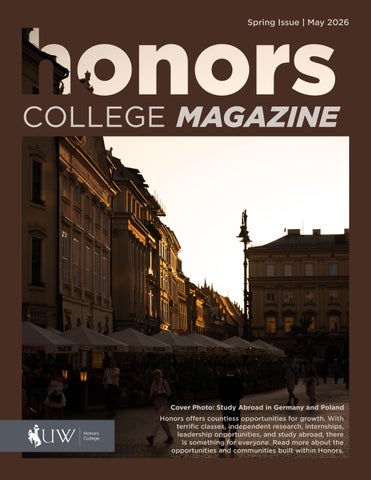
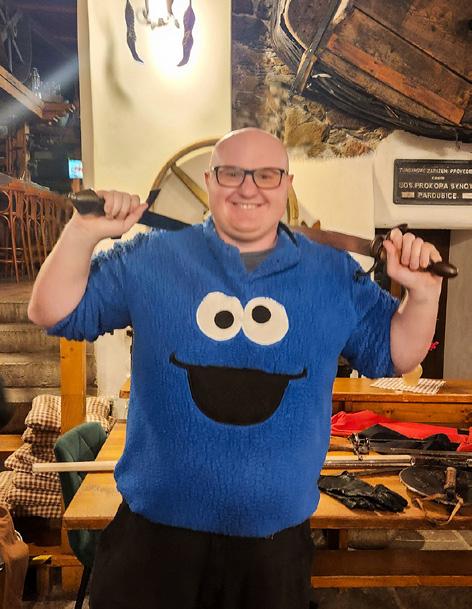
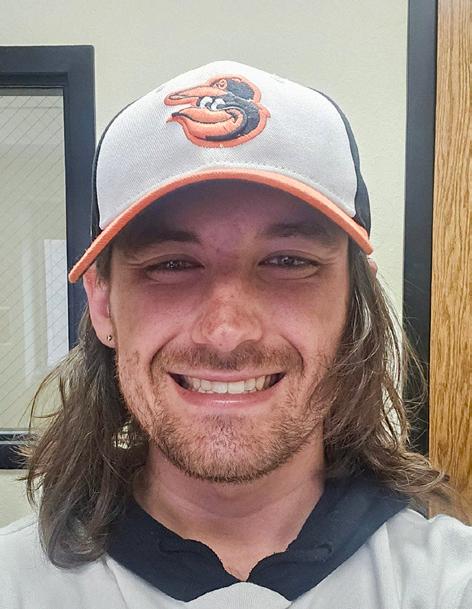
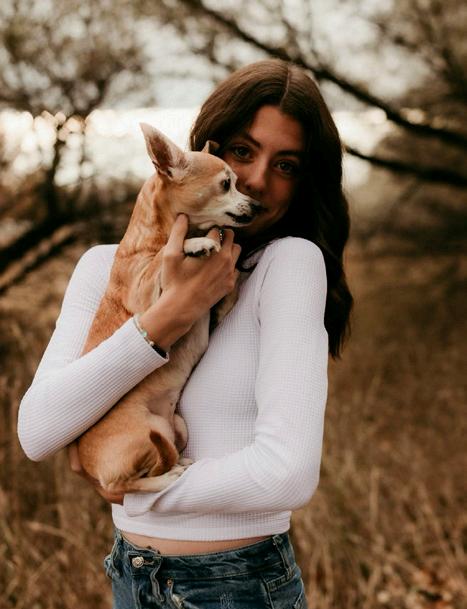
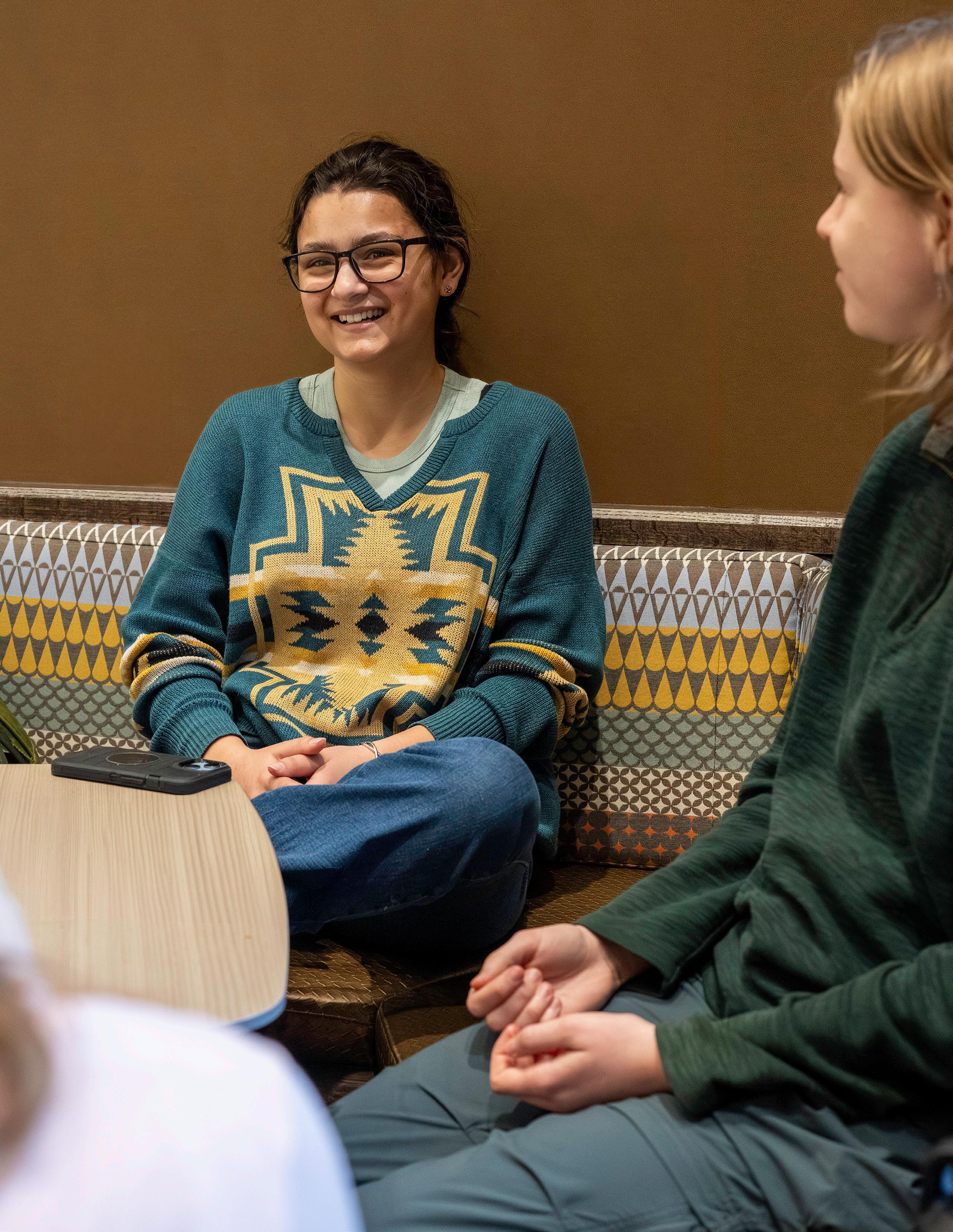
This Edition of the Honors College Magazine includes many contributions from Honors College staff, faculty, students, and alumni. Please see bylines for specific author information and enjoy learning about the Honors College community.
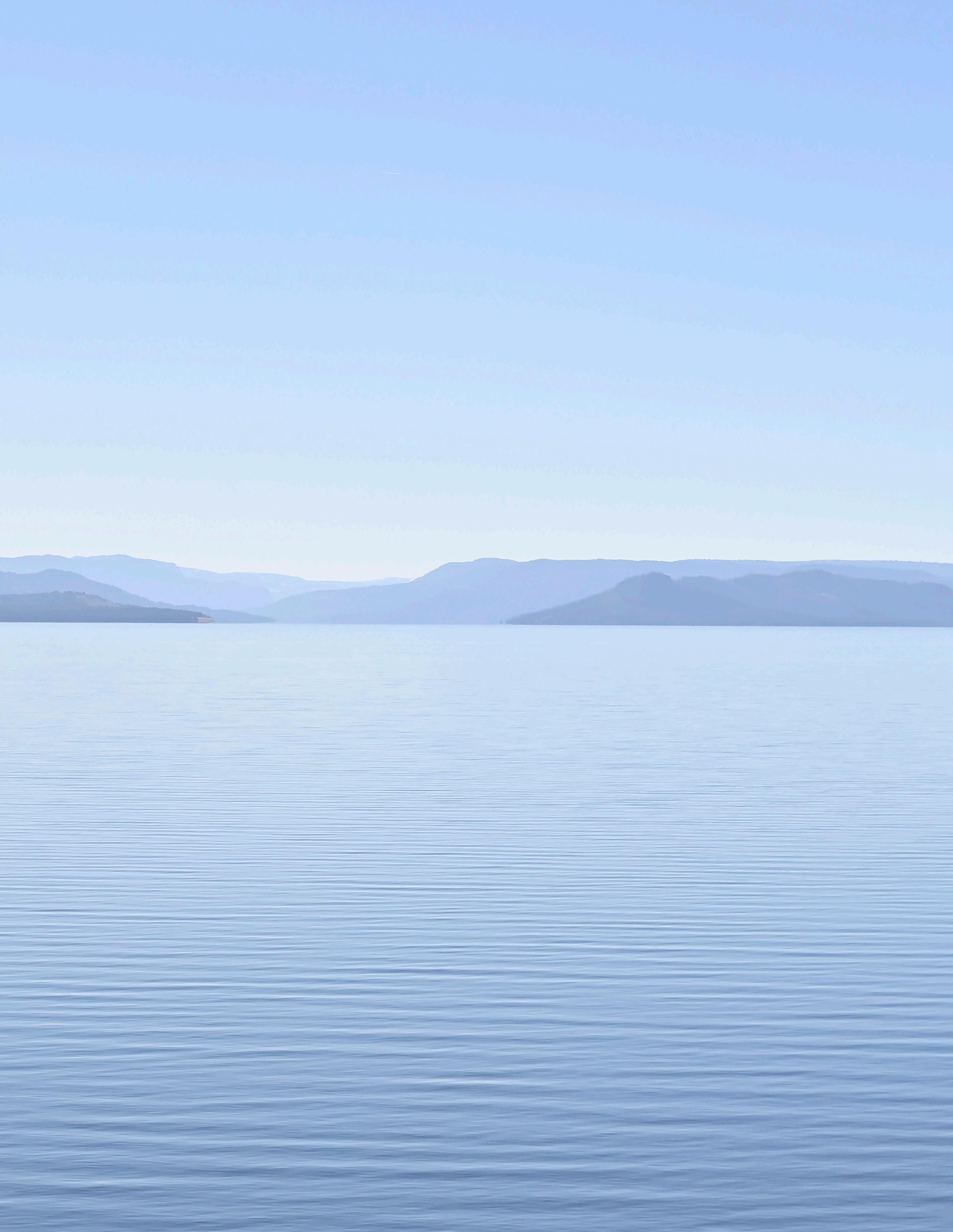
PHOTO CREDIT: CATCHER RUSSELL View of the frigid waters of Yellowstone Lake in early October.
WHERE RESEARCH AND CREATIVITY CONNECT WITH COMMUNITY
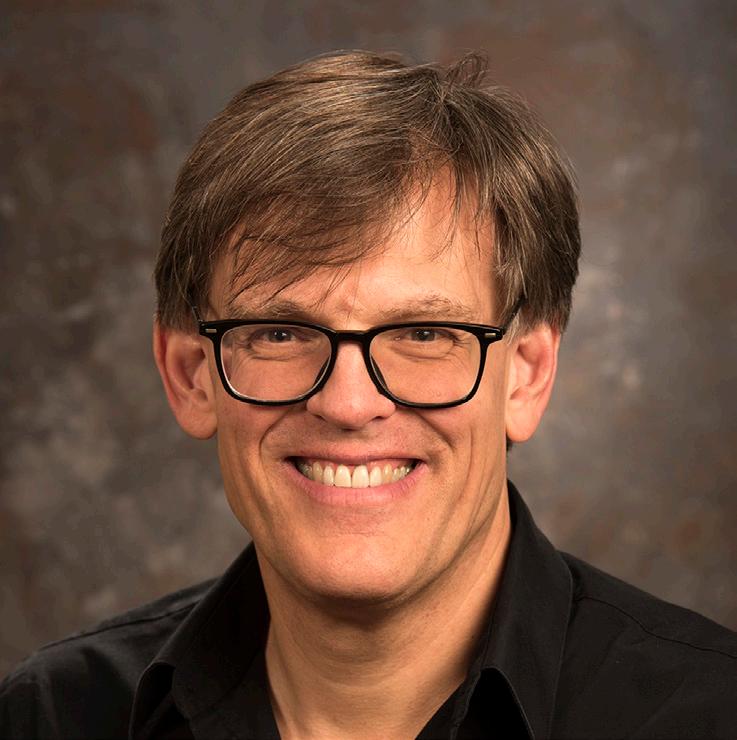
By Peter Parolin, PHD Dean of Honors
There is so much that is valuable about UW Honors—terrific classes, independent research, internships, leadership opportunities, study abroad. Today I want to stress a less tangible but equally important aspect of Honors: our outstanding sense of community, an essential ingredient that has made Honors uniquely special for generations. In Honors, students thrive because they have a richly supportive network: their professors, advisors, and fellow students see them, hear them, and invest in their success.
In his book Hidden Potential: The Science of Achieving Greater Things, Adam Grant ties people’s outstanding achievements in life to the quality of their supportive networks. He argues that “People who make major strides are rarely freaks of nature. They’re usually freaks of nurture.” The Honors College aims to create “freaks of nurture,” unleashing students’ potential through carefully scaffolded support structures for each and every one of them.
Dean’s column cont’d on p. 2
Honors is a home where we encourage students to take risks, try new things, and push beyond their comfort zones. But taking risks means that sometimes you experience failure, at least initially. Students need to know we have their backs when something doesn’t work out as planned, and we do have their backs! In our classrooms and our social spaces, we gather with students to process what’s working, what isn’t, and how we can get better results the next time around. Knowing that the college has their back in this way allows students to feel safe pushing themselves into the new zones where true growth happens.
In our quest to create those “freaks of nurture,” Honors builds structures that support community. For example, we have the Tobin House, a residential space where many Honors students live, learn, and play together. We host
book groups and trivia nights. Honors students attend plays, concerts, and exhibits together. We sponsor roundtables where students share their projects and learn from each other’s expertise. We fund students to conduct and present their research in faraway places so they can build connections with rising scholars from around the world. In our study abroad classes, students spend every day together in new countries and form some of the deepest bonds of their lives.
Honors students say they love the community they find in the college. For all of us, a supportive community is an immeasurable benefit that enriches our lives. I am convinced that it also produces measurable positive outcomes. For example, our data tell us that Honors students graduate faster and with higher GPAs than non-Honors students with the same academic credentials. What could account for this differential? Could it be the uplifting effects of community? Over the course of their undergraduate years, students have ups and downs; they need support to get through the tough times and Honors very intentionally provides that support. Our caring advisors look at students holistically, our professors work with students when they have emergencies, and our students inspire each other to persevere.
In this edition of our magazine, I invite you to think about all the ways the featured stories point to a sense of community. Look at all the pictures of students shining in the company of others! These young people are actively strengthening and extending the vibrant Honors College community so that it can continue to nurture students for generations to come.
HONORS MAGAZINE FEATURED
p. 4
Arts & Sciences Building: Home for Honors
Discover American Heritage Center
Archivist John Waggener’s research into the history of the homes of Honors.
p. 18
Coal Stories Explores Community
Dive into Dr. Sam Vandermeade’s course on community-building in the coal regions of Wyoming and Appalachia.
p. 6
Build Community: Honors Alumni Lift Each Other Up
Read about Honors Alum Gregory Barr’s success in building community with fellow Honors graduates.
p. 24
Middle East Film Festival: First-Hand Logistics
Reflect on Honors Student Zcherina Villegas’ internship with the Middle East Film Festival.
p. 12
Honors Capstone: Community in Martial Arts
Explore the lessons learned from Brody Greene’s capstone project on the social connections fostered through martial arts.
p. 26
Community Based Conservation: Nepal
Explore Bliss Bonner’s study abroad experience on a joint Honors-Haub School conservation excursion to Nepal.
p. 14
Shifted Perspectives: Attending ACDA Conference
Reflect on the personal expression communicated through dance in Bella Bustos’s experience at the Northwestern American Dance Association.
p. 34
A Bright Future: A SOAR Mentor Reflects
Read about how Honors SOAR Mentor Katie Shields works with first-year cohorts to build community.
honors history Arts & Sciences
1958: Liberal Arts Building Provides a Home for Honors
The Honors College has a rich and evolving history on the University of Wyoming campus. As part of an ongoing series exploring that history, we will highlight the spaces Honors has called home over the years—places that have shaped, and been shaped by, our community. In each issue, we will feature one of these homes, reflecting on how it has fostered connection, curiosity, and a sense of belonging.
BY JOHN WAGGENER University Archivist & Historian | American Heritage Center
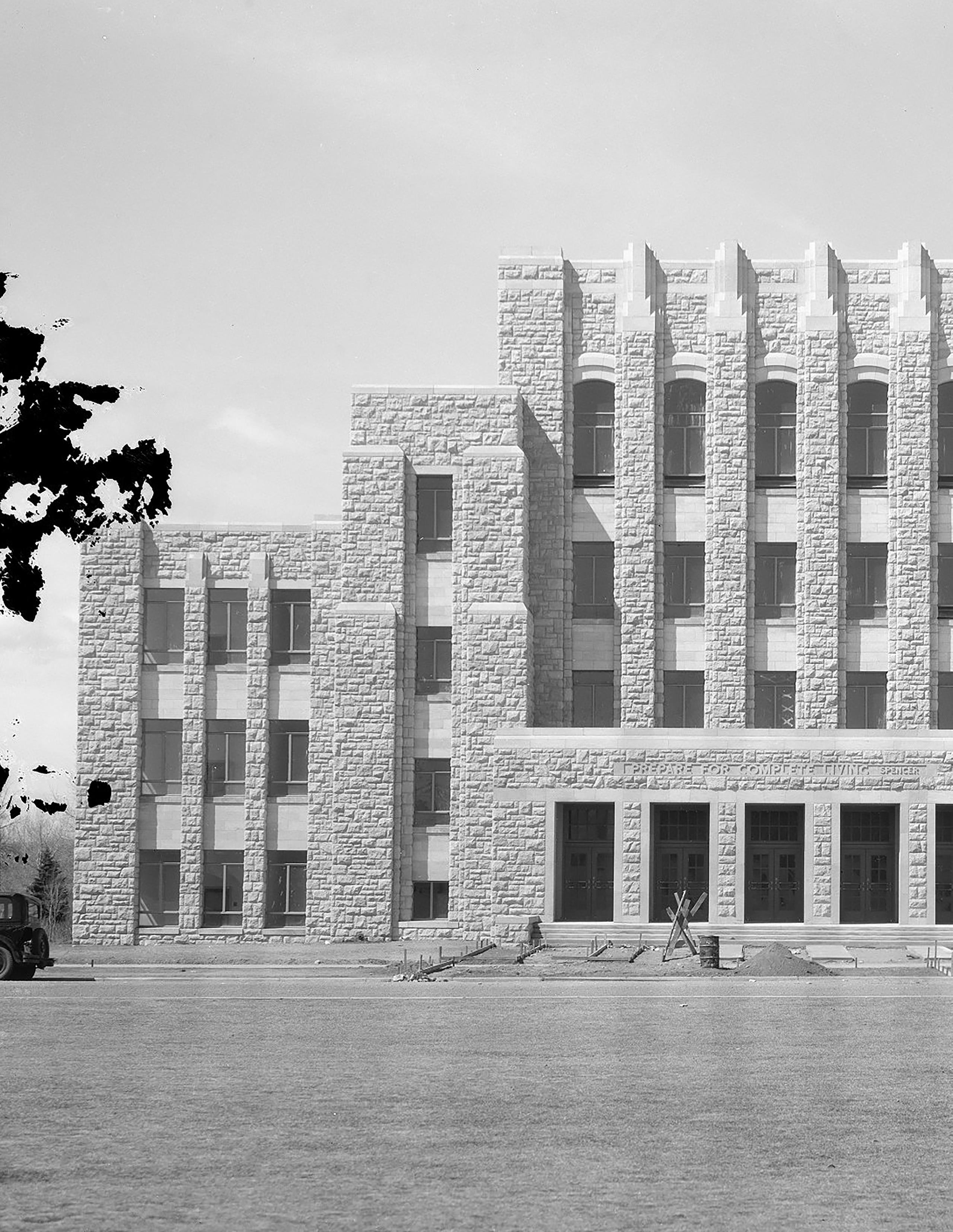
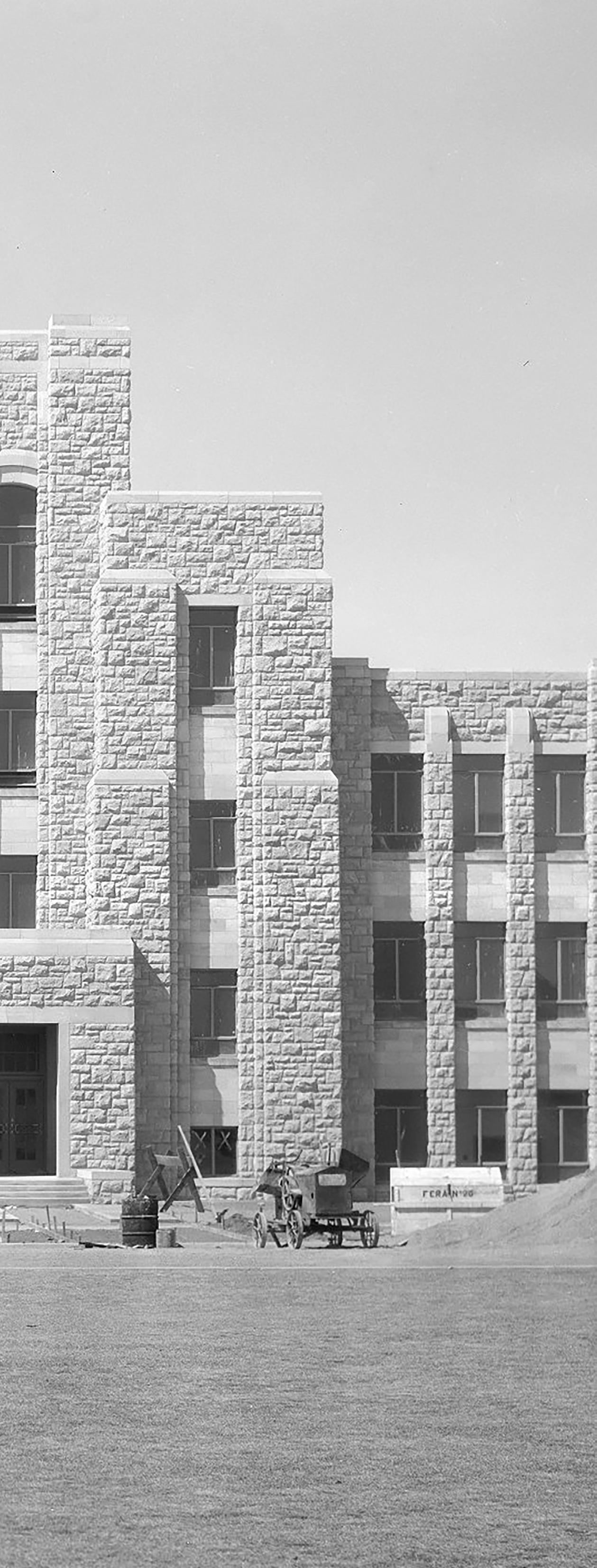
The Honors Program was first located in the Arts and Sciences Building after the program was launched in the fall of 1958, initially as a program for students enrolled in College of Arts and Sciences degree programs. For several decades, the program was administered within the A&S Dean’s Office. As the program grew, so did the need for dedicated office space. By the spring of 1984, the Honors Program secured a part-time secretary and dedicated office space in the basement of the A&S Building in Room 17. The space included an Honors Lounge where students and faculty could gather for social events and meetings. Located in the lower portion of the building near the auditorium’s stage, Room 17 had originally been occupied by the Theatre Department.
The history of the building dates to the early 1930s when the student population continued to increase and more academic departments were created. The need
for additional classroom space and departmental offices led the university to construct the Liberal Arts Building, as it was initially known. The building would bring together a large college that had been spread across campus.
The efforts to construct the building began during the Great Depression. In December 1933, the State of Wyoming applied for recently available federal funds from the Public Works Administration. The location selected for the new building, which would include a 2000-seat auditorium, was at the west end of Prexy’s Pasture. In the summer of 1934 architect William Dubois of Cheyenne was selected to design the building. On January 26, 1935, the university accepted a bid to construct the Liberal Arts Building from F. J. Kirchoff Construction Company of Denver, and on February 5, 1935, a ground-breaking ceremony occurred. Nine months later, on November 4, the cornerstone was placed during a ceremony.
By late May 1936, the new building was ready for the busy end-of-year events, including the first event held in the auditorium, the Honors Assembly on May 26. A theatre production of George Bernard Shaw’s “Caesar and Cleopatra” was held on May 28. The official building dedication and Baccalaureate Services were held on June 7, followed by commencement exercises on June 8.
On May 4, 1956, two years before the Honors Program was created, the Board of Trustees voted to change the name of the Liberal Arts Building to the Arts and Sciences Building to reflect the college name change that was approved on March 9 of that year.
The buildings Honors calls home are integral to the community we create within them. In our next issue, we turn to Merica Hall and reflect on a formative chapter in the life of Honors.
honors alumni
Build Community
Honors Alumni Lift Each Other Up After Graduation
The Honors College is excited to begin building an Honors Alumni Network, led by our alumni community, with more to come in Fall 2026.
“It feels only natural that the community created by Honors should not end with graduation.”
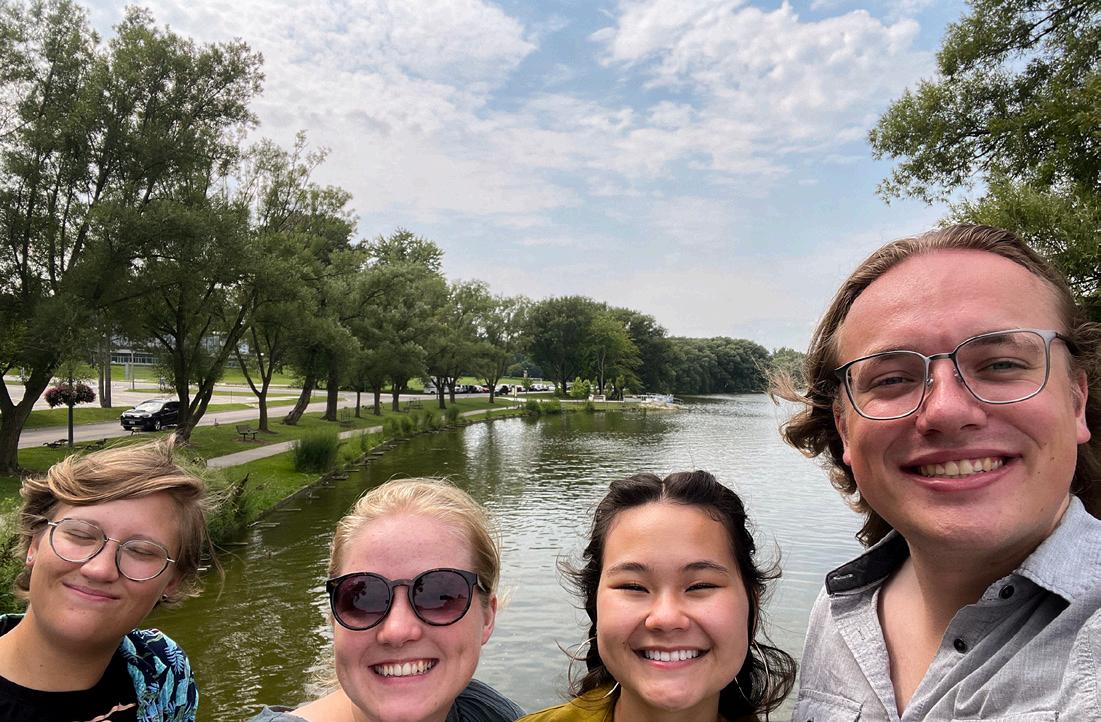
From Left to Right: Beth Zorn, Annalise Gade, Jasmin Mahoney, and Gregory Barr on the Avon River in Stratford, Ontario.
BY GREGORY BARR Honors College Alum
Looking back on my Honors experience at UW, it feels like a lifetime away. I fondly remember attending Colloquium classes and studying abroad. I am currently working as the Recruiting Coordinator for the College of Arts and Sciences here at the University of Wyoming. I was made aware of this position and supported in my application by my honors capstone advisor. As I continue building my professional career, I have no doubt that I will be supported time and again by the community that I have here in Wyoming.
The Honors College represents not only an academic institution but a community of like-minded folks dedicated to lifting each other up. I have had wonderful opportunities post-graduation to interview other Honors alumni about their career paths. They engaged with me through no obligation other than a desire to give back to their community. That is what makes Honors so special. It is also why I am thrilled to be a part of the new Honors Alumni Network.
When Dean Parolin asked if I wanted to help launch this Alumni Network, I was overjoyed. It feels only natural that the community created by Honors should not end with graduation. Instead, it presents a unique opportunity to transition from being a primary beneficiary of the community to one of its contributing members. I can
now network with fellow Honors alumni and strategize on how best to take this community we have and bring it out into the world so that UW Honors graduates receive not only a great education but the chance to be a part of a community that will support them throughout their lives.
PHOTO CREDITS: GREGORY BARR
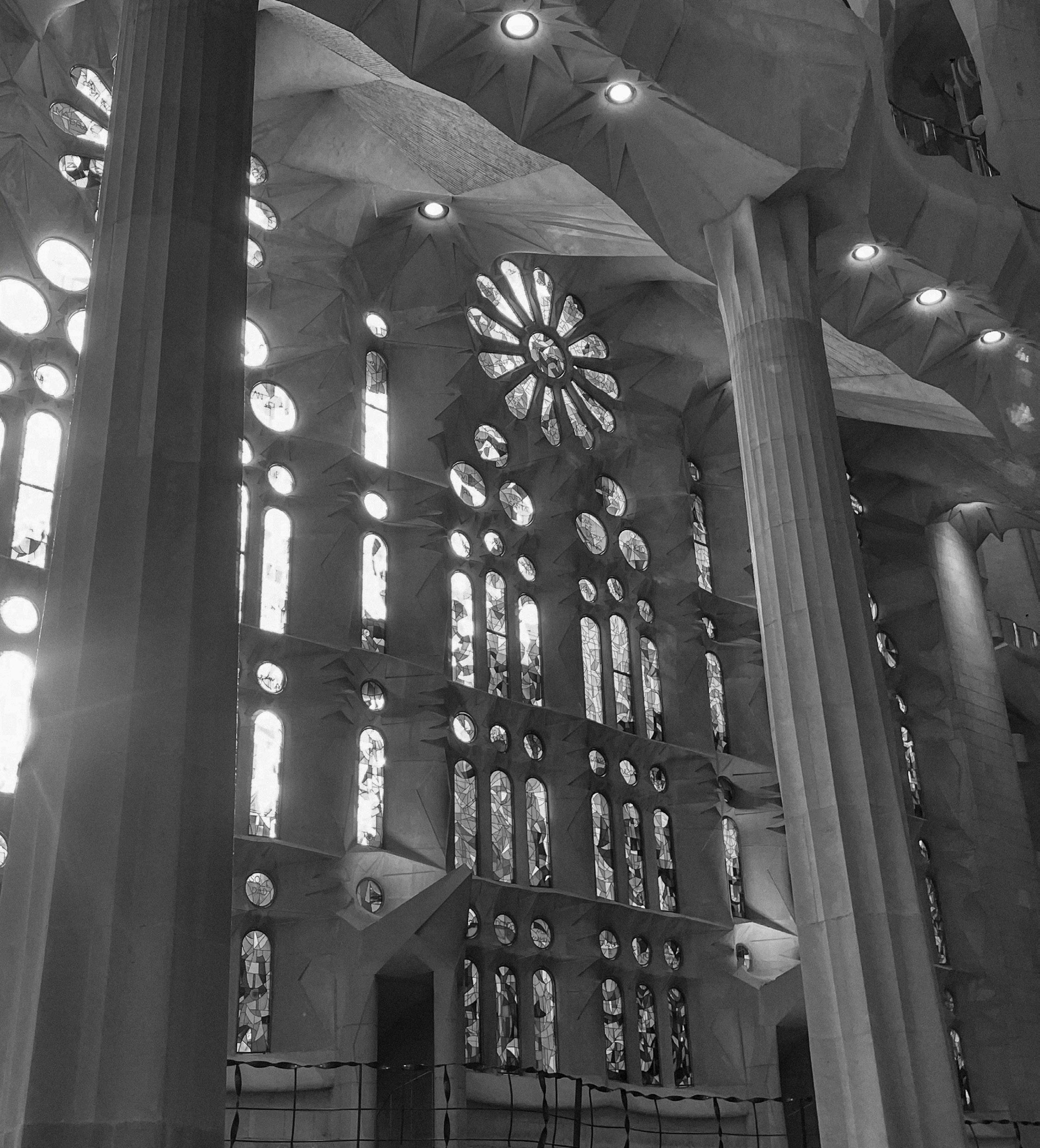
Interior view of the Passion Facade of La Sagrada Familia in Barcelona, Spain. This photograph was taken in the afternoon as sunlight streamed through the stained glass windows, bathing the whole basilica in golden light.
Networking and Connections
Honors Funding
Enables
Capstone Presentation
BY AURORA VOLKMAR
Major: Psychology
Minors: Literary Studies, Honors
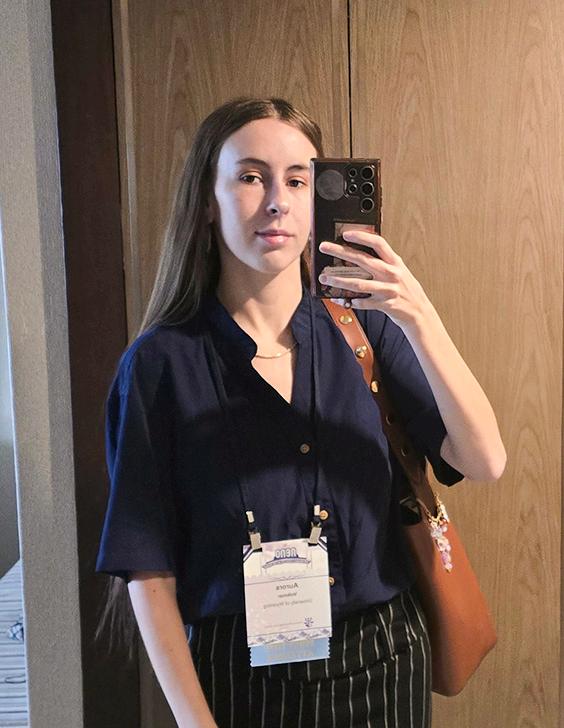
This March, I had the wonderful opportunity to present my Honors Capstone research at the American Psychology-Law Society 2026 Conference. I presented my research titled: “Mock Juror Ability to Assess Expert Witness Credibility Regarding a Controversial Diagnosis.” I am conducting this research under the mentorship of Dr. Kayla Burd in the Psychology department.
This conference provided me with the opportunity to learn about current research and projects from psychology and law scholars from around the world. It was also a good place to network within the field. For example, I was able to introduce myself to a graduate advisor from a graduate program I was looking to attend.
After my presentation was over, I was able to relax. And by relax, I mean packing my schedule full of talks to attend at every available opportunity. I attended talks on competency, justice-involved youth, juror
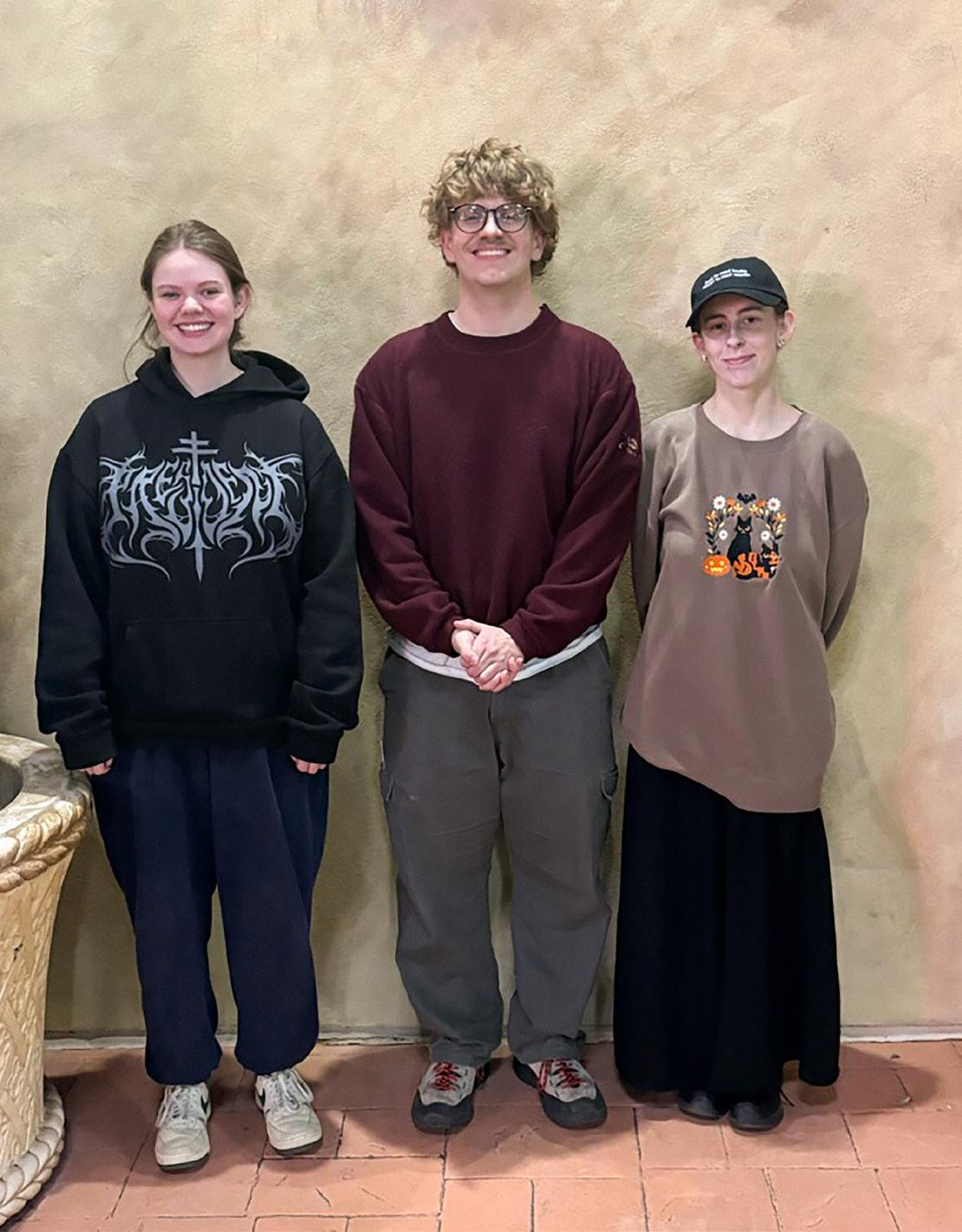
From left to right: Annette Harlan, Dylan Chatterley, and Aurora Volkmar were the three University of Wyoming students to attend the American Psychology-Law Society 2026 Conference in Reno, Nevada.
PHOTO CREDITS: AURORA VOLKMAR
decision-making, death penalties, child maltreatment, and more. I took over 10 pages of notes on these research topics.
Back in seventh grade, I decided I wanted a Ph.D. in Psychology. In ninth grade, I narrowed that choice down to a focus on Psychology and Law. That choice has not wavered, but the how and what of it has. This conference brought me back to what I started college thinking: I want to work with justice-involved youth. And while I still have a lot of schooling before my career starts and room to change my mind, this revelation puts me on a path that feels right for me.
Due to the opportunities provided to me through the Honors Capstone project and its available funding, the support of the Honors College faculty and staff, and the mentorship of Dr. Kayla Burd, I feel even more inspired and prepared for my career.
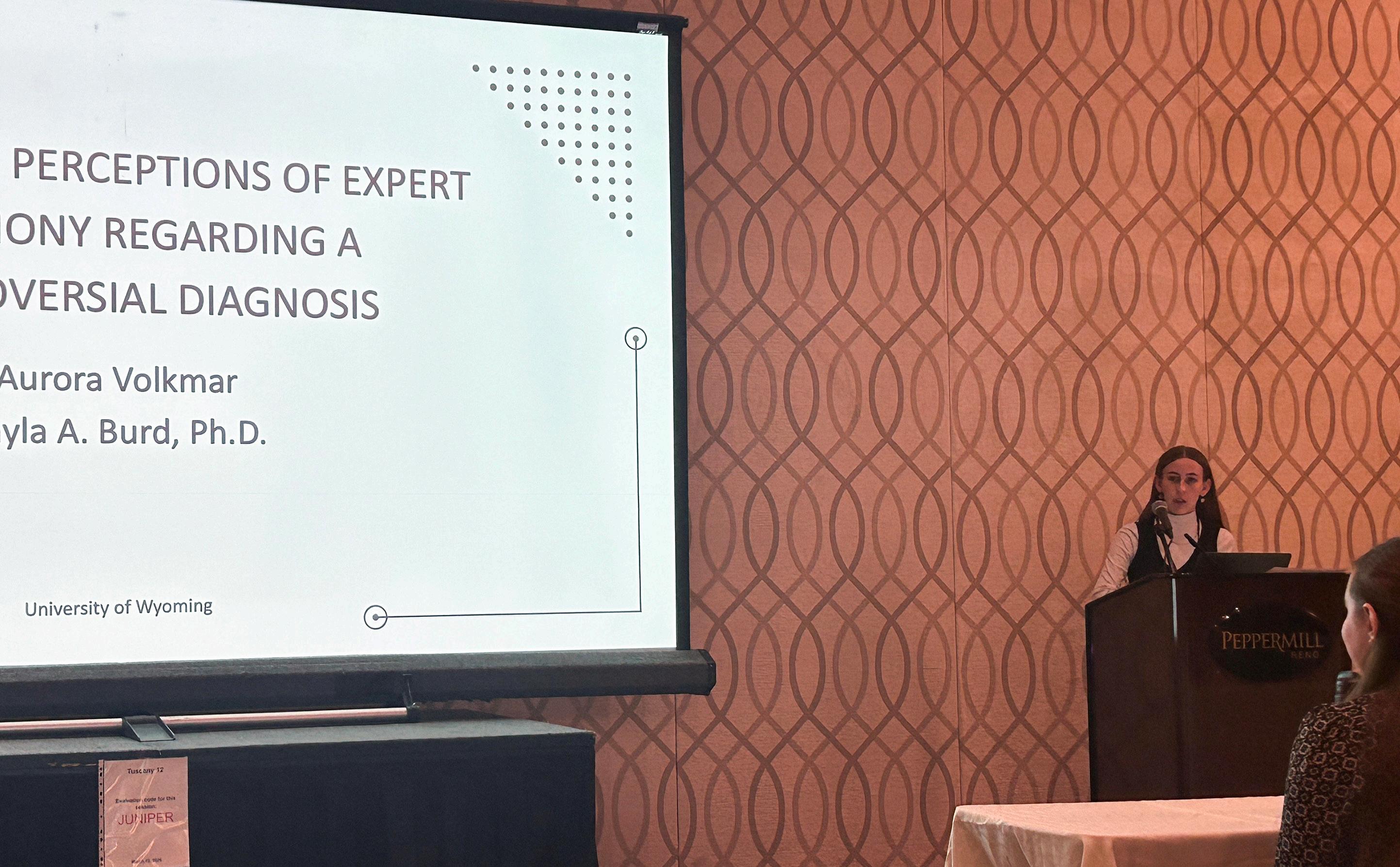
Aurora Volkmar’s Data Blitz presentation of her capstone project at the American PsychologyLaw Society 2026 Conference.
“This conference provided me with the opportunity to learn about current research and projects from psychology and law scholars from around the world.”
honors major Multidisciplinary Freedom
Concurrent Major Pushes Students to Think Outside of the Box
PAGE 10 | HONORS COLLEGE
PHOTO CREDITS: MICHAELA EDDY
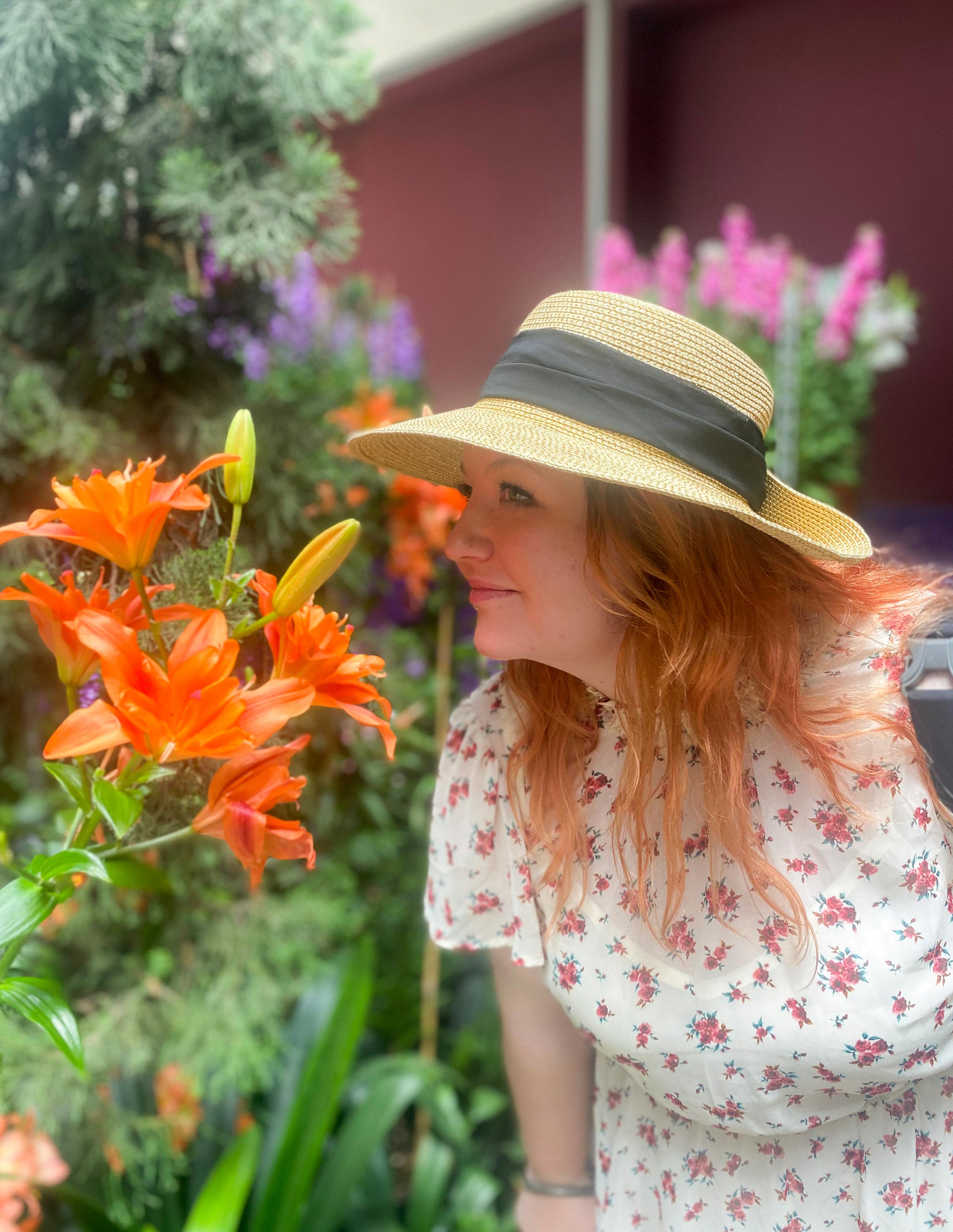
Michaela Eddy stops to enjoy the flowers at Floral Fantasy at the Gardens at the Bay in Singapore, which she visited on the Honors Singapore and Malaysia study abroad class.
BY MICHAELA EDDY
Majors: Religion, International Studies, Human Nutrition, Honors Interdisciplinary Inquiry
The multidisciplinary aspect and focus on experiential learning in the Honors concurrent major have defined my experience. As a student in Human Nutrition, International Studies, and Religion, I have been pushed to think outside of the box of typical fields of study. Honors classes gave me the chance to think about difficult topics from many points of view, such as scientific, cultural, ethical, and political. The program also gave me the freedom to choose my own academic route based on my interests. Experiences like studying abroad and hands-on learning helped me understand that information isn’t just something that exists on its own, but something that is impacted by context, lived experience, and interaction.
It made sense for me to pursue the Honors concurrent major because my academic and career ambitions are at the junction of different fields. I want to improve health via nutrition, but I know that problems like food insecurity and health inequities are wicked problems that cannot be solved through a single lens. They need comprehensive approaches that take into account genetics,
culture, policy, and systems of inequity. The Honors major cultivated this way of thinking by emphasizing complexity and encouraging people to take intellectual risks.
In the end, what I learned from the Honors major has changed the way I think and work. It has made me better at looking at problems from all angles, listening to many points of view, and looking for answers that are both scientifically sound and socially responsible.
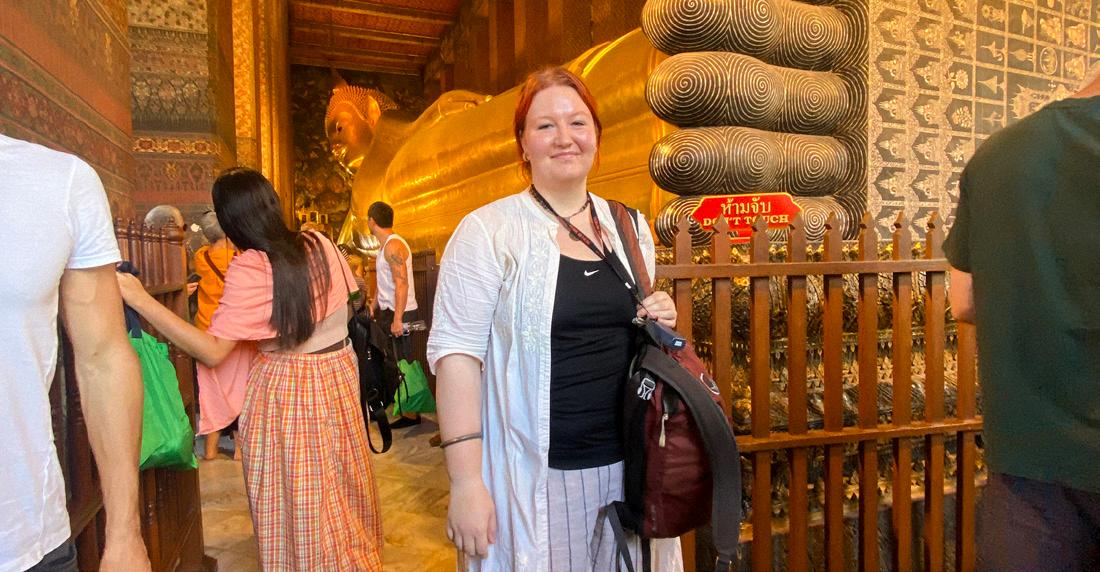
Eddy smiles for the camera at Wat Pho (temple of the reclining Buddha) in Bangkok on the Buddhism in Thailand Honors study abroad class.
honors capstone Community in Martial Arts
Honors Capstone Explores the Establishment of Community through a Centuries-Old Practice
BY BRODY GREENE
Major: Mechanical Engineering
Minor: Honors
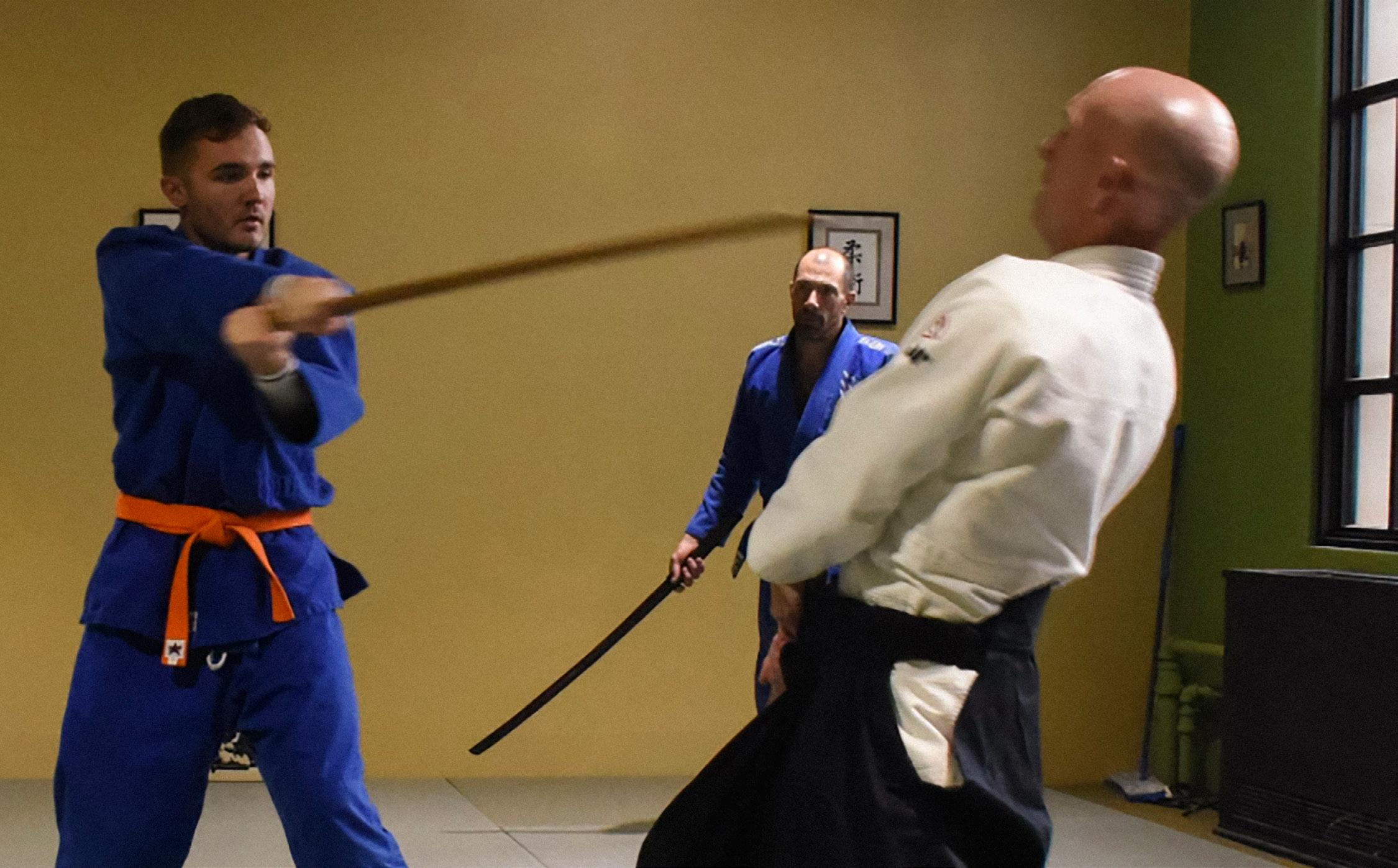
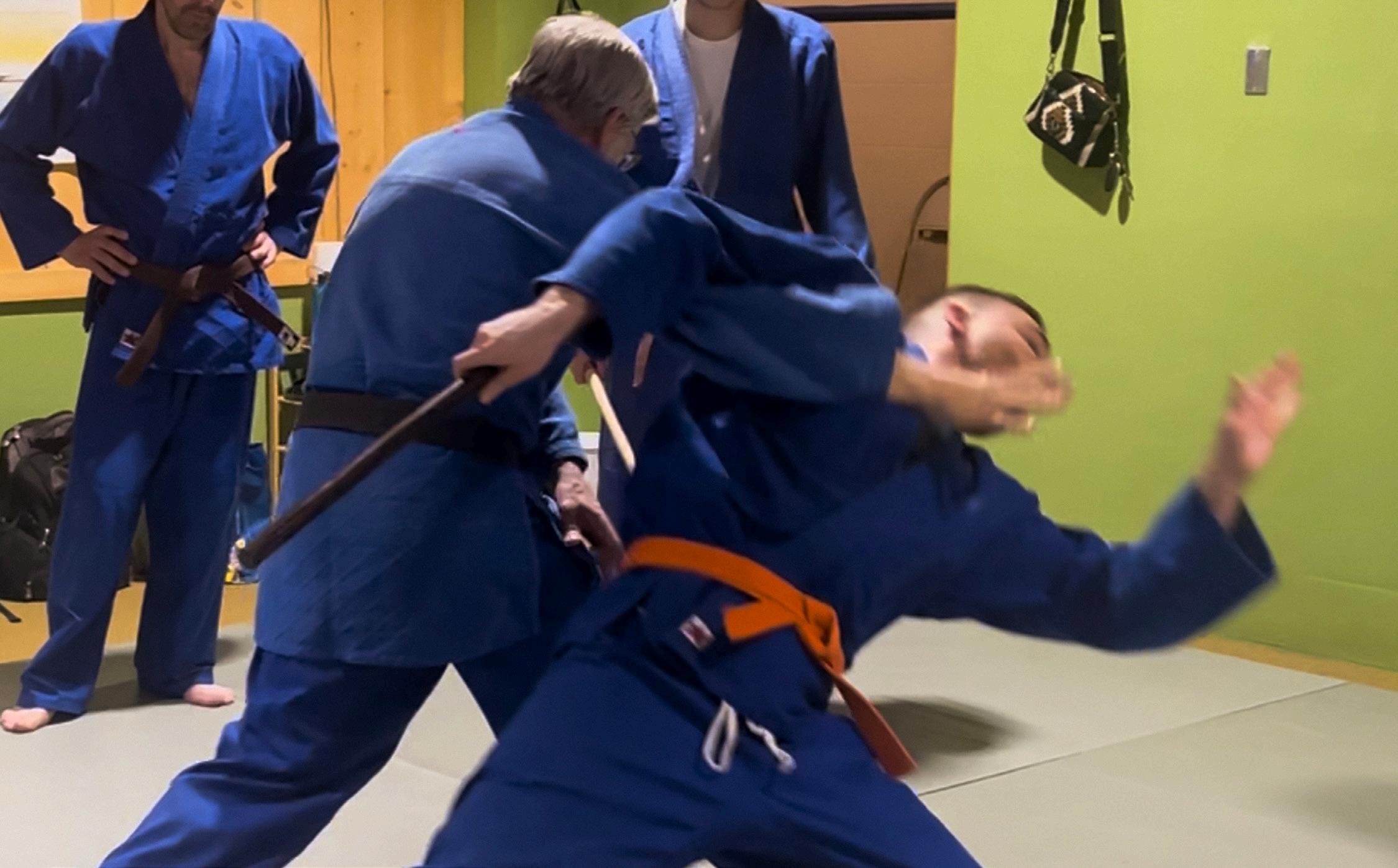
In the fall of ’22, I arrived at the University of Wyoming as an out-of-state student 1,500 miles from home. At first, I spent most of my time cycling between lectures and my dorm. My routine at the time was academically rich but lacked social engagement. One evening of my junior year, I decided to go outside of my comfort zone and try a Jujutsu class. From my very first lesson, I knew I wanted to come back — not only because of the techniques but also the people. The humility of the instructors, the patience of the senior students, and the kind-heartedness displayed by everyone gave me something I had been missing: a sense of community. The training hall, or dojo, consequently became a place where I formed friendships and finally found a community to which I belonged.
As time progressed, I realized the training was addressing my well-being across several domains, from physical strength to stress relief to social belonging. My experience in the Laramie Martial Arts Academy, therefore became the seed of my Honors Capstone, “Japanese Martial Arts as an Approach to Holistic Wellness.” I wanted to explore whether what I felt as a result of my training was shared by others. I then conducted six interviews with fellow martial artists and a scholarly review of existing literature, where I found that my journey was not uncommon.
While my capstone project does not prove a clinical hypothesis or provide statistical proof, it is, at its heart, an invitation. My hope is that anyone who reads my capstone might consider stepping into a dojo one day to discover what a centuries-old practice can offer one’s mind, body, and spirit.
PHOTO CREDITS: BRODY GREENE
Top: Brody Greene practicing Aikido techniques with a bokken, or wooden sword. Bottom: Greene and his instructor practicing Jujutsu throwing techniques.
honors funding Shifted Perspective
Honors Student Attends the Northwestern ACDA Conference
BY BELLA BUSTOS
Majors: Sociology, Pre-Social Work
Minor: Honors
Attending the 2026 Northwestern American College Dance Association (ACDA) conference was both an inspiring and transformative experience that reshaped how I think about dance. Going into the week, I expected an intensive environment focused on technique and performance. While that was certainly present, what stood out most was how deeply the experience pushed me to think beyond movement and into meaning, connection, and humanity.
Throughout classes, performances, and conversations, I noticed how social norms (specifically regarding power, gender, and culture) are embedded in dance spaces. From shifting classroom dynamics to partner roles in cultural forms, I saw how these structures are often internalized without question. However, what impacted
me most were the moments that went beyond those systems: moments rooted in joy, vulnerability, and connection.
Watching performances and participating in diverse classes reminded me that dance is not just about precision or perfection, but about expression and presence. One of my biggest takeaways was recognizing that dance is fundamentally human. It allows us to process emotions, communicate without words, and connect across differences.
This experience ultimately shifted my perspective on my intentions to continue dancing. Rather than only asking how social norms exist within dance, I now find myself asking: where is the humanity within dance? My time at ACDA reinforced that dance is not reserved for a select few; it is a shared, evolving practice that connects us all.
PHOTO CREDIT: BELLA BUSTOS
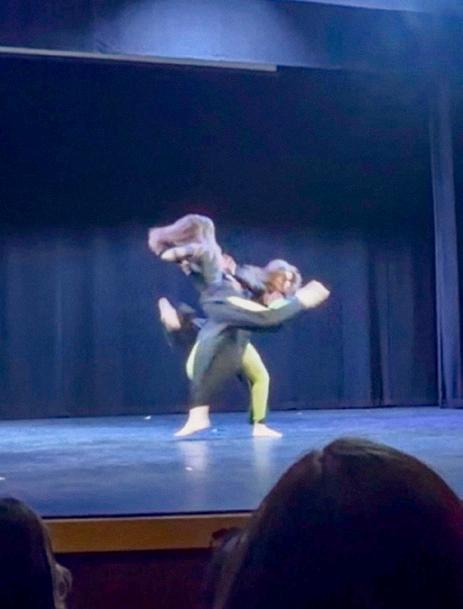
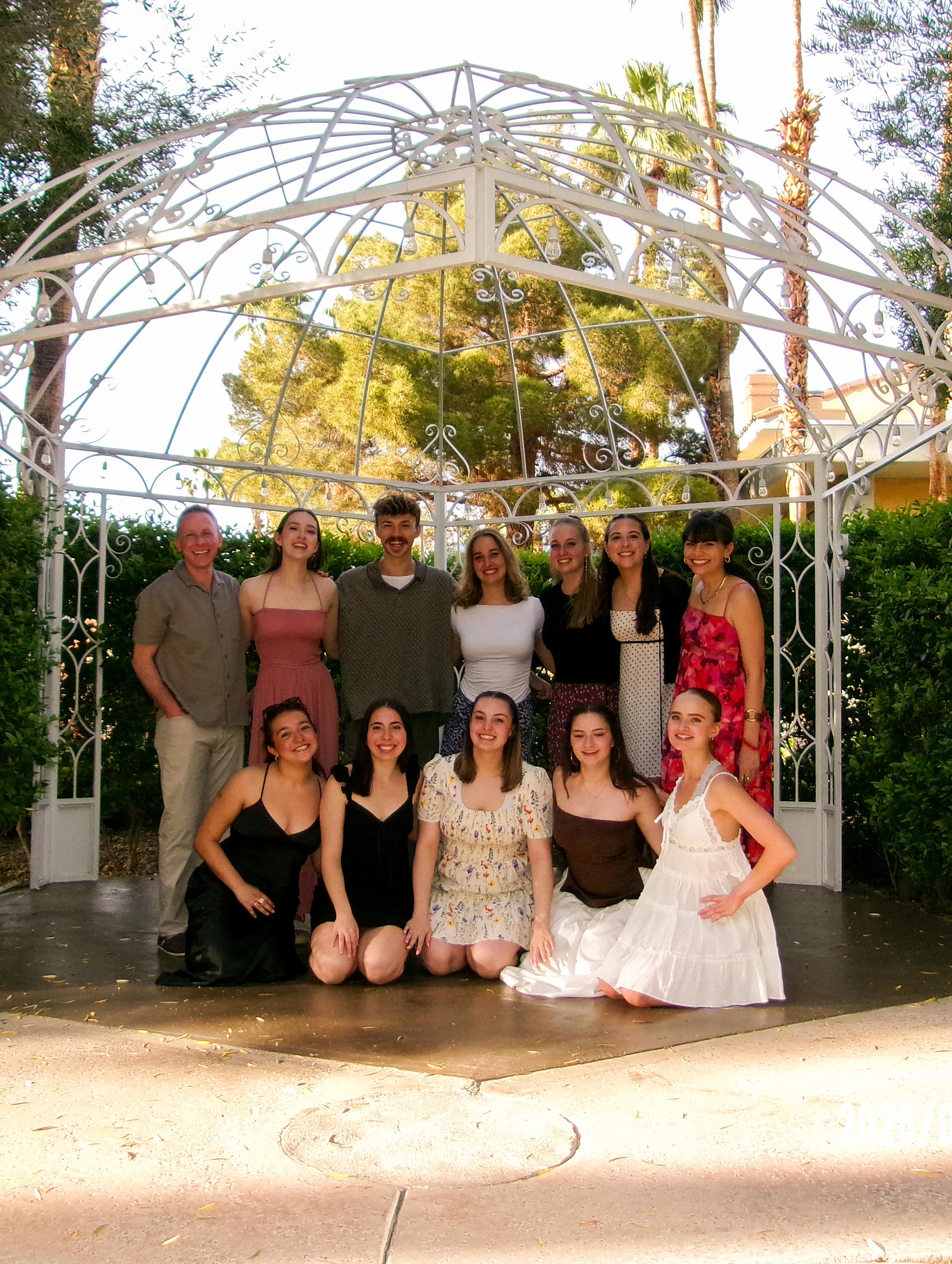
Students and faculty from UW Theatre and Dance attend the 2026 Northwestern American College Dance Association conference, learning new techniques and connecting with peers and colleagues from across the region.
honors abroad Pursuing Ambition
Study Abroad Contributes to Meaningful Educational, Personal, and Professional Growth
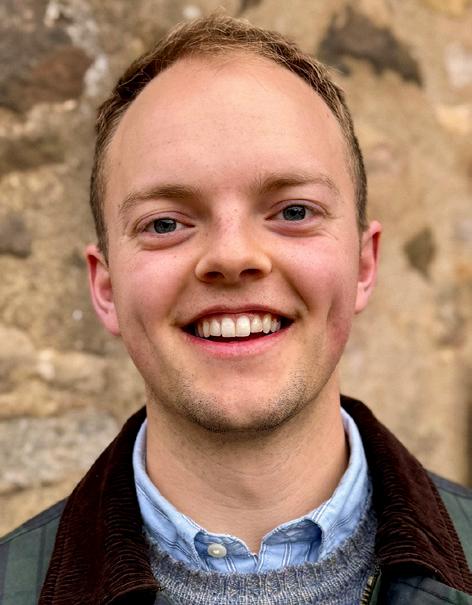
BY SEAN WALKER
Majors: History, Religious Studies Minor: Honors
In January, I began the final semester of my B.A., studying abroad in Oxford, England, as a Visiting Researcher. I am working in the Bodleian Library’s special collections as a Research Aide for the University of Wyoming, an opportunity made possible through the encouragement and support of the University of Wyoming Honors College. Both my time abroad and the journey leading up to it have contributed to meaningful educational, personal, and professional growth.
Last fall, I worked with the Department of History, transcribing eighteenth-century Anglican missionary records to train an AI Handwritten Text Recognition model. From that research, the possibility of working onsite in the archive emerged as an idea. What began as an idea ultimately developed into a sponsored internship, a semester abroad, and a capstone project, all of which happened in collaboration with the Honors College.
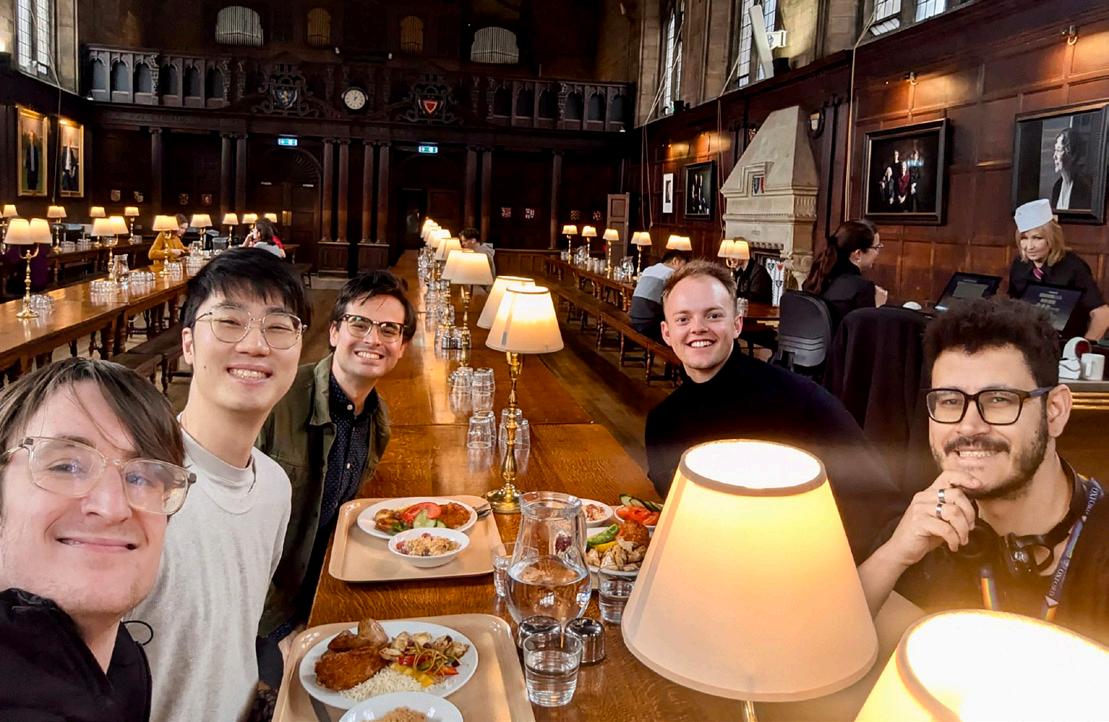
Among the highlights of my experience has been participating in the community of Lanier Theological Library and Learning Centre, where I reside. There, I have access to incredible research facilities and engage with accomplished theological and academic scholars through weekly events and seminars. I enjoy riding the bus each day into the city center, and I have also formed friendships with individuals from around the world, including Mexico, Singapore, Brazil, Tasmania, and Northern Ireland, through Oxford’s diverse community.
Studying in an international setting and connecting with students across cultures has had a great impact on me, both academically and personally. These valued experiences reflect the Honors College’s challenge to think deeply and pursue ambitious ideas.
Study abroad opportunities allow for connections beyond Wyoming. Here, Walker is pictured at the Balliol College Dining Hall with friends from Brazil, Northern Ireland, Singapore, and Mexico.
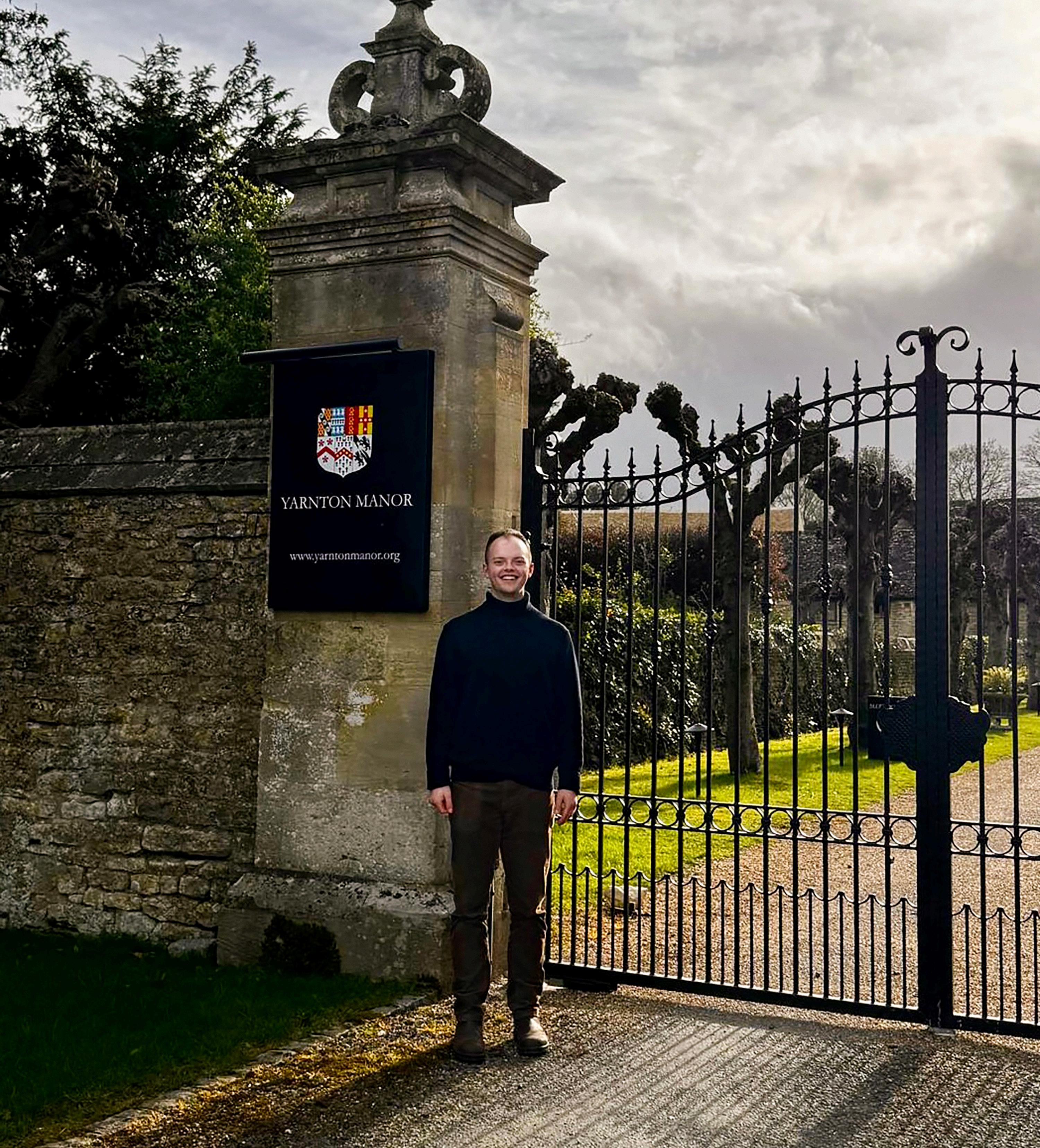
a resident.
“What began as an idea ultimately developed into a sponsored internship, a semester abroad, and an Honors Capstone project...”
PHOTO CREDITS: SEAN WALKER
Walker in front of the gateway to Yarnton Manor, the theological library and learning center where he is
honors faculty Coal Stories
Honors Course Explores Community in Wyoming and Appalachia
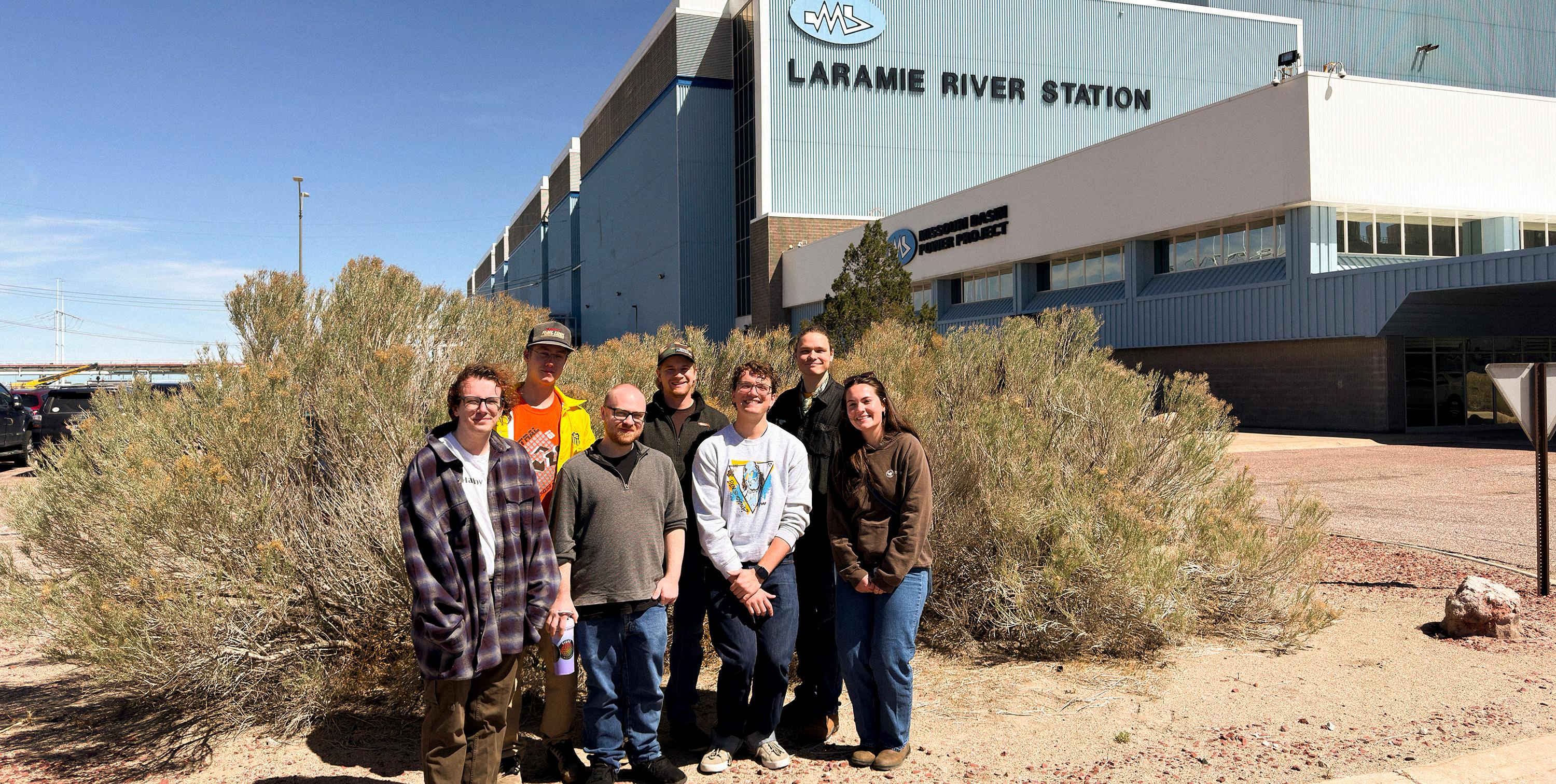
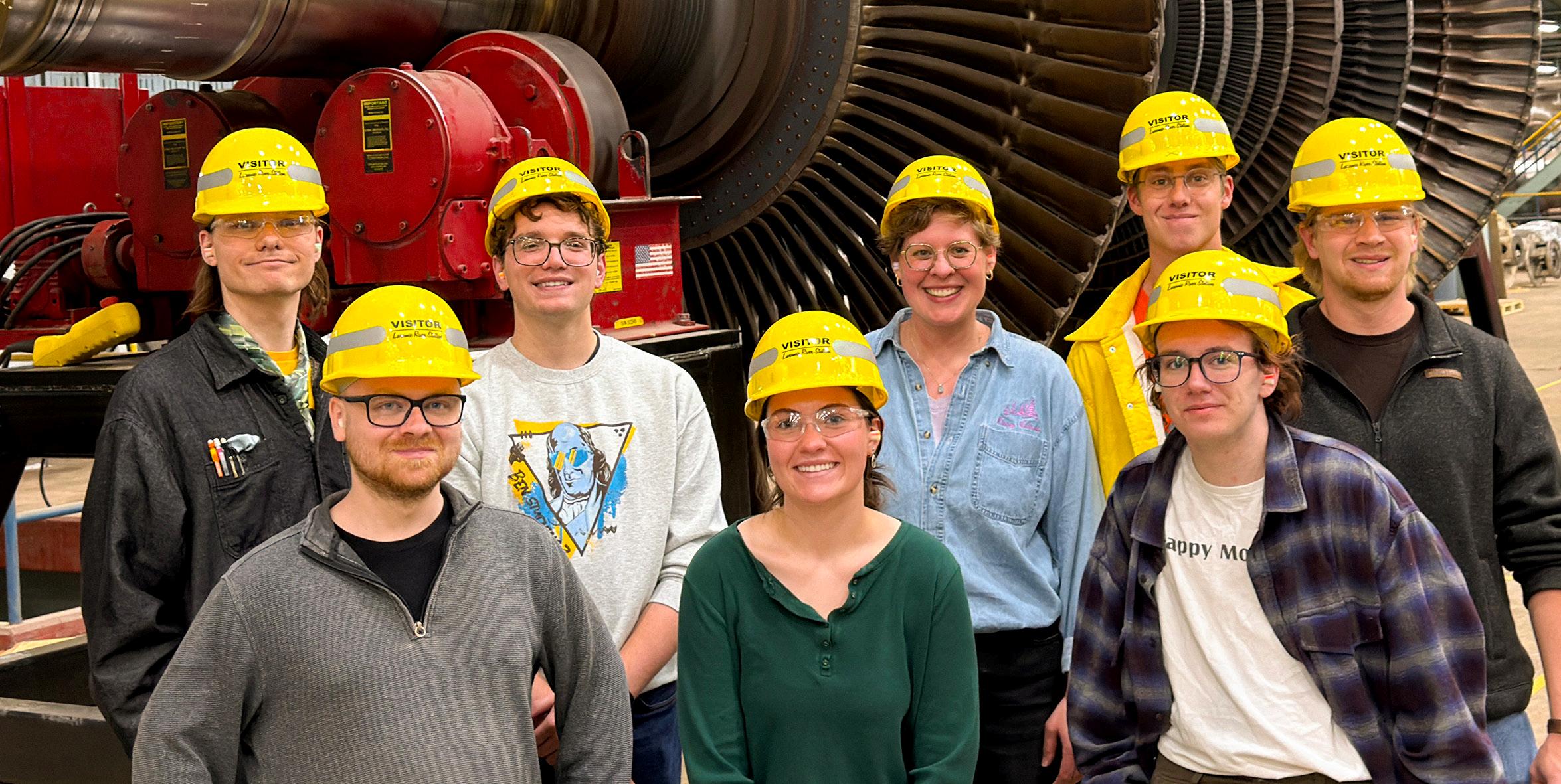
Above: Coal Stories students pose in front of the Laramie River Station, a coal-fired power plant the class visited to learn about the impacts of coal on Wyoming communities. Below: Back row, from left to right: Chase Maddox, Catcher Russell, Prof. Vandermeade, Will Davies, Tyler Thompson. Front row, from left to right: Gareth Haines, Sara Loghry, and Max Henley in front of a disassembled generation turbine.
BY PROFESSOR SAM VANDERMEADE
Honors Clay Fellow, Assistant Professor of American Cultural Studies
Coal Stories: Wyoming and Appalachia takes an interdisciplinary and comparative approach to two seemingly disparate locales, digs deeply into the histories of extraction that link them, and explores coal’s critical role in the construction of community and cultural identity in both places. This semester, we considered regional histories of class, labor, and environmentalism that shape the lives and livelihoods of everyday citizens and delved into a broad diversity of cultural productions created by those same everyday Wyomingites and Appalachians about coal and its impact in their lives, including novels, short stories, poetry, film, oral histories, and art.
The course raises questions such as: How do people understand their labor, their land, and their livelihoods in relationship to coal production? How does coal production shape communities in ways beyond its economic impact? What happens when we ask people to choose between financial security and environmental safety? What stories do the people most affected by coal tell about it? By taking a place-based approach, the course asks students to think
“What happens when we ask people to choose between financial security and environmental safety?”
critically about the many different factors that shape place and our relationship to it, while also recognizing the shared struggles of working-class people in two much mythologized places: Appalachia and the West.
I approached the design of this course as an Appalachian at heart, a Wyomingite by choice, and an interdisciplinary scholar by training. Although I am well grounded in critical rurality studies, and I study community identity formation among other populations, I had not focused exclusively on coal before designing this course. What surprised me most was how generative it was to discuss coal, identity formation, and cultural production with a small-but-mighty group of students from majors as diverse as environmental and natural resources, music performance, international studies, and business economics. Other scholars in the UW community—including Dan Auerbach, Brie Blasi, Shelby Shadwell, and Matt Henry—were kind enough to share their expertise with the class, enriching the course as we explored coal and its continued relevance to Wyoming and Appalachia together.
honors conference Explore Disciplines
Western Regional Honors Conference Offers Chance to Share Experiences and Discover Student Work
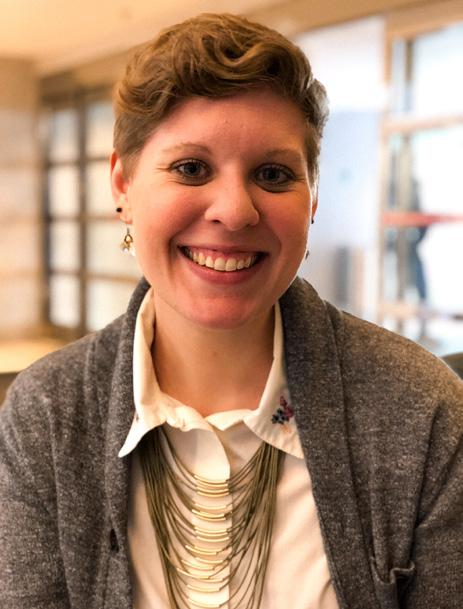
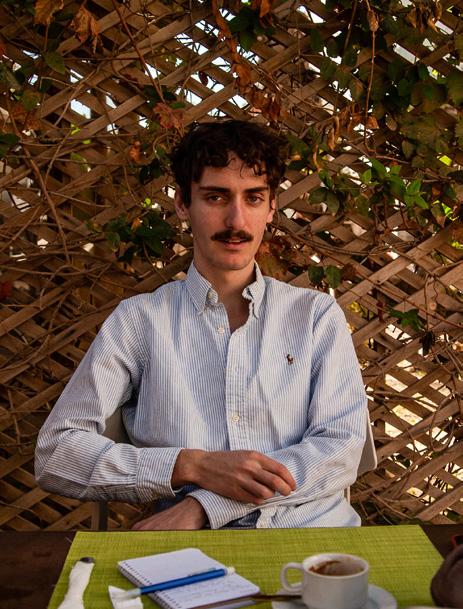
BY ANDREW BISHOP Honors College Alum
“... I found the conference a valuable chance to explore other disciplines through students’ work.”
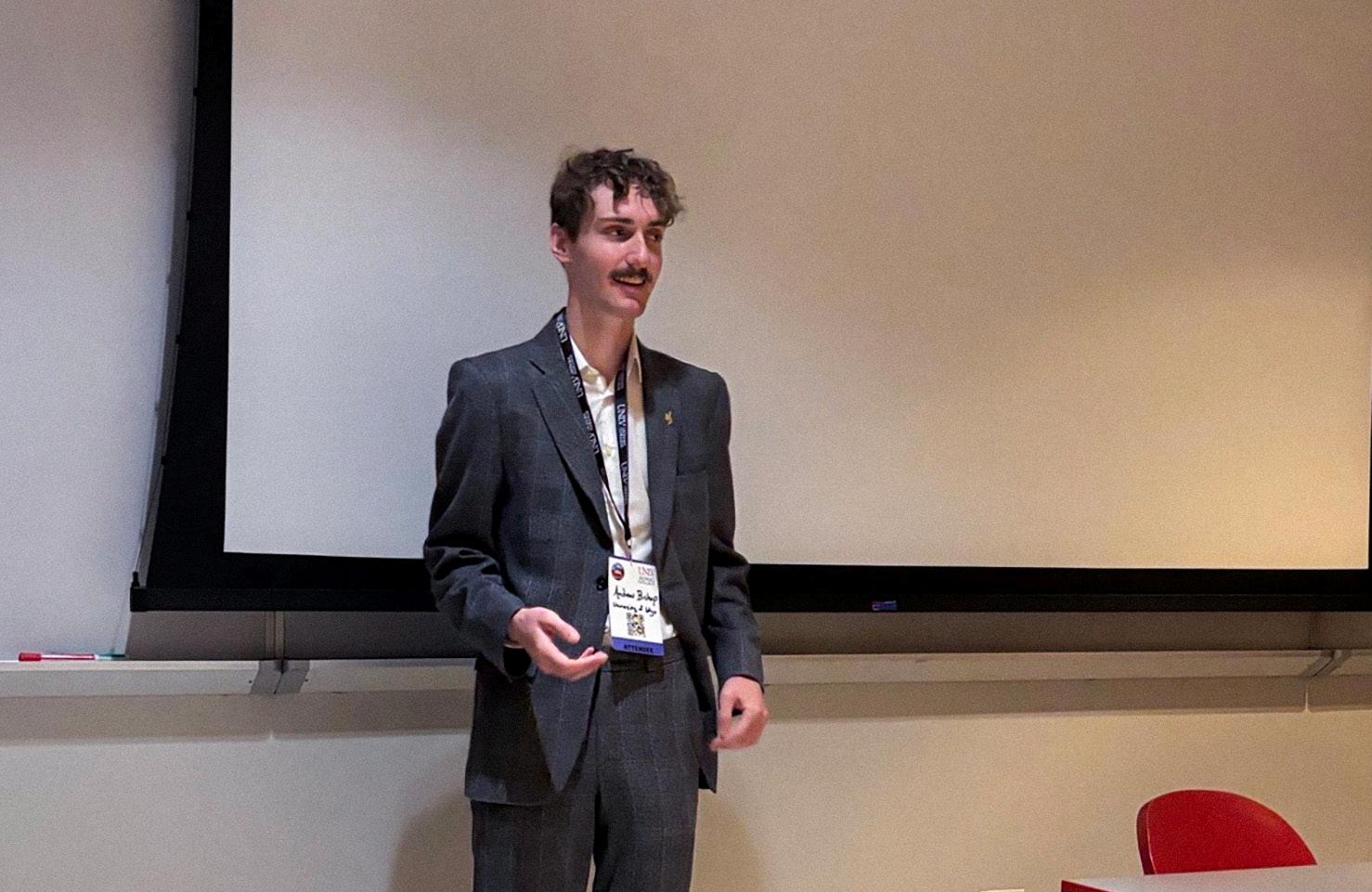
This past April, I had the extraordinary opportunity to attend the Western Regional Honors Conference at the University of Nevada in Las Vegas. As a recent graduate of the Honors College and UW, I was especially excited to return to an academic setting and share the culmination of my own honors research experience, which centers on the developing link between a changing environment and its effects on cultural heritage sites in the Mauritanian Sahara.
At WRHC, I presented my work as an oral presentation and participated in a panel discussion focused on the challenges of heritage preservation. This opportunity and these conversations were particularly meaningful, as they echoed the lived experiences of many archivists and local officials that I interviewed during my field research, where many of these individuals find themselves on the front lines of a changing climate. Indeed, I felt the theme of the conference, “Battle Born: Crossroads & Opportunities,” resonated deeply with my work.
Beyond my own presentation, I found the conference a valuable chance to explore other disciplines through students’ work. Moreover, I appreciated the chance to connect with fellow Honors students and faculty again, helping strengthen a community that continues to support me even after graduation. For me, this conference has shown me the epitome of the Honors experience and felt like a full-circle moment. From coursework to independent research and now presenting in an official capacity, I am immensely grateful for the opportunities and support that made this journey possible.
PHOTO CREDITS: ANDREW BISHOP
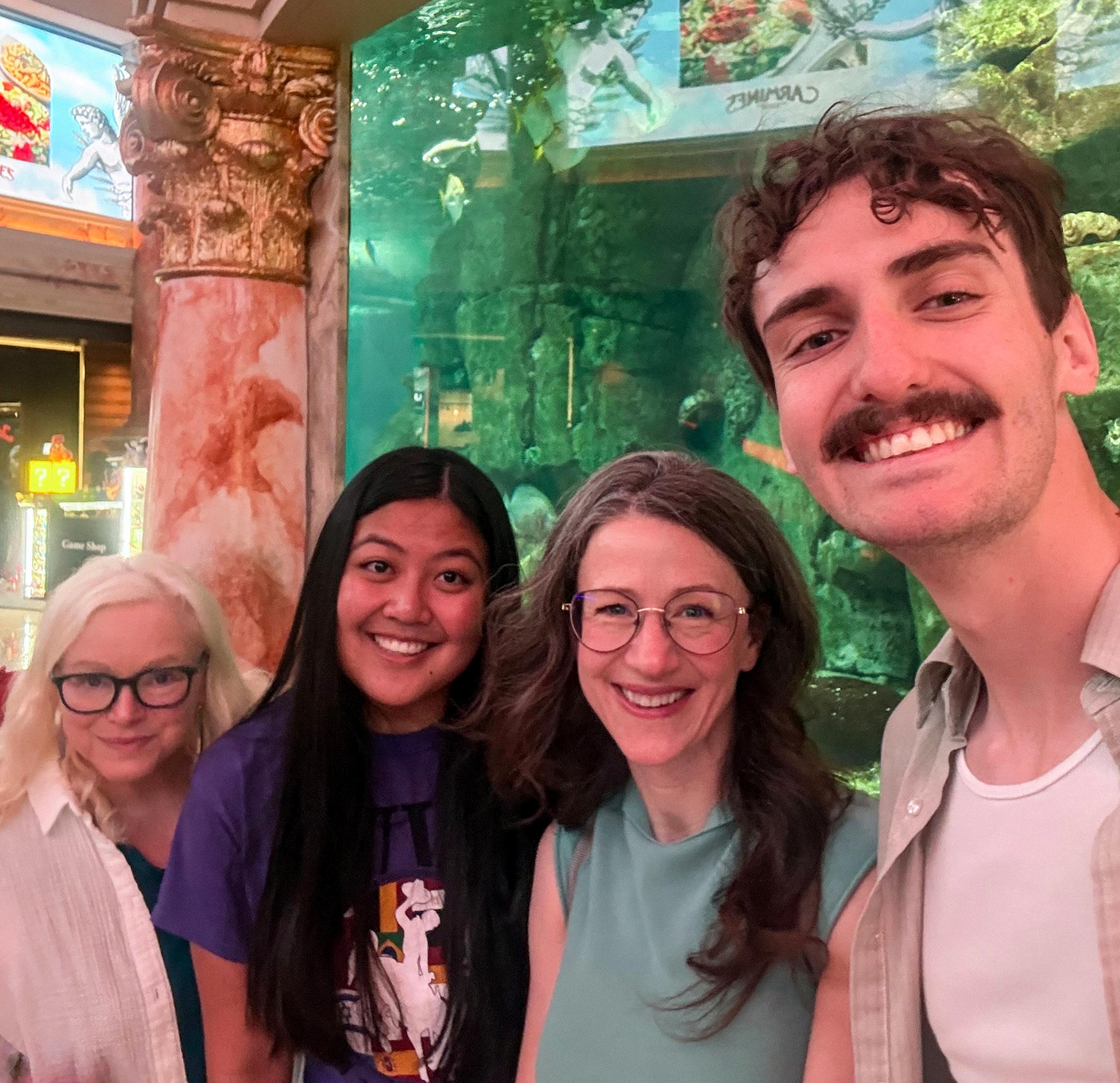
From left to right: Professor Lori Howe, Honors student Lily Leman, Professor Janice Grover, and Honors Alum Andrew Bishop traveled as part of the UW Honors cohort to the WRHC to explore interdisciplinary research.
22 | HONORS COLLEGE
honors library Building Unlikely Community
Zine Collective Proves Great Ideas Can Start Small
BY PROFESSOR JANICE GROVER
Carol J. McMurry Distinguished Librarian for Academic Excellence
Tucked inside the Honors Library, the Zine Collective is proof that good ideas start small. Last year, the Carol J. McMurry Distinguished Librarian for Academic Excellence, Janice Grover, and our Honors Library intern, Ella Goodman, an English major, built the concept from the ground up, testing the idea, listening to students, and letting the community shape itself. Student enthusiasm did the rest. In the first year, meetings doubled from once to twice a month.
The Collective is open to all UW students and draws people who might never otherwise find each other. Husan Singh, a physics major, has since joined as a second Honors Library intern, bringing the hosting team across the sciences and humanities, a span that reflects the community itself. Here, conversation is the creative practice. Students share work, trade ideas, and find that talking across disciplines makes their thinking sharper and their making bolder.
Zines have always belonged to people who didn’t wait for permission to share their thoughts, and the Collective carries that spirit into the heart of the Honors Library. Here, students bring their studies into conversation with who they are, and the work they make reflects both.
PHOTO CREDITS: JANICE GROVER
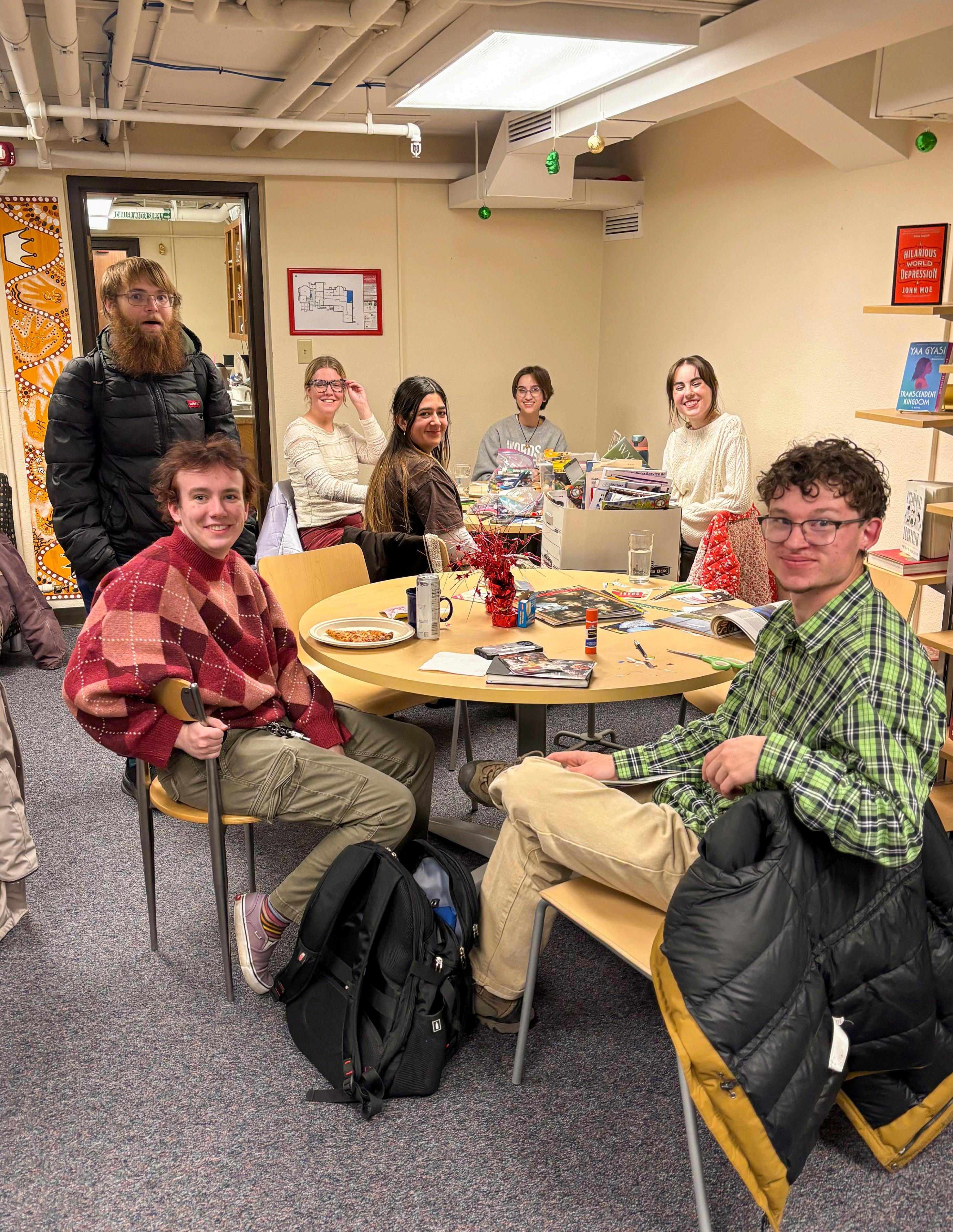
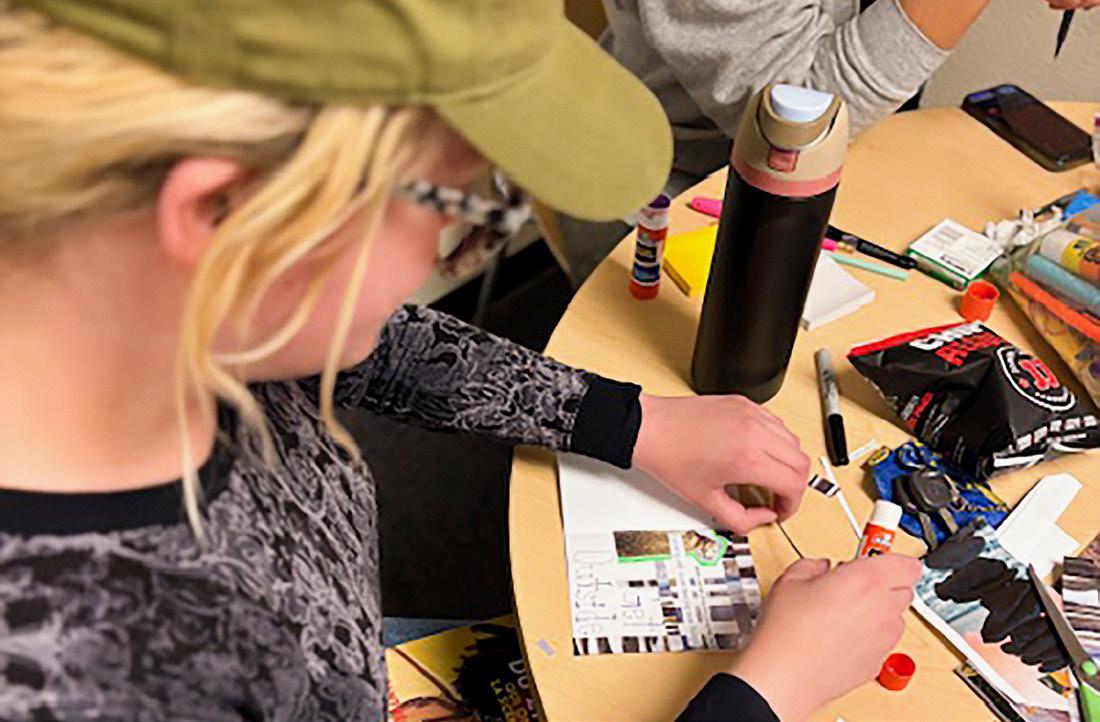
Pictured: Members of the Zine Collective gather to create new works from a rich mix of ephemera, transforming fragments into fresh expressions of ideas.
honors internship Middle East Film Festival
Building Community Around Film
BY ZCHERINA VILLEGAS
Majors: English, Anthropology
Minors: Theatre, Honors
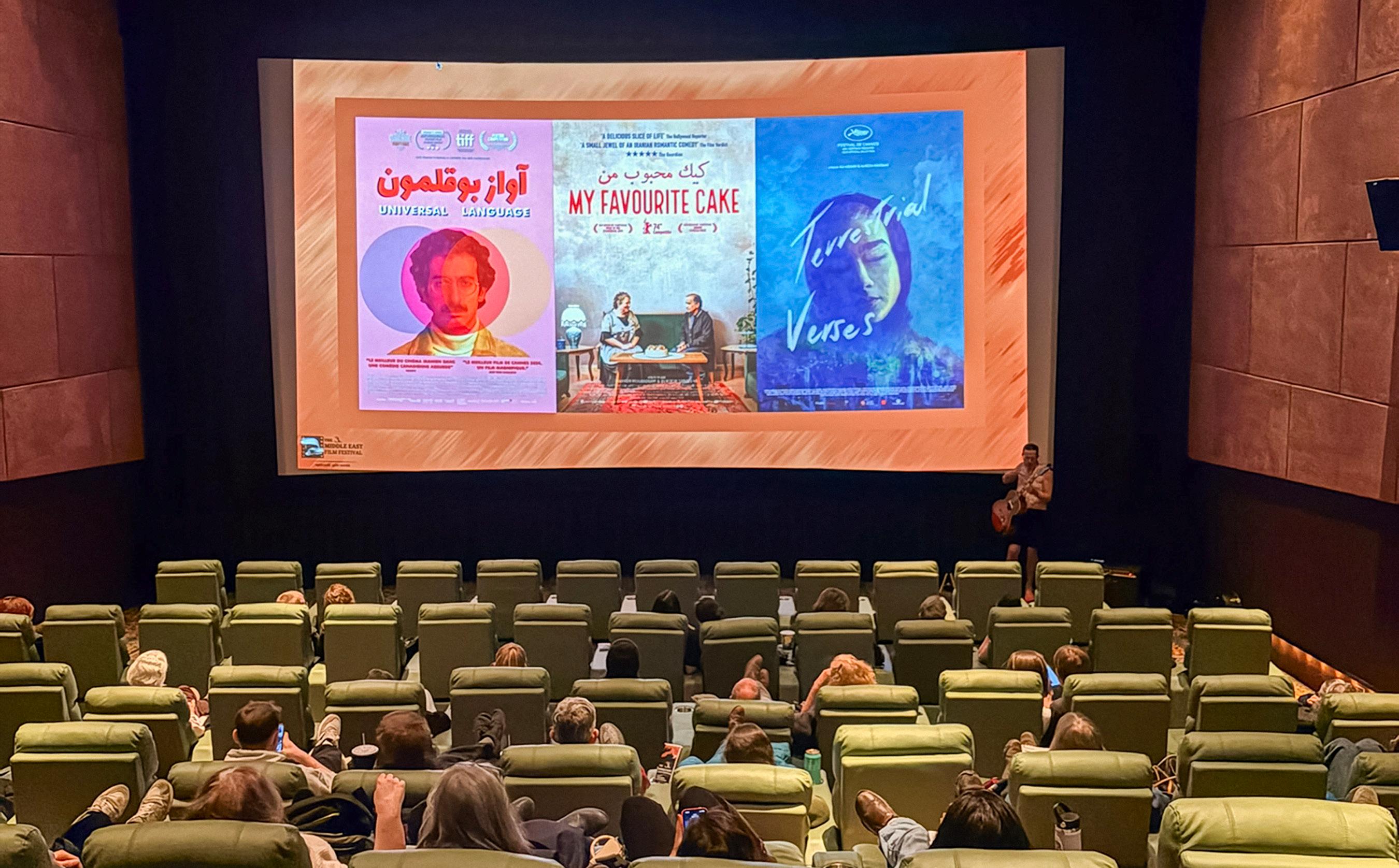
These past couple of months, I had the immense privilege of interning for the 3rd Middle East Film Festival, led by Professor Ahmad Nadalizadeh. Over the course of six days in early March, the festival screened six films at Studio City Theater here in Laramie. While the event itself lasted only a week, my work began months prior. In my capacity as an intern, I focused primarily on graphic design, which encapsulated the festival’s entire visual branding. In total, I designed the festival’s official logo, posters, and other marketing materials. One of my biggest responsibilities, though, was creating the festival’s introduction video shown before every screening, where I edited large
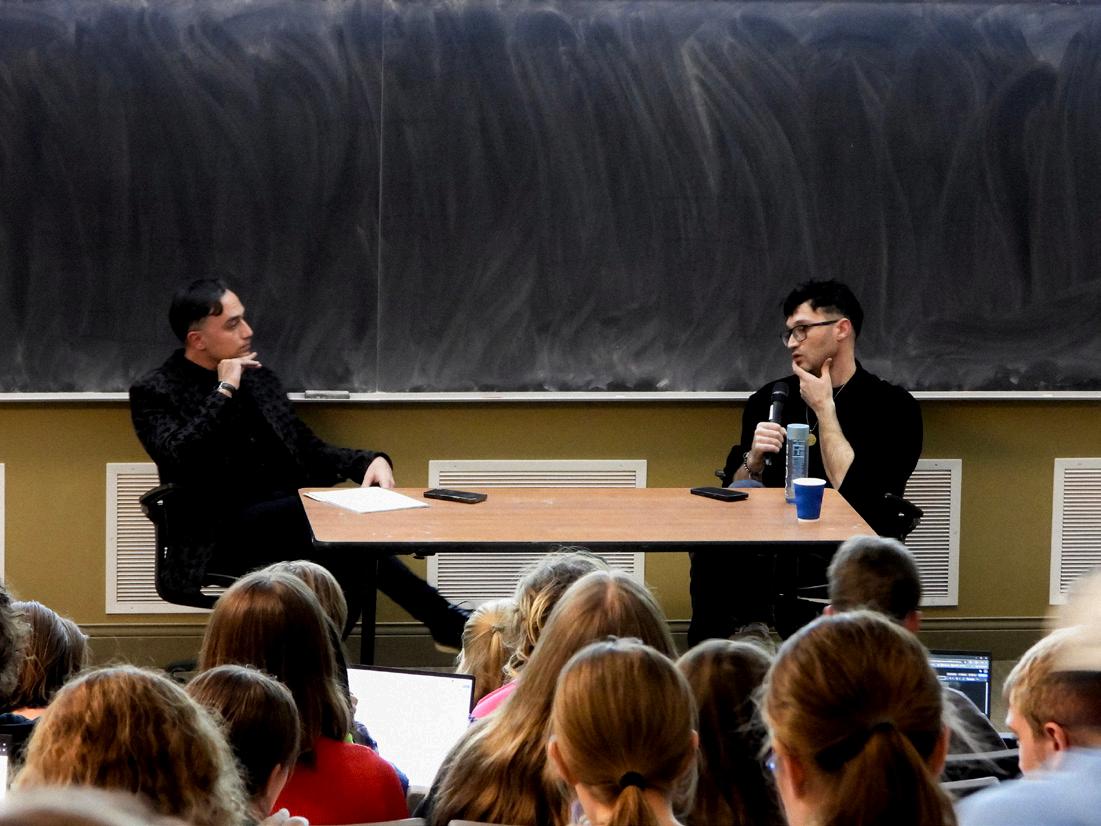
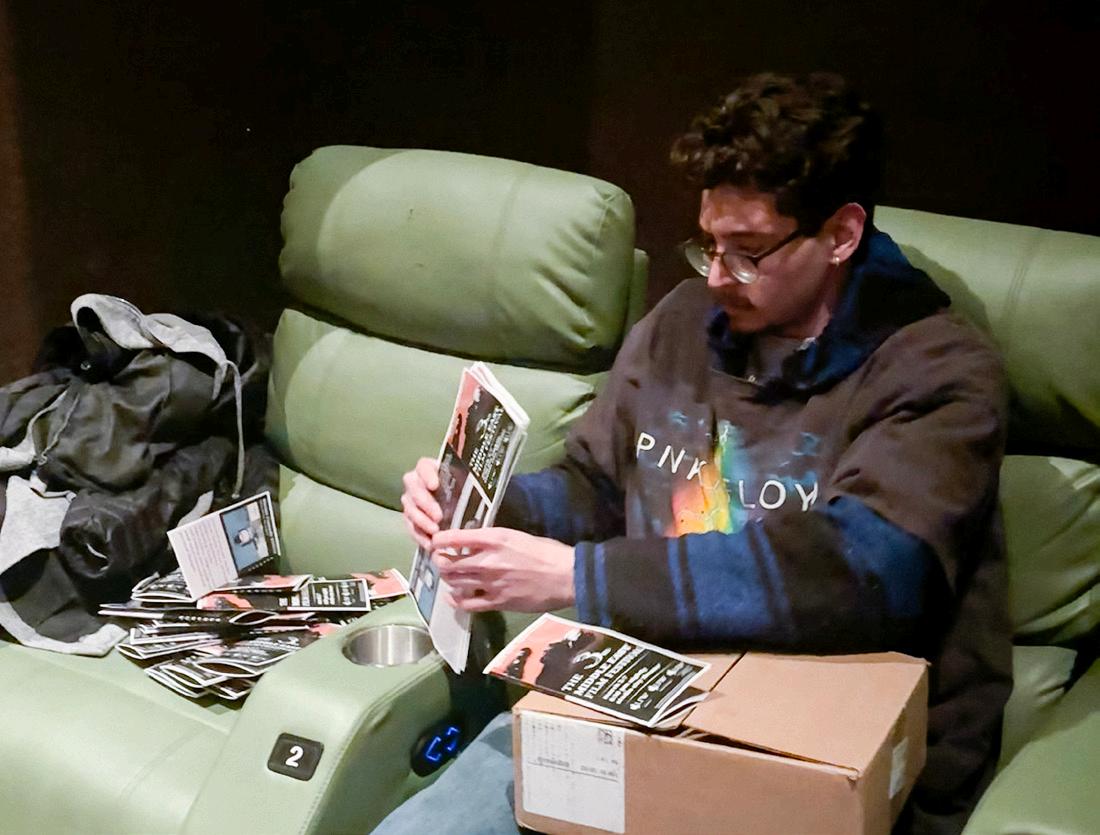
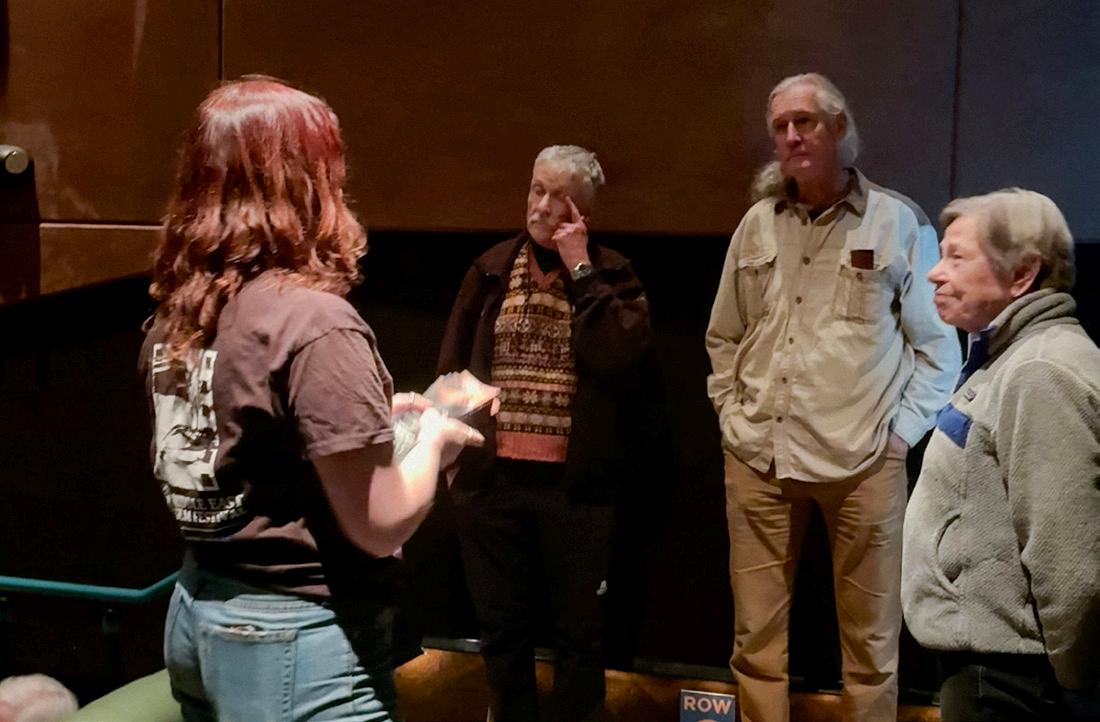
Top: Professor Nadalizadeh interviews Nehir Tuna, director of Dormitory, at the Honors Colloquium Scholar Series. Middle: Festival volunteer, Rafael Villa, organizes brochures in preparation for a nightly screening at Studio City. Bottom: Festival volunteer, Eralys Wallace, converses with festival attendees before the screening of Looking for Oum Kulthum.
amounts of footage to curate the year’s theme: “Open Eyes, Open Worlds.”
Through this internship, I gained an inside look at the logistics of festival organization and outreach, working in close collaboration with Professor Nadalizadeh to ensure every detail ran smoothly. Beyond this, I was also able to connect with our guest of honor, Nehir Tuna, the Istanbul-based director of Dormitory (2023). Through him, I gained firsthand perspective and advice on the professional film-making process and industry.
The Middle East Film Festival is definitely something you might not expect to find in a place like Laramie, Wyoming, but that is exactly what makes it so special. With the Middle East rarely receiving US coverage outside of news headlines, this festival uses film as a vital medium to bridge those gaps in understanding, and it shows. For our final screening, Dormitory drew an audience of over 100 people! I am so honored to have
worked with Professor Nadalizadeh and the Honors College through this internship, and I truly look forward to more years to come. As we said in the video introduction to the festival: “Cinema gives us this gift: to encounter without possessing, to witness without fully claiming to understand. It offers us a way of seeing that asks not for certainty, but for curiosity.” With that, from the heart of Wyoming’s open country, I hope to see you all next year for the 4th annual Middle East Film Festival!
“...I gained firsthand perspective and advice on the professional filmmaking process and industry.”
PHOTO CREDITS: ZCHERINA VILLEGAS
honors abroad Community-Based Conservation
Nepal Study Abroad Offers Valuable Experiences in Conservation
Two days after Christmas, I left the dry Wyoming winter and flew halfway around the world to Nepal. After a couple long days of travel, I watched out the window as the plane descended into the hazy valley surrounding Kathmandu.
In the following two weeks, our group of twenty Honors College and Haub School students explored Nepal from the lowlands, known as the Terai, all the way up to 10,000 feet in the Himalayas, with a few days in Kathmandu on each end.
First, we visited Nepal’s first national park, Chitwan. It took a seven-hour bus ride to get there, and most of us passed the time looking out the windows along the Trishuli River. We learned from the National Trust for Nature Conservation about how Nepal promotes community-based conservation as a way to prevent poaching. In about a week, we toured the park, the town of Sauraha, nearby community forests, and protected wetlands, and learned about the
BY BLISS BONNER
Majors: Environment and Natural Resources, Journalism
Minors: Spanish, Honors
culture of the Tharu people, who have lived in the area longer than anyone else.
After that, we spent a night in Pokhara, Nepal’s second-largest city, situated at the base of the Himalayas alongside a big lake. We then ascended a few thousand feet, trekking to Ghorepani, a village in the Annapurna Conservation Area. The next day required a 5:00 am wake-up to reach the top of Poon Hill by sunrise, where we had an amazing view of the sun coming up over the surrounding mountains. We then spent a few more nights in Ghandruk, another high mountain village, learning about the unique tourism and conservation challenges in the area.
When we returned to Kathmandu, none of us could believe that three weeks had passed so quickly. This was my first time studying abroad with the University of Wyoming, and our amazing experiences proved just how valuable these opportunities are to students, no matter what you study.
“... our amazing experiences proved just how valuable these opportunities are to students, no matter what you study.”
honors abroad Engaging with Complex Topics
Study Abroad Strengthens Commitment to the Study of Development and Conflict
BY EMILIA HANSEN
Major: Political Science
Minors: International Relations and Comparative Politics, Honors
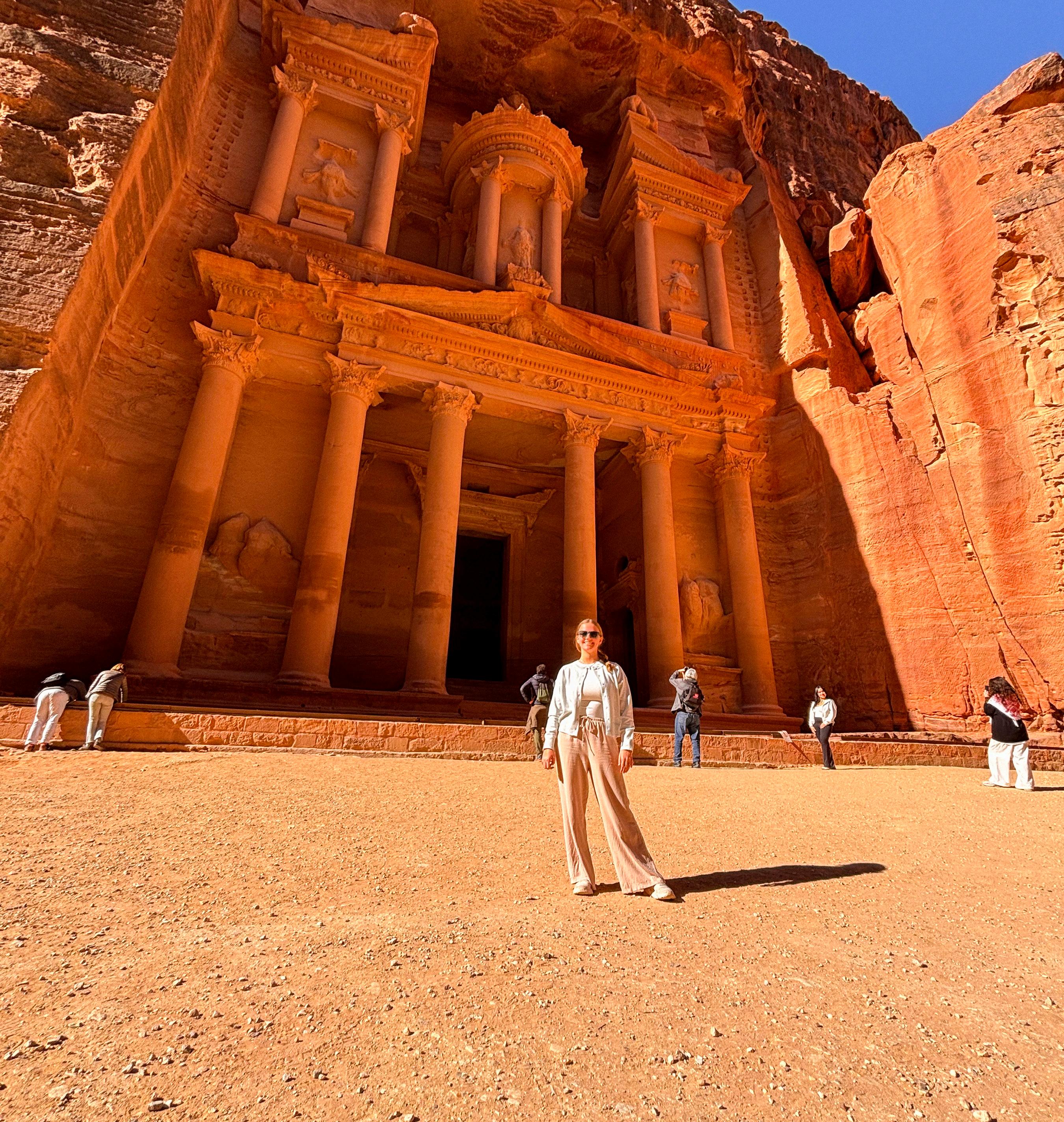
This past January, I had the opportunity to travel to Jordan on a two-and-a-halfweek study abroad program focused on security and geopolitics in Jordan. Throughout the program, our group engaged with a range of complex topics, including the Israeli-Palestinian conflict, the role of water access in shaping regional politics, and how Jordan’s history has defined its standing in the broader region. Conversations with subject-matter experts and daily experiential learning within local communities gave me a perspective on this part of the world that I could not have gained inside a traditional classroom setting.
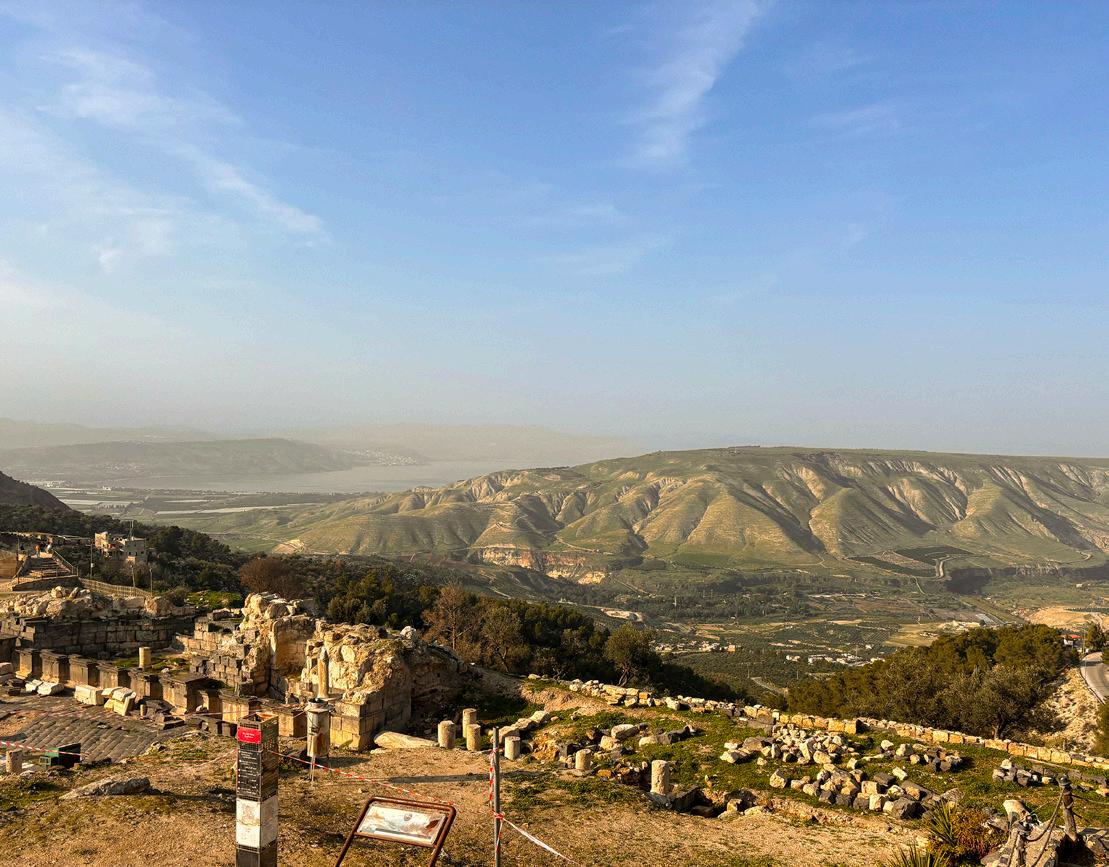
One of the most meaningful moments of the program came when our group stood at the northwest corner of Jordan, overlooking the Sea of Galilee, a body of water bordered by Jordan, Israel, and the Golan Heights. Learning about the deep intersection of water rights and long-standing political conflict that has played out in that very location for decades was a powerful reminder that every conflict carries layers of nuance that a surface-level summary cannot fully capture. It reinforced my belief that understanding the full historical and political context of a conflict is essential to engaging with it meaningfully.
This program not only deepened my interest in the Middle East but also strengthened my commitment to the study of development and conflict more broadly. The experiences and knowledge I gained in Jordan have continued to shape my research focus and inform the professional direction I hope to take as I build my career following graduation.
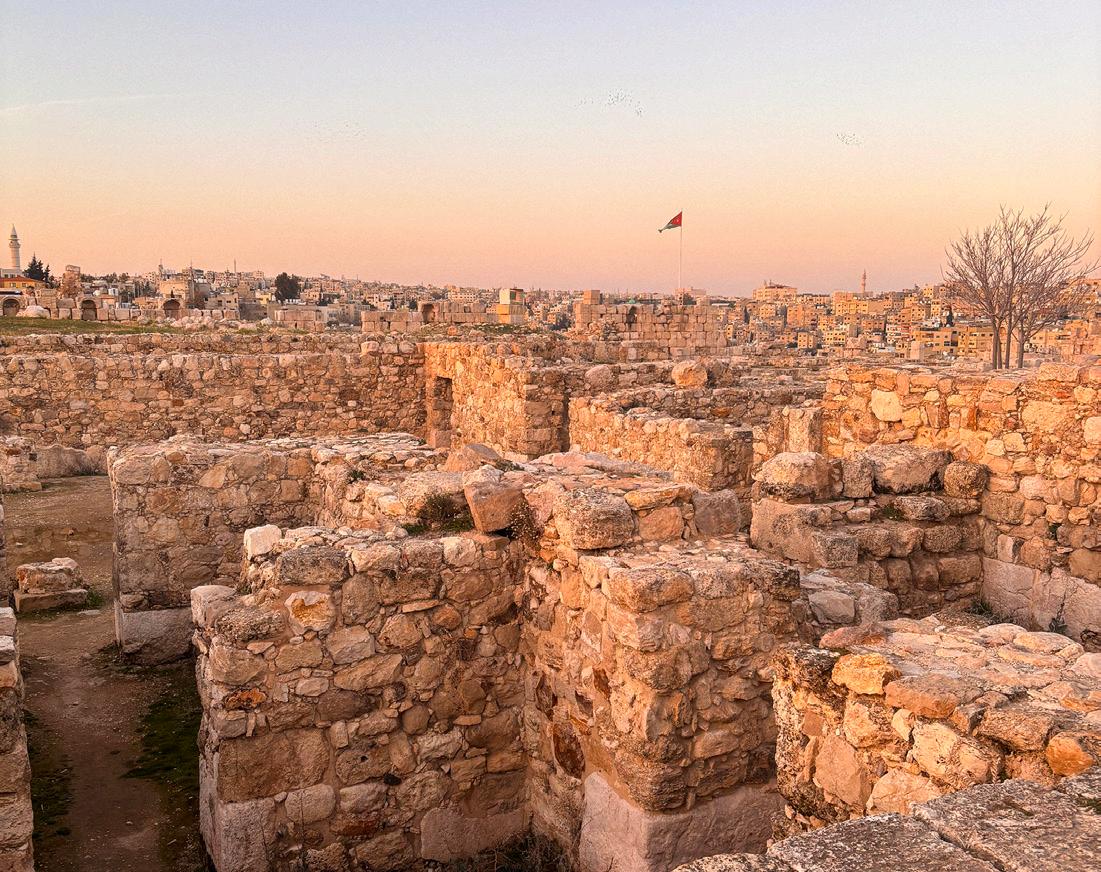
Top: Hansen at Petra in front of the Treasury, the most photographed landmark at the site. One of the 7 wonders of the world, Petra is a UNESCO world heritage site. Bottom left: The ruins of the Amman Citadel in Amman, Jordan. Bottom right: The intersecting border of Syria, Israel, and Jordan that shows part of the Golan Heights.
honors abroad Cultural Immersion
Study Abroad Offers Opportunity to Engage Directly with Research
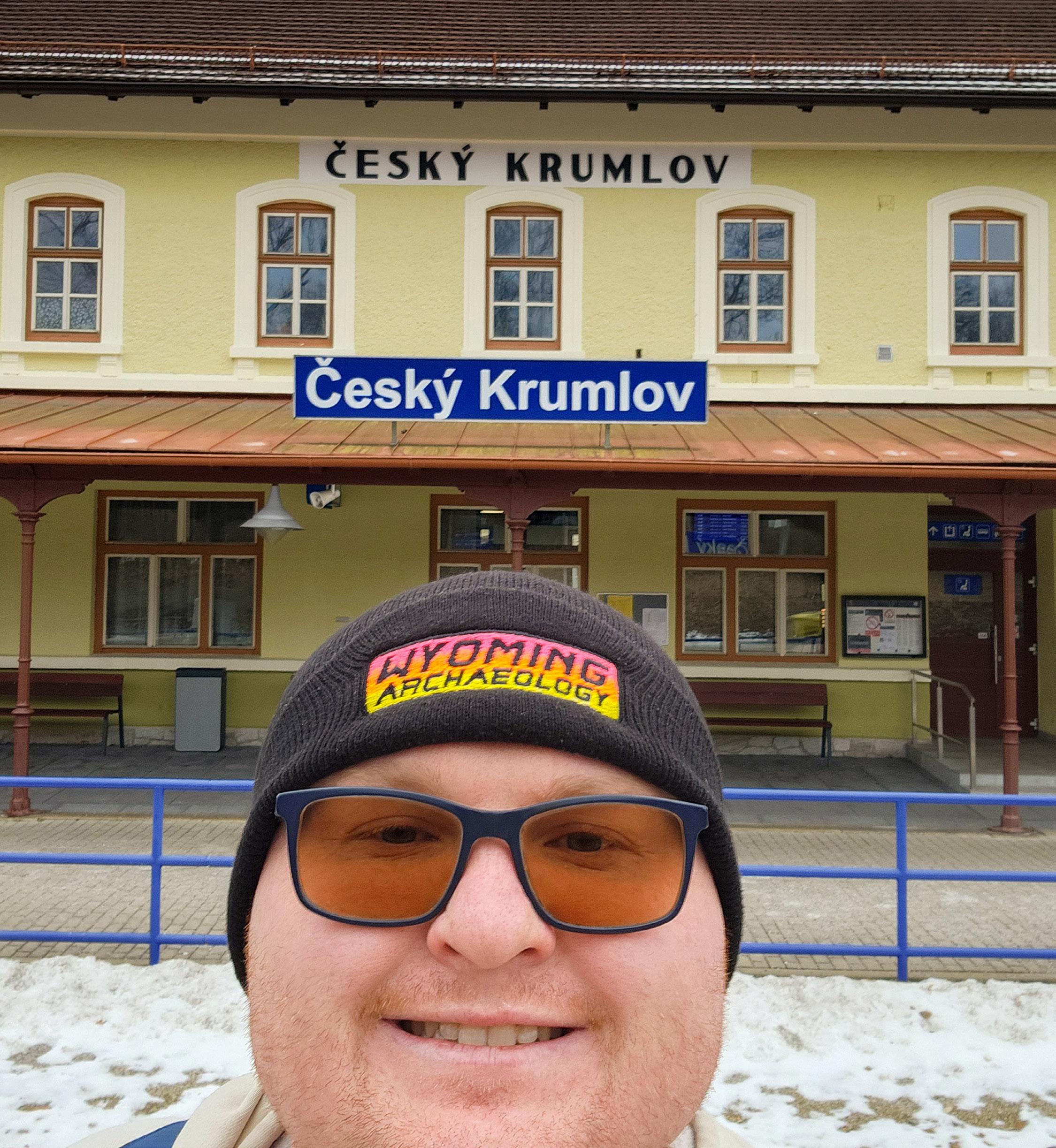
“I want everyone to know about the beautiful city that is Český Krumlov,” writes Honors student DJ Luoloff. Through academic and cultural immersion, Luoloff experienced that beauty firsthand.
“... every moment contributed to a broader understanding of the world and my place within it.”
BY DJ LUOLOFF
Major: Anthropology
Minor: Honors
Studying abroad in the Czech Republic was a genuinely surreal and transformative experience, both academically and personally. As a student focused on human genetics and evolutionary biology, I had the rare opportunity to engage directly with cutting-edge technologies and methodologies shaping the future of the field. Learning in an international setting not only deepened my technical understanding but also exposed me to diverse scientific perspectives and approaches that I would not encounter in a traditional classroom.
One of the most memorable moments of the trip was visiting Prague Castle, the largest castle complex in the world. Standing in such a rich historical environment was a powerful reminder of the depth of human history, something that closely parallels my academic interest in our
evolutionary past. Equally impactful was my time in Neues Museum, where I was able to engage in exhibits that connect ancient human remains to modern genetic research.
Beyond academics, the experience was enriched by cultural immersion. From enjoying traditional Bavarian cuisine to forming meaningful connections with fellow students and researchers, every moment contributed to a broader understanding of the world and my place within it.
This study abroad experience has been invaluable to my education. It reinforced my passion for genetics and human evolution while giving me the confidence to pursue research on a global scale. It was not just a trip; it was a pivotal step in my academic and professional journey.
PHOTO CREDITS: DJ LUOLOFF
honors course New Perspectives
Colloquium Leaves Students with New Experiences and Shifted Perspectives
BY BARRET EWING
Majors: Astronomy, Physics
Minors: Mathematics, Honors
Hello! I’m Barrett Ewing, a non-traditional student currently in the Honors College. Being in Honors has been an incredible experience so far, with Colloquium I and II being some of my favorite classes across my freshman year. Getting the chance to learn about scholars like Susan Sontag and Jean Baudrillard has had a significant impact on how I perceive and experience the world around me. I find it especially fun to try and find how these ideas connect to the subjects within my major. The true value of the Honors College has been seeing how all these subjects and ideas are all connected, and there’s so much value in combining and approaching subjects with these new perspectives.
This has also been what’s given me the most struggle, as the questions posed in Honors are deceptively simple. I’ve lived, and I’m a human, how hard can it be to define those experiences? I quickly found out that there are so many layers and subjects that have changed my understanding of those questions. From quantum physics allowing us to live in our own relative versions of reality, to never being able to comprehend the world as an animal or another human, I have gotten to explore so many interesting topics, and I cannot wait for what future honors classes might be able to show me.
honors soar
A Bright Future
SOAR Mentor Reflects on Dedication of Freshmen Cohort
BY KATIE SHIELDS
Major: Psychology
Minors: Neuroscience, American Sign Language, Honors
When I saw the opportunity to apply to be a SOAR Mentor in the Honors College, I immediately knew I wanted to apply. In my first year at UW, the Honors College provided me support, community, and endless amazing opportunities. Now, I saw the chance to give back to this community and wanted to take it. Since day one, I have loved serving as a SOAR mentor. It was such an honor to welcome in our next cohort of Honors students at orientation and share
my experience so far in the Honors College. I remembered how scared and alone I had felt just one year ago, in the exact same place, and I hoped my words could provide them a small amount of comfort and reassurance about all the amazing things that lie ahead for them.
From hosting events to personal emails, the focus of a mentor lies with their students. As a group, SOAR mentors work together in the best interest of first-year students to help them succeed and find their home in Honors, just as we already have. When our first movie night had an attendance of over 100 students, we knew that we were working with an amazing and dedicated cohort.
Over the last year, seeing our progress and hearing from students has made the work so rewarding. It truly has been special to be just a small part of their journey. I feel a sense of pride seeing our first-year students succeed and knowing their future in Honors is so bright!
“... I hoped my words could provide them a small amount of comfort and reassurance about all the amazing things that lie ahead for them.”
SPRING 2026 | PAGE 35
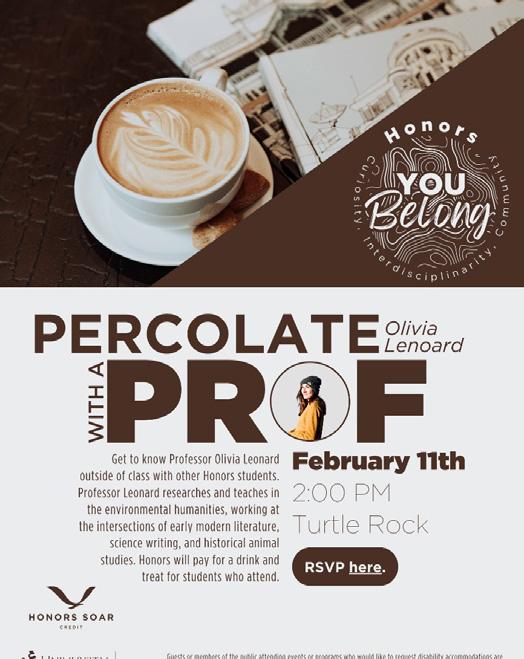
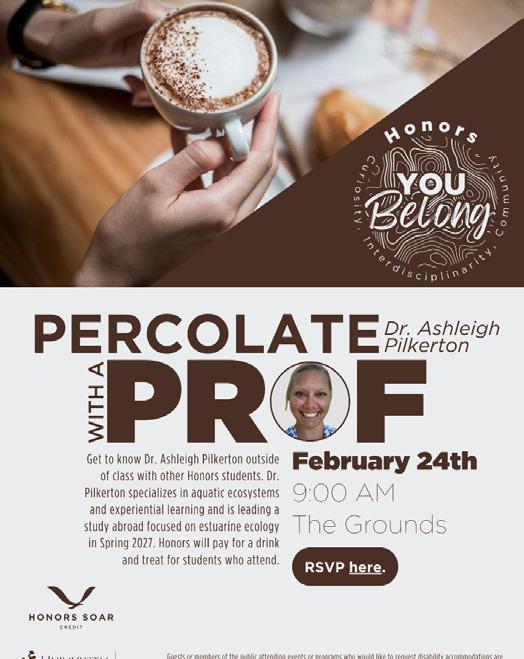
Honors student Amali Wijesena participates in Ella Gray’s “Percolate with your Advisor” event at the Bucking Horse Bakery.
honors events Looking Back
Explore Honors Events from Spring 2026
At the heart of the Honors College is a commitment to intellectual curiosity, creative thinking, and cross-disciplinary collaboration. Through a dynamic array of events, the Honors College brings together students, faculty, staff, community members, and experts from diverse fields to explore the cutting edge of research and creativity. From thoughtprovoking lectures and panel discussions to interactive workshops and stimulating book groups, these events showcase the breadth and depth of knowledge housed within the college while offering
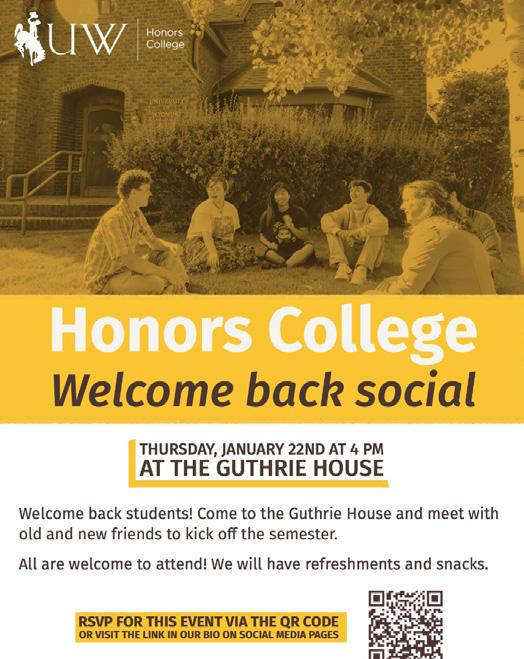
01/22: Winter Welcome Back Social
02/03: Percolate with a Prof - Paul Taylor Edition
02/11: Percolate with a Prof - Olivia Leonard Edition
02/18: Percolate with an Advisor - Laura Olson Edition
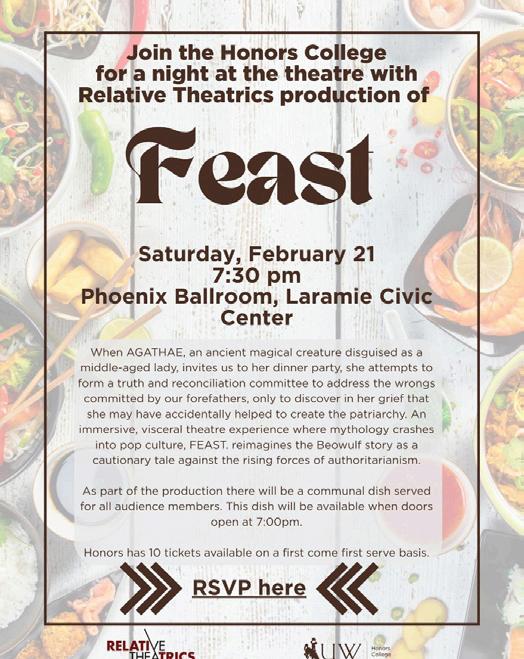
02/21: Relative Theatrics Production of “Feast”
students the rare opportunity to engage directly with groundbreaking work in a variety of disciplines. Each event in the Honors College is designed not just to inform but to spark conversation, inspire innovation, and foster connections across traditional academic boundaries, as well as nurturing the sense of belonging that we value. This feature highlights some of the exciting, interdisciplinary events hosted by the Honors College this past Spring Semester — each one a window into the vibrant intellectual community that drives our collective pursuit of knowledge and discovery.
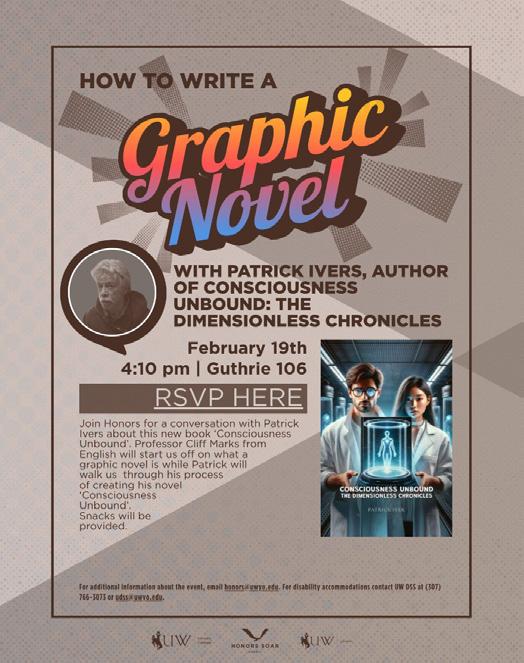
02/19: How to Write a Graphic Novel
02/24: Percolate with a Prof - Ashleigh Pilkerton Edition
02/26: Percolate with an Advisor - Ella Gray Edition
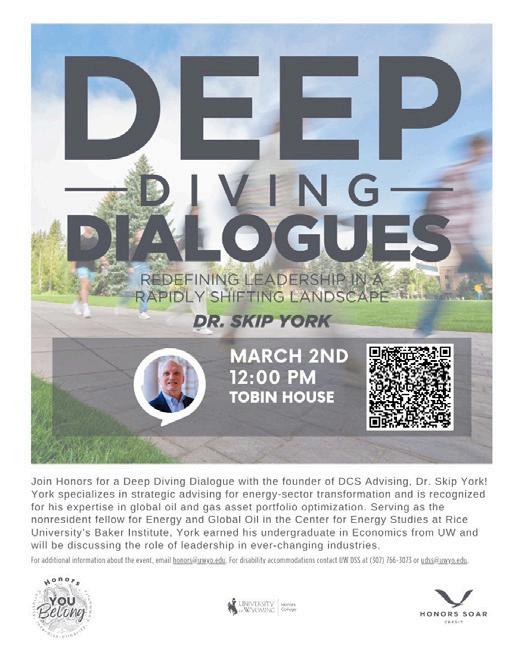
03/02: Deep Diving DialogueDr. Skip York
03/02-07: 3rd Middle East Film Festival
03/11: Percolate with a Prof - Tori Kricken Edition
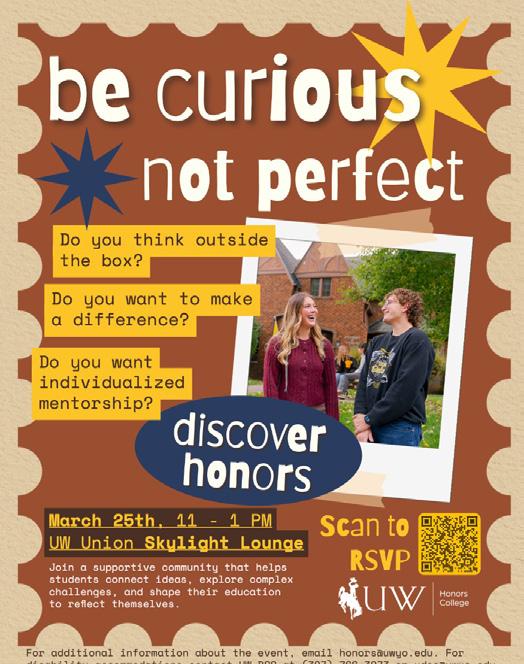
03/25: Discover Honors Showcase
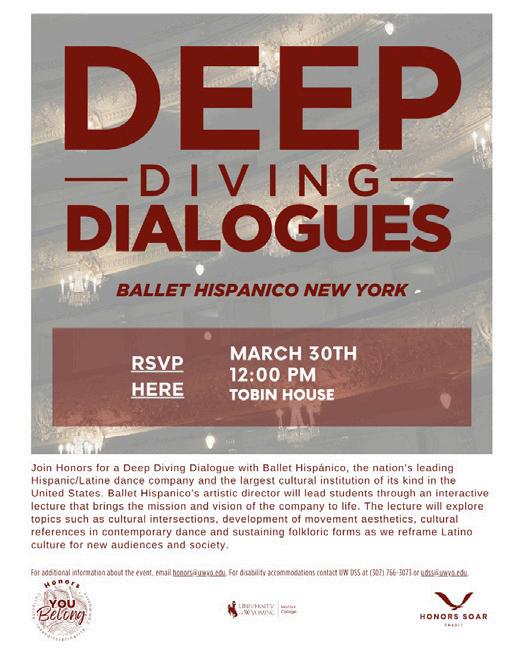
03/30: Deep Diving DialogueBallet Hispanico
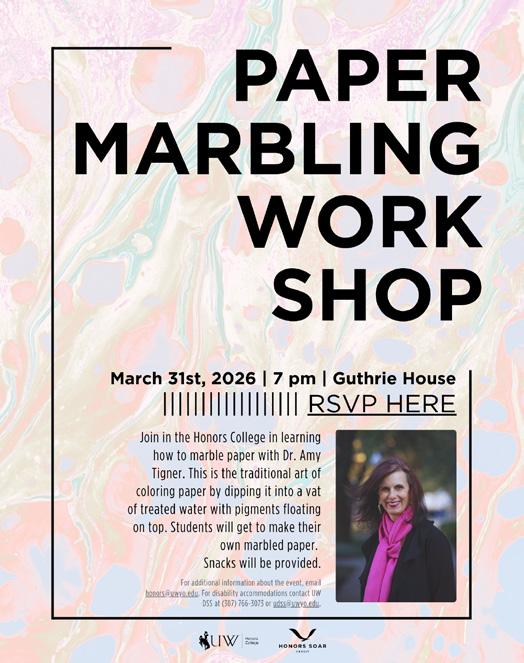
03/31: Paper Marbling Workshop
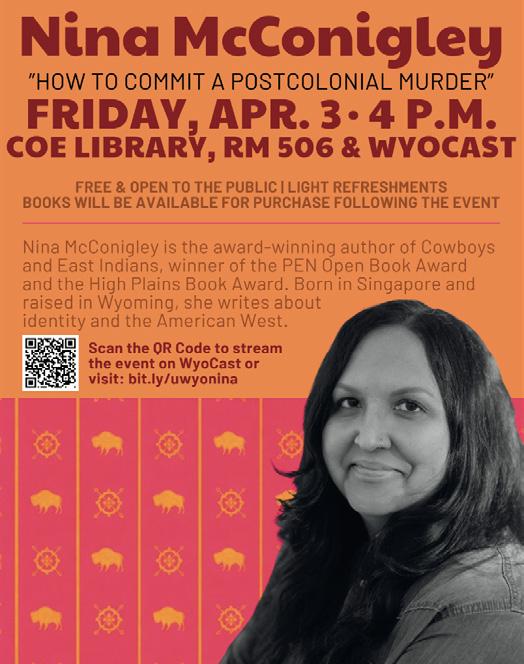
04/03: Book Talk with Nina McConigley
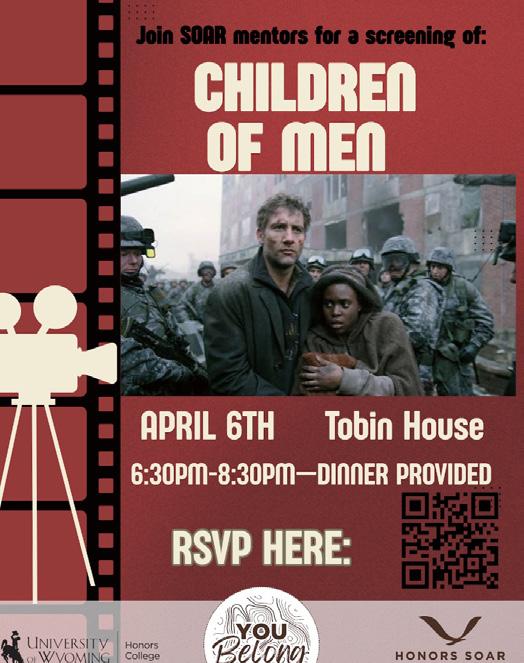
04/06: Colloquium Hub - Children of Men Screening
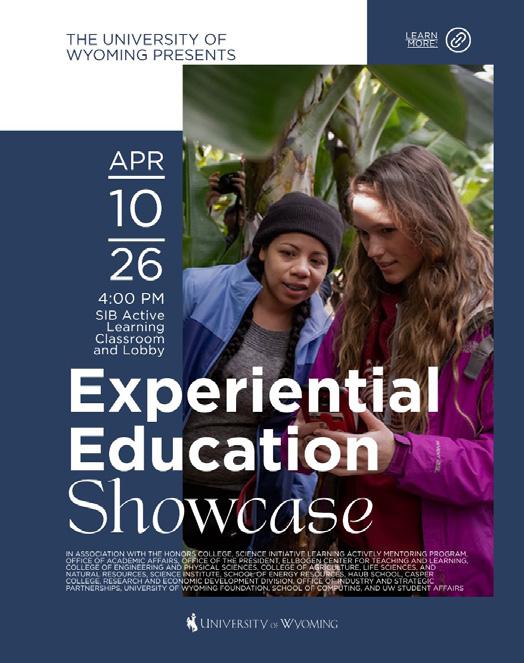
04/10: Experiential Learning Showcase
04/15: Murder in the Mafia Mystery Night
04/16: Much Ado About Nothing Night at the Theatre
04/17: Percolate with your AdvisorHonors Major Edition
04/17: Deep Diving DialogueDean Peter Parolin
04/20: Percolate with a Prof - Hosanna Krienke Edition
04/23: Percolate with a Prof - Sarah Lass Edition
04/23: Deep Diving DialogueMiguel Alcubierre
04/24: Guthrie House Party
04/30: Celebrating Women Shaping the West
05/01: Deep Diving Dialogue - Lindsay Linton Buk
05/05: Destress Paper Marbling Workshop
05/06: Material, Memory, and the Senses Workshop
05/07: Colloquium Showcase
05/15: Honors College Graduation Ceremony
the HONORS experience
The Honors College is 100% about the students — a truly exceptional group of people who make a difference at UW and in the world. Honors students are intellectually curious learners from all majors. They are creative, inspired by diverse ideas, and seek a greater understanding of their place in society.
Combine excellent students with superb faculty in small classes and the result is an invigorating and highly effective learning environment. Honors faculty talk with students, not at them. Honors students thrive in this stimulating environment, develop lasting friendships, and succeed in their academic and professional pursuits.
Each honors student enjoys interdisciplinary courses uniquely created and taught within the college, while earning an undergraduate minor or concurrent major in honors.
For more information on the exciting endeavors going on in the Honors College, visit http://www.uwyo.edu/ honors/
Additionally, if you are participating in an honors project that you think should be highlighted in the Honors College Magazine, please contact honors@uwyo.edu
PHOTO CREDIT: CATCHER RUSSELL
the impact of giving
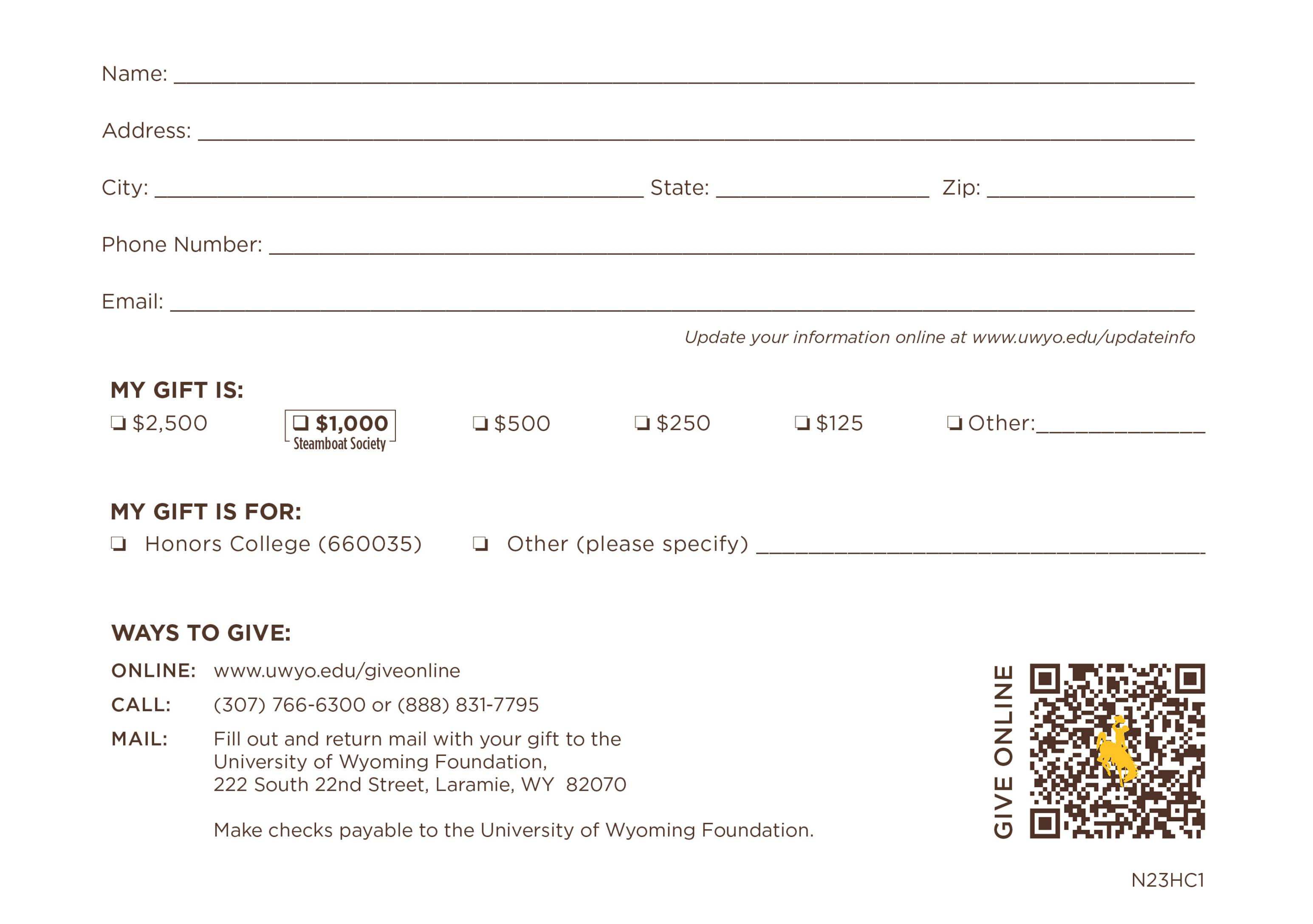
Your gift to Honors strengthens our ability to deliver the highest-quality educational, research, and outreach opportunities so that students can experience everything that Wyoming and the world have to offer. There are many ways to give, including giving to the Honors College General Fund and the Duncan and Janice Harris Excellence Fund. Private giving is fundamental to UW and to the Honors College. It provides the margin of excellence that helps our students shine, giving them access to scholarship support, cuttingedge technology and equipment, and exceptional learning opportunities. Your investment has a positive impact on every student. UW Honors appreciates each and every gift you give. If you would like to give to the Honors College, just fill out the form and follow the guidelines on p. 40. If you would like to talk with the Honors College about opportunities to give, please email Dean Peter Parolin at parolin@uwyo.edu
support the honors COLLEGE
PHOTO CREDIT: CATCHER RUSSELL
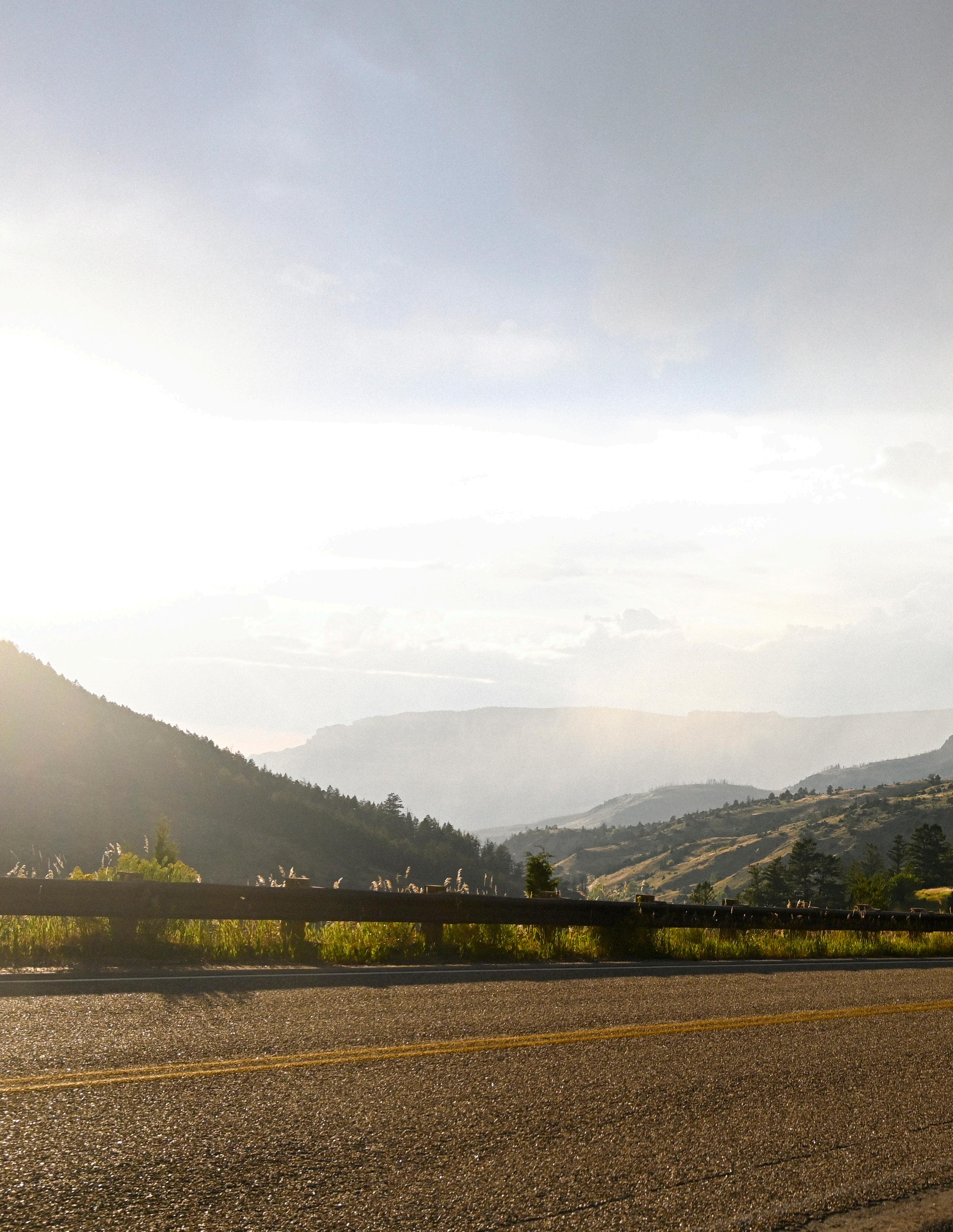
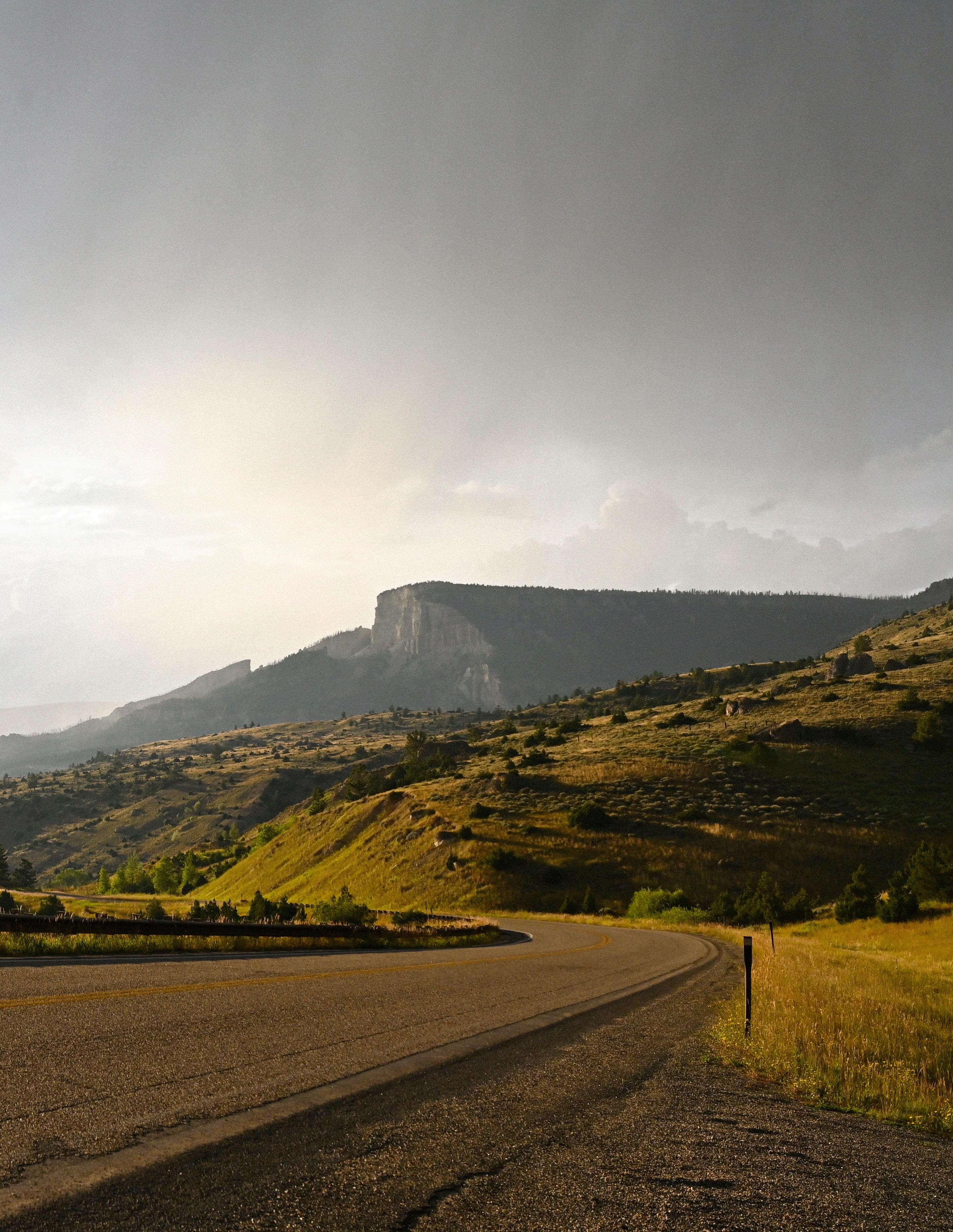
View of Copman’s Tomb along the Bighorn Scenic Byway in Northern Wyoming at sunset.