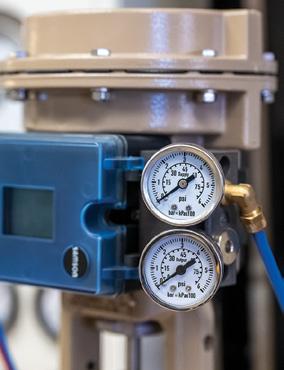
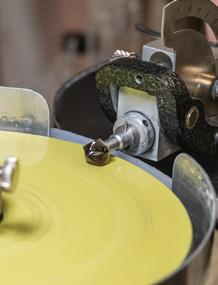
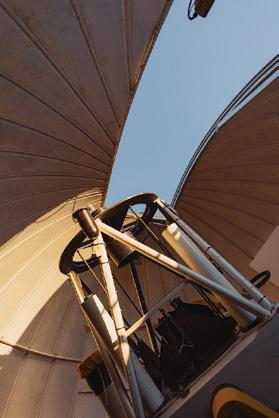
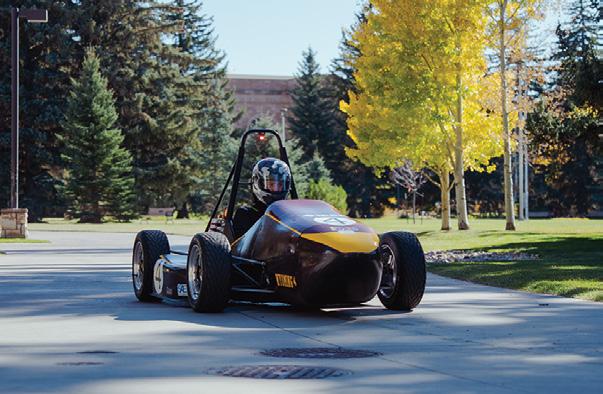
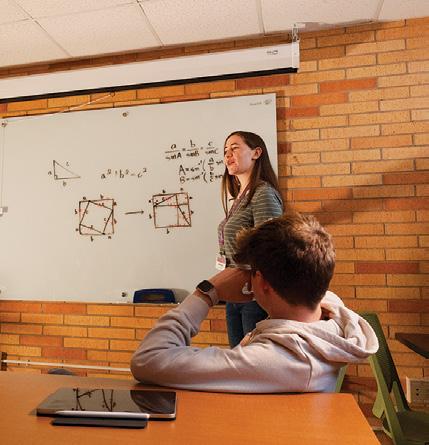
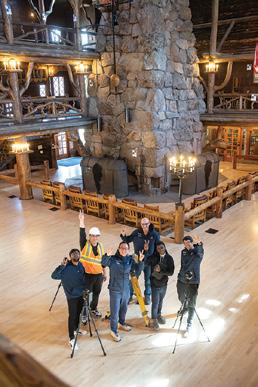
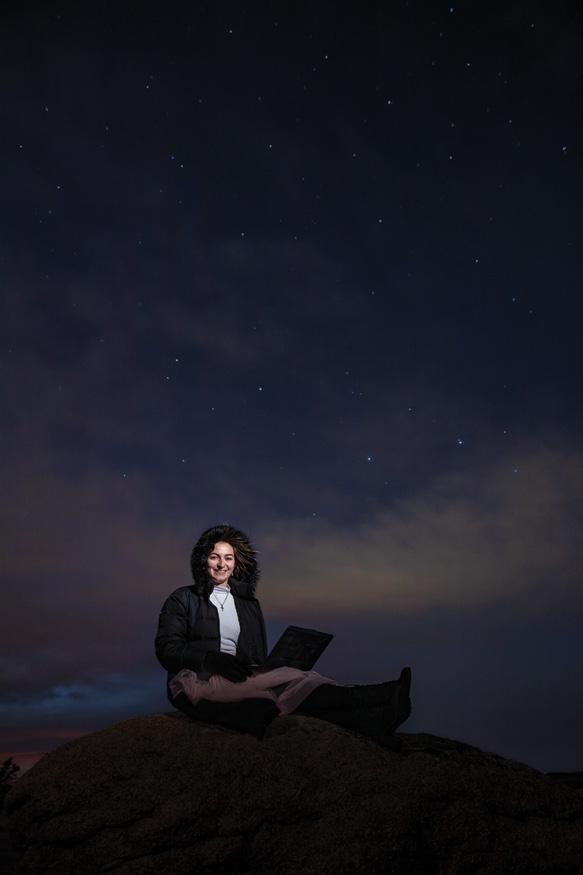
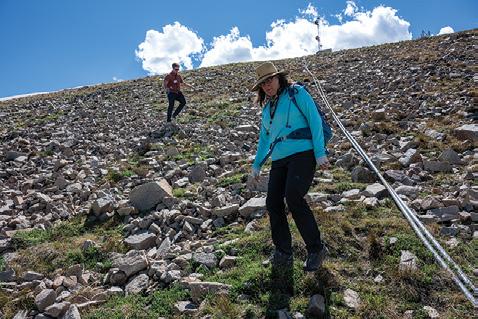
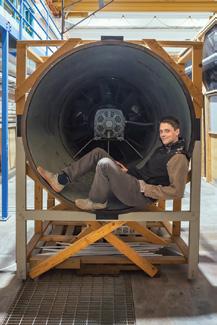
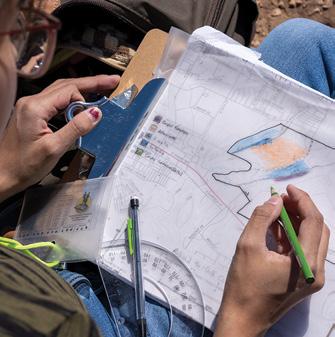
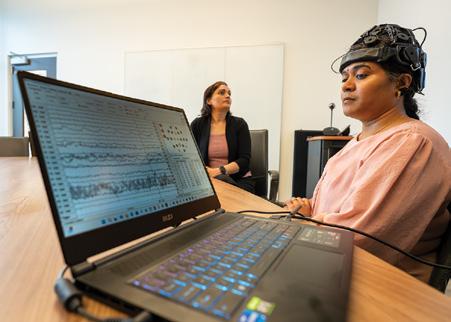
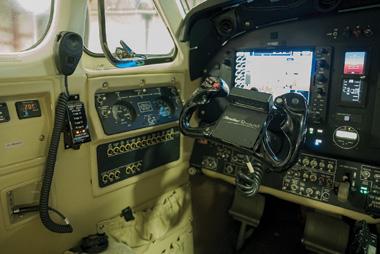
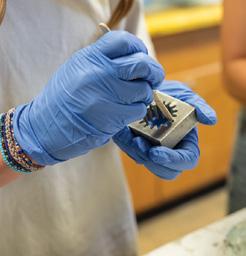
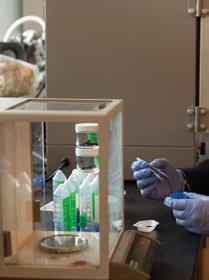
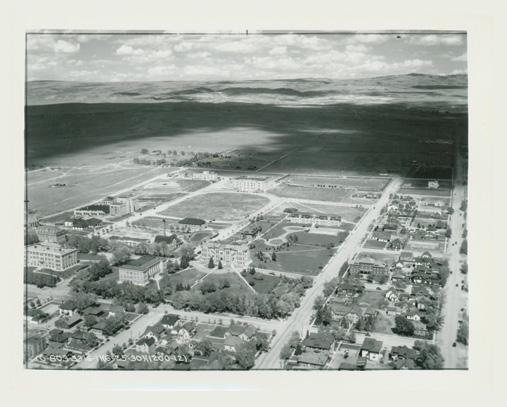
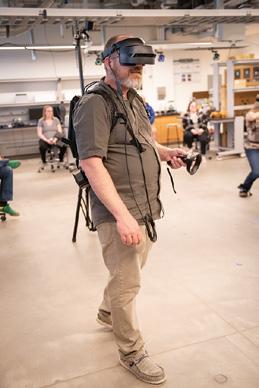
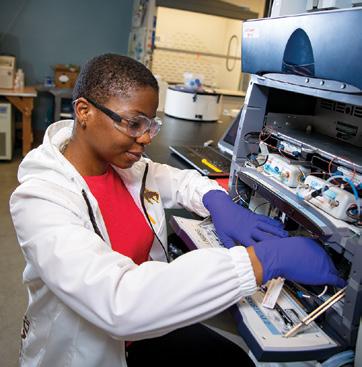
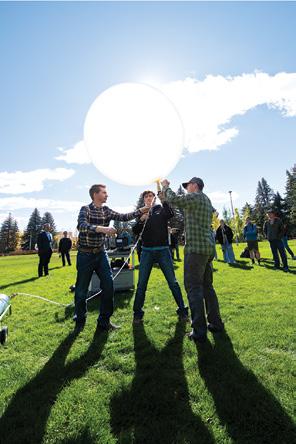
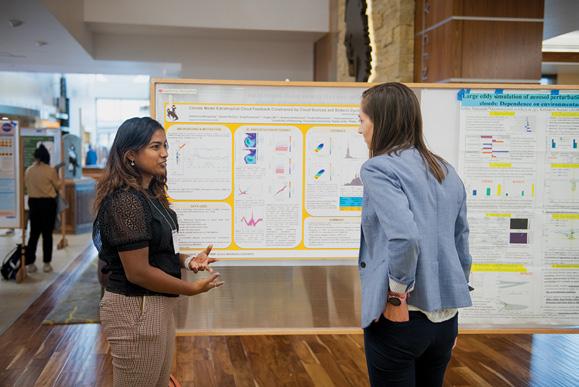
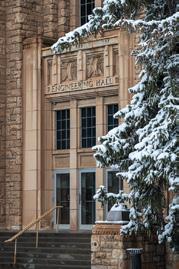

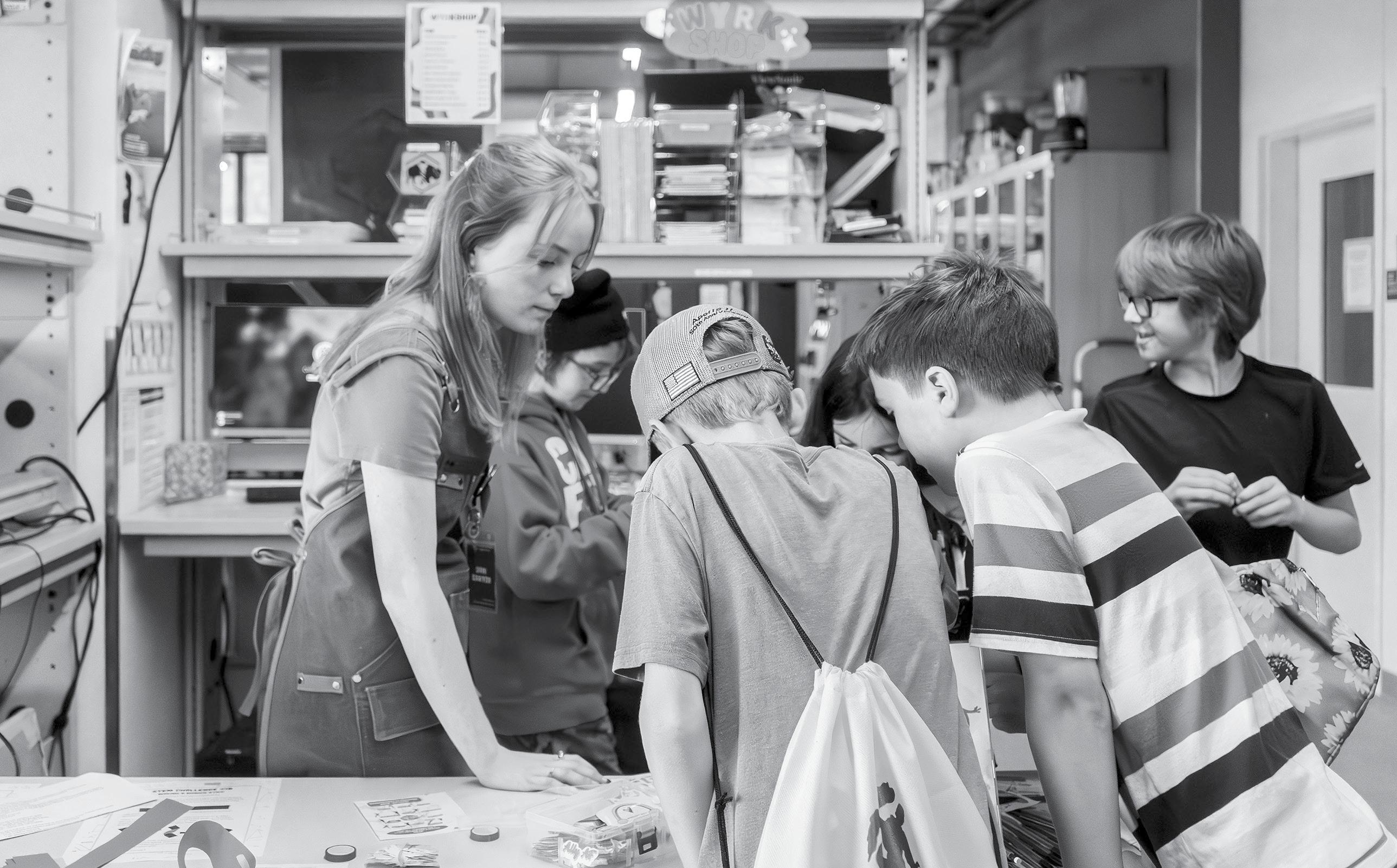
The UW College of Engineering and Physical Sciences is excited to engage students and teachers in hands-on STEM learning. Strengthening K-14 education can increase the number and quality of students pursuing STEM programs at the University of Wyoming, leading to impactful careers in Wyoming and beyond.
Engineering Summer Program (ESP)
For rising seniors. June 7-13, 2026
UW Teton STEM Academy
For rising 9th, 10th, and 11th graders.
July 12-19, 2026
Astro Camp
For rising 7th and 8th graders.
July 12-18, 2026
Information in QR code below.
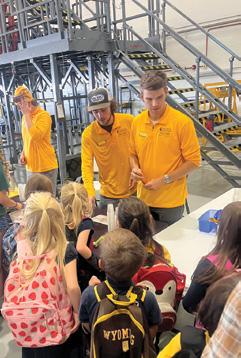
Our team of CEPS Student Ambassadors can visit classrooms, virtually or in person, to encourage the exploration of the engineering design process.
Machine Learning for High School Teachers (ML4HST)
July 13-16, 2026
Engineering Summer Program for Teachers (ESP4T)
July 20-24, 2026
Information in QR code below.
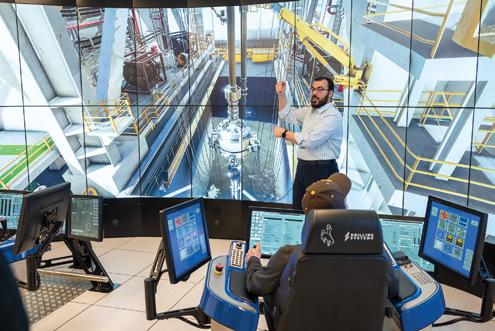
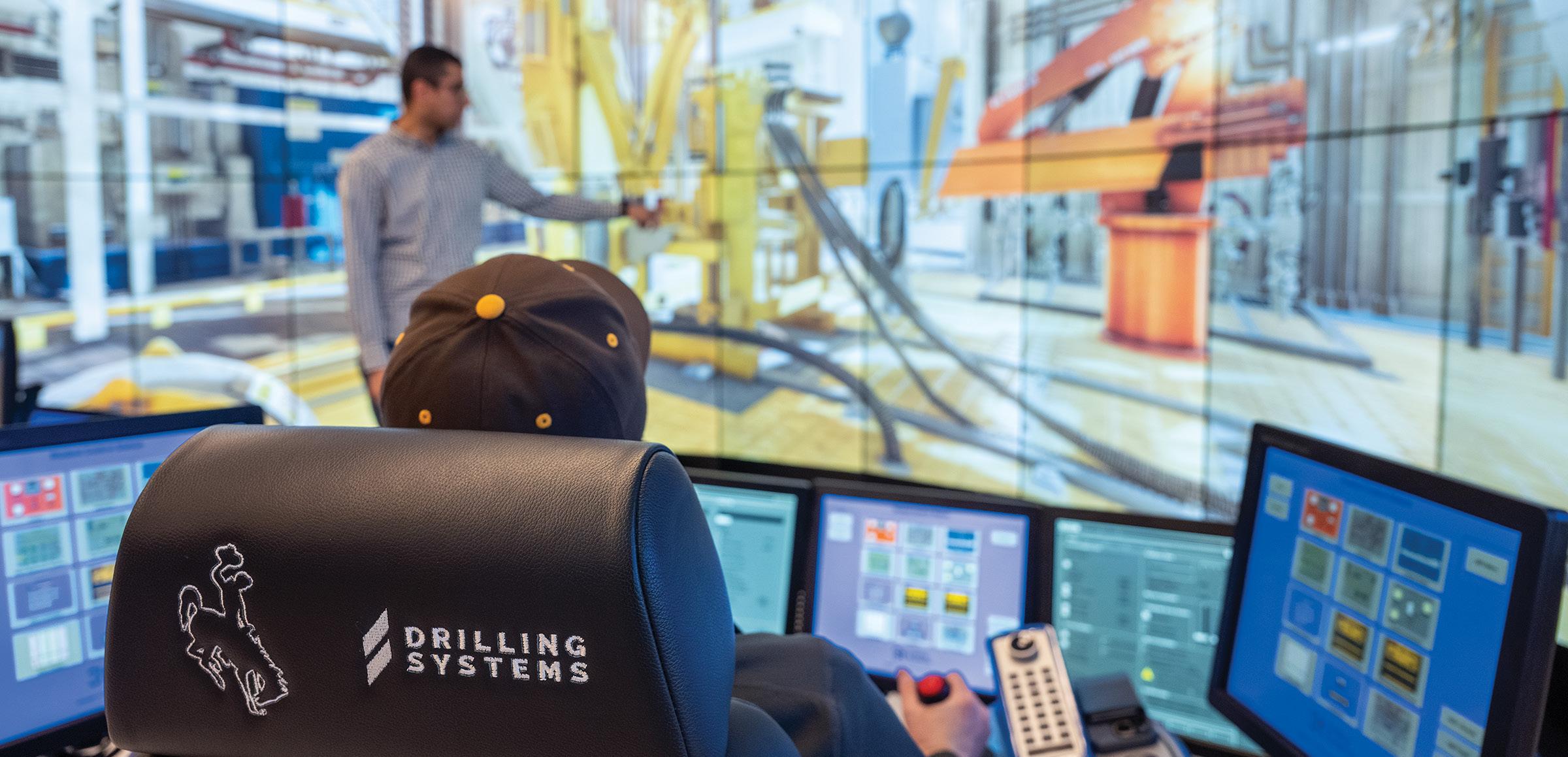
Led by current engineering students to provide an introduction to our programs. Enjoy tours of the engineering buildings, interactive learning in our makerspaces, hands-on activities, world-class drilling simulator demonstration, and much more!
03 / Engineering and Physical Sciences Honors Awarded at Spring 2026 College Awards Banquet
05 / Gov. Mark Gordon Signs Proclamation Honoring Engineering Week
08 / The Engineering Building Celebrates 100 Years
12 / 100 Years of Petroleum Engineering at UW
14 / Oilmen’s Gala Celebrates 100 Years of Petroleum Engineering
26 / Giving Back: CEPS Serves
On the Cover
02 / Message from the Dean 06 / News & Notes
15 / Students in Action
16 / Entrepreneurship in Action 20 / Alumni Spotlight
22 / Faculty in Action
25 / Staff Highlight
28 / Alumni In Memoriam
For the past 100 years, the University of Wyoming has been at the forefront of critical research and exemplary teaching in engineering and the sciences. Many of these moments are represented here.
Interim Carrell Family Dean Danny Dale
Associate Dean, Undergraduate Programs Steven Barrett
Associate Dean, Graduate Programs Chip Kobulnicky
Assistant Dean for Student Success Cindy Jones
Interim Associate Dean, Graduate Research Saman Aryana
Director, Business Operations Cindy Wood
College Affairs Coordinator Mindy Zwieg
DEPARTMENTS:
Atmospheric Science Jeff French, Head
307-766-3245 | uwyo.edu/atsc
Chemical and Biomedical Engineering
Vladmir Alvarado, Head
307-766-2500 | uwyo.edu/chemical
Chemistry Brian Leonard, Head
307-766-4363 | uwyo.edu/chemistry
Civil and Architectural Engineering and Construction
Management Jonathan Brant, Head
307-766-2390 | uwyo.edu/civil
Electrical Engineering and Computer Science
Ian Walker, Head
307-766-2279 | uwyo.edu/EECS
Energy and Petroleum Engineering Soheil Saraji, Head
307-766-4258 | uwyo.edu/petroleum
Geology and Geophysics Mark Clementz, Head
307-766-3386 | uwyo.edu/geolgeophys
Mathematics and Statistics Long Lee, Head 307-766-4368 | uwyo.edu/mathstats
Mechanical and Energy Systems Engineering Ray Fertig, Head 307-766-2122 | uwyo.edu/mechanical
Physics and Astronomy TeYu Chien, Head 307-766-6150 | uwyo.edu/physics
Editors Janna Urschel, Micaela Myers, Chad Baldwin
Graphic Design Michelle Eberle, Emily Edgar, Fernando Lechuga, Casidy Mittelstadt
Photography Institutional Marketing Creative Services Team or Janna Urschel, unless noted
*Thank you to all contributing writers for creating a dynamic and diverse collection of content.
Foresight is created twice per year as a collaboration between CEPS and UW Institutional Marketing. For extra copies, contact the Dean’s office. For address changes, please email fdn-bio-update@uwyo.edu.
Persons seeking admission, employment, or access to programs of the University of Wyoming shall be considered without regard to race, gender, religion, color, national origin, disability, age, protected veteran status, sexual orientation, gender identity, genetic information, creed, ancestry, political status and belief, pregnancy, or any other applicable protected category or participation in any protected activity.
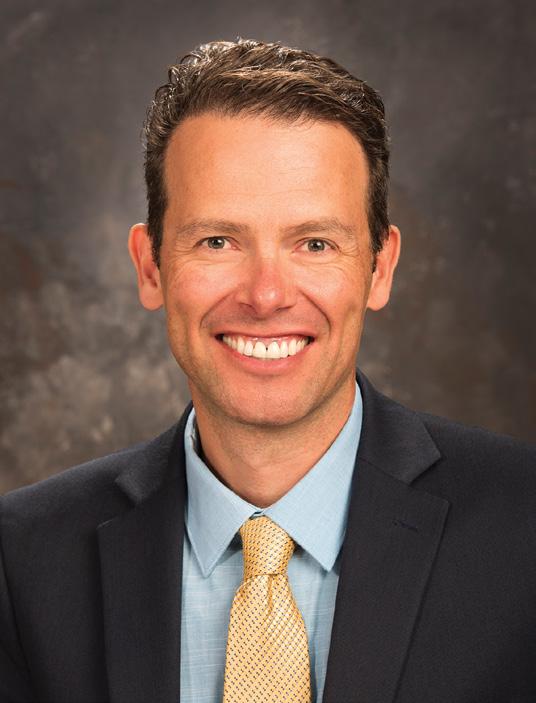
Dear Colleagues and Friends,
As the nation celebrates 250 years of what began as a brand-new experiment in freedom and democracy, the College of Engineering and Physical Sciences is celebrating some important milestones of its own.
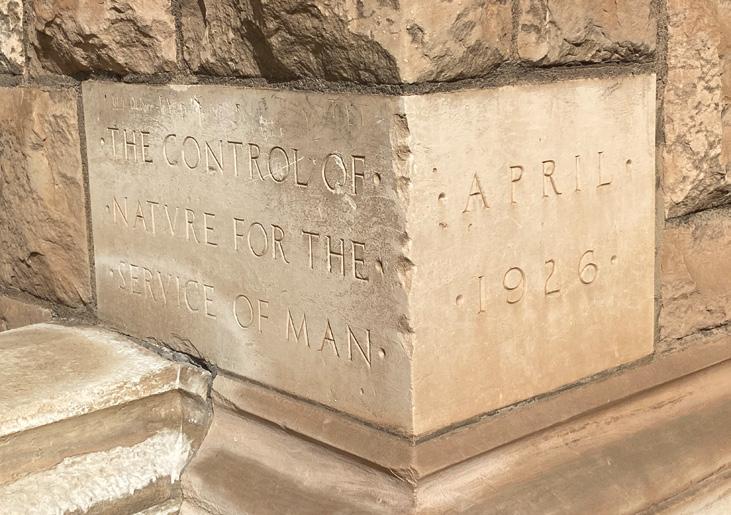
In April 1926, the cornerstone of the first building dedicated to engineering on the University of Wyoming campus was laid. It was also the first year in which courses in petroleum engineering were offered.
The ensuing 100 years have brought continued expansion, both physically, as the college added disciplines, students, classes, research and teaching spaces, and intellectually, as faculty members pushed boundaries in search of answers to the most pressing questions of their day, so that CEPS now ranks in the elite ranks of R1-designated institutions.
We are humbled to be the torchbearers of this tradition of continually striving to be of service to our fellow human beings, as the Engineering Building cornerstone exhorts us.
As I look back on how far we have come in the past 100 years, I am also excited to cast my view forward to what the next 100 years promise, as the college is uniquely positioned to aid in some of the most important developments in our nation’s history, from critical minerals development to large-scale computing and AI.
In this issue of Foresight Magazine, you can read about some of the legacies we celebrate this year and how our faculty, staff and students continue to carry our mission of excellence in innovation into the public sector for the benefit of the state of Wyoming and beyond.
Sincerely,
Danny Dale Interim Carrell Family Dean College of Engineering and Physical Sciences
You can help the College of Engineering and Physical Sciences reduce our environmental impact by opting in to digital-only issues of Foresight magazine delivered to your email. Visit the link to opt in: bit.ly/foresight-digital

The College of Engineering and Physical Sciences and the Wyoming Alpha chapter of Tau Beta Pi student engineering honor society presented the following awards at the annual College of Engineering and Physical Sciences Awards Banquet at the end of April. The banquet boasted a record number of guests at the Marian H. Rochelle Gateway Center on the UW campus. Congratulations to this year’s award recipients.
LIFETIME ACHIEVEMENT AWARD – TAU BETA PI WYOMING EMINENT ENGINEER OR PHYSICAL SCIENTIST
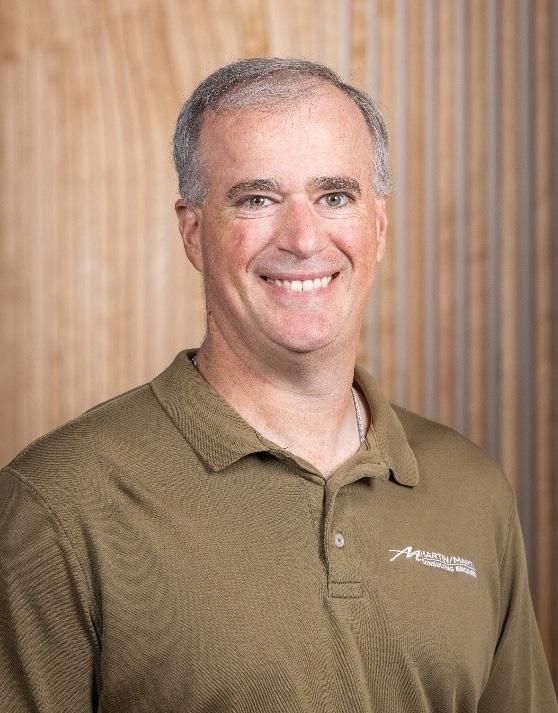
Patrick McManus, Ph.D., P.E., S.E., earned B.S., M.S. and Ph.D. degrees from the Department of Civil and Architectural Engineering at UW. McManus began his professional career in Denver with Martin/Martin, the company with which he spent much of his career, serving as director of the Wyoming branch and as technical director, in addition to serving as head of engineering and detailing at Puma Steel. McManus has worked on 17 UW building projects, holds nine patents, has written numerous articles and is an accomplished speaker.
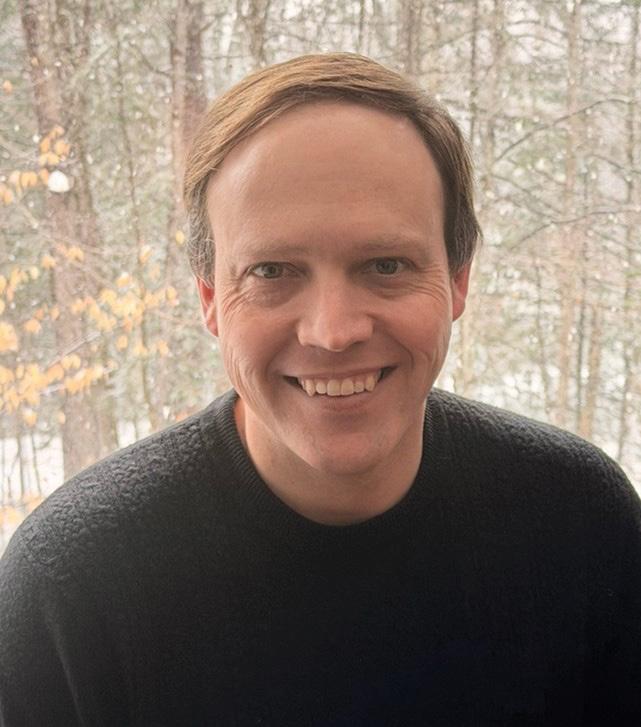
LIFETIME ACHIEVEMENT
AWARD – TAU BETA PI
ALUMNUS EMINENT
ENGINEER OR SCIENTIST
Geoffrey P. Luke received his B.S. in computer engineering and mathematics as well as his M.S. from UW. Luke pursued his Ph.D. in electrical engineering at the University of Texas at Austin, where he received a Breakthrough Award from the Department of Defense Medical Research Program for his work. Luke is currently an associate professor at Dartmouth College, where he leads the Functional and Molecular Imaging Research Laboratory. His research focuses on molecular imaging with ultrasound, computational imaging and deep learning.
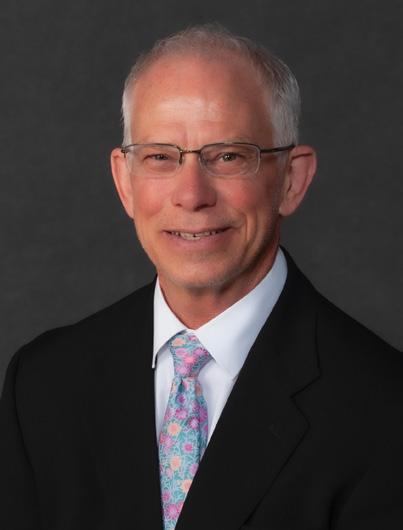
LIFETIME ACHIEVEMENT
AWARD – WYOMING EMINENT PHYSICAL SCIENTIST
James Dahill is chief engineering geologist for the Wyoming Department of Transportation (WYDOT). He earned his B.S. in geology from UW. Dahill has served WYDOT for 38 years, having been progressively promoted within the geology program since 1988. He has been a program manager for the past two years, overseeing resources to conduct geotechnical investigations of highway projects statewide. Dahill spent 20-plus years designing and providing construction oversight of numerous landslide stabilization projects throughout Wyoming.
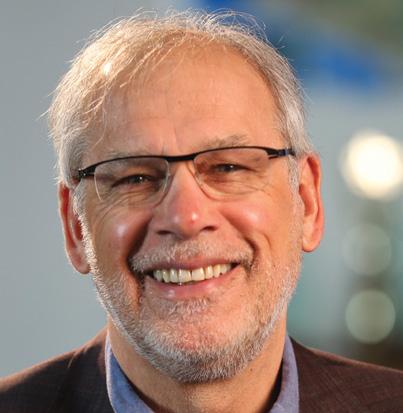
LIFETIME ACHIEVEMENT
AWARD – ALUMNUS EMINENT PHYSICAL SCIENTIST
Richard D. Clark is Professor of Meteorology Emeritus at Millersville University of Pennsylvania, where he spent 35 years as an educator, researcher and academic leader, including two decades as chair of the Department of Earth Sciences. Clark completed his M.S. and Ph.D. in atmospheric science at UW and conducted research on the Great Plains low-level jet using the Wyoming King Air. His work spans atmospheric boundary layer processes, air chemistry and space weather, with a particular emphasis on field observations using airborne and balloon-borne platforms. He has led or contributed to NASA’s DISCOVER-AQ and several NSF-supported projects.
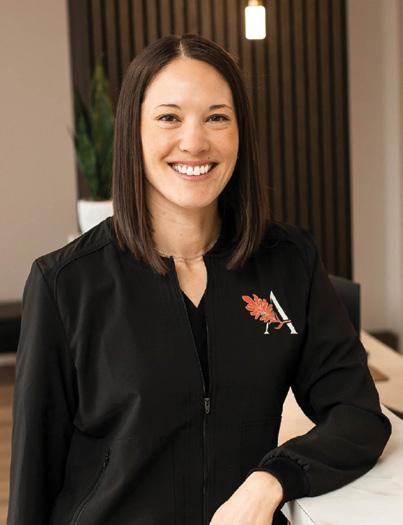
Dr. Kim Westbrook graduated from UW with a B.S. in chemical engineering with a biomedical emphasis. After acceptance into the WWAMI medical education program through the University of Washington School of Medicine, Westbrook pursued obstetrics and gynecology, completing her residency at Creighton University Medical Center. Westbrook joined a private practice in Laramie before founding the Ivinson Medical Group Women’s Health Clinic in 2018. She spearheaded Ivinson’s robotic surgery program and has recently opened Ascent Medical Spa. Westbrook works closely with pre-medical students, interns and medical students, serving as a clinical assistant professor for the University of Washington School of Medicine.
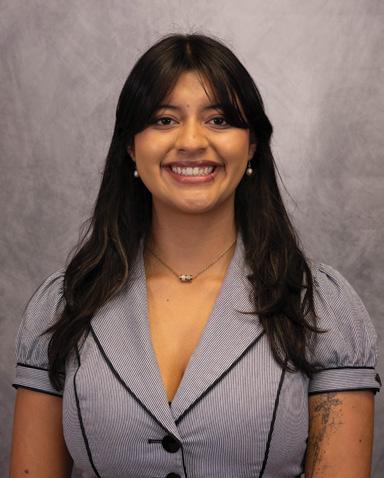
Paula Medina is a spring 2026 UW graduate with a B.S. in civil engineering and environment and natural resources and a minor in engineering honors. Medina served as president of the Associated Students of UW, representing approximately 10,000 students and overseeing a $1.4 million budget. She has served as international project manager for Engineers Without Borders and as co-chair of the United Multicultural Council. Medina also led the creation of the Denver International Airport shuttle program and advocated for Hathaway Scholarship expansions to improve access to higher education across Wyoming. Medina has worked as a water engineering intern with HDR, supporting water system planning and stormwater design and has received multiple honors from Tau Beta Pi honor society.
Outstanding Undergraduate Teaching Award: Daniel Rau, assistant professor, Department of Mechanical Engineering
Sam Hakes Graduate Research and Teaching Award: Karen Wawrousek, associate professor, Department of Chemical and Biomedical Engineering
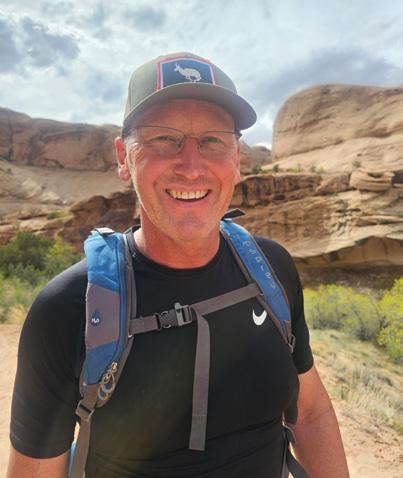
Trent McDonald is the president and founder of McDonald Data Sciences, a statistical consulting firm based in Laramie. McDonald earned a B.S. in statistics from UW, as well as an M.S. in experimental statistics from New Mexico State University and a Ph.D. in statistics from Oregon State University. McDonald specializes in wildlife analysis, including capture recapture, habitat selection, distance sampling, balanced sampling, mixed models, R programming and bootstrap methods. He has provided international data science and statistical consulting services for 39 years, as well as leading workshops and teaching at several universities. He serves as associate editor for the Wildlife Society Bulletin and on the UW CEPS Advisory Board and was recognized as Erskine Fellow of the University of Canterbury.
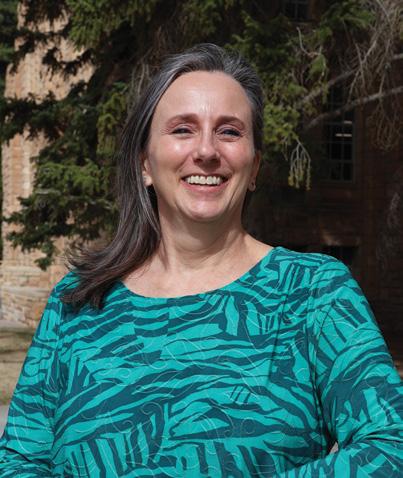
Laurie Bonini is the student advising manager for the CEPS Advising Office. She is a UW alumna with B.A. in English and has been on the UW campus for 25 years, working in Academic Affairs, the College of Agriculture, Life Sciences and Natural Resources and finally landing at home in the College of Engineering and Physical Sciences, where she had the privilege to work with Susan McCormack. While working in other offices on campus, Bonini was inspired by McCormack’s unwavering dedication to students. Bonini learned a great deal from Susan and gained an appreciation of the values and history of the people who make up this college. Bonini has been in CEPS for 15 years and has managed the Advising Office for the past eight.
Tau Beta Pi Outstanding Staff: Ike Ruse, senior engineer, Department of Mechanical Engineering
CEPS Outstanding Staff: Annie Cowger, career coach, CEPS Career Services Office
Joint Engineering and Physical Sciences Council Outstanding Senior: Paula Medina, Quito, Ecuador
Wyoming Engineering Society Student Engineer of the Year: Isabelle Harvey, Baldwin City, Kan.
Tau Beta Pi Outstanding Member: Alexander Nichols, Craig, Colo.
In the long list of historical firsts to which Wyoming can lay claim, you can also add the first professional engineer’s license issued in the United States. That first license was issued to Charles Bellamy in Laramie Aug. 8, 1907, and the tradition of excellence in engineering in the state has continued unabated since that time.
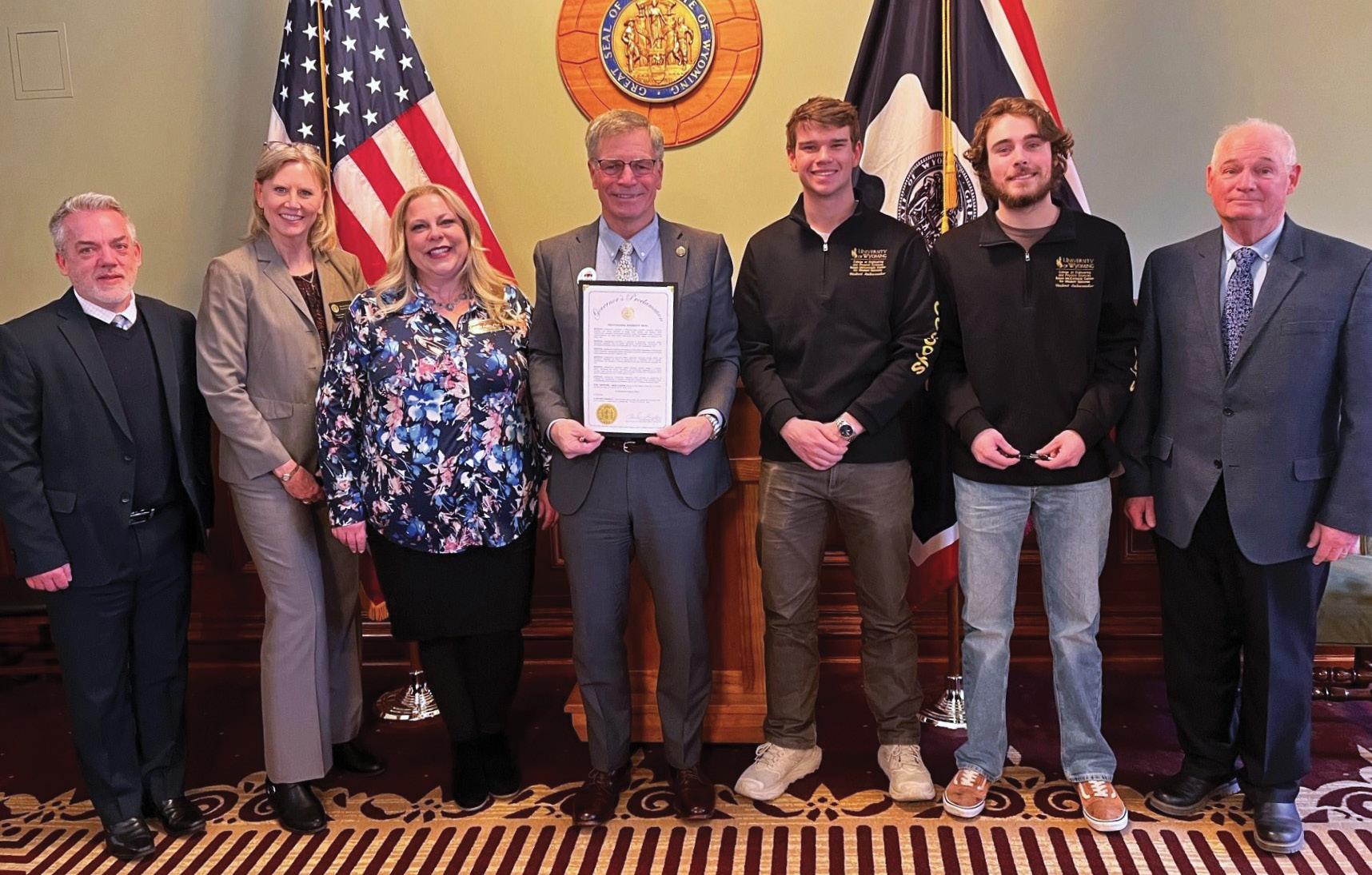
On Feb. 17 — with representatives of the University of Wyoming College of Engineering and Physical Sciences and the Wyoming Board of Professional Engineers and Professional Land Surveyors (WBPEPLS) present — Gov. Mark Gordon signed a proclamation declaring “the week of Feb. 22-28, 2026, to be Professional Engineers Week in Wyoming.”
Engineers Week has been celebrated by the National Society of Professional Engineers since 1951. Now coordinated in partnership with DiscoverE, Engineers Week is set aside to “inspire the next generation of innovators, spotlight the impact of our profession and strengthen connections across our engineering community,” according to the society’s website.
The proclamation signed by the governor officially recognizes the importance of Engineers Week to Wyoming, citing the crucial role engineers play in the state’s infrastructure and economy as well as through outreach efforts which introduce public school students to the field of engineering.
Cindy Jones, assistant dean for student success at the College of Engineering and Physical Sciences, oversees a statewide K-14 outreach program that coordinates activities throughout the year and also during Engineers Week. This year’s Engineers Week activities, which are delivered by professional engineers from WBPEPLS and student ambassadors from UW, reached over 5,000 third graders in every corner of the state.
coordinator for WBPEPLS; and Steve Barrett, professional engineer and associate dean of undergraduate programs at the college. UW student ambassadors Ever Johnson, of Gillette, and Will Brooks, of Sheridan, also were present and toured the Wyoming State Capitol for the first time.
According to Stanfill, the college and WBPEPLS have been working together on Engineers Week in Wyoming for 12 years and have expanded student reach four-fold during that time.
“Each professional engineer has a core mission to safeguard life, health and property of the Wyoming public through the practice of professional engineering and, through these school visits, they recognize that the future fulfillment of that mission
“I am especially proud to partner with professional engineers across our state during Engineers Week to bring engineering directly into classrooms,” Jones says. “Each year, Wyoming engineers volunteer their time to visit elementary schools, where they lead hands-on design activities and share what it means to be a problem solver. For many third graders, this is their very first interaction with an engineer.”
Research shows that these experiences matter.
“They help students see that engineering is creative, collaborative and accessible — and that someone from Wyoming can grow up to design solutions that impact the world,” Jones says.
Also present at the signing were Shannon Stanfill, executive director of WBPEPLS; Troy Niesen, exam and outreach
lies within each of these students,” she says. “WBPEPLS thanks the governor for shining a light on the significance of this statewide effort coordinated by UW’s College of Engineering and Physical Sciences.”
This is an important moment for science, technology, engineering and mathematics education in Wyoming, Jones says.
“I am deeply grateful to the professional engineers and student engineers who inspire the next generation, to Union Telephone and the Rocky Mountain Power Foundation for their sponsorship, and to the governor’s office for recognizing the importance of this profession and this outreach effort,” she says.
A new agreement between the College of Engineering and Physical Sciences (CEPS) and Southern Alberta Institute of Technology (SAIT) promises to be a boon for the oil and gas industry across the Rocky Mountain region.
The new agreement constitutes a “2+2” arrangement between UW and SAIT, facilitating the transfer of SAIT students to UW after two years of study at their home institution in Calgary, Alberta, to complete their Bachelor of Science degrees within another two to three years of study. SAIT students have long been coming to UW for this purpose; however, the new agreement outlines specific course equivalencies and transfer protocols to ease students’ paths to obtaining their bachelor’s degrees.
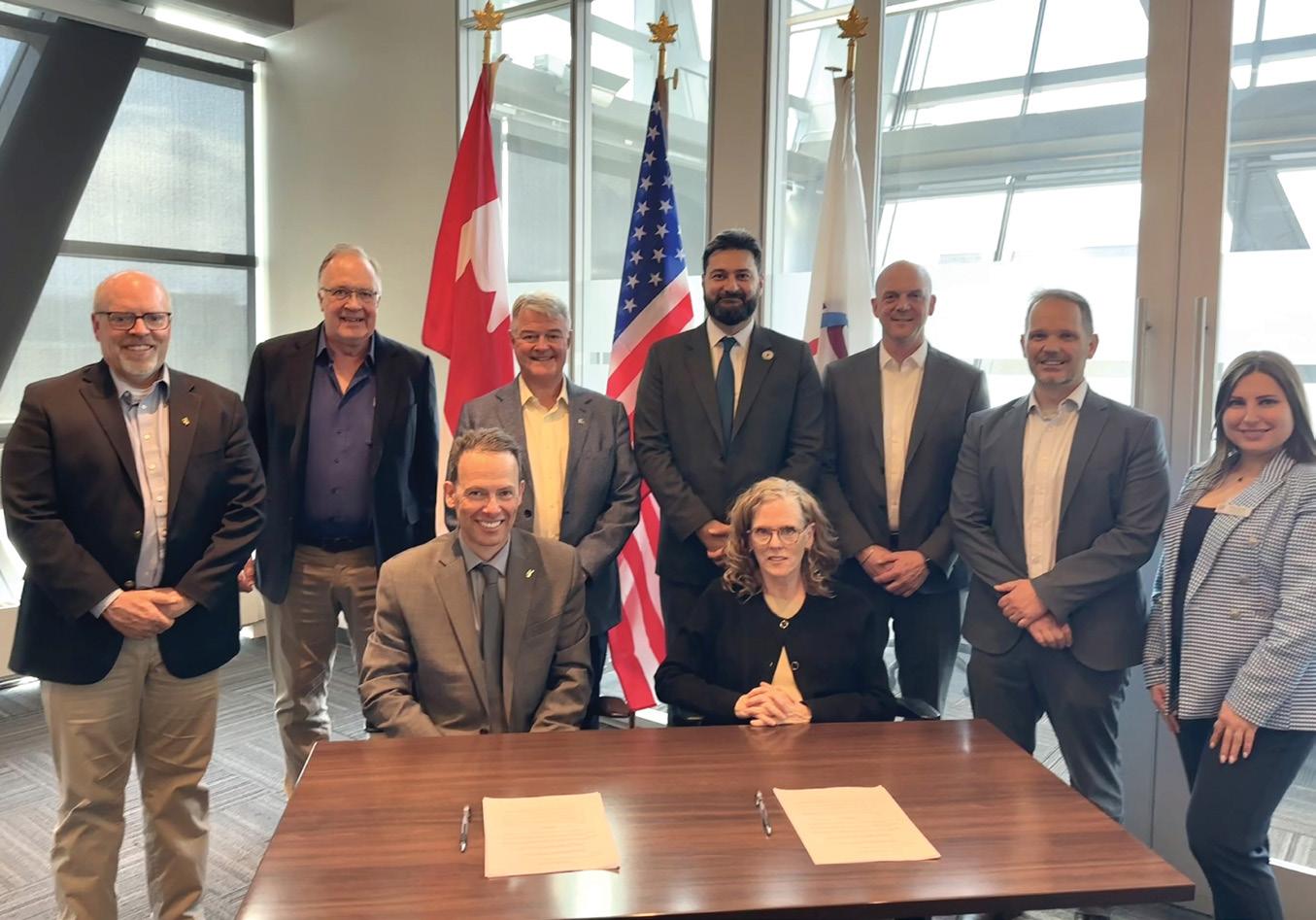
While many jobs are available to graduates of two-year institutions in engineering, obtaining a bachelor’s degree in the field enables much greater opportunities for advancement and substantial increases in pay, making this new pathway highly attractive to potential students.
This arrangement stands to prove mutually beneficial to both institutions, cementing a long-standing partnership in the energy sector across borders throughout the Rocky Mountain region and follows closely on the heels of a complementary agreement between UW and the Northern Alberta Institute of Technology in Edmonton, which was ratified in November.
Read more: bit.ly/CEPS-SAIT
UW has received a rare and strategically important gift from Germany’s Goethe-Universität Frankfurt: a fully functional 58-Tesla pulsed high magnetic field experimental system, now designated as the Wyoming Pulsed High Magnetic Field Facility (WYPulse). This gift elevates UW into a nationalcapability tier in quantum materials, critical minerals and advanced materials research.
Only two comparable pulsed-field facilities currently exist in the United
States: one at Los Alamos National Laboratory in New Mexico and one at Clark University in Massachusetts. UW’s facility will be embedded directly within the university’s Center for Quantum Information Science and Engineering, making it the only pulsed-field academic facility in the nation integrated into a quantum research center.
Scientifically, WYPulse enables a class of experiments central to modern condensed-matter physics, quantum information science and
advanced materials research. For UW’s seven condensed-matter physicists, high-field capability is essential to their core research programs. Beyond physics, the facility will support materials science, electrical engineering, chemistry and mechanical engineering research, creating a shared campus asset with broad interdisciplinary impact. The magnet system is being installed in the basement of the Physical Sciences Building on campus.
Read more: bit.ly/wy-pulse
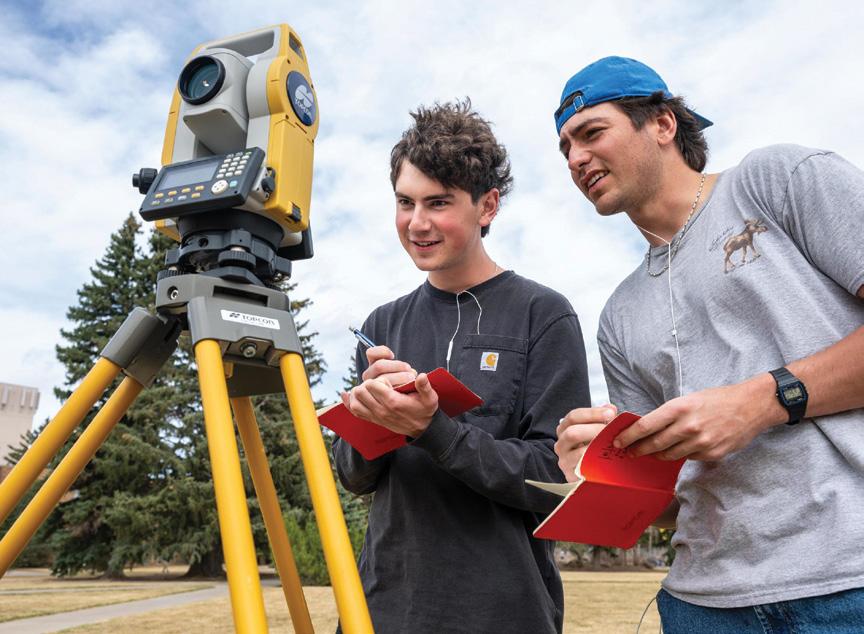
This spring, the Department of Atmospheric Science put its new mobile atmospheric remote sensing (MARS) trailer to the test in the field for the first time.
This interdisciplinary project, in collaboration with Noriaki Ohara, a UW civil engineering professor, was funded by a $25,000 UW Tier-1 Engineering Initiative interdisciplinary-collaborative seed grant. The grant was used to modify an unused mobile trailer to host remote sensing instruments for atmospheric research. It also was used to pay faculty, scientists and a graduate student for their time to make modifications, perform initial testing and conduct a three-day MARS trailer operation.
The remote sensing instruments — Wyoming cloud radar (WCR) and Wyoming cloud lidar (WCL) — have been developed over decades at the UW King Air Atmospheric Research Aircraft facility and supported through cooperative agreements with the National Science Foundation. Research Scientists Coltin Grasmick (radar specialist) and Owen Cruikshank (lidar specialist) conducted the initial data collection and processing.
Project Lead Masa Saito is excited about the project’s potential. He says, “Atmospheric phenomena/processes — for example, snowstorms, wildfires and dust storms — involve fine-scale processes, and it is not easy to measure these phenomena at a permanently fixed location and predetermined observational period. A mobile platform
will give us flexibility in the deployment location and period to measure target atmospheric processes.”
Because the trailer can collect critical remote sensing data inexpensively, Saito anticipates that the project will be very attractive to new funding sources for investment, and it will also be used for training students in critical skills for their future employment.
Read more at: bit.ly/uw-mars-trailer
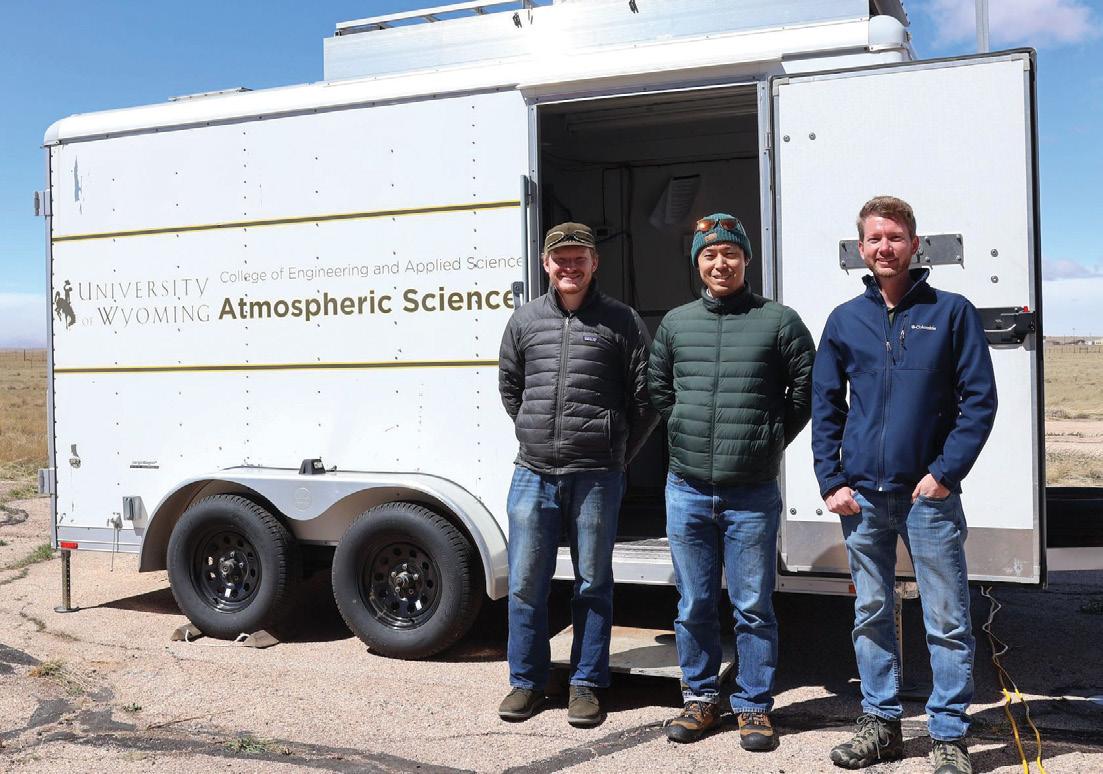
Federal financial aid is now available for UW’s Cadastral Land Surveying Certificate. Beginning this summer, students enrolled in the program may be able to receive federal financial aid through Title IV.
“Many of the students in our program are self-pay, and being eligible for federal aid would allow them to accelerate their timelines and increase their education for pursuit of professional licensure in their respective jurisdictions,” says Shelley Macy, professor of practice in the Department of Civil and Architectural Engineering and Construction Management.
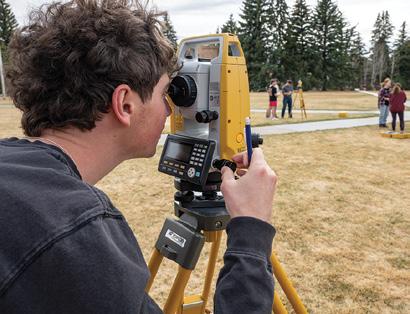
The UW Cadastral and Land Surveying Program is a distance learning program that offers a 30-hour Cadastral Survey Certificate or an 18-hour minor in surveying. The program also serves professional licensed land surveyors, or people who want to pursue licensure, in Wyoming or any other jurisdiction and need to take additional classes to meet application requirements.
Learn more: www.uwyo.edu/uw/degree-programs/landsurveying-certificate.html
of
SOURCE: BURT C. BUFFUM PAPERS, AMERICAN HERITAGE CENTER, UNIVERSITY OF WYOMING
By UW American Heritage Center Archivist and Historian John R. Wagenner
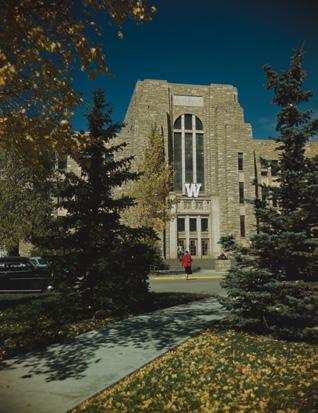
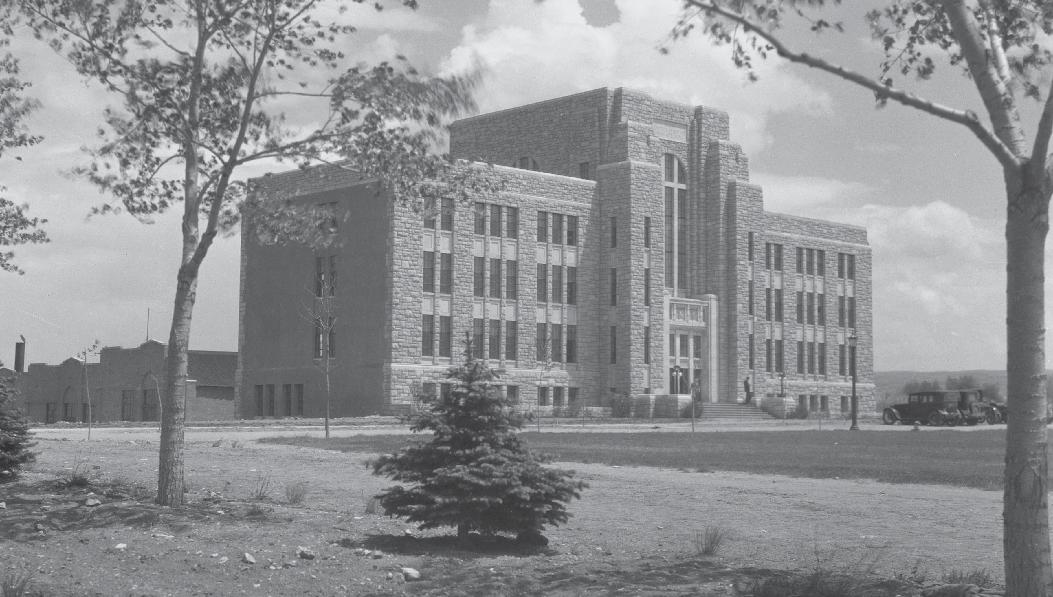
On April 30, 1926, the University of Wyoming celebrated the placement of the cornerstone for the new Engineering Building during a formal ceremony. Construction of the new building was completed and ready for occupancy on March 29, 1927.
The history of engineering has a storied and distinct past that predates this century-old stone structure. When UW opened its doors to the first students on Sept. 6, 1887, there was one building, later known as Old Main, to serve the needs of students and employees. Occupying the basement of UW’s only building were rooms dedicated to instruction in mechanical arts and mining.
As the need for more space grew critical with increasing student enrollment, discussions for a new building began. When a School of Mechanics and Manual Training was officially established on June 9, 1891, the need for a dedicated space for an engineering department was formalized. On Oct. 28, 1891, the UW Board of Trustees agreed to secure plans for a new mechanics hall. Eventually, plans were drawn up by Professor Luke Colburn, who was hired June 23, 1892, as the first dedicated mechanical arts professor. In the fall of 1892, construction began on the university’s second building, named the Mechanical
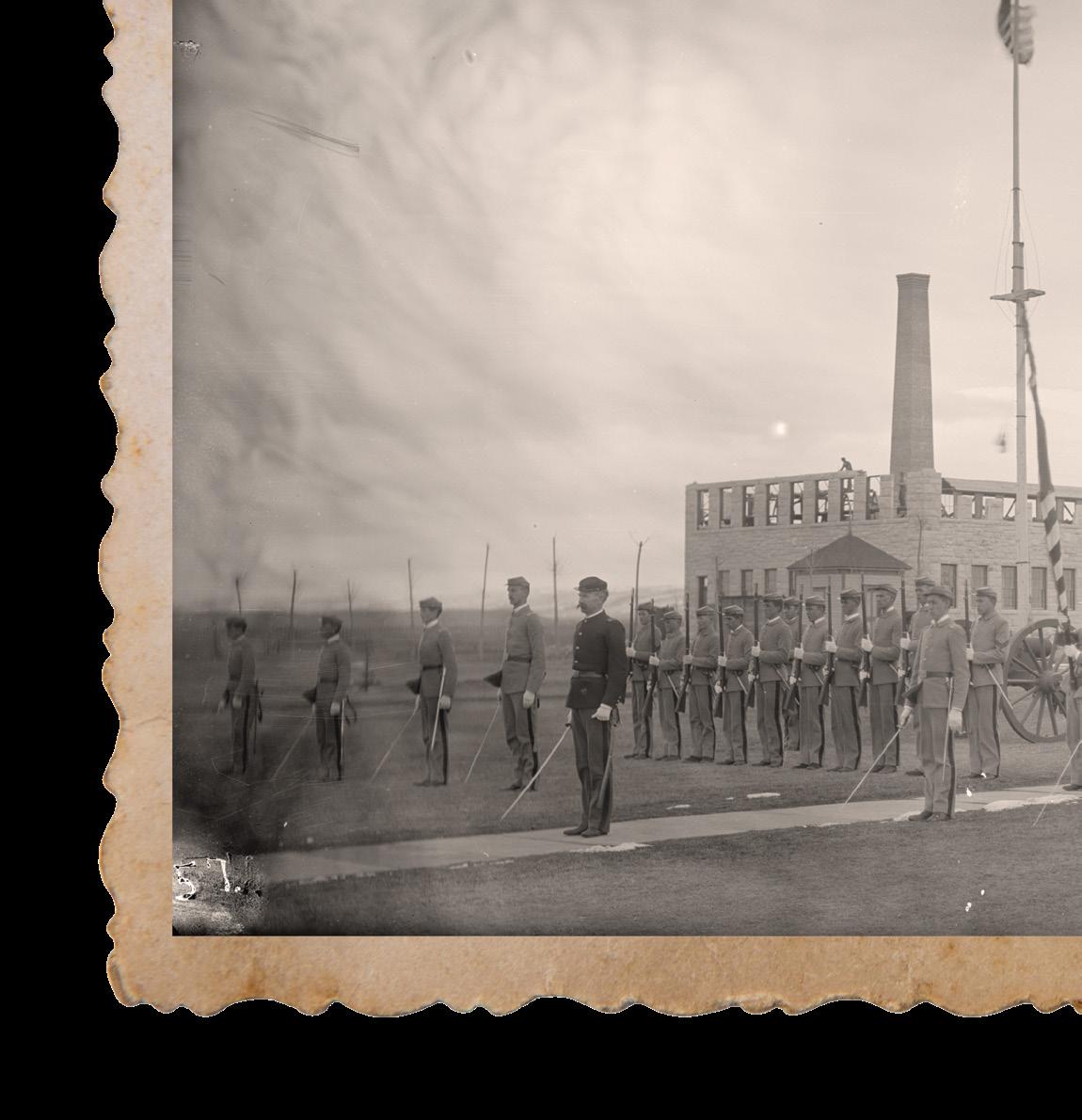
SOURCE: UW PHOTO SERVICE COLLECTION, AMERICAN HERITAGE CENTER
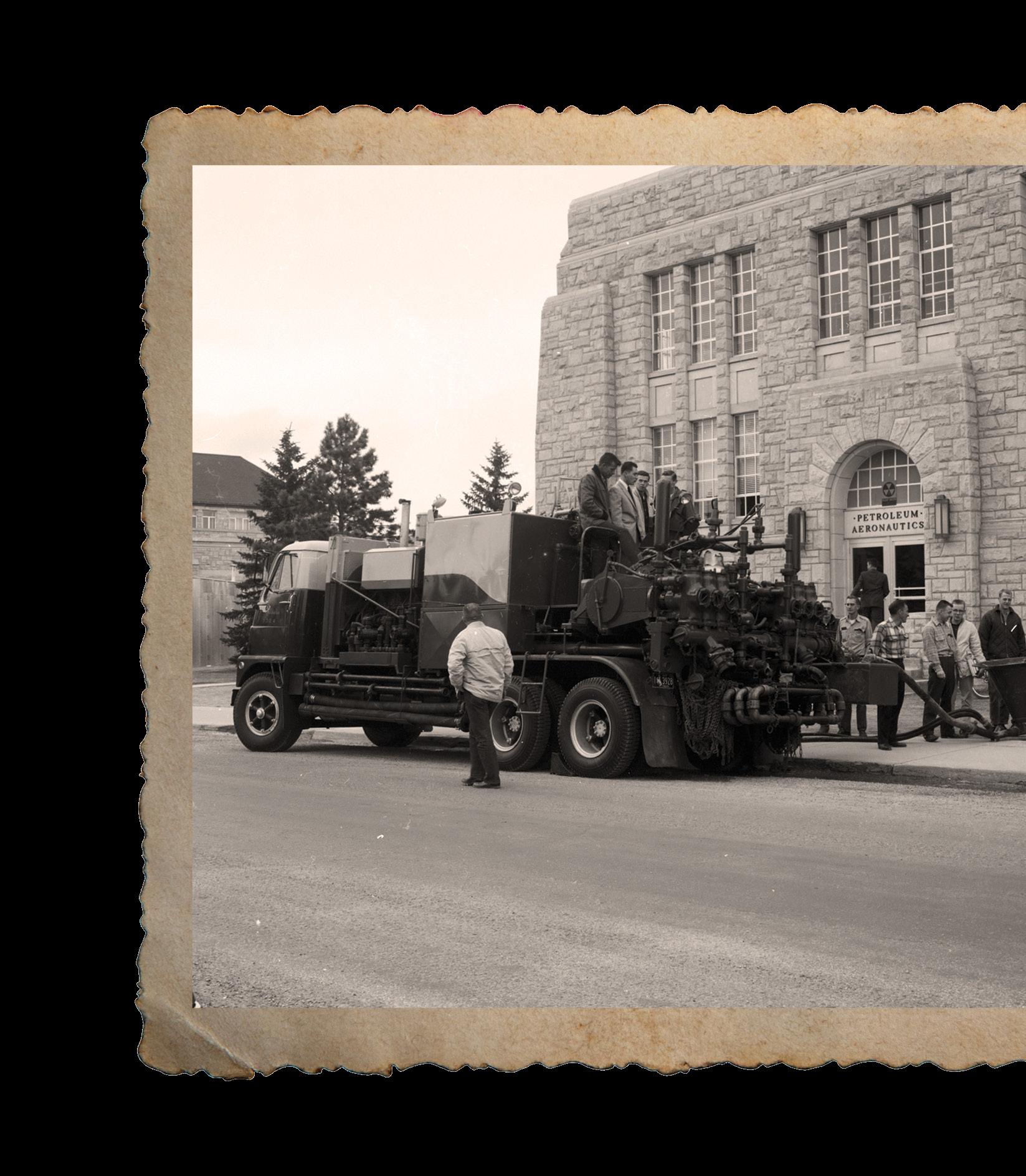
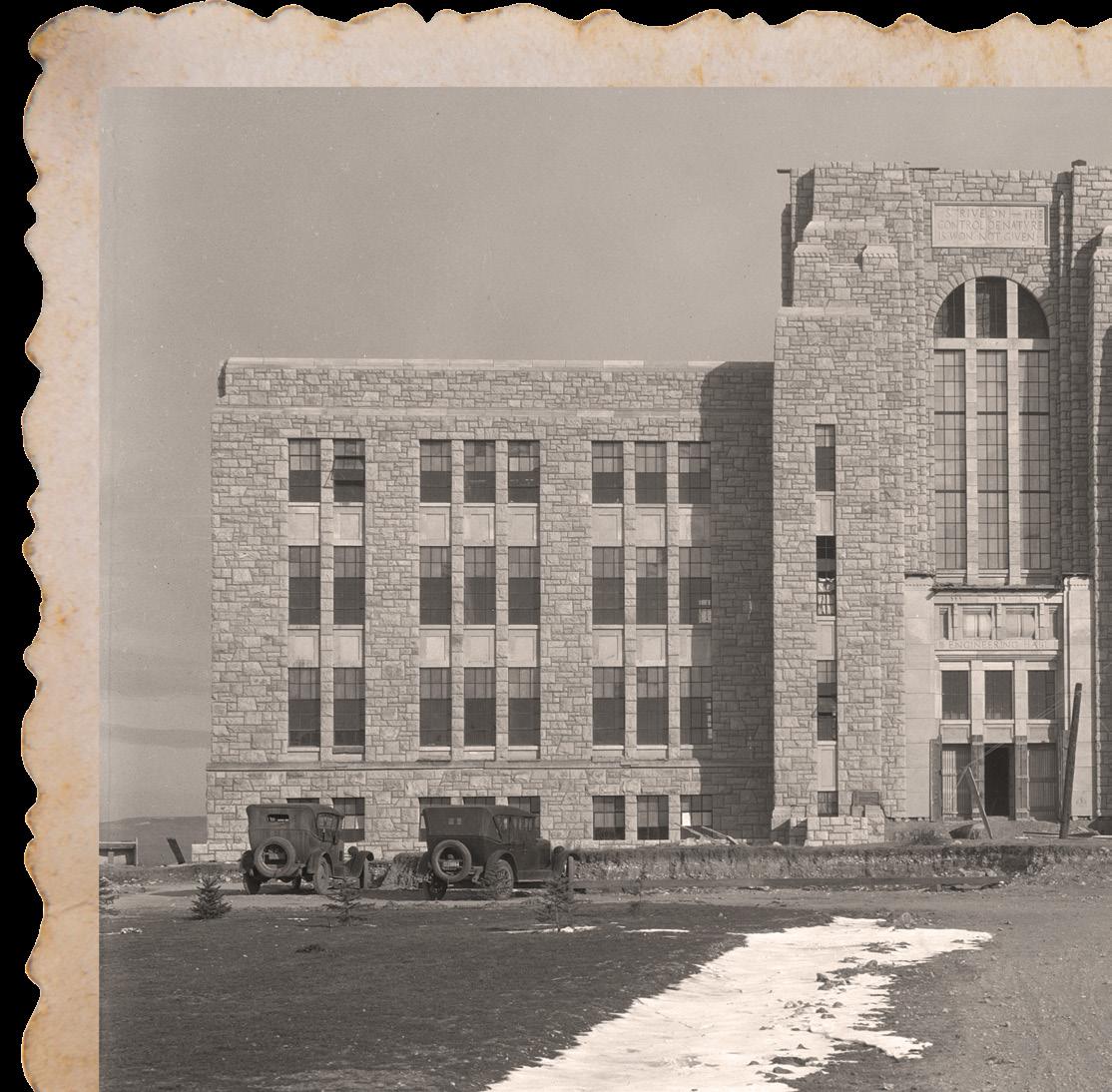
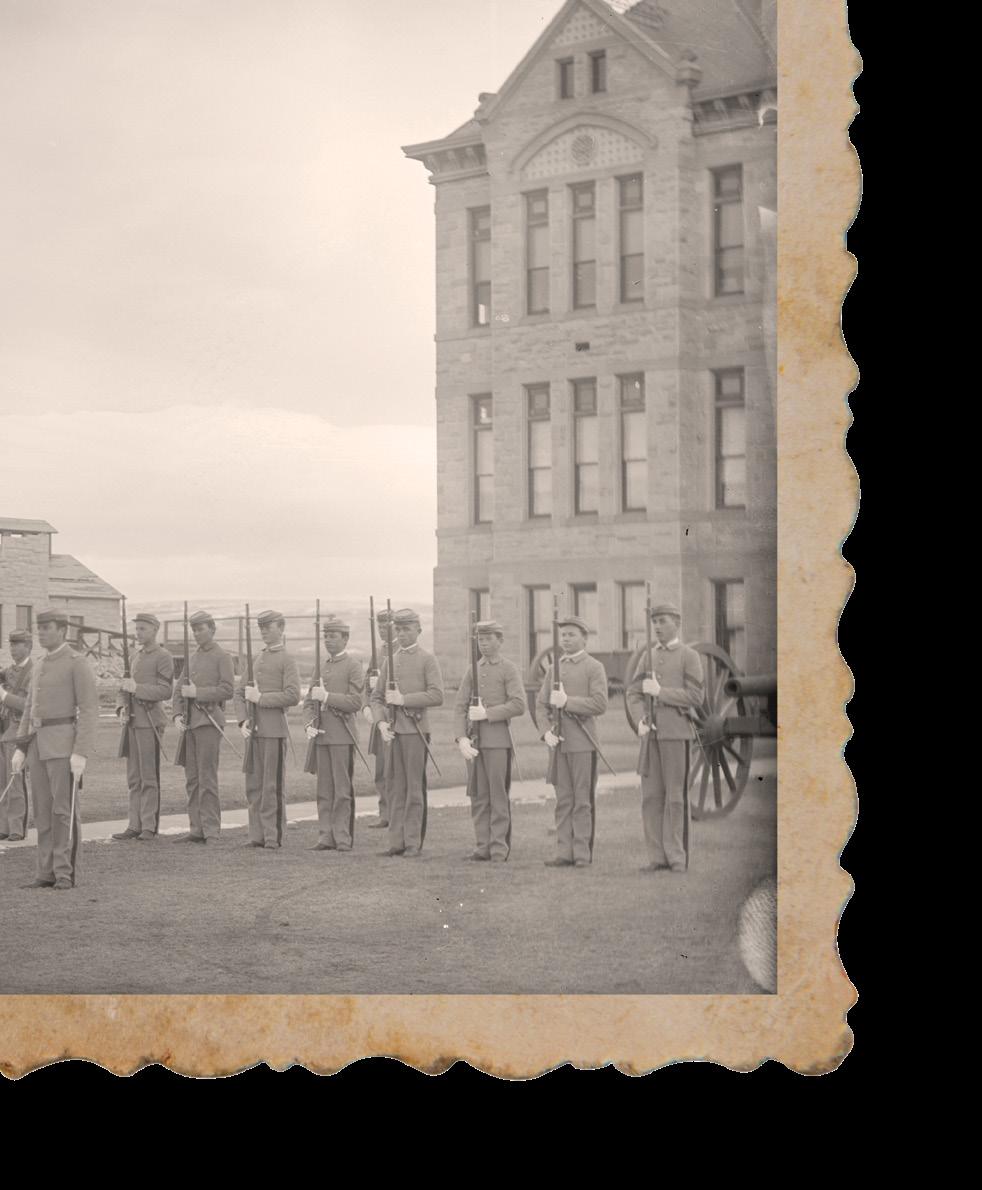
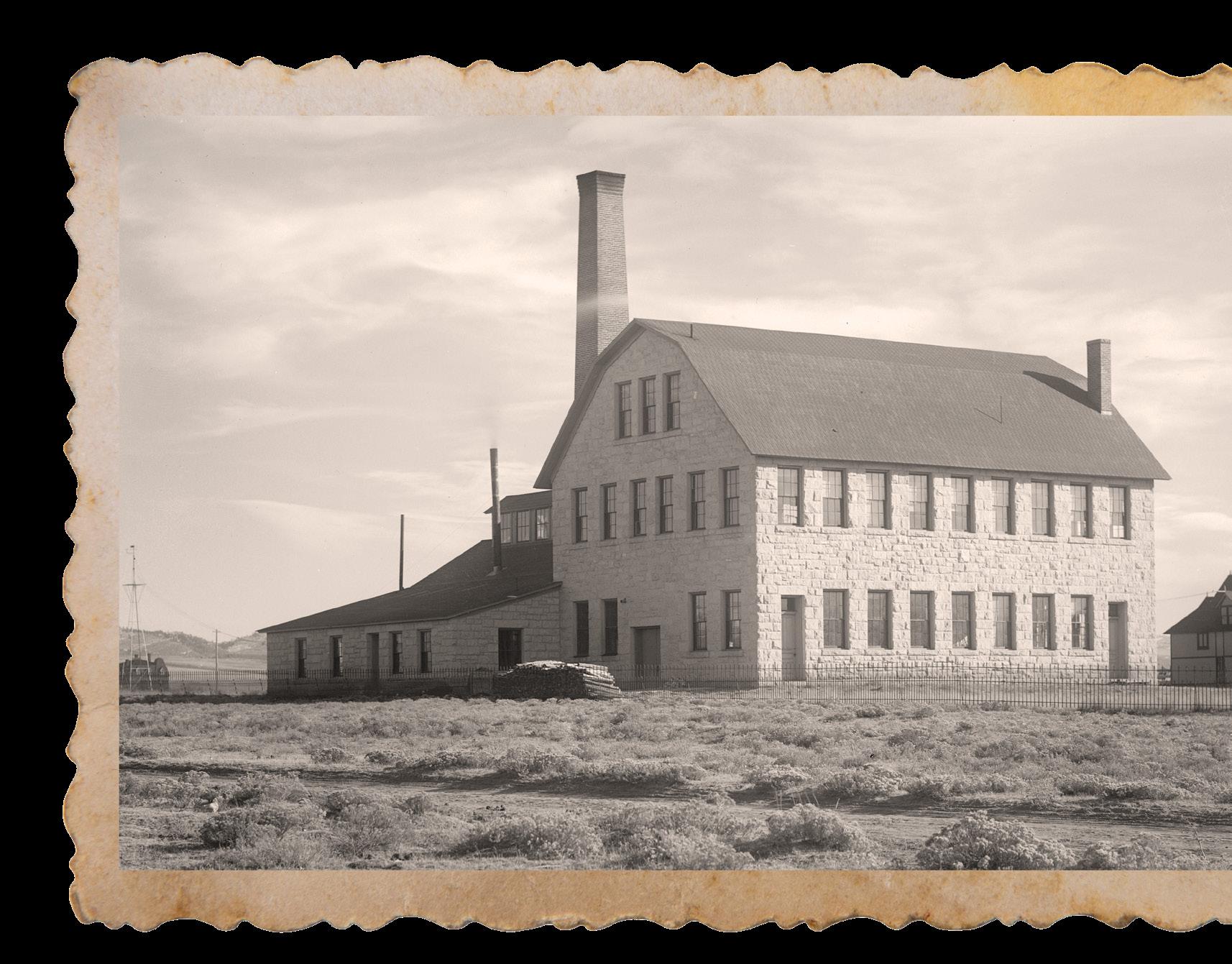
View of the Mechanical Arts Building on Nov. 10, 1899.
SOURCE: BURT C. BUFFUM PAPERS, AMERICAN HERITAGE CENTER
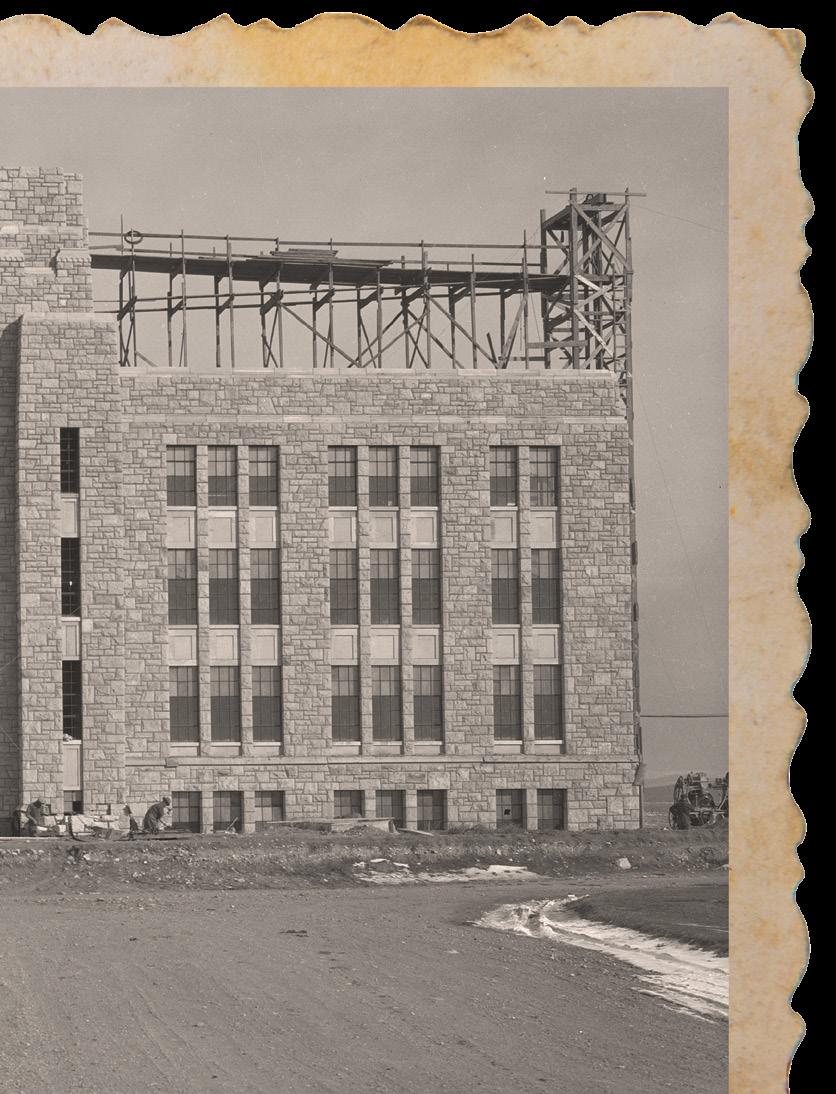
View of the nearly completed building, 1926.
SOURCE: LUDWIG & SVENSON STUDIO COLLECTION, AMERICAN HERITAGE CENTER
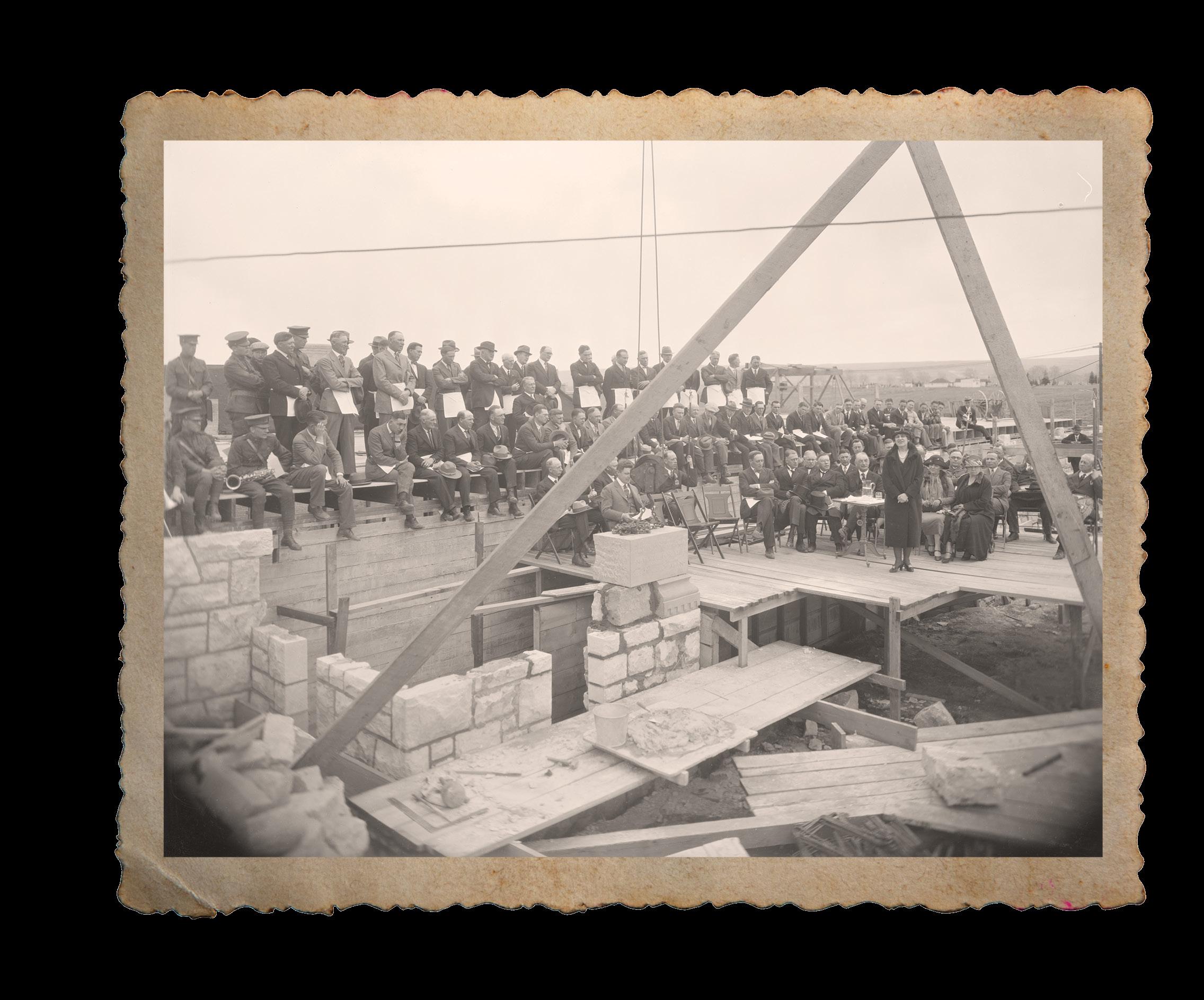
Cornerstone Ceremony, April 30, 1926. Gov. Nellie Tayloe Ross offers remarks from the temporary stage.
SOURCE: LUDWIG & SVENSON STUDIO COLLECTION, AMERICAN HERITAGE CENTER
Arts Building. The three-story structure constructed from local stone was completed in late June 1893.
In time, the College of Engineering had outgrown its building, which was described in the Branding Iron on May 4, 1926, as “never being an attractive building, nor adequate for its purpose.” Having outgrown the facility, “the different branches of that college were housed hither and yon on the university campus.”
The College of Engineering expanded again when a new building, known as the Engineering Shops, was constructed. The Engineering Shops began to take shape in the summer of 1923 when plans were approved. The contract to build a building with a “saw-tooth” roof design was awarded in July. Construction was swift on the structure, which was composed of a series of shops dedicated to the various engineering pursuits. It was completed
on Feb. 11, 1924, and, during the year, departments began moving into the new building. It was reported in the Branding Iron on Jan. 27, 1925, that “the last of the moving was done right after Christmas and for the first time in a great many years the College of Engineering is all under one roof.”
At the same time, planning for the main Engineering Building was underway. Discussions about a new building began in 1920. During a Nov. 12, 1920, Board of Trustees Meeting, Civil and Irrigation Engineering
Professor John C. Fitterer and Mechanical and Electrical Engineering Professor Elmer Hoefer presented the needs for a new facility for the college.
Plans for a new engineering hall were presented to the trustees in the spring of 1925 and were approved by the trustees during a June 9, 1925, meeting. On Sept. 23, 1925, the building contract of $133,000 was
awarded to W.J. Wilseck of Cheyenne. Survey work began in late 1925, and in late January 1926, dirt work began. By late April, the historic cornerstone was ready for placement. The building stone came from the UW quarry located about nine miles north of Laramie.
On Friday, April 30, 1926, the cornerstone ceremony began with music provided by the university band before members of the local Masonic Order placed the cornerstone. State Engineer Frank Emerson delivered brief remarks, followed by Gov. Nellie Tayloe Ross, who spoke of the growing importance of engineering in the state. Engineering Dean Earl D. Hay offered remarks, which were followed by a benediction and the singing of the alma mater by the entire student body. The cornerstone includes the inscription “The Control of Nature for the Service of Man.”
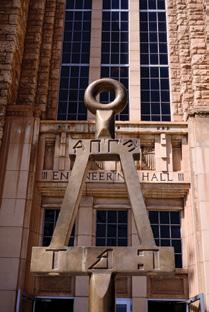
Known as Engineering Hall, the
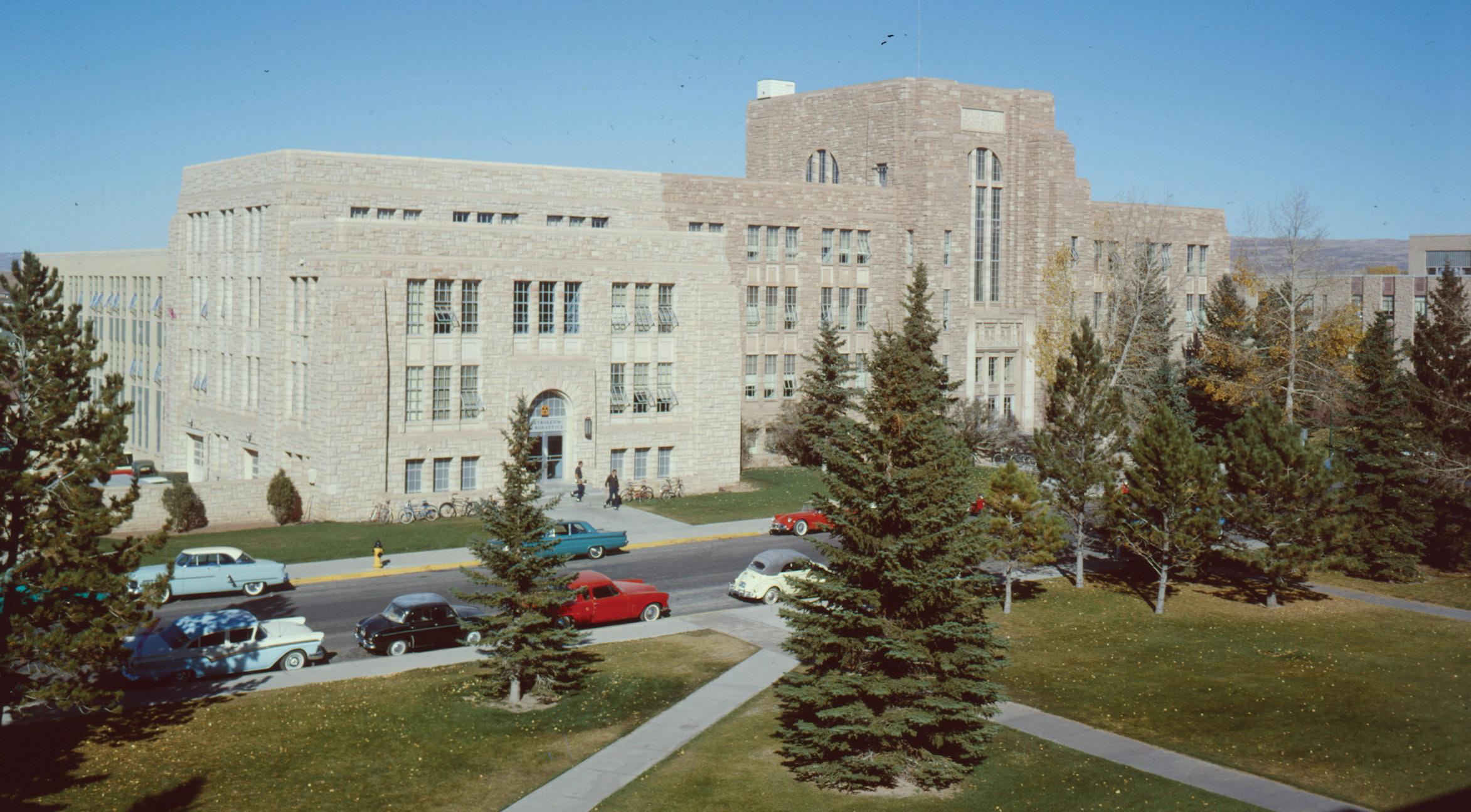
neo-Gothic building constructed of native limestone was completed one year later and was ready for occupancy when the spring term began March 29, 1927. During the remainder of the spring term and throughout the summer, the divisions of Mining, Irrigation, Mechanical, and Electrical and Civil Engineering moved into the handsome new building. The new four-story building greeted students when the fall 1927 term began on Sept. 21. Those who looked up to the top of the central tower when entering the new building saw an inscription in the stone: “Strive On – The Control of Nature is Won, Not Given.” Hay is credited with seeing that the motto was inscribed in stone. Many years later, during a visit to campus, popular author John McPhee noticed the inscription and was inspired to use it for the title of his 1989 book “The Control of Nature.”
As the college expanded its teaching and research mission, additional space was needed. Since the main Engineering Hall was constructed, two major additions have been added. The first began in the fall of 1957, when the university announced petroleum and aeronautical engineering programs would be developed. In the spring of 1958, Cheyenne architect Frederick Porter began drawing up plans for a new addition. During the July 18, 1958, Board of Trustees meeting, plans were approved, and the trustees moved to also include the inscription “Petroleum and Aeronautics” above the entrance. In September, the building contract was awarded to Lane Contracting of Casper to construct the 41,000-square-foot addition.
The new addition was ready for occupancy when the fall semester began in September 1960. In his welcome address to students on
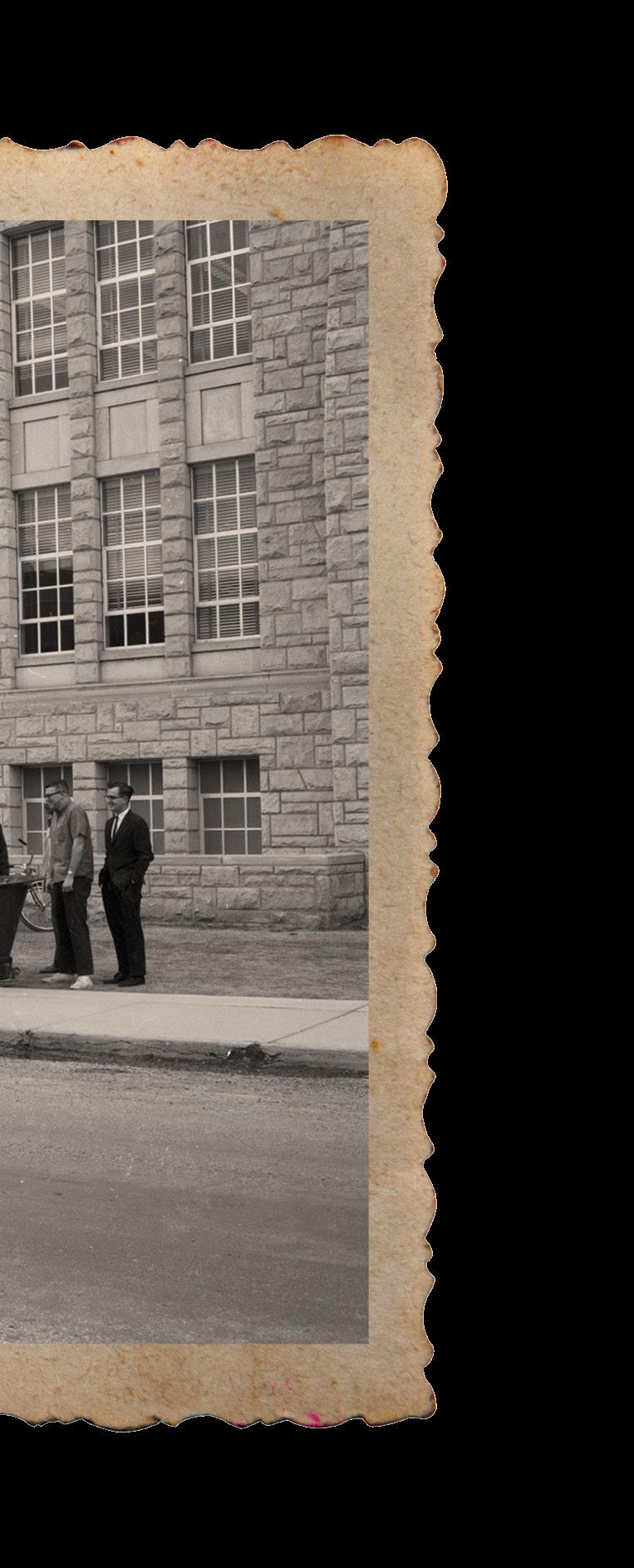
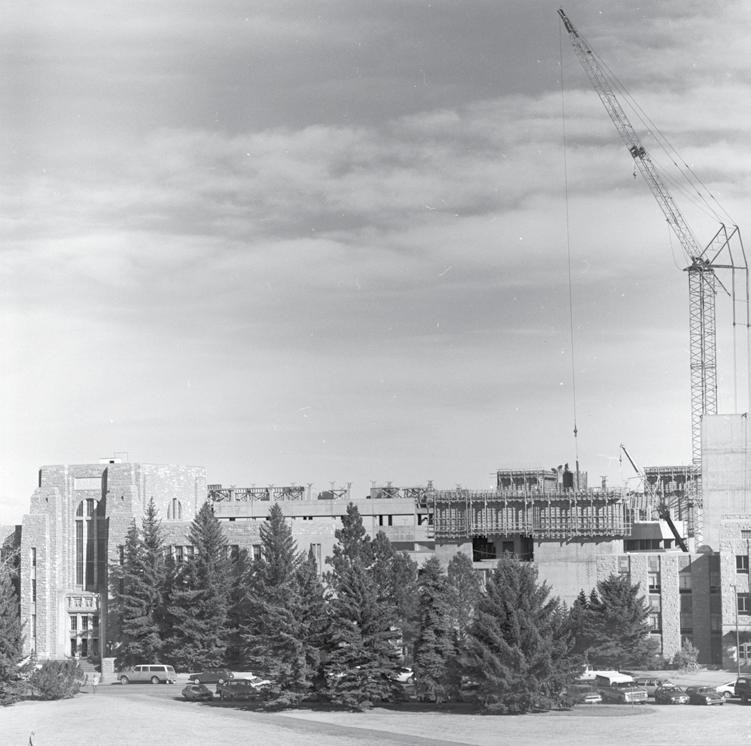
Construction for a six-story addition began in the spring of 1981. This image shows the progress made on March 9, 1982. The addition was completed in summer 1983.
SOURCE: UW PHOTO SERVICE COLLECTION, AMERICAN HERITAGE CENTER
Sept. 11, UW President George “Duke” Humphrey said to students that they would “be amazed at the rapidly expanding facilities of our university. A 41,000-square-foot petroleum and aeronautical addition to the engineering building is ready for instruction and research. Its laboratories and classrooms will begin functioning when fall semester classes begin [on Sept. 15].” The addition was dedicated during a formal ceremony on Oct. 9 with Gov. J.J. Hickey in attendance.
Efforts to begin a second addition began in 1978, and in January 1979, during the state legislative session, Gov. Ed Herschler presented his budget, which included funds for an engineering addition, noting that “The engineering building was designed for about 450 students. Now they have
about 1,100.” Though the proposal was supported, legal issues with the bond delayed the project. The building addition was finally approved in February 1981, and a building contract was awarded to Westcon Corp. of Casper April 16, 1981. Within days, site preparation began for the six-story addition. The project was substantially completed in the spring of 1983, and tours were included of the new space as part of an open house April 22. The theme for the open house was “Moving into Tomorrow.” By mid-June, employees began moving into the new facility, which was ready for the start of the fall semester. The addition was formally dedicated Sept. 30, 1983.
The College of Engineering continues to “move into tomorrow” as facilities have been upgraded and new equipment has been installed.
By UW petroleum engineering alumnus Paden Knull, class of 2026
One hundred years ago, Wyoming was a very different place than what we’re familiar with today. Nellie Taylor Ross was freshly elected as governor — the first female governor in the United States; the Salt Creek oil field had just been reopened; Elmer Lovejoy was experimenting with automobiles in Laramie; the University of Wyoming athletic department had just developed the earliest versions of what would become the iconic bucking horse and rider logo in 1921; UW had admitted some 1,200 students for the 1925 class year; and the Roaring ’20s were well underway.
The West was no longer untamed, yet Wyoming had not lost its Western charm and wild spirit. The “Gem City of the Plains” was gaining steam and interest, growing each year. It seems everyone wanted to be somewhere west of Laramie.
It’s against this backdrop that, in 1925, D.B. Dow, of the U.S. Department of the Interior’s Bureau of Mines, wrote to Arthur Crane, the president of UW, outlining the need for petroleum engineering courses at the university. At the time, UW offered a few petroleum technologist courses but nothing substantial in the way of engineering.
The oil and gas industry in Wyoming was growing like
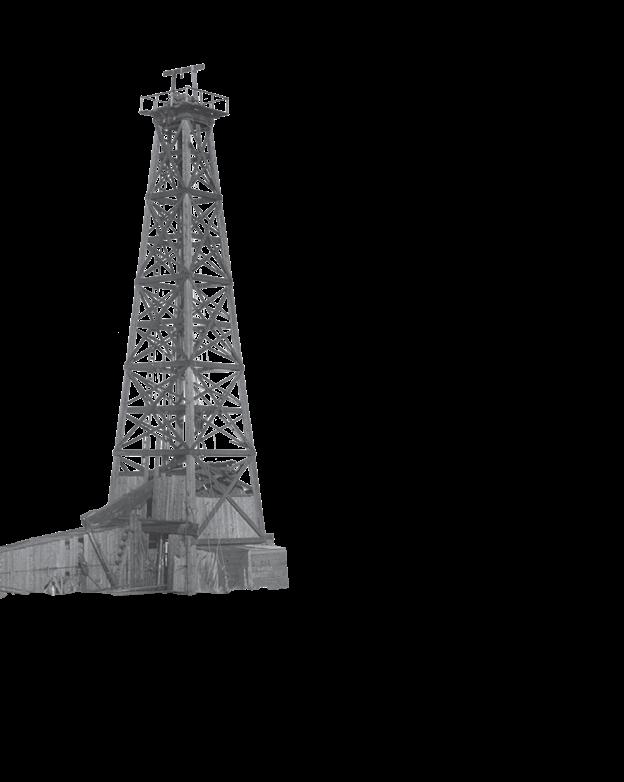
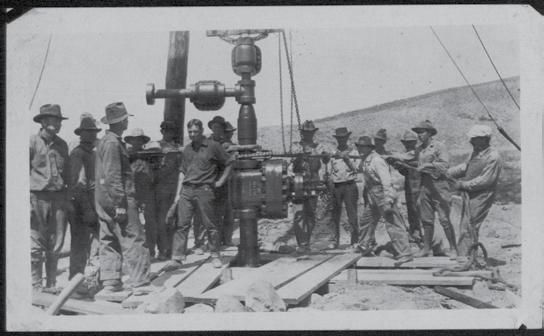
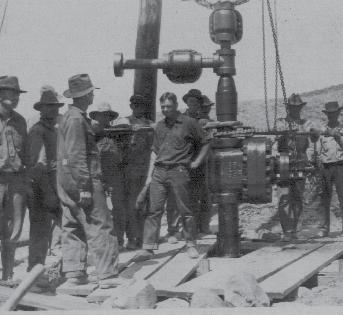
wildfire. From the first successful well drilled in the Wind River Valley near Lander in 1883 to the first commercial discovery in 1889 in the Salt Creek field, production had greatly expanded, with a refinery coming online in Casper in 1894 to support demand.
By 1923, Casper was home to five different refineries. Many men had tried, and many more had failed, at wildcatting and exploring this oil wealth in Wyoming, including the likes of Col. “Buffalo Bill” Cody. The 1920s ushered in a boom for oil production in Wyoming, where oil towns were jumping in population across the state.
In fact, oil had been struck on UW’s own land grant near Glenrock. Profits from this well were used to keep UW afloat
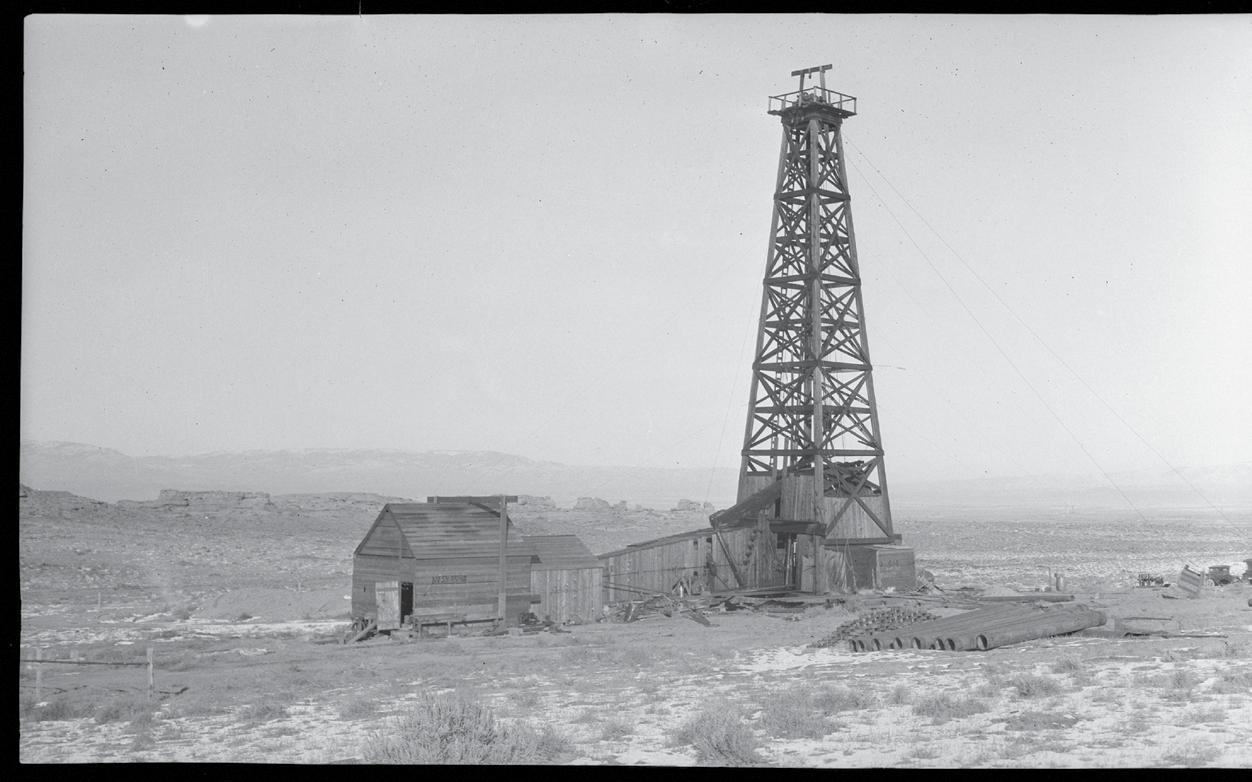
during poor economic conditions, including being used to fund expansions such as the construction of the historic Half Acre Gymnasium and the Aven Nelson Building, which was the library at the time.
Oil was doing good for the state, but there was a shortage of skilled talent and engineers to help meet demand. Included with Dow’s letter to Crane was a sheet explaining where the 50 percent oil royalty was directed in the state — for example, from July 1, 1923, to April 30, 1924, some $1.7 million in royalties were used to fund 2,420 bus drivers and 427 high school teachers for the state of Wyoming. Oil was just as important as the beef market for keeping the state alive, schools open and the heart of Wyoming beating.
Dow’s letter urged that, given Wyoming’s abundance of petroleum and rapid growth in this industry, the state — and country — needed more engineers with training in petroleum engineering. In Wyoming alone, production grew from 187,000 barrels in 1911 to 42,250,000 barrels in 1923. Dow attributed the boom of oil and gas production in part to the increase of petroleum engineers and petroleum chemists stepping into the Wyoming oil patch.
Dow further elaborated that UW’s proximity to Wyoming’s oilfields and refineries made it a more competitive location to offer these courses and training than other school locations.
“In the teaching of petroleum engineering, it is very necessary for students to make field studies, consequently, the location of the school with respect to oil fields and refiners is
of great importance,” Dow wrote.
Laramie could not have been better positioned to take advantage of the resources of the state — something no other school offering petroleum engineering courses could do.
Dow’s letter appears to have been effective, as, in 1926, at Crane’s instruction, the first petroleum engineering class was offered at UW — Petroleum Engineering 101, Oil Production Methods, taught by Professor Joseph Guiteras. This class covered production, drilling, equipment, completions and well interventions.
From the humble beginnings of a single introductory course in 1926 to a full department with seven dedicated faculty members offering 18 petroleum-focused undergraduate and graduate-level courses in 2026, petroleum engineering has grown exponentially over the past century, and graduates from the department continue to push boundaries on the front line of discovery and development.
Today, Wyoming petroleum engineering alumni help support a yearly production of some 106.6 million barrels of crude and 1.3 trillion cubic feet of gas in Wyoming alone, but their service spreads across the world — from Prudhoe Bay in Alaska, to the Gulf of America in Texas; from Africa to Canada and Indonesia to the North Sea.
This legacy of innovation and service was acknowledged this spring at the inaugural Oilmen’s Gala, held May 8 at UW’s Marian H. Rochelle Gateway Center. Read more about this event in “Oilmen’s Gala Celebrates 100 Years of Petroleum Engineering” in this issue.

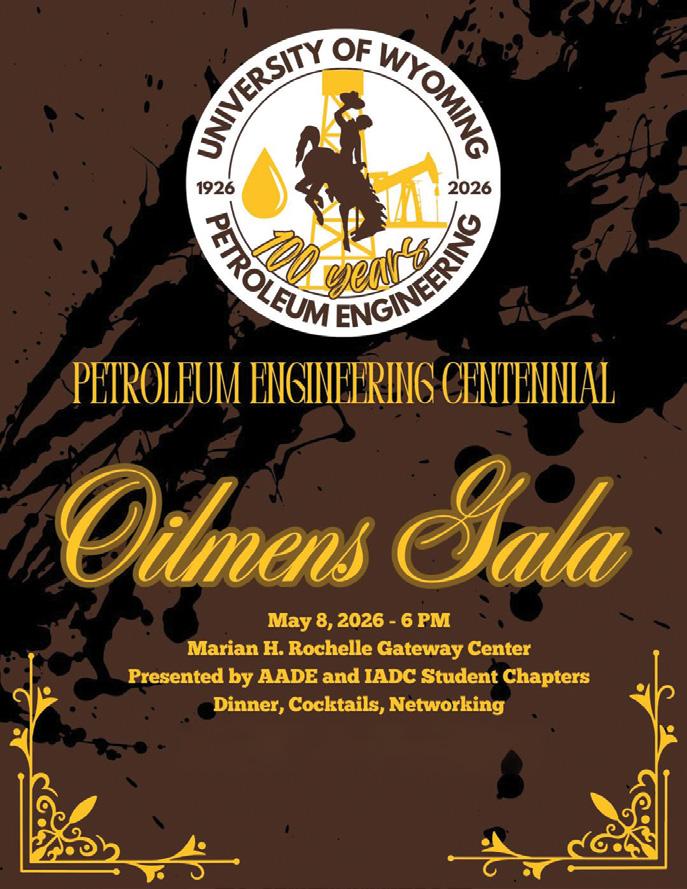
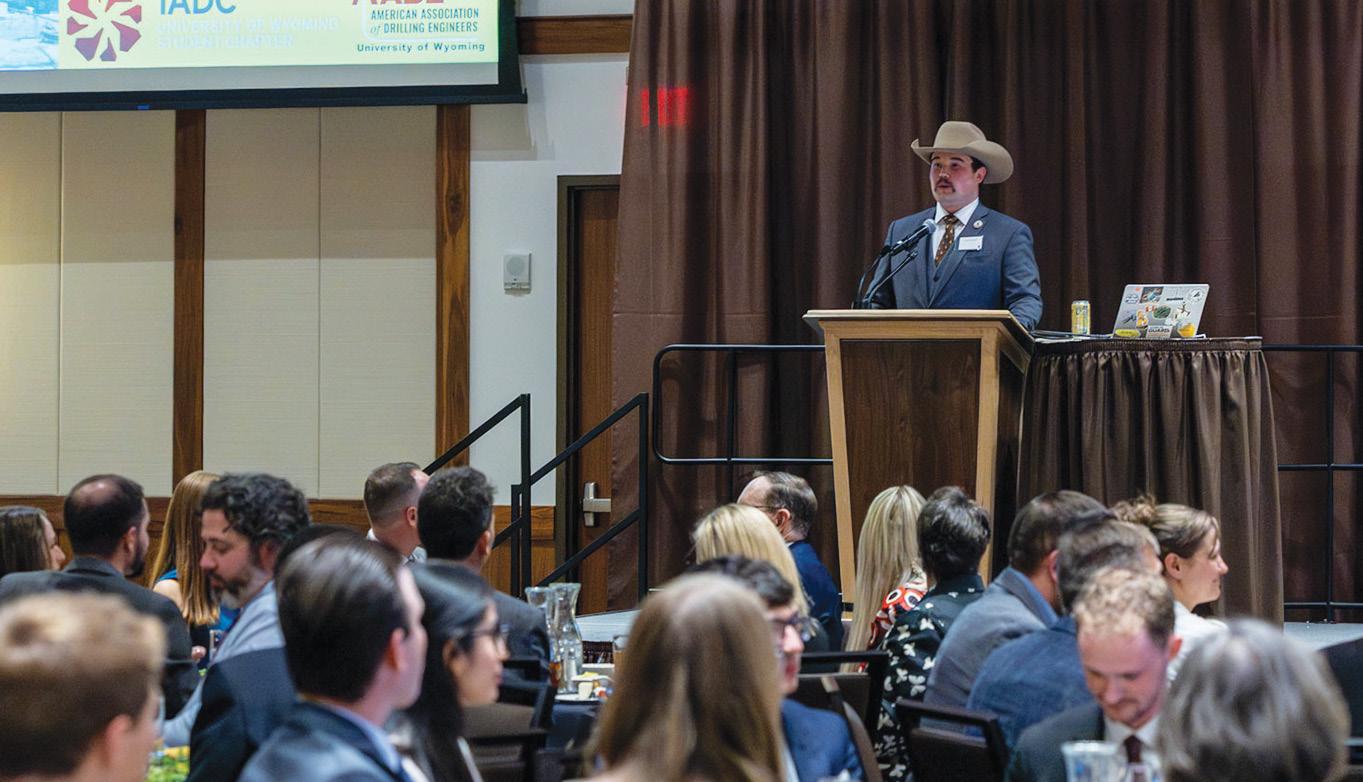
To celebrate the centennial of petroleum engineering education in Wyoming (see “100 Years of Petroleum Engineering at UW” in this issue), the University of Wyoming student chapters of the American Association of Drilling Engineers (AADE) and International Association of Drilling Contractors (IADC) hosted the inaugural Oilmen’s Gala on the evening of May 8, at the Marian H. Rochelle Gateway Center.
The event brought together students and faculty from the UW Department of Energy and Petroleum Engineering, alumni, supporters, donors, industry partners and special guests.
Distinguished speakers at the event included U.S. Rep. Harriet Hageman, state Sen. Chris Rothfuss and UW Department of Energy and Petroleum Engineering Head Soheil Saraji.
In her address, Hageman honored the legacy of her 102-year-old mother by painting a picture of the life her mother was born into in 1923, shortly before the first petroleum engineering class was offered at UW in 1926. Hageman then considered the unprecedented advances we enjoy in health, transportation and quality of life today.
“What is the difference between when my mother was a young girl and
where we are now?” Hageman asked. “It’s one thing — it is the commercial production of affordable and reliable energy. It is absolutely the foundation of everything that we have become in this country. It is the foundation of our prosperity.”
In his address, Saraji described UW’s significant contributions to the oil and gas industry. “Our alumni have led drilling programs, reservoir teams, production operations, technology companies and major energy organizations,” he said. “But what makes me especially proud is that UW petroleum engineers have always had a reputation for being practical, adaptable and grounded. That’s something we hear from the industry. People know UW graduates work hard. They know
that they understand the field, and they know that they can solve problems. That culture did not happen overnight. It has been built over generations by faculty, alumni, students and mentors from the industry.”
Looking forward to what the next 100 years might bring for an evolving, dynamic field, Saraji added, “I truly believe the next chapter of energy and petroleum engineering at the University of Wyoming may become the strongest one yet.”
The IADC and AADE UW chapters thank the gala sponsors for their support, with special thanks to Richard and Marilyn Lynch and Joe and Stephanie Leimkuhler, who were each presented with a custom-engraved belt buckle at the event.
BY
By Micaela Myers
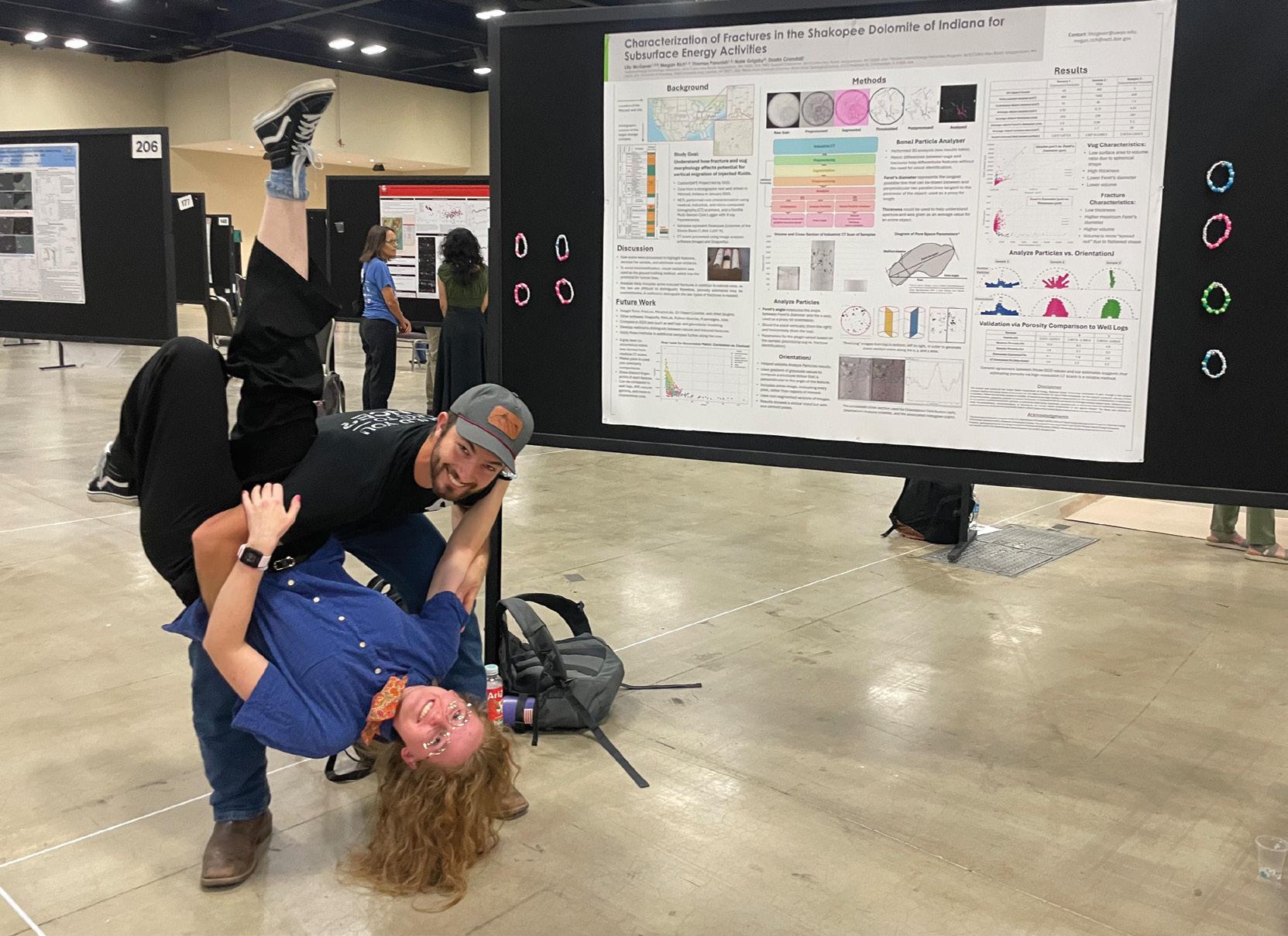
To junior Lilly McGever, geology is the theater of the Earth, telling us stories of the past. Her other major, environmental science, came from her love of conservation.
She loves how hands-on her coursework is: “Getting to touch, see and sometimes even smell the topics that I’m learning about help the concepts become engrained in my brain, and help me feel really engaged and interested.”
McGever, who came to the University of Wyoming from Phoenix, also has minors in math, biology and honors. Through labs and field trips, she gets to understand the concepts at multiple scales.
“I have a much deeper awe and appreciation for everything around me,” she says. “I don’t see dirt as dirt anymore — I see it as a complex and constantly evolving ecosystem. I can’t walk past a bush or a tree without thinking about photosynthesis and water transport through the branches. I can’t kick a rock without marveling about how old it might be and what conditions had to exist for it to form exactly how it did.”
Along the way, McGever has gained confidence through pushing past her comfort zone and trying new things. For example, she had no country dance experience before trying Cowboy Country Swing Club during the freshman Saddle Up experience. Now, she’s an instructor. A milestone
moment was taking part in the Homecoming float with the club — something she aspired to as a freshman.
“None of these amazing experiences would have happened, though, if it wasn’t for my Tomé Scholars to Fellows Program,” McGever says. “One of the most impactful parts has been the study-abroad experiences that the financial support allowed me to pursue. I’ve been on faculty-led courses to the Italian and Austrian Alps to learn about climate and culture, to Nepal to study conservation, and to Spain to study geological formations. These trips have been wildly impactful and have helped me expand my worldview and contextualize my education.”
McGever also took part in the Mickey Leland Energy Fellowship at the National Energy Technology Lab in Morgantown, West Virginia. Her research project using image analysis to quantify fracture orientation in CT scans of rock cores to help prepare an analysis of site suitability for carbon sequestration culminated in a presentation there and at the Geological Society of America conference in San Antonio.
“I learned a ton of new scientific skills, and it helped me find direction in what I want for my future career,” McGever says. At UW, she continues her research in the Kaszuba geology lab.
She encourages other students to take advantage of the many opportunities UW offers and to always push themselves to try new things.
Creating value from what others have historically overlooked as waste has led University of Wyoming Research Scientist Chooi Kim Lau from her academic training in civil and architectural engineering to pursuing her MBA. For her, the two go hand-in-hand to ensure that the results of universitybased theoretical research are converted into real-world solutions that can thrive on the open market.
“I didn’t start with waste; I started with limits. Limits of materials, limits of systems, limits of how we define value. … I realized materials are not just substances; they’re decisions frozen in time. Once I saw that, waste stopped looking like a problem and became a design signal,” Lau says.
Lau’s research focuses on geomaterials, which are natural, inorganic materials derived from the Earth’s crust — primarily soil, rock and sediment — used in construction, geotechnical engineering and geological studies. She was led to consider applications for coal char under the guidance of Kam Ng, a UW professor of civil and architectural engineering and construction management, whose expertise lies in geomechanics and geotechnics with applications in road and infrastructure construction.
When she began this research track, coal char was considered a waste product. Lau wanted to know how its properties might be exploited to return it to a system of value and use.
Five years ago, Ng and Lau founded the Geomaterials Research Laboratory in part to help answer questions
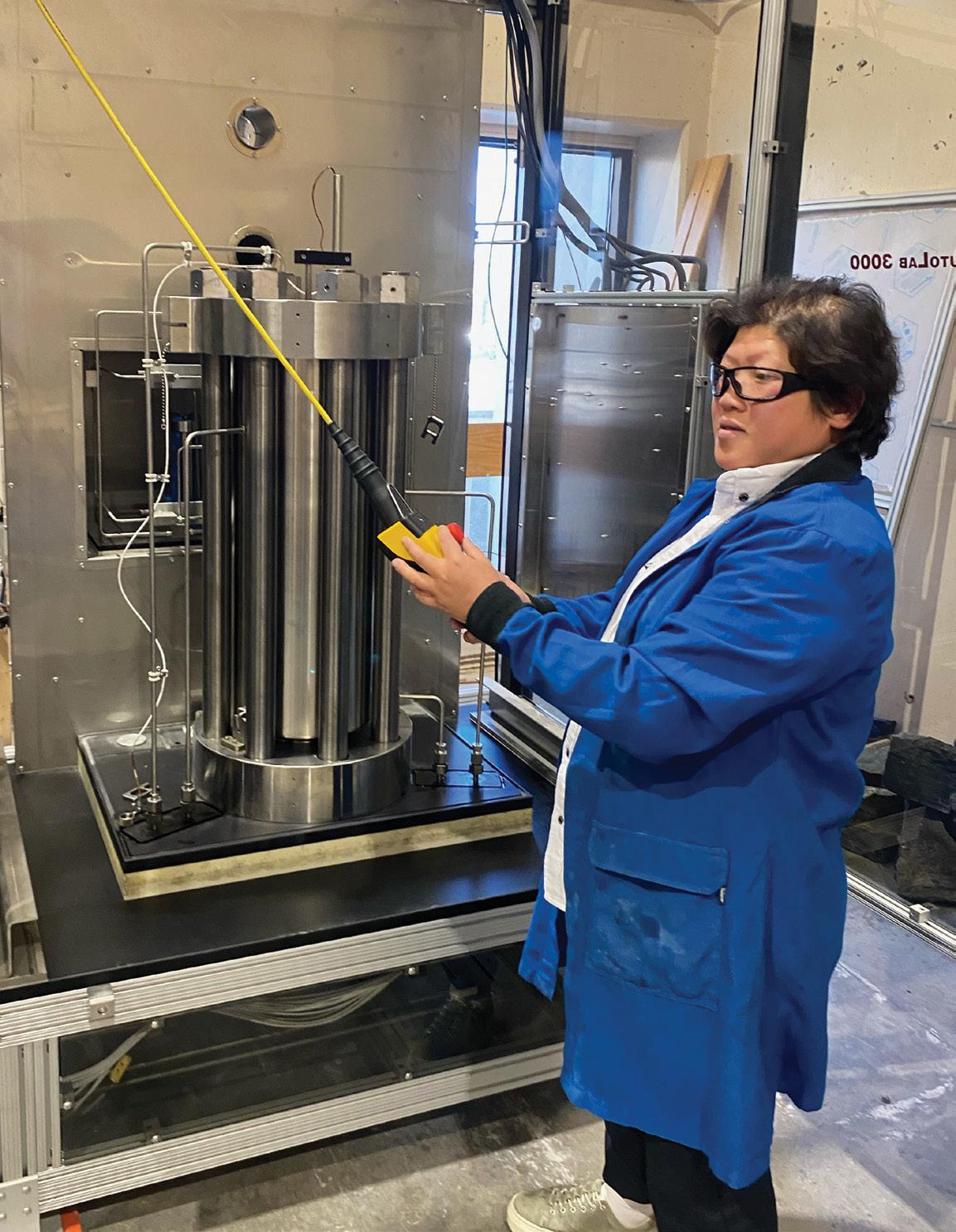
PHOTO BY WYATT CHILDRESS
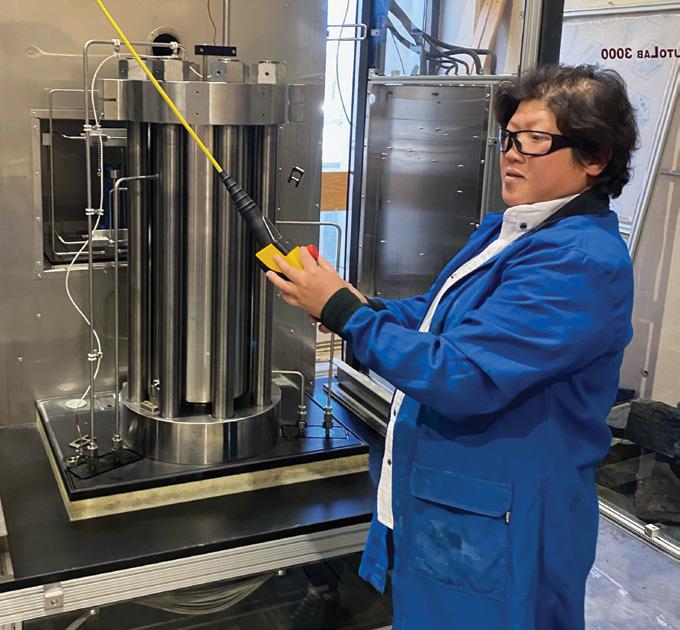
like these. Over time, through the assistance of multiple grants and support from the Wyoming Department of Transportation (WYDOT), the lab now features state-ofthe-art equipment, including the NER Autolab 3000, one of only three in the country, putting UW in on a par with MIT for research capacities.
This world-class lab characterizes and tests a wide range of geological samples and constructed materials by subjecting them to environmental stressors, including temperature extremes, acid, UV radiation, fluid injection and pressure. This has wide-ranging implications for fields from construction to energy extraction. For example, the Geomaterials Research Laboratory has done extensive testing and research in direct support of WYDOT, characterizing geological sites across the state in preparation for major construction projects.
Lau’s focus within this broader field of inquiry is to develop and test novel materials made from what are
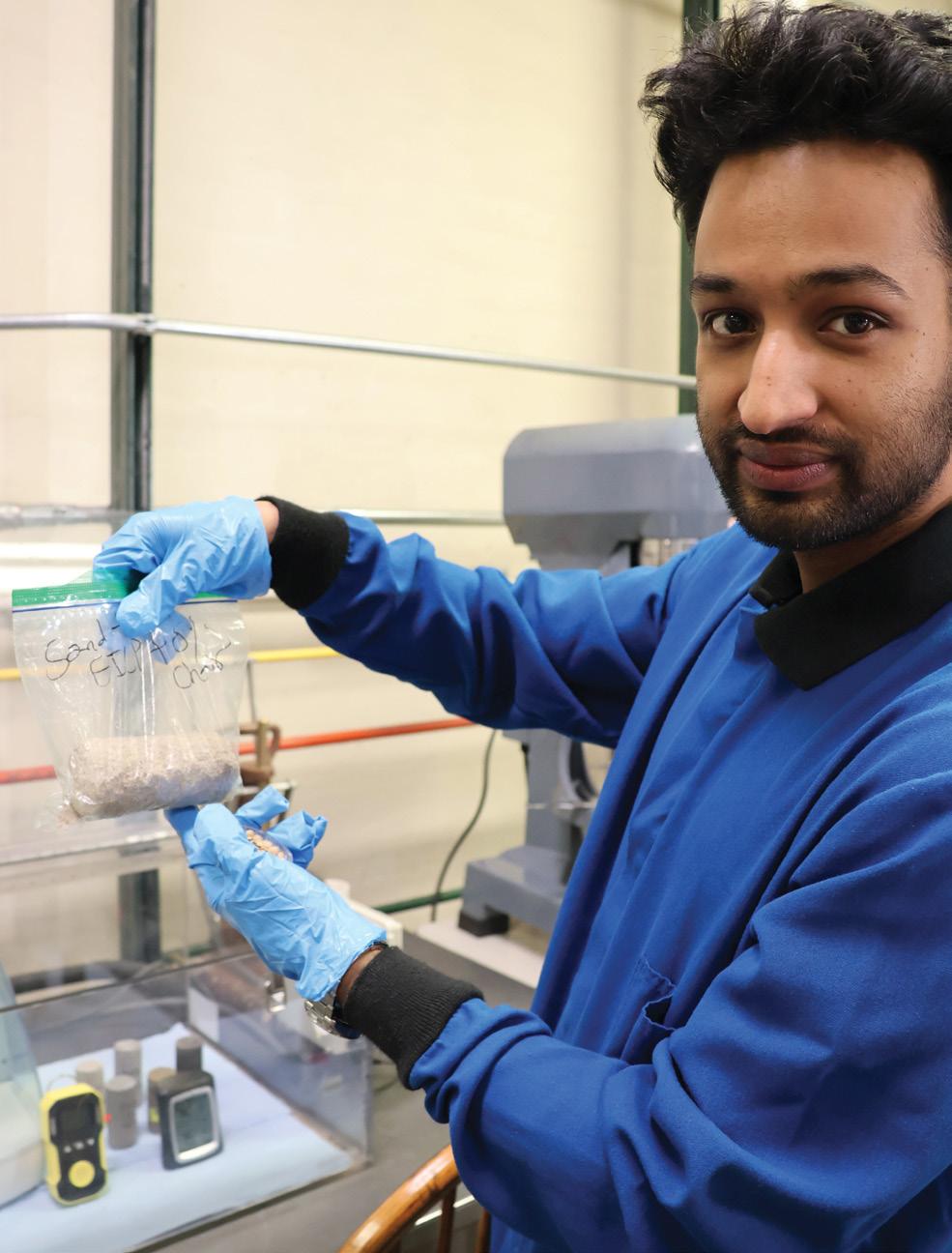
traditionally deemed waste products, such as coal char, fly ash or even discarded bits of soy beans. Lau and her team, which currently includes graduate research assistants Ehsan Divshali, Ritu Giri, Shikhar Pandit, Keshab Dhami and Bhim Timilsina, produce and test combinations of “ingredients” for composite and other materials.
Lau’s team subjects all of their materials to extensive safety testing, both chemically and to gauge properties such as insulative value and strength. All of their products not only meet, but also exceed, the industry standards of existing materials, making them very attractive for new building applications.
One of the most exciting new materials under development is a compound made in part with discarded soy bean waste, which can function as a “living material” with the capacity to self-repair structural cracks that can develop over time from physical and environmental stressors in other building materials.
Not only are these materials novel, but Lau’s solutions to producing them are as well. The equipment used in their production is neither specialized nor expensive — much of it is reclaimed second-hand — standard construction equipment, for example, but also even a commercial mixer from a bakery — and the produced materials are allowed to air-cure naturally. The intent is to demonstrate that strong, long-lasting materials can be developed anywhere in the world on-site from inexpensive or even free, readily available materials without specialized production equipment. This makes Lau’s model highly open source and exportable.
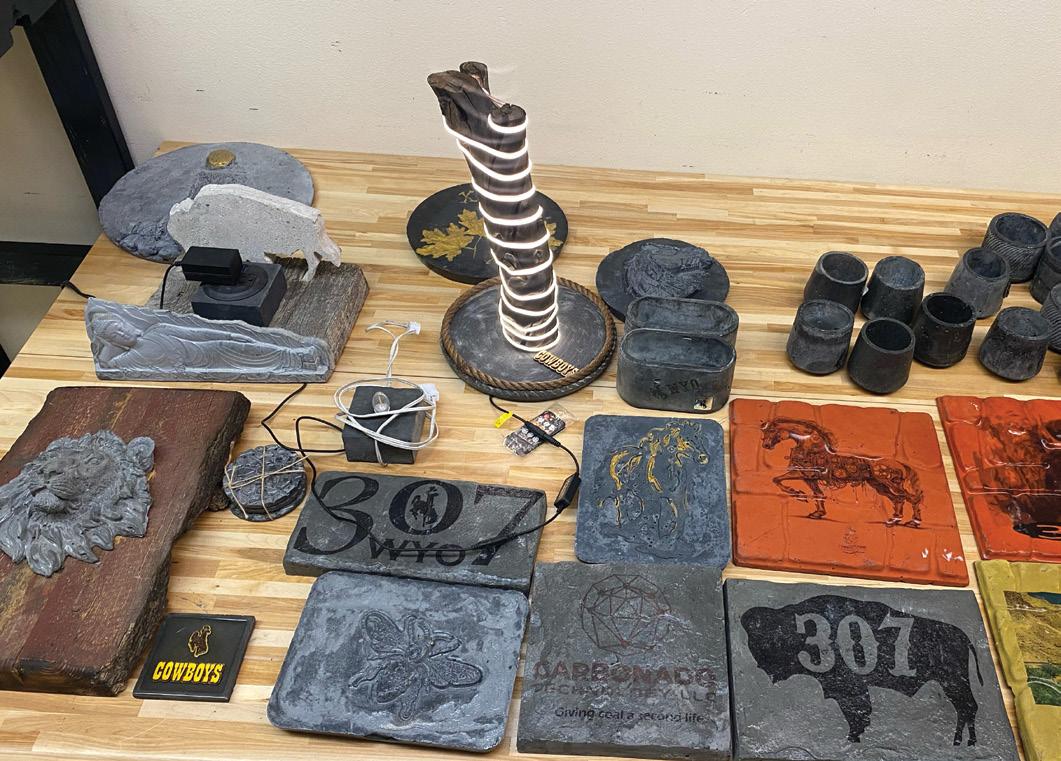
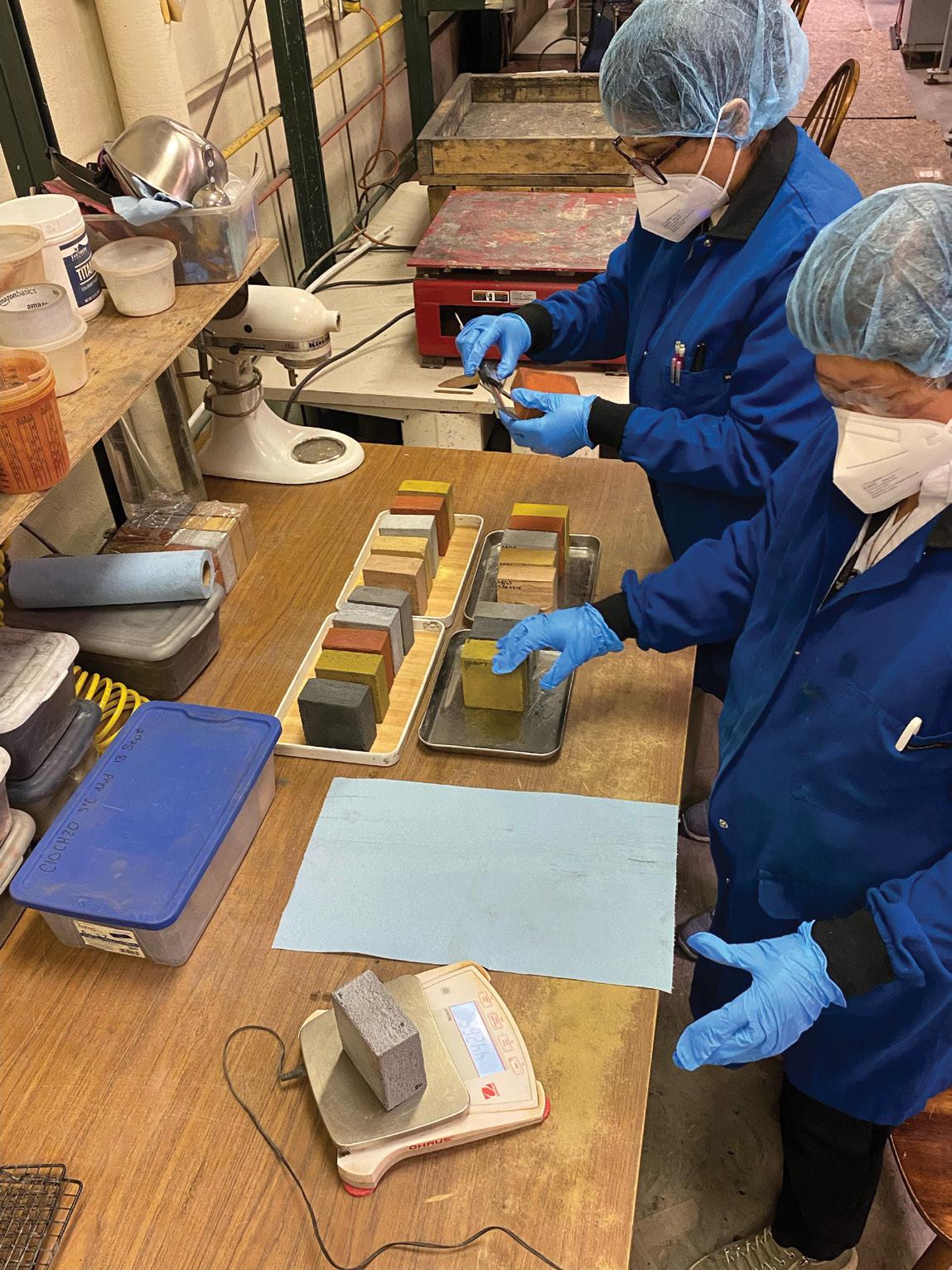
Nothing in Lau’s research goes to waste. Ever. Leftovers from projects, mining operations and construction sites become the raw material for saleable products through Lau’s startup Carbonado Technologies LLC.
Carbonado is, therefore, a direct outgrowth and expansion of Lau’s geomaterials research work at UW. The initial mission of the company was to “repurpose Wyoming coal into innovative, zero-waste products, preserving the state’s coal heritage while reducing industrial waste.” The objective is not only to have an environmental impact, but to also support local industries, preserve jobs and contribute to the long-term economic sustainability of Wyoming communities, all through applied engineering systems.
Currently, Carbonado crafts and sells aesthetic objects that celebrate Wyoming, featuring the bucking horse and
rider logo or the state area code “307” on coasters, composite signs and other decorative objects made, appropriately, from Wyoming coal char and other industry byproducts.
At present, the purpose of the product production wing of Carbonado is to raise awareness of the potential of these new materials and to test their viability on the market, but Lau has big plans for expansion.
“Our patented product line — developed in partnership with UW — includes bricks, stone veneers, block pavers, aggregates, mortars, grouts and carbon-based structural units,” says Carbonado Co-founder and CTO Kam Ng . “These materials are non-combustible and lightweight and offer superior thermal insulation, making them ideal for modern sustainable construction.”
Carbonado is currently focusing on stone veneer and exploring investment opportunities for its commercial release. Not only can these materials be developed from local sources, but they can also be organically colored to order. Imagine the potential of a stone material with superior structural qualities developed directly from excavated soil on the site of a building project and colored to match other buildings in a complex, saving both the extensive cost and environmental impact of quarrying and transporting construction materials from a distance.
“If systems learn to regenerate instead of discard, the built environment becomes adaptive rather than extractive,” Lau says. “My work focuses on designing material systems — integrating materials, processing and real-world constraints into scalable solutions.”
In other words, Carbonado’s mission encompasses not just the engineering of novel building materials that reincorporate waste, but also assessing the market potential of those new products, and developing the pathways to ensure those materials can be adopted and used in real-world projects.
Lau’s work is novel not only in its technical applications, with her team having produced 55 papers and 20 patents in three years, but her approach to lab management is also unique. Lau honors the engineering expertise of her graduate assistants, putting them in charge of designing and running their own research projects rather than taking marching orders. Moreover, her graduate students hold the patents to their work. This means that, when a product later takes off on the commercial market, the students who put the work into its development will reap financial rewards well into the
future. Her students, therefore, also become entrepreneurs in their own right.
One of the most transformative things about the way Lau has designed her development model is its adaptability.
“I’m excited about applying the same system to new waste streams, designing materials and systems that connect engineering, energy and real-world adoption at scales that actually matter,” Lau says
What’s next for Lau and her team? The UW Geomaterials Research Lab is turning its focus to solving pressing questions for optimizing rare earth elements processing to support the growing critical minerals industry in Wyoming. And Carbonado Technologies is actively seeking investment to release its innovative building materials onto the larger commercial market.
But the vision is much larger even than that. Lau aims for no less than the transformation of how we do business for the benefit of industries, consumers and the environment alike: “I don’t think my work changes one industry — I think it changes how industries think.”
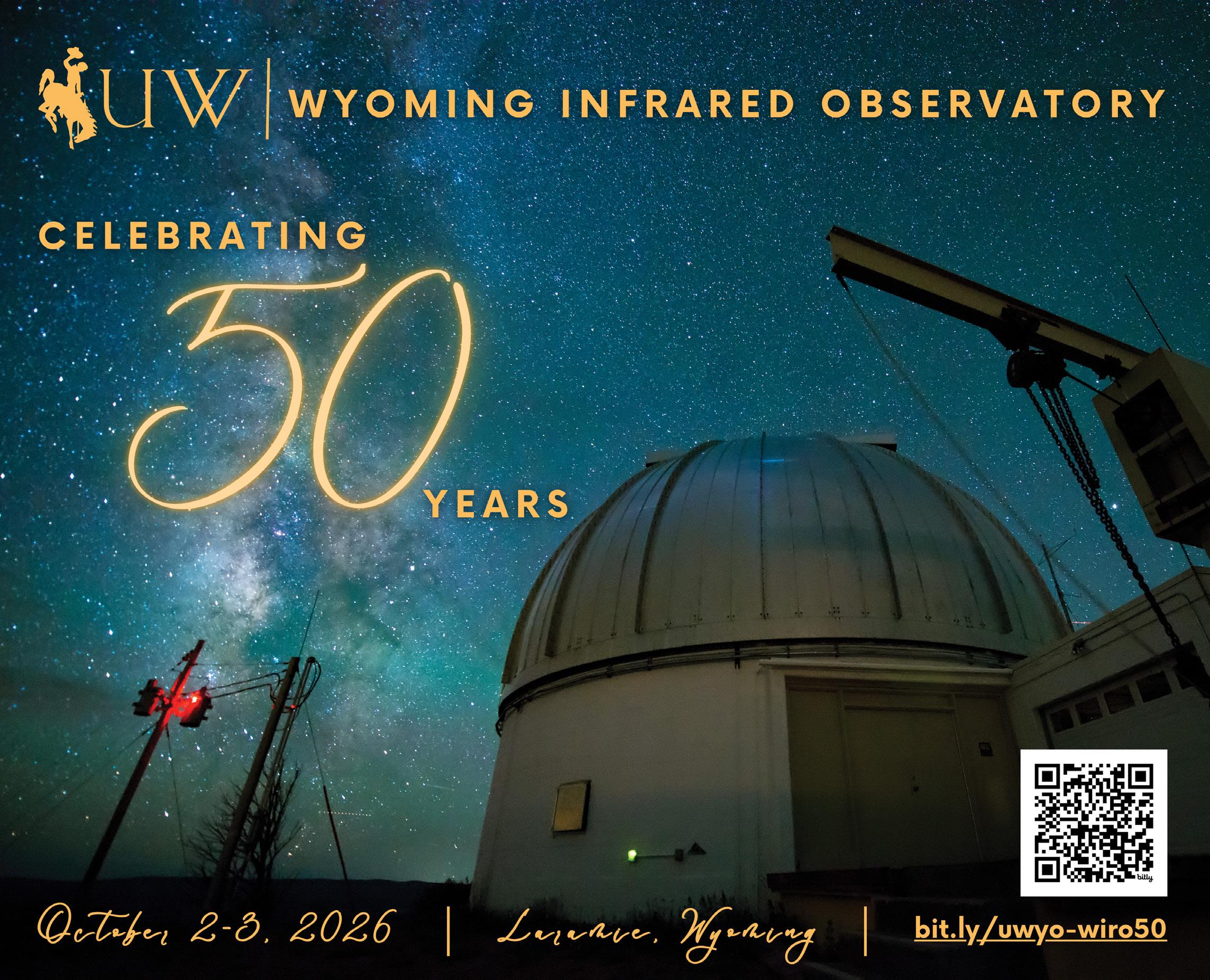
The Wyoming Infrared Observatory (WIRO) will celebrate its 50th anniversary at the beginning of October. WIRO features a 2.3-meter telescope and is located 25 miles southwest of Laramie, Wyo., on the summit of Jelm Mountain. Among its honors, WIRO lays claim to being the
second-highest professional observatory in the continental U.S. at an altitude of 9,656 feet. It was also the first fully computer-controlled observatory in the world. For the past 50 years, WIRO has been a cornerstone of cuttingedge discoveries in astronomy at the University of Wyoming.
Those with a connection to WIRO are invited to join the UW Department of Physics and Astronomy to “Celebrate the History and Imagine the Future” Oct. 2 and 3, 2026.
The event will feature two days of talks, events and celebration honoring the observatory’s past, exploring topics in science and looking forward to what’s on the horizon for the future of the field. The event is free to attend, but donations are welcome to cover costs. Please register at bit.ly/ uwyo-wiro50, even if you just wish to send a video greeting or written remembrance.
Email Chip Kobulnicky at chipk@uwyo.edu for more information.
By Micaela Myers
Whenever James Dahill took a family road trip while growing up in Casper, his father, an oilfield geologist, pointed out the geologic features along the way.
“My view was from the car window, and most of the things he pointed out were highway cuts exposing folds, faults and various geologic formations
that held a story,” Dahill says.
His father encouraged him to study geology at the University of Wyoming, and Dahill graduated in 1987.
“UW provided me a broad education in the field and a strong desire to understand the diverse geology right here in Wyoming,” he says.
In addition to the coursework, Dahill enjoyed mountain biking, alpine skiing and attending UW athletics in his off time.
“Once I graduated, I wanted to get involved in building roads so I could tell a story about each location,” he says. Dahill did just that, joining the Wyoming Department of Transportation (WYDOT) as a summer intern. Over his nearly 40year career with the agency, Dahill worked his way up to chief engineering geologist and program manager. One of his favorite challenges is finding solutions to landslides.
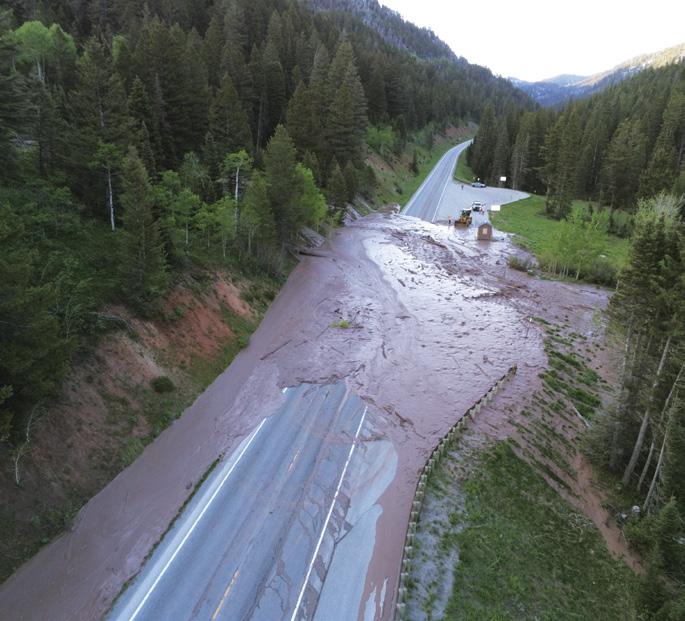
“I had just taken over as the
program manager on April 1, 2024, and on June 8, Teton Pass fell down, so I was pressed into a quick reaction and worked hard to fix that landslide,” Dahill says. “It’s very challenging and very rewarding to work with the whole WYDOT team and many others to accomplish that mission.”
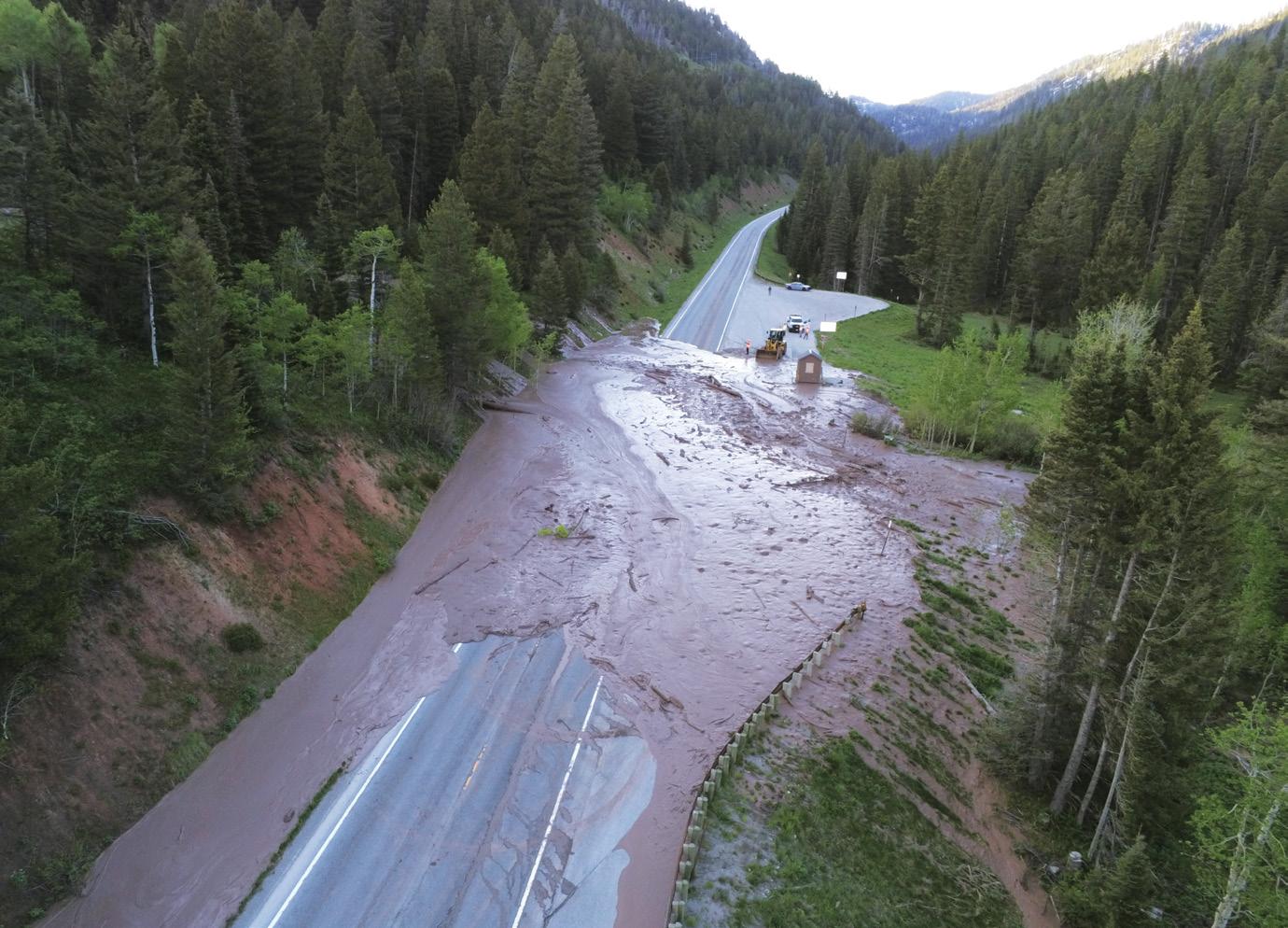
Mitigating landslides for the safety of the public is Dahill’s greatest passion. In addition to Teton Pass, big landslides on Wolf Mountain in Snake River Canyon and embankment failures on Interstate 90 have been some of his greatest challenges and biggest rewards.
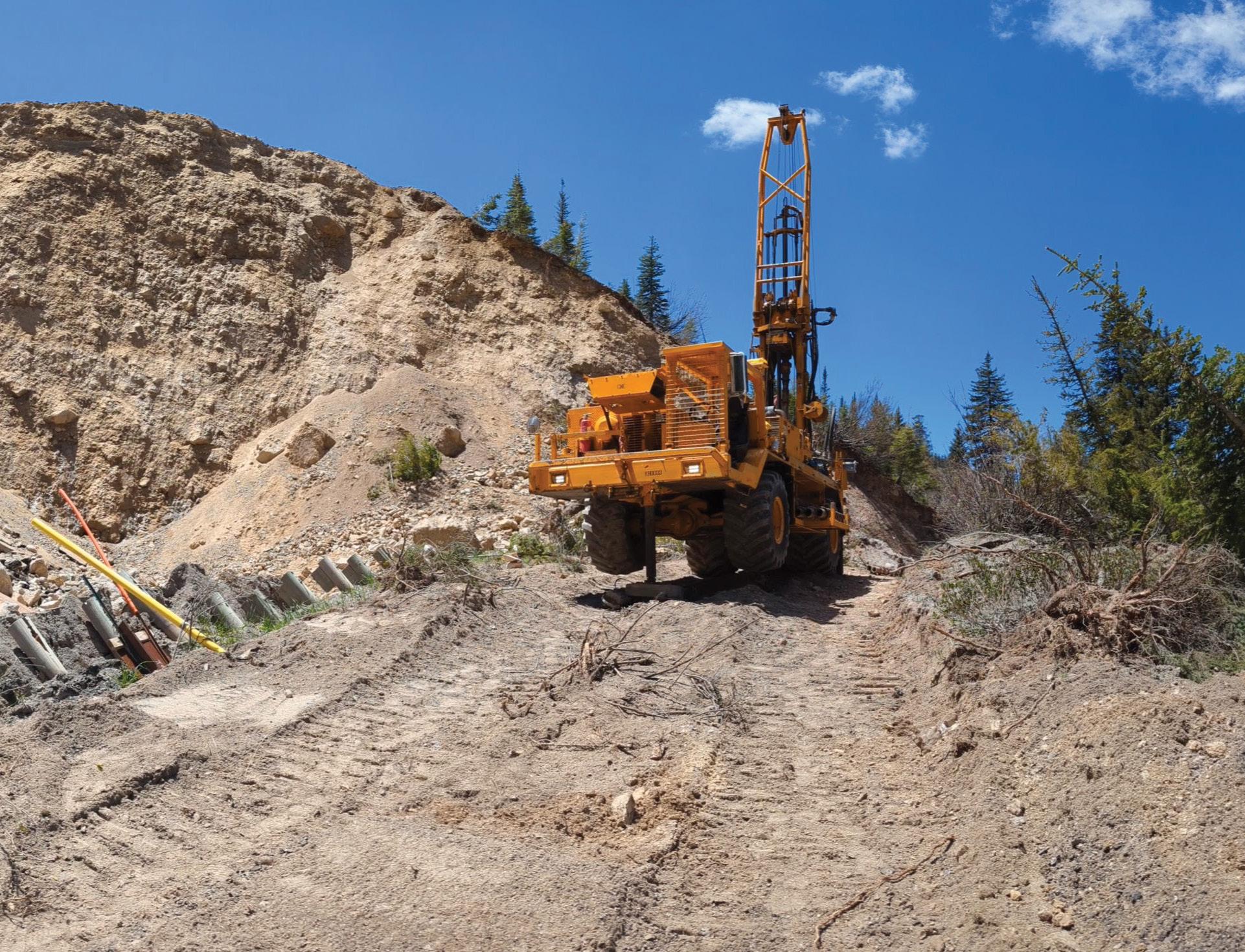
“I love applying my knowledge, skills and experience to others as well as working closely with engineers to solve foundation problems for new roadways, bridges and rock cuts,” he says. “I’ve been very fortunate in my career to work on many different landslides. That work consists of drilling holes, characterizing the site, installing monitoring wells and
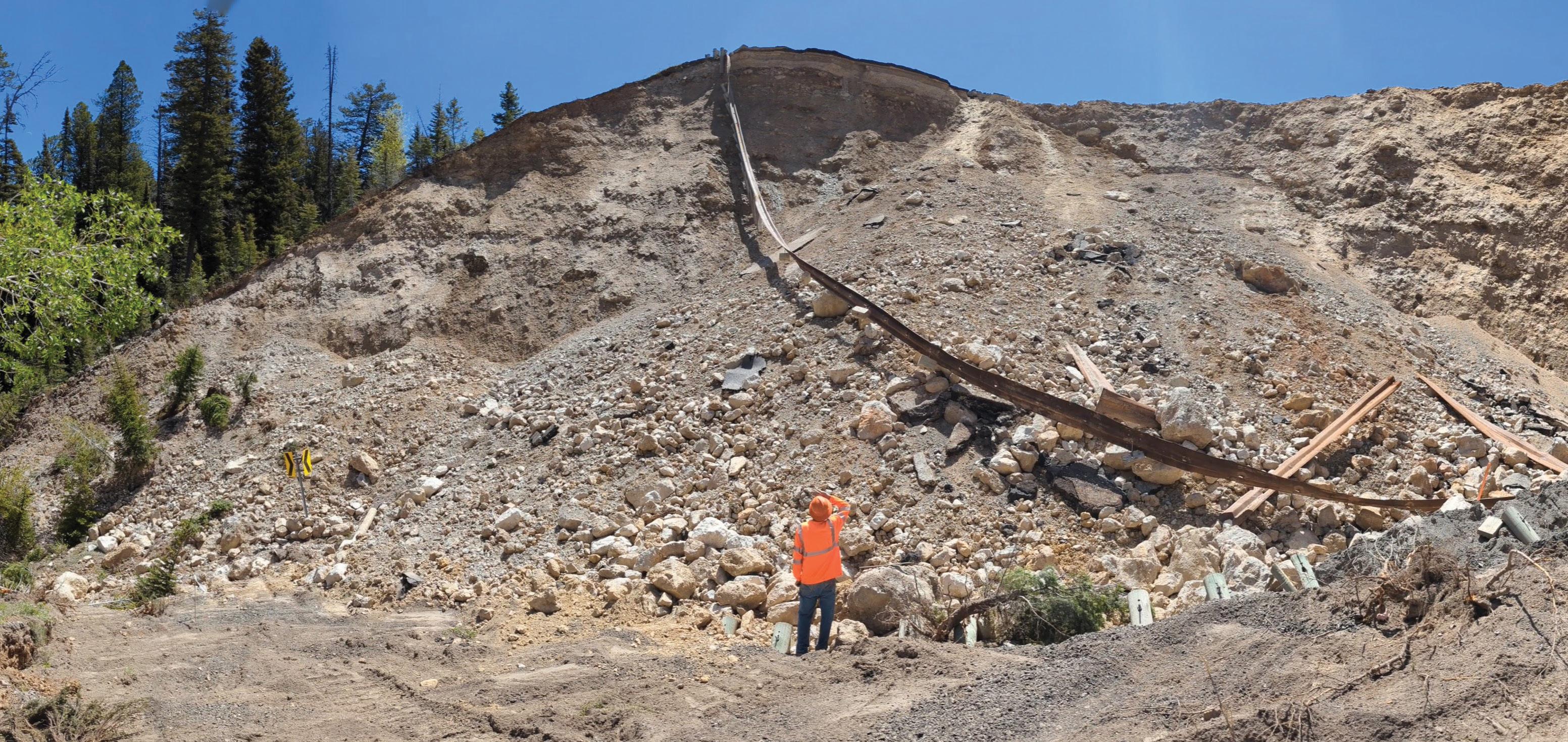
collecting samples of the subsurface material for laboratory testing.”
Working on various landslides, Dahill has used a variety of approaches. For example, in Snake River Canyon, where the river is constantly causing erosion and the bedrock formations are thrust up, crews had to structurally tie back the Blue Trails and Deer Creek landslides. Dahill also helped rebuild the Togwotee Pass corridor, which receives a great deal of moisture on very poor clay soils.
“We threw the cookbook at landslides up there,” he says. “We did toe berms and shear keys, under drains, horizontal drains, styrofoam fills and tieback anchors. Rebuilding that 38 miles of landslide-prone highway was one of my biggest accomplishments.”
Along the way, Dahill has traversed virtually every road in the state and loves Wyoming’s varied geology.
Recently, he was nominated for UW’s College of Engineering and
Physical Sciences Distinguished Scientist Award.
“I am very humbled and honored,” Dahill says.
He has stayed connected with UW, including supporting research projects between the College of Engineering and Physical Sciences and WYDOT and regularly hiring interns.
“I encourage UW students to take advantage of those opportunities to learn,” he says. “Even after 38 years of my career, I’m still learning things. Hiring interns is also an opportunity
for me to share my experiences with others, and I very much enjoyed doing that.”
At UW, Dahill met his wife, Kathe, a speech and language pathologist, and both their children also graduated from the university.
“Wyoming has provided me a great opportunity to grow and become the person that I am,” he says. “I’ve just enjoyed everything that the university and the state have offered me. It’s a wonderful place with wonderful people.”
UW’s Engineering Building and petroleum engineering program celebrate their 100th anniversary this year. We asked Wyoming Department of Transportation Chief Engineering Geologist James Dahill to share some road- and geology-related milestones: “Around 1926, the triple tunnels above the Shoshone Reservoir were displayed on numerous postcards for those traveling from Cody to Yellowstone,” he says. “In 1924, the Wind River Canyon tunnels were completed in one of the best exposed geologic features of sedimentary rocks in Wyoming where the Wind River cut through the Owl Creek Mountains. The superposition of the river through the mountain occurred during the Laramide orogeny.”
The Dark Energy Spectroscopic Instrument (DESI) has completed its originally planned five-year mission, mapping more than 47 million galaxies and quasars, and creating the largest high-resolution 3D map of the universe to date.
Adam Myers, a UW professor of physics and astronomy, developed the detailed plan for DESI’s final sequence of observations, along with the plans for the hundreds of nights of observations that came before it.
DESI’s five-year survey — finished ahead of schedule and with vastly more data than expected — has produced the largest high-resolution 3D map of the universe ever made. Researchers use that map to explore dark energy, the fundamental ingredient that makes up about 70 percent of the universe and is driving its accelerating expansion.
“To my astonishment, the map from only the first year
UW alumnus Michael Curran and professor of statistics Tim Robinson have published a study proposing the use of spatially balanced rotating panel designs as a time and cost-efficient way to monitor the ecological reclamation of oil and natural gas sites while increasing data quality.
The paper, “Long-term monitoring strategies for ecological reclamation programmes using spatially balanced rotating panel designs,” was published in the tier 1 journal Ecological Solutions and Evidence. It is the ninth time UW graduate Michael Curran, CEO and principal ecologist of Abnova Ecological Solutions, and Tim Robinson, a professor of statistics at UW, have published a paper together.
Read more: bit.ly/reclamation-study
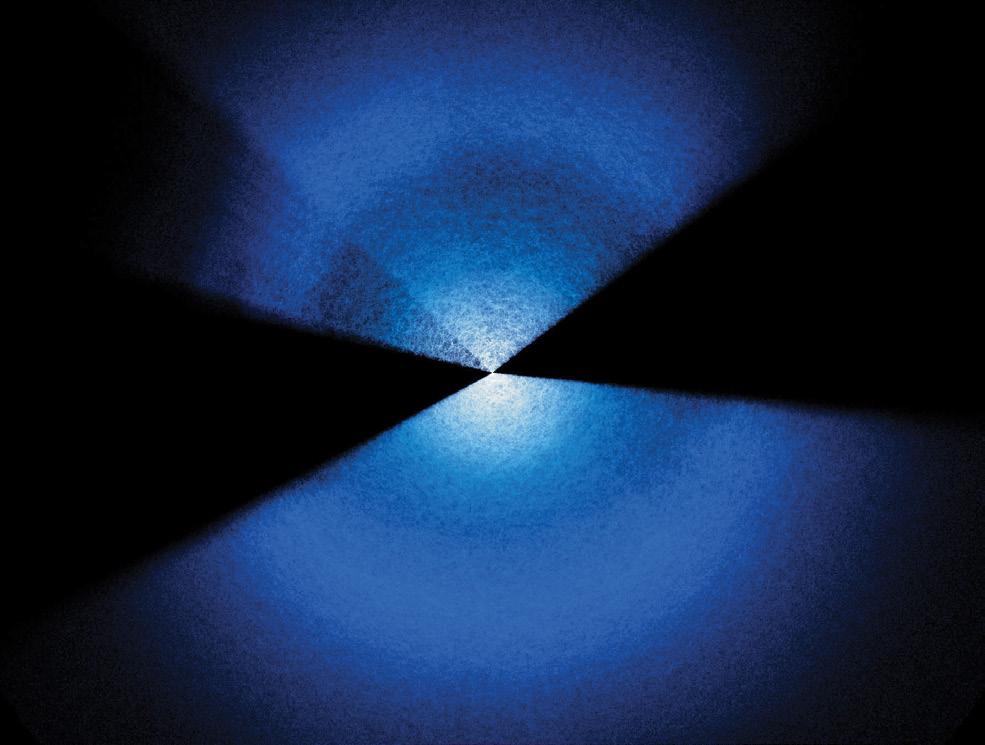
Researchers use the Dark Energy Spectroscopic Instrument’s (DESI) huge 3D map to study dark energy. Earth is at the center of this map, and every point is a galaxy. DESI has completed its originally planned five-year mission, mapping more than 47 million galaxies and quasars, and creating the largest high-resolution 3D map of the universe to date.
of DESI data, when combined with other datasets such as supernova observations, strongly suggested that this dark energy is dynamic and is evolving through time,” Myers says. “This was a completely new discovery in basic physics. It’s rare that somebody gets to be a part of something like this.”
Read more: bit.ly/myers-desi
Diksha Shukla Partners with WYDOT and Range to Make Wyoming
Thanks to a pilot project led by Associate Professor Diksha Shukla in the Department of Electrical Engineering and Computer Science, driving hazards in Wyoming could be significantly reduced.
The project, titled “Feasibility of Employing AI Computer Vision and Distributed Fiber Optic Sensing for Traffic and Weather Monitoring,” will deploy Distributed Acoustic Sensing (DAS) in tandem with artificial intelligencebased computer vision to monitor a section of U.S. Highway 85 just north of Cheyenne.
“DAS turns ordinary fiber-optic cables — like the ones already running along Wyoming highways — into thousands of tiny vibration sensors. Every time a vehicle drives by or weather affects the road, the cable ‘feels’ the vibrations, records them and sends that information to a computer, which can figure out things like traffic speed, congestion or even icy conditions,” Shukla says.
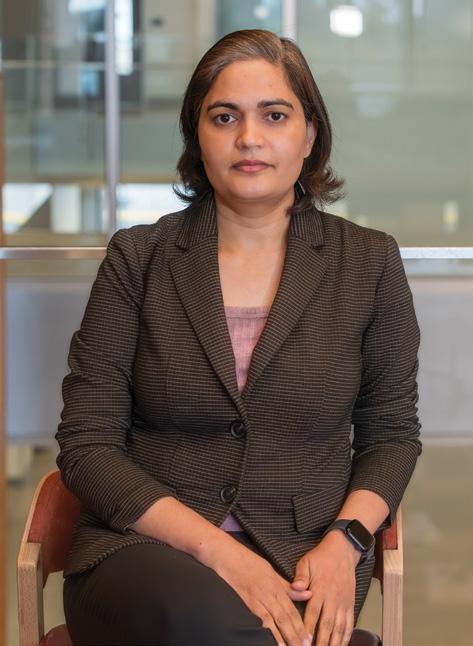
The project is a partnership between UW, the Wyoming Department of Transportation, Range (one of the largest fiber-optic carriers in Wyoming) and the University of Cincinnati. LUNA/ OptaSense is furnishing the sensor technology that converts existing fiberoptic cables into a distributed sensor array.
Read more: bit.ly/wy-safer-roads
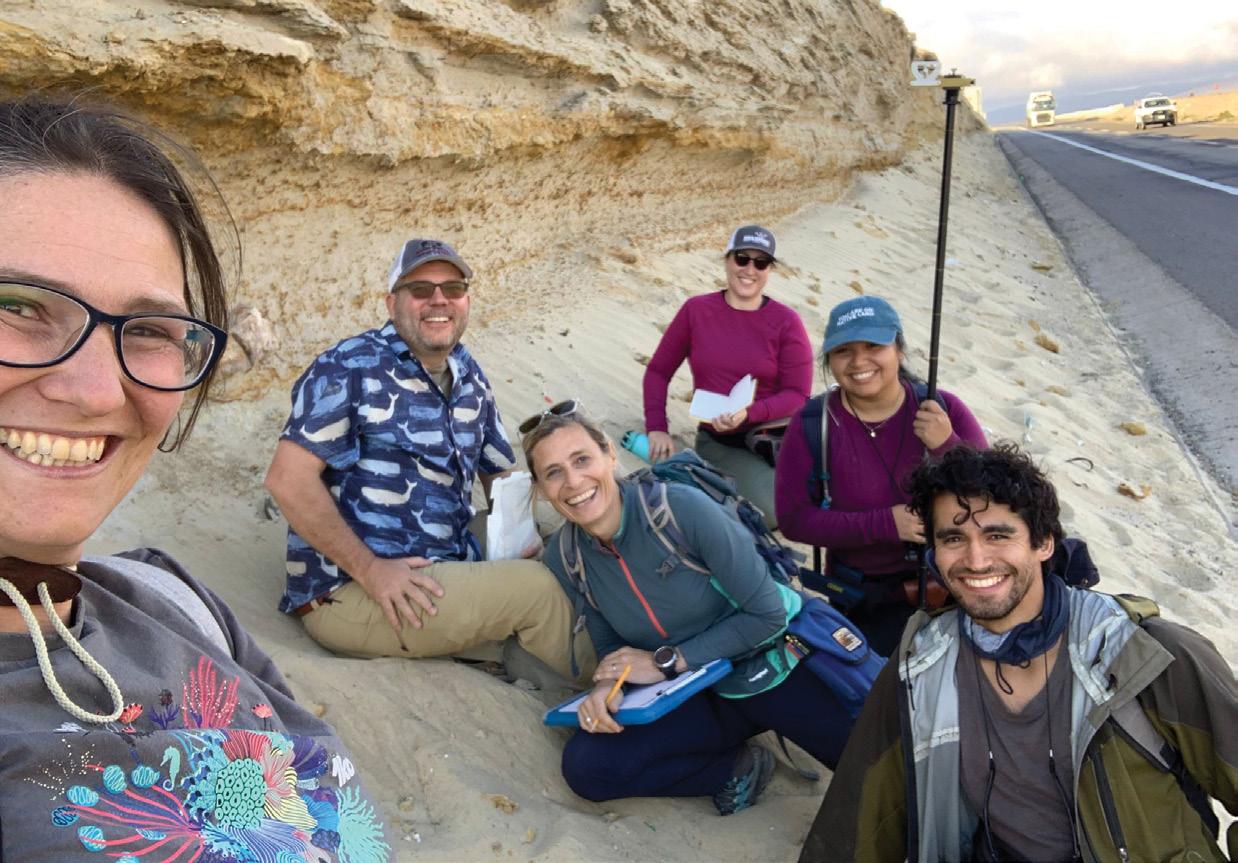
Researchers work in the field at Cerro Ballena near Caldera, Chile, as part of a study showing that an increase in volcanic activity in the Andes in the Late Miocene Epoch likely resulted in a cooling of the Earth between 5.4 million and 7 million years ago. From left are Carolina Gutstein, Mark Clementz, Barbara Carrapa, Whitney Worrell, Priscilla Martinez and Fabían Muñoz.
Mark Clementz, a professor in the Department of Geology and Geophysics, and colleagues have produced a compelling study that shows that an increase in volcanic activity in the Andes in the Late Miocene Epoch likely resulted in a cooling of the Earth between 5.4 million and 7 million years ago.
The volcanic activity produced a biological boom in the Southern Ocean, which led to a drawdown of atmospheric carbon dioxide that resulted in global cooling, Clementz and co-authors concluded. Their findings are presented in a new article, titled “Andean volcanism, ocean fertilization, marine ecosystem turnover, and global cooling in the Late Miocene,” published in the journal Nature Communications Earth and Environment.
The Late Miocene, Clementz says, “represents a pivotal transition in Earth’s climate system, marking the shift toward the modern climatic regime and the establishment of many of today’s floral and faunal assemblages. Identifying the mechanisms that drove this transition is critical, particularly for understanding how Earth systems may respond to ongoing and future climate change.”
Read more at: bit.ly/clementz-volcano
Haibo Zhai, professor and Roy and Caryl Cline Distinguished Chair in Engineering in the Department of Civil and Architectural Engineering and Construction Management, has been selected by the IPCC Task Force as a lead author to prepare the 2027 IPCC Methodology Report on Carbon Dioxide Removal Technologies, Carbon Capture, Utilization, and Storage. He will work on the topic “CO₂ Capture and Direct Air Capture.”
This spring, faculty members across the college were honored with multiple recognitions of excellence in teaching and research. Please join us in congratulating the following on their achievements:
• “Class that Changed Minds”: Bryan Shuman (Geology and Geophysics) was recommended by graduating seniors for his course on paleoclimatology
• Ellbogen Meritorious Classroom Teaching Award: Abdelaty Ahmed (Civil and Architectural Engineering and Construction Management), Tawfik Elshehabi (Energy and Petroleum Engineering), Dario Grana (Geology and Geophysics) and Tyrrell McAllister (Mathematics and Statistics)
• Excellence in Experiential Education Award: Joe Biasi (Geology and Geophysics)
• Hollon Family Award for excellence in online teaching: David Anton (Mathematics and Statistics)
• Presidential Scholarly Achievement Awards: Dario Grana and John Kaszuba (Geology and Geophysics)
• Presidential Scholarly Achievement Award for early career faculty: Liane Moreau (Chemistry)
• Promoting Intellectual Engagement Award: Richard Barrans (Physics and Astronomy), Nathan Clements (Mathematics and Statistics), Todd Fantz (CEPS), Irina Holmes Fay (Mathematics and Statistics)
• Society of Exploration Geophysicists Kauffman Gold Medal: Dario Grano (Geology and Geophysics)
• “Top Prof”: Kui Chen (Chemistry) was selected by the UW Mortar Board honor society
Lauren Kim and her collaborators have solved a persistent problem in the cutting-edge field of high-entropy alloys, a class of materials with great potential in modern engineering, electronics and energy applications — such as jet engines, nuclear reactors, chemical processing systems, batteries and supercapacitors — along with cryogenics systems.
Kim was a Ph.D. student in UW’s Department of Physics and Astronomy who graduated in December, working under the direction of Professor TeYu Chien. Their article, “Revealing the Existence of the Surface Local Chemical Ordering in High Entropy Alloys,” was published in the academic journal Nature Communications.
In it, Kim and co-authors describe their research into a novel method of identifying the chemical arrangement of the surfaces of this specialized class of alloys.
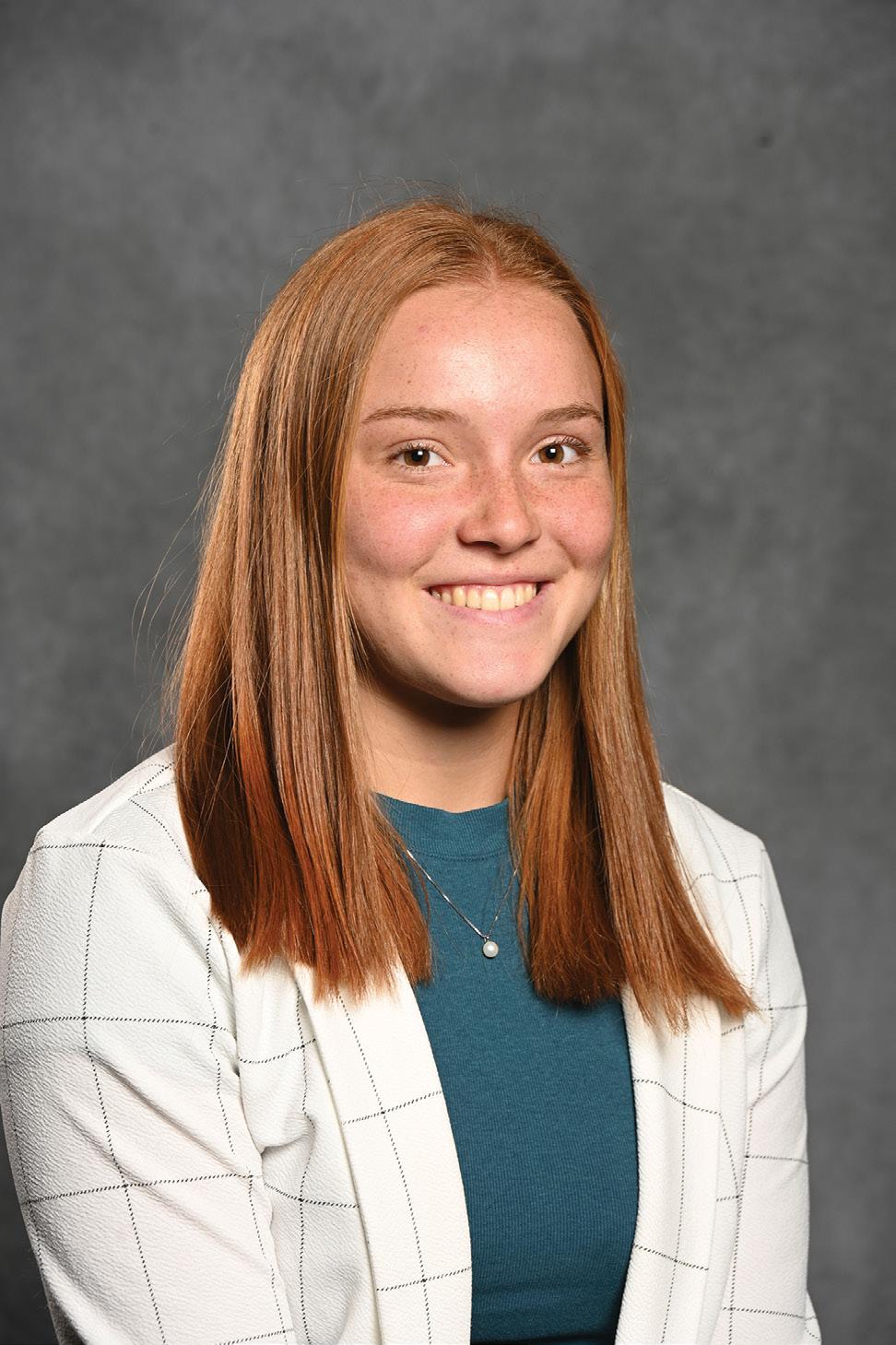
This work, made possible through a National Science Foundation grant, is a result of collaboration between Kim and Chien at UW, together with Ganesh Balasubramanian and Prince Sharma, from the University of New Haven (Sharma will join UW’s Department of Mechanical Engineering this fall); Peter Liaw, from the University of Tennessee-Knoxville; E-Wen Huang, from National Yang Ming Chiao Tung University in Taiwan; and Che-Wei Tsai and Jien-Wei Yeh, from National Tsing Hua University in Taiwan. Notably, Yeh was the first researcher to demonstrate the stability of high-entropy alloys more than 20 years ago.
Kim’s methodology could lead to exciting advances in the ability to better control the properties of alloys to yield custom materials with superior strength, stability and resistance to corrosion.
Read more: bit.ly/high-entropy-alloys
To learn more about our se r vices and how we connec t stude nt s and alumni with e mploye rs , contac t us at C E P SC areer Ser vices@ uw yo edu
The CEPS Career Services o ce has been an invaluable resource that has helped me grow in my professionalism and find opportunities in the field of Chemical Engineering that align with my interests and career goals. Through information provided by Career Services, I found an internship position at Idaho National Labs involving testing electrolysis systems used for hydrogen production. Through resume reviews and workshops, I built my skills to secure an internship position at INL even though I was underqualified. I would encourage every student to take advantage of the resources that Career Services provides while attending the University of Wyoming.
She’s the gentle and persistent nudge to turn in that critical report, the reassuring voice for the struggling student, the right hand to the dean and the powerhouse behind every college event. Mindy Zwieg has been the glue of the large and disparate College of Engineering and Physical Sciences for the past three years, but her history with the University of Wyoming runs much deeper than that.
Originally from Banner, Wyo., Zwieg has been a Laramite since her youth. Zwieg started with UW as an office assistant, senior in the office of student financial aid and was then promoted to office associate, senior, a title she held for 21 years, including for almost a decade with the Department of Civil and Architectural Engineering.
In 2023, Zwieg transitioned to coordinator of college affairs under former dean Cameron Wright. “When I hired Mindy as executive assistant to the dean, I didn’t realize how invaluable she’d be,” Wright says. “Mindy juggled my packed schedule, … ensured I didn’t forget about various deadlines, brought order and efficiency to the annual review process for the entire college, was my primary gatekeeper for phone calls and visitors and became a good colleague and friend. She was, in fact, essential to my success as dean of the college.”
This is a sentiment echoed across the college, where Zwieg is well-regarded by faculty, staff and students alike for keeping the ship sailing smoothly, being a dependable go-to problem-solver and always ready to step in with help and a kind word.
Likewise, Zwieg says that what has kept her with the university for so long is her love for “working with the students, faculty, staff, parents, other departments on campus and donors — everyone has been great to work with.”
In those 25 years, Zwieg has seen her share of ups and downs, hailing advances in software systems and the advent of the Hathaway Scholarship, which her sons took advantage of to receive their bachelor’s degrees at
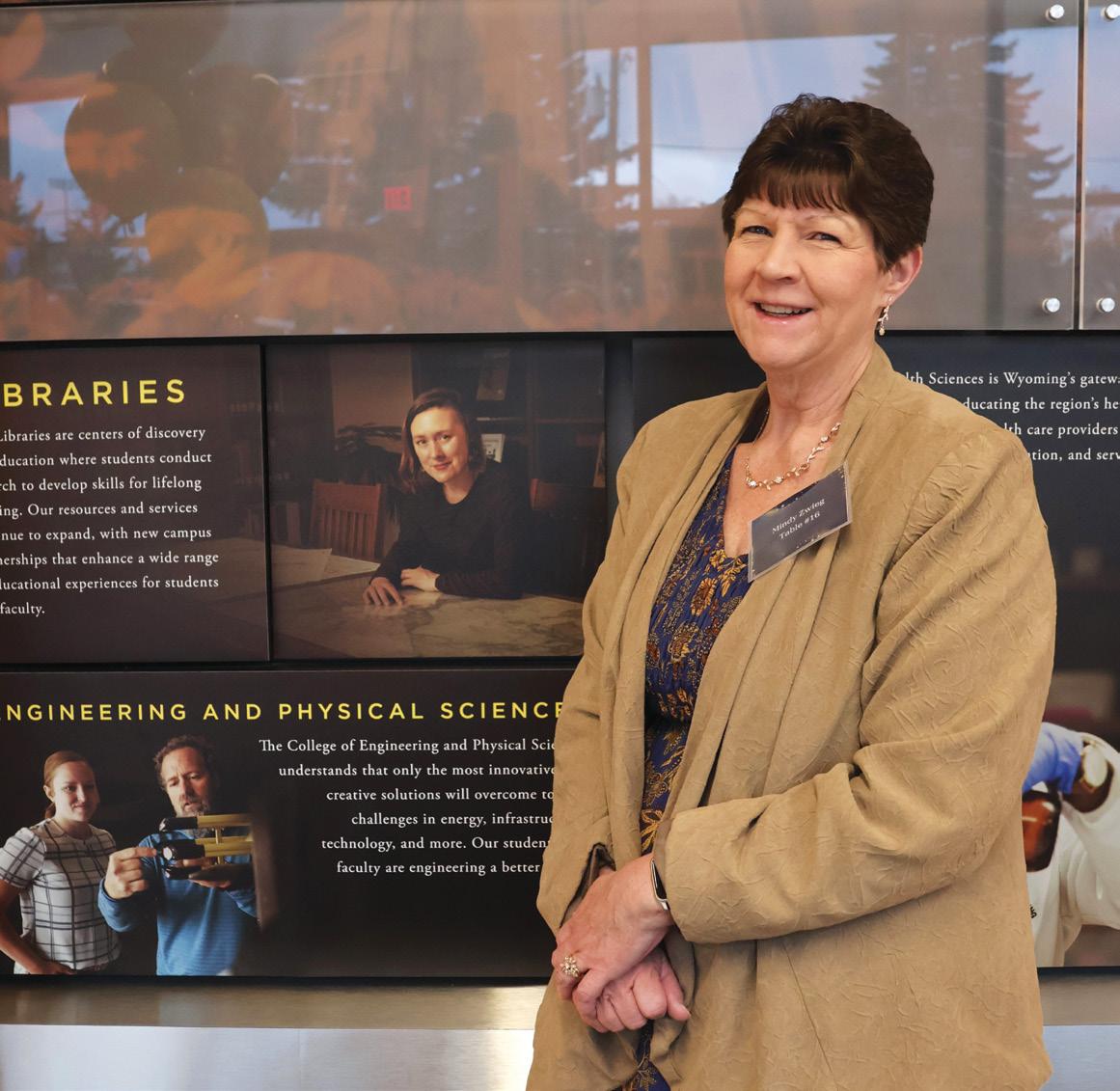
UW, one in civil engineering and one in education.
Zwieg is a dedicated UW Cowpoke, attending basketball and football games and cultural events with her family. She especially loves cheering on the wide variety of students who find success at UW.
Interim Dean Danny Dale praises Zwieg for her professionalism, tactfulness and dedication, especially through the college’s recent period of transition, noting that she consistently goes well above and beyond to ensure not just the success, but also the excellence, of all she undertakes.
“Having a coordinator with a positive outlook, a growth mindset and someone who strives for excellence is important to everyone involved,” he says. “It reassures people that we are a top-notch unit that cares about our students first and foremost. Mindy fits that to a `T.’”
The College of Engineering and Physical Sciences is widely known as a hub of excellence in academic research and producing students with Cowboy grit and ingenuity, but our professors and staff members make an impact far beyond the campus walls in communities throughout the state as well.
Outreach to the schools is a fixture across departments in the college. In addition to the college’s official K-14 STEM Education Outreach Office, individuals and departments have actively fostered strong partnerships with schools across the state.
Erin Stoesz, an adjunct professor of geology and geophysics, for example, directs the Wyoming State Science Fair for students in grades six-12.
Ryan Webb, an assistant professor of civil and architectural engineering, frequently visits Wyoming Indian High School to lead activities related to snow hydrology and water resources in the state.
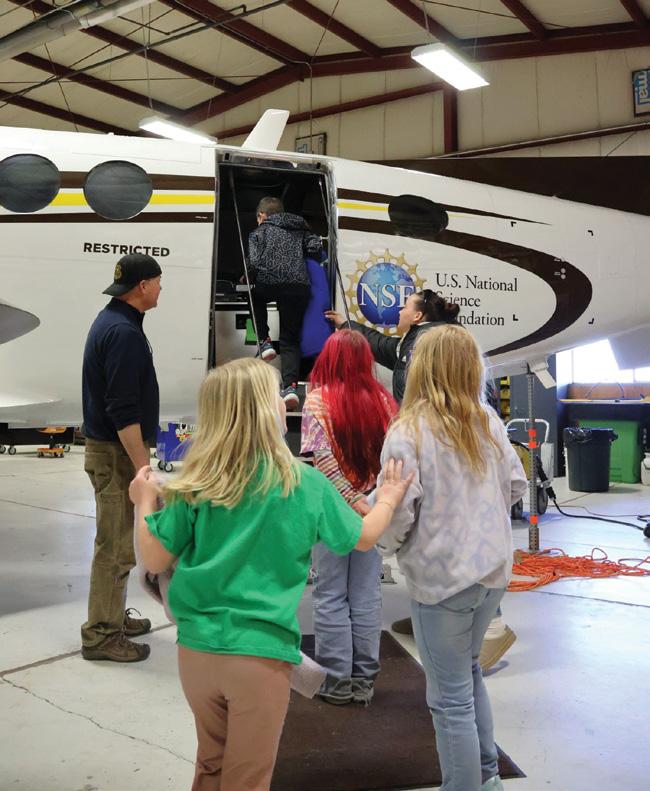
The Department of Atmospheric Science’s Eric Beamesderfer has been coordinating with Joanne Bowlby Mai, of the UW Extension team, to host field trips for local third graders to the Donald L. Veal Flight Center, where they take part in hands-on atmospheric experiments led by practicing researchers and pilots.
Even the college’s interim dean, Danny Dale, finds time to dedicate one day per semester to visit K-12 classes in the state. Along with the college’s student ambassadors, he teams up with the UW Science Initiative Roadshow to take over an entire school for the day with hands-on demonstrations and experiments with “wow factor” (think liquid nitrogen cannons and reconfiguring balloons and marshmallows in a vacuum). He also coaches the UW women’s hockey team.
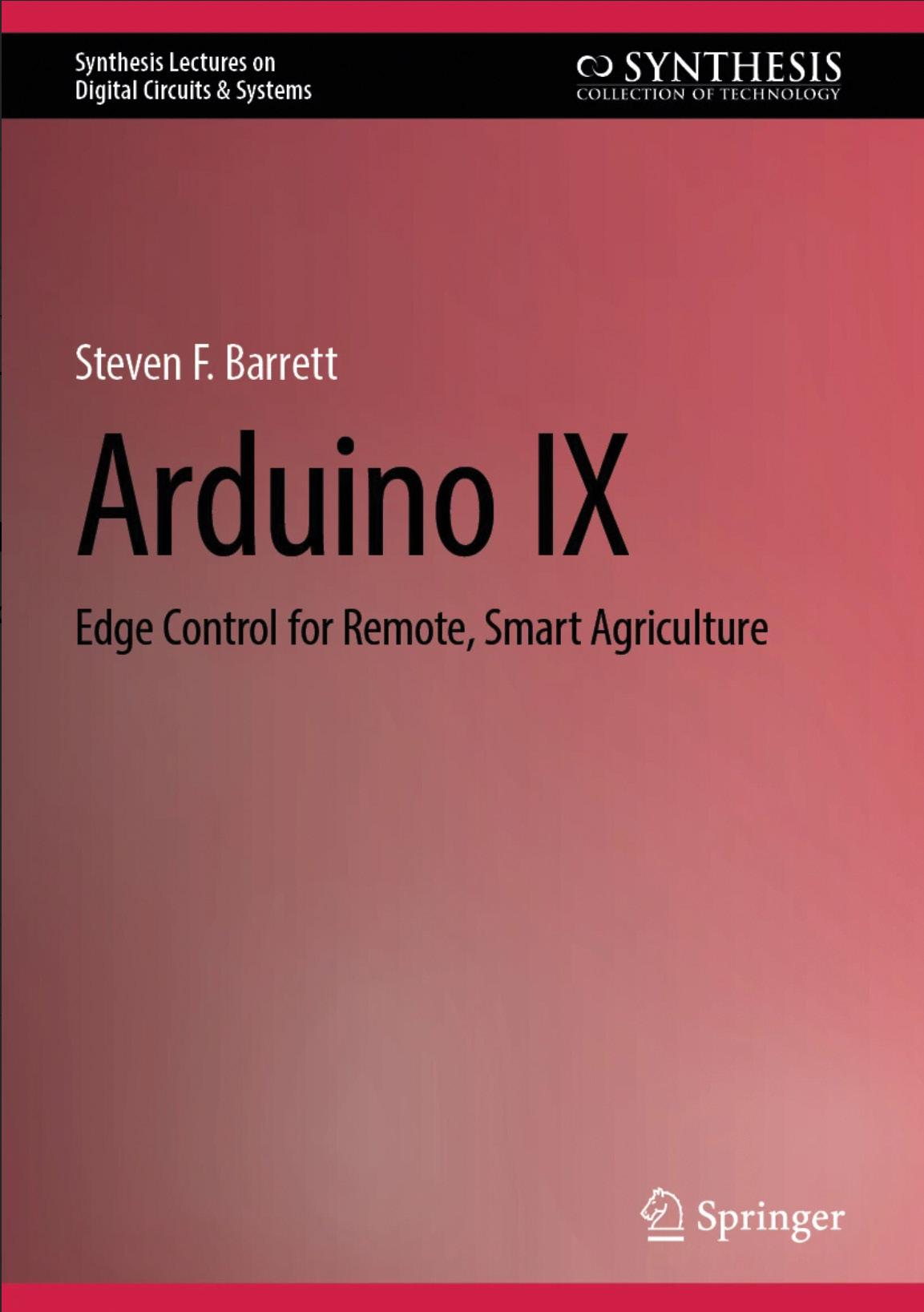
Beyond making science accessible to kids, university community members find other ways to make sure their areas of expertise can benefit the larger public as well. For example, Steven Barrett, a professor of electrical and computer engineering and the associate dean of undergraduate programs, has written several books on accessible computing for a public audience. The books enjoy readership throughout the world, and several have been translated into other languages. His most recent book, “Arduino IX Edge Control for Remote, Smart Agriculture,” is now available from publisher Springer Nature.
While most of us are familiar with the activities of UW Extension, less familiar may be the Wyoming Technology Transfer office, which works closely with the Wyoming Department of Transportation, the Federal Highway Administration, county road and bridge engineers, municipal street departments and private companies throughout Wyoming. This office provides the ongoing certification training workers need in their jobs, equipment loans for road engineering, and workshops around the state about the newest technology in road maintenance. Learn more at uwyo.edu/wyt2 .
The Wyoming State Climate Office and Water Resources Data System are run by the Department of Atmospheric Science. They provide invaluable data to consultants working on water projects for the state and provide crucial information about water availability, snowpack and drought conditions to the press and to individuals and businesses that rely on this data for planning.
The National Science Foundation’s Innovation-Corps, or I-Corps program at UW, is coordinated by mechanical engineering faculty members Ramsankar Veerakumar and Erica Belmont. This program provides entrepreneurial training to move business ideas from theory to practice. The college has been the incubator for many influential startups in the state.
A small selection from this long list of startup ventures that have grown from CEPS research includes Professor Jonathan Naughton’s Resono Pressure Systems Inc., which develops unsteady pressure measurement systems, and Wyoming Instrumentation Development LLC, an aerodynamic instrumentation consulting service.
Kim Lau’s Carbonado Technology LLC takes waste products from industrial sectors and gives them new life as raw materials for viable commercial products.
UW Nano, the brainchild of Professors Jonathan Brant and John Hoberg, has produced a chemical additive for desalination that vastly increases the performance of membranes and also makes a membrane with the additive incorporated. The company is in the running for the X Prize Water Scarcity Contest.
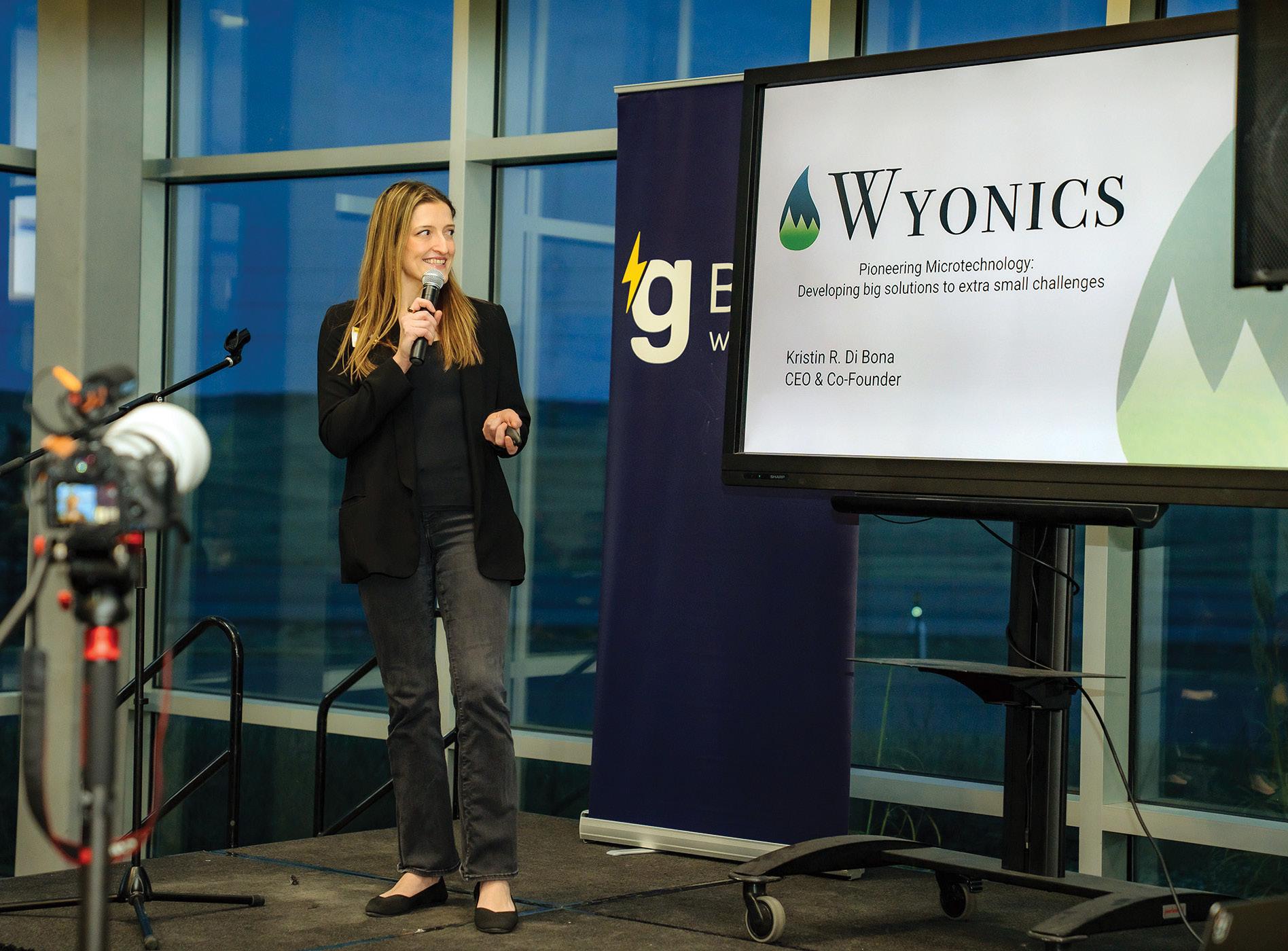
Wyonics, founded by chemistry faculty members Kristin Di Bona, Caleb Hill and Robin D. Rogers, along with Gabriela Gurau, develops and commercializes processes for the extraction and recovery of critical materials from alternative resources, high-efficiency, biodegradable filtration materials and instrumentation platforms for the nondestructive manipulation and analyses of micro- and nanosized materials.
These companies drive both innovation and economic development in the state.
Beyond direct outgrowths from their research interests, college faculty and staff members give back to local communities through enrichment activities.
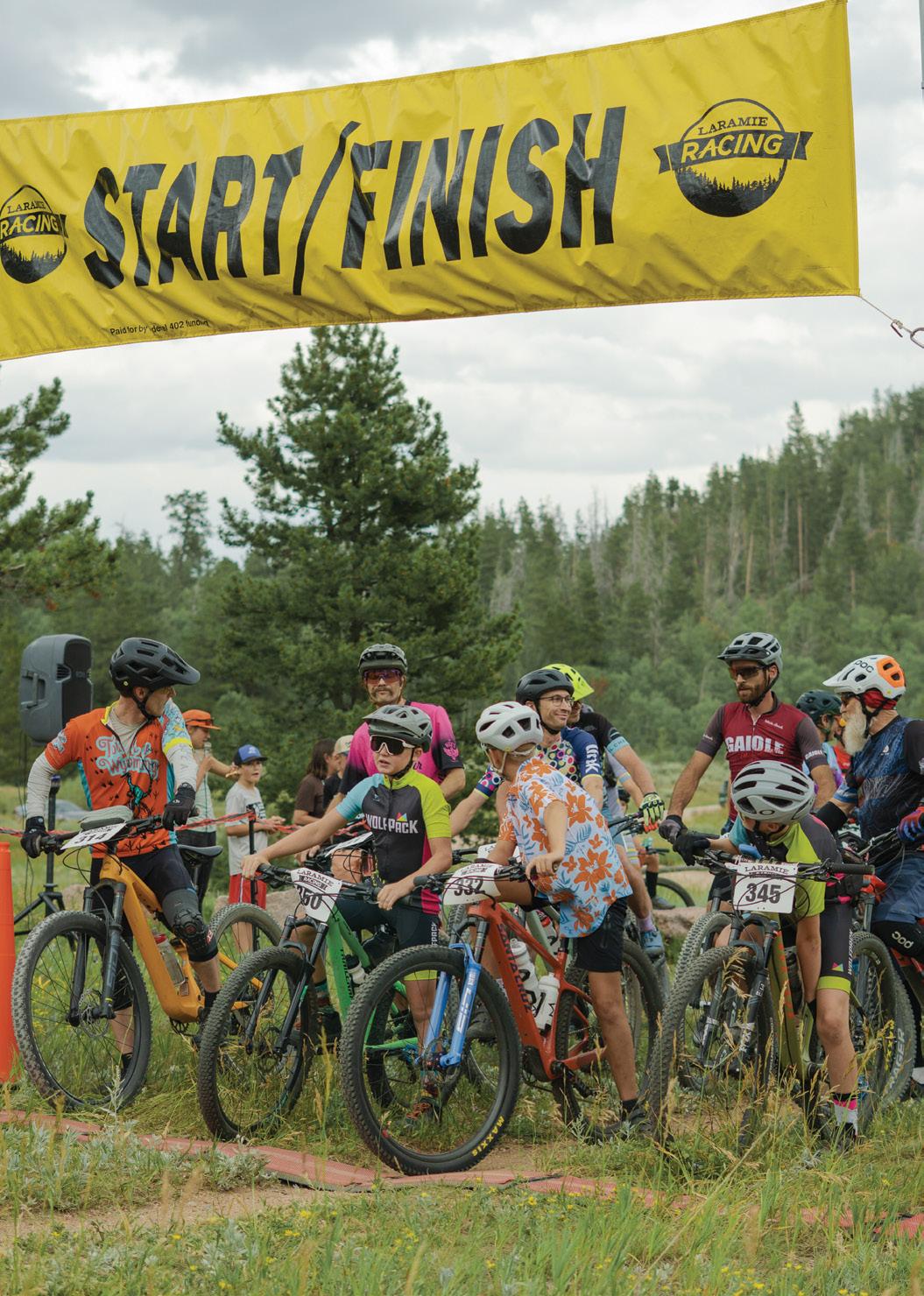
Since 2008, Evan O’Toole, an assistant lecturer in civil and architectural engineering and construction management, along with Nat Dyck, who works in the physical plant, have been coordinating the Laramie Mountain Bike Series, which attracts bikers of all ages from across the region to participate in a weekly mountain bike race series each summer.
Multiple faculty and staff members from the College of Engineering and Physical Sciences also serve on the Snowy Range Ski Patrol and Albany County Sheriff’s Search and Rescue.
The university may be housed physically in Laramie, but the impacts made by its personnel run deep in communities across the state, educationally, socially and economically. The Cowboy spirit is embodied not just in the students who pursue their passions, but likewise in the UW community members who truly live the value of service to their fellow Wyomingites.
We regret to announce the passing of the following alumni. January 2026 – present
Bill H. Barry Dewey, Okla.
Kent M. Blumenshine Hollis, N.H.
Glenn J. Catchpole Casper, Wyo.
William R. Cooper Sandy, Utah
Ronald E. Devish Hot Springs Village, Ark.
Terrence E. Dwan Edisto Island, S.C.
Christopher P. Freeman Wheatland, Wyo.
Jake Garrett Payson, Ariz.
Robert F. Gish Fort Collins, Colo.
Douglas R. Grant East Longmeadow, Mass.
Robert C. Hartley Newcastle, Wyo.
David E. Hays Cottonwood, Ariz.
Nicholas G. Kalokathis Cheyenne, Wyo.
Gary L. Kanter Cumberland Foreside, Maine
Harold A. Kissel Cheyenne, Wyo.
Leo P. Kozola Casper, Wyo.
James D. Leman Vancouver, Wash.
Frank N. Lowe Fairborn, Ohio
Rufus O. Renfrow Tucson, Ariz.
Grace M. Robertson Wilson, Wyo.
Edward F. Tardoni Rock Springs, Wyo.
Carrol E. Turner Claremont, Calif.
John D. Warburton Cheyenne, Wyo.
James K. Zell Cheyenne, Wyo.
Ronald Brown was born in Laramie, Wyo., on March 31, 1937 and died July 27, 2025, in Apple Valley, Minn. Brown had a trove of life history in Wyoming. His father worked as a welder in oil fields across southern Wyoming before moving the family to Nebraska, where Brown graduated from Sidney High School. Brown then received his B.S. in mechanical engineering from the University of Wyoming in 1960. Following graduation, Brown attended the Navy Officers Candidate School in Newport, R.I.. He was commissioned as an ensign and assigned to the USS Merrick AKA97 based in Long Beach, Calif. Brown was proud of his military service, which included three years of active duty and 20 years of reserve service. He retired from the military in the early 1990s as LTCDR-R. Brown worked for CF&I Steel in Pueblo, Colo., in the 1960s and 1970s and then began 20 years of work at 3M Co. until he retired in the late 1990s. Brown is survived by his wife of 62 years, Debbie, of Eagan, Minn.; his sister, Bonnie Dean, of Greeley, Colo.; his daughter, Cynthia (Chris) Cockrill, and his grandchildren, Christian, Tanner and Emma Cockrill, of Lakeville, Minn.; and his son, Greg (Terri Folk), and grandchildren Ainsley and Prewitt of Alexandria, Va.
Grace Marie Robertson was born in Casper, Wyo., on Oct. 21, 1952 and passed away peacefully at her home on Nov. 28, 2025. Robertson graduated from Natrona County High School in 1971 and earned her B.S. in electrical engineering from the University of Wyoming in 1976. A lifelong learner with an extraordinary intellect, she was later named an Alfred P. Sloan Fellow at Stanford University, where she earned an M.S. in management in 1990. After graduation, Robertson began her distinguished career with Boeing in Seattle, Wash. She worked in Boeing’s Defense and Space Group as a circuit design engineer on several military programs. She was promoted to management while working on the B-2 program in 1983 and later held supervisory positions in B-2 Avionics and Support Equipment Design. In 1990, Robertson became director of Boeing’s 747/767 derivative program in Everett, Wash. In 1994, she left Boeing to lead the MD-90 program at McDonnell Douglas in Long Beach, Calif. When McDonnell Douglas merged with Boeing in 1997, Robertson continued her work with the company until her retirement, concluding an exceptional career marked by intelligence, courage and quiet leadership. Robertson returned to Wyoming in 2002 to make her home in Wilson, where she volunteered as a literacy tutor, served on her homeowners association’s architectural committee, served as a board member of the Teton County Library and managed the volunteer income tax assistance program. Robertson will be remembered for her brilliant mind, pioneering spirit, generous heart and love of family, friends and the Wyoming mountains she called home.
College of Engineering and Physical Sciences
Dept. 3295
1000 E. University Avenue
Laramie, WY 82071-2000
FOLLOW US ON SOCIAL MEDIA!
@uwyoengineering
@uwyoengineering
@uwyonews
uwyo.edu/ceps
bit.ly/engineeringinaction
bit.ly/uwengineering