From the Dean’s Desk
This past year has been one of meaningful progress for the Collins College of Business across academics, student development, research and external engagement. Our work reflects a clear sense of who we are becoming: a business school committed to excellence in research, teaching and student experience, while serving as a genuine resource for our region and beyond.
One encouraging sign of that momentum has been the growth of our Friends of Finance Executive Speaker Series, which has become more sustainable and more vibrant. Along with the Conference of Accountants, these events strengthen our connection to the professional community and reinforce CCB as a place where people gather to learn, connect and engage.
We have also taken important steps to prepare students for lasting success. We mandated soft skills and professional skills courses for our business undergraduates, along with two new three-credit courses that cover effective communication and cultural knowledge in business. These additions reflect something we believe deeply: technical know-how matters, but so does communication, judgment,
teamwork, confidence and the ability to work thoughtfully across differences.
We also launched our online MBA, designed with rigor, flexibility and relevance for working professionals, while maintaining UTulsa faculty ownership. In just three months, the program has become very popular, allowing professionals to get an MBA without compromising their work or family schedules — all at a fixed, reasonable cost.
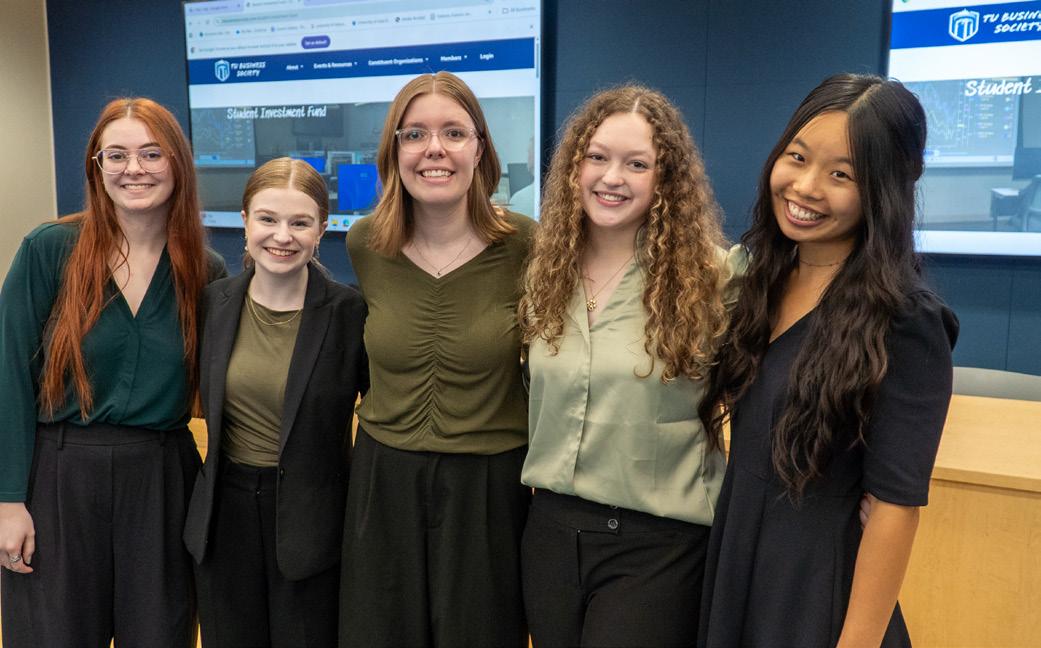
Student life gained new energy as we relaunched our marketing and management student clubs, so that all disciplines now have student organizations. Also this spring, faculty developed our strategic plan for the next six years while continuing to publish in elite journals across their fields, raising our national and international profile.
I am deeply grateful to our faculty, staff, students, alumni and supporters and am confident that the year ahead holds even greater promise.
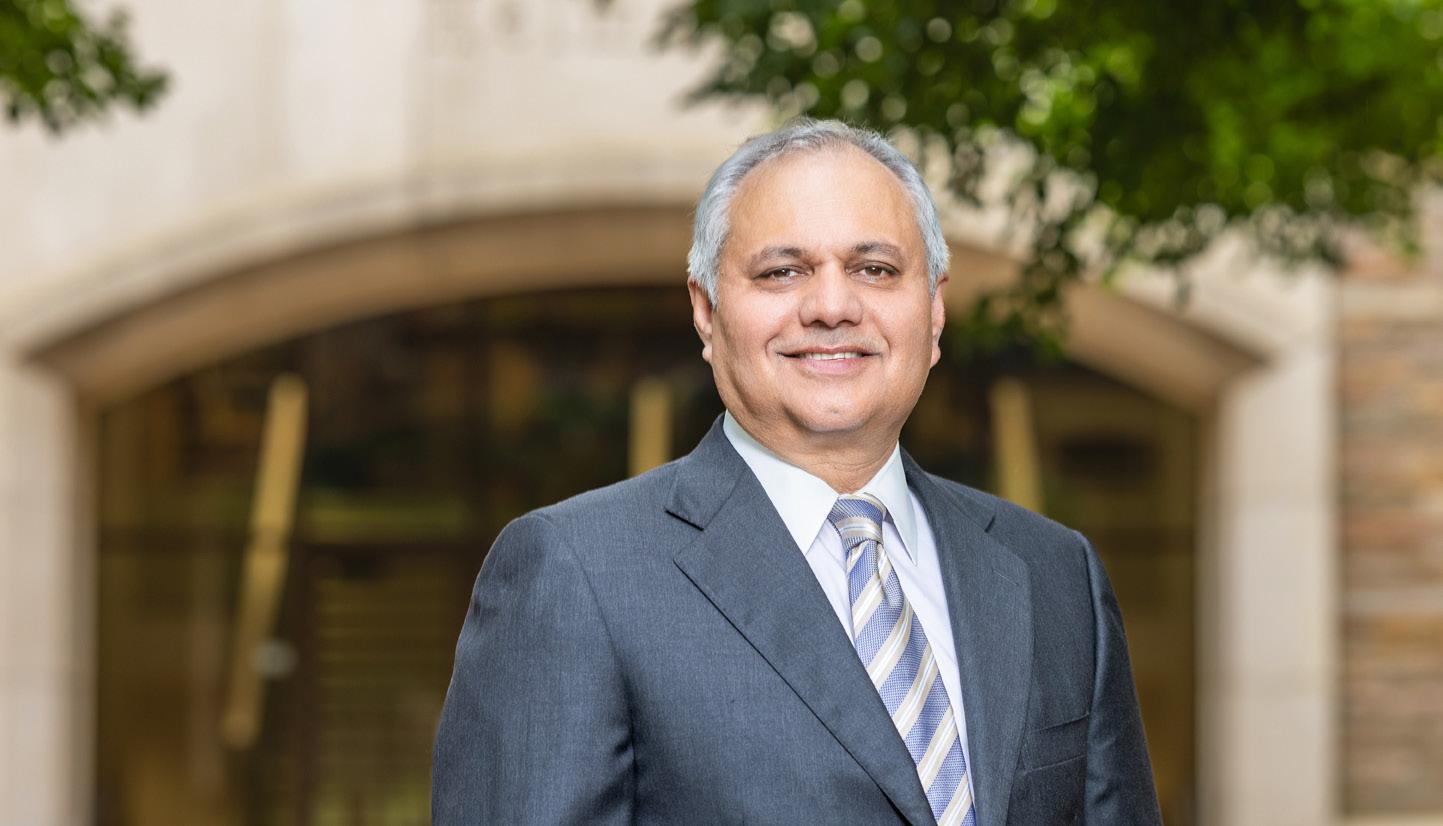
Akhilesh Bajaj
Genave King Rogers Dean of the Collins College of Business akhilesh-bajaj@utulsa.edu
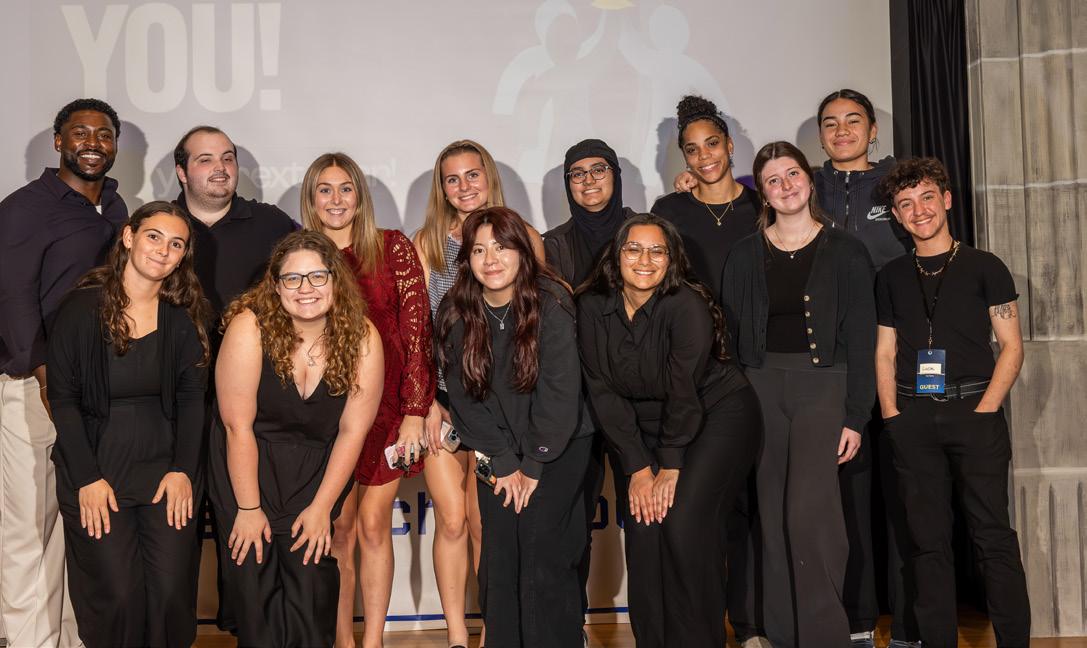
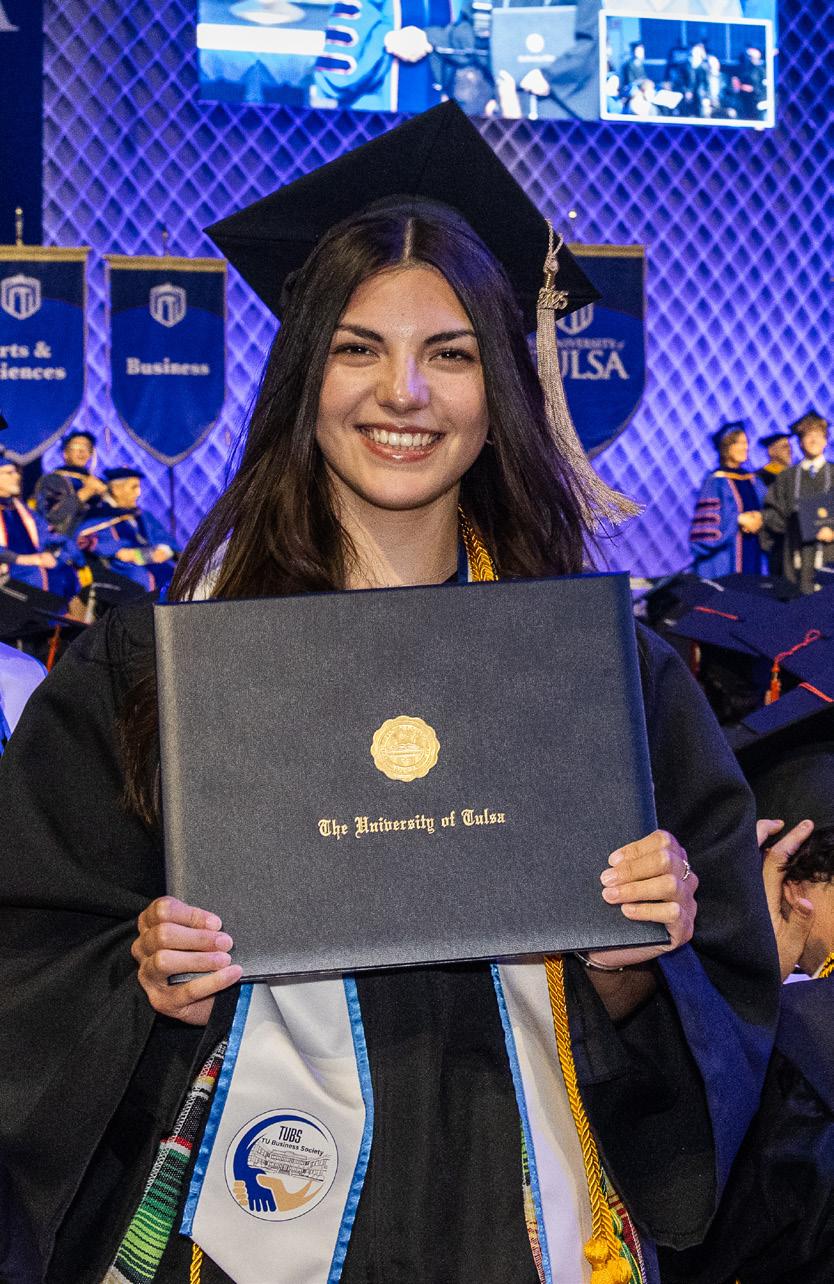
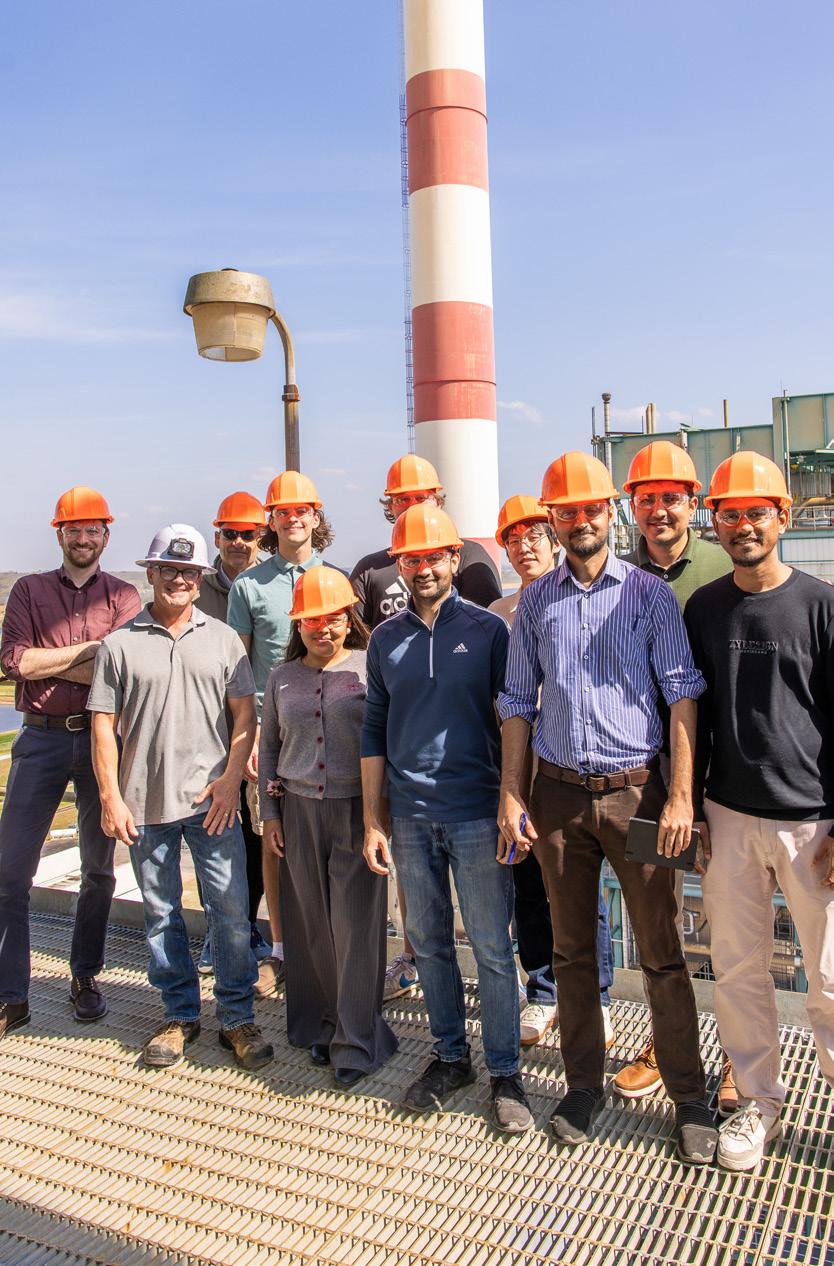
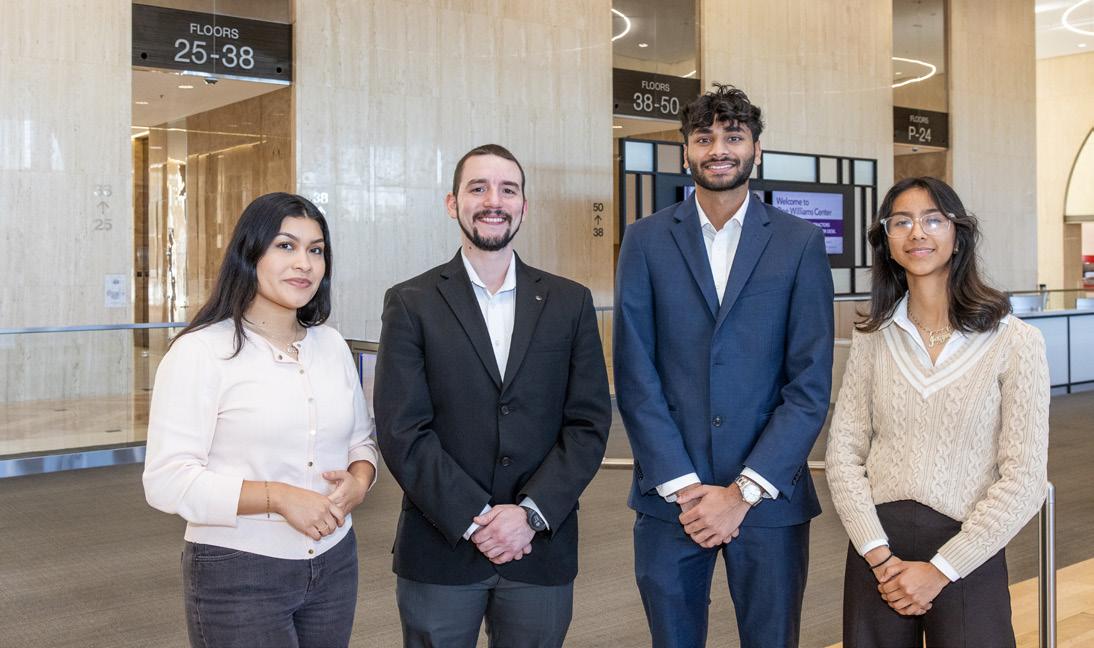
Our mission is to empower the next generation of business leaders

Thunder Fellow builds leadership through finance, advocacy,
entrepreneurship
For Heavyn Harris, opportunity has never existed in just one lane.
A Tulsa native, Harris chose UTulsa for reasons both personal and practical. Since arriving, she has built a portfolio spanning finance, advocacy, entrepreneurship and leadership.
Harris is a management major in the Collins College of Business with concentrations in finance and innovation and entrepreneurship. She transferred to UTulsa from Tulsa Community College with nearly two years of credit.
“I would describe myself as busy,” Harris said, laughing. “Busy, productive and very involved.”

That involvement earned early recognition. During her second semester on campus, Harris received UTulsa’s Rising Advocate Award from the Office for Resilience & Belonging. She is deeply engaged with the Association of Black Collegians, helping lead Black History Month programming and supporting students across campus.
“That award showed me I was having a real impact,” she said. “It made me feel embraced by the UTulsa community.”
Harris also serves as vice president of Alpha Kappa Alpha Sorority, Theta Xi Chapter, where she oversees program initiatives focused on community empowerment and service.
“For me, sorority life is about service and leadership,” Harris said. “It’s about building community and creating programs that actually make an impact.”
Her leadership extends beyond campus organizations. Harris was accepted into Girls Who Invest, a nationally competitive program that prepares women for careers in finance and investment management. She is a Thunder Fellow, participating in a statewide leadership program through the Oklahoma City Thunder that introduces students to careers in sports business, marketing and management. Harris also operates a makeup artistry business and hopes to expand it into a product line.
HEAVYN HARRIS Management
Main Street revival: How businesses reshape communities

NATHAN WOOLARD
Applied Assistant Professor of Management and Entrepreneurship
In towns across the country, a single business can change everything.
A new storefront opens. Foot traffic follows. Over time, an entire Main Street begins to shift.
That pattern is at the center of the work of Nathan Woolard, an applied assistant professor of management and entrepreneurship in The University of Tulsa’s Collins College of Business, where he studies how small businesses drive local economic growth.
Woolard’s research focuses on what he calls “micro-entrepreneurial ecosystem development,” examining how individual
ventures act as anchors that attract investment and reshape communities.
During the past decade, Woolard and his collaborator have studied more than 30 communities and conducted over 150 interviews with business owners, city leaders and economic development officials. Their work centers on how communities create “civic wealth” through organic, locally driven growth.
The work is rooted in personal experience. Woolard grew up in a family of small business owners in northeast Oklahoma. He later launched and operated an e-commerce company with his wife.
In 2022, Woolard returned to Tulsa to expand entrepreneurship programming at CCB, contributing to efforts that evolved into the Center for Innovation & Entrepreneurship, a UTulsa hub for experiential learning, venture development and community engagement.
That approach carries into the classroom, where Woolard integrates consulting projects, personal experience and research into course offerings and mentorship.
“I like to focus on research that has a story and has a soul — and that people can actually use,” he says, adding an all-important question. “How do you create a city that people want to live and work in?”
AI for good:
Measuring the value of unstructured information
Every day, companies generate massive amounts of information: earnings calls, corporate disclosures, patent filings and more. Most of it is unstructured and underutilized.
That is the focus of Nan Hu, Ph.D., who serves as the Philip A. Chapman Chair in Accounting in the Collins College of Business, whose research examines how information - especially language - creates value in capital markets.
Hu’s work moves beyond traditional financial metrics to analyze how firms communicate risk, strategy and sentiment through text and speech.

NAN HU, PH.D.
Philip A. Chapman Chair in Accounting
Using AI and large language models, Hu and his collaborators transformed corporate disclosures into measurable indicators of risk, culture and management quality, connecting language to business performance, innovation and market outcomes.
At scale, that approach has produced one of the field’s most widely used tools. In 2018, Hu founded a machine learning and AIpowered financial text analytics platform that collects, extracts, cleans and structures data from corporate disclosures and analyst reports. The system is used by researchers at more than 300 universities worldwide and supports work published in top journals across multiple disciplines.
As unstructured data becomes dominant, the ability to interpret it quickly, accurately and at scale has become essential. Hu’s current work pushes that shift further. He is developing AI agents designed to automate complex workflows in highly regulated industries, including auditing and legal compliance.
As AI takes on a greater role in decisionmaking, questions of accountability and transparency become critical.
“When AI agents make decisions for you, we need to understand the boundaries,” Hu said. “Transparency, explainability and responsibility become paramount.”
At UTulsa, that work shapes both research projects and classroom instruction.
“We really hope we can change the world in a positive way by transforming students’ lives and the field itself,” he said.
8 UNDERGRADUATE MAJORS within 3 departments
12 BLOOMBERG TERMINALS for following real-time financial markets
14:1 SINCE 1972
STUDENT-TO-FACULTY RATIO
1of 11 AAPL-APPROVED ENERGY BUSINESS PROGRAMS IN THE NATION $ 10+
MILLION PORTFOLIO Student-managed Investment Fund
97 % FOUNDED IN 1935
24 % PLACEMENT RATE
FIRST-GENERATION COLLEGE STUDENTS