College of Law into
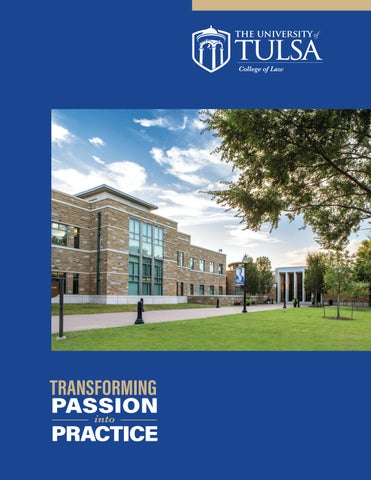
College of Law into
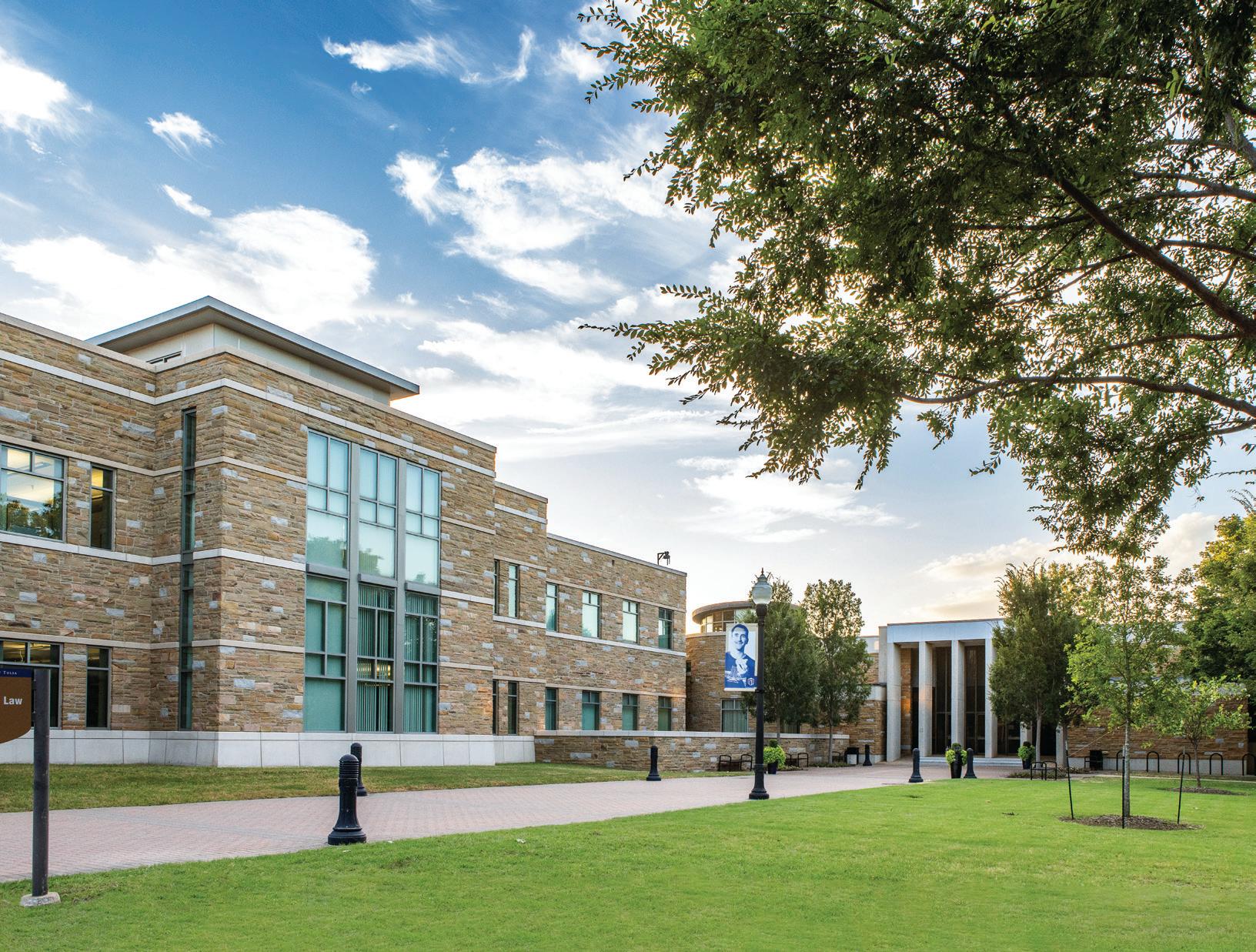
k A rating for Best Building, 2026 preLaw
k A- rating for Best Law Schools for Practical Training, 2026 preLaw
k #8 Most Chosen By Older Students; Princeton Review Best Law Schools, 2024
k $32,074/year for in-state, out-of-state and international students
k Reduced-schedule option
k Approximately 95% scholarship recipients for class of 2029
k 100% scholarship retention for upper-class students
We honor and acknowledge the Indigenous tribes and tribes who were forcibly removed, including the Wah-zha-zhe (ancient name Ni-u-kon-ska [Osage]), Kitikiti’sh (Wichita), Kadohadacho (Caddo), Mvskoke (Muscogee [Creek]) and Tsálăgĭ (Cherokee) Tribal Nations as the original inhabitants and keepers of the land and water that we now call Tulsa, Oklahoma. The University of Tulsa, first established as the Presbyterian School for Indian Girls, recognizes that our main campus is located on the Mvskoke (Muscogee [Creek]) Nation Reservation. We assume the responsibility to educate ourselves and others on the Indigenous history and importance of the land and water that we occupy.
Welcome to the noblest of professions! We are thrilled that The University of Tulsa College of Law is where you may launch your legal journey. Here, you’ll be part of a vibrant community of faculty, staff and students who will push you to think critically and refine your skills. As you work towards fulfilling this noble calling, you’ll encounter a diverse curriculum designed to ignite your intellectual passion and encourage deeper exploration.
To make the most of your time here, I recommend:
k Engage with your professors from the very start. Be curious about their research while developing your own legal voice.
k Explore our supportive and inclusive community, eager to guide you towards a rewarding legal career.
k Learn about all the possibilities that a Juris Doctor Degree from UTulsa Law can offer you.
Whether you’re interested in litigation, corporate law, or social justice, our challenging academic programs and dynamic student organizations will prepare you for a meaningful practice. Join us and continue a legacy that’s over a century in the making.
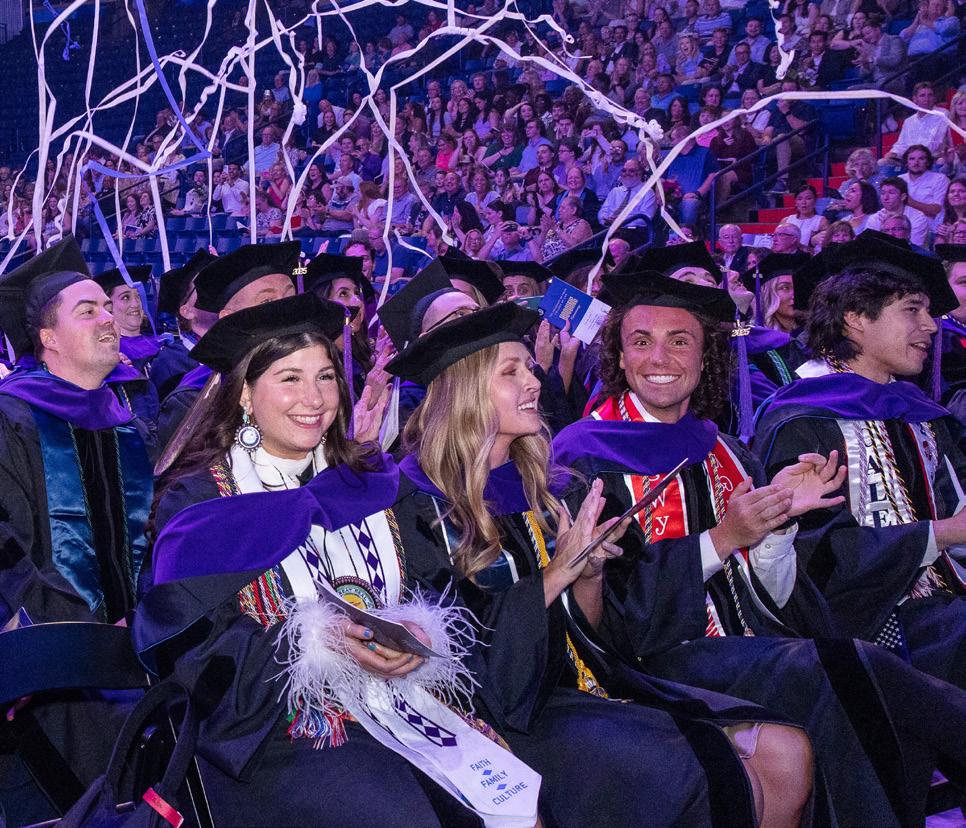

At UTulsa Law, you’ll experience the best of both worlds: a comprehensive curriculum paired with the personalized attention that ensures your success.
MARC
ROARK INTERIM DEAN THE UNIVERSITY OF TULSA COLLEGE OF LAW
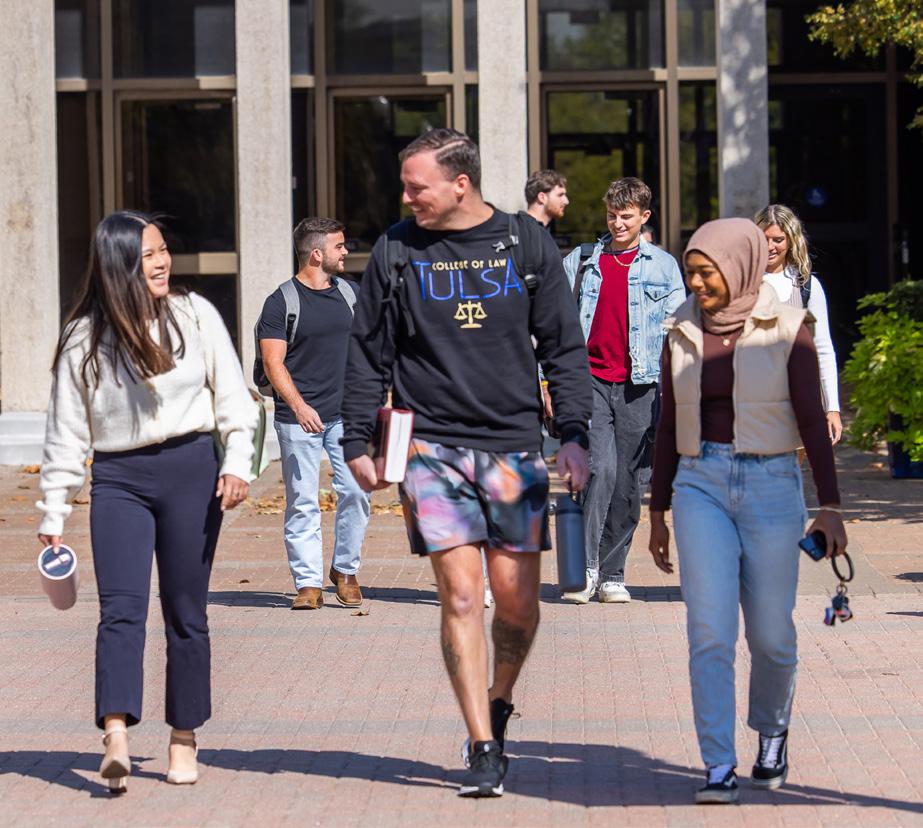
At UTulsa Law, you will master a challenging curriculum while being supported by faculty who take a personal interest in your success – during your studies and after you graduate. You will be able to shape your legal career according to your goals, enjoy a high quality of life in Tulsa, and make enduring personal and professional relationships.
k Qualified admitted students are automatically considered for merit-based scholarships
k Law journal editors, officers of the Board of Advocates and the Public Interest Board are eligible for stipends
k Scholarships received as an incoming 1L are renewable through 88 hours with a cumulative GPA of 2.0 or above
k A team of law librarians, all of whom hold a J.D., ready to guide students in developing their legal research and technology skills
k Access to Westlaw, Lexis, HeinOnline, and dozens of other specialized databases for comprehensive legal research coverage
k Subscriptions to electronic versions of all West Academic and Aspen study aids including Examples & Explanations, Nutshells, Emanuel Outlines, and Hornbooks, among many others
k One of the nation’s leading Native American law collections endowed by a generous alumnus and his family
k Group study rooms and whiteboards to foster collaborative learning
k Printer/scanners and publicly accessible desktop stations
k Abundant study space, including over 100 open carrels and 172 lockable, reservable carrels

7.8:1 studentfaculty ratio
300 externship placements since 2024
75 seat courtroom guaranteed clinic or externship placement (Students have the option to participate in both and more than one of each.)
Two University of Tulsa College of Law students, Lori Whitlock and Rachel Burrell, spent the past semester contributing to the federal appellate process as Tenth Circuit Year-in-Review fellows. Alongside nine peers from Oklahoma law schools, they analyzed and summarized the published opinions of the 10th U.S. Circuit Court of Appeals, producing materials shared with hundreds of attorneys and used by judges, scholars and practitioners at Year-in-Review events in Tulsa and Oklahoma City.
The fellowship began with intensive training led by Professor Stephen Galoob and Rob Ramana, senior legal adviser to U.S. Circuit Judge Robert Bacharach. Fellows also learned from federal judges, prosecutors, defense attorneys and civil rights lawyers before beginning their review of the year’s appellate decisions.
Whitlock and Burrell’s work ranged from nuanced criminal law issues to a murder-jurisdiction case which later became the subject of the Hulu Docuseries “Trophy Wife.”
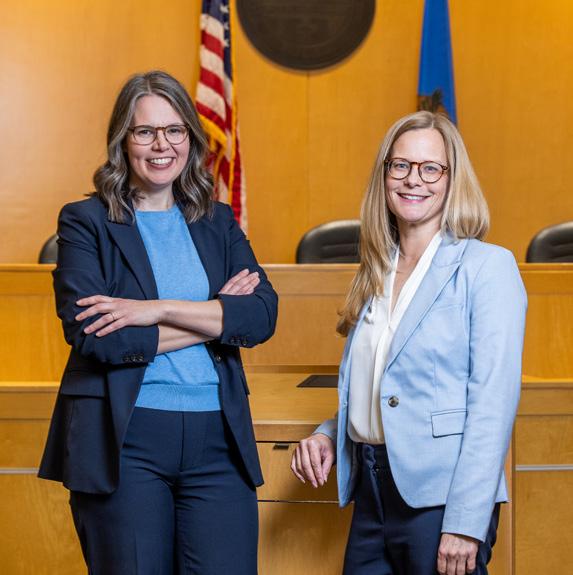
Lori and Rachel were ideal participants in our program. As we expand the fellowship to additional law schools across the 10th Circuit, we hope that other law students will contribute as much to and benefit as much from the fellowship as they have.
– Stephen Galoob

Stephanie Smith (J.D. ’25) has been named one of the finest law school writers of 2026 by the Burton Awards, a national nonprofit program in partnership with the American Bar Association. Her honored paper, “Labor of Love, or Profit?: How the Parental Rights Argument Threatens to Upend Child Labor Regulation in America,” offers a compelling examination of how claims of parental authority are increasingly invoked to weaken child labor protections. Smith’s research highlights how recent legislative shifts are framed as safeguarding parental rights while, in reality, advancing the interests of lobbyists and corporations that profit from child labor, particularly in vulnerable migrant and low-income communities.
Smith is one of just 15 students nationwide selected to receive the Law360 Distinguished Legal Writing Award, which was presented at the Burton Awards’ 27th anniversary celebration at the Library of Congress. The winners were chosen by an academic board led by distinguished legal scholars and professionals. This recognition places Smith among an elite group of emerging legal writers whose work demonstrates exceptional clarity, rigor and impact.
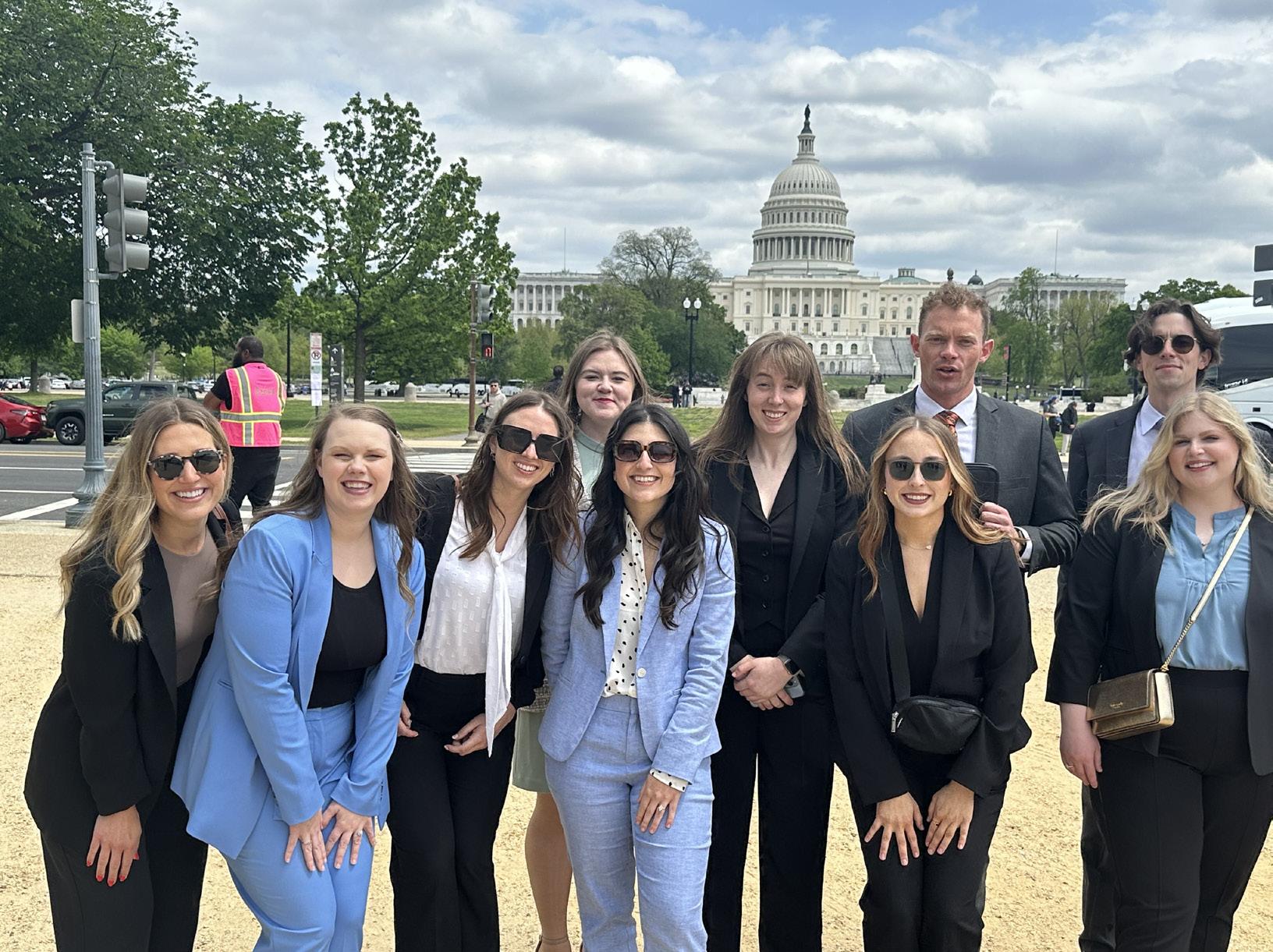
The Board of Advocates (BOA) is the premier Moot Court and Mock Trial organization at UTulsa Law. Open to all law students in good standing, members develop the oral advocacy skills essential for success in the legal progression. Through both intramural and interscholastic competitions, BOA’s mission is to prepare students to excel in pre-trial, trial, and appellate advocacy. BOA collaborates with judges, practicing attorneys, faculty and alumni who provide invaluable coaching and feedback.
Our publications offer students, scholars and practitioners a platform to explore cutting-edge legal issues and contribute to the broader legal community. Joining one of UTulsa Law’s journals offers opportunities for professional development, networking and enhancing legal research and writing skills.
k Tulsa Law Review
k Energy Law Journal
Civil Procedure
Contracts
Constitutional Law
Criminal Law and Administration
Criminal Procedure, Business Associations, and Legal Practicum Labs
Dean’s Seminar
Evidence
Introduction to Legal Research
Legal Writing I
Legal Writing II
Professional Responsibility
Property
Torts
Strategies and Skills for Bar and Practice
Business
Agency and Partnership
Agriculture Law
Antitrust Law
Arbitration
Artificial Intelligence and the Law
Bankruptcy and Creditors’ Rights
Basic Corporate Law
Contracts
Contracts Drafting
Corporate Finance
Employment Discrimination Law
Employment Law
Externships
Federal Income Tax
Insurance Law
Intellectual Property
Interviewing and Counseling Clients
Introduction to Alternative Dispute
Resolution
Law Office Management
Mediation
Non-Profit Law
Secured Transactions
Selling and Leasing of Goods
Criminal Law
Computer Crime Law
Criminal Justice and Public Policy
Criminal Law and Administration
Criminal Procedure–Adjudication
Criminal Procedure–Police Practices
Evidence Workshop
Expert Evidence
Externships
Federal Courts
Forensic Psychology in Civil and Criminal Law
Public Defender Clinic
Sex Crimes
The Theory and Practice of Punishment
Topics in Prosecution
White Collar Crime
Administrative Law
Advanced Oil and Gas
Basic Oil and Gas
Climate Change
Energy Regulation
Environmental Law
Externships
Native American Natural Resource Law
Natural Resources and Environmental Law on Federal Lands
Property
Water Law
Administrative Law
Decedents’ Estates and Trusts
Elder Law
Externships
Family Law
Juvenile Law
Taxation of Estates, Trusts and Gifts
Health Law
Administrative Law
Agriculture Law
Bioethics and the Law
Decedents’ Estates and Trusts
Elder Law
Environmental Law and Public Health
Externships
Forensic Psychology in Civil and Criminal Law
Health Law
Introduction to Veterans Law
Law, Ethics and the Business of Medicine
Medical Malpractice and Healthcare
Liability
Social Security Disability Law
Externships
Federal Indian Law
Indian Gaming Law
Native American Natural
Resource Law
Tribal Government Law
Litigation
Advanced Torts
Artificial Intelligence and the Law
Civil Procedure I
Civil Procedure II
Civil Rights Law Seminar
Conflict of Laws
Evidence
Evidence Workshop
Externships
Federal Courts
Forensic Psychology in Civil and Criminal Law
Immigration Law
Insurance Law
Interviewing and Counseling Clients
Introduction to Alternative Dispute Resolution
Introduction to Veterans Law
Law of Sports
Legislation
Mediation
Public Defender Clinic
Remedies
Texas Civil Procedure
Torts
Trial Practice
Buck Colbert Franklin Legal Clinic
Externship Program
Public Defender Clinic
Reproductive Rights Practicum
Terry West Civil Legal Clinic
(Not all clinics are offered every semester.)
1L Negotiation Competition
Interviewing and Counseling Competition
Redbud Invitational Mock Trial Competition
Trial Skills Qualifier
Hager Torts Moot Court Competition
Motion for Summary Judgment Competition
UTulsa Law provides you with hands-on experience in a variety of legal settings. Participating in our Clinical Education Program will deepen your substantive knowledge, strengthen your lawyering skills and build the foundation of your professional identity. The Clinical Education Program at UTulsa Law prepares students for the practice of law through a combination of realworld experience, intensive supervision and dynamic seminars.
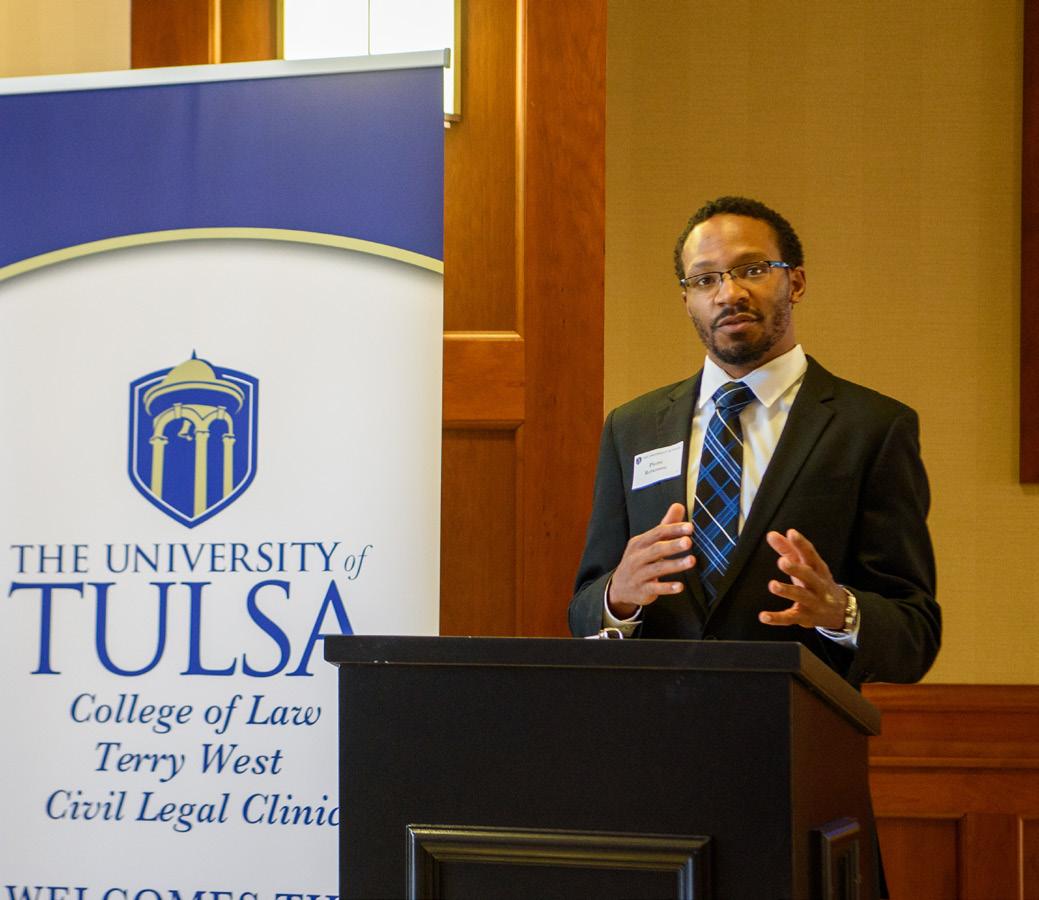
The Terry West Civil Legal Clinic provides pro bono legal services to the greater Tulsa metropolitan area. The work of the Terry West Civil Legal Clinic focuses on the development of trial advocacy skills while serving individuals who cannot otherwise obtain legal representation.
The Public Defender Clinic (PDC) is a public service, criminal defense-adjacent program for law students. The PDC provides opportunities for students to get one-on-one advocacy experience through multiple avenues. Clinical students will be able to work with clients first-hand and help them navigate the area of the criminal justice system each client is facing, from initial bond
k Drafting pleadings and motions
k Appearances in court
k Working with community partners to tackle large scale issues
k Client centered legal work
k Negotiation skills
k Identification of legal and nonlegal issues impacting clients
k Trial advocacy skills
hearings through post-sentencing Judicial Reviews and fines and costs matters. Students will also be able to see a variety of legal proceedings in front of different judges and begin to learn the inner workings of our local court system.
The B.C. Franklin Legal Clinic’s mission is to provide community centered legal services to the north Tulsa community and for survivors and descendants of survivors of the Tulsa Race Massacre. The B.C. Franklin Legal Clinic teaches effective and ethical legal skills through legal representation of community members and community engagement. The B.C. Franklin clinic provides students with opportunities to practice law and to examine broader issues and challenges that affect their communities in a well-supervised and academically rigorous program.
Not all clinics are offered every semester.
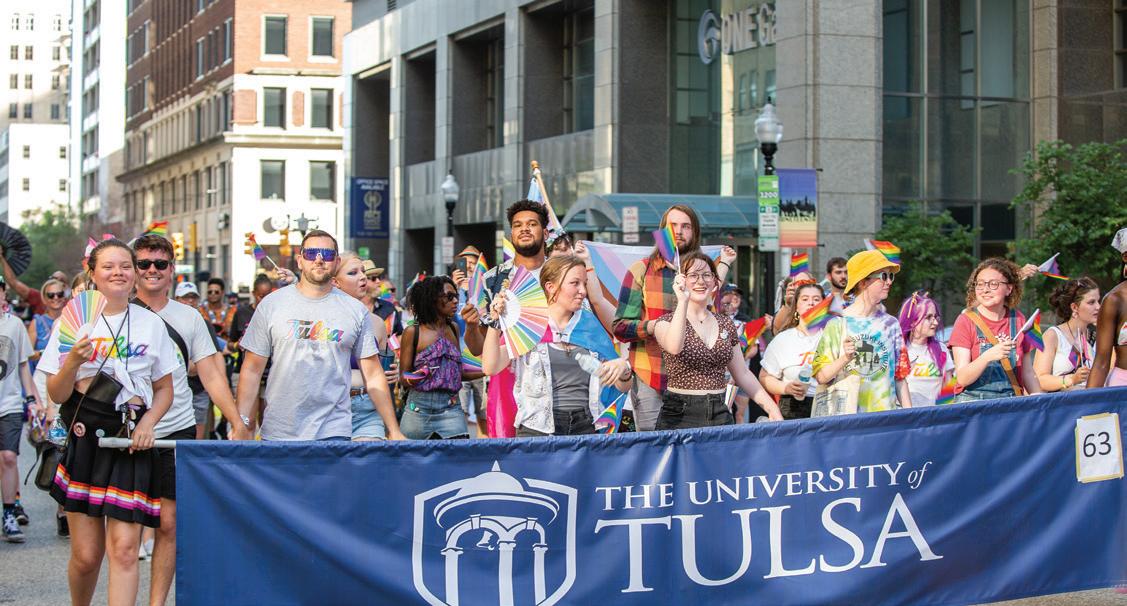
The University of Tulsa College of Law has a variety of student organizations to match your interests and challenge your ambitions. From Women’s Law Caucus to Sports & Tulsa Business Law Society; Public Interest Board to Paw Law; it’s not difficult to find your people at UTulsa Law.

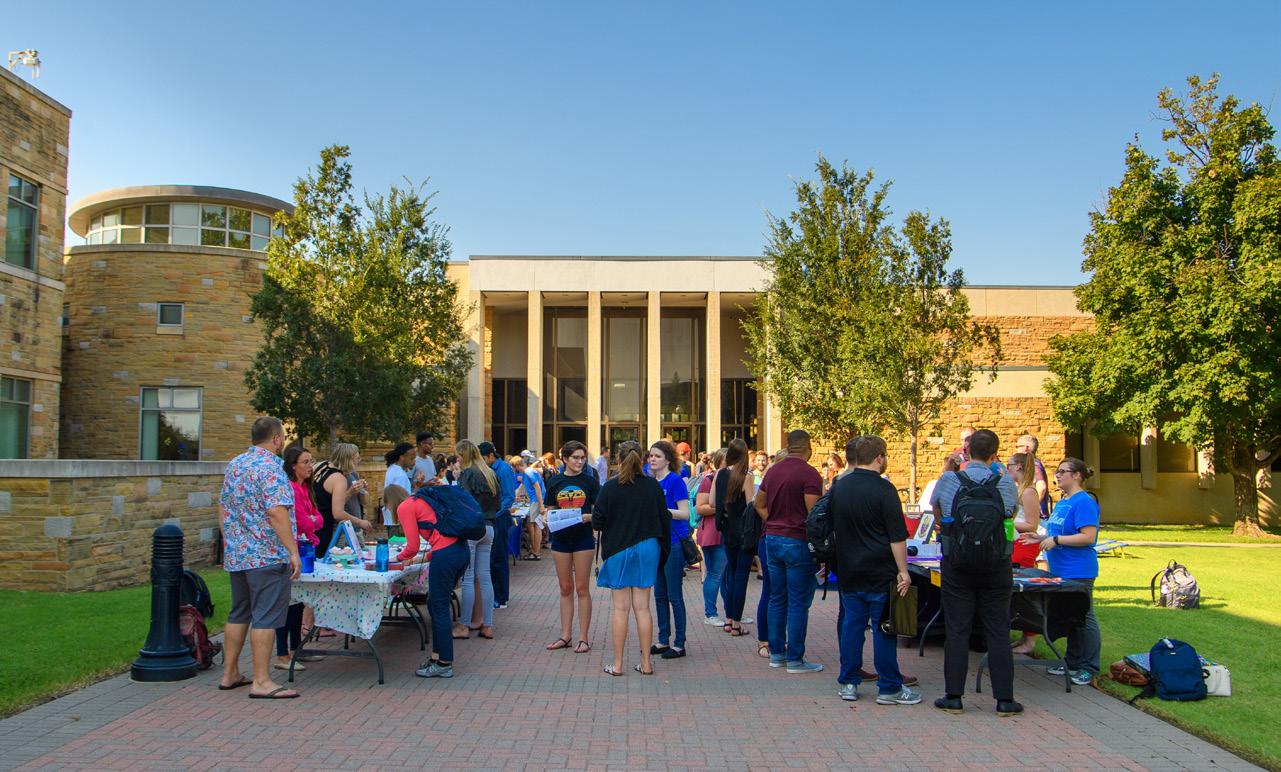
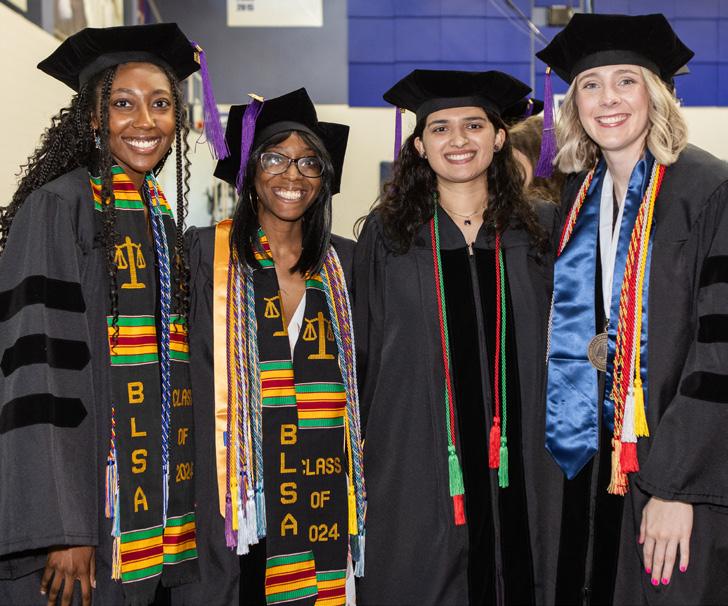
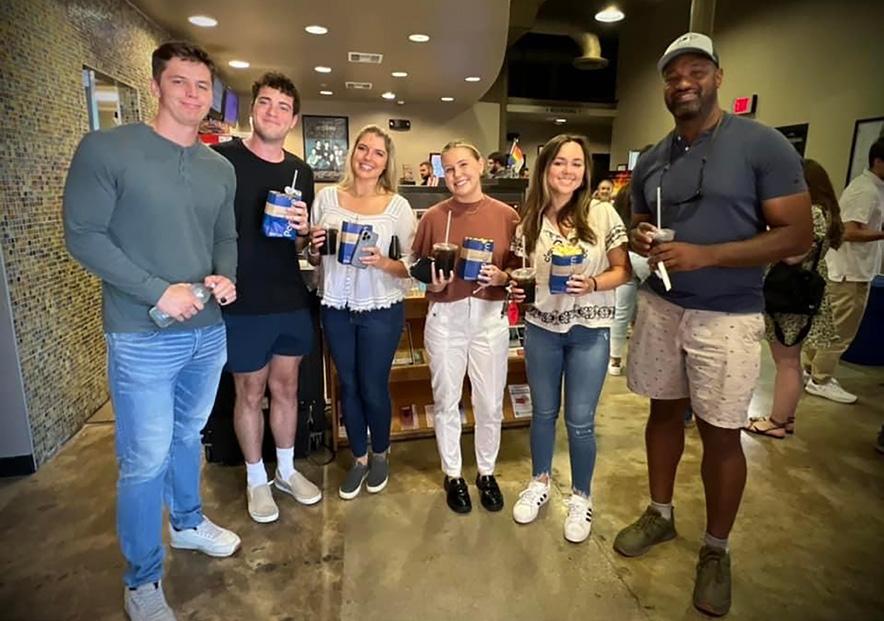
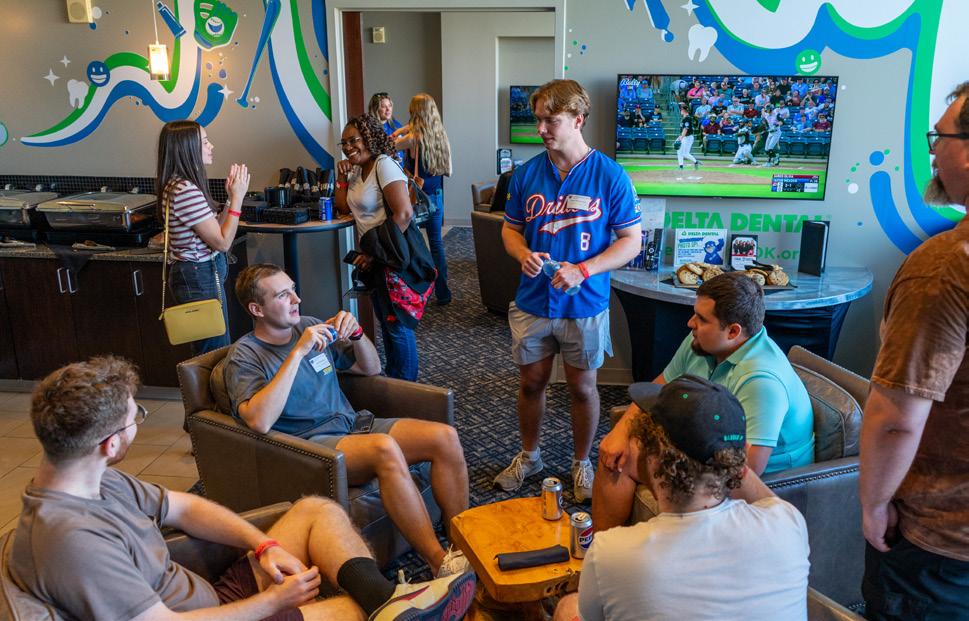
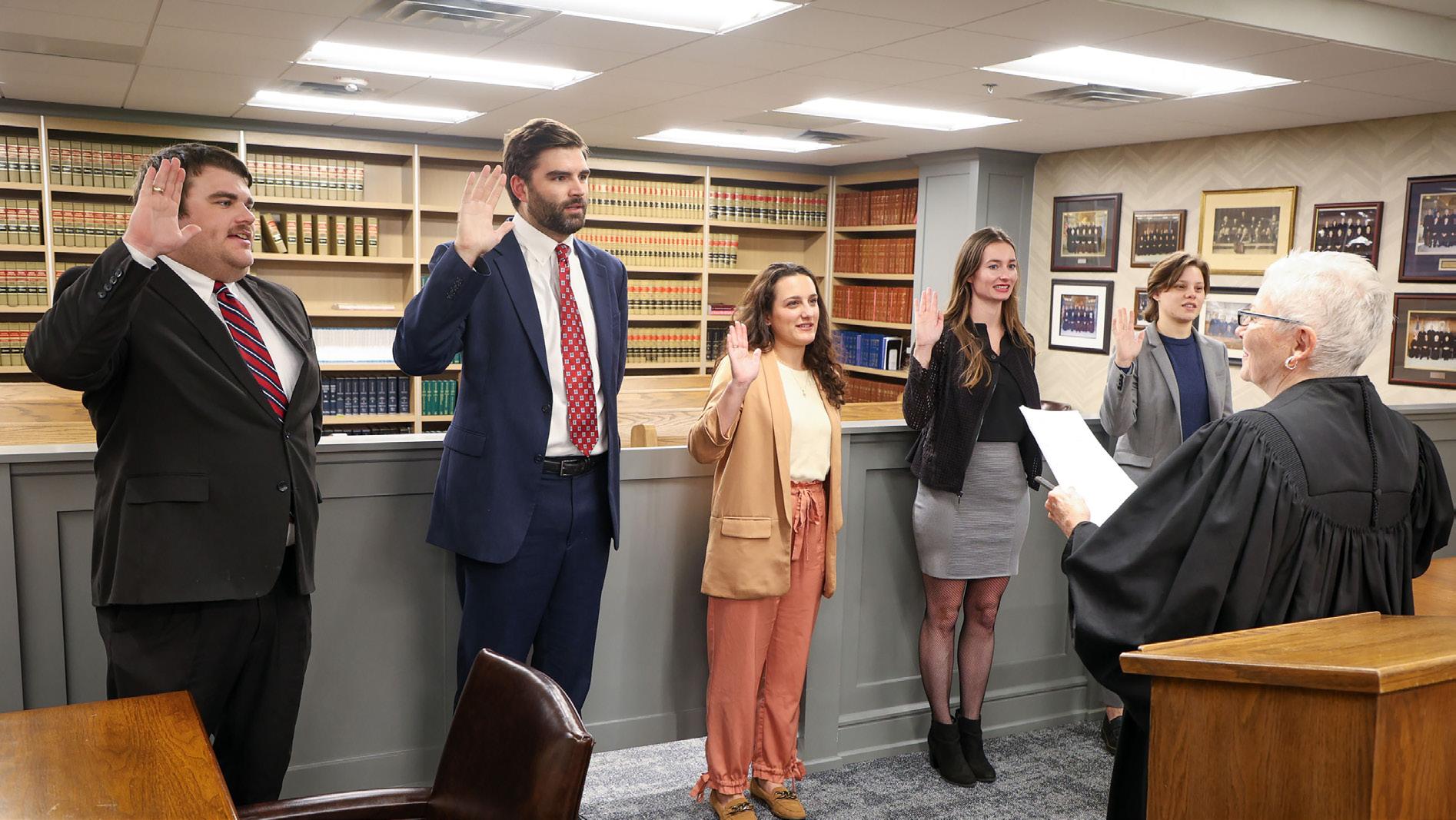
Our externships give 2L and 3L students the chance to team up with attorneys and judges, tackling real legal work and interacting with clients. You’ll earn academic credit while uncovering what kind of lawyer you aspire to be. Don’t worry, we’ve got your back every step of the way.
Our Director of Externships ensures your experience is enriched with valuable feedback and significant professional experiences. Supplementing this is our externship seminar, designed with one goal in mind — to help you achieve your personal and professional goals.
Over the past two years (2024-2026), UTulsa Law has successfully placed over 300 students in externships across 64 municipalities.

At The University of Tulsa College of Law, the Professional Development Office (PDO) is dedicated to nurturing the career aspirations of our students and alumni. From the moment you step into our law school, the PDO is your partner in professional growth, offering tailored career counseling that aligns with your unique strengths and interests. Our comprehensive services include résumé and cover letter assistance, and interview preparation with mock interview opportunities.
Students gain access to a wealth of job opportunities through our PDO Connect platform, coupled with our weekly job blasts to keep you informed.
Our On-Campus Interview Program and resume collection services bring top employers to you, while our career resource library and job fair information ensure you’re always prepared.
Beyond the basics, the PDO organizes networking events, mentorship opportunities and business card provision to enhance your professional presence. It begins with the one-week Foundations of Legal Study orientation where students meet judges and attorneys, build community and learn about public service in the law.
PDO is here to support you every step of the way, even after graduation, with lifetime access to our services and resources.
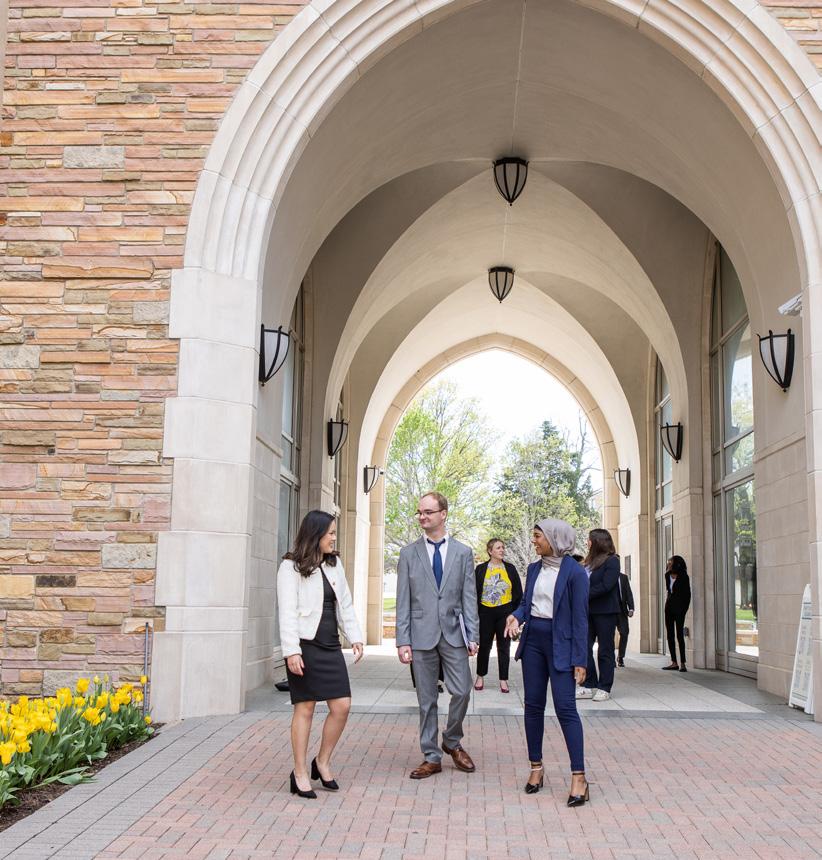
Armstrong Teasdale | St. Louis, MO
BOK Financial | Tulsa, OK
Cherokee Federal | Tulsa, OK
Cherokee Nation | Tahlequah, OK
Choctaw Nation of Oklahoma | Durant, OK
City of Houston Legal Department | Houston, TX
Community Care | Tulsa, OK
Contigo Immigrant Justice | Santa Fe, NM
Crowe Dunlevy | Tulsa, OK
Doerner, Saunders, Daniel & Anderson | Tulsa, OK
Environmental Energy Natural Resources Advocates | Tulsa, OK
Ernst & Young Global Limited | Toronto, Canada
Foster Garvey | Tulsa, OK
GableGotwals | Tulsa, OK
Goldman Sachs | Richardson, TX
Iowa Realty Co., Inc. | Des Moines, IA
K&L Gates | Dallas, TX
Legal Advocates for Indian Country LLP | Owasso, OK
Littler Mendelson | Los Angeles, CA
McAfee & Taft | Tulsa, OK
Missouri Attorney General’s Office | Jefferson City, MO
Nelson Mullins | Columbia, SC
Oklahoma Attorney General’s Office | Oklahoma City, OK
Oklahoma Corporation Commission | Oklahoma City, OK
ONEOK | Tulsa, OK
Oregon Judicial Department | Oregon City, OR
Supreme Court of Arkansas | Fort Smith, AR
Superior Court of New Jersey | Mays Landing, NJ
Ternium Revenue Cycle Management | Chapel Hill, NC
Texas Court of Criminal Appeals | Austin, TX - Judge Scott Walker
Tulsa Lawyers for Children | Tulsa, OK
U.S. Court of Appeals for the Tenth Circuit | Denver, CO
U.S. Courts Probation and Pretrial Services | Honolulu, HI
U.S. Department of Homeland Security | Seattle, WA
U.S. District Court for the Eastern District of Michigan | Detroit, MI
U.S. District Court for the Northern District of Oklahoma | Tulsa, OK - Judges Eagen, Dowdell, and Frizzell
U.S. District Court for the Western District of Texas | Midland, TX
U.S. Probation and Pretrial Services Office for the Northern District of Oklahoma | Tulsa, OK
93% employment
10 months after graduation
For full-time, long-term bar license-required and J.D. advantage positions (Class of 2025)

JANET K. LEVIT
Fred Dorwart Chair in Law
international law, contracts, international human rights and reproductive rights
Levit earned her J.D. and M.A. in International Relations from Yale University and her A.B. from Princeton University. She served as law clerk for Stephanie K. Seymour, Chief Judge of the U.S. Court of Appeals for the Tenth Circuit and for the Inter-American Commission on Human Rights of the Organization of American States. Levit practiced in the international trade and finance areas at the ExportImport Bank of the United States, and in the private sector. Levit writes about international finance and international human rights issues and published her most recent articles in the Emory Law Journal, Yale Journal of International Law, Harvard International Law Journal and the Columbia Journal of Transnational Law.

GWENDOLYN SAVITZ
Associate Dean of Research and Intellectual Life and Associate Professor of Law administrative law and civil procedure
Savitz is a leading scholar in administrative and energy law, with a sharp focus on the modern administrative state overall and its intersection with the energy sector. She holds an LL.M. from Yale Law School, a J.D. from American University’s Washington College of Law and a B.A. from Dartmouth College. At UTulsa Law, Professor Savitz’s work bridges legal theory and real-world application. Her research and teaching equip students to navigate complex regulatory frameworks and emerging challenges in energy law, environmental governance and public administration. Whether advancing scholarship on renewable energy deployment or guiding students through the intricacies of regulatory law, Savitz brings intellectual rigor, interdisciplinary insight and a deep commitment to impactful legal education.

Chapman Chair in Law
torts, insurance law, constitutional law, agency and partnership
Parker received his B.A. and J.D. from the University of Mississippi and an LLM from Columbia University Law School. At UTulsa Law, Parker has taught an array of courses, including torts, insurance, agency & partnership, civil rights and constitutional law. Parker’s scholarly works focus on controversial issues in the law of insurance. His research has been published in a wide variety of journals and has been well received nationally, by jurists and practitioners alike. He has published one book, Mississippi Law of Damages (2020-21 ed.), with Thompson West Publishers. Parker received UTulsa’s Outstanding Teacher Award in 2000-01. Between 2000 and 2026, he received the Student Bar Association’s Outstanding Teacher Award 13 times.

APRIL FOX, Associate Dean for Student Affairs
MEGAN HENSON, Associate Dean of Admissions
KAREN GRUNDY, Associate Dean for Academic Affairs
ALEX GAVERN, Interim Director of Clinical Programs
KATE LEBER, Director of Externships
MORGAN MOORE, Director of Professional Development
DAVID TARRIEN, Director of Academic Support
NICHOLAS MIGNANELLI, Assistant Dean and Director, Mabee Legal Information Center and Associate Professor of Law.
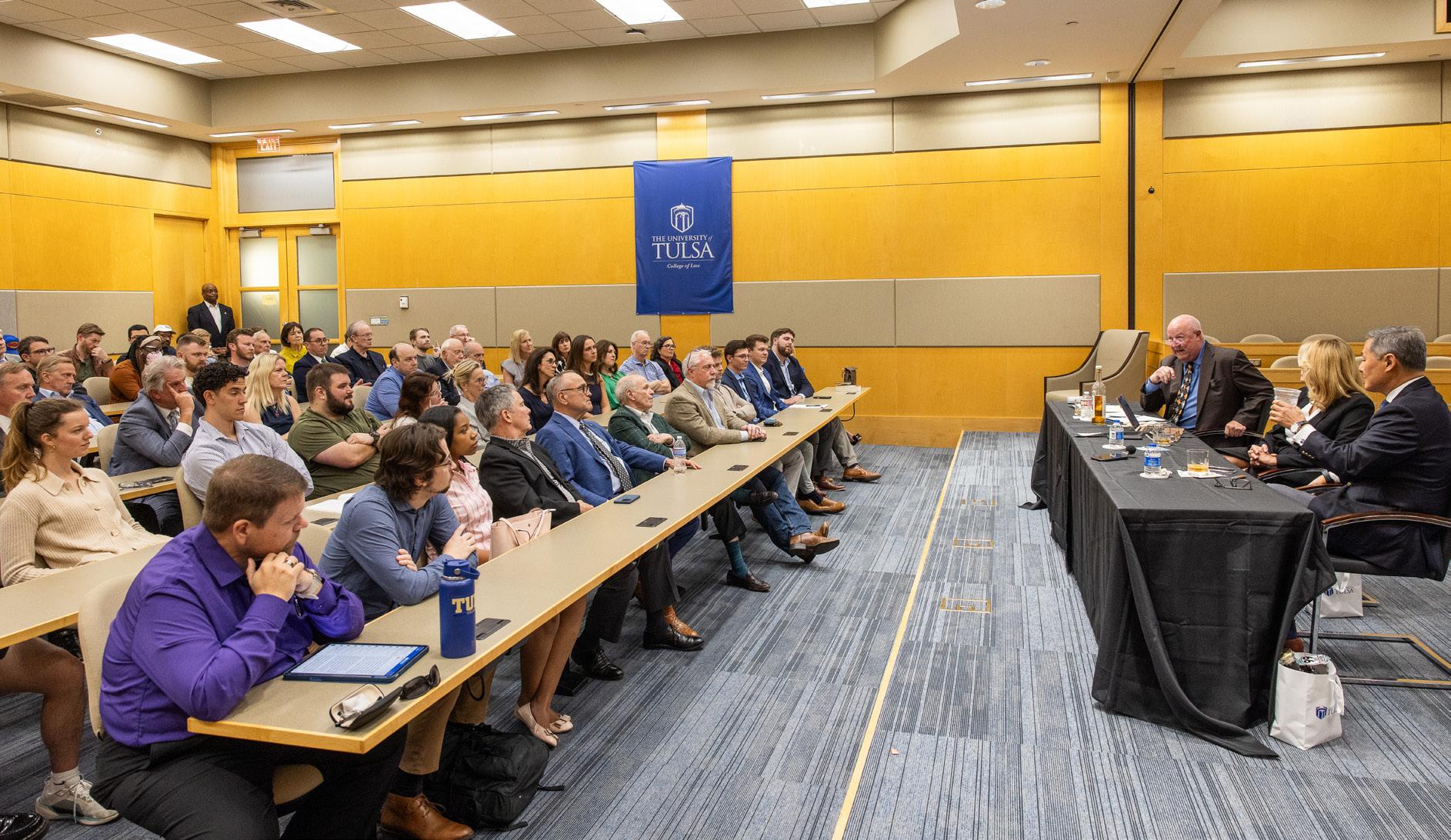
At UTulsa Law, students learn from the best. The college regularly hosts influential voices — from federal judges and policy innovators to top attorneys and thought leaders — who share practical wisdom and candid stories from the front lines of the legal profession. These dynamic speaker events spark curiosity, deepen understanding and help students build meaningful connections.
SUPERIOR COURT JUDGE TIMOTHY WALMSLEY
Eastern Circuit of Georgia
The Buck Colbert Franklin Memorial Civil Rights Lecture
AMY PRIVETTE PERKO
CEO of the Knight Commission on Intercollegiate Athletics
The Justice Dana Kuehn Symposium on Justice and Law
STEPHEN I. VLADECK
Professor at Georgetown University Law Center
The John W. Hager Distinguished Lecture in Law
“3 WHISKY HAPPY HOUR” PODCAST
Constitutional law scholar John Yoo, author and political commentator Steven F. Hayward and senior administrator and political science professor Linda Denno
The Justice Dana Kuehn Symposium on Justice and Law
MARIA KOLAR
Associate Professor of Law at Oklahoma City University School of Law
The Judge Stephanie K. Seymour Lecture
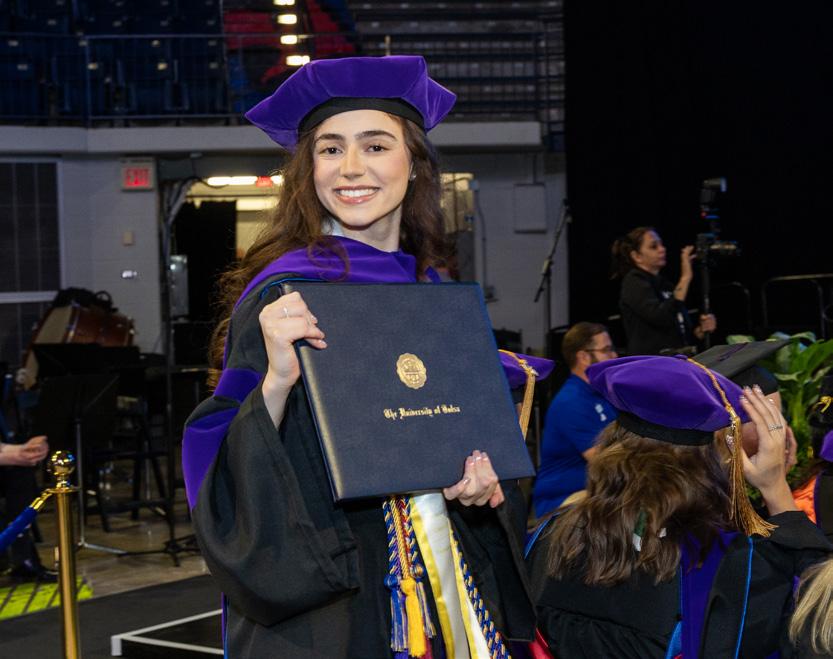
From faculty to alumni, UTulsa Law is invested in helping students succeed, and that support makes a huge difference.”
RAZANN GHAZAL (J.D. ’26)
Razann Ghazal’s path through UTulsa Law was shaped by a strong interest in health law and a commitment to gaining practical experience. A graduate of the University of Oklahoma, she chose UTulsa for its sense of community and the opportunities it provides outside the classroom. Through the law school’s connections in Tulsa and across the state, Ghazal secured externships with Saint Francis Health System and other health law organizations, gaining exposure to the legal side of healthcare and seeing how legal issues play out in real time, from compliance matters to broader operational decisions within healthcare systems.
Her growing interest in the field led her to serve as president of the Health Law Society, where she connected students with attorneys and healthcare professionals through networking events and speaker panels. As a student ambassador, Ghazal also worked with the UTulsa Law Admissions Office to help recruit future students. In recognition of her two years of service, she received the April M. Fox Award for Outstanding Ambassador Service. Throughout her time at UTulsa, she found a community invested in helping students succeed while providing meaningful opportunities to explore their professional interests.
To support students from day one through the bar exam, UTulsa Law created the position of Director of Academic Support. David Tarrien, who brings more than 20 years of experience in legal education and academic support, helps students build the skills and habits they need to succeed both in law school and in practice.
Through workshops and one-on-one meetings, Tarrien helps students strengthen study strategies, manage time effectively, access key resources and feel confident going into exams. He also teaches Strategies and Skills for Bar and Practice during students’ final semester, providing focused preparation for life after graduation.

My daily engagement with UTulsa Law students is the best part of my job. I thrive on helping them develop and find their way, and I always learn a ton from every encounter because these highperforming folks are such smart, engaging, interesting people.”
D AVID TARRIEN DIRECTOR OF ACADEMIC SUPPORT
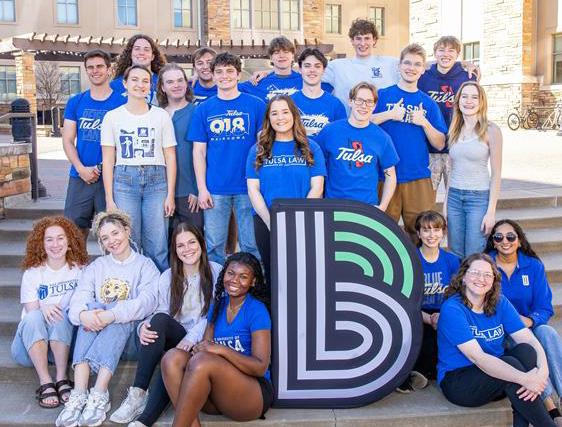

UTulsa Law is committed to instilling a lifelong dedication to public service in our students. Through legal clinics, community outreach and partnerships with local nonprofits, students gain hands-on experience while making
(PIB) at UTulsa Law promotes community service and pro bono work among law students, with automatic membership upon enrollment. PIB collaborates with the Student Bar Association to organize events, like our annual trivia night, that raise money for the Summer Stipend Program which supports students working in public interest positions.
a meaningful impact. Many students complete over 60 service hours, earning honors and contributing to justice and equity. Our program empowers students to use their legal skills to advocate for those in need and promote the public good.
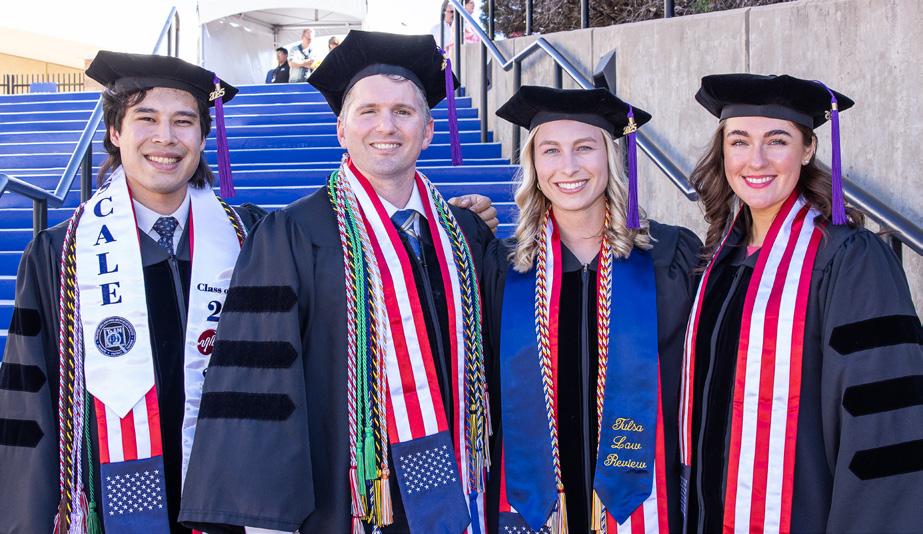
We are deeply proud of our students, alumni, faculty and staff who have served in our country’s armed forces. At UTulsa Law’s hooding ceremonies, we honor the bravery of our graduating veterans by presenting them with stoles designed after the national flag.

Please note that specific requirements will vary depending on the law schools to which you apply.
k Undergraduate cumulative GPA
k LSAT/GRE score
k Character and fitness
k Personal statement
k Two letters of recommendation (submitted to LSAC)
Other factors may include, but are not limited to: writing ability, seriousness of purpose regarding pursuit of a law degree, employment history, capacity for leadership, maturity, obstacles overcome, discipline, passion for law and service within your campus and community.
The LSAT is the only standardized test designed specifically for law school admission. Since the LSAT is a crucial factor in the admissions review, you should dedicate sufficient time to prepare for the exam.
The CAS Report is prepared by the Law School Admissions Council and contains information on undergraduate academic performance, your LSAT score and writing sample, transcripts and letters of recommendation.
Ask yourself: “What should I convey to the admissions review committee before they vote on my application?”
Topic examples include the reason for attending law school, obstacles overcome, achievements enjoyed, areas of legal interest, your readiness for law school and what you will bring to the law school environment. Leave the readers of your personal statement with an understanding of why you’re applying to law school now.
Reviewers will use your personal statement to assess writing skills, seriousness of purpose and readiness for legal studies.
Recommended choices include professors or employers/ professional acquaintances who can discuss your strengths and skills specifically related to the classroom and the legal field. Letters of recommendation may not be written by family members and must have been written within the last 18 months.
UTulsa Law requires one to three pages double-spaced. Statement should be well written, concise and proofread.
HOW
Typically three years. Enrolling in a reduced schedule may add time, while some full-time students may finish in two-and-a-half years by taking summer classes and participating in summer externships.
Most applicants apply the fall before they hope to begin law school. For scholarship consideration and to avoid the additional competitiveness associated with later application, it is recommended to apply early.
WHAT IS UTULSA LAW’S APPLICATION DEADLINE?
k Fall: July 31
Should you take the LSAT more than once, the committee will look more closely at your high LSAT score. Similarly for the GRE, the committee will look at all scores for the last 5 years placing more emphasis on your highest scores.
A standard $50 application fee is required when you submit your application via the LSAC website. Use this QR code to apply for a fee waiver.


k submit international, non-U.S. transcripts to LSAC via the CAS for evaluation
k submit application and all required documents
k request TOEFL or IELTS score be sent to LSAC
k if admitted to UTulsa Law, provide proof of financial resources with a Confirmation of Financial Resources (CFR) form
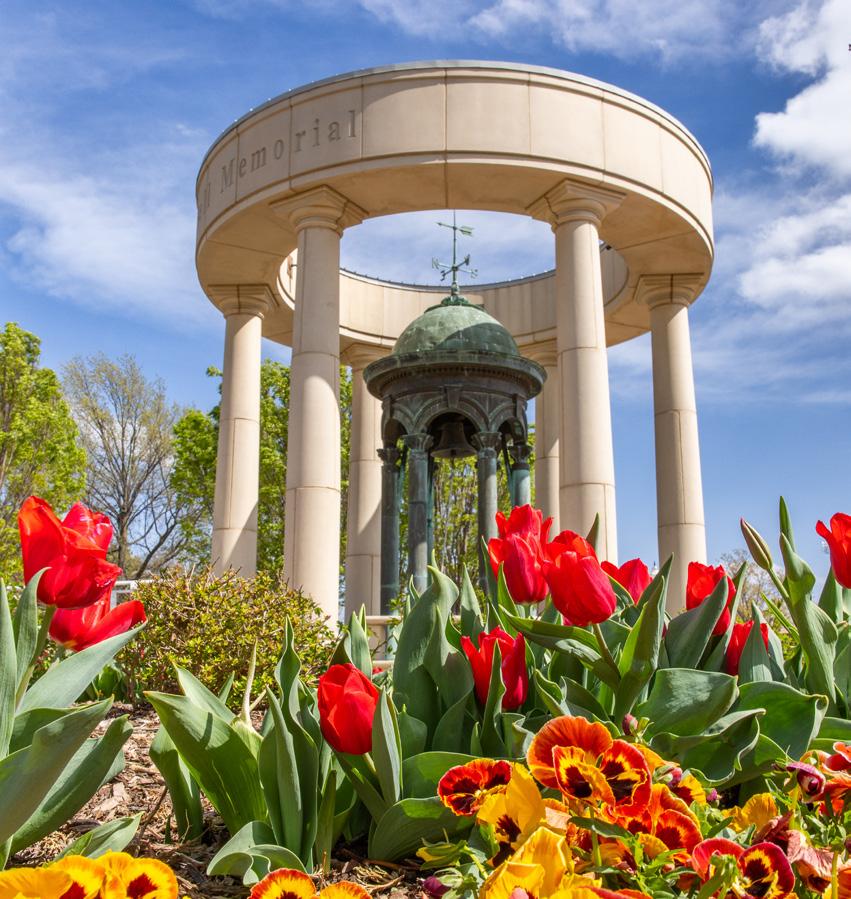

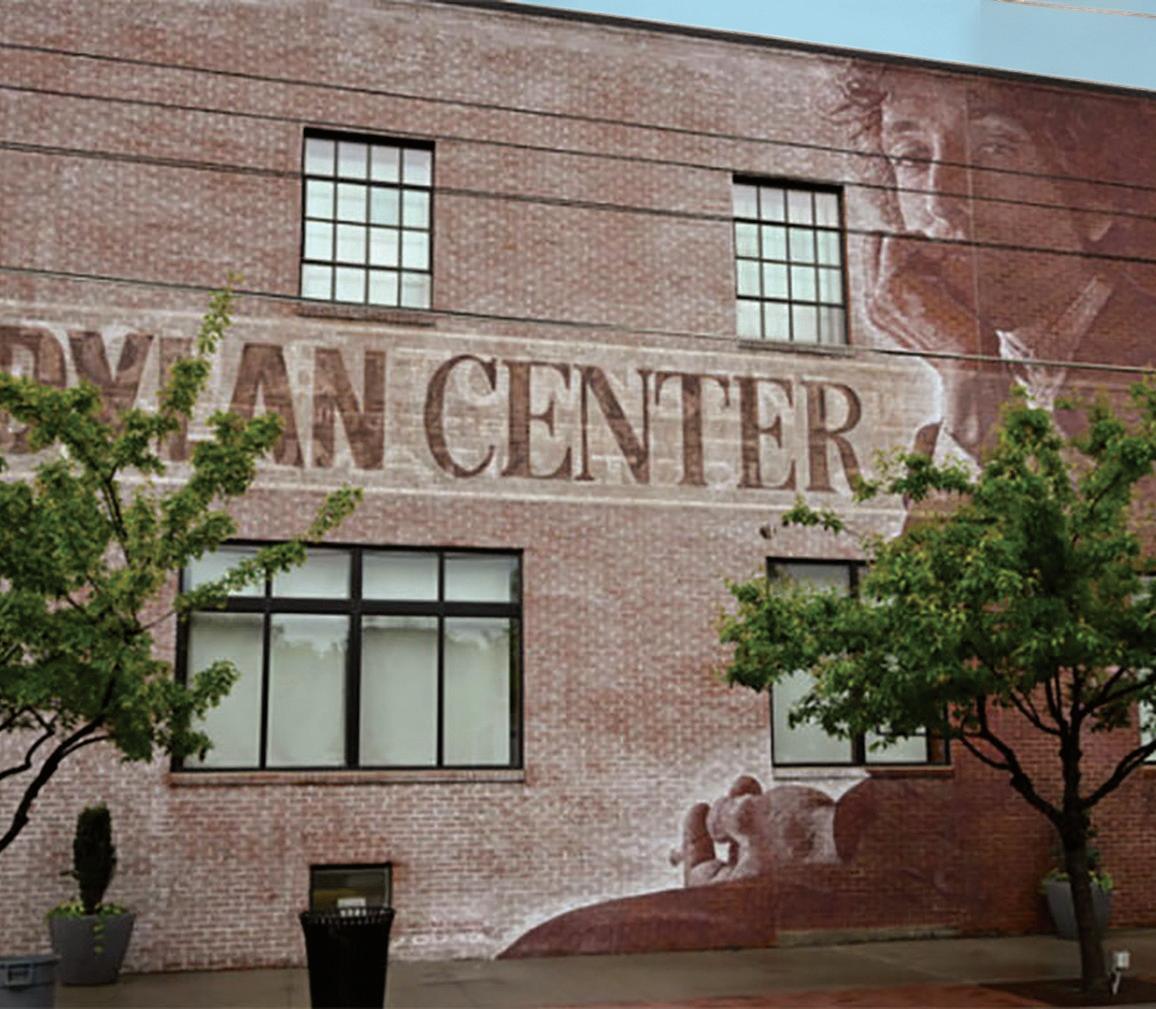
“With the opening of the Olsen-Kundig-designed Bob Dylan Center, the city has cemented itself as a must-see destination for lovers of art and culture.” – Architectural Digest

Located along iconic Route 66 in the center of the nation, Tulsa was built on a pioneering spirit of high expectations that led the city to greatness.
Today, Tulsa continues that spirit with an innovative environment for law, business and entrepreneurship. Tulsa’s dynamic legal community includes federal and state courts, top law firms, government departments and other places where UTulsa Law students find experiential learning opportunities, networking connections and career success.
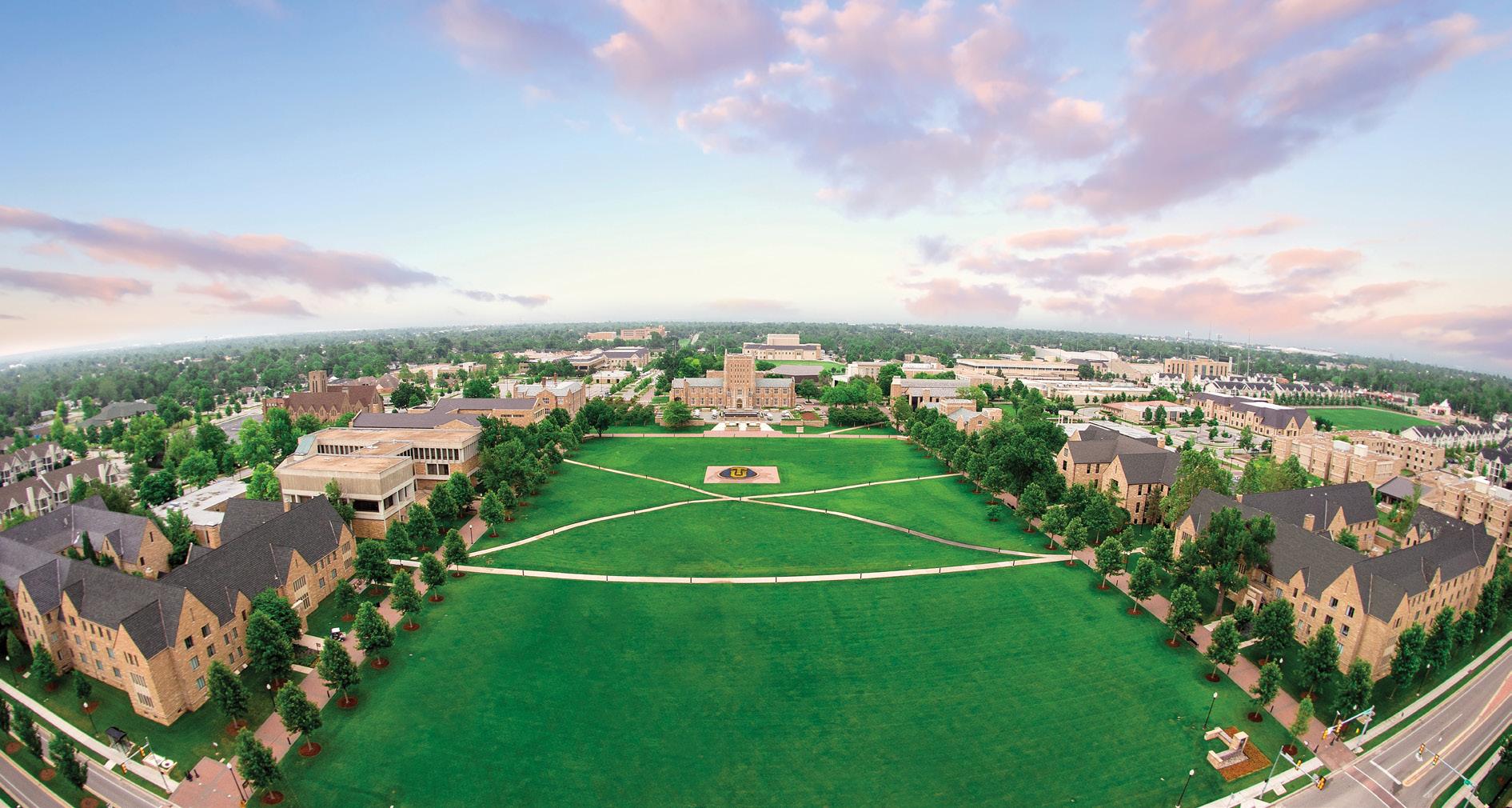
In addition to a booming economy, Tulsa is a welcoming, affordable place to live with plenty of art, music, culture and outdoor activities (including 6,000+ acres of parks and biking/running trails). The Tulsa Arts District (ranked #6 nationwide by USA Today) and Blue Dome District offer a vibrant atmosphere with concert venues and lively nightlife. The Gathering Place and River Parks provide perfect running, biking and hiking spaces. The Pearl District and Cherry Street are known for their eclectic coffee houses and record stores. Utica Square and Brookside boast upscale shops and some of the best brunch spots. Kendall Whittier and the Greenwood District stand as historic multicultural epicenters. All of these hot spots are less than a 10-minute drive from campus.




The University of Tulsa is committed to maintaining equal access to its programs, facilities, admission and employment for all persons, including by maintaining an environment that is free of illegal discrimination and harassment. In keeping with that commitment, the university prohibits discrimination and harassment by or against any member of the university community because of their race, color, national origin, ancestry, religion, creed, sex, sexual orientation, gender, gender identity, pregnancy, pregnancy related conditions, age, genetic information, disability, military or veteran status, marital or family status, or any other legally protected class. Discriminatory conduct and harassment violate the dignity of individuals, impede the realization of the university’s educational mission and will not be tolerated. Questions or concerns regarding nondiscrimination policies may be directed to UTulsa’s equal opportunity officer, at 918-631-2321. For assistance regarding accessibility and accommodations, contact UTulsa’s ADA/504 coordinator, at 918-631-2334. TU#25260