CATALYST
Unlocking the Mysteries of the Brain • Bringing Back the Prairie The Promising Reality of Artificial Intelligence • #ThisIsWhatAScientistLooksLike
The Magazine of The College of Sciences at The University of Texas at San Antonio

Unlocking the Mysteries of the Brain • Bringing Back the Prairie The Promising Reality of Artificial Intelligence • #ThisIsWhatAScientistLooksLike
The Magazine of The College of Sciences at The University of Texas at San Antonio
Dean: David R. Silva, Ph.D.
Editor and Writer: Lauren Moriarty
Graphic Designer: Coral Díaz
Copyeditor: Ashley Festa
Student Writers: Amber Stillwagon, Catherine Walsh, Daniel Lockerbie
Contributing Writers: Jordan Allen, Milady Nazir, Taylor Bird

Amber Stillwagon Communications
Associate Dean for Faculty Affairs: Kelly Nash, Ph.D.
Associate Dean for Graduate Studies: Janis Bush, Ph.D.
Associate Dean for Research: Jose Lopez-Ribot, Pharm.D./Ph.D.
Associate Dean for Student Success and Instructional Innovation: Edwin Barea-Rodriguez, Ph.D.
Associate Dean for Undergraduate Studies: Timothy Yuen, Ph.D. (effective 09/01/20)
Assistant
for Fiscal Administration: Mike Findeisen
“I love to write because it allows for me to express myself and my views of the world.”
Catherine Walsh Mathematics
“I love writing because it is an outlet for me and for my thoughts, and it is a way I can express myself without judgment, allowing me to be me.”
Daniel Lockerbie English
“I love to write because writing gives me a way to express my thoughts more clearly.”
Although this year brought unprecedented difficulties for our students, faculty and staff, as well as their families, each member of the College of Sciences rose to the challenges in the face of extraordinary circumstances. You can learn more about our faculty’s dedication to student success during remote instruction and their remarkable contributions to COVID-19 research on page 4.
Due to the pandemic’s negative impact on Texas state revenue and UTSA’s projected 2020 enrollment, UTSA faced financial challenges that resulted in hard budget decisions across the university. As we look forward to all the good things in store for our college, it is my hope that the most painful days are behind us.
I am confident that we are positioned to do great things in the future. From developing precision brain therapies (page 6) to utilizing artificial intelligence to solve real-world problems (page 12), our cutting-edge research continues to positively impact San Antonio and the scientific community. As a college, we remain focused on undergraduate instruction, research and graduate education, and innovative strategic growth.
Our students continue to inspire me with their resilience and passion for learning (page 16). They make me proud to be a Roadrunner.
Sincerely,
DAVID R. SILVA, PH.D.
Distinguished Professor, Physics and Astronomy Dean, College of Sciences
u Biology professor Dr. John McCarrey joined the Center for Male Reproductive Epigenomics, a new research center dedicated to sperm epigenomics.
u Dr. Michael P. Doyle, the Rita and John Feik Distinguished University Chair in Medicinal Chemistry, was awarded the 2020 International Precious Metals Institute’s Henry J. Albert Award for his pioneering work with rhodium catalyst reactions.
u CONNECT, The CONsortium on Nuclear SECurity Technologies, was awarded nearly $3 million in grant funding. CONNECT is partnered with Argonne National Laboratory and Los Alamos National Laboratory to explore areas of nuclear science and technologies.
u Dr. Stanton F. McHardy, a professor of research, associate professor of chemistry and director of UTSA’s Center for Innovative Drug Discovery, was named UTSA’s 2019 Innovator of the Year.
u UTSA was named a top university in natural sciences research output and the Department of Chemistry was ranked first among young U.S. universities by Nature Index, a database that provides information about high-quality research output and collaboration.
u UTSA won a $3 million NASA award to launch the Center for Advanced Measurements in Extreme Environments (NASA CAMEE), an interdisciplinary center that collaborates with NASA to push the boundaries of current measurement and modeling technology by conducting research in harsh and extreme environments.
u Chemistry professor Dr. Oleg Larionov received $1.13 million from the National Institutes of Health to conduct research on the synthesis of sulfur-containing small molecules for the development of biological probes and therapeutic agents.
u Chemistry professor Dr. Banglin Chen was inducted into the European Academy of Sciences as a Foreign Fellow and was accepted as a Fellow of Royal Society of Chemistry.
u UTSA, UT Health San Antonio, Texas Biomedical Research Institute and Southwest Research Institute joined together for a groundbreaking partnership in precision therapeutics; the group was later awarded $200,000 for a collaborative study to develop a novel vaccine to combat COVID-19.
u The Center for Infrastructure Assurance and Security (CIAS) was awarded a $1.5 million Continuing Training Grant from the U.S. Department of Homeland Security.
u The Department of Chemistry hosted the third International Symposium on Carbene and Nitrene Chemistry at the historic Menger Hotel, marking the first time the biennial symposium was held in North America.
u UTSA, Southwest Research Institute and Lovelace Respiratory Research Institute received an $18 million contract for the U.S. Department of Defense Threat Reduction Agency to collaboratively develop a protective vaccine against Francisella tularensis, the bacterium that causes tularemia.
u The Department of Computer Science hosted the fifth annual RowdyHacks, a 24-hour hackathon, fully online for the first time.
u Researchers with UTSA’s MATRIX AI Consortium for Human Well-Being created the COVID-19 Resources & Recovery Site, a website that helped Texans share the location of scarce consumer goods in real time.
u Computer science professor Dr. Murtuza Jadliwala was awarded a National Science Foundation CAREER grant to fund his research on securing modern ubiquitous sensing and computing technologies against private data inference and exfiltration threats.
u Biology professor Dr. Chiung-Yu Hung was awarded a President’s Teaching Award for Research Achievement.
u Chemistry senior lecturer Dr. Hector Aguilar was awarded a President’s Teaching Award for Excellence in University Service.
u Chemistry professor Dr. Aimin Liu received $4 million from the National Institutes of Health and National Science Foundation to conduct research on iron-containing proteins.
Biology
T. Chris Gamblin, Professor
Rahul Raghavan, Associate Professor
Chemistry
Audrey Lamb, Professor and Department Chair
Fang Xu, Assistant Professor
Computer Science
Sumit Jha, Professor
Rocky Slavin, Assistant Professor
Geological Sciences
Alfonso Fernández, Assistant Professor
Mathematics
Alperen Ergür, Assistant Professor
Jessica Gehrtz, Assistant Professor
Zhuolin Qu, Assistant Professor
Cluster Hires
Mathematics and Physics and Astronomy
José Morales, Assistant Professor
Physics and Astronomy and Electrical and Computer Engineering
Robert Sutherland, Assistant Professor
Joint Hire
College of Sciences (Mathematics) and College of Engineering (Electrical and Computer Engineering)
Claire Walton, Assistant Professor
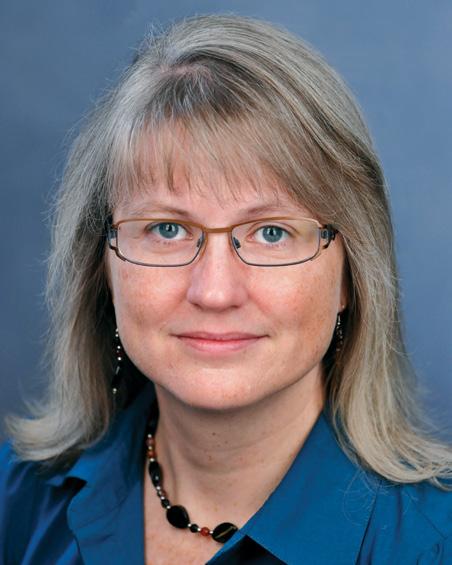
Dr. Audrey Lamb has joined the College of Sciences as the new chair of the Department of Chemistry. Lamb was previously a professor and director of graduate training in chemical biology at the University of Kansas. She earned her Ph.D. from Vanderbilt University School of Medicine. Lamb’s research includes the study of how metallophores, natural products from plants, bacteria and fungi, are made as well as the chemistry attributed to the enzymes that make riboflavin, or vitamin B2. Her lab also investigates the enzymes implicated in cancer and diabetes. “I think the best part of being a chair will be helping the members of the department be successful,” she says. “This includes students who are learning and performing experiments and faculty who are teaching and running research labs. I am looking forward to learning from my new colleagues. I am excited to learn from them the chemistry about which they are passionate.”
At the start of the spring 2020 semester, students congregated in large lecture halls, researchers huddled together in narrow labs, and staff members collaborated in shared workspaces. However, the rapidly evolving nature of the coronavirus pandemic quickly created a new normal for the College of Sciences. Across UTSA, 4,600 courses pivoted online and 6,500 faculty, staff and student employees worked from home.
Campus laboratories downsized to essential personnel only, but researchers still found ways to benefit the local community.
Dr. Juan Gutierrez, chair of the Department of Mathematics, constructed a COVID-19 epidemiological model San Antonio health officials used to plan their official response.
In collaboration with UT Health San Antonio, chemistry professors Dr. Stanton McHardy and Dr. Doug Frantz made large batches of hand sanitizer for providers and staff at UT Health’s Physicians locations. Labs across UTSA donated their personal protection equipment (PPE) to UT Health San Antonio, including 363 safety glasses, 1,850 surgical masks, and 14,176 gloves.
Researchers with UTSA’s MATRIX AI Consortium for Human Well-Being created a website to help Texans share the location of hard-tofind consumer goods in real time. The website harnessed the power of crowd-sourcing to populate the recovery map with real time data. The site also provided information such as the location of testing sites, mandatory business closures, travel advisories and a
map that tracked the spread of the virus in Texas. Dr. Amina Qutub, a biomedical engineering professor; Dr. Hongjie Xie, chair of the Department of Geological Sciences; and graduate students Younghyun Koo and Teg Pandit contributed to the project.
Dr. Doug Frantz, the Max and Minnie Tomerlin Voelcker Distinguished Professor in Chemistry and co-founder of UTSA’s Center for Innovative Drug Discovery, screened small molecule libraries to identify compounds that could potentially be developed into a coronavirus treatment. The compounds have chemical properties similar to hydroxychloroquine and chloroquine, two immunosuppressive drugs previously used to treat and prevent malaria, and are part of a class of compounds known as quinolines. Frantz’s compounds are also quinolines, but they are composed of different atoms and bonds that could provide additional benefits for those infected with the novel coronavirus.
Frantz then shipped samples of about 250 of those compounds to collaborators at The University of Texas Medical Branch at Galveston. Researchers at UTMB Galveston pretreated cells infected with SARS-CoV-2, the virus that causes COVID-19, with the compounds designed at UTSA. Once the results are in, Frantz and three UTSA graduate students as well as scientists of the San Antonio Partnership for Precision Theraputics will work on refining a treatment based on any compounds that show promise. Frantz hopes to develop a treatment to reduce the severity
of sickness for those infected when the next strain of SARS-CoV-2 emerges. The typical process of drug development, from initial research to animal testing to clinical trials to FDA approval, has a timeline of five to eight years. In the meantime, the compounds will help the scientific community understand how the coronavirus attacks cells and reacts to molecules.
Dr. Karl Klose, recipient of the Robert J. Kleberg Jr. and Helen C. Kleberg College of Sciences Professorship and the director of the South Texas Center for Emerging Infectious Diseases, is leading a collaborative study to work on a potential COVID-19 vaccine. The San Antonio Partnership for Precision Therapeutics awarded the team $200,000 to conduct their research. Team members include scientists from all four institutions in the partnership—UTSA, UT Health San Antonio, Texas Biomedical Research Institute and Southwest Research Institute. The team’s goal is to develop a novel vaccine to combat COVID-19 based on decades of work on tularemia, a bio-threat also known as rabbit fever caused by the bacterium Francisella tularensis.
Klose has been studying the bacterium F. tularensis since 2001. After his lab discovered how to inactivate the organism’s ability to cause disease, a live vaccine candidate was identified that can induce protection against F. tularensis in the lungs. Klose’s team aims to adapt the vaccine to induce protection against SARS CoV-2.
By Milady Nazir
Many patients had to wait for surgeries due to the heavy burden COVID-19 caused for hospitals. Now, UTSA computer science seniors have built a software program that helps doctors prioritize medical procedures and treat people more efficiently.
The program, called ESCal, can organize almost three months of surgeries in a few minutes by simply working within a hospital’s existing system.
“For the past nine months, we were working on another project for Amita Shah at UT Health San Antonio, but once the outbreak struck, we had to pivot,” says Dr. Mark Robinson, an assistant professor of practice in UTSA’s Department of Computer Science.
“The challenge we had was to build a surgery-scheduling application where Dr. Shah and her team could store information about postponed elective surgeries,” Robinson says. “The hospital’s existing software created lots of problems during the pandemic.”
The team delivered a computer program that helped a physician retrieve a list of surgeries scheduled for the next two months in less than five minutes—a huge time-saving measure. As businesses ease restrictions, many patients are eager to reschedule elective operations that were postponed.
As of May 1, approximately 20 states across the country had resumed some elective surgeries, with only a few more planning to do so later in the month. Hospitals anticipate bottlenecks and long waits for patients who need procedures such as tumor removals.
“We had months [of appointments] already scheduled. As all this was happening we realized that, when this is over, we would have to reschedule everybody,” says Shah. “But not everybody’s condition is of the same acuity, and with hundreds of surgeries being canceled and needing to be rescheduled, we needed a way to triage things when we start operating again.”
In less than six weeks, the UTSA students were able build the software program, which allows Shah to fetch a list of cases. The program relies on surgery information, such as date of surgery, urgency, authorization to perform surgery, patient readiness, cancelations and other criteria. The retrieved data is then reported on a spreadsheet prioritizing current or upcoming procedures for the week.
The system also complies with the hospital’s strict security standards and integrates seamlessly with its security infrastructure. This allows patients to obtain speedier care as physicians spend more face-to-face time with patients—and less time struggling with their software.
There are plans to make use of this program for the entire surgery department, which typically has 250 to 300 surgeries scheduled per day.
“Students don’t always have these real-life and critical problems to solve,” Shah says. “But what they are doing really matters, and they are doing it very fast. I’m impressed with how they’ve come together to help us out. This is very, very valuable and a huge help for our practice.”
Besides solving grand challenges, projects such as these provide tremendous real-world experience for students as well as considerable value to their résumés.
In the meantime, Shah is onboarding other surgery departments within UT Health to adopt the software.
The UTSA students who collaborated on this software program are Jaime Messinger, Andrew Noe, Sam Carey and Tyler Mitchell.
“Now we can say that we contributed to the COVID recovery effort,” says Robinson. “We are also ready, should a second COVID wave occur.”
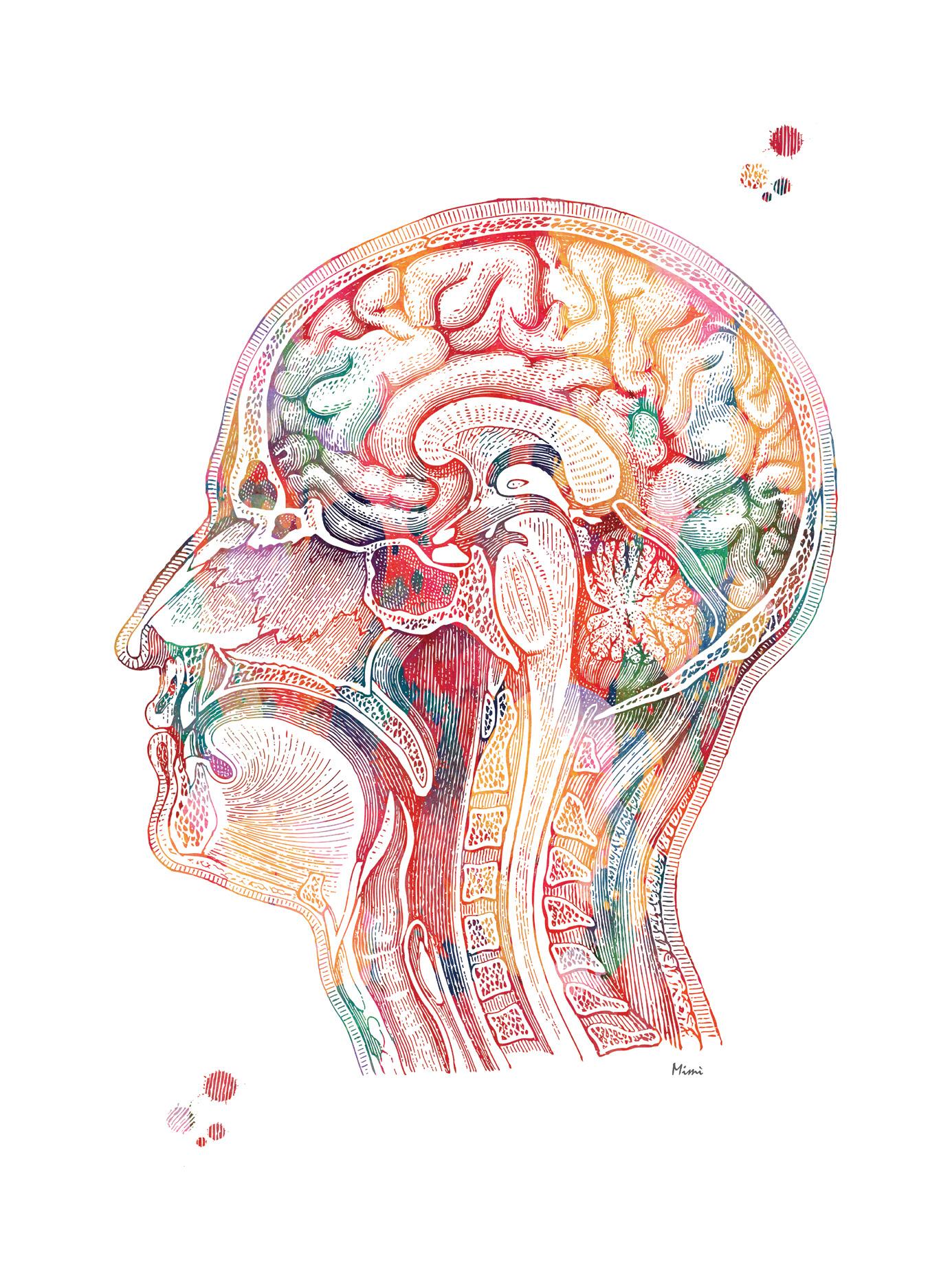
UTSA’s Brain Health Consortium is developing precision brain therapies to transform patients’ lives
By Daniel Lockerbie

The brain is one of the most fascinating organs in the human body. It is also the most complex, able to perform a seemingly endless number of functions and abilities, all while storing a vast amount of information. But this multifaceted organ is prone to a number of diseases, many of them unexplainable and incurable. What if a genetic diagnosis was the first step toward a cure?
Cindy Peterson is a 45-year-old woman who exercises regularly and has a healthy diet. So it was a shock when Peterson had a heart attack a year ago. She was diagnosed with arrhythmogenic right ventricular hypertrophy, which means the muscle tissue in the right ventricle dies and is replaced with scar tissue. This disrupts the heart’s electrical signals and causes the heart to beat irregularly. The treatments for this condition, however, just work short-term, and the only long-term option is for Peterson to receive a heart transplant. Peterson went to see a genetic counselor and found out she has a mutation in a crucial mitochondrial gene that makes energy for the heart and regulates how it beats. Peterson has two children, a 13-year-old son and a 17-year-old daughter, and genetic sequencing revealed that both of her children have the same cardiac gene mutation. Peterson’s daughter is already showing similar symptoms.
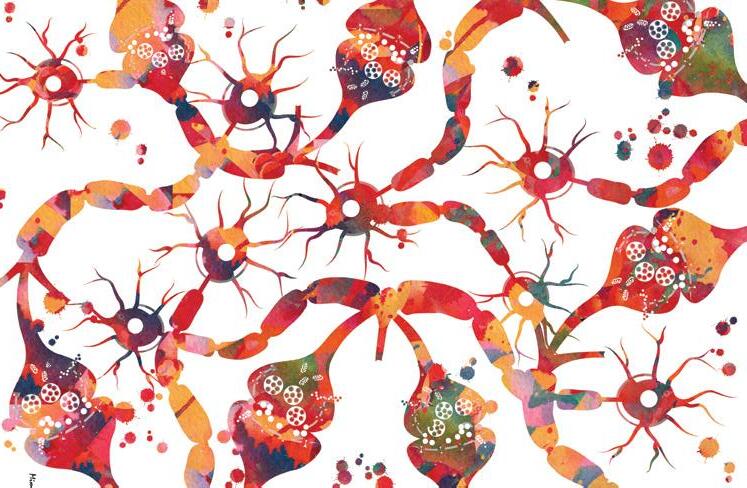
Illustrations: MimiPrints. All rights reserved.
In 2012, scientists invented a technology that makes changes to DNA in cells—and holds the potential to create positive endings for stories like Peterson’s. This technology, called CRISPR gene editing, could one day fix mutations that cause a number of genetic diseases. In the future, some genetic diseases maybe be able to be cured as soon as a diagnosis is made. Therapies such as CRISPR are developed as a “disease-in-adish,” a model that recreates the development of human disorders using a patient’s stem cells. Drugs are first tested in these cellular models, then tested in animals, and finally tested in clinical trials. Using CRISPR and other technologies, UTSA’s Brain Health Consortium (BHC)—recently approved as an organized research unit under the Vice President for Research, Economic Development, and Knowledge Enterprise—is already making progress toward a future where the diagnosis of a genetic disease is not a dead end, but instead the first step toward a cure.
Researchers at UTSA’s Brain Health Consortium contribute their expertise—in neurodegenerative disease, brain circuitry, traumatic brain injury, regenerative medicine, drug design and psychology—to large-scale research projects that seek to produce a greater understanding of the complex workings of the brain and the factors that lead to its decline. The consortium focuses on four research areas: neurodegenerative disorders (Alzheimer’s and Parkinson’s disease), neurodevelopmental disorders (epilepsy, autism), neuropsychiatric disorders (bipolar disorder, addiction) and traumatic brain injury.
Led by director Dr. Jenny Hsieh, professor of biology and the Semmes Foundation Chair in Cell Biology, the UTSA Brain Health Consortium plays a pivotal role in furthering our understanding of the brain. “UTSA has made a bold effort to become a leader in brain health-related research, and innovative technologies such as CRISPR, multi-omics analysis and human induced pluripotent stem cells add to our capabilities,” says Hsieh.
“This is an exciting time for undergraduate and graduate students to get involved in cutting-edge laboratory research. There’s a great need in the workforce for individuals with scientific intellect and possessing both wet lab and computational skillsets.”
Currently, BHC membership is being established to encompass a broad spectrum of disciplines, from engineering to education to biology. One member, Dr. George Perry, professor of biology and the Semmes Distinguished Chair in Neurobiology at UTSA, has conducted Alzheimer’s research for nearly 40 years. Perry says “the consortium provides a broader base of expertise,” a valuable advantage he believes benefits his research.
Dr. Melanie Carless, an associate professor in the Department of Biology, recently joined the consortium. She provides expertise in defining the genetic basis of brain health and furthering the understanding of the biology behind neurological and psychiatric disorders. “One of the most striking aspects of this consortium is the welcoming and collaborative spirit of all members,” she says. “Since arriving, have been involved in developing several new project ideas with other investigators that really push the boundaries of interdisciplinary research. Efforts such as this will contribute to UTSA’s mission to advance knowledge through research, discovery and teaching, as well as promote its vision to be a premier public research university.”
The consortium also offers courses and opportunities for students looking to further their research, such as Kaisha Meyer, who is a second-year neurobiology Ph.D. student in Hsieh’s lab. “BHC is collaborative and spans several different fields with the common goal of tackling the complexities of the brain in health and disease,” says Meyer, who is studying genetic risk variants for Alzheimer’s disease. “In most of science, you become focused on a small aspect of human disease and you become an expert in that. However, in complex brain diseases, it is essential to understand the whole picture of what is going on to make effective drugs to treat patients. As a student, being a part of a collaborative effort reminds us how collaboration is key to making real progress.” Meyer is particularly encouraged by the consortium’s approach to collaboration in the name of furthering research. “I think that mentality of collaboration instead of isolation is something we can take with us into our own labs and future career paths,” she says. “It’s exciting to be involved in a consortium of scientists with different backgrounds coming together to solve a common problem.”
For more information about the Brain Health Consortium, please visit utsa.edu/bhc.
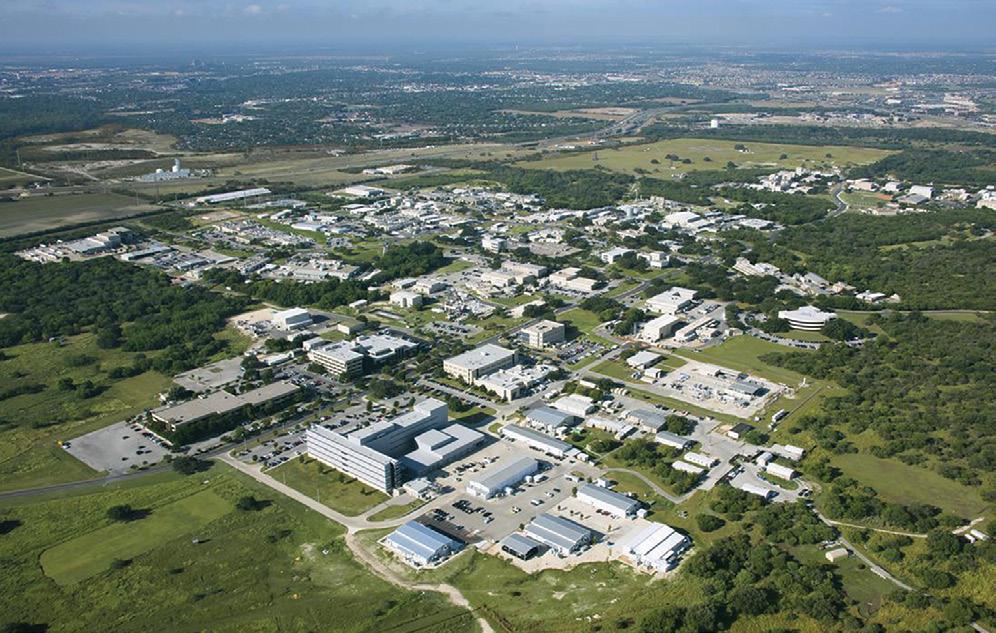
Southwest Research Institute and UTSA’s Department of Physics and Astronomy collaborate to boost student success
Headquartered in San Antonio, with office and laboratory locations around the world, Southwest Research Institute (SwRI) is a nonprofit research and development organization that provides contract research and development services to industrial and government clients. They also use their knowledge to prepare the next generation of scientists: 16 employees in SwRI’s Space Science and Engineering Division teach graduate-level classes and are professor advisers to graduate students in UTSA’s Physics and Astronomy Department.
The collaborative graduate program in physics with a specialization in space physics prepares students for careers in space physics through research-focused courses and investigations with space flight missions. The program offers both master’s and doctoral degrees in physics. Graduate research assistants work on space flight instrumentation alongside their advisers through instrumental design, construction and calibration. Program alumni are now employed at various universities, government labs and research institutions, including the European Space Research and Technology Centre in the Netherlands, le Laboratoire d’Astrophysique de Marseille in France, and NASA’s Goddard Space Flight Center in Maryland.
“The projects at SwRI are usually part of a larger mission that we at SwRI are involved with,” explains Dr. Amanda Bayless, senior research scientist at SwRI and adjoint assistant professor in UTSA’s Physics and Astronomy Department. “For example, I’m on a project called SCORPIO, which will be a new large camera for the Gemini South Observatory located in Chile. My students are working on ways to identify supernovae in the all-sky surveys and then use SCORPIO and other telescopes to observe the supernovae. One student is also working on the testing and building of the SCORPIO instrument itself.” Participating students enjoy a high level of hands-on learning during their exposure to large research ventures. “One of my students last year helped with the testing of a camera for the Lucy spacecraft launching in 2021,” says Bayless. “Students at other universities do not usually work directly on NASA flight hardware.”
Students also benefit from their adviser’s industry knowledge and subject matter expertise. Dr. Hunter Waite, a scientist at SwRI and adjoint professor in UTSA’s Department of Physics and Astronomy, is currently modeling geochemical processes in the ocean interiors of Saturn’s moon Enceladus and Jupiter’s moon Europa with his graduate student Christine Ray and co-adviser Dr. Christopher Glein. “The Enceladus studies use the data that was collected by the Cassini Ion neutral mass
spectrometer that I was the scientific team leader for [from 1992 to 2017],” says Waite. “At Europa, we are modeling to plan for future studies of the ocean composition using the MASPEX [MAss SPectrometer for Planetary EXploration] instrument we are building for the upcoming NASA Europa Clipper mission to be launched in 2024. Christine performs geochemical modeling as well as participates in the Clipper mission planning and MASPEX calibration.”
Students at other universities do not usually work directly on NASA flight hardware.
Dr. Rob Ebert, principal scientist in SwRI’s Space Science and Engineering Division and lead adjoint professor in UTSA’s Department of Physics and Astronomy, says that the program is mutually beneficial. “It enriches the research environment of the institute by enabling collaboration between SwRI scientists and graduate students,” he explains. “It provides an opportunity for mentorship and training whereby skills and knowledge are transferred to the next generation of space scientists and space hardware developers. It brings more attention and collaboration to SwRI as our UTSA students become integrated within the space community and our alumni secure positions at other institutions.”
To learn more about the collaborative graduate program, please visit grad.space.swri.edu.
In October, Southwest Research Institute, UTSA, UT Health San Antonio and Texas Biomedical Research Institute formed the San Antonio Partnership for Precision Therapeutics (SAPPT), a groundbreaking initiative that leverages the unique bioscience capabilities of all four institutions to address San Antonio’s specific medical needs while serving as a therapy-development model to improve medical treatment around the world. San Antonio’s ethnic diversity makes it an ideal location for the development of a precision therapeutics model, as the city today reflects the future demographics of the nation. Precision therapeutics focuses on personalized interventions based on genetics, environment and diet, coupled with the complete drug discovery pathway. The drug discovery pathway includes basic research, lead compound development, formulation, testing, production and clinical trials leading to new FDA-approved treatments. The partnership’s ultimate goal is to create breakthrough treatments that can be targeted to specific patient populations.
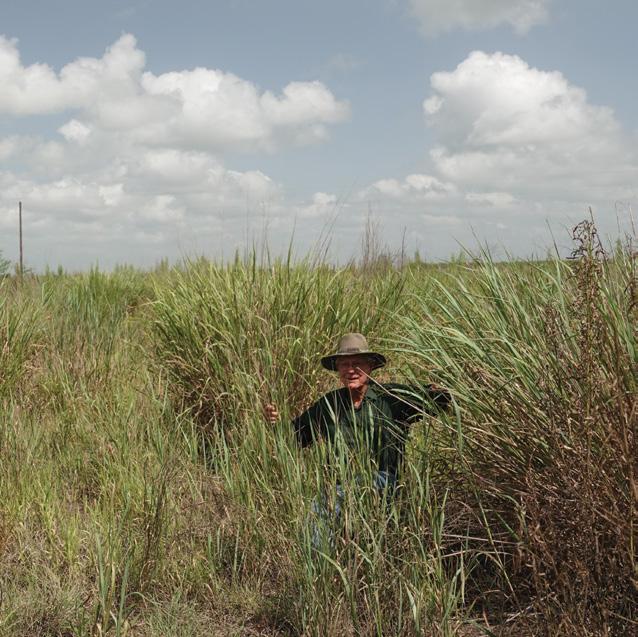
Don Kirchoff is a passionate advocate for Texas prairies.
By Amber Stillwagon
Less than 1% of the original 20 million acres of tallgrass prairie in Texas still remain. In partnership with Kirchoff Family Farms, UTSA’s Environmental Science and Ecology Department is working to increase that prairie acreage. The 200 acres in Floresville, Texas, was previously a farm owned by the Kirchoff family and home to cotton fields, hay fields, and livestock. More than a century of row crop farming and ranching disturbed native vegetation, which prevented the growth of native plants and modified the habitat for native animals in the area.
After Don Kirchoff and siblings Scott, Susan and Brenda inherited the farm in 2008, they decided that the best way to conserve the native habitat was to restore the Blackland prairie to its former wild glory. “Our parents taught us a strong conservation ethic, and we thought we would restore the farm as close to natural conditions as possible as a memorial to our parents,” Don Kirchoff explains. Encouraged by his family’s success with their own property, he eventually founded the San Antonio Chapter of the Native Prairies Association of Texas, which seeks to conserve and protect the native prairies in the Lone Star State.
Despite their best efforts, the family’s initial foray into prairie rehabilitation was not an immediate success. “Our first two years of attempts were complete failures because we applied modern farming techniques to field preparation and planting native seeds,” Don Kirchoff remembers. The Kirchoffs heeded advice to start small collecting remnant clumps of native plants and seeds, planting them in trays and then transplanting seedlings to a plot where they could suppress invasive plants. Eventually, they switched to nature’s original method of germination and allowed the seeds to populate the land themselves. Native plants, including switch grass, lotebush and milkweed, have since successfully taken root. Monitoring the landscape is important to ensure that invasive plants do not return. It is also important to document the processes that are successful so others wanting to restore native prairies can learn from these experiences.
In 2018, UTSA’s Environmental Science and Ecology Department became involved with the Kirchoff’s native prairie restoration. According to Dr. Janis Bush, a plant ecologist and chair of the department, grasslands are one of the most endangered ecosystems in the world. “Historically, grasslands extended through the central part of the United States from southern Canada to the coast of Texas,” says Bush. “Due to agriculture, overgrazing and the reduction of natural fires, the landscape has changed dramatically. With this change, the diversity of plants and animals has also decreased. The work that Don and his siblings have done in restoring this land to native prairie is truly remarkable. On my visits to the prairie, the diversity of plants and birds is amazing when compared to other areas which have not been restored.”
Students and faculty are currently conducting research, such as controlled burning, on the farm. During controlled burning, researchers prepare the area by cutting firebreaks to help in controlling the fire. Depending on the objective, they may use a back fire, which travels against the wind, moves slowly, and burns the fuels for a longer time at higher temperatures than a head fire. A head fire travels with the wind, spreading quickly, and the fuels burn at lower temperatures. Since some species may be more adversely affected than others, depending on the type of fire prescribed, the researchers monitor the area and make observations of the characteristics of the plants and soils to determine how they are responding to the fire. The fire is controlled using water, wet burlap bags and the firebreaks. Since native grasses have deep
roots and evolved with fire, new growth occurs quickly and the prairie restoration continues. Native mammal and bird populations that prefer native grasslands gradually return to the area, which further increases biodiversity and assists in the restoration of the prairie. Some of these native faunae include the savannah sparrow, northern cardinal, white-tailed deer and Mexican ground squirrel.
Due to agriculture, overgrazing and the reduction of natural fires, the landscape has changed dramatically.
Perhaps the most important part of restoring the native prairie is the education and outreach component. “In addition to the great work in restoring the prairie, the Kirchoffs are using the prairie as a way to educate the public on the importance of prairies and biodiversity,” Bush says. In addition to collaborating with UTSA, Kirchoff Family Farm conducts workshops that allow the public to volunteer and learn in a hands-on way. Prairie Restoration Workdays, which take place the third Saturday of every month, allow participants to remove invasive plants and learn how to manage a native prairie habitat. Don Kirchoff says that education is important in order to get more people involved with the process. “Future generations will need properties like ours that in some way are preserving the past so they can guide the future,” he says. “My siblings and I had the benefit of growing up in an environment surrounded by nature. Modern agriculture techniques have all but obliterated that. Hopefully education and outreach will keep future generations connected to the beauty of the natural habitat that is slipping away from us.”
For more information about Kirchoff Family Farm, please visit TexasPrairie.org or call (512) 772-4741.

UTSA’s AI Consortium harnesses the power of artificial intelligence to solve real-world problems
Technological advances in computing capability, access to large datasets and innovative algorithms have increased the impact of artificial intelligence (AI) in our daily lives. Recent analyses predict that AI will add approximately $8 trillion in gross value to the U.S. economy by 2035. This technology will drive creative solutions for real-world problems in biomedicine, health care delivery, food insecurity, human trafficking, cybersecurity and transportation. The complexity of these global problems will require a highly prepared workforce capable of managing exponentially expanding volumes of data and utilizing machine learning. MATRIX, the UTSA AI Consortium for human wellbeing, is prepared to address these challenges.
The AI Consortium is an interdisciplinary collaboration that fosters innovative research in AI. The MATRIX brings students, practitioners and researchers from multiple institutions under one umbrella, utilizing their unique skillsets to address emerging research challenges. Dr. Dhireesha Kudithipudi ’06 is the director of MATRIX. She is a professor of electrical and computer engineering and computer science, and the Robert F. McDermott Chair in Engineering. Her research expertise is in neurally inspired AI algorithms, AI accelerators, energy-efficient machine learning and novel computing substrates.
“The goal of the AI initiative at UTSA is to strategically collaborate and engage with the private sector, academia, the Greater San Antonio community and key international partners to advance the state of the art with transdisciplinary solutions,” Kudithipudi says. “UTSA has been carving a niche in this space with strategic cluster hires over the past few years. The university and its partners already have a strong presence in neuroscience, brain health, cybersecurity and applied domains. We are building a new sandbox for research teaming that builds on these strengths.”
MATRIX is composed of external research partners and internal UTSA members specializing in computer science, electrical and computer engineering, cybersecurity, biomedical engineering, neuroscience, geoscience, medicine, and psychology. Dr. Sushil Prasad, professor and chair of the Department of Computer Science and a core member in MATRIX, agrees that the consortium is uniquely positioned to address emerging problems in human-aware AI by leveraging the broad expertise of its members in a collaborative framework. “Basic AI algorithms and allied techniques have been around for some time but have become increasingly effective in solving societal problems with the advent of massively parallel computers and accelerators,” Prasad says. “Exploration of advanced AI algorithms, software and hardware techniques and their interplay with big data and advanced cyberinfrastructure will continue. However, opportunities have opened up for deep societal questions to be explored, including how well AI systems can interact with people and how safe, secure and ethical these are. Such questions call for truly multidisciplinary, collaborative teams involving all stakeholders, and AI Consortium is creating such collaborations.”
“The consortium is important as it is bringing world-renowned experts together from top institutions within San Antonio to share their backgrounds and experience to collaborate and help solve new and challenging problems using AI in a wide variety of fields,” Mentzer says. Other external partners include researchers from UT Health San Antonio and Texas Biomedical Research Institute.
“The MATRIX AI Consortium at UTSA has brought together researchers from multiple colleges at UTSA and institutions in and around the San Antonio area to leverage these advances and collaboratively address some of the most difficult multidisciplinary research challenges in these areas,” adds Jadliwala. “Addressing these multidisciplinary research problems requires significant domain expertise in specific areas and fields, and the confluence of expertise currently available within MATRIX will definitely help with that challenge.”
The consortium facilitates training opportunities through seminars, lab rotations and hackathons that foster innovative transdisciplinary research. The consortium currently has funded research projects from both industry and federal agencies, including the National Science Foundation, National Institute of Health, Air Force Research Laboratory and the Defense Advanced Research Projects Agency.
“I think the consortium’s focus on employing AI and machine learning tools and techniques to address problems that impact human health and well-being is something very unique and noteworthy,” says Jadliwala. “In light of the COVID-19 pandemic, and the continuous threat to human well-being through similar threats, the need for such a data- and AI-centric focus on human health has assumed greater significance.” During the pandemic, the consortium published the COVID-19 Resources & Recovery Site, a website that populated a recovery map with real-time data so the public could assist with locating scarce resources during the pandemic.
Christopher Mentzer, assistant director of research and development at the Southwest Research Institute, co-leads the consortium’s Machine Learning and Deployment group alongside assistant professor Dr. Murtuza Jadliwala of UTSA’s Department of Computer Science.
“Our COVID-19 tracking maps for Texas and San Antonio took advantage of the web-based Geographic Information System (Web GIS): ArcGIS Online, a spatial data science and visualization tool,” says Dr. Hongjie Xie, professor and chair of the Department of Geological Sciences. “These maps interactively display the number and progression of confirmed infections, fatalities and administered tests by county or zip code in real time. This data provides valuable information for future studies on which factors—including geographic, environmental, demographic, social and economic—would have contributed to such differences spatially and temporally.”
Before she was a mathematics lecturer at UTSA, Carolyn Luna was a high school math teacher and, before that, an environmental science consultant. “I find engaging in mathematics so rewarding,” says Luna. “I’ll get stuck in problems and that can be frustrating, but at the same time, just find it so satisfying and worthwhile. Going through the intricacies of a math problem from start to finish is such a good feeling. And I think I’m actually quite slow at math because I like to think about the reasoning behind each step. I’m OK with that, and I want my students to understand you don’t have to be fast at calculations to be good at math; it’s all right to make mistakes and take your time.” When she is not teaching at UTSA, Luna enjoys leading lessons for visiting school groups at the San Antonio Virtual and Interactive Geometry Lab (SAVIG), where she serves as program director.
Launched in 2004 by UTSA’s Dr. Sandy Norman and Dr. Stephen Juhasz, SAVIG is housed in the Institute of Texan Cultures (ITC). The lab is run by the Math Department and facilitated by both UTSA faculty and volunteer instructors. School groups,
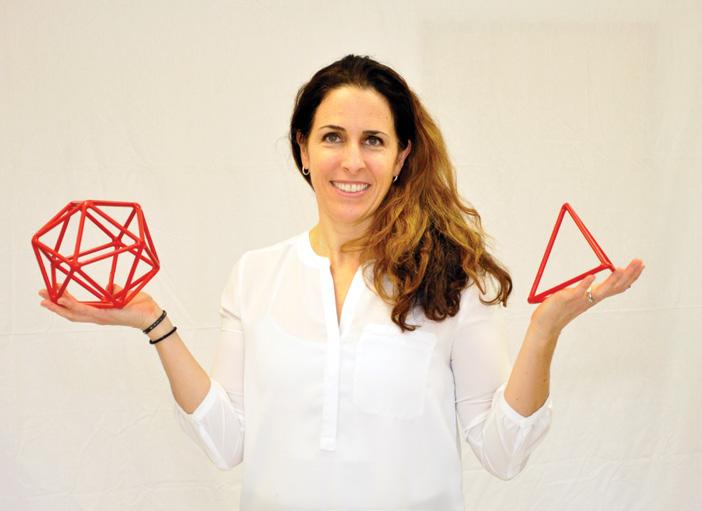
from kindergarten to 12th grade, participate in culturally responsive mathematics lessons that incorporate the museum’s Texan artifacts and antique buildings, such as the historic one-room schoolhouse.
Luna estimates that the lab instructs about 20 different groups of students each year at the ITC, not including the off-site school visits that SAVIG conducts for schools unable to take a field trip. In addition, many children participate in SAVIG-led mathematics activities during the museum’s free Family Days. With the help of enthusiastic volunteers and creative programming, the lab hopes to show kids that math is fun. “I think a lot of children do not see the application of mathematics,” Luna explains. “They think math is just done inside their school classroom on worksheets. They don’t see the connection between what they’re learning at school to what they experience in the outside world, and how interesting and creative and social mathematics can be. Kids often don’t see the joy involved. Sometimes kids are surprised when they’re having fun working in the lab.”
Luna believes that SAVIG is a valuable resource for elementary through high school students and future math educators alike. “With the SAVIG lab, UTSA has a bridge to the community so we actually know and have experience working with those who we are serving,” she says.
Unfortunately, the coronavirus pandemic temporarily stymied face-to-face instruction at the ITC and prohibited off-site visits. In fall 2020, SAVIG plans to offer virtual instruction for school groups.
“Taking our lessons online will help us engage even more students in creative, meaningful, and culturally responsive mathematics,” says Luna.
Find more Office Hours features on our website: utsa.edu/sciences.
George and Letitia Riley agree that UTSA played a critical role in their career and life trajectory. “There’s no reason you can’t get as good as or a better education at UTSA than other universities,” says George Riley, ‘89, B.S. mathematics, computer science and systems design. “I value my time at UTSA highly,” adds Letitia Riley, ‘87, B.A. humanities. The Rileys are now lifetime members of the Alumni Association and enjoy attending UTSA football games. They believe that San Antonio itself is a reason to choose UTSA. “The weather, the people, the culture and feel of San Antonio are important reasons we are still here,” says George Riley. “We had plenty of chances to live and work in San Francisco or New York but chose to stay here.”
George Riley hesitated when he originally received a job offer from a young nonprofit called TED. “No life insurance, no health insurance,” remembers Letitia Riley. “He politely turned them down. Thankfully, they persisted. The next time they asked us to come to New York. They could have had anybody, but they wanted George.” There was something
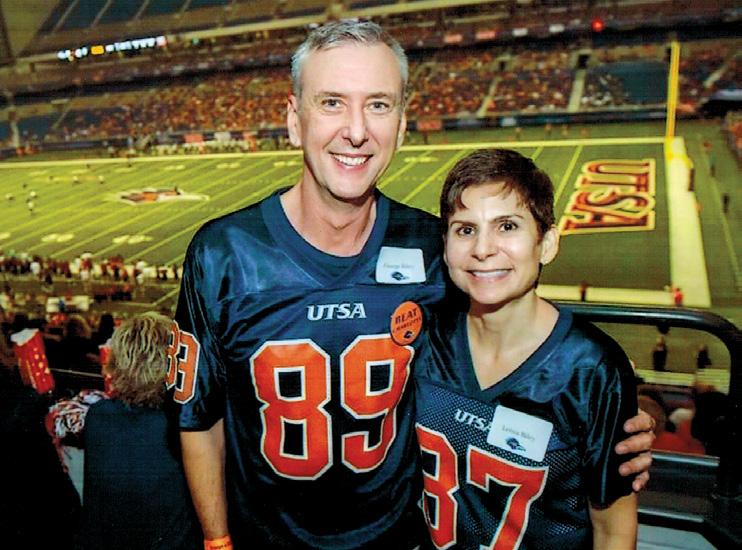
intriguing about TED’s vision of inclusive knowledge sharing that made him reconsider their offer. “When saw the passion and the brains I thought, this does need to be seen,” says George Riley. “I thought, can help make this audience bigger.”
When he started working full time for TED in 2007, he joined a small team. The organization operated out of curator Chris Anderson’s loft in New York City, but George Riley opted to stay in San Antonio.
The first few years at TED presented unique challenges for the sole software engineer and the only employee working remotely from San Antonio. “I was the single software engineer on staff, but we were actually hosting here at Rackspace [in San Antonio],” George Riley says.
“I chose Rackspace because they were the perfect kind of hosting company for a company like TED.”
In addition to helping set up TED’s digital platform, he played an important role in launching TEDx. TEDx allows local communities to license the TED brand and independently organize TED-like events. Over 13,000 TEDx events have
taken place in 150 countries to date. “All of this content is bubbling up from places like Bombay and South America,” he says. “It exposes a whole different world to people.”
Although TED has long since grown from the original handful of employees, George Riley happily continues working as a software architect. “I remain in the same role because prefer to write code,” he explains. “I basically had to hire my own boss. I’m glad I did because there are people that are much better at managing people and looking at long-term strategic goals. I don’t enjoy that, and don’t think I’m very good at it.” What he is very good at is writing code. He built TED’s first translation platform that allowed anyone to view a TED talk with subtitles in their language. “There’s nothing more rewarding than writing good code,” he says. “Writing good code is like writing poetry. When I do it well, it’s like a masterpiece, and when I do it wrong, hope no one ever reads it.”
By Catherine Walsh
Abigail “Abi” Munteanu’s journey to UTSA began when she found out about scholarships, something that would change her life forever. “The cost was always a concern,” recalls Munteanu. “When I was 11, I heard that schools will pay you to go to school if you do well enough.”
Munteanu’s parents immigrated from Romania to Seattle at ages 18 and 19 and moved to California when her older sister was very young. After the 2008 stock market collapse, the family relocated to Texas to start over. Her family’s financial struggle had a profound impact on Munteanu and motivated her to excel academically. “When heard what scholarships were, promised myself from that day on that I would work really hard in school. knew where I wanted to go with my future,” she says. “My sister helped and pushed me through high school, where I graduated first in my class.”
Now a third-year student in UTSA’s biochemistry program, Munteanu is the recipient of two scholarships: the Distinguished Presidential Scholarship and the San Antonio Stock Show and Rodeo Scholarship. She is currently researching green chemistry, which identifies chemicals that are safe for the environment.
In Dr. Karl E. Klose’s microbiology lab, Munteanu is also researching vibrio cholerae, a bacterium that causes severe dehydration and affects people primarily in developing nations. “Our goal in the lab is to find a vaccine,” she explains. “When you go into the lab, you don’t know what you’re going to expect and can spend hours researching. But I always enjoy it.”
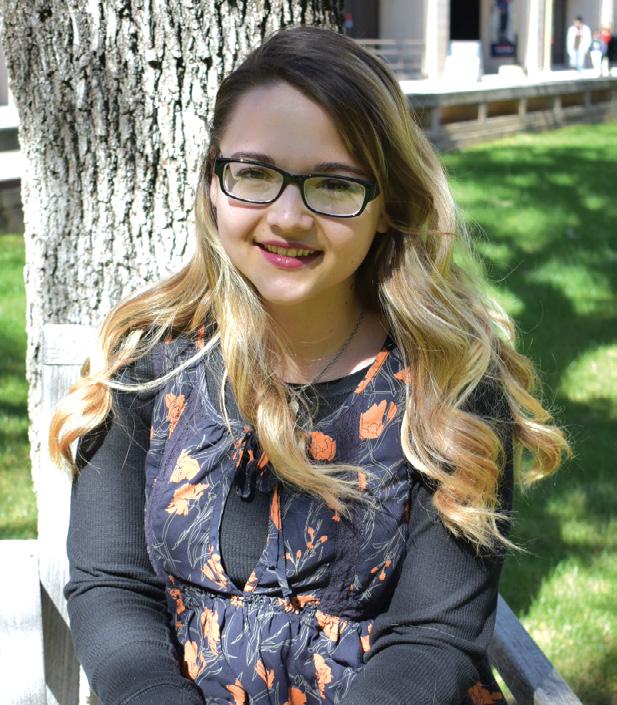
Munteanu is actively involved in multiple clubs at UTSA, including the Student Affiliate Chapter of the American Chemical Society and the Dean’s Ambassadors. She also is a member of the American Medical Student Association, which works with a local rehabilitation center that helps children, adults and felons transition back into society.
Driven by her desire to help others, Munteanu’s ultimate goal is to attend medical school in Texas. Because she was accepted into the Joint Admissions Medical Program (JAMP) at UTSA, Munteanu has the opportunity to attend any medical school in Texas that has JAMP affiliation. “I am keeping an open mind about what area of medicine want to pursue,” says Munteanu. “There are so many areas of the human body to explore, and you don’t actually know what you will fall in love with until you experience it.”
Finis Stribling IV wants to understand everything. “Looking at physics, it’s just fascinating how the majority of everything can be explained through science,” he says. “When you get deep into it, there’s a lot of things that are not answered, but the fact that they aren’t answered makes you want to learn more. It’s like solving a giant puzzle.” Stribling is a physics master’s student who plans to pursue his doctoral degree and become a professor. “The word, physics, intimidates pretty much everyone,” he says. “I feel like that prevents people getting into this field of STEM. I want to be able to simplify this complex topic to where it is easily understandable.”
Growing up in Nashville, Tennessee, Stribling was a curious kid who enjoyed learning about science. He thought he would study criminal justice and forensic science in college, but a physics class during his senior year of high school changed everything. “I had that ‘aha’ moment of this is what I want to do,” he remembers. In college, physics helped Stribling improve his game as a defensive back on the University of Missouri’s football team. “I feel like I understood the game differently,” he remembers, noting his knowledge of physics assisted his understanding of trajectory, motion and taking the shortest path.
As a student at the University of Missouri, Stribling worked with Dr. Angela Speck, who is now chair of UTSA’s Department of Physics and Astronomy. Stribling says Speck was one of the reasons he chose to continue his graduate education at UTSA. “She is not only a great supervisor but a great mentor as a whole,” he says. “She cares about more than just my academics. She asks me how I’m doing.”
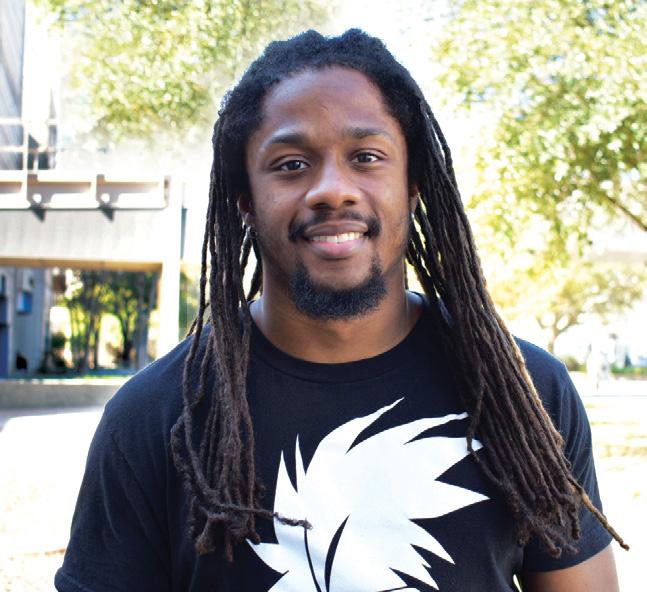
Stribling is currently researching circumstellar maser (an acronym for microwave amplification by stimulated emission of radiation) emissions. “More specifically, I look at these masers in asymptotic giant branch (AGB) stars,” Stribling adds. “AGB stars are older stars, similar to our sun, that have mainly carbon and oxygen cores. There is evidence that suggests that these maser emissions are connected to clumps of molecular gas in ionized regions of planetary nebula (cometary knots).”
Motivated by his own experience as a minority in STEM, Stribling is passionate about educational outreach. “There is a stigma to being African-American with dread hair,” he says. “When I was walking for my undergrad, one of my teammates told me a lady in the crowd said didn’t look like a scientist.” Along with several other UTSA students, Stribling established the Black Students in STEM Association. “We felt like it was important to have a group on campus that has some inclusivity with the African-American population,” he explains. “My personal goal is to work on community and outreach. If there is a young Black kid that wants to get into STEM but is deterred because they’re Black, I’d like to be one of those figures. Just seeing someone in that field can make all the difference.”
Follow the Black Students in STEM Association on Instagram (@bssa.utsa) and Twitter (@bssautsa).
If you summarize the last 10 years of Carol Chase’s life, it sounds something like this: Chase graduates from Brigham Young University in Hawaii, serves on a church mission in Canada, works as a lab technician at Pioneer Flour Mills, earns her master’s degree at UTSA, begins her Ph.D. in cell and molecular biology at UTSA, gives birth to a son, and continues her doctoral work. “My path to getting here was not very direct,” Chase says with a laugh. “I was a gravy and flour tester. It was a good job and paid well and had good benefits, but I wanted to do something more and do more research.”
Chase discovered her passion for immunology while volunteering in Dr. Thomas Forsthuber’s autoimmunity lab. Now a Ph.D. candidate, Chase is looking for blood biomarkers to monitor the progression of multiple sclerosis (MS). “Most people can spend the majority of their life in what you would call remission with little symptoms. They are always at risk of having a relapse,” Chase explains. “There are no medical tests for that and no way of monitoring that. I’m trying to find proteins in the blood that you can test in patients that will give you an idea of if they are going to have a relapse and if their disease is progressing or getting worse.”
Chase hopes that her findings will help MS patients experience a better quality of life. “I always tell my mom, this is important and someone has to do it,” she says. “And I want to do it.”
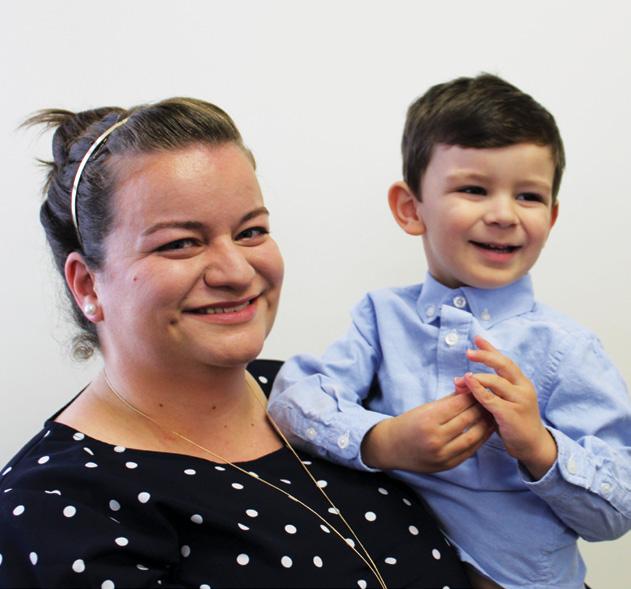
Chase’s son, Teddy, was born during her second year in the program. “I remember being up at 3 a.m. with a crying baby and then having to do a presentation that morning,” she says. During the particularly difficult days, Chase considered leaving for a less demanding job. “I would look at the other people and think, I don’t fit in anymore,” she remembers. “But worked through it. I love what I’m doing, and I think it’s important. I just kept showing up and doing it.”
Chase is grateful for the support of UTSA’s Research Initiative for Scientific Enhancement (RISE) community, a federally funded program that provides financial and professional development support for underrepresented students. “They gave me a community that belong to,” she says. “When I didn’t necessarily feel like I fit in that well, I always fit in there.”
With the end of her doctoral journey in sight, Chase is looking forward to a future in immunology research. Her dream is to work at the National Institutes of Health. “I want to become someone that my son would be proud of and look up to, which sometimes means making sacrifices and doing difficult things so he can see that education is important, serving other people is important, and it’s worth making those sacrifices,” she says.
By Taylor Bird
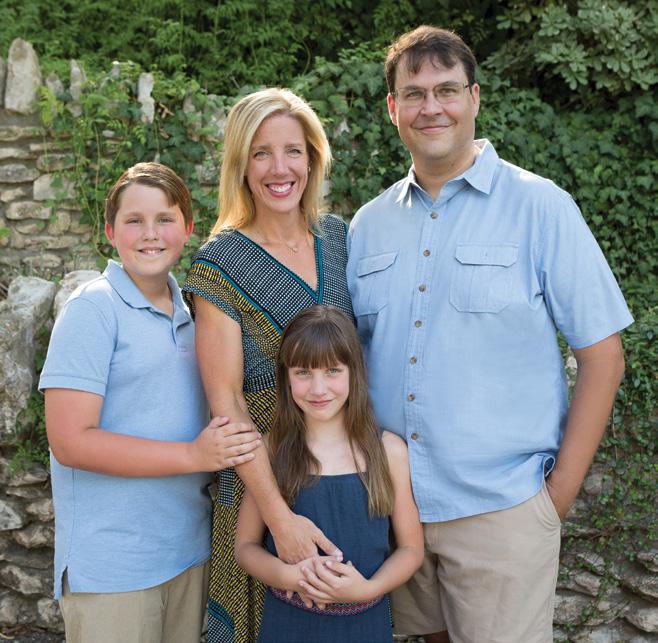
In both business and philanthropy, Dirk and Annie Elmendorf believe in starting from the ground up.
“Backwards, forwards, upside down, inside out, until you’re living and dreaming and breathing it,” says Dirk Elmendorf, one of the three founders of Rackspace Technology, the highly successful cloud computing company based in the San Antonio area. The Elmendorfs’ holistic approach to ensuring educational success starts with preparing the next generation of teachers.
“I wasn’t encouraged to do more than the bare minimum in math, and I came from a place where [I thought] this wasn’t going to be applied in real life,” says Annie Elmendorf. “Because of that, I feel very strongly about instilling in my kids the confidence to not be intimidated by math, to understand the value of math and science.”
Inspired by their own academic experiences, the Elmendorfs believe great teachers play a critical role in building that confidence and appreciation for math and science. That’s why they established the Elmendorf Family Fund for UTeachSA to support the College of Sciences’ teacher
recruitment, preparation and retention program and to grow the pipeline of highly qualified math and science teachers in San Antonio. Graduates of the program simultaneously earn their teaching certification and their degree in a STEM field in four years.
“Math can be the gateway to more science. If you can’t do the math in science, you don’t get to stay in science,” Dirk Elmendorf says.
The Elmendorfs believe that teachers who are passionate enough about math or science to earn their degree in a STEM discipline are more likely to inspire that interest in their students. They feel strongly that keeping kids engaged in math and science, starting as early as possible, helps broaden their opportunities into adulthood.
The Elmendorfs are ensuring the next generation has the best foundation to solve the problems of tomorrow. Through their giving, they hope to inspire others to invest in the next generation of teachers, too.
By Taylor Bird
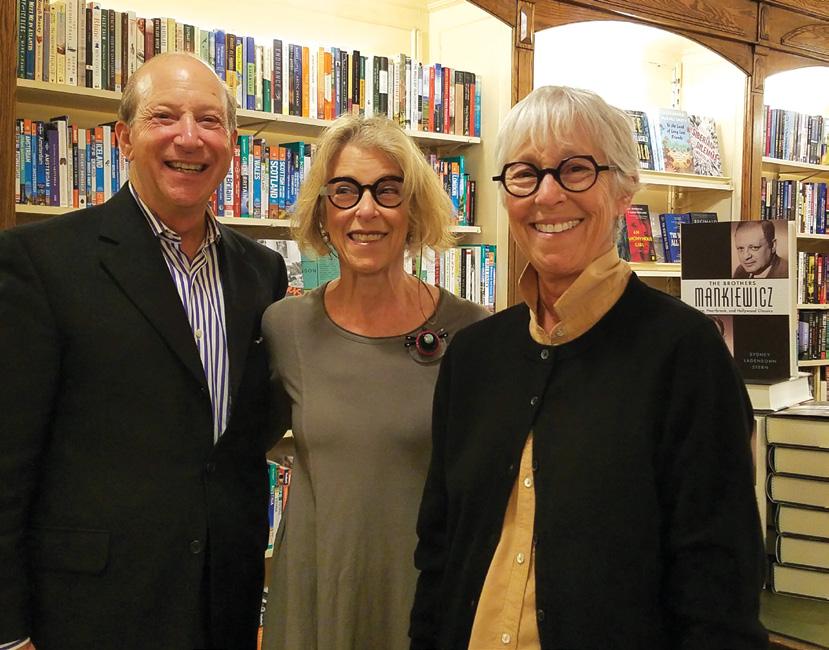
It all started at home.
As children, AnnDee, Sydney and David Ladensohn saw the value and joy of philanthropy. The San Antonio natives watched their grandfather and parents give to charitable causes throughout the city. Now the siblings are following that example with the Jean and Kenneth Ladensohn Endowed Research Fund in the College of Sciences established in memory of their parents and in support of research in Alzheimer’s disease.
“Our mother had a tender heart, and we grew up with the example of our parents giving to all kinds of causes in San Antonio,” says AnnDee Ladensohn Steidel. “This was their city, and very young we experienced the pleasures of giving to organizations here.”
After their mother developed Alzheimer’s disease and passed away, Steidel and her siblings knew they wanted to support research toward a cure that could help other families. They learned of the world-renowned Alzheimer’s scientists working at UTSA and of a matching opportunity for gifts made to the university from the Texas state legislature.
“Knowing there is world-class, basic research in Alzheimer’s at UTSA, with the development team’s encouragement and with the matching opportunity, we threaded the needle. It was a combination made in heaven,” said David Ladensohn.
The Ladensohns take every opportunity they have to spread the good word about UTSA. They enjoy sharing news of the latest research developments and excellent faculty with friends and colleagues.
“UTSA is our university,” said Steidel. “We are thrilled with our gift and are very happy to be able to participate. With an endowment, you can keep giving to it. It is the gift that keeps on giving.”
Their parents would be proud.
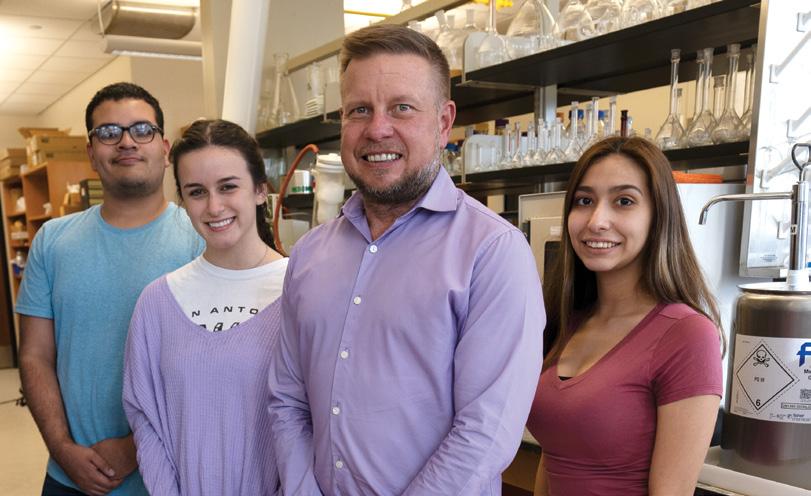
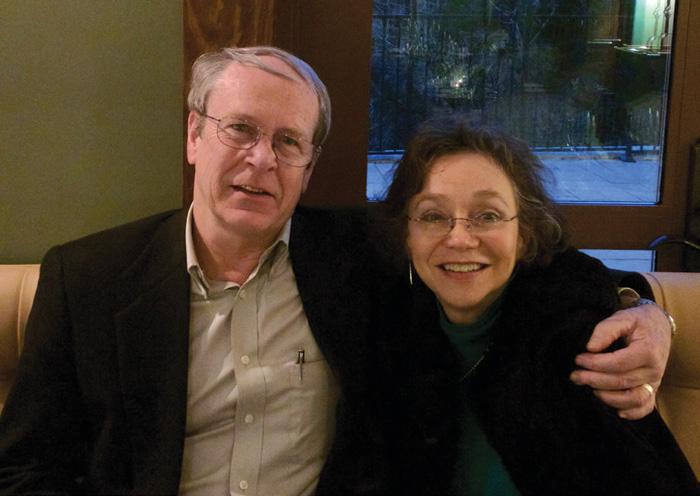
Dr. Doug Frantz’s legacy is his students; they are his reason for dedicating his life to research at UTSA. Frantz says he was drawn to UTSA’s vast potential for growth in the Department of Chemistry, where his lab studies the mechanisms of stem cell differentiation and cancer. He credits the Max and Minnie Tomerlin Voelcker Fund Endowed Distinguished Professorship in Chemistry with allowing him to train the next generation of scientists while conducting his own research.
Frantz says that having the support of the Max and Minnie Tomerlin Voelcker Fund Endowed Distinguished Professorship in Chemistry is critical to maintaining and increasing UTSA’s trajectory in research and creating opportunities for himself and his students. He believes students benefit the most from the endowment, which enables him to offer fellowships for his students, allowing them to spend more time researching rather than juggling classes, off-campus jobs and time in the lab.
“It’s clear that the Voelcker Fund believes in what we do here at UTSA. It’s been incredibly supportive in our ability to attract the best and brightest students,” Frantz said. Ultimately, Frantz seeks to translate his basic discoveries into treatments for patients that will end up in their medicine cabinets. He even has his eye on opening his own company in San Antonio, benefitting the city and UTSA.
“The Max and Minnie Tomerlin Voelcker Fund has been critical in getting my research off the ground here at UTSA…. I am indebted to the Voelcker Fund. I know they’re going to be a huge part of us moving forward.”
The primary goal of the Voelcker Fund is to support research that finds cures for medical diseases. Banks Smith, a Voelcker Fund trustee, says he has been extremely impressed by UTSA and its College of Sciences in the pursuit of medical cures. Voelcker Fund trustees are passionate about supporting medical research for several reasons, one being the excitement among the researchers themselves. They understand that their dedication is a critical aspect to elevating UTSA as a top research institution in the country.
“Why UTSA? Because it is a tremendous research institution and research is the focus of the Voelcker Fund…. The quality of the faculty at UTSA is reflected in the quality of their research, and it is excellent,” Smith said.
For over four decades, from professor to senior associate dean, Dr. Craig Jordan has been committed to helping students succeed in the College of Sciences. His wife, Arcie, witnessed his efforts firsthand.
Inspired by an experience with an undergraduate student during which Craig Jordan tasked the student with giving feedback on his introductory biology course and developing course material for the class (which he still uses to this day), he approached his wife about establishing the Arcie and Craig Jordan Endowed Undergraduate Scholarship in Sciences.
“Craig is a fabulous professor,” says Arcie Jordan. “He really cares about students and wants them to grow. I remember my days in a large university setting and how difficult it was to get the personal attention that needed and that I saw other students needed from professors who were more focused on their research than imparting their knowledge to students. I saw this [scholarship] as a way to support the development of teaching as a goal, and teaching students, inspiring them and helping them to grow. That in and of itself is such a laudable goal.”
The Jordans’ scholarship also nurtures excellent instruction in the College of Sciences. Students who receive this scholarship work closely with a faculty member in the College of Sciences to create curriculum and course materials for a class.
That mentoring continues after students leave UTSA and throughout their professional careers. The Jordans chose to establish an endowment to ensure their vision is carried on in perpetuity.
“Craig and I inherited a love of learning from our respective parents who each placed a premium on education and who supported educational outreach in various ways. This endowment allows us to create a legacy in the name of something that is important to us. It communicates to the students that this is something we really care about: We care about teaching, we care about developing students, and we care enough about it to put our name on it and to fund it at a level that is self-sustaining and will grow over time,” Arcie Jordan says.
“We chose to establish an endowment to ensure the longevity of this program. We now have a reservoir to which we can add so that, in the future, even more students can be supported,” Craig Jordan adds.
After working closely with and getting to know that first student, Craig Jordan wrote a glowing recommendation letter for her medical school application. She received a full academic scholarship plus an additional $20,000. Through the Arcie and Craig Jordan Endowed Undergraduate Scholarship in Sciences, the Jordans hope to be the catalyst for many more success stories.
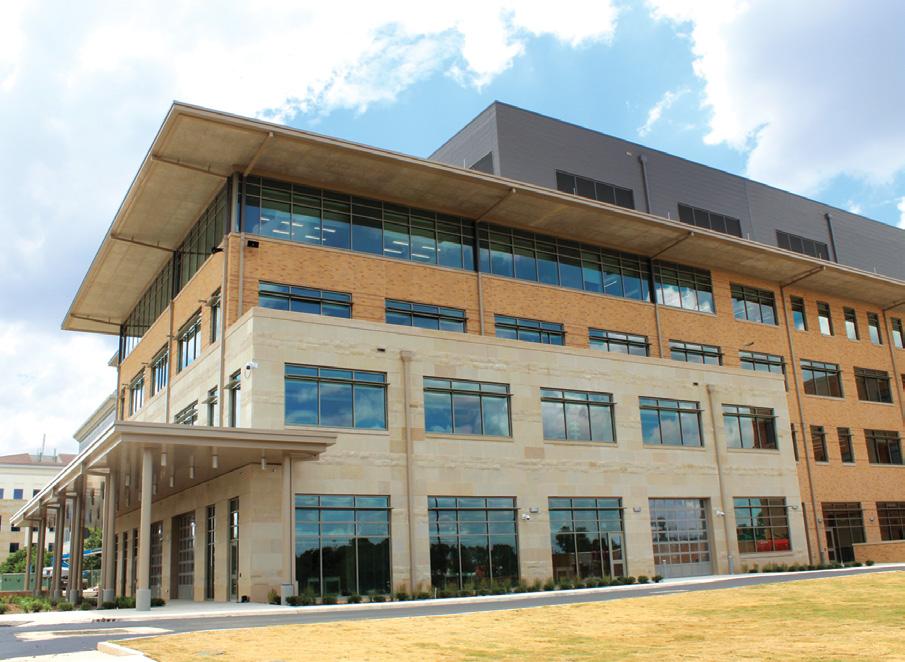
The Science and Engineering Building houses laboratory, classroom and collaborative space.
The newly opened, $95 million Science and Engineering Building (SEB) was the largest construction project in UTSA history. The 153,000-square-foot facility provides laboratory, classroom and collaborative space for academic and research programs in brain health, chemical engineering, biology and chemistry. Many of the laboratories in the building are surrounded in glass so students and visitors can witness the work underway, a concept known as science on display. The collaborative design encourages interaction among students from different majors, which has been shown to engage more students in research and improve student retention and graduation rates.
The SEB features 17,000 square feet of makerspace where engineering students design, test and fabricate their senior projects; a dedicated space for the students, faculty and staff in UTSA’s Brain Health Consortium; and a two-story distillation column for chemical engineering research. In the innovative biology and chemistry instructional laboratories, undergraduate students have the opportunity to both learn from lab classes and participate in research with UTSA’s world-class faculty. SEB is the first new building at UTSA since the North Paseo Building opened in 2014.
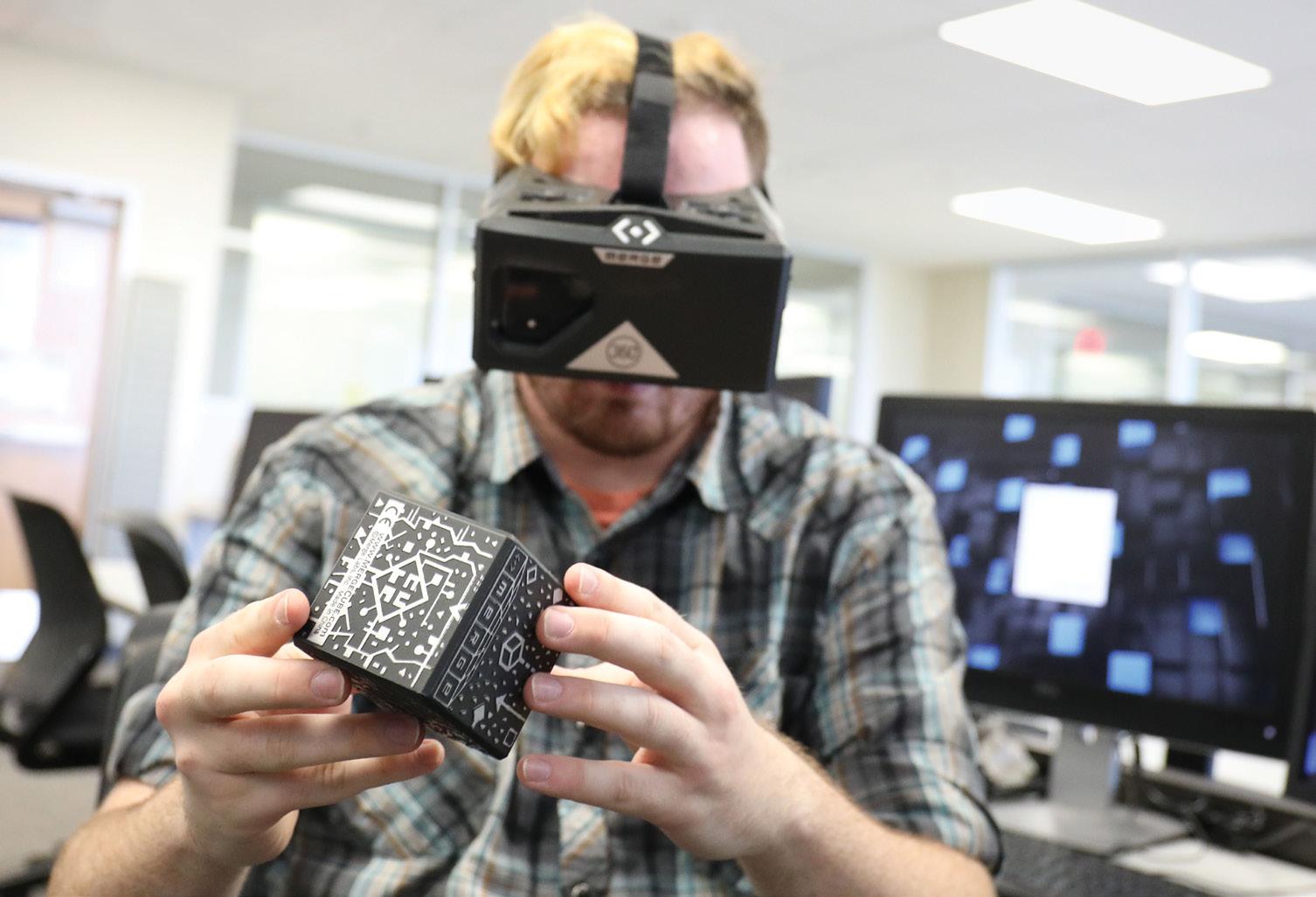
Computer science students experience the power of immersive technology such as the Merge Cube to learn about virtual reality (VR), augmented reality (AR), and mixed reality. This holographic toy allows users to physically hold and interact with 3D objects using AR technology.