
THE UNIVERSITY OF TEXAS AT SAN ANTONIO COLLEGE OF ENGINEERING

Dean
JoAnn Browning
Associate Dean for Research and Graduate Studies
Harry Millwater
Associate Dean for Student Affairs and Policies
Mark Appleford
Associate Dean of Administration
Anson Ong
Assistant Dean of Finance
Kirstin Wilsey
Director of Development
Lindsay Land
Communications Coordinator
Innovations Managing Editor
Deborah Silliman
Contributors
Joanna Carver, Ashley Festa, and Deborah Silliman
Associate Vice President for Communications and Marketing
Joe Izbrand
Mailing Address
The University of Texas at San Antonio College of Engineering
One UTSA Circle San Antonio, TX 78249
Visit us on the Web engineering.utsa.edu
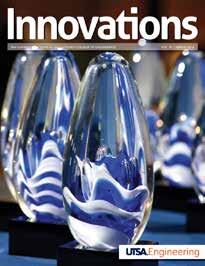
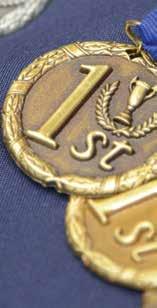
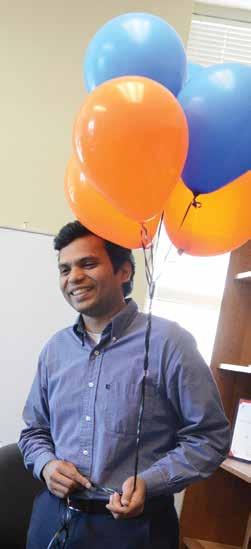
These handcrafted glass sculptures were given to award winners at the 2016 University Excellence Awards Ceremony, which was held in the H-E-B University Center Ballroom this spring. The event included presentations of the University Excellence Awards, President’s Distinguished Achievement Awards, President’s Distinguished Diversity Awards, Quantitative Literacy Program Faculty Excellence Award and Richard S. Howe Excellence Awards. College of Engineering’s Ram Krishnan was awarded the President’s Distinguished Achievement Award for Research Achievement. (Photo by Deborah Silliman/ College of Engineering)
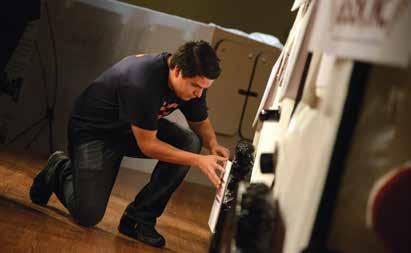
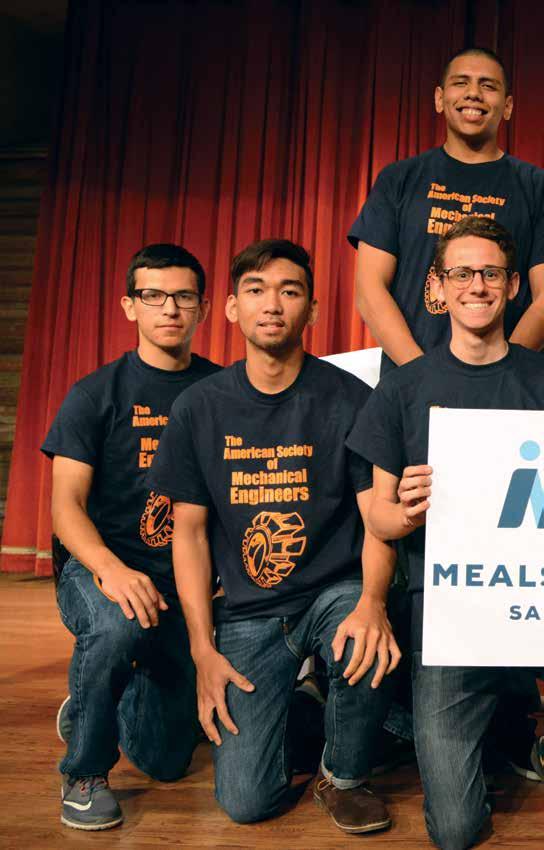
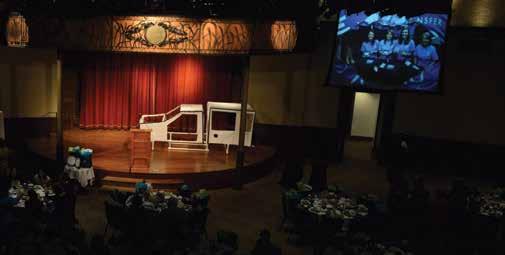
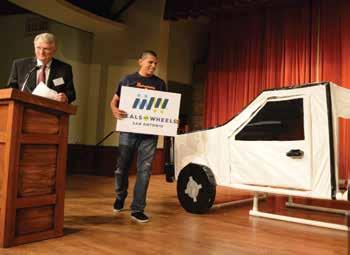
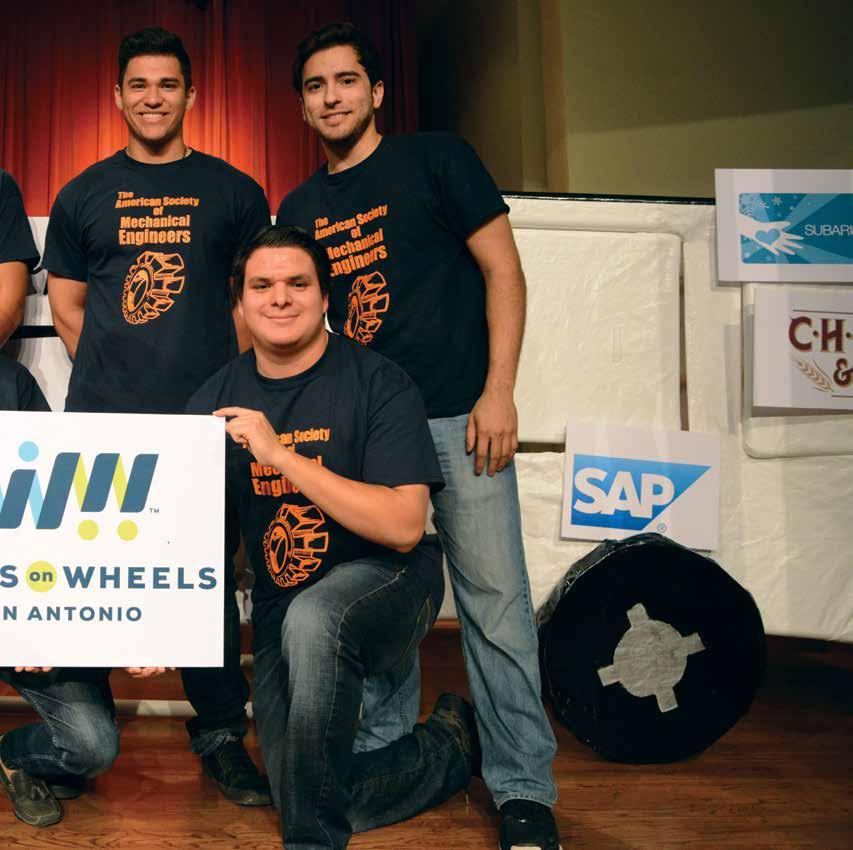
Members of the UTSA College of Engineering student organization
American Society of Mechanical Engineers (ASME), with the help of students from the Society of Automotive Engineering, built two PVC and plastic trucks in support of Christian Senior Services’ Meals on Wheels San Antonio’s Spirit of Compassion Luncheon. The ASME members not only built the two trucks, but they also assembled one of them during the luncheon to give the audience a visual reminder of how important the Meals on Wheels fleet of vehicles is to the organization. UTSA President Ricardo Romo gave the keynote address at the event, and Nancy E.C. Willaford and Meghan Grace from Pape-Dawson Engineers were recognized for their service to Meals on Wheels. UTSA College of Engineering students are not only making a difference here on campus, but in the local community as well.
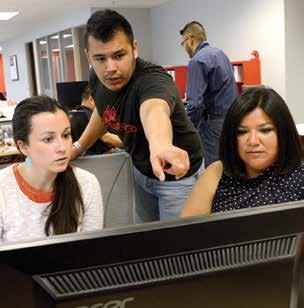
Lillian Martinez, a senior civil engineering major, is passionate about service. With over 1,400 hours of community service under her belt, it is hard to imagine that she has time for much else outside of her engineering coursework and volunteer hours. But this wife and mother of two somehow manages to do more in just a few weeks than some students do in an entire semester...
Adel Alaeddini, Justin Wilkerson, and Ram Krishnan all started their careers in academia at the The University of Texas at San Antonio College of Engineering. Now, these assistant professors are making waves in their respective areas of research. From explosives to “small” data to cyber security, these young and amazing faculty members are making a positive impact at UTSA...
Ahmad Taha knows what it is like to live in a war zone. Born in Lebanon, Taha, an assistant professor of electrical engineering at The University of Texas at San Antonio, recalls what it was like for him when he was a child and his country’s electrical grid was bombed in a series of attacks...
The Department of Biomedical Engineering at The University of Texas at San Antonio has acquired a rare piece of equipment that can print tissues and potentially regenerate organs. The device works similarly to a 3D printer and is now a part of the laboratory belonging to Teja Guda, assistant professor of biomedical engineering...
As The University of Texas at San Antonio aims to become a Tier One research university, it also becomes the subject of an experiment as one of its faculty members puts the university itself under the microscope for water analysis...
This spring, The University of Texas at San Antonio Vice President for Research C. Mauli Agrawal was inducted as Fellow of the National Academy of Inventors for his research and innovation in orthopedic and cardiovascular biomaterials and implants. The honor places Agrawal, former dean of the College of Engineering, among an elite group of professionals that includes presidents and senior leaders of research universities, Nobel laureates, National Inventors Hall of Fame inductees, and National Academies members...
Yongcan Cao, assistant professor in the Department of Electrical and Computer Engineering, has been appointed to the 2016 Air Force Research Lab Summer Faculty Fellowship Program (SFFP) at AFRL-Munitions. The SFFP offers fellowships to university faulty to conduct research at one of the Air Force research facilities in the summer.
“I feel honored and excited to be selected for this fellowship,” said Cao. “This is an excellent opportunity to learn what the Air Force is planning to do in the future and showcase some sampled research activities at UTSA.”
The objectives of the SFFP are to stimulate professional relationships among SFFP fellows and the scientists and engineers in AFRL Technical Directorates and other Air Force research facilities. Additionally, the program is designed to elevate the awareness in the U.S. academic community of Air Force research needs and foster continued research at SFFP fellows’ institutions and provide the faculty opportunities to perform high-quality research at AFRL Technical Directorates and other Air Force research facilities.
“Dr. Cao is a well-known researcher in the field of autonomous vehicles,” said CJ Qian, professor and interim chair of the Department of Electrical and Computer Engineering. “This USAF summer faculty fellowship provides excellent opportunities for him to strengthen collaborations with the scientists at AFRL facilities and advance his research on the topics critical to the Air Force missions.”
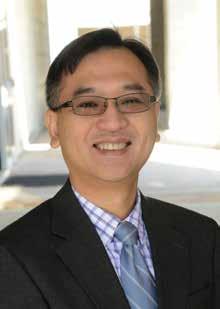
Wan receives Institute of Industrial Engineers award
Hung-Da Wan, associate professor in the Department of Mechanical Engineering, has been awarded the Institute of Industrial Engineers’ Lean Teaching Award for 2015. The award was offered by IIE’s Lean Division for the remarkable work Wan has been doing to advance the knowledge and practice of lean concepts. The lean division’s teaching award is given out annually to honor the services of a person or group of people who have developed curriculum and disseminated courses in the subject area.
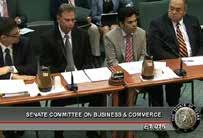
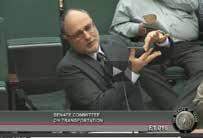
Ram Krishnan, Microsoft President’s Endowed Assistant Professor in the Department of Electrical and Computer Engineering, and Jose Weissmann, civil and environmental engineering professor, both gave public testimony at the Texas State Senate this spring. Weissmann spoke to the Committee on Transportation on the subject of oversize overweight trucks and associated fee structures to recover pavement and bridge consumption costs. Krishnan spoke to the Business and Commerce Committee
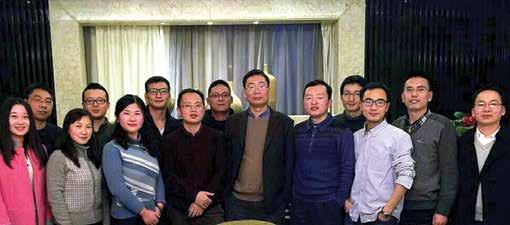
CJ Qian, professor and interim department chair of the Department of Electrical and Computer Engineering, recently visited Nanjing, China, and had the chance to catch up with 10 former UTSA visiting students and scholars who are working or studying at universities in China. Shown in the picture are Shihong Ding, Junyong Zhai, Chuanlin Zhang, Lin Chai, Hongyan Chu, Zhigang Su, Qian Wang, Yijian Liu, Wenting Zha, and Qixun Lan.
Ram Krishnan, Microsoft President’s Endowed Assistant Professor in the Department of Electrical and Computer Engineering, received the President’s Distinguished Achievement Award for Research Achievement at the 2016 University Excellence Awards Ceremony held April 14, 2016 in the H-E-B University Center Ballroom on UTSA Main Campus. The President’s Distinguished Achievement Award for Research Achievement recognizes faculty who have conducted high-quality, high-impact research and who have made a substantial contribution to their field. Other awards given at the ceremony included the University Excellence Awards, President’s Distinguished Achievement Awards, President’s Distinguished Diversity Awards, Quantitative Literacy Program Faculty Excellence Award, and Richard S. Howe Excellence Awards.
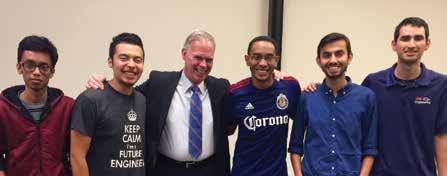
Cedric Leighton, founder and chairman of Cedric Leighton Associates and Cedric Leighton International Strategies, a D.C.-based global strategic risk and cyber risk consulting company, poses with engineering students after his presentation Cyber in Society held this spring at the UTSA Downtown Campus. Col. Leighton, a distinguished war veteran, served as the deputy training director for the NSA, the squadron commander for the 316th Training Squadron, and the deputy director for Warfighter Support and Integration. UTSA’s cyber security program has been ranked the best in the nation, according to a national survey of certified information technology security professionals. The Ponemon Institute conducted the survey for Hewlett-Packard.
Jon Graves, Maciel Lopez, and Xavier Saenz, all undergraduate students in the Department of Electrical and Computer Engineering, competed in the Mathematical Contest In Modeling® earlier this year, oversaw by faculty advisor Yufang Jin, associate professor in the Department of Electrical and Computer Engineering. The team was designated as a meritorious winner in this year’s international competition The Meritorious Award was only awarded to the top - tier teams who placed in the top 8 percent of the 7, 421 teams who competed .
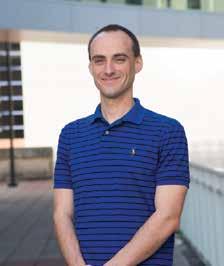
Garrett Hall, a junior electrical engineering student at UTSA, was recently named the IEEE Aerospace and Electronic Systems Society (AESS) Undergraduate Student Representative. As a community college student in Austin, Texas, Hall became involved in NASA’s Reduced Gravity Education Flight Program, which spurred his interest in aerospace technologies. Hall transferred to UTSA in 2014, and now not only holds the AESS position, but is also active in UTSA’s chapter of Eta Kappa Nu, the international electrical and computer engineering honor society of the IEEE.
Meet Thilo Janssen. He’s a German Air Force veteran who’s starting a new engineering career thanks to UTSA.
At 45, Janssen is a little older than the average college student. That’s because before he was a Roadrunner, he flew fighter jets for the military in his home country, Germany, for 20 years.
“When I was a kid, I knew I either wanted to be an engineer or a fighter pilot,” Janssen said.
When the veteran turned 41, the age of mandatory retirement in the German Air Force, he pondered becoming an airline pilot.
“I quickly decided against that,” he said. “I love flying, but after 20 years of flying jets, it would be like going from being a Formula One racer to a bus driver.”
Instead, Janssen pursued his other childhood dream and decided to earn his electrical engineering degree.
He met his wife, a San Antonio native, while he was serving at Randolph Air Force Base, and he already knew San Antonio well from visiting his in-laws over the years. So moving to the Alamo City was a natural fit.
Janssen enrolled in San Antonio College in 2011 to start on his engineering degree. After two years, he transferred to UTSA and immediately found himself right at home.
“UTSA is very friendly and very diverse,” Janssen said. “People are very open. I love that I can talk to anyone.”
He’s also enjoyed close relationships with his professors, who Janssen says really believed in him and were impressed by his dedication.
“Professors at UTSA take the time to answer your questions,” he said. “I never hesitated to seek extra help, and they were always quick to respond.”
A first-generation college student, Janssen was a member of UTSA’s Integrated Bachelor’s and Master’s Degree Program, which allowed him to pursue his undergraduate and graduate degrees at the same time. He’s also on track to graduate with a 4.0 GPA. He credits his academic success to hard work and determination.
“Time management is one of the hardest things I had to learn,” he said. “I constantly studied, but I also wanted to make time for my family. There were a lot of sacrifices.”
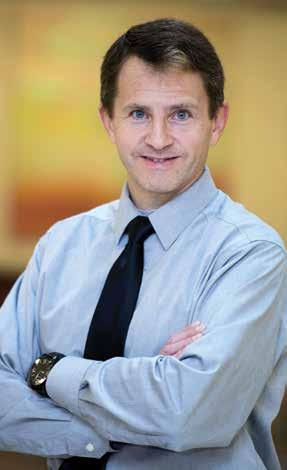
Janssen’s family is extremely proud of his UTSA accomplishments. His wife and their relatives have a big, Texan celebration planned following his graduation. He also plans to travel to Germany during the summer to celebrate with his European friends and family.
Following those celebrations, the UTSA alumnus will return to the United States to
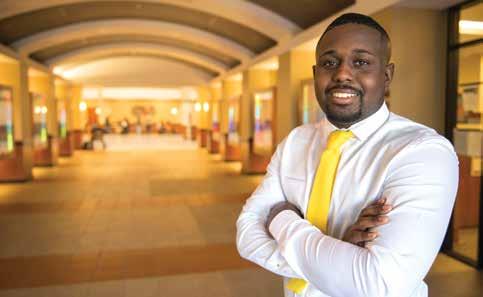
Meet Sam Brown. He’s been doing volunteer work for years, not for his resume, but because he believes it’s everyone’s responsibility to help each other out.
Born in Houston, Texas, Brown and his low-income family heavily relied on volunteer services in his community.
“We had college students come and hand out backpacks full of school supplies in the fall,” he said. “Around Thanksgiving they’d hand out turkeys.”
Since high school, Brown has volunteered with his local community center in Houston to pay it forward. A football scholarship brought him to UTSA in 2012, and Brown has continued to travel home to volunteer.
“I see the kids we’re helping out, and I remember that I was in their shoes not too long ago,” he said. “I always felt so grateful. I knew back then that when I got older I’d give back to my community.”
begin a career in renewable energy. He’s been fascinated by solar panel technology since he was a teenager. Because gas prices are so high in his home country, there’s a strong national interest in all types of renewable energy.
“That’s one thing I can bring over from Germany,” he said. “Over there, we have more windmills than people.”
Since coming to UTSA, Brown has also pursued volunteer opportunities on campus. He is a member of the UTSA chapter of Volunteer Organization Involving Community Education and Service (VOICES), which enables him to tutor and play games with low-income students after school.
“That’s my nature,” he said. “In fact, it’s everyone’s nature. We’re human beings. We have to help each other out and uplift each other.”
Brown also volunteers with the Girl Scouts of South Texas. A few days a week, he uses the engineering skills he’s developed at UTSA to transition the organization to a more modern computer system.
“Coming to UTSA has made it possible for me to do what I know I could always do, and to use those talents to help others,” Brown said. “I always had these skills. I just had to grow and develop them.”
Brown, who is on track to graduate in 2017 with a degree
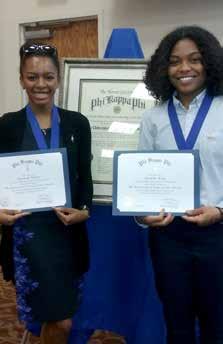
Kennedi Wilson and Jasmine King, biomedical engineering undergraduate students, were inducted into Phi Kappa Phi in the spring semester. Phi Kappa Phi is the nation’s oldest and most selective collegiate honor society for all academic disciplines. Only the top 10 percent of seniors and 7.5 percent of juniors, having at least 72 semester hours, are eligible for membership. The honor society recognizes and promotes academic excellence in all fields of higher education and engages the community of scholars in service to others.
The Rowdy Walker may look like a simple device, but developing it was anything but. UTSA graduate student Christian Trevino started on the project, which is based on a toy from the 1900s, in 2015 and has been perfecting the 3D printed design over the last 12 months.
“Traditionally, this kind of toy is made up of three wooden pieces - a body with a fixed leg, a moving leg, and a hinge joint that attaches the two,” said Trevino, who recently started her graduate studies in mechanical engineering at UTSA. “We have re-engineered the toy so that it can be 3D printed as a single, integrated assembly that includes the pin joint.”
Trevino explained that after the toy is printed, she had to manually remove the extra material that held the leg in place so the toy could “walk” down an incline.
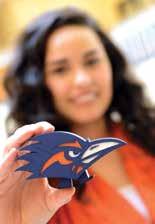
“Just like a wind-up toy uses potential energy stored in a spring, the walking toy uses potential energy as it descends downhill,” said Pranav Bhounsule, the mechanical engineering faculty member who mentored Trevino. “However, unlike a wind-up toy that has an intricate mechanism, our Walking Rowdy relies on its mass distribution, inertia, and leg geometry to amble downhill.”
Trevino said that the project wouldn’t have been possible with out 3D printing because that allowed her to tune the geometry and mass distribution without having to compromise the likeness of the logo. Eventually, she hopes to mass produce the toy and sell it as a souvenir.
Student teams from UTSA’s Department of Electrical and Computer Engineering swept the Central Region of the North America Finals of NXP Intelligent Car Race. The event, which took place in April at Texas State University, pitted students from all across the Central Region against each other, as they competed for a place at nationals, which will be held in Austin this summer.
in computer and electrical engineering, plans to continue volunteering after college.
“Volunteering motivates me to do better in my studies,” he said. “When I’m not studying, I’m volunteering. I make it my duty to show everyone in my neighborhood that there’s a way out if you work hard.”
Brown counts among his talents the ability to see even the smallest opportunities. He noted that his football talents in high school brought him a UTSA scholarship, which has now led to him tapping into his potential as an engineer.
“UTSA taught me to be proactive,” he said. “I learned how to grow up here. It’s prepared me so well that I have no fears about starting my career. I’m happy to have found a stable, solid life.”

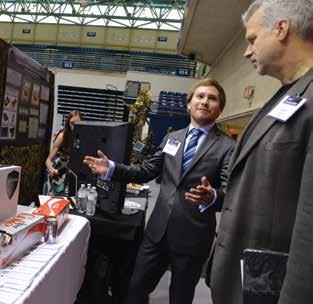
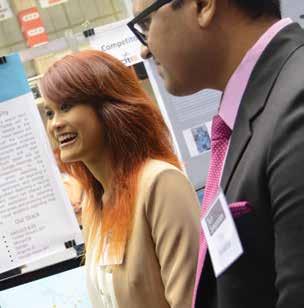
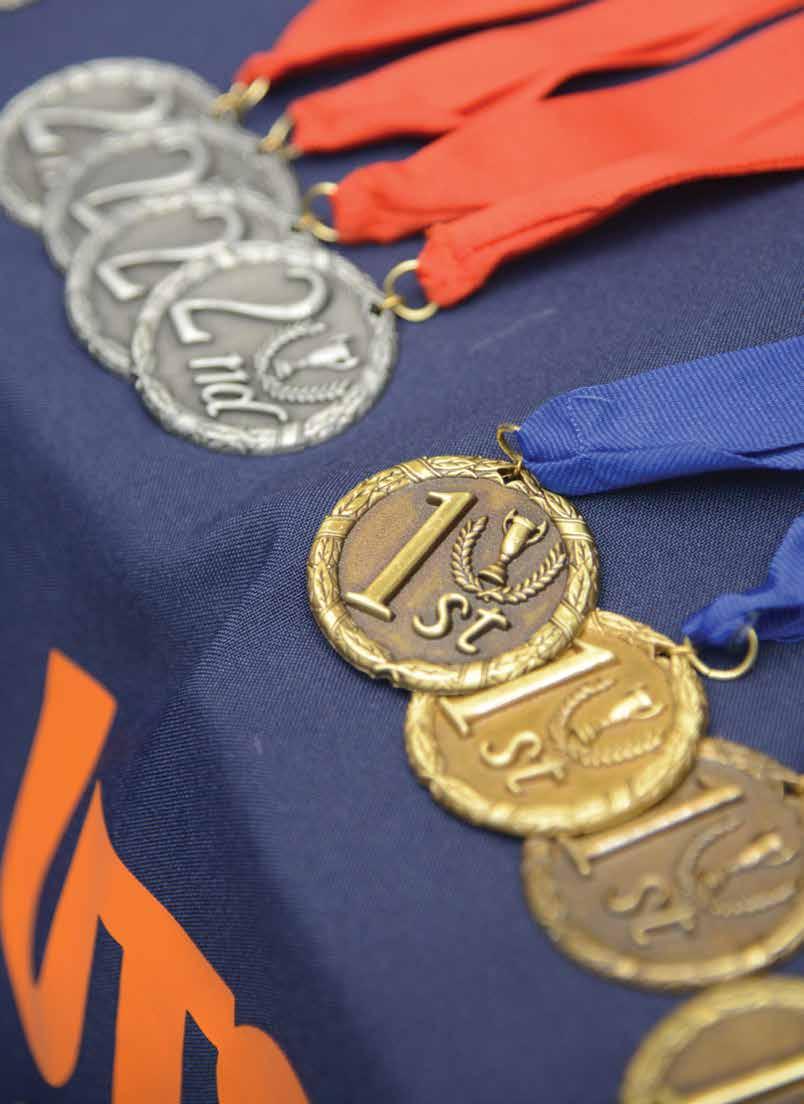
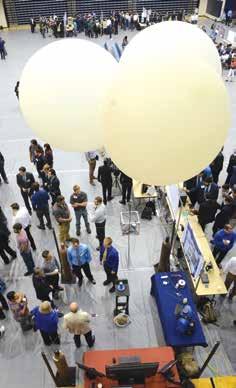
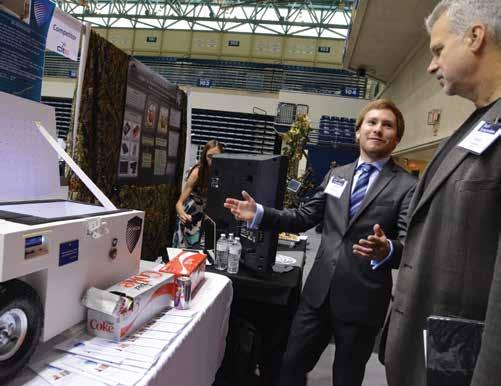
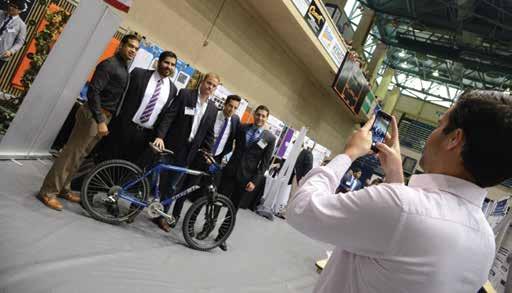
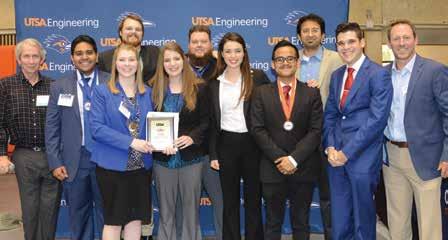
More than 60 senior design teams competed for The University of Texas at San Antonio College of Engineering’s departmental awards at the 4th Annual Tech Symposium held in April on the UTSA Main Campus. The event, which at its inception had 37 teams competing, has almost doubled in size. Because of this growth, the competition was moved from it’s previous location in the H-E-B Ballroom to the UTSA Convocation Center. Ten of the teams that participated in the Tech Symposium also competed in the Center for Innovation and Technology Entrepreneurship (CITE) $100K Student Technology Venture Competition.
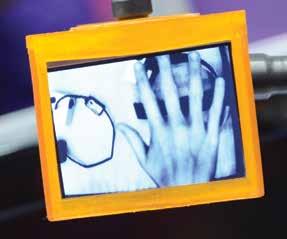
This year, team InfraVein/Omnibus Medical not only won the top prize in the Biomedical Engineering Departmental Awards, but also won the CITE $100K Student Technology Venture Competition. The team, which consisted of engineering and business students, created a portable device that makes it easier for medical professionals to find veins.
The Tech Symposium and CITE $100K Competition provide a public venue for UTSA senior engineering students to show off their Senior Design Projects to other students, their parents, and visiting high school students, as well as industry and government sponsors. The goal of the Senior Design Projects is for engineering seniors to apply the knowledge they have accumulated throughout their undergraduate career in the design, development, and implementation of projects they have worked on over the past two semesters. Teams also had the option to team up with business students to create a business plan and then compete in the CITE $100K Competition. This Shark Tank style competition gives students hands-on experience as early-stage entrepreneurs and encourages intercollegiate partnership for senior design projects that can translate into new startup companies.
Biomedical Engineering
1st Place - Omnibus Medical/InfraVein
Andrew Shiels, Sanjiv Parel, Kristen Hamaleinen, and Kreg Zimmein
2nd Place - Oak industries
Maripen Yeatts, Andres Morales, Line JuulPedeisen, and Heinan Paz
3rd Place - Renova Systems
Andre Cleaver, Tyler Daniels, Kyanoosh Broumand, and Ismael Sagredo
Civil and Environmental Engineering
1st place - Blue Star Engineering
Jeff Leaf, Jizella San Adres, Anthony Lozano, Hele Cervantes, Edurado Smith, Trent Fidone
2nd Place - Next Generation Engineering
Oscar Ivan Gonzalez, Jesus Garcia, Matthew De La Cruz, Daniel Wall, Andrew Ortega, and Rawan Almusaileem
3rd Place - Construction Corp.
Stephanie Silva, Roger Terrazas, Felipe Flores, Gianluca Gennovesi, Mohana Almokhitah, and Abdulaziz Alserbel
Electrical and Computer Engineering
1st Place - WiFlight
Brian Pearce, Matt Striegl, Jeremy Casper
2nd Place - Smart Bow
Raafat Seif, Yonggun Lee, Carmina Francia, and Ian Stubblefield
1st Place - InfraVein
Team members: Kristen Hamalainen, Sanjiv Patel, Andrew Shiels, Kreg Zimmern, Rachel Loeffler, Cody Baker, Alexis Morales and Ileana Gonzales
2nd Place - Bullseye Tactics
Team members: Raafat Seif, Yonggun Lee, Carmina Francia, Ian Stubblefield, Elizabeth Martin, Aaron Castellanos and Federico Berlanga
3rd Place - WASDPlay
Team members: Taylor Brauer, Brandon Snow, Zachry Rodriguez, Aljon Lu and Jake Federico
3rd Place - The Navigation Assistants
Holden Rios, Salome Briseno, Joshua Huerta, and Samantha Forres
Mechanical Engineering
1st Place - LEMS Aeronautics Inc.
Joseph Ross, Mathew Carrillo, Sanya Singh and Adnan Yusof
2nd Place - CARL Engineering
Richard Aguilera, Phillip Casso, Crystal Ramirez, and Raul Lozano
3rd Place - R203 Engineering
Clinton Hopkins, Zachary Huber, Blake Kallemyn, and Garrett White

LThis non-traditional college student has thrown herself into the college experience meet
Lillian Martinez, a senior civil engineering major, is passionate about service. With over 1,400 hours of community service under her belt, it is hard to imagine that she has time for much else outside of her engineering coursework and volunteer hours. But this wife and mother of two somehow man-
ages to do more in just a few weeks than some students do in an entire semester.
“Volunteering is a way for me to give back and support others that have similar goals,” said Martinez. “My husband has been so supportive of me, and I want to pay it forward to others who may not have as strong of a support system as I do.”
A transfer student from San Antonio College, Martinez came to UTSA in the summer of 2014 as a participant in the Transfer Academy for Tomorrow’s Engineers (TATE) program. The intensive sixweek summer bridge program is a collaborative initiative between UTSA and Alamo Community Colleges and was created to promote a seamless transfer of community college students into the UTSA College of Engineering.
“The TATE program was the first opportunity I had to participate in research,” said Martinez. “The professors, advisers and peers in the program helped me develop confidence though my transition to UTSA. I would have not become involved on campus nor developed the friendships I have now if it wasn’t for TATE.”
By fall 2014, Martinez was fully acclimated and thriving at UTSA. She joined the UTSA student chapter of Mexican American Engineers
and Scientists (MAES), and was elected president of the group. At that year’s MAES National Symposium, Martinez received the top MAES award, the Lockheed Martinez Madrina Scholarship. Then in 2015, Martinez again was recognized at the MAES National Symposium, winning a President’s Award.
“Lillian is passionate, fair-minded, selfless, and genuine,” said William Davis, MAES National President. “She is the type of person not interested in credit, but rather in lifting up those around her.”
Additionally, Martinez was elected as the MAES National Student Representative, meaning that she helps oversee 40 student chapters nationwide.
“I love being the National Student Representative. I get to meet students from all over the country who have similar stories and common goals,” she said. “We all come from humble beginnings, but I know that we all make a difference.”
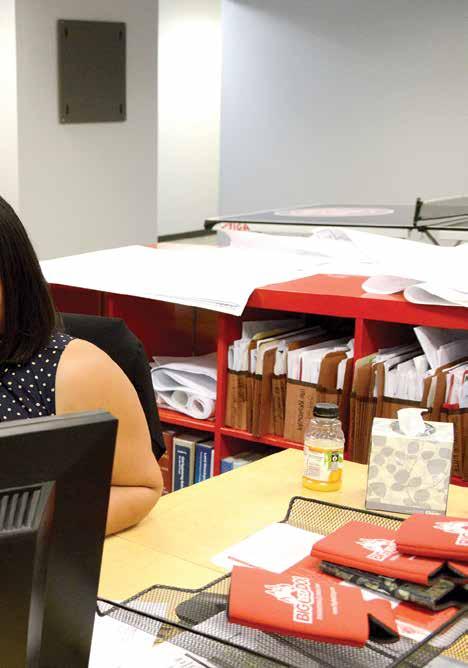
In addition to her involvement with MAES, Martinez recently began working 20 hours per week in an internship at Texas-based engineering firm Big Red Dog.
“The best part of working at Big Red Dog was learning from experienced project managers and engineers,” she said. “My recommendation to all engineering students is to have at least one internship to get a hands-on experience.”
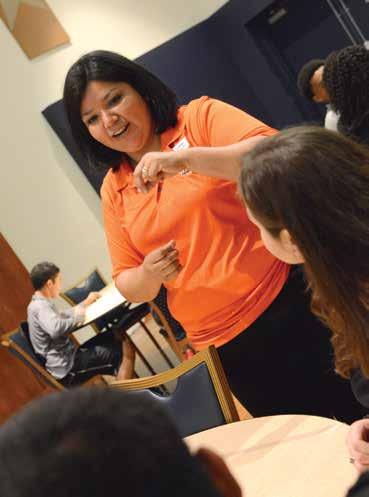
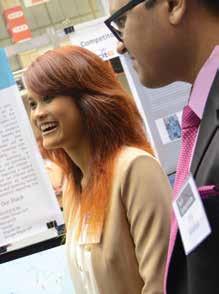
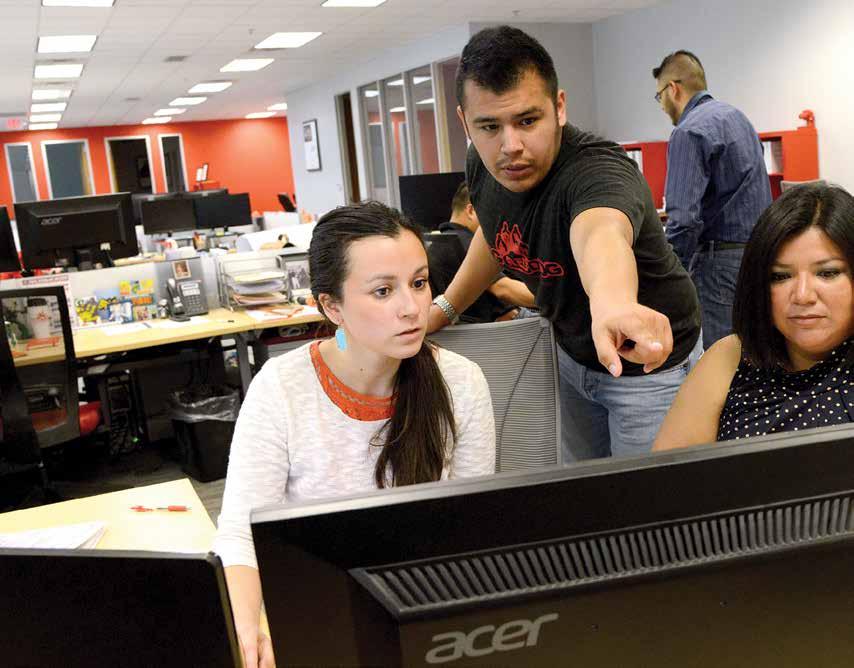
LEFT: At San Antonio engineering firm Big Red Dog, civil engineering major Lillian Martinez (right side of photo) works sideby-side with fellow engineering student and intern Joel Niño as well as Amanda Saldivar, a UTSA alumna and assistant project manager at the company. ABOVE: Martinez volunteers at Science Extravaganza hosted by the Mexican American Engineers and Scientists student organization on UTSA Main Campus. The event brought local high school students to UTSA to participate in interactive engineering activities and to tour the campus.
At her internship, Martinez has the chance to learn side-by-side with other UTSA interns and alumni. Russell Yeager, vice president of the San Antonio Big Red Dog office, says that the company is committed to partnering with UTSA to help up-and-coming engineers progress in their careers and develop into successful professionals.
“Lillian was an excellent candidate and expressed desire to learn and expand her career horizon,” said Russell. “We thought her background and current leadership roles with UTSA student groups would bring a great perspective.”
With the end of the semester around the corner, Martinez isn’t slowing down. Not only will she be taking three summer courses, she will also be attending a MAES conference in Anaheim, California. But thankfully, Martinez has set aside some time for a much-needed vacation. She and her family will be visiting Disneyland.
“I am really looking forward to spending some time with my family,” she said. “If it wasn’t for their love and support, I wouldn’t be where I am today.”
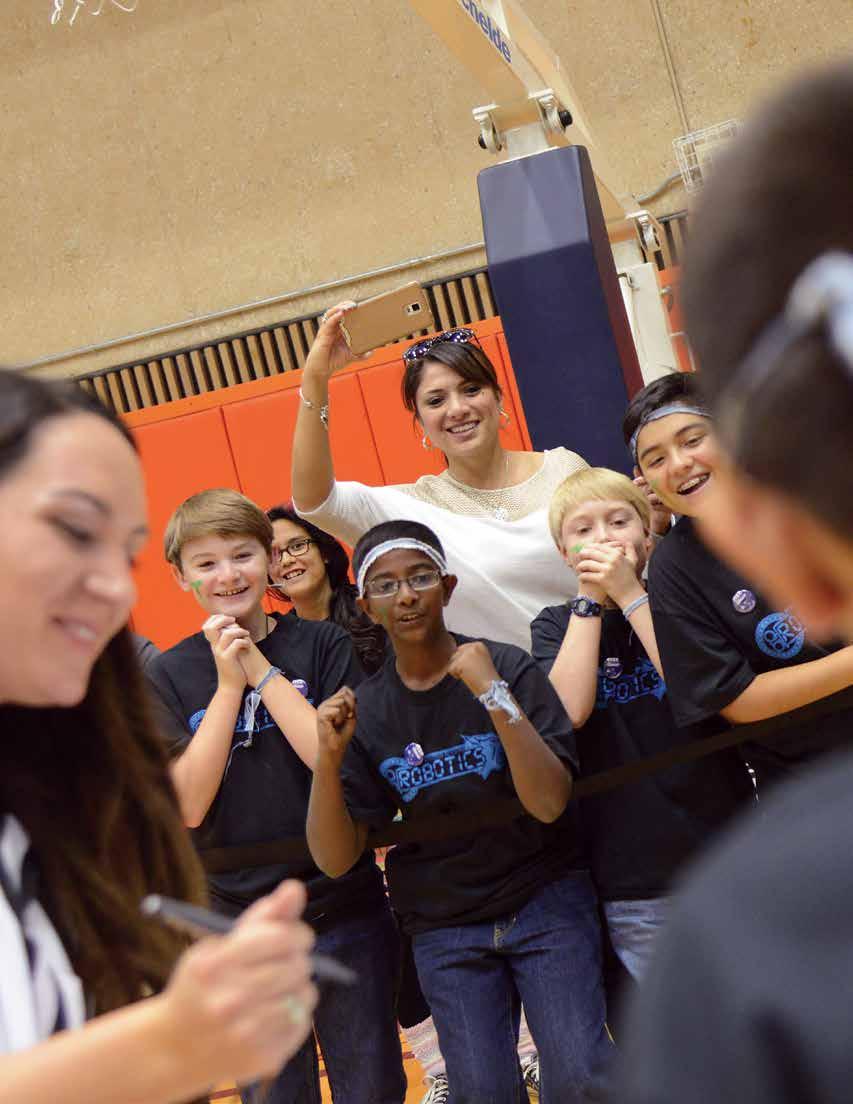
iTEC hosts Getting Excited About Robotics (GEAR) at UTSA Main Campus
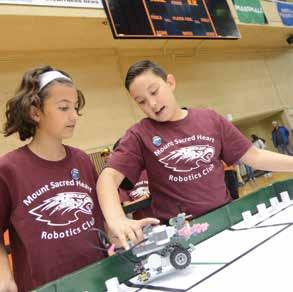
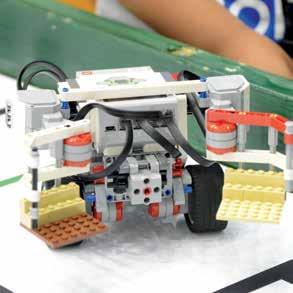
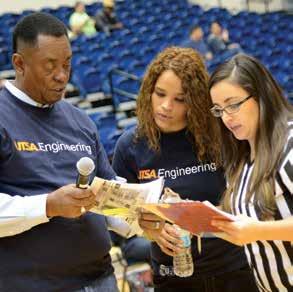
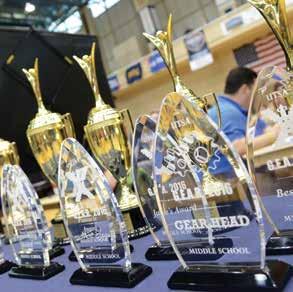
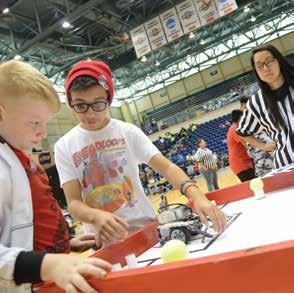
Teams of students between grades three and eight from the San Antonio area faced off at the UTSA Convocation Center this spring for the Getting Excited About Robotics (GEAR) competition.
The event is organized by the Interactive Technology Experience Center (iTEC), a community outreach program in the UTSA College of Engineering. The annual robotics competition is designed to motivate schoolaged children to get excited about science, technology, engineering, and mathematics (STEM).
The teams spent six weeks at their home schools designing the best robot they can to meet GEAR-themed challenges. This year, the Loma Park Elementary School team Rough Shod took first place in the elementary division, and Leal Middle School’s Flux Capacitors took the top prize in the middle school category.
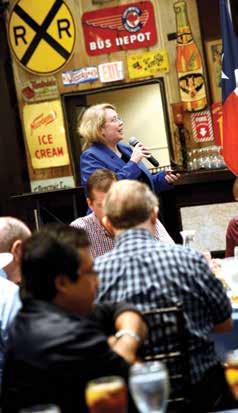
LEFT: JoAnn Browning, dean of the College of Engineering, gives a college update at a recent luncheon hosted by the Texas Society of Professional Engineers (TSPE).
TSPE is a state society of the National Society of Professional Engineers and was founded in 1936 to serve the interests of the individual engineer in Texas across all disciplines of engineering. TSPE’s mission is to promote and enhance the profession and licensed practice of engineering. BE -
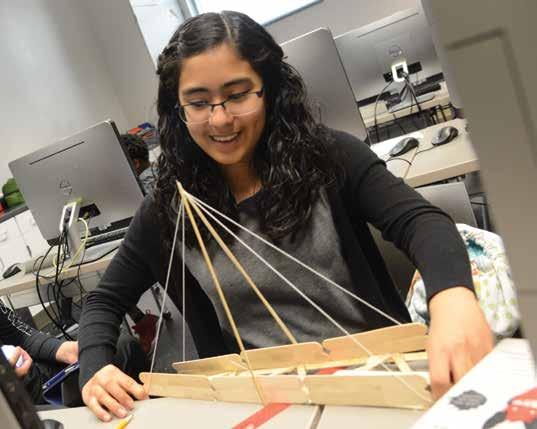
LOW: A student constructs a bridge during the 6 th-8 th grade Interactive Technology Experience Center (iTEC) Spring Break Camp where students had the opportunity to learn how to program a Sphero - a robotic ball that can be programmed and controlled with a smart phone. The last day of the camp, the students constructed a bridge, trying to use the fewest pieces possible. Then they had to program their Sphero to drive across the bridge, turn around, drive back across, and return to the original starting spot.
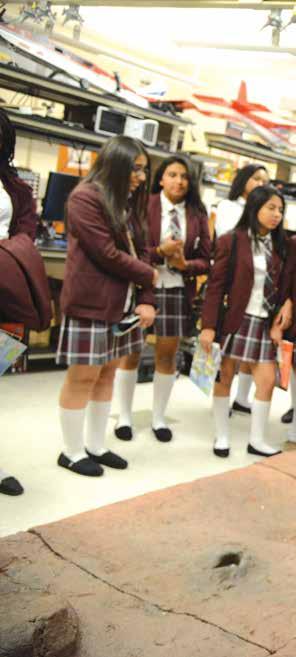
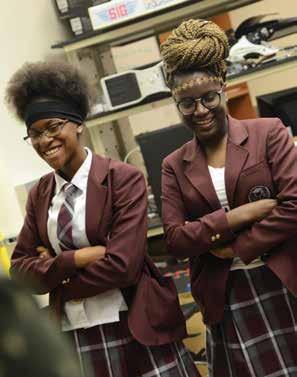
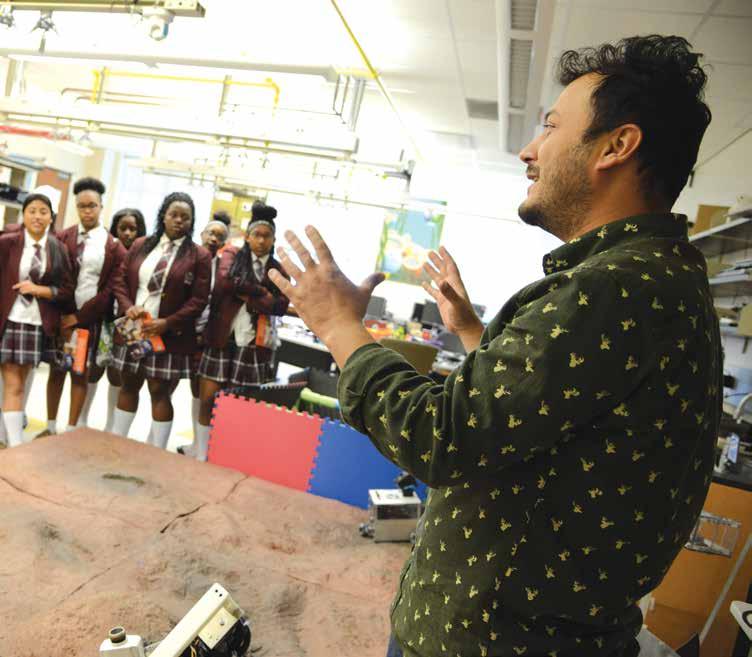
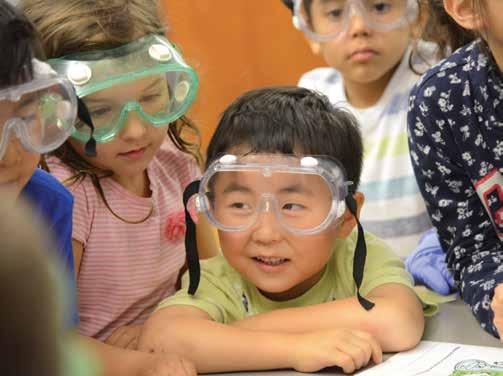
ABOVE and LEFT: Students from Young Women’s College Preparatory Academy toured the College of Engineering this spring. They saw the inner workings of a variety of labs on campus, as well as the UTSA Main Campus. RIGHT: During spring break, UTSA’s Interactive Technology Experience Center (iTEC) hosted hundreds of schoolaged children at the UTSA Main Campus for the center’s Spring Break Camps. The camps focus on getting children interested in the fields of science, technology, engineering, and math through hands-on activities. The instructors at iTEC go beyond the classroom and understand that kids learn more when they are excited about the topics being discovered.
Adel Alaeddini, Justin Wilkerson, and Ram Krishnan all started their careers in academia at the UTSA College of Engineering. Now, these assistant professors are making waves in their respective areas of research. From explosives to “small” data to cyber security, these young and amazing faculty members are making a positive impact at UTSA... and beyond!


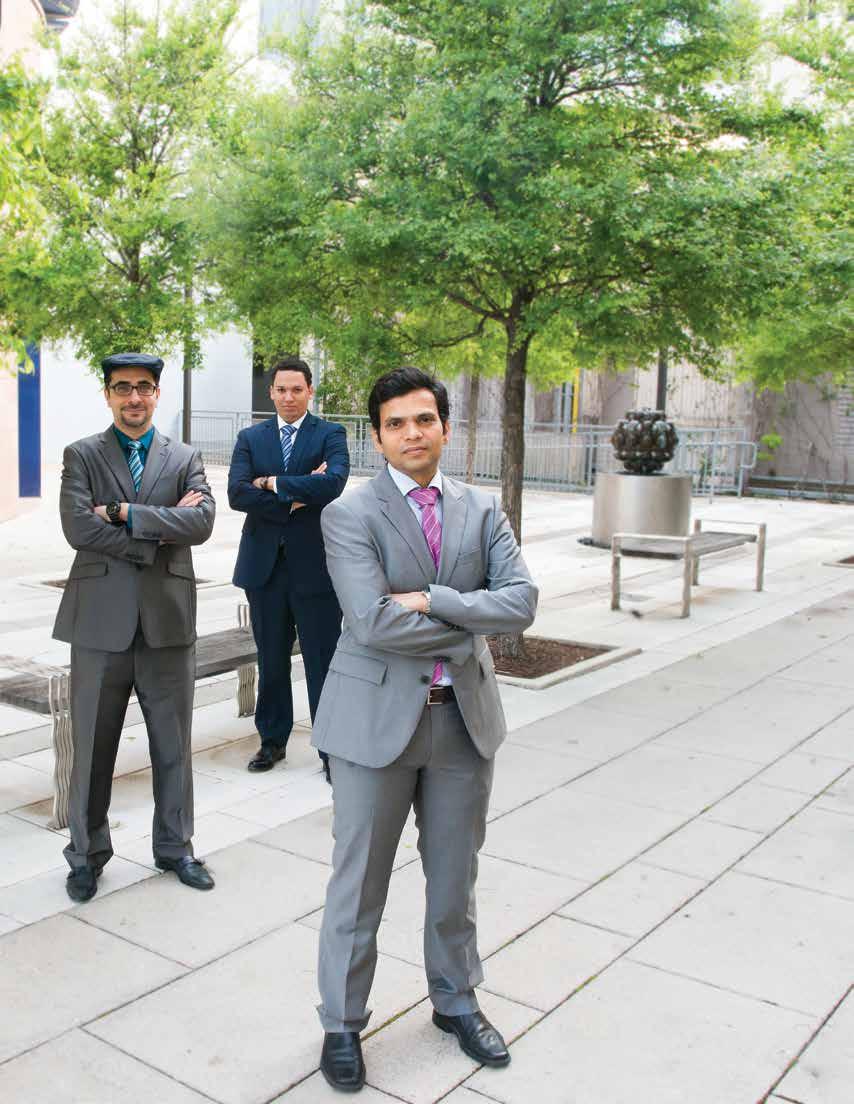

Adel Alaeddini and Justin Wilkerson, two assistant professors in the College of Engineering’s Department of Mechanical Engineering, have been named award recipients of the Air Force Office of Scientific Research (AFOSR) Young Investigator Research Program. They are among only 56 researchers in the nation who received AFOSR funding this year. Both Alaeddini and Wilkerson will each receive $360k over the next three years.
“We are delighted to have two AFOSR Young Investigator Awards in our mechanical engineering department in Dr. Wilkerson and Dr. Alaeddini,”
said JoAnn Browning, dean of the UTSA College of Engineering. “This prestigious award is an indicator of research excellence, the promise for future novel discoveries, and meaningful impact on society –something that both of these professors possess, and that permeates through the College of Engineering faculty.”
The Air Force Young Investigator Program (YIP) supports scientists and engineers who have received Ph.D. or equivalent degrees in the last five years and show exceptional ability and promise for conducting basic research.
Ram Krishnan, Microsoft President’s Endowed Assistant Professor in the College of Engineering’s Department of Electrical and Computer Engineering, has been awarded a National Science Foundation (NSF) Faculty Early Career Development (CAREER) award. He will receive more than $544,000 in support of his research on GroupCentric Secure Information Sharing - Models, Properties, and Implementation.
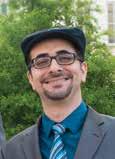
“When I heard about the award, I was very excited and a little bit surprised at the same time, as this was one of my first experiences applying for an Air Force award,” said Alaeddini. “This award means a lot to me. As a junior faculty member, I have been spending a lot of time and effort on this high-risk topic during the last few years and it’s sweet to see it’s started paying off.”
Alaeddini said that the majority of his funding will be used to recruit and train a number of Ph.D. graduate students for the next three years in the area of design and analysis of complex experiments. The main objective of the proposed research is to advance capabilities for design and optimization of complex and expensive medical tests using advanced data analytics for very small datasets.
“It was a very pleasant surprise when I heard I received an AFOSR Young Investigator Research Award,” said Wilkerson. “The award will enable me to provide two to three years of tuition and stipend support for two new Ph.D. students, as

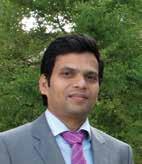
“Professionally, I am delighted that both NSF and my academic peers are convinced that my proposed career path can have a significant impact, and is worth investing in,” said Krishnan. “This funding will help me to establish a strong cyber security research and education portfolio at UTSA over the next five years. Personally, receiving this award is very rewarding. My collaborators and colleagues here at UTSA have been very supportive over the years. A big thanks to all of them!”
NSF CAREER awards are exclusively reserved for junior faculty to help develop their career as a teacher-scholar. That means this award will support Krishnan’s pursuit in academia to conduct innovative research, tightly integrated with a compelling education program.
“This funding will also help support and train undergraduate and graduate students at UTSA in research topics related to cyber security,” he said.
The UTSA cyber security program was ranked the best in the nation in 2014, according to a national survey of certified information technology security professionals, and more recently, the university was designated as a National Center of Academic Excellence in Information Assurance/Cyber Defense by the National Security Agency and Department of Homeland Security.
In regards to his current cyber security research, Krishnan says that the need to share information online while confining it to authorized recipients is one of the most challenging problems in the field. His CAREER funding will focus on the policy problem of specifying, analyzing, and enforcing information sharing policies.
“The College of Engineering is very proud of Dr. Krishnan’s accomplishments at UTSA, and this CAREER award is yet another reflec-

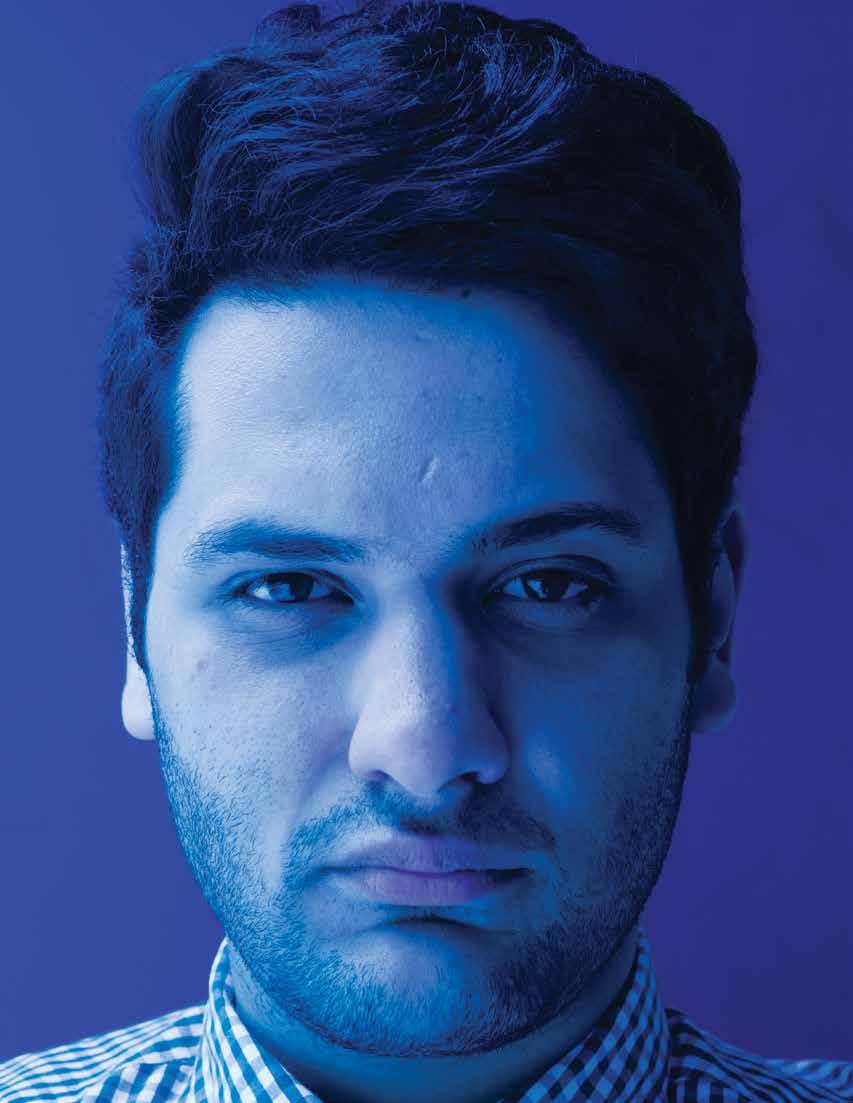
Ahmad Taha knows what it is like to live in a war zone. Born in Lebanon, Taha, an assistant professor of electrical engineering at The University of Texas at San Antonio, recalls what it was like for him when he was a child and his country’s electrical grid was bombed in a series of attacks.
“Where I lived, power outages were prevalent, they would happen every day,” said Taha. “But when my city’s grid was bombed, we had two solid weeks without electricity. We had no power and no water. We had to stay in the apartment, huddled around a radio, waiting to see what happened next. That experience influenced the way I think about power grids.”
After relocating to Texas, Taha wanted to ensure that the electrical grids of the country in which he now resides are safe from attacks He recently received a $30,000 grant from the UTSA Vice President for Research Office for his research. Taha is not concerned about physical attacks like he experienced in Lebanon; he is more concerned about detecting cyber threats to electrical grids. His research will focus on smart grids and how to protect them from cyber attacks. Smart grids are internet-enabled devices that generate and monitor much of the electric power in the U.S.
“In the past few decades, we’ve become increasingly reliant on the internet. That reliance naturally spreads to machines and devices that generate and consume electricity,” Taha said. “This is especially true with communication networks, and as a result, those networks and much of the cyber world is embedded into smart grids.”
“When my city’s grid was bombed, we had two solid weeks without electricity. We had no power and no water. We had to stay in the apartment, huddled around a radio, waiting to see what happened next. That experience influenced the way I think about power grids.”
- Ahmad Taha assistant professor in the Department of Electrical and Computer Engineering
Smart grids encompass most energy systems, such as smart meters in people’s homes and renewable energy resources like wind and solar energy. The energy industry has invested heavily in smart grids in recent years, capitalizing on benefits such as digital communications technology, which allows for computer-based remote control and automation.
“All of our basic infrastructures, such as transportation, air traffic control, and water distribution systems, depend on electricity and smart-grid technologies,” Taha said.
well as provide some support for an undergraduate student interested in gaining exposure to materials research. These students will assist me in carrying out the experimental and modeling research.”
Wilkerson said the primary objective of his proposed research funded by this award is to demonstrate the efficacy of strategically introducing carbon nanotubes to the binder phase of polymer-bonded explosives in order to reduce their sensitivity without adversely affecting detonation performance. In other words, Wilkerson hopes to design explosives that are less susceptible to accidents.
The objective of the YIP is to foster creative basic research in science and engineering, enhance early career development of outstanding young investigators, and increase opportunities for the young investigators to recognize the Air Force mission and the related challenges in science and engineering.
tion of his academic excellence,” said JoAnn Browning, dean of the UTSA College of Engineering. “Coupling this award with his Regents’ Outstanding Teaching Award this year, I think you begin to understand how much of an impact Dr. Krishnan makes on his students, colleagues, and engineering programs.”
The CAREER Program is a foundation-wide activity that offers the National Science Foundation’s most prestigious awards in support of junior faculty who exemplify the role of teacher-scholars through outstanding research, excellent education, and the integration of education and research within the context of the mission of their organizations. In addition to Krishnan, the Department of Computer and Electrical Engineering currently has two CAREER award winners: Professor Yufei Huang, and Professor and Interim Department Chair Chunjiang Qian.
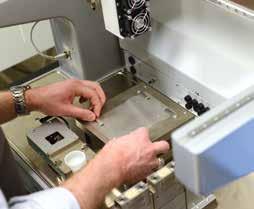
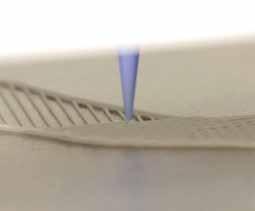
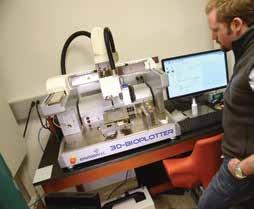
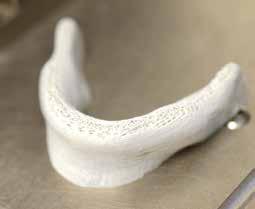
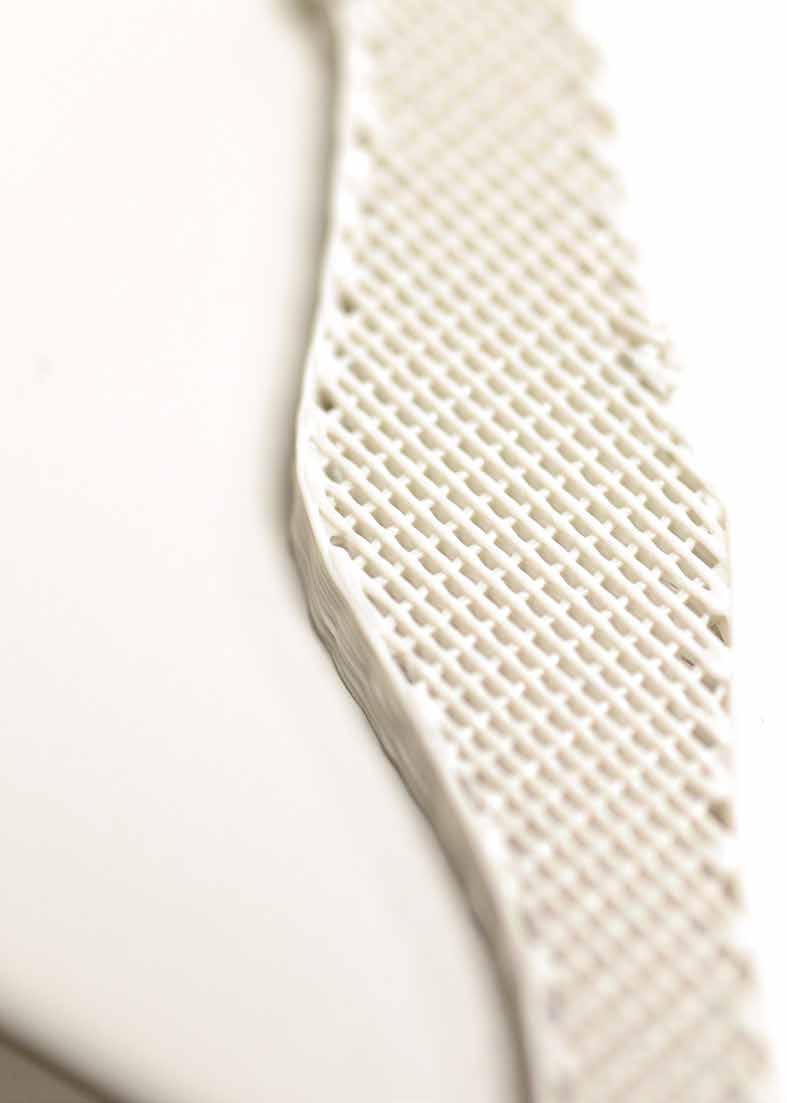
PHOTOS TOP TO BOTTOM: 1. Joseph Pearson, a graduate student in the Department of Biomedical Engineering, sets up the base of the 3D-Bioplotter so the material used for printing doesn’t stick to the metal base of the printer. 2. A 100-micron thick filament of silicone flows from the printer’s nozzle. 3. Pearson watches as the 3D-Bioplotter prints a model of a human mandible. Currently, there is only one commercial manufacturer of the 3D-Bioplotter in the world. 4. A 3D-printed, silicone mandible produced by Guda’s bioplotter.

The Department of Biomedical Engineering at The University of Texas at San Antonio has acquired a rare piece of equipment that can print organic tissues and potentially regenerate organs. The device works similarly to a 3D printer and is now a part of the laboratory belonging to Teja Guda, assistant professor of biomedical engineering.
“There aren’t very many organ printers of this caliber in the world owned by universities,” Guda said. “We wanted to explore this new space in regenerative medicine since so many at UTSA have strengths in regenerative medicine.”
The aspect that sets this device apart from other 3D printers is that it is capable of printing live cells without killing them. In a traditional 3D printer, the ink is pushed through a nozzle using heat or high pressure, but Guda’s printer doesn’t use either of those mechanisms. And though the printing device itself is rare and costly, Guda and his students’ real research focus is on the inks that will be developed to run through the device.
grafts for bones, skeletal muscle, pancreas tissue, and salivary glands.
“Bone and muscle are where we are going to get started,” said Guda. “We have a lot of experience working with them and are more familiar with these tissues at this point. Plus, their makeup is much simpler. The number of cell types are far fewer.”
Guda said that theoretically, a printer like the one in his lab could be inside an operating room and be filled with the patient’s own cells. Then, the needed tissue would be printed right there in the operating room within a few hours and implanted in the patient. But as of right now, the research is just kicking off.
“This is a building block for the future. Our students will benefit greatly from having this experience. As a university, we’ve gotten in on the ground floor.”
“Essentially, we’re creating our own materials with embedded living cells,” Guda said. “We load them up in little syringes, insert them into the machine, and it prints the organ layer by layer. Unlike traditional manufacturing techniques, it allows for very thin, complex architectures. The ink is the truly novel part of our research.”
Teja Guda, assistant professor in the Department of Biomedical Engineering
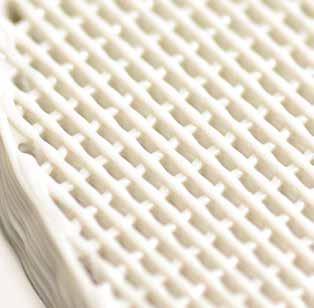
Guda and his team of graduate students have begun testing the printer with silicone to measure its geometric accuracy and see how the technology works so they know what properties will allow them to print with a good enough resolution with living cells. The team soon hopes to move into printing
“ The technology in terms of the inks doesn’t exist right now,” said Guda. “But we are getting those building blocks in place right here at UTSA.”
Because the organs are printed from a gel of living cells, the challenge is to make sure the organ keeps it shape and the cells stay alive once it’s been printed. The device is also expected to support research into the complications of organ transplantation, including tissue compatibility and survival.
“Transplantation of tissues is a huge challenge because they’re not always successful and they’re limited in supply,” Guda said. “If we’re able to make transplantation significantly more successful, that’s huge.”
The printer might also help engineers print a replacement for a person’s damaged organs, which Guda predicts will be possible in less than 10 years.
“This is a building block for the future,” he said. “Our students will benefit greatly from having this experience. As a university, we’ve gotten in on the ground floor.”

for water analysis.
Dr. Marcio Giacomoni, assistant professor of civil and environmental engineering, came to UTSA in spring 2013 because he saw the university as a perfect fit for advancing his research on water resources. He has also turned his eye toward San Antonio’s water infrastructure, helping prepare the growing city for future water needs.
“San Antonio is the perfect case study to work on water resources research,” Giacomoni said. “There are a lot of problems with drought, and San Antonio represents success in water conservation and how to manage water in this part of the country.”
Giacomoni is partnering with Dr. Heather Shipley, professor and chair of the Department of Civil and Environmental Engineering, on research that focuses on storm water at the UTSA Main Campus. The Greater Edwards Aquifer Alliance and the San Antonio River Authority funded the project monitoring storm water on campus to understand the current state of its quality and quantity. Because UTSA is at the top of the Edwards Aquifer recharge zone, storm water drains into the aquifer. So Giacomoni tests the quality of the water before and after treatment. By evaluating the current method of storm water filtration, Giacomoni hopes to be able to propose better ways to treat it in the future.
The layers of sand that currently filter storm water at UTSA are gener-
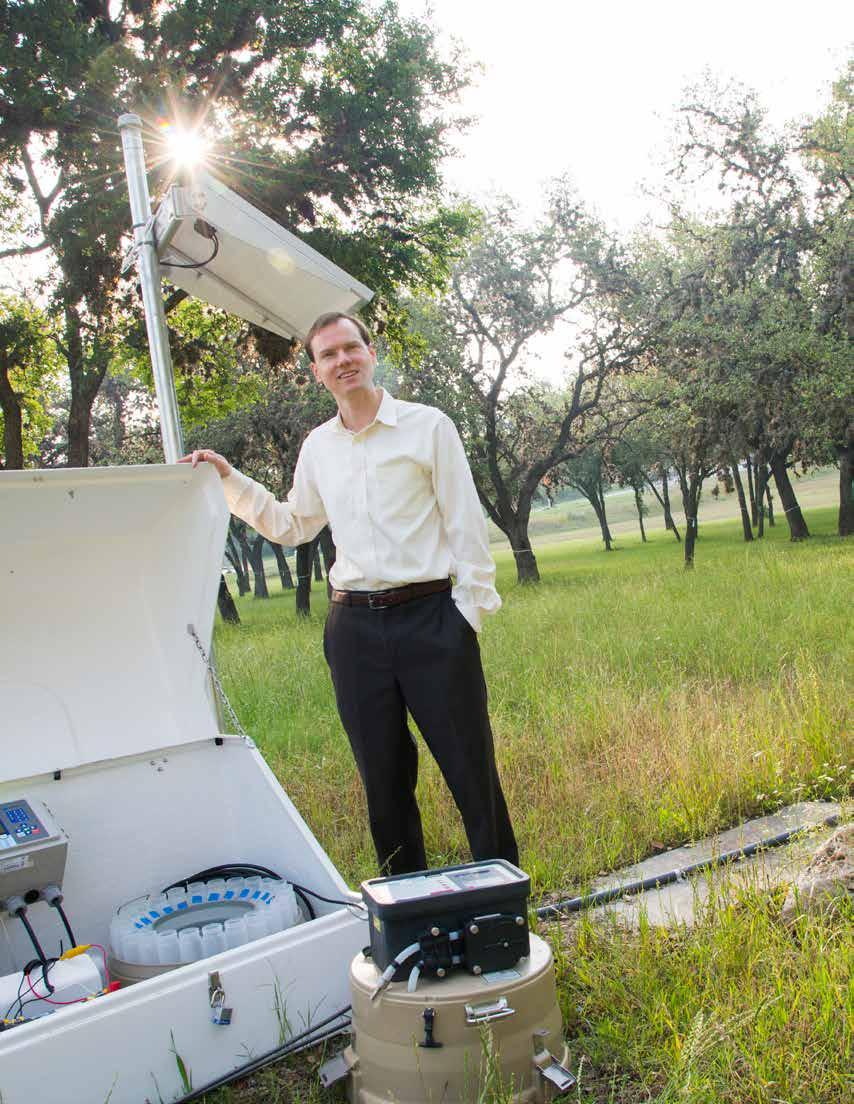
ally effective at separating suspended solids. However, the Edwards Aquifer Alliance and Texas Commission on Environmental Quality hope that Giacomoni’s research will lead to finding ways to also filter dissolved and microscopic particles, such as heavy metals, bacteria and nutrients. If that becomes possible, storm water could be treated in a safe way to improve the quality enough to be used to recharge the aquifer.
Giacomoni also uses this project to provide hands-on experience for some of his students, who work as research assistants.
Travis Lung, a senior civil engineering student, says he feels honored to work on the project with him.
“Dr. Giacomoni actively mentors and pushes me to develop new and stronger skills,” said Lung, a nontraditional undergraduate who already has many years of career experience under his belt. “He is open to team collaboration, making it easy to work through issues and brainstorm new ideas effectively. Working for him is an amazingly positive experience.”
“We get to the point where we’re confident that these solutions are best in terms of cost and eliminating overflows,” Giacomoni said. “We’re enhancing this algorithm to calculate solutions faster than what we can do now. We have thousands of miles of pipes in the city, and it would take the computer a very long time to find the solution.”
“I’m inspired by Dr. Giacomoni’s career and personal achievements because it’s a clear example of how to be resilient and successful.”
Giacomoni extended his original agreement with SAWS to test one more area—west of Interstate Highway 10, near downtown. After completing the final test, he will turn over the algorithm to SAWS for testing in any area of the city to determine the best solution for replacing damaged pipes and stopping wastewater overflows. He’s also discussing future projects with SAWS about the possibility of using underground tanks as detention storage for wastewater—an idea that would require some analysis to determine whether it’s a viable solution.
Bruno Itaquy, student of Dr. MARCIO Giacomoni
Beyond UTSA, Giacomoni extends his expertise to the wider city through his research with SAWS, San Antonio Water System. He recently wrapped up a two-year project with SAWS that requires locating and replacing pipes that no longer can handle the flow of wastewater. With more than 5,000 miles of pipes running through the city, SAWS is required to replace old and damaged pipes that overflow when too much storm water leaks into the system. Giacomoni’s research is developing a new methodology to identify where overflows are most likely to happen and provide recommendations on the best way to handle replacement.
“If the overflow occurs in a certain location, we need to enhance those areas by putting in bigger pipes,” Giacomoni said. “But that will cause water to flow faster downstream, which might cause more problems. Our methodology is beneficial because we’re looking at the area holistically. We’re looking at solutions that would fix local problems, but not cause more problems downstream.”
His research focused on the north intersection of Loop 410 and Interstate Highway 35, an area that encompasses 161 miles of pipes—about 3 percent of the city’s total pipes. He used computer-based models to develop mathematical algorithms that can determine where to replace pipes, the diameter the new pipes should be, and the minimum cost for SAWS to achieve its objective.
The algorithm development is an evolutionary process— meaning Giacomoni develops a solution and then tests it to develop better ones. He combines the best results until the research evolves into the near-optimal solution.
Beyond his research, Giacomoni also enjoys his work as an educator at UTSA. He finds it more immediately rewarding, seeing students motivated and learning on a daily basis, rather than waiting months or years for success in research projects. His students also appreciate his enthusiasm in the classroom.
“He has an impressive capacity to stimulate students to ask questions and get involved with the class,” said Bruno Itaquy, who graduated in May with his Master of Science in Civil Engineering. “I’m an international student like Dr. Giacomoni was a few years ago, and I’m inspired by his career and personal achievements because it’s a clear example of how to be resilient and successful, showing that it’s possible if it’s something you want for your life.”
While working toward his own degree, Giacomoni also participated in research—four years, in fact, which is relatively unusual as an undergraduate. He earned his bachelor’s and master’s degrees in Brazil, his native country, and decided to come to the United States to pursue his doctorate in civil engineering at Texas A&M University.
Besides the satisfaction of earning the degree, he’s happy he attended the university for another reason— it’s where he met his wife, Laura, who works in UTSA’s development office. The couple lived in Brazil for four months before he went to work at UTSA, in which time she became fluent in Portuguese. Now, they are teaching their one-year-old son both English and Portuguese.
“With a young son at home, I’ve been more organized and productive,” Giacomoni said. “They change your life, and there’s no five minutes I can waste. I’m either taking care of him or doing research. These are busy, but enjoyable times.”
It is UTSA’s vision to be a premier public research university, providing access to educational excellence and preparing citizen leaders in the global environment. We are proud of all of our faculty and students who are striving to reach research excellence in UTSA’s path to becoming a Tier One institution. Listed here are the projects awarded between May 1, 2015 and May 1, 2016.
Agaian, Sos (PI)
Dept. of Electrical & Computer Engineering
Proposal title: RAPID: I-Corps Teams: Cloud Pathology Platform For Computer Aided Digitized Histopathology Image Processing & Analysis System
Funding Agency: National Science Foundation
Amount: $50,000
Akopian, David (PI)
Dept. of Electrical & Computer Engineering
Proposal title: Texting Messaging to Promote Walking in Latinos with Peripheral Arterial Disease
Funding Agency: UTHSC at San Antonio
Amount: $33,325
Alaeddini, Adel (PI)
Center for Advanced Manufacturing & Lean Systems (CAMLS)
Proposal title: VA777-16-G-0014
Funding Agency: U.S. Dept. of Veterans Affairs
Amount: $64,326
Alaeddini, Adel (PI) Agaian, Sos (Co-PI)
Dept. of Mechanical Engineering, Dept. of Electrical & Computer Engineering
Proposal title: Image-Based Process Monitoring Phase 1: Real-Time Quality Monitoring of Printing Process
Funding Agency: Harland Clarke
Amount: $77,630
Bhaganagar, Kiran (PI) Pack, Daniel & Sharif, Hatim (Co-PIs)
Dept. of Mechanical Engineering, Dept. of Electrical & Computer Engineering, the Dept. of Civil & Environmental Engineering
Proposal title: Novel Technology for Detection & Prediction of Spreading of Air-Borne Chemicals
Funding Agency: Minority-Serving Institutions: STEM Research & Development
Consortium (MSRDC)
Amount: $258,515
Bhounsule, Pranav (PI)
Center for Simulation, Visualization, & RealTime Prediction (SiViRT)
Proposal title: CRII: RI: Energy Effective & Versatile Bipedal Robots Using Event-Based Switching Between Parameterized SteadyState Controllers
Funding Agency: National Science Foundation
Amount: $159,024
Browning, JoAnn (PI) Merchant, Betty (Co-PI)
Dept. of Civil & Environmental Engineering, the College of Education & Human Development
Proposal title: Deep Roots: Wide-Spread Implementation of Community-Driven, Evidence-Based Pedagogy
Funding Agency: National Science Foundation
Amount: $223,072
Castillo Villar, Krystel (PI)
Dept. of Mechanical Engineering
Proposal title: Biomass Logistics Simulations
Funding Agency: UT-Battelle LLC
Amount: $60,000
Castillo Villar, Krystel (PI)
Dept. of Mechanical Engineering
Proposal title: Development of a Low-Cost Robust Circulating Fluidized Technology for Integration into a Novel Mathematical Model to Promote the Sustainable Production of Biofuels and Biobased Products
Funding Agency: UTSA Office of the Vice President for Research
Amount: $125,000
Castillo Villar, Krystel (PI)
Dept. of Mechanical Engineering
Proposal title: Quantification of Dimensional Measurement Uncertainty using 3D Laser
Scanners for the Assessment of Manufacturing Variability
Funding Agency: Clarkson Aerospace Corp.
Amount: $139,189
Castillo Villar, Krystel (PI)
Dept. of Mechanical Engineering
Proposal title: BioEnergy and Water for Agriculture Research ann Education (BE AWARE) Network
Funding Agency: U.S. Dept. of Agriculture
Amount: $250,000
Castillo Villar, Krystel (PI) Sharif, Hatim (Co-PI)
Center for Simulation, Visualization, and Real-Time Prediction (SiViRT), the Dept. of Civil & Environmental Engineering
Proposal title: Interdisciplinary Hands-on Research Traineeship & Extension Experiential Learning in Bioenergy/Natural Resources/ Economics/Rural
Funding Agency: U.S. Dept. of Agriculture
Amount: $275,760
Chen, Fengshan (PI) Wan, Hung-Da (Co-PI)
Center for Advanced Manufacturing & Lean Systems (CAMLS)
Proposal title: CAMLS: Education & Mentoring Program for Lean Manufacturing
Enterprise Implementation
Funding Agency: Goodheart Specialty Foods Co.
Amount: $62,000
Diaz, Manuel (PI) Arroyo, German (Co-PI)
Dept. of Civil & Environmental Engineering
Proposal title: Dwight D. Eisenhower Fellowship-2015
Funding Agency: U.S. Dept. of Transportation
Amount: $30,000
Dong, Bing (PI)
Dept. of Mechanical Engineering
Proposal title: International Workshop on Implications of Occupant Behavior for Building Design & Operation: Now & the Future
Funding Agency: National Science Foundation
Amount: $34,911
Dong, Bing (PI) Vega, Rolando & Shephard, Les (Co-PIs)
Dept. of Mechanical Engineering, Texas
Sustainable Energy Research Institute (TSERI)
Proposal title: Behavior-Driven Transactive Energy For Residential Buildings
Funding Agency: U.S. Dept. of Energy
Amount: $37,615
Duan, Lide (PI)
Dept. of Electrical & Computer Engineering
Proposal title: CRII: SHF CSR: A High Performance & Reliable Non-Volatile Memory Framework for Handheld Platforms
Funding Agency: National Science Foundation
Amount: $174,371
Feng, Yusheng (PI)
Center for Simulation, Visualization, and Real-Time Prediction (SiViRT)
Proposal title: Radical Cystectomy Compared with Combined Moda Treatment for Muscle
Invasive Bladder Cancer: A Pilot Randomized Control Trial
Funding Agency: UTHSC at San Antonio
Amount:: $10,140
Feng, Yusheng (PI)
Center for Simulation, Visualization, and Real-Time Prediction (SiViRT)
Proposal title: RAPID: I-Corps Teams: Portable, Hands-Free Medical Suction Device for Combat & Emergency Medicine
Funding Agency: National Science Foundation
Amount: $50,000
Finol, Ender (PI)
Dept. of Biomedical Engineering
Proposal title: Clinical Management of Abdominal Aortic Aneurysms (AAA) Using Patient-Specific Tissue Mechanics
Funding Agency: American Heart Association
Amount: $52,000
Furl, Chad (PI)
Dept. of Civil & Environmental Engineering
Proposal title: RAPID: Forensic Hydrological Field Investigation of the Blanco River Flood - May 2015, Wimberley, TX
Funding Agency: National Science Foundation
Amount: $26,531
Gatsis, Nikolaos (PI)
Dept. of Electrical & Computer Engineering
Proposal title: EAGER-DynamicData: Machine Intelligence for Dynamic, Data-Driven Morphing of Nodal Demand in Smart Energy Systems
Funding Agency: National Science Foundation
Amount: $73,303
Giacomoni, Marcio (PI)
Dept. of Civil & Environmental Engineering
Proposal title: Proposal Enhancement Program for NSF CAREER Award
Funding Agency: UTSA VPR Office
Amount: $20,000
Giacomoni, Marcio (PI) Shipley, Heather (Co-PI)
Dept. of Civil & Environmental Engineering
Proposal title: Modeling Stormwater Runoff at UTSA Main Campus
Funding Agency: San Antonio River Authority
Amount: $15,000
Giacomoni, Marcio (PI) Shipley, Heather (Co-PI)
Dept. of Civil & Environmental Engineering
Proposal title: Monitoring Stormwater Quality at UTSA Main Campus
Funding Agency: Greater Edwards Aquifer Alliance (GEAA)
Amount: $27,800
Guda, Teja (PI) Ong, Anson (Co-PI)
Dept. of Biomedical Engineering
Proposal title: Evaluation in the rat Femoral Segmental Bone Defect (SBD) Model
Funding Agency: StemBioSys Inc.
Amount: $45,105
Guda, Teja (PI) Ong, Anson (Co-PI)
Dept. of Biomedical Engineering
Proposal title: Micro-CT Evaluation of Craniomaxillofacial Models In Vivo
Funding Agency: U.S. Dept. of Defense
Amount: $78,939
Guo, Ruyan (PI) Bhalla, Amar (Co-PI)
Dept. of Electrical & Computer Engineering
Proposal title: Phase I - Measure
Funding Agency: FBD Partnership LP
Amount: $36,000
Han, Hai-Chao (PI)
Dept. of Mechanical Engineering
Proposal title: A New Treatment for Diastolic Heart Failure: Trabecular Cutting
Funding Agency: UTHSC at San Antonio
Amount: $8,153
Huang, Yufei (PI)
Dept. of Electrical & Computer Engineering
Proposal title: 2016 Workshop on Bioinformatics for Precision
Funding Agency: National Science Foundation
Amount: $10,000
Kelley, Brian (PI)
Dept. of Electrical & Computer Engineering
Proposal title: IPA-Brian Kelley
Funding Agency: U.S. National Security Agency
Amount: $106,090
Krishnan, Ramnarayan (PI)
Dept. of Electrical & Computer Engineering
Proposal title: CAREER: Group-Centric Secure Information Sharing - Models, Properties, & Implementation
Funding Agency: National Science Foundation
Amount: $544,376
Krishnan, Ramnarayan (PI) Sandhu, Ravinderpal (Co-PI)
Dept. of Electrical & Computer Engineering, Institute for Cyber Security
Proposal title: Fine-Grained, Dynamic, Virtual Resource Separation in Cloud Platforms for Assured Delivery of Cloud-Based Services
Funding Agency: U.S. Dept. of the Army
Amount: $593,514
Krishnan, Ramnarayan (PI) Sandhu, Ravinderpal (Co-PI)
Dept. of Electrical & Computer Engineering, College of Science
Proposal title: Design & Implementation of Cybersecurity Risk Metrics for Cloud-Based IT Infrastructure
Funding Agency: LMI Research Institute
Amount: $50,000
Lin, Wei-Ming (PI) Xu, Kefeng & Sandhu, Ravinderpal (Co-PIs)
Center for Simulation, Visualization, and RealTime Prediction (SiViRT), Dept. of Management Science & Statistics, College of Science
Proposal title: EAGER: Collaborative: IC
Supply Chain Security & Quality Control in a Business & Social Context
Funding Agency: National Science Foundation
Amount: $179,997
Matamoros, Adolfo (PI)
Dept. of Civil & Environmental Engineering
Proposal title: Static & Dynamic Testing of Energy-Absorbing Connectors for Blast-Loaded Components
Funding Agency: Protection Engineering Consultants, Inc
Amount: $5,276
Millwater, Harry (PI)
Center for Simulation, Visualization, and Real-Time Prediction (SiViRT)
Proposal title: Probabilistic Modeling of Random Variables & K-Solution Developments for General Aviation - Extensions to the SMART|DT Software
Funding Agency: U.S. DOT Federal Aviation Admn.
Amount: $400,000
Millwater, Harry (PI) Montoya Rodriguez, Arturo & Wilkerson, Justin (Co-PIs)
Center for Simulation, Visualization, and Real-Time Prediction (SiViRT)
Proposal title: Three-Dimensional Fracture
Mechanics Capability for Structures Operating in High Temperature Thermal Environments
Funding Agency: U.S. Dept. of the Army
Amount: $397,843
Montoya Rodriguez, Arturo (PI)
Dept. of Civil & Environmental Engineering
Proposal title: A Novel Fracture
Characterization Approach for Materials
Exhibiting Inelastic Behavior Based on the Multicomplex Finite Element Method
Funding Agency: UTSA VPR Office
Amount: $20,000
Montoya Rodriguez, Arturo (PI) Gorski, Waldemar (Co-PI)
Dept. of Civil & Environmental Engineering, Dept. of Chemistry
Proposal title: Potential Risk of Hydrogen Embrittlement of ZnNi-Coated, High-Strength Steel
Funding Agency: Southwest Research Institute
Amount: $66,028
Najafirad, Peyman (PI)
Open Cloud Institute
Proposal title: Kubernetes & Docker Configuration
Funding Agency: Indiana University
Amount: $8,000
Najafirad, Peyman (PI)
Open Cloud Institute
Proposal title: Intel OpenStack Internship
Program
Funding Agency: Intel Corporation
Amount: $229,473
Najafirad, Peyman (PI) Huang, Yufei; Jamshidi, Mohammad & Agaian, Sos (Co-PIs)
Open Cloud Institute
Proposal title: Machine Learning Cloud Research TestBed BioInformatics & Brain Health
Proposal title: UTHSC at San Antonio
Amount: $25,000
Pack, Daniel (PI) Akopian, David (Co-PI)
Dept. of Electrical & Computer Engineering
Proposal title: Extending GPS Operation in GPS-denied Areas through Cross-Correlation Jamming Cancellation
Funding Agency: U.S. Dept. of the Air Force
Amount: $194,800
Papagiannakis, Athanassios (PI)
Dept. of Civil & Environmental Engineering
Proposal title: Testing of Asphalt Concretes Incorporating Dry-Process PP
Funding Agency: Dr. Earl M. Stenger
Amount: $14,115
Potter, Lloyd (PI) Alaeddini, Adel (Co-PI)
College of Public Policy, College of Engineering
Proposal title: Chronic Effects of Neurotrauma
Funding agency: Department of Veterans Affairs
Amount: $33,000
Reilly, Matthew (PI) Bizios, Rena (Co-PI)
Dept. of Biomedical Engineering
Proposal title: Torsional Indirect
Traumatic Neuropathy (TITON):
Animal Model for Diagnostics, Drug Delivery, & Therapeutics for Central Nervous System Injury
Funding Agency: U.S. Dept. of Defense
Amount: $1,000,000
Saygin, Can (PI)
Center for Advanced Manufacturing & Lean Systems (CAMLS)
Proposal title: San Antonio Claude D. Pepper Older Americans Independence Center
Funding Agency: UTHSC at San Antonio
Amount: $33,998
Saygin, Can (PI) Alaeddini, Adel; Wan, Hung-Da; Castillo Villar, Krystel (Co-PIs)
Center for Advanced Manufacturing & Lean Systems (CAMLS)
Proposal title: Predictive Maintenance - Phase 2: From Data to Performance Metrics
Funding Agency: Harland Clarke
Amount: $90,000
Shadaram, Mehdi (PI)
Dept. of Electrical & Computer Engineering
Proposal title: Summer Engineering Camp for Texas Students
Funding Agency: Texas Higher Education Coordinating Board 781
Amount: $13,998
Sharif, Hatim (PI)
Dept. of Civil & Environmental Engineering
Proposal title: Seepage Study of the Potential Turkey Watershed Reservoir
Funding Agency: Crystal City
Amount: $11,000
Sharif, Hatim (PI) Weissmann, Jose & Dessouky, Samer (Co-PIs)
Dept. of Civil & Environmental Engineering
Proposal title: Safety & Economic
Impact of Texas Travel Information Centers: Update
Funding Agency: Texas Department of Transportation 601
Amount: $80,000
Sharif, Hatim (PI) Weissmann, Jose & Dessouky, Samer (Co-PIs)
Dept. of Civil & Environmental Engineering
Proposal title: Traffic Safety Challenges & Strategies in the Eagle Ford Shale Area
Funding Agency: Texas Department of Transportation 601
Amount: $266,603
Shephard, Les (PI)
Texas Sustainable Energy Research Institute (TSERI)
Proposal title: Transforming & Modernizing the Electric Sector
Funding Agency: City Public Service
Amount: $620,000
Shephard, Les (PI) Vega, Rolando & Dong, Bing (Co-PIs)
Texas Sustainable Energy Research Institute (TSERI) & the Dept. of Mechanical Engineering
Proposal title: Topic Area 3:
Integrated Systems: Omnetric Corp
Duke Energy Cps Energy The University of Texas at San Antonio
Funding Agency: Omnetric Corporation
Amount: $203,368
Shipley, Heather (PI) Bizios, Rena; Castillo Villar, Krystel & Guo, Ruyan (Co-PIs)
Dept. of Civil & Environmental Engineering, Dept. of Biomedical Engineering, Dept. of Mechanical Engineering, Dept. of Electrical & Computer Engineering
Proposal title: S-STEM: UTSA’s
Scholarship Program for Undergraduates’ Retention & Success (SPURS)
Funding Agency: National Science Foundation
Amount: $626,890
Taha, Ahmad (PI) Dong, Bing and Gatsis, Nikolaos (Co-PIs)
Dept. of Electrical & Computer
Engineering, Dept. of Mechanical Engineering
Proposal title: Dynamic Cyber-Attack Detection & Mitigation for Secure Smart Grids
Funding Agency: UTSA Vice President for Research Office
Amount: $30,000
Tang, Liang (PI)
Dept. of Biomedical Engineering
Proposal title: IFSEEN - Integrating Food Science/Engineering & Education Network: A Partnership to Integrate Efforts & Collaboration to Shape Tomorrow’s™ Hispanic Food Safety/Science Leaders
Funding Agency: University of Texas at Pan American 736
Amount: $186,386
Testik, Firat (PI)
Dept. of Civil & Environmental Engineering
Proposal title: Advanced Optical Disdrometer for Precipitation Observations
Funding Agency: National Science Foundation
Amount: $22,254
Testik, Firat (PI)
Dept. of Civil & Environmental Engineering
NSF Award Transfer: Critical Raindrop Characteristics: Fall Speed, Shape, & Size Distributions
Funding Agency: National Science Foundation
Amount: $135,177
Wan, Hung-Da (PI) Saygin, Can; Chen, Fengshan; Castillo Villar, Krystel; and Alaeddini, Adel (Co-PIs)
Center for Advanced Manufacturing & Lean Systems (CAMLS)
Proposal title: Harland Clarke CAMLS Membership 2015-17
Funding Agency: Harland Clarke
Amount: $62,000
Wang, Xiaodu (PI) Zeng, Xiaowei (Co-PI)
Dept. of Mechanical Engineering
Proposal title: Multiscale Modeling of Ultrastructural Origins of Bone Fragility
Funding Agency: National Science Foundation
Amount: $368,931
Weissmann, Jose (PI)
Dept. of Civil & Environmental Engineering
Proposal title: Development of Pavement & Bridge Consumption Cost Library
Funding Agency: Texas Department of Transportation 601
Amount: $50,000
Weissmann, Jose (PI)
Dept. of Civil & Environmental Engineering
Proposal title: Evaluate Specialized Hauling Vehicles with Regard to Pavement and Bridge Deterioration and Posting Limits
Funding Agency: Texas Department of Transportation 601
Amount: $155,556
Wilkerson, Justin (PI)
Center for Simulation, Visualization, and Real-Time Prediction (SiViRT)
Proposal title: A Simple Constitutive Framework for Anisotropic Dynamic Ductile Failure
Funding Agency: John Hopkins University
Amount: $25,000
Xie, Hongjie (PI) Sharif, Hatim; Lambert, Lance & Gao, Yongli (Co-PIs)
Center for Water Research, Dept. of Civil & Environmental Engineering
Proposal title: Minority
Improvement in Earth Science & Environmental Engineering at the University of Texas at San Antonio
Funding Agency: U.S. Dept. of Education
Amount: $748,705
Ye, JingYong (PI)
Dept. of Biomedical Engineering
Proposal title: Preliminary Study for Label-Free Detection of Prostate Cancer Cells
Funding Agency: UTSA Vice President for Research Office
Amount: $19,250
Ye, JingYong (PI)
Dept. of Biomedical Engineering
Proposal title: Quantifying Cancer Molecular Signatures with a Double-Clad Fiber Optic Probe
Funding Agency: San Antonio Area Foundation
Amount: $30,000
Zeng, Xiaowei (PI)
Dept. of Mechanical Engineering
Proposal title: Numerical Investigation of Collective Cell Migration
Funding Agency: NIH National Institute of General Medical Sciences
Amount: $441,000
By Deborah Silliman/College of Engineering
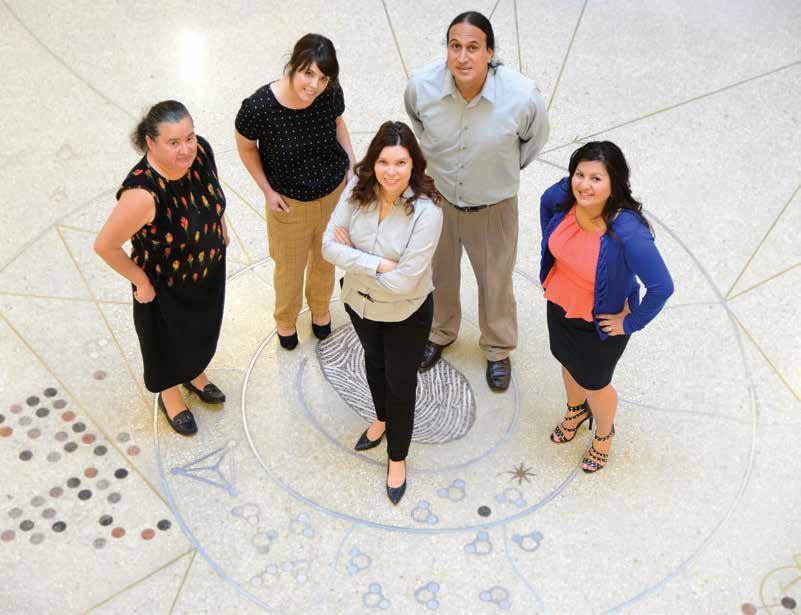
Faculty members at the UTSA College of Engineering brought in more than ten million dollars of research funding to the university last year. Between assisting with proposals and serving as a liaison between a variety of different departments at UTSA, the Research Service Center (RSC) for Engineering plays an integral part in helping faculty researchers secure funds.
“The RSC strives to help, and not hinder, faculty in exceeding their research endeavors,” said Amy Ossola-Phillips, director of the Research Service Center for Engineering. “We enjoy learning about COE research areas and the diligent work that faculty members are doing. When our researchers excel, it instills a high level of gratification among the RSC team and that pushes us to continuously improve.”
The RSC for Engineering is one of six research service centers across UTSA. All of the RSCs are housed under the Office of Sponsored Project Administration (OSPA), one of the units under the Offices of the Vice President for Research. Each RSC is housed within a particular college or unit and provides a number of services to faculty, including:
• Pre Award-Proposal submission help – the RSC reviews sponsor guidelines, assists and develops non-technical documents, and packages the final proposal for submission
• Post Award-Award/contract management – the RSC reviews and approves expenditures on sponsored grants/contracts,
provides general award oversight and administration, and reviews and approves grant changes
• Liaison to UTSA departments and external sponsors – the RSC serves as the liaison between UTSA departments such as Grants and Contracts Financial Services, Institutional Review Board, Institutional Animal Care and Use Programs, and other offices. The RSC is also the liaison for non-financial reports and change requests submitted to sponsors.
“Each and every member of the RSC is here because of our COE researchers,” said Ossola-Phillips. “The COE researchers make such an impact on us, and in turn, we exercise all effort to help researchers meet their goals.”
The members of the RSC in Engineering have varying levels of research administration experience and work together to assist researchers with the sponsored program needs, said OssolaPhillips.
The team is currently in the process of creating an RSC Impact Board.
“This board will consist of notes, emails, letters, etc. that we received when providing outstanding service to our researchers,” Ossola-Phillips said. “The board will be displayed outside of the RSC and will also consist of paper and pens in the event anyone wants to drop by and write a note on excellent service received from the RSC that truly created an impact. We are looking forward to a great year and feel very blessed to work with the College of Engineering.”
While smart grids are modern and efficient, they’re susceptible to cyber attacks, which can be difficult to detect. Cyber terrorists could hack into smart grids and manipulate smart meter measurements, which could cause a person’s energy bill to skyrocket. On a larger scale, tampering with a smart grid can result in a blackout.
“Just a small blackout could have serious consequences to our local and federal economies,” Taha said. “The 2003 Northeast Blackout only lasted a few days, and yet it caused billions of dollars in damage.”
In collaboration with the Argonne National Laboratory and fellow College of Engineering faculty Nikolaos Gastis and Bing Dong, Taha plans to visualize these disturbances by using actual data from smart grids to simulate an attack. Repeatedly testing his digital protections identify weak spots in smart grids, so that the attackers can’t target those areas again.
“A huge part of the analysis of smart grids is understanding how electric power is generated and flowing in the network,” he said.
“Once you understand how this works, it’s possible to see when something unusual is occurring.”
Taha expects his research will lead to infrastructures that not only detect when tampering is occurring within a smart grid, but also to track the person who is hacking into it.
“Smart grids are the cornerstone of our economy,” Taha said. “They’re also a huge part of everyone’s daily lives, and they need proper protection.”
Former COE dean inducted into the
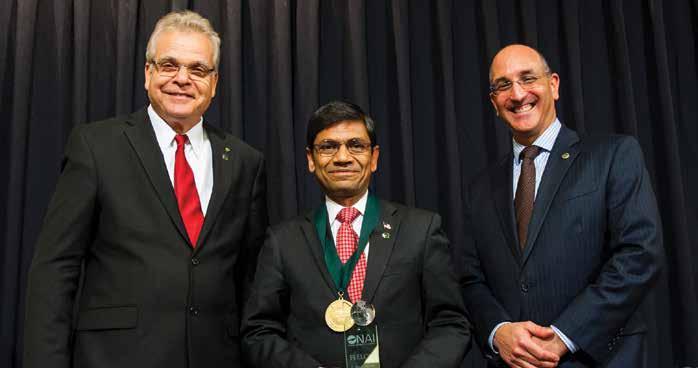
his spring, UTSA Vice President for Research C. Mauli Agrawal was inducted as Fellow of the National Academy of Inventors (NAI) for his research and innovation in orthopedic and cardiovascular biomaterials and implants. The honor places Agrawal, former dean of the College of Engineering, among an elite group of professionals that includes presidents and senior leaders of research universities, Nobel laureates, National Inventors Hall of Fame inductees, and National Academies members.
“I was humbled when I heard I was going to be inducted into the National Academy for Inventors,” said Agrawal. “There are some amazing and talented problem solvers that I admire who were inducted with me. It was an honor.”
“Tier One universities advance society through research innovation and the commercialization of groundbreaking discoveries. Dr. Agrawal is a wonderful example of the world-class scholars that are propelling UTSA to Tier One status.”
UTSA President Ricardo Romo
Agrawal joined UTSA in 2003 as the dean of the College of Engineering where he received the title of Peter Flawn Professorship in Biomedical Engineering, a distinction he still holds today. Agrawal moved into the role of UTSA vice president for research in 2013. This spring, he was named the interim provost, and will begin those duties on June 1, 2016. In his role as interim provost, Agrawal hopes to work closely with UTSA faculty, celebrating their successes.
“It is up to UTSA faculty and administration to help our students get where they need to go,” he said. “As interim provost, one of my goals is to partner with our faculty members and develop processes that help make both our faculty and students successful.”
Before joining UTSA, Agrawal worked at the University of Texas Health Science Center at San Antonio (UTHSCSA) and before that, served on the faculty at Duke University. He obtained his Ph.D. from Duke University (1989), M.S. from Clemson University (1985) and a B. Tech. from IIT-Kanpur, India.
Agrawal’s research has led to many novel discoveries, and many of his patents have been licensed to commercial entities. His bioengineering research group has been responsible for the launching of three companies in San Antonio. Additionally, he has served on the editorial boards of various scientific journals including the Journal of Biomedical Materials Research, Journal of Biomedical Materials Research (Applied Biomaterials), Tissue Engineering, Journal of System of Systems (IEEE), Journal of ASTM International, and the Journal of Tissue Engineering and Regenerative Medicine.
“Tier One universities advance society through research innovation and the commercialization of groundbreaking discoveries,” said UTSA President Ricardo Romo. “Dr. Agrawal is a wonderful example of the world-class scholars that are propelling UTSA to Tier One status.”
During his career, Agrawal has been the recipient of several honors and awards, including the Chancellor’s Entrepreneurship and Innovation Award from The University of Texas System, the Healthcare Hero Award for biomedical research from the San Antonio Business Journal, and the Julio Palmaz Award for Innovation in Healthcare and the Biosciences. He has authored more than 315 scientific publications and 28 patents (14 issued and 14 pending). His latest book, a textbook on biomaterials, was published in 2014.
Additionally, Agrawal serves on the Board of Trustees of the Southwest Research Institute and as a member of Clemson University’s College of Engineering Advisory Board. He also serves on the Boards of the following local organizations: United Way’s Master’s Leadership Program, Biomed SA, Texas Research
Park Foundation, and the San Antonio Medical Foundation. Election to NAI Fellow status is a high professional distinction given to academic inventors who have demonstrated a prolific spirit of innovation in creating or facilitating outstanding inventions that have made a tangible impact on quality of life, economic development, and the welfare of society.
IThe 168 Fellows named bring the total number of NAI Fellows to 582, representing more than 190 prestigious research universities and governmental and non-profit research institutions. The 2015 Fellows account for more than 5,300 issued U.S. patents, bringing the collective patents held by all NAI Fellows to more than 20,000. These academic luminaries have made a significant impact to the economy through innovative discoveries, creating startup companies, and enhancing the culture of academic invention.
The NAI Fellows were inducted on April 15, as part of the 5th Annual Conference of the National Academy of Inventors at the United States Patent and Trademark Office (USPTO) in Alexandria, Virginia. USPTO Commissioner for Patents Andrew Hirshfeld provided the keynote address for the induction ceremony. Fellows were presented with a special trophy, medal, and rosette pin in honor of their outstanding accomplishments.
The 2015 NAI Fellows Selection Committee included 17 members including NAI Fellows, recipients of U.S. National Medals, National Inventors Hall of Fame inductees, and members of the National Academies, as well as senior officials from the USPTO, Association of American Universities, American Association for the Advancement of Science, Association of University Technology Managers, and National Inventors Hall of Fame.
COLLEGE OF ENGINEERING
One UTSA Circle
San Antonio, TX 78249
engineering.utsa.edu
Address Service Requested
Congratulations to our graduates
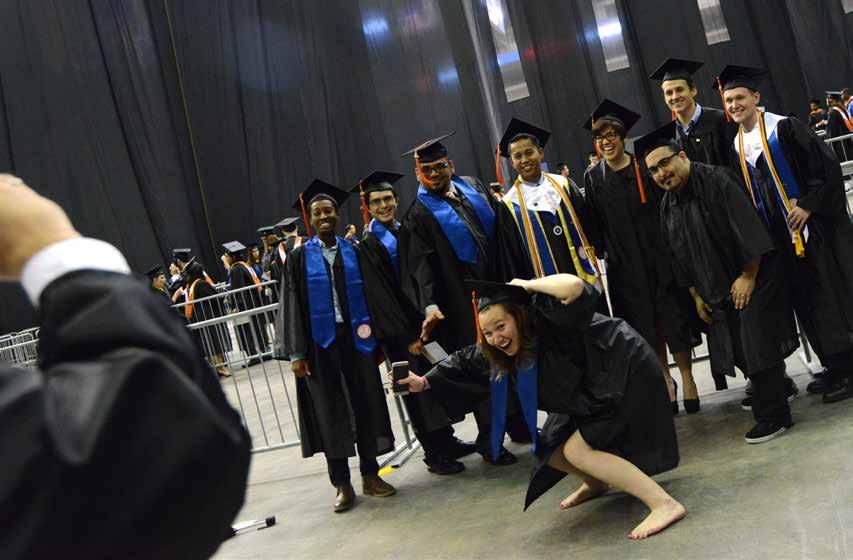
The University of Texas at San Antonio’s commencement ceremony for the College of Engineering and the College of Liberal and Fine Arts was held in downtown San Antonio at the Alamodome on May 15, 2016. More than 400 engineering students walked across the stage during the ceremony.