PORTRAIT OF

PORTRAIT OF
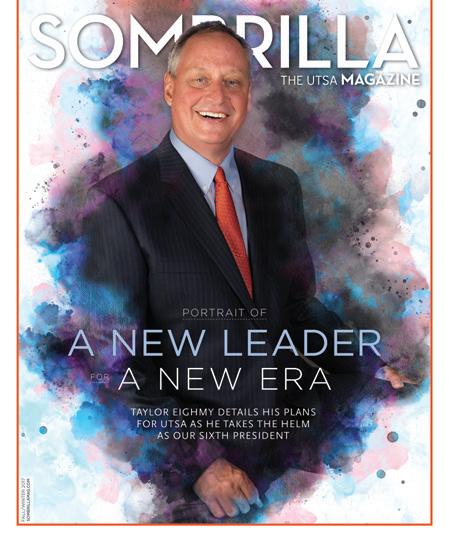
TAYLOR EIGHMY DETAILS HIS PLANS FOR UTSA AS HE TAKES THE HELM AS OUR SIXTH PRESIDENT FOR
18 The Eighmy Era
A new academic year brings a new leader. Meet President Taylor Eighmy and learn his vision for UTSA’s future.
22 Getting Personal
For
26 Build It Better
Students and faculty from UTSA are helping to create a new local magnet school for STEM students.
by michael elkins edwards
It’s a pretty big deal when a university ushers in a new leader. After all, in the past 48 years since its inception, UTSA has gone through the exercise only five other times. So you need to take a beat to appreciate the magnitude of this moment. I mean, come on—we even get a new U.S. president every four to eight years.
So in this issue, we introduce you to our sixth president, Taylor Eighmy. Arriving from the University of Tennesee, Knoxville, where he was vice chancellor for research and engagement, Eighmy is no stranger to top-tier discovery. All three of the institutions where he led the research divisions are recognized as national research universities. In fact, his guidance helped secure Tier One sta tus when he led the research division at Texas Tech. UTSA will be his first time in the pres ident’s chair, yet he has plans for moving the university forward. Read about them in our cover story interview, “The Way Forward.”
Part of Eighmy’s strategy for advancing UTSA includes building on strong community links and being an urban-serving institution for learning and discovery. That model ultimately will make both the university and its host community stronger. As we know, UTSA is already an engaged institution. You can read about one example in our feature “Future High,” which looks at how UTSA faculty and students from the College of Education and Human Development and the College of Sciences are partnering in the newly opened CAST Tech High School in San Antonio. The technology-focused magnet is serving as an incubator for UTSA faculty and students to provide academic support and resources. Teacher preparation, mentoring, and research are three crucial paths in which UTSA and CAST Tech aim to benefit from each other. Additionally, STEM majors at UTSA who have an interest in teaching can get practical exposure in a classroom as early as their freshman year. It’s a community partner strategy that could fit with the ongoing efforts that President Eighmy wants to build on.
But for now, dive into this issue and get to know more about our new leader.
fall/winter 2017 | issue 78
Taylor Eighmy
Joe Izbrand
Michael
Michelle
Shea
Courtney
Joanna
Courtney
Dave
Natalie
PRODUCTION
Shashi

Joaquin
Maria
John
connecting utsa to the world around us

“Unfamiliar hashtags” that are likely to pop up in your Twitter feed each week as university campuses prepare to face off throughout the NCAA football season. Some examples from UTSA’s fellow Conference USA teams, according to the sports-themed website Underdog Nation: #SMTTT (Southern Miss), #GMG (North Texas), and (Come on, Rice. Nada?).
#BirdsUp! That’s right. Underdog Nation puts UTSA’s hashtag at the top of the teams’ in C-USA West. “To the point. Easy to remember. It’s the simplicity that sells it,” the site’s editors say.

plazas & paseos
4 A translation and interpreter program at UTSA is one of only a few in the nation.
7 Researchers find an environment in space that could nurture life forms.
8 Using nano particles to help boost biological processes.
9 A graduate becomes UTSA’s first rep as a UT System student regent.
10 One professor is combining his health research with a passion for social activism.
11 The Roadrunner football team starts its season as the dark horse for the conference title.
30 Maribel Valdez Gonzalez’13 has become the face of an international sociopolitical movement.
33 Alumnus Tim Chapman decides to honor his parents with an endowed “forever scholarship.”
34 A childhood dream comes true when one alumna goes to work for Disney.
37 A salute to one of UTSA’s most impactful presidents.
39 UTSA’s student athletes get a major upgrade to training facilities from community partners. in eVery issue
1 Editor’s Letter UTSA welcomes President Taylor Eighmy.
12 Bird’s-eye View Finding community in the garden, a champion athlete, mesmerizing dancers.
1 Stories to Watch
6 Discovery at UTSA
34 Meet a Mentor
36 Class Notes
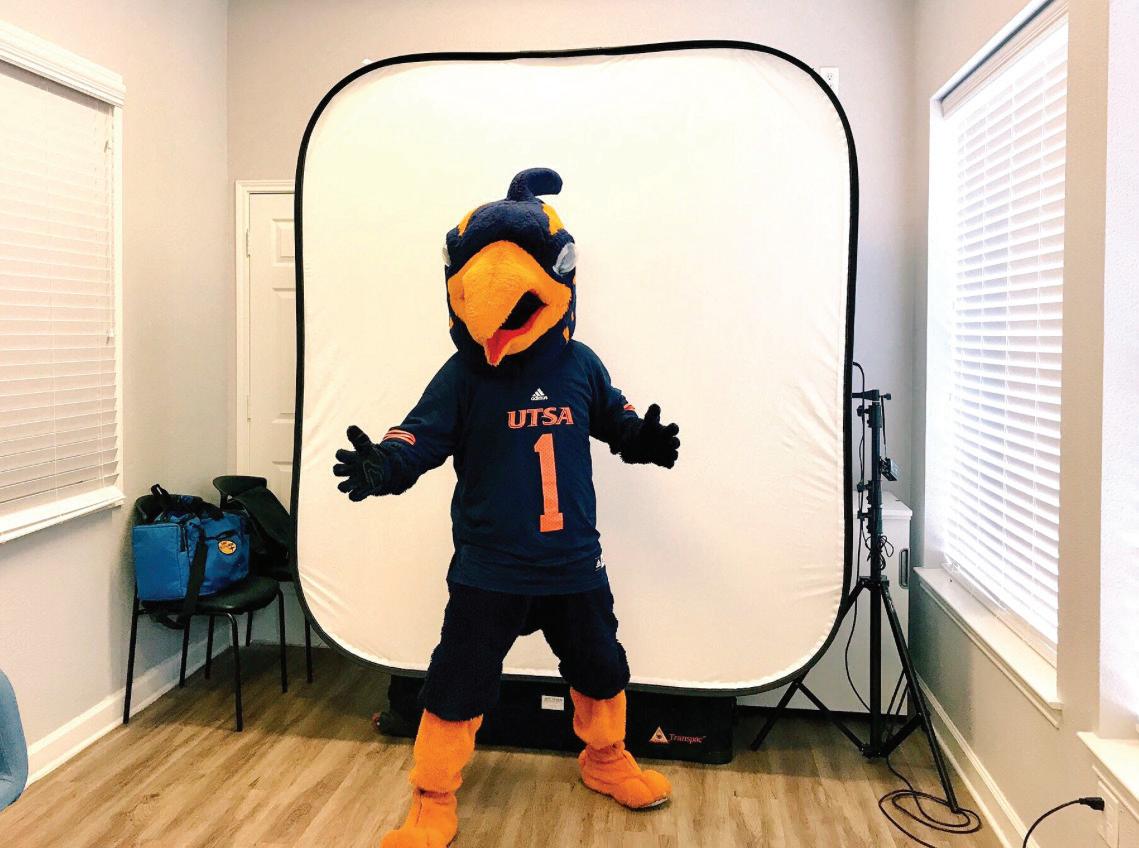
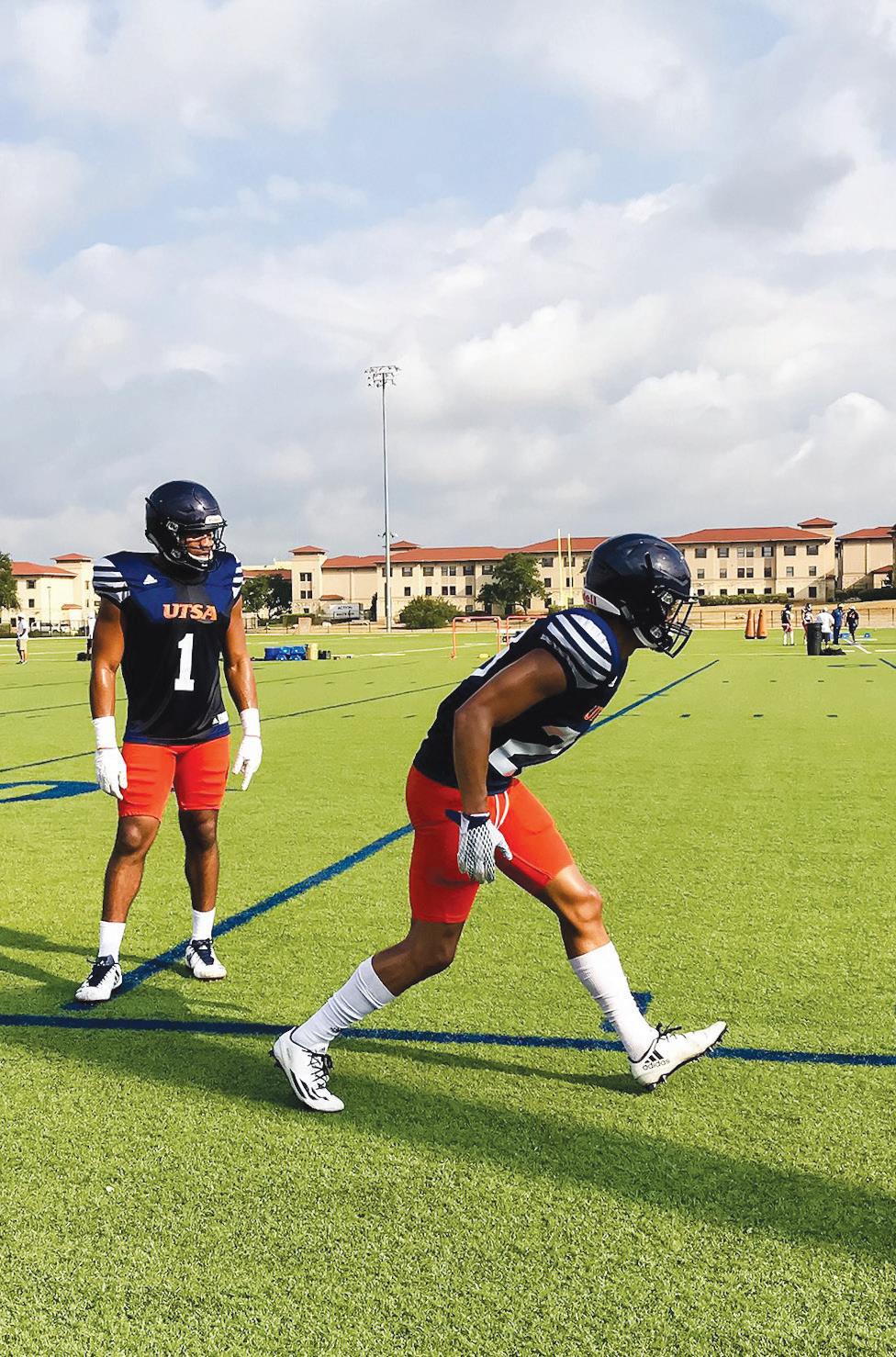
Rowdy’s Game Face Pose @UTSA on July 31: Behind-the-scenes action from the first day of UTSA football camp. #BirdsUp
Ssombrilla (spanish): umbrella (sohm–bree–yah)
Sombrilla Magazine is the official publication of The University of Texas at San Antonio. It is published twice a year and is distributed without charge to students, faculty, staff, alumni, and friends of UTSA.
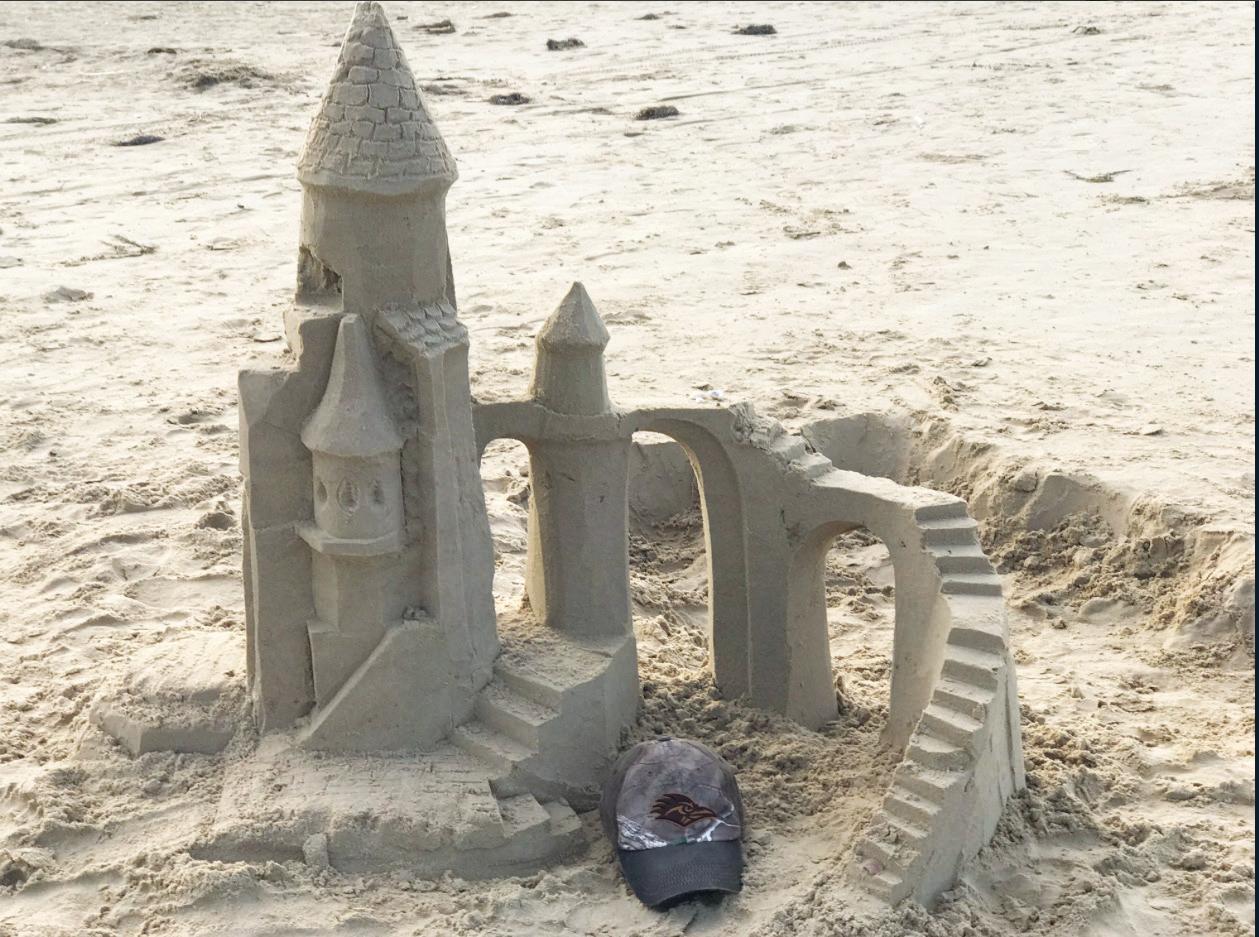
Me + You + UTSA @mh9096 on August 5: Reppin’ #UTSA while at South Padre Island with girlfriend. #GoRunners
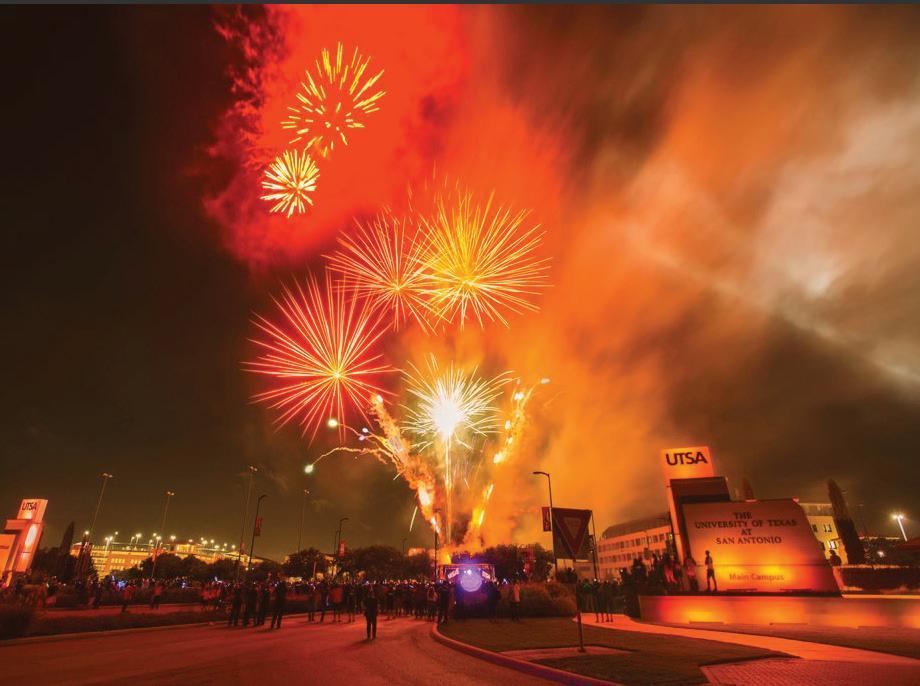
Celebrating Another Fall @RunEmSports on August 21: Midnight Light. #UTSARRDays
University Communications and Marketing produces Sombrilla Magazine and other publications that highlight the achievements and impact of UTSA Roadrunner family throughout the world. This division is responsible for promoting the university’s mission of education and its Tier One drive. We strive to capture the intellectual, cultural, and social life of the university while tackling relevant global issues.
Are you interested in sending an update for Class Notes or sharing news with other members of the Roadrunner family? Send submissions to:
SOMBRILLA MAGAZINE university communications and marketing one utsa circle san antonio, tX 78249-1644 Email sombrilla@utsa.edu
To request to be removed from our mailing list, to receive the magazine’s digital issues only, or to update your mailing address information, use the same contact details.
utsa is a hub of activity
Happy Birthday to You!
Beginning with a special New Year’s Eve celebration, San Antonio will launch a monthslong series of events to mark the 300th anniversary of its founding. Because of its close connection with its home city, UTSA will play a key role in several of them, and the UTSA Libraries and Institute for Texan Cultures have been tapped as partners. Be sure to catch the spring edition of Sombrilla Magazine, in which we’ll pay tribute to the many interesting and important ties between the university and S.A.
Leaving Our Mark
Once again, UTSA has been ranked among the top young universities in the world by Times Higher Education—this time fourth in the U.S. and 68th in the world. Additionally, the Brookings Institution has ranked UTSA among the nation’s top 10 public universities for promoting research and social mobility. And there’s more. UTSA has ranked seventh among minority-serving institutions in the U.S. that received the most federal obligations (expenditures) for science and engineering research, according to the data released in August from the National Science Foundation.
Happy Birthday to Us!
Starting in 2018, UTSA will embark on a year-long tribute that will count down to a climactic celebration of the 50th anniversary of the university’s founding.
utsa translation and interpreting students are filling a professional gap and making a huge difference in people ’ s lives
by michelle mondo
Graduate student Maga Shelledy has worked in hospitals as a trained intrepreter for years, helping Spanish-speaking patients and their English-speaking phy-
Spanish at UTSA, Shelledy discovered the small but growing graduate certificate program in Spanish translation and interpreting studies in the modern languages and literatures department, and she’s tackling certification as part of her studies.
sicians communicate. After moving to San Antonio from Chicago, Shelledy realized she didn’t want to give up what had become a passion. ¶ Now getting a master’s in Astrophysics Is There Life Out There?
In addition to health care settings, trained interpreters and translators are also in demand in such areas as legal courts. In fact, it’s this latter area that helps to make UTSA’s program so unique. The interpreter program is one of only four university programs in the state listed by the Texas Judicial Branch Certification Commission as sites offering possible training.
“This UTSA program is unique because there are very few translation and interpreting programs like it in the country,” says professor Melissa Wallace, who is the certificate program adviser.
“As time goes by, there may be more classes, but we still live in a country that doesn’t recognize translation and
interpreting as an academic discipline. There are only two universities in the country where you can get a Ph.D. in translation studies, and those don’t deal with the dayto-day work people do in the community.”
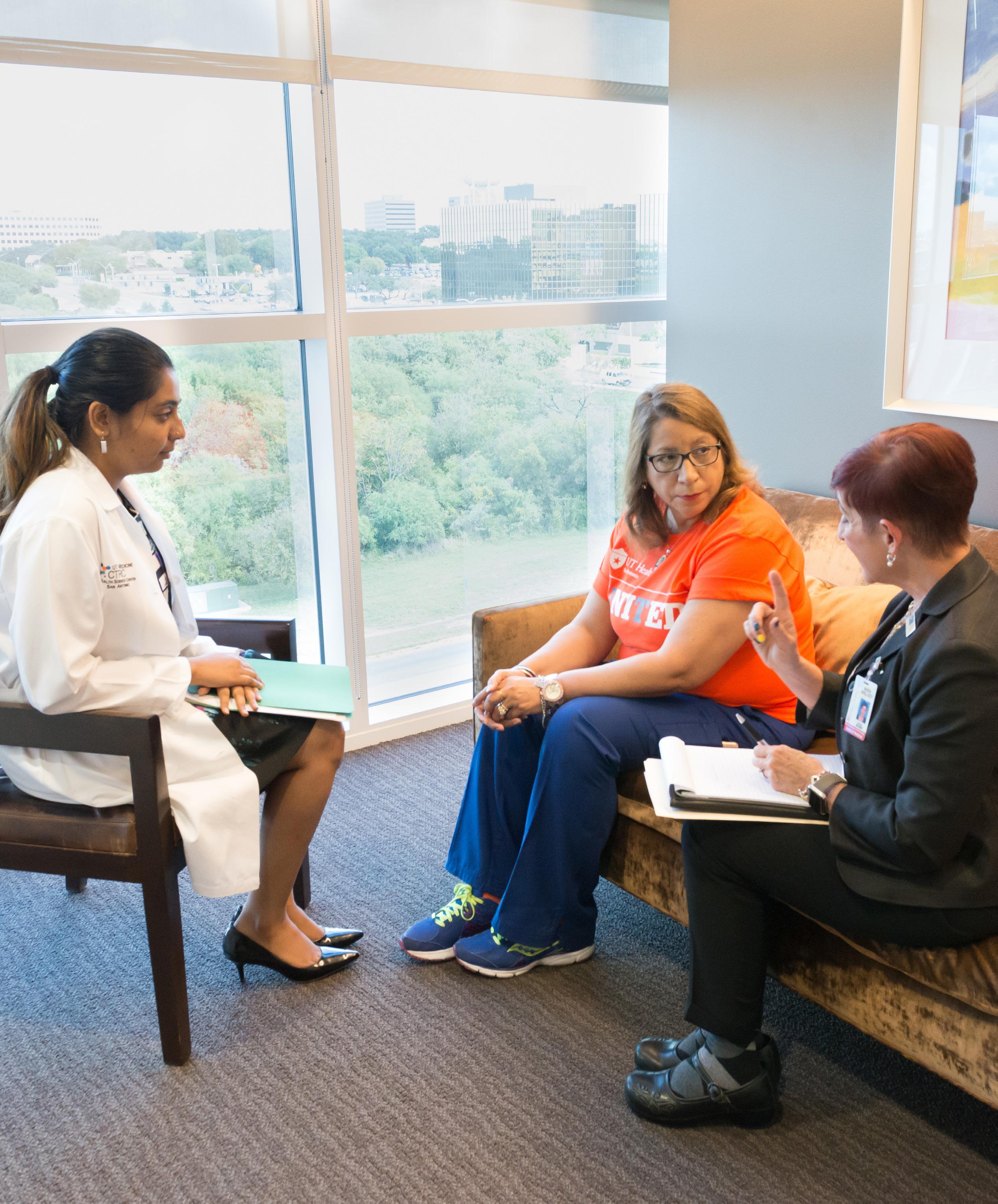
As part of her practicum experience, Shelledy was placed at the Cancer Therapy and Research Center at UT Health San Antonio to interpret for patient advising in the genetics clinic. “For patients, understanding the intricacies of cancer genetics is extremely hard,” says Virginia Kaklamani, medical oncologist and leader of the breast cancer program at the CTRC. “When you add a language barrier to this it becomes almost impossible. With help from the interpreting and translation students at UTSA our Spanish-speaking patients are able to receive state-of-the-art genetic counseling.”
Exploring a Nanotech World 8 Athletics High Hopes for ’Runner Football 11
UTSA’s certificate program consists of 15 semester credit hours, beginning with introductory coursework to the theory and practice of both translation and interpreting, in addition to education in specific fields, such as medical or legal interpreting, ethics, and best practices in the business world. Guest trainers who are translation and interpreting professionals in the “real” world are frequent guests in Wallace’s classes. Wallace, who was selected as a Fulbright Scholar in 2016 and conducted research on judicial interpreting testing models in Finland, says UTSA’s program may be small, but it has grown quickly through wordof-mouth. Currently, there are about 20 students— roughly the same number as in the master’s degree for Spanish. Wallace hopes the certificate program will grow
to a master’s or even Ph.D. program.
The students often want to use what’s learned in an interdisciplinary setting and the certificate accommodates that, especially in the capstone course, which is the practicum that helped Shelledy land at UT Health. Through the program, UTSA also has placed student interpreters at UT Health as well as student translators at the Kendall County Women’s Shelter; the nonprofit Refugee and Immigrant Center for Education and Legal Services; and American Gateways, where students translate narratives to accompany applications for asylum.
The students are certainly filling a skills gap. The demand for bilingual workers in the U.S. more than doubled from 2015 to 2016, according to the report Lost in Translation: The Growing Importance of Foreign Language Skills in the U.S. Job Market. But Wallace stresses that being bilingual isn’t the same as being a trained interpreter. “In the medical field, for example, somebody who is trained and skilled can help navigate or alert the provider to specific breakdowns in the communication,” she says. “You really do have to be trained to be able to do that in order to respect role boundaries and to communicate information in a medical context.”
Carlos Iván Hernández ’12, who is also a recent St. Mary’s Law School graduate, has seen how the work of UTSA students has affected the immigrant community in San Antonio. He helped establish a semiformal re-
“ This program at UTSA is unique because there are very few translation and interpreting programs like it in the country.
lationship between the nonprofit RAICES and the graduate certificate students. This came about after he too became a student of the program. “Most if not all of our cases require some sort of legal translations, which are often submitted to immigration court. Before establishing a relationship with UTSA, volunteer translators at RAICES were, although well-intentioned, bilingual people with scant knowledge about what executing a professional translation entails.” At times, Hernández adds, attorneys and legal assistants had to spend hours reviewing and revising translations because any minor mistranslation could result in a wrongful deportation. When the students from the graduate program began to provide their services, the RAICES staff were able to rely on their accurate and professional work, knowing that their translations were always pristine and well-executed.
The certificate isn’t just about real-world experience. Students have presented research at some of the top conferences in the U.S. and internationally. Hernández has presented both nationally and internationally with Wallace. The two also cowrote a paper for the prestigious Journal of Language and Law.
Wallace also points to graduate student Yeni Dávila, who has made a splash with her research on interpreters in schools and has translated materials used for standardized testing in Texas. What she’s found is that, without proper benchmarks for translation, students have
missed answers to some questions. Her hypothesis is that better translation could increase the scores of bilingual students. “If I can reach two or three bilingual directors to participate by providing me with some samples of benchmarks to complete my research,” Dávila says, “hopefully the findings will be eye-opening not only for them but for other districts as well. The certificate program in addition to working with Dr. Wallace helps you learn so much about the science of translation and its practice, preparing you to present your findings at conferences.”
UTSA’s program also helps the public. This is the third year that Wallace will host an International Translation Day symposium that is free for anyone who wants to attend. The event includes a variety of speakers and panel discussions on translation and interpreting issues, with an emphasis on the medical field and health disparities caused by a lack of language access.
Following his law school graduation, becoming a citizen, and passing the bar, Hernández is now working for the American Bar Association’s Pro Bono Asylum Representation Children’s Project, assisting unaccompanied migrant children who’ve fled Central America for the U.S. because of gang-related violence. “The field of translation and interpreting studies is both highly underresearched—at least in the U.S.—and undervalued as a whole,” he says. “I’m very excited at the fact that my very own alma mater offers one of the very few translation and certificate programs in the United States.” S
I’VE GOT THE POWER: Ruyan Guo, the Robert E. Clarke Endowed Professor of Electrical and Computer Engineering, has received a grant from the National Science Foundation to commercialize a chip that can make low-power electronics, like mobile phones, work more efficiently. Guo’s team developed the technology with Shuza Binzaid of the UTSA Multifunctional Electronic Materials and Devices Research Laboratory. The chip also tackles another common annoyance for electronics users: how devices can overheat when they’re being used for extended periods.
EVERY CLOUD HAS A CYBER LINING: A federal grant totaling $5 million will help support the establishment of the multidisciplinary Center for Security and Privacy Enhanced Cloud Computing, dedicated to integrated education and research at the intersection of cloud computing and cybersecurity. UTSA will receive the grant through the NSF’s Centers of Research Excellence in Science and Technology program, which supports the enhancement of research capabilities of minority-serving institutions. The new center will pursue three main research areas of focus: protection, detection, and policy.
DIVING INTO DIGITAL:
Students in the political science and geography department have a new space this year to delve into research on social media and digital communications. They will learn how big data can reveal trends related to human behavior, according to Bryan Gervais, coordinator of the Digital Politics Studio.
“The goal,” he says, “is to teach students how to use cutting-edge technology to monitor and assess digital, political discourse.”
BUILDING QUAKE
RESILIENCE: Wassim Ghannoum, associate professor of civil and environmental engineering, has received a nearly $800,000 grant from the National Institute of Standards and Technology to develop a new generation of computer simulation models that will characterize the impact of severe earthquake conditions on reinforced concrete.
The work focuses on concrete columns that are used in bridges, tunnels, apartment buildings, and office structures. If the columns’ resilience in a seismic event is subpar, the result could be a massive loss of life.
Ghannoum plans to create simulation models that will pave the way for a new generation of tools that will provide critical engineering data to make more precise decisions that could prevent structures from crumbling under seismic pressure.

a utsa researcher builds a theory for life-supporting environments in the universe
In the icy bodies around our solar system, radiation emitted from rocky cores could break up water molecules and support hydrogen-eating microbes—essentially extraterrestrial life.
To address this cosmic possibility, a UTSA and Southwest Research Institute team modeled a natural water-cracking process called radiolysis. They then applied the model to several worlds with known or suspected interior oceans, including Saturn’s moon Enceladus, Jupiter’s moon Europa, and Pluto and its moon Charon as well as the dwarf planet Ceres.
“The physical and chemical processes that follow radiolysis release molecular hydrogen, which is a molecule of astrobiological interest,” says Alexis Bouquet, lead author of
Enceladus (above, foreground) is a potential location for a process theorized to support extraterrestrial life.
the study, published in the May edition of Astrophysical Journal Letters.
Radioactive isotopes of elements such as uranium, potassium, and thorium are found in a class of rocky meteorites known as chondrites. The cores of the worlds studied by Bouquet and his fellow researchers are thought to have chondrite-like compositions. Ocean water permeating the porous rock of the core could be exposed to ionizing radiation and undergo radiolysis, producing molecular hydrogen and reactive oxygen compounds.
Bouquet, who is in the joint doctoral program between UTSA’s Department of Physics and Astronomy and SwRI’s Space Science and Engineering Division, says microbial communities sustained by molecular hydrogen have been found in extreme environments on Earth, including a groundwater sample found nearly two miles deep in a South African gold mine and at hydrothermal vents on the ocean floor. That raises interesting possibilities for the potential existence of analogous microbes at the water-rock interfaces of ocean worlds such as Enceladus or Europa.
“We know that these radioactive elements
exist within icy bodies, but this is the first systematic look across the solar system to estimate radiolysis. The results suggest that there are many potential targets for exploration out there, and that’s exciting,” says Danielle Wyrick, a SwRI scientist working with Bouquet.
The key finding of the study is that radiolysis represents a potentially important source of molecular hydrogen. While hydrothermal activity can produce considerable quantities of hydrogen in porous rocks often found under seafloors, radiolysis could produce significant amounts as well.
Radiolysis may also contribute to the potential habitability of ocean worlds in another way. In addition to molecular hydrogen, it produces oxygen compounds that can react with certain minerals in the core to create sulfates, a food source for some kinds of microorganisms.
“Radiolysis in an ocean world’s outer core could be fundamental in supporting life,” Bouquet says.
“Because mixtures of water and rock are everywhere in the outer solar system, this insight increases the odds of abundant habitable real estate out there.” S
1604 seconds with… physicist and associate professor kelly nash
by michelle mondo
As a black woman in the field of physics, Kelly Nash ’09 gives some of her attention to making the discipline more inclusive, a lofty goal when there are fewer than 100 African American women in the U.S. who hold a Ph.D. in physics.
But she doesn’t believe in letting such statistics holding anyone back. At UTSA, she’s collaborating with engineering professor Heather Shipley using gold nanoparticles, which are a microscopic version of the element but with different properties once it is broken down. They’re developing a nanomaterial that works like a water purifier that’s activated by sunlight, causing organic and heavy metal pollutants to dissolve.
In some of her other work, Nash and her students are tackling problems like drug-resistant bacteria. She’s also chair-elect of the American Physical Society’s
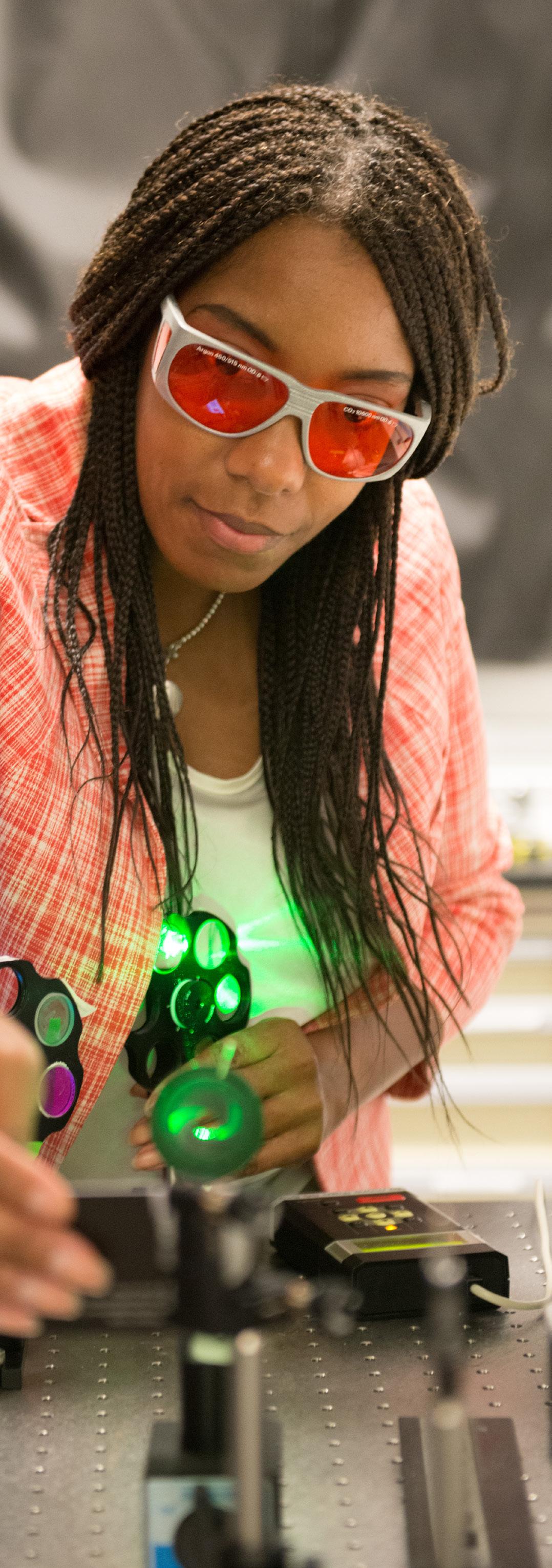
To start, what’s fun about physics? I’m an experimentalist, so for me it’s playing with all the instruments. In a typical week you’ll find me in the lab trying to figure out how to work out an optical experiment or trying to work on different challenges. Who doesn’t like playing with lasers!
What kind of research are you doing right now? Mostly looking at how nanomaterials interface with biology. We’re exposed to technology when we interact with electronics like our cellphones. What is fascinating and kind of an unknown frontier is understanding what happens when you have nanomaterials that interact with a biological system, whether it’s a single human cell or a biomolecule like a protein. People for decades have looked at that interaction in the passive
sense. We’re taking active approaches with nanomaterials: Can these be an active participant in this process and in part change the biological system? That research opens up very exciting opportunities. The applications could range from stimulating neurons in the brain to helping heal damaged cells in burn victims.
UTSA’s physics department has more women faculty than the national average, but diversity in STEM is still an issue. How can this be improved? Diversity is persons of color, women, people with disabilities, people with different backgrounds, international students and faculty—all of those contribute to a good mix of ideas in an environment. I think it’s something you hate to say, but every day it’s a challenge as a woman and particularly as a woman of color being in the sciences. I think too often we focus on only the
challenges. It’s important to look at the success stories too. The women-in-physics conferences started out as a single conference at a single university. But now, going into its 12th year, it’s grown to 13 conferences. The impact is real. These young women are building a network.
And you’re a mentor? I believe the sooner we get students into the lab the better. Every summer for the past five years I’ve had a high school student in my lab doing research. Some later enrolled at UTSA. Really, that first exposure, even though the students may not understand all aspects of the science, helps them know they can be in my shoes one day or the shoes of one of my colleagues. S
Ø Kelly Nash sets up a laser array to explore the world of nanoparticles and how they interact with biological systems.

student leadership community service
utsa sends its first person to represent the student body at the ut system level
by courtney clevenger
AUTSA graduate student has been selected as the newest University of Texas System student regent, the first from UTSA to serve in the role. Jaciel Castro, who is pursuing an M.B.A. with a real estate finance concentration, will represent the student voice at Board of Regents meetings.
Over his one-year term, Castro will travel to all 14 UT System institutions. “I will listen to their needs and visions,” he says, “and take that voice to the regents and help them understand how their decisions affect students.
In his role Castro will attend four annual meetings and three to four special meetings. As a student regent, he has the same rights as regularly appointed board members, except the right to vote.
Castro says his priorities are student success and retention. He wants
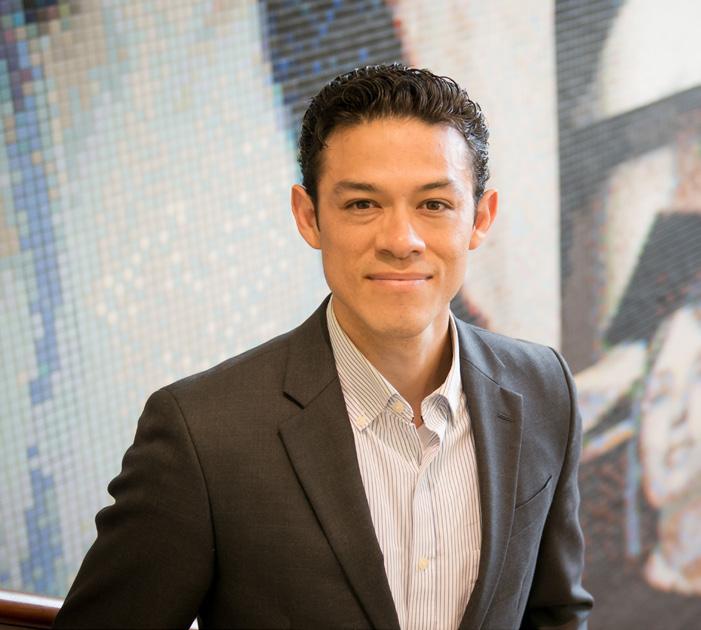
to find out what pro grams are working at other universities and bring new ideas back to UTSA. “I know there are some awesome things happening that I can share,” he explains. ”I also want to be part of the process as we enhance some already successful practices.”
He believes UTSA also has a lot to teach the other institutions.
“There is so much diversity among our students,” Castro says. “I believe UTSA represents what universities will look like across the country in the next 30 years. It has the potential to show the country what can be done for minority students.”
Through his efforts and drive for education, Castro is also inspiring his own family. Born and raised in Mexico, he is the first in five generations to not only attend
college but earn a bachelor’s degree and pursue a master’s. Now, his sisters are also college graduates and several of his cousins are going to college as well.
Castro says he’s excited to represent UTSA as its first student regent. “The UT System as a whole has a lot to say when it comes to research, innovation, and program development,” he says. “It’s exciting to be among such an outstanding group of people and learn about the universities and what they’re achieving in Texas and across the world.” S
by michelle mondo
Health and kinesiology assistant professor Phillip Schnarrs sees his research as a way to be a social activist. Under a broad category of LGBTQ health, he focuses on health promotion—like prevention of sexually transmitted infections and HIV—as well as how people cope with stigma and discrimination.
This fall he was awarded the Interdisciplinary Research Leaders Fellowship with the Robert Wood Johnson Foundation. The project includes mentorship and leadership training in community-engaged, action-oriented research that focuses on policy change. Working with community partners, including Pride Center San Antonio and Equality Texas, Schnarrs will look at how research can impact public policy. After the conclusion of the three-year study the goal would be to build community connections and processes to help give individuals a voice in creating policy.
“I very much want San Antonio to become a beacon of hope for LGBTQ+ indi-
public health research
how one utsa professor is parlaying his health research into social activism
viduals in all of Texas—but especially South Texas,” Schnarrs says. “This program is a first step toward bringing together our community to learn from each other, strengthen our ties, and advocate for equality through the use of empirical data collected by the LGBTQ+ community for the LGBTQ+ community.” His work also extends beyond Texas. Last year, Schnarrs developed a collaboration with researchers at Instituto Nacional de Salud Pública in Cuernavaca, Mexico. Together with UT Health San Antonio faculty, he’s studying HIV prevention in the sexual minority men and transgender women in San Antonio and Mexico and is examining access to health care among
sexual minority men in Mexico. The university partners have applied for two grants, which are under review, with ConTex, a joint initiative of the University of Texas System and Mexico’s National Council of Science and Technology to foster
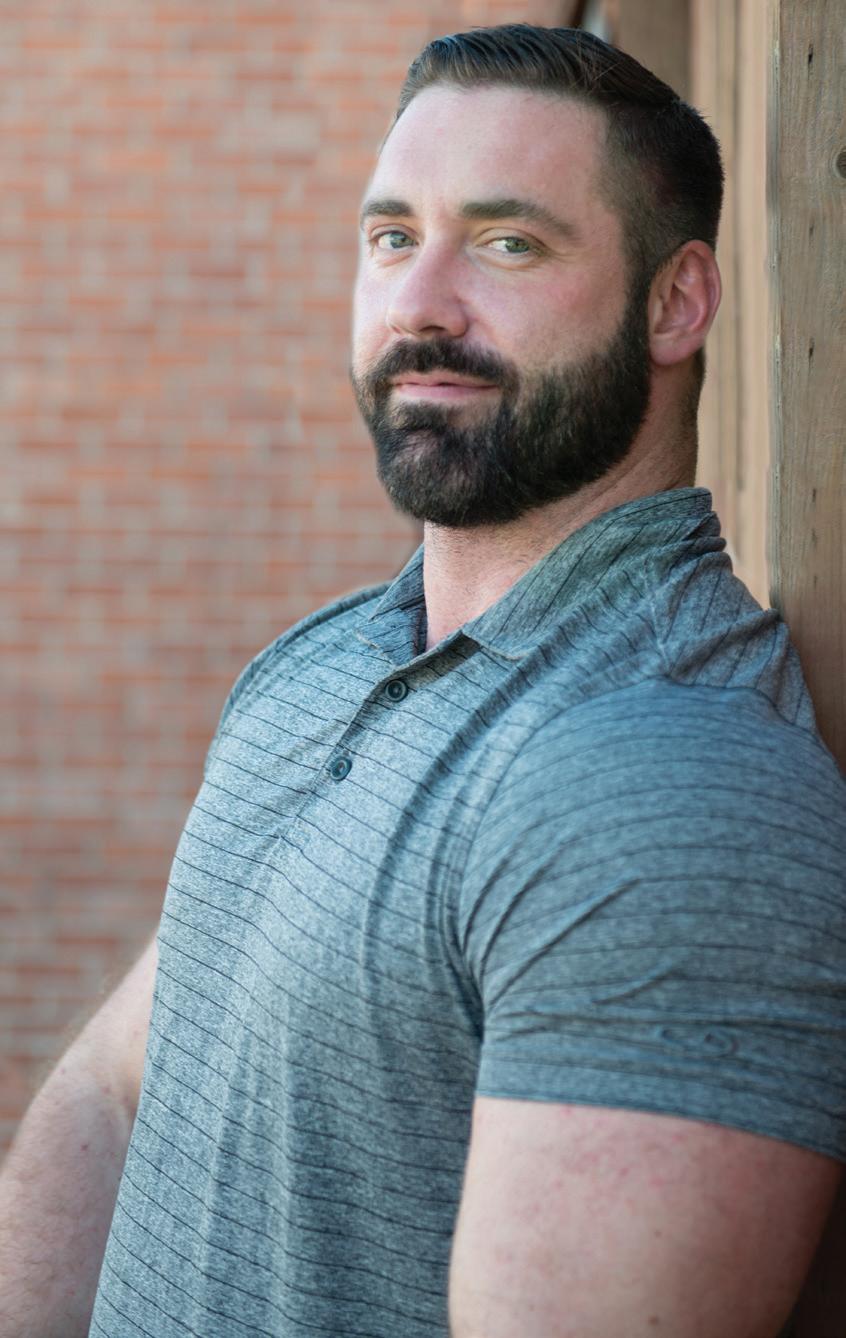
collaboration between the United States and Mexico. Schnarrs also cofounded UTSA’s LGBTQ faculty and staff association in 2013. The group works as a social support system, and each semester it picks a gay-friendly or gay-owned establishment for a gathering. He says the group also hopes to bring more awareness events to campus. “One thing we’ve been trying to do forever is to bring to UTSA one of the traveling exhibits from the United States Holocaust Memorial Museum,” Schnarrs says. “With this exhibit, we could talk more broadly about issues like diversity and persecution and what happens when we don’t accept people for who they are.” S
YOU’RE SO VEIN: A team of students has received a National Science Foundation grant to support the development of InfraVein, their infrared medical camera that makes simple work of finding veins. The camera has a variety of applications—like aiding catheter insertion or for inserting IVs into infants.
FOR ONE: Mechanical engineer Lyle Hood has collaborated with UT Austin’s Christopher Rylander to create a needle that penetrates tissue to deliver medicine while emitting laser light that kills cancer tumors. The device can do the work of both a surgical needle and a medical laser. It has innumerable applications, according to Hood, most notably the ability to eradicate cancerous tumors while delivering chemotherapy drugs.
A
With an increased use of explosive devices in warfare there’s also been a rise in military injury that a group of UTSA students has set out to address—the problem of managing external hemorrhaging in combat wounds, especially traumatic amputations. Their gauze, ColdClot, uses three methods to reduce bleeding: hemostatic gauze, super absorbent polymers, and an endothermic reaction to reduce the overall rate of bleeding across a large wound.
by shea conner
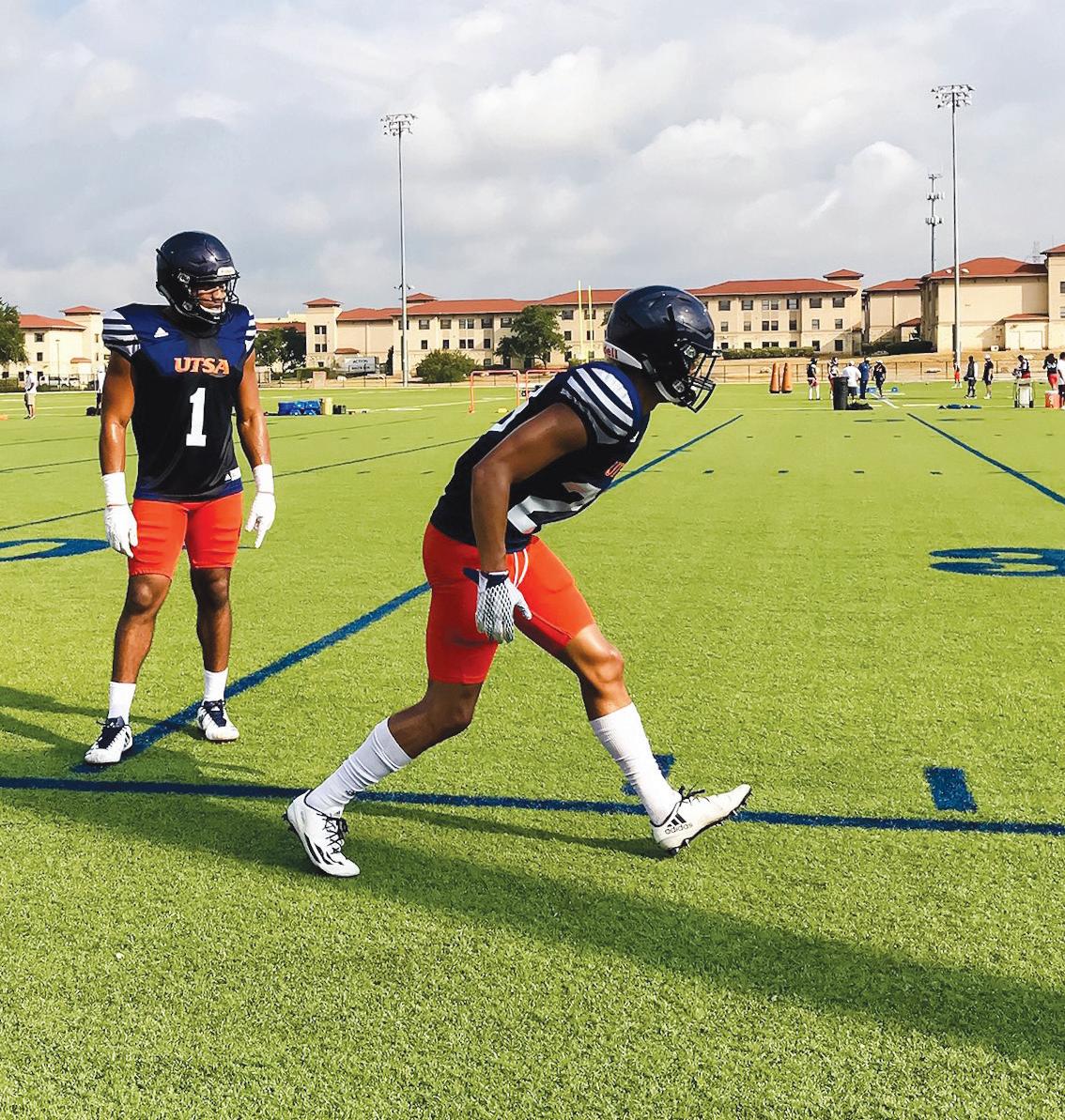
In just its seventh year, the Roadrunners football program is under higher expectations than ever before. Of course, that’s bound to happen a six-win season that included three nationally televised games on ESPN networks and led to the first bowl game appearance in university history. Those are the kinds of achievements that make fans, coaches, players, and prognosticators take notice.
And take notice they have. Conference USA announced its preseason media football poll in July, and UTSA was picked to finish second in the West Division standings. The Roadrunners earned seven first-place votes. (Only two teams had more first-place votes: defending conference champion Western Kentucky and West Division favorite Louisiana Tech.) ESPN’s Football Power Index and SBNation’s Bill Connelly both project UTSA as the favorite in nine
coming off a stellar ’16 season, utsa football is among this year’s conference usa favorites
games, with ESPN’s FPI giving the Roadrunners a 10.4 percent chance of winning the title. “If this seasoned squad can close out close games, the Roadrunners could contend for the C-USA West title,” Connelly writes of second-year head coach Frank Wilson’s team. The word seasoned has rarely been used in association with UTSA football, but it certainly rings true this year. The Roadrunners return 44 letter-winners and 15 starters from the 2016 squad, which earned an invitation to the Gildan New Mexico Bowl. Of those returning players, four were named to the Preseason
All-Conference USA Team: senior defensive end Mar cus Davenport, sophomore linebacker Josiah Tauaefa, senior offensive guard Austin Pratt, and senior deep snap per Matt Bayliss. The staff at Athlon Sports, which compiles one of the most comprehensive college
football previews each year, writes that Davenport has the greatest NFL potential on the UTSA roster: Davenport “is primed for a monster senior season. He plays his defensive end spot standing up and has a knack for getting pressure on the quarterback and forcing runs back inside.”
UTSA’s defense will need to wreak havoc against a schedule that includes several high-powered offenses such as Baylor and Louisiana
Tech, but the Roadrunners will certainly have the talent on offense to put up points in bunches. After spending part of his summer picking the brains of future Hall of Fame quarterbacks at the
As athletic conferences have expanded their geographic footprint, road games have increasingly become cross-country treks. Yet in a fortuitous bit of scheduling, the

UTSA won’t play a game outside of the Lone Star State until a November 4 match-up with Florida International in Miami. And even though all games are expected to be televised this season, the drive time to UTSA’s five other road games—all of which are less than 550 miles from San Antonio—aren’t that bad if the mood strikes you to be in the visitors stands.
Manning Passing Academy, UTSA quarterback Dalton Sturm is hoping for a breakout senior season. The good news is his four top wide receivers are back from last year: Josh Stewart, Kerry Thomas Jr., Brady Jones, and Marquez McNair. Sturm should also thrive behind a senior-laden offensive line and be able to lean on junior running back Jalen Rhodes.
With an experienced roster, an ambitious head coach and a ton of momentum, UTSA is more than capable of building on a promising season and a bowl appearance. “The ceiling is high in San Antonio,” says SB Nation’s Connelly. Now it’s time for our beloved birds to soar. S
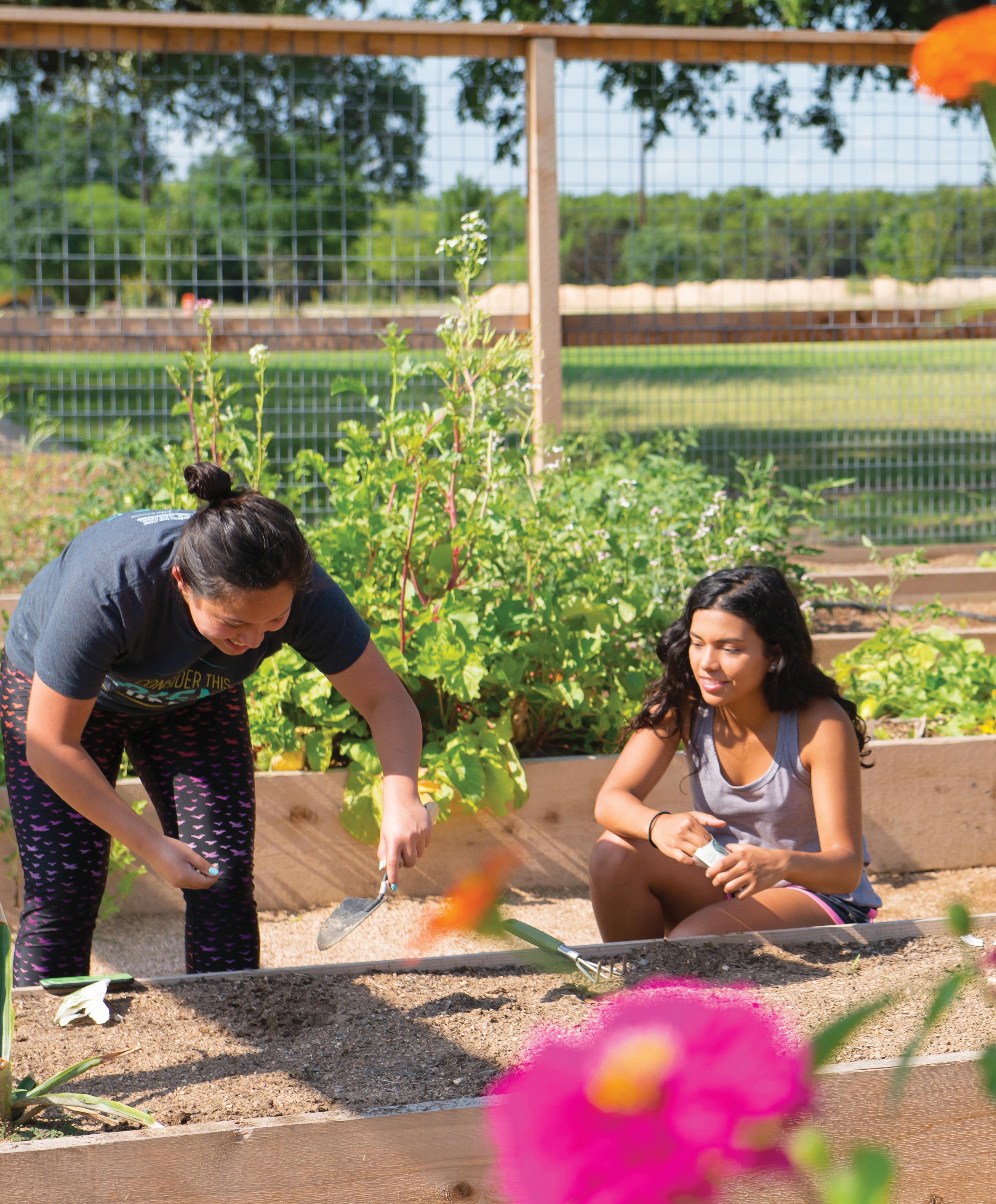
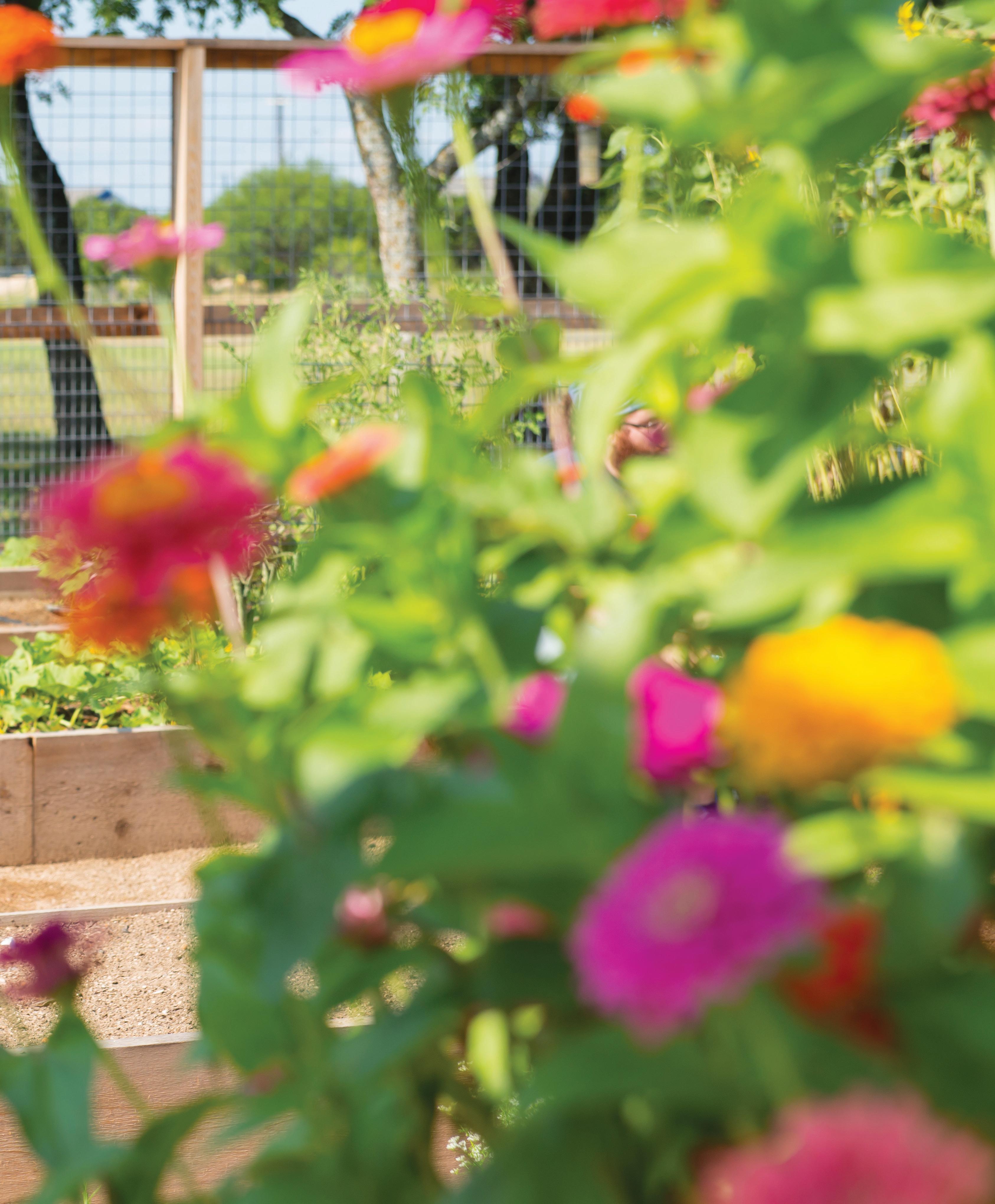
UTSA is extending its sustainability focus with a community garden where student groups, faculty, and staff can grow their own fruits and vegetables to eat and share, like Rosye Rodea and Alex Irizarry, members of the university’s Dietetic and Nutrition Association. Students
began promoting the idea for a community garden in 2013. With input from the Green Society, the Office of Sustainability, and experienced home gardeners, the project came to fruition this year. Located on Main Campus, the garden features six raised beds, including one for wheelchair access.
Victoria Vargas is a world-class powerlifter set on breaking records. Earlier this year the senior kinesiology major won gold for the second consecutive year at the USA Powerlifting Collegiate National Championships. Finishing with the highest

recorded powerlifting score for the meet, she went on to set two unofficial world records in her weight class. Vargas trained and competed throughout high school and chose to attend UTSA partly because of the prestige of its powerlifting club.

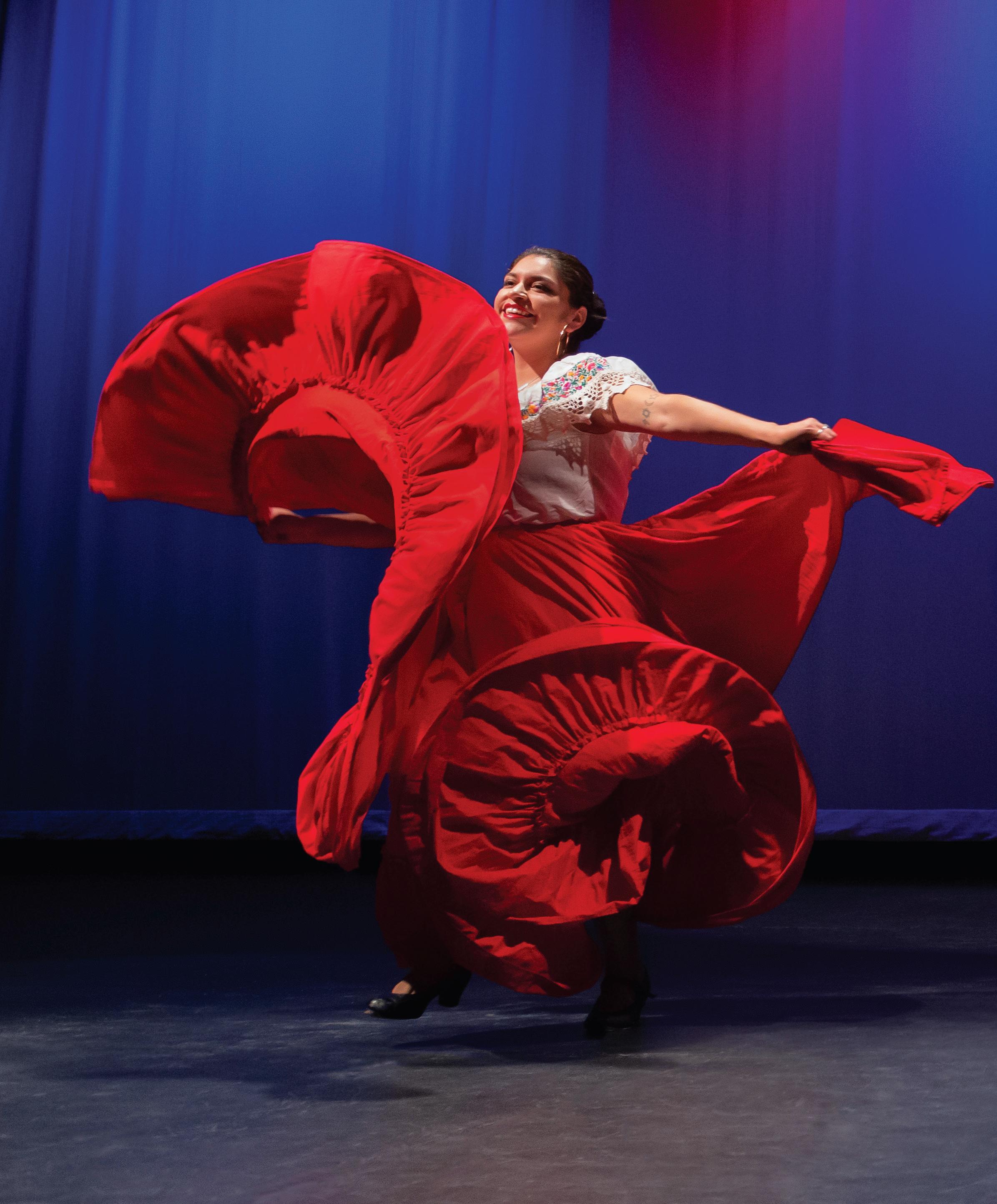
¡Baila! ¡Baila! ¡Baila!
Students Andrea Gallegos and Alyssa Aguilera display pointed toes, extended arms, and vibrant dresses that rhythmically flow in enchanting spirals. These are the captivating sights of Ballet Folklórico de UTSA.
Created in March through the College of Education and Human Development’s bicultural-bilingual studies department, this new
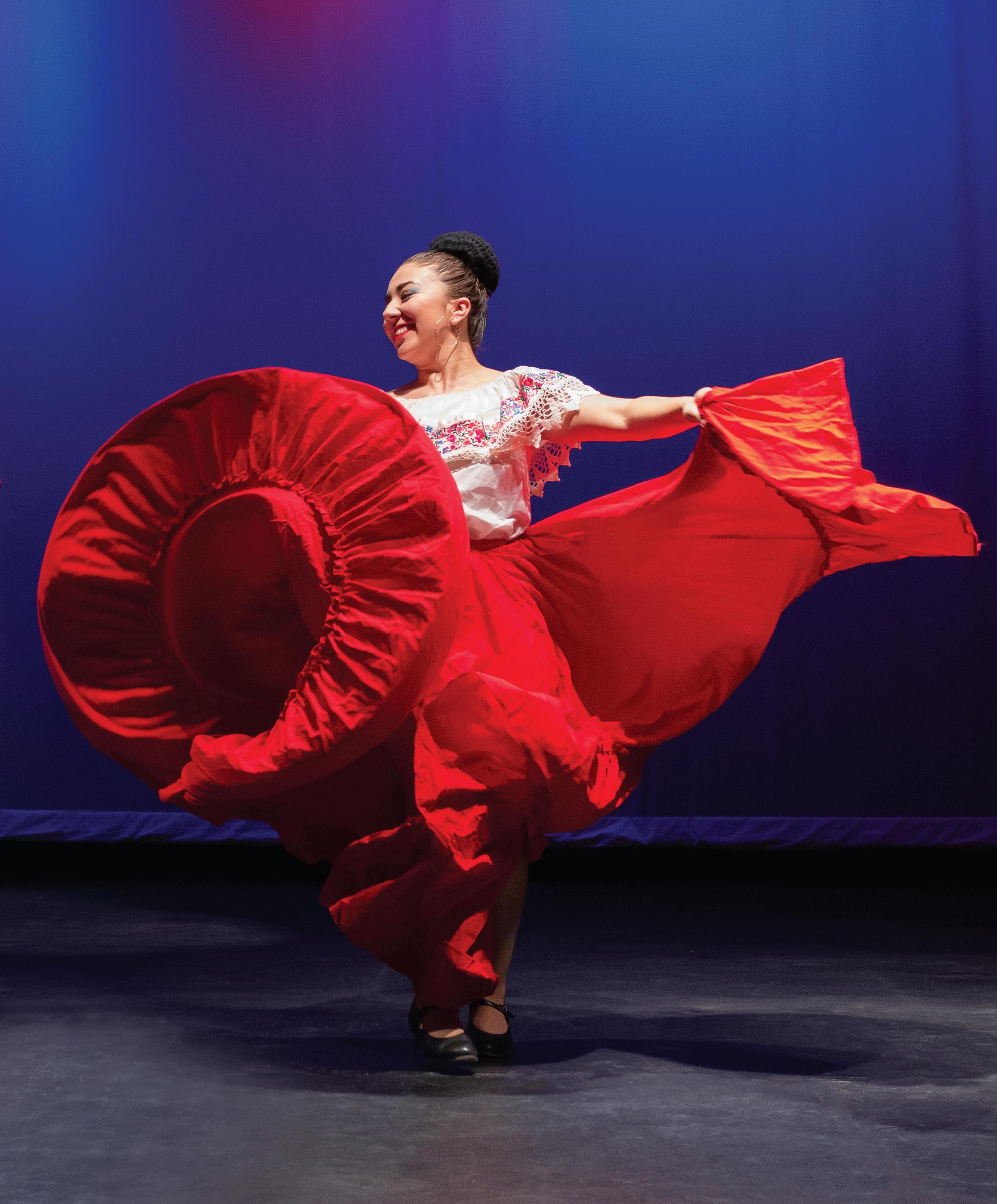
student organization is dedicated to the performance and cultural preservation of Mexico’s traditional folkloric dance. The group has already made a colorful splash through performances at the National Latino Children’s Literature Conference and the UTSA Hispanic Student Association’s talent show.
COVER STORY
marking the beginning of a new era at utsa , taylor eighmy shares his vision for the university as he takes the mantle as its newest president
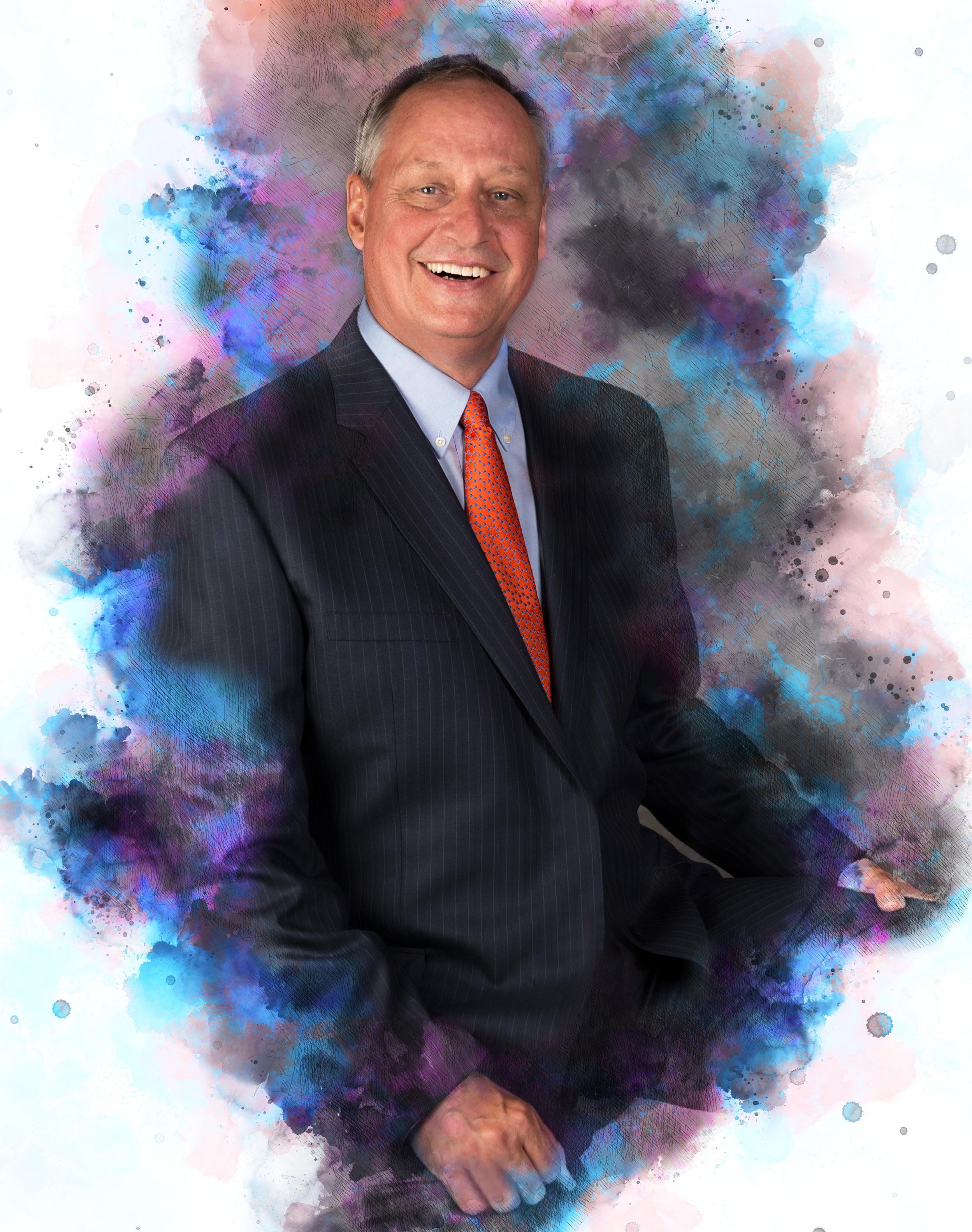
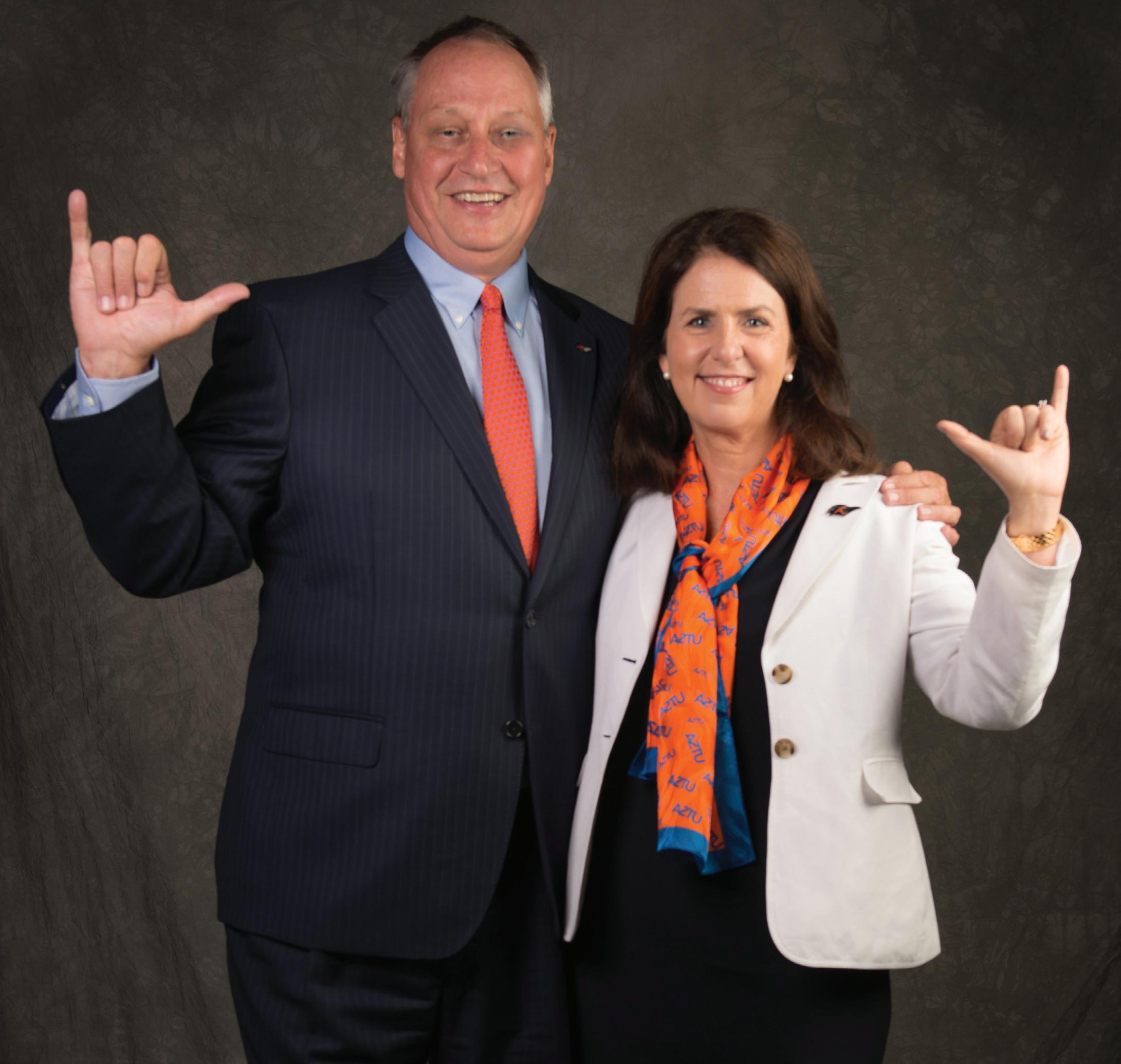
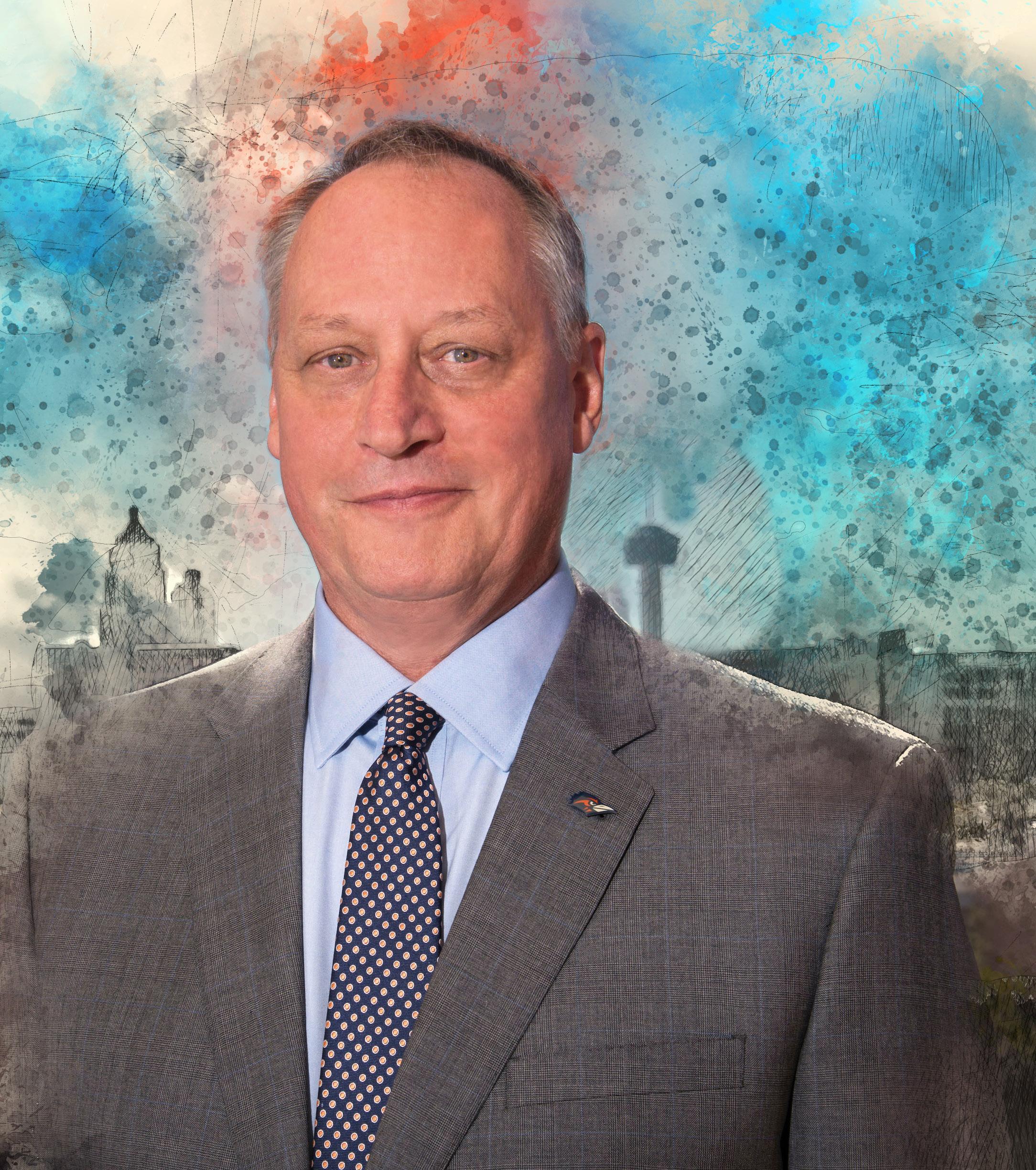
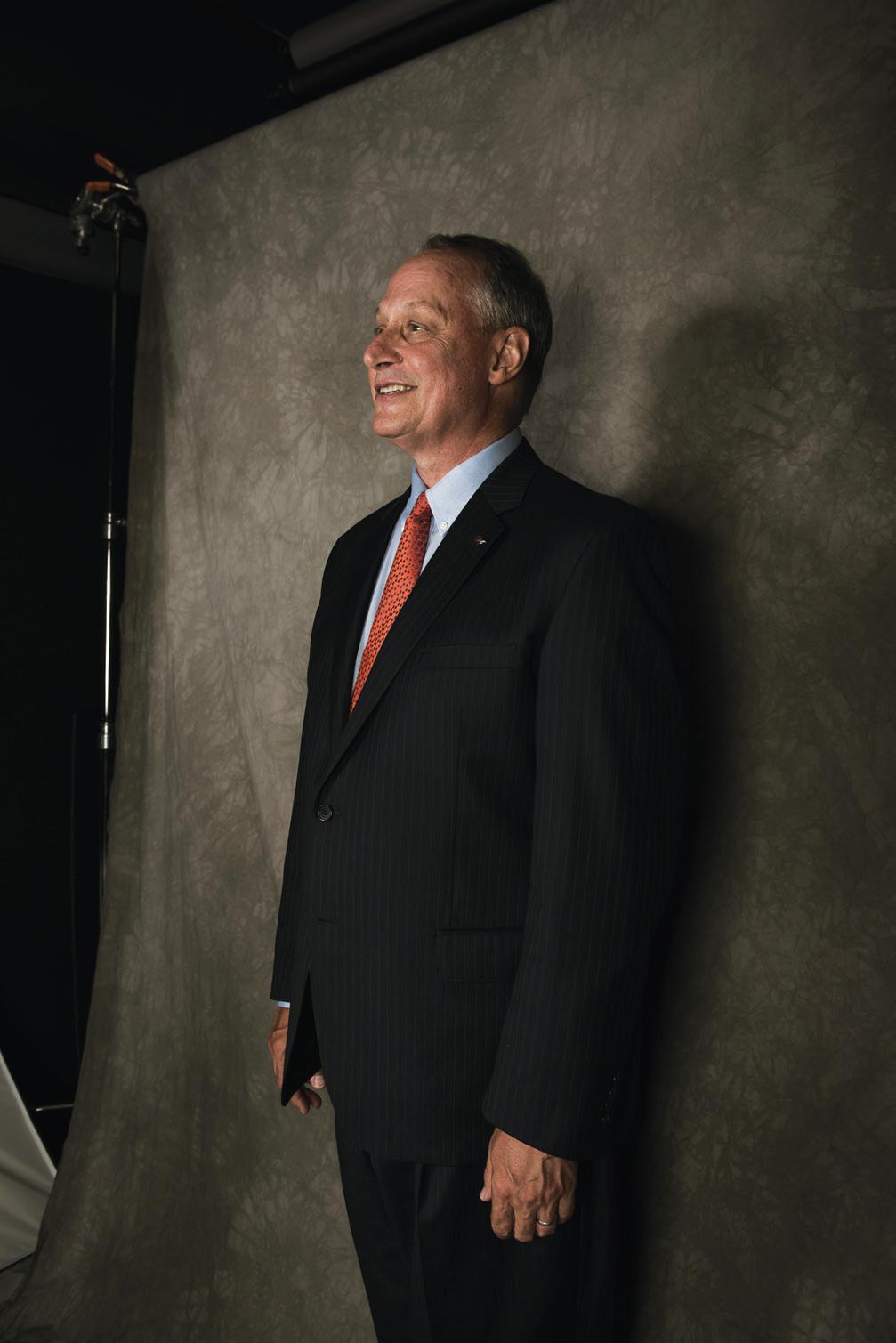
It’s been just days since Taylor Eighmy received the official vote to be UTSA’s sixth president when he and wife Peggy Eighmy make their first visit to campus. He’s made the trip ahead of his official start date to meet with his university leadership team as well as to make himself accessible to faculty and the student leadership. When the couple make time midweek for his first official university photo shoot, it becomes clear that Taylor Eighmy’s focus was greater than becoming merely a university president as a career move; he was ready to be this university’s president.
Despite the task at hand of producing a set of presidential photos, this is still an opportunity for Eighmy to exchange ideas. He checks in on plans for the university’s role in the upcoming SA300—months of celebrations that will launch in January to mark the tercentenary of San Antonio’s founding. And that inquiry leads naturally to one about the preparations for observance of UTSA’s 50th anniversary in 2019. The cursory details that he receives elicit clear approval, which he gives via a nod and a high five.
But Eighmy (which is pronounced like “Amy” if you’re still unsure) isn’t just checking in on the status of celebrations and parties. He knows these forthcoming observations will bring opportunities to highlight—and cement even more significantly—one of the driving forces behind UTSA’s success: its close ties with the people, businesses, and leaders of San Antonio. “Great cities are synonymous with great universities, and the future of public research universities is really centered around the urban-serving learning and discovery
BY MICHAEL ELKINS EDWARDS

model,” Eighmy says, explaining how, in order to thrive, a public university will have to be able to tackle the grand challenges of its partner city and greater metropolitan region. The evidence for this can be seen, he says, in many of our country’s largest cities. “This can be realized here in San Antonio too,” he adds. “The foundations are in place: a strong civic leadership, a strong civic pride, a Texas can-do attitude, and shared aspirations.”
On his belief in this path for UTSA’s future, President Eighmy is authentic. Take it from the person in his life who probably knows him better than anyone else: his wife. “He is a builder and a change agent. He believes in the importance of public universities creating a healthy and prosperous future for all,” says Peggy Eighmy. “He loves the challenge and opportunity here,

Taylor Eighmy’s education and teaching career have been in the fields of civil and environmental engineering. He also has led research and engagement divisions at major universities and has been honored by his peers. Here is a time line of some of the highlights of his life that eventually led him to UTSA.
B.S. ’80 | Tufts Receives undergraduate degree in biology.
PH.D., ENVIRONMENTAL ENGINEERING ’86 | New Hampshire Eighmy also receives his M.S. from the University of New Hampshire, in 1983 in civil engineering.
“Great cities are synonymous with great universities, and the future of public research universities is centered around urban-serving learning and discovery.
RESEARCH PROFESSOR, CIVIL ENGINEERING ’99 | New Hampshire Career at the University of New Hampshire begins in 1986 as a research assistant professor; in 1992 Eighmy becomes a research associate professor.


the growth trajectory of the university, and he knows all the ingredients are in place. He didn’t want to be just a president of a university but a president of an institution just like UTSA within a great city just like San Antonio.”
the man for this job
Even just a glance over the highlights of Taylor Eighmy’s résumé reveals why it wouldn’t have been difficult for the UT System Board of Regents to narrow its decision that this was the leader that UTSA needed for its future.
First, Eighmy has previously been on the faculty and administration at three public institutions within state university systems, just like UTSA. Second, he was the chief research officer at each of those three institutions, and all of them are classified
VISITING PROFESSOR ’99 | Swedish Geotechnical Institute, Linköping University
INTERIM VP FOR RESEARCH
’07 | New Hampshire
Eighmy’s work takes him into university administration, first as assistant VP for research as well as director of strategic initiatives, both in 2006.

as national research universities. In fact, he was the vice president for research at Texas Tech while it was pursuing its goal of Tier One status, just as UTSA is doing now. Is Eighmy ready to face that mountainous climb—all over again—considering that he knows what it entails? “The task ahead here feels exactly the same magnitude to the one I had at Texas Tech,” he says with confidence. “It seems daunting, but when you develop strategies and schedules and assemble the talent to tackle each one, it can come together.”
In yet another example of his past work resonating with UTSA, Eighmy’s vice chancellor role at the University of Tennessee, Knoxville, included oversight of that institution’s community engagement. He is a champion of maximizing outreach efforts among an institution’s student body, which
“I think we can reinvent our mission and vision to embrace ideas about learning for life preparing our future students now.
syncs perfectly with community service already being intrinsic to UTSA’s mission. He believes, though, that efforts here need to be taken even further. “I think we can reinvent our mission and vision to embrace ideas about learning for life—preparing our future students now by adopting a ‘cradle to career’ community engagement concept,” he says. “I really am intrigued about a strategic focus on this new field of research called urban science or urban dynamics and having San Antonio become our real-time civics laboratory. We have a great downtown campus for this sort of focus. It’s about turning the talent we have loose on the grand challenges we face here at home—college readiness, affordability, success, health care disparity, income disparity, sustainable society, smart communities. How does a great public, Hispan-

SENIOR VP FOR RESEARCH ’12 | Texas Tech New post, originally as VP for research, coincides in 2009 with role as professor of civil and environmental engineering. Eighmy will be strategic in helping Texas Tech achieve Tier One status.
DIPLOMATE ’12 | American Academy of Environmental Engineers and Scientists

VICE CHANCELLOR FOR RESEARCH AND ENGAGEMENT ’12 | Tennessee Also becomes a professor of civil and environmental engineering.

FELLOW ’14 | National Association for the Advancement of Science


FELLOW ’14 | National Academy of Inventors
to gain some insight into taylor eighmy the man, sombrilla magazine decides to give him a pop quiz
by michael elkins edwards
It’s always helpful to find out what makes your leader tick—what he likes to do for fun, his personal tastes, what common ground another Roadrunner could find to chat about. In President Eighmy’s case, let’s find out!
NBA or NFL? Easy. Intercollegiate athletics.
Ah, tricky. But what about your favorite pro sports and team? [Laughs] I am ducking this question, given my Boston roots! Seriously, though, we can’t wait to see the Spurs play. I grew up playing hockey, lacrosse, and rugby. I want to see the Rampage [San Antonio’s ice hockey team] play.
Favorite kind of music and band or singer? I might be giving away our ages here, but we listen a lot on Pandora channels to Dave Matthews, Mark Knopfler, Florence + the Machine, Coldplay, Sade, Counting Crows, Holly Williams, Brandi Carlile, The Head and the Heart, The Temptations, and all sorts of 1970s classics. Our daughter, Hannah, and our nieces and nephews and godkids all keep us honest and connected too.
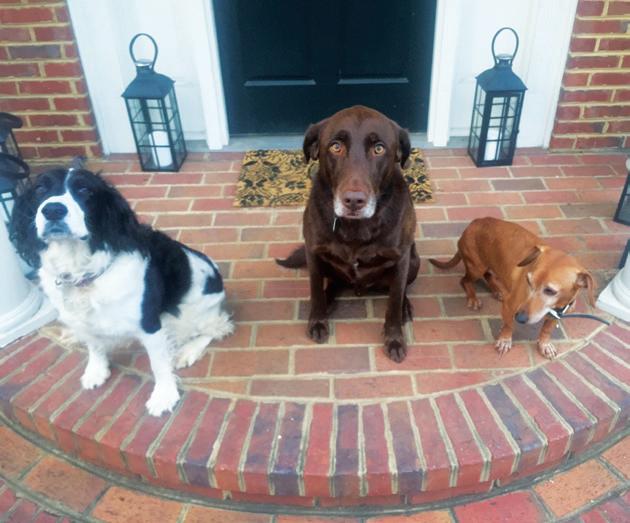
Any hobbies, collectibles, or other personal passions to help you relax? Raising three dogs might count as a full-time
hobby. (Hmm…job?) Peggy and I love to fly-fish, hike, ski, and get long bike rides in when we can. We really enjoy cooking with friends and discovering authentic places to eat. Our greatest personal passions are our family and friends.
Tell us about the three dogs. It is better to get this out there now: Our three dogs run our lives. Macy, the matriarch, is a springer spaniel. She loves swimming in the ocean and retrieving tennis balls. Albus Dumbledore is a chocolate Lab. He is Macy’s wingman. Finbarr is a dachshund and will be running for mayor of our street, perhaps even the city. He wants to ride with Rowdy in the Homecoming golf cart procession.
were in Lubbock and hosted about 25 family members for Rangers–Red Sox games, Texas barbecue, and a cowboy-boot buying spree.
What’s your favorite kind of read for downtime? Peggy is the book hound these days. (A book a night, it seems.) I read a bunch of stuff online. We are big fans of short stories and poetry. Our favorite short story author is Andre Dubus. Our favorite poet is Pablo Neruda.
Any children you’d like to embarrass by boasting about? Hannah is a neonatal intensive care unit nurse in D.C. at National Children’s Medical Center. She and her fiancé, Patrick, love a good football game. They look forward to cheering on the Roadrunner Nation when they visit us. They can get rowdy.
Ù A snapshot of President Eighmy behind the scenes at his first official university photo shoot.
× Meet the Eighmy trio of family dogs: Macy, Albus Dumbledore, and Finbarr.
What’s your favorite family-time event? Our families are in New England and Florida. There are a number of important family get-togethers. Some involve the traditional holidays, wonderful food, and arcane family traditions. There are lots of weddings, graduations, and baby showers in our foreseeable future. Truth is, we are opening up a family hub here in San Antonio for family and friends to visit. We did this when we
What’s your guilty pleasure? (Say, a flavor of ice cream? Never missing an episode of Keeping Up with the Kardashians? Singing along to Michael Bolton in the shower? We actually, honestly don’t judge here at UTSA, so don’t hesitate to share!) Peggy and I are both pretty bad singers, but we try our best. Truth is, the best part of our version of “Carpool Karaoke” is we have the British accent down. Our last concert was Brandi Carlile in Nashville. We busted out some tunes there; fortunately, Brandi covered us.
How much do you love breakfast tacos? Well, it’s a toss-up between tacos and frittatas. But either way, picante is always essential. S
ic-serving research university help catalyze the dreams and aspirations for all-around prosperity and opportunity?”
uphill battles?
Back on Main Campus at his photo shoot, Eighmy shows he’s at ease mixing the talk of university business with lighter issues. His joviality educes smiles and laughter from the team working under the pressure of Eighmy and his wife’s tight schedule— and despite his proclamation that he’s really uncomfortable having his photo taken. Just before Peggy Eighmy has to leave for another business appointment, her husband speaks up so the room can hear him boast about how skillful she is at keeping their busy lives on track as well as managing to help them find balance for a more relaxed side of life. They share a smile and a kiss before she’s off.
Taylor Eighmy’s deft skill at balancing important business with insightful perspective—and maybe the occasional lighthearted anecdote—will come in handy in his new job. Higher education was under a microscope in Texas in this year’s state legislative session and even took a bit of a beating, particularly with operational funding shortfalls seen for some public universities. But Eighmy stresses that he’s not overly daunted about taking on his first role as a university president in this foreseeable era of belt tightening. “My prior experiences at three really fine institutions has best prepared me for this moment,” he says. “I feel I have seen and experienced the entire spectrum of resource availability. Look, all institutions face challenges. To me, it’s more about how you collectively understand the challenge, figure out solutions to overcome the challenge, and then hold yourself accountable and roll up your sleeves to tackle it.”
The greatest strength about the opportunity here is the fact that UTSA is in this great multicultural city of San Antonio… and an emerging research university on a journey to Tier One. That is why I so much wanted to come here.
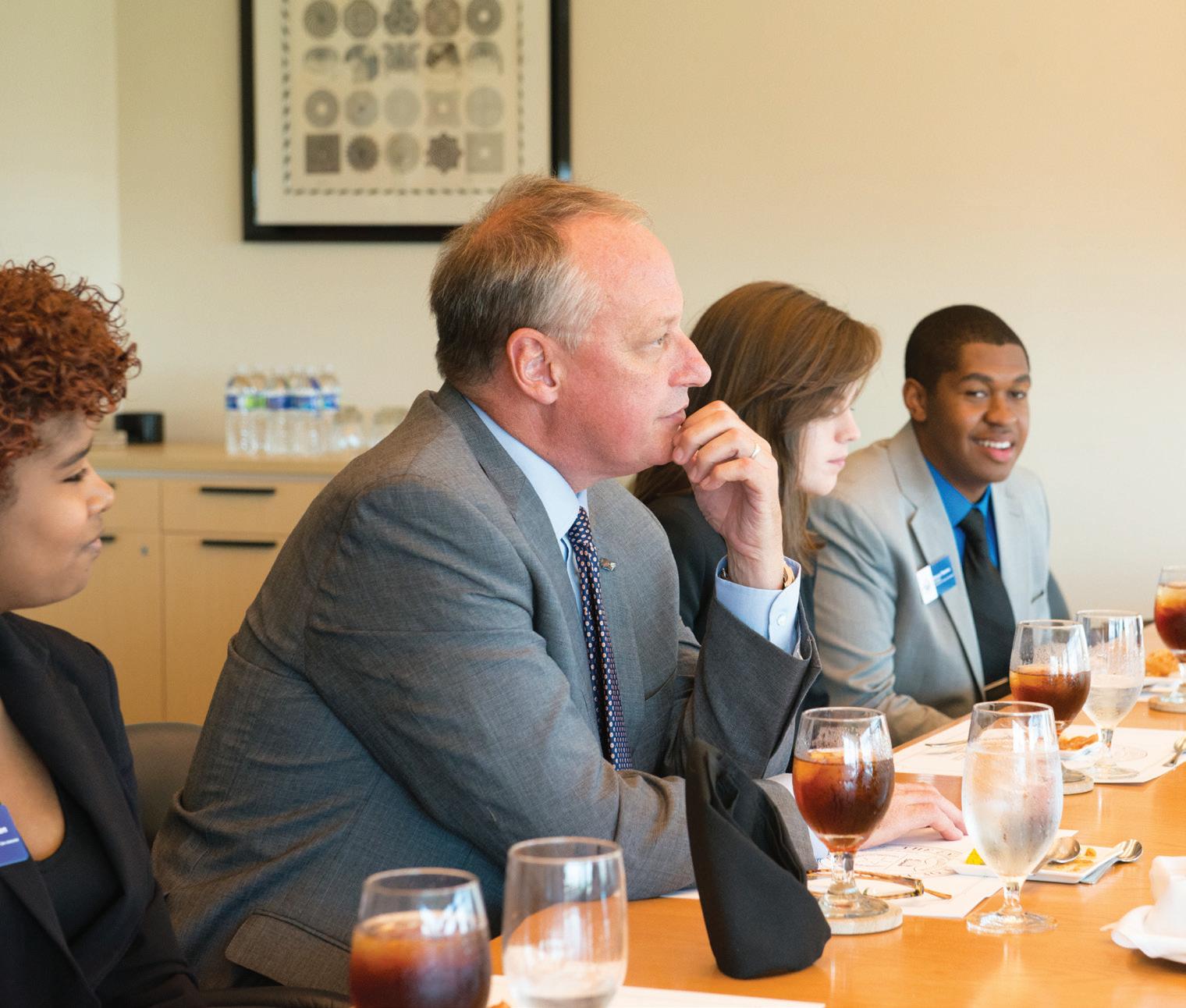
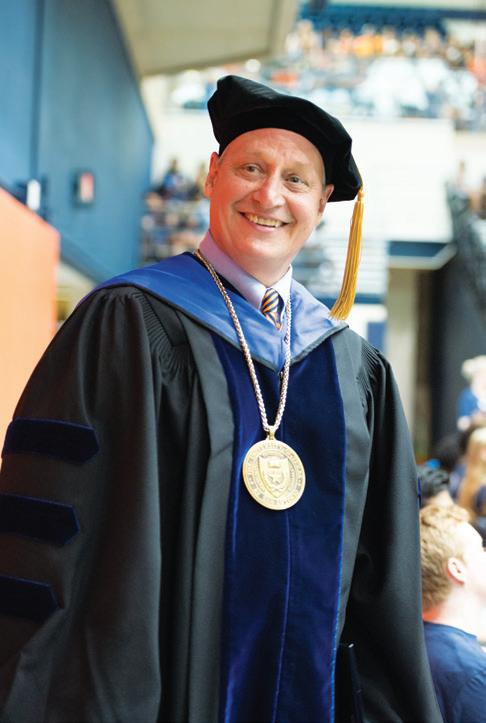
Indeed, early on, one of the challenges that Eighmy’s nomination sparked revolved around what was categorized by one state legislator as a lack of transparency in the Board of Regents’ candidate-review process. Critics stressed that as a majority-Hispanic institution in South Texas, with its historic and modern cultural roots in the Latino community, UTSA should be assured a steward who would look out for its proud stance on diversity.
Eighmy points out, though, that this was one of the primary reasons he was drawn to
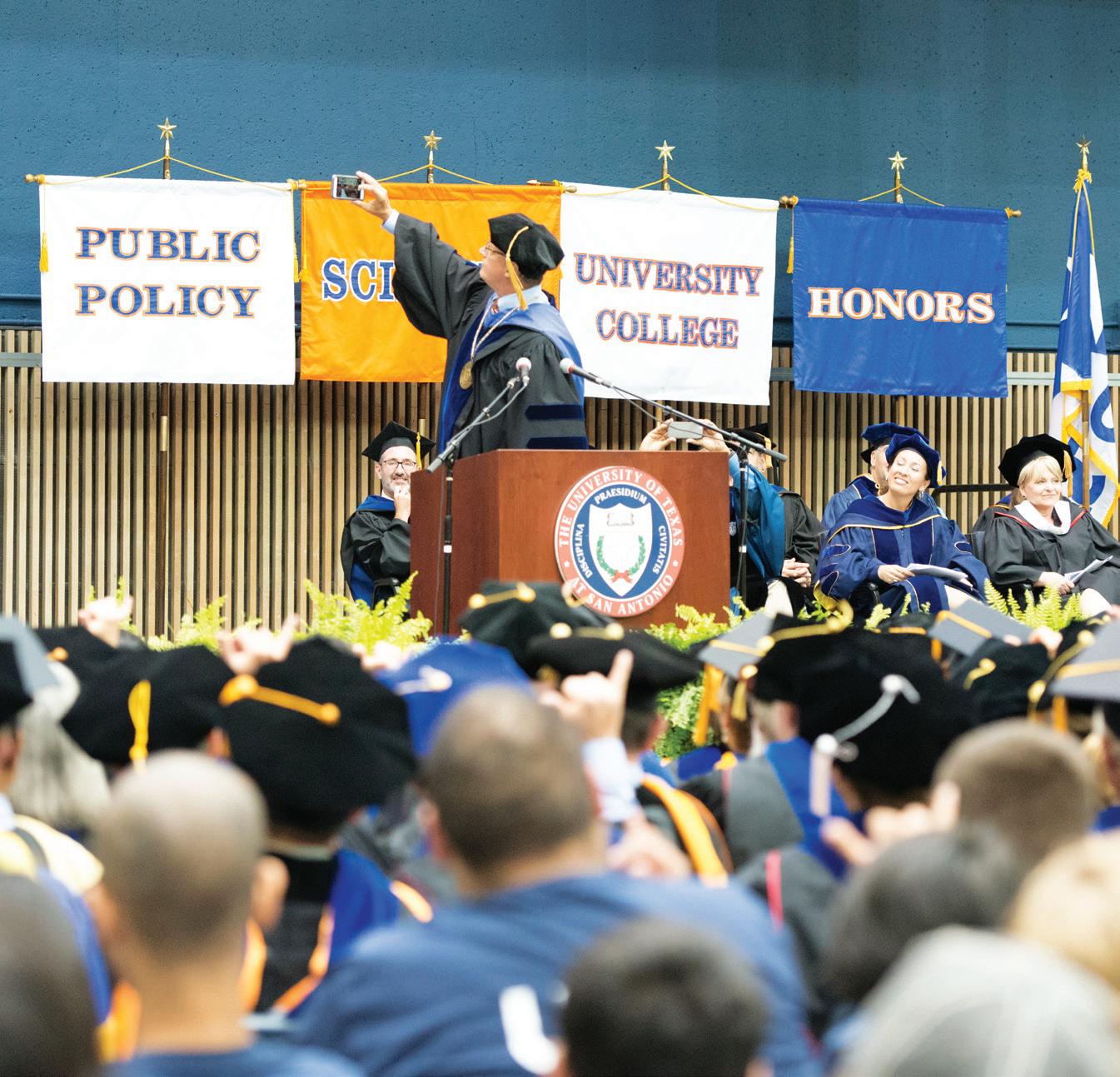
we ask peggy eighmy how she’ll be making memories, san antonio–style
[Q]
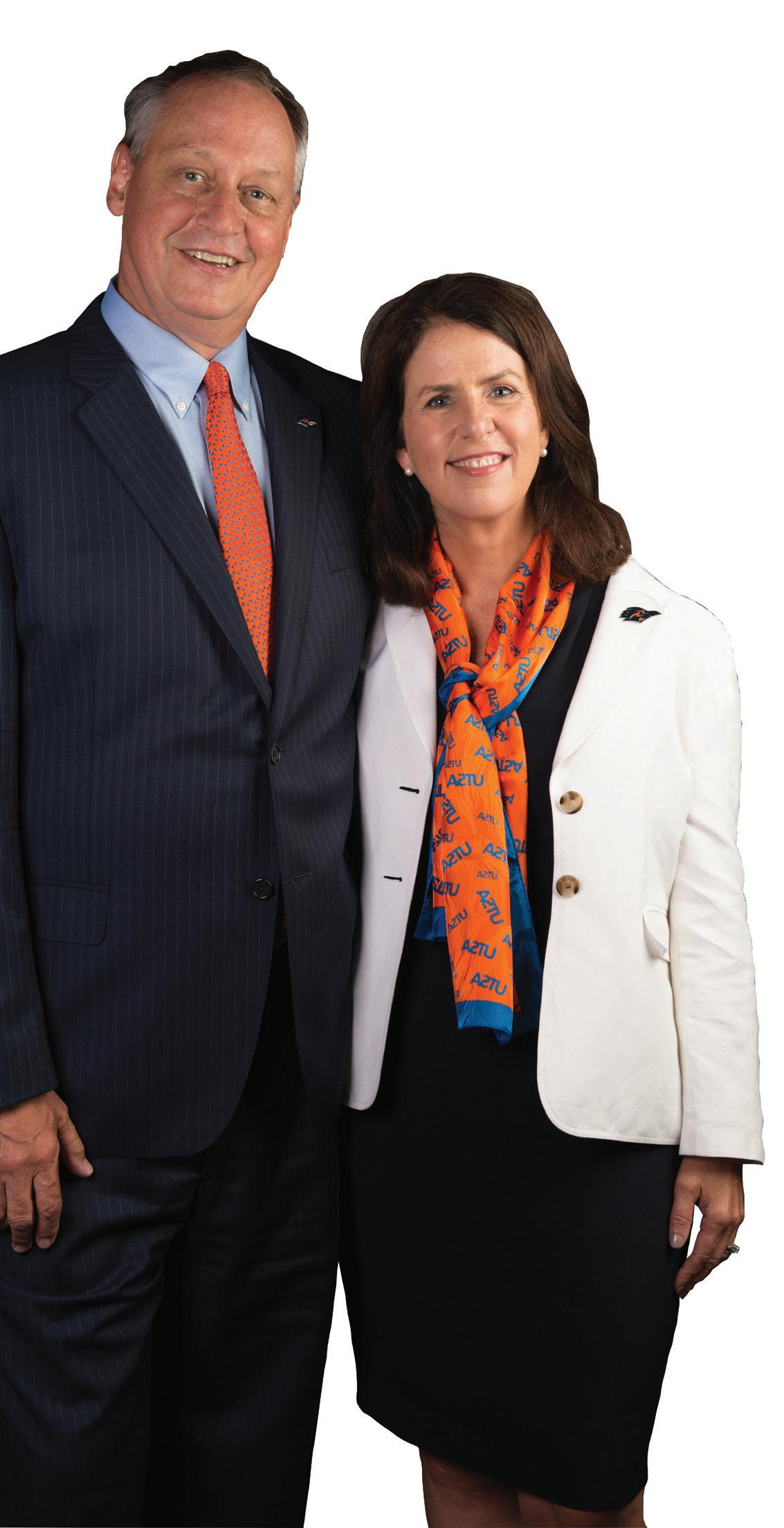
What are you anticipating most for your new life in South Central Texas? [A]
I am really excited to get to know the students, campus, and community. I am especially excited about the culture in San Antonio. It reminds me of Boston, where I grew up: multicultural and big and vibrant with fascinating histories going back many hundreds of years. I—both of us, actually—can’t wait to dive in!
We really want to try progressive Mexican culinaria, at a place like Mixtli. I have not had a proper taco since I left Texas [in 2012] and want to fix that.
There are so many great museums in San Antonio too.
I don’t even know where to start.
I even want to run the 5K on campus with our dog Albus.
Also, one of my biggest passions is community service. I work with the organization CASA—Court Appointed Special Advocates—and other nonprofits. And I have really enjoyed supporting refugee families. Basically, I want to engage with San Antonio in the same ways I’ve been involved in activities in the other cities where we’ve lived. S
“The greatest strengths of a university are when you bring many disciplines together to tackle grand challenges from new perspectives.
UTSA. “The greatest strength about the opportunity here,” he explains, “is the fact that UTSA is here in this great multicultural city of San Antonio. And it is a Hispanic-serving institution and an emerging research university on a journey to Tier One. That is why I wanted so much to come here. Everyone here, regardless of background, has pride in and wants UTSA to succeed. I return to this notion that great public universities have a foundational—perhaps even moral—obligation to work with their partner community to ensure educational advancement and attainment of prosperity for all the people of our community. The elegance here is that the university and the community are so intertwined. There are certainly significant challenges around access, student success, affordability, and figuring out how our institution can help with this ‘cradle to career’ concept I mentioned earlier. I personally want to own this focus because it is intrinsic to the journey we will be on.”
Additionally, as Eighmy highlighted earlier, San Antonio is a city known for its tech-related industry. It’s simply a fact that some of the companies that dominate the U.S. economy today are in the tech and cyber fields, so it’s easy to understand why a university that garners much of its glory in the STEM-related fields, like UTSA, would want to keep the focus on that fact. But at UTSA the College of Liberal and Fine Arts is the academic unit that’s home to the largest proportion of students.
Eighmy stresses, though, that there’s no disjunction for the university at all on this front. Rather, he highlights how it’s actually an asset. “The best universities focus on excellence across disciplines,” he explains. “The greatest strengths of a university are when you bring many disciplines together to tackle grand challenges from new perspectives. The ability to foster how to think, how to have your own ‘I get it!’ personal lightbulb go off in your head, how to communicate your ideas, and how to work in teams—these are all independent of discipline. If every student at UTSA has these skills—and the opportunities they’ll make for themselves by having them—then we are doing our jobs!”
vision, discovery, the future Eighmy has been quite prolific in his endeavors throughout his career as a civil engineer at major research universities, or
“discovery enterprises,” as he regularly describes them. So it’s not really a surprise that he is successful in garnering research funding for projects he’s been attached to, to the extent of tens of millions of dollars. But rather humbly, he says, “I have had the pleasure in all the places I have worked to develop strategic partnerships around the discovery enterprise that anchors knowledge ecosystems.”
He’s not taking his past success for granted, though, when contemplating how he might help boost the success of UTSA in gaining research dollars. “I think the question might be better framed this way: How can UTSA,” he elaborates, “work with the U.S. Department of Defense presence here? Or with UT Health San Antonio, the Southwest Research Institute, the Texas Biomedical Research Institute, the corporate and foundation communities, our city and county government, and our friends in the legislature and elsewhere to create our own unique knowledge economies?”
By creating these types of research alliances, Eighmy explains, it’s like creating a big magnet that attracts the best talent, resources, and investment that in return go back into the ecosystem. “The best examples I have seen,” he says, “are these knowledge economies that are big enough to be the magnet I describe. I’ve seen these in action around biomedicine, wind energy, data science, and advanced manufacturing. San Antonio has many potential sweet spots. The city—and Texas—is a partner-rich environment, and strategic partnerships will be essential for UTSA’s progress forward.”
As Eighmy’s photo session wraps up, not just progress but success is easily the theme of the day. It almost feels like a feat of wizardry for the photography, videography, and editorial teams who worked around each other in the small studio and the summer heat to successfully capture this moment of ushering in a new president. And the mention of wizardry hits home for Eighmy, who begins to talk of his beloved trio of dogs, some of whom are named after Harry Potter characters [see “Behind the Scenes” on page 22], and his fondness for the tales of the fictional child wizard. Harry Potter and dogs? Once again, Eighmy has the full attention of everyone in the room. And it brings about a sense of confidence that, for UTSA’s benefit, the new president will be accomplishing that feat over and over. S
“The city Texas partner-rich environment, and strategic partnerships will be essential for UTSA’s progress forward.
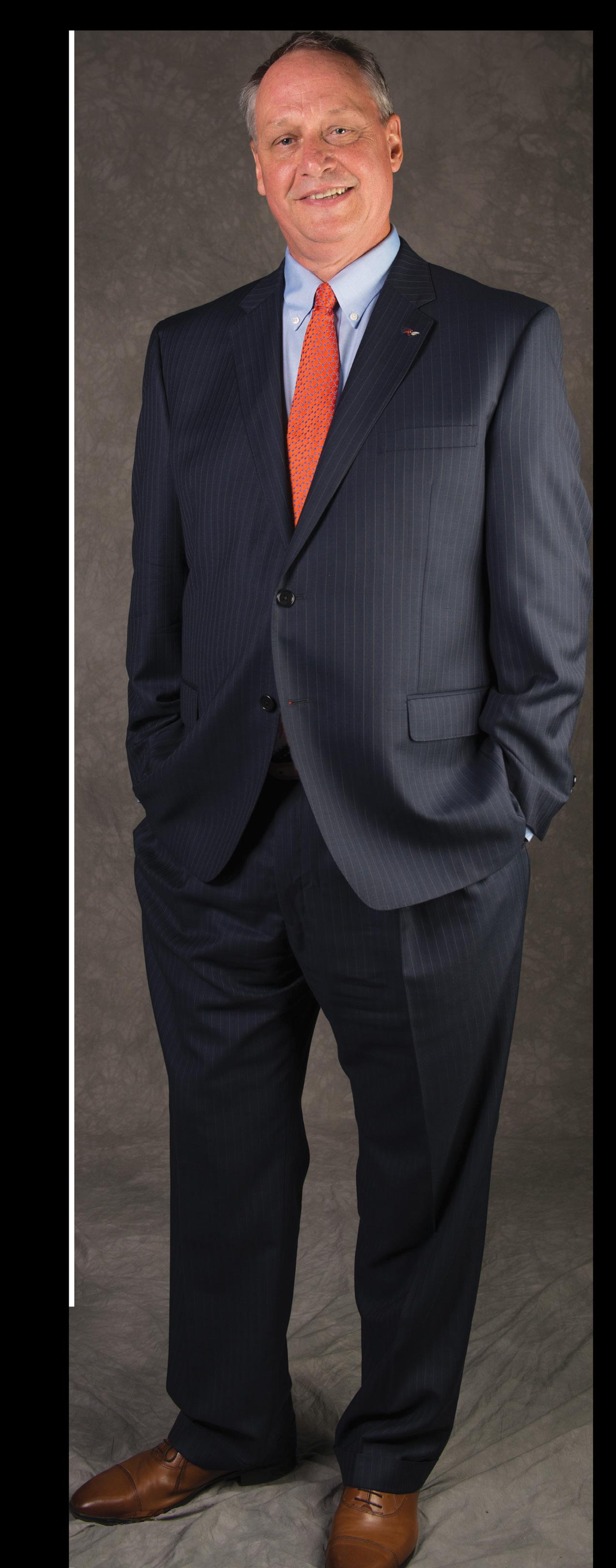
Ù President Eighmy doesn’t mind showing off his sense of humor, especially when sharing about his personal life. Check out our “Behind the Scenes” Q&A with him on page 22.
× Taylor and Peggy Eighmy say they’re both eager to soak up some of the local flavor that San Antonio has to offer.
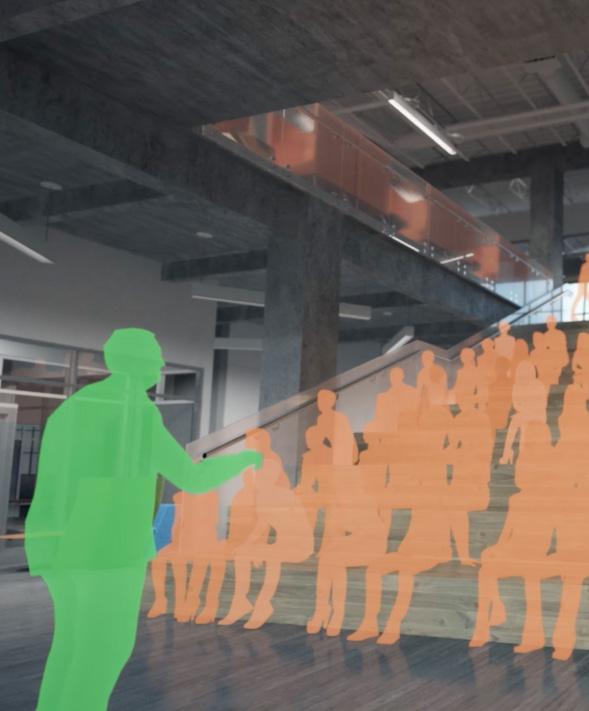
Ø An architectural rendering of the new school’s Learning Staircase shows the stadium-style seating for guest presentations.
utsa has teamed up with san antonio ’ s new tech - focused school to develop the latest in education and professional training
BY SHEA CONNER
Open-concept computer labs surrounded by transparent walls, symposia with tech savants held on an oversize staircase, and big projects assisted by the likes of local tech firms—it all sounds more like the setting for an episode of HBO’s Silicon Valley than the backdrop for a San Antonio high school. Then again, that’s precisely the point.
The brand-new CAST Tech High School—which boasts a collaborative partnership with UTSA—is the first in a developing network of career-themed local schools known collectively as Centers for Applied Science and Technology. The school specifically focuses on education in computer coding, cybersecurity, gaming, animation, digital media, business, and entrepreneurship. Located in a newly remodeled building on the Fox Tech High School campus near downtown’s tech district, CAST Tech aims to be an innovative magnet school for students with passions for pursuing careers in the fields of science, technology, engineering, and mathematics.
As an in-district charter school, CAST
Tech symbolizes the San Antonio Independent School District’s effort to craft a homegrown pipeline of STEM talent as the gap between high-tech jobs and young Americans capable of filling those positions continues to grow. What many don’t realize, however, is that the effort to fill this void has created its own void of qualified STEM educators. That’s one of many ways in which UTSA’s College of Education and Human Development hopes to be of service.
Through the foundation of a UTSA Lab School on the CAST Tech campus, COEHD faculty members and students will provide academic support and resources. In the early stages of this budding alliance, teacher preparation, mentoring, and research are three crucial paths in which UTSA and CAST Tech aim to benefit from each other.
“The UTSA and CAST Tech partnership is grounded in a strong desire to meaningfully intertwine two innovative approaches to STEM education,” says Margo DelliCarpini, COEHD dean. “UTSA is continually innovating its approaches in order to best educate and nurture the next generation of STEM teachers for the good of students in our community. This partnership is the best of both worlds.”
Additionally, CAST
Tech is offering a different approach to the high school experience in nearly every imaginable way. Most notably, the demanding curriculum blends self-paced digital classwork with project-based learning and “real world” work with industry partners. Students will have the opportunity to earn industry-recognized certificates as they participate in job shadowing and internships with companies such as H-E-B, Tech Bloc, Rackspace, USAA, Frost Bank, and Geekdom.
Furthermore, CAST Tech students will graduate with a diploma and a minimum of 30 college credits that will transfer to UTSA and other area colleges. Graduates could ideally earn a bachelor’s degree in a STEM field by the age of 20.
“It’s exciting to lead a campus designed to be an incubator of the experiential learning model, while acting as a learning lab for other educators and administrators,” says CAST Tech principal Melissa Alcala ’09, who earned her doctoral degree in educational leadership from UTSA. “As a result, CAST Tech is a place of learning for all those in the building—including the adults.”
In more ways than one the UTeachSA program feels like CAST Tech’s kindred spirit. As a collaboration between COEHD and the College of Sciences, UTeachSA provides STEM majors who have an interest in teaching practical exposure in a classroom as early as their freshman year. If teaching appears to be a good fit, they will spend the next four years earning their STEM field degree and teaching certification simultaneously.
After the initial observation phase, students serve as assistants in classrooms of UTeach alumni working in the community. Eventually, they lead clinical instruction throughout the course. In other words, the UTeachSA curriculum emphasizes inquiry- and project-based learning, and graduates from the program often gain more hands-on experience than their student teaching peers.
“One of the pillars of the UTeach program for UTSA is project-based learning. We want them to experience it, so we need to have them in a school where that’s done at scale,” explains Carmen Fies, associate professor of interdisciplinary learning and teaching, who is codirector of UTeachSA as well as UTSA’s educator in residence at

Ø Open-space designs for classroom allow more collaboration between students.

CAST Tech. “This is a perfect match [between UTSA and] CAST Tech.”
how to build a better high school experience
by shea conner
Turning the original Fox Tech building—a vocational training facility built in the 1930s—into a high-tech haven for bright teenage students was no small feat. Dropped ceilings were removed, clutter was cleared, and natural light became a focal point. Beyond the bricks, however, the CAST Tech facility ingeniously integrates technology.
“When I first saw it, it looked like an old, dingy warehouse,” admits Carmen Fies, UTSA’s educator in residence at the high school. “They’ve gutted that building. The H-E-B architects did a phenomenal job in conceptualizing that space as one that’s inviting, that’s filled with light, and that has spaces that are fluid. During the course of the day, the students almost have a ‘café’ experience.”
Designed by architectural teams from H-E-B and the San Antonio Independent School District, here are a few highlights from CAST Tech’s facility:
Varied Classrooms: Each classroom includes three areas designed to encourage learning and problem solving in
different ways. One area emphasizes traditional teacher-led instruction. Another includes a conference table built for peer collaboration. A third provides private cubicles built for independent study.
Learning Staircase: Inspired by a similar model at Rackspace’s San Antonio office, CAST Tech’s large staircase essentially doubles as stadium-style seating. The staircase is intended to serve as both a gathering and presentation space that will be frequently used when industry leaders stop by for speeches and Q&A sessions.
Open Spaces: Where most classrooms have walls, CAST Tech’s classrooms have windows. Whether they’re typing code from one of the school’s casual sofas or developing an app from a formal computer lab, the exposed infrastructure gives students the chance to check in on their peers and explore more learning opportunities.
Darkening Windows: The school’s exterior windows are crafted from dynamic glass that darkens in response to intensity of the sun, bringing in a level of light that avoids an overbearing glare on computer monitors. S
“UTSA is continually innovating its approaches in order to best educate and nurture the next generation of STEM teachers for the good of students in our community. This partnership is the best of both worlds.
Fies says two UTeachSA students will start their process of observation and assistance at CAST Tech after the fall semester, but that number will continue to grow as the student population grows. The school accepted 175 ninth-graders in this first academic year, and will enroll students from the ninth through 12th grades by the fall of 2020. As many as eight UTeachSA students will be learning and operating in CAST Tech classrooms three years from now.
From its innovative facility and unique curriculum to gifted STEM-loving students that previously attended several different school districts, CAST Tech has certainly piqued the interest of many educational researchers.
“I have a whole bunch of curiosities,” Fies says with a note of excitement in her voice, going on to describe the charter school as a “nirvana” for research. “This is an amazing opportunity for us to do truly substantive work that can inform and add to our knowledge base.”
COEHD faculty as well as graduate and undergraduate students will study many distinctive facets at CAST Tech over the coming years. A few primary interests include the value to which emergent technologies engage students, the positive and negative effects of industry involvement in the school, and an examination of the school’s gender makeup. (Because men vastly outnumber women in STEM professions, CAST Tech made a conscious effort to reach out to teenage girls during recruitment. It worked. Of the 175 freshmen who started this year, 58 are female.)
As the partnership evolves, Alcala says, UTSA students will be on site to measure the program’s effectiveness and work in collaboration with the CAST Tech faculty to highlight what works best. She adds that this relationship will be mutually beneficial as theory and practice come together to provide both parties with authentic feedback. “I envision faculty from UTSA and CAST Tech working collaboratively to share their research findings through the development of published articles and presentations at national conferences,” she says. “The relationship between the two schools will make both programs stronger.” S
MARIBEL VALDEZ
GONZALEZ
’13 gets a bold opportunity to defend dignity after becoming a symbol for the international Women’s March
by michelle mondo
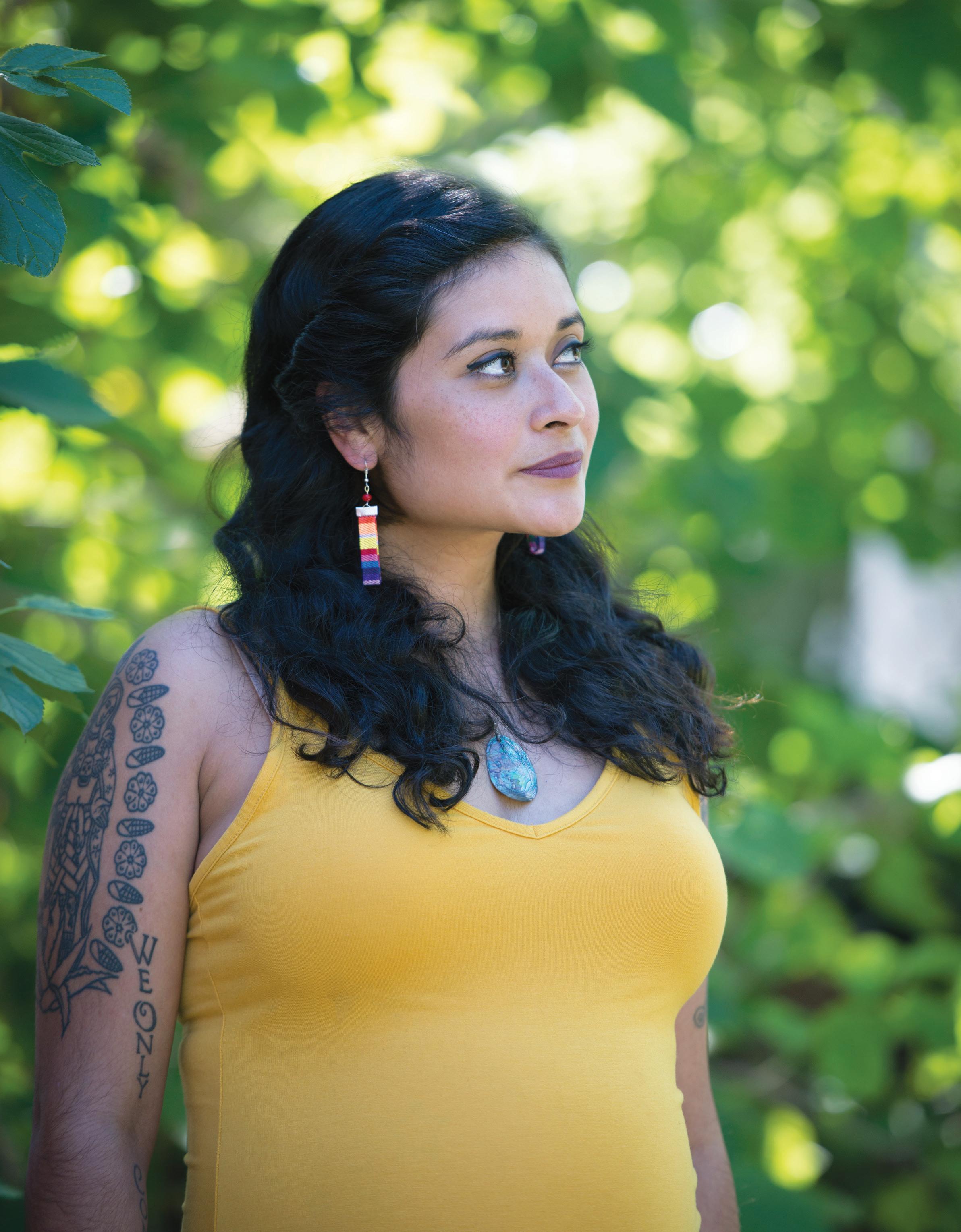
Maribel Valdez Gonzalez has become the face of a movement. The San Antonio middle school teacher and UTSA alumna has become an avatar on Facebook and Twit-
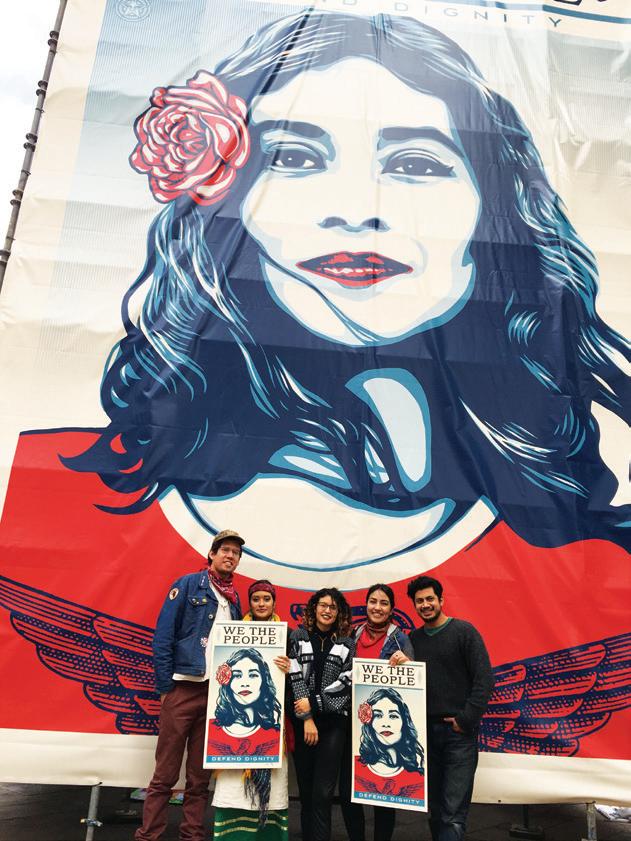
streets during the Women’s March in January. Her direct gaze, a red flower in her hair, her T-shirt with an eagle and serpent, and the words we the people defend dignity emblazoned below her image—all came together to symbolize what so many had been feeling during the leadup to 2016’s general election:
ter. Her image wallpapers mobile phones—and actual buildings.
Thousands of people across the globe carried a poster bearing her likeness as they took to the
We are here, we matter, and we can’t be ignored.
minority communities targeted by racist rhetoric, particularly during the long election season. Artist Shepard Fairey adapted his famous red, beige, and blue Barack Obama “Hope” poster design to represent Muslim, African American, and Latino women. Like Gonzalez, the other women featured have also been celebrated.
Having first seen the poster of herself only a few days before it was released as an ad in The Washington Post and other newspapers, Gonzalez says she didn’t realize the impact it would have. Standing at a march event in Los Angeles, where Gonzalez attended with her husband and friends, she watched people crowded around a building-size version of the poster. She says, “It was really powerful when I saw the amount of people taking pictures with it.”
For the people who do know Gonzalez, she exemplifies the message of “Defend Dignity.” UTSA professor Rhonda Gonzales says her former student embodies the university’s mission to engage the community, serve others, and act as a role model: “When I first saw the poster, I thought, This is the right person for this moment, and this is the right person to show the fight for dignity.”
Yet few people even know her name or anything else about the woman behind the image, which is the point, says Gonzalez: “The person on the poster was meant to be anonymous, to be representative of a community. I think what it shows is the strength, confidence, brilliance, and fierceness of my ancestors.”
The poster featuring Gonzalez was one of five created as part of the “We the People” campaign by the nonprofit Amplifier Foundation to celebrate diversity and highlight

Arlene Mejorado, Gonzalez’s friend and the San Antonio–based photographer who shot the image that inspired the poster artwork, says she and Gonzalez are often asked how they were picked for the project. She says the answer for both is, Why not! “We both belong to working-class communities of color, and we are out here trying to do good. We are not pretending to be any-
From what I’ve seen living and working in San Antonio, UTSA has the biggest connection with community.
thing that we are not,” she explains. “That is why this campaign was successful. It was based on everyday people. It is meant to provide a mirror of inspiration for others to feel visible, validated. Sincerity is key.”
dents better understand the world they live in.



Ù The two other posters in the “We the People” campaign that were designed for the international Women’s March.
Ø People across the globe march with the poster of Gonzalez.
Gonzalez entered UTSA in 2009 as a biology major after graduating from Health Careers High School. She’d thought of becoming a doctor, since she wanted to help people. But later events that happened two states away ended up transforming her freshman year. In 2010, Arizona passed one of the strictest anti-immigration laws in the country [it would later be deemed unconstitutional by the U.S. Supreme Court]. It spurred Gonzalez to learn more about her own history, her parents’ Mexican heritage, and America’s relations with other countries. She switched her major to history and consumed materials that helped her learn a more balanced version of historical events.
For Gonzalez, that connection to the past is imperative for understanding the present and working toward a better future, which is a lesson she tries to instill in her students. “I tell my kids,” she says, “what’s great about studying history—and studying history in college— is that it’s learning different perspectives and coming up with a critical lens to view research.”
After getting her bachelor’s at UTSA she received her teacher’s certificate and a master’s. As an English teacher now, she’s realized her dream of having a career that helps people. And as a first-generation Mexican American and first-generation college student, she uses struggles she experienced growing up to help her stu-
“As a mama-to-be and a teacher, I feel like that’s what my whole life is about— to be the person that I needed when I was little,” she says. “When people ask what my life is going to be like in 10 years, that’s the answer. I’m always going to be the person I needed.”
One of her most passionate causes is equity for students. Mentorship even before students get into college, she explains, would level the playing field for underserved kids. She turns to her own story as an example. She didn’t have siblings or parents who knew the system the way other high school students might have. “I had to do all of that myself. It’s not to say Spanish-speaking or low-income parents aren’t supportive; it’s that mine didn’t have the experience.”
Being able to reach out to her mentors at UTSA also continues to be helpful. “From what I’ve seen living and working in San Antonio,” Gonzalez says, “UTSA has the biggest connection with community.”
She tries to do the same and wants to expand the way her students think about the world. They create a “respect contract,” and she launches GoFundMe accounts for student projects. She takes



multicultural experiences into her classroom of nearly all Latino students—maybe it’s discussing a movie like Hidden Figures, which showed the critical role of a group of black women during World War II, or inviting a speaker.
For Black History Month, Gonzalez used her UTSA connections, asking her former professor Rhonda Gonzales for a suggestion for someone who would speak to her class. They turned to history professor and author LaGuana Gray. “She came to our campus and talked to the school about children in the civil rights movement,” Gonzalez says. “She talked about children in the movement in Selma, Alabama, in the 1960s, and she started a conversation about what students can do right now in 2017 about social-justice issues that they are passionate about.”
Former mentor Gonzales says these are types of connections that help UTSA stay involved in the community. She sees Gonzalez as not only a great teacher but also “much more than that. She’s a change agent,” Gonzales adds. “I think that’s what UTSA could be most proud of about our alumni and her. They are going out there to effect positive change in the community, and I think she embodies that. She really had that fire early. She feels an imperative to speak up. It’s not just about her. It’s about things that are larger than her.” S
legacy
roadrunner partners
A “forever scholarship” helps alumnus Tim Chapman to honor his parents and ensure an education for Roadrunners to come
by yvonne zamora byrd
Tim Chapman ’84 knows first-hand the impact a scholarship can have on a student’s life.
“When you’re in college, working part-time and trying to make it as a student, every little bit helps,” says Chapman, who received a scholarship while attending UTSA. “I was really grateful to have some financial support when I was in college.”
Today, Chapman is a successful senior software engineer with the brokerage firm Fidelity Investments and is paying it forward by helping a new generation of Roadrunners. Chapman, who graduated with a B.B.A. in accounting, made the decision this year to include his alma mater in his will.
At 54, Chapman may not seem like the typical planned giving donor. Still young to have a will by some people's standards, he decided it was time to get his affairs in order after
“ When you’re in college, working part-time and trying to make it as a student, every little bit helps. I was really grateful to have some financial support when I was in college.
the death of his longtime partner, Roy. While creating a will is recommended by financial advisers and attorneys, a lot of American adults don’t have one. For many, the idea seems overwhelming or they just put it off. Chapman says the process is relatively effortless. A visit with Kim West, UTSA’s gift planning officer, provided helpful information. “She came over and went through the paperwork with me,” he says, “and the whole thing went very smoothly.”
Chapman’s bequest will create an endowment that will fulfill his goal to permanently honor some special family members. In 2000 he established the Frank and Beverly Chapman Scholarship, to which he continues to donate annually, in honor of his parents. Frank Chapman was a former civil servant at Kelly Air Force Base, and Beverly Chapman was
a stay-at-home mom. Both encouraged their children to pursue higher education.
The annual scholarship has gone on to help 14 students.
“By making a gift to UTSA in his will, Tim is converting his annual scholarship in honor of his parents into a ‘forever scholarship’ without increasing his financial support today,” says West.
“The Frank and Beverly Chapman Endowed Scholarship will serve as a lasting tribute to his parents. His bequest gift ensures that Chapman scholarships will be awarded every year in perpetuity. It’s a beautiful legacy of Tim’s enduring love for his parents and generous support for UTSA students.”
As for Chapman, knowing that he will be able to support students for years to come brings him great joy. “I have the ability to share the fruits of my labor and help others,” he says, “and that makes me happy.” S
Dayton Schrader '93, who was Alumnus of the Year in 2006, has more than three decades of experience in the San Antonio real estate market and can boast many honors from professional organizations.
[Q]
What helps you sense a client is truly ready to make the leap to home ownership?
[A]
Home ownership is indeed a huge commitment. Before you start shopping, it’s important to get an idea of how much a lender is actually willing to give you to purchase your first home. You’ll want to look at the house’s total cost, not just the monthly payment. For example, how much can you afford for a down payment? And there are other expenses: property taxes, insurance, maintenance, and improvements. But there are also tremendous rewards, especially pride of accomplishment; home ownership is still a big part of the American Dream. There are also tax advantages and appreciation opportunities in your investment.
[Q]
What characteristics should home buyers look for in a
real estate agent, or more specifically, perhaps, how would home shoppers know they've found an agent that works for them and their specific home buying needs?
[A] Well, of primary importance is to get to know your real estate agent or Realtor and get to know about his or her experience with clients. The best agentss are knowledgeable, experienced professionals who put the interest of the client first. By working with a professional agent who can guide a buyer or seller through the process which includes writing out contracts, exploring mortgage options, filing the ownership title, getting inspections done to ensure the property is in an inhabitable and a legally required state, etc. you will have good communication consistently during the process and a follow-up afterward.

The agent should also inform you and educate you along the way about everything that is happening. And ultimately, the agent will use her or his expertise to protect you from any pitfalls you might encounter during the process.
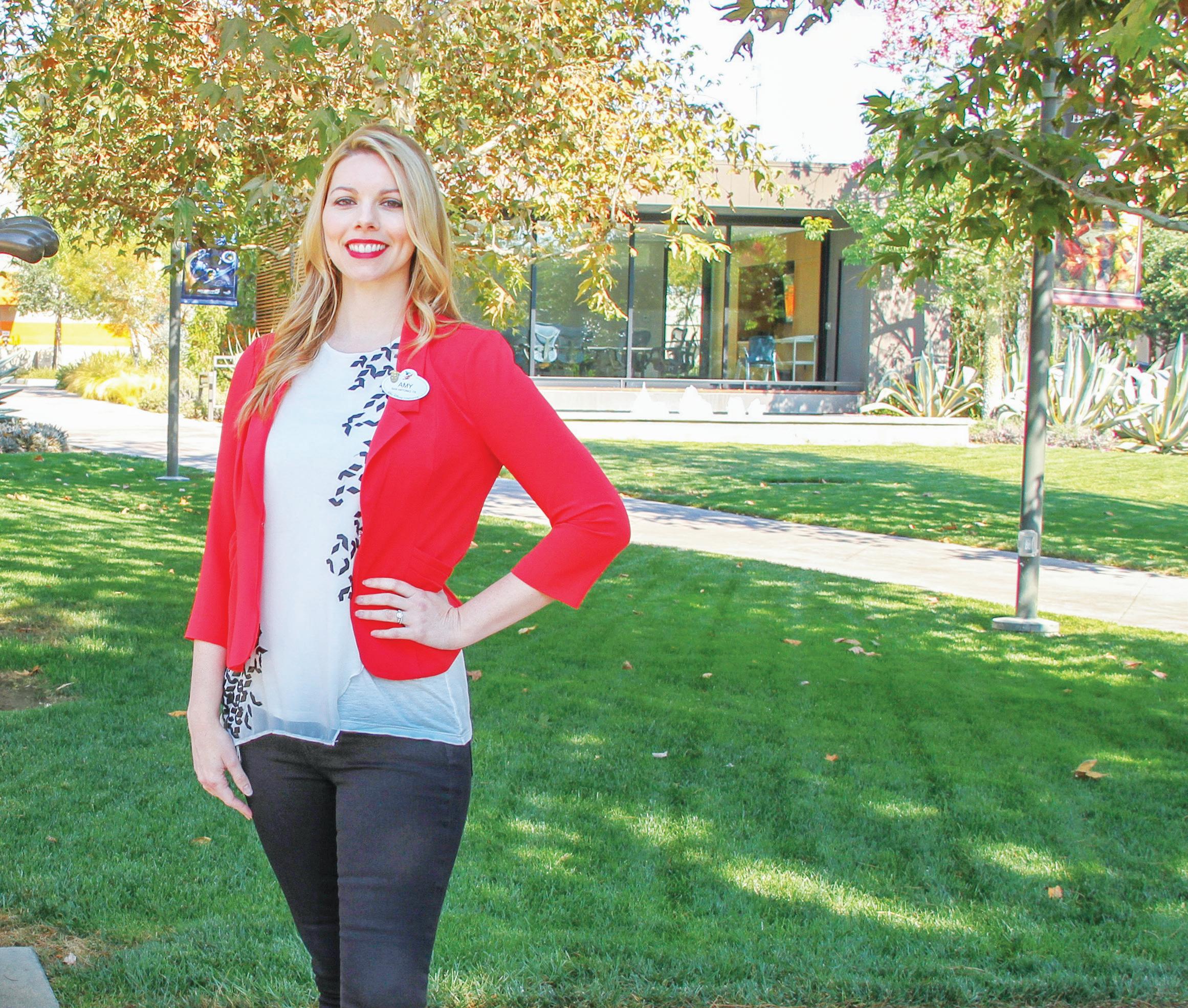
AMY GREIVE ’03 brings fantasy to life as a designer for Disney
by michelle mondo
Amy Greive’s imagination is on display around the world. Maybe you've seen it while sailing the high seas, staying at a luxury resort in Hawaii, or frolicking with Snow White at Disneyland.
As a Disney Imagineer, Greive has had a hand in designing such company attractions as Fantasy Faire and Fantasyland Theatre at Disneyland Park in Anaheim, California; Aulani, a Disney
Resort & Spa, in Ko Olina, Hawaii, and Disney Dream and Disney Fantasy, two cruise ships.
First, what is an Imagineer?
Walt Disney Imagineering was founded in 1952 to oversee the design and production of Disneyland. It’s made up of artists, designers, architects, engineers, and everything in between.
From castles to cruise ships, floating mountains and soaring roller coasters, storybook
villages and alien planets, if you can imagine it, we can build it and bring it to life.
As an Imagineer, I have a unique outlet to create joy for a living by fusing rich storytelling with innovative design and cutting-edge technology. I celebrated my 10th anniversary as an Imagineer this year and have had the opportunity to work on projects around the globe.
How did you land the job? I first heard about Imagi-
neering when I was about 12 years old. While visiting Disney’s Hollywood Studios in Florida with my family, I bought a giant blue book that explained how these dazzling, immersive environments were conceived and produced. As I flipped through the book, I remember thinking, This would be the dreamiest of dream jobs. Fast forward to nearly a decade later, Disney recruiters came to my college campus looking for candidates to
fill professional internships within the Disney College Program. I applied and was accepted as the first professional intern within the department of architecture and facilities engineering, which is a separate segment from Imagineering. Later, I had the opportunity to fill a temporary assignment with Imagineering. Landing a permanent position had much to do with taking ownership of my work, making lasting impressions, being
a positive team player, and simply being ready at the right time.
What is your favorite part of the job? The best part would have to be the opportunity to collaborate with outrageously talented people: filmmakers, performers, designers, costume makers, and all manner of science and technology wizards. On almost every major project we team up with visionaries and game changers from count-
less fields—from robotics to botany. We learn from Nobel laureates, Pritzker Architecture Prize recipients, and Oscar winners. Collaboration is a vital part of how we create, especially when Imagineering houses over 140 different disciplines.
How did UTSA influence what you are doing now?
University can’t prepare you for everything you’ll face as a new graduate, but I enjoyed a flying start, thanks to the
College of Architecture. To use fitting metaphors, UTSA provided a solid foundation in addition to numerous windows of opportunity. My professors and student colleagues motivated me to continually learn, search for more than one solution to any given challenge, respect different perspectives, and above all, embrace teamwork. There’s hardly anything truly great in this world that doesn’t come about through collaboration. S
Keep up with fellow Roadrunners as they make their mark on the world. If you’ve had some life change, be sure to let us know. Whether a strategic career move or promotion, being honored with an award, or even cementing your roots with a new marriage, a new baby, or even a new pet (alma mater gear for any kind of family newborn or new adoptee always gets a birds-up) whatever the news share!
Karen Meriwether, B.B.A. in accounting, is now the chief financial officer for Southwest Business Corp. She was previously the firm’s vice president of internal audit and chief audit executive.
1979
Janice L. Meyr ’79, B.B.A. in accounting, has been named the 2017 Alumni of the Year by the UTSA Alumni Association. Meyr is president of B&R Sup ply and Equipment Co., a family-owned and -operated roofing supplier serving South Texas since 1975. Meyr is also a member of the UTSA Devel opment Board and the Alumni Association board of directors. She and her husband created the Janice and Wayne Meyr Leadership Scholarship, which is offered to UTSA students who have participated in leadership development programming through the Student Leadership Center. Each student chosen to be a scholarship recipient has proved her or his leadership skills through the many avenues available at UTSA and, as a result, has been deemed to be making positive changes within the university community.
Michael A. Garcia, B.B.A. in accounting, is the president of Matthews Southwest Hospitality, which develops hotel, office, and residential projects across the country. Formerly, he was chief financial and development officer with Omni Hotels. Garcia will be working on hotel development.
Ø Jeanie Wyatt ’86, M.B.A. in business, was ranked 20th on the annual list of the top fi nancial advisers in Texas. She is South Texas Money Management’s CEO and chief invest ment officer. In 2012 she was named UTSA’s Alumnus of the Year for her achievements.
Ú Jose De La Cruz ’06, B.A. in history, M.P.A. in public administration ’10, has been selected as the San Antonio Business Journal 40 Under 40 Man of the Year for 2017. De La Cruz is the chief innovation officer for the City of San Antonio, where he is responsible for finding new ways to improve the quality of life in San Antonio.
School and is a U.S. Air Force veteran. After joining the Alamo Community College District board of trustees, Courage helped create Palo Alto Community College to expand higher education into an underserved area. He has also served on the San Antonio Teachers’ Council, the San Antonio Literacy Commission, and as a delegate for the National Education Association.
John Courage, B.A. in American studies, has won the District 9 seat on the San Antonio City Council. He teaches technology and history at Little Flower Catholic
Alejandro “Alex” Hinojosa, M.B.A. in business, is the new acting managing director at the North American Development Bank. The bank was created in equal part by the U.S. and Mexico
to finance environmental infrastructure projects surrounding the border. Hinojosa joined the North American Development Bank as a deputy managing director in 2011 and previously worked as the director of finance with the San Antonio Water System.
David Zammiello, B.B.A. in accounting, has been hired as the new executive director at Project Quest, a workforce development organization. Zammiello serves on the UTSA Alumni Association board of directors and was formerly on the San Antonio Hispanic Chamber of Commerce’s board of directors.
Russell “Rusty” B.S. in physical education, has been named vice president of the board of trustees for the National Association of Health Underwriters. He was public service chair for the San Antonio Association of Health Underwriters and received the Texas Association of Health Underwriters Hollis Roberson Award, the highest award given by the state chapter.
Elaine Duet-Lee, B.S. in physical therapy, now works at the Non-Surgical Center of Texas on the physical therapy team. She is a member of the American Physical Therapy Association and has held a leadership position in the state chapter’s annual conference.
Andrew Sparks, B.S. in biology, is the chief scientific officer of BioCeryx, a molecular diagnostic company. Sparks’ work concentrates on DNA and genome sequencing. BioCeryx aims to make next-generation diagnostics accessible for all, and for all patients to benefit from their advances in precision medicine.
Denise Sikes, B.B.A. in management, is the human resources
vice president for Food Safety Net Services. She is responsible for directing all human resource projects and supporting the company’s growth. Formerly, Sikes worked in various companies in human resources and in real estate.
Gina Candelario, B.B.A. in management, was selected in the Top Individual Real Estate Agents category in the Residential Real Estate Awards. She works for Kuper Sotheby’s International Realty.
Gloria De Hoyos, B.A. in early childhood education, M.A. in education ’04, has been elected to serve on the San Antonio Fiesta 2018 commission. De Hoyos will be serving a threeyear term until May 2020.
Danielle DeMartino Booth, B.B.A. in management, has published the book Fed Up: An Insider’s Take on Why the Federal Reserve Is Bad for America, influenced by her time as a senior financial analyst with the Federal Reserve of Dallas.
Douglas Curtis, B.B.A. in finance, has been selected as the top real estate agent in the individual agents category by the San Antonio Business Journal. Curtis is a former U.S. Army intelligence officer and now works as a real estate consultant at Keller Williams Realty Heritage.
Dayton Schrader, B.B.A. in accounting, has been honored in the Residential Real Estate Awards by the San Antonio Business Journal.
university history
peter t. flawn | 1926–2017
President Flawn helped set the pace for UTSA’s growth in its early years
Peter T. Flawn, who from 1973 to 1977 was UTSA’s second president and led the university in a vigorous period of expansion, died in Austin on May 7 at age 91.
Under Flawn’s leadership UTSA raised admission standards, dramatically increased the number of endowed faculty positions, and adopted a core curriculum. He oversaw the bricks-and-mortar construction of the university, including classrooms, laboratories, and roads, and under his leadership, classes began at the newly built Main Campus in 1975.
“UTSA left an indelible impression on Dr. Flawn, just as he had an indelible impact on San Antonio,” says Pedro Reyes, former UTSA interim president. “We would not be the great city that we are without his foundational work and commitment to making higher education achievable for every member of our community.”
In later years, while discussing his presidential contributions, says Reyes, “Dr. Flawn was asked to comment about his time at UTSA and whether it had been overshadowed by his time in Austin. Without missing a beat, he responded, ‘UTSA, the best job I ever had!’”
After leaving UTSA, Flawn served from 1979 to 1985 as
president of UT Austin, where he is credited for spearheading the university’s transformation into a top public research university.
“When one looks back at the intellectual giants that led [Texas universities], Flawn’s name will be right at the top of the list,” says William McRaven, chancellor of The University of Texas System. “He dedicated his life to educating the young men and women…of Texas.”
Born in 1926, Flawn studied at Oberlin College and earned his master’s degree and doctorate in geology at Yale University. In 1949 after a stint at the U.S. Geological Survey he began an illustrious career in geological research at UT Austin’s Bureau of Economic Geology. From 1960 to 1970 Flawn was director of the bureau and a professor in UT Austin’s geological sciences department. He became professor of geological sciences and public affairs in 1970.
While many people know Flawn as a university president, he also enjoyed a distinguished career as a geologist and research professor, including being elected to the National Academy of Engineering. S
Brian Tramontano, B.B.A. in management, was ranked 53rd on the annual list of top financial advisers in Texas. He works at Merrill Lynch Wealth Management.
Anne Gregory, M.A. in education, has been promoted to director of Purdue University Northwest’s School of Education and Counseling. Gregory previously worked as a professor and the chair of the department of literacy and elementary education at Northern Illinois University, professor and chair of the department of curriculum and instruction at Western Illinois University, and president of the faculty at Boise State University.
Patricia Teague, B.B.A. in accounting, is the new vice president for human resources at USAA. Previously, Teague led the member experience organization and worked alongside the chief financial officer at USAA. She is one of four women on USAA’s executive council reporting directly to the CEO Stuart Parker.
Jon Fristoe, M.P.A. in public administration, is the newly elected secretary of the Fiesta San Antonio executive committee. Fristoe, who will serve a one-year term, previously served as an elected commissioner from 2014 to 2017.
Melissa Lynn Alcala ’09, Ed.D. in educational leadership, is the new principal of the career-themed CAST Tech High School, which officially opened this fall. CAST Tech areas of study include coding, cybersecurity, and gaming. She had been the director of the STEM Academy, a North East ISD magnet school. [Read more about Alcala and CAST Tech in “Future High” on page 26.]
Ø William “Cruz” Shaw III ’99, B.A. in criminal justice, is the new District 2 representative on the San Antonio City Council. A U.S. Navy Reserve veteran, he now manages his own law office, William H. Shaw PLLC.
Arthur “A.J.” Rodriguez, B.B.A. in management, M.B.A. in business ’00, who was named Alumnus of the Year in 2008, held his first show displaying his artwork to the public. His hobby of painting and creating has become an inspiration to others to develop their own creative output. Rodriguez is an executive at Zachry Group in San Antonio but is equally devoted to his lifetime passion of being an artist.
James “Jimmy” Stead, B.B.A. in accounting, has been named executive vice president and director of regional products and services for Frost Bank.
Curt A. Van De Walle, M.S. in civil engineering, is the new Castle Hills city manager. Van De Walle recently retired from his
liams & Jensen, a law firm where he started working during law school. Kans formerly worked for Texas Rep. Charles A. Gonzalez as a press secretary, legislative assistant, system administrator, and staff assistant.
Audrey Sifuentes, B.A. in interdisciplinary studies, M.Ed. in education leadership ’11, has been promoted to vice principal at Mead Elementary School.
Heath Woods, B.S. in civil engineering, is a partner at M&S Engineering, a firm that bought out the San Antonio Design Group in a recent merger.
Carlo O. Garcia, B.A. in political science, is the lead brewer at Flix Brewhouse in Round Rock. While working for Flix Brewhouse, Garcia was awarded three medals from the Beverage Tasting Institute.
position as a colonel in the U.S. Air Force. He managed air bases, facility services, construction projects, and before his retirement managed the Joint Base San Antonio-Lackland Air Force Base.
Zada E. True-Courage, M.B.A. in business, is a financial analyst at CPS Energy, and has served as an active member of the community.
Jason Smith, B.S. in civil engineering, M.S. in civil engineering ’04, has been chosen to become the new SpawGlass division president. He was previously operations manager.
Michael Kans, B.A. in English, has been named a partner at Wil-
as a board member for the Alamo City Black Chamber of Commerce. He works for the Port Authority of San Antonio, a public entity tasked with redeveloping the 1,900 acres of land formerly used as Kelly Air Force Base.
Alana Coates, M.A. in art history, curated 2017's “Daydreams and Other Monsters” exhibition at UTSA. She is associate director at Ruiz-Healy Art and has worked in the artistic field for over 15 years.
Eva Osborne, B.B.A. in finance, is now a commercial sales representative for First American Title, formerly working as a financial analyst and business development officer at TransPecos Bank.
Chris Forbich, B.B.A. in information systems, has founded the new political consulting firm Kistler and Woody.
Christina Martinez, B.A. in English, has been unanimously appointed San Antonio District 6 trustee by the San Antonio ISD school board. Martinez is the vice president of external relations for Big Brothers Big Sisters of South Texas and has worked for the San Antonio Youth Literacy and the Girl Scouts.
Jessica Ruiz, B.A. in interdisciplinary studies, M.Ed. in education leadership ’14, was promoted to vice principal at Meadow Village Elementary School.
Marcel Johnson, M.B.A. in business, has been selected
Joshua Kuhlmann, M.Ed. in education leadership and policy, has been promoted to vice principal at Leon Springs Elementary School. Kuhlmann is a former teacher at Beard Elementary School.
The art of Megan Solis, B.F.A. in painting, was part of this year's “Daydreams and Other Monsters” exhibition at UTSA. Solis held a residency at the Arteles Artist Center in Finland and is gaining recognition at various exhibitions. Her work will be featured in the “Artists Looking at Art” exhibition at the McNay Museum this fall.
José Villalobos, B.F.A. in pottery, was highlighted as an emerging Latino artist at Austin's Mexic-Arte Museum in August. The show featured his prints, drawings, and paintings as well as jewelry and pins from his design line, Joterias, which includes handmade necklaces embellished with glitter, soil, and prickly pear seeds. S
Heriberto “Berto”
Guerra Jr., a member of the UTSA Development Board, has been named San Antonian of the Year by the North San Antonio Chamber of Commerce. Guerra began working as a shoe shiner in his father’s barber shop at age 6 and now is the chairman and CEO of Avanzar Interior Technologies, the largest supplier to the Toyota Texas Manufacturing plant.
Francine S. Romero, associate dean in the College of Public Policy, has joined the Hill Country Alliance’s conservation advisory board of directors. Romero serves as the chair for the city of San Antonio’s conservation advisory board, which oversees Edwards Aquifer protections.

A gift of new state-of-the-art hydrotherapy pools is providing student athletes with a retreat for physical recovery
by shea conner
As UTSA football players were having a cooldown soak in their new hydrotherapy pools for the first time, Martin Salinas ’94 was soaking in the good vibes. “To see these kids jump in and have that camaraderie after practice—and this pride that it was theirs— made me really happy,” Salinas recalls of what he dubbed the “maiden soaking” when he visited campus after the pools’ installation.
A $250,000 donation from Salinas and wife Becky ’00, MA ’11 funded what many are calling the Cooling Alley at the PE Building. The outdoor space is home to four new temperature- and jet-controlled hydrotherapy pools—designed to reverse the effects of players’ exposure to excessive heat during workouts— and will eventually fea-
ture composite decking (cooler on bare feet than concrete), a fabric canopy to provide day-long shade, and oversize fans with mist-sprayer systems.
A season-ticket holder since the first UTSA football game, Salinas says he was compelled to make the donation after meeting with head coach Frank Wilson and hearing his vision for the space. Salinas wanted to prove to current Roadrunners and incoming recruits that there are loyal UTSA fans and donors willing to provide top-notch facilities that can compete with other programs.
The Salinases also wanted to give the players a postpractice reprieve from San Antonio’s scorching summers.
“Living in South Texas, I know how hot it can be,” says Salinas, who grew up near Harlingen and is now the chief financial
officer of Energy Transfer Partners in San Antonio.
“These guys go out there in the heat and grind every day. What better time than late July and August to give these student athletes the opportunity to be safe and take care of their bodies.”
The new pools have certainly been more effective than the tubs of ice used in seasons past. Cold-water immersion decreases swelling, inflammation, pain, and muscle spasms while dropping internal temperatures after a workout.
The old ice-water tubs usually wouldn’t stay cold enough to serve those purposes as 105 overheated football players cycled through them.
The new pools not only provide enough space to immerse eight to 12 players each but also can maintain an optimal 50 to 55 degrees for cooling sessions.
Strength and conditioning coach Ryan Filo says the team is also using the pools frequently for contrast therapy. Players return four hours after training practices and on their off days for regenerative “hot tub” sessions that speed up recovery. “That’s going to help their circulatory systems, with soft-tissue issues, and central nervous system recovery,” Filo explains. “It really just rejuvenates the body.”
As he ails his aches and pains after a stuffy August practice, junior defensive end Kevin Strong Jr. sings the praises of the much-improved hydrotherapy sessions. “It beats sitting in a big ice bucket,” he says with a laugh. S
Ù Senior offensive guard Austin Pratt, junior running back Jalen Rhodes, and junior defensive end Kevin Strong Jr. get in a postworkout cooldown.
a new path is being laid to raise utsa ’ s international footprint via study abroad
by michelle mondo
UTSA’s director of Education Abroad Services, Brandon Lanners, has a goal to open up a new level of enthusiasm and international experiences for students. Lanners arrived at the university this past year after serving in roles coordinating the study abroad program at the University of Illinois at Urbana-Champaign. Sombrilla Magazine talked with Lanners to get his perspective on international programs.
If you could give a student one reason to study abroad what would it be? When you get out of your comfort zone—away from family and friends—you are challenged in ways not possible by studying solely on campus. This is how you grow—as a person, as a student, as a professional. Isn’t that what college is all about?
Do you have any myths versus realities to share? You may think that it’s too expensive, that you have to speak another language, or that you will delay graduation. We are here to help you identify economical programs, funding sources, programs based in English, and programs to
keep you on track with your degree. Study abroad adds value, no matter what your course of study.
What was your study abroad experience, if any, like? As an undergrad in 2002 and 2003 I spent a year in Quito, Ecuador, in South America. I studied psychology and political science in classes with local students and lived with a host family. I worked hard to improve my language skills and to make Ecuadoran friends. It’s with me to this day. My wife is from Mexico, we speak Spanish at home with our kids, and I’ve been working in education abroad ever since.
“When
you get out of your comfort zone away from family and friends you are challenged in ways not possible by studying solely on campus. This is how you grow.

Do you have a question about science or literature or any topic that’s always made you wonder “What? How? Why?” but you never got around to looking into it? Let us know at sombrilla@utsa.edu and we’ll find a UTSA expert to explain it.
What brought you to UTSA? With its commitment to achieving Tier One status, UTSA is clearly under transformation, and I wanted to be part of it. The university’s story is inspiring. So was the vision and drive of campus leaders to raise international engagement. I had 12 years of experience in my field, and I saw an institution where I could help take things to the next level.
Where do you see the program headed in the future? Internationalization means a culture change down to our core as an institution, and my focus is on academic departments. I want to support every department to have a signature international experience for their students. And I want credit from abroad to come back seamlessly and substantively toward their graduation requirements—like they never left campus. This increases access for our students, and they bring their global-mindedness back to our classrooms. S


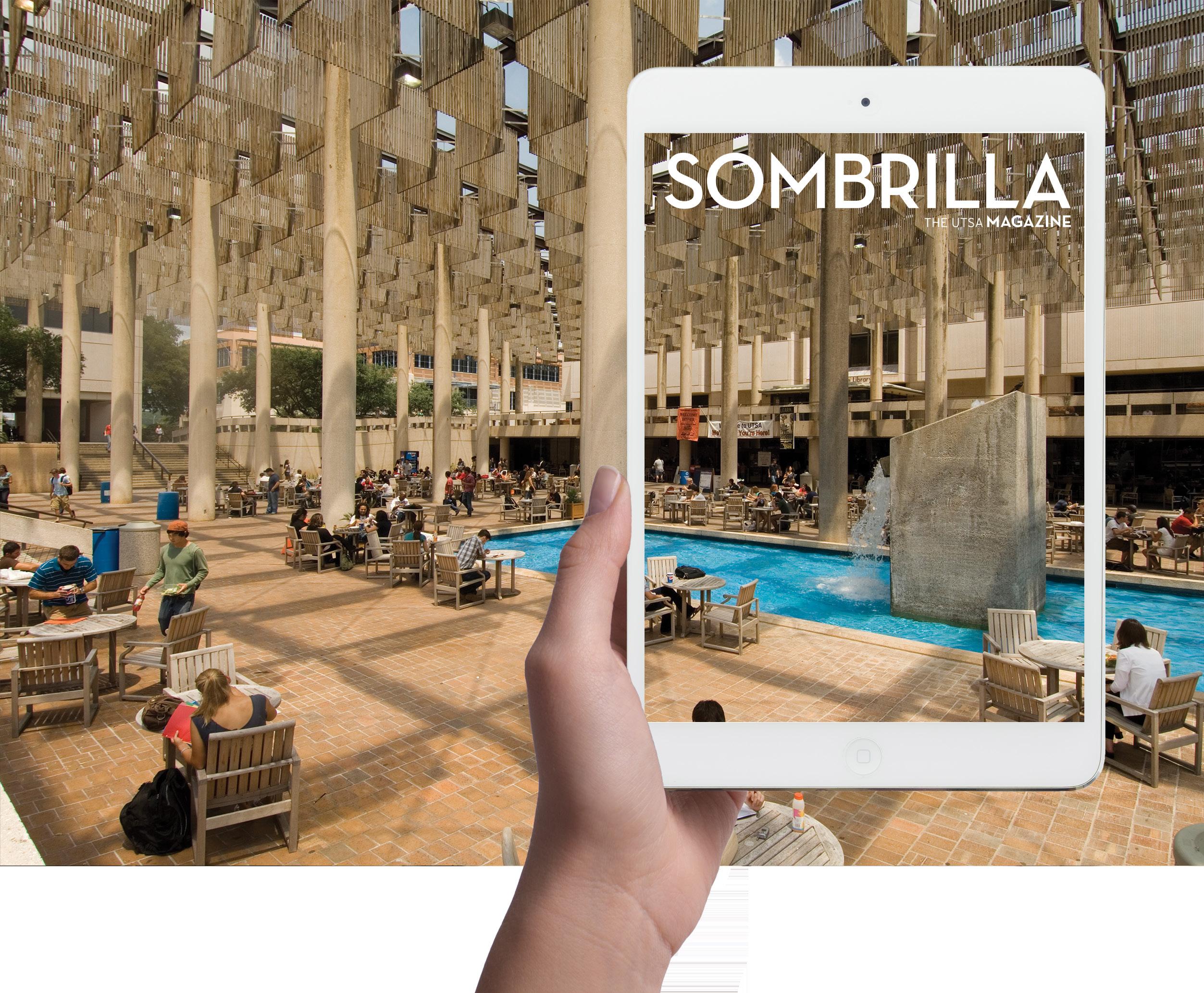
And everywhere else too. Wherever you go, we’re there with you.