Welcome to another edition of Ovations, highlighting the outstanding achievements of students, faculty and supporters of the UTSA College of Liberal and Fine Arts.
A w ide Aperture
Back in 2002, soon after I was appointed in the dean’s office, I received an invitation to the UTSA College of Business Frost Distinguished Lecture. In those early days as dean I began thinking of the challenges that were new to me, especially about how we were preparing our students for the real world. How did our general courses in English, political science and history, and more esoteric studies, like Enlightenment philosophy or German language and culture, ready graduates for success? Such questions were on my mind the morning I strode next door to learn more about what was going on in our very fine business college.
I took my seat in the packed 302-seat auditorium, among mostly undergraduate business majors.
The honored speaker was Ernest Bromley, Chairman and CEO of Bromley Communications, the nation’s largest Hispanic advertising agency. “I’m often asked how to best get on track for success in the business world,” he began. “The first thing I say is, get an undergraduate degree in liberal arts.”
I refrained from jumping up and shouting, “Yes!” — but only with great difficulty. It turns out that Mr. Bromley had been a UTSA political science major. In the years that followed that lecture I often took courage from his remark and from his personal example. All of the UTSA colleges do an outstanding job of building the future for our students and our community, but in this regard COLFA, with its complement of arts, humanities, and social science disciplines, was second to none.
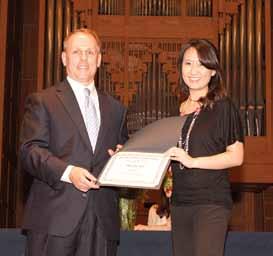
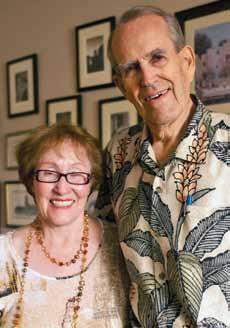
Fast-forward to the Fall 2012 UTSA Alumni Gala. In one of the highlights of the evening, it was announced that Ernest Bromley and his wife Aimee had just committed $250,000 for scholarships in the liberal arts at UTSA. I made my way to their table to thank them, and told Mr. Bromley how his comment long ago had affected me. I was touched by their generosity and even more so by their graciousness. Not only did he remember the speech and the advice, but he also immediately expanded on the importance of a liberal arts education. “It gives you a wide aperture,” he said.
The scope of the liberal arts at UTSA is once again celebrated in the following pages. Our stories feature hardworking faculty and staff, loyal donors, and the students themselves, all contributing to an innovative, progressive learning experience, one which offers the most beneficial combination of light and focus, one only available through a “wide aperture.”
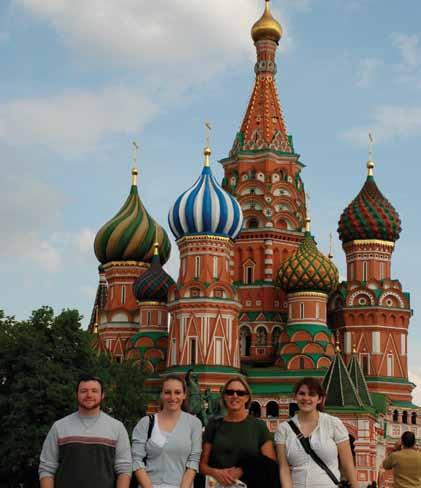
COLFA Study Abroad 8 Theater and Dance 20
New Doctoral Program 14
wITH COLFA ALUMS
by Kiko martinez
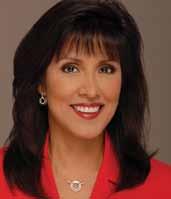
Flip on the TV or radio, and the faces you see and the voices you hear might just be graduates of UTSA’s College of Liberal and Fine Arts (COLFA). From the national platform of NBC Sports to the local public TV station KLRN, COLFA alumni are contributing to the ever-changing media industry one story at a time. Here’s a look at some of the COLFA alums making a difference in their field…
NATURAL STORYTELLER
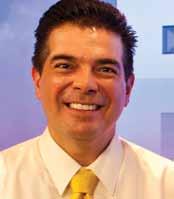
michael valdes, anchor, foX news
As one of the original members of the local FOX News (KABB-TV) team that made its debut in 1995, news anchor Michael Valdes says that while the technical side of the industry has changed over the last 17 years, the job is still the same.
“The cameras have gotten smaller and the TVs are now in HD and it’s easier to go live, but it’s always been about storytelling,” said Valdes, who earned his degree in philosophy in 1993. “Your audience still relies on you to get the story right and tell it in a compelling way.”
Valdes, who comes from a family of educators, began his higher education at UTSA looking for something he could be passionate about. He discovered it in philosophy and in his media internship.
“I enjoyed being in the newsroom and watching how things operated and how things got done,” Valdes said. “I found it incredibly attractive and something I could excel at.”
Studying the works of philosophers like Plato and Aristotle has also helped him in his career.
“I always try to take a different point of view and break something down into a way that makes sense for the story,” he said. “UTSA helped me hone my logic skills and adjust to whatever the situation.”
TAKING ADVANTAGE OF HER RESOURCES
bettie cross, anchor/ reporter, Keye-tv
Austin-based reporter Bettie Cross always knew she wanted to work in the media, but when she came to UTSA in the early 80s, a communication degree was not offered.
Cross, instead, earned her degree in political science after taking advice from a news director at a TV station where she was interning.
“He told me I should figure out what I really want to specialize in and become an expert in that,” Cross said. “That’s when realized I didn’t necessarily need a degree in journalism. Instead, I made UTSA work for my career plan.” with a passion for politics, Cross walked into the industry with practical experience.
“I don’t think people need to always follow the tried-and-true path,” Cross said.
Over the last three years, Cross exchanged covering hard-news politics for stories on lifestyle and entertainment. Until recently, she was the co-host of Austin Live, which aired weekday afternoons; she is now an anchor/reporter for TV station KEYE in Austin, TX.
FINDING HER FORTE
Jamie martin, radio co-host, KJ-97
“I didn’t know what I wanted to do when got to UTSA,” said Jamie Martin, chuckling a bit. “I thought, ‘ well, maybe I’ll do something in the business field,’ but I wasn’t strong at math. I never thought about going into radio.” A job posted in UTSA’s job bank got the ball rolling, Martin said. That position led to two others that ultimately landed her in radio.
Today, Martin, who earned her degree in communication with a concentration in technical writing in 2002, can be heard on local country music station KJ-97 alongside Randy Carroll weekdays from 5 a.m. to noon.
“A lot of the stuff learned at UTSA was writing, editing, and grammar,” said Martin. “I apply all that to what I do now at KJ. You’d be surprised how much writing we do for radio.”
Martin urges students who might not know what they want to do upon entering college to ask themselves a simple question: “ what am good at?”
“Pursue that,” she said. “Everyone is good at doing at least one thing, so find out what that is and go for it.”
ON A MISSION
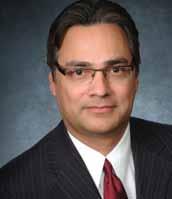
mario vazquez, President & ceo, Klrn Last October, alumnus Mario Vazquez was named executive vice president and station manager at public television station KLRN in San Antonio; effective October 1, 2012 he was named President and CEO.
A student at UTSA in the mid-80s, Vazquez returned to the university in 2006 to finish his degree in political science.
“My whole life turned around in a very positive way after that,” Vazquez said.
After serving on the KLRN board for three years, Vazquez accepted his new position because of the mission of KLRN and the work the station does for the community. He never anticipated going into the media industry, but felt KLRN was the right place for him.
“I’m not sure if I would have gone to any of the commercial stations,
but because KLRN is public television it inspired me,” he said.
At UTSA, Vazquez said he learned how to question things, not to accept the status quo, and to think beyond his own opinions.
“UTSA challenged me,” he said.
“You don’t have to go to California or the East Coast to get a top-notch education. You just have to put in the effort and work if you want to succeed.”
NOT MISSING AN OPPORTUNITY
monica taylor, anchor, foX news
Although she started as a finance major her freshman year, Monica Taylor, anchor for local FOX News (KABB-TV), jumped at the chance to study public relations when the concentration in the Department of Communication became available her sophomore year. She earned her degree in communication in 1998.
After making the rounds in the public relations sector, including time with Spurs Sports & Entertainment, Taylor took the opportunity to move to the other side of the industry and join the FOX News team.
“It was a natural transition for me,” Taylor said. “I love public relations, but couldn’t say no to FOX. It’s been a great experience.”
Taylor, who can be seen on FOX News First, thinks students who plan to enter the field should be passionate about the work because there is a lot of competition out there.
“Go out and do an internship so you can feel it and touch it,” Taylor said. “An internship will help you understand what this industry is all about.”
OLYMPIC READY
michelle beadle, reporter, nbc sports
After three years with ESPN, Michelle Beadle has moved to NBC Sports.
According to USA Today, Beadle’s NBC Sports deal includes a role on “Access Hollywood.”
“The TV thing wasn’t even something I had ever thought about,” Beadle said in a past interview. “I think a lot of people I went to high school with find this funny, what I’m doing now.”
In her new position with NBC Sports, Beadle covered track and field events during the 2012 Olympics in London. In the past she has also had stints with Animal Planet, Travel Channel, and People Magazine, and she covered the Golden Globes and other entertainment awards shows.
“I really don’t live sports,” she said. “I feel like to do my job well, I can’t just know sports. You’ve got to be a good human. You have to know what’s going on.” Michelle is a 2002 graduate of the Department of Communication.
ON A QUEST FOR KNOWLEDGE
Judie garcia, anchor/reporter, wgn-tv chicago
w hile she admits she has never taken a journalism course in her life, wGN-TV Chicago anchor and reporter Judie Garcia says her time at UTSA during the late 80s gave her a lot more than just a specialized education. It taught her to think.
“Every news director have ever worked for will say that the most important skill a reporter can bring to the table is not knowledge of journalism, but a general curiosity and broad-based liberal arts education,” said Garcia, who earned her BA in English in 1990. “All the courses I took taught me to think critically.”
Along with the internships she was afforded during her collegiate career, Garcia credits the professors at UTSA for preparing her for what she calls a “quest for knowledge.”
“Today, I am still able to quote lessons from my political science, biology and French professors from UTSA,” Garcia said. “UTSA’s professors are not only knowledgeable in their field of expertise, but are also able to share their passion in such a way that it inspires you to a higher level.”
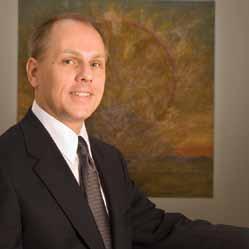
michael valdes
bettie cross
Jamie martin
mario vazquez
monica taylor michelle beadle
Judie garcia
Found In TranslaTIon
How Critical Languages
Open Doors for COLFA Students
“What do you call someone who speaks many languages?” the old joke begins.
The response: “A polyglot.”
The joke goes on:
“What do you call someone who speaks two languages?”
The answer: “Bilingual.”
So, “What do you call someone who speaks only one language?”
The punchline: “An American.”
There are at least 6,000 languages spoken on this planet, yet fewer than half of American high school students study a foreign language — and of those, the majority study Spanish. Business and government leaders now believe that America’s monolingualism has put the country at a competitive disadvantage in global markets and even poses a threat to national security. Both commerce and international relations require understanding and communicating with other cultures, yet this isn’t truly possible without learning the languages of those cultures.
UTSA junior Elizabeth Costales and recent graduates Shannon Irby and Vincent Holmes are doing their bit to address this “language gap” between the U.S. and the rest of the world. Costales, for her part, is studying Japanese in Japan under the auspices of the Critical Language Scholarship program (CLS).
The CLS program, created in 2006 by the U.S. Department of State’s Bureau of Educational and Cultural Affairs, is a government effort designed to sharply increase the number of Americans mastering those languages – including Arabic, Chinese, Korean, Punjabi, Japanese, and Urdu –deemed critical to the nation’s security and to its economy. The program offers intensive summer
by tony c
antú and Judith l i P sett
language institutes in 13 countries where these “critical” languages are spoken. Costales was one of only 35 out of nearly 500 applicants selected for the Japanese section of the prestigious program.
Alumna Shannon Irby, who is teaching English to children in Chungcheongbuk Province, South Korea, is not far geographically from her fellow Roadrunner. Her overseas adventure is taking place under the auspices of the Teach and Learn in Korea (TaLK) program, a scholarship program created in 2008 by the South Korean government to support English education in rural parts of Korea while giving undergraduates from English-speaking countries the opportunity to learn about Korean language and culture. Fellow alum Vincent Holmes is also part of the TaLK program; he is based in Chungcheongnam Province on the western side of the country. Costales’ assignment is part of an arrangement with Doshisha University in the Japanese city of Kyoto.
“I’m good at reading and writing [Japanese], but want to speak better,” Costales said. “It’s very easy when you’re [in the U.S.] to fall back into English, and I want to be fluent.”
The geopolitical importance of her language study is not lost on Costales. But her interest in
study abroad was also informed by a quest for her own cultural roots. “My dad is half Filipino and half Japanese, and my mother is Anglo American,” she said. “My dad grew up in the post-world war II era, so his family wanted to be like Caucasian people. He felt he missed out on his culture.”
During her childhood, Costales’ salesman father would present her with family mementos evocative of her ancestry. She described how being given these heirlooms early on helped spark an interest in her heritage.
“He would bring things to us that belonged to his mother, and would tell us stories about visiting his relatives in Japan,” she recalled.
This exposure to Asian culture led Costales to take up a form of woodblock printing that has been practiced in Japan for centuries — most famously by the artist Hokusai — during her elementary school years. The discipline of the craft appealed to her, particularly its inherent demand for symmetry.
“The positive and negative space balance each other perfectly,” she said in describing the art. Costales, who is working toward a double major in art and modern language studies, would like to educate more people on the breadth of Asian artistic expression.
Before Costales’ departure in June, she conceded she was a bit anxious: This was her first trip by herself outside of the States.
“I am very nervous,” she said. “I went to Japan over spring break, but my family was there with me. I have never left my family over an extended period of time.”
Despite her jitters, Costales said she realized her experience in Japan represents the opportunity of a lifetime. After a two-day orientation in washington, D.C. with other CLS students, she left for Japan, where her stay with a host family provided immersion in that nation’s language and culture.
Yet even before boarding the plane that would begin her journey, Costales had already
begun formulating plans to embark on a different kind of JET – the Japan Exchange and Teaching program – to which she plans to apply. The program, administered by Japanese government agencies, is designed to promote international exchange between Japan and other nations.
while Costales’ trek was fueled in part by the desire to reconnect with her heritage, Irby was drawn to Asia by a quest to explore career options. Unlike Costales, Irby was already something of a world traveler before departing for South Korea. The daughter of a military family, she was born in Germany and lived in several countries before graduating from Samuel Clemens High School in Schertz, Texas.
“I’ve gone to school in different states and countries,” she wrote in an email exchange from South Korea. “I’m interested in working abroad, especially in Asia. Before leaving [the U.S.], I was volunteering as a Japanese tutor with [associate director of UTSA’s East Asia Institute] Professor Mimi Yu, who encouraged me to apply for the TaLK program.”
Despite the disparate motivations for their journeys, Costales and Irby almost ended up as travel companions: Irby noted she had settled on Japan as her destination before being persuaded to go to South Korea instead.
“Although I felt more prepared to go to Japan, I was still really excited to visit Korea and learn about the language and culture,” she wrote. “The experience is one I wouldn’t want to trade. There are both rewarding and difficult times, and about every two or three weeks I discover something new and interesting.”
Having earned her bachelor’s degree in communications, Irby is putting that discipline to good use in Korea by striving to master the language: “Through my daily interactions with students, townspeople and friends, I have plenty of chances to learn as much from them as they can from me. I’m also hoping to discover the path to a life goal while I’m here.”
Irby added that she is “learning [Korean] as much for survival as I am for fun. There is a lot of English used in Korea, but it still pays to be able to speak the language. There are phrases I need to know—like those used to book a train ticket in person or ordering food—and there are phrases I should know just in case, like if the old lady at the bus stop decides to talk to me and ask how long I’m staying in Korea.”
And ordering food has had other effects, as well: “Before [I left the U.S.], my mom was the only one in our family who could handle spicy food. After being here five months, I could be her competition!”
Irby acknowledged some of the hurdles of living abroad, particularly the challenge of making Korean friends. But she noted that the rewards of the experience trump any obstacles.
Mimi Yu said that placing UTSA students in such important programs is a reflection of the success of the school’s language studies offerings. “ we have a lot of outstanding students, and we need to keep introducing them to these unique opportunities,” Yu said. About 175 students now study Japanese at UTSA, another 70 are studying Russian, and there are about 55 students learning Arabic and another 100 learning Chinese. The university recently achieved another important milestone, signing an agreement of cooperation with China’s Hebei Normal University. In addition, Korean language instruction is also available at UTSA through a very generous grant received from the Houston Korean Education Center and the Ministry of Education, Science and Technology of Korea.
Elizabeth Costales, Shannon Irby and Vincent Holmes, it seems, are part of a growing movement at UTSA to change the punchline of the joke.
t hrough the l ens
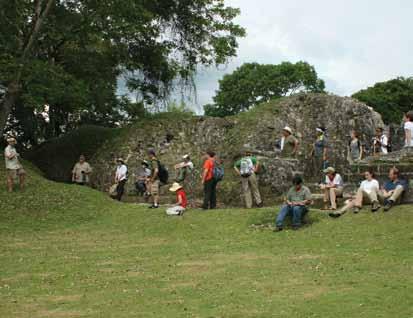
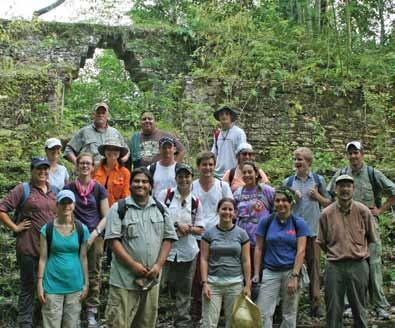
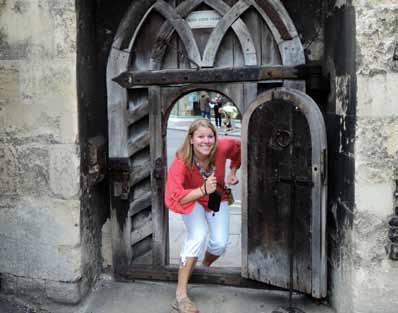
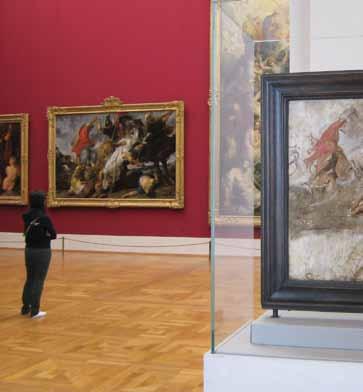
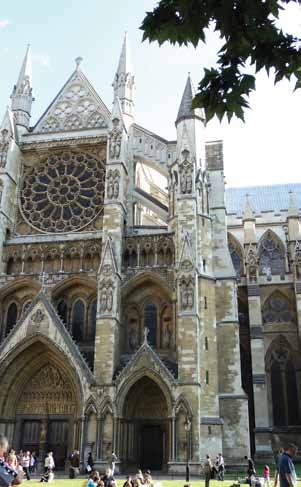
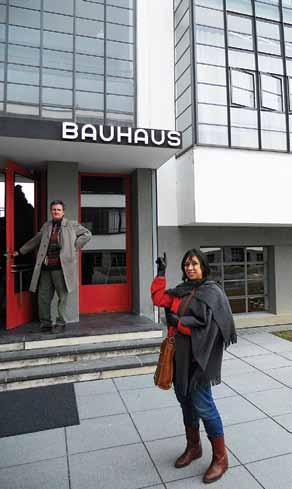
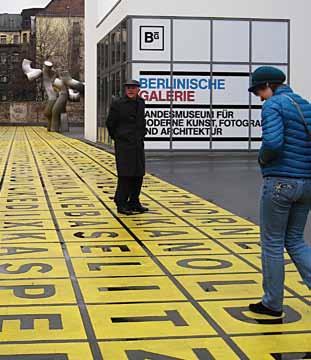
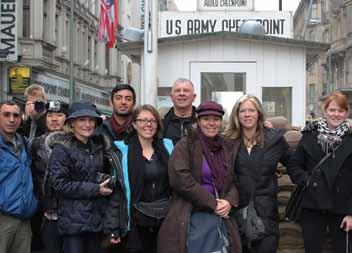
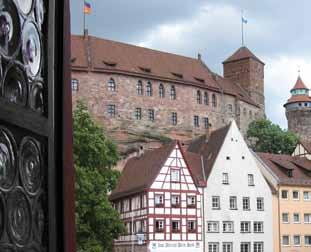
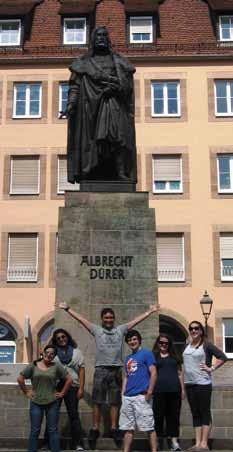
A Visual Tour of the COLFA Study Abroad Experience
with the widest range of study abroad programs available through the university, the College of Liberal and Fine Arts offers students plenty of opportunities to broaden their horizons while strengthening their academic and professional prowess. In this issue we invite you to take a look at our students’ experiences around the globe, through their own eyes.
Putting tier one ideals into motion
12 Years of the COLFA Research Conference
by PatricK collins
UTSA is an organization in the midst of dramatic growth and transition. In less than a decade the university has evolved from a commuter college with a local presence to a diverse and dynamic institution 30,000+ students strong, and nowhere is this transformational energy more evident than in the university’s drive for top-tier research status.
The phrase ‘Tier One’ has become embedded in the campus psyche as our mission has grown to include firmly establishing premier research as a new model for faculty and students alike.
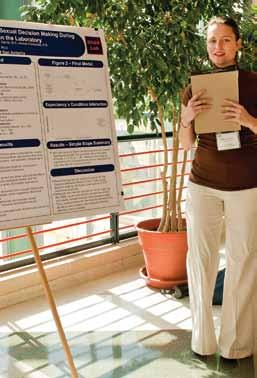
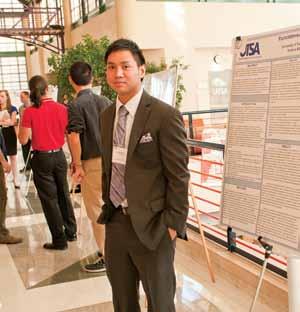
The liberal arts have a vital role in new knowledge creation and in keeping the nature of research diverse. This is a fact that, for the last 12 years, COLFA has demonstrated by taking college research beyond the sole domain of faculty by hosting an annual interdisciplinary research conference where doctoral, graduate, and undergraduate students in the college come together to share ideas, practice presentation skills in a professional environment, and receive recognition for their extraordinary contributions.
The COLFA Spring Research Conference allows students to present their work and research before a wider audience than would be found in a seminar class, but without the added stress of travel associated with out-of-town conferences.
It started as a graduate-only conference in 2001 under then-Associate Dean Dorothy Flannagan in the College of Social and Behavioral Sciences (which would later merge with the College of Fine Arts and Humanities to form present-day COLFA). Associate Dean Christopher wickham took the lead for the event in 2005; by this time it had expanded to include undergraduate participants. Since then the conference has grown to embrace all disciplines in the college, giving rise to a diverse event filled with engaging presentations, poster showings, musical performances and art exhibitions, and culminating in an awards ceremony to recognize and financially reward standout participants in each area. The college’s research conference is a model for other institutions that have only recently begun to organize similar events as the demand for undergraduate research takes hold on campuses nationwide.
Every March, the second floor of the Main Campus University Center becomes a hive of intellectual activity for a day, with visually rich
research posters displayed in the foyer and a steady stream of conference participants flowing in and out of meeting rooms. As the day progresses, focus shifts across campus to the Arts Building. Attendees gather for a reception in the lobby and visit the Art Gallery to browse student artwork before heading to the Recital Hall for the concluding awards ceremony, which features musical performances and presentation of the awards by Dean Daniel J. Gelo, Dr. wickham, and a selected member of the UTSA research community. winners receive cash awards funded through the COLFA Dean’s Office and the office of the Vice President for Research.
As Dr. wickham points out, the guiding purpose of the conference is to serve as a vehicle for the professional development of COLFA students:
“It gives students the opportunity to present their original work in a forum of interested and critically engaged minds that is at the same time welcoming and inclusive. It’s an excellent chance to practice public speaking and presentation for those who will enter academic fields or careers where these skills are required.”
I N O UR S TUDENTS’ W ORDS
to view the full list of past awardees along with photos and samples of work, visit www.colfa.utsa.edu/colfa/research/conference
last march we spoke to participants after the awards ceremony to get their take on the conference and its value to our academic community.
Jodi Ierien, 4th Place Undergraduate Research Paper (tied):
“The conference proves that not all research has to be STEM-based [Science, Technology, Engineering and Mathematics]. It gives us an opportunity to share information and ideas across the curriculum. When met with the head of the graduate English program at Our Lady of the Lake, she was impressed to see [the conference presentation] listed on my CV and was interested in the premise of my paper.”
Amanda Salerno-O’Donnell, 1st Place Undergraduate Creative Writing
“It’s an incredibly satisfying feeling to share your hard work with others and have others share theirs with you. I loved listening to the research
papers, presentations, and creative writing pieces that my fellow students have worked on unrelentingly to perfect. The sharing we experienced lends to an overall feeling of teamwork and mutual pride.”
Jana Cobb, 1st Place
Undergraduate Research Paper
“I benefitted most noticeably in confidence, and that includes confidence in my research and in talking about my research with other intellectuals.”
Austin Bonecutter, 2nd Place
Undergraduate Research Paper
“I feel much more confident about making my research known to the academic community since it was very well received by the graduate students that attended my presentation.”
Virgie Taylor, 2nd Place Undergraduate Multimedia
“The conference is very important to UTSA because it provides an extracurricular opportunity outside of athletics for students to develop their minds and refine their skills.”
Adolfo Mora, 1st Place Graduate Multimedia (with Yvette Garcia)
“It’s extremely helpful as a student to share ideas and inspiration with other students, to be able to create something of your own and get feedback from your peers and mentors.”
Jason Treviño, 3rd Place Graduate Creative Writing
“The conference not only demonstrates the intellectual rigor of our
institution, but also allows for an atmosphere that is supportive and non-threatening for those of us who haven’t had the opportunity to present at conferences outside of UTSA.”
Carla Pezzia, 4th Place Graduate Research Paper
“It would be nice to see each college do something similar to COLFA’s conference. The events could be hosted at the same time to create an expo of the work being done by UTSA students.”
Trudi Carter, 4th Place Undergraduate Research Paper (tied)
“I went into the conference a student and left a scholar.”
SERVING THOSE A
wHO SERVE
Pioneering Doctoral Program
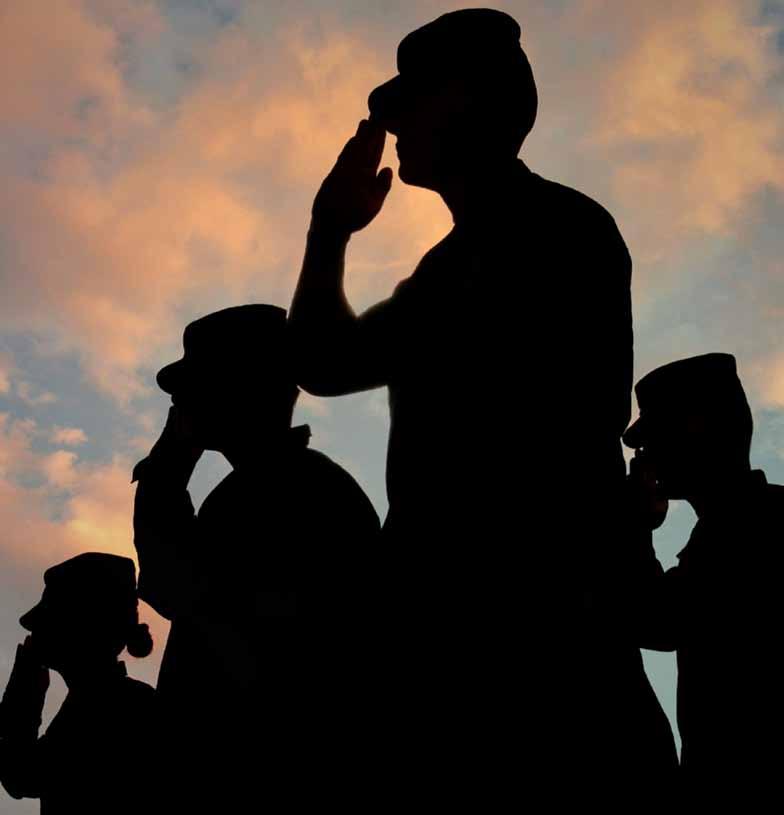
Focuses on Research to Help Veterans
by c indy t umiel
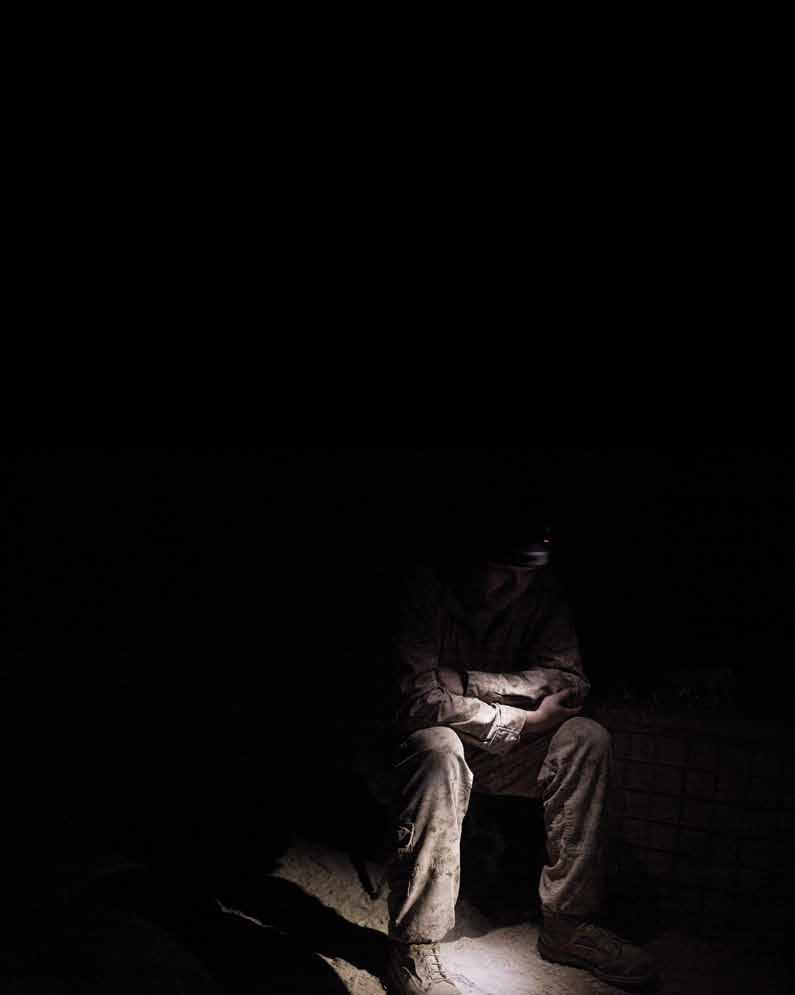
merican military deployments to Afghanistan and Iraq may be ending, but the wars live on for thousands of U.S. service members who faced danger and death daily while serving their country in a hostile land.
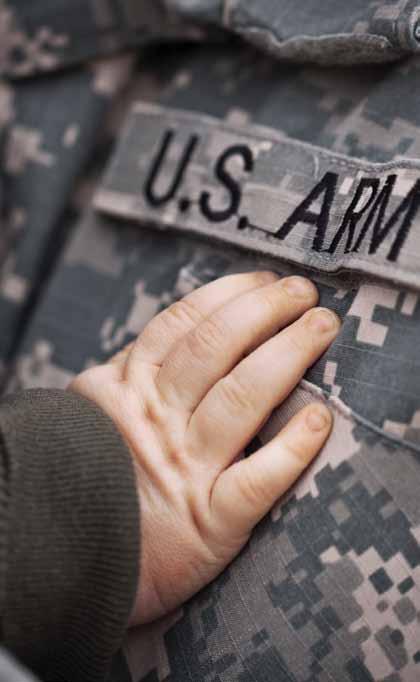
Many veterans, men and women, now cope with psychological battle scars that linger months or years after the completion of their military duties. They are home now, but the peril they faced and the suffering they witnessed still affect their lives, especially in their family relationships, in their workplaces and in their communities.
Recent studies suggest that 5 to 17 percent of military personnel returning from deployment exhibit symptoms of posttraumatic stress disorder, or PTSD, and as many as 25 percent suffer some psychological problem as a result of their service. Veterans may be coping with substance abuse, depression, anger, blast-related brain trauma and other war-related effects that can hamper their ability to hold jobs or maintain healthy relationships with family and friends.
The U.S. Department of Defense recognizes this burgeoning need and is pouring millions of dollars into programs and clinical trials to test new treatments tailored to military personnel. However, the military also needs researchers who have advanced training in experimental methods and statistical techniques to help develop these therapeutic programs and evaluate their effectiveness.
UTSA is preparing to step into this role with a new doctorallevel degree program in psychology that will train students in research skills that the military needs to provide the best possible mental health and wellness care for service members and their families. The Texas Higher Education Coordinating Board approved the program in January 2012, and the first students will begin this fall semester.
University officials expect that the program will become a national model for training psychologists who are skilled in conducting research and evaluation of treatments that meet the military’s needs. Students must already have master’s degrees to enroll. They then will spend three years acquiring advanced skills in scientific research procedures, statistical analysis and grant writing. They also will receive in-depth training in military psychology and culture.
“ we see a good future for our program,” said Robert Fuhrman, chair of UTSA’s Psychology Department. “This takes advantage of all the resources that are unique to San Antonio. It takes advantage of our strong military presence and our military medical infrastructure; it takes advantage of our strong faculty and our ability to collaborate with the University of Texas Health Science Center.
“ with these resources, it almost can’t help but succeed,”
Fuhrman said.
“Post-traumatic stress therapies that have worked for civilians are not as effective with military veterans who bear the psychological scars of combat.
— Alan Peterson, Ph.D.
The Coordinating Board’s approval was the culmination of work that began under former Psychology Department Chairman Richard wenzlaff, who convened the first faculty planning discussions for a doctoral program more than a decade ago. when wenzlaff died suddenly in 2003, that initiative went into limbo. when Fuhrman became chair, he renewed planning for the program.
“ we agreed we wanted a research-oriented focus, as opposed to training students for clinical practice,” he said. “Originally, we took a more general approach that would have offered broad skills in research methods, but in no specific area.”
After several rounds of discussions with the Coordinating Board, ideas took a more focused direction, Fuhrman said. By that time, the nation was deploying military personnel to two war zones and coming to grips with the psychological consequences to service members. Congress and the president also had approved the latest round of military base consolidations, a decision that brought a new concentration of military medical services to San Antonio’s Fort Sam Houston. Revised Coordinating Board guidelines also instructed universities to develop programs that would prepare students for jobs that exist in the workforce.
“This really makes sense for us because we are preparing students to be part of research teams,” said Rebecca weston, associate professor and graduate advisor for the doctoral program. “You need to have people who are able to deliver the treatment. But you also need people who understand research and statistical methodology and who can tell you if the treatment is working.”
core of STRONG STAR focuses on finding effective treatments for combat-related PTSD, other collaborators work in areas of genetics, suicide prevention, neuroscience, traumatic brain injury and related fields.
Post-traumatic stress therapies that have worked for civilians are not as effective with military veterans who bear the psychological scars of combat, said Alan Peterson, a retired Air Force colonel who is director of the STRONG STAR program. His clinical research is examining how to make those therapies more effective for service members who have survived combat zones.
“ we know very little about how to treat PTSD in the military,” Peterson said. “There are things about the traumatic experiences that are similar [in civilians], but lots that are very different.”
“ this takes advantage of all the resources that are unique to san antonio. it takes advantage of our strong military presence and our military medical infrastructure; it takes advantage of our strong faculty and our ability to collaborate with the university of texas health science center.
—Robert Fuhrman, Ph.D.
UTSA faculty members feel the doors are open for them to seek their own research grants from the Department of Defense and service branches. There are faculty members with expertise in every area of psychology, including substance abuse, domestic partner violence, teen and child psychology and organizational psychology.
“A lot of us are thinking about the future and talking about programs to get our students involved in working with our military community,” said Michelle Little, an assistant professor who studies adolescent aggression and substance abuse. There are plenty of opportunities to develop and test programs geared to military families, she said.
Six students have enrolled for the inaugural semester, weston said, and they are thinking already about future opportunities.
Miranda Richmond is one of these students. She holds a master’s degree from UTSA and is now a research coordinator at the STRONG STAR program. She also teaches a psychology course at Northwest Vista College.
“This has made us all a little more motivated and confident as researchers to put proposals together and apply for funding,” said Daniel Beal, assistant professor of psychology and a specialist in industrial and workplace issues.
Beal hopes to study psychological factors among current and former service members that influence workplace aggression and violence.
“The doctorate will allow me more opportunities to bring in my own grant money to do research in areas that interest me, as well as opportunities to teach at a university level,” she said. “I have discovered that love to teach.” Being practical, she noted that she also has a husband who is pursuing his own career, and that may require relocation in the future. “I may be looking for new job opportunities down the road,” she said. “The doctoral degree and added training make me very flexible, which is nice.”
“This really makes sense for us as a university and as a community,” said Fuhrman. “It is preparing students to become part of research teams, and they will have the background and understanding of the military that will make their evaluation skills relevant to the important mission of serving our American veterans.” veterans may be coping with substance abuse, depression, anger, blast-related brain trauma and other war-related effects that can hamper their ability to hold jobs or maintain healthy relationships with family and friends.
Another boost to the University’s doctoral program came via the Department of Defense, which funded a large San Antonio-based research and treatment program for combat-related post-traumatic stress, South Texas Research Organizational Network Guiding Studies on Trauma and Resilience, or STRONG STAR. The $50 million program is led by the University of Texas Health Science Center and offers clinical research and treatment through 20 partnering military, civilian and Department of Veterans Affairs (VA) institutions, including the San Antonio Military Health System and Fort Hood in Killeen. while the
Peterson will teach a core course in military health psychology to UTSA doctoral students. This will include an understanding of military life and culture. He also expects that the STRONG STAR program will offer research and training opportunities for many of the doctoral students. when they graduate, they will have both the research skills and the understanding of military culture that will open many job opportunities for them. They also will have connections with military collaborators and an understanding of how to apply for their own research grants, he added.
“These graduates will have a unique set of skills and will be very marketable,” Peterson said.
“The military has plenty of clinicians who can deliver treatment [but] would benefit from people who understand the military and who want to do the research piece of the puzzle.”
Now that the Coordinating Board has formally approved the psychology doctoral program,
“My interest is in how stress and battle fatigue affect their decisions and daily performance at work,” Beal said.
“I am so thankful that the Higher Education Coordinating Board approved a doctoral program focused on mental health and wellness, particularly for our military service members. UTSA, with its location in San Antonio — with its high number of military members serving in our bases, and retired military — is perfectly positioned to study the significant issues in mental health due to constant deployment. This is so synergistic with the community of San Antonio and our military missions, and resources such as the Center for the Intrepid and the Wounded Warrior Family Support Center. With this program, UTSA has been a leader in linking up the community’s needs with their academic programs.” senator leticia van de Putte, r.Ph.
A BROAD UMBRELLA
New Institute Tackles
Complex Issue of Health Disparities
BY C INDY T UMIEL
Population projections for the South Texas region verge on overwhelming. By 2040, the State Demographer’s office says, there will be 6 to 8 million people living in the 43-county area between San Antonio and the Mexican border that UTSA serves. Seventy percent or more of these people will be Latino, African American or Asian.
And, if current trends continue, many of them will have different, often poorer, health outcomes than the country’s Caucasian majority. This will give rise to a serious public health problem for Texas and for the nation.
Today, most ethnic minorities are less likely to see a doctor regularly. Many groups are more likely to suffer chronic health conditions, such as obesity and diabetes. Often, they are at greater risk for having low-birth-weight babies. These and other health disparities arise from a complex interaction of social and biological factors, including economic, educational and social status; access to health-promoting and health care resources; genetic predisposition; and cultural values.
Those realities have given rise to one of the newest institutes at UTSA – the Institute for Health Disparities Research, where scientists from different disciplines can collaborate and find administrative support for research into underlying factors that contribute to differing health
outcomes for different ethnic and social groups.
Thankam Sunil, associate professor of sociology and an experienced researcher in areas of maternal, infant and adolescent health, heads the institute.
Scientists and public policy analysts have recognized for years that health disparities exist, but these perplexing issues persist despite efforts to resolve them, Sunil said.
“They are still out there and they are still growing. Even though we have known for a long time that there are disparities, we still don’t have a clear understanding of how to tackle the situation,” Sunil said.
It is no longer enough, he said, to explain away a minority group’s worse health outcomes by blaming poverty. The reasons are complex, and thorough study is important to the development of effective public policy and public health programs, Sunil said. UTSA’s Institute for Health Disparities Research is an umbrella that offers scientists from different fields, including sociology, anthropology, biology and even engineering, a forum where they can converse with each other and collaborate on multidisciplinary research.
“This institute is trying to integrate basic biomedical and behavioral sciences to understand how health disparities occur and how best to address them,” Sunil said.
Sunil’s own research looks at a multitude of social issues involving family, child and adolescent health, including the issue of how to address the persistent problem of low-birth-weight babies in South Texas.
He is collaborating with Jill Fleuriet, an associate professor of anthropology at UTSA, to examine how uninsured immigrant women deal with pregnancy and prenatal care. Even though it might seem that the odds are against them, recent immigrants from Mexico actually tend to have healthy weight babies. But as they stay in the United States, they tend to have babies with low birth weight. Babies that are too small at birth often face myriad health and developmental issues that can persist throughout life. It is a significant problem among low-income and poorly educated minority women all across the United States.
“Most low-birth-weight babies can be explained by the traditional risk factors. But risk factors of low income, lack of prenatal care, and low levels of formal education do not apply as much to new immigrants from Mexico. we have to look at the social and cultural contexts for the reasons that Mexican immigrant women have healthier babies,” she said.
She and Sunil are collaborating with agencies and clinics in the Rio Grande border region with in-depth surveys and observations in the effort to understand what is happening.
“As they live here longer, the birth weights deteriorate,” Sunil said. “For some reason, the environment here is not conducive to good maternal health. we need to understand that. why are we losing the protective measures that the immigrants bring with them?”
Health disparities also arise because of biological differences. william Haskins, assistant
professor of research [ wEH] and Director of the RCMI Proteomics & Protein Biomarkers Cores in the College of Sciences, said the new institute gives biomedical researchers like him more leverage to work at understanding these differences. Federal funding agencies have special initiatives for minority health issues, and UTSA’s new institute gives scientists a way to seek financial support for their research, he said.
Haskins, an expert in proteomics, or the large-scale study of proteins, contributes his biomedical expertise and perspective to the health disparities initiative. His research involves examining differences in responses to cancer. An emerging trend in this field is to look at groups of genes and evaluate how various forms of these genes express themselves as RNA and/ or proteins in cancerous tissues. These gene expression panels are being tested with different forms of cancer. Doctors are using them to guide treatment decisions for individual patients and to understand why some tumors are more aggressive and dangerous than others.
Three years ago, specialists in childhood leukemia published a study that looked at 38 different genes that produce RNA, or the message-encoding proteins that help other genes work properly. They found that the RNA levels could be used to predict how well individual
patients responded to standard treatment for high-risk childhood leukemia.
“ what the study showed is that a quarter of the kids with the worst outcomes were Hispanic/ Latino,” said Haskins. “ with this form of leukemia, they are finding that children with genes from Native American ancestors are [also] more likely to have a worse outcome. what this says is that clearly there are biological changes that are linked to health disparities.”
Haskins is now working with several regional children’s hospitals to understand the genes and the proteins they produce. In turn, these correlative biology studies enable scientists, doctors and engineers to design new drugs that can target specific proteins.
“By studying proteins we can potentially identify new drug targets,” he said.
Sunil noted that the institute offers a broad umbrella where researchers with different interests, such as himself and Haskins, can find financial support and shared resources, even though they are looking at different pieces of the health disparities issue.
“ we think this multidisciplinary approach will bring us new knowledge, along with new approaches to public policy and significant, high-impact technological developments,” he said.
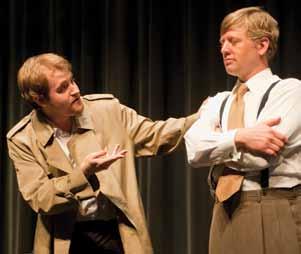
Until last year, Stephen Young had never set foot on stage in front of an audience.
But the first time he did so, as Petruchio in Shakespeare’s “The Taming of the Shrew” at UTSA’s Recital Hall, he knew he was meant to act.
“It’s a great feeling of power, but also very humbling,” said Young, a senior classics major.
Unlike Young, Dencia Baltimore, a senior English major, had been appearing in plays and musicals since childhood in school and in local theater back home in Dallas. So performing on stage is second nature to her.
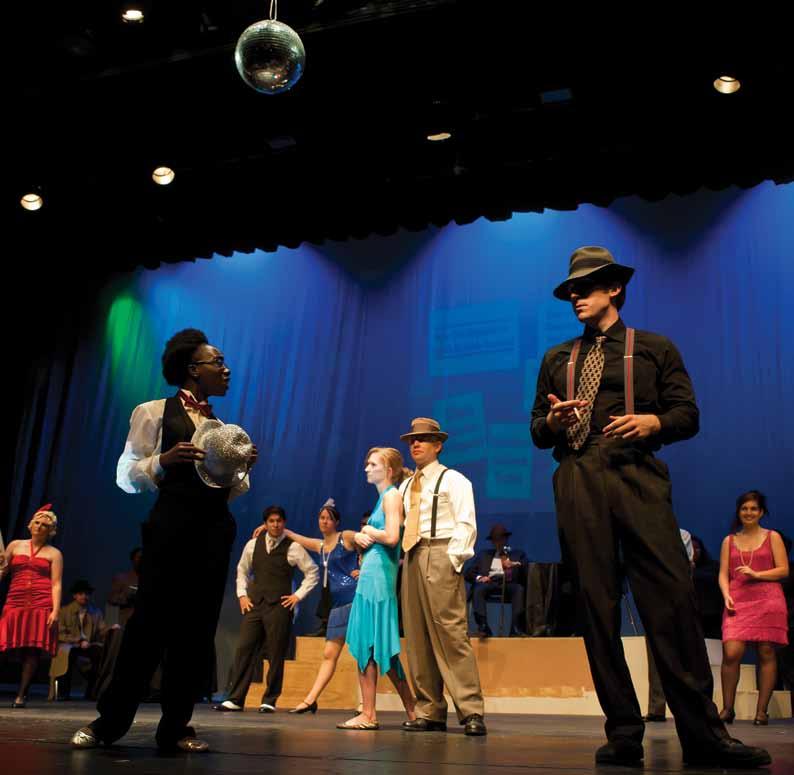
“It might sound weird, but when I’m on stage feel at home,” said Baltimore, who also is president of the Thespian Troupe at UTSA and had a lead role as Queen Elizabeth in “Richard III” last fall at the Downtown Campus’s Buena Vista Theater. w hat the two actors have in common — besides their passion for the stage, of course — is their desire to see even more theater performances and acting classes at UTSA. Their participation in Acting and II, courses offered by the English Department, complements the activities of the Music Department’s Lyric Theatre program, coordinated by Dr. william McCrary and Michelle Pietri (profiled in past issues of Ovations). Such
student interest across departments could lead to a stand-alone theater program in the future.
“For historical reasons both Music and English have nurtured drama at UTSA over the years,” said COLFA Dean Daniel J. Gelo. “ we continue to expand classes and facilities as student interest warrants, and in the conceivable future UTSA could have a theater department or school of the performing arts like those at many Tier I institutions.”
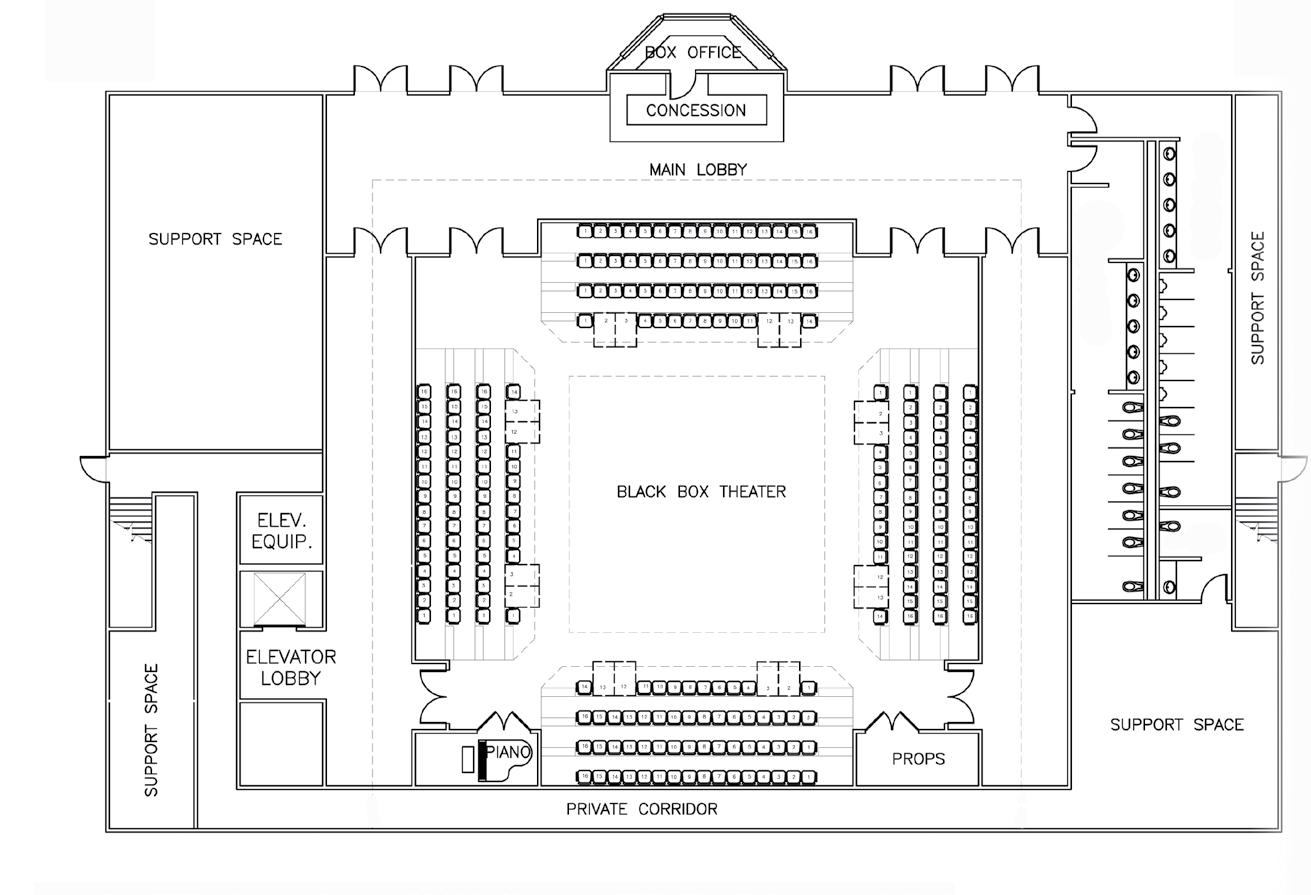
Young and Baltimore have good reason to be hopeful. Dr. David Frego, chair of the Department of Music, said preliminary plans have been drawn for a black box theater adjacent to the Art Building, which will be a component of the Main Campus performing arts complex that is part of the UTSA Master Plan. Unlike the more traditional Buena Vista Theater, the black box will consist of a large, square room with black walls and a flat floor instead of a stage.
“A black box theater is an intimate space for the performing arts,” Frego explained. “It works well for musical performances as well as plays. we have more than 200 recitals here each year. So rather than use the Recital Hall, which seats 500 people, we can use a smaller space for an audience of about 30.”
“a black box theater is an intimate space for the performing arts. it works well for musical performances as well as plays.”
— Dr. David Frego
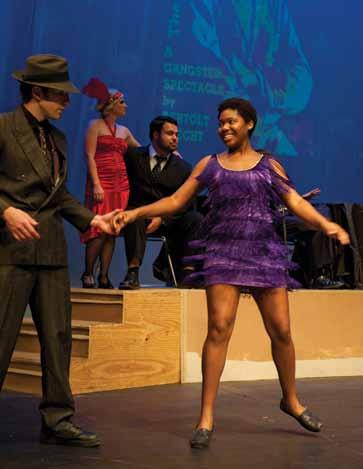
Frego’s enthusiasm for the potential of the performing arts is shared by Lynn Oliver, a lecturer in the English department who teaches Acting I and II. Oliver has enjoyed an extensive career in the theater and television industry. After graduating from college, she went to New York and appeared in plays on and off Broadway, even appearing in summer stock with actor Christopher Lloyd, best known for his role as Emmett Brown in the “Back to the Future” trilogy. Prior to coming to UTSA last fall, she was the theater director at Taft High School in the Northside Independent School District. At UTSA, Oliver has directed “The Taming of the Shrew,” “Richard III” and the modern drama “The Resistible Rise of Arturo Ui” by Bertolt Brecht. These performances give her the opportunity to help her student performers hone their acting skills, learn about blocking, and work on character development. On the bill this year is another Shakespeare classic, “Romeo and Juliet.” Oliver’s passion for Shakespeare is an exciting extension of a long tradition in the English department of bringing actors from the London stage to UTSA twice a year for a week
of performances and workshops featuring the works of the Bard. Oliver also advises the Thespian Troupe, a student group that meets once a month to discuss plays for possible production, act out scenes and bond as fellow actors normally do.
Dencia Baltimore, Steven Young and Armando Urdiales are among those Thespian Troupers. In fact, the three call themselves the “Shrew Crew” in reference to the first production they ever appeared in together at the university, “The Taming of the Shrew.”
Urdiales said that he appeared in a few plays while attending San Antonio’s Memorial High School, but when he took Acting I and II at UTSA, the acting bug bit.
“It’s interesting putting on shows,” Urdiales said. “ working behind the scenes, studying your part and learning your lines, blocking, character research – I love it all.”
As for Baltimore and Young, the two plan to relocate to New York after graduation to attend acting school. “I plan on pursuing an acting career to the fullest,” Baltimore said. “This is what I’m passionate about.”
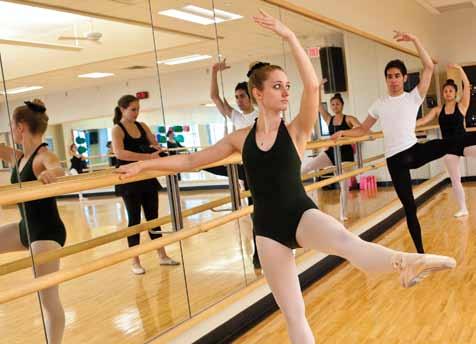
Just as Oliver has been elevating the role of theater at the university, David Frego has been doing the same for dance. “ w hen we recruited David to UTSA as Music chair in 2008, I was intrigued by his expertise in Dalcroze Eurhythmics, a music education technique involving body movement, and David’s potential for growing a dance program,” said Dean Gelo. “ we agreed that a campus of 30,000 should have a dance program.”
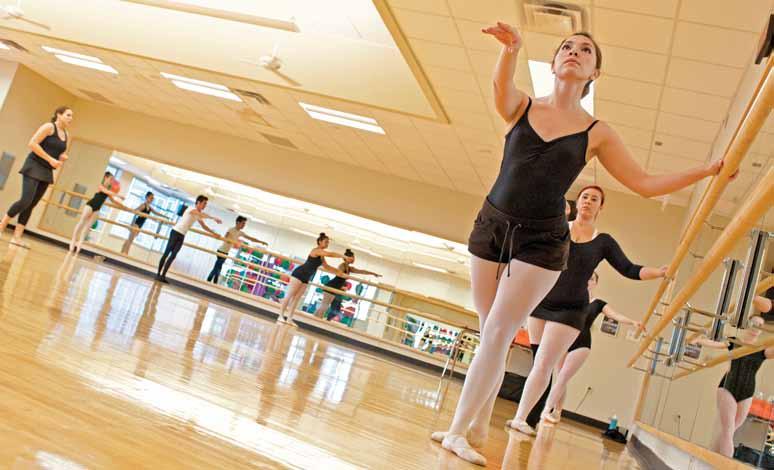
Gelo and Frego hired an expert from the University of Minnesota to study the feasibility of establishing a dance program at UTSA. “And the answer was yes, it’s very viable,” Frego said, “partly because we have two dance studios already existing on campus in the Rec Center. They have the proper floors, barres and mirrors.”
Frego noted the growing popularity of dance on campus. when students learn that dance classes are available, those classes fill up quickly. So far Frego has hired two part-time dance instructors to teach ballet and modern dance and will hire a full-time dance instructor for the 2012 – 2013 academic year. This year’s offerings include Ballet 1, 2 and 3; history of dance;
modern dance 1 and 2; jazz and film dance.
“I am particularly proud that our burgeoning dance program has been framed broadly from the start, to include all styles,” said Gelo. College benefactors Rajam and Somayaji Ramamurthy were so impressed with the commitment to world genres that they created an endowment to bring renowned dance teachers in the Indian tradition to campus each year.
“My goal is that once we have a number of courses, we create a program so that students can get a minor in dance,” Frego said. “Then, in a few years time, move that into a major so that people can get a bachelor of fine arts in dance.”
Between the passion of the students and the concerted efforts of the English and Music departments, UTSA is now poised for the rapid growth of outstanding theater and dance programs on campus. As Shakespeare tells us, “All the world’s a stage, and all the men and women merely players.” If that’s so, then at least those players at UTSA will step onto that stage well prepared.
V IRTUAL VIOLENCE?
TheEffectsComplex of Video Games
ONY C ANT ú
Video games have come a long way since Pac-Man first gobbled his way across arcades around the world. Far beyond the basic graphics and simple rules of an earlier era, today’s games are filled with rich animation and complex — often violent — plot narratives, raising questions about the impact that exposure to these games has on the human psyche and on human behavior.
A link between violent video games and aggression has long been hypothesized by researchers, but studies seeking verifiable effects of exposure to graphic imagery have proved inconclusive.
One UTSA professor has taken a more nuanced approach to this lingering question, with results that shed new light on the topic.
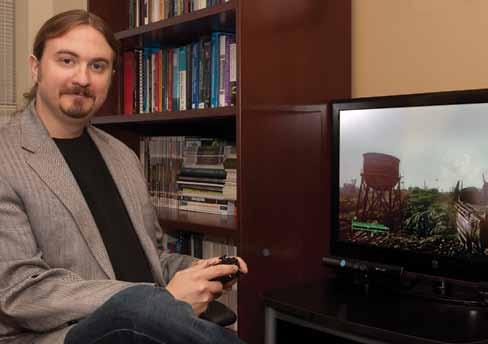
Dr. Chad Mahood, an assistant professor in the Department of Communication, acknowledged the difficulty of conclusively demonstrating how violent video games could lead to real-life violence, given the inability to enter into a person’s inner thought processes. Instead, Dr. Mahood has focused on the issue of frustration, and the likelihood that gamers will experience this feeling when they enter a virtual world filled with obstacles.
“There’s about 50 years of research related to violence in media that could lead individuals to be more aggressive or make them think more aggressive thoughts,” he said. “There is a
little more specificity into what I try to do with my work. One example of that is video games and frustration.”
The purpose of his experiments – which began in 2006 at the University of CaliforniaSanta Barbara (UCSB), where he earned his Ph.D. – was to illustrate degrees of frustration in playing video games, frustration that could be a gateway to more extreme reactions.
“Really where I wanted to go with this is that a game might not be violent at all, but feelings of frustration could still create a problem.”
To test his hypothesis, he offered UCSB students extra credit to participate in a study in which they were exposed to games featuring varying degrees of obstacles during one-hour sessions. Afterwards, the students filled out questionnaires to ascertain the level of frustration they experienced. A scoring system of one to seven given to personal statements – “I find it difficult to control my anger,” for instance – helped
separate the wheat from the chaff in terms of honest replies, Mahood said.
A large sample size and an eye toward statistical anomalies – any participants assigning the same number for all the questions were discounted altogether, for example – further ensured the integrity of the testing. Depending on their exposure to disparate variables – either violent or merely frustrating – participants were then assigned into four quadrants for more focused examination.
“My research doesn’t blame video games for crimes but examines frustration as part of the mix,” Mahood said. “I don’t think there is any instance of someone playing video games who directly went out and did something violent as a result.”
what he did find is that real-world environmental considerations – the quality of a person’s family life or employment status, for example – combined with the type of video game play
tends to affect the level of personal frustration reported after a gaming session. The post-game survey was worded in a way to elicit personality traits as well, Mahood said.
Mahood manipulated participants’ experiences to test his theory, exposing some to rudimentary offerings from early video games (such as a James Bond-themed game with primitive graphics in which the player shoots at clearly visible enemies) to more modern versions presenting higher and more complex layers of obstacles.
“In some of these games, it was very difficult to shoot enemies and in others you can’t find the enemy,” Mahood explained.
To further assess real frustration as a result of video game exposure, he exposed some participants to both violent games and those designed to exasperate the player rather than to incite violent feelings – the more advanced levels of Tetris, for example.
“There is absolutely no violence involved in Tetris,” Mahood noted. “It’s just putting blocks together. Either you get very frustrated by it or not. As a condition of examples of frustration, we started with a bunch of blocks at the bottom of the screen and started off at level ten to add to the frustration. we set it high enough so that even if participants were Tetris-experienced, it would still be difficult to clear all the levels.”
Mahood has long been fascinated by the potential effects video games have on personal behavior. He launched his first study as a doctoral student at UCSB, and then undertook a second, related study in 2010 at Ohio State University, where he was an assistant professor. After coming to UTSA in 2011, he started his third study on the subject. He presented his findings this past Memorial Day at the International Communication Association conference – considered a premier forum for scholars – held this year in Phoenix.
“I was able to both support prior research and add to it,” Mahood said. “Violent games lead participants to feel more aggressive and think more aggressive thoughts. we’ve confirmed that, and it’s still true. It’s been established clearly and I don’t disagree with that. But it’s also true that
frustration also makes you feel more aggressive and think more aggressively.”
In one study, Mahood found even more nuanced effects of gaming exposure, including feelings of guilt, shame and remorse. That part of his research focused on games with plot lines that included tormenting or humiliating characters depicted as homeless members of society, for example, or those involving the killing of innocent victims.
This aspect of Mahood’s research showed that not all violent video game play has negative effects, illustrating that graphic violence does not always lead to aggressive behavior. what’s more, when players were asked to cooperate in a violent video game with someone who differed from them, they actually displayed less aggression after game play. The upshot: Video games could actually play an important role in intergroup conflict resolution.
“Games today have more complex narratives and drama. The realism is far beyond what it was even ten years ago. There are also many stories engaged in complex moral reasoning,” Mahood explained. “My overall goal is to have a more complex and more nuanced look at how video games affect people than what’s out there.”
To this end, Mahood is revising a pair of
manuscripts for publication. He has previously published articles in several peer-reviewed journals, including the Journal of Broadcasting & Electronic Media, Mass Communication & Society, Health Communication, the Journal of Current Issues & Research in Advertising, and Sex Roles: A Journal of Research, and has presented his work at conferences.
At 36, Mahood has personally seen the evolution of games from simple graphic offerings to today’s complex animated platforms. He attests to their role in increasing his own frustration during his lean years, a period when he took menial jobs to pay the bills while pursuing his education, giving anecdotal evidence for his theory that it is a person’s environment and circumstances, more than solely the games, that affect mood and behavior.
But by his own admission, the jury is still out on whether or not actual violence can be attributed to violent video games. In examining the heightened sense of frustration games can yield, Mahood has opened a new window into our understanding of the interplay between video games and behavior.
“ when video games use violence so casually, it could be a problem,” he said. “The potential is there for concern.”
chad mahood
H ELPING OTHERS w ITH R EAL-L IFE I SSUES
BY R UDY A RISPE
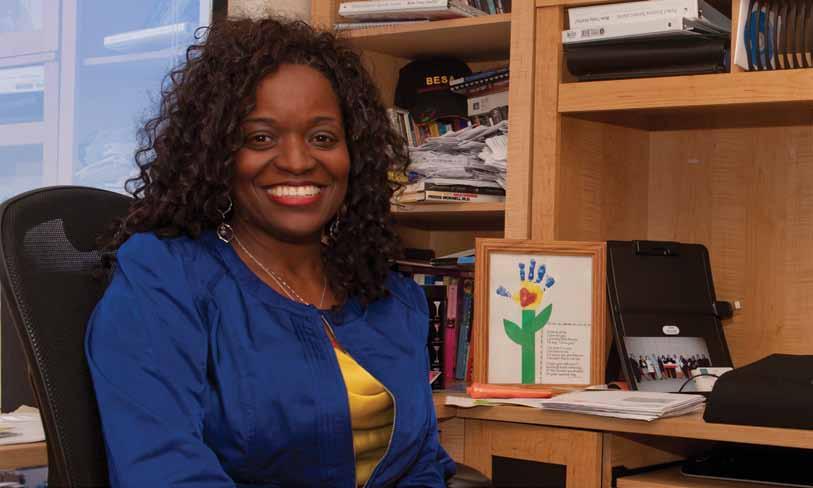
Contrary to what many people think, therapist Patricia Adams doesn’t deal all day with people with serious mental illness.
“It’s a misconception,” she insists.
“These are everyday scenarios that may occur at your own home or work, such as difficulty compromising or deciding whether to spend Christmas Day at one in-law’s or the other to avoid a family quarrel.
“There are those who seek services to resolve a personal dilemma, such as whether they should fulfill their parents’ desire that they become an engineer, or pursue their own personal dream of opening their own business. Some are dealing with aging parents or a chronically ill child. we deal with everyday, real-life issues.”
Of course, that’s not to say Adams doesn’t deal on occasion with a person confronting a suicide crisis or the death of a loved one. She hears and sees it all, both positive and heartwrenching situations. And that’s exactly what drives the licensed marriage and family therapist.
“I like to see people resolve their issues,” she said. “There is a sense of accomplishment in seeing a couple stay together when one of them has had an affair. This would not be possible without a commitment to change and the tools presented in therapy. It brings me pleasure to work with people when there’s a glitch in the road and they
need a little help and guidance to get them back on the right track.”
For all the counseling that a therapist provides to clients, and the knowledge she or he possesses about mental or emotional issues, there are times when even a therapist needs to see a therapist. Adams did so two years ago following the death of her father, Famous whitewater Byers, a half-Cherokee Indian with whom she says she shared the tightest of bonds.
“It was the hardest part of my life,” Adams recalled. “I talked to my sisters a lot. I waited two years before I went to see a therapist. felt my life was out of balance. got up in the morning, got dressed and went to work, but felt that I was just going through the motions. I realized that I lost my wisdom because my dad and were so close, and he was a very wise man.”
Although some might expect that a therapist should be able to solve his or her own problems, this is not the case, Adams said. “That would be like a preacher preaching his own sermon to himself,” she said. “It’s important that people know we are people, too, and death is profound. In my case, it was very profound.”
She remembers her father visiting and comforting families in times of crisis as a hospital chaplain. She was impressed by his gentle manner and his ability to put people at ease and
offer solace to the grief-stricken.
This experience led Adams to follow in her father’s footsteps into the business of caring, whether as a chaplain for the Methodist Healthcare System in San Antonio, or as a licensed marriage and family therapist, or as president and CEO of Zeitgeist wellness Group.
Adams opened Zeitgeist near downtown San Antonio in 2001. The company offers individual, pre-marital, marriage, crisis marital, family, foster parenting, adoption and adolescent counseling, among other services. It is a one-stop network for individual, family, corporate and military clients seeking overall health and wellness services. The company provides counseling, coaching, fitness, massage, acupuncture, crisis intervention and nutritional guidance to its clients through specialists in all 50 states and U.S. territories.
Because of Zeitgeist, last year Adams was named one of Ernst & Young LLP’s Entrepreneurial winning women. Every year the program identifies and connects a select group of 10 women from across the country with the advisors, resources and insights they need to expand their businesses and become market leaders.
“Dr. Adams is an exceptional business leader with great potential to scale her company, and we are pleased to honor her as one of this year’s
winners,” Herb Engert, Americas Strategic Growth Markets leader for Ernst & Young, said in a press release. “ women entrepreneurs are among the brightest spots in the economy, continuing to successfully grow their companies despite the volatile market. They will be important contributors as we look to get our economy back on track.”
Adds Adams: “ when a company like Ernst & Young tells you they’re poised to provide guidance in helping to take your business to the next level, they really believe you have the potential to capture market share. That’s a great feeling.
This evergreen award opens doors for you that you might not otherwise have.” Evergreen is the expression used by Ernst & Young to indicate that their support will be provided to awardees as long as it is needed.
Adams also is the author of The ABC’s of Change: Three Building Blocks to Happier, Healthier Relationships which focuses on improving the quality of your relationships for a more enjoyable life related to family, marriage, work or health. The book, she said, was a true labor of love.
“I wrote it because I learned a lot from my clients,” Adams said. “I enjoyed writing it, although it was like birthing a baby for nine months. One of the challenges was putting the concepts down in simple terms so people can understand it.”
To maintain a healthy balance between juggling a heavy work load and being a mother of four children ranging from age 5 to 19, Adams makes a point to take every Friday off from work and spend it with her husband, Roosevelt, who works with her at Zeitgeist wellness Group.
“ we joke that we couldn’t wait for the kids to go to school, so we can date during the day,” she said, laughing. “ we’ll go to a spa to get massages or check into a hotel on the Riverwalk for a mini-vacation.”
Adams received her bachelor’s degree in psychology in 1989 as a “commuter student.” Since then she has acquired a passion to develop a training program for UTSA students studying counseling. As an alumna, she hopes to bring her business development/practice model to UTSA to support master’s level students in their transition from student to professional.
She has designed counseling internships and externships for students at UTSA to learn both the art of the business and clinical aspects of being an effective and ethical counselor. “The transition is not as smooth as it sounds; however, with a good mentor on both sides, one can meet the clinical and business goals needed in this ‘helping profession.”
80 PERCENT DESTINY
20 PERCENT CHOICE
Darius Thomas’ Remarkable Musical Path
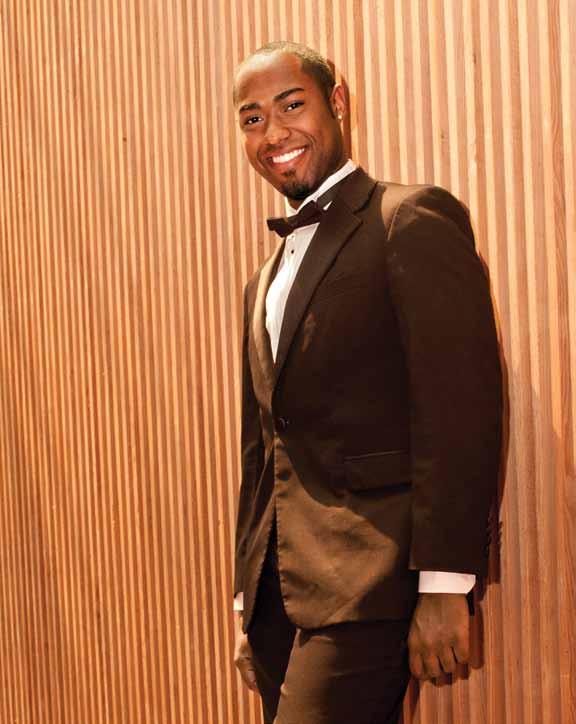
Some individuals exude a quality that can’t quite be put into words, except to say there’s just something about them that makes them unique. Darius Thomas is one of these individuals. Perhaps it lies in his unmasked friendliness, a genuineness that emerges out of a refreshingly selfless perspective on life and a strong sense of spiritual motivation. Take, for example, his views on his own trajectory as a vocal performance major in the Department of Music: Darius attributes only a small part of his impressive success (20 percent, in his words) to the choices he’s made in life. The rest, he claims, is destiny. Asked to elaborate, he pauses for a moment and explains simply: “Choosing this profession is something way bigger than me.”
Indeed, it’s difficult to meet Darius and not come away with the conviction that he is in fact destined for exceptional things. Not that his life hasn’t already begun to take a turn for the remarkable. A child of Sherman, Texas, Darius was attracted to UTSA because of a YouTube video of rising tenor star and COLFA graduate Rafael Moras (featured in prior editions of Ovations), who would later become a close friend. “As soon as I got here doors started opening and I knew I was in the right place,” he recollects. His first breakthrough occurred early on when a tenor role in the UTSA Lyric Theatre’s production of A Brief History of Root Vegetables became available and he was asked to step in on short notice. The experience set a positive tone for the rest of his time at UTSA. Under the talented mentorship of Professor Linda Poetschke, who nurtured Darius’ classical inclinations while introducing him to new musical opportunities, Darius has grown into a full-fledged singer. “He’s been gifted with the full package of skills needed to be successful in the performing world,” says Poetschke. “He has vocal talent, an engaging stage presence, a friendly and positive outlook, and intelligence. The other part of the package that will determine Darius’ success will be of his own making, and that is the discipline and perseverance that it takes to reach the top. ” Discipline and perseverance don’t seem to be much of a problem for Darius. In the last year alone, he’s traveled to China to participate in the Yunnan Opera Festival, performed at UTSA’s lavish capital campaign fundraiser, worked regularly as a paid singer at local churches, and volunteered his talent for numerous campus events and workshops. He holds the most generous music scholarship in his class, and is unequivocal about the fact that music is his life. He says that when he performs as a classical vocalist he experiences an out-of-body sensation that elevates him beyond himself, and that his goal as a singer is to share this cathartic spiritual experience with his audience — all of which he sums up in one unassuming yet powerful statement: “It’s about making people happy.”
BY PATRICK COLLINS
Last summer we had the pleasure of sitting down for a lunch interview with Darius. Fresh off a counseling stint at a campus voice camp for 200 high school students, his voice was noticeably affected, but he was kind enough to entertain us for an hour.
When did you start singing?
“My earliest memory is with my church choir.
My aunt was the youth choir director and performed a solo in front of the church for the first time when was about five years old. After that I started getting into karaoke because my dad owned a bowling alley and I would perform there. I wasn’t introduced to classical music until was 13.”
How did you come to specialize in classical music? “It all happened during my voice change. My twin brother was in choir and I was in band, but right around that time I got tired of playing instruments and decided to join the choir. As my voice changed, it became adapted to the classical feel. In eighth grade did my first all-regional competition and won first chair in a classical choral setting, and thought, ‘I can do this.’”
Opera has a very theatrical element to it. Is that something you feel drawn to?
“Definitely. I also started acting when I was young, doing church plays. when was 11 I did a gospel play and toured a bit. Then in
high school I started doing a lot of theater and learned through experience. I never took any acting or theater classes.”
’Maria’ for his own high school’s production of the musical. That really impressed me, and then I saw in the video caption that he’d gone on to study at UTSA. think it was the very next week that came here to audition, and before I knew it I’d signed up. The scholarship definitely played a big part in it, but also really appreciated the family atmosphere and the fact that faculty seemed genuinely interested in undergraduates, as opposed to other schools that focus more on graduate students.”
What goals do you have for your future in music?
“Ultimately, want to make a career as a performer. My goal isn’t to be famous or rich. I just want to pursue my passion. In the short term I’m planning on studying at the graduate level, but lately I’ve been thinking about getting a job teaching at a public school for a year before that. want to know how it feels to make a salary.”
Do you have any grad schools in mind yet?
“Right now, my top choice is Ohio State. I’d like to study with Dr. Robin Rice, who I took some lessons with last summer. we got along really well and he opened up a lot of new aspects to my voice. Grad school is all about the teacher you study with and the connections they have. You want to find someone who can help you launch your career.”
Does that transformation happen immediately, or does it take a while? “It depends on the audience. If it’s a smaller group, it takes a little longer; the bigger the crowd, the better.”
What led you to choose UTSA for your undergraduate education?
“I knew I wanted to be a music major as I approached my high school graduation, so began auditioning at universities. To be honest I’d never heard of UTSA, but as was preparing for a role in Leonard Bernstein’s West Side Story came across a video of Rafael Moras singing
I heard you sing with fellow vocal performance major Regina Branford during Sonja Lanehart’s African American Studies Symposium. I don’t think I’d be alone in saying it was a powerful and moving performance. “Thank you. think that comes from the passion I have for performing. It really is something I love to do. Although I have an outgoing personality off the stage, I feel as if I live through my singing and if I didn’t perform often, I’d ball up in a corner and die. I’m a really nervous person, but it all goes away when I get on stage.”
Any notable performances coming up? “This summer I’ll be performing as a soloist with the San Antonio Mastersingers at the Texas Choral Directors Association convention here in San Antonio. That’ll be my first professional paid gig with a choir, so I’m pretty excited!” What do you do for fun outside of music? I’m kind of an old man when it comes to that. The music department is basically my life. But I’m happy as long as I’m with friends. Almost everyone know here is a music student, and there just isn’t much time for anything else. Every time we step outside of the music department we feel like we’re in a different world.”
For the second year in a row, the Department of English Ph.D. program was named a finalist in the Excelencia in Education awards competition. Excelencia in Education’s goal is to accelerate higher education success for Latino students by providing data-driven analysis of the educational status of Latino students and by promoting education policies and institutional practices that support their academic achievement.
STU den TS
English undergrad victor hernandezJayme won 2nd prize in the Elie Wiesel Foundation Prize in Ethics for his essay entitled “The Uniformed Merchants of Death: Exploring the Role of Consumer Ethics in the War on Drugs.”
Ovati O ns AwA rded Ag A in! Ovations, Vol. 6, 2011 won the Council for the Advancement and Support of Education (CASE) District IV Bronze Award in the Magazine Design, Single Editorial Spread category for the “Hiding in Plain Sight, the Photojournalism of Jack London” story. This is the fifth CASE award Ovations has won.
Victor attended a ceremony in New York where he received a $2400 cash award and had the opportunity to speak to Mr. Wiesel about his essay. The Elie Wiesel Prize in Ethics Essay Contest, now in its 23rd year, challenges college students to analyze the urgent ethical issues confronting them in today’s complex world.
UTSA juniors and twin brothers travis Merriweather and rustein Merriweather were selected to attend this year’s Clinton Global Initiative in Washington, D.C. The
proposal they submitted for the conference focused on creating sustainability initiatives at The University of Texas at San Antonio. Their ideas included establishing a farmers’ market to help reduce the distance food must travel and encouraging more eating of organic foods. Another proposed initiative was a green design expo in which campus engineers, architects, and student teams would present their ecological inventions and designs to be used on campus.
christian Arredondo, UTSA’s first public health student in the Department of Sociology, completed a 10-week intensive internship in the Columbia University Medical Center’s (CUMC) Summer Public Health Scholars Program. The focus of the CUMC SPHSP is on academic and professional development within the field of public health.
will Marshall pirkey, candidate for the Ph.D. in anthropology, received the UTSA Presidential Dissertation Fellowship in Fall 2011 for his dissertation titled “Hybridizing Conservation: Collaboration in a Co-Managed Community National Park, Western Belize.”
The utsA chamber singers were one of five choirs invited to perform at the National Symposium on American Choral Music in Washington, D.C. in June 2012. Professor John Silantien conducted the concert at the historic Coolidge Auditorium in the Library of Congress.
ALUM ni
Keyhla calderon Lugo, 1998
Communications, won a 2011 National Academy of Television Arts & Sciences Lone Star Chapter Emmy in the community service category for her reporting at KWEX Univision 41.
Brian st. John, 1986 MFA in Art, is the San Antonio Art League & Museum 2012 Artist of the Year. The artist selected for this honor is celebrated with a retrospective exhibition and a cash prize.
2011 Master in Music alum Aaron carterc ohn received a Fulbright Fellowship to conduct research in Nigeria. During 2013 he will teach at the University of Lagos and begin his research into the systematic organization of sounds in the languages of Nigerian music.
FACULTY
scientific and scholarly achievement. The Piper Professor Award, established by the Minnie Stevens Piper Foundation in 1958, recognizes outstanding college professors across Texas.
david vance, assistant professor, Department of English, was selected for the 2012 Elixir Press Antivenom Poetry Award for his book manuscript Stupor which will be published in 2013.
wing chung ng , associate professor of history, will research and teach as a Fulbright Scholar at Hong Kong Baptist University in the 2012-2013 academic year. Ng’s research will focus on his book manuscript on the history of Cantonese opera in the late 19 th and early 20th centuries. The Fulbright provides the luxury of time to do research as well as access to local archives. Ng will teach two courses, one on Modern China and another on Chinese immigration in Southeast Asia.
Seven COLFAbulous faculty members received University e xcellence Awards:
President’s Distinguished Achievement Award for Teaching Excellence
Marian Aitches, History catherine nolan-Ferrell, History
President’s Distinguished Achievement Award for Core Curriculum Teaching
Joel christensen, Philosophy and Classics
President’s Distinguished Diversity Award
Joycelyn Moody, English
President’s Distinguished Achievement Award for Excellence in Community Service eugene dowdy, Music
John Morris, professor of geography, was selected to receive the Piper Professor Award for his dedication to the teaching profession and for outstanding academic,
President’s Distinguished Achievement Award for Research Achievement
Jill hernandez, Philosophy and Classics
President’s Distinguished Achievement Award for Performance, Creative Production or Other Scholarly Achievement
Jeanne reesman, English
Hiding in Plain SigHt
COLFA Faculty Published Books 2011-2012
women staging islam, 1696-1707
Bernadette Andrea
The Centre for Reformation and Renaissance Studies/ University of Toronto
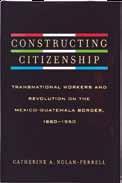
constructing citizenship: transnational workers and revolution on the Mexico-guatemala Border, 1880-1950
Catherine A. Nolan-Ferrell
University of Arizona Press, 2012
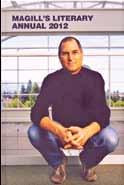
Magills’ Literary Annual 2012
(two volumes)
John D. Wilson and Steven G. Kellman, editors Salem Press
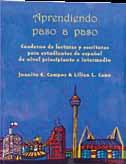
Aprendiendo paso a paso cuaderno de lecturas y escrituras para estudiantes de español de nivel principiante e intermedio, 2nd edition
Juanita E. Campos and Lilian L. Cano
Wings Press San Antonio, Texas
theatre, community, and civic engagement in Jacobean London
Mark Bayer
University of Iowa Press, 2011
troika: A communicative Approach to russian Language, Life, and culture
Marita Nummikoski
John Wiley and Sons, 2012
Your gifts make a difference in the UTSA College of Liberal and Fine Arts
COLFA students, faculty, alumni and friends are working together to help U tsA progress toward becoming a premier national research university. thanks to your generous support, the College of Liberal and Fine Arts is well on the way to reaching its goals. to learn more about the impact of your gifts, please visit weAreutsA.com.
While we are grateful for each and every gift we receive, due to space limitations, the report below lists only donations of $1,000 or more for the september 1, 2011 to August 31, 2012 fiscal year. thank you!
$1,000,000 + Maria-Luisa Urdaneta
$250,000 to $499,999
Aimee C. and Ernest W. Bromley
Catherine M. Bodenstedt
$100,000 to $249,999
Laura G. and Jack C. Richmond
$50,000 to $99,999
William Mastoris (B.B.A. ‘87, B.A. ‘89, B.A. ‘93)
Keri and Eric B. Stumberg
$25,000 to $49,999
Anonymous
Somayaji and Rajam S. Ramamurthy
$10,000 to $24,999
The Estate of James Edward Flinn
Milton S. Jacobs
San Antonio Chapter of the Society for Marketing Professional Services
Ernstine K. Studer
The USAA Foundation
Kathleen W. and Albert Vale
Charles R. Walker
$5,000 to $9,999
Anonymous
H-E-B
The Labatt Foundation
Barbara E. (M.M. ‘03) and Blair P. Labatt, Jr.
Lo Bello De San Antonio
The Genevieve and Ward Orsinger Foundation
Russell Hill Rogers Fund for the Arts
Loretta (B.A. ’77, M.A. ’80) and Robert E. Valdez (M.A. ’08)
$2,500 to $4,999
Steve Davis
Sarah Fielden
San Antonio Juneteenth Commission
Wilfred and Esther Lam Family Fund
San Antonio Musical Club
Carla W. and Francis A. Norman III
Opera Guild of San Antonio
The Presser Foundation
Mary M. Raley
$1,000 to $2,499
Vivian L. Braciale
Richard D. Braune
Sally M. and Robert T. Buchanan
Linda A. (B.A. ‘77) and David R. Davila
Sharon and Bjorn Dybdahl
Mary E. and James T. Escobedo, Jr.
Albert E. Estrada
Janet and Bruce M. Flohr
Linda A. and Timothy E. Ford
Frost Bank
Gabrielle and Daniel J. Gelo
Helen K. Groves
Nancy J. and Daniel K. Hewitt
Angelika C. Jansen and Robert Brown
The Kangaroo Court Restaurants of Texas, Inc.
Wendy and Edward P. King
Eric M. Levi
Sheila Gomez-Mira and Joaquin G. Mira
Mission Pharmacal Company
Beverly and Neill B. Walsdorf, Sr.
Jerri D. Mitchell and David G. Hardy NationsBank
NuStar
The Harris K. and Lois G. Oppenheimer Foundation
Claire Oppenheimer O’Malley
Nancy E. Pawel
Sandra and Alan L. Peterson
Michael C. Powanda and Elizabeth D. Moyer
Jane Cheever and Thomas L. Powell, Jr.
San Antonio Chapter of the Public Relations Society of America
Kendall and Christopher M. Purpura
Stewart R. and Marianne C. Reuter
Round Top Consulting Associates
Siri Bletzer and Richard Lewis
Security Service Federal Credit Union
Melissa D. (M.A. ‘90) and A. P. Shepherd
Mary Pat Stumberg
Wells Fargo & Company, San Antonio
Sherry A. Whitmore and Christopher J. Wickham
Jo Ann P. Wigodsky
To learn how you can make an investment in UTSA College of Liberal and Fine Arts that will inspire future generations, please contact:
Kendall Purpura
Director of Development
The University of Texas at San Antonio
One UTSA Circle
San Antonio, TX 78249-0641
Phone: (210) 458-4404
E-mail: kendall.purpura@utsa.edu
the Memory Factory: the Forgotten women Artists of vienna 1900
Julie M. Johnson Purdue University Press, 2012
Bedrock
Bonnie Lyons Pecan Grove Press
critical insights:
Albert camus
Steven G. Kellman, editor Salem Press
Friends who are making a difference
dr. Maria-Luisa urdaneta
Education has been an important theme throughout the life of dr. Maria-Luisa urdaneta . From a very young age, her mother, Doña Agripina de Urdaneta, who had only about six months of formal
Jack and Laura r ichmond
Jack Richmond, loyal supporter of COLFA, has long been a devotee of the works of writer Jack London. So, because of their great friendship with faculty member Jeanne Reesman, Jack and Laura r ichmond decided to establish a faculty fellowship in the Department of English “in recognition of Dr. Jeanne Reesman’s outstanding success in bringing Jack London’s literary and personal story to greater prominence and perpetuating awareness of his major literary contribution to America and the world.” Mr. and Mrs. Richmond have a long legacy of philanthropy in San Antonio through their personal giving and through their annual Pizza Hut Challenge, which has supported dozens of local organizations. Their goal in supporting UTSA is not only to provide additional resources for UTSA’s worldclass faculty, but also to bring awareness to
schooling, stressed the importance of education to her five children. Each of them would go on to become collegeeducated professionals, including Dr. Urdaneta, UTSA Professor Emerita in the Department of Anthropology. In 2002, Dr. Urdaneta established an endowed scholarship in memory of her mother, and she has recently solidified her mother’s legacy at UTSA as well as her own by including the Department of Anthropology in her estate plans. Dr. Urdaneta’s future gift will add to her mother’s scholarship as well as provide faculty and departmental support in perpetuity. Her generosity will encourage countless students to strive for their educational goals and greater opportunities in life, following in the same vein as the matriarchs of the Urdaneta family.
the Campaign for UTSA and the great need for student support. The university indeed has lifelong friends in the Richmonds.
Our profound gratitude goes to Dr. Urdaneta and Mr. and Mrs. Richmond. We are immensely grateful for their leadership, advocacy and continued support.
In MeMor IaM
UTSA supporter and treasured friend, stewart r reuter, M.d., J.d. Professor Emeritus, Department of Radiology, The University of Texas Health Science Center (UTHSCSA), died peacefully at his home in Santa Fe, New Mexico on July 8, 2012. For more than 25 years, Stewart and Marianne Reuter have supported the UTSA College of Liberal and Fine Arts across a variety of disciplines. Their gifts have benefited the departments of English, Modern Languages and Literatures, and most recently Art & Art History and Music, where they have established endowed scholarships. The Stewart R. and Marianne C. Reuter Endowed Scholarship in Vocal Performance provides support for undergraduate music majors with a concentration in vocal performance, which is a direct reflection of Dr. Reuter’s great love for opera.
In retirement, Dr. Reuter worked as an artist and traveled extensively to museums around the world. His work has been shown at the Gallery Nord in San Antonio and the MADI Museum of Art in Dallas. Dr. Reuter once said that his artistic inspiration was his long marriage to Marianne, who has a degree in museum management. The Stewart R. and Marianne C. Reuter Endowed Scholarship in Art provides support for graduate students pursing MFA degrees in fine arts studio disciplines including ceramics, new media, painting and drawing, photography, printmaking, or sculpture.
“Their gifts have set many students on the path to success and fulfillment,” said COLFA Dean Daniel Gelo. The tremendous donation of the endowed scholarships ensures that Dr. Reuter’s generosity will live into perpetuity.
Bachelor of Science in Public Health with an epidemiology and disease control concentration in the Department of Sociology, and a Doctor of Philosophy in Psychology.
e nriching e xperiences for everyone
23 undergraduate degree programs with 12 concentrations, 2 undergraduate certificates in Music, 14 graduate degrees and 5 graduate certificates offered.
giF ts
Total gifts COLFA received in the 2011-2012 academic year was $2,020,930, a 219% increase from the previous year.
The Department of Philosophy and Classics has created a Twitter feed and blog that focuses on morsels of ancient knowledge and bons mots from classical authors. You can go to: @sentantiq on Twitter and the accompanying blog http://sententiaeantiquae. wordpress.com/ to get your fix of the most famous quotations from the ancient world for reflection and discussion.
recognition
Eduniversal International Scientific Committee based in Paris, France released its rankings for top Masters programs worldwide - COLFA’s Master in Communication ranked 22nd on the list. The rankings were based on an 18-month survey
of 12,000 master’s and MBA programs in the top 1,000 business schools in nine geographical regions. Conducted 2009-2011, the survey covered 153 countries and considered three criteria: (1) reputation of the program; (2) salary of the first employment of the graduates; and (3) satisfaction of the students.
Another A, and one of only 21 in the nation to earn it, for UTSA from the American Council of Trustees and Alumni on its annual “ what will They Learn?” report which grades public and private universities on how well they cover core subjects. COLFA provides four of the seven subjects.
The University of Texas at San Antonio
One UTSA Circle
San Antonio, TX 78249-0641
COLFA Inspiring Creative Minds
UTSA COLLEGE OF L IBERAL AND F INE A RTS
D EAN, Daniel J. Gelo
A SSOCIATE D EAN, Undergraduate Studies and Faculty Support Christopher wickham
A SSOCIATE D EAN, Research and Graduate Studies Augustine Osman
A SSISTANT D EAN, Assessment Sue Hum
A SSISTANT TO THE D EAN, Deborah D. Thomas
E DITOR, Judith Lipsett
A RT D IRECTOR AND P UBLICATION D ESIGNER, Karen Heth Thurman
CONTRIBUTORS, Rudy Arispe, Anthony Cantú, Patrick Collins, Judith Lipsett, Kiko Martinez, Cindy Tumiel
P HOTOGRAPHERS, Patrick R. Dunn, Mark McClendon
P RODUCTION COORDINATOR, Frank Segura
P ROJECT MANAGER, Deborah D. Thomas
Austin, TX
(210) 458-4350, (210) 458-ARTS (for arts events information) www.colfa.utsa.edu