Welcome to another edition of Ovations, highlighting the outstanding achievements of students, faculty and supporters of the UTSA College of Liberal and Fine Arts.
2 c onnections
4 return from exile
6 exploring culture and c onsciousness
8 hiding in plain sight
12 patriotic envelopes of the civil war
14 i ntroducing c olfa’s endowed faculty chairs
16 promising s cholars
20 rebuilding the welfare state
23 a new m usical challenge
24 a lumni profile: t im c raig
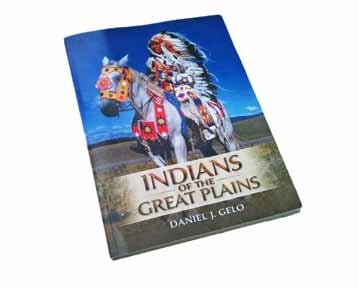
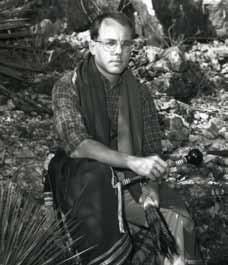
26 t hirty y ears a mong p lains i ndians
28 t he spirit of san a ntonio
29 faculty p ublications
AS pirAT ion S
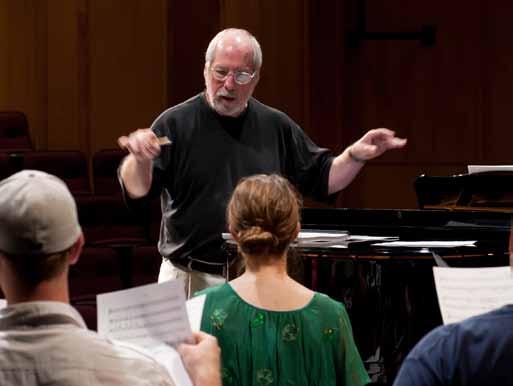
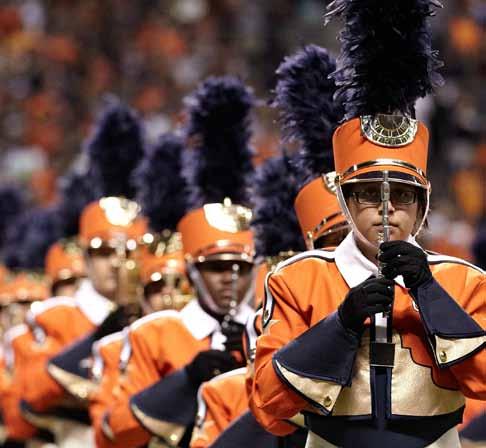
Out of the tens of thousands of words in this issue of Ovations that one word, aspirations, jumped out at me—twice, from seemingly disparate articles—when I read the stories in this issue. The first instance was in an article about senior lecturer and athletic bands director Ron Ellis, who, in trying to describe the magical moment when a university band marches onto the field, characterized the musicians as representing “all the hopes and aspirations” of everyone at that university.
The second instance was in a very different story, a Q&A with Political Science and Geography Department Chair Mansour El-Kikhia about his recent return to his home country of Libya after 30 years in exile. When asked about Muammar Gaddafi’s fate, El-Kikhia bluntly expresses his contempt for the regime that “destroyed the aspirations and dreams of so many people.”
With one word, aspirations, we are transported spiritually to a jubilant, fan-filled sports stadium and then asked to ponder a conflict-ravaged country on the other side of the globe. The common thread bridging the two realms is embedded in the human condition and our constant search for a sense of place and purpose, and also an understanding of our world.
UTSA does an outstanding job of preparing students to enter an array of professions; our students leave ready to enter careers as architects, engineers, economists, physicists, teachers, and many others.
But it is the College of Liberal and Fine Arts that best represents our aspirations for our students and their ability to positively impact our world. Through the study of history, philosophy, literature, the arts and other disciplines, COLFA majors and non-majors alike develop the critical thinking and analytical skills—and the deeper understanding of what it means to be human—that will serve them for the rest of their lives no matter what profession they enter.
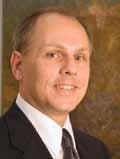
I appreciate Dean Dan Gelo’s invitation to write the welcome message for this issue of Ovations (and the special leap of faith it took to entrust a theoretical chemist to perform this task). I also want to thank you, the readers, for your stalwart support of the College of Liberal and Fine Arts and its efforts to provide the core intellectual experience that is preparing all UTSA students for their role as responsible citizens of this world.
In short, I thank you for sharing the aspirations of all of us at UTSA.
ovations
30 awards and a ccolades
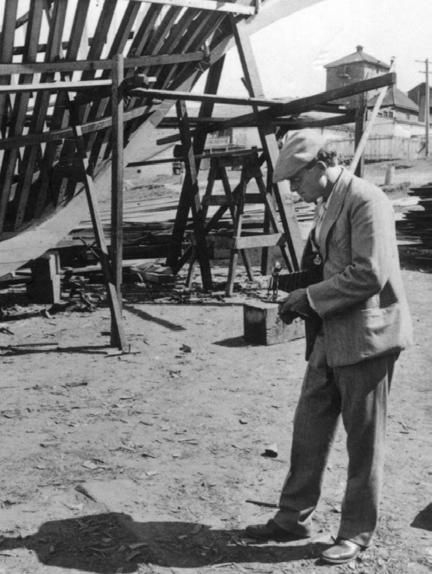
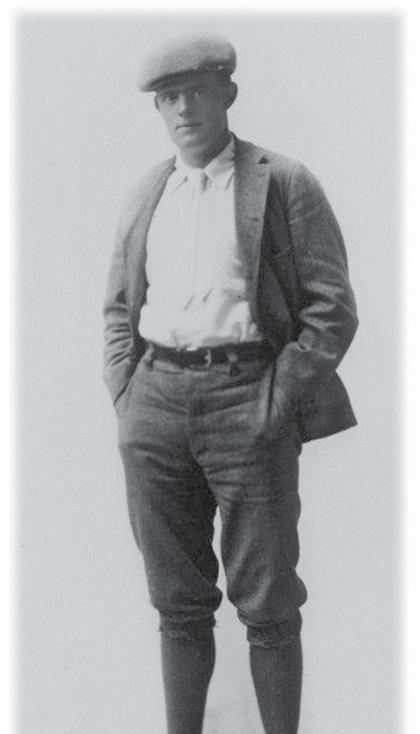
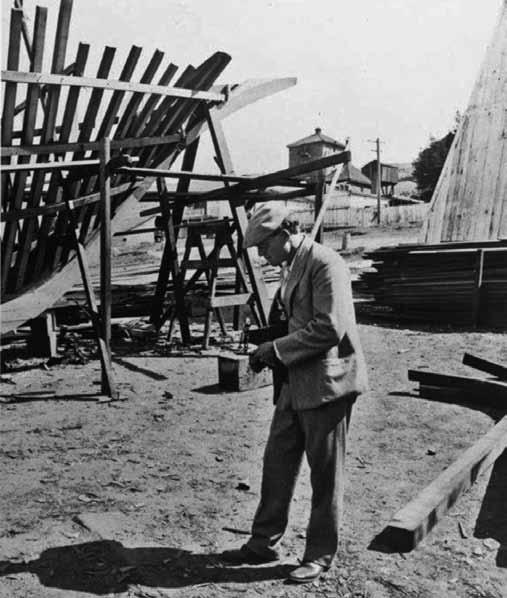
Right: London photographing the hull of the Snark Shipyard of H.P. Anderson, Hunters Point, San Francisco Bay, February 1906. Story on page 8.
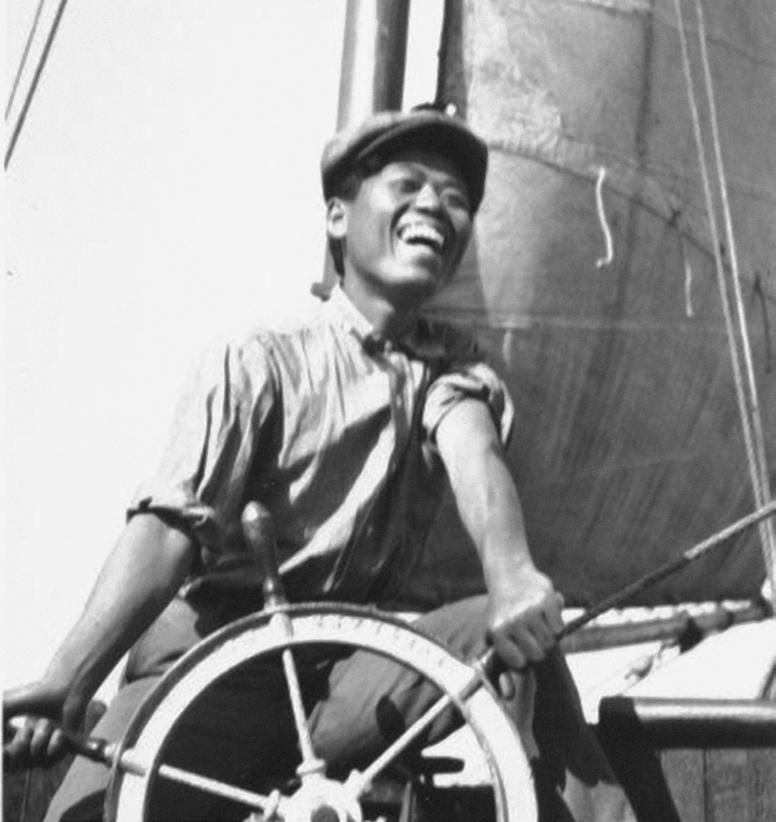
On the cover: Yaosimatsu Nakat at the wheel of the Roamer Photo courtesy of California State Parks, 2011.
libya 30 Years later 4
First March 28 through the Writer’s Eye 8
Note: This interview was conducted in August 2011; therefore, several references in the present are now past tense because of the October 2011 death of Gaddafi.
R EtuR n FRoM
30 years later, mansour el-Kikhia returns to libya
BY RudY aR ispE
On those rare occasions when mansour el-Kikhia happens to catch the scent of a pleasant ocean breeze, he is transported–if only for a moment–back to his youth in his beloved Benghazi, Libya.
n that instant, a flood of memories carries him to the African continent: Spending the day with family and friends at the beach and wading in the mediterranean Sea, sharing lunches with cousins, aunts and uncles at relatives’ homes for weeks at a time before having a meal at his own house again, and, of course, the very generous Libyans, whom he said will give you their lives once they befriend you.
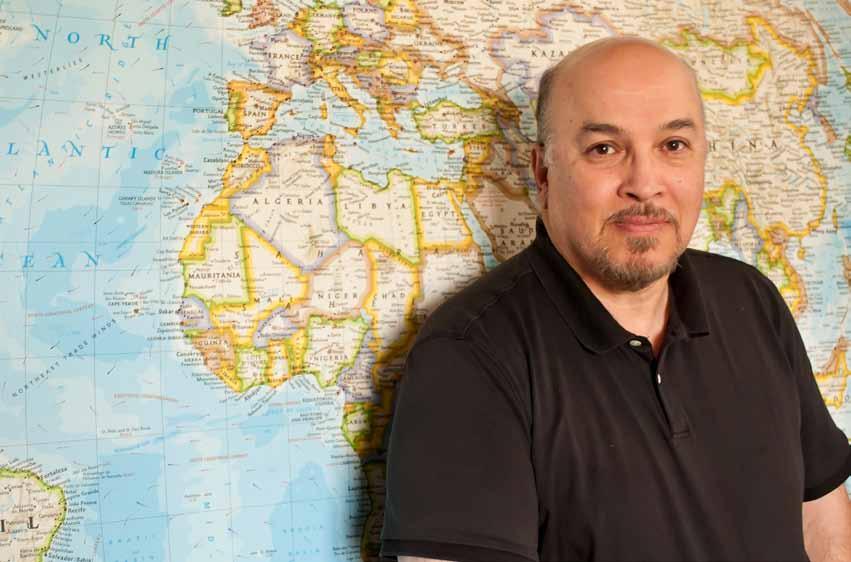
“What really sticks in my mind is the change in the weather in the afternoon,” said the 59-year-old el-Kikhia, chair of the department of Political Science and Geography, sitting at his desk with a world map covering the entire wall behind him. “in San Antonio, the hottest time of the day is 5 o’clock in the afternoon.”
“ the hottest time of day in Libya is around 1 o’clock in the afternoon. And so by 5 o’clock it begins to cool down, and you go inside and the sea breeze is coming in from the mediterranean. i t’s just being there that gives you a different sense of existence.”
He also recalled many occasions when he would slide down the stair railing for thrills in his family’s 40-room, Ottoman-style, palatial residence built in 1198. ( the house has since been turned into the Bait-al medina al-thaqafi museum.)
And then there was the dreadful day—one he will never forget—when he and his family
left home for a two-hour shopping trip, only to return to find that another family occupied their residence with the express permission of Col. muammar Gaddafi’s government as punishment for el-Kikhia’s stirring up trouble. the 28-year-old el-Kikhia had been calling attention to injustices by visiting government offices to voice his opinion about public hangings, suspension of basic liberties and widespread poverty in an oil-rich nation.
“ t was very difficult to live in a country where you could see the murder, the injustice,” he said.
“And you have two choices. either speak up or shut up. And could not shut up. had to speak up, but the more i spoke up the more my life became endangered.”
in February of this year, civil war broke out between military forces loyal to Gaddafi and the rebel opposition, many of them ordinary citizens who are fighting to the death to end the tyrannical 42-year rule of the despised colonel in hopes of a new and better life.
Upon hearing news of the dissidents’ determination to kick Gaddafi out of office, el-Kikhia could not have been happier. He had yearned to set foot on Libyan soil again ever since he fled the country in 1980 seeking safety in America, leaving his entire family behind.
When pressed as to how he escaped from Libya, el-Kikhia chose not to disclose that information, and only remarked that “it’s a long story.”
i n April, after 30 years away from home, el-Kikhia finally returned to Benghazi, where he served as an advisor to the opposition after military forces abandoned the city. Since then, his
counsel has been sought by the White House, as well as by heads of foreign governments, regarding the situation in Libya. His return from exile also made national news and led to appearances on CNN News, The Daily Show with Jon Stewart and Geraldo at Large
As the fighting continues for control of the Libyan government, the professor spoke about the crisis in the North African nation, his jubilant return home, and his interest in maps.
When did you first come to America?
i came to America in 1977 to go to school at the University of California, Santa Barbara to study political science. i went back in 1978 and could not leave until i escaped from Libya and came back to California in 1980.
Why wouldn’t the government let you leave? Perhaps they saw me as more of a threat outside —that i would talk about what’s going on. spoke up against killings, hanging of people in the streets, which saw happen before my very eyes. Once you go through this and see this, you cannot live in a society that is governed by such crazy people.
Where did you work when you went back to Libya? i couldn’t find a job. i was blacklisted as an enemy of the people.
What was it like to go home after all these years? You have no idea what it was like. i t was like “Alice in Wonderland.” i can’t explain to you the sensation of seeing people you haven’t seen in 30 years. the funny thing is that it hurts. t hurts very much because you have an image in your mind, and suddenly that image is thrown away and another image appears. Sometimes, the second image is not something you want to see. it really does something to you about your sense of right and wrong, but then it [makes you realize] that you must devote your life to making people’s lives better. Were you able to communicate with your family during those 30 years in exile? Only by phone. they were [being watched]. my family members cannot leave the country. f one family member leaves, another one is held by the secret service until that person comes back. What did your father do when you were growing up? my father was the pasha (highranking official) of Cyrenaica (a coastal region of Libya) and advisor to the prince and first prime minister. He was also head of the Libyan Senate. my mom was a homemaker.
Do you see yourself having a role in forming a new government or holding office? Yes. i do see myself playing an important role in the
new constitutional government. i see myself as doing both. i ndeed, ’m already doing the first and will get to the second when Libya is free of Gaddafi.
Can you give me an overview of what the real problem is in Libya? it’s really very simple. [Gaddafi] needs to go. He’s been in power for 42 years [and has been] abusing Libya’s finances and people and land and water for the last 42 years. And it’s about time the Libyan people said no. No more, we’ve had enough of this nonsense. We don’t want you anymore. We want you out of our country and out of our lives. We want stability. And they have to fight. Ultimately, the people said there is no choice for us over here. t’s either winning or death. there’s no in-between.
Why do you believe Gaddafi refuses to let go of power? Do you think he’s mentally disturbed? He’s been [mentally disturbed] for many years. And he has seven sons who are even worse than he is.
What do you think the freedom fighters need from the U.S.? First of all, recognition m ost countries of the world have recognized them as the legitimate authority in Libya except for America. America needs to recognize them.
What do you see in the future of your country once gaddafi leaves? Anything is possible. After experiencing Gaddafi, don’t think anything can be worse.
What do you think is going to happen to Gaddafi? i hope death. i have no sympathy for people who destroyed the aspirations and dreams of so many people. Would you say he stole your dreams? He stole more than 40 years of my life. n the end, i am grateful to the United States for giving me the opportunity to become an American and live here and learn from it … and i learned what freedom actually means, and how it’s important to set up a system that guarantees freedoms and rights of people of all types and shapes and colors. But, ultimately, Libya can make much more use of my talent. in the United States, i’m one in a million. in Libya, ’m one in 25. I was reading an article in which you describe Libya as a child. Can you elaborate on that? it’s a new birth for the country. it’s like being reborn and we have to learn how to do things right, how to build, how to think, how to do things for ourselves. But, most importantly, we have to learn how to respect ourselves. I’ve noticed that you like maps. Tell me about that. Besides reminding me of our limitation, they provide me with the urge to learn about humanity, let alone travel. thanks to maps, i have been to more than 60 countries across the globe. this might sound a little mushy, but maps are like a delicious meal with so many different plates. want to experience all the plates and parts of the world. they’re like a huge feast and just tasting the different plates is wonderful. maps remind me of the whole and that we’re all interconnected.
Web Extra
“The Homecoming.” Go behind the scenes as Mansour El-Kikhia returns to a liberated Libya after fighting for change from abroad for over 30 years. http://www.abc.net.au/foreign/ content/2011/s3347487.htm
and Consciousness
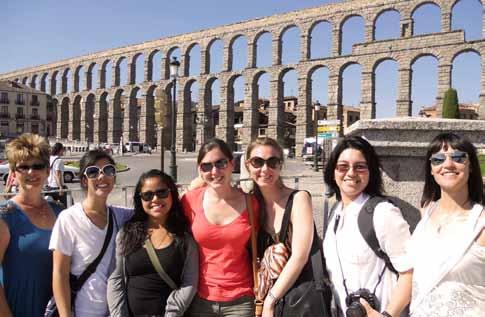
Debra Peña is seeking her Ph.d., but until she studied abroad in Spain, she had never been out of the country. “ wasn’t looking forward to that plane ride,” Peña said. “i was worried about a lot of things.”
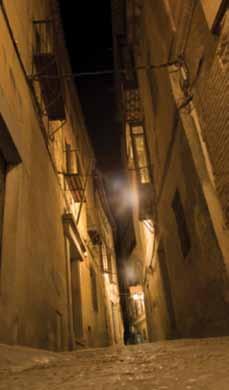
stone buildings crowd in on the stone streets so closely, and are so consistently ancient, that it is impossible to escape the history,” she said.
exploring Culture norma cantú ’s study abroad course opens perspectives within and without
Like many of the students who have taken the three-week trip to toledo, Spain as part of the course taught by Norma Cantú, professor of english and U.S. Latina/o Literatures, Peña said she was transformed by the experience. “it’s about negotiating the spaces in another country, and negotiating the spaces within myself.”
this is the sixth year that Professor Cantú has taken a group of graduate students and advanced undergraduates to Spain for the summer trip. this year’s courses included Cross Cultural traditions: Roots of Chican@ Folklore cross-listed with Creative Writing: Creative Nonfiction. t he program is a partnership between UtSA and Universidad de Castilla/La mancha, where the classes are held. “i hope for the students to learn the content of each course,” Cantú said, “but i also want them to make the connections that come from actually being in Spain.”
While the trip focuses on the folklore of Spain, each student brings back something unique from the experience. A common theme for the students, however, is a heightened awareness of differences. Almost 300 years ago, San Antonio and South texas were being settled by Spaniards, and the people, language and culture continue to carry the mark of the first europeans to settle here. during that same period, toledo was already an ancient city, built completely of stone and sequestered behind walls on a high hill. For many of the students who have taken the course, the contrasts between the old world and the new are stark.
“ the landscape and spaces are very different,” said Cordelia Barrera, who received her Ph.d in english through the College of Liberal and Fine Arts two years ago and now is an assistant professor at texas tech University. “ n San Antonio, we have such an array of different buildings, and in toledo, you’re walking these narrow cobbled streets. there, in every part of the old city, the
Cross-Cultural Learning
While Barrera had taught in Africa before taking the course, most of the students are not so well-traveled.
Christina Gutierrez, an english major, had never been overseas when she went two years ago to learn more about healing folklore for her dissertation on women and illness.
“i’m from Laredo, and there are definitely practices that are very old and continue on in the South texas region, like weaving,” she said. “But i think i saw more how the cultures have gone in different directions over the centuries.”
Gutierrez returned to Spain this summer, this time in the creative writing course, and found the second trip to be as much of an eye-opener as the first.
When the group visited a marzipan factory as a part of their study of cross-cultural traditions, Gutierrez said, their guide was an elderly gentleman who had worked there his entire life. As he explained the creation of the sugar-and-almond-meal confections, he showed them the workers’ tools used in crafting the delicate shapes.
“each [worker] designs their own tool according to their own needs and their own hands,” Gutierrez said. the small tools look like spoons but with flat surfaces.
then their elderly guide went to a drawer and pulled out another of the spoon-like tools. this one, he said, had been in the factory longer than he had, and had been hewn by a man who worked there so long ago that the lifelong employee had never known him. For Gutierrez, the tool became the symbol of the heartbeat of work in this place, a heartbeat that continued on as both time and workers passed through. Because she was enrolled in the creative writing course, Gutierrez used the trip to write about herself, and she used herself to write about the trip. “Women and illness is my dissertation. m y mother had breast cancer,
BY J E nni FER FR anklin
which is what motivated my research. But i had not written about my perspective as a daughter, going through that with her. dr. Cantú encouraged me to do that.”
making a conscious effort this time around to connect with the people of Spain and to be open to the community and their experiences, helped her do that.
“i t fed into my writing and my journal, and even my creative pieces,” Gutierrez said. “i want to go back on my own now.”
On her previous trip, Gutierrez had bonded more closely with her fellow students, an easy thing to do when the curriculum involves three hours each morning in the classroom and group walking tours of the city every afternoon. the creative writing students also wrote about 20 pages a week in journals and as assigned exercises.
Gutierrez advised students planning to study abroad to keep an open mind and “be willing to take in all these new experiences. Revel in it while you’re there because it goes by so quickly.”
d ebra Peña is writing her dissertation on 20th-century Southern women writers, so Spain is not directly relevant. But polishing the lens through which she views their world is a discipline that the english major considers vital to her project.
“Cross-cultural studies are important to the critical race aspect of my studies,” Peña said.
“Plus, there’s a whole Southern culture with its own folklore that will have to explain. if i can immerse myself in another culture and describe that, then i can explain my own to a panel.”
Connecting Cultures
When she came back from Spain, Peña brought with her a new perspective on how different societies—San Antonio and toledo—can layer very different behaviors and attitudes upon their inhabitants, while at the core, the people retain a thoughtfulness and decency that impressed her.
“ the people are genuinely nice to one another, as they are here,” she said. “An elderly man got up off the bench he was sitting on and offered it to dr. Cantú because it was hot. People’s body language, and the movement of crowds, they’re the same as in San Antonio. they care about the welfare of the person next to them, foreigner or not.”
the students witnessed the procession of Corpus Christi, a religious observance in the streets of toledo—which are, for the most part, so narrow an economy car can barely pass through, and pedestrians must jump into doorways to avoid being hit by the mirrors. this experience was a key component of the course, said dr. Cantú.
n San Antonio, it is possible to move through the crowds during Fiesta, but in toledo during the Corpus Christi week, people claim their spots for the procession—and they don’t move for anyone. “ the people were reverent,” Peña said. “ they were very solemn. But they were very protective of their space.”
Peña and Gutierrez had been at a café about 10 blocks from where they were to rejoin their
group, and found it took an hour and a half to get there. Nobody would budge during the long procession. to move at all, the women had to slip into the procession stream.
“So we walked in the procession between the nuns and the band, with people fussing at us because we weren’t supposed to be part of it,” Peña said.
Finally, the procession reached a small plaza, where everyone stopped to hear a priest give a prayer. “You could have heard a pin drop,” Peña said. “ that’s when a policeman finally opened up a path for us to get out.”
Becoming More
Peña loved the steep, narrow streets, and she loved that she grew stronger every day that she climbed them. n a side trip to the city of Segovia, the group climbed 152 steeply pitched steps to the top of the Alcázar, or castle. She was exhilarated to reach the top.
Now back home and dealing with the pressures and obligations of everyday life, Peña sees herself and her family as part of a bigger world, where other people in other places are making their own way.
“ there’s this whole life force going on, a world of possibilities,” she said. “Having seen it, it’s more than just rhetoric. even if i’m here dealing with a broken dishwasher, there’s an Alcázar with 152 steps. And i did it.”
OTher COLFA r e CU rr I n G STUDy
AB r OAD Pr OG r AMS
Be LI ze belize summer field school in archaeology
drs. Jason yeager and Kathryn brown, anthropology
e n GLA n D london and its literature
dr. mark bayer, english
Ger MA ny berlin-art & art history
dr. ronald binks, art & art history
Ger MA ny utsa in munich-modern l anguages
dr. christopher wickham, modern l anguages and literatures
S I en A , I TALy the classical world: anthropology, art and culture
dr. william short, philosophy and classics
rUSSIA utsa in russia- modern l anguages dr. marita nummikoski, modern l anguages and literatures
ne W COLFA Se M e ST er I n Ur BI n O, I TALy in spring 2012, colfa will initiate a new semester abroad program that will provide undergraduate and graduate students an opportunity to travel to the walled city of urbino, taly, renaissance center and world heritage site, to study the “classical foundations of the renaissance,” “ love and death in the talian renaissance,” and “shakespeare’s england and taly,” among other topics.
S UPPO r T A S TUD en T
do you have a passion for travel? do you appreciate the excitement, the depth of new perceptions and the growth derived from an international experience?
please consider a gift to help support a deserving colfa student with a study abroad experience. contact Kendall purpura at 210-458-4404 to learn how you can support a colfa study abroad program.
Hiding in Plain Sig Ht the photojournalism of jack london
By Cindy Tumiel
Nearly 100 years after his death, Jack London remains one of America’s best known and most widely read authors. His classic novels, The Call of the Wild and White Fang, set in the heady days of the Klondike Gold Rush, are still standard reading for students around the world. the books headline a long list of novels, short stories and news articles that made London a celebrity in his day and a subject for literary scholars in the decades that have followed.
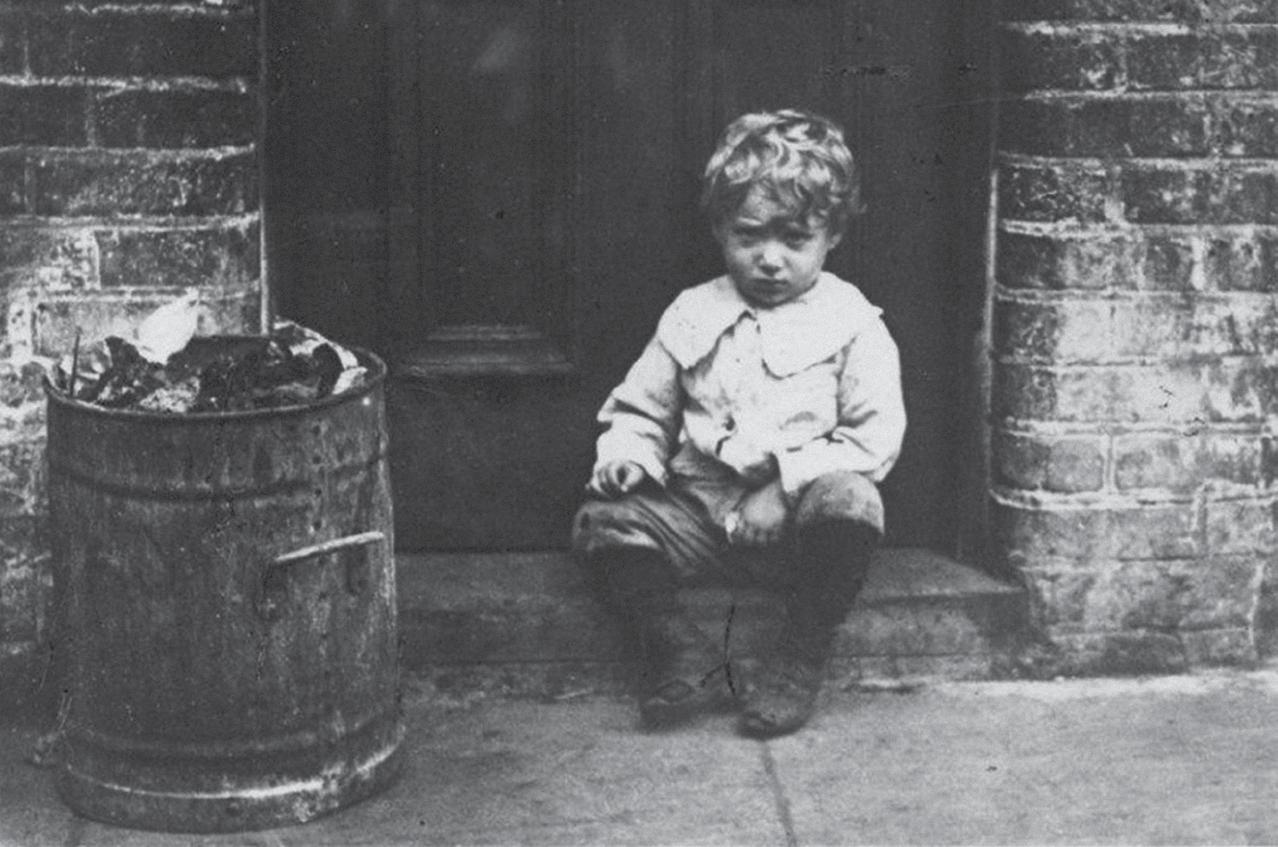
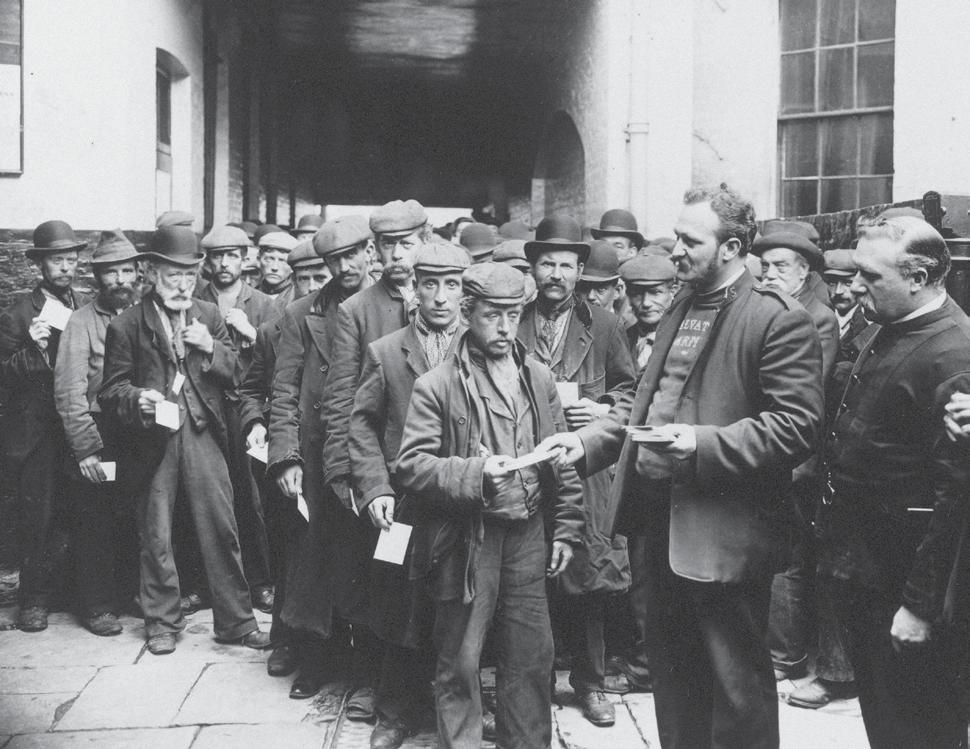
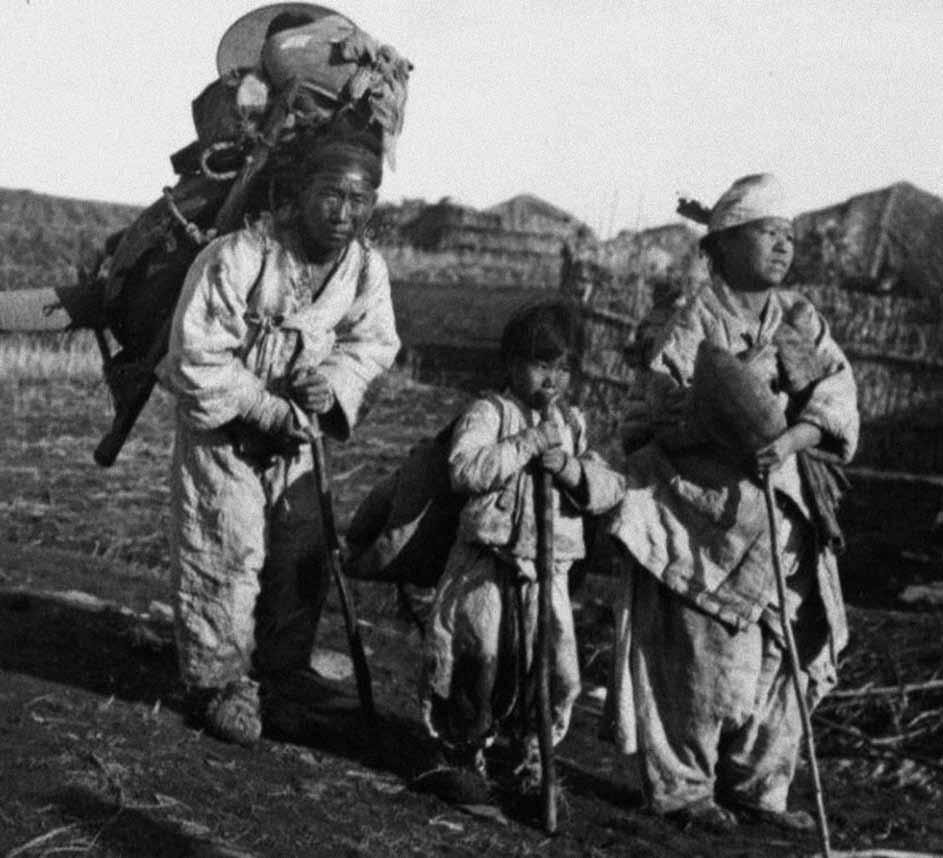
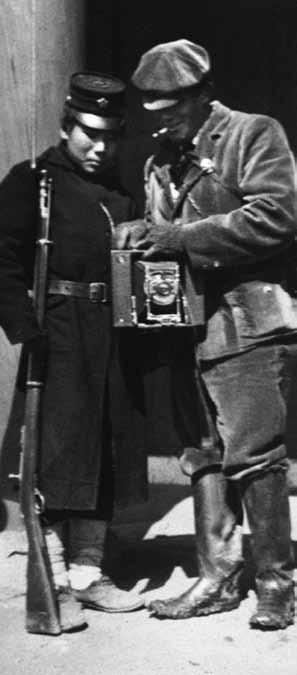
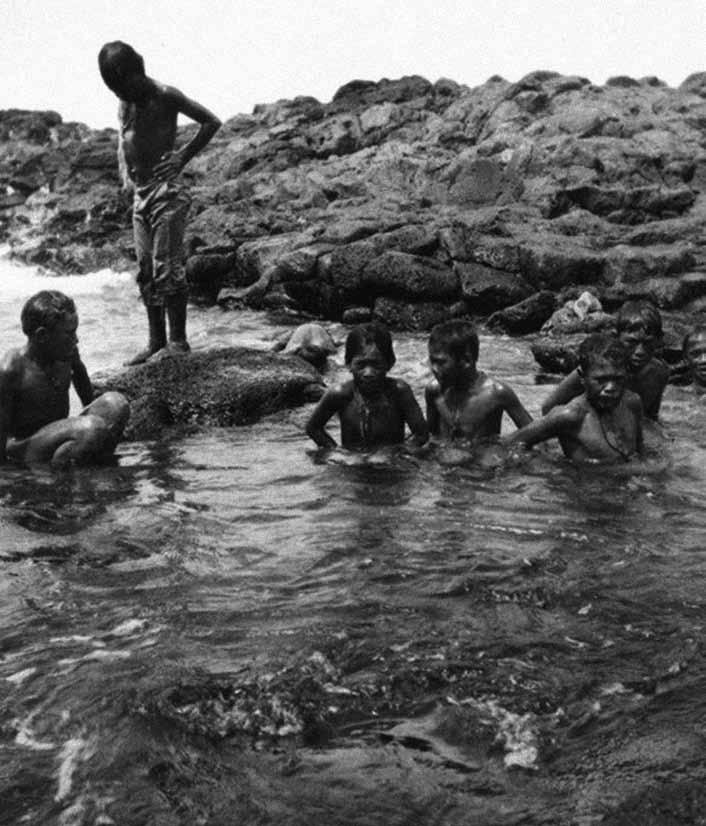
Yet until recently, a large piece of London’s legacy remained unknown. during his global travels as a war correspondent and adventurer at the turn of the 20th century, London became one of the very first photojournalists, using his then state-of-the-art Kodak folding camera to convey his stories with images as well as words. the pictures graced the pages of magazines like Colliers and Hearst Syndicate newspapers, giving Westerners some of their first glimpses into places like Korea and the South Pacific. He photographed the mexican Revolution, the devastation of the San Francisco earthquake, a leper colony in Hawaii, the stark poverty of London’s east end, and his own sea voyages. For years, though, an extensive collection of Jack London’s prints and negatives were protected in the archives of the Huntington museum and Library in California and the California State Parks’ Sonoma Barracks.
UtSA professor of literature Jeanne Campbell Reesman, one of the world’s leading London scholars, has at last pulled the wraps off that hidden treasure in a new book. Jack London, Photographer, by Reesman, Sara S. Hodson and Philip Adam, is the first major work to establish the celebrated author as an equally accomplished photographer.
“ this was a new dimension of his work for me,” said Reesman, who has written, edited or contributed to 40 books about London in the last 30 years. “Here is someone we all thought we knew very well. Who knew he was a photojournalist? He was sort of hiding in plain sight.”
the book contains some 200 photographs, carefully selected from the 12,000 prints and negatives in the archives of London’s work. t he photos are organized into chronological chapters that set the context and historical timeline for London’s experiences. Adam, an expert in historical photography, reproduced the selected photos as duotones from silver gelatin prints that he made from negatives and original photographs.
As the book came together, the quality of the reproductions stunned Reesman.
“No one, not even Jack London himself,
has seen these photographs printed as fine prints,” she said. “ these photographs, we hope, [will be] viewed as art.”
London was an adventurer with socialist leanings, nurtured during his youth in Oakland, California, when he worked hard labor jobs in a factory and a laundry. He left California in 1897 to spend a year chasing dreams of gold in the Klondike, then joined a whaling schooner that sailed through the Bering Sea. those rugged experiences flavored his characters and plots when he returned to his roots and turned to writing. The Call of the Wild, published in 1903, propelled him to wealth and celebrity.
By that time, London had acquired one of the first models of film cameras, which made photographic equipment more portable and adaptable to a wide range of light conditions than earlier cameras
“ this was a new dimension of his work for me,” said Reesman, who has written, edited or contributed to 40 books about london in the last 30 years. “here is someone we all thought we knew very well.”
Photographs from The People of the Abyss
Far left: “A descendant of the Sea Kings.”
Left: “Court Yard Salvation Army Barracks Sunday morning Rush— men who had tickets given them during the night for free breakfast.”
that used plates instead of film. in 1904, London accepted an assignment from Hearst newspapers to write and photograph the Russo-Japanese war, his first adventure as a war correspondent and photojournalist.
London made most of his money writing fiction, but also turned his personal adventures into serials and nonfiction books. The People of the Abyss portrayed the wrenching poverty of life in London’s slums. The Cruise of the Snark in which he chronicled his own 1907-08 voyage through the South Pacific islands, was the most heavily publicized adventure before aviator Charles Lindbergh’s flight to Paris 20 years later.
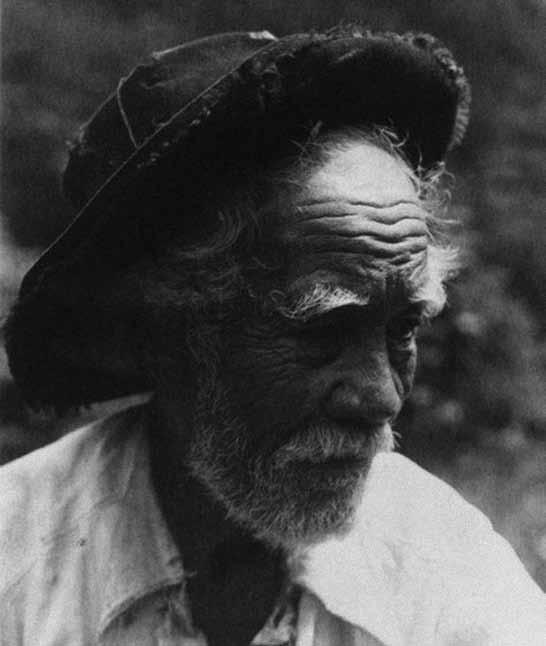
People and faces dominate London’s photographs, which he described as “human documents.” London understood the power of photographic images, and he treated his human subjects with care
and dignity. His encounters with South Pacific peoples broadened his ideas of other cultures, Reesman said, and his photos portrayed them with a humanity and respect that few others at that time had accorded them.
London lived extravagantly and drank excessively, and the lifestyle took its toll. He died of kidney failure in November 1916 at the age of 40. He left a legacy of 20 novels, 200 short stories and 12,000 photographs that his survivors donated to California institutions for preservation.
Reesman has studied London and his writings since her college days. Yet she became aware of the full photographic collection only about a dozen years ago, when she and Hodson, curator of literary manuscripts at the Huntington, spent a summer preparing a museum exhibit about London’s life. Sitting in a conference room in the midst of that project,
“ there are many portraits of indigenous people shown with a dignity that transcends the racial stereotyping that was so common in london’s era.” tarnel Abbott, San Francisco Chronicle
Hodson and Reesman found themselves discussing the vast quantity and quality of photographic material that London had produced.
“We realized there were negatives available for some of the prints, and we looked at each other and said, ‘Well, why doesn’t somebody do a book about his photography?’” Reesman said. “And then our next thought was, ‘Well, why shouldn’t we do it?’”
the book was a true labor of love, pulled together over the course of a decade, using a grant from the National endowment for the Humanities, a COLFA Faculty development Leave, and funding from various donors. Adam needed
about $70,000 to reproduce the delicate negatives with the techniques that brought out the full depth and beauty of the black and white images.
Winnowing from 12,000 to 200 photographs was a painstaking process. Photos for the book were selected primarily for their artistic merit, but also for their historical context and what they reflected about Jack London himself. many of the captions that accompany the photos were drawn from London’s own writings. the project was rewarding on both a professional and personal level, Reesman said.
“ this book has been a collaboration of friendship and every possible kind of
partnership with Sara Hodson.”
After its publication last year, the book earned a favorable review from London’s great-granddaughter, tarnel Abbott, who described the photos as “stunning.” the book and its photographs accurately portray London’s belief in the dignity of all humanity, she said.
“ there are many portraits of indigenous people shown with a dignity that transcends the racial stereotyping that was so common in London’s era,” Abbott wrote for the San Francisco Chronicle.
“His basic caring for humanity is evident; amid the war photographs are images of elders and children, looking back at us through time with curiosity and pride.”
Photos are reproduced by permission of The Huntington Library, San Marino, California.
London struggled to make meaningful photographs despite censorship by the Japanese Army. Korea, 1904. Photo Courtesy of California State Parks, 2011.
Small family of Korean refugees fleeing the Japanese Army. Korea, 1904. Photo courtesy of California State Parks, 2011.
Above: veteran field worker, ewa Plantation, Oahu, Hawai’i, may 1906
Right: Stereograph of leper boys swimming, leper settlement, moloka’i, Hawai’i, July 1907. Photo courtesy of California State Parks.
Patriotic EnvEloPE s of the civil War
Marketing tools in the conflict between North and South
By Rudy A R iSpe
As Joseph E. Johnston led his Confederate troops into bloody battle against Irvin McDowell’s Union soldiers in the Battle of Bull Run in July 1861, hundreds of miles away, in the safety of their homes, wives and mothers penned letters of undying love, support and devotion to their brave men fighting for the North and the South.
And as they placed their correspondence inside colorfully decorated envelopes, and sealed them with a kiss or perhaps a spritz of perfume, these women could only hope that their notes would reach the intended recipients.
Web Extra
To see more images of the patriotic covers, visit www.stevenboyd.com.
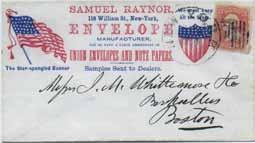
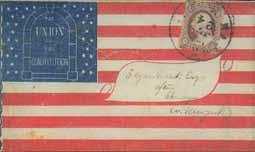
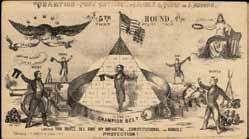
TThose envelopes, however, were designed for more than just holding letters. they served as propaganda pieces to sway support for one side or the other, and to bolster partisan spirit among the populace.
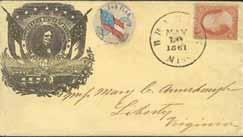
“ i t’s a strictly private, non-governmental activity. i t’s all done by printers saying, ‘Gee. i can make some money,’” said Steven Boyd, UtSA history professor and author of Patriotic Envelopes of the Civil War: The Iconography of Union and Confederate Covers (Louisiana State University Press). A “cover,” in stamp-collecting terms, is simply the envelope or packet on which a stamp is affixed.
“ there are flags on the envelopes to support the Union. On one [envelope], ‘ the StarSpangled Banner’ is printed on the back, and another one has the history of the American flag,” Boyd added. “ t shows the 12 different flags that had flown over the American nation over time.”
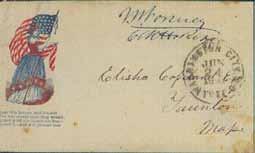
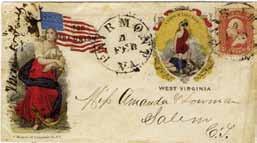
“Half of the pictures of women on patriotic covers show this very beautiful female dressed in a red, white and blue dress … and if you look at the slogans and mottos, they say, ‘God Bless
Our Union’ or ‘for God and Country.’”
Ornate in design, the envelopes were also created to tug at the heartstrings of soldiers, encouraging them to put up a good fight all in the name of honor, duty and nation.
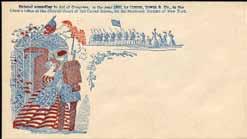
“ there’s a whole series of ‘the-girl- -leftbehind’ designs that show an image of the women and children left at home,” Boyd said.
“i t’s all designed to highlight the women’s role, which is to support their husbands, sons and fathers going off to war.”
“A famous one shows ‘Quaker Jane’ handing a rifle to ‘Quaker Jim,’ saying to him, ‘Support the Union.’ the pacifism of Quakers is being parodied there and it’s saying, ‘Look, we have an obligation.’ there’s a printer in Ohio who did poem covers. it’s very sappy, but the covers are designed to be sent to your man in uniform to tell him you’re doing fine at home, to keep his morale up, to remind him you’re thinking of him and assure him you’ll be there when he comes home.”
Boyd’s book has been 25 years in the making, he said, although his interest in collecting patriotic envelopes of the Civil War began in graduate school when he purchased his first one for
$3 in an antique store.
“ happened to see it, and i thought ‘that’s kind of neat, how interesting,’” he said. “ t was a soldier’s letter. t was hand-carried. i t wasn’t mailed.”
the idea for the book came about through a university project in 1980 in which the professor was asked to mentor two graduate students. He assigned them the task of researching patriotic envelopes. After the research ended with the publication of a jointly authored article, Boyd continued to gather information about Civil War envelopes.
His interest in the subject led to the publication of a book that features more than 180 color illustrations of some of the 15,000 pro-Union and 250 pro-Confederate designs that appeared on envelopes between 1861 and 1865.
interestingly, the envelopes were also part of popular culture of the day and were saved as souvenirs.
“ they were marketed that way, and there was actually an album created as a way to save them. You could buy them and save them rather than mail them,” Boyd said, adding that saving
the envelopes also led to stamp collecting. “ the first mention of collecting stamps is tied to these albums that were created to save these envelopes and put them away or display them in your parlor.”
For anyone interested in purchasing a Civil War-era envelope, they are more affordable than you might think. An unused Union envelope can be purchased online for as little as $5. However, a used Confederate envelope can cost $300 to $3,000, and that’s “because there are virtually no un-mailed [envelopes] anymore,” Boyd said.
While patriotic envelopes were used to inspire loyalty to either the Union or the Confederacy, they inadvertently served other social purposes, such as acquainting Americans to different types of people whom they had never seen before.
“it is probably the first time that tens of thousands of Americans saw an image of an African American,” Boyd said. “ they simply had never seen such a person before. And, therefore, it exposed white, middle-class America to the reality of black people.”
Patriotic envelopes were also used to
While patriotic envelopes were used to inspire loyalty to either the Union or the c onfederacy, they inadvertently served other social purposes.
educate the masses about the war, and, in fact, served almost a photojournalistic role.
“ there’s all kinds of covers printed, for example, that show the Battle of Gettysburg or Bull Run, and that are sold to soldiers through camp sutlers to write home and tell their loved ones or their family about news of the war,” Boyd said. (A sutler is a merchant who sells provisions to soldiers in the field.) “You get news in the newspapers, but you don’t get much about the war because what you get is pictures after the battle is over that may or not make it into Harper’s Weekly. So patriotic covers in terms of battle scenes tell you about what’s happening in the war.”
Patriotic envelopes proved to be a lucrative business for printers, especially those in the North, who marketed them to both civilians and troops.
“Printers would put together a packet with very ornately drawn covers, and they would sell
you 10 envelopes and 10 letter sheets with comparable designs,” Boyd said. “ they would put a pencil in it and sell it all for 25 cents.”
However, while printers from the North prospered from selling these envelopes until the end of the Civil War, printers from the South did not fare as well.
“ they simply ran out of supplies,” Boyd said, attributing that to the Union blockade of the South, and to the fact that the South did not have as many manufacturing facilities as the North. “ they’re out of paper, they’re out of ink, they’re out of dyes.”
While Boyd had to purchase some of the Union envelopes for his book because he wanted to include a specific image that was not available online, he doesn’t plan to collect any more.
“i own a bunch of them, and i’ll eventually get rid of them because ’m 64 years old, and ’m looking at my house and thinking my bookshelves are a mess right now,” he said, laughing.
Introducing COLFA’s Endowed Faculty Chairs
Understanding their vital role in UTSA’s transformation to a premier research institution
The endowed chair, for a university, is a tool for recruiting a talented professor.
For the professor it is a plum, a mark of achievement, and a little extra money.
“An endowment can do some really magical things for a college,” said d aniel Gelo, dean of the College of Liberal and Fine Arts. “endowments are just invaluable in helping propel us toward a tier One university profile.”
For those unfamiliar with academic jargon, an endowed chair is simply a prestigious faculty position supported by private gifts to the university. At UtSA, these endowed positions include professorships, distinguished professorships, chairs, and distinguished university chairs, each requiring a progressively higher initial donation.
the minimum amount required to establish an endowed professorship is $250,000, while a distinguished university chair requires a gift of $2 million.
t he invested donations produce about 5 percent a year, which is used as the professors’ stipends. t is commonly assumed that an endowment pays the faculty member’s salary, but that is not always true. the university pays the professor’s salary and the endowment funds are “the icing on the cake,” Gelo said. And what professors do with that money is very, very important for the university.
Building new initiatives
Joycelyn m oody, the Sue e d enman distinguished Chair in American Literature, is using some of her endowment funds to build the university’s future and the future of African American studies across the nation.
t he African American Literatures and Cultures i nstitute, which m oody directs and funds through her endowment, is an elite threeweek summer residency program designed to prepare a handful of promising college juniors for graduate school.
“We’re already seeing the fruits,” moody said. Summer 2010 was the institute’s first year, and
by Jennifer f ran K lin
already several students are applying for graduate school slots, she said.
moody was inspired to create the institute by an article by the late Nellie mcKay, an African American scholar and professor at the University of Wisconsin, madison, who expressed concern that not enough students of African American studies were “in the pipeline” to replace the current generation of teachers.
“African American studies is a scholarly discipline that must be studied and cultivated, and not necessarily by African Americans,” m oody said.
She also used her endowment funds to create a one-year postdoctoral position that allowed her to recruit another talented scholar, Kinitra Brooks, now an assistant professor.
“ i t was very generous,” Gelo said, “and allowed us to bring in a promising Ph.d. for a year, and subsequently recruit her. i t’s rather expensive for us to do that normally.”
moody said the endowment gives her latitude to do many things, including maintaining her own research funding on 19th-century African American literature without having to compete with colleagues for those resources.
“ i had a fabulous job as editor of the
and international organizations such as the Linguistic Society of America, the American Psychological Association and the American education Research Association. She also serves on the editorial board of the journal American Speech
Gelo said he approached m oody and Lanehart for the same reasons he recruited all of COLFA’s endowed chairs: “We are looking for top talent,” he said, “people who have established research records with strong instructional and service components.”
Research leaders
Bruce daniels, the Gilbert m denman endowed Professor in American History, whom Gelo recruited from texas tech University, “brings a level of renown to our history department,” Gelo said. “He’s a recognized authority on colonial New england history and the life of the Puritans.”
directions and research priorities. COLFA donors have been very pleased with the impact of the chairs they have supported, said Gelo.
“my stipend has proven immeasurably valuable in allowing me to travel to distant archives and libraries for research in original records that are neither published nor available outside of the repositories,” daniels noted. “As a colonial and Revolutionary historian, have traveled primarily to the six New england colonial capitals of Hartford, New Haven, Providence, Newport, Boston, and Portsmouth/Concord, to the Library of Congress in Washington, d.C., and to the largest British collection of early American documents in the Huntington Library in California. Historians do not have laboratories, but they almost always must travel to their sources, and thus am exceptionally grateful for the aid this stipend provides.”
classroom music educators and studio music teachers from across the U.S., Brazil and Korea on how to incorporate rhythmic movement into their curricula.
“ the students talked of being awakened to a new approach to teaching music and movement,” said Frego.
African-American Review t would have taken an awful lot to get me to leave—and it did.”
moody has built a core of studies in African American literature at UtSA by partnering with Brooks, who focuses on black feminist theory in literature, film and popular culture, and with dr. Sonja Lanehart, who holds the Brackenridge endowed Chair in Literature and the Humanities.
“ the collaborations among the three of us have certainly increased the profile of African American language and literature at U tSA,” Lanehart noted.
national Recognition
Professor Lanehart, whom Gelo recruited from the University of Georgia, specializes in sociolinguistics, identity studies, and language and literacy in the African American community. She uses her endowment funds to sponsor conferences such as New Ways of Analyzing variation 39 and the African American Language Conference, and to support African American Studies at UtSA.
d r. Lanehart’s activities, funded by the endowment, have made her work nationally visible, and have helped U t SA expand its reach. She has received invitations to serve on committees and to participate in national
Gelo also emphasized that endowed chairs like Professor daniels, who was a department chair at his prior institution, bring the ability to mentor junior faculty and advise their colleagues about program growth.
d aniels, who is modest about his status, added that one challenge is to understand the priorities of the donors who established the endowments and match them to academic
Community outreach
each endowed professor must submit an annual budget that explains how he or she will spend the endowment funds. the expenditures can take many forms, including underwriting travel for the professor or students to attend conferences or purchasing library books that support the faculty member’s niche.
For d avid Frego, Roland K. Blumberg e ndowed Professor in m usic, the money is also useful for another vital part of university leadership—community engagement.
Frego, whom Gelo recruited from Ohio State University, is recognized for his expertise in dalcroze eurhythmics, a study of the way the body’s movements relate to music.
Using this method, Frego teaches concepts of music through movement, applied as ther a py, which has evolved into a focus on post-traumatic stress disorder. Frego recently completed a program in Bosnia Herzegovina sponsored by the Pavarotti Foundation that works with people traumatized by civil war as well as with land mine survivors.
“We are working to connect the brain and the body, but it’s more than exercise. it’s interactive with others, healing, and it also involves journaling and reflection; i just show up with a drum, and we’re off,” Frego said. this summer, dr. Frego led a workshop for
While his expertise is an asset to UtSA in its path towards tier One status, dr. Frego’s outgoing personality is also uniquely fitted for the chair position in the department of music, which involves quite a bit of public interaction.
“music requires a lot of development activity,” Gelo said. “david spends a lot of time with alumni and donors, involving them in university discussions and activities which are vital to the department.”
“i enjoy that part of my job very much,” Frego said. “ the encouragement and donations that supporters provide make many departmental activities possible, including lyric theater, research in vocology, scholarships—and even our new marching band.”
every donation to the university is valuable, from the smallest contribution to a named scholarship fund. For those who have the resources, though, endowing a professorship is an especially meaningful way to have a significant impact on the school’s development into an outstanding institution.
Bruce daniels
david Frego
ScholarS PrOm
H OW GRAd UAte
S t U deN t S
LeveRAG e COLFA
BY daW n p o ME nto
Backed by dedicated and talented faculty within their departments and in the university at large, COLFA graduate students conduct extraordinary research that takes them from labs and libraries to research sites around the world.
T he first time Melissa Whitney took a Chicano literature course, she had an epiphany: the descendants of m exican immigrants to the U.S. shared striking similarities with the descendants of German settlers. the impact of both groups on local culture was as vital as the melodic heartbeat of the accordion in conjunto music. the realization motivated Whitney—originally from Germany herself—to pursue research into German Americans as part of her education in the department of english, a combination that seemed unlikely until she realized that oral histories, diaries, and letters are all essentially texts. And as she soon discovered, specialists in each area of interest were readily available to her within the college.
As Associate Professor Ben Olguín put it, Whitney’s position at U tSA places her in “a crucible of cross-cultural studies.” So much of what is done here, he said, “involves theories of hybrids, theories of borderlands”—giving rise to an intellectual atmosphere perfectly suited to the pursuit of unconventional and interdisciplinary interests.
Whitney’s passion lies in separating the authentic from the stereotypical, the true experiences of German immigrants from the quaint image of a rustic Bavarian village. Her dissertation research has led her to a revealing examination of German settlements in texas. n her explorations of the texas Hill Country, she’s stumbled across dozens of letters and diaries written between the 1830s and 1930s, which she has carefully digitized before returning to their owners.
Whitney plans to donate copies of the precious texts to UtSA’s John Peace Library, which has played a crucial role in her research by giving her access to original documents from as far away as Germany and Australia. “i t’s a great research university,” she said of UtSA.
improving Foster Care
thanks to the federal education and training voucher Program, foster children can receive funding for higher education. But as Beatrix Perez explained, “it’s hard to do that if they don’t have a home.”
Perez understands firsthand how domestic instability can affect the pursuit of education. As an undergraduate, her academic life came under strain when she and her family were forced to deal with housing difficulties. the experience
led her to study homelessness and education as a graduate student in the department of Sociology. She focused on the challenges and obstacles foster children face, not only once they age out of the system, but also while in placement.
“She spent three months at centers serving foster care youth who were aging out of care, and [she] interviewed over 40 youth,” said Professor Harriett Romo of Perez’s leading role in a student research project. “She can be very proud to be the first author on two peerreviewed publications in international journals, with more sure to come.”
“my thesis is a collection of papers that resulted from a study exploring the life experiences of former foster care youth,” said Perez. “ through this work we were able to glean much about the life experiences of youth while they were in care, during the transition out of care, and after they ‘aged out’ or exited the foster care system. the collection highlights the numerous challenges foster youth encounter as they journey from placement through transition.” Her research was presented at several conferences in the U.S. and in Puerto Rico.
A mother of two, Perez plans to pursue a Ph.d and is currently teaching in the department of Sociology.
preserving l anguage Presidential Scholar and Alvarez Research Fellow Aaron Carter-Cohn developed an interest in African languages when his work as organist and choirmaster at St. Francis episcopal Church brought him into contact with African refugees. His interest became a passion when he met a Nigerian choir at a conference in China.
A graduate student in the department of music, Carter-Cohn’s interests are extraordinarily broad, said Professor John P. Nix: “He’s a very fine
aaron Carter-Cohn
Beatrix perez
Melissa Whitney
composer. He’s seeking organist certification. He started a nonprofit to preserve languages.”
Nix and Carter-Cohn collaborated on a UtSA vocal Lab study, working with a Houston-based Nigerian choir. “We’re looking at how your primary language affects the vowels you sing with,” Carter-Cohn said, adding that there is a strong connection between speech and melody in African languages.
through his contact with immigrant communities, Carter-Cohn realized how the pressure to assimilate to mainstream culture put African languages in danger of extinction. “Singing is one way you can preserve these languages. t’s a great way to expose children of all ages to other cultures. You really learn a lot about a culture through the music and the language.”
the immigrants he interviewed stated that they became more concerned with holding on to their culture after they emigrated. Nigeria has over 500 indigenous languages (out of 6,000 languages in the world); nine of these have become extinct within the past 50 years and others are fading fast because of Western influence and the predominance of english.
“ don’t imagine that i can prevent the extinction of these languages,” Carter-Cohn said. “my efforts are to document and preserve songs that are sung in these languages, and in some cases make arrangements of these songs that are accessible to choirs and singing groups in the U.S. and elsewhere, which i hope will create awareness of dying languages.”
Carter-Cohn plans to move to Nigeria, where he will lecture on music and study Nigerian languages at the University of Lagos. He’ll also participate in two internship programs as an organist at the Cathedral Church of Christ in Lagos and will work with the musical Society of Nigeria—the very choir that provided the creative spark for his research interest.
strengthening Relationships
As a newlywed, Brittany Pratt identified a gap in marriage research. m uch of the data, she explained, examines the newlywed period as an important developmental phase. Other key
research areas include the role of humor in relationships and examinations of various types of marriages. So for her master’s thesis in communication, Pratt attempted to synthesize these different approaches by asking how newlyweds use humor to negotiate expectations, and how different ways of doing this can predict longterm marriage success.
Pratt surveyed a group of newlyweds to determine their relationship expectations, then used her results to characterize each respondent as one of several marital types. She credits her thesis adviser, Associate Professor and Chair of the department of Communication H. Paul LeBlanc, for helping her define an effective research process.
“What makes her study different is that she applied research on humor in the developmental process,” said LeBlanc, explaining that one of Pratt’s key findings suggested that women use more positive humor in a relationship than men do.
Pratt, who said she’s officially transitioning out of the newlywed stage as she prepares to have her first child, plans to pursue a Ph.d. in communication.
performing with passion
For m FA student and artist Jimmy James Canales, research entails total immersion into the topic at hand. i t might mean working with martial arts experts, as he did for his performance piece “Karate Zarape.” Or it might mean envisioning the legend of the Alamo through the framework of Joseph Campbell’s theories on myth, as he did for “mapache man,” a mythical legend of his own creation.
Professor Richard Armendariz asserts that what makes Canales unique among performance artists is the level of enthusiasm and sincerity he brings to his art-making process. much of Canales’ work has a physical component, as is evident in his performance of “Karate Zarape.”
After studying in Boston, Canales—whose art deals primarily with South texas—was drawn back to San Antonio by the creative magnetism
of his home town. UtSA was an obvious choice for him: “We have great faculty and great facilities and the library is great as well. All these things come together to make a school that works for me. And they give great scholarships.”
Canales said the program is benefitting his artistic process by teaching him how to document his art and interpret it for an audience, skills crucial to a performance artist. His work can be viewed on Youtube at www.youtube. com/jimmyjamescanales.
Examining Racial attitudes in Couples
megan Hainstock first became interested in her master’s research topic as an undergraduate at UtSA. “ took a relationship class,” she recounted, “and one of the things we learned was that interracial relationships tend to have a longer engagement period because it takes longer to gain acceptance from society.”
Associate Professor m ichael R. Baumann explained that most work in this area overlooks which member is which gender, treating for example, a white male and Asian female the same as an Asian female and a white male. However, Hainstock’s work distinguishes between these and focuses on pairings not typically studied, such as Hispanics with nonHispanic whites.
n a recent study, Hainstock examined the responses of Hispanics and non-Hispanic whites
regarding various same-race and mixed-race couples. One interesting discovery was that, for non-Hispanic white respondents, opinions regarding interracial relationships were influenced by feelings of competition between racial groups. the more that a person felt gains by the “other” race (in jobs, wealth, respect, power, and other factors) meant losses for his or her own race, the more negative his or her opinions of interracial relationships. However, Hispanic respondents’ opinions were not influenced by racial competition.
Hainstock applauds the university’s goal to become a tier One research university because she believes the more research faculty and doctoral students conduct, the more opportunities there will be for undergraduates to gain experience by assisting in that research. this experience will make undergraduates more competitive when applying for jobs and graduate study. Hainstock is a second-year graduate student and is currently looking into Ph.d. programs.
deconstructing Colonialism
When major david Underwood began his master’s work in the department of History, his goal was to gain the skills necessary to write a book about i raq dedicated to the soldiers he commanded for 28 months. Underwood had been wounded in 2008, losing an arm as a result of his injuries. He began his recovery at Walter Reed Hospital in Washington, d.C., but asked to be transferred to San Antonio in order to pursue a graduate career at UtSA as he continued his rehabilitation.
Since then, Underwood’s focus has shifted from i raq to i ndia. Professor Brian davies described his research as “a very sophisticated and imaginative paper on how the British Raj used durbar ceremonies to legitimate itself in india and Burma at the beginning of the twentieth century.”
Underwood’s interest in a stamp series—his fascination with stamp collecting had already led him to co-author a book on the topic— led him to study a six-month visit to i ndia by
King George v and Queen mary. “every day there were formal functions,” he said of the visit. “i t had an influence on both i ndia and england. the way england viewed i ndia was different from then on.”
t he d epartment of History funded Underwood on a recent trip to england, where the veteran adeptly unearthed previously overlooked material, such as the diary of a member of the British royal cadre who had recorded the state visit in great detail.
“ the fun thing about the research is that i wasn’t just doing it for school; i was doing it for my own edification as well,” said Underwood. He is currently planning the next step of his fascinating journey; among the items at the top of his list is the book about raq that originally inspired him to embark on his graduate education.
i t is just this sense of excitement—the engagement students experience when personal ambitions align with academic pursuits— that COLFA seeks to promote in its graduate programs. every year, the college increases its community of research-driven graduate students in a effort to propel UtSA to tier One status, always with a mind to the quality of each individual learning experience. this emphasis allows research to come to life; research with the power to enrich the student, the university, and our global community.
Megan hainstock
Brittany pratt
Major david underwood
Jimmy James Canales
r ebui L ding the WeLFA re stAte
utsa professors e xamine european solutions
BY tonY Cantú
Given the entrenched partisanship of U.S. politics, the concept of the “welfare state” has emerged as a divisive issue, pitting conservative thinkers intent on cutting back on social programs against progressives committed to maintaining and even expanding such services.
But two UtSA associate professors argue that the idea of a welfare state—with its implied promise of ensuring the welfare, or well-being, of all citizens, not just of those at the lower economic rungs, as many believe—need not be divisive. What’s more, their analysis indicates that the United States need only look to some european models in reconciling a thriving welfare state with a strong economy.
Stephen Amberg and daniel engster, both associate professors in the d epartment of Political Science and Geography, are exploring the idea that a healthy welfare state need not compromise the strength of the economy. Amberg benefited from a $70,000 Fulbright d istinguished Professorship to teach at the Center for the Study of the Americas at the Copenhagen Business School for the 2009-10 academic year. this past spring, he was on a UtSA Faculty development Leave for a study comparing U.S. and danish labor market practices. n 2008, engster also received a Fulbright Research Award to study welfare state policies for a semester at Gothenburg University in Sweden. He recently secured a $50,400 grant from the National endowment for the
Humanities to help finance his work for the 2011-12 academic year toward research for his book Justice and the Welfare State
i n citing the Swedish and danish models, Amberg and engster make a compelling case for achieving equilibrium. “Somehow, the danes and the Swedes have figured out how to grow their economies even with a huge welfare state,” Amberg said. “denmark is an advanced, capitalistic society but has a huge welfare state—perhaps the largest in the world—yet they have lower unemployment than we do and have a trade surplus while the U.S. has a deficit.”
Concentrating more on the Swedish model, engster adds that the europeans view the existence of a welfare state not just as a moral imperative, but as guided by self-interest as well. n providing generous social programs, the Swedes have yielded a healthy workforce that keeps their economy humming.
“ the U.S. child mortality rate is almost three times more than in Sweden,” engster noted.
“ they have very generous health care and benefits for families with children. As a result, they have low child mortality, low child poverty rates and better outcomes in graduation rates than we do.”
Amberg suggested that vociferous opposition to a robust welfare state in America in some camps is rooted in a misunderstanding of the concept. Some critics forget that the U.S. already provides socialistic programs in the form of pensions for the elderly, unemployment compensation, public schools, home mortgage tax subsidies and financial assistance for the poor.
“One of the causes of divisiveness … is that the idea of a welfare state is not very well understood in the U.S., but comparative analysis is one of the ways that social scientists clarify concepts and practice for policy-makers and the public,” Amberg said. “From an American point of view, it is unexpected but true that many countries with welfare states much bigger than ours also have thriving economies.”
Both agreed that while heated political partisanship has contributed to the steady decline of the welfare state in America—particularly as it relates to programs aimed at the very poor and working class—myriad other economic forces have aligned to contribute to its dilution since
the heyday of social programs in the 1930s.
“ there’s been a lot of talk about the decline of the welfare state or whether it’s a decline or transition,” said engster, who lived in Sweden for a semester to study that country’s practices.
“Political rhetoric is a big part of it, but there are also structural reasons behind it: interconnectedness with a global society, a transition from an industrial-heavy economy to a service economy and changes in the family structure.”
d espite such market and societal forces, engster challenged the notion that social programs must be slashed in order to achieve a thriving economy: “What i disagree with is that the only viable solution is to cut services and policies and make the economy a totally unregulated market system, reducing taxes and cutting services to achieve a less bureaucratic state.”
“ the Republicans since Reagan have promoted a neo-liberal image of the economy, in which global market competition demands lowering the cost of doing business,” Amberg said. “[ they] argue this can be done by slashing the welfare state and taxes on investors, deregulating, and preventing unionization.”
But in denmark, the concepts of capitalism and socialistic-style programs are not mutually exclusive, Amberg argues: “One of the ways that comparative research helps us understand the ideological nature of this argument is to look at other countries with good records but different institutions. denmark’s economic well-being exceeds ours in many, though not all, ways. But they have very high taxes, a strong regulatory state and an 80 percent unionization rate.” t he model has caught the attention of other observers—from both the left and the
the slash-based approach is rooted more in anecdotal accounts of the perceived ills of a welfare state or in ideological bias rather than on proven, empirical data, engster said. Amberg agreed, pointing to the origins of the approach in the 1980s under the Reagan administration— an idea that has gained renewed political traction of late among Republican presidential candidates.
“My focus of study has always been on social justice issues, what the state can do through policy. We need to fill the gap of what the market can do and what people and charities can do in addressing the changing nature of the welfare state.”
right—including USA Today, which examined the denmark dichotomy in a 2007 study. Yes, the danes—as most europeans—have high taxes, taking an average of 50 percent of their income. But on the other hand, the study revealed, wages are high and the country’s big welfare state provides workers with universal public health care, education, child care, job training and generous unemployment benefits.
danes reap the benefits of their country’s capitalist-socialist hybrid approach, Amberg argues. For one thing, students are paid a stipend to attend college full-time. m oreover, vocational education coordinated with employers allows for 30 percent of d anes to receive technical training, compared to 3 percent of Americans. Additionally, universal child care has yielded one of the world’s most gender-equal labor markets, and unemployment benefits pay 90 percent of lost wages for two years. the upshot: Western government officials continually descend upon the country to study its approach. USA Today reported that of particular interest is the danish concept of the european Union-coined term “flexicurity,” described as “a hybrid of free labor markets, unfettered business and adjusting welfare to give incentives for people to work so they can pay taxes to finance the benefits they get.”
Similarly, the Swedish model has been touted by pundits. i n its own treatise on the subject, the conservative Brussels Journal all but endorsed the idea that the U.S. should adopt a
Swedish-like model, contingent on some tailoring specific to the U.S. economy.
But achieving such goals of reform may prove an uphill battle in this country. Amberg points to the very two-party system—praised for its innate promise of a healthy exchange of ideas—as actually having the opposite effect, given deep divisions between the left and the right.
“ the d anes are exemplary because they work together, not because they all agree but because a wide range of viewpoints is respected in the policy-making process” said Amberg.
“ they have multiple parties on the left and the right and, still, the danes are able to work out compromises for the public good. there are two socialist parties, three right-wing parties and several very small ‘centrist’ parties. everybody has their say, and nobody’s views are ruled out of the discussion.”
in squaring a healthy economy with a strong welfare state, engster argues for a paradigm shift—a change from basing policy on political ideology to basing decisions on empirical evidence yielded from e uropean successes:
“my focus of study has always been on social justice issues, what the state can do through policy. We need to fill the gap of what the market can do and what people and charities can do in addressing the changing nature of the welfare state.”
in the din of political discourse in this country, attempts at reform—including ongoing health care reform some detractors have
… consensus on social revamping should be based on how such reform would achieve the greater good, not on fixed ideological positions.
A new musical Challenge
operA NavarrO pAyS hoMAge To Tex AS FoU nding FATher
by rudy Arispe
pejoratively dubbed “Obamacare”—are often marked by partisan divisiveness. Some camps of the electorate—members of the increasingly influential tea Party arguably the most vocal among them—have attempted to portray the reform as a “socialist” government takeover of health care, despite the fact that under the Affordable Care Act, the government neither employs the doctors nor creates a single-payer system. this exemplifies the kind of ideological simplification that hinders productive discussion of the pros and cons of policy decisions.
Still, both professors expressed optimism that social reforms may ultimately take place in this country, perhaps after the noise of the presidential campaign has quieted. they agreed that consensus on social revamping should be based on how such reform would achieve the greater good, not on fixed ideological positions.
“We have had for too long a ‘We’re Number One’ philosophy, and i think we do a lot of things very well and are a great country in a lot of respects,” engster said. “But we can benefit by looking at other countries’ experiences, and we need to collaborate with these countries to improve some aspects of our social systems.” i n expressing his own optimism, Amberg struck a similar note: “We have to remember that during the post-World War ii era we achieved broad agreement on public policy and a lot of agreement on civil rights. Republicans voted for medicare in 1965. Historically, we are a nation of problem solvers.”
Composer James Balentine has written musical theater, orchestral and chamber pieces that have been presented at international conventions and festivals.
Now, the UtSA professor of music composition and theory can add opera to his repertoire.
Balentine recently composed Navarro , a children’s opera about texas hero José Antonio Navarro and his fictitious friendship with the young Benito Chavez, son of the head prison guard at San Juan Ulúa in veracruz. that was the prison where the influential tejano was actually held after being sentenced to death by the government of Santa Anna for aiding and supporting texas independence.
the Opera Guild of San Antonio commissioned Balentine to write the 45-minute work for the Opera in the Schools Program, which reaches more than 15,000 elementary students each year. Opera in the Schools is a joint project of the Opera Guild and the UtSA Lyric theatre. Navarro premiered September 24 at the Navarro House in collaboration with the texas Historical Society and the Friends of Navarro.
For Balentine, the commission proved to be a delightful break from his usual composing work.
“i love the idea of coming up with my own ideas and collaborating with another artist to create something more than what it would have been had done it by myself,” Balentine said, adding that the libretto was written by Joe Labatt. “it’s a creative outlet, and the added bonus is we will present it to children, and hopefully they will develop an appreciation for Navarro, drama and music—and opera.”
Because Navarro was Balentine’s first foray into the genre, he faced a whole new set of challenges.
“ the hardest part was taking into consideration what the actor is doing physically and what he is doing to convey this message,” the composer said. “most of my music is for concerts, and there is no dramatic action. You have to think about stage movements and costumes.”
the idea for Navarro was conceived several years ago by Sylvia tillotson, a descendant of Navarro who was reading a book for young adults, Benito and the White Dove She suggested to Joan miller, a member of the Opera Guild, that the story might make a good children’s opera.
William mcCrary, director of the Lyric theatre, then approached his colleague, Balentine, and asked him if he would take on the task of composing the music.
“i’ve been involved in musical theater all my life,” Balentine said. “ the difference between musical theater and opera involves whether dialogue is treated musically. in opera, all spoken lines have to be sung, so there have to be melodies for every word in the piece.”
Children will be glad to learn the story has a happy ending. After Navarro teaches Benito to read and write, the young boy changes his preconceived opinion about the captive and writes a letter to Santa Anna, pleading for Navarro’s life to be spared, and gives it to his father to mail for him.
Audiences discover that Benito’s father, who had initially refused to mail the letter for fear of losing his job, mailed the letter after all, and Navarro is released from prison after Santa Anna is deposed. in reality, however, Navarro managed to escape from prison with the aid of sympathetic m exican army officers, thus being saved from certain death.
“i t’s important for children to know about the history of texas and also be exposed to singing, music and new forms of music,” Balentine said.
“José Antonio navarro’s heroic life is a perfect fit with the opera guild’s desire to commission an original work that would introduce young students to the world of opera through the story of an important Texas hero.”
Margaret King stanley, former guild president who, together with McCrary, began the Opera in the Schools program in 2002.
stephen Amberg Daniel engster
a lumni Pr OFIL e
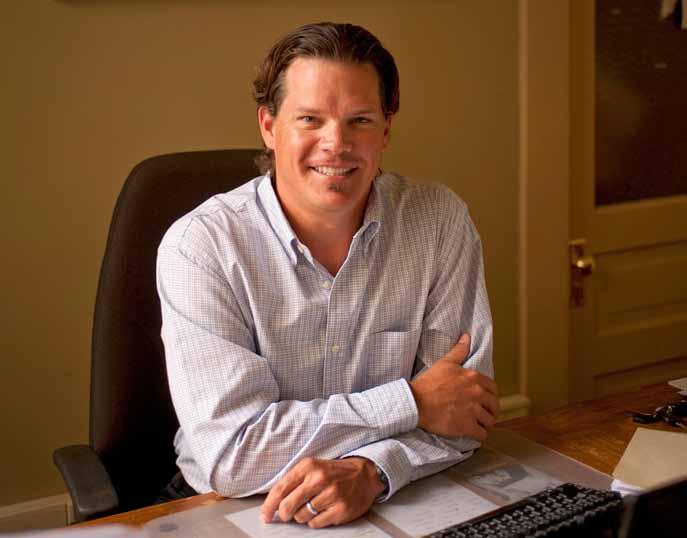
tim craig’s Journey from shamanism
TO The CO n SUM er’S SUBCO n SCIOUS
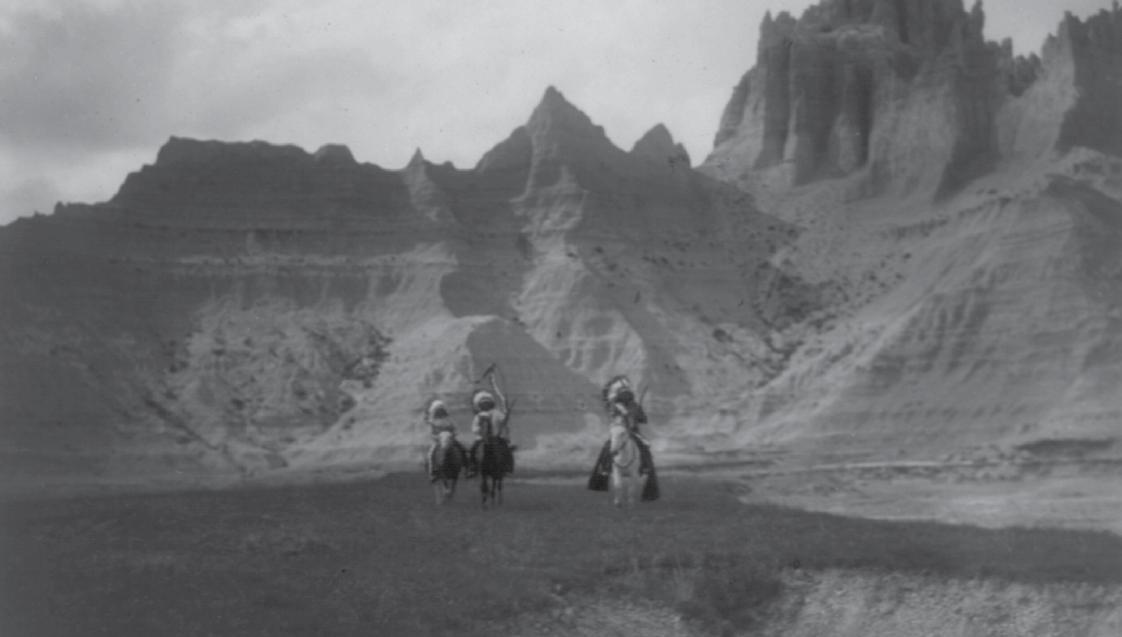
i t was 20 degrees below zero and snow had blanketed the rosebud reservation in south dakota. in a small hide lodge, tim craig stood in his boxer shorts alongside five of his peers from the audubon expedition institute and three lakota sioux elders.
As part of the traditional sweat lodge ceremony, one of the elders poured water over rocks that had been baking in a log fire. the temperature soared to a boiling point and steam rose inside the dome. And then, after the ceremonial passing of the pipe, Craig had a clear vision about what he wanted to pursue in life.
“i was really taken by the whole thing, the singing of the chants that had been in their history for hundreds of years,” he said. “ wanted to know about other people and their religious beliefs and various Native American cultures. then got interested in South American shamanism and their use of psychotropic drugs to induce trance. wrote my undergrad thesis about it.”
it was that intense experience in South dakota that propelled Craig to become a cultural anthropologist, even though he never took a course on the subject during his undergraduate years at Lesley University. He did, however, spend several months living on a bus with a group that traveled throughout Wyoming, idaho, South dakota and montana under the aegis of the Audubon expedition nstitute, studying the ecological
and environmental makeup of the four states and doing an independent study on the region. today, after traveling a roundabout route to get there, Craig is a cultural anthropologist/ethnographer at Guerra deBerry Coody marketing & Communications in downtown San Antonio, where he studies people and their unconscious decisions to purchase one product over another.
“in a market research sense, i go out into the field in their environment, talk to them about what it is ’m studying and follow them around their daily work schedule,” Craig said. “As head of qualitative research, design research plans for whatever it is a client wants to know about.
t’s all about delving deeper into the consumers’ life and thoughts, and understanding them and their behaviors around consumption.”
Craig rarely has a slow or boring day at the office. One week he’s studying cancer patients in Florida and the next he’s analyzing in-depth interviews with consumers for a major beer company or overseeing focus groups relating to the health care, animal, and food and beverage industries. Or he is creating and conducting a private research study with a select group of people on Facebook.
“Research is all about understanding consumers and what [they] want and need,” Craig says.
“We’re not trying to find a quick fix for the client
or suggestions for new products. We’re trying to understand what the consumer is doing on a subconscious level. We want to get into the mind of the consumer, and that knowledge benefits the client more than a survey.”
help along the Way
Before Craig landed at Guerra deBerry Coody (GdC) he enjoyed a somewhat nomadic lifestyle that suited him perfectly, yet also afforded him the opportunity to acquire the work experience that would help him in his role with the agency. After graduating from Lesley University in 1994 with a degree in environmental studies, Craig enrolled in a master’s program in anthropology at UtSA to pursue his newfound interest in cultures of the world and folk religious belief systems. He also planned to move to South America for his master’s thesis research on the Jivaro tribe. Along the way, he stopped in mexico and met an anthropologist.
“She said, ‘You’re interested in all this witchcraft and magic. there’s some of this happening right here,’ so ended up doing all of my master’s research in Central Highland mexico. i lived in
mexico for 14 months. that’s where learned to speak Spanish.”
After his stint in mexico, Craig took a detour and headed for the virgin islands, where he taught scuba diving for two years in St. thomas before eventually earning his Ph.d. in cultural anthropology from the University of Colorado in 2008.
He got involved in market research by way of a friend who worked for a Baltimore research company. “Because spoke Spanish, they sent me to Phoenix to study Hispanic women who used frozen foods in their cooking,” he said. “i did five more of those assignments along with some other independent contracts for the next two years. i also have more than 15 years of cumulative ethnographic research experience, which gave me the résumé to come to GdC.”
He cites daniel J. Gelo, dean of the College of Liberal and Fine Arts, and James “Jim” mcdonald, former chair and professor in the d epartment of Anthropology, as two positive influences during his time at UtSA.
“ d r. Gelo served on my m A committee, and took a number of his courses on Plains
ndians, magic, science and religion,” Craig said. “my interest at the time was in South American shamanism among the Jivaro tribe in eastern ecuador, so i was very interested in his experiences and courses.”
“As for dr. m cdonald, he was my graduate advisor and the chair of my thesis committee. His influence was primarily due to his mexican connection. He is also a mexicanist anthropologist. He studied in the neighboring state from my studies so our paths crossed in mexico numerous times. He aided me in understanding m exican culture, how to conduct studies in mexico and about empirical qualitative methods.”
Considering that the 38-year-old father of three makes a living researching the purchasing habits and behavioral patterns of other consumers, how does he decide what to buy at a store or select at a restaurant?
“i’m a creature of habit,” Craig said, laughing. “When i go to a mexican restaurant, order the same thing every time. ’ll always eat the carne guisada despite all the other choices because ’m searching for the best carne guisada in San Antonio.”
BY RudY aR isp E
the land is great. When man travels on it he will never reach land’s end; But because there is a prize offered to test a man to go as far as he dares, He goes because he wants to discover his limits. Kiowa Gomda Dawgyah (Wind Song)
S
mOng PLAI nS I ndIA nS: Origins of a Textbook
Turning onto a remote gravel road in rural Oklahoma in the summer of 1982, dan Gelo had no idea where it would eventually lead. His destination was an isolated Native American community that would prove, decades later, to set the foundation for a rewarding academic career.
Gelo’s new book, Indians of the Great Plains is a major milestone on what has become a 30-year journey to document some of the world’s most colorful tribal cultures.
he first Comanches met lived near Cyril, Oklahoma. i was told that they lived ‘east of Cyril,’ found Cyril on the map and drove down from New Jersey. i drove around knocking on doors until somebody said, ‘Oh, yeah, they live down this road and around that corner,’” Gelo explained. He had traveled to Oklahoma at the suggestion of his mentor at Rutgers University, William K. Powers, a noted scholar of the Sioux culture. Powers had advised that, while there was already much literature about the Sioux, the Comanches were not yet well studied. “ they were very welcoming—some of the most genuine and good-humored people ’ve ever spent time with,” Gelo said.
When the matriarch of Gelo’s first host family, a revered medicine woman, adopted him as a grandson, his immersion in Comanche culture intensified. He returned almost every summer, then during other times of the year, usually
living in a Comanche household. He gathered tribal stories, tended horses, learned to sing and dance in the Comanche style, attended ceremonies, and gained some grasp of the fast-fading native language. in 1989 he was inducted into esa Rosa, a warrior society named for Comanche leader White Wolf, and in 1998 he was named Ambassador to the Comanche Nation by the tribal chairman.
Over the years, Gelo, now d ean of the College of Liberal and Fine Arts, drew on these experiences to publish books and articles on such subjects as Comanche music and mythology, historical photographs, and i ndian geographical knowledge of texas. He also translated an 1865 Spanish-Comanche dictionary and collaborated on a book of reservation-era photos owned by novelist Larry mcmurtry. His research branched out to include other tribes, including the Kiowa, Cheyenne, Wichita, AlabamaCoushatta, Kickapoo, and tigua. And he was invited to write the Comanche entry in the Human Relations Area File at Yale University, the premier reference resource for world ethnography.
So when Gelo was recruited by UtSA as an assistant professor of anthropology in 1988, he was naturally asked to teach a course titled i ndians of the Great Plains. As he taught the popular undergraduate course, however, he became dissatisfied with the available
textbooks. “ there was a pretty good book, but it was written in the 1950s and hadn’t really been updated,” Gelo said. He began writing highly detailed lectures to fill in the blanks. the lecture notes evolved into what looked like a textbook outline—13 chapters that corresponded neatly with the standard 15-week semester. From these materials, he decided, it would be easy to write his own textbook.
But few things are simple, let alone the creation of a new book. “i thought it would take three years,” he said, laughing. “ t turned out to be, ’m sorry to say, about nine years. i felt had to publish some other things during that time. But the main reason it took so long is that, just as i signed the book contract, i also went into full-time administration. the textbook became more a project for nights and weekends.”
in writing the book, Gelo wanted to take his students beyond the stereotypical images that many of them held about Plains i ndians, like the image of the noble, almost superhuman mystic, or in contrast, the whooping, torturing savage. And, as he reminds his students, the Plains indians are not a people frozen in time. in the text he writes: “Plains indian people are not defined only by their heritage and history, but also in the ways they have continued to live as a distinctive part of American and Canadian society into the 21st-century.”
Asked about details of indian culture that surprise students, Gelo mentioned music. He noted that the so-called “nonsense syllables” that i ndians pronounce when singing their songs, properly called vocables, actually conform to strict grammatical rules. And, Gelo explained, to the uninitiated ear, the wailing of a Comanche song seems disconnected from the drumbeat that accompanies it. But if
you take a recording and slow it down, “the quavering of their voices meshes with the drumbeat. We’re just not used to listening at that micro level.”
“ i t’s an example of the complexity and sophistication of ndian culture,” he said.
Gaining an understanding of that culture also means accepting sharp contrasts. Some of the primary sources that Gelo references in his book were written by early white settlers who had been kidnapped by i ndians as children, often as the i ndians murdered their parents. they describe being treated warmly by families who rarely used corporal punishment on children, yet who also initiated them into a brutal raiding tradition.
“ t’s true that Plains i ndian culture can seem very paradoxical,” Gelo said, “but perhaps we see that paradox in sharper relief when we look at cultures other than our own. i wonder if all cultures are paradoxical.”
As to what distinguishes the new book from earlier texts, Gelo pointed to the inclusion of Native voices. He has included analyses by indian scholars, illustrations by i ndian artists, and traditional prayers and song texts. there are also many translated words in Native languages. Students may find such information challenging to comprehend, but Gelo explained that “these are mostly still living languages, and sophisticated ideas are contained in these words.” Another characteristic that makes the text unique is Gelo’s reliance on his own field notes for examples on such issues as kinship customs and interracial relations.
Gelo’s professional experiences also played a key role in shaping the book. in 1994 he was invited to co-author a series of textbooks for grades 2-6, published by Silver Burdett Ginn. it
was the first time an anthropologist was asked to collaborate with historians and geographers, and the project shaped his thinking about how to integrate material about Native American cultures into general education. i n addition, there was all of Gelo’s experience in the lecture halls of UtSA; a Chancellor’s Council Outstanding teaching Award winner, he brought a refined sense of what does and does not work in the college classroom.
As Gelo was reminded during the process, though, writing a book is more than just writing up lecture notes and ideas. Photos had to be found, credited, and captioned; maps drawn; and tables compiled to illustrate the factors that shaped tribal life. He created a complete list of the Plains tribes with concise, up-to-date facts about their origins, ranges, population estimates, and languages. After its long gestation, Indians of the Great Plains is finally available from Pearson, and is now being adopted in college classrooms around the country. Gelo is excited, but not just by the satisfaction of publishing a solid new textbook. “i hope it reassures my colleagues that someone who works in administration all day can still maintain an intellectual life and contribute to his or her discipline,” he said.
DA n Ge LO dean, College of Liberal and Fine Arts and Professor of Anthropology, B.A., m.A., m.Phil., Phd., Rutgers University
M Y stud E nts M ight saY... really cares about his subject and student learning, always tries to be helpful, socks and tie usually match.
i n MY l E isu RE ti ME ... play guitar until the neighbors complain, kayak, hike, fly fish.
M Y Favo R it E plaCE in th E Wo R ld is.. Pecos River headwaters, Santa Fe mountains, New mexico.
Wh E n RE ti RE... may finally have time to write up all my field notes.
dan Gelo in Comanche gourd dance regalia, 1989.
The spirit of San Antonio
By C I n Dy T UMI
Football has arrived at U tSA. But as the players line up for kickoff, someone has to stir the emotional fires on the field and in the stands.
Ron e llis, U tSA’s new d irector of Athletic Bands, spent the past year envisioning the moment when woodwinds, brass and percussion instruments meld together in the public performance of the university’s fight song, and hearts soar in support of the UtSA Roadrunners.
“You just can’t put the feeling into words— when everyone is in the stands, gearing up for the game and all of a sudden the drum roll starts and the band marches out of the tunnel. they represent all the hopes and aspirations of everyone at UtSA,” said ellis. these moments also represent a special triumph for e llis, who came to U t SA from the University of Central Florida in 2010 to fulfill the school’s commitment to have a marching band debut alongside the new football team. e llis has spent the last year immersed in details—from picking out piccolos and tubas to choosing band uniforms to figuring out where to store the instruments. He reinvigorated the school fight song, revved up emotional support
for the band on and off campus, and began the process of raising needed funds—all before selecting a single band member or organizing one rehearsal.
“We began with the stance that we are going to provide the students with a great learning opportunity and build this into one of the best marching bands in the country,” ellis said. “Like the football team, it is going to have to start not slowly, but smartly.”
He was given one year to plan, organize and equip an initial start-up band of 150 to 175 members. He hopes to be able to add more musicians as the band gains skill and financial support.
Last year, ellis worked to increase the visibility of the UtSA Pep Band at basketball games and other university events. those students were given an opportunity to apply for the marching band. ellis selected three drum majors and about three dozen student staff members during the spring. Recruiting for new band members began in may as part of freshman orientation. most UtSA students come from Central and South texas, a hotbed of high school football pride and home to some of the best high school bands in the country. ellis expects some of those
COLFA FACULT y P UBLICATIO n S 2010-2011
An T hr OPOLOG y
Classic Maya provincial politics: Xunantunich and its hinterlands
Lisa J. LeCount and Jason Yaeger (U. of Arizona Press)
indians of the great plains daniel J. Gelo (Pearson)
Ar T A n D Ar T hISTO ry
neo-Mexicanism: Mexican Figurative painting and patronage in the 1980s teresa eckmann (University of New mexico Press)
e n GLIS h
band members will be enrolling at UtSA, and many of them will relish the opportunity to become part of a collegiate marching band. Prior band experience is not necessary, he stressed.
“every person is evaluated, regardless of their experience,” he said. “ those people with high school and marching band experience are a step ahead. But that doesn’t mean you can’t acquire these skills over a season or two. We are a university; we want to teach.”
Nor do band members need to be music majors. n his experience, ellis said, most marching band members are majoring in science, engineering or computer technology. For their participation in the band, they get an elective credit towards their degree and an activity that looks good to future employers. Band members gain confidence and public poise while learning skills like time management and leadership. Fans should expect the band to reflect San Antonio and South texas, both in its membership and its performances.
“Our halftime show might be country-western one week, then rock-n-roll, then tejano the next,” ellis said. “We want to capture the spirit of UtSA and the city of San Antonio.”
a handbook of Critical approaches to literature, 6th edition
Wilfred L. Guerin, earle Labor, Lee morgan, Jeanne Campbell Reesman, John Willingham (Oxford University Press)
Critical Companion to Jack london
Jeanne Campbell Reesman (Facts on File)
Critical insights: albert Camus
Steven G. Kellman, editor, (Salem Press)
Early Modern England and islamic Worlds
Bernadette Andrea and Linda mcJannet, editors (Palgrave macmillan)
inside the latin Experience: a latin studies Reader
Norma e Cantú, co-editor (Palgrave)
Jack london, photographer
Jeanne Campbell Reesman, Sara S. Hodson and Philip Adam ( the University of Georgia Press)
la pinta: Chicana/o prisoner literature, Culture and politics
Norma e Cantú, editor ( texas A&m University Press)
notes from the Committee Catherine Kasper (Noemi Press)
speaking the other self: american Women Writers
Jeanne Campbell Reesman, editor (University of Georgia Press)
the Complete poetry and prose of geoffrey Chaucer 3rd edition
mark Allen and John H. Fisher, editors (Wadsworth Publishing)
hISTO ry
patriotic Envelopes of the Civil War
Steven R. Boyd (Louisiana State University Press)
M USIC
Music in the human Experience
donald A. Hodges and david C. Sebald (Routledge)
Music of latin america and the Caribbean
mark Brill (Pearson)
20 Miniatures for solo guitar
matthew dunne (Guitar Solo Publications)
P OLITICAL
A n D Ge OG r AP hy
la Mano invisible en el Estado: Critica a los neoliberales Criollos, 2nd edition
Francisco durand (Pedagógico San marcos)
the Europeanization of Conflict Resolution: Regional integration and Conflicts in Europe from the 1950s to the 21st Centur y Boyka Stefanova (manchester University Press)
P S yC h OLOG y Mnemonology: Mnemonics for the 21st Centur y James Worthen and Reed Hunt (Psychology Press)
S OCIOLOG y
Mexican american and immigrant poverty in the united states
Ginny Garcia (Springer)
Religion, Families, and health: population-Based Research in the united states
Christopher G. ellison and Robert A. Hummer (Rutgers University Press)
Ovations, Vol. 5, 2010, won the Council for the Advancement and Support of Education District IV Grand Award (Gold) in the Magazines—Four Colors Throughout category. Ovations photographer extraordinaire, Patrick Dunn, also won a special award (Honorable Mention) in the Color Photography category for his work on the Ovations cover story “Gregory Elliott: Man of Steel.” Ovations is a three-time CASE award winner.
COLFA Colleague and Friend retires
Frank Segura, who worked in the UTSA Department of Publications for many years, retired this year. Frank was part of the team that raised Ovations to the award-winning professional level it now occupies. He will be missed.
humanities and Social Sciences
Building renamed
The Humanities and Social Sciences Building (HSS), home to the COLFA Dean’s Office and many of the college’s classes, is now the McKinney Humanities Building. The building was renamed in appreciation for the largest single private gift to the University, given by former student Mary E. McKinney.
Sculpture and Ceramics Graduate Studio Opens
The newly constructed 13,550-square-foot
Sculpture and Ceramics Graduate Studio is now open. The studio is a teaching venue for the Department of Art and Art History. It houses office and classroom space, 18 studios including a 3-D design studio, welding areas and a critique gallery.
Department of Communication receives Top Ten Distinction
The Department of Communication has been identified as a “Top Ten” department in one or more areas of disciplinary research focus by the Communication Institute for Online Scholarship’s
ComVisata/ComAnalytics system. The system tracks article publication by faculty at more than 700 programs in the U.S. and Canada. A Top Ten designation indicates a department with faculty who have collectively published a minimum of three articles on a tracked subject.
F ACULT y
Congratulations to Melvin Laracey and Daniel engster, associate professors in the Department of Political Science and Geography, who were awarded National Endowment for the Humanities Research Fellowships for 2011-2012.
The following COLFAbulous faculty members were presented The University of Texas Regents’ Outstanding Teaching Award: Mark Allen Professor, Department of English; Karen Dodwell Senior Lecturer, Department of English; Daniel engster Associate Professor, Department of Political Science and Geography; Amy Jasperson, Associate Professor, Department of Political Science and Geography. BRAVO!
The following COLFAbulous faculty members were presented the President’s Distinguished Achievement Award: David Hansen, Lecturer, Department of History; David Heuser, Associate Professor, Department of Music; r ichard Gambitta , Associate Professor, Department of Political Science and Geography; Kirsten Gardner, Associate Professor, Department of History.
CONGRATULATIONS!
James Balentine Professor, Department of Music, was chosen as an American Society of Composers, Authors and Publishers (ASCAP) 2010-2011 award recipient. Awards are based on the unique value of a writer’s catalog of original compositions and recent performances in areas not surveyed by the society.
Additionally, Dr. Balentine was the featured composer at the Conservatorium aan Zee in Ostend, Belgium. The title of the concert, “The Red Poppy and the Yellow Rose,” symbolized the cultural link between the people of Belgium and the people of Texas. A CD of the concert was recorded.
Marian Aitches Senior Lecturer, Department of History, was selected for a
National Endowment for the Humanities Summer Scholars Seminar at the University of North Carolina at Chapel Hill. The fiveweek seminar, “Ethnohistory of Indians in the American South,” was led by eminent scholars in the field. Dr. Aitches was selected in part based on her proposal for research on the persistence of Cherokee/Choctaw/ Chickasaw communities in East Texas.
renee c owan, Assistant Professor, Department of Communication, was the Hauser Lecturer at The University of Texas— Pan American. She co-presented the lecture, titled “Walking the Tightrope or Singing in Harmony? Communication Approaches to Understanding and Improving Work-Life Balance.”
William Mccrary Associate Professor, Department of Music, directed Puccini’s Gianni Schicci and Act II from The Magic Flute by Mozart for the first annual Yunnan Music Festival in Kunming, China. The program included 25 students from the U. S., 10 from Taiwan, and five from China.
Anne Hardgrove Associate Professor, Department of History, has been awarded a grant for 2011-12 from the University of Texas South Asia Institute and the Department of Education to develop UTSA’s curriculum on the history of South Asia.
S TUD en TS
Myrriah Gomez , Ph.D. student in the Department of English, has been awarded a 3-year Pre-Dissertation Fellowship by the Ford Foundation for her project, “Reading Between the Borderlines: Biopower, Scientific Colonialism, and Polyphonic Reactions to Los Alamos.” Three other Ph.D. students in the Department of English earned awards from the Ford Foundation: christina Gutierrez and roberta Hurtado received
Mark Allen Karen Dodwell
Daniel engster Amy Jasperson
Pre-Dissertation Honorable Mention Awards and Patricia Portales received a Dissertation Honorable Mention Award.
Pursuing dual COLFA majors in history and anthropology, Andrew nicholl won the Jane C. Waldbaum Archaeology Field School Scholarship. The scholarship, established to help students planning to participate in archaeological fieldwork for the first time, allowed Nicholl to participate in a UTSA faculty-led Belize Archaeology Field School. Andrew’s trip to Belize was also supported by his award from the nationally competitive Benjamin A. Gilman International Scholarship program.
Department of Psychology students
Albert castillo, Aruba Hussain and Brettany Johnson presented their research at the 12th annual University of Maryland College Park National Conference for McNair Scholars and Undergraduate Research in Washington, D.C.
research topics:
Albert castillo “Humor, Social Support and Life Satisfaction” -- mentor Mary McNaughton-Cassill, Associate Professor of Psychology
Aruba Hussain: “Factors in Gender Differences in the Emotion of Guilt” -- mentor Ann Eisenberg, Associate Professor of Psychology and Associate Dean of the Honors College
Brettany Johnson: “The Effect of Study Modality on False Recall: A Comparison of Written and Spoken Recall” -- mentor Rebekah Smith, Assistant Professor of Psychology
A LUM n I
Frauke steinmeir 2006 Art graduate, has received a Fulbright English Teaching Assistantship and will teach English at The University of Luxembourg in the 20112012 school year.
Department of Music 2003 alumnus and musician Jake owen appeared on CBS’s “Late Show with David Letterman.” A composer and producer, Owen spent this year playing and touring the country with several bands.
christopher D. Littlefield , a 2004 Department of Music graduate, has had great success in his career. Christopher moved to New York shortly after graduating from UTSA where he worked with The Juilliard School and collaborated with such talents as BD Wong, Cyndi Lauper, and the late Rue McClanahan. This year, he was the associate conductor for the touring company of “9 to 5: The Musical”, which performed at the San Antonio Majestic Theatre during its tour. He now holds the same position for the first national tour of “The Addams Family: The Musical” and appeared on The Oprah Winfrey Network as Music Director/Arranger/Pianist for the premiere episode of Oprah’s new reality TV show, “My Time.”
Department of Communication 2003 alumnus catherine e . Jung was named 2010 Air Force Public Affairs Civilian of the Year in her category for the third time in six years. As secretary of the Air Force Office of Public Affairs Engagement Division, Jung was given the “Outstanding Communication Intermediate Level Grade Civilian Award” for “outstanding leadership and management in planning and executing efforts that leveraged all communication functions to achieve measurable effects.”
Mary reilly-Magee, B.A. ‘90, M.A. ‘00 in English, the owner and founder of Love to Swim and Tumble School in San Antonio, won a Stevie Award for Best Entrepreneur in the Stevie Awards for Women in Business. This international competition recognizes the accomplishments of outstanding women executives and entrepreneurs, and the organizations they run.
your gifts make a difference in the UTSA College of Liberal and Fine Arts
Thanks to the generous support of our alumni and friends, the College of Liberal and Fine Arts is the leader in many areas of education, research, creative activity and outreach in San Antonio and South Texas. We are the largest college at UTSA, and your gifts help us build outstanding programs that serve the growing needs of our college, our students and the greater community
While we are grateful for each and every gift we receive, due to space limitations, the report below lists donations of $1,000 or more for the September 1, 2010, to August 31, 2011, fiscal year. Thank you!
$50,000 to $99,999
James H. and Catherine Bodenstedt
John S. Jockusch
Carolyn Lowery
John L. Santikos Charitable Foundation
John L. Santikos
$25,000 to $49,999
82 Westminster Fund of the Community Foundation for Greater Atlanta
Gloria Galt Fund of the San Antonio Area Foundation
Gloria Galt
$10,000 to $24,999
Anonymous
Centro Cultural Cubano of San Antonio
Milton S. Jacobs
May K. and Victor Lam
Rajam S. and Somayaji Ramamurthy
The USAA Foundation
Charlotte and Charles R. Walker
$5,000 to $9,999
John and Brenda Adlam
Helen L. Eisaman (M.A. ‘91)
Ford Salute to Education
Joyce (B.A. ’92) and Richard E. Harris
Richard and Joyce Harris Sapience Foundation
The Labatt Foundation Barbara E. (M.M. ‘03) and Blair P. Labatt, Jr.
Law School Admission Council
Lo Bello de San Antonio
Marianne C. and Stewart R. Reuter
Russell Hill Rogers Fund for the Arts
San Antonio Area Foundation
Ernstine K. Studer
Tobin Theatre Arts Fund
University Bowl
Loretta (B.A. ’77, M.A. ’80) and Robert E. Valdez (M.A. ’08)
Kathleen Weir Vale and Albert Vale
Valero Energy Corporation
$2,500 to $4,999
Anonymous
Green Umbrella Corporation
Helen K. Groves
H-E-B
Catherine Lee
The Presser Foundation
San Antonio Musical Club
Douglas E. Thomas
$1,000 to $2,499
Anonymous
Richard D. Braune
Sally M. and Robert T. Buchanan
Jane F. and Emmette Y. Burton (M.A. ‘95)
Monika and James D. Calder
Clear Channel World Wide
D’Addario Music Foundation
Linda A. (B.A. ‘77) and David R. Davila
Lisa C. Dollinger
Margaret Boryczka Gupta Trust
Margaret Boryczka (B.A. ‘79) and Shashikant Gupta
HACEMOS Scholarship Foundation
Carolyn H. and Houston H. Harte, Jr.
Angelika C. Jansen and Robert Brown
The Kangaroo Court Restaurants of Texas, Inc.
Leal Art Gallery
Frank J. Leal, Jr. (B.A. ‘96)
Madeleine and Eric Levi
Siri S. Bletzer and Richard Lewis, Jr.
Kyle May
Mission Pharmacal
Gayle A. Graham and John F. McFall (B.B.A. ’92)
Francis “Sandy” A. Norman
Opera Guild of San Antonio
The Harris K. and Lois G. Oppenheimer Foundation
Lois G. Oppenheimer (deceased)
Nancy E. Pawel
Sandy and Alan L. Peterson
Jane Cheever and Thomas L. Powell Jr.
Kendall and Chris Purpura
Charles and Gail Ribalta
Lee Robinson and Jerald Winakur
Round Top Consulting Services
Melinda K. (B.S.’81) and Louis Schultz
Security Service Federal Credit Union
Melissa D. (M.A. ‘90) and A. P. Shepherd
Mary Pat and Louis Stumberg
Univision Management Company
Beverly and Neill B. Walsdorf, Sr.
Jo Ann P. Wigodsky
To learn how you can make an investment in the UTSA College of Liberal and Fine Arts that will inspire future generations, please contact:
Kendall Purpura
Director of Development
The University of Texas at San Antonio
One UTSA Circle
San Antonio, TX 78249-0641
John santikos
Friends who are making a difference
Fifty incoming freshmen in the College of Liberal and Fine Arts received $1,000 scholarships this year, thanks to the generosity of John santikos and the John L. santikos charitable Foundation. To commemorate the 100th anniversary of Santikos Theatres, John chose to fund $100,000 in scholarships to students at UTSA and St. Mary’s University, his alma mater.
As an active arts supporter and community leader, John is proud of the positive impact his family’s theatres have had in San Antonio. Thousands of young people have worked their first jobs in Santikos Theatres, many pursuing their education at colleges in the community like UTSA. Because of this generous gift, fifty COLFA freshmen will receive support as they continue their education and pursue their dreams at UTSA. From humble beginnings in 1911, the
Jim and cathy Bodentstedt Jim (BBA ’96) and cathy Bodenstedt (BA ’11) are no strangers to UTSA. Both are alums and proud supporters of the university. This year the Bodenstedts became the first private donors to donate one million dollars to the UTSA football program, although football was not the only program at UTSA to benefit from the Bodenstedt’s generosity. The Department of Art and Art History received a $50,000 gift from the
Santikos Theatres have continued to bring the latest innovations in cinema technology to San Antonio. Santikos remains the only locally-owned and operated theatre circuit in South Texas. Local Santikos Theatres include the Palladium IMAX, Silverado 16, Mayan, Northwest, Embassy, Bijou Cinema Bistro and the Rialto. The company also has a 19-screen IMAX theater in Houston.
Bodenstedts that qualified for a matching opportunity provided by another couple who are also proud UTSA supporters, Carlos and Malu Alvarez.
The total gift of $100,000 is providing travel, research, and scholarship opportunities for graduate Art and Art History students. “Cathy’s gift is the most significant support gift our department has received in the past ten years. This gift is helping to establish our graduate programs and gain national exposure,” says Greg Elliott, Chair of the Department of Art and Art History.
The Bodenstedt’s own and operate MUY Brands LLC a 117-unit franchise restaurant company with locations in Texas and New Mexico. They met in high school in the 1980s while working at a local restaurant. Years later in 2003, they started MUY Brands and acquired 18 Taco Bell and KFC restaurants in West Texas and Corpus Christi. Today, MUY Brands also includes Pizza Hut, Wing Street, Long John Silver’s and A&W restaurants.
in Memoriam
This past May, we said a sad goodbye to longtime UTSA supporter and community leader, Louis H. stumberg. His philanthropic legacy alongside wife, Mary Pat, can be found across the UTSA campus, but nowhere more prominently than in the Department of Music. In addition to their annual giving to the COLFA Dean’s Circle, Mary Pat and Louis made multiple endowment gifts to Music in support of piano and strings students as well as innovative endeavors such as interdisciplinary studies in music and the sciences. Their giving has had a tremendous impact on dozens of students and will continue to do so for years to come.
As co-founder of the San Antonio company Patio Frozen Foods, Louis is credited with taking frozen Tex-Mex foods nationwide. His civic involvement was extensive, including involvement and leadership in the United Way, Downtown Rotary Club, Boy Scouts Alamo Area Council, Greater San Antonio Chamber of Commerce, and the Texas Parks and Wildlife Commission. Louis also served as a Civilian Aide to the Secretary of the Army.
We remember Louis fondly, as so many in our community will, with a smile on his face and an endless desire to leave the world a little better than he found it. Indeed he has.
11 Departments
Anthropology, Art & Art History, Communication, english, History, modern Languages & Literatures, music, Philosophy & Classics, Political Science & Geography, Psychology, Sociology
Majors concentrations certificates
22
Majors concentrations certificates undergraduate degree programs with 11 concentrations, 2 undergraduate certificates in music, 13 graduate degrees and 5 graduate certificates
S C h OLAr S h IPS
COLFA currently has about 90 endowed and annual scholarships designated solely for COLFA majors. in the 2010-2011 academic year COLFA and its eleven departments gave over 180 awards to students totaling over $358,000.
Special Programs
the UtSA debate team is housed in the college’s department of Communication and has achieved national ranking each year for the past several years. in march 2011 the debate team ranked 13th overall in the nation in the National debate tournament standings and 9th in the varsity division ahead of other texas schools such as trinity and Ut Austin.
A g LI m PSE OF COLFA 2010–2011 C
Study AbroAd
COLFA leads the University in study abroad opportunities.
COLFA contributes to the education of virtually every student at UtSA through the Core Curriculum—33% of all UtSA credit hours are taught in COLFA. the American Council of trustees and Alumni gave UtSA an “A” on its annual “What Will they Learn?” report which grades public and private universities on how well they cover core subjects. COLFA provides four of the seven subjects.
the University of texas at San Antonio
One UtSA Circle
San Antonio, t X 78249-0641
Col Fa Inspiring Creative Minds
U t SA COLL e G e OF Li B e RAL AN d Fi N e A R t S
d e AN, daniel J. Gelo
A SSOC i Ate d e AN, Undergraduate Studies and Faculty Support
Christopher Wickham
A SSOC i Ate d e AN, Research and Graduate Studies Augustine Osman
A SS i S tAN t d e AN, Assessment Sue Hum
A SS i S tAN t tO t H e d e AN, deborah d thomas
e ditOR, Judith Lipsett
A R t d i R e C tOR AN d P UBL i CAti ON d e S i GN e R, Karen Heth thurman
CON t R i BU tORS, Rudy Arispe, Anthony Cantú, Patrick Collins, Jennifer Franklin, Cindy tumiel
P HOtOGRAPH e RS, Patrick R. dunn, mark mcClendon
P RO d UC ti ON COOR di NAtOR, Frank Segura
P ROJ e C t mANAG e R, deborah d thomas
College of Liberal and Fine Arts One UtSA Circle
mH 4.01.23
San Antonio, t X 78249-0641
(210) 458-4350, (210) 458-ARtS (for arts events information) www.colfa.utsa.edu
Non-Profit
U.S. Postage paid
Permit # 2474
Austin, t X
Ovations is the annual publication of the College of Liberal and Fine Arts (COLFA) at the University of texas at San Antonio. Ovations is for our patrons, faculty, staff, alumni, students and friends to highlight noteworthy achievements and activities of the college.