
connEctions
Welcome to another edition of Ovations, highlighting the outstanding achievements of students, faculty and supporters of the U tsa College of Liberal and Fine a rts.
What the liberal arts are, and why these disciplines are important, are perennial questions in the academy. Whereas many written definitions and justifications have been offered, nowadays energy is spent more on balancing conflicting expectations about the liberal arts and defining these disciplines through actions as well as words.
Azar Nafisi, author of the best-selling 2003 memoir Reading Lolita in Tehran, offers one characterization that many of us would agree with: “For me, the core idea of a liberal education involves the idea of the other, and curiosity about the other. All of us should come out of our skin and think about others.”
Nafisi then goes on to reflect on the relevance and value of our studies, and her comments embody the inherent contradictions.
She first lauds efforts to apply liberal arts insights by, for example, incorporating works of literature in medical education (an initiative some COLFA faculty have been pursuing). But then, “Literature is literature, and we should read it because it is literature, not because it is handmaiden to anything else….”
UTSA faculty in the arts, humanities and social sciences continually and effectively mediate such contradictions. They
uncover or nurture the passions that propel students in their specialized courses of study. They instill the necessary factual knowledge while also showing students how to formulate and address problems. They demand that students imagine the liberal arts in new ways. And through such mechanisms as the pioneering COLFA Signature Experience, they make available to every COLFA student a supervised application of liberal arts training in some real-world setting.
Faculty success in helping our students to understand and carry forward with the value of an education in the arts, humanities or social sciences is evident in so many ways. One need only witness the outstanding placement rate for degree recipients in our relatively new English doctoral program, or the preparation of UTSA’s Rhodes Scholarship competitors, both of whom were COLFA students tutored by COLFA faculty. And the infusion of diversity themes throughout the COLFA curriculum speaks to Nafisi’s notion of thinking about others.
I hope you enjoy reading about our current efforts in defining the liberal arts, and share in our sense of purpose and accomplishment.
4 More than just digs 6 s napshots of t exas 8 t he r oad to r hodes 10 signature experiences 12 Wo M en pioneers 14 g reg orye lliott: Man of s teel 18 aliving laboratory for sociologists
b roadening our horizons 24 a lu M ni profile: to MczeKans
aWardsandaccolades
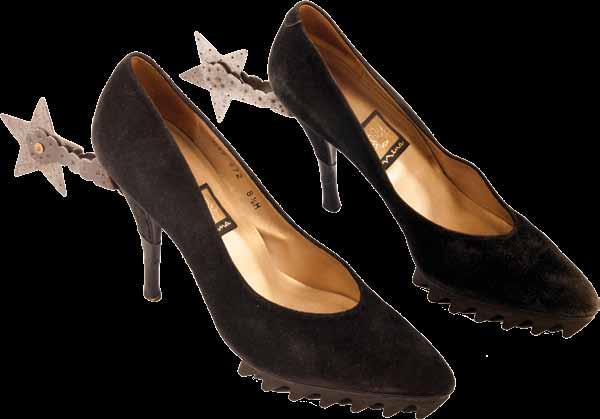
“Texas Tough Girls,” a sculpture by Greg Elliott


just digs
Decades before global warming became a frontpage issue, subsistence farmers in the tiny villages of Papua New Guinea were noticing subtle changes in their environment.
Over the past 100 years, sweet potatoes, bananas and taro, the staple crops that sustained their economy, were able to thrive at increasingly higher altitudes in the mountainous nation. Native tropical vegetation and temperature-sensitive wildlife also were creeping higher into the rugged landscape of the Southeast Asian island.
Jerry Jacka was a University of Oregon graduate student doing field research in Papua New Guinea during the mid1990s. He copiously recorded the farmers’ stories, but didn’t make much analysis; there was no widespread awareness about climate change. Now, though, as an associate professor of anthropology at UTSA, Jacka has returned to the country to use it as a living laboratory to study human adaptation to the slow warming of global temperatures.
“I realized that the people there have
been very cognizant of the progressively warming temperatures over the last 100 years,” Jacka said.
His research interest demonstrates the range of contemporary topics being tackled by anthropologists at UTSA. There’s still plenty of research into the historical aspects of human-environment interactions, piecing together the story of humanity before written languages captured episodes for the history books. But modern anthropologists also study how people today are adapting to a wide range of global pressures, from climate change to rainforest exploitation to health care needs.
Jacka’s research approach has become as global as the issue he is studying. He has embarked on field research in Ghana and Uganda as well as Papua New Guinea, looking at the effect that global warming is having on the lives of subsistence farmers and their communities.
Just about every Papua New Guinea village he visited as a graduate student has relocated further up the mountains in the past 15 years, following the climate change and adapting crops. He also has documented animal and plant species
industry,” Cepek said. “That has radically transformed their lives.”
The population dwindled to about 400 members in the 1980s as the hapless, primitive people were exploited and overrun by the quest for crude. But now they have bounced back and have learned how to assert their rights in the contemporary political system.
Cepek, who lived for two years in Zabálo, the center of the Cofán nation, has studied their coming of age, so to speak, as people learned how to protect their cultural and environmental assets. He is writing a book telling the story of the Cofán.
“They moved from being one of the most fragile of communities to being one of the most successful,” Cepek said. “How did that happen? How was this group able to be that successful?”
Health disparities
Medical anthropologist Jill Fleuriet is staying much closer to home in the pursuit
babies, contrary to the expectations of public health officials.
“The birth outcomes cannot be explained by diet, social support, or a lack of risk behaviors, such as smoking. So, what is it?” Fleuriet said. “This is the question I am most interested in answering. think it is cultural—something in the way in which Mexican immigrant women and their friends and family approach the state of being pregnant that defies known risk factors for low birth weight.”
Fleuriet spent 12 weeks at a midwifery center and a primary clinic for women in the Rio Grande Valley talking with patients and staff and documenting how the pregnant women act and are treated.
“I want to identify these cultural processes that promote positive birth outcomes,” she said. “We know positive birth outcomes correlate with a host of health benefits in babies, infants, even adults. If we can figure out ways to
traded seeds as market commodities or taught other tribes about the principles of growing crops when they migrated to new lands.
But Hard and a group of researchers published findings last year that paint a more complex picture in North America, suggesting that maize, the staple crop of many native cultures, and Uto-Aztecan, a large family of related native Indian languages, actually migrated in different directions and at different times.
Maize, or corn, was domesticated by people in what is now central Mexico, and the plant spread from south to north between 4,000 and 6,000 years ago, Hard said.
But Uto-Aztecan, he argues, moved south and west, originating from the Great Basin region of what is now the United States around 8,000 years ago.
The study, published in December 2009 in the journal Proceedings of the National Academy of Science , is a
moving to higher altitudes at his study sites in Africa.
“As anthropologists, we are interested in looking at people’s responses to changes in their environments,” Jacka said. “Are they going to be enough to allow these small-scale villages to deal with the resulting climate changes? What can we do to help them?”
A culture in danger
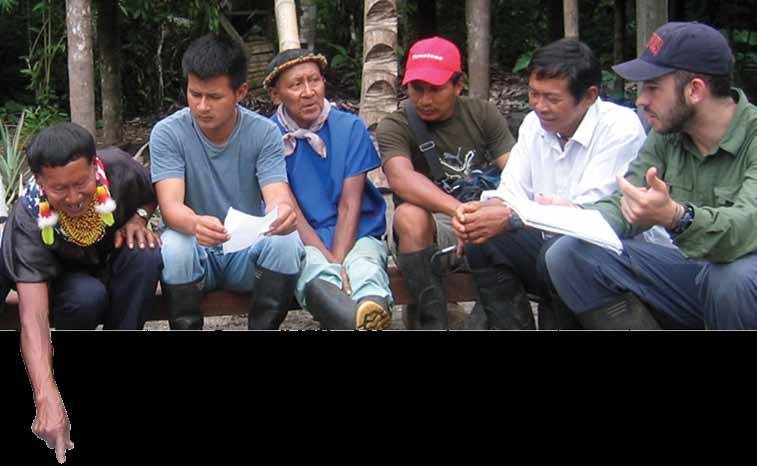
Assistant professor Michael Cepek journeys to a different remote outpost— the Andean foothills bordering Ecuador and Colombia—where the Cofán people, an endangered indigenous culture, struggle against the transformational pressures brought on by modern industrial development in their rainforest environment.
The Cofán lived in primitive, isolated conditions for centuries. Global thirst for oil brought corporate giants into their jungle region, which covers some of the richest crude reserves in South America. With them came drilling rigs, pipelines, roads and Western influence. “They now live in the epicenter of the oil exploration

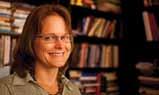
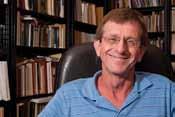
“As anthropologists, we are interested in looking at people’s responses to changes in their environments.”
of her research interest—the complex relationship between culture, economic status and health care outcomes. Fleuriet, an associate professor who came to UTSA in 2003, focuses on the culturally rich region of the Texas-Mexico border, where marginalized Mexican immigrant women in need of prenatal care must navigate the American health system.
Usually, low-income minorities have poorer health outcomes than the general population. But Fleuriet is finding that is not the case among pregnant, lowincome women who recently immigrated to the United States from Mexico. They give birth to full-term, normal weight
promote positive birth outcomes—from the women themselves—then, hopefully, we can improve upon the structure and content of prenatal care for this and other populations.”
Maize and language
Associate professor Robert Hard has delved into the dual topics of agriculture and language history, tracking the development and migration of both among American Indian cultures of North America. Conventional thinking is that language and agriculture spread together, when migratory people took their crops with them as they moved. They
synthesis of studies done by several other researchers who used techniques that included carbon dating of seeds and linguistic analysis of common root words.
“It was a lot of looking at a lot of different studies,” Hard said.
The study has been fodder for new academic arguments. It will undoubtedly stimulate further interest in exploring the way people adapted to the North American environments in the centuries before written languages captured events for history books.
“It’s just cool,” Hard said. “There are a lot of interesting puzzles out there for us to figure out.” o
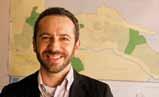
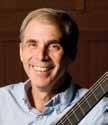
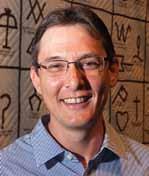
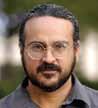
Jerry Jacka (from left), Michael Cepek, Jill Fleuriet and Robert Hard are UTSA anthropologists.
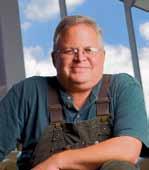
Jerry Jacka, associate professor of anthropology
Snapshots of Texas
By Vincent t. davis
In the early 20th century, postcard photos were the Facebook of the day. The 3½-by-5-inch cards were snapshots of life—the mundane to the monumental— exchanged with friends and loved ones from one end of the country to the other.
In Texas, the craze prompted novice and professional photographers to lug cumbersome photo equipment across craggy and windblown lands to capture images and stories.
John Miller Morris, professor in the political science and geography department, has set out to capture that world by collecting almost 10,000 antique photographs of the Lone Star State.
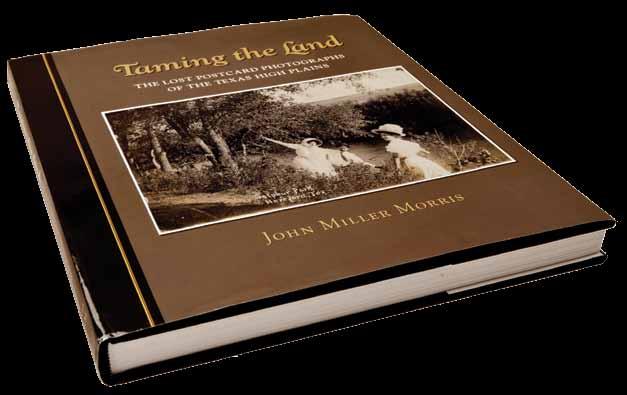
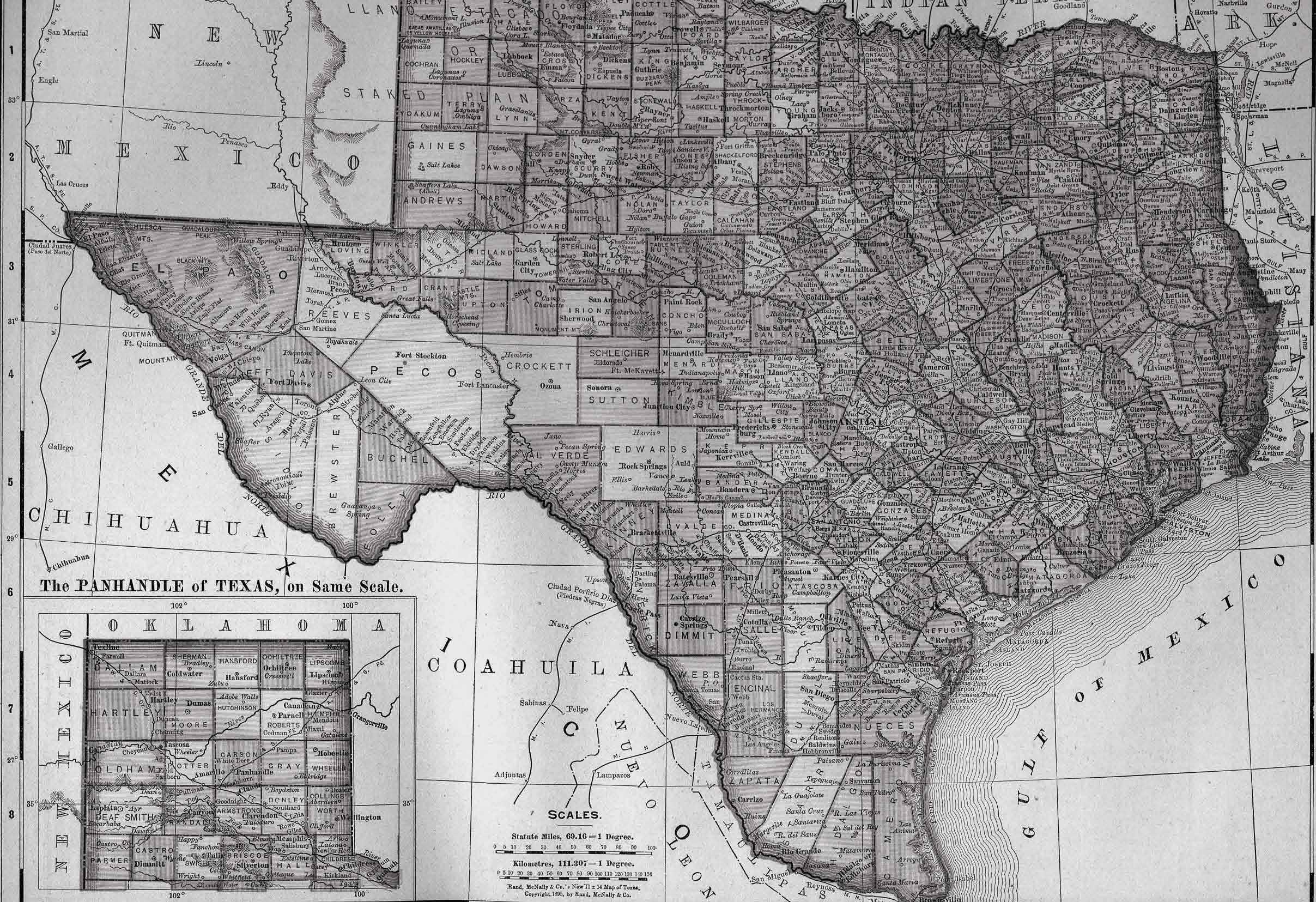
In his book, Taming the Land—The Lost Postcard Photographs of the Texas High Plains, published by Texas A&M University Press, Morris shares a glimpse of 24 Texas counties that photographers documented in photo postcard form.
“It’s important to rescue and save history,” said Morris, who specializes in historical geography of the greater Southwest
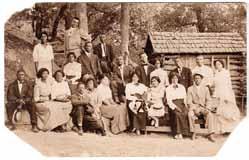
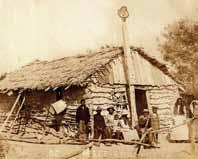
and the exploration and depiction of the High Plains of Texas. “And through a variety of sources and eBay, I’ve tried to gather visual imagery from the period and region and bring it back so we can study, analyze it and capture the lost world of a century ago.”
From the Panhandle to the Gulf Coast, settlers posed for photos at sod homesteads and burgeoning townships, at work with cattle or at rest by a shady creek. The photos documented their world during an era when you could send a five-cent postcard anywhere in the United States for a penny. For a penny more you could mail an image around the world.
“Photography was useful for our ancestors because it was seen as realistic,” Morris said. “You take a photograph of a town, and that proves to other people that the town is viable. Photography was used for promotional and settlement purposes, kind of luring our ancestors into various places to document their
world. think the camera captures a little bit of people’s personality, of their soul.”
Morris utilizes extensive visualization in his classes. Students, he said, use photography as part of their learning style. He said they respond to imagery, such as his postcard exhibits.
“These are lost treasures,” Morris said of photo postcards. “And they have so much information embedded in them.”
But, he added, photographers captured more than one Texas in the early 1900s. The multiple Texas communities frozen on film also included Latino and African American populations. The African American photographic experience, he said, reveals a mirror image of Anglo counterparts, with examples of black Texans at play, school and work.
Morris’ research of ethnic photography showed that out of 1,000 early photographers in Texas, roughly six were African American, with three found in the Houston/Galveston region.
Morris’ collection, which he terms
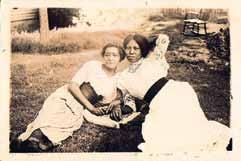
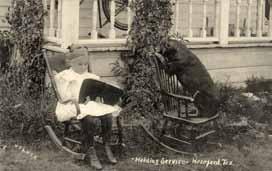
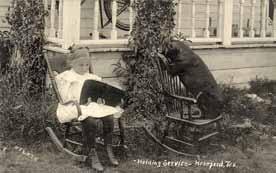
Postcards from Taming the Land
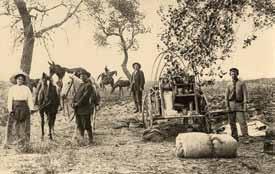
“Visions of Race in Early 1900s Texas,” includes depictions of African Americans from different regions, including a Sunday morning baptism in Central Texas, cowboy Matthew “Bones” Hooks of West Texas and a farmer at work in East Texas.
The collection also features a rare early 1900s photo of a Black Seminole homestead along the Texas/Mexico border.
The Black Seminoles, descendants of free slaves in Florida, served as scouts for the U.S. Army along the southern Texas border from 1870 to 1881. The scouts migrated to Mexico in the late 1840s to escape slavers and provided valuable skills at Army border outposts because of their ability to speak English, Spanish and Indian dialects and experience from past skirmishes with Indians in Mexico. Four of the scouts were awarded the Medal of Honor.
“With our demography changing and shifting, it’s important that we save and rescue ethnic imagery, both of Hispanics and African Americans,” Morris said. o
Hn Miller Morris, professor of geogrApHY Ph.D., M.S., M.A., B.A., University of Texas at Austin
the roaD to rhoDeS
By Kate Hunger
While undergraduates, Carlos Castañeda and Jonathan Nomamiukor caught the attention of faculty early on, and with careful mentoring and rigorous preparation, the pair of COLFA seniors advanced to the final stage of competition for the prestigious Rhodes Scholarship last fall— just the second and third UTSA students ever to do so.
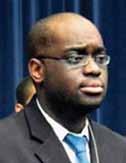
“I was exposed to a few cases about human trafficking and it just opened my heart.”
Johnathan n omamiukor now a student at Harvard Law School, plans on a career with the Department of State fighting human trafficking.
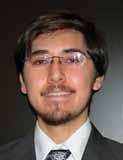
“One thing I took away [from the Rhodes experience] is that I have to not be afraid of failure.”
carlos castañeda, now at the University of Texas School of Law, spent the summer at the Homeland Security Summer Scholars Academy.
Now in their first year of law school, both said the lessons they learned along the way in pursuit of that award have shaped their plans for life.
Competing for the Rhodes is an arduous, emotional process, said Ben Olguin, associate professor of English and assistant director of national fellowships and scholarships in the Honors College. It takes at least two years to properly prepare to apply for the scholarship.
First, students at the very top of their classes are identified and interviewed.
Strengths and weaknesses of each candidate are identified, then a plan focusing on the students’ lifelong interests is established.
“The most important part of the process is to get the students to link their personal interests and concerns to their academic and professional pursuits,” he said. “Once this is done, I gauge the student’s progress on their grades, advise them on pursuing eclectic combinations via double majors or multiple minors as appropriate to their evolving life mission.
Then the culling begins.”
Only the most accomplished students are selected through an in-house UTSA faculty review process to continue with the final stage of the application process, he said. “We select those candidates that have a realistic chance of winning based on their academic excellence, project viability and overall profile. Then the really hard work begins.”
The students are mentored to tailor their academic plans to their best advantage. Also during that time there are meaningful relationships to foster with faculty, letters of support to gather and writing samples to refine into pitch-perfect shape through a workshop process intended to render a highly accessible, thoroughly readable personal essay.
No less than a dozen UTSA faculty participated in each student mentoring
initiative, and each student had at least three outside professionals (e.g., politicians, judges, etc.) who also joined the team.
THE PROCESS
The Rhodes Scholarships were created in 1902 in British philanthropist Cecil Rhodes’ will. Each year, about 80 scholars from around the world receive Rhodes scholarships, which cover all expenses at Oxford University for up to four years of study. Thirty-two of the 80 Rhodes scholars come from the United States.
Last year, 216 U.S. students from 97 colleges and universities reached the final stage of competition, according to a news release from the Office of the American Secretary of the Rhodes Trust. There were 17 finalists from District 8—Texas, Louisiana and Oklahoma. District referees include professionals such as judges, politicians and scholars, many of whom were Rhodes scholars.
Once Nomamiukor and Castañeda were selected as Rhodes regional finalists, grueling 90 minute mock interviews were conducted by Olguin and two committees, plus a more formal dinner interview was held with faculty and administrators.
“Jonathan and Carlos were put through a slow, painstaking and meticulous process of refining not just their applications, but their overall intellectual profile,” Olguin said. “This involved serious discussion of their life goals and a sometimes painful revisiting of life experiences. The goal was to get an intellectual map of where they have been, where they are now and where they seek to go.”
Both Nomamiukor and Castañeda initially required some persuading to compete for the Rhodes, Olguin said.
“I asked them to do some soul-searching. I asked them for core beliefs—political, social, personal. I had them really explore who they are,” he said.
Associate Professor Richard Gambitta got to know both Nomamiukor and Castañeda when they attended UTSA’s Summer Law School Preparation Academy, part of the Honor College’s Institute for Law and Public Affairs, which he directs. Gambitta compared his time working with the pair to coaching a prizewinning athlete—a “delightful task.”
“It’s really only a polishing of a jewel,” he said. “Everybody needs some polish.”
LIFE-ENHANCING
Competing for a Rhodes scholarship— even for those who ultimately do not receive an award—pays dividends indefinitely, Gambitta said.
“It’s a life-enhancing experience,” he said. “Both [Castañeda and Nomamiukor] have crystallized what they want to do in life.”
Advancing to the regional finals gave San Antonio native Castañeda a boost of confidence. Now at the University of Texas School of Law, Castañeda spent the summer at the Homeland Security Summer Scholars Academy, part of the National Center for Border Security and Immigration at the University of Texas at El Paso.
“One thing I took away [from the Rhodes experience] is that I have to not be afraid of failure,” Castañeda said. “What I learned is that sometimes you surprise yourself. Sometimes putting in a little more effort, more time, really wanting something—that really is the key.”
While a political science major and Spanish minor at UTSA, Castañeda volunteered on medical missions to Oaxaca, Mexico, interned in the district office of state Sen. Leticia Van de Putte, and organized a fashion show benefiting cancer research, featuring children with cancer as models. As a Bill Archer Fellow, he spent a semester interning at the Woodrow Wilson International Center for Scholars in Washington, D.C.
During Nomamiukor’s four years at UTSA, he volunteered with the Rape Crisis Center helping juvenile rape victims,
served as a Big Brother mentor, interned at the U.S. Attorney’s Office, Western District of Texas, and spent a semester interning at the Department of State in Washington, D.C., as a Bill Archer Fellow. Nomamiukor said competing for the Rhodes helped focus his professional goals. He graduated in the spring with a major in English and a minor in African American studies. Now a student at Harvard Law School, he said he plans on a career with the Department of State fighting human trafficking “not just in Texas and the U.S., but in the world.”
“I was exposed to a few cases about human trafficking and it just opened my heart,” he said.
HIGH ACHIEVEMENT
Making high achievement more accessible is the college’s mission, said Honors College Dean Richard Diem. He believes the college’s mission is to take talented students and equip them with the information and direction they need to succeed.
His message to students is clear: “We are willing to take the time to hone those skills—the ones you have—so you can do some really interesting things with your lives.”
Diem also credits faculty for their work in helping students maximize their potential.
“The Honors College couldn’t do this without the faculty,” he said. “They work with these students. The faculty comes from every college in the university. If it wasn’t for them, it wouldn’t work.”
That’s a sentiment Castañeda shares when reflecting on what made him stand out among the many talented students with their sights set on Oxford.
“The thing that helped me most in my application process were the people supporting and encouraging me all the way,” he said.
Both Nomamiukor and Castañeda stood out as potential candidates for the Rhodes, said Honors College Associate Dean Ann Eisenberg, who is also a COLFA
psychology professor. Castañeda was academically accelerated, taking graduate courses his second year as an undergraduate. And Nomamiukor, she said, revealed strong leadership qualities early on.
To date, the only UT System school with a Rhodes scholar is the University of Texas at Austin. The last time UTSA had a Rhodes finalist was in 1984. To have two finalists in one year is especially noteworthy, Eisenberg said.
“It’s particularly rare for any school to have two candidates reach [the final stage] in a given year,” she said.
From where Olguin stands, the future for Nomamiukor and Castañeda is especially bright—as are prospects for the university’s fellowship and scholarship program.
“We’re already on the map by having these two finalists,” said Olguin.
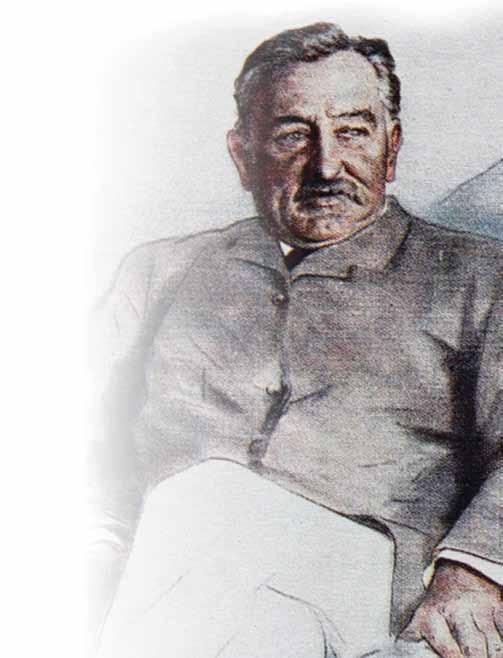
British-born businessman
Cecil Rhodes hoped his plan of bringing scholars to study at Oxford would aid in international understanding and peace. The first American Rhodes scholars entered Oxford in 1904.
SignatureExperience
By elizabeth Allen

Having a liberal arts degree isn’t a good bet for a good living. That’s the misconception many students had when Dan Gelo first became dean of the College of Liberal and Fine Arts more than seven years ago.
“Students were in my office saying ‘I just don’t know what can do with it,’ ” he said. “We wanted to reassure students that they don’t have to choose between their passion and the practical.”
So Gelo created capstone courses that give seniors the opportunity to integrate their undergraduate learning and connect it to the world they soon will face, with a UTSA College of Liberal and Fine Arts bachelor’s degree in hand. Along with internships and service learning, capstone courses are part of the Signature Experience at COLFA, designed as both a philosophical statement for the college and a way to show students the many ways to put a liberal arts degree to work.
A history major might work on an exhibit at the UTSA Institute of Texan Cultures, while an archaeology student might work on an excavation at a highway construction site, Gelo said. Art students work in galleries, learning how to sell art and understand its marketing.
Connecting a student’s education with the working world can change not only that student, but others touched by the experience. This ripple effect can become something of an intellectual sonar—the classroom theory bounces off the realworld situation, and in turn can bring change back to the university in the form of feedback and refined theories for educators. In fact, that’s a crucial part of the Signature Experience, Gelo said.
“It’s not enough just to get the information, but you have to channel it back and modify what you’re doing,” Gelo said. That kind of feedback and adjustment
about the organization, its history, funding and goals; and the other applying sociological theory to the organization.
One student did a content analysis of older people in television commercials, noting what they sold and how they represented seniors. “There was a real disconnect between a real image versus an ideal image,” Ford-Robertson said.
Then the student worked with the Alamo Area Agency on Aging, and wrote a paper on how the analysis related to the agency’s work and what the agency might do to change distorted images.
Her six-week workshop reminded her of the powerful emotions she encountered as a teen mother. As she concluded it, she felt that while many of the girls still considered themselves deeply unfortunate, they are working against negative stereotypes and developing the skills to define their own lives.
destroys the misguided belief that institutions of higher learning are disconnected from reality.
Sara DeTurk, associate professor in the Department of Communication, discovered this dynamic when she designed and taught a course in activism for communication students. She required her students to choose an organization, such as the Esperanza Peace & Justice Center and the Sierra Club, that reflected their values, to work within that organization and gather research on their experience to bring back to class.
“The ultimate goal is that students feel empowered as communicators,” DeTurk said, “seeing the ways in which, when social change happens, it happens through communication.”
When students can apply their theoretical knowledge to real-world issues, she said, the experiences deepen their understanding of theory and allow them to contribute more to the discussion.
It also better prepares students for the working world, said Joanne FordRobertson, a lecturer and internship coordinator in the Department of Sociology.
“A lot of our students haven’t ever been in the working world,” she said. The capstone and activism courses open their eyes to possibilities. “I think a lot of times students have tunnel vision in terms of what they can do with their degree.”
For Ford-Robertson, students must complete either a 150-hour or 300-hour internship with organizations like United Way or the Bexar Juvenile Justice Center. They must also write two papers: one
“They can’t just give me a research paper,” Ford-Robertson said. “They have to connect it to what that agency is doing.”
Making connections
Roxanna Tehrani, a music marketing major, had already had three internships. But with her Signature Experience at the Santa Fe Opera, she knew she had the opportunity to learn how to apply her classroom learning in a real-world way. With the help of Matthew Dunne, the music marketing coordinator at UTSA, she got the gig within five days of sending in her application.
The leadership of a professor can be an instrumental part of finding the right Signature Experience. Like Tehrani, student Nicole Provencher was guided into her emotional Signature Experience by Ben Olguin, associate professor in the English department.
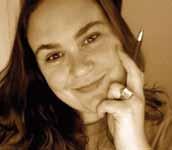
In Provencher, he found a student who was mature and who had a unique perspective and personal history— someone who could successfully design a course for homeless teen mothers living at Seton Home, which provides housing and supportive services for pregnant and/ or parenting teens and their children in San Antonio.
To help her take on the project, Provencher drew on her own experiences as a teen mother and the knowledge that writing helped her create an image of herself that was more positive than the one she felt scowling down upon her from parents, peers and school officials.
That wasn’t an easy experience, and Olguin wouldn’t send just any student into that kind of situation. Students must have maturity, sensitivity and a good understanding of the population they’re working with, he said. And there must be a good fit between the student and the project.
Collapsing the ivory tower
Sometimes the student and the project fit so well that the experience leads to a permanent job. That’s what happened with Briggs Reschke’s internship at the San Antonio Council on Alcohol and Drug Abuse. Reschke started out as a sociology major collecting DWI data at the Bexar County jail. Now, as the organization’s data analyst, he’s also working on his master’s in sociology at UTSA and considering a thesis on using geospatial tools to better deal with social problems like substance abuse. The internship showed Reschke in a real way how surveys and data yield useful information.
byc indyt u M iel
“As an academic exercise, you can read a book and take a class,” he said, “but it doesn’t compare to doing it.” It also opened Reschke’s eyes to the different ways to put a sociology education to work. “I think a sociology background would be advantageous for any position in this agency.”
In the photo: Leonard Winakur holding a 4-year-old Jerry outside of their apartment in 1953.
For Gelo, the array of courses offered through COLFA’s Signature Experience is an embodiment of the college’s purpose. It’s not just about getting good grades. It’s about the experience of learning and the real-world application of that knowledge gained. “We don’t live in an ivory tower,” he said. “It’s a public university, and a big reason we do research and teaching is to better people’s lives.” o
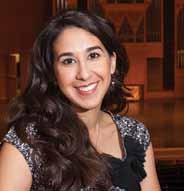
Roxanna Tehrani, UTSA music education and marketing major
Nicole Provencher , drew on her own background to shape her Signature Experience
Matthew Dunne, music marketing coordinator
Ben Olguin, associate professor of English
Briggs Reschke had an internship at the San Antonio Council on Alcohol and Drug Abuse

Signature Experience in practice
Course designed around African American pioneers
By elizabeth Allen
When Helen Cloud Austin applied for a job at the San Antonio State Hospital, she was told the state had a policy of not hiring black professionals.
The year was 1962. Austin, who had a master’s degree in social work, was no stranger to racism. But she had learned how to cope with it through her work with Martin Luther King Jr. in Louisville, Ky. So she found a position with a private organization and bided her time.
Three years later, with patience and the advocacy of Henry B. Gonzalez, among others, Austin became the first black professional hired by the institution. It went smoothly from there, she said.
“Once I was hired at the state hospital, I never had a moment of trouble,” Austin said.
“You sit down and talk with people, look them in the eye. I was humble, but knew who I was.”
Austin went on to do groundbreaking work with the hospital’s mentally ill residents, educating their families
and helping integrate them into their communities.
Now 85, Austin is the subject of two papers written by students in history professor Rhonda Gonzales’ senior seminar, and one of a handful of littleknown but significant local African American women.
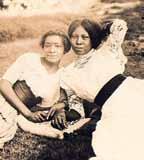
She’s joined by Hattie Briscoe, the first African American to graduate (1956) with a law degree from St. Mary’s University. There’s Bert Etta Davis, a saxophonist and leader of the Prairie View Co-Ed Band.
And Gertrude Baker, Vietnam war veteran, nurse, lesbian activist, actress and supporter of the Esperanza Peace & Justice Center.
These women broke racial and gender boundaries, helping to forge a new society in San Antonio and beyond. And most people have never heard of them.
When Gonzales designed her senior history course on African American women in the fall of 2009, she was being
first-hand look at the evidence of a life, instead of letting them view it through the prism of other historians. In the case of San Antonio’s African American women, other historians are few and far between.
“All these people have done really important work in the community, and nobody really knows about it,” Gonzales said.
History major Kalia Price got a sense of that when she chose Gertrude Baker.
Baker was a complex individual who was drawn to the Esperanza Center’s inclusive nature after settling in San Antonio in the late 1970s.
“There were very few places she could go that wasn’t compartmentalizing some part of her life,” Price said. “That’s kind of what pulled her and the Esperanza Center together.”
Baker’s lasting impact on the community impressed Price.
“The more I read about her, the more I was thinking, ‘Man, I want to be like her.’ ”
II with the Prairie View Co-Ed Band.
While the all-girl band was considered a novelty at the time, Davis went on to form her own jazz groups and at one point played with blues and jazz great Dinah Washington.
As Villarreal sifted through the evidence of Davis’ life, he found the normal inconsistencies and careless memories. But one theme was consistent: “She was an excellent saxophone player.”
She also soldiered on in the work that she loved despite facing dispiriting racism.
After studying her, Villarreal came to believe that Davis was an unintentional, yet significant, contributor to the civil rights movement. But when she returned to San Antonio around 1970 to care for her elderly parents, nobody knew who she was.
Digging up the small, sometimes bitter details of a life can be daunting, but Gonzales guided her charges through it, Villarreal said.
practical. Her goal was to give students something local to research that fulfilled the hands-on requirements of a Signature Experience. UTSA’s San Antonio Black History Collection, spanning 1873–1996, provided the opportunity for the students to dig into primary source material.
The results were so full of heart— and new information—that the original course blossomed into a three-semester history project Gonzales hopes to publish as a student-written book on women in San Antonio.
“I really think we’re on to something, trying to recover women’s history in San Antonio, using the resources that we have,” Gonzales said.
The resulting papers inspired Gonzales to offer a similar course encompassing both African American and Hispanic women in San Antonio this fall. She plans to follow that up with a still broader course on San Antonio women in the spring of 2011.
Primary sources give the students a
In Gonzales’ class, students are encouraged to choose a subject they’re passionate about.
That made it easy for Julie Lopez, who chose Hattie Elam Briscoe, St. Mary’s first African American law graduate.
Lopez, headed to law school at St. Mary’s, devoured whatever she could find on the “courtroom fireball.”
Briscoe fought the racism and sexism that pervaded the Bexar County Courthouse in the last half of the century, sometimes with colorful statements and sometimes just by biding her time.
Lopez developed an enormous respect for her subject.
“I thought it would be a grand gesture to do my paper on her,” she said.
The papers are more than biographies. Gonzales requires her students to place their subjects within their historical context, and examine and explain their impact on history.
That impact made an impression on Joaquin Villarreal, who chose Bert Etta Davis, a San Antonio saxophonist who broke gender barriers during World War
“ITC was a great resource,” he said. At one point Gonzales took them all over to meet manuscripts curator Nikki Thomas, who helped them dive into the university’s Black History Collection.
“Most of the students have never done archival research,” Thomas said. They can’t just browse, but must check out a box filled with documents that may or may not yield what they seek.
Students quickly find that it’s both drudgery and delight, she said, learning to “be prepared to be surprised at what you find, but also be prepared to be disappointed.”
Gonzales helped the students set up time frames and make sense of the tangle of information they found.
“Ask yourself,” she said, “what story is begging to be told from this box?” o
“I never felt like I was alone in the process,” he said. That includes his introduction to the UTSA Archives and Special Collections at the Institute of Texan Cultures.
San antonio’s african american women pioneers
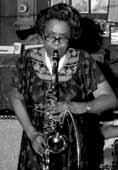
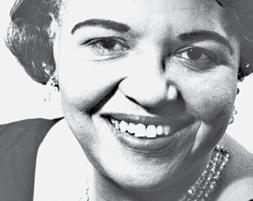
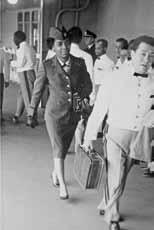
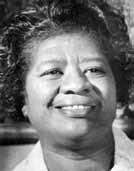
History professor Rhonda Gonzalez (upper left) and her students are studying women pioneers in San Antonio.
Bert etta davis was a pioneering jazz musician.
gertrude Baker was a Vietnam veteran and early lesbian activist.
Helen cloud Austin, was the first black professional hired by the San Antonio State Hospital.
Briscoe photo courtesy of Hattie R. Briscoe, UTSA Institute of Texan Cultures; Davis photo courtesy of Kenneth G. Dominique, UTSA Institute of Texan Cultures; Austin photo courtesy of UTSA Libraries Special Collections; Baker photo courtesy of Lars Hundere.
Hattie Briscoe was the first African American to graduate (1956) with a law degree from St. Mary’s University.
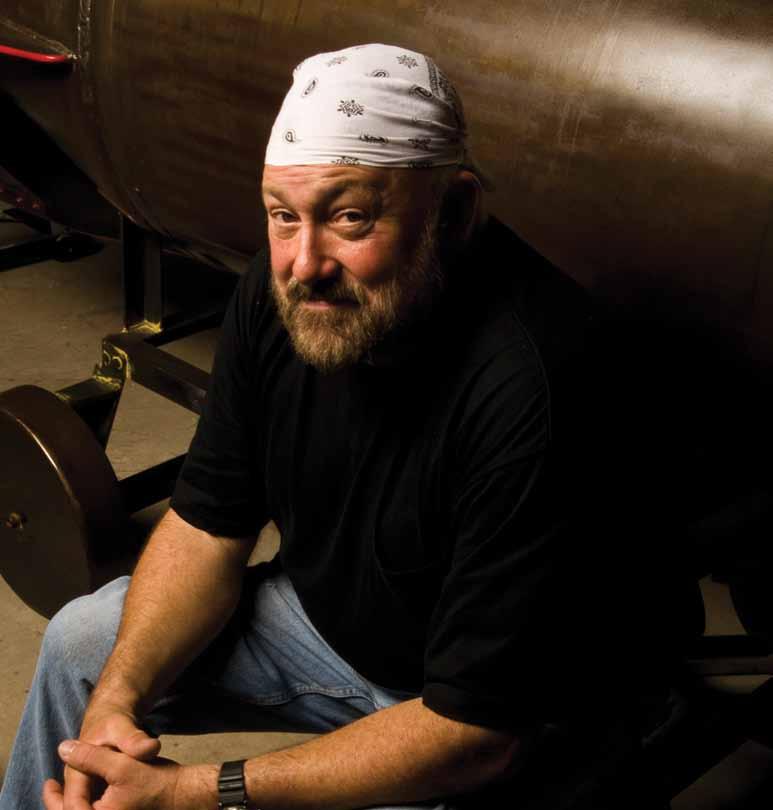
MAn of steel
gregory elliott creates larger-than-life works of art in his downtown studio
By rudy Arispe

y his own admission, Greg Elliott still plays with toys.
But the toy battleship the 55-year-old artist and chairman of the Department of Art and Art History is building will weigh half a ton of steel and wood and measure 8 feet tall, 8 feet wide and 4 feet deep when it’s finished. The work, titled “Bigger is Better,” will be included in his one-man show scheduled for March 2011 at the Blue Star Contemporary Art Center.
“This is one of two major pieces centered around the idea that our consumption has gotten out of hand, and our greed and our idea of what we deserve isn’t measured against what is possibly so,” Elliott said, standing amid a ton of welder’s and sculptor’s tools of every shape and size inside his 3,000-square-foot home/studio in the King William District. “What specifically led me to this idea of a big toy ship is I found a small toy ship I built when I was 8.”
Indeed, the Baltimore native, whose father was a nuclear engineer for General Electric, began buying tools at age 12 and started building “everything from small toys to swing sets to go-karts.”
Over the years, Elliott graduated to assembling more intricate projects, such as his impressive steel battleship with the working turrets, smokestacks and a mast. His only concern is that it looks too much like a real ship.
But after he painted the raw steel, the ship looked like a toy—albeit a gigantic one—and helps illustrate his point that society likes to boast of its wealth through the purchase of some very expensive “toys.”
“What does a guy do when he makes a lot of money? He goes to buy a car and shows it off,” Elliott said. “Or if you think about children, the one with the biggest bike rules.”
On the days the department chairman isn’t teaching a class on sculpture—or tending to administrative matters—he can be found in his studio that resembles a busy carpenter’s shop. Small but trendy living quarters are upstairs, and it’s all housed inside a tan warehouse on South Presa Street.
“Living here, I work every day,” the artist muses. “Because have to walk through here to get where eat and sleep, it’s almost beyond my ability not to pick something up and tinker a little bit.”
Elliott is a master at multitasking, at least when it comes to his
artwork. In addition to the battleship, he is working on a series of wall pieces, or frames, with leather carvings that will feature portraits of the artist dressed as an angel and as a devil with horns. “When was 10 or 11 years old, got a Tandy Leathercraft kit,” he said. “I still have all those tools. build and work in leather all the time.”
True to his word, in the back of a separate, air-conditioned room (his studio can reach stifling temperatures during the summer) is a finely crafted saddle. Elliott even built the wooden stand that holds the saddle; the seat consists of seven layers of leather that have been sanded as smooth as ivory.
“I’ve never built a saddle before. If you work in leather, it’s one of the most complicated things to do,” he said. “It’s important to me that you actually put it on a horse and use it. The right side will be the history of Texas from the Anglo point of view, and the left side will be the history of Texas from the Hispanic point of view.”
The inspiration for the inclusion of the dual history perspectives is a result of Elliott’s recollection of studying Texas history in high school and learning about the Battle of the Alamo and how Texas won its independence from Mexico, he said. However, several years ago, he was teaching a class at Louisiana State University and took his students to Mexico City. They visited the National Palace to admire, among other works, Diego Rivera’s mural, “History of Mexico: From Conquest to the Future.”
“This guy from [Universidad Nacional Autónoma de México] began interpreting the mural for us, and he started describing the exact same battle and same people,” Elliott said. “Suddenly the story wasn’t about us and the great independence from Mexico, but how those Yankees stole half their country.”
Art Professor Ken Little, Elliott’s colleague and good friend, said the artist has an extraor dinary command of a number of compli cated media.
“He approaches his work with the energy and commitment of a master
“Bigger is Better” is a half-ton battleship meant to illustrate how society boasts of its wealth through expensive “toys.”


“ilike to make steel look fluid, and it doesn’t want to be fluid so you have to apply a lot of heat and a lot of force.”
—Greg Elliott
sculptor who has hit his stride,” Little said.
“He possesses a conceptual depth balanced with a strong dose of humor that makes his work significant and accessible. All this is available by example to the students in the classroom.”
While in the classroom, Elliott constantly encourages his students to step outside their comfort zones in order for them to grow and learn as artists.
“I make sure they understand that they really need to take chances,” he said.
“I tell students all the time if they know exactly what they’re doing with a piece of art they’re wasting their time, because they already know how to do something. I think the objects at times are secondary. It’s an intellectual process and expanding your knowledge in the areas you’re thinking is important.”
Lynn Dusenbury, a senior sculpture major, has taken her professor’s words to heart, and she credits him for playing a pivotal role in her development as an artist.
“When present my drawing proposals and ideas to Greg, he always listens to my explanation and then asks, ‘Are you sure this is going to work? You might want to consider alternative processes to make this sculpture successful,’ ” Dusenbury said. “He encouraged me to stop creating wall sculptures and to create freestanding sculptures. In other words, I had to learn how to weld steel to create my armatures.”
For Elliott, teaching and learning is a two-way street. Thus, he benefits just as much from his students as they do from him, which, in turn, makes him a better artist.
“You are surrounded by people who are searching for something, and they discover lots of things. If you’re the teacher, you discover all those things with them, so imagine the amount of ideas dumped into your head,” he said. “Where there’s one teacher talking to 20 students, there are 20 people teaching me.”
Elliott is just as adept at creating very large pieces of art as he is organizing big budgets as part of his duties as chair of the Department of Art and Art History. When he assumed the responsibilities as department chair in 2008, he never anticipated enjoying the job as much as he does, he said, mainly because it allows him to create an environment where students can develop their potential as emerging artists.
“People ask me, ‘What do you work in?’ say, ‘Steel, wood and a lot of paper work,’ ” Elliott said with a laugh. “One thing I like about the chair job is you never quite know what you’re going to face when you go in. There’s always some problem, more than you like, but the days go quick and problem-solving is something like.”
Since childhood, Elliott knew he wanted to be an artist, although his parents and grandparents had different aspirations for him. When he announced that he planned to pursue art as a career, he was met with disappointed looks and disparaging remarks from family members.
To appease his parents he told them he would study commercial art at college, which most likely would assure him of earning a decent living. After graduating from high school, Elliott enrolled at
Stephen F. Austin State University where he received his bachelor’s degree in 1978 with a triple major in printmaking, ceramics and commercial art (although he admits he abhorred the latter).
During summer breaks from college, Elliott worked in steelyards as a welder building bridges. He earned a master’s degree in art with a concentration in ceramics from Stephen F. Austin in 1980 and then a master’s in fine art with a con centration in sculpture from Southern Methodist University in 1988.
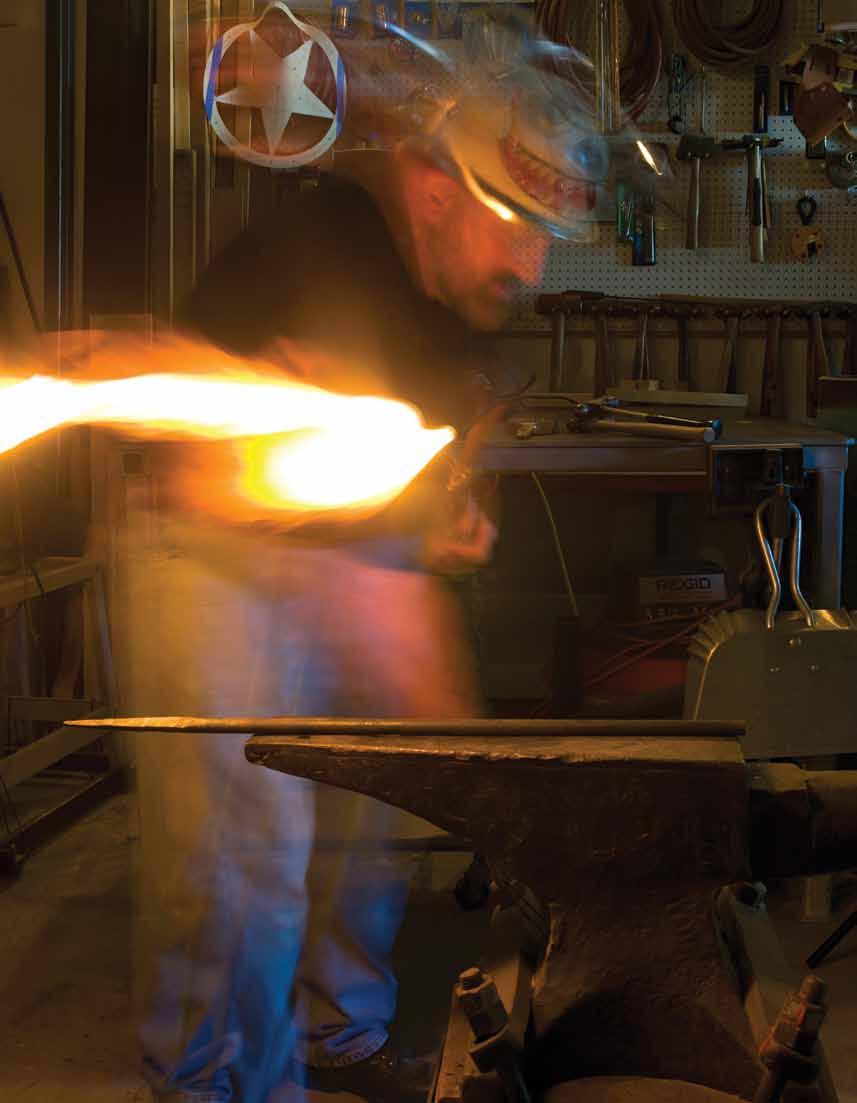
Although he thoroughly enjoys teach ing, Elliott no doubt prefers his studio, where he works freely with his hands, welding steel and cutting sheets of metal to create elaborate, eye-popping works of art. His “playground,” as he calls it, includes two bulky steel tables. One weighs 2,000 pounds, and the other 2 tons.
“I use them for bending and shaping,” the artist explained. “I like to make steel look fluid, and it doesn’t want to be fluid so you have to apply a lot of heat and a lot of force. I like a real physical interaction with the materials I work with.”
Walking around his studio, one is struck by the sheer number of tools stored in cabi nets, tucked in corners and hanging from walls and every nook and cranny. At last count, Elliott possesses about 1,000 ham mers, and, at one time, he owned 32 anvils.
“Tool collecting gets to be a sickness,” he said, “and I’ve got it bad. They’re heavy and awkward, and no man needs 32 anvils. Now only have four.”
Here in his studio the man of steel is in his element, and he jokes that he is just as comfortable in a steelyard as he is shop ping for groceries at H-E-B.

Sculpture and ceramics graduate studio will accommodate department’s growth
For the past 15 years, the Department of Art and Art History has been hoping for a sculpture and ceramics studio that would allow graduate students to work on more ambitious projects in a bigger space specific to their needs.
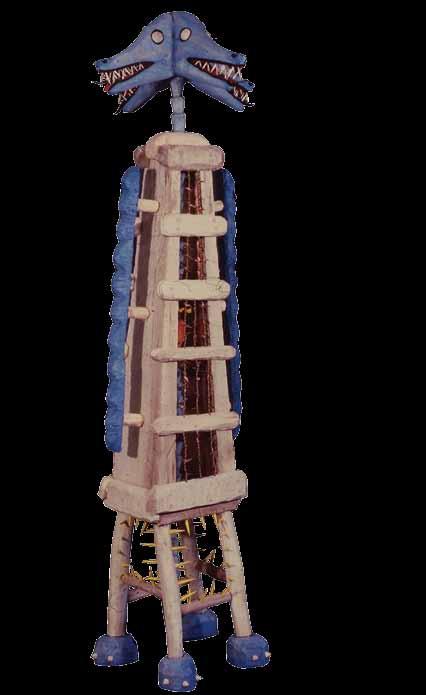
That day has come. Construction on a 13,000-square-foot Sculpture and Ceramics Graduate Studio Building on Main Campus began during summer and is expected to be completed by May 2011. The facility also will include a welding and metals workshop along with classrooms, said Greg Elliott, department chairman.
“In this economy, for us to be building a [sculpture and ceramics studio], is incredible,” he said. “We owe a whole lot to President [Ricardo] Romo. His interest and support for the arts is the most powerful I’ve ever seen at a university. He doesn’t just give art lip service. He is impassioned by it.”
Elliott said the new facility would allow the program to continue to grow. The department has also put in a request for a substantial amount of funding to purchase equipment.
“We will be able to recruit a much broader range of graduate students,” he said. Introducing undergraduate students to students who are in the later stages of artistic maturity energizes the program, he added

Elliott’s “Blue Richard”
—Rudy Arispe



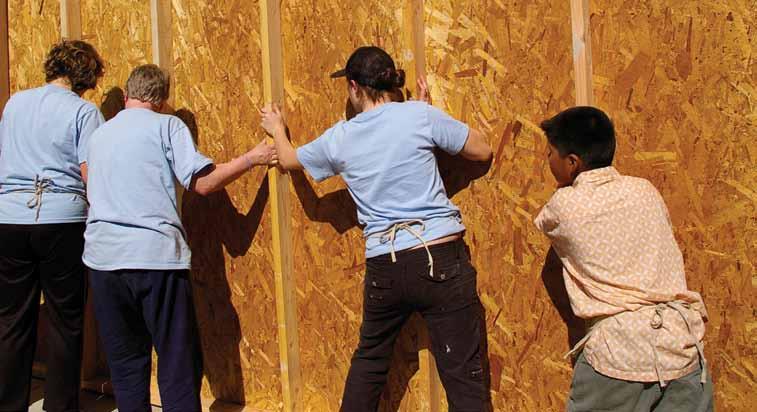





A LIVING LABORATORY FOR SOCIOLOGISTS
Bycindytumiel
? thesociologist’s Role Elicitinsightful information
Look@underlying human&culturalfactors Explore troublingissues Observerelationships, customs,change
Good data is the basis for any good debate about public policy.
But where does it come from? Humans don’t spend their lives inside a controlled laboratory setting, with scientists documenting their moves.
p
reventing teenDeaths JohnBartkowski
suicides, accidents
Sociology professor John Bartkowski is one of those with a broader focus. His interest in adolescents recently led him to a long look at the sad subject of teenage deaths.
Motor vehicle accidents and suicides are two of the leading causes of death for youth ages 10 to18, and were identified several years ago by the Centers for Disease Control and Prevention as a subject of national importance. What factors propel youth toward risk-taking behavior with autos and speed? What leads young people to the tragic decision to end their own lives?


When it comes to tackling societal issues, whether they relate to public health, educational success or entrenched poverty, scientists must head out into the communities they serve, taking observational and analytical skills and precise questionnaires that will elicit insightful information about underlying human and cultural factors. that is the role of sociologists. With its melding of cultures,southtexas has served as a living laboratory forutsasociologists, who peer into the relationships among people and groups who make their homes here.faculty researchers have probed serious issues of cultural assimilation, health disparities and the role of religion with individuals and families.o thers investigate larger questions, using nationwide data to explore troubling issues that are of concern to all of society.
Bartkowski recently used 15 years worth of national vital statistical data to see if he could detect seasonal patterns showing when suicides or motor vehicle accidents were highest among adolescents.
He did. Suicide rates for teens rise markedly during school months and fall during the summer months. Motor vehicle fatalities, meanwhile, are highest during the summer, when school is out of session.
“They are actually mirror images of each other,” Bartkowski said. “Our argument is that our teenagers live in two very different social worlds—one in school and one out of school.”


the s Roleociologist’s
factors
Elicit insightful information
School-year suicide rates likely are related to the academic and peer pressure that students face, while summertime vehicular deaths are a reflection of adolescent risk-taking behavior and a shortage of adult supervision, he said.
of underage drinking laws also helps, Bartkowski said.
“There are some positive steps being taken to stop these unnecessary and tragic deaths,” he said.
and who lived in all areas of the state.
The results, he added, give insights into the underlying reasons that contribute to these deaths and perhaps point the way to better preventative efforts.
positiveImpacts
“There needs to be a cultural change in the school environment,” Bartkowski said. “Teasing and bullying cannot be tolerated. Schools need to enact policies that soften the competitive edge. We need to foster a more collaborative learning environment.”
Motor vehicle crashes account for a third of all deaths of people aged 15 to 20 each year, according to the United States National Highway Traffic Safety Administration. A number of states have already taken actions to reverse this statistic, Bartkowski said. Texas now requires drivers’ education courses for student drivers. The U.S. Department of Transportation also urges states to implement graduated licensing laws that ease teens into the responsibilities that come with the privilege of driving. Stepped up enforcement
Mental health questions
Gabriel Acevedo has devoted much of his research career to exploring the interaction of religion and culture. But recently he asked a slightly different question, exploring the relationship between nonreligious activities and good mental health.
A number of studies over the years have shown positive correlations between health and religious involvement. The same holds true for mental health measurements and people who describe themselves as religious. Studies suggest that people with strong spirituality, who are active with religious groups and organizations, suffer less depression, cope better with stress and express more overall satisfaction with life.
The survey asked a number of standard questions that relate to mental health, such as whether respondents experienced sleeplessness, hopelessness, nervousness or anxiety, and asked them to rate their own mental health. It also assessed how deeply people were involved in community activities.
Acevedo, an assistant professor of sociology, concluded that people engaged in secular community activities also had high ratings on positive mental health attributes.
“This is not to belittle the value of religiousness, but what we are saying is that engaging in community activities, whether through religious or civic groups, may have positive impacts on mental health functioning,” Acevedo said.
People who participate in community activities are outwardly focused and engaged with other people in positive social networks, he added.
“Being involved in a network of other positive people is a good thing,” Acevedo said.
nImmigrants HarriettRomo
to improve health benchmarks for the nation, set a target of having 90 percent of mothers starting prenatal care during the first trimester of their pregnancies by 2010. The Bexar County Metropolitan Health District in 2007 reported that 27 percent of pregnant women in the county did not seek prenatal care until after the first trimester, and almost 13 percent of infants born that year were premature.
Sunil went to public health clinics the following year to look below the surface and try to understand what barriers were preventing low-income mothers from seeking care. He interviewed 444 patients and compared responses of those who got early prenatal care to those who did not.

Observe relationships, customs, change observe customs,relationships, change

Wealthy, well-educated Sociology professor Harriett Romo is studying a segment of the immigrant population that has been largely overlooked— wealthy, well-educated Mexicans who enter the United States with special E-1 and E-2 visas, a class of entry documents that are granted to professionals, entrepreneurs and venture capitalists.


hthankamsunil ealth Disparities
In his research, supported by the Hogg Foundation for Mental Health, Acevedo utilized a statewide survey of 1,500 Texans to see if there was any relationship between good mental health and secular civic involvement, such as doing volunteer work in schools, hospitals or community organizations that are not religious-based.
The scientifically drawn random sample included people from all ages, income and ethnic groups
prenatal care
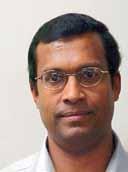
Thankam Sunil, an associate professor of sociology who focuses on the study of health disparities, recently looked at the complicated and frustrating question of prenatal care among low-income women in San Antonio. Late or lack of prenatal care is strongly tied to health complications, both with newborn infants and their mothers.
Healthy People 2010, a federal project
His results showed that all the women generally knew about the importance of prenatal care and knew about free or low-cost programs for those who needed financial assistance. But even though they knew these things, prenatal care rates were lower for Hispanic lowincome women aged 18–24 who lived alone, had lower educational attainment or had unplanned pregnancies.
“They do have the actual knowledge of where to go and what to do, and they know these things are important, but at the same time, they are not seeking care,” Sunil said. “We have identified a problem here that needs to be addressed.”
The study makes an argument for programs that will offer more routine health care to poor women of child-bearing age before they conceive, which a number of social researchers have said would increase the number of them who seek prenatal care.
Sunil now is working with Jill Fleuriet, a medical anthropologist and associate professor at UTSA, to further study cultural issues that may be influencing these women’s decision-making processes.
UTSA’s Mexico Center, which Romo directs, received a $284,000 grant from the U.S. Small Business Administration to conduct in-depth interviews with adults and adolescents in these families over the next two years. The goal is to understand their impact on the region and determine how well they are assimilating into U.S. society.
“Most of the immigrants entering the United States from Mexico are from the working class,” Romo said. “Little has been written about the people who come on business visas.
“We believe that this group has an impact beyond their small numbers and that the resources they bring and their legal status help them incorporate into the U.S. society.”
The data suggests different family members have different experiences, Romo said.
Because of San Antonio’s already strong business ties to Latin America, there are enough of these immigrant Mexican families in the area to form their own social network, Romo said. The families tend to know each other and socialize with each other.
Outside of that enclave, the children, who attend San Antonio area schools, tend to be most integrated into American lifestyle. Men, who are in the traditional role as head-of-household, also establish connections throughout the community because of their business connections. But women are more isolated, seldom moving outside of their social circle of other similarly situated wealthy immigrant families.
“The women don’t work outside of the home. Their lives center on their families; the traditional role of Mexican women reinforces that,” Romo said.
She hopes to continue connections with the adolescents to understand more about their school and work experiences. Many of them came to the United States at very young ages, have learned English well and have become very Americanized, although they still strongly identify as Mexicans. Many of these young people have lived transnational lives, with family members in both the United States and Mexico. The project is interested in exploring how these youth shape their careers after they graduate and if they return to Mexico, how they adapt and per haps influence the culture in their Mexican com munities.


GabrielAcevedo

BROADENING OUR HORIZONS
colfA courses explore human diversity
By rudy Arispe
If you’re inspired to study art history through the College of Liberal and Fine Arts, expect to delve into the mind-set and influence behind 19th century Spanish painter Francisco
Goya’s political piece, “The Shootings of May Third 1808,” in which he’s making a statement about the violence and atrocities of Napoleon’s invasion of Spain.
If, instead, political science piques your interest, classroom lectures extend beyond navigating the intricate maze of state and national government, electoral processes and the U.S presidency. International law and human rights are also part of the curriculum.
Or perhaps your daydreams transport you to the Far East, specifically Japan, and you have a desire to speak its national language. In that case, courses offer the opportunity to be well versed in Japanese culture and business manners and an examination of the close political relationship between our two countries.
In each of these instances, diversity is the underlying theme—as it is throughout all courses offered through COLFA. classroom priority
Diversity studies are paramount in classroom teaching because of the culturally diverse nation and world in which we live, one characterized by differences in raceethnicity, nationality and religion, said John Bartkowski, professor of sociology.
“Universities today need to teach students cultural competence. Cultural competence makes students more able to consider self-consciously how their own social background informs the values they hold most dear,” Bartkowski said. “Culturally competent students are more capable of appreciating and respecting how their own views may differ from those held by others.
“These students can develop more inclusive perspectives that are sensitive to cultural differences in the world around them. Finally, our work worlds are increasingly interconnected. We need to learn not only how to tolerate and respect cultural differences, but how to work alongside people whose backgrounds we do not share. Cultural competence enriches individuals, strengthens communities and makes good business sense.”
Bartkowski, who teaches classes in gender, religion and sociological theory, makes it a point to include cultural diversity in the classroom.
He said his goal is to get students to recognize how people’s values and experiences are shaped by their family upbringing, friendship networks, race-ethnicity and social class.
Women’s studies
Sonia Saldívar-Hull, founder of the Women’s Studies Institute and program director for women’s studies, specializes
in Chicana feminist theory. Courses in women’s studies are considered part of the “diversity” curriculum, she said, adding that students study identity formation, political ideologies and gender politics, including sexuality. Graduate courses include Feminism in the Latina Americas and Theories of the U.S. Borderlands.
“Women’s studies aim for the achievement of social justice and women’s empowerment,” Saldívar-Hull said.
“However, our courses are more complex than a reductive study of individual women in history or literature or science. Women’s studies courses contest gender-based oppressions in society, and, in doing so, also attend to the inequities that patriarchal ideologies impose on men and boys as well as on women and girls.”
Megan Sibbett, a doctoral candidate in the Department of English, teaches Introduction to Women’s Studies, which she notes attracts a number of male students. She has witnessed the importance of diversity in the classroom.
The introductory course focuses on intersections of gender, sexuality, race, class and age, as well as cross-cultural topics such as history; the body and health, media and popular culture; violence; the environment; and activism.
“Understanding and appreciating diversity presents unique learning
opportunities for students because of ways it challenges each individual as well as a group,” Sibbett said. “Because teaching diversity can be more than simply recognizing difference or teaching tolerance, students learn to stretch their ideas and ways of interaction as they take advantage of opportunities that enable them to bend the ‘norms’ of their belief systems, work from multiple points of view and appreciate more complicated systems of awareness.”
changing demographics
Richard Lewis, professor of sociology, teaches a course on the sociology of the African American community. He said he doesn’t necessarily teach diversity in the classroom. However, in his race and ethnic relations courses both at the graduate and undergraduate level, students examine the role diversity plays in managing and leading organizations, which are continually undergoing changes in gender, race, ethnicity, socioeconomic and age composition, he said.
“I think focusing on diversity issues in the classroom is important because the demographic composition of the United States is changing quite rapidly, especially the age and racial/ethnic components,” Lewis said. “Understanding differences and framing them to encourage teamwork across various groups will be important for American society.”
English professor Joycelyn Moody, who teaches African American literature and culture and black autobiography, among other courses, incorporates multicultural studies in all of her courses to emphasize to her students that African Americans form a complex and diverse population.
“There is no one way to be black, just as there is a great range of ways of living a white identity, a Latino identity, and so on,” Moody said. “I try to teach African
American literature from an intersectional paradigm so that my students become knowledgeable about African Americans who are not born in this country, perhaps [those] born in Africa or another part of the African diaspora, or who are secondgeneration blacks whose parents emigrated here from, say, the West Indies.”
Moody also teaches about African Americans, such as President Barack Obama, whose ancestry is both African and another racial group, she said. She also exposes students to the different socioeconomic classes that blacks inhabit in America, and touches on sociopolitical forces that determine that some black women, for example, work in university classrooms while other black women work in chicken factories, she said.
It is imperative to teach about the diversity of blackness among African Americans because many people generalize and stereotype black racial identity, Moody said.
“Ignorance about the complexity of African American identity, not to mention white identity and so on, maintains racist discrimination, negrophobia, elitism, economic inequities and a long list of other social aberrations,” she said.
John Miller Morris, professor of geography, points out that diversity studies do not consist of one single course, but are interdisciplinary no matter what area of learning one pursues. In his cultural geography classes, the professor said students
become aware that “diversity” is a powerful concept that extends to human affairs.
“Today we have more access to [diversity] than an old tattered National Geographic,” he said. “We have constant media, web cams and the Internet, so we can access societies in Peru or Malaysia. When I was growing up, no one knew about China because it was a closed off society. Now we can see into their culture through museum sites and the Internet, and Google will even translate your page.” living the subject
The mission of liberal arts teaching, Morris said, is not that students can just study a subject, but can also live it in order to expand their beliefs and views of a global world and the people who inhabit it.
“I encourage students to live abroad because it’s for their education,” said Morris, a recent recipient of the UT Regents Outstanding Teaching Award.
“Not everything can be taught in the classroom, and young students need to venture beyond the place of their world to learn and experience new places, ideas and identities.”
Whether students study anthropology, music or communication, they are assured of receiving a well-rounded education regardless of their major, said English assistant professor Kinitra Brooks, who teaches a course about black women characters in horror, science fiction and fantasy.

“Universities today need to teach students
cultural competence. Cultural competence makes students more able to consider self-consciously how their own social background informs the values they hold most dear.”
Professor John Bartkowski
“COLFA is a great place because of the breadth of subjects and specialized areas you can study dealing with diversity issues and different approaches that the college offers,” she said. “You can look at literature, history, biblical studies and the classics, and you’re able to look at similar issues but in so many different ways throughout time.” o
Remembering a world at war
By rudy Arispe
Of the 90,000 artifacts housed at the National World War II Museum in New Orleans, Tom Czekanski ‘82 occasionally reflects upon a helmet worn by an 18-year-old sailor. It has a bullet hole on the left side.
“We learned from his cousin that his shipmates cleaned the helmet, and then gave it to his parents,” said Czekanski, director of collections and exhibits. “They put it on a mantle, and that’s how they remembered their only child until the day they died. It’s one of the more moving pieces that remind us that freedom isn’t free.”
Since 2004, Czekanski, who earned a B.A. in humanities from UTSA, has been responsible for all collections and exhibits at the museum and oversees a staff of
seven curators. The museum displays an array of memorabilia, including a World War II suitcase radio used by Allied agents who operated behind enemy lines; an Italian officer’s mess kit complete with cheese grater, bottles for oil and vinegar, and steel stove; and a 1917 A1 machine gun that could fire between 450 to 600 rounds per minute.
“One of the most exciting things is meeting veterans,” the director said. “I had a visitor today who was a PT [patrol torpedo] boat sailor. It’s interesting to meet these people and talk about their experiences. You can see they’re excited to see the equipment, like a plane they flew in or truck they drove. Lots of old memories come back for them.”
The National World War II Museum honors the more than 16 million Americans who took part in the global confrontation. It presents their stories to an international audience, preserves artifacts for research and encourages future generations to apply the lessons learned from the war, according to the official website.
Out of the thousands of items on display, Czekanski said his favorite is an American M4 Sherman tank used by the Army and Marine Corps and most Allied nations. “It’s a kick to be able to drive it
when we move it around the grounds,” he said.
A majority of museum items are donated by veterans or from their children and relatives. Uniforms and other memorabilia, for instance, were shipped home in trunks. “If we want a big tank or war plane, we have to buy one,” he said. “People didn’t take them home with them.”
Czekanski always had an interest in World War II, he said, because his father, who was assigned to the 82nd Airborne Division, his uncle, who served with the 2nd Armored Division, and an aunt, who was in the Coast Guard, were all involved in the war.
Czekanski was hired by the museum in 2000 as its collections manager, where he processed all donations and kept track of inventory. He was promoted to collections and exhibits director in 2004.
Czekanski is a frequent guest on Inside the Vault a multimedia series produced by the museum as part of its educational efforts offered to the public. With his wealth of knowledge, he explains the history, background and details of many of the museum’s pieces, such as the German le.IG 18 75 mm infantry gun.
“This gun was a direct outgrowth of Germany’s interpretation of the tactical lessons they learned from World War I. You
need a machine gun that is an all-purpose piece … and the infantry needs artillery support under their direct control. … So the German army developed this gun,” Czekanski tells host Ron Gural in an episode. “It was intended to be in the field, on the front line and to be advanced by hand by a crew of six.”
In another episode, the director discusses Nazi uniforms worn by nonGerman soldiers fighting for the Nazis.
“[These were worn by] units composed of people from occupied countries who volunteered, sometimes under a little duress on their part,” Czekansi explained. “But they volunteered for service in the German army. Their primary goal was to fight communism.”
When the museum opened its doors on June 6, 2000—the 56th anniversary of the D-Day invasion that led to the liberation of Europe—it began with only a small staff. Today, about 200 people assist with
the daily operations; and more than 2 million visitors have walked through its doors.
A constant challenge, Czekanski said, is to find enough space to hold the thousands of items the National World War II Museum continues to accumulate. And although the museum was fortunate to suffer only minor damage from hurricanes Katrina and Rita, the disasters forced the closure of the facility for several weeks, which affected tourism.
Born in Germany, Czekanski, 50, moved to Texas at age 12 when his father retired here. While studying at UTSA, he joined the ROTC and was commissioned as a second lieutenant in the Army Reserves. He went on active duty after graduating and was stationed at Fort Hood, where he was a cartographic platoon leader, making maps.
Czekanski recalls history professor Robert W. Patch, now teaching at the University of California Riverside, who
“Having a broader based humanities degree has helped me to integrate all these aspects for successful exhibit presentation.”
tom c zekanski
made classes especially stimulating.
“I enjoyed him as a teacher [so much] that I took four or five classes with him,” Czekanski said. “He had a slightly nontraditional teaching approach that I found appealing. For instance, in a class on the history of revolutions, we looked at what music [the] revolutionaries were singing at the time.”
Czekanski believes his degree in humanities has proved beneficial in his career in the museum field. For example, he finds that other museum professionals who have history degrees can become too focused on the text in an exhibit to tell the story.
“The presentation of an exhibit is multidimensional using text, artifacts, images, film and theatrical effects to tell the story,” Czekanski said. “Having a broader based humanities degree has helped me to integrate all these aspects for successful exhibit presentation.” o
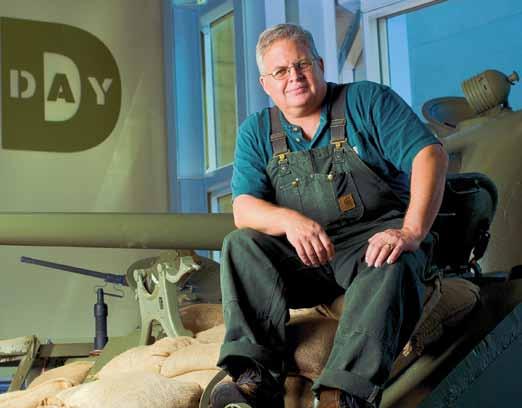
Tom Czekanski ’82 oversees collections and exhibits at the National World War II Museum in New Orleans
Photo by Jeff Johnston
Awards and Accolades

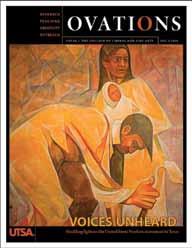
Ovations, Vol. 4, 2009, won the Council for the Advancement and Support of Education District IV Achievement Award—University Communications, General Writing Collection, Ovations, Vol 4, 2009. A special thank you to Rudy Arispe and Cindy Tumiel for their writing contributions that help make Ovations COLFAbulous! Ovations is now a two-time CASE award winner.
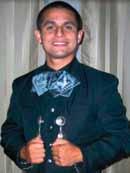
director named for uTSA Mariachi
Michael A. Acevedo, an accomplished mariachi musician, is the new director of UTSA Mariachi.
Acevedo grew up in McAllen and began his mariachi career with Mariachi Javelina at Texas A&M-Kingsville, where he obtained a B.A. in music in 2007. He then went to the University of Texas at Austin School of Music for his graduate degree. While in his final year, he became the director of UT’s Mariachi Paredes de Tejastitlan while serving as a grad assistant in the ethnomusicology department. In May, he graduated with a Master of Music in trumpet performance from UT Austin. Along with directing the UTSA Mariachi, Michael will be the mariachi director at two Northside ISD middle schools, Pat Neff and Sam Rayburn. He’s also a member of Mariachi Los Arrieros de Laredo.
Congratulations to sonja Lanehart, Brackenridge Endowed Chair in Literature and the Humanities in the Department of English, and Raquel Marquez, chair of the Department of Sociology, who were among the first class of graduates in the Leadership UTSA program.
Diane Abdo lecturer III, Department of English, Associate Professor Kolleen Guy, Department of History, Professor John Miller Morris, Department of Political Science and Geography, and Associate Professor Mary Mcnaughton-cassill, Department of Psychology, were awarded University of Texas Regents’ Outstanding Teaching Awards.
Gary Mabry, associate professor of music, was a guest conductor at Carnegie Hall in New York City. Mabry led a group of 60 UTSA Women’s Choir and UTSA Women’s Alumnae Choir members.
The Department of sociology has received national recognition with the installation of the Alpha Xi of Texas Chapter of Alpha Kappa Delta (AKD), the international honor society for sociologists. The conferring of a charter signifies that UTSA meets high standards of program quality and scholarship.
Joycelyn Moody, the Sue E. Denman Distinguished Chair in American Literature, was one of 35 people from around the world invited to participate in the 2010 Oxford Round Table Sessions at Lincoln College, a component of Oxford University in the United Kingdom. The Oxford Round Table Sessions promote education, art, science, religion and charity. Participants were nominated by colleagues.
Xiaohe Xu, professor in the Department of Sociology, was invited to be a Research Affiliate of the Population Studies Center Institute for Social Research at The University of Michigan. The affiliation is a term appointment for five years to facilitate Xu’s research through collaborations with the PSC researchers and students.
S T ud ENTS
elaine Wong, a Ph.D. candidate in the Department of English, was awarded the prestigious dissertation fellowship by the Chiang Ching-kuo Foundation for International Scholarly Exchange for her dissertation project, “Visual Approaches in Poetry: A Dialogue with the Chinese Ideogram.”
students from the Department of communication set a record for having the most student papers from a single university accepted for presentation and publication at the 22nd Annual International Academy of Business Disciplines (IABD) Conference held in Las Vegas. The eight UTSA students had five research papers accepted and were presented with the High Caliber
of Students’ Research Productivity Award. Communication professor Ali Kanso El-Ghori guided the students’ research.
Juan Livas, a graduate student in the Department of Sociology, received second place at the Southwestern Social Science Association Annual Conference for his photo essay, “Social Makeup and Resources of a Community.”
Larissa Mercado, a Department of English graduate student, received a Ford Foundation Dissertation award. Larissa is the fourth graduate student in seven years in the department to receive this national award.
UtsA Debate, housed in the Department of Communication through the leadership of Skip Eno, finished the year ranked 10th in the nation, ahead of debate powerhouses such as the U.S. Military Academy, Harvard, Vanderbilt, UT Austin, Baylor, Dartmouth and Kentucky.
carla Pezzia anthropology graduate student, was a recipient of the Summer 2010 Presidential Dissertation Fellowship.
AL u MNI E NGLISH d EPARTMENT POST - GRA d PLACEMENT S u CCESS
cordelia Barrera, Ph.D. in English ’09, is assistant professor of Latina/o literatures at Texas Tech University.
terri Pantuso, Ph.D. in English ’09, accepted a position as assistant professor at Governors State University in Illinois.
Patricia trujillo, Ph.D. in English ’08, accepted a position in the Department of English at Colorado State University in Pueblo.
Lori Rodriguez (left), the first Ph.D. graduate in English in 2007, is assistant professor of Chicano studies at the University of Minnesota.
Marco cervantes, Ph.D. in English ’10, is assistant professor in bicultural-bilingual studies at UTSA.
Jody Briones Ph.D. in English ’09, is an assistant professor at Texas A&M–Kingsville.
June Pedraza Ph.D. in English ’08, has landed a tenure-track position with Northwest Vista College in San Antonio.
Melissa Vela-Williamson master’s degree from the Department of Communication ’09, was honored with a Silver ADDY award from the American Advertising Federation–San Antonio chapter for her master’s project, “The Unacculturated Hispanic Value Customer Event Toolkit.”
christa Brothers, B.F.A. ’98, is owner of Bismarck Studios Fine Art Gallery in the Stone Oak area of San Antonio. The gallery strives to promote the arts and support charities through gallery functions.
Molly Hoff, B.A. in English ’83, has published Virginia Woolf’s Mrs. Dalloway: Invisible Presences (Clemson University Digital Press, 2009). The book is intended to enrich lesson plans and syllabi and is a companion book to Mrs. Dalloway
Joycelyn Moody
Ovations is two-time cAse award winner
Michael A. Acevedo
rising star tenor continues ascent
By Lisa chontos
Life’s a melody for UtSa singing sensation rafael Moras. the tenor and vocal performance major’s latest venture was participating this summer in the world-renowned Wolf trap Summer opera program in Vienna, Va. e arlier this year he was the only undergraduate and the youngest of 26 semifinalists in a new York Metropolitan opera audition.
“Even though I didn’t advance, it was such a tremendous learning experience,” Moras said. “It left me with a clear understanding of how much I need to work.”
But his résumé attests to just how far he’s already come. He has four major opera roles to his credit, including one in Washington, D.C. He’s been honored by the Artist Foundation of San Antonio, won the George Cortés Award and garnered first place in the Tuesday Musical Club Texas Young Artists Competition. In 2006 he was named a National Finalist in Classical Voice for the National Foundation for the Advancement of the Arts (NFAA).
None of this seemed remotely possible when Moras was born. He had a condition called hydrocephalus, or an abnormal accumulation of cerebrospinal fluid, building up pressure in his skull. His parents were initially told he would be a quadriplegic and blind.
But modern medicine and the skills of doctors allowed him to escape the dire prognosis, and Moras resolved to use the talents he’d been given. It helped that he grew up in an artistic household where his mother painted and his father played the piano and classical accordion. He often watched zarzuelas (Spanish operas) with his father.
“How I was born is a big part of my motivation, and classical music was always part of my life,” Moras recalled. “I’d be running around and my dad would say, ‘Come see this amazing scene from this zarzuela!’ His love of it was infectious. Placido Domingo has been my hero since I was tiny.”
Incredibly, the NFAA’s YoungArts program enabled him to take two master classes with the maestro himself. The classes were featured in an episode of the HBO documentary series Masterclass which aired in April and was directed and produced by an Emmy award-winning team.
With ancestors from Spain and Mexico, Moras feels strong ties to Domingo, who
was born in Spain and raised in Mexico. “He’s a tremendous role model in his humility and his grace in dealing with people,” Moras said. “When I saw footage from the first master class, there were parts where Maestro Domingo was explaining something and I was just standing there with my mouth open. Maybe that’s why I felt dry,” he said, laughing.
At a master class with the National Opera Association, he introduced himself to famous soprano Marilyn Horne, who promptly requested a song and a kiss.
Rejecting his polite kiss on the cheek, she insisted, “No, a real kiss—a tenor kiss,” for which she was granted a peck and a serenade. When Moras finished the piece, renowned tenor George Shirley declared, “Young man, you’ve got a career ahead of you.”
Moras said he’s grateful to be in an environment at UTSA where camaraderie is palpable, no one is just a number and everyone is pushed to grow. And he feels fortunate to be the recipient of a music scholarship made possible by a gift from Charles and Charlotte Walker. He regards the faculty and staff of the UTSA music department as family.
“The decision to work with Dr. Diana Allan was critical,” he said. “The chance to take part in lyric theatre as an undergraduate was also extremely important. Every experience on my résumé was an opportunity to explore something new, in an environment both challenging and nurturing.”
Amazed to see the pro gram’s growth in his few years here, he’s excited about its future, as well as his own.
After graduat ing next year, he plans to attend graduate school at Rice University. o
Your gifts make a difference in the UtSa College of Liberal and Fine arts
thanks to the generous support of our alumni and friends, the College of Liberal and Fine Arts, UTSA’s largest college, is the leader in many areas of education, research, creative activity and outreach in San Antonio and South Texas.
On behalf of our students, faculty and staff, we extend our appreciation to each of the donors who support our mission.
We are honored by their generosity and by their belief in the value of interdisciplinary learning in the arts, humanities and social sciences. Every gift helps us build outstanding programs that serve the growing needs of our college, our students and the greater community.
Please join us in celebrating the following individuals, businesses, foundations and organizations that enhance our college’s mission through their giving. We especially want to thank the many alumni who chose to designate their gifts to our college this year.
$500,000 or more
William Mastoris (B.B.A. ’87, B.A. ’89, B.A. ’93)
$50,000 to $99,999
The George W. Brackenridge Foundation
The Estate of Virginia S. Jockusch
$25,000 to $49,999
82 Westminster Fund of the Community Foundation for Greater Atlanta
John S. Jockusch
Marianne C. and Stewart R. Reuter
Charlotte and Charles R. Walker
The Estate of Jo Ann Woliver
$10,000 to $24,999
Anonymous
Ford Powell and Carson Inc.
Joyce (B.A. ’92) and Richard E. Harris
Richard and Joyce Harris Sapience Foundation
Milton S. Jacobs
The Labatt Foundation
Barbara E. (M.M. ’03) and Blair P. Labatt Jr.
Los Compadres
Rajam S. and Somayaji Ramamurthy
Marilyn P. Smith
The USAA Foundation
$5,000 to $9,999
Anonymous
Cindy and James S. Balentine
Yolanda M. (B.A. ’92) and Robert J. Crittenden Sr.
Helen L. Eisaman (M.A. ’91)
Green Umbrella Corporation
H-E-B
Jacobs Engineering Group, Inc
Russell Hill Rogers Fund for the Arts
San Antonio Area Foundation
Ernstine K. Studer
Loretta (B.A. ’77, M.A. ’80) and Robert E. Valdez (M.A. ’08)
Although we are grateful for each and every gift we receive, due to space limitations, the report below lists donors of $1,000 or more for the Sept. 1, 2009, to Aug. 31, 2010, fiscal year.
colfA Alu M ni g i V ing
During 2009–2010, over 374 alumni designated gifts and pledges to the COLFA Annual Fund. As UTSA grows, alumni support is crucial to the success of the college. On behalf of COLFA’s students, faculty, and staff we extend our appreciation to each of our loyal alumni supporters.
Jane Cheever and Thomas L. Powell Jr.
Linda A. (B.A. ’77) and David R. Davila
Edvance Research
Mary Ann and Charles E. Franzke
Elizabeth S. and David Friedman
M. Gabrielle and Daniel J. Gelo
HACEMOS Scholarship Foundation
Insurance Services International
Angelika C. Jansen and Robert Brown
Margo and James W. Keyes
May K. and Victor Lam
Leal Art Gallery
Frank J. Leal Jr. (B.A. ’96)
Madeleine and Eric Levi
Constance A. Lowe
Constance Lowe Donor Advised Fund of the Hutchinson Community Foundation
Gayle A. Graham and John F. McFall (B.B.A. ’92)
Mission Pharmacal Company
National String Project Consortium
The Harris K. and Lois G. Oppenheimer Foundation
Lois G. Oppenheimer (deceased)
Nancy E. Pawel
Angiolina M. Ramirez
Rehler, Vaughn & Koone, Inc.
Gail Ribalta
Lee Robinson and Jerald Winakur
The San Antonio Gardenia & Musical Club
Julia J. (M.A. ’00) and Edward R. Sargent
Melinda K. (B.S. ’81) and Louis Schultz Security Service Federal Credit Union
Melissa D. (M.A. ’90) and A.P. Shepherd
Allie S. Stokes
Texas Civil Rights Project
Paula D. and Fred Trudeau
Univision Management Company
$2,500 to $4,999
Margaret and Richard W. Calvert
Gore Design Completions, LTD
Frost Bank
El Patronato de la Cultura Hispano Americana
The Presser Foundation
San Antonio Musical Club
$1,000 to $2,499
Adult Cardiovascular Consultants, P.A.
Anonymous
Ann G. Ash
Richard D. Braune
Cindy G. and James A. Broderick
Sally M. and Robert T. Buchanan
Jane F. and Emmette Y. Burton (M.A. ’95)
Ray W. Cage
Monika and James D. Calder
Centro Cultural Cubano of San Antonio
Wal-Mart
Beverly and Neill B. Walsdorf Sr.
Suzanne E. and Dennert O. Ware
Jo Ann P. Wigodsky
Linda and Charles Winston
Wayne Wright Lawyers
Mollie S. and H. Bartell Zachry
To see your gifts in action, we invite you to Main Campus to attend a COLFA lecture, view an art exhibit, or listen to a music concert (just to mention a few of the many activities COLFA has to offer each year). We also encourage you to take a guided tour, visit the Center for Archaeological Research, reconnect with favorite faculty members, or meet with Daniel Gelo, Dean of the College of Liberal and Fine Arts. Please contact Deborah thomas, assistant to the dean, at (210) 458-4820 or deborah.thomas@utsa.edu for more information or to make arrangements.
UTSA music student Rafael Moras
Friends Who are Making a Difference
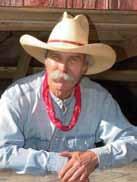
Marilyn Smith and the elton Smith Memorial endowed Scholarship
The Elton Smith Memorial Endowed Scholarship in Art was established in May 2010 in memory of Elton Smith, director of UTSA’s Office of University Publications. He died Sept. 24, 2009.
Gifts to establish the scholarship were made by Smith’s friends and family members. Marilyn, his wife, endowed the scholarship in April with a donation of $22,000.
“I endowed it because he was such a good mentor to so many people,” she said. “Even though he’s gone, he can continue to mentor people.”
The scholarship is for students pursing a bachelor’s degree or bachelor of fine arts degree in a fine arts studio discipline.
Smith joined UTSA in 1997 with an extensive background in graphic design, art direction, photography, advertising, print production and printing. He led a creative team of designers, editors and photographers who created periodicals such as the university’s magazine, Sombrilla, and Ovations
He always knew he wanted to be an artist, sketching and doodling whenever and wherever possible, said Marilyn, his wife of 40 years. They met their sophomore year in high school.
Above all else, though, Smith was an optimist, which is something she hopes will be passed on to the students who receive his gift.
“He’d always say ‘You can do this. Don’t sell yourself short. If that’s your dream, you need to pursue it,’ ” she said. “He’d always say to do what is going to make you happy because it’s not always easy to make a buck; it’s what’s in your heart.”
the George W. Brackenridge Foundation made a $50,000 gift to assist COLFA masters and doctoral students and help UTSA achieve its goal of Tier One status. The foundation’s gift was eligible for a dollar for dollar match that was made by an anonymous donor. The combined gifts will allow COLFA to make fellowship awards totaling $100,000 over the next two years.
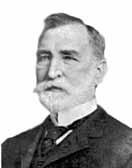
The George W. Brackenridge Foundation has a long history of support for UTSA and COLFA with a record of giving that includes scholarships, endowed faculty positions and educational programs.
Making a Difference through Giving
COLFA students, faculty, alumni and friends are working together on UTSA’s progress toward becoming a premier national research university. Your gifts are helping the College of Liberal and Fine Arts reach its goals.
Here are a few opportunities for strategic investment to consider when planning your gift:
• Scholarships and fellowships to attract and retain deserving students and help them realize their fullest potential.
• Endowed faculty positions allow COLFA to recruit distinguished senior scholars and artists to provide leadership in instruction and research and to bring national visibility and recognition to programs in the college.
• Unrestricted excellence funds like the COLFA Dean’s Circle and the COLFA Annual Fund provide flexibility in assisting academic departments in funding special projects, student scholarships, and research, and in providing enrichment opportunities that enhance the learning experience of our students both in and out of the classroom.
There are many options for making your gift to UTSA College of Liberal and Fine Arts, and depending on your philanthropic goals, you may find one method more attractive than another.
More information can be found at www.giving.utsa.edu.
What CoLFa Scholarships Mean to Students

A GLIMPSE OF COLFA 2009–2010
To learn how you can make an investment in UTSA College of Liberal and Fine Arts that will inspire future generations, please contact:
COLFA Development Officer
The University of Texas at San Antonio One UTSA Circle
San Antonio, TX 78249-0641
175 COLFA students received scholarships, fellowships and awards in the 2009–2010 school year
A total of $300,000 was awarded from 83 donorsupported funds
COLFA is only able to make these awards to benefit students through the generosity of alumni and other friends.
adriane niedorf-Pierson
Area of study: Graduate program, English Award received: Richard and Joyce Harris Sapience Foundation Graduate Fellowship in English
“This scholarship means freedom from student loans that would be hanging over the heads of my entire family. … It means much less worry.”
tawny Bailey
Area of study: Graduate program, anthropology, with a focus on archaeology and Meso-America Awards received: Richard E.W. Adams Endowed Scholarship; the UTSA Department of Anthropology Thesis Scholarship
“Receiving these scholarships is a real honor. It’s also very encouraging to know that alumni, faculty and others are giving back to students to help them achieve their goals.”
Juan Urbano
Area of study: Political science, with a focus on American government Awards received: Ruben Munguia Endowed Scholarship; El Patronato De La Cultura Hispanoamericana; USAA Foundation COLFA Graduate Scholarship; COLFA Presidential Scholarship
“[The scholarships] covered the cost of tuition and fees for the whole year. For my undergrad I didn’t receive any scholarships and had to take out loans. Because of these scholarships I was able to afford to go to school without taking out loans.”
Sean Cunningham
Area of study: Geography, graduating fall 2010 Award received: Minnie P. Mastoris Endowed Scholarship; Dr. James D. Calder Annual Scholarship
“The scholarships helped me continue my education, reduce the number of hours working, and focus more intensely on my studies.”
tyler Valadez
Area of study: Music education, sophomore in fall 2010 Awards received: Alfredo Flores/Alamo Music Endowed Scholarship in Music; Marjorie Powell Zachry Memorial Endowed Scholarship for Strings; San Antonio Education Partnership Scholarship
“The scholarships have … meant my future. Without them I’d be taking out loans that would set me back, and because of them I can go to school now. They made the difference between school and no school.”
The largest college at UTSA, COLFA is composed of 11 departments offering 20 undergraduate and 13 graduate degrees in the arts, humanities and social sciences
The fastest-growing liberal arts college in the state, COLFA has had a 43 percent increase in majors over the past five years
COLFA is a major provider of arts and humanities programming in South Texas, with an audience of over 70,000 annually

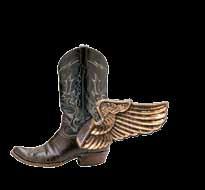

uTSA ranks second in the uT System in external research funding in the COLFA areas of arts, humanities and social sciences with $3,541,473 expenditures in FY 2009
COLFA has an annual budget of $17,659,133 augmented by $3.5 million in competitively awarded funding
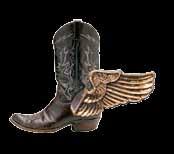
COLFA has 176 tenure-track faculty and 226 nontenure-track faculty; 53 percent of all faculty have doctoral degrees; there are three endowed chairs and two endowed professorships, one Fulbright Fellowship and four other fellowships
COLFA has 58 endowed scholarships, fellowships and awards

COLFA enrollment in psychology and communication
ovati o ns
UTSA COLLEGE OF LIBERAL AND FINE ARTS
dean, Daniel J. Gelo
associatedean,undergraduatestudies andfacultysupport
Christopher Wickham
associatedean,research andgraduatestudies
Augustine Osman
assistanttothedean, Deborah D. Thomas
editor, Joe Michael Feist
artdirector, Karen Thurman
publicationdesigner, Tom Palmer
associateeditor, Lety Laurel
contributors, Rudy Arispe, Lisa Chontos, Kate Hunger, Cindy Tumiel, Elizabeth Allen, Vincent T. Davis
photographers
Patrick Dunn, Mark McClendon
projectManager
Frank Segura
executivedirectorofcoMMunicationsandcreativeservices
Craig Evans
associatevicepresidentforcoMMunications
David Gabler
associatevicepresidentforaluMniprograMsandMarKeting
Jim Mickey
vicepresidentforuniversityadvanceMent
Marjie French
College of Liberal and Fine Arts One UTSA Circle
HSS 4.01.23
San Antonio, TX 78249-4350
(210) 458-4350
(210) 458-ARTS
(for arts events information)
http://colfa.utsa.edu/colfa/
The University of Texas at San Antonio One UTSA Circle
San Antonio, TX 78249-0641
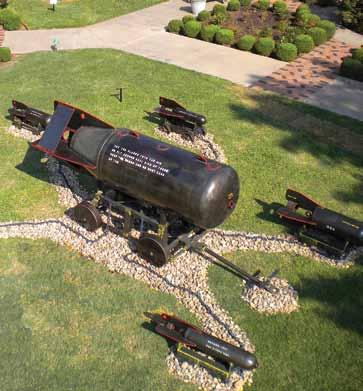
Non-Profit U.S. Postage pA id Permit # 2474 Austin, TX
©2010 Ovations is the annual publication of the College of Liberal and Fine Arts (COLFA) at The University of Texas at San Antonio. Ovations is for our patrons, faculty, staff, alumni and friends to highlight some of the achievements and activities of the college.
“Pull Toy for the New Millennium” by Greg Elliott, See story, page 14.