if i were not a physicist, i would probably be a musician. i often think in music. i live my daydreams in music. i see my life in terms of music … i get most joy in life out of music.1
—Albert Einstein
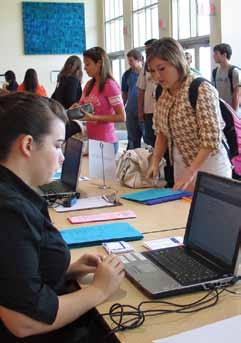
one of the great pleasures of involvement in the liberal and fine arts is watching how students awaken to the possibilities that lie across the traditional boundaries of knowledge. “Interdisciplinary learning” is one of the buzzwords of modern higher education, but it means more than taking some team-taught courses. Becoming a learned person, today more than ever, means moving comfortably among different intellectual domains and yielding at least sometimes to raw curiosity and the desire for self-expression. Our college is especially fertile for this kind of discovery because it brings the arts, humanities and social sciences close together, and because it involves virtually all UTSA students in these subjects through the core curriculum. And so, although we are duly proud that COLFA is the largest UTSA college, and more UTSA students are majoring in the liberal and fine arts than other disciplines, we also cherish our role in helping all UTSA students prepare broadly.
Among the most ardent and generous supporters of the college are several who have been highly successful in careers in business, law, medicine and technology. Some have spoken wistfully about not having followed their passion for music, painting, acting or archaeology. Most, however, have preserved such interests as a dimension of their lives, pursuing creative or scholarly work themselves (and often at distinguished levels) or nurturing it in others. These individuals are great exemplars for our current students.
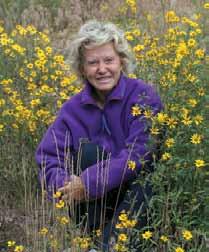
Longtime COLFA supporter and teacher Dr. Jerald Winakur has garnered nationwide praise for his book Memory l essons for its sensitive and personal exploration of aging and for the superb quality of this geriatrician’s prose. Businesswoman and English alumna Brenda DavidsonShaddox is a thriving photojournalist whose program of exploration in Myanmar is at once ecological, artistic and anthropological.
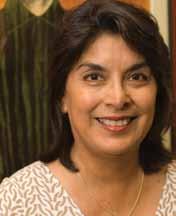
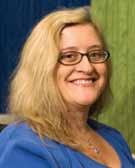
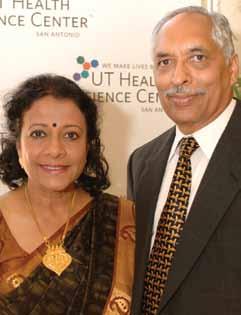
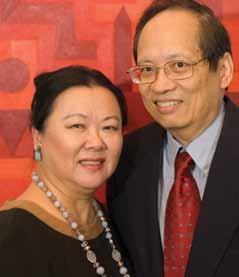
Mary Pat Stumberg understands the enriching power of music. She has made an unusual, visionary scholarship gift specifically to support students from the science and technology majors who are also studying music. Another wonderful gift comes from Drs. Rajam and Somayagi Ramamurthy. These distinguished physicians are well-known for their advocacy of classical Indian dance. Their new endowment in the Department of Music will support visiting artists and scholars in Indian dance, music and culture and will be foundational to our new dance program.
Thanks to such imaginative benefactors, and through the hard work of a talented and devoted COLFA faculty, our world will be populated with more physicists who see their lives in terms of music; attorneys with the sensibilities of the historian and sociologist; teachers, pharmacists and accountants whose lives exude art and poetry.
ovations
Dean
Mural painted
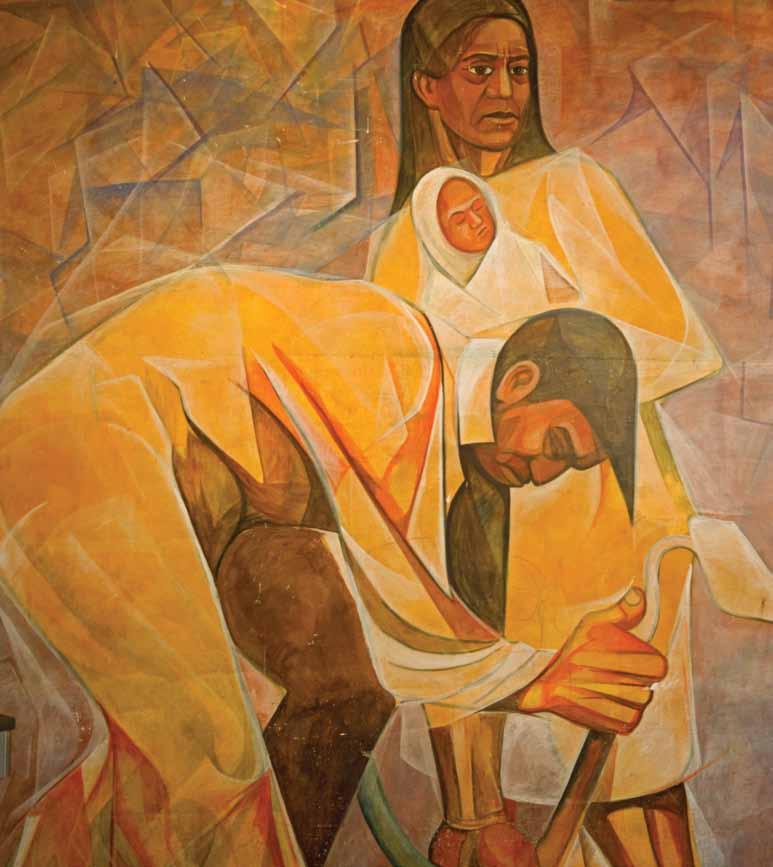
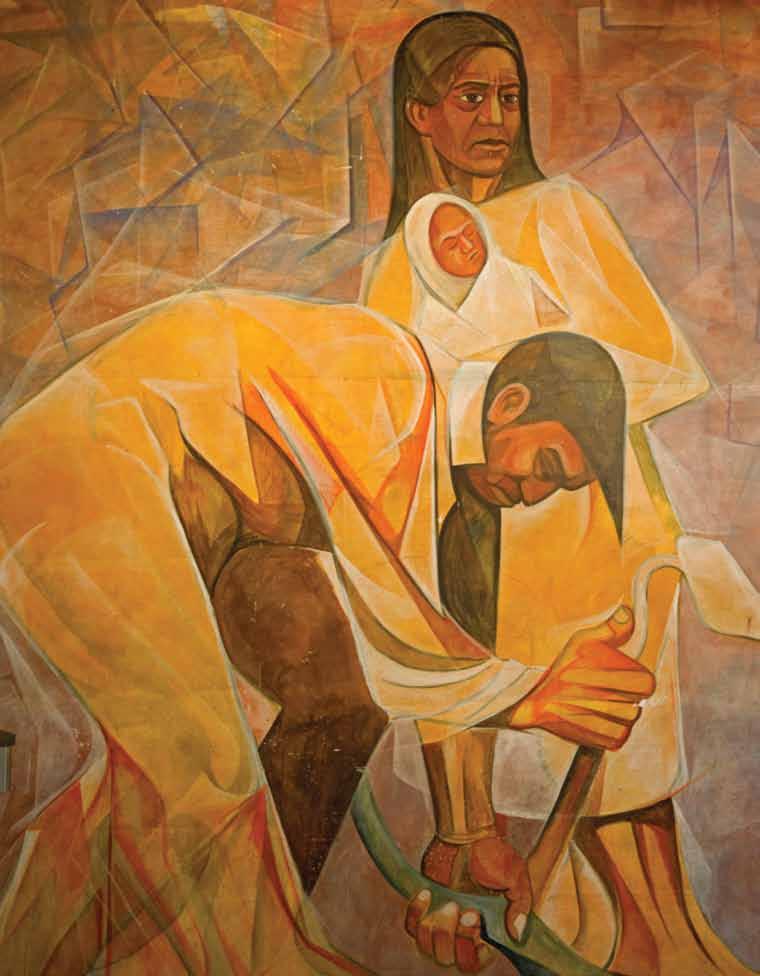
Artemio Guerra Garza at the UFW hall, San Juan, Texas.
Photo by Josue Esparza.
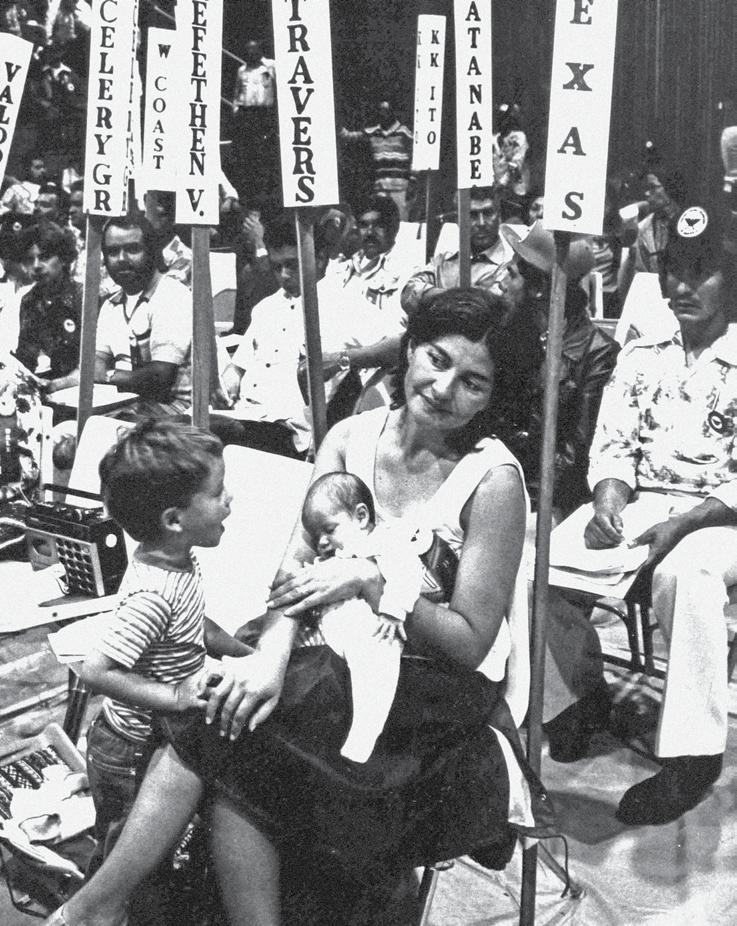
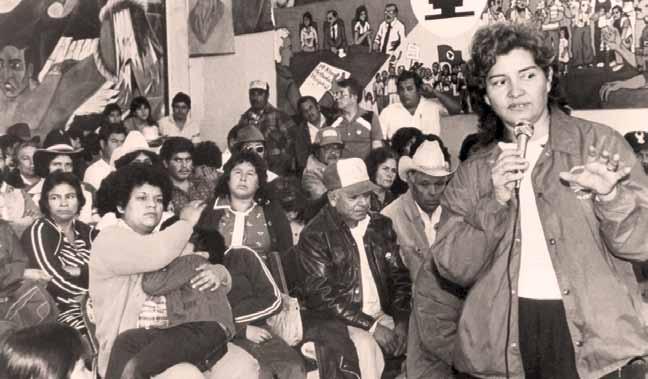
Rebecca Flores at the 1979 UFW Convention in Fresno, Calif. Story on page 14.
Teaching Celebrating
“i wish i could take him for every class, in every subject. Be prepared to think.”
“i learn more in his classes than i do in all my classes put together.”
teaching awards
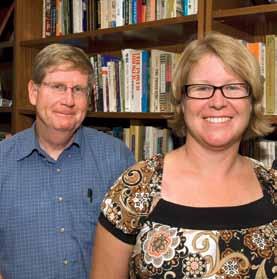
daniel J. gelo: dean of the college of Liberal and Fine arts and professor in the department of anthropology, the chancellor’s council outstanding teaching award, 1996
ronald Binks: professor in the department of art and art history, President’s distinguished achievement award for teaching excellence, tenured and tenure-track Faculty, 2004
These are just two comments from the stream of reviews left for Joe Rogers, retired UTSA professor, on RateMyProfessors.com. After three years of teaching at UTSA, Rogers was not only the sole Texas professor to make the Top 10, but he was also ranked sixth out of over 1 million professors on the Web site, which scores them on a scale of 1 to 5 in categories such as clarity, helpfulness and easiness.
From the boundless Web to the more intimate confines of the individual college, professors in the College of Liberal and Fine Arts are being recognized for demonstrating excellence in teaching. Some recognition comes from students, others from peers.
“Whatever else we do in the College of Liberal and Fine Arts, teaching is our main job,” says Dean Daniel J. Gelo. “We recruit and retain strong teachers and are fortunate to have many truly excellent ones who have been recognized with awards.”
Students aren’t just ranking their favorite professors online. In 2009, nominations were sent in by students from every college for the Distinguished Faculty Awards, which are presented by the UTSA Alumni Association and the Student Alumni Association.
COLFA faculty members Lilian Cano, a non-tenure track lecturer in Spanish, and Malgorzata Oleszkiewicz-Peralba, associate professor of Latin American studies, were two recipients of this year’s awards.
Mary Mcnaughton-cassill: associate professor in the department of Psychology, chancellor’s council outstanding teaching award, 2004
Marian aitches: senior lecturer in the department of history, President’s distinguished achievement award for core curriculum teaching, non-tenure track Faculty, 2007
students and peers praise ColFA faculty
by lisA ChAntos
A lecturer in the Department of Modern Languages and Literatures, Cano was nominated by student Jim Geiger. According to Geiger, Cano positively reinforces student learning, which builds confidence in students regarding their ability to learn.
“ d r. c ano encourages students to take bold steps across a linguistic bridge into the spanish-speaking world,” he says.
Oleszkiewicz-Peralba teaches courses in Latin American culture and women writers in the Department of Modern Languages and Literatures. Her nominator, Alejandra Osejo, says OleszkiewiczPeralba fosters critical thinking in and out of the classroom.
“dr. Peralba is an encyclopedia of Latin art, culture and literature, and this makes her a perfect professor for this year’s award,” Osejo says.
Several COLFA faculty have also earned the President’s Distinguished Achievement Award for Teaching Excellence. These awards represent peer recognition for excellence in the classroom, says David Johnson, history professor and former vice provost for academic and faculty support.
The awards “are fundamentally an evaluation of the nominee’s work in the classroom. The focus is on the effectiveness of teaching and teaching innovation,” he says.
richard gambitta: associate professor in the department of Political science, President’s distinguished achievement award for teaching excellence, tenured Faculty, and the chancellor’s council outstanding teaching award, 2007; outstanding teaching award from the university of texas system boared of regents
This year’s COLFA awardees were Ben Olguin in the Department of English and Deborah Wagner in the Department of Anthropology. Olguin, an associate professor who has taught more than 50 graduate and undergraduate courses, was recognized as being a tough yet thorough professor by his students. One student wrote, “what i really liked is that the instructor got us to open our minds and to think.”
Wagner, an alumna and instructor, was praised for challenging students to critically evaluate ideas and arguments by encouraging active participation in the classroom.
“she has proven to be one of the most inspiring and influential individuals i have encountered in an academic setting,” wrote one student.
And recently, Richard Gambitta, associate professor of political science and director of the UTSA Institute for Law and Public Affairs, was one of 73 faculty members given Outstanding Teaching Awards from the University of Texas System Board of Regents. The award, given in recognition of high quality undergraduate teaching, also came with $30,000.
Teaching excellence
COLFA faculty members are noted for excellence in teaching partly because they get so much practice, Johnson says.
“The college handles a great deal of the core curriculum and gets most of the university students,” he says. “We have a heavy responsibility to prepare students for the rest of their studies.”
With COLFA’s role in teaching students
Kolleen guy: associate professor in the department of history, President’s distinguished achievement award for teaching excellence, tenured and tenuretrack Faculty, 2008
Lilian cano: lecturer in spanish in the department of Modern Languages and Literatures, distinguished Faculty award, (non-tenure track) 2009
campuswide comes a responsibility for the faculty to keep improving their skills. One way they do that is through the UTSA Teaching and Learning Center (TLC).
Directed by Barbara Millis, an awardwinning teacher and researcher, the TLC promotes better teaching and helps good teaching be recognized and rewarded.
Since Millis arrived at UTSA last August, the TLC has hosted 61 workshops and brownbag sessions on how to teach effectively. Of the 431 people who attended the sessions, 125 were from COLFA.
“They can be proud of that,” Millis says. “You can’t learn until you pay attention. You have to focus your attention. The COLFA folks are there in the workshops paying attention, and I think there’s a direct connection.”
It’s critical that universities focus on the teaching that occurs in their classrooms, Millis says. Too often, there’s so much emphasis placed on research that classroom learning gets brushed aside. But a good teacher can make an enormous difference, she says.
“A good teacher can help people not only learn important things—things meaning knowledge and skills and abilities—but they can also impact affective factors like feelings, emotions and ethics,” she says.
“A teacher who inspires can lead students down a path to lifelong learning. A good teacher is also a good human being.” Rogers, whose teaching merits are widely known thanks to the Internet, says his teaching philosophy is easy.
“You have to be passionate about what you teach,” he says. “The students
will pick up on that and get excited about it. Use humor and meet them where they are. There’s always another perspective.”
As the dean of COLFA, Gelo has actively been promoting those very same qualities in his faculty. Among the deans, no one has been more active in promoting the TLC and its mission of teaching excellence than Gelo, Millis says.
“It shows not only that they care, but that they’re willing to invest the time,” she says. “Change takes time and it takes thought.” o
t he t eaching and Learning c enter at a g L ance
Major initiatives undertaken by the tLc this last year include:
• 61 workshops and brown bag sessions for graduate students and faculty to promote teaching effectiveness. the tLc brought in nationally recognized outside presenters to run the sessions.
• workshops for nine Master teaching Fellows (now called university teaching Fellows) focused on professional development. the workshop topics included microteaching, conducting effective classroom observations, conducting focus groups, cooperative learning and classroom assessment techniques.
• intense training for all new graduate teaching assistants. Provided in-depth microteaching using teaching fellows that followed a teaching assistant panel. sixty-five teaching assistants participated.
• the four-day Provost’s academy on critical thinking at the hemisFair Park campus with over 40 attendees and two nationally known outside speakers.
• a graduate student Project completion competition, planned along with the graduate student association.
Malgorzata oleszkiewicz-Peralba: associate professor of Latin american studies in the department of Modern Languages and Literatures, distinguished Faculty award, (tenure track) 2009
Ben Olguin: associate professor in the department of english, President’s distinguished achievement award for teaching excellence, tenured Faculty, 2009
deborah wagner: lecturer in the department of anthropology, President’s distinguished achievement award for core curriculum teaching, 2009
Practical PR Studentstakeskillslearned
in the classroomandappl
By Jennifer roolf l aster
For allison Finder, the great joy of public relations is seeing how everything—sometimes miraculously—falls into place.
“ i t’s kind of like a miracle sometimes,” says the utsa senior. “ you start with something way over your head, and then break it out into pieces. then, somehow, all the pieces of the puzzle fall into place: the fliers, the releases, the phone calls, the volunteers. i love seeing how, slowly but surely, it all comes together.”
i t’s something Finder has a chance to see through her work as director of unity Pr a student-run public relations firm that works with a variety of clients in the city.
Founded in 2006, u nity P r works like any other public relations firm, except for one big difference. everyone on staff is a student. and, really, well … there isn’t a staff, come to think of it.
i nstead, u nity P r is a volunteer group of enterprising students with the desire to learn more about public relations, the drive to help their community, and the initiative to seek real-world experience.
“We are a student-run public relations firm,” Finder says. “We’re hungry. We’re ready for anything. We’re just wanting to take what we learn in the classroom and apply it in the Pr working world.”
The students, all members of the Public Relations Student Society of America Steven R. Levitt chapter at UTSA, are applying their creativity and enthusiasm to a variety of projects, including handling media relations and event coordination for several nonprofit clients in San Antonio. This past summer were two events supporting the San Antonio Food Bank: the May “Interfaith: Hunger Knows No Boundaries” event with area religious organizations, and the “Doing Good on the Green” golf tournament in June.
“This is crunch time,” Finder says, laughing a little. “No summers off for us.”
Unity PR got its start helping San Antonio’s Med Center Rotary Club throw the 2007 Nightingale Gala, which raised $47,000 for nursing scholarships. Then, in 2008, students helped build on the success of the Child Advocates San Antonio annual 5K run, attracting media attention and helping raise almost $25,000 for neglected or abused area children needing an advocate. That same year, students worked with the Battle of Flowers Association, which throws the annual Battle of Flowers parade during Fiesta San Antonio.
“Clients come to us,” says Steven Levitt, chair of the UTSA Department of Communication and PRSSA adviser.
That sense of community caring is clear, says Erica Benavides, community investments manager for the San Antonio Food Bank. “The fact that they’re choosing to work with nonprofit organizations and give back to the community is very admirable,” Benavides says. “I can’t say enough about what they’ve done to help us, wanting to be there in the trenches with us, helping to do what we need to do. It’s been a great help to us.”
Of course, there are benefits for students as well. “It’s taught me a lot, not just professionally but personally,” Finder says. “Having to communicate with so many people, working with so many different groups … my organizational skills have increased dramatically. I’m better at writing, at communicating effectively, at delegating and at working with people.”
Levitt calls Unity PR a win-win situation. “The students benefit by gaining experience, making contacts and learning how PR works outside the classroom. Our clients benefit with good results,” Levitt says, pointing out that Unity PR’s work helped to double the number of participants at the CASA 5K and exceed the desired fundraising amount for the Nightingale Gala by almost $20,000.
“There are always organizations in town looking for help, and the students do good work. So far, the focus has been exclusively on nonprofit organizations. We want to help the community, and that’s where their work can have the biggest impact.”
Even the company’s name reflects that spirit. Led by Kari Meuth, a 2009 graduate and past president of the organization, students chose the name Unity PR to represent “University, Community … Unity PR.”
“We’re students at a university, and we wanted people to know that, and we’re also members of a community, and we wanted that to be clear, too,” Meuth says.
Levitt gets his own benefit, too, he says. “I’ve learned a lot from the students. I like the energy they have. The students are bright-eyed and ambitious and energetic. They’ve got this vision and all this good energy.”
Gregory Frieden, a 2007 graduate who helped found the Unity PR firm, was a big part of the company’s vision. He wanted an outlet where he and other communications students could really take what they were learning in class and test it out.
“Part of being a public relations student is wanting to aspire to something better than just learning the theory,” Frieden says. “You should learn the practice. And the best way to learn practice is a real live campaign, a real project where you dive in and do it.”
Through Unity PR, students also learn that the perceived glitz and glamour of public relations—hobnobbing with celebrities at gala events or chitchatting at country club benefits—isn’t reality. Instead, Meuth says, the students found that PR involves a lot of behind-thescenes grunt work: things like cold-calling sponsors, setting up tables at events and keeping registration forms in order.
“It’s fun, but it’s a lot of hard work,” she says. “There’s a lot of planning and a lot of organization behind everything.”
That’s a valuable lesson for public relations students, says Jeneen Garcia, director of education for the national PRSSA organization. There are no firm numbers of how many PRSSA chapters have their own agency, but Garcia estimates around 35 to 40 percent of the nation’s 303 chapters have a student-run firm like Unity PR.
“There are always organizations in town looking for help, and the students do good work. So far, the focus has been exclusively on nonprofit organizations. We want to help the community, and that’s where their work can have the biggest impact.”
—Steven Levitt
“Public relations is more than just event planning or media relations. It’s strategic communications,” she says. “Giving students the chance to be part of a firm and see it in action helps them make a decision about the career.”
Frieden, who now sits on the board of the San Antonio chapter of the Public Relations Society of America, agrees.
“The opportunity I was given as a student [with Unity PR] definitely helped me be better prepared,” he says. “Like a lot of students, I went to that first meeting because I wanted something on my résumé. But within minutes, I knew this was a place where I could really experience things and learn. I’m proud to have been part of it.” o
UTsa researcher sTUdies caUses, reMedies To anger By Kate Hunger
We’ve all felt it … the clench of the jaw, the flushing of the cheeks, the fire in the eyes. We’ve all experienced anger, a completely normal and very human emotional state that ranges from mild to raging. But not everyone handles the emotion gracefully. When anger explodes, when it festers, when it sours work and personal relationships and even threatens health, the time to get help has arrived, says UTSA clinical psychology professor Ephrem Fernandez.
But just what sort of help has typically been available? In Fernandez’s view, a fairly limited set of options. To remedy that, he has developed an anger management therapy that he believes will revolutionize the way anger problems are treated. His method, called Cognitive Behavioral Affective Therapy, grew out of more than a decade of research.
It integrates techniques from multiple schools of psychotherapy and is tailored to each client’s anger profile. This approach yields a comprehensive and customized therapy that Fernandez says is an improvement over the standard one-size-fits-most solution.
“There was a time when the treatment consisted mainly of stand-alone
techniques,” Fernandez says. “You went in for anger management in the past and usually you got relaxation and self talk: breathe deep and try to reason your way out of this anger. That’s fine. incorporate both of those in my anger regulation program, too. But don’t think it’s enough.”
Plainly put, Fernandez wants to help people deal with anger in a healthy way. Anger managed poorly can wreak havoc on career and family, not to mention your health. Cardiovascular problems, as well as substance abuse, are serious effects of dysfunctional anger, he says.
what is anger?
Until recently, this powerful emotion had gone relatively unexplored, particularly compared to depression and anxiety. There is much to learn—including why people experience and respond to anger in such different ways. The manner in which families and peers deal with anger seems to influence how we ultimately experience and express the emotion, Fernandez says. Also intriguing is the tenor of our times and its effect on anger in the community.
“Anger is ubiquitous, and maybe our threshold for anger seems to have been lowered over time,” he says.
Anger portrayed in the media has spawned stereotypes that aren’t particularly useful. Fernandez emphasizes that only infrequently does anger lead to aggressive acts or even to violence. Aggression and violence sometimes are born out of thrill-seeking or other motives, he says. Sometimes, anger can be positive and useful.
“Anger has tremendous motivational energy which can be harnessed productively, too,” he says.
But when someone’s anger impedes his ability to function at work or in relationships, that’s a sign it is maladaptive. That is where Fernandez believes he has developed better ways to diagnose anger disorders and treat people with such disorders.
“We’ve had people in our groups, people with no criminal records, men and women, white collar people, blue collar people, all walks of life, who have anger problems,” Fernandez says. Being angry feels bad, Fernandez explains, because it is a survival strategy
that helps people deal with something that offends them. What sparks anger in one person may barely register with another.
“It’s invariably an unpleasant emotion, in the company of other unpleasant emotions of which there are many: jealousy, fear, sadness, shame, contempt,” he explains. “On the positive end, you have joy. … This is a reflection on the human species, that we have much more of a vocabulary for the negative. Evolutionary psychology gives us a reason for why that is the case, and it’s basically that it has greater survival significance to know what is wrong than to be continuously reminded of what is right.”
anger expression styles
About seven years ago, Fernandez created the Anger Expressions Scale, a tool used to map the ways people express their anger. Anger may be a universal human emotion, but the ways people act on it—who they direct it toward, whether they hold it inside or put it out there for the world to see, whether they retaliate or resist the object of their anger, use words or fists, maintain or lose control, or seek revenge or an apology— all of these reactions say a lot about how
constructive or destructive their anger is. These six dimensions form the basis of the Anger Expressions Scale.
The Anger Expressions Scale and another tool Fernandez developed, the Anger Parameter Scale, which rates the frequency, duration and intensity of anger, are used to assess and possibly diagnose the type and severity of anger problems. Those who meet the criteria for an anger problem or disorder then can participate in Fernandez’s four-week program of Cognitive Behavioral Affective Therapy (CBAT). The next program will likely be offered in spring 2010 in Fernandez’s office suite at UTSA.
The treatment is tailored to participants’ own anger profiles. The program is currently designed for adults. Fernandez expects to refine it for use with adolescents, taking into account their cognitive development and social maturation.
CBAT is designed around a sequence of anger management skills. The first week begins by educating participants on anger and its effects on their lives.
Each person is asked to self-monitor his or her anger for a week and report back. Prevention is the hallmark of the second week, and participants, armed with a battery of techniques such as
stimulus control, sign a contract pledging to control their anger at its onset. Most of the approximately 100 people who have already undergone CBAT showed improvement at this phase; if they didn’t, they received additional defusing strategies in the third week, dubbed the intervention phase. These skills include thought stopping—quietly repeating a word or phrase that means the opposite of anger, such as “peace” or “settle down,” to interrupt anger. They also learn relaxation and attention diversion techniques, such as taking a walk or watching television. The key technique in this phase centers on reappraisal, in which each person assesses the intention of the offender and the extent of the damage. The fourth week usually shows even more improvement, with a drop in the duration, intensity and frequency of anger. The final week of the program offers what Fernandez calls “postvention” skills, another line of defense in anger management. These include expressive writing, art therapy and the Gestalt empty chair technique—speaking to the object of anger, in imaginary form, to release pent-up emotion.
“We are there to train them in skills they can use on their own to self-regulate
Being angry feels bad, because it is a survival strategy that helps people deal with something that offends them. What sparks anger in one person may barely register with another.
llustration by Ken coffelt
anger,” Fernandez says. “Because much of this anger is not going to happen in the sessions. It’s going to happen at home, on the roads, at work, in the marketplace so to speak.”
The goal is a better, more effective anger experience and resolution.
“I believe in the optimality concept here,” he says. “We are not going to preach abstinence from anger or total restraint from getting angry. The aim is not to rid people of anger. Anger is a message to yourself that something is wrong, just as fear is a message that there is danger and you need to escape.”
With the publication this year of a chapter explaining CBAT in the International Handbook of Anger , Fernandez is hoping the therapy will become part of standard practice in treating anger.
“Our objective is to identify problematic anger, and having identified it, to be able to help people find the optimal expression of anger, one that is presumably constructive as opposed to destructive,” Fernandez says.
anger in san antonio Fernandez and his undergraduate and graduate students are working on a community anger survey. From the estimated several hundred people who will undergo 20-minute structured interviews, he and his research assistants will identify those with problematic anger. These can be further screened before people will be eligible to participate in CBAT, he says.
“We’re trying to create a baseline for how angry the community is,” says research assistant Robert Vargas, who by the end of the spring semester at UTSA had conducted about 50 interviews for the study, which is intended “to help us pinpoint where people’s anger is from.”
One common source of anger among the first group of participants surfaces on the city’s roadways, says research assistant Cynthia Garza, who received a B.A. in psychology in 2008.
“Traffic is a really big example that people hit on,” she says, adding that some respond by simply steering clear of a driver who has cut them off, while others relate that the rude treatment ruins their day.
Although their current sample size is small, Garza says there appear to be some gender differences emerging. Men have been more likely to pinpoint their jobs as anger triggers. Women caring for children have cited family as a source.
One participant, a new stay-at-home mom of three young children, shared
that her frustration mounts while caring for them single-handedly. She said she only vented when her spouse returned home. “She didn’t want to let out her anger on the children,” Garza says.
the goal: constructive anger
So, if anger is a fact of life, how can we get the most out of it while minimizing the unpleasantness? Constructive anger is the goal, says Fernandez. That includes verbal communication with feedback directed to the offending person instead of unrelated, convenient targets, and a willingness to forgo punishment in favor of a return to normality. Choosing constructive anger means avoiding active retaliation or passive-aggressive responses.
Fernandez encourages people to search for the good in the people who flip the switch on their anger.
“The big trap is anger cheats us in the moment into thinking that this person is all bad. … I will tell them you can, in the worst person, find something redeeming and to look for that. They’ll come back to me the next week and say, ‘I stopped in the moment and thought, you know what, she’s my wife. I married her.’ Or, ‘He’s my father,’ or, ‘This is my daughter I’m talking to, and fundamentally love her.’ ”
That is just one illustration of redemption that Fernandez believes can push problematic anger to a more peaceful and ultimately, positive, place. o
eP hre M Fernandez, Pro F essor o F c linical/h ealT h Psychology
e ducation b a., with honors, university of Western australia; M.a., Miami university; Ph.d., ohio state university; internship in clinical psychology, university of Pittsburgh Medical school
My students M ight say... he is thoughtful and expressive and makes teaching an interesting two-way interaction; his psychology is strongly grounded in theory, yet always driven to application, and in this way dr. e.F. makes psychology credible in tackling important and current human problems.
n M y L eisure ti M e i… exhale more, and let my mind wander away from the here and now. Music is always around, whether it’s on the air or of my own making. also searching for novel cuisine and exotic culture. With that comes travel and good company.
My Favorite PL ace in the Wor L d is tahiti, and really all of Polynesia, and parts of south asia. When i retire... i hope to have something left in my retirement fund, to have most of my mental faculties and to be in a world with some good left in it.
Witness to the fall
A doctor wrestles with the helplessness of Alzheimer’s by
“At night he falls between the bed and the three steps to the john. He falls finding his way to the living room. He is tipping over his walker, he is tripping over his feet, he is looking to lean on arms that aren’t there. His dreams call to him: He follows the instructions of his dead siblings, his Army drill instructor. He is called by the alarm company to come down to the pawnshop, by the MPs to report to his unit, by his mother to come in for dinner, and on the way he falls. He gets hung up in his nightshirt, tangled in his pants, slips in floppy socks, can’t find his shoes because we have hidden them. He falls at the front door calling for his mother, his sisters, his old Army buddies, Nates and Sammy. And I am failing; I, his son, the physician, am failing to keep my father from falling.”
llustration by Ken coffelt
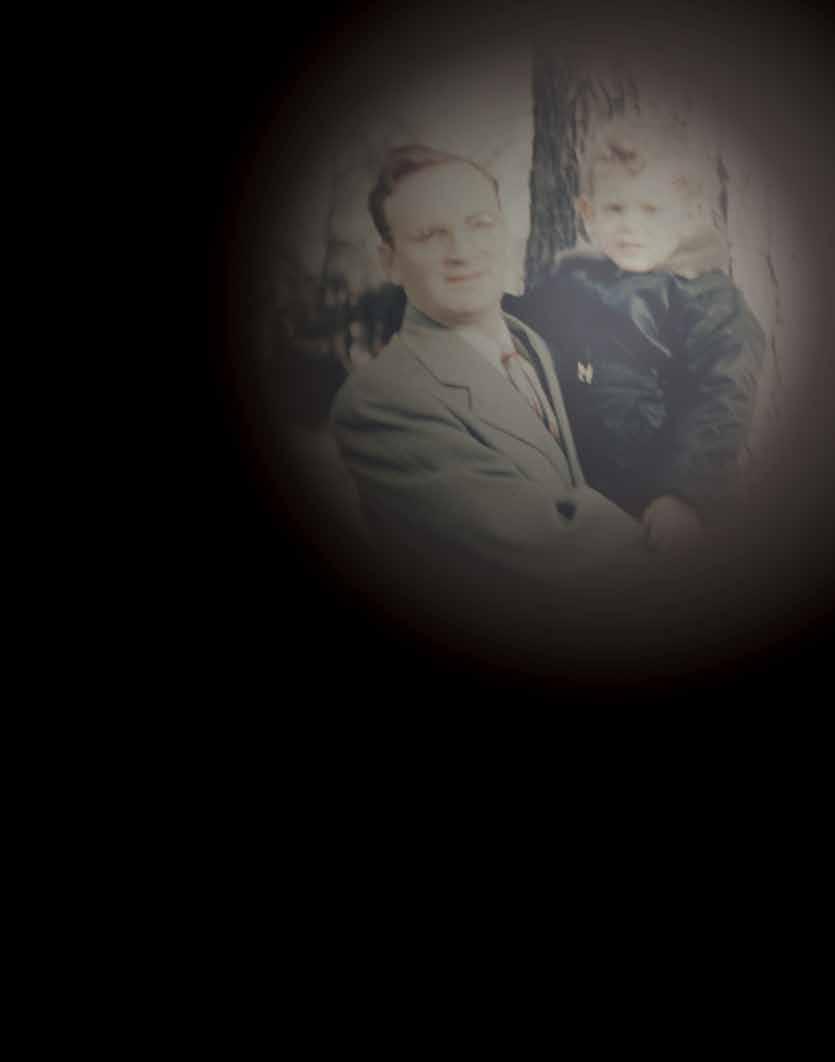
In the photo: Leonard Winakur holding a 4-year-old Jerry outside of their apartment in 1953.
Dr. Jerald Winakur had more knowledge than most as he faced the frailties of his father’s advancing age. He is a San Antonio internal medicine and geriatrics specialist who has built a thriving practice that tends to the special needs of older patients, working in an era when the marvels of advancing medicine have made it possible for people to live to ripe old ages.
But all that experience and all that knowledge didn’t spare Winakur heartache and helplessness as his own father slipped down the road of frailty and dementia.
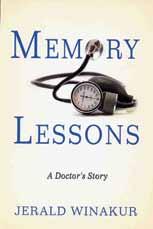
Facing those difficult times, the healing physician turned to his other gift— his love of words and his ability to capture the poignant moments of a lifetime. It became his first book, Memory Lessons, A Doctor’s Story , which was published this year by Hyperion Books.
Winakur, who studied writing at UTSA and now teaches seminar classes in literature here and at the University of Texas Health Science Center at San Antonio, tells the life story of Leonard Winakur— father, husband, businessman, bird-watcher, book lover, World War II veteran, high school track star, expert Ping-Pong player, artist and, eventually, Alzheimer’s patient.
Much already has been written about the heartache of Alzheimer’s disease, and this book is another touching portrait of a family struggling to cope with the insidious brain disease that slowly robs victims of their memories and selfawareness. But it also is the story of a
doctor who balances the dual responsibilities of a son and a physician, and who has seen the aging process in his patients and who knows too much about the sad realities that await his own father.
“You can have all the scientific knowledge and all the clinical knowledge, but when it is in your own family, you are in a conflicted role,” Winakur says. “You are a son struggling with a frail and demented father, and you also, as a doctor, have a very keen awareness of what is coming.”
He began noticing memory lapses and behavior changes in his father years ago, as Leonard Winakur advanced through his 70s. But the sad moment of truth came in 2004 when heart problems required surgery and an extended hospital stay. Away from his familiar home, Leonard Winakur lapsed into a state that doctors call delirium, when the combination of a strange environment, illness and diminished cognitive abilities produces a disturbing change in behavior. Some patients recover. But for others, the condition forces families to reckon with realities that have been lurking in the shadows for some time.
Leonard Winakur became delusional, irrational, paranoid and combative. He had to be subdued with physical restraints. For his family, the hospital stay marked the beginning of a new life—for him and for them.
“I promised him and myself that I would try to manage everything could without nursing homes,” Winakur says. “I was just going to try to manage everything I could. I had medical knowledge and resources to find help, and yet it was still very difficult.”
A year later, Winakur published an essay about the experience, titled “What are we going to do with dad?” in Health Affairs a scholarly journal.
The title echoed a sentence uttered regularly by his younger brother, Michael,
as they faced difficult decisions regarding their father. It wove together personal elements with a stark picture of the American medical system and its limitations on the care available for the growing population of the “oldest old,” a phrase used to describe people over the age of 85.
Winakur’s essay was reprinted in the Washington Post which carried him into the national media spotlight. His work was published in a number of newspapers, and he was interviewed on National Public Radio and other programs.
He was soon contacted by an agent who offered to help him market a book on the topic. A few months later the agent called to say she’d found a publisher. It was, Winakur says, “a scary moment.”
“I looked at my wife and said, ‘How am I going to write a book?’ ” He already was practicing medicine, teaching and caring for an ailing parent. Writing a book was one more task, but Winakur approached it with honesty and heart. The diary-like work contrasts painful observations of Leonard Winakur’s demented state with tender memories from years gone by, when he reveled in books and nature and played a mean game of Ping-Pong.
“In my mind’s eye see him playing, a gangly young man in Army fatigues, pale gray eyes behind wire-rimmed glasses— Winnie, his buddies called him—-taking on all comers. His opponents flew in on prop planes from other battalions, GIs, like my father, who were passing
time between their shifts loading gasoline cans onto ships bound for Patton’s Army as it barreled across Europe, or waiting to be sent over themselves. The soldiers crowded around the table, urging my father on with their bravado, the smoke from their ration of Lucky Strikes and Camels filling the barracks. They put down their pay and their packs of cigarettes, betting on their pal Winnie to keep slamming those little white balls down the throats of his opponents.”
“I think it is a very important work in terms of baring his soul and telling an important story,” says Steven Kellman, a professor of comparative literature at UTSA, who knows Winakur through writers’ organizations in San Antonio.
After Memory Lessons was published, Winakur drew an overflow crowd to the Health Science Center when he did a reading and book signing. Medical students and other spectators gave standing ovations and kept the event running beyond schedule as they asked questions and discussed the issues raised in the book, Kellman says.
“This is a book we’ve needed,” says Wendy Barker, poet in residence and professor at UTSA, whose classes Winakur attended. “We have been such an ageist society. We have not looked to our elders for the kind of wisdom and experience we should. Jerry has raised such important questions in this book,” she says.
Leonard Winakur died before his son’s work was published. One chilly morning
in February 2006, as his wife, Frances, slept in the next room, he rose from bed, managed to walk through the house without falling, opened a bolted door and wandered into the yard. His wife found him lying in the grass a few hours later, dead from hypothermia.
More than a year later, Frances Winakur finally began sorting through the personal belongings, asking her sons to take what items and memories they wanted from the room where Leonard Winakur spent his last months.
The items include a drawer full of pajamas and elastic-waist workout pants and shirts, the “uniforms of the oldest old,” Winakur writes.
“When bring the pile to my face and close my eyes, he is there. I slide them all into a shopping bag. I will take them out to Comfort and put them away. One day, if make it to as many years as my dad, I will wear these uniforms of my father’s oldest days as shuffle into my own. will wrap myself in his smells and no doubt add my own before it is over. I will feel him around me. I will be him.
“I want to remember.” o
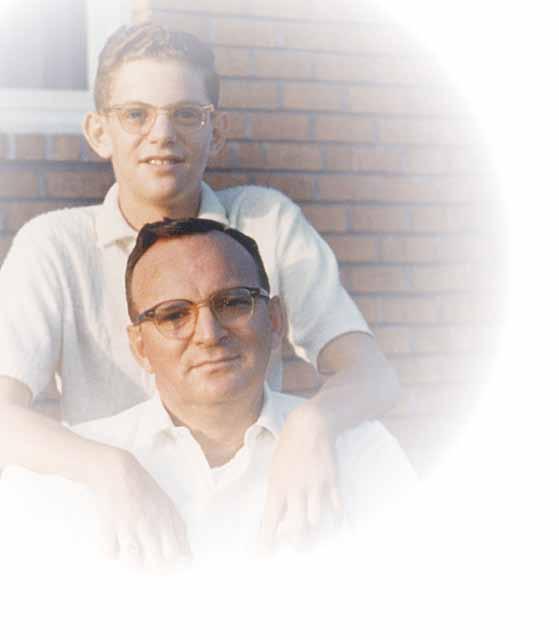
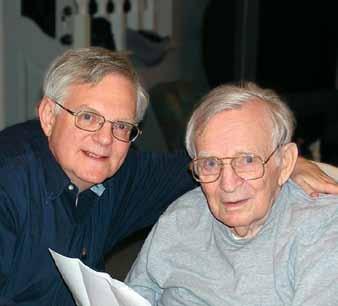
Above: Jerry and his father, Leonard, outside their home in Baltimore in1963. Jerry was 15 at the time.
Winakur and his father in Leonard’s home in San Antonio a few months before his death in 2006.
voicesUnheard
Documentary sheds light on the United Farm Workers movement in Texas
By RUDy A R iSpE
Blanca Rojas could not have been more than 3 years old when she was introduced to migrant life, although her earliest memories of being surrounded by vast acres of Michigan strawberry fields are happy ones.
Because she was too young to work, the toddler sat patiently in the middle of the field as she stuffed her tummy with the plump, juicy strawberries and watched as her father, mother, two brothers and six sisters packed their small pails while toiling under the hot sun.
But at age 10, it was her turn.
That’s when her father, Antonio, a native of Léon, Guanajuato, Mexico, began taking Rojas with him during her summer breaks to pick cucumbers and squash in the Rio Grande Valley. Up at 5 a.m., she made sure to eat a big breakfast, knowing that breaks would be few. Then she would pack her lunch, which consisted of a few tacos along with a Thermos of water.
“We started working right before the sun came up and worked until the sun went down,” says the 32-year-old Weslaco native who now calls San Antonio home. “It was pretty unbearable. remember my fingers would get lots of stickers on them from the cucumbers, and they would sting. We used to get 50 cents per bucket. We didn’t take many breaks because the more breaks you took, the less number of buckets you brought in.”
Rojas’ story is representative of the countless Mexican men, women and children who descended upon the Rio Grande Valley agricultural fields and harvested their bounty—the fruits and vegetables that, ironically, they picked in order to earn money to put food on their own family tables.
The story of the Texas farm workers movement, particularly the involvement of women, has never been fully told, says Raquel Marquez, UTSA associate professor of sociology and department chair. One reason, she says, is that while farm workers in Texas were demanding better working conditions and higher wages, United Farm Workers (UFW) leader
César Chávez was grabbing national headlines with his 1966 boycott of California grapes.
Now the professor hopes to educate high school and college students and the public about the origins, struggles and accomplishments of Texas farm workers like Rojas with her film documentary, Voices of the United Farm Workers Movement in Texas, which follows the grassroots movement in Texas from its inception in 1966 to today.
“It’s a key part of Texas history that is missing and needs to be told,” says Marquez. “The contributions of … farm worker women who devoted their entire lives to the people who are out there picking crops are important in understanding the history of Texas.”
Marquez believes this significant piece of history largely has been ignored by academics and researchers, although there is a wealth of information regarding farm workers’ activities in California. The hard-fought struggle of the UFW began in 1966 in Delano, Calif., and was co-founded by Chávez, Dolores Huerta and Gil Padilla. Their intention was to organize farm laborers to protect them from exploitation and inhumane work conditions. Aware that Texas farm workers also needed protection from unscrupulous growers, Chávez sent farm worker activist Eugene Nelson with Huerta and Padilla to the Rio Grande Valley.
With the trio’s assistance, Texas farm workers began to call for better working conditions and wages, and, more important, to take action so that their voices could be heard. The La Casita melon strike in Starr County occurred in May 1966 and was the first labor strike organized on behalf of Texas farm laborers.
In July 1966, the UFW march from San Juan, Texas, to Austin brought together some 15,000 farm workers, labor activists and supporters who walked more than 400 miles to the Capitol grounds, calling for an increase of wages from 85 cents to $1.25 per hour.
Then in October 1966, the Roma Bridge Protest, which was intended to keep Mexican national strike breakers from entering the United States, forced the closure of the bridge. It also resulted in the arrest of several UFW leaders.
“It was a pivotal protest because farm workers learned that if they came together they could bring about change,” Marquez says. “They were able to get Mexicanos from Mexico, whom the growers were using as strike breakers, to join them. That’s pretty powerful.”
The efforts of farm laborers finally paid off. In the 1980s and ’90s, legislation was passed that gave them workers’ compensation, minimum wage increases and unemployment compensation.
Other legislation mandated that toilets and hand-washing stations be available in the fields. It also eliminated the forced use of the short-handled hoe that required laborers to work in a bent- over position as they crawled along dirt rows for hours on end.
Marquez says that during her research she was surprised to learn that women played such a prominent role in the leadership and membership of the Texas organization.
“If you come to the state of Texas, you better know women are in charge here,” UFW National President Arturo Rodriguez says during an interview for the documentary. “They have demonstrated leadership, courage and sacrifice necessary to take on the struggles and have included their families and communities and really made this something special in terms of what’s taken place throughout the years, and what continues to take place these days.”
Ann Cass, a former UFW organizer who was also interviewed for the film project, knew firsthand the impact of female farm workers and how quickly they could mobilize.
“They would get together in the colonias or in the fields and have meetings and talk about problems they were
This mural was painted by Reynosa, Mexico, artist Artemio Guerra Garza on the wall of the UFW union hall in San Juan, Texas, in the early ’70s. Collaborators were J. Jose Cuellar, Lupita Martinez, and J. Medardo Perez.
“And here were farm workers who never thought they could be leaders, and they were standing up at the microphone and could speak on issues they determined were a priority.”
—Rebecca Flores
having—if there was no water or toilets in the fields, and how much they were getting paid,” Cass says. “So they took those issues to the union where most of the union organizers were women.”
It was also during this time that many politically conscious Mexican Americans who had actively supported the UFW began to run for political office with the strong support of union members, Marquez says.
“Union activities in Texas and the timing of it in the ’60s and ’70s, along with the Chicano movement, all coincided,” she says. “So for young Chicanos, this became a key part of their experience in becoming politically active and developing a group consciousness.
“As people matured, some went to college, some stayed in their towns, but their original experiences influenced them on how they continued to be politically active and engaged in working for the Mexican community.”
Rebecca Flores, who served as director of UFW Texas from 1975 to 2005, says that as union membership grew in South Texas, Mexican Americans had the power to influence elections.
“The Valley is 85 percent Mexican, and almost everyone has roots in the fields,” Flores says. “A lot of leaders who went to college understood the conditions in the fields, so they sympathized with laborers. There were a lot of people we helped get into office with the understanding they would carry our bills.”
Born in Atascosa County, Flores is a prime example of a former migrant worker who pursued a higher education out-of-state and returned home to advocate for field laborers’ rights. She recalls going to Wisconsin to pick cherries, sugar beets and onions in 1955 with her family after her father lost their 40-acre farm during a drought. Her story is also included in Marquez’s film.
“Looking back on how we lived, conditions were substandard,” the 66-yearold San Antonio resident says. “We didn’t
always make money, either. There was no drinking water or sanitation in the fields. We carried these tall, heavy, wooden ladders on our shoulders from tree to tree because we had to scale the cherry trees. If you left one cherry on a tree, you had to go back and get it. That was the rule.”
After getting an undergraduate degree in sociology from St. Mary’s University in 1970, she received a full scholarship to the University of Michigan. One day, Flores and her friends learned that Chávez would be visiting Detroit to speak to union members. After waiting in line, Flores and her classmates finally got to meet him.
“We told him who we were and where we were from,” she says. “He said, ‘OK. So you’re getting your master’s degree, and after you graduate you will get swept into the system and we will never see you again. You have to make a commitment to go back to support your community.’ So I made a decision to work for the union as an organizer.”
One of her proudest accomplishments as director of UFW Texas, she says, was organizing farm workers so they could speak on issues that affected them in the fields. She witnessed the results of that when the first Texas UFW convention was held in Pharr in 1979.
“This was a momentous event because of the hundreds of farm workers who attended,” Flores says. “And here were farm workers who never thought they could be leaders, and they were
standing up at the microphone and could speak on issues they determined were a priority. César led the convention, and politicians took notice because they saw the potential of the union. When was growing up we wouldn’t admit we were migrants. Now farm workers were saying, ‘We matter.’ ”
The face of the farm worker today is different from decades ago, Flores notes, in that more immigrants and undocumented workers now labor in the fields.
“A majority of the immigrants are young and don’t bring their families to work with them,” she says. “Young men come here to work hard and send money home. If you try to organize them and say, ‘don’t you want to form a union,’ they’ll say yes but they’re afraid they will get fired. I admire those workers who say they want to form a union, but growers have so much power. They’ll scare [the farm workers] and threaten to call immigration, so many are afraid to speak up.”
Today, much of the advocacy for farm workers continues through the nonprofit organization La Union del Pueblo Entero, founded by Chávez in 1989. Its national office is in San Juan, Texas, and serves farm worker families in areas such as city services, immigration and social services. Marquez, whose expertise is in border studies, Chicano studies, race and immigration issues, has been researching the UFW of Texas since 2007. But she says that she always has had an interest in labor unions and how they came to be a
form of empowerment for Chicanas.
“It counters the stereotype of Mexicanas that they’re passive women and aren’t actively engaged in community affairs,” she says. “Mexicanas have a long history in Texas of being active in labor unions going back to the early 1900s.”
The film project includes interviews with 19 people, including UFW local and national leaders, activists, farm workers and elected officials. Marquez and videographer David Sims have shot 60 hours of footage that still needs to be edited into a one-hour documentary. When the film is completed in 2010, as Marquez expects, it will be screened at UTSA, the University of Texas–Pan American, the University of Texas at Austin, the University of Texas at El Paso, San Antonio College and the CineSol Film Festival in Edinburg, among other locations.
Funding for the documentary comes from grants from the Annie E. Casey Foundation, Raynier Institute & Foundation, Humanities Texas and the Yip Harburg Foundation.
“It’s another venue for people to learn that Mexican Americans were active in trying to bring about change and improve the lives of their families and communities,” Marquez says. “Everybody knows who Dolores Huerta is, but nobody knows who Rebecca Flores is. My goal is to write a book after the documentary is released that will tell the bigger story.”
Meanwhile, Blanca Rojas cherishes her early memories of the strawberry fields in Michigan, and still remembers the not-so-pleasant experiences picking cucumbers and squash in the Valley as if it were yesterday. It was the bitter
r aq U el r. Marq U ez,
taste of migrant life as an adolescent that convinced her that an education was her ticket to a better future. After graduating from high school in 1995, Rojas was accepted into Brown University in Rhode Island, where she earned a bachelor’s degree in cultural anthropology in 1999. Later, she obtained a master’s degree in English as a second language and in administration from the University of Texas–Pan American. Today, she is an ESL teacher specialist for the San Antonio Independent School District.
“I think [working in the fields] made me stronger because I knew didn’t want to do that for the rest of my life,” Rojas says. “I wanted to be able to support myself with my intelligence rather than with my hands in the middle of the heat.” o
a ssociaT e Pro F essor and c hair, d e Par TM en T o F s ociology
b s. in applied sociology, texas state university; M.s., Ph.d., ut austin
My students M ight say ’m tough but they learn a lot from me.
i n M y L eisure ti M e… love to garden, hike and read as much as i can.
My Favorite PL ace in the Wor L d is…buenos aires, argentina. i love the people, the ambiance, the culture and the food.
When retire… plan to travel the u.s back roads and read, read and read: the classics; Mexican social and political history; anything about immigrants and immigration, globally; anything related to race; and mysteries.
weB eXtra: to see a preview of the film documentary, Voices of the United Farm Workers Movement in Texas, go to www.colfa. utsa.edu/colfa/ ovations
Rebecca Flores speaks at the UFW hall in San Juan, Texas, in 1983.
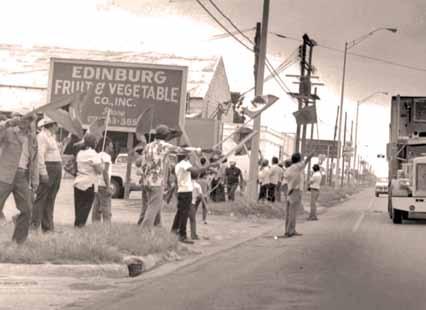
Huelga! Huelga! Farm workers strike in the Rio Grande Valley in the early ’70s.
Photo by Rebecca Flores. From the Rebecca Flores collection.
Music on the Move
by leigh Anne gullett
What
is music? Is it the clear, lyrical sound of a soprano voice? Does it come from those who have spent years under intense tutelage or from a toddler beating a steady rhythm on kitchen pots and pans?
For three UTSA music instructors— William McCrary, Linda Poetschke and Dave Sebald—the answer is all of the above and more. The power of music to soothe, to excite, to move the soul finds expression in myriad forms, both in and out of the classroom. Here, we highlight three of COLFA’s many successful music programs that approach music in different ways.
For McCrary, an associate professor in the music department and director of UTSA’s Lyric Theatre, music, for the moment, is a children’s story. Always involved in children’s theater, McCrary teamed up with the Opera Guild of San Antonio about six years ago to bring Opera to Go to San Antonio schools. By 2009, the program was reaching hundreds of students.
McCrary has eight UTSA students performing The Pied Piper of Hamlin three weeks out of the year with children from each school playing rats and townspeople.
The schedule is grueling. The Opera Guild books and plans the performances and pays each student a stipend for their work. The students earn every penny. Once they are selected for the production, they log countless hours learning the opera and rehearsing. There are 5 a.m. wake-up calls for 6 a.m. rehearsals. Finally, there is the intense performance schedule—last year there were 30 performances at about 20 schools— crammed into less than a month. At times, that meant as many as three performances a day. Hard work aside, for both the college students and their audiences, the experience is priceless.
McCrary says many of the students involved in the production are actually music education majors rather than music performance majors, but he tries not to differentiate between the education, music marketing and performance students. He sees no reason why a high school music department couldn’t stage its own opera someday and calls the process an incredible education tool. While the program’s fairy tale operas can be whimsical and fun, one of its first performances, the opera Brundibar, can only be described as life altering. Brundibar is a children’s opera composed by
Hans Krasa and first performed by the children of Theresienstadt concentration camp in occupied Czechoslovakia during World War II. Krasa, along with many of the opera’s original performers, were transported to Auschwitz where they either died or were killed. Brundibar, however, lived on with its triumph-ofgood-over-evil storyline.
More than 60 years later, McCrary and his band of students traveled to Terezin and became the first Americans to perform the opera in its tragic birthplace.
As fate would have it, two Theresienstadt survivors, one who had been in the opera’s original production, were able to see the performance. “The Brundibar experience for our students was once in a lifetime,” says McCrary. “Everybody was crying. still to this day have not been able to figure out how to express it. It’s one of those education experiences as a teacher that you just can’t re-create.”
McCrary says he plans to bring Brundibar back as part of the regular rotation of three or four operas his students perform. With the continued support of the Opera Guild of San Antonio, McCrary can keep the opera show on the road, switching performances every two years.
summer voices
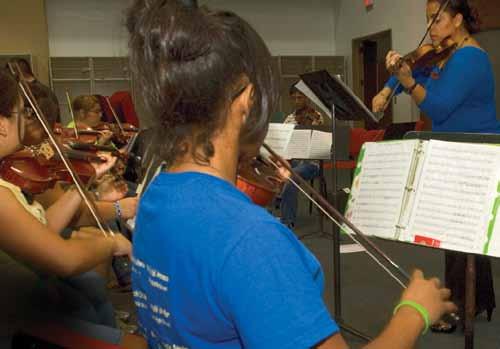
UTSA voice professor and renowned soprano Linda Poetschke delivers a lifealtering experience to her students as well, but her training is more like music boot camp, blending physical endurance training with intense vocal training. Her summer voice institute is in its second year; this summer, 30 students took part in the intensive four-week program in Taos, N.M.
Like McCrary’s opera program, the schedule is demanding, with weekly performances and a challenging curriculum. Four teachers and four coaches team up and rotate the students through a variety of lessons. When they start going on auditions, the students have to be able to present four or five arias in Italian, French, English, Czech, Russian and German. Poetschke’s instructors make sure they are ready.
When they aren’t working on improving voice or language skills, students are tending to their physical well-being with an hour of exercise, ranging from Pilates to hiking, each day. They meet with exercise and nutrition experts and are served nutritionally sound meals with an eye toward teaching a healthy, disciplined lifestyle.
“People don’t realize it, but singing is an athletic endeavor,” says Poetschke. “It’s like a gymnast trains for years or a runner trains for years. They have to be disciplined in that training. We try to help them with that. We really try to help them with life issues as well as the obvious issues they encounter as singers.”
Part of the help is one-on-one consultation with a performance psychologist. The psychologist addresses issues such
as performance anxiety and negativity. The instructors work on the students’ language skills, their movement and acting, and their voice. Every weekend, the students perform and gain instant feedback from a panel of teachers and coaches.
“When they come out, they have a lot of tools, even if they don’t realize their dream of some day performing with an opera company,” says Poetschke. “There are so many talented singers and there aren’t that many places to perform, so that’s why we want to keep it going. You never finish learning. You still have so many lessons to hone your craft.”
Their own music
Music isn’t only for the classically trained, according to UTSA associate professor Dave Sebald. In his world, anyone can create music. “You’re not limited now,” he says. “Whereas a hundred years ago only specially trained people could create music, anybody can create music now.”
As director of music technology at UTSA, Sebald teaches digital music production. He also takes his class to San Antonio Independent School District classrooms where they teach acoustics, digital audio theory, synthesis, and sound and audio engineering. The students get an in-depth base of theoretical knowledge and are creating their own audio files in the very first week of class.
“This is a unique program,” says Sebald. “You’ve got to hand it to [SAISD for] really taking the bull by the horns and investing a lot of money to get it to the kids.”
The students’ music is put on a Web site, where other students judge the pieces they like the best. Sebald hopes to one day create a CD or a Web site with a compilation of the students’ best works. Mostly, he wants students to have the chance to make their own music rather than simply learning and performing someone else’s masterpiece. Plus, it’s music for the masses. “Now you can get directly to the heart of making music without having to filter it through 20 years of developing technique,” he says. Sebald sees value in every musical creation, regardless of its depth or brilliance. For some, creating music comes easily, he says. “But does that make students who create more ordinary music less [musical]?”
While one creation could be the equivalent of a Beethoven symphony, another could be as simple as “Twinkle, Twinkle, Little Star,” he says. But ultimately, “it doesn’t matter. They’re all their own creation. There’s more to music than just playing somebody else’s march.”
So what is music? It’s everything from the sound of a toddler banging pots and pans to the wail of an electric guitar. And that, the UTSA musicians say, is what makes it so wonderful. There is music everywhere. o
llustration by Janice Kun
brenda davidson-shaddox
a window into the hidden world of Myanmar
Photographer captures the essence and beauty of the country’s ethnic tribes and landscape
By rudy arispe
neither 117-degree heat nor treacherous terrain prevents Brenda DavidsonShaddox from what has become a labor of love: photographing the isolated, ethnic tribes who live in the jungles and the mountains of Myanmar.
On her annual trips to the Asian country, formerly known as Burma, Davidson-Shaddox endures a 30-hour journey by plane. But that’s the easy part. She once undertook a 31-day trek into Myanmar’s Hkakabo Razi National Park to photograph the pygmy Taron people. On another occasion, the 69-year-old photojournalist spent three days boating along the Chindwin River to reach a village called Hkamti to photograph the Naga people of the Western Yoma mountains.
“Topography in Myanmar is varied,” Davidson-Shaddox says. “So I’ve Jeeped, hiked, ridden elephants and even bullock carts to reach my destination.”
About 20 of Davidson-Shaddox’s photographs from her journeys to Myanmar are included in the exhibit Far Places Close: Photographic Essays of South Asia, which ran from Sept. 2 to Oct. 11 in the Main Campus Art Gallery of the Arts Building.
“She has very striking photographs,” says curator Scott Sherer, associate professor of art history. “What is remarkable is the direct communication between Brenda and the people of Myanmar, and she’s engaged with them, and as viewers we’re engaged as well.”
Although Davidson-Shaddox has never studied photography professionally, the West Virginia native took photographs with a box camera as a child and delighted in shooting portraits of her family. In 1997, a friend asked if she would like to tag along to Myanmar to take photographs as part of a support team while he researched freshwater river dolphins.
“It led to me going to Myanmar for 12 years now,” she says. “I go from around November to February every year during the winter season, although they don’t really have a winter. It’s always very hot.”
Several years ago, Davidson-Shaddox, who lives in Bandera, Texas, began submitting travel articles with related photographs to local publications. One of those stories that appeared in the San Antonio Express-News caught the eye of the curator of the Texas State Museum of Asian Cultures in Corpus Christi. Impressed with Davidson-Shaddox’s work, she contacted the photographer and invited her to present her first exhibit of the ethnic people of Myanmar, along with textiles and artifacts she collected from each tribe, in 2002.
Serendipity intervened again a few years later when Davidson-Shaddox was in Myanmar passing out some of her photographs. Charles Francis, a Washington, D.C., lobbyist, approached and asked if those were her pictures.
“I said, ‘Yes,’ and then he said, ‘How would you like to do an exhibit?’ I ended up doing an exhibit at Georgetown University,” she says.
Just as Davidson-Shaddox is fascinated with the Myanmar tribes—Bahmar, Mon, Kachin, Chin, Kayah, Kayin, Rakhine and Shan— they are equally intrigued by her.
“In the mountains and remote villages, I was the first Westerner some of them ever saw,” Davidson-Shaddox says. “Children will come up and touch my hair. They are wonderful people. I can go into a village and people will rush out to invite me to tea and food. But I’ve learned can’t do that anymore because if you refuse one [family], they lose face.”
She recalled one incident when she was playing with an inquisitive group of children under a banyan tree. Standing some distance away was a woman from the Chin tribe, known for their
elaborate, tattooed faces. She kept a close eye on Davidson-Shaddox and slowly inched closer and closer. When Davidson-Shaddox motioned with her camera that she would like to take the woman’s picture, the woman turned and fled.
“I thought, ‘She’s not going to let me take her picture.’ But she came back. She went home to put on her best dress,” she says, smiling.
During her treks through Myanmar, Davidson-Shaddox usually travels with a local guide and a translator. Sometimes she will have a cook. Being in such isolated areas of the country doesn’t allow the photographer the luxury of choice meals. She’s lucky if her cook can buy a chicken or pork for dinner from villagers.
“A lot of times we just have veggies that my cook gathers,” Davidson-Shaddox says. “One time she sautéed wild begonia leaves. It tastes just like spinach.”
Davidson-Shaddox’s love and admiration for the people of Myanmar and its natural environment has led her to do whatever she can to make life a little brighter for them.
“They are so desperately poor,” DavidsonShaddox says. “I support an orphanage there, and I was able to get two American doctors to help me with that.”
Last year, Davidson-Shaddox raised enough contributions from family and friends to help repair the orphanage after it was damaged by a cyclone. She also was able to make a substantial payment, she says, on 50 acres where the Buddhist monks and older kids of the orphanage can grow rice. They already have dug a fishpond and are growing fruits and vegetables, which are expected to provide them with food throughout the year.
Davidson-Shaddox plans to return to Myanmar in November to visit the orphanage and photograph the town of Lokai. o
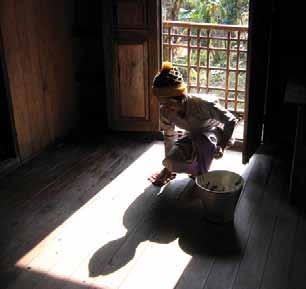
the Little Monk: All Buddhist boys, generally starting around age 6 or 7, go into monasteries for religious studies for at least 2 weeks every year. Their heads are shaved. They must don the robes of a monk and live the life of a monk. This practice continues throughout their lives, if they are good Buddhists.
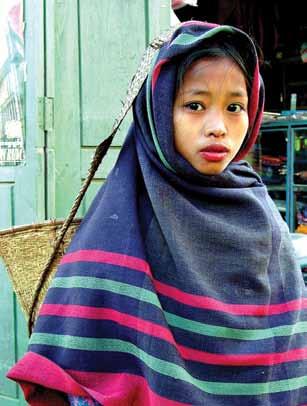
Julia in shadows: Julia is of the Lisu ethnic group. She chose to take a Western name after hearing the name “Julia” on a television program. naga girl with headbasket: Young tribal women shop in local markets and carry their purchases home in baskets hanging down their backs, held in place by a strap wrapped around the head.
awards and accolades
cOLFa and the college of sciences collaborate on teaching project
The University of Texas System has awarded $249,904 to UTSA faculty in the departments of history and biology through its Transforming Undergraduate Education grant program. The College of Liberal and Fine Arts and the College of Sciences will contribute another $135,000 to the project.
Over three years, COLFA historians Kirsten Gardner and Jack Reynolds, along with faculty from the College of Sciences, will redesign freshman level courses in their respective disciplines. The goal is to move more instruction commonly delivered in lecture format to the Web, freeing up classroom time for more engaging, active learning exercises.
The Teaching and Learning Center and its director, Barbara Millis, will offer workshops to help faculty members restructure their courses in accordance with the best teaching practices.
acevedo receives grant from hogg Foundation for Mental health
Gabriel acevedo, an assistant professor in the Department of Sociology, is one of 10 tenure-track faculty members in Texas to receive research grants of $15,000 from the Hogg Foundation for Mental Health. The foundation received 35 proposals from faculty at 16 colleges and universities in Texas. The Hogg Foundation was founded in 1940 by the children of former Texas Gov. James Hogg to promote improved mental health for the people of Texas. The foundation’s grants and programs support mental health consumer services, research, policy analysis and public education projects in Texas.
Acevedo will examine the influences of religious involvement and civic participation on mental health in low-income communities. He is an expert on the sociology of religion, social theory and social psychology.
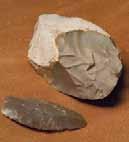
Utsa archaeologists discover artifacts from 3700 B.c.
Researchers with UTSA’s Center for Archaeological Research (CAR) are examining artifacts they recently discovered that date from
3700 B.C. to A.D.
600. The artifacts were found during a three-month dig at Miraflores Park, east of Brackenridge Park in San Antonio.
The artifacts include
• Ensor projectile point (spear point) from the Transitional Archaic period (200 B.C.–A.D. 600)
• Tortugas projectile point (spear point) from the Middle Archaic period or earlier
• Triangular projectile point (spear point) from the Early Archaic period (3700–3600 B.C.)
• Remnants/segment of a historic relief dam used to stop flow into the old San Antonio Water Works Raceway (dam built circa 1877).
Fac ULty
John nix, associate professor in the Department of Music, was nominated as editor of the Vocal Music Section of the forthcoming Oxford Handbook of Music Education which includes a 1,200-page book, a Web site and stand-alone volumes.
rebekah e. smith, assistant professor in the Department of Psychology, has been awarded a five-year, $1,052,324 grant from the National Institutes of Health to study adult memory.
Smith, who directs the UTSA Cognitive Aging Lab, is studying prospective memory, the act of remembering to complete an action.
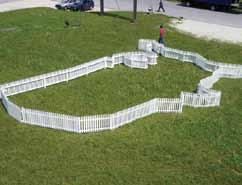
Ken little, professor in the Department of Art and Art History, received the Distinguished Alumni Award from the College of Liberal Arts at the University of Utah in March 2009. Little also installed a public work in Austin for the Texas Biennial exhibition in February 2009. It is a 50-foot-wide picket fence in the shape of the continental United States titled Homeland Security
s t U dents
patricia trujillo, 2008 Ph.D. graduate in the Department of English, has accepted a tenuretrack position in the Department of English at Colorado State University in Pueblo.
Marco cervantes, a doctoral candidate in the Department of English, was awarded a Ford Foundation Dissertation Fellowship. This award, which is open to anyone in any field, is the most rigorously refereed fellowship in the nation for graduate students. This year, only five dissertation fellowships were offered nationwide in the literature and languages category. Cervantes’ dissertation project is titled “Afro-Mestizaje: Towards a Theory of Blackness in Tejano Fiction, Poetry and Music.”
elizabeth ann Hubbs a May 2009 modern languages and literatures graduate in Spanish, was accepted into graduate programs at three of five universities to which she applied. She chose to pursue a master’s certificate in English linguistics from the United Kingdom Telford Academy and its host, the EU Company, in Tai Pei, Taiwan. While studying for her certificate, she will also teach English.
Department of Communication students
Kaela dawson, romina Gonzalez, Juliet Quintero and tiffany smith earned an honorable mention in the Public Relations Student
Society of America (PRSSA) National Bateman Case Study Competition. Seventy-seven teams from across the nation participated in this year’s competition. This is the fifth time in the past six years that UTSA students have received such an award. The Bateman is considered by many to be the most difficult and prestigious national competition for public relations majors.
andy Montee, a junior English major, teamed with chris thomas, a junior business major,
to finish the debate season by winning six out of eight preliminary rounds in the Cross Examination Debate Association’s (CEDA) championship. Montee and Thomas advanced to the elimination rounds seeded 14th in a field of over 200 teams from across the country. Both were honored with CEDA’s All American Debater Award, placing them among the top 25 individual debaters in the country.
aLUM ni
anthony Gutierrez, B.A. in political science 2002, is deputy executive director of the Texas Democratic Party.
emma ruiz, B.A. in English 2006, was honored as the Democratic GAIN (Grassroots Action Institute and Network) Rookie of the Year. Ruiz worked on Hillary Clinton’s presidential campaign and for the Young Democrats of America in Washington, D.C.
l auren Gulbas, M.A. in anthropology 2004, who went on to obtain her Ph.D. at Southern Methodist University, has accepted the position of research fellow at the Center for Mental Health Services Research in St. Louis, Mo.
dana G. Hooker, B.A. in communication 2007, has completed her M.A. with a 4.0 GPA from Abilene Christian University in Abilene, Texas. She also was named the Graduate Researcher of the Year. An assessment created with her thesis, titled “Children’s Intercultural Readiness Assessment (CIRA (c)),” is being used around the world. This fall, Hooker begins her Ph.D. program at the University of Texas at Austin.
l eanne Haase-Goebel, B.A. in English 1989, was awarded a second place excellence in journalism honor in the “Top of the Rockies” Society of Professional Journalists regional competition for best blog. Additionally, HaaseGoebel won a third place honor for feature writing for “Artist, Gallery Owner Shares Insights,” published in The Durango Herald, and a second place honor for criticism for “Ephemeral Biennial,” also published in The Durango Herald
Gabriel Acevedo
The site at Miraflores Park
John Nix
Rebekah E. Smith
Homeland Security 2009, Ken Little
Marco Cervantes
Jack Reynolds and Kirsten Gardner
your gifts make a difference in the utsa College of liberal and fine arts
thanks to the generous support of our alumni and friends, the College of Liberal and Fine Arts is the leader in many areas of education, research, creative activity and outreach in San Antonio and South Texas.
On behalf of our students, faculty and staff, we extend our appreciation to each of the donors who support our mission. We are honored by their generosity and by their belief in the value of interdisciplinary learning in the arts, humanities and social sciences. Every gift helps us build outstanding programs that serve the growing needs of the largest college at UTSA, our students and the greater community.
Please join us in celebrating the following individuals, businesses, foundations and organizations that, through their giving, enhance our college’s mission. We especially want to thank the many alumni who chose to designate their gifts to our college this year.
Although we are grateful for each and every gift we receive, due to space limitations, the report below lists donors of $1,000 or more for the Sept. 1, 2008, to Aug. 31, 2009, fiscal year.
$250,000 or more
Mary Pat and Louis H. Stumberg
Louis and Mary Pat Stumberg Foundation
$25,000 to $49,999
82 Westminster Fund of the Community Foundation for Greater Atlanta
Joyce (B.A. ’92) and Richard E. Harris
Richard and Joyce Harris
Sapience Foundation
Milton S. Jacobs
Charlotte and Charles R. Walker
The Estate of Lota R. Wilkinson
$10,000 to $24,999
The Art Guys
Sue and John S. Jockusch
Edward P. King
Margot Marsh Foundation
Musical Bridges Around the World, Inc.
Papa John’s Pizza
Rajam S. and Somayaji Ramamurthy
University Health System
The USAA Foundation
$5,000 to $9,999
Anonymous
The Augustine Foundation
ExxonMobil Corporation
Law School Admission Council
Russell Hill Rogers Fund for the Arts
University Bowl
Loretta (B.A. ’77, M.A. ’80) and Robert E. Valdez (M.A. ’08)
Whataburger – Western Division
$2,500 to $4,999
Siri S. Bletzer (B.A. ’91) and Richard Lewis
Conservation International Foundation
H-E-B
Marcia Gygli King (M.F.A. ’81)
Marilyn I. and Lester F. Libow
Teresa Nguyen
The Presser Foundation
Reliant Energy
Round Top Consulting Associates
San Antonio Musical Club
Wendy S. and Thomas A. Wirth
$1,000 to $2,499
Alamo Music Center Inc.
Maria E. Cossio-Ameduri and Ardow Ameduri
Helene J. (M.B.A. ’06) and Julio Benitez (B.A. ’02)
Richard D. Braune
Ollie S. Bryant
Centro Cultural Cubano of San Antonio
Tenchita and Alfredo L. Flores Jr.
M. Gabrielle and Daniel J. Gelo
Gayle A. Graham and John F. McFall (B.B.A. ’92)
HACEMOS Scholarship Foundation
Angelika C. Jansen and Robert Brown
Mary Q. Kelly
May K. and Victor Lam
National Research Council
Magdalena M. (B.B.A. ’88) and Ray J. O’Gwin
The Harris K. and Lois G. Oppenheimer Foundation
Marianne C. and Stewart R. Reuter
Lee Robinson and Jerald Winakur
The San Antonio Gardenia & Musical Club
San Antonio Oasis
Melinda K. (B.S. ’81) and Louis Schultz
Security Service Federal Credit Union
Melissa D. (M.A. ’90) and A.P. Shepherd
Ernstine K. Studer
Univision Management Company
Wal-Mart Foundation
Suzanne E. and Dennert O. Ware
Jo Ann P. Wigodsky
Linda and Charles Winston
Lilia and W. Gregory Wojcik
Sheila D. (B.A. ’96) and A.W. Wright
to see your gifts in action, we invite you to the Main Campus to attend a COLFA lecture, view an art exhibit or listen to a music concert (just to mention a few of the many activities COLFA has to offer each year). We also encourage you to take a guided tour, visit the Center for Archaeological Research, reconnect with favorite faculty members or meet with Daniel J. Gelo, Dean of the College of Liberal and Fine Arts. Please contact deborah thomas, assistant to the dean, at (210) 458-4820 or deborah.thomas@utsa.edu for more information or to make arrangements.
friends who are making a difference
What do piano, strings, and the sciences have in common? The answer is Mary pat stumberg and her love of music. COLFA and its Department of Music are grateful for a recent gift made by Mrs. Stumberg through the Stumberg Foundation. Mary Pat’s generous gift not only honors the role that music, especially strings and piano, played in the life of her mother, Marjorie Powell Zachry, but also recognizes the important role that music plays in intellectual development, even for students of science. The gift endowed a keyboard maintenance fund and two new scholarships. The Stumberg Keyboard Maintenance Endowment will help care for the department’s new Steinway D concert grand piano and other keyboard instruments. The Marjorie Powell Zachry Memorial Endowed Scholarship for Strings will attract and retain talented string musicians, and the Stumberg Endowed Scholarship for Interdisciplinary Studies in Music and the Sciences will benefit students whose course of study combines musical and scientific learning.
May and Victor l am support the arts at UTSA in a variety of ways: May founded the annual Asian Festival held at the Institute of Texan Cultures, Victor serves on the COLFA Advisory Council Advancement Committee, and they are members of the UT System Chancellor’s Council. In 2007, the Lams were instrumental in bringing Australian aboriginal art to the UTSA
drs. rajam and somayaji ramamurthy have made a commitment to establish the Rajam and Somayaji Ramamurthy Endowed Visiting Artist in Indic Dance, Music and Culture at UTSA. The Ramamurthys have long been advocates for the college through Rajam’s service on the Advisory Council. And the couple’s record of giving, which over the years includes support of the Dean’s Circle, the COLFA Performing Arts Fund, and scholarships in Art and Art History, demonstrates their strong belief in the importance of fine arts education and creative activity. The Ramamurthys have been champions of dance in San Antonio for many years. Their endowment will help the Department of Music as it plans to develop a dance program at UTSA.
Art Gallery with an exhibition of The Lam Collection of Aboriginal Art. Recently, the couple created the Wai Ching Lam Endowed Art Prize in honor of Victor’s mother, herself an accomplished artist. Each year funds from the endowment allow the Department of Art and Art History to award a competitive prize to an outstanding student artist. The student whose work is judged “best of show” at the annual juried art exhibition earns the Wai Ching Lam Art Prize. The 2009 recipient was Jessica Ramirez, a student in the M.F.A. program. Although the Lams are not UTSA alumni, they feel a permanent connection to the University and are strong believers in the vital role it plays in the economic and cultural development of San Antonio and the region.
colfa alumni Giving During 2008-2009, over 280 alumni designated gifts and pledges to the COLFA Annual Fund. As UTSA grows, alumni support is crucial to the success of the college. On behalf of COLFA’s students, faculty and staff, we extend our appreciation to each of our loyal alumni supporters.
Drs. Rajam and Somayaji Ramamurthy
May and Victor Lam
Making a Difference through giving
COlfa students, faculty, alumni and friends are working together on utsa’s progress toward becom ing a premier national research university. your gifts are helping the College of liberal and fine arts reach its goals. Here are a few opportunities for strategic investment to consider when planning your gift:
access to excellence: Scholarships and fellowships to attract and retain deserving students and help them realize their fullest potential.
creating new Knowledge: Endowed faculty positions allow COLFA to recruit distinguished senior scholars and artists to provide leadership in instruction and research and to bring national visibility and recognition to programs in the college.
Unrestricted excellence funds like the colfa dean’s circle and the colfa annual fund provide flexibility in assisting academic departments in funding special projects, student scholarships, and research, and in providing enrichment opportunities that enhance the learning experience of our students both in and out of the classroom.
There are many options for making your gift to UTSA College of Liberal and Fine Arts, and depending on your philanthropic goals, you may find one method more attractive than another.
outright gifts can be made via cash, securities, personal property and real estate and may be claimed as charitable tax deductions for the year in which they are made.
planned gifts are specially arranged gifts to the University made through various instruments such as wills and trusts and can have specific tax advantages for you and/or your heirs. Individuals who include UTSA in their
estate plans through bequest, trust, gift annuity, life insurance or other means become members of the Sombrilla Society, one of UTSA’s most cherished groups of alumni and friends. Whether you choose to make an outright gift or a planned gift, please consult your tax or legal adviser for information about the specific benefits of each method of giving.
To learn how you can make an investment in UTSA College of Liberal and Fine Arts that will inspire future generations, please contact
Helene benitez, Mba ’06, Cfre COlfa Development Officer
the university of texas at san antonio One utsa Circle san antonio, t X 78249 0641
Phone: (210) 458 4404
e‑mail: helene.benitez@utsa.edu
utsa giVing On tHe Web: www.utsa.edu/development
College of liberal and fine arts 2008‑2009 advisory Council
Mission sTaT e M en T
The COLFA Advisory Council is committed to promoting excellence in the arts, humanities and social sciences and developing support for the scholarly and artistic efforts of the college.
2008–2009 e xec UT i V e Board
Chair
Maria-Eugenia Cossio-Ameduri
2008–2009 co U ncil Me MB ers
Betty Lee Angle
Allen Bennett
Robert P. Braubach
Ollie Bryant
Maria-Eugenia Cossio-Ameduri
Yolanda Crittenden
Lisa Dollinger
Bjorn Dybdahl
Albert Estrada
Alfredo L. Flores Jr.
Mary Ann Franzke
Robin Hogue
Angelika Jansen
Mary Q. Kelly
Victor Lam
John McFall
Sally Hoffman McNeel
Joaquin G. Mira
Amparo H. Ortiz
Jane Cheever Powell
Rajam S. Ramamurthy
Marianne C. Reuter
John Santikos
Ernstine Studer
Linda Winston
Frank Villani
W. Gregory Wojcik
Clinton Wright
colfa’s annual career expo, an advisory council–supported event, provides an opportunity for COLFA students to explore life opportunities including employment and continuing education.
More than 150 students and 22 employers attended the 2009 Career Expo on April 15.
In addition to meeting those recruiters, students learned about résumé-building techniques such as volunteering or completing internships for class credit. COLFA representatives were on hand to discuss the college’s student-related organizations and certified programs. Also, graduate and law school admissions representatives provided information about continuing education opportunities.
aTT en T ion colFa alUM ni
Have you been in touch lately?
The UTSA College of Liberal and Fine Arts is building its alumni network. Please send your name and current contact information to deborah.thomas@utsa.edu.
We also are interested in your unique or fascinating stories or those of other COLFA alumni you may know. Please share them with us for possible publication.
ovati o ns
UTSA COLLEGE OF LIBERAL AND FINE ARTS
dean, Daniel J. Gelo
associate dean, student affairs
Christopher Wickham
associate dean, research and graduate studies
Augustine Osman
assistant to the dean, Deborah D. Thomas deveLoPMent oFFicer
Helene Benitez
editor, Lety Laurel
art director, Karen Thurman
associate editors, Joe Michael Feist, Rebecca Luther contributors, Rudy Arispe, Lisa Chontos, Leigh Anne Gullett, Kate Hunger, Jennifer Roolf Laster, Cindy Tumiel
PhotograPhers
Patrick Dunn, Mark McClendon
assistant director oF PubLications
Frank Segura
director oF PubLications
Elton Smith
executive director oF
Craig Evans
associate vice President For
David Gabler
vice President For university advanceMent
Marjie French
College of Liberal and Fine Arts One UTSA Circle HSS 4.01.23
San Antonio, TX 78249-4350
(210) 458-4350
(210) 458-ARTS
(for arts events information) http://colfa.utsa.edu/colfa/
The University of Texas at San Antonio One UTSA Circle
San Antonio, TX 78249-0641
Detail from mural painted by Artemio Guerra Garza, UFW union hall in San Juan, Texas.