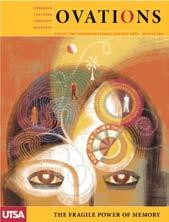
Welcome to another edition of Ovations! This issue features more exciting news about the faculty, staff and students of the College of Liberal and Fine Arts, and their contributions as UTSA transforms rapidly into a truly premier institution.
But while we are busy helping to propel and steer the UTSA “rocket ride,” it is worthwhile to reflect on some constants.
The liberal arts disciplines continue to be perceived as providing the moral and intellectual bedrock for civic life. A new major study by the Carnegie and Teagle foundations seeks to better integrate the liberal arts into business and professional education. “We teach students in most business programs a great deal about the bottom line,” said Teagle Foundation president Robert Connor. “But to really prepare them to become leaders in our increasingly competitive global marketplace, we also need to provide them with the capacity for analytical thinking, the intellectual depth, ethical understanding and creativity that come from a liberal arts education.”† While appreciated, there is nothing really new in this view, for it goes back to classical times, and the valuation goes beyond better business to a more perfect citizenry. The artes liberales made and still make, in the words of Quintilian, “The good person, speaking well.”
The first century Roman rhetorician would be pleased to know that this issue heralds the opening of the UTSA Department of Philosophy and Classics in our college, building on strong program excellence to serve the growing needs of the university and wider community, especially in the area of ethics. Political science is another discipline where “the good person” is developed, as exemplified in our profile of San Antonio city attorney and COLFA alum Michael Bernard.
COLFA also produces inquisitive global travelers, as if in answer to the Carnegie charge. In this issue we learn about Russia through the eyes of UTSA historian Bruce Daniels and Russian language expert Marita Nummikoski and 11 of her students. The timeless and fundamental value of the arts in our lives is evinced in the articles about Santiago Daydi-Tolson’s biennial Conference on Food Representation in Literature, Film and the Other Arts, and the four nationally distinguished composers who reside in the UTSA music department. And to further emphasize constancy, “Politics as Usual” could be the title of our feature on the consistencies of presidential electoral rhetoric since the times of Thomas Jefferson.
Finally, Steven Kellman reassures all those students still undecided on their majors, and comforts their parents, by profiling COLFA professors who changed their majors back in the day, often from something outside the arts, humanities or social sciences. Change, it appears, can be good after all.
All of our accomplishments are possible only with the gifts and guidance of liberal and fine arts alumni and friends, many of whom are recognized with gratitude in the following pages.
Dean
†www.carnegiefoundation.org
Faculty
Metamorphosis
By steven g. kellman
“Il faut changer la vie,” proclaimed Arthur Rimbaud. You must change your life. And he did. At 19, Rimbaud ceased to write the poetry that had secured him a place in literary history and headed off to Africa to become an explorer. As many as 70 percent of college students switch majors at least once before settling on a specialization. e ven if more familiar with Rambo than Rimbaud, some students seem to change majors as often as underwear, on average about three times before graduation.
Professors, who once were students, are also changeable creatures. f you dedicate yourself to the life of the mind, why not be of two—or three or four—minds? Whereas some scholars remain faithful to their first love throughout their career —be it painting, politics or paleontology—others are more fickle. After receiving a nobel Prize for chemistry, Linus Pauling made important contributions to molecular biology while also earning an additional n obel Peace Prize. condeleeza Rice trained as a concert pianist before receiving a doctorate in political science. As undergraduates, anthropologist c lifford Geertz majored in philosophy, historian Hugh trevor-Roper in classics, psychologist B.F. s kinner in e nglish and economist John Maynard Keynes in math and classics.
My own college roommate was an e nglish major until i persuaded him to continue with the second semester of i ntroduction to Psychology. today, he is a professor of psychology. “ i f you do not change direction,” warned Lao tzu, “you may end up where you are heading.” s everal faculty in U ts A’s c ollege of Liberal and Fine Arts have changed direction so dramatically, you might need a GP s unit to follow their trajectories. o r perhaps an astrolabe: c atherine n olan-Ferrell, an assistant professor of history, began her career in astrophysics but credits her decision to switch to Latin American history to a failing grade in calculus and a tear-gassing in el salvador. Misery in math also induced n ancy Membrez to abandon her earliest choice, geology. i n seventh grade, she fell in love with French, but because her marks in english slipped, “i was placed in the ‘B track’ in eighth grade that included s panish, not French. i fell in love with s panish and s panish-speaking peoples,” she says. though Membrez is now an associate professor of s panish, an appointment at U ts A did not end her
“Since it is impossible to predict the results of following what at the moment seems sensible or safe, you might as well follow your passion.”
transmutations. e ight years ago, she started writing poetry, personal essays, short stories and scripts. she also went back to school to learn digital filmmaking and has since added it to her teaching repertoire. s he has completed production on her first digital feature film, Portrait in Sepia Tone , which won awards for Best Feature Film and Best soundtrack at the i nternational Filmmaker Festival in Kent, e ngland, this past June. Membrez voices no regrets about being an academic chameleon. “ n othing i have ever studied has been lost,” she insists. “ e verything is connected. i t’s just a matter of finding those connections and drawing conclusions and inspiration.”
Bridget Drinka found her inspiration during a semester abroad in Florence, Italy. She was majoring in art history but, while studying Italian, became intrigued by the teaching of language. After graduation, Drinka returned to Italy to teach English and work as a governess. Back in the United states, she worked at the i talian embassy in Washington, D.c., while studying applied linguistics at Georgetown University. n ow an eminent linguist and chair of the Department of e nglish, Drinka observes “People often express surprise that i went from art history to historical linguistics, but the leap isn’t as great as it seems— i still want to figure out why people adopt changes and what they reveal about themselves through the minute details of their language.”
A stint in the Peace c orps took s ara Deturk far afield. t hough she had received her B.A. in psychology, the experience inspired her to pursue a master’s in international education. Her thesis research led to intercultural communication and appointment as an assistant professor in U ts A’s Department of c ommunication. Ann Hardgrove also made a global leap. though she describes herself as “a small-town girl” from northfield, Minn., Hardgrove, an associate professor of history, became a specialist in the history and anthropology of i ndia. s he was majoring in physics and math when a history bug bit her during her junior year.
As if sentenced to perform community service, at least two members of the co LFA faculty moved from courts to classrooms. Mark Brill, an assistant professor of music, used to practice law, as did s tephen s hwiff, a lecturer in history. sports medicine was John n ix’s first love, though he changed his major from pre-med to music. now an associate professor of music, he specializes in vocology, which, he explains, “is essentially the sports medicine of using your voice. What goes around comes around.”
c ivil engineering was the starting point for s tephanie Keller, an alumna of U ts A. “ i registered late due to lack of
“If you do not change direction, you may end up where you are heading.”
money and wasn’t able to get into my engineering classes,” she recalls. s he ended up enrolling in an anthropology course to fulfill general education requirements. “Within the semester, changed my major from civil engineering to anthropology— i just absolutely loved that class [taught by Richard Adams]. A little while after that, changed it to a dual major in anthro and psych.” Back at her alma mater, Keller now is a lecturer in psychology.
After graduating from the University of texas at Austin with a degree in French and e nglish, Debbie Menger worked for the San Antonio ExpressNews, the san Antonio Art i nstitute, and the san Antonio branch of the American nstitute of Architects. s he also started her own public relations firm, which she still runs, while teaching public relations as a lecturer in the Department of communication.
As administrative secretary to the superintendent of schools in tombstone, Ariz., Wendy Barker found herself in effect running the school district during her boss’ prolonged absences. Later, she taught e nglish at Berkeley High s chool in c alifornia. “As i approached 30,” she recalls, “ i began to realize that i wanted to teach literary works that weren’t appropriate for 14-year-olds.” s he went on to earn a Ph.D. in english. now a professor of english, she is also UtsA’s poet in residence.
t hough Barker now teaches a literary corpus more daring than the one previously permitted her, s haun F. Hedgepeth abandoned corpses completely. c urrently a lecturer in sociology, he explains, “ i began my academic journey in the field of mortuary science, but after seeing some pretty gruesome things, changed my major.” Hedgepeth switched his beat to sociology, but he is also a professional drummer.
After graduating from U ts A in his 20s, Jeffrey turpin worked as a journalist and an archaeologist. However,
he returned to the university in his 50s to pursue a Ph.D. in e nglish and teach what he loves. “ am spending long and happy nights writing chapters for my dissertation, with as much enthusiasm for inquiry and examination and synthesis as had 30 years ago. My father told me when was young to find work that i liked, because all work was going to get old after a time, and enjoyment of the task at hand would be the only palliative. i t took me a while to fully follow his advice, but guess i ’ve found my niche. s o there is hope for those who don’t quite fit.”
A teaching assistant in e nglish, turpin, too, has got the bug. Unlike Kafka’s Gregor s amsa, many in co LFA awake each morning to find themselves transformed into professors of something they have learned to love. You don’t know where you’re going till you get there, and the meandering paths of UTSA instructors offer a lesson not only in the operations of serendipity, but also in how stumbling can play as large a role as planning in academic life. t he university, where an accountant can come back as an anthropologist, is a monument to reincarnation. s ince it is impossible to predict the results of following what at the moment seems sensible or safe, you might as well follow your passion. But it is possible to make meaningful changes only if you know what the options are. the sinuosity of careers makes a powerful case for the importance of a broad liberal arts education. Only those who have made their acquaintance with philosophy, history, language, literature, the arts, the social sciences and the sciences are equipped to choose—and commute among them. O
isn’t perfect the first time.
But it’s the love of words that keeps the writer glued to that seat, writing, hacking, purging and rewriting.
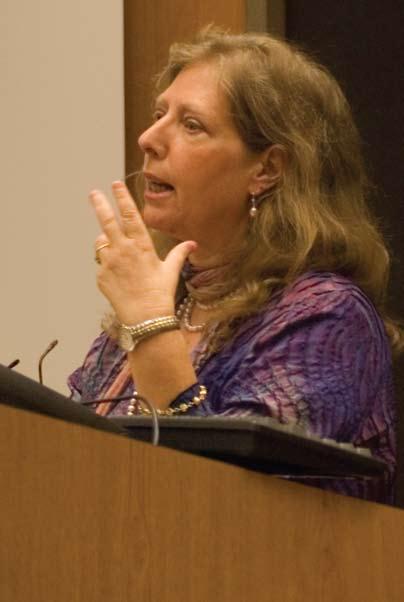
“You have to love language—putting word after word and redoing word after word, and doing that for 300 pages,” says Wendy Barker, U ts A poetry professor and poet-in-residence.
“Being a writer is being curious about life and language. You have to be extremely sensitive to language and people, but also tough as nails because you have to be ready to take rejection—
t’s that combination of personal attributes that profesreative he program began in 1982 with just one t has now blossomed to include here is a bachelor of arts nglish with a creative writing emphasis, a master nglish with a creative thesis option and a graduate certificate in creative writing, which is open to all A graduate students and boasts an enrollment of more
the department also supports students outside of the classroom while bringing quality creative writing to the san Antonio community. the creative Writing Reading s eries, which hosts distinguished authors from around the country, and the annual Wordfest, which features the work of creative writing students and faculty, are both free and open to the public.
“We’re very good at what we do,” Barker says. “our students and my colleagues are truly wonderful. Because we’re a relatively young university, we have a lot of energy.”
CriTiqUe tapping into that energy is crucial for the students and their instructors. With so many different genres of writing and various skill levels, the approach to each class is different. But there is one constant—critiques.
“You have to have a sense of humor to be in the hot seat,” says Linda Winterbottom, an e nglish doctoral student who also participated in writing workshops as an undergraduate at UtsA. she now leads a sophomore fiction-writing class. i n her class, students delve beyond plot summary to untangle the layers of each individual story. e very student submits two stories and signs up to be a critique leader as well. c ritiques focus on critical elements, including characterization, awareness of genre, setting, appropriate diction and the narrative point of view, which is the author’s attitude toward the main character and the reason for telling the story. she also stresses the importance of active reading. the first half of each class period is spent discussing assigned readings. Presenting students with a diverse array of styles, techniques and genres, Winterbottom hopes to increase their range and help them find one or two authors they admire.
“ i tell them to think as a writer when they’re reading, and to consider what’s innovative and which techniques they can use in their own writing,” she says. “ i t’s great to see students get into the habit of not just passively reading.”
similarly, the graduate certification program features classes organized as workshops, where students sit in a circle, share their writing with one another and critique each other’s work. they discuss how it affects them, what makes it successful and what would make it better.
“We all take everyone else’s writing as seriously as our own, and we don’t want to make everyone else write like us,” Barker explains. “ c lasses like this require an enormous amount of trust. We try to provide a growing sense of trust and safety for our students, and we want them to feel free to risk and fail, because it’s in our failures that we grow.”
Barker also writes feedback on drafts the students submit and holds individual conferences. “With writing, you form more of a connection with students,” she says. “A kind of closeness develops, and i find it incredibly rewarding.”
As a published author in both poetry and fiction, Winterbottom understands what her students go through to perfect their writing. “As writers, we’re always so hard on ourselves,” she says. “ i tell my students that the process is so important, and you have to give yourself permission to make mistakes. Honor and respect your talent enough to give yourself time to write. Don’t get so hung up on the process that you get paralyzed.”
award-winning poet and human rights activist
Marjorie agosin was one participant in the utsa creative Writing reading series.
A HAppy ending
Like Winterbottom, June Pedraza graduated from the writing program and is now teaching at UtsA. she’s just one of many who have completed the various creative writing programs offered by the college and have gone on to become published authors or entered doctoral programs and have begun teaching undergraduate courses themselves. Pedraza can personally attest to the program’s value and the opportunities it presents students to publish their work. “i actually wasn’t a short-fiction writer before took the program,” she says. “When i came in, i had published a chapbook, but i had never been in a workshop before. i t completely raised my skill level in poetry and short fiction. After just three courses, now i’m putting together a book of short fiction.”
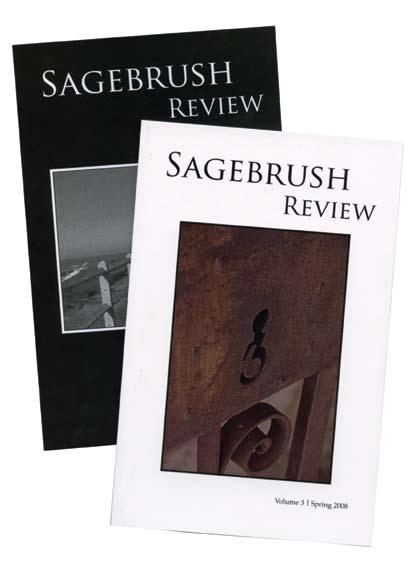
As a student, she helped create the Sagebrush Review a journal that showcases poetry, short fiction and art by U ts A students. i t is now in its fourth year of publication. in her role
teaching sophomore and junior creative writing workshops, she produces a chapbook for each class she teaches. t he chapbook includes work from each student and original art on the cover. Pedraza has also taken her students to perform their poetry in public venues.
s he says the mission of U ts A’s writing program is clear, but far from simple. “We want to create a safe environment for first-time writers and more experienced writers—we’re juggling the different skill levels and comfort levels, because it involves so much emotion, and of course, creativity,” she says.
For every published author, each publication represents much more than the few pages ultimately printed. While many people feel pulled to write, the daily work of the craft can be confounding at times. Fortunately, U ts A’s students have found a place where they can feed their creativity and sharpen their talent, mentored by professors who are fully invested in them. t hey’re also surrounded by their fellow students, who offer their own kind of support.
“ i ’ve been really impressed with the students here,” Winterbottom says. “ they want to learn, and they’re very supportive of the program and of each other. t hey encourage honest critiques, because they really want to improve. t’s incredible to see what can happen when everyone in a community does their best to support each other.” O
AWA rdW inning poeT ry
Students from UTSA’s Creative Writing Program have gone on to have their work published and have received numerous writing awards.
Several have received scholarships to highly competitive graduate writing programs across the country. Here is a sample of some of their work.
P U lv E r z ED
The jagged, glittery rocks on that white gravel road behind the Snodgrass cabin in Chickamauga Park were my favorite, the kind I pounded into powder, the magic dust of my childhood.
remember running down that road as fast as my six year old legs could carry me, thinking I could escape from their sight, their clutches. With every pounding step threatening to meld my knees and dreams with the sharp objects rolling beneath my shoes and for a moment I could run away, but over my shoulder see mother, father, slowly plodding towards me, crushing the dust of my childhood.
S TE r I l E
So she looks at me and slowly says, You don’t have PCOS, you have POF. Maybe because we live in a world where medical conditions are reduced to initials to decrease their unpleasantness, was supposed to know what POF stood for. Person of failure?
H OME
aunt esme on my mother’s side wanted her ashes sprinkled in her garden uncle lee still talks to the chrysanthemums I hear him whisper her name— come back she’s been gone for years now I don’t wonder what lee’s going to do he lies in the garden watching
A MB e R D U nc A n, spring 2008 master of arts in english graduate; first- place winner for creative writing at the 2008 coLFA spring Research conference
P OEM ABOUT A POEM I r UINED –S O W r ITE ABOUT BI r DS INSTEAD
The poem ruined was about birds.
i n 2007–2008, utsa received a number of significant gifts in support of creative writing:
Milton Jacobs committed to funding the Pearl Lewinn • endowed Professorship in creative Writing.
Joyce (B.a. ’92) and r ichard harris supported the • steven g. Kellman endowed award and the publication of the Sagebrush Review.
Jerry Winakur and Lee robinson endowed the Wendy • Barker award in creative Writing.
the creative Writing Program also benefited from increased giving to the creative Writing reading s eries, which, thanks to robert and Loretta valdez, featured an evening with award-winning writer Benjamin alire s áenz at the Plaza club of s an antonio.
She sees my uncertainty and softly says, Premature ovarian failure.
And all I think is got one initial right.
Mic H e LL e n e UMA nn, pursuing the master of arts degree in english and the creative writing certificate; winner of the 2008 Wendy Barker Award in creative Writing
It had nothing to do with swallows circling a Mudéjar fortress or running from the swirl of silent, sleepy dirt.
It was not about feeling lonely then brave in a stork-filled castle with no name or pigeons staining the statue of a medieval pícaro. Again, my poem was not about birds.
Devon vALD e RA s , spring 2008 master of arts in english graduate and recipient of the creative writing certificate; winner of the David Ray vance Award
the Music Makers
Four
music Professors enjoy Local and national success
b y rudy ArisPe
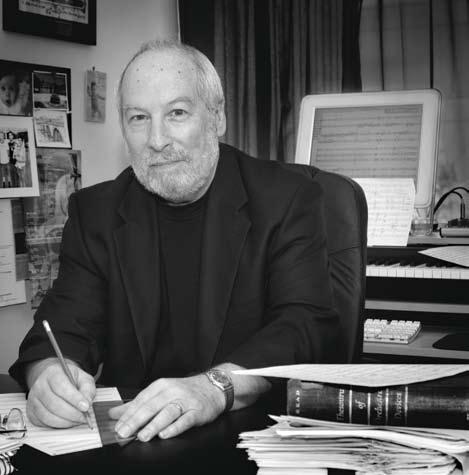
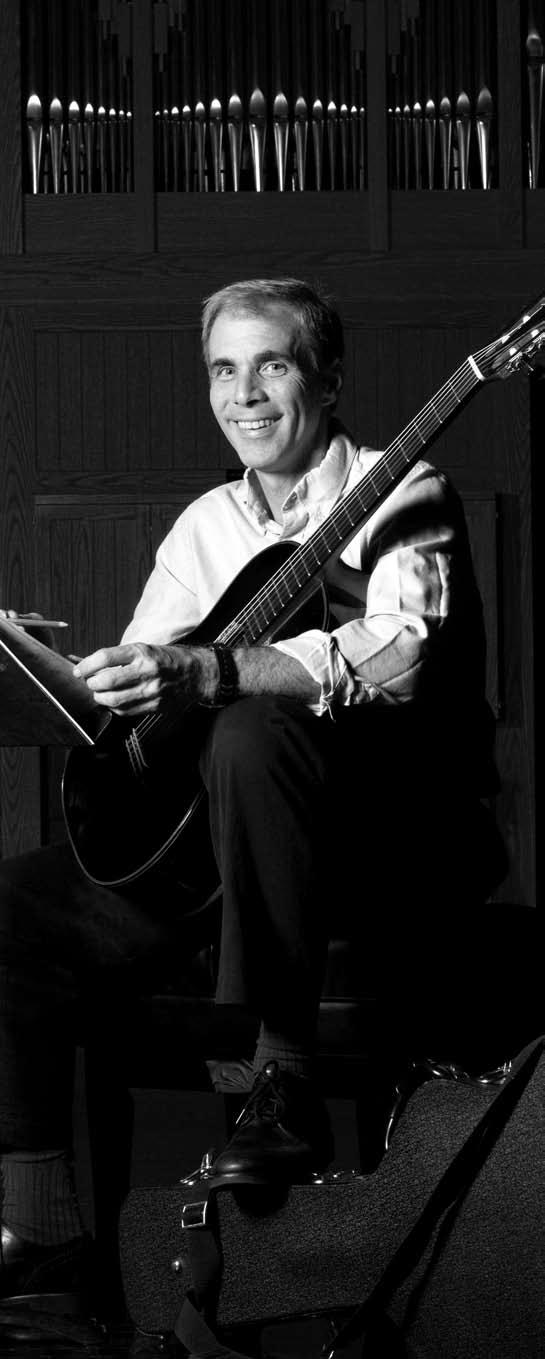
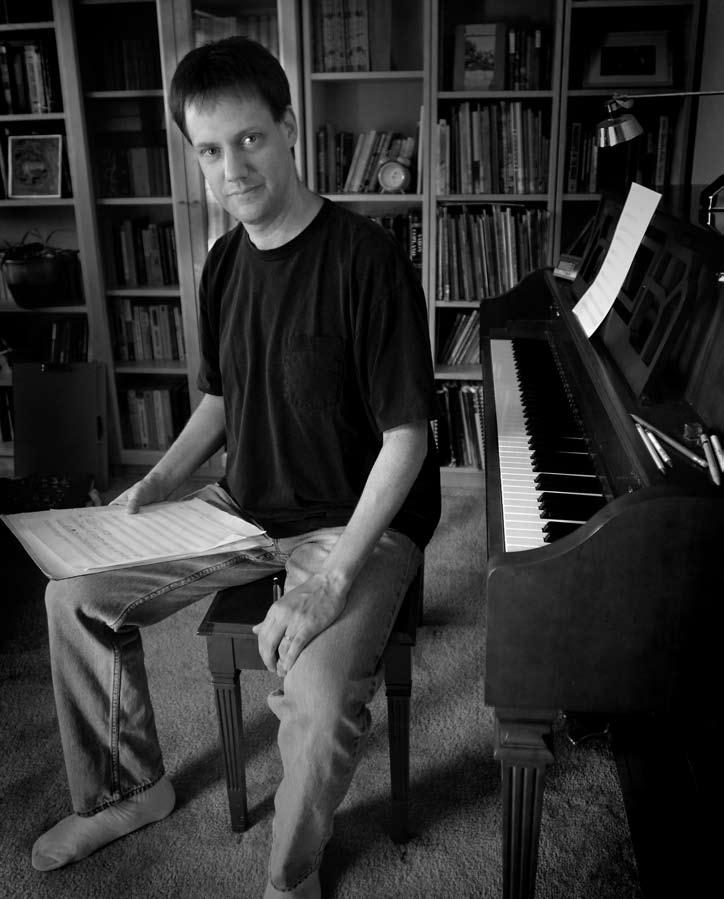
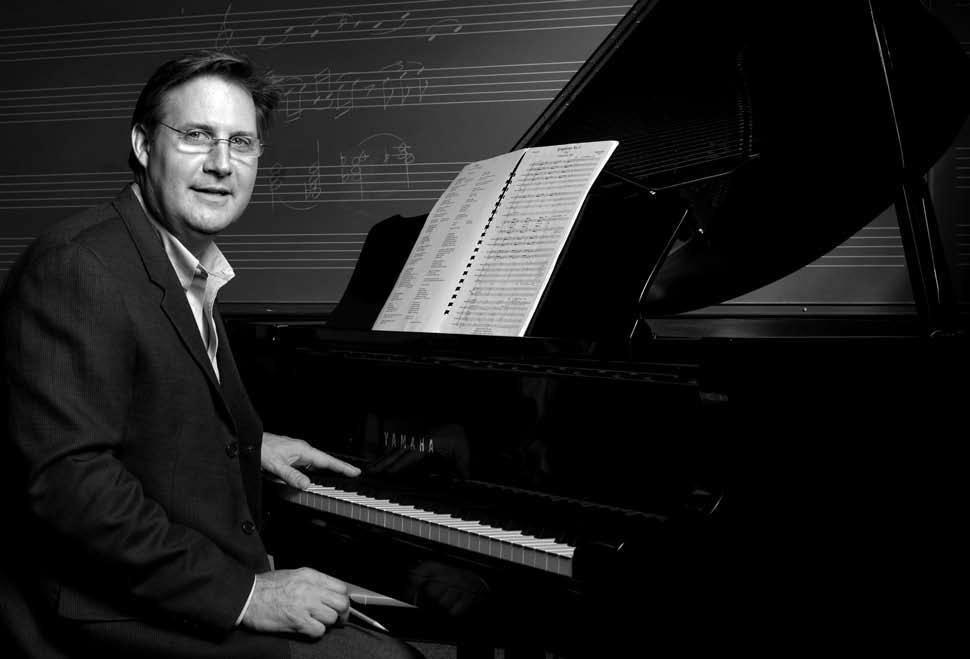
each semester, they maintain busy schedules teaching music courses, but James Balentine, Matthew Dunne, David h euser and James syler still find time to pursue another passion: composing music.
t heir works—oftentimes commissions from organizations around the country—have been premiered locally and nationally in concert halls, at major music festivals and have been recorded for listeners to enjoy. and their creators have received rave reviews from national critics.
a ll four seem to have been destined to write music. t hey started at an early age playing the piano, percussion or guitar, and then began composing short arrangements while in middle or high school, if not earlier. f there’s one thing they agree on, it’s that although they can teach technique, they can’t teach creativity. that is something the aspiring composer must discover and develop from within.
Meet these modern-day Mozarts whose calling is to make sweet music.
James Balentine
James Balentine recalls the many occasions when he and his family sat around the living room in his native Fort Worth singing folk songs and tv commercials—not too surprising considering the Balentines were talented musicians. He strummed guitar, his father was skilled with the violin, and mom played piano.
While in high school, Balentine and his brothers performed at the local officers’ club, where he honed his skills as a performer. i t was also at about this time that he learned to play the clarinet, saxophone and flute.
Growing up in such a musical environment, it only seems natural that Balentine should pursue music, which today has led to him being an accomplished composer, arranger, conductor and performer.
“As soon as was tall enough to reach the keyboard, i started making things up,” he says.
interest, thus the added movements, including “c irculo vazio” and “ e spirales i nfinitas,” are inspired by that music.
Just as writers occasionally suffer from writer’s block, there are times when he stumbles upon “composer’s block,” Balentine says. “ i t’s one of my biggest fears that ’ll keep writing the same things over and over,” he says. “ i have to be careful with that. try to let the music lead me instead of me leading the music.”
Balentine describes his personal tastes in music as eclectic, ranging from Broadway shows, folk and jazz to Mozart and classical music. He credits the Kingston trio, a 1960s popular folk group, as one of his earliest musical influences. “ learned ear training by listening to them and translated that to the guitar,” he says.
Dunne also composed the required piece “Appalachian s ummer” for the Guitar Foundation of America’s 2005 i nternational Guitar competition, considered the most famous classical guitar competition in the world, he says. “ the winner recorded my piece on a n axos i nternational c D and performed it on a 50-city tour throughout the United states,” Dunne says.
i n addition, Dunne composed “ n ine Jazz e tudes” for classical guitar, published by Guitar s olo Publications, a leading classical guitar publisher. those pieces have been recorded several times and are often performed around the country by professional guitarists and advanced students.
His music has been performed at international conferences and festivals, including clarinetfest, the i nternational Double Reed convention, the Utah Arts Festival and s hanghai i nternational c larinet Festival, among others. He also has received commissions from the Barlow e ndowment, c ollege Band Directors n ational Association and the Krost symposium.
one of his most recent works, “esferas da vida,” is a 10-minute piece he wrote on behalf of colleague Matthew Dunne and which was performed by Musical o fferings, a s an Antonio professional chamber music organization, for the series “Jazz Meets classical.”
“ t hen Matt asked me to expand it for the s outhwest Guitar Festival. i t will be a double concerto for classical guitar and horn entitled ‘ triqueta.’ t’s very jazz-oriented,” Balentine says.
t he music of s cotland as well as Brazilian dance rhythms and melodies has recently piqued the composer’s
Balentine, associate chair of the Department of Music, teaches music theory and composition, and the history of jazz. He holds degrees from the University of s outh carolina and a doctorate from the University of texas at Austin.
Matthew Dunne
Matthew Dunne has an unusual habit whenever he’s working on a new composition. “ have to use the same pencil from start to finish,” he confesses. call it superstition or just plain preference, but it must be working in his favor because the guitarist and composer has continued to produce a number of successful works over the years.
Dunne’s works, in fact, are often played and have been recorded by other musicians around the country. s ome of his most impressive works include several commissions for the Los Angeles Guitar Quartet that have been recorded on telarc i nternational c Ds. o ne of those c Ds, “Guitar Heroes,” won a Grammy in 2004. the quartet has performed Dunne’s works extensively throughout America, europe and Asia.
Despite the success of his numerous works, Dunne says composing music doesn’t always come easy. “i t’s the hardest thing ’ve ever tried to do,” he says.
“i t takes total concentration. When i get involved in writing a piece, it takes over my life, and i don’t function well in other areas of my life, even if i’m only working on it for a few hours a day.”
Writing for the guitar can also be challenging, he points out.
“ t here’s a real tradition of guitarists composing music, going back about 500 years,” Dunne explains. “ i t’s an odd instrument to write for. today, the guitar has a place in classical music and many different styles of music.
“But you have to be familiar with how it’s played in order to write effectively for it. Good composers have a natural curiosity for how instruments work and can learn how to make things work on the guitar.”
A native of Albany, n.Y., the assistant professor has been on faculty since 1992 and teaches guitar, jazz and music marketing. He received his doctor of musical arts degree from the University of texas at Austin, becoming the first guitarist to receive that degree. He obtained his master of musical arts in guitar performance from Florida state University.
David Heuser David Heuser has the perfect remedy for almost anything that ails him. He simply inserts a recording of Bach into his c D player, then rests for a good 10 minutes.
“ i think Bach has cured me of many illnesses,” Heuser says with a chuckle, “although maybe it was just the lying down.”
Heuser, however, has no time to get sick. He’s on a tight deadline to complete an as-yet-untitled 20-minute piece for saxophone quartet for a consortium of 11 quartets around the country. i t is being funded by a grant he received from the Artists Foundation of san Antonio.
And this fall, Heuser, 41, will begin writing his first full-length comic opera for the U ts A Lyric t heatre, which the associate professor must find time for
working with the Pittsburgh new Music ensemble, which performed his new song cycle “Arrows” in a new arrangement.
n ow that fall classes are in session, Heuser can concentrate on his other passion besides composing—teaching.
“After high school, i applied to some schools for music and physics, but no matter what i would have done, would have taught,” he says. “ feel very comfortable in front of a class, and i enjoy the individual lessons.”
o ftentimes, his students have been great sources of inspiration. “s ometimes, something they’re doing will be interesting to me, and i ’ll have a thought for a piece to do. An idea can pop up, and begin getting creative on the tail of their concept.”
Growing up in n ew Jersey, Heuser began displaying a knack for composing music at age 7, writing short tunes in imitation of his piano lessons. By the time he was in middle and high school, he wrote music for chorus, and concert and jazz bands, as well as pop tunes for local rock bands.
“ t was terrific to have teachers willing to allow me to do that, and for friends to play my music,” he says.
between teaching composition, theory and electronic music courses.
“ the joke we all have is deadlines can be incredibly inspiring,” he says. “A lot of my pieces come from nonmusical ideas, whether it be literature, current events, a poem or a concept have. i n vocal music, you have someone else’s words, which is great because it tells you about the mood, rhythm, form and how it’s organized and how long it’s going to be.”
Heuser has barely had time to catch his breath in between summer and fall projects. i n June, he was busily preparing for the Houston premiere of his orchestral work “ t hree Lopsided Dances” at the texas Music Festival o rchestra; and in July, he was tending to details over the premiere of his one-act opera, The Golden Ax based on an Aesop’s fable, at the cactus Pear Music Festival, as well as
Heuser is a graduate of the e astman s chool of Music and i ndiana University s chool of Music, where he earned his doctorate in music composition in 1995.
Among his many achievements was the n ovember 2007 premiere of his work “ s omething Miraculous Burns” by the san Antonio symphony.
James Syler
While in high school, James s yler was torn between his passion for playing baseball and his interest in music, which explains why he half-heartedly attended his after-school piano lessons, which he began at age 16.
“ i thought i was going to be in the major leagues,” s yler says. “ e ventually music won out. But the discipline and rigor from sports was the perfect preparation for music when it came time to do the hard work.”
s till, s yler’s foray into music was a gradual process, and even though he says he tinkered with writing arrangements while in school, he never really considered composing music as a career. i t wasn’t until he graduated from northern i llinois University in 1983 with a music degree that he knew he wanted to write music.
“After college, some musicians told me if that’s what i wanted to do, then go back to school and get training for it.
s o i went to graduate school and never looked back,” he says.
s ince then, the 47-year-old n ew York native has had more than 200 performances of his works. His most recent was “American Dances,” written for the Houston chamber orchestra.
“ t involves taking American vernacular music and infusing it with classical music,” he says. “o ne of the movements was a mixture of bluegrass and fiddle styles mixed with the virtuosity of classical string playing and a little bebop jazz. i have an interest in mixing and matching to create hybrid types of music.”
two years ago, he received a commission from 20 university wind ensembles for a new work called “ tattoo,” which he
explains as “not as in body art, but as in repetitive tapping. t’s based on minimalist ideas and repeated fragments.”
Although today he doesn’t compose as often as he used to, s yler produces about one or two major pieces per year and focuses on quality rather than quantity, he says.
“i used to think i had to write a lot of music to be successful. there’s nothing in the works right now. But that’s o K because know deep down in my viscera or psyche, something is bubbling up,” he says, laughing.
syler says there is almost no greater feeling in the world than hearing his music performed in concert. “ don’t have children,” he says, “so it’s close to going to a Little League game and watching your kid not strike out, maybe even driving one over the fence. i t feels good when you create something, and people enjoy it.”
syler earned a master’s in music from the University of Miami in 1988. He has been an adjunct professor at U tsA since 2001 and teaches composition and appreciation courses, such as American Roots Music, Masterpieces of Music and the History and styles of Rock. O
a mong the utsa community, perhaps the most recognized music written by faculty is Hail UTSA the university’s alma mater. the music was written by c larence J. s tuessy, retired professor and former chair of the Department of Music. the text was written by a lan e c raven, professor emeritus and former dean of the college of Liberal and Fine arts.
Hail UTS a
From the hills of oak and cedar to the alamo, voices raised will echo as, in song, our praises flow. hail alma Mater! through the years our loyalty will grow. the university of texas s an antonio.
We B extra:
t he alma mater, performed by the utsa concert c hoir, is available for download in MP3 format. g o to www.utsa.edu/multimedia/videos.
Russia Revisited
UTSA professor explores the former communist country in a literary ‘snapshot’
B Y Les L i Hic K s, M.A. ’07
or trendy Hugo Boss shirts or the classic lines of christian Dior or Burberry, consider going to Red square in Moscow.
“ the old capital of the world’s greatest socialist state is absolutely awash in consumerism,” according to Bruce c. Daniels, the Gilbert M. Denman endowed Professor in American History at UtsA. “ this is not the Moscow i visited in 1993 as a tourist, when a traveler could make a profit by selling blue jeans to a local hipster.”
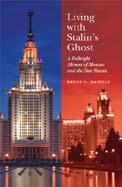
Daniels is the author of l iving with Stalin’s Ghost: A Fulbright Memoir of Moscow and the New russia (connecticut Academy of Arts and s ciences, 2008). the book is simultaneously a travel diary, a tribute to the country and its people, and a lesson in cultural and comparative history. i t began as a collection of private musings composed for his children, but has instead become a public snapshot of post-communist Russia.
Using a mixture of humor and sober commentary, Daniels tackles the complexities of economic privatization coming after four generations of communism. He also explores Russia’s political relationship with the United states. in Daniels’ view, President George W. Bush and vladimir Putin, now prime minister, are each “gut players” with real security concerns, and both display a tendency toward heavy-handedness. “ i understand both, but Putin plays his cards a little closer to his chest,” Daniels says.
His book is sprinkled with humorous anecdotes, like the story about a Moscow cable company employee who arrived at Daniels’ apartment on time, compared with American service providers who generally promise only to arrive within a multi-hour block of time. But there are also darker stories, such as descriptions of the older population’s fear about retirement security under the supplyand-demand vagaries of capitalism.
Daniels notes that the people scooping up Louis v uitton fashions in Red s quare are not everyday Russians. Government clerks earn $160 a month at the high end. t’s about the same for police recruits. the new buyers consist mostly of the instant multimillionaires suddenly populating Russia, mostly in Moscow. these are the people who managed to turn a profit through the sale of s oviet enterprises when the empire collapsed, he explains.
“ t he people shopping in these luxury stores are the relatively few who have either, depending on your point of view, (1) shown themselves to be the successful capitalists that Russia needs,
or (2) looted the country through licensed criminal enterprise,” Daniels writes.
n ot a speaker of Russian, Daniels draws information for his book from conversations with his english-speaking Russian students during his stay in 2005. He also uses information collected from colleagues at Moscow state University, where he served as the n ikolay v s ivachev Distinguished c hair in U. s History and American s tudies, as well as from a testy barber and two police officers. everyone, it seems, is grappling with the challenges and opportunity a more open society provides.
Daniels posts a warning for a place now unencumbered by personal debt, even mortgages. Where university educations were once largely underwritten by the state, based upon student merit, tuition paid through college loans likely will be a thing of the future. “Look out for a society giddy with credit-card fever a decade from now,” he writes.
every significant piece of property, from the corner grocery store and neighboring newsstand to small apartments, is owned by the government. in this world, everyone works for and is paid by the government, from taxi driver to doctor. now, he says, imagine that all abruptly changing. n the span of just a few years, everything transitions to the private sector. How would all the houses and apartments—from the largest cities like new York to the smallest ones—be allocated? t he switch Russia made from communism to capitalism has never been done by any other country, and it has posed what Daniels thinks could be the greatest economic and social challenges any modern nation has ever faced.
daniels notes that the people scooping up Louis Vuitton fashions in red Square are not everyday russians.
Daniels asks his readers to put themselves in a situation similar to what Russians have experienced. He takes them down an imaginary road, to a United s tates and c anada in which
Among Russians, there’s “widespread pessimism coexisting with pockets of optimism. Most Russians are still very pessimistic but see glimmers of a better future occasionally,” he says. And that, Daniels adds, is why Americans should get to know this evolving country. “Russia is potentially one of America’s most influential and best friends.” O
Moscow’s Main Department store, also called the guM, is a one-stop shopping mall prominently located along the eastern side of red square.
Photo by Martha Williams.
Real-life lea R ning
UTSa students travel to Russia for sixth year
Eleven UTSA students traveled to Moscow State University as part of the UTSA in Russia Summer 2008 program. It was the sixth trip to the country since Marita Nummikoski, chair of the Department of Modern Languages and Literatures, began organizing it to combine classroom instruction with real-life lessons.
Through the program, students earn 3 credit hours for attending Russian language classes at Moscow State University, exploring Russia’s capital city and absorbing Russian culture and traditions. Four days are also spent in St. Petersburg with visits to the country’s historical sites, including the State Hermitage Museum, which holds the largest collection of Russian art in the world; Peterhof, the island home of Peter the Great; and St. Isaak’s Cathedral, considered to be one of the most impressive cathedrals in Russia.
With all the experiences, it is nearly impossible to single out one impression with which the students return, says Nummikoski, the program’s primary organizer since its inception. She is author of two popular textbooks, Troika: A Communicative Approach to Russian Language, Life and Culture (John Wiley & Sons Inc., 1995) and News From Russia (Yale University Press, 2004).
“It’s hard to mention only one change,” she says, adding “San Antonio will feel so tiny and provincial compared with Moscow.”
But there are some things that do stand out, she says. For one, there’s a stark difference between the rich and poor. The number of extremely wealthy people is enormous, illustrated by the incomparable number of Porsches, BMWs, Mercedes Benzes and other luxury vehicles, she says. Another marked difference is the cost of living. As capitalism expands, prices continue to soar. “Everything is very expensive,” Nummikoski says.
Students also are impressed with the country’s long history. On their trips, they see places of worship dating to the 1200s, whereas the roots of the colonial United States are traceable from the 1600s.
And there are idiosyncrasies from the fledgling service economy, where decades of government institutions mean the welcome mat is not always out.
“No excuse-me’s,” Nummikoski quips. “Our students actually learned to like the fact that they can bump into people and just keep going.”
Each time she travels to Russia, Nummikoski, who has been at UTSA since 1988, also learns more about the country. One constant impression, she says, is that “most changes are for the better.”
i
When
i
Daniels published Living with Stalins' Ghost: A Fulbright Memoir of Moscow and the New Russia (connecticut academy of arts and sciences, 2008). he describes the book as "part political commentary, part observant friend."
Bruce c Danie L s
gilbert M. Denman endowed Professor of american history
eD ucation
a.B., syracuse university; M.a., Ph.D., university of connecticut
My stu D ents M ight say… i am extremely modest despite being brilliant. in M y L eisure ti M e… i fish, golf, watch horse racing, and raise tomatoes.
My Favorite PL ace in the W or LD is… clyde, north Dakota.
i retire…
want to raise chickens. Before becoming a historian, i studied poultry production at oregon state university and had a career as a chicken farmer.
worked as an agricultural extension agent in rural india and started small poultry farms all over the state of Bihar. once a person has reached under a sitting chicken and pulled out a warm egg, he/she can never go back to full city life.
How Presidents and Presidential Candidates Use the Media Controlling the Message
By LesL i Hicks, M.A. ’07
u. s. Presidents ronald reagan and Bill clinton were dubbed great communicators, but finding another set of precedent-setting executive wordsmiths requires ripping a page from the 19th century.
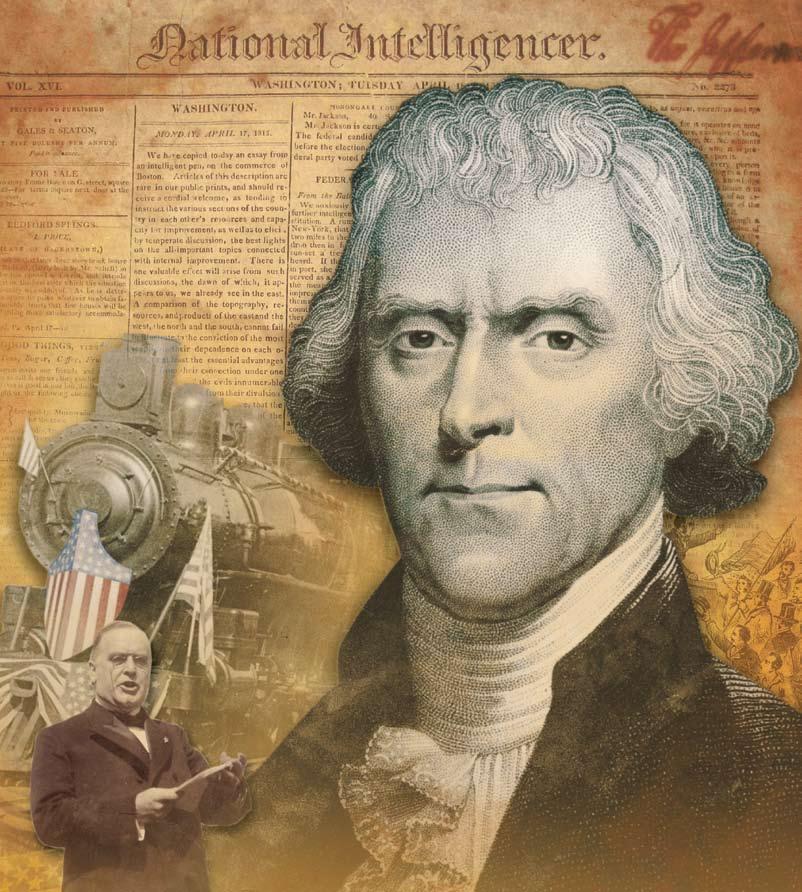
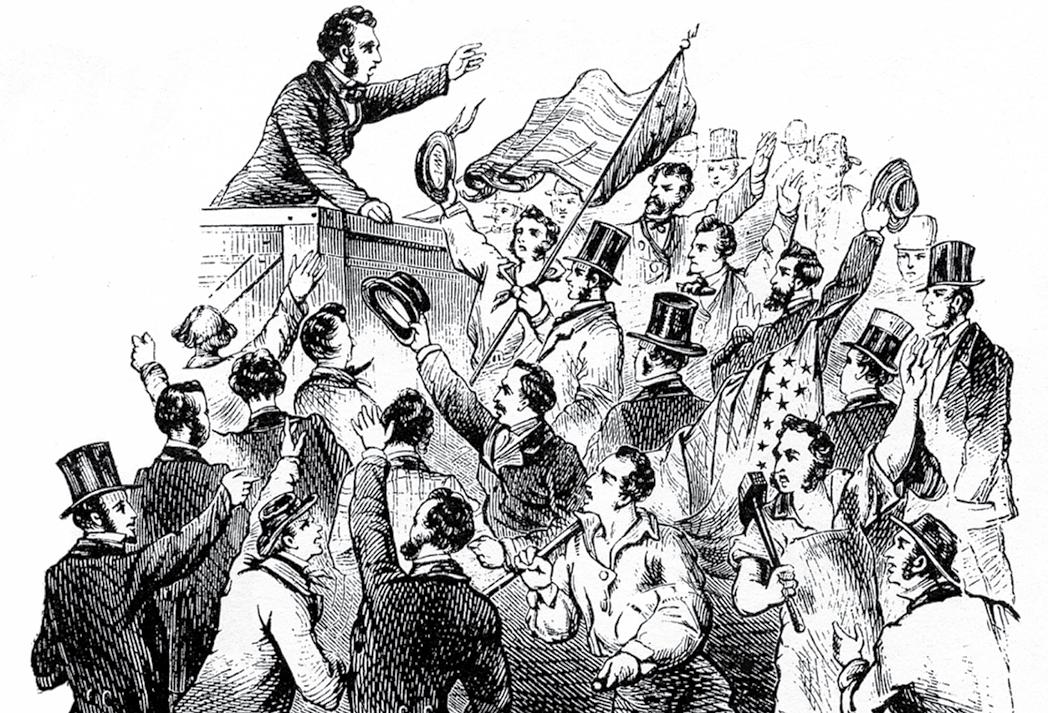
More than 200 years ago, President t homas Jefferson managed to master communications with the American people by creating his own favorable media coverage while seeming to stay above the fray of daily political prattle. You certainly would not have found him addressing gymnasiumsized crowds, kissing squirming babies or allowing his children to answer questions about his personal habits.
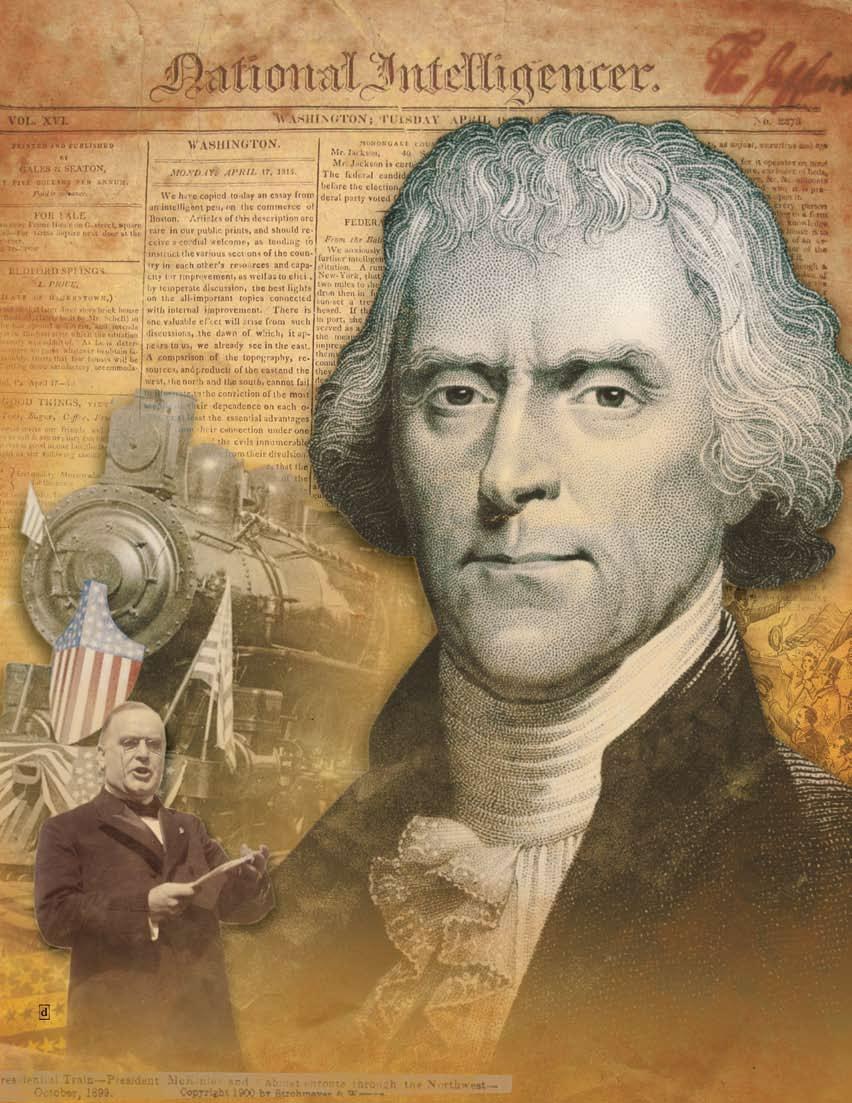
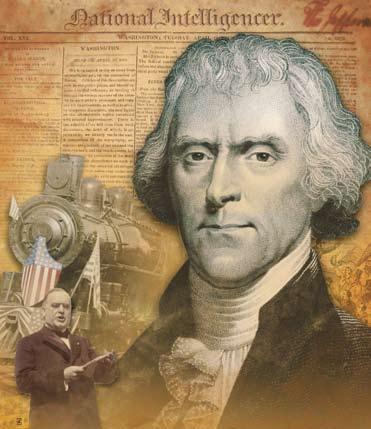
i n fact, two centuries before the nonstop banter of blogs and 24-hour news, Jefferson used his own presidentially sponsored newspaper, which carried friendly but anonymous commentaries written by the paper’s editor and prominent Jeffersonian Republicans (including Jefferson himself), to promote his policies to the public, all the while coyly professing to defer to congress on all matters of public policy. even though Jefferson thus got his way with congress, he did it without making the kind of public speeches expected from presidents today.
“ today we kind of expect immediate contact between presidents, presidential candidates and the public,” says Mel Laracey, associate professor in UtsA’s Department of Political s cience and Geography. “We like to think that’s the way it’s always been. But when i looked at the 19th century, i found that there were actually two competing expectations for presidents. o ne said presidents should be connected to the people and involved in the public policy-making process. t he other said that congress was the only legitimate maker of public policy, and so presidents should not be making
speeches to the people about policy matters.”
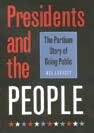
Laracey is author of Presidents and the People: The Partisan Story of Going Public ( texas A&M University Press, 2002) and is currently writing Promoting Democracy: Thomas Jefferson and the Beginnings of Presidential Mass Communication.
i n his research, Laracey explores the role of the mass media in politics. He says the 2008 presidential campaign was a historic one, featuring the oldest candidate in U. s . history, s en. John Mc cain (R-Arizona), and the first African American nominee, s en. Barack o bama (D- i llinois). s en. Hillary c linton’s (D- n ew York) run for the presidency in the Democratic primaries was also momentous. i n contrast to Jefferson (1801–1809), who relied on his newspaper and political allies to carry the campaign fight publicly, seasoned modern-day politicians have appealed to voters using pop culture and every media outlet available to them, reaching celebrity status in the process. Jefferson, in comparison, trumped his counterparts of 2008 by avoiding public speechmaking, thus appearing as stately and contemplative.
His secret: having his own presidential newspaper to promote and defend him. i n this way, Jefferson could sell himself and his policies to the public without offending those who thought presidents should not engage in what is now called “going public”—presidents making speeches to go “over
“These are not really, as one critic called them, the ‘dark ages of journalism’ but sharp political commentary in the mainstream media of those times.”
the heads of congress” and appeal directly to the American people. Long before Bill c linton played the saxophone on late-night television and talked about what kind of underwear he preferred in an Mtv interview, presidents maintained a measurable decorum, reaching Americans (mostly property-owning, Anglo males) by putting quill pen to paper and using the printing press to put out their own newspapers. Back in that day, though, the idealistic notion of “freedom of the press” did not connote the dispassionate objectivity often touted today. n fact, Jefferson’s newspaper, and those of other 19th century presidents, were avowedly partisan, making no attempt at journalistic objectivity.
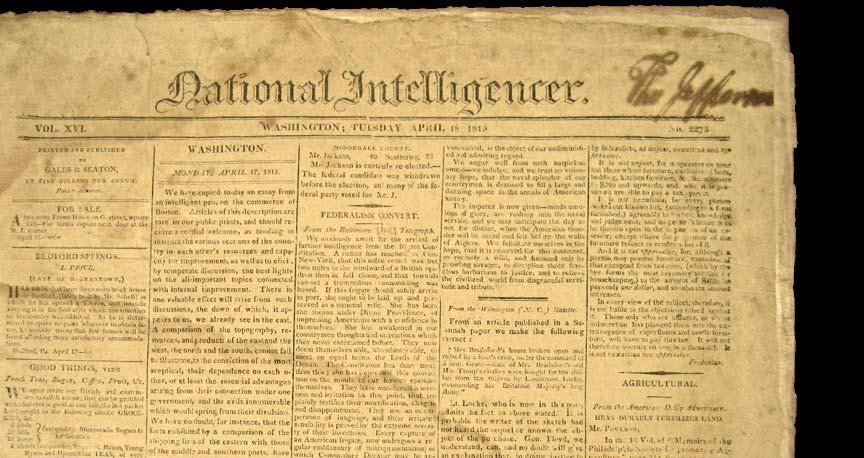
Laracey has spent hundreds of hours poring over Library of c ongress microfiche studying the political messages in these newspapers. Jefferson’s newspaper, the Washington, D. c .-based National Intelligencer is a great example of the genre, he says.
“Jefferson said as a matter of course, ‘ i t’s up to c ongress to legislate,’ then behind the scenes, he was directing things to support his opinion and influence opinion through his party newspaper,” Laracey says. “You had newspapers, but they were always aligned with one political party or another and so took that party’s viewpoint in everything they said.”
i n fact, the printed material read with the edginess of what might be heard today on M sn B c ’s Countdown with Keith Olbermann or Hannity and Colmes on Fox news. n ewspapers were appendages of political parties. And
they promoted their philosophies in a vigorous manner similar to what might now be found on the White House Web page, a presidential candidate’s Web site, or the programs of Rush Limbaugh or Jon stewart.
e ven when he was serving in George Washington’s cabinet, Jefferson joined with James Madison to convince a Princeton classmate of Madison’s to start up a newspaper to take on another newspaper that had been started up by their opponent Alexander Hamilton. “ this sure sounds a lot like what Rupert Murdoch and Roger Ailes did when they decided to create the Fox n ews channel,” says Laracey.
By the time of his election to the presidency in 1801, Jefferson knew that, with his own sponsored newspaper in the nation’s new capital, he would have a media outlet that would consistently hail the chief. He thus had an effective defense against his opponents, many of whom also spoke through the media.
“All of this stuff has been relegated to the back room in history and political science because these historic newspapers don’t meet current standards of so-called ‘journalistic objectivity.’ But these are not really, as one critic called them, the ‘dark ages of journalism’ but sharp political commentary in the mainstream media of those times,” Laracey says.
t he medium of multiple and obviously partisan newspapers served their political purpose then, just as media-darling pundits, political talk-show hosts and their legions of “dittoheads” do now, he adds.
“ The abuses of the freedom of the press here have been carried to a length never before known or borne by any civilized nation.”
Thomas Jefferson, 1803
case-in-point: Jefferson used the media in 1801, during the first test of the e lectoral c ollege, to advocate that the results of the e lectoral college system for electing a president should always reflect the popular vote. When Aaron Burr, Jefferson’s vice-presidential running mate, took advantage of a quirk in the electoral college system to throw the election of 1800 into the hands of the House of Representatives, where Burr hoped to be selected president instead of Jefferson, Jefferson’s newspaper responded with a series of long commentaries arguing that the only legitimate option available to the House was to follow the obvious results of the popular vote and elect Jefferson president.
Laracey’s research powerfully suggests that the relationship of the president to the people is similar to what existed generations ago. “Yes, the more things change, the more they stay the same,” Laracey says. “ the more i watch current media, the more ’m struck by how it’s like the media back in that day. Politics is really turned into theater for so much media coverage, whereas in the ’50s, ’60s and ’70s, you sort of had this sameness under the mask of objectivity.”
Republic strategist Karl Rove understands that, from a political standpoint, “biased” media reporting is better than “unbiased,” at least if the bias is in your side’s favor. this explains the tight message control exercised by the George W. Bush White House, and the White House’s sometimes controversial attempts to achieve favorable media news reporting on issues like the war in raq and global warming, Laracey says.
“ n both periods, it is a case of looking for the most effective voice for your side. i f you think your message isn’t getting out one way, create something new. Andrew Jackson, president from 1829 to 1837, did it very creatively in 1830, when he dumped one newspaper that didn’t support him enough and set up a new one more to his liking,” Laracey says.
c learly, studying political media strategies of the past provides insight into the present. ndeed, Laracey sees the media world moving since the 1990s more toward this older style of journalism and away from the mid-20th century objective model, embodied by cBs news anchor Walter cronkite, nicknamed “Uncle Walter.”
“ t he stars of political reporting today,” he says, “are people like Matt Drudge, o lbermann, Limbaugh, s ean Hannity and a whole host of i nternet bloggers who trumpet their political beliefs to all, just like the editors of those 19th century political newspapers that i ’ve been studying did.” O
•
•
h oW to D eci Pher Presi D entiaL P o Litics an D P o Licy coverage
Listen to multiple voices. “i t’s better to get a multiplicity of views.”
Realize what you’re hearing may not be true. “or, it may be irrelevant.”
• think critically. “Political scientists figured out many years ago that many • Americans don’t pay close attention, so there are always these ongoing attempts to manipulate public opinion among those who don’t pay attention all the way to very sophisticated people.”
Remember that political rhetoric can matter. “Rhetoric can affect real lives.”
Ask, what’s the strategy behind this statement or this campaign ad?
• “Understanding the strategy can help in evaluating the message.”
source: Mel Laracey, associate professor, UtsA’s Department of Political science and Geography
Mel l aracey associate Professor of Political science eD ucation
J.D., university of Michigan; M.P.a., harvard university; Ph.D., university of Michigan
My S tu D entS M ig H t S ay class is a lot more interesting, and they learned more, than they expected.
in M y lei S ure ti M e… i bike, walk, go birding (bird watching, on the board of the Mitchell Lake audubon center in san antonio), watch political television shows (especially The Daily Show with Jon Stewart, The Colbert Report, MsnBc and Fox), spend time with my wife, Marian aitches (who teaches in the american studies program at utsa), and work on our 100-yearold home in the King William neighborhood downtown.
My favorite place in t H e Worl D i S… empire, Mich., a little village in the heart of the sleeping Bear Dunes national Lakeshore in northern Michigan.
W H en retire...not applicable to me!
authentic issue of Thomas Jefferson's National Intelligencer dated april 18, 1815. Photo courtesy of Don Parrish.
Retiring South of the Border
in August 2004, Robin Loving Rowland and her husband, Ken, were planning a vacation to s an Miguel de Allende, Mexico, when on a whim they decided to retire and move there. After selling their house in Austin, they told their family, friends and neighbors they were moving to a place they had never been before.
“ they asked what we were going to do with our furniture,” Robin, who owned a public relations firm before retiring, said during a phone interview from s an Miguel de Allende. “We sold everything and packed 40 boxes of stuff, put it in storage and drove to san Miguel, arriving Dec. 22, and have been living happily ever after.”
the Rowlands are among a growing number of American retirees who have migrated to Mexico to spend their golden years, according to a recent study, “United states’ international Retirement Migration: Reasons for Retiring to the e nvirons of Lake chapala, Mexico,” by UtsA faculty members thankam sunil, associate professor of sociology, and viviana Rojas, assistant professor of communication. they conducted the study to explore the reasons U.s retirees migrate to Mexico, sunil says, adding that they were particularly interested because it is unusual for a group of people to move from a highly developed country to a lesser-developed one.
“ There they can afford a gardener and a maid, especially for retirees with no savings,” Sunil says, “and they can afford to eat out every night if they want, whereas in america, it can be expensive.”
“ t his type of migration is quite contrary to our general notion of migration,” he says, “because when we talk about migration, we talk about people migrating from a poor country to a rich country.”
s unil and Rojas also were interested in learning how expatriates are able to build a life in a foreign country, with a different culture and environment, after spending their lives in an American society with family and friends. they predict the trend of U.s. retirees relocating to Mexico will continue to grow, especially as the Baby Boomers, born 1946 to 1964, are expected to leave the workforce in droves between 2010 and 2030. Many are already retiring.
More than 200 U.s retirees were surveyed using a self-completion questionnaire that included items about the decision to move to Mexico, the quality of life at the destination, cultural adaptation, and aspects of personal identity, financial security and health care. the criteria for inclusion were that respondents be non-Hispanic whites, ages 55 and older, and living in Mexico for at least six months.
the study found that the four major reasons for migrating to
Mexico were financial circumstances, the natural environment, a sense of community and friendship, and a better quality of life. n addition to surveying retirees in Lake chapala of Jalisco state, sunil and Rojas also collected data from those who settled in san Miguel de Allende in Guanajuato state. Much of the latter data is still being analyzed. the Mexican o ffice of tourism has also identified other areas of Mexico that attract U.s retirees, Rojas says, including Baja california and Baja california sur.
According to the 2000 Mexican census, Baja california and Baja california sur account for 21 percent of U.s seniors, 55 and older, living in Mexico. twenty-one percent reside in Jalisco, and 7 percent live in Guanajuato.
the no. 1 reason retirees gave for their decision to relocate to Mexico is the low cost of living. n fact, nine out of 10 surveyed either agreed or strongly agreed with the statement, “My income allows me more leisure spending than if i were in the U.s.” the respondents’ median annual income before retirement was $46,000–$49,999 and $21,000–$25,999 after retirement. t heir median monthly household expenditures now range from $901 to $1,500.
“ t here they can afford a gardener and a maid, especially for retirees with no savings,” sunil says, “and they can afford to eat out every night if they want, whereas in America, it can be expensive.”
o ne male retiree wrote in his questionnaire: “ t he cost of living is less and the quality of life is better. i never could afford a gardener in the United states. could never afford a cleaning lady every day or every other day. the cost of labor is cheaper … to get your car fixed is cheaper, to get your tv fixed is cheaper.”
Related to the low cost of living, affordability also is important for retirees. three out of five respondents agreed with the statement, “ live here because health care is affordable.” Many of them with a permanent residency permit, and who are 65 and older, are enrolled in the Mexican medical insurance program offered by the Mexican i nstitute of social security. some retirees said they paid the equivalent of only $250 to $300 per year for full health care, including medications for diseases such as diabetes.
Rojas says that for those retirees who do not have Mexican medical insurance, at least 30 percent are enrolled in Medicare and return to the United s tates if they need to see a doctor. Also, a network of private hospitals where foreigners can go for services is available in Mexico. the cost of surgeries is 30 percent to 50 percent less than in the United states, she says. the weather and natural environment ranked second as to
why retirees migrate to Mexico. i n their personal narratives, all those living on the Lake c hapala Riviera praised the year-round spring climate—averaging about 75 degrees— because it allows them to stay active with outdoor activities.
A man living in Guadalajara wrote of his satisfaction with the climate: “ i find the weather extremely pleasant. the need for air conditioning and heat is very limited … you just don’t need it. And, of course, the humidity here is not nearly so bad, so it makes it more comfortable.”
A sense of community and friendship was listed third as a reason for living south of the border. About 91 percent of the respondents meet with fellow Americans every day or every week. Many depend on other American residents and organizations to assist them in adapting to the local culture.
Many expatriates, sunil says, are actively involved in giving back to the communities in which they live, such as volunteering at orphanages, teaching english to Mexicans and organizing toy and food drives for families during christmas. “ they’re passionate about wanting to do things for their community,” he says. “i t makes them happy and feel energized.”
Moreover, most retirees reported that they felt welcome in Mexico and agreed with the statements, “ moved here because Mexicans are friendly to Americans,” “ have never been the subject of abuse or hostility in Mexico” and “ have never felt like an outsider in the Mexican community.”
e njoying a better quality of life ranked fourth among the reasons for relocating to Mexico. A majority of retirees agreed with the statement, “My lifestyle here matches with my expectations of retirement lifestyle.” o verall, the expatriates were comfortable and happy with their lives in Mexico.
one female retiree said she was content living in a supportive community in a mildly exotic environment and enjoyed “the warm, friendly, smiling faces of the Mexican people, the incredible climate, flowers everywhere, the bonding of all the expats and the feeling of an adventure all the time.”
Adds Rojas, “ they live among other Americans, so they don’t have trouble communicating. those who do come back, it’s because of family and their grandchildren, or they get sick with major illnesses.”
Despite the many advantages to living in Mexico, there are some disadvantages, s unil says. “ t here was some mention about their personal safety living in Mexico, particularly chances of them getting mugged or in an accident because of poor safety regulations and so forth,” he says. “While the local authorities put a lot of effort in keeping the neighborhood safe for all citizens, there were a few incidents of theft and burglary, which make the retirees more vigilant about their surroundings, particularly in san Miguel.”
Robin Loving Rowland, 55, and Ken Rowland, 60, have found san Miguel de Allende to be a quaint community some 50 years behind the rest of the world. she raises resources for orphans, is helping to develop a nonprofit management assistance center and publishes a monthly newsletter, San Miguel Community Connections. He opened an aikido studio and serves on the boards of Democrats Abroad and the local library. t he former Austin residents believe they made the right decision to move to Mexico. “ the Mexicans are such beautiful people, and here everyone is happy,” Robin says. “ f were to be in an accident tomorrow, could call one of my Mexican friends, and they would be here in a minute. We truly have a family here.” O
sunil and viviana rojas
Illustration by Ken Coffelt
intellectual
nourishment
UTSA professor and peers study how edibles spice art
by Lesli hicks, m.A. ’07
As a boy in chile, santiago Daydi-tolson often passed time on the coast searching for clams in the sandy shore. or he was inside, enjoying conversation and coffee at the dining table.
While these may seem like disparate activities, there is one common denominator: food.
t he use of food in that childhood memory gives the story more detail and poignancy, Daydi-tolson says.
“What seems everyday and kind of mundane can and does have a lot more meaning.”
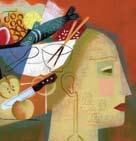
Daydi-tolson, a professor of spanish in the Department of Modern Languages and Literature, has researched and written about the prevalence and meaning of food in art and literature for more than 10 years. the representation of food in the art world is fundamentally the celebration of people and their place in the world, he says. “ i t just shows how art is involved in so many subtle ways with human nature. t is something that weighs strongly in the way people live, think, feel and react.”
to more deeply explore the function of food in art,
Daydi-tolson has organized five food conferences since 2000, composed of people who, like him, believe that it reveals an abundance of information about the way people live.
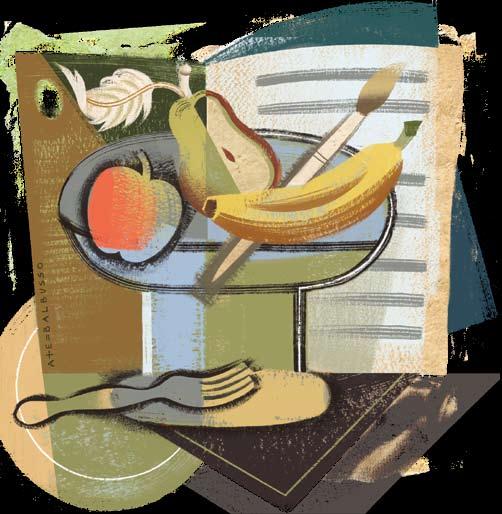
called the i nterdisciplinary and Multicultural conference on Food Representation in Literature, Film and the o ther Arts, the event draws scholars who specialize in food studies and other fields from as far away as the University of tokyo and as nearby as texas Lutheran University in seguin, texas. the conference expands the study of human thought in references to food in written, spoken and visual communication. they explore the philosophical, psychological, political and religious messages imbedded in each work. even the field of marketing in popular culture is on the menu: think of the apple in Macintosh computer promotions.
After the first conference eight years ago, participants requested Daydi-tolson and his colleagues repeat the gathering every two years. the most recent conference— funded in part through a gift from H-e-B—was in February. the next one is scheduled for 2010.
Daydi-Tolson stresses that food is not used by artists as an afterthought; it is a deliberate theme. It is there for some particular reason—food becomes another character in their works.
Participants also have created an electronic journal, Convivium Artium, which means “Banquet of the Arts” in Latin, to further explore the subject. i n the magazine, participants can electronically publish studies on food and the humanities.
Daydi-tolson says people don’t have to be food connoisseurs or scholars to understand the interest. e ven a cursory look shows how artists apply food to convey religious, ideological, cultural, political and economic perspectives.
A Philosophical Buffet
As in recipes, opening remarks are required for a conference about the depiction of food in literature and the arts.
When c hristopher Wickham, associate dean of U ts A’s college of Liberal and Fine Arts, began thinking about the topic, he decided to use equal parts humor and humanity.
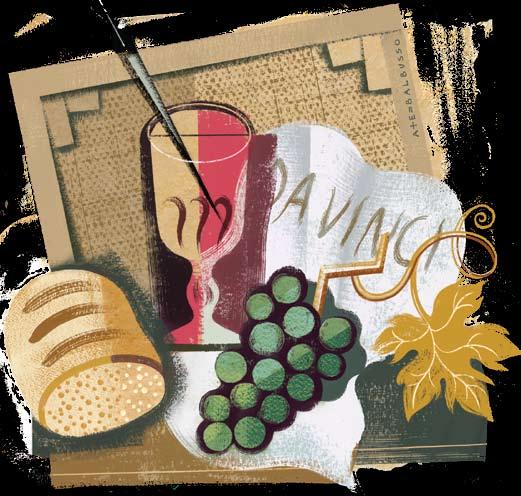
c onsider v incent van Gogh’s dark depiction of the poor eating a scant meal of potatoes during a time of famine in “ the Potato e aters.” s ubtle details in the painting, such as an oil lamp as the sole lighting source, the thin and rough hands of those that are gathered around the table and the use of potatoes as the lone food in the meal, are used to illustrate the depth of the people’s poverty. Leonardo da vinci’s use of leavened bread in his depiction of the momentous “Last supper” has been used by researchers to determine whether the historic event took place during Passover.
Daydi-tolson stresses that food is not used by artists as an afterthought; it is a deliberate theme. “i t is there for some particular reason,” he says. i n essence, he says, food becomes another character in their works.
Daydi-tolson has focused on famous writers. For example, he noted that the classic novel, Don Quixote by Miguel de cervantes, “talks about food and eating in practically every chapter.” c harles Dickens took a similar tack, particularly in A Christmas Carol then there is ernest Hemingway, who often used food in his writings. He is credited with using big-game hunts in life and literature as a way to establish a masculine identity for both his characters and himself.
Have an appetite for more information about Dayditolson’s work? e-mail santiago.dayditolson@utsa.edu.
“Perhaps it was someone calling me sweetie pie or cutie pie; pie is generally held to [mean] ‘nice’ in e nglish: nice as pie is a favored expression,” Wickham told the audience. “s omeone might be considered to be the crème de la crème, which is really only the gourmet way of saying cream of the crop,” he said. “People might be full of the milk of human kindness, as shakespeare had it.”
Look at your companion, Wickham advised, as they might have an attractive peach-like complexion or less so—pasty-faced or whey-faced.
More mature people might have salt-and-pepper hair, and kindred spirits might be as alike as two peas in a pod with wit as keen as mustard or more salt of the earth, he said.
even people’s emotional states are prone to food analogies, typically fruits and vegetables, he said. People “go bananas from time to time, just as we all know someone who is nutty, nuts or even nutty as a fruit cake.” the proverbial couch potato simply requires a sofa to veg out.
t he working world has its own food ties, such as a plum job paying big dough or the antithesis: getting paid peanuts when bean counters have their way. At the end of the day, it’s important to bring home the bacon while not working so hard that you have too much on your plate.
t he human body is rife with edible similes, or as Wickham described them, “the alimentation of anatomy.”
A head is sometimes called a noodle, and cauliflower ear might merit a visit to a plastic surgeon.
Wickham adopted the cadence of the late comedian George carlin for the remainder of his food-based philosophical observations:
If life gives you lemons, you make lemonade. If you are in the soup, you try not to get in a stew.
If you want to make an omelet, you have to break some eggs. It might not be your cup of tea, but that’s the way the cookie crumbles. Sometimes you have to wake up and smell the coffee, but
if you don’t bite off more than you can chew, it’s not such a tough nut to crack. As long as you don’t end up hitting the sauce, life is a piece of cake. And don’t let anyone tell you it doesn’t amount to a hill of beans. That’s baloney. We may try not to compare apples and oranges, but sometimes you can’t have your cake and eat it.
I’ll stop and let you get to the meat of this conference. Suffice it to say that food is a two-way street, it crosses our tongues in both directions: inbound, we ingest the signified, the food, to stay alive and, outbound, we express the signifier, the words as communication and literature, to make life worth living. O
WeB extra: Listen to the nPr podcast of “ the splendid table,” featuring the utsa food conference at, www.utsa. edu/today/2008/02/splendidtable2-23-08.mp3.
A Broader View of the World
By Lisa chontos
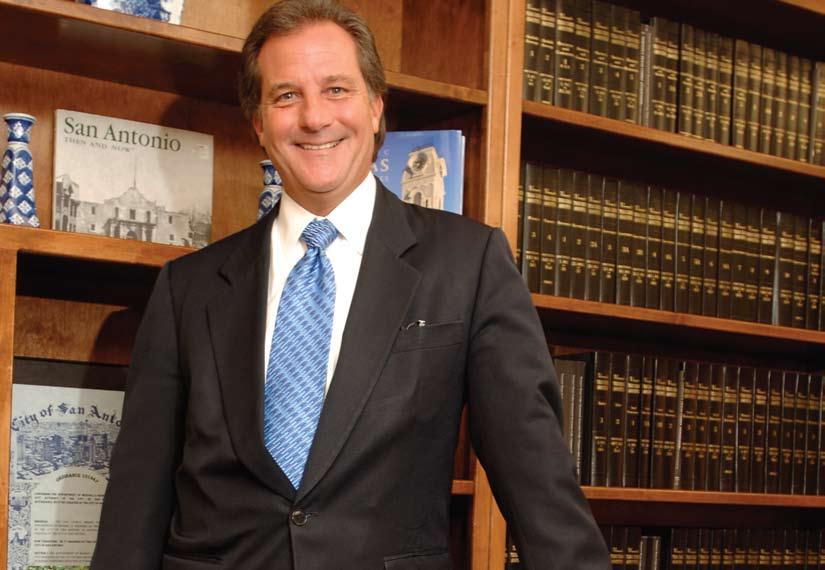
“A liberal arts education gives you a broader view of the world we live in,” says Michael Bernard, San Antonio’s city attorney and UTSA College of Liberal and Fine Arts 1979 alumnus. “It’s hard to convey that to a student looking toward a future in computer programming or science, where everything goes down to a mathematical formula or depends on scientific discoveries. But, in my career, my liberal arts education has been of incalculable benefit. I wouldn’t be where I am and able to help the way I do without that background, which gives me an understanding of the larger picture.”
as san Antonio’s city attorney, Bernard is the chief legal adviser to san Antonio’s city council, city management and all city departments. Bernard oversees a budget of $5.8 million and leads a team of 58 attorneys and 35 support staff. Previously, Bernard worked as first assistant district attorney for Bexar county for six years, and he began his legal career by running his own law firm for 11 years. His education includes a B.A. in political science from UtsA, an M.A. in government and public affairs from American University in Washington, D. c ., and a degree from st. Mary’s University s chool of Law in san Antonio.
“For better or for worse, i always knew i wanted to be a lawyer— knew that in grade school,” Bernard says. “ i enjoyed law school and i made a lot of good friends there, but it’s very strategic and focused on law—it’s a refinement of a liberal arts education. My best time in school was at UtsA. i had marvelous professors, and one who stands out is Richard Gambitta— he’s a remarkable professor with whom i ’ve maintained contact.” Bernard says he tried to emulate Gambitta’s teaching style in his own classroom when he served as a lecturer on texas and American politics at UtsA years later.
As an undergraduate at U ts A, Bernard improved his writing skills by taking numerous writing classes, including creative writing. now he uses those skills in all his written communication, and also in the critical task of editing language on ballots.
Bernard feels strongly that it wasn’t one particular class that helps him in his work today, but his liberal arts training laid the groundwork for how he would process everything he learned along the way, throughout school and beyond.
“ i t is sometimes hard to convey to students in a rather specialized world why a liberal arts education is important, but it is invaluable,” he says emphatically. “For example, a lawyer doesn’t have to know everything about every subject, but a lawyer has to be able to learn anything about every subject, because of the
issues they deal with on a daily basis. they may be working on construction site contracts, or they may work in criminal law, dealing with societal issues. Being able to understand those things requires certain fundamentals that you really only get in a liberal arts education.” c ontext is the key to solving problems efficiently, and Bernard uses it to guide his decisions every day. “ to have a law career, i don’t need to understand the labor movement of the 1800s, which is something i learned in college. But it helps me if i understand it, because it puts problems into context.” s miling, he explains, “ i like to say that any good law clerk can find the answer to a legal problem. As a lawyer and counselor, i ’m called upon to do more than that. t he person who sits on the s upreme court has law clerks who are every bit as good as they are at finding the answer to the legal problem. But without a greater understanding of how that impacts the whole country, it doesn’t necessarily solve the problem.”
Working every day to solve specific legal problems in the day-to-day administration of a city, Bernard knows well that having the legal answer is only a piece of the solution, and he notes that this principle applies across industries. “Regardless of the career you choose after college, you will probably be called upon to solve problems, and the way you do that depends on how you learned to process and store information,” Bernard says. “You won’t have to take a history test or a political science test 20 years from now, but you will have to process those problems in the way you learned in your liberal arts education.”
By training the mind to absorb and analyze information from various perspectives, a liberal arts education prepares students for the unpredictable future, he says.
“Ultimately, a liberal arts education enables you to solve problems in an ever-changing world—problems you can’t even imagine today.” O
“you won’t have to take a history test or a political science test 20 years from now, but you will have to process those problems in the way you learned in your liberal arts education.”
Ovations Receives High Praise
You are reading an award-winning publication! coLFA and the office of University Publications recently received two prestigious awards from the council for Advancement and support of education (cAse), a professional organization serving national and international education communities. the Grand Award in the category of most improved publication and the Award of excellence for magazine design were presented in April for Ovations the awards were announced at the cAse District iv conference in Little Rock, Ark. the entries bested submissions from the University of texas at Austin, Baylor University, texas state University, texas tech University and st. edward’s University.
COlFa’s First Security Studies
Certificates awarded the Department of Political science and Geography honored the first four graduates of the Graduate certificate in security studies program on May 14, 2008. the inaugural graduates were Harvey clark, Desmond Johnson, thomas retzlaff and nicholas Santoro.
AWAr d S A nd ACC o LAde S
the Graduate certificate in security studies program began in January 2007. the program seeks to expand student awareness of domestic and global conditions that can reasonably be expected to impact homeland security and defense in a democratic society, and to deepen their awareness of how political systems address particular types of threats that arise from natural disasters, external attacks and other types of challenges to internal stability.
Methodist University, where he also received his M.A. degree in 1980.
courses necessary to prepare majors for graduate work in top-tier programs. short-term plans are to develop connections with the University of texas Health science center at san Antonio to offer courses in medical ethics and biomedical ethics. A major component in coLFA’s strategic plan is a master’s degree in philosophy with an emphasis in biomedical ethics and other areas in applied ethics.
a l UMN i
in Literature, Film, and Popular culture,” was directed by sonia saldívar-Hull. Rodriguez graduated in May.
COlFa Students land High-Profile D.C. internships
three coLFA students were among those selected for Bill Archer Fellowships, which bring undergraduate students from University of texas system schools to Washington, D.c., to better understand national government and policy.
the Library of congress and the American choral Directors Association for a project that will digitize American choral music of the 19th and early 20th centuries.
art and art History and Music install New Department Chairs gregory elliott became chair of the Department of Art and Art History effective Aug. 18, 2008. elliott served the last five years as chairman of the Department of Art at the University of texas at e Paso. During his tenure, the number of art majors grew by approximately 50 percent, and he was instrumental in developing and implementing UteP’s Quality enhancement Plan. elliott also served as head of the sculpture area and graduate coordinator at Louisiana state University in Baton Rouge, La., from 1998 to 2002. elliott comes to UtsA as a widely acknowledged leader of the arts in the e Paso region, and is credited with being instrumental in accomplishing the opening of the stanlee and Gerald Rubin center for the visual Arts center, the cornerstone of cultural activities at UteP. As a tenured professor, he has shown dedication to making education a priority and is committed to improving teaching and learning in the visual arts. elliott also has a long list of artistic and scholarly awards and exhibitions and has received numerous grants and fellowships. He earned his M.F.A. degree in 1988 from southern
David frego, Roland K. Blumberg Professor, became chair of the Department of Music on July 1, 2008. Frego received his Ph.D. from Florida state University in 1996 and has obtained both a license and certification in Dalcroze eurhythmics from carnegie Mellon University. He received his master of music education degree and master of music degree, with an emphasis in choral performance, from Florida state University. Frego is considered a first-rate musician. He is a pianist, a conductor, a dancer and singer. He is supportive of choral and vocal programs and is committed to music performance and education. As an expert in Dalcroze eurhythmics, Frego has received international recognition for his research.
Frego comes to UtsA from ohio state University, where he served as associate director of the school of Music and associate professor of music education and Dalcroze eurhythmics. He is credited with increasing the scholarship budget and has been successful in developing community financial support. Frego is admired nationally and internationally as a Dalcroze clinician and performs numerous workshops per year, including workshops in BosniaHerzegovina, France, Japan and egypt. He has been widely published in major research journals, and recently completed a chapter for oxford University Press and a new chapter for the revised Handbook on research in Music Education
The Department of Philosophy and Classics Becomes COlFa’s 11th Department the Department of Philosophy and classics is now its own independent department beginning fall 2008. the department will offer a broad range of
David a Hendricks, M.A. in english 1981, a columnist for the San Antonio Express-News, has been named one of the top business columnists in the country by the society of American Business editors and Writers. He and two other columnists were selected in the medium newspapers category— those with daily circulations between 125,001 and 250,000.
some of his notable columns have focused on the silence of businesses in the immigration debate; the legacy of the late enron corp. chairman Kenneth Lay; and on the political maneuvering that once threatened the future of the san Antonio–based north American Development Bank.
elizabeth r. ingalls, B.A. in French 2006, is achieving her goal of becoming an actress. she has a role in the upcoming Star Trek movie as well as a role in the movie Garrison, released in 2006. ngalls also received a shared award for Director’s Pick, won at the Hollywood MiniDv Festival, for Garrison linda arredondo, B.F.A. 2008, was accepted into the M.F.A. program in painting at Yale University. Yale has a rigorous application and admissions process with more than 1,000 applications reviewed, of which only 75 are invited to bring examples of their work and interview with faculty and the dean. Arrendondo was among approximately 20 applicants admitted at the end of the process.
S TUD e NTS
COlFa Celebrates the First Ph.D. Graduate in the College congratulations to lori rodriguez, the first Ph.D. student from the Department of english and the college of Liberal and Fine Arts to successfully complete her dissertation defense. Her dissertation, “speaking tejana: Mapping contemporary Reconstructions of tejana dentity
Melissa ruiz, who graduated in May with a bachelor’s degree in communication, interned at ABc ’s Good Morning America after a stint in Washington, D.c. During her internship at the ABc studio in new York city, she met Diane sawyer and John Quinones while coproducing a news segment. anthony Walker, a senior political science major, interned in the office of sen. Kay Bailey Hutchison. robin Mcilhenny, a history major, worked in the office of Rep. ciro Rodriguez.
Students Witness the National Political Conventions Firsthand students in campaign 2008, an honors course led by amy Jasperson, associate professor of political science and geography, participated in a nonpartisan academic program through the Washington center for nternships and Academic seminars. coLFA students april Sanchez, a communication major, and Matthew Shelton, a political science major, attended the Democratic national convention; franck carni ii, a political science major, and Hilda Moeller, a history major, attended the Republican national convention. With monetary support and cameras furnished by time Warner cable of san Antonio, the students posted photos and videos online and created a blog of their experiences.
Fa CU lT y
Steven g. Kellman, professor of comparative literature in the Department of english, received Gemini ink’s Literary excellence Award during its inKstravaganza gala in september. reed Hunt, Department of Psychology, was elected to the governing board of the Psychonomic society, a premier international organization for experimental psychologists. Membership in the society requires significant research contributions beyond the doctoral dissertation. the main function of the society is to distribute scientific information. it publishes six journals and holds an annual research conference. the governing board oversees all of the operations and finances of the society.
Music professor John Silantien was selected to serve as a lead researcher and chief editor by
silantien has taught and conducted choirs on the secondary and collegiate levels in texas; Washington, D.c.; and the eastman school of Music in Rochester, n.Y. He holds a doctor of musical arts degree from the University of llinois.
His awards include a Rockefeller grant for choral conducting at Aspen, colo., and a Fulbright award for research in London, england. He serves as director of choral activities at UtsA and director of the san Antonio symphony Mastersingers. Additionally, silantien is listed in “ nternational Who’s Who in Music” and “Who’s Who Among America’s teachers.” nancy Membrez, associate professor in modern languages and literatures, was honored when her digital film Portrait in Sepia Tone won awards for Best Feature Film and Best soundtrack at the nternational Filmmaker Festival in Kent, england, in June 2008. set in san Antonio in the early 20th century, the film portrays mismatched couple Marshall and Helen Dekker. Marshall’s affair with a cruel mistress leads to unimaginable consequences for his family. Membrez is screenwriter, director, executive producer, editor and production designer of Sepia Tone; the film was nominated in six categories. Dee Mitchell, Department of History, received the Alumni Association Award for outstanding teaching by a non-tenure track Faculty Member at the 2008 University Life Awards ceremony. Her selection is all the more impressive because she regularly teaches the required Historical Methods class, among the most challenging and least popular courses in the major.
Joycelyn Moody, the sue e Denman Distinguished chair in American Literature in the Department of english, accepted an award from the council of editors and Learned Journals for the Best special issue of 2007 for her work in African American review for “ the curse of caste.” Moody served as editor along with guest editor veta smith tucker. the award is especially prestigious because it was the first time in the history of the award that the decision was unanimous on the first ballot. Steve tomka, director of the center for Archaeological Research, was appointed by Gov. Rick Perry as a member to the texas Historical commission. He is a registered professional archaeologist and member of the society for American Archaeology, texas Archeological society and council of texas Archeologists.
Gregory elliott
David Frego
John silantien
Lori Rodriguez
your gifts make a difference in the utSA college of liberal and fine A rts
thanks to the generous support of our alumni and friends, the college of Liberal and Fine Arts is the leader in many areas of education, research, creative activity and outreach in san Antonio and south texas.
on behalf of our students, faculty and staff, we extend our gratitude to each of the donors who support our mission. We are honored by their generosity and caring.
As a state-assisted university, UtsA receives only 30 percent of its budget from the state of texas, making every gift vital to our continued growth and success. Your gifts to the college of Liberal and Fine Arts ensure that we continue to build excellent programs to serve the growing needs of the university and wider community. Please join us in celebrating the following individuals, businesses, foundations and organizations that, through their contributions, enhance our college’s outstanding programs and activities. We especially want to thank the many alumni who continue to designate their gifts to our college.
Although we are grateful for each and every gift we received, due to space limitations, the report below lists donors of $1,000 or more for the fiscal year sept. 1, 2007, to Aug. 31, 2008.
$1,000,000 or more
estate of Lota Rea Wilkinson
$50,000 to $99,999
charlotte and charles R. Walker
$25,000 to $49,999
82 Westminster Fund of the community Foundation of Greater Atlanta
elizabeth Huth coates charitable Foundation of 1992
express-news charitable Foundation
Joyce (B.A. ’92) and Richard e. Harris
Richard and Joyce Harris sapience Foundation
Milton s Jacobs
sue and John s Jockusch
national Research council
Kathleen Weir vale and Albert vale
$10,000 to $24,999
Anonymous
the George W. Brackenridge Foundation capitol cement company
Yolanda M. (B.A. ’92) and Robert J. crittenden sr.
Helen K. Groves
opera Guild of san Antonio
Marianne c and stewart R. Reuter
stewart R. and Marianne c Reuter Fund of the sAAF
the UsAA Foundation
Lee Robinson and Jerald Winakur
$5,000 to $9,999
Anonymous
Russell Hill Rogers Fund for the Arts
san Antonio Area Foundation
Marilyn L. sherer
time Warner cable
Loretta and Robert e valdez
$2,500 to $4,999
Anonymous
consulate General of switzerland
HAceMos scholarship Foundation
H-e-B
istituto taliano di cultura
Mission Pharmacal company
Jane cheever and thomas L. Powell Jr. the Presser Foundation
san Antonio Musical club security service Federal credit Union
Beverly and neill B. Walsdorf sr.
sheila (B.A. ’96) and Wayne Wright
$1,000 to $2,499
Akin, Gump, strauss, Hauer and Feld, L.L.P. Alamo Music center, ncorporated Alturas Foundation
Artpace, san Antonio
Helene J. (M.B.A. ’06) and Julio (B.A. ’02) Benitez
Bjorn’s Audio-video-Home theater
siri s Bletzer (B.A. ‘91) and Richard Lewis
Richard D. Braune
ollie s Bryant
sally M. and Robert t Buchanan
Monika and James D. calder
colleen M. casey and tim Maloney
centro cultural cubano of san Antonio
Janell H. and o tto clary
clear channel Worldwide
Maria e cossio-Ameduri and Ardow Ameduri Jr.
Lisa Dollinger
sharon and Bjorn Dybdahl
Albert e estrada (B.B.A. ‘83)
ingrid B. (B.A. ‘83) and W.R. Faris
tenchita and Alfredo L. Flores Jr.
the Foreign service Group
Guadalupe cultural Arts center
Ruth Jean and Arthur B. Gurwitz
Marie and Hugh Halff Jr.
Linda c. and Weldon W. Hammond Jr.
Joanne P. (B.A. ‘96) and Richard L. (B.A. ‘97) Hathaway, J.D.
Angelika c. Jansen and Robert Brown
Mary Q. Kelly
constance A. Lowe
constance Lowe Donor Advised Fund of Hutchinson community Foundation
Marilyn Mason
the Marilyn Mason Foundation
Gayle A. Graham and John F. McFall (B.B.A. ‘92)
Mcnay Art Museum
Jerri D. Mitchell (B.A. ‘97, M.A. ‘99) and David G. Hardy
Linda c. (B.A. ‘87) and James e Montgomery Jr., P.c cynthia Y. Munoz (B.A. ‘88) Munoz Public Relations, L.L.c
Magdalena M. and Ray J. o’Gwin Jr.
the Harris K. and Lois G. oppenheimer Foundation
Lois G. oppenheimer
vickie and Doğan A. Perese
Primate conservation, nc. Program for cultural cooperation Between spain’s Ministry of culture & United states’ Universities the san Antonio Gardenia & Musical club
Melinda K. (B.A. ‘81) and Louis schultz
Melissa D. (M.A. ‘90) and A.P. shepherd Jr.
Patricia J. (B.A. ‘78) and Bud smothers
smothers Foundation
southern texas Archaeological Association
Allie s stokes target
toyota Motor Manufacturing texas, nc.
Litsa D. tsitsere
Universidad nacional Autónoma de México
University of south carolina
Univision Management company
Jenny J. Uttinger Wal-Mart
Jo Ann P. Wigodsky
friends who are making a difference
to see your gifts in action, we invite you to the 1604 campus to take a guided tour, visit the Art Gallery, attend a concert in the Recital Hall, tour the center for Archaeological Research, reconnect with favorite faculty members, or to meet with Daniel Gelo, dean of the college of Liberal and Fine Arts. Please contact Deborah thomas, assistant to the dean, at (210) 458-4820 or deborah.thomas@utsa.edu for arrangements. there are many opportunities to make a difference through giving to the UtsA college of Liberal and Fine Arts. Here are a few opportunities for strategic investment to consider when planning your gift:
Scholarships and fellowships attract and retain deserving students and help them realize their fullest potential.
endowed faculty positions allow coLFA to recruit distinguished senior scholars and artists to provide leadership in instruction and research and to bring national visibility and recognition to programs in the college.
unrestricted excellence funds provide flexibility in assisting academic departments in funding special projects, student scholarships and research, and in providing enrichment opportunities that enhance the learning experience of our students both in and out of the classroom. the college has several giving programs to choose from including the coLFA Dean’s circle, Friends of Music, Friends of shakespeare, Friends of Anthropology, and the creative Writing nitiative.
Depending on what you would like to achieve, you may find one method of giving more attractive than another. Whether you choose to make an outright gift or a planned gift, each method may have particular tax advantages.
outright gifts include such things as cash, securities, personal property and real estate and may be claimed as charitable tax deductions for the year in which they were made.
planned gifts are specially arranged gifts to the university made through such vehicles as wills and trusts and can have specific tax advantages for you and/or your heirs. individuals who include UtsA in their estate plans through bequest, trust, gift annuity, life insurance or other means become members of the sombrilla society, one of UtsA’s most cherished group of alumni and friends. For information about making a gift to the college, please contact Helene Benitez, coLFA development officer, at (210) 458-4404 or helene.benitez@utsa. edu. For giving information online, please visit www.utsa.edu/development.
Please consult your tax or legal advisory for information about the specific benefits of each method of giving.
Ha RR i S Fa M ily
e S TO eNG li SH D e Pa RTM e NT
Joyce Harris (B.A. interdisciplinary studies ’92) always wanted to be a teacher, but had to put her dream on hold and work in real estate in order to raise two children as a divorced parent. After her sons were grown, Joyce decided to pursue her dream and become a teacher after all. she entered the UtsA graduate program in english but halted her studies again when she and husband Richard Harris, who received his B.A. and M.A. in business from texas christian University, adopted their daughter from Romania.
However, Joyce’s love for literature continues unabated. Both Joyce and richard Harris believe strongly in the vital importance of literary studies. n keeping with their beliefs, the couple recently made significant gifts to UtsA to benefit the Department of english, including the annual Richard and Joyce Harris sapience Foundation Graduate Fellowship in english; the steven G. Kellman Award endowment,
Last year was a grand year for the UtsA Friends of shakespeare, which celebrated its 20th year. this anniversary was made especially memorable by the announcement of the first endowment to help ensure the longevity of shakespeare programming at UtsA. the Yolanda and Robert crittenden shakespeare endowment was established by a generous gift from alumna yolanda crittenden (B.A. english ’92) and her husband, robert coLFA is fortunate to count alumni among our benefactors taking a leadership role in supporting our students, faculty and programs. the college is also grateful to the Russell Hill Rogers Fund for the Arts and many other Friends of shakespeare for providing the annual support needed to bring Actors From the London stage, a troupe of distinguished British actors, to san Antonio each year to present the works of shakespeare to our students and the community.
to be presented to undergraduate students in recognition of outstanding writing ability in the category of nonfiction essay; and a gift to support the Sagebrush review a literary magazine edited and published entirely by graduate students. When asked why they give to UtsA, Joyce explains: “Richard and are enormously impressed by the quality of the programs offered by the UtsA Department of english, and we are pleased to be able to expand the opportunities for other students to study with its superb faculty.”
Yolanda and Robert crittenden
Actors From the London stage
Joyce and Richard Harris
thanks to the support of elizabeth Huth coates charitable foundation of 1992 and that of other friends for the Piano Fund, UtsA’s Department of Music has welcomed a new steinway concert grand piano on the stage of the Recital Hall. the coates Foundation has also made a gift to start the UtsA Art Gallery exhibition endowment. Both gifts will enhance coLFA fine arts programs, which provide enrichment opportunities for UtsA students and the community.
Re UT e RS SUPPORT GR a DUaT e STUD e NTS
i N a RT a ND a RT H i STORy
Marianne and Stewart reuter recently established the stewart R. and Marianne c. Reuter endowed scholarship in Art to benefit graduate fine arts students in the Department of Art and Art History. the Reuters have been long-time advocates for the college through Marianne’s service on the Advisory council. And the couple’s record of giving, which includes support of annual scholarships in the departments of art and art history and modern languages and literatures, as well as to the Dean’s circle, reflects their varied interests and strong belief in the importance of liberal and fine arts education, research, creative activity and outreach. Additionally, the Reuters provide the following statement about their motivations for giving: “We support UtsA because, having lived in both Ann Arbor, Mich., and La Jolla, calif., we have experienced firsthand the cultural and economic impact a university of first class has on the community.” UtsA is grateful to the Reuters for their service,
MiSSiON STaTeMeNT
the coLFA Advisory council is committed to promoting excellence in the arts, humanities and social sciences, and develops support for the scholarly and artistic efforts of the college.
eXeCUTiVe OFFiCeRS
chair
Doğan A. Perese
vice chair
Maria-eugenia cossio-Ameduri
COUNCil MeMBeRS
Betty Lee Birdsall
ollie Bryant colleen casey
Maria-eugenia cossio-Ameduri
Lisa Dollinger
Bjorn Dybdahl
Albert estrada
Alfredo L. Flores Jr.
Mary Ann Franzke
Janie Groves
Martha Hicks
sally Hoffman
Angelika c Jansen
Mary Q. Kelly
Roxi Mccloskey
John McFall
Joaquin G. Mira
Michael Francis nealis
Amparo H. ortiz
Jane cheever Powell
Rajam s Ramamurthy
Marianne c Reuter
John santikos
ernstine studer
Mary Pat stumberg
clinton Wright
Leaving a Musica L Legacy
attention colfa a lu M ni
Have you been in touch lately? the UtsA college of Liberal and Fine Arts is building its alumni network. Please send your name and current contact information to deborah.thomas@utsa.edu.
We also are interested in your unique or fascinating stories or those of other coLFA alumni you may know. Please share them with us for possible publication.
Lota Rea Wilkinson and her mother, Lota M. Spell, saw music as a gift to be shared for generations. To honor her mother, a Texas musician and educator, Lota Rea made an investment that will inspire children through the ages and offer them lifechanging experiences. Her estate gift to UTSA will ensure that the legacy of her mother is carried on through children’s music education and teacher training.
Estate gifts to UTSA, such as this one, leave a lasting legacy for generations. The Sombrilla Society at UTSA honors and recognizes planned gifts through estates, wills and bequests.
To learn how you can make an investment in UTSA that will inspire future generations and ask about becoming a member of the Sombrilla Society, contact
Helene Benitez, CFRE COLFA Development Officer The University of Texas at San Antonio One UTSA Circle San Antonio, TX 78249-0641
Phone: (210) 458-4404
E-mail: helene.benitez@utsa.edu
UTSA GIVING ON THE WEB: www.utsa.edu/development
Marianne and stewart Reuter
Lota rea Wilkinson (photo on right) is pictured here as a child. she donated $1.2 million to utsa in honor of her mother, Lota M. spell (photo on left), who is pictured with her husband, Jefferson rea spell.
ovati o ns
utsa coLLege oF LiBeraL anD Fine arts
Dean, Daniel J. gelo
associate Dean, student affairs
christopher Wickham
assistant to the Dean, Deborah D. thomas
DeveLoPMent oFFicer
helene Benitez
eDitor, Lety Laurel
art Director, Karen thurman
associate eDitors, rebecca Luther, Lorna stafford contriButors, rudy arispe, Lisa chontos, Lesli hicks, steven g. Kellman
PhotograPhers
Patrick Dunn, Mark Mcclendon
assistant Director oF PuBLications
Frank segura
Director oF PuBLications
elton smith
executive Director oF coMMunications anD creative services craig evans
associate vice PresiDent For coMMunications anD MarKeting
David gabler
vice PresiDent For university aDvanceMent Marjie French
college of Liberal and Fine arts one utsa circle
hss 4.01.23
san antonio, tx 78249-4350
(210) 458-4350
(210) 458-arts (for arts events information) http://colfa.utsa.edu/colfa/
the university of texas at san antonio one utsa circle