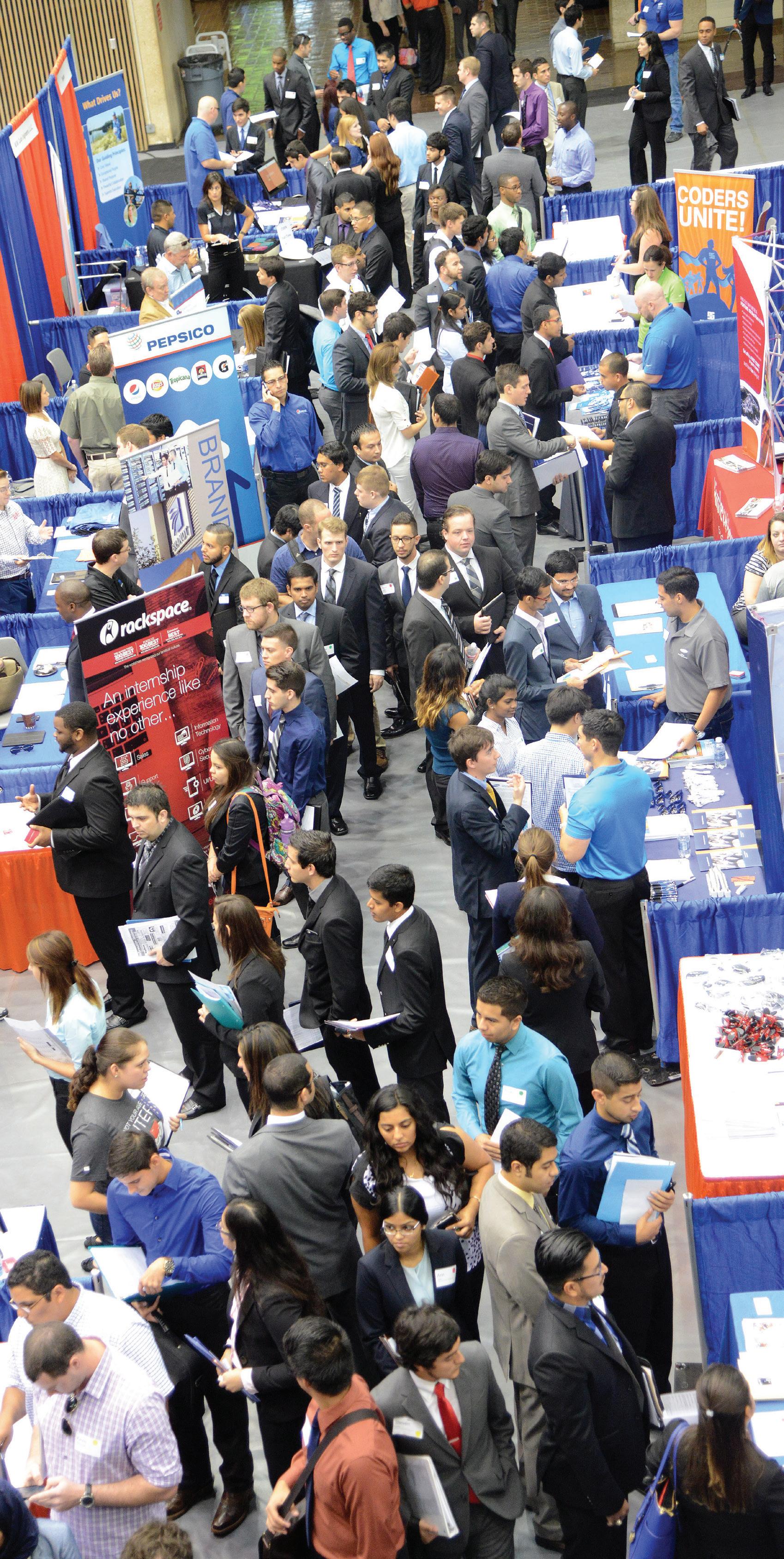
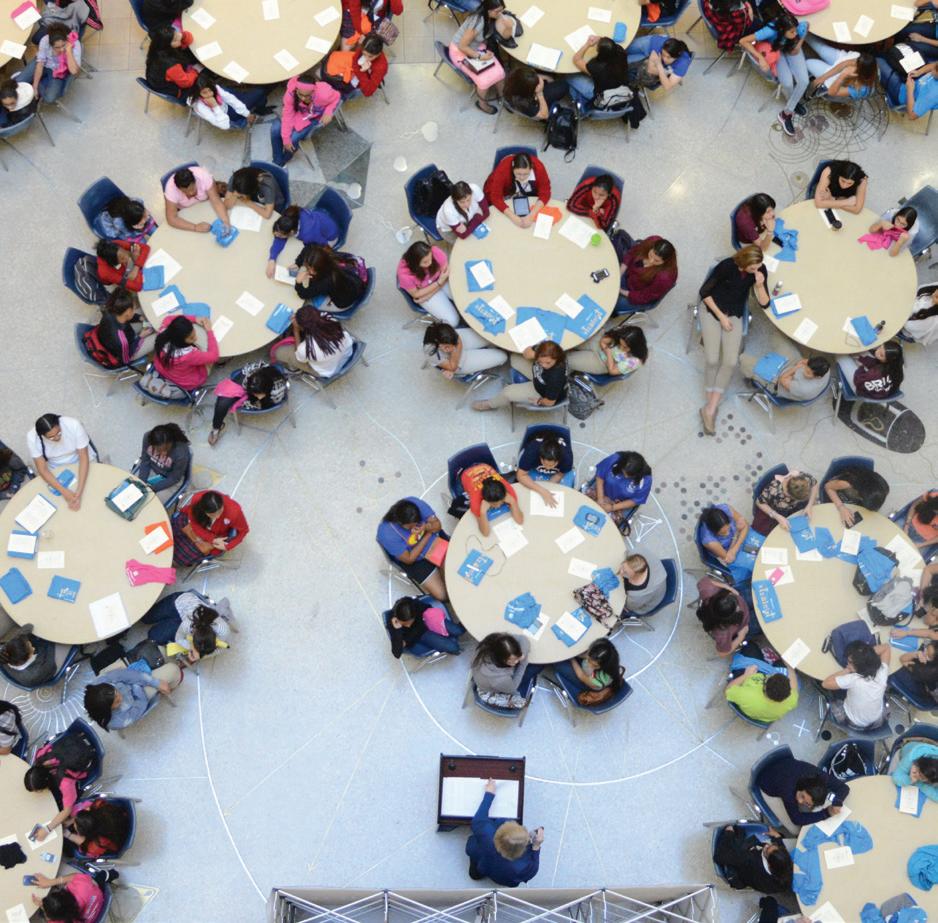
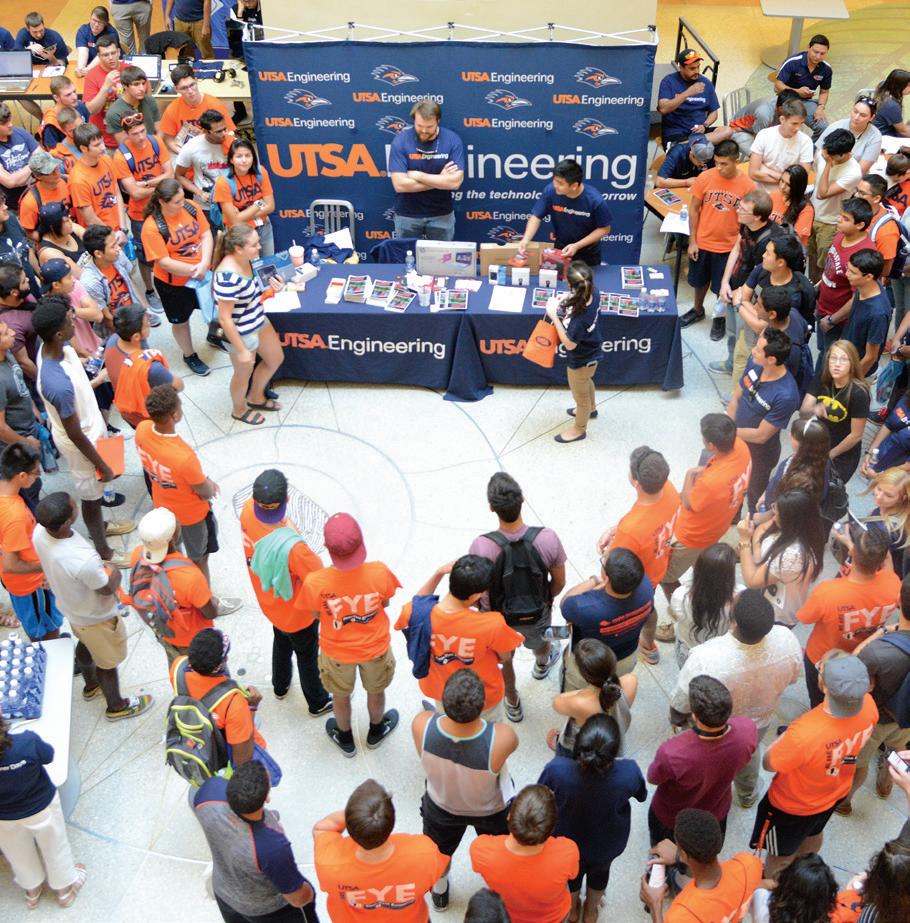
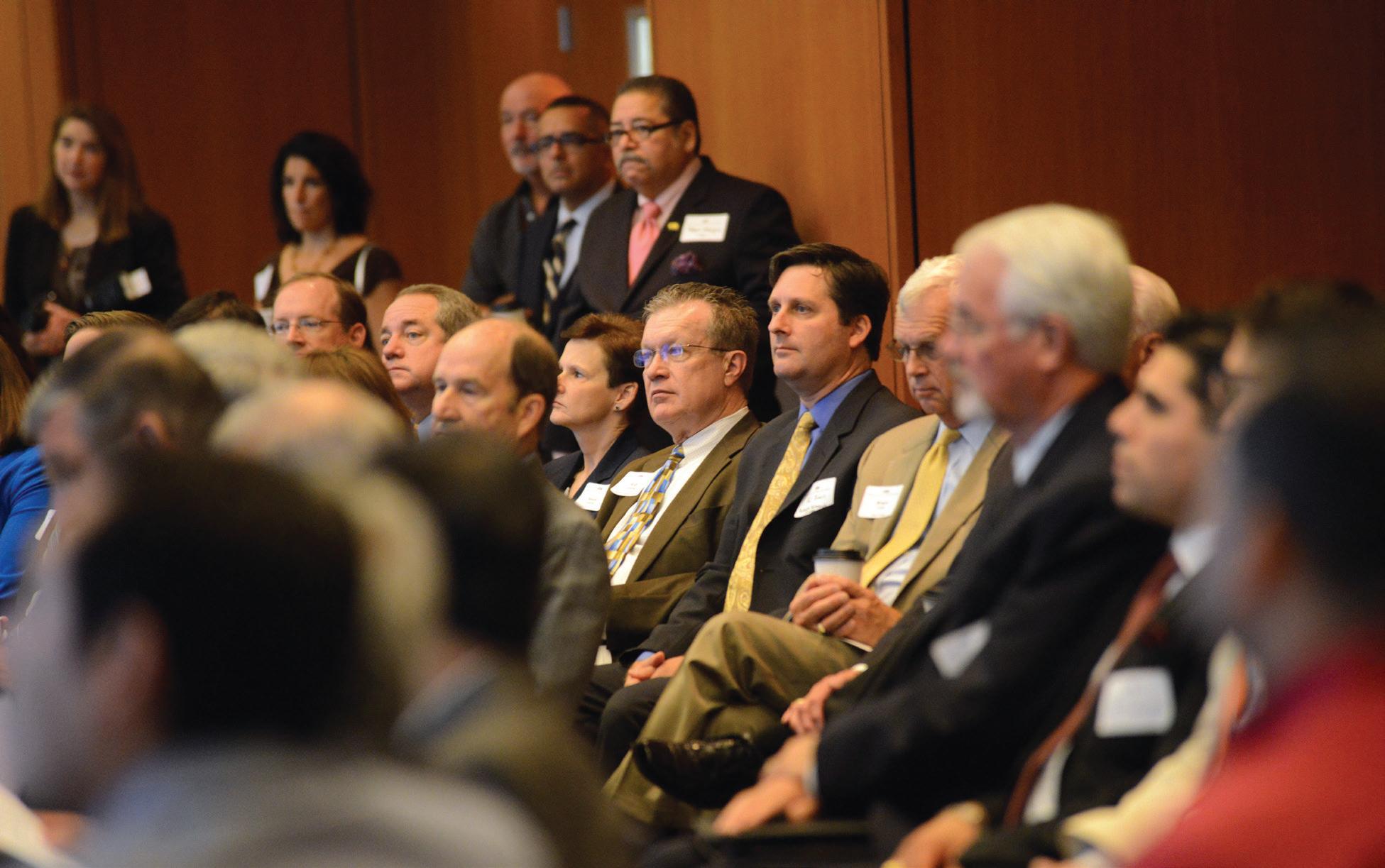
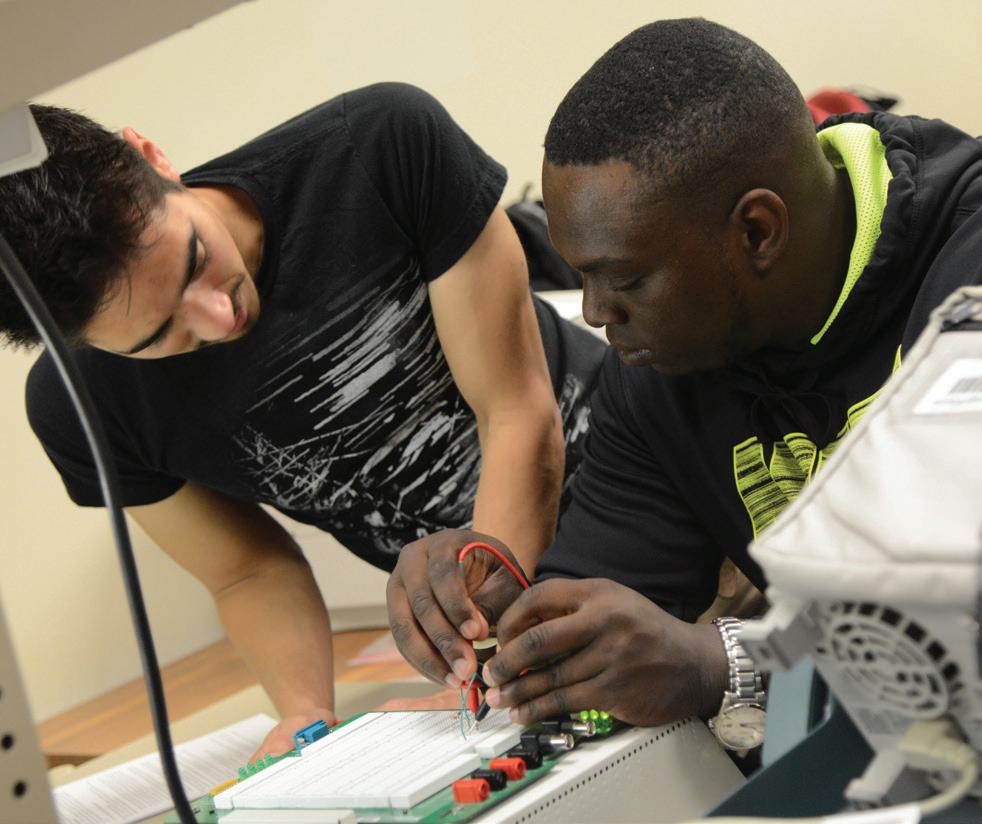
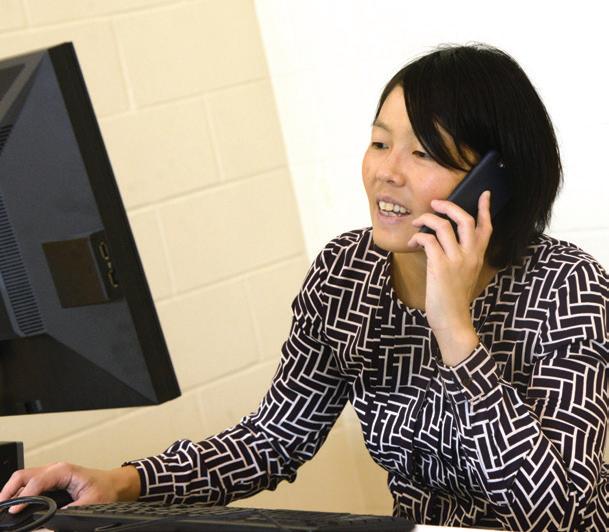
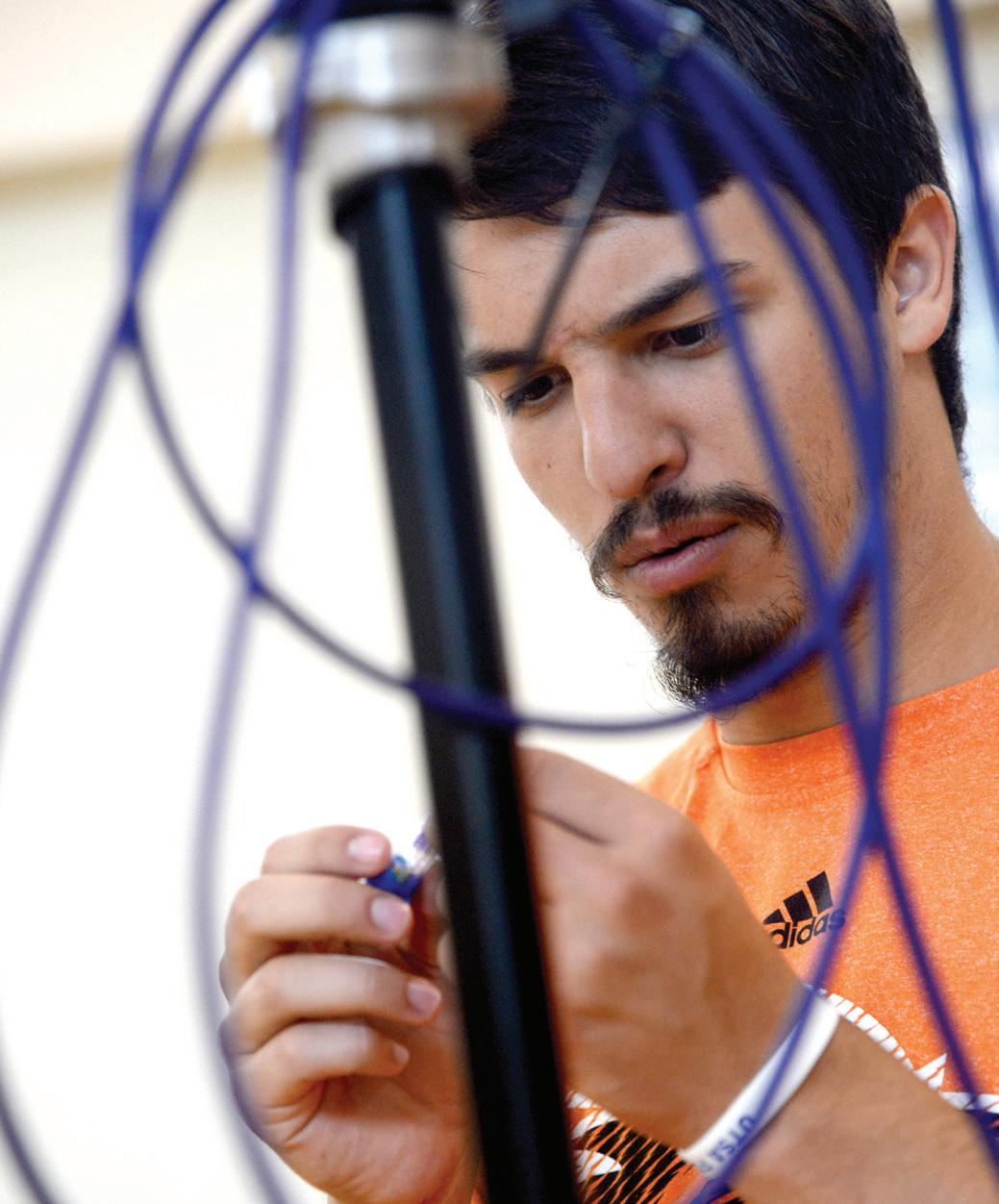
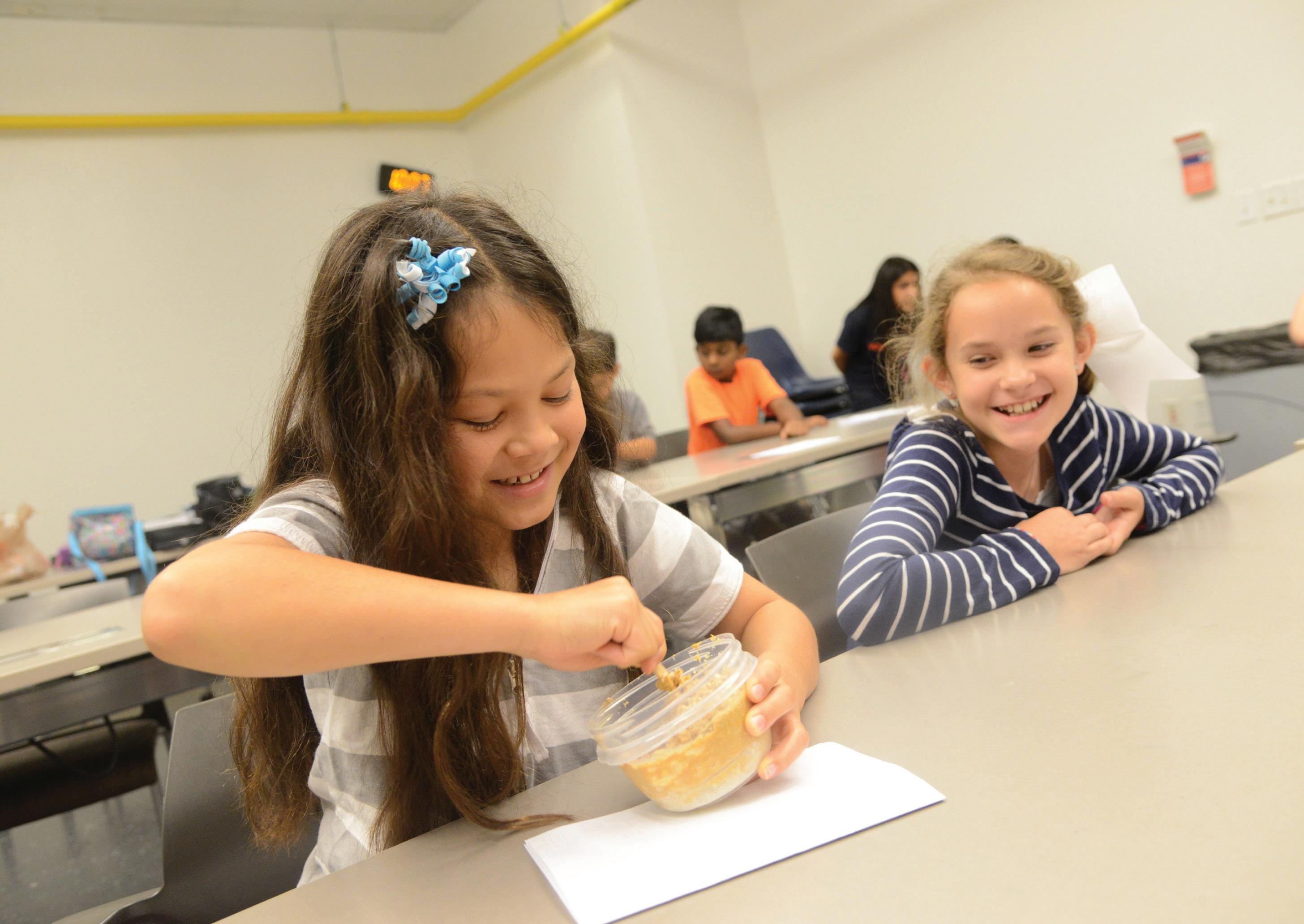
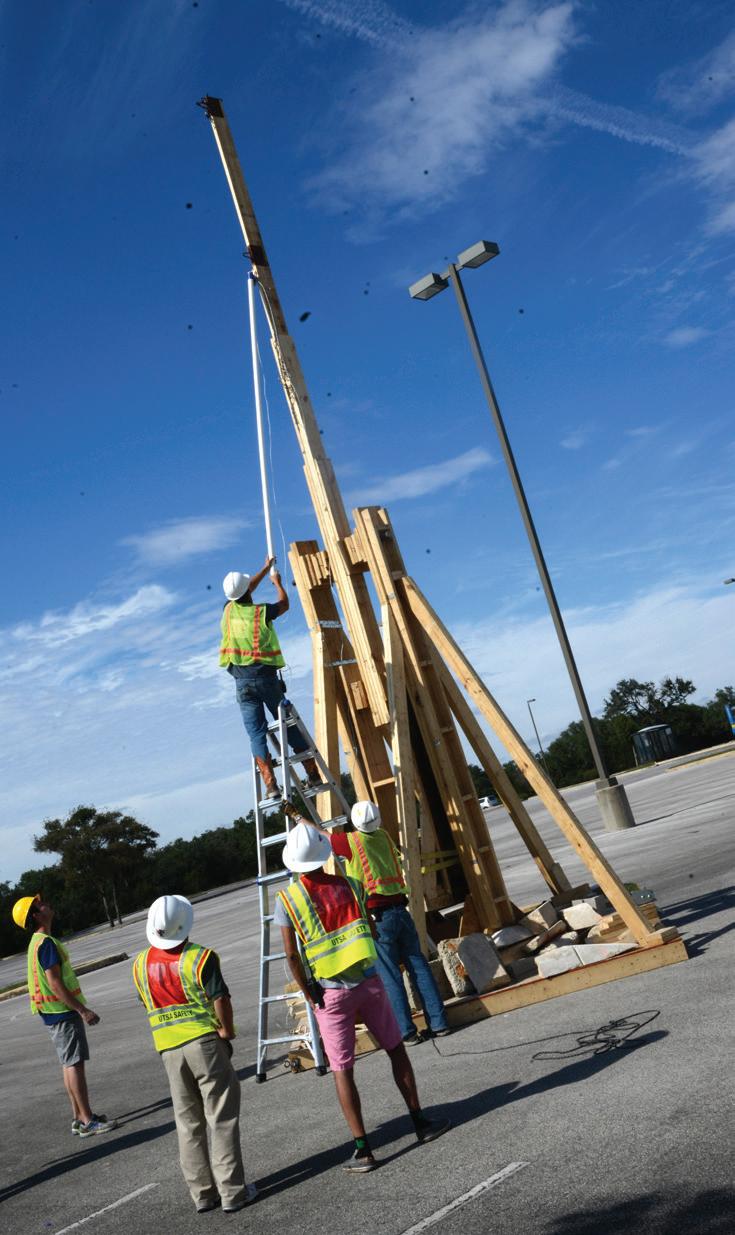
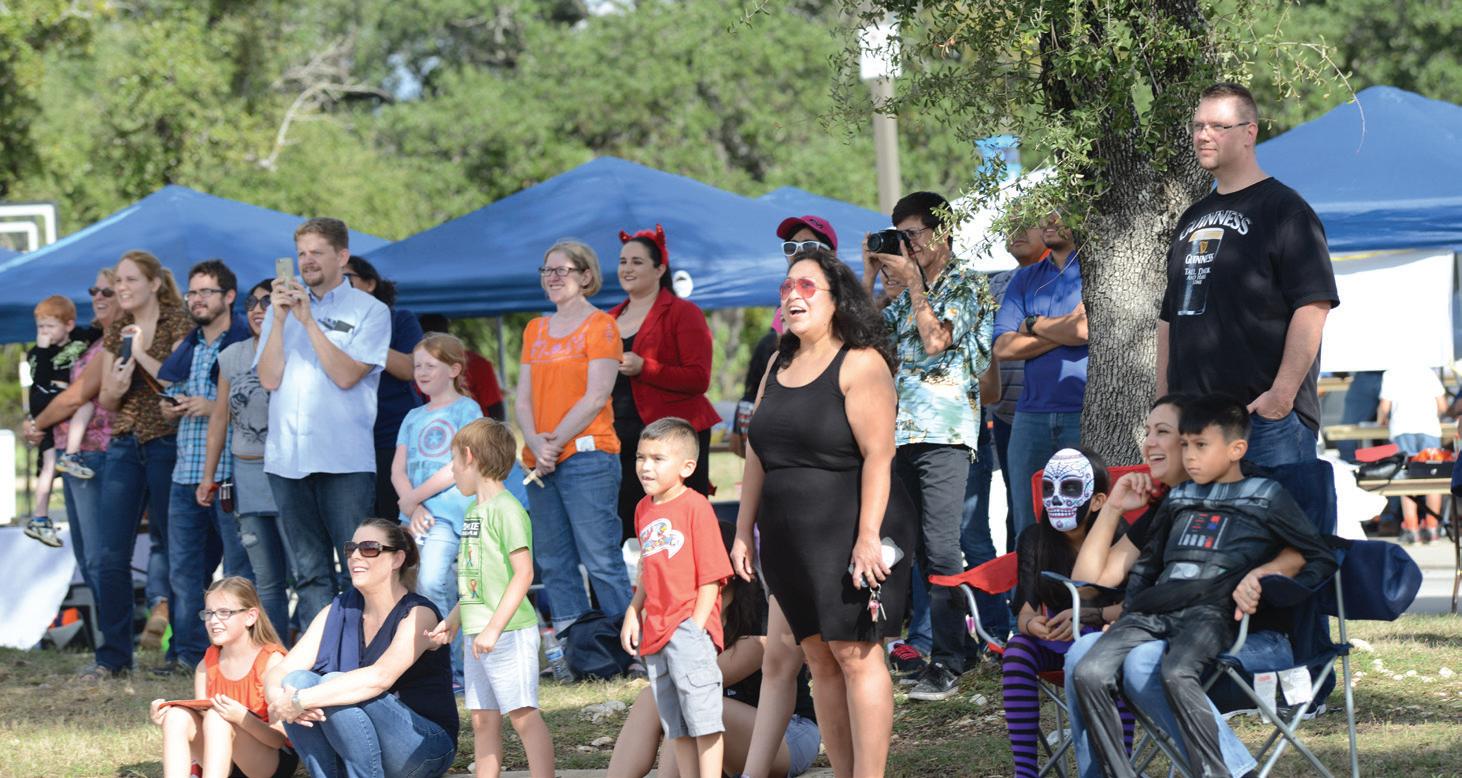
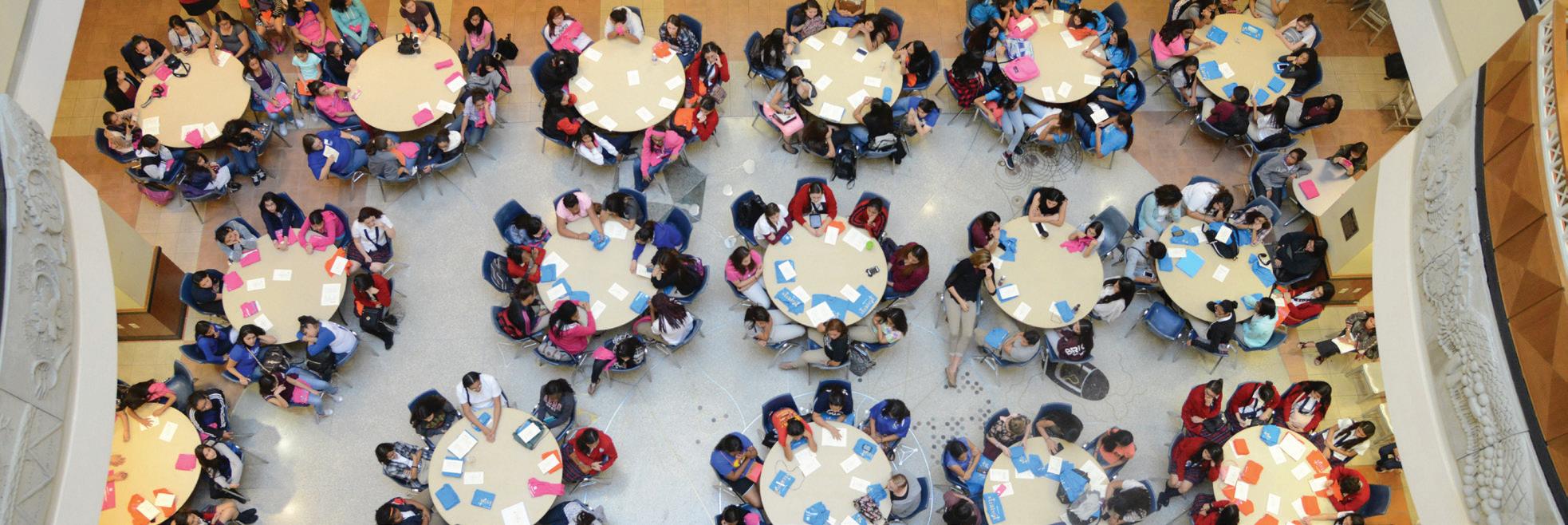
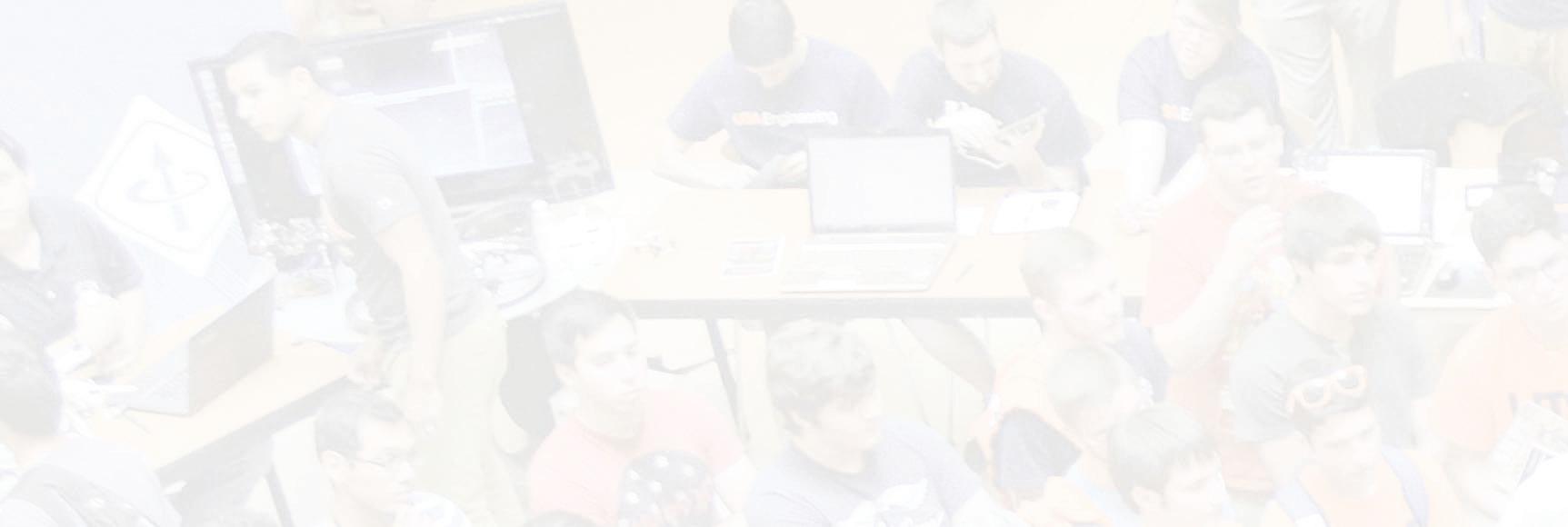
Students gather in the UTSA Convocation Center for the 2015 STEM Fair held this past fall. The fair brought 93 employers to campus including INTEL, Samsung, Toyota, Google, Microsoft, AT&T, Tesoro, and General Electric. More than 800 students attended the fair, which has grown from the first STEM Fair held in 2011 that drew 220 students. “We have increased employer attendance because of heavy outreach and visits from our employer relations team at the University Career Center,” said Audrey Magnuson, director of the University Career Center. “We also have had great college involvement by faculty making recommendations as to the type of employers they would like to see and personal recommendations for connections.” (Photo by Deborah Silliman/COE)
COLLEGE OF ENGINEERING
Dean
JoAnn Browning
Associate Dean for Research and Graduate Studies
Harry Millwater
Associate Dean for Student Affairs and Policies
Mark Appleford
Associate Dean of Administration
Anson Ong
Assistant Dean of Finance
Kirstin Wilsey
Director of Development
Lindsay Land
Communications Coordinator
Innovations Managing Editor Deborah Silliman
Contributors
Joanna Carver, Rebecca Esparza, and Deborah Silliman
Associate Vice President for Communications and Marketing
Joe Izbrand
Executive Director of University Communications Christi Fish
Mailing Address
The University of Texas at San Antonio College of Engineering One UTSA Circle San Antonio, TX 78249
Visit us on the Web engineering.utsa.edu
COLLEGE OF ENGINEERINGʼS MISSION
The mission of the College of Engineering is to provide outstanding education, research opportunities, and service to our regionʼs multicultural community, the nation, and beyond.
COLLEGE OF ENGINEERINGʼS VISION
The vision of the College of Engineering is to be a leading research-intensive engineering college serving as an economic driver and workforce developer for the region, the state, the nation, and the global environment.
COLLEGE OF ENGINEERINGʼS CORE VALUES
The College of Engineering embraces the core values of UTSA – integrity, excellence, innovation, collaboration, and inclusiveness.
A message from the Dean of the College of Engineering
Acommon proverb is that time fl ies when you are having fun, and 2015 sped by at the speed of light in the College of Engineering at The University of Texas at San Antonio! We are growing in every way possible –students, faculty, facilities, research – and the energy and enthusiasm in the College is growing exponentially.
This past fall, we received exciting news that UTSA Biomedical Engineering Professor Rena Bizios was elected by her peers to the National Academy of Medicine. This is an amazing accomplishment for Dr. Bizios and a momentous occasion for UTSA! Dr. Bizios’ election is a significant and very tangible step forward in the university’s advance toward Tier One, a designation that includes, among other things, the number of faculty at a university with memberships in the National Academies. In addition to conducting groundbreaking research that is demystifying tissue engineering and regeneration, Dr. Bizios is shaping the next generation of biomedical engineers through her commitment to teaching and mentoring. We are especially proud that the honor has been bestowed on one of the earliest members of our biomedical engineering faculty, who helped deliver the department to its current level of high scholastic and educational achievements.
In addition to reading about Dr. Bizios in this issue of Innovations, you will also fi nd a number of other stories that highlight some of the many accomplishments of our students and faculty. On page 18, you will meet Mirunalini Thirugnanasambandam, a Ph.D. student who wants to help physicians make critical decisions about operating on patients affected by abdominal aortic aneurysms. On page 24, we feature Civil and Environmental Engineering Associate Professor Samer Dessouky and his team who are working to harvest energy from Texas’ roadways and convert it into low-cost renewable electric power with the help of a $1.32 million grant from the Texas Department of Transportation. These stories are just a sample of the exciting articles and news that you will fi nd in this issue of Innovations.
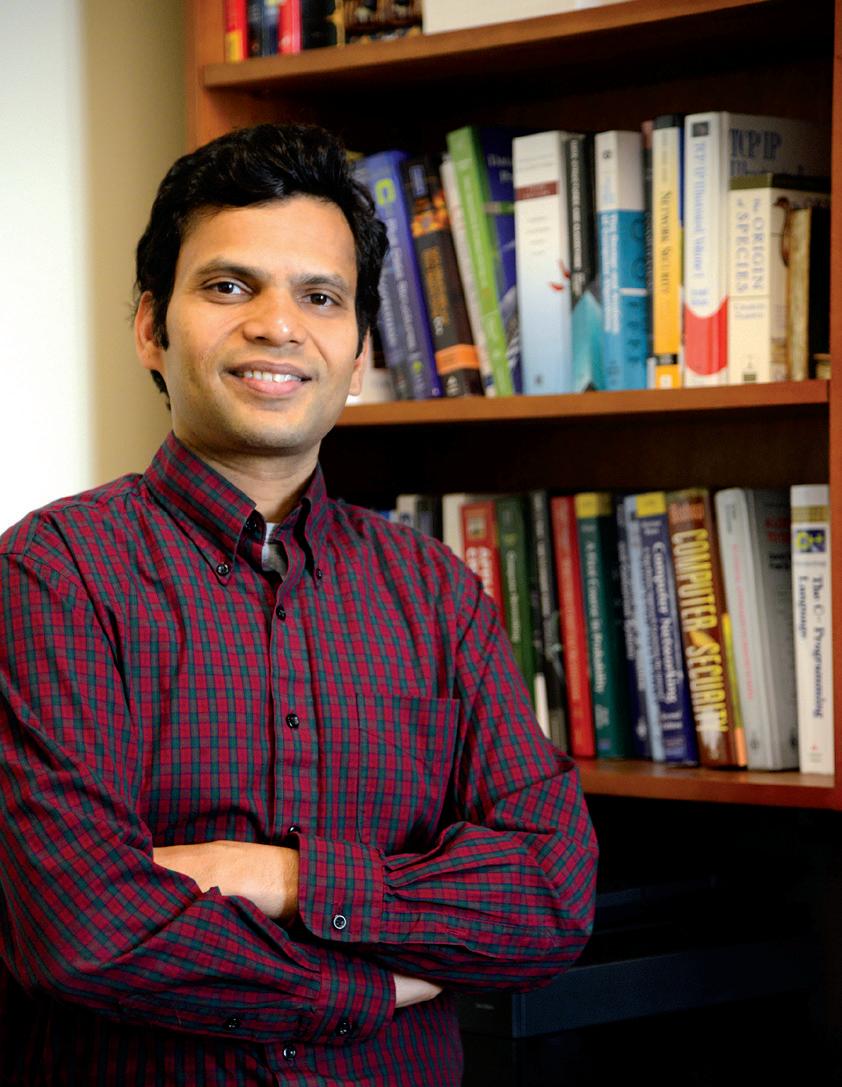
Other good news we received right before press time (so it did not make the headlines for this issue) is that Ram Krishnan, assistant professor in the Department of Electrical and Computer Engineering, has been awarded
a prestigious National Science Foundation CAREER grant in the area of cyber security. This grant was created to encourage early-career researchers who demonstrate outstanding potential to strive to the highest level in their area of study. Receiving this award is yet another indication of the high caliber of faculty and research that occurs at UTSA every day. And we continue to hire quality faculty – we have over 10 faculty searches being conducted this academic year that span every department in the College. These faculty will support our growing student population by becoming our future student mentors, creators of new knowledge, and industry partners for the San Antonio region and the world.
Finally, a large initiative in the College is is becoming a reality – the creation of a Student Success Center that supports the curricular and professional needs of engineering students at UTSA. This center will provide critical programs to increase student retention and graduation rates such as tutoring, peer and industry mentorship, leadership training, and community engagement. New programs in the College will focus on career-building skills such as creating effective resumes, networking skills, mock interviews, and internship placement. The Student Success Center will be strategically located on the 2 nd floor main entry to the Engineering Building to provide optimal exposure and easy access to all engineering students.
I encourage you to come visit the College and witness the exciting new activities happening in our labs, classrooms, and student spaces. The year of 2015 has been very kind to the UTSA College of Engineering – but the best is yet to come!
JoAnn Browning, Ph.D., P.E. Dean, College of Engineering David and Jennifer Spencer Distinguished Chair
San Antonio’s eight-county manufacturing community, the Alamo Manufacturing Partnership, co-led by The University of Texas at San Antonio and the San Antonio Manufacturers Association, was among 12 communities across the country that have received designation under the Obama Administration’s Investing in Manufacturing Communities Partnership initiative of the U.S. Department of Commerce.
BME student sees opportunity help physicians make critical decisions ..................................... 18
Mirunalini Thirugnanasambandam has been awarded a $50,000 Predoctoral Fellowship by the American Heart Association to study abdominal aortic aneurysms. She chose this topic because she was looking for avenues in research where she could apply the knowledge she gain in her undergraduate career as a mechanical engineer to real-world problems.
Harvesting clean energy from traffic .............. 24
Researchers at The University of Texas at San Antonio and the Texas A&M Transportation Institute have been awarded a $1.32 million contract from the Texas Department of Transportation to design and develop a system to harvest energy created by the movement of vehicles along the state’s roadways and convert it into low-cost renewable electric power.
A pioneer in her field .................................... 26
College of Engineering faculty member, educator and researcher Rena Bizios, a pioneer in biomedical engineering, has been elected to the National Academy of Medicine, one of the highest honors for medical sciences, health care and public health professionals.
Harry Millwater: Researcher extraordinaire ... 28
As a child growing up in Plainsfield, N.J., Harry Millwater Jr. was a typical boy who loved sports and Legos. But he was also a precocious 10-yearold with an early interest in engineering that would oftentimes land him in hot water with his mother. Millwater’s love of engineering hasn’t faded over the years, and that interest he had as a child has evolved into a passion for engineering research.
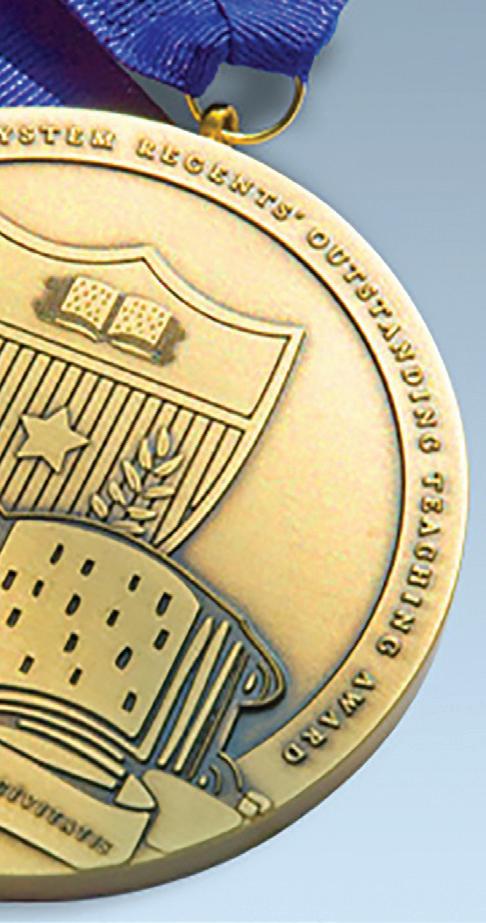
Ram Krishnan, assistant professor in the College of Engineering’s Department of Electrical and Computer Engineering, knows what it takes to be a good teacher and The University of Texas System named him as one of the recipients of the 2015 Regent’s Outstanding Teaching Award. And in addition to being an amazing teacher, Krishnan is also a talented researcher.
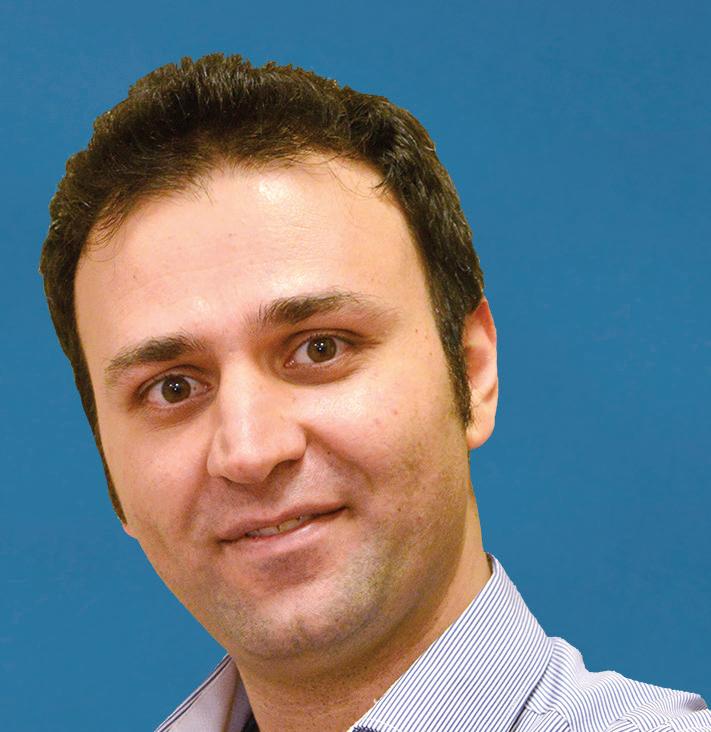
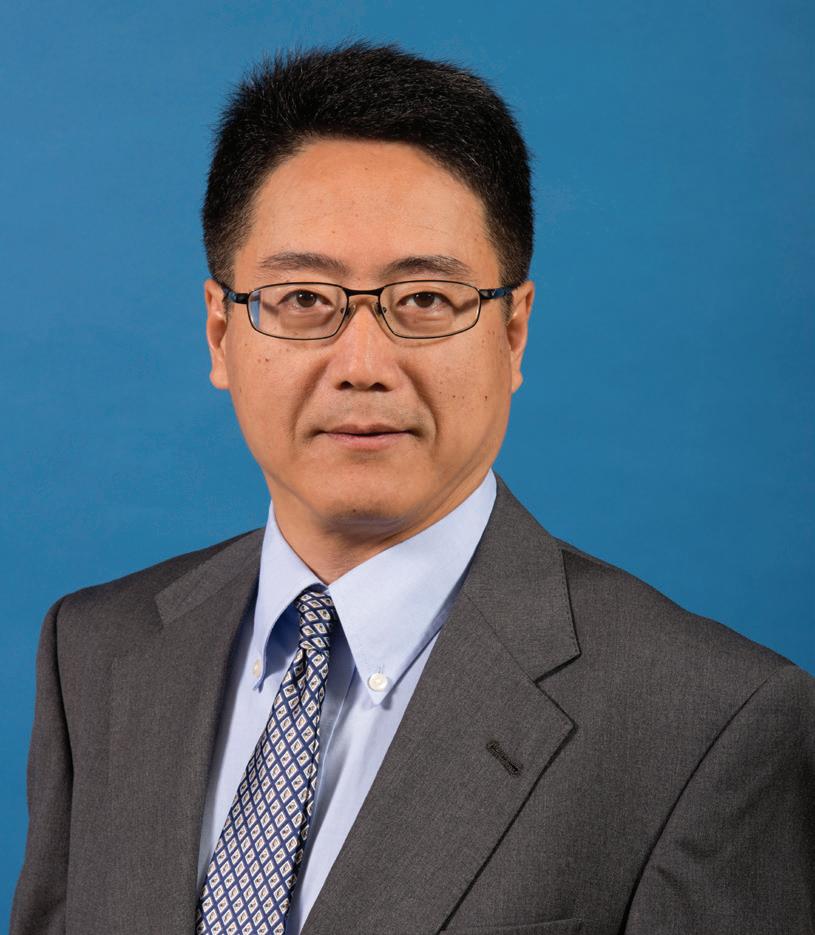
Amir Jafari
Assistant Professor in Mechanical Engineering
Ph.D., Italian Institute of Technology
NEW FACULTY
In 2015, the College of Engineering welcomed eight new faculty members to its team at The University of Texas at San Antonio. Welcome aboard!
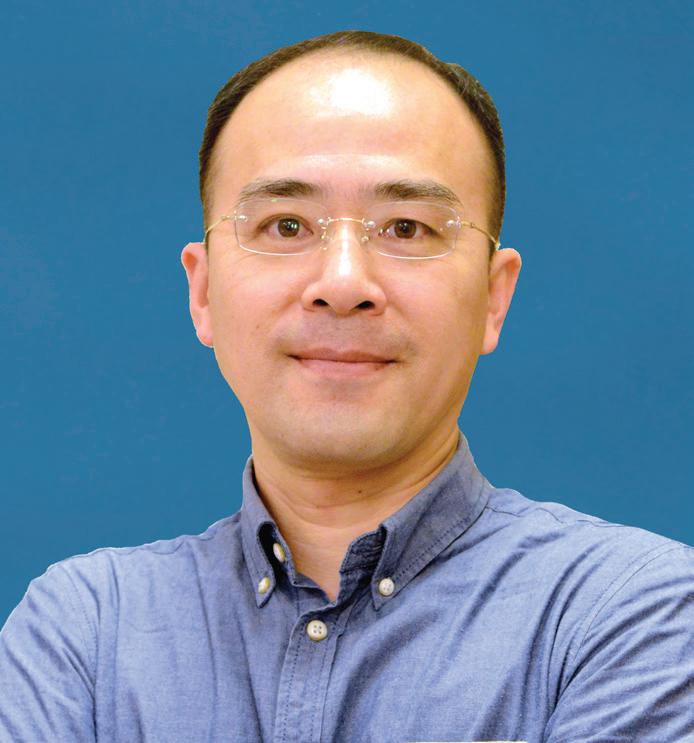
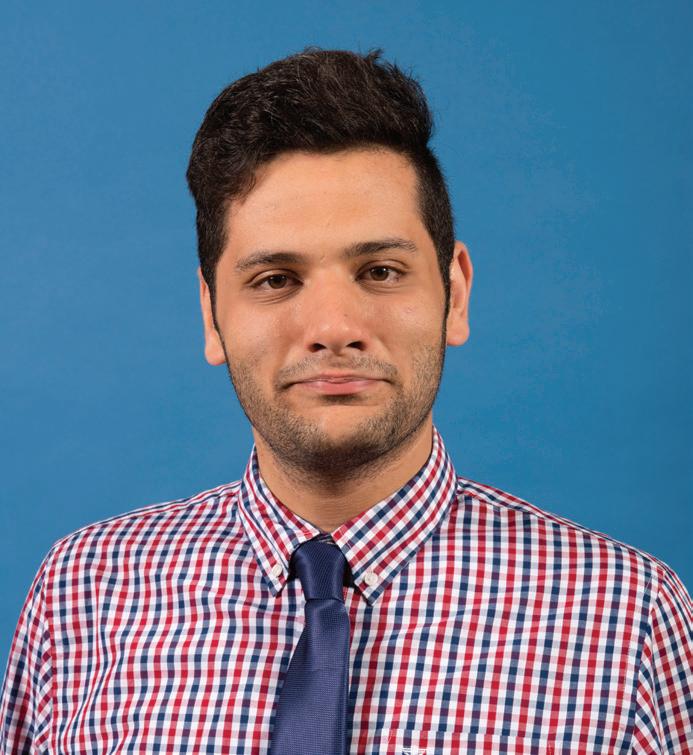
Yongcan Cao
Assistant Professor/Electrical Engineering
Ph.D., Utah State University
Where are you from?
I am originally from China. In 2006, I came to the United States to pursue my Ph.D. at Utah State University. Before joining UTSA, I worked at the Air Force Research Laboratory, Wright Patterson AFB, Ohio.
Why did you choose to come to UTSA?
I was very impressed by UTSA’s fast growth and its enthusiasm to become a Tier One university.
What are your current research interests?
My current research interests include autonomous vehicles, cyber-physical systems, distributed multi-agent systems, sensor networks, and human-robot interaction.
What do you hope to accomplish here in COE?
I hope to build a great reputation in the research area of control, autonomy, and cyber-physical systems and establish a strong research program that can help students succeed in their undergraduate/ graduate studies and be well prepared for their future careers
What are your hobbies or interests outside of work?
I enjoy doing anything active such as running, climbing, and going for bike rides. I also love traveling and reading.
Where are you from?
I am originally from the city of Isfahan, located in a central and historic part of Iran.
Why did you choose to come to UTSA?
San Antonio is a fast growing city, and UTSA is a state research university that I believe will soon be developed into a Tier One institution.
What are your current research interests?
My current research interests are physical-human-robot-interaction and exoskeletons. My dream is to see a paralyzed person able to walk using my exoskeleton.
What do you hope to accomplish here in the COE?
I hope to develop a research program that is sustainable and provides outstanding research outcomes to be used for both academia and industry.
What are your hobbies or interests outside of work?
Playing with my son, swimming, and football.
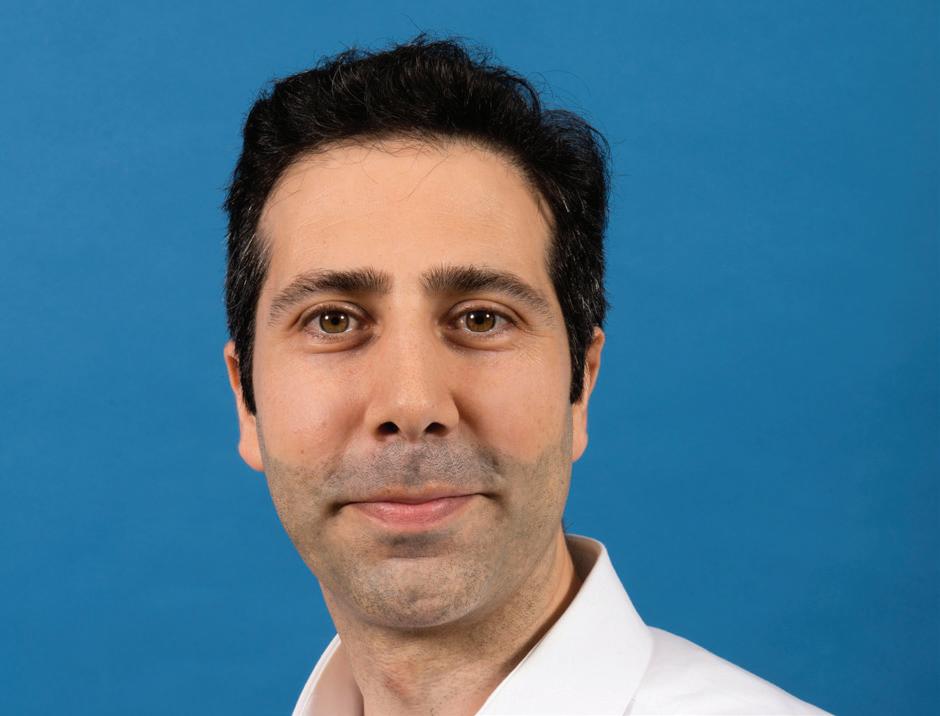
Wonjun Lee
Assistant Professor/Electrical and Computer Engineering
Ph.D., Purdue University
Where are you from?
I am from Seoul, South Korea.
Why did you choose to come to UTSA?
UTSA is world famous for security research. My main research is in security, especially in cloud computing. So, I thought it would be a great fit for me to collaborate with the prestigious researchers here at UTSA. Plus, it is a great environment, and the students are very smart.
What are your current research interests?
My research interests are in all areas of security, including applications to low-level systems, operating systems, and architecture. I worked for Samsung for four years on many projects relating to security, especially finding critical vulnerabilities. My main objective is to increase security so that users can freely and safely use their systems.
What do you hope to accomplish here in the COE?
To teach students and to get them engaged in research and then feed that research back into the classroom. I think that academia is a perfect place to combine research and education, especially teaching. I hope to integrate research and teaching together in and outside of the classroom.
What are your hobbies or interests outside of work?
I like to play soccer very much. I am interested in playing soccer with students and faculty from other departments.
I am originally from Bombay (now Mumbai), India. I grew up in India for the most part, moving between Mumbai, Kolkata and Chennai (all three cities changed names after I moved out, a fact I am not responsible for). I completed my undergraduate education in Mechanical Engineering from the Indian Institute of Technology, Bombay and then came to San Antonio to pursue my Ph.D. in Biomedical Engineering.
Why did you choose to come to UTSA?
I first came to the joint graduate program in biomedical engineering between UTSA and UTHSCSA (I was in the second batch of students admitted into that program) for my doctoral studies, and then left in 2009 for post-doctoral training at Wake Forest University and with the Armed Forces Institute of Regenerative Medicine. My past collaborations and experience in San Antonio, as well as the overall culture of growth and scientific excellence, were my primary reasons for returning to the Biomedical Engineering Department at UTSA as tenure-track faculty. The opportunities to work with the UT Health Science Center, the U.S. Army Institute of Surgical Research, and the Southwest Research Institute are crucial to establishing my own independent research career and played a significant role in my decision.
What are your current research interests?
I am primarily interested in applied research in regenerative medicine, and in the design and development of biomedical devices. In the regenerative medicine area, my research focuses on the development of biomaterials for tissue engineering: such as scaffolds for bone, hydrogels for regenerating skeletal muscle or the design of grafts for pancreatic transplantation. The primary driver for this research is to move the basic research that is fairly advanced in the biomaterials field into clinics – whether it is in the form of technology to print cells into novel materials for “organ printing” or stimulation using bioreactors to ensure that surgeons can transplant a patient’s own cells after minimal manipulation back into them to treat massive injuries. There is a central role for engineers to play in this process, and it involves significant overlap of material science, cell biology and physiology, mechanics, and chemistry. The challenges posed by this complex problem and the potential impact solutions can have on patient quality of life are a continuous inspiration for me.
What do you hope to accomplish here in the COE?
On the research side, I intend to develop technology for bio-printing tissues and for the stimulation of the same tissue for regenerative medicine applications. I would like to further explore strategies in pairing blood vessel and nerve growth within the tissues and organs we currently work on. This involves not only the physical experiments, but more importantly the associated training and mentoring students at the graduate and undergraduate levels. The biomedical engineering department at UTSA has been going through a phase of growth, having added a master’s and then an undergraduate program over the last few years. I intend to teach the courses in the design curriculum at the undergraduate level and develop a similar curriculum at the graduate level for our students who intend to pursue industry careers after their graduate degrees. The two interests overlap in my participation in the Center for Engineering, Technology and Entrepreneurship on behalf of the COE and partnering with the College of Business at UTSA to encourage the capstone design students to explore commercialization avenues for their technology. This involves organization of technology entrepreneurship boot-camps, finding local business mentors, and annual technology-business plan competitions.
What are your hobbies or interests outside of work?
My hobbies outside of work involve traveling to new places and trying new cuisines whenever I get a chance – this is usually paired with long road-trips and some hiking trails. I also really enjoy reading, mostly fantasy fiction (think Lord of the Rings and Game of Thrones). I love to cook to de-stress, but I don’t know if it would be fair to consider that a hobby!
NEW FACULTY
Ruijie Liu
Assistant Professor/Mechanical Engineering
Ph.D., University of Texas at Austin
Where are you from?
I am originally from Tianjin, China. I got my Ph.D. from The University of Texas at Austin in Aerospace Engineering and Engineering Mechanics in 2004. From 2005 to 2012 I worked as a fi nite element developer at ANSYS in Pittsburgh, Pennsylvania. Before joining UTSA, I worked as a reservoir engineer at BP.
Why did you choose to come to UTSA?
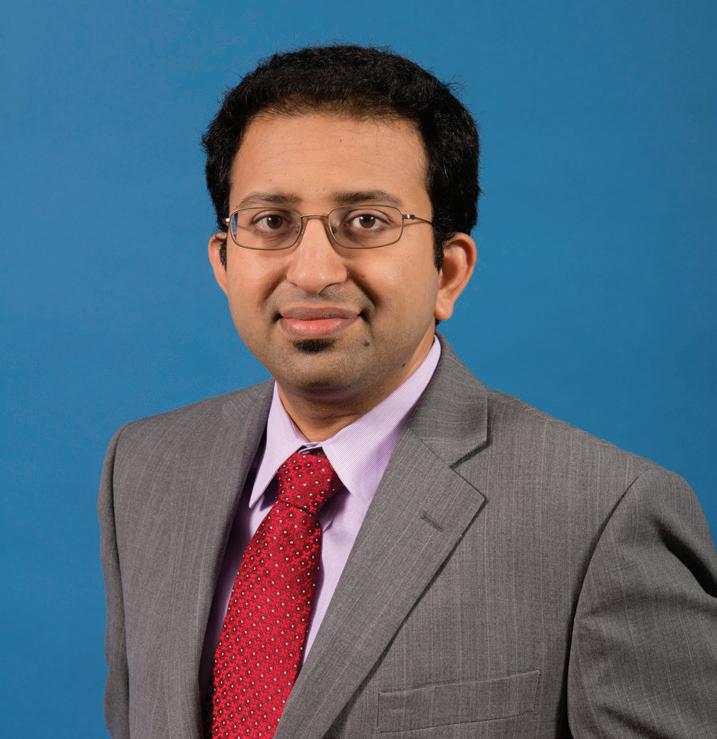
Ahmad Taha Assistant Professor/ Electrical Engineering ABD, Purdue University
Where are you from?
Although I was born and raised in Beirut, Lebanon, I’m originally from Qalqilya, a small city in Occupied Palestine. In 2011, I earned a B.E. in Electrical and Computer Engineering (ECE) from the American University of Beirut. Shortly afterward, I moved to Indiana for a Ph D in ECE at Purdue University.
I moved to San Antonio in August 2015, immediately after graduating from Purdue. I was a research intern at Argonne National Laboratory, University of Toronto, and MIT’s Laboratory for Information and Decision Systems
UTSA has been making a great effort on becoming a Tier One university. This brings a unique opportunity for my faculty career. The fact that San Antonio is so close to the beautiful Texas Hill Country doesn’t hurt!
What are your current research interests?
My research is in computational mechanics. My focuses are on numerical simulation technologies for hydraulic fracturing for oil and gas reservoirs and reservoir geomechanics, multiphase fl ow at micro-scales, material damage and failure, coupled multi-physics, and parallel computing for large and nonlinear problems.
What do you hope to accomplish here in COE?
Why did you choose to come to UTSA?
UTSA’s staggering growth rate, numerous collaboration opportunities, and quality of research facilities and researchers were the main reasons behind my decision to come to UTSA. Beyond UTSA’s inevitable future growth, San Antonio’s unique history, cultural diversity, expansion, and affordability all drove me to move here.
What are your current research interests?
Do we have a thorough understanding of how infrastructures operate, behave, and sometimes misbehave? How do humans interact with machines and large-scale systems? Can we leverage engineering, coding, and applied mathematics to ameliorate these infrastructures, make them more resilient, and enhance their security? I am interested in answering the aforementioned research questions. My ultimate objective is to understand how complex systems operate and to utilize this knowledge to create tools, protocols, and control algorithms that would be leveraged to solve system-level challenges related to our basic infrastructures. Specifically, my research broadly falls into the general areas of control and optimization of cyber-physical systems, decision-making, and systems and data sciences.
I will contribute to the effort of UTSA in becoming a nationally recognized university. To enhance our engineering students’ ability for their future careers, I will open new courses such as fundamentals of petroleum engineering. I will target a strong research program in numerical simulation on multi-physics systems that will help industries to solve their technology challenges.
What do you hope to accomplish here in COE?
I am determined to accomplish significant milestones at UTSA’s COE. First, I want to continue solving research problems that are both abstract and applied—problems that, if solved, would ideally improve the quality of our lives. Second, I plan to build a well-rounded research program/laboratory that prepares graduates for industry or academia. Third, I am resolute in establishing an open-source portal for codes and classes that I teach. My teaching objective is to leave positive a influence on the lives of young individuals by stimulating their passion for engineering and physical sciences, while being an engaging mentor. Finally, I plan to be an active faculty member in the UTSA community through service and volunteering.
What are your hobbies or interests outside of work?
Beyond my research interests, I am passionate about political philosophy, social justice and income inequality, and political Islam. I also spend some of my free time watching and playing soccer, and running.
I am originally from Turkey and was an associate professor at Clemson University before joining UTSA. At Clemson, I worked in the Glenn Department of Civil Engineering for the past nine years.
Why did you choose to come to UTSA?
UTSA is a very prestigious institution with a significant commitment and progress to become a Tier One research university. And my research is highly relevant to the state of Texas. I believe this is an ideal combination for me to make significant contributions at the local, national, and international levels.
What are your current research interests?
Very briefly, my expertise is in fluid mechanics and hydraulics. I apply my expertise to a broad range of research fields, but mainly to coastal-related and precipitation-related research. Some examples of my research topics include rainfall measurements (both remote sensing and in-situ), hydrodynamics around coastal structures (e.g. breakwaters, levees, bridges, wave energy convertors, wind turbines), wave mechanics, sediment transport (scour/ erosion, deposition, coastal morphodynamics), and gravity currents (dredge disposal, oil spills). I am excited in applying my fluid mechanics expertise in applications that would cross the departmental and college boundaries.
What do you hope to accomplish here in COE?
Justin Wilkerson
Assistant Professor/Mechanical Engineering
Ph.D., Johns Hopkins University
Where are you from?
I grew up in Amarillo in the Texas Panhandle and pursued my undergraduate studies in Aerospace Engineering at Texas A&M. I briefly left Texas to obtain my Ph.D. in Mechanical Engineering from Johns Hopkins University.
Why did you choose to come to UTSA?
A number of reasons. The opportunity to be closer to family and friends was a major factor. There’s also a palpable sense of excitement about being at an institution that is striving to become a more research-intensive university. Lastly, San Antonio is a vibrant metropolitan area that offered numerous career opportunities for my wife, who is also an engineer.
What are your current research interests?
I would like to establish a world-renowned research group that is supported by state of the art technology. Additionally, I would like to establish experimental and computational facilities here at UTSA to address various global research challenges while serving the state and the nation. As the first step, I am in the process of establishing a state of the technology hydraulics laboratory.
What are your hobbies or interests outside of work?
I like swimming and hiking to keep me active. I also like reading nonfiction books and articles in a variety of different fields.
Broadly speaking, I’m interested in why materials and structures fail from an atomistic and microstructural standpoint. Roughly akin to weather prediction, my research group makes use of sophisticated mathematical and computational models to try to predict the properties of new materials even before they have been synthesized in the physical world. This is particularly important when we try to design novel materials that must safely operate in extreme environments like nuclear fusion reactors or next-generation armor systems.
What do you hope to accomplish here in the COE?
As a teacher, I hope to play some positive role in the education and determination of UTSA engineers to go out and solve some of society’s most pressing challenges. As a scholar, I hope to help foster a transition from Edisonian-based to physics-based discovery of new materials.
What are your hobbies or interests outside of work?
Recently, I’ve picked up playing golf with my fatherin-law. Neither of us are any good, but it has been enjoyable nonetheless. I also still get a thrill out of watching my alma mater take the field on Saturdays.
Engineering materials to prevent landslides
Who knew a few plants could save a life? Jie Huang, a UTSA civil engineering assistant professor, certainly did. He is letting others know how in a new paper on preventing landslides with plants, which was published in the scientific journal Landslides.
“When you have rainfall, soil can start to weaken and move, and that’s one of the major causes of a landslide,” Huang said.
While landslides kill only about 25 to 50 people on average every year in the United States, they cost billions annually in property damage. The problem with planning against one is that the weak layer of soil is often so far underground that it can’t be readily detected, and in some cases just one instance of rainfall can cause a landslide. A few weeks of rain in Guatemala caused 9,000 landslides in 1998.
One solution is planting vegetation in the soil. Plants absorb water and reduce water infiltration that would otherwise weaken the soil and eventually cause a landslide. The recent global increase in drought has caused a lot of vegetation to die, resulting in more landslides. Replacing these landslide-halting plants is usually achieved through hydroseeding, which uses a pump to blast seeds over a surface.
What Huang proposes is a better method of creating vegetation in rocky areas or steep slopes where plants don’t usually grow well and seeds from hydroseeding don’t stick. Hydroseeding is usually spread over existing soil, not in rocky or dense areas where it would be hard for seeds to grow.
“We created a mixture of soil, fertilizer, soil conditioner, fiber, cement and a water retention agent to make the seeds stick,” he said. “This way, they’ll grow through cracks in the rock and even off a slope.”
The engineered mixture essentially is a garden and a gardener all in one. The added soil and adhesive allows the seeds to grow in unusual places, while the water retention agent removes the need for plant maintenance.
Post-doc awarded NSF RAPID funding to study Wimberley flooding
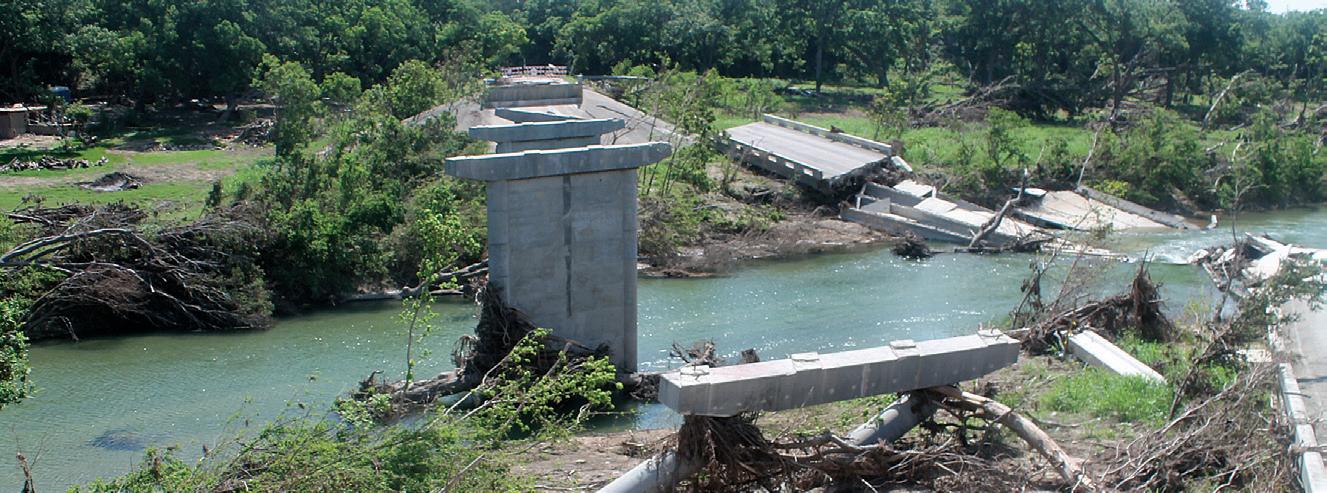
Chad Furl, a post-doc in the College of Engineering’s Department of Civil and Environmental Engineering, was awarded National Science Foundation Rapid Response Research (RAPID) funding to study the massive flooding that took place along the Blanco River this past May. Numerous homes were swept away in Wimberley, Texas, nine people died, and two people are still missing after the flooding.
“The morning after the flood, I read the flood wave had overtopped I-35 near San Marcos. I knew immediately that this was a major event,” said Furl, who specializes in Texas Hill Country flood hydrology. “I started processing radar data and setting up models the next day and have been working on it since.”
Realizing that this was a once-in-a-lifetime event, Furl knew that he needed to get out into the field.
“Engineers and hydrologists can do a lot from behind the computer, but nothing can replace an up-close examination of the river and floodplain,” he said. “The high water mark and stream geometry data I’ve been able to collect will be useful to myself and others working on the flood.”
Wimberley is located in central Hays County in the heart of the Texas Hill Country, between Austin and San Antonio, only 16 miles from San Marcos. The center of Wimberley is situated at the confluence of Cypress Creek and the Blanco River, roughly 1,000 feet above sea level on the Edwards Plateau. This past summer, Furl gathered data at 125 spots along the Blanco River, from San Marcos to the headlands of the watershed, which are located west of the town of Blanco.
“The data collected as part of the RAPID funding will be useful in calibrating and validating a hydrological model of the basin,” Furl said. “Once the model is working well, we can examine any number of research questions. Specifically I’m interested in evaluating the hydrometeorological controls on flood wave propagation, understanding the rarity of the event, and examining the ability of our models to do real-time flood forecasting.”
According to Hatim Sharif, associate professor in the Department of Civil and Environmental Engineering, Texas leads the nation in the numbers of flood fatalities and, excluding the handful of big events such as major hurricanes and dam failures, Bexar County is No. 1 in the U.S. for flood fatalities over the period between 1959-2015.
Being able to predict where and when flooding will happen could save lives.
“The recent floods in Texas were unprecedented and caused loss of lives and huge damage,” said Sharif. “Chad’s project will document the impact of these floods, examine the scale of the damage in areas such as Wimberley, perform a forensic analysis of the consequences, and understand how and why these events have evolved. Forensic hydrology is relatively new, and most probably this is the first NSF award ever on the topic.”
SwRI, UTSA invest in joint research project
Southwest Research Institute® (SwRI®) and UTSA’s Office of the Vice President for Research have selected College of Engineering’s Krystel Castillo and SwRI’s Jimell Erwin, Ph.D., and Monica Medrano to receive $125,000 from the Connecting through Research Partnerships (Connect) Program for their project “An Efficient Circulating Fluidized Reactor Technology Integrated into a Stochastic Model with Biomass Quality Variables for Sustainable Biofuels and Biobased Products.”
The study is to develop a supply chain model for the new field of commodity biomaterials and biofuels starting with feedstocks from non-food crop resources and their descriptions and specifications all the way to finished products. SwRI’s role will be to develop a prototype biofeedstock upgrading process using its new fluidized bed reactor pilot plant to supply data to the UTSA model.
Since its inception in 2010, the Connect Program has funded nine projects from 49 proposals submitted by teams from SwRI and UTSA.
COE faculty receives seed funding
Three research projects conducted by College of Engineering faculty will receive $20,000 in seed funding from the Office of the Vice President for Research in FY 2016. The Grants for Research Advancement and Transformation (GREAT) funding will allow the researchers and their collaborators to conduct preliminary studies in new areas and assemble data that will position the research for competitive extramural funding in future years. The following projects were selected to receive support:
• Computational modeling of trabecular cutting as a novel approach to treat patients with diastolic heart failure - Mechanical Engineering Professor Hai-Chao Han will use computational modeling to develop a new surgical technique to treat patients whose hearts do not relax normally, a condition known as Heart Failure with Preserved Ejection Fraction (HFpEF).
• Efficient Structural Health Management and Prognosis through a Novel Fracture Mechanics ApproachCivil and Environmental Engineering Assistant Professor Arturo Montoya will use computational modeling and multicomplex mathematics to improve the way that structural analysts assess how fatigue and fractures affect the integrity of a structure and/or contribute to its overall collapse.
• Air Pollution and Weather Controls on Childhood Asthma in Texas - Civil and Environmental Engineering Associate Professor Hatim Sharif will conduct research to better understand how air pollutants affect children with asthma, a disease that is responsible for nearly two million emergency room visits each year.
Working to detect chemical terrorist attacks
At least one million people have died in chemical warfare since World War I, and with conflict continuing to rage in Syria and all over the world, that number grows every day. UTSA Associate Professor of Mechanical Engineering Kiran Bhaganagar has received a $260,000 grant from the Department of the Army in an effort to prevent more deaths with a new method of predicting the path of weaponized chemical agents, which would allow for swifter evacuation.
“These chemical agents are a huge threat to the health and lives of so many people,” Bhaganagar said. “They can spread a long distance and kill a lot of people.”
Chemical agents are different from explosive chemicals, which cause shear, localized destruction through force. Bhaganagar and her team are targeting chemical weapons such as the nerve agent Sarin, which has been used in many attacks in the Syrian civil war and can diffuse into the atmosphere and spread for hundreds of miles.
The now and future of solar energy
For many, solar energy is a solution to the problem of finding clean, renewable energy, as well as a sign of a growing American industry.
UTSA Electrical and Computer Engineering Assistant Professor Hariharan Krishnaswami has some insight into the future of solar energy and how it might soon have coal looking in its rear view mirror. He researches solar forecasting and smart grid technology and currently is focusing on how to improve the electronics of solar energy systems.
“There’s an energy boom on the way,” he said. “Solar energy has been a growing industry for a while, but it’s just now starting to rise as an option for residential customers.”
The main obstacle to solar energy in homes has been the cost. However, Krishnaswami said, the cost between traditional energy and solar energy is rapidly becoming narrower.
“The price disparity between coal and solar is disappearing,” he said. “The goal is to get interest going on a residential scale and show it’s a prudent investment.”
Krishnaswami, who is also a faculty member in the Texas Sustainable Research Institute, conducts part of his research with the solar panels on the roof of the H-E-B University Center, encouraging students to grow their expertise in an expanding industry. Right now, he’s at work on improving the functionality and reliability of solar inverters and how they interact with the grid that powers them.
“We make solar engineers,” he said.
2014 Nobel Laureate William Esco Moerner, Ph.D., visited Jing Yong Ye’s Advanced Biophotonics and Nanotechnology Laboratory in the Department of Biomedical Engineering this fall semester. Moerner was on UTSA Main Campus to address the university community during the President’s Distinguished Lecture. Moerner, who graduated from San Antonio’s Thomas Jefferson High School, shared
the 2014 Nobel Prize in Chemistry with American Eric Betzig and Germany’s Stefan W. Hell for developing super-resolved fl uorescence microscopy. The technique, which allows scientists to observe and track single molecules in live cells using fl uorescence, has revolutionized cell biology studies by allowing researchers to look at cells more closely than ever before. (Photo by Deborah Silliman/COE)
Research may change approach to battlefield blood transfusions
Blood research conducted by biomedical engineers from the The University of Texas at San Antonio College of Engineering, in collaboration with the Blood Research Program of the U.S. Army Institute of Surgical Research (USAISR), could change the way injured soldiers are treated on the battlefield.
Deans partner to enhance teaching methods for students
In battlefield settings, stopping a patient’s bleeding is vital to successful treatment. Platelets are blood cells that are integral to the body’s natural clotting procedures, which assist in stopping bleeding. During surgery, platelets are transfused when a patient has lost massive amounts of blood due to injuries.
In collaboration with the USAISR, Anand Ramasubramanian, associate professor in the UTSA Department of Biomedical Engineering and the South Texas Center for Emerging Infectious Diseases, and his team of UTSA graduate students subjected platelets stored in refrigerated temperatures to a battery of tests. For the past five years, Ramasubramanian and his graduate students have been closely working with Lt. Colonel Andrew Cap, chief of Coagulation and Blood Research and his team at USAISR.
These researchers found that cold-stored platelets could actually be a more effective alternative in the cessation of bleeding than the current standard-ofcare product. Results from the laboratory showed that cold-stored platelets not only respond better to injuries and form stronger clots. For battlefi eld surgery purposes, these fi ndings could be the difference between life and death for many injured soldiers.
JoAnn Browning, dean of The University of Texas at San Antonio College of Engineering, and Betty Merchant, dean of the College of Education and Human Development, have received a five-year $223,072 National Science Foundation grant to collaboratively reinvent higher education teaching methods in UTSA classes where the material has proved difficult for many engineering students.
Browning and Merchant are creating a program that will pair select engineering faculty with COEHD curriculum experts to enhance their classes’ curriculum to meet the needs of modern day students. The goal of the program is to help the engineering faculty teach upper-level concepts in the most relatable ways possible to the next generation of engineering professionals, digital natives who were raised on technol-
COE program reaches out to financially disadvantaged students
Paying for college can be rough, but now students in the College of Engineering have another option for support. The UTSA Scholarship Program for Undergraduate Retention and Success (SPURS), will provide mentoring and assistance to financially disadvantaged students, thanks to a $626,890 grant from the National Science Foundation.
“Several of our academically talented students are financially disadvantaged,” said Civil Engineering Department Chair Heather Shipley, who helped create the program along with College of Engineering faculty members Ruyan Guo, Rena Bizios, and Krystel Castillo.
“This gives us an opportunity to give them almost full scholarships to cover their tuition for a year and give them tools that will make them successful in their careers or graduate school.”
The program was the result of an effort across all departments in the College of Engineering to reach out to students under financial strain, who will soon have the opportunity to benefit from mentoring, professional development and exposure to research in addition to help with covering tuition costs.
Wilkerson wins ORAU Junior Faculty Award
Justin Wilkerson, assistant professor in the Department of Mechanical Engineering, is one of 35 faculty to receive the nationally competitive Ralph E. Powe Junior Faculty Enhancement Award administered by the Oak Ridge Associated Universities (ORAU).
“This accolade is a testament of Dr. Wilkerson’s hard work and dedication to the field, and signals that even greater things are to come,” said UTSA President Ricardo Romo in a congratulatory letter to Wilkerson.
Castillo receives $1 million for BE AWARE
Krystel Castillo, GreenStar Endowed Professor in Energy, and her BioEnergy and Water for Agriculture Research and Education (BE AWARE) Network has received $1 million over four years from the U.S. Department of Agriculture and the National Institute for Food and Agriculture. The BE AWARE Network is a collaborative project between UTSA, UT-Rio Grande Valley, the University of Puerto Rico-Mayaguez, several community colleges and multiple U.S. Department of Agriculture agencies. The goal is to increase minority participation in advanced degrees in Science, Technology, Engineering, Art and Math (STEAM); enhance interdisciplinary research; and build a highly trained workforce with strong analytical, computational, and scientific skills.
Bone scaffolding developed at UTSA in clinical trials
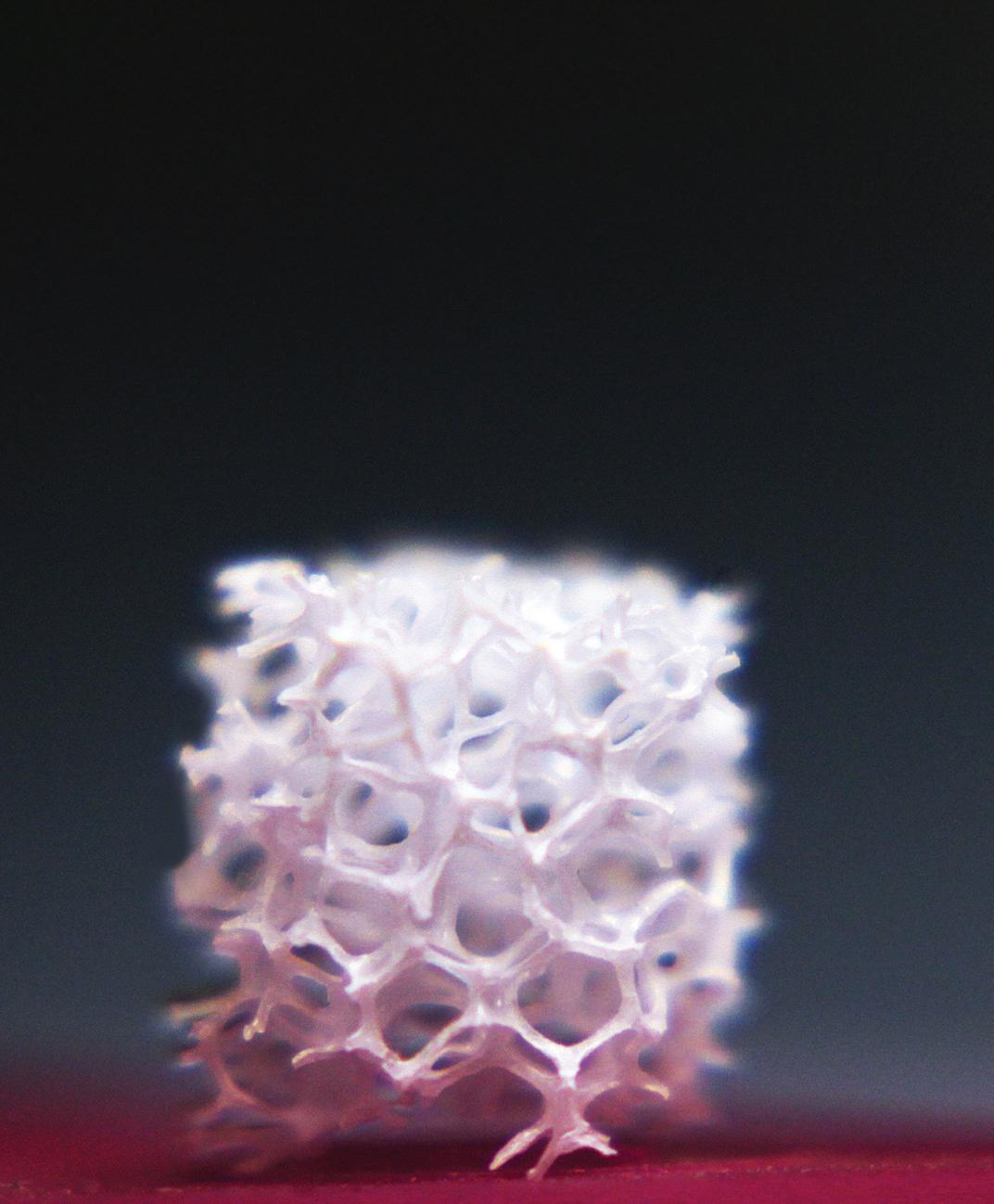
Teja Guda, an assistant professor of biomechanical engineering, and Joo L. Ong, College of Engineering associate dean of administration and professor of biomedical engineering at UTSA, have been working on a product called scaffolding, which is now in clinical trials in Italy and is meant to replace bone grafts as a treatment for people who have lost bone matter.
“It almost looks like a kitchen sponge,” Guda said. “The scaffold is 85 percent open space. The cells grow into it, and because we give them something solid to grow into, they start to regenerate tissue.”
Chemically, the scaffolding is made of the same ceramics that are found in bones.
“The idea is to mimic nature,” Guda said. “The body is what we want to duplicate, so why not literally duplicate the building blocks?”
Foam – the same foam used in soundproofing and speakers – fills the scaffolding to rebuild a part of the human body. It’s glazed in the same way ceramic pottery is glazed, except its ceramic putty has the same chemical makeup of human bones. It’s put into a furnace to harden the material.
“The big problem with glazed pottery is if you drop it, it cracks,” Guda said. “Now, in the fourth generation and thanks to a protein coating, the current generation of scaffolding is very much improved for performance, in that now it can chip but it won’t disintegrate.”
Scaffolding could replace bone grafts as a treatment, which is taking bone either from the patient’s body or from a cadaver. But cadaver bones have the risk of transmitting disease or not being compatible with the patient’s body.
“If the graft is taken from the patient’s body, the pain from that second injury is often more than the original injury,” said Guda. “There’s only so much you can scavenge from across the body. You don’t have a lot of spare bones lying around.”
Animal trials have been successful and the product is now undergoing testing.
Alamo Manufacturing
Partnership
UTSA-led Alamo Manufacturing Partnership gains new resources to cultivate local investment
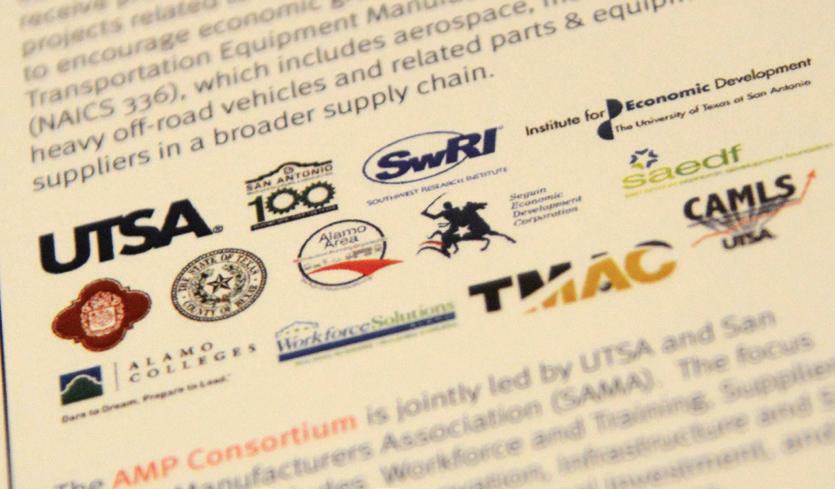
San Antonio’s eight-county manufacturing community, The Alamo Manufacturing Partnership (AMP), co-led by The University of Texas at San Antonio and the San Antonio Manufacturers Association, was among 12 communities that have received designation under the Obama Administration’s Investing in Manufacturing Communities Partnership (IMCP) initiative of the U.S. Department of Commerce.
“This federal designation not only provides significant opportunities for our regional community, industry growth, and research at UTSA through federal funding opportunities, but it will also enable a deeper collaboration among the partners in our community beyond federal opportunities,” said Can Saygin, professor of mechanical engineering at UTSA, assistant vice president for research and the AMP point of contact for federal relations.
The IMCP designation allows the eight-county Alamo region to receive coordinated support for its strategies from 11 federal agencies such as the Environmental Protection Agency, National Science Foundation, Department of Agriculture, Department of Commerce, Department of Defense, Department of Housing and Urban Development, and other agencies.
Specifically, the UTSA Center for Advanced Manufacturing and Lean Systems (CAMLS) and the Automation and Data Systems Division of SwRI® are developing proposals and seeking opportunities in various areas ranging from smart manufacturing systems to workforce and training programs to small business assistance initiatives.
“The AMP designation has focused the priorities of area manufacturers and is leading to increased collaboration between the AMP organizations,” said Paul Evans, director in the SwRI Automation and Data Systems Division. “With our complementary research and development roles, SwRI and UTSA are working to develop new opportunities that will help bridge manufacturers’ needs with innovative technologies and best practices.”
“This federal designation not only provides significant opportunities for our regional community, industry growth, and research at UTSA through federal funding opportunities, but it will also enable a deeper collaboration among the partners in our community beyond federal opportunities.”
- Can Saygin professor of mechanical engineering at UTSA, assistant vice president for research and the AMP point of contact for federal relations
IMCP communities also receive a dedicated federal liaison to help them navigate available federal resources and are recognized on a government website, accessible to prospective private foreign and domestic investors who are looking for information on the communities’ competitive attributes.
“The significance of the IMCP designation by the U.S. Department of Commerce is a testament to the economic growth experienced in the South Texas region by the manufacturing sector. The AMP partnership demonstrates that strategic alliances are important tools for economic development,” said UTSA Senior Associate Vice President for Economic Development Robert McKinley. “The combination of industry, education, and economic development organizations are valuable assets for the growth of manufacturing sector investment in the Alamo region.”
The two research and development partners of the Alamo Manufacturing Partnership, UTSA and the Southwest Research Institute® (SwRI®), are expanding their already-strong collaboration.
Manufacturing activities are wide and varied at UTSA. The UTSA College of Engineering offers academic programs in mechanical engineering, and its faculty members and students conduct manufacturing-related research. Moreover, CAMLS provides research, development, education and training opportunities in process improvement using lean manufacturing and six sigma techniques, logistics engineering, supply chain management, warehouse systems, and automation technologies, including advanced sensors and robotics, to manufacturing companies and service organizations across the nation. Research and development is conducted out of CAMLS in state-of-the-art laboratories while graduate and undergraduate students are exposed to various advanced manufacturing techniques and methodologies.
“As a mechanical engineering faculty member affiliated with the Center for Advanced Manufacturing and Lean Systems, I am thrilled about the new designation of our region as a manufacturing community,” said Krystel Castillo, GreenStar Endowed Assistant Professor of Mechanical Engineering. “This designation will allow us to access federal funds to conduct research in advanced, integrated and sustainable manufacturing to strengthen San Antonio’s economy. Enhancing and facilitating access to workforce training and education will serve as a response to the rapid growth of San Antonio’s manufacturing base.”
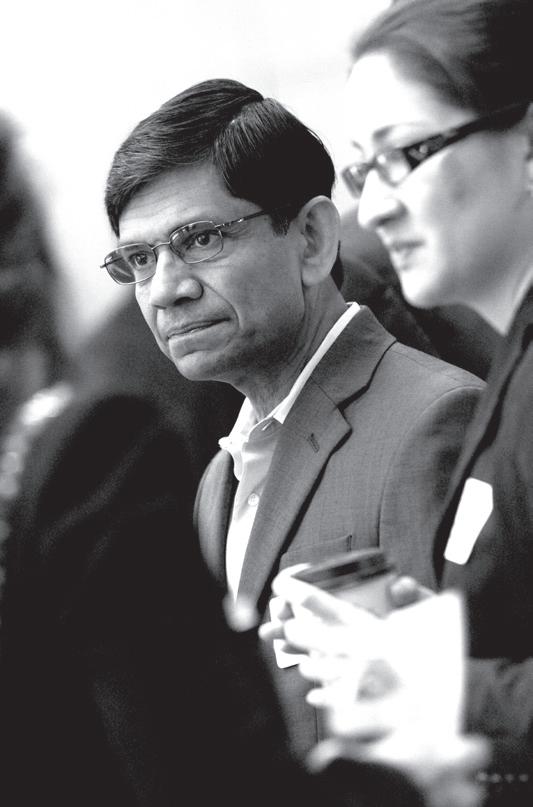
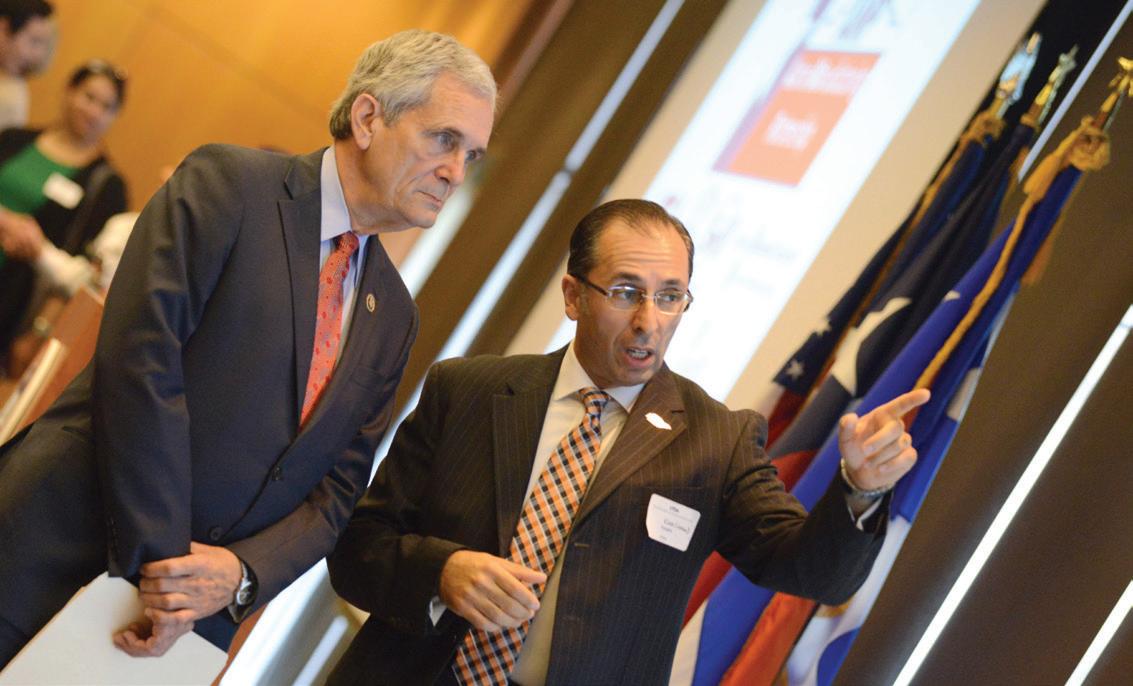
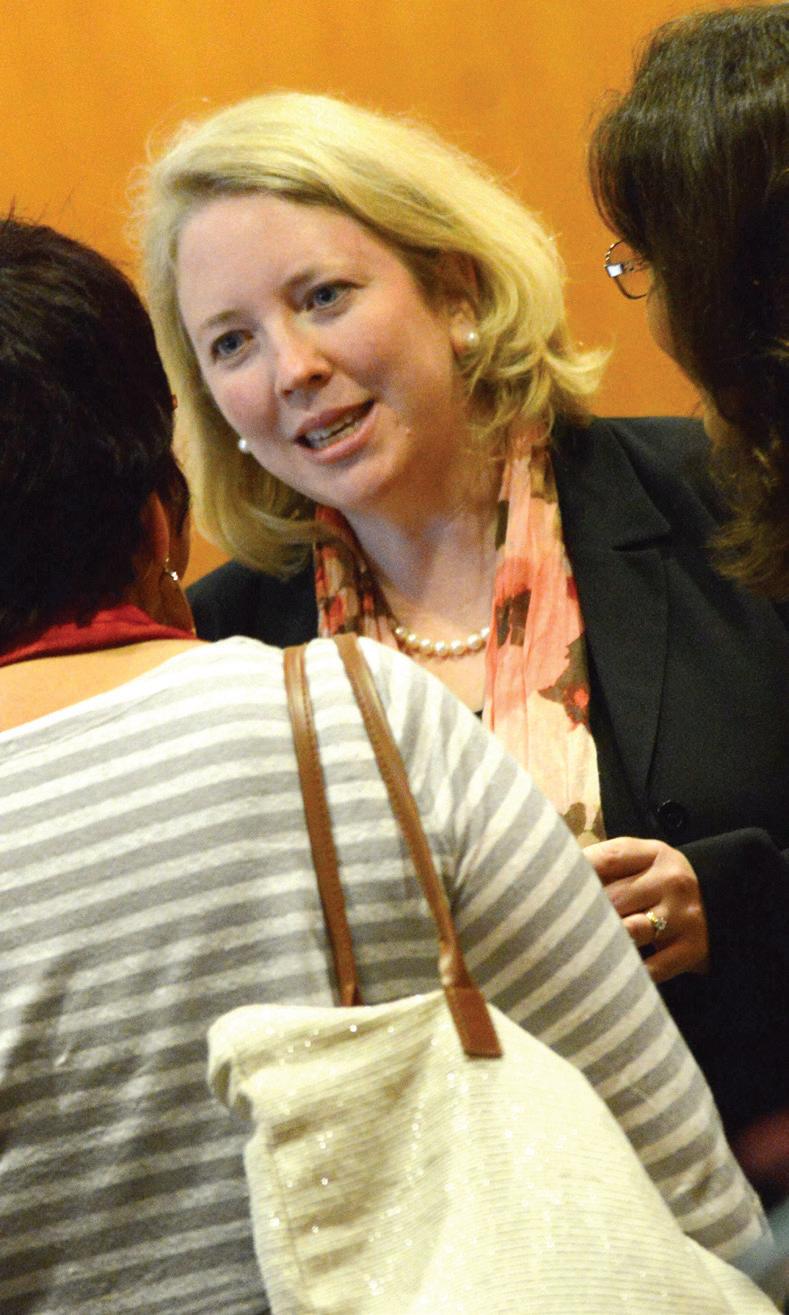
Last fall, elected leaders, scholars, industry executives, and the AMP consortium partners gathered at the UTSA Downtown Campus to discuss funding priorities and next steps, now that the IMCP designation allows the AMP consortium to pursue exclusive federal funding opportunities. Audience members (above) listen to the presentation. Mauli Agrawal, UTSA vice president for research , attended the event (right) along with JoAnn Browning, dean of the College of Engineering (lower right).
ABOVE: Can Saygin, professor of mechanical engineering, assistant vice president for research and the AMP point of contact for federal relations, speaks with Congressman Lloyd Doggett at the announcement ceremony.
(Photos by Deborah Silliman/COE)
A“Faithful” Engineer
Faithful Alabi is a junior electrical engineering major who is doing some heavy lifting in, and outside of, his classes in the College of Engineering.
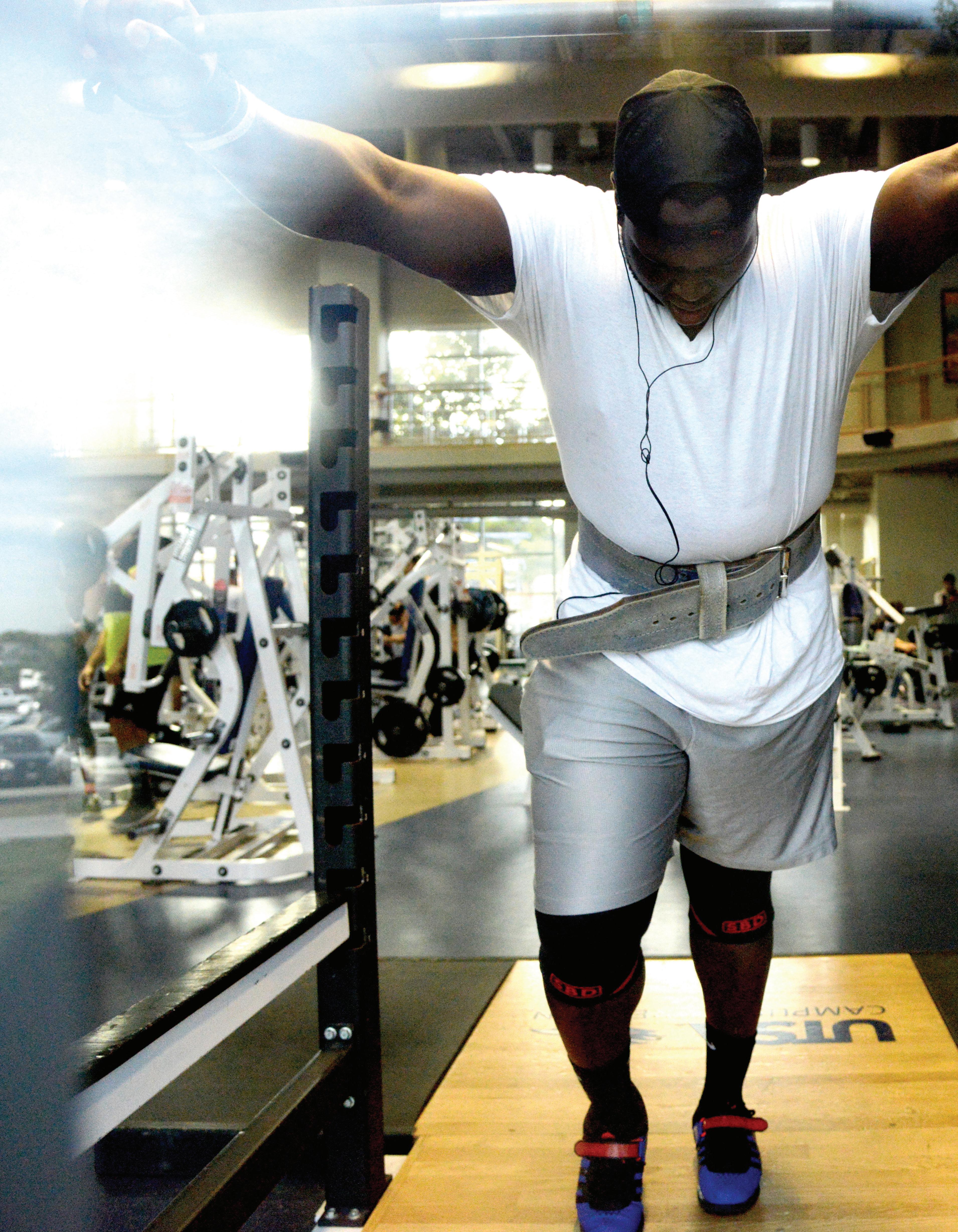
Meet Faithful Alabi. This junior electrical engineering major is not only doing some heavy mental lifting in his classes in the Department of Electrical and Computer Engineering, he is also doing some physical heavy lifting in his position on the UTSA Power Lifting team.
“I joined the powerlifting team my freshman year of college because my older brother (who also goes to UTSA) was part of the team and he thought I would enjoy it,” he said. “After a long day of engineering classes, I look forward to hitting the weight room and taking my mind off of things. It is a great stress reliever for me.”
In between studying for his engineering classes, Alabi manages to find time to compete at powerlifting events around the country. This past fall, he competed in the Raw National in Scranton, Pennsylvania, where he got second place in his age division and weight class. He squatted 562 pounds, benched 370 pounds and deadlifted 633 pounds. He plans to compete again with the rest of the UTSA Powerlifting Team at the Collegiate Nationals in Providence, Rhode Island, in April 2016.
One might not think that engineering and powerlifting have a lot in common, but Alabi would disagree.
“Engineering and lifting are similar in many ways,” he said. “They are both competitive and require hard-work and dedication. Plus, engineering and powerlifting are both more technical than they seem – they both require a lot of your time!”
Alabi is one of the 45 members of the UTSA PowerLifting team, who are all from a variety of different majors across campus. In addition to Alabi, there are six other engineering students on the team: senior mechanical engineering student Paul Alabi (Faithful’s older bother), senior mechanical engineering student George Pena, senior electrical engineering student Jonathan Lwowski, senior electrical engineering student Jake Martinez, freshman mechanical engineering student Raynard Taylor, and mechanical engineering student Marisol Palacios.
LEFT: Faithful Alabi rests between sets at the UTSA Recreation Center as he prepares for a powerlifting competition. ABOVE: Faithful works on a project with his lab partner in EE5113: Electrical Engineering Laboratory I.
Story and photos by Deborah Silliman/College of Engineering
Mirunalini
BME student sees opportunity to help physicians make critical decisions
Story and photos by Deborah Silliman/College of Engineering
Mmeet Thirugnanasambandam
eet Mirunalini Thirugnanasambandam. After receiving her undergraduate degree in mechanical engineering at College of Engineering, Anna University, India, and her master’s degree in mechanical engineering from McGill University in Montreal, Canada, Thirugnanasambandam decided to continue her education in the UTSA and UTHSCSA joint graduate program in biomedical engineering.
“Initially, my interest in [College of Engineering professor] Dr. Ender Finol’s research on aneurysms drew me to UTSA, but then the numerous avenues for collaborative research and infrastructure available here helped me make my decision,” she said. “The joint graduate program in biomedical engineering between UTSA and UTHSCSA was particularly attractive to me since it provided me the opportunity and resources to understand and resolve clinical problems from the perspective of a physician and an engineer.”
And now, in her fourth year, Thirugnanasambandam has been awarded a $50,000 Predoctoral Fellowship by the American Heart Association (AHA) to study abdominal aortic aneurysms (AAAs). She decided to study AAAs because she was looking for avenues in research where she could apply her knowledge as a mechanical engineer to real-world problems and find solutions that were relevant in more than just statistics and numbers.
“In studying AAAs, I saw the opportunity to help physicians make critical decisions about operating on patients affected by aneurysms,” she said. “The most interesting part of my research on AAAs is that we use clinical images to derive so much valuable information in terms of biomechanical and geometric indices of a patient’s own AAA.”
After looking at the clinical images, Thirugnanasambandam says that she and Finol reconstruct the actual aneurysm geometry from CT or MR images and run physiologically relevant simulations on them to identify the regions of high wall stress.
This information can be used as an effective prognostic tool for classifying AAAs based on rupture risk, save patients from unnecessary surgeries, or help diagnose a life threatening AAA before it takes a patient’s life.
After beginning her research in summer 2015, Thirugnanasambandam headed to Europe this past fall to work with Dr. Stephane Avril, a biomechanics researcher and professor at Mines Saint-Étienne, France. Together, they worked to develop a code that will help evaluate AAA wall strains without having to run computationally expensive simulations.
“Getting the AHA fellowship is a big boost for me since I believe that it will lay a good foundation for my career,” said Thirugnanasambandam. “It will also be an effective first step toward achieving my career goal, which is to be an academician who can answer a lot of important research questions and be a wonderful teacher just like my parents and my mentors.”
Society of Automotive Engineers Formula Team competes in Nebraska
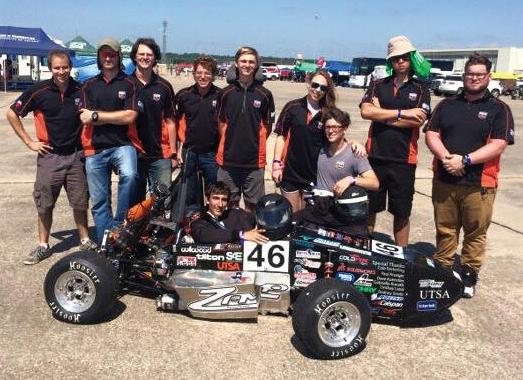
UTSA’s Society of Automotive Engineers Roadrunner Racing Formula Team placed 17 out of more than 80 international university teams at the Formula Competition held in Lincoln, Nebraska this past June. The team placed 5th in cost, 7th in fuel efficiency, 10th in endurance, 36th in design, 37th in autox, 53rd in presentation, and 17th overall
According to team members, almost all of these scores represent the team’s best-ever points or place finish in the past 20 years of competing.
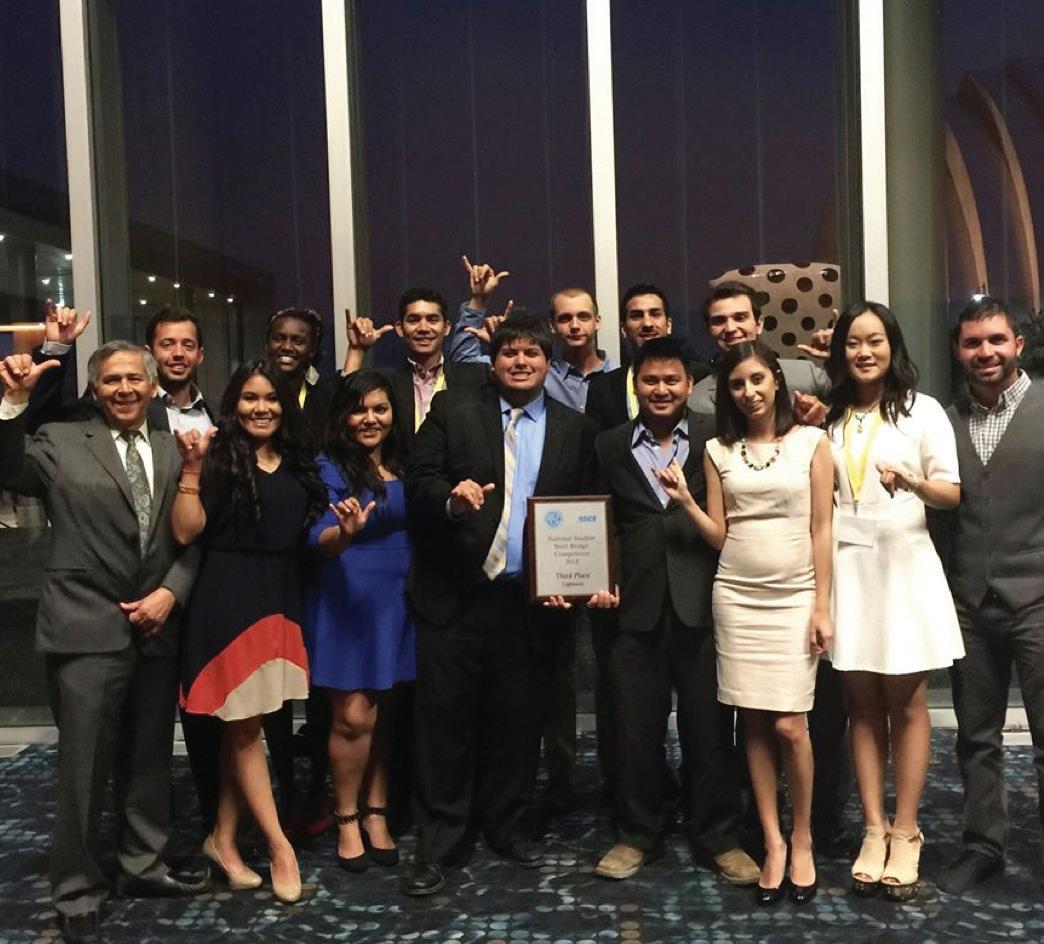
UTSA ASCE places at national Student Steel Bridge competition
The University of Texas at San Antonio’s American Society of Civil Engineers Steel Bridge team won 3rd place in lightness, 4th in efficiency and 11th overall out of 47 universities at the National Student Steel Bridge Competition this past spring. The competition took place at the University of Missouri in Kansas City
“I am so proud of all of the Steel Bridge Team members,” said Heather Shipley, chair of the Department of Civil and Environmental Engineering. “The fact that we moved up 11 places in the overall competition from last year is amazing, and it is a testament to our students’ hard work. I would like to thank Dr. Manuel Diaz for his mentorship and the time he invests in our ASCE students.”
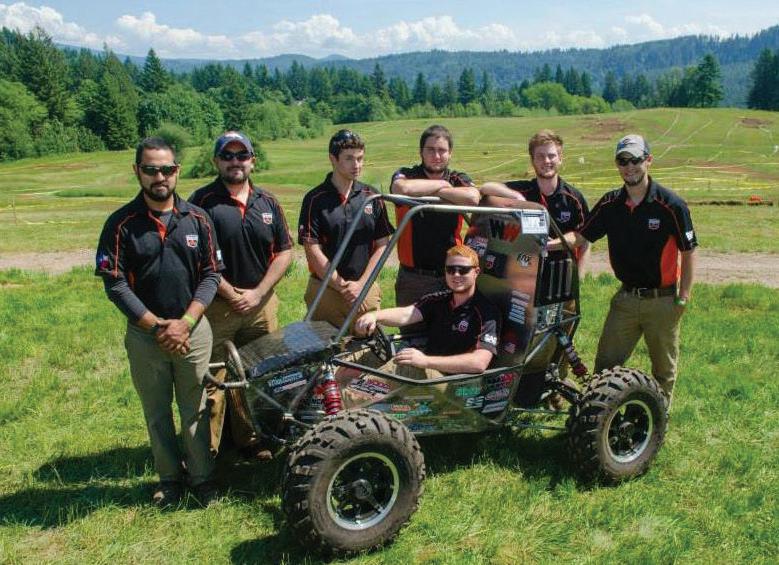
Society of Automotive Engineers Baja Team competes in Oregon
UTSA’s San Antonio Society of Automotive Engineer’s Roadrunner Racing Baja Team competed in the Baja SAE competition in Portland, Oregon, last spring. The team placed 16th out of 100 universities in the rock crawl event, and placed 39th in the hill climb event. In addition to these two events, there was the four-hour endurance race on the last day of competition. The team received 10th place in the cost audit for being the most inexpensive vehicle until a late penalty put them back to 22nd.
Story and photos By Deborah Silliman/College of Engineering
ENGINEERING
football excellence
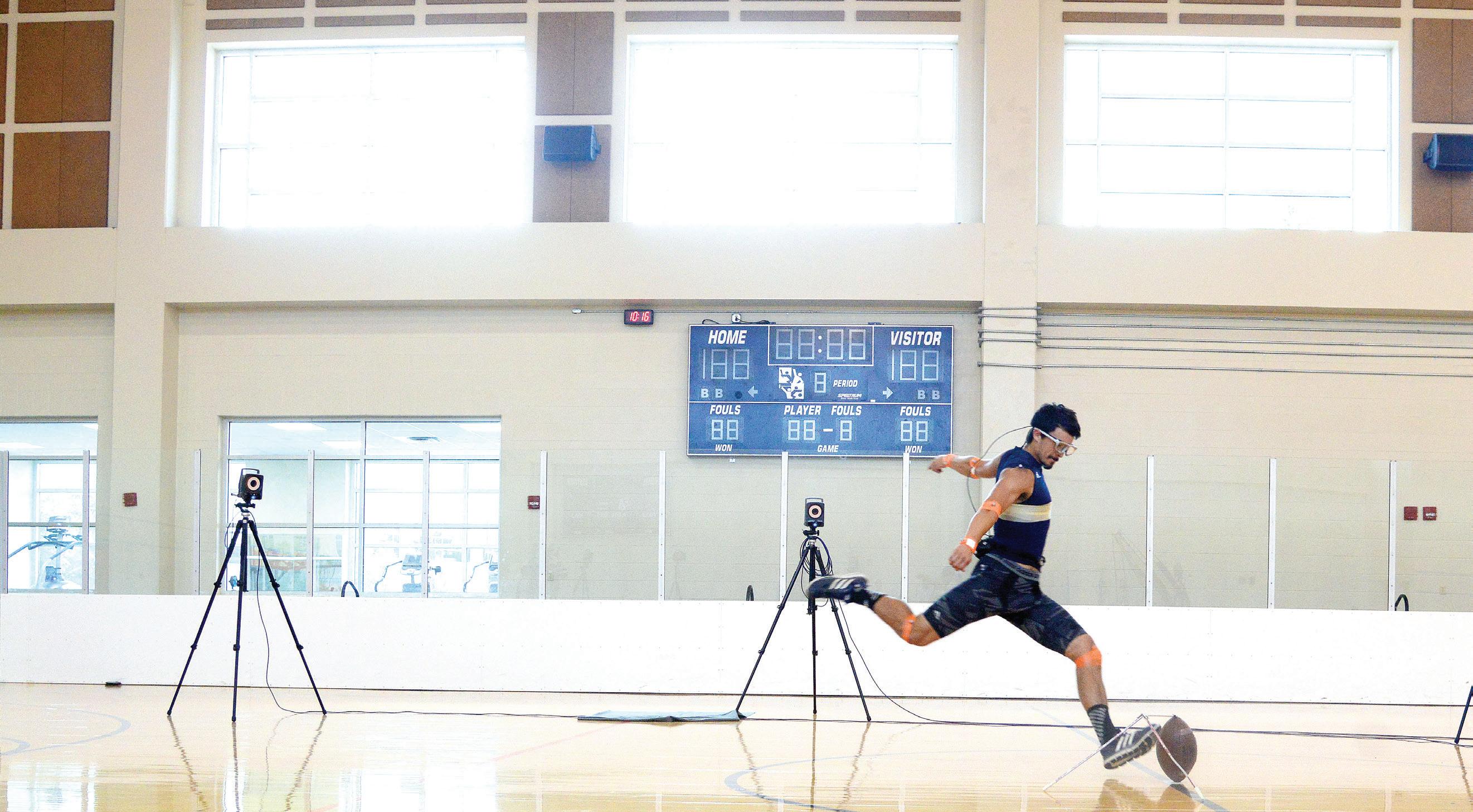
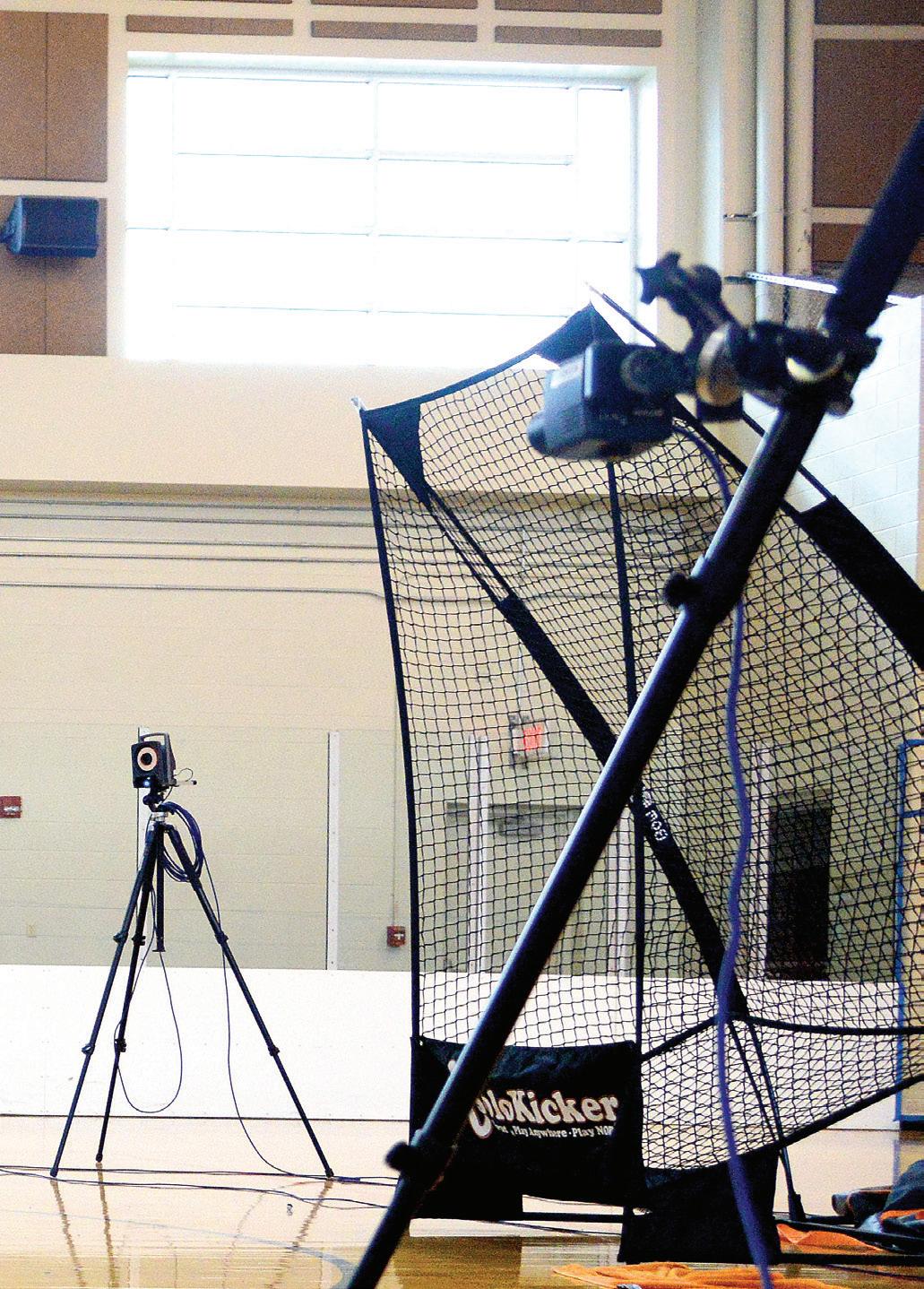
In 2013, a team of UTSA College of Engineering students, led by Yusheng Feng, director of the Center for Simulation Visualization and Real-Time Prediction (SiViRT), worked with the Roadrunner football team to develop a football kicking simulator. The full-scale, indoor simulator (FKS 1.0) aimed to improve a kicker’s performance by providing real-time data when the ball was kicked toward a display screen. Pressure sensors determined the trajectory of the ball from the collected data, and displayed the predicted flight path of the ball within a virtual world. The virtual world simulated a real world environment by using a 3D display and playing the sound of a crowd cheering.
As advanced as it was, some major drawbacks to the system were cost and space restriction. The kicker had to have a dedicated room at his disposal. But now, two years later, two engineering students,
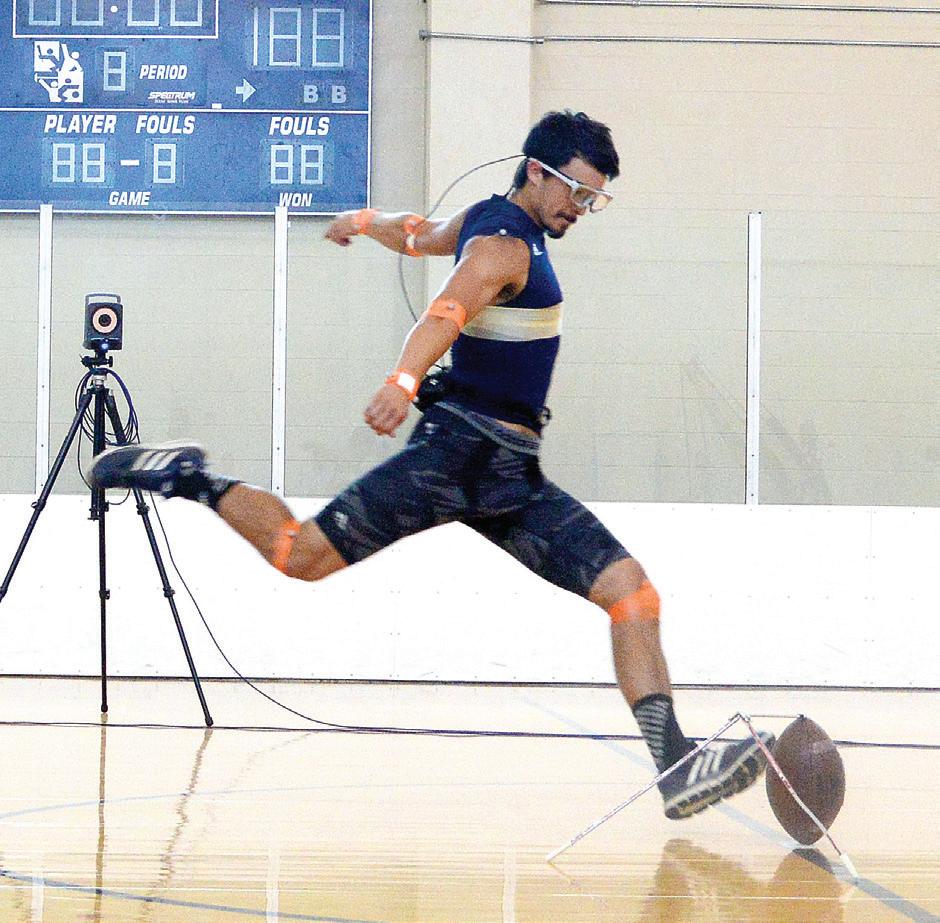
Roadrunner football kicker Daniel Portillo and punter Yannis Routsas, are working with a smaller and more portable tracking device system (FSK 2.0) that could change the way football kickers, from the middle school level all the way up to the pros, train. Moreover, the goals are augmented with mitigation of injury risk by analyzing body motion using biomechanics and kinesiology principles, as well as studying eye-body motion coordination.
“The current system consists of a multi-dimensional sensor system to track body motion, eye movement, and ball velocity,” said Portillo, a sophomore mechanical engineering student. “The system is designed to optimize kicking performance and reduce the chance of injury. What we are looking for is basically the best way to kick.”
Just as golfers and baseball players all have different swings to hit the ball,
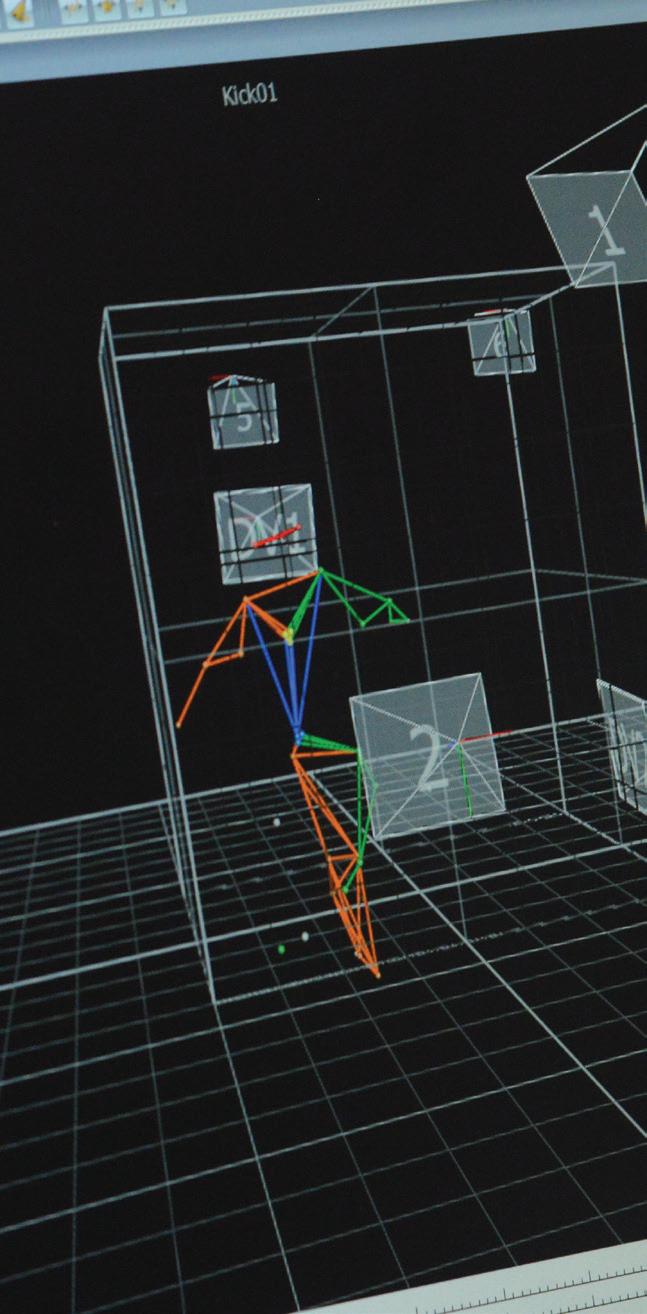
a kicker also has a ‘swing’. In the FSK 2.0 system, approximately 40 reflective markers are attached to the kicker’s body. These markers are tracked by eight motion capture cameras. This motion tracking technology allows 3D plotting of body motion at each key point of the kicking movement. Based on that information, Saki Oyama, an assistant professor in the Department of Kinesiology, Health, and Nutrition, uses biomechanical equations and algorithms to calculate various movement parameters.
“We can calculate joint angles and velocities,” said Oyama. “We can describe how the joints are moving and how fast the joints are moving. We will use that information to identify the key parameters for performance and injury development.”
The data collected from the sensors and cameras are combined with information gathered from the eye tracking software in the glasses worn by the kicker as
Daniel Portillo, a sophomore mechanical engineering student and kicker for the Roadrunner football team, tries out a portable tracking device system that tells a kicker how his body, eyes, and positioning affects his kick.
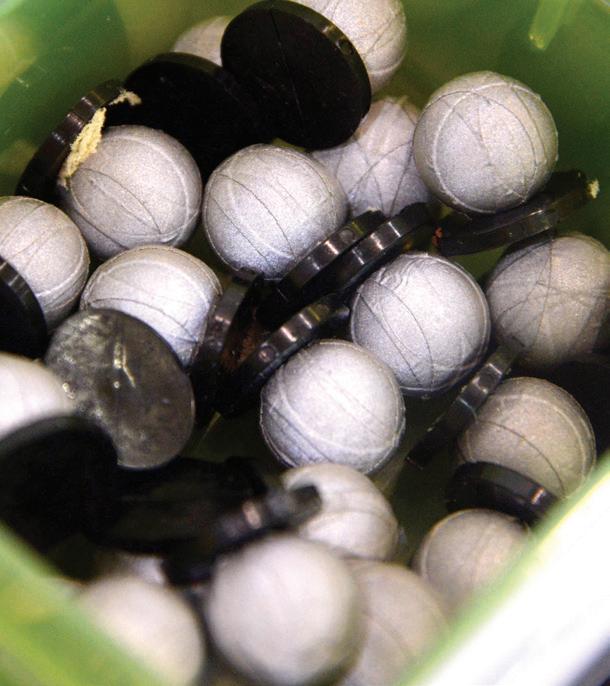
well as the data gathered from a miniature motion sensor placed in the top of the football. When all the data is integrated, these engineering student athletes hope they can break the code to what makes a perfect kick.
“There are not many places where you can do two things you love at the same time, and UTSA is one of them,” said Routsas, a freshman mechanical engineering student. “Combining football and engineering together, this is a once-in-a-lifetime opportunity.”
According to Feng, director of SiViRT and professor in the Department of Mechanical Engineering, once this project is completed, the FKS 2.0 can be deployed to the field for real-time data collection.
“With mathematical modeling and software support, we hope to provide insight to both coaches and players with quantified information to design optimal training protocols,” Feng said.
Feng says that as a professor, there is nothing that makes him happier than to nurture students and see them grow while working on a fun and meaningful project such as this one.
“This is a particularly exciting project since both football kickers on the current Roadrunner football team, Daniel Portillo and Yannis Routsas, are also engineering students who invented the ball tracking and impact location detection devices,” he said. “I can see from their eyes how excited they are when they realized that their engineering creativity can be directly applied to the sport they love.”
ABOVE: Saki Oyama, an assistant professor in the Department of Kinesiology, Health, and Nutrition, uses biomechanical equations and algorithms to calculate various movement parameters associated with the portable tracking device system. BELOW: Daniel Portillo, sophomore mechanical engineering student and kicker for the Roadrunner football team, helps set up one of the eight motion capture cameras that collect data from the kicker’s kick.
Engaging Community our
The College of Engineering’s students and staff alike are actively engaged with the San Antonio community. Take a look and see a few of the ways the college is involved!
ABOVE: Community members, students, and UTSA faculty and staff watch as teams compete in the final trebuchet launch of the 7th Annual Monster
Pumpkin
held at the UTSA Main Campus this fall. Student groups competed against one another to see which team’s trebuchet could chuck a pumpkin the farthest. In addition to the competition, engineering student organizations set up booths where children could get first-hand STEM experiences with hands-on experiments and activities. There was also a costume contest, egg race, and pie-eating contest. LEFT: The American Society for Civil Engineers UTSA student chapter prepares their trebuchet at the 7th Annual Monster Mash, Pumpkin Smash.
Mash,
Smash
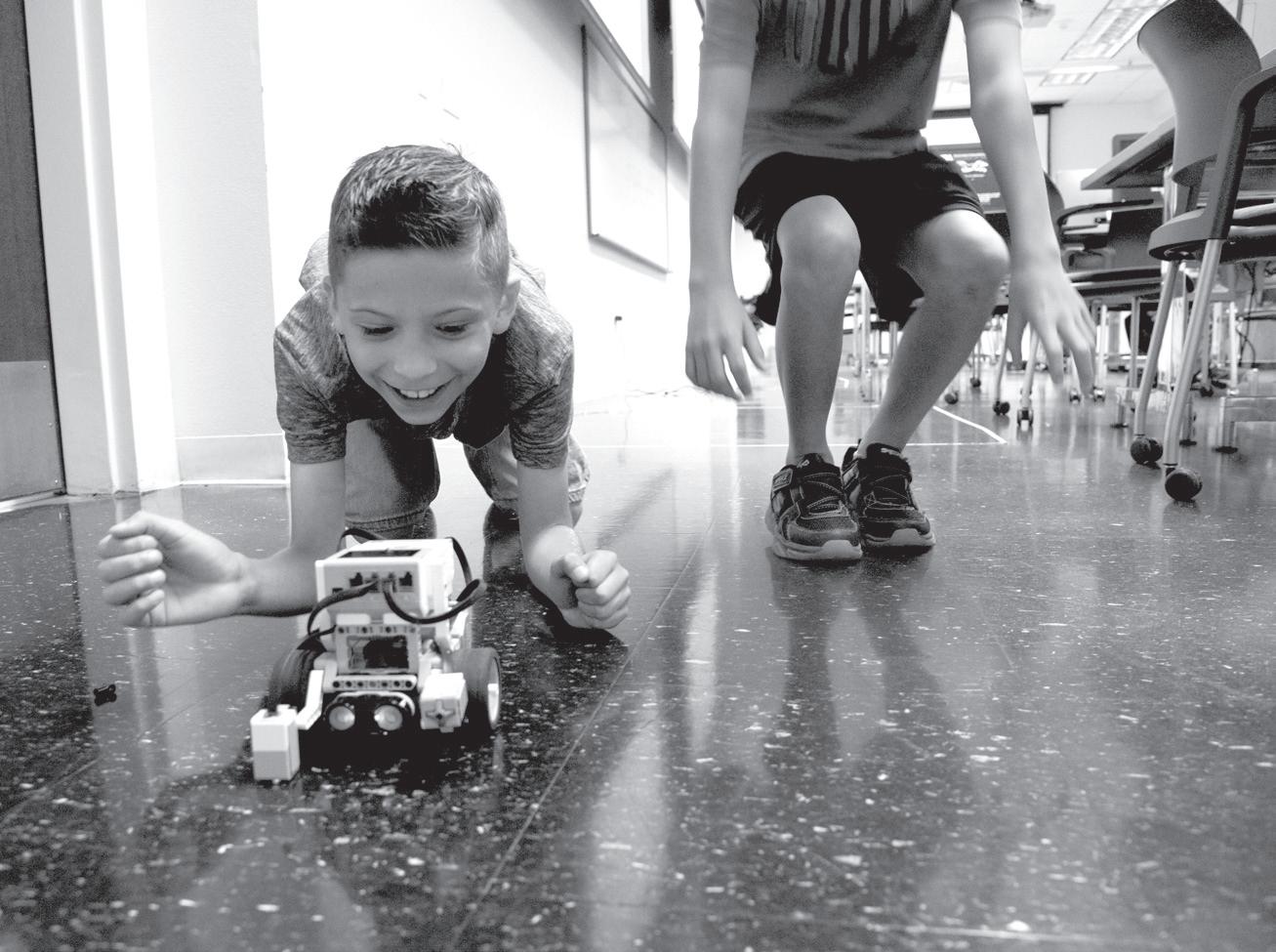
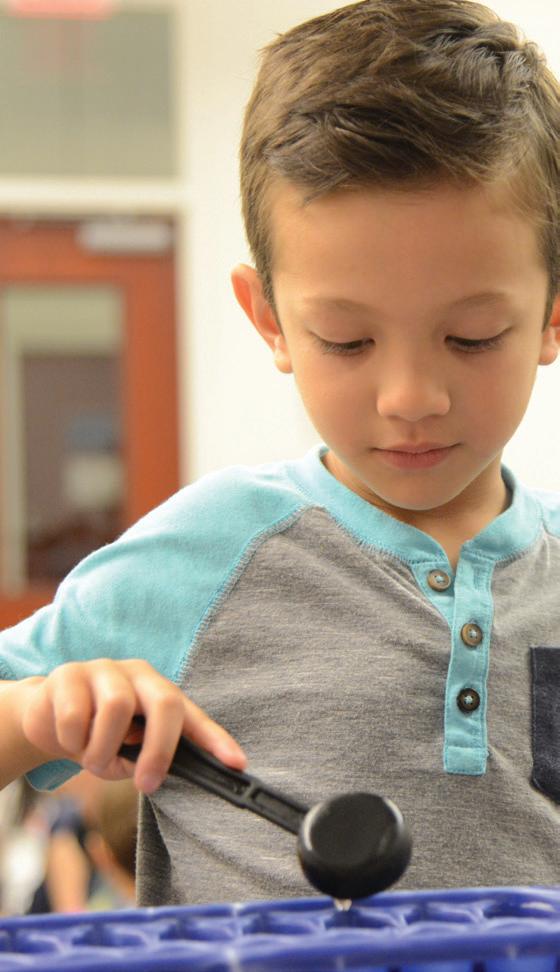
Hundreds of elementary and middle school students flocked to the UTSA Main Campus this past summer to participate in the interactive and educational camps offered by the Interactive Technology Experience Center (iTEC). All iTEC camp programs share the common theme of hands-on exploration conducted in a fun and educational environment. Some of the camps feature introductory level programs that engage kids in exciting explorations in robotics, science, and engineering.
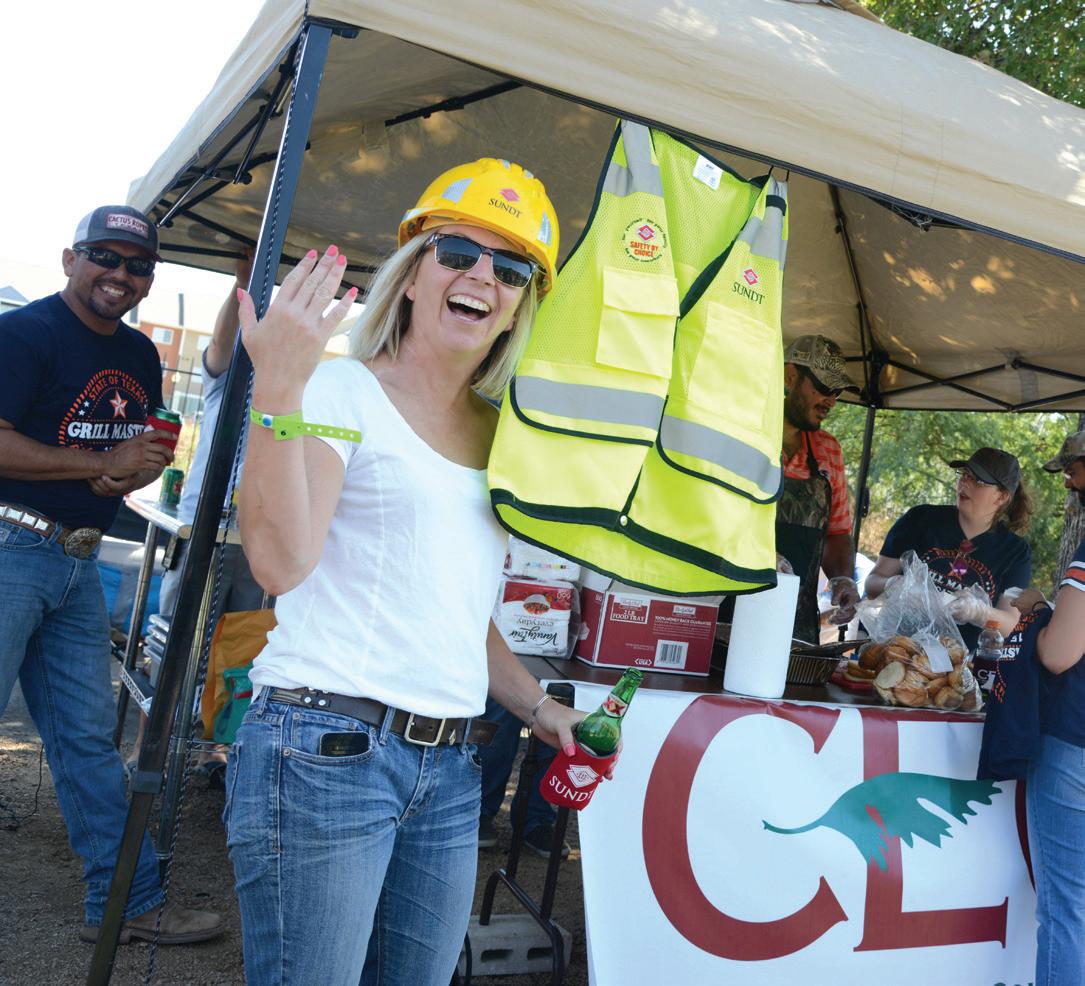
ABOVE: Middle and high school students from local schools visited the College of Engineering this fall for the first-ever STEMinism Conference sponsored by Halliburton, The Boeing Company, and Union Pacific. The event encouraged young women interested in STEM to pursue an education or career in engineering. Female professionals from the local engineering community talked to small groups of students about their professional career choices and how engineering has made an impact in their lives. LEFT: Team members from Civil Engineering Consultants encourage taste testers to try their barbecue at the 2nd Annual Engineering BBQ Cook-Off held at The Block. The event, which was organized by student groups Engineers Without Borders, American Society of Civil Engineers, Texas Society for Professional Engineers, and Institute of Transportation Engineers, pitted local engineering firms against each other to see who could cook up the best barbecue.
UTSA engineers lead $1.32 million project for Texas Department of Transportation
Harvesting Traffic
Researchers at The University of Texas at San Antonio (UTSA) and the Texas A&M Transportation Institute (TTI) have been awarded a $1.32 million contract from the Texas Department of Transportation (TxDOT) as part of the jointly funded Federal Highway Administration’s state research program. Its premise is to design and develop a system to harvest energy created by the movement of vehicles along the state’s roadways and convert it into low-cost renewable electric power. The system also would allow TxDOT to continuously monitor the health of roadways to improve traveler safety.
Led by UTSA Associate Professor of Civil and Environmental Engineering Samer Dessouky, in conjunction with Lubinda Walubita at TTI, the research team will develop piezoelectric sensors that can be placed under asphalt layers. Those sensors will use the energy generated from moving vehicles to power roadside lights, traffic signals, billboards, charging stations for electric cars and roadway monitoring sensors.
Piezoelectric materials are capable of generating electric power in response to the applied pressures from traffic loading. This technology has been field-tested already by a number of U.S. and international studies. It is attractive because it generates power without emitting greenhouse gases, as fossil fuel-generated power does. Furthermore, it requires no additional space as solar power
by k.c. gonzalez/director of communications and special projects
does, since the power-generating modules are embedded into the road layers.
“This project could make Texas a leader in the use of piezoelectric technology to create ‘smart’ roads that not only generate clean power but also create a sustainable source of revenue for transportation infrastructure,” said JoAnn Browning, dean of the UTSA College of Engineering. “UTSA is committed to developing innovative solutions that impact society.”
The research team includes experts in pavement materials, multi-functional nanomaterials, sensor design and surface chemistry from UTSA, TTI and Southwest Research Institute (SwRI®).
leader in the use of piezoelectric technology to create ‘smart’ roads that not only generate clean power but also create a sustainable source of revenue for transportation infrastructure. UTSA is committed to developing innovative solutions that
- JoAnn Browning, dean of the College clean power but also create a impact society.” of Engineering
The first phase of this project involves the design and development of the harvesting modules and will take 18 months. If the subsequent phases of this project get the go-ahead, the researchers anticipate having a complete, functional harvesting and sensing system ready for implementation within three and a half years. The systems would be installed permanently two inches below the pavement surface and would not interfere with the asphalt pavement milling and overlaying maintenance. Additionally, the system would be made from low-cost piezoelectric materials and sensors, and would not raise the cost of pavement maintenance operations.
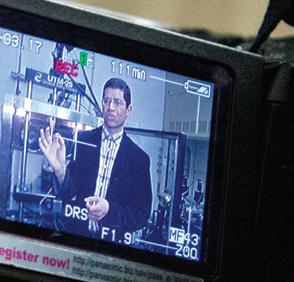
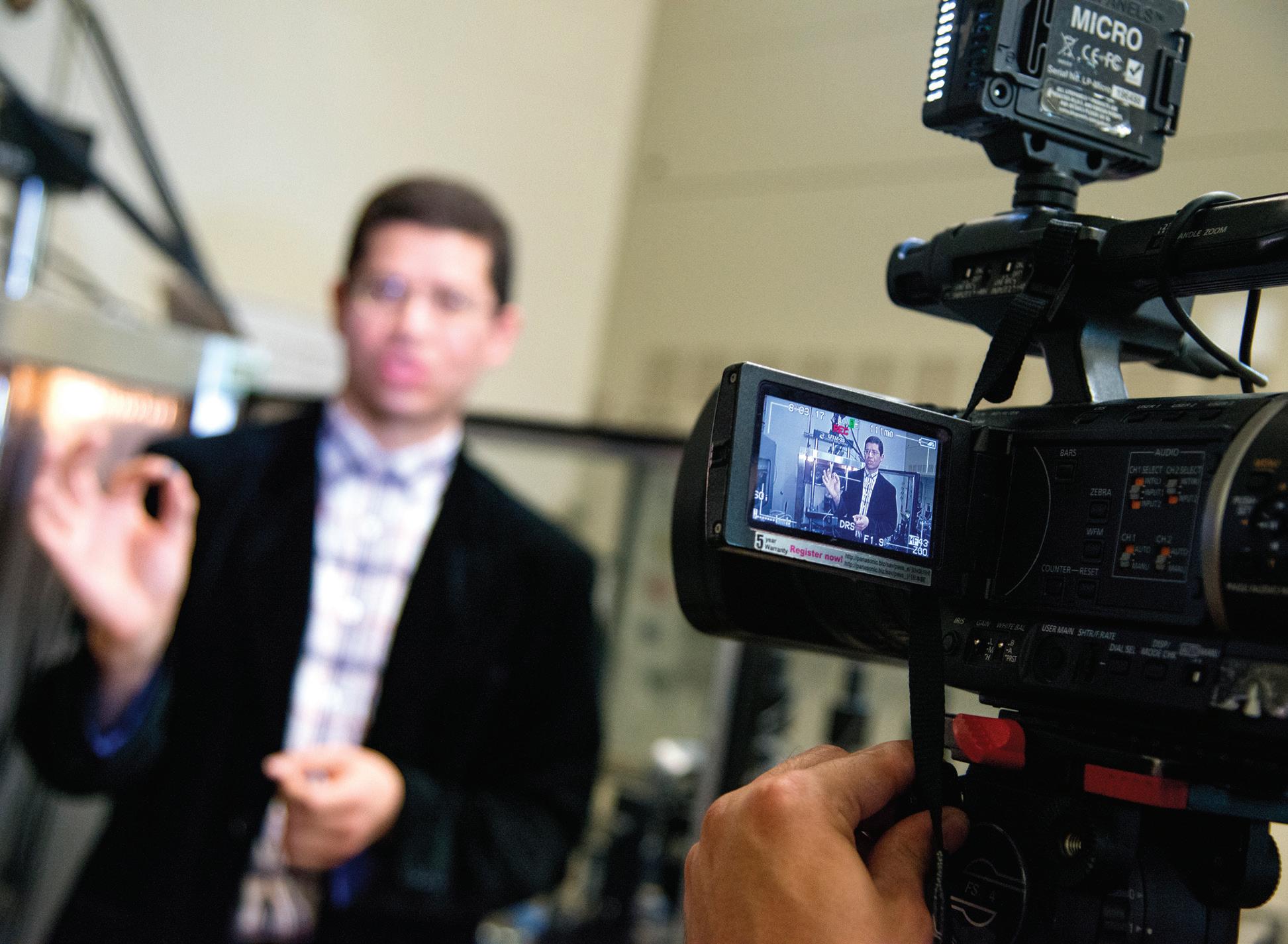
ABOVE: Samer Dessouky, associate professor of civil and environmental engineering, explains to a television crew how one of the prototypes that he and his team are developing is able to produce energy from the pressure of traffic on the road.
BELOW: One of the three prototypes that Dessouky and his team are developing to capture energy from traffic. This particular device works by activating piezoelectric transducers to generate electric voltage that can be stored in capacitors at the side of the road. The piezoelectric device can harvest the energy, feed it to the power grid, or save it in roadside batteries and utilize it to charge electric cars, power roadside or traffic lights. Furthermore, changes in the response of these piezoelectric sensors can be used as a means of monitoring the health of the pavement layers, where these sensors are installed.
Pioneerin her field a
Rena Bizios elected to the National Academy of Medicine
College of Engineering faculty member, educator and researcher Rena Bizios, a pioneer in biomedical engineering, has been elected to the National Academy of Medicine, one of the highest honors for medical sciences, health care and public health professionals. Bizios is the first full-time, tenure-track UTSA faculty member to be elected to the National Academies.
“Dr. Rena Bizios’ election to the National Academy of Medicine is a tremendous honor for her and for UTSA,” said Dr. Mauli Agrawal, UTSA vice president for research. “Rena is widely recognized worldwide in her field and is an outstanding mentor for her students. She exemplifies the high-caliber faculty we have at UTSA. It is truly a proud day for UTSA.”
The research interests of Bizios, a Peter T. Flawn Professor in the UTSA Department of Biomedical Engineering, include cellular and tissue engineering, tissue regeneration, biomaterials (including nanostructured biomaterials) and biocompatibility. She is recognized for making seminal contributions to the understanding of cell-material interactions, protein/cell interactions with nanostructured biomaterials, and for identifying the effects of pressure and electric current on cell functions pertinent to new tissue formation. Her research has applications in the tissue engineering and tissue regeneration fields.
mentored, her work extends well beyond her own classroom and laboratory. She has taught fundamental undergraduate and graduate engineering courses and developed new biomedical engineering courses. Moreover, she has co-authored a landmark undergraduate textbook, An Introduction to Tissue-Biomaterial Interactions. The textbook is a standard in the biomaterials field and has been adopted for upper-class undergraduate and beginning graduate courses by several biomedical engineering programs in the United States and abroad.
“Rena Bizios is a wonderful example of the tremendous faculty that top-tier universities are known for,” said UTSA President Ricardo Romo. “Through her teaching, research, and mentoring at UTSA, Dr. Bizios has made significant contributions that have shaped, and will continue to shape, biomedical engineering. I am so pleased to see her work recognized by her peers in the National Academies.”
“When I started in this field, biomedical engineering was not wellknown or well-understood,” said Bizios. “I didn’t know if it would be successful or not. I took a risk.”
While Bizios takes great pride in the achievements of the undergraduate and graduate students she has
Bizios’ career includes long-standing service to engineering at the departmental, university, regional, national and international levels. She has served on numerous committees and has held elected officer positions in several societies including the Biomedical Engineering Society, Society for Biomaterials, American Institute of Chemical Engineers, and American Institute for Medical and Biological Engineering. She frequently speaks at universities around the world and at national and international conferences.
“Dr. Bizios’ mentorship is unlike any other. She invests so much time in helping her students grow in the classroom and in research to become young professionals. The passion she has for educating the students at UTSA is inspiring.”
Professor Bizios’ peers have also recognized her research accomplishments and contributions to education. She has received several awards, including the Rensselaer Alumni Association Teaching Award
- Marissa Wechsler,
former student of Dr. Bizios
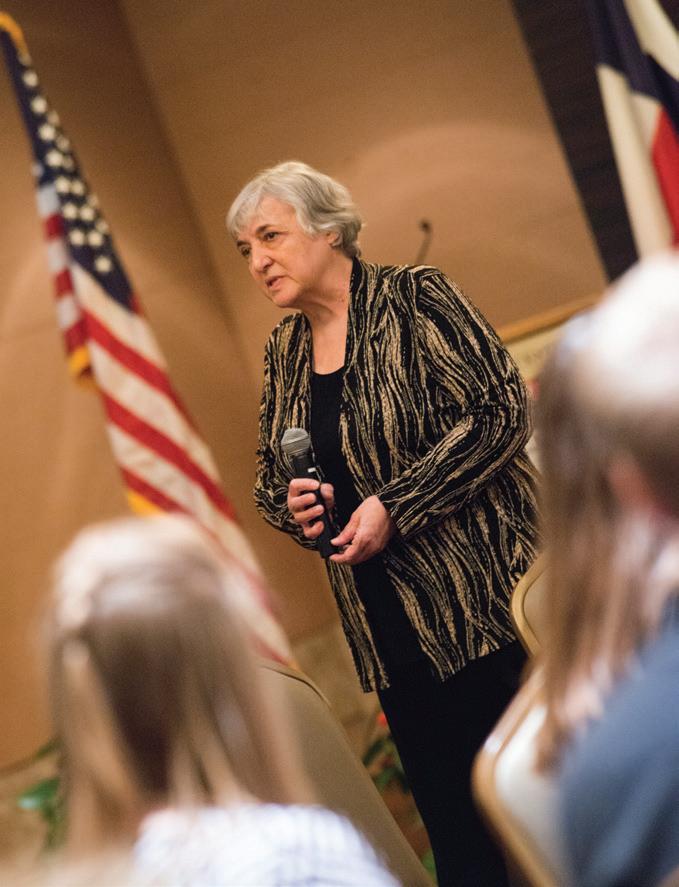
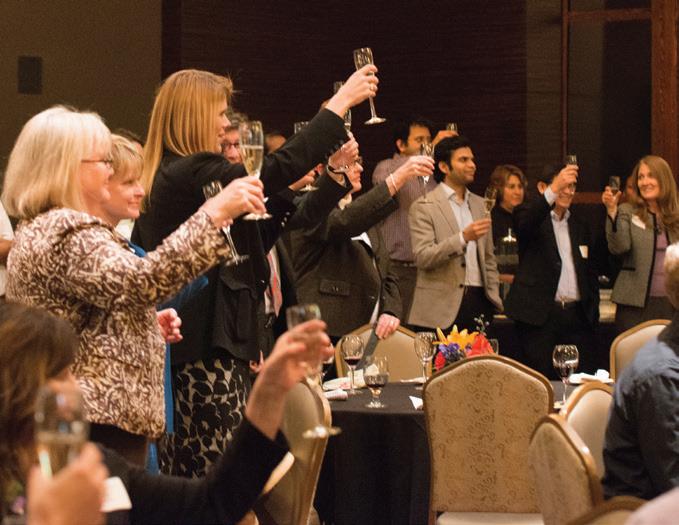
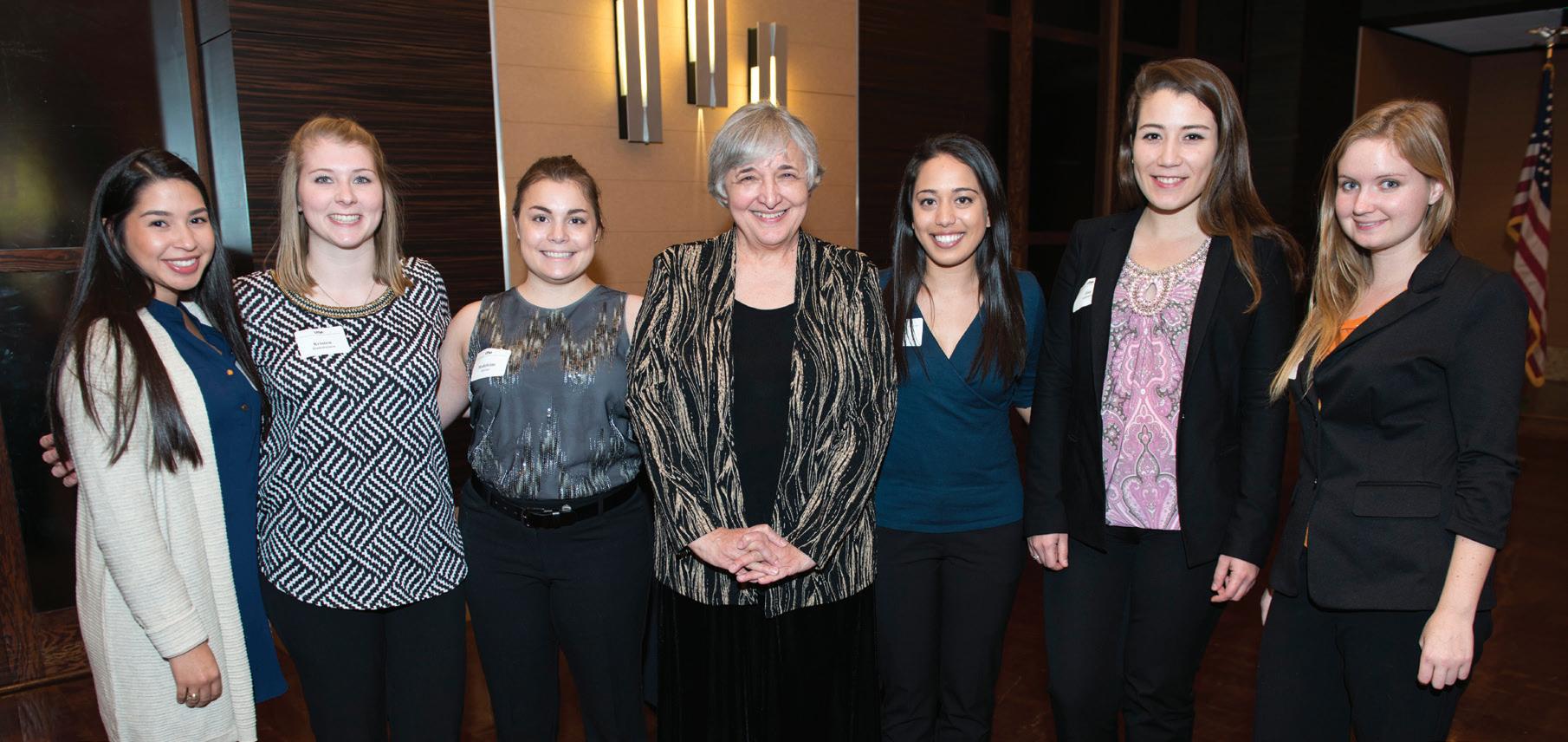
TOP: Rena Bizios speaks to the crowd gathered to celebrate her election to the National Academy of Medicine in the fall. MIDDLE: Friends and colleagues of Bizios raise their glasses in her honor. BELOW: Bizios and some of her students pose for a photo at the celebratory event held in the Denman Room on UTSA Main Campus. BELOW: (left to right) Marissa Wechsler, Kristen Hamalainen, Madeleine Farrer, Dr. Bizios, Trupti Patel, Ilse Valencia, and Casey Whitney.
(1997); Clemson Award for Outstanding Contributions to the Literature, from the Society for Biomaterials (1998); Distinguished Scientist Award, from the Houston Society for Engineering in Medicine and Biology (2009); 2010 Women’s Initiatives Mentorship Excellence Award, from the American Institute of Chemical Engineers; Founders Award, from the Society for Biomaterials (2014); Theo C. Pilkington Outstanding Educator Award, from the Biomedical Engineering Division of the American Society for Engineering Education (2014); and Amber Award, from the UTSA Ambassadors (2014). She was also elected a charter member of the UTSA Academy of Distinguished Researchers earlier this year.
Moreover, Bizios is a fellow of five professional societies: the American Institute for Medical and Biological Engineering, International Union of the Societies for Biomaterials Sciences and Engineering, Society of Biomedical Engineering, American Institute of Chemical Engineers, and American Association for the Advancement of Science.
“Our newly elected members represent the brightest, most influential, and passionate people in health, science, and medicine in our nation and internationally,” said National Academy of Medicine President Dr. Victor Dzau. “They are at the top of their fields and are committed to service. The expertise they bring to the organization will help us respond to today’s most pressing health-related challenges and inform the future of health, science, and medicine.”
Dr. JoAnn Browning, Dean, UTSA College of Engineering, added - “We are proud to have such an outstanding professional like Dr. Rena Bizios teaching and conducting research here at UTSA. Not only has Dr. Bizios made many significant contributions to her field, she is also an outstanding mentor to our students in the biomedical engineering program and is so deserving of this honor.”
“I am delighted and I feel humbled by this honor and recognition by my peers,” said Bizios. “I share it with all of my students, past and present, and with my colleagues who have collaborated with me.”
FACULTY PROFILE:
Harry Millwater
Associate dean hopes to lead the College of Engineering to new research heights
By Rebecca Esparza/MBA
As a child growing up in Plainsfield, New Jersey, Harry Millwater Jr. was a typical boy who loved sports and Legos. But he was also a precocious 10 year old with an early interest in engineering that would oftentimes land him in hot water with his mother.
“I would take apart random electronics around the house and mom would get angry, especially when I couldn’t put them back together again,” he said. “But it helped that dad was also into electronics and he always had random parts around the house anyway.”
Millwater’s love of engineering hasn’t faded over the years, and that interest he had as a child has evolved into a passion for engineering research. Because of this passion, and a stellar résumé filled with research funding successes, Millwater was named the associate dean of research and graduate studies in the College of Engineering. When he took on his new role, Millwater was determined to increase research grant funding for engineering faculty.
“We’ve started a formal mentoring program for professors, that coaches them on best practices to get funded,” he said. “We teach them that life is not all technical. Networking and coaching are critical to success.”
Providing support to faculty is key, Millwater added.
“These professors are very busy with research, committee work, as well as their teaching duties,” he said. “Whatever we can provide for infrastructure helps us achieve our research funding goals as a university. We assist with research proposals and finding funding opportunities, so professors don’t have to do everything themselves.”
Millwater has a team of professionals dedicated to the goals of his office, including Liana Ryan, senior grant development coordinator; Li-Ping Bien, senior program coordinator; and Linda Lankford, senior administrative associate.
In addition to leading his team, Millwater meets with faculty in departments across the campus on various research projects and advises committee members about special projects, like a big conference on data analytics the university is hosting next spring. And if he didn’t have enough on his plate, Millwater continues to teach classes including mathematics, solid mechanics, probabilistic methods, and computational methods.
“When students contact me after they are working (in a full-time, professional job) and tell me how valuable my class was in helping them land a job in a competitive market, that just makes my day,” he said with a smile. “I always tell my students not to get discouraged with their classes because working in the real world is completely different. I encourage them to get through their courses and learn the material. It’s definitely worth it at the end.”
Juan Ocampo, a special research associate in COE, first began work with Millwater in 2007 as a master’s student.
“I was looking for faculty working with aerospace structural research and learned about Dr. Millwater,” Ocampo recalled. “I worked on my research with him and continued to work with him on my Ph.D. Today, as visiting faculty in the UTSA College of Engineering, I’m honored to continue working on research projects together.”
One of their current projects is grant funding from the Federal Aviation Administration and the United States Air Force on structural risk assessment for aerospace structures.
“Working with Dr. Millwater has been extremely beneficial to my career. Researchers around the world recognize him as a leader in the field. But the best part of working with him is that he not only cares about his research work, but he genuinely cares about getting his students exposure for their work as well,” he said.
Millwater believes two important factors will help other researchers become just as successful with getting their research projects funded.
“First of all, you have to get out of your office. If you stay in your office all day and expect money will come to you, you are not going to make it,” he said.
“Second,” Millwater continued, “excellent business communication skills are critical in obtaining more technical work and receiving funding. You have to write well, present well and interact well with other people on a consistent basis.”
Ocampo recalled attending numerous research conferences throughout the years, including one in Australia and another in Canada as a visiting scholar with the National Research Council, all at Millwater’s encouragement.
“Researchers
around the world recognize Dr. Millwater as a leader in the field. But the best part of working with him is that he not only cares about his research work, but he genuinely cares about getting his students exposure for their work as well.”
“We don’t just work in a lab all day,” Ocampo said. “We do a lot of networking and meet other people in our research area. Dr. Millwater is so well known in this research area that others want to know what we are presenting. He’s a great mentor because he’s always making sure you are making progress on your research.”
-Juan Ocampo, special research associate
As a mentor, the most important quality Millwater shares with his research associates are his interpersonal communications. “He not only cares about your research, but cares about you as a person, too,” Ocampo said.
Meanwhile, Millwater said he has a personal philosophy of doing business that has served him well in his decades of work in both academia and research.
“Under-promise and over-deliver. That’s my mantra,” he said. “If you are always doing more than people are expecting from you, then you’ll never disappoint.”
Research Awards
The UTSA vision is to become a premier research institution. By achieving a 253 percent increase in research funding over the past 10 years, UTSA’s is making significant progress in meeting that goal, and the College of Engineering plays a large role in bringing in research funding to the university. Listed here are the projects awarded to members of the College of Engineering between Jan. 1, 2015, and Dec. 4, 2015.
Agaian, Sos
Proposal title: Evaluation of the Use of a Non-Contact, 3D Scanner for Collecting Post-Mortem Fingerprints
Funding agency: Flashscan 3D
Amount: $99,612
Agaian, Sos
Proposal title: RAPID: I-Corps Teams: Cloud Pathology Platform for Computer Aided Digitized Histopathology Image Processing and Analysis System
Funding agency: National Science Foundation
Amount: $50,000
Akopian, David
Proposal title: Tobacco Cessation Services for Bi-Lingual and Spanish Speaking Young Adult Latinos in South Texas
Funding agency: UTHSCSA
Amount: $15,000
Alaeddini, Adel
Proposal title: VA777-16-G-0014
Funding agency: U.S. Department of Veterans Affairs
Amount: $64,326
Alaeddini, Adel
Proposal title: Integrative Statistical and Operational Methods for Effective Chronic Disease Management
Funding agency: UTSA VPR Office
Amount: $20,000
Alaeddini, Adel (PI) Agaian, Sos (Co-PI)
Proposal title: Image-based Process Monitoring Phase 1: Real-time Quality
Proposal title: Acquisition of Small Unmanned Aerial Systems for Advancing Cooperative Man-Machine Systems Research and Education
Funding agency: U.S. Department of the Army
Amount: $446,105
Pack, Daniel
Proposal title: Cooperative Technology Development
Funding agency: U.S. Department of the Navy
Amount: $80,000
Pack, Daniel (PI) Akopian, David (Co-PI)
Proposal title: Extending GPS Operation in GPS-denied Areas through CrossCorrelation Jamming Cancellation
Funding agency: U.S. Department of the Air Force
Amount: $194,800
Papagiannakis, Athanassios
Proposal title: Testing of Asphalt Concretes Incorporating Dry-process PP
Funding agency: Earl M. Stenger
Amount: $14,115
Reilly, Matthew(PI) Bizios, Rena (Co-PI)
Proposal title: Torsional Indirect Traumatic Neuropathy (TITON): Animal Model for Diagnostics, Drug Delivery, and Therapeutics for Central Nervous System Injury
Funding agency: U.S. Department of Defense
Amount: $1,000,000
Reilly, Matthew
Proposal title: Injectable Microgel for Soft Tissue Repair
Funding agency: Rochal Industries
Amount: $8,939
Rogers, Dwain (PI) Castillo, Krystel (Co-PI)
Funding agency: Central Texas Fuel
Independence Project Fleet Analysis
Funding agency: Austin Energy
Amount: $20,000
Saygin, Can (PI) Alaeddini, Adel; Castillo, Krystel; Wan, Hung-Da (Co-PIs)
Funding agency: Predictive
Maintenance - Phase 2: From Data to Performance Metrics
Funding agency: Harland Clarke
Amount: $90,000
Saygin, Can
Proposal title: San Antonio Nathan Shock Center of Excellence in the Basic Biology of Aging
Funding agency: UTHSCSA
Amount: $33,998
Shadaram, Mehdi
Proposal title: Summer Engineering Camp for Texas Students
Proposal title: S-STEM: UTSA’s Scholarship Program for Undergraduates’
Retention and Success (SPURS)
Funding agency: National Science Foundation
Amount: $626,890
Tang, Liang
Proposal title: IFSEEN - Integrating Food Science/Engineering and Education Network: A Partnership to Integrate Efforts and Collaboration to Shape Tomorrow’s Hispanic Food Safety/Science Leaders
Funding agency: UT Pan American
Amount: $186,368
Testik, Firat
Proposal title: NSF Award Transfer: Critical Raindrop Characteristics: Fall Speed, Shape, and Size Distributions
Proposal title: Multiscale Modeling of Ultrastructural Origins Of Bone Fragility
Funding agency: National Science Foundation
Amount: $368,931
Weissmann, Jose
Proposal title: Evaluate Specialized Hauling Vehicles with Regard to Pavement and Bridge Deterioration and Posting Limits
Funding agency: TxDOT
Amount: $155,556
Wilkerson, Justin
Proposal title: A Simple Constitutive Framework for Anisotropic Dynamic Ductile Failure
Funding agency: Johns Hopkins University
Amount: $25,000
Zeng, Xiaowei
Proposal title: Numerical Investigation of Collective Cell Migration
Funding agency: National Institutes of Health
Amount: $441,000
Ram Krishnan
Regents’ Outstanding Teaching Award winner 2015
Ram Krishnan, assistant professor in the College of Engineering’s Department of Electrical and Computer Engineering, knows what it takes to be a good teacher.
“Thinking back, at every stage in my student life, all the way back from middle school, I can remember at least one person from each stage who really was a rock star teacher and who defined my thinking approach during that time. Those teachers made me who I am today,” Krishnan said. “And I want to be like them. It is just amazing when someone has put in the effort and time to figure out a complicated topic and then present it in a way that one can easily understand. A great teacher provides you the information you need to advance your own knowledge.”
And taking lessons from his former mentors, Krishnan himself is now leading the way in teaching excellence. The University of Texas System named him one of the recipients of the 2015 Regent’s Outstanding Teaching Award. And as a Regent’s winner, Krishnan was inducted into the UTSA Academy of Distinguished Teaching Scholars in September.
There is no one that deserves this award more than him.”
The Regents’ Outstanding Teaching Awards are the Board of Regents’ highest honor. The awards are offered annually in recognition of faculty members at the nine academic and six health University of Texas System institutions who have demonstrated extraordinary classroom performance and innovation in undergraduate instruction. With a monetary award of $25,000, the Regents’ Outstanding Teaching Awards are among the largest in the nation for rewarding outstanding faculty performance.
“Even just talking to someone you know very well, it can be hard to communicate. And trying to communicate with a general body of a student population - it takes a great amount of creativity and effort. When you are successful - it is just one of the happiest moments when you see the face of a student and you can tell that they understand.”
“I’ve had Dr. Krishnan for two classes now and have learned so much from him,” said Barbara Davila, a graduate student in the College of Engineering’s Department of Electrical and Computer Engineering. “He presents the material in such a way that it will stay in your mind. He walks into class with such a smile that it deems him a perfect balance of respect and approachability. If it had not been for his class, I would have not realized the joy in programing. His teaching philosophy inspires and he is an outstanding professor.
- Ram Krishnan
Faculty members undergo a series of rigorous evaluations by students, peer faculty and external reviewers. The review panels consider a range of activities and criteria in their evaluations of a candidate’s teaching performance, including classroom expertise, curricula quality, innovative course development and student learning outcomes. A thread running through Krishnan’s evaluations is that he is a great communicator in the classroom.
“Even just talking to someone you know very well, it can be hard to communicate,” Krishnan said. “And trying to communicate with a general body of a student population, it takes a great amount of creativity and effort. And when you are successful, it is just one of the happiest moments when you see the face of a student and you can tell that they understand.”
Craig Rodriguez, UTSA graduate and telecommunications engineer with Texas Utility Engineering One, took classes with Krishnan. He said that one of the most important and impressive attributes to Krishnan’s style of teaching lies in his patience.
Researching cloud computing technology
I“Although the curriculum was quite difficult, encompassed much information and many concepts, and, in the case of the Android App Development class, was brand new, Dr. Krishnan took the time to make sure every student in his well-attended lectures understood the concepts clearly before moving on,” said Rodriguez. “He has an exceptional ability to take complicated, murky notions and make them clear concepts. Dr. Krishnan is a remarkable educator of the highest caliber and his dedication to true understanding in his students is a rare gift to all Roadrunners fortunate enough to learn from his guidance.”
In addition to being passionate about teaching, Krishnan is also passionate about his research, and he tries to integrate both of these aspects together.
“Your teaching informs your research, and your research informs your teaching,” he said. “Sometimes it is some of the most simple questions that students pose that can lead to really interesting research questions. I tend to think in one way, and it is a great way to get the students’ perspective.”
n addition to being an amazing teacher, Ram Krishnan is also a talented researcher. His research on securing cloud computing systems is currently funded by the U.S. National Science Foundation (NSF) and the U.S. Department of Defense (DoD), totaling more than $1 million.
According to Krishnan, commercial enterprises and governmental organizations like the DoD have recognized the benefit of operating their compute infrastructure on a cloud-based platform due to major cost savings and operational efficiency. However, properly securing their resources on a cloudbased infrastructure is a major issue.
Krishnan says that the goal of the NSF-funded project is to develop a security mechanism where each cloud customer could maintain a level of control over their virtual assets in the cloud that is comparable to the level of control that was possible to maintain via their own premises. The DoD-funded project focuses on multi-level security in cloud.
“With an entity like the Department of Defense, you have various levels of sensitivity of data and computation,” Krishnan said. “The cloud is by definition a shared platform. One of the goals of this research is to provide clients with the capability to dynamically control the degree of sharing across different levels of sensitivity. Providing this capability while also maintaining the benefits of cloud computing is a challenging problem.”
And not only will his research benefit the DoD, it will also benefit UTSA.
“Cloud computing is a multi-billion dollar industry,” Krishnan said. “It has become an indispensable technology today, and it cuts across many disciplines. This project will allow UTSA faculty and students to address cyber security issues in cloud computing technology, a critical issue for an organization as it employs cloud. This project will also help develop a rigorous curriculum on cloud computing security at UTSA, thereby training many UTSA students in this state-of-the-art technology.”
Krishnan is collaborating with UTSA College of Sciences’ Ravi Sandhu who is the executive director of The Institute for Cyber Security. Krishnan and Sandhu started their research last fall and expect to complete these projects by fall 2018.
Ram Krishnan, assistant professor in the Department of Electrical and Computer Engineering.
by the fall 2015
ENGINEERING NUMBERS
COLLEGE OF ENGINEERING
One UTSA Circle
San Antonio, TX 78249
engineering.utsa.edu
Address Service Requested
COE STUDENTS VOLUNTEER AT THE DOSEUM
This past November, students in Pranav Bhounsule’s Robotics and Motion Laboratory, led by graduate student Christian Trevino, taught children at the San Antonio DoSeum how to make paper machines that could race against each other down a platform. The UTSA students received the opportunity to volunteer at the DoSeum through a collaboration with Brian Halderman of the UTSA Center for Civic Engagement.