Currents South Carolina

A PUBLICATION OF MPD ELECTRIC COOPERATIVE JUNE 2026


Making a

Lillian Brunson inspires swimmers to discover the joy and wonder of water Page 6
ADOBE STOCK PHOTO BY IVONNE WIERINK

A PUBLICATION OF MPD ELECTRIC COOPERATIVE JUNE 2026
Making a
Lillian Brunson inspires swimmers to discover the joy and wonder of water Page 6

Outdoor and yard project season is upon us. While summer is the perfect time to get out and enjoy nature, it is also the optimal time to get home improvement, construction and landscaping projects checked off your to-do list. Take advantage of this time to safely and more easily get to all the outdoor projects you’ve been waiting to complete.
If you are looking to take advantage of the change of seasons to get some outdoor/home projects done and your project requires digging—such as planting trees, setting posts or using an excavator—remember to keep electrical safety in mind and dial 811 first.
Underground utilities, such as buried gas, water and electric lines, can be one wrong shovel away from turning a home or outdoor project into a disaster. Play it safe by dialing 811 or requesting online to find out where utility lines run on your property. Your call is routed to a one-call center, where your request is communicated to relevant utilities. Tell the operator what type of work you will be doing.
In a few days, a locator designates the approximate

location of underground lines, pipes and cables. These areas are marked with flags or paint so you know what’s below. Then safe digging can begin.
Many homeowners tackling do-it-yourself digging projects are aware of Call Before You Dig services, but most don’t take advantage of the service. A national survey showed only 50% of homeowners called to have their lines marked before starting digging projects, according to the Common Ground Alliance, a federally mandated group of underground utility and damage prevention industry professionals.
Even simple tasks, such as installing a mailbox post, can damage utility lines, which can disrupt service to an entire neighborhood, create an unsafe work environment and potentially result in extensive repairs. Never assume the location or depth of underground utility lines. There’s no need. The 811 service is free, prevents the inconvenience of having utilities interrupted and can help you avoid serious injury. n For more information about local services, visit call811.com.




mpd.coop
OFFICE LOCATIONS
1301 E. Pocket Road
P.O. Box 100561 Florence, SC 29502
843-665-4070
676 Highway 9 E. P.O. Box 1057
Bennettsville, SC 29512
843-479-3855
REPORT POWER OUTAGES
866-747-0060
OFFICE HOURS
8 a.m. to 5 p.m. Monday through Friday
PRESIDENT/CEO
William L. Fleming Jr.
BOARD OF TRUSTEES
John Alford
Melvin Carabo
Preston Gainey
James Goodson
Eddie Gordon
David Howell
Sam P. “Bo” McInnis Jr., Chairman
Robert Norton
Hamer Parnell
Jeff Quick, Secretary
Ronald “Ronnie” Quick
Janelle Sauls
LaShon Sellers, Vice Chairman
Charles R. “Ricky” Smith
Patricia Ann Toney
Lee C. White
CO-OP NEWS EDITORS
Katie W. Wilcox, CCC kwilcox@mpd.coop
Matt Haynie
mhaynie@mpd.coop
MISSION STATEMENT
Our mission is to serve the energy needs of our members today and in the future at the lowest cost consistent with sound economic principles and management.
MPD Electric Cooperative Inc. is an equal opportunity provider and employer.
This year, the United States proudly celebrates 250 years since the signing of the Declaration of Independence. This milestone marks two-and-a-half centuries of history, perseverance and progress. From the birth of a young nation in 1776 to the diverse and dynamic country we know today, America’s story is one of courage, innovation and an enduring belief in freedom.
Throughout its history, our nation has faced defining moments that shaped its future. The American Revolutionary War secured independence and laid the foundation for democracy. Years later, the American Civil War tested the nation’s unity and ultimately led to the abolition of slavery. During the Great Depression, Americans showed resilience and determination in rebuilding the economy and restoring hope. The United States also played a major role in World Wars I and II, helping defend freedom around the world and emerging as a global leader in the years that followed.
America’s spirit of innovation has also transformed everyday life. From Benjamin Franklin’s pioneering experiments to the widespread use of electricity in homes and industries, scientific discovery has propelled the nation forward. Electricity revolutionized communication, transportation, healthcare and manufacturing, helping create the modern society Americans enjoy today.
Communities across the country are celebrating this historic occasion with parades, festivals, educational events and patriotic gatherings that honor America’s rich heritage and the people who helped shape it. It is a time to remember sacrifices made for freedom, appreciate the diversity that strengthens the nation and inspire younger generations to carry forward the values upon which America was founded.
As the United States marks its 250th birthday, the celebration reminds us the American story is still being written. With pride in its history and hope for the future, Americans everywhere can join together to celebrate 250 years of independence, resilience, innovation and opportunity. This year, your electric cooperative turns 87, making it more than one-third as old as our great country. I pray you feel blessed to be a part of both, and may God continue to bless you.
PRESTON GAINEY Trustee

CEO Michael Shepard
SENIOR VP OF CONTENT Leon Espinoza
EDITORIAL DIRECTOR Chasity Anderson, CCC
DEPUTY EDITORIAL DIRECTOR
Noble Sprayberry
SENIOR EDITOR Jennifer Paton, CCC
LEAD CONTENT EDITOR Victoria Hampton, CCC
ASSISTANT EDITORS David Herder, CCC; Sable Riley, CCC; Nina Todea, CCC
ASSOCIATE EDITOR
Valeri Saldanha Rosa
PUBLICATIONS PRODUCTION SR. MANAGER
Elizabeth Beatty
SENIOR PUBLICATIONS COORDINATOR
Alyssa McDougle
South Carolina Currents (issue 84) is published monthly, except in December, by Pioneer Utility Resources, 5625 NE Elam Young Pkwy. Ste. 100, Hillsboro, OR 97124. Preferred periodical postage permit number 23830 paid at Hillsboro, Oregon 97123 and additional mailing offices.
POSTMASTER: Send address changes to: South Carolina Currents, 5625 NE Elam Young Pkwy. Ste. 100, Hillsboro, OR 97124. Subscription price of $9.89 per year includes postage.
HOW TO CONTACT CURRENTS
Have a problem receiving your edition of South Carolina Currents? Utility members should contact MPD Electric Cooperative.
Reprint permission: Direct all requests to Pioneer Utility Resources.
MANUSCRIPTS AND PHOTOGRAPHS
Please do not send unsolicited materials. If interested in writing for South Carolina Currents, query first. Include a selfaddressed stamped envelope for writers’ guidelines. Address requests and queries to Pioneer Utility Resources.
DISPLAY ADVERTISING INQUIRIES
American MainStreet Publications 611 S. Congress Ave. Ste. 504 Austin, TX 78704 800-626-1181 or 512-441-5200
© 2026 Pioneer Utility Resources. All rights reserved. Reproduction in whole or in part without written permission is prohibited.
Willie Wiredhand is the longtime mascot and spokesplug of electric cooperatives around the United States. He was adopted in 1951 by the National Rural Electric Cooperative Association. Here’s your task: Willie is hidden somewhere in every issue of Currents. See if you can find this friendly face among the news and stories as you read!





Sunshine in Every Bite Let the air fryer work its magic on squash fritters Page 36 Page 12



By MPD Staff
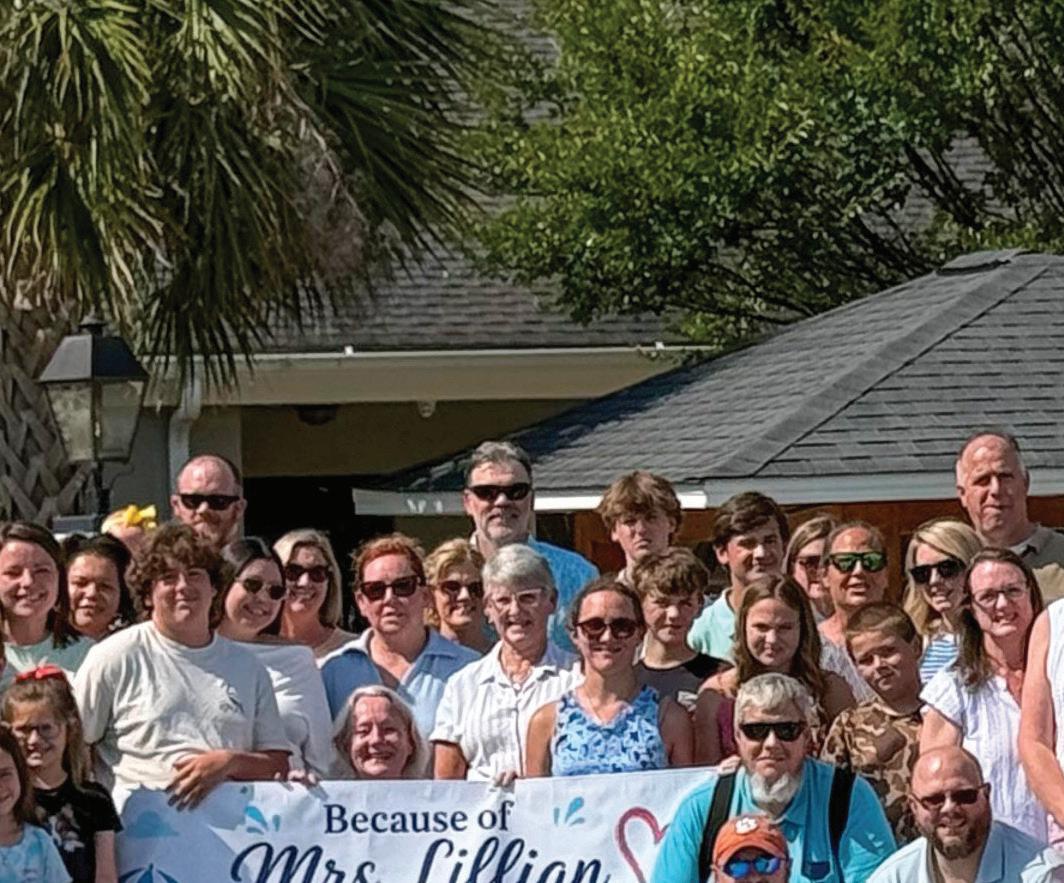
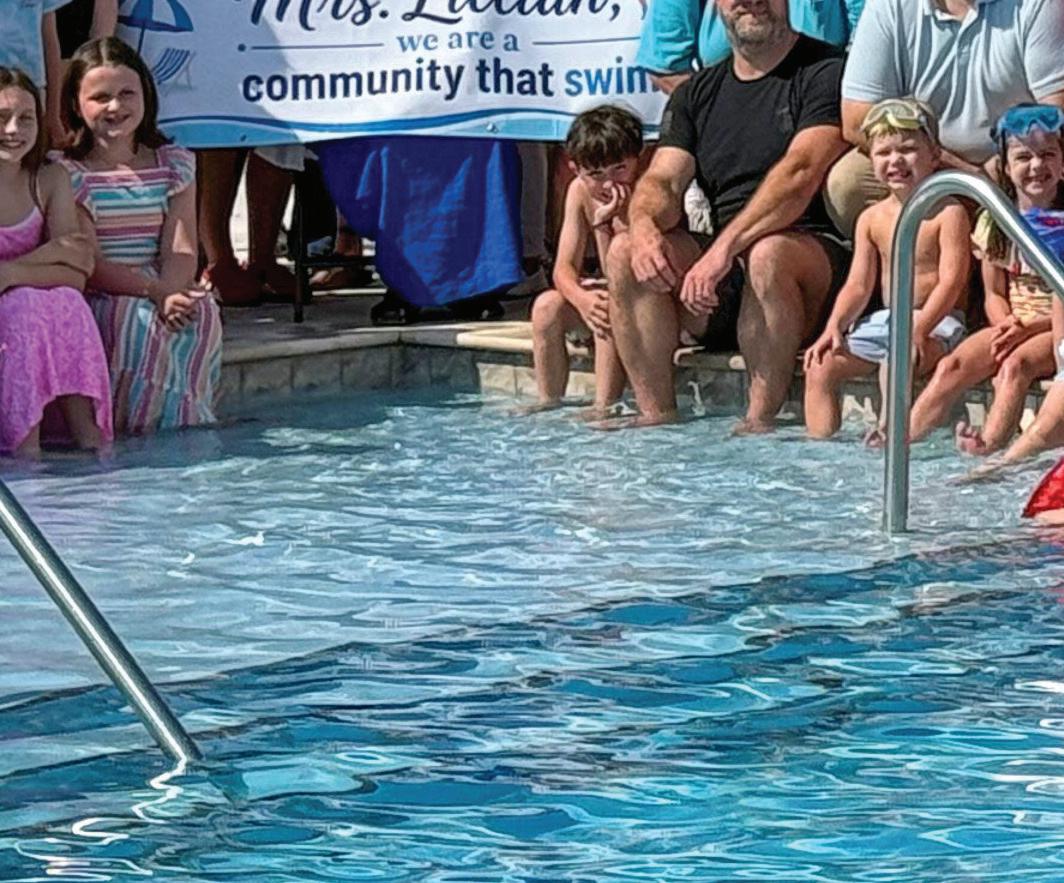
Lillian Brunson has devoted more than five decades of her life to teaching swimming. What began as a love for the water in early childhood grew into a lifelong calling, one that affects hundreds of lives each summer and adds up to thousands over the course of her career.

“Swimming is such a vital skill,” Lillian says. “But in addition to safety issues, swimming brings people together.”
Lillian began swimming at age 3 in



Murrell’s Inlet, where her family spent summers in a cottage along the shore. As a young girl, before local pools were available, she rode a bus nicknamed the Blue Goose to take lessons in Hartsville. She also learned to navigate natural waters and currents at the Black Creek swimming hole behind the Darlington Country Club. When she was in the fourth grade, the country club opened its own pool, and Lillian took swimming lessons there each June, advancing through the Red Cross swimming levels.
The summer she turned 11, she learned to dive off the pilings of a dock
in Murrell’s Inlet. The following summer, she took junior lifesaving and fancy diving classes at the country club. She continued to take swimming lessons until she was old enough for the senior lifesaving class.

After graduating from St. John’s High School in 1965, Lillian enrolled in the senior lifesaving course at the Sun and Splash in Darlington. There she met her future husband, Swint Brunson, the instructor. They started dating that July and married in April 1968.
Swint served in the Air Force for three and a half years, and while he was stationed in New Mexico, Lillian taught adult swimming lessons alongside him at


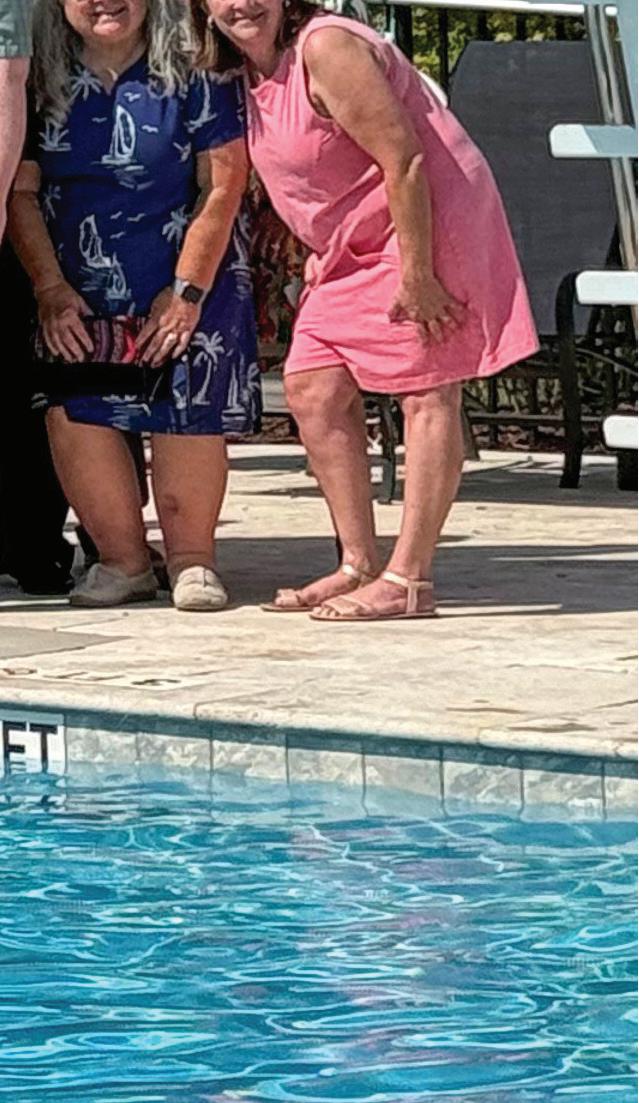

the on-base pool. Upon returning home, she started teaching elementary school but also continued assisting with lifesaving instruction until 1975, when she became certified as a water safety aide and began teaching swimming independently.
Lillian’s early swimming instruction experiences were modest—two classes of 10 students she knew from school. But by her second year, she was teaching multiple sessions each day, sometimes spending six hours straight in the water. Over time, she refined her teaching methods, breaking skills down into manageable steps and addressing her students’ fears and challenges.
A pivotal moment came when a mother approached Lillian about teaching her 2-year-old son who was recently found lying face down in a body of water with his face blue. Although she had never taught children that young, Lillian agreed. The child overcame his fear, and word spread quickly. The following summer, demand for lessons for younger children surged, leading Lillian to develop her toddler beginner program, an offering that remains a foundational class today.
Each summer, Lillian typically teaches between 250 and 300 swimmers


at Darlington Country Club. Her program is structured in progressive levels, beginning with parent-assisted toddler classes that focus on comfort and enjoyment in the water. Beginner students learn water confidence, foundational strokes such as freestyle and backstroke, and essential safety skills. Intermediate swimmers advance to more complex techniques like sidestroke and breaststroke, while advanced students train in endurance, refined stroke work and lifesaving skills. Many of Lillian’s advanced swimmers pursue lifeguarding or competitive swimming.
Lillian offers personalized lessons for adults, tailoring her approach to suit beginners, those overcoming fear and individuals looking to refine their technique. She also works with individuals with physical challenges, including those with spina bifida, stroke recovery and limb differences, adapting her teaching to meet each person’s needs.
Lillian has even taught at her daughter’s neighborhood pool in North Carolina. Another summer, she taught at Camp Coker during the Cub Scout Day Camp.
“I’ve even taught while I was at the beach on vacation,” Lillian says. “As my mother said, ‘You can’t seem to help yourself.’”
By Lillian Brunson
I have come to the realization that letting go of fear is a matter of faith. The mind tells us that because we are heavy, we will sink to the bottom just like a rock. As long as you cling to the fear, your body tenses and it makes it difficult, if not impossible, to stay on top of the water. When we step out on faith and let go of the fear, our body floats.
It is crucial to believe. I do believe, and I have come to realize that there are implications for all the areas of my life. When we believe, we are able to live our lives in joy, without the fear weighing us down.
On the other hand, fear only breeds more fear, and fear breeds panic. When we live our lives in fear, we miss out on the joy—on the beauty and wonder of life. If we learn to trust, if we just completely let go, life is amazing! I know it is not easy to let go, to give up control, but when you do, you will find peace.
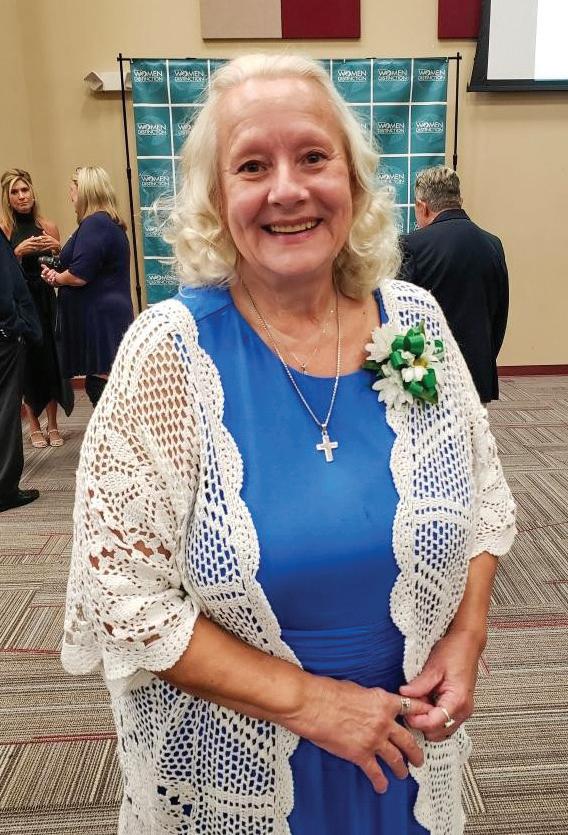
Lillian has helped Scouts earn their swimming badges and served as the director of a free swim camp that served 50 children in Darlington each summer.
Leaving an Influential Wake
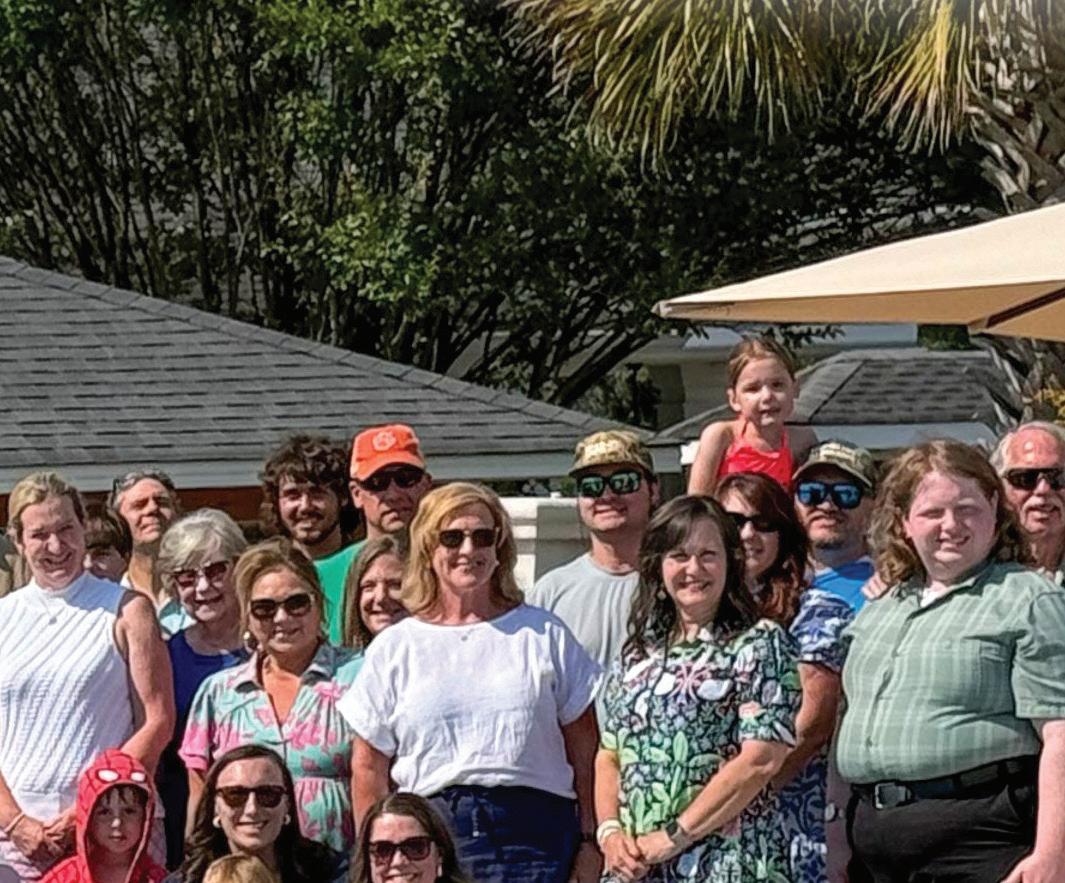
Lillian’s influence extends beyond her lessons. Many of her former students work as lifeguards, instructors and aquatic professionals. Some have even managed pool facilities, crediting Lillian with providing the skills that led to their success. Her program grew almost entirely through word of mouth, drawing families from across the region. In many cases, she has taught multiple generations within the same family.
Her dedication to swimming is personal. Lillian’s children—Renee, Hugh, James and William—were raised in the water, often accompanying her to lessons. Renee followed in her mother’s footsteps as a swim instructor, while her sons became lifeguards. James was awarded a Guardsman Medal of Valor for rescuing an elderly couple during a hurricane flood, a moment that underscored the lifesaving importance of the skills Lillian has spent her life teaching. Her grandchildren also embrace swimming, continuing the family tradition.







Throughout her career, Lillian has offered other forms of teaching and service. She has worked in elementary education, middle school mathematics, gifted and talented programs and private schools. She has served as a Girl Scout leader and a grief counselor in her church, reflecting her commitment to nurturing the physical and emotional well-being of others. In her free time, she enjoys being with her family on their tree farm.
After a hip replacement in 2021, Lillian was determined to return to the water. Through dedicated rehabilitation, she was able to resume teaching by the following summer. Her doctors credit her swimming for contributing to her strong heart and lung health.
In addition to swim lessons, Lillian leads water aerobics classes at the Darlington Country Club during the late summer and fall months, continuing until cooler temperatures make it impractical. These classes provide another avenue for individuals, particularly adults, to stay active and engaged in a fun, low-impact activity.
Lillian sees swimming as more than just

a skill—to her it’s also a safety measure, a form of exercise, a social activity and a source of emotional and mental well-being.
“Learning to swim is a safety issue, but it’s also a social skill,” she says. “Swimming is also one of the best whole-body exercises, and it is easy on your joints as you get older. It’s a skill you can use and enjoy your entire life.
“All you need is a bathing suit and some water. Swimming keeps you cool when it’s hot outside. It’s relaxing, too. Being in the water helps relieve the tensions and stresses of the day. It promotes a good night’s sleep and is just plain old-fashioned fun.”
Now in her 53rd consecutive year of teaching, Lillian approaches each season with the same passion and purpose that began in her youth. She’s committed to passing on her knowledge, actively seeking to mentor younger instructors who can carry forward her methods and philosophy.
Lillian holds her swimmers close to her heart, and she has collected so many special memories over the years. She recalls a small child she taught who was frightened to swim. Lillian held her hand each week, guiding her through the water,
her calming presence soothing the girl. Finally, after a few weeks, the girl assured Lillian “I got this.” Lillian reflects that there are many times in life we need someone to help us along our way until we can do it on our own.
For Lillian, swimming has never been just about technique. It is about equipping people with a lifelong skill, instilling confidence and a love for the water.
“I have been told by many people over the years that I have a gift—that I am a ‘swim whisperer,’” she says. “First and foremost, I want everyone to understand that my gift is from God. He has blessed me with this gift and has been with me through all these years. He has taught me so many truths about life and, most importantly, about faith through my experiences in the water. The lessons I
have learned have helped me become a better teacher, not just in the water, but in the classroom and in life in general.
Next to her family, Lillian says teaching swimming has been one of the greatest blessings of her life.
“I give all the glory to my creator,” she says. “I love teaching swimming because learning to swim brings people a great deal of happiness. That, in turn, brings me so much joy.
“It is also good for me physically, which is especially important now that I am no longer a spring chicken. I plan to teach as long as God will let me, but I won’t be here forever. I am hoping to find young people who will train with me so that I can share the lessons I have learned, and so they can continue teaching future generations when I am no longer able to do so.”
To register for lessons, call Lillian Brunson at 843-393-7233.



For two years, we tried. Beginning at the age of 2, we sent Isaac to swim lessons, hoping he’d learn to swim or at least to survive in case he fell in the pool in our backyard. But no luck. We tried multiple teachers, but no matter how often they begged, pleaded or even bribed, he refused to do anything other than hold on to a kickboard. Two years of swim lessons, and he never even got his hair wet. We were at our wits’ end.
Toward the end of summer 2011, a family member mentioned Lillian Brunson of Darlington. My first reaction was “Darlington? I don’t really relish the idea of driving 20 minutes for a swimming lesson for a child that absolutely refuses to put his head under water!” But again, we were at the end of our rope. What we had tried had not worked. We decided to make one last-ditch effort before the end of summer. So, we drove to Darlington, and that’s when the miracle happened. We met the swim whisperer.
For two years, we had tried to talk Isaac into putting his head or face in the water. And for two years, he’d politely yet firmly refused. “No, thank you, maybe tomorrow,” he would say. That’s all we ever heard. Yet within 15 minutes of her first lesson, our child was face down in the water blowing bubbles. By the second lesson, he was going under the water searching for rings at the bottom of the pool. Within four days, he was floating on his stomach and also on his back, and by the sixth day he was actually swimming to Ms. Lillian, face down in the water, legs kicking strongly.
Six days. That’s all it took.
I do not know what or how she does it. All I know is, I wish I’d met her two years ago. Isaac was able to take a total of 10 lessons from her before summer came to an end. That’s it, 10. Yet he can now swim a lap in our pool. And this was a child that merely a month ago would not even get his hair wet.
She has a gift. And we’re so blessed to have met her!
— Ashley King
Every month, MPD Electric Cooperative features a new, recognizable spot from somewhere in the Pee Dee. Check out next month’s page for the answer.





Main Street United Methodist Church stands as an architectural treasure in the Marlboro County community of McColl. This historic, neoclassical building is easily recognized by its distinct octagonal bell tower. Winder Lumber Co. built the church in 1910 during the peak of the town’s economic prosperity. That growth followed the arrival of South Carolina and Pacific Railroad and the establishment of McColl Textile Manufacturing Plant, a cotton plant that helped the community thrive until the 1920s when a boll weevil infestation wiped out more than 70% of cotton crops. Although the church’s pastoral leadership ended in 2023, the building serves as a reminder of enduring faith and resilience for this once-booming town.


























Let the air fryer work its magic on squash
Story and photos by Libby Wiersema
No matter how well-stocked my vegetable bin is, I can never pass up sunny-colored squash. Along with freshly picked okra, yellow squash is eye candy to me. If sunshine came in vegetable form, summer squash would be it.
When I hit the farmers market, the first order of business is a quick walk-through to check out the squash supply. Then, I circle back to the stall with the most beautiful offerings. Filling my bag with petite, smooth-skinned, brightly colored squash is one of those little pleasures that makes shopping a joy for me.
Native to the United States, squash harkens to 7000 B.C., according to food
historians. Yellow varieties can be straight neck, crookneck or semi-crookneck, but the sweet, mild flavor profile is the same. Vitamins A, B6 and C are part of the nutritional package, as are folate, riboflavin, potassium, magnesium, beta carotene and fiber.
In South Carolina, yellow squash grows from April through August. You can find it in the supermarket year-round, but the best-tasting squash is small, freshly picked and grown in local soil.
Of course, all the green thumbs out there can simply walk to their gardens, pluck and bask in the satisfaction of knowing they produced these beauties themselves. This year, I am putting envy aside. Readers have inspired me to add to
my little lineup of gardening experiments. I am trying my hand at growing squash, and so far, so good. Not that I have plowed up the land and planted rows of my favorite summer vegetable—not by a longshot. Instead, I filled a canvas bag with soil and planted one little seedling, a semi-crookneck variety called Gentry. I heard it is nearly impossible to kill. We will see. But at this point, I am thrilled to report that the plant seems to be thriving, and little knobs of yellow are poking out of the tangle of vines.
While I patiently await their ripening, I continue to hit up the farmers market for my supply. Fried squash with potatoes and onions, squash casserole, squash soup, boiled squash, steamed squash—I love all
2 medium or 3 small summer squash
½ teaspoon salt
1 cup plain panko breadcrumbs, divided 2 eggs
1 cup finely chopped Swiss chard or your favorite tender greens
¼ cup sweet onion, minced
1 teaspoon cornstarch
½ teaspoon garlic powder
2 tablespoons of fresh herbs, finely chopped
3 to 4 drops of Tabasco sauce, optional
Cut off ends of washed, unpeeled squash. Shred squash with a grater or food processor. Place shredded squash in a colander placed on a cooking sheet lined with paper towels, and sprinkle with salt. Toss well, and let sit for 10 minutes. The paper towel-lined colander will absorb the fluid.
Place Swiss chard, onion, herbs and 2/3 cup of breadcrumbs in a large mixing bowl. Sprinkle cornstarch and garlic powder over the grated cheese-blend, and gently toss to coat. Using a rubber spatula, press any excess fluid from the grated squash. Transfer squash to the mixing bowl. Add coated cheese, eggs and Tabasco. Incorporate all ingredients. Take 2 heaping tablespoons of the mixture and, using wet hands, gently
the many ways to cook squash.
The last time we talked summer squash here, I shared a recipe for my skillet squash casserole—a ready-in-a-snap dish requiring minimal oven time.
This month, I am sharing my recipe for squash fritters cooked in one of the greatest inventions to shake up the modern kitchen—the air fryer.
This preparation should be especially appealing for anyone who is healthconscious or averse to cranking up the oven in the summertime heat. There is no precooking involved, either. The squash is mixed in raw, which makes it a time-saver.
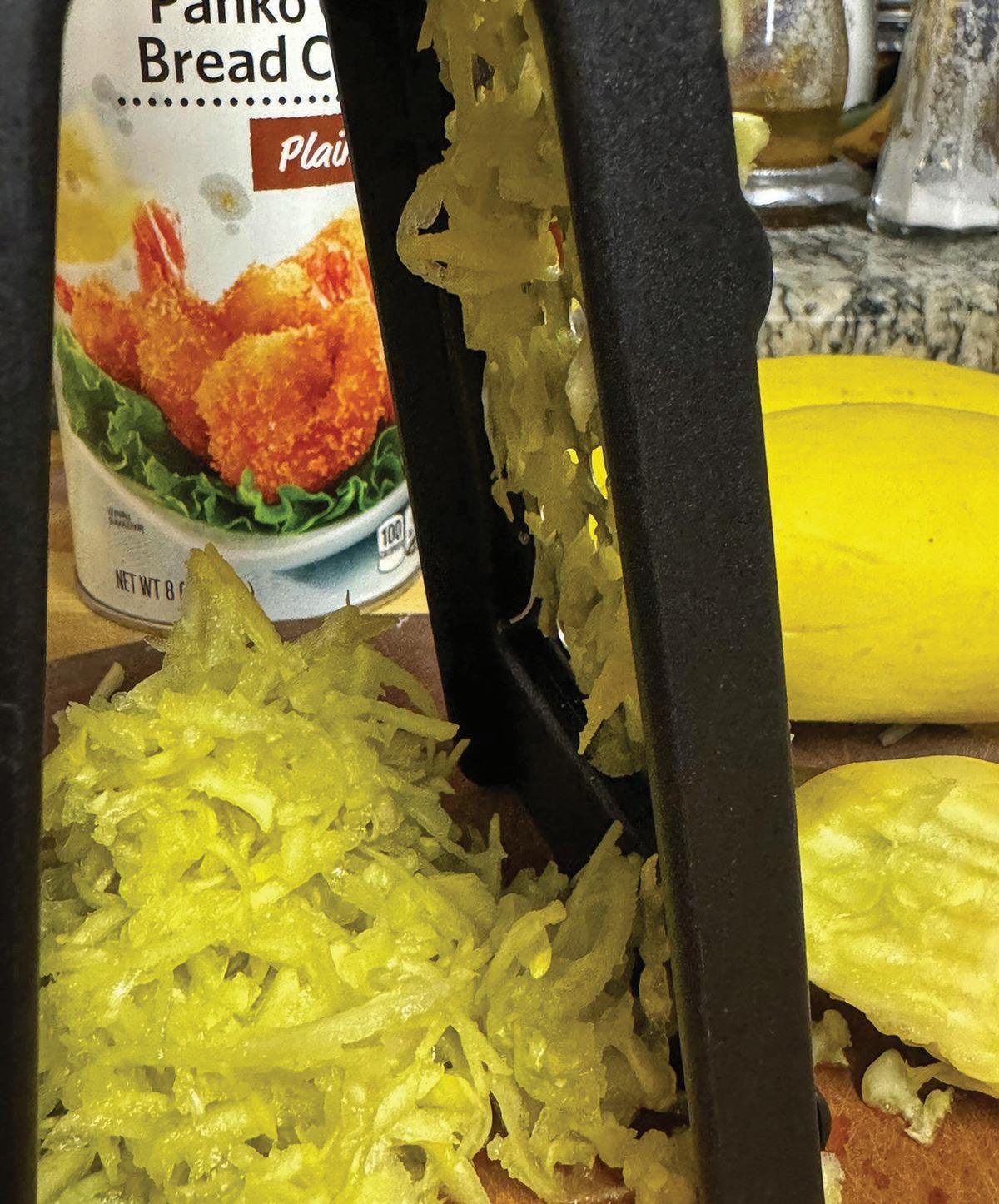
squash is the key ingredient in tasty seasonal fritters.
form into a fritter. If the mixture is too wet to hold its shape, add a few more breadcrumbs, a tablespoon at a time. Repeat process with remaining mixture. Lightly roll formed fritters in remaining breadcrumbs. Arrange 2 inches apart on an air fryer rack that has been generously coated with cooking spray. Lightly spray tops of fritters with
These squash “tots” are savory and cheesy, crispy on the outside and moist on the inside. They are also versatile in the sense that you can mix in bits of other veggies. For this recipe, I used squash, Swiss chard, sweet onion, fresh basil, chives and parsley.
Consider tossing in a little hard Italian cheese, like pecorino or Parmesan Reggiano, for a nice piquant flavor profile. I created a blend of fontina, medium sharp cheddar and Parmesan because that is what I had in the refrigerator. Any blend of melty cheeses will do.
These fritters go great with a little aioli
cooking spray. Cook in air fryer on 400 F for about 5 minutes or until golden brown on top. Gently loosen fritters with a narrow spatula. Flip. Apply a light coating of cooking spray to tops, and cook for 5 more minutes or until golden brown.
Serve tots with your favorite aioli, creamy dressing or marinara.
drizzle or creamy dressing, or a marinara makes a great pairing. You can serve them as finger food or plate them as a side dish with your favorite entree.
Now, grab the prettiest, smoothest squash you can find, and whip up these tasty squash fritters. n
Libby Wiersema writes about dining, food trends and the state’s culinary history for Discover South Carolina as well as other print and online media. Contact her at libbyscarolinaspoon@gmail.com, or visit the Carolina Spoon Facebook page at facebook.com/SClibby.1111.

Story and photo by Dave LaBelle
‘I
Wedding bells are ringing, and June is a popular months for couples to tie the knot
For many photographers—professional and amateur—weddings are a time they are called to make those pictures that forever preserve a couple’s special day.
I’ve photographed many weddings, perhaps too many, in my lifetime. While I have captured some beautiful moments, I have never considered myself a wedding photographer.
When I do get talked into photographing one of these sacred happenings, I agree only if I can make candid pictures and leave group photos and traditional pictures to the wedding photographer. I do what I do, they do what they do and I am careful not to interfere.
When my wife and I photographed weddings together we sometimes alternated duties. One would capture the action while the other did the portraits, like having a play-by-play announcer and a color commentator. At my best, I am the color commentator. I watch for subtle, yet
storytelling moments most don’t see or look for—usually before or after the vows.
Photographing weddings is not unlike covering sporting or political events.
It’s important, if not critical, to know the lay of the land. When possible, attend any rehearsals to scout the best angles to capture the most important (or storytelling) pictures. Often the best pictures from any event happen beforehand, when people are relaxed.
Watch for emotions after the actual event, after the nervousness and stresses of planning are over. As I often remind my students, “BAD is good!” BAD is an acronym for before, after and during an event.
Also, it’s important—if a wedding photographer has been hired—not to overshoot or get in their way. Talk to them first and assure them you’re not there to compete but augment. And finally, don’t miss the kiss. You can miss everything else, but if the couple is counting on you to capture the moment their lips meet, and you miss that photo, it will be hard to live with the disappointment. n
Watching through a small door window, I noticed Lindsey Sabrizio performing double duty—busily ironing her daughter’s wedding dress while watching one of her seven children. Though lacking in technical quality, this real, spontaneous moment captures an important part of the wedding most never see.

Internationally renowned author, photographer and lecturer Dave LaBelle has captured special moments for more than half a century. He has shared photo tips and life perspectives with readers since 2009. For more of his writings, visit davidlabelle.com and bridgesandangels.wordpress.com.
— Meredith H.

Introducing the Ladies Soirée Bracelet Watch, a dazzling fusion of jewelry and timekeeping designed for evenings that deserve a little extra sparkle. Draped in shimmering crystals from case to clasp, it catches the light with every movement, turning even the simplest gesture into a statement of elegance. Whether you’re raising a glass at a celebration or slipping into a candlelit dinner, this is the piece that completes the look.
But don’t mistake its brilliance for fragility. Beneath the glamour lies a thoughtfully crafted timepiece, built to keep perfect time while you shine. e silver-tone nish delivers classic sophistication, while the bracelet design ensures it wears like your favorite piece of jewelry—comfortable, secure, and impossible to ignore.
And here’s the part that truly sparkles: originally $199, now just $49.
at’s not just a deal—it’s your invitation to own a showstopping watch at an almost unbelievable price.
Because at Stauer, we believe elegance shouldn’t be reserved for special occasions… or special budgets.
But don’t wait. is eye-catching beauty tends to disappear just as quickly as the night itself. Claim yours while supplies last!
Watch Specifications:
• Alloy case, bezel, and band
• Stainless steel case back
• Fold-over clasp
• Fits wrists up to 7"
Ladies Soirée Bracelet Watch
At some point in your childhood, someone handed you a ceramic pig with a slot in its back and told you to put your money in it. You did not question this. Nobody questions this. We have collectively agreed, as a civilization, that the correct vessel for teaching children about financial responsibility is a hollow porcine figurine, and we have been too busy to stop and ask why.

It’s a reasonable question. Why a pig? Why not a cow, horse or sensibly shaped box? The answer involves a medieval clay, a linguistic coincidence and a very long game of cultural telephone that somehow produced the object currently sitting on your child’s dresser.
In medieval Europe, metal was expensive and largely unavailable to ordinary households. When people needed cheap, practical containers for storing small items or spare coins, they turned to a dense, inexpensive orange clay that was common across the region. That clay was called pygg.

Pygg was used for all kinds of household pottery, including jars, bowls, cups, and small pots for stashing coins and savings. These were called pygg pots or pygg jars. They were not shaped like anything in particular. A pygg jar was no more pigshaped than a Mason jar is shaped like a mason.
back for the coin slot.
Nobody corrected the error because, frankly, the pig-shaped version was better than a plain clay pot. It was cuter, more memorable and easier to sell.

Over the next few centuries, the English language evolved, pronunciations shifted and the word pygg gradually merged with pig, the animal. By the 18th century, people had largely forgotten that pygg referred to a type of clay at all.
So, when English potters received orders for pygg jars, some of them began making them in the shape of pigs. From a craft perspective, this was a charming and understandable mistake. Pigs are round and compact, and a pig shape is an ideal vessel shape with a wide belly for storing coins, four stubby legs for stability and a flat














Ed Salley is MPD’s IT guy. Ed not only knows a lot about technology, he knows a lot about everything. Send your question to asked@mpd.coop, and it may be featured in next month’s Ask Ed column.

The linguistic accident also landed on a fortunate symbol. In medieval and Renaissance Europe, pigs were closely associated with prosperity and financial good fortune. In German and Dutch cultures, where pigs were considered especially lucky, small pig figurines were exchanged as New Year’s gifts, wishing the recipient wealth and good fortune in the coming year.


The piggy bank spread through Europe and eventually to the Americas, picked up by generations of parents who found that a ceramic pig was an effective teaching tool precisely because it was tangible and specific. A piggy bank has a personality, a face and children name them. The psychological investment in not smashing something you’ve named turns out to be a surprisingly effective savings incentive. It is, when you think about it, a remarkably successful accident. The clay is long gone, but the pig is eternal.






“Absolutely
There are crosses … and then there are works of devotion so exquisite they transcend ornament and become art.
The Renaissance Cross Necklace is one such creation.
Inspired by a bishop’s cross discovered in a centuriesold church in southern France, this design reflects the splendor of the high Renaissance—when artisans didn’t simply craft jewelry … they honored faith through it.
A breathtaking array of multicolored stones radiates with remarkable brilliance, each one placed in perfect harmony to create a luminous expression of devotion. The result is a cross that seems to glow from within—rich with meaning, history, and beauty.
In decades of searching the world’s great designs, we’ve rarely encountered anything so striking… so reverent… so timeless.
And yet—through a remarkable opportunity—you don’t have to pay the price such artistry usually commands.
This extraordinary necklace is now just $59
But opportunities like this don’t last.
We secured a limited quantity at this exceptional value, and once they’re gone, we cannot promise another offering at anything close to this price.
If you’ve been waiting for something meaningful… something beautiful… something worthy of being passed down— this is the moment to claim it.
Jewelry Specifications:
• DiamondAura®, the Ultimate Diamond Alternative, in pink, purple, green, blue, yellow, orange and white
• 14k yellow gold-finished stainless steel setting
• Necklace: 17 ½" + 2" extender, lobster clasp.
Renaissance Cross Necklace
$299 $59* + S&P Save $240
1 Unlikely to cut (4)
Unlikely to cut (4) forward (8)
3 Goes forward (8)
9 Looking happy (7)
10 Bother (5)
11 Correct, but it isn’t left (5)
Looking happy (7)
Bother (5)
12 It may get tied or twisted (6)
14 Transform into (6)
16 Fretted instrument (6)
19 Former kingdom that became the 50th U.S. state in 1959 (6)
Correct but it isn't (5)
21 Fastens the door (5)
24 Consumed (5)
may get tied or twisted (6)
25 Flat highland (7)
26 Slope of a small mountain (8)
27 Maple or dogwood, for example (4)
Transform into (6)
Fretted instrument
1 Specify in detail (8)
2 Being dishonest at length (5)
4 Phone number, informally (6)
Former kingdom became the U.S. state in (6)
5 “Encore!” (5)
6 Be a maestro (7)
7 Simon ___; children’s game (4)
8 Target of a crime (6)
13 Force divided by area (8)
15 Along the seashore (7)
Fastens the door
17 Take cargo from (6)
18 Muscular looking, in slang (6)
20 Sisters of parents (5) 22
Consumed (5)
highland (7) of a small mountain (8)
Maple or dogwood, example (4)
Specify in detail
dishonest at length (5)

Phone number, informally (6)
"Encore!" (5) maestro (7)






When it’s you against nature, there’s only one tool you need: the tempered steel Stag Hunter from Stauer—now ONLY $59!

That first crack of thunder sounded like a bomb just fell on Ramshorn Peak. Black clouds rolled in and the wind shook the trees. I had ventured off the trail on my own, gambled with the weather and now I was trapped in the forest. Miles from camp. Surrounded by wilderness and watching eyes. I knew that if I was going to make it through the night I needed to find shelter and build a fire... fast. As the first raindrops fell, I reached for my Stag Hunter Knife




Stauer 30x60 HD Pocket Binoculars -a $99 valuewith your purchase of the Stag Hunter Knife










Forget about smartphones and GPS, because when it comes to taking on Mother Nature, there’s only one tool you really need. Our stunning Stag Hunter is the ultimate sidekick for surviving and thriving in the great outdoors. Priced at $149, the Stag Hunter can be yours today for an unbelievable $59! Call now and we’ll include a bonus leather sheath!

A legend in steel. The talented knifemakers of Trophy Stag Cutlery have done it again by crafting a fixedblade beauty that’s sharp in every sense of the word. The Stag Hunter sports an impressive 5⅓" tempered German stainless steel blade with a genuine deer stag horn and stained Pakkawood™ handle, brass hand guard and polished pommel. You get the best in 21st-century construction with a classic look inspired by legendary American pioneers.









But we don’t stop there. While supplies last, we’ll include a pair of $99 30x60 HD pocket binoculars and a genuine leather sheath FREE when you purchase the Stag Hunter Knife.
Your satisfaction is 100% guaranteed. Feel the knife in your hands, wear it on your hip, inspect the craftsmanship. If you’re not completely impressed, send it back within 30 days for a complete refund of the item price. But we believe that once you wrap your fingers around the Stag Hunter’s handle, you’ll be ready to carve your own niche into the wild frontier.







BONUS! Call today and you’ll also receive this genuine leather sheath!







feel of this knife is unbelievable...

















Cucumber and Dill Pasta Salad
1 pound small pasta shells
2 cups cucumber, sliced
¼ cup green onion, chopped
1 cup sour cream
½ cup milk
1 tablespoon chopped, fresh dill weed

1 tablespoon white vinegar
½ teaspoon granulated garlic
½ teaspoon salt

½ teaspoon coarse ground black pepper
Squeeze of fresh lemon juice
Cook pasta in boiling, salted water until al dente. Drain, and rinse in cold water. Transfer pasta to a large bowl.
In a separate bowl, mix sour cream, milk, dill, vinegar, garlic, salt and pepper. Set dressing aside.
Mix cucumbers and onions into the pasta. Pour in dressing, and mix thoroughly. Sprinkle with lemon juice. Cover, and refrigerate at least 1 hour. Stir just before serving.


8 ounces bowtie pasta
½ English cucumber, chopped
1 green bell pepper, chopped
10 ounces cherry tomatoes, halved 1 to 2 shallots, chopped
Dressing
1 lemon, zested and juiced
1 tablespoon red wine vinegar
2 garlic cloves, minced
1 teaspoon dried oregano
1 cup chopped, fresh parsley
2 tablespoons capers, drained and rinsed
½ cup pitted Kalamata olives
1⁄3 cup feta cheese, crumbled
Pinch kosher salt
Pinch black pepper
¼ cup extra-virgin olive oil
Boil pasta in salted water according to package instructions. Drain, then set aside briefly to cool.
To make dressing, add lemon juice, zest, red wine vinegar, garlic, oregano, salt and pepper to a large bowl. Whisk to combine. While whisking, drizzle in olive oil.
To the bowl with dressing, add pasta, cucumber, bell pepper, tomatoes, shallots, parsley, capers and olives. Toss to coat. Add feta, and toss again gently.
For best flavor, cover and refrigerate for 30 minutes to 24 hours. Give salad a final toss before serving.
Salad
1 tablespoon salt
2 cups mini bowtie pasta
3 cups frozen corn, cooked and cooled
3 green onions, finely diced
½ bunch cilantro, finely diced
Dressing
½ cup mayo
½ teaspoon chili powder
¼ teaspoon paprika
1⁄8 teaspoon ground cumin
1 teaspoon Sriracha
1 tablespoon finely diced jalapeno
1⁄3 cup cotija cheese
1 large avocado, diced
½ cup canned black beans drained and rinsed
2 large limes, zested and juiced
¼ teaspoon salt
1⁄8 teaspoon pepper
Boil 12 cups water in a large pot. Add 1 tablespoon salt. Cook pasta according to package directions. Drain, rinse under cold water for 15 seconds, shake off excess water, and let dry completely.
To make the dressing, whisk together mayo, chili powder, paprika, cumin, Sriracha, ¼ teaspoon lime zest and 3 tablespoons lime juice in a small bowl. Add salt and pepper. Chill until ready to use.
Kosher salt
16 ounces rotini
1 large carrot, shredded
1 celery rib, sliced thinly
8 ounces cheddar cheese, cubed
10-ounce bag frozen peas, thawed
½ cup cooked bacon, chopped
1½ cups mayonnaise
1⁄8 cup sugar
¼ cup white vinegar
1 teaspoon salt
1 teaspoon black pepper
Boil pasta in salted water to al dente. Drain, then run under cold water until cooled.
In a large bowl, mix mayonnaise, sugar, vinegar, salt and pepper. Add pasta and remaining ingredients. Mix well.
Refrigerate for at least one hour before serving.
Salad
Kosher salt
12 ounces pasta 1 pint cherry tomatoes, halved 1 bell pepper, cored and chopped
1 shallot, chopped
6 ounces marinated artichoke hearts
¼ cup pitted kalamata olives
Dressing
¼ cup extra-virgin olive oil
2 tablespoons white wine vinegar
2 garlic cloves, minced
1 teaspoon dried oregano
6 pepperoncini, chopped
6 to 8 ounces salami, cut into bite-size pieces
6 ounces mozzarella cheese balls
½ packed cup chopped, fresh parsley
½ packed cup chopped, fresh basil leaves
½ to 1 teaspoon crushed red pepper flakes
Kosher salt, to taste
Black pepper, to taste
Boil a large pot of water over high heat.
In a small bowl, whisk together all dressing ingredients to combine. Set aside.
Generously salt boiling water, then add pasta. Cook until al dente according to package instructions. Drain, and add to a large mixing bowl.
To the bowl with pasta, add tomatoes, bell pepper, shallot, artichoke hearts, olives, pepperoncini, salami, mozzarella, parsley and basil. Pour dressing over pasta, and toss to coat. Serve immediately, or let sit for 30 minutes to soak up flavor.
In a large bowl, combine cooled pasta, cooled corn, avocado, onions, cilantro, jalapenos and cheese. Drizzle with dressing, and gently toss. Serve immediately. Do you want to see your favorite meal in print? Submit your recipe to recipes@marlboro.coop.

By Robin Howard

Imagine you’re standing in Marion Square in downtown Charleston, surrounded by dog walkers, lunch crowds and the usual hum of daily life. You pull out your phone, open an app and suddenly the park transforms. Rising in front of you through your screen is a massive tabby stone fortification, 30 feet tall and 3 street blocks wide, bristling with defenders who once held this city against one of the most powerful armies in the world.
The year is 1780. At stakes is the entire American experiment. This experience is brought to you by the Liberty Trail South Carolina app.

Developed through a partnership between the American Battlefield Trust and the South Carolina Battleground Preservation Trust, the app is a free, self-guided driving and walking tour that connects 30 historic sites across the state. It launched in 2019 and has since grown into one of the most ambitious digital history projects in the American South. And it comes in two distinct versions: the main Liberty Trail South Carolina app, serving as your tour guide across the state; and the Liberty Trail AR app, which layers full-scale augmented reality onto three of the most significant battlefield sites.
Battles You Never Learned About in School
The trail begins in Charleston. At Fort Moultrie on Sullivan’s Island, the app tells the story of the first significant patriot victory of the Revolutionary War.

In June 1776, a hastily built palmetto-log fort absorbed cannon fire from the Royal Navy and refused to fall. The soft logs swallowed cannonballs instead of shattering, and the British fleet limped away in one of the most shocking upsets of the conflict. Nearby, the story of Breach Inlet fills in a lesser-known piece of the puzzle: Militia commander William “Danger” Thomson held the eastern end of the island, preventing British troops from flanking the fort and seizing Charleston outright.
That early victory bought time. However, four years later, Charleston fell. The Siege of Charleston in the spring of 1780 resulted in the largest American surrender of the entire war, and the British controlled the city for the next 2½ years. The app guides visitors through Marion Square, the site of the formidable Horn Work fortification and other remnants of the







occupation scattered across the city.
What followed was a brutal, grinding war of attrition across the South Carolina countryside. At the Waxhaws, near the North Carolina border, Banastre Tarleton’s British Legion attacked Virginia Continentals after they attempted to surrender. The massacre rallied furious support for the patriot cause and earned Banastre the nickname “Bloody Ban.” At Hanging Rock, patriot Brig. Gen. Thomas Sumter struck a British outpost in August 1780, landing a blow that showed the British their grip on the backcountry was far from secure.
The Battle of Camden on Aug. 16, 1780, was the low point. Gen. Horatio Gates led the Continental Army into a catastrophic defeat that shattered American hopes in the South and ultimately led to Horatio being replaced by Nathanael Greene. The app explores the battlefield and the broader strategic collapse that followed.


Then the tide turned.
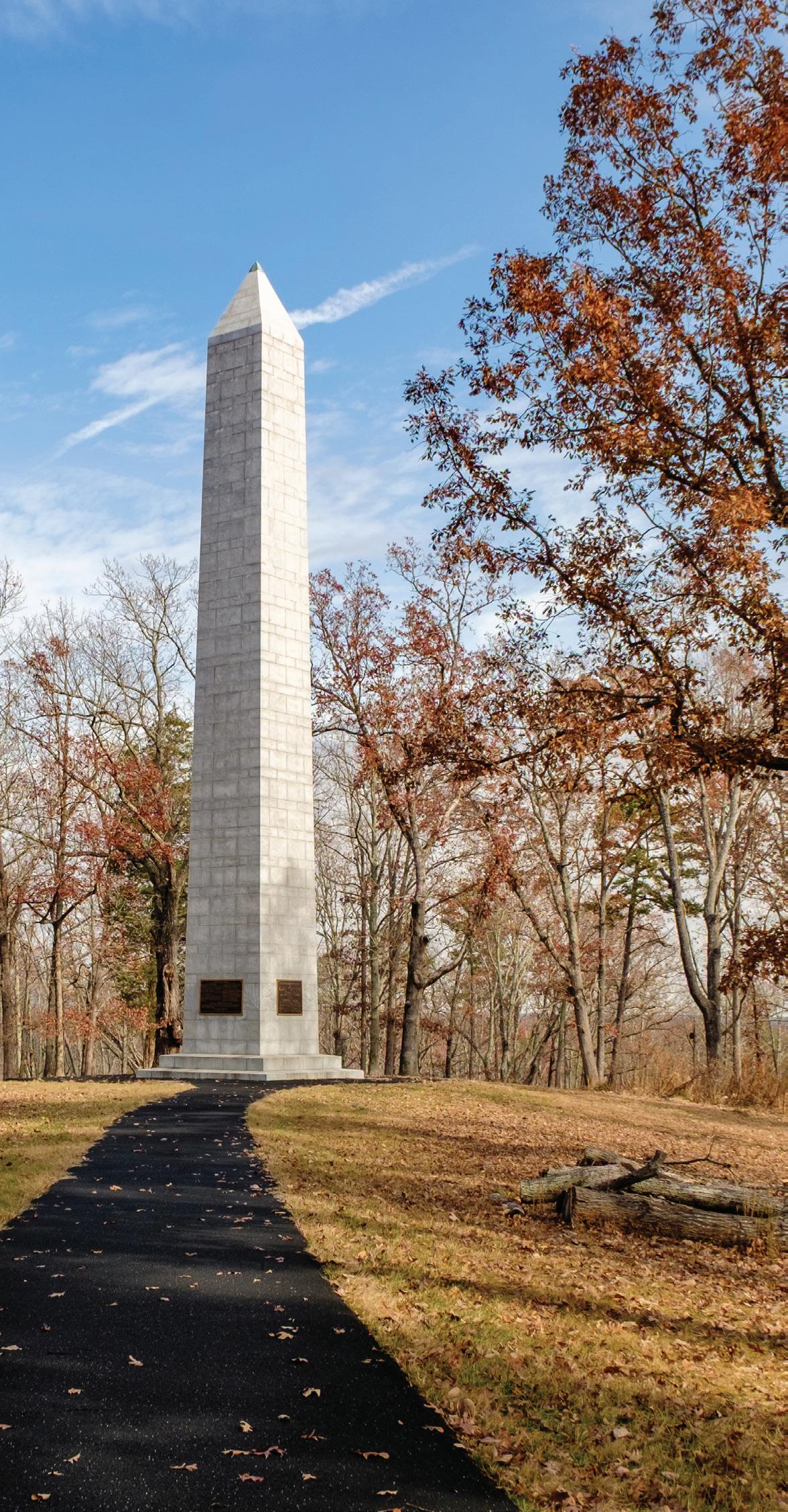
At King’s Mountain in October 1780, Overmountain Men—tough frontiersmen from west of the Appalachians—surrounded and destroyed a loyalist force in one of the most decisive patriot victories of the war.
Two months later, at Cowpens on Jan. 17, 1781, Daniel Morgan’s tactical trap crushed Banastre’s elite forces. The app brings both sites to life with battle maps, period illustrations, 360-degree tours and audio narration. Cowpens is one of the trail’s crown jewels, a preserved battlefield where the ground still carries the weight of what happened there.
From there, the trail follows Nathanael’s grinding campaign to reclaim South Carolina, fort by fort. Fort Watson fell in April 1781. It was the first British outpost to be lost after the Siege of Charleston. Patriots used an improvised structure called a Maham Tower to fire down into the enemy position.


Hobkirk Hill, outside Camden, and the siege of Ninety Six from May to June 1781 show how hard Nathanael pushed, even in defeat. And on Sept. 8, 1781, at Eutaw Springs, patriots inflicted losses on the British in the last major battle fought in South Carolina, forcing the Crown to begin its long retreat toward the coast.
Other stops include Musgrove’s Mill, where a small force of patriots ambushed a larger









loyalist force in August 1780; Boone Hall Plantation, which connects visitors to the complex story of colonial wealth, enslaved labor, and the Gullah culture that endured through and beyond the war; and White Point Garden in Charleston, where views across the harbor toward Fort Sumter and Sullivan’s Island frame the whole sweep of the city’s history.
While the main Liberty Trail South Carolina app is an exceptional tour guide, the companion Liberty Trail AR app brings history to life.
Focused on three sites from the Southern Campaign, the augmented reality experience places full-scale 3D reconstructions of Revolutionary-era structures directly into your physical surroundings through your phone’s camera.



At Marion Square in Charleston, you can stand inside the reconstructed Horn Work fortification. At Eutaw Springs, you can walk through a British camp and enter the historic brick house that stood at the center of the battle. At Fort Fair Lawn, you can explore a British fort and understand its role within the broader defensive network British troops built to hold South Carolina.
Dynamic military animations show troop movements and siege tactics in real time. Whether you’re standing on the actual site or exploring from your living room, the app places these structures around you at full scale, letting you see just how imposing a 30-foot tabby fortification was or how a backcountry British camp was laid out.


Both apps are free, but a little planning goes a long way. Since many of the trail stops are in rural areas with unreliable cell service, it’s worth downloading the tours you’re planning to visit before you leave home. The app allows offline access once content is saved, so you won’t be left squinting at a loading screen in the middle of a backcountry battlefield.
Also, bring your earbuds or headphones. Audio narration is one of the app’s best features, and hearing the stories told aloud while you’re standing on the actual ground where they happened is a completely different experience from reading text on a screen.



JUNE 26
Florence After 5
Come enjoy the musical talents of the Blackwater Band in the downtown district.
5:30-8:30 p.m.
DOWNTOWN FLORENCE
JUNE 27
The Lizard Man Stomp
The parade begins at 10 a.m. Afterward, street vendors, arts and crafts at the Cotton Museum, Car Cruise Up at The Depot, children’s activities, and numerous food trucks and drink stations will be featured.
10 a.m. to 2 p.m.
Main Street, Bishopville
JUNE 27
13th Annual Freedom Fest
The festival includes a new drone show, food and local vendors and free amusement rides. Bring your family and friends out to take in the fun.
6-10 p.m.
Public Square, Darlington
JULY 4
Fireworks Over Florence Bring the family and experience the joy of reworks this Independence Day.
5-10 p.m.
FLORENCE SOCCER COMPLEX
3701 W. Palmetto St., Florence

JULY 4
Fireworks Over Florence


• June 6: Strikeout Cancer
• June 11: Jake From State Farm Night
• June 12: Neon Night (drone show)
• June 13: The Life of a Flamingo: Taylor’s Version
• June 19: Cartoon Night
• June 25: Jake From State Farm Night
• June 27: Halfway to Halloween
• July 2: Military Appreciation
• July 3: Independence Day Celebration (fireworks)
• July 6: All-Star Show (fireworks)
• July 7: All-Star Show (drone show) Games start at 7 p.m.
Carolina Bank Field, 1200 Jennie O’Bryan Ave., Florence

If there is a single perennial that belongs in nearly every Southern yard—regardless of region, soil or experience level—it is purple

Echinacea purpurea. Native to the eastern United States and completely at home across all of South Carolina’s growing zones, it blooms from early to midsummer in shades of purple-pink, with distinctive drooping petals surrounding a spiky, burnt-orange central cone that gives the plant its common name. It tolerates heat, handles periods of drought and thrives in well-drained soil that characterizes most of the state. Plant it in full sun
Ecological returns extend past the bloom period. When coneflowers finish flowering, their seed heads become reliable food sources for goldfinches and other seed-eating birds. The plant is still doing meaningful work in September and October, long after the petals have dropped. Purple coneflower can self-seed over time, creating naturalized drifts without becoming invasive or demanding extra care from gardeners.

7 heat- and drought-tolerant perennials for South Carolina yards
By Robin Howard
South Carolina’s landscape contains an extraordinary range of plants suited for hot, dry summer conditions. Many of them are beautiful. All of them are tough. Once established, they reward neglect in a way many ornamental plants simply cannot.
2.
Few plants match the cheerful persistence of blackeyed Susan, Rudbeckia hirta from June through September and seems indifferent to heat and drought. Its deep root system helps it draw moisture from well below the soil’s surface during dry spells, which is exactly why it thrives in South Carolina’s Piedmont and Midlands landscapes, where clay soils bake hard in August.
A specialist native bee, Andrena rudbeckiae, also called the coneflower mining bee, has co-evolved to depend on black-eyed Susans for pollen, making this plant more than attractive. It is genuinely irreplaceable for certain pollinator species. grow from seed, naturalizes readily and tolerates a range of soils, from lean and sandy to clay-heavy. Leave the seed heads through fall and winter, and the birds will find them.




3.









False indigo, Baptisia, tests a gardener’s patience in year one, then pays back everything it asked for over decades. Several Baptisia species are native to South Carolina, and all share a defining characteristic—a very deep taproot that makes them exceptionally drought-tolerant once established and exceptionally difficult to transplant once they settle in. Plant them where you want them to live, and leave them there.
4.
Lanceleaf coreopsis, Coreopsis lanceolata, and threadleaf coreopsis, Coreopsis verticillata, are two of the most reliably low-maintenance perennials in South Carolina gardens.










































shrub-like that






Blue false indigo, Baptisia australis, was named the Perennial Plant of the Year by the Perennial Plant Association in 2010, and the recognition was deserved. It forms a shrub-like clump 3 to 4 feet tall and equally wide, producing upright spikes of bright indigo-blue, peashaped flowers in mid- to late-April that last up to six weeks. White false indigo, Baptisia alba, offers the same structure and toughness with creamy white flowers on dark charcoal-colored stems. Both are deer-resistant, heat and humidity-tolerant, and long-lived to a degree most perennials cannot touch. Inflated seed pods that follow bloom are themselves ornamental and rattle satisfyingly in an autumn breeze.





5.
When most of the summer garden is either done or exhausted, blazing star, Liatris spicata, sends up its tall, feathery purple spikes.
6.
Butterfly weed,




















Blooming from midsummer into fall, Liatris is one of the most dramatic vertical elements available to a South Carolina gardener working with drought-tolerant plants. It grows from corms that store energy underground, which contribute directly to its drought resilience. It handles sandy soils well, making it particularly valuable in the Lowcountry and coastal plain, and it attracts an extraordinary range of pollinators, including monarch butterflies fueling up for fall migration.















The threadleaf form, in particular, produces masses of cheerful yellow blooms on fine-textured, airy foliage that visually softens gardens in a way that bold-leaved plants cannot. Both tolerate poor soils and lean conditions remarkably well, which makes them ideal for the sandy coastal plain soils of the Lowcountry as well as the harder clay soils of the Midlands. Coreopsis species are native to the Southeast and are confirmed performers in South Carolina gardens across all three regions.






7.










Blanket flower, Gaillardia pulchella, is a native of American prairies and coastal plains. It blooms in fiery combinations of red, orange and yellow from late spring until frost.

The thread that runs through every plant on this list is a root system built for the long game: deep taproots, corm-based storage and extensive fibrous networks that reach far below the surface, where soil moisture persists even in drought. Improve your soil with compost where needed, water during the first season and mulch to retain moisture and keep soil temperatures from spiking. Then step back. These plants have been handling South Carolina summers since long before garden centers existed. 2 elements




Asclepias tuberosa, is a pollinator plant, but its credentials as a droughttolerant perennial deserve equal billing. It grows from a deep taproot that anchors it against drought and disturbance, forming neat clumps about 2 feet tall that explode in brilliant orange in early summer.



The color is rare among native perennials—a hot, saturated orange that reads beautifully against the green of a summer garden. Butterfly weed thrives in dry to average soil with full sun and actively resents wet feet, making it one of the few perennials that genuinely prefers the lean, dry conditions that defeat so many other plants.
Sandy coastal soils that exhaust most ornamental perennials pose no challenge for blanket flower. Its fuzzy, droughtresistant foliage stays attractive all season, and deadheading spent blooms encourages additional flowering. Even without that maintenance, though, the plant continues to perform. It is one of the few perennials that genuinely intensifies its display as summer heat builds rather than retreating from it.











































Have you ever wondered why so many porches in the South have ceilings that are painted blue? It’s a subtle detail that can be easy to miss at first, yet the story behind it is full of history and meaning.
Known as haint blue, this tradition of painting porch ceilings blue has long been a hallmark of Southern homes. The origins of the color are most often traced to the Gullah Geechee people of the coastal South, particularly South Carolina and Georgia. In their cultural folklore it was believed that haints—restless or wandering spirits—could wander into homes and cause harm or mischief. However, according to the stories, these haints were not allowed to cross over water.
To protect their homes, they would use the blue dye of the indigo plants from plantations they worked on to paint porch ceilings, doors and window frames. They also wore blue beads and blue clothing for the same reason. The color was thought to confuse or repel these spirits, creating a kind of visual barrier they couldn’t cross. In this way, haint blue was much more than just a decorative detail. It was deeply symbolic, providing a sense of protection and peace.
As time passed, this practice spread outside of the Gullah Geechee community and gradually made its way into broader Southern architecture. Homeowners began adopting the look, drawn not only to its meaning but also its beautiful aesthetic. Haint blue soon transitioned from a spiritual safeguard into a beloved design detail that became very popular across the Lowcountry.
Beyond folklore, there is a more practical reason this tradition has lasted.
Many believed the haint blue ceilings would help to deter birds and insects— particularly wasps. The thought was that bugs or pests would mistake the blue hue for the sky and keep them away from nesting around the ceiling altogether. While this claim is not exactly backed by science, there could be some truth to it.
Historic milk paints used in the early 1800s often contained lye—an ingredient that could have acted as a natural insect repellant. However, whether or not haint blue truly keeps away spirits or insects, there is no denying the sense of beauty and timeless charm it brings to an outdoor space.
Today many homeowners choose the color simply for the way it brightens shaded porches, softens shadows and works its magic by giving any porch a more spacious feel.
Modern paint choices offer a wide range of possibilities when it comes to the haint blue look. Some homeowners prefer a subtle, barely-there tint, from pale robin’s egg to soft aqua. The lighter tones tend to reflect light better and create that signature, airy feel, especially on covered porches. Slightly deeper shades add contrast and character.
Vibrant coastal blues, rich teals and turquoise can all be used to make more of a statement without losing that Southern appeal.
For those looking to incorporate haint blue into their own homes, here are a few popular paint colors to consider:
• Benjamin Moore Palladian Blue HC-144: an iconic historical shade, with airy blues and greens that make it one of the most popular picks.
• Benjamin Moore Bird’s Egg 2051-60: a light sky blue that brings a refreshing cast of brightness to any space.
• Benjamin Moore Aegean Teal 213640: a sophisticated blue green that adds richness without being too dark.
• Behr Porch Ceiling PPF-27: a classic, clean color named specifically for this Southern look.
• Sherwin Williams Waterscape SW-6470: slightly richer, with minty undertones that adds a little more personality, perfect for a coastal feel.
• Sherwin Williams Tradewind SW-6218: muted blue with gentle gray undertones that work well on farmhousestyle homes.








Brandi Faulk and her family are excited to share their homesteading journey with MPD Electric members. Their home, built in 1895, is a former railway hotel and farmhouse in Chesterfield County. Search “faulkfamilyfarmhouse” to see more photos of their experiences on Instagram.








Have a vacation on the horizon? Pack an ultracute seating mat from one of Emerson West’s poolside collections.
Featuring a set of three signature mats, each bundle includes vibrant colors and playful designs. Lightweight and easy to roll up, they are the perfect travel companions for days by the water. Sure, you could use a towel. Honestly though, no one wants to dry off with something that’s gotten wet and dirty from sitting on the ground.
Made from a high-quality neoprene, each mat creates a comfortable barrier between you and hot, rough surfaces such as a concrete pool ledge, deck and sand— preventing your skin and swimsuit from snags and irritation.
Designed to be fade resistant and machine washable, these must-have mats include a nonslip bottom and are built to endure everything from backyard lounging to beachside escapes.
Emerson West is an Atlanta brand that you can find on Amazon and Etsy. Shop from coordinating swim accessories such

as the Poolside Pop can coolies to stylish pouches that hold hot weather essentials— such as sunglasses and sunscreen.
Emersonwest.com

Upgrade your laundry routine with these “Shark Tank”-approved detergent sheets from Sheets Laundry Club.
Lightweight, premeasured and quick dissolving, these ultraconvenient squares of detergent offer all the power of traditional liquid or powder detergents, with none of the mess. You never have to worry about pouring or measuring again. Simply toss one sheet into the wash for a fresh, effective clean every time.
They are available in three sizes—50, 200 or 400 sheets—with the options of fresh linen, lavender and unscented.
Proudly made in the United States, this veteran-owned company is located in
$15.97
Mooresville, North Carolina, and focuses on reducing environmental impact without sacrificing performance. Their innovative formula gets rid of the need for bulky, plastic jugs and helps to cut back on household waste, while also saving valuable storage space.
Perfect for busy households, small spaces or travel, these sheets offer a practical solution. Beyond their patented detergent sheets, Sheets Laundry Club offers a thoughtfully curated lineup of cleaning essentials from dish soaps, floor cleaners and additional household bundle kits.
Sheetslaundryclub.com

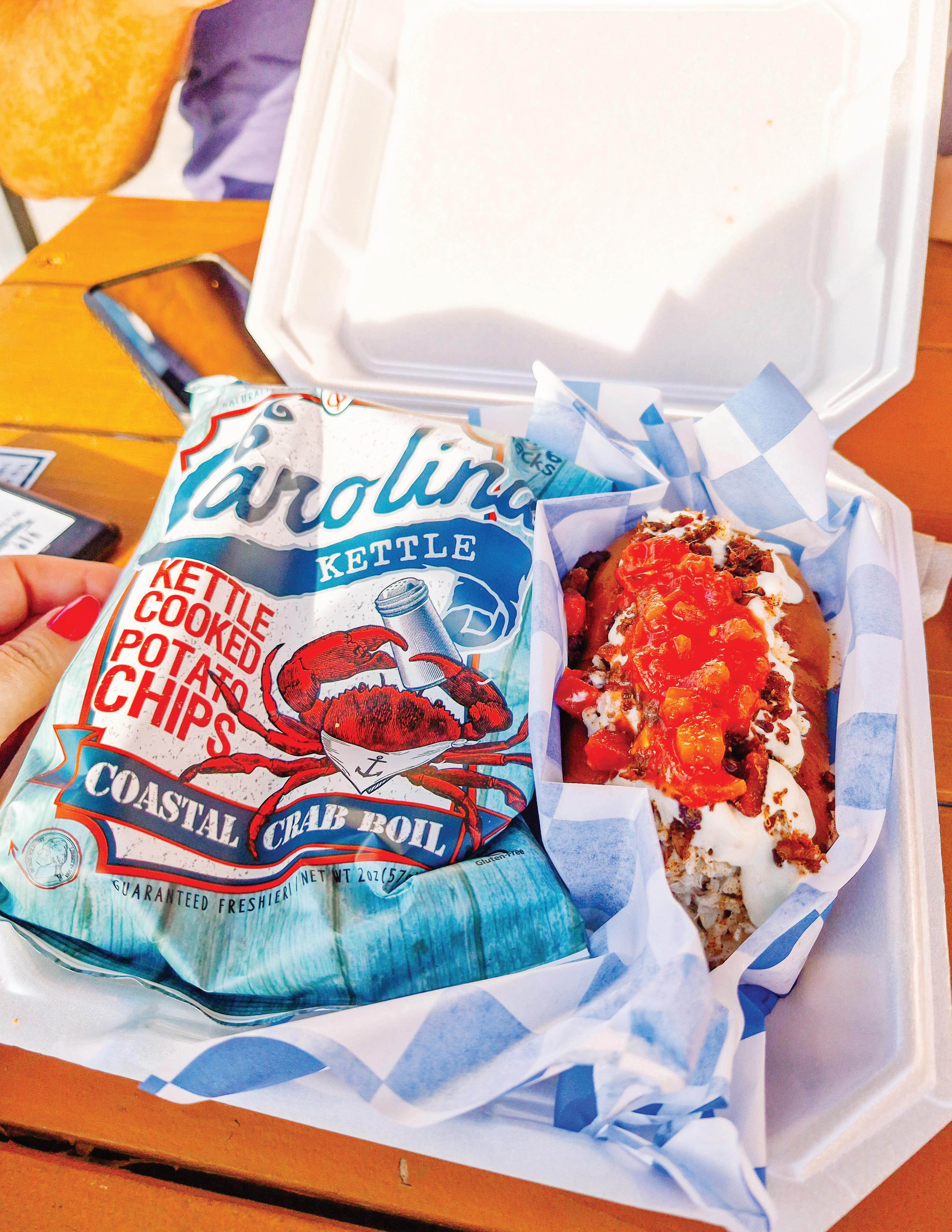
Dive into the bold flavor of a summer seafood boil with Carolina Kettle’s Coastal Crab Boil chips. No pot required.
Each bite is layered with a blend of spices inspired by a Lowcountry tradition—a hint of heat, savory notes of seafood and a balanced salty finish. Whether you’re hosting a backyard gathering, packing a picnic or craving something satisfying to snack on, these chips deliver that perfect southern taste.
Crafted with premium potatoes out of Raleigh, North Carolina, these chips are hand cooked in small batch kettles with sunflower

oil for that hearty signature crunch. If you love to explore new flavors, Carolina Kettle’s lineup offers 12 varieties to choose from, including tangy Carolina BBQ, sweet potato, Thai chili, zesty jalapeno queso, sea salt, rosemary garlic and dill pickle.
No matter the flavor, you can feel even better about chipping in with Carolina Kettle as they donate a portion of profits to local food banks each time a bag is sold.
Carolinakettle.com


By Cheré Coen
South Carolina’s tasty Southern dishes attract tourists each year. To further enhance culinary and agricultural tourism and highlight those serving innovative cuisine, the state established the South Carolina Chef Ambassador Program.
Every year, a chef ambassador is selected from three of the state’s four regions: Upstate, Midlands, Pee Dee and the Lowcountry. These culinary ambassadors promote the Palmetto State’s authentic


culinary experiences—along with the South Carolina Department of Agriculture and South Carolina Parks, Recreation and Tourism—by taking part in public events and discussions and cooking demonstrations.
It all began as an idea slipped to thenGov. Nikki Haley during a meal at Chef Brandon Velie’s restaurant.
Brandon studied culinary arts in the U.S. Marine Corps and has long been a supporter of farmers markets, so he naturally gravitated toward regionally produced ingredients at his Juniper restaurant in Ridge Spring.
When Gov. Haley visited Juniper to enjoy a five-course tasting menu of









Brandon’s South Carolina dishes—with everything except for the black pepper sourced from South Carolina farms—he handed her an envelope containing his thoughts about spreading the word of South Carolina’s culinary gems.
“The idea was to create a state version of a poet laureate but a chef laureate,” Brandon says.
Brandon’s suggestion was to choose one chef each year to represent the state and showcase South Carolina’s agriculture and


culinary prowess. Brandon’s wife, Jeanne, suggested the program select more than one chef because chefs are notoriously busy in their kitchens, and she envisioned them serving as ambassadors.
“It would spread the obligation,” Brandon says. “The chefs could be busy but still have a chance to get out there.”
The Velies subsequently met with the commissioner of agriculture and the director of South Carolina Parks, Recreation and Tourism, and the program in 2014 launched with chefs chosen from the state’s different regions. Brandon served as one of the four founding 2014-2015 ambassadors, along with Cooper Thomas, of Florence; Brian Waters, of Beaufort; and Heidi Trull, of Belton.
One requirement for the program is that the chefs’ establishments must serve at least 25% locally grown ingredients.
Erica McCier, owner and executive chef of Indigenous Underground in Abbeville, was named a 2023 chef ambassador for her attention to using local ingredients in her cuisine—ranging from black-eyed pea gumbo to buttermilk fried chicken. Her dishes, most of which feature local ingredients, are drawn from her background and grandparents who lived off the land.
For a year, the ambassadors visit major food festivals, such as euphoria in Greenville and the Charleston Wine +
Food Festival, among other events.
Past events have included visits to the Southern Living Test Kitchen for a livestream broadcast, the Atlanta Food and Wine Festival, the James Beard Foundation in New York and the Southeastern Wildlife Exposition in Charleston.
One thing Brandon didn’t expect from the Chef Ambassador Program is the networking it creates among culinary professionals. The chefs use the connections they’ve forged to celebrate accomplishments, share where to find ingredients and create fellowship, he says.
“The best takeaway for me is the friendship and the camaraderie,” Brandon says. “It’s an amazing group of people, and I love that we all stay connected.”
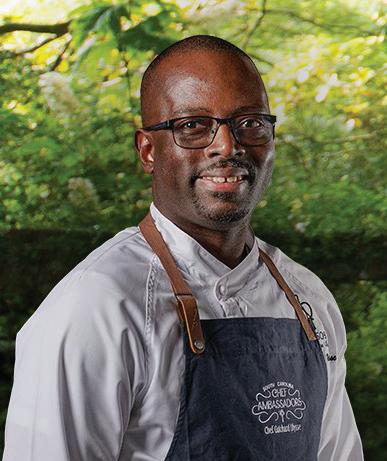
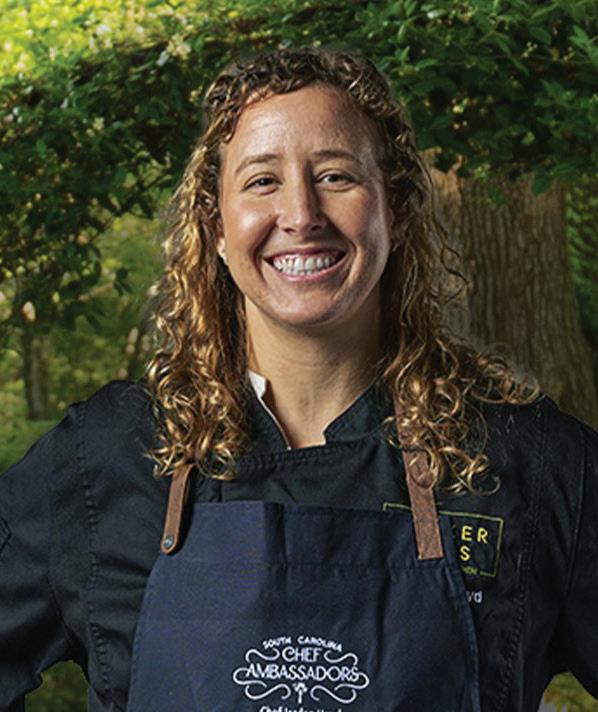
This year’s Chef Ambassadors are Guichard Ulyss, of House 509 Bistro & Wine Bar in Greer; Jordan Heyd, of Lekker Eats in Myrtle Beach; and James London, of Chubby Fish in Charleston.
Guichard hails from Haiti, where he learned to cook from the maternal side of his family. He moved to the United States, where he worked at Wendy’s until he trained at Johnson & Wales University. He served as a chef for South Carolina school districts and as a regional chef for Sodexo, a food services and facilities management company, across four states.
In 2022, Guichard and his wife, Jessica, opened House 509 to create fusion dishes with wine pairings.
Jordan spent years working on yachts and attending formal cooking school training in Cape Town, South Africa, before returning to South Carolina. She began with a small prepared-meals business from her kitchen before opening Lekker Eats with its from-scratch kitchen, market and bar built on an “eat good, feel good” philosophy. The South African word “lekker” means “all is good.”
James, a Charleston native, has been named to numerous lists: 2025 Best New Restaurant by Bon Appétit, No. 7 U.S. ranking from Food & Wine, New York Times’ Best Restaurants in America list in 2024-2025 and a much-coveted presence in the Michelin Guide. He was also a finalist for the 2024 James Beard Award for Best Chef Southeast. His education includes the College of Charleston and The French Culinary Institute in New York City. Chubby Fish’s dock-to-table seafood concept highlights local, seasonal catches and sustainable sourcing.
Next door, James’ cocktail bar and supper club, Seahorse, offers a wide range of spirits and a rotating menu of small plates.
For more information, visit discoversouthcarolina.com/chef-ambassadors.
By Judy Garrison
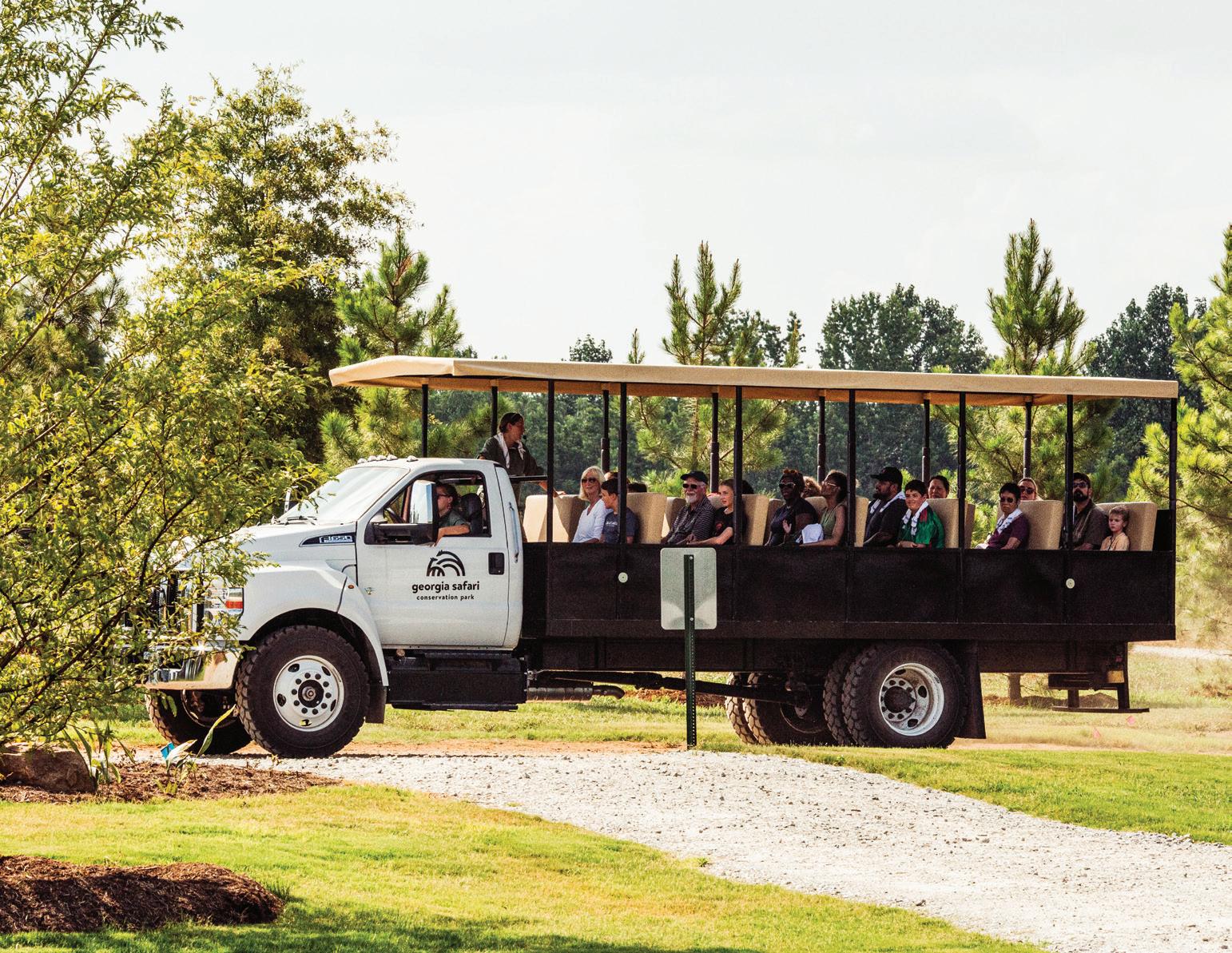
If an African safari has been a travel bucket list objective but the expense is out of reach, consider a weekend at the Georgia Safari Conservation Park in Madison. A luxury experience awaits, featuring the beauty of the Savanna and the sounds of the bush as visitors immerse themselves in a surreal experience without buying the hefty plane ticket.
The grasslands of Africa arrived in the piedmont of Georgia, opening a world of discovery that delights the imagination. Decades in the making, the park welcomes visitors with luxury accommodations, insightful tours and a breathtaking adventure.
Nothing more than an open field flanking Interstate 20 just east of Atlanta, these 500 acres were destined for more than simple existence. For years, owner Jim Conrads bumped around the land in his Ford Ranger, enjoying the fields of grass and open terrain. Being a good steward of the land was important to him, and preserving it in a way that would leave a positive impact became a vision. How better to do that than by bringing a safari park to the South?
As he watched his father’s passion for the land grow, Mike Conrads channeled Jim’s dream, taking the lead in creating this space for animals and the
community. Now an economic engine for this small Southern community, visitors are experiencing the unfamiliar with considerable anticipation.
“The project included securing countless permits and licenses, sourcing exotic animals, constructing state-of-the-art facilities and luxury safari tent lodging imported from South Africa, miles of fencing and much more,” Mike says. “Putting a team in place, particularly a world-class animal care team, took time because, first and foremost, animal safety and care are of tantamount importance.”
The park’s universe expanded in multiple phases, the first beginning over a decade ago—from clearing the land, creating infrastructure and compiling a team of animal experts to building facilities for animals and lodging for guests. Today, visitors to Georgia Safari Conservation Park can see 63 animal species from around the world.
“Everyone has been waiting to see the large animals like Phoenix, our reticulated giraffe, and Mo-Joe and Akagera, our southern white rhinoceroses,” Mike says. “We have some exotic hoof stock, like Grant’s zebras, that are guest favorites. We also offer an ambassador animal experience where guests can get up close and personal with everything from our twin spurred African tortoises to a
two-toed sloth, Mochi.”
Not to be overshadowed by their more exotic neighbors, the park’s antelope, emus and ostriches—especially the ever-vocal Babs—make their presence known with intense curiosity.
Safari tents crafted in Africa redefine the definition of a tent and set the stage for a long weekend of wonderment.
From floor to ceiling, the safari experience begins immediately. Canvasfabric roll-up walls surround a onebedroom luxury suite. Named Ostrich and dubbed the Honeymoon Hideaway, the tent features a four-poster king-size bed, fine linens, full living and dining areas, a soaking tub and ceramic tile shower, and an outdoor shower, soaking tub and seating area. The design elements emphasize the wild just steps away. The savanna-facing exterior deck provides the ultimate view. Stepping onto the deck, a herd of curious ostriches sashays toward the double containment fence that surrounds the entire facility.
Five other tents provide two-bedroom accommodations, ideal for families, including one tent that is compliant with the Americans with Disabilities Act. All have private outdoor spaces with views of the animal habitats. Included in the tent



booking, guests receive a guided drive-thru tour and an ambassador animal encounter, with introductions to a sloth, fennec fox, African spurred tortoises, giraffe and rhino.
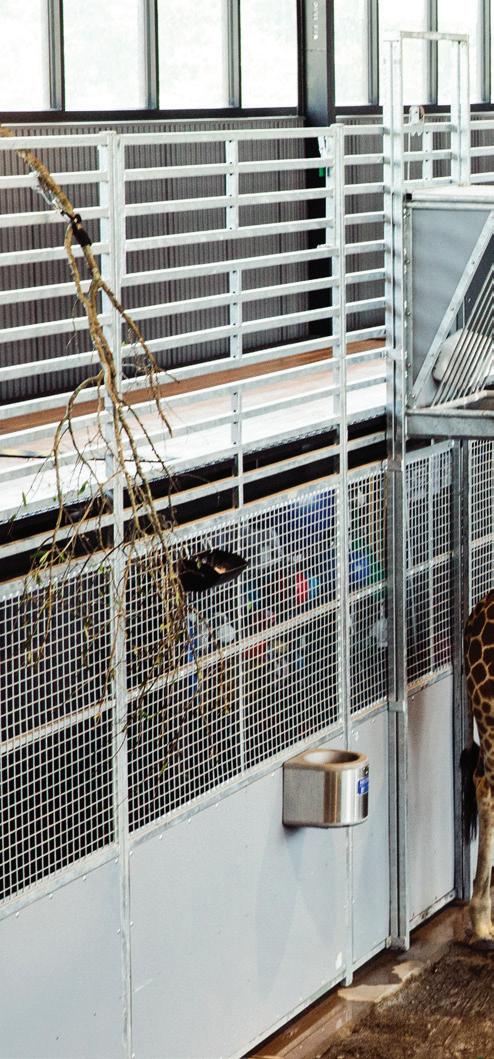
For the ultimate experience, book the Giraffe Suite, located within the giraffe and rhino barn near the front of the property. Wake in the same luxurious surroundings as the tents, but with the addition of the inquisitive 3-year-old Phoenix, the
reticulated giraffe. Floorto-ceiling windows in the living and sleeping areas bring you face-to-face with the 11-foot bundle of curiosity. Booking this suite initiates the VIP experience with a private guided drivethru tour, an ambassador encounter, a Keeper Chat and a behind-the-scenes feeding opportunity with Phoenix.
Upon check-in to the Giraffe Suite, “You get introduced to Phoenix,” Marketing Manager Jessica Malloy says. “It’s quite disconcerting to wake up, and
there’s a giraffe.”
Phoenix, who came from the North Texas Safari Park in Bonham, Texas, goes from his indoor barn to his outside fenced area “whenever he wants,” Animal Care Specialist Katie Phillips says.
Mimicking an African game drive, tours usher visitors through the 530 acres that showcase African species up close. Five encounters are available—including a Premier Safari Adventure and Sunset Safari. The guided safari tour features an animal specialist sharing the history, mannerisms and facts of each species.














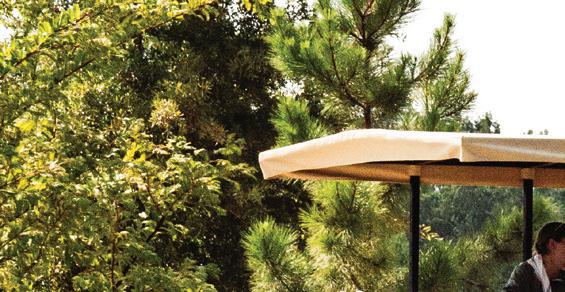
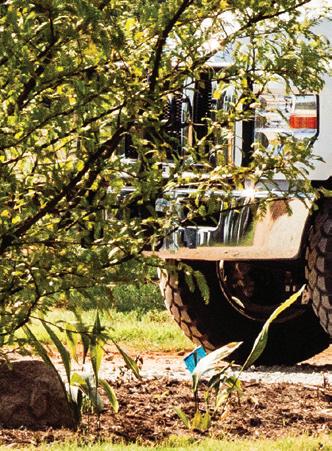
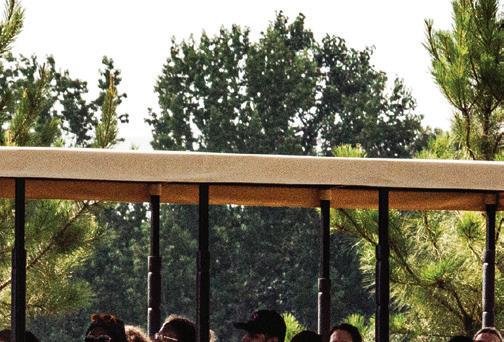
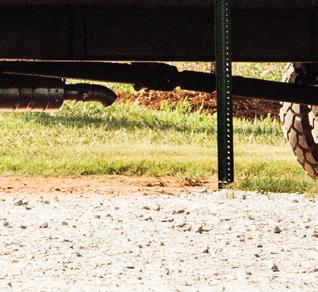
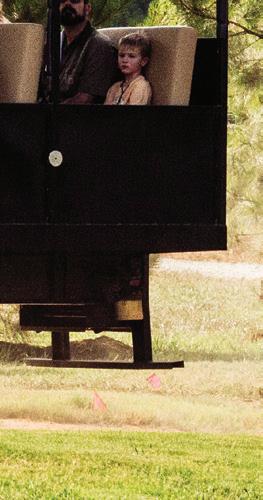
Board the safari truck for a tour through the grasslands.
The park has a double containment fence stretching miles around the pastures, along with a no-dig barrier. Cameras monitor the property 24/7 and are watched closely by the animal care and safety teams.
The park’s animals, all tagged and microchipped, live in specific pastures based on species, temperament and needs. The team evaluated the landscape, asking questions that were most important to each species. Is there a spring for the water buffalo? Are there many trees for the woodland species? How available are the grazing grasslands to others?
Each morning, the animal team drives the entire perimeter to make sure all animals are safe and accounted for. About 260 acres is pastureland, making each morning drive a bit of an adventure.
Cornelius, the common ostrich and one of the park’s first acquisitions, appears to be wearing blue eyeshadow as he approaches the safari truck. Not intimidated in the least, he comes closer than what feels comfortable to those in the truck. Ostriches can reach top speeds of 40 mph in short bursts and sustain 33 mph for longer intervals, says the tour’s animal specialist.
Ahead, the North American bison move toward the shade. The park’s four Grant’s zebras are in the next field. Their white stripes are a form of defense, somewhat of an optical illusion to a predator. The eastern bongo, the largest and most colorful African antelope, lives in Bongo Island, a wooded area of its very own. As a critically endangered species, there are 200 eastern bongos left in the wild. Mo-Joe and Akagera, the southern white rhinoceroses, wallow in the mud.
As the park continues to evolve, more animals and experiences will be added, along with education about animal care and economic benefit to the surrounding community.
For more information, booking and events, visit georgiasafari.com.














































































































































































After 20 years, we’re still making Jitterbug® phones easy to use and providing great service.
Easy to use.
Jitterbug® phones feature large screens with clear text, simple menus for e ortless navigation, loud speakers and dedicated Urgent Response buttons. The Jitterbug® Flip2 has big buttons and one-touch speed dial, while the Jitterbug® Smart4 comes with voice typing, video chat and internet access.
Easy to get help.









Whether you want to learn more about your new Jitterbug, need a ride2 or have a health concern, our 100% U.S.-based team is here to help. Upgrade to Urgent Response service for peace of mind with 24/7 help, even in emergencies.†