LITERATURE & VISUAL ARTS JOURNAL
VOLUME XIX • 2026

LITERATURE & VISUAL ARTS JOURNAL
VOLUME XIX • 2026
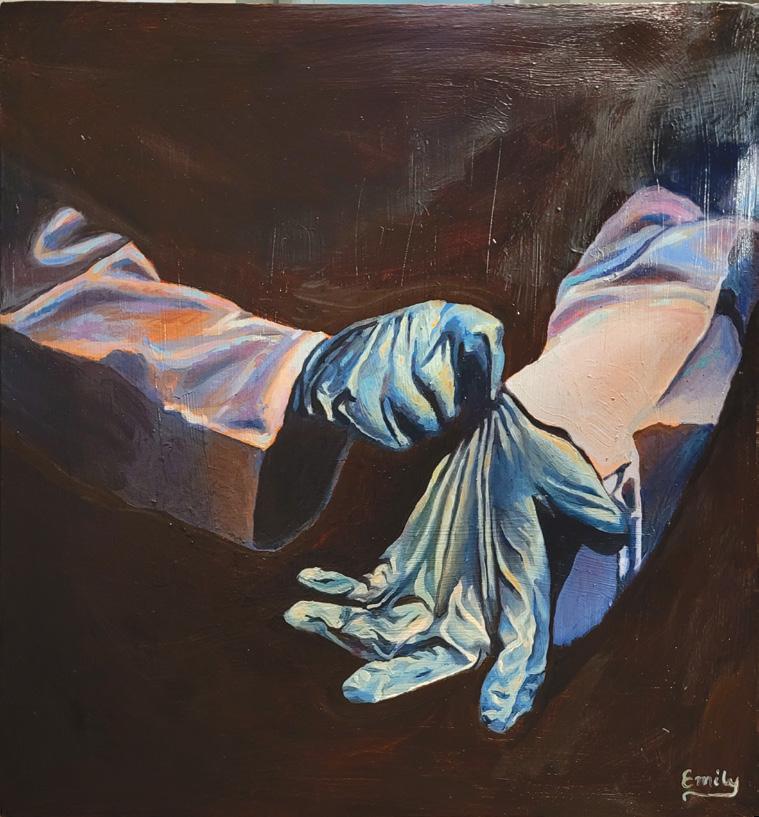
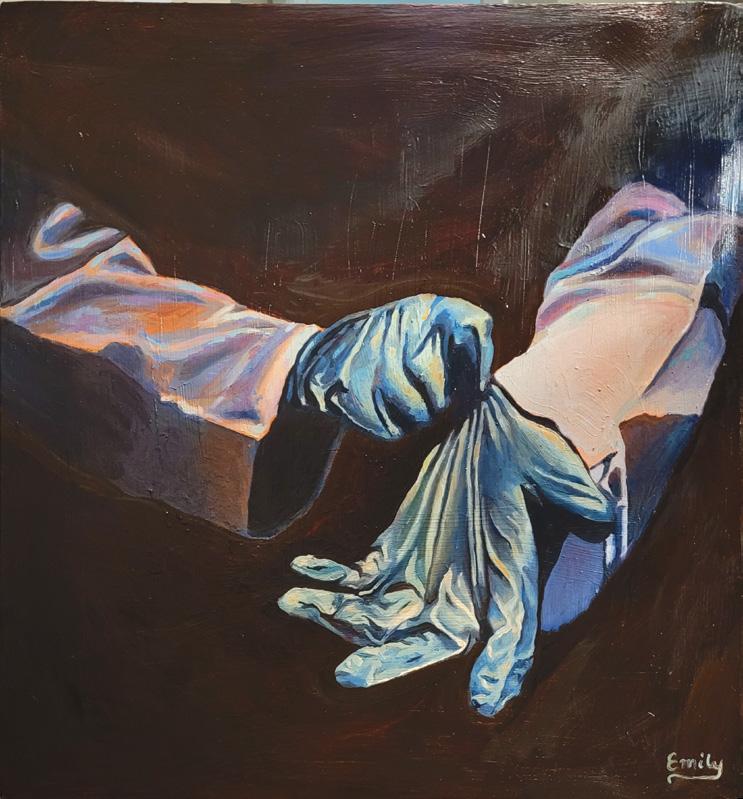
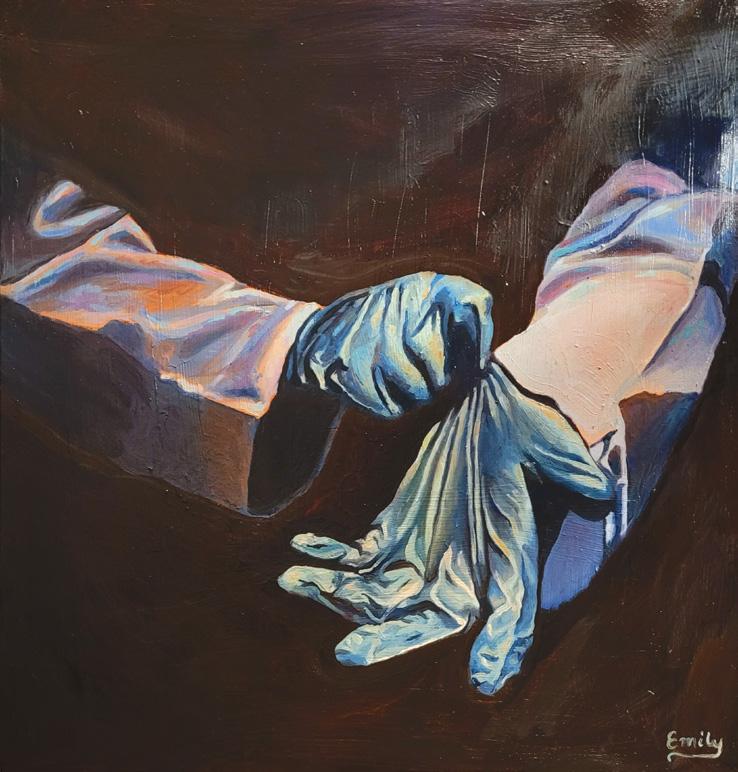
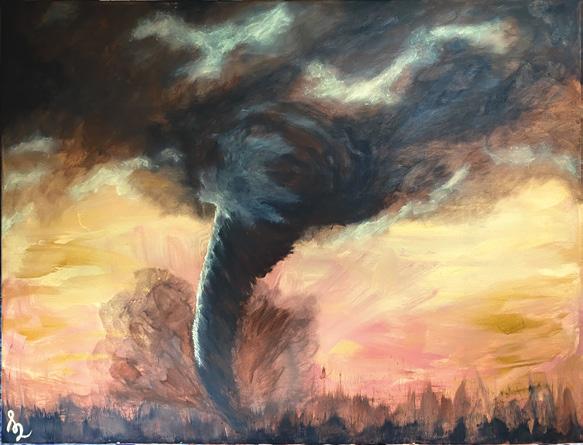
Title: “The Part It Stops Feeling Like Pretend”
by Emily Nguyen Medical Student
Media: Oil Painting
"When does it stop feeling like a costume? Do the gloves change, or the person putting them on?"
Submit your art and literature for consideration in the 2027 journal to: ConnectiveTissueJournal@gmail.com
For entry guidelines, to view past journals, and for more information about joining a committee visit: https://www.texashumanities.org/connective_tissue
The works published in this journal were selected based on their artistic and literary merit and do not reflect the personal views of UT Health San Antonio, the Charles E. Cheever Jr. Center for Medical Humanities and Ethics, or the editorial staff.
Andrew Ta - MS4
Catherine Xie - MS4
LITERARY & COPYWRITE LEADS
Yasir Syed — Senior Lead/MS3
Hans Robinson Loja - Junior Lead/MS2
Joie Cheng - Junior Lead/MS1
VISUAL ARTS & CURATOR/EXHIBITOR LEADS
Connie Hu — Senior Lead/MS3
Bill Wang — Junior Lead/MS2
Emily Nguyen — Junior Lead/MS1
Vyshnavi
Dang Nguyen
Leif Alino
Stuti Mehta
Madigan Murray
Priyadharshini Pammal
SELECTION PANEL
Manikandan
Bethani Rios
Edgar Hinostroza
June Cui
Katherine Danko
Karissa Lonon
Beverly Hu
PHOTOGRAPHY LEADS
Pallavi Kapilavaih — Junior Lead/MS2
Jian Liang — Junior Lead/MS1
Jason Ziperovich — Junior Lead/MS1
SOCIAL MEDIA & OUTREACH DIRECTORS:
Richa Sinkre — Senior Lead/MS4
John Kayode — Senior Lead/GSBS
Aamerah Haque — Senior Lead/MS4
Risha Parmar
Laila Alkassar
Sandesh Puri
Angela Lin
Ella Wasel
Rachel Cole
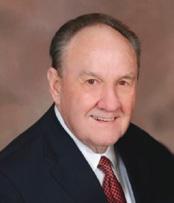
Carl Arnold Register, known by his friends as "Reg," was called "Daddy Reg" by his grandchildren. He was born in Wilkes, Alabama in a "Company" town near US Steel Corporation of Birmingham, Alabama. There, he graduated from Fairfield High School where he first laid eyes on his beautiful, loving wife, Joan Terry Patterson. Along with her love and support, Carl hitchhiked to and from Auburn, Alabama where he attended Auburn University and graduated in 1963 with a Bachelor of Science degree in Industrial Engineering. Initially co-oping, and then working for ACIPCO of Birmingham, Alabama, he was later hired by Vulcan Materials Company in 1964 where he worked for 25 years becoming President of the Southern Division in which then, encompassed Alabama, Mississippi, Louisiana, the Panhandle of Florida, and all of Texas. In 1989, Carl was hired as President and CEO for Redland Stone Products. He and Joan moved to San Antonio, Texas. As CEO and President, Carl led a strong, unified company in the state of Texas which ultimately drew in major companies to bid and acquire Redland by 1995. Carl then began consulting with small family-owned businesses in the sale of their companies. He found a lot of joy in helping families
navigate and negotiate with the large corporations of today.
Carl served as a City Councilman for Hill Country Village in San Antonio for 25 years, served as a trustee on the Board of Baptist Child & Family Services, and on the board of UT Health San Antonio. Carl served on various committees and Advisory Councils within both the School of Engineering and the School of Business boards at Auburn University. God gifted Carl with an ability to be able to make everyone he spoke with feel like they were the most important person in the room while instilling his wisdom to go and make huge impacts in their place of work and life.
Carl's steadfast faith in Christ was defining. He was a member, deacon, and trustee of Trinity Baptist Church, volunteering countless hours serving Trinity's body and ministries. He also had a heart or serving local ministries and loved to give of himself as he understood his Savior’s ultimate sacrifice. Carl is at home with today.
Carl was preceded in death by his parents, Raymond Carl and Naomi Ruth Register, of Wilkes, Alabama, his brother William Raymond Register of Birmingham, Alabama, his sister Frances Naomi Bibby of Brock, Texas, and son-in-law Kyle Patrick O'Brien of Acworth, Georgia. He is survived by his loving wife of 63 years, Joan Patterson Register, son Jeffrey Carl Register of San Antonio, Texas, daughter Jennifer Joan Register O'Brien of Acworth, Georgia, and son Jason Lamar Register (Kacey) of San Antonio, Texas. Daddy Reg was blessed with six adoring grandchildren: Connor, Gates, Caitlin, Ellison, John Bishop, and Mary Simmons. He is also survived by several wonderful nieces and nephews.
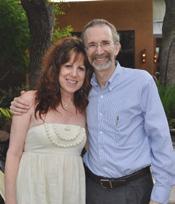
Dr. Janna Lesser, 70, passed away on June 7, 2025, in her home in Fair Oaks Ranch, Texas, after a long and brave struggle against cancer. A beloved mother, wife, sister, teacher, nurse, and mentor, Janna lived a full life marked by deep compassion, intellectual rigor, and a steadfast commitment to community health, social justice, and education.
Janna was happily married to Dr. Richard Usatine for 42 years. They met while she was in nursing school and Richard was in medical school.
Janna’s professional career was centered at UT Health San Antonio School of Nursing, where she served as a Professor of Nursing. She began by directing mental health nursing courses and later transitioned to teaching PhD students. In recent years, she became a highly respected mentor for students working on their research and dissertations. Her guidance shaped the careers of many aspiring nurses
and researchers, who continue to carry forward her legacy of thoughtful inquiry and compassionate care.
A pioneer in community engagement, Janna cofounded "Las Mujeres," an initiative through which she worked closely with promotoras (community health workers) to improve access to care and empower underserved populations. Her work combined academic research with real-world impact and earned her numerous awards that recognized both her teaching excellence and her community involvement.
Those who knew Janna remember not only her professional accomplishments, but also the warmth she brought into every relationship. She was deeply loved by all who had the privilege of knowing her. Her nurturing spirit shone through in countless ways —from how she supported her children unconditionally to how she cared for even the family cat with a tenderness that revealed the depth of her heart.
Dear Readers,
On behalf of the Charles E. Cheever, Jr. Center for Medical Humanities and Ethics, I’m proud to introduce the 2026 Edition of Connective Tissue. This year’s journal was brilliantly curated by our student editors Andrew Ta and Catherine Xie on the theme “Metamorphosis.”
The first year that I taught Medicine Through Literature, my students read Kafka’s novella The Metamorphosis. It was early in the COVID pandemic, and we gathered in a digital room, parsing the story in which Gregor Samsa awakes as a bug, painstakingly flips himself over in bed, and gradually becomes an object of revulsion to his family. Gregor’s father pelts him with apples, piercing his exoskeleton, and ultimately Gregor dies alone.
Kafka suggests that the unwished-for transformations of illness and injury often fail to invoke mercy, understanding, or wisdom in those who bear witness. Instead, one might shun the ill. In other pieces we read — personal essays by physicians, for example — I ask my students to consider whether the writers identify with their patients, or how hard they work to position patients as “others.” When is this appropriate clinical distance, and when is it palpable disgust? (Vigorous debate ensues.)
Being mindful of Kafka’s story, I hope for my students to recommit to the special role that healers have. Whereas illness may bring isolation and despair, we can serve as a locus of welcome, understanding, and care. In “Patient-Centered,” an essay included here, Pratima Gangupantula describes the effortful process of connecting with “Mr. Thomas,” a depressed and largely silent transplant patient. In the end, the student is enlightened by her realization that the seemingly modest things she can offer — quiet presence, a change of sheets, a wheelchair ride up to the hospital garden — do matter. Gangupantula responds brilliantly to Kafka, showing that humanist responses to metamorphosis are possible. Indeed, they must be our committed daily practice.
In the pages of this 2026 edition of Connective Tissue, you will see the vivid evidence of a community of health trainees and health workers who find inspiration, connection, and meaning in their patients and in their work. Luke Klein writes, “when Time comes for me / I hope others, by my care, will have been healed.” It is a straightforward hope. Yet it is a deep one, enough for a whole life.
Thank you for joining, through these pages, our community.
Sincerely, Rachel Pearson, MD PhD

Humanities Director, Charles E. Cheever, Jr. Center for Medical Humanities and Ethics
Stewart and Marianne Reuter Endowed Professor in the Medical Humanities
Assistant Professor of Pediatrics, Joe R. and Teresa Lozano Long School of Medicine
Dear Reader,
Medical school has been, somehow, both the shortest and longest four years of our lives. Between the late nights of studying, the long days in the hospital, and the laughter shared with peers and mentors, we now find ourselves on the other side, reflecting on the profound growth that has occurred.
Our theme for this issue is Metamorphosis, an apt word that captures the physical and emotional changes we undergo through our experiences in medicine. The process of becoming a healer is often turbulent, and we are reformed by what we encounter: by patients, by failure, by grief, and by wonder. There are days when we feel we might break under the weight of our experiences, yet we continue to find the strength to stand up taller the next morning.
In this issue of Connective Tissue, we aimed to gather these reflections from our community and share them with you. Our hope is that this journal serves as a sanctuary where writers and artists can set down the experiences they carry and where readers might find themselves in someone else’s words and feel less alone. We hope this issue offers you that.
We extend our deepest thanks to the Charles E. Cheever Jr. Center for Medical Humanities and Ethics (CMHE) for their unwavering support; to Dr. Pearson, Dr. Kosub, and Timothy Wallace for their vital guidance; to our contributors for their trust; and to you, the reader, for joining us. Serving as your editors has been the greatest privilege of our medical school education, and none of this would have been possible without all of you.
Andrew Ta & Catherine Xie
Co-Editors in Chief, Connective Tissue Vol. 19
Long School of Medicine, Class of 2026
A "Dialectics of the Whole"
Adriana Dyurich 36
55 "Ship of Theseus"
Leif Alino 37
P "Hibiscus Rosa-sinensis"
Yousuf Hassen 38
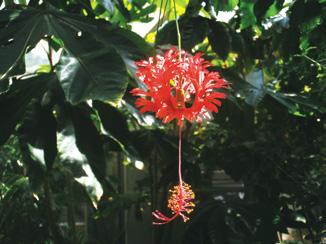
P "Hibiscus Schizopetalus"
Yousuf Hassen 38
A "Scissortails Before the Texas Storm"
Lacy Lichtenhan 39
P "Final Product"
Jacob Luddington 40
A "Through the Turns"
Suvaacha Bajpai 41
P "Daybreak at Dresden"
Richard Usatine 42
P "Metamorphosis of Sky & Land-Hawaii"
Hans Robinson Loja 43
L "My American-named Individual"
Hans Robinson Loja 44
P "At the Edge of Survival"
Kris Meadows 45
55 "Population: 8.3 billion"
Mariam Imam 46
P "Bearing Witness"
Kris Meadows 47
P "Rooted"
Jason Ziperovich 48
L "Hospital Lighting"
Mariam Imam 49
P "Persistence in Bloom"
Laila B. Alkassar 50
P "Meet You Outside the Box"
Joie Cheng 51 "Patient-Centered"
Pratima Gangupantula 52
P "Perspective"
Kris Meadows 54
55 "View from 35,000 ft"
Jamie L. Edwards 55
P "Across Calm Waters"
Laila B. Alkassar 56
55 "Healing Is Beyond a Pill"
Fozia Akhtar Ali 57
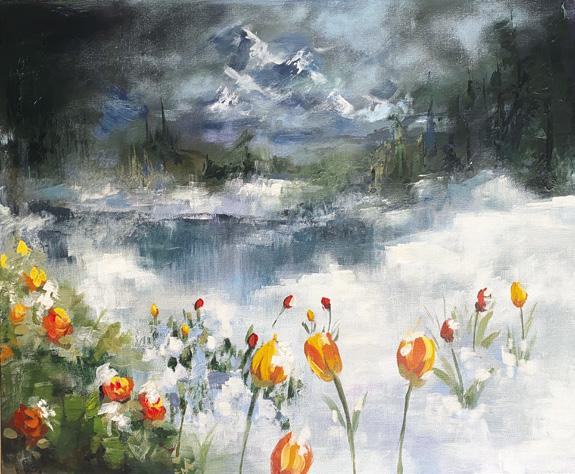
P "After Snowfall"
Jian Liang 58
P "Almost Not There"
Pallavi Kapilavaih 59
55 "The One Who Showed"
Montgomery Smith 60
A "Listen to Your Body"
Patrick Joseph Joven 61
L "You Held Out Your Arm"
Katrina Fisher 62
P "Duality"
Jian Liang 63
55 "Walking Metamorphosis"
Antonio L Teixeira 64
P "Becoming"
Zainah Siddiqi 65
A "Escaping Fate"
Pratima Gangupantula 66
A "Take a Moment for the Memory" Lacy Lichtenhan 67
A "Resilience in the Cold"
Phuongthy T. Tran 68
55 "What Remains Mine"
Muskan Ali 69
A "Vuelo de Mariposa"
Lauren Lia Quesada 70
L "Too Much Salt"
Robert Burns 71
Accumulation
Jason Ziperovich
Medical Student
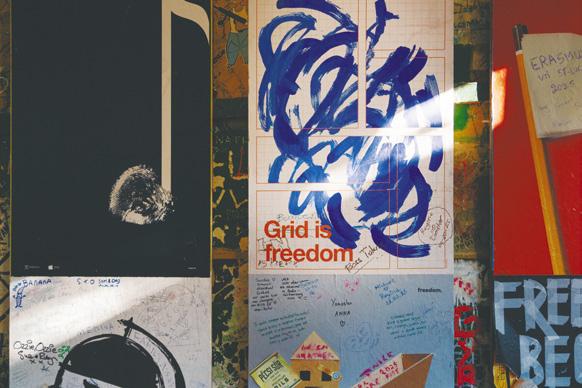
Layers of posters, paint, and handwritten marks collect on the surface of a discarded Soviet-era refrigerator, each addition partially obscuring what came before. In a city where past systems linger in everyday objects, transformation is intentional — not through erasure, but through reuse.
Betty Corona DNP, MSN, APRN, FNP-BC, CPHQ, CPPS Medical Student
Physicians, nurse practitioners, physician assistants dedicated to caring for patients and their families. Then Medicare metric Advantage metric, managed metric care metric, Accountable metric Care metric Organizations metric, valued metric based metric care metric, patient metric centered metric care metric. Don’t metric forget metric the metric compassion metric for metric goodness metric sake metric. Z73.0.
Yasir Syed Medical Student
First his nose–then his lips, whispering, not quite pursed, breathed softly over the surgeon’s cheek. The man recoiled, realizing that Dr. Wong had woken.
"Good, I was afraid I'd given you too much."
Spots floated in and out of the doctor's vision until they fixated on his stark blue eyes, eyes Doc saw in the rearview before a bag went over his head and another thing jabbed his shoulder. Bile wet behind his teeth, holding back an oncoming wave of nausea. It broke through, and he wretched green spit.
"You've been in an accident. I brought you into my home so you could…” he paused, and Wong felt acutely vulnerable. “Not buying it, huh.”
There were vindictive patients before, though the doctor never agreed with their dysmorphic perspective post-op. Angry boyfriend maybe. If he wanted something material, he would have gotten it at cost and then run.
The surgeon watched the man move away from the wheelchair, seeing him for the first time under the light. Sinewy, glistening. His assailant wore a sharp, flat face without the slightest expression when he spoke as if Ted Bundy's ghost come alive. Eyes like the mountain goats that talk in tongues at night and bray and bray. It was out of the parking lot by the old road that he’d realized there was a man in the backseat, and by then he'd already slipped into the ditch.
Not a patient he’d worked magic on.
"Dr. Wong. Big fan of yours. Maybe the truest fan there could be." He beamed the light to his desk where the portraits of the surgeons many clients arranged
tacked to the wall. On each were the etchings of sacred geometry of a precise but pressured nature.
But the surgeon’s widening eyes were drawn to new diagrams of Da vincian physiognomy outlining a perfect face.
"Don't be so stiff. I brought you here for a reason.”
The surgeon flexed his knuckles against the stool. The chains rattled but didn’t give. “You want me to fix you,” he realized.
"No. Don't be rude. There is nothing to fix. I've passed an eight and there is nothing left for me to do for my face besides turn to you. You miracle worker, you."
Wong took the compliment, chewed on it, wondered, "Why me?"
The man spun a scalpel between two fingers. “So humble. Look at this one here.” He held a headshot of a recent patient. “Breathed new life into her. Among the community, you are a god bringing the elixir of eternal life – or, or molding their burnt plastic into crystal. Now I did everything right. Got on my steroid cycle titration, botox, fillers, hyperkalemic chemical maintenance. Everything in the right place at the right time. Crushed my bones with a hammer daily. Tore my teeth forward for gonial angle optimization. Now this is as far as I go without your intervention. I’ve hit the ceiling." His scalpel swung awfully close to Wong’s own face.
The surgeon felt sick. It was strange how eloquent and seemingly rehearsed the man had been in his pursuit and how the precise medical terms he’d grown
comfortable saying sounded perverted when repeated in this way. But contradictory to those emerging feelings, he found himself automatically searching his features for the cuts he might make in the man’s maxilla and mandible, the lines he’d carve within his cheeks to bring the jawline into the light. It was a glaring , disturbing confrontation he felt more than anything that he had to.
“You’ll have to free my hands then won’t you? And my legs so I may appropriately position myself.” And run away in the night when I put you to bed.
Adam smiled. “No anesthesia doc. So I can watch it happen.”
Arms pressed, the surgeon’s slides slicked sweat. He breathed steadily. “You look great. Better than any patient should, really. You must be eighteen, nineteen. You can live your life just fine without so much surgery.”
The man pounced low and shook Wong’s stool and the doctor nearly let his urethral sphincter release with his squeal. “ What else are we supposed to do?” he growled. “Suffer and accept this as a dharma? If I can change myself, why shouldn’t I? On some nebulous moral principle? You’re not articulating very well why I shouldn’t. Sounds quite emotional really.”
Who is we? Wong took a different approach. “Women will certainly...”
“Women,” he mimicked. “That’s just part of it. Society as a superstructure rewards the beautiful. Beauty is everything. A glance and your mind is made up on their moral character, their worth. Do you think you'd be a doctor, a plastic surgeon if you didn't have those cheekbones, the phenotype that draws those people to you? Your clients don't want an ugly plastic surgeon. You chose not to fix your own nose. I can respect that. It's become somewhat of a character
defining trait. Unique, I suppose, at your station."
It was right there, sticking out, protuberant, taking a sizable field of his vision, a fat mold of kneaded dough. He’d dreamed about the ways he could sculpt it properly, perhaps blasphemous and also prideful. He would have changed it many times, into every other shape it could have been. But he would live with it forever as having lost some part of himself.
“What will you do with me afterwards?”
“You think I’ll dispose of you when I’m done. You’re not a rag.”
Wong poked a little harder. “What if I went out and told what you made me do?”
The man laughed, a sound that was like tin raking glass. “You will be telling everyone what you’ve done. You’ll want to. I can see the restless excitement rolling in your fingers. Thinking about how you’ll hold my face and help me ascend.”
So naked and known, Wong nodded quickly and told him that it was a deal.
And here it was, a reflection of his circle in a modern Frankenstein's monster. Breathing in the Pine-Sol bleach air after a job substituting so poorly for sterilization. Donning a matte butcher apron. Lay the man down with a simple cloth. On a pool table under a ceiling mirror. In it, the surgeon saw a creature so obsessive with its metamorphosis that it lay in its cocoon to beckon its own deconstruction.
In time the surgeon's fingers trembled — a passing thought watching the yellow kitchen gloves shaking. He was forced to do this, yes, it was what he had to do now. But further down in the id was the reality of the ultimate practitioner, the artist who could put sharp pen to blank page. To form the first man out of a lump of clay.
So, first his nose.
Our society appears to reward beauty disproportionately. Sometimes we don’t recognize ourselves in the mirror. What responsibility, if any, do we have to the culture, and in other ways, how are we facilitating harm?
Acrylic, gouache, marker on paper
Leo Crockett Medical Student
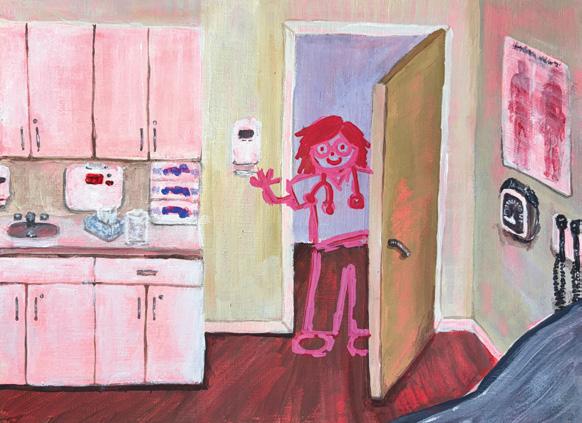
At the beginning of my clinical rotations, I often felt like I was eight years old again, playing doctor, albeit with a much more expensive stethoscope. My piece depicts a stylized version of myself what eight-year-old me envisioned a doctor to be entering a clinical space. Medical students are sometimes closer to actors than to doctors.
Braedon Schlechte
Student, Long School of Medicine, Class of 2027
For five days, I talked to the man who couldn't answer. Subdural hematomas, unnatural stillness. His son sat vigil beside him.
Thursday, he opened his eyes when I said his name. Just for a moment. Just once.
By rounds, he was back under.
Friday, we talked about letting him go.
I'm glad I saw Thursday.
Digital Photography
Richard Usatine, MD
Faculty
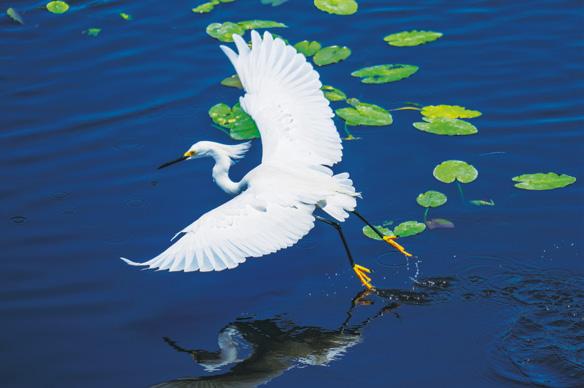
As this snowy egret takes off from the water to fly, it shows off its bright yellow feet (golden slippers) and beautiful wing feathers. It has undergone a metamorphosis with age, its dull feet becoming bright yellow golden slippers by adulthood. They drag their golden feet across the water to stir up small fish for their next meal.
Bill Wang Medical Student
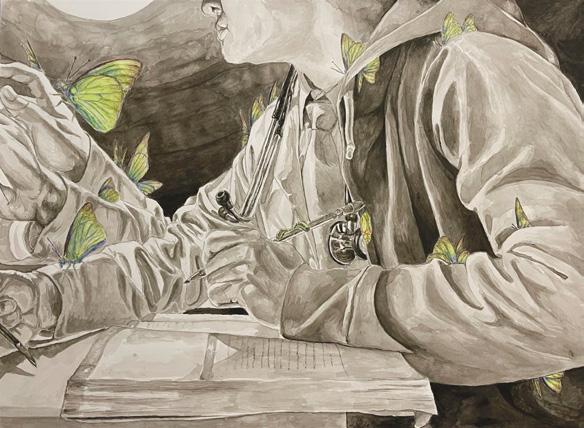
This piece was meant to embody the theme of metamorphosis by displaying the transition from student to a practicing physician, symbolized by the caterpillar and cocoon on the student's pencil and the butterflies that travel up his left arm, which is covered by a hoodie, and onto his many right ones, which are all covered by his white coat. This was to demonstrate how medical education lays the foundation for the various types of practice that exist, setting the stage for the transformation from a student doctor to a fully professional practitioner.
Isabella Truong Medical Student
He measured his impact in boards of wood and buckets of splinters.
He visualized it in the vibrant colors and shapes that he extracted, sparking orange like jagged lightning, crimson fragments like something shattered, flametongued edges of ravenous heat. Damage energy was unstable, volatile; it needed somewhere to go, so into the wood it went, the final vessel safely destroyed.
A bad enough injury could pulverize a board on its own, or the accumulation of several smaller aches and pains would eventually wear one to slivers. It was easy to fix fractures, cuts, bruises. Pull out the pain, undo the mechanical forces that had split skin, cracked bone, torn muscle, spilt blood.
Yet he couldn’t heal everything
Scars, for example, were past the point of repair, since the body had already done that job itself. There was no active damage to undo. And until he figured out how to categorize the sort of ‘damage’ caused by allergies, indigestion, headache, infection, it would have to be a hopeful guess, a bottle of pills, and instructions to stay hydrated or get bed rest.
Part of that knowledge gap resulted from few opportunities for practice at the station. Health screenings and physical requirements ensured chronic disease would not hinder performance on long missions; strict hygiene and decontamination protocols guaranteed no outbreaks from unwanted hitchhikers.
That meant most of the injuries he’d seen up until this point were those of the traumatic, accidental
variety. Even those were few and far between, because they were all trained to be careful and diligent –proactive, but not reckless in the face of danger. Injuries got you benched from missions. Being benched meant cleaning hallways and filing reports. Therefore injuries were also avoided.
He knew he would probably be overwhelmed by all these new conditions he’d have to face, and prepared himself for it. He knew he wouldn’t be able to solve every problem, and he was careful to remind himself that, lest he get discouraged too soon.
It didn’t matter if he felt prepared or not. Everyone had to start somewhere.
And maybe after some time, a few months, a few years, chipping away at the ailments of the world, he might bring the world just another step closer to being whole.
This first relief mission was an earthquake. Ninetythree boards for more than a hundred patients — exhausting, but fullfilling. Definitely a new record for the team, with this wonder rookie, and his teammates had told him so.
The next one was a wildfire. Seventy-two boards. Then an avalanche. Eighteen boards. It should have been twenty.
A volcanic eruption. Forty-five boards. Left incomplete, in the rush of evacuation.
The most difficult one wasn’t even a disaster. It was just the struggles of living in a place where living was a struggle. Headaches, stomach aches, heart disease, migraines, cough, cramps, chills. Complaints he had
no idea how to deal with. So many more ailments he had to turn down, that he felt helpless against.
The boards sat untouched as he saw patients who could not benefit from his ability. Distressed and dissatisfied, he could only send them away with maybe an ice pack or a few tablets of medicine to control symptoms. The little pain he could pull out no longer seemed like it was making a dent in the amount of suffering that was everywhere.
It was this realization that found him sitting in the dark storage bay, head in his hands. A stack of unused boards on his left, tubs of wood chips on his right.
They no longer measured his efficiency or accomplishment. Rather, they were records of everything broken that he had tried to fix, and a looming sign of every potential broken thing he would have to try to fix.
What happened to that spark, that purpose, that calling?
Every day, thrown into the rush, knowing he was helping and healing and, yes, he was equipped with one of the most perfect powers for this job, but maybe he wasn’t good at it yet. Maybe he wasn’t using it right. Because with every new crisis they responded to, he felt like bits of him were being chipped away.
What was the point of being a medic when disasters and entropy and deterioration were inescapable? Was he only delaying the inevitable? Was that all his job was?
There had to be something more to it. But what more could one ask for than loving his calling for the sake of it? Then again, he was beginning to realize that the calling of a healer meant daily coming face to face with the broken.
The dreaded word loomed in his mind, something
he hoped he’d never apply, didn’t think it possible to apply, to a labor of love.
He hated to admit it, but he feared he was becoming … disillusioned.
Well, this was new.
He rarely had visitors to his office. But there was indeed a visitor at the doorway, claiming that they were sort of lost and just walked into the first room with a person that they could find, and could they have a glass of water please?
A rookie. Just like himself, two years ago. Still fresh with wonder and purpose and that awkward, fidgety combination of eager nervousness.
He could’ve just sent them on their way. But maybe it was a craving for connection — for a taste of that pure, undaunted, starry-eyed perspective on life —–that made him offer a seat. Offer his ear. His time. His undivided attention to a single person in front of him, without thinking about the next patient.
With that singular focus, he noticed something when he passed them a bottle of water. The backs of their palms were red and peeling. Scraped? A bad rash? A burn?
[You’re hurt. Let me help you.]
“You’re… one of the medics?” They drew back, something in their shifting gaze that looked betrayed, suddenly insecure.
Fear, apprehension, and tentative relief were normal to see whenever people sought him for medical aid. He’d never seen distrust directed at his position before. It fascinated him more than it bothered him, because this judgment focused not on his performance, but on himself and what he represented.
[Do you have a problem with that?]
“Sorry. Not personal. I just … I can’t ask that of
you. To heal me.”
[But that’s my job.]
They blew out a sigh. “See, there’s the problem. If you do your job, then you’re going to have to put it in my medical record, and if you open it up, you’re going to see that I’ve been to the medical bay four times in the last two weeks, and that they’re about to suspend my training because I’m a ‘hazard to myself and others’.”
One sleeve rolled up, scattered scabs like satellites suspended in a faded, purple-green nebula. Some already healed scars; others in the process of mending, with a bit of plaster slapped on top to prevent its disturbance.
“Most of these are training accidents.” They fidgeted with the edge of their sleeve. “Some are choices. Or the results of choices.”
He noticed that they tensed slightly, as if waiting for the stinging darts of criticism or reproach to land — remarks about their clumsiness or apparent lack of self-preservation instincts. Instead, he asked,
[Would you make those same choices again?]
They paused, not expecting such a deep question. It seemed to break down whatever barrier had been keeping them guarded, distant.
“... yes. Yes, I would.”
That response changed things. Clearly they had their reasons, and they must’ve been good ones if it was worth the sacrifice over and over again.
[I’d like to hear about it, if you don’t mind.]
“Really?” A flicker of genuine surprise, like no one had ever bothered to listen before. “Well … I have a restoration ability. But I have to take out damage energy, and it needs somewhere to go, you know? You can’t just hold onto volatile energy indefinitely.”
Well, he certainly knew a thing or two about damage
reversal himself, but he kept quiet. He wanted to hear the rest of the story.
“I’m not a mechanic. I would’ve waited for one, believe me, but you don’t think about waiting when you have two seconds to act. And in the absence of things that won’t explode or cause critical power failure if I’d use it as a second vessel …” They showed the backs of their hands with a dry, apologetic laugh, “… what else do I have, but myself?”
He was getting it now. This wasn’t a reckless move, but a sacrificial reflex, knowing that broken equipment would cause bigger problems than a burn on a body that could heal itself over time. With new respect for this rookie, and now knowing what had caused the injury, he asked to see their hand again.
[Steam scalding, then? This is something I can fix. I won’t even put it on the record.]
They shook their head. “Really, I’ll be fine in a few days. It’s a good reminder, anyways. Battle scars to tell people about, yeah?”
[Maybe carry something more resilient around to wear those battle scars for you,] he suggested, cracking a rare smile. [You’ll keep the stories, and more of your blood too.]
“I might try that.” They looked far more relaxed. “Thanks for listening.”
[Thank you for sharing.] He felt far more refreshed.
[I’m glad I could help.]
“Well, isn’t this part of your job?”
[I think I’ve been doing it wrong.]
Wherever he served now, there was this strangely shaped block with him, sitting in the corner, replacing the stacks of wood that had turned out to be kindling for burnout.
It was covered in scores and scrawls, dents and
divots. Triumphs over certain ailments, recorded in each new chip off the block and scratch in the surface. Others, not exactly failures, but signs of the not yet –spaces sketched out in marker for a future day when that affliction was conquered.
Beside each mark, a signature. A story for each scar. Personalized touches reminding him that these cases – no, these individuals were more than statistics, and their problems more complex than simply being broken.
He still carried a board of wood for urgent cases, to provide immediate relief in a crisis of the moment. But whenever he found himself addressing less dire situations, the routine of “fix and move on” had been
shattered after that one conversation with the rookie shed some new light on his role and identity.
He wasn’t a machine. His calling was never about performance. Healing wasn’t an algorithm or a strict science. It was more like an art, which didn’t just require a change of practice, but a change of perspective as well.
Sure, it was a work in progress. He admitted it. One didn’t just become a master of an art overnight, and somehow he was okay with that. Having margin for growth and adjustment was liberating.
The “chipping away” didn’t have to destroy him. He would let it sculpt him into something better.
This was a new exercise in combining my usual adventuresome whimsy with the reality of my pursuit of medicine. Reflecting on my own values through the lens of a different character turned out to be a more thorough (and more enjoyable) examination of my ideas than trying to put my raw thoughts on the page. Having written his story now, I want to go into mine with the open-minded, open-hearted approach that he reached by the end.
Digital Photography
Thuy Phung, MD, PhD
Faculty
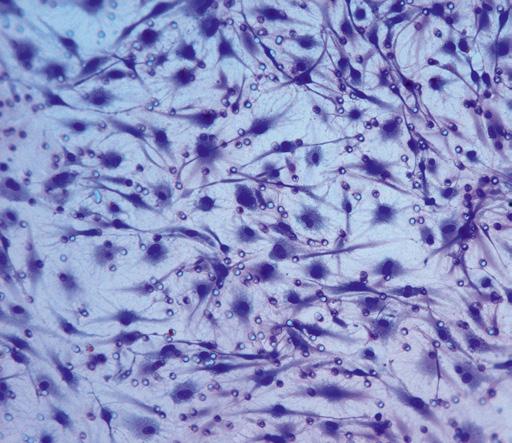
Each individual cell spreads out it delicate extensions to touch nearby neighboring cells to weave a network of meaningful connections and communications.
Isabella Truong Medical Student
How often does a white blood cell come across an enemy that had once been an old friend?
They used to be on the same team. Maybe they grew up in the same marrow. Same goals. Same body to defend.
Except the neoplastic cell cares not for the wellbeing of the body. Sure, it may upregulate all those name tags that call it “self”, and hide all the evidence of its secret tinkerings that would normally get it flagged for destruction. But “self” is truly itself, and not the bigger self.
Does the neoplastic cell get lonely, being the only one with its unique traits? Is that why it makes more copies, trying to garner support for its invalid existence? Is it bitter at the body for wanting to get rid of it? Is it out for revenge, or does it think itself better, stronger, freed from the crystallized destiny called differentiation?
Does the white blood cell wonder what went wrong along the way? Does it struggle to recognize that the neoplastic cell is no longer a friend, but an enemy? Or are the changes so obvious, so many alterations racked up, that the old friend has been transformed into something unrecognizable?
And then it realizes they’re not on the same team anymore, because the job of the immune cell is to
protect the host, even at the expense of its own life, where the neoplastic cell is just trying to survive, even at the expense of the host.
In any case, it has neglected its duties and given itself new ones, self-determined ones. And that makes it not only useless, but dangerous.
The white blood cell pleads with the neoplastic cell to take itself apart, without any drama. Quiet, orderly dismantling, to be cleaned up, reused, reincorporated into a cell that does work. A second chance, doesn’t that sound nice?
But when the neoplastic cell doesn’t listen, the collateral damage starts adding up.
When the collateral damage starts adding up, external forces start getting involved.
And when external forces start getting involved, it’s hard to distinguish that fine line between good and bad, especially regarding these billions of troopers that circulate all through the body to know who has the right tags and who’s about to go on a rebel streak.
The external forces can’t risk missing, so they must knock everyone out, and start fresh.
It sounds tragically unfair, the good being destroyed alongside the bad. But knowing the white blood cell, selfless defender it is, it has already accepted this as part of the job description. I know blood cells have no such sentiments, but such is the mind of a medical student with the writer's itch to spin a dramatic tale. It's inspired, in part, by the "Cells at Work" movie, which
Marker
Anisa Kammaz Medical Student
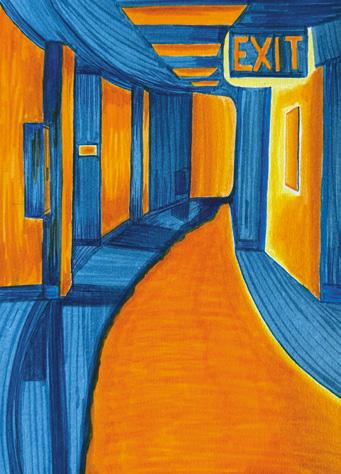
The winding hallway with an option to exit or keep walking represents the time spent on our journey before we reach our end goal.
Ella Wasel Medical Student
“Stroke protocol, 5 minutes!” A flurry of movement. Paramedics yelling. Here she is, eyes glazed, vomit drying. Intubated, stripped, wheeled off to CT. Herniation. I look down at myself and realize I am wearing the same lilac scrubs. I never knew it could happen to us. Her husband, pale-faced. What happened? What happened? What happened?
Digital Art
Aamerah Haque
Medical Student
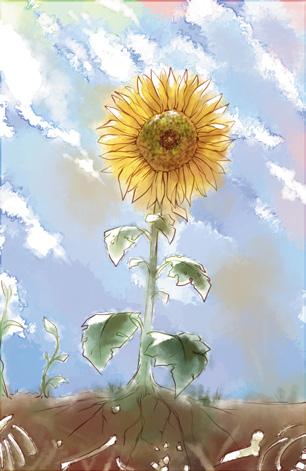
Sunflowers were planted in Russia as a means of absorbing radiation from the ground, eventually growing into a symbol of regrowth and resistance. As a medical student, I feel much like a sunflower, transforming the hardships of medicine into life lessons I carry forward.
Bennett Schrimpf Medical Student
my footsteps echo off the tile a song for an audience of none my eyes acknowledge the hard truth the purple hued crescents the only evidence.
physician heal thyself
soon met with the beeps and alarms that became my only solace more pairs of weary footsteps join proving the solidarity in the chaos.
physician heal thyself running, serving, fixing, solving, I become a hollow shell. where my soul halts another gets a second chance.
physician heal thyself
screams, cries, pleads, conversations,
my mental box overflows. giggles, cheers, smiles, prayers answered, my only reprieve.
physician heal thyself
times up, I shut the box and I awake my soul albeit a little dimmer, heavier. but who fixes the fixer?
physician heal thyself
the harsh kiss of night air calls me back to reality until the winding halls beckon again and I answer with my steps a little wearier and the purple hues a little deeper.
physician heal thyself
Oil Painting
Angela Lin Medical Student
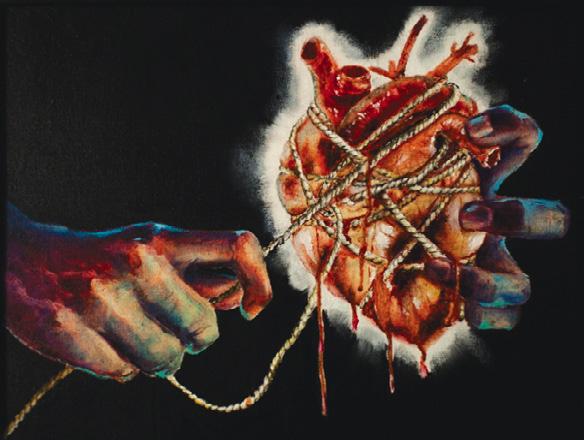
Charlie Gillis Resident/Fellow
I went to my doctor because I had no pulse. She listened to my heart and lungs, asked me to breathe, poked and prodded. When finished, she stated that everything sounds fine. No need to panic, everything seems to be working well. But I was right, she couldn’t find a pulse. I assured her I was feeling fine. She nodded. Make sure to tell any other health professionals, she said, and you should probably wear a wristband or something.
On the way home, I passed a man who asked for help. The need was dire. There was a bus he had missed to see his sister and he needed her to access his bank account and so on and so forth. I can’t help you man, I said. I’m dead. He told me he thought he might be dead too. Lots of people are dead when there’s nothing that says they’re alive anymore. He thanked me for listening.
They took my blood for routine purposes. Listen, you should probably know that I’m dead, I told the nurse. Don’t worry though, I feel fine. Never better, really. I proved this by doing several jumping jacks. He agreed I didn’t really look all that dead, but that he would make a note. He told me to keep the bandage under pressure on my arm. I guess so I don’t get blood everywhere. Dead guys probably have some weird diseases in their blood.
Yes, I’m just here to renew, I told the lady through the hole in the window. Behind me, the hive buzzed, ants in a line, lemmings. She clacked on the keyboard. Made some percussive noises with her tongue. I’m sorry sir, she said quaintly, there’s a note here that
you’ve been considered legally deceased. You’re going to have to sign a waiver. You can find it online. Please make a new appointment. Next!
What?? I waited a month for this one, and it’s another month for a new one. I’m not dead, look at me. I need this to work, to live.
There are 80 people behind you that feel the same way. Please make a new appointment. She seemed distrustful that I was not dead. There is only so much she can do on her end with the virtual system. Please sir, she needs to help the next in line.
The waiver must be signed. I don’t understand the rules, but it must be so.
The grocery store bustled with people that were alive. My ID card wouldn’t work at the door. There were other stores, in other neighbourhoods, but my card was for this one. Error 041 – user not recognized, a giant red X. The door was locked otherwise. C’mon deadbeat. Move along. I don’t understand, but it must be so.
Next, they came for my things. I walked out of the toilet and found two overalled men pivoting my couch through the front door. You guys must have the wrong address, I told them, I didn’t hire any movers. My rent is up to date.
They told me it was definitely the right address, the dead guy’s place. He probably won’t need this where he is, eh? Holding up my bed. Look man, we’re just doing as we’re instructed, the orders in our system gave us your address, so here we are. We’ve got a job to do. We can’t drive away from this place unless the
computer registers the weight of your things, so you’ll have to call the company and get it sorted out. These are the rules. It’s nothing personal. An arm clapped me around the shoulder.
Sitting on the floor of my empty home full of the ghosts of what used to be, I called the company. The robotic answering machine didn’t recognize my account. There is no user associated with that number. Goodbye. Press 3 to return to the previous menu. Goodbye. Eventually I was unable to make any calls, which seemed weird since it was the 15th of the month
and my cell phone bill was paid automatically on the 7th. Abruptly, the lights winked out, the electronic appliance hum was silenced all at once, and a vacant gloom set in, pierced only by the cold glow reaching up from the street below.
In the dark, I wondered how long I had been dead. How long I had no pulse. Surely at some point when I was born, someone would have noticed, said something, and alerted the appropriate authorities. They would have known what to do. They could have prevented all this.
"Finding
Angela Lin Medical Student
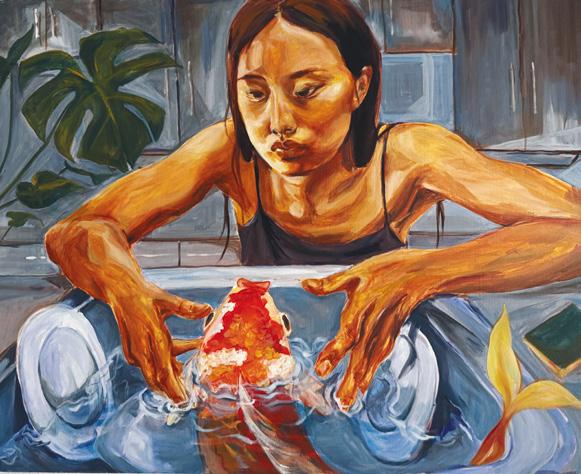
I’ve found that in my pathway through medicine, there is a certain joy in learning information that can be applied to every day life. By marveling at the ordinary world around me and noticing the extraordinary, I have transformed my own perspective.
"I Don't Need A Name; You Can Call Me Anything"
Elise Welch Medical Student
Sometimes I close my eyes when eating chocolate pudding
And it tastes like being nine years old.
Smells like moving Grandaddy into his new home. The one with the never-ending hallway with the identical rooms. Sounds like nurses laughing, musical chairs, and muffled Mom tears. Sometimes it feels like looking into his face, Knowing my name was on the tip of his tongue, Just out of reach.
When words fail, we can laugh instead.
One time my mom found 37 packets of Sweet’N Low in his drawer. He said they never had any at breakfast — probably because he was taking them, But that’s neither here nor there.
He was certainly known as the thief of his floor. Missing your glasses? A magazine? Hair tie? Check 412.
Looking back, it seems only fair to me to let him take such little things. So much was being stolen from him every day.
When I got to the age where I realized I wanted to know him, it was too late. It was as if moths had eaten at the stories of my grandmother Or scissors had cut out the entirety of the map of Mississippi. Perhaps Hurricane Katrina had simply washed away all of 2005, not just his garden. What was left was a pile of jumbled fragments That we shared over chocolate pudding.
And when his tongue faltered over my name, I knew not to take it personally.
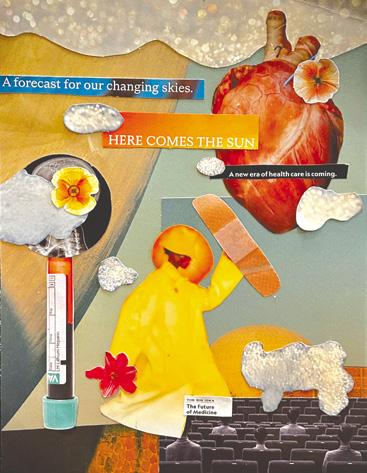
"Here Comes the Sun!"
Reha Kakkar Medical Student
Hans Robinson Loja Medical Student
the happiest night of my life,
spent alone, in the castle. my king has died haphazardly, accustomed to resurrection.
i’m not reaching out, silence has sinewed my resolve. and there’s a real cabal of heroes
galvanizing my barrier of thunder. my string of pawns corners the bishoponce all-seeing, now trapped in that little cave of fianchettos. i take my sole knight to the outpost, point to the green pastures yonder
for which he’s mastered afar admiration. he maneuvers and loops like a house record, like it’s 1 a.m. and i’m Madonna
for just 4 minutes, all night. entertaining the notion of finding friendly faces in that full arena, proud to know them and earn the love they offer freely. of course,
the sight of that one man would still ruin me; i practiced this endgame. king versus king and pawn, which turns out can still draw. i relocate to a lawn chair, grass crisping the night like an overhead plane, reminding myself that chess used to feel impossible. when moving feels impossible, i’ll stay here, suspended in limbo yet alive despite it all.
Patrick Joseph Joven, RN, BSN Alumni
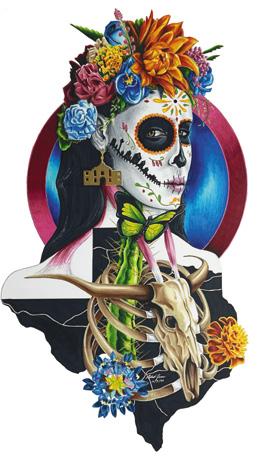
Keeping his background in anatomy as the base for all of his works, artist Patrick Joven calls on his environment as inspiration for this San Antonio themed drawing. The city runs deep with history from both Mexico and Texas; therefore, it was fitting to use a well known Mexican tradition, the sugar skull face painting, as the focal point on the piece. Other well known Texas objects were put into place to represent anatomical structures such as the cactus with spines to represent the human spine, the long horn skull to represent the sternum and clavicles (collar bones), or the blue bonnet and marigold flowers to represent the mammary glands.
Alexis Ramos, MD Faculty
She had been here before. The same room, another IV piercing her skin, and her heart once again struggling to keep pace. The patient was admitted overnight due to having shortness of breath. This was another exacerbation in a long journey with her heart failure.
I met her in the morning after the team briefed me on morning rounds. As I entered her brightly lit room, her eyes darted around to me, the resident who accompanied me, then back to the bedside table. As we discussed her care, I asked permission to view her heart with a portable ultrasound probe to which she agreed. I reached for the probe and gel.
The resident hesitated when I suggested they try looking first, but eventually, they took the probe. Initially, the images were out of focus. They were too bright and cropped. But with a few minor adjustments, the outline of her heart came into view, pumping with rhythm and certainty. I was mid-sentence, describing the anatomy and waveforms, when the patient’s eyes fixed on the screen. “That’s my heart?” she asked.
Her face did not express wonder but instead, relief. Relief that her heart was, in fact, present and pumping. Her multiple hospitalizations served as a long rap sheet of illness. Each hospital stay, her hope decreased another notch. But in that moment of gray and black images, she saw the culprit. She visualized the organ that caused her so much grief and instead of turning away, she looked toward it in reassurance that it is still working, not despite her but because of her.
I could see a small pool of tear puddling in her left eye. I asked the resident to grab a paper towel from the dispenser, since no tissues were present. “I want to stay out of here,” the patient said. “I know you do,” I affirmed.
Digital Photography
Jason Ziperovich
Medical Student
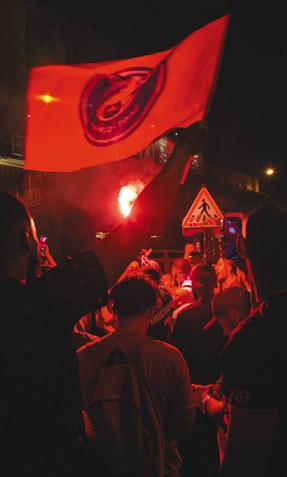
A flare cuts through the night as bodies press together in celebration, briefly dissolving the boundary between individual and crowd. In moments like this, we become something else, where identity is reshaped by collective emotion, only as long as the light burns.
Dang Nguyen Medical Student
You go out on the porch Where we banned your lighters and cigarettes
To get some fresh air "I promise I won't leave."
I nod but look on as your face and arms drift between your last words, bleeding together before inescapable time brought in the cold smell of smoke.
I never see you again.
Montgomery Smith Medical Student
Three traumas in quick succession. Concrete crush injuries. Highway wreckage. Blood on every surface.
Then — a toddler with a dog bite, waiting for his parents. Scared, tearful. Trying to be brave.
I held him while Elmo played on the screen. He fell asleep in my arms.
The trauma bay roared around us.
We found peace.
"If Only There Were Dragons In These Skies"
Lia Quesada, MD Alumni
Mariam Imam Medical Student
the parts of myself i cannot examine anymore, have been altered by proximity, by imprint thoughts that would have become words now circulate, contained, living and dying entirely within me days move slower since warmth was turned to ice. cold is ambient; ache is the constant time stretches. each second is nails scraping on chalkboards each breath is for a shallow attempt to pause, for anything other than the persistence of pain i search in windows, reflections, peripheral motion, as if recognition from afar is the cure there are infinite alternatives, infinite outcomes, but the mind remains fixed on a broken trajectory change is ordinary. acceptance feels impossible. certainty is demanded but certainty does not reply prayers for indifference conditioned responses persist movement, color, sound trigger memory before reason can intervene spaces altered silence heavier expression impossible, not for a lack of emotion, but because this language never learned its shape in time
resolution does not return routine tasks saturate themselves, as if meaning has leaked into every aisle, every familiar part of the world now mislabeled.
weeks pass.
self-imposed timelines expire anticipation lingers without justification, hope operates independently of logic but it feels structural, like a house still barely standing after something essential has left it haunted these places, intersections, routines, these are first did not need to exist if they were also meant to be lasts
i have never been more vigilant, eyes scanning compulsively, not for danger, but for the possibility of recognition. proof that what once was still exists, occupying the same world night is expected to be difficult. daylight is the surprise.
history speaks of empires collapsing, coastlines erased, entire lineages lost to force. my disaster is quieter, contained entirely within my memories but no less irreversible A meditation on sudden loss and the way absence rewires attention, memory, and time. Written in the aftermath of an unexpected change, this piece traces how ordinary spaces and moments become charged when a life event occurs without explanation.
Leo Crockett Medical Student
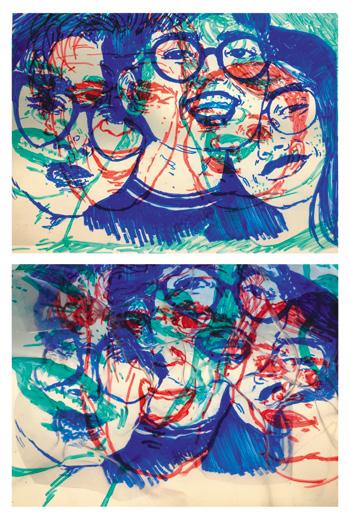
My piece touches on the way memories morph over time. By altering the original portraits with a heat gun, they permanently changed: faces became indistinct, the joy unified. Memory, too, changes a moment, an imperfect replica becoming its own treasure.
"A
Colored Pencil
Stuti Mehta Medical Student
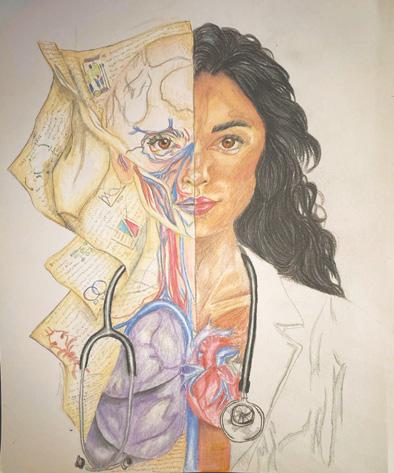
Am I made of books? As a first-year medical student, I'm a string of random facts messily woven, none of it really coming together and pieces of it falling away as more and more information is shoved in my brain. But I clutch these pages of myself in excitement knowing they will help me reach the human side of medicine soon enough to make me so much more than just a textbook doctor.
Luke Klein Medical Student
This crooked stance, those sightless eyes, these signs of the end of a lifeline.
Cruel Time, who wrinkles the skin and brittles the mind,
Then leaves nothing left but a husk behind; Is this fate to be mine?
Once someone who saw, then merely something to see?
Yet this too shall pass, and when Time comes for me, I hope others, by my care, will have been healed; And to have made an impact not until death revealed.
The gift of a body; entrusted and amplified.
And so before a tank I stand, a blade in hand; this body I lift.
And flesh I slice, so cold and stiff, to guide a future surgical shift.
An exploration of the transformative and inherently self-reflective study of cadavers as it uniquely cultivates care of the living.
Adriana Dyurich, PhD, LPC Faculty
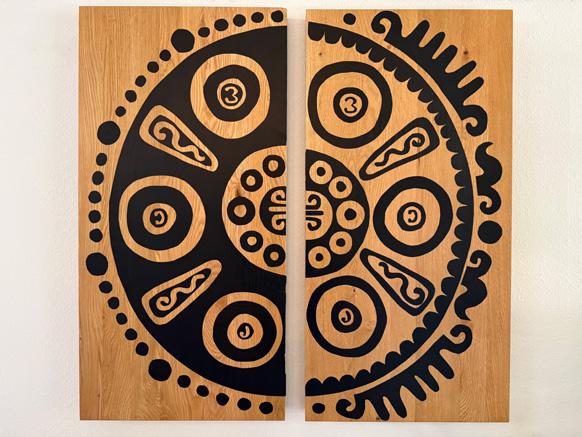
Every shadow has a light, every light has a shadow, transformation is constant
Leif Alino Medical Student
The freshly varnished deck forgot the waves that splintered her planks, old imperfection fading to beautiful indifference. Her shiny visage defies the relentless tempests awaiting. The sailors recoiled! Her empty eyes guard scars of voyages past. And so the sailors slipped across that beautiful deck, devoid of the familiar grooves that once planted their feet.
Professional metamorphosis challenges us to replace parts of ourselves in a circular quest towards self-improvement. Each weakness cut is a strength gained. Yet we must cherish the raw parts of our humanity.
Digital Photography
Yousuf Hassen
Medical Student
Captured at the Garfield Park Conservatory in Chicago, Illinois. A quiet reminder of life’s impermanence through the fleeting bloom of the hibiscus.
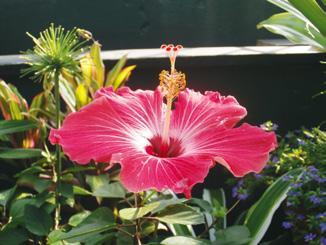
Digital Photography
Yousuf Hassen
Medical Student
Captured at the Missouri Botanical Garden in St. Louis, Missouri. A hanging symbol of stillness, reflection, and the desire to heal.
Lacy Lichtenhan Medical Student
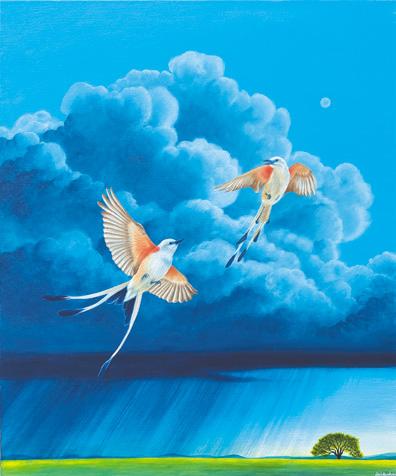
I painted this at the beginning of my third year, while I was still learning to adapt to the difficulty of clinicals. I had seen these two scissortails on the ranch; catching the wind current and playfully taking to the air just as a storm was blowing in. As I captured the beautiful moment, I reflected on my own ability to simply take to the wind when a storm blows in.
Digital Photography
Jacob Luddington
Medical Student
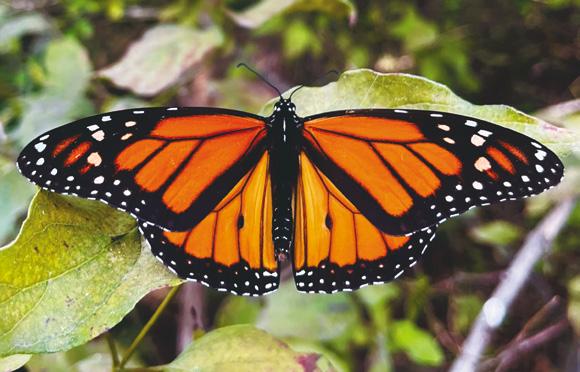
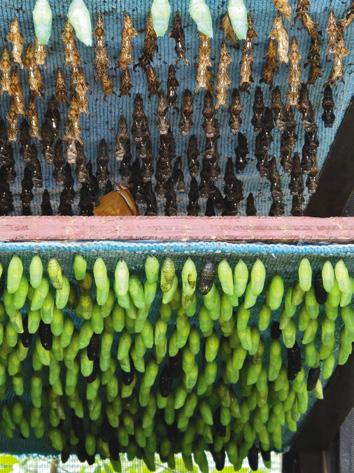
A butterfly rests at Guadalupe River State Park. It has completed its metamorphosis.
Suvaacha Bajpai Medical Student
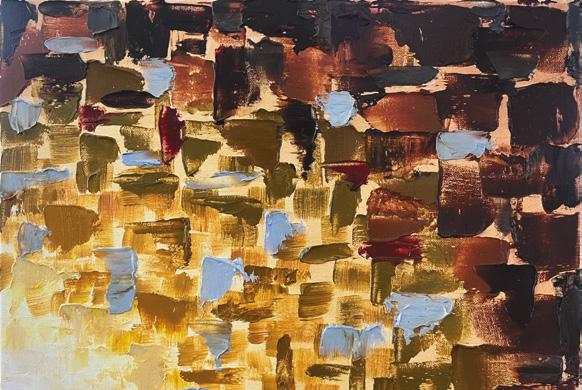
This painting represents the growth of a medical student as training becomes more demanding and layered over time. The bright and open beginning represents naive curiosity, while the radiating darker colors and thicker impasto reflect increasing responsibility and pressure. Strokes of blue and red show moments of mentorship, personal identity, and passion that remain present throughout the process. The work emphasizes transformation through challenge, not the loss of self but its strengthening.
"Daybreak
Digital Photography
Richard Usatine, MD
Faculty

Dresden, Germany.
"Metamorphosis
Digital Photography
Hans Robinson Loja Medical Student

Hans Robinson Loja Medical Student
your diner that’s not yours sells crab cakes, battered with blue cheese and fennelstuffed. your messenger dove arrived, the cashier wearing your nametag who told me, “enjoy the movie” –thoughtful little specimen, you are. i called both your numbers as seen from IH-35, and only had money for one version of you: a dozen donuts or eternal salvation. i even talk to your doppelganger at community yoga, and fascinate him. i am the first Filipino, first of my namesake he ever had the pleasure of knowing. in my Atalantan conquests, you knew me far more than other men, and i hate that standard; pooling in sweat, and your arms, and you singing that aubade from the 70s, and me clinging to your shirt like a monkey’s paw, like smushing my crab cakes as the police chase me down. cradled and caressed, i wonder what love is, the reflections outside my eyes in yours.
"At
Digital Photography
Kris Meadows Medical Student
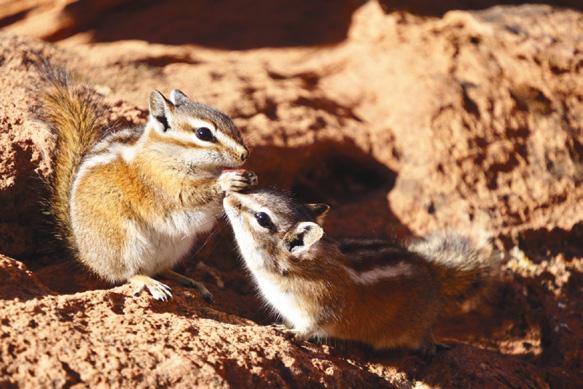
I took this picture after hiking up a trail in Zion National Park. Two rock squirrels sharing food offered a reminder of how connection persists even in demanding environments.
"Population: 8.3 billion"
Mariam Imam Medical Student
on trains, screens, and street intersections, millions of lives speed past me. apartments glow, strangers chase destinations, homes full of love and pain blur from italy to pakistan to brazil. we will never meet, never know each other. still, i wonder.
how many thoughts mirror mine? and how beautiful it would be to listen anyway
A reflection on the quiet intimacy of passing lives. We brush against entire worlds we will never enter, but who knows how many experiences you share with the stranger next to you.
Digital Photography
Kris Meadows Medical Student

I took this photograph during a night hike in Big Bend National Park. Standing beneath it, I was reminded how vast our universe is and how the scale can reframe your perspective.
Digital Photography
Jason Ziperovich Medical Student
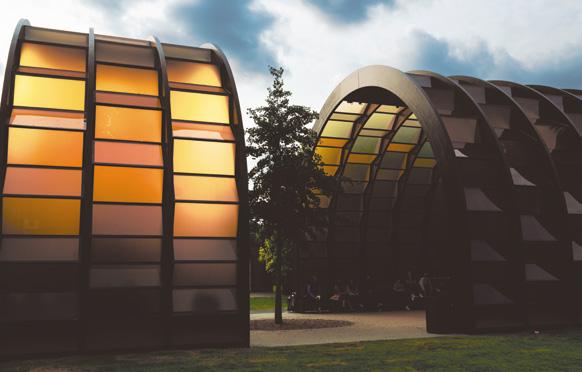
Designed to exist only for a season, the Serpentine Pavilion frames light, shadow, and movement before disappearing, reborn each year in a different form. Here, a tree stands between its curved structures, unchanged by the metal and glass around it—a quiet counterpoint to architecture defined by planned impermanence.
Mariam Imam Medical Student
searching through an endless corridor, each turn narrowing, each exit deferred the destination is not relief, yet i continue forward.
i do not know how to confront suffering except with gentle steadiness i was not made for force i was made to remain
monitoring what remains unspoken taking note of what worsens prayers dedicated to the resolve of pain
not as an intervention, but as a natural course
so you may move on, and I may do the same. i attempt again. the outcome is unchanged what persists is function, the act of living, the discipline of trying. i attempt again.
A reflection on how persistence, observation, and gentleness can become forms of care when solutions to pain remain out of reach.
"Persistence
Digital Photography
Laila B. Alkassar
Medical
Student
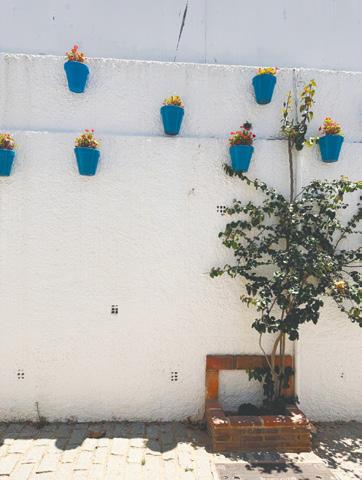
Digital Photography
Joie Cheng Medical Student
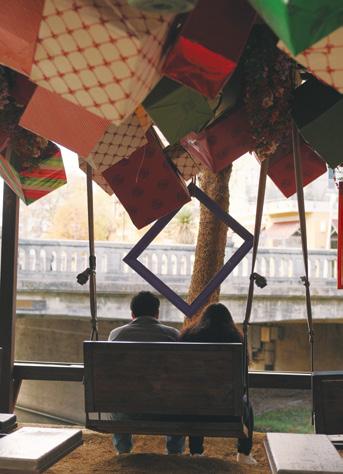
Throughout our training, we meet people and encounter experiences that challenge our beliefs about the world. Amidst the chaos and stress that our careers bring, we often lose sight of how much this has transformed our identities as caretakers and healers. What a privilege it is to be shaped by such profound experiences that push us to think outside the box, and what a pleasure it is to take a step back and reflect on the growth we experience together.
Pratima Gangupantula Medical Student
I didn’t expect profound psychiatric patient interactions during my surgery clerkship. However, the inpatient transplant service took care of patients experiencing lifelong medical issues that snowballed into comorbid psychiatric issues: major depressive disorder, generalized anxiety disorder, posttraumatic stress disorder. When I first mentioned to my team that I’m applying psychiatry, their faces brightened. “Great! You can talk to Mr. Thomas.” I was taken aback but intrigued. “Are there any goals for this encounter? Like, do I need to get any information from him?” It was my third day rotating on transplant so I was still familiarizing myself with the needs of the team. “Nope, no goals. Just sit with him and talk.” Okay, can do.
Mr. Thomas had been admitted multiple times following his liver transplant for varying infections. Outside of his medical chart, I only knew that his wife had never been in to visit him. I brought him a book from the “Little Library” in the hospital parking garage, which consisted of one shelf of decrepit World War II spy novels. That first time I sat with him, we barely spoke. I managed to pry out of him that his hobbies were amateur radio, stamp collecting, and coin collecting. I attempted to relate to him by sharing my goal of collecting all the US National Parks quarters, but his eyes simply looked through me with no verbal response. I took that as a cue to sit quietly and blankly turn to the television playing CNN in the corner. The silence was unsettling, triggering a flurry of thoughts. I was sent in here to talk. I felt like
I was failing. After about thirty minutes of nothing, he started to get out of bed to use the toilet. I helped him stand up and noticed that his bed was soiled. While he was up, I started to change the sheets. After he came out of the bathroom, I gently suggested that he sit in the chair instead of the bed, using the linens as an excuse. I actually wanted him to be out of bed to disrupt his constant inactivity, protect against delirium, and maybe stop his mood from declining. As I was leaving after cleaning up, out of the corner of my eye, I saw him cracking open the ancient book I had brought.
The next day after rounds, I visited with Mr. Thomas again. This time, I came up with a new topic. “What type of music do you like?” He rolled his eyes toward me. “I used to be a metalhead in the 80s.”
“Wow, really? I think I saved some metal songs to my Spotify … How about this one?” I played Smoke on the Water from my iPhone. This sparked a bit of a conversation. He told me that he grew up in Austin but traveled to San Antonio frequently because of the music scene and ended up settling here. I was in disbelief at the concerts he had been to at just five dollars per ticket: Led Zeppelin, Pantera, and Guns n’ Roses. When I confessed that I was into pop music and not rock, he managed a chuckle and replied, “I can forgive that.”
The third day I went to see Mr. Thomas, he requested to visit the hospital garden on the roof. As I wheeled him up, I ventured to chat with him to no avail. OK, I thought. At least we’re doing something
enjoyable for him today. The silence in the elevator felt deafening. I gave him some options when we arrived at the garden. “I can sit you by the window or by the plants, what would you like?” “Window,” he said slowly. I decided to sit next to him for a few minutes, and after inferring a desire for solitude, I got up and sat under a crape myrtle.
My mind began to wander. Patient is dressed in a hospital gown with disheveled hair. Motor slowing present in intentional movements. Slowed rate of speech with decreased volume. Blunted affect with reduced facial expression. Depressed mood, selfreported as “down.” Thought process logical and goal-directed. No SI/HI/AVH. Oriented x3 with poor insight and judgment. It would be easy for me to look at this patient and understand that he was depressed. It would be easy for me to decide that he should try Zoloft and see if it helps him feel better in four to six
weeks. What’s difficult is discerning what he needs from me at this moment. I tried multiple conversation topics, providing him a book to read, wheeled him up to the garden to enjoy the sunshine. Yet, my inner distress came from not knowing if any of it was working. On top of that, I would not see Mr. Thomas ever again to find out if his depression improved because I’m a medical student on temporary rotations. Mr. Thomas gazed out the window, expressionless. I abruptly stopped my spiraling thoughts. Hold on, this isn’t about me. It’s about Mr. Thomas. He’s doing something other than lying in bed right now. That’s important.
Mr. Thomas turned his head away from the window to face me. I looked back at him for a second and then stood up. “Do you wanna go back to your hospital room?” He nodded. Wheeling him back to the 9th floor was silent again. This time, I was at ease.
Digital Photography
Kris Meadows
Medical Student

I took this photograph coming down from a hike in Zion National Park. The height of the climb behind me offered a quiet reminder that progress is often most noticeable only in retrospect.
Jamie L. Edwards MD/PhD Student
I love going on vacation, but hate plane rides. On planes, time seems to stand still. I can picture my destination — shining, idealistic—but it feels like I will never arrive.
And yet, glancing out the window, I notice the landscape has changed from land to open sea. I must have traveled a long way.
Digital Photography
Laila B. Alkassar Medical Student
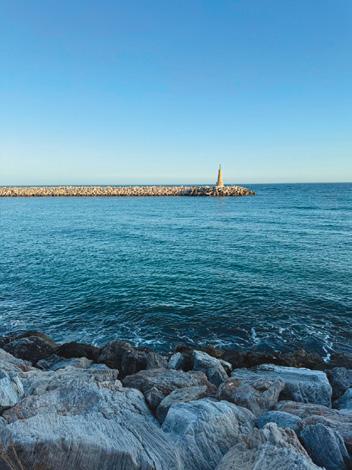
The sea is calm, the horizon steady, and the path ahead quietly defined. Growth can be gentle, shaped by patience, humility, and reflection.
Fozia Akhtar Ali, MD, FAAFP Faculty
Do you have a place to live, stove to prepare meals, and refrigerator to store food?
Do you have money to pay bills, vehicle to drive or bus pass to ride?
Do you have family, friends or community to support?
Can you read and write?
Can we ask before prescribing?
Healing is beyond a pill….
Jian Liang Medical Student

Hallstatt, Austria.
Digital Photography
Pallavi Kapilavaih
Medical Student
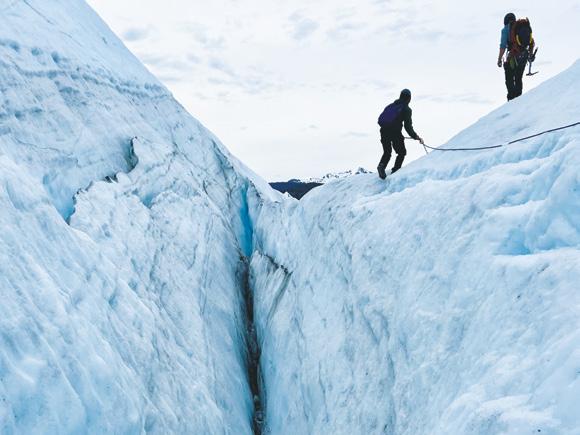
Montgomery Smith Medical Student
Twenty-four years old. Tumors that should never have grown that large. No insurance. No parents. Living with his brother after homelessness.
Ten hours of harrowing, risky surgery. Ten days of recovery. The system failed him at every turn.
But his brother came every morning. And they went home together, united and hopeful.
One small victory.
This patient had bilateral cryptorchidism that became massive tumors after being unnoticed for years. Had no insurance, and had experienced years of homelessness before his brother recently took him in. I cared for him post-op each morning and watched him slowly progress until he was strong enough to go home. His brother came and helped him every single morning, the bright spot in a story of systemic failure.
Colored pencils, markers, and pens
Patrick Joseph Joven, RN,
BSN
Alumni
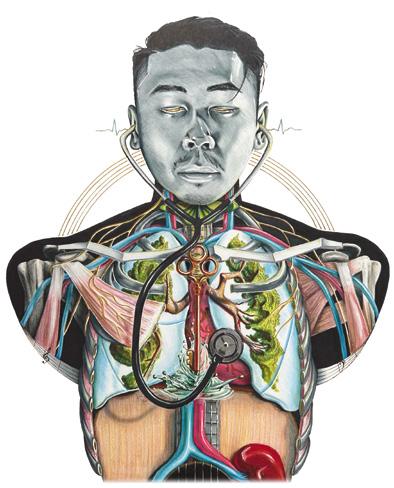
“Listen to Your Body” is the artist’s first attempt at a self portrait, and he decided to do it in his unique style of creating an amalgam of music, nature, and anatomy while also referencing his nursing occupation.
Katrina Fisher Medical Student
You held out your arm, palm forward, to jokingly tell me – “talk to the hand”
The corners of your eyelids crinkled
Your heart held me close every day, and mine did yours
Your arm laid by your side – draped on white linen
Spotted and yellowed
Pale
Your eyelids couldn’t manage to crinkle as much
Your heart slowed its beating, but it still held me
I still see you twice a week
For a moment
Every time my eyes find the arm of my donor
Held out, just like yours as spotted and yellowed and pale
I see you in the crinkles of his eyelids
See those muscles underneath that made them
You are there in the strong fibers of his heart
Strong enough to hold my weight
Twice a week, I see the grandfather his extended arm, his outstretched hand, his eyelids, his heart –of someone who loved him
Just as much as I loved you
When I meet him, each Monday and Thursday
I hold his arm with love
Trace the nerves that moved it gently
I marvel at the capacity for joy
Held in the muscles behind his eyes
When I hold his heart, It is heavy
It is ruby
It is golden
It is raw muscle and sinew and blood that held his life and all the love he gave during it
To my donor and to his family, I wish to say I feel your love in the heart in my hands and I love you, too
I love you Pops
And I hope that, when I see you each day in lab, You are saying "hi" back
My grandfather and the geriatrician, oncologist, and palliative care healthcare professionals who helped him reach the end of his life in the most gentle, dignified manner were strong motivators in my decision to go into medicine. His memory has helped me persist through the most difficult moments in my medical education, and the lessons he taught me in my upbringing shape who I am today.
Digital Photography
Jian Liang Medical Student
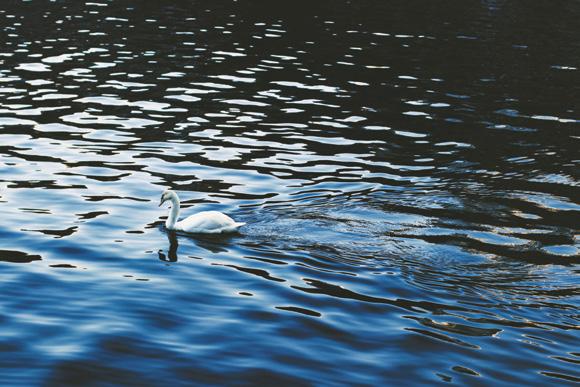
A swan and its reflection in Hallstatt, Austria.
Antonio L Teixeira, MD, PhD Faculty
Do you believe in a better world?
Only hypocrites and lunatics do.
Plus ça change, plus c’est la même chose.
Not believing means one thing: You need bold purposes for living, And character.
You could also embrace illusions of relevance,
But the world does not owe you anything. Move on.
Digital Photography
Zainah Siddiqi Medical Student
Pratima Gangupantula
Medical Student
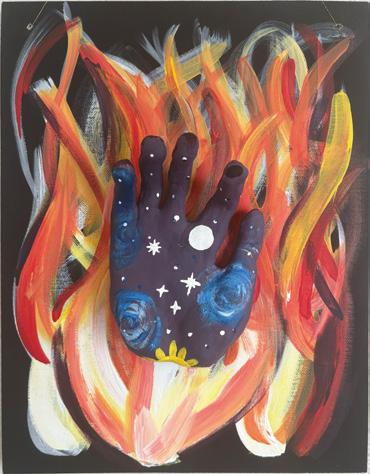
"Escaping Fate" was created with inspiration from Eugene Berman’s "Cassandra." I explored the fire depicted by Berman from the perspective of someone attempting to escape not only the fire, but also predetermined outcomes. It can be difficult to grapple with the comfort of familiarity versus the reward of taking a risk. This art project made me think about my own deviations from stereotypical or expected life outcomes that are predetermined by society and culture.
"Take a Moment for the Memory"
Lacy Lichtenhan Medical Student

This painting is a memory of my best friend and I on a trail ride, in a place I consider the closest thing to home besides heaven itself. Time moves on and things must change, but this is a sacred memory captured in paint.
Acrylic paint
Phuongthy T. Tran Medical Student
Muskan Ali Medical Student
I wished he had shattered my bones instead of crushing my spirit, drowned me instead of exiling me from those who loved me, strangled me instead of murdering me with words. I survived. I was remade. I see invisible injuries, hear silenced pain, and fight cruelty with vigilance. I am becoming a healer beyond bodies.
The wounds left scars, but those scars do not define me, nor will they stop me from becoming.
The wounds left scars, but those scars do not define me, nor will they stop me from becoming.
Acrylic on canvas with 3D paper
Lauren Lia Quesada, MD
Alumni
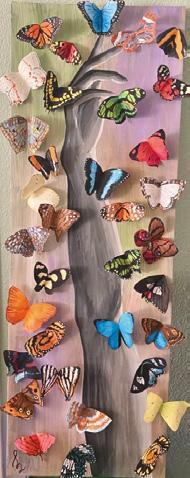
Butterflies found in Costa Rica in flight upwards along a reaching arm.
Robert Burns Medical Student
Too much salt is bad for your health,
But life is short, they say.
What could ever be longer than life?
It sure feels long today.
Life is short, life is long. Three is too early.
Too much salt is bad for your health,
But you need it to survive!
The salt in your blood, the salt in your brain.
Truly, it keeps you alive.
You need it, you do, you electrical thing.
Just be careful in how you keep it.
Too much, too little, or in the wrong place, You could meet critical care and need it.
An Arteriovenous Malformation (AVM) is an abnormal tangle of blood vessels connecting arteries and veins, bypassing the usual capillaries, most commonly in the brain, causing high-pressure blood flow directly into weaker veins, risking rupture and stroke (Solomon & Connolly, 2017)
Life is short, life is long. Four is too early.
Vitals, orders, imaging, labs.
Her salt is a number we change.
Water and salt, they travel together
In textbooks, the sea, or your brain.
Predictable flow between highs and lows.
If reversed, swelling can slow.
But there’s no help in slowing what’s finished.
Because sometimes things turn upside down,
Sometimes too much is the right level.
Sometimes a little brain bleeds to its end
Just because it was born with bad vessels.
Hypertonic saline is an effective hyperosmolar agent for acutely lowering elevated intracranial pressure following AVM rupture, with mechanisms including reduced blood viscosity, improved microcirculatory flow, and consequent cerebral arteriolar constriction that decreases cerebral blood volume. (Carney et al, 2016)
Life is short, life is long. Five is too early.
Where does it go, this salt we borrow?
Maybe the kidneys would know.
Most down the drain.
Some lost in sweat.
Less still departing as tears.
That salt in and out, gathered all up
Fills an hourglass of your years.
Of yours and mine we expect plenty of time,
No one ever thinks it’s this near.
But the elemental pieces of this little girl,
Her salt, that part cannot die.
An atom as old as the earth itself, Eternal, as dust, resides.
Waiting alone for a chance at life, Maybe it’s had one before?
It seems to be a matter of luck.
It will have to wait some more.
Billions of years, or not even ten.
Her mother wants an update again.
Visitation in the PICU should be open to parents and guardians twenty-four hours a day. (Society of Critical Care Medicine, 2020)
Life is short, life is long. Six is too early.
Intravenous. Endotracheal.
Neurological. Her eyes.
Mom says you were perfect. Nurse says you still are. Still, it’s time for goodbyes.
There goes rounds.
Here comes the priest.
“Why, please, why?”
We’re hurting to help
But have nothing left to to try
For this little brain here
Who still smiled back
In the hours just gone by.
Life is short, life is long. Seven is time to go home.
Through creative expression and reflection, we nurture our collective humanity and cultivate meaningful connections among students, faculty, staff, patients and friends of UT Health San Antonio. We are .
LITERATURE & VISUAL ARTS JOURNAL
VOLUME XIX • 2026