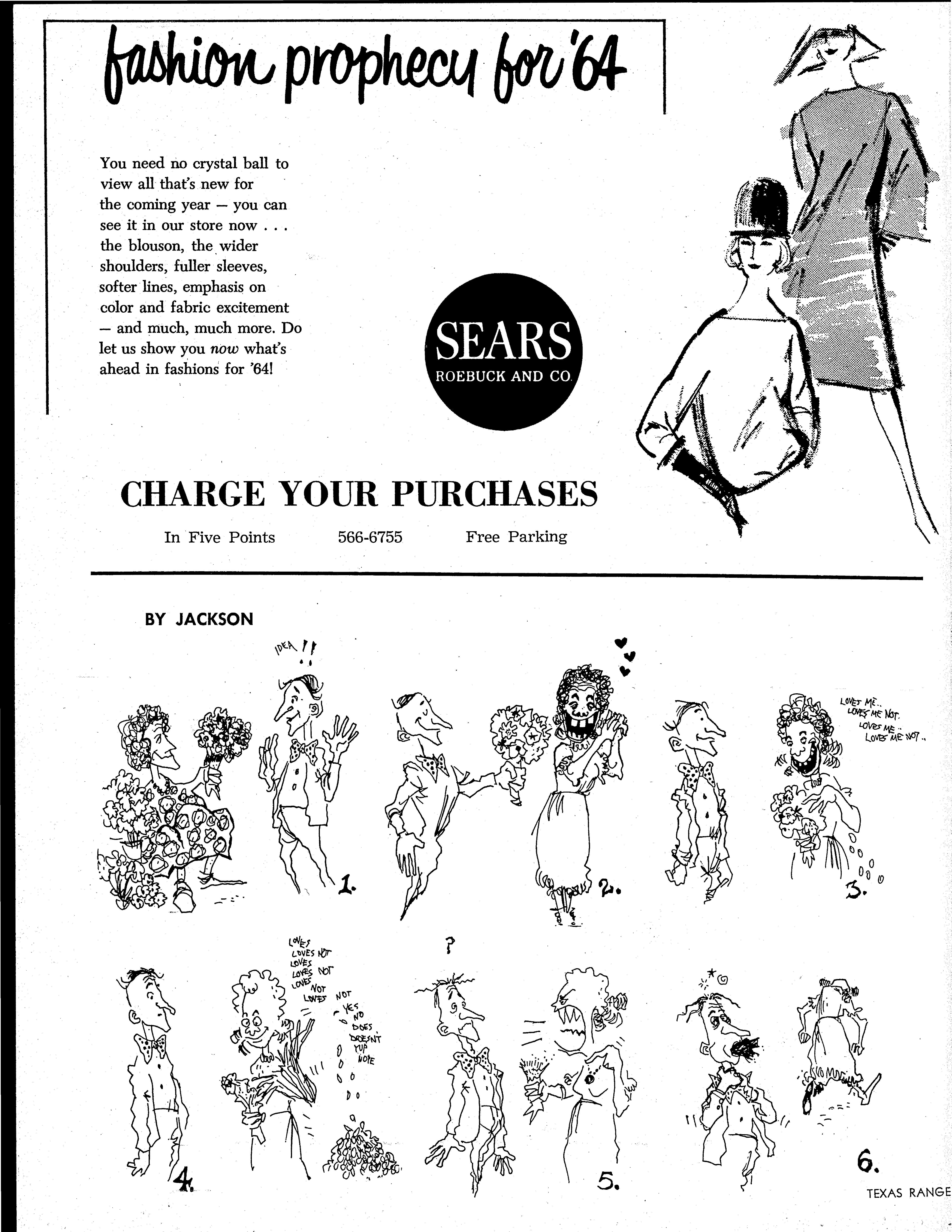
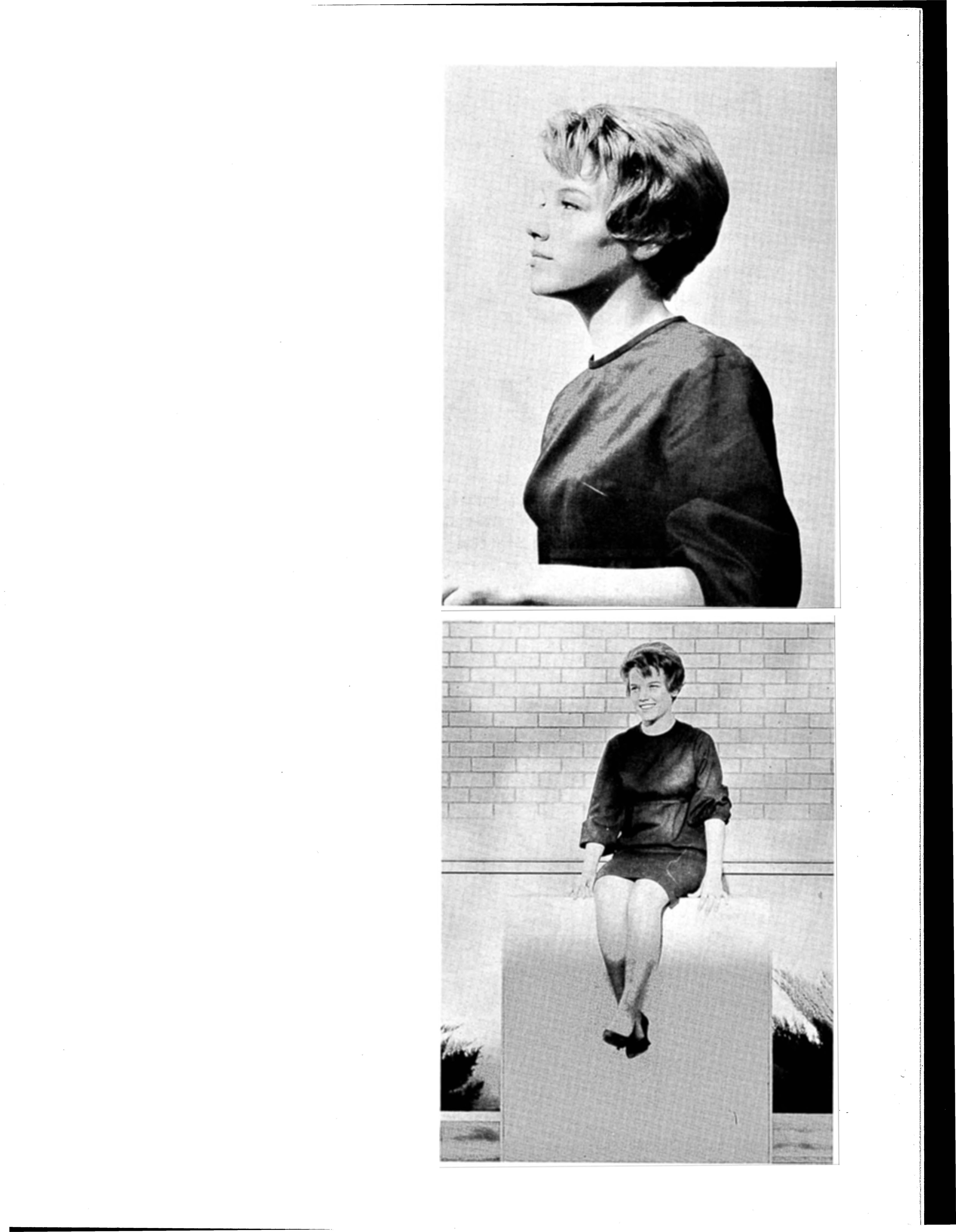
You need no crystal ball to view all that's new for the coming year - you can see it in our store now the blouson, the. wider shoulders, fuller sleeves, softer· lines, emphasis on color and fabric excitement - and much, much more. Do let us show you now what's ahead in fashions for '641
ROEBUCK AND CO
CHARGE YOUR PURCHASES
Five Points
BY JACKSON
Proud of your school? Then wear TWC crested blazer buttons, authentic in design and color. Detailed in jewelers enamel. Perfect gift for TWC students. Allow two weeks delivery. $7.00 PLus TAX
Order Yours Today! Trend Shop Second Floor, Downtown
MEN'S STORE
THESE
THINGS
YOU'LL LOVE IN AN ALL-GAS HOME
FAST energy for cooking, water heating, clothes drying, cooling and heating. CLEAN burning ranges that consume smoke and odor. SAFE homemaking with the fuel the National Fire Protection Association rates safest of all. ECONOMICAL fuel service that can save you thousands of dollars over the life of your mortgage. AUTOMATIC convenience with controls to do the work (and watch the clock) for you. LET GAS PUT MODERN LIVING AT YOUR FINGERTIPS.
EL BURRO
HUMOR
REGULARS
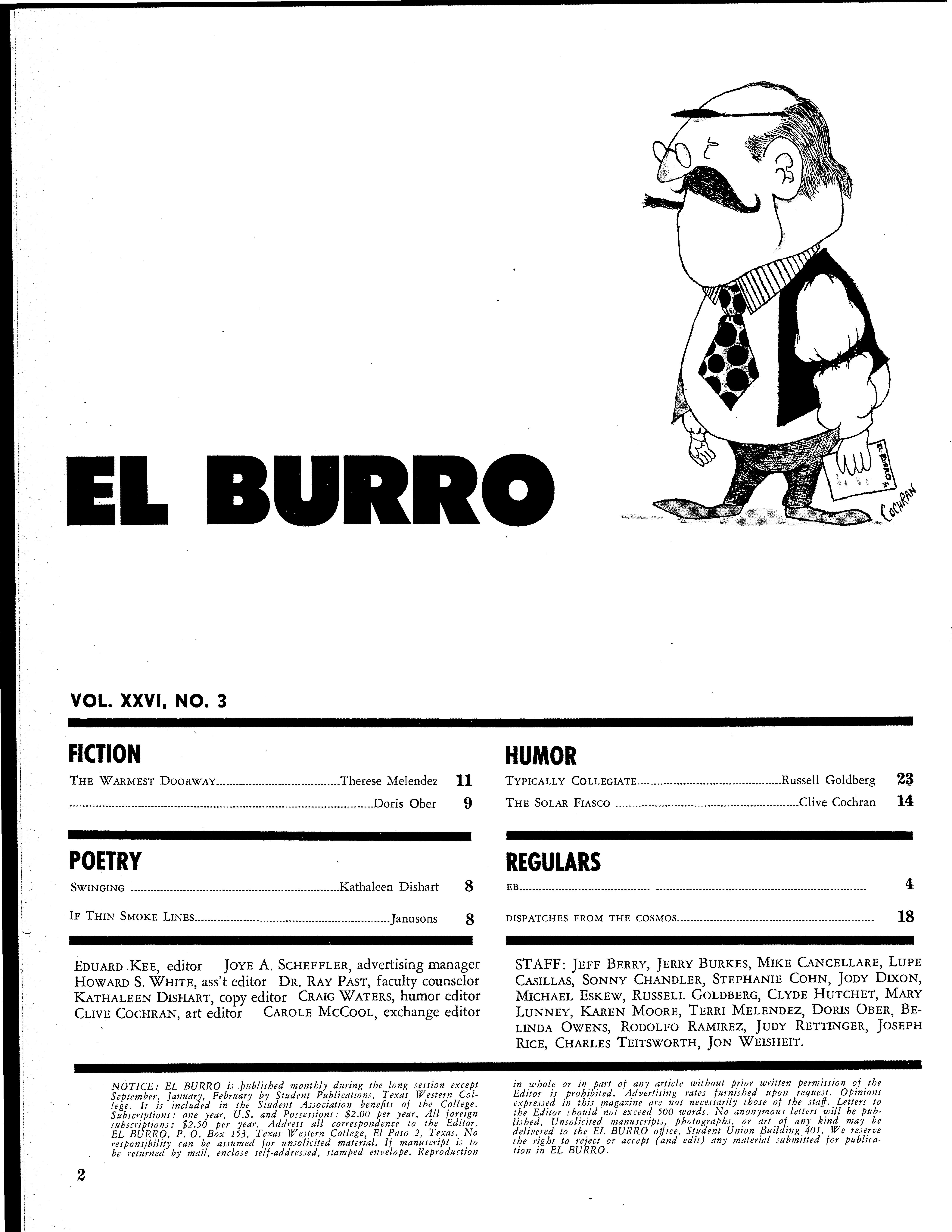
STAFF: JEFF BERRY, JERRY BURKES, MIKE CANCELLARE, LUPE CASILLAS, SONNY CHANDLER, STEPHANIE COHN, JODY DIXON, MICHAEL ESKEW, RUSSELL GOLDBERG, CLYDE HUTCHET, MARY LUNNEY, KAREN MOORE, TERRI MELENDEZ, DORIS OBER, BELINDA OWENS, RODOLFO RAMIREZ, JUDY RETTINGER, JOSEPH RICE, CHARLES TEITSWORTH, JON WEISHEIT. in whole or in part of any af'ticle without prior written permission of the Editor is prohibited. Advertising rates f11rnished 11pon req11est. Opinions expres.1ed in thi1 magazine rlre not neceJJarily those of the staff. Letters to the Editor sho11/d not exceed 500 words. No anonymour letters will be p!iblished. Unsolicited man11scripts, photographs, or art of any kind may be delivered to the EL BURRO office, Student Union Building 401. We reserve the right to reject or accept (and edit) any material submitted for publication in EL BURRO.
'PLENTY CHEAP GAS!
COLLEGE STUDENTS
LOOK OVER YONDER! by howard s. white
I was hoping that someone would come up to me and ask •.. say, I've been meaning to ask you. What exactly is folk?" Then I could have started the column out with "Someone came up to me the other day and asked " But no one did. Nevertheless, the term folk certainly does need a definition.
If you look at a text on folklore, you will very likely find such phrases as "the larger body of the major class populace" who have to "depend on custom and oral tradition" for all sorts of medicinal remedies, child raising methods, weather prediction secrets, and games, stories, and songs. Such is the typical "official" definition of the folk. Unfortunately, the segment of the population thus described is, in the United States at least, becoming educated and urbanized and sophisticated at a rapid rate. Few indeed are the ethnic groups that really depend on oral tradition to anything like the extent that was common fifty or a hundred years ago. Compulsory education and progressive teaching techniques have arrived on the folk scene. And everybody who goes to school learns positively that THERE IS NO SCIENTIFIC BASIS for most folk remedies or weather prediction signs and that PSYCHOLOGISTS ARE IN UNANIMOUS AGREEMENT that the way Mother raised you was all wrong.
What happens to the old folk wisdom in the modern, literate society? It disappears, of course. It exists in archives and libraries in the form of collected materials, but it no longer is alive and vibrant in the life of the people. The people who needed such wisdom now have telephones to call the doctor, television and radio weather forecasts, and movies and books for entertainment. Not all of the older folklore will vanish. Some home-spun cures actually have been found to have medical value: moldy bread was a folk cure long before the mold derivative penicillin was discovered by science. Then too, there will probably always be some people who simply never receive enough education and who will stick to custom out of ignorance. But if future folklorists concentrate only on such exceptions and vestigial instances, their work will take on a somewhat ludicrous nature. The study of folklore will become about as interesting and valuable as the study of, say, menu planning in medieval monasteries.
The stories, songs, signs, and sayings of the folk are becoming standardized and nationalized and replaced and popularized and debunked. And too, the wisdom of the backwoods, sectional, earthy, ethnic, folksy folk is vanishing because this body of folk is vanishing. It's as simple as that. So where does the folklorist of the future go for his material? Where does he find more folk?
IN SEARCH OF FOLK
The point, of course, is that it is merely that group of somewhat primitive people formally defined by the folklorist that is disappearing. In other words, it is only the image of what folk should be that is misleading. Folk are not at all difficult to locate. Everybody is folk. You. Me. Us. Them. Everybody is folk no matter how educated and modernized they may be. So the definition must include this consideration or it will simply not be valid. It is to be expected that the material collected by folklorists will be considerably different in the future. Such studies will not be so strictly confined to that passed on by oral tradition. Folklore will have to expand to include such things as popular fallacies that result from misinterpreting formal scientific theories, as well as the old stand-by, children's riddles. It must become interested in such social phenomena as the political party nominating convention in addition to games and nonsense chants. It will have to pay attention to present-day religious ceremonies as well as medieval alchemy; studies on modern un-American activities investigation and commie catching as well as studies on the Salem witch burnings; collections of the public statements of military leaders as well as collections of the eloquent brags of frontier flat-boat and mountain men.
THE FOLK SONG OF TOMORROW
The traditional folk song has no known author. It is thought that such songs are the products of several generations. Many folk songs grew out of community songfests and family gettogethers. Those songs which remained in oral tradition became better and better songs as time passed.
Today, however, this same folk process cannot be expected to continue operating. In the first place, there are no more community songfests and relatively few families sing together. People have other ways of being entertained today-ways which, for most of them, are more enjoyable. Folks today go to movies or watch TV. When they want to have some music, they put an LP on the hi-fi.
Also important is the fact that songs writing has become a profession. By and large, no one writes songs for the mere pleasure of it any more. So either we admit the possibility of some of the more substantial composed songs being eligible for the folk classification, or we sit back and watch the field of folk music slowly close to aU but the pure, existing folk songs. There will never be any new material in this field again. The composed song will never enter into oral tradition in the old way because communications media have effectively stopped the folk process of change and growth. Authors' names no longer are lost. And printed words to songs do not change in time like remembered words.
The traditional folk song carries implications of some degree of age, even of antiquity. The time element will still operate in the folk field of today even with composed songs, thank heavens. Theoretically, even with long playing records on the folk scene, the song of dubious quality will eventually fall by the side of the ·road and be forgotten ... or misquoted on purpose, copyright laws notwithstanding, to make it a better song!
Last issue, in the EB column, Eduard Kee mentioned that the
LUCKY YOU!
You LIVE BETTER ... Electrically!
Enjoying the advantages of electric light, FLAMELESS cooking, automatic dishwashing, worry-free FLAMELESS water heating, work-free clothes washing and drying is your privilege thanks to the benefits of modern, low-cost electric power. Compare and discover Electric living is the BETTER Way!
"folksong-types" around here have missed "the opportunity to compose a really hot-dang, golly-gosh song about this particular and immediate bit of pain and squalor" located across the river from our happy little campus. I imagine I'm one of those "folksong-types" he was referring to, so I've made an effort to do something about the oversight. Exactly. how "hot-dang, gollygosh" my composition is remains for posterity to determine. Being a protest song of sorts, I felt no guilt in writing "Juarez Town" to an existing tune. However, if you're planning to sing it in public for money, you had better check with the Kingston Trio to see if a copyright restriction exists. The tune is the same as the Trio's "Southcoast." Feel FREE to add new verses or change the tune.
The face in f uarez is forgotten; What we sell you is all that is known. Our town is not only for pleasure But what three-hundred thousand call home.
You come to f uarez in the night time, But our lives, they are more than they seem. You have sampled our wine and our women, But our houses you never have seen.
At night you come down to the river, Pay your pennies and cross into our town. That Rio Grande bridge is the signal To let all care and true feeling drown.
You walk through my streets in a hurry, What pleasure you seek none can tell. You laugh when I ask you a question, You laugh when I'm silent, as well.
We are happy to live on your border. Your play and our work are the same. But there is much more to my people Than figures without face or name.
Oh, why mttst that Rio Grande border Be more than a small, shallow stream? Will we ever be more than your neighbors, Ever friends with a real bridge between?
-HOWARDS. WHITE
THOUGH NOT AFRAID
1anusons
though not .afraid of an occasional I, this voice still whimpers as slow cracks the dam and often gasps at faces as they pass.
And yet, in secret glances at the blade, only eyes in reflex wince ...
• myself is here less aged (less shielded by dark walls) innocent, crisp in cellophane. the wind that bends waves bends me little though I had spit the vinegar water back long before
THE CITY AT NIGHT dive cochran
The City
At night,
A blurred image of neon.
The •dazzling brilliance of tree tinsel And cellophaned chocolate.
Fingers of light spreading like some divine glove, Spectrum's hues reflected in mighty ribbons, Rivers of sequins and bangles flood the moon tide, Like a circus band
• Or clown's face.
Or dragon's scales,
A great ruby-starred lizard crawls the night sea,
The night sea of god's blood on angel hair, Chimera's wounds and phantoms delights.
The mighty sea of the city with all the wondrous frenzy
Of a toy shop window.
But davvn
And angry sun and electric sky
On blinding stucco and sweaty asphalt
Or transparent cigarettes on rain wet sidewalks
The wetshine of dead spangles,
The circus band now a funeral colour, And the clown's face, a blank parody of joy.
•The night sea swept away by dawn's ugly broom
And gemmed serpents flee the sun's unholy passion,
The dawn's mockery of joy and sacred things.
And a roar echoes in the canyons of streets-
The lion's roar of the city ...
The roar of its lungs expelling the foul breath of machines,
The death smell of engines- .
The tar scent of hell.
SWINGING kathaleen dishart
Swinging up in the air in a Swing is the Most fun.
You feel so Free and clean and you Could fly away over the Mountains. But your friends all come Around and they start Begging you to come down and Play. And so you Stop swinging high and you Drift down and you go Play marbles with your Friends, or mumbledypeg.
MOSS FOREST ishmael
Trusting myself not to sleep I lie down six foot long and ravenous for dreams
Cheek to moss my eye screwed right down to infinity enabled now to pick up microcosmically a finely reduced echo of the strain and slant toward sky I notice in the trees in which I lie.
TIMES THE MORNING
doris a. ober
Times the morning lasts into the night, the taste is sweeter and depth of light more thick in gold. But times the morning fails into the day, the honey melted, thinned across the grass, less gold than grey, is like the first transparent snow which steals beneath autumn's windy moon.
strange cJitJdren
by doris ober
The library was cold and quiet Tuesday morning. A libl'3n n filed her fin emails m a corner of her C3 c. A bo)· ith long. dirty h 1r and pink la , rolled a book lru lowl)• down a tack. Th only und a the ra p of an emory boud, and the ntlc squeal of the trucks heel at each lo rc\tolution
Lar block of unscme tabl checkered the room, and at one labl , cri • cro ith a unli ht pattern which lanh:d throush the blind , o old men ·at O\'er a n \\' paper. At the elbow of on of them wa a large blue th rmos bottle and a I r br~wn paper bl , They
look like brother : both ilver m n , ilh
Ion untid)• hair and blu wa ry yes-light, chma-like 6gur . The man ho at cl r to the thermos wore a blue fray uit 1th 1dc: lapel O\tCr a h1rt and a wide brown tie. The broth r , or b, r r overalls and a brown hirt
Th y t \ 1th arms en •in , like lovrs, th ir attention rapt on the journ J laid out on the ·un spilled table The men did not mov , or tum a pa , or blink an y during the morning. The enc nught ha\' been a unclJ , m tionl • picture, but for the y flut•
t rin of the lovel)· hbrJri n and the pers1 ~t S<lueal of the book truck, determining ach new po it1on of the boy
Al 11 : 30 the m; n 1n the uit looked up :1.nd around. He detached hi um from h1. brother . and motioned . t the blue bottle. The second nun wiped h1 teary e ·c and m1lcd a clean tr.1i ht miJc. Th librarian awn in the corner, and opened a far . black, patent leather ba , pulling out mirror. he pu hed and picked at her hort tiff hau, and pre• plred to I \'C:, In the mirror he c:iu ht
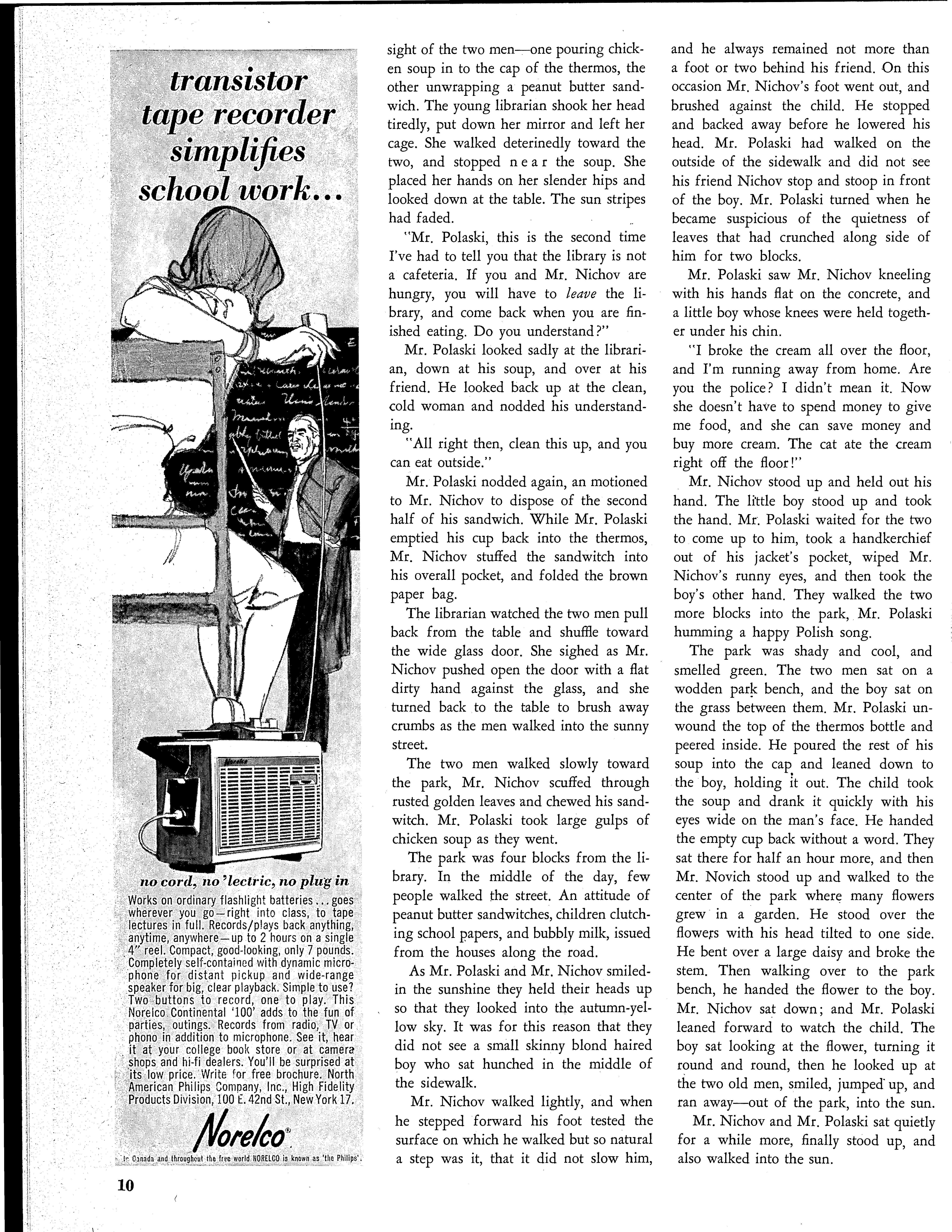
.: Works on prdinary flashlight batten es goes wherever you go-right into class, to tape lectur.es in fulL,Records/p!ays back anything, anytime, anywhere-up to 2 hours on a single •. 4'\re.el. Compact, good-looking, only 7 pounds. Completely self:contained with dynamic microphon'irfor distant pickup. and wide-range speaker for big, clear playback. Simple to use?
Two buttons to record, one to play. This No.relco: Continental '100' adds to the fun of parties, outings:cRecords from radio/TV or phono· in addition to microphone. See il hear it at your college book store or at camera
• shops and hi-fi dealers. You'll be surprised at its low price. 'Write for free brochure North )merican Philips Company, Inc., High Fidelity Products Division, 100 £. 42nd St., New York 17.
sight of the two men-one pouring chicken soup in to the cap of the thermos, the other unwrapping a peanut butter sandwich. The young librarian shook her head tiredly, put down her mirror and left her cage. She walked deterinedly toward the two, and stopped n e a r the soup. She placed her hands on her slender hips and looked down at the table. The sun stripes had faded.
"Mr. Polaski, this is the second time I've had to tell you that the library is not a cafeteria. If you and Mr. Nichov are hungry, you will have to leave the library, and come back when you are finished eating. Do you understand?"
Mr. Polaski looked sadly at the librarian, down at his soup, and over at his friend. He looked back up at the clean, cold woman and nodded his understanding.
"All right then, clean this up, and you can eat outside."
Mr. Polaski nodded again, an motioned to Mr. Nichov to dispose of the second half of his sandwich. While Mr. Polaski emptied his cup back into the thermos, Mr. Nichov stuffed the sandwitch into his overall pocket, and folded the brown paper bag.
The librarian watched the two men pull back from the table and shuffle toward the wide glass door. She sighed as Mr. Nichov pushed open the door with a flat dirty hand against the glass, and she turned back to the table to brush away crumbs as the men walked into the sunny street.
The two men walked slowly toward the park, Mr. Nichov scuffed through rusted golden leaves and chewed his sandwitch. Mr. Polaski took large gulps of chicken soup as they went.
The park was four blocks from the library. In the middle of the day, few people walked the street. An attitude of peanut butter sandwitches, children clutching school papers, and bubbly milk, issued from the houses along the road.
As Mr. Polaski and Mr. Nichov smiledin the sunshine they held their heads up so that they looked into the autumn-yellow sky. It was for this reason that they did not see a small skinny blond haired boy who sat hunched in the middle of the sidewalk.
Mr. Nichov walked lightly, and when he stepped forward his foot tested the surface on which he walked but so natural a step was it, that it did not slow him,
and he always remained not more than a foot or two behind his friend. On this occasion Mr. Nichov's foot went out, and brushed against the child. He stopped and backed away before he lowered his head. Mr. Polaski had walked on the outside of the sidewalk and did not see his friend Nichov stop and stoop in front of the boy. Mr. Polaski turned when he became suspicious of the quietness of leaves that had crunched along side of him for two blocks.
Mr. Polaski saw Mr. Nichov kneeling with his hands flat on the concrete, and a little boy whose knees were held together under his chin.
"I broke the cream all over the floor, and I'm running away from home. Are you the police? I didn't mean it. Now she doesn't have to spend money to give me food, and she can save money and buy more cream. The cat ate the cream right off the floor!"
Mr. Nichov stood up and held out his hand. The li"ttle boy stood up and took the hand. Mr. Polaski waited for the two to come up to him, took a handkerchief out of his jacket's pocket, wiped Mr. Nichov' s runny eyes, and then took the boy· s other hand. They walked the two more blocks into the park, Mr. Polaski humming a happy Polish song.
The park was shady and cool, and smelled green. The two men sat on a wodden par~ bench, and the boy sat on the grass between them. Mr. Polaski unwound the top of the thermos bottle and peered inside. He poured the rest of his soup into the cap and leaned down to the boy, holding it out. The child took the soup and drank it quickly with his eyes wide on the man's face. He handed the empty cup back without a word. They sat there for half an hour more, and then Mr. Novich stood up and walked to the center of the park where many flowers grew in a garden. He stood over the flowers with his head tilted to one side. He bent over a large daisy and broke the stem. Then walking over to the park bench, he handed the flower to the boy. Mr. Nichov sat down; and Mr. Polaski leaned forward to watch the child. The boy sat looking at the flower, turning it round and round, then he looked up at the two old men, smiled, jumped· up, and ran away-out of the park, into the sun.
Mr. Nichov and Mr. Polaski sat quietly for a while more, finally stood up, and also walked into the sun.
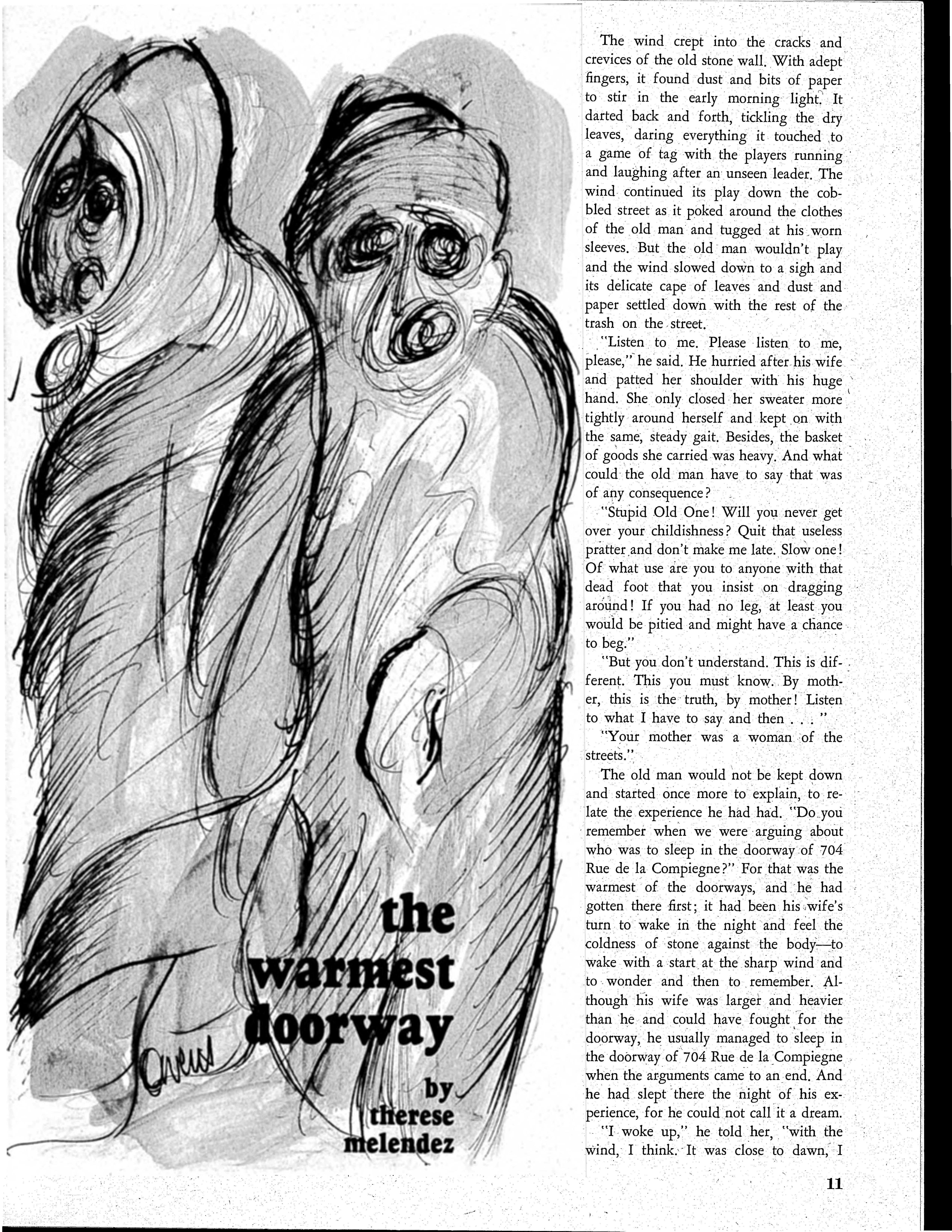
The wind crept into the cracks and crevices of the old stone wall. With adept fingers, it found dust and bits of paper to stir in the early morning ligh( It darted back and forth, •tickling the dry leaves, daring everything it touched to agame of tag with t_he players running and laughing after an. unseen leader The wind continued its p,lay down the cobbled street as it poked around the clothes of the old man and tugged at his . worn sleeves. But the old man wouldn't play and the wind slowed down to a sigh and its delicate cap~ of leaves and dust and paper settled down with the rest of the trash on the street.
"Listen to me. Please -listen to me, please,''- he said. He hurried after his wife and patted her shoulder with his huge ' \ hand. She .only closed her sweater more tightly ·around herself and kept on with the same, steady gait Besides, the basket of g~ods she carried was heavy. And what • could the old man have to say that 'Yas of any consequence?
"Stupid Old One! Will you never get over your childishness? Quit that •useless pratter and don't make me late Slo_;,, one! Of what use are you to ·anyone ·y.,ith that dead foot that you insist on dragging aroririd ! If you had no leg, at leasfyou wouid be pitied and might have a diance · to beg."
' 'But you don't understand This is dif- : ferent: This you must •know. By mother, this is the truth, by mother! Listen to what I hav:e to say and then : " "Your mother was a woman of the streets."
The ~Id man would 'not be kept 1own and started once more to explain, to relate the experience he had had ''Do yori • remember when we were arguing 3:bout who was to sleep in the doorway of 704 Rue de la Compiegne ?" Forthat was the warmest : of the doorways, and he had gotten there first; it had been his ,wife's turn to wake iri the night and feel the coldness of stone against the bodf-:to wake with a start at the sharpwind arid to wonder and then to remember. Alth~ugh his wife was larger and heavier th an he and could have fought for the doorway, he usually managed to ~leep in the doorway of 704 Rue de la _Compiegne when the arguments came to an end. And he had slept there the night. of his experience, for he could not call it a dream.
"l woke up,'' he told her, "with fhe wind, I think .· It was cl~se to dawn,' I
Miner Financial Delinquent
Even the most miner error in judgement can hurt your future credit.
A bank account keeps your money safe and is a vital step in establishing a credit record.
Bank at the Southwest where your account is welcome and the service and location are the most convenient for you. At ·southwest, we bank on your future.
could ·tell by the air but not by the light, because it was still dark. The wind awakened me, I am certain. I got up and walked to the place that I felt I must go • to. I don't know exactly where it is, but I ·know I could find it once more if I tried. Somehow I felt that the wind led me to this place, to the people. Oh, Kara, they were good people, they were go odness itself. They saw my lame foot and they cared because it was lame, but it seemed not to make a difference to them whether I was lame or not. I told them my name and they nodded their heads as if to say 'Fine' but did not tell theirs. I was led around to their houses and they showed me all the ane things. And Kara-they asked me to stay with them, they asked me. I said yes, that I would but that I must bring you, my wife. The man who had shown me all the places only smiled at me and said nothing.· Kara, these were strange people, different from any you or I know. And the place, their home was strange, also. The sky had lightened but the time had remained the same. I don't know why or how I •felt that timelessness, but I remember feeling; knowing that I would not be late for you "
"Come, come with me," the man had said. The Old man had followed the-other with the green cap, light green-almost yellow but a green that had seemed to come from the cap itself, not the cloth from which it was made.
• Old Man walked with G r e e n Cap, walked and listened and saw. But mostly felt. What was it? Old Man thought. What made everything so strange? He looked at the people and saw: they were listening to each other, really listening. But not one of them was saying a word. All of them listened and smiled and nodded their heads appreciatively, but not a word was exchanged.
"What are they doing?" the old man • asked.
"They' re listening."
"Yes, but to what, to whom?"
"They are listening to each other, Old Man. They are listening to the loves, the • hates, the grievances, the joys that each undergoes. The lovely, the ugly, the despair, the hope-all is known."
"And why? Why do they not speak? It is not important to speak, also? Speech is freedom."
"He who speaks unheard words is like a bird with an injured wing. ·It tries to
305MILL ST.
Patronize EL BURRO advertisers!
fly; it struggles and flutters around and makes flying noises with its wings. At t i m e s it even manages to get off the ground-with the help of the wind. But in the end, when the rest of the flock is ready to migrate, the injured bird is unable to fly and moves with small, spastic jerks of the body, useless to itself and to the rest of the flock. It watches the other birds soar into the sky and disappear and it looks at the disturbed dust settle down once more and it dies."
The old man looked at the sky and at the listening people and tried to listen. But his were hardened ears, unused to the sensitive emotions of the others and : he could not hear.
"I can't-I cannot hear!" he shrieked. "Take me back I cannot hear!"
"You must listen. The others cannot hear either; they're listening."
Once more the old one began to complain, but he tried to listen. At first there had been nothing. He had continued to listen and then he had heard, he had heard ....
" and I heard," the old man continued as he touched his wife again.
"There, you see ! With y o u r stupid foot, you have made me late and my place at the market has been taken. Insolent dog! Y o u r clumsiness has ruined my chances of making a good sale. Old and worthless, you . . . listen to me when I am speaking to you-where are you going? Listen, I say! Oh, what is the use! He will return for supper. Wares ! Earthen wares ! Pretty earthen wares to buy !"
But the old one did not return. For once he did not listen to his wife. He left to be listened to.
And Kara? She sold three earthen-ware pots-a good day for her. And she slept in the doorway of 704 Rue de la Compiegne every night now, for that was the warmest of the doorways.
'tis the season to be wealthy
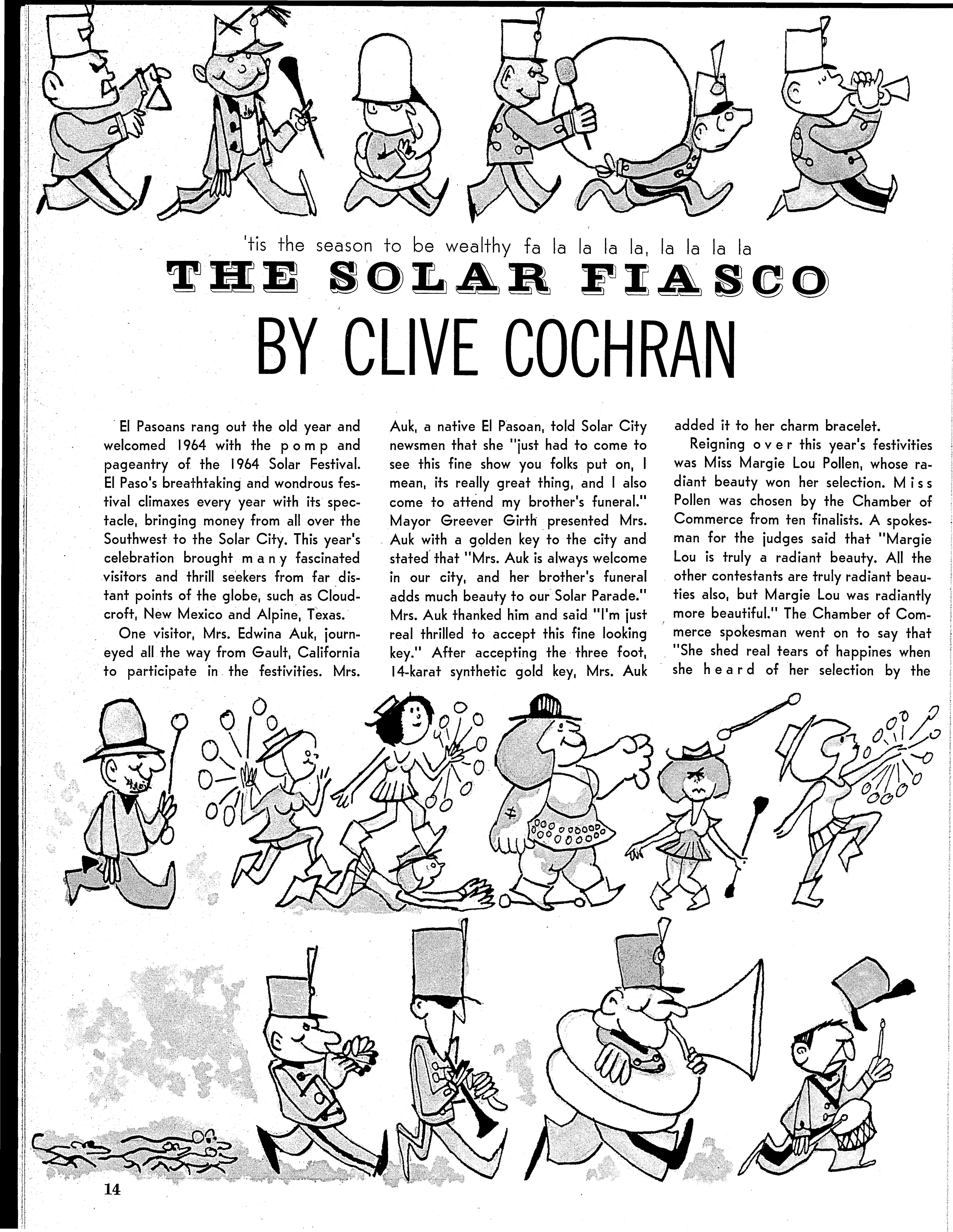
BOE.141\ FIASCO BY CLIVE COCHRAN
• El Pasoans rang out the old year and welcomed 1964 with the p o m p and pageantry of the 1964 Solar Festival. El Paso's breathtaking and wondrous festival climaxes every year with its spectacle, bringing money from all over the Southwest to the Solar City. This year's celebration brought m a n y fascinated visitors and thrill seekers from far distant points of the globe, such as Cl~udcroft, New Mexico and Alpine, Texas.
One visitor, Mrs. Edwina Auk, journeyed all the way from Gault, California to participate in the festivities. Mrs.
Auk, a native El Pasoan, told Solar City newsmen that she "just had to come to see this fine show you folks put on, I mean, its really great thing, and I also come to attend my brother's funeral."
Mayor Greever Girth presented Mrs. Auk with a golden key to the city and stated that "Mrs. Auk is always welcome
in our city, and her brother's funeral adds much beauty to our.Solar Parade." Mrs. Auk thanked him and said "I'm just , real thrilled to accept this fine looking key." After accepting the three foot, 14-karat synthetic gold key, Mrs. Auk
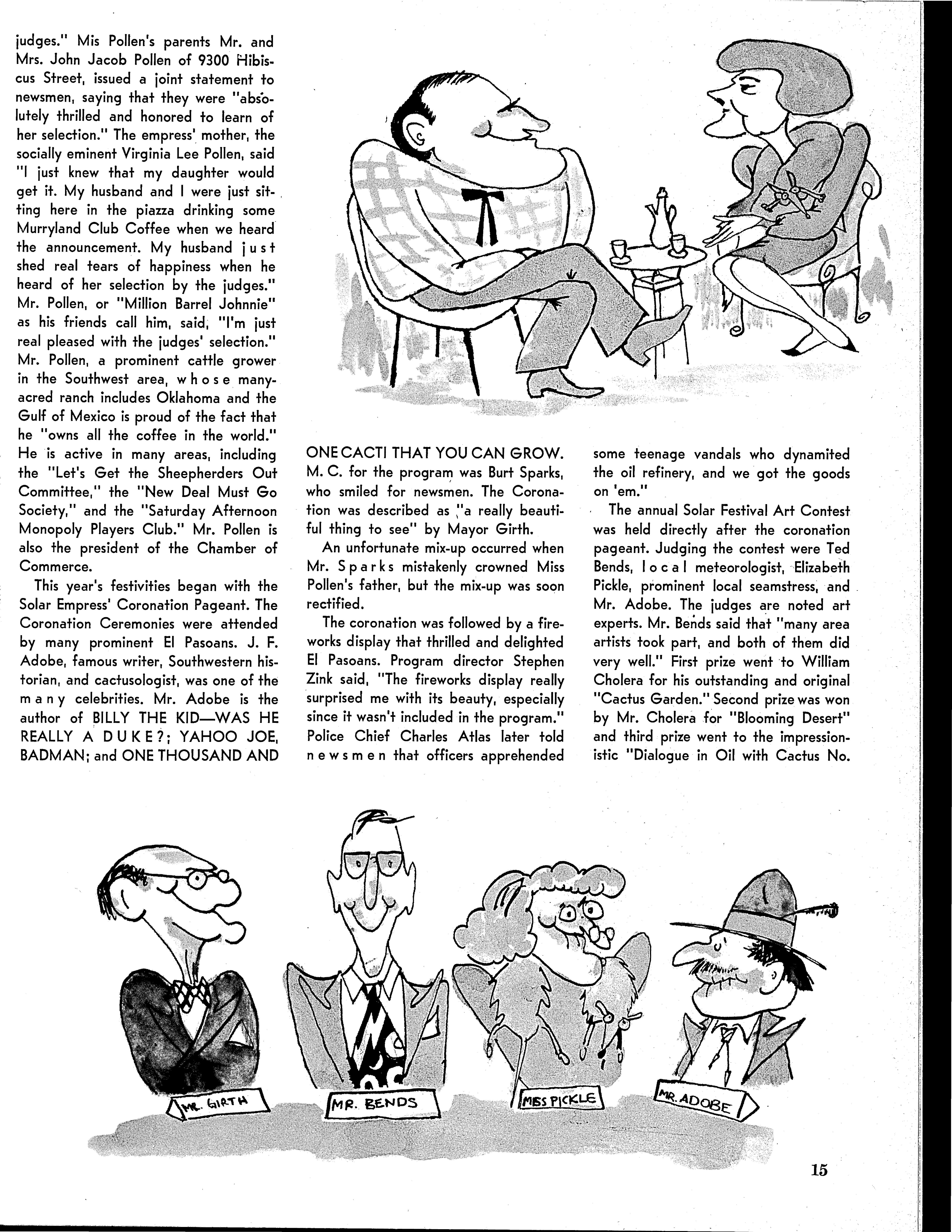
added it to her charm bracelet. Reigning over this year's festivities was Miss Margie Lou Pollen, whose radiant beauty won her selection. M is s Pollen was chosen by the Chamber of Commerce from ten finalists. A spokesman for the judges said that "Margie Lou is truly a radiant beauty. All the other contestants are truly radiant beauties also, but Margie Lou was radiantly more beautiful." The Chamber of Com-
merce spokesman went on to say that "She shed real tears of happines when she h e a r d of her selection by the
judges." Mis Pollen's parents Mr. and Mrs. John Jacob Pollen of 9300 Hibiscus Street, issued a joint statement to newsmen, saying that they were "abs'olutely thrilled and honored to learn of her selection." The empress' mother, the socially eminent Virginia Lee Pollen, said "I just knew that my daughter would get it. My husband and I were just sitting here in the piazza drinking some Murryland Club Coffee when we heard the announcement. My husband j u st shed real tears of happiness when he heard of her selection by the judges." Mr. Pollen, or "Million Barrel Johnnie" as his friends call him, said; "I'm just real pleased with the judges' selection."
Mr. Pollen, a prominent cattle grower in the Southwest area, whose manyacred ranch includes Oklahoma and the Gulf of Mexico is proud of the fact that he "owns all the coffee in the world." He is active in many areas, including the "Let's Get the Sheepherders Out Committee," the "New Deal Must Go Society," and the "Saturday Afternoon Monopoly Players Club." Mr. Pollen is also the president of the Chamber of Commerce.
This year's festivities began with the Solar Empress' Coronation Pageant. The Coronation Ceremonies were attended by many prominent El Pasoans. J. F. Adobe, famous writer, Southwestern historian, and cactusologist, was one of the m a n y celebrities. Mr. Adobe is the author of BILLY THE KID-WAS HE REALLY A DUKE?; YAHOO JOE, BADMAN; and ONE THOUSAND AND
ONE CACTI THAT YOU CAN GROW.
M. C. for the prograrry was Burt Sparks, who smiled for newsmen. The Coronation was described as :• a really beautiful thing to see" by Mayor Girth. An unfortunate mix-up occurred when Mr. Sp arks mistakenly crowned Miss Pollen's father, but the mix-up was soon rectified.
The coronation was followed by a fireworks display that thrilled and delighted El Pasoans. Program director Stephen Zink said, "The fireworks display really surprised me with its beauty, especially since it wasn't included in the program." Police Chief Charles Atlas later told newsmen that officers apprehended
some teenage vandals who dynamited the oil refinery, and we got the goods on 'em."
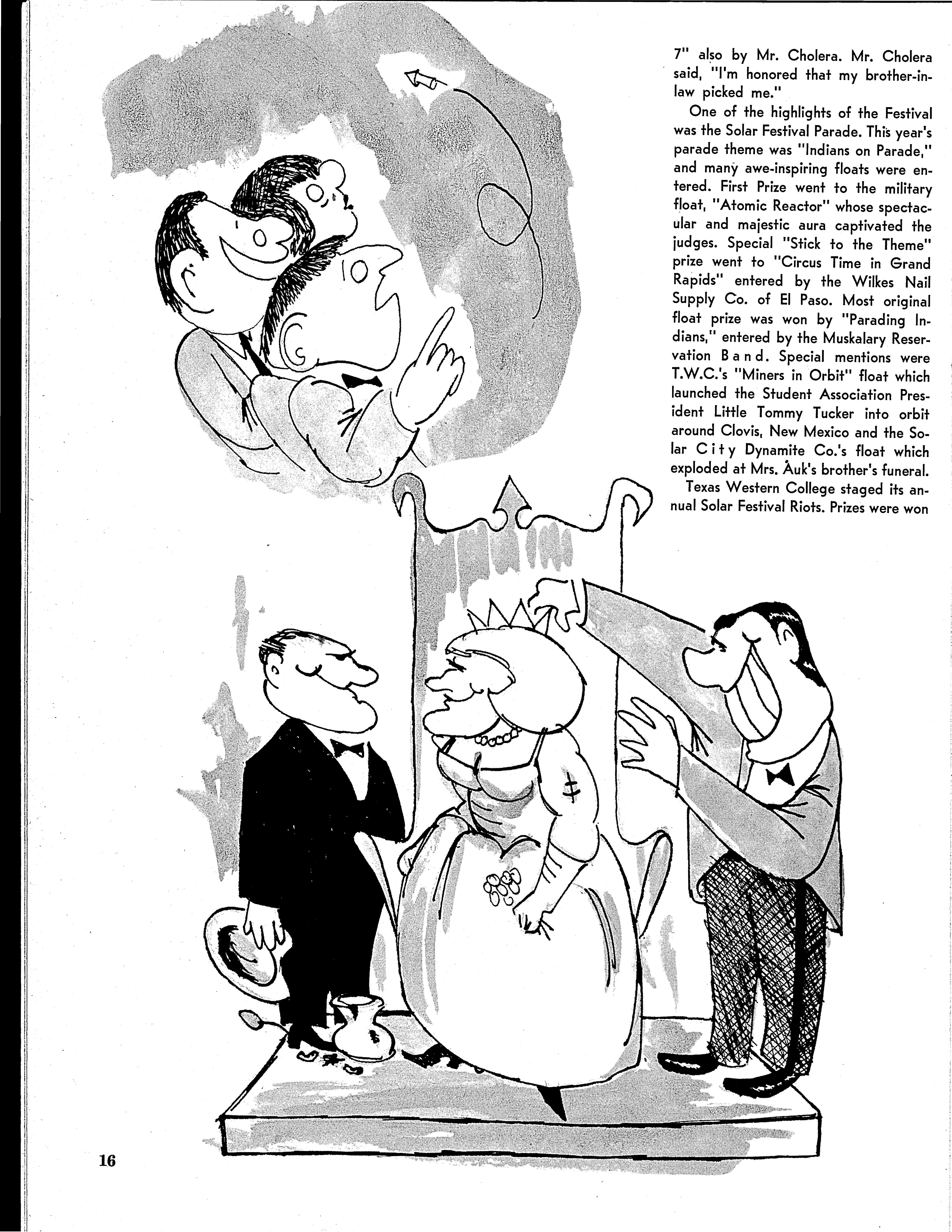
The annual Solar Festival Art Contest was held directly after the coronation pageant. Judging the contest were Ted Bends, I o ca I meteorologist, Elizabeth Pickle, prominent local seamstress, and Mr. Adobe. The judges are noted art experts. Mr. Be~ds said thaf "many area artists took part, and both of them did very well." First prize went to William Cholera for his outstanding and original "Cactus Garden." Second prize was won by Mr. Cholera for "Blooming Desert" and third prize went to the impressionistic "Dialogue in Oil with Cactus No.
7" al~o by Mr. Cholera. Mr. Cholera said, "I'm honored that my brother-inlaw picked me."
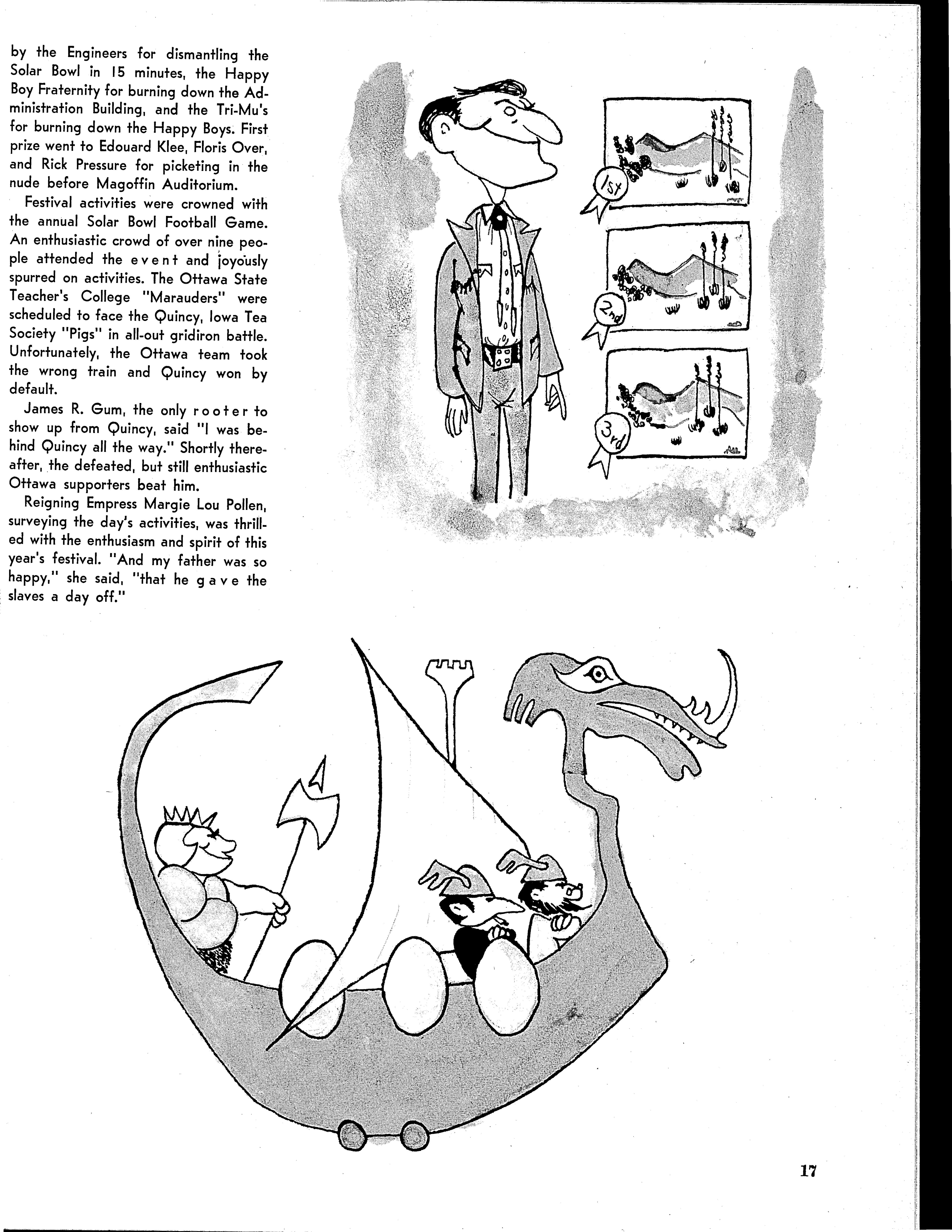
One of the highlights of the Festival was the Solar Festival Parade. This year's parade theme was "Indians on Parade, 11 and many awe-inspiring floats were entered. First Prize went to the military float, "Atomic Reactor" whose spectacular and majestic aura captivated the judges. Special "Stick to the Theme" prize went to "Circus Time in Grand Rapids" entered by the Wilkes Nail Supply Co. of El Paso. Most original float prize was won by "Parading Indians," entered by the Muskalary Reservation Ba n d. Special mentions were T.W.C.'s "Miners in Orbit" float which launched the Student Association President Little Tommy Tucker into orbit around Clovis, New Mexico and the Solar C i t y Dynamite Co.'s float which exploded at Mrs. Auk's brother's funeral. Texas Western College staged its annual Solar Festival Riots. Prizes were won
by the Engineers for dismantling the Solar Bowl in 15 minutes, the Happy Boy Fraternity for burning down the Administration Building, and the Tri-Mu's for burning down the Happy Boys. First prize went to Edouard Klee, Floris Over, and Rick Pressure for picketing in the nude before Magoffin Auditorium.
Festival activities were crowned with the annual Solar Bowl Football Game. An enthusiastic crowd of over nine people attended the event and Joyo·usly spurred on activities. The Ottawa State Teacher's College "Marauders" were scheduled to face the Quincy, Iowa Tea Society "Pigs" in all-out gridiron battle. Unfortunately, the Ottawa team took the wrong train and Quincy won by default.
James R. Gum, the only rooter to show up from Quincy, said "I was behind Quincy all the way." Shortly thereafter, the defeated, but still enthusiastic Ottawa supporters beat him.
Reigning Empress Margie Lou Pollen, surveying the day's activities, was thrilled with the enthusiasm and spirit of this year's festival. "And my father was so happy," she said, "that he g a v e the . slaves a day off."
DISPATCHES FROM THE COSMOS
Edwin Whipple, the nineteenth century American essayist, once wrote:
Style is the intimate and inseparable fact of the personality of the writer-it is the verbal body of the man's moral and mental life-it holds his emotions and experiences, is charged with his sensations, and is, in simplest words, his manifestations refined and polished by his artistic faculty.
This quotation has been included, not because we are Whipple fans, but because of the innumerable requests we have received in recent weeks to elucidate the multifarious aspects of the term style and to relate its importance to the writer. But to merely define style by aphorism is not to fully delve into its intricacies. Therefore we have selected representative passages from several literary methods and have tried to give some indication as to each's history. Furthermore, later in this essay, we shall discuss papers taken from our own college's files.
ROMANTICISM
The impetus of the Romantic Movement has been felt through the efforts of such men as Goethe, Rousseau, Shelley, Hawthorne, and Pushkin. These authors' writings have attempted to depict the rebel, the eccentric, and the social non-conformist in dynamic moments of individuality, emotional stress, or informality. Hence, experimentation in Romantic styles, and the variety of the results, can be at least partially attributed to the fact that their characters were primarily a unique portrayal, rather than a type. The following passage has often been studied as an exemplar of Romanticism.
The smudge lies there, never moving; gone forever are those who might have the chance to see it. It is strange that so conspicuous a spot was not long ago eradicated by busy hands. The very nature of such an odd blemish invites query; How did it get there? What could splatter into the shape of a perfect oval?-and exhibit a high degree of indelibility? Why would anyone want to mar the symmetry of this place? Moreover, who could have managed to elude the multitude of guards here? And finally, where, in the chronology of history, is the place of such an act?
Surely science should investigate this enigma. But, alas, the scientists has no time for triviality.
(Taken from the highly expurgated "A
Neo-Classicism.
Throughout Europe in the 17th and 18th centuries, the vogue in writing was to recapture the polish, objectivity, and restraint that was of GraecoRoman origin. This Neo-Classicism was an acceptance of the regulation of languages, its heretofore personal usage. Such an Age of Enlightenment, or more modestly, an Age of Reason had as its goal the purification and burnishment of literary vocabularies so that their owners might cope with the "arts and sciences." With France as its focal point and Louis XIV its mentor, Neo-Classicism blossomed, finally reaching across the English Channel to the isles of the Commonwealth (although here the rigorous standards of the Continent were poorly ascribed to.).
Neo-Classicism has frequently been considered paradoxical, for within the confines of style regimentation arose the licentious social satires and comedies of Pope, Swift, Addison and others. The excerpt below aptly substantiates this point. from: "The Dissolution of Disbelief".
But most assuredly, man cannot survive without the object of his Ontological, Teleological, and Cosmological investigations. Those who attempt the unforgivable are, of necessity, relegated to an existence of amorality and heinous action; the audacity of such an iconoclastic retrenchment demands nothingless. Whereas, the consequence of unwaivering credence is this: saying that something is or is not so, or ought or ought not be so, will ultimately, through repetition of antitheses, make it so, or not so.
Yes the unmitigated suffering and unrelenting fright ·are vindicative means to an end of homogeneous thought. Destroy those who protest, and the veracity of their protestations will also be lost.
REALISM
There occurred in the eighteenth century, and to more effect in the early nineteenth, a reovlt against the stylistic excesses and idealistic prettifying of literary motifs found in Romanticism. The new school of thought, because it dealt with life in concrete, graphic, and impersonal terms, even to the
Horse in Seven Stables.")
a satirical investigation into english literature with adornments extracted from the files of the college english department.
by jon carleton and joseph
richards
extent of portraying the commonplace and trivial, was labeled realistic (sous tous les rapports) and adopted as its guiding maxim, "representation without idealization."
Since the time it first became a recognizable literary creed in the works of Fielding and Defoe, realism has been utilized by writers of many countries, but the nonpareil examples must, in the final analysis, be found in the last works of the Russian author Andre Gide once described as "the greatest of all novelists." The following episode is from one of his shorter novels, Notes From a Cavity in the Pavement.
God! (Excuse me for saying that.) I'm sick. I think I have acid indigestion or inff,ammation of the lower tract. Vile bile. At any rate something I've infested has had a carminative effect. I've also been belching for hours and do you know what? I don't even cover my mouth. There is an acrid stench radiating out from the corner where I am sitting and when anyone comes by they wrinkle their noses with repugnance. I laugh noxiously with foul breath when they do. I've been sitting in this corner for a month and will not leave for anything now. Not even when the innkeeper's daughter weeps and begs on her knees (at a safe distance, of course) for me to vacate the premises 'because the other guests are all leaving. I guess I am a pretty mean man. No, not really, its just that life has played a mean trick on me and left me with a defective liver.
STREAM-OF-CONSCIOUSNESS
Literary schools and techniques in literature are generally reflective of the human condition at the time they are employed. It is little wonder then, that the intensity and complexity of the late 19th and early 20th centuries should find expression in the written arts. In this area, symbolism and stream-of-consciousness are two of the most prominent doctrines represented. Symbolism came about as a deliberate and conscious attempt to establish a true reality for the modern mind. The basic tenet of this movement is that the objective world is transient and cannot express the eternal deeper meanings of man's experience - only associative symbols of the individual conciousness can portray or suggest real feelings. Stream - of - consciousness mirrors contemporary interest in psychology and the "free association" of psychiatry. The action and
plot in a work using this technique is presented by an unorganized succession of images, ideas, and recollections runhing through the mind of the principal character.
One of the primogenitors of 20th century modern art exhibits with incredible verisimilitude the workings of a half-conscious mind. In the last section of 1;his oft-times ineluctable literary mastodon we find the very quintessence of stream-of-consciousness:
I remember when I first met him in Venice I think and O how handsome he was standing there and the sparkling sand sparkling so sparkling brought out the deep tan and his. strong frame and the azure sea beckoned to us and the windspray .set us to laughing teeth breath laughing O in madness in ecstasy of life his broad smile assured me swimming glistening bodies warm happy and the myriad images of windspray sprywind and then that night cooler the people smiling from the doorways the path by the sea where he took me in his arms and said may I and I said no resisting whatwould mymothersay O harder he pressed me fumbling fumbling no and then a mans needs he said no our own world no rebel against pseudoism keepitinyour knickersboy no I will not pseudrebel mores archaic and O the belt the belt chastity no and smile warm no windkiss strong embrace no the fumbling belt no pseudomores and no I will not never no no
MODERNISM
If the foregoing passage was a cause for rejoicing to the erudite, it was still, none-the-less, a rather heavy fare for the bourgeois population that subsisted on more tangible material. For them, of cour.se, the literary realm was by no means divest of other reading avenues. One hyper-romantic form, in fact, has sold more copies in the twentieth century than all other methods combined, and perhaps, considering its contiguities, more books than any style throughout the ages. But the modern romantic technique has been intermeshed with chords of many writing schools, especially realism, and is no longer an unblemished form. For want of a better name this style may be labeled as "modernism." Under its auspices fall the thrillers, mysteries, and other escape fiction forms of which the following is a choice example:
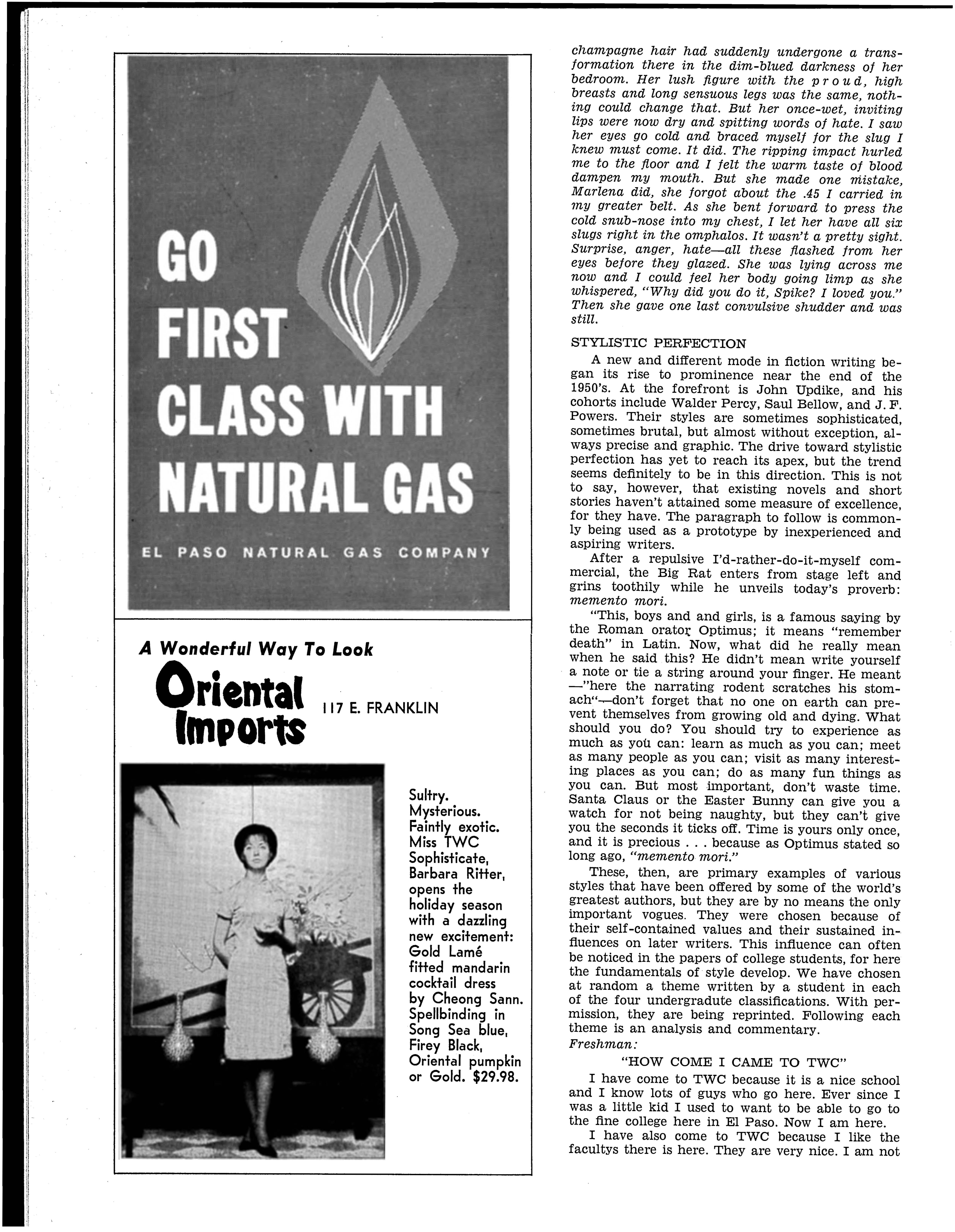
A Wonderful Way To Look
'\ 117 E. FRANKLIN
Sultry. Mysterious. Faintly exotic. Miss TWC Sophisticate, Barbara Ritter, opens the holiday season with a dazzling new excitement: Gold Lame fitted mandarin cocktail dress by Cheong Sann. Spellbinding in Song Sea blue, Firey Black, Oriental pumpkin or Gold. $29.98.
champagne hair had suddenly undergone a transformation there in the dim-blued darkness of her bedroom. Her lush figure with the proud, high breasts and long sensuous legs was the same, nothing could change that. But her once-wet , inviting lips were now dry and spitting words of hate. I saw her eyes go cold and braced myself for the slug I knew must come. It did The ripping impact hurled me to the fl,oor and I felt the warm taste of blood dampen my mouth. But she made one mistake, Marlena did, she forgot about the .45 I carried in my greater belt. As she bent forward to press the cold snub-nose into my chest, I let her have all six slugs right in the omphalos. It wasn't a pretty sight. Surprise, anger, hate-all these fl,ashed from her eyes before they glazed She was lying across me now and I could feel her body going limp as she whispered, "Why did you do it, Spike? I loved you." Then she gave one last convulsive shudder and was still.
STYLISTIC PERFECTION
A new and different mode in fiction writing began its rise to prominence near the end of the 1950's. At the forefront is John Updike, and his cohorts include Walder Percy, Saul Bellow, and J. F. Powers. Their styles are sometimes sophisticated, sometimes brutal, but almost without exception, always precise and graphic. The drive toward stylistic perfection has yet to reach its apex, but the trend seems definitely to be in this direction. This is not to say, however, that existing novels and short stories haven't attained some measure of excellence, for they have. The paragraph to follow is commonly being used as a prototype by inexperienced and aspiring writers.
After a repulsive I'd-rather-do-it-myself commercial, the Big Rat enters from stage left and grins toothily while he unveils today's proverb: memento mori.
"This, boys and and girls, is a famous saying by the Roman orato:r;: Optimus; it means "remember death" in Latin. Now, what did he really mean when he said this? He didn't mean write yourself a note or tie a string around your finger. He meant -"here the narrating rodent scratches his stomach"-.-.don't forget that no one on earth can prevent themselves from growing old and dying What should you do? You should try to experience as much as you can: learn as much as you can; meet as many people as you can; visit as many interesting places as you can; do as many fun things as you can. But most important, don't waste time. Santa Claus or the Easter Bunny can give you a watch for not being naughty, but they can't give you the seconds it ticks off. Time is yours only once, and it is precious ... because as Optimus stated so long ago, "memento mori."
These, then, are primary examples of various styles that have been offered by some of the world's greatest authors, but they are by no means the only important vogues. They were chosen because of their self-contained values and their sustained influences on later writers. This influence can often be noticed in the papers of college students, for here the fundamentals of style develop. We have chosen at random a theme written by a student in each of the four undergradute classifications. With permission, they are being reprinted. Following each theme is an analysis and commentary.
Freshman:
"HOW
COME I CAME TO TWC"
I have come to TWC because it is a nice school and I know lots of guys who go here Ever since I was a little kid I used to want to be able to go to the fine college here in El Paso. Now I am here.
I have also come to TWC because I like the facultys there is here They are very nice. I am not
too sure but I think I will be a english major with a miner in biology. The climate is real good here and it doesn't get too cold or too hot and I think that is real nice too.
I have also come here to this college because I don't have no money to go anywhere else.
Yours truly, ANN THRAX
The above theme shows originality and good taste-there are none of the salacious overtones that are so prevalent in some themes these days. The fairly decent grammatical structure shows that this student has been well prepared for college work by her instructors in the public schools, something not all children are granted access to. And we recognize here also, the embodyment of the first person narrative style as the method of expressing personal cognition more forcefully. The concluding sentence crows the theme as a spire crowns a Gothic cathedral. Such praise, however, should not be taken as a cause for sloth-progression must always occur, even in the best styles.
Sophomore:
"MY FAVORITE BOOK"
Being a history major, I have always been interested in books about history. I believe that through the study of history man can learn much from the past that will aid him in the future.
Thus, my favorite book is "The Revolutionary War in Pictures," by Gen. Lee Wrong. The authors style is easy to read and is very informative. Because he is a historian and a military leader, besides being a writer, the author has been able to draw together all of the different topics in the pictures, paintings, and etchings, and hence write this book of great importance to all Americans.
I especially liked the chapter on George Washington, "the father of his country," and his crossing the Delaw!cl,re to defeat the tories and Germans. It is quite inspiring!
I hope I have interested you in my favorite book without giving the whole plot away. If you want to find out how it ends, check it out bf the library and read it yourself. I am sure you will enjoy it because the author's style is easy to read and you will learn alot about the history of America-a topic of importance to all of us.
by: MISS DEE MEANOR
It would be a crime to ignore the ludidity of Miss Dee Meanor's presentation. In familiarizing us with this vital publication, she has performed a service of inestimable value. Paragraph # 1 is a good, general introduction, explaining the student's interest in this area; paragraph # 2 is the real body of the theme, for here we find the qualities of Gen. Wrong's book which make it such a joy to study; paragraph # 3 is an interesting commentary airing the favorite section of this reader; and paragraph #4, the drawing together the various threads of the paper into a neat, concise statement, is a complimentary conclusion to this well-presented paper. Throughout the theme it should be noted is a vein of patriotism that is often heart-rendering. Moreover, the reader is left with a definite challenge by this young lady. All in all, a creditable performance by an individual who is obviously beginning to enjoy the pleasures of literature.
Junior:
THE "IMPORTANCE OF THE DOPPLER SHIFT TO THE LAYMAN"
By use of the Doppler Shift, the average individual can easily prove the rapid motion and expansion of our intricate universe.
To effectively discuss this subject, however, a definition must first be given. The color, or range,
For Customers using any of the Extra Services-Charge, Delivery, Special Handling, Gift-Wrap, Etc.
Red Price - For Cash Sales without Extra Services - From 5%-40% Below Black Price (Nationally Advertised Price You Usually Pay.) COME SEE FOR YOURSELF - ALL MERCHANDISE IS PLAINLY MARKED.
PRESCRIPTIONS - MEDICINES - SUNDRIES COSMETICS - JEWELRY - HOLIDAY GIFTS SCHOOL SUPPLIES - EVERYTHING EXCEPT A FEW FRANCHISE LINES!
HOUR SERVICE ON MOST PRESCRIPTION
EYE GLASSES
210 N. STANTON - BASSETT CENTER - SUNRISE CENTER
of the light which is received from a source that is receding, in this instance, a star, is shifted to the red, or long, end of the spectrum-a scale used to distinguish the relative wave lenghts of rays of light -by an amount that is in proportion to the speed at which the source is moving away from the observer, and conversely, the spectrum of a source that is approaching the observer is shifted to the shorter or violet end at a rate which is proportionate to the velocity at which the source is approaching; owing to the existence of many dark lines that are welldefined and in a known position in the spectra of the stars, this effect known as the Doppler Shift can easily be determined by a few short steps in integral calculus, and the speed of the approaching or receeding star may be measured.
With this definition in mind, it is easy to see why the Doppler Shift has such an important function in each of our lives.
by: ROE BOTTS
In analyzing this theme, written by a junior in a technical writing course, one first notices the rapidity with which Mr. Botts moves into his subject area. Quickly stating the use of the Doppler Shift, the author proceeds to define terms pertinent to his paper. Without being verbose, these definitions are comprehensive and fit nicely into the flow of thought. Then he discusses his topic with a stable foundation. The summation steadily evolves from the definitions and their consequental impact on the layman. Culminating the essay is Mr. Botts' explanation of his thesis title.
Senior:
"WHY PROUST LIVED IN A CORKLINED ROOM"
The major assertion I will put forth in this thesis is that Marcel Proust lived in a cork-lined room because he had been saving corks since he was a small child. Also, we know from pictures and biographies that Proust had big ears and was very sensitive about noise.
When Proust was a little boy he liked his mother very much and whenever she would leave his sight he would begin crying. His mother soon grew tired of this and found that the only way to shut him up was to place a large cork in his mouth. At first Marcel was outraged, but eventually he began to like the taste of corks-even more than his mother. As he grew older, he began collecting corks as a hobby. Since he was rich he found wonderful places to pursue his hobby in. When he went to art galleries and music festivals he did not look at the paintings or listen to the music-he was too interested in trying to find new corks. One day, however, he was looking for new specimens in an orchestra house when Woden hit the anvil in Wagner's "Das Rheingold". Marcel's head vibrated for hours and everyone thought he would die. He lived, but after that any little noise would make his brains rattle. That is why Proust took his corks and lived by himself in a little room.
The senior paper, our final example, is a teacher's dream. In it is skillfully woven every ingredient necessary for successful writing. Like the freshman theme, it exhibits economy and simplicity. And like the sophomore' and junior themes, it has shown a stylistic progression Cover the previous year's work). The author has deftly employed a broad spectrum of color and passion and shows a depth understanding of his subject. He is not hesitant, he is assertive. Rather than being tame and colorless in presentation, he is dynamic and original. Moreover, demonstrated here is individual style the culmination of education's pedagogical guidelines and the modern y out h ' s compulsion to create. This polished example assures the continuance of our cultural
heritage.
TYPICALLY COLLEGIATE
-RUSSELL. GOLDBERG
There was a nude girl on his front lawn this morning. That's right, a nude girl-unclothed. You may think it strange -what else ?-but nontheless that's what he had. Seven o'clock in the morning, and he's got nudes in the front lawn. Of course, with Roscoe Ratshnook this sort of thing happens all the time-why not?
Roscoe's a typical college student-why shouldn't typical collegiate events be part of his typical collegiate day.
As Roscoe went out for the paper, he thought to himself, "Well it's the start of another typical collegiate day filled with t y p i c a l collegiate events-look, there's a typical nude college girl sitting on my lawn."
"Good morning, nude girl," he said, what are you doing on my lawn?"
"Sitting."
"Aren't you cold?"
"No, not very."
"Okay. See ya." He picked up the typical collegiate paper and began to walk back toward the house.
"Hey you!" she shouted.
"You men me?"
"Yah-but it would be sort of stupid if went around shouting Hey me all the time-aren't you going to ask me in for breakfast?''
Roscoe s m i 1 e d his typical collegiate smile ( meant especially for typically nude college girls) and said, "why not?"
She followed Roscoe into the house, curled up on the sofa, and smiled. Roscoe smiled too. "She looks good in a smile," he thought.
"How d'ya like your eggs?"
"Sunny-side-up," she cooed collegiately.
"Figures," mumbled Roscoe as he marched into the kitchen.
They ate silently - Roscoe was too caught up in typical collegiate observation as to whether or not she spilled anything to talk. After they finished, she went back to the sofa.
Roscoe couldn't bear it any longerhe had to ask her. "Why do you like your eggs sunny side up?"
"I don't know," she said, "they _just seem to be more collegiate that way."
"Oh."
"Aren't you going to ask me why am here ?-you don't usually find nude college girls in your front lawn at seven in the morning, do you?"
"No," he replied, "but I know it's just another typical event in the life of a college student."
She smiled again, and Roscoe noticed that she had a typical collegiate cavity in one of her lower incisors.
"You've got a cavity," he said.
"Yah, I know. Got a dentist appointment tomorrow."
''Well, you ought to see your dentist twice a year-I saw that on television."
"Really ?-I guess that's what's wrong."
"What's wrong?" he asked.
"Something's wrong," she replied.
"You're right," Roscoe shouted, 'Tm late for class."
Roscoe picked up his college books and went out the door into the typical collegiate morning. "See ya," he said as he closed the door behind him.
"Yes sir," he thought, "it's sure great to be a typical college student living a typical collegiate life."
Roscoe walked into the college classroom and sat down at the typical desk. The typical college professor began his typical college lecture:
"Today, we're going to examine collegiate life from a typical viewpoint. To begin ... "
Roscoe's typical collegiate mind was quick to pick up the tone of the lecture -almost immediately R o s c o e began to daydream.
"What if," Roscoe thought, "I was not a typical college student living a typical collegiate life?" A feeling of untypically collegiate panic came to Roscoe.
"That girl this morning-what if she h a d n ' t been typically collegiate?" He broke into a cold sweat. "And me? What am I doing with my typical collegiate life-where am I going?
Roscoe jumped up from his desk, threw his books at the typical college professor and ran screaming from the room.
"Most uncollegiate," mumbled the typical college professor.
"Most uncollegiate," mumbled the typical college class.
"Most uncollegiate , " mumbled the nude college girl still curled upon Roscoe's sofa," but most wonderful!"
Roscoe Ratshnook was called before the dean. He didn't appear. He didn't return to class. For that matter, he has never been heard from since. It doesn't matter, though-now does it ?-after all, he's become quite typically uncollegiate.
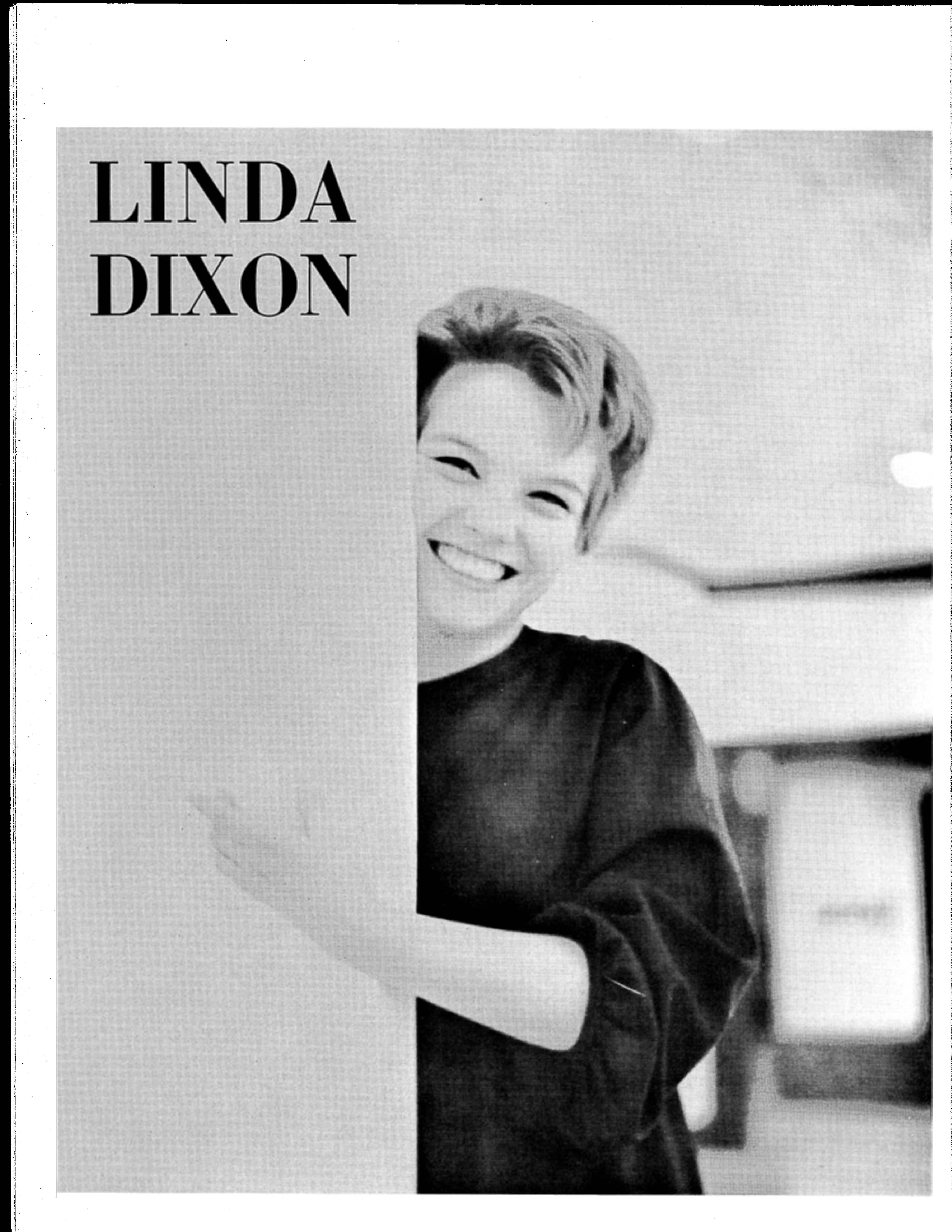
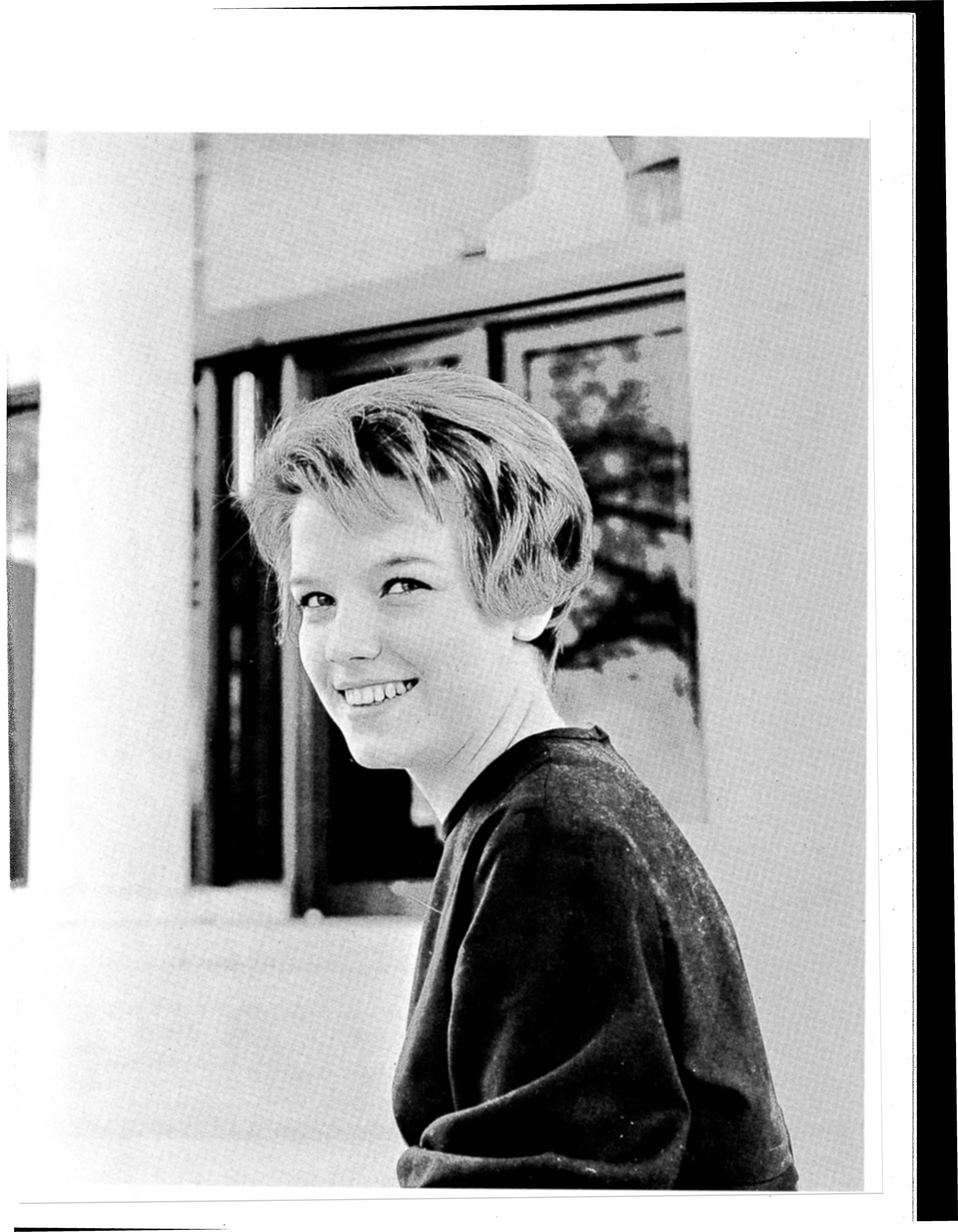
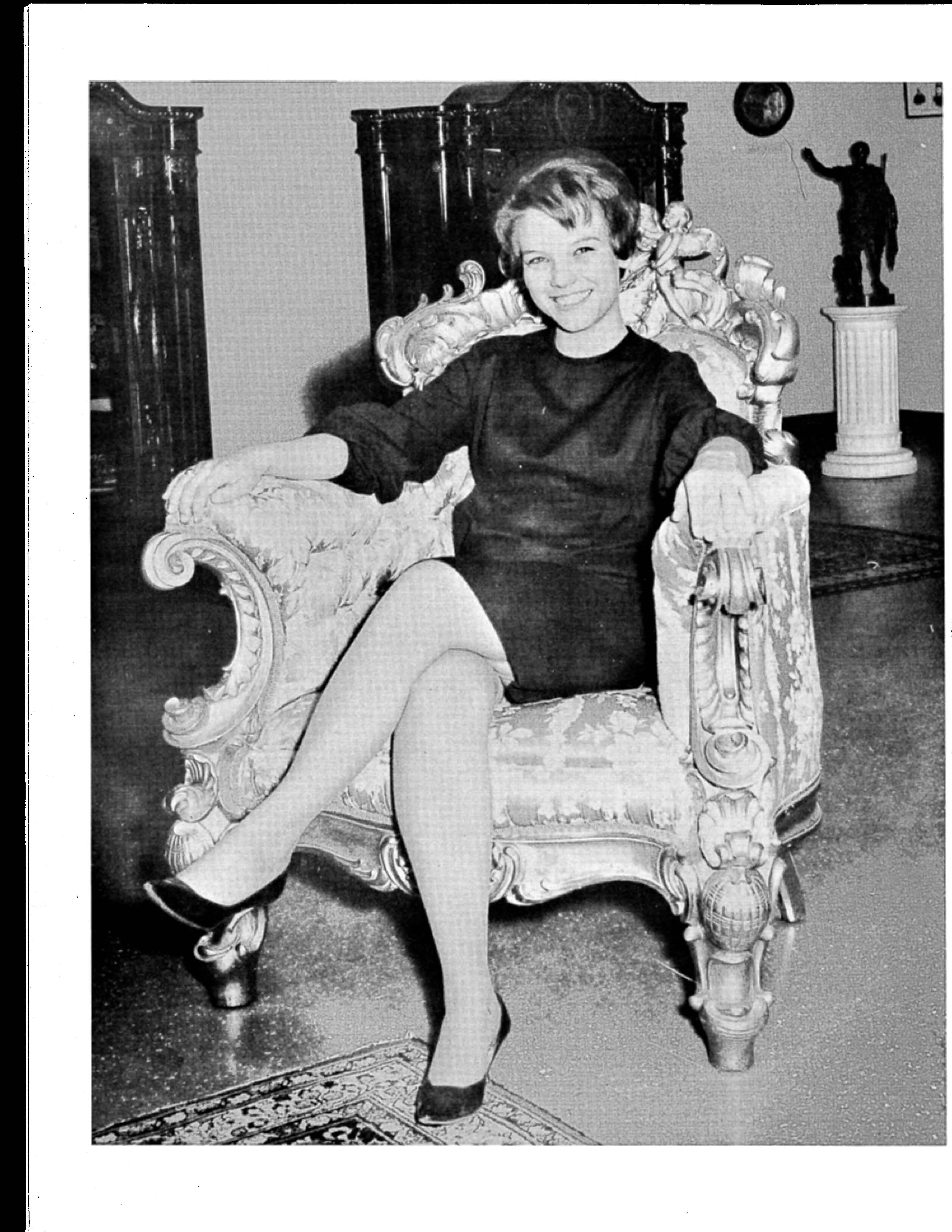
LINDA DIXON
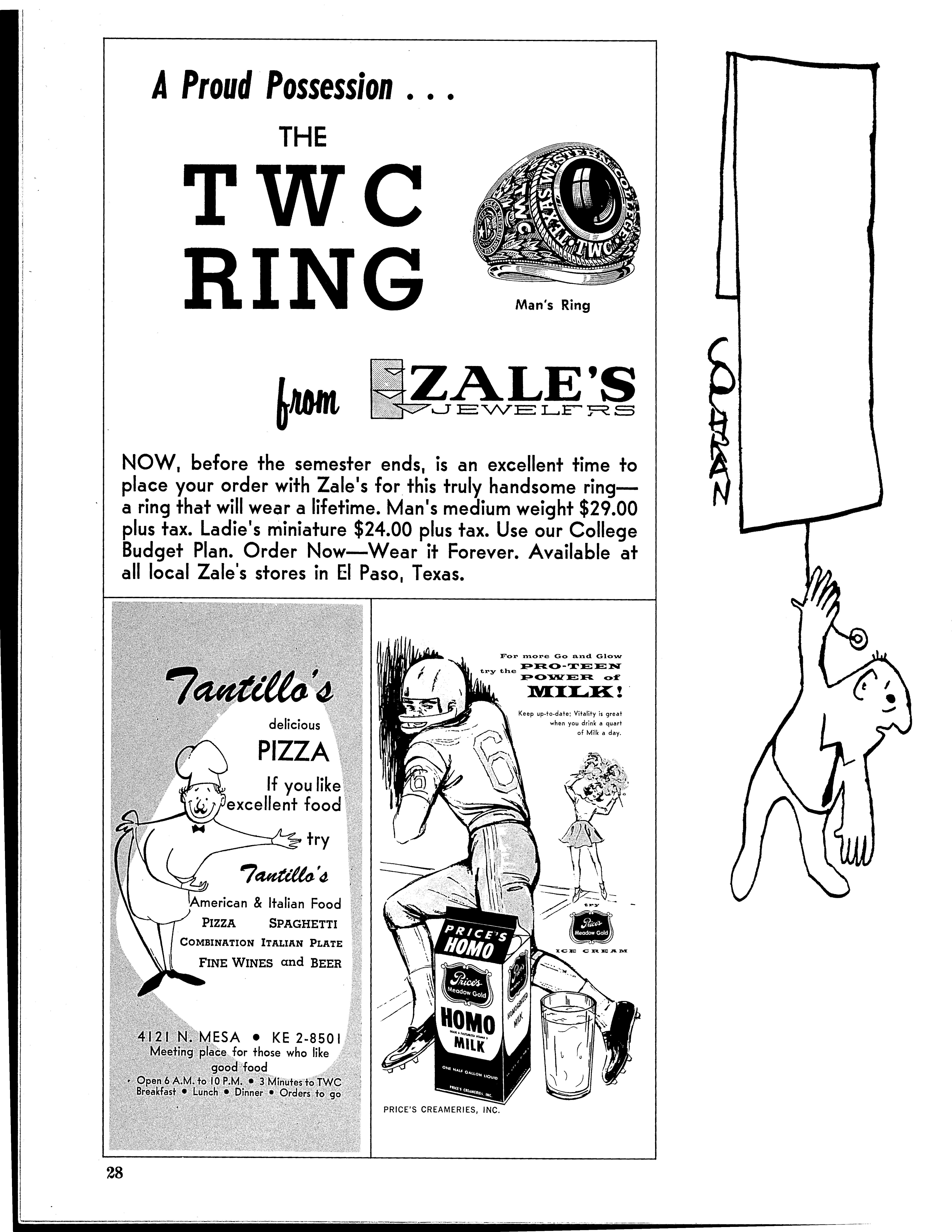
A Proud Possession
TWC RING
NOW, before the semester ends, is an excellent time to place your order with Zale's for this truly handsome ringa ring that will wear a lifetime. Man's medium weight $29.00 plus tax. Ladie's miniature $24.00 plus tax. Use our College Budget Plan. Order Now-Wear it Forever. Available at all local Zale's stores in El Paso, Texas.
Man's Ring
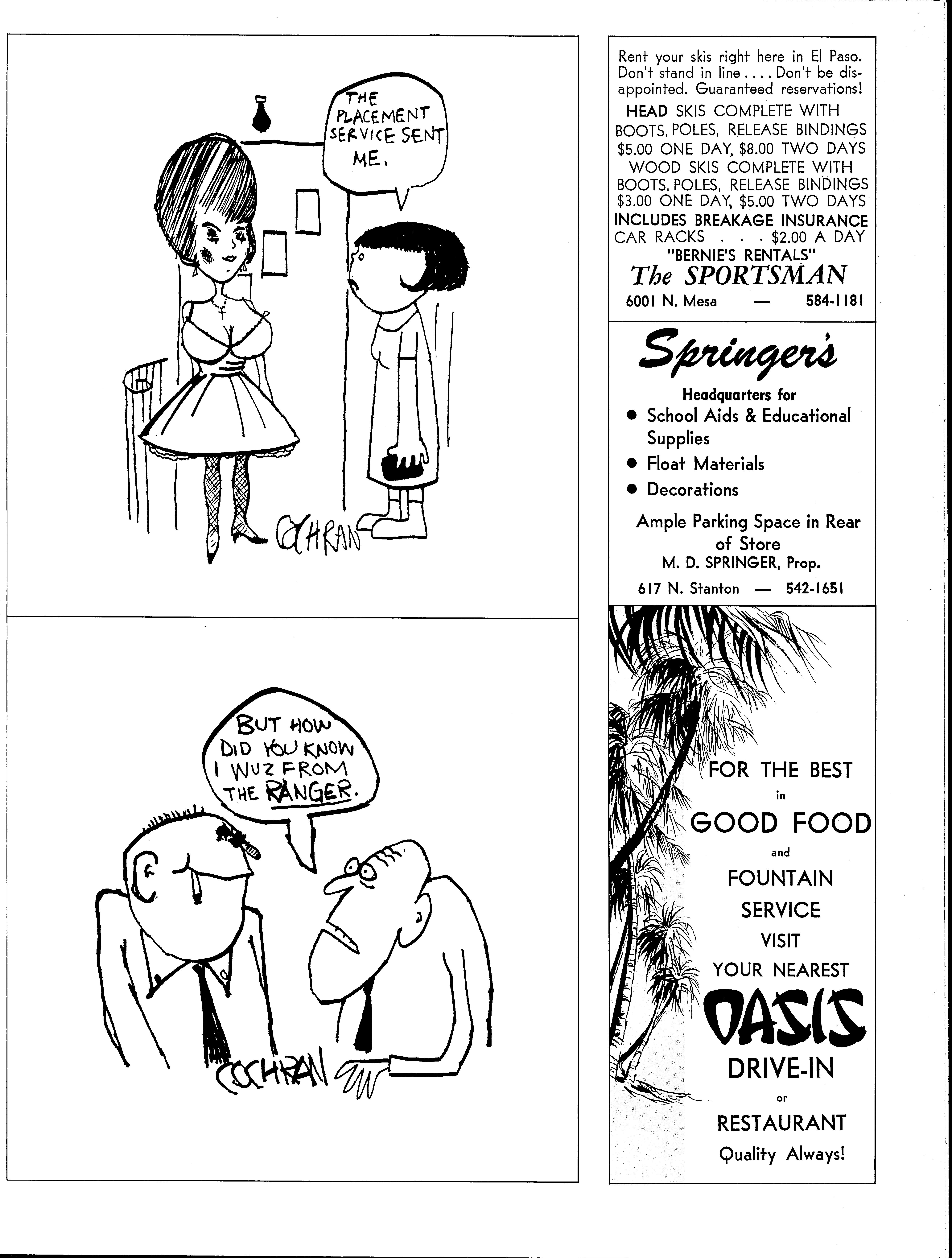
Rent your skis right here in El Paso. Don't stand in line Don't be disappointed. Guaranteed reservations! HEAD SKIS COMPLETE WITH BOOTS, POLES, RELEASE BINDINGS
$5.00 ONE DAY, $8.00 TWO DAYS WOOD SKIS COMPLETE WITH BOOTS, POLES, RELEASE BINDINGS
$3.00 ONE DAY, $5.00 TWO DAYS INCLUDES BREAKAGE INSURANCE CAR RACKS . . . $2.00 A DAY "BERNIE'S RENTALS"
Headquarters for • School Aids & Educational • Supplies
• Float Materials
• Decorations
Ample Parking Space in Rear of Store M. D. SPRINGER, Prop. 617 N. Stanton - 542-1651
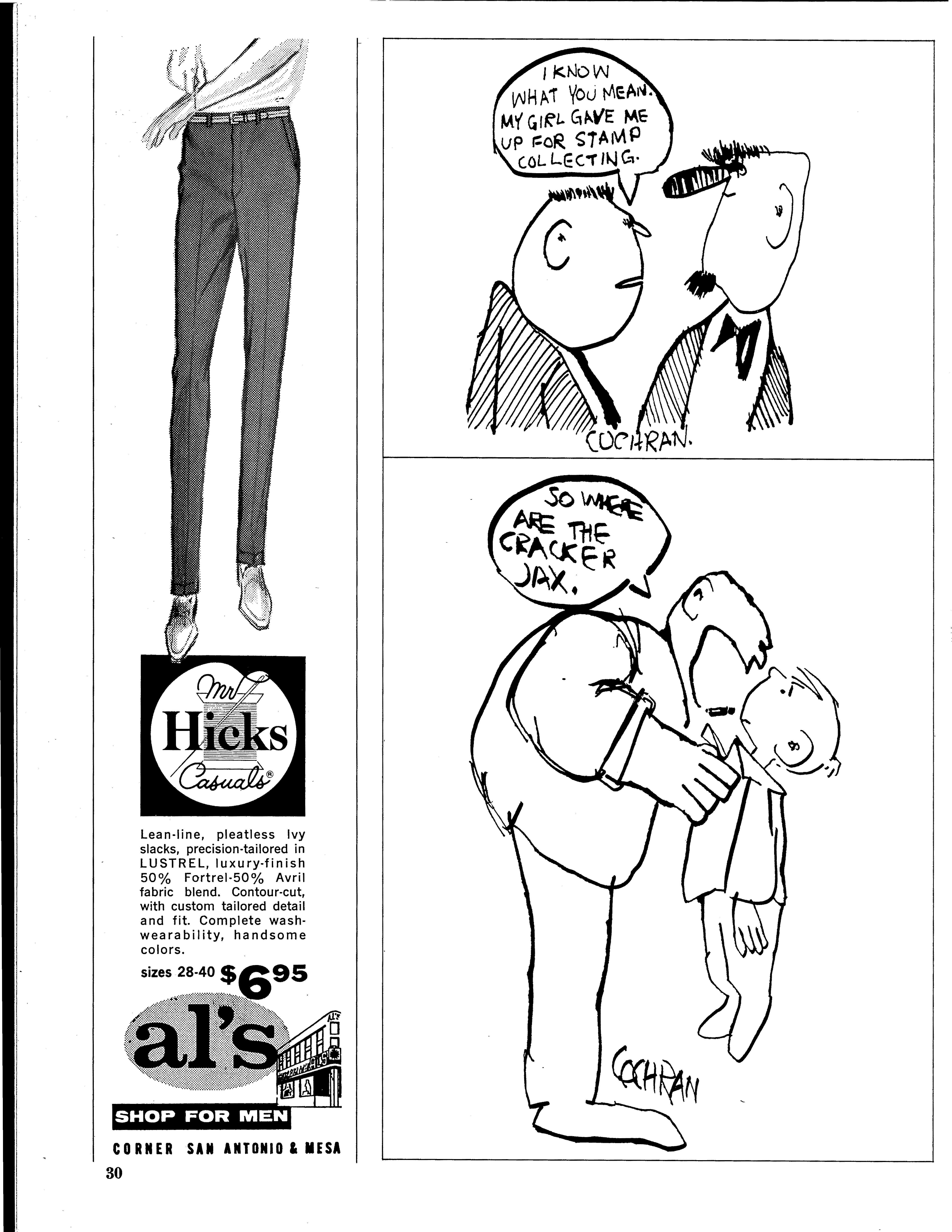
Lean-line, pleatless Ivy slacks, precision-tailored in LUSTREL, luxury-finish
50% Fortrel-50% Avril fabric blend. Contour-cut, with custom tailored detail and fit. Complete washwea ra bi I ity, handsome colors.
sizes 28-40 $695
Vic Thunberg Motors
8949 Dyer El Paso 4, Texas
El Paso's Exclusive Triumph Dealer
IR4 -;:- Spitfire - Sports Six 12 00 Sedan & Convertible SERVICE on ALL IMPOR['S Phone 755-5615