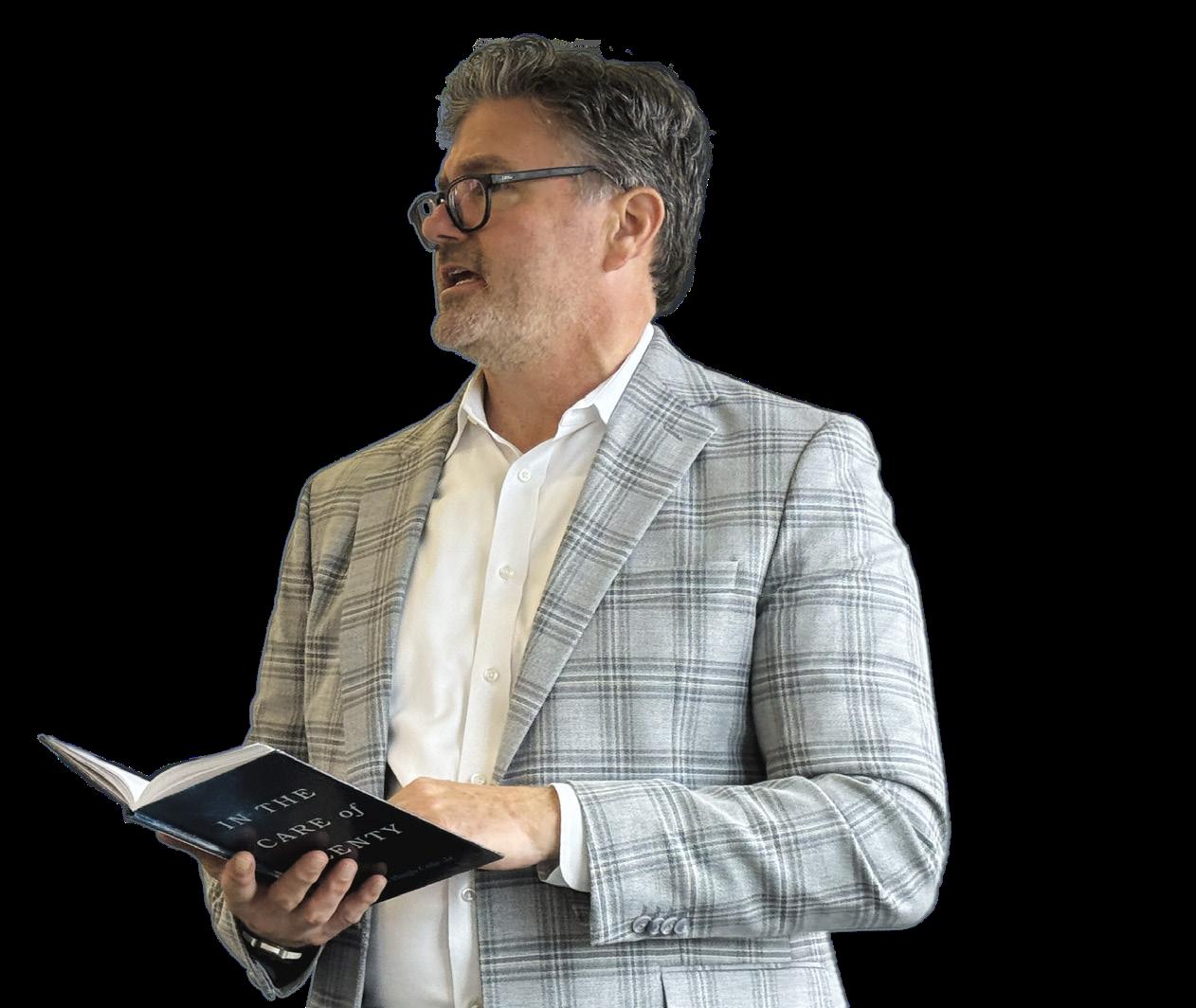
"We bring forward individuals who lead by example"
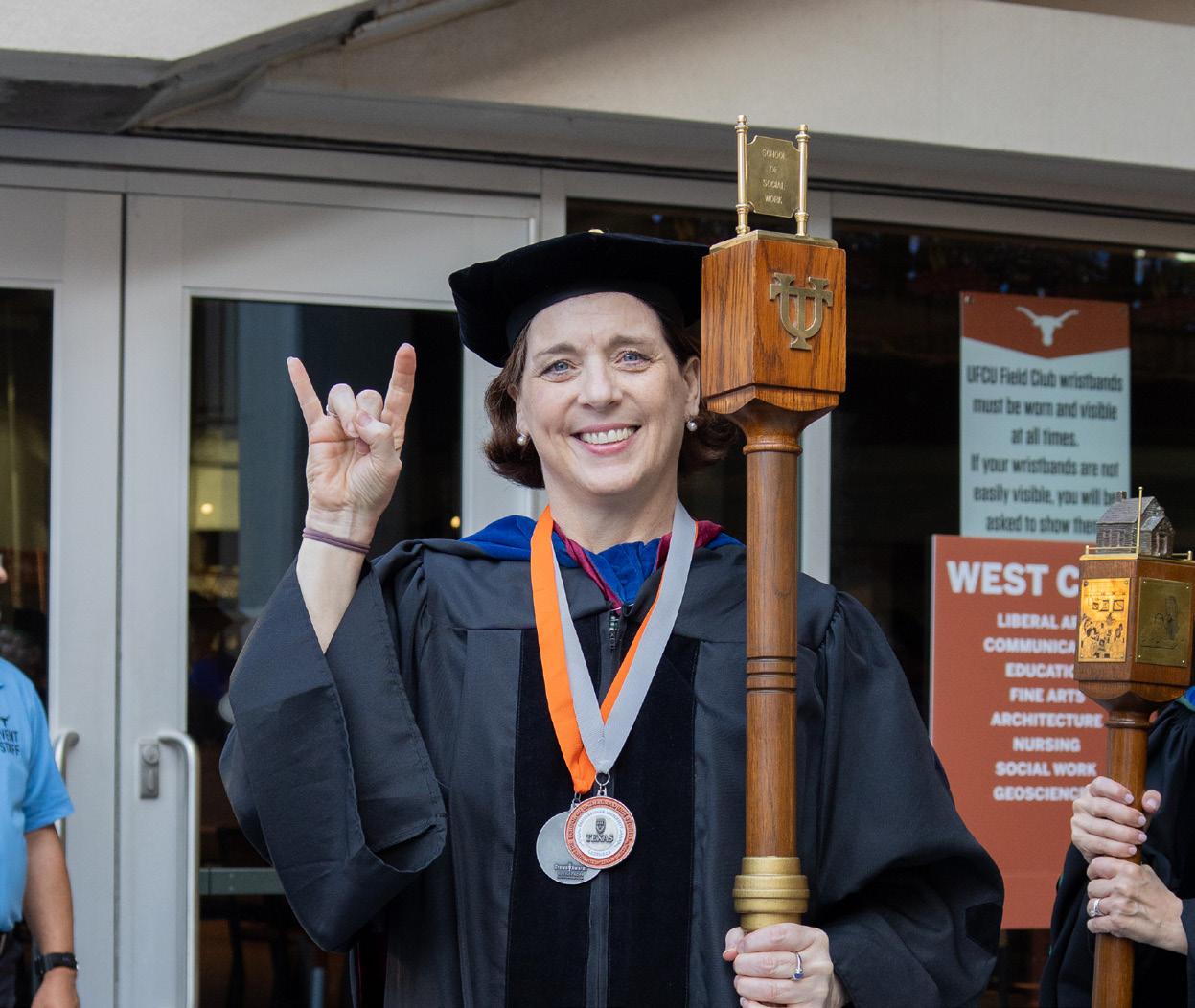
When I speak at a UT commencement ceremony or other significant engagement, I include an important refrain: social workers lead when stakes are high.
Our School’s mission is to prepare exceptional leaders — full stop. Social workers lead in many places, like hospitals and schools, military bases and boardrooms, soup kitchens and counseling centers, and meeting people across the life span.
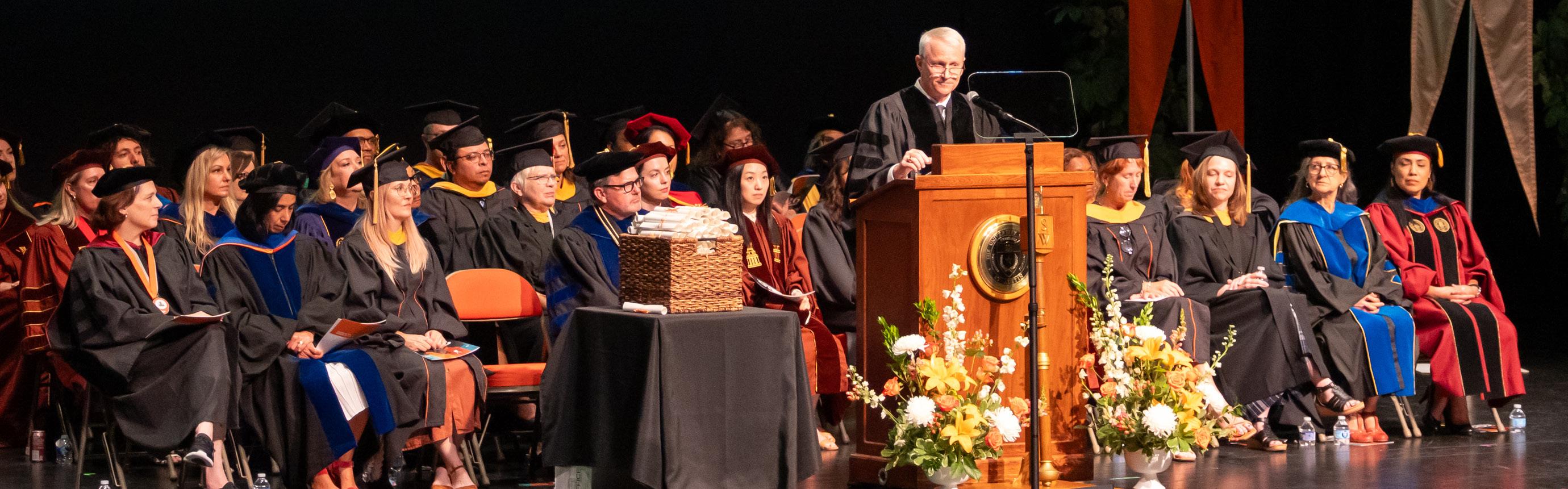
In fact, as you might have heard from our commencement speaker Matt Scoggin (BSW ’87) — a five-time coach for the U.S. Olympic Diving Team — social workers also lead at the highest levels of international competition.
A social worker is, by definition, a leader. As you read this edition of the Utopian, you’ll read several stories of the leaders our school produces: leaders who exemplify
empathy, humanity, and perspectives grounded in ethical thought.
We teach students to lead with excellence as they recognize that thoughtful, reflective, and values-driven leadership enriches any setting and missional objectives.
When we recruit people who prize innovation and ingenuity, we bring forward those who lead by example. We develop and launch leaders who understand and know how to build relationships, support others and navigate complicated systems for lasting benefits.
Our world needs leaders who transform lives for good, perhaps more so than I can recall. The stakes are high. Our School prepares the leaders we need. They listen, see, and act with courage and compassion.
What a profound joy it is to be a part of that journey in this community.
Hook 'Em Horns!
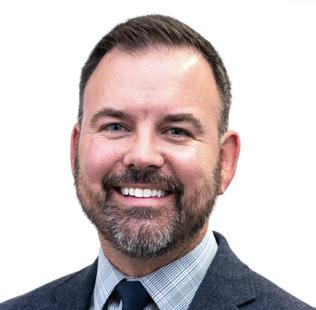
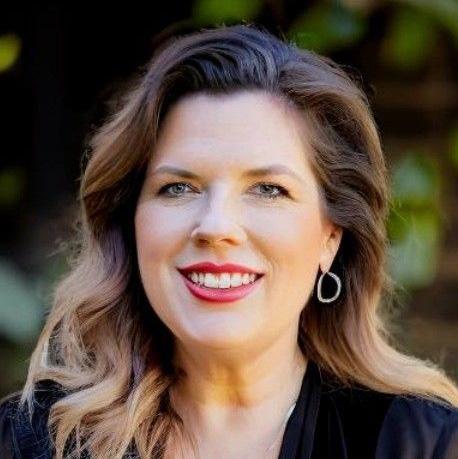
Allan Cole, Dean
01 People News
Recognizing new faces, thanking retiring faculty and staff, and highlighting student excellence
08
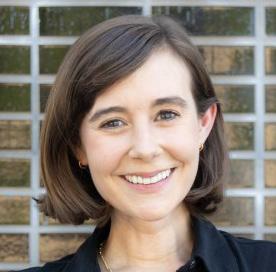
Sarah Sloan (MSSW '03)
Assistant Dean for Health Affairs & Well-being brings intentional structure.
23
A Love Story
Mart & Sue Hoffman (both MSSW '72) celebrate 58 years of marriage and social work.
27 Alamo Bowl Leadership
Julie Baker (BSW '91) marks three decades of leadership in San Antonio.
03
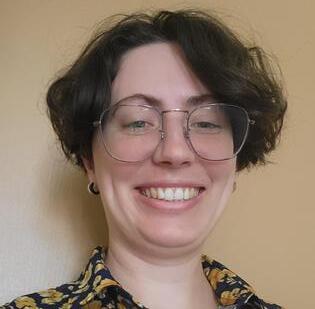
Pei-Chiang Lee
UT Social Work doctoral student studies transportation, disabilities and access.
14
IDVSA
Institute recognizes 25 years of impactful research and insights.
05
Holly Scofield (MSSW '98)
Alumna supports future social workers by investing in their education.
INTO LIGHT Exhibit
Art exhibit breaks down stigma in substance use.
PEOPLE NEWS NEW FACES
UT Social Work welcomes several new faces to our faculty and staff.
Alyssa Aguirre, LCSW-S
Assistant Professor of Practice
UT Social Work
Cao Fang, Ph.D.
Assistant Professor
UT Social Work
Savannah Howard
Events Program Coordinator
UT Social Work
Taryn James
Program Administrator for Practicum Education
UT Social Work
Shanna Killeen, Ph.D.
Clinical Assistant Professor –Disabilities Studies
UT Social Work
Marco Maldonado Software Analyst Institute for Organizational Excellence
Robert Sebesta, LCSW-S, HEC-C Clinical Assistant ProfessorHealth and Aging
UT Social Work
David Springer, Ph.D., LCSW Centennial Professor; University Distinguished Teaching Professor
UT Social Work
Katrina (Kate) Thompson, LMSW, CAS Lecturer
UT Social Work
Shane Traughber
Senior Marketing & Communications Specialist Institute for Military Veterans and Family Wellness
PEOPLE NEWS STUDENT HIGHLIGHTS
UT Social Work celebrates the achievements and contributions of our students.
Phoebe Cosgrove (BSW '26)
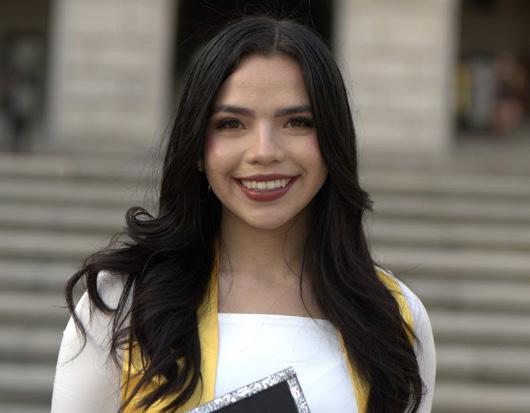
Phoebe Cosgrove graduated in May with College Honors. At UT Social Work, she focused on clinical social work and minored in Critical Disability Studies. She served as an Undergraduate Fellow at the Clements Center for National Security at UT Austin where she examined human security and global conflict. She also served as a member of the inaugural cohort of the Texas Trailblazers: Gay Gaddis Leadership Program. She plans to return to the Forty Acres this fall to pursue a master’s degree in social work to continue advocating for individuals and families.
Neftaly Torres (MSSW '26)
Neftaly Torres graduated while taking the clinical track of her MSSW. She completed her final internship with the Texas Child Health Access Through Telemedicine program through Dell Medical School, where she worked as a pediatric mental health therapist supporting children and families. During commencement, she noted her lived experience as a firstgeneration Mexican-American sparked her passion for social work and shaped her commitment to expanding access to culturally responsive mental health care.
Madison Haiman (Ph.D. '26)
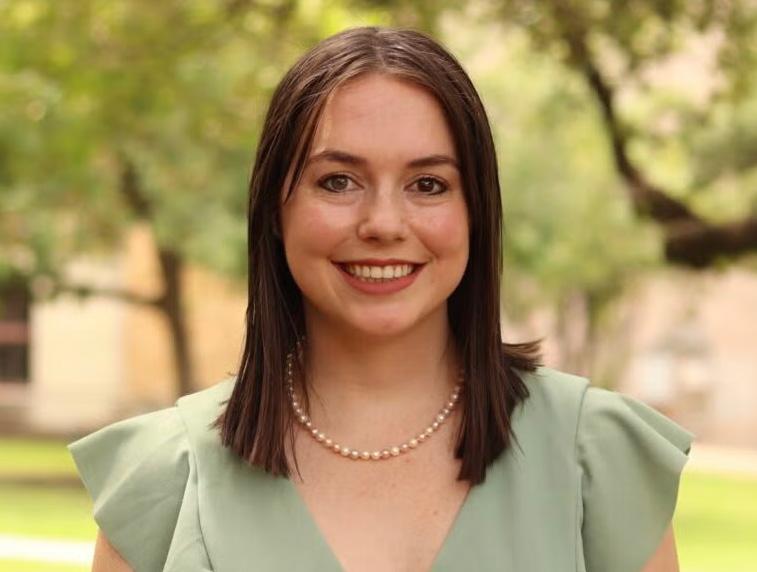
Madison Haiman graduated with her Ph.D. from UT Social Work in May. As a social work researcher and scholar, Haiman's primary goal is to conduct research that could help the development of and advocacy for evidenceinformed policy to improve reproductive and maternal health. She looks forward to a career in academia, advancing social work research and teaching the next generation of social workers. She begins a tenure-track faculty position at the University of Houston this fall.
Ph.D.
BSW
Phoebe Cosgrove
MSSW
Neftaly Torres
Madison Haiman
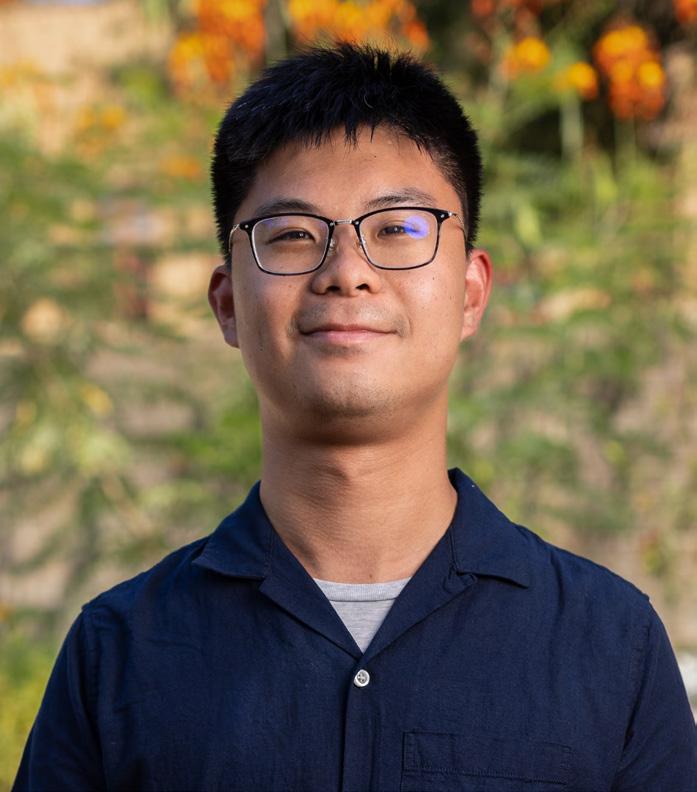
PEI-CHIANG LEE: A VEHICLE FOR COMMUNITY
There aren’t many social work researchers who think about transportation as much as Pei-Chiang Lee does.
For Lee, a doctoral student at UT
Social Work, transportation like a bus isn't just a vehicle; it’s a critical lens for examining disability, health, and justice.
Lee’s research centers on disabled young people as they transition out of school and into adulthood. He is especially interested in what happens when the school bus goes away
“When people are in school, they have a school bus that takes them from home to where they experience life,” he said. “However, universities often do not, and jobs for adults often do not either. How we view transportation and mobility affects how humans live.”
That gap in mobility, he argues, ripples outward and shapes health, housing, employment, and family life. A pillar of his work is health and healthcare access, a concern he calls an “epic issue” in disability research. The work is personal for Lee, who lives with cerebral palsy and has navigated many of the same transportation barriers in Austin that he studies. Growing up in Taipei, he relied on what he describes as “phenomenal” public transit. In Austin, he encountered delays, safety concerns, limited operating hours, and a long, complicated path to securing a Texas driver’s license because of his disability and international status. It took him 18 months and intervention from the Texas Workforce Commission to
secure the right to drive.
These kinds of barriers, he says, are not just personal frustrations. They mirror what many disabled people face when trying to get to work, school, medical appointments or social activities.
“Transportation affects quality of life and employment opportunities,” Lee notes. “If the system isn’t sufficient, families have to drive. Work hours are reduced, earnings decline, and outcomes worsen. It’s not just a quality-of-life issue. It becomes a caregiving and family well-being issue as well.”
Research & Clinical Work
At UT Social Work, Lee has found opportunities to grow as both a scholar and practitioner. As an ACT LEND Fellow in a federally funded leadership program on neurodevelopmental and related disabilities, he is building clinical skills in developmental screening and interdisciplinary practice. That clinical training, he says, directly strengthens his research.
He was drawn to faculty whose work centers disability and to the school’s strong disability research infrastructure. His supervisor, Professor Sandy Magaña, leads a research center focused on community services for disabled people and their families.
Lee’s dissertation focuses on caregivers’ needs, which he believes are too often taken for granted. When transportation falls short, families
and partners step in, absorbing the hidden costs of time, stress and lost income. He is also extending his work into housing, examining how access to reliable transit drives up housing prices and shapes where disabled people and their families can afford to live.
“When I’m looking at how young people navigate urban settings, clinical integration makes my research better,” Lee said. “That's exactly why I chose UT, because they're the school that offered practice through clinical work. As a researcher, I’m a vehicle for the community. I help express their voice and experience, and help make their needs known.”
Looking ahead, Lee imagines a future where disabled people can move through their communities with dignity, self-worth, and real choices. He wants his work to support interventions that strengthen communities and ease caregiving burdens as people age.
“We’re better than we were 50 years ago,” he reflects. “But the future means we’re even further along.”
AUSTIN SPINS IT FORWARD FOR ATX-VINyL
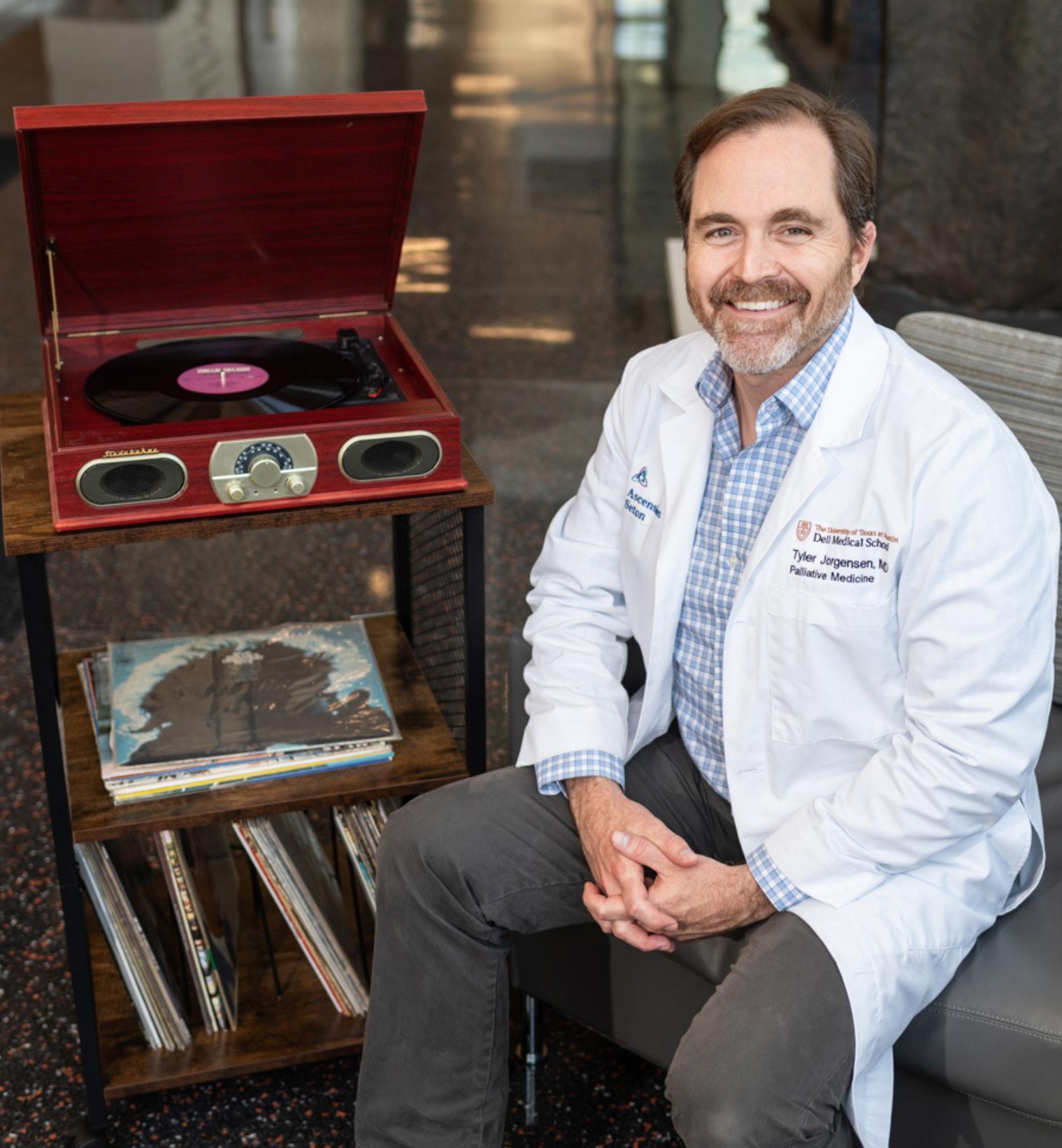
At Dell Seton Medical Center, palliative care physician and Dell Medical School assistant professor Dr. Tyler Jorgensen brings a record player and vinyl records to patients’ rooms — giving people facing difficult diagnoses a way to create meaningful moments when it matters most.
Jorgensen and his team have been doing this since 2022. With about 60 records and a turntable on a rolling cart, they offer a physical interruption to the weight of serious illness. Old favorites do what medicine sometimes can’t: transport patients and their families somewhere else, if only for a song.
The palliative care doctor discovered the power of music during a fellowship in hospice and palliative medicine. He was struggling to connect with a patient when he decided to play some music. After listening to Thin Lizzy’s “The Boys Are Back in Town,” the patient opened up — and an idea took hold.
p Dr. Tyler Jorgensen of Dell Medical School poses with a vinyl player and vinyl records
Jorgensen and his team developed ATX-VINyL, or Audio Therapy eXperience-Vinyl for Inpatients Near the end of Life, as a resource to connect patients and their families through music during the last stages of their care.
This spring, ATX-VINyL grew by close to 500 records, thanks to a two-week community vinyl drive spearheaded by UT Social Work’s Moritz Center for Societal Impact. Andy Langer, the Moritz Center’s co-program director for arts and humanities, secured support from Waterloo Records and Crosley Record Players for a drive that gave Austinites a chance to contribute — and a discount at Waterloo along with the chance to win a Crosley turntable. To expand the program’s reach, Crosley donated four new record players.
“Sometimes it’s about more than research. It’s about innovative programs at the local level,” said Dr. Elisa Borah, director of the Moritz Center for Societal Impact. “We are proud to support programs like ATX-VINyL that show what's possible when science and medicine meet humanity — and we are all better for it.”
“I can confidently say that our music library increased by nearly sevenfold, which is amazing,” said Jorgensen.
“We were recently able to meet a specific patient request for Brazilian jazz. Thanks to the new records, we were able to spin a collection of the Stan Getz Quartet with Astrud Gilberto for her — think ‘The Girl from Ipanema’ and mid20th century chill, jazzy vibes. It really lifted her spirits.”
Jorgensen shared a similar story about a patient who requested the Rolling Stones. “These new records are already helping patients,” he said, noting his team hasn’t finished cataloging them.
“I have truly enjoyed being able to focus more on the human experiencing the illness than the illness itself,” said Jorgensen. “I stress to our residents and medical students that one of our main jobs is to learn to connect with the human inside each patient. Then we will know how to best care for them.”
PAYING IT FORWARD INVESTING IN THE SOCIAL WORKERS OF TOMORROW
Holly Scofield (BS ‘79, MBA ‘88, MSSW ‘98) has a connection to The University of Texas at Austin School of Social Work that runs both professional and personal. A program graduate and licensed clinical social worker, she describes her time at the School as a rich and life-changing experience — one that shaped her career and her ongoing commitment to supporting others.
That commitment has taken concrete form. In late 2017, Scofield and her husband, John (BBA ‘78), established the Andrew Pickett Mobley Memorial Endowed Presidential Fellowship in Social Work in memory of her son and John’s stepson, Andrew — with their gift matched by UT Social Work supporter, the late Steve Hicks. The fellowship was awarded for the first time in fall 2018, when two students each received $3,500.
Andrew died at the age of nineteen. He is remembered for his intelligence, humor and deep compassion for others. He consistently sought out ways to help those in need, particularly Austin’s unhoused community.
“When someone dies young, you look for ways to make the difference they would have wished to make,” Scofield said.
Creating an endowment in Andrew’s name became that way forward — a way to carry his compassion forward by supporting students in the master’s program who are preparing to serve others in their own communities.
Endowments provide support in perpetuity, and donors can add to them at any time to deepen their
impact. In 2023, Holly and John did exactly that, making a significant addition that increased both the number of students supported and the size of each award. In the 202526 academic year, the fellowship supported three MSSW students with awards of $8,000 each. Since its founding, it has supported twenty students. In an additional show of commitment, the Scofields have included a gift to the fellowship in their estate plans.
“When you support future social workers, you aren’t just helping dedicated students fulfill their dreams — you are also paying it forward to all the people they will help during their careers,” she said.
“When someone dies young, you look for ways to make the difference they would have wished to make."
Holly Scofield (MSSW '98)
That ripple effect is already visible. One fellowship recipient wrote that the Scofields’ generosity deepened her own commitment to serving others as a social worker.
“It makes me happy and proud that Andrew is being remembered for the compassionate young man he was,” she said.
Scofield has watched that impact grow through her work on the UT Social Work Advisory Council, appointed by the President of The University of Texas at Austin. Her long view of the School’s trajectory, combined with her own experience across three degrees earned at different chapters of her life, reinforced her belief that this was the right place to invest — and to keep investing.
“I am so fortunate to be a graduate of The University of Texas School of Social Work,” she said. “Becoming a social worker is my proudest accomplishment.”
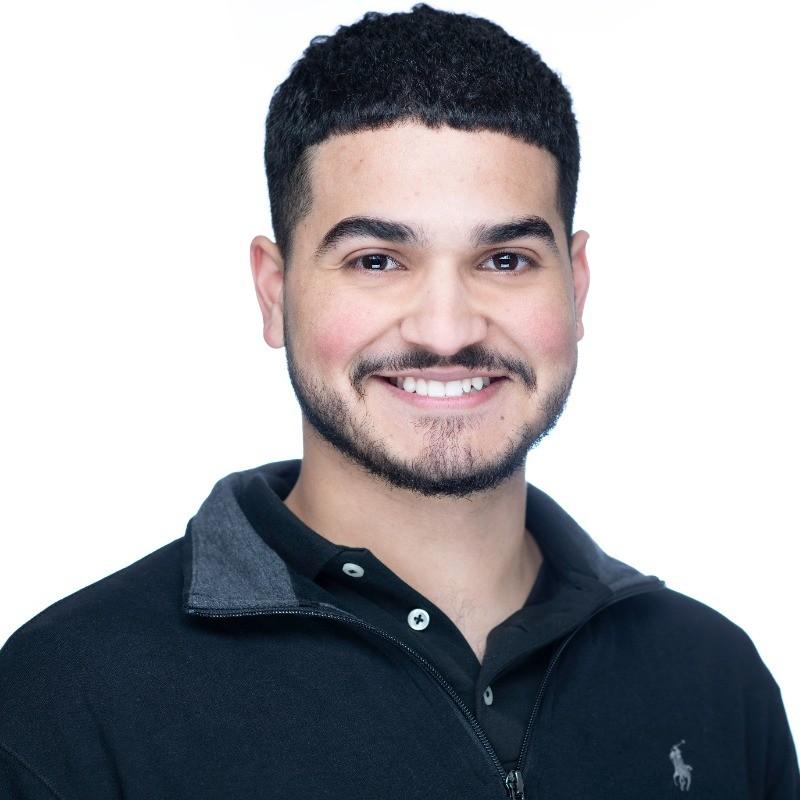
AN AUTHENTIC FIRST IMPRESSION: DANTE VARGAS RECRUITS THE BEST TO THE FORTY ACRES
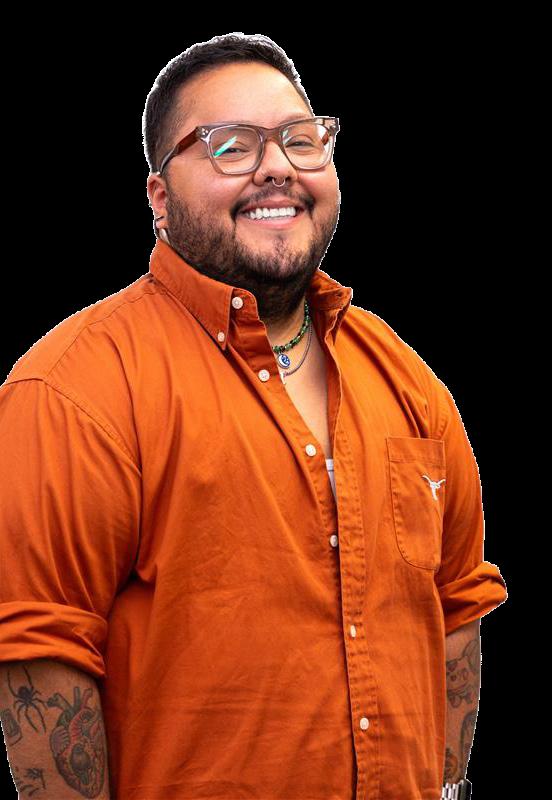
The first face a social work student typically sees when considering UT is rarely a dean in a suit or a professor in a tailored jacket. More than likely, they met someone with piercings, quirky tattoos and an incredibly vibrant, warm personality.
Dante Vargas, LBSW (BSW ‘17) doesn’t look or sound like a stereotypical higher-ed administrator — and that’s exactly the point.
“People have this image of higher education and what you should look like, but in direct practice, if you’re looking for help or resources, you want to talk to a social worker who seems friendly,” Vargas said. “I want to authentically be myself.”
As the director of recruitment at the
School of Social Work, Vargas leads “active recruitment” for the school across all student levels, meaning that he brings the social work program to conferences, college fairs, tabling events, and one-onone meetings to inform potential students about the program.
Inspired by his own journey, he knows that recruiting is a strategy that brings in competitive students and prepares future social workers that do work for good.
From El Paso to Austin Vargas is rooted in his own journey from El Paso to Austin. Encouraged by his high school English teacher, Vargas applied to, and got into, UT Austin. As a “natural helper,” he started in the pre-med program, determined to become a neurosurgeon.
There was just one problem though: he remembered he was “terrible at math.”
While trying to figure out his next steps, Vargas met a social work student. That conversation led him to learn about the school and possibilities like medical social work, school social work, housing, and policy advocacy. It wasn’t much longer before Vargas let that “recruitment” get him to UT Social Work.
“I think a lot about how a good conversation brought me to where I needed to be,” said Vargas. “Good conversations bring in great students, and great students turn into excellent social workers.”
Finding the Right Candidates
Now, as director of recruitment, Vargas still sees himself first and foremost as a social worker. He keeps his social work license up to date to continue his education and be connected to the practice, but more importantly, he uses his background
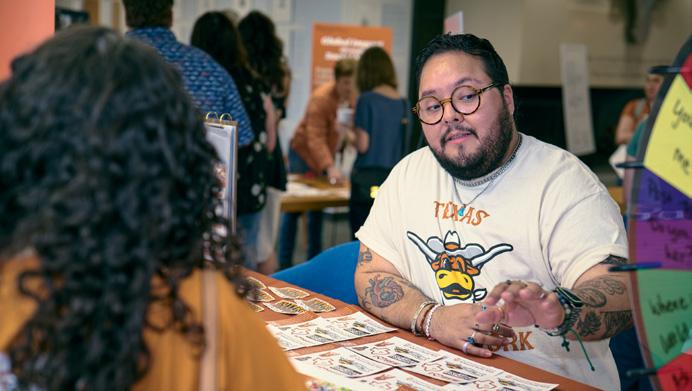
p Vargas meets with a prospective student at a recruiting event.
to be a strong advocate for potential students.
In the last year alone, he took nearly 130 individual meetings with potential MSSW students in person or over Zoom, in addition to his travel schedule and his day-today work. The meetings are critical, Vargas says, because recruitment to the School of Social Work is about “bringing the right people into a field
where the stakes are often life and death.”
The students who stand out to Vargas are the ones who are drawn to social work not because it makes them feel good, but because they believe everyone deserves dignity, support,
and someone in their corner.
“A good social worker or a bad social worker is often the determinant for someone’s level of care and support,” Vargas said. “When we bring the right people in with authentic conversations, we make a difference and get to change the world.”
p Vargas travels nationally for recruiting, which has resulted in a 57% increase in out-of-state applications to UT Social Work.
AS A WELL-BEING CATALYST, SARAH SLOAN CONNECTS RESEARCH PROGRAMS TO HUMANITIES
Sarah Sloan (MSSW '03) has been part of the School of Social Work teaching community since 2012 — as a clinician, a teacher and a supervisor. As the School’s new well-being catalyst, she brings that depth of experience to a role with a clear purpose: giving the School’s commitment to well-being an intentional structure.
At UT Social Work, well-being is a strategic priority — grounded in the School’s commitment to preparing leaders who can respond to complex social challenges with empathy, ethics and evidence-informed practice. In partnership with Dell Med and the Hogg Foundation, the School is building a culture of well-being that extends from the classroom to the clinic to the community.
“Well-being is both a daily practice and a strategic priority,” said Dean Allan Cole. “Sarah brings exactly the right experience and vision to lead this work — and through it, we will better prepare our students and support our faculty to deliver more
connected, humane care.”
That commitment takes shape across three areas: research, programs and curriculum. The Moritz Center for Societal Impact advances interdisciplinary scholarship on how creative expression supports health and well-being. That scholarship flows directly into programs — through the Music in Medicine concert series with Dell Medical School and the School of Nursing, a faculty writing group that gives clinicians space to reflect on their experiences with patients, and an artist-inresidence program that weaves songwriting and music education into coursework and community life. In the curriculum, applied learning opportunities, including emerging certificates and partnerships with Dell Medical School, equip students with wholeperson approaches to care.
Sloan’s role is to ensure it all connects.
“Well-being is about more than selfcare. It’s an integrated approach to the mental, emotional and relational health of our community,” said Sloan. “This work is at the heart of health, humanities and social work practice. This is how we elevate our
WHERE THE CLASSROOM MEETS THE CULTURE
Before she ever stood in front of a classroom, Diane McDaniel Rhodes (Ph.D. '14), spent decades working inside the systems social workers navigate every day.
Rhodes taught abuse prevention in schools, directed a shelter for the Center for Battered Women, worked across Austin’s network of social service agencies and eventually served as chief operating officer for SAFE, one of the state’s largest domestic violence organizations.
“It’s hard to help kids when their parents aren’t on board,” she said — a line that captures both the frustration and the persistence that defined her career in direct service.
Rhodes has been a familiar and welcoming face at the School of Social Work for years. She came to UT in 2009 to pursue a Ph.D., not entirely convinced she’d get in. “I thought it would be a test run,” she said with a knowing grin. It wasn’t. Rhodes earned her doctorate in social work, adding it to an undergraduate degree in English and a master’s in theology — a combination that explains a lot about how she thinks.
The dissertation that launched her academic career started, improbably, with a vampire movie.
When the first “Twilight” film came out, Rhodes — then a mother of four with decades of domestic violence work behind her — read the books and recognized something her students needed to see. “He kills you and you live happily ever after,” she said of the franchise’s central romance. The relationship, she
argues, is a textbook portrayal of intimate partner violence dressed up as devotion. That analysis became the foundation of her dissertation on popular culture and social problems — and a classroom entry point that students don’t forget.
Her work has had real-world consequences. Rhodes contributed to the effort that resulted in Texas Education Code 37.0831, which requires school districts to adopt and implement a dating violence policy, including a definition of dating violence and reporting procedures for students experiencing it.
The classroom, it turns out, is just another venue for the same work. Rhodes teaches core BSW courses such as generalist practice and social work practice in organization and communities, and will add a graduate theory course in the fall. She brings the same energy to both. She once taught all eight major social work theories through the life of Eleanor Roosevelt. “I just like to play in the sandbox,” she said.
One of her first jobs was in an infant room at a daycare. She laughed, remembering it. That same energy — curious, unselfconscious, eager — is what she sees in her students. What she wants most for them isn’t abstract. “I really want them to have skills and know how to apply them,” she said, “so they can spend the rest of their time in school practicing.”
Underneath that is something harder to teach: the social work value that every person is worthy of attention and help, no matter how chaotic the circumstances.
Rhodes is a Provost’s Teaching Fellow, a graduate of the Stanford school Teaching and Learning Studio — the university’s design-thinking program applied to education — and holds certification by the Association of College and University Educators in Effective College Instruction. She also loves to write fiction, harbors a fascination with forensic anthropology and models openness about her own challenges — including rheumatoid arthritis — part of what drew her to UT’s flexibility when she joined the faculty.
She comes from a family that takes scholarship seriously. Her father taught at the McCombs School of Business for 40 years. Her mother was at the Texas School of Law. When Rhodes graduated with her Ph.D., her father placed the hood on her shoulders.
Rhodes has since created her own mark on the Forty Acres, and continues to leave a significant impact on UT Social Work's classrooms and culture.
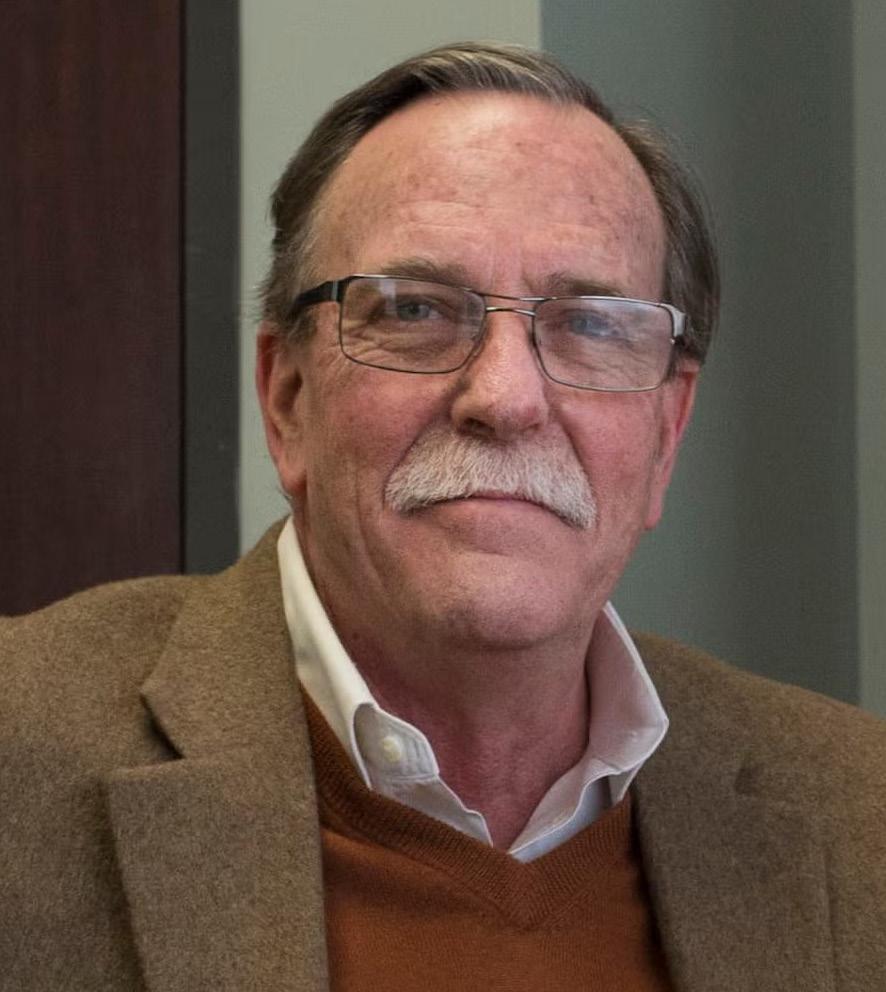
KIRK VON STERNBERG NAMED NASW SOCIAL WORK PIONEER
Kirk von Sternberg, professor and co-director of the Health Behavior Research and Training Institute at The University of Texas at Austin School of Social Work, has been named a Social Work Pioneer by the National Association of Social Workers Foundation.
The NASW Pioneers program, founded in 1994, recognizes social workers who have explored new territories and built outposts for human services on many frontiers. von Sternberg joins a 2026 class of 10 inductees.
“Kirk von Sternberg is exactly the kind of scholar and colleague who makes this school exceptional,” said Dean Allan Cole. “He has spent his career doing the challenging work that moves the needle on urgent public health challenges. His dedication to this work is an inspiration to all of us who have the
privilege of working alongside him. The NASW Foundation couldn’t have chosen better.”
Over a 35-year career, von Sternberg has led groundbreaking research on behavioral health interventions in partnership with his colleague Mary Velasquez, focusing on preventing substance use disorders in underserved populations. As principal, co-principal or primary co-investigator, he has secured roughly $25 million in grants funded primarily by the National Institutes of Health and the Centers for Disease Control and Prevention.
His research portfolio includes the CHOICES family of clinical trials, which developed and tested interventions to prevent substanceexposed pregnancies, and Be Well Texas, an $8 million-plus statewide Screening, Brief Intervention and Referral to Treatment initiative that served more than 14,000 Texans between 2021 and 2025. He received the CDC’s Charles C. Shepard Science Award in 2008.
“It’s a great honor to be recognized as a Pioneer, but it is a greater honor to have rigorous research and impactful studies be celebrated through this award,” said von Sternberg. “Social work research is a foundational pillar in behavioral health. It has been a joy in my career to study interventions and improve health in a meaningful way.”
von Sternberg is the 23rd NASW Social Work Pioneer with ties to The University of Texas at Austin. He will also be the third Pioneer
who sits on UT Social Work’s current faculty, joining Cynthia Franklin, the Stiernberg/Spencer Family Professor in Mental Health, and Diana DiNitto, Distinguished Teaching Professor and the Cullen Trust Centennial Professor in Alcohol Studies and Education.
A fourth Pioneer, David Springer, will rejoin UT Social Work in August as Centennial Professor in Leadership for Community, Professional, and Corporate Excellence, and University Distinguished Teaching Professor. von Sternberg will receive his award at the NASW national conference in Washington, D.C., this summer
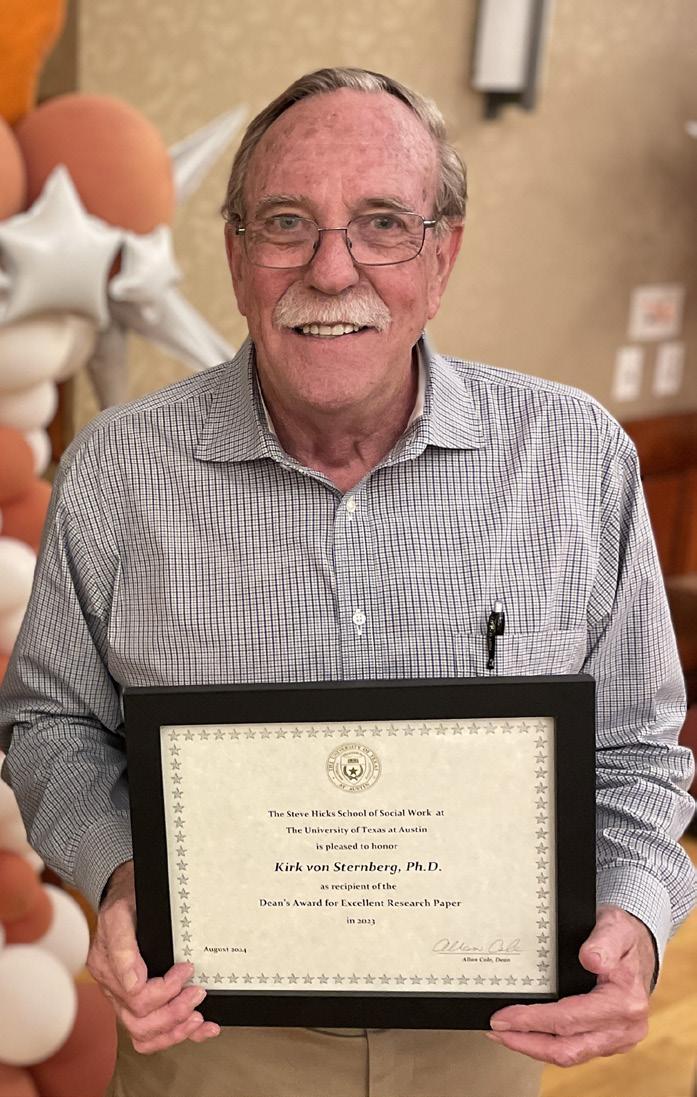
p von Sternberg, pictured, accepts an award for best research paper at a UT Social Work event.
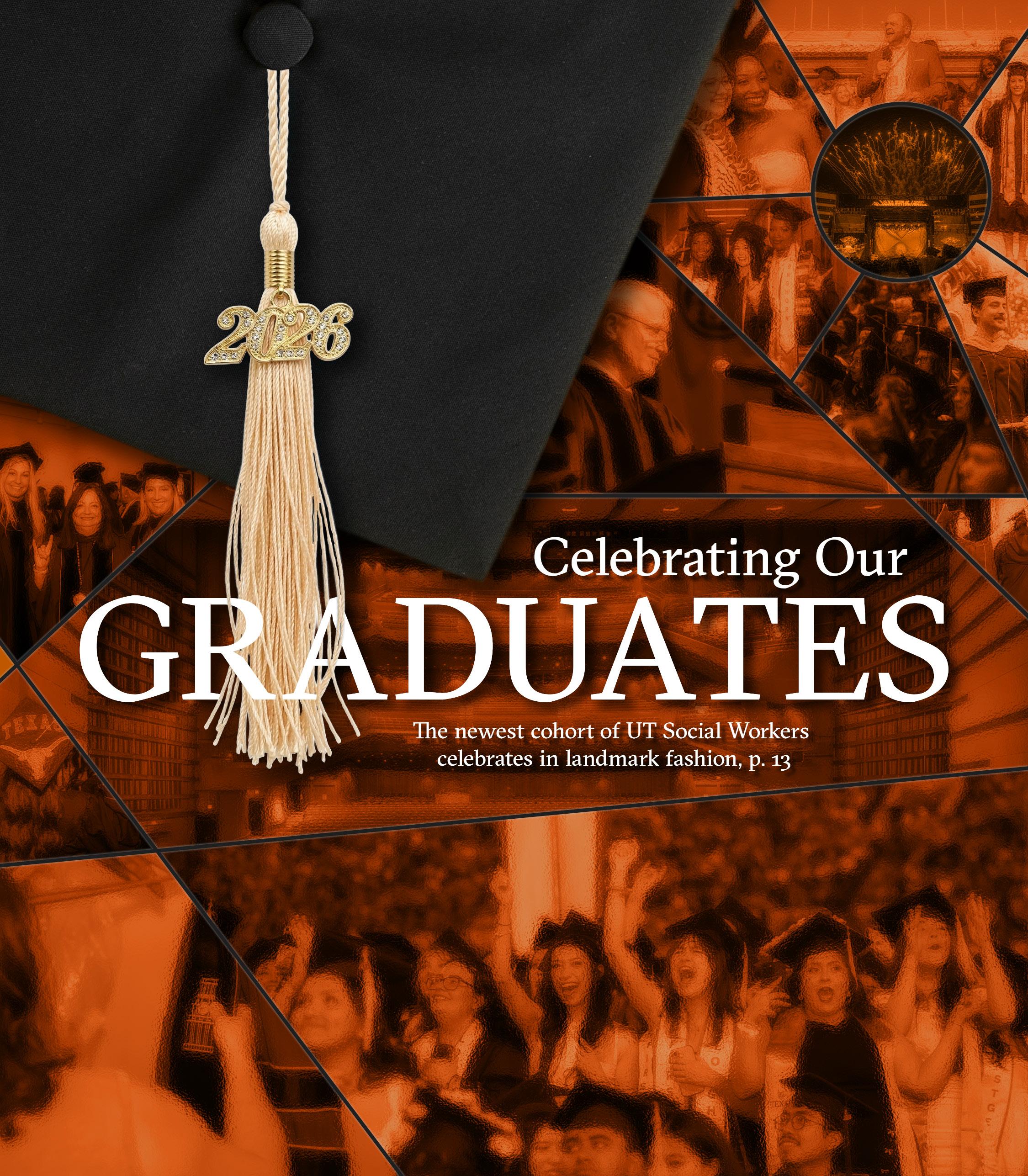
UT Social Work celebrated 185 graduates from the School of Social Work during the 2026 commencement ceremony. The event recognized BSW, MSSW and Ph.D. graduates.
A Commencement to Remember
This year’s program featured a keynote address from Texas Longhorns head diving coach and five-time U.S. Olympic diving coach Matt Scoggin (BSW ’87). In his speech, Scoggin credited his athletic success to the worldview and skills he gained as a social work student.
As head diving coach at Texas for more than 30 years, Scoggin has guided divers to 23 individual NCAA championships and five U.S. Olympic Games. With Scoggin at the helm, the Longhorns have won 12 NCAA National Championships, and are currently the reigning back-to-back national champions.
“Go do the meaningful work — in service of others and human dignity — and encourage others to go for their dreams,” Scoggin told the graduates.
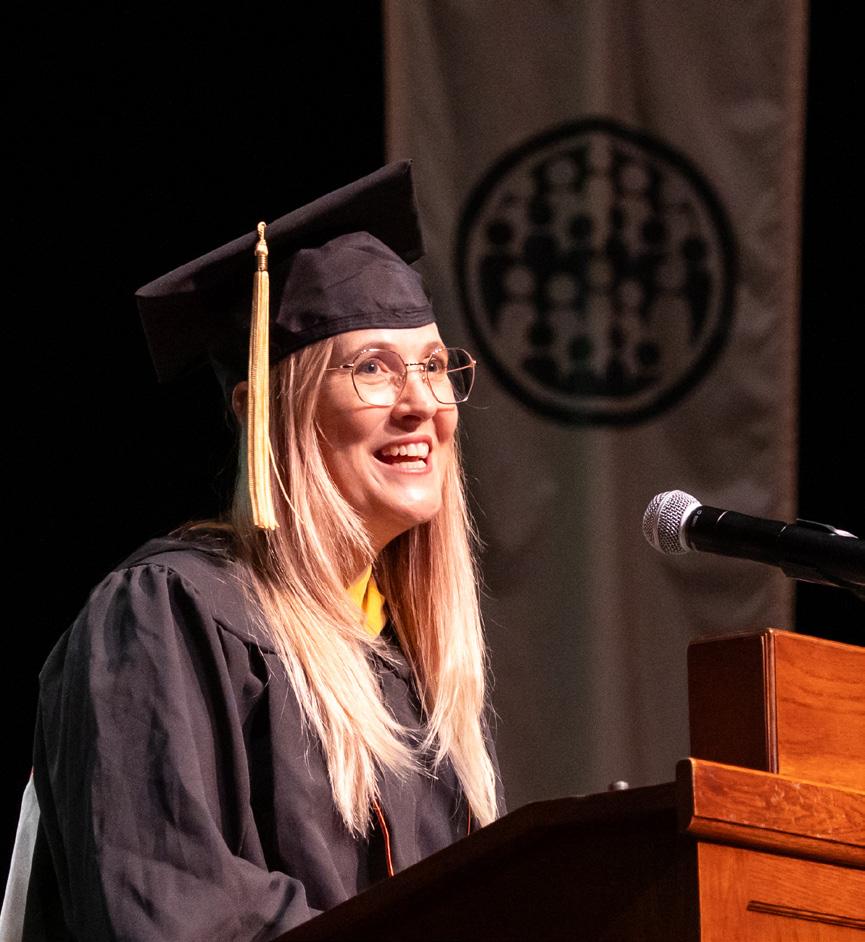
Graduates were welcomed into their new cohort as alumni by Rachael Cayton Barden (MSSW ’04), LCSW-S, chair of the School of Social Work Alumni Board. “There is a place for you here, to engage with other alumni and make the UT Social Work community what you want and need it to be," she said from the podium.
The School of Social Work program was held in the Bass Concert Hall, followed by the University-wide commencement program at Darrell K Royal-Texas Memorial Stadium.
UT Social Work graduates celebrate on the field at DKR Memorial Stadium
Rachael Cayton Barden (MSSW '04), chair of the UT Social Work alumni board welcomes graduates to the rank of alumni
Matt Scoggin (BSW '87) delivers the keynote address for UT Social Work's commencement ceremony on May 9, 2026, at Bass C oncert Hall
NEW NETWORK WILL CONNECT FORMER FOSTER YOUTH WITH WORKFORCE RESOURCES
The question sounds deceptively simple: What do young people who have aged out of the foster care system actually need to find their footing in the world?
The answer, as it turns out, is rarely more information. It's guidance through the information that already exists. Someone to walk alongside you until the path starts to make sense.
That insight sits at the heart of the Texas Foster Youth Network, a new initiative launching this year from the Texas Institute for Child & Family Wellbeing at The University of Texas at Austin School of Social Work. Funded by a $4 million grant from the Texas Workforce Commission, the network will operate a call center staffed by former foster youth to provide case management and connect young adults to resources in education, employment, housing and more.
What makes the Texas Foster Youth Network stand out isn't just what it does. It's who's doing it — and who helped design it.
Building Something That Works
Before the call center opens its first line, young people who have lived in foster care will help shape how it operates. Over the first year, the Texas Institute for Child & Family Wellbeing will hire young adults with foster care experience to guide a landscape analysis, inform an outreach plan and develop operations policies. That means the people who know these systems best — not just academically, but personally — will define what good service looks like.
"By centering lived experiences in our advisory groups and staffing, the Texas Foster Youth Network will develop a relevant and accessible resource for foster youth to access vital services in education, employment, housing and more," said Monica Faulkner, director of the Texas Institute for Child & Family Wellbeing.
It's an approach grounded in TXICFW's prior research showing that young people want reliable relationships with adults and that human connection is essential to success. But Faulkner and her team also recognize the
potential for technology to expand the network's reach. Current foster youth will help identify the best practices for incorporating artificial intelligence into the call center's services — a planning process that keeps young people in the driver's seat even as the tools evolve.
Lilly Dealbert was one of the first young adults to work on the network's development. Dealbert completed her field placement for her BSW degree with Texas Institute for Child & Family Wellbeing where she conducted interviews with young adults and facilitated workshop sessions to understand what the youth wanted. Dealbert, who spent time in foster care, was not surprised by what she found.
“We found that youth want trusted and stable connections above and beyond chatbots and AI,” said Dealbert, BSW
intern. “They highlighted the importance of consistent relational support as a bridge to the resources they need. Our strategy for staffing the center with former foster youth should help meet that need.”
The Complexity No One Warned You About
Tym Belseth knows the friction firsthand. A former foster youth and now senior program coordinator at the School of Social Work, he describes a frustration familiar to anyone who has tried to navigate government systems without a roadmap.
"If you think about the first time you had to make a medical appointment or deal with a government bureaucracy on
your own, it was probably a bit more complicated than you expected," Belseth said. "It can be very discouraging for youth to receive a list of resources and have to call a random person, tell their stories and then be told to go somewhere else for help or fill out a different paper. Our hope is to help walk them through those processes, so they learn not to give up."
"Our school has a long history of working with the state to improve child well-being in Texas," said Dean Allan Cole. "The Texas Foster Youth Network is the next step in our commitment to helping youth transition from foster care toward thriving adulthood."
INSTITUTE ON DOMESTIC VIOLENCE & SEXUAL ASSAULT MARKS 25 YEARS
When Noël Busch-Armendariz arrived at The University of Texas at Austin in 2000, she brought more than an academic résumé. She had spent years in direct practice — working with incarcerated women who had killed their abusive partners, engaging in global social work, and teaching the next generation of practitioners. She knew the terrain as a scholar and a practitioner — someone whose research was grounded in the realities she had encountered directly in the field.
When then-dean Barbara White asked her to figure out how the School of Social Work could engage the Austin community on domestic violence and sexual assault, Busch-Armendariz didn’t start with a strategic plan. She started with a question.
“Like good social workers,” she said, “our work is community-engaged no matter what we’re doing.”
She reached out to Annette Clay, executive director of the Texas Association Against Sexual Assault and Kelly White, the CEO of SAFE (then Safe Place). Kelly White had recently grown SAFE from a small nonprofit to a $22 million operation with 120 employees, tracking. Their response set the tone for everything that followed.
They convened about 25 leaders from across the Austin community — domestic violence and sexual assault organizations, faith communities, advocates for people
experiencing homelessness, funders. The question on the table: what should a university do to address interpersonal violence in Texas?
The answer shaped the Institute on Domestic Violence & Sexual Assault, which marks its 25th anniversary this year. “The institute really grew from this community,” Busch-Armendariz said.
From that founding conversation, two commitments emerged that have guided IDVSA ever since: let the community set the research agenda and make the findings consumable by anyone who needs them — from
q
Dr. Noël Busch-Armendariz leads the IDVSA as its institute director.
survivors to high school teachers to policymakers. That second commitment turned out to matter enormously. IDVSA built a reputation not just for rigorous research, but for making it usable, like reports designed. Reports designed with infographics and findings translated across audiences.
Counting What Counts
In 2003, IDVSA conducted the first statewide prevalence study of sexual assault in Texas, embedded within a broader survey called “The Health and Well-Being of Texans.” The framing was deliberate: sexual violence is a public health issue and situating it alongside data on blood pressure, mental health and workplace productivity made that case concretely.
When IDVSA repeated the study in 2015, the findings were sobering. The estimated number of Texans reporting a lifetime experience of sexual assault had increased from 1.9 million in 2003 to 6.3 million.
“As with any scientific endeavor, the field had learned a great deal about how to measure this crime more accurately,” Busch-Armendariz said. “At the same time, Texas strengthened its legal definitions of sexual assault. Together, those changes meant that more Texans recognized their experiences in the behaviorally specific questions we asked.”
Reporting to law enforcement had dropped from 20% to 9%, a figure shaped by victims’ fears of not being believed, difficulty defining their own experiences, and distrust of formal systems. In cases where the perpetrator is known or related to the victim — which is true more than 70% of the time — the emotional and psychological complexity of reporting is profound.
Another sobering number: 413,000 adult Texans have experienced a sexual assault crime in the past year. According to Busch-Armendariz, this crime alone costs the state more than $8.8 billion.
Texas-specific data helped drive real policy change. Before 2009, sexual assault survivors in Texas could not have their forensic evidence collected without reporting to law enforcement. Now, survivors can have forensic evidence collected, tested and stored without filing a formal report with law enforcement for up to five years.
“It gives survivors time to decide what they want to do without losing important evidence. It might take them a year,” Busch-Armendariz said. “It might take them four years. But it’s their choice, and the evidence is still legitimate.”
Same Model, New Ground
Busch and IDVSA directors Caitlin Sulley and Margaret Bassett have stewarded more than 95 projects over the past 25 years, reflecting the Institute’s broad and evolving contributions to research, training, policy, and practice. This body of work has included studies on campus sexual assault, stalking, human trafficking, untested sexual assault kits, and other forms of interpersonal violence, as well as IDVSA’s longest-running training program: preparing prosecutors, forensic nurses, advocates, and other professionals to serve as ethical expert witnesses who bring scientific knowledge about interpersonal violence into Texas courtrooms.
Over time, the Institute’s work has also expanded in response to what communities, practitioners, and survivors identified as essential. About fifteen years ago, as partners increasingly called for greater attention to resilience, healing, and restoration, IDVSA broadened its approach to include programs and practices that recognize not only harm and accountability, but also the full human experience of recovery, resilience, and repair.
Still Showing Up
After 25 years, Busch-Armendariz is clear-eyed about how far the work extends — and how much remains. A new prevalence study is in development. The institute is still serving the community, an important pillar of a flagship institution.
The work isn’t finished. IDVSA has demonstrated that research produced in service of a community and made accessible to that community can change what happens to real people.
"We have survivors among us in every room we sit in. Their courage, wisdom, and continued presence give me tremendous hope. People survive; many do more than survive — they thrive. And still, the deepest measure of success would be communities in which this work is no longer needed, because the violence, exploitation, and harm that gave rise to it have ended."
BIG QUESTIONS with Dean Allan Cole
1
It’s been four years now since you’ve been appointed to the position. What’s been your personal highlight reel from the past year?
In my more than 12 years on the Forty Acres, I think this may have been the best academic year I have experienced. It was our 75th anniversary as a school, which was marked with a three-day celebration highlighting our research, teaching, service and leadership. It was one of more than 100 events our school put together this past year.
We’ve enjoyed historic interest in development and donor support for our school in this past year and had another record number of applicants (more on that in a moment). and published significant research that continues to improve the world. In fact, we are among the most productive colleges and schools at UT (per capita) in sponsored research, which will continue to have a positive impact.
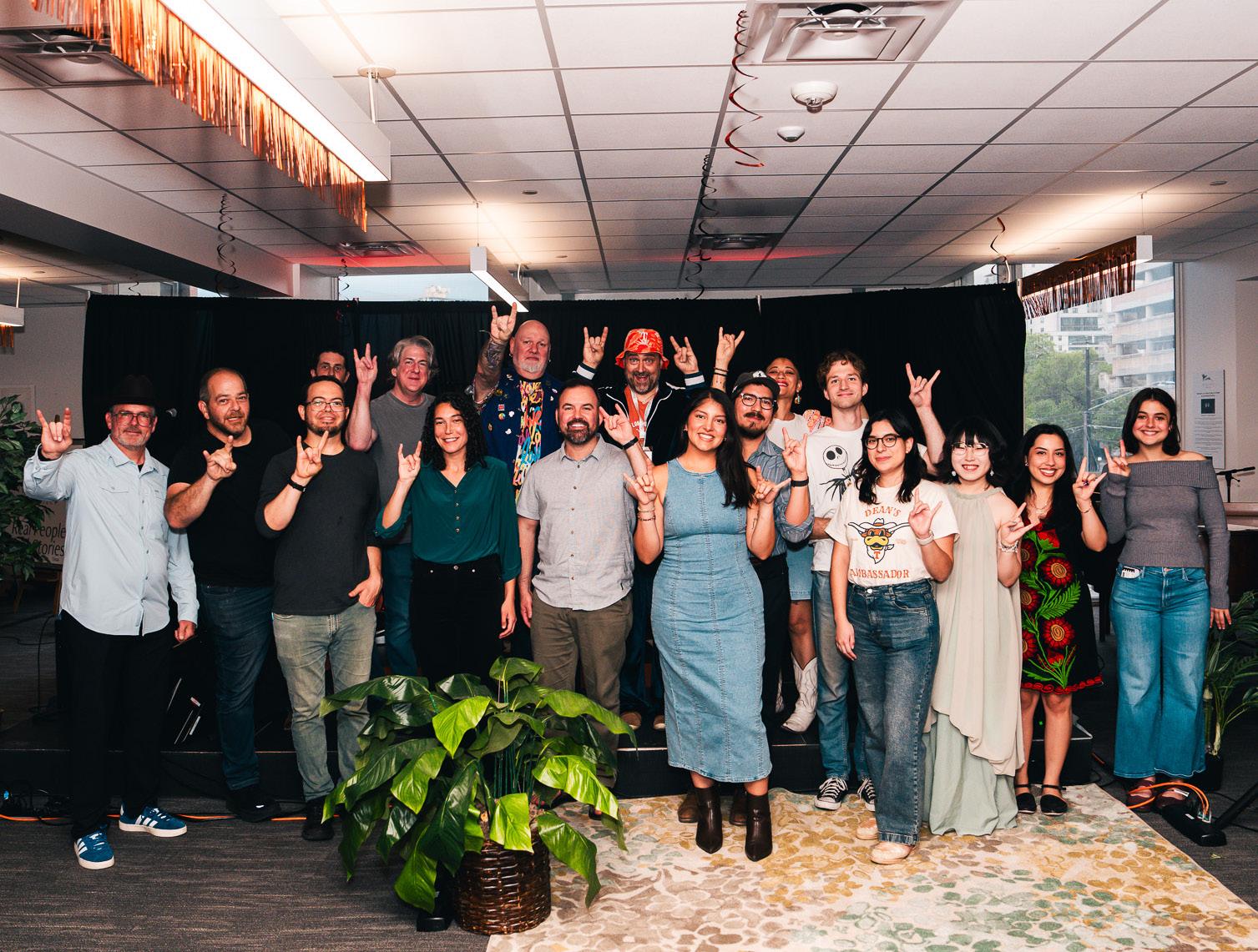
q Dean Dean Cole, pictured far left, takes in a moment following the 2026 edition of Social Work's Got Talent, an annual talent show tradition at UT Social Work
Also meaningful: I taught an Undergraduate Signature Course for the first time in several years, which always teaches me in surprising ways. My Persons, Pain, & Resilience course was filled with exceptionally bright students who reminded me daily why higher education is so important. These highlights — among many more — make me grateful to work in this community in meaningful, impactful ways and with colleagues that change lives. It has been a remarkable year.
2
You’ve invested heavily this academic year in additional hiring. Why?
This has unquestionably been a significant year for faculty and staff appointments. As previously mentioned, that’s because we’ve had unprecedented interest in our school from applicants, with an increase of nearly 33% in applicants over the last two years. We are charged with helping develop the social work pipeline and Texas workforce, and we expect to enroll a record number of students this coming fall with one of the most competitive cohorts we’ve ever admitted.
To meet this growth, we added more than a dozen new staff members to UT Social Work this past year, as well as 13 colleagues to our adjunct faculty and additional appointments throughout UT Social Work. Notably, we successfully
completed six searches for faculty appointments — which is the most in a single year that I can recall and we’re still just getting started.
3
You were recently appointed as the Strategic Administrative Officer for the School of Nursing. What does that new appointment entail?
In March, I was asked by UT leadership to work with Interim Dean Kavita Radhakrishnan as a collaborative partner during the School of Nursing's transition to new leadership. This is a temporary role, and I continue serving as Dean of the School of Social Work during this appointment.
Still in the beginning phase of this appointment, I’ve been hosting conversations with nursing faculty and staff leaders. I’ve also been helping Dean Radhakrishnan with assessing the strengths of the Nursing School and opportunities that lie ahead.
The School of Nursing has long served as a key partner in several collaborations with UT Social Work. Supporting Nursing during their transition makes both schools stronger and increases the opportunity for interdisciplinary work.
4
You continue your work with Dell Medical School as their Deputy for Health Humanities and Technology. What’s happening in that space?
It’s an exciting time to partner with Dell Med, especially with the news of the landmark $750 million gift from Michael and Susan Dell for UT’s new hospital facility. My work at Dell Med invites our School to enhance and build upon close relationships and robust partnerships that include social work perspectives in health and behavioral health.
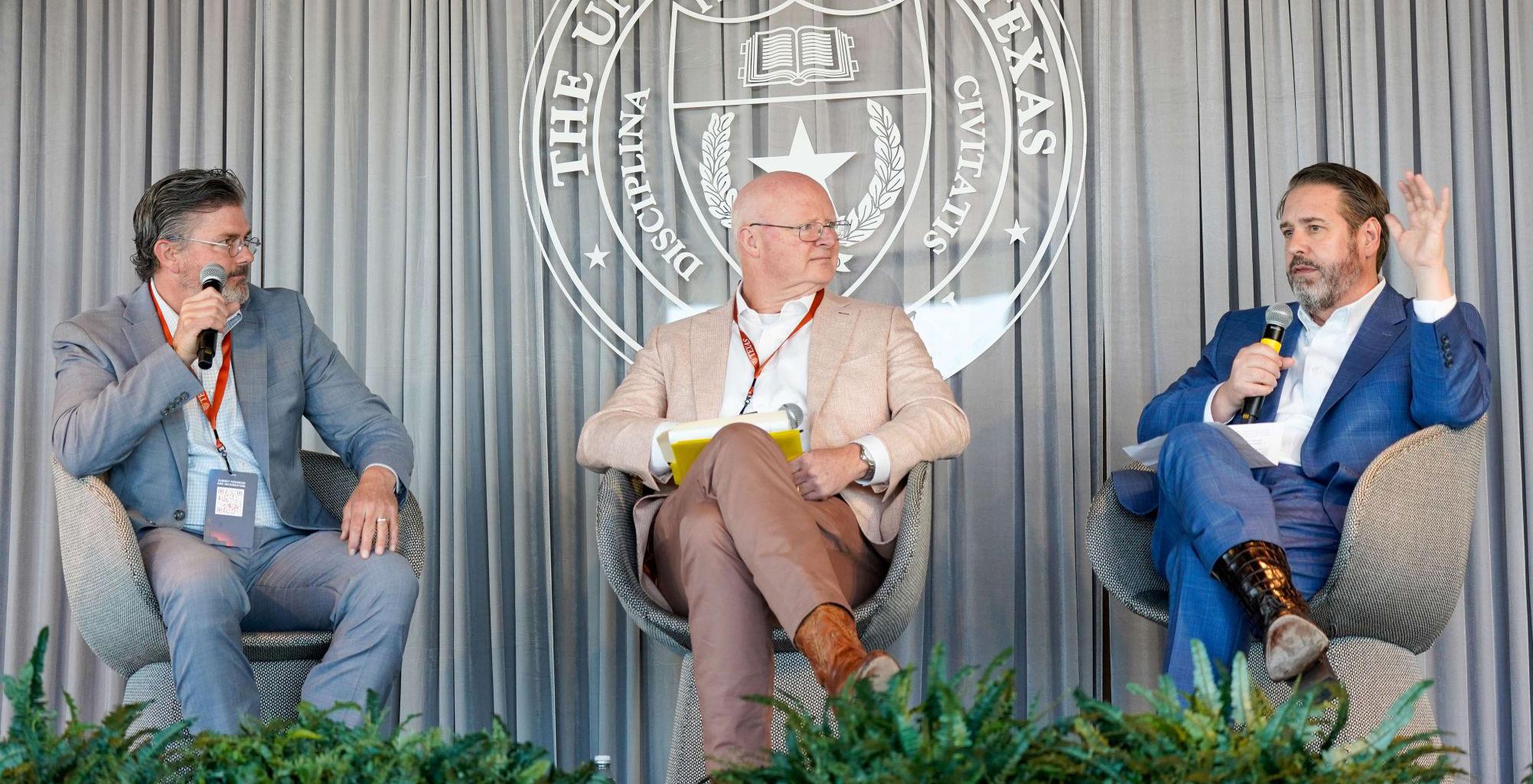
I recently spoke at the Life Sciences and Healthcare Innovation Summit, on a panel entitled ":The Role of Humanities in Innovation." UT President Jim Davis, Provost Will Inboden and I reflected on the invaluable role of the humanities in both social work and medical education.
I’ve also had the pleasure to present multiple times at Dell Medical School’s
p Dean Cole shares insights on medical humanities on a panel with UT Provost Will Inboden (middle) and UT President Jim Davis (right)
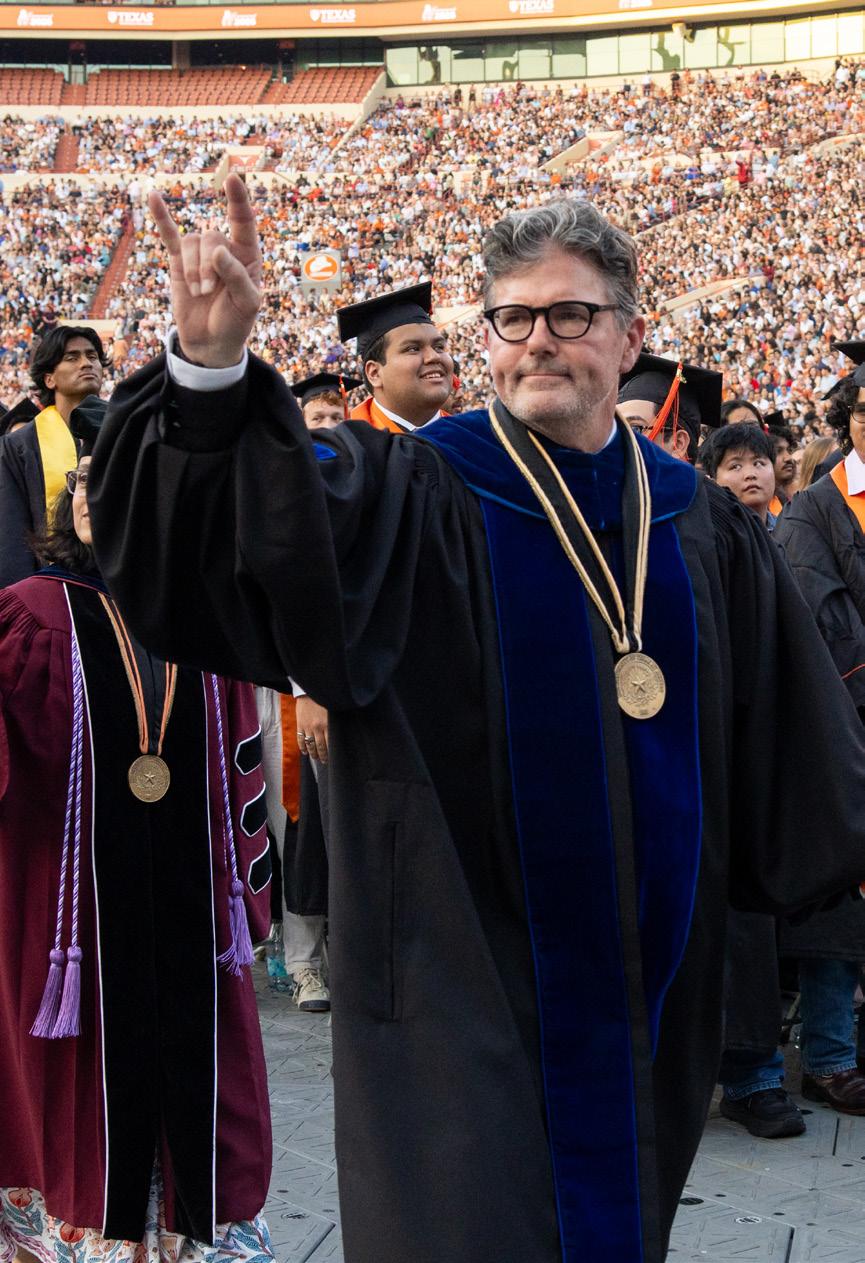
p Dean Cole recognizes UT Social Work graduates during the 2026 university-wide commencement
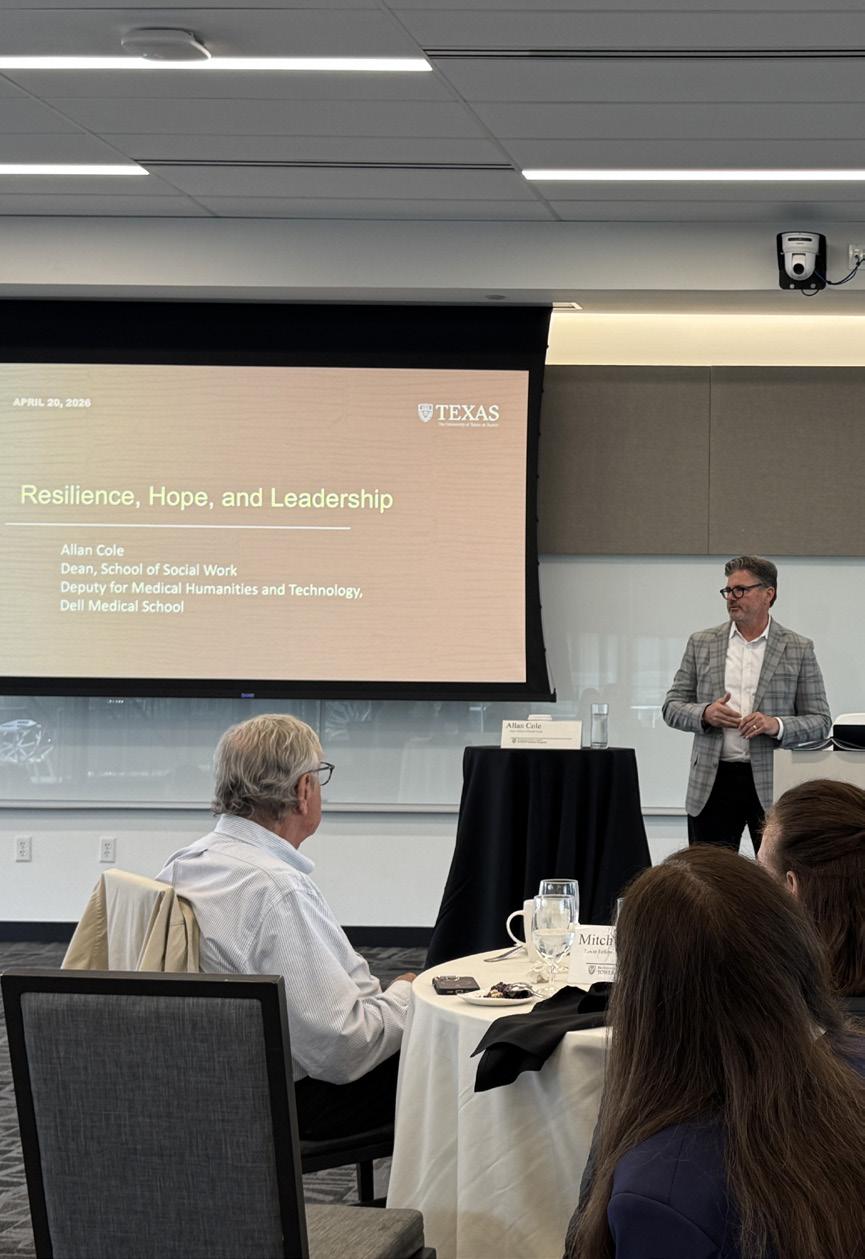
p Dean Cole gives a guest lecture to the UT Tower Fellows on social work leadership
p Dean Cole poses with representatives from HealthyHorns and the Disability Cultural Center during Disability Graduation in May 2026
Grand Rounds, sharing insights on our collaborations, opportunities and partnership.
I’d be remiss if I didn’t mention collaborations with Dr. Greg Wallingford, Dr. Tyler Jorgenson, and others, on well-being and preventing physician burnout. We also support programs such as ATX-VINyL, the Music in Medicine series, various medical humanities writing groups, and more, as we stay anchored to value of both patient-centered care and physician well-being.
5
Speaking of, you’ve been emphasizing the role of well-being at the School of Social Work. How would you define and expand on that concept?
Human well-being is inextricably tied to social work. It is also a priority in our community. We know as social workers that people are more than their diagnoses and that healing occurs through connection, creativity, support and shared experience.
Placing well-being in the center of our school and community life calls upon us to maintain our mission to prepare leaders in responding to complex social challenges with empathy, ethics and evidence-informed practice. This initiative includes work with partners like Dell Medical School, the Moritz Center for Societal Impact, and the Hogg Foundation for Mental Health to build a culture that supports the health of students, faculty, staff and the communities we serve.
I’ve appointed clinical professor Sarah Sloan to help lead this work which occurs at the intersection of health, humanities and social work practice. Through curricular offerings, programmatic opportunities, and expanded research, we’re helping students and faculty integrate well-being into learning and practice.
6
You also say often that the arts and humanities are central to healing and well-being. What kind of investments have been made by UT Social Work in this space?
Evidence shows that the arts and humanities contribute to improved health, greater social cohesion and connection, and community well-being. In order to enhance individual practices to improve mental health, we’ve developed grants to create and strengthen a healthy arts and humanities ecosystem.
This spring, the Hogg Foundation for Mental Health — a part of Texas Social Work — launched a new grant initiative totaling $220,000 entitled “Arts and Humanities Research Grants for Early Career Faculty.” This initiative funds projects that integrate arts, humanities, mental health, and well-being projects by tenure-track, assistant professors throughout the State of Texas.
Social work educators and practitioners have the potential to contribute to healthy communities where
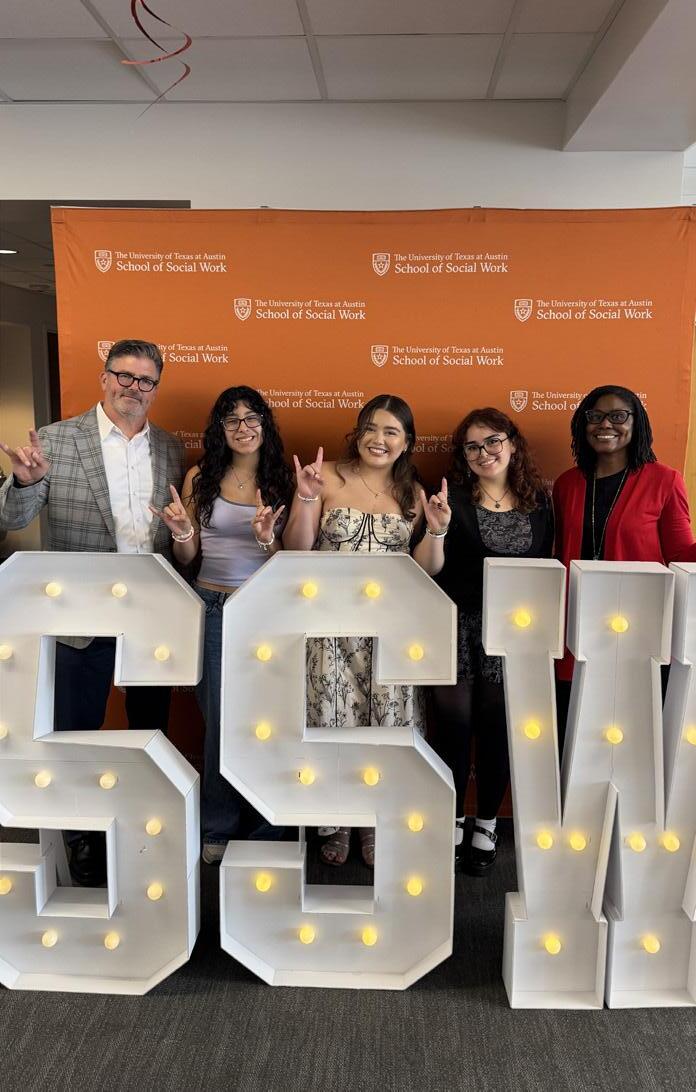
p Dean Cole throws up the Horns with the Social Work Council, a student organization at UT Social Work
Learn more about the Hogg Foundation’s Arts and Humanities Research Grants for Early Career Faculty
all people can thrive and positively influence mental health. In addition, the Moritz Center for Societal Impact is funding a new round of projects through the Social Impact Challenge. This student-led competition will consider behavioral health needs through integrating the arts and humanities to create and utilize innovative, impactful approaches with creative expression to support mental health and well-being. The pitch competition is open to all UT graduate students and requires a community partner. By working with a community partner, these projects highlight how the arts and humanities can play a powerful role in advancing more rounded and holistic solutions to improving lives. It’s an exciting time for innovation at UT Social Work.
BONUS
What have you been listening to and playing recently?
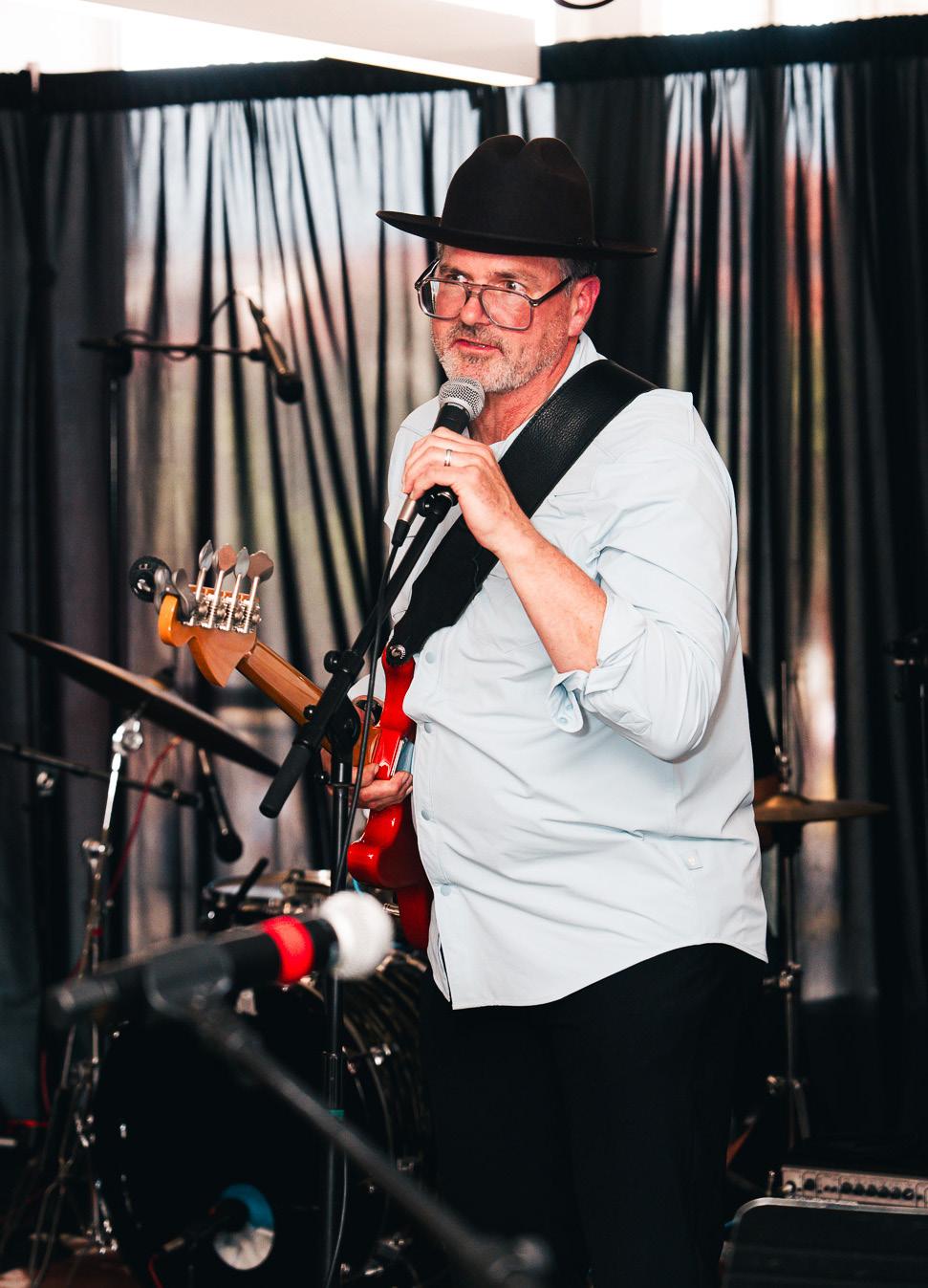
I’ve had the recent and great honor of organizing a fundraiser for the Parkinson’s Foundation, which included a benefit show played by Lyle Lovett and Hayes Carll. Having these singer-songwriters in my regular rotation again has been inspiring and motivating, to say the least. I continue to play in regular residencies with my band, The JAMBS, and I’ve been working on several original songs with the group. I performed one of our originals — entitled “Love Endures” — at Social Work’s Got Talent in April.
BIG QUESTIONS with Dean
Lyle Lovett and Hayes Carll perform at Dean Cole's fundraiser
Dean Cole performs original music at Social Work's Got Talent
Allan Cole
To learn more about the Moritz Center for Societal Impact's Social Impact Challenge
Scott Mata is soft-spoken but earnest. When you sit down to talk with him, you get the sense he truly hears and sees you.
Mata had a long list of experience under his belt by the time he graduated — from Peace Corps and AmeriCorps to juvenile justice and MHMR.
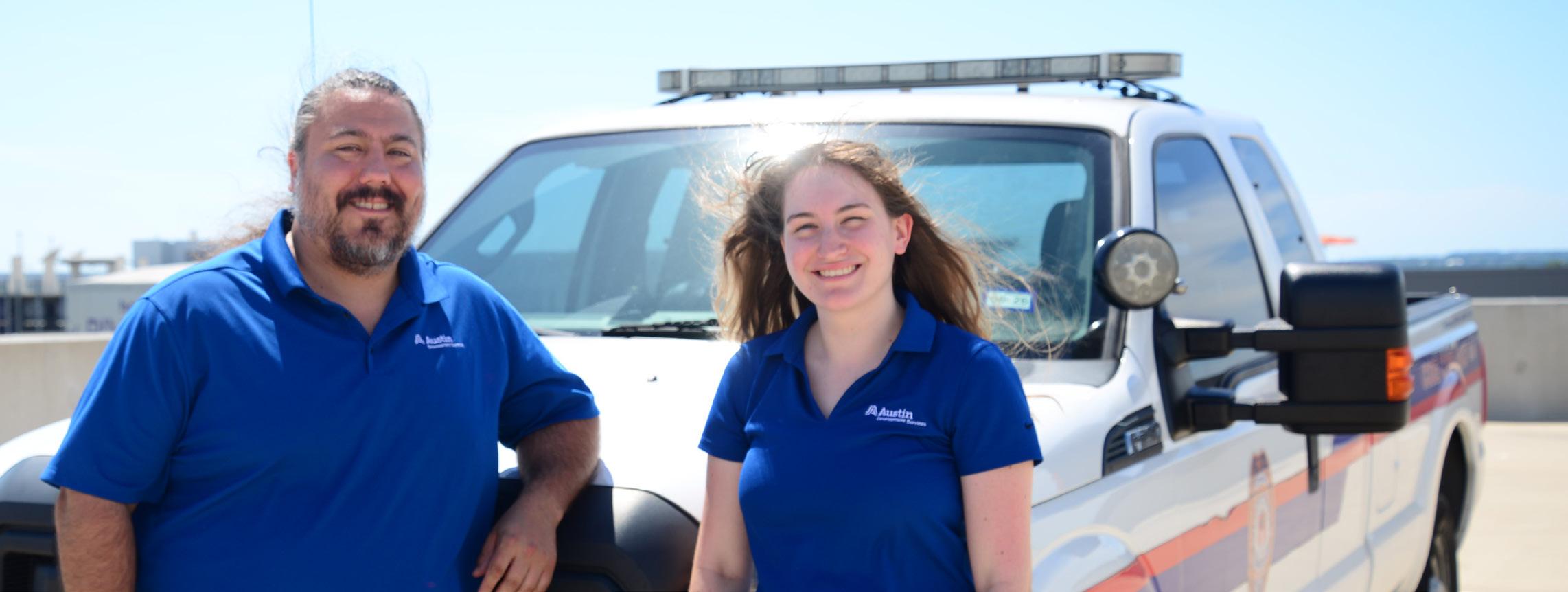
Mata is now the social worker embedded with the Austin Development Services Code Compliance Team, a position created after a code abatement visit revealed a gap. When a homeowner experienced a mental health crisis with only code inspectors and police on scene, city leadership recognized a need for social workers. Elaine Garrett, assistant director of Code Compliance at Austin Development Services, had seen how the Austin Police Department integrated social workers and pushed to bring that model to Code Compliance. Mata was hired to build the program from the ground up.
The compliance team enforces zoning, building health and property maintenance ordinances to ensure public health and safety. Mata’s role as the social worker is to be a resource for homeowners and renters
"I’m proud that Austin would take the chance to try a program like this."
Scott Mata (MSSW '23)
who have fallen out of compliance for any number of reasons or extenuating circumstances and simply need a hand, as we all do from time to time.
The work is community-based and home-visit-driven — about three visits a day, out in a city truck, meeting people where they are. Some visits are first-time intakes.
Where the City Meets the Community
Others are weekly case management sessions focused on helping clients understand and change the behaviors that led to a code violation. The way Mata sees it, a code violation is often just a signal that something in a person's life has slipped, that a need has gone unmet. “We make sure Code Compliance is allowing space for people to catch their breath, get caught up,” he said.
He views his job as figuring out what that is and connecting people to help that’s available. From resources like the city's Homeless Strategy Office, Integral Care, home repair grants and community organizations, Mata has mapped the landscape, so clients don't have to navigate it alone.
The position is believed to be one of the few in the country focused specifically on renters and homeowners, rather than people experiencing homelessness. In his almost three years in the role, he’s already seen successes. “We’ve worked with clients on behavior change like reducing hoarding, cluttering and acquiring. We’ve also been able to get safety interventions for clients and even just get them to a point where they felt comfortable asking family and friends for help.”
Those steps may seem small, but avoiding escalation and abatement can keep many people on the road to progress.
This semester, Mata expanded his team with the program's first practicum intern from UT Social Work. Kristin Metz, MSSW student, has joined him in the truck on home visits since starting her practicum in the fall of 2025.
Mata has been intentional about giving Metz the full range of experience — outreach, intakes and client interventions. He feels students who bring empathy, an open mind, and a willingness to problem solve will succeed and get a lot out of the experience.
“My practicum placement with Austin Development
Services has been an amazing experience that has allowed me to develop a wide range of social work skills,” said Metz. “I am beyond grateful to have learned from the humanistic approach that Scott brings to his interactions with clients everyday and to help individuals identify and utilize their resources
and strengths.”
Mata understands not only the value of the experience but also the value of the student’s time, knowledge and skill. He advocated for an intern stipend.
“I’m proud that Austin would take the chance to try a program like this that
34 PORTRAITS, 34 STORIES: INTO LIGHT PUTS FACES TO AUSTIN'S OVERDOSE CRISIS
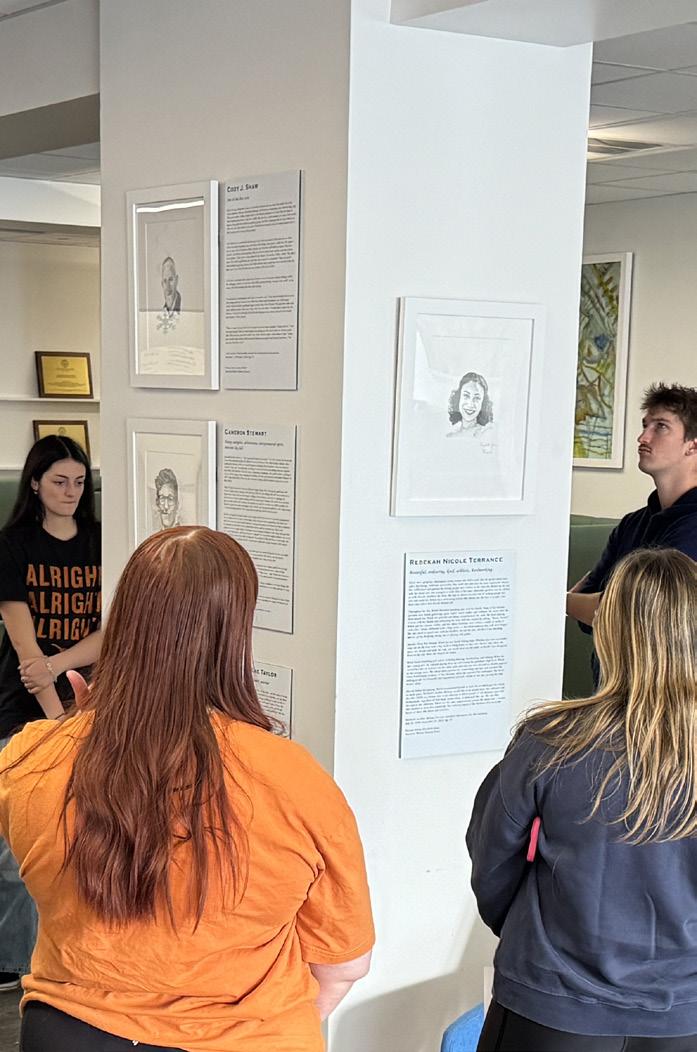
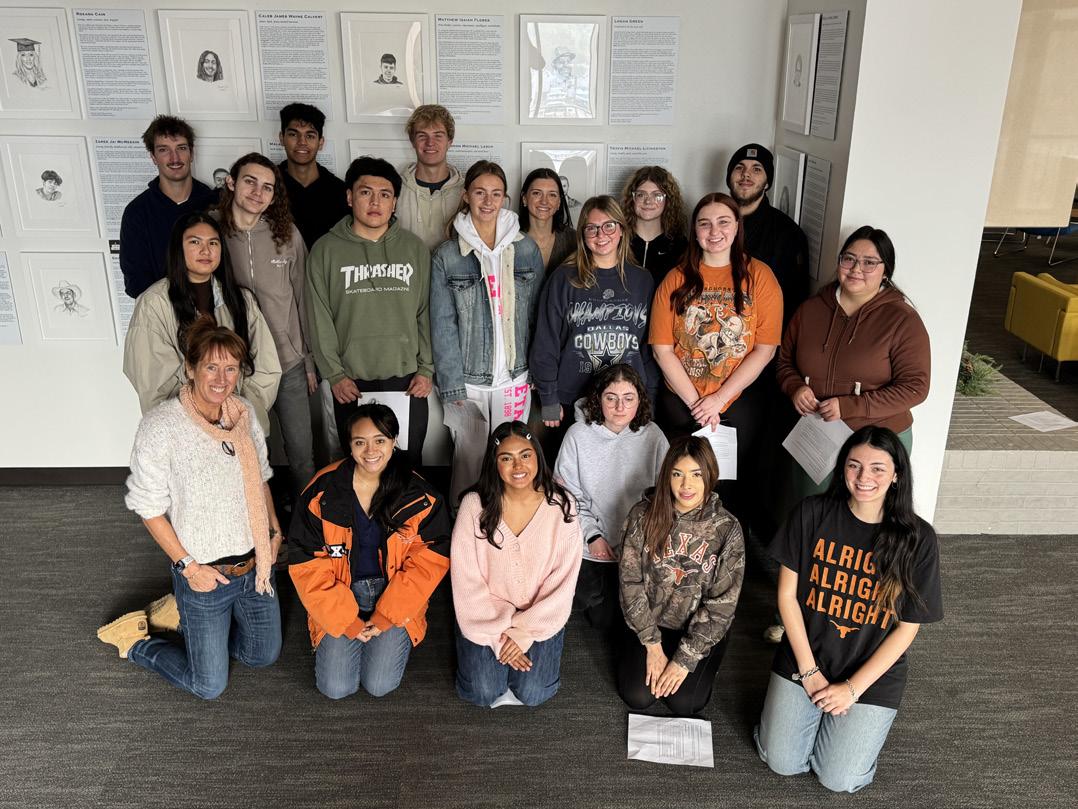
The laughter of students tumbles down the stairs. The common room of Walter Webb Hall is always a hive of activity: Guadalupe humming outside, students cycling in and out, study groups spilling into schoolwide events. But quietly tucked into the room, folded in among the conversations that color college student life, 34 black-and-white portraits stand vigil.
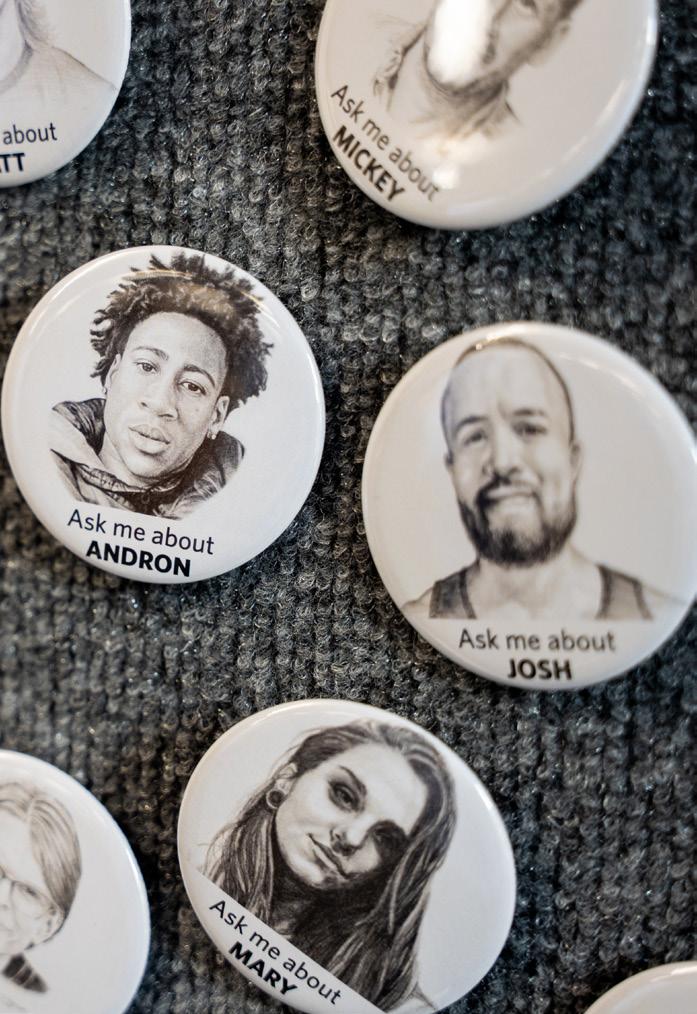
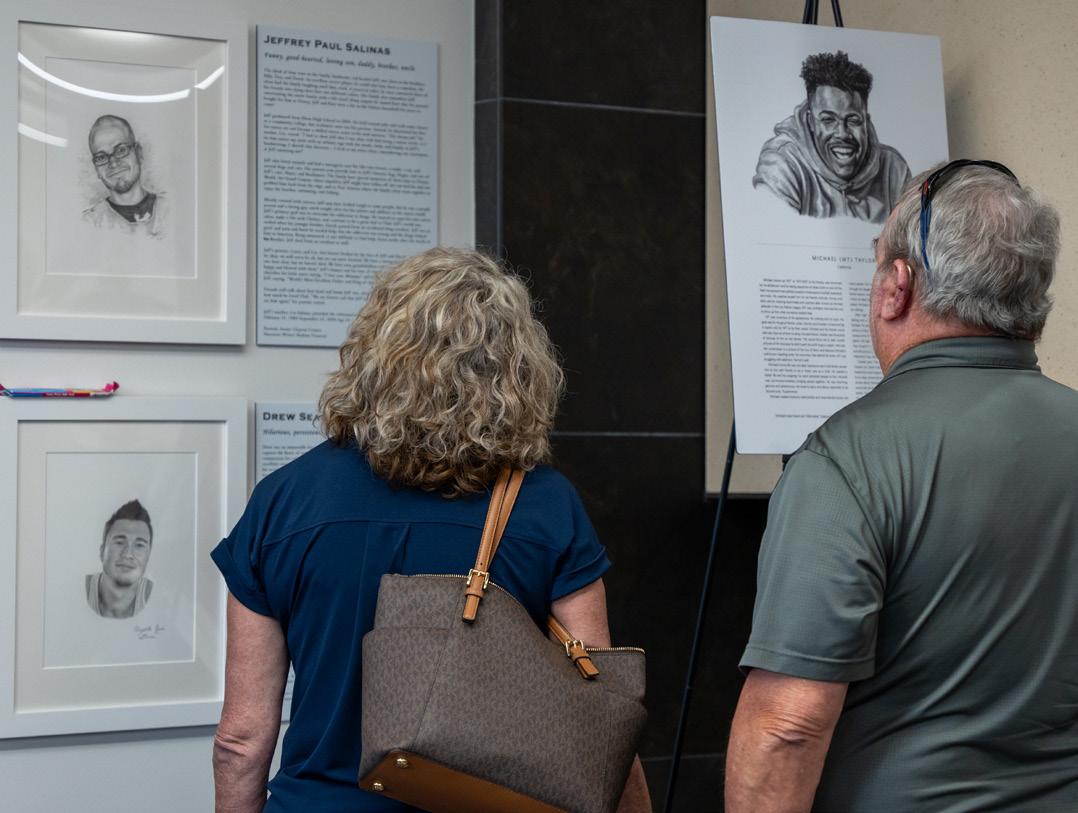
“INTO LIGHT — Drug Addiction: Real People, Real Stories” is an art exhibit that puts faces to Travis County’s overdose crisis. Each pencil-drawn portrait shows a moment in the life of someone lost to overdose, paired with a biography shared by their family.
The solemn juxtaposition of still portraits against student life can be jarring. And that’s the point. Each story unfolded in the midst of ordinary and extraordinary lives being lived, in front of family and friends who might not have
understood or recognized what was happening.
Addiction and substance-use struggles can often be hard to identify. The disease itself is a master of disguise and manipulation, fooling everyone into thinking the struggle is just a blip that can be overcome with enough willpower. It often occurs where we least expect it because we often look for the tropes and stereotypes of substance use, not recognizing the real struggle in the faces of those we hold most dear
Now in 21 states, INTO LIGHT aims to break through the stigma of drug addiction to tell the stories behind the loss and spread awareness about addiction and substance use.
Behind The Portraits
Tiffany Anschutz — UT Social Work alumna, advisory council member, and founder of Sage Recovery & Wellness Center and Sage Recovery
is so novel and person-centered,” said Mata. "There are so many clients that would not be getting help or services if we weren't there at the home.” The macro and the micro, he says, have always informed each other — and this role puts both in play every day. It's also, it turns out, a pretty good way to build a city.
p Buttons with faces welcome visitors at INTO LIGHT
p Students read stories and learn about the people behind the portraits
Villa — helped bring the exhibit to the school. Anschutz’s stepsister, Roxana Cain, who died in 2019, is also part of the exhibit.
Theresa Clower, artist and project founder, lost her son to an overdose in 2018. After drawing a portrait of Devin, working from a picture taken five hours before he died, she decided to use portraits to connect with others who had lost someone to overdose. An art project was born.
The Austin exhibit features 34 Central Texans, ranging in age from 16 to 54, a small fraction of addiction-related deaths in the area. Travis County saw 380 deaths in 2024, down 22% from 2023, mirroring the first national decline in years. It's still the leading cause of accidental death here, and fentanyl remains a deadly threat.
“This exhibit is not only a tribute — it’s a call to action. It invites us to confront addiction as a public health crisis and to respond with compassion, understanding, and advocacy,” said Dean Allan Cole at the unveiling of the exhibit during the School’s 75th anniversary celebration.
Sharing The Stories
Since it has been up, the exhibit has generated meaningful media engagement. ATX Dispatch on KOOP Radio featured an on-air conversation with Clower and Annie Hernandez of the Christi Center, a local grief support center for families navigating loss. Hernandez joined a grief support group after losing her son, Joshua Bell, to an overdose in 2019. Bell is one of the portraits featured in the exhibit.
KUT News, Austin’s NPR station, amplified the exhibit’s impact across Central Texas, highlighting interviews with Clower, Hernandez and Lisa Lasch, who met through the grief support group. Lasch's son Brandon, who died in 2022, is also featured in the exhibit. The story
also featured an excerpt of an interview with Dr. Kasey Claborn, director of the Addiction Research Institute.
Carrying It Forward
The exhibit finds a natural home at UT Social Work, where the late Dr. Lori Holleran Steiker founded SHIFT in 2019 to transform the student substance-use culture. That legacy lives on in the Lori Holleran Steiker Endowed Faculty Chair in Substance Use and Recovery, established this academic year and held by Dr. Mary M.Velasquez, and in the researchers carrying her work forward.
Claborn, the inaugural recipient of the Lori Holleran Steiker Award, credits the recent decline in overdose deaths to the widespread distribution of naloxone and other overdose-reversing treatments. Awareness campaigns like INTO LIGHT matter too. "Research has shown that stigma proliferates in spaces where we don't have connections, where we don't have direct understanding of human experience," she said.
The nation remains in a dangerous phase of the opioid crisis. Only around 20% of the 48.7 million Americans with a substance use disorder received treatment in 2024. "Overdose impacts the entire family system," Claborn said.
That work continues. ARI doctoral student Jake Samora recently received an NIH R36 Dissertation Award, and postdoctoral fellow Dr. Katie McCormick received a K01 Career Development Award from NIH. Their work directly advances overdose prevention initiatives.
The exhibit closed at the end of May. Families will keep the portraits, and the hope moves forward.
p Visitors come to the exhibit as part of a private tour
p Professor Mary Beer takes her class to the INTO LIGHT exhibit at the end of the Fall 2025 semester
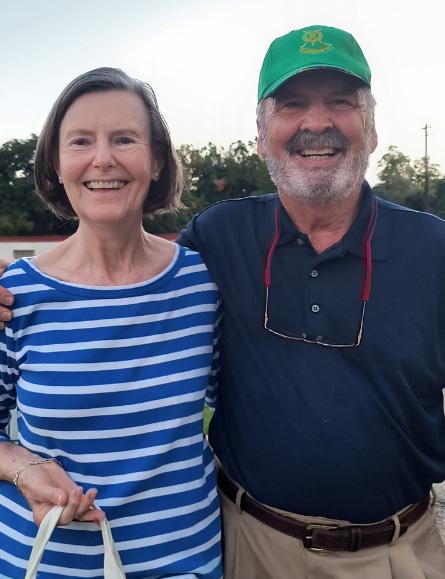
A “social work administrator and therapist,” respectively, Mart and Sue Hoffman (both MSSW ’72) celebrated their 58th wedding anniversary on Feb. 3. They’ve been leaders in social work practice, mentors to countless young people, teachers of marriage courses for more than 30 years, parents of two children — one of which also graduated from the School of Social Work — and they still find time to serve Texans to this day.
“We just keep find interesting things to do!” Sue says with confidence.
As Mart and Sue reflect on 58 years of marriage and social work service, they shared wisdom with UT Social Work on how they found love, maintained it, and made sure to impact lives along the way.
Finding Love
Sue and Mart first met at SMU, when both were taking undergraduate classes. Sue had moved into a new dorm, and Mart immediately noticed.
“I saw her at the door, and I asked the dorm counselor, ‘Now, who is that?’ and asked if I could get set up with her,” said Mart. “Well, on the weekend I had a blind date with her; my friend
A LOVE STORY: Mart (MSSW ’72) & Sue Hoffman (MSSW ‘72) Reflect on 58 Years of Marriage
If there’s one perfect example that social workers can find love and partnership, it’s hard to find a better case than the Hoffmans.
had one with her on Friday.”
Mart explained that his friend took Sue to the theatre and had an elegant dinner out — a stark comparison to his first date of riding in a ’65 Mustang and “roasting hot dogs and drinking cheap wine” at the lake.
“Turns out she liked the outdoors,” Mart said. “And we’ve been dating about at least once a week since.”
“I saw his excellent values then, and I still see them today,” Sue said.
The couple married in 1968, not long after they graduated from SMU. Mart would go on to start seminary school at Perkins Seminary while Sue was turning her dual degree in biology and German into a teaching career. However, Mart didn’t see being a preacher as his future.
He then began employment with the Salesmanship Club Boy’s Camp of Dallas, where he led the Adventure Trails Program. The program took him out on extended camping trips with young men, mentoring them while adjusting to difficult terrains and trails. Under Mart’s guidance, the program expanded and developed, ultimately leading to the birth of a women’s Adventure Trails Program,
which Sue had a significant role in building. Importantly though, they discovered through the program a line of work that was built for both of them: social work.
“We were teaching social skills and how students could succeed,” Sue said. “I realized that was what I wanted to do.”
“Those ‘evil’ social workers got me,” Mart wisecracked, “all because they were teaching me how to work with young people and how to help them solve problems.”
UT Social Work
Fast forward a few short years later, and the Hoffmans were ready to make a move. Through a monthslong scholarship program with the Salesmanship Club, Mart had saved up $4,200 to potentially go back to school.
Sue, meanwhile, earned a similarly sized grant from the National Institute of Mental Health (which took just one letter compared to his months of work, as Mart points out with a laugh).
They had visited Austin at the recommendation of a mentor and met with leaders at the School
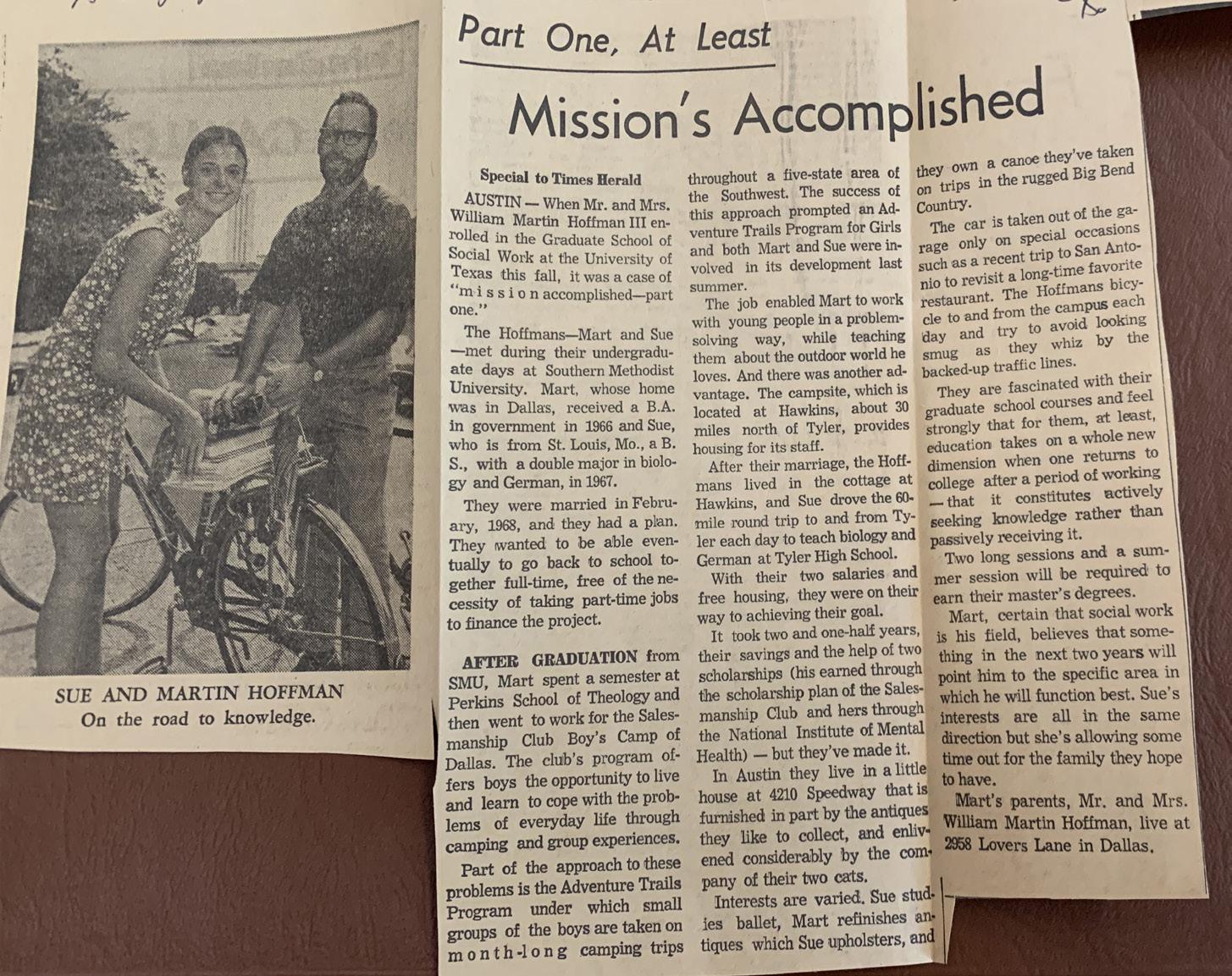
p A newspaper clipping from the
Hoffmans'
of Social Work and the Hogg Foundation for Mental Health. Both quickly realized they were going to be Longhorns.
They took their funding to The University of Texas at Austin, and both enrolled in the graduate program at the School of Social Work. It was a major counter-cultural moment for both, as they witnessed Vietnam War protests and “tie-dye wearing” students in classes, a stark but welcomed difference from their experience in Dallas.
They would enroll in classes like social welfare and social issues and take practicums in elementary schools and mental health centers. With their experiences in Austin, the lessons they learned, and with the individuals they would meet, a new life was open to them both.
“Those degrees were launchpads,” both Mart and Sue said. “Without it, the doors we walked through never would have been opened.”
A Career in Service
One of those doors that opened for Mart and Sue included meeting Ron Jackson, another UT Social Work alumnus. Jackson was appointed as executive director of the Texas Youth Commission at age 32, making him the youngest executive director of any Texas state agency at the time. He would have a longrunning collaboration with Mart and Sue, providing opportunities in Brownwood and Austin and beyond.
Mart would serve as a superintendent for the Texas Youth Commission and later as a licensed elementary school teacher at a Title 1 school. Sue served for 25 years as a private practice therapist and retired in 2011. Neither stayed idle in retirement, however. They went on to establish Capital City Village, a non-profit organization designed to reduce isolation for seniors and improve aging-in-place processes for older adults.
The organization works closely with UT Social Work’s GRACE Program, which allows students in practicum to work in settings serving gerontology and aging interests. Sue (and Mart on one notable occasion when Sue was recovering from breast cancer) has hosted social work interns for 15 years, and her service was recently recognized by UT Social Work with the Lifetime Achievement Award in practicum instruction.
They’ve continued to serve in mentorship to UT Social Work students and enthusiastically support the development of more social workers in the State of Texas. Their mentorship is “a joy” in their lives and they regularly seek ways to help out students with new experiences.
“We’re so proud of the growth at the school,” said Sue. “The program has improved 10-fold with the quality of teachers, instructors and leaders. We love working with UT students, and we love serving our school.”
“We’re blessed and fortunate, and we’ve gotten back far more than we’ve given,” said Mart.
A Bit of Advice
At the end of the conversation, Sue and Mart were given a chance to give a piece of marriage advice to future Longhorn valentines.
Sue advised that “a good relationship is 80% maintenance,” where couples should do fun things, and keep their interests, but maintain your marriage by being pleasant and being kind to each other.
Mart agreed and noted that “you’re gonna have to listen, and be okay to forgive” for the whole relationship.
“And be sure to finish college,” he finished. “Because that’s going to be your ticket to the world.
Dallas Times Herald chronicles an early version of the
love story
JULIE BAKER (BSW ’91) BRINGS SOCIAL WORK LEADERSHIP TO THE ALAMO BOWL
Every holiday season in San Antonio, balloons and confetti drop in the Alamodome as a winning football coach holds up the Valero Alamo Bowl trophy.
It’s a celebration of the city. It’s a celebration of top-level college football. It’s a celebration of community advocacy, scholarships, teacher empowerment, and giving back.
And at the center of that celebration? Obviously, a social worker.
Julie Baker (BSW ’91) is the vice president of operations for the Alamo Bowl, one of the biggest bowl games of the college football postseason. She orchestrates the Bowl’s Community Festival of Events and directs every aspect of game day — all while serving as the primary point of contact for participating teams, stadium and practice facilities, merchandising partners, and, in a “small team, big mission” environment, the Bowl’s human resources functions.
Throughout her career, Baker has built a reputation defined by operational excellence, wholehearted mentorship, and community impact. She joined the Alamo Bowl in 1997 and has held her current role since 2002. This season marks the 29th game she’s helped deliver — an astonishing run powered by her love of people and a leadership philosophy grounded in social work.
“I love people, and I love loving on people,” Baker says. “I may not be a practicing clinical social worker, but that philosophy is at the heart of how I lead.”
A Celebration of Community Advocacy
Under Baker’s leadership, the Alamo Bowl has significantly expanded
p Advocacy programs such as “Touchdown for Teachers” help teachers with classroom supplies, and provides financial resources for San Antonio-area K-12 teachers.
p Baker flashes a Hook 'Em during the 2022 Alamo Bowl, when the Texas Longhorns played the Washington Huskies.
its philanthropy and community engagement efforts in San Antonio, giving back to its students, teachers, and individuals in need.
The Bowl’s scholarship initiative, which began in 2000 with 25 awards of $2,500, now recognizes more than 100 students a year with $7,500 apiece — and an on-field presentation during the game.
“Education is where we pour energy,” Baker said. “It changes trajectories and lives forever.”
Additional programs, such as “Touchdown for Teachers” and a new partnership with PNC Bank that surprises teachers with classroom funding, provide financial resources for San Antonio-area K-12 teachers to help educate the next generation of San Antonians.
The Bowl’s civic reach extends further with “Fill the Bowl,” a ticketparticipation drive with the San Antonio Food Bank. Efforts last year during the food drive brought in more than 43,000 pounds of food –enough for 51,450 meals – and built out year-round philanthropy efforts with one of the largest food banks in Bexar County. Other projects and initiatives with the bowl game help support veterans’ groups, local children’s homes, and additional nonprofits in the greater San Antonio region.
“I think it’s so true that what starts at UT changes the world,” said Baker. “I’m not necessarily solving the greatest challenges of our time, but I’m hopefully influencing lives who will then influence others.”
What Starts Here
A social work education wasn’t what Baker initially expected when she got to the Forty Acres. Originally an interior design major, she switched to social work during her junior year. When she reflects on her time in the program, she thinks about how the program opened her eyes to new possibilities in the world, especially in experiencing differing opinions and finding common connection.
“In social work, I think you can be anything and do anything, and social
work especially prepares you for that by making you a kinder, more understanding person,” she says. “You can do a little bit of everything with every kind of person, and I think that perspective is so important for 20-somethings when you learn that there’s a big world out there, and it’s still so important for someone who has had a little bit more experience in the world.”
At UT, Julie took on leadership roles with Young Life and Texas Spirits, which gave her a first chance to work with mentoring people. It was a practice she fell in love with and still practices today.
A Legacy in the “Fourth Quarter”
If you ask Baker what she’s most proud of in her work at the Alamo Bowl, she’ll point to her interns — current and former. Baker has spent nearly 30 years coaching young people, which she calls the “highlight” of her day job. Whether she’s dishing out career advice or “solving boyfriend problems” with her interns, she loves being a mentor to a younger generation.
“I call them ‘counseling sessions,’ but I’m constantly helping young staffers navigate life — family, relationships, first jobs. My mom always tells me that’s me using my degree again!”
Baker says with a laugh.
The impact Baker has on her interns is evident in internship reunions. Beginning with the 20th game in 2012, Baker has helped put together reunions in various destinations. The most recent reunion happened in Denver, where 29 interns and their family members gathered to catch up.
“We’ve built a full network out now, and they help each other get jobs, celebrate one another, talk about their kids and build this wonderful community,” said Baker. “They also keep coming back to work with us, and that tells me we’re doing something right.”
It’s that kind of connection that fuels Baker. Now in what she calls “the fourth quarter” of her career, she thinks often about her legacy and how she wants her impact to be remembered. And to her, as long as she’s able to change lives through sports and entertainment, she’s got a winning game plan.
“I don’t want to be remembered as someone who was great at her job — but I want to be remembered as a good friend, a listening ear, a great giver of advice,” Baker said. “I hope the lives I’m touching are changed for the better because of my genuine love for them.”
IN MEMORIAM
UT Social Work mourns the loss of cherished members of our community and honors their legacy.
Arlene Doris Gray (MSSW ’59)
Arlene Doris Gray, a gentle and compassionate soul, passed away on Oct. 21, 2025, at the age of 93. She is the namesake and founder of the Arlene D. Gray Endowed Scholarship.
Born on Sept. 23, 1932, in Omaha, Nebraska, to her loving parents Hilda and Arthur Gray, Arlene lived a life marked by kindness, honesty, and selflessness. Her career as a social worker in Lincoln, Nebraska, was a testament to her thoughtful and loyal nature, as she tirelessly worked to improve the lives of others. Arlene worked mostly in child welfare in many places, including, Texas, Ohio and Illinois. Before retirement, Gray was the chief social worker of the Acute Care Unit at the Lincoln Regional Center.
In her personal life, Arlene was known for her humor and love for making others laugh. Arlene's kind-hearted spirit and humorous nature will be deeply missed by all who knew her.
Ronald “Ron” Gene Jackson (MSSW '70)
Ronald “Ron” Gene Jackson passed away peacefully on the morning of January 13, 2026, at the age of 85, surrounded by his loving family. He is the founder of the Emily and Don Jackson Endowment for Excellence in Juvenile Justice, named after his adoptive parents.
Born on Sept. 28, 1940, Jackson lived a full life defined by compassion, service and redemption. At just 32 years old, he was appointed executive director of the Texas Youth Commission, making him the youngest executive director of any Texas state agency at the time. He fearlessly led TYC for the next two decades, transforming the state’s juvenile justice system into one centered on rehabilitation, dignity, and second chances. His legacy lives on through countless lives he helped shape and systems he helped rebuild with integrity, compassion and vision.
Melanie Sage, Ph.D., LCSW
Melanie Sage, Ph.D., LCSW, a member of our adjunct faculty and a consultant in artificial intelligence, unexpectedly passed away on Friday, May 15, 2026. Sage was a national leader in technology use for social workers, and authored numerous texts on digital tools and skills for the profession, such as “Teaching Social Work With Digital Technology” and “101 Things to Do with a Social Work Degree: Career Pathways Across Micro, Mezzo, and Macro Practice.” Sage taught Digital Health and Health Technologies at UT Social Work, a new course exploring the ethical use of digital health spaces. She also hosted workshops at the DiNitto Career Center on AI tools. Melanie’s research, mentorship, and leadership impacted social work on a national scale.
Melanie Sage
Ronald Jackson
Arlene Gray
Scan the QR code to make gifts online to the Emily and Don Jackson Endowment for Excellence in Juvenile Justice
NEWS FROM OUR ALUMNI
Matt Scoggin (BSW ’87) serves as the head coach of the Texas Longhorns diving team and led UT to a second consecutive national title in swimming and diving. Scoggin also coached Nick Harris and Luke Forester, who were named All-Americans in 3-meter diving.
Michael Spencer (MSSW ’92) serves as the Ballmer Endowed Dean in Social Work at the University of Washington. He recently was awarded the Chang-Lin Tien Leadership in Education Award recognizing Asian American and Pacific Islander leaders in U.S. higher education.
Debbie Guenther Gold (MSSW '96) and her family live just outside of Austin on beautiful Lake Travis. She is an author and founder of the podcast 'You Are Not Alone', a Christian based podcast. She co-hosts with her oldest son, Greg, where they talk about topics that help people of all ages navigate life.
Brenda Kunz Sweeten (MSSW '96) was chosen for the 2025 UNT Foundation Community Engagement Award.
Jonathan Singer, LCSW (MSSW ’96) earned the 2025 Distinguished Alumni Award from the University of Pittsburgh School of Social Work, where he earned his doctorate degree.
We always want to hear from our alumni! If you have news to share, send an email to utopian@utlists.utexas.edu.
Seanna Crosbie (MSSW ’00) was recently honored with the Henry McMahon Mental Health Advocacy Award through Kids Living Well. She accepted the honor in the memory of my dear friend, Kimberly Durham, LMSW, who passed away in 2023.
“UT Social Work played such an important role in shaping both my clinical work and advocacy over the years, so it felt meaningful to share this recognition with the school community,” she said.
Mary Beer, LCSW-S (MSSW ‘01) was one of two recipients of the President’s Associates Graduate Teaching Excellence Award for the 202526 academic year- a peer-nominated honor recognizing UT Austin’s most innovative graduate educators.
Neena Buxani (MSSW '01) debuted an art showcase in Bastrop, Texas, from Feb. 6-Mar. 28, 2026 at Found Fine Art.
Robert Sebesta, LCSW-S, HEC-C (MSSW ‘02) will join the UT Social Work faculty as a clinical assistant professor in health and aging. Sebesta brings more than 20 years of social work clinical experience to the clinical faculty at UT Social Work, as well as experience as a health care ethicist and psychotherapist.
Amanda Houghton, LCSW (MSSW '05) published "The ADHD Crisis: The Shortened Lifespan We're Overlooking." She is a licensed therapist specializing in ADHD, trauma, and relationships. She resides in St. Augustine, Florida, and is licensed and practicing in both Florida and Texas.
Adam McCormick (MSSW ’06) is a professor of social work at St. Edward’s University and was recently named a recipient of the Minnie Stevens Piper Professor Award, one of Texas’s highest honors recognizing outstanding achievement in college teaching.
Emmie Knox, LMSW (BSW ’09, MSSW ’13) owns and operates Assisting Hands West Austin. She opened it with a goal Assisting Hands West Austin with a goal to actively collaborate with healthcare partners in the city to ensure clients were receiving appropriate care including our caregiving services.
Olivia Branscomb-Burgess, LCSW (MSSW '17) recently began a new position working with centene as a health equity specialist for Coordinated Care of Washington.
Anao Zhang, LICSW, ACSW, OSW-C (Ph.D. ’18) was appointed as the Behar Endowed Associate Professor in Psychosocial Oncology at the University of Washington School of Social Work. He also serves as the director of the Center for Interdisciplinary Psychosocial Oncology and Palliative Care Research and Practice at UW.
Jordan Goldberg (BSW '19) married Adam Rossman and was featured in the New York Times for their wedding. Goldberg received her master's degree in journalism from NYU and is now the managing editor of Editorialist, a luxury fashion and lifestyle platform based in New York.