







A Total of 28 Essays Written by Students from Salt Lake City and Granite School Districts



The Stegner Young Scholars’ Writing Institute
THE UNIVERSITY OF UTAH, COLLEGE OF EDUCATION

2024 Stegner Young Scholars’ Writing Institute
Originally founded and co-directed by Professor Emeritus Monica Ferguson, the Stegner Young Scholars’ Writers Institute creates opportunities for youth to find strength in their voice as writers. The Salt Lake City School District (SLCSD), the Granite School District (GSD), and the University of Utah College of Education (U College of Education) cosponsor the Institute, which has traditionally taken place on the University of Utah campus annually each June.
Renowned author and past resident of Salt Lake City Wallace Stegner once said, “We write to make sense of it all.” At the Stegner Young Scholar’s Writing Institute, teachers from secondary and collegiate education help burgeoning young writers develop the skills they need to make sense of the world around them. Our Voices is the final product of this weeklong writing workshop, and it contains work drafted and developed with the spirit of Stegner in mind.
The Salt Lake City School District (SLCSD), the Granite School District (GSD), and the University of Utah College of Education (U College of Education) co-sponsor the Stegner Young Scholars’ Writing Institute, which has traditionally taken place on the University of Utah campus annually each June. The purpose of the Stegner Writing Institute is to invite high school students to find strength in their voice as writers. During the 5 days of the Stegner Writing Institute, students and teachers are immersed in writing workshops on the U of U campus. The students begin this workshop by selecting a text of personal interest and learn to conduct an in-depth analysis of that text. Once they have analyzed their text and formed an arguable stance on it, students then focus on supporting their claims with relevant evidence and revising their writing. The end product is a well-supported analytical essay that is polished and ready for publication.
Our Voices magazine is an annual collection of essays written by Stegner Writing Institute students. In this collection, you will see the world through the eyes of the Institute's students. These essays include thoughts and perspectives about today’s society and the issues that exist within that society. You may not share all the beliefs represented in the essays—neither does the Stegner Writing Institute faculty nor the Salt Lake City School District, Granite School District, and the University of Utah. Please remember that these are essays written by developing authors and thinkers and are published with minimal editing. Publishing student writing encourages the student writer, strengthens student selfconfidence, rewards interest and careful revisions, as well as provides young writers with the opportunity to refine their thinking and express their opinions to a wider audience.
The Stegner Institute is made possible by generous support from SLCSD, GSD, and the University of Utah’s College of Education. We offer our appreciation to all those who have contributed to the Stegner Writing Institute—a heartfelt thank you to all the students, teachers, faculty, administrators, and specialists who have participated in the Stegner Writing Institute since its inception in 2008.
Sincerely,
University of Utah - Stegner Institute Leadership
Colli Lucas, Ph.D.
Sheree Springer, Ph.D.
Salt Lake City School District - Stegner Institute Leadership
Chelsea Malouf, Ed.D.
Melissa Engel, M.A.T.
Granite School District - Stegner Institute Leadership
Tracy Langlie, M.Ed.
Tracy Hansen M.Ed.
Alondra Ocegueda
Horizonte Instruction and Training Center
Life in the Arena: Is the Hunger Games Becoming Our Reality?
Antonia Cartier
Cyprus High School
Culture and Traditions
Displayed in The Book of Life
Citlalli Dirzo Ibarra
Salt Lake Center for Science Education Who Is the Real Antagonist of Portal 2?
Colby Mahler
Salt Lake Center for Science Education
Hope Displayed in Esperanza Rising Connects to Mexican Immigrants Today
Jesus Perez West High School The Princess Bride Is a Cult Classic
Kadence Weah
Cyprus High School The Sandman: From Novel to Show
Kayden Adams
Granger High School
Coraline: Heartwarming Fairytale or Brothers Grimm Nightmare?
Millie Dworkin
Salt Lake Center for Science Education
Eden Greenway West High School Attack
Miriam Martinez
Hunter High School Tensei Shitara Slime Datta
Andrew
Salt
Artists Who Sing Our Truths
Maddox
Salt Lake Center
Benson Boone’s “Beautiful Things” Impact on a Fan
Marisol Mireles
Highland
Treading Through the Woodwork: Courtney Barnett’s Paradox of a Song
Mya Bevis
Salt Lake Center
Neon Nativez: Allowing Indigenous Pieces to Be Heard and Seen Natani
Boxing Is All about Punching
Andy Rosales West High School
The Controversial Call: During the Pro Recco vs FTC Game Had NO Effect on the Outcome of the Game
Collin Johnson Cyprus High School
Why Lionel Messi is the Best (What?)
Kiza Msafiri Kearns
Avail
Kearns High School
Systemic Failure and the Families That Suffer
Eleanor Orme
Salt Lake Center for Science Education
Izabelle Morris
Cyprus High School
TikTok:
Lyndie Christensen
Cyprus High School
Emi Onda
West High School

Horizonte Instruction and Training Center
The characters in The 100 are tested for their humanity, loyalty, and their survival instincts, seeing if they are willing to do anything for their people—even if there are sacrifices and hard decisions to make. They have a rough and emotional journey with challenges getting thrown at them. The characters try to keep themselves sane in a really devastated world.
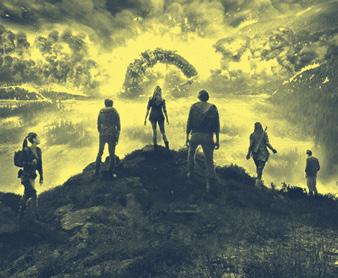
The show is a TV series about a group of survivors returning to earth after a nuclear apocalypse to see if it’s habitable. It explores themes like survival, leadership, and power. The characters have intense challenges, exciting plot twists, and shocking revelations that keep viewers on the edge of their seats. The characters have difficult decisions to test their loyalties and values. Season 3 is a pivotal point in the series, when the survivors from the Ark formed an alliance with the Grounders to defeat A.L.I.E. A.L.I.E. was a sentient artificial intelligence. Her primary objective was to make life better for mankind. She created a chip to eat, and it brings the individual to a different realm called ‘’The city of life,” and it erases pain and suffering from the person.
The show examines the evolution of leadership through characters like Clarke Griffin, Bellamy Blake, and Octavia Blake, who each have their own unique approach to leading their people as the characters struggle to define who they are in a world that has been turned upside down. Clarke’s conflicted feelings about her role as a leader and her relationships with others to Octavia’s journey of self-discovery and acceptance, the show delved into the complexities of identity and selfperception in Season 3.


Season 3 was the most interesting part of the show because of all the drama, violence, and betrayal. There were a lot of shocking moments like how the commander of the grounders betrayed the leader of the sky people to only save her people when their deal was to save both of their people together. Instead, she turned around and walked away with her people, only leaving Clarke there alone. After all that, betraying Clarke felt pain and anger, so she thought of another solution that would harm people, but she only thought of saving her people. She didn't care as long as she got her people back, so what she did was kill everyone in Mount Weather, including kids just to save them. It showed how far she would go just to save her people. Throughout Season 3, Clarke became ‘’the commander of death,’’ also known as ‘’wanheda.’’ She felt so betrayed by the commander that she turned to someone else. Her goal was to kill Lexa (commander). She ended up getting taken by another nation named Roan. He was the prince from his people. He took her to the commander with her orders, and when they were face to face, Clarke felt more anger and betrayal that she spat on her, causing a scene, but the commander just stood there and accepted it. When the commander went to the room, Clarke took that chance and put a knife to her throat. All she did was stare at her without any fear that she had a knife to her throat. Instead, she said, ‘’I’m sorry, Clarke.’’ The ending of that season was really shocking when the commander got shot by a sponsor trying to kill Clarke. Lexa’s last words were to protect Clarke at all cost no matter what.


Cyprus High School
We may not live in a dystopian Capital where children from 12 different districts are forced to fight to death in an arena, but there are many examples where Susan Collins’ book The Hunger Games shows up in our everyday lives. Now more than ever.

What seems to surprise some people is how similar this story is to our real lives. Believe it or not, it was actually meant to be this way. Susan Collins got the idea for her book when she was flipping between reality TV shows and clips of the current Vietnam war. She said that the two began to blend in an unsettling way. In the very beginning of The Hunger Games, we are brought into the dystopian world of Panem, and we learn about the Peace Treaty. After the rebels lost to the Capitol, it was decided that every year 24 children, one boy and one girl from each District, would be selected and then forced into an arena to fight to the death. We then follow Katniss Everdeen, our main character, through her story from her perspective. She volunteers to save her little sister Primrose, learns to play the right angles so people in the Capitol will sponsor her, and even pretends to be in love with our main man, Peeta Mellark, which the Capitol loves. We get to see from her perspective, coming from one of the poorest Districts, the cruelty of the Capitol and her disgust towards them. Most people were able to make the connection from the book to real life very early on, but even for those that are just making the connection now, it has always been there.
One example of how we can see the Capital vs. the Districts currently is through our celebrities. Many people have recently pointed out how at many different celebrity events, our celebrities have started to look
more and more like the citizens of the Capitol. With crazy hair, makeup, and of course costumes, we can see our favorite celebrities getting together, and blowing off money, seemingly without a care in the world. Just like the Citizens of the Capitol. Whereas the rest of us are struggling through work, or school, and just trying to make ends meet, very similar to the conditions the Districts deal with in this dystopian world. More and more people are already starving, losing their homes, and using things like addiction to numb the pain. Just as the character Haymitch, it’s easier to get drunk and not care than to stay sober and have to face the harsh reality we live in.
But where major worry and focus is the most is in places and situations that are similar to those of District 12, 11, and so many others. Where there are children being starved, where people have to slave away at work, and unfortunately in some places, where people—men, women, and children—are killed without thought and without remorse. On the Feed the Children organization’s page ”Hunger Facts and Figures,” they say right now 1 in 5 children in America don’t have enough food and don’t know where their next meal is going to come from. The same organization says that 16.9% of children live in poverty; about 1 in 6 children live in poverty. This is similar to characters like Rue from District 11, who tells Katniss that they barely have enough food and how sometimes she would have to share her food with her younger siblings. Minimum wage in Utah is about $7.25 an hour, and according to Redfin’s Utah housing Market, in May 2024 home prices in Utah were up 3.7% compared to last year. Their current median sale price is $545,900. This means that people can’t afford to buy houses. They can’t afford to buy food or necessities. They can’t afford to live. In many of our past, present, and unfortunately future places, people are seen as nameless and worthless. But these are real people. Not just random citizens on another continent or in another country. But people who do have names, with families, and friends.
We may not live in a dystopian Capital where children from 12 different districts are forced to fight to the death in an arena, but The Hunger Games has and will continue to show similarities between the dystopian world of Panem and our world today. And it will continue to show if we continue on like this. Whether we’re talking about children dying in an arena, or children dying in a war, it’s all the same. It still leads to death. On both sides.

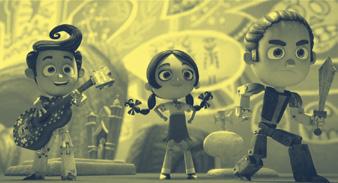
Growing up, my parents always rented movies for me to watch. Animation movies were always my favorite, so there was no doubt in my parents’ minds how much I would fall in love with The Book of Life. Being born into a Hispanic family myself, one of the most important days in our culture is the Day of the Dead. During this festivity, families participate in honoring ancestors who have passed away.
In the movie, the characters play crucial roles throughout the film, while the viewer is presented with bright, vibrant colors, fundamental cultural details, an upbeat soundtrack, and an amazing storyline that makes you want to watch it over and over again. Each character has a unique personality that just draws you in, making you appreciate the movie for both its beauty and charm. The breathtaking visuals of the Land of the Remembered and the heartfelt moments of family connections during the Day of the Dead scenes echo deeply the significance of remembering and celebrating our ancestors. Not only is the movie entertaining, but it also provides a touching reminder of the importance of family, tradition, and culture.
Watching this movie as a kid, I thought it was about falling in love and sacrificing yourself for others. Over the years, I continued to think the same thing, but now as a teenager, I’ve grasped the film’s deeper intentions. All the characters face similar struggles of living under bigger shadows. Maria is the chief’s daughter, who is expected to marry a man who is worthy enough to take the position of her father. Manolo comes from one of the greatest lines of matadores and is pressured to outshine his ancestors and become the best. Joaquin’s father died while defending their town, so he is expected to become the greatest military soldier. Throughout the movie, they challenge these expectations, striving to become what they truly want to become.
Over the years, we’ve seen many movies like Frozen and Mulan depict similar storylines about the importance of staying true to yourself but also living up to expectations. In Frozen, we view Elsa break down and become a shut-off ruler towards her own kingdom. Nevertheless, she continues to live up to the expectations her parents had for her. Similarly, in Mulan, she overgoes a drastic change to help her family in need, protecting her father from further injuring himself. Although she didn’t have full support from her father, she did it to live up to the expectations made by her country. All these stories are universal dilemmas to viewers that family should always come first, but what if that stops you from doing what you truly desire?

Coming from a Mexican family, I often experience pressure to live up to the expectations of the past generations. We strive to honor our ancestors and acknowledge their blood, sweat, and tears. Ironically, the movie is also centered around the Day of the Dead, a day specifically dedicated to honoring our ancestors. The true intention of the movie is to demonstrate how culture threads throughout generations. Threading requires you to follow a pattern, and sometimes your work doesn’t turn out how you expect. Arranging what you want to design usually takes time and a blueprint. You try again and again to make it appear as it’s supposed to, and sometimes the expectation is difficult to achieve. So, following your own pattern is the true way to create your final design and tie that final knot. The Book of Life vividly portrays this through its characters, each struggling with their own familial expectations. Manolo’s struggle to choose between his passion for music and his family’s legacy of bullfighting emphasizes the tension between his personal desires and cultural obligations. Maria’s defiance of traditional gender roles carves her own path, while Joaquin’s constant quest to prove his worth connects to all challenges that many of us face with personal identity and family honor. The vibrant visuals, rich cultural details, and heartfelt moments in The Book of Life not only entertain us but also deeply connect to those who have lived through similar experiences. They remind us that while it’s critical to value the past, it’s equally important to thread our own paths and honor our true selves.

Antagonists?
Colby Mahler
Salt Lake Center for Science Education

Introduction
Portal 2 is one of my favorite games. It was the first game I played and really understood and got invested in the story, which ended up making me love the game for years after to this day and showing several of my friends. It’s a puzzle/ story game that contains complicated and intriguing characters that not only make the gameplay better but also make the story more complicated and subjective.

You start out as Chell. She's the protagonist of the game you play as and is mostly a blank-slate character, so that way you, the player, can fill that role. You wake up in a room and are greeted by a weird British spherical robot named Wheatley that follows you on a management rail as you explore this massive abandoned research facility, which you later learn is called Aperture Laboratories. The deserted facility has you go through several test chambers that you have to solve puzzles in. Despite how worn and uninhabited the whole facility looks, all the tests are still completely functional, still testing after all this time.
GLaDOS: As you continue throughout the game, completing tests and progressing through various test chambers, eventually you meet the main antagonist, GLaDOS. She’s an incredibly smart and crazy massive artificial intelligence, whose job is to run the entire facility. Oh, and I almost forgot to mention, she wants to kill you. She was the antagonist in the first Portal game, which took place before Portal 2, and in the first game you do try to kill her, getting pretty close too, almost destroying the whole facility. She resents you for it and holds on to that resentment throughout a solid half of the game before being forced to work with you and take down a common enemy together.
Wheatley: I mentioned Wheatley earlier. He’s another important character that follows you throughout most of the game. In the first half of the game, he plays a supporting character, helping you escape the test chambers and work to defeat GLaDOS. He follows you, providing funny commentary and becoming the loveable sidekick of your journey, and also a fan favorite. Now I did mention only half of the game he plays a supporting character, and that’s because halfway through your playthrough you and Wheatley do actually succeed in defeating GLaDOS together. But, unfortunately when Wheatley suddenly gains the control that GLaDOS had over the whole facility, the power gets to his head and he betrays you, which sets in motion you and GLaDOS being forced to work together to take down Wheatley now instead.

Both Wheatley and GLaDOS end up becoming antagonists at some point or another, but it was never their fault. They were both put here in Aperture Laboratories by someone else, the founder of the facility, Cave Johnson. For example, GLaDOS used to be human before she was a robot. Her name was Caroline, and she used to be Cave Johnson's personal assistant. When Cave Johnson was dying and wouldn’t be able to run the facility anymore, he ordered that Caroline be put in charge and to be put into AI so she could run the facility forever. She was very against all of this, but she was forced into it anyway, being forced into immortality, which—I would say—would drive anyone a little mad at a certain point. Not to mention the scientists programmed part of her system to have this need to test, so much
so it would drive her crazy to not constantly do further experiments and tests.
Meanwhile, Wheatley was never a human (at least not that we know of). He is entirely just an Artificial Intelligence robot, made to fulfill a purpose. This purpose so happens to be a pretty crummy one, though. He was essentially designed to be stupid. See, GLaDOS when put in charge of the facility had become kind of violent. The scientists thought this was due to her access to so much knowledge. The scientists at Aperture created Wheatley as this “Intelligence Dampening Sphere” to basically dumb down GLaDOS. So, when Wheatley gets power, not only is he inherently kinda dumb, he doesn't have a single clue as to how to run this insanely massive facility. Furthermore, remember that system I mentioned earlier that made GLaDOS need to constantly test? It affects Wheatley too when he gets in charge of the facility, and because he doesn’t have hundreds of years of experience with this system like GLaDOS did, Wheatley is very susceptible to it.
Cave Johnson & His Major Role

I mentioned earlier a guy named Cave Johnson. Just to refresh on what I said about him earlier, Cave Johnson is the founder of Aperture. He was the first big guy in charge. We don’t actually ever meet him, but we hear pre-recorded messages of him while exploring the oldest parts of the facility. The messages were intended for the test subjects who were doing tests near the beginning of Aperture’s real take off. As we continue to hear these old voice messages, we begin to hear how Cave Johnson is very eccentric, very showy. He speaks of wanting to do advancement just for the sake of advancement. "Science isn't about ‘why’. It's about ‘why not’. Why is so much of our science dangerous? Why not marry safe science if you love it so much?” There’s a lot of things that he says that when you first hear you can’t help but laugh at Cave Johnson talking about these unbelievable things they’re doing for “science” in such a nonchalant way; it feels goofy. But you also begin to realize this guy's complete lack of human decency, just doing the science because “why not!”
Here are some quotes from Cave Johnson that really show his actions:
"You could walk out of here with a hundred and twenty weighing down your bindle if you let us take you apart, put some science stuff in you, then put you back together good as new.”
"Just a heads-up: That coffee we gave you earlier had fluorescent calcium in it so we can track the neuronal activity
in your brain. There's a slight chance the calcium could harden and vitrify your frontal lobe. Anyway, don't stress yourself thinking about it. I'm serious. Visualizing the scenario while under stress actually triggers the reaction."
Well, knowing Cave Johnson’s the founder of Aperture, it’s no surprise that mistakes made by the top of the facility would still affect it when we’re playing the game after it’s long abandoned. As we continue to progress through the old Aperture facilities, listening to the pre-recorded messages of Cave Johnson, we hear him speak about several mistakes he’s made with his facility and his beginning to become desperate when the facility begins to go bankrupt. When they started out, they were a bit overzealous with what they could do, hiring astronauts and celebrities as test subjects. But as they began to go bankrupt, they were no longer able to afford people like that anymore; they began to just pick up people living on the streets to use as test subjects, getting further and further from human decency. Despite all the financial issues, Cave Johnson also still refuses to release any of the technologies that would help him fund other technologies and also his employees because he can’t stand the idea of his inventions and ideas being taken from someone else.
As this facility continues to spiral out of control, Cave Johnson also happens to get sick. Funnily enough, it’s due to one of his own inventions. He orders his team to start working on Artificial Intelligence, hoping that he can upload a person's consciousness onto a computer. When he realized there may be a chance he wouldn’t live long enough to see the technology finished, well, like I said earlier, he made sure that Caroline would take his place instead.

This was the catalyst, the thing that dominoed everything else. After Caroline became GLaDOS and there were several systems and programs connected to her, she became more hostile. The amount of knowledge and immortality drove her a bit mad. That, then leading to the creation of Wheatly in order to calm GLaDOS, but inevitably failing to calm GLaDOS. Wheatley then comes to help you take her down only for the systems of the facility to overwhelm Wheatley as well. All of this connects together, all leading back to the poor choices of Cave Johnson, the creator of these antagonists. The reason these characters are the way they are, why they exist, and why this story exists. Cave Johnson was the catalyst to the antagonists you meet in Portal 2.

West High School
The Met Gala Is Not about the Outfits.
The Met Gala is not about the clothing the celebrities wear to the event, who’s performing, or who’s attending, and the Gala does a poor job of directing attention away from the celebrities. When someone famous walks that red carpet, they are often interviewed, but they are never asked about the charity, nor the Met itself. This is one of the key reasons that people don’t know what the met gala is, which makes it easier to demonize. It is easy for people to spin a tale about events like these, especially when people are uninformed about the origin and design of the event.
The way the Met Gala currently runs makes it very easy for someone to spread misinformation about the gala and discredit it. There are so many opportunities to spin a narrative. Yes, the Met Gala is an elitist event that makes it impossible for normal people to attend, but it is not evil, it is not greedy, and it is not vain. The Met Gala is, if nothing else, a chance for invention, socialization, and, most importantly, charity.

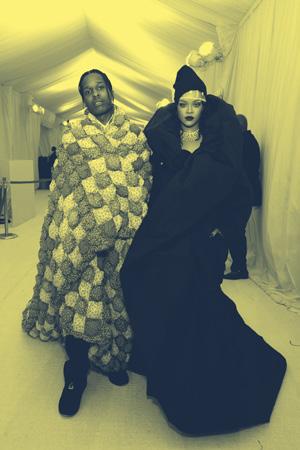
The Met Gala and Me.
The Met Gala, a yearly event of drama, wealth, and opportunity, with celebrities dressing to their best in avant-garde (Out of the box. Eccentric) designer clothes to attend. Paparazzi, snapping up their photos like starved birds. The highest high society of rich, famous, and influential people all in attendance. And us sitting at home, watching through a screen. I know, I’m not the only one who gets major FOMO watching the live stream.
Watching it with my sister was one of the highlights of my year, which is why seeing people making uninformed decisions about the gala is so frustrating. People need to understand the things they feel so strongly about because, just maybe, they wouldn’t feel so strongly about them if they knew all the details.
The Met Gala, which was funded in 1946, and held its first event in 1948, was established as the "Costume Institute Gala" by Eleanor Lambert, an influential fashion publicist, as a charity gala for the brand-new costume department at the Metropolitan Museum of Art in New York City.
At this time, the event was a modest gathering of middle-class and upper-class people, who bought the tickets at the price of $50. This ticket price is quite a jump from the current ticket price of $75,000, as of 2024. Even taking into account the inflation of the current U.S. dollar, that $50 would be worth around $650 today, which is still a far leap from the cost of tickets now.
Many of yours and my favorite celebrities didn’t pay a cent for entrance into The Met Gala. Brands have the opportunity to buy a table for $350,000, with the intention of inviting celebrities, dressing them, and bringing them to the gala as a famous clothes hanger for their brand. To get more attention directed to their brand. These celebrities are considered ambassadors for the brand, or, in other words, they are hired by the brand to wear the brand’s clothes as an advertisement. The gala is an event for celebrities to build their brand, brands to advertise their designers, and it’s an event to fundraise for the costume institute.
I know it can be upsetting, seeing people seemingly throw away more money than your yearly rent, but it’s very important to remember that this money is their money; it’s their choice to attend and to donate.
Now, you might be thinking about where all this money is going, and how they could need that amount of money. As I previously mentioned, the funds gathered by the gala go towards funding the costume department’s exhibitions, restorations, and historic protections. The collection spans almost 35,000 pieces. These pieces are very delicate and need a lot of care to be stable enough to be shown to the public. One of the oldest pieces in the costume institute is called ‘Mantu” and is an open robe gown from the seventeenth century. Some of the costumes, like Mantua, need round-the-clock care to make sure they don’t fall apart. Some of these costumes are kept in heating- and humidity-controlled cases to keep them as safe as possible.
This is very costly, given the specific cases that are needed, not to mention the cost of running them constantly. The Met also has hundreds of employees and volunteers who get paid for their work restoring pieces for the public. These pieces are history, and no matter what people like to say, fashion is no less credible an art form than painting. This history needs to be preserved, and it takes an outrageous amount of money to do.
Once a piece is taken into the ownership of the costume department, it is no longer worn or touched at all by the outside world. The costume department strives to present costumes to the public as the designers intended, with life and love.
The costume department also has newer pieces from more current designers. The exhibitions the institute puts on have a mix of the old and new. The department puts on two exhibitions a year, which are the pieces that are on display if one visits The Met. The current exhibition is called “Sleeping Beauties: Reawakening Fashion.” It contains 220 pieces, all relating to a mystical, fairytale theme. A mix of modern and classic pieces are included, and their designers on display.


The Met Gala, an Elite Event. It is a well-known fact that the Met Gala is picky when it comes to who is invited to the gala. Anna Wintour, the editor-and-chief of Vogue Magazine and the manager for the Met Gala and costume department, is very particular about who is allowed in, and why. One part of the elite nature of the gala is the inflation of the cost of a ticket. Tickets to the gala are free, sent out to influential people by Anna Wintour, who makes the decisions, but the “cost” we associate with tickets is actually a required donation to attend. Again, brands often pay for celebrities to attend, but the cost is still relevant.
Over time, the various people in charge of the gala noticed that people were willing to pay more and more to attend, as the gala gained relevance. As the gala and the Met became influential, the guest list had to be shortened. It was important for the rich and famous to attend, for their sway and generous donations, but they also needed to make sure that the elite attendees were comfortable. Allowing just anyone to attend could have the possibility to put one of these important patrons in danger or discomfort, and their donations would be lost.
Some of the patrons who broke rules at the event, or spoke poorly of it to their audiences, have been uninvited or even banned. Even popular people like Demi Lovato and Amy Schumer have been taken off the invited list for the event. Though, there is only one person “officially” banned from the gala. Anna Wintour, the editor-and-chief of Vogue Magazine, has said on more than one occasion that former president Donald Trump will not be returning to the gala, even with his long history of attendance.
These rules include no smoking or photography in the event. Some of these rules are particular rules that Anna Wintour implemented, and many people, including me, find it unnerving the amount of control Anna Wintour has. Without Wintour, the gala would be much less prevalent in our society and much less recognizable, but she has an overwhelming amount of power over the event. Many people like to guess who will and will not be invited, based on how Wintour reacted around them that year. She has a near godly amount of control over the event, and power tends to incite vanity. Wintour has done an immaculate job at running the event, but it’s no longer as focused around the charity. I think that there needs to be new ideas added to the event, maybe a board to oversee some changes, or a way to suggest changes.
The gala needs to take back the narrative about its alleged greed, and publicly remind everyone that the gala is a charity. It needs to focus on the charity at the event, and it needs to make it clear to the public the cause of the event. The less people know about the event, the easier it is for the internet to change the narrative that they need to control.
The Internet and How It Changed the View on the Gala
Currently, many people on the internet are raving about how upset they are at their favorite celebrity for attending the Met Gala, and though the Met Gala is an elitist event, most of these internet trolls don’t know the purpose of the Met Gala, why it was created, or why tickets are so expensive. Most of the rumors on the internet demonize the Met Gala as an elitist event for the top 1%, which, in most cases, it is. The Met Gala is an event for people who are invited, and for people who can afford it.
Many people online are relating The Met Gala to the inherently evil top of society, “The capital,” from The Hunger Games, by Suzanne Collins. This fictional high society is evil and aporophobic (a fear or hatred of poorer classes caused by the biases of one’s own privilege) in its very nature. Though, they forget to mention one key difference from the Met Gala. The Met Gala, which I reiterate this quite a lot, is a charity event, one that was created and is used, to fund the costume department in The Metropolitan Museum of Art, whereas, this society from The Hunger Games is purely hatred, greed, and capitalism. Most of these rumors are designed to take away the credibility the gala has held for many years and separate people by class more than they already are.

These people who are sharing and believing these rumors are uninformed about the gala. They know nothing of the charity and choose to form their opinions based on the opinions of others. Over time, as people believe opinion after opinion, the original message distorts, much like the children’s game, telephone. People should not make uninformed opinions, negative or positive, about the Met Gala without looking into the charity and the gala itself.
A lot of people are upset at celebrities for attending during the crises in the world currently, wondering how they could walk a red carpet when people are dying. What I have to say about that is Zendaya has no control over the outcome of a war. Yes, celebrities have sway with the people and can affect people’s opinions on certain matters, but people are not who we need to convince. If we want change in the world, we can’t ask people without the power to do that changing. A protesting outside the Met Gala helps no one. It might bring some attention to a cause, but no change is made. To incite change, you have to bring your worries to people who can change them. Protesting outside political buildings, on the other hand, can tell the people in power the changes we need.
These rumors, like any other, were originally an opinion or belief that someone distorted and shared. It is not uncommon for people in power to mention something related to a person, event, or decision, that is then taken and changed. In this case, a lot of the original opinions about the gala came from past guests and politicians. These past guests talk about experiences they had at the gala that were more negative than positive, and people use that to hate the entire gala. On the flip side, most politicians say things with the intention of riling up the people watching and proving a point they intended to make. These politicians breed fear to make some of their points more valid, all with the intention of being reelected.
Another key factor is that people are interested in the popular news, so when someone posts about the Met Gala, calling it evil, others watch. The greed that the internet causes, of people wanting the validation from people on the internet, leads people to jump on whatever is currently popular and make it more interesting. When the Met Gala is popular, it is equally as popular to create stories that draw people’s attention, even at the expense of the gala and charity.
The Met Gala is only one of many examples of people taking wonderful things and tainting them with their own biases. The Met Gala isn’t just important for charity; it’s important for people like me who see it as a sense of inspiration, and it’s also important to harshly remind people that fashion is art. No matter what people like to say, fashion belongs in museums, and in the public eye. It is not less credible than clay that people turn into pottery, or oil that people spread on canvases. Fashion is hard, and inventive, and creative, and it hurts my heart and soul to hear people say that fashion is a secondclass kind of art. Designers are artists, and they deserve the recognition of artists. The Metropolitan Museum of Art’s costume department is art, and it deserves to be credited as art.

And Its Connections and Themes to WW2 and 1940s Germany

Attack on Titan has very strong WW2 themes that can be used in educational and research topics.
When I first started Attack on Titan, after years of being told to, I was instantly hooked. I’d watch it every day until I finished it (within a week or so). When I started it, the 4th season was just starting to come out. There were only a few episodes of it, but they were only released with subtitles, so I hadn't started it as soon as others did and waited for the English dubbing to come out. By the time the first few episodes came out, people on TikTok were already making the WW2 and Holocaust connections that not many people caught onto. Attack on Titan has very strong WW2 themes, especially in the last season. But before we get into the logistics of the themes, we need to give some background to the story of the anime and WW2. This show portrays the fear and wrath for living and the want and need to survive, not just of the “heroes” but also of the “enemies” of the wars with Titan and the outside world beyond their walls.
Many groups could see these themes as problematic and inappropriate, but this show, specifically the last 2 seasons, should be seen as educational based on how one consumes their media the best. When I was watching season 4, I didn't really make the connection until I saw people talking about it on TikTok, but when I did, it really helped me to understand and properly visualize what Jewish people went through without watching videos of the actual events.
As You Read Consider These Questions
Why is it important to learn about the history and media influences of WW2? How can we use these media influences educationally? How can we use different media for education?
Summary of the Show (Spoilers for the Entire Series)
The anime follows our protagonist Eren Yeager and his 2 friends, Mikasa Ackerman and Armin Arlert, on their journey. They and other Eldians live on an island named Paradis with 3 surrounding walls named Maria, Sina, and Rose. These walls protect the Eldians from creatures called Titans, who have human features, but they come in different types (pure and abnormal Titans) and heights from 2 meters to 15 meters. Titans feed on humans and try to get into the walls to eat the humans inside. Within each wall segment, there are smaller segments with different names. The one that our protagonists live in is named Shiganshina. At the very beginning of the series (the first episode), we see a Titan that towers over the Shiganshina wall, later finding out it's called the Colossal Titan, which is 60 meters tall. Shiganshina appears out of thin air and kicks a hole in the wall that is protecting them from other Titans. Along with the Titans appears a Titan that looks to have armor on it, later named the Armored Titan, and runs through the gate leading to the main wall, wall maria, and sending more Titans in, causing the inner 3rd wall to become compromised and unlivable. The Titans start to flood in by the masses and start to eat humans. Among the townspeople to be eaten was Eren’s mother. This event is the catalyst for the entire series.
After the fall of Shiganshina and the death of his mother, Eren Yeager decides that he is going to join the organization of people who venture out beyond the walls to kill the Titans called the Scout Regiment—one of 3 organizations that keep order in and outside the walls. Armin and Mikasa follow suit in joining the regiment along Eren. They go through 4 years of cadet training to be able to join the regiment. During this time, we discover that Eren is a Titan (which I personally knew from spoilers, but it was still a shocker) but can switch between his human and Titan form by hurting himself in some way. Fast forward, we learn that there are other Titan shifters. There are 9 different types: Founding Titan (the first ever Titan), Armored Titan, Attack Titan, Beast Titan, Cart Titan, Colossal Titan, Female Titan, Jaw Titan, and (my personal favorite) the War Hammer Titan. The first 2 seasons we learn about the Attack, Female, Armored, and Colossal Titans. In the 3rd and 4th seasons, we learn about the rest of the 9. But at the end, season 3 and beginning of season 4, we learn that only the Eldian race can become Titan shifters. In the middle of season 3, we learn that the Colossal Titan, Armored Titan, and Female Titan (named Reiner, Bertholdt, and Annie) were among them when they were training to join the scouts and in the scouts. They turned out to be from the outside of the walls. When their identities were revealed, I went crazy. I had my speculations when I first saw them but wasn’t 100% sure.
The Eldians inside the walls were led to believe they were the only ones who were left in the world and that everyone else was slaughtered by the Titans and there are only 20% of humanity left on the planet, but we and the characters learn
via the Marleians that infiltrated the walls that there is an entire world full of all kinds people. The first Eldian king decided to take a big majority of his followers and create the walls (which are actually full of Colossal Titans that the founding Titan/king made) and create his own society. Because of the way the old king treated people who weren’t Eldians, the Marleians treat Eldians in kind. At the beginning of season 4, it is revealed that Edians who want to have a somewhat better life can put their children to train as Warrior Candidates and hopefully be selected to inherit one of the 9 Titans to be used in war, which they see as a high honor. This is how Reiner, Bertholdt, and Annie were able to make it onto paradis and infiltrate their society.
In the show, the Eldians on Marley are forced to wear armbands with a 9-pointed star on them so they are easily identifiable. They’re different colors that people can get as well depending on status. The Warrior Unit wear red armbands, and Eldian civilians and Warrior Candidates wear white and yellow armbands. In Nazi Germany, people who were Jewish had to wear either a badge or white armband with a yellow or blue Star of David on it. In Attack on Titan, this is a very obvious connection to this, and aside from the different colors and star shape of the armbands, they are basically identical in purpose. Though they aren’t thrown into concentration camps, they have their own part of the city that they have to follow strict curfews and can’t leave without a note or specific reason, much like Jewish ghettos in different parts of different cities that were heavily guarded. In the show and during WW2, if you were found trying to sneak out you would be punished and even publicly executed. This is shown in the show as well, where Eren Yeager’s Father’s (Grisha Yeager) sister was eaten by officer dogs as execution as punishment for going out and to punish Eren’s father for going out.


The discrimination from Marleians against Eldians is very present in the last season. The show follows 2 types of races, Marleians and Eldians, or in real life races Japanese and Europeans (from no specific place). The Marleians represent the Europeans, and the Eldians represent Japanese. In season 4 of the series,we learn why the Marleians hate Eldians, and they spread the hate via teaching people that they are horrible Titan shifters and using propaganda to spread this message as well. This happened in real life as well during WW2 when they would make and spread propaganda against
Jewish people, making people fear and hate them. During the show, we see how the Marleian people treat the Eldians that are on Marley. They use them as tools and not even people. When they are fighting with other countries, they use them as sacrifices by sending them into the battlefield first so they don’t lose as many Marleian lives. Soldiers and other countries in WW2 used people, specifically children, of other races and ethnicities in this way as well. Also, in the show and real life, people had/have better opportunities based on their ethnicities and races. Like jobs, education, advancement opportunities, etc.
Again, some groups find that having this referencing in the show is inappropriate and doesn’t represent the events in an accurate way. While the Eldians didn’t face as much violence in the anime as Jewish people did in real life (well as we can see on screen), they went through similar discrimination and living conditions as people did in real life. Some people may not watch actual videos and images of those events because of how graphic those events were. While I think it is important for people to see images of those and learn how Jewish people lived and what they went through, it is very triggering and not for the faint of heart. Attack on Titan is quite violent and shouldn’t be watched by children in elementary school, but season 4 of the show is definitely an excellent way to visualize how people lived without seeing real life people suffer.
Learning about history is so important because countries and societies are built on history, whether it's good or bad. Learning these events helps, so we don’t repeat them, especially the atrocities of WW2. Having different media be influenced by these events gives people different perspectives and ideas of what happened then and how influential and life changing it was. Using different types of media for education makes the mind think about it in different ways than just reading a paper on it; it keeps the learner engaged because the brain processes different media in different ways. The brain typically retains moving images better than reading something. Of course, this depends on the person.
Attack on Titan is a great anime with lots of story and characters that are so thought out that it's hard not to get incredibly attached to them that you are rooting for them to survive and live good lives after the story has concluded. Attack on Titan isn't the only anime that is educational; many animes dive deep into Japanese and other countries’ cultures while mixing in stories of all different genres. I highly recommend that people don't overlook anime as “for kids,” when really it's for everyone and, depending on the type of anime you watch, is educational in the way you want it to be. Choose how you as a learner learn history and other educational topics the best.

Jaslene Roman Jaimes



Is It Too Late to Cherish Children’s Films as an Adult?
When you’re an adult, there is an unwritten rule where you have to drop everything that’s considered childish. Mainly because being an adult is the age of having responsibilities and making choices that could possibly impact on your life. It’s a lot for a person. In all honesty, no one is ready for that huge change. But eventually you get the hang of it. However, just because when you’re an adult, you’re basically on your own now, that doesn’t mean we need to drop everything including your inner child. Even as an adult, children’s films could still be entertaining, depending on the viewer, of course. It’s never too late to watch and enjoy something, or even learn a lesson from those films. Sometimes adults don’t get the chance to learn how to improve as a person and their critical thinking, which some kids’ movies guide a person. It’s never too late to revisit the past and analyze details you didn’t notice before.
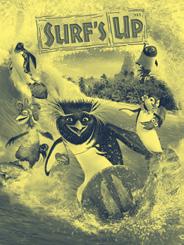
Directors, producers, and animators are smart about this. They know that children aren’t just their audience. They know that they are more of an audience than just kids. The team tends to be inclusive and lets anyone watch their film no matter what age group they are. That’s the beauty of storytelling. The beauty of creativity gives the audience inspiration

and maybe later in the future to make more stories that could also impact another generation. When people think of an animated film like Surf’s Up (2007), they often say, “Oh, another kids’ movie,” which comes across as a negative thing—or as a critique of animation in general. Animation is seen as “childish,” which in fact it’s not. There are children’s films that deal with mature themes such as Watership Down (1978), Plague Dogs (1982), and Iron Giant (1999). There are many more examples when it comes to Japanese cartoons (anime) that are animated that are intended for mature audiences.
The film Surf’s Up (2007) is an animated film that’s a mockumentary about a penguin surfer named Cody Maverick, who wants to improve his surfing skills for a tournament to be like his idol “Big Z,” a pro surfer in the film. The film is seen as a fun children’s movie; however, there’s a theme that gives the viewer a thought. Like a life lesson, a lesson that everyone should listen to when choosing a career or a path in life: Are you doing it for fame or money? Or are you doing it because you enjoy what you’re doing?
At first it sounds like your generic kids’ film. The protagonist loses but eventually wins. However, what stood out with Surf’s Up is that our hero doesn’t win the tournament, and there are times when the character rethinks what he wants. He starts to think about his aspirations in life. He starts to think whether he should follow Big Z’s path or make his own path in life. Also, in the film he comes across a character named “Geek,” which he revealed that he was Big Z. In the film when Geek was “Big Z,” he was competitive and only cared about the fame. He later competed with the antagonist of the film Tank Evans, Geek was losing, and he refused to lose and disappoint his fans. Which led him to fake his death. Afterwards, Geek states that instead of doing something for fame and fans, Cody should have fun with surfing and enjoy it and not let the fame get to his head. An interesting detail in the film is that our protagonist has flaws. When the film starts, he wanted to talk about himself to the camera crew and believed he’s good at surfing, which he wasn’t. He was also stubborn.

interviewing him with his mom and brother. Of course, his brother and mom judge him for this based on their responses after Cody’s response. This scene was portrayed in a realistic way rather than throwing in some random scene.

There were many scenes that seemed unnecessary in the first watch, but eventually once you understand why the directors chose those scenes. The majority of those scenes are to show the characteristics of the characters and explain information to the audience that they may have had no knowledge of.


Cody Maverick believed that he needed to win in order to prove that he isn’t pathetic. This shows how Cody experiences peer pressure and stress from the people around him because they want him to be “normal,” which leads him to lash out at certain characters, including his friends. However, around the end of the film when he was competing in the tournament, his friend Chicken Joe, who is a rooster chicken who reflects the idea of “going with the flow” and enjoying surfing, was getting attacked by Tank Evans. Instead of trying to win, Cody went to go save Chicken Joe. Saving his friend led him to be disqualified from the tournament. Tank Evans also got disqualified, which made Chicken Joe the winner. If Cody didn’t learn from Geek that winning shouldn’t just be his purpose in life and should have fun, Cody wouldn’t have saved Chicken Joe. Cody accepted his loss and instead chose what he wanted to do. An incredible movie that was created in the early time of 3D animation. Now you may be asking, why haven’t people heard of this film? The reason for this is that another film Happy Feet (2006) was created before Surf’s Up, which assumed that Surf’s Up was a rip off of Happy Feet
A lot of people remember Surf’s Up. There was even a TikTok trend where people would dress up as Cody and lip sync his monologue, asking why people tend to see him as “odd” or “different” and judge his passion for surfing. This monologue became popular because it can be seen as relatable and lets you connect with the character. In the film he’s seen as weird by not following everyone’s steps in Antarctica. The protagonist wants to leave. He states this in the film when they were
Because of new children’s films coming out that don’t have the best reputation, older audiences like us start to think, “What happened to films that introduced us to animation?” What happened to enjoying a film as a kid so much to the point that when you were younger you would mimic a certain character you enjoyed? At first when you think of a film from your childhood, as a kid you enjoyed it because it was a cartoon, but if you revisit it, it changes your perspective on things. You slowly start to notice things you didn’t notice before when you were a kid. The film opens a whole different world you were unaware of on your first watch. This is exactly what happened to me with Surf’s Up. The reason I enjoyed the film as a kid was because of the humor, but when I rewatched it a couple years ago, I was sitting on my bed covered in blankets with my mind blown. I was not expecting an “animated penguin movie” to change my perspective in life. I was in shock that a “kid’s movie” made me think. Thinking about my purpose in life, wondering if the things I’m doing are for fun or different motives. Then I started to wonder if other movies from my childhood had a message that I wasn’t able to comprehend as a child. I never realized how much I cherish this film. I still enjoy it till this day.

“Cody is me, bro. Let me be me.”

Esperanza – a word that means hope in Spanish. A word that is able to describe the resilience of Mexican immigrants. When I was younger, I remember reading Esperanza Rising and being able to connect stories that I’ve heard. The stories how my family endured the journey from Mexico to the United States. The sacrifices they made to benefit themselves and the generations after them. My parents, not seeing how they would be able to succeed in the home country, much less see how my siblings and I would succeed being born into their situation. Making it to the United States, they were able to go after what they wanted until they finally reached it, and thanks to my parents, I get a head start on the opportunity.


The novel Esperanza Rising a girl named Esperanza who had everything she could ever want or imagine, everything she would need would be handed to her. At first glance, this novel may give off the happy feeling through a yellow color, seen by Esperanza’s yellow dress and the golden aura around her on the cover. Unfortunately, the day before her 13th birthday, her father is murdered while working on his ranch. Soon after, a fire burns everything she has, and she leaves Mexico for the United States to keep herself safe from her money-hungry uncles. Along the way, she learns valuable lessons, which allow her to prepare for the future and build a life for her family and herself.
Esperanza (hope) is demonstrated in various scenes of the book. The family’s hope was severely tested due to the tragedy of her father’s death and the fire that turned all their riches to ashes. Mama and Abuelita stayed hopeful, while Esperanza wasn’t seeing the light at the end of the tunnel. Abuelita connected their situation to the phoenix, “’We are like the phoenix,’ said Abuelita. ‘Rising again with a new life ahead of us.’” (35). All Mexican immigrants might be able to identify with the specific idea of being reborn. Leaving for California, Esperanza had learned the value of hard work to assist her family in any way possible. She learned how to nurse, cook, clean, and care for others, especially due to her mother falling very ill. She began to understand the importance of putting herself last to help the people around her to the best of her ability. Along those lines, coming from money also came with its discrimination, constantly having to endure it for the sake of her family, just as Mexican immigrants do today. Still, Esperanza overcame these challenges to look forward to brighter days.
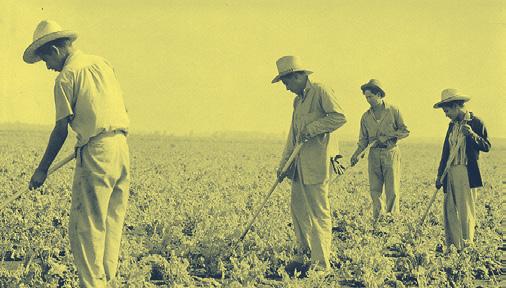
The novel Esperanza Rising illustrates the hardships that Mexican Immigrants experience to reach the American Dream. Coming from the country of Mexico, this story resonates to all the people who have undergone the journey for a better life. The similarities between real life obstacles allow others like myself to connect with the problems in the novel. In today’s society, similar to Esperanza’s story, Mexican immigrants
13,000
continue to endure the struggles of reaching the American Dream. They continue to deal with low wages in their jobs. CNN World’s 2023 article the “United States Department of Labor’s Bureau of International Labor Affairs” confirm that, “Some 13,000 Mexican migrant workers are owed $6.5 million in unpaid wages.” Another example of a struggle is shown in the article “Equitable Growth” (2022). The image at the bottom of the page is from Economic Growth and depicts the percentages of Latinos who are underrepresented in managerial and professional jobs. This is one of the many obstacles Mexican immigrants face, and still they continue to endure poor working conditions, job instability, and little access to financial services.
Even through all these struggles, I’m certain that you have never seen a hopeless immigrant. I recognize this because I never have. Being able to have the grit to continue to have hope for better times, celebrating and partying with their families, they all made it this far and they’ll continue going. I’m also sure that you’ve seen Mexican people having fun on the internet, social media, etc. All the work that they’ve endured allows them to continue to have a sense of hope and to also enjoy themselves and continue to have the time of their lives when they still can.
Esperanza Rising connects to the hope Esperanza has for herself and other Mexican immigrants and the light that they will have for their futures. In the essence, Esperanza Rising showcases the obstacles faced by the protagonist, mirroring the struggles of Mexican American immigrants in present time. This novel may give off the happy feeling through a yellow color. Nevertheless, when you dive into the book, one can see how it has a deeper meaning about hope and resilience. Esperanza’s life seems like an embodiment of perfection, but soon she is exposed to the misfortunes of life, and she perseveres. Like the Mexican immigrants today—they strive forward through the obstacles that they have to overcome. They challenge stereotypes and uphold their dignity regardless of their background. I am recognizing the people who like Esperanza had the resilience and the hope to pursue their dreams.

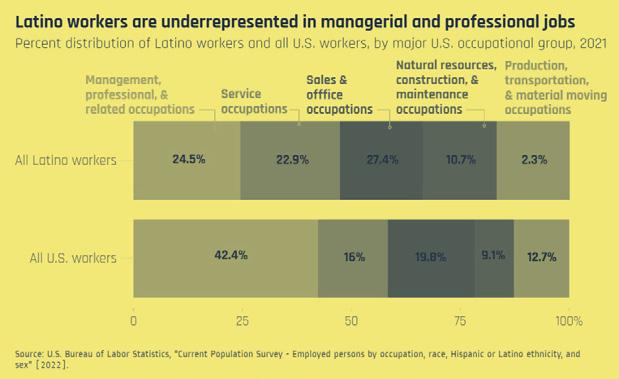

Cyprus High School
“Let me explain…No, there is too much. Let me sum up.”
The Princess Bride is both the definition of a cult classic and culturally relevant to many generations. It didn’t do well when it first came out but developed popularity as the years went on. It became popular because of its characters, plot, originality, and quotes. These elements combine to make a wonderful movie that you want to watch again and again.

Let me explain...No, there is too much. Let me sum up.
But First, What is a Cult Classic? Forbes.com and studiobinder.com say that cult classic films, or midnight movies, are films that have generated a large audience/fandom and weren’t huge hits when they first came out. I think this is a good explanation, especially because “cult classics” doesn’t have an official definition.
However, there are many movies that don’t fit that exact definition but are still considered a big part of pop culture. Some of these movies include Harry Potter, Star Wars, Star Trek, and Labyrinth




To me, a cult classic is something that many people consider culturally relevant and popular. This especially applies when someone hasn’t seen a midnight movie. There have been many times when I see someone who claims to not have watched The Princess Bride or Harry Potter and people freak out. Everyone knows that certain movies have to be seen by everyone.
The Princess Bride; a ‘Cult Classic’?
According to jacksonville. com and lithub.com, it didn’t do the best at the box office when it first came out on September 25, 1987. That was partly because the advertising flumped. The marketing team didn’t know exactly what it was marketing, since The Princess Bride fits into many genres. So, when people went to see it, they realized it was a comedy compared to what the trailer presented, an action adventure movie. It wasn’t until a decade later, when the VHS version was released, that The Princess Bride started to gain popularity. As it gained popularity, it was deemed a cult classic. But this only classifies The Princess Bride under the “dictionary” definition of a “cult classic film.” What about it makes it an actual cult classic?
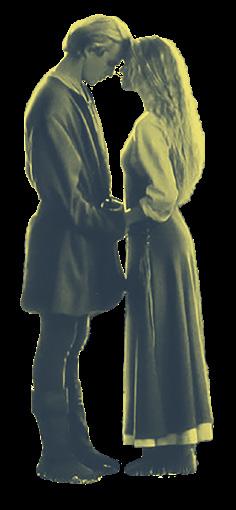
I was introduced to this movie by my mom. She loves this movie, and sometimes quotes it. She quotes the Impressive Clergyman, saying “Mawwiage is wot bwings us togeder today.” She’s watched this movie many times, sometimes bringing me along. But, I wasn’t as big of a fan of it until recently. When I first watched it, I was young, had a pretty short attention span, and wasn’t able to understand all the jokes. I didn’t understand why my mom chuckled at “mawwiage.” But, as I’ve grown and rewatched it, I’ve learned to love it. I understand “Mawwiage.” I am impressed by all of the characters. I can follow the story. I notice its originality. I love this movie.
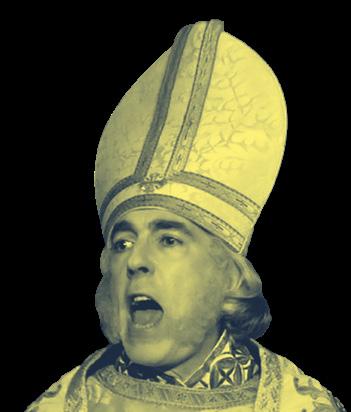
Mawwiage is wot bwings us togeder today.
The Princess Bride is incredibly quotable. Everyone knows it. If you randomly walked up to some strangers and said, “Mawwiage,” I bet that most of them would say, “is wot bwings us togeder today,” remembering the hilarious Impressive Clergyman. Or if your way of expressing frustration was: “Inconceivable!” many would smile or laugh, picturing the comical Vizzini. If you introduced yourself as “Inigo Montoya,'' another would reply, “You killed my father. Prepare to die,” thinking about the charismatic rally for revenge. The point is this movie has created extraordinary quotes that are memorable and connect to everyone.

Inconceivable!
It has a great story. Here’s a quick summary: The grandfather reads a book to his sick grandson, who is not very interested, especially in “the boring parts.” The book is about a farm girl and farm boy who fall in love and stay in love through thick and thin, meeting friends and foes along the way. I know this summary sounds boring and typical, but the expanded plot is original and engaging. It never drags, which is important for a story. I’ve never heard anything like it.
Now, onto the characters. I loved that each character got time to be funny. There’s Vizzini and his “Inconceivable.”
The Impressive Clergyman and his, “Mawwiage.” Prince Humperdinck and his, “I’m swamped.” No matter how important or miniscule they
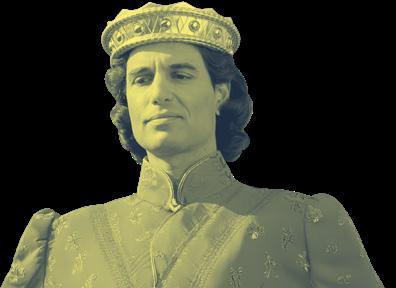
You killed my father. Prepare to die.
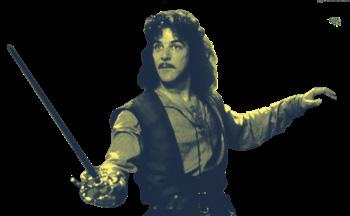
I believe that its cultural relevance is also based on its originality. The Princess Bride definitely differs from stereotypical romances, action-adventure movies, and fantasy films. And because it fits into so many genres, a lot of people can relate to and love this movie. It’s a comedy for those who love to laugh. It’s a romance for people that get giddy when they see a couple. It’s an action for those who enjoy the thrill. It relates to many audiences, which contributes to its originality. This movie is original and largely applicable.
The Princess Bride’s Relevance
All of these elements make The Princess Bride one of my favorite movies. It’s originality, quotability, characters, and the plot. Without any of these elements, this movie wouldn’t be the iconic cult classic it is today. And whether you like it or not, this movie is part of pop culture.
“The End”
The grandfather closes the book, and the grandson smiles.
“Now, I think you ought to go to sleep,” Grandpa suggests.
The grandson snuggles into his covers while the grandfather gathers his stuff. He puts on his hat and his coat. He confirms he has everything he needs and says, “So long.” He starts to leave.

Throughout The Princess Bride, “As you wish” means “I love you”, and when the grandfather replies with this famous quote, all watchers are reminded of love and how it always prevails. The Princess Bride is able to connect everyone together through its significance.
“Grandpa,” the grandson asks, tempting the grandfather to turn around.
“Maybe you could come over and read it again to me tomorrow.”
The grandfather smiles.
“As you wish.”


Granger High School
Seven Endless beings older than Gods: Death, Delirium, Desire, Despair, Destiny, Destruction, and Dream. For one hundred years, no one was able to Dream.

The series The Sandman changes a lot from the graphic novel, but there is one change that stands above the rest: an antagonist that is so beautifully written one can’t help but watch more.
What is The Sandman?
Before we get into how The Sandman changed, we need to first know what it is. The Sandman is a graphic novel written by Neil Gaiman that has recently been made into a Netflix series. The Sandman focuses on Dream (often referred to as Morpheus), the ruler of the land of the dreaming after he was held captive for 100 years as he tries to regain the tools that were stolen from him: his helm, pouch, and ruby—each tool containing a portion of his power.



Changing Characters
Evidence of character changes are easy to see; for example, John Constantine turning into Joanna Constantine (the person who ends up helping Dream find his pouch) or Lucien (the head librarian in the land of the dreaming) changing their appearance entirely, the only thing staying the same being their glasses. Both of these changes, while still big, don't change the character more than just how they look.
Changing
We don’t just see changes in the characters but also in the organization of the stories. While the graphic novel jumps around, like most do, they made the series more streamlined to be more suitable for a TV show, which made it more palatable for people who did not read the graphic novel. It also means changing a lot of the things readers loved about the graphic novel. In some cases, the series cut out stories entirely. In the case of the Shakespeare storyline, only a small reference appears that most people wouldn't care or notice unless they read the novel. In addition, the series cut out Morpheus' past love, Nada, who appears in the episode, “A Hope in Hell,” for a split second when Morpheus is being led to Lucifer. This change left most people, who had not read the graphic novel, including me, confused about who Nada was until they read the novel and learned of her story. While I think cutting the Shakespeare storyline makes sense, I feel that they robbed viewers of the amazing story of Nada.
You can feel good, bad, or neutral about these changes, but there is no doubt that the best change they made is changing the character John Dee.

John Dee was already an interesting character in the graphic novel, but he seemed quite two dimensional. He was lacking the motive for what he was doing; it felt like he was just acting to cause chaos and hurt others.
But in the show we see a more human side to him. He is trying to rid the world of lies no matter what it takes, and he does not necessarily want to cause harm, but he isn’t against hurting or even killing people to make his dream come true. This human side makes John Dee much more three dimensional.

John is a son of the Lord Magus. His mom stayed with the Magus so she could steal the things he stole from Morpheus. John’s mom stole (a) his helm, which is traded to a demon to get a necklace, which stops the wearer from dying, (b) his pouch which ends up in the hands of Joanna’s ex-girlfriend, and (c) his ruby, which John's mother gave to John. The ruby could make his dreams come true. John used the ruby and ended up killing a lot of people and was sent to a madhouse for it. This is where we meet the character John. His mother comes to visit him where she apologizes and gives him the necklace, dying when she removes it from her own neck. He then uses the necklace to escape as each time the guards shoot at him. The bullets bounce off and hit the guards. It is after this that we get a scene that really shows John’s humanity.
John Dee and a Helping Hand
This scene is an emotional rollercoaster the first time you see it. After escaping the madhouse, John wants to get his ruby (I call it his ruby even though it technically belongs to Dream because it is how many characters refer to it in the show), so he catches a ride with a lady named Rosemary. For the viewer, this can be intense because we don’t know if John plans to kill Rosemary or not. It is even more worrying when John and Rosemary start to talk about her kids, and the way John talks makes it seem like he may want not only to kill her but also possibly her children. However, in the end we are all able to take a sigh of relief because not only does he not kill her but he gives her the necklace so she can stay safe, showing his humanity and that he doesn’t necessarily want to bring harm to people. This is the first scene where we really see that humanity in John.
It is after the Rosemary scene that we find that John has reprogramed the ruby so that when Morpheus tries to grab it not only does it not work but it absorbs more of his power, making him pass out where it was hidden right before John arrived to take it. After John gets his ruby, he goes to a diner, and this is where we witness the most disturbing and graphic episode yet, causing many viewers to have to look away as the characters in the episode meet their violent and gory end. This scene showed just how twisted John Dee’s plan is and how chaotic it will make the world if he is able to succeed in ridding the world of lies.
24/7: The Diner Episode
John Dee sits in the corner with a cup of coffee just observing the people before he starts to interfere and things get more sinister.
This is where the horrors begin, and in the end there is just one person left in the diner—John Dee. John Dee sits surrounded by blood and bodies, unaffected by the death of the innocent people that he indirectly caused, because to him it was for the greater good. This episode ends with Morpheus killing John Dee, bringing an end to this lovely character forever. I think the diner scene is better in the show, which is shocking because the violence is much more toned down. I love gore, and they cut a lot of it out of the episode, but John Dee makes up for it even though he doesn’t say or do much. Just John being there brings death—that much is the same in both. In the novel, he wants to bring death; but in the show he wants to stop them from lying at any cost, and to him he isn’t the cause of their deaths and it is no loss if they couldn’t handle the truth.
A quick death for this both amazingly written and portrayed character; a person who thought he was cleansing the world of lies. A man who was killed not for the death he caused but for messing with a tool that belonged to Dream of the Endless.
Adding motive for why John is causing chaos is so incredibly important. It helps us connect to the characters—even the most twisted and insane people. It makes the characters human, and it makes them feel more real.
John Dee is a villain. He goes directly against Morpheus, wanting to kill him. He is a murderer. Even though he doesn’t directly harm anyone, no one in the diner would have died without his interference.
John Dee is objectively better in the show. He uses the


Salt Lake Center for Science Education
Heartwarming Fairytale or Brothers Grimm Nightmare?
Brothers Grimm
The Brothers Grimm are attributed to writing many of the classic fairy tales we tell children. “Snow White,” “Cinderella,” and “Little Red Riding Hood” were some of the many stories compiled in their book Grimm’s Fairy Tales. The stories we tell children are often censored child-friendly versions of these tales, but the originals are quite dark. They include themes of incest, child abuse, premarital sex, and graphic violence.
The Fairy Tale Synopsis
In many ways, Coraline is a classic kids’ book and movie about exploration, loss, and accepting what you have. Our story starts with a girl who just moved away from her friends and her home so her parents could focus more on work. The house they move into is old, tacky, and extremely drab to the mind of a young girl. Her parents have no time for her, and she is forced to explore this new space. All Coraline wants is a world where she can play with her parents in the rain. A classic. Well, that’s what most
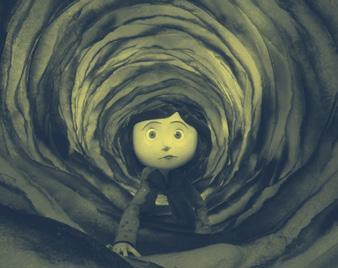
Determined to save herself and her family, Coraline confronts The Beldam, who transforms into a spider-like creature. They play a game in which you are supposed to think Coraline outsmarts The Beldam. Most people interpret the ending as that Coraline beats The Beldam and reunites with her family; however, I assert Coraline falls into the trap of The Beldam and dooms herself to forever feeding and entertaining The Beldam. This is not your fairytale ending of self-love and acceptance. This is the reality of playing a game with a sinister entity.
Some film critics would want to sew buttons in my eyes for that, but the truth is that many movies, including Coraline, are intentionally left up to the audience. Many hit blockbusters such as Fight Club, The Prestige, & Inception are all examples of movies with open endings. Open endings are intriguing because we don’t have perfect endings in real life; real life is messy, and nobody has figured it out. You can draw similarities between the ending of Coraline and Inception, in that you don’t know what is real at the end. In Inception, you have the token that doesn’t stop spinning, and in Coraline you will have to guess whether our protagonist is forever trapped by The Beldam, or safe at home with her loving parents. You can make assumptions, but both are left intentionally vague to leave the audience guessing.

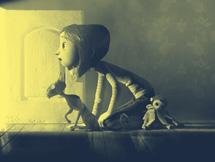
its dark secrets, including that The Other Mother is a sinister entity known as The Beldam, and she has imprisoned the souls of dead children she has trapped.
At a first glance at the film, you would assume that Coraline escapes back to the real world. This is not the case. Coraline is stuck in the Other World forever. Here is the evidence for why.
The Black Cat is in on the ruse. There is a Cat that some film theorists claim has two spirits: One protecting Coraline, and the other playing for The Beldam. The Beldam’s Cat can speak and teleport in the Other World. The Cat is another piece of The Beldam’s game to deceive Coraline into feeling safe. In the very last shot, we see a cat disappear behind the sign—an ability only used by The Beldam’s cat— proving once and for all that Coraline is not in the real world but is instead in the Other World.

The Well Wells are often a sign of fantasy, but in Coraline, it acts as an evil portal of dark magic. At the beginning of the film, the spindly hands of The Beldam release a doll echoing Coraline’s features out the window into a sky full of stars, but it moves as if suspended in water. When compared to the description Wybie gives of the well, “It’s supposed to be so deep, if you fell to the bottom and looked up, you’d see a sky full of stars in the middle of the day.” This matches that visual perfectly. This shows that The Well is a portal between the Other World and the real world. This would mean that when Coraline drops the key in the well at the end of the movie she is delivering the one and only key back to The Beldam, cementing her in the Other World forever. This would explain why the Cat whose spirit is trying to protect Coraline tries to stop her from doing so but being unable to speak in the real world is just kicked aside.

The Dreams and the Door
Coraline is only seen entering the Other World through the door. She is seen entering this door 4 times. She is only seen exiting this door twice. The other two times she “leaves” it is only through dreams, but this is clearly controlled by The Beldam. When Coraline intentionally tries to escape by sleeping, she is unable to. This leads me to assert that after she enters the portal, she never leaves again and everything else is a creation of The Beldam. We know The Beldam can create vast worlds, so it is not unreasonable to suggest that she has created this land through a door in which Coraline seems less happy. In turn, Coraline is forever grasping at what is real and what is not.
The Beldam’s Goal

The Beldam quickly realizes that Coraline needs to trust her to achieve her goals. If The Beldam can swindle Coraline into believing that Other Parents are her “Real Parents,” she would trust them. The way to ensnare Coraline into trusting these “real parents” is if she makes herself appear so horrific, her fake real parents seem better. We have already seen The Beldam’s ability to create fake parents with real eyes as seen the last time Coraline enters the Other World: (The Beldam with real eyes).
This is the way to make Coraline trust The Beldam, if she can fabricate a world in which Coraline feels safe.
What was thought to be this beautiful ending of loving your parents, accepting what you have, and loving yourself, is instead a twisted horror of deceit and eternal torture for our young protagonist. To make matters worse, Coraline cemented her own fate, she fell right into the trap, which is exactly what she was told by the Cat, “You know, you're walking right into her trap.” Coraline is forever trapped in the Other World, doomed to be food for The Beldam.
The Perfect Ending Coraline is left intentionally vague, but evidence strongly suggests that she never escapes. This ending is perfect for this movie. We are so used to the “perfect” Disney fairytale endings, but the reality is that Coraline breaks these conventions and we as the audience get to reap the benefits of this unique style. The entire duality of Coraline revolves around the idea of perfection. The idea that Coraline would have a perfect ending goes against the entire point of the film. A secretly sinister ending perfectly complements the dark themes of this Claymation masterpiece.
The Beldam needs to be loved. She feeds on the love and adoration of children. We see this through the tales of the other dead kids who tell Coraline this, “She spied on our lives, through the little doll’s eyes, and saw that we weren’t happy. So, she lured us away with treasures and treats, and games to play, gave us all that we asked, yet we still wanted more. So, we let her sew the buttons, she said she loved us, but locked us here, and ate up our lives.”


Hunter High School

The Twilight book series turned movie series written by author Stephanie Meyer caused an earthquake in the 2000s-2010s by young adults, especially young women, for the dreamy teen romance with a hint of the supernatural. When the first movie came out in November of 2008, with just a budget of 37 million dollars, the director, Catherine Hardwicke, grossed worldwide 407 million dollars at the box office. The movie immediately became a hit sensation from 2008-2012, when the last film of the series had come out, but throughout the years as the movie got older and the media became a huge thing, the movie has been turned into parodies like the movie Vampires Suck, which came out in 2010. There are more parodies out there where TikTokers began to mimic the actions that were done in the first movie. Bella’s awkward lip biting and blinking, or fan favorite, Jasper Hale’s creepy yet humorous stare throughout the film were just a few parodies. Even our glitter sparkle fairy vampire Edward Cullen, Robert Pattinson, has publicly stated that he hated playing Edward: “He's the most ridiculous person who's so amazing at everything. I think a lot of actors tried to play that aspect. I just couldn't do that. And the more I read the script, the more I hated this guy, so that's how I played him, as a manic-depressive who hates himself. Plus, he's a 108 year-old virgin, so he's obviously got some issues there." While there is an entire hate club when it comes to the film, there are people like myself, who think that the movie is so bad that it's actually good and likable.
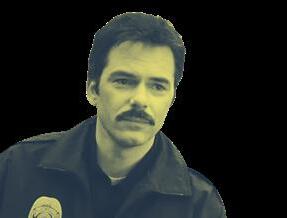
Now, for starters, don’t get me started on the whole “Are you Team Edward or Team Jacob” debate, because that isn’t what I’m here to talk about—though, for the record, I’m Team Charlie. What I want to dive into first is the fashion in film. When I mean that the movie is good in its way, I’m not just talking about the story and plot but also the add ons and details that are set into the movie to make the characters BE those characters in the first place, which is why
I’m also talking about the fashion in the film. The outfits are just so 2000s, and since 2000s fashion is coming back, people sometimes use the outfits that were in the movie as inspiration, and I definitely do. Like Bella’s outfits. The outfit when she first arrives at Forks, where she has on a green and pink divided blouse with a gray long sleeve underneath, low bootcut jeans and some simple shoes. Her outfits can be quite nice with her tomboyish vibe throughout the film, but we can't deny that these are one of the highlights of the film, especially since the first film is the movie with the best fashion. Although there are comments on Reddit talking about how “Her book fashion is fine emo. But in the movie… who decided a bowling shirt was the way to go for her first day???” which I totally agree with especially with all the layering that many of us find traumatic from the 2000s fashion, but layering can also be a good thing as long as you style it right. If you don't enjoy the movie, then watch it for the outfits and find your inspiration if you love that 2000s vibe.


The first Twilight film is also known for its amazing soundtrack that, to be honest with you, brings out the emo in me. And it’s been known that “bad” movies always have the best soundtrack like Grindhouse, Marie Antoinette, and The Million Dollar Hotel. This soundtrack has songs from really talented creators like Paramore, Iron & Wine, The Black Ghost, Muse. Even Robert Pattinson sang a song that was added to the soundtrack for the movie. If music is something you really like, at least try out the soundtrack from the first Twilight film; you’ll totally enjoy it.
Besides the fashion and music, the characters and their personalities and the details of the movie also make for great entertainment. In the books, Bella is described to, of course, be this awkward, clumsy, young teen like in the movies, but many throughout the years have pointed out how dense and “boring” Bella is in the movies compared to the book Bella and how she can easily be an unlikeable character. Book Bella is also a sarcastic person who had a dry sense of humor, which we don't get to see as much as we’d like throughout the first film of the franchise.

The film never mentioned her love for Jane Austen's classics Sense and Sensibility and Pride and Prejudice because she had mentioned it in the book, “My favorites are Pride and Prejudice and Sense and Sensibility.” But I've got to say, seeing Bella the way she is portrayed in the movies just gives the film some humor. Making fun of Bella and her interesting reactions and facial expressions is what gives many of us a good laugh while watching the movie for how bad they are to the point of it becoming unintentionally humorous. Some were also disappointed about how Edward didn't seem to be as humorous in the film as he was in the book with his funny remarks: “Come on, little coward, climb on my back. Hah! You're as white as a ghost–no, you're as white as me!” which I agree was a missed-out opportunity, but the Edward we have now also has his unintentional funny moments in the first film, like, when he first ever saw Bella in Biology. That reaction that Robert Pattinson gave us to show the impact Edward had on Bella’s scent is a meme of its own that goes around the media a lot.

romantic scenes in general that Bella and Edward have always had me giggling and kicking my feet like an idiot or just seeing Edward because he is so attractive.
Let me also include what is known as the best scene in the entire film AND franchise: the baseball scene. If you live under a rock and don’t even know what scene I'm talking about, sit down and listen. The baseball scene happens at 1 hour, 18 minutes, and 47 seconds into the movie, when Bella decides to go play baseball with the Cullen family. The scene begins with the hit song “Supermassive Black Hole” by accompanied by the rumbling of thunder throughout. The Cullens explain that they need loud thunder to play baseball because the sound of their powerful hits would otherwise give them away. Adding to the atmosphere is the blue tint filter used throughout the first film, which complements the scenery and accentuates the Cullens’ pale complexion. We get to see most of the family, while Alice was the pitcher and Bella and Esme played referee and catcher. The director really fed us fans a five-course meal with this scene.
With all the information about the characters and the ridiculous romance between Bella, a human girl, and Edward, a 108-year-old vampire, and where it all began with Bella finding out Edward was a vampire, him confessing to, plus giving more information about how he can read minds except hers, talk about how it was tough for him to not kill her–how romantic of him– and another very romantic thing that a man could ever do, sneak into your room at night through your window and watch you sleep throughout the night–it may be a very creepy and disturbing love story, yet we can't help but gush over it– so, like my generation has said, various times for the most outrageous things, HEAR ME OUT!!! Edward may be a little weird with how he expresses his love for Bella, but I can’t deny that it isn’t a caring thing–I probably have some issues, but it's okay–sure he followed Bella around when she went to Port Angeles to go prom dress shopping with Angela and Jessica, but I mean if Edward wouldn't have followed Bella like a creep, then he wouldn't have saved her from getting harassed by the group of guys she encountered while heading out of the bookstore, so it's a win-win in my book! Also, the

I talked so much when it comes to this movie, so you're probably either annoyed or intrigued at this point, but I don't really care. The first film is such a bad movie that it's iconic and one of the best movies out there. You cannot change my mind about it– I've been obsessed with this movie since I was 4–you guys can talk all the crap you want. Like I've said since the beginning, the movie is good for the ridiculous romance and scenes in the movie, but I wanted to also get into the fashion, soundtrack, even the blue tint filter they use in just that specific film because all of that is what also makes the first Twilight movie the amazing beginning of a huge, well-known franchise.
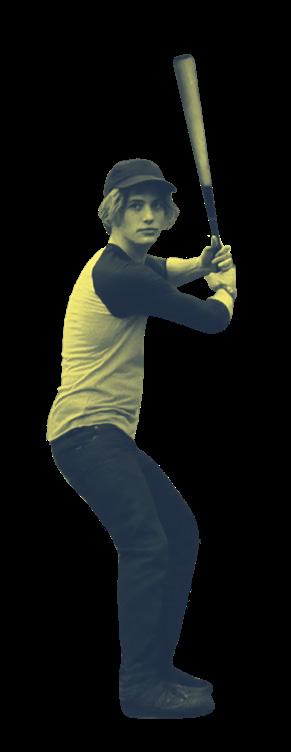
I have read loads of comments on Instagram about how they find that sort of stuff really creepy and weird for a romance, but the entire Twilight fan club that was going on back in 2008 would 100% disagree with you. I even bet that all the Twilight fans can beat Goku in a fight.



AKA That Time
It has the best plot, narrative, and characters. It's an ongoing series that is available in many forms such as anime, manga, light novels, and a game. The plot in every episode is interesting and unpredictable. We never know what our characters are going to do in the situation they're placed in, and if you're not into watching anime but love reading there is a manga and light novels form which are farther ahead in the plot than the anime, and you can also play. It comes out August 8, 2024. According to rpgamer, it says, “Players will also be able to build up bonds with Rimuru’s allies to learn new special attacks. Meanwhile, using the Tempest Resonance allows players to strengthen their characters by developing buildings and facilities within the Jura Tempest Federation, a nation founded by Rimuru.”
Background
The story follows a slime called Rimuru Tempest. When we first meet Rimuru, he’s an ordinary man called Satoru Mikami. He’s in his 30s, who gets stabbed by some robber and eventually dies. He’s then reincarnated in a completely different world from his original world (earth) as a blue slime. In this world, slimes are considered monsters. At first, he is confused by his surroundings since he can’t see anything but quickly gets used to it. Once he gets used to his new body, he starts trying to figure out where he is and how he came to be there. With the help of the great sage, who is like his other mind, they start to explore their surroundings, which turn out to be a cave. With the help of the great sage, Satoru starts learning new magical abilities. He finds some herbs that he could turn into potions with the help of the great sage and some magic ores that can be used to make weapons. After wandering around for a few days, he met Veldora, who is a storm dragon that was sealed inside the cave for three centuries. When Veldora and Satoru first met, Satoru was scared of him, but Veldora wasn’t as scary as he first thought.
Veldora was kind and friendly, as he was all alone for three centuries and wanted someone to converse with. To try to keep Satoru to stay with him and converse with him, Veldora teaches Satoru a new skill called Magic Power Perception, which allows him to sense his surroundings with magicules. Satoru was skeptical at first but became less suspicious of Veldora as they converse more. Contrary to other animes and isekai reborn as a slime, there is no fight between the dragon Veldora and the person who meets them. In other Isekai, dragons are enemies with other beings, and if they have a good relationship, they’d be friends, but here they are more than friends. They are family as they now share the same surname/family name. Veldora‘s a being of great power and wisdom, and yet he sees a mere slime as family and equals is completely out of this world. Satoru finds out the reason Veldora is sealed in the cave and how Satoru came to be there. He also finds out that there are more people like him, and they’re called Otherworlders and that Veldora is dying.
Otherworlders are summoned, unlike him who’s reincarnated, to help the country that summoned them. When they’re summoned, they are considered heroes because they are saving the people from monster attacks. The person that sealed Veldora in the cave was also an Otherworlder. After



conversing, the two of them considered each other friends, and equals, but to be equal they both needed names. They both named each other. Satoru named Veldora as Veldora Tempest, and Veldora named Satoru Rimuru Tempest. Rimuru ate Veldora using his predator skill so that he doesn’t die.
Goblins and Direwolves
Once Rimuru got out of the cave, he met a small group of goblins, but unlike other goblins in movies or other animes, these goblins were small, skinny, could talk, and had rusty weapons. The group of goblins believed that Rimuru was a threat to them because of his strong, thick,
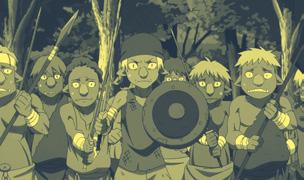
and dense aura that surrounds him. These goblins got scared easily after Rimuru raised his voice and begged for Rimuru to spare them. After they got friendly with each other, the goblins asked Rimuru for help as they were being hurt/killed by direwolves. When the goblins took Rimuru to their village, the elder showed Rimuru the wounded goblins. At night, the goblins were waiting for the dire wolves. When they came, Rimuru warned them to stay away from the village and goblins, but the leader didn’t listen to him and attacked, but Rimuru killed him as an example to the other direwolves. The other direwolves after seeing that Rimuru killed their leader didn’t want to be next, so they surrendered while promising to serve him, after which he named the goblins and dire wolves, and they evolved. The goblins evolved into hobgoblins and the direwolves into tempest wolves reborn as a slime and unifies species and doesn’t kill them just because of what they learned in their past lives that monsters are unintelligent and are only there to be killed. Instead, Reborn as a Slime understands them and helps them. They all become a big, huge family that helps each other.
While constructing their town, Rimuru met four human adventures, one of which was an Otherworlder named Shizu (who was also the one who sealed the storm dragon, Veldora) who came to their town. The adventures were sent by the Free guild on behalf of the Blumund country. They were sent because they couldn’t sense Veldora’s presence, so the adventurers came to investigate it. After spending some time together and getting to know each other, Shizu loses control of
the Elemental Ifrit that was sealed inside her. Rimuru manages to defeat and separate Ifrit from Shizu, but without Ifrit sustaining Shizu. Shizu dies, but before dying she has three dying wishes for Rimuru. Shizu’s first wish is for Rimuru to refresh Demon Lord Leon Cromwell of her existence. Her second wish was for Rimuru to help her students in the academy, and her last wish was for Rimuru to eat her after her death because she didn’t want to be buried in that world. Rimuru doesn’t go with the humans even though he wants to find humans that are from his original world. He remains with the monsters and continues to help them despite his growing want to meet other humans. After eating Shizu, Rimuru gains a human form. Without Shizu, Rimuru wouldn’t have the iconic human form that he has now. Also, Rimuru gained great fire abilities because of Shizu. He also got the elemental Ifrit after Shizu death.
When Rimuru was in the cave, he was reincarnated. The goblins and dire wolves were hunting when suddenly they were attacked by six unnamed ogres. These ogres had an almost human body build. With armer and sturdy weapons, they are also much stronger than the evolved goblins and dire wolves. After realizing that they couldn’t win, the leader of the hunting group Rigur called Rimuru for help through telepathy. When Rimuru arrived, he was met with his fellow subordinate's unconscious, injured, or fighting. He helped his subordinates before fighting the ogres. After fighting the ogres became his temporary subordinates because they just wanted to get stronger and avenge their village. Rimuru learned that the leader of the ogres refused to join a majin and get a name. The majin didn’t like that. He refused, so he burned the leader of the ogre's village, and orcs ate the burning villagers. Only six out of the whole village lived. The ogres want revenge on the majin and orcs that burned their village, so they join Rimuru until they get their revenge. After that, they will go their separate ways. Typically, in other isekais, the protagonist helps a person/monster that needs help but then go their separate ways never knowing if they’ll meet again or they become comrades while Reborn as a Slime the kijins stay with Rimuru. They become as friends and arguably family. They also pledged to serve him and only him for the rest of their lives.
Unlike other animes that have people reincarnated, becoming heroes, meeting monsters and befriending them, there aren’t isekai’s that have a literal slime become a demon lord, build a monster nation that Coexist with humans (peacefully), has a cheat skill predator (which allows him to have the abilities of the things eats), later in the plot becoming one of five true dragons even though he’s a slime, and controls four of the seven Primordials. There isn’t a single anime/manga/light novel that does have that kind of plot and narrative.
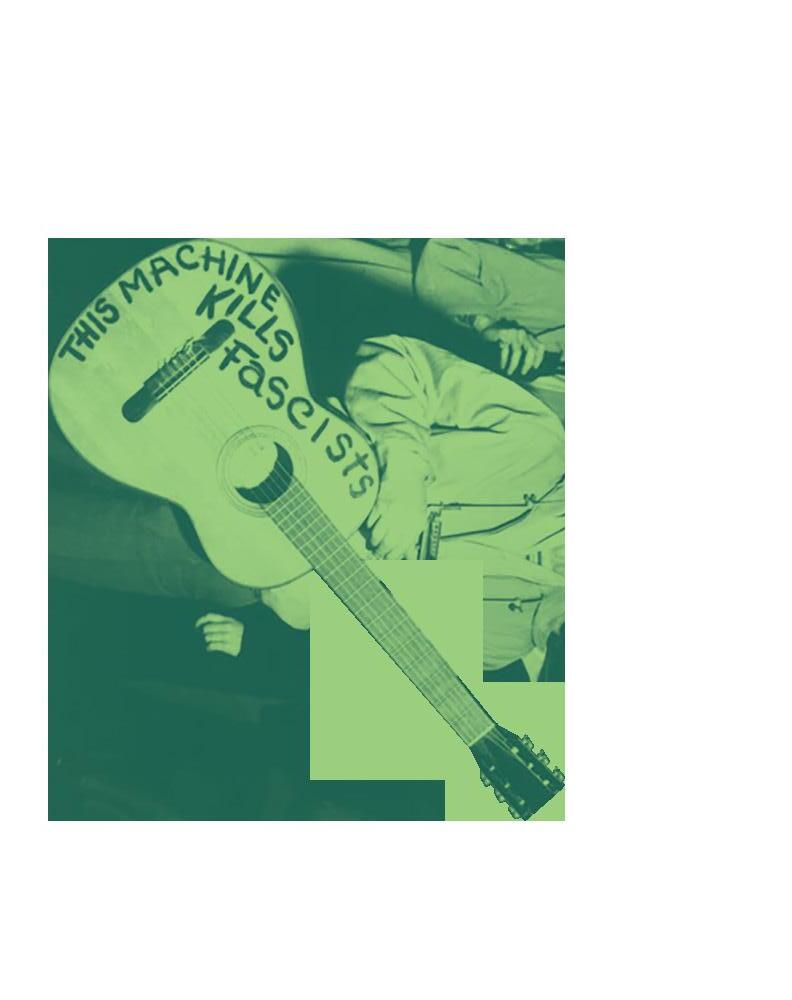
The song “Fortunate Son” is a perfect example of the power of music because it perfectly contains the ideas and potentials to create each component of a successful protest. It accurately addresses grievances and creates a defining spectacle. The song itself is a protest of how those born into fortunate families were often able to avoid fighting in the Vietnam war, while those who were less fortunate could not afford to do so. Although the song was written in 1969, “Fortunate Son” has become one of the most popular songs today selling over 14 million copies for its clever wordplay, powerful lyrics, catchy nature, and most importantly, spectacle. Behold the power of the voice!


More towards the present, musical protest has started to make craters in the socio-political atmosphere today, notably from the roots band Dispatch. Since their debut in 1996, the band has consistently released songs covering various injustices across the world and gained a fan base of over a million followers. One song in particular, "The General,” (praised for its spectacle) is a fictional ballad of a general in the army who considers the livelihood of his enemies and tells his soldiers that their services are forgiven. The band released a version of this song in Russian at the height of the war in 2022 targeted towards the Russian troops occupying areas of Ukraine that are being forced to do the government’s bidding against their will. The purpose of this song was to protest the corruption of the Russian government and to encourage the Russian soldiers that heard the song to desert their positions. Accordingly, as of June 2024, a Ukrainian research site named “The Kyiv Independent” has determined that about 18,000 soldiers have abandoned their posts, with many of them defecting to the Ukrainian border and surrendering. It is likely that several Russian deserters gained courage from “The General.”
A more highly acclaimed song than Dispatch's “The General” would be “The Times They Are a-Changin" written by Bob Dylan in 1963. “The Times They Are a-Changin" was written with inspiration from Irish ballads and debatably captured the day-to-day sense of humanity overwhelmed by injustice at the time. What makes this song so special is that it was debuted at the March on Washington in 1963 alongside Martin Luther King Jr. The song itself contains lyrics that do not just sit with the listener but encourages them to stand tall and make a difference and be part of something larger.
Specifically, Dylan mentions the writers and critics in his song who were documenting the civil rights movement and implores them to continue their passion because they might not get to be a part of something as meaningful as the civil rights movement again. Dylan additionally creates the lyrics “Don't speak too soon, for the wheel is still in spin. And there's no tellin’ who that it's namin.’ For the loser now will be later to win.” This set of lyrics in short can be interpreted as the current losers (those fighting for the civil rights movement) are soon going to have all their efforts paid off and eventually achieve what they had been fighting for. Bob Dylan as an artist himself is a perfect example of how musical protest can stand the test of time and still contain relevancy a lifetime down the road.
Sadly, musical protest is underutilized among the frequent battles for justice today. The pressing climate agenda is lacking any musical inspiration, and, with it, a lack of progress. Similarly, the recent protesting of Israel from university students to leave Gaza has fallen short, and again no progress has been made. It is unclear why protests fall out of fashion like this, but I believe it is a lack of inspiration, courage, or even awareness. What could be the solution? Music. Music will not only spread awareness and give people, in and out of the picture, the courage to make a difference, but it will also bring people together because it is universally understandable and not linguistically bound. We have seen examples of music bringing people together and making a difference during dark times in the past, so why not learn from what works and carry on with change?
Music is a receptacle of our own complex minds, whittled down to a point that can be seen and felt by everyone. Let the power of music become prevalent in your life. See what wonderful thing you can create to let the wheel continue to spin.

Salt Lake Center for Science Education
Music speaks to us in ways that words sometimes can't. It's like a mirror reflecting our inner thoughts and emotions, especially when artists like Kurt Cobain come along. Growing up in a conflictive environment, Cobain's music became a channel for his frustrations and struggles. His grunge anthems with Nirvana didn't just rock the '90s; they gave voice to a
generation that felt lost and fed up with the world. From "Smells Like Teen Spirit" to "Come As You Are," Cobain's lyrics echoed the dissonance and discontent with ourselves and the world many of us felt. He uses tones like, “I'm worse at what I do best.” It shows discontent with himself. He once said, “The duty of youth is to challenge corruption.” Making his audience feel empowered to do something bigger.

Then there's Courtney Love, leading and belting out tunes that cut straight to the heart. Her raw, unfiltered approach to music laid the messy realities of love and loss. Songs like "Doll Parts" and "Violet" resonated with listeners who found comfort in her candid expression of pain and vulnerability. Love wasn't just singing; she was laying out our own struggles for the world to see.
Taylor Swift might not be everyone's cup of tea, and while her music impacts many, others might not feel the same connection. From breakup ballads to anthems of self-discovery, Swift's songs hit some listeners right in the feels, but not all. She's been through the highs and lows of fame and relationships, and her music reflects those experiences. Whether it's "Blank Space" or "Shake It Off," Swift's tunes become anthems for navigating life's twists and turns for some, while others might not find the same resonance.

The powerhouse Pink pumps out tunes that empower us to be true to ourselves. When we need a boost, she's there, reminding us to stand tall and own who we are. From "Just Like a Pill" to "So What," Pink's music resonates with those of us who refuse to be boxed in by society's expectations. “I was brought up to question authority.” Questioning authority seems to obligate people to change to their own expectations.
Let's not forget the classics like The Rolling Stones, led by the legendary Keith Richards. Richards' life was a bumpy road of rock and roll, with tales of wild parties, run-ins with the law, and fabled collaborations. Despite his thundering lifestyle, his guitar riffs and songwriting skills helped define an era. Hits like "Satisfaction" and "Paint It Black" are timeless reminders of his musical genius and the rebellious spirit of the '60s. Their timeless sounds have rocked generations, speaking to something deep inside us. Regardless if you weren't around when they first hit the scene, their music still resonates because it's authentic and real.
In essence, the influence of an artist hinges on their ability to resonate with our experiences. Whether it's Kurt Cobain's raw expressions of frustration, Courtney Love's unapologetic vulnerability, or Keith Richards' rock 'n' roll legendary mind, we connect with artists who mirror our own stories. It's not just about the music; it's about feeling understood, validated, and empowered. As we navigate the ups and downs of life, these artists become more than just musicians; they become companions on our journey. Whether you are rocking out with grunge, crooning country tunes, or belting out pop anthems, the relatability is what cements these songs in our hearts and minds. They're not just singing; they're speaking our truth.


Mireles
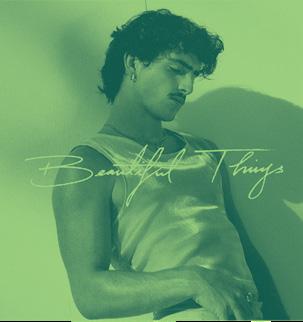

Benson Boone started his career on American Idol. Benson went into American Idol saying he didn’t know that he can sing. Katy Perry said, “Didn’t you ever sing happy birthday?” He went on to TikTok singing covers of songs. He then started making his own music. He went on making his well-known song called “Beautiful Things.” He went on to a interview saying “Beautiful Things” reflects on life. The ways it reflects on him is when his parents loved his girlfriend and how he doesn’t want that to change; he wants to keep those beautiful things that are special to him. Something that I like about his music is that I can relate to it and how he makes his music fun and not sad or plain and how his music stands out. “Beautiful Things” impacts listeners by creating a feeling of excitement and energy.
When Benson Boone started off, he was fresh meat. He did start with a lot of followers, and the more and more he would sing covers the more likes and followers he got. When he did more popular covers, more people liked those videos. Benson progressed a lot over the few months, that when he showed his followers his song “Beautiful Things,” everyone loved his song. So his strategies were to build up his followers and then so all of them his own stuff and let’s be for real, we all thought his song was awesome.
“Beautiful Things” is a vibe. It’s fun to dance and sing to. “Beautiful Things” has a good connection to many people. It shows people how to hold on to the beautiful things that they have and that they aren’t the only people who relate, but how special is this song? I have
a feeling that this song is going to get bigger by the minute. How does this song impact music? Something Benson did different was when he decided to make this song he made it fun where you would feel good when you listen to the song. When you see other artists making music that reflects on life, they make it sad and put you down. Although people want sad songs, more people will want his style. When I listen to any of Benson’s music, I always catch myself humming it in my head. The lyrics I like the most and catch myself humming is, “Please stay, I want you, I need you, oh God. Don’t take these Beautiful things that I’ve got.” This song talks about someone thanking God for what God has given him and asking him not to take them away.
Benson’s vocals are amazing; the low tone going into a high pitched tone, having a lot of control of his voice. The mixing of styles he uses in the song. The way he can dance while singing on chord. The reasons I like “Beautiful Things” and how well put together it is, and how he starts the song like it’s suspicious and continues singing and making it sound like a parade or even a live concert. Benson’s vocals are crazy the way he can sing so high is awesome. Although “Beautiful Things” is not the first song he has made, he’s come so far. “Beautiful Things,” and “Cry,” “Ghost Town,” “In the Stars” are just the beginning.


Salt Lake Center for Science Education
People love to pose the question, “Lyrics or tune, what is the most important aspect of a song?” That's the thing. It's hard to imagine having one without the other. Beatless lyrics are simply a poem, and a lyricless beat makes for great study music. Artists mix and match both components to create their work.
named album, The Double EP: A Sea of Split Peas. Oftentimes albums are constructed in a way that eases their listener in for the first few songs and places the powerful and popular songs near the end. This is absolutely not the case for A Sea of Split Peas the very first song is “Out of the Woodwork,” and, full stop, the album could just end after track one, and I would be happy.

That’s the thing about it: “Out of the Woodwork” is hands down the best track on the album, from its lyrical idioms to aggressive instruments, but the surface of the song has no meaning until you put all the pieces together. Courtney Barnett intertwines every aspect of music appreciation, and it adds worlds of depth to her art. “Out of the Woodwork” being the prime example of excellence.
There are two released versions of “Out of the Woodwork.”
Barnett’s original recording from 2013 and Kurt Vile’s cover of the song on Lotta Sea Lice in 2017. Kurt and Courtney worked on and released this album together, each choosing



Woodwork.” There’s a more acoustic feel, and a single changed word on the third line. You genuinely don’t even notice the new lyric when listening. I had a moment when I went, “I don’t think Kurt Vile sang the song right? That just cannot be possible because he worked with Courtney Barnett in production.” But, I was mistaken. He made an artistic adaptation to the song.
Courtney begins by describing the feeling of holding your breath under the water for as long as you can. Instead of drowning, she notices a flower floating in the water. It wakes her up, and she swims to the surface. In Kurt’s cover, he saves a drowning spider. Oftentimes artists will shift pronouns in covers to make up for the fact that the singer is a different person. But, I don’t think that Vile changed a single item to masculinize his song. I think the two items serve as mirroring images of each other.
Why do I care? It is clear that the main point of this song deals with a fear of failure. But there are only so many lines that talk about it, so every word choice is important. What is the value in a flower or a spider? A flower is alive, yes, but for it to have been picked and thrown away there would no longer be that same instance of life. But a flower holds beauty, and that’s what gives it worth. A spider, on the other hand, is a creature with a conscience. The spider and the flower hold the same value because a spider is valued as a beautiful and worthy creature. We kill them with toilet paper and flush without even a second thought. Courtney and Kurt co-wrote this album, and I like to think she had some part in this lyrical change. It is interesting to me that in the four years Courtney had released her song she might have shifted the way she wanted to portray this scene. It’s one little piece that influences the singer to save themself.

is representative of that one bit of you willing to keep trying and how precious it is to find that spark. Maybe the spider is making Kurt Vile’s song more masculine, but I think it also shows that his fear has more to do with ability than appearance. The flower caught Courtney’s eye because of its looks, in a similar way that she would feel social pressure about how she appears to the face of the crowd and the opinion of people. That’s not something you pick out on the first listen. Courtney Barnett likes to sit on her lyrics for years before she is ready to record, and for that I think we should be taking just as long to analyze.
And Now What Does This Wonder of a Song Sound Like?
“Out of the Woodwork” is a beautiful song right out the gate. It’s twinge of guitar with a spunky tune. There seem to be two different pianos going, one with a baseline that keeps steady throughout the entire song. The other higher notes are being played by the three-year-old reincarnation of Chopin, who was told, “Just see how hard you can hit the keys,” and that kid had a vendetta against the piano because of his past life. That sounds crazy, but truly I think that is the best way to describe how the high notes are being played. It is forceful and repetitive. The notes hold but waver. The instrument has been panned to the right to single itself out and add more emphasis. The beginning of the song starts out calmer. It is gentle but the center of attention. By the end, there is no composure. There is only anger and passion as hands move up and down the keys. The drumline has also been building tension through the song, and with the piano they give the full effect. The kick drum feels like a heart that has forgotten how to beat, and the crash slams through. It builds and builds and then, suddenly, stops.

This simple metaphor of a spider and a flower simplifies Courtney’s self-reflection and disguises it. It is a song about failure and the fear to try any harder than you are. She is holding herself under the water on purpose in a similar sense that she might hide herself away and refuse to release more music. Under the water she will drown, but she will not have to face all the people waiting right outside of the pool. I think the flower, or spider,
There is no defined closure to this song. The ending is abrupt. A sudden ending helps transition to the rest of the album because it leaves the listener wanting more. Barnett ends with a lasting and passionate display of talent. You can feel her anger towards the subject. But that’s just it. The anger is never worked through, and now the listener needs to know how does the story end?
Can There be a Meaning to a Song That Doesn’t Even Appear to Have a Storyline?
Now here is where we start to delve into the meaning of it all. Every lyric Courtney Barnett has written in the

chorus in “Out of the Woodwork” is either immediately taken back, horribly vague, or an idiom (the most deceiving literary device). The way she writes should result in nothing mattering, because she adds just to subtract, always ending back at a neutral state. In reality, that emotion just builds and portrays her frustration. The person she is talking about has quit talking to Courtney, but at the time of this song they are talking all the time. They have never had much success with listening, but it doesn’t even matter because they simply say whatever is on their mind. It’s a back and forth, a give and a take, that Barnett has found herself wrapped up in.
Meeting in the middle for eternity is a tiring affair. No one is treated with a consistent level of respect, and neither party is going to gain anything as they go on. Courtney actually addresses this in her very next line, “It must be tiring trying so hard to look like you’re not really trying at all.” There is a bitterness but also an understanding that you hear when she says the word must. There is a level of acceptance because we have all been in a place where we have to fake it, but to be the person on the other side is not a happy location either.
Knowing what we do now about Courtney Barnett’s writing style, it is a good idea to look back at the title. The title of this song, “Out of the Woodwork,” is an idiom. Woodworking is lumber, construction, to be out of it shouldn’t logistically be possible. That is where our strange unstated secret rules of English appear. An idiom is a phrase that has been assigned a meaning, but the true words do not portray that, like raining cats and dogs. If you’re walking down the street a lion runs out from a hidden alleyway you might say that it came out of the woodwork, as it was a sudden and unexpected appearance.
One thing about Courtney Barnett is that she loves a metaphor, or an allusion, to a different text. She has even been known to partake in the occasional analogy. Suffice it to say that nothing is off the table when she is writing a song. This shines in the ending of her song. She steps aside from the middle ground
and chooses a side of sweet bitterness. She has spent the whole song poking fun, but tension builds in the music, so she sets down her twig and picks up one sword to end the battle. “She’s so easy” is sung like a mantra on the backing tracks. That’s the sarcasm of it all, in what world is any of this easy? Failure peaks behind every closet door. Horrible people walk down the street each day. There are things you have to battle that you will never be able to control. The final four lines of this song are the most passionate and fun bits. In her best sarcastic manner, Courtney sings, “Climb aboard the wagon when it comes on through. Jump up on your horse and tell me how’s the view.” She is indulging in the other’s traits and acknowledging that she is better. Courtney couldn’t care less about the bandwagon of a trend or the view from someone’s high horse of self-esteem.
My favorite bit of the song to sing in the car comes next. Courtney Barnett asks why they are always looking over her shoulder, asking, “Where’s the more important person in the room?” Not even who that person could possibly be. No, that doesn’t matter at all because there isn’t anyone more important than Barnett, and she knows this. We are so focused on the rhyme scheme of through/view/you/room that it takes a second to even recognize her remark. The choice of the word where is the last laugh in a fight, it’s closure and it is everything to me.
Many argue that art is ruined after you overanalyze it. I can understand what they are coming from, but I can’t find it in myself to agree in the context of Courtney Barnett. Interpretation is a part of the beauty; two people will come out having an entirely different experience and reaction. The meaning I decided upon might not have been in the singer’s original plan, but it stuck out. Music holds the power of emotion, nostalgia, love, hate—every single part of the human experience. When I listen to Courtney Barnett, I am taken back to a time when I would scream the wrong lyrics as we drove up the canyon. I am reminded of misunderstood relationships and times of anxiety. Suddenly I am three years younger asking myself why Barnett chose the word where instead of who. Everyone is going to have an interpretation, and many will argue against mine. But that right there is why I love “Out of the Woodwork.” It is malleable and diligent. Courtney Barnett transcends the simple plain of music production. It’s not that every separate part of her work is the masterpiece; it's what happens when combined that makes Barnett, and “Out of the Woodwork,” the best in the field.


Allowing Indigenous Pieces to Be Heard and Seen

Neon Nativez, an Indigenous DJ, helps to bring more recognition towards the Native community by using his music and spreading a message within his music. Along with bringing that recognition towards the Native community, he and other indigenous artists also help to provide inspiration to the Native community to do what they are passionate about and to show them that they are allowed to have a voice and to be seen. With the help of these indigenous artists, they were able to inspire me to do what I was passionate about due to them

showing me the way, especially having more confidence in becoming something due to my uncle, Neon Nativez, showing me his journey and his passion in music. These artists are able to provide inspiration to young rising indigenous people with a passion in something, which is something that Neon Nativez was able to provide me due to him being one of my favorite indigenous artists but also by being my uncle.
He and other indigenous artists use their music to put more recognition towards their culture based on how they connect the past ways with the new ways. Most of these indigenous artists still use the traditional ways of native music but with their own twist on it and usually in more of a modern way, like how Neon Nativez mixes Native music with his own beats, providing a more EDM type of style to it. With these indigenous artists using these newer ways of music, they are able to spread their message in ways that people will listen. Neon Nativez is one of those people that are able to spread that message based on his songs; for example, his song “They Have to Kill Us” provides the speech from Russell Means from when he went upon the U.S. Senate and talked about how Native Americans aren’t seen and aren’t treated as equally, such as when he states, “American Indians are human beings. We are supposed to be citizens of the United States of America.” When hearing this song


and researching that statement from Russell Means, I was able to have more insight and more knowledge on what was happening to Natives, which was that back in 1980 Natives weren’t seen as real beings. Hearing this impacted me a lot due to how a lot of my ancestors underwent this treatment and how this treatment went on for a long time and this treatment still goes on today. This song then goes into deeper meaning, when one of the lines goes, “They have to kill us, but they can’t break our spirit.” As those words play, images are played in the background of his video showing protests that were happening, and those words are meant to show that no matter how hard they try to break their spirit they were still united and still fought for what was right. As I was able to discuss this with my brother and hearing what that line really meant, I was able to feel pride in our community due to how even when they underwent bad treatment they didn’t allow that to break their spirit and how they wanted their voices to be heard and seen.
The way these artists are able to spread their music is by spreading their music throughout social media such as TikTok, YouTube, Spotify, etc. These artists want their music to be seen
in order to tell the general public that they are still there and they continue with their traditions, but they also want to spread their music with the public in order to showcase their culture, which most of these artists, such as Neon Nativez, are able to do by doing concerts and participating in cultural events, which he does to get his music out there and sharing it with the public. As I grew, overtime I got to see my uncle grow as a music artist and got to see his audience grow, and for the past years he has performed at the Living Traditions event here at Utah, which he does in order to spread our culture to the general public and to get the Native community out there. Seeing him doing this and keeping his passion for music gives me pride to see that there are people that continue to keep our culture alive in modern ways.
These Indigenous artists are able to help the Native community a lot by inspiring other Natives and helping them reconnect with their culture. Most of these creators do their music in order to keep the culture alive and allowing others to reconnect with their culture as well, which is something that Neon Nativez music was able to do for me, because listening to his music gives me more connection to my culture and gives me more knowledge about my culture and events that have happened to us. Listening to their music not only gives me connection but also gives me inspiration to do what I am passionate about and seeing that as Native people we can have our voice heard and seen.
Indigenous artists and their music provide more recognition towards the Native community, and they help show a way in which they can inspire other young indigenous artists to do what they are passionate about and by telling the younger generation that as Native people we are allowed to have our voices heard and seen.


Kearns High School
You're jamming out to some Lo-fi beats, waving your hands around, adding in some jazzy feeling moves. You're dancing like a hip-hop master in your bedroom listening to the soft but harmonious beat, while “working” the assignment that may or may not be due at midnight. Lo-fi is a music category that mainly contains soft beats that have great rhythm without lyrics. People often listen to Lo-fi music so they can concentrate and understand material better than you could with a lot of background noise.
Why Is Lo-Fi Helpful?
Lo-fi can be helpful for people who have a hard time with concentrating on what they have to get done. For example, I have a lot of people in my house like my sister that sits right in front of me all the time and loves to blast her YouTube videos. I also have my mom watching her TV shows about law enforcement, and my dad always yelling “GOAL” because he loves and plays soccer. Lastly, my brother is always sleeping on the couch, sometimes snoring. This leads to me needing to put on my headphones and also listen to my own music really getting into it. But the problem is that all my music was way too distracting. What I mean by this is the lyrics are usually very loud in songs that I play, but also the melody
was just too loud and couldn't blend into the background. Finally, I found Lo-fi music that was right for me: the soft tones of different beats, whether it’s drum sounds or flute that plays softly and ocean waves that blend together and harmonies of the beats, make a beautiful calming sound perfect for me to concentrate on my homework assessments. This was the point of Lo-fi, according to Domestika. Some of the artists that I listen to are A-bug, Kijugo, Lofi Girl, LO-FI BEATS.
This Lo-fi music has a very calming feeling for others. This means that life is great when you just can't think and need a song just to get away from everything. Lo-fi music has been a great tool for me to use to get back on track for my everyday life and especially school life as a student preparing for college.
The point I am trying to make is that Lo-fi music is the best music for many aspects of my life, including drowning out my family members, relaxing, and concentrating on work. Lo-fi is a great option for anyone to try! Lo-fi music is the best tool to help you regain your thoughts to work on the material you have, whether that's homework, your job, or just everyday life. Lo-fi is great at calming a person down, letting them concentrate, and allowing them to jam to music but also getting work done as well.
If Lo-fi Is So Great, What's Your Personal Connection?
My view point and connections to this music is when the harmonies of the beats and the soft tones blend together and make a song that you could dance to but also think clearly while playing the song. To me, Lo-fi can be an escape from reality when I need it. But, I struggle with sitting down and working on assessments that don't interest me. Lo-fi helped me so much with getting my assignments done. This helped me get out of my stressed mindset and made things much more flexible to me.
In summary, Lo-fi has a great positive impact on the world from helping people focus to being able to perform better. Lo-fi is a tool that the world should use after reading this text!

Boxing is composed of many styles that all have their pros and cons. Every style is fitted to the fighter and is formed by the basic moves that everybody learns when going in. But when you start boxing, you quickly learn how important the defensive side of it is, especially when you’re in an actual fight. I remember when I was training to go into amateurs. I quickly created a habit of keeping my arms up all the time because my coaches would always hit me during pad work, so I would remember to keep my arms up. But when it came to oldschool boxing, fighters didn’t really put much focus on their defense and would pay the price for it with long-term injuries. One of those fighters would
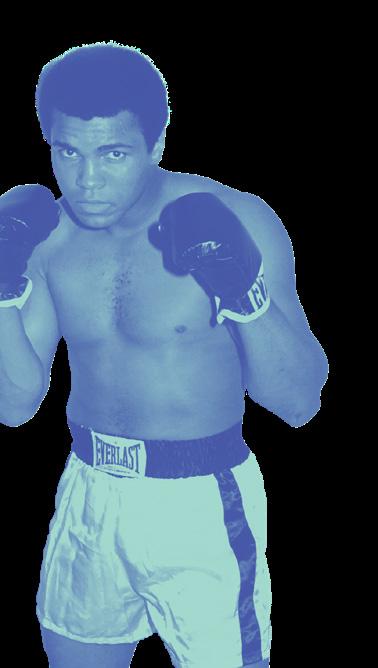
Muhammad Ali is considered the greatest heavyweight boxer of all time. His whole life was on the offensive side, as he always believed in standing up for himself. This was the reason he was put in boxing in the first place. He was also a social activist, and after converting to the Nation of Islam, along with Malcom X, he did great things for the black community. Ali’s life was all about offense. He used offense to fight against racism, and in his fighting style, the Rope-a-Dope style was a style that was composed of mostly offensive techniques. Rope-aDope was fast and confusing. The reason the Ali shuffle was so successful is because the style was perfected to make the opponent lose his head in a fight so that Ali would just end up towering over them.

Rope-a-Dope was perfect for Ali, but it came at the cost of having minimal defense, and Ali would have to keep his arms down to work with the style. Eventually, being on the offensive side all his life would cost him as he would be banned from boxing for a while for dodging the draft, and he would be diagnosed with Parkinson’s disease caused by the amount of headshots he took. Ali’s Parkinson’s would eventually lead to the change in defense and would cause future fighters to start improving their defense to prevent long-term injuries.
Muhammad Ali.

Mike Tyson used the Peak-a-Boo style that was created by Cus D’Amato, who was good friends with Muhammad Ali and saw the lack of defense in Rope-aDope. Peak-a-Boo was a very innovative style of boxing, which according to Tyson “took inspiration from karate” and was “90% mental and 10% physical.” It was primarily a defensive style and would work as an influence in other styles coming after it. The style required Tyson to keep his fists up to his cheekbones at all times and constantly slip and dodge punches. Tyson was known for being able to throw his signature combo, a right hook to the body and right-angled uppercut to the head, after dodging his opponent’s attack. The Peak-a-Boo style was one of the greatest styles ever formed and worked perfectly just for Tyson to use it very efficiently. This style has one flaw and that was that the style worked more efficiently when used by fighters shorter than 6 feet. This benefited Tyson because he was about 5’10’’ when he was

fighting while the average heavyweight was about 6’3’’. Because this style was created by Cus D’Amato, the only person that would use it perfectly would be Tyson. Tyson never taught the style to anybody, so eventually it faded from boxing, but it was a great style, and it would influence the modern styles of boxing.
Today we have a lot of new defensive styles that all revolve around protecting your head at all times, and one of the best ones is the Philly Shell, which was perfectly executed by Floyd Mayweather. The style keeps your arms blocking your chest and stomach while using your front shoulder to block any head shots. The Philly Shell has you keep your arms close to you at all times, which makes it easier to block punches because you don’t have to move your arms around very much. Then you got the Latin American styles, which all have their own ways of fighting, but share the same features of staying on your toes and keeping your guard up connected to your cheekbone. The Russian style uses a high-guard method mixed with keeping your
distance by utilizing jabs, which you can see in Dmitry Bivol’s fights. All of these styles were very loose at some point and were all offensive styles, but once Ali faced the realities of brain trauma, we learned that it doesn’t matter how hard you hit if you don’t have good defense.
Boxing is still slowly evolving, and we’re constantly seeing new innovations to make it better and lower the amount of brain injuries caused. I think that later on the sport will keep improving on these styles, and new fighters will keep discovering new methods of defense.
For now, I would say that the Philly Shell and the

perfected and still have a future in the sport of boxing. Aside from those two, there are many more that are constantly being perfected and keep evolving into an even better style for
protects the chin deflects right hand

Cyprus High School
Imagine this. You're in the middle of playing a sports game. The biggest of all time, the World championship. You're playing for 1st and 2nd place. The crowd is unimaginably loud. Cheering and stomping. Intense moments right after another. Teams scoring, and the crowd is just getting louder and louder. Then all of a sudden—BAM! Straight to the face. Out of nowhere, you get a right hand straight to the side of your head. Has this ever happened to you? Well, this is exactly what occurred during the 2024 Men’s World Championship quarterfinals of water polo. In the fourth quarter of the game, a highly controversial moment unfolded. Gergő Zalánki, number 3 for Pro Recco, appeared to strike Daniil Merkulov, number 4 on the opposing team.
Now let me do a little backtrack for those of you who are asking what water polo is. As a person who has played water polo since I was 6, I may know a few things about the sport. The basis of the sport includes a 6-man team and 1 goalie. The point of the game is to work a ball down a 25-meter pool to the

other side and try to score. Some people would consider water polo to be an extreme, rough, and very contactful sport. Now while this sounds like a sport for adrenaline-filled junkies, it’s really not. According to Nayad.com, they say, “Due to its lack of mainstream appeal, water polo is often overlooked. On the surface, it looks like a game of handball played in a swimming pool, but it's far more than that. Water polo is an intensely physical sport requiring a high level of skill that's extremely tough on the body and poses very real physical risks.”

Now let’s go back to the world championship game. Pro Recco had just scored, making it 9 to 9. But then, the call happened. What just happened? What’s going on? The crowd was in shock. No one had any idea what had just happened. The referee had stepped back to take a look at the camera—also known as VAR or Video Assisted Review. What was he looking at? It appears that Gergő Zalánki had hit Daniil Merkulov. Was it on purpose or was it an accident? The white water appears, but so does Gergő Zalánki’s hand. Daniil Merkulov's whole upper body moves backwards. He looks at the referee and throws his hand up signaling to the referee that something has happened. After the VAR review, the Referee decides to kick out Gergő Zalánki for 4 minutes. Getting him excluded. Forcing them to play a 6 on 5. During these 4 minutes the score bounces back and forth. At first it was FTC with the lead at 10-9. Then they make it 11-9—almost making it impossible for Pro Recco to come back from this. And then the power play of the century. 3 players had just gotten excluded from FTC, making it a 3-player game to a 5-player game, giving Pro Recco an advantage of a lifetime. Pro Recco scores, making it 10-11. FTC fights back, making it 12-10. A 2 point lead. OMG! Even though Pro Recco was down a player, they continued to fight hard, scoring another point. The score was now 11-12. Head coach of Pro Recco called a time out with around 15 seconds left. Giving this team one more play. If they make this, they have a chance to tie up the score and go into a shoot out and possibly get first place. A gold metal—how amazing would that be? The play starts. The players pass the ball back and forth to each other, trying to get an opportunity to score. Finally the opportunity comes. From the left side of the pool, a Pro Recco player gets an opportunity to shoot. He takes his chance. The crowd waiting; quiet, you could hear a pin drop. When all of a sudden, a shot goes off. The crowd cheers. But Pro Recco’s shot got blocked, making FTC the gold medal champions. 1st palace. How amazing.



But everyone has one question. Did the exclusion during the 4th quarter have any effect on the outcome of the game? Most people say yes, as they were playing with 5 players for the rest of the game. But the controversial call did not have any effect on the outcome of the game. Players are trained to play with 5 players during a game. Some may argue only for 30 seconds and no longer. But you get 30 seconds and then you swim to the other side of the pool for a break on defense and an opportunity to score. Plus, Pro Reccos player Gergő Zalánki had a completely fair call that happened to him. In the game of water polo, “The brutality foul requires that the offending player demonstrate obvious intent to injure another player. This is much more serious than mere violence. As a result of this foul: (1) the offending player is removed from that game and (at least) the next game; (2) that team may not substitute for that player for four minutes of game time; and (3) the offended team is awarded a penalty throw.
Brutality occurs very rarely,” according to usawaterpolo. org. So this call was completely fair and not wrong. I believe that the referee had made the right choice. I don't believe this altered the rest of the game and had nothing to do with the players’ performance or skill.
From a couple videos going around on the internet and YouTube, it appears to have been an intentional hit. When you intentionally hit or do an act to hurt someone in the game of water polo, you get kicked out. So doing this, Gergő Zalánki had exactly what was coming for him. But here's another thing. There were only 4 minutes and 25 seconds left. This gave Pro Recco hardly any time to try and come back. After all they had only scored 9 points in 28 minutes. But if you’ve played water polo, you know how hard and challenging it is to play like this for 30 seconds. Let alone for 4 minutes. But like I said, earlier teams like Pro Recco practice daily. They practice


Kiza Msafiri
Kearns High School
I watched soccer when I was twelve years old. Soccer is something that I like too much because when I watch soccer I feel very very well and I feel like my day goes wall to wall. In the football world, there are different players and better players in the world, but for me the best player is Lionel Messi.
Why Lionel Messi?
Messi is the best player, in my opinion, because he has better statistics for both club and country. He excels in goals and assists (GA). Messi can play different roles in the game, dribble more effectively, create chances, and assist and score goals better than any other player.
Messi is the most decorated player in football history, with 44 trophies for both club and country. Some of the most important trophies he has won include 4 UEFA Champions League titles, 12 league titles (with PSG and Barcelona) at the club level, 1 World Cup, 1 Copa América, and 1 Finalissima for Argentina.

Messi has won more individual awards than any other player in the history of football. For international level, Messi has won two Golden Balls (2014, 2022), one Copa América Player of the Tournament, and many more. Messi also has won more Ballon d’Ors (8), the most in history, 6 Golden Balls, the most in history, and many more. Messi has more awards than any other player
The number of goals Messi scored for Barcelona, cementing his place as one of football’s greatest goal-scorers.

All of these facts, along with many others I haven’t listed, convince me that he is the greatest player of all time. That’s why we sometimes call him the GOAT.
Lionel Messi Personal Life
Messi is a father of three children and is married. He doesn’t allow his kids to have phones, which is a good thing because he is protecting them from potential negative influences and ensuring they get proper sleep.
Messi was born in Argentina on the 24th of June in 1987. He is 36 years old, as of 2024. He was born in Rosario, Argentina.
Comparison to Ronaldo
People always compare Messi and Ronaldo. People compare Messi and Ronaldo because they are the top players in the football world. As you guys know, people love their own choice when comparing who is better. That depends on fans’ decisions. For me, Messi is a better player than Ronaldo because he is the most attacking player in the world. He scored 672 goals for Barcelona’s

team, and Linal Messi has 361 assists for the Barcelona team. Ronaldo doesn’t know how to pass. He just knows how to win. Messi fields his passing position better. But Ronaldo is the leader in the number of goals scored. Ronaldo has 891 goals compared to Messi’s 833. This would give Ronaldo an advantage of 58 goals over Messi.
In conclusion, Messi has been playing football for 21 seasons. Messi is good at knowing how to pass to his teammates to score more goals in the games. Messi can play any position: midfielder, attack defender, and so forth.


Kearns High School
John Wayne Gacy, an Insight into the Psyche of a Serial Killer
Imagine your boy were to disappear without a trace. What if there were no witnesses, no evidence; they just vanished? This was the terrifying reality for so many families between 1972-1978, and most didn't even realize anything was wrong until it was too late. “A clown can get away with murder” is a popular quote from John Wayne Gacy (The Clown Killer). This statement gives a disturbing insight into how sick and demented he was. How could no one notice what was happening just down the street from them? How can the person you trust turn out to be a killer? When people think of serial killers, they may think of Richard Ramirez, who watched

his cousin murder his girlfriend in cold blood and could argue that this is why he became a killer. Though beyond popular belief not all killers have had an experience similar to this that can take all the blame for someone turning into a brutal killer. What most don’t know is a person's genetic makeup and mental illness and environment can be just as much to blame.
John Wayne Gacy is one of the most prolific American serial killers. John would be found guilty of 33 murders of young boys and men ranging from ages 14-21. Now Let's deep dive into Gacy’s childhood and adult life and examine what could factor into psychosis. Gacy didn't have a quote-in-quote normal childhood like most people. He was subjected to several forms of abuse that include verbal abuse from his father and sexual abuse from a family friend. John was told that the assault was his fault (even though sexual assault is never the victim's fault). John was belittled and compared to his two sisters while growing up and was told that he “would grow up to queer” by his father, which at the time was a big deal in society due to prejudice centered around the LGBTQ community at the time. John was diagnosed with heart problems that affected his ability to exercise and play like the other kids, which led to bullying from his peers, while also being called names by his father, calling him things like “sissy” or “mama's boy.”

John is a prime example of a child who shows the MacDonald signs (named after John Macdonald). When kids show these signs, it's usually linked to a previous mental illness and is connected to people that commit murder and sexual murder. The signs include bed wetting, starting fires, and hurting animals for fun. To be clear, just because a kid wets the bed does not make them a serial killer. Low serotonin levels in the brain and poor orbitofrontal cortex function have been linked to antisocial behaviors explaining why serial killers lack empathy or remorse, which explains how someone can stomach doing such horrible things and keep it hidden. Gacy is just one example of this. Though it may not be proven by scientists, while being obsessed with serial killers I've noticed most of them have experienced a head injury at a young age. Gacy is no exception.
Gacy began his murderous rampage in his adulthood while starting a family at the same time and being married twice. John started a construction company, which is unfortunately where he found most of his victims. Being nearby made it easier for John to groom and manipulate the young men. John
would invite the underage boys over while offering them things like drugs and alcohol, to manipulate them into sexual intercourse. John got the name (the clown killer) because of his habit of dressing as one of his clown alter egos while committing his crimes. John joined a group called the Jolly Jokers Clown Club. This group would perform for birthday parties and fundraisers. John created two Clown characters called Pogo and Patches.
John would eventually be arrested in 1979 and sentenced to death after a two-year-long trial, where John would state, “ I should never have been convicted of anything more serious than running a cemetery without a license.” Reading this quote sends shivers down my spine when realizing just how non-sympathetic this man is for the horror he put so many through. Shortly after John was arrested, he pled not guilty because of insanity (a way for him to transfer blame), claiming he had multiple personalities. He blamed a specific personality for the crimes. John was subjected to many hours of psychological tests to determine whether he could be considered criminally insane or was responsible for his crimes. Though he was diagnosed with antisocial personality disorder, the extreme planning that went into


Now we can all agree that John Wayne Gacy is scary, but the scariest thing about John is the fact that he didn’t kill out of anger or to seek revenge; he killed simply because he wanted to. John recorded a statement that people could pay to listen to. The tape was John trying to convince people he was innocent. The recorded tape John produced was full of him just rambling about nonsense. He was dismissing everything that was brought up in court. His main defense was he had an alibi for all the murders, but he does not elaborate (because he doesn't have one). John always denied what he had done. He never accepted responsibility all the way up to his execution. Personally, I think he was very immature. He was acting like a little kid who got in trouble for stealing a cookie out of the cookie jar, not someone who got caught for murder. It was proved that John had the mental capacity to avoid getting caught, to have relationships, and to succeed in work and school like an average person. John hid his true self so well that when the truth came out it was almost impossible for those who knew him to accept the reality of what he was, even with the bodies being found in his house. Despite the trauma and genetic makeup of John Wayne Gacy, it all comes down to his decisions, and
Terry Sullivan was the prosecutor assigned to John's case during the trial. Sullivan referred to Gacy as "worst of all murderers." Sullivan also stated, "John Gacy has accounted for more human devastation than many earthly catastrophes…I tremble when thinking about just how close he came to getting away with it all."

Salt Lake Center for Science Education

In the last few decades there has been an influx in social unrest for the religious cult groups that live among Utahns, such as the Warren Jeffs trial condemning the leader of the polygamist group, the FLDS, that shook southern Utah communities revealing the hideous truth of underage marriage and brutal abuse. But extremist beliefs are not only held by the women in prairie dresses, like the FLDS, but families that look like yours and hide their ruthlessness in plain sight. Recently the case of Ruby Franke and her accomplice, Jodi Hildebrandt, has deeply disturbed not only Utah but the world who watched the Franke family morph from a religious and fun family to disfunction and destruction.

Starting in early 2015, the Franke family started the YouTube channel “8 Passengers,” consisting of 2 parents and their 6 children. The channel highlighted their conservative LDS lifestyle and their parenting techniques. In the very beginning of “8 Passenger” the family seemed like your average family with a large bunch of silly kids who loved orchestrating minor pranks

and playing games paired with a set of fun-loving parents. All had appeared well as time went on, but all of the fun-loving family content morphed into misguided madness around 2018. Kevin and Ruby Franke had no idea what devastation “8 Passengers” would bring not only upon their marriage but their beloved children as well. The Franke family videos were depicting their daily activities and on occasion their vacations, all seeming happy until discipline came into play. The children were often subjected to unusual punishments such as withholding food, public humiliation, and removal of basic human rights. A specific concerning example of the abnormal discipline the children faced was with the second born child, Chad. In 2020, Ruby explained in a video that she had revoked his bedroom “privilege” for 7 months and forced him to sleep on a bean bag for those 7 months. While this was one of the most well-documented cases of abuse in the earlier years of the Franke home, this was not an isolated incident. A common law of the “8 Passengers” home was that if you didn’t complete the tasks assigned to you then you couldn’t eat. Utah law clearly states in “76-5-109 Child abuse -- Child abandonment.”
“(I) intentionally fails to provide the child with food, shelter, or clothing;
(II) manifests an intent to permanently not resume physical custody of the child; or
(III) for a period of at least 30 days: (Aa) intentionally fails to resume physical custody of the child; and (Bb) fails to manifest a genuine intent to resume physical custody of the child.”
While this section was later altered in 2022, the statement pertaining to restriction of food was in action during the abuse that had been filmed by the family. While it is truth that most things on the internet are not trustworthy, claims of abuse need to be taken seriously. As we have watched the Franke delusion grow, there were many warning signs of the abuse and neglect escalation that were caught on camera for the entire internet to repost, make fun of, and neglect the threats the kids faced. All of the odd punishments had been leading up to the final chapter in the Frankes’ publicity, Connexions, and Jodi Hildebrandt.



Married soon after murders





Devil in Disguise
fatherdaughter
Jodi Hildebrandt and the topics of child abuse and Mormon extremism are deeply intertwined. Her cult circle used to include not only Ruby Franke but Tim Ballard, who has multiple accusations of sexual assaults, and the infamous Lori and Chad Daybell, who were recently convicted of the murders of Chad’s 1st wife, Tammy Daybell, and Lori’s daughter Tylee Ryan, and her adopted son Joshua Jackson Vallow. But Jodi’s extensive history of abuse starts on July 5 of 2005, when she was licensed as a mental health counselor.


In 2008, she was counseling a couple and was psychologically abusing her male client, Adam Paul Steed, and later she detailed information that was protected by patient confidentiality about him leading to his divorce end expulsion from BYU college. Her break of contract later led to her license being revoked in 2012 for 18 months. In between the years of counseling Adam Paul Steed and her license being revoked, she had violently abused Jessi Hildebrandt, a close relative of hers, psychologically, emotionally, and physically in 2010. During their time spent in Jodi’s home, Jessi came to the police relaying their story of cruel abuse. Ultimately Jessi was taken back to Jodi, and no investigation was ensued.
The Franke family was not Jodi’s first rodeo.


Ruby and Jodi began their friendship in late 2018, bonding over their conversative beliefs and LDSrelated platforms. After meeting, Hildebrandt became Ruby Franke’s personal therapist and had introduced the family to her online business, Connexion Classrooms. Kevin Franke would later describe Connexion Classrooms to ABC4 News as “men-hating women looking to tear down their husbands.” He unenthusiastically attends these Zoom programs in hope that his marriage with Ruby would improve from these “lessons.” During 2020, the controversy of Chad sleeping on the bean bag had a catastrophic effect on the “8-Passengers” channel. Kevin also recounts that the channel went down in record time, and they had lost about 90% of their income due to the situation.


Ruby and Jodi had grown concernedly close to the point they would sleep in the same bed and have “spiritual visions” together. By October of 2021, Kevin stated that “I couldn’t come into the kitchen to eat until Ruby gave me permission,” he said. “The upstairs where Jodi roamed was completely off limits. I couldn’t go upstairs any more in my own house.” The air was tense, and the Franke parents were growing apart, and after July of 2022 Kevin Franke had left the Franke home and didn’t see his children until the Hildebrandt home was raided. Kevin left the home in hopes
September of 2022, their oldest child, Sheri called in a welfare check on her younger siblings because she had been told by an old neighbor that her sibling had been left alone for around 5 days and left to roam the house and the streets of their neighborhood. A welfare check was made on the Franke home, but no contact was made with the children and no further action to meet the kids was made.

Where the Trails Meet Kevin Franke alleges that Ruby had taken the children and moved into Jodi’s home in Ivins, Utah, at the end of May 2023 without telling him that the children would no longer live in the family home located in Springville.
Between the end of May and August 30, the 2 youngest children of Ruby Franke, whose names have been reduced for privacy to R, the 12-year-old boy, and E, the 9-year-old girl, were exposed to abuse that had been likened to the brutality of a concentration camp from the direction of Jodi Hildebrandt and inflicted upon by someone they trusted and loved, their own mother. During these three months of hell, R and E were bound, shaved, beaten, waterboarded, and forced to do labor in the blistering Utah summer sun. In July, about a month before his final escape, R had made an attempt to find help, but he was quickly found and punished with two sets of handcuffs, binding his arms and legs. Often the children would have wounds from said bindings and physical labor. The “treatment” for these wounds would be an excruciating mixture of honey and cayenne pepper, adding a new way to torture these young children. Weeks after his first attempt, R would again make a daring escape as he crawled through the window of the Hildebrandt home and then running around the unfamiliar neighborhood to find deliverance for him and his little sister. He had finally found a home that had answered the door, and the disturbed neighbors immediately called the authorities and described the boy’s devastatingly emaciated condition. Police quickly arrived at the Hildebrandt’s property and raiding the Ivins home only to find disturbing items of torture, such as handcuffs, ropes, the honey mixture, the diary of Ruby Franke detailing her belief that her children were possessed by evil, and Springville

finally find the terrified little girl that was described as his younger sister. Officer and EMT’s had to coax the little girl out of the home with the promise of food. After the house was cleared, the children were rushed to the hospital to treat their sickly state. Later in the year, Jodi Hildebrandt and Ruby Franke were found guilty of 4 counts of child abuse relating to the torture of Franke’s 2 youngest children.
Shoulda, Woulda, Coulda.
The extreme levels of violent abuse weren’t known to anyone outside of Hildebrandt’s property throughout the three months that Franke and her children inhabited the home, but the authorities had been alerted by neighbors and older children of the Franke home that there was neglect and abuse happening in the vloggers home. While no contact was made with the children in question, there were major grounds for concern, such as when people are reporting that children are being left without adults for multiple days. There should have been continuous checks until contact was made with the children. The brutality R and E faced was absolutely preventable, not only if the welfare checks were properly carried out, but if a serious investigation was ensued after the reports of torture by Jessi Hildebrandt. Utah has failed the Franke children and many more children that go unknown and are left to be abused. If Utah’s authorities had taken reports of child abuse seriously and proper completion of welfare check protocol, the Franke case could have been prevented.

Utah is not the only state that has this problem and has had gruesome cases that display the problems within the responses to violence. The notorious Lori and Chad Daybell case is also an example of investigations that were not taken seriously, such the murder of Lori’s 4th husband, Charles Vallow in Arizona. Loris’s brother, Alex Cox, had shot Charles Vallow in “self-defense,” once standing up and the other postmortem. When taken in for police questioning, she was told “she doesn’t seem the type” and was told she was “very nice.” After that instance, she later participated in the murders of Tammy Daybell, Tylee Ryan, and JJ Vallow. If these investigations were followed through with all seriousness, there could have been an intervention before the streak of morbid murders continued. When protocol is not followed correctly, it leaves room for people like Lori Daybell, Chad Daybell, Ruby Franke, and Jodi Hildebrandt to abuse, neglect, and ultimately kill the people that need the most protecting.


As a youth worker at a camp, Tarana Burke's job was to provide a safe place for girls to confide in her and support them in any way she could. While she was working, Burke met a young girl named Heaven, whose sweet-looking nature and voice contradicted her wild and angry behavior. Heaven quickly grew attached to Burke and was known to follow her around camp. But one day Heaven came up to Burke with a look in her eyes that immediately caught Burke’s attention. She knew that day would be anything but ordinary because on Heaven’s face there was a look full of sadness and a desperate desire to confess a painful secret. A secret so painful that Burke immediately knew she wanted no part in it. Finally, when Heaven was able to grab onto an opportunity to talk to Burke she began to describe what her “stepdaddy,” her mother’s boyfriend, was doing to her developing body.
With each word, Burke’s disgust at his actions grew and grew as she listened until she literally could not stand it for another second. In under five minutes Burke had to cut Heaven off and point her in the direction of another counselor. She then proceeded to watch as shock and pain began to overtake Heaven’s precious face at Burke’s rejection. Heaven had just opened up some of her most painful wounds in search of comfort and understanding but was denied by someone she trusted. As Heaven walked away, she began to stuff her pain and sorrow back into the wounds and pull her mask back on as Burke continued to stare. Even though Burke loved Heaven, her own experiences prevented her from saying, “It’s not your fault,” or sharing her understanding with this young girl. She stood as two words rang and rang and rang through
Another devastating story, found in UChicago News’s article, “Tarana Burke discusses her Me Too. movement, Hollywood’s hashtag co-opting of it,” Burke experienced when she taught a class and asked the girls to either write something they learned about sexual violence or “me too” if they had experienced it themselves on a sticky note. When she looked through their answers, she and her coworkers were all devastated that 75% of the sticky notes had “me too” written across them. Burke realized these girls had no voice when it came to these horrendous actions. She wanted to provide a way for them to heal and connect with others in a safe space. In 2006, Burke started the Me Too. movement with the goal of ending sexual violence all together. Her vision is based on empathy, love, respect, and connecting survivors with resources for healing. Me Too aims to stop systems, communities, and narratives that have allowed for these heinous actions to happen in ways that are rooted in the survivor’s stories.

Heaven and many other girls Burke met as a youth worker were her inspiration for the Me . movement as explained Me Too website.
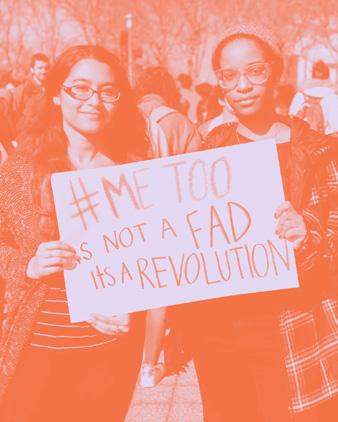
The Me Too. website says its mission is to serve “as a convener, thought leader, and organizer across the mainstream and the grassroots to address systems that allow for the proliferation of sexual violence, specifically in Black, queer, trans, disabled, and all communities of color.” The general public’s attention on Me Too was fairly limited until the Harvey Weinstein story broke in 2017 and forever changed the discussion. The bravery of the women who contributed to the New York Times article that broke the story were vital to its success and the creation of #MeToo. While the Me Too movement began many years before #MeToo, the women who shared their experiences even with the fear of repercussions were able to revolutionize the discussion on sexual violence.


In 2017, Jodi Kantor and Megan Twohey started an investigation into sexual harassment claims against American producer Harvey Weinstein. They knew including interviews in the article would create a strong connection between the readers and the story. As they began to contact women that were assaulted by Weinstein, many refused to talk to them because of NDAs and a fear of repercussions from speaking negatively about such a powerful person. One of the women that Kantor and Twohey emailed was Rose McGowan, who originally refused an interview. In her reply to Kantor’s email she wrote, “Here’s the thing, I have been treated quite shabbily by your paper at times, and I believe the root of it is sexism,” according to Kantor and Twohey’s book She Said. Eventually they were able to get McGowan to agree to a private phone call where she explained how widespread silencing women was in Hollywood. Companies had NDAs signed by practically all employees that prohibited negative talk about anything the companies were doing. This and the fear of losing status in the competitive industry kept many women silent. With this new information, Twohey and Kantor continued to search for women willing to go on the record, and after countless months they finally found two women who were ready to share their stories.
In 1996, Ashley Judd was a young actress when she was invited by Weinstein to a “business breakfast meeting.” When she arrived at the hotel, she was surprised that the meeting was being held in his room. Throughout the meeting, all Judd could think was “How do I get out of the room as fast as possible without alienating Harvey Weinstein?” as stated in Kantor and Twohey’s article “Harvey Weinstein Paid Off Sexual Harassment Accusers for Decades.” She feared the repercussions she would face in Hollywood if she went against a producer with so much power.
Judd had similar experiences when she was a child and a model in Japan, and when she had shared them with the people around her they did not believe her. Because of these experiences, Judd knew how hard it was to put yourself in the spotlight and say negative things about someone who had more power than you. According to She Said, Judd applied for a master’s program at Harvard, and in her favorite class, Gender Violence, Law and Social Justice, she wrote a final paper about women coming together through shared experiences in order to tackle sexual violence. But even though she recognized that experiences need to be shared she also had experienced how the media focuses more on the accusers than those with power who committed the disgusting actions.

In 2015, Judd did an interview for Variety, where she explained an incident that had happened with an unnamed producer. She tried to highlight the actions this producer took against her, but the media instead focused on her. Judd wanted other actresses to go on the record with her; she did not want to do it alone, but when Kantor called to explain the strength of the article, Judd decided to become the first to go on the record. She decided enough was enough, and a person like Weinstein did not deserve to hold his power over her in order to keep her silent. Even though she could have been punished for her involvement, Judd decided keeping silent was worse than any punishment she would face because it would allow Weinstein to continue doing monstrous things to other women in his employment. Her bravery given the experiences she had in the past when she shared similar stories paved the way for many other women to do the same after the publication of the article. Judd was able to provide people like Heaven and all the girls Burke had helped with a voice.


Like Judd, Laura Madden was a young woman when a production began to shoot near her home in rural Ireland. She landed a job with the production, and soon became entranced with everything that went into creating a movie. As she asked the crew for more opportunities, she found a job with the movie Into the West. Soon after that, she had her own abusive encounter with Weinstein during a “meeting.” According to She Said, at this meeting she was told she got “a permanent job in the Miramax London office.” The atrocious moments that followed would shape Madden’s life. After her frightening encounter with Weinstein, she was terrified about the possibility of losing the London job. Just like so many women before her, she feared the consequences of Weinstein’s actions and her response on her standing in the industry.
During the investigation, Madden received a phone call from one of Weinstein’s ex-assistants, Pamela Lubell, who asked whether Madden had received a call from any “cockroach journalists,” as stated in She Said. Lubell then asked Madden to refuse to comment and stay silent. Madden was sure Weinstein requested Lubell contact her, and she very clearly and directly told Lubell she was assaulted by Weinstein and she would not promise her silence. During Kantor’s meeting with Madden, Kantor asked her to imagine what going on the record would look like for her and then proceeded to lay out what the story was building up to be.
Though Madden originally said she was not ready to go public, this info helped Madden acknowledge that she wanted this story to succeed, and her freedom from NDAs and the industry itself might make her the perfect candidate for going on the record. In an email to Kantor at the end of the investigation, as detailed in She Said, Madden wrote, “I am speaking out on behalf of women who can’t because their livelihoods or marriages may be affected. I am the mother of 3 daughters, and I do not want them to have to accept this kind of bullying behaviour in any setting as ‘normal.’” Madden told Kantor she would go on the record. Like the girls Burke helped, Madden came from a place that would not have given her a voice, but this article would become her way of helping people like herself. Madden recognized that her position would allow for her to add a depth to the story that could lead to its success. She knew this story needed more than just the facts; it needed a woman who not only shared her experience but her thoughts and feelings as well. The story needed a personal account for it to have the desired impact.
Workplaces reliant on a good image in the entertainment industry often trap workers in an environment where they will either lose their job or have little to no chance of success
in the industry if they speak out against company practices. Because of Judd and Madden’s positions, they were able to add the personal account the article needed in order to gain the attention it did. The readers needed to read these two amazing women’s accounts of these terrible moments in order to understand the importance of these accusations. Individually their accounts potentially could have done the job, but together they were able to illustrate the scope of Weinstein’s actions.
Judd was an actress with a few movies already under her belt when the “meeting” happened, and Madden was a new assistant from rural Ireland when she had her encounter. Judd and Madden had very different lives up until these horrible moments, but that didn’t matter to Weinstein. The fact that these incidents happened four years apart and more than 20 years before the story was published and in locations spanning thousands of miles highlighted the extent of Weinstein’s actions. He did not commit these heinous acts in a short period of time and in the same location. No, he committed these acts for at least 25 years all over the world. Madden and Judd’s interviews paved a way for not only Weinstein to get fired but many others like him from having the power to do what they did. They were able to bring a voice to those who were not in a position to speak up or wouldn’t be believed if they did.

After the story broke, more women began to accuse Weinstein, and the number of accusations soon reached 87. Without Madden and Judd, many of these women would not have had the courage to report the revolting things he had done to them, and their jobs and place in the industry could have disappeared in seconds. Judd and Madden’s inspiring bravery was vital to not only the success of the story but the creation of #MeToo.
Ten days after the article was published, Alyssa Milano created a tweet that continued to change the conversation. She asked people to reply with “me too” if they had been sexually assaulted or harassed, just like Burke and her colleagues asked their students. Her tweet quickly became viral, and #MeToo was used 19 million times in less than a year, according to Monica Anderson and Skye Toor’s article “How social media users have discussed sexual harassment since #MeToo went viral.”
Milano used her tweet to show the extent of sexual violence, and in an article by Chancellor Agard called “Alyssa Milano Explains Why She Waited to Comment on Harvey Weinstein,” she explained that one in three women have been sexually harassed in the workplace. This terrifying statistic is why Milano wanted to use her platform to show support for survivors and highlight the fact that the abuse of power and sexual harassment is not localized to Hollywood. Without Madden and Judd’s courage, many people would not have had the confidence or support to share their own experiences. Their stories were key to the platform that was created through #MeToo; without them, people would not have been able to share their own stories about harassment from people with power.
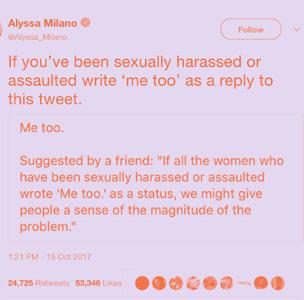
Me Too. has worked to end sexual violence since 2006 by working in communities and with survivors to help rebuild, educate, and heal those affected. They have built up the discussion by emphasizing the importance of safe spaces and using empathy to connect with each other. With the introduction of #MeToo, the conversation has become viral, and the focus of the discussion has expanded to include more people and has allowed for other industries to receive more backlash for silencing workers and hiding sexual harassment in the workplace. #MeToo has focused more on sexual violence in the workplace, whereas Me Too. has a focus on communities of color and the LGBTQIA+ community. Though they are separate from each other, their combined work has brought many important changes to systems that have enabled sexual violence to happen. Me Too. has helped heal and support survivors, and #MeToo has provided these survivors with a voice. The women who participated in Kantor and Twohey’s article brought the idea of “me too” to a wider audience and became examples of standing up in the face of power and enabled others to have a voice in the discussion.
Change and #MeToo
Judd and Madden were able to spur the conversation forward in order to start peeling the layers of protection off those in power. According to Holly Corbett’s article, “The #MeToo Movement Six Years Later: What’s Changed And What’s Next,” six years after Milano’s tweet, 24 states and the District of Columbia have passed more than 80 workplace anti-harassment laws. These laws aim to limit the use of NDAs and support workers' ability to speak about workplace conditions and issues without the fear of repercussions. Some states have also passed anti-SLAPP (strategic lawsuits against public participation) legislation that combats companies and institutions’ ability to punish workers that speak out against them. Along with these major legal wins, #MeToo has also helped bring accountability to maledominated areas like the trucking industry, military, and the NFL. In 2023, amidst sexual harassment charges, Dan Synder, the owner of the Commanders, was forced to sell the franchise. Judd and Madden became the examples for speaking out against people with power and inspired others to do the same. Without them, these laws would have taken longer to pass, and these institutions would not have been challenged in such a way.
It’s Not Over Yet

Judd and Madden were able to build up courage in others so they could accuse and report the people that were buying their silence about the horrible experiences. Sharing their personal experiences made it possible for many women and others who have experienced sexual violence to be feel safe and seen, just like Me Too. strives to do. Madden and Judd took a leap of faith in order to expand the discussion, but we cannot end the discussion now. According to RAINN (Rape, Abuse, and Incest National Network), as of 2020, every 68 seconds an American is sexually assaulted. We have a lot of work to do, and it starts by further bringing awareness to the people around you and reporting sexual violence. We can all agree that no person deserves to have these monstrous things done to them like so many others have in the past. Judd and Madden’s decision to share their stories was a step in the right direction, but we have a long way to go.
1/3 women have been sexually harassed in the
workplace.

Cyprus High School
When people think about sharks, we think of big sharp teeth, cue the Jaws music when the shark is approaching, merciless killer and giant scary monster. All of these things are images that movies have created in our heads, and most aren’t true. Sharks very rarely attack humans, and most of them are more scared of us than we are of them. So why do people have this
The stigma around sharks is a terrible and cruel one that is very far off from what sharks actually are. A stigma is an assumption that is related to a group or quality. Although sharks are thought of as man-eaters, humans aren’t actually on their menu. A shark's diet consists of fish, crustaceans, birds, turtles, sea snakes, dolphins, and smaller sharks. Most of the time when sharks are involved in human attacks it is because they are hunting a similar size prey like dolphins and seals and confuse the humans with their actual prey. The scent of humans is unappetizing to most sharks. So, they don’t actually hunt humans.



and then attack as a defensive reflex, not because they want to eat you. Only around a dozen of over three hundred species of sharks are actually aggressive, such as Tiger Sharks. Many of our fears about sharks come from the rotten stigma of sharks as violent killers that will kill anything they want. Things like movies and the hunting industry helped create this stigma, causing a more violent environment for sharks.



The lack of knowledge of how often sharks actually attack is another thing that assists the stigma. From movies, people think sharks attack humans a lot more often than they actually do, when in reality, the chances of getting attacked by a shark are one in three million. Also, the assumption that there is only one species of shark instead of many helps this stigma too. Movies only use one type of shark, the Great White Shark. This brings in a fear of sharks because people believe that they are all the same.
Another myth is that sharks have no predator, so it's fine for people to kill them because no one else will. But that's not true. Sharks eat other sharks, and Orcas (killer whales) are their main predators. So then why have people created this notion that we are the only ones that hunt sharks? All of these myths are things movies and media have helped create, making it so the stigma grows stronger.
The “Jaws Effect”
The Jaws franchise has had a big impact on the creation of the shark stigma. Jaws has four movies in it: Jaws (1975), Jaws 2 (1978), Jaws 3-D (1983), and Jaws: The Revenge (1987). Even though the first movie came out forty-nine years ago, it is still negatively impacting people and sharks today. The first movie is about this small town off the coast of New York. In this town there is


a rabid shark that goes around and kills several people. They try to keep it under wraps and not tell anyone about the shark while they are hunting it. Soon they go and look for the shark, which is a Great White Shark that is reported to be twenty-five feet long and a monster that can’t be killed. This movie showed a bad view of sharks, but it barely had any real facts in it. The movie made sharks look cruel and bloodthirsty. Eighteen people die in total throughout the Jaws movies. But in real life very few official reported attacks happen. Most of those reports just assume it was a shark, but we have no real evidence.
This movie created something called the “Jaws Effect.'' This is the belief that sharks will intentionally hunt humans and attack. It also makes people believe that shark attacks are always fatal and that they will just attack to attack. They also help increase galeophobia, also known as selachophobia, which is the fear of sharks. From these movies, it has caused people to fear sharks more and strengthen the stigma that sharks are mindless killers that will eat whatever they want.



Jaws is not the only shark film, and it won’t be the last. Films have caused people to have fewer concerns about what happens to sharks. The media has helped create the belief that sharks do not need to be protected and are not economically important, which led to an increase in hunting. Sharks are being hunted for their meat, organs, fins, and skin. These are made to create products like shark fin soup, lubricant, leather, and shark liver oil. Sharks are killed in many ways. One of the ones that is
more cruel is shark finning. This is when fishermen only cut off the fin of the shark after they are caught. Then dump the rest of the shark back into the ocean to die. With shark meat being a more rare meat, fishermen can get a lot more money for them. This caused sharks to be overhunted all for money. The website 8KPAX has reported that since the release of the first Jaws the shark population has decreased exponentially by seventy-one percent. Currently, seventy five percent of shark species are threatened with extinction now.
As of 2024, 75% of shark species are threatened with extinction.
Movies like Jaws portray sharks in an unfavorable light, which creates a rotten stigma around them. Along with the increase of hunting them, this has caused major harm to the sharks. Sharks aren’t violent man-eating monsters but instead an important part in keeping our marine life alive and stable. This is bad because sharks are a big part of our ecosystem. As apex predators, they help with population control of the animals below them in the food chain. They keep things stable and help keep the ocean life thriving. The cruel stigma that the media has created around these amazing apex predators has affected them in many terrible ways even though they are a valuable part of the marine ecosystem.


Cyprus High School
You may not see it when scrolling through apps like TikTok, YouTube Shorts, Instagram Reels, Snapchat Stories, and even the side-scrolling on Pinterest. Our world is now addicted to scrolling. A nice definition of addiction from healthdirect.gov.au is, “Addiction is when you have a strong physical or psychological need or urge to do something or use something. It is a dependence on a substance or activity even if you know that it causes you harm. It can impact your daily life.” By the end of this paper, I want you to ask yourself the next time you’re scrolling through these apps why am I doing this? Am I addicted?

Trust me, I’ve been there. Either waking up or about to go to bed, you see an “Am I the a**hole?” Reddit story with Subway Surfers playing under it, and you wonder what’s next. So, you scroll, and you see a dog twerking with a wig on, and you keep going and going. You know you have the option to stop, but you can’t, or you think you just don't want to. Now let me surprise you— people with gambling addictions think the same way.
On Netflix, there is a series called Money Explained, and Episode 4 is all about gambling and how it is a terrible financial decision. Recovered addicts explain how they thought when they were addicted and stuck in the cycle and why it made sense to them. I want to show you the connection that I saw

when I watched this between gambling and the addiction of scrolling and how it affects everybody, especially kids like me and even scarier, kids younger than me who are getting targeted because of this new popularized addiction.

One thing specifically I found interesting on Money Explained was their research on dopamine levels in the brain when you have the anticipation for a possible reward; that pause when you scroll when you see the next video sliding up—it could be something amazing or something terrible—right then your brain lights up with dopamine. In gambling, the dopamine level is higher because they get a possible reward of money, but even then, your reward is getting to see that next video because you have no idea what it could offer, making it more desirable. When you are doing that over and over and over again, you may not be gambling money, but you are certainly gambling your time and even health.
Kids and children who are using scrolling apps have an addiction to it just as much as gambling.
Kids from 17 to just barely turning 1-year-old are getting screen time usually on educational programs or videos, but that screen time turns to game time or YouTube time or the worst, in my opinion, scrolling time. Kids from 10-1 are learning all these new emotions and body functions like love = hugging and kisses and anger = hitting and yelling.

Having your children scrolling on the internet not only exposes them to bad sites or time-wasting games, but it gives them the option to develop addictions. Even grown adults say gambling is freeing, and they don't have to think about anything, so when a child is in the most vulnerable stage of their life to be learning, it is terrifying to see the change of kids from a curious child to uncontrollable, easy to anger, lost, and confused kid. Kids are losing the ability to love and care about things because they haven't even fully learned what they are yet.
When parents take that away or try to limit the addictions; these kids find tons of dopamine, so they are obviously going to be sad, but they are still learning emotions that can turn into hatred and anger towards the parents and caring adults in their life. The addictions kids are developing are a lifeline; they make kids feel safe and understood, so when parents give in and let them continue, this could even be considered a type of abuse. They are opening kids down the path of an adult who is highly dependent on bad habits and constantly searching for more to get those same dopamine rushes and hate anybody who tries to help because all that they are hearing is, “You need to give up the only thing that you find comfort in.”
Brain Rot Farms
There are specific accounts on scrolling apps targeting kids called “brain rot farms.” They are farming the rot and slaughtering your kid's brains for likes and money. There are hundreds and thousands of accounts showing or using AI to target your kids with randomness like “if you like this video, you will save this dancing chicken nugget,” which, yes, is dumb and obvious. You, the reader, wouldn't fall for that but your kids absolutely will.
There are people using AI, making stories of cats becoming a sigma, which is just now the term for a godly person who is just that cool. It is all just dumb because with all this new vocabulary, kids are disconnecting themselves a lot, leaving them vulnerable to be planted and farmed. That is why it is specifically targeting kids because they don't understand that it is fake or something not to be cared about, but it is like telling a 4-year-old that if you eat a watermelon seed it will grow in your stomach because to an adult that is obviously not true and they will only believe that for a little while. It is a
Well, those targeted videos tie your kid down in the dirt and scream “A watermelon seed will grow in your stomach” on repeat for about 15 seconds, but then they scroll, and now it's screaming, “You need to like this video to save this singing chicken nugget.” Now that you can understand a little more, it doesn't sound so stupid. Take yourself for example. You have probably sat down and watched a couple of videos, and now that 3-6 hours have passed you may feel a little guilty and gross that you sat there and did nothing for that long. Now what about your kids? Kids might be doing the same thing, but it is constant, unrealized torture, destroying your children for 3-6 hours, which is perfect for harvesting.
Adults Suffer Too

Adults who are using any scrolling apps have an addiction to it just as much as gambling. Adults who scroll at night finally getting a break after a
have a hard time falling asleep. A researcher from the University of New York says, “Screen time overloads the sensory system, fractures
Screen time induces stress reactions, and screen time disrupts sleep and desynchronizes the body clock.” It has been proven repeatedly that exposing yourself to excessive blue light (which has shorter wavelengths and greater energy compared to other colors and is linked to eye damage) not only harms your eyes but also tricks your brain into thinking it’s daytime. This triggers the release of norepinephrine and orexin (also known as hypocretin), chemicals that keep you
schedule, leading to insufficient sleep, poor concentration, slower reaction times, and mood changes. This is a path where it is scarcely common to obtain a need for melatonin, which almost immediately has dramatic


<1 hour
1-2 hours
Your body naturally produces melatonin, but when you take supplements because you can’t fall asleep, it weakens your body’s natural production. This reliance on pills essentially “spoils” your body, so when you stop taking melatonin, your body may resist doing the work necessary to regulate sleep on its own. It will put out less and less, keeping you up for nights until you pass out from exhaustion, but most of the time, people would just give in and spoil their body even more. The danger of this is the more you take, the more you need, causing you do overdose and possibly die. If your children are staying up and can't go to sleep, you would give them melatonin, but again the more you take, the more you need, so you could possibly make kids lose their melatonin production entirely.
2-4 hours
4+ hours
1. Go on small trips.
There
I am saying you are addicted because even I have been trapped in this. I am really trying to make this a bigger problem, but it desperately needs to be treated like one because this needs to stop. There are even different options for you and your kids to help stop.
Go to the aquarium or the zoo to make special memories. No money for that? No problem. Drive down to your local park to have an amazing picnic or games. No gas for that? It is an easy fix. Walk there. If that is too far or if you don't live in the best or safest place, have one in the backyard or move those couches and have an in-home picnic to have a blast with the kids.
2. Read books together.
Sit down and read amazing stories together or make up your own and play dress up with some blankets and act them out. Or make time for yourself to read or watch an amazing book, movie/show.
3. Throw your phone.
Anytime you get home from a long day and you just want to get lost in scrolling, throw your phone on the other side of the couch or under the bed and take a walk or cook or pick a hobby, like anything, for a while until that thought is out of your head.
4. Make music.
Take out the pots and pans or instruments and let your inner child out and have fun and laugh it all out or have your kids join in to make the next top song in the country.
5. Delete those apps!!!!
You know that these apps are so terrible, so please really consider deleting them or taking a nice long break. Even your favorite influencers take breaks because all this drama and stress can be so much even for them, so do an “internet detox” for a while.

This addiction needs to be recognized to be just as bad as a gambling, drug, or alcohol addiction because this takes your life and time to be living and to have bad days, to be stressed, to be joyous, and to be alive because feeling all positive and negative things makes us all human. Find the ways, be the one, do something to get rid of this horrid addiction because you are making your life boring and pointless. You are pushing your family away and you are falling farther and farther into addiction. Push yourself to have fun and find ways to smile because I promise it really does make a difference to you and everyone you know. Ask yourself why am I doing this? Am I addicted?

Cyprus High School

There are countless types of media you can stream and listen to on the go, whether it be the latest Kendrick Lamar album to any podcasts where a host talks about certain topics and goes deep into the lore with their listeners. Recently, true crime podcasts have gotten a lot of attention and new listeners with new debates on whether true crime podcasts are dehumanizing the victims and treating them like any other campfire horror stories. Many will say true crime podcasts are inconsiderate since they can make cases popular again and even go as far as to glamorize the criminals. This can cause the victims' loved ones and family to feel like they are going through all the hurt and distress again.
Rotten Mango Podcast
However, there are a lot of good podcasts that don't treat these criminals like celebrities and glamorize them. A good example of this respectful behavior is Rotten Mango. A true crime podcast hosted and created by Stephanie Soo herself. She never dehumanizes the victim’s story or belittles what the family went through and the grief they had. She expresses the discomfort she feels as she goes deep into the case and never once blames the family or loved ones when they themselves felt like they could have stopped it.
We see this behavior in the episode “The Silent Killer of South Korea That Murdered 1500 Young People.” In the year 2009 in South Korea, a company created an air diffuser cleaner that killed over 1000 infants and pregnant women without them knowing. When she speaks on this case, she goes into detail on how hard it must have been for the parents to find out that the reason their child passed away was because of the cleaner they bought themselves, thinking it would have helped their baby, but instead caused their lungs to shut down and turn to stone when they inhaled the deadly vapor.
Stephanie holds the company accountable for lying about the chemical being safe, and she acknowledges they sold it for profit not caring what harm it can cause people, and she wants to spread that information that most big-time companies are still doing it to this day.
I myself and many others who are fans of true crime podcasts are attracted to hosts like her who keep things real without overdramatizing the situation or even sugar coating it.
After hearing these stories, you can't do much but just sit there and let it all sink in that that is the reality of our world–people hurting others whether they deserve it or not. You're just there wondering if you can do anything about it, and that is what is bringing awareness.
A good example of awareness being brought is the murder case of 14-year-old Reena Virk. On November 14, 1997, she was beaten under a bridge by fellow classmates and was held underwater and drowned by two of them. Her parents, Suman Virk and Manjit Virk, have been advocating anti-bullying since then and have tried to make her story known to the general public so no other parent will have to go through the same suffering they did by losing their oldest daughter. Sadly, both of them have passed away now, but Reena’s story still lives on through true crime podcasts and the effort her parents made to let others know about the dangers of bullying.
It may seem to some that true crime podcasts are inconsiderate to the victims’ family and loved ones because the podcasters bring out the wrong intentions of the crime cases as well as resurface the feelings the family had during the time of the victims’ passing. Even so, most families, if not all of them, have tried to spread the news of the case to spread awareness of the horrible thing that happened to their loved one, whether to get justice for the victim or to let others know what can happen and to be careful.
By true crime podcasts broadcasting stories like this, it will bring awareness to many and can calm down the victims’ families and loved ones by knowing that they can save lives by talking about the life that they had stolen from them in a gruesome manner.













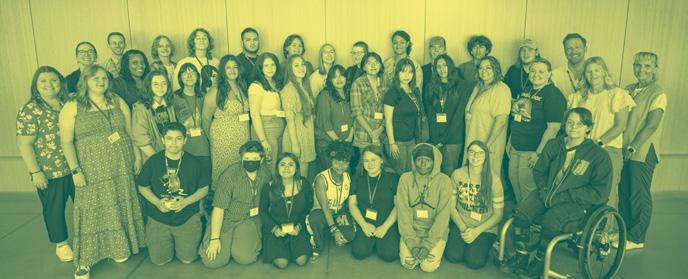
Cyprus High School
Antonia Cartier
Collin Johnson
Izabelle Morris
Kadence Weah
Lyndie Christensen
Natani Blackhorse
East High School
Jaslene Roman Jaimes
Zephrine Nishimwe
Granger High School
Kayden Adams
Highland High School
Marisol Mireles
Horizonte Instruction and Training Center
Alondra Ocegueda
Hunter High School
Miriam Martinez
Kearns High School
Avail Cupples
Kiza Msafiri
Zasha Graneros
Salt Lake Center for Science Education
Andrew Hughes
Citlalli Dirzo Ibarra
Colby Mahler
Elodie Angulo
Eleanor Orme
Maddox Miller
Millie Dworkin
Mya Bevis
West High School
Andy Rosales
Eden Greenway
Emi Onda
Jesus Perez
Special thanks to our Teacher Facilitators
University of Utah
Colli Lucas
Sheree Springer
Granite School District
McKaleigh Rogers
Moira Hegarty
Ryne Steinacker
Sheila Hegarty
Salt Lake School District
Aliyah Bacca
Joe Warren
Melissa Engel
Sherri Steele
Rachel Walker
Senior Graphic Designer College of Education, University of Utah
The CoEdu marketing team completed fair use analyses for images sourced from the following online locations:
ABC News, Academy of Motion Picture Arts and Sciences, AP Photo, Bloomsbury Publishing, Columbia Pictures, The Columbus Dispatch, Disney, EL PAÍS, the Economic Times, Getty Images, GoodReads, GQ Magazine, Harper Collins, KUTV 2 News, Lions Gate, Pitchfork, Rockarchive, The 19th News, The Guardian, The Hollywood Reporter, The New York Times, The Pioneer Woman, Netflix, Variety, Vogue, Wired and others.
Colli Lucas
Associate Professor (Clinical) Educational Psychology colli.lucas@utah.edu
801-581-7148
Sheree Springer
Assistant Professor (Clinical) Urban Institute for Teacher Education sheree.springer@utah.edu 801-581-6811