








A Total of 32 Essays
Written by Students from Salt Lake City and Granite



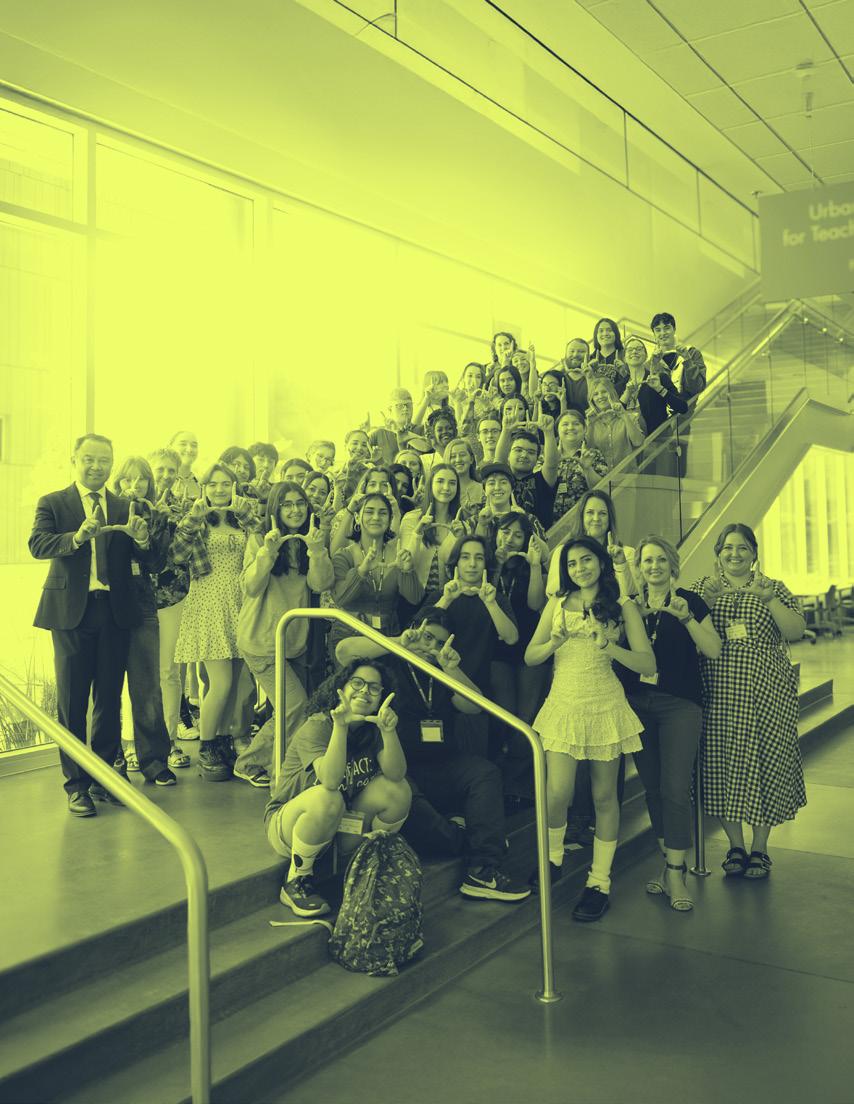
The University of Utah College of Education, Salt Lake City School District, and Granite School District co-sponsored the 13th Annual Stegner Young Scholars’ Writing Institute, held June 2-6, 2025. Thirty-four students spent the week engaged in reading, writing, and discussion. They selected topics they were passionate about, analyzed and wrote about those topics, and, with the help of their peers and teachers, completed a publishable analytical essay. We are incredibly proud of these students’ dedication throughout the week and of the outstanding final essays featured in this magazine. We wish them continued success in their future writing endeavors. We would also like to acknowledge Monica Ferguson, whose passion for and dedication to this project have been an inspiration to us all.
Colli Lucas, Ph.D.
College of Education
University of Utah
Sheree Springer, Ph.D.
College of Education University of Utah
Melissa Engel, M.A.T.
Salt Lake City School District
Chelsea Malouf, Ed.D.
Salt Lake City School District
Tracy Langlie, M.Ed. Granite School District
Tracy Hansen, M.Ed. Granite School District





Salt Lake
Angie Algarin
English Teacher
West High School
Denny Aldridge
Instructional Coach
West High School
Lauren Poe
English Teacher
West High School
Erica Plummer
English Teacher
West High School
Granite
Moira Hegarty
English Teacher
Cyprus High School
Sheila Hegarty
English Teacher
Cyprus High School
McKaleigh Rogers
English Teacher
Hunter High School







Jeopardy! Rises: How This Mind-Challenging Reality TV Show Came to Be
Ben Beardall
Cyprus High School
Lana del Rey: A Real Artist or a REAL artist
Citlalli Dirzo Ibarra West High School
Barbie’s Impact on the World vs. the World’s Impact on Barbie
Ash Gill
Highland High School
Teens and Parents Will Always Disagree on Music
La’Nayah Lee
The Reality of the “American Dream”: Through Regional Mexican Music
Sarai Ortiz Gomez
And the Grammy Goes to… Not You
Jesus Perez Ceja West High School
Disney Is No Longer the Entertainment Company
That We All Knew and Loved
Sadie Peterson
Why Larry David Was Right When He Yelled at Trick-orTreaters
Divna Porter
Hamilton: More Than Just a Musical
Roxana
Ziequel
Alondra
SLCSE
Are You Missing Out on Hollow Knight?
John
Fresh
Fallout 4: A Cautionary Tale of Humanity’s Eternal ‘Witch Hunt’
This World a Mirror: Clair
Team Fortress 2 Is an AntiWar Satire
Jaimie
Eyes Wide Shut: Who’s Looking Ahead in Our Runaway Democracy?
Foss Goodwin West High School
Fashion or Fascism: Which Are You Shopping For?
Eden Greenway West High School
Heartstopper: Putting the Hit TV Series and Graphic Novel Series Heartstopper into Young Adults’ Hands
Hailey Johnson Cyprus High School
Climate Change Is a Villain, But Do You See It?
Man or Bear?: An Opportunity for Victims to Raise Their Voices or a Misandry Trend?
Yubi Perez Cyprus High School
Athlete or Avarice: Both Sides of the Kentucky Derby
Sylvie Peterson Highland High School
BookTok Has Changed Reading Culture for the Worse
Evelyn Stoddard Hunter High School
Kendo, a Tool for Cultural Manipulation?
Andre Tavtigian West High School

Cyprus High School
We all know of a show that has a nice, catchy jingle, or introduction, that we can’t stop thinking about. Whether you like it or not, this nice, sit-down, game show has much to offer. The sensational setup and the layout of the whole game sparks attention to the audience. Prizes, like money, almost absurd amounts of money, are rewarded to the contestants. With many moments of laughter, it attracts an impressive amount of people who are interested in this game show. We’ll dig right in deeper into this game’s excellency and its progress.
the contestants try to steal the answer, which is definitely part of the game. One humorous moment in Jeopardy! was back in 1993, when a Navy Force Lieutenant, Darryl Scott, only won $1 from the game. Yes, just one single dollar. Isn’t that crazy? I sure think it is. There have only been two instances where the contestants only won a buck after betting almost their entire value. Even the categories are amusing for the audience, such as “Pop Culture,” “Before and After,” “Bad Ideas for a First Date,”and ”What’s for Lunch?” etc.. You get the deal. There’s even a category that is based on certain pasta shapes. Jeopardy! has an iconic category of “Random Questions,” which the contestants need to have some obscure knowledge of.

Have you had any personal experience with Jeopardy!? Honestly, yes, I have. After a long drive from school to my own home, from a pretty long day, I would instantly put down my bag, release any stress in me, and sit down to watch Family Feud and Jeopardy!. Getting comfortable on my couch and grabbing a snack, it kind of feels like I’m in paradise. Then, it’s finally on. The intro flashes onto the screen as soon as the past commercials are done. Often, I like to pretend that I’m a contestant, seeing how many questions I can get right–shouting out what could be the correct answer with a chance that it’s right. For me, I get pretty excited when I answer a clue correctly. I give like a “Nailed It!’’ gesture to show my expression. Some may ask “What do you learn from Jeopardy!? You learn tons of things. From history, culture, modern society, and technology, to maybe even famous pets. There are a ton of categories, which makes this game show special.
Out of all the hosts in Jeopardy! , Ken Jennings is probably my favorite. He started out as a normal contestant like other people. As he kept guessing answers correctly, he won his first game on June 2, 2004. His luck increased as he won more and more games, skyrocketing his wealth. Ken had a whopping 74 consecutive winning streak, which surpassed any other win streak, making him top 5 in the world. He was climbing the leaderboard faster than ever before. Unfortunately, Ken made an incorrect guess on the final Jeopardy! question, which was “Most of this firm’s 70,000 seasonal employees work only four months a year.” He answered, “What is FedEx?” while the correct answer is “What is H&R Block?” Overall, he won an insane amount of 2.52 million dollars. Now I’m starting to think that I should become a Jeopardy! contestant, but the chances are slim in my terms.
One of the main reasons I believe Jeopardy! is one of the best game shows is because of the action and the set of rules in the game. The rules are pretty simple. Let me explain. You start by choosing a category that has a trivia clue or a fill-in-the-blank type of question. There are three rounds. The first two are question answering and gaining value. Then, the final Jeopardy! , where the contestants bet their money to increase or, sometimes, decrease their value. It’s about sheer luck and knowledge. If a contestant gets an answer right, their value increases. Of course,
Now, let’s review how this astonishing show has evolved over time. Back in 1964, when the show was still fresh, it was hosted on NBC by the one and only Art Fleming. As time goes on and the show upgrades, “Jeopardy” is starting to attract more popularity. More editions of Jeopardy! are hosting and bringing in more people who are interested. Editions like College Jeopardy! and Celebrity Jeopardy! have recently gained more popularity. Starting in 2022, Celebrity Jeopardy! was introduced. The contestants in the celebrity edition are very well-known people. Some contestants have the amazing intelligence to answer the clues, which makes Jeopardy! very diverse. But wait! These categories are almost very different from the original Jeopardy! There are categories such as “Bubbles,” where every answer is about bubbles, or “Colors that end in ‘urple,” which is very obvious and amusing.
Throughout the years, Jeopardy! has shown exponential growth, capturing audiences here and there. The excitement this trivia game has–from the surprising categories to the setup, even to the funny moments, and so much more. As this show continues to inspire and draw more people in, it will be even better. Who knows, there could be another edition being made right now! Maybe the setup will change in the next few years. Even for me, I’m continuing to become more interested and gain more knowledge of this highquality show. As you make the choice what to watch this evening, will you choose Jeopardy! as one of them? You decide.

A real artist or a REAL artist
“Where words fail, music speaks,” Hans Christian Anderson states. People all over the world search high and low for music that comforts, heals, understands and tells their stories from a different perspective. Artists become storytellers who illustrate and craft these songs through lyrical, instrumental, or emotional ways. Lana del Rey is a musician and artist but also a storyteller. She isn’t afraid to speak about tough stories and present them in ways that are safe and accessible.
The more you listen to Lana Del Rey’s music, the more you realize the complex and intricate themes that are often overlooked in pop music today. But how did Lana get to this stage, and what were some of her personal struggles to her ultimate point of stardom?
The 2010s were centered with musical artists Katy Perry, Justin Bieber, Nicki Minaj, and Lady Gaga, whose pop music focused on upbeat and electrical music. These were the days of lyrics such as “Starships were meant to fly.” In contrast, Lana del Rey was an artist whose aesthetic was refreshingly authentic. Her music was heavily inspired by the American culture, old Hollywood glamour, and the complexity and intense emotions within relationships.
But just like anybody else, Lana had a rough start, dealing with a lot of emotional weight. At the age of 14, Lana was sent to Kent Boarding School in order help deal with her addiction to alcohol. According to Lana, she had a “philosophical crisis” stating that she and everyone she knew was one day going to die. This convinced Lana to attend Fordham University, majoring in philosophy with a focus on metaphysics (a branch of philosophy that examines the basic structure of reality). Being heavily influenced by her father, Lana also pursued her singing career. She consistently performed at small bars around New York City and uploaded her self-made music video “Video Games” onto YouTube in 2011. The distinctive song and virality of the video caught Interscope Records' attention, eventually signing her on to make her first album Born to Die
Since I was little, being in love has been one of my greatest dreams. Growing up I had an image in my head to what I wanted in love. Daydreaming is something I constantly do, and an element that allows me to do so is listening to music. Lana Del Rey’s music has allowed me to do so since discovering her. Her whole discography and storytelling about love is complex and sophisticated, compared to other artists. It goes beyond explanation. Having heard all her songs over and over again, “Video Games” is a song that I keep coming back to.
“Video Games” begins with the melancholy bells, smooth harp notes, and with a touch of dreamy soft strings. Throughout the song, Lana describes an emotional imbalance in the relationship depicting how one person can be fully invested while the other remains detached. The title itself, “Video Games,” is a critical symbol of escaping reality and an element of emotional immaturity, contrasting to her intense romanticism about the relationship. The lyrics blend romantic imagery with subtle sadness–“Heaven is a place on earth with you,” Lana’s lyrics capture the innocence of youth and the complexities of young love, highlighting how little effort it can take for one person to become completely devoted to another. She explores how love can consume someone to the point where their entire world revolves around their partner. In “Video Games,” this is reflected in lines like “It’s you, it’s you, it’s all for you / Everything I do,” emphasizing a self-effacing kind of love. The soft, melancholic tone of the song, paired with nostalgic imagery, underscores the emotional vulnerablility Lana often portrays in her music.
Just as the song enhances escaping, music in itself is an escape from reality we all cherish in our lives. Lana Del Rey puts emotions into her songs and consistently allow us to romanticize our situationships or relationships in way that is audible and accessible whenever we’re feeling a certain emotion.
Through my years in middle school, I discovered Lana Del Rey. My first introduction to her music was “Pretty When You Cry” from the album Ultraviolence. At the time, I was going through my first middle school heartbreak, and truthfully I felt as though my heart was falling apart. Lana’s music was there when I needed it most. While some of the themes in the song didn’t fully resonate with my experience, I still felt a deep emotional connection to “Pretty When You Cry.” Listening to the album matched its emotional tone – haunting, vulnerable, and raw.

Now, as a senior in high school, I find myself questioning the deeper meaning Lana was trying to convey through this song in particular. I wonder if other listeners like me felt that they weren’t just hearing a song, but receiving a message – something meant to be felt and interpreted on a personal level.
“Pretty When You Cry” explores themes of vulnerability and the beauty of emotions. The lyrics suggest that even in moments of sadness or tears, a person can still be seen as beautiful and powerful. The song's central message revolves around the idea that sadness and tears don't diminish a person's value or attractiveness. Lana begins the song, “All the pretty stars shine for you, my love,” emphasizing how she’s entirely incapsulated in this relationship. Following the lyrics of “I’ll wait for you, babe / That’s all I do, babe / Don’t come through, babe / You never do.” Even though she loves this person so much she can no longer tolerate and wait for his emotional disdain. One of the final sets of lyrics that impact the song are “Don’t say you need me when, you leave, and you leave again / I’m stronger than all my men except for you.” Trying to be in a relationship while also being your individual person is extremely difficult. Equality throughout relationships is critical, but if not with the right individual the relationship can become a task instead of being something special. The nature of these songs are experiences that Lana lays out for the listener, and many of us appreciate the realness of them and allow us to appreciate her music as incredible art.

Based on all my experiences, Lana Del Rey has heavily impacted the way I now listen to other artists. Just like finding a new favortie drink, Lana Del Rey’s music has imprinted some sort of favortisim towards the way I find new music today.
Music tells stories, but the way we interpret those stories often depends on our own life experiences. Regardless of interpretation, Lana Del Rey’s music stands out as particularly complex, offering a depth of emotion that often defies easy articulation. Her songs have a raw, pointed quality that can express feelings we may struggle to acknowledge ourselves. In many cases, hearing someone else articulate those emotions allows us to confront and release them more easily. Ultimately, her music becomes more than just sound – it’s a mirror to our inner worlds, giving voice to what we sometimes can’t say ourselves and reminding us that we’re not alone in what we feel.
Going forward, Lana Del Rey’s will be a touchstone and a source of comfort for me; when going through my own tough situations her music will always be there.

Highland High School
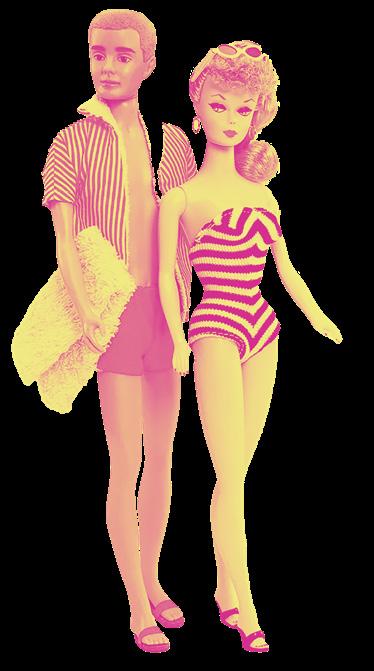
Is it possible to change? Barbie and the world’s view on her certainly can. From perhaps one of the least feminist products to a feminist icon, there has been a massive transition in the way that Barbie media has been perceived.
The World’s Impact on Barbie
Women were not happy with the idea that the company was selling a blonde, white, ultra skinny girl as the model of beauty. Her hourglass figure would have been impossible to attain, and women had no desire to try. Instead, they fought back. Protests raged throughout the streets of women chanting, “I am not a Barbie doll,” as a response to the amount of pressure put on them by the doll’s design.
And it worked. Mattel responded to this feedback with an attempt to create a wider range of diversity in their product. The first thing they tried in order to accomplish this was creating a plus-size Barbie. However, this doll was never actually produced and sold because the children in the testing phase did not respond well to it. Even though the company was responding to the backlash of mainly adult women, they were still selling to children and primarily interested in the appeal to them.
Not quite as iconic as Barbie, but just as well known, is her younger sister Skipper and her best friend Midge. Both of them have had their issues, however. Even though they faced backlash immediately after coming out with the original doll, Mattel still made some big mistakes, including the release of these two, during the years after that.
One of these was a doll by the name of “Growing up Skipper.” A cute doll and an interesting idea, she displayed some really big issues, the heart of these stemming from and described by the slogan. Above the picture of young Skipper is the title “cute little girl,” and above the older Skipper it says, “tall, curvy teenager,” which in itself is problematic and gross. What specifically was the issue with the doll was that when her arm was turned around in circles she would grow taller, skinnier, and a bigger chest. This created the same issue that people had with the original Barbie doll, where it was setting an unhealthy standard for young girls.
The second of the dolls that were very problematic was the “Pregnant Barbie,” Midge. This doll was primarily not well liked because it was weird and made people uncomfortable. The doll was considered weird because there was a bigger stomach on the doll and when that was taken off there was a baby inside. There have been many pregnant dog dolls since this time that people think of as perfectly normal; however, the human concept of this made people uncomfortable. The reason that it is specifically problematic is because the doll herself is still perfect looking. She is wearing makeup and is still, other than the pregnancy bump, totally skinny.
Both of these dolls were taken off the shelves not long after their release, due to the overall reaction of people who did not like them. Skipper was pulled out of production 2 years after she was first made. Pregnant Midge, however, didn’t even make it a year.
There have been many other dolls throughout Barbie history that have been released and then quickly taken back. All of this goes to show how much of an impact the world can and has had on a company like Mattel.
While there has been no shortage of products, it has seemed to have stepped out of the spotlight since this time. She stepped right back into her place in 2023 with The Barbie Movie . This well-dressed dynamite has had her explosive effect on the world once again.
The reason that it reached so many people was not just that it had a very powerful message, but because it was created to do just that. It was not only a movie meant for the enjoyment of children, but something that everyone could enjoy. It was funny, colorful, and full of music.
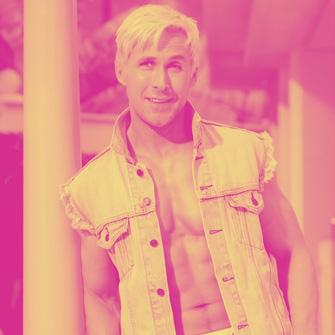
The comedy aspect of it is probably one of its biggest factors in finding such a wide audience. Seeing these popular, familiar, childhood characters in a new light was entertaining to people. The use of the Ken figure was the most prevalent comedic asset to the movie. They also found ways to create jokes that got to the humor of older kids and adults without making many inappropriate ones, which nobody really wants to hear.
Not all of the response to this movie was entirely built of positive feedback either; many people thought it was far too pushy. Regardless, it made an impact. People knew it was there and what it was about, and many people saw it as a great step forward.
Regardless of how it achieved such popularity, it is a good thing that it did. Even in attracting all of its negative attention, it was attracting attention none-the-less, leading to a loop of negative and positive feedback. Many movies, especially modern ones, don't have as strong of points and themes as The . To some this was jarring, and to others it was refreshing.
The movie functioned in the same way as an argumentative essay. It was making a case for something, and it had everything such an essay needs. From evidence supporting their claim to a counter argument, they hit every detail.
The first step in any argumentative essay is a claim. The claim in the Barbie movie is one that is very easy to pick out of the pieces of the film. It argues that Barbie is a feminist, and that feminism is not just a fight for women, but for all genders.
To support any claim, evidence is absolutely necessary. One of the many things that is highlighted heavily in the movie is all of the different careers that Barbie has had.
But Barbie cannot only be a feminist because she has a job, even if in a predominantly male-dominated field. The movie is using Barbie's job to craft their second, and most important point– that feminism is a thing for all genders.
Barbies are the only ones in the beginning of the movie that hold any sort of real job. This includes presidents, doctors,
lawyers, and many more. It is an extreme example of how women perceive the male-centered and controlled world.
Ken is used in the film in a light in which he has never been shown before. Rather than remaining Barbie’s perfect loving boyfriend, or at least that’s what he wants to be at the beginning, he becomes conscious of his place in Barbie world and that he could be more. As a point that many people missed, this also seems to be a representation of that same common misconception of feminism. As soon as he realizes that he is worth more than how he is being treated, he returns to Barbie Land to take over, leaving the women to take the place the Kens were once stuck in.
So, it is arguable that in the movie the characters of Barbie represent men and the Kens represent women. Looking at the arch of the movie, it starts with a Barbie (male) dominated world, where Kens (women) are given little to no role. Eventually after visiting the real world, the Kens grow tired of this system that has been forced on them in which they have no control.
At this point, the main Ken character returns home and begins with his friends to take over Barbie Land. When Barbie comes home to find that this has happened she is devastated and begins work on trying to put her world back into orbit. Eventually she realizes that that isn’t right.
This is where it begins to show what feminism is really about and is attempting to disprove the other ideas about it. The Barbies (men) realize that no one group of people should be in charge, and that everyone should have a fair chance at the same style of life.
Many good arguments should also have counter arguments, which the movie does not forget to include. The character Sasha, the daughter of the woman the Barbie meets in the real world, is just that.
For the beginning half of her time on the screen she is arguing that
Barbie has always been an anti-feminist character. She definitely makes some good points in her claim, as a counter argument should, but “Stereotypical Barbie” goes on to prove her wrong. She tells her about all of the great careers she had, showing young women that they can become whatever they want to. Sasha’s opinion on Barbie and feminism as a whole seem to slowly evolve throughout the film. She grows to respect her mom’s experiences both in playing with Barbie dolls and in experiencing the real world.
As she sees how Barbie almost gives up but then gets back on her feet and comes up with a plan to fix the issue, she begins to view her in a better light. She also watches her mom talk about her life and what she’s been through and the expectations that have been set for her. She and her mom didn’t have a great relationship at the beginning of the movie, but as this happens you can see her feelings towards her mom shift into a better light.
The main Barbie is this “stereotypical Barbie,” because she is meant to be a role that anyone can fit themselves into. Main characters are often meant to do that, but in this movie she does it for more than just the ultimate viewing experience of the audience. She is the Barbie that in the beginning of the film is living the same perfect life that every other one is as well. However, as the movie goes on she breaks from this, small changes leading almost to her downfall. This represents how women, or anyone, fit in a world of everyone around them whose lives seem perfect from the outside, while they themselves feel imperfect and awkward. She even directly presents this after returning to Barbie Land, in a moment of total breakdown, worrying that she is not good enough and believing she should give up. In the progression from this point on, once she is inspired to get back up, this Barbie, the “us” character begins to represent that there is no need for perfection. The need is only for a person to try their best, and once they are doing that, they will eventually succeed.
All this to say that Barbie as a whole has had her rough points, being a character from time to time that is overall harmful to feminism, but she has come a long way from 1959. She has been through many changes, and many more diverse dolls have been created since then. It is still an active work in progress, and it probably always will be, but there is no going back now, fortunately, to the time when she was just a pretty doll with a modeling job, and an over-exaggerated hourglass figure. However, sadly the woman of over 200 jobs may forever be able to be anything, except for not conventionally attractive with her makeup done to prove it. While there will likely never be a “Just Waking Up Skipper” or “Postpartum Depression Midge,” rather than the inappropriate and awkward version of the two that have been produced in earlier years, there has still been great progress in making Barbie a thing that stands for feminism rather than against
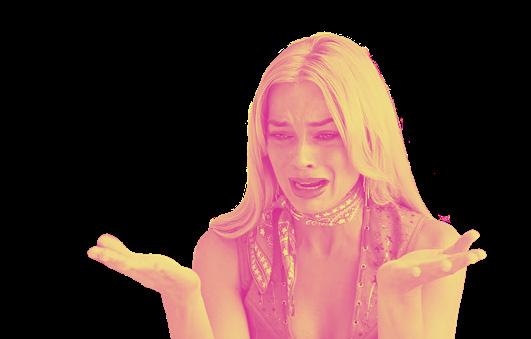

Cyprus High School
“La’Nayah Lee, what are you listening to?” is a question I’ve heard more than once. I think all teens of all generations have heard this question some time in their life. In each generation we have a music icon or movement that teens attach to like a disease, but this disease doesn't kill; it saves and inspires the youth. For example, Elvis Presley, The Beatles, Tupac, Beyoncé, and Chapell Roan–these artists used their voices for political and global problems. Elvis Presley insisted on playing with a black band and using the “black sound.” Because of this, people were being exposed to the black culture in a racially turmoiled time. As the music grew, so did the problems in the world. With war and protests, teens needed someone or something to look to for hope and change, and that's where the Beatles come in, hot and heavy with “Come Together,” "Here Comes the Sun,” and “Twist and Shout.” These songs caused teens to feel they had someone speaking for them. Many parents, including mine, have been in distress by what our generation is listening to. But so were the parents in the 1950s seeing their teens mesmerized by the look of Elvis and his seductive dance moves, but they never really listened to his lyrics, not his music, but his lyrics:
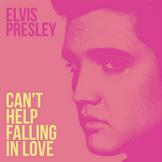
had the same problem in the 1960s. Parents didn’t like their long hair or the “seemingly excessive adulation” they received from fans, but what the parents didn't hear again were their lyrics…
“He says I know you, you know me / One thing I can tell you is you got to be free / Come together right now / Over me”
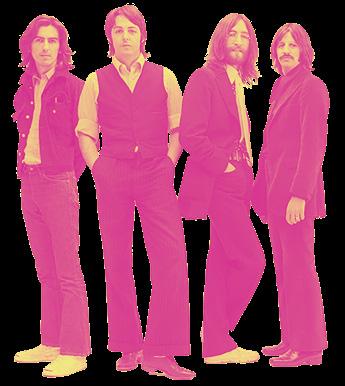
How powerful is this lyric! Their music isn't about their long hair or adulation. It's about coming together because at the end of the day we as people need each other for change.
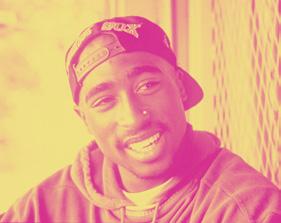
The crazy thing about this is that these teens became parents and had the same reaction to their teens listening to Tupac’s raps. AND AGAIN, they didn't see the excitement or the need for him, but the youth did. Teens saw his raps not only as a song but a poem with rhythm and a purpose to show the inequality minorities and the poor faced:
“They got money for wars but can’t feed the poor” (”Keep Ya Head Up”)
“But I can’t help falling in love with you,” and “ For my darling I, I love you” (“Can’t Help Falling in Love”)
He had something to say about love and change. These lyrics show that. The Beatles
This made many people realize how the government let down its people and was pushing money to destroy other countries while their country was and IS in distress. They saw Tupac's thug appeal but never gave his poetic lyrics a listen. They judged him by his looks like The Beatles and Elvis, but they all had something to say to the youth, something to change for the youth.
As time went on, new artists arose such as the iconic Beyoncé. Many parents didn’t like her because of her sexually suggestive lyrics, but they were criticizing her movements and not listening to her voice, and, as a woman, she faced an industry full of men telling her she needed them:
“Cause you had your turn and now you gon’ learn / What it really feels like to miss me” (“All the Single Ladies”)

This lyric shows that she didn’t need a man. She needed someone to care and show respect to her. As a teenage girl going through the early stages of relationships and situationships, this song spoke to me saying I don't need a man. I can be happy all by myself. She made a whole generation of then-single ladies feel seen and understood just how current day artists like the queen herself Chappell Roan speak for the queers in 2025. Many parents don’t like her based on her looks. She wears extravagant outfits, does crazy makeup, and speaks her truth even if her truth hurts:
“And when you wake up next to him in the middle of the night / With your head in your hands you’re nothing more than his wife / And when you think about me all those years ago / You’re standing face to face with I told you so.” (“Good Luck, Babe!”)
She calls people out and doesn't tiptoe over people's feelings–she tells them how it is. She self advocates! Not only for her but the queer community, and EVERY community. As a teen in 2025, her music and her persona have made many teens self-advocate and find comfortability in themselves as people.
All of the artists I have mentioned in this essay have impacted not only the youth but the world. Through each generation they left a long-lasting impact and long-lasting sound. As for the parents, they were once teens, saying, “Mom, it's Elvis!” or “Mom, it’s the Beatles!” or “Mom, it's Tupac!” or “Mom, it's Beyoncé!” And now we are saying, “Mom, it's Chappell Roan!” and I know sometime in the far future there will be an artist I don't understand but my kids will be attached to their sound, their message, and the change they want to bring, and the cycle will start again. This cycle will never end as long as we have something to change and room to grow. So, Mom and Dad, I'm listening to a change coming.

Cyprus High School
Picture yourself on stage at the original Lollapalooza in Chandler, Arizona. You went from selling out small venues to a now large stadium. You seem to have finally made a name for yourself! "Mic check, is this thing on?" The audience's love for you is undying. Why wouldn't it be? Time and money are two extremely valuable things, and they sacrificed both just for you. Despite being able to hear the deafening cacophony and a mixture of cheers. The stage lights are blinding, and the sun is setting in just the right spot. You can't see any of their faces, but they can see you stumbling onto stage. A single thought among the audience becomes prevalent: “What are they doing?"
Lollapalooza! A sterile global sensation just for you to witness, costing the cheap, cheap price of at least a few hundred dollars! (not counting transportation and hospitality)
Firstly, to understand why Lollapalooza has become so subhuman for a music festival, we need to go back in time to its early days.

Back in 1991, a rock band by the name of Jane's Addiction started Lollapalooza as a music festival to bid the band farewell. With intention to protest ticket-selling companies for buying out venues, pressuring them to cave into their demands, as well as racking up ticket prices for more profit, Lollapalooza became the anti to big money in music. As a result, it was an instant success.
More musicians wanted a piece, making Lollapalooza a yearly ritual of sorts. It has now been about three decades since the original Lollapalooza, and it is bigger than ever, but something's been lost, almost as if Lollapalooza has become the very thing it spoke out against. Ticket sellers (especially Ticketmaster) have since hijacked Lollapalooza, turning it into their cash cow, spitting in the face of its original purpose, tarnishing its legacy.
One big inspiration for Lollapalooza was Woodstock: a rock festival taking place in the late 60s featuring musicians such
as Tim Hardin, Melanie Safka, Janis Joplin, Country Joe McDonald, Blood, Sweat & Tears, Ten Years After, The Band, and Santana. Woodstock would last from August 1518, 1969, on a farm property. A big part of why Woodstock came to be was not only because rock music was in demand, but because the young (at the time) Boomers demanded peace and unity in a time of international unrest. During these four days, numerous inconveniences would occur, most notably being the drug use and the less-than-desirable weather conditions, though this didn't stop Woodstock. In fact, it added to its appeal. There was something magical about it. (Not necessarily that the attendees were under the influence or the heavy rain, but the fact that they pushed through it together.)
Woodstock would attempt to come back two more times, but it didn't quite garner the same attention or the same feeling that came with the first time. So Woodstock stayed a mostly one-off thing. Even though Woodstock the event died from lack of appeal, Woodstock the movement was immortalized as an era in history, continuously burrowing itself into pop culture.

We are at the point in this article where you must be asking, "Wow, what went wrong?" Woodstock only had a year before fading into obscurity while Lollapalooza has been going on for decades, managing to consistently hold the attention of generations in the West. Shouldn't we be proud of ourselves? Shouldn't we be grateful for having Lollapalooza to comfort us in a time where the world seems to perpetually feed its own hubris? Woodstock's reference in culture seems puny when you compare it to the fact Lollapalooza IS the culture. It's addicting watching Lollapalooza pull crazier and crazier stunts, never failing to get household names and big shots to perform at its humble event.
Perhaps Lollapalooza's fall from grace wasn't because it "accidentally" fell out of a window, but maybe it was pushed through it. As Lollapalooza grew, it had to adapt. It had to make money and be marketable for the sake of pushing forward. You could say it was blinded by its survival instincts, losing sight of its character.
In this article, one of my biggest points is the fact that Lollapalooza lost itself with time, becoming something different. This doesn't just affect music festivals, though.
A lot of the time life imitates art. Like Lollapalooza, there are musicians who lose what they once were as well.
Like Lollapalooza, Kanye West turned a blind eye to his original character.
Kanye West (aka Ye) was born June 8, 1977. His mother was a former teacher and author while his father was a journalist who had ties to the Black Panther Party in the 60s. West would debut in 2004 with his album College Dropout. At the time he was making a name for himself in the music industry going from producer to solo artist. What surrounds his name is no longer his discography, or being a "momma's boy. "It's his almost daily Twitter rampages where he aligns himself with fascism. If you've been anywhere near his fandom, like Lollapalooza's, you've probably heard them say, "I miss the old Kanye." "I miss the old Lollapalooza." You've probably heard them mention how they wish both would have just stuck to music and not have branched out further than they had to. I've even heard a few of the people around me say, "I wish he stuck to being a voice of reason, the Kanye who made Graduation." Which leads me to wonder: is the good money in being a voice of reason, speaking out against some powerful people, or is it in shock value, aligning yourself with the powerful for gain?
Woodstock was a foundation for the anti-war movement in the late 20th century, and Lollapalooza, Madonna was a pivotal foundation for current-day music, while rebelling against social norms with some good ol’ shock value (especially rage baiting the Catholic church). While younger Madonna has influenced multiple generations just like Woodstock, current-day Madonna seems to have lost her edge, just like current-day Lollapalooza, not holding the same reach she once did in the prime of her career. You can argue a good portion of this isn't her fault. Madonna has been in the game for a while, and ageism is a real thing. It seems as people age the world pushes them into a corner, just like how currentday Ticketmaster pushes smaller venues in a corner (like I mentioned earlier).
"Out with the old in with the new" works well for objects, but not necessarily for people. Now don't mistake what I'm saying as "Madonna has fallen off." She is still a big name and doing well for herself, but I can't help but notice how she's taken the backseat.
What if instead of continuing, Lollapalooza could have called it like Woodstock and Kate Bush. Some artists don't go through such a careeraltering change because of circumstance, though; some go through it by choice. Some choose to move on from being an active figure to an inspirational one. Kate Bush had been writing music for most of her life, but in 1973 that's when it

all changed for her. Lead guitarist from Pink Floyd, David Gilmour, heard what she had to offer and helped her kick-start her career, pushing her to become a big name in Europe, mainly the UK with her hit album, Hounds of Love charting at #1 in the UK, (according to officialcharts.com). After spending some time in the music industry, Kate Bush chose to throw in the towel, with a desire to have a family. Recently her song "Running Up That Hill" from the previously mentioned Hounds Of Love has had a revival after being featured on season 4 of Stranger Things as well as her song "Army Dreamers" from her album Never for Ever becoming a widespread trend on social media. Kate Bush has proved that despite moving on from her active career in music, she has a place in our culture, a respectable one.
We've explored Lollapalooza, its upbringing in which we compare it to Woodstock and its current condition that we compared to other musicians. Sure you can blame the greed of ticket-selling companies, blame musicians for not standing up for Lollapalooza, you can even tell yourself, "Maybe Lollapalooza was never meant to be." But at the end of the day, who propped up these companies? Who gave the musicians an underused voice in the first place?” “You get what you pay for" is a phrase I have heard a lot in my life, usually in reference to someone tricking themselves into being scammed; and, boy, have we the audience gotten what we paid for. Every time Lollapalooza occurred, we would pat ourselves on the back for going to this fun music festival pretending that for once we were at least a few feet away from world peace, but once it was over, we would go back to school, a minimum-wage job, a 9-5. The truth is we are a burnt-out society. While we fight for what we believe in most of the time, the minute there's a glimmer of hope we don't chase it down. We wait for it to come to us, pulling what is quite literally a wide-scale version of "Just 5 more minutes, Mom!" We paid to protect Lollapalooza but only at half price, so we only got half of what Lollapalooza once was: a husk. Turning what was a sense of unity in trying times into another soulless product. Woodstock ending seems like one of the best things that could have happened to it after everything went down in 1969. Maybe the plug should've been pulled for Lollapalooza, or we should've made sure it was kept in good hands once large corporations disconnected from musicians and the message started headlining the music festival. The minute Ticketmaster started pursuing Lollapalooza, we should've yelled at the organizers to "RUN FAST" and "DON'T LOOK BACK." If we pulled the plug like Woodstock, Lollapalooza could've been an inspiration to a new era, or if we implemented people who genuinely cared about it, Lollapalooza could've been the gift that keeps on giving, like what it was meant to be.
A performance riddled with mistakes really doesn't look good for you. Sure, you started off with a stumble (like all beginners do), but you caught yourself with a solid opener! Sadly, it was all down from there, your work seemingly getting sloppier and sloppier as the setlist went on. By the end of the performance, the stage lights dim, and the sun’s down. All you could have seen and what you see are very different. The once lively crowd now looking up at you, disappointment overwhelmingly present, ask yourself. "How has my public perception been tarnished? Can I save myself?" No, ask yourself, "How can I fix this? How can I do better?"

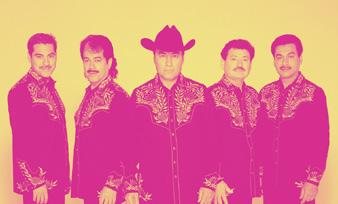
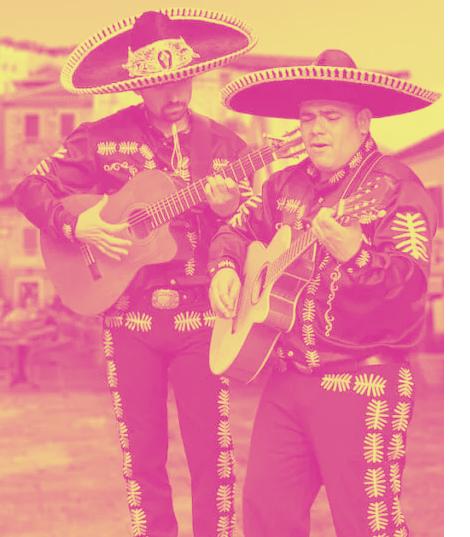
There's something all children of immigrant parents can relate to: seeing their parents sing their heart out to their favorite song. Hearing that intro and immediately knowing that they're going to have at least a couple voice cracks singing, or pretend they have allergies so we don't know that specific song makes them really emotional. If you've never experienced that, do you even have immigrant parents? For me, I remember growing up listening to my father's diverse music while he worked. With playlists varying from Old Rock to Boleros to Mariachi to the main focus, Regional Mexican music. To be even more specific, the song “La Jaula de Oro” from Los Tigres del Norte.
For those who have never heard of Los Tigres del Norte, or “The Tigers from the North,” they are a popular regional band from Mexico. The band began in the 1960s in Mocorito, Sinaloa. They are known for their narrative style songs that speak about the life of an immigrant, social injustices, and the experience of workers, which at the time being wasn't normalized for that genre. I saw that especially in a song meaningful to me, “La Jaula de Oro,” which would translate to “The Golden Cage.”
What makes this song so important? Well, I think this song perfectly captures the experience of the “American Dream” from a Mexican Immigrant perspective. Although there are so many other songs that describe this type of experience, this song remains unique. Even within the band itself, there are many instances where their songs mention the hardships they had to face here in the United States. The song “La Jaula de Oro” explains something other songs fail to mention: The loss of one's culture once they come to the United States.
There is no better example to showcase this concept other than the interlude from the song itself.
“Mis hijos no hablan conmigo
Otro idioma han aprendido y olvidado el español
Piensan como Americanos
Niegan que son Mexicanos, aunque tengan mi color”
(Translation)
“My children no longer speak with me
They have learned a new language and forgotten Spanish
They think like Americans
They deny they are Mexican, even though we are the same color”

difficulties is in the first verse and in the chorus of “La Jaula de Oro,” which is repeated twice throughout the song:
“Tengo mi esposa y mis hijos que me los traje muy chicos
Y se han olvidado ya
De mi México creído, del que yo nunca me olvido
Y no puedo regresar”
(Translation)
“I have my wife and my children, those I brought very young
And they have forgotten now
Of my lovely México, the one I will never forget

The interlude of the song truly stands out. We see how the singer expresses the disconnect he feels with his children now that they have adapted to this new language so easily and discarded their old life like nothing. Not only that, but it truly shows how important a language really is to a culture. Language is not just understanding and speaking; it's a form of expression with such a rich and diverse history. Specifically, in Latino culture there are many sayings that will never have the same meaning when translated. A perfect example being “No todo lo que brilla es oro.” Losing your native language is more than losing the ability to understand and speak; it's losing that connection to your roots.
Native Spanish speakers can understand the frustration when parents refuse to teach their children Spanish and go off to raise little no-sabos. (If you don't know what that is just go on Tik Tok because translation doesn't do it justice without the cultural connections.)
“La Jaula de Oro” doesn't just describe the loss of one's culture. It explains the reality that is the “American Dream” for a Mexican immigrant. The “American Dream” is the idea that anyone can be successful if they work hard enough. For immigrants that definition is a little different. The United States is seen as the land of opportunities, a place where all their dreams can come true, and they no longer have to struggle. Somewhere, they can finally have a chance, and they can give their children a better future. Yet, for several families, no matter how hard they work, that never becomes a reality. The best way to describe those
But I can’t return”
And the chorus which speaks for itself and describes this whole experience.
“De qué me sirve el dinero si estoy como prisionero
Dentro de esta gran nación?
Cuando me acuerdo hasta lloro que, aunque la jaula sea de oro
No deja de ser prison”
(Translation)
What good is money to me when I am like a prisoner
Inside this grand nation
When I remember I almost cry because even if the cage is made of gold
It doesn't stop being a prison”
But “La Jaula de Oro” is not just a song. It's the story of many immigrants who come to the United States. It's a way people can describe this feeling of disappointment when the U.S. isn't everything they hoped for. It shows us how music can speak for you when you have no idea how to explain the way you feel, because we all know, sometimes, we have moments where we just feel off. Those times where we wake up and everything feels wrong. Then, someone notices and asks you that terrible question, “What's wrong?” and you have no idea at all. That's what makes “La Jaula de Oro” more than just a song. It speaks for you when we just don't know how to express what you are feeling.
While none of this is to discredit Los Tigres del Norte from their other incredible creations. This song itself is unique in the way it is full of true genuine emotion about longing and yearning of a familiar place after leaving everything you know, and going to a new place where everything changes. It is something we can see in all the songs that Los Tigres del Norte have created but particularly in “La Jaula de Oro.” And it's something people can still relate to now.
This song for me is something I personally have always held dear. My first memory of truly paying attention to this song was when I was about nine years old and I was with my father during work. I had always loved the song “La Jaula de Oro” and would even sing along, but I didn't really understand what I was even singing. It's such a fond memory because during this specific part:
“De mi México querido del que yo nunca me olvido, y no puedo regresar”
I remember my father getting emotional. He had started sniffling and turning away in another direction. I knew he wasn't sick, so what was going on? It was something so unusual to me because how could my dad, MY DAD, be sad about something. He was the strongest person I knew. So being the small nosy child I was, I asked my father: “Are you crying?” Of course, my old-fashioned Mexican father took that defensively and immediately said, “What!? No, I have allergies.” Like many Latino fathers before him filled with fear of being vulnerable. After that day, I finally paid attention to the song when it played. I understood that what I was singing was what my father felt everyday. That need for the comfort of your own country and that place where you belonged now lost in this new, unfamiliar place where nothing is what you expected.
Rather than end with my own voice, I’ll leave you with the words of Los Tigres del Norte:
“Aunque la jaula sea de oro No deja de ser prison”
(Translation)
“Even if the cage is made of gold It doesn't stop being a prison”

High School
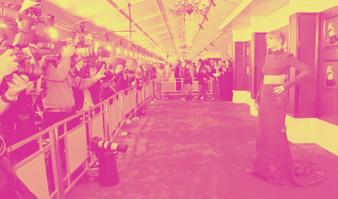
Imagine yourself going to the Grammys ceremony.
Before going to the venue where it’s held, you’re getting ready, putting on an outfit that’s custom-made and tailored just for you by a recognized brand. When you are done doing whatever you need to do in order to fix up your appearance, you get in your vehicle and go on your way to go to the Grammys. When you get there, you exit your vehicle and look out as you are placed at the base of the red carpet. You walk down the carpet with your head high as the paparazzi acknowledge you and snap many photos of you, asking who you’re wearing.
Then when you get to the end of the carpet, you are directed toward the room where the tables are all set up, the staff directing you to your seat. You are looking around as you see hundreds of other artists and actors. You are greeted by your colleagues by hug, kiss, or a firm handshake. You feel the exhilaration of meeting people that are icons in the music industry. You are in complete excitement as you might be meeting your idols for the first time. You finally take your seat as the lights dim and the show beings.
At first glance, the Grammys are typically seen as an entertaining show that people tune in and watch. It’s a ceremony that happens every year at the beginning of the calendar year, late January to early February. It’s a ceremony where people tend to watch, sharing the suspense as they’re watching to support their favorite artists as they hope they will win.
This award ceremony is more than just artists receiving a prize. This system on a bigger scale is the people being able to connect to and understand the true meaning of artists and their music. People also get to listen to artists’ speeches as they thank people who helped them get there and tell what they had to do to personally to get there. They provide a sentimental value, as they demonstrate pride and gratitude for being on the stage, receiving the greatest award you can win in the music industry.
The Grammy Award is a prestigious award that is presented and given by The Recording Academy. Their main goal is to provide recognition to the extraordinary achievements that artists accomplish in the music industry.
A silence that is very loud, an excruciating feeling that artists get when their category winner envelope is being opened and announced, hoping that the spokesperson reads their name. When the artist hears their name, you can immediately tell how they feel, as it is meant to be “a transformative experience for artists,” as the award provides validation for their work and recognition for it as well.
When an artist goes up on stage and receives their award, reactions and meaning vary. For example, some might be overjoyed, shown by SZA when she won the Grammy for Best R&B Song for her song “Snooze” in 2024. SZA runs up from behind the stage with a huge smile on her face giving a big hug to the spokesperson, Lizzo, who is her friend. Delivering a speech with a joy that is contagious and felt by the crowd.
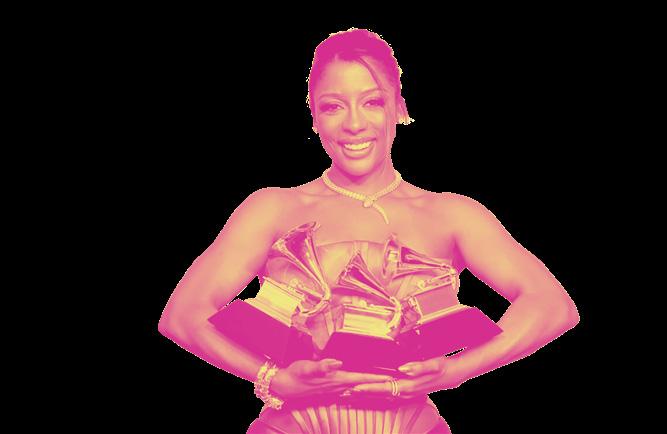
A different reaction might be more sentimental and significant, shown by Victoria Monét when she won the Grammy for Best New Artist in 2024. She emphasizes that “this award is a 15-year pursuit” as she wrote music for others and finally decided to come out as her own music artist. She thanks the people who took a chance on her and “picked up the dusty binder,” speaking about her journey on how she got to where she is.
Another significant reaction might be recognition, shown by Doechii when she won the Best Rap Album for her album, Alligator Bites Never Heal in 2025. This was significant because it was the third time a woman ever won this category, introduced in 1989. Doechii provides recognition to the past winners, Lauryn Hill, Cardi B, and herself. It was very significant not only to her as she says, “I put my heart and soul into this mixtape,” but also to the people of color, as she acknowledges them: “I know that there is some black girl... watching me and I want to tell you, you can do it. Anything is possible! Don’t allow anybody to project stereotypes on you that
tell you, you can’t be here,” signifying how girls of color are underrepresented in the Grammy Awards. She then thanks God as she says, “God told me that I would be rewarded and that he would show me,” explaining how God as he had it written for her, and how this meant so much for herself and her music, and the background she comes from.
Victoria Monét and Doechii are prime examples of artists winning their deserved awards.
Overall, winning a Grammy is a milestone that means a lot for artists as they might feel that their work is being seen and connected too by the people, creating the appreciation for their music.
Additionally, winning a Grammy has financial benefits as well, not only emotional value. When an artist wins a Grammy, they get the title “Grammy Winning Artist,” and this increases global recognition. It also provides a sales boost as it glorifies the music that won the award, making people want to listen to it. Lastly, it provides a leverage for some artists as some of them might use this moment of “clout” to their advantage and use it to capitalize on their careers.
A recurring topic that appears when a deserving artist is ‘snubbed’ and not awarded, brings up the question of: Are these awards subjective when they’re meant to be objective?
The process that Recording Academy members go through in order to determine the winner is first to consider music that was released during the period of eligibility, deciding what is “worthy” of recognition during the process. They pick the qualifying artists and they move to reviewing them with more than 350 people that are experts in various fields, making sure that the nominees meet specific qualifications and requirements in order to place them in the appropriate corresponding category. The intent of this part of this screening process is “to make artistic or technical judgments about the recordings, but rather to make sure that each entry is eligible and placed in its proper category.” Then the ballots in this first round are sent to the voters in “good dues standing.” To help ensure the quality of the voting, members are directed to vote only in their “areas of expertise.” They can only vote up to 10 categories, and at the end the ballots are tabulated by an independent accounting firm. After, the final nominations are determined by the committee comprised of voting members who actively work on the craft they are judging. Lastly, after the last nominations
are announced, there is a final vote of the voters only allowed to vote in 10 categories. “To ensure the quality of voting, members are directed to vote only in those fields in which they are peers of the nominees.” Finally, the results are accounted for, and the winner is announced at the Grammy Awards Premiere.
After this entire process is when a musical piece is considered a nomination for the Grammy, and only if it gets through all the stages will it be declared the winner. Reading this info taken off The Recording Academy GRAMMY Awards Voting Process from grammy.com, it appears that the voting process truly is objective, as there is no emotion or biases demonstrated while picking winners, only dependent on pure expertise.
However, in the end the expertise is questionable, and subjectivity comes into play as the rightful winner of the Grammy is “snubbed.”
There have been many people who have spoken out about the credibility of the Grammys as they seem like an unfair system that determines winners based on voters that could have biases or preferences, or the lack of qualification that voters might have in a specific genre.
People who have voiced this opinion about the Grammys include The Weeknd, Drake, and Frank Ocean.

An example specifically was when a very popular artist, The Weeknd, spoke up about the Grammys ceremony in 2020. He felt that it was “corrupt” after his album After Hours did not receive a single nomination –which was an insanely popular album that contained musical hits such as “Blinding Lights” and was the second biggest selling album in 2020. He later said, "The industry and public alike need to see the transparent system truly at play for the win to be celebrated." This could signify how the way that they determine the winner is hidden away as there could be factors that influence the decision in an irrational way, causing an unfair outcome. Only then will “the win be celebrated.”
The Weekend demanded the Grammys to be transparent as the process wasn’t public, and Drake came to his defense: "I think we should stop allowing ourselves to be shocked every year by the disconnect between impactful music and these awards.” This coherently signifies how the Grammy is supposed to be objective but in the end it’s a product of subjectivity and he calls for it to disconnect the meaning of impactful and deep music with the relation to this award. In all, saying that even though your work is meaningful and worthy, it might be disregarded as they don’t give the rightful person their award.
When the Grammy envelope containing the “winner” is opened, often there may be a disconnect between the name read and the name the audience wants to hear, making it seem like they just ripped it up to pieces and announced a person they wanted to win the award instead of the person who was thought to deserve it. An instance where an artist was “snubbed” of their work was in the 2024 Grammy Awards. For the Grammy of Album of the Year
there were six people nominated: Billie Eilish, Charli XCX, Chappell Roan, Taylor Swift, Sabrina Carpenter, and Beyoncé. Even though these artists create exceptional musical art, there was a specific artist who stuck out to the entire world. The artist Billie Eilish and her album Hit Me Hard and Soft was an example of musical excellence. This album deserved the Grammy as it had a deep meaning and it appeared to be doing very good online, shown by streams and statistics.

Not only was the album Hit Me Hard and Soft looking like it was doing well on paper, accounting for the 7.35 billion streams that it has currently, it is also one of Billie Eilish’s fastest musical projects to reach 2 billion streams. On the other hand, it also meant a great deal for her sentimentally, as she said in an interview “ Hit Me Hard and Soft was really the first time that I was aware of the things that I could do, the ways I could play with my voice, and actually did that. That's one thing I feel very proud of with this album — my bravery, vocally.” I acknowledge that this explanation is not objective, as any artist can say that their work was meaningful to them. Not only did it signify something important for Billie herself, but it was also felt by the entire world, as music in general is something that you can connect to on a deeper level.
The winner of Album of the Year in 2025 was Beyoncé, a surprise to many. Many expected Billie Eilish’s album Hit Me Hard and Soft to win. Beyoncé’s husband, Jay-Z, complained on stage during the past year’s Grammy ceremony that Beyoncé had never won Album of the Year. This complaining might’ve made the Academy give the Grammy to Beyoncé even though Billie deserved it, and it could’ve seemed that his criticisms might’ve influenced the voters to give the Grammy to Beyoncé. When Billie wasn’t awarded this award, the public was shocked as it went unsaid that this award was rightfully hers, not saying that Beyoncé is undeserving, it just came as a shock to the public.
In the end, even though the process of the Grammys is mean’t and appears objective, I think that ultimately the award has the consequence of subjectivity coming into play as the voters are human, and we as humans are bound to have our own biases and preferences. There have been examples where the Grammys “got it right” and did give the correct artist the award; however, there have been instances where the credibility is questioned as deserving artists are “snubbed,” and their work is disregarded. The Weeknd’s criticism did in fact make it to the CEO of the Recording Academy as they have started to make changes to who votes and make it more diverse with expertise. With the acknowledgment of change from the academy, The Weeknd decided to end his boycott of five years and performed at the 2025 Grammy Award show. These changes could further improve the Grammys as they have started to take measures to rely more on objectivity and expertise.
And for next year’s Grammys I’ll expect the envelope for Album of the Year to say Kendrick Lamar’s GNX

Cyprus High School
Everyone loves Disney. It was probably a part of your childhood. Whether you grew up on Disney Channel or you spent your toddler years rewatching your favorite Disney movie, we all have fond memories surrounding Disney films and characters. Looking back on pictures, my fourth birthday was Tinkerbell themed, and my sister was obsessed with Toy Story growing up. She would watch the movies and dance around with the dolls. Think about it: what is your favorite Disney movie? Which movie brings you back to your childhood? Which ones remind you of your parents or friends? Ask anyone what their favorite Disney movie is and you can get into a long conversation about characters, themes, joys, heartbreaks, and childhood favorites.
However, have you noticed how expensive everything Disney is? Theme park prices have skyrocketed, and even the cost of Disney+ has increased. Originally, Disney was focused on family, fun, and connection. Now it is centered around making money.
When Walt Disney created Disneyland, his main goal was to create a place where families–people of all ages–could go and enjoy spending time together. Disneyland was made originally for the middle-class; it was meant to be
theme park ticket prices have increased to nine times the rate of inflation, according to Dia Adams on the personal finance team at Fortune. Admission fees alone now cost $100$200 a day depending on the day. This does not include the added on fees for things that used to be free such as airport transportation and fastpass tickets. Walt Disney’s goal to connect families and people has turned into a really big business intent on making tons of money.
In recent years, the Disney corporation has struggled to find new movie concepts instead remaking our beloved childhood favorites into live action films–movies like The Lion King , Beauty and the Beast , Mulan , and so many more. Some claim that Walt Disney wanted his movies to be remade so that younger audiences could also enjoy. However, there is no proof to support that claim, and we can spread the joy of these beloved characters through our love and admiration of these movies. In fact, many of the live action remakes lose some of the charm and original depth from the animated versions.
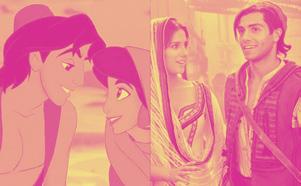
Disney is focused on making money. They know that these characters are loved, so they are trying to make more money by overusing them. What I mean is movie series have been added to unnecessarily, and Disney has recently produced many remakes of their original films. Personally, I dislike most of the live action remakes of some of my favorite movies. Aladdin (2019) is one that my friends and I disagree on. My friends liked the addition of Dalia (Jasmine’s handmaiden) and the actors’ singing voices. I enjoyed this remake overall, but I 100% prefer the animated Aladdin (1992). It is laugh out loud hilarious and a treasured movie for the whole family to enjoy. They allowed Robin Williams to make the Genie his own, and this made it super funny and worth quoting (A family favorite is “Jafar, Jafar, he’s our man. If he can’t do it–GREAT!”). I also love how expressive the characters are, especially Abu. Watching just doesn’t bring me the same joy as experiencing the animated Aladdin does. It is a good movie, but as a remake it just falls flat. The reason for the Disney Corporation remaking so many favorite Disney movies is in the hopes of making more money off of our already beloved characters. Disney knows that characters like Genie, Stitch, Olaf, Mickey, Pumbaa, and Timon are loved by all ages, so they are trying to get more movies with

those characters in them. To promote their remakes, the Disney Corporation hired well-liked actors to portray characters, such as Emma Stone as Cruella, Josh Gad as LeFou, and Will Smith as Genie. The Disney Corporation is playing with our favorite movies and characters to optimize their money intake.
Disney has also been prolonging movie series or adding to series unnecessarily. Toy Story is a big one. The first two Toy Story movies were amazing films, with great storylines and lovable characters. The third Toy Story was sad, but was a good ending for the Toy Story franchise. Unfortunately, they made a fourth one and are planning to make a fifth. They have dragged out the series as long as they could, knowing people care about the characters enough to buy and watch, but now Disney has run Toy Story through the mud. The Marvel franchise is another one that has been pulled too thin. After creating a streaming platform, Disney tried to make shows specifically for that platform. They wanted new shows to get people excited for and purchase Disney+. Shows like She-Hulk , The Falcon and the Winter Soldier , and WandaVision were some that were produced through Marvel Studio. These shows initially interested people, but they weren’t as well done as fans would have liked and left much to be desired within storylines and character developments. This exposes Disney’s dedication to quick money rather than quality. I think this would make Walt Disney sad because his goal was always to dream big, and when he had the idea to make a full-length animation film, they spent three years creating Snow White and the Seven Dwarfs (1937).
The Disney company has also bought many other companies, franchises, and popular corporations like Pixar, Marvel, Star Wars, Muppets, National Geographic, and so many more. Disney owns streaming services, video games, ESPN (major sports broadcasting), as well as Hulu. This shows the outreach and control Disney has spread across many different people and communities. This, therefore, allows the Disney company to gain more money as different communities of people buy their products, maybe not even knowing it is a Disney product.
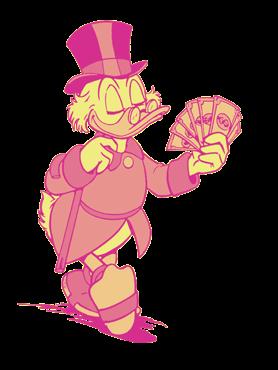
Disney isn’t the entertainment company that we all knew and loved. The one that built theme parks for families to have fun together, and spent years dedicating time to their animated movies and shows for our entertainment. Now, the Disney Corporation has become a profitcentered company building up its money pool, like Scrooge McDuck, to swim in. They have turned into a business constantly consuming resources, taking over other media companies, over-exhausting our favorite storylines and characters, and have raised their prices horrendously for their parks and merchandise. Disney has lost their purpose and quality in their pursuit of money. How I wish we could go back to DVDs and Saturday morning cartoons with a bowl of cereal in hand, and more affordable parks for

West High School
Curb Your Enthusiasm , magnum opus of venerated comedian Larry David, is frequently hailed as one of TV’s funniest—and most uncomfortable—shows. David, former executive producer of Seinfeld , continued his beloved comedic legacy through Curb’s relatable situations, unlikely interactions, and eccentric characters (including LD himself). So, how did David go from Seinfeld , the self-professed “show about nothing,” to one of the best sociopolitical commentaries of our time?
While Seinfeld might satisfy a lull in your afternoon, Curb Your Enthusiasm , through its incessant exhibit of social faux pas, both captivates viewers and makes them cringe—hard. Take heed if you intend to wind down with some feel-good TV, as the uncontrollable sighs, squirms, and head-smacks from Larry’s unbelievable gall (like saving his drowning blackberry over a drowning child) will leave you restless.
Larry David is undeniably one of the greatest comedians ever, but he is appallingly deprived of his better-fitting moniker: he is the most effective modern political commentator. Where others might flounder, David skillfully makes us laugh and self-reflect without losing reputability or dispelling watchers. By combining comedy
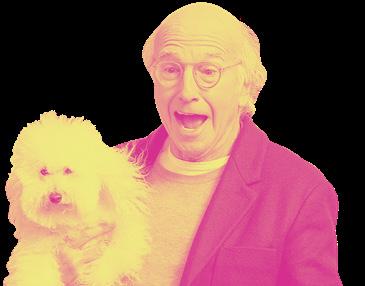
with unrepentant and merciless challenges of social norms, David uses Curb Your Enthusiasm as a conduit for political messaging in an era of unwavering complacency.
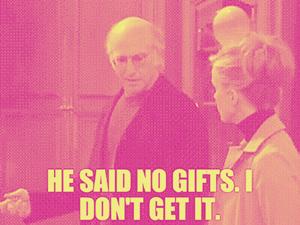
Comedians, by nature, push boundaries. To make someone laugh, one must either startle them or relate to them—and do it originally . Because of this fundamental attribute, society has accepted that what might be considered cancel-worthy, raunchy, or explicit otherwise is fair game in comedy. Curb Your Enthusiasm takes advantage of this acquiescence by exploring the taboo (sex, sexism, religion, racism, politics, etc.) with such inviting, hilarious self-awareness that even the most rigid and apprehensive viewers consider the social deviances David presents. For example, at a “no-presents necessary” birthday party, Larry forwent a gift despite all other attendees understanding the implied additional “but they are strongly suggested.” Though watchers might giggle at his friends’ scandalized reactions to this simple mistake and cringe at his own disproportionate outrage and social ignorance, you might all the while be thinking, “How was he supposed to know to bring a gift?” And rightfully so! This is the point . While the encounter was trivial, it exemplifies how we, in our utter fear of being selfish or uncomfortable, lose candor over politesse.
Moreover, part of Curb’s beauty is knowing what’s coming. Like watching a bull shop for China, the consequential disaster is inevitable. Even I, a seasoned watcher, can’t help but advise—beg—Larry to just be normal regardless of whether I've never seen the episode or seen it a million times.
Such is its draw, however. While viewers might pride themselves in being more socially apt than Larry, Curb’s true appeal is its complete disregard for etiquette. “Maybe,” you think amidst your cringe, “society would be a better place without platitudes, euphemism, and niceties.” Watching Larry David call out unadorned trick-or-treaters, fridge-snack thieves, excessive ice cream samplers, and insistent “happy birthday” singers is wonderfully vindictive. Certainly, every viewer has a socially ingrained grievance that, while they might yield to it, David would confront (and probably has confronted). I mean, would you ever honk at a police officer?
The exorbitant wealth and sheer nerve of Larry and his friends affords them a social ignorance unavailable to most
people, however much they might crave it. Though he may make us writhe in our seats, Larry’s unapologetic devotion to his own comfort and beliefs is enviable.
Consequentially, you yourself might stand up and defy norms. Although, hopefully not to the extent Larry does (see stealing shoes from a Holocaust memorial and eating a dying dog’s final meal). You might expose your fake-philanthropist friend for bragging about his “anonymous donation” (okay, maybe not this one), might refuse an insincere thank you, and even might admonish overindulgent PDA-ers. In fact, Larry David himself seems enticed by a life sans capitulation as he divulges that his Curb counterpart is an uncensored, exaggerated version of himself.
Still believe that it’s just not that deep? Consider Larry David’s extracurricular political commentaries. While he cleverly rags on politicians in Curb (namely Trump, whose MAGA hats are a focus of season 10’s premier), his more blatant derisions come from scathing opinion pieces. Recently, David wrote “My Dinner with Adolf” for the New York Times as commentary on Trump’s dinner with Bill Maher, Kid Rock, and others in which Trump was just oh so charming . The piece, which described a former Hitlerhater's change of heart after being invited to a marvelously pleasureful dictator dinner-party, emphasizes the danger of equating superficial civility with true moral goodness. Sound familiar? Curb , to a painstaking extent, will never let civility prevail over “justice.” ( Whether Larry’s judicial code warrants prioritization is entirely another matter, however ).
Additionally, David wrote “Production Meeting” for The New Yorker, a comparatively less strident critique, which satirizes the sycophantic echo chambers that are Trump’s cabinet meetings through a simulated Curb production meeting. In it, David arrogantly basks in the cast’s adulation of his looks, talents, charity, and humor, all of which culminates in a pregnant woman charging in and accusing David of abandoning her. Curb Your Enthusiasm isn’t just political media; it is a subject of it as well. Talk about bang for your buck!
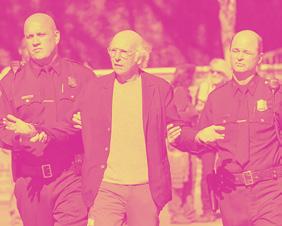
With all this in mind, Curb’s dearness and popularity have given me hope that its political messaging is working. Whether you believe Curb is political is almost irrelevant considering we unfailingly adapt to the media we consume, and, honestly, Curb is too funny not to watch. While David’s socio-political status is debated, his comedy is undeniable and completely enthralling. Curb has certainly engrained itself into my life, with my family constantly referring to undesirable situations as “ Curb moments.” If other watchers are anything like me, social complacency might as well be impossible after watching Curb Your Enthusiasm

Musicals are often described as boring, overdramatic, upbeat, long, and filled with lots of singing. Typically, this would be true as I used to think the same. Until Hamilton , the musical, by LinManuel Miranda, came along. I knew from the moment I heard the stunning lyrics and watched the theatrical performance that I’d fall in love with it, even having memorized at least half of the lyrics and dialogue. Tuning in to stream it, the first thing you’ll notice will be its unique Disney intro. We all recognize the classic Disney castle, but Hamilton’s intro has a specific beat. Even that's catchy–its ring is distinguishable. Then, audience applause and cheerings followed by “Ladies and gentlemen, this is your king, George the third, welcome to Hamilton. ” “Thank you, and enjoy my show.” Then, lights off, and the show begins.
Hamilton is a Broadway musical which debuted in 2015. The musical explores the life of one of America’s founding fathers, Alexander Hamilton and the upbringing of America. Hamilton is a biographical rap musical created by Lin-Manuel Miranda. Miranda first performed Hamilton at the White House in 2009 before it was released. There he played “Alexander Hamilton,” the first song in the album, and was laughed at and ridiculed. He later performed at the White House in 2016 after the musical's rise in popularity and fame. Hamilton was later added to Disney+ in 2020, which helped continue the widespread adoration. The Broadway musical Hamilton may seem like a boring play about the founding of America, but in reality, it's a lyrical masterpiece and an example of musical excellence by Miranda–breaking records and stigma all thanks to the musical's brilliant combination of genres. If you haven’t at least heard of Hamilton by now “Where have you been?”
Hamilton has excelled beyond just being an amazing Broadway musical. It became the first original cast album
to log 500 weeks on the Billboard 200. That means ever since Hamilton’s initial release, it has not left the charts, impressive for a musical. Furthering the success of the musical, Hamilton was nominated for 16 Tony Awards and won 11 as well as received a Pulitzer Prize for drama. Hamilton became the first cast album to hit #1 on the Billboard top rap album chart. This goes to show that although Hamilton is a musical, it can do just as well as a movie can. Hamilton , although no longer on Broadway, continues to have a widespread impact. Receiving millions of views on Disney+ and having countless remakes earned Hamilton its Emmy award: “How to account for his rise to the top? Man, the man is non-stop."
There are many perceptions about musicals and the people who watch them, but the one I’ve heard the most consistently would have to be “they’re long and boring” which is not true and Hamilton helps break that sterotype. Musicals are stereotypically filled with “non stop” boring singing, and while that may be true for some, Hamilton breaks that cycle. Hamilton combines genres Hip Hop and Rap, creating the remarkable songs we hear throughout the show. There hasn’t been a single person who was willing to give a song from the playlist a listen who hasn’t enjoyed or at least showed appreciation for the artistry behind it. Whether you enjoy musicals or hate them, Hamilton undoubtedly deserves recognition “I probably shouldn't brag, but dag, I amaze and astonish.”
Lin-Manuel Miranda came up with the idea for Hamilton while on vacation reading a biography about Alexader Hamilton. Who would’ve ever thought that would lead to what Hamilton , the musical, is today. The impact of the musical was so great, it even landed one of the costumes Miranda wore while playing Alexander Hamilton in the National Museum of American History in Washington DC. Not only did it make national headlines, but showcased diversity. Hamilton’s cast is filled with actors of color contrasting with the historical figures the musical is based on. That along with Miranda himself, the child of immigrant parents, showcases the importance of representation in musical theater and the importance and impact this revolutionary musical has had on our modern day: “And even now I lie awake. Knowing history has its eyes on me.”
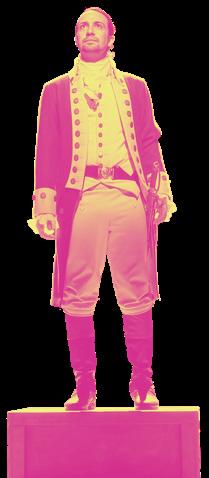
My first watch of Hamilton was at a children's hospital, where I stayed for two months because of my ruptured appendix. During those days, as I wasn't very mobile, I would stay in bed and mainly watch Disney movies on TV. Having watched and rewatched so many of the same movies and having previously heard of Hamilton and its greatness, from both my brother and sister, I decided to give it a watch. My previous excuse for not doing so was my “lack of time,” and during those circumstances, I had nothing but time. So, I pressed play and spent the next three hours watching the musical on the screen. I would then go on to watch it about 10 times during my stay. Not only was I entertained, but I was also
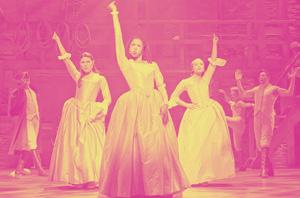
learning history in rap lyrics, which is something I had never previously heard of. The music was catchy, and the lyrics were a work of art. It was a gateway for me to forget about the sadness of being stuck in a hospital for so long, bed bound and immobile, where at the time I still did not know what code blue was. The music would drown the cries and alarms I would hear at night. I still go back and give it a rewatch and even have the whole album on my playlist, as it reminds me of hope. I can lose myself in the music and really feel the emotions the actors are portraying. Every time I watch it, I notice a new detail or hear new lyric I had not previously paid attention to. Hamilton truly is not only a piece of history, but my life line: “Stay alive.”
I believe Hamilton could have inspired future musicals, although there is no way to prove this, I think Hamilton was a gateway to future musical success and revolutionary for the industry. I’d now like to talk about why I think Hamilton has foreshadowed success for future musicals. Take a look at current musical releases, specifically, Mufasa and Wicked , which have received positive ratings from viewers. Miranda worked on Mufasa and helped write many of the songs I’m sure you’ve heard from the soundtrack. The musical is known for its catchy soundtrack and even won the NAACP award for outstanding character voice – over which I’m not surprised as Beyoncé voiced Nala. As for Wicked , a consistently loved musical already, has, as I’m sure you’ve heard or seen by now, had a recent rerelease. It received an 88% on Rotten Tomatoes and a 7.5/10 on IMDb, which are some of the most popular and used movie rating websites by watchers. It has received too many awards for me to even list and already is receiving anticipation and excitement for the second part to be released later this year. Both Wicked and Mufasa were successful hits and furthered or added to the appreciation of musicals by viewers, and myself, which I believe Hamilton initially helped create: “And when my time is up, have I done enough? Will they tell your story?”
Now I want to talk about a specific song in the musical that highlights Miranda’s literary excellence, the 11th song in the musical, “Satisfied.” This specific song takes place before the
American Revolutionary War and is sung by the actor Renée Elise Goldsberry, known as Angelica Schuyler in the musical. The song explores Angelica’s feelings for Hamilton and goes through interactions had between the two. Renée does an amazing job at capturing emotion while performing. And although I cannot list every lyric that I believe captures this, I would like to highlight a specific verse:
Number one
I’m a girl in a world in which my only job is to marry rich
My father has no sons, so I’m the one who has to social climb for one
So I’m the oldest and the wittiest and the gossip in New York City is insidious
And Alexander is penniless
Ha! That doesn’t mean I want him any less.
You can’t read the verse without hearing the rhythm and rhyme. I can’t describe the brilliance of the lyrics just using words; it's an almost transcendent experience. The feeling it gives the watcher is incomparable, like finally getting to unbuckle your jeans at the end of a long day, relief. Miranda effectively uses literary elements like imagery to display the extent of Angelica’s feelings for Hamilton and her internal struggle, displaying her sacrifice for her sister.
I still go back and give it a rewatch and even have the whole album on my playlist, as it reminds me of hope. I can lose myself in the music and really feel the emotions the actors are portraying. Every time I watch it, I notice a new detail or a new lyric I had not previously paid attention to. Hamilton truly is not only a piece of history, but a piece of genius. Hamilton helped revolutionize the way people think about musicals and could’ve helped the success of future musicals. It rose above its station and helped break stigmas and records. And although I discovered Hamilton during one of the hardest times in my life, it reminded me that there's always a bright side, you’ll always find hope, even in the most unexpected places: “And if we get this right we’re gonna teach ‘em how to say goodbye.”
Most people would be discouraged to continue watching a movie they saw during a difficult time in their life as it could typically bring back negative emotions or memories, but my personal experience has been positive. It helped bring me out of my slump and helped remind me I’m not “running out of time.” My dream is to someday watch the Broadway musical Hamilton live with the original cast (which is actually happening in August). Although I won’t be able to go: “I'm willing to wait for it.”
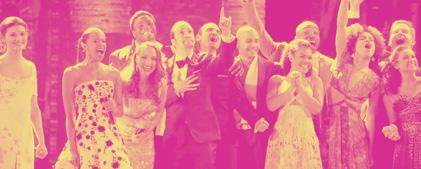

Ann Chaplin Highland High School
Forgotten and pushed aside, Curley’s Wife had come to be disregarded by everyone on the ranch. Many had viewed her in a bad light, not giving credit to her character or the fact that she had her own goals and dreams. Despite everyone ignoring her, the entire trajectory of the story would have changed if she hadn’t existed. Curley’s Wife has more depth and importance than many people realize.
Of Mice and Men was a novella written by John Steinbeck in 1937. The story follows two protagonists, Lennie and George, who have the “American Dream” during the Great Depression. Both were forced to flee from their old workplace because of Lennie’s actions. They’d eventually try to save up money to buy land for themselves in Soledad, California. While they were settling in, Curley and another worker came in and began to create issues. Typically, people on the ranch avoided making him angry because he was the son of the boss. Because of this, Curley was comfortable intimidating people. He immediately began messing with Lennie because he didn’t like “big” guys. Curley’s Wife came in shortly after, looking for her husband.
However, when she left, George warned Lennie to say away from her because she was “trouble.”
Considering he was at fault for creating the need to leave their old jobs, George tried to ensure Lennie he wouldn’t cause any more issues.
Throughout the entire book, Curley’s Wife was viewed as less of a person. Everyone steers away from her despite her countless attempts at starting conversations with others. Curley also doesn’t like it when his wife talks to other people on the ranch. Historical context for this time period further explains her treatment, since American women in the 1900s were only an extension of their husbands. Curley’s Wife was also the only female character in the story, so she was pretty lonely. Her “flirtatious” behavior can be explained by this theme of isolation, and this would eventually lead to her death. It’s also important to recognize the way she was introduced in the book. Immediately, it began talking about her appearance, and we can tell from this that everyone viewed her as a “tart.” Her lack of a name plays into her role as someone who’s not viewed as human. This shows that there’s more complexity to who she is. Even in real life, I’ve noticed that people don’t typically look into her character too deeply. Part of this could probably be explained by the writing style of the book, since we follow the main characters’ stories instead of hers.
Personally, I think her perspective alone could make a good book. One of the more important scenes I took note of was the one in the barn before her death. She mentions how she had the potential to become an actress, but a couple of things were limiting her. Her mom didn’t let her, and she had to marry Curley instead. From this moment, the way she goes quiet and talks passionately about her dreams shows how she hasn’t told anyone else about this. Curley’s Wife was frustrated when Lennie told her he wasn’t allowed to talk to her. Because of this, we can tell that she’s tired of the way she’s been treated, even if she ignores it most of the time. She also mentioned one time that she wanted to run away from town, hoping for a better life. It’s shown that although she tries talking to many on the ranch, it’s hard for her to confide in people. This is probably because throughout her entire life, her feelings haven’t been taken seriously by anyone, even her parents. She revealed her struggles to Lennie because he was the only character in the story who treated everyone equally. We can also infer that she’s the type of person who usually pushes her feelings away and often ignores the treatment she gets to give herself a sense of happiness. This character stood out to me because, from an outside perspective, it was easy to tell how badly she was treated and her thoughts throughout.
On the other hand, the people in the story don’t seem to pay any attention. I loved how the author developed her character in the book. At first, she’s shown to the readers in the same way the characters view her. Slowly, throughout the chapters, her personality becomes a bit more apparent in her actions and the things she says. It shines brightest before her death.
Curley’s Wife had walked into the barn one day, where Lennie was crying over the loss of his puppy. He tries to avoid her, knowing he’s not allowed to interact with her, but eventually gives in to a conversation. This scene uncovers the truth that’s been buried inside her. She mentions how she could’ve been in the movies and lived a life of luxury but had to marry Curley instead. With this conversation in the barn, it’s also revealed that Curley abused her. It becomes apparent that she regrets the path her life has taken. When she died, only then do readers get an idea of her humanity. The narrator describes her face after as less of a “tart” and more of a person. I enjoyed how we got to see more about who she was and what she aspired to be. She confided in Lennie during her final moments, not knowing he would be the one to kill her.
Something interesting I found about this character is the symbolism and literary devices used to portray her. One of the main themes in this book is friendship, shown by Lennie and George, but there’s a stark contrast to this through Curley’s Wife. As mentioned before, the protagonists had dreams of buying land and living peacefully, while Curley’s Wife had dreams of being a famous Hollywood star. Her inability to achieve her goal correlates with the two main characters, since they weren’t able to either. She symbolizes the consequences of oppression towards women. This shows the significance of her character, as well as the impossibility of the “American Dream.”
Her death caused a dramatic turn in the story and was foreshadowed by the reason Lennie and George had to leave their old jobs in the first place. Lennie also had a “bad habit” of accidentally murdering small, fragile animals he would pet. He really enjoyed feeling soft things, so it was pretty obvious Curley’s Wife was going to die when she offered to let him feel her hair. The entire course of the storyline shifted after her death, and half the book would’ve been gone if she hadn’t had relevance. In the end, her death was the result of the consequences of treating women badly during this time period. If she had regarded as a person, her desire to talk to people wouldn’t have existed, making her stay away from Lennie. This shows how her death wasn’t comparable to any other character dying. It completely crushed her dreams of Lennie and George, and not only killed her, but also killed the remaining hope they had left for their own lives.


Hunter High School
“I can hear them,” Zunesha the Giant Elephant bellowed. “For the first time in 800 years, I can hear the Drums of Liberation. JoyBoy has returned!” he declared. As Luffy lay defeated, his heart began to beat irregularly, unnaturally, and rhythmic. Rising from the ground with the power of a god and the spirit of JoyBoy. He had entered 5th gear. The first appearance of the Drums of Liberation occurred in episode 1070 during the Wano Arc. Longtime fans of One Piece consider this episode to be when Luffy became Joyboy. After all, this was the first time he began his transformation into fifth gear using the power of JoyBoy the legendary Warrior of Liberation who brought freedom to the masses with uncontrollable laughter and a smile.
One Piece is a story about a crew of pirates known as the Straw Hats, captained by the protagonist Monkey D. Luffy, who set out to sea to accomplish their dreams and find Gol D. Roger’s legendary treasure, the One Piece. For 26 years, One Piece has brought joy and freedom to the hearts of all. More specifically, Monkey D. Luffy has.
Last week I began to watch One Piece for the second time now, and I saw something new. More importantly, I heard something I didn’t think possible. During the Arlong Park arc, I heard the drums of Liberation in all its glory. Much like Zunesha, I was shocked. How could I possibly hear them over a thousand episodes before they appear? The more I thought, I remembered that Arlong Park was the moment I fell in love with One Piece . It was the reason I stuck around. I didn’t know it then, but for the first time I had felt the captivating beat of The Drums of Liberation. This led me to the realization that Luffy has always been JoyBoy. JoyBoy, in essence, is freedom. An ancient warrior with the power of the Sun God Nika, who would go from island to island liberating them. With contagious laughter and a massive smile, he would restore laughter and smiles to their own faces. Luffy is the same, not only bringing freedom but allowing others to do so as well.
East Blue is the earliest saga in One Piece , yet it is also the one with the most instances of Luffy bringing freedom. It begins when we meet Coby, a young boy who had been captured and forced into servitude on the ship of the pirate “Iron Club” Alvida, who Luffy promptly defeats, freeing Coby. Then Luffy frees his soon-to-be crewmate Roronoa Zoro from execution as well as freeing a town from the tyrannical Marine Captain “Axe Hand” Morgan. In the episodes that follow, Luffy saves yet another town, this time from the occupation of Buggy “the Clown.” Finally, there is the Arlong Park arc where he saved an entire island from Arlong. He also saved his navigator Nami, who was trapped in Arlong’s servitude for a decade. It is only the start of his journey, yet he has already freed thousands of people.
As the story progresses, Luffy and his crew enter the Grand Line. It is the most dangerous stretch of ocean where countless pirates have met their end. Nothing changes on the Grand Line. He begins by taking down the Warlord Crocodile, who was poisoning the Kingdom of Alabasta with his influence. In the Water 7 saga, he burst into Enies Lobby, headquarters of the world government, and freed Nico Robin and Franky, who were soon to be crew mates. Not slowing down, he headed to the sky island Skypiea and freed them from an evil leader “God” Enel, who nearly killed every citizen. Then on the Island Ship Thriller Bark, he recovered thousands of shadows from the Warlord Gecko Moria allowing their owners to once again live under the sun and feel its warm rays on their skin without facing the icy hand of death.
During the Paramount War Saga, Luffy infiltrated the infamous prison Impel Down. In its entire history only one person had ever escaped, and they had to cut off their legs to do so. Entering would mean you would likely never see the light of day again. Still, in order to attempt to rescue his brother “Fire Fist” Ace, he had to try. It is here where he frees many prisoners along the way,
including former enemies such as Buggy “The Clown” and Crocodile. Together the three pirates led a prison break resulting in the Liberation of 241 Pirates. While he could not save them all, Luffy had just led the most successful mass prison break ever. Still, those who didn’t make it, died free. They had left their cells and were given the opportunity to die on their own terms. Not rot away in the depths of Impel Down. Luffy had granted freedom to nearly every criminal within Impel Down.
The New World is the second half of the Grand Line. It is far more dangerous than the first half with only the cream of the crop being fit to sail it. Still, Luffy’s liberating spirit persisted. He began on Fishman island, defeating 100,000 Fishmen freeing them from Hody Jones’ hateful ideology and control. He then entered Punk Hazard, where they rescued children from the “Mad Scientist” Caesar Clown, who was conducting human experiments on them. This was followed by Dressrosa, where he saved the Kingdom of Dressrosa from the Warlord and King, Donquixote Doflamingo. His crewmates also freed thousands of people who had been turned into toys, along with the Tontatta tribe, who were all forced into slavery. This arc also showed how the Drums of Liberation can transfer into the hearts of others. In Dressrosa, we meet many pirates who are all caught in the struggle. Luffy and his crew end up saving them. Together they fight, side by side, with Luffy inspiring them. They could feel the beating drums. After the battle, they form the Straw Hat Fleet, vowing to sail under Luffy’s banner and follow him.
The Wano Country Saga contains the greatest example of Luffy’s liberation. For twenty years, the Land of Wano had been ruled by the Emperor of the Sea Kaido, “King of the Beasts.” Luffy had come to free it. Finding himself in Udon Prison, he freed thousands of prisoners, samurai, who were now taking up arms for their country. Luffy led a revolution in Wano. Along with many Samurai, they sieged Onigashima. Luffy faced Kaido in battle, wielding the power of JoyBoy, and defeated him. He had freed Wano. While this was the first time the Drums of Liberation had appeared along with JoyBoy’s power, Luffy had wielded it the entire time.
While many see Luffy as a liberator, they fail to consider all aspects of that. It is obvious when he unleashes a GumGum Gatling or kicks it into 2nd Gear to defeat the villain of whatever island they are on. The freedom Luffy provides is far deeper than that. It does not matter what binds you. As long as there is a chain, it will be destroyed by Luffy’s hand. The most notable example of this is his crewmate Nico Robin. As a child, her home Ohara was destroyed, along with anyone she had ever loved. Government propaganda against her made everyone shun her. With a nickname like “Demon Child,” no one would take her in or even get near her. With the world telling her she didn’t deserve to live, she
began to believe it, considering that she was born to be alone. She was ready to die on the island of Alabasta, but Luffy saved her. He took her into his crew as his friend. Still, she did not believe she deserved to live, turning herself in to the government to save her newfound friends the Straw Hat Pirates. Seeing his friend in danger, still chained, Luffy and the rest of the crew burst into Enies Lobby, declaring war on the world government to rescue her, to show her how much her life meant to them.
Countless others have felt the same effect. Luffy raised them up, freed their hearts. This feeling is not exclusive to the world of One Piece either. Popular streamer IShowSpeed is a well-known fan of the series and once made the bold claim that “ One Piece saved my life.” It allowed him to shed his addictions and make something of his life. Now he is one of the most successful streamers of all time with a net worth of $10 million. It helped me through a dark time as well. I had been depressed for a long time, and catching Covid the week before winter break only made it worse. I wallowed in the basement, isolated. Alone. I began to scroll Netflix, desperate for something to take my mind off the pain, and I found One Piece . Something was drawing me to it. I was skeptical since it seemed like it was just a show about pirates, but I couldn’t shake the feeling that I needed to watch it. After all, in the wise words of Yasopp, “When the pirate flag beckons, you must heed its call!” and I am glad I did. It turned everything around. While I am still fighting it from time to time, One Piece freed me from my own despair. For those who have heard the Drums of Liberation, felt its beat, One Piece is pure freedom. It makes you want to play along not with a drum set but your own heart. It makes you want to spread that freedom and, like Nico Robin, shout at the top of your lungs, “I want to live.”


Ziequel Maez
Cyprus High School
It’s often said that the Jurassic Park/World franchise has the best depiction of dinosaurs; however, the franchise has a lot of facts and stereotypes that are just untrue. Have you ever thought of going to a real Jurassic Park? Or thought of what creative licenses the Jurassic franchise took to make their movie? Well, we all know the Jurassic Park/World franchise. It's basically hands down the most popular dinosaur media to ever hit screens. I mean even I absolutely love it. When I first saw the iconic scene of the T. rex staring down the main characters in Jurassic Park for the first time, I was at the edge of my seat! But I have come to learn that the Jurassic franchise has a lot of incorrect depictions of certain dinosaurs. But there are also some amazing theories, so I am going to share it all with you. (This is not to discredit the work that the Jurassic Park/World franchise has done; I just believe that everyone should know fact from fantasy, and the Jurassic franchise definitely took some creative liberties with their production.)
Facts that Jurassic World got wrong
Fact: If dinosaurs were to be revived, we could not make them exactly the same as we don't have the right means to do so. We would use current animals for the base of the dinosaur. We did recently revive the dire wolves, but we used our own wolves as the base for them. In any case of resurrection, we use a base of one of the most compatible creatures that are still alive in order to make them as accurate as possible.
Fact: Scientists have actually found that a lot of dinosaurs actually would have had feathers, which would debunk the most common look of the T. rex or raptors from the Jurassic Park/World movies. This fact most likely comes from the time periods dinosaurs lived in. A lot of these dinosaurs lived in colder climates, so it would make sense that they would have evolved to have some kind of fur or feathers in order to survive and stay warm. This is also why we find the birds of today to be the dinosaurs’ common ancestors.
Fact: The Spinosaurus can travel and hunt in water but not as much as portrayed in the media. The Spinosaurus actually don't dive underwater but can swim using their hind legs. Also, according to Wikipedia and paleontologists, the Spinosaurus was actually buoyant, which meant that it could float on water! Hunting patterns of the Spinosaurus makes it seem likely that they don't like deep water and prefer shallow water, as well as waiting for their prey to come out of the water before they attack.

Stereotype: Raptors are not actually as smart as they are portrayed to be in the Jurassic Park/World movies as their brain cavities are smaller, making it so they physically could not actually have contained a heavy amount of intelligence as their brains were simply too small. So they most likely couldn't actually figure out how to open doors as they did in the movies, nor would they have been able to plan very well as they do in the movies, for example, attacking in packs and coordinating well with each other.
Stereotype: T. rex can't see you if you stand still. This is VERY false because T. rexes have something called binocular vision, meaning that if they are looking at you they ARE looking at you and can actually see you standing there. The Jurassic franchise has made this an untrue fact, and if you ask somebody about it they will most likely answer with “Oh, they can't see you if you stand still,” which is just untrue. I think that the way that the Jurassic Park/ World franchise was not a bad or uninteresting way. Plus if you take into account the time period of the movies, they may not have known this yet. Now, if the T. rex in the Jurassic Park movie actually had this, the scene could have been way different as the characters faced with the T. rex most likely would have died or at least been greatly wounded.
Stereotype: The Dilophosaurus in the Jurassic Park/World movies are venomous dinosaurs that flaunt their neck fans before spitting poison at their prey or predators. But in truth, according to Wikipedia

and other sources, they actually don't have the neck fans or poisonous spit that they are usually depicted to have in the media they are in, and they actually were not that small. Either they were longer or about the same height as us if not slightly taller. I think it's a cool way to think about them, but it's just so inaccurate that it needs to be addressed.
Theory: Could it be possible that the Indominus rex (from the Jurassic World movie) has human DNA? This is a popular theory that people argue about and for good reason. Would we as a species really want to give another species our DNA? Unlikely, but, on the other hand, it almost makes sense for it to have human DNA as if we look at it from another angle. The Indominus rex could have human DNA. I mean think about it; the Indominus rex is more intelligent than the mass majority of dinosaurs. For example, it faked getting out of its cage and then using camouflage blended itself into the trees. In turn, the humans ended up getting into the cage. Thinking about it, this plan is extremely planned out and not just basic hunting instincts. This dinosaur single handedly thought of a complex plan and actually did it, not to mention it could communicate with the raptors later in the movie, further insinuating that this dinosaur can actually think critically and use ideas effectively. But as said, this is just a theory and not actually fact, so I will leave it to you to decide if you believe this or not.
Theory: Could we make our own dinosaurs? The Scorpius rex (from Jurassic World: Camp Cretaceous ever man-made dinosaur. The idea of the Scorpius rex is that one of the scientists on the island really wanted to make a new dinosaur, and he conducted multiple test trials, and they failed one after another, but after little to no results he finally made a breakthrough. The Scorpius rex was made and had the DNA of a T. rex, Velociraptor, Carnatorus, tree frog, and a scorpion fish. With all these things mixed together, the Scorpius rex could climb trees and poison its prey with its tail, making it a very dangerous threat. There were some major flaws with the Scorpius rex, as the dinosaur was very easily distracted by loud noise and light. It was also very prone to mood swings, so in short the Scorpius rex was
very unstable, and they deemed it unfit to be let out into the park. So if we think along the lines of what this scientist did, yes, we could make our own dinosaurs, but it could take a very long time, and it could very well end up unstable and could take beyond our own life spans to get the dinosaur to not be overly aggressive or scatter brained.
Could or would somebody actually make a Jurassic Park ? Now, this idea is interesting to me as you really never know what could happen, but I think the main ideas to look at when deciding on such a big and extremely dangerous idea is will it be safe, secure, or even allowed to leave your board of ideas. This is one of my personal favorite theories to think about because as a kid I always thought that a real Jurassic Park would be amazing! But now that I'm older, I genuinely believe that one should NEVER be built, as the unknown factors are just too many and frankly too dangerous. I mean just thinking about the possible news titles could send shivers down your spine: “T. rex escapes containment and wreaks havoc!” It's genuinely not a good idea, and if one does get built it better have the most highend security to keep them in and us out.


SLCSE
You know the big lizard Dino who we call Godzilla that we all know and love. Both Godzillas from the big, budgeted movies from the US to the low budget masterpieces from Japan, like Godzilla Minus One created in 2023. But do people really know the history and the steps it took to make such a recognized monster. But there is one huge difference between the American Godzilla and the Japanese Godzilla, not just from their being from different countries but the way they portrayed them. In the Japanese version of Godzilla, the monster is depicted destroying cities and killing many. This is because Godzilla was a way to betray the horrors of the nuclear bombs. As for the American Godzilla, not only does he have a totally different look but he does not kill people for fun or destroy cities with no purpose. Godzilla does not mean to destroy cities on purpose. He is trying to protect humanity and keep balance on earth. He is the protector of earth with all the other kaiju’s (monsters).
You may be wondering how Japan and America think about each other’s work. Do they hate it, or do they think of it as a new perspective? I think people may view it as both. There are many different views and opinions, so they will never say or stay the same.
Throughout the first and second movie that starred Godzilla, the Big-G has been portrayed as destroying Tokyo and other cities. The monster continues by terrorizing humans, killing many and destroying many houses and landmarks. The only way to stop him is with a weapon called the oxygen-destroyer. This weapon was used to designate oxygen around the Godzilla to rapidly cut the oxygen supply and cause him to asphyxiate and dissolve. In the second movie, Godzilla Raids Again, made in 1955 by the movie studio Toho, features Godzilla fighting against all new monsters such as Anguirus, a four-legged armadillo or carrottops monster with the intention of wreaking havoc in Osaka. When the Englishdubbed version of the movie came to theaters in the US, Anguirus came with a new name which translated to Anguilasorus. Same as Godzilla, but he had the name of “the fire monster Gigantis!”
In Japan, the way that Godzilla is talked about by the characters is way more different than the American one. Godzilla is described by the villagers to be a monster who usually stays under the water in the deep sea, but when he surfaces deep sea fish float to the top.
For some extra information, the way they made Godzilla walk and fight and destroy was by a body suit that was worn by a man by the name of Haruo Nakajima, who was the person behind the magic of the monster coming to life and being able to look like an real-life creature ( at that time because they did not have all the face CGI stuff and the visual effects ). He also was the one to make it look like what a creature of that size would look like coming out of the water and walking around on land. Fun fact: When they were making the suit and Haruo tried to walking it he kept falling down because it was so heavy and weighed half of his body weight. It would also get very hot in there, so he had to take it off frequently and had to have a straw go into the mouth of the suit so he does not overheat in it.
Just like the US, they had merchandise and toys, but they did not just make movies for the toys they made them because people loved it and the thing it represents (not saying that the bombs dropped in Hiroshima and Nagasaki, were okay); the way they portrayed not just to destruction being described but a thing to think about, something physical, alive and breathing, something that when shown on screen or talked about it feared. It’s a fun and creative way to teach but also to show the horrors of the bombs and what they did to Japan, and even if some other counties do it, it affects everyone in the end.
It’s more political than you think, when you research about it.

The movie called Godzilla was relisted in 2014, a few years after the US bought the rights to the trademarked name Godzilla. With this, they made the very first CGI Godzilla model. Through this process, Godzilla became shorter, not taller. His first appearance came with the addition of two new monsters called MOTOs, who came to earth to try to keep their species alive, but the big-G had other ideas. The fight between them was not in Tokyo or anywhere in Japan but in New York. Instead of killing people, he killed the MOTOs. He defeated both the female and male MOTO and then went back to the water after a tremendous roar of victory.
Turns out when we are given information about him by the character by the name of Ishirō Serizawa joined by his colleague Dr. Vivienne Graham who gives us a very detailed description of the Big-G. Ishirō and Vivienne say that Godzilla is “millions of years older than mankind, when the earth was ten times more radioactive than it is today.” According to her description, Godzilla is not a horrid monster out to destroy and kill but to keep the peace and balance on earth.
Having a Godzilla who is following the rules of most of the humans survive, and being the hero in every movie and always saving humanity. In the American version they used the common good vs. evil plot, and it becomes bland after a while. I feel like this version of Godzilla is mostly used as a marketing tactic and a way to try to attract younger audiences, such as teens and young adults.
In the 2019 movie Godzilla King of Monsters in which Godzilla fights the horrifying three-headed monster King Gidorha, Gidorah is from space and is very big and can easily over power Godzilla. They label him as the king of the monsters. He commands the other monsters to destroy the lands where they are from such as Rio, which is being destroyed by the fire bird Rodan (which translates to fire demon). In New York, the three-headed dragon himself, King Gihdora (which to no one’s surprise translates to hydra; it is the Russian word for hydra), and many, many other countries. But when all hope is lost, the Big-G himself comes to save the day–GODZILLA. But in the battle even when supported by the military he still gets seriously hurt and must go back into the water to try to recover. That’s when we are given the information from Ishirō Serizawa that it will take up to 10
years for Godzilla to heal, so he makes the hard decision to sacrifice himself by planting a nuclear bomb next to Godzilla to heal him so he can fight Gidorah.
The way a character is gendered and how they’re designed is a very large and complicated topic, but I’ll be narrowing it down to only one character. This character is Godzilla and how his design was changed and how it impacted the fans and the story line.
When looking at the original story such as how he is not a mutated fish after radioactive barrels spilled into the sea and made him.
In the design phase of Godzilla, the team went though many faces like when the Big-G had a mushroom cloud head with the same body as the official design but with a more scarier look, like his looking for your IP address. After the first movie he got a newly reviewed design such as bigger dorsal fins and a longer tail. As not to take up this whole page with words about Godzilla’s design, I want to talk about his newer look.
After the 2000s in 2014 the first major design change happened in the American movie when they made an allnew Godzilla by making him more agile and less thick legs and with a slimmer body, with a eagle looking head smaller eyes and square snout, and more even number of dorsal

fins which are a little more shorter now. In 2019 he had gained a new look after he was blown up with a nuclear bomb. He has orange and res irritated skin and instead of his blue breath when powering up he made a fire/lava looking dome around him.
Now that he is powered up he is orange and kills the three-headed dragon with a force field magma by first burning the side heads, and wings. Then Godzilla steps on the body and crashes in with the middle head starts screaming in pain. A few seconds pass then out of the rumble comes Godzilla victorious . He walks back into the water and swims away.
This is where I bring in the marketing part or the movie. In every new movie he gets a new look and has a new monster to fight, which is a very good marketing technique. So, the toy industry like Funko Pop and toys from Walmart etc. will take it and turn it into something fans buy.
With the evolution of Godzilla comes a lot of fan art, toys, pushes and other things. With a new design like a scar or a new color, like in the 2024 Godzilla x Gong, Godzilla is now pink and has spikes on his tail. Gong has a new yellow metal arm, a bunch of new monsters such as Shimo, a monster that walks on four feet, ice on her back and can breathe it. There is also Scar king, an ape just like Gong but red and skinnier.
This gives many new toys, but mainly the toys are the American Godzilla and the American versions of the characters (other than Gong, Gong is an American monster)
Over the time period of 70 years when the first Godzilla movie came out to the latest one in 2024, in that time people had had time to forgive and to move on form the horrors of the bombing. But that dose not make it an exaction to all the deaths caused by it. It’s more of a learning stage where people can see what happened and will try their hardest never to re-create it. I see the movies as a way to show the way people slowly moved on form the main focus of Godzilla as a reposition of destruction to a cool monster. The reason I say this is because of 2023’s Godzilla Minus One. It shows the monster in a new light with old polt lines but with a new animation team. It’s a respectful way to show the past in todays words and views.
Godzilla Minus One raised over $57.1 million in the box office. In Japan Godzilla Minus One earned over $32 million. In the 2024 Godzilla x Kong: A New Empire, in America it earned $375.5 million, and in Japan it earned $26 million.
Now that you know this information, I want you to take this and view other types of media through this lens. Question the differences and the equalities in the monster, person or the type of story, see what the differences is from the design from the way the portray the character. You could compare it to the book it was themed after, or the animated TV show turned into a live action movie. You could even put on different languages and see how the voice actors show emotion though their voices.

Miriam Martinez
Hunter High School
Delusional Romantics are to Gen-Z what hopeless romantics are to millennials. Is Gen-Z bringing Rom-coms back?
Let's all agree that zoning out is a perfectly legitimate hobby, and it is one of my main hobbies at this point. After all, who doesn't like to stare at a wall for ten minutes imagining that Mr. Darcy is telling YOU—not Elizabeth Bennet—YOU, the words, “You bewitched me body and soul and I lo-, I lo-, I love you.” Wait, is that just me…? Alright then, ANYWAY, I AM a hopeless romantic.
I love watching romantic comedies and waiting for that fairy tale love story. Whenever I am done with a movie, I go on to pretend to be the fiancé of a man who I saved in the train station where I work. I get to know his family as he is in a coma, and I fall in love with his brother. You Were Sleeping really is one of my all-time favorite romantic comedies if you haven't noticed. The humor of that film makes you laugh out loud.
Also, the fact that by the end of the movie the main character, Lucy, gets engaged to the man she fell in love with and lives happily ever after just as she was wishing for in the beginning of the movie has me giggling like a little girl for how dreamy that sounds.


Between the 1990s and the early 2000s, there was a long series of romantic comedies coming from Hollywood studios, for example, 10 Things I Hate About You , Clueless , Two Weeks Notice , and A Walk to Remember . These movies have been able to help Gen-Z, who have now grown up, by enhancing their view of love and how beautiful it can be while also adding that comedy aspect to give you a good laugh. I grew up watching all these romantic comedies that have changed my brain chemistry and the way I view life with what people call “rose-colored glasses,” which means to look at the world in a more positive light than the dark and gloomy side.
To go more in depth into what exactly a hopeless romantic is, let's think about how people usually describe them. Now-a-days there are some comments spreading around with Gen-Z saying that hopeless romantics are delusionals because they like to fantasize about something that isn't real, or daydream about a person yearning for them because it is not going on in their personal lives. That whole claim is false. A hopeless romantic is someone who has a bigger belief in love and loves the idea of falling in love.
A hopeless romantic may “fall in love” with someone really fast, but let me hold your hand when I tell you that we just are in love with the thought of having a “meet-cute,” not the person–but at least they can accept the fact, most of the time, that the person may not be interested in them. Hopeless romantics are more down to earth than they may seem—even after having their head in the clouds—so that they don't abandon their reality altogether. Research by Dr. Romanov shows that “being a hopeless romantic can be helpful as opening yourself up to love requires significant vulnerability…. Despite past heartbreak and pain, hopeless romantics see the good in others and believe in their potential.” That is to show how hopeless romantics think more in depth on the feelings of people and not just that first layer of the love they are seeking.
Psychology Today states that a delusional romantic, on the other hand, is someone “who holds romantic views that are not based in reality, often exaggerating or misinterpreting signs of affection and commitment.” This is to say that delusional romantics let themselves stay in a certain world where everything goes their way when the signs of rejection are clear. They don't want to dive deeper into
seeking the values of love, as if they are just at the tip of the iceberg. I want to make it clear, though, that this is said to be a mental disorder called Erotomania. We are all a little delusional at one point when it comes to romance; that doesn't mean that you most likely have the disorder, so don't try to go to your doctor worried that you might be a little mentally insane–believe me, I thought I was.
Both types of hopeless romantics put someone on a pedestal at one point or daydream about that certain person that has you going crazy. (Milo Ventimiglia is mine, but come on, God took his time creating that man.)
But there is a line that gets overly crossed with romantic delusionals to the point that it can become just pure, unhealthy obsession. After all, hopeless romantics do have to remember what 27 Dresses has taught us, “Love is patient, love is kind, love means slowly losing your mind.”
Now that we got that part out of the way, Gen-Z didn't just, somewhat, change the way a hopeless romantic is viewed but also the way the plotlines and views between the rom-coms of the 90s, early 2000 and the 2020s are. The genre of romance has aggravated so drastically that it is humorous. The most recent movies of the 2020s mainly focus on the “sexual tension” that is going on instead of the genuine love that could still be seen through the screen even if it were just a meet-cute. For example, in one of the most recent movies of the 2020s, Anyone but You, we do get to see the vision that the directors had when they wanted this to feel like a romantic comedy, but the sexual tension that they were building up throughout the movie was way too overpowering than it should have been. The chemistry was there, but it wasn't much of a romantic one. It’s not a bad movie; it just lacks the romance that we are actually asking for. At least it's not one of the After movies. (I swear, that movie franchise is my 13th reason; who is paying these people to keep on with the story?!)

I was able to find some movies (after so much dumpster fire) that have shown that this generation is encouraging to bring the rom-com vibe back. Even with its interesting rom-coms–I’m talking to you, Sidelined: The QB and Me We've shown the bare minimum since that's what we seek in others now that has brought that silly vibe. I am glad we have fought enough to bring back. That film is Upgraded , a movie about an aspiring art intern who is invited to a lastminute work trip and gets her plane ticket upgraded out of the blue and meets a handsome, wealthy man. She fakes
being the director of the art company and embarks on the journey of love and honesty in the city of London. The film had such a rom-com vibe that we don't get as often anymore, and I have to give it credit for how much it had me kicking my feet like a little girl. It made me realize that we haven’t lost all of our touch–Was that so hard He’s All That ?
What I have noticed, though, is how now that Gen-Z is beginning to hate the newer movies of the genre, they are trying to bring back our classics from the 90s and early 2000s. (I mean I'm not complaining). TikToks are always going around about various movies of that time, 10 Things I Hate About You being one of the examples or How to Lose a Guy in 10 Days (rom-coms really love using the number ten)…. They both give such good humor that can fit into their audience, one being in the age of teenagers, while the other is farther into adulthood. Gen-Z is helping the true and deep views of love be shown again and again after all of the situationships and talking stages that we have created, which spoils what romance was supposed to be.
There are a lot of videos on YouTube where creators give their commentary on the films, which has been able to bring their audience more into the genre that we adored a few decades ago, like two of my favorite commentators: Benji and Rizzo, from the channel/podcast “Pink Popcast” where they watch many movies. Most of the time they are rom-coms, and they give their commentary whether they've seen them already or it is their first time. Having influencers who know that their audience is more on the side of Gen-Z, that still has that belief in true love, really helps encourage the old rom com vibe of films that was slowly being lost as time went on.
You might be asking, if you seek romance so much, then why don't you look for someone already? Yeah, for sure, let me ask the cute guy I bumped into at the Walmart if he'd like to marry me. As Cher Horowitz would’ve said, “AS IF!” Being a hopeless romantic doesn't mean that my main thought is to find a lover, or that the only way I can find happiness is if I find someone who I can connect to. You can be independent and be the biggest hopeless romantic one could ever be, and there is absolutely nothing wrong with that. You are who you are, and you should never be ashamed of it. As @xv.sofs reminds us, “I know that love is real, because I exist, and I am full of it.” We all are full of it (Let me finish my sentence before you come at me) full of love that has yet to bloom. We all have that hopeless romantic in ourselves that is ready to burst no matter the generation. Sometimes you just need time.

This past spring, I had the pleasure of watching Samuel D. Hunter’s play A Case for the Existence of God . Filing into my seat, the lights already dim, the only thing illuminated a solitary office cubicle on stage. A Case for The Existence of God had my attention from the moment I sat down, and would continue to have a hold over me for weeks after I left the theatre.
Written as a two-man show, A Case for the Existence of God tells the story of Ryan, a blue collar factory worker, and Keith, a gay mortgage broker. As expected from the dull office cubicle, the play is focused around the men's exceedingly ordinary lives, and yet the story told can only be described as extraordinary . Focusing on themes of fatherhood, identity, friendship, and masculinity, A Case for the Existence of God is unwavering in its message: this is what true masculinity looks like.
And maybe a Mr. Darcy.
The two men’s ideas of masculinity vary greatly, however. From the moment we are introduced to Ryan, it becomes clear that masculinity is at the forefront of his character. In the world we live, a man’s success and worth is far too often based solely on his financial and material means. Ryan is the walking epitome of this perspective. He claims that his worth is tied only to his income, even going so far as to call it his “only right to live.” Keith, on the other hand, exudes a serene, self-confident aura. The two make an unlikely pair, but they form a friendship as Keith works to get Ryan a loan.

Keith and Ryan have much more in common than they originally thought; they’re both fathers, went to high school together, and, as Keith puts it, “share a special kind of sadness.” Although never explicitly stated, this “sadness” is a lack of meaningful connection. Ryan is recently divorced and reconciling with the fact that his only remaining bond is with his daughter, whereas Keith, as he puts it, is black and gay in a small town in Idaho. Keith, much like Ryan, is also lacking in meaningful friendship and also shares a strong emotional connection with his daughter. Although, unlike Ryan, Keith’s daughter is a child he is fostering and in the process of adopting.
As I sat watching, I found myself challenged by Keith and Ryan. The closer they got, the more I believed this was going to be yet another story of a straight man finding himself through his sexuality. I was shocked, however, when throughout its 90-minute runtime did Keith and Ryan not only find themselves, but did so without the conduit of sexuality. I began questioning my own biases. Why did I think Ryan was gay? The entire time, the answer was jumping out at me onstage. The emotional vulnerability between Keith and Ryan, and their willingness to physically comfort one another, had challenged my perception of masculinity so much that I had reduced them both to nothing but “gay.”
Ryan first shows traits of positive masculinity when he tries to relay how he cares for Keith. In a heart-wrenching monologue, Keith talks about his foster daughter. He speaks about the fear of losing her. In this moment, the brilliantly talented Jon Hudson Odom (who plays Keith), tears in his eyes, speaks with such passion and intensity that I whisked out of my seat and into the scene with him. Intensity filled the air, and as I came back to reality, tears were in my eyes, and I was not alone. All around me, this display of vulnerability had reached the audience. Sniffles and wet tissues filled the space, men and women alike.
Ryan offers what is a comedically bad attempt at comforting Keith, asking him if he would like to be held. This moment, which can only be described as awkward, is the most truthful response Ryan could have given. Ryan is giving Keith a real offer. The moment feels authentic because it is. Most men’s ability to care for one another is a skill they have not developed, and so it makes sense that the only way Ryan knows how to comfort is how he would have been comforted as a child. This model for comfort is
one that hasn’t changed at all since his mother would have held him as a boy. As boys age, it becomes increasingly frowned upon to “burden” those around them, and so, as we grow up, we are trained to deal with our emotions internally. Which leads to a lack of underdeveloped emotional intelligence.
It is verboten for modern men to show emotional vulnerability. But Hunter’s play challenges this taboo. Ryan and Keith both choose to share their emotions with one another–something often mistaken for weakness–and instead use them as a tool to explore their humanity and forge a stronger, more meaningful bond.
The pair’s fatherhood also takes a massive role in Hunter’s play and is one of the major outlets for Ryan’s developing masculinity. As the play goes on, how Ryan values himself changes. He learns to value himself as an individual and, more importantly, as a father.
Although the way he views his value is changing, his basic reasons for it are uncompromising. Ryan still sees himself as his daughter’s provider. The difference now, however, is how he goes about providing. Ryan learns to meet his daughter's emotional needs, while trying to meet her financial needs too.
Keith, recognizing the change in Ryan, praises him, telling Ryan “you’re a good dad.” Keith’s willingness to give earned praise is both a show of his respect towards Ryan and another example of Keith’s comfortability with himself. Keith is comfortable in his own parenting and masculinity, so he has no problem in complimenting those traits when seeing them in others.
In the world around us, there exists a narrative that it’s “every man for himself” or it’s “dog eat dog.” In short, we’re primed to see everyone around us as a competitor. This nature of competition between other men and ourselves is nothing short of damaging. It is one of the worst traits of traditionally masculine practices and only perpetuates the narrative of the selfish man. By looking out only for ourselves, we learn to be selfish.
The difference lies in ego versus confidence. Ego is an unearned feeling of superiority to those around us, while confidence is an earned feeling of pride in yourself. Many men confuse their ego with confidence. By
complimenting someone, it feels like giving away the superiority over another person that characterizes ego. The confidence Keith exhibits, knowing exactly who he is and what worth he has, enables him to repeatedly compliment Ryan for behavior he respects.
Keith is not threatened by seeing positive traits in another man. He recognizes that he displays many of these traits in his own behavior and takes pride in it. He’s not intimidated by Ryan’s success, merely happy for it.
The ending of A Case for the Existence of God is complex. There’s a lack of finality about it. Both Keith and Ryan end up in an arguably worse place materially than they started the play. Both men are now unemployed, Ryan never secured the loan he wanted, and Keith’s worst fear comes to fruition as his foster daughter is claimed by her biological aunt. Without the catalyst of Keith’s being a mortgage broker, there is no reason for them to see one another again, but still they meet and talk. Ryan apologizes to Keith, and Keith apologizes to Ryan; they both know they’ve hurt one another, yet still choose to swallow their pride.
Sitting in the seats and nearing the end, I was perplexed by the title of the show. A Case for the Existence of God , and yet, not a single time had God even been mentioned. Suddenly, the answer cut through my thoughts.
“Do you think we’re going to be okay?”
“We just have to believe that things still make sense”

The case for God’s existence is rooted in Keith and Ryan’s faith in one another. They don’t believe in a deity, but they both believe that even at this moment, when both of them are at their lowest, the faith they have in their fellow man will make things make sense. Although materially and financially they are in a worse place than they started, emotionally, the two are in a much better place. Keith and Ryan have been changed by one another, and now are capable of meeting as individuals with the capacity to turn to each other for help and support. The friendship they have built is based on mutual trust, respect, and emotional vulnerability, which only became possible through the unlearning of masculinity.
A Case for the Existence of God refuses to talk down to its audience members. It treats you with the respect that you deserve. It will show you what it means to be masculine instead of telling you, and it will remain with you weeks after you leave the theatre. In the months since watching, I’ve often found myself taken back to Keith’s monologue – the electricity in the air around me contrasted by the absolute command he had over the stage. The tears he shed were not weak–they were powerful–and I wish I could be back there and relearn over and over again what it means to be masculine.

West High School
Shakespeare consistently remains both one of– if not the – most influential writers of all time whilst simultaneously being the dread of both people who are still in and once were a part of the American school system. With his long, winding soliloquies in a language halfway to being foreign; lack of anything and everything apart from dialogue and confusing, hard-to-follow plots, it's no wonder most people come out of their high school English class hating the author. And it's by no fault of either the reader or the writer. Afterall, his plays were never meant to be read ; no, they were written to be performances
Compare the act of watching Hamlet –one of Shakespeare's most iconic dramas–to reading its incredibly bland script. Shakespeare seldom put any stage direction in his plays, for he wanted to leave most of that up to the directors of each individual performance–something easily seen between the various film adaptations. In the 1996 Hamlet, in which the titular character is played by Kenneth Branagh, you feel a sense of urgent insanity in each of his crazed movements and manic babbles: There is no subtlety in his art, just an obsessive desire for revenge . In David Tenannt’s adaptation, his insanity shows in a subtler, internalized way. While Kenneth sprints through rooms, mowing over Ophelia and destroying the general scenery, Tennant allows himself to be absorbed by his own indecision. The similarities and differences, the potential interpretation between not just these two versions, but every Hamlet adaptation to have ever been performed is something someone who would only have read the script would’ve entirely missed.
Visual aspects are also something you miss through reading a script. In the iconic “To Be or Not to Be” soliloquy, Branagh threatens his own reflection with a dagger, a quiet, contemplative madness to his words. Alongside the prop used, color was also very important in this scene. Dressed in stark black clothing, he contrasts with the bright white ballroom he is placed in. When you’re reading a script, there is none of that! There's no hint of
prop, of color theory, of even simpler things like character or set design. This completely destroys the ability for unique adaptations and interpretations.
The community that comes with theatre, too, is absent when you read a play. Shakespeare wanted his works to be transformed and adapted! Hamlet in and of itself was an adaptation of another play, which was an adaptation of another play, which was an adaptation of another play, all of which trace back to a norse legend about Danish prince Amleth on a quest to avenge his father’s murder. It is why he put little to no stage direction in his scripts; he wanted the directors, choreographers, and actors to be as involved in the creation of the play as he was in writing it. They were written to be built and expanded upon, for every one performance to be just a little bit different than the next, and by only reading the play you miss out on all the different contributions brought into it by the many people who have produced Hamlet over the years. By reading a script, you are given the bones of what it is meant to be, and although they might be good bones, they’re still lacking substance and nuance.
Additionally, there is only so much emotion you can truly convey through reading dialogue. There is no hint of the characters’ actions or tone. Is Hamlet yelling or whispering? Is Gertude sympathetic or flat? Is Ophelia scared or confused? Such questions lead to great amounts of confusion during the reading process and an overall lack of understanding of the mood and characterization. And let's talk about stages Did you know there are multiple kinds of stages? Because there are. The type of stage used changes the technical possibilities of the performance, the intimacy the actors have with the audience, and it can manipulate the focus of the viewers. For example, the stage most common for Shakespeare performances is a thrust stage, in which there's an audience on three of the four sides, giving viewers a more intimate experience and allowing the actors to be more expressive thanks to the close proximity. Another example is the proscenium stage, which allows greater spectacle and framing, but leads to a type of ‘fourth-wall’ between the audience and the performers. Much like how setting, performance, and individuality are lost through reading a play, without a stage to watch it on, the intimacy–or the lack thereof–is also gone.
Not to mention, nobody likes reading Shakespeare. He is infamous amongst students for being the most boring, hard-to-understand, and overall obnoxious author to read ever . The combination of his intricate plots and the subtle nature of his writing makes it difficult at best and borderline incomprehensible at worst. When you read Shakespeare, you spend most of your time trying to figure out what's happening . Even when you disregard the overall difficulty of his prose, these stories themselves are such a drag . Told exclusively through dialogue, there is very little interest. When the author doesn’t convey emotion, the reader doesn’t feel emotion, leading to students feeling disconnected to the characters and plot of the story.
Conversely, watching Shakespeare in a visual form is actually quite fun. Despite the detestment in people's voices when they recall junior year English class, Shakespeare adaptations are some of the most popular movies, shows, and plays to exist. The Royal Shakespeare Company in London brings in millions each year, more modern adaptations like 10 Things I Hate About You and The Lion King are blockbuster hits, and he tops the list of hundreds of “best theatrical performances of all time.” As such, reading and watching Shakespeare are two sides of the same coin: Reading Shakespeare is one of the most tortuous things you can submit yourself to in the modern day, whilst watching Shakespeare is regarded as being a wonderfully pleasant way to spend an afternoon.
One of the most famous people in all of human history, it’s rare to meet someone who doesn’t recognize the name Shakespeare. It’s even rarer to find someone who’ll tell you with a genuine smile that they just love reading his works. However, despite the shared hatred most seem to have of reading the author, no one will ever tell you he’s a poor writer. And that’s because he’s not a poor writer; in fact, he is an incredibly clever one. He is, however, a playwright . All playwrights are expecting that someone will sit down and watch their performance, watch the actors and admire the set design, and by reading their works instead of watching them you are actively diminishing their artistic vision. Only through the actor’s performance, the director’s decisions, the designer’s outfits, and everyone

Xanthie SandbornKillpack
Highland High School
The relationship between Chris and Carine was based on a miscommunication that challenges the beliefs, wishes and needs, most importantly the experiences of each other.
When we watch the documentary about Chris McCandless, called Return to the Wild, we immediately see one of the sister’s reactions upon seeing the Magic Bus. She says, tearing up, "it's not just Chris, it's a lot of things,” followed by an explanation of what those “things” are. In the book Into the Wild, Krauker does not touch on the instances of domestic abuse in the McCandless house. This is very critical to the understanding of Chris. It is why many people fail to do so. Even in the documentary we have a lot of sympathy for the parents, Walt and Billie McCandless; despite the fact that they are put on the spot for their history of abuse within the home, the documentary is still very much in their perspective.
Chris’ life begins with violence. His father, being married twice with another family, had the tendency to assault the mother in both houses. Not only would he do this in front of the children, but the parents both sought to. “Look at what Father is doing!” “Look at what your Mother’s making me do!” would be said many times in the household, as explained in the documentary. This would often lead to a child being confused about what to do, what to believe.
Why? Why would anyone want to use the child as a device against the other parent? Why would one turn Chris and Carine, their children, against the other? It's one thing to fight but another to choose a child for the battle, for reference, to attempt to change the relationship, take them away, as if nothing had ever happened.
When Carine, Chris’ sister, came along, naturally, Chris had learned to become much more independent, and learned to care for the people around him, especially Carine. Not only that but if he weren't born his mom wouldn't still have been married to Walt. There’s no doubt Chris felt a lot of guilt in that event. It was then a responsibility of his to protect; if he can take care of his sister and his mother, he can take care of himself. In a letter to Carine, he quotes, “The events that we suffered are so outlandish in their proportion that it is useless to try to explain them to anybody, because they will never believe you.”
The giving and receiving of materialistic items was not one of Chris’ ideal pursuits. It didn’t leave much for other forms of affection. That’s why he found fun in vacations and outings that didn't cost much, that didn’t cause the family stress to have fun.
Chris loved the wild. He was known for taking challenges as well. When he was 8 years old he went with his father for a camping trip of high extremity. He only brought his backpack and his sleeping bag. He did just fine. Later on, in Chapter 12 of Into the Wild , he went for a drive in his yellow Datsun. Walt and Billie wanted to know where he would be, when he’d be back. “Part of the plan is not having a plan,” he would tell them. His parents were understandably worried, but nothing bad happened. He came home in one piece. Everything was fine.
Except it wasn't. Chris had adjusted himself to life on the road. That isn't inherently a bad thing, until one combines it with his need to rebel, stubbornness, and independence. He knew he could spend however long he wanted away from his family, nothing bad would ever come of it.
He hated Walt and Billie. How could you treat someone like that and believe that forgetting about it makes it better? The college fund his parents sent him went to charity. He wrote a letter to Carine, during his plan to trek across the American West. He writes, "Since they won't ever take me seriously, for a few months after graduation I'm going to let them think they are right, I'm going to let them think that I'm 'coming around to see their side of things' and that our relationship is stabilizing. And then, once the time is right, with one abrupt, swift action I'm going to completely knock them out of my life. I'm going to divorce them as my parents once and for all and never speak to either of those idiots again as long as I live. I'll be through with them once and for all, forever."
He meant war. I can't comprehend why Carine wouldn't be upset.
“Just because people lean against the abyss doesn't mean they want to fall into it.” (Carine McCandless, Return to the Wild)
Understandably, Carine did not take Chris’ death very well. In her memoir called The Wild Truth, Carine touches on why her brother had found peace in escapism. In truth, it was a matter of a take on reality. Carine would never see her brother again. This is something she must deal with, and something her brother would never be around for. Chris had never experienced a loss this great before, only that of himself.
Carine grew up in the same house as Chris; they were both curious, both excited about the world. The McCandlesses often went out for little adventures like hiking and camping. Significantly, she and he witnessed the same things: all the fear. For the time being she would have to adjust to the world around her. However, she did not run away like he did.
Chris wanted to avoid reality, and Carine was forced to accept it. Carine embraced the norms of society, a social butterfly; Chris rejected them. She remained in contact with her parents. She was able to fix the relationship she had with Walt and Billie, but could not have saved it before Chris was found. Chris believed no one would ever meet his wants, let alone needs; he isolated himself completely from his family. In the documentary, Carine states that Chris saw the wild as a challenge, but Carine herself finds peace in it. Chris had a lot more fear than his sister in relationships more than other things.
Every day, she came back home expecting Chris to be home, to be alive. He has to come back, he always has; he even told her he’d be back to see her. Chris had always been on her side; she needed him. Maybe not now or the next year, but she needed him throughout her entire life. It was not only his job, but the purpose he made for her.
He knew that. So, of course, the only thing to keep him from going back…was his own casualty.
“Carine’s eyes blurred; [...] she started shaking her head back and forth. ‘No’ she corrected. ‘Chris isn’t dead.’
On Day 66 of the Alaskan frontier, Chris has written “ family happiness” in his journal.
The very next day, he writes,
“Day 67: Depart bus.” That day he leaves for the river.
“[Day] 68: Beaver dam disaster. 4 squirrel.”
“69: 2 moose. Rained in. River look impossible. Lonely, scared.”
“72: Return bus.”
“78: Missed wolf. Potato seeds.”
“80: Woodpecker frog. Extremely weak fault of pot seed much trouble just to stand up. Starving. Great jeopardy.”
“100: Made it! But in weakest condition of life. Death looms as serious threat. Too weak to walk out, I have literally become trapped in the wild–no game.”
“108-112: -------”
“113: ”
Chris McCandless died on August 18, 1992, of swainsonine poisoning in the Fairbanks Bus 142, found on the Stampede Trail, near Denali National Park in Alaska.
McCandless’ death has sparked interest in his generation and the next, so much so that his bus was moved to prevent people from taking the dangerous route to find the site, the route Chris took. In the 90s, popularity for revolutionary alternative bands began to skyrocket. Nirvana, Pearl Jam, Green Day, even Alice in Chains as a direct contrast to Alice in Wonderland . Things like The Matrix in the late 90s brought about what they believe the world means to them.
McCandless didn’t die of starvation, but by his own hand. He was the one to drive throughout the American West; he walked through Alaska, and he crossed that river to get to the bus. He ate the wild potato seeds. As Chris was there, it was only a matter of whether or not his family was worth suffering for.
Chris wanted what he ultimately could not have: a happy family. The running away is a means of going back. Dying was one last cry for help.


Cyprus High School
You may or may not have heard of a game known as Hollow Knight . It is a game known for its impressive gameplay, superior art work, and downright legendary music. Released on February 24, 2017, by the indie game company Team Cherry, it took the gaming community by storm, yet was overshadowed by other games at the time such as Super Mario Odyssey and Legend of Zelda Because of this, it is sadly missing out on all the recognition that the games fans know it so undoubtedly deserves. Despite this, the game is liked enough that Team Cherry is making a prequel, so don’t miss out on this worthwhile game.
"No cost too great, no mind to think, no will to break, no voice to cry suffering. Born of God and Void, you shall seal the blinding light that plagues their dreams. You are the Vessel. You are the Hollow Knight."
In the game of Hollow Knight, you are in a bug-sized world. You are in the fallen kingdom of Hollowness taken over by a deadly infection known as The Radiance. The monarch of this decrepit kingdom, the Pale King, in order to seal The Radiance, creates thousands of creatures made of God and Void known as vessels. To seal The Radiance, The Radiance needs to be sealed in something with no mind to infect, so the Pale King chose one of the thousands of vessels to seal The Radiance in, and left the rest to die, sealed in the Abyss. The chosen vessel was then named the Hollow Knight and was made to seal The Radiance. But it was not truly hollow and got infected. And now you are one of the vessels that was left to die. Sensing that the Hollow Knight failed, you go to replace him.
Once you finally succeed, you understand what

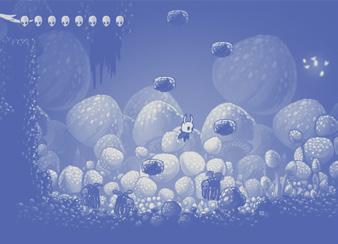
was said, and with that the game ends. The game has a hauntingly somber story that once you fully understand you will need to play it to have the full experience for yourself.
Despite the fact that Team Cherry is a small company, they have made excellent controls, and to accompany such a compelling story the game has some of the best music ever made for a game. Composed by Christopher Larkin, the game’s music makes every area, boss fight, and cut-scene, feel so much more impactful. For example, in the final fight with the infected Hollow Knight , the music, “Sealed Vessel,” plays an exciting, heavy, but yet a somber and sad tone. This music is perfectly paired with the compelling story of the game. As much as the music impacts the game, the visuals do as well. The visuals are stunning and unique from the grays and whites of the cliffs of the kingdom's edge to the vibrant yellows of the hive. The visuals of the game are nothing but legendary. The combat and movement of the character is incredibly smooth and strong. From soul (the power source of spells and healing) to the endless play styles you can achieve with charms, the game has endless possibilities. There is the Mothwing cloak and its fast and fluid movement and the large and powerful slashes of the Great Slash, Nail Art. It all fits together, feeling like a dance of nail and spell, ultimately becoming the best combat system I’ve seen.
For all these amazing features, the game feels very expensive; however, it is highly affordable. The game itself costs $15. It also includes 4 DLCs free of charge. From the golden pillars of God Home, where any boss can be refought and made more difficult, in the God Master DLC to the Hidden Dreams DLC, where you fight the dreams of whomever you wish. You can get hours of fun, from exploring and learning about Hollownest, heartbreak due to your favorite character dying, and satisfaction for finally beating that one boss whose one move you just can’t dodge. I have played this game and I feel it is so incredibly good and worth it that I don’t see a reason to not at the very least try it out.
But overall, Hollow Knight is an affordable game that can give you near endless hours of gameplay. And fully completing the game is very self-rewarding due to the immense amount of pride that is felt and the difficulty of the task, which in my experience makes that moment much sweeter, and for that and more this is my absolute favorite game and every one should play this game.

Cyprus High School
Fresh Sans seems dumb and funny on the outside, but on the inside he is unexpectedly smart.

The game is called Undertale. It starts with the main character named Frisk. The story begins with monsters and humans who live peacefully, until one day they started a huge fight. Humans win and monsters are sent to the underground with a barrier that traps them there. You play the game as Frisk, where you fall down into the underground and meet Flowey the Flower. You also meet the goat mom named Toria because she has lost many kids including her own. She is desperate to keep you there with her because she doesn't want you to get killed. There are 7 types of souls, and it respects your personality and character traits. And that’s how they break the barrier, but your main goal is to escape the underground. When you leave Taria, you meet the characters Sans and Papyrus. To play the game and win, you have two options: You break them all free, be friends with the monsters and bring them back together, or Genocide and kill everyone The rest is for you to find out and study on. (Because I don’t want to spoil everything, but you get the point.)
In the Undertale game, Sans is a skeleton who makes enjoyable puns with others. He loves to sleep, and he is lazy. (He doesn't pick up a sock that has been there for years.) He is weak, and in a slash he could die. But in the final battle of the Genocide, he starts to challenge you to protect the King who is alive. He is a good fighter.
The fandom for the Undertale game loves the idea of Sans, so they started to use their own creativity, and they began to slowly add more and more characters. One thing the Non Player character Chara said in the game play: “Delete the world, Yes? Or. . . .No?” I think the fandoms caught onto
that because they created more universes and worlds of their own unique games and their own characters of the world. It started to grow bigger and bigger.
Then this became a popular thing that now is really huge! And there are thousands more of the world that are now called universes. (And, no, you cannot play the different sans, only the different Frisks). My favorite spin-off character in these alternate universes (or AUs) is called Fresh Sans. Fresh Sans seems dumb and funny on the outside, but on the inside he is unexpectedly smart.
Fresh Sans is a character from a fan video game named Underfresh . This fan, "Rayon Lover/Queen of Piggies,” got the idea from a comedy show. He was created in an unknown specific year, and his birthday is on April 20th, but because he doesn't like the drug jokes on that day, he changed it to April 1st (April Fools Day). He is 6 feet and 4 inches tall! His age is Del!Apatale (Meaning it’s 10,000+). His age and height matter because it shows how long he lived, and that is really important because of how long he lived. It shows the importance of considering what he saw and knows about the other worlds. It shows he knows much more than other people could have thought of him to be. Then his height is important because it helps him be hard to catch when most of the others are a lot shorter than him. It helps him take more advantage to attack.
Although he is emotionless, he does funny and silly things. He doesn't really care about anyone and doesn't know what’s the difference between a friend relationship. He kisses friends, thinking that’s how “friendships work,” not actually having feelings for them. Here are details about Fresh Sans: He carries around a bat and sometimes a skateboard. He loves these exploding toys called kirbies (I think it’s what it is called.). They are small, plush, and they have different colors, small ears, cute noises, eyes, and an egg shape. But once thrown, they explode. Fresh thinks they're cute and good to have just in case he needs to attack. (In the different worlds, there is a war against light and dark. But in the end it makes sure the balance is stable. There are different Au’s that aren't as nice, so they need to get ready to attack.)
Fresh Sans pops out everywhere he goes and hangs around Error Sans. He annoys the heck out of him. (Error Sans, a grumpy character who loves his privacy and his personal space. He loves chocolate and his TV show called Undernovela

But that’s not the only one who he visits. He visits many other worlds called the Multiverse, which each Au lives in. (Au=same people but different visions of themselves. There are thousands.)
He wears a propeller hat that is purple, glasses that help express “emotions.” (For ex: Cool, bro, lol plus more! But mostly Yo-yellow)
He has a blue, purple, red and white sweater, but on the sleeves it has a part that has a line that also has one size-zag through it. He has purple pants and shoes that are like his jacket.
He can make people think he is one way, but in reality there is another by the way he dresses. Because he seems so funny, silly and goofy looking, he can be misunderstood right off the bat.
He is using some of it to block off his actual dark secrets: his reality of knowledge around the world, his perspective of things and more things he is hiding.
One of the things that he is hiding is his soul. In his past, he got an alien that attacked him, right through his eye. The alien is a small purple octopus with a second eye. Another thing is his soul. His soul is in his eye socket that he covers them both up with his glasses. His glasses are powered by his abilities.
But when he is really mad, he shows it through his glasses and becomes much scarier than he appears to be. Why is losing his soul really important? Because in the past he used to be super friendly, super funny. But when the alien attacked him, he changed because of this alien who is controlling him 24/7.
His actions are the second greatest thing about his character traits, like I said before. He is emotionless but silly and goofy. But really that’s what's showing on the outside. He may be goofy around, but looking through his animations, his real info, along with his personality. He is snooping around and acting like this for certain reasons. But another thing I came across while studying his information is his actual role of his own. He takes control of his other visions and eats their souls. But at the same time he is like a protector. This shows that it’s difficult to say if he is bad or good.
First, he might be just doing silly things, but in reality, he is keeping an eye on things. I notice that every time he visits he is wondering what they are doing. But if someone crosses the line too much he will step in and try to stop it. Before it goes to the hay-wirer.
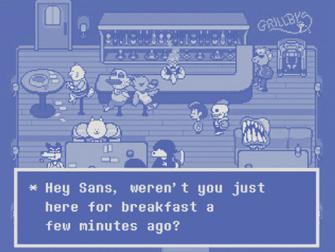
Because of him being “harmless,” he can check on the person, see what they are doing and plan without the other person catching onto him. Like that is his own design role for himself to act on because of his past experiences.
The other thing I notice about his watching and personality, he tells the truth, he watches the person and he knows what exactly their intentions are, who can be dangerous, who is not normal and more. He sees things differently from everyone else.
I think it is interesting how people can see one thing, but they're doing something else, and then Fresh Sans appears. He is everywhere; he will never be in one spot. He will always travel around universes checking up on them.
I did some research about him because I wanted to learn more about him. So here is what I got for his past. He was an ordinary character once. Like the other visions of him. He was a normal character in Undertale . He had no glasses. He had a blue coat, white shirt, and black shorts that had a white stripe on it. Like the normal game, he had a brother named Papyrus, and his name was once Sans. Also, like the original game, they had different areas, hot land, snow den, lab and ruins. They each are what it sounds like; they each have different characters. Sans was joking around like usual until…
His owner wanted to leave him in another person’s hands. That’s where everything changed. He got the alien that jumped in his eye, and his world got destroyed tons of times, which left him to repeat life over and over again, creating him into this new person inside of him.
He was no longer the same person, he now eats souls, he changed his whole appearance, and he got emotionless into this new person.
Until the nightmare was over. He got his old owner to get the game back and re-fix his life, restarting everything. But he is still him…
From his past experiences, I think the amount of changes and destruction, he doesn't want anything like that to happen again. So that’s why he watches over the other Sans, to make sure nothing else happens like that ever again…
I chose this character to explore because he is my favorite character. He seems funny, cool, but also he is really smart. He is the explanation of unexpected things, also proving the point of the classic saying, “Don’t judge others by the cover of their book.” He is just something else. And I really like that about him because it really catches my interest that he is not afraid at all. The game is important to me because the game helped me find new funny jokes, interesting things, and it helped me in reading comics. For me, it's hard to read or find a book that is interesting to me. It helped me find my interest in things. I think the game is important because it’s not just having a good time exploring around. It’s much more that it brings fun towards the action; it also brings huge ideas. That’s how the fan made is everywhere, and that’s why there are worlds across the undertale communities design. They created it because they were inspired by others and the game to create more and continue the game.

Team Fortress 2 is a game released in October of 2007. The concept for the first person shooter (FPS) came from Quake–a 1996 FPS–which had a mod named Team Fortress, which was later developed into the standalone game Team Fortress Classic in 1999 by the game studio Valve. Valve went on to make Team Fortress 2 as a more refined version of TF Classic
The gameplay loop is fairly straightforward: pick a game mode, pick one of nine characters, kill the other team and try to win the game.
Why are you fighting? That’s in the comics. Who are these guys? That’s in the comics. All you know is that you’re playing as a stereotype and shooting other stereotypes. “Scotland is not a real country. You are an Englishman with a dress.” (Soldier)
Although outside the usual genre conventions, TF2 is historical fiction in a way. The game takes place in 1968, but the lore starts all the way back in the 1800s. In 1822, Bette Mann gave birth to three baby boys, fathered by the extremely wealthy Zepheniah Mann, owner of the manufacturing company Mann Co., mainly a supplier of weaponry and ammunition. Bette died in labor, and the three sons were named Blutarch, Redmond, and Gray. To Zepheniah’s horror, Gray could talk right out of the womb, and as such Zepheniah ordered he be smothered, but due to “The Great Eagle Scourge of 1822,” an eagle broke through the home’s window and kidnapped Gray Mann.
Zepheniah hired a woman named Elizabeth as a governess to seed a rivalry between Blutarch and Redmond, with the goal that ultimately one will kill the other and be the sole heir to his fortune, as is family tradition. In 1850, the brothers convinced Zepheniah to purchase a great portion of land in the Americas, promising “gravel as far as the eye can see.” He caves and purchases the land but gets extremely sick on the long journey to it. Upon arrival, they find that the entirety of the land is filled with worthless “fool’s gravel.” In his sickly state, Zepheniah writes his last will and testament there, leaving the useless land to Redmond and Blutarch, split perfectly
down the middle so the two will fight over it; ownership of Mann Co. to Barnabus Hale, father of Saxton Hale and Zepheniah’s private detective and deputy; and the majority of his ownings to Elizabeth. However, as revealed to Zepheniah on his deathbed, she seeks to put the brothers in an endless feud, not allowing either to win. The reason for this is yet to be known to the reader.
This endless feud is the basis for the gameplay. Redmond and Blutarch, in their campaign for besting each other, hire mercenaries to forcefully take the other’s land, working under the Reliable Excavation and Demolition (RED) and Builders’ League United (BLU). Ensuing the events of the main game
As time goes on, the brothers begin to focus on outliving each other.
Blutarch hires Radigan Conagher, grandfather to the playable character Dell Conagher, to build him a “life-extender machine,” which he agrees to do. Shortly after the agreement, a woman–likely Elizabeth–offers him a sizable amount of Australium if he also makes a machine for Redmond. Australium is a borderline magical metal with its only major deposit underneath mainland Australia. Being merely in its presence causes a person to develop a love for drinking and fighting, more muscle mass, and more facial hair. And additionally, the metal can extend a person’s life or even bring one back from the dead.

On its face the game, as well as its related media, are silly, lighthearted entertainment, and that is exactly what it is, even when looking deeper. However, the deeper meanings elevate the wacky attitude of it and make it all the more enjoyably absurd.
TF2’s humor is absurdist in the most pure sense. The historical information, the characters, the laws of nature, all of them are morphed and bent to feed the world of chaos. Real people are given random traits and titles for the sake of fun: Abraham Lincoln invented stairs and died trying to use them; Abraham Lincoln was assassinated by John “Tower of Hats” Booth; Shakespearicles, the strongest writer who ever lived, invented America and rocket launchers.
The mercenaries you play as all have very extreme qualities. Scout is a fast Boston boy and God’s gift to women. Soldier has years of lead poisoning and American patriotism. Pyro is a ambiguously-gendered pyromaniac. Demoman has a cursed eye socket and when deprived of alcohol his withdrawals were so extreme his body turned his stomach into a distillery. Heavy loves shooting people with his extremely specced miniguns but also has a PhD in Russian literature. Engineer has 11 PhDs and a robotic arm. Medic is a mad scientist with a flock of pet doves. Sniper is an assassin launched by rocket from the sunken New Zealand to Australia as a baby. And Spy is a connoisseur of knives and suits with a propensity for being suave.
And these are just some of the notable things.

A Cautionary Tale of Humanity’s Eternal “Witch Hunt”
Fallout is a multi-game series with many spin offs, spoofs, and a television series aired on Amazon. As its name suggests, Fallout takes place in a post-nuclear, apocalyptic version of our own world. Its use of nostalgia is ever present as it showcases regions of America as they would be seen in this retro futuristic time of the year 2077. Not only does this Raygun Gothic aesthetic provide the game with its own unique fingerprint, it too serves to mirror the hopeful lens of America’s 1950s post-war boom and accentuate the game’s many underlying themes of discrimination. Fallout 4 uses environmental storytelling to represent not only the struggles of the game’s world, The Commonwealth, but also humanity in the real world.
Fallout 4 is set in the wasteland of Boston, Massachusetts, The Commonwealth, which is a hub for classic Americana history and culture. One of the main conflicts in the game is the fear of the still incorporated company The Institute. The Institute is a group that was founded in 2110, long after the nuclear bombings of 2077 and 177 years before the events of the game of 2287. The founders of The Institute were intellectuals and scientists who dreamed of rebuilding the wasteland with perfect humanoid androids referred to as synths.
The conflict Fallout 4 introduces within the world is between The Institute and Diamond City. This conflict between the capitalist nature of Diamond City with the more communist dictatorship of The Institute directly references the real-life events of the Red Scare and the looming fear of The Institute. The citizens of the Commonwealth’s trading capitol Diamond City still remain hostile toward synths, regardless of their relationship with The Institute. Many residents accuse one another of being robots working for The Institute, and many shop owners ban synths from shopping at their stores for fear it will bring them bad attention.
This fervent accusation and fear for the synths of Fallout 4 is originally intended to be a mirror of the Red Scare during the Cold War. Much like the conflict between Diamond City and The Institute, the Red Scare was a xenophobia fueled hatred of anyone of an outgroup under suspicion of them being a Soviet Spy. However,
this fear only really hurt innocents, as Americans, like the residents of Diamond City, tended to start flurries of false accusations. However, this wasn’t the only form of this conflict in history.
Fallout 4 also tackles issues of early American history, which due to its Massachusetts locale, very much intentionally by the game writers, includes the history of the Salem Witch Trials. They are, too, an extraordinary comparison to the conflicts of Diamond City and its town’s fear of The Institute. The Witch Trials give the player a sense of empathy; however, as the fear of The Institute is mostly unjustified, given many synths that choose to take refuge in Diamond City, have often escaped the grasp of The Institute and pose no real harm to the residents of the town.

Despite the antiquated historical take of the Red Scare and the Salem Witch Trials, Fallout 4’s use of the synths as an outgroup also brings to light the more modern themes of the “Lavender Scare.”
The “Lavender Scare” is a cultural phenomenon wherein modern people similarly accuse others of being part of the LGBTQ community. The reasons for these accusations come from anything from not fitting into gender roles to just not agreeing with one another’s ideations. This fairly recent fear has seen a resurgence under the authority of the American president Donald J. Trump, the societal fear of those challenging social norms has become harder and harder to ignore. In the case of a cisgender woman accusing another cisgender woman of being a trans woman for being simply too masculine. Through this, one starts to see the similarities throughout history. As indicated by the numerous events of discrimination and manic accusations throughout humanity. Fallout 4 and its depiction of discrimination helps to establish that this is not the first time, nor will it be the last time, that humans would go after one another for a social or political view.

Fallout 4’s world building lends itself well to the heavy themes it carries. From the game’s tendency to mirror historical events, but also presenting the player with deeper human themes, the game is willing to present the player with so much insight into important issues. Through the media of Fallout and the struggles portrayed by this fractured, post apocalyptic society not only give the player a deeper understanding of the Commonwealth but also bring attention to issues of discrimination that continue to perpetuate this constant “Witch Hunt.”

Cyprus High School
Clair Obscur
“My family, a facsimile of yours. And this world a mirror. Painted by your mother, the paintress to stave off her grief. Seeing your expedition through would plunge us all into the abyss” - Alicia
Clair Obscur is a game that is willing to confront the mortality of its characters while also asking you to face the moral dilemmas of life. And this in turn drives the story to its beautiful theme.
Ironically, while playing the game I was helping my brother move. There were already a lot of changes in my life already, and in a way I grieve the life I once had. This year, I moved with my mother and started my freshman year of high school while my brother is going out of state. I look at my life now and barely recognize myself from a year ago. Maybe that is a part of growing up, but it’s sad because I believe the older I get the more I feel the pain of my past and numb myself with fantasy.
This game helped me process my pain. Not only bringing me and my brother together before he leaves, and leaving me with wonderful memories, but also by helping me come to terms with reality in a unique way. And how we handle pain with catharsis.
Lumiere is the only city in this world and two seas away from Lumiere is what is known as the Monolith. This is where The Paintress waits. She sits in front of the stone, arms crossed over her knees, head bowed in sorrow. Her white hair covers her face. And the large golden glowing numbers float above her.
It is a bitter thing to watch the glowing numbers going down. Every year the paintress paints the new number as it goes down. And anyone the age of the number in the sky has their gommage (the day they die).
The majority of the people who join only have one year left (so in this case are thirty two). Some believe it’s a waste because every expedition has tried and failed, all dying outside of Lumiere. And all the characters can die from their gommage and from normal things.
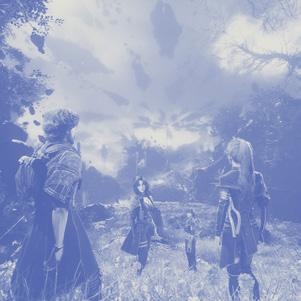
However, later on you find out that a character named Verso created this canvas. There is the real world and then the Monolith. At least the real Verso did but then he died in a fire protecting his little sister Alicia. This world of death, of art, of the Monolith, a number going down is nothing but a magical painting on a canvas so a mother can be in denial that she lost her son. Lost in fantasy to stave off her grief, though, the fantasy is killing her. If real people go into the painting (this fictional world), they will die if they are there for too long. This is why Renior (the Paintresse’s husband) is trying to erase this world. He believes the only way to save his wife (the Paintress) is to take away the one thing left of Verso. So that she can stop ignoring her pain and actually handle her grief.
What’s really hard about sharing this story is that just playing the main content takes thirty to thirty-five hours. However, I highly recommend playing the game.
Hidden in the game are many different philosophies involving existence, life, death, and, of course, grief. And of course during this article there will be spoilers.
Through the game you play as Gustave. Following the other main characters through his lens. And due to the nature of a video game, you do get extremely connected to the character you're playing as. You're investing hours into that world and their story and know that the game “can not continue without them.” They’re the main character after all.
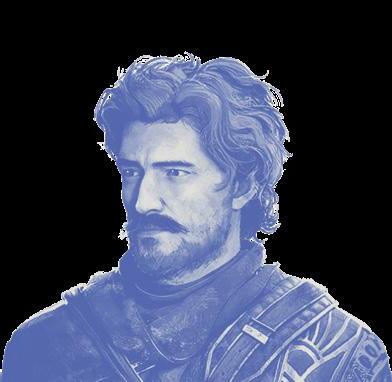
As the expedition starts, he is separated from Maelle and has reason to believe that he is the only survivor of the expedition. He is also very confused because the person who attacked them was Seventy-Year-Old Man , you later find out is named Renior (However, he is the painted Renior not the real one.).
As someone playing this game, the moment of Gustave’s death is surprising. If the main character dies, it normally means the end of the game, but in this case you find that secretly Maelle was the main character the entire time.
I remember watching the scene unfold, and as I kept saying no as Renior’s cane struck the ground and his steps echoed, I slapped my hand over my mouth and tried not to cry when Renior pierced him. After that, they don’t immediately kill him; they give you a little bit of hope which to me was pure torture. Letting you fight Renior as Gustave barely clings to life. You're able to kill Renior; however, he doesn’t stay down for long as he stands up. And I can barely tell you in words the amount of sadness and anger I was feeling in that moment. And that is when Gustave dies.
Imagine Eleven from Stranger Things dying in the middle of the first season. That is how it felt. The one character that is supposed to be safe from death because they are the driver of the story just dies, and it turns out the character wasn’t as important as you once thought. Would Stranger Things ever kill Eleven? In fact, oftentimes when you see her in danger you know that she is going to live and that takes away the suspense of the show. However, this game is willing to kill any and all characters, even the main ones, but they use a character’s death to lead the story forward. Maelle's goal shifts towards killing Renior.
Maelle is the kind of character that adds a lot of mystery and intrigue to the story. Her unknown connection to this world is unique. As she has connection to the inhuman creations of this world.
As the story progresses, it only leaves you with more and more questions while very slowly unveiling the answers. Maelle to me is one the most interesting characters, along with her actual brother (Verso as Maelle is actually Alicia reborn.). However, she was the character I felt the most connected to. She is a sixteen year old trying to escape the inevitability that is death. I am fifteen trying to live a life worth living but always feeling like death looms over me. I see the game through her eyes, especially when you find out she is secretly the main character.

She hopped from foster home to foster home until Emma and Gustave decided to adopt her (Emma is Gustave’s sister.).
She lost her parents to their gommage at three. After seeing the gommage year after year, the place she was supposed to call home was now only a source of pain. She wanted to escape Lumiere, the place where she never quite fit. She doesn’t believe in the expedition
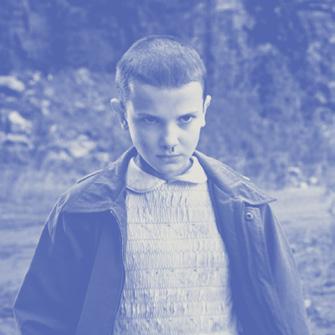
or that it will succeed. The only person she truly believes in and who truly understands her is Gustave, and that’s all she ever really wanted. To be seen and understood.
I also relate to her more as the story progresses and we find out she uses fantasy to cope. Something I often find myself doing and, in fact, did with this game. It was a way for my brother and I to connect. Just like every game we tell each other about. However, this time was different. My brother is leaving to go on his own adventure. And I truly am happy for him, but I guess in a way I used this game, and the shows he helped introduce me to (e.g., Stranger Things ) as a way to hold onto him a little longer. This year I’ve realized how important my brother is to me. Just like how Maelle’s brother figures (Gustave/Verso) are also important to her. In a way my brother has taught me more than anyone, and while I’ll miss him I only wish him the best. He was one of the people who was there when I felt no one else wanted to be. And is a voice of reason in my life. While my brother is leaving, I know he is not leaving me and we will always have this piece of each other. In both this game, art, and the stupid (but amazing) animes we watch together.
In a way, while Maelle is grieving and learning about life, so am I. I hold on to the childhood I’ve lost as years gone by, constantly wanting to go back. And there is an understanding that life does go on. I use fantasy to sometimes hide from reality.
My brother to me is almost like a father figure in my life–as we both have similar beliefs, personalities, etc. In fact, he helped me write this article before he left on his own journey. I truly do love him and wish him the best.
In a way, I also very much see the perspective of Verso as he sees that Maelle’s being in denial and living in a fake world is going to kill her. And in a way living in fantasy did indeed do that to me. I stopped living in the real world so much so that I felt like reality was a dream. I still feel that way. Nothing feels like it’s real anymore, only a distant memory. I do not care.
In the moments I felt this way my brother and mom were the people that grounded me. Seeing myself in both the perspective of Verso and Maelle is what made the choice harder at the end of the game. In a way I was also choosing for myself what I was going to do. Either handle my pain for the sake of the person I now am (Verso) or turn to the child I once was (Maelle).
Verso is trapped to live the life he doesn’t want. While Maelle refuses to grow into the person she could become. If I were to hold onto my brother and the other siblings, then that would stop both me and them from growing. That is what Maelle is doing. She is missing out on her life for a world that doesn’t exist and a person that is already dead. Acceptance is one of the best answers for grief.
What made the game so amazing was the way I could see myself in the storyline while helping my brother move and going to my new life. After all, people in our life have different phases, and while we lose our past selves we go to the new. This is the true purpose of Clair Obscur . Or known in French as light and dark.
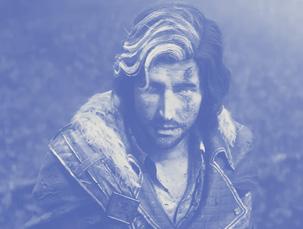
“See things as they are not how you want them to be ,” Verso says to Maelle. The part of his soul from the real him forever trapped to paint. Never being able to be laid to rest.
“The moment I leave Papa will erase this canvas.” Maelle says she knows her father at least Alicia does. He will do anything to protect his wife (the Paintress) from losing herself and dying in this world as well as his daughter (Maelle/Alicia). “This is not worth your life.” Verso’s voice is matter of fact. It is simply how things must be. “Life? My Life of loneliness in a shell of a body with no voice and no future?” Maelle begs. I feel her pain through the screen. Verso simply states, “You’re Maelle, no matter where you are you don’t need this canvas.” She walks around him angrily, “but everything I want is here… here I have a chance to live . Verso To Live !” she is desperate “ Out there I merely exist.” Verso repeated the words of Renior. “ Life keeps forcing cruel choices ,” he says. That’s the moment I break. The choice to break free from my little small world. With not being able to care because for me nothing was real. But acceptance of my grief of the little girl I lost kept me going

because living a fake world is worse than living in the real one. “Stop quoting Papa!” Maelle yells the truth staring her in the face. Verso ignores her as he turns the broken soul of the real him. “It’s time to stop painting.” He extends his hand to the broken boy that is the real him.
Then the haunting and unexpected words pop up on the screen. I felt like crying, but also knew the choice I had to make. Kill this fake world and move on. Or keep this world alive but die in the process.
Fight as Maelle
Fight as Verso
There are two endings to this game. Maelle’s ending and Verso’s, and you get to make the choice. It’s more than just choosing a character; it's a choice revolving around what you believe is moral. The choice between handling your grief at the cost of the world you just spent hours in or continuing to cope by using a world that doesn’t exist and losing your life in the process but at least you have this world and can “ live ” right?
Both Verso and Maelle are tired in different ways. Maelle for not having a voice and living with a shattered family, and Verso for never being able to find peace. Arguably with both endings there is not a right or wrong choice.
This game is amazing not only because of the visuals, music, and amazing dialogue, but mainly because of this original story that goes with it. Telling a story of existence, life, death, and grief. The story is truly amazing because of its willingness to let characters go only if it affects and moves the story forward. While it also helps the player (you) help understand grief and relating and empathizing with all the characters. You start to realize maybe just maybe…the real world is better than the one in your mind. This world is a mirror of grief, not just of the ones who died but the ones we've lost.


Having received my driver’s license recently, I’ve had the unenviable pleasure of zipping by the burning wrecks of my fellow navigators. And, winding along the scenic lanes of I-80 and Bangerter Highway, I can’t help but wonder: What went wrong? I imagine a corporate truck driver, running on fumes and caffeine, veering into disaster with a single distracted glance at the GPS. These incidents are tragic, always preventable… and often a result of multiple outside influences.
But this sort of crash isn’t confined to the roads. When tired, distracted, and overwhelmed, we all risk veering off-course. And if it happens to individuals, what happens when it infects leadership? The bigger the vehicle, the worse the wreck—with few rides bigger than the American presidency.
From the Civil War to COVID-19, the nation has been tested by crisis after crisis. But now ? Now, we seem to be in crisis on the daily. Our foreign policy jerks like a car slamming the brakes on a freeway. Tariffs appear and disappear like magic tricks. And worst of all, no one seems to be steering with intention.
Foresight. It’s gone. As a trio of forces—yes-men advisership, media reactive decision-making, and wealthy donors—have become close to the president, so have they edged nearer to the wheel. With a fixation on the self-interested projects of Billionaires, there is no room for alternate perspectives, no consideration of future proofing, and no time to deliberate if they’re to make the headlines by noon.
Ok, ok, so I’m not on first-name basis with Mr. Trump, but I’ve watched enough to tell you this: He’s not strategizing twelve moves ahead. He's not even playing, just… reacting.
Tying back to our little automotive metaphor, what we’re watching here isn’t a solo driver making bad turns. It’s a whole crew of backseat drivers feeding him directions through a fogged-up GPS. Ideological cabinet members, primetime performers, and illusive billionaires have climbed into the cab, nudging Trump to accelerate with every cheer and jeer. Meanwhile, the institutions meant to act as guardrails—like checks, balances, and meaningful disagreement— are nowhere to be found. What used to be a functioning, if flawed, decision-making process has become a slalom of reactive U-turns; all allowed by a Republican majority in the “room where it happens.”
(For the sake of transparency, let’s establish my own biases before moving any further. I take a Centrist view economically, but I do lean left on many social issues. Also, I would like to acknowledge that one-sided majorities always take us away from the road of reason – whether red or blue. Hmm… could Europe be onto something with their kaleidoscope of candidates? Nah.)
From tariff crusades that disregard economic warnings to mediafueled vendettas that reshape policy overnight, we are watching a presidency tuned not to the people, but to the loudest voices with the largest endorsements. And compared to the past, this clear bias is allowed by the president’s party majority seeming to run on a mantra of “no need to look honorable when your actions can run unopposed.”

Hear this: If we don’t find a way to pull partisan hands off the wheel, our democracy will continue to careen forward without a people’s navigator—ever more likely to end up mutilated by the side of the International Highway for the sake of short-term gains.
That’s enough on theory. Let’s take a look at something more tangible to really demonstrate the issue.
Luckily for us, even when headlines lie, the numbers don't. Take the Trump-backed “Big Beautiful Bill” proposal, which claimed to make historic savings. Under the hood, here's where those savings came from: $2 trillion in cuts to programs like Medicaid and the Supplemental Nutrition Assistance Program (SNAP), a change that would disproportionately affect lower-income Americans.
None of this matches the level of care taken by previous administrations and I can’t see this leading us towards anything but disaster over the next 4 years. And we, the American people, will be left paying the deductible after every crash.
I assume that someone knew this looked bad, so the passage of the bill was orchestrated such that its final draft was released just hours before the vote, leaving many House Republicans scrambling to analyze 1000+ pages overnight. By sunrise, it was already on the floor. And buried deep in the legislation were the provisions which slashed funding for essential public programs and rewrote financial safeguards. After the dust settled, several Republican representatives admitted they hadn’t had time to fully review the document—and that they wouldn’t have voted for it had they seen what was inside. But by then, it was too late. The bill had barely been forced through with a vote of 215-214-1.
This built upon the 2017 Tax Cuts and Jobs Act, which lowered corporate taxes from 35% to 21%—an example of how, while controversial, Trump's first-term legislation was at least transparent. In contrast, the amount of "fake news" propaganda used to support his “Big Beautiful Bill" is disgusting. On the official White House website, you can find an itemized list of 50 wins in the Bill. For example: 27. It protects hardworking taxpayers by canceling Biden’s illegal and unfair student loan bailouts.
Illegal? Obviously not (though it feels like cancelling them now should be). And unfair? Well, while it wasn't the most fiscally responsible, student aid seems like a decent taxpayer investment in my eyes. Oh, and you see how they included a link to learn more about "student loan bailouts"? Yeah... I hope the "404 - page not found," message is very educational. This points to just how little consideration is given to backing up any claims made by Trump's administration.
Meanwhile, rising interest rates have pushed debt service costs above $800B per year and the CBO estimates an increase to $952B by 2026—meaning it would surpass the national defense budget. What a headline: "Debt Payments Top Military in Spending"
Thankfully, though, the White House team seems to have thought of this as well. And by increasing defense spending to $1.01 Trillion, they aim to avoid such headlines. What a perfect plan, more borrowing without any acknowledgement of the long-term burden on future generations. To any supporters, are you sure this isn't incentivized by military contractors like Lockheed Martin who get to collect that as extra revenue? Even ignoring financial bias, this is clearly governance designed to feel good now and be someone else’s problem later. And, as a student, I can speak from firsthand experience when saying that putting off such a big project will only induce greater pains later on.
Tragically, instead of building bipartisan, evidence-based policy, we’re left with spending plans shaped by optics over outcomes. More than authentic fiscal leadership, that’s show business.
Unlike his first term, when voices like Gary Cohn, Steve Mnuchin, and Wilbur Ross often slowed reckless impulses with financial caution and institutional norms, Trump now surrounds himself with sycophants. His new guard? Peter Navarro, Howard Lutnick, and Scott Bessent (our ‘3 Horsemen’ of Tariffs). Let’s break them down:
Peter Navarro: Once a fringe academic with a grudge against China, Navarro rose to prominence with several publications on tariff policy that set him up as an authority. He frequently quotes only one academic source in these books, which already seems bad enough until you realize it’s a pseudonym for his own name. Navarro was recently released from jailtime for defying a congressional subpoena and helped organize Trump’s efforts to overturn the 2020 election.
Howard Lutnick: A longtime Trump loyalist and CEO of investment firm Cantor Fitzgerald, Lutnick now plays a lead role in tariff policy from the Commerce Department. Though not previously a household name, I think that’s part of the point. He’s a proven networker and solidly pro-tariff. Likely picked for being a slick communicator, and a guaranteed loyalist who always agrees because he wants to stay on the invite list.
Scott Bessent: The most complicated of the trio. Former ally to Democrat Billionaire philanthropist George Soros, Bessent has turned face and brings genuine financial intellect to the table. He knows tariffs’ historical consequences, and, to his credit, he’s reportedly tried to steer policy down more data-driven routes. But at the end of the day, he’s stuck around. Why? Apparently, financial incentive of being close to Trump’s malleable authority is enough to overpower any moral qualms.
Together, these three have championed tariffs as a savior in Trump’s second term. What was once a calculated economic lever has become an ideological symbol. And just like that, tariffs are now about making noise, not fiscal sense. As Rob Copeland of the New York Times put it, "With these three advisors, the guardrails are gone… that makes it much more complicated for business leaders to find a friendly ear."
Now, I know Trump said no DEI, but I think we should talk about someone outside the tariff-sphere as well:
Linda McMahon: The new head of the Department of Education might not be a name you'd expect—but then again, not much about this administration is. Best known for her deep ties to WWE, McMahon and her husband oversaw the wrestling empire for many years. Eventually, though, she transitioned from WWE’s executive suite to the political arena, running unsuccessfully for U.S. Senate in Connecticut in both 2010 and 2012 before becoming a major Republican donor. After a $6 million contribution to Trump’s 2016 campaign, her standing in his political circle was established.


At the 2025 ASU+GSV Summit, McMahon admitted, “I don’t come from the world of education,” but said Trump wanted “an executive” with “leadership and management skills.” Still, her grasp of education issues seems shaky. She repeatedly referred to artificial intelligence as “A1”—yes, like the steak sauce—while discussing its importance in public schools at the Summit. Though a small flub individually, it connects to something more fundamental: this role wasn’t filled for expertise in pedagogy or policy. It was filled for loyalty.
Trump has made it clear he intends to dismantle the Department of Education altogether, quoting a need to “return control to states.” So, what is McMahon’s job, really? It’s certainly not to guide reform. Rather, she’ll oversee the Department’s slow disassembly with the glittering smile of a WrestleMania host.
All their antics are covered on our ever-more political social media sites—making it feel as if half the internet is orbiting Trump’s universe. I particularly lament how these algorithms feed more outrage than nuance, meaning the details we’ve covered above are often overlooked. So, while experts warn about the rising costs to consumers and farmers, millions scroll through memes about bringing jobs back with neither context or critique.
Furthermore, it makes me wonder: How else is the media entangled in this political pileup?
In a functioning democracy, media informs the people, who shape institutions, which in turn influence policy. In this democracy? Policy is shaped by whatever plays best at 8 p.m. on Fox.
By all I can tell, Trump’s daily briefings come not from intelligence reports, but the Daily Wire. Just look at his infamous claims about immigrants “eating the dogs,” motivated by baseless reports. Praise from Tucker Carlson? Time for a self-congratulatory tweet. Criticism from CNN? A biting, public retort. Staff is hired and fired based on press relevance, such as Jared Isaacman—ousted from NASA for associating with Elon when he was in the doghouse.
Just look at how immigration crackdowns and surveillance reforms get floated, reversed, and escalated; all within a news cycle. This was laid bare in 2018 GQ article on how Trump derailed a major intelligence bill by “veer[ing] directly into the oncoming policymaking process,” apparently inspired by a Fox segment that morning. To me, his “policymaking” looks more like crowd-work improv.
Of course, none of this would matter without fuel. And money (not votes or principles) is the premium gas keeping this machine running as our mirrors shear off and the bumper is left miles behind.
Major funding groups like the Club for Growth never really get left by the curb; they ride shotgun to voice support for Super PACs, discourage checks and balances, and claim all the soft power they can by financing the Administration.
Naturally, sponsors back candidates who follow their lead and leave those who don’t to count pennies. Like ideological
architects, they build the perfect narrative around Trump’s policies to shield him from widespread accusations, resulting in a presidency that doesn’t serve the taxpayer—but the donor.
As entrepreneurial educator Hank Green recently observed, “I know lots of companies that are just not hiring right now because they don't know what's going to happen in 3 days… And I know that there's a school of thought here that is like, Donald Trump is just doing these things because he's gonna do something clever and then get the outcome that's good for America. But I'm legitimately worried that every time they make an announcement about tariffs, they may be engaging in insider trading… I'm genuinely concerned that Donald Trump has a cryptocurrency that can be purchased entirely anonymously, and when people buy it, the value of Donald Trump's net worth rises significantly. There's no way to identify who is involved in that. There's no way to know if it's someone who was pardoned later, or if it's a dictator from another country seeking a favor.”
Assuming even a fraction of that is true, the issue encompasses more than just competent governance. It involves a concerning, selfinterested grift for private funding at the cost of our nation’s sanctity.
None of the forces at play are concerned with a country that works tomorrow—from ideologically driven tariff advisers to sensationalist media figures or anonymous mega-donors—and their only concern is securing power that works for them today.
The real danger isn’t simply that our president reacts to headlines or donor checks, but that these influences drown out any vision for the future. If we want to fix this, it starts with defining the problem: Our democracy isn’t broken. It’s hijacked.
We need advisors who challenge power, not cling to it. Media that informs, not inflames. An administrative system that puts people before pennies. Because until we reclaim the wheel, we’re just passengers.
And the worst part? If Trump got a DUI, he would definitely
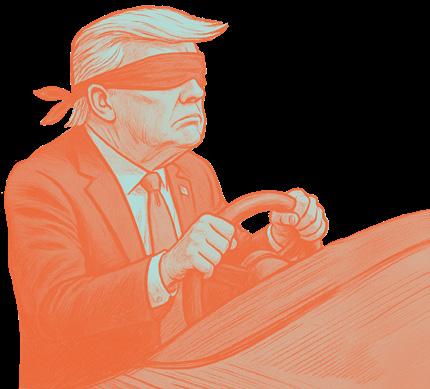

A conversation on fast fashion’s role in the manipulation and assimilation of women’s rights, freedoms, and personal style.
Women have always used fashion to voice their freedom and fight against oppression throughout history. Whether it’s American women wearing red lipstick during World War II to show their support against Hitler and the Nazi party, or women wearing pink suits and magenta to the voting booths to show their fight against the fascism in our own government–fashion is rebellion fundamentally. Personal style and individual fashion have always been used to show not only women’s freedoms and lack thereof, but a woman's individual thought in times when either they were not allowed that individuality, or individuality in thought. Women have always been pushed down as thoughtless or objectified by the men in power, but how is fast fashion contributing to the assimilation of women today, to take their rights and freedoms away, and who stands to benefit from that assimilation? Fast fashion is weaponized by groups in power to assimilate, oppress, and control women, to make them compliant, and strip them of their selfexpression and human rights.
Fashion has always indicated something about the wearer. Whether it communicated status, religious beliefs, or individual identity, it always said something. Usually, what fashion had to say was correlated to how difficult it had
been to either gather the materials, or to wear. Since even the time of ancient civilizations, fashion and textiles have communicated status. Materials like silk, wool, and fur were hard to attain and became a symbol of status. Often in European cultures, purple textiles were worn by high nobles and royals because of how difficult purple dyes were to attain. Through the Renaissance, intricate patterns and embroidery showed the ornate lifestyle of royals and nobles in high society. As couture rose in popularity in the 19th century, so did a fascination with personalized, custom clothing as a show of power and wealth.
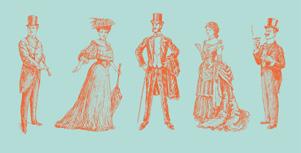
Fashion has always been particularly important in the expression of voice for women in times when they didn’t have many rights, freedoms, or voice. Fashion has been used to challenge restrictions, like the rise of women wearing pants in the Victorian era or skirt lengths during wars. In the Victorian era when tight corsets, long skirts, and uncomfortable padding to accentuate a woman’s figure were popular, bloomers became the staple for the expression of power. Women wearing these little pants, even just for biking and riding, were very controversial and used as a form of protest. Another great example is during the 1920s. A lot of rebellious teenagers showed their selfexpression through looser, more boyish clothing. Another example of this was the movement of women refusing to wear bras in the 60s as an expression of their control over their own bodies. Furthermore, depending on the state of the government in America, skirts were impacted. As war rationing took fabric overseas for war efforts, skirts got shorter, and when wars ended and women had more options for their fashion, skirts filled out in a full, feminine way.
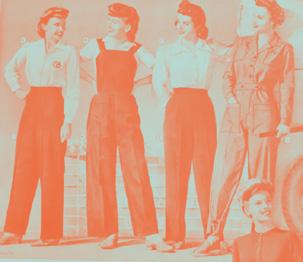
Fashion has not only been used to fight against oppression in self-expression, but oppression in government: right wing and high control. Scattered throughout history and the world today, there are women who aren’t allowed to wear what they want. Fashion and fascism have always been in opposition. Fashion has always been self-expression, whether it is the expression of women’s rights, black dandyism, religious expression, Queer selfexpression, or cultural expression. It’s simply a fact that people oppressed by our “free” America express themselves and their dissatisfaction through fashion.
During the height of Nazi control, Hitler had very clear ideas for how he wanted true German women to look. Their regime pushed an ideal called the “Aryan” ideal based on Nordic beauty. This meant he pushed a blond hair, blue-eyed woman that aligned with the belief of true purity the Nazi’s held. Furthermore, Hitler pushed a “natural appearance” that discouraged makeup, hair dyes, and elaborate beauty trends. This look is very similar to the “clean girl” beauty trend today and was considered healthy and natural. Hitler also pushed the adoption of “traditional” German styles, namely German peasant styles like simple plain dresses, buns, and flat shoes. That’s a lot of fashion advice from someone with the worst mustache in history. I mean, what kind of insecure man is threatened by lipstick.
Stalin’s ideas on women were pushed in the form of the “New Soviet woman” and the “Soviet mother.” These women were more traditional, pushed as their worth was tied to their motherhood. While there was never an official mold to how women should look, it was unlikely to see much self-expression in this time.
North Korea has many rules and regulations for how women should look, even going as far as to employ a “fashion police” to crack down on what they consider “Capitalist fashion,” such as jeans, for example. Like how women's trousers must be worn loosely, and can not be too tight or revealing, and most clothing must be loose and not show the form. Clothing can not look foreign in any sense, and anything too unusual would be intervened on by said “fashion police.” Imagine your whole job as a police worker is just to decide if people’s jeans are too tight.
The Taliban has ordered many things about women's fashion, most recently that they must be covered head-to-toe in fabric, including the hands and face. Clothing must be modest, loose fitting, and not reveal the body’s shape. Any form of self-expression or vanity is taken as a direct threat to the regime’s control. Women can not be seen or heard, and are prohibited from talking to one another at all. These rules are enforced through laws, threats, fines, and physical punishment in most cases.
In Iran, how women are presented and what they are allowed to wear is defined by the law. A Hijab is mandatory, and if worn “incorrectly”
is considered a “bad hijab.” Women are also required to wear a Chador (a full body cloak) for modesty. The laws define “bad dressing” as showing any part of the body below the neck except for the hands and feet, which is considered a sin. These laws are enforced with imprisonment and, in some cases, death.
Finally, I want to talk about the All American Woman. While there are no set laws for how the All American Woman should look, there are definitely cultural and social guidelines and norms. The All American Woman is first, thin. The “thin ideal” is something pushed heavily by the fashion industry and social media. A woman’s worth is frequently tied to her slimness, and it is considered beautiful, successful, and worthwhile. But it’s no longer enough for a woman to just be thin; they also have to be sexually appealing. Women have been pushed into cosmetic surgeries to attain this beauty standard. The cosmetic and surgical industries have also demonized aging to promote cosmetic surgeries. There is also an emphasis on a certain style that is acceptable, and to not be seen as “weird” a woman's style has become more boring and simple. Think H&M fast fashion that has been pushed onto women.
Fast fashion is defined by Oxford Languages as “inexpensive clothing produced rapidly by mass-market retailers in response to the latest trends.” The fast fashion industry is a clothing industry designed with quick production and profit in mind. It’s low quality clothing that’s designed to be thrown away for the next trend’s clothing.
It’s a well-known fact that fast fashion is inherently evil, driven by capitalistic greed. Fast fashion has always ignored waste hazards and quality, but how could fast fashion possibly be linked to women's freedoms and governmental control? Whether you agree with me politically or not, it’s obvious that laws and movements by the current government, like the overturning of Roe Vs. Wade, are, in part, used to control women’s autonomy. The same can be said for fast fashion. In our society, personal style is demonized to force as many women as possible to dress the same. I’m sure you’ve seen the “clean girl” aesthetic, or changed an outfit to fit in at least once or twice, but I bet you didn’t know that you were assimilating into a system that wants your individuality compromised. It’s simple really, the less women can express themselves in their clothing, media, speech, etc., the easier it will be for a governmental power to strip them of that voice and freedom entirely. So, by wearing fashion that is designed to be simple and nonpersonal, you are allowing that form of expression to be stripped from you.
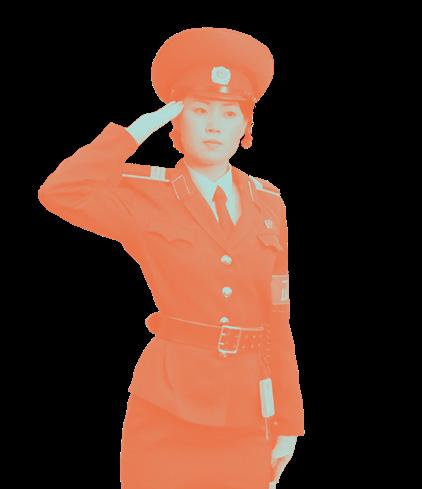
Before I discuss how women are being assimilated into the “American Woman,” we need to discuss the inherent evil of fast fashion itself.
It’s not a very well-kept secret that fast fashion is bad for not only the economy, but the planet. To put it plainly, fast fashion pollutes the planet with a high waste output, has no care for quality, and exploits workers to keep prices low.

Every year, fast fashion generates 81.5 pounds (36.97 kg) of waste per person, per year, with nearly 90% of that ending up in landfills. As of the time of my writing this, June 4, 2025, at 1:33 p.m., there are 8,226,965,902 (eight billion two hundred twenty-six million, nine hundred sixty-five thousand, nine hundred and two) people alive, that’s 67,049,772,101 (sixty-seven billion, forty-nine million, seven hundred seventy-two thousand, one hundred one) pounds of waste a year. That waste can take anywhere from 20 to 200 years to fully decompose, if ever.
Fast fashion production is one of the highest consumers of water, and one of the main polluters, too. The production of fast fashion uses 264,172,051,241 (two hundred sixty-four billion, one hundred seventy-two million, fifty-one thousand, two hundred forty-one) gallons of water each year. For reference, assuming that the average bathtub holds around 60 gallons of water, that would still be 4,402,867,520 (four billion, four hundred two million, eight hundred sixty-seven thousand, five hundred twenty) bathtubs worth of water. 4.4 billion bathtubs! Fast fashion is also one of the top polluters of water with their cheap dyes, heavy metals (most commonly lead), toxic chemicals (PFAS, phthalates, and formaldehyde), microplastics, and synthetic fibers.
The fast fashion industry is known for exceptionally low wages for the people forced to work for them, and many fast fashion companies outsource their work to countries that have no set minimum wage, like China. These workers work long hours for very low pay, and a lot of brands have been accused of child labor. In the attempt to keep prices low, these brands usually don’t spend a lot of money on safety for the overworked employees. This creates a very unsafe work environment. They also completely disregard worker rights, and chose to have their factories in developing countries where workers have fewer rights.
The fast fashion industry also uses a lot of unsustainable resources like water, fossil fuels, and energy. Cotton farming uses an outrageous amount of water, and harvests use an outrageous amount of energy and fuel.
The consumerism aspect of the fast fashion industry is just as bad. It promotes overconsumption of goods and in turn waste. This culture of overconsumption is perpetuated by our capitalistic society. I’m not saying that capitalism is bad in theory; I’m just saying that the way it operates in America is like the lawless West. Fast fashion is also designed to be disposable to lead people to buying more. They also do this with the assimilation of women’s fashion and the push of trends.
Now, from this point forward I'm going to sound like a conspiracy theorist, but everything I have to say is backed up by at least a little evidence. I promise.
The fast fashion industry benefits from the assimilation of culture, and women as a whole. Fast fashion uses cultural elements in their fashion to create trends, and these trends are used by companies and influencers to make as many women buy into fast fashion as possible. The more women’s styles are the same the easier it will be for the fast fashion industry to sell simpler and simpler clothing that takes less time and energy to make, which means more profit. The less time they need to put into interesting designs, the less time they have to pay people for. Another reason the fast fashion industry is interested in stripping women of their individuality is to have complete control over fashion trends. In the past, fashion has trickled down to us in department stores from high fashion lines like Chanel shows, but since the adoption of fast fashion in everyday life, that pattern has been broken. The fast fashion industry has almost complete control over trends and patterns, not only because of its attainability, but also because of its control over influencers that push these brands in ads.

I’m sure you’ve seen one or more of your favorite influencers using the caption #AD, and I know you’re not stupid. We all know that influencers are trying to sell something to us, but what’s going on behind the scenes? The fast fashion industry LOVES influencers for many reasons, some of which being the promotion of their style, assimilation, and the normalization of overconsumption. These corporations pay influencers to make the overconsumption of products that they thrive on seem normal. Social media has also given a platform to comparison and unrealistic beauty standards. And one part of this assimilation I keep talking about is social pressure to fit in. Everyone, or most people, want to be accepted, and one easy way to be accepted is by adhering to trends, and social media has made finding trends much easier. The platform makes it really easy to worry about how you are perceived, adding to the desire to be accepted. I will be the first to admit that seeing someone
online I like trying out a product makes me want it, but I know I never need it. Social media is the method these industries use to get their message out.
How does this all tie into women's rights? I touched on this briefly earlier, but the government we are ruled by is not making laws about women’s fashion. But there is a correlation between the lack of diversity in fashion and the amount of power a regime has. America is run by corporations. That is just a fact. Corporations that “donate” to political parties and push their own agendas, but rights are being taken away. If you pay attention to the news, women’s rights are being slowly encroached on–Roe vs. Wade was the first to go, but there are so many more rights in jeopardy. Abortion rights, voting rights, freedom of expression, and more are at stake. Some women won’t be able to vote because their married last name doesn’t match their birth certificate, and many women will die without abortions and access to healthcare. But why aren’t we fighting back, and why aren’t women’s rights protected?

For some unexplainable reason we as Americans have just simply accepted things the way they are. We’ve just accepted that we don’t have any power left when we do. I think that one of the reasons women aren’t fighting harder for their rights is, at least in part, because of this assimilation I've been talking about. Women have been conditioned to believe they have a lack of voice and power, and in a lot of cases that messaging is through fashion. These brands that push a monotone “clean” look and push women to all look the same are killing a spirit of expression. The less women believe they can express themselves, the less they will. Fashion has always been a fight against oppression, and it needs to be now more than ever.

Women’s rights are a very fragile thing. We still fight for equality even today. One of the reasons women's rights are being targeted is because there is no concrete protection for them. The Constitution was written in a time when women weren’t seen as equal, and because of this there is no written protection of their rights. For more than a century there have been campaigns for an equal rights amendment, but that has yet to happen. Most
systematic issues that women deal with could be solved with a set-in-stone law in the Constitution . Because of this, women's rights are vulnerable, and this flaw in the Constitution can be taken and exploited by people who claim to be doing what they believe is right for women.
I know it seems like a lot, this terrible system we live in, but I can’t leave you without telling you that there is so much you can do to break out of this mold. I’ve spent a lot of time over the past few months trying to develop my own style and figure out how I’m going to present myself, and I think you all should too. We need to stop buying into fast fashion and determine what we wear ourselves. Shopping at thrift stores and low waste brands is a great start, but you can do more. If there are things that you just have in your closet, donate them instead of wasting them. There’s someone out there who needs those jeans that don’t fit or that shirt you don’t really wear anymore. You can donate to a ton of places like Goodwill, The Salvation Army, the DI, and Savers, but you can also donate to local options like Big Brothers Big Sisters, the Otherside Thrift Boutique, and Lilies of the Field. It’s important to be mindful of your choices in life, and to be aware of when an industry is trying to take advantage of you.
I don’t mean to say that all fast fashion is evil. You’re not going to hell if you own a pair of jeans from Forever 21. Just make sure you’re wearing the clothes that represent you inside and out, not just clothing, brands want you to wear. There is something so uniquely powerful about looking in a mirror and seeing yourself there, recognizing your face, the hairstyle you did today, and the outfit that makes you feel pretty, but imagine how special it could be to know that your clothing is a tailored collection of clothing you chose for yourself. It takes time, but I promise the effort of breaking the mold will be worth it in the end.
I know I’ve used a lot of really extreme and dark examples, and it’s important to remember that America isn’t anywhere near those extremes–yet. And you have the power to prevent it by not allowing that self-expression to be stripped from you. You have the power to stop this, and you get to do it while looking fabulous.

Putting the Hit TV Series and Graphic Novel Series Heartstopper into Young Adults’
As I’m scrolling through Netflix’s “Your Next Watch” row, desperately trying to find something to watch on this warm spring night, I stumble across a title I had never seen: Heartstopper. I click on it, curious and ready to be done with this endless search. The description reads something along the lines of an unexpected friendship that turns into young love that includes LGBTQ+ themes. I think, hmm, this sounds pretty good, why not give it a try. I am immediately met with some upbeat indie music, which is my kind of music, and a character named Charlie Spring, a British boy who is about 14 years old. The series mainly follows the character Charlie and his friends while they are in secondary school. As I watch more and more, I can’t help but fall in love with the characters and the story and to a young teen like me, who still doesn’t know where they fit in life and who they are–it really spoke to me. It introduced me to these new identities and this whole new community. It brought out a part of me that I didn’t realize had been repressed, squished deep down where no one could see. That’s why it's so important to keep this series: to help others better understand what they're going through.
Little did I know there was more to the series. The show itself was created from the graphic novel series Heartstopper , which I didn’t know about until after watching all of Season One. So once the books started to make their way into the U.S., I bought every one of them since I loved the series so much, and I began to equally love the graphic novels as well. The author, Alice Oseman, had gotten approval to take her 5 graphic novel series and make it into a TV series on Netflix. They made one season and later got approved for two more seasons and just recently a movie. The movie will follow more of her other books that include the characters in Heartstopper , like Nick and Charlie, and graphic novel book 6. It's just the gift that keeps on giving.
The author, Alice Oseman, was born October 16, 1994 in Chatham, Kent. She grew up in Rochester, Kent with her younger brother. Once old enough, she attended university at Durham University, where she got her Bachelor of Arts in English Literature. Just before college, she wrote her debut novel Solitaire , which followed the life of Tori Spring, Charlie’s older sister, and she secured a publishing deal two years later. Solitaire meant the world to her, and she couldn’t just leave the characters in it behind. So she wrote another book called Nick and Charlie, along with another called This Winter, which focused more on Nick and Charlie’s story rather than Tori’s.
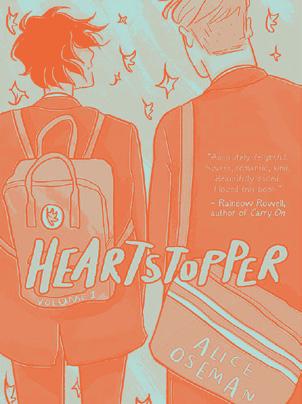

Oseman really enjoyed her characters and wanted to dive deeper into Nick and Charlie’s life, so she began to write the graphic novels titled Heartstopper. Among the reasons for wanting to continue the character’s story is that she wanted to create a story that explored themes of love, friendship, and self-discovery, mostly focusing on the experiences of younger people in the LGBTQ+ community. She felt it was important to write a story where characters could find happiness, love, and belonging. This is especially important in a school setting since finding friends in that kind of setting can be tricky. This resonates with me because when I was in 5th grade I went to a charter school and I had no real friends and it was rough and very lonely. So it means a lot to me that she shows that even people with barely any friends and no real secure safe space can find community when things are looking bleak.
Something I learned from this experience is to put yourself out there and try new things. But the graphic novels weren't
made just for the community but for her as well. As she said once in a Buzzfeed interview, “I decided to do Heartstopper because I cared about these characters so much. Nick and Charlie appear in a book I wrote called Solitaire, and after I wrote that I kept thinking about them, and I just knew I wanted to tell their story. I basically just wanted to write it so that I could read it, but then people of all ages ended up enjoying it.” So, yeah, at the beginning she made it for herself, but as it grew and drew more people in she continued to write. She wrote to show the community that it’s not all hopeless and that there are good people out there. Even with all the positivity, people outside and in the community may still see the series as being cringy or dangerous, but it is helpful to show the characters’ raw experience to provide teens and adults something to relate to and how to go about their own personal experiences.
The series takes place in a fictional town called Truham that is in the country of Kent in England. We mainly follow the life of Charlie Spring. Throughout Charlie’s whole life, he knew he was gay, as he says himself, “It's always just been boys.” His two friends are both mostly straight, until Isaac later realizes he is aroace, meaning he feels little to no sexual or romantic feelings. Charlie meets Rugby Lad Nick Nelson, who is just a year above him. Almost immediately, he starts to develop a crush on him. I mean who wouldn’t? He is tall, strong, plays ruby, dirty blonde. Why wouldn’t you fall in love with all that? Unless that’s not really your type, which I get.
Charlie’s friends tell him that Nick is as straight as you can get and that he’s just wasting his time. But in the background Nick starts to realize that he might like Charlie more than a friend and starts to figure out that he is Bisexual. This is hard for Nick because everyone sees him as a very straight kind of guy. He is not sure how people will take it, and he knows that some of the only friends he has, apart from Charlie, are very homophobic.
In the book we don’t get to see too much of the other characters'

girls, but she doesn’t want to be outed and seen as an outcast, which I understand as a trans guy myself. Meeting new people and not being able to tell if they will accept you is nerve wracking. She ends up meeting Tara and Darcy, two sweet funny girls who happen to be dating. Elle feels safe around them, and they respect who she is.
Now Tara and Darcy have complications of their own. Tara is nervous to come out, scared of what people will say, and she finds it hard to be confident in who she is, a lesbian. Darcy makes it seem like she’s confident in who she is, but in reality she isn’t and hasn’t even come out to her mom because she is very homophobic. Later on in the story, they meet Sahar and one of Nick’s friend’s, Imogen. I would first like to say while looking back at the books, Imogen isn’t even in them. Like I swear she was, but I guess not. But I am glad she was added into the TV series because she gives some life and representation for thinking you have it all figured out, then realising you actually don’t know
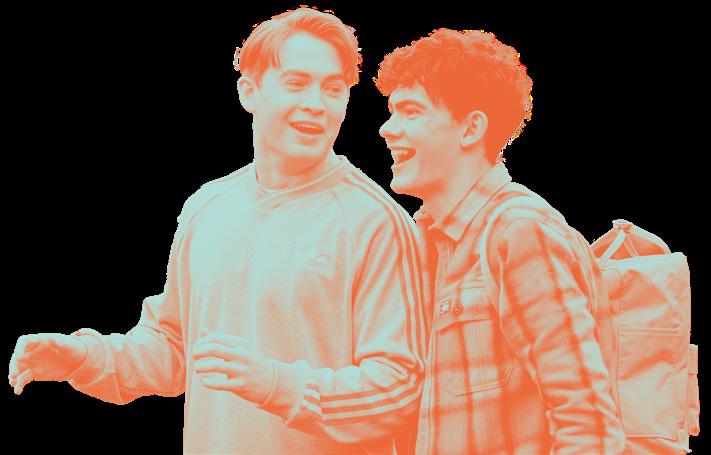

books do give us a bit of an insight on two of the teachers, we don’t really get to much until the TV series. Mr. Ajayi is seen as a mentor for Charlie. Mr. Ajayi is an art teacher, who always wears a rainbow pin, and provides a safe space for Charlie to hang out and escape the bullies. He and another teacher, Mr. Farouk, teach at the boys school in Truham together, and from an outside perspective we can tell that something may be going on between them, but it’s not really said until Mr. Ajayi tries flirting with Mr. Farouk.
Mr. Ajayi jokes around about the kids wanting to have some kind of queer teen experiences since they had just caught Charlie and Nick’s whole group making out, to which Mr. Farouk says he would love to do that but he didn’t find out he was gay until his 20s, so it's kind of hard to have those kinds of moments. Mr. Ajayi understands this but says that it's never really too late to figure out who you are and to experience something new. In the sidelines of everyone else's experiences we catch glimpses of Charlie’s sister Tori’s life, but we never really get to see what’s going on with her as we did with all of the other characters.
In the book Solitaire that I mentioned earlier, it’s centered around Tori and shows us what she goes through. She doesn’t have a lot of great friends, doesn’t really like people, and mainly keeps to herself, which may be why we don’t see her a lot in the TV series nor the graphic novel series. She goes through a lot, though, almost dies, meets a guy named Michael Holden, and they become really good friends, and watches as her
Alongside this series in the past couple of years, books across the world have been banned, and since the election here in the U.S., the book ban list has grown. While Heartstopper hasn’t been banned, it has been challenged, meaning they attempted to remove it, and it's been temporarily removed from some libraries. Many parents have pushed for its removal because of the LGBTQ+ content and themes in it.
I understand not wanting your kids to be exposed to some content, and, yeah, if I had kids I probably wouldn’t let them read the first book until they are 12 or something. But not because of the LGBTQ+ themes, but because of the language. I feel that kids need to be aware of these feelings and be taught that it’s okay if you like someone or you don’t. Kids shouldn’t be taught that being gay or anything of the sort is bad, since it could lead to serious problems for them later in life. I understand that many people don’t agree with what I’ve said. It may be because of their religious beliefs, family beliefs, etc.
Some people may say it’s not right or it’s unnatural. I would argue though that it is actually perfectly natural. Let’s take a look into nature, worms have both female and male organs, letting them reproduce on their own. Even some rams prefer to mate with other males when given the choice. This is just the tip of the iceberg. There are so many more examples than what I provided. The point is just to respect your kids' choices and beliefs and support them as long as it makes them happy and is actually beneficial for them and their health.
For me growing up in an LDS household, I wasn’t really taught that being gay was bad; it just wasn’t really talked about. As I grew older, I realized a lot of who I was wasn’t what I thought I was. It was a bit scary, but luckily I found out a lot of my family supported me, and I already had a great supportive friend group. Being able to be who I am and not having to hide that has been relieving and amazing. It’s important for people to be able to have access to the information provided in LGBTQ+ media like Heartstopper so they can better understand themselves.

All of this shows what the characters are going through and that not hiding all the messy, heavy details is necessary, especially by using the characters to represent different identities. It gives teens and adults someone to look up to, to strive to be like and to relate to, so they know it's not all in their head and that they are not alone. As someone in the LGBTQ+ community, I really appreciate having representation in media like this because it's important to show that these are real experiences that people go through and that it's okay to feel this way, that your feelings are validated. It also educates people who may not understand these identities and helps them see that at the end of the day we are just as human as anyone else.

“We are entering a period of consequences” - Al Gore
At the start of the New Stone Age, or the Neolithic Revolution, humans had some of the worst experiences–their lives were in jeopardy in the search of supply for food. Most of them had to constantly move to different regions because theirs, surprisingly, was changing as well. The thing was that they didn’t know exactly why it was happening. For years they had trained to collect food in cold and harsh weather. Suddenly, they were obligated to gain new skills of hunting in hot and dry conditions. Perhaps that wasn’t an impact for them at the time–at least they didn’t know what was to come for future humans. Little did they know it was a drastic change for the organisms and wildlife that surrounded those areas.
Now, imagine you’re part of a species that lives in an area that you truly rely on to live, and then it abruptly changes–meaning that you would have no way out. Your species would just go extinct–your’re just eliminated off the surface of the earth.
This so-called shocking phenomenon is climate change–crazy, huh? Well, I didn’t expect you to be surprised because by now I’m pretty sure that you’ve heard those words countless times. Do you know what it is? Do you authentically care about it or are you the type of person who just talks about it because others do–I mean talking about it isn’t necessarily bad, but think about it. If humans thousands of years ago didn’t even consider it, then why should you, right? To what extent of your life is this topic important to you, because you might not even know it, but the place you’re reading this from might be suffering environmentally.
Oh, here we go again, climate change is the change in weather patterns and movements that are caused over time typically because of human activity and greenhouse gas emissions–which are mostly released by humans. Both actions then lead to the rise of temperature: Global warming.
Greenhouse gases are types of gases that get trapped in the air and heat our earth. The most common and concerning is CO2 (Carbon Dioxide), which comes from both mother nature and human activity, although it’s clear that it comes from humans the most. Whether we’re digging and burning fossils for oil, messing with chemicals, or even cutting down greenery to build high-end economic boosting cities, we can’t deny that we contribute the most to the addition of CO2 into the atmosphere.
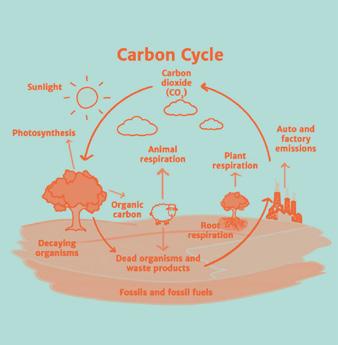
Have you sat down in the summer and noticed that it’s been hotter than ever? Or, have you just let it slide like everyone else. That was me for the longest time, until I observed that my Utah winters were no longer winters –less and less snow, and my summers were summers, but rather a foreign type. I got into my car and thought that my air conditioner wasn't working at full blast, despite the fact that I had just gotten my car fixed. You see, my whole brain started to process that earth was heating when I carpooled in other people’s cars and realized that their air conditioner had no effect on me, once again, even though it was only an “average” temperature in early June. So, when was the time you felt tha- Oh wait, let me guess, you probably haven’t.
At this point you’re probably sitting calmly, and maybe, just maybe, starting to care. On the contrary, since you’re still reading, you’re probably wondering what temperature has to do with this pattern.
Temperature is completely important because it’s rising- duh you’ve also probably heard that a lot. However, have you heard that CO2 and Temperature are best friends? Whatever one of them does, the other follows. Meaning that if there’s more human activity, then there’s more carbon sources that produce CO2 into the atmosphere. Likewise, the carbon that is stuck traps in heat and temperature goes up for us. As prompted by the following image, In Mauna Loa, Hawaii, from 1977-2019+ each time a wave of carbon goes up, so does the temperature for humans on earth.

NASA. Jet Propulsion Laboratory. California Institute for Technology. A brief history of carbon dioxide measurements. (website)
Tornados and hurricanes thrive in warmer weather; they usually get stronger. Wildfires are more likely to occur in scorching heat. When something burns, not only does it release tons of CO2, but bad air quality rises. While all of this happens, sea levels rise, which evokes flooding in coastal areas. Disease spreads faster, droughts become common, species start disappearing, ice becomes water, and the price for reconstruction becomes endless. Have you seen a pattern yet? Heat has a connection to all of these problems that we think are common in our lives. These problems tend to be ignored by the public because they either don’t believe they actually exist, or because they think they will disappear one day.
There are several people in the world that believe this isn’t real. Surely by now you aren’t one of them!
On the surface, it’s a little concerning the amount of people who go, “Well, I don’t see a change in temperature because, although summers are hot, the temperature always goes back down during the winter.” Sure, right, you have a point, but let’s look back at a temperature pattern that was recorded between 1955-2021 in Mauna Loa, Hawaii:
Now that it’s been deciphered, do you understand that, just like Covid-19, climate change is a crisis that people often ignore and only take action when it affects them directly. Climate injustice is the idea that the people who least contributed to climate change are most affected by it. This catastrophe is a prime example of how humans are instantly affected by a biological occurrence. However, not everyone contributes to climate change, and they are the most neglected by it. According to Vox, dramatic patterns can be found anywhere in the world–of course, but the temperatures in Arizona, one of the hottest cities in the world, are breaking records each year in the summer. Some of those records surpass hundreds of years. On a day that’s 122 degrees fahrenheit, there’s some places that are hotter than others. For example, City Central South (CCS) is one of the hottest places in Phoenix, but just 8 miles down the road there’s a city that has way cooler temperatures. Most of City Central South lives in poverty–with families making an income of about $19,000 per year and 1 in 4 persons having to use public transport because they don’t have cars. In fact, the zip code to CCS has one of the highest rates of heat-related illness in Phoenix. CCS suffers from the high heat because they are close to the freeway, train stations, airport, and most importantly the city allows tons of industries in nearby areas–all of which produce greenhouse emissions. It’s also vital to note that CCS doesn’t have a lot of shade because they don’t have enough greenery, due to the fact that it’s expensive to maintain plants and trees. They rely on homeowners to take care of them. The city of Phoenix does not pay for them. Utility companies in Phoenix try giving out trees for people to reduce their electric bills, but regardless, maintaining is the main problem. One of the citizens from CCS claims that infrastructure could also be something the city of Phoenix should figure out for them, but at this point all the damage ties together.

NOAA Global Monitoring, Lab NOAA National Weather Service
Mauna Loa has seen a variety of temperatures, but the graph demonstrates, yeah it goes up, but it never exactly goes back down. Each year the graph seems to be inclining further up.
Shakira Franklin was interviewed by NPR. She thought that she was going crazy when she walked outside her house and she had her first asthma attack in five years. She later found out that this happened because of the heat in her neighborhood–so she wasn’t going crazy. In fact, her neighborhood is one of the hottest ones in the city. This is because it has been up to six degrees hotter than the city’s coolest neighborhood. In addition, it’s one of the poorest communities in the city, with every 1 of out 3 people living in poverty. She gasped, twitched, and begged for water as she couldn’t feel a single breath of air. When she drives at least a few miles from her house, she starts to feel a sense of relief at the fact that she can finally breathe. This pattern isn’t just happening in her state of Maryland. 97 U.S. cities have a connection between heat and income. More than ⅔ had a stronger link between heat and income than Franklin’s neighborhood did. The people in these communities are typically minorities or are people of color. Brian Stone, at Georgia Institute of Technology, confirms that if cities have less green then there will always be higher temperatures.
The central part of the U.S. also suffers. A disaster that doesn’t exactly have direct links with temperature, but was provoked by temperature, was none other than Hurricane Karina of 2005. There were two major problems with this natural disaster:
1. The hurricane was so unexpected that the city didn’t urge people to evacuate–a very easy sign that climate change played a huge role. Unexpected climate that is dangerous to the extent of taking innocent lives.
2. The vast majority that endured the highest levels of flooding and possibly deaths were those of people of color. It’s important to note that these areas or communities were among some of the poorest in New Orleans. People tend to ask about why they decided to live here. The answer is simple: they wouldn’t be able to afford to live somewhere else–not because they wanted to, but because a system placed them to live at a lower ground elevation. climate change delves deeper and explores how discriminatory housing policies, underinvestment, and economic inequality have left people with a scripted role in society. However, a wealthy person believes they have far more worse problems than to be even thinking about climate change. If their lake house dries up, then they’ll just buy another lake house. If their house is burnt down by a wildfire, then they’ll just buy another house elsewhere.
The problem here is that there are huge influencers, politicians, and celebrities who we would assume they use their fame for good. However, how do we know that they do? The Kardashians all have private planes and they all travel independently. Just imagine the tons of CO2 they emit into the air. Taylor Swift flew to every country rather than paying for a tour bus or a more environmentally friendly method to perform her Eras Tour. Regardless of what they do, influential people are some of the more relevant examples of how wealthy people with privilege contribute the most to earth’s downfall.
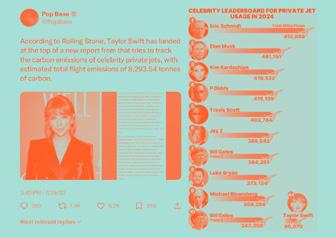
Although I’ve never attended a climate change protest, I will say I’m much more educated than before. You’ve caught me. I’m not the best advocate of Climate, but explaining it to others about what affects me directly has a huge impact, and it helps to get the word out. You don’t think I worry when I go outside and my air quality is much worse than those that live in a higher elevation
because they have the privilege of being able to afford those places. While my community’s environment deteriorated annually; from the government having allowed industries to build factories nearby, to our local river trail being decayed and trashed. Only until recently that our amazing leader Erin Mendenhall–Mayor of Salt Lake City–started producing policies that helped our trails be walkable again. She introduced the hope that change is possible. Although it’s slow, at least I can see a change.
There are people from different paths on Earth who can spread awareness. Those include:
1. Activists: These are the people who go out in the world and join protests to demand change from people in power.
2. Researchers and Scientists: These are the incredible people who put in countless hours to work and study climate change. They also provide ways to mitigate lifestyle during a crisis like this.
3. Ordinary People: This includes you, or even me. With just having this knowledge in the back of your mind, you’re one step ahead and know what’s right and wrong for our beautiful planet.
If a large group of people are involved, then there must be solutions by now. The answer is yes! Many are very collaborative and require assistance from not only people who care, but the whole entire world. Solutions vary, but some of the most important are:
1. Changing the ways that we interact with our environment is probably one of the best ways to save our planet. They may seem like big changes, but each day the use of electric vehicles, LED lights, solar panels, public transportation, carpooling, less food waste, and more techniques are being implemented into our daily lives. While some aren’t feasible, others certainly are. It’s crucial to know what impact one can create themselves, and most importantly to value it.
2. By now, you’ve also probably heard that protecting our forest, oceans, grasslands, etc. is important. The straightforward explanation is that these areas are Carbon Sinks: They remove CO2 from the atmosphere. Since you’ve now understood how carbon works, then you know that we rely on them to cool down our earth.
3. Depending on people who have power isn’t always successful, but in our world there are amazing leaders who don’t only think about themselves, but try to protect their citizens. These leaders are the ones who plan, advocate, execute movements for change in earth’s treatment. In fact, some of these leaders aren’t even in power; they are regular hard-working class members of a society, for example, Greta Thunberg, David Attenborough, Elizabeth Wathuti, and many more.
Vox, NPR and several other sources have called on the government to be responsible for taking care of its citizens: “It was a reminder that wealth already affects access to infrastructure, even infrastructure that doesn’t have to be watered and pruned, and that’s what will have to change if cities want to make sure that the heaviest burdens of climate warming don’t fall on those who are least prepared to withstanding them.” With this I can at least confirm that climate change is the villain here, not each other.

Many of you have most likely watched some type of American crime show or true crime documentary, like Law and Order or American Murder, The Family Next Door . And, unknowingly, you were probably misled about what goes on in the interrogation room, but here are some truths on American interrogation procedures. The REID technique is an interrogation tactic used a great deal in America since the 1950s, going as far as 500,000 law enforcement officers attending training courses since 1974, according to “Interrogation Techniques,” by James Orlando, Associate Attorney. Despite being a nationwide “norm” in law enforcement, it has some serious critiques that are often overlooked by law enforcement themselves and the public. The REID Technique, being a 9-step tactic, utilizes the weaknesses and vulnerabilities of its suspects to manipulate them into following the lead of the interrogator. The technique allows the interrogators to create scenarios to tamper with the suspect's psyche and slowly break them down, exploiting their mental and physical health. Fueled by the public's lack of comprehension of interrogation procedures, it can lead to mass confusion among American citizens, leaving the population to discuss their opinions and thoughts on controversial cases that may not fully be understood (e.g., the case of Isabella Guzman).
Isabella Guzman’s case is a perfect example of the problematic nature the REID Technique harbors, illustrating the debate on ethics revolving around many different aspects, each changing how to handle the cases at hand. Isabella Guzman, an 18-year-old at the time, had committed the horrendous crime of murdering her mother in cold
blood. Having stabbed her mother 74 times in all, she ran away from home and was later found by authorities hiding in a parking lot, claiming to be a woman named “Samantha Gonzalez,” who was only 15 years old. She was escorted to the police station, where she immediately met with the detectives and mirandized to begin the interrogation. Although it may as though there isn’t much to consider, there is a lot to examine just based on pre-interrogation. The components of the suspect's age, demeanor, case type, and how/where she was found can prove to be crucial to how the REID Technique affects a person's psyche and physical wellbeing.

Throughout the entirety of the interrogation, Isabella did not falter in her claims of being another person despite the looming and irrefutable evidence against her. Not only had she been found where the murder weapon was hidden, but her discarded clothing drenched in her mother’s blood had also been found, the DNA matching hers and her mother’s. Even worse for her defense that she attempted to make during the investigation was her father's verification of her identity, as seen in the interrogation footage uploaded by Explore With Us, analyzed by a licensed counselor and licensed attorney, When An Insane Teen Killer Makes Detectives Snap . Not only did it allow the interrogators to use this against her, but it also forced her to face the husband of the woman she had murdered, her own father. Yet, despite this stress, guilt, and overwhelming emotions she should have been feeling, she kept a cool exterior, monotone voice, and blank expression. She truly, in her heart of hearts, believed that she was not Isabella Guzman and she had not committed this horrific crime.
With that being said, it is apparent that there had been negligence on both the parents’ and interrogators’ part. Not only had there been evidence of mental deterioration with cryptic messages sent by Isabella to her friend and own mother before the ordeal. But there had also been other police reports involving her and her mother’s heated arguments, so bad that her mother had felt the need to contact the police in fear of her own safety. Having obtained this information from her father, either before or during Isabella’s interrogation, I view the length of her questioning to be completely inappropriate. She had demonstrated many concerning qualities and behaviors that should’ve led to a mental evaluation to ensure she was fit to even be interrogated, more so, to be subjected to the REID Technique. As it turns out, Isabella had been suffering from schizophrenia, leading her to believe that she must take her mother’s life or the “world would come to an end.”
Later in court, her lawyer pleaded insanity and Isabella was sent to a mental health hospital, according to Where is
Isabella Guzman Now? by Kieran Burt. Bearing in mind her mental diagnosis, the high stress case, her age, her family background, and physical health, the use of the REID technique more than most likely caused harm to the suspect.
From a psychological point of view, the REID technique opens up a large amount of questions and controversy revolving around the ethics involved in the interrogation process. The entirety of this tactic depends on the mental integrity of the suspect, the interrogators’ being trained to take advantage of vulnerabilities a suspect reveals or is known to have. The interrogators exploit the universal fact that “everyone has weaknesses,” leaving the most level- headed people powerless against the technique, regardless of guilt or innocence. Taking advantage of suspects' weaknesses may seem normal when you consider the goal of an interrogation, but certain lines should be drawn to ensure the wellbeing of suspects while still serving justice. Throughout my examination, psychological theories and concepts will be covered, for further information, go to Psychology Databases | Peer-Reviewed Psychology Journals | EBSCO.
The most obvious psychological issue the REID Technique faces is mental disorders, as seen in the case of Isabella Guzman. Attempting to utilize the REID Technique on a person with serious mental illness or disorders (e.g. bipolar disorder, borderline personality disorder, or schizophrenia) can cause unnecessary amounts of mental turmoil and can even lead to trauma. In the case of Guzman, having been in an active schizophrenic episode, the stress and tumult she had endured for over an hour in the interrogation room more than likely caused deterioration in her mental stability and health.

Age and stages of development also play a large part in how a suspect may be affected by the REID Technique, some ages being more vulnerable to deception, suggestions, and manipulation. Crimes come in a variety of ages, making it difficult to generalize when it is appropriate to employ the tactic based solely on the case's risk and stress factor. A case such as the one titled by the public as the “Slender Man Killers,” involving the two 12-year-old girls, Morgan Geyser and Anissa Weier, is a prime example of when the REID technique would be inappropriate. Considering the serious crime that was committed by the two young girls and the later diagnosis of schizophrenia, using the REID technique would've been completely unnecessary and damaging. According to Eirkson’s stages of development, the two young girls at the age of 12, would’ve been in the
stage of developing the virtue of “Competence.” Utilizing the REID Technique when the girls were already suffering from schizophrenic episodes and had just failed carrying out their plan would only cause them unnecessary affliction and possible mental scarring. The girls’ cooperation with the interrogators allowed for a full story to be formulated and explained. A summary can be found at Slender Man Stabbing: Morgan Geyser and Anissa Weier Today by Tyler Piccotti.
The simplest way to explain just how crucial the REID Technique can be in the cases of young age and mental disorders/illness is to pinpoint specific problematic steps. To start off, the interrogation begins with “Positive Confrontation” and “Theme Development,” where interrogators inform the suspect of their suspicion of guilt and begin to place the blame of the crime on another using morals to get the suspect's guard down. The next step is one that poses a threat due to it working in consensus with a later step to trap the suspect, forcing them to confess to crimes they may or may have not committed. Step 3,“Handling Denials,” which entails urging the suspect to not deny any accusations the interrogator makes, and Step 7, “Presenting an Alternative Question,” which entails providing the suspect with two options, one being a logical extension of the theme developed in Step 2, or a better justification for the crime committed to lure the suspect into admitting fault, overall work as a system. Step 3 ensures Step 2 is treated as the undeniable “truth,” while Step 7 backs the suspect into a corner based on their own words stated in step 2, in which they were manipulated into reciting. Seeing the manipulating nature that the REID Technique harbors, it is easy to conclude that those who would be more vulnerable to manipulation (e.g., younger people and mentally ill) would be put at a disadvantage to defend themselves, especially in the case of innocence. Between the younger people being easily deceived and the mentally ill often having skewered realities, it would not be justifiable to place anyone within those guidelines in an interrogation room where they would be subjected to the REID Technique.
The physical state of a suspect can bear a large impact on the effects they exhibit from the REID Technique, being negative or neutral. The physical aspect of a suspect does not work alone, but rather alongside the psychological aspect during the time the REID technique is employed. That means, if a suspect lacks good physical health, that can not only cause physical harm but also probable psychological harm if the tactic is utilized when it shouldn't be.
Physical wellness before the apprehension by authorities is just as important as during the recorded interrogation, providing an insight on not only information for the investigation, but also the suspect's capability to be interrogated in the first place. When apprehending suspects to escort them to the police station, the way they can be found varies. Some are found relaxing in their houses, some on the run, and others hiding. Signs that a suspect may be injured do not just stop at blood but can also happen through their demeanor, slurred words and incoherent sentences. Tying this back into Isabella Guzman’s case, she was found hiding in a parking lot in a corner by herself. And although the cops hadn’t checked her for wounds before allowing her in
the interrogation room, she had sustained large cuts on her arm, seemingly from the crime that she committed. It’s prominent that it be said that, if a suspect is either hiding or running when apprehension is taking place, injuries are more probable and should be evaluated before carrying on with the process of interrogation. Even though she had been speaking coherently with no slurred words when she was arrested, the raw fact that she had been found hiding, especially with the crime being a homicide as well as her odd demeanor being taken in, should’ve been enough to complete a physical evaluation. Despite Isabella’s injuries not being lethal, they could still hinder her ability to actively defend herself in the interrogation room, through a painful distraction or a fast-spreading infection.

The duration in which a suspect is kept in the interrogation room alone and with no further information is an important aspect that can actually have a huge effect on the suspect’s integrity to defend themselves later on. It is often overlooked due to repetitive occurrences, having numerous suspects waiting in these interrogation rooms for long periods of time, even ranging from an hour to two hours. Although this may not seem like a significant matter, the duration of how long a suspect is isolated; mixed with other factors, (e.g. mental diagnosis, age, or injuries), can leave the suspect more vulnerable to “throw in the towel” and let the interrogator coerce them into a false confession. A prime example of this is in the case of Mia Desiree Harris, a grandmother convicted of shooting her 6-month-old granddaughter. In court, she pleaded not guilty by reason of insanity while the prosecutors’ rebuttal by accusing of unhealthy drug use. Needless to say, whether it had been drugs or some type of snap during a mental episode, the duration she had been left in the room had only worsened the tranced state she was in. Over an hour and a half of being alone without information, Harris had been put in a fit of rage, throwing her cup of water and flipping the table over. The mixture of her already mental instability and physical strain, fully demonstrates the way physical “harm” affects a suspect’s psyche. For more information on this case, visit Mia Desiree Harris's Case by Explore With Us and Grandmother Who Shot Baby Granddaughter in Face Gets Sentenced by Christine Pelisek.
The REID Technique takes advantage of a suspect's physical health to manipulate them, specifically seen in the final steps of this tactic. The physical aspects of injuries (mentally or physically external/internal) and the
overall duration a suspect is kept in an interrogation room, some lasting 2 - 3 hours after waiting alone for 2 hours, contributes to the negative effect the REID Technique may have. These components give a complete disadvantage to the suspect to defend themselves, wearing down their drive and motivation. Steps 4 and 5, “Overcoming Objections” and “Procurement,” entails using the suspect's words against them to further the theme, ensuring that the suspect stays focused on the theme, keeping away thoughts of possible future punishment. The next steps prove to be the most problematic: Step 6, “Handling the Suspect’s Passive Mood,” bears its problems of its own, entailing emotional manipulation to trick the suspect into believing the interrogator is on his side, actively utilizing their feelings when they are most likely already physically and mentally tired. Step 7, “Presenting an Alternative Question,” as spoken about before, proposes two questions, one of which forces the suspect to pick the one that is more understandable despite admitting guilt. By the time this step has hit, the suspect is often mentally drained and more susceptible to giving in, guilty or innocent. So when Step 8, “The Suspect Orally Relates Various Details of the Events,” comes around, the suspect feels inclined to follow the story formulated by the suspect and interrogator. Having been manipulated to agree with the “developed theme,” the suspect is finally able to rest with ease after Step 9, to “Convert Oral Confessions to a Writing or Recorded Confession,” sealing their fate, no matter of its objective truth.
As someone who aspires to enter law enforcement in the future, working hands-on in this field, it is of utmost importance that we discuss and recognize these risks that the REID Technique carries. Even if you aren’t someone who has an interest in the law enforcement field, it can still prove useful to have the knowledge, allowing you to stay informed if ever placed in a similar situation. In spite of its apparent consequential risks, it is not publicly spoken about on a large scale like other lawful issues. The wide usage of the REID Technique should raise conversations regarding the barrier of ethics between the wellness (mental and physical) of a suspect and the means for a timely justice served. I believe that the policies surrounding the REID Technique should take into consideration these psychological and physical aspects to hopefully ensure the wellbeing of its suspects while avoiding false confessions. A question that I would like to leave you with is, does being an active suspect make someone less worthy of sympathy or lose their right to preserve their own wellbeing if it’s in the name of justice?


Cyprus High School
An opportunity for victims to raise their voices or a misandry trend?
If you aren’t chronically online like me, you probably don't know what “Man or Bear” is. Man or Bear is a trend that originated on April 10, 2024, on TikTok. An interviewer with an account called “ SCREENSHOT HQ ” went out to a random street and asked women if they would “rather be stuck in a forest with a man or a bear.” Most women picked bear. From that video, a series of videos has emerged where different interviewers ask women the same question, and, on average, most women choose the bear. But why? The answer is simple: Bears aren’t as scary as men.
As the trend spread around globally, more and more female victims of sexual assault, sexual harrasment, and rape came out to share their stories with an audience to spread around awareness to fellow females. Many of these women even started selling self-defense products and offering tips to other women and girls on how to stay safe. On the other side of the internet, this sparked a very big controversy of whether or not this trend was meant to make men feel bad about themselves for their gender. Because of this, a lot of men began making TikToks about how frustrated they were that, on average, women would pick a bear over a man. Some men began calling these women “privileged” or “stupid” for choosing a wild animal over a man. This started up another trend: #Notallmen. This trend was started to try to explain that not all men would hurt women, and, yes, most of the videos that explained this were made by men. To compare what it’s like for a woman to live in this kind of world, it feels like eating a bowl of M&M’s while some of them are poisoned. It’s always a risk women take, and most of the time, we just have to hope for the best that we don’t eat a poisoned M&M.
But the trend wasn’t ever intended to be misandristic; it was designed to raise a voice for female victims and spread the word and raise awareness of sexual assault and rape. Now, some may argue that Bears are much more dangerous than men. It's a wild animal, so it must be a more deadly animal, right? According to Bearvault.com, there have been only 82 fatal bear attacks (by black bears, which have one of the highest numbers of attacks) since 1784. However, It is estimated that 734,630 people were raped (including threatened, attempted, or completed rape) in the U.S. in 2018, according
to National Sexual Violence Resource Center (nsvrc.org), and according to ovc.ojp.gov every hour there are about 78 women that are forcibly raped. This is a HUGE difference.
Bears are wild animals; they have an instinct to survive, so the most common reasons why a bear would ever kill anybody are 1. Because they feel threatened, 2. because it’s trying to protect their cubs, or 3. because they need to eat. On the other hand, the most common reasons I researched and found for why male killers have killed anyone were because of: 1. Out of pure anger and hatred. 2. A need to feel dominance and 3. For sexual pleasure.
“The worst case scenario that would happen to me if I encountered a bear is that it would just kill me,” stated YouTuber FunkyFrogBait.
This sentence sums up why women would choose the bear. It’s because men are capable of long, excruciating, and dehumanizing forms of torture that require a level of creativity and hatred that an animal simply can not comprehend. The man can hear your screams for help, knowing that what he is doing is wrong, but continues anyway, not out of necessity or an instinct of survival, but for pleasure. It's that situation, which is so horrifying, that women would rather be mauled to death by a bear to avoid it.
Aside from giving a voice to victims and giving light and courage for others to share their stories, this trend also brought a bit of recognition to other organizations such as: All Rapists Gotta Die (ARGD), Rape Abuse & Incest National Network (RAINN), Take Back the Night Foundation (TBTNF), and Joyful Hearts foundation. These foundations not only protest against sexual violence, but they also donate to survivors and allow others to share their story globally, and these programs also help victims seek justice. One of the biggest problems in our world right now is not being able to help victims of sexual violence seek justice. It's very common for a person who committed a sexually violent crime to be sentenced to only a few years in prison, which isn't fair to the victim, given that the criminal changed the victim’s life forever.
The most tangible impact of the Bear or Man trend is when Ione Wells stepped into the light for their TED Talk, “How we talk about sexual assault online.” Envision this: a woman walks to the TED Talk stage; the bright lights beam down upon her, and she can see the silhouettes of a massive audience. She delivers what would be considered one of the greatest speeches about sexual assault, giving a message to all victims around the world:
“I feel more hopeful that if so many women can move forward, then I can too.”



Cufflinks, diamonds, daughters in ruffled dresses, sons in pastel suits, black Bentleys, 5000-dollar signature cocktails, and a final meeting with the jockey. Today, nerves begin to rise, do we hit the jackpot?
Dust, hair, mud, sweat, countless hours, vets, supplements, and training sessions, prepare the colts for the moment the gun blast explodes across the track. Race day arrives and with it nerves begin to rise before a dozen athletes begin to race…to their doom?
The derby marks a classic southern festivity. Flamboyant, high-fashion, alcohol, and certainly money highlight the attendees of this event. The derby itself is aimed at the most fashionably wealthy, those who drop thousand dollar bets on the horse, possibly the one with the prettiest coat; maybe they’ve followed their career to end up here, at the biggest title race in the world, with the most athletic of the breed, at one of three races in the Triple Crown. Beyond the roughly minute and a half that horses sprint around the track, years of strategic breeding,

raising, and training add to the beauty of the sport. Within that minute and a half, horses prove their explosive strength, and the minute the gates open, they show their potential to accelerate past 60 km/h in a moment. The ability to read every opponent, see exactly which gaps to shoot, and explode more when those moments present themselves. It’s not merely running around a track; it’s a sport based on strategy, communication, and athleticism. However, some aspects of the money-driven nature of the sport raises the question: “Is horse racing evil?” The more you consider the question, the more it becomes necessary to evaluate motives and practices within the industry. It becomes clearer through this evaluation the importance of refocusing the sport on the values that it was originally founded upon.
“They’re off in the Kentucky Derby” (Kentucky Derby 2025 (Full Race), NBC Sports).
By now, whether you've watched the race itself, the movie, or heard about him as a metaphor in passing conversation, Secretariat symbolizes strength and ability. Winning the Belmont Stakes (one of three Triple Crown races) by 25 lengths shook the industry and the world in the 70s. The faces of the audience, as a shaking camera panned around the stadium, and the booming, disbelieving commentary of the spokesperson, echoed the seriousness of this achievement. Anyone, audience or expert, knew this horse was beyond normal.
Secretariat sired well over 600 foals in his relatively short lifetime, those descendants going on to breed thousands and thousands more. Now, almost any Thoroughbred horse that you see, whether Kentucky Derby or state fair

It makes sense to carry on the line of the best of the breed. To curate the strongest horses, with top-of-the-line traits. But will the industry ignore the health problems of inbreeding just to easily achieve desirable traits? For a long time, strategic breeding was a part of the beauty of the sport. Experts who studied the shape of the body, placement of muscles, and every relatively small detail that in fact contributed to the talent of the horse, showed possibly just as much skill and attention to detail as those who were dedicated to training. Now, a desire for quick money and the fasted way to achieve speed, inbreeding is abused, the science of breeding is lost, and horses are becoming increasingly one and the same. This is genetic abuse in the quest for a horse one second faster.
“Journalism and Sovereignty, nose to nose, down to the last sixteenth of a mile” (Kentucky Derby 2025 (Full Race), NBC Sports).
Inbreeding isn’t the only problem. Whipping is arguably one of the most controversial tools in racing. Whip use in general has a negative connotation. The idea of using a stick as a tool to solely invoke fear and pain in the eyes of horses probably doesn’t bring light to your eyes or at least I certainly hope it doesn’t. Just like any tool, the whip can be abused to do just that. However, the whip in itself isn’t aimed (at least for every rider or to say at every level) to do that. A touch with the whip can be used as a signal for a horse to engage its hind end (something that creates longer and more powerful strides ), to push a narrow gap (number of whip touches used during a race is limited, so riders are forced to use it at calculated times), or in general as almost an extended arm (a tap cues strategic maneuvers that a jockey’s arms or legs cannot reach).
Tapping is not whipping. Tapping isn’t wrong; whipping is. The industry needs to remember that. I think anyone with a basic sympathy for animals in general would agree that invoking fear, for speed, is undeniably a pretty evil deal. Where’s the line, though? Can we group together every rider who uses the tool strategically and “for the sport” and those who use it in other, more heinous ways, “evil”?
“It will be Sovereignty to win the Kentucky Derby” (Kentucky Derby 2025 (Full Race), NBC Sports).
The 2021 winner of the Derby was
that led to the revocation of the horse’s win. An anti-inflammatory drug, the substance would help Medina’s joints the day of the race. While anti-inflammatories might not seem like a crime to give a horse, the fact that the stallion needed the drug in the first place due to pain, and still raced a day later, proved a lack of care by the owner. Months later, in December of the same year, Medina passed from a heart attack shortly after a training session. While drugging and the heart attack aren’t necessarily linked, the same trainer that prioritized a win over health was the same who allowed a training regime to override exhaustion or signals of discomfort, all in pursuit of a win. Medina’s story represents a dark turn when the physicality of the horse is lost to the avaricious nature of some of the event’s participants: those abusing every aspect of a horse’s body, brain, and instinct by any means necessary.
Maybe they saw their horse win, maybe missing by an inch, and another dozen horses with little fame to their name. Whether winner or having not placed, all are responsible for the horse they raised to this point and the means with which they did so.
“Sovereignty, who got me all the way to the wire. It means the world to me.” –Jockey Junior Alvarado.
While the instances of abuse mentioned above may have developed a stigma in your mind to the sport, I would like to allay some of (not all of) those fears. Racing “done right” isn’t all bad, or really bad at all. The industry as a whole is the largest contributor to veterinary research, putting money in the hands of professionals tasked at uncovering the rights and wrongs of the game. Individually (often in lower levels or where stakes and money don’t contaminate the event), horses enjoy their jobs. Bodies strategically built for the job and goals to achieve compliment the Thoroughbred well: their instinct and love to run.
I know this doesn’t have to be this way. Stables don’t have to drug and abuse to produce the best. The stable that I ride at has talented horses, with results produced from athleticism and strategic training. This works; horses don’t have to be forced into negative environments to produce a natural best. Good horse racing knows this, must do what they know is right.

The answer is that horse racing isn’t all bad or all good. The answer to this is finding and respecting that line, to define what is evil and what is not. When does tool become torture, when is science lost, and art abused?
At the end of the race, horse and rider, exhausted, have experienced the adrenaline and joy of sport and understanding. A pair that proves that sport done right isn’t so evil at all.
To take the sport back to its roots, where art, love, and attention to detail are a focus, we may find the truly beautiful aspects of the industry. To reach honest success, through knowledge and loving curiosity for an animal, we can remember the values that the event originally prioritized.

When scrolling through TikTok, it is not unlikely to find a video showing off someone’s most recent reads or their favorite book couples. Videos like these are easy to find, especially if you have an algorithm tailored to be about books and reading. It happens on other social media platforms, too, such as Instagram and YouTube–book reviews, book recommendations, just books in general–all in the form of short, one-minute-long videos.
You may come across these types of videos quite frequently. Everyone scrolls on their favorite social media, trying to fill the time or quell their boredom. The harmful effects of “doomscrolling” could have an analysis of its own, but the point is everyone does it, so everyone has equal opportunity to come across book-related videos.
On the surface, this content seems fun and uplifting, a great way for users to share their love for reading with their peers and the world. And, yes, it is–or at least it started out that way. Most users of these social media platforms–specifically TikTok–don’t truly understand the issues that come from book-related videos. And with such a large platform, some problems have manifested themselves into the real world. It’s no longer book drama, disagreeing with who should get with who, or what cover design looks the best. Now, readers may struggle to find new books to read or even find the “wrong” books, which was not the point at all of BookTok’s creation.

BookTok is aptly named for being the book-focused section of TikTok. It was started in 2020 during the COVID-19 pandemic by user Cait Jacobs (her TikTok handle being @ caitsbooks). She posted videos talking about books and quickly gained a following. After this, BookTok became popular within no time.
TikTok users most often get there by having a reading and book centered algorithm, like Jacobs promoted. If the algorithm realizes that a user is interested in those topics, it will direct them to similar videos–anything relating to books and reading can be considered a part of BookTok. Videos may also have hashtags, ones that can be clicked on and will direct watchers to various subsections–all, of course, relating to BookTok. This could be #books, #reading, and especially #booktok.
Users on BookTok, often called “BookTokers,” share videos about popular books, their favorite characters, and their hopes for ongoing book series. BookTok created a community for those who love reading and want a place to share that love with others who have similar interests.
However, BookTok has changed dramatically. Although it started as a place for users to share videos and discuss books, it slowly became something else. It became cloutfocused and explicit, with people losing genuine love for reading. With the shift in purpose, problems arose–problems that need to be rectified.
When it comes to issues surrounding book-focused media, BookTok is the main problem. The issues stemming from this innocent-looking platform have crossed over into its sister platforms (BookTube and BookStagram, respectively), but it all began with BookTok. Through its carefully crafted algorithm, BookTok knows exactly what to show each individual user to keep them enthralled. Each book recommendation leads to another reader and another user who makes another book recommendation, only maintaining the cycle. But the problems bubbling to the surface need to be addressed and rectified. Put simply, BookTok does more harm than good: it makes publishing more biased and discreditable, causes others to lose sight of the true reason to read, and, most importantly, could psychologically damage the youth.
Promoting a book on BookTok is a great way to get a book out there and read by others. But while it may work for some, it definitely does not work for all. Not including a specific genre or trope or not knowing how to properly market your book can be detrimental. There is no doubt that the most popular genre being promoted on BookTok is romantasy, correctly named for being a combination of the genres romance and fantasy–and books without this genre don’t often get fame or notoriety.
As an aspiring author myself, it’s discouraging to know that my work may be buried or ignored simply because I don’t write in a specific genre or use specific tropes. Looking through my own writing, I know I have interesting stories that
would surely be loved by someone–but they are not the type of stories that BookTok would promote, making it hard for my books to find an audience they may consider niche. Other authors have the same struggle.
Another problem arises with the trend of self-publishing, which causes the title of “author” to lose much of its credibility. Self-published books are very commonly found on BookTok; but sometimes, choosing a self-published book to read, merely because it was recommended on the platform, can give readers a bad experience.
Individual publishing, or “indie publishing,” has allowed authors to get their book out there, own more rights to their work, and not have to go through the long, tedious road that is traditional publishing. While this all sounds wonderful, it leads to its own issues. Without being traditionally published, it is less likely that an author would use a professional editing agency to catch errors. Whether that means editing themselves, hiring a personal one, or not doing editing at all, the result is the same–mistakes are more likely to slip through and make it to the published version of the book.
And that creates its own issues. Nothing is a bigger turn off for me than reading a book with a bunch of grammatical errors. It takes me out of the moment and makes it harder to get back in the story. Traditionally published books can also have mistakes, sure, but selfpublished ones tend to have more–or just plain bad writing.
I’m aware that this is a heavy generalization. There are some good self-published authors out there, after all. But, unfortunately, it is more likely for readers to have negative experiences if they read self-published books promoted through BookTok. What if there was someone who didn’t read a lot, but wanted to get back into it because of a specific book? Only for the book to have a grammatical error and bam! Right back where we started. Some people might not want to finish a book if the writing is bad or if there are too many mistakes, which can then lead them to not wanting to read, either altogether, or specifically any other books from that author or in that genre. And this, in turn, can make people lose sight of why they wanted to read in the first place.
Reading has long been about having fun and enjoying yourself, reading based on your own interests and love for the characters and story. Now, whenever I scroll looking for book recommendations, all I see are recommendations for tropes and genres–nothing about specific books I might be interested in.
For example, romantasy has already been mentioned as a genre beloved by BookTok. Also popular is regular fantasy and contemporary romance stories. As well as genres, specific tropes are also popularized–tropes such as enemies to lovers (the main couple starts off hating each other or on opposite sides but gradually fall in love) or fake dating (where the main couple has to pretend to date to accomplish a goal, only to genuinely fall in love by the end), among many others. So many videos promote specific books with genres or tropes alone or as the main focus of their video. Some have videos entirely about a trope and books featuring that trope, such as user @haleypham with her video “Book Recommendations for the Best Trope Ever.”

That is a good way to start, of course; having a good idea of what type of book you want to read is always helpful. The problem is that videos marketed as “book reviews” or “book recommendations” do nothing except talk about tropes and genres. Nothing about the plot or characters aside from perhaps the main couple and how their dynamic fits within certain ideals for a BookTok book. These sorts of books are overhyped and talked about constantly, and while it might build curiosity originally, it will inversely lead to more disappointment if the reader finds that the book they selected was not actually what they were looking for.
One specific example I can think of is the book Shatter Me by Tahereh Mafi. When scrolling through BookTok and other book-related platforms, Shatter Me is one of the most common books I see. However, I have yet to learn about the actual plot of the book. Typically, when you review something, you give an overview of what that thing is about–give context or a general idea. But for this specific book, I have found nothing. Sure, if I wanted a plot summary that bad, I could just search it up online; but I’m not watching a video titled “Books EVERYONE Should Read” only to have to look up exactly why I should read it. Movie reviews, in contrast, give background to the film, context, and a spoiler-free plot summary, even when formatted into a minutelong video. Why can’t book review videos do the same?
The aforementioned format of review videos (or lack thereof) is likely intentional. Videos with intriguing titles are more likely to get clicks and views. In addition, videos that feature popular BookTok books such as Powerless by Lauren Roberts or The Song of Achilles by Madeline Miller attract larger audiences, leeching off of pre-existing fame from other BookTok videos. Videos that mention tropes or popular characters also get more views than videos that feature more niche books.
One added issue is that several book reviews are actually carefully disguised ads. Many video creators get sent free books or get paid to promote certain authors. Book reviews like this are not about sharing interests with the world; now, it is entirely about money. To make it worse, sometimes these videos are not being explicitly stated as advertisements but feed into the algorithm and fuel the popularity of certain books–leading to things becoming unbalanced.
These books have acquired such large fandoms almost solely because of their popularity on BookTok, which in of itself is not a bad thing. It’s when users see that and decide to profit off of it that it becomes a problem. Book “reviews” are not real reviews; they are crude attempts to obtain more notoriety, money, and influence online. And not only that–sometimes they contain material that could cause grave damage to adolescents.
Who hasn’t given a recommendation to their friend? Whether it be about food, songs, movies, or whatever else, we’ve all suggested that our friend try something we like. Adolescents do most of all, trying to fit in and find others who relate to their interests. I know I have, in suggesting songs for my friends to listen to and books for them to read. And they’ve done the same for me.
But that comes with some interesting ramifications. If I don’t listen to that particular song or read that specific book, I feel left out when it’s talked about. My friend used to send me hundreds of videos and messages about a book, none of which I understood until I actually read the book–and that, in turn, allowed us to have inside jokes or talk about things no one else understood, like we were in our own little world.
But what if the book someone recommends is not very good? And not just someone–hundreds of people, all giving their opinions, raving about how amazing a series or author is. An impressionable youth scrolling through BookTok would certainly feel more inclined to read something if it’s been recommended over and over and over again. Maybe when they read it, though, they realize that they find the writing dull and the characters bland, or don’t appreciate the content inside, or don’t agree with its message. Maybe they don’t understand the hype at all because the book just didn’t “click” with them; they would prefer to find something else to read, and as though it was a waste of time to ever have picked up that book at all.
In the same vein, there are millions of books out there, most of them amazing, that have never been reviewed on BookTok to begin with. Conversely, maybe the books have been reviewed on BookTok–but in a negative light. What happens to a teenager who views that book as their absolute favorite, then? If it changed their life and made them appreciate reading?
Well, if they are unable to find positive book reviews anywhere online, their opinion may be swayed. Maybe it will taint the memories and the joy they had while reading the book so that they never want to pick it up again in fear of being judged harshly by online peers. That person may feel invalidated, or that their opinion is wrong and inadequate. Someone with these thoughts may not want to share their opinions as readily anymore and remain silent instead.
But that is not the only issue–it is far from it. The most egregious thing BookTok has facilitated is the spread and prevalence of adult content within books that adolescents are reading. Extreme violence, harsh language, and especially pornographic material within books is being pushed onto kids through videos on BookTok. Books with this content are promoted on an app where the audience is largely made up of adolescents with still-developing brains.
A recent poll by the Publishers Association found that 59% of those aged sixteen to twenty-five credit BookTok for their love of reading. The youngest out of that age range
is sixteen, barely sophomores and juniors in high school. Other studies find that BookTok users are as young as thirteen. Young teenagers have ready access to videos discussing books with mature content. Although these books are not children’s books by any means, they are not being promoted with adequate–or sometimes any–warnings. Some videos broadcast vulgar passages from books that are being read by those not even in high school yet. Others celebrate the “spice” content within certain books and encourage everyone to read them.
Being exposed to such content at a young age has detrimental effects. For example, reading explicit content produces unhealthy amounts of dopamine–the “happy” chemical–that can overwhelm the brain, leading to a dopamine tolerance, meaning that adolescents who read these types of books may be unable to produce dopamine and feel fulfilled normally. Studies also show that extreme violence and harsh language can affect a developing brain. According to the Journal of High School Science, there is a correlation between reading violence and mental illness. While correlation is certainly not causation, it should still be mentioned. Finally, reading strong language, particularly harsh swearing, can evoke stress responses or anxiety within the brain.
What’s worse is that many of the books containing such content look like books meant for teenagers or even younger audiences. The most notable example of this is Icebreaker by Hannah Grace, which features a cute cover with cartoon characters and pastel colors, something that is severely misleading and does not match the content within. Other books such as A Court of Thorns and Roses, by Sarah J. Maas have simplistic covers that give the idea that the book is harmless and cute. These covers are innocent and don’t correctly portray the explicit material–language, violence, and adult content–hiding within. The explicit material is a large problem, a problem that needs to be taken care of.
With BookTok having more prevalence in our society than ever, something needs to be done. That could be creating new legislation to make warnings for books required. Or perhaps more regulation on publishing and easier access to professional editors. Or maybe a better algorithm that is not fueled by the most popular books and buries the niche ones. Whatever the solution, we need to find one to correct the mistakes plaguing BookTok.
The book-focused enclave as a whole is not bad; in fact, it has helped many through reading slumps or to promote their own books. But in order to keep authors motivated to write, in order to continue reading for fun and doing it ethically, in order to keep our youth safe, these issues need to be rectified. Maybe there’s a way to restore BookTok to its former glory if we all take up our Kindles and fight for a solution. A solution that will only come if we, the people of BookTok and BookTube and BookStagram, the readers of the world, take action to find one.


Its 1933, you're a Japanese high school student preparing for their first live match against your peers. As of now matches are scored to Ippon Shobu, (first to one point) in this case a valid kill. It's your turn now, as you move to the center of the ring and face your opponent.
Hajime (start)
You immediately burst forth swinging your Shinai (wooden sword) straight for the middle of their head. Yet he sides steps while dropping his Shinai and grabs you by your arm and throws you a Uchi-mata
Bam, you hit the ground and while still delirious, he rips off your men (face mask)
Shobu-Ari (signaling the end of the match)
You had lost; in the match he had killed you.
Pre-World War 2 Kendo was the sport practiced by all in Japan. Incomparably quick and violent compared to today, Kendo is a sword-fighting sport that originated in Japan to have a safer form of practice for young samurai. Kendo is made of Kata, basic movements and strikes that seek to teach students Kikentai No Ichi (being one with your sword). Originally Kendo was taught within several small schools that were spread across Japan. The large geographic gaps and political separations between groups caused Kendo to be disjointed and unique to each of these schools.
In 1911 it was decided that Kenjitsu (the original form of Kendo) would become an integral part of the national physical education system in Japan. The Japanese government had previously found that Kenjitsu and further Budou (martial arts) often fostered more militaristic personalities and stronger connections to said school. By taking advantage of Kenjitsu and using it as a tool to shape the personalities of the people, the government hoped to create an increasingly loyal and militaristically effective population.
In 1931 the Manchurian Incident took place, an attack staged by the Japanese government and ploy to make it appear that China was conducting attacks on Japan. This fake incident gave Japan
the “justification” for the invasion of China as well as a precedent for all Japanese citizens to learn martial arts to protect themselves and their country.
Following this “incident,” reformation of the Japanese culture was needed for a colonial regime to be successful. This led to the national requirement of Kenjitsu participation of all male students. In doing so they hoped to shape the culture of Japan to be more fit for an era of colonial expansion and constant war. This desire for a strong populace led to a more violent emphasis in the rules Ippon Shobu (a single point victory) or first to get a “kill.”
By 1945, Japan was defeated in WW2. During the USA’s subsequent occupation, they began the SCAP (Supreme Commander of the Allied Powers) reports. SCAP was a series of reports used to monitor the development of post WW2 occupation as well as the development of a democratic spirit. The main objective of the post WW2 occupation was the introduction of a democratic body into the Japanese government as well as the demilitarization of Japanese culture. Within SCAP the Japanese populace’s militaristic and violent culture was attributed to its nationally accepted Bodou programs (martial arts programs) which had been introduced to foster a strong militaristic culture. To combat this SCAP decided to place a ban on all martial arts or Budou congregations, teachings, and competition. They hoped by removing these constant militaristic influences from the people’s daily lives they would influence the Japanese populace to be more accepting of a democratic system.
After the banning of all martial arts, collegiate college alumni formed the Tokyo Kendo Club. Their goal? To reform Kendo into an acceptable form to the SCAP committee, so Kendo may be reinstated. Only by removing many of the violent themes within Kendo would a new face of Kendo be accepted. This led to a widely criticized sport at the time, a cross between Kendo and fencing— Shinai-Kyogi (sword competition). This sport held little resemblance to Kendo, but it was approved due to the sport accepting the more western ideals of fencing. Only by destroying the previous culture would a new government be able to take shape without great resistance.
In 1952 Kendo was reinstated, although in a far less violent version than previously existed. The rules were modified to two viable hits that demonstrate one’s Kikentai No Ichi (being one with your sword). This is achieved by showing the correct stance and intent in your strike before and after. This shift from first to a viable kill to two viable strikes initiated a change in mindset among the large population of Kendo practitioners. When paired with the considerable break the Japanese population was given it became evident that by attacking or changing seemingly insignificant but constant parts of the people’s lives the government was trying to change the very culture of the people.
The introduction of a new government will often face opposition from the people. In the past Kendo and further martials had been used as a tool to transform the culture of the Japanese people, moving it from a country that had been self-isolated for 200 years to a country prepared for violent expansion of their borders. Later, when The United States sought to transform this culture into something that would better accept a democratic system of
government, they attacked the seemingly insignificant yet constant parts of people's lives and successfully changed the very culture of the people. Sports, trends, and events can be used as tools by the government to silently point people in a certain direction. The effects of Kendo being used as a tool for cultural change reverberate even today, as Japan remains an allied state with the United States and the rules of Kendo have changed.
Hajime . (begin, signaling the start of the match)
It was my first match, sparring a man 50 pounds beyond me. The constant retreat with the anxious feeling of being watched by my peers. Constant half strikes at his Kote (the wrist) missing by a mere inch each time being blocked by the Tsuba (hilt of the sword). Until he found a pattern within my sporadic attacks, an opening that reveals itself in every predictive block. I’m leaving my Do (sides of stomach) wide open. So, he fakes a Men (head) strike and bam...
Yame (stop, end of the first point)
The flags had gone up by all 3 judges for red, my opponent. A perfect Do (sides of the stomach) strike that demonstrated his Kikentai No Ichi , the combination of his Zanshin and Kiai , his stance and spirit.
Nihonme (start of the second point)
I had been defeated by my opponent’s eye. He had noticed the flaws in my technique and capitalized upon them. You see Kendo can be an epic battle over the little things (as you see at the highest level), slow and concise or a flurry of movement and strikes that simply rely on overpowering one’s opponent. After my initial defeat I decided to take a slow methodical approach. Moving my blade further towards the center while pushing his away from the center. Positioning the tip of my blade to just slightly point at his throat. Then standing still waiting for him to push forward slightly.
Then, bam I went for a quick strike for the had connected perfectly yet none of the judges raised their flags? “Man, where’s my point??”
Yet, in my haste I had forgotten to demonstrate my Zanshin (stance and spirit), I had not shown confidence in my strike while relaxing my
stance after performing the strike. Despite all the slow methodical movement and thought I had placed in my move I had forgotten the basics.
It was over, I was out of stance leaving me no defensive capabilities. Then bam a hit on my wrist, and it was done. The flags went up and,
Yame (Stop)
We both went to the center of the ring.
Shobu-owari (signaling the end of the match)
I had lost. But only that, I had not “died.”
The focus of Kendo had shifted, it is no longer a mock fight to the “death,” no. It was simply a match, first to two points. Long gone are the days when Kendo would instill violent tendencies and strong personalities among its practitioners. Although bits and pieces of the past Kendo may have been more suitable to my style, there is no need for the violent culture shaped by Kendo today. Few practice Kenjitsu, a style more reminiscent of the Kendo of the past and I think that it's fitting. Kendo was used as a tool to change the people; this tool has been discarded and has now been changed by those it was meant to change.
Despite the obvious differences between Kendo today and Kendo of the past, I still love Kendo. It has shaped my personality, removing the anxiety I once felt from presentations and social interactions. After all, what is scarier than fighting someone? There is no need for a violent culture shaped by Kendo to exist today. But I ask
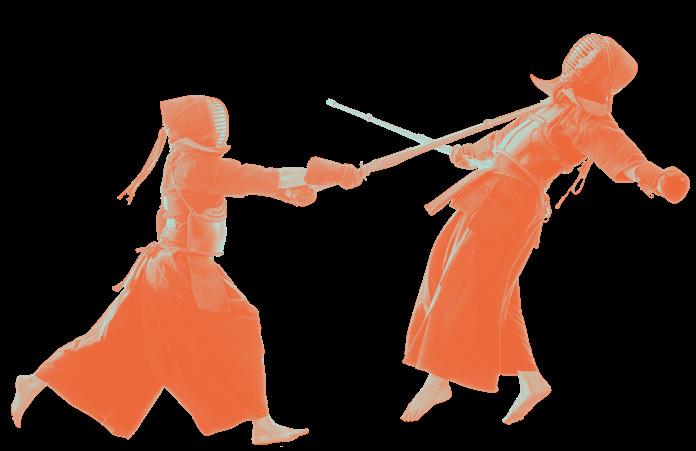










Ann Chaplin
Highland High School
Ash Gill
Highland High School
Foss Goodwin West High School
Eden Greenway West High School
Citalli Dirzo Ibarra West High School
Jaimie Jui West High School
Alondra Martinez SLCSE
Nadine Panther West High School
Cameron Parke West High School
Jesus Perez Ceja West High School
Sylvie Peterson
Highland High School
Lauren Pornillos West High School
Divna Porter West High School
Roxana Roman West High School
Xanthie Sandborn-Killpack
Highland High School
Brianna Sears West High School
Carlos Nunez Solano West High School
Andre Tavtigian West High School
Ben Beardall
Cyprus High School
John Carpenter
Cyprus High School
Jasmin Gomez
Cyprus High School
Hailey Johnson Cyprus High School
Jordan Laguna Hunter High School
Ziequel Maez Cyprus High School
Miriam Martinez Hunter High School
Riley McMullin
Cyprus High School
La’Nayah Lee Miera
Cyprus High School
Yubi Perez
Cyprus High School
Sadie Peterson Cyprus High School
Sage Spencer Cyprus High School
Evelyn Stoddard Hunter High School
Sarai Ortiz Gomez Hunter High School
Graphic Designer College of Education, University of Utah
Graphic Design Intern College of Education, University of Utah
The CoEdu marketing team completed fair use analyses for images sourced from the following online locations: Barnes & Noble, Blue Ridge Outdoors Magazine, CNBC TV18, IMDb, Maryville PawPrint, Orange County Register, Redbubble, The Artifice, The Independent, Variety, Vogue, Yarn, YouTube
Associate Professor (Clinical) Educational Psychology colli.lucas@utah.edu 801-581-7148
Assistant Professor (Clinical) Urban Institute for Teacher Education sheree.springer@utah.edu 801-581-7158