Geothermal Energy in Utah: Massive Potential to Meet Growing Electricity Needs
Emily LaBonty1, Kendall Becker1,2, Logan Mitchell3, Jennifer Bodine3, Scott Hotaling1,2
1Utah State University (USU) Climate Adaptation Intern Program
2USU Department of Watershed Sciences
3Utah Clean Energy
In 2024, Utah generated over 35 million megawatt-hours (MWh) of electricity with 78% of the state’s electricity mix coming from two fossil fuels: coal (45%) and natural gas (33%; U.S. Energy Information Administration [EIA], 2025a,b). Fossil fuels are useful because they are a readily dispatchable energy source, meaning they can be burned as needed and provide a reliable source of power to meet fluctuating customer demand (U.S. Department of Energy [DOE], 2019). However, generating electricity from fossil fuels contributes to climate change and local air pollution by emitting greenhouse gases carbon dioxide and methane as well as other pollutants (Ask MIT Climate, 2023; Spath & Mann, 2000; U.S. Environmental Protection Agency, 2023).
An alternative, renewable energy source that can provide dispatchable energy but has few to no climate-warming and polluting impacts is geothermal energy, heat from within the Earth (U.S. DOE, 2019). The Earth’s internal heat is constantly available, so geothermal power plants can run on demand or continuously. This allows geothermal energy to provide operating characteristics similar to coal and gas with the potential to function as a primary source of dispatchable, baseload electricity (U.S. DOE, 2019).
Highlights
• Geothermal energy, heat from within the Earth, is a renewable energy source that can provide flexible, baseload electricity like coal or natural gas but without the climate-warming and polluting effects.
• Utah has an estimated 49,000 MW of geothermal energy potential, which, if fully developed, could generate about 390 million MWh of electricity each year, almost 12 times the electricity Utah consumed in 2023.
• 95% of Utah’s geothermal resources are accessible through enhanced geothermal systems (EGS), which fracture bedrock and pump water into the new pathways to bring heat to the surface.



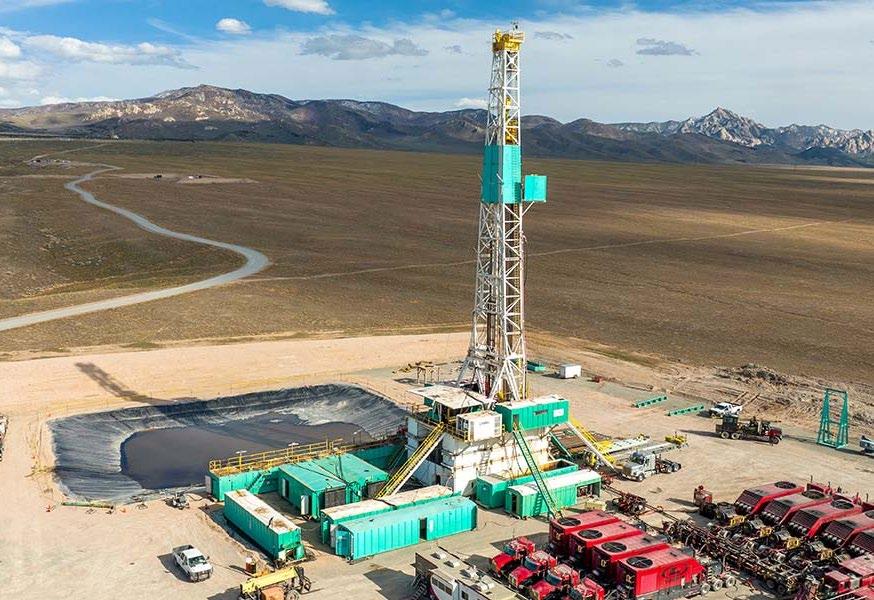

Utah FORGE Geothermal Laboratory, Near Milford, Utah
Credit: Eric Larson, Flash Point SLC, for Utah FORGE, used with permission
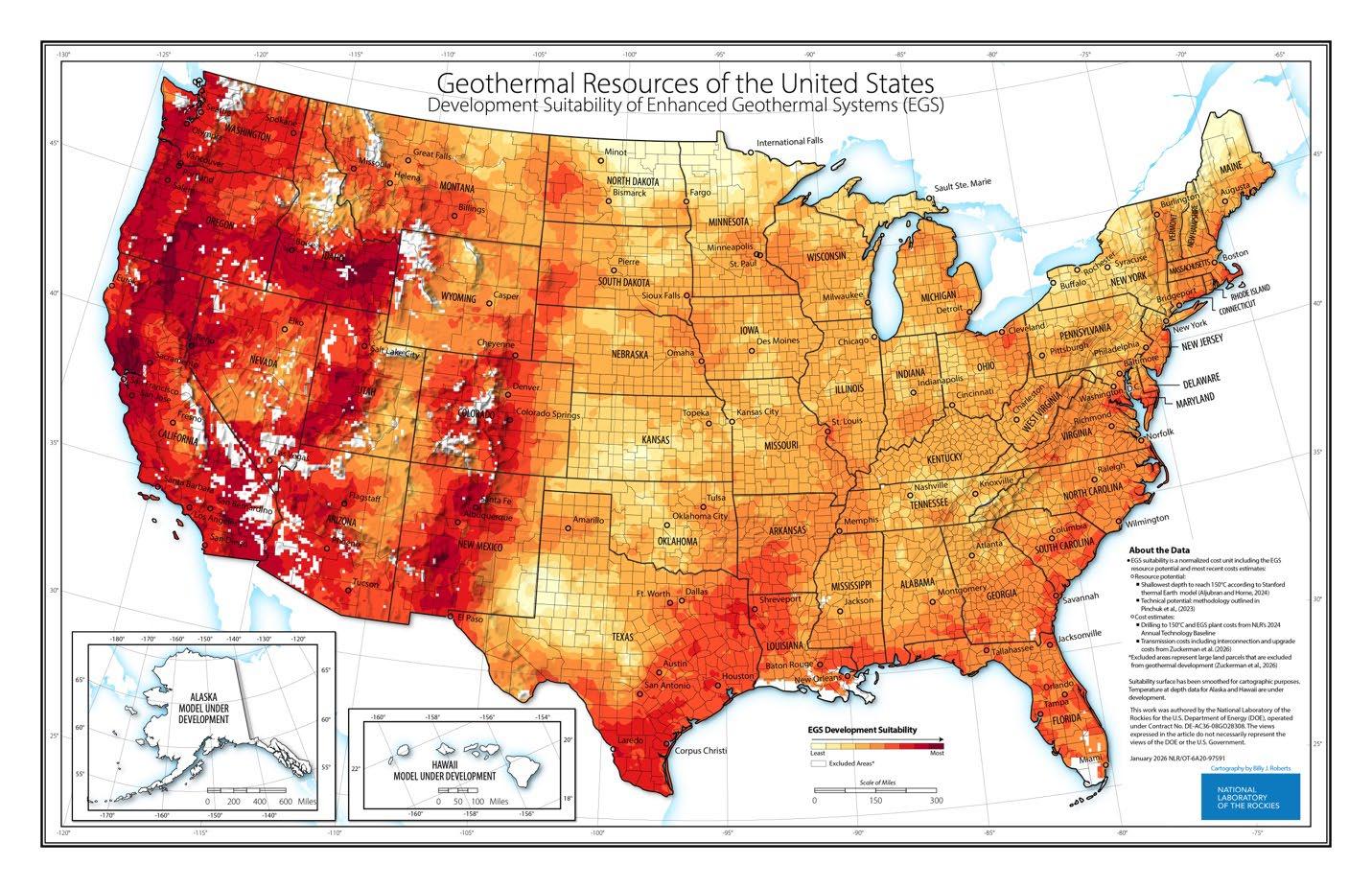
Figure 1. High Temperatures Near the Earth’s Surface Make Western Utah Highly Favorable for Geothermal Energy Development
Source: Roberts, 2026, used with permission from National Laboratory of the Rockies (NLR)
Areas where geothermal heat is closer to the Earth’s surface are critical for successful geothermal energy production because it is faster and cheaper to drill to shallow depths (Figure 1; Allis et al., 2013; Roberts, 2026). In Utah and the Great Basin, this “near-surface” geothermal energy could provide 135,000 megawatts (MW) of electricity capacity (U.S. Geological Survey [USGS], 2025). In Utah, geothermal energy potential is estimated at over 49,000 MW, but only a fraction of this resource has been developed (USGS, 2008; Szymanski & Hardwick, 2025). As of 2025, geothermal power plants in Utah contributed just 73 MW of electricity capacity, representing 1% of the state’s net electricity generation and 5% of its renewable electricity portfolio (EIA, 2025c; Szymanski & Hardwick, 2025).
Fully developing Utah’s geothermal resources could generate about 390 million MWh of electricity each year, the equivalent of 11 times Utah’s net electricity generation in 2024.
If Utah’s geothermal resources were fully developed and run continuously, they could generate about 390 million MWh of electricity each year (U.S. DOE, 2019). This would be equivalent to 11 times Utah’s net electricity generation in 2024 (35.1 million MWh) and nearly 12 times the state’s total electricity consumption in 2023 (33.4 million MWh; EIA, 2025a,d). Utah’s legislature expects the state’s electricity demand to more than triple by 2050 (Utah Senate, 2024). Growing demand for electricity, along with Utah’s rich geothermal resources and history of research and development, make the state well-suited for current and future geothermal energy projects (Akindipe, 2025).



What Is Geothermal Energy?
Geothermal energy is heat from the Earth’s interior. Temperatures are highest in the Earth’s molten core and decrease as heat travels through the mantle and crust, eventually dissipating at the surface (U.S. DOE, 2019). The amount of near-surface heat varies globally and correlates with tectonic activity (Faulds et al., 2012). Utah’s high geothermal potential stems from interactions between the Pacific and North American tectonic plates in the Great Basin, which includes the western half of Utah (Figure 1; Faulds et al., 2012).
Generating Electricity From Geothermal Energy
To convert geothermal energy into electricity, geothermal power plants typically capture heat energy by pumping fluid, usually water, through hot areas near the Earth’s surface. This process creates steam that spins a turbine to generate electricity (U.S. DOE, n.d.). Geothermal power plants require three site features:
1. Heat, the energy source
2. Fluid to carry the heat energy.
3. Permeable rock that a fluid can travel through
To be considered geologically and economically suited for a power plant, a heat source must be at least 302 °F (150 °C) and less than 4 miles below ground (U.S. DOE, 2019).
Several types of geologic formations and technologies allow geothermal energy to be readily used for electricity generation (Table 1; Figure 2):
• Hydrothermal resources occur where heat near the surface combines with groundwater in naturally fractured bedrock (U.S. DOE, 2019). These sites can be obvious at the surface if water heated in vertical faults is released through heat vents, geysers, or hot springs. The geysers of Yellowstone National Park in northwestern Wyoming are a famous example of a hydrothermal resource
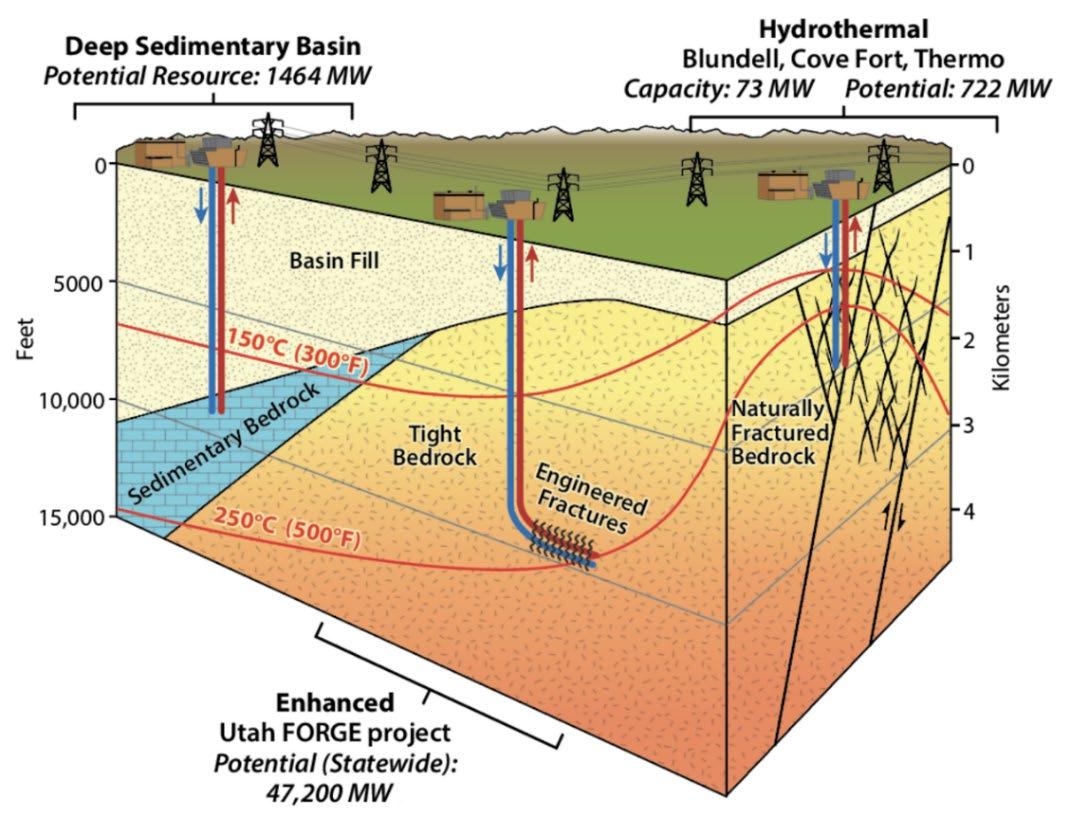
Figure 2. In Utah, Electricity Can Be Generated from Hydrothermal, Deep Sedimentary, Closed-Loop (not shown), and Enhanced Geothermal Systems
Source: Szymanski & Hardwick, 2025, used with permission
• Deep sedimentary basins are regions with near-surface heat below permeable rocks where natural fluid may not exist but can be added by pumping water into the subsurface (Anderson, 2013; Berry et al., 2009).
• Closed-loop systems function like a heat pump by circulating a fluid through a closed loop to bring heat energy from hot sedimentary rock to the surface where it can be used to generate electricity (Ma, 2025; U.S. EIA, 2026).
• Enhanced geothermal systems (EGS) are used where there is near-surface heat without permeable rock. At these sites, the bedrock is artificially fractured (“enhanced”), and water is pumped into the newly created pathways to bring heat up to the surface (U.S. DOE, 2019). In Utah, 95% of the estimated geothermal resources require EGS for access (Berry et al., 2009).
County Name
Beaver Blundell Geothermal Power Plant PacifiCorp
Beaver & Millard Cove Fort Geothermal Power Plant
Beaver
Beaver
34
Ormat Technologies, Inc.
Thermo No.1 Geothermal Power Plant CYRQ Energy
Bailey Mountain Geothermal Exploration Project Ormat Technologies, Inc.
Beaver Fervo Cape Station Geothermal Power Project
Beaver & Millard Rodatherm Geothermal Test Bed Rodatherm Energy Corporation
Millard Zanskar Dog Valley Exploration Zanskar Geothermal & Minerals, Inc. Hydrothermal
Iron New Castle Geothermal Development Project
Beaver
GFE Sustainable Geothermal Project
25
Operational: 1984–
Operational: 1990–2003; 2013–
Operational: 2013–
Approved by BLM: 2022
Approved by BLM: 2024
2.5
Utah Geothermal Energy Partners Hydrothermal 20
Approved by BLM: 2024
Approved by BLM: 2024
Approved by BLM: 2025
GFE Sustainable, Inc. Hydrothermal Exploratory drilling
Sources: Fervo Energy Company, 2026; Geuss, 2016; Milligan, 2014; Russell, 2025; U.S. Bureau of Land Management (BLM), 2024; BLM, 2025; Utah Division of Water Rights, n.d.
Current Geothermal Projects in Utah
Geothermal development on public and private land must adhere to local, state, and federal law and requires permits and permissions from the Utah Division of Water Rights and other agencies that consider environmental impacts (Harding et al., 2026; Open Energy Information, 2026). In Utah, most geothermal resources are located on public land managed by the U.S. Bureau of Land Management (BLM; BLM, n.d.).
As of November 2025, Utah is home to three operating hydrothermal power plants with several hydrothermal, closed-loop, and EGS projects in development (Table 2; Utah Division of Water Rights, n.d.).
Because the time and cost of exploration, drilling, and construction can be a barrier to new geothermal projects, the U.S. Department of Energy began subsidizing geothermal resource exploration in the 1970s (U.S. DOE, 2010; U.S. DOE, 2019). Utah’s progress in geothermal development results from a long history of support from these programs (Figure 3)
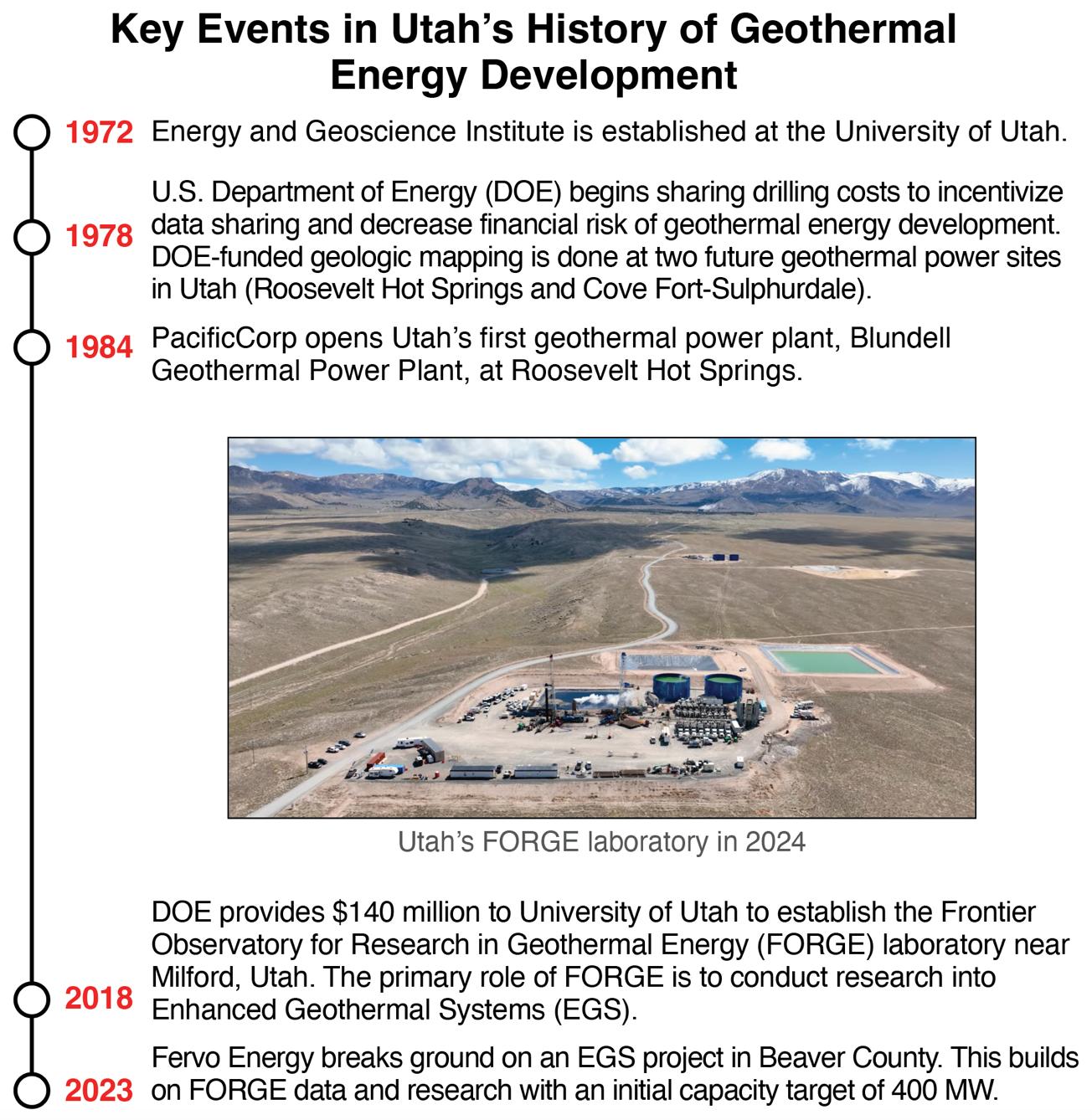
Figure 3. Key Events in Utah’s Development of Geothermal Energy
Sources: Energy and Geoscience Institute, 2022; Fervo Energy, 2023; Milligan, 2014; U.S. Department of Energy, 2010; U.S. Department of Energy, 2018
Photo credit: Utah FORGE, 2024, photo used with permission, with timeline by Scott Hotaling
Today, building geothermal power plants is becoming much faster. The full process from obtaining permits, exploring the site, and drilling preliminary wells would typically take 7–10 years. However, Fervo Energy plans to begin operating 100 MW of capacity at Cape Station in 2026, only 3 years after receiving initial approval for the project (Akindipe, 2025; Cape Station, 2026). Faster geothermal development is due, in part, to faster drilling times, which reduce costs and encourage financial investment. Between 2021 and 2025, Fervo Energy obtained $973 million in financing, indicating growing confidence in the economic viability of EGS (Akindipe, 2025).
The Future of Geothermal Energy in Utah
Support for developing geothermal energy to generate electricity is growing in Utah. Governor Spencer Cox’s 2026 fiscal budget included $4.2 million for geothermal energy (Office of the Governor, 2024a). This is part of Utah’s Office of Energy Development “Operation Gigawatt” program, which intends to diversify and double

Including more geothermal energy in Utah’s energy mix would help address issues of concern for many Utahns: poor air quality, climate change, and support for renewable energy research.


Utah’s energy production by 2034 (Office of the Governor, 2024b). Including more geothermal energy and other renewables in Utah’s energy mix would help address top issues of concern for Utahns: 41% are very concerned about poor air quality, 47% of Utahns are very concerned about the changing climate, and 78% support funding research for renewable energy (Hotaling et al., 2025; Schad et al., 2025).
However, industry commitment to using electricity from geothermal energy is still limited. PacifiCorp supplies about 78% of Utah’s electricity but excludes geothermal energy from Utah’s 2025–2045 preferred suppy portfolio because geothermal energy is currently less economically favorable compared to other electricity sources (PacifiCorp, 2025a,b; Utah Geological Survey, 2023). Continued investment in geothermal energy, especially EGS, should increase the potential for including geothermal energy in Utah’s electricity mix.
Acknowledgments
This publication was produced as part of a collaboration between the Climate Adaptation Intern Program (CAIP) at Utah State University and Utah Clean Energy. CAIP was supported by the “Secure Water Future” project, funded by an Agriculture and Food Research Initiative Competitive Grant (#2021-69012-35916) from the U.S. Department of Agriculture (USDA) National Institute of Food and Agriculture, as well as the USGS Southwest Climate Adaptation Science Center (#G24AC00611). CAIP is also supported by the Utah Climate Workforce Fund, USU Extension, and the USU Extension Water Initiative. We improved this fact sheet based on feedback from CAIP participants
The authors did not use generative AI in creating this content, and it is solely the work of the authors.
For correspondence, contact Scott Hotaling: scott.hotaling@usu.edu
References
Akindipe, D., Smith, F. M., Witter, E., Pauling, H., Oh, H., Podgorny, S., Rane, J., Harmon, J., Javed, S., Simpson, J., Shlosboerg, D., Holt, E., Trainor-Guitton, W., Levine, A., Schmidt, B., & Pedersen, A. (2025). 2025 U.S. geothermal market report. National Laboratory of the Rockies. https://www.nlr.gov/geothermal/2025-us-geothermal-market-report Allis, R., Moore, J. N., Anderson, T., Deo, M., Kirby, S., Roehner, R., & Spencer, T. (2013). Characterizing the power potential of hot stratigraphic reservoirs in the Western U.S. https://geology.utah.gov/docs/geothermal/ngds/supplemental/reports/Stanfordv38_Allis_etal.pdf Anderson, T. C. (2013). Geothermal potential of deep sedimentary basins in the United States. Energy and Geoscience Institute. https://publications.mygeoenergynow.org/grc/1030573.pdf Ask MIT Climate. (2023). How much does natural gas contribute to climate change through CO2 emissions when the fuel is burned, and how much through methane leaks? Climate Portal. https://climate.mit.edu/askmit/how-much-does-natural-gas-contribute-climate-change-through-co2-emissions-when-fuel-burned Berry, J., Hurlbut, D., Simon, R., Moore, J., & Blackett, R. (2009). Utah renewable energy zones task force phase 1 report. Utah Geological Survey. https://ugspub.nr.utah.gov/publications/misc_pubs/MP-09-1.pdf Cape Station. (2026). About. https://capestation.com/about/ Energy and Geoscience Institute. (2022). EGI at 50 years. University of Utah. https://egi.utah.edu/2022/07/egiat-50-years/
Faulds, J. E., Hinz, N., Kreemer, C., & Coolbaugh, M. (2012). Regional patterns of geothermal activity in the Great Basin region, Western USA: Correlation with strain rates. GRC Transactions, 36, 897–902. https://publications.mygeoenergynow.org/grc/1030335.pdf
Fervo Energy. (2023). Fervo Energy breaks ground on the world’s largest next gen geothermal project. https://fervoenergy.com/fervo-energy-breaks-ground-on-the-worlds-largest-next-gen-geothermal-project/
Fervo Energy Company. (2026). Form S-1 registration statement [Under the Securities Act of 1033]. U.S. Securities and Exchange Commission.
https://www.sec.gov/Archives/edgar/data/1853868/000162828026025821/fervoenergy-sx1.htm Geuss, M. (2016). In Utah, an old geothermal plant gets a new life with hydroelectric additions. Ars Technica. https://arstechnica.com/science/2016/12/in-utah-an-old-geothermal-plant-gets-a-new-life-withhydroelectric-additions/
Harding, J., Becker, K., Mitchell, L., Bodine, J., & Hotaling, S. (2026). Geothermal energy in Utah: A safe technology with limited environmental impacts [Fact sheet]. Utah State University Extension. Hotaling, S., Becker, K., Narine, L. K., Ulrich-Schad, J., McCann, R., & Howe, P. D. (2025). What do Utahns think about global warming and climate change? [Fact sheet]. Utah State University Extension. https://digitalcommons.usu.edu/cgi/viewcontent.cgi?article=3515&context=extension_curall Ma, M. (2025). Geothermal startup uses refrigerants, not water, to make energy. Financial Post. https://financialpost.com/pmn/business-pmn/geothermal-startup-uses-refrigerants-not-water-to-makeenergy
Milligan, M. (2014). GeoSights: Roosevelt Hot Springs geothermal area, Beaver County. Utah Geological Survey. https://geology.utah.gov/map-pub/survey-notes/geosights/roosevelt_hot_springs/ Open Energy Information. (2026). Utah geothermal permitting process. https://openei.org/wiki/RAPID/Geothermal/Utah
Office of the Governor (2024a). Gov. Cox Announces Fiscal Year 2026 Budget Recommendations, Including Elimination of Social Security Tax [Press release]. https://governor.utah.gov/uncategorized/gov-coxannounces-fiscal-year-2026-budget-recommendations-including-elimination-of-social-security-tax/. Office of the Governor (2024b). Gov. Cox unveils ‘Operation Gigawatt’ [Press release] https://energy.utah.gov/wp-content/uploads/Operation-Gigawatt-Press-Release.pdf
PacifiCorp. (2025a). Integrated resource plan (Vol 1) https://www.pacificorp.com/content/dam/pcorp/documents/en/pacificorp/energy/integrated-resourceplan/2025-irp/2025_IRP_Vol_1_Utah.pdf
PacifiCorp. (2025b). 2025 integrated resource plan (Vol 2) https://www.pacificorp.com/content/dam/pcorp/documents/en/pacificorp/energy/integrated-resourceplan/2025-irp/2025_IRP_Vol_2.pdf
Roberts, B. J. (2026). Geothermal resources of the United States: Development suitability of enhanced geothermal systems (EGS). National Laboratory of the Rockies. https://docs.nlr.gov/docs/gen/fy26/97591.jpg
Russell, J. (2025). BLM approves Newcastle Geothermal Development project in Utah. Bureau of Land Management. https://www.blm.gov/announcement/blm-approves-newcastle-geothermal-developmentproject-utah
Schad, J., Fisk, S., & Barkat, Z. (2025, May 19). Utah people and environment poll 2024/25 descriptive report (Report No. 16). Community and Natural Resources Institute, Utah State University https://digitalcommons.usu.edu/canri_projects/16/
Spath, P. & Mann, M. (2000). Life cycle assessment of a natural gas combined-cycle power generation system. National Renewable Energy Laboratory. https://docs.nrel.gov/docs/fy00osti/27715.pdf
Szymanski, E., & Hardwick, C. (2025). Resurging interest in Utah’s geothermal energy resources. Utah Geological Survey. https://geology.utah.gov/map-pub/survey-notes/resurging-interest-in-utahs-geothermalenergy-resources/
U.S. Bureau of Land Management. (n.d.). BLM Utah interactive web map. https://www.arcgis.com/apps/instant/sidebar/index.html?appid=e84f92a84afb44b1ad7f65984332b4f2
U.S. Bureau of Land Management. (2024). Pending geothermal projects. https://www.blm.gov/programs/energy-and-minerals/geothermal-energy/pending-geothermal-projects
U.S. Bureau of Land Management. (2025). Active geothermal projects on BLM-managed public lands. https://www.blm.gov/programs/energy-and-minerals/geothermal-energy/active-geothermal-projects
U.S. Department of Energy (DOE). (2010). A history of geothermal energy research and development in the United States: Exploration 1976–2006 https://www1.eere.energy.gov/geothermal/pdfs/geothermal_history_1_exploration.pdf
U.S. Department of Energy (DOE). (n.d.). Geothermal electricity generation. https://www.energy.gov/eere/geothermal/electricity-generation
U.S. Department of Energy (DOE). (2018). Department of Energy selects University of Utah site for $140 million geothermal research and development https://www.energy.gov/articles/department-energy-selects-
university-utah-site-140-million-geothermal-research-and
U.S. Department of Energy (DOE). (2019). GeoVision: Harnessing the heat beneath our feet. https://www.energy.gov/sites/default/files/2019/06/f63/GeoVision-full-report-opt.pdf
U.S. Energy Information Administration (EIA). (2025a). US electricity profile 2024. https://www.eia.gov/electricity/state/
U.S. Energy Information Administration (EIA). (2025b). Utah electricity profile 2024, Table 5. https://www.eia.gov/electricity/state/utah/
U.S. Energy Information Administration (EIA). (2025c). Utah profile analysis. https://www.eia.gov/state/analysis.php?sid=UT
U.S. Energy Information Administration (EIA). (2025d). State energy consumption estimates 1960 through 2023: Table C4. https://www.eia.gov/state/seds/archive/seds2023.pdf
U.S. Energy Information Administration (EIA). (2026). Enhanced geothermal systems could expand geothermal power generation. https://www.eia.gov/todayinenergy/detail.php?id=67204
U.S. Environmental Protection Agency (EPA). (2023). EPA releases 2022 power plant emissions data. https://www.epa.gov/newsreleases/epa-releases-2022-power-plant-emissions-data
U.S. Geological Survey (USGS). (2008). Assessment of moderate- and high-temperature geothermal resources of the United States. https://pubs.usgs.gov/fs/2008/3082/pdf/fs2008-3082.pdf
U.S. Geological Survey (USGS). (2025). Enhanced geothermal systems electric-resource assessment for the Great Basin, southwestern United States. https://pubs.usgs.gov/fs/2025/3027/fs20253027.pdf
Utah Division of Water Rights. (n.d.). Geothermal activity in Utah https://waterrights.utah.gov/geothermal/resources/Utah-Geothermal-Activity.pdf
Utah FORGE. (2024, April 10). April 2024 site activities [Video]. YouTube https://www.youtube.com/watch?v=HmNjFYxMWHQ
Utah Geological Survey (2023). Customers, revenue, and sales of specific electric utilities in Utah, 2023. https://geology.utah.gov/docs/statistics/electricity5.0/pdf/T5.27.pdf
Utah Senate. (2024). Energy https://senate.utah.gov/energy/
In its programs and activities, including in admissions and employment, Utah State University does not discriminate or tolerate discrimination, including harassment, based on race, color, religion, sex, national origin, age, genetic information, sexual orientation, gender identity or expression, disability, status as a protected veteran, or any other status protected by University policy, Title IX, or any other federal, state, or local law. Utah State University is an equal opportunity employer and does not discriminate or tolerate discrimination including harassment in employment including in hiring, promotion, transfer, or termination based on race, color, religion, sex, national origin, age, genetic information, sexual orientation, gender identity or expression, disability, status as a protected veteran, or any other status protected by University policy or any other federal, state, or local law. Utah State University does not discriminate in its housing offerings and will treat all persons fairly and equally without regard to race, color, religion, sex, familial status, disability, national origin, source of income, sexual orientation, or gender identity Additionally, the University endeavors to provide reasonable accommodations when necessary and to ensure equal access to qualified persons with disabilities. The following office has been designated to handle inquiries regarding the application of Title IX and its implementing regulations and/or USU’s nondiscrimination policies: The Office of Equity in Distance Education, Room 400, Logan, Utah, titleix@usu.edu, 435-797-1266. For further information regarding non-discrimination, please visit equity.usu.edu, or contact: U.S. Department of Education, Office of Assistant Secretary for Civil Rights, 800-421-3481, ocr@ed.gov or U.S. Department of Education, Denver Regional Office, 303-8445695 ocr.denver@ed.gov. Issued in furtherance of Cooperative Extension work, acts of May 8 and June 30, 1914, in cooperation with the U.S. Department of Agriculture, Justen Smith, Interim Vice President for Extension, Utah State University.
June 2026, Utah State University Extension